EP4388100B1 - Zpi inhibierende doppelsträngige nukleinsäureverbindungen - Google Patents
Zpi inhibierende doppelsträngige nukleinsäureverbindungen Download PDFInfo
- Publication number
- EP4388100B1 EP4388100B1 EP23749018.0A EP23749018A EP4388100B1 EP 4388100 B1 EP4388100 B1 EP 4388100B1 EP 23749018 A EP23749018 A EP 23749018A EP 4388100 B1 EP4388100 B1 EP 4388100B1
- Authority
- EP
- European Patent Office
- Prior art keywords
- seq
- strand
- nucleic acid
- nucleosides
- nucleoside
- Prior art date
- Legal status (The legal status is an assumption and is not a legal conclusion. Google has not performed a legal analysis and makes no representation as to the accuracy of the status listed.)
- Active
Links
Images
















Classifications
-
- C—CHEMISTRY; METALLURGY
- C12—BIOCHEMISTRY; BEER; SPIRITS; WINE; VINEGAR; MICROBIOLOGY; ENZYMOLOGY; MUTATION OR GENETIC ENGINEERING
- C12N—MICROORGANISMS OR ENZYMES; COMPOSITIONS THEREOF; PROPAGATING, PRESERVING, OR MAINTAINING MICROORGANISMS; MUTATION OR GENETIC ENGINEERING; CULTURE MEDIA
- C12N15/00—Mutation or genetic engineering; DNA or RNA concerning genetic engineering, vectors, e.g. plasmids, or their isolation, preparation or purification; Use of hosts therefor
- C12N15/09—Recombinant DNA-technology
- C12N15/11—DNA or RNA fragments; Modified forms thereof; Non-coding nucleic acids having a biological activity
- C12N15/113—Non-coding nucleic acids modulating the expression of genes, e.g. antisense oligonucleotides; Antisense DNA or RNA; Triplex- forming oligonucleotides; Catalytic nucleic acids, e.g. ribozymes; Nucleic acids used in co-suppression or gene silencing
-
- A—HUMAN NECESSITIES
- A61—MEDICAL OR VETERINARY SCIENCE; HYGIENE
- A61K—PREPARATIONS FOR MEDICAL, DENTAL OR TOILETRY PURPOSES
- A61K31/00—Medicinal preparations containing organic active ingredients
- A61K31/70—Carbohydrates; Sugars; Derivatives thereof
- A61K31/7088—Compounds having three or more nucleosides or nucleotides
- A61K31/713—Double-stranded nucleic acids or oligonucleotides
-
- A—HUMAN NECESSITIES
- A61—MEDICAL OR VETERINARY SCIENCE; HYGIENE
- A61P—SPECIFIC THERAPEUTIC ACTIVITY OF CHEMICAL COMPOUNDS OR MEDICINAL PREPARATIONS
- A61P7/00—Drugs for disorders of the blood or the extracellular fluid
- A61P7/04—Antihaemorrhagics; Procoagulants; Haemostatic agents; Antifibrinolytic agents
-
- C—CHEMISTRY; METALLURGY
- C12—BIOCHEMISTRY; BEER; SPIRITS; WINE; VINEGAR; MICROBIOLOGY; ENZYMOLOGY; MUTATION OR GENETIC ENGINEERING
- C12N—MICROORGANISMS OR ENZYMES; COMPOSITIONS THEREOF; PROPAGATING, PRESERVING, OR MAINTAINING MICROORGANISMS; MUTATION OR GENETIC ENGINEERING; CULTURE MEDIA
- C12N2310/00—Structure or type of the nucleic acid
- C12N2310/10—Type of nucleic acid
- C12N2310/14—Type of nucleic acid interfering nucleic acids [NA]
-
- C—CHEMISTRY; METALLURGY
- C12—BIOCHEMISTRY; BEER; SPIRITS; WINE; VINEGAR; MICROBIOLOGY; ENZYMOLOGY; MUTATION OR GENETIC ENGINEERING
- C12N—MICROORGANISMS OR ENZYMES; COMPOSITIONS THEREOF; PROPAGATING, PRESERVING, OR MAINTAINING MICROORGANISMS; MUTATION OR GENETIC ENGINEERING; CULTURE MEDIA
- C12N2310/00—Structure or type of the nucleic acid
- C12N2310/30—Chemical structure
- C12N2310/31—Chemical structure of the backbone
- C12N2310/315—Phosphorothioates
-
- C—CHEMISTRY; METALLURGY
- C12—BIOCHEMISTRY; BEER; SPIRITS; WINE; VINEGAR; MICROBIOLOGY; ENZYMOLOGY; MUTATION OR GENETIC ENGINEERING
- C12N—MICROORGANISMS OR ENZYMES; COMPOSITIONS THEREOF; PROPAGATING, PRESERVING, OR MAINTAINING MICROORGANISMS; MUTATION OR GENETIC ENGINEERING; CULTURE MEDIA
- C12N2310/00—Structure or type of the nucleic acid
- C12N2310/30—Chemical structure
- C12N2310/32—Chemical structure of the sugar
- C12N2310/321—2'-O-R Modification
-
- C—CHEMISTRY; METALLURGY
- C12—BIOCHEMISTRY; BEER; SPIRITS; WINE; VINEGAR; MICROBIOLOGY; ENZYMOLOGY; MUTATION OR GENETIC ENGINEERING
- C12N—MICROORGANISMS OR ENZYMES; COMPOSITIONS THEREOF; PROPAGATING, PRESERVING, OR MAINTAINING MICROORGANISMS; MUTATION OR GENETIC ENGINEERING; CULTURE MEDIA
- C12N2310/00—Structure or type of the nucleic acid
- C12N2310/30—Chemical structure
- C12N2310/32—Chemical structure of the sugar
- C12N2310/322—2'-R Modification
-
- C—CHEMISTRY; METALLURGY
- C12—BIOCHEMISTRY; BEER; SPIRITS; WINE; VINEGAR; MICROBIOLOGY; ENZYMOLOGY; MUTATION OR GENETIC ENGINEERING
- C12N—MICROORGANISMS OR ENZYMES; COMPOSITIONS THEREOF; PROPAGATING, PRESERVING, OR MAINTAINING MICROORGANISMS; MUTATION OR GENETIC ENGINEERING; CULTURE MEDIA
- C12N2310/00—Structure or type of the nucleic acid
- C12N2310/30—Chemical structure
- C12N2310/34—Spatial arrangement of the modifications
- C12N2310/343—Spatial arrangement of the modifications having patterns, e.g. ==--==--==--
-
- C—CHEMISTRY; METALLURGY
- C12—BIOCHEMISTRY; BEER; SPIRITS; WINE; VINEGAR; MICROBIOLOGY; ENZYMOLOGY; MUTATION OR GENETIC ENGINEERING
- C12N—MICROORGANISMS OR ENZYMES; COMPOSITIONS THEREOF; PROPAGATING, PRESERVING, OR MAINTAINING MICROORGANISMS; MUTATION OR GENETIC ENGINEERING; CULTURE MEDIA
- C12N2310/00—Structure or type of the nucleic acid
- C12N2310/30—Chemical structure
- C12N2310/34—Spatial arrangement of the modifications
- C12N2310/345—Spatial arrangement of the modifications having at least two different backbone modifications
-
- C—CHEMISTRY; METALLURGY
- C12—BIOCHEMISTRY; BEER; SPIRITS; WINE; VINEGAR; MICROBIOLOGY; ENZYMOLOGY; MUTATION OR GENETIC ENGINEERING
- C12N—MICROORGANISMS OR ENZYMES; COMPOSITIONS THEREOF; PROPAGATING, PRESERVING, OR MAINTAINING MICROORGANISMS; MUTATION OR GENETIC ENGINEERING; CULTURE MEDIA
- C12N2310/00—Structure or type of the nucleic acid
- C12N2310/30—Chemical structure
- C12N2310/34—Spatial arrangement of the modifications
- C12N2310/346—Spatial arrangement of the modifications having a combination of backbone and sugar modifications
-
- C—CHEMISTRY; METALLURGY
- C12—BIOCHEMISTRY; BEER; SPIRITS; WINE; VINEGAR; MICROBIOLOGY; ENZYMOLOGY; MUTATION OR GENETIC ENGINEERING
- C12N—MICROORGANISMS OR ENZYMES; COMPOSITIONS THEREOF; PROPAGATING, PRESERVING, OR MAINTAINING MICROORGANISMS; MUTATION OR GENETIC ENGINEERING; CULTURE MEDIA
- C12N2310/00—Structure or type of the nucleic acid
- C12N2310/30—Chemical structure
- C12N2310/35—Nature of the modification
- C12N2310/351—Conjugate
-
- C—CHEMISTRY; METALLURGY
- C12—BIOCHEMISTRY; BEER; SPIRITS; WINE; VINEGAR; MICROBIOLOGY; ENZYMOLOGY; MUTATION OR GENETIC ENGINEERING
- C12N—MICROORGANISMS OR ENZYMES; COMPOSITIONS THEREOF; PROPAGATING, PRESERVING, OR MAINTAINING MICROORGANISMS; MUTATION OR GENETIC ENGINEERING; CULTURE MEDIA
- C12N2310/00—Structure or type of the nucleic acid
- C12N2310/30—Chemical structure
- C12N2310/35—Nature of the modification
- C12N2310/352—Nature of the modification linked to the nucleic acid via a carbon atom
- C12N2310/3521—Methyl
-
- C—CHEMISTRY; METALLURGY
- C12—BIOCHEMISTRY; BEER; SPIRITS; WINE; VINEGAR; MICROBIOLOGY; ENZYMOLOGY; MUTATION OR GENETIC ENGINEERING
- C12N—MICROORGANISMS OR ENZYMES; COMPOSITIONS THEREOF; PROPAGATING, PRESERVING, OR MAINTAINING MICROORGANISMS; MUTATION OR GENETIC ENGINEERING; CULTURE MEDIA
- C12N2310/00—Structure or type of the nucleic acid
- C12N2310/30—Chemical structure
- C12N2310/35—Nature of the modification
- C12N2310/353—Nature of the modification linked to the nucleic acid via an atom other than carbon
- C12N2310/3533—Halogen
Definitions
- the present invention provides novel nucleic acid compounds, suitable for therapeutic use. Additionally, the present disclosure provides methods of making these compounds, as well as methods of using such compounds for the treatment of various diseases and conditions. Said methods are not part of the claimed invention.
- Nucleic acid compounds have important therapeutic applications in medicine. Nucleic acids can be used to silence genes that are responsible for a particular disease. Gene-silencing prevents formation of a protein by inhibiting translation. Importantly, gene-silencing agents are a promising alternative to traditional small, organic compounds that inhibit the function of the protein linked to the disease. siRNA, antisense RNA, and micro-RNA are oligonucleotides / oligonucleosides that prevent the formation of proteins by gene-silencing.
- siRNA / RNAi therapeutic agents for the treatment of various diseases including central-nervous-system diseases, inflammatory diseases, metabolic disorders, oncology, infectious diseases, and ocular diseases.
- the present invention relates to nucleic acid compounds, for use in the treatment and / or prevention of disease.
- a nucleic acid for inhibiting expression of ZPI comprising a duplex region that comprises a first strand and a second strand that is at least partially complementary to the first strand, wherein said first strand is: (i) at least partially complementary to a portion of RNA transcribed from the ZPI gene, and (ii) comprises at least 17 contiguous nucleosides differing by 0 or 1 nucleosides from any one of the first strand sequences as listed in Table 2.
- a nucleic acid for inhibiting expression of ZPI comprising a duplex region that comprises a first strand and a second strand that is at least partially complementary to the first strand, wherein said first strand is: (i) at least partially complementary to a portion of RNA transcribed from the ZPI gene, and (ii) comprises at least 17 contiguous nucleosides differing by 0 or 1 nucleosides from any one of the first strand modified sequences as listed in Table 3.
- the second strand comprises a nucleoside sequence of at least 17 contiguous nucleosides differing by 0 or 1 nucleosides from any one of the second strand sequences as listed in Table 2, and wherein the second strand has a region of at least 85% complementarity over the 17 contiguous nucleosides to the first strand.
- the second strand comprises a nucleoside sequence of at least 17 contiguous nucleosides differing by 0 or 1 nucleosides from any one of the second strand sequences as listed in Table 2, and wherein the duplex region comprises at least 14, 15, 16 or 17 complementary base pairs.
- a nucleic acid according to the above second aspect wherein the second strand comprises a nucleoside sequence of at least 17 contiguous nucleosides differing by 0 or 1 nucleosides from any one of the second strand modified sequences as listed in Table 4, and wherein the second strand has a region of at least 85% complementarity over the 17 contiguous nucleosides to the first strand.
- a nucleic acid according to the above second aspect wherein the second strand comprises a nucleoside sequence of at least 17 contiguous nucleosides differing by 0 or 1 nucleosides from any one of the second strand modified sequences as listed in Table 4, and wherein the duplex region comprises at least 14, 15, 16 or 17 complementary base pairs.
- a nucleic acid according to the above first aspect wherein the first strand comprises any one of the following sequences: SEQ ID NO: 126, SEQ ID NO: 127, SEQ ID NO: 128, SEQ ID NO: 129, SEQ ID NO: 131, SEQ ID NO: 132, SEQ ID NO: 138, SEQ ID NO: 139, SEQ ID NO: 144, SEQ ID NO: 145, SEQ ID NO: 147, SEQ ID NO: 148, SEQ ID NO: 149, SEQ ID NO: 226, SEQ ID NO: 227, SEQ ID NO: 228, SEQ ID NO: 229, SEQ ID NO: 231, SEQ ID NO: 232, SEQ ID NO: 238, SEQ ID NO: 239.
- a nucleic acid according to the above second aspect, wherein the first strand comprises any one of the following sequences: SEQ ID NO: 366, SEQ ID NO: 367, SEQ ID NO: 368, SEQ ID NO: 369, SEQ ID NO: 371, SEQ ID NO: 372, SEQ ID NO: 378, SEQ ID NO: 379, SEQ ID NO: 384, SEQ ID NO: 385, SEQ ID NO: 387, SEQ ID NO: 388, SEQ ID NO: 389, SEQ ID NO: 466, SEQ ID NO: 467, SEQ ID NO: 468, SEQ ID NO: 469, SEQ ID NO: 471, SEQ ID NO: 472, SEQ ID NO: 478, SEQ ID NO: 479, SEQ ID NO: 498, SEQ ID NO: 518, SEQ ID NO: 538, SEQ ID NO: 546, SEQ ID NO: 547, SEQ ID NO: 548, SEQ ID NO: 549, SEQ ID NO: 551,
- a nucleic acid according to the above first aspect, wherein the second strand comprises any one of the following sequences: SEQ ID NO: 246, SEQ ID NO: 247, SEQ ID NO: 248, SEQ ID NO: 249, SEQ ID NO: 251, SEQ ID NO: 252, SEQ ID NO: 258, SEQ ID NO: 259, SEQ ID NO: 264, SEQ ID NO: 265, SEQ ID NO: 267, SEQ ID NO: 268, SEQ ID NO: 269, SEQ ID NO: 346, SEQ ID NO: 347, SEQ ID NO: 348, SEQ ID NO: 349, SEQ ID NO: 351, SEQ ID NO: 352,SEQ ID NO: 358, SEQ ID NO: 359.
- a nucleic acid according to the above second aspect wherein the second strand comprises any one of the following sequences: SEQ ID NO: 566, SEQ ID NO: 567, SEQ ID NO: 568, SEQ ID NO: 569, SEQ ID NO: 571, SEQ ID NO: 572, SEQ ID NO: 578, SEQ ID NO: 579, SEQ ID NO: 584, SEQ ID NO: 585, SEQ ID NO: 587, SEQ ID NO: 588, SEQ ID NO: 589, SEQ ID NO: 666, SEQ ID NO: 667, SEQ ID NO: 668, SEQ ID NO: 669, SEQ ID NO: 671, SEQ ID NO: 672, SEQ ID NO: 678, SEQ ID NO: 679, SEQ ID NO: 698, SEQ ID NO: 718, SEQ ID NO: 738, SEQ ID NO: 746, SEQ ID NO: 747, SEQ ID NO: 748, SEQ ID NO: 749, SEQ ID NO
- a nucleic acid comprising first and second strands that comprise, consist of, or consist essentially of a nucleoside sequence differing by 0 or 1 nucleosides from any one of the following first and second sequences: Unmodified first strand Unmodified second strand SEQ ID NO: 126 SEQ ID NO: 246 SEQ ID NO: 127 SEQ ID NO: 247 SEQ ID NO: 128 SEQ ID NO: 248 SEQ ID NO: 129 SEQ ID NO: 249 SEQ ID NO: 131 SEQ ID NO: 251 SEQ ID NO: 132 SEQ ID NO: 252 SEQ ID NO: 138 SEQ ID NO: 258 SEQ ID NO: 139 SEQ ID NO: 259 SEQ ID NO: 144 SEQ ID NO: 264 SEQ ID NO: 145 SEQ ID NO: 265 SEQ ID NO: 147 SEQ ID NO: 267 SEQ ID NO: 148 SEQ ID NO: 268 SEQ ID NO: 149 SEQ ID NO: 269 SEQ ID NO:
- a nucleic acid comprising first and second strands that comprise, consist of, or consist essentially of a nucleoside sequence differing by 0 or 1 nucleosides from any one of the following first and second sequences: Modified first strand Modified second strand SEQ ID NO: 366 SEQ ID NO: 566 SEQ ID NO: 367 SEQ ID NO: 567 SEQ ID NO: 368 SEQ ID NO: 568 SEQ ID NO: 369 SEQ ID NO: 569 SEQ ID NO: 371 SEQ ID NO: 571 SEQ ID NO: 372 SEQ ID NO: 572 SEQ ID NO: 378 SEQ ID NO: 578 SEQ ID NO: 379 SEQ ID NO: 579 SEQ ID NO: 384 SEQ ID NO: 584 SEQ ID NO: 385 SEQ ID NO: 585 SEQ ID NO: 387 SEQ ID NO: 587 SEQ ID NO: 388 SEQ ID NO: 588 SEQ ID NO: 389 SEQ ID NO: 589 SEQ ID NO: 466
- a nucleic acid comprising first and second strands that comprise, consist of, or consist essentially of a nucleoside sequence differing by 0 or 1 nucleosides from any one of the following first and second sequences: Unmodified first strand Unmodified second strand SEQ ID NO: 128 SEQ ID NO: 248 SEQ ID NO: 144 SEQ ID NO: 264 SEQ ID NO: 148 SEQ ID NO: 268 SEQ ID NO: 149 SEQ ID NO: 269 SEQ ID NO: 138 SEQ ID NO: 258
- a nucleic acid comprising first and second strands that comprise, consist of, or consist essentially of a nucleoside sequence differing by 0 or 1 nucleosides from any one of the following first and second sequences: Modified first strand Modified second strand SEQ ID NO: 368 SEQ ID NO: 568 SEQ ID NO: 384 SEQ ID NO: 584 SEQ ID NO: 388 SEQ ID NO: 588 SEQ ID NO: 389 SEQ ID NO: 589 SEQ ID NO: 538 SEQ ID NO: 738
- a nucleic acid comprising first and second strands that comprise, consist of, or consist essentially of a nucleoside sequence differing by 0 or 1 nucleosides from any one of the following first and second sequences: Unmodified first strand Unmodified second strand SEQ ID NO: 148 SEQ ID NO: 268 SEQ ID NO: 145 SEQ ID NO: 265 SEQ ID NO: 144 SEQ ID NO: 264 SEQ ID NO: 165 SEQ ID NO: 285 SEQ ID NO: 202 SEQ ID NO: 322
- a nucleic acid comprising first and second strands that comprise, consist of, or consist essentially of a nucleoside sequence differing by 0 or 1 nucleosides from any one of the following first and second sequences: Modified first strand Modified second strand SEQ ID NO: 388 SEQ ID NO: 588 SEQ ID NO: 385 SEQ ID NO: 585 SEQ ID NO: 384 SEQ ID NO: 584 SEQ ID NO: 405 SEQ ID NO: 605 SEQ ID NO: 442 SEQ ID NO: 642
- a nucleic acid comprising first and second strands that comprise, consist of, or consist essentially of a nucleoside sequence differing by 0 or 1 nucleosides from any one of the following first and second sequences: Modified first strand Modified second strand SEQ ID NO: 762 SEQ ID NO: 772 SEQ ID NO: 763 SEQ ID NO: 773 SEQ ID NO: 764 SEQ ID NO: 774 SEQ ID NO: 765 SEQ ID NO: 775 SEQ ID NO: 766 SEQ ID NO: 776 SEQ ID NO: 767 SEQ ID NO: 777 SEQ ID NO: 768 SEQ ID NO: 778 SEQ ID NO: 769 SEQ ID NO: 779 SEQ ID NO: 770 SEQ ID NO: 780 SEQ ID NO: 771 SEQ ID NO: 781 SEQ ID NO: 782 SEQ ID NO: 773 SEQ ID NO: 783 SEQ ID NO: 775 SEQ ID NO: 784 SEQ ID NO: 777 SEQ ID NO: 785
- a nucleic acid comprising first and second strands that comprise, consist of, or consist essentially of a nucleoside sequence differing by 0 or 1 nucleosides from any one of the following first and second sequences: Modified first strand Modified second strand SEQ ID NO: 385 SEQ ID NO: 585 SEQ ID NO: 388 SEQ ID NO: 588 SEQ ID NO: 764 SEQ ID NO: 774 SEQ ID NO: 765 SEQ ID NO: 775 SEQ ID NO: 766 SEQ ID NO: 776 SEQ ID NO: 767 SEQ ID NO: 777
- a nucleic acid comprising first and second strands that comprise, consist of, or consist essentially of a nucleoside sequence differing by 0 or 1 nucleosides from any one of the following first and second sequences: Unmodified first strand Unmodified second strand SEQ ID NO: 145 SEQ ID NO: 265 SEQ ID NO: 148 SEQ ID NO: 268
- a nucleic acid comprising first and second strands that comprise, consist of, or consist essentially of a nucleoside sequence differing by 0 or 1 nucleosides from any one of the following first and second sequences: Modified first strand Modified second strand SEQ ID NO: 385 SEQ ID NO: 585 SEQ ID NO: 764 SEQ ID NO: 774 SEQ ID NO: 765 SEQ ID NO: 775 SEQ ID NO:783 SEQ ID NO:775 SEQ ID NO: 801 SEQ ID NO: 819 SEQ ID NO: 802 SEQ ID NO: 819 SEQ ID NO: 803 SEQ ID NO: 819 SEQ ID NO: 804 SEQ ID NO: 819 SEQ ID NO: 805 SEQ ID NO: 819 SEQ ID NO: 806 SEQ ID NO: 819 SEQ ID NO: 807 SEQ ID NO: 819 SEQ ID NO: 808 SEQ ID NO: 819 SEQ ID NO: 809 SEQ ID NO: 819
- a nucleic acid comprising first and second strands that comprise, consist of, or consist essentially of a nucleoside sequence differing by 0 or 1 nucleosides from any one of the following first and second sequences: Modified first strand Modified second strand SEQ ID NO: 388 SEQ ID NO: 588 SEQ ID NO: 766 SEQ ID NO: 776 SEQ ID NO: 767 SEQ ID NO: 777 SEQ ID NO: 810 SEQ ID NO: 820 SEQ ID NO: 811 SEQ ID NO: 820 SEQ ID NO: 812 SEQ ID NO: 820 SEQ ID NO: 813 SEQ ID NO: 820 SEQ ID NO: 814 SEQ ID NO: 820 SEQ ID NO: 815 SEQ ID NO: 820 SEQ ID NO: 816 SEQ ID NO: 820 SEQ ID NO: 817 SEQ ID NO: 820 SEQ ID NO: 818 SEQ ID NO: 820
- a nucleic acid comprising first and second strands that comprise, consist of, or consist essentially of a nucleoside sequence differing by 0 or 1 nucleosides from any one of the following first and second sequences: Modified first strand Modified second strand SEQ ID NO: 764 SEQ ID NO: 774 SEQ ID NO: 766 SEQ ID NO: 776
- a conjugate for inhibiting expression of ZPI target gene in a cell comprising a nucleic acid as disclosed herein and one or more ligand moieties.
- a pharmaceutical composition comprising a nucleic acid as disclosed herein, in combination with a pharmaceutically acceptable excipient or carrier.
- a nucleic acid or pharmaceutical composition for use in therapy.
- a nucleic acid or pharmaceutical composition for use in prevention or treatment of a disease related to a disorder of haemostasis, such as a disease related to a disorder of haemostasis, such as haemophilia.
- first strand also called the antisense strand or guide strand herein and which can be used interchangeably herein, refers to the nucleic acid strand, e.g. the strand of an siRNA, e.g. a dsiRNA, which includes a region that is substantially complementary to a target sequence, e.g. to an mRNA.
- region of complementarity refers to the region on the antisense strand that is substantially complementary to a sequence, for example a target sequence. Where the region of complementarity is not fully complementary to the target sequence, the mismatches can typically be in the internal or terminal regions of the molecule.
- a double stranded nucleic acid e.g. an siRNA agent of the invention includes a nucleoside mismatch in the antisense strand.
- the "second strand” (also called the sense strand or passenger strand herein, and which can be used interchangeably herein), refers to the strand of a nucleic acid e.g. siRNA that includes a region that is substantially complementary to a region of the antisense strand as that term is defined herein.
- Oligonucleotides are short nucleic acid polymers. Whilst oligonucleotides contain phosphodiester bonds between the nucleoside component thereof (base plus sugar), the present invention is not limited to oligonucleotides always joined by such a phosphodiester bond between adjacent nucleosides, and other oligomers of nucleosides joined by bonds which are bonds other than a phosphodiester bond are contemplated. For example, a bond between nucleosides may be a phosphorothioate bond. Therefore, the term "oligonucleoside" as used herein covers both oligonucleotides and other oligomers of nucleosides.
- a double stranded nucleic acid e.g. siRNA agent of the invention includes a nucleoside mismatch in the sense strand.
- the nucleoside mismatch is, for example, within 5, 4, 3, 2, or 1 nucleosides from the 3 '-end of the nucleic acid e.g. siRNA.
- the nucleoside mismatch is, for example, in the 3'- terminal nucleoside of the nucleic acid e.g. siRNA.
- target sequence refers to a contiguous portion of the nucleoside sequence of an mRNA molecule formed during the transcription of a gene, including mRNA that is a product of RNA processing of a primary transcription product.
- the target sequence may be from about 10-35 nucleosides in length, e.g., about 15-30 nucleosides in length.
- the target sequence can be from about 15-30 nucleosides, 15-29, 15-28, 15-27, 15-26, 15-25, 15-24, 15-23, 15-22, 15-21, 15-20, 15-19, 15-18, 15-17, 18-30, 18-29, 18- 28, 18-27, 18-26, 18-25, 18-24, 18-23, 18-22, 18-21, 18-20, 19-30, 19-29, 19-28, 19-27, 19-26, 19-25, 19-24, 19-23, 19-22, 19-21, 19-20, 20-30, 20-29, 20-28, 20-27, 20-26, 20-25, 20-24, 20-23, 20-22, 20- 21, 21-30, 21-29, 21-28, 21-27, 21-26, 21-25, 21-24, 21-23, or 21-22 nucleosides in length. Ranges and lengths intermediate to the above
- RNA interference agent refers to an agent that contains RNA, and which mediates the targeted cleavage of an RNA transcript via an RNA-induced silencing complex (RISC) pathway. siRNA directs the sequence-specific degradation of mRNA through RNA interference (RNAi).
- RISC RNA-induced silencing complex
- a double stranded RNA is referred to herein as a "double stranded siRNA (dsiRNA) agent", “double stranded siRNA (dsiRNA) molecule”, “double stranded RNA (dsRNA) agent”, “double stranded RNA (dsRNA) molecule”, “dsiRNA agent”, “dsiRNA molecule”, or “dsiRNA”, which refers to a complex of ribonucleic acid molecules, having a duplex structure comprising two anti-parallel and substantially complementary nucleic acid strands, referred to as having "sense” and “antisense” orientations with respect to a target RNA.
- each strand of the nucleic acid e.g. a dsiRNA molecule
- each or both strands can also include one or more non-ribonucleosides, e.g., a deoxyribonucleoside or a modified nucleoside.
- an "siRNA” may include ribonucleosides with chemical modifications.
- modified nucleoside refers to a nucleoside having, independently, a modified sugar moiety, a modified internucleoside linkage, or modified nucleobase, or any combination thereof.
- modified nucleoside encompasses substitutions, additions or removal of, e.g., a functional group or atom, to internucleoside linkages, sugar moieties, or nucleobases. Any such modifications, as used in an siRNA type molecule, are encompassed by "iRNA” or “RNAi agent” or “siRNA” or “siRNA agent” for the purposes of this specification and claims.
- nucleoside overhang refers to at least one unpaired nucleoside that extends from the duplex structure of a nucleic acid according to the present invention.
- a nucleic acid according to the present invention can comprise an overhang of at least one nucleoside; alternatively the overhang can comprise at least two nucleosides, at least three nucleosides, at least four nucleosides, at least five nucleosides or more.
- a nucleoside overhang can comprise or consist of a nucleoside/nucleoside analog, including a deoxynucleoside.
- the overhang(s) can be on the sense strand, the antisense strand, or any combination thereof.
- the nucleoside(s) of an overhang can be present on the 5'-end, 3'-end, or both ends of either an antisense or sense strand.
- the antisense strand has a 1-10 nucleoside, e.g., 0-3, 1-3, 2-4, 2-5, 4-10, 5-10, 1, 2, 3, 4, 5, 6, 7, 8, 9, or 10 nucleoside, overhang at the 3'-end or the 5'-end.
- Bosset or Blunt end means that there are no unpaired nucleosides at that end of the double stranded nucleic acid, i.e., no nucleoside overhang.
- the nucleic acids of the invention include those with no nucleoside overhang at one end or with no nucleoside overhangs at either end.
- first nucleoside sequence refers to the ability of an oligonucleoside comprising the first nucleoside sequence to hybridize and form a duplex structure under certain conditions with an oligonucleoside comprising the second nucleoside sequence, as will be understood by the skilled person.
- Such conditions can, for example, be stringent conditions, where stringent conditions can include: 400 mM NaCl, 40 mM PIPES pH 6.4, 1 mM EDTA, 50°C or 70°C for 12-16 hours followed by washing (see, e.g., " Molecular Cloning: A Laboratory Manual, Sambrook, et al. (1989) Cold Spring Harbor Laboratory Press ).
- Complementary sequences within nucleic acid include base-pairing of the oligonucleoside comprising a first nucleoside sequence to an oligonucleoside comprising a second nucleoside sequence over the entire length of one or both nucleoside sequences.
- Such sequences can be referred to as "fully complementary” with respect to each other herein.
- first sequence is referred to as “substantially complementary” or “partially complementary” with respect to a second sequence herein
- the two sequences can be fully complementary, or they can form one or more mismatched base pairs, such as 2, 4, or 5 mismatched base pairs, but preferably not more than 5 , while retaining the ability to hybridize under the conditions most relevant to their ultimate application, e.g. , inhibition of gene expression via a RISC pathway. Overhangs shall not be regarded as mismatches with regard to the determination of complementarity.
- a nucleic acid e.g.
- dsiRNA comprising one oligonucleoside 17 nucleosides in length and another oligonucleoside 19 nucleosides in length, wherein the longer oligonucleoside comprises a sequence of 17 nucleosides that is fully complementary to the shorter oligonucleoside, can yet be referred to as "fully complementary” .
- “Complementary” sequences can also include, or be formed entirely from, non- Watson-Crick base pairs or base pairs formed from non-natural and modified nucleosides, in so far as the above requirements with respect to their ability to hybridize are fulfilled.
- non- Watson- Crick base pairs include, but are not limited to, G:U Wobble or Hoogstein base pairing.
- complementary can be used with respect to the base matching between the sense strand and the antisense strand of a nucleic acid eg dsiRNA, or between the antisense strand of a double stranded nucleic acid e.g. siRNA agent and a target sequence.
- the second strand of the nucleic acid according to the invention is at least partially complementary to the first strand of said nucleic acid.
- a first and second strand of a nucleic acid according to the invention are partially complementary if they form a duplex region having a length of at least 17 base pairs and comprising not more than 1, 2, 3, 4, or 5 mismatched base pairs.
- a first and second strand of the nucleic acid according to the invention are partially complementary if they form a duplex region having a length of 19 base pairs and comprising not more than 1, 2, 3, 4, or 5 mismatched base pairs. In certain embodiments, a first and second strand of the nucleic acid according to the invention are partially complementary if they form a duplex region having a length of 21 base pairs comprising not more than 1, 2, 3, 4, or 5 mismatched base pairs.
- a first and second strand of the nucleic acid according to the invention are partially complementary if they form a duplex region having a length of at least 17 base pairs, wherein at least 14, 15, 16 or 17 of said base pairs are complementary base pairs, in particular Watson-Crick base pairs.
- a first and second strand of the nucleic acid according to the invention are partially complementary if they form a duplex region having a length of 19 base pairs, wherein at least 14, 15, 16, 17, 18 or all 19 base pairs are complementary base pairs, in particular Watson-Crick base pairs.
- a first and second strand of the nucleic acid according to the invention are partially complementary if they form a duplex region having a length of 21 base pairs, wherein at least 16, 17, 18, 19, 20 or all 21 base pairs are complementary base pairs, in particular Watson-Crick base pairs.
- a nucleic acid that is "substantially complementary” or “partially complementary” to at least part of a messenger RNA (mRNA) refers to a nucleic acid that is substantially or partially complementary to a contiguous portion of the mRNA of interest (e.g., an mRNA encoding a gene).
- the contiguous portion of the mRNA is a sequence as listed in Table 1, i.e., any one of SEQ ID NOs:2-121.
- a nucleic acid is complementary to at least a part of an mRNA of a gene of interest if the sequence is substantially or partially complementary to a non-interrupted portion of an mRNA encoding that gene.
- the antisense oligonucleosides as disclosed herein are fully complementary to the target gene sequence.
- the antisense oligonucleosides disclosed herein are substantially or partially complementary to a target RNA sequence and comprise a contiguous nucleoside sequence which is at least about 80% complementary over its entire length to the equivalent region of the target RNA sequence, such as at least about 85%, 86%, 87%, 88%, 89%, about 90%, 91 %, 92%, 93%, 94%, 95%, 96%, 97%, 98%, or 99% complementary or 100% complementary.
- the first (antisense) strand of a nucleic acid according to the invention is partially or fully complementary to a contiguous portion of RNA transcribed from the ZPI gene. In certain embodiments, the first strand of the nucleic acid according to the invention is partially or fully complementary to a contiguous portion of at least 17 nucleosides of the ZPI mRNA. In certain embodiments, the first strand of the nucleic acid according to the invention is partially or fully complementary to a contiguous portion of 17, 18, 19, 20, 21, 22 or 23 nucleosides of the ZPI mRNA.
- the first strand of the nucleic acid according to the invention is partially or fully complementary to a contiguous portion of 17, 18, 19, 20, 21, 22 or 23 nucleosides of any one of the sequences as listed in Table 1, i.e., any one of SEQ ID NOs: 2-121.
- the first (antisense) strand of the nucleic acid according to the invention is partially complementary to a contiguous portion of the ZPI mRNA if it comprises a contiguous nucleoside sequence of at least 17 nucleosides, wherein at least 14, 15, 16 or 17 nucleosides of said contiguous nucleoside sequence are complementary to a contiguous portion of the ZPI mRNA.
- the first strand of the nucleic acid according to the invention comprises a contiguous nucleoside sequence of at least 17 nucleosides, wherein at least 14, 15, 16 or 17 nucleosides of said contiguous nucleoside sequence are complementary to a contiguous portion of any one of the sequences listed in Table 1, i.e., any one of SEQ ID NOs: 2-121.
- the first strand of the nucleic acid according to the invention comprises a contiguous nucleoside sequence of 19 nucleosides, wherein at least 14, 15, 16, 17, 18 or all 19 nucleosides of said contiguous nucleoside sequence are complementary to a contiguous portion of any one of the sequences listed in Table 1, i.e., any one of SEQ ID NOs: 2-121.
- the first strand of the nucleic acid according to the invention comprises a contiguous nucleoside sequence of 23 nucleosides, wherein at least 18, 19, 20, 21, 22 or all 23 nucleosides of said contiguous nucleoside sequence are complementary to a contiguous portion of any one of the sequences listed in Table 1, i.e., any one of SEQ ID NOs: 2-101.
- a nucleic acid e.g. an siRNA of the invention includes a sense strand that is substantially or partially complementary to an antisense oligonucleoside which, in turn, is complementary to a target gene sequence and comprises a contiguous nucleoside sequence.
- the nucleoside sequence of the sense strand is typically at least about 80% complementary over its entire length to the equivalent region of the nucleoside sequence of the antisense strand, such as about 85%, 86%, 87%, 88%, 89%, 90%, 91 %, 92%, 93%, 94%, 95%, 96%, 97%, 98%, or 99% complementary, or 100% complementary.
- a nucleic acid e.g. an siRNA of the invention includes an antisense strand that is substantially or partially complementary to the target sequence and comprises a contiguous nucleoside sequence which is at least 80% complementary over its entire length to the target sequence such as about 85%, 86%, 87%, 88%, 89%, 90%, 91 %, 92%, 93%, 94%, 95%, 96%, 97%, 98%, or 99% complementary, or 100% complementary.
- a "subject" is an animal, such as a mammal, including a primate (such as a human, a non-human primate, e.g., a monkey, and a chimpanzee), or a non-primate or a bird that expresses the target gene, either endogenously or heterologously, when the target gene sequence has sufficient complementarity to the nucleic acid e.g. siRNA agent to promote target knockdown.
- the subject is a human.
- treating refers to a beneficial or desired result including, but not limited to, alleviation or amelioration of one or more symptoms associated with gene expression.
- Treatment can also mean prolonging survival as compared to expected survival in the absence of treatment. Treatment can include prevention of development of comorbidities, e.g. , reduced liver damage in a subject with a hepatic infection.
- “Therapeutically effective amount,” as used herein, is intended to include the amount of a nucleic acid e.g. an siRNA that, when administered to a patient for treating a subject having disease, is sufficient to effect treatment of the disease (e.g. , by diminishing, ameliorating or maintaining the existing disease or one or more symptoms of disease or its related comorbidities).
- phrases "pharmaceutically acceptable” is employed herein to refer to compounds, materials, compositions, or dosage forms which are suitable for use in contact with the tissues of human subjects and animal subjects without excessive toxicity, irritation, allergic response, or other problem or complication, commensurate with a reasonable benefit/risk ratio.
- pharmaceutically-acceptable carrier means a pharmaceutically- acceptable material, composition, or vehicle, such as a liquid or solid filler, diluent, excipient, manufacturing aid or solvent encapsulating material, involved in carrying or transporting the subject compound from one organ, or portion of the body, to another organ, or portion of the body.
- a pharmaceutically- acceptable material, composition, or vehicle such as a liquid or solid filler, diluent, excipient, manufacturing aid or solvent encapsulating material, involved in carrying or transporting the subject compound from one organ, or portion of the body, to another organ, or portion of the body.
- Each carrier must be “acceptable” in the sense of being compatible with the other ingredients of the formulation and not injurious to the subject being treated.
- sense strand or antisense strand is understood as “sense strand or antisense strand or sense strand and antisense strand.
- the term "at least" prior to a number or series of numbers is understood to include the number adjacent to the term “at least”, and all subsequent numbers or integers that could logically be included, as clear from context.
- the number of nucleosides in a nucleic acid molecule must be an integer.
- "at least 18 nucleosides of a 21 nucleoside nucleic acid molecule” means that 18, 19, 20, or 21 nucleosides have the indicated property.
- nucleoside overhang As used herein, "no more than” or “less than” is understood as the value adjacent to the phrase and logical lower values or integers, as logical from context, to zero. For example, a duplex with an overhang of "no more than 2 nucleosides” has a 2, 1, or 0 nucleoside overhang. When “no more than” is present before a series of numbers or a range, it is understood that “no more than” can modify each of the numbers in the series or range.
- the terminal region of a strand is the last 5 nucleosides from the 5' or the 3' end.
- abasic nucleosides there are 1, e.g. 2, e.g. 3, e.g. 4 or more abasic nucleosides present in nucleic acids according to the present invention.
- Abasic nucleosides are modified nucleosides because they lack the base normally seen at position 1 of the sugar moiety.
- the abasic nucleosides are in the terminal region of the second strand, preferably located within the terminal 5 nucleosides of the end of the strand.
- the terminal region may be the terminal 5 nucleosides, which includes abasic nucleosides.
- the second strand may comprise, as preferred features (which are all specifically contemplated in combination unless mutually exclusive):
- abasic nucleoside at the terminus of the second strand.
- abasic nucleosides in the terminal region of the second strand, preferably at the terminal and penultimate positions.
- abasic nucleosides are consecutive, for example all abasic nucleosides may be consecutive.
- terminal 1 or terminal 2 or terminal 3 or terminal 4 nucleosides may be abasic nucleosides.
- An abasic nucleoside may also be linked to an adjacent nucleoside through a 5'-3' phosphodiester linkage or reversed linkage unless there is only 1 abasic nucleoside at the terminus, in which case it will have a reversed linkage to the adjacent nucleoside.
- a reversed linkage (which may also be referred to as an inverted linkage, which is also seen in the art), comprises either a 5'-5', a 3'3', a 3'-2' or a 2'-3' phosphodiester linkage between the adjacent sugar moieties of the nucleosides.
- Abasic nucleosides which are not terminal will have 2 phosphodiester bonds, one with each adjacent nucleoside, and these may be a reversed linkage or may be a 5'-3 phosphodiester bond or may be one of each.
- a preferred embodiment comprises 2 abasic nucleosides at the terminal and penultimate positions of the second strand, and wherein the reversed internucleoside linkage is located between the penultimate (abasic) nucleoside and the antepenultimate nucleoside.
- abasic nucleosides at the terminal and penultimate positions of the second strand and the penultimate nucleoside is linked to the antepenultimate nucleoside through a reversed internucleoside linkage and is linked to the terminal nucleoside through a 5'-3' or 3'-5' phosphodiester linkage (reading in the direction of the terminus of the molecule).
- a nucleic acid according to the present invention comprises one or more abasic nucleosides, optionally wherein the one or more abasic nucleosides are in a terminal region of the second strand, and/or wherein at least one abasic nucleoside is linked to an adjacent basic nucleoside through a reversed internucleoside linkage.
- the second strand comprises 2 consecutive abasic nucleosides in the 5' terminal region of the second strand, wherein one such abasic nucleoside is a terminal nucleoside at the 5' terminal region of the second strand and the other abasic nucleoside is a penultimate nucleoside at the 5' terminal region of the second strand, wherein: (a) said penultimate abasic nucleoside is connected to an adjacent first basic nucleoside in an adjacent 5' near terminal region through a reversed internucleoside linkage; and (b) the reversed linkage is a 5-5' reversed linkage; and (c) the linkage between the terminal and penultimate abasic nucleosides is 3'5' when reading towards the terminus comprising the terminal and penultimate abasic nucleosides.
- the first strand and the second strand each has a length of 23 nucleosides;
- two phosphorothioate internucleoside linkages are respectively between three consecutive positions in said 5' near terminal region of the second strand, wherein a first phosphorothioate internucleoside linkage is present between said adjacent first basic nucleoside of (a) and an adjacent second basic nucleoside in said 5' near terminal region of the second strand, and a second phosphorothioate internucleoside linkage is present between said adjacent second basic nucleoside and an adjacent third basic nucleoside in said 5' near terminal region of the second strand;
- two phosphorothioate internucleoside linkages are respectively between three consecutive positions in both 5' and 3' terminal regions of the first strand, whereby a terminal nucleoside respectively at each of the 5' and 3' terminal regions of said first strand is each attached to a respective 5' and 3' adjacent penul
- the second strand comprises 2 consecutive abasic nucleosides preferably in an overhang in the 3' terminal region of the second strand, wherein one such abasic nucleoside is a terminal nucleoside at the 3' terminal region of the second strand and the other abasic nucleoside is a penultimate nucleoside at the 3' terminal region of the second strand, wherein: (a) said penultimate abasic nucleoside is connected to an adjacent first basic nucleoside in an adjacent 3' near terminal region through a reversed internucleoside linkage; and (b) the reversed linkage is a 3-3' reversed linkage; and (c) the linkage between the terminal and penultimate abasic nucleosides is 5'-3' when reading towards the terminus comprising the terminal and penultimate abasic nucleosides.
- the first strand and the second strand each has a length of 23 nucleosides;
- two phosphorothioate internucleoside linkages are respectively between three consecutive positions in said 3' near terminal region of the second strand, wherein a first phosphorothioate internucleoside linkage is present between said adjacent first basic nucleoside of (a) and an adjacent second basic nucleoside in said 3' near terminal region of the second strand, and a second phosphorothioate internucleoside linkage is present between said adjacent second basic nucleoside and an adjacent third basic nucleoside in said 3' near terminal region of the second strand;
- two phosphorothioate internucleoside linkages are respectively between three consecutive positions in both 5' and 3' terminal regions of the first strand, whereby a terminal nucleoside respectively at each of the 5' and 3' terminal regions of said first strand is each attached to a respective 5' and 3' adjacent penul
- RNA nucleosides shown are not limiting and could be any RNA nucleoside:
- the abasic nucleoside or abasic nucleosides present in the nucleic acid are provided in the presence of a reversed internucleoside linkage or linkages, namely a 5'-5' or a 3'-3' reversed internucleoside linkage.
- a reversed linkage occurs as a result of a change of orientation of an adjacent nucleoside sugar, such that the sugar will have a 3' - 5' orientation as opposed to the conventional 5' - 3' orientation (with reference to the numbering of ring atoms on the nucleoside sugars).
- the abasic nucleoside or nucleosides as present in the nucleic acids of the invention preferably include such inverted nucleoside sugars.
- the proximal 3'-3' or 5'-5' reversed linkage as herein described may comprise the reversed linkage being directly adjacent / attached to a terminal nucleoside having an inverted orientation, such as a single terminal nucleoside having an inverted orientation.
- the proximal 3'-3' or 5'-5' reversed linkage as herein described may comprise the reversed linkage being adjacent 2, or more than 2, nucleosides having an inverted orientation, such as 2, or more than 2, terminal region nucleosides having an inverted orientation, such as the terminal and penultimate nucleosides. In this way, the reversed linkage may be attached to a penultimate nucleoside having an inverted orientation.
- nucleic acid molecules having overall 3' - 3' or 5'- 5' end structures as described herein, it will also be appreciated that with the presence of one or more additional reversed linkages and / or nucleosides having an inverted orientation, then the overall nucleic acid may have 3' - 5' end structures corresponding to the conventionally positioned 5' / 3' ends.
- the nucleic acid may have a 3'-3' reversed linkage, and the terminal sugar moiety may comprise a 5' OH rather than a 5' phosphate group at the 5' position of that terminal sugar.
- the terminal nucleoside has an inverted orientation then the 5' end indicated in the diagram below, which is the conventional 5' end, can in fact comprise a 3' OH in view of the inverted nucleoside at the terminal position.
- the second (sense) strand of the nucleic acid according to the invention comprises 2 consecutive abasic nucleosides in the 5' terminal region as shown in the following 5' terminal motif wherein:
- the second (sense) strand of the nucleic acid according to the invention comprises 2 consecutive abasic nucleosides in the 5' terminal region as shown in the following 5' terminal motif wherein:
- the reversed bond is preferably located at the end of the nucleic acid eg RNA which is distal to a ligand moiety, such as a GalNAc containing portion, of the molecule.
- a ligand moiety such as a GalNAc containing portion
- GalNAc-siRNA constructs with a 5'-GalNAc on the sense strand can have a reversed linkage on the opposite end of the sense strand.
- GalNAc-siRNA constructs with a 3'-GalNAc on the sense strand can have a reversed linkage on the opposite end of the sense strand.
- the second (sense) strand of the nucleic acid according to the invention comprises 2 consecutive abasic nucleosides in the 5' terminal region as shown in the following 5' terminal motif wherein:
- the first strand of the nucleic acid has a length in the range of 17 to 30 nucleosides, preferably 19 to 25 nucleosides, more preferably 19 or 23 nucleosides; and / or ii) the second strand of the nucleic acid has a length in the range of 17 to 30 nucleosides, preferably 19 to 25 nucleosides, more preferably 19 or 21 nucleosides.
- the duplex region of the nucleic acid is between 17 and 30 nucleosides in length, more preferably is 19 or 21 nucleosides in length.
- the region of complementarity between the first strand and the portion of RNA transcribed from the ZPI gene is between 17 and 30 nucleosides in length.
- the nucleic acid e.g. an RNA of the invention e.g., a dsiRNA
- the nucleic acid does not comprise further modifications, e.g., chemical modifications or conjugations known in the art and described herein.
- the nucleic acid e.g. RNA of the invention e.g., a dsiRNA
- nucleosides are modified.
- nucleic acids featured in the invention can be synthesized or modified by methods well established in the art, such as those described in " Current protocols in nucleic acid chemistry,” Beaucage, S.L. et al. (Edrs.), John Wiley & Sons, Inc., New York, NY, USA .
- Modifications include, for example, end modifications, e.g., 5'-end modifications (phosphorylation, conjugation, inverted linkages) or 3 '-end modifications (conjugation, DNA nucleosides within an RNA, or RNA nucleosides within a DNA, inverted linkages, etc.); base modifications, e.g., replacement with stabilizing bases, destabilizing bases, or bases that base pair with an expanded repertoire of partners, conjugated bases; sugar modifications (e.g. , at the 2'-position or 4'- position) or replacement of the sugar; or backbone modifications, including modification or replacement of the phosphodiester linkages.
- end modifications e.g., 5'-end modifications (phosphorylation, conjugation, inverted linkages) or 3 '-end modifications (conjugation, DNA nucleosides within an RNA, or RNA nucleosides within a DNA, inverted linkages, etc.
- base modifications e.g., replacement with stabilizing bases, destabilizing bases,
- nucleic acids such as siRNA compounds useful in the embodiments described herein include, but are not limited to RNAs containing modified backbones or no natural internucleoside linkages.
- Nucleic acids such as RNAs having modified backbones include, among others, those that do not have a phosphorus atom in the backbone.
- modified nucleic acids e.g. RNAs that do not have a phosphorus atom in their internucleoside backbone can also be considered to be oligonucleosides.
- a modified nucleic acid e.g. an siRNA will have a phosphorus atom in its internucleoside backbone.
- Modified nucleic acid e.g. RNA backbones include, for example, phosphorothioates, chiral phosphorothioates, phosphorodithioates, phosphotriesters, aminoalkylphosphotriesters, methyl and other alkyl phosphonates including 3'-alkylene phosphonates and chiral phosphonates, phosphinates, phosphoramidates including 3'-amino phosphoramidate and aminoalkylphosphoramidates, thionophosphoramidates, thionoalkylphosphonates, thionoalkylphosphotriesters, and boranophosphates having normal 3'-5' linkages, 2'-5'-linked analogs of these, and those having inverted polarity wherein the adjacent pairs of nucleoside units are linked 5'-3' or 5'-2'.
- Various salts, mixed salts and free acid forms are also included.
- the nucleic acid of the disclosure may comprise one or more modified nucleosides on the first strand and/or the second strand.
- all of the nucleosides of the sense strand and substantially all of the nucleosides of the antisense strand comprise a modification.
- all of the nucleosides of the sense strand and all of the nucleosides of the antisense strand comprise a modification.
- At least one of the modified nucleosides is selected from the group consisting of a deoxy- nucleoside, a 3 '-terminal deoxy-thymine (dT) nucleoside, a 2'-O-methyl modified nucleoside (also called herein 2'-Me, where Me is a methoxy) , a 2'-fluoro modified nucleoside, a 2'-deoxy- modified nucleoside, a locked nucleoside, an unlocked nucleoside, a conformationally restricted nucleoside, a constrained ethyl nucleoside, an abasic nucleoside, a 2' -amino- modified nucleoside, a 2'-O-allyl- modified nucleoside, 2' -O-alkyl- modified nucleoside, 2'-hydroxly-modified nucleoside, a 2'- methoxyethyl modified nucleoside, a 2'-O-
- Modifications on the nucleosides may preferably be selected from the group including, but not limited to, LNA, HNA, CeNA, 2'-methoxyethyl, 2'-O-alkyl, 2'-O-allyl, 2'-C-allyl, 2'-fluoro, 2'-deoxy, 2'- hydroxyl, and combinations thereof.
- the modifications on the nucleosides are 2-O-methyl ("2'-Me") or 2'-fluoro modifications.
- One preferred modification is a modification at the 2'-OH group of the ribose sugar, optionally selected from 2'-Me or 2'-F modifications.
- Preferred nucleic acid comprise one or more nucleosides on the first strand and / or the second strand which are modified, to form modified nucleosides, as follows:
- a nucleic acid wherein the modification is a modification at the 2'-OH group of the ribose sugar, optionally selected from 2'-Me or 2'-F modifications.
- a nucleic acid wherein the first strand comprises a 2'-F modification at any of position 2, position 6, position 14, or any combination thereof, counting from position 1 of said first strand.
- a nucleic acid wherein the second strand comprises a 2'-F modification at any of position 7, position 9, position 11, or any combination thereof, counting from position 1 of said second strand.
- a nucleic acid wherein the first and second strand each comprise 2'-Me and 2'-F modifications.
- a nucleic which comprises at least one thermally destabilizing modification, suitably at one or more of positions 1 to 9 of the first strand counting from position 1 of the first strand, and / or at one or more of positions on the second strand aligned with positions 1 to 9 of the first strand, wherein the destabilizing modification is selected from a modified unlocked nucleic acid (UNA) and a glycol nucleic acid (GNA), preferably a glycol nucleic acid, more preferably an (S)-glycol nucleic acid.
- UUA modified unlocked nucleic acid
- GNA glycol nucleic acid
- a nucleic acid which comprises at least one thermally destabilizing modification at position 7 of the first strand, counting from position 1 of the first strand.
- a nucleic acid which is an siRNA oligonucleoside wherein the siRNA oligonucleoside comprises 3 or more 2'-F modifications at positions 6 to 12 of the second strand, such as 4, 5, 6 or 7 2'-F modifications at positions 6 to 12 of the second strand, counting from position 1 of said second strand.
- a nucleic acid which is an siRNA oligonucleoside wherein each of the first and second strands comprises an alternating modification pattern, preferably a fully alternating modification pattern along the entire length of each of the first and second strands, wherein the nucleosides of the first strand are modified by (i) 2'Me modifications on the odd numbered nucleosides counting from position 1 of the first strand, and (ii) 2'F modifications on the even numbered nucleosides counting from position 1 of the first strand, and nucleosides of the second strand are modified by (i) 2'F modifications on the odd numbered nucleosides counting from position 1 of the second strand, and (ii) 2'Me modifications on the even numbered nucleosides counting from position 1 of the second strand.
- Such fully alternating modification patterns are present in a blunt ended oligonucleoside, wherein each of the first and second strands are 19 nucleosides in length.
- Position 1 of the first or the second strand is the nucleoside which is the closest to the end of the nucleic acid (ignoring any abasic nucleosides) and that is joined to an adjacent nucleoside (at Position 2) via a 3' to 5' internal bond, with reference to the bonds between the sugar moieties of the backbone, and reading in a direction away from that end of the molecule.
- position 1 of the sense strand is the 5' most nucleoside (not including abasic nucleosides) at the conventional 5' end of the sense strand.
- the nucleoside at this position 1 of the sense strand will be equivalent to the 5' nucleoside of the selected target nucleic acid sequence, and more generally the sense strand will have equivalent nucleosides to those of the target nucleic acid sequence starting from this position 1 of the sense strand, whilst also allowing for acceptable mismatches between the sequences.
- position 1 of the antisense strand is the 5' most nucleoside (not including abasic nucleosides) at the conventional 5' end of the antisense strand. As hereinbefore described, there will be a region of complementarity between the sense and antisense strands, and in this way the antisense strand will also have a region of complementarity to the target nucleic acid sequence as referred to above.
- the nucleic acid e.g. siRNA agent further comprises at least one phosphorothioate or methylphosphonate internucleoside linkage.
- the phosphorothioate or methylphosphonate internucleoside linkage can be at the 3 'terminus or in the terminal region of one strand, i.e. , the sense strand or the antisense strand; or at the ends of both strands, the sense strand and the antisense strand.
- the phosphorothioate or methylphosphonate internucleoside linkage is at the 5 'terminus or in the terminal region of one strand, i.e. , the sense strand or the antisense strand; or at the ends of both strands, the sense strand and the antisense strand.
- a phosphorothioate or a methylphosphonate internucleoside linkage is at both the 5'- and 3 '-terminus or in the terminal region of one strand, i.e. , the sense strand or the antisense strand; or at the ends of both strands, the sense strand and the antisense strand.
- nucleic acid may comprise one or more phosphorothioate (PS) modifications within the nucleic acid, such as at least two PS internucleoside bonds at the ends of a strand.
- PS phosphorothioate
- At least one of the oligoribonucleoside strands preferably comprises at least two consecutive phosphorothioate modifications in the last 3 nucleosides of the oligonucleoside.
- the invention therefore also relates to: A nucleic acid disclosed herein which comprises phosphorothioate internucleoside linkages respectively between at least two or three consecutive positions, such as in a 5' and/or 3' terminal region and/or near terminal region of the second strand, whereby said near terminal region is preferably adjacent said terminal region wherein said one or more abasic nucleosides of said second strand is / are located.
- a nucleic acid disclosed herein which comprises phosphorothioate internucleoside linkages respectively between at least two or three consecutive positions in a 5' and / or 3' terminal region of the first strand, whereby preferably the terminal position at the 5' and / or 3' terminal region of said first strand is attached to its adjacent position by a phosphorothioate internucleoside linkage.
- the nucleic acid strand may be an RNA comprising a phosphorothioate internucleoside linkage between the three nucleosides contiguous with 2 terminally located abasic nucleosides.
- a preferred nucleic acid is a double stranded RNA comprising 2 adjacent abasic nucleosides at the 5' terminus of the second strand and a ligand moiety comprising one or more GalNAc ligand moieties at the opposite 3' end of the second strand.
- the same nucleic acid may also comprise a phosphorothioate bond between nucelotides at positions 3-4 and 4-5 of the second strand, reading from the position 1 of the second strand.
- the same nucleic acid may also comprise a 2' F modification at positions 7, 9 and 11 of the second strand.
- modified nucleosides of said second strand comprise a modification pattern according to any one of the following (5'-3'):
- modified nucleosides of said second strand comprise a modification pattern according to any one of the following (5'-3'):
- modified nucleosides of said second strand comprise a modification pattern according to any one of the following (5'-3'):
- modified nucleosides of said second strand comprise a modification pattern according to any one of the following (5'-3'):
- modified nucleosides comprise any one of the following modification patterns:
- modified nucleosides comprise any one of the following modification patterns:
- modified nucleosides comprise any one of the following modification patterns:
- modified nucleosides comprise any one of the following modification patterns:
- modified nucleosides comprise any one of the following modification patterns:
- modified nucleosides comprise any one of the following modification patterns:
- modified nucleosides comprise any one of the following modification patterns:
- nucleic acid wherein the modified nucleosides comprise the following modification pattern:
- a nucleic acid wherein the first strand comprises a 2' sugar modification pattern wherein said modifications are selected at least from 2'Me and 2'F sugar modifications, provided that the overall number of 2'F sugar modifications in the first strand does not consist of four, or six, 2'F modifications.
- a nucleic acid wherein the first strand comprises a 2' sugar modification pattern wherein said modifications are selected at least from 2'Me and 2'F sugar modifications, wherein the overall number of 2'F sugar modifications in the first strand consists of three, five or seven 2'F modifications.
- a nucleic acid wherein the first strand comprises a 2' sugar modification pattern wherein said modifications are selected at least from 2'Me and 2'F sugar modifications, wherein the overall number of 2'F sugar modifications in the first strand consists of three 2'F modifications.
- a nucleic acid wherein the first strand comprises a 2' sugar modification pattern wherein said modifications are selected at least from 2'Me and 2'F sugar modifications, wherein the overall number of 2'F sugar modifications in the first strand consists of five 2'F modifications.
- a nucleic acid wherein the first strand comprises a 2' sugar modification pattern as follows (5'-3'):
- a nucleic acid wherein the first strand comprises a 2' sugar modification pattern as follows (5'-3'):
- a nucleic acid wherein the first strand comprises a 2' sugar modification pattern as follows (5'-3'):
- a nucleic acid wherein the first strand comprises a 2' sugar modification pattern as follows (5'-3'):
- a nucleic acid wherein the first strand comprises a 2' sugar modification pattern wherein said modifications are selected at least from 2'Me and 2'F sugar modifications, wherein the overall number of 2'F sugar modifications in the first strand consists of seven 2'F modifications.
- a nucleic acid wherein the first strand comprises a 2' sugar modification pattern as follows (5'-3'):
- a nucleic acid wherein the first strand comprises a 2' sugar modification pattern as follows (5'-3'):
- a nucleic acid wherein the first strand comprises a 2' sugar modification pattern as follows (5'-3'):
- a nucleic acid wherein the first strand comprises a 2' sugar modification pattern as follows (5'-3'):
- a nucleic acid wherein the first strand comprises a 2' sugar modification pattern as follows (5'-3'):
- a nucleic acid wherein the first strand comprises a 2' sugar modification pattern as follows (5'-3'):
- a nucleic acid wherein the second strand comprises a 2' sugar modification pattern as follows (5'-3'): (Me) 8 - (F) 3 - (Me) 10
- a nucleic acid wherein the second strand comprises a 2' sugar modification pattern as follows (5'-3'):
- a nucleic acid wherein the second strand comprises a 2' sugar modification pattern as follows (5'-3'):
- a nucleic acid comprising a first strand that is at least partially complementary to a portion of RNA transcribed from the target gene, and a second strand that is at least partially complementary to the first strand, wherein said first and second strands form a duplex region of at least 17 nucleosides in length, and wherein nucleosides of said second strand comprise a 2' sugar modification pattern as follows (5'-3'):
- a nucleic acid comprising a first strand that is at least partially complementary to a portion of RNA transcribed from the target gene, and a second strand that is at least partially complementary to the first strand, wherein said first and second strands form a duplex region of at least 17 nucleosides in length, and wherein nucleosides of said second strand comprise a 2' sugar modification pattern as follows (5'-3'):
- a nucleic acid comprising a first strand that is at least partially complementary to a portion of RNA transcribed from the target gene, and a second strand that is at least partially complementary to the first strand, wherein said first and second strands form a duplex region of at least 17 nucleosides in length, and wherein nucleosides of said second strand comprise a 2' sugar modification pattern as follows (5'-3'):
- a nucleic acid comprising a first strand that is at least partially complementary to a portion of RNA transcribed from the target gene, and a second strand that is at least partially complementary to the first strand, wherein said first and second strands form a duplex region of at least 17 nucleosides in length, and wherein nucleosides of said second strand comprise a 2' sugar modification pattern as follows (5'-3'):
- a nucleic acid comprising a first strand that is at least partially complementary to a portion of RNA transcribed from the target gene, and a second strand that is at least partially complementary to the first strand, wherein said first and second strands form a duplex region of at least 17 nucleosides in length, and wherein nucleosides of said second strand comprise a 2' sugar modification pattern as follows (5'-3'):
- a nucleic acid comprising a first strand that is at least partially complementary to a portion of RNA transcribed from the target gene, and a second strand that is at least partially complementary to the first strand, wherein said first and second strands form a duplex region of at least 17 nucleosides in length, and wherein nucleosides of said second strand comprise a 2' sugar modification pattern as follows (5'-3'):
- a nucleic acid comprising a first strand that is at least partially complementary to a portion of RNA transcribed from the target gene, and a second strand that is at least partially complementary to the first strand, wherein said first and second strands form a duplex region of at least 17 nucleosides in length, and wherein nucleosides of said second strand comprise a 2' sugar modification pattern as follows (5'-3'):
- a nucleic acid comprising a first strand that is at least partially complementary to a portion of RNA transcribed from the target gene, and a second strand that is at least partially complementary to the first strand, wherein said first and second strands form a duplex region of at least 17 nucleosides in length, and wherein nucleosides of said second strand comprise a 2' sugar modification pattern as follows (5'-3'):
- a nucleic acid wherein the second strand comprises a 2' sugar, and abasic modification pattern as follows (5'-3'):
- a nucleic acid wherein the second strand comprises a 2' sugar, and abasic modification pattern as follows (5'-3'):
- a nucleic acid wherein the second strand comprises a 2' sugar, and abasic modification pattern as follows (5'-3'):
- a nucleic acid comprising a first strand that is at least partially complementary to a portion of RNA transcribed from the target gene, and a second strand that is at least partially complementary to the first strand, wherein said first and second strands form a duplex region of at least 17 nucleosides in length, and wherein nucleosides of said second strand comprise a 2' sugar, and abasic modification pattern as follows (5'-3'):
- a nucleic acid comprising a first strand that is at least partially complementary to a portion of RNA transcribed from the target gene, and a second strand that is at least partially complementary to the first strand, wherein said first and second strands form a duplex region of at least 17 nucleosides in length, and wherein nucleosides of said second strand comprise a 2' sugar, and abasic modification pattern as follows (5'-3'):
- a nucleic acid comprising a first strand that is at least partially complementary to a portion of RNA transcribed from the target gene, and a second strand that is at least partially complementary to the first strand, wherein said first and second strands form a duplex region of at least 17 nucleosides in length, and wherein nucleosides of said second strand comprise a 2' sugar, and abasic modification pattern as follows (5'-3'):
- a nucleic acid comprising a first strand that is at least partially complementary to a portion of RNA transcribed from the target gene, and a second strand that is at least partially complementary to the first strand, wherein said first and second strands form a duplex region of at least 17 nucleosides in length, and wherein nucleosides of said second strand comprise a 2' sugar, and abasic modification pattern as follows (5'-3'):
- a nucleic acid comprising a first strand that is at least partially complementary to a portion of RNA transcribed from the target gene, and a second strand that is at least partially complementary to the first strand, wherein said first and second strands form a duplex region of at least 17 nucleosides in length, and wherein nucleosides of said second strand comprise a 2' sugar, and abasic modification pattern as follows (5'-3'):
- a nucleic acid comprising a first strand that is at least partially complementary to a portion of RNA transcribed from the target gene, and a second strand that is at least partially complementary to the first strand, wherein said first and second strands form a duplex region of at least 17 nucleosides in length, and wherein nucleosides of said second strand comprise a 2' sugar, and abasic modification pattern as follows (5'-3'):
- a nucleic acid comprising a first strand that is at least partially complementary to a portion of RNA transcribed from the target gene, and a second strand that is at least partially complementary to the first strand, wherein said first and second strands form a duplex region of at least 17 nucleosides in length, and wherein nucleosides of said second strand comprise a 2' sugar, and abasic modification pattern as follows (5'-3'):
- a nucleic acid comprising a first strand that is at least partially complementary to a portion of RNA transcribed from the target gene, and a second strand that is at least partially complementary to the first strand, wherein said first and second strands form a duplex region of at least 17 nucleosides in length, and wherein nucleosides of said second strand comprise a 2' sugar, and abasic modification pattern as follows (5'-3'):
- a nucleic acid wherein the second strand comprises a 2' sugar modification pattern as follows (5'-3'):
- a nucleic acid wherein the second strand comprises a 2' sugar modification pattern as follows (5'-3'):
- a nucleic acid wherein the second strand comprises a 2' sugar modification pattern as follows (5'-3'):
- a nucleic acid comprising a first strand that is at least partially complementary to a portion of RNA transcribed from the target gene, and a second strand that is at least partially complementary to the first strand, wherein said first and second strands form a duplex region of at least 17 nucleosides in length, and wherein nucleosides of said second strand comprise a 2' sugar, and abasic modification pattern as follows (5'-3'):
- a nucleic acid comprising a first strand that is at least partially complementary to a portion of RNA transcribed from the target gene, and a second strand that is at least partially complementary to the first strand, wherein said first and second strands form a duplex region of at least 17 nucleosides in length, and wherein nucleosides of said second strand comprise a 2' sugar, and abasic modification pattern as follows (5'-3'):
- a nucleic acid comprising a first strand that is at least partially complementary to a portion of RNA transcribed from the target gene, and a second strand that is at least partially complementary to the first strand, wherein said first and second strands form a duplex region of at least 17 nucleosides in length, and wherein nucleosides of said second strand comprise a 2' sugar, and abasic modification pattern as follows (5'-3'):
- a nucleic acid comprising a first strand that is at least partially complementary to a portion of RNA transcribed from the target gene, and a second strand that is at least partially complementary to the first strand, wherein said first and second strands form a duplex region of at least 17 nucleosides in length, and wherein nucleosides of said second strand comprise a 2' sugar, and abasic modification pattern as follows (5'-3'):
- a nucleic acid comprising a first strand that is at least partially complementary to a portion of RNA transcribed from the target gene, and a second strand that is at least partially complementary to the first strand, wherein said first and second strands form a duplex region of at least 17 nucleosides in length, and wherein nucleosides of said second strand comprise a 2' sugar, and abasic modification pattern as follows (5'-3'):
- a nucleic acid comprising a first strand that is at least partially complementary to a portion of RNA transcribed from the target gene, and a second strand that is at least partially complementary to the first strand, wherein said first and second strands form a duplex region of at least 17 nucleosides in length, and wherein nucleosides of said second strand comprise a 2' sugar, and abasic modification pattern as follows (5'-3'):
- a nucleic acid comprising a first strand that is at least partially complementary to a portion of RNA transcribed from the target gene, and a second strand that is at least partially complementary to the first strand, wherein said first and second strands form a duplex region of at least 17 nucleosides in length, and wherein nucleosides of said second strand comprise a 2' sugar, and abasic modification pattern as follows (5'-3'):
- a nucleic acid comprising a first strand that is at least partially complementary to a portion of RNA transcribed from the target gene, and a second strand that is at least partially complementary to the first strand, wherein said first and second strands form a duplex region of at least 17 nucleosides in length, and wherein nucleosides of said second strand comprise a 2' sugar, and abasic modification pattern as follows (5'-3'):
- RNA e.g. an siRNA of the invention involves linking the nucleic acid e.g. the siRNA to one or more ligand moieties e.g. to enhance the activity, cellular distribution, or cellular uptake of the nucleic acid e.g. siRNA e.g. into a cell.
- the ligand moiety described can be attached to a nucleic acid e.g. an siRNA oligonucleoside, via a linker that can be cleavable or non-cleavable.
- linker or “linking group” means an organic moiety that connects two parts of a compound, e.g., covalently attaches two parts of a compound.
- the ligand can be attached to the 3' or 5' end of the sense strand.
- the ligand is preferably conjugated to 3' end of the sense strand of the nucleic acid e.g. an siRNA agent.
- the invention therefore relates in a further aspect to a conjugate for inhibiting expression of a target gene in a cell, said conjugate comprising a nucleic acid portion and one or more ligand moieties, said nucleic acid portion comprising a nucleic acid as disclosed herein.
- the invention relates to a conjugate wherein the ligand moiety comprises
- GalNAc ligands are well known in the art and described in, inter alia, EP3775207A1 .
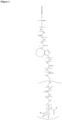
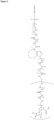
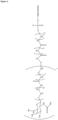
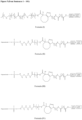
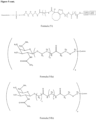
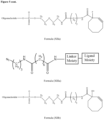
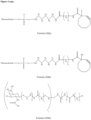
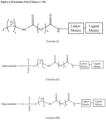
- the GalNAc ligand is comprised in any one of the linkers shown in Figures 1 to 4 or Figure 5 (Formula XI), wherein the "oligonucleotide” may be any nucleic acid disclosed herein. Accordingly, the "oligonucleotide” may comprise other bonds than a phosphodiester bond, such as one or more phosphorothioate bonds.
- the nucleic acid according to the invention is a double stranded oligonucleoside as defined herein and the linker is conjugated to the second strand, more preferably to the 3' terminal region of the second strand, via a phosphodiester bond.
- the GalNAc ligand is comprised in the linker shown in Figure 5 (Formula XI), wherein the "oligonucleotide” may be any nucleic acid disclosed herein. Accordingly, the "oligonucleotide” may comprise other bonds than a phosphodiester bond, such as one or more phosphorothioate bonds.
- the nucleic acid according to the invention is a double stranded oligonucleoside as defined herein and the linker is conjugated to the second strand, more preferably to the 3' terminal region of the second strand, via a phosphodiester bond.
- the GalNAc ligand is comprised in the linker shown in Figure 3 , wherein the "oligonucleotide" represents a nucleic acid according to the invention, wherein the nucleic acid according to the invention comprises a modified or unmodified second strand comprising or consisting of SEQ ID NO:265 or SEQ ID NO:268, preferably wherein the linker is conjugated to the 3' terminal region of the second strand, i.e., to the 3' terminal region of SEQ ID NO:265 or SEQ ID NO:268, via a phosphodiester bond.
- the GalNAc ligand is comprised in the linker shown in Figure 5 (Formula XI), wherein the "oligonucleotide” represents a nucleic acid according to the invention, wherein the nucleic acid according to the invention comprises a modified or unmodified second strand comprising or consisting of SEQ ID NO:265 or SEQ ID NO:268, preferably wherein the linker is conjugated to the 3' terminal region of the second strand, i.e., to the 3' terminal region of SEQ ID NO:265 or SEQ ID NO:268, via a phosphodiester bond.
- the GalNAc ligand is comprised in any one of the linkers shown in Figures 1 to 4 or Figure 5 (Formula XI), wherein the "oligonucleotide" represents a nucleic acid according to the invention, wherein the nucleic acid according to the invention comprises a modified second strand comprising or consisting of SEQ ID NO:774 or SEQ ID NO:776, preferably wherein the linker is conjugated to the 3' terminal region of the second strand, i.e., to the 3' terminal region of SEQ ID NO:774 or SEQ ID NO:776, via a phosphodiester bond.
- the linker is conjugated to the 3' terminal region of the second strand, i.e., to the 3' terminal region of SEQ ID NO:774 or SEQ ID NO:776, via a phosphodiester bond.
- the GalNAc ligand is comprised in the linker shown in Figure 3 , wherein the "oligonucleotide" represents a nucleic acid according to the invention, wherein the nucleic acid according to the invention comprises a modified second strand comprising or consisting of SEQ ID NO:774 or SEQ ID NO:776, preferably wherein the linker is conjugated to the 3' terminal region of the second strand, i.e., to the 3' terminal region of SEQ ID NO:774 or SEQ ID NO:776, via a phosphodiester bond.
- the linker is conjugated to the 3' terminal region of the second strand, i.e., to the 3' terminal region of SEQ ID NO:774 or SEQ ID NO:776, via a phosphodiester bond.
- the GalNAc ligand is comprised in the linker shown in Figure 5 (Formula XI), wherein the "oligonucleotide” represents a nucleic acid according to the invention, wherein the nucleic acid according to the invention comprises a modified second strand comprising or consisting of SEQ ID NO:774 or SEQ ID NO:776, preferably wherein the linker is conjugated to the 3' terminal region of the second strand, i.e., to the 3' terminal region of SEQ ID NO:774 or SEQ ID NO:776, via a phosphodiester bond.
- the GalNAc ligand is comprised in any one of the linkers shown in Figures 1 to 4 or Figure 5 (Formula XI), wherein the "oligonucleotide" represents a nucleic acid according to the invention, wherein the nucleic acid according to the invention comprises a modified first strand comprising or consisting of SEQ ID NO:764 and a modified second strand comprising or consisting of SEQ ID NO:774, preferably wherein the linker is conjugated to the 3' terminal region of the second strand, i.e., to the 3' terminal region of SEQ ID NO:774, via a phosphodiester bond.
- the linker is conjugated to the 3' terminal region of the second strand, i.e., to the 3' terminal region of SEQ ID NO:774, via a phosphodiester bond.
- the GalNAc ligand is comprised in the linker shown in Figure 3 , wherein the "oligonucleotide" represents a nucleic acid according to the invention, wherein the nucleic acid according to the invention comprises a modified first strand comprising or consisting of SEQ ID NO:764 and a modified second strand comprising or consisting of SEQ ID NO:774, preferably wherein the linker is conjugated to the 3' terminal region of the second strand, i.e., to the 3' terminal region of SEQ ID NO:774, via a phosphodiester bond.
- the linker is conjugated to the 3' terminal region of the second strand, i.e., to the 3' terminal region of SEQ ID NO:774, via a phosphodiester bond.
- the GalNAc ligand is comprised in the linker shown in Figure 5 (Formula XI), wherein the "oligonucleotide” represents a nucleic acid according to the invention, wherein the nucleic acid according to the invention comprises a modified first strand comprising or consisting of SEQ ID NO:764 and a modified second strand comprising or consisting of SEQ ID NO:774, preferably wherein the linker is conjugated to the 3' terminal region of the second strand, i.e., to the 3' terminal region of SEQ ID NO:774, via a phosphodiester bond.
- the GalNAc ligand is comprised in any one of the linkers shown in Figures 1 to 4 or Figure 5 (Formula XI), wherein the "oligonucleotide" represents a nucleic acid according to the invention, wherein the nucleic acid according to the invention comprises a modified first strand comprising or consisting of SEQ ID NO:766 and a modified second strand comprising or consisting of SEQ ID NO:776, preferably wherein the linker is conjugated to the 3' terminal region of the second strand, i.e., to the 3' terminal region of SEQ ID NO:776, via a phosphodiester bond.
- the linker is conjugated to the 3' terminal region of the second strand, i.e., to the 3' terminal region of SEQ ID NO:776, via a phosphodiester bond.
- the GalNAc ligand is comprised in the linker shown in Figure 3 , wherein the "oligonucleotide" represents a nucleic acid according to the invention, wherein the nucleic acid according to the invention comprises a modified first strand comprising or consisting of SEQ ID NO:766 and a modified second strand comprising or consisting of SEQ ID NO:776, preferably wherein the linker is conjugated to the 3' terminal region of the second strand, i.e., to the 3' terminal region of SEQ ID NO:776, via a phosphodiester bond.
- the linker is conjugated to the 3' terminal region of the second strand, i.e., to the 3' terminal region of SEQ ID NO:776, via a phosphodiester bond.
- the GalNAc ligand is comprised in the linker shown in Figure 5 (Formula XI), wherein the "oligonucleotide” represents a nucleic acid according to the invention, wherein the nucleic acid according to the invention comprises a modified first strand comprising or consisting of SEQ ID NO:766 and a modified second strand comprising or consisting of SEQ ID NO:776, preferably wherein the linker is conjugated to the 3' terminal region of the second strand, i.e., to the 3' terminal region of SEQ ID NO:776, via a phosphodiester bond.
- the GalNAc ligand is comprised in the linker shown in Figure 3 , wherein the "oligonucleotide” represents a nucleic acid according to the invention, wherein the nucleic acid according to the invention comprises a modified first strand comprising or consisting of SEQ ID NO:764 and a modified second strand comprising or consisting of SEQ ID NO:774, wherein the second strand has the following structure wherein:
- the GalNAc ligand is comprised in the linker shown in Figure 5 (Formula XI), wherein the "oligonucleotide” represents a nucleic acid according to the invention, wherein the nucleic acid according to the invention comprises a modified first strand comprising or consisting of SEQ ID NO:764 and a modified second strand comprising or consisting of SEQ ID NO:774, wherein the second strand has the following structure wherein:
- the GalNAc ligand is comprised in the linker shown in Figure 3 , wherein the "oligonucleotide” represents a nucleic acid according to the invention, wherein the nucleic acid according to the invention comprises a modified first strand comprising or consisting of SEQ ID NO:766 and a modified second strand comprising or consisting of SEQ ID NO:776, wherein the second strand has the following structure wherein:
- the GalNAc ligand is comprised in the linker shown in Figure 5 (Formula XI), wherein the "oligonucleotide” represents a nucleic acid according to the invention, wherein the nucleic acid according to the invention comprises a modified first strand comprising or consisting of SEQ ID NO:766 and a modified second strand comprising or consisting of SEQ ID NO:776, wherein the second strand has the following structure wherein:
- the disclosure provides a cell containing a nucleic acid, such as inhibitory RNA [RNAi] as described herein.
- a nucleic acid such as inhibitory RNA [RNAi] as described herein.
- the disclosure provides a cell comprising a vector as described herein.
- the invention provides a pharmaceutical composition for inhibiting expression of a target gene, the composition comprising a nucleic acid as disclosed herein.
- the pharmaceutically acceptable composition may comprise an excipient and or carrier.
- materials which can serve as pharmaceutically-acceptable carriers include: (1) sugars, such as lactose, glucose and sucrose; (2) starches, such as corn starch and potato starch; (3) cellulose, and its derivatives, such as sodium carboxymethyl cellulose, ethyl cellulose and cellulose acetate; (4) powdered tragacanth; (5) malt; (6) gelatin; (7) lubricating agents, such as magnesium stearate, sodium lauryl sulfate and talc; (8) excipients, such as cocoa butter and suppository waxes; (9) oils, such as peanut oil, cottonseed oil, safflower oil, sesame oil, olive oil, corn oil and soybean oil; (10) glycols, such as propylene glycol; (11) polyols, such as glycerin, sorbitol, mannitol and polyethylene glycol; (12) esters, such as ethyl oleate and ethyl laur
- Typical pharmaceutical carriers include, but are not limited to, binding agents (e.g., pregelatinized maize starch, polyvinylpyrrolidone or hydroxypropyl methylcellulose, etc.); fillers (e.g., lactose and other sugars, microcrystalline cellulose, pectin, gelatin, calcium sulfate, ethyl cellulose, polyacrylates or calcium hydrogen phosphate, etc.); lubricants (e.g. , magnesium stearate, talc, silica, colloidal silicon dioxide, stearic acid, metallic stearates, hydrogenated vegetable oils, corn starch, polyethylene glycols, sodium benzoate, sodium acetate, etc.); disintegrants (e.g. , starch, sodium starch glycolate, etc.); and wetting agents (e.g., sodium lauryl sulphate, etc).
- binding agents e.g., pregelatinized maize starch, polyvinylpyrrolidone or hydroxy
- compositions of the present disclosure can also be used to formulate the compositions of the present disclosure.
- suitable pharmaceutically acceptable excipients include, but are not limited to, water, salt solutions, alcohols, polyethylene glycols, gelatin, lactose, amylose, magnesium stearate, talc, silicic acid, viscous paraffin, hydroxymethylcellulose, polyvinylpyrrolidone, and the like.
- Formulations for topical administration of nucleic acids can include sterile and non-sterile aqueous solutions, non-aqueous solutions in common solvents such as alcohols, or solutions of the nucleic acids in liquid or solid oil bases.
- the solutions can also contain buffers, diluents and other suitable additives.
- Pharmaceutically acceptable organic or inorganic excipients suitable for non- parenteral administration which do not deleteriously react with nucleic acids can be used.
- the nucleic acid or composition is administered in an unbuffered solution.
- the unbuffered solution is saline or water.
- the nucleic acid e.g. siRNA agent is administered in a buffered solution.
- the buffer solution can comprise acetate, citrate, prolamine, carbonate, or phosphate, or any combination thereof.
- the buffer solution can be phosphate buffered saline (PBS).
- compositions of the disclosure may be administered in dosages sufficient to inhibit expression of a gene.
- a suitable dose of a nucleic acid e.g. an siRNA of the disclosure will be in the range of about 0.001 to about 200.0 milligrams per kilogram body weight of the recipient per day, generally in the range of about 1 to 50 mg per kilogram body weight per day.
- a suitable dose of a nucleic acid e.g. an siRNA of the disclosure will be in the range of about 0.1 mg/kg to about 5.0 mg/kg, e.g., about 0.3 mg/kg and about 3.0 mg/kg.
- a repeat-dose regimen may include administration of a therapeutic amount of a nucleic acid e.g. siRNA on a regular basis, such as every other day or once a year.
- the nucleic acid e.g. siRNA is administered about once per month to about once per quarter (i.e., about once every three months).
- the nucleic acid e.g. siRNA agent is administered at a dose of about 0.01 mg/kg to about 10 mg/kg or about 0.5 mg/kg to about 50 mg/kg. In some embodiments, the nucleic acid e.g. siRNA agent is administered at a dose of about 10 mg/kg to about 30 mg/kg. In certain embodiments, the nucleic acid e.g. siRNA agent is administered at a dose selected from about 0.5 mg/kg 1 mg/kg, 1.5 mg/kg, 3 mg/kg, 5 mg/kg, 10 mg/kg, and 30 mg/kg. In certain embodiments, the nucleic acid e.g.
- the nucleic acid e.g. siRNA agent is administered about once per week, once per month, once every other two months, or once a quarter (i.e., once every three months) at a dose of about 0.1 mg/kg to about 5.0 mg/kg.
- the nucleic acid e.g. siRNA agent is administered to the subject once a week.
- the nucleic acid e.g. siRNA agent is administered to the subject once a month.
- the nucleic acid e.g. siRNA agent is administered once per quarter (i.e. , every three months).
- the treatments can be administered on a less frequent basis. For example, after administration weekly or biweekly for three months, administration can be repeated once per month, for six months, or a year; or longer.
- the pharmaceutical composition can be administered once daily, or administered as two, three, or more sub-doses at appropriate intervals throughout the day or even using continuous infusion or delivery through a controlled release formulation.
- the nucleic acid e.g. siRNA contained in each sub-dose must be correspondingly smaller in order to achieve the total daily dosage.
- the dosage unit can also be compounded for delivery over several days, e.g. , using a conventional sustained release formulation which provides sustained release of the nucleic acid e.g. siRNA over a several day period. Sustained release formulations are well known in the art and are particularly useful for delivery of agents at a particular site, such as could be used with the agents of the present invention.
- the dosage unit contains a corresponding multiple of the daily dose.
- a single dose of the pharmaceutical compositions can be long lasting, such that subsequent doses are administered at not more than 3, 4, or 5 day intervals, or at not more than 1, 2, 3, or 4 week intervals.
- a single dose of the pharmaceutical compositions of the invention is administered once per week.
- a single dose of the pharmaceutical compositions of the invention is administered bimonthly.
- the siRNA is administered about once per month to about once per quarter (i.e. , about once every three months), or even every 6 months or 12 months.
- compositions of the present invention can be administered in a number of ways depending upon whether local or systemic treatment is desired and upon the area to be treated. Administration can be topical ⁇ e.g. , by a transdermal patch), pulmonary, e.g. , by inhalation or insufflation of powders or aerosols, including by nebulizer; intratracheal, intranasal, epidermal and transdermal, oral or parenteral. Parenteral administration includes intravenous, intraarterial, subcutaneous, intraperitoneal, or intramuscular injection or infusion; subdermal, e.g. , via an implanted device; or intracranial, e.g. , by intraparenchymal, intrathecal or intraventricular administration. In certain preferred embodiments, the compositions are administered by intravenous infusion or injection. In certain embodiments, the compositions are administered by subcutaneous injection.
- the nucleic acid e.g. agent is administered to the subject subcutaneously.
- the nucleic acid e.g. siRNA can be delivered in a manner to target a particular tissue (e.g. in particular liver cells).
- inhibitor as used herein, is used interchangeably with “reducing,” “silencing,” “downregulating”, “suppressing”, and other similar terms, and includes any level of inhibition.
- the nucleic acid of the invention when transfected into the cells, inhibits expression of the ZPI gene with an IC50 value lower than 2500 pM, 2400 pM, 2300 pM, 2200 pM, 2100 pM, 2000 pM, 1900 pM, 1800 pM, 1700 pM, 1600 pM, 1500 pM, 1400 pM, 1300 pM, 1200 pM, 1100 pM, 1000 pM, 900 pM, 800 pM, 700 pM, 600 pM, 500 pM, 400 pM, 300 pM, 200 pM or 100 pM, preferably when determined by qPCR, more preferably by reverse transcriptase (RT)-qPCR, as described herein.
- RT reverse transcriptase
- Inhibition of expression of the ZPI gene may be quantified by the following method:
- Huh7 cells human hepatocyte-derived cell line, obtained from JCRB Cell Bank
- DMEM Dulbecco's Modified Eagle Medium
- FBS FBS
- Cells may then be transfected with siRNA duplexes targeting ZPI mRNA or a negative control siRNA (siRNA-control; sense strand 5'-UUCUCCGAACGUGUCACGUTT-3' (SEQ ID NO:794), antisense strand 5'-ACGUGACACGUUCGGAGAATT-3' (SEQ ID NO:790)) using 10x3-fold serial dilutions over a final duplex concentration range of 20 nM to 1 pM.
- siRNA duplexes targeting ZPI mRNA or a negative control siRNA (siRNA-control; sense strand 5'-UUCUCCGAACGUGUCACGUTT-3' (SEQ ID NO:794), antisense strand 5'-ACGUGACACGUUCGGAGAATT-3' (SEQ ID NO:7
- Transfection may be carried out by adding 9.7 ⁇ L Opti-MEM (ThermoFisher) plus 0.3 ⁇ L Lipofectamine RNAiMAX (ThermoFisher) to 10 ⁇ L of each siRNA duplex.
- the mixture may be incubated at room temperature for 15 minutes before being added to 100 ⁇ L of complete growth medium containing 20,000 Huh7 cells.
- Cells may be incubated for 24 hours at 37°C/5% CO 2 prior to total RNA purification using a RNeasy 96 Kit (Qiagen).
- Each duplex may be tested by transfection in duplicate wells in a single experiment.
- cDNA synthesis may be performed using FastQuant RT (with gDNase) Kit (Tiangen).
- Real-time quantitative PCR (qPCR) may be performed on an ABI Prism 7900HT or ABI QuantStudio 7 with primers specific for human ZPI (Hs01547819_m1) and human GAPDH (Hs02786624_g1) using FastStart Universal Probe Master Kit (Roche).
- inhibition of expression of the ZPI gene may be characterized by a reduction of mean relative expression of the ZPI gene.
- the mean relative expression of ZPI is below 1, 0.9, 0.8, 0.7, 0.6, 0.5, or 0.4, preferably when determined by qPCR, more preferably by reverse transcriptase (RT)-qPCR, as described herein.
- the mean relative expression of ZPI is below 1, 0.9, 0.8, 0.7, 0.6, 0.5, 0.4 or 0.3, preferably when determined by qPCR, more preferably by reverse transcriptase (RT)-qPCR, as described herein.
- Mean relative expression of the ZPI gene may be quantified by the following method:
- Huh7 cells human hepatocyte-derived cell line, obtained from JCRB Cell Bank
- DMEM Dulbecco's Modified Eagle Medium
- FBS FBS
- Cells may be transfected with siRNA duplexes targeting ZPI mRNA or a negative control siRNA (siRNA-control; sense strand 5'-UUCUCCGAACGUGUCACGUTT-3' (SEQ ID NO:794), antisense strand 5'-ACGUGACACGUUCGGAGAATT-3' (SEQ ID NO:790)) at a final duplex concentration of 5 nM and 0.1 nM.
- siRNA-control sense strand 5'-UUCUCCGAACGUGUCACGUTT-3'
- SEQ ID NO:790 antisense strand 5'-ACGUGACACGUUCGGAGAATT-3'
- Transfection may be carried out by adding 9.7 ⁇ L Opti-MEM (ThermoFisher) plus 0.3 ⁇ L Lipofectamine RNAiMAX (ThermoFisher) to 10 ⁇ L of each siRNA duplex.
- the mixture may be incubated at room temperature for 15 minutes before being added to 100 ⁇ L of complete growth medium containing 20,000 Huh7 cells.
- Cells may be incubated for 24 hours at 37°C/5% CO 2 prior to total RNA purification using a RNeasy 96 Kit (Qiagen).
- Each duplex may be tested by transfection in duplicate wells in two independent experiments.
- cDNA synthesis may be performed using FastQuant RT (with gDNase) Kit (Tiangen).
- Real-time quantitative PCR (qPCR) may be performed on an ABI Prism 7900HT or ABI QuantStudio 7 with primers specific for human ZPI (Hs01547819_m1) and human GAPDH (Hs02786624_g1) using FastStart Universal Probe Master Kit (Roche).
- qPCR may be performed in duplicate on cDNA derived from each well and the mean Ct calculated.
- Relative ZPI expression may be calculated from mean Ct values using the comparative Ct ( ⁇ Ct) method, normalised to GAPDH and relative to untreated cells.
- Inhibition of the expression of ZPI gene may be manifested by a reduction of the amount of mRNA of the target ZPI gene in comparison to a suitable control.
- inhibition of the expression of ZPI gene may be assessed in terms of a reduction of a parameter that is functionally linked to gene expression, e.g , protein expression or signaling pathways.
- the present disclosure also provides methods of using nucleic acid e.g. an siRNA of the disclosure or a composition containing nucleic acid e.g. an siRNA of the disclosure to reduce or inhibit ZPI gene expression in a cell.
- the methods include contacting the cell with a nucleic acid e.g. dsiRNA of the disclosure and maintaining the cell for a time sufficient to obtain degradation of the mRNA transcript of ZPI, thereby inhibiting expression of the ZPI gene in the cell. Reduction in gene expression can be assessed by any methods known in the art.
- the cell may be contacted in vitro or in vivo, i.e., the cell may be within a subject. Said methods are not part of the claimed invention.
- a cell suitable for treatment using the methods of the disclosure may be any cell that expresses a gene of interest associated with disease related to a disorder of haemostasis, such as a disease related to a disorder of haemostasis, such as haemophilia.
- the in vivo methods of the disclosure may include administering to a subject a composition containing a nucleic acid of the invention e.g. an siRNA, where the nucleic acid e.g. siRNA includes a nucleoside sequence that is complementary to at least a part of an RNA transcript of ZPI gene of the mammal to be treated.
- a nucleic acid of the invention e.g. an siRNA
- the nucleic acid e.g. siRNA includes a nucleoside sequence that is complementary to at least a part of an RNA transcript of ZPI gene of the mammal to be treated.
- the present disclosure further provides methods of treatment of a subject in need thereof.
- the treatment methods of the disclosure include administering a nucleic acid such as an siRNA of the disclosure to a subject, e.g., a subject that would benefit from a reduction or inhibition of the expression of ZPI gene, in a therapeutically effective amount e.g. a nucleic acid such as an siRNA targeting ZPI or a pharmaceutical composition comprising the nucleic acid targeting ZPI.
- the disease to be treated is related to a disorder of haemostasis, such as a disease related to a disorder of haemostasis, such as haemophilia.
- Haemophilia, or hemophilia is a mostly inherited genetic disorder that impairs the body's ability to make blood clots, a process needed to stop bleeding. This results in subjects bleeding for a longer time after an injury, easy bruising, and an increased risk of bleeding inside joints or the brain. Subjects with a mild case of the disease may have symptoms only after an accident or during surgery. Bleeding into a joint, also referred to as haemarthrosis, can result in permanent damage while bleeding in the brain can result in long term headaches, seizures, or a decreased level of consciousness.
- haemophilia A which occurs due to low amounts of clotting factor VIII
- haemophilia B which occurs due to low levels of clotting factor IX. They are typically inherited from one's parents through an X chromosome carrying a nonfunctional gene. Rarely a new mutation may occur during early development or haemophilia may develop later in life due to antibodies forming against a clotting factor.
- haemophilia C which occurs due to low levels of factor XI
- Von Willebrand disease which occurs due to low levels of a substance called von Willebrand factor
- parahaemophilia which occurs due to low levels of factor V.
- Haemophilia A, B, and C prevent the intrinsic pathway from functioning properly; this clotting pathway is necessary when there is damage to the endothelium of a blood vessel. Acquired haemophilia is associated with cancers, autoimmune disorders, and pregnancy. Diagnosis is by testing the blood for its ability to clot and its levels of clotting factors.
- the nucleic acid of the present invention is suitable for treatment, or for treatment of haemophilia A, B and/or C. In certain embodiments, the nucleic acid of the present invention is suitable for treatment, or for treatment of haemophilia A and/or B. In certain embodiments, the nucleic acid of the present invention is suitable for treatment, or for treatment of acquired haemophilia. In certain embodiments, the nucleic acid of the present invention is suitable for treatment, or for treatment of Willebrand disease. In certain embodiments, the nucleic acid of the present invention is suitable for treatment, or for treatment of parahaemophilia.
- treatment with the nucleic acid of the invention results in a boost of clotting factor levels such that bleeding can be reduced or prevented, as demonstrated herein in Fig. 12 .
- treatment with the nucleic acid of the invention reduces or prevents bleeding episodes in a subject suffering from haemophilia.
- treatment with the nucleic acid of the invention reduces or prevents bleeding into a joint of a subject suffering from haemophilia.
- treatment with the nucleic acid of the invention reduces or prevents bleeding into a muscle or into the brain of a subject suffering from haemophilia.
- treatment of a subject preferably a subject having a disorder of haemostasis, such as haemophilia
- treatment of a subject preferably a subject having a disorder of haemostasis, such as haemophilia
- treatment of a subject, preferably a subject having a disorder of haemostasis, such as haemophilia may result in one or more of more of the following:
- treatment of a subject preferably a subject having a disorder of haemostasis, such as haemophilia
- treatment of Haem A mice with a nucleic acid of the invention results in reduced bone marrow hyperplasia.
- a disorder of haemostasis such as haemophilia
- treatment of a subject preferably a subject having a disorder of haemostasis, such as haemophilia
- treatment of Haem A mice with a nucleic acid of the invention significantly reduced osteoarthritis in said mice.
- treatment of a subject preferably a subject having a disorder of haemostasis, such as haemophilia
- treatment of Haem A mice with a nucleic acid of the invention significantly reduced chondrocyte degeneration/necrosis in said mice.
- treatment of a subject preferably a subject having a disorder of haemostasis, such as haemophilia
- treatment of Haem A mice with a nucleic acid of the invention results in reduced haemorrhage.
- a disorder of haemostasis such as haemophilia
- treatment of a subject preferably a subject having a disorder of haemostasis, such as haemophilia
- treatment of Haem A mice with a nucleic acid of the invention results in reduced haemosiderin deposition.
- a disorder of haemostasis such as haemophilia
- treatment of a subject preferably a subject having a disorder of haemostasis, such as haemophilia
- treatment of Haem A mice with a nucleic acid of the invention results in reduced occurrence of haematoma.
- treatment of Haem A mice with a nucleic acid of the invention significantly reduced haematoma in said mice.
- treatment of a subject preferably a subject having a disorder of haemostasis, such as haemophilia
- treatment of Haem A mice with a nucleic acid of the invention significantly reduced osteoclastogenic bone resorption in said mice.
- treatment of a subject preferably a subject having a disorder of haemostasis, such as haemophilia
- treatment of Haem A mice with a nucleic acid of the invention results in reduced osteolysis.
- treatment of Haem A mice with a nucleic acid of the invention significantly reduced osteolysis in said mice.
- treatment of a subject preferably a subject having a disorder of haemostasis, such as haemophilia
- treatment of Haem A mice with a nucleic acid of the invention results in reduced periostitis.
- a disorder of haemostasis such as haemophilia
- treatment of a subject preferably a subject having a disorder of haemostasis, such as haemophilia
- treatment of Haem A mice with a nucleic acid of the invention significantly reduced sub-chondral bone sclerosis in said mice.
- treatment of a subject preferably a subject having a disorder of haemostasis, such as haemophilia
- treatment of Haem A mice with a nucleic acid of the invention results in reduced tendon degeneration.
- treatment of Haem A mice with a nucleic acid of the invention significantly reduced tendon degeneration in said mice.
- treatment of a subject preferably a subject having a disorder of haemostasis, such as haemophilia
- treatment of Haem A mice with a nucleic acid of the invention results in reduced tendonitis.
- treatment of Haem A mice with a nucleic acid of the invention significantly reduced tendonitis in said mice.
- treatment of a subject preferably a subject having a disorder of haemostasis, such as haemophilia
- treatment of Haem A mice with a nucleic acid of the invention significantly reduced tenosynovitis in said mice.
- the invention relates to a nucleic acid suitable for use, or for use, in treatment of haemophilia, wherein the treatment of haemophilia is characterized by reduced bleeding and one or more of: reduced bone marrow hyperplasia, reduced osteoarthritis, reduced chondrocyte degeneration/necrosis, reduced haemorrhage, reduced haemosiderin deposition, reduced haematoma, reduced osteoclastogenic bone resorption, reduced osteolysis, reduced periostitis, reduced sub-chondral bone sclerosis, reduced tendon degeneration, reduced tendonitis, and/or reduced tenosynovitis.
- An nucleic acid e.g.
- siRNA of the invention may be administered as a "free" nucleic acid or "free siRNA, administered in the absence of a pharmaceutical composition.
- the naked nucleic acid may be in a suitable buffer solution.
- the buffer solution may comprise acetate, citrate, prolamine, carbonate, or phosphate, or any combination thereof.
- the buffer solution is phosphate buffered saline (PBS). The pH and osmolarity of the buffer solution can be adjusted such that it is suitable for administering to a subject.
- a nucleic acid e.g. siRNA of the invention may be administered as a pharmaceutical composition, such as a dsiRNA liposomal formulation.
- the method includes administering a composition featured herein such that expression of ZPI gene is decreased, such as for about 1, 2, 3, 4, 5, 6, 7, 8, 12, 16, 18, 24 hours, 28, 32, or about 36 hours.
- expression of ZPI target gene is decreased for an extended duration, e.g., at least about two, three, four days or more, e.g. , about one week, two weeks, three weeks, or four weeks or longer, e.g., about 1 month, 2 months, or 3 months.
- Subjects can be administered a therapeutic amount of nucleic acid e.g. siRNA, such as about 0.01 mg/kg to about 200 mg/kg, so as to treat disease related to a disorder of haemostasis, such as a disease related to a disorder of haemostasis, such as haemophilia.
- nucleic acid e.g. siRNA
- the nucleic acid e.g. siRNA can be administered by intravenous infusion over a period of time, on a regular basis. In certain embodiments, after an initial treatment regimen, the treatments can be administered on a less frequent basis. Administration of the siRNA can reduce gene product levels of ZPI target gene, e.g., in a cell or tissue of the patient by at least about 20%, 25%, 30%, 35%, 40%, 45%, 50%, 55%, 60%, 65%, 70%, 75%, 80%, 85%, 90%, or 95%, or below the level of detection of the assay method used. In certain embodiments, administration results in clinical stabilization or preferably clinically relevant reduction of at least one sign or symptom of a ZPI gene- associated disorder.
- TLC Thin layer chromatography
- silica-coated aluminium plates with fluorescence indicator 254 nm from Macherey-Nagel. Compounds were visualized under UV light (254 nm), or after spraying with the 5% H 2 SO 4 in methanol (MeOH) or ninhydrin reagent according to Stahl (from Sigma-Aldrich), followed by heating.
- Flash chromatography was performed with a Biotage Isolera One flash chromatography instrument equipped with a dual variable UV wavelength detector (200-400 nm) using Biotage Sfär Silica 10, 25, 50 or 100 g columns (Uppsala, Sweden).
- HPLC/ESI-MS was performed on a Dionex UltiMate 3000 RS UHPLC system and Thermo Scientific MSQ Plus Mass spectrometer using an Acquity UPLC Protein BEH C4 column from Waters (300 ⁇ , 1.7 ⁇ m, 2.1 x 100 mm) at 60 °C.
- the solvent system consisted of solvent A with H 2 O containing 0.1% formic acid and solvent B with acetonitrile (ACN) containing 0.1% formic acid. A gradient from 5-100% of B over 15 min with a flow rate of 0.4 mL/min was employed.
- Detector and conditions Corona ultra-charged aerosol detection (from esa). Nebulizer Temp.: 25 °C. N 2 pressure: 35.1 psi. Filter: Corona.
- N , N , N' , N' -tetramethyl-O-(1H-benzotriazol-1-yl)uronium hexafluorophosphate (HBTU) (2.78 g, 7.44 mmol, 5.0 eq.), 1-hydroxybenzotriazole hydrate (HOBt) (1.05 g, 7.44 mmol, 5.0 eq.) and N,N- diisopropylethylamine (DIPEA) (2.07 mL, 11.9 mmol, 8.0 eq.) were added to the solution and the reaction was stirred for 72 h.
- DIPEA N,N- diisopropylethylamine
- Triantennary GalNAc compound 9 (0.27 g, 0.14 mmol, 1.0 eq.) was dissolved in MeOH (15 mL), 3 drops of acetic acid (AcOH) and Pd/C (30 mg) was added. The reaction mixture was degassed using vacuum/argon cycles (3x) and hydrogenated under balloon pressure overnight. The completion of the reaction was followed by mass spectrometry and the resulting mixture was filtered through a thin pad of celite. The solvent was evaporated and the residue obtained was dried under high vacuum and used for the next step without further purification. The product was obtained as pale yellowish oil (0.24 g, quantitative yield). MS: calculated for C 73 H 119 N 7 O 39 , 1718.8. Found 1719.3.
- TriGalNAc (12) Triantennary GalNAc compound 10 (0.35 g, 0.24 mmol, 1.0 eq.) and compound 11 (0.11 g, 0.31 mmol, 1.5 eq.) were dissolved in DCM (5 mL) under argon and triethylamine (0.1 mL, 0.61 mmol, 3.0 eq.) was added. The reaction was stirred at room temperature overnight. The solvent was removed under reduced pressure, the residue was dissolved in EtOAc (100 mL) and washed with water (100 mL). The organic layer was separated and dried over Na 2 SO 4 .
- Tether 1 conjugation of Tether 1 to a siRNA strand: Monofluoro cyclooctyne (MFCO) conjugation at 5'-or 3'-end
- reaction mixture was diluted 15-fold with water, filtered through a 1.2 ⁇ m filter from Sartorius and then purified by reserve phase (RP HPLC) on an ⁇ kta Pure instrument (GE Healthcare).
- Buffer A was 100 mM TEAAc pH 7 and buffer B contained 95% acetonitrile in buffer A.
- a flow rate of 10 mL/min and a temperature of 60°C were employed.
- UV traces at 280 nm were recorded.
- a gradient of 0-100% B within 60 column volumes was employed.
- RP HPLC purification was performed using a XBridge C18 Prep 19 x 50 mm column from Waters.
- Buffer A was 100 mM triethylammonium acetate pH 7 and buffer B contained 95% acetonitrile in buffer A.
- a flow rate of 10 mL/min and a temperature of 60°C were employed.
- UV traces at 280 nm were recorded.
- a gradient of 0-100% B within 60 column volumes was employed.
- the conjugates were desalted by size exclusion chromatography using Sephadex G25 Fine resin (GE Healthcare) on an ⁇ kta Pure (GE Healthcare) instrument to yield the conjugated oligonucleotides in an isolated yield of 50-70%.
- the two complementary strands were annealed by combining equimolar aqueous solutions of both strands.
- the mixtures were placed into a water bath at 70°C for 5 minutes and subsequently allowed to cool to ambient temperature within 2 h.
- the duplexes were lyophilized for 2 days and stored at -20°C.
- duplexes were analyzed by analytical SEC HPLC on Superdex TM 75 Increase 5/150 GL column 5 x 153-158 mm (Cytiva) on a Dionex Ultimate 3000 (Thermo Fisher Scientific) HPLC system.
- Mobile phase consisted of 1x PBS containing 10% acetonitrile.
- An isocratic gradient was run in 10 min at a flow rate of 1.5 mL/min at room temperature. UV traces at 260 and 280 nm were recorded.
- Water (LC-MS grade) was purchased from Sigma-Aldrich and Phosphate-buffered saline (PBS; 10x, pH 7.4) was purchased from GIBCO (Thermo Fisher Scientific).
- TLC Thin layer chromatography
- silica-coated aluminium plates with fluorescence indicator 254 nm from Macherey-Nagel. Compounds were visualized under UV light (254 nm), or after spraying with the 5% H 2 SO 4 in methanol (MeOH) or ninhydrin reagent according to Stahl (from Sigma-Aldrich), followed by heating.
- Flash chromatography was performed with a Biotage Isolera One flash chromatography instrument equipped with a dual variable UV wavelength detector (200-400 nm) using Biotage Sfär Silica 10, 25, 50 or 100 g columns (Uppsala, Sweden).
- HPLC/ESI-MS was performed on a Dionex UltiMate 3000 RS UHPLC system and Thermo Scientific MSQ Plus Mass spectrometer using an Acquity UPLC Protein BEH C4 column from Waters (300 ⁇ , 1.7 ⁇ m, 2.1 x 100 mm) at 60 °C.
- the solvent system consisted of solvent A with H 2 O containing 0.1% formic acid and solvent B with acetonitrile (ACN) containing 0.1% formic acid. A gradient from 5-100% of B over 15 min with a flow rate of 0.4 mL/min was employed.
- Detector and conditions Corona ultra-charged aerosol detection (from esa). Nebulizer Temp.: 25°C. N 2 pressure: 35.1 psi. Filter: Corona.
- N , N , N' , N' -tetramethyl-O-(1H-benzotriazol-1-yl)uronium hexafluorophosphate (HBTU) (2.78 g, 7.44 mmol, 5.0 eq.), 1-hydroxybenzotriazole hydrate (HOBt) (1.05 g, 7.44 mmol, 5.0 eq.) and N,N- diisopropylethylamine (DIPEA) (2.07 mL, 11.9 mmol, 8.0 eq.) were added to the solution and the reaction was stirred for 72 h.
- DIPEA N,N- diisopropylethylamine
- Triantennary GalNAc compound 9 (0.27 g, 0.14 mmol, 1.0 eq.) was dissolved in MeOH (15 mL), 3 drops of acetic acid (AcOH) and Pd/C (30 mg) was added. The reaction mixture was degassed using vacuum/argon cycles (3x) and hydrogenated under balloon pressure overnight. The completion of the reaction was followed by mass spectrometry and the resulting mixture was filtered through a thin pad of celite. The solvent was evaporated, and the residue obtained was dried under high vacuum and used for the next step without further purification. The product was obtained as pale yellowish oil (0.24 g, quantitative yield). MS: calculated for C 73 H 119 N 7 O 39 , 1718.8. Found 1719.3.
- Triantennary GalNAc compound 10 (0.45 g, 0.26 mmol, 1.0 eq.), HBTU (0.19 g, 0.53 mmol, 2.0 eq.) and DIPEA (0.23 mL, 1.3 mmol, 5.0 eq.) were dissolved in DCM (10 mL) under argon. To this mixture, it was added dropwise a solution of compound 13 (0.14 g, 0.53 mmol, 2.0 eq.) in DCM (5 mL). The reaction was stirred at room temperature overnight. The solvent was removed, and the residue was dissolved in EtOAc (50 mL), washed with water (50 mL) and dried over Na 2 SO 4 .
- TriGalNAc Triantennary GalNAc compound 14 (0.31 g, 0.15 mmol, 1.0 eq.) was dissolved in EtOAc (15 mL) and Pd/C (40 mg) was added. The reaction mixture was degassed by using vacuum/argon cycles (3x) and hydrogenated under balloon pressure overnight. The completion of the reaction was monitored by mass spectrometry and the resulting mixture was filtered through a thin pad of celite. The solvent was removed under reduced pressure and the resulting residue was dried under high vacuum overnight. The residue was used for conjugations to oligonucleosides without further purification (0.28 g, quantitative yield). MS: calculated for C 81 H 131 N 7 O 42 , 1874.9. Found 1875.3.
- Tether 2 Conjugation of Tether 2 to a siRNA strand: TriGalNAc tether 2 (GalNAc-T2) conjugation at 5'-end or 3'-end
- TriGalNAc tether 2 NHS ester To a solution of carboxylic acid tether 2 (compound 15, 227 mg, 121 ⁇ mol) in DMF (2.1 mL), N-hydroxysuccinimide (NHS) (15.3 mg, 133 ⁇ mol) and N,N'-diisopropylcarbodiimide (DIC) (19.7 ⁇ L, 127 ⁇ mol) were added. The solution was stirred at room temperature for 18 h and used without purification for the subsequent conjugation reactions.
- NHS N-hydroxysuccinimide
- DIC N,N'-diisopropylcarbodiimide
- the purification was performed using a XBridge C18 Prep 19 x 50 mm column from Waters.
- Buffer A was 100 mM TEAA pH 7 and buffer B contained 95% acetonitrile in buffer A.
- a flow rate of 10 mL/min and a temperature of 60°C were employed.
- UV traces at 280 nm were recorded.
- a gradient of 0-100% B within 60 column volumes was employed.
- the conjugates were desalted by size exclusion chromatography using Sephadex G25 Fine resin (GE Healthcare) on an ⁇ kta Pure (GE Healthcare) instrument to yield the conjugated oligonucleotides in an isolated yield of 60-80%.
- the conjugates were characterized by HPLC-MS analysis with a 2.1 x 50 mm XBridge C18 column (Waters) on a Dionex Ultimate 3000 (Thermo Fisher Scientific) HPLC system equipped with a Compact ESI-Qq-TOF mass spectrometer (Bruker Daltonics).
- Buffer A was 16.3 mM triethylamine, 100 mM HFIP in 1% MeOH in H2O and buffer B contained 95% MeOH in buffer A.
- a flow rate of 250 ⁇ L/min and a temperature of 60°C were employed.
- UV traces at 260 and 280 nm were recorded.
- a gradient of 1-100% B within 31 min was employed.
- the two complementary strands were annealed by combining equimolar aqueous solutions of both strands.
- the mixtures were placed into a water bath at 70°C for 5 minutes and subsequently allowed to cool to ambient temperature within 2 h.
- the duplexes were lyophilized for 2 days and stored at -20°C.
- duplexes were analyzed by analytical SEC HPLC on Superdex TM 75 Increase 5/150 GL column 5 x 153-158 mm (Cytiva) on a Dionex Ultimate 3000 (Thermo Fisher Scientific) HPLC system.
- Mobile phase consisted of 1x PBS containing 10% acetonitrile.
- An isocratic gradient was run in 10 min at a flow rate of 1.5 mL/min at room temperature. UV traces at 260 and 280 nm were recorded.
- Water (LC-MS grade) was purchased from Sigma-Aldrich and Phosphate-buffered saline (PBS; 10x, pH 7.4) was purchased from GIBCO (Thermo Fisher Scientific).
- Tether 2 Conjugation of Tether 2 to a siRNA strand: TriGalNAc tether 2 (GalNAc-T2) conjugation at 5'-end or 3'-end
- siRNA sense and antisense strands were performed on a MerMade192X synthesiser with commercially available solid supports made of controlled pore glass with universal linker (Universal CPG, with a loading of 40 ⁇ mol/g; LGC Biosearch or Glen Research).
- RNA phosphoramidites were purchased from ChemGenes or Hongene.
- the 2'-O-Methyl phosphoramidites used were the following: 5'-(4,4'-dimethoxytrityl)-N-benzoyl-adenosine 2'-O-methyl-3'- [(2-cyanoethyl)-(N,N-diisopropyl)]-phosphoramidite, 5'-(4,4'-dimethoxytrityl)-N-acetyl-cytidine 2'-O-methyl-3'- [(2-cyanoethyl)-(N,N-diisopropyl)]-phosphoramidite, 5'-(4,4'-dimethoxytrityl)-N-isobutyryl-guanosine 2'-O-methyl-3'-[(2-cyanoethyl)-(N,N-diisopropyl)]-phosphoramidite, 5'-(4,4'-dimethoxytrityl)-uridine 2'-O
- the 2'-F phosphoramidites used were the following: 5'-dimethoxytrityl-N-benzoyl-deoxyadenosine 2'-fluoro-3'-[(2-cyanoethyl)-(N,N-diisopropyl)]-phosphoramidite, 5'-dimethoxytrityl-N-acetyl-deoxycytidine 2'-fluoro-3'-[(2-cyanoethyl)-(N,N-diisopropyl)]-phosphoramidite, 5'-dimethoxytrityl-N-isobutyryl-deoxyguanosine 2'-fluoro-3'- [(2-cyanoethyl)-(N,N-diisopropyl)]-phosphoramidite and 5'-dimethoxytrityl-deoxyuridine 2'-fluoro-3'-[(2-cyanoethyl)-(N,N-
- the coupling time was 180 seconds.
- the oxidizer contact time was set to 80 seconds and thiolation time was 2*100 seconds.
- the oligonucleotides were cleaved from the solid support using a NH 4 OH:EtOH solution 4:1 (v/v) for 20 hours at 45°C (TCI).
- TCI 45°C
- the solid support was then filtered off, the filter was thoroughly washed with H 2 O and the volume of the combined solution was reduced by evaporation under reduced pressure.
- Oligonucleotide were treated to form the sodium salt by ultracentrifugation using Amicon Ultra-2 Centrifugal Filter Unit; PBS buffer (10x, Teknova, pH 7.4, Sterile) or by EtOH precipitation from 1M sodium acetate.
- the single strands identity were assessed by MS ESI- and then, were annealed in water to form the final duplex siRNA and duplex purity were assessed by size exclusion chromatography.
- Example 7 Solid phase synthesis method: scale ⁇ 5 ⁇ mol
- Syntheses of siRNA sense and antisense strands were performed on a MerMade12 synthesiser with commercially available solid supports made of controlled pore glass with universal linker (Universal CPG, with a loading of 40 ⁇ mol/g; LGC Biosearch or Glen Research) at 5 ⁇ mol scale.
- Sense strand destined to 3' conjugation were sytnthesised at 12 ⁇ mol on 3'-PT-Amino-Modifier C6 CPG 500 ⁇ solid support with a loading of 86 ⁇ mol/g (LGC).
- RNA phosphoramidites were purchased from ChemGenes or Hongene.
- the 2'-O-Methyl phosphoramidites used were the following: 5'-(4,4'-dimethoxytrityl)-N-benzoyl-adenosine 2'-O-methyl-3'- [(2-cyanoethyl)-(N,N-diisopropyl)]-phosphoramidite, 5'-(4,4'-dimethoxytrityl)-N-acetyl-cytidine 2'-O-methyl-3'- [(2-cyanoethyl)-(N,N-diisopropyl)]-phosphoramidite, 5'-(4,4'-dimethoxytrityl)-N-isobutyryl-guanosine 2'-O-methyl-3'-[(2-cyanoethyl)-(N,N-diisopropyl)]-phosphoramidite, 5'-(4,4'-dimethoxytrityl)-uridine 2'-O
- the 2'-F phosphoramidites used were the following: 5'-dimethoxytrityl-N-benzoyl-deoxyadenosine 2'-fluoro-3'-[(2-cyanoethyl)-(N,N-diisopropyl)]-phosphoramidite, 5'-dimethoxytrityl-N-acetyl-deoxycytidine 2'-fluoro-3'-[(2-cyanoethyl)-(N,N-diisopropyl)]-phosphoramidite, 5'-dimethoxytrityl-N-isobutyryl-deoxyguanosine 2'-fluoro-3'- [(2-cyanoethyl)-(N,N-diisopropyl)]-phosphoramidite and 5'-dimethoxytrityl-deoxyuridine 2'-fluoro-3'-[(2-cyanoethyl)-(N,N-
- the oligonucleotides were cleaved from the solid support using a NH 4 OH:EtOH solution 4:1 (v/v) for 20 hours at 45°C (TCI).
- TCI 45°C
- the solid support was then filtered off, the filter was thoroughly washed with H 2 O and the volume of the combined solution was reduced by evaporation under reduced pressure.
- Oligonucleotide were treated to form the sodium salt by EtOH precipitation from 1M sodium acetate.
- the single strand oligonucleotides were purified by IP-RP HPLC on Xbridge BEH C18 5 ⁇ m, 130 ⁇ , 19x150 mm (Waters) column with an increasing gradient of B in A.
- Mobile phase A 240 mM HFIP, 7 mM TEA and 5% methanol in water
- mobile phase B 240 mM HFIP, 7 mM TEA in methanol.
- Sense strand were conjugated as per protocols provided in any of examples 1, 3 or 5.
- Sense and Antisense strands were then annealed in water to form the final duplex siRNA and duplex purity were assessed by size exclusion chromatography.
- siRNA oligonucleosides according to the present invention target ZPI.
- the full DNA sequence of the ZPI target is as follows (SEQ ID NO: 1):
- SEQ ID NO: 2 to 121 refer to human (Homo sapiens) mRNA sequences.
- Table 2 provides the unmodified first (antisense) and corresponding unmodified second (sense) strand sequences for siRNA oligonucleosides according to the present invention, together with the corresponding positions in the overall gene sequence of SEQ ID NO: 1 as follows.
- Table 3 provides the modified first (antisense) sequences, together with the corresponding unmodified first (antisense) sequences for siRNA oligonucleosides according to the present invention as follows.
- Table 3 Antisense strand ID Modified First (Antisense) Strand 5' ⁇ 3' SEQ ID NO (AS - mod) Underlying Base Sequence 5' ⁇ 3' SEQ ID NO (AS - unmod) (Shown as an Unmodified Nucleoside Sequence) ETXS1036 SEQ ID NO: 764 SEQ ID NO: 145 ETXS1040 SEQ ID NO: 766 SEQ ID NO: 148 ETXS632 SEQ ID NO: 362 SEQ ID NO: 122 ETXS634 SEQ ID NO: 363 SEQ ID NO: 123 ETXS636 SEQ ID NO: 364 SEQ ID NO: 124 ETXS638 SEQ ID NO: 365 SEQ ID NO: 125 ETXS640 SEQ ID NO: 366 SEQ ID NO: 126
- Table 4 provides the modified second (sense) sequences, together with the corresponding unmodified second (sense) sequences for siRNA oligonucleosides according to the present invention as follows.
- Table 4 Sense strand ID Modified Second (Sense) Strand 5' ⁇ 3' SEQ ID NO (SS - mod) Underlying Base Sequence 5' ⁇ 3' SEQ ID NO (SS - unmod) (Shown as an Unmodified Nucleoside Sequence) ETXS1035 SEQ ID NO: 774 SEQ ID NO: 265 ETXS1039 SEQ ID NO: 776 SEQ ID NO: 268 ETXS631 SEQ ID NO: 562 SEQ ID NO: 242 ETXS633 SEQ ID NO: 563 SEQ ID NO: 243 ETXS635 SEQ ID NO: 564 SEQ ID NO: 244 ETXS637 SEQ ID NO: 565 SEQ ID NO: 245 ETXS639 SEQ ID NO: 566 SEQ ID NO: 246 ETXS64
- modified second strand sequences as illustrated above in Table 4 include the preferred 5' iaia motif. However, it should also be understood that the scope of these modified second strand sequences additionally includes the Me / F modified second strand in the absence of the 5'iaia motif.
- Table 5 identifies duplexes with Duplex IDs referencing the modified antisense and sense IDs from previous Tables 3 and 4.
- Table 5 Duplex ID First (Antisense) strand ID Second (Sense) strand ID ETXM1184 ETXS1036 ETXS1035 ETXM1157 ETXS1040 ETXS1039 ETXM316 ETXS632 ETXS631 ETXM317 ETXS634 ETXS633 ETXM318 ETXS636 ETXS635 ETXM319 ETXS638 ETXS637 ETXM320 ETXS640 ETXS639 ETXM321 ETXS642 ETXS641 ETXM322 ETXS644 ETXS643 ETXM323 ETXS646 ETXS645 ETXM324 ETXS648 ETXS647 ETXM325 ETXS650 ETXS649 ETXM326 ETXS652 ETXS651 ETXM327 ETXS
- Huh7 cells human hepatocyte-derived cell line, obtained from JCRB Cell Bank
- DMEM Dulbecco's Modified Eagle Medium
- FBS FBS
- DMEM Dulbecco's Modified Eagle Medium
- Cells were transfected with siRNA duplexes targeting ZPI mRNA or a negative control siRNA (siRNA-control; sense strand 5'-UUCUCCGAACGUGUCACGUTT-3' (SEQ ID NO:794), antisense strand 5'-ACGUGACACGUUCGGAGAATT-3' (SEQ ID NO:790)) at a final duplex concentration of 5 nM and 0.1 nM.
- siRNA-control sense strand 5'-UUCUCCGAACGUGUCACGUTT-3'
- SEQ ID NO:790 antisense strand 5'-ACGUGACACGUUCGGAGAATT-3'
- Transfection was carried out by adding 9.7 ⁇ L Opti-MEM (ThermoFisher) plus 0.3 ⁇ L Lipofectamine RNAiMAX (ThermoFisher) to 10 ⁇ L of each siRNA duplex. The mixture was incubated at room temperature for 15 minutes before being added to 100 ⁇ L of complete growth medium containing 20,000 Huh7 cells. Cells were incubated for 24 hours at 37°C/5% CO 2 prior to total RNA purification using a RNeasy 96 Kit (Qiagen). Each duplex was tested by transfection in duplicate wells in two independent experiments.
- cDNA synthesis was performed using FastQuant RT (with gDNase) Kit (Tiangen).
- Real-time quantitative PCR (qPCR) was performed on an ABI Prism 7900HT or ABI QuantStudio 7 with primers specific for human ZPI (Hs01547819_m1) and human GAPDH (Hs02786624_gl) using FastStart Universal Probe Master Kit (Roche).
- RNAi molecules were depicted in Table 5.
- Huh7 cells human hepatocyte-derived cell line, obtained from JCRB Cell Bank
- DMEM Dulbecco's Modified Eagle Medium
- FBS FBS
- DMEM Dulbecco's Modified Eagle Medium
- Cells were transfected with siRNA duplexes targeting ZPI mRNA or a negative control siRNA (siRNA-control; sense strand 5'-UUCUCCGAACGUGUCACGUTT-3' (SEQ ID NO:794), antisense strand 5'-ACGUGACACGUUCGGAGAATT-3' (SEQ ID NO:790)) using 10x3-fold serial dilutions over a final duplex concentration range of 20 nM to 1 pM.
- siRNA-control sense strand 5'-UUCUCCGAACGUGUCACGUTT-3'
- SEQ ID NO:790 antisense strand 5'-ACGUGACACGUUCGGAGAATT-3'
- Transfection was carried out by adding 9.7 ⁇ L Opti-MEM (ThermoFisher) plus 0.3 ⁇ L Lipofectamine RNAiMAX (ThermoFisher) to 10 ⁇ L of each siRNA duplex. The mixture was incubated at room temperature for 15 minutes before being added to 100 ⁇ L of complete growth medium containing 20,000 Huh7 cells. Cells were incubated for 24 hours at 37°C/5% CO 2 prior to total RNA purification using a RNeasy 96 Kit (Qiagen). Each duplex was tested by transfection in duplicate wells in a single experiment.
- cDNA synthesis was performed using FastQuant RT (with gDNase) Kit (Tiangen).
- Real-time quantitative PCR (qPCR) was performed on an ABI Prism 7900HT or ABI QuantStudio 7 with primers specific for human ZPI (Hs01547819_m1) and human GAPDH (Hs02786624_gl) using FastStart Universal Probe Master Kit (Roche).
- qPCR was performed in duplicate on cDNA derived from each well and the mean Ct calculated.
- Relative ZPI expression was calculated from mean Ct values using the comparative Ct ( ⁇ Ct) method, normalised to GAPDH and relative to untreated cells.
- Maximum percent inhibition of ZPI expression and IC50 values were calculated using a four parameter (variable slope) model using GraphPad Prism 9. Results are shown in Figure 9 . Sequences of RNAi molecules are depicted in the relevant Tables herein.
- ETXM338, ETXM359 and ETXM396 do not cross react with mouse ZPI sequences and will not be used in mouse PoC studies. These sequences were murinised so that they are homologous with mouse ZPI sequence for use in mouse studies. The siRNA sequences were aligned with mouse ZPI transcripts NM_144834.4 and NM_001301404.1 and nucleotides that mismatched the mouse sequence changed to match the mouse sequence.
- ETXM338 was changed to a C at position 18 of the sense strand and a G at position 4 of the antisense strand to give ETXM1064.
- ETXM359 was changed to a G at position 19 of the sense strand, a C at position 3 of the antisense strand and a C at position 23 of the antisense strand to give ETXM1072.
- ETXM396 was changed to a U at position 2 of the sense strand, a C at position 5 of the sense strand, a G at position 17 of the antisense strand and an A at position 20 of the antisense strand to give ETXM1076.
- the murinised sequences were checked by BLAST search to ensure that they did not cross-react with other mouse transcripts.
- the murinised siRNA sequences are shown in Table 9. Positions changed to mouse sequence are underlined. Table 9 Sequence ID Sense (5' to 3') Antisense (5' to 3') ETXM1064 GCCUUCAUCCACAAGGA C UUU (SEQ ID NO:791) AAA G UCCUUGUGGAUGAAGGCAA (SEQ ID NO:787) ETXM1072 CUCCACCUUUGACAAGAA G UU (SEQ ID NO:792) AA C UUCUUGUCAAAGGUGGAGG C (SEQ ID NO:788) ETXM1076 G U AG C UUUGCCUUCAUCCACA UGUGGAUGAAGGCAAA G CU A CCC (SEQ ID NO:793) (SEQ ID NO:789)
- Haemarthrosis is defined as a bleeding into joint spaces that is a common feature of haemophilia.
- a long-term consequence of repeated haemarthrosis is the development of permanent joint disease known as haemophilic arthropathy.
- haemophilic arthropathy Around 50% of patients with haemophilia develop severe arthropathy resulting in chronic joint pain, reduced range of motion and function, and reduced quality of life.
- Haemophilic arthropathy is characterised by synovial hyperplasia, chronic inflammation, fibrosis, and haemosiderosis.
- the model of haemarthrosis used was the induction of a knee bleed in haem A mice and the appropriate background wild-type (WT) strain, with progression of the bleed into the joint monitored up to 10 days post-injury. Identical studies were conducted twice to increase number of animals for analysis.
- mice 8 days prior to induction of knee bleed, mice were injected subcutaneously (s.c.) with the GalNAc-siRNA construct ETXM1184, fitusiran or a vehicle (0.9% saline) at a dose volume of 5 ml/kg. Advate was injected intravenously 15 minutes prior to joint bleed induction.
- mice were weighed and anaesthetised using isoflurane inhaled anaesthetic. Both legs were shaved to expose the knee joint. Mice were injected s.c. with buprenorphine at 10 ml/kg for analgesia and the diameter of both knees was measured with electronic calipers. Subsequently, both knees were wiped with 70% ethanol.
- a 30 G sterile hypodermic needle was inserted into the infrapatellar ligament of one knee.
- the injected knee was randomised between left and right, and the injected side was recorded. Mice were removed from anaesthetic and allowed to recover in a warmed cage before being returned to the home cage.
- VBS visual bleeding score
- mice All mice were carefully inspected daily for clinical signs of excessive blood loss. Mice showing clinical signs of excessive blood loss, piloerection, withdrawing from cage mates or grimacing were killed for welfare reasons.
- a citrated blood sample was taken by cardiac puncture, under isoflurane anaesthesia, plasma prepared and aliquots frozen on dry ice before storing at -80°C. For that, blood was collected into 3.8% Sodium Citrate at a ratio of 1 to 9 followed by centrifugation at 7000 x g for 10 minutes at 4°C. In detail, the following steps were performed:
- the liver was removed and up to 3 portions of each lobe were placed in RNA later and kept at 4°C for 24 to 72 hours. Tissue was then blotted dry, weighed and stored at -80°C. In detail, the following steps were performed:
- Haem A mice that received the GalNAc-siRNA construct ETXM1184 showed a significantly reduced visual bleeding score in comparison to Haem A mice that received the vehicle (0.9% saline) (see Fig. 12A & B ). Furthermore, the knee diameter of mice that received the GalNAc-siRNA construct ETXM1184 recovered faster following the induction of knee bleed compared to mice that received the vehicle ( Fig 13A ). This observation was confirmed by comparing the differences between the diameter of the injured and non-injured skinned knee diameter ( Fig. 13B ).
- Huh7 cells human hepatocyte-derived cell line, obtained from JCRB Cell Bank
- DMEM Dulbecco's Modified Eagle Medium
- FBS FBS
- DMEM Dulbecco's Modified Eagle Medium
- RNAiMAX Lipofectamine RNAiMAX
- cDNA synthesis was performed using FastKing RT kit (with gDNase) Kit (Tiangen).
- Real-time quantitative PCR (qPCR) was performed on an ABI Prism 7900HT or ABI QuantStudio 7 with primers specific for human ZPI (Hs01547819_m1) and human GAPDH (Hs02786624_gl) using a TaqMan Gene Expression Assay Kit (ThermoFisher Scientific).
- qPCR was performed in duplicate on cDNA derived from each well and the mean Ct calculated.
- Relative target expression was calculated from mean Ct values using the comparative Ct ( ⁇ Ct) method, normalised to GAPDH and relative to untreated cells.
- the siRNA duplexes ETXM1184, ETXM1199, ETXM1200, ETXM1201, ETXM1202, ETXM1203, ETXM1204, ETXM1205, ETXM1206 and ETXM1207 were tested ( Fig.21 ).
Landscapes
- Health & Medical Sciences (AREA)
- Life Sciences & Earth Sciences (AREA)
- Engineering & Computer Science (AREA)
- Chemical & Material Sciences (AREA)
- Genetics & Genomics (AREA)
- Biomedical Technology (AREA)
- Molecular Biology (AREA)
- Bioinformatics & Cheminformatics (AREA)
- Organic Chemistry (AREA)
- General Health & Medical Sciences (AREA)
- Biotechnology (AREA)
- General Engineering & Computer Science (AREA)
- Wood Science & Technology (AREA)
- Zoology (AREA)
- Biochemistry (AREA)
- Animal Behavior & Ethology (AREA)
- Medicinal Chemistry (AREA)
- Pharmacology & Pharmacy (AREA)
- Veterinary Medicine (AREA)
- Public Health (AREA)
- Plant Pathology (AREA)
- Microbiology (AREA)
- Physics & Mathematics (AREA)
- Biophysics (AREA)
- Epidemiology (AREA)
- Hematology (AREA)
- Diabetes (AREA)
- Chemical Kinetics & Catalysis (AREA)
- General Chemical & Material Sciences (AREA)
- Nuclear Medicine, Radiotherapy & Molecular Imaging (AREA)
- Pharmaceuticals Containing Other Organic And Inorganic Compounds (AREA)
- Medicinal Preparation (AREA)
- Saccharide Compounds (AREA)
Claims (15)
- Nukleinsäure zur Verwendung bei der Vorbeugung oder Behandlung einer Erkrankung in Zusammenhang mit einer Störung der Hämostase wie z. B. Hämophilie,wobei die Nukleinsäure zum Hemmen der Expression von ZPI vorgesehen ist und eine Duplexregion umfasst, die einen ersten Strang und einen zweiten Strang umfasst, der zumindest teilweise zu dem ersten Strang komplementär ist, wobei der erste Strang:(i) zumindest teilweise zu einem Abschnitt von RNA komplementär ist, der aus dem ZPI-Gen transkribiert ist, und(ii) zumindest 17 zusammenhängende Nukleoside umfasst, die sich um 0 oder 1 Nukleosid von einer der Sequenzen des ersten Strangs unterscheiden, wie in Tabelle 2 aufgelistet, undwobei die Nukleinsäure erste und zweite Stränge umfasst, die eine Nukleosidsequenz umfassen, daraus bestehen oder im Wesentlichen daraus bestehen, die sich um 0 oder 1 Nukleosid von einer der nachstehenden ersten und zweiten Sequenzen unterscheidet:
Unmodifizierter erster Strang Unmodifizierter zweiter Strang SEQ ID NO: 145 SEQ ID NO: 265 SEQ ID NO: 148 SEQ ID NO: 268 SEQ ID NO: 126 SEQ ID NO: 246 SEQ ID NO: 127 SEQ ID NO: 247 SEQ ID NO: 128 SEQ ID NO: 248 SEQ ID NO: 129 SEQ ID NO: 249 SEQ ID NO: 131 SEQ ID NO: 251 SEQ ID NO: 132 SEQ ID NO: 252 SEQ ID NO: 138 SEQ ID NO: 258 SEQ ID NO: 139 SEQ ID NO: 259 SEQ ID NO: 144 SEQ ID NO: 264 SEQ ID NO: 147 SEQ ID NO: 267 SEQ ID NO: 149 SEQ ID NO: 269 SEQ ID NO: 226 SEQ ID NO: 346 SEQ ID NO: 227 SEQ ID NO: 347 SEQ ID NO: 228 SEQ ID NO: 348 SEQ ID NO: 229 SEQ ID NO: 349 SEQ ID NO: 231 SEQ ID NO: 351 SEQ ID NO: 232 SEQ ID NO: 352 SEQ ID NO: 238 SEQ ID NO: 358 SEQ ID NO: 239 SEQ ID NO: 359 - Nukleinsäure zur Verwendung nach Anspruch 1, die erste und zweite Stränge umfasst, die eine Nukleosidsequenz umfassen, daraus bestehen oder im Wesentlichen daraus bestehen, die sich um 0 oder 1 Nukleosid von einer der nachstehenden ersten und zweiten Sequenzen unterscheiden:
Unmodifizierter erster Strang Unmodifizierter zweiter Strang SEQ ID NO: 128 SEQ ID NO: 248 SEQ ID NO: 144 SEQ ID NO: 264 SEQ ID NO: 148 SEQ ID NO: 268 SEQ ID NO: 149 SEQ ID NO: 269 SEQ ID NO: 138 SEQ ID NO: 258 - Nukleinsäure zur Verwendung nach Anspruch 1, die erste und zweite Stränge umfasst, die eine Nukleosidsequenz umfassen, daraus bestehen oder im Wesentlichen daraus bestehen, die sich um 0 oder 1 Nukleosid von einer der nachstehenden ersten und zweiten Sequenzen unterscheiden.
Unmodifizierter erster Strang Unmodifizierter zweiter Strang SEQ ID NO: 148 SEQ ID NO: 268 SEQ ID NO: 145 SEQ ID NO: 265 SEQ ID NO: 144 SEQ ID NO: 264 SEQ ID NO: 165 SEQ ID NO: 285 SEQ ID NO: 202 SEQ ID NO: 322 - Nukleinsäure zur Verwendung nach Anspruch 1, die erste und zweite Stränge umfasst, die eine Nukleosidsequenz umfassen, daraus bestehen oder im Wesentlichen daraus bestehen, die sich um 0 oder 1 Nukleosid von einer der nachstehenden ersten und zweiten Sequenzen unterscheiden.
Unmodifizierter erster Strang Unmodifizierter zweiter Strang SEQ ID NO: 145 SEQ ID NO: 265 SEQ ID NO: 148 SEQ ID NO: 268 Unmodifizierter erster Strang Unmodifizierter zweiter Strang SEQ ID NO: 145 SEQ ID NO: 265 - Nukleinsäure zur Verwendung nach einem vorstehenden Anspruch, wobei der erste Strang eine Länge in dem Bereich von 17 bis 30 Nukleosiden, vorzugsweise 19 bis 25 Nukleosiden, mehr bevorzugt 19 oder 23 Nukleoside, aufweist.
- Nukleinsäure zur Verwendung nach einem vorstehenden Anspruch, wobei der zweite Strang eine Länge im Bereich von 17 bis 30 Nukleosiden, vorzugsweise 19 bis 25 Nukleosiden, mehr bevorzugt 19 oder 21 Nukleoside, aufweist.
- Nukleinsäure zur Verwendung nach einem vorstehenden Anspruch, wobei die Duplexregion der Nukleinsäure eine Länge zwischen 17 und 30 Nukleosiden aufweist und mehr bevorzugt eine Länge von 19 oder 21 Nukleosiden aufweist.
- Nukleinsäure zur Verwendung nach einem vorstehenden Anspruch, wobei die Region der Komplementarität zwischen dem ersten Strang und dem Abschnitt von RNA, der aus dem ZPI-Gen transkribiert ist, eine Länge zwischen 17 und 30 Nukleosiden aufweist.
- Nukleinsäure zur Verwendung nach einem vorstehenden Anspruch, wobei die Nukleinsäure einen oder mehrere einzelsträngige Nukleosidüberhänge umfasst, optional wobei der Überhang auf dem ersten oder dem zweiten Strang vorhanden ist, vorzugsweise an dem 3'-Terminus des ersten oder des zweiten Strangs, und/oder wobei der Überhang 1 bis 4 Nukleoside, mehr bevorzugt 2 Nukleoside, umfasst.
- Nukleinsäure zur Verwendung nach einem vorstehenden Anspruch, wobei die Nukleinsäure in einem siRNA-Oligonukleosid vorliegt.
- Nukleinsäure zur Verwendung nach einem vorstehenden Anspruch, wobei ein oder mehr Nukleoside auf dem ersten und/oder dem zweiten Strang modifiziert sind, um modifizierte Nukleoside zu bilden.
- Nukleinsäure zur Verwendung nach einem vorstehenden Anspruch, die ferner ein oder mehrere abasische Nukleoside umfasst, optional wobei das eine oder die mehreren abasischen Nukleoside in einer terminalen Region des zweiten Strangs vorliegen und/oder wobei zumindest ein abasisches Nukleosid durch eine umgekehrte Internukleosidverknüpfung mit einem benachbarten basischen Nukleosid verknüpft ist.
- Nukleinsäure zur Verwendung nach einem vorstehenden Anspruch, wobei die Nukleinsäure ein oder mehrere Phosphorothioat-Internukleosidverknüpfungen umfasst.
- Nukleinsäure zur Verwendung nach einem vorstehenden Anspruch, wobei die Nukleinsäure direkt oder indirekt an eine oder mehrere Ligandeinheiten konjugiert ist, optional wobei die Ligandeinheit in einer terminalen Region des zweiten Strangs vorhanden ist, vorzugsweise an der 3'-terminalen Region davon.
- Pharmazeutische Zusammensetzung zur Verwendung bei der Vorbeugung oder Behandlung einer Erkrankung in Zusammenhang mit einer Störung der Hämostase, wie z. B. Hämophilie, die eine Nukleinsäure nach einem vorstehenden Anspruch in Kombination mit einem pharmazeutisch unbedenklichen Exzipienten oder Träger umfasst.
Applications Claiming Priority (3)
| Application Number | Priority Date | Filing Date | Title |
|---|---|---|---|
| US202263369631P | 2022-07-27 | 2022-07-27 | |
| EP23155105 | 2023-02-06 | ||
| PCT/EP2023/070899 WO2024023251A1 (en) | 2022-07-27 | 2023-07-27 | Double stranded nucleic acid compounds inhibiting zpi |
Publications (2)
| Publication Number | Publication Date |
|---|---|
| EP4388100A1 EP4388100A1 (de) | 2024-06-26 |
| EP4388100B1 true EP4388100B1 (de) | 2025-03-05 |
Family
ID=87553700
Family Applications (1)
| Application Number | Title | Priority Date | Filing Date |
|---|---|---|---|
| EP23749018.0A Active EP4388100B1 (de) | 2022-07-27 | 2023-07-27 | Zpi inhibierende doppelsträngige nukleinsäureverbindungen |
Country Status (10)
| Country | Link |
|---|---|
| US (1) | US20240352458A1 (de) |
| EP (1) | EP4388100B1 (de) |
| JP (1) | JP2025524133A (de) |
| KR (1) | KR20250044333A (de) |
| CN (1) | CN120035666A (de) |
| AU (1) | AU2023313029A1 (de) |
| CA (1) | CA3258625A1 (de) |
| ES (1) | ES3024951T3 (de) |
| IL (1) | IL318095A (de) |
| WO (1) | WO2024023251A1 (de) |
Families Citing this family (2)
| Publication number | Priority date | Publication date | Assignee | Title |
|---|---|---|---|---|
| WO2025163126A1 (en) * | 2024-01-31 | 2025-08-07 | E-Therapeutics Plc | Nucleic acid compounds for zpi inhibition |
| EP4707391A1 (de) * | 2024-09-10 | 2026-03-11 | e-therapeutics PLC | Nukleinsäure-verbindungen |
Family Cites Families (3)
| Publication number | Priority date | Publication date | Assignee | Title |
|---|---|---|---|---|
| GB0606096D0 (en) * | 2006-03-27 | 2006-05-03 | Cbmm Sa | Screening method |
| EP3775207A1 (de) | 2018-04-05 | 2021-02-17 | Silence Therapeutics GmbH | Sirnas mit vinylphosphonat am 5' -ende des antisense-strangs |
| WO2023059948A1 (en) * | 2021-10-08 | 2023-04-13 | E-Therapeutics Plc | Nucleic acids containing abasic nucleosides |
-
2023
- 2023-07-27 KR KR1020257006002A patent/KR20250044333A/ko active Pending
- 2023-07-27 WO PCT/EP2023/070899 patent/WO2024023251A1/en not_active Ceased
- 2023-07-27 JP JP2025504416A patent/JP2025524133A/ja active Pending
- 2023-07-27 CA CA3258625A patent/CA3258625A1/en active Pending
- 2023-07-27 EP EP23749018.0A patent/EP4388100B1/de active Active
- 2023-07-27 CN CN202380056148.4A patent/CN120035666A/zh active Pending
- 2023-07-27 ES ES23749018T patent/ES3024951T3/es active Active
- 2023-07-27 AU AU2023313029A patent/AU2023313029A1/en active Pending
- 2023-07-27 IL IL318095A patent/IL318095A/en unknown
-
2024
- 2024-04-02 US US18/624,912 patent/US20240352458A1/en active Pending
Also Published As
| Publication number | Publication date |
|---|---|
| KR20250044333A (ko) | 2025-03-31 |
| US20240352458A1 (en) | 2024-10-24 |
| JP2025524133A (ja) | 2025-07-25 |
| AU2023313029A1 (en) | 2024-12-12 |
| ES3024951T3 (en) | 2025-06-05 |
| IL318095A (en) | 2025-02-01 |
| CN120035666A (zh) | 2025-05-23 |
| WO2024023251A1 (en) | 2024-02-01 |
| CA3258625A1 (en) | 2024-02-01 |
| EP4388100A1 (de) | 2024-06-26 |
Similar Documents
| Publication | Publication Date | Title |
|---|---|---|
| US20250376680A1 (en) | Nucleic acid compounds | |
| EP4388100B1 (de) | Zpi inhibierende doppelsträngige nukleinsäureverbindungen | |
| US20250368992A1 (en) | Nucleic acid compounds | |
| US20250320494A1 (en) | Inhibitors of expression and/or function | |
| WO2024023254A1 (en) | Nucleic acid compounds | |
| EP4707391A1 (de) | Nukleinsäure-verbindungen | |
| US20250388897A1 (en) | Nucleic acid compounds | |
| JP2026505829A (ja) | 発現および/または機能の阻害剤 | |
| EP4562159A1 (de) | Inhibitoren der expression und/oder funktion |
Legal Events
| Date | Code | Title | Description |
|---|---|---|---|
| STAA | Information on the status of an ep patent application or granted ep patent |
Free format text: STATUS: UNKNOWN |
|
| STAA | Information on the status of an ep patent application or granted ep patent |
Free format text: STATUS: THE INTERNATIONAL PUBLICATION HAS BEEN MADE |
|
| PUAI | Public reference made under article 153(3) epc to a published international application that has entered the european phase |
Free format text: ORIGINAL CODE: 0009012 |
|
| STAA | Information on the status of an ep patent application or granted ep patent |
Free format text: STATUS: REQUEST FOR EXAMINATION WAS MADE |
|
| STAA | Information on the status of an ep patent application or granted ep patent |
Free format text: STATUS: EXAMINATION IS IN PROGRESS |
|
| 17P | Request for examination filed |
Effective date: 20240318 |
|
| AK | Designated contracting states |
Kind code of ref document: A1 Designated state(s): AL AT BE BG CH CY CZ DE DK EE ES FI FR GB GR HR HU IE IS IT LI LT LU LV MC ME MK MT NL NO PL PT RO RS SE SI SK SM TR |
|
| 17Q | First examination report despatched |
Effective date: 20240625 |
|
| GRAP | Despatch of communication of intention to grant a patent |
Free format text: ORIGINAL CODE: EPIDOSNIGR1 |
|
| STAA | Information on the status of an ep patent application or granted ep patent |
Free format text: STATUS: GRANT OF PATENT IS INTENDED |
|
| DAV | Request for validation of the european patent (deleted) | ||
| DAX | Request for extension of the european patent (deleted) | ||
| INTG | Intention to grant announced |
Effective date: 20241023 |
|
| P01 | Opt-out of the competence of the unified patent court (upc) registered |
Free format text: CASE NUMBER: APP_64882/2024 Effective date: 20241209 |
|
| GRAS | Grant fee paid |
Free format text: ORIGINAL CODE: EPIDOSNIGR3 |
|
| GRAA | (expected) grant |
Free format text: ORIGINAL CODE: 0009210 |
|
| STAA | Information on the status of an ep patent application or granted ep patent |
Free format text: STATUS: THE PATENT HAS BEEN GRANTED |
|
| AK | Designated contracting states |
Kind code of ref document: B1 Designated state(s): AL AT BE BG CH CY CZ DE DK EE ES FI FR GB GR HR HU IE IS IT LI LT LU LV MC ME MK MT NL NO PL PT RO RS SE SI SK SM TR |
|
| REG | Reference to a national code |
Ref country code: GB Ref legal event code: FG4D |
|
| REG | Reference to a national code |
Ref country code: CH Ref legal event code: EP |
|
| REG | Reference to a national code |
Ref country code: DE Ref legal event code: R096 Ref document number: 602023002323 Country of ref document: DE |
|
| REG | Reference to a national code |
Ref country code: IE Ref legal event code: FG4D |
|
| REG | Reference to a national code |
Ref country code: ES Ref legal event code: FG2A Ref document number: 3024951 Country of ref document: ES Kind code of ref document: T3 Effective date: 20250605 |
|
| REG | Reference to a national code |
Ref country code: NL Ref legal event code: FP |
|
| PG25 | Lapsed in a contracting state [announced via postgrant information from national office to epo] |
Ref country code: RS Free format text: LAPSE BECAUSE OF FAILURE TO SUBMIT A TRANSLATION OF THE DESCRIPTION OR TO PAY THE FEE WITHIN THE PRESCRIBED TIME-LIMIT Effective date: 20250605 |
|
| PG25 | Lapsed in a contracting state [announced via postgrant information from national office to epo] |
Ref country code: FI Free format text: LAPSE BECAUSE OF FAILURE TO SUBMIT A TRANSLATION OF THE DESCRIPTION OR TO PAY THE FEE WITHIN THE PRESCRIBED TIME-LIMIT Effective date: 20250305 |
|
| REG | Reference to a national code |
Ref country code: LT Ref legal event code: MG9D |
|
| PG25 | Lapsed in a contracting state [announced via postgrant information from national office to epo] |
Ref country code: NO Free format text: LAPSE BECAUSE OF FAILURE TO SUBMIT A TRANSLATION OF THE DESCRIPTION OR TO PAY THE FEE WITHIN THE PRESCRIBED TIME-LIMIT Effective date: 20250605 |
|
| PG25 | Lapsed in a contracting state [announced via postgrant information from national office to epo] |
Ref country code: HR Free format text: LAPSE BECAUSE OF FAILURE TO SUBMIT A TRANSLATION OF THE DESCRIPTION OR TO PAY THE FEE WITHIN THE PRESCRIBED TIME-LIMIT Effective date: 20250305 |
|
| PG25 | Lapsed in a contracting state [announced via postgrant information from national office to epo] |
Ref country code: LV Free format text: LAPSE BECAUSE OF FAILURE TO SUBMIT A TRANSLATION OF THE DESCRIPTION OR TO PAY THE FEE WITHIN THE PRESCRIBED TIME-LIMIT Effective date: 20250305 |
|
| PG25 | Lapsed in a contracting state [announced via postgrant information from national office to epo] |
Ref country code: BG Free format text: LAPSE BECAUSE OF FAILURE TO SUBMIT A TRANSLATION OF THE DESCRIPTION OR TO PAY THE FEE WITHIN THE PRESCRIBED TIME-LIMIT Effective date: 20250305 Ref country code: GR Free format text: LAPSE BECAUSE OF FAILURE TO SUBMIT A TRANSLATION OF THE DESCRIPTION OR TO PAY THE FEE WITHIN THE PRESCRIBED TIME-LIMIT Effective date: 20250606 |
|
| PG25 | Lapsed in a contracting state [announced via postgrant information from national office to epo] |
Ref country code: SE Free format text: LAPSE BECAUSE OF FAILURE TO SUBMIT A TRANSLATION OF THE DESCRIPTION OR TO PAY THE FEE WITHIN THE PRESCRIBED TIME-LIMIT Effective date: 20250305 |
|
| PG25 | Lapsed in a contracting state [announced via postgrant information from national office to epo] |
Ref country code: SM Free format text: LAPSE BECAUSE OF FAILURE TO SUBMIT A TRANSLATION OF THE DESCRIPTION OR TO PAY THE FEE WITHIN THE PRESCRIBED TIME-LIMIT Effective date: 20250305 |
|
| PG25 | Lapsed in a contracting state [announced via postgrant information from national office to epo] |
Ref country code: PT Free format text: LAPSE BECAUSE OF FAILURE TO SUBMIT A TRANSLATION OF THE DESCRIPTION OR TO PAY THE FEE WITHIN THE PRESCRIBED TIME-LIMIT Effective date: 20250707 |
|
| PGFP | Annual fee paid to national office [announced via postgrant information from national office to epo] |
Ref country code: ES Payment date: 20250801 Year of fee payment: 3 |
|
| PGFP | Annual fee paid to national office [announced via postgrant information from national office to epo] |
Ref country code: DE Payment date: 20250729 Year of fee payment: 3 |
|
| PG25 | Lapsed in a contracting state [announced via postgrant information from national office to epo] |
Ref country code: PL Free format text: LAPSE BECAUSE OF FAILURE TO SUBMIT A TRANSLATION OF THE DESCRIPTION OR TO PAY THE FEE WITHIN THE PRESCRIBED TIME-LIMIT Effective date: 20250305 |
|
| PGFP | Annual fee paid to national office [announced via postgrant information from national office to epo] |
Ref country code: IT Payment date: 20250731 Year of fee payment: 3 |
|
| PG25 | Lapsed in a contracting state [announced via postgrant information from national office to epo] |
Ref country code: AT Free format text: LAPSE BECAUSE OF FAILURE TO SUBMIT A TRANSLATION OF THE DESCRIPTION OR TO PAY THE FEE WITHIN THE PRESCRIBED TIME-LIMIT Effective date: 20250305 |
|
| PGFP | Annual fee paid to national office [announced via postgrant information from national office to epo] |
Ref country code: FR Payment date: 20250728 Year of fee payment: 3 |
|
| PG25 | Lapsed in a contracting state [announced via postgrant information from national office to epo] |
Ref country code: EE Free format text: LAPSE BECAUSE OF FAILURE TO SUBMIT A TRANSLATION OF THE DESCRIPTION OR TO PAY THE FEE WITHIN THE PRESCRIBED TIME-LIMIT Effective date: 20250305 Ref country code: CZ Free format text: LAPSE BECAUSE OF FAILURE TO SUBMIT A TRANSLATION OF THE DESCRIPTION OR TO PAY THE FEE WITHIN THE PRESCRIBED TIME-LIMIT Effective date: 20250305 |
|
| PG25 | Lapsed in a contracting state [announced via postgrant information from national office to epo] |
Ref country code: RO Free format text: LAPSE BECAUSE OF FAILURE TO SUBMIT A TRANSLATION OF THE DESCRIPTION OR TO PAY THE FEE WITHIN THE PRESCRIBED TIME-LIMIT Effective date: 20250305 |
|
| PG25 | Lapsed in a contracting state [announced via postgrant information from national office to epo] |
Ref country code: SK Free format text: LAPSE BECAUSE OF FAILURE TO SUBMIT A TRANSLATION OF THE DESCRIPTION OR TO PAY THE FEE WITHIN THE PRESCRIBED TIME-LIMIT Effective date: 20250305 |
|
| PG25 | Lapsed in a contracting state [announced via postgrant information from national office to epo] |
Ref country code: IS Free format text: LAPSE BECAUSE OF FAILURE TO SUBMIT A TRANSLATION OF THE DESCRIPTION OR TO PAY THE FEE WITHIN THE PRESCRIBED TIME-LIMIT Effective date: 20250705 |
|
| REG | Reference to a national code |
Ref country code: DE Ref legal event code: R097 Ref document number: 602023002323 Country of ref document: DE |
|
| PLBE | No opposition filed within time limit |
Free format text: ORIGINAL CODE: 0009261 |
|
| STAA | Information on the status of an ep patent application or granted ep patent |
Free format text: STATUS: NO OPPOSITION FILED WITHIN TIME LIMIT |
|
| PG25 | Lapsed in a contracting state [announced via postgrant information from national office to epo] |
Ref country code: DK Free format text: LAPSE BECAUSE OF FAILURE TO SUBMIT A TRANSLATION OF THE DESCRIPTION OR TO PAY THE FEE WITHIN THE PRESCRIBED TIME-LIMIT Effective date: 20250305 |
|
| REG | Reference to a national code |
Ref country code: CH Ref legal event code: L10 Free format text: ST27 STATUS EVENT CODE: U-0-0-L10-L00 (AS PROVIDED BY THE NATIONAL OFFICE) Effective date: 20260114 |
|
| 26N | No opposition filed |
Effective date: 20251208 |
|
| PG25 | Lapsed in a contracting state [announced via postgrant information from national office to epo] |
Ref country code: LU Free format text: LAPSE BECAUSE OF NON-PAYMENT OF DUE FEES Effective date: 20250727 |