EP4388100B1 - Double stranded nucleic acid compounds inhibiting zpi - Google Patents
Double stranded nucleic acid compounds inhibiting zpi Download PDFInfo
- Publication number
- EP4388100B1 EP4388100B1 EP23749018.0A EP23749018A EP4388100B1 EP 4388100 B1 EP4388100 B1 EP 4388100B1 EP 23749018 A EP23749018 A EP 23749018A EP 4388100 B1 EP4388100 B1 EP 4388100B1
- Authority
- EP
- European Patent Office
- Prior art keywords
- seq
- strand
- nucleic acid
- nucleosides
- nucleoside
- Prior art date
- Legal status (The legal status is an assumption and is not a legal conclusion. Google has not performed a legal analysis and makes no representation as to the accuracy of the status listed.)
- Active
Links
Images
















Classifications
-
- C—CHEMISTRY; METALLURGY
- C12—BIOCHEMISTRY; BEER; SPIRITS; WINE; VINEGAR; MICROBIOLOGY; ENZYMOLOGY; MUTATION OR GENETIC ENGINEERING
- C12N—MICROORGANISMS OR ENZYMES; COMPOSITIONS THEREOF; PROPAGATING, PRESERVING, OR MAINTAINING MICROORGANISMS; MUTATION OR GENETIC ENGINEERING; CULTURE MEDIA
- C12N15/00—Mutation or genetic engineering; DNA or RNA concerning genetic engineering, vectors, e.g. plasmids, or their isolation, preparation or purification; Use of hosts therefor
- C12N15/09—Recombinant DNA-technology
- C12N15/11—DNA or RNA fragments; Modified forms thereof; Non-coding nucleic acids having a biological activity
- C12N15/113—Non-coding nucleic acids modulating the expression of genes, e.g. antisense oligonucleotides; Antisense DNA or RNA; Triplex- forming oligonucleotides; Catalytic nucleic acids, e.g. ribozymes; Nucleic acids used in co-suppression or gene silencing
-
- A—HUMAN NECESSITIES
- A61—MEDICAL OR VETERINARY SCIENCE; HYGIENE
- A61K—PREPARATIONS FOR MEDICAL, DENTAL OR TOILETRY PURPOSES
- A61K31/00—Medicinal preparations containing organic active ingredients
- A61K31/70—Carbohydrates; Sugars; Derivatives thereof
- A61K31/7088—Compounds having three or more nucleosides or nucleotides
- A61K31/713—Double-stranded nucleic acids or oligonucleotides
-
- A—HUMAN NECESSITIES
- A61—MEDICAL OR VETERINARY SCIENCE; HYGIENE
- A61P—SPECIFIC THERAPEUTIC ACTIVITY OF CHEMICAL COMPOUNDS OR MEDICINAL PREPARATIONS
- A61P7/00—Drugs for disorders of the blood or the extracellular fluid
- A61P7/04—Antihaemorrhagics; Procoagulants; Haemostatic agents; Antifibrinolytic agents
-
- C—CHEMISTRY; METALLURGY
- C12—BIOCHEMISTRY; BEER; SPIRITS; WINE; VINEGAR; MICROBIOLOGY; ENZYMOLOGY; MUTATION OR GENETIC ENGINEERING
- C12N—MICROORGANISMS OR ENZYMES; COMPOSITIONS THEREOF; PROPAGATING, PRESERVING, OR MAINTAINING MICROORGANISMS; MUTATION OR GENETIC ENGINEERING; CULTURE MEDIA
- C12N2310/00—Structure or type of the nucleic acid
- C12N2310/10—Type of nucleic acid
- C12N2310/14—Type of nucleic acid interfering nucleic acids [NA]
-
- C—CHEMISTRY; METALLURGY
- C12—BIOCHEMISTRY; BEER; SPIRITS; WINE; VINEGAR; MICROBIOLOGY; ENZYMOLOGY; MUTATION OR GENETIC ENGINEERING
- C12N—MICROORGANISMS OR ENZYMES; COMPOSITIONS THEREOF; PROPAGATING, PRESERVING, OR MAINTAINING MICROORGANISMS; MUTATION OR GENETIC ENGINEERING; CULTURE MEDIA
- C12N2310/00—Structure or type of the nucleic acid
- C12N2310/30—Chemical structure
- C12N2310/31—Chemical structure of the backbone
- C12N2310/315—Phosphorothioates
-
- C—CHEMISTRY; METALLURGY
- C12—BIOCHEMISTRY; BEER; SPIRITS; WINE; VINEGAR; MICROBIOLOGY; ENZYMOLOGY; MUTATION OR GENETIC ENGINEERING
- C12N—MICROORGANISMS OR ENZYMES; COMPOSITIONS THEREOF; PROPAGATING, PRESERVING, OR MAINTAINING MICROORGANISMS; MUTATION OR GENETIC ENGINEERING; CULTURE MEDIA
- C12N2310/00—Structure or type of the nucleic acid
- C12N2310/30—Chemical structure
- C12N2310/32—Chemical structure of the sugar
- C12N2310/321—2'-O-R Modification
-
- C—CHEMISTRY; METALLURGY
- C12—BIOCHEMISTRY; BEER; SPIRITS; WINE; VINEGAR; MICROBIOLOGY; ENZYMOLOGY; MUTATION OR GENETIC ENGINEERING
- C12N—MICROORGANISMS OR ENZYMES; COMPOSITIONS THEREOF; PROPAGATING, PRESERVING, OR MAINTAINING MICROORGANISMS; MUTATION OR GENETIC ENGINEERING; CULTURE MEDIA
- C12N2310/00—Structure or type of the nucleic acid
- C12N2310/30—Chemical structure
- C12N2310/32—Chemical structure of the sugar
- C12N2310/322—2'-R Modification
-
- C—CHEMISTRY; METALLURGY
- C12—BIOCHEMISTRY; BEER; SPIRITS; WINE; VINEGAR; MICROBIOLOGY; ENZYMOLOGY; MUTATION OR GENETIC ENGINEERING
- C12N—MICROORGANISMS OR ENZYMES; COMPOSITIONS THEREOF; PROPAGATING, PRESERVING, OR MAINTAINING MICROORGANISMS; MUTATION OR GENETIC ENGINEERING; CULTURE MEDIA
- C12N2310/00—Structure or type of the nucleic acid
- C12N2310/30—Chemical structure
- C12N2310/34—Spatial arrangement of the modifications
- C12N2310/343—Spatial arrangement of the modifications having patterns, e.g. ==--==--==--
-
- C—CHEMISTRY; METALLURGY
- C12—BIOCHEMISTRY; BEER; SPIRITS; WINE; VINEGAR; MICROBIOLOGY; ENZYMOLOGY; MUTATION OR GENETIC ENGINEERING
- C12N—MICROORGANISMS OR ENZYMES; COMPOSITIONS THEREOF; PROPAGATING, PRESERVING, OR MAINTAINING MICROORGANISMS; MUTATION OR GENETIC ENGINEERING; CULTURE MEDIA
- C12N2310/00—Structure or type of the nucleic acid
- C12N2310/30—Chemical structure
- C12N2310/34—Spatial arrangement of the modifications
- C12N2310/345—Spatial arrangement of the modifications having at least two different backbone modifications
-
- C—CHEMISTRY; METALLURGY
- C12—BIOCHEMISTRY; BEER; SPIRITS; WINE; VINEGAR; MICROBIOLOGY; ENZYMOLOGY; MUTATION OR GENETIC ENGINEERING
- C12N—MICROORGANISMS OR ENZYMES; COMPOSITIONS THEREOF; PROPAGATING, PRESERVING, OR MAINTAINING MICROORGANISMS; MUTATION OR GENETIC ENGINEERING; CULTURE MEDIA
- C12N2310/00—Structure or type of the nucleic acid
- C12N2310/30—Chemical structure
- C12N2310/34—Spatial arrangement of the modifications
- C12N2310/346—Spatial arrangement of the modifications having a combination of backbone and sugar modifications
-
- C—CHEMISTRY; METALLURGY
- C12—BIOCHEMISTRY; BEER; SPIRITS; WINE; VINEGAR; MICROBIOLOGY; ENZYMOLOGY; MUTATION OR GENETIC ENGINEERING
- C12N—MICROORGANISMS OR ENZYMES; COMPOSITIONS THEREOF; PROPAGATING, PRESERVING, OR MAINTAINING MICROORGANISMS; MUTATION OR GENETIC ENGINEERING; CULTURE MEDIA
- C12N2310/00—Structure or type of the nucleic acid
- C12N2310/30—Chemical structure
- C12N2310/35—Nature of the modification
- C12N2310/351—Conjugate
-
- C—CHEMISTRY; METALLURGY
- C12—BIOCHEMISTRY; BEER; SPIRITS; WINE; VINEGAR; MICROBIOLOGY; ENZYMOLOGY; MUTATION OR GENETIC ENGINEERING
- C12N—MICROORGANISMS OR ENZYMES; COMPOSITIONS THEREOF; PROPAGATING, PRESERVING, OR MAINTAINING MICROORGANISMS; MUTATION OR GENETIC ENGINEERING; CULTURE MEDIA
- C12N2310/00—Structure or type of the nucleic acid
- C12N2310/30—Chemical structure
- C12N2310/35—Nature of the modification
- C12N2310/352—Nature of the modification linked to the nucleic acid via a carbon atom
- C12N2310/3521—Methyl
-
- C—CHEMISTRY; METALLURGY
- C12—BIOCHEMISTRY; BEER; SPIRITS; WINE; VINEGAR; MICROBIOLOGY; ENZYMOLOGY; MUTATION OR GENETIC ENGINEERING
- C12N—MICROORGANISMS OR ENZYMES; COMPOSITIONS THEREOF; PROPAGATING, PRESERVING, OR MAINTAINING MICROORGANISMS; MUTATION OR GENETIC ENGINEERING; CULTURE MEDIA
- C12N2310/00—Structure or type of the nucleic acid
- C12N2310/30—Chemical structure
- C12N2310/35—Nature of the modification
- C12N2310/353—Nature of the modification linked to the nucleic acid via an atom other than carbon
- C12N2310/3533—Halogen
Definitions
- the present invention provides novel nucleic acid compounds, suitable for therapeutic use. Additionally, the present disclosure provides methods of making these compounds, as well as methods of using such compounds for the treatment of various diseases and conditions. Said methods are not part of the claimed invention.
- Nucleic acid compounds have important therapeutic applications in medicine. Nucleic acids can be used to silence genes that are responsible for a particular disease. Gene-silencing prevents formation of a protein by inhibiting translation. Importantly, gene-silencing agents are a promising alternative to traditional small, organic compounds that inhibit the function of the protein linked to the disease. siRNA, antisense RNA, and micro-RNA are oligonucleotides / oligonucleosides that prevent the formation of proteins by gene-silencing.
- siRNA / RNAi therapeutic agents for the treatment of various diseases including central-nervous-system diseases, inflammatory diseases, metabolic disorders, oncology, infectious diseases, and ocular diseases.
- the present invention relates to nucleic acid compounds, for use in the treatment and / or prevention of disease.
- a nucleic acid for inhibiting expression of ZPI comprising a duplex region that comprises a first strand and a second strand that is at least partially complementary to the first strand, wherein said first strand is: (i) at least partially complementary to a portion of RNA transcribed from the ZPI gene, and (ii) comprises at least 17 contiguous nucleosides differing by 0 or 1 nucleosides from any one of the first strand sequences as listed in Table 2.
- a nucleic acid for inhibiting expression of ZPI comprising a duplex region that comprises a first strand and a second strand that is at least partially complementary to the first strand, wherein said first strand is: (i) at least partially complementary to a portion of RNA transcribed from the ZPI gene, and (ii) comprises at least 17 contiguous nucleosides differing by 0 or 1 nucleosides from any one of the first strand modified sequences as listed in Table 3.
- the second strand comprises a nucleoside sequence of at least 17 contiguous nucleosides differing by 0 or 1 nucleosides from any one of the second strand sequences as listed in Table 2, and wherein the second strand has a region of at least 85% complementarity over the 17 contiguous nucleosides to the first strand.
- the second strand comprises a nucleoside sequence of at least 17 contiguous nucleosides differing by 0 or 1 nucleosides from any one of the second strand sequences as listed in Table 2, and wherein the duplex region comprises at least 14, 15, 16 or 17 complementary base pairs.
- a nucleic acid according to the above second aspect wherein the second strand comprises a nucleoside sequence of at least 17 contiguous nucleosides differing by 0 or 1 nucleosides from any one of the second strand modified sequences as listed in Table 4, and wherein the second strand has a region of at least 85% complementarity over the 17 contiguous nucleosides to the first strand.
- a nucleic acid according to the above second aspect wherein the second strand comprises a nucleoside sequence of at least 17 contiguous nucleosides differing by 0 or 1 nucleosides from any one of the second strand modified sequences as listed in Table 4, and wherein the duplex region comprises at least 14, 15, 16 or 17 complementary base pairs.
- a nucleic acid according to the above first aspect wherein the first strand comprises any one of the following sequences: SEQ ID NO: 126, SEQ ID NO: 127, SEQ ID NO: 128, SEQ ID NO: 129, SEQ ID NO: 131, SEQ ID NO: 132, SEQ ID NO: 138, SEQ ID NO: 139, SEQ ID NO: 144, SEQ ID NO: 145, SEQ ID NO: 147, SEQ ID NO: 148, SEQ ID NO: 149, SEQ ID NO: 226, SEQ ID NO: 227, SEQ ID NO: 228, SEQ ID NO: 229, SEQ ID NO: 231, SEQ ID NO: 232, SEQ ID NO: 238, SEQ ID NO: 239.
- a nucleic acid according to the above second aspect, wherein the first strand comprises any one of the following sequences: SEQ ID NO: 366, SEQ ID NO: 367, SEQ ID NO: 368, SEQ ID NO: 369, SEQ ID NO: 371, SEQ ID NO: 372, SEQ ID NO: 378, SEQ ID NO: 379, SEQ ID NO: 384, SEQ ID NO: 385, SEQ ID NO: 387, SEQ ID NO: 388, SEQ ID NO: 389, SEQ ID NO: 466, SEQ ID NO: 467, SEQ ID NO: 468, SEQ ID NO: 469, SEQ ID NO: 471, SEQ ID NO: 472, SEQ ID NO: 478, SEQ ID NO: 479, SEQ ID NO: 498, SEQ ID NO: 518, SEQ ID NO: 538, SEQ ID NO: 546, SEQ ID NO: 547, SEQ ID NO: 548, SEQ ID NO: 549, SEQ ID NO: 551,
- a nucleic acid according to the above first aspect, wherein the second strand comprises any one of the following sequences: SEQ ID NO: 246, SEQ ID NO: 247, SEQ ID NO: 248, SEQ ID NO: 249, SEQ ID NO: 251, SEQ ID NO: 252, SEQ ID NO: 258, SEQ ID NO: 259, SEQ ID NO: 264, SEQ ID NO: 265, SEQ ID NO: 267, SEQ ID NO: 268, SEQ ID NO: 269, SEQ ID NO: 346, SEQ ID NO: 347, SEQ ID NO: 348, SEQ ID NO: 349, SEQ ID NO: 351, SEQ ID NO: 352,SEQ ID NO: 358, SEQ ID NO: 359.
- a nucleic acid according to the above second aspect wherein the second strand comprises any one of the following sequences: SEQ ID NO: 566, SEQ ID NO: 567, SEQ ID NO: 568, SEQ ID NO: 569, SEQ ID NO: 571, SEQ ID NO: 572, SEQ ID NO: 578, SEQ ID NO: 579, SEQ ID NO: 584, SEQ ID NO: 585, SEQ ID NO: 587, SEQ ID NO: 588, SEQ ID NO: 589, SEQ ID NO: 666, SEQ ID NO: 667, SEQ ID NO: 668, SEQ ID NO: 669, SEQ ID NO: 671, SEQ ID NO: 672, SEQ ID NO: 678, SEQ ID NO: 679, SEQ ID NO: 698, SEQ ID NO: 718, SEQ ID NO: 738, SEQ ID NO: 746, SEQ ID NO: 747, SEQ ID NO: 748, SEQ ID NO: 749, SEQ ID NO
- a nucleic acid comprising first and second strands that comprise, consist of, or consist essentially of a nucleoside sequence differing by 0 or 1 nucleosides from any one of the following first and second sequences: Unmodified first strand Unmodified second strand SEQ ID NO: 126 SEQ ID NO: 246 SEQ ID NO: 127 SEQ ID NO: 247 SEQ ID NO: 128 SEQ ID NO: 248 SEQ ID NO: 129 SEQ ID NO: 249 SEQ ID NO: 131 SEQ ID NO: 251 SEQ ID NO: 132 SEQ ID NO: 252 SEQ ID NO: 138 SEQ ID NO: 258 SEQ ID NO: 139 SEQ ID NO: 259 SEQ ID NO: 144 SEQ ID NO: 264 SEQ ID NO: 145 SEQ ID NO: 265 SEQ ID NO: 147 SEQ ID NO: 267 SEQ ID NO: 148 SEQ ID NO: 268 SEQ ID NO: 149 SEQ ID NO: 269 SEQ ID NO:
- a nucleic acid comprising first and second strands that comprise, consist of, or consist essentially of a nucleoside sequence differing by 0 or 1 nucleosides from any one of the following first and second sequences: Modified first strand Modified second strand SEQ ID NO: 366 SEQ ID NO: 566 SEQ ID NO: 367 SEQ ID NO: 567 SEQ ID NO: 368 SEQ ID NO: 568 SEQ ID NO: 369 SEQ ID NO: 569 SEQ ID NO: 371 SEQ ID NO: 571 SEQ ID NO: 372 SEQ ID NO: 572 SEQ ID NO: 378 SEQ ID NO: 578 SEQ ID NO: 379 SEQ ID NO: 579 SEQ ID NO: 384 SEQ ID NO: 584 SEQ ID NO: 385 SEQ ID NO: 585 SEQ ID NO: 387 SEQ ID NO: 587 SEQ ID NO: 388 SEQ ID NO: 588 SEQ ID NO: 389 SEQ ID NO: 589 SEQ ID NO: 466
- a nucleic acid comprising first and second strands that comprise, consist of, or consist essentially of a nucleoside sequence differing by 0 or 1 nucleosides from any one of the following first and second sequences: Unmodified first strand Unmodified second strand SEQ ID NO: 128 SEQ ID NO: 248 SEQ ID NO: 144 SEQ ID NO: 264 SEQ ID NO: 148 SEQ ID NO: 268 SEQ ID NO: 149 SEQ ID NO: 269 SEQ ID NO: 138 SEQ ID NO: 258
- a nucleic acid comprising first and second strands that comprise, consist of, or consist essentially of a nucleoside sequence differing by 0 or 1 nucleosides from any one of the following first and second sequences: Modified first strand Modified second strand SEQ ID NO: 368 SEQ ID NO: 568 SEQ ID NO: 384 SEQ ID NO: 584 SEQ ID NO: 388 SEQ ID NO: 588 SEQ ID NO: 389 SEQ ID NO: 589 SEQ ID NO: 538 SEQ ID NO: 738
- a nucleic acid comprising first and second strands that comprise, consist of, or consist essentially of a nucleoside sequence differing by 0 or 1 nucleosides from any one of the following first and second sequences: Unmodified first strand Unmodified second strand SEQ ID NO: 148 SEQ ID NO: 268 SEQ ID NO: 145 SEQ ID NO: 265 SEQ ID NO: 144 SEQ ID NO: 264 SEQ ID NO: 165 SEQ ID NO: 285 SEQ ID NO: 202 SEQ ID NO: 322
- a nucleic acid comprising first and second strands that comprise, consist of, or consist essentially of a nucleoside sequence differing by 0 or 1 nucleosides from any one of the following first and second sequences: Modified first strand Modified second strand SEQ ID NO: 388 SEQ ID NO: 588 SEQ ID NO: 385 SEQ ID NO: 585 SEQ ID NO: 384 SEQ ID NO: 584 SEQ ID NO: 405 SEQ ID NO: 605 SEQ ID NO: 442 SEQ ID NO: 642
- a nucleic acid comprising first and second strands that comprise, consist of, or consist essentially of a nucleoside sequence differing by 0 or 1 nucleosides from any one of the following first and second sequences: Modified first strand Modified second strand SEQ ID NO: 762 SEQ ID NO: 772 SEQ ID NO: 763 SEQ ID NO: 773 SEQ ID NO: 764 SEQ ID NO: 774 SEQ ID NO: 765 SEQ ID NO: 775 SEQ ID NO: 766 SEQ ID NO: 776 SEQ ID NO: 767 SEQ ID NO: 777 SEQ ID NO: 768 SEQ ID NO: 778 SEQ ID NO: 769 SEQ ID NO: 779 SEQ ID NO: 770 SEQ ID NO: 780 SEQ ID NO: 771 SEQ ID NO: 781 SEQ ID NO: 782 SEQ ID NO: 773 SEQ ID NO: 783 SEQ ID NO: 775 SEQ ID NO: 784 SEQ ID NO: 777 SEQ ID NO: 785
- a nucleic acid comprising first and second strands that comprise, consist of, or consist essentially of a nucleoside sequence differing by 0 or 1 nucleosides from any one of the following first and second sequences: Modified first strand Modified second strand SEQ ID NO: 385 SEQ ID NO: 585 SEQ ID NO: 388 SEQ ID NO: 588 SEQ ID NO: 764 SEQ ID NO: 774 SEQ ID NO: 765 SEQ ID NO: 775 SEQ ID NO: 766 SEQ ID NO: 776 SEQ ID NO: 767 SEQ ID NO: 777
- a nucleic acid comprising first and second strands that comprise, consist of, or consist essentially of a nucleoside sequence differing by 0 or 1 nucleosides from any one of the following first and second sequences: Unmodified first strand Unmodified second strand SEQ ID NO: 145 SEQ ID NO: 265 SEQ ID NO: 148 SEQ ID NO: 268
- a nucleic acid comprising first and second strands that comprise, consist of, or consist essentially of a nucleoside sequence differing by 0 or 1 nucleosides from any one of the following first and second sequences: Modified first strand Modified second strand SEQ ID NO: 385 SEQ ID NO: 585 SEQ ID NO: 764 SEQ ID NO: 774 SEQ ID NO: 765 SEQ ID NO: 775 SEQ ID NO:783 SEQ ID NO:775 SEQ ID NO: 801 SEQ ID NO: 819 SEQ ID NO: 802 SEQ ID NO: 819 SEQ ID NO: 803 SEQ ID NO: 819 SEQ ID NO: 804 SEQ ID NO: 819 SEQ ID NO: 805 SEQ ID NO: 819 SEQ ID NO: 806 SEQ ID NO: 819 SEQ ID NO: 807 SEQ ID NO: 819 SEQ ID NO: 808 SEQ ID NO: 819 SEQ ID NO: 809 SEQ ID NO: 819
- a nucleic acid comprising first and second strands that comprise, consist of, or consist essentially of a nucleoside sequence differing by 0 or 1 nucleosides from any one of the following first and second sequences: Modified first strand Modified second strand SEQ ID NO: 388 SEQ ID NO: 588 SEQ ID NO: 766 SEQ ID NO: 776 SEQ ID NO: 767 SEQ ID NO: 777 SEQ ID NO: 810 SEQ ID NO: 820 SEQ ID NO: 811 SEQ ID NO: 820 SEQ ID NO: 812 SEQ ID NO: 820 SEQ ID NO: 813 SEQ ID NO: 820 SEQ ID NO: 814 SEQ ID NO: 820 SEQ ID NO: 815 SEQ ID NO: 820 SEQ ID NO: 816 SEQ ID NO: 820 SEQ ID NO: 817 SEQ ID NO: 820 SEQ ID NO: 818 SEQ ID NO: 820
- a nucleic acid comprising first and second strands that comprise, consist of, or consist essentially of a nucleoside sequence differing by 0 or 1 nucleosides from any one of the following first and second sequences: Modified first strand Modified second strand SEQ ID NO: 764 SEQ ID NO: 774 SEQ ID NO: 766 SEQ ID NO: 776
- a conjugate for inhibiting expression of ZPI target gene in a cell comprising a nucleic acid as disclosed herein and one or more ligand moieties.
- a pharmaceutical composition comprising a nucleic acid as disclosed herein, in combination with a pharmaceutically acceptable excipient or carrier.
- a nucleic acid or pharmaceutical composition for use in therapy.
- a nucleic acid or pharmaceutical composition for use in prevention or treatment of a disease related to a disorder of haemostasis, such as a disease related to a disorder of haemostasis, such as haemophilia.
- first strand also called the antisense strand or guide strand herein and which can be used interchangeably herein, refers to the nucleic acid strand, e.g. the strand of an siRNA, e.g. a dsiRNA, which includes a region that is substantially complementary to a target sequence, e.g. to an mRNA.
- region of complementarity refers to the region on the antisense strand that is substantially complementary to a sequence, for example a target sequence. Where the region of complementarity is not fully complementary to the target sequence, the mismatches can typically be in the internal or terminal regions of the molecule.
- a double stranded nucleic acid e.g. an siRNA agent of the invention includes a nucleoside mismatch in the antisense strand.
- the "second strand” (also called the sense strand or passenger strand herein, and which can be used interchangeably herein), refers to the strand of a nucleic acid e.g. siRNA that includes a region that is substantially complementary to a region of the antisense strand as that term is defined herein.
- Oligonucleotides are short nucleic acid polymers. Whilst oligonucleotides contain phosphodiester bonds between the nucleoside component thereof (base plus sugar), the present invention is not limited to oligonucleotides always joined by such a phosphodiester bond between adjacent nucleosides, and other oligomers of nucleosides joined by bonds which are bonds other than a phosphodiester bond are contemplated. For example, a bond between nucleosides may be a phosphorothioate bond. Therefore, the term "oligonucleoside" as used herein covers both oligonucleotides and other oligomers of nucleosides.
- a double stranded nucleic acid e.g. siRNA agent of the invention includes a nucleoside mismatch in the sense strand.
- the nucleoside mismatch is, for example, within 5, 4, 3, 2, or 1 nucleosides from the 3 '-end of the nucleic acid e.g. siRNA.
- the nucleoside mismatch is, for example, in the 3'- terminal nucleoside of the nucleic acid e.g. siRNA.
- target sequence refers to a contiguous portion of the nucleoside sequence of an mRNA molecule formed during the transcription of a gene, including mRNA that is a product of RNA processing of a primary transcription product.
- the target sequence may be from about 10-35 nucleosides in length, e.g., about 15-30 nucleosides in length.
- the target sequence can be from about 15-30 nucleosides, 15-29, 15-28, 15-27, 15-26, 15-25, 15-24, 15-23, 15-22, 15-21, 15-20, 15-19, 15-18, 15-17, 18-30, 18-29, 18- 28, 18-27, 18-26, 18-25, 18-24, 18-23, 18-22, 18-21, 18-20, 19-30, 19-29, 19-28, 19-27, 19-26, 19-25, 19-24, 19-23, 19-22, 19-21, 19-20, 20-30, 20-29, 20-28, 20-27, 20-26, 20-25, 20-24, 20-23, 20-22, 20- 21, 21-30, 21-29, 21-28, 21-27, 21-26, 21-25, 21-24, 21-23, or 21-22 nucleosides in length. Ranges and lengths intermediate to the above
- RNA interference agent refers to an agent that contains RNA, and which mediates the targeted cleavage of an RNA transcript via an RNA-induced silencing complex (RISC) pathway. siRNA directs the sequence-specific degradation of mRNA through RNA interference (RNAi).
- RISC RNA-induced silencing complex
- a double stranded RNA is referred to herein as a "double stranded siRNA (dsiRNA) agent", “double stranded siRNA (dsiRNA) molecule”, “double stranded RNA (dsRNA) agent”, “double stranded RNA (dsRNA) molecule”, “dsiRNA agent”, “dsiRNA molecule”, or “dsiRNA”, which refers to a complex of ribonucleic acid molecules, having a duplex structure comprising two anti-parallel and substantially complementary nucleic acid strands, referred to as having "sense” and “antisense” orientations with respect to a target RNA.
- each strand of the nucleic acid e.g. a dsiRNA molecule
- each or both strands can also include one or more non-ribonucleosides, e.g., a deoxyribonucleoside or a modified nucleoside.
- an "siRNA” may include ribonucleosides with chemical modifications.
- modified nucleoside refers to a nucleoside having, independently, a modified sugar moiety, a modified internucleoside linkage, or modified nucleobase, or any combination thereof.
- modified nucleoside encompasses substitutions, additions or removal of, e.g., a functional group or atom, to internucleoside linkages, sugar moieties, or nucleobases. Any such modifications, as used in an siRNA type molecule, are encompassed by "iRNA” or “RNAi agent” or “siRNA” or “siRNA agent” for the purposes of this specification and claims.
- nucleoside overhang refers to at least one unpaired nucleoside that extends from the duplex structure of a nucleic acid according to the present invention.
- a nucleic acid according to the present invention can comprise an overhang of at least one nucleoside; alternatively the overhang can comprise at least two nucleosides, at least three nucleosides, at least four nucleosides, at least five nucleosides or more.
- a nucleoside overhang can comprise or consist of a nucleoside/nucleoside analog, including a deoxynucleoside.
- the overhang(s) can be on the sense strand, the antisense strand, or any combination thereof.
- the nucleoside(s) of an overhang can be present on the 5'-end, 3'-end, or both ends of either an antisense or sense strand.
- the antisense strand has a 1-10 nucleoside, e.g., 0-3, 1-3, 2-4, 2-5, 4-10, 5-10, 1, 2, 3, 4, 5, 6, 7, 8, 9, or 10 nucleoside, overhang at the 3'-end or the 5'-end.
- Bosset or Blunt end means that there are no unpaired nucleosides at that end of the double stranded nucleic acid, i.e., no nucleoside overhang.
- the nucleic acids of the invention include those with no nucleoside overhang at one end or with no nucleoside overhangs at either end.
- first nucleoside sequence refers to the ability of an oligonucleoside comprising the first nucleoside sequence to hybridize and form a duplex structure under certain conditions with an oligonucleoside comprising the second nucleoside sequence, as will be understood by the skilled person.
- Such conditions can, for example, be stringent conditions, where stringent conditions can include: 400 mM NaCl, 40 mM PIPES pH 6.4, 1 mM EDTA, 50°C or 70°C for 12-16 hours followed by washing (see, e.g., " Molecular Cloning: A Laboratory Manual, Sambrook, et al. (1989) Cold Spring Harbor Laboratory Press ).
- Complementary sequences within nucleic acid include base-pairing of the oligonucleoside comprising a first nucleoside sequence to an oligonucleoside comprising a second nucleoside sequence over the entire length of one or both nucleoside sequences.
- Such sequences can be referred to as "fully complementary” with respect to each other herein.
- first sequence is referred to as “substantially complementary” or “partially complementary” with respect to a second sequence herein
- the two sequences can be fully complementary, or they can form one or more mismatched base pairs, such as 2, 4, or 5 mismatched base pairs, but preferably not more than 5 , while retaining the ability to hybridize under the conditions most relevant to their ultimate application, e.g. , inhibition of gene expression via a RISC pathway. Overhangs shall not be regarded as mismatches with regard to the determination of complementarity.
- a nucleic acid e.g.
- dsiRNA comprising one oligonucleoside 17 nucleosides in length and another oligonucleoside 19 nucleosides in length, wherein the longer oligonucleoside comprises a sequence of 17 nucleosides that is fully complementary to the shorter oligonucleoside, can yet be referred to as "fully complementary” .
- “Complementary” sequences can also include, or be formed entirely from, non- Watson-Crick base pairs or base pairs formed from non-natural and modified nucleosides, in so far as the above requirements with respect to their ability to hybridize are fulfilled.
- non- Watson- Crick base pairs include, but are not limited to, G:U Wobble or Hoogstein base pairing.
- complementary can be used with respect to the base matching between the sense strand and the antisense strand of a nucleic acid eg dsiRNA, or between the antisense strand of a double stranded nucleic acid e.g. siRNA agent and a target sequence.
- the second strand of the nucleic acid according to the invention is at least partially complementary to the first strand of said nucleic acid.
- a first and second strand of a nucleic acid according to the invention are partially complementary if they form a duplex region having a length of at least 17 base pairs and comprising not more than 1, 2, 3, 4, or 5 mismatched base pairs.
- a first and second strand of the nucleic acid according to the invention are partially complementary if they form a duplex region having a length of 19 base pairs and comprising not more than 1, 2, 3, 4, or 5 mismatched base pairs. In certain embodiments, a first and second strand of the nucleic acid according to the invention are partially complementary if they form a duplex region having a length of 21 base pairs comprising not more than 1, 2, 3, 4, or 5 mismatched base pairs.
- a first and second strand of the nucleic acid according to the invention are partially complementary if they form a duplex region having a length of at least 17 base pairs, wherein at least 14, 15, 16 or 17 of said base pairs are complementary base pairs, in particular Watson-Crick base pairs.
- a first and second strand of the nucleic acid according to the invention are partially complementary if they form a duplex region having a length of 19 base pairs, wherein at least 14, 15, 16, 17, 18 or all 19 base pairs are complementary base pairs, in particular Watson-Crick base pairs.
- a first and second strand of the nucleic acid according to the invention are partially complementary if they form a duplex region having a length of 21 base pairs, wherein at least 16, 17, 18, 19, 20 or all 21 base pairs are complementary base pairs, in particular Watson-Crick base pairs.
- a nucleic acid that is "substantially complementary” or “partially complementary” to at least part of a messenger RNA (mRNA) refers to a nucleic acid that is substantially or partially complementary to a contiguous portion of the mRNA of interest (e.g., an mRNA encoding a gene).
- the contiguous portion of the mRNA is a sequence as listed in Table 1, i.e., any one of SEQ ID NOs:2-121.
- a nucleic acid is complementary to at least a part of an mRNA of a gene of interest if the sequence is substantially or partially complementary to a non-interrupted portion of an mRNA encoding that gene.
- the antisense oligonucleosides as disclosed herein are fully complementary to the target gene sequence.
- the antisense oligonucleosides disclosed herein are substantially or partially complementary to a target RNA sequence and comprise a contiguous nucleoside sequence which is at least about 80% complementary over its entire length to the equivalent region of the target RNA sequence, such as at least about 85%, 86%, 87%, 88%, 89%, about 90%, 91 %, 92%, 93%, 94%, 95%, 96%, 97%, 98%, or 99% complementary or 100% complementary.
- the first (antisense) strand of a nucleic acid according to the invention is partially or fully complementary to a contiguous portion of RNA transcribed from the ZPI gene. In certain embodiments, the first strand of the nucleic acid according to the invention is partially or fully complementary to a contiguous portion of at least 17 nucleosides of the ZPI mRNA. In certain embodiments, the first strand of the nucleic acid according to the invention is partially or fully complementary to a contiguous portion of 17, 18, 19, 20, 21, 22 or 23 nucleosides of the ZPI mRNA.
- the first strand of the nucleic acid according to the invention is partially or fully complementary to a contiguous portion of 17, 18, 19, 20, 21, 22 or 23 nucleosides of any one of the sequences as listed in Table 1, i.e., any one of SEQ ID NOs: 2-121.
- the first (antisense) strand of the nucleic acid according to the invention is partially complementary to a contiguous portion of the ZPI mRNA if it comprises a contiguous nucleoside sequence of at least 17 nucleosides, wherein at least 14, 15, 16 or 17 nucleosides of said contiguous nucleoside sequence are complementary to a contiguous portion of the ZPI mRNA.
- the first strand of the nucleic acid according to the invention comprises a contiguous nucleoside sequence of at least 17 nucleosides, wherein at least 14, 15, 16 or 17 nucleosides of said contiguous nucleoside sequence are complementary to a contiguous portion of any one of the sequences listed in Table 1, i.e., any one of SEQ ID NOs: 2-121.
- the first strand of the nucleic acid according to the invention comprises a contiguous nucleoside sequence of 19 nucleosides, wherein at least 14, 15, 16, 17, 18 or all 19 nucleosides of said contiguous nucleoside sequence are complementary to a contiguous portion of any one of the sequences listed in Table 1, i.e., any one of SEQ ID NOs: 2-121.
- the first strand of the nucleic acid according to the invention comprises a contiguous nucleoside sequence of 23 nucleosides, wherein at least 18, 19, 20, 21, 22 or all 23 nucleosides of said contiguous nucleoside sequence are complementary to a contiguous portion of any one of the sequences listed in Table 1, i.e., any one of SEQ ID NOs: 2-101.
- a nucleic acid e.g. an siRNA of the invention includes a sense strand that is substantially or partially complementary to an antisense oligonucleoside which, in turn, is complementary to a target gene sequence and comprises a contiguous nucleoside sequence.
- the nucleoside sequence of the sense strand is typically at least about 80% complementary over its entire length to the equivalent region of the nucleoside sequence of the antisense strand, such as about 85%, 86%, 87%, 88%, 89%, 90%, 91 %, 92%, 93%, 94%, 95%, 96%, 97%, 98%, or 99% complementary, or 100% complementary.
- a nucleic acid e.g. an siRNA of the invention includes an antisense strand that is substantially or partially complementary to the target sequence and comprises a contiguous nucleoside sequence which is at least 80% complementary over its entire length to the target sequence such as about 85%, 86%, 87%, 88%, 89%, 90%, 91 %, 92%, 93%, 94%, 95%, 96%, 97%, 98%, or 99% complementary, or 100% complementary.
- a "subject" is an animal, such as a mammal, including a primate (such as a human, a non-human primate, e.g., a monkey, and a chimpanzee), or a non-primate or a bird that expresses the target gene, either endogenously or heterologously, when the target gene sequence has sufficient complementarity to the nucleic acid e.g. siRNA agent to promote target knockdown.
- the subject is a human.
- treating refers to a beneficial or desired result including, but not limited to, alleviation or amelioration of one or more symptoms associated with gene expression.
- Treatment can also mean prolonging survival as compared to expected survival in the absence of treatment. Treatment can include prevention of development of comorbidities, e.g. , reduced liver damage in a subject with a hepatic infection.
- “Therapeutically effective amount,” as used herein, is intended to include the amount of a nucleic acid e.g. an siRNA that, when administered to a patient for treating a subject having disease, is sufficient to effect treatment of the disease (e.g. , by diminishing, ameliorating or maintaining the existing disease or one or more symptoms of disease or its related comorbidities).
- phrases "pharmaceutically acceptable” is employed herein to refer to compounds, materials, compositions, or dosage forms which are suitable for use in contact with the tissues of human subjects and animal subjects without excessive toxicity, irritation, allergic response, or other problem or complication, commensurate with a reasonable benefit/risk ratio.
- pharmaceutically-acceptable carrier means a pharmaceutically- acceptable material, composition, or vehicle, such as a liquid or solid filler, diluent, excipient, manufacturing aid or solvent encapsulating material, involved in carrying or transporting the subject compound from one organ, or portion of the body, to another organ, or portion of the body.
- a pharmaceutically- acceptable material, composition, or vehicle such as a liquid or solid filler, diluent, excipient, manufacturing aid or solvent encapsulating material, involved in carrying or transporting the subject compound from one organ, or portion of the body, to another organ, or portion of the body.
- Each carrier must be “acceptable” in the sense of being compatible with the other ingredients of the formulation and not injurious to the subject being treated.
- sense strand or antisense strand is understood as “sense strand or antisense strand or sense strand and antisense strand.
- the term "at least" prior to a number or series of numbers is understood to include the number adjacent to the term “at least”, and all subsequent numbers or integers that could logically be included, as clear from context.
- the number of nucleosides in a nucleic acid molecule must be an integer.
- "at least 18 nucleosides of a 21 nucleoside nucleic acid molecule” means that 18, 19, 20, or 21 nucleosides have the indicated property.
- nucleoside overhang As used herein, "no more than” or “less than” is understood as the value adjacent to the phrase and logical lower values or integers, as logical from context, to zero. For example, a duplex with an overhang of "no more than 2 nucleosides” has a 2, 1, or 0 nucleoside overhang. When “no more than” is present before a series of numbers or a range, it is understood that “no more than” can modify each of the numbers in the series or range.
- the terminal region of a strand is the last 5 nucleosides from the 5' or the 3' end.
- abasic nucleosides there are 1, e.g. 2, e.g. 3, e.g. 4 or more abasic nucleosides present in nucleic acids according to the present invention.
- Abasic nucleosides are modified nucleosides because they lack the base normally seen at position 1 of the sugar moiety.
- the abasic nucleosides are in the terminal region of the second strand, preferably located within the terminal 5 nucleosides of the end of the strand.
- the terminal region may be the terminal 5 nucleosides, which includes abasic nucleosides.
- the second strand may comprise, as preferred features (which are all specifically contemplated in combination unless mutually exclusive):
- abasic nucleoside at the terminus of the second strand.
- abasic nucleosides in the terminal region of the second strand, preferably at the terminal and penultimate positions.
- abasic nucleosides are consecutive, for example all abasic nucleosides may be consecutive.
- terminal 1 or terminal 2 or terminal 3 or terminal 4 nucleosides may be abasic nucleosides.
- An abasic nucleoside may also be linked to an adjacent nucleoside through a 5'-3' phosphodiester linkage or reversed linkage unless there is only 1 abasic nucleoside at the terminus, in which case it will have a reversed linkage to the adjacent nucleoside.
- a reversed linkage (which may also be referred to as an inverted linkage, which is also seen in the art), comprises either a 5'-5', a 3'3', a 3'-2' or a 2'-3' phosphodiester linkage between the adjacent sugar moieties of the nucleosides.
- Abasic nucleosides which are not terminal will have 2 phosphodiester bonds, one with each adjacent nucleoside, and these may be a reversed linkage or may be a 5'-3 phosphodiester bond or may be one of each.
- a preferred embodiment comprises 2 abasic nucleosides at the terminal and penultimate positions of the second strand, and wherein the reversed internucleoside linkage is located between the penultimate (abasic) nucleoside and the antepenultimate nucleoside.
- abasic nucleosides at the terminal and penultimate positions of the second strand and the penultimate nucleoside is linked to the antepenultimate nucleoside through a reversed internucleoside linkage and is linked to the terminal nucleoside through a 5'-3' or 3'-5' phosphodiester linkage (reading in the direction of the terminus of the molecule).
- a nucleic acid according to the present invention comprises one or more abasic nucleosides, optionally wherein the one or more abasic nucleosides are in a terminal region of the second strand, and/or wherein at least one abasic nucleoside is linked to an adjacent basic nucleoside through a reversed internucleoside linkage.
- the second strand comprises 2 consecutive abasic nucleosides in the 5' terminal region of the second strand, wherein one such abasic nucleoside is a terminal nucleoside at the 5' terminal region of the second strand and the other abasic nucleoside is a penultimate nucleoside at the 5' terminal region of the second strand, wherein: (a) said penultimate abasic nucleoside is connected to an adjacent first basic nucleoside in an adjacent 5' near terminal region through a reversed internucleoside linkage; and (b) the reversed linkage is a 5-5' reversed linkage; and (c) the linkage between the terminal and penultimate abasic nucleosides is 3'5' when reading towards the terminus comprising the terminal and penultimate abasic nucleosides.
- the first strand and the second strand each has a length of 23 nucleosides;
- two phosphorothioate internucleoside linkages are respectively between three consecutive positions in said 5' near terminal region of the second strand, wherein a first phosphorothioate internucleoside linkage is present between said adjacent first basic nucleoside of (a) and an adjacent second basic nucleoside in said 5' near terminal region of the second strand, and a second phosphorothioate internucleoside linkage is present between said adjacent second basic nucleoside and an adjacent third basic nucleoside in said 5' near terminal region of the second strand;
- two phosphorothioate internucleoside linkages are respectively between three consecutive positions in both 5' and 3' terminal regions of the first strand, whereby a terminal nucleoside respectively at each of the 5' and 3' terminal regions of said first strand is each attached to a respective 5' and 3' adjacent penul
- the second strand comprises 2 consecutive abasic nucleosides preferably in an overhang in the 3' terminal region of the second strand, wherein one such abasic nucleoside is a terminal nucleoside at the 3' terminal region of the second strand and the other abasic nucleoside is a penultimate nucleoside at the 3' terminal region of the second strand, wherein: (a) said penultimate abasic nucleoside is connected to an adjacent first basic nucleoside in an adjacent 3' near terminal region through a reversed internucleoside linkage; and (b) the reversed linkage is a 3-3' reversed linkage; and (c) the linkage between the terminal and penultimate abasic nucleosides is 5'-3' when reading towards the terminus comprising the terminal and penultimate abasic nucleosides.
- the first strand and the second strand each has a length of 23 nucleosides;
- two phosphorothioate internucleoside linkages are respectively between three consecutive positions in said 3' near terminal region of the second strand, wherein a first phosphorothioate internucleoside linkage is present between said adjacent first basic nucleoside of (a) and an adjacent second basic nucleoside in said 3' near terminal region of the second strand, and a second phosphorothioate internucleoside linkage is present between said adjacent second basic nucleoside and an adjacent third basic nucleoside in said 3' near terminal region of the second strand;
- two phosphorothioate internucleoside linkages are respectively between three consecutive positions in both 5' and 3' terminal regions of the first strand, whereby a terminal nucleoside respectively at each of the 5' and 3' terminal regions of said first strand is each attached to a respective 5' and 3' adjacent penul
- RNA nucleosides shown are not limiting and could be any RNA nucleoside:
- the abasic nucleoside or abasic nucleosides present in the nucleic acid are provided in the presence of a reversed internucleoside linkage or linkages, namely a 5'-5' or a 3'-3' reversed internucleoside linkage.
- a reversed linkage occurs as a result of a change of orientation of an adjacent nucleoside sugar, such that the sugar will have a 3' - 5' orientation as opposed to the conventional 5' - 3' orientation (with reference to the numbering of ring atoms on the nucleoside sugars).
- the abasic nucleoside or nucleosides as present in the nucleic acids of the invention preferably include such inverted nucleoside sugars.
- the proximal 3'-3' or 5'-5' reversed linkage as herein described may comprise the reversed linkage being directly adjacent / attached to a terminal nucleoside having an inverted orientation, such as a single terminal nucleoside having an inverted orientation.
- the proximal 3'-3' or 5'-5' reversed linkage as herein described may comprise the reversed linkage being adjacent 2, or more than 2, nucleosides having an inverted orientation, such as 2, or more than 2, terminal region nucleosides having an inverted orientation, such as the terminal and penultimate nucleosides. In this way, the reversed linkage may be attached to a penultimate nucleoside having an inverted orientation.
- nucleic acid molecules having overall 3' - 3' or 5'- 5' end structures as described herein, it will also be appreciated that with the presence of one or more additional reversed linkages and / or nucleosides having an inverted orientation, then the overall nucleic acid may have 3' - 5' end structures corresponding to the conventionally positioned 5' / 3' ends.
- the nucleic acid may have a 3'-3' reversed linkage, and the terminal sugar moiety may comprise a 5' OH rather than a 5' phosphate group at the 5' position of that terminal sugar.
- the terminal nucleoside has an inverted orientation then the 5' end indicated in the diagram below, which is the conventional 5' end, can in fact comprise a 3' OH in view of the inverted nucleoside at the terminal position.
- the second (sense) strand of the nucleic acid according to the invention comprises 2 consecutive abasic nucleosides in the 5' terminal region as shown in the following 5' terminal motif wherein:
- the second (sense) strand of the nucleic acid according to the invention comprises 2 consecutive abasic nucleosides in the 5' terminal region as shown in the following 5' terminal motif wherein:
- the reversed bond is preferably located at the end of the nucleic acid eg RNA which is distal to a ligand moiety, such as a GalNAc containing portion, of the molecule.
- a ligand moiety such as a GalNAc containing portion
- GalNAc-siRNA constructs with a 5'-GalNAc on the sense strand can have a reversed linkage on the opposite end of the sense strand.
- GalNAc-siRNA constructs with a 3'-GalNAc on the sense strand can have a reversed linkage on the opposite end of the sense strand.
- the second (sense) strand of the nucleic acid according to the invention comprises 2 consecutive abasic nucleosides in the 5' terminal region as shown in the following 5' terminal motif wherein:
- the first strand of the nucleic acid has a length in the range of 17 to 30 nucleosides, preferably 19 to 25 nucleosides, more preferably 19 or 23 nucleosides; and / or ii) the second strand of the nucleic acid has a length in the range of 17 to 30 nucleosides, preferably 19 to 25 nucleosides, more preferably 19 or 21 nucleosides.
- the duplex region of the nucleic acid is between 17 and 30 nucleosides in length, more preferably is 19 or 21 nucleosides in length.
- the region of complementarity between the first strand and the portion of RNA transcribed from the ZPI gene is between 17 and 30 nucleosides in length.
- the nucleic acid e.g. an RNA of the invention e.g., a dsiRNA
- the nucleic acid does not comprise further modifications, e.g., chemical modifications or conjugations known in the art and described herein.
- the nucleic acid e.g. RNA of the invention e.g., a dsiRNA
- nucleosides are modified.
- nucleic acids featured in the invention can be synthesized or modified by methods well established in the art, such as those described in " Current protocols in nucleic acid chemistry,” Beaucage, S.L. et al. (Edrs.), John Wiley & Sons, Inc., New York, NY, USA .
- Modifications include, for example, end modifications, e.g., 5'-end modifications (phosphorylation, conjugation, inverted linkages) or 3 '-end modifications (conjugation, DNA nucleosides within an RNA, or RNA nucleosides within a DNA, inverted linkages, etc.); base modifications, e.g., replacement with stabilizing bases, destabilizing bases, or bases that base pair with an expanded repertoire of partners, conjugated bases; sugar modifications (e.g. , at the 2'-position or 4'- position) or replacement of the sugar; or backbone modifications, including modification or replacement of the phosphodiester linkages.
- end modifications e.g., 5'-end modifications (phosphorylation, conjugation, inverted linkages) or 3 '-end modifications (conjugation, DNA nucleosides within an RNA, or RNA nucleosides within a DNA, inverted linkages, etc.
- base modifications e.g., replacement with stabilizing bases, destabilizing bases,
- nucleic acids such as siRNA compounds useful in the embodiments described herein include, but are not limited to RNAs containing modified backbones or no natural internucleoside linkages.
- Nucleic acids such as RNAs having modified backbones include, among others, those that do not have a phosphorus atom in the backbone.
- modified nucleic acids e.g. RNAs that do not have a phosphorus atom in their internucleoside backbone can also be considered to be oligonucleosides.
- a modified nucleic acid e.g. an siRNA will have a phosphorus atom in its internucleoside backbone.
- Modified nucleic acid e.g. RNA backbones include, for example, phosphorothioates, chiral phosphorothioates, phosphorodithioates, phosphotriesters, aminoalkylphosphotriesters, methyl and other alkyl phosphonates including 3'-alkylene phosphonates and chiral phosphonates, phosphinates, phosphoramidates including 3'-amino phosphoramidate and aminoalkylphosphoramidates, thionophosphoramidates, thionoalkylphosphonates, thionoalkylphosphotriesters, and boranophosphates having normal 3'-5' linkages, 2'-5'-linked analogs of these, and those having inverted polarity wherein the adjacent pairs of nucleoside units are linked 5'-3' or 5'-2'.
- Various salts, mixed salts and free acid forms are also included.
- the nucleic acid of the disclosure may comprise one or more modified nucleosides on the first strand and/or the second strand.
- all of the nucleosides of the sense strand and substantially all of the nucleosides of the antisense strand comprise a modification.
- all of the nucleosides of the sense strand and all of the nucleosides of the antisense strand comprise a modification.
- At least one of the modified nucleosides is selected from the group consisting of a deoxy- nucleoside, a 3 '-terminal deoxy-thymine (dT) nucleoside, a 2'-O-methyl modified nucleoside (also called herein 2'-Me, where Me is a methoxy) , a 2'-fluoro modified nucleoside, a 2'-deoxy- modified nucleoside, a locked nucleoside, an unlocked nucleoside, a conformationally restricted nucleoside, a constrained ethyl nucleoside, an abasic nucleoside, a 2' -amino- modified nucleoside, a 2'-O-allyl- modified nucleoside, 2' -O-alkyl- modified nucleoside, 2'-hydroxly-modified nucleoside, a 2'- methoxyethyl modified nucleoside, a 2'-O-
- Modifications on the nucleosides may preferably be selected from the group including, but not limited to, LNA, HNA, CeNA, 2'-methoxyethyl, 2'-O-alkyl, 2'-O-allyl, 2'-C-allyl, 2'-fluoro, 2'-deoxy, 2'- hydroxyl, and combinations thereof.
- the modifications on the nucleosides are 2-O-methyl ("2'-Me") or 2'-fluoro modifications.
- One preferred modification is a modification at the 2'-OH group of the ribose sugar, optionally selected from 2'-Me or 2'-F modifications.
- Preferred nucleic acid comprise one or more nucleosides on the first strand and / or the second strand which are modified, to form modified nucleosides, as follows:
- a nucleic acid wherein the modification is a modification at the 2'-OH group of the ribose sugar, optionally selected from 2'-Me or 2'-F modifications.
- a nucleic acid wherein the first strand comprises a 2'-F modification at any of position 2, position 6, position 14, or any combination thereof, counting from position 1 of said first strand.
- a nucleic acid wherein the second strand comprises a 2'-F modification at any of position 7, position 9, position 11, or any combination thereof, counting from position 1 of said second strand.
- a nucleic acid wherein the first and second strand each comprise 2'-Me and 2'-F modifications.
- a nucleic which comprises at least one thermally destabilizing modification, suitably at one or more of positions 1 to 9 of the first strand counting from position 1 of the first strand, and / or at one or more of positions on the second strand aligned with positions 1 to 9 of the first strand, wherein the destabilizing modification is selected from a modified unlocked nucleic acid (UNA) and a glycol nucleic acid (GNA), preferably a glycol nucleic acid, more preferably an (S)-glycol nucleic acid.
- UUA modified unlocked nucleic acid
- GNA glycol nucleic acid
- a nucleic acid which comprises at least one thermally destabilizing modification at position 7 of the first strand, counting from position 1 of the first strand.
- a nucleic acid which is an siRNA oligonucleoside wherein the siRNA oligonucleoside comprises 3 or more 2'-F modifications at positions 6 to 12 of the second strand, such as 4, 5, 6 or 7 2'-F modifications at positions 6 to 12 of the second strand, counting from position 1 of said second strand.
- a nucleic acid which is an siRNA oligonucleoside wherein each of the first and second strands comprises an alternating modification pattern, preferably a fully alternating modification pattern along the entire length of each of the first and second strands, wherein the nucleosides of the first strand are modified by (i) 2'Me modifications on the odd numbered nucleosides counting from position 1 of the first strand, and (ii) 2'F modifications on the even numbered nucleosides counting from position 1 of the first strand, and nucleosides of the second strand are modified by (i) 2'F modifications on the odd numbered nucleosides counting from position 1 of the second strand, and (ii) 2'Me modifications on the even numbered nucleosides counting from position 1 of the second strand.
- Such fully alternating modification patterns are present in a blunt ended oligonucleoside, wherein each of the first and second strands are 19 nucleosides in length.
- Position 1 of the first or the second strand is the nucleoside which is the closest to the end of the nucleic acid (ignoring any abasic nucleosides) and that is joined to an adjacent nucleoside (at Position 2) via a 3' to 5' internal bond, with reference to the bonds between the sugar moieties of the backbone, and reading in a direction away from that end of the molecule.
- position 1 of the sense strand is the 5' most nucleoside (not including abasic nucleosides) at the conventional 5' end of the sense strand.
- the nucleoside at this position 1 of the sense strand will be equivalent to the 5' nucleoside of the selected target nucleic acid sequence, and more generally the sense strand will have equivalent nucleosides to those of the target nucleic acid sequence starting from this position 1 of the sense strand, whilst also allowing for acceptable mismatches between the sequences.
- position 1 of the antisense strand is the 5' most nucleoside (not including abasic nucleosides) at the conventional 5' end of the antisense strand. As hereinbefore described, there will be a region of complementarity between the sense and antisense strands, and in this way the antisense strand will also have a region of complementarity to the target nucleic acid sequence as referred to above.
- the nucleic acid e.g. siRNA agent further comprises at least one phosphorothioate or methylphosphonate internucleoside linkage.
- the phosphorothioate or methylphosphonate internucleoside linkage can be at the 3 'terminus or in the terminal region of one strand, i.e. , the sense strand or the antisense strand; or at the ends of both strands, the sense strand and the antisense strand.
- the phosphorothioate or methylphosphonate internucleoside linkage is at the 5 'terminus or in the terminal region of one strand, i.e. , the sense strand or the antisense strand; or at the ends of both strands, the sense strand and the antisense strand.
- a phosphorothioate or a methylphosphonate internucleoside linkage is at both the 5'- and 3 '-terminus or in the terminal region of one strand, i.e. , the sense strand or the antisense strand; or at the ends of both strands, the sense strand and the antisense strand.
- nucleic acid may comprise one or more phosphorothioate (PS) modifications within the nucleic acid, such as at least two PS internucleoside bonds at the ends of a strand.
- PS phosphorothioate
- At least one of the oligoribonucleoside strands preferably comprises at least two consecutive phosphorothioate modifications in the last 3 nucleosides of the oligonucleoside.
- the invention therefore also relates to: A nucleic acid disclosed herein which comprises phosphorothioate internucleoside linkages respectively between at least two or three consecutive positions, such as in a 5' and/or 3' terminal region and/or near terminal region of the second strand, whereby said near terminal region is preferably adjacent said terminal region wherein said one or more abasic nucleosides of said second strand is / are located.
- a nucleic acid disclosed herein which comprises phosphorothioate internucleoside linkages respectively between at least two or three consecutive positions in a 5' and / or 3' terminal region of the first strand, whereby preferably the terminal position at the 5' and / or 3' terminal region of said first strand is attached to its adjacent position by a phosphorothioate internucleoside linkage.
- the nucleic acid strand may be an RNA comprising a phosphorothioate internucleoside linkage between the three nucleosides contiguous with 2 terminally located abasic nucleosides.
- a preferred nucleic acid is a double stranded RNA comprising 2 adjacent abasic nucleosides at the 5' terminus of the second strand and a ligand moiety comprising one or more GalNAc ligand moieties at the opposite 3' end of the second strand.
- the same nucleic acid may also comprise a phosphorothioate bond between nucelotides at positions 3-4 and 4-5 of the second strand, reading from the position 1 of the second strand.
- the same nucleic acid may also comprise a 2' F modification at positions 7, 9 and 11 of the second strand.
- modified nucleosides of said second strand comprise a modification pattern according to any one of the following (5'-3'):
- modified nucleosides of said second strand comprise a modification pattern according to any one of the following (5'-3'):
- modified nucleosides of said second strand comprise a modification pattern according to any one of the following (5'-3'):
- modified nucleosides of said second strand comprise a modification pattern according to any one of the following (5'-3'):
- modified nucleosides comprise any one of the following modification patterns:
- modified nucleosides comprise any one of the following modification patterns:
- modified nucleosides comprise any one of the following modification patterns:
- modified nucleosides comprise any one of the following modification patterns:
- modified nucleosides comprise any one of the following modification patterns:
- modified nucleosides comprise any one of the following modification patterns:
- modified nucleosides comprise any one of the following modification patterns:
- nucleic acid wherein the modified nucleosides comprise the following modification pattern:
- a nucleic acid wherein the first strand comprises a 2' sugar modification pattern wherein said modifications are selected at least from 2'Me and 2'F sugar modifications, provided that the overall number of 2'F sugar modifications in the first strand does not consist of four, or six, 2'F modifications.
- a nucleic acid wherein the first strand comprises a 2' sugar modification pattern wherein said modifications are selected at least from 2'Me and 2'F sugar modifications, wherein the overall number of 2'F sugar modifications in the first strand consists of three, five or seven 2'F modifications.
- a nucleic acid wherein the first strand comprises a 2' sugar modification pattern wherein said modifications are selected at least from 2'Me and 2'F sugar modifications, wherein the overall number of 2'F sugar modifications in the first strand consists of three 2'F modifications.
- a nucleic acid wherein the first strand comprises a 2' sugar modification pattern wherein said modifications are selected at least from 2'Me and 2'F sugar modifications, wherein the overall number of 2'F sugar modifications in the first strand consists of five 2'F modifications.
- a nucleic acid wherein the first strand comprises a 2' sugar modification pattern as follows (5'-3'):
- a nucleic acid wherein the first strand comprises a 2' sugar modification pattern as follows (5'-3'):
- a nucleic acid wherein the first strand comprises a 2' sugar modification pattern as follows (5'-3'):
- a nucleic acid wherein the first strand comprises a 2' sugar modification pattern as follows (5'-3'):
- a nucleic acid wherein the first strand comprises a 2' sugar modification pattern wherein said modifications are selected at least from 2'Me and 2'F sugar modifications, wherein the overall number of 2'F sugar modifications in the first strand consists of seven 2'F modifications.
- a nucleic acid wherein the first strand comprises a 2' sugar modification pattern as follows (5'-3'):
- a nucleic acid wherein the first strand comprises a 2' sugar modification pattern as follows (5'-3'):
- a nucleic acid wherein the first strand comprises a 2' sugar modification pattern as follows (5'-3'):
- a nucleic acid wherein the first strand comprises a 2' sugar modification pattern as follows (5'-3'):
- a nucleic acid wherein the first strand comprises a 2' sugar modification pattern as follows (5'-3'):
- a nucleic acid wherein the first strand comprises a 2' sugar modification pattern as follows (5'-3'):
- a nucleic acid wherein the second strand comprises a 2' sugar modification pattern as follows (5'-3'): (Me) 8 - (F) 3 - (Me) 10
- a nucleic acid wherein the second strand comprises a 2' sugar modification pattern as follows (5'-3'):
- a nucleic acid wherein the second strand comprises a 2' sugar modification pattern as follows (5'-3'):
- a nucleic acid comprising a first strand that is at least partially complementary to a portion of RNA transcribed from the target gene, and a second strand that is at least partially complementary to the first strand, wherein said first and second strands form a duplex region of at least 17 nucleosides in length, and wherein nucleosides of said second strand comprise a 2' sugar modification pattern as follows (5'-3'):
- a nucleic acid comprising a first strand that is at least partially complementary to a portion of RNA transcribed from the target gene, and a second strand that is at least partially complementary to the first strand, wherein said first and second strands form a duplex region of at least 17 nucleosides in length, and wherein nucleosides of said second strand comprise a 2' sugar modification pattern as follows (5'-3'):
- a nucleic acid comprising a first strand that is at least partially complementary to a portion of RNA transcribed from the target gene, and a second strand that is at least partially complementary to the first strand, wherein said first and second strands form a duplex region of at least 17 nucleosides in length, and wherein nucleosides of said second strand comprise a 2' sugar modification pattern as follows (5'-3'):
- a nucleic acid comprising a first strand that is at least partially complementary to a portion of RNA transcribed from the target gene, and a second strand that is at least partially complementary to the first strand, wherein said first and second strands form a duplex region of at least 17 nucleosides in length, and wherein nucleosides of said second strand comprise a 2' sugar modification pattern as follows (5'-3'):
- a nucleic acid comprising a first strand that is at least partially complementary to a portion of RNA transcribed from the target gene, and a second strand that is at least partially complementary to the first strand, wherein said first and second strands form a duplex region of at least 17 nucleosides in length, and wherein nucleosides of said second strand comprise a 2' sugar modification pattern as follows (5'-3'):
- a nucleic acid comprising a first strand that is at least partially complementary to a portion of RNA transcribed from the target gene, and a second strand that is at least partially complementary to the first strand, wherein said first and second strands form a duplex region of at least 17 nucleosides in length, and wherein nucleosides of said second strand comprise a 2' sugar modification pattern as follows (5'-3'):
- a nucleic acid comprising a first strand that is at least partially complementary to a portion of RNA transcribed from the target gene, and a second strand that is at least partially complementary to the first strand, wherein said first and second strands form a duplex region of at least 17 nucleosides in length, and wherein nucleosides of said second strand comprise a 2' sugar modification pattern as follows (5'-3'):
- a nucleic acid comprising a first strand that is at least partially complementary to a portion of RNA transcribed from the target gene, and a second strand that is at least partially complementary to the first strand, wherein said first and second strands form a duplex region of at least 17 nucleosides in length, and wherein nucleosides of said second strand comprise a 2' sugar modification pattern as follows (5'-3'):
- a nucleic acid wherein the second strand comprises a 2' sugar, and abasic modification pattern as follows (5'-3'):
- a nucleic acid wherein the second strand comprises a 2' sugar, and abasic modification pattern as follows (5'-3'):
- a nucleic acid wherein the second strand comprises a 2' sugar, and abasic modification pattern as follows (5'-3'):
- a nucleic acid comprising a first strand that is at least partially complementary to a portion of RNA transcribed from the target gene, and a second strand that is at least partially complementary to the first strand, wherein said first and second strands form a duplex region of at least 17 nucleosides in length, and wherein nucleosides of said second strand comprise a 2' sugar, and abasic modification pattern as follows (5'-3'):
- a nucleic acid comprising a first strand that is at least partially complementary to a portion of RNA transcribed from the target gene, and a second strand that is at least partially complementary to the first strand, wherein said first and second strands form a duplex region of at least 17 nucleosides in length, and wherein nucleosides of said second strand comprise a 2' sugar, and abasic modification pattern as follows (5'-3'):
- a nucleic acid comprising a first strand that is at least partially complementary to a portion of RNA transcribed from the target gene, and a second strand that is at least partially complementary to the first strand, wherein said first and second strands form a duplex region of at least 17 nucleosides in length, and wherein nucleosides of said second strand comprise a 2' sugar, and abasic modification pattern as follows (5'-3'):
- a nucleic acid comprising a first strand that is at least partially complementary to a portion of RNA transcribed from the target gene, and a second strand that is at least partially complementary to the first strand, wherein said first and second strands form a duplex region of at least 17 nucleosides in length, and wherein nucleosides of said second strand comprise a 2' sugar, and abasic modification pattern as follows (5'-3'):
- a nucleic acid comprising a first strand that is at least partially complementary to a portion of RNA transcribed from the target gene, and a second strand that is at least partially complementary to the first strand, wherein said first and second strands form a duplex region of at least 17 nucleosides in length, and wherein nucleosides of said second strand comprise a 2' sugar, and abasic modification pattern as follows (5'-3'):
- a nucleic acid comprising a first strand that is at least partially complementary to a portion of RNA transcribed from the target gene, and a second strand that is at least partially complementary to the first strand, wherein said first and second strands form a duplex region of at least 17 nucleosides in length, and wherein nucleosides of said second strand comprise a 2' sugar, and abasic modification pattern as follows (5'-3'):
- a nucleic acid comprising a first strand that is at least partially complementary to a portion of RNA transcribed from the target gene, and a second strand that is at least partially complementary to the first strand, wherein said first and second strands form a duplex region of at least 17 nucleosides in length, and wherein nucleosides of said second strand comprise a 2' sugar, and abasic modification pattern as follows (5'-3'):
- a nucleic acid comprising a first strand that is at least partially complementary to a portion of RNA transcribed from the target gene, and a second strand that is at least partially complementary to the first strand, wherein said first and second strands form a duplex region of at least 17 nucleosides in length, and wherein nucleosides of said second strand comprise a 2' sugar, and abasic modification pattern as follows (5'-3'):
- a nucleic acid wherein the second strand comprises a 2' sugar modification pattern as follows (5'-3'):
- a nucleic acid wherein the second strand comprises a 2' sugar modification pattern as follows (5'-3'):
- a nucleic acid wherein the second strand comprises a 2' sugar modification pattern as follows (5'-3'):
- a nucleic acid comprising a first strand that is at least partially complementary to a portion of RNA transcribed from the target gene, and a second strand that is at least partially complementary to the first strand, wherein said first and second strands form a duplex region of at least 17 nucleosides in length, and wherein nucleosides of said second strand comprise a 2' sugar, and abasic modification pattern as follows (5'-3'):
- a nucleic acid comprising a first strand that is at least partially complementary to a portion of RNA transcribed from the target gene, and a second strand that is at least partially complementary to the first strand, wherein said first and second strands form a duplex region of at least 17 nucleosides in length, and wherein nucleosides of said second strand comprise a 2' sugar, and abasic modification pattern as follows (5'-3'):
- a nucleic acid comprising a first strand that is at least partially complementary to a portion of RNA transcribed from the target gene, and a second strand that is at least partially complementary to the first strand, wherein said first and second strands form a duplex region of at least 17 nucleosides in length, and wherein nucleosides of said second strand comprise a 2' sugar, and abasic modification pattern as follows (5'-3'):
- a nucleic acid comprising a first strand that is at least partially complementary to a portion of RNA transcribed from the target gene, and a second strand that is at least partially complementary to the first strand, wherein said first and second strands form a duplex region of at least 17 nucleosides in length, and wherein nucleosides of said second strand comprise a 2' sugar, and abasic modification pattern as follows (5'-3'):
- a nucleic acid comprising a first strand that is at least partially complementary to a portion of RNA transcribed from the target gene, and a second strand that is at least partially complementary to the first strand, wherein said first and second strands form a duplex region of at least 17 nucleosides in length, and wherein nucleosides of said second strand comprise a 2' sugar, and abasic modification pattern as follows (5'-3'):
- a nucleic acid comprising a first strand that is at least partially complementary to a portion of RNA transcribed from the target gene, and a second strand that is at least partially complementary to the first strand, wherein said first and second strands form a duplex region of at least 17 nucleosides in length, and wherein nucleosides of said second strand comprise a 2' sugar, and abasic modification pattern as follows (5'-3'):
- a nucleic acid comprising a first strand that is at least partially complementary to a portion of RNA transcribed from the target gene, and a second strand that is at least partially complementary to the first strand, wherein said first and second strands form a duplex region of at least 17 nucleosides in length, and wherein nucleosides of said second strand comprise a 2' sugar, and abasic modification pattern as follows (5'-3'):
- a nucleic acid comprising a first strand that is at least partially complementary to a portion of RNA transcribed from the target gene, and a second strand that is at least partially complementary to the first strand, wherein said first and second strands form a duplex region of at least 17 nucleosides in length, and wherein nucleosides of said second strand comprise a 2' sugar, and abasic modification pattern as follows (5'-3'):
- RNA e.g. an siRNA of the invention involves linking the nucleic acid e.g. the siRNA to one or more ligand moieties e.g. to enhance the activity, cellular distribution, or cellular uptake of the nucleic acid e.g. siRNA e.g. into a cell.
- the ligand moiety described can be attached to a nucleic acid e.g. an siRNA oligonucleoside, via a linker that can be cleavable or non-cleavable.
- linker or “linking group” means an organic moiety that connects two parts of a compound, e.g., covalently attaches two parts of a compound.
- the ligand can be attached to the 3' or 5' end of the sense strand.
- the ligand is preferably conjugated to 3' end of the sense strand of the nucleic acid e.g. an siRNA agent.
- the invention therefore relates in a further aspect to a conjugate for inhibiting expression of a target gene in a cell, said conjugate comprising a nucleic acid portion and one or more ligand moieties, said nucleic acid portion comprising a nucleic acid as disclosed herein.
- the invention relates to a conjugate wherein the ligand moiety comprises
- GalNAc ligands are well known in the art and described in, inter alia, EP3775207A1 .
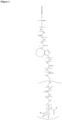
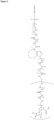
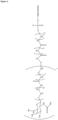
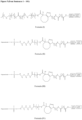
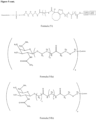
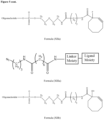
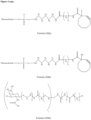
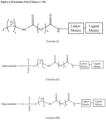
- the GalNAc ligand is comprised in any one of the linkers shown in Figures 1 to 4 or Figure 5 (Formula XI), wherein the "oligonucleotide” may be any nucleic acid disclosed herein. Accordingly, the "oligonucleotide” may comprise other bonds than a phosphodiester bond, such as one or more phosphorothioate bonds.
- the nucleic acid according to the invention is a double stranded oligonucleoside as defined herein and the linker is conjugated to the second strand, more preferably to the 3' terminal region of the second strand, via a phosphodiester bond.
- the GalNAc ligand is comprised in the linker shown in Figure 5 (Formula XI), wherein the "oligonucleotide” may be any nucleic acid disclosed herein. Accordingly, the "oligonucleotide” may comprise other bonds than a phosphodiester bond, such as one or more phosphorothioate bonds.
- the nucleic acid according to the invention is a double stranded oligonucleoside as defined herein and the linker is conjugated to the second strand, more preferably to the 3' terminal region of the second strand, via a phosphodiester bond.
- the GalNAc ligand is comprised in the linker shown in Figure 3 , wherein the "oligonucleotide" represents a nucleic acid according to the invention, wherein the nucleic acid according to the invention comprises a modified or unmodified second strand comprising or consisting of SEQ ID NO:265 or SEQ ID NO:268, preferably wherein the linker is conjugated to the 3' terminal region of the second strand, i.e., to the 3' terminal region of SEQ ID NO:265 or SEQ ID NO:268, via a phosphodiester bond.
- the GalNAc ligand is comprised in the linker shown in Figure 5 (Formula XI), wherein the "oligonucleotide” represents a nucleic acid according to the invention, wherein the nucleic acid according to the invention comprises a modified or unmodified second strand comprising or consisting of SEQ ID NO:265 or SEQ ID NO:268, preferably wherein the linker is conjugated to the 3' terminal region of the second strand, i.e., to the 3' terminal region of SEQ ID NO:265 or SEQ ID NO:268, via a phosphodiester bond.
- the GalNAc ligand is comprised in any one of the linkers shown in Figures 1 to 4 or Figure 5 (Formula XI), wherein the "oligonucleotide" represents a nucleic acid according to the invention, wherein the nucleic acid according to the invention comprises a modified second strand comprising or consisting of SEQ ID NO:774 or SEQ ID NO:776, preferably wherein the linker is conjugated to the 3' terminal region of the second strand, i.e., to the 3' terminal region of SEQ ID NO:774 or SEQ ID NO:776, via a phosphodiester bond.
- the linker is conjugated to the 3' terminal region of the second strand, i.e., to the 3' terminal region of SEQ ID NO:774 or SEQ ID NO:776, via a phosphodiester bond.
- the GalNAc ligand is comprised in the linker shown in Figure 3 , wherein the "oligonucleotide" represents a nucleic acid according to the invention, wherein the nucleic acid according to the invention comprises a modified second strand comprising or consisting of SEQ ID NO:774 or SEQ ID NO:776, preferably wherein the linker is conjugated to the 3' terminal region of the second strand, i.e., to the 3' terminal region of SEQ ID NO:774 or SEQ ID NO:776, via a phosphodiester bond.
- the linker is conjugated to the 3' terminal region of the second strand, i.e., to the 3' terminal region of SEQ ID NO:774 or SEQ ID NO:776, via a phosphodiester bond.
- the GalNAc ligand is comprised in the linker shown in Figure 5 (Formula XI), wherein the "oligonucleotide” represents a nucleic acid according to the invention, wherein the nucleic acid according to the invention comprises a modified second strand comprising or consisting of SEQ ID NO:774 or SEQ ID NO:776, preferably wherein the linker is conjugated to the 3' terminal region of the second strand, i.e., to the 3' terminal region of SEQ ID NO:774 or SEQ ID NO:776, via a phosphodiester bond.
- the GalNAc ligand is comprised in any one of the linkers shown in Figures 1 to 4 or Figure 5 (Formula XI), wherein the "oligonucleotide" represents a nucleic acid according to the invention, wherein the nucleic acid according to the invention comprises a modified first strand comprising or consisting of SEQ ID NO:764 and a modified second strand comprising or consisting of SEQ ID NO:774, preferably wherein the linker is conjugated to the 3' terminal region of the second strand, i.e., to the 3' terminal region of SEQ ID NO:774, via a phosphodiester bond.
- the linker is conjugated to the 3' terminal region of the second strand, i.e., to the 3' terminal region of SEQ ID NO:774, via a phosphodiester bond.
- the GalNAc ligand is comprised in the linker shown in Figure 3 , wherein the "oligonucleotide" represents a nucleic acid according to the invention, wherein the nucleic acid according to the invention comprises a modified first strand comprising or consisting of SEQ ID NO:764 and a modified second strand comprising or consisting of SEQ ID NO:774, preferably wherein the linker is conjugated to the 3' terminal region of the second strand, i.e., to the 3' terminal region of SEQ ID NO:774, via a phosphodiester bond.
- the linker is conjugated to the 3' terminal region of the second strand, i.e., to the 3' terminal region of SEQ ID NO:774, via a phosphodiester bond.
- the GalNAc ligand is comprised in the linker shown in Figure 5 (Formula XI), wherein the "oligonucleotide” represents a nucleic acid according to the invention, wherein the nucleic acid according to the invention comprises a modified first strand comprising or consisting of SEQ ID NO:764 and a modified second strand comprising or consisting of SEQ ID NO:774, preferably wherein the linker is conjugated to the 3' terminal region of the second strand, i.e., to the 3' terminal region of SEQ ID NO:774, via a phosphodiester bond.
- the GalNAc ligand is comprised in any one of the linkers shown in Figures 1 to 4 or Figure 5 (Formula XI), wherein the "oligonucleotide" represents a nucleic acid according to the invention, wherein the nucleic acid according to the invention comprises a modified first strand comprising or consisting of SEQ ID NO:766 and a modified second strand comprising or consisting of SEQ ID NO:776, preferably wherein the linker is conjugated to the 3' terminal region of the second strand, i.e., to the 3' terminal region of SEQ ID NO:776, via a phosphodiester bond.
- the linker is conjugated to the 3' terminal region of the second strand, i.e., to the 3' terminal region of SEQ ID NO:776, via a phosphodiester bond.
- the GalNAc ligand is comprised in the linker shown in Figure 3 , wherein the "oligonucleotide" represents a nucleic acid according to the invention, wherein the nucleic acid according to the invention comprises a modified first strand comprising or consisting of SEQ ID NO:766 and a modified second strand comprising or consisting of SEQ ID NO:776, preferably wherein the linker is conjugated to the 3' terminal region of the second strand, i.e., to the 3' terminal region of SEQ ID NO:776, via a phosphodiester bond.
- the linker is conjugated to the 3' terminal region of the second strand, i.e., to the 3' terminal region of SEQ ID NO:776, via a phosphodiester bond.
- the GalNAc ligand is comprised in the linker shown in Figure 5 (Formula XI), wherein the "oligonucleotide” represents a nucleic acid according to the invention, wherein the nucleic acid according to the invention comprises a modified first strand comprising or consisting of SEQ ID NO:766 and a modified second strand comprising or consisting of SEQ ID NO:776, preferably wherein the linker is conjugated to the 3' terminal region of the second strand, i.e., to the 3' terminal region of SEQ ID NO:776, via a phosphodiester bond.
- the GalNAc ligand is comprised in the linker shown in Figure 3 , wherein the "oligonucleotide” represents a nucleic acid according to the invention, wherein the nucleic acid according to the invention comprises a modified first strand comprising or consisting of SEQ ID NO:764 and a modified second strand comprising or consisting of SEQ ID NO:774, wherein the second strand has the following structure wherein:
- the GalNAc ligand is comprised in the linker shown in Figure 5 (Formula XI), wherein the "oligonucleotide” represents a nucleic acid according to the invention, wherein the nucleic acid according to the invention comprises a modified first strand comprising or consisting of SEQ ID NO:764 and a modified second strand comprising or consisting of SEQ ID NO:774, wherein the second strand has the following structure wherein:
- the GalNAc ligand is comprised in the linker shown in Figure 3 , wherein the "oligonucleotide” represents a nucleic acid according to the invention, wherein the nucleic acid according to the invention comprises a modified first strand comprising or consisting of SEQ ID NO:766 and a modified second strand comprising or consisting of SEQ ID NO:776, wherein the second strand has the following structure wherein:
- the GalNAc ligand is comprised in the linker shown in Figure 5 (Formula XI), wherein the "oligonucleotide” represents a nucleic acid according to the invention, wherein the nucleic acid according to the invention comprises a modified first strand comprising or consisting of SEQ ID NO:766 and a modified second strand comprising or consisting of SEQ ID NO:776, wherein the second strand has the following structure wherein:
- the disclosure provides a cell containing a nucleic acid, such as inhibitory RNA [RNAi] as described herein.
- a nucleic acid such as inhibitory RNA [RNAi] as described herein.
- the disclosure provides a cell comprising a vector as described herein.
- the invention provides a pharmaceutical composition for inhibiting expression of a target gene, the composition comprising a nucleic acid as disclosed herein.
- the pharmaceutically acceptable composition may comprise an excipient and or carrier.
- materials which can serve as pharmaceutically-acceptable carriers include: (1) sugars, such as lactose, glucose and sucrose; (2) starches, such as corn starch and potato starch; (3) cellulose, and its derivatives, such as sodium carboxymethyl cellulose, ethyl cellulose and cellulose acetate; (4) powdered tragacanth; (5) malt; (6) gelatin; (7) lubricating agents, such as magnesium stearate, sodium lauryl sulfate and talc; (8) excipients, such as cocoa butter and suppository waxes; (9) oils, such as peanut oil, cottonseed oil, safflower oil, sesame oil, olive oil, corn oil and soybean oil; (10) glycols, such as propylene glycol; (11) polyols, such as glycerin, sorbitol, mannitol and polyethylene glycol; (12) esters, such as ethyl oleate and ethyl laur
- Typical pharmaceutical carriers include, but are not limited to, binding agents (e.g., pregelatinized maize starch, polyvinylpyrrolidone or hydroxypropyl methylcellulose, etc.); fillers (e.g., lactose and other sugars, microcrystalline cellulose, pectin, gelatin, calcium sulfate, ethyl cellulose, polyacrylates or calcium hydrogen phosphate, etc.); lubricants (e.g. , magnesium stearate, talc, silica, colloidal silicon dioxide, stearic acid, metallic stearates, hydrogenated vegetable oils, corn starch, polyethylene glycols, sodium benzoate, sodium acetate, etc.); disintegrants (e.g. , starch, sodium starch glycolate, etc.); and wetting agents (e.g., sodium lauryl sulphate, etc).
- binding agents e.g., pregelatinized maize starch, polyvinylpyrrolidone or hydroxy
- compositions of the present disclosure can also be used to formulate the compositions of the present disclosure.
- suitable pharmaceutically acceptable excipients include, but are not limited to, water, salt solutions, alcohols, polyethylene glycols, gelatin, lactose, amylose, magnesium stearate, talc, silicic acid, viscous paraffin, hydroxymethylcellulose, polyvinylpyrrolidone, and the like.
- Formulations for topical administration of nucleic acids can include sterile and non-sterile aqueous solutions, non-aqueous solutions in common solvents such as alcohols, or solutions of the nucleic acids in liquid or solid oil bases.
- the solutions can also contain buffers, diluents and other suitable additives.
- Pharmaceutically acceptable organic or inorganic excipients suitable for non- parenteral administration which do not deleteriously react with nucleic acids can be used.
- the nucleic acid or composition is administered in an unbuffered solution.
- the unbuffered solution is saline or water.
- the nucleic acid e.g. siRNA agent is administered in a buffered solution.
- the buffer solution can comprise acetate, citrate, prolamine, carbonate, or phosphate, or any combination thereof.
- the buffer solution can be phosphate buffered saline (PBS).
- compositions of the disclosure may be administered in dosages sufficient to inhibit expression of a gene.
- a suitable dose of a nucleic acid e.g. an siRNA of the disclosure will be in the range of about 0.001 to about 200.0 milligrams per kilogram body weight of the recipient per day, generally in the range of about 1 to 50 mg per kilogram body weight per day.
- a suitable dose of a nucleic acid e.g. an siRNA of the disclosure will be in the range of about 0.1 mg/kg to about 5.0 mg/kg, e.g., about 0.3 mg/kg and about 3.0 mg/kg.
- a repeat-dose regimen may include administration of a therapeutic amount of a nucleic acid e.g. siRNA on a regular basis, such as every other day or once a year.
- the nucleic acid e.g. siRNA is administered about once per month to about once per quarter (i.e., about once every three months).
- the nucleic acid e.g. siRNA agent is administered at a dose of about 0.01 mg/kg to about 10 mg/kg or about 0.5 mg/kg to about 50 mg/kg. In some embodiments, the nucleic acid e.g. siRNA agent is administered at a dose of about 10 mg/kg to about 30 mg/kg. In certain embodiments, the nucleic acid e.g. siRNA agent is administered at a dose selected from about 0.5 mg/kg 1 mg/kg, 1.5 mg/kg, 3 mg/kg, 5 mg/kg, 10 mg/kg, and 30 mg/kg. In certain embodiments, the nucleic acid e.g.
- the nucleic acid e.g. siRNA agent is administered about once per week, once per month, once every other two months, or once a quarter (i.e., once every three months) at a dose of about 0.1 mg/kg to about 5.0 mg/kg.
- the nucleic acid e.g. siRNA agent is administered to the subject once a week.
- the nucleic acid e.g. siRNA agent is administered to the subject once a month.
- the nucleic acid e.g. siRNA agent is administered once per quarter (i.e. , every three months).
- the treatments can be administered on a less frequent basis. For example, after administration weekly or biweekly for three months, administration can be repeated once per month, for six months, or a year; or longer.
- the pharmaceutical composition can be administered once daily, or administered as two, three, or more sub-doses at appropriate intervals throughout the day or even using continuous infusion or delivery through a controlled release formulation.
- the nucleic acid e.g. siRNA contained in each sub-dose must be correspondingly smaller in order to achieve the total daily dosage.
- the dosage unit can also be compounded for delivery over several days, e.g. , using a conventional sustained release formulation which provides sustained release of the nucleic acid e.g. siRNA over a several day period. Sustained release formulations are well known in the art and are particularly useful for delivery of agents at a particular site, such as could be used with the agents of the present invention.
- the dosage unit contains a corresponding multiple of the daily dose.
- a single dose of the pharmaceutical compositions can be long lasting, such that subsequent doses are administered at not more than 3, 4, or 5 day intervals, or at not more than 1, 2, 3, or 4 week intervals.
- a single dose of the pharmaceutical compositions of the invention is administered once per week.
- a single dose of the pharmaceutical compositions of the invention is administered bimonthly.
- the siRNA is administered about once per month to about once per quarter (i.e. , about once every three months), or even every 6 months or 12 months.
- compositions of the present invention can be administered in a number of ways depending upon whether local or systemic treatment is desired and upon the area to be treated. Administration can be topical ⁇ e.g. , by a transdermal patch), pulmonary, e.g. , by inhalation or insufflation of powders or aerosols, including by nebulizer; intratracheal, intranasal, epidermal and transdermal, oral or parenteral. Parenteral administration includes intravenous, intraarterial, subcutaneous, intraperitoneal, or intramuscular injection or infusion; subdermal, e.g. , via an implanted device; or intracranial, e.g. , by intraparenchymal, intrathecal or intraventricular administration. In certain preferred embodiments, the compositions are administered by intravenous infusion or injection. In certain embodiments, the compositions are administered by subcutaneous injection.
- the nucleic acid e.g. agent is administered to the subject subcutaneously.
- the nucleic acid e.g. siRNA can be delivered in a manner to target a particular tissue (e.g. in particular liver cells).
- inhibitor as used herein, is used interchangeably with “reducing,” “silencing,” “downregulating”, “suppressing”, and other similar terms, and includes any level of inhibition.
- the nucleic acid of the invention when transfected into the cells, inhibits expression of the ZPI gene with an IC50 value lower than 2500 pM, 2400 pM, 2300 pM, 2200 pM, 2100 pM, 2000 pM, 1900 pM, 1800 pM, 1700 pM, 1600 pM, 1500 pM, 1400 pM, 1300 pM, 1200 pM, 1100 pM, 1000 pM, 900 pM, 800 pM, 700 pM, 600 pM, 500 pM, 400 pM, 300 pM, 200 pM or 100 pM, preferably when determined by qPCR, more preferably by reverse transcriptase (RT)-qPCR, as described herein.
- RT reverse transcriptase
- Inhibition of expression of the ZPI gene may be quantified by the following method:
- Huh7 cells human hepatocyte-derived cell line, obtained from JCRB Cell Bank
- DMEM Dulbecco's Modified Eagle Medium
- FBS FBS
- Cells may then be transfected with siRNA duplexes targeting ZPI mRNA or a negative control siRNA (siRNA-control; sense strand 5'-UUCUCCGAACGUGUCACGUTT-3' (SEQ ID NO:794), antisense strand 5'-ACGUGACACGUUCGGAGAATT-3' (SEQ ID NO:790)) using 10x3-fold serial dilutions over a final duplex concentration range of 20 nM to 1 pM.
- siRNA duplexes targeting ZPI mRNA or a negative control siRNA (siRNA-control; sense strand 5'-UUCUCCGAACGUGUCACGUTT-3' (SEQ ID NO:794), antisense strand 5'-ACGUGACACGUUCGGAGAATT-3' (SEQ ID NO:7
- Transfection may be carried out by adding 9.7 ⁇ L Opti-MEM (ThermoFisher) plus 0.3 ⁇ L Lipofectamine RNAiMAX (ThermoFisher) to 10 ⁇ L of each siRNA duplex.
- the mixture may be incubated at room temperature for 15 minutes before being added to 100 ⁇ L of complete growth medium containing 20,000 Huh7 cells.
- Cells may be incubated for 24 hours at 37°C/5% CO 2 prior to total RNA purification using a RNeasy 96 Kit (Qiagen).
- Each duplex may be tested by transfection in duplicate wells in a single experiment.
- cDNA synthesis may be performed using FastQuant RT (with gDNase) Kit (Tiangen).
- Real-time quantitative PCR (qPCR) may be performed on an ABI Prism 7900HT or ABI QuantStudio 7 with primers specific for human ZPI (Hs01547819_m1) and human GAPDH (Hs02786624_g1) using FastStart Universal Probe Master Kit (Roche).
- inhibition of expression of the ZPI gene may be characterized by a reduction of mean relative expression of the ZPI gene.
- the mean relative expression of ZPI is below 1, 0.9, 0.8, 0.7, 0.6, 0.5, or 0.4, preferably when determined by qPCR, more preferably by reverse transcriptase (RT)-qPCR, as described herein.
- the mean relative expression of ZPI is below 1, 0.9, 0.8, 0.7, 0.6, 0.5, 0.4 or 0.3, preferably when determined by qPCR, more preferably by reverse transcriptase (RT)-qPCR, as described herein.
- Mean relative expression of the ZPI gene may be quantified by the following method:
- Huh7 cells human hepatocyte-derived cell line, obtained from JCRB Cell Bank
- DMEM Dulbecco's Modified Eagle Medium
- FBS FBS
- Cells may be transfected with siRNA duplexes targeting ZPI mRNA or a negative control siRNA (siRNA-control; sense strand 5'-UUCUCCGAACGUGUCACGUTT-3' (SEQ ID NO:794), antisense strand 5'-ACGUGACACGUUCGGAGAATT-3' (SEQ ID NO:790)) at a final duplex concentration of 5 nM and 0.1 nM.
- siRNA-control sense strand 5'-UUCUCCGAACGUGUCACGUTT-3'
- SEQ ID NO:790 antisense strand 5'-ACGUGACACGUUCGGAGAATT-3'
- Transfection may be carried out by adding 9.7 ⁇ L Opti-MEM (ThermoFisher) plus 0.3 ⁇ L Lipofectamine RNAiMAX (ThermoFisher) to 10 ⁇ L of each siRNA duplex.
- the mixture may be incubated at room temperature for 15 minutes before being added to 100 ⁇ L of complete growth medium containing 20,000 Huh7 cells.
- Cells may be incubated for 24 hours at 37°C/5% CO 2 prior to total RNA purification using a RNeasy 96 Kit (Qiagen).
- Each duplex may be tested by transfection in duplicate wells in two independent experiments.
- cDNA synthesis may be performed using FastQuant RT (with gDNase) Kit (Tiangen).
- Real-time quantitative PCR (qPCR) may be performed on an ABI Prism 7900HT or ABI QuantStudio 7 with primers specific for human ZPI (Hs01547819_m1) and human GAPDH (Hs02786624_g1) using FastStart Universal Probe Master Kit (Roche).
- qPCR may be performed in duplicate on cDNA derived from each well and the mean Ct calculated.
- Relative ZPI expression may be calculated from mean Ct values using the comparative Ct ( ⁇ Ct) method, normalised to GAPDH and relative to untreated cells.
- Inhibition of the expression of ZPI gene may be manifested by a reduction of the amount of mRNA of the target ZPI gene in comparison to a suitable control.
- inhibition of the expression of ZPI gene may be assessed in terms of a reduction of a parameter that is functionally linked to gene expression, e.g , protein expression or signaling pathways.
- the present disclosure also provides methods of using nucleic acid e.g. an siRNA of the disclosure or a composition containing nucleic acid e.g. an siRNA of the disclosure to reduce or inhibit ZPI gene expression in a cell.
- the methods include contacting the cell with a nucleic acid e.g. dsiRNA of the disclosure and maintaining the cell for a time sufficient to obtain degradation of the mRNA transcript of ZPI, thereby inhibiting expression of the ZPI gene in the cell. Reduction in gene expression can be assessed by any methods known in the art.
- the cell may be contacted in vitro or in vivo, i.e., the cell may be within a subject. Said methods are not part of the claimed invention.
- a cell suitable for treatment using the methods of the disclosure may be any cell that expresses a gene of interest associated with disease related to a disorder of haemostasis, such as a disease related to a disorder of haemostasis, such as haemophilia.
- the in vivo methods of the disclosure may include administering to a subject a composition containing a nucleic acid of the invention e.g. an siRNA, where the nucleic acid e.g. siRNA includes a nucleoside sequence that is complementary to at least a part of an RNA transcript of ZPI gene of the mammal to be treated.
- a nucleic acid of the invention e.g. an siRNA
- the nucleic acid e.g. siRNA includes a nucleoside sequence that is complementary to at least a part of an RNA transcript of ZPI gene of the mammal to be treated.
- the present disclosure further provides methods of treatment of a subject in need thereof.
- the treatment methods of the disclosure include administering a nucleic acid such as an siRNA of the disclosure to a subject, e.g., a subject that would benefit from a reduction or inhibition of the expression of ZPI gene, in a therapeutically effective amount e.g. a nucleic acid such as an siRNA targeting ZPI or a pharmaceutical composition comprising the nucleic acid targeting ZPI.
- the disease to be treated is related to a disorder of haemostasis, such as a disease related to a disorder of haemostasis, such as haemophilia.
- Haemophilia, or hemophilia is a mostly inherited genetic disorder that impairs the body's ability to make blood clots, a process needed to stop bleeding. This results in subjects bleeding for a longer time after an injury, easy bruising, and an increased risk of bleeding inside joints or the brain. Subjects with a mild case of the disease may have symptoms only after an accident or during surgery. Bleeding into a joint, also referred to as haemarthrosis, can result in permanent damage while bleeding in the brain can result in long term headaches, seizures, or a decreased level of consciousness.
- haemophilia A which occurs due to low amounts of clotting factor VIII
- haemophilia B which occurs due to low levels of clotting factor IX. They are typically inherited from one's parents through an X chromosome carrying a nonfunctional gene. Rarely a new mutation may occur during early development or haemophilia may develop later in life due to antibodies forming against a clotting factor.
- haemophilia C which occurs due to low levels of factor XI
- Von Willebrand disease which occurs due to low levels of a substance called von Willebrand factor
- parahaemophilia which occurs due to low levels of factor V.
- Haemophilia A, B, and C prevent the intrinsic pathway from functioning properly; this clotting pathway is necessary when there is damage to the endothelium of a blood vessel. Acquired haemophilia is associated with cancers, autoimmune disorders, and pregnancy. Diagnosis is by testing the blood for its ability to clot and its levels of clotting factors.
- the nucleic acid of the present invention is suitable for treatment, or for treatment of haemophilia A, B and/or C. In certain embodiments, the nucleic acid of the present invention is suitable for treatment, or for treatment of haemophilia A and/or B. In certain embodiments, the nucleic acid of the present invention is suitable for treatment, or for treatment of acquired haemophilia. In certain embodiments, the nucleic acid of the present invention is suitable for treatment, or for treatment of Willebrand disease. In certain embodiments, the nucleic acid of the present invention is suitable for treatment, or for treatment of parahaemophilia.
- treatment with the nucleic acid of the invention results in a boost of clotting factor levels such that bleeding can be reduced or prevented, as demonstrated herein in Fig. 12 .
- treatment with the nucleic acid of the invention reduces or prevents bleeding episodes in a subject suffering from haemophilia.
- treatment with the nucleic acid of the invention reduces or prevents bleeding into a joint of a subject suffering from haemophilia.
- treatment with the nucleic acid of the invention reduces or prevents bleeding into a muscle or into the brain of a subject suffering from haemophilia.
- treatment of a subject preferably a subject having a disorder of haemostasis, such as haemophilia
- treatment of a subject preferably a subject having a disorder of haemostasis, such as haemophilia
- treatment of a subject, preferably a subject having a disorder of haemostasis, such as haemophilia may result in one or more of more of the following:
- treatment of a subject preferably a subject having a disorder of haemostasis, such as haemophilia
- treatment of Haem A mice with a nucleic acid of the invention results in reduced bone marrow hyperplasia.
- a disorder of haemostasis such as haemophilia
- treatment of a subject preferably a subject having a disorder of haemostasis, such as haemophilia
- treatment of Haem A mice with a nucleic acid of the invention significantly reduced osteoarthritis in said mice.
- treatment of a subject preferably a subject having a disorder of haemostasis, such as haemophilia
- treatment of Haem A mice with a nucleic acid of the invention significantly reduced chondrocyte degeneration/necrosis in said mice.
- treatment of a subject preferably a subject having a disorder of haemostasis, such as haemophilia
- treatment of Haem A mice with a nucleic acid of the invention results in reduced haemorrhage.
- a disorder of haemostasis such as haemophilia
- treatment of a subject preferably a subject having a disorder of haemostasis, such as haemophilia
- treatment of Haem A mice with a nucleic acid of the invention results in reduced haemosiderin deposition.
- a disorder of haemostasis such as haemophilia
- treatment of a subject preferably a subject having a disorder of haemostasis, such as haemophilia
- treatment of Haem A mice with a nucleic acid of the invention results in reduced occurrence of haematoma.
- treatment of Haem A mice with a nucleic acid of the invention significantly reduced haematoma in said mice.
- treatment of a subject preferably a subject having a disorder of haemostasis, such as haemophilia
- treatment of Haem A mice with a nucleic acid of the invention significantly reduced osteoclastogenic bone resorption in said mice.
- treatment of a subject preferably a subject having a disorder of haemostasis, such as haemophilia
- treatment of Haem A mice with a nucleic acid of the invention results in reduced osteolysis.
- treatment of Haem A mice with a nucleic acid of the invention significantly reduced osteolysis in said mice.
- treatment of a subject preferably a subject having a disorder of haemostasis, such as haemophilia
- treatment of Haem A mice with a nucleic acid of the invention results in reduced periostitis.
- a disorder of haemostasis such as haemophilia
- treatment of a subject preferably a subject having a disorder of haemostasis, such as haemophilia
- treatment of Haem A mice with a nucleic acid of the invention significantly reduced sub-chondral bone sclerosis in said mice.
- treatment of a subject preferably a subject having a disorder of haemostasis, such as haemophilia
- treatment of Haem A mice with a nucleic acid of the invention results in reduced tendon degeneration.
- treatment of Haem A mice with a nucleic acid of the invention significantly reduced tendon degeneration in said mice.
- treatment of a subject preferably a subject having a disorder of haemostasis, such as haemophilia
- treatment of Haem A mice with a nucleic acid of the invention results in reduced tendonitis.
- treatment of Haem A mice with a nucleic acid of the invention significantly reduced tendonitis in said mice.
- treatment of a subject preferably a subject having a disorder of haemostasis, such as haemophilia
- treatment of Haem A mice with a nucleic acid of the invention significantly reduced tenosynovitis in said mice.
- the invention relates to a nucleic acid suitable for use, or for use, in treatment of haemophilia, wherein the treatment of haemophilia is characterized by reduced bleeding and one or more of: reduced bone marrow hyperplasia, reduced osteoarthritis, reduced chondrocyte degeneration/necrosis, reduced haemorrhage, reduced haemosiderin deposition, reduced haematoma, reduced osteoclastogenic bone resorption, reduced osteolysis, reduced periostitis, reduced sub-chondral bone sclerosis, reduced tendon degeneration, reduced tendonitis, and/or reduced tenosynovitis.
- An nucleic acid e.g.
- siRNA of the invention may be administered as a "free" nucleic acid or "free siRNA, administered in the absence of a pharmaceutical composition.
- the naked nucleic acid may be in a suitable buffer solution.
- the buffer solution may comprise acetate, citrate, prolamine, carbonate, or phosphate, or any combination thereof.
- the buffer solution is phosphate buffered saline (PBS). The pH and osmolarity of the buffer solution can be adjusted such that it is suitable for administering to a subject.
- a nucleic acid e.g. siRNA of the invention may be administered as a pharmaceutical composition, such as a dsiRNA liposomal formulation.
- the method includes administering a composition featured herein such that expression of ZPI gene is decreased, such as for about 1, 2, 3, 4, 5, 6, 7, 8, 12, 16, 18, 24 hours, 28, 32, or about 36 hours.
- expression of ZPI target gene is decreased for an extended duration, e.g., at least about two, three, four days or more, e.g. , about one week, two weeks, three weeks, or four weeks or longer, e.g., about 1 month, 2 months, or 3 months.
- Subjects can be administered a therapeutic amount of nucleic acid e.g. siRNA, such as about 0.01 mg/kg to about 200 mg/kg, so as to treat disease related to a disorder of haemostasis, such as a disease related to a disorder of haemostasis, such as haemophilia.
- nucleic acid e.g. siRNA
- the nucleic acid e.g. siRNA can be administered by intravenous infusion over a period of time, on a regular basis. In certain embodiments, after an initial treatment regimen, the treatments can be administered on a less frequent basis. Administration of the siRNA can reduce gene product levels of ZPI target gene, e.g., in a cell or tissue of the patient by at least about 20%, 25%, 30%, 35%, 40%, 45%, 50%, 55%, 60%, 65%, 70%, 75%, 80%, 85%, 90%, or 95%, or below the level of detection of the assay method used. In certain embodiments, administration results in clinical stabilization or preferably clinically relevant reduction of at least one sign or symptom of a ZPI gene- associated disorder.
- TLC Thin layer chromatography
- silica-coated aluminium plates with fluorescence indicator 254 nm from Macherey-Nagel. Compounds were visualized under UV light (254 nm), or after spraying with the 5% H 2 SO 4 in methanol (MeOH) or ninhydrin reagent according to Stahl (from Sigma-Aldrich), followed by heating.
- Flash chromatography was performed with a Biotage Isolera One flash chromatography instrument equipped with a dual variable UV wavelength detector (200-400 nm) using Biotage Sfär Silica 10, 25, 50 or 100 g columns (Uppsala, Sweden).
- HPLC/ESI-MS was performed on a Dionex UltiMate 3000 RS UHPLC system and Thermo Scientific MSQ Plus Mass spectrometer using an Acquity UPLC Protein BEH C4 column from Waters (300 ⁇ , 1.7 ⁇ m, 2.1 x 100 mm) at 60 °C.
- the solvent system consisted of solvent A with H 2 O containing 0.1% formic acid and solvent B with acetonitrile (ACN) containing 0.1% formic acid. A gradient from 5-100% of B over 15 min with a flow rate of 0.4 mL/min was employed.
- Detector and conditions Corona ultra-charged aerosol detection (from esa). Nebulizer Temp.: 25 °C. N 2 pressure: 35.1 psi. Filter: Corona.
- N , N , N' , N' -tetramethyl-O-(1H-benzotriazol-1-yl)uronium hexafluorophosphate (HBTU) (2.78 g, 7.44 mmol, 5.0 eq.), 1-hydroxybenzotriazole hydrate (HOBt) (1.05 g, 7.44 mmol, 5.0 eq.) and N,N- diisopropylethylamine (DIPEA) (2.07 mL, 11.9 mmol, 8.0 eq.) were added to the solution and the reaction was stirred for 72 h.
- DIPEA N,N- diisopropylethylamine
- Triantennary GalNAc compound 9 (0.27 g, 0.14 mmol, 1.0 eq.) was dissolved in MeOH (15 mL), 3 drops of acetic acid (AcOH) and Pd/C (30 mg) was added. The reaction mixture was degassed using vacuum/argon cycles (3x) and hydrogenated under balloon pressure overnight. The completion of the reaction was followed by mass spectrometry and the resulting mixture was filtered through a thin pad of celite. The solvent was evaporated and the residue obtained was dried under high vacuum and used for the next step without further purification. The product was obtained as pale yellowish oil (0.24 g, quantitative yield). MS: calculated for C 73 H 119 N 7 O 39 , 1718.8. Found 1719.3.
- TriGalNAc (12) Triantennary GalNAc compound 10 (0.35 g, 0.24 mmol, 1.0 eq.) and compound 11 (0.11 g, 0.31 mmol, 1.5 eq.) were dissolved in DCM (5 mL) under argon and triethylamine (0.1 mL, 0.61 mmol, 3.0 eq.) was added. The reaction was stirred at room temperature overnight. The solvent was removed under reduced pressure, the residue was dissolved in EtOAc (100 mL) and washed with water (100 mL). The organic layer was separated and dried over Na 2 SO 4 .
- Tether 1 conjugation of Tether 1 to a siRNA strand: Monofluoro cyclooctyne (MFCO) conjugation at 5'-or 3'-end
- reaction mixture was diluted 15-fold with water, filtered through a 1.2 ⁇ m filter from Sartorius and then purified by reserve phase (RP HPLC) on an ⁇ kta Pure instrument (GE Healthcare).
- Buffer A was 100 mM TEAAc pH 7 and buffer B contained 95% acetonitrile in buffer A.
- a flow rate of 10 mL/min and a temperature of 60°C were employed.
- UV traces at 280 nm were recorded.
- a gradient of 0-100% B within 60 column volumes was employed.
- RP HPLC purification was performed using a XBridge C18 Prep 19 x 50 mm column from Waters.
- Buffer A was 100 mM triethylammonium acetate pH 7 and buffer B contained 95% acetonitrile in buffer A.
- a flow rate of 10 mL/min and a temperature of 60°C were employed.
- UV traces at 280 nm were recorded.
- a gradient of 0-100% B within 60 column volumes was employed.
- the conjugates were desalted by size exclusion chromatography using Sephadex G25 Fine resin (GE Healthcare) on an ⁇ kta Pure (GE Healthcare) instrument to yield the conjugated oligonucleotides in an isolated yield of 50-70%.
- the two complementary strands were annealed by combining equimolar aqueous solutions of both strands.
- the mixtures were placed into a water bath at 70°C for 5 minutes and subsequently allowed to cool to ambient temperature within 2 h.
- the duplexes were lyophilized for 2 days and stored at -20°C.
- duplexes were analyzed by analytical SEC HPLC on Superdex TM 75 Increase 5/150 GL column 5 x 153-158 mm (Cytiva) on a Dionex Ultimate 3000 (Thermo Fisher Scientific) HPLC system.
- Mobile phase consisted of 1x PBS containing 10% acetonitrile.
- An isocratic gradient was run in 10 min at a flow rate of 1.5 mL/min at room temperature. UV traces at 260 and 280 nm were recorded.
- Water (LC-MS grade) was purchased from Sigma-Aldrich and Phosphate-buffered saline (PBS; 10x, pH 7.4) was purchased from GIBCO (Thermo Fisher Scientific).
- TLC Thin layer chromatography
- silica-coated aluminium plates with fluorescence indicator 254 nm from Macherey-Nagel. Compounds were visualized under UV light (254 nm), or after spraying with the 5% H 2 SO 4 in methanol (MeOH) or ninhydrin reagent according to Stahl (from Sigma-Aldrich), followed by heating.
- Flash chromatography was performed with a Biotage Isolera One flash chromatography instrument equipped with a dual variable UV wavelength detector (200-400 nm) using Biotage Sfär Silica 10, 25, 50 or 100 g columns (Uppsala, Sweden).
- HPLC/ESI-MS was performed on a Dionex UltiMate 3000 RS UHPLC system and Thermo Scientific MSQ Plus Mass spectrometer using an Acquity UPLC Protein BEH C4 column from Waters (300 ⁇ , 1.7 ⁇ m, 2.1 x 100 mm) at 60 °C.
- the solvent system consisted of solvent A with H 2 O containing 0.1% formic acid and solvent B with acetonitrile (ACN) containing 0.1% formic acid. A gradient from 5-100% of B over 15 min with a flow rate of 0.4 mL/min was employed.
- Detector and conditions Corona ultra-charged aerosol detection (from esa). Nebulizer Temp.: 25°C. N 2 pressure: 35.1 psi. Filter: Corona.
- N , N , N' , N' -tetramethyl-O-(1H-benzotriazol-1-yl)uronium hexafluorophosphate (HBTU) (2.78 g, 7.44 mmol, 5.0 eq.), 1-hydroxybenzotriazole hydrate (HOBt) (1.05 g, 7.44 mmol, 5.0 eq.) and N,N- diisopropylethylamine (DIPEA) (2.07 mL, 11.9 mmol, 8.0 eq.) were added to the solution and the reaction was stirred for 72 h.
- DIPEA N,N- diisopropylethylamine
- Triantennary GalNAc compound 9 (0.27 g, 0.14 mmol, 1.0 eq.) was dissolved in MeOH (15 mL), 3 drops of acetic acid (AcOH) and Pd/C (30 mg) was added. The reaction mixture was degassed using vacuum/argon cycles (3x) and hydrogenated under balloon pressure overnight. The completion of the reaction was followed by mass spectrometry and the resulting mixture was filtered through a thin pad of celite. The solvent was evaporated, and the residue obtained was dried under high vacuum and used for the next step without further purification. The product was obtained as pale yellowish oil (0.24 g, quantitative yield). MS: calculated for C 73 H 119 N 7 O 39 , 1718.8. Found 1719.3.
- Triantennary GalNAc compound 10 (0.45 g, 0.26 mmol, 1.0 eq.), HBTU (0.19 g, 0.53 mmol, 2.0 eq.) and DIPEA (0.23 mL, 1.3 mmol, 5.0 eq.) were dissolved in DCM (10 mL) under argon. To this mixture, it was added dropwise a solution of compound 13 (0.14 g, 0.53 mmol, 2.0 eq.) in DCM (5 mL). The reaction was stirred at room temperature overnight. The solvent was removed, and the residue was dissolved in EtOAc (50 mL), washed with water (50 mL) and dried over Na 2 SO 4 .
- TriGalNAc Triantennary GalNAc compound 14 (0.31 g, 0.15 mmol, 1.0 eq.) was dissolved in EtOAc (15 mL) and Pd/C (40 mg) was added. The reaction mixture was degassed by using vacuum/argon cycles (3x) and hydrogenated under balloon pressure overnight. The completion of the reaction was monitored by mass spectrometry and the resulting mixture was filtered through a thin pad of celite. The solvent was removed under reduced pressure and the resulting residue was dried under high vacuum overnight. The residue was used for conjugations to oligonucleosides without further purification (0.28 g, quantitative yield). MS: calculated for C 81 H 131 N 7 O 42 , 1874.9. Found 1875.3.
- Tether 2 Conjugation of Tether 2 to a siRNA strand: TriGalNAc tether 2 (GalNAc-T2) conjugation at 5'-end or 3'-end
- TriGalNAc tether 2 NHS ester To a solution of carboxylic acid tether 2 (compound 15, 227 mg, 121 ⁇ mol) in DMF (2.1 mL), N-hydroxysuccinimide (NHS) (15.3 mg, 133 ⁇ mol) and N,N'-diisopropylcarbodiimide (DIC) (19.7 ⁇ L, 127 ⁇ mol) were added. The solution was stirred at room temperature for 18 h and used without purification for the subsequent conjugation reactions.
- NHS N-hydroxysuccinimide
- DIC N,N'-diisopropylcarbodiimide
- the purification was performed using a XBridge C18 Prep 19 x 50 mm column from Waters.
- Buffer A was 100 mM TEAA pH 7 and buffer B contained 95% acetonitrile in buffer A.
- a flow rate of 10 mL/min and a temperature of 60°C were employed.
- UV traces at 280 nm were recorded.
- a gradient of 0-100% B within 60 column volumes was employed.
- the conjugates were desalted by size exclusion chromatography using Sephadex G25 Fine resin (GE Healthcare) on an ⁇ kta Pure (GE Healthcare) instrument to yield the conjugated oligonucleotides in an isolated yield of 60-80%.
- the conjugates were characterized by HPLC-MS analysis with a 2.1 x 50 mm XBridge C18 column (Waters) on a Dionex Ultimate 3000 (Thermo Fisher Scientific) HPLC system equipped with a Compact ESI-Qq-TOF mass spectrometer (Bruker Daltonics).
- Buffer A was 16.3 mM triethylamine, 100 mM HFIP in 1% MeOH in H2O and buffer B contained 95% MeOH in buffer A.
- a flow rate of 250 ⁇ L/min and a temperature of 60°C were employed.
- UV traces at 260 and 280 nm were recorded.
- a gradient of 1-100% B within 31 min was employed.
- the two complementary strands were annealed by combining equimolar aqueous solutions of both strands.
- the mixtures were placed into a water bath at 70°C for 5 minutes and subsequently allowed to cool to ambient temperature within 2 h.
- the duplexes were lyophilized for 2 days and stored at -20°C.
- duplexes were analyzed by analytical SEC HPLC on Superdex TM 75 Increase 5/150 GL column 5 x 153-158 mm (Cytiva) on a Dionex Ultimate 3000 (Thermo Fisher Scientific) HPLC system.
- Mobile phase consisted of 1x PBS containing 10% acetonitrile.
- An isocratic gradient was run in 10 min at a flow rate of 1.5 mL/min at room temperature. UV traces at 260 and 280 nm were recorded.
- Water (LC-MS grade) was purchased from Sigma-Aldrich and Phosphate-buffered saline (PBS; 10x, pH 7.4) was purchased from GIBCO (Thermo Fisher Scientific).
- Tether 2 Conjugation of Tether 2 to a siRNA strand: TriGalNAc tether 2 (GalNAc-T2) conjugation at 5'-end or 3'-end
- siRNA sense and antisense strands were performed on a MerMade192X synthesiser with commercially available solid supports made of controlled pore glass with universal linker (Universal CPG, with a loading of 40 ⁇ mol/g; LGC Biosearch or Glen Research).
- RNA phosphoramidites were purchased from ChemGenes or Hongene.
- the 2'-O-Methyl phosphoramidites used were the following: 5'-(4,4'-dimethoxytrityl)-N-benzoyl-adenosine 2'-O-methyl-3'- [(2-cyanoethyl)-(N,N-diisopropyl)]-phosphoramidite, 5'-(4,4'-dimethoxytrityl)-N-acetyl-cytidine 2'-O-methyl-3'- [(2-cyanoethyl)-(N,N-diisopropyl)]-phosphoramidite, 5'-(4,4'-dimethoxytrityl)-N-isobutyryl-guanosine 2'-O-methyl-3'-[(2-cyanoethyl)-(N,N-diisopropyl)]-phosphoramidite, 5'-(4,4'-dimethoxytrityl)-uridine 2'-O
- the 2'-F phosphoramidites used were the following: 5'-dimethoxytrityl-N-benzoyl-deoxyadenosine 2'-fluoro-3'-[(2-cyanoethyl)-(N,N-diisopropyl)]-phosphoramidite, 5'-dimethoxytrityl-N-acetyl-deoxycytidine 2'-fluoro-3'-[(2-cyanoethyl)-(N,N-diisopropyl)]-phosphoramidite, 5'-dimethoxytrityl-N-isobutyryl-deoxyguanosine 2'-fluoro-3'- [(2-cyanoethyl)-(N,N-diisopropyl)]-phosphoramidite and 5'-dimethoxytrityl-deoxyuridine 2'-fluoro-3'-[(2-cyanoethyl)-(N,N-
- the coupling time was 180 seconds.
- the oxidizer contact time was set to 80 seconds and thiolation time was 2*100 seconds.
- the oligonucleotides were cleaved from the solid support using a NH 4 OH:EtOH solution 4:1 (v/v) for 20 hours at 45°C (TCI).
- TCI 45°C
- the solid support was then filtered off, the filter was thoroughly washed with H 2 O and the volume of the combined solution was reduced by evaporation under reduced pressure.
- Oligonucleotide were treated to form the sodium salt by ultracentrifugation using Amicon Ultra-2 Centrifugal Filter Unit; PBS buffer (10x, Teknova, pH 7.4, Sterile) or by EtOH precipitation from 1M sodium acetate.
- the single strands identity were assessed by MS ESI- and then, were annealed in water to form the final duplex siRNA and duplex purity were assessed by size exclusion chromatography.
- Example 7 Solid phase synthesis method: scale ⁇ 5 ⁇ mol
- Syntheses of siRNA sense and antisense strands were performed on a MerMade12 synthesiser with commercially available solid supports made of controlled pore glass with universal linker (Universal CPG, with a loading of 40 ⁇ mol/g; LGC Biosearch or Glen Research) at 5 ⁇ mol scale.
- Sense strand destined to 3' conjugation were sytnthesised at 12 ⁇ mol on 3'-PT-Amino-Modifier C6 CPG 500 ⁇ solid support with a loading of 86 ⁇ mol/g (LGC).
- RNA phosphoramidites were purchased from ChemGenes or Hongene.
- the 2'-O-Methyl phosphoramidites used were the following: 5'-(4,4'-dimethoxytrityl)-N-benzoyl-adenosine 2'-O-methyl-3'- [(2-cyanoethyl)-(N,N-diisopropyl)]-phosphoramidite, 5'-(4,4'-dimethoxytrityl)-N-acetyl-cytidine 2'-O-methyl-3'- [(2-cyanoethyl)-(N,N-diisopropyl)]-phosphoramidite, 5'-(4,4'-dimethoxytrityl)-N-isobutyryl-guanosine 2'-O-methyl-3'-[(2-cyanoethyl)-(N,N-diisopropyl)]-phosphoramidite, 5'-(4,4'-dimethoxytrityl)-uridine 2'-O
- the 2'-F phosphoramidites used were the following: 5'-dimethoxytrityl-N-benzoyl-deoxyadenosine 2'-fluoro-3'-[(2-cyanoethyl)-(N,N-diisopropyl)]-phosphoramidite, 5'-dimethoxytrityl-N-acetyl-deoxycytidine 2'-fluoro-3'-[(2-cyanoethyl)-(N,N-diisopropyl)]-phosphoramidite, 5'-dimethoxytrityl-N-isobutyryl-deoxyguanosine 2'-fluoro-3'- [(2-cyanoethyl)-(N,N-diisopropyl)]-phosphoramidite and 5'-dimethoxytrityl-deoxyuridine 2'-fluoro-3'-[(2-cyanoethyl)-(N,N-
- the oligonucleotides were cleaved from the solid support using a NH 4 OH:EtOH solution 4:1 (v/v) for 20 hours at 45°C (TCI).
- TCI 45°C
- the solid support was then filtered off, the filter was thoroughly washed with H 2 O and the volume of the combined solution was reduced by evaporation under reduced pressure.
- Oligonucleotide were treated to form the sodium salt by EtOH precipitation from 1M sodium acetate.
- the single strand oligonucleotides were purified by IP-RP HPLC on Xbridge BEH C18 5 ⁇ m, 130 ⁇ , 19x150 mm (Waters) column with an increasing gradient of B in A.
- Mobile phase A 240 mM HFIP, 7 mM TEA and 5% methanol in water
- mobile phase B 240 mM HFIP, 7 mM TEA in methanol.
- Sense strand were conjugated as per protocols provided in any of examples 1, 3 or 5.
- Sense and Antisense strands were then annealed in water to form the final duplex siRNA and duplex purity were assessed by size exclusion chromatography.
- siRNA oligonucleosides according to the present invention target ZPI.
- the full DNA sequence of the ZPI target is as follows (SEQ ID NO: 1):
- SEQ ID NO: 2 to 121 refer to human (Homo sapiens) mRNA sequences.
- Table 2 provides the unmodified first (antisense) and corresponding unmodified second (sense) strand sequences for siRNA oligonucleosides according to the present invention, together with the corresponding positions in the overall gene sequence of SEQ ID NO: 1 as follows.
- Table 3 provides the modified first (antisense) sequences, together with the corresponding unmodified first (antisense) sequences for siRNA oligonucleosides according to the present invention as follows.
- Table 3 Antisense strand ID Modified First (Antisense) Strand 5' ⁇ 3' SEQ ID NO (AS - mod) Underlying Base Sequence 5' ⁇ 3' SEQ ID NO (AS - unmod) (Shown as an Unmodified Nucleoside Sequence) ETXS1036 SEQ ID NO: 764 SEQ ID NO: 145 ETXS1040 SEQ ID NO: 766 SEQ ID NO: 148 ETXS632 SEQ ID NO: 362 SEQ ID NO: 122 ETXS634 SEQ ID NO: 363 SEQ ID NO: 123 ETXS636 SEQ ID NO: 364 SEQ ID NO: 124 ETXS638 SEQ ID NO: 365 SEQ ID NO: 125 ETXS640 SEQ ID NO: 366 SEQ ID NO: 126
- Table 4 provides the modified second (sense) sequences, together with the corresponding unmodified second (sense) sequences for siRNA oligonucleosides according to the present invention as follows.
- Table 4 Sense strand ID Modified Second (Sense) Strand 5' ⁇ 3' SEQ ID NO (SS - mod) Underlying Base Sequence 5' ⁇ 3' SEQ ID NO (SS - unmod) (Shown as an Unmodified Nucleoside Sequence) ETXS1035 SEQ ID NO: 774 SEQ ID NO: 265 ETXS1039 SEQ ID NO: 776 SEQ ID NO: 268 ETXS631 SEQ ID NO: 562 SEQ ID NO: 242 ETXS633 SEQ ID NO: 563 SEQ ID NO: 243 ETXS635 SEQ ID NO: 564 SEQ ID NO: 244 ETXS637 SEQ ID NO: 565 SEQ ID NO: 245 ETXS639 SEQ ID NO: 566 SEQ ID NO: 246 ETXS64
- modified second strand sequences as illustrated above in Table 4 include the preferred 5' iaia motif. However, it should also be understood that the scope of these modified second strand sequences additionally includes the Me / F modified second strand in the absence of the 5'iaia motif.
- Table 5 identifies duplexes with Duplex IDs referencing the modified antisense and sense IDs from previous Tables 3 and 4.
- Table 5 Duplex ID First (Antisense) strand ID Second (Sense) strand ID ETXM1184 ETXS1036 ETXS1035 ETXM1157 ETXS1040 ETXS1039 ETXM316 ETXS632 ETXS631 ETXM317 ETXS634 ETXS633 ETXM318 ETXS636 ETXS635 ETXM319 ETXS638 ETXS637 ETXM320 ETXS640 ETXS639 ETXM321 ETXS642 ETXS641 ETXM322 ETXS644 ETXS643 ETXM323 ETXS646 ETXS645 ETXM324 ETXS648 ETXS647 ETXM325 ETXS650 ETXS649 ETXM326 ETXS652 ETXS651 ETXM327 ETXS
- Huh7 cells human hepatocyte-derived cell line, obtained from JCRB Cell Bank
- DMEM Dulbecco's Modified Eagle Medium
- FBS FBS
- DMEM Dulbecco's Modified Eagle Medium
- Cells were transfected with siRNA duplexes targeting ZPI mRNA or a negative control siRNA (siRNA-control; sense strand 5'-UUCUCCGAACGUGUCACGUTT-3' (SEQ ID NO:794), antisense strand 5'-ACGUGACACGUUCGGAGAATT-3' (SEQ ID NO:790)) at a final duplex concentration of 5 nM and 0.1 nM.
- siRNA-control sense strand 5'-UUCUCCGAACGUGUCACGUTT-3'
- SEQ ID NO:790 antisense strand 5'-ACGUGACACGUUCGGAGAATT-3'
- Transfection was carried out by adding 9.7 ⁇ L Opti-MEM (ThermoFisher) plus 0.3 ⁇ L Lipofectamine RNAiMAX (ThermoFisher) to 10 ⁇ L of each siRNA duplex. The mixture was incubated at room temperature for 15 minutes before being added to 100 ⁇ L of complete growth medium containing 20,000 Huh7 cells. Cells were incubated for 24 hours at 37°C/5% CO 2 prior to total RNA purification using a RNeasy 96 Kit (Qiagen). Each duplex was tested by transfection in duplicate wells in two independent experiments.
- cDNA synthesis was performed using FastQuant RT (with gDNase) Kit (Tiangen).
- Real-time quantitative PCR (qPCR) was performed on an ABI Prism 7900HT or ABI QuantStudio 7 with primers specific for human ZPI (Hs01547819_m1) and human GAPDH (Hs02786624_gl) using FastStart Universal Probe Master Kit (Roche).
- RNAi molecules were depicted in Table 5.
- Huh7 cells human hepatocyte-derived cell line, obtained from JCRB Cell Bank
- DMEM Dulbecco's Modified Eagle Medium
- FBS FBS
- DMEM Dulbecco's Modified Eagle Medium
- Cells were transfected with siRNA duplexes targeting ZPI mRNA or a negative control siRNA (siRNA-control; sense strand 5'-UUCUCCGAACGUGUCACGUTT-3' (SEQ ID NO:794), antisense strand 5'-ACGUGACACGUUCGGAGAATT-3' (SEQ ID NO:790)) using 10x3-fold serial dilutions over a final duplex concentration range of 20 nM to 1 pM.
- siRNA-control sense strand 5'-UUCUCCGAACGUGUCACGUTT-3'
- SEQ ID NO:790 antisense strand 5'-ACGUGACACGUUCGGAGAATT-3'
- Transfection was carried out by adding 9.7 ⁇ L Opti-MEM (ThermoFisher) plus 0.3 ⁇ L Lipofectamine RNAiMAX (ThermoFisher) to 10 ⁇ L of each siRNA duplex. The mixture was incubated at room temperature for 15 minutes before being added to 100 ⁇ L of complete growth medium containing 20,000 Huh7 cells. Cells were incubated for 24 hours at 37°C/5% CO 2 prior to total RNA purification using a RNeasy 96 Kit (Qiagen). Each duplex was tested by transfection in duplicate wells in a single experiment.
- cDNA synthesis was performed using FastQuant RT (with gDNase) Kit (Tiangen).
- Real-time quantitative PCR (qPCR) was performed on an ABI Prism 7900HT or ABI QuantStudio 7 with primers specific for human ZPI (Hs01547819_m1) and human GAPDH (Hs02786624_gl) using FastStart Universal Probe Master Kit (Roche).
- qPCR was performed in duplicate on cDNA derived from each well and the mean Ct calculated.
- Relative ZPI expression was calculated from mean Ct values using the comparative Ct ( ⁇ Ct) method, normalised to GAPDH and relative to untreated cells.
- Maximum percent inhibition of ZPI expression and IC50 values were calculated using a four parameter (variable slope) model using GraphPad Prism 9. Results are shown in Figure 9 . Sequences of RNAi molecules are depicted in the relevant Tables herein.
- ETXM338, ETXM359 and ETXM396 do not cross react with mouse ZPI sequences and will not be used in mouse PoC studies. These sequences were murinised so that they are homologous with mouse ZPI sequence for use in mouse studies. The siRNA sequences were aligned with mouse ZPI transcripts NM_144834.4 and NM_001301404.1 and nucleotides that mismatched the mouse sequence changed to match the mouse sequence.
- ETXM338 was changed to a C at position 18 of the sense strand and a G at position 4 of the antisense strand to give ETXM1064.
- ETXM359 was changed to a G at position 19 of the sense strand, a C at position 3 of the antisense strand and a C at position 23 of the antisense strand to give ETXM1072.
- ETXM396 was changed to a U at position 2 of the sense strand, a C at position 5 of the sense strand, a G at position 17 of the antisense strand and an A at position 20 of the antisense strand to give ETXM1076.
- the murinised sequences were checked by BLAST search to ensure that they did not cross-react with other mouse transcripts.
- the murinised siRNA sequences are shown in Table 9. Positions changed to mouse sequence are underlined. Table 9 Sequence ID Sense (5' to 3') Antisense (5' to 3') ETXM1064 GCCUUCAUCCACAAGGA C UUU (SEQ ID NO:791) AAA G UCCUUGUGGAUGAAGGCAA (SEQ ID NO:787) ETXM1072 CUCCACCUUUGACAAGAA G UU (SEQ ID NO:792) AA C UUCUUGUCAAAGGUGGAGG C (SEQ ID NO:788) ETXM1076 G U AG C UUUGCCUUCAUCCACA UGUGGAUGAAGGCAAA G CU A CCC (SEQ ID NO:793) (SEQ ID NO:789)
- Haemarthrosis is defined as a bleeding into joint spaces that is a common feature of haemophilia.
- a long-term consequence of repeated haemarthrosis is the development of permanent joint disease known as haemophilic arthropathy.
- haemophilic arthropathy Around 50% of patients with haemophilia develop severe arthropathy resulting in chronic joint pain, reduced range of motion and function, and reduced quality of life.
- Haemophilic arthropathy is characterised by synovial hyperplasia, chronic inflammation, fibrosis, and haemosiderosis.
- the model of haemarthrosis used was the induction of a knee bleed in haem A mice and the appropriate background wild-type (WT) strain, with progression of the bleed into the joint monitored up to 10 days post-injury. Identical studies were conducted twice to increase number of animals for analysis.
- mice 8 days prior to induction of knee bleed, mice were injected subcutaneously (s.c.) with the GalNAc-siRNA construct ETXM1184, fitusiran or a vehicle (0.9% saline) at a dose volume of 5 ml/kg. Advate was injected intravenously 15 minutes prior to joint bleed induction.
- mice were weighed and anaesthetised using isoflurane inhaled anaesthetic. Both legs were shaved to expose the knee joint. Mice were injected s.c. with buprenorphine at 10 ml/kg for analgesia and the diameter of both knees was measured with electronic calipers. Subsequently, both knees were wiped with 70% ethanol.
- a 30 G sterile hypodermic needle was inserted into the infrapatellar ligament of one knee.
- the injected knee was randomised between left and right, and the injected side was recorded. Mice were removed from anaesthetic and allowed to recover in a warmed cage before being returned to the home cage.
- VBS visual bleeding score
- mice All mice were carefully inspected daily for clinical signs of excessive blood loss. Mice showing clinical signs of excessive blood loss, piloerection, withdrawing from cage mates or grimacing were killed for welfare reasons.
- a citrated blood sample was taken by cardiac puncture, under isoflurane anaesthesia, plasma prepared and aliquots frozen on dry ice before storing at -80°C. For that, blood was collected into 3.8% Sodium Citrate at a ratio of 1 to 9 followed by centrifugation at 7000 x g for 10 minutes at 4°C. In detail, the following steps were performed:
- the liver was removed and up to 3 portions of each lobe were placed in RNA later and kept at 4°C for 24 to 72 hours. Tissue was then blotted dry, weighed and stored at -80°C. In detail, the following steps were performed:
- Haem A mice that received the GalNAc-siRNA construct ETXM1184 showed a significantly reduced visual bleeding score in comparison to Haem A mice that received the vehicle (0.9% saline) (see Fig. 12A & B ). Furthermore, the knee diameter of mice that received the GalNAc-siRNA construct ETXM1184 recovered faster following the induction of knee bleed compared to mice that received the vehicle ( Fig 13A ). This observation was confirmed by comparing the differences between the diameter of the injured and non-injured skinned knee diameter ( Fig. 13B ).
- Huh7 cells human hepatocyte-derived cell line, obtained from JCRB Cell Bank
- DMEM Dulbecco's Modified Eagle Medium
- FBS FBS
- DMEM Dulbecco's Modified Eagle Medium
- RNAiMAX Lipofectamine RNAiMAX
- cDNA synthesis was performed using FastKing RT kit (with gDNase) Kit (Tiangen).
- Real-time quantitative PCR (qPCR) was performed on an ABI Prism 7900HT or ABI QuantStudio 7 with primers specific for human ZPI (Hs01547819_m1) and human GAPDH (Hs02786624_gl) using a TaqMan Gene Expression Assay Kit (ThermoFisher Scientific).
- qPCR was performed in duplicate on cDNA derived from each well and the mean Ct calculated.
- Relative target expression was calculated from mean Ct values using the comparative Ct ( ⁇ Ct) method, normalised to GAPDH and relative to untreated cells.
- the siRNA duplexes ETXM1184, ETXM1199, ETXM1200, ETXM1201, ETXM1202, ETXM1203, ETXM1204, ETXM1205, ETXM1206 and ETXM1207 were tested ( Fig.21 ).
Landscapes
- Health & Medical Sciences (AREA)
- Life Sciences & Earth Sciences (AREA)
- Engineering & Computer Science (AREA)
- Chemical & Material Sciences (AREA)
- Genetics & Genomics (AREA)
- Biomedical Technology (AREA)
- Molecular Biology (AREA)
- Bioinformatics & Cheminformatics (AREA)
- Organic Chemistry (AREA)
- General Health & Medical Sciences (AREA)
- Biotechnology (AREA)
- General Engineering & Computer Science (AREA)
- Wood Science & Technology (AREA)
- Zoology (AREA)
- Biochemistry (AREA)
- Animal Behavior & Ethology (AREA)
- Medicinal Chemistry (AREA)
- Pharmacology & Pharmacy (AREA)
- Veterinary Medicine (AREA)
- Public Health (AREA)
- Plant Pathology (AREA)
- Microbiology (AREA)
- Physics & Mathematics (AREA)
- Biophysics (AREA)
- Epidemiology (AREA)
- Hematology (AREA)
- Diabetes (AREA)
- Chemical Kinetics & Catalysis (AREA)
- General Chemical & Material Sciences (AREA)
- Nuclear Medicine, Radiotherapy & Molecular Imaging (AREA)
- Pharmaceuticals Containing Other Organic And Inorganic Compounds (AREA)
- Medicinal Preparation (AREA)
- Saccharide Compounds (AREA)
Description
- The present invention provides novel nucleic acid compounds, suitable for therapeutic use. Additionally, the present disclosure provides methods of making these compounds, as well as methods of using such compounds for the treatment of various diseases and conditions. Said methods are not part of the claimed invention.
- Nucleic acid compounds have important therapeutic applications in medicine. Nucleic acids can be used to silence genes that are responsible for a particular disease. Gene-silencing prevents formation of a protein by inhibiting translation. Importantly, gene-silencing agents are a promising alternative to traditional small, organic compounds that inhibit the function of the protein linked to the disease. siRNA, antisense RNA, and micro-RNA are oligonucleotides / oligonucleosides that prevent the formation of proteins by gene-silencing.
- A number of modified siRNA compounds in particular have been developed in the last two decades for diagnostic and therapeutic purposes, including siRNA / RNAi therapeutic agents for the treatment of various diseases including central-nervous-system diseases, inflammatory diseases, metabolic disorders, oncology, infectious diseases, and ocular diseases.
- The present invention relates to nucleic acid compounds, for use in the treatment and / or prevention of disease.
- The invention is as defined in the claims. The following aspects are useful for understanding the invention but are not part of the claimed invention in their entirety.
- According to a first aspect, there is provided a nucleic acid for inhibiting expression of ZPI, comprising a duplex region that comprises a first strand and a second strand that is at least partially complementary to the first strand, wherein said first strand is: (i) at least partially complementary to a portion of RNA transcribed from the ZPI gene, and (ii) comprises at least 17 contiguous nucleosides differing by 0 or 1 nucleosides from any one of the first strand sequences as listed in Table 2.
- According to a second aspect, there is provided a nucleic acid for inhibiting expression of ZPI, comprising a duplex region that comprises a first strand and a second strand that is at least partially complementary to the first strand, wherein said first strand is: (i) at least partially complementary to a portion of RNA transcribed from the ZPI gene, and (ii) comprises at least 17 contiguous nucleosides differing by 0 or 1 nucleosides from any one of the first strand modified sequences as listed in Table 3.
- A nucleic acid as described herein, wherein the first strand comprises nucleosides 2-18 of any one of the sequences according to the above first and second aspects
- A nucleic acid according to the above first aspect, wherein the second strand comprises a nucleoside sequence of at least 17 contiguous nucleosides differing by 0 or 1 nucleosides from any one of the second strand sequences as listed in Table 2, and wherein the second strand has a region of at least 85% complementarity over the 17 contiguous nucleosides to the first strand.
- A nucleic acid according to the above first aspect, wherein the second strand comprises a nucleoside sequence of at least 17 contiguous nucleosides differing by 0 or 1 nucleosides from any one of the second strand sequences as listed in Table 2, and wherein the duplex region comprises at least 14, 15, 16 or 17 complementary base pairs.
- A nucleic acid according to the above second aspect, wherein the second strand comprises a nucleoside sequence of at least 17 contiguous nucleosides differing by 0 or 1 nucleosides from any one of the second strand modified sequences as listed in Table 4, and wherein the second strand has a region of at least 85% complementarity over the 17 contiguous nucleosides to the first strand.
- A nucleic acid according to the above second aspect, wherein the second strand comprises a nucleoside sequence of at least 17 contiguous nucleosides differing by 0 or 1 nucleosides from any one of the second strand modified sequences as listed in Table 4, and wherein the duplex region comprises at least 14, 15, 16 or 17 complementary base pairs.
- A nucleic acid according to the above first aspect, wherein the first strand comprises any one of the first strand sequences as listed in Table 2.
- A nucleic acid according to the above second aspect, wherein the first strand comprises any one of the first strand modified sequences as listed in Table 3.
- A nucleic acid according to the above first aspect, wherein the second strand comprises any one of the second strand sequences as listed in Table 2.
- A nucleic acid according to the above second aspect, wherein the second strand comprises any one of the second strand modified sequences as listed in Table 4.
- A nucleic acid according to the above first aspect, wherein the first strand comprises any one of the following sequences: SEQ ID NO: 126, SEQ ID NO: 127, SEQ ID NO: 128, SEQ ID NO: 129, SEQ ID NO: 131, SEQ ID NO: 132, SEQ ID NO: 138, SEQ ID NO: 139, SEQ ID NO: 144, SEQ ID NO: 145, SEQ ID NO: 147, SEQ ID NO: 148, SEQ ID NO: 149, SEQ ID NO: 226, SEQ ID NO: 227, SEQ ID NO: 228, SEQ ID NO: 229, SEQ ID NO: 231, SEQ ID NO: 232, SEQ ID NO: 238, SEQ ID NO: 239.
- A nucleic acid according to the above second aspect, wherein the first strand comprises any one of the following sequences: SEQ ID NO: 366, SEQ ID NO: 367, SEQ ID NO: 368, SEQ ID NO: 369, SEQ ID NO: 371, SEQ ID NO: 372, SEQ ID NO: 378, SEQ ID NO: 379, SEQ ID NO: 384, SEQ ID NO: 385, SEQ ID NO: 387, SEQ ID NO: 388, SEQ ID NO: 389, SEQ ID NO: 466, SEQ ID NO: 467, SEQ ID NO: 468, SEQ ID NO: 469, SEQ ID NO: 471, SEQ ID NO: 472, SEQ ID NO: 478, SEQ ID NO: 479, SEQ ID NO: 498, SEQ ID NO: 518, SEQ ID NO: 538, SEQ ID NO: 546, SEQ ID NO: 547, SEQ ID NO: 548, SEQ ID NO: 549, SEQ ID NO: 551, SEQ ID NO: 552, SEQ ID NO: 558, SEQ ID NO: 559.
- A nucleic acid according to the above first aspect, wherein the second strand comprises any one of the following sequences: SEQ ID NO: 246, SEQ ID NO: 247, SEQ ID NO: 248, SEQ ID NO: 249, SEQ ID NO: 251, SEQ ID NO: 252, SEQ ID NO: 258, SEQ ID NO: 259, SEQ ID NO: 264, SEQ ID NO: 265, SEQ ID NO: 267, SEQ ID NO: 268, SEQ ID NO: 269, SEQ ID NO: 346, SEQ ID NO: 347, SEQ ID NO: 348, SEQ ID NO: 349, SEQ ID NO: 351, SEQ ID NO: 352,SEQ ID NO: 358, SEQ ID NO: 359.
- A nucleic acid according to the above second aspect, wherein the second strand comprises any one of the following sequences: SEQ ID NO: 566, SEQ ID NO: 567, SEQ ID NO: 568, SEQ ID NO: 569, SEQ ID NO: 571, SEQ ID NO: 572, SEQ ID NO: 578, SEQ ID NO: 579, SEQ ID NO: 584, SEQ ID NO: 585, SEQ ID NO: 587, SEQ ID NO: 588, SEQ ID NO: 589, SEQ ID NO: 666, SEQ ID NO: 667, SEQ ID NO: 668, SEQ ID NO: 669, SEQ ID NO: 671, SEQ ID NO: 672, SEQ ID NO: 678, SEQ ID NO: 679, SEQ ID NO: 698, SEQ ID NO: 718, SEQ ID NO: 738, SEQ ID NO: 746, SEQ ID NO: 747, SEQ ID NO: 748, SEQ ID NO: 749, SEQ ID NO: 751, SEQ ID NO: 752, SEQ ID NO: 758, SEQ ID NO: 759.
- A nucleic acid comprising first and second strands that comprise, consist of, or consist essentially of a nucleoside sequence differing by 0 or 1 nucleosides from any one of the following first and second sequences:
Unmodified first strand Unmodified second strand SEQ ID NO: 126 SEQ ID NO: 246 SEQ ID NO: 127 SEQ ID NO: 247 SEQ ID NO: 128 SEQ ID NO: 248 SEQ ID NO: 129 SEQ ID NO: 249 SEQ ID NO: 131 SEQ ID NO: 251 SEQ ID NO: 132 SEQ ID NO: 252 SEQ ID NO: 138 SEQ ID NO: 258 SEQ ID NO: 139 SEQ ID NO: 259 SEQ ID NO: 144 SEQ ID NO: 264 SEQ ID NO: 145 SEQ ID NO: 265 SEQ ID NO: 147 SEQ ID NO: 267 SEQ ID NO: 148 SEQ ID NO: 268 SEQ ID NO: 149 SEQ ID NO: 269 SEQ ID NO: 226 SEQ ID NO: 346 SEQ ID NO: 227 SEQ ID NO: 347 SEQ ID NO: 228 SEQ ID NO: 348 SEQ ID NO: 229 SEQ ID NO: 349 SEQ ID NO: 231 SEQ ID NO: 351 SEQ ID NO: 232 SEQ ID NO: 352 SEQ ID NO: 238 SEQ ID NO: 358 SEQ ID NO: 239 SEQ ID NO: 359 SEQ ID NO: 138 SEQ ID NO: 258 SEQ ID NO: 138 SEQ ID NO: 258 SEQ ID NO: 138 SEQ ID NO: 258 SEQ ID NO: 126 SEQ ID NO: 246 SEQ ID NO: 127 SEQ ID NO: 247 SEQ ID NO: 128 SEQ ID NO: 248 SEQ ID NO: 129 SEQ ID NO: 249 SEQ ID NO: 131 SEQ ID NO: 251 SEQ ID NO: 132 SEQ ID NO: 252 SEQ ID NO: 138 SEQ ID NO: 258 SEQ ID NO: 139 SEQ ID NO: 259 - A nucleic acid comprising first and second strands that comprise, consist of, or consist essentially of a nucleoside sequence differing by 0 or 1 nucleosides from any one of the following first and second sequences:
Modified first strand Modified second strand SEQ ID NO: 366 SEQ ID NO: 566 SEQ ID NO: 367 SEQ ID NO: 567 SEQ ID NO: 368 SEQ ID NO: 568 SEQ ID NO: 369 SEQ ID NO: 569 SEQ ID NO: 371 SEQ ID NO: 571 SEQ ID NO: 372 SEQ ID NO: 572 SEQ ID NO: 378 SEQ ID NO: 578 SEQ ID NO: 379 SEQ ID NO: 579 SEQ ID NO: 384 SEQ ID NO: 584 SEQ ID NO: 385 SEQ ID NO: 585 SEQ ID NO: 387 SEQ ID NO: 587 SEQ ID NO: 388 SEQ ID NO: 588 SEQ ID NO: 389 SEQ ID NO: 589 SEQ ID NO: 466 SEQ ID NO: 666 SEQ ID NO: 467 SEQ ID NO: 667 SEQ ID NO: 468 SEQ ID NO: 668 SEQ ID NO: 469 SEQ ID NO: 669 SEQ ID NO: 471 SEQ ID NO: 671 SEQ ID NO: 472 SEQ ID NO: 672 SEQ ID NO: 478 SEQ ID NO: 678 SEQ ID NO: 479 SEQ ID NO: 679 SEQ ID NO: 498 SEQ ID NO: 698 SEQ ID NO: 518 SEQ ID NO: 718 SEQ ID NO: 538 SEQ ID NO: 738 SEQ ID NO: 546 SEQ ID NO: 746 SEQ ID NO: 547 SEQ ID NO: 747 SEQ ID NO: 548 SEQ ID NO: 748 SEQ ID NO: 549 SEQ ID NO: 749 SEQ ID NO: 551 SEQ ID NO: 751 SEQ ID NO: 552 SEQ ID NO: 752 SEQ ID NO: 558 SEQ ID NO: 758 SEQ ID NO: 559 SEQ ID NO: 759 - A nucleic acid comprising first and second strands that comprise, consist of, or consist essentially of a nucleoside sequence differing by 0 or 1 nucleosides from any one of the following first and second sequences:
Unmodified first strand Unmodified second strand SEQ ID NO: 128 SEQ ID NO: 248 SEQ ID NO: 144 SEQ ID NO: 264 SEQ ID NO: 148 SEQ ID NO: 268 SEQ ID NO: 149 SEQ ID NO: 269 SEQ ID NO: 138 SEQ ID NO: 258 - A nucleic acid comprising first and second strands that comprise, consist of, or consist essentially of a nucleoside sequence differing by 0 or 1 nucleosides from any one of the following first and second sequences:
Modified first strand Modified second strand SEQ ID NO: 368 SEQ ID NO: 568 SEQ ID NO: 384 SEQ ID NO: 584 SEQ ID NO: 388 SEQ ID NO: 588 SEQ ID NO: 389 SEQ ID NO: 589 SEQ ID NO: 538 SEQ ID NO: 738 - A nucleic acid comprising first and second strands that comprise, consist of, or consist essentially of a nucleoside sequence differing by 0 or 1 nucleosides from any one of the following first and second sequences:
Unmodified first strand Unmodified second strand SEQ ID NO: 148 SEQ ID NO: 268 SEQ ID NO: 145 SEQ ID NO: 265 SEQ ID NO: 144 SEQ ID NO: 264 SEQ ID NO: 165 SEQ ID NO: 285 SEQ ID NO: 202 SEQ ID NO: 322 - A nucleic acid comprising first and second strands that comprise, consist of, or consist essentially of a nucleoside sequence differing by 0 or 1 nucleosides from any one of the following first and second sequences:
Modified first strand Modified second strand SEQ ID NO: 388 SEQ ID NO: 588 SEQ ID NO: 385 SEQ ID NO: 585 SEQ ID NO: 384 SEQ ID NO: 584 SEQ ID NO: 405 SEQ ID NO: 605 SEQ ID NO: 442 SEQ ID NO: 642 - A nucleic acid comprising first and second strands that comprise, consist of, or consist essentially of a nucleoside sequence differing by 0 or 1 nucleosides from any one of the following first and second sequences:
Modified first strand Modified second strand SEQ ID NO: 762 SEQ ID NO: 772 SEQ ID NO: 763 SEQ ID NO: 773 SEQ ID NO: 764 SEQ ID NO: 774 SEQ ID NO: 765 SEQ ID NO: 775 SEQ ID NO: 766 SEQ ID NO: 776 SEQ ID NO: 767 SEQ ID NO: 777 SEQ ID NO: 768 SEQ ID NO: 778 SEQ ID NO: 769 SEQ ID NO: 779 SEQ ID NO: 770 SEQ ID NO: 780 SEQ ID NO: 771 SEQ ID NO: 781 SEQ ID NO: 782 SEQ ID NO: 773 SEQ ID NO: 783 SEQ ID NO: 775 SEQ ID NO: 784 SEQ ID NO: 777 SEQ ID NO: 785 SEQ ID NO: 779 SEQ ID NO: 786 SEQ ID NO: 781 - A nucleic acid comprising first and second strands that comprise, consist of, or consist essentially of a nucleoside sequence differing by 0 or 1 nucleosides from any one of the following first and second sequences:
Modified first strand Modified second strand SEQ ID NO: 385 SEQ ID NO: 585 SEQ ID NO: 388 SEQ ID NO: 588 SEQ ID NO: 764 SEQ ID NO: 774 SEQ ID NO: 765 SEQ ID NO: 775 SEQ ID NO: 766 SEQ ID NO: 776 SEQ ID NO: 767 SEQ ID NO: 777 - A nucleic acid comprising first and second strands that comprise, consist of, or consist essentially of a nucleoside sequence differing by 0 or 1 nucleosides from any one of the following first and second sequences:
Unmodified first strand Unmodified second strand SEQ ID NO: 145 SEQ ID NO: 265 SEQ ID NO: 148 SEQ ID NO: 268 - A nucleic acid comprising first and second strands that comprise, consist of, or consist essentially of a nucleoside sequence differing by 0 or 1 nucleosides from any one of the following first and second sequences:
Modified first strand Modified second strand SEQ ID NO: 385 SEQ ID NO: 585 SEQ ID NO: 764 SEQ ID NO: 774 SEQ ID NO: 765 SEQ ID NO: 775 SEQ ID NO:783 SEQ ID NO:775 SEQ ID NO: 801 SEQ ID NO: 819 SEQ ID NO: 802 SEQ ID NO: 819 SEQ ID NO: 803 SEQ ID NO: 819 SEQ ID NO: 804 SEQ ID NO: 819 SEQ ID NO: 805 SEQ ID NO: 819 SEQ ID NO: 806 SEQ ID NO: 819 SEQ ID NO: 807 SEQ ID NO: 819 SEQ ID NO: 808 SEQ ID NO: 819 SEQ ID NO: 809 SEQ ID NO: 819 - A nucleic acid comprising first and second strands that comprise, consist of, or consist essentially of a nucleoside sequence differing by 0 or 1 nucleosides from any one of the following first and second sequences:
Modified first strand Modified second strand SEQ ID NO: 388 SEQ ID NO: 588 SEQ ID NO: 766 SEQ ID NO: 776 SEQ ID NO: 767 SEQ ID NO: 777 SEQ ID NO: 810 SEQ ID NO: 820 SEQ ID NO: 811 SEQ ID NO: 820 SEQ ID NO: 812 SEQ ID NO: 820 SEQ ID NO: 813 SEQ ID NO: 820 SEQ ID NO: 814 SEQ ID NO: 820 SEQ ID NO: 815 SEQ ID NO: 820 SEQ ID NO: 816 SEQ ID NO: 820 SEQ ID NO: 817 SEQ ID NO: 820 SEQ ID NO: 818 SEQ ID NO: 820 - A nucleic acid comprising first and second strands that comprise, consist of, or consist essentially of a nucleoside sequence differing by 0 or 1 nucleosides from any one of the following first and second sequences:
Modified first strand Modified second strand SEQ ID NO: 764 SEQ ID NO: 774 SEQ ID NO: 766 SEQ ID NO: 776 - A conjugate for inhibiting expression of ZPI target gene in a cell, said conjugate comprising a nucleic acid as disclosed herein and one or more ligand moieties.
- A pharmaceutical composition comprising a nucleic acid as disclosed herein, in combination with a pharmaceutically acceptable excipient or carrier.
- A nucleic acid or pharmaceutical composition, for use in therapy.
- A nucleic acid or pharmaceutical composition, for use in prevention or treatment of a disease related to a disorder of haemostasis, such as a disease related to a disorder of haemostasis, such as haemophilia.
-
-
Figure 1 : Linker and ligand portions of constructs suitable for use according to the present invention including tether 1a. WhileFigure 1 depicts the linker to be conjugated to an oligonucleotide, it is to be understood that the present invention also encompasses conjugates of the same linker with an oligonucleoside as disclosed herein.
It should also be understood that whileFigure 1 depicts as a product molecules based on the linker and ligand portions as specifically depicted inFigure 1 attached to an oligonucleoside moiety as also depicted herein, this product may alternatively further comprise, or consist essentially of, molecules wherein the linker and ligand portions are essentially as depicted inFigure 1 attached to an oligonucleoside moiety but having the F substituent as shown inFigure 1 on the cyclo-octyl ring replaced by a substituent occurring as a result of hydrolytic displacement, such as an OH substituent. In this way, (a) tether 1a constructs can consist essentially of molecules having linker and ligand portions specifically as depicted inFigure 1 , with a F substituent on the cyclo-octyl ring; or (b) tether 1a constructs can consist essentially of molecules having linker and ligand portions essentially as depicted inFigure 1 but having the F substituent as shown inFigure 1 on the cyclo-octyl ring replaced by a substituent occurring as a result of hydrolytic displacement, such as an OH substituent, or (c) tether 1a constructs can comprise a mixture of molecules as defined in (a) and/or (b). -
Figure 2 : Linker and ligand portions of constructs suitable for use according to the present invention including tether 1b. WhileFigure 2 depicts the linker to be conjugated to an oligonucleotide, it is to be understood that the present invention also encompasses conjugates of the same linker with an oligonucleoside as disclosed herein.
The comments made in relation toFigure 1 and the possible replacement of the F substituent as shown inFigure 1 on the cyclo-octyl ring replaced by a substituent occurring as a result of hydrolytic displacement, such as an OH substituent, apply equally to tether 1b constructs. In this way, (a) tether 1b constructs can consist essentially of molecules having linker and ligand portions specifically as depicted inFigure 2 , with a F substituent on the cyclo-octyl ring; or (b) tether 1b constructs can consist essentially of molecules having linker and ligand portions essentially as depicted inFigure 2 but having the F substituent as shown inFigure 2 on the cyclo-octyl ring replaced by a substituent occurring as a result of hydrolytic displacement, such as an OH substituent, or (c) tether 1b constructs can comprise a mixture of molecules as defined in (a) and/or (b). -
Figure 3 : Linker and ligand portions of constructs suitable for use according to the present invention including tether 2a. WhileFigure 3 depicts the linker to be conjugated to an oligonucleotide, it is to be understood that the present invention also encompasses conjugates of the same linker with an oligonucleoside as disclosed herein. -
Figure 4 : Linker and ligand portions of constructs suitable for use according to the present invention including tether 2b. WhileFigure 4 depicts the linker to be conjugated to an oligonucleotide, it is to be understood that the present invention also encompasses conjugates of the same linker with an oligonucleoside as disclosed herein. -
Figure 5 : Formulae described in Sentences 1-101 disclosed herein. -
Figure 6 : Formulae described in Clauses 1-56 disclosed herein -
Figures 7a and 7b : Inverted abasic constructs that can be used with nucleic acid sequences according to the present invention as described herein. ForFigure 7a , a galnac linker is attached to the 5' end region of the sense strand in use (not depicted inFigure 7a ). ForFigure 7b , a galnac linker is attached to the 3' end region of the sense strand in use (not depicted inFigure 7b ).- iaia as shown at the 3' end region of the sense strand in
Figure 7a represents (i) two abasic nucleosides provided as the penultimate and terminal nucleosides at the 3' end region of the sense strand, (ii) wherein a 3'-3' reversed linkage is provided between the antepenultimate nucleoside (namely atposition 21 of the sense strand, whereinposition 1 is the terminal 5' nucleoside of the sense strand) and the adjacent penultimate abasic residue of the sense strand, and (iii) the linkage between the terminal and penultimate abasic nucleosides is 5'-3' when reading towards the 3' end region comprising the terminal and penultimate abasic nucleosides. - iaia as shown at the 5' end region of the sense strand in
Figure 7b represents (i) two abasic nucleosides provided as the penultimate and terminal nucleosides at the 5' end region of the sense strand, (ii) wherein a 5'-5' reversed linkage is provided between the antepenultimate nucleoside (namely atposition 1 of the sense strand, not including the iaia motif at the 5' end region of the sense strand in the nucleoside position numbering on the sense strand) and the adjacent penultimate abasic residue of the sense strand, and (iii) the linkage between the terminal and penultimate abasic nucleosides is 3'-5' when reading towards the 5' end region comprising the terminal and penultimate abasic nucleosides.
- iaia as shown at the 3' end region of the sense strand in
-
Figures 8a and 8b : Duplex constructs according to Table 5. -
Figure 9 : Results of dose-response experiments for inhibition of ZPI mRNA expression in human Huh7 cells. Points represent mean relative expression of ZPI mRNA compared to untreated wells after treatment with siRNA construct at the indicated concentrations on the x-axis. Error bars represent standard deviation of the mean. Dotted curves represent 95% confidence intervals. Dotted lines and shaded areas represent the mean relative expression +/standard deviation from untreated wells on the same plate. -
Figure 10 : Change in liver ZPI mRNA expression over time following subcutaneous delivery of GalNAc conjugated siRNAs in C57BL/6 mice. ETXM1180, 1188, and 1192 were all murinised for this assay as described in Example 11. Data are mean +/- standard deviation, n=3 mice per timepoint. -
Figure 11 : Change in liver ZPI mRNA expression over time following subcutaneous delivery of GalNAc conjugated siRNAs in C57BL/6 mice. ETXM1181, 1189 and 1193 were all murinised for this assay as described in Example 11. Data are mean +/- standard deviation, n=3 mice per timepoint. -
Figure 12 : Visual bleeding score of mice in three different treatment groups (wild type control group, Haem A mice that received a vehicle (0.9% saline), and Haem A mice that received the GalNAc-siRNA construct ETXM1184) 3 days (Fig.10A) and10 days (Fig.10B) post injury. Definition of the bleeding scores is provided below. -
Figure 13 : (A) Comparison of knee diameters atday day 10 post injury of mice in the same three treatment groups. -
Figure 14 : Comparison of the severity of (A) bone marrow hyperplasia, (B) osteoarthritis, (C) chondrocyte degeneration/necrosis, (D) haemorrhage, (E) haemosiderin deposition, (F) haematoma, (G) osteoclastogenic bone resorption, (H) osteolysis, (I) periostitis, (J) sub-chondral bone sclerosis, (K) tendon degeneration, (L) tendonitis and (M) tenosynovitis (Fig.12M) in mice in three different treatment groups (wild-type control group, Haem A mice receiving vehicle (0.9% saline), and Haem A mice receiving the GalNAc-siRNA construct ETXM1184). -
Figure 15 : Joint Protection: Several Endpoints Document Dose-Responsive Effect. Prophylactic administration of ETXM1184 shows dose-dependent protection in key tissue readouts at 10 days post-injury. ETXM1184 shows efficacy in the same range as clinical comparators: FVIII replacement therapy as gold-standard for emergency treatments (Advate) and siRNA-based rebalancing agent for prophylaxis that demonstrated good bleed protection in late-stage clinical development (fitusiran). * Scale: 0 = Normal; 1 = Minimal; 2 = Moderate; 3 = Marked; 4 = Severe. [1] Glasson et al., Osteoarthritis Cartilage. 2010 Oct; 18 Suppl 3:S17-23. doi: 10.1016/j.joca.2010.05.025. PMID: 20864019. -
Figure 16 : Composite haemarthrosis histopathology score quantifies: Tendonitis, Tendon degeneration, Tenosynovitis, Periostitis, Osteolysis, Osteoclastic bone resorption, Haemorrhage, Haematoma, Haemosiderin deposition, Chondrocyte necrosis, Cartilage OARSI Grade, Subchondral bone sclerosis and Bone marrow hyperplasia. ETX-148 shows significant dose-responsive effect (Bayesian linear model fitted to composite score). Median reduction of composite score compared to control: -1.25 for the ETXM1184 10 mg/kg group (significance level equivalent to p<0.01); -0.91 for theETXM1184 3 mg/kg group (significance level equivalent to p<0.05). Comparator fitusiran shows median reduction of - 1.04 for the 3 mg/kg group (significance level equivalent to p<0.05). -
Figure 17 : Prophylactic administration of ETXM1184 improves haemarthrosis joint pathology in haemophilia A mice. Administration of 3 mg/kg ETXM1184 resulted in improved hemarthrosis knee joint pathology, reduced inflammation, and resulted in smaller areas of haemorrhage. -
Figure 18 : Prophylactic administration of ETXM1184 reduces post-injury bleeding in hemophilia A mice (in-life visual bleeding score (VBS)). A bleeding event was introduced into the knee joint of Hemophilia A mice 8 days after siRNA administration. Bleeding was monitored for 10 days post-injury and terminal histological analysis was conducted. Prophylactic administration of a single 10 mg/kg dose of ETXM1184 effectively reduced visual bleeding score (VBS) comparably to Factor VIII replacement (Advate) by 10 days post-injury. -
Figure 19 : Prophylactic administration of ETXM1184 reduces post-injury bleeding into the knee joint of hemophilia A mice (in-life measurement of injured knee diameter compared to non-injured knee diameter). A bleeding event was introduced into the knee joint of Hemophilia A mice 8 days after siRNA administration. Bleeding was monitored for 10 days post-injury and terminal histological analysis conducted. Prophylactic ETXM1184 administered as a single 10 mg/kg dose effectively reduced blood accumulation in knee joint comparably to Factor VIII replacement (Advate) by 10 days post-injury. -
Figure 20 : Prophylactic administration of ETXM1184 reduces hemarthrosis in a Hemophilia A mouse model (terminal measurements taken 18 days post-siRNA dosing and 10 days post-injury). Prophylactic ETXM1184 administered as a single 10 mg/kg dose effectively reduced joint bleeding and characteristics of hemophilic arthropathy comparably to Factor VIII replacement (Advate) by 10 days post-injury. -
Figure 21 : Inhibition of ZPI expression by ETXM1184 (ETXS1036 & ETXS1035), ETXM1199 (ETXS2398 & ETXS2397), ETXM1200 (ETXS2400 & ETXS2397), ETXM1201 (ETXS2402 & ETXS2397), ETXM1202 (ETXS2404 & ETCS2397), ETXM1203 (ETXS2406 & ETXS2397), ETXM 1204 (ETXS2408 & ETXS2397), ETXM 1205 (ETXS2410 & ETXS2397), ETXM1206 (ETXS2412 & ETXS2397) and ETXM1207 (ETXS2414 & ETXS2397). - The "first strand", also called the antisense strand or guide strand herein and which can be used interchangeably herein, refers to the nucleic acid strand, e.g. the strand of an siRNA, e.g. a dsiRNA, which includes a region that is substantially complementary to a target sequence, e.g. to an mRNA. As used herein, the term "region of complementarity" refers to the region on the antisense strand that is substantially complementary to a sequence, for example a target sequence. Where the region of complementarity is not fully complementary to the target sequence, the mismatches can typically be in the internal or terminal regions of the molecule. In some embodiments, a double stranded nucleic acid e.g. an siRNA agent of the invention includes a nucleoside mismatch in the antisense strand.
- The "second strand" (also called the sense strand or passenger strand herein, and which can be used interchangeably herein), refers to the strand of a nucleic acid e.g. siRNA that includes a region that is substantially complementary to a region of the antisense strand as that term is defined herein.
- In the context of molecule comprising a nucleic acid provided with a ligand moiety, optionally also with a linker moiety, the nucleic acid of the invention may be referred to as an oligonucleoside or an oligonucleoside moiety.
- Oligonucleotides are short nucleic acid polymers. Whilst oligonucleotides contain phosphodiester bonds between the nucleoside component thereof (base plus sugar), the present invention is not limited to oligonucleotides always joined by such a phosphodiester bond between adjacent nucleosides, and other oligomers of nucleosides joined by bonds which are bonds other than a phosphodiester bond are contemplated. For example, a bond between nucleosides may be a phosphorothioate bond. Therefore, the term "oligonucleoside" as used herein covers both oligonucleotides and other oligomers of nucleosides. An oligonucleoside which is a nucleic acid having at least a portion which is an oligonucleotide is preferred according to the present invention. An oligonucleoside having one or more, or a majority of, phosphodiester backbone bonds between nucleosides is also preferred according to the present invention. An oligonucleoside having one or more, or a majority of, phosphodiester backbone bonds between nucleosides, and also having one or more phosphorothioate backbone bonds between nucleosides (typically in a terminal region of the first and / or second strands) is also preferred according to the present invention.
- It is preferred herein that the nucleic acid according to the invention is a double stranded oligonucleoside comprising one or more phosphorothioate backbone bonds between nucleosides. Accordingly, in all instances in which the present application refers to an oligonucleotide, particularly in the chemical structures disclosed herein, the oligonucleotide may equally be an oligonucleoside as defined herein.
- In some embodiments, a double stranded nucleic acid e.g. siRNA agent of the invention includes a nucleoside mismatch in the sense strand. In some embodiments, the nucleoside mismatch is, for example, within 5, 4, 3, 2, or 1 nucleosides from the 3 '-end of the nucleic acid e.g. siRNA.
- In another embodiment, the nucleoside mismatch is, for example, in the 3'- terminal nucleoside of the nucleic acid e.g. siRNA.
- A "target sequence" (which may also be called a target RNA or a target mRNA) refers to a contiguous portion of the nucleoside sequence of an mRNA molecule formed during the transcription of a gene, including mRNA that is a product of RNA processing of a primary transcription product.
- The target sequence may be from about 10-35 nucleosides in length, e.g., about 15-30 nucleosides in length. For example, the target sequence can be from about 15-30 nucleosides, 15-29, 15-28, 15-27, 15-26, 15-25, 15-24, 15-23, 15-22, 15-21, 15-20, 15-19, 15-18, 15-17, 18-30, 18-29, 18- 28, 18-27, 18-26, 18-25, 18-24, 18-23, 18-22, 18-21, 18-20, 19-30, 19-29, 19-28, 19-27, 19-26, 19-25, 19-24, 19-23, 19-22, 19-21, 19-20, 20-30, 20-29, 20-28, 20-27, 20-26, 20-25, 20-24, 20-23, 20-22, 20- 21, 21-30, 21-29, 21-28, 21-27, 21-26, 21-25, 21-24, 21-23, or 21-22 nucleosides in length. Ranges and lengths intermediate to the above recited ranges and lengths are also contemplated to be part of the disclosure.
- The term "ribonucleoside" or "nucleoside" can also refer to a modified nucleoside, as further detailed below.
- A nucleic acid can be a DNA or an RNA, and can comprise modified nucleosides. RNA is a preferred nucleic acid.
- The terms "iRNA", "siRNA", "RNAi agent," and "iRNA agent," "RNA interference agent" as used interchangeably herein, refer to an agent that contains RNA, and which mediates the targeted cleavage of an RNA transcript via an RNA-induced silencing complex (RISC) pathway. siRNA directs the sequence-specific degradation of mRNA through RNA interference (RNAi).
- A double stranded RNA is referred to herein as a "double stranded siRNA (dsiRNA) agent", "double stranded siRNA (dsiRNA) molecule", "double stranded RNA (dsRNA) agent", "double stranded RNA (dsRNA) molecule", "dsiRNA agent", "dsiRNA molecule", or "dsiRNA", which refers to a complex of ribonucleic acid molecules, having a duplex structure comprising two anti-parallel and substantially complementary nucleic acid strands, referred to as having "sense" and "antisense" orientations with respect to a target RNA.
- The majority of nucleosides of each strand of the nucleic acid, e.g. a dsiRNA molecule, are preferably ribonucleosides, but in that case each or both strands can also include one or more non-ribonucleosides, e.g., a deoxyribonucleoside or a modified nucleoside. In addition, as used in this specification, an "siRNA" may include ribonucleosides with chemical modifications.
- The term "modified nucleoside" refers to a nucleoside having, independently, a modified sugar moiety, a modified internucleoside linkage, or modified nucleobase, or any combination thereof. Thus, the term modified nucleoside encompasses substitutions, additions or removal of, e.g., a functional group or atom, to internucleoside linkages, sugar moieties, or nucleobases. Any such modifications, as used in an siRNA type molecule, are encompassed by "iRNA" or "RNAi agent" or "siRNA" or "siRNA agent" for the purposes of this specification and claims.
- The two strands forming the duplex structure may be different portions of one larger molecule, or they may be separate molecules e.g. RNA molecules.
- The term "nucleoside overhang" refers to at least one unpaired nucleoside that extends from the duplex structure of a nucleic acid according to the present invention. A nucleic acid according to the present invention can comprise an overhang of at least one nucleoside; alternatively the overhang can comprise at least two nucleosides, at least three nucleosides, at least four nucleosides, at least five nucleosides or more. A nucleoside overhang can comprise or consist of a nucleoside/nucleoside analog, including a deoxynucleoside. The overhang(s) can be on the sense strand, the antisense strand, or any combination thereof. Furthermore, the nucleoside(s) of an overhang can be present on the 5'-end, 3'-end, or both ends of either an antisense or sense strand.
- In certain embodiments, the antisense strand has a 1-10 nucleoside, e.g., 0-3, 1-3, 2-4, 2-5, 4-10, 5-10, 1, 2, 3, 4, 5, 6, 7, 8, 9, or 10 nucleoside, overhang at the 3'-end or the 5'-end.
- "Blunt" or "blunt end" means that there are no unpaired nucleosides at that end of the double stranded nucleic acid, i.e., no nucleoside overhang. The nucleic acids of the invention include those with no nucleoside overhang at one end or with no nucleoside overhangs at either end.
- Unless otherwise indicated, the term "complementary," when used to describe a first nucleoside sequence in relation to a second nucleoside sequence, refers to the ability of an oligonucleoside comprising the first nucleoside sequence to hybridize and form a duplex structure under certain conditions with an oligonucleoside comprising the second nucleoside sequence, as will be understood by the skilled person. Such conditions can, for example, be stringent conditions, where stringent conditions can include: 400 mM NaCl, 40 mM PIPES pH 6.4, 1 mM EDTA, 50°C or 70°C for 12-16 hours followed by washing (see, e.g., "Molecular Cloning: A Laboratory Manual, Sambrook, et al. (1989) Cold Spring Harbor Laboratory Press).
- Complementary sequences within nucleic acid e.g. a dsiRNA, as described herein, include base-pairing of the oligonucleoside comprising a first nucleoside sequence to an oligonucleoside comprising a second nucleoside sequence over the entire length of one or both nucleoside sequences. Such sequences can be referred to as "fully complementary" with respect to each other herein. However, where a first sequence is referred to as "substantially complementary" or "partially complementary" with respect to a second sequence herein, the two sequences can be fully complementary, or they can form one or more mismatched base pairs, such as 2, 4, or 5 mismatched base pairs, but preferably not more than 5 , while retaining the ability to hybridize under the conditions most relevant to their ultimate application, e.g. , inhibition of gene expression via a RISC pathway. Overhangs shall not be regarded as mismatches with regard to the determination of complementarity. For example, a nucleic acid e.g. dsiRNA comprising one oligonucleoside 17 nucleosides in length and another oligonucleoside 19 nucleosides in length, wherein the longer oligonucleoside comprises a sequence of 17 nucleosides that is fully complementary to the shorter oligonucleoside, can yet be referred to as "fully complementary" .
- "Complementary" sequences, as used herein, can also include, or be formed entirely from, non- Watson-Crick base pairs or base pairs formed from non-natural and modified nucleosides, in so far as the above requirements with respect to their ability to hybridize are fulfilled. Such non- Watson- Crick base pairs include, but are not limited to, G:U Wobble or Hoogstein base pairing.
- The terms "complementary," "fully complementary" and "substantially/partially complementary" herein can be used with respect to the base matching between the sense strand and the antisense strand of a nucleic acid eg dsiRNA, or between the antisense strand of a double stranded nucleic acid e.g. siRNA agent and a target sequence.
- Within the present invention, the second strand of the nucleic acid according to the invention, in particular a dsiRNA for inhibiting ZPI, is at least partially complementary to the first strand of said nucleic acid. In certain embodiments, a first and second strand of a nucleic acid according to the invention are partially complementary if they form a duplex region having a length of at least 17 base pairs and comprising not more than 1, 2, 3, 4, or 5 mismatched base pairs.
- In certain embodiments, a first and second strand of the nucleic acid according to the invention are partially complementary if they form a duplex region having a length of 19 base pairs and comprising not more than 1, 2, 3, 4, or 5 mismatched base pairs. In certain embodiments, a first and second strand of the nucleic acid according to the invention are partially complementary if they form a duplex region having a length of 21 base pairs comprising not more than 1, 2, 3, 4, or 5 mismatched base pairs.
- Alternatively, a first and second strand of the nucleic acid according to the invention are partially complementary if they form a duplex region having a length of at least 17 base pairs, wherein at least 14, 15, 16 or 17 of said base pairs are complementary base pairs, in particular Watson-Crick base pairs.
- In certain embodiments, a first and second strand of the nucleic acid according to the invention are partially complementary if they form a duplex region having a length of 19 base pairs, wherein at least 14, 15, 16, 17, 18 or all 19 base pairs are complementary base pairs, in particular Watson-Crick base pairs. In certain embodiments, a first and second strand of the nucleic acid according to the invention are partially complementary if they form a duplex region having a length of 21 base pairs, wherein at least 16, 17, 18, 19, 20 or all 21 base pairs are complementary base pairs, in particular Watson-Crick base pairs.
- As used herein, a nucleic acid that is "substantially complementary" or "partially complementary" to at least part of a messenger RNA (mRNA) refers to a nucleic acid that is substantially or partially complementary to a contiguous portion of the mRNA of interest (e.g., an mRNA encoding a gene). In certain embodiments, the contiguous portion of the mRNA is a sequence as listed in Table 1, i.e., any one of SEQ ID NOs:2-121. For example, a nucleic acid is complementary to at least a part of an mRNA of a gene of interest if the sequence is substantially or partially complementary to a non-interrupted portion of an mRNA encoding that gene.
- Accordingly, in some preferred embodiments, the antisense oligonucleosides as disclosed herein are fully complementary to the target gene sequence.
- In other embodiments, the antisense oligonucleosides disclosed herein are substantially or partially complementary to a target RNA sequence and comprise a contiguous nucleoside sequence which is at least about 80% complementary over its entire length to the equivalent region of the target RNA sequence, such as at least about 85%, 86%, 87%, 88%, 89%, about 90%, 91 %, 92%, 93%, 94%, 95%, 96%, 97%, 98%, or 99% complementary or 100% complementary.
- In certain embodiments, the first (antisense) strand of a nucleic acid according to the invention is partially or fully complementary to a contiguous portion of RNA transcribed from the ZPI gene. In certain embodiments, the first strand of the nucleic acid according to the invention is partially or fully complementary to a contiguous portion of at least 17 nucleosides of the ZPI mRNA. In certain embodiments, the first strand of the nucleic acid according to the invention is partially or fully complementary to a contiguous portion of 17, 18, 19, 20, 21, 22 or 23 nucleosides of the ZPI mRNA. In certain embodiments, the first strand of the nucleic acid according to the invention is partially or fully complementary to a contiguous portion of 17, 18, 19, 20, 21, 22 or 23 nucleosides of any one of the sequences as listed in Table 1, i.e., any one of SEQ ID NOs: 2-121.
- In certain embodiments, the first (antisense) strand of the nucleic acid according to the invention is partially complementary to a contiguous portion of the ZPI mRNA if it comprises a contiguous nucleoside sequence of at least 17 nucleosides, wherein at least 14, 15, 16 or 17 nucleosides of said contiguous nucleoside sequence are complementary to a contiguous portion of the ZPI mRNA. In certain embodiments, the first strand of the nucleic acid according to the invention comprises a contiguous nucleoside sequence of at least 17 nucleosides, wherein at least 14, 15, 16 or 17 nucleosides of said contiguous nucleoside sequence are complementary to a contiguous portion of any one of the sequences listed in Table 1, i.e., any one of SEQ ID NOs: 2-121. In certain embodiments, the first strand of the nucleic acid according to the invention comprises a contiguous nucleoside sequence of 19 nucleosides, wherein at least 14, 15, 16, 17, 18 or all 19 nucleosides of said contiguous nucleoside sequence are complementary to a contiguous portion of any one of the sequences listed in Table 1, i.e., any one of SEQ ID NOs: 2-121. In certain embodiments, the first strand of the nucleic acid according to the invention comprises a contiguous nucleoside sequence of 23 nucleosides, wherein at least 18, 19, 20, 21, 22 or all 23 nucleosides of said contiguous nucleoside sequence are complementary to a contiguous portion of any one of the sequences listed in Table 1, i.e., any one of SEQ ID NOs: 2-101.
- In some embodiments, a nucleic acid e.g. an siRNA of the invention includes a sense strand that is substantially or partially complementary to an antisense oligonucleoside which, in turn, is complementary to a target gene sequence and comprises a contiguous nucleoside sequence. The nucleoside sequence of the sense strand is typically at least about 80% complementary over its entire length to the equivalent region of the nucleoside sequence of the antisense strand, such as about 85%, 86%, 87%, 88%, 89%, 90%, 91 %, 92%, 93%, 94%, 95%, 96%, 97%, 98%, or 99% complementary, or 100% complementary.
- In some embodiments, a nucleic acid e.g. an siRNA of the invention includes an antisense strand that is substantially or partially complementary to the target sequence and comprises a contiguous nucleoside sequence which is at least 80% complementary over its entire length to the target sequence such as about 85%, 86%, 87%, 88%, 89%, 90%, 91 %, 92%, 93%, 94%, 95%, 96%, 97%, 98%, or 99% complementary, or 100% complementary.
- As used herein, a "subject" is an animal, such as a mammal, including a primate (such as a human, a non-human primate, e.g., a monkey, and a chimpanzee), or a non-primate or a bird that expresses the target gene, either endogenously or heterologously, when the target gene sequence has sufficient complementarity to the nucleic acid e.g. siRNA agent to promote target knockdown. In certain preferred embodiments, the subject is a human.
- The terms "treating" or "treatment" refer to a beneficial or desired result including, but not limited to, alleviation or amelioration of one or more symptoms associated with gene expression. "Treatment" can also mean prolonging survival as compared to expected survival in the absence of treatment. Treatment can include prevention of development of comorbidities, e.g. , reduced liver damage in a subject with a hepatic infection.
- "Therapeutically effective amount," as used herein, is intended to include the amount of a nucleic acid e.g. an siRNA that, when administered to a patient for treating a subject having disease, is sufficient to effect treatment of the disease (e.g. , by diminishing, ameliorating or maintaining the existing disease or one or more symptoms of disease or its related comorbidities).
- The phrase "pharmaceutically acceptable" is employed herein to refer to compounds, materials, compositions, or dosage forms which are suitable for use in contact with the tissues of human subjects and animal subjects without excessive toxicity, irritation, allergic response, or other problem or complication, commensurate with a reasonable benefit/risk ratio.
- The phrase "pharmaceutically-acceptable carrier" as used herein means a pharmaceutically- acceptable material, composition, or vehicle, such as a liquid or solid filler, diluent, excipient, manufacturing aid or solvent encapsulating material, involved in carrying or transporting the subject compound from one organ, or portion of the body, to another organ, or portion of the body. Each carrier must be "acceptable" in the sense of being compatible with the other ingredients of the formulation and not injurious to the subject being treated.
- Where a value or range of values of a parameter are recited, it is intended that values and ranges intermediate to the recited values are also intended to be part of this invention.
- The articles "a" and "an" are used herein to refer to one or to more than one (i.e. to at least one) of the grammatical object of the article.
- The term "including" is used herein to mean, and is used interchangeably with, the phrase "including but not limited to".
- The term "or" is used herein to mean, and is used interchangeably with, the term "and/or," unless context clearly indicates otherwise. For example, "sense strand or antisense strand" is understood as "sense strand or antisense strand or sense strand and antisense strand. "
- The term "about" is used herein to mean within the typical ranges of tolerances in the art. For example, "about" can be understood as about 2 standard deviations from the mean. In certain embodiments, about means +10%. In certain embodiments, about means +5%. When about is present before a series of numbers or a range, it is understood that "about" can modify each of the numbers in the series or range.
- The term "at least" prior to a number or series of numbers is understood to include the number adjacent to the term "at least", and all subsequent numbers or integers that could logically be included, as clear from context. For example, the number of nucleosides in a nucleic acid molecule must be an integer. For example, "at least 18 nucleosides of a 21 nucleoside nucleic acid molecule" means that 18, 19, 20, or 21 nucleosides have the indicated property. When at least is present before a series of numbers or a range, it is understood that "at least" can modify each of the numbers in the series or range.
- As used herein, "no more than" or "less than" is understood as the value adjacent to the phrase and logical lower values or integers, as logical from context, to zero. For example, a duplex with an overhang of "no more than 2 nucleosides" has a 2, 1, or 0 nucleoside overhang. When "no more than" is present before a series of numbers or a range, it is understood that "no more than" can modify each of the numbers in the series or range.
- The terminal region of a strand is the last 5 nucleosides from the 5' or the 3' end.
- Various embodiments of the invention can be combined as determined appropriate by one of skill in the art.
- In certain embodiments, there are 1, e.g. 2, e.g. 3, e.g. 4 or more abasic nucleosides present in nucleic acids according to the present invention. Abasic nucleosides are modified nucleosides because they lack the base normally seen at
position 1 of the sugar moiety. Typically, there will be a hydrogen atposition 1 of the sugar moiety of the abasic nucleosides present in a nucleic acid according to the present invention. - The abasic nucleosides are in the terminal region of the second strand, preferably located within the
terminal 5 nucleosides of the end of the strand. The terminal region may be the terminal 5 nucleosides, which includes abasic nucleosides. - The second strand may comprise, as preferred features (which are all specifically contemplated in combination unless mutually exclusive):
- 2, or more than 2, abasic nucleosides in a terminal region of the second strand; and / or
- 2, or more than 2, abasic nucleosides in either the 5' or 3' terminal region of the second strand; and / or
- 2, or more than 2, abasic nucleosides in either the 5' or 3' terminal region of the second strand, wherein the abasic nucleosides are present in an overhang as herein described; and/or
- 2, or more than 2, consecutive abasic nucleosides in a terminal region of the second strand, wherein preferably one such abasic nucleoside is a terminal nucleoside; and / or
- 2, or more than 2, consecutive abasic nucleosides in either the 5' or 3' terminal region of the second strand, wherein preferably one such abasic nucleoside is a terminal nucleoside in either the 5' or 3' terminal region of the second strand; and / or
- a reversed internucleoside linkage connects at least one abasic nucleoside to an adjacent basic nucleoside in a terminal region of the second strand; and / or
- a reversed internucleoside linkage connects at least one abasic nucleoside to an adjacent basic nucleoside in either the 5' or 3' terminal region of the second strand; and /or
- an abasic nucleoside as the penultimate nucleoside which is connected via the reversed linkage to the nucleoside which is not the terminal nucleoside (called the antepenultimate nucleoside herein); and/or
- abasic nucleosides as the 2 terminal nucleosides connected via a 5'-3' linkage when reading the strand in the direction towards the terminus comprising the terminal nucleosides;
- abasic nucleosides as the 2 terminal nucleosides connected via a 3'-5' linkage when reading the strand in the direction towards the terminus comprising the terminal nucleosides;
- abasic nucleosides as the terminal 2 positions, wherein the penultimate nucleoside is connected via the reversed linkage to the antepenultimate nucleoside, and wherein the reversed linkage is a 5-5' reversed linkage or a 3'-3' reversed linkage;
- abasic nucleosides as the terminal 2 positions, wherein the penultimate nucleoside is connected via the reversed linkage to the antepenultimate nucleoside, and wherein either
- (1) the reversed linkage is a 5-5' reversed linkage and the linkage between the terminal and penultimate abasic nucleosides is 3'5' when reading towards the terminus comprising the terminal and penultimate abasic nucleosides; or
- (2) the reversed linkage is a 3-3' reversed linkage and the linkage between the terminal and penultimate abasic nucleosides is 5'3' when reading towards the terminus comprising the terminal and penultimate abasic nucleosides.
- Preferably there is an abasic nucleoside at the terminus of the second strand.
- Preferably there are 2 or at least 2 abasic nucleosides in the terminal region of the second strand, preferably at the terminal and penultimate positions.
- Preferably 2 or more abasic nucleosides are consecutive, for example all abasic nucleosides may be consecutive. For example, the
terminal 1 orterminal 2 orterminal 3 orterminal 4 nucleosides may be abasic nucleosides. - An abasic nucleoside may also be linked to an adjacent nucleoside through a 5'-3' phosphodiester linkage or reversed linkage unless there is only 1 abasic nucleoside at the terminus, in which case it will have a reversed linkage to the adjacent nucleoside.
- A reversed linkage (which may also be referred to as an inverted linkage, which is also seen in the art), comprises either a 5'-5', a 3'3', a 3'-2' or a 2'-3' phosphodiester linkage between the adjacent sugar moieties of the nucleosides.
- Abasic nucleosides which are not terminal will have 2 phosphodiester bonds, one with each adjacent nucleoside, and these may be a reversed linkage or may be a 5'-3 phosphodiester bond or may be one of each.
- A preferred embodiment comprises 2 abasic nucleosides at the terminal and penultimate positions of the second strand, and wherein the reversed internucleoside linkage is located between the penultimate (abasic) nucleoside and the antepenultimate nucleoside.
- Preferably there are 2 abasic nucleosides at the terminal and penultimate positions of the second strand and the penultimate nucleoside is linked to the antepenultimate nucleoside through a reversed internucleoside linkage and is linked to the terminal nucleoside through a 5'-3' or 3'-5' phosphodiester linkage (reading in the direction of the terminus of the molecule).
- Preferably a nucleic acid according to the present invention comprises one or more abasic nucleosides, optionally wherein the one or more abasic nucleosides are in a terminal region of the second strand, and/or wherein at least one abasic nucleoside is linked to an adjacent basic nucleoside through a reversed internucleoside linkage.
- Typically the second strand comprises 2 consecutive abasic nucleosides in the 5' terminal region of the second strand, wherein one such abasic nucleoside is a terminal nucleoside at the 5' terminal region of the second strand and the other abasic nucleoside is a penultimate nucleoside at the 5' terminal region of the second strand, wherein: (a) said penultimate abasic nucleoside is connected to an adjacent first basic nucleoside in an adjacent 5' near terminal region through a reversed internucleoside linkage; and (b) the reversed linkage is a 5-5' reversed linkage; and (c) the linkage between the terminal and penultimate abasic nucleosides is 3'5' when reading towards the terminus comprising the terminal and penultimate abasic nucleosides. More typically, (i) the first strand and the second strand each has a length of 23 nucleosides; (ii) two phosphorothioate internucleoside linkages are respectively between three consecutive positions in said 5' near terminal region of the second strand, wherein a first phosphorothioate internucleoside linkage is present between said adjacent first basic nucleoside of (a) and an adjacent second basic nucleoside in said 5' near terminal region of the second strand, and a second phosphorothioate internucleoside linkage is present between said adjacent second basic nucleoside and an adjacent third basic nucleoside in said 5' near terminal region of the second strand; (iii) two phosphorothioate internucleoside linkages are respectively between three consecutive positions in both 5' and 3' terminal regions of the first strand, whereby a terminal nucleoside respectively at each of the 5' and 3' terminal regions of said first strand is each attached to a respective 5' and 3' adjacent penultimate nucleoside by a phosphorothioate internucleoside linkage, and each first 5' and 3' penultimate nucleoside is attached to a respective 5' and 3' adjacent antepenultimate nucleoside by a phosphorothioate internucleoside linkage; and (iv) the second strand of the nucleic acid is conjugated directly or indirectly to one or more ligand moieties at the 3' terminal region of the second strand.
- Alternatively the second strand comprises 2 consecutive abasic nucleosides preferably in an overhang in the 3' terminal region of the second strand, wherein one such abasic nucleoside is a terminal nucleoside at the 3' terminal region of the second strand and the other abasic nucleoside is a penultimate nucleoside at the 3' terminal region of the second strand, wherein: (a) said penultimate abasic nucleoside is connected to an adjacent first basic nucleoside in an adjacent 3' near terminal region through a reversed internucleoside linkage; and (b) the reversed linkage is a 3-3' reversed linkage; and (c) the linkage between the terminal and penultimate abasic nucleosides is 5'-3' when reading towards the terminus comprising the terminal and penultimate abasic nucleosides. More typically, (i) the first strand and the second strand each has a length of 23 nucleosides; (ii) two phosphorothioate internucleoside linkages are respectively between three consecutive positions in said 3' near terminal region of the second strand, wherein a first phosphorothioate internucleoside linkage is present between said adjacent first basic nucleoside of (a) and an adjacent second basic nucleoside in said 3' near terminal region of the second strand, and a second phosphorothioate internucleoside linkage is present between said adjacent second basic nucleoside and an adjacent third basic nucleoside in said 3' near terminal region of the second strand; (iii) two phosphorothioate internucleoside linkages are respectively between three consecutive positions in both 5' and 3' terminal regions of the first strand, whereby a terminal nucleoside respectively at each of the 5' and 3' terminal regions of said first strand is each attached to a respective 5' and 3' adjacent penultimate nucleoside by a phosphorothioate internucleoside linkage, and each first 5' and 3' penultimate nucleoside is attached to a respective 5' and 3' adjacent antepenultimate nucleoside by a phosphorothioate internucleoside linkage; and (iv) the second strand of the nucleic acid is conjugated directly or indirectly to one or more ligand moieties at the 5' terminal region of the second strand.
- Examples of the structures are as follows (where the specific RNA nucleosides shown are not limiting and could be any RNA nucleoside):
- A A 3'-3' reversed bond (and also showing the 5'-3 direction of the last phosphodiester bond between the two abasic molecules reading towards the terminus of the molecule)

- B Illustrating a 5'-5' reversed bond (and also showing the 3'-5' direction of the last phosphodiester bond between the two abasic molecules reading towards the terminus of the molecule)

- The abasic nucleoside or abasic nucleosides present in the nucleic acid are provided in the presence of a reversed internucleoside linkage or linkages, namely a 5'-5' or a 3'-3' reversed internucleoside linkage. A reversed linkage occurs as a result of a change of orientation of an adjacent nucleoside sugar, such that the sugar will have a 3' - 5' orientation as opposed to the conventional 5' - 3' orientation (with reference to the numbering of ring atoms on the nucleoside sugars). The abasic nucleoside or nucleosides as present in the nucleic acids of the invention preferably include such inverted nucleoside sugars.
- In the case of a terminal nucleoside having an inverted orientation, then this will result in an "inverted" end configuration for the overall nucleic acid. Whilst certain structures drawn and referenced herein are represented using conventional 5' - 3' direction (with reference to the numbering of ring atoms on the nucleoside sugars), it will be appreciated that the presence of a terminal nucleoside having a change of orientation and a proximal 3'-3' reversed linkage, will result in a nucleic acid having an overall 5'- 5' end structure (i.e. the conventional 3' end nucleoside becomes a 5' end nucleoside). Alternatively, it will be appreciated that the presence of a terminal nucleoside having a change of orientation and a proximal 5'-5' reversed linkage will result in a nucleic acid with an overall 3'- 3' end structure.
- The proximal 3'-3' or 5'-5' reversed linkage as herein described, may comprise the reversed linkage being directly adjacent / attached to a terminal nucleoside having an inverted orientation, such as a single terminal nucleoside having an inverted orientation. Alternatively, the proximal 3'-3' or 5'-5' reversed linkage as herein described, may comprise the reversed linkage being adjacent 2, or more than 2, nucleosides having an inverted orientation, such as 2, or more than 2, terminal region nucleosides having an inverted orientation, such as the terminal and penultimate nucleosides. In this way, the reversed linkage may be attached to a penultimate nucleoside having an inverted orientation. While a skilled addressee will appreciate that inverted orientations as described above can result in nucleic acid molecules having overall 3' - 3' or 5'- 5' end structures as described herein, it will also be appreciated that with the presence of one or more additional reversed linkages and / or nucleosides having an inverted orientation, then the overall nucleic acid may have 3' - 5' end structures corresponding to the conventionally positioned 5' / 3' ends.
- In one aspect the nucleic acid may have a 3'-3' reversed linkage, and the terminal sugar moiety may comprise a 5' OH rather than a 5' phosphate group at the 5' position of that terminal sugar.
- A skilled person would therefore clearly understand that 5'- 5', 3'-3' and 3' - 5' (reading in the direction of that terminus) end variants of the more conventional 5'- 3' structures (with reference to the numbering of ring atoms on the end nucleoside sugars) drawn herein are included in the scope of the disclosure, where a reversed linkage or linkages is / are present.
- In the situation of eg a reversed internucleoside linkage and / or one or more nucleosides having an inverted orientation creating an inverted end, and where the relative position of a linkage (eg to a linker) or the location of an internal feature (such as a modified nucleoside) is defined relative to the 5' or 3' end of the nucleic acid, then the 5' or 3' end is the conventional 5' or 3' end which would have existed had a reversed linkage not been in place, and wherein the conventional 5' or 3' end is determined by consideration of the directionality of the majority of the internal nucleoside linkages and / or nucleoside orientation within the nucleic acid. It is possible to tell from these internal bonds and / or nucleoside orientation which ends of the nucleic acid would constitute the conventional 5' and 3' ends (with reference to the numbering of ring atoms on the end nucleoside sugars) of the molecule absent the reversed linkage.
- For example, in the structure shown below there are abasic residues in the first 2 positions located at the 5' end. Where the terminal nucleoside has an inverted orientation then the 5' end indicated in the diagram below, which is the conventional 5' end, can in fact comprise a 3' OH in view of the inverted nucleoside at the terminal position. Nevertheless the majority of the molecule will comprise conventional internucleoside linkages that run from the 3' OH of the sugar to the 5' phosphate of the next sugar, when reading in the standard 5' [PO4] to 3' [OH] direction of a nucleic acid molecule (with reference to the numbering of ring atoms on the nucleoside sugars), which can be used to determine the conventional 5' and 3' ends that would be found absent the inverted end configuration.
5' A-A-Me-Me-Me-Me-Me-Me-F-Me-F-F-F-Me-Me-Me-Me-Me-Me-Me-Me-Me-Me 3' - In some embodiments, the second (sense) strand of the nucleic acid according to the invention comprises 2 consecutive abasic nucleosides in the 5' terminal region as shown in the following 5' terminal motif
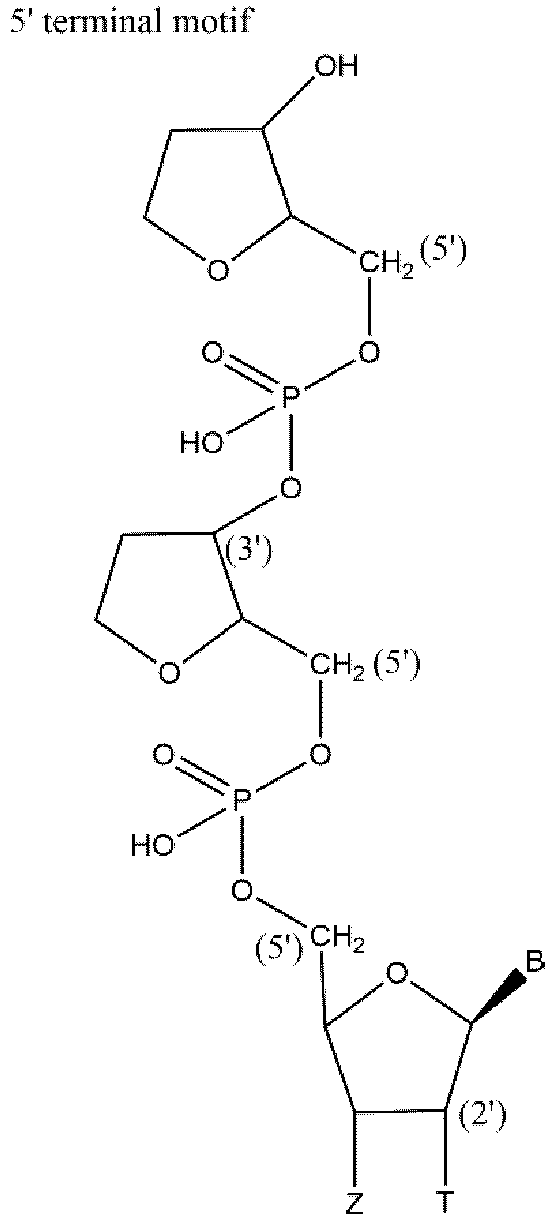
- B represents a nucleoside base,
- T represent H, OH or a 2' ribose modification,
- Z represents the remaining nucleosides of said second strand.
- In some embodiments, the second (sense) strand of the nucleic acid according to the invention comprises 2 consecutive abasic nucleosides in the 5' terminal region as shown in the following 5' terminal motif

- B represents a nucleoside base,
- T represents H, OH or a 2' ribose modification (preferably a 2' ribose modification, more preferably a 2'Me or 2'F ribose modification),
- V represents O or S (preferably O),
- R represents H or C1-4 alkyl (preferably H),
- Z represents the remaining nucleosides of said second strand,
- more preferably the following 5' terminal motif

- B represents a nucleoside base,
- T represents a 2' ribose modification (preferably a 2'Me or 2'F ribose modification),
- Z represents the remaining nucleosides of said second strand.
- The reversed bond is preferably located at the end of the nucleic acid eg RNA which is distal to a ligand moiety, such as a GalNAc containing portion, of the molecule.
- GalNAc-siRNA constructs with a 5'-GalNAc on the sense strand can have a reversed linkage on the opposite end of the sense strand.
- GalNAc-siRNA constructs with a 3'-GalNAc on the sense strand can have a reversed linkage on the opposite end of the sense strand.
- In a preferred embodiment, the second (sense) strand of the nucleic acid according to the invention comprises 2 consecutive abasic nucleosides in the 5' terminal region as shown in the following 5' terminal motif

- B represents a nucleoside base,
- T represent H, OH or a 2' ribose modification (preferably a 2' ribose modification, more preferably a 2'Me or 2'F ribose modification),
- V represent O or S (preferably O),
- R represent H or C1-4 alkyl (preferably H),
- Z comprises 11 to 26 contiguous nucleosides, preferably 15 to 21 contiguous nucleosides, and more preferably 19 contiguous nucleosides,
- more preferably the following 5' terminal motif

- B represents a nucleoside base,
- T represents a 2' ribose modification (preferably a 2'Me or 2'F ribose modification),
- Z comprises 19 contiguous nucleosides.
- In one aspect the i) the first strand of the nucleic acid has a length in the range of 17 to 30 nucleosides, preferably 19 to 25 nucleosides, more preferably 19 or 23 nucleosides; and / or ii) the second strand of the nucleic acid has a length in the range of 17 to 30 nucleosides, preferably 19 to 25 nucleosides, more preferably 19 or 21 nucleosides.
- Typically the duplex region of the nucleic acid is between 17 and 30 nucleosides in length, more preferably is 19 or 21 nucleosides in length. Similarly, the region of complementarity between the first strand and the portion of RNA transcribed from the ZPI gene is between 17 and 30 nucleosides in length.
- In certain embodiments, the nucleic acid e.g. an RNA of the invention e.g., a dsiRNA, does not comprise further modifications, e.g., chemical modifications or conjugations known in the art and described herein.
- In other preferred embodiments, the nucleic acid e.g. RNA of the invention, e.g., a dsiRNA, is further chemically modified to enhance stability or other beneficial characteristics.
- In certain embodiments of the invention, substantially all of the nucleosides are modified.
- The nucleic acids featured in the invention can be synthesized or modified by methods well established in the art, such as those described in "Current protocols in nucleic acid chemistry," Beaucage, S.L. et al. (Edrs.), John Wiley & Sons, Inc., New York, NY, USA.
- Modifications include, for example, end modifications, e.g., 5'-end modifications (phosphorylation, conjugation, inverted linkages) or 3 '-end modifications (conjugation, DNA nucleosides within an RNA, or RNA nucleosides within a DNA, inverted linkages, etc.); base modifications, e.g., replacement with stabilizing bases, destabilizing bases, or bases that base pair with an expanded repertoire of partners, conjugated bases; sugar modifications (e.g. , at the 2'-position or 4'- position) or replacement of the sugar; or backbone modifications, including modification or replacement of the phosphodiester linkages.
- Specific examples of nucleic acids such as siRNA compounds useful in the embodiments described herein include, but are not limited to RNAs containing modified backbones or no natural internucleoside linkages. Nucleic acids such as RNAs having modified backbones include, among others, those that do not have a phosphorus atom in the backbone. For the purposes of this specification, and as sometimes referenced in the art, modified nucleic acids e.g. RNAs that do not have a phosphorus atom in their internucleoside backbone can also be considered to be oligonucleosides. In some embodiments, a modified nucleic acid e.g. an siRNA will have a phosphorus atom in its internucleoside backbone.
- Modified nucleic acid e.g. RNA backbones include, for example, phosphorothioates, chiral phosphorothioates, phosphorodithioates, phosphotriesters, aminoalkylphosphotriesters, methyl and other alkyl phosphonates including 3'-alkylene phosphonates and chiral phosphonates, phosphinates, phosphoramidates including 3'-amino phosphoramidate and aminoalkylphosphoramidates, thionophosphoramidates, thionoalkylphosphonates, thionoalkylphosphotriesters, and boranophosphates having normal 3'-5' linkages, 2'-5'-linked analogs of these, and those having inverted polarity wherein the adjacent pairs of nucleoside units are linked 5'-3' or 5'-2'. Various salts, mixed salts and free acid forms are also included.
- Modified nucleic acids e.g. RNAs can also contain one or more substituted sugar moieties. The nucleic acids e.g. siRNAs, e.g., dsiRNAs, featured herein can include one of the following at the 2'-position: OH; F; 0-, S-, or N-alkyl; 0-, S-, or N-alkenyl; 0-, S- or N-alkynyl; or O-alkyl-O-alkyl, wherein the alkyl, alkenyl and alkynyl can be substituted or unsubstituted. 2' O- methyl and 2' -F are preferred modifications.
- In certain preferred embodiments, the nucleic acid comprises at least one modified nucleoside.
- The nucleic acid of the disclosure may comprise one or more modified nucleosides on the first strand and/or the second strand.
- In some embodiments, substantially all of the nucleosides of the sense strand and all of the nucleosides of the antisense strand comprise a modification.
- In some embodiments, all of the nucleosides of the sense strand and substantially all of the nucleosides of the antisense strand comprise a modification.
- In some embodiments, all of the nucleosides of the sense strand and all of the nucleosides of the antisense strand comprise a modification.
- In one embodiment, at least one of the modified nucleosides is selected from the group consisting of a deoxy- nucleoside, a 3 '-terminal deoxy-thymine (dT) nucleoside, a 2'-O-methyl modified nucleoside (also called herein 2'-Me, where Me is a methoxy) , a 2'-fluoro modified nucleoside, a 2'-deoxy- modified nucleoside, a locked nucleoside, an unlocked nucleoside, a conformationally restricted nucleoside, a constrained ethyl nucleoside, an abasic nucleoside, a 2' -amino- modified nucleoside, a 2'-O-allyl- modified nucleoside, 2' -O-alkyl- modified nucleoside, 2'-hydroxly-modified nucleoside, a 2'- methoxyethyl modified nucleoside, a 2'-O-alkyl-modified nucleoside, a morpholino nucleoside, a phosphoramidate, a non-natural base comprising nucleoside, a tetrahydropyran modified nucleoside, a 1 ,5-anhydrohexitol modified nucleoside, a cyclohexenyl modified nucleoside, a nucleoside comprising a phosphorothioate group, a nucleoside comprising a methylphosphonate group, a nucleoside comprising a 5 '-phosphate, and a nucleoside comprising a 5 '-phosphate mimic. In another embodiment, the modified nucleosides comprise a short sequence of 3 '-terminal deoxy-thymine nucleosides (dT).
- Modifications on the nucleosides may preferably be selected from the group including, but not limited to, LNA, HNA, CeNA, 2'-methoxyethyl, 2'-O-alkyl, 2'-O-allyl, 2'-C-allyl, 2'-fluoro, 2'-deoxy, 2'- hydroxyl, and combinations thereof. In another embodiment, the modifications on the nucleosides are 2-O-methyl ("2'-Me") or 2'-fluoro modifications.
- One preferred modification is a modification at the 2'-OH group of the ribose sugar, optionally selected from 2'-Me or 2'-F modifications.
- Preferred nucleic acid comprise one or more nucleosides on the first strand and / or the second strand which are modified, to form modified nucleosides, as follows:
- A nucleic acid wherein the modification is a modification at the 2'-OH group of the ribose sugar, optionally selected from 2'-Me or 2'-F modifications.
- A nucleic acid wherein the first strand comprises a 2'-F modification at any of
position 2,position 6,position 14, or any combination thereof, counting fromposition 1 of said first strand. - A nucleic acid wherein the second strand comprises a 2'-F modification at any of
position 7, position 9, position 11, or any combination thereof, counting fromposition 1 of said second strand. - A nucleic acid wherein the first and second strand each comprise 2'-Me and 2'-F modifications.
- A nucleic which comprises at least one thermally destabilizing modification, suitably at one or more of
positions 1 to 9 of the first strand counting fromposition 1 of the first strand, and / or at one or more of positions on the second strand aligned withpositions 1 to 9 of the first strand, wherein the destabilizing modification is selected from a modified unlocked nucleic acid (UNA) and a glycol nucleic acid (GNA), preferably a glycol nucleic acid, more preferably an (S)-glycol nucleic acid. - A nucleic acid which comprises at least one thermally destabilizing modification at
position 7 of the first strand, counting fromposition 1 of the first strand. - A nucleic acid which is an siRNA oligonucleoside, wherein the siRNA oligonucleoside comprises 3 or more 2'-F modifications at
positions 6 to 12 of the second strand, such as 4, 5, 6 or 7 2'-F modifications atpositions 6 to 12 of the second strand, counting fromposition 1 of said second strand. - A nucleic acid which is an siRNA oligonucleoside, wherein said second strand comprises at least 3, such as 4, 5 or 6, 2'-Me modifications at
positions 1 to 6 of the second strand, counting fromposition 1 of said second strand. - A nucleic acid which is an siRNA oligonucleoside, wherein said first strand comprises at least 5 2'-Me consecutive modifications at the 3' terminal region, preferably including the terminal nucleoside at the 3' terminal region, or at least within 1 or 2 nucleosides from the terminal nucleoside at the 3' terminal region.
- A nucleic acid which is an siRNA oligonucleoside, wherein said first strand comprises 7 2'-Me consecutive modifications at the 3' terminal region, preferably including the terminal nucleoside at the 3' terminal region.
- A nucleic acid which is an siRNA oligonucleoside, wherein each of the first and second strands comprises an alternating modification pattern, preferably a fully alternating modification pattern along the entire length of each of the first and second strands, wherein the nucleosides of the first strand are modified by (i) 2'Me modifications on the odd numbered nucleosides counting from
position 1 of the first strand, and (ii) 2'F modifications on the even numbered nucleosides counting fromposition 1 of the first strand, and nucleosides of the second strand are modified by (i) 2'F modifications on the odd numbered nucleosides counting fromposition 1 of the second strand, and (ii) 2'Me modifications on the even numbered nucleosides counting fromposition 1 of the second strand. Typically such fully alternating modification patterns are present in a blunt ended oligonucleoside, wherein each of the first and second strands are 19 nucleosides in length. -
Position 1 of the first or the second strand is the nucleoside which is the closest to the end of the nucleic acid (ignoring any abasic nucleosides) and that is joined to an adjacent nucleoside (at Position 2) via a 3' to 5' internal bond, with reference to the bonds between the sugar moieties of the backbone, and reading in a direction away from that end of the molecule. - It can therefore be seen that "
position 1 of the sense strand" is the 5' most nucleoside (not including abasic nucleosides) at the conventional 5' end of the sense strand. Typically, the nucleoside at thisposition 1 of the sense strand will be equivalent to the 5' nucleoside of the selected target nucleic acid sequence, and more generally the sense strand will have equivalent nucleosides to those of the target nucleic acid sequence starting from thisposition 1 of the sense strand, whilst also allowing for acceptable mismatches between the sequences. - As used herein, "
position 1 of the antisense strand" is the 5' most nucleoside (not including abasic nucleosides) at the conventional 5' end of the antisense strand. As hereinbefore described, there will be a region of complementarity between the sense and antisense strands, and in this way the antisense strand will also have a region of complementarity to the target nucleic acid sequence as referred to above. - In certain embodiments, the nucleic acid e.g. siRNA agent further comprises at least one phosphorothioate or methylphosphonate internucleoside linkage. For example the phosphorothioate or methylphosphonate internucleoside linkage can be at the 3 'terminus or in the terminal region of one strand, i.e. , the sense strand or the antisense strand; or at the ends of both strands, the sense strand and the antisense strand.
- In certain embodiments, the phosphorothioate or methylphosphonate internucleoside linkage is at the 5 'terminus or in the terminal region of one strand, i.e. , the sense strand or the antisense strand; or at the ends of both strands, the sense strand and the antisense strand.
- In certain embodiments, a phosphorothioate or a methylphosphonate internucleoside linkage is at both the 5'- and 3 '-terminus or in the terminal region of one strand, i.e. , the sense strand or the antisense strand; or at the ends of both strands, the sense strand and the antisense strand.
- Any nucleic acid may comprise one or more phosphorothioate (PS) modifications within the nucleic acid, such as at least two PS internucleoside bonds at the ends of a strand.
- At least one of the oligoribonucleoside strands preferably comprises at least two consecutive phosphorothioate modifications in the last 3 nucleosides of the oligonucleoside.
- The invention therefore also relates to: A nucleic acid disclosed herein which comprises phosphorothioate internucleoside linkages respectively between at least two or three consecutive positions, such as in a 5' and/or 3' terminal region and/or near terminal region of the second strand, whereby said near terminal region is preferably adjacent said terminal region wherein said one or more abasic nucleosides of said second strand is / are located.
- A nucleic acid disclosed herein which comprises phosphorothioate internucleoside linkages respectively between at least two or three consecutive positions in a 5' and / or 3' terminal region of the first strand, whereby preferably the terminal position at the 5' and / or 3' terminal region of said first strand is attached to its adjacent position by a phosphorothioate internucleoside linkage.
- The nucleic acid strand may be an RNA comprising a phosphorothioate internucleoside linkage between the three nucleosides contiguous with 2 terminally located abasic nucleosides.
- A preferred nucleic acid is a double stranded RNA comprising 2 adjacent abasic nucleosides at the 5' terminus of the second strand and a ligand moiety comprising one or more GalNAc ligand moieties at the opposite 3' end of the second strand. Further preferred, the same nucleic acid may also comprise a phosphorothioate bond between nucelotides at positions 3-4 and 4-5 of the second strand, reading from the
position 1 of the second strand. Further preferred, the same nucleic acid may also comprise a 2' F modification atpositions 7, 9 and 11 of the second strand. - Preferred modifications are as follows.
- A nucleic acid wherein modified nucleosides of said second strand comprise a modification pattern according to any one of the following (5'-3'):
- Me - Me - Me - Me - Me - Me - F - F - F - F - F - Me - Me - Me - Me - Me - Me - Me - F - Me - Me, or
- Me - Me - Me - Me - Me - F - F - Me - F - F - F - F - Me - Me - Me - Me - Me - Me - Me - Me - Me, or
- Me - Me - Me - Me - Me - Me - F - Me - F - F - F - F - Me - Me - Me - Me - Me - Me - Me - Me - Me, or
- Me - Me - Me - Me - Me - Me - Me - Me - F - F - F - Me - Me - Me - Me - Me - Me - Me - Me - Me - Me, or
- Me - Me - Me - Me - Me - Me - F - Me - F - F - F - Me - Me - Me - Me - Me - Me - Me - Me - Me - Me.
- A nucleic acid wherein modified nucleosides of said second strand comprise a modification pattern according to any one of the following (5'-3'):
- Me(s)Me(s)Me - Me - Me - Me - F - F - F - F - F - Me - Me - Me - Me - Me - Me - Me - F - Me - Me, or
- Me(s)Me(s)Me - Me - Me - F - F - Me - F - F - F - F - Me - Me - Me - Me - Me - Me - Me - Me - Me, or
- Me(s)Me(s)Me - Me - Me - Me - F - Me - F - F - F - F - Me - Me - Me - Me - Me - Me - Me - Me - Me, or
- Me(s)Me(s)Me - Me - Me - Me - Me - Me - F - F - F - Me - Me - Me - Me - Me - Me - Me - Me - Me - Me, or
- Me(s)Me(s)Me - Me - Me - Me - F - Me - F - F - F - Me - Me - Me - Me - Me - Me - Me - Me - Me - Me, or
- Me - Me - Me - Me - Me - Me - F - F - F - F - F - Me - Me - Me - Me - Me - Me - Me - F(s)Me(s)Me, or
- Me - Me - Me - Me - Me - F - F - Me - F - F - F - F - Me - Me - Me - Me - Me - Me - Me(s)Me(s)Me, or
- Me - Me - Me - Me - Me - Me - F - Me - F - F - F - F - Me - Me - Me - Me - Me - Me - Me(s)Me(s)Me, or
- Me - Me - Me - Me - Me - Me - Me - Me - F - F - F - Me - Me - Me - Me - Me - Me - Me - Me(s)Me(s)Me, or
- Me - Me - Me - Me - Me - Me - F - Me - F - F - F - Me - Me - Me - Me - Me - Me - Me - Me(s)Me(s)Me,
- wherein (s) is a phosphorothioate internucleoside linkage.
- A nucleic acid wherein modified nucleosides of said second strand comprise a modification pattern according to any one of the following (5'-3'):
- ia - ia - Me - Me - Me - Me - Me - Me - F - F - F - F - F - Me - Me - Me - Me - Me - Me - Me - F - Me - Me, or
- ia - ia - Me - Me - Me - Me - Me - F - F - Me - F - F - F - F - Me - Me - Me - Me - Me - Me - Me - Me - Me, or
- ia - ia - Me - Me - Me - Me - Me - Me -F - Me - F - F - F - F - Me - Me - Me - Me - Me - Me - Me - Me - Me, or
- ia - ia - Me - Me - Me - Me - Me - Me - Me - Me - F - F - F - Me - Me - Me - Me - Me - Me - Me - Me - Me - Me, or
- ia - ia - Me - Me - Me - Me - Me - Me - F - Me - F - F - F - Me - Me - Me - Me - Me - Me - Me - Me - Me - Me, or
- Me - Me - Me - Me - Me - Me - F - F - F - F - F - Me - Me - Me - Me - Me - Me - Me - F - Me - Me - ia - ia, or
- Me - Me - Me - Me - Me - F - F - Me - F - F - F - F - Me - Me - Me - Me - Me - Me - Me - Me - Me - ia - ia, or
- Me - Me - Me - Me - Me - Me - F - Me - F - F - F - F - Me - Me - Me - Me - Me - Me - Me - Me - Me - ia - ia, or
- Me - Me - Me - Me - Me - Me - Me - Me - F - F - F - Me - Me - Me - Me - Me - Me - Me - Me - Me - Me - ia - ia, or
- Me - Me - Me - Me - Me - Me - F - Me - F - F - F - Me - Me - Me - Me - Me - Me - Me - Me - Me - Me- ia - ia,
- wherein ia represents an inverted abasic nucleoside, and when the inverted abasic nucleosides as represented by ia - ia are present at the 3' terminus of the second strand, said inverted abasic nucleosides are present in a 2 nucleoside overhang.
- A nucleic acid wherein modified nucleosides of said second strand comprise a modification pattern according to any one of the following (5'-3'):
- ia - ia - Me(s)Me(s)Me - Me - Me - Me - F - F - F - F - F - Me - Me - Me - Me - Me - Me - Me - F - Me - Me, or
- ia - ia - Me(s)Me(s)Me - Me - Me - F - F - Me - F - F - F - F - Me - Me - Me - Me - Me - Me - Me - Me - Me, or
- ia - ia - Me(s)Me(s)Me - Me - Me - Me -F- Me - F - F - F - F - Me - Me - Me - Me - Me - Me - Me - Me - Me, or
- ia - ia - Me(s)Me(s)Me - Me - Me - Me - Me - Me - F - F - F - Me - Me - Me - Me - Me - Me - Me - Me - Me - Me, or
- ia - ia - Me(s)Me(s)Me - Me - Me - Me - F - Me - F - F - F - Me - Me - Me - Me - Me - Me - Me - Me - Me - Me, or
- Me - Me - Me - Me - Me - Me - F - F - F - F - F - Me - Me - Me - Me - Me - Me - Me - F(s)Me(s)Me - ia - ia, or
- Me - Me - Me - Me - Me - F - F - Me - F - F - F - F - Me - Me - Me - Me - Me - Me - Me(s)Me(s)Me - ia - ia, or
- Me - Me - Me - Me - Me - Me -F- Me - F - F - F - F - Me - Me - Me - Me - Me - Me - Me(s)Me(s)Me - ia - ia, or
- Me - Me - Me - Me - Me - Me - Me - Me - F - F - F - Me - Me - Me - Me - Me - Me - Me - Me(s)Me(s)Me - ia - ia , or
- Me - Me - Me - Me - Me - Me - F - Me - F - F - F - Me - Me - Me - Me - Me - Me - Me - Me(s)Me(s)Me - ia - ia,
- wherein:
(s) is a phosphorothioate internucleoside linkage, ia represents an inverted abasic nucleoside, and when the inverted abasic nucleosides as represented by ia - ia are present at the 3' terminus of the second strand, said inverted abasic nucleosides are present in a 2 nucleoside overhang. - A nucleic acid wherein modified nucleosides comprise any one of the following modification patterns:
- Modification pattern 1: Second strand (5'-3'): Me - Me - Me - Me - Me - Me - F - F - F - F - F - Me - Me - Me - Me - Me - Me - Me - F - Me - Me, First strand (5'-3'): Me - F - Me - F - Me - F - Me - F - F - Me - Me - Me - Me - F - Me - F - Me - Me - Me - Me - Me - Me - Me
- Or Modification pattern 2: Second strand (5'-3'): Me - Me - Me - Me - Me - F - F - Me - F - F - F - F - Me - Me - Me - Me - Me - Me - Me - Me - Me, First strand (5'-3'): Me - F - Me - F - Me - F - Me - F - F - Me - Me - Me - Me - F - Me - F - Me - Me - Me - Me - Me - Me - Me
- Or Modification pattern 3: Second strand (5'-3'): Me - Me - Me - Me - Me - Me -F- Me - F - F - F - F - Me - Me - Me - Me - Me - Me - Me - Me - Me, First strand (5'-3'): Me - F - Me - F - Me - F - Me - F - F - Me - Me - Me - Me - F - Me - F - Me - Me - Me - Me - Me - Me - Me
- Or Modification pattern 4: Second strand (5'-3'): Me - Me - Me - Me - Me - Me - F - Me - F - F - F - F - Me - Me - Me - Me - Me - Me - Me - Me - Me, First strand (5'-3'): Me - F - Me - F - Me - F - Me - Me - Me - Me - Me - Me - Me - F - Me - F - Me - Me - Me - Me - Me - Me - Me
- Or Modification pattern 5: Second strand (5'-3'): Me - Me - Me - Me - Me - Me - Me - Me - F - F - F - Me - Me - Me - Me - Me - Me - Me - Me - Me - Me, First strand (5'-3'): Me - F - Me - Me - Me - F - Me - Me - F - Me - Me - Me - Me - F - Me - F - Me - Me - Me - Me - Me - Me - Me
- Or Modification pattern 6: Second strand (5'-3'): Me - Me - Me - Me - Me - Me - F - Me - F - F - F - Me - Me - Me - Me - Me - Me - Me - Me - Me - Me, First strand (5'-3'): Me - F - Me - Me - Me - F - Me - Me - F - Me - Me - Me - Me - F - Me - F - Me - Me - Me - Me - Me - Me - Me.
- A nucleic acid wherein modified nucleosides comprise any one of the following modification patterns:
- Modification pattern 1: Second strand (5'-3'): Me(s)Me(s)Me - Me - Me - Me - F - F - F - F - F - Me - Me - Me - Me - Me - Me - Me - F - Me - Me, First strand (5'-3'): Me(s)F(s)Me - F - Me - F - Me - F - F - Me - Me - Me - Me - F - Me - F - Me - Me - Me - Me - Me(s)Me(s)Me
- Or Modification pattern 2: Second strand (5'-3'): Me(s)Me(s)Me - Me - Me - F - F - Me - F - F - F - F - Me - Me - Me - Me - Me - Me - Me - Me - Me, First strand (5'-3'): Me(s)F(s)Me - F - Me - F - Me - F - F - Me - Me - Me - Me - F - Me - F - Me - Me - Me - Me - Me(s)Me(s)Me
- Or Modification pattern 3: Second strand (5'-3'): Me(s)Me(s)Me - Me - Me - Me -F- Me - F - F - F - F - Me - Me - Me - Me - Me - Me - Me - Me - Me, First strand (5'-3'): Me(s)F(s)Me - F - Me - F - Me - F - F - Me - Me - Me - Me - F - Me - F - Me - Me - Me - Me - Me(s)Me(s)Me
- Or Modification pattern 4: Second strand (5'-3'): Me(s)Me(s)Me - Me - Me - Me - F - Me - F - F - F - F - Me - Me - Me - Me - Me - Me - Me - Me - Me, First strand (5'-3'): Me(s)F(s)Me - F - Me - F - Me - Me - Me - Me - Me - Me - Me - F - Me - F - Me - Me - Me - Me - Me(s)Me(s)Me
- Or Modification pattern 5: Second strand (5'-3'): Me(s)Me(s)Me - Me - Me - Me - Me - Me - F - F - F - Me - Me - Me - Me - Me - Me - Me - Me - Me - Me, First strand (5'-3'): Me(s)F(s)Me - Me - Me - F - Me - Me - F - Me - Me - Me - Me - F - Me - F - Me - Me - Me - Me - Me(s)Me(s)Me
- Or Modification pattern 6: Second strand (5'-3'): Me(s)Me(s)Me - Me - Me - Me - F - Me - F - F - F - Me - Me - Me - Me - Me - Me - Me - Me - Me - Me, First strand (5'-3'): Me(s)F(s)Me - Me - Me - F - Me - Me - F - Me - Me - Me - Me - F - Me - F - Me - Me - Me - Me - Me(s)Me(s)Me
- wherein (s) is a phosphorothioate internucleoside linkage.
- A nucleic acid wherein modified nucleosides comprise any one of the following modification patterns:
- Modification pattern 1: Second strand (5'-3'): Me - Me - Me - Me - Me - Me - F - F - F - F - F - Me - Me - Me - Me - Me - Me - Me - F(s)Me(s)Me, First strand (5'-3'): Me(s)F(s)Me - F - Me - F - Me - F - F - Me - Me - Me - Me - F - Me - F - Me - Me - Me - Me - Me(s)Me(s)Me
- Or Modification pattern 2: Second strand (5'-3'): Me - Me - Me - Me - Me - F - F - Me - F - F - F - F - Me - Me - Me - Me - Me - Me - Me(s)Me(s)Me, First strand (5'-3'): Me(s)F(s)Me - F - Me - F - Me - F - F - Me - Me - Me - Me - F - Me - F - Me - Me - Me - Me - Me(s)Me(s)Me
- Or Modification pattern 3: Second strand (5'-3'): Me - Me - Me - Me - Me - Me -F- Me - F - F - F - F - Me - Me - Me - Me - Me - Me - Me(s)Me(s)Me, First strand (5'-3'): Me(s)F(s)Me - F - Me - F - Me - F - F - Me - Me - Me - Me - F - Me - F - Me - Me - Me - Me - Me(s)Me(s)Me
- Or Modification pattern 4: Second strand (5'-3'): Me - Me - Me - Me - Me - Me - F - Me - F - F - F - F - Me - Me - Me - Me - Me - Me - Me(s)Me(s)Me, First strand (5'-3'): Me(s)F(s)Me - F - Me - F - Me - Me - Me - Me - Me - Me - Me - F - Me - F - Me - Me - Me - Me - Me(s)Me(s)Me
- Or Modification pattern 5: Second strand (5'-3'): Me - Me - Me - Me - Me - Me - Me - Me - F - F - F - Me - Me - Me - Me - Me - Me - Me - Me(s)Me(s)Me, First strand (5'-3'): Me(s)F(s)Me - Me - Me - F - Me - Me - F - Me - Me - Me - Me - F - Me - F - Me - Me - Me - Me - Me(s)Me(s)Me
- Or Modification pattern 6: Second strand (5'-3'): Me - Me - Me - Me - Me - Me - F - Me - F - F - F - Me - Me - Me - Me - Me - Me - Me - Me(s)Me(s)Me, First strand (5'-3'): Me(s)F(s)Me - Me - Me - F - Me - Me - F - Me - Me - Me - Me - F - Me - F - Me - Me - Me - Me - Me(s)Me(s)Me
- wherein (s) is a phosphorothioate internucleoside linkage.
- A nucleic acid wherein modified nucleosides comprise any one of the following modification patterns:
- Modification pattern 1: Second strand (5'-3'): ia - ia - Me - Me - Me - Me - Me - Me - F - F - F - F - F - Me - Me - Me - Me - Me - Me - Me - F - Me - Me, First strand (5' - 3'): Me - F - Me - F - Me - F - Me - F - F - Me - Me - Me - Me - F - Me - F - Me - Me - Me - Me - Me - Me - Me
- Or Modification pattern 2: Second strand (5'-3'): ia - ia - Me - Me - Me - Me - Me - F - F - Me - F - F - F - F - Me - Me - Me - Me - Me - Me - Me - Me - Me, First strand (5'-3'): Me - F - Me - F - Me - F - Me - F - F - Me - Me - Me - Me - F - Me - F - Me - Me - Me - Me - Me - Me - Me
- Or Modification pattern 3: Second strand (5'-3'): ia - ia - Me - Me - Me - Me - Me - Me -F-Me - F - F - F - F - Me - Me - Me - Me - Me - Me - Me - Me - Me, First strand (5'-3'): Me-F - Me - F - Me - F - Me - F - F - Me - Me - Me - Me - F - Me - F - Me - Me - Me - Me - Me - Me - Me
- Or Modification pattern 4: Second strand (5'-3'): ia - ia - Me - Me - Me - Me - Me - Me - F - Me - F - F - F - F - Me - Me - Me - Me - Me - Me - Me - Me - Me, First strand (5'-3'): Me - F - Me - F - Me - F - Me - Me - Me - Me - Me - Me - Me - F - Me - F - Me - Me - Me - Me - Me - Me - Me
- Or Modification pattern 5: Second strand (5'-3'): ia - ia - Me - Me - Me - Me - Me - Me - Me - Me - F - F - F - Me - Me - Me - Me - Me - Me - Me - Me - Me - Me, First strand (5'-3'): Me - F - Me - Me - Me - F - Me - Me - F - Me - Me - Me - Me - F - Me - F - Me - Me-Me - Me - Me - Me - Me
- Or Modification pattern 6: Second strand (5'-3'): ia - ia - Me - Me - Me - Me - Me - Me - F - Me - F - F - F - Me - Me - Me - Me - Me - Me - Me - Me - Me - Me, First strand (5'-3'): Me - F - Me - Me - Me - F - Me - Me - F - Me - Me - Me - Me - F - Me - F - Me - Me - Me - Me - Me - Me - Me,
- wherein ia represents an inverted abasic nucleoside.
- A nucleic acid wherein modified nucleosides comprise any one of the following modification patterns:
- Modification pattern 1: Second strand (5'-3'): Me - Me - Me - Me - Me - Me - F - F - F - F - F - Me - Me - Me - Me - Me - Me - Me - F - Me - Me - ia - ia, First strand (5'-3'): Me - F - Me - F - Me - F - Me - F - F - Me - Me - Me - Me - F - Me - F - Me - Me - Me - Me - Me - Me - Me
- Or Modification pattern 2: Second strand (5'-3'): Me - Me - Me - Me - Me - F - F - Me - F - F - F - F - Me - Me - Me - Me - Me - Me - Me - Me - Me - ia - ia, First strand (5'-3'): Me - F - Me - F - Me - F - Me - F - F - Me - Me - Me - Me - F - Me - F - Me - Me - Me - Me - Me - Me - Me
- Or Modification pattern 3: Second strand (5'-3'): Me - Me - Me - Me - Me - Me -F- Me - F - F - F - F - Me - Me - Me - Me - Me - Me - Me - Me - Me - ia - ia, First strand (5'-3'): Me - F - Me - F - Me - F - Me - F - F - Me - Me - Me - Me - F - Me - F - Me - Me - Me - Me - Me - Me - Me
- Or Modification pattern 4: Second strand (5'-3'): Me - Me - Me - Me - Me - Me - F - Me - F - F - F - F - Me - Me - Me - Me - Me - Me - Me - Me - Me - ia - ia, First strand (5'-3'): Me - F - Me - F - Me - F - Me - Me - Me - Me - Me - Me - Me - F - Me - F - Me - Me - Me - Me - Me - Me - Me
- Or Modification pattern 5: Second strand (5'-3'): Me - Me - Me - Me - Me - Me - Me - Me - F - F - F - Me - Me - Me - Me - Me - Me - Me - Me - Me - Me - ia - ia, First strand (5'-3'): Me - F - Me - Me - Me - F - Me - Me - F - Me - Me - Me - Me - F - Me - F - Me - Me - Me - Me - Me - Me - Me
- Or Modification pattern 6: Second strand (5'-3'): Me - Me - Me - Me - Me - Me - F - Me - F - F - F - Me - Me - Me - Me - Me - Me - Me - Me - Me - Me - ia - ia,- First strand (5'-3'): Me - F - Me - Me - Me - F - Me - Me - F - Me - Me - Me - Me - F - Me - F - Me - Me - Me - Me - Me - Me - Me,
- wherein ia represents an inverted abasic nucleoside, and when the inverted abasic nucleosides as represented by ia - ia are present at the 3' terminus of the second strand, said inverted abasic nucleosides are present in a 2 nucleoside overhang.
- A nucleic acid wherein modified nucleosides comprise any one of the following modification patterns:
- Modification pattern 1: Second strand (5'-3'): ia - ia - Me(s)Me(s)Me - Me - Me - Me - F - F - F - F - F - Me - Me - Me - Me - Me - Me - Me - F - Me - Me, First strand (5'-3'): Me(s)F(s)Me - F - Me - F - Me - F - F - Me - Me - Me - Me - F - Me - F - Me - Me - Me - Me - Me(s)Me(s)Me
- Or Modification pattern 2: Second strand (5'-3'): ia - ia - Me(s)Me(s)Me - Me - Me - F - F - Me - F - F - F - F - Me - Me - Me - Me - Me - Me - Me - Me - Me, First strand (5'-3'): Me(s)F(s)Me - F - Me - F - Me - F - F - Me - Me - Me - Me - F - Me - F - Me - Me - Me - Me - Me(s)Me(s)Me
- Or Modification pattern 3: Second strand (5'-3'): ia - ia - Me(s)Me(s)Me - Me - Me - Me - F- Me - F - F - F - F - Me - Me - Me - Me - Me - Me - Me - Me - Me, First strand (5'-3'): Me(s)F(s)Me - F - Me - F - Me - F - F - Me - Me - Me - Me - F - Me - F - Me - Me - Me - Me - Me(s)Me(s)Me
- Or Modification pattern 4: Second strand (5'-3'): ia - ia - Me(s)Me(s)Me - Me - Me - Me - F - Me - F - F - F - F - Me - Me - Me - Me - Me - Me - Me - Me - Me, First strand (5'-3'): Me(s)F(s)Me - F - Me - F - Me - Me - Me - Me - Me - Me - Me - F - Me - F - Me - Me - Me - Me - Me(s)Me(s)Me
- Or Modification pattern 5: Second strand (5'-3'): ia - ia - Me(s)Me(s)Me - Me - Me - Me - Me - Me - F - F - F - Me - Me - Me - Me - Me - Me - Me - Me - Me - Me, First strand (5'-3'): Me(s)F(s)Me - Me - Me - F - Me - Me - F - Me - Me - Me - Me - F - Me - F - Me - Me-Me - Me - Me(s)Me(s)Me
- Or Modification pattern 6: Second strand (5'-3'): ia - ia - Me(s)Me(s)Me - Me - Me - Me - F - Me - F - F - F - Me - Me - Me - Me - Me - Me - Me - Me - Me - Me, First strand (5'-3'): Me(s)F(s)Me - Me - Me - F - Me - Me - F - Me - Me - Me - Me - F - Me - F - Me - Me - Me - Me - Me(s)Me(s)Me
- wherein:
(s) is a phosphorothioate internucleoside linkage, ia represents an inverted abasic nucleoside. - A nucleic acid wherein modified nucleosides comprise any one of the following modification patterns:
- Modification pattern 1: Second strand (5'-3'): Me - Me - Me - Me - Me - Me - F - F - F - F - F - Me - Me - Me - Me - Me - Me - Me - F(s)Me(s)Me - ia - ia, First strand (5'-3'): Me(s)F(s)Me - F - Me - F - Me - F - F - Me - Me - Me - Me - F - Me - F - Me - Me - Me - Me - Me(s)Me(s)Me
- Or Modification pattern 2: Second strand (5'-3'): Me - Me - Me - Me - Me - F - F - Me - F - F - F - F - Me - Me - Me - Me - Me - Me - Me(s)Me(s)Me - ia - ia, First strand (5'-3'): Me(s)F(s)Me - F - Me - F - Me - F - F - Me - Me - Me - Me - F - Me - F - Me - Me - Me - Me - Me(s)Me(s)Me
- Or Modification pattern 3: Second strand (5'-3'): Me - Me - Me - Me - Me - Me -F- Me - F - F - F - F - Me - Me - Me - Me - Me - Me - Me(s)Me(s)Me - ia - ia, First strand (5'-3'): Me(s)F(s)Me - F - Me - F - Me - F - F - Me - Me - Me - Me - F - Me - F - Me - Me - Me - Me - Me(s)Me(s)Me
- Or Modification pattern 4: Second strand (5'-3'): Me - Me - Me - Me - Me - Me - F - Me - F - F - F - F - Me - Me - Me - Me - Me - Me - Me(s)Me(s)Me - ia - ia, First strand (5'-3'): Me(s)F(s)Me - F - Me - F - Me - Me - Me - Me - Me - Me - Me - F - Me - F - Me - Me - Me - Me - Me(s)Me(s)Me
- Or Modification pattern 5: Second strand (5'-3'): Me - Me - Me - Me - Me - Me - Me - Me - F - F - F - Me - Me - Me - Me - Me - Me - Me - Me(s)Me(s)Me - ia - ia, First strand (5'-3'): Me(s)F(s)Me - Me - Me - F - Me - Me - F - Me - Me - Me - Me - F - Me - F - Me - Me-Me - Me - Me(s)Me(s)Me
- Or Modification pattern 6: Second strand (5'-3'): Me - Me - Me - Me - Me - Me - F - Me - F - F - F - Me - Me - Me - Me - Me - Me - Me - Me(s)Me(s)Me - ia - ia, First strand (5'-3'): Me(s)F(s)Me - Me - Me - F - Me - Me - F - Me - Me - Me - Me - F - Me - F - Me - Me - Me - Me - Me(s)Me(s)Me
- wherein: (s) is a phosphorothioate internucleoside linkage, ia represents an inverted abasic nucleoside, and when the inverted abasic nucleosides as represented by ia - ia are present at the 3' terminus of the second strand, said inverted abasic nucleosides are present in a 2 nucleoside overhang.
- Particularly preferred is a nucleic acid wherein the modified nucleosides comprise the following modification pattern:
- Modification pattern 4: Second strand (5'-3'): ia - ia - Me(s)Me(s)Me - Me - Me - Me - F - Me - F - F - F - F - Me - Me - Me - Me - Me - Me - Me - Me - Me, First strand (5'-3'): Me(s)F(s)Me - F - Me - F - Me - Me - Me - Me - Me - Me - Me - F - Me - F - Me - Me - Me - Me - Me(s)Me(s)Me
- wherein: (s) is a phosphorothioate internucleoside linkage, ia represents an inverted abasic nucleoside.
- A nucleic acid wherein the first strand comprises a 2' sugar modification pattern wherein said modifications are selected at least from 2'Me and 2'F sugar modifications, provided that the overall number of 2'F sugar modifications in the first strand does not consist of four, or six, 2'F modifications.
- A nucleic acid wherein the first strand comprises a 2' sugar modification pattern wherein said modifications are selected at least from 2'Me and 2'F sugar modifications, wherein the overall number of 2'F sugar modifications in the first strand consists of three, five or seven 2'F modifications.
- A nucleic acid wherein the first strand comprises a 2' sugar modification pattern wherein said modifications are selected at least from 2'Me and 2'F sugar modifications, wherein the overall number of 2'F sugar modifications in the first strand consists of three 2'F modifications.
- A nucleic acid wherein the first strand comprises a 2' sugar modification pattern wherein said modifications are selected at least from 2'Me and 2'F sugar modifications, wherein the overall number of 2'F sugar modifications in the first strand consists of five 2'F modifications.
- A nucleic acid wherein the first strand comprises a 2' sugar modification pattern as follows (5'-3'):
- Me - F - Me - X2 - Me - F - (Me)7 - (F - Me)2 - X3 - Me - X4 - (Me)3
- wherein X2, X3 and X4 are selected from 2'Me and 2'F sugar modifications, provided that for X2, X3 and X4 at least one is a 2'F sugar modification, and the other two sugar modifications are 2'Me sugar modifications.
- A nucleic acid wherein the first strand comprises a 2' sugar modification pattern as follows (5'-3'):
- Me - F - Me - X2 - Me - F - (Me)7 - (F - Me)2 - X3 - Me - X4 - (Me)3
- wherein X2 is a 2'F sugar modification, and X3 and X4 are 2'Me sugar modifications.
- A nucleic acid wherein the first strand comprises a 2' sugar modification pattern as follows (5'-3'):
- Me - F - Me - X2 - Me - F - (Me)7 - (F - Me)2 - X3 - Me - X4 - (Me)3
- wherein X3 is a 2'F sugar modification, and X2 and X4 are 2'Me sugar modifications.
- A nucleic acid wherein the first strand comprises a 2' sugar modification pattern as follows (5'-3'):
- Me - F - Me - X2 - Me - F - (Me)7 - (F - Me)2 - X3 - Me - X4 - (Me)3
- wherein X4 is a 2'F sugar modification, and X2 and X3 are 2'Me sugar modifications.
- A nucleic acid wherein the first strand comprises a 2' sugar modification pattern wherein said modifications are selected at least from 2'Me and 2'F sugar modifications, wherein the overall number of 2'F sugar modifications in the first strand consists of seven 2'F modifications.
- A nucleic acid wherein the first strand comprises a 2' sugar modification pattern as follows (5'-3'):
- Me - F - Me - X2 - Me - F - Me - (F)2 - (Me)4 - (F - Me)2 - X3 - Me - X4 - (Me)3
- wherein X2, X3 and X4 are selected from 2'Me and 2'F sugar modifications, provided that for X2, X3 and X4 at least one is a 2'F sugar modification, and the other two sugar modifications are 2'Me sugar modifications.
- A nucleic acid wherein the first strand comprises a 2' sugar modification pattern as follows (5'-3'):
- Me - F - Me - X2 - Me - F - Me - (F)2 - (Me)4 - (F - Me)2 - X3 - Me - X4 - (Me)3
- wherein X2 is a 2'F sugar modification, and X3 and X4 are 2'Me sugar modifications.
- A nucleic acid wherein the first strand comprises a 2' sugar modification pattern as follows (5'-3'):
- Me - F - Me - X2 - Me - F - Me - (F)2 - (Me)4 - (F - Me)2 - X3 - Me - X4 - (Me)3
- wherein X3 is a 2'F sugar modification, and X2 and X4 are 2'Me sugar modifications.
- A nucleic acid wherein the first strand comprises a 2' sugar modification pattern as follows (5'-3'):
- Me - F - Me - X2 - Me - F - Me - (F)2 - (Me)4 - (F - Me)2 - X3 - Me - X4 - (Me)3
- wherein X4 is a 2'F sugar modification, and X2 and X3 are 2'Me sugar modifications.
- A nucleic acid wherein the first strand comprises a 2' sugar modification pattern as follows (5'-3'):
- Me - F - (Me)3 - X1 - (Me)7 - F - Me - F - (Me)7
- wherein X1 is a thermally destabilising modification.
- A nucleic acid wherein the first strand comprises a 2' sugar modification pattern as follows (5'-3'):
- Me - F - (Me)3 - X1 - Me - (F)2 - (Me)4 - F - Me - F - (Me)7
- wherein X1 is a thermally destabilising modification.
- A nucleic acid wherein the second strand comprises a 2' sugar modification pattern as follows (5'-3'):
(Me)8 - (F)3 - (Me)10 - A nucleic acid wherein the second strand comprises a 2' sugar modification pattern as follows (5'-3'):
- (Me)8 - (F)3 - (Me)10, and
- wherein the first strand comprises a 2' sugar modification pattern wherein said modifications are selected at least from 2'Me and 2'F sugar modifications, provided that the overall number of 2'F sugar modifications in the first strand does not consist of four, or six, 2'F modifications.
- A nucleic acid wherein the second strand comprises a 2' sugar modification pattern as follows (5'-3'):
- (Me)8 - (F)3 - (Me)10, and
- wherein the first strand comprises a 2' sugar modification pattern wherein said modifications are selected at least from 2'Me and 2'F sugar modifications, wherein the overall number of 2'F sugar modifications in the first strand consists of three, five or seven 2'F modifications.
- A nucleic acid comprising a first strand that is at least partially complementary to a portion of RNA transcribed from the target gene, and a second strand that is at least partially complementary to the first strand, wherein said first and second strands form a duplex region of at least 17 nucleosides in length, and wherein nucleosides of said second strand comprise a 2' sugar modification pattern as follows (5'-3'):
- (Me)8 - (F)3 - (Me)10, and
- wherein nucleosides of said first strand comprise a 2' sugar modification pattern as follows (5'-3'):
Me - F - (Me)3 - X1 - (Me)7 - F - Me - F - (Me)7, wherein X1 is a thermally destabilising modification. - A nucleic acid comprising a first strand that is at least partially complementary to a portion of RNA transcribed from the target gene, and a second strand that is at least partially complementary to the first strand, wherein said first and second strands form a duplex region of at least 17 nucleosides in length, and wherein nucleosides of said second strand comprise a 2' sugar modification pattern as follows (5'-3'):
- (Me)8 - (F)3 - (Me)10, and
- wherein nucleosides of said first strand comprise a 2' sugar modification pattern as follows (5'-3'):
(Me - F)3 - (Me)7 - F - Me - F - (Me)7. - A nucleic acid comprising a first strand that is at least partially complementary to a portion of RNA transcribed from the target gene, and a second strand that is at least partially complementary to the first strand, wherein said first and second strands form a duplex region of at least 17 nucleosides in length, and wherein nucleosides of said second strand comprise a 2' sugar modification pattern as follows (5'-3'):
- (Me)8 - (F)3 - (Me)10, and
- wherein nucleosides of said first strand comprise a 2' sugar modification pattern as follows (5'-3'):
Me - F - (Me)3 - F - (Me)7 - (F - Me)2 - F - (Me)5. - A nucleic acid comprising a first strand that is at least partially complementary to a portion of RNA transcribed from the target gene, and a second strand that is at least partially complementary to the first strand, wherein said first and second strands form a duplex region of at least 17 nucleosides in length, and wherein nucleosides of said second strand comprise a 2' sugar modification pattern as follows (5'-3'):
- (Me)8 - (F)3 - (Me)10, and
- wherein nucleosides of said first strand comprise a 2' sugar modification pattern as follows (5'-3'):
Me - F - (Me)3 - F - (Me)7 - F - Me - F - (Me)3 - F - (Me)3. - A nucleic acid comprising a first strand that is at least partially complementary to a portion of RNA transcribed from the target gene, and a second strand that is at least partially complementary to the first strand, wherein said first and second strands form a duplex region of at least 17 nucleosides in length, and wherein nucleosides of said second strand comprise a 2' sugar modification pattern as follows (5'-3'):
- (Me)8 - (F)3 - (Me)10, and
- wherein nucleosides of said first strand comprise a 2' sugar modification pattern as follows (5'-3'):
Me - F - (Me)3 - X1 - Me - (F)2 - (Me)4 - F - Me - F - (Me)7, wherein X1 is a thermally destabilising modification. - A nucleic acid comprising a first strand that is at least partially complementary to a portion of RNA transcribed from the target gene, and a second strand that is at least partially complementary to the first strand, wherein said first and second strands form a duplex region of at least 17 nucleosides in length, and wherein nucleosides of said second strand comprise a 2' sugar modification pattern as follows (5'-3'):
- (Me)8 - (F)3 - (Me)10, and
- wherein nucleosides of said first strand comprise a 2' sugar modification pattern as follows (5'-3'):
(Me - F)3 - Me - (F)2 - (Me)4 - (F - Me)2 - (Me)6. - A nucleic acid comprising a first strand that is at least partially complementary to a portion of RNA transcribed from the target gene, and a second strand that is at least partially complementary to the first strand, wherein said first and second strands form a duplex region of at least 17 nucleosides in length, and wherein nucleosides of said second strand comprise a 2' sugar modification pattern as follows (5'-3'):
- (Me)8 - (F)3 - (Me)10, and
- wherein nucleosides of said first strand comprise a 2' sugar modification pattern as follows (5'-3'):
Me - F - (Me)3 - F - Me - (F)2 - (Me)4 - (F - Me)2 - F - (Me)5. - A nucleic acid comprising a first strand that is at least partially complementary to a portion of RNA transcribed from the target gene, and a second strand that is at least partially complementary to the first strand, wherein said first and second strands form a duplex region of at least 17 nucleosides in length, and wherein nucleosides of said second strand comprise a 2' sugar modification pattern as follows (5'-3'):
- (Me)8 - (F)3 - (Me)10, and
- wherein nucleosides of said first strand comprise a 2' sugar modification pattern as follows (5'-3'):
Me-F-(Me)3-F-Me-(F)2-(Me)4-(F-Me)2-(Me)2-F-(Me)3. - A nucleic acid wherein the second strand comprises a 2' sugar, and abasic modification pattern as follows (5'-3'):
- ia-ia-(Me)8 - (F)3 - (Me)10
- wherein ia represents an inverted abasic nucleoside.
- A nucleic acid wherein the second strand comprises a 2' sugar, and abasic modification pattern as follows (5'-3'):
- ia-ia-(Me)8 - (F)3 - (Me)10, wherein ia represents an inverted abasic nucleoside; and
- wherein the first strand comprises a 2' sugar modification pattern wherein said modifications are selected at least from 2'Me and 2'F sugar modifications, provided that the overall number of 2'F sugar modifications in the first strand does not consist of four, or six, 2'F modifications.
- A nucleic acid wherein the second strand comprises a 2' sugar, and abasic modification pattern as follows (5'-3'):
- ia-ia-(Me)8 - (F)3 - (Me)10, wherein ia represents an inverted abasic nucleoside; and
- wherein the first strand comprises a 2' sugar modification pattern wherein said modifications are selected at least from 2'Me and 2'F sugar modifications, wherein the overall number of 2'F sugar modifications in the first strand consists of three, five or seven 2'F modifications.
- A nucleic acid comprising a first strand that is at least partially complementary to a portion of RNA transcribed from the target gene, and a second strand that is at least partially complementary to the first strand, wherein said first and second strands form a duplex region of at least 17 nucleosides in length, and wherein nucleosides of said second strand comprise a 2' sugar, and abasic modification pattern as follows (5'-3'):
- ia-ia-(Me)8 - (F)3 - (Me)10, wherein ia represents an inverted abasic nucleoside; and
- wherein nucleosides of said first strand comprise a 2' sugar modification pattern as follows (5'-3'):
Me - F - (Me)3 - X1 - (Me)7 - F - Me - F - (Me)7, wherein X1 is a thermally destabilising modification. - A nucleic acid comprising a first strand that is at least partially complementary to a portion of RNA transcribed from the target gene, and a second strand that is at least partially complementary to the first strand, wherein said first and second strands form a duplex region of at least 17 nucleosides in length, and wherein nucleosides of said second strand comprise a 2' sugar, and abasic modification pattern as follows (5'-3'):
- ia-ia-(Me)8 - (F)3 - (Me)10, wherein ia represents an inverted abasic nucleoside; and
- wherein nucleosides of said first strand comprise a 2' sugar modification pattern as follows (5'-3'):
(Me - F)3 - (Me)7 - F - Me - F - (Me)7. - A nucleic acid comprising a first strand that is at least partially complementary to a portion of RNA transcribed from the target gene, and a second strand that is at least partially complementary to the first strand, wherein said first and second strands form a duplex region of at least 17 nucleosides in length, and wherein nucleosides of said second strand comprise a 2' sugar, and abasic modification pattern as follows (5'-3'):
- ia-ia-(Me)8 - (F)3 - (Me)10, wherein ia represents an inverted abasic nucleoside; and
- wherein nucleosides of said first strand comprise a 2' sugar modification pattern as follows (5'-3'):
Me - F - (Me)3 - F - (Me)7 - (F - Me)2 - F - (Me)5. - A nucleic acid comprising a first strand that is at least partially complementary to a portion of RNA transcribed from the target gene, and a second strand that is at least partially complementary to the first strand, wherein said first and second strands form a duplex region of at least 17 nucleosides in length, and wherein nucleosides of said second strand comprise a 2' sugar, and abasic modification pattern as follows (5'-3'):
- ia-ia-(Me)8 - (F)3 - (Me)10, wherein ia represents an inverted abasic nucleoside; and
- wherein nucleosides of said first strand comprise a 2' sugar modification pattern as follows (5'-3'):
Me - F - (Me)3 - F - (Me)7 - F - Me - F - (Me)3 - F - (Me)3. - A nucleic acid comprising a first strand that is at least partially complementary to a portion of RNA transcribed from the target gene, and a second strand that is at least partially complementary to the first strand, wherein said first and second strands form a duplex region of at least 17 nucleosides in length, and wherein nucleosides of said second strand comprise a 2' sugar, and abasic modification pattern as follows (5'-3'):
- ia-ia-(Me)8 - (F)3 - (Me)10, wherein ia represents an inverted abasic nucleoside; and
- wherein nucleosides of said first strand comprise a 2' sugar modification pattern as follows (5'-3'):
Me - F - (Me)3 - X1 - Me - (F)2 - (Me)4 - F - Me - F - (Me)7, - wherein X1 is a thermally destabilising modification.
- A nucleic acid comprising a first strand that is at least partially complementary to a portion of RNA transcribed from the target gene, and a second strand that is at least partially complementary to the first strand, wherein said first and second strands form a duplex region of at least 17 nucleosides in length, and wherein nucleosides of said second strand comprise a 2' sugar, and abasic modification pattern as follows (5'-3'):
- ia-ia-(Me)8 - (F)3 - (Me)10, wherein ia represents an inverted abasic nucleoside; and
- wherein nucleosides of said first strand comprise a 2' sugar modification pattern as follows (5'-3'):
(Me - F)3 - Me - (F)2 - (Me)4 - (F - Me)2 - (Me)6. - A nucleic acid comprising a first strand that is at least partially complementary to a portion of RNA transcribed from the target gene, and a second strand that is at least partially complementary to the first strand, wherein said first and second strands form a duplex region of at least 17 nucleosides in length, and wherein nucleosides of said second strand comprise a 2' sugar, and abasic modification pattern as follows (5'-3'):
- ia-ia-(Me)8 - (F)3 - (Me)10, wherein ia represents an inverted abasic nucleoside; and
- wherein nucleosides of said first strand comprise a 2' sugar modification pattern as follows (5'-3'):
Me - F - (Me)3 - F - Me - (F)2 - (Me)4 - (F - Me)2 - F - (Me)5. - A nucleic acid comprising a first strand that is at least partially complementary to a portion of RNA transcribed from the target gene, and a second strand that is at least partially complementary to the first strand, wherein said first and second strands form a duplex region of at least 17 nucleosides in length, and wherein nucleosides of said second strand comprise a 2' sugar, and abasic modification pattern as follows (5'-3'):
- ia-ia-(Me)8 - (F)3 - (Me)10, wherein ia represents an inverted abasic nucleoside; and
- wherein nucleosides of said first strand comprise a 2' sugar modification pattern as follows (5'-3'):
Me - F - (Me)3 - F - Me - (F)2 - (Me)4 - (F - Me)2 - (Me)2 - F - (Me)3. - A nucleic acid wherein the second strand comprises a 2' sugar modification pattern as follows (5'-3'):
- ia-ia-Me(s)Me(s) (Me)6 - (F)3 - (Me)10,
- wherein ia represents an inverted abasic nucleoside, and (s) represents a phosphorothioate linkage.
- A nucleic acid wherein the second strand comprises a 2' sugar modification pattern as follows (5'-3'):
- ia-ia-Me(s)Me(s) (Me)6 - (F)3 - (Me)10, wherein ia represents an inverted abasic nucleoside, and (s) represents a phosphorothioate linkage; and
- wherein the first strand comprises a 2' sugar modification pattern wherein said modifications are selected at least from 2'Me and 2'F sugar modifications, provided that the overall number of 2'F sugar modifications in the first strand does not consist of four, or six, 2'F modifications.
- A nucleic acid wherein the second strand comprises a 2' sugar modification pattern as follows (5'-3'):
- ia-ia-Me(s)Me(s) (Me)6 - (F)3 - (Me)10, wherein ia represents an inverted abasic nucleoside, and (s) represents a phosphorothioate linkage; and
- wherein the first strand comprises a 2' sugar modification pattern wherein said modifications are selected at least from 2'Me and 2'F sugar modifications, wherein the overall number of 2'F sugar modifications in the first strand consists of three, five or seven 2'F modifications.
- A nucleic acid comprising a first strand that is at least partially complementary to a portion of RNA transcribed from the target gene, and a second strand that is at least partially complementary to the first strand, wherein said first and second strands form a duplex region of at least 17 nucleosides in length, and wherein nucleosides of said second strand comprise a 2' sugar, and abasic modification pattern as follows (5'-3'):
- ia-ia-Me(s)Me(s) (Me)6 - (F)3 - (Me)10, wherein ia represents an inverted abasic nucleoside, and (s) represents a phosphorothioate linkage, and
- wherein nucleosides of said first strand comprise a 2' sugar modification pattern as follows (5'-3'):
Me(s)F(s)(Me)3 - X1 - (Me)7 - F - Me - F - (Me)5(s)Me(s)Me, wherein X1 is a thermally destabilising modification. - A nucleic acid comprising a first strand that is at least partially complementary to a portion of RNA transcribed from the target gene, and a second strand that is at least partially complementary to the first strand, wherein said first and second strands form a duplex region of at least 17 nucleosides in length, and wherein nucleosides of said second strand comprise a 2' sugar, and abasic modification pattern as follows (5'-3'):
- ia-ia-Me(s)Me(s) (Me)6 - (F)3 - (Me)10, wherein ia represents an inverted abasic nucleoside, and (s) represents a phosphorothioate linkage, and
- wherein nucleosides of said first strand comprise a 2' sugar modification pattern as follows (5'-3'):
Me(s)F(s)Me - F - Me - F - (Me)7 - F - Me - F - (Me)5(s)Me(s)Me. - A nucleic acid comprising a first strand that is at least partially complementary to a portion of RNA transcribed from the target gene, and a second strand that is at least partially complementary to the first strand, wherein said first and second strands form a duplex region of at least 17 nucleosides in length, and wherein nucleosides of said second strand comprise a 2' sugar, and abasic modification pattern as follows (5'-3'):
- ia-ia-Me(s)Me(s) (Me)6 - (F)3 - (Me)10, wherein ia represents an inverted abasic nucleoside, and (s) represents a phosphorothioate linkage, and
- wherein nucleosides of said first strand comprise a 2' sugar modification pattern as follows (5'-3'):
Me(s)F(s)(Me)3 - F - (Me)7 - (F - Me)2 - F - (Me)3(s)Me(s)Me. - A nucleic acid comprising a first strand that is at least partially complementary to a portion of RNA transcribed from the target gene, and a second strand that is at least partially complementary to the first strand, wherein said first and second strands form a duplex region of at least 17 nucleosides in length, and wherein nucleosides of said second strand comprise a 2' sugar, and abasic modification pattern as follows (5'-3'):
- ia-ia-Me(s)Me(s) (Me)6 - (F)3 - (Me)10, wherein ia represents an inverted abasic nucleoside, and (s) represents a phosphorothioate linkage, and
- wherein nucleosides of said first strand comprise a 2' sugar modification pattern as follows (5'-3'):
Me(s)F(s)(Me)3 - F - (Me)7 - F - Me - F - (Me)3 - F - Me(s)Me(s)Me. - A nucleic acid comprising a first strand that is at least partially complementary to a portion of RNA transcribed from the target gene, and a second strand that is at least partially complementary to the first strand, wherein said first and second strands form a duplex region of at least 17 nucleosides in length, and wherein nucleosides of said second strand comprise a 2' sugar, and abasic modification pattern as follows (5'-3'):
- ia-ia-Me(s)Me(s) (Me)6 - (F)3 - (Me)10, wherein ia represents an inverted abasic nucleoside, and (s) represents a phosphorothioate linkage, and
- wherein nucleosides of said first strand comprise a 2' sugar modification pattern as follows (5'-3'):
Me(s)F(s)(Me)3 - X1 - Me - (F)2 - (Me)4 - F - Me - F - (Me)5(s)Me(s)Me, wherein X1 is a thermally destabilising modification - A nucleic acid comprising a first strand that is at least partially complementary to a portion of RNA transcribed from the target gene, and a second strand that is at least partially complementary to the first strand, wherein said first and second strands form a duplex region of at least 17 nucleosides in length, and wherein nucleosides of said second strand comprise a 2' sugar, and abasic modification pattern as follows (5'-3'):
- ia-ia-Me(s)Me(s) (Me)6 - (F)3 - (Me)10, wherein ia represents an inverted abasic nucleoside, and (s) represents a phosphorothioate linkage, and
- wherein nucleosides of said first strand comprise a 2' sugar modification pattern as follows (5'-3'):
Me(s)F(s)Me - F - Me - F - Me - (F)2 - (Me)4 - (F - Me)2 - (Me)4(s)Me(s)Me. - A nucleic acid comprising a first strand that is at least partially complementary to a portion of RNA transcribed from the target gene, and a second strand that is at least partially complementary to the first strand, wherein said first and second strands form a duplex region of at least 17 nucleosides in length, and wherein nucleosides of said second strand comprise a 2' sugar, and abasic modification pattern as follows (5'-3'):
- ia-ia-Me(s)Me(s) (Me)6 - (F)3 - (Me)10, wherein ia represents an inverted abasic nucleoside, and (s) represents a phosphorothioate linkage, and
- wherein nucleosides of said first strand comprise a 2' sugar modification pattern as follows (5'-3'):
Me(s)F(s)(Me)3 - F - Me - (F)2 - (Me)4 - (F - Me)2 - F - (Me)3(s)Me(s)Me. - A nucleic acid comprising a first strand that is at least partially complementary to a portion of RNA transcribed from the target gene, and a second strand that is at least partially complementary to the first strand, wherein said first and second strands form a duplex region of at least 17 nucleosides in length, and wherein nucleosides of said second strand comprise a 2' sugar, and abasic modification pattern as follows (5'-3'):
- ia-ia-Me(s)Me(s) (Me)6 - (F)3 - (Me)10, wherein ia represents an inverted abasic nucleoside, and (s) represents a phosphorothioate linkage, and
- wherein nucleosides of said first strand comprise a 2' sugar modification pattern as follows (5'-3'):
Me(s)F(s)(Me)3 - F - Me - (F)2 - (Me)4 - (F - Me)2 - (Me)2 - F - Me(s)Me(s)Me. - Preferred modifications are as follows:
- Modification pattern 1:
- Second strand (5'-3'): ia - ia - Me - Me - Me - Me - Me - Me - Me - Me - F - F - F - Me - Me - Me - Me - Me - Me - Me - Me - Me - Me,
- First strand (5'-3'): Me - F - Me - Me - Me - X1 - Me - Me - Me - Me - Me - Me - Me - F - Me - F - Me - Me - Me - Me - Me - Me - Me, wherein X1 is a thermally destabilising modification;
- Or Modification pattern 2:
- Second strand (5'-3'): ia - ia - Me - Me - Me - Me - Me - Me - Me - Me - F - F - F - Me - Me - Me - Me - Me - Me - Me - Me - Me - Me,
- First strand (5'-3'): Me - F - Me - F - Me - F - Me - Me - Me - Me - Me - Me - Me - F - Me - F - Me - Me - Me - Me - Me - Me - Me;
- Or Modification pattern 3:
- Second strand (5'-3'): ia - ia - Me - Me - Me - Me - Me - Me - Me - Me - F - F - F - Me - Me - Me - Me - Me - Me - Me - Me - Me - Me,
- First strand (5'-3'): Me - F - Me - Me - Me - F - Me - Me - Me - Me - Me - Me - Me-F - Me - F - Me - F - Me - Me - Me - Me - Me;
- Or Modification pattern 4:
- Second strand (5'-3'): ia - ia - Me - Me - Me - Me - Me - Me - Me - Me - F - F - F - Me - Me - Me - Me - Me - Me - Me - Me - Me - Me,
- First strand (5'-3'): Me - F - Me - Me - Me - F - Me - Me - Me - Me - Me - Me - Me - F - Me - F - Me - Me - Me - F - Me - Me - Me;
- Or Modification pattern 5:
- Second strand (5'-3'): ia - ia - Me - Me - Me - Me - Me - Me - Me - Me - F - F - F - Me - Me - Me - Me - Me - Me - Me - Me - Me - Me,
- First strand (5'-3'): Me - F - Me - Me - Me - X1 - Me -F - F - Me - Me - Me - Me - F - Me - F - Me - Me - Me - Me - Me - Me - Me, wherein X1 is a thermally destabilising modification;
- Or Modification pattern 6:
- Second strand (5'-3'): ia - ia - Me - Me - Me - Me - Me - Me - Me - Me - F - F - F - Me - Me - Me - Me - Me - Me - Me - Me - Me - Me,
- First strand (5'-3'): Me - F - Me -F -Me - F - Me -F - F - Me -Me - Me - Me -F - Me - F - Me - Me - Me - Me - Me - Me - Me;
- Or Modification pattern 7:
- Second strand (5'-3'): ia - ia - Me - Me - Me - Me - Me - Me - Me - Me - F - F - F - Me - Me - Me - Me - Me - Me - Me - Me - Me - Me,
- First strand (5'-3'): Me - F - Me - Me - Me - F - Me - F - F - Me - Me - Me - Me - F - Me - F - Me - F - Me - Me - Me - Me - Me;
- Or Modification pattern 8:
- Second strand (5'-3'): ia - ia - Me - Me - Me - Me - Me - Me - Me - Me - F - F - F - Me - Me - Me - Me - Me - Me - Me - Me - Me - Me,
- First strand (5'-3'): Me - F - Me - Me - Me - F - Me - F - F - Me - Me - Me - Me - F - Me - F - Me - Me - Me - F - Me - Me - Me
- wherein ia represents an inverted abasic nucleoside.
- Further preferred modifications are as follows:
- Modification pattern 1:
- Second strand (5'-3'): ia - ia - Me(s)Me(s)Me - Me - Me - Me - Me - Me - F - F - F - Me - Me - Me - Me - Me - Me - Me - Me - Me - Me,
- First strand (5'-3'): Me(s)F(s)Me - Me - Me - X1 - Me - Me - Me - Me - Me - Me - Me - F - Me - F - Me - Me - Me - Me - Me(s)Me(s)Me, wherein X1 is a thermally destabilising modification;
- Or Modification pattern 2:
- Second strand (5'-3'): ia - ia - Me(s)Me(s)Me - Me - Me - Me - Me - Me - F - F - F - Me - Me - Me - Me - Me - Me - Me - Me - Me - Me,
- First strand (5'-3'): Me(s)F(s)Me - F - Me - F - Me - Me - Me - Me - Me - Me - Me - F - Me - F - Me - Me - Me - Me - Me(s)Me(s)Me;
- Or Modification pattern 3:
- Second strand (5'-3'): ia - ia - Me(s)Me(s)Me - Me - Me - Me - Me - Me - F - F - F - Me - Me - Me - Me - Me - Me - Me - Me - Me - Me,
- First strand (5'-3'): Me(s)F(s)Me - Me - Me - F - Me - Me - Me - Me - Me - Me - Me - F - Me - F - Me - F - Me - Me - Me(s)Me(s)Me;
- Or Modification pattern 4:
- Second strand (5'-3'): ia - ia - Me(s)Me(s)Me - Me - Me - Me - Me - Me - F - F - F - Me - Me - Me - Me - Me - Me - Me - Me - Me - Me,
- First strand (5'-3'): Me(s)F(s)Me - Me - Me - F - Me - Me - Me - Me - Me - Me - Me - F - Me - F - Me - Me - Me - F - Me(s)Me(s)Me;
- Or Modification pattern 5:
- Second strand (5'-3'): ia - ia - Me(s)Me(s)Me - Me - Me - Me - Me - Me - F - F - F - Me - Me - Me - Me - Me - Me - Me - Me - Me - Me,
- First strand (5'-3'): Me(s)F(s)Me - Me - Me - X1 - Me - F - F - Me - Me - Me - Me - F - Me - F - Me - Me - Me - Me - Me(s)Me(s)Me, wherein X1 is a thermally destabilising modification;
- Or Modification pattern 6:
- Second strand (5'-3'): ia - ia - Me(s)Me(s)Me - Me - Me - Me - Me - Me - F - F - F - Me - Me - Me - Me - Me - Me - Me - Me - Me - Me,
- First strand (5'-3'): Me(s)F(s)Me - F - Me - F - Me - F - F - Me - Me - Me - Me - F - Me - F - Me - Me - Me - Me - Me(s)Me(s)Me;
- Or Modification pattern 7:
- Second strand (5'-3'): ia - ia - Me(s)Me(s)Me - Me - Me - Me - Me - Me - F - F - F - Me - Me - Me - Me - Me - Me - Me - Me - Me - Me,
- First strand (5'-3'): Me(s)F(s)Me - Me - Me - F - Me - F - F - Me - Me - Me - Me - F - Me - F - Me - F - Me - Me - Me(s)Me(s)Me;
- Or Modification pattern 8:
- Second strand (5'-3'): ia - ia - Me(s)Me(s)Me - Me - Me - Me - Me - Me - F - F - F - Me - Me - Me - Me - Me - Me - Me - Me - Me - Me,
- First strand (5'-3'): Me(s)F(s)Me - Me - Me - F - Me - F - F - Me - Me - Me - Me - F - Me - F - Me - Me - Me - F - Me(s)Me(s)Me;
- wherein (s) is a phosphorothioate internucleoside linkage and ia represents an inverted abasic nucleoside.
- Another modification of the nucleic acid e.g. RNA e.g. an siRNA of the invention involves linking the nucleic acid e.g. the siRNA to one or more ligand moieties e.g. to enhance the activity, cellular distribution, or cellular uptake of the nucleic acid e.g. siRNA e.g. into a cell.
- In some embodiments, the ligand moiety described can be attached to a nucleic acid e.g. an siRNA oligonucleoside, via a linker that can be cleavable or non-cleavable. The term "linker" or "linking group" means an organic moiety that connects two parts of a compound, e.g., covalently attaches two parts of a compound.
- The ligand can be attached to the 3' or 5' end of the sense strand.
- The ligand is preferably conjugated to 3' end of the sense strand of the nucleic acid e.g. an siRNA agent.
- The invention therefore relates in a further aspect to a conjugate for inhibiting expression of a target gene in a cell, said conjugate comprising a nucleic acid portion and one or more ligand moieties, said nucleic acid portion comprising a nucleic acid as disclosed herein.
- In one aspect the second strand of the nucleic acid is conjugated directly or indirectly (e.g. via a linker) to the one or more ligand moiety(s), wherein said ligand moiety is typically present at a terminal region of the second strand, preferably at the 3' terminal region thereof.
- In certain embodiments, the ligand moiety comprises a GalNAc or GalNAc derivative attached to the nucleic acid eg dsiRNA through a linker.
- Therefore the invention relates to a conjugate wherein the ligand moiety comprises
- i) one or more GalNAc ligands; and / or
- ii) one or more GalNAc ligand derivatives; and / or
- iii) one or more GalNAc ligands conjugated to said nucleic acid through a linker.
- Said GalNAc ligand may be conjugated directly or indirectly to the 5' or 3' terminal region of the second strand of the nucleic acid, preferably at the 3' terminal region thereof.
- GalNAc ligands are well known in the art and described in, inter alia,
EP3775207A1 . - In some embodiments, the GalNAc ligand is comprised in any one of the linkers shown in
Figures 1 to 4 orFigure 5 (Formula XI), wherein the "oligonucleotide" may be any nucleic acid disclosed herein. Accordingly, the "oligonucleotide" may comprise other bonds than a phosphodiester bond, such as one or more phosphorothioate bonds. Preferably, the nucleic acid according to the invention is a double stranded oligonucleoside as defined herein and the linker is conjugated to the second strand, more preferably to the 3' terminal region of the second strand, via a phosphodiester bond. - In some embodiments, the GalNAc ligand is comprised in the linker shown in
Figure 3 , wherein the "oligonucleotide" may be any nucleic acid disclosed herein. Accordingly, the "oligonucleotide" may comprise other bonds than a phosphodiester bond, such as one or more phosphorothioate bonds. Preferably, the nucleic acid according to the invention is a double stranded oligonucleoside as defined herein and the linker is conjugated to the second strand, more preferably to the 3' terminal region of the second strand, via a phosphodiester bond. - In some embodiments, the GalNAc ligand is comprised in the linker shown in
Figure 5 (Formula XI), wherein the "oligonucleotide" may be any nucleic acid disclosed herein. Accordingly, the "oligonucleotide" may comprise other bonds than a phosphodiester bond, such as one or more phosphorothioate bonds. Preferably, the nucleic acid according to the invention is a double stranded oligonucleoside as defined herein and the linker is conjugated to the second strand, more preferably to the 3' terminal region of the second strand, via a phosphodiester bond. - In some embodiments, the GalNAc ligand is comprised in any one of the linkers shown in
Figures 1 to 4 orFigure 5 (Formula XI), wherein the "oligonucleotide" represents a nucleic acid according to the invention, wherein the nucleic acid according to the invention comprises a modified or unmodified second strand comprising or consisting of SEQ ID NO:265 or SEQ ID NO:268, preferably wherein the linker is conjugated to the 3' terminal region of the second strand, i.e., to the 3' terminal region of SEQ ID NO:265 or SEQ ID NO:268, via a phosphodiester bond. - In some embodiments, the GalNAc ligand is comprised in the linker shown in
Figure 3 , wherein the "oligonucleotide" represents a nucleic acid according to the invention, wherein the nucleic acid according to the invention comprises a modified or unmodified second strand comprising or consisting of SEQ ID NO:265 or SEQ ID NO:268, preferably wherein the linker is conjugated to the 3' terminal region of the second strand, i.e., to the 3' terminal region of SEQ ID NO:265 or SEQ ID NO:268, via a phosphodiester bond. - In some embodiments, the GalNAc ligand is comprised in the linker shown in
Figure 5 (Formula XI), wherein the "oligonucleotide" represents a nucleic acid according to the invention, wherein the nucleic acid according to the invention comprises a modified or unmodified second strand comprising or consisting of SEQ ID NO:265 or SEQ ID NO:268, preferably wherein the linker is conjugated to the 3' terminal region of the second strand, i.e., to the 3' terminal region of SEQ ID NO:265 or SEQ ID NO:268, via a phosphodiester bond. - In some embodiments, the GalNAc ligand is comprised in any one of the linkers shown in
Figures 1 to 4 orFigure 5 (Formula XI), wherein the "oligonucleotide" represents a nucleic acid according to the invention, wherein the nucleic acid according to the invention comprises a modified second strand comprising or consisting of SEQ ID NO:774 or SEQ ID NO:776, preferably wherein the linker is conjugated to the 3' terminal region of the second strand, i.e., to the 3' terminal region of SEQ ID NO:774 or SEQ ID NO:776, via a phosphodiester bond. - In some embodiments, the GalNAc ligand is comprised in the linker shown in
Figure 3 , wherein the "oligonucleotide" represents a nucleic acid according to the invention, wherein the nucleic acid according to the invention comprises a modified second strand comprising or consisting of SEQ ID NO:774 or SEQ ID NO:776, preferably wherein the linker is conjugated to the 3' terminal region of the second strand, i.e., to the 3' terminal region of SEQ ID NO:774 or SEQ ID NO:776, via a phosphodiester bond. - In some embodiments, the GalNAc ligand is comprised in the linker shown in
Figure 5 (Formula XI), wherein the "oligonucleotide" represents a nucleic acid according to the invention, wherein the nucleic acid according to the invention comprises a modified second strand comprising or consisting of SEQ ID NO:774 or SEQ ID NO:776, preferably wherein the linker is conjugated to the 3' terminal region of the second strand, i.e., to the 3' terminal region of SEQ ID NO:774 or SEQ ID NO:776, via a phosphodiester bond. - In some embodiments, the GalNAc ligand is comprised in any one of the linkers shown in
Figures 1 to 4 orFigure 5 (Formula XI), wherein the "oligonucleotide" represents a nucleic acid according to the invention, wherein the nucleic acid according to the invention comprises a modified first strand comprising or consisting of SEQ ID NO:764 and a modified second strand comprising or consisting of SEQ ID NO:774, preferably wherein the linker is conjugated to the 3' terminal region of the second strand, i.e., to the 3' terminal region of SEQ ID NO:774, via a phosphodiester bond. - In some embodiments, the GalNAc ligand is comprised in the linker shown in
Figure 3 , wherein the "oligonucleotide" represents a nucleic acid according to the invention, wherein the nucleic acid according to the invention comprises a modified first strand comprising or consisting of SEQ ID NO:764 and a modified second strand comprising or consisting of SEQ ID NO:774, preferably wherein the linker is conjugated to the 3' terminal region of the second strand, i.e., to the 3' terminal region of SEQ ID NO:774, via a phosphodiester bond. - In some embodiments, the GalNAc ligand is comprised in the linker shown in
Figure 5 (Formula XI), wherein the "oligonucleotide" represents a nucleic acid according to the invention, wherein the nucleic acid according to the invention comprises a modified first strand comprising or consisting of SEQ ID NO:764 and a modified second strand comprising or consisting of SEQ ID NO:774, preferably wherein the linker is conjugated to the 3' terminal region of the second strand, i.e., to the 3' terminal region of SEQ ID NO:774, via a phosphodiester bond. - In some embodiments, the GalNAc ligand is comprised in any one of the linkers shown in
Figures 1 to 4 orFigure 5 (Formula XI), wherein the "oligonucleotide" represents a nucleic acid according to the invention, wherein the nucleic acid according to the invention comprises a modified first strand comprising or consisting of SEQ ID NO:766 and a modified second strand comprising or consisting of SEQ ID NO:776, preferably wherein the linker is conjugated to the 3' terminal region of the second strand, i.e., to the 3' terminal region of SEQ ID NO:776, via a phosphodiester bond. - In some embodiments, the GalNAc ligand is comprised in the linker shown in
Figure 3 , wherein the "oligonucleotide" represents a nucleic acid according to the invention, wherein the nucleic acid according to the invention comprises a modified first strand comprising or consisting of SEQ ID NO:766 and a modified second strand comprising or consisting of SEQ ID NO:776, preferably wherein the linker is conjugated to the 3' terminal region of the second strand, i.e., to the 3' terminal region of SEQ ID NO:776, via a phosphodiester bond. - In some embodiments, the GalNAc ligand is comprised in the linker shown in
Figure 5 (Formula XI), wherein the "oligonucleotide" represents a nucleic acid according to the invention, wherein the nucleic acid according to the invention comprises a modified first strand comprising or consisting of SEQ ID NO:766 and a modified second strand comprising or consisting of SEQ ID NO:776, preferably wherein the linker is conjugated to the 3' terminal region of the second strand, i.e., to the 3' terminal region of SEQ ID NO:776, via a phosphodiester bond. - In some embodiments, the GalNAc ligand is comprised in the linker shown in
Figure 3 , wherein the "oligonucleotide" represents a nucleic acid according to the invention, wherein the nucleic acid according to the invention comprises a modified first strand comprising or consisting of SEQ ID NO:764 and a modified second strand comprising or consisting of SEQ ID NO:774, wherein the second strand has the following structure
- T represents a 2'Me ribose modification,
- B represents the nucleoside bases of the first two basic nucleosides in the 5' terminal region of SEQ ID NO:774, and
- Z represents the remaining 19 contiguous basic nucleosides of SEQ ID NO:774.
- In some embodiments, the GalNAc ligand is comprised in the linker shown in
Figure 5 (Formula XI), wherein the "oligonucleotide" represents a nucleic acid according to the invention, wherein the nucleic acid according to the invention comprises a modified first strand comprising or consisting of SEQ ID NO:764 and a modified second strand comprising or consisting of SEQ ID NO:774, wherein the second strand has the following structure
- T represents a 2'Me ribose modification,
- B represents the nucleoside bases of the first two basic nucleosides in the 5' terminal region of SEQ ID NO:774, and
- Z represents the remaining 19 contiguous basic nucleosides of SEQ ID NO:774.
- In some embodiments, the GalNAc ligand is comprised in the linker shown in
Figure 3 , wherein the "oligonucleotide" represents a nucleic acid according to the invention, wherein the nucleic acid according to the invention comprises a modified first strand comprising or consisting of SEQ ID NO:766 and a modified second strand comprising or consisting of SEQ ID NO:776, wherein the second strand has the following structure
- T represents a 2'Me ribose modification,
- B represents the nucleoside bases of the first two basic nucleosides in the 5' terminal region of SEQ ID NO:776, and
- Z represents the remaining 19 contiguous basic nucleosides of SEQ ID NO:776.
- In some embodiments, the GalNAc ligand is comprised in the linker shown in
Figure 5 (Formula XI), wherein the "oligonucleotide" represents a nucleic acid according to the invention, wherein the nucleic acid according to the invention comprises a modified first strand comprising or consisting of SEQ ID NO:766 and a modified second strand comprising or consisting of SEQ ID NO:776, wherein the second strand has the following structure
- T represents a 2'Me ribose modification,
- B represents the nucleoside bases of the first two basic nucleosides in the 5' terminal region of SEQ ID NO:776, and
- Z represents the remaining 19 contiguous basic nucleosides of SEQ ID NO:776.
- In one aspect, the disclosure provides a cell containing a nucleic acid, such as inhibitory RNA [RNAi] as described herein.
- In one aspect, the disclosure provides a cell comprising a vector as described herein.
- In one aspect, the invention provides a pharmaceutical composition for inhibiting expression of a target gene, the composition comprising a nucleic acid as disclosed herein.
- The pharmaceutically acceptable composition may comprise an excipient and or carrier.
- Some examples of materials which can serve as pharmaceutically-acceptable carriers include: (1) sugars, such as lactose, glucose and sucrose; (2) starches, such as corn starch and potato starch; (3) cellulose, and its derivatives, such as sodium carboxymethyl cellulose, ethyl cellulose and cellulose acetate; (4) powdered tragacanth; (5) malt; (6) gelatin; (7) lubricating agents, such as magnesium stearate, sodium lauryl sulfate and talc; (8) excipients, such as cocoa butter and suppository waxes; (9) oils, such as peanut oil, cottonseed oil, safflower oil, sesame oil, olive oil, corn oil and soybean oil; (10) glycols, such as propylene glycol; (11) polyols, such as glycerin, sorbitol, mannitol and polyethylene glycol; (12) esters, such as ethyl oleate and ethyl laurate; (13) agar; (14) buffering agents, such as magnesium hydroxide and aluminum hydroxide; (15) alginic acid; (16) pyrogen- free water; (17) isotonic saline; (18) Ringer's solution; (19) ethyl alcohol; (20) pH buffered solutions; (21) polyesters, polycarbonates and/or poly anhydrides; (22) bulking agents, such as polypeptides and amino acids (23) serum component, such as serum albumin, HDL and LDL; and (22) other nontoxic compatible substances employed in pharmaceutical formulations.
- Typical pharmaceutical carriers include, but are not limited to, binding agents (e.g., pregelatinized maize starch, polyvinylpyrrolidone or hydroxypropyl methylcellulose, etc.); fillers (e.g., lactose and other sugars, microcrystalline cellulose, pectin, gelatin, calcium sulfate, ethyl cellulose, polyacrylates or calcium hydrogen phosphate, etc.); lubricants (e.g. , magnesium stearate, talc, silica, colloidal silicon dioxide, stearic acid, metallic stearates, hydrogenated vegetable oils, corn starch, polyethylene glycols, sodium benzoate, sodium acetate, etc.); disintegrants (e.g. , starch, sodium starch glycolate, etc.); and wetting agents (e.g., sodium lauryl sulphate, etc).
- Pharmaceutically acceptable organic or inorganic excipients suitable for non-parenteral administration which do not deleteriously react with nucleic acids can also be used to formulate the compositions of the present disclosure. Suitable pharmaceutically acceptable excipients include, but are not limited to, water, salt solutions, alcohols, polyethylene glycols, gelatin, lactose, amylose, magnesium stearate, talc, silicic acid, viscous paraffin, hydroxymethylcellulose, polyvinylpyrrolidone, and the like.
- Formulations for topical administration of nucleic acids can include sterile and non-sterile aqueous solutions, non-aqueous solutions in common solvents such as alcohols, or solutions of the nucleic acids in liquid or solid oil bases. The solutions can also contain buffers, diluents and other suitable additives. Pharmaceutically acceptable organic or inorganic excipients suitable for non- parenteral administration which do not deleteriously react with nucleic acids can be used.
- In one embodiment, the nucleic acid or composition is administered in an unbuffered solution. In certain embodiments, the unbuffered solution is saline or water. In other embodiments, the nucleic acid e.g. siRNA agent is administered in a buffered solution. In such embodiments, the buffer solution can comprise acetate, citrate, prolamine, carbonate, or phosphate, or any combination thereof. For example, the buffer solution can be phosphate buffered saline (PBS).
- The pharmaceutical compositions of the disclosure may be administered in dosages sufficient to inhibit expression of a gene. In general, a suitable dose of a nucleic acid e.g. an siRNA of the disclosure will be in the range of about 0.001 to about 200.0 milligrams per kilogram body weight of the recipient per day, generally in the range of about 1 to 50 mg per kilogram body weight per day. Typically, a suitable dose of a nucleic acid e.g. an siRNA of the disclosure will be in the range of about 0.1 mg/kg to about 5.0 mg/kg, e.g., about 0.3 mg/kg and about 3.0 mg/kg.
- A repeat-dose regimen may include administration of a therapeutic amount of a nucleic acid e.g. siRNA on a regular basis, such as every other day or once a year. In certain embodiments, the nucleic acid e.g. siRNA is administered about once per month to about once per quarter (i.e., about once every three months).
- In various embodiments, the nucleic acid e.g. siRNA agent is administered at a dose of about 0.01 mg/kg to about 10 mg/kg or about 0.5 mg/kg to about 50 mg/kg. In some embodiments, the nucleic acid e.g. siRNA agent is administered at a dose of about 10 mg/kg to about 30 mg/kg. In certain embodiments, the nucleic acid e.g. siRNA agent is administered at a dose selected from about 0.5 mg/
kg 1 mg/kg, 1.5 mg/kg, 3 mg/kg, 5 mg/kg, 10 mg/kg, and 30 mg/kg. In certain embodiments, the nucleic acid e.g. agent is administered about once per week, once per month, once every other two months, or once a quarter (i.e., once every three months) at a dose of about 0.1 mg/kg to about 5.0 mg/kg. In certain embodiments, the nucleic acid e.g. siRNA agent is administered to the subject once a week. In certain embodiments, the nucleic acid e.g. siRNA agent is administered to the subject once a month. In certain embodiments, the nucleic acid e.g. siRNA agent is administered once per quarter (i.e. , every three months). - After an initial treatment regimen, the treatments can be administered on a less frequent basis. For example, after administration weekly or biweekly for three months, administration can be repeated once per month, for six months, or a year; or longer.
- The pharmaceutical composition can be administered once daily, or administered as two, three, or more sub-doses at appropriate intervals throughout the day or even using continuous infusion or delivery through a controlled release formulation. In that case, the nucleic acid e.g. siRNA contained in each sub-dose must be correspondingly smaller in order to achieve the total daily dosage. The dosage unit can also be compounded for delivery over several days, e.g. , using a conventional sustained release formulation which provides sustained release of the nucleic acid e.g. siRNA over a several day period. Sustained release formulations are well known in the art and are particularly useful for delivery of agents at a particular site, such as could be used with the agents of the present invention. In this embodiment, the dosage unit contains a corresponding multiple of the daily dose.
- In other embodiments, a single dose of the pharmaceutical compositions can be long lasting, such that subsequent doses are administered at not more than 3, 4, or 5 day intervals, or at not more than 1, 2, 3, or 4 week intervals. In some embodiments of the invention, a single dose of the pharmaceutical compositions of the invention is administered once per week. In other embodiments of the invention, a single dose of the pharmaceutical compositions of the invention is administered bimonthly. In certain embodiments, the siRNA is administered about once per month to about once per quarter (i.e. , about once every three months), or even every 6 months or 12 months.
- Estimates of effective dosages and in vivo half-lives for the individual nucleic acid e.g. siRNAs encompassed by the invention can be made using conventional methodologies or on the basis of in vivo testing using an appropriate animal model, as known in the art.
- The pharmaceutical compositions of the present invention can be administered in a number of ways depending upon whether local or systemic treatment is desired and upon the area to be treated. Administration can be topical {e.g. , by a transdermal patch), pulmonary, e.g. , by inhalation or insufflation of powders or aerosols, including by nebulizer; intratracheal, intranasal, epidermal and transdermal, oral or parenteral. Parenteral administration includes intravenous, intraarterial, subcutaneous, intraperitoneal, or intramuscular injection or infusion; subdermal, e.g. , via an implanted device; or intracranial, e.g. , by intraparenchymal, intrathecal or intraventricular administration. In certain preferred embodiments, the compositions are administered by intravenous infusion or injection. In certain embodiments, the compositions are administered by subcutaneous injection.
- In one embodiment, the nucleic acid e.g. agent is administered to the subject subcutaneously.
- The nucleic acid e.g. siRNA can be delivered in a manner to target a particular tissue (e.g. in particular liver cells).
- The present disclosure also provides methods of inhibiting expression of ZPI gene in a cell. Said methods are not part of the claimed invention. The methods include contacting a cell with a nucleic acid of the disclosure e.g. siRNA agent, such as double stranded siRNA agent, in an amount effective to inhibit expression of the ZPI gene in the cell, thereby inhibiting expression of the ZPI gene in the cell. It is to be noted that a nucleic acid "for inhibiting the expression of ZPI" is a nucleic acid that is capable of inhibiting ZPI expression, preferably as described herein below.
- Contacting of a cell with the nucleic acid e.g. an siRNA, such as a double stranded siRNA agent, may be done in vitro or in vivo. Said contacting of a cell with the nucleic acid is not part of the claimed invention. Contacting a cell in vivo with nucleic acid e.g. includes contacting a cell or group of cells within a subject, e.g., a human subject, with the nucleic acid e.g. siRNA. Combinations of in vitro and in vivo methods of contacting a cell are also possible. Contacting a cell may be direct or indirect, as discussed above. Furthermore, contacting a cell may be accomplished via a targeting ligand moiety, including any ligand moiety described herein or known in the art. In preferred embodiments, the targeting ligand moiety is a carbohydrate moiety, e.g. a GalNAc3 ligand, or any other ligand moiety that directs the siRNA agent to a site of interest.
- The term "inhibiting," as used herein, is used interchangeably with "reducing," "silencing," "downregulating", "suppressing", and other similar terms, and includes any level of inhibition.
- In some embodiments of the methods of the disclosure, expression of ZPI gene is inhibited by at least 30%, 35%, 40%, 45%, 50%, 55%, 60%, 65%, 70%, 75%, 80%, 85%, 90%, or 95%, or to below the level of detection of the assay, preferably when determined by qPCR as described herein and/or when the siRNA is introduced into the target cell by transfection. In certain embodiments, the methods include a clinically relevant inhibition of expression of ZPI target gene e.g. as demonstrated by a clinically relevant outcome after treatment of a subject with an agent to reduce the expression of the gene.
- In some embodiments, when transfected into the cells, the nucleic acid of the invention inhibits expression of the ZPI gene with an IC50 value lower than 2500 pM, 2400 pM, 2300 pM, 2200 pM, 2100 pM, 2000 pM, 1900 pM, 1800 pM, 1700 pM, 1600 pM, 1500 pM, 1400 pM, 1300 pM, 1200 pM, 1100 pM, 1000 pM, 900 pM, 800 pM, 700 pM, 600 pM, 500 pM, 400 pM, 300 pM, 200 pM or 100 pM, preferably when determined by qPCR, more preferably by reverse transcriptase (RT)-qPCR, as described herein.
- In a preferred embodiment, when transfected into the cells, the nucleic acid of the invention inhibits expression of the ZPI gene with an IC50 value lower than 2500 pM. In a more preferred embodiment, when transfected into the cells, the nucleic acid of the invention inhibits expression of the ZPI gene with an IC50 value lower than 1000 pM. In an even more preferred embodiment, when transfected into the cells, the nucleic acid of the invention inhibits expression of the ZPI gene with an IC50 value lower than 500 pM. In a most preferred embodiment, when transfected into the cells, the nucleic acid of the invention inhibits expression of the ZPI gene with an IC50 value lower than 100 pM.
- Inhibition of expression of the ZPI gene may be quantified by the following method:
- Huh7 cells (human hepatocyte-derived cell line, obtained from JCRB Cell Bank) may be maintained in Dulbecco's Modified Eagle Medium (DMEM) supplemented with 10% FBS at 37°C in an atmosphere of 5% CO2. Cells may then be transfected with siRNA duplexes targeting ZPI mRNA or a negative control siRNA (siRNA-control; sense strand 5'-UUCUCCGAACGUGUCACGUTT-3' (SEQ ID NO:794), antisense strand 5'-ACGUGACACGUUCGGAGAATT-3' (SEQ ID NO:790)) using 10x3-fold serial dilutions over a final duplex concentration range of 20 nM to 1 pM. Transfection may be carried out by adding 9.7 µL Opti-MEM (ThermoFisher) plus 0.3 µL Lipofectamine RNAiMAX (ThermoFisher) to 10 µL of each siRNA duplex. The mixture may be incubated at room temperature for 15 minutes before being added to 100 µL of complete growth medium containing 20,000 Huh7 cells. Cells may be incubated for 24 hours at 37°C/5% CO2 prior to total RNA purification using a RNeasy 96 Kit (Qiagen). Each duplex may be tested by transfection in duplicate wells in a single experiment.
- cDNA synthesis may be performed using FastQuant RT (with gDNase) Kit (Tiangen). Real-time quantitative PCR (qPCR) may be performed on an ABI Prism 7900HT or
ABI QuantStudio 7 with primers specific for human ZPI (Hs01547819_m1) and human GAPDH (Hs02786624_g1) using FastStart Universal Probe Master Kit (Roche). - qPCR may be performed in duplicate on cDNA derived from each well and the mean cycle threshold (Ct) calculated. Relative ZPI expression may be calculated from mean Ct values using the comparative Ct (ΔΔCt) method, normalised to GAPDH and relative to untreated cells. Maximum percent inhibition of ZPI expression and IC50 values may be calculated using a four parameter (variable slope) model using GraphPad Prism 9.
- Alternatively or in addition, inhibition of expression of the ZPI gene may be characterized by a reduction of mean relative expression of the ZPI gene.
- In some embodiments, when cells are transfected with 0.1 nM of the nucleic acid of the invention, the mean relative expression of ZPI is below 1, 0.9, 0.8, 0.7, 0.6, 0.5, or 0.4, preferably when determined by qPCR, more preferably by reverse transcriptase (RT)-qPCR, as described herein.
- In some embodiments, when cells are transfected with 5 nM of the nucleic acid of the invention, the mean relative expression of ZPI is below 1, 0.9, 0.8, 0.7, 0.6, 0.5, 0.4 or 0.3, preferably when determined by qPCR, more preferably by reverse transcriptase (RT)-qPCR, as described herein.
- Mean relative expression of the ZPI gene may be quantified by the following method:
- Huh7 cells (human hepatocyte-derived cell line, obtained from JCRB Cell Bank) may be maintained in Dulbecco's Modified Eagle Medium (DMEM) supplemented with 10% FBS at 37°C in at atmosphere of 5% CO2. Cells may be transfected with siRNA duplexes targeting ZPI mRNA or a negative control siRNA (siRNA-control; sense strand 5'-UUCUCCGAACGUGUCACGUTT-3' (SEQ ID NO:794), antisense strand 5'-ACGUGACACGUUCGGAGAATT-3' (SEQ ID NO:790)) at a final duplex concentration of 5 nM and 0.1 nM. Transfection may be carried out by adding 9.7 µL Opti-MEM (ThermoFisher) plus 0.3 µL Lipofectamine RNAiMAX (ThermoFisher) to 10 µL of each siRNA duplex. The mixture may be incubated at room temperature for 15 minutes before being added to 100 µL of complete growth medium containing 20,000 Huh7 cells. Cells may be incubated for 24 hours at 37°C/5% CO2 prior to total RNA purification using a RNeasy 96 Kit (Qiagen). Each duplex may be tested by transfection in duplicate wells in two independent experiments.
- cDNA synthesis may be performed using FastQuant RT (with gDNase) Kit (Tiangen). Real-time quantitative PCR (qPCR) may be performed on an ABI Prism 7900HT or
ABI QuantStudio 7 with primers specific for human ZPI (Hs01547819_m1) and human GAPDH (Hs02786624_g1) using FastStart Universal Probe Master Kit (Roche). - qPCR may be performed in duplicate on cDNA derived from each well and the mean Ct calculated. Relative ZPI expression may be calculated from mean Ct values using the comparative Ct (ΔΔCt) method, normalised to GAPDH and relative to untreated cells.
- Inhibition of the expression of ZPI gene may be manifested by a reduction of the amount of mRNA of the target ZPI gene in comparison to a suitable control.
- In other embodiments, inhibition of the expression of ZPI gene may be assessed in terms of a reduction of a parameter that is functionally linked to gene expression, e.g , protein expression or signaling pathways.
- The present disclosure also provides methods of using nucleic acid e.g. an siRNA of the disclosure or a composition containing nucleic acid e.g. an siRNA of the disclosure to reduce or inhibit ZPI gene expression in a cell. The methods include contacting the cell with a nucleic acid e.g. dsiRNA of the disclosure and maintaining the cell for a time sufficient to obtain degradation of the mRNA transcript of ZPI, thereby inhibiting expression of the ZPI gene in the cell. Reduction in gene expression can be assessed by any methods known in the art.
- In the methods of the disclosure the cell may be contacted in vitro or in vivo, i.e., the cell may be within a subject. Said methods are not part of the claimed invention.
- A cell suitable for treatment using the methods of the disclosure may be any cell that expresses a gene of interest associated with disease related to a disorder of haemostasis, such as a disease related to a disorder of haemostasis, such as haemophilia.
- The in vivo methods of the disclosure may include administering to a subject a composition containing a nucleic acid of the invention e.g. an siRNA, where the nucleic acid e.g. siRNA includes a nucleoside sequence that is complementary to at least a part of an RNA transcript of ZPI gene of the mammal to be treated.
- The present disclosure further provides methods of treatment of a subject in need thereof. The treatment methods of the disclosure include administering a nucleic acid such as an siRNA of the disclosure to a subject, e.g., a subject that would benefit from a reduction or inhibition of the expression of ZPI gene, in a therapeutically effective amount e.g. a nucleic acid such as an siRNA targeting ZPI or a pharmaceutical composition comprising the nucleic acid targeting ZPI. The disease to be treated is related to a disorder of haemostasis, such as a disease related to a disorder of haemostasis, such as haemophilia.
- Haemophilia, or hemophilia is a mostly inherited genetic disorder that impairs the body's ability to make blood clots, a process needed to stop bleeding. This results in subjects bleeding for a longer time after an injury, easy bruising, and an increased risk of bleeding inside joints or the brain. Subjects with a mild case of the disease may have symptoms only after an accident or during surgery. Bleeding into a joint, also referred to as haemarthrosis, can result in permanent damage while bleeding in the brain can result in long term headaches, seizures, or a decreased level of consciousness.
- There are two main types of haemophilia: haemophilia A, which occurs due to low amounts of clotting factor VIII, and haemophilia B, which occurs due to low levels of clotting factor IX. They are typically inherited from one's parents through an X chromosome carrying a nonfunctional gene. Rarely a new mutation may occur during early development or haemophilia may develop later in life due to antibodies forming against a clotting factor. Other types include haemophilia C, which occurs due to low levels of factor XI, Von Willebrand disease, which occurs due to low levels of a substance called von Willebrand factor, and parahaemophilia, which occurs due to low levels of factor V. Haemophilia A, B, and C prevent the intrinsic pathway from functioning properly; this clotting pathway is necessary when there is damage to the endothelium of a blood vessel. Acquired haemophilia is associated with cancers, autoimmune disorders, and pregnancy. Diagnosis is by testing the blood for its ability to clot and its levels of clotting factors.
- In certain embodiments, the nucleic acid of the present invention is suitable for treatment, or for treatment of haemophilia A, B and/or C. In certain embodiments, the nucleic acid of the present invention is suitable for treatment, or for treatment of haemophilia A and/or B. In certain embodiments, the nucleic acid of the present invention is suitable for treatment, or for treatment of acquired haemophilia. In certain embodiments, the nucleic acid of the present invention is suitable for treatment, or for treatment of Willebrand disease. In certain embodiments, the nucleic acid of the present invention is suitable for treatment, or for treatment of parahaemophilia.
- Without wishing to being bound by theory, treatment with the nucleic acid of the invention results in a boost of clotting factor levels such that bleeding can be reduced or prevented, as demonstrated herein in
Fig. 12 . Thus, in a preferred embodiment, treatment with the nucleic acid of the invention reduces or prevents bleeding episodes in a subject suffering from haemophilia. In another preferred embodiment, treatment with the nucleic acid of the invention reduces or prevents bleeding into a joint of a subject suffering from haemophilia. In certain embodiments, treatment with the nucleic acid of the invention reduces or prevents bleeding into a muscle or into the brain of a subject suffering from haemophilia. - Alternatively or in addition, treatment of a subject, preferably a subject having a disorder of haemostasis, such as haemophilia, with the nucleic acid of the invention may result in one or more of more of the following:
- In certain embodiments, treatment of a subject, preferably a subject having a disorder of haemostasis, such as haemophilia, with the nucleic acid of the invention results in reduced bone marrow hyperplasia. As shown in
Fig. 14A , treatment of Haem A mice with a nucleic acid of the invention significantly reduced bone marrow hyperplasia in said mice. - In certain embodiments, treatment of a subject, preferably a subject having a disorder of haemostasis, such as haemophilia, with the nucleic acid of the invention results in reduced osteoarthritis. As shown in
Fig. 14B , treatment of Haem A mice with a nucleic acid of the invention significantly reduced osteoarthritis in said mice. - In certain embodiments, treatment of a subject, preferably a subject having a disorder of haemostasis, such as haemophilia, with the nucleic acid of the invention results in reduced chondrocyte degeneration/necrosis. As shown in
Fig. 14C , treatment of Haem A mice with a nucleic acid of the invention significantly reduced chondrocyte degeneration/necrosis in said mice. - In certain embodiments, treatment of a subject, preferably a subject having a disorder of haemostasis, such as haemophilia, with the nucleic acid of the invention results in reduced haemorrhage. As shown in
Fig. 14D , treatment of Haem A mice with a nucleic acid of the invention significantly reduced haemorrhage in said mice. - In certain embodiments, treatment of a subject, preferably a subject having a disorder of haemostasis, such as haemophilia, with the nucleic acid of the invention results in reduced haemosiderin deposition. As shown in
Fig. 14E , treatment of Haem A mice with a nucleic acid of the invention significantly reduced haemosiderin deposition in said mice. - In certain embodiments, treatment of a subject, preferably a subject having a disorder of haemostasis, such as haemophilia, with the nucleic acid of the invention results in reduced occurrence of haematoma. As shown in
Fig. 14F , treatment of Haem A mice with a nucleic acid of the invention significantly reduced haematoma in said mice. - In certain embodiments, treatment of a subject, preferably a subject having a disorder of haemostasis, such as haemophilia, with the nucleic acid of the invention results in reduced osteoclastogenic bone resorption. As shown in
Fig. 14G , treatment of Haem A mice with a nucleic acid of the invention significantly reduced osteoclastogenic bone resorption in said mice. - In certain embodiments, treatment of a subject, preferably a subject having a disorder of haemostasis, such as haemophilia, with the nucleic acid of the invention results in reduced osteolysis. As shown in
Fig. 14H , treatment of Haem A mice with a nucleic acid of the invention significantly reduced osteolysis in said mice. - In certain embodiments, treatment of a subject, preferably a subject having a disorder of haemostasis, such as haemophilia, with the nucleic acid of the invention results in reduced periostitis. As shown in
Fig.14I , treatment of Haem A mice with a nucleic acid of the invention significantly reduced periostitis in said mice. - In certain embodiments, treatment of a subject, preferably a subject having a disorder of haemostasis, such as haemophilia, with the nucleic acid of the invention results in reduced sub-chondral bone sclerosis. As shown in
Fig. 14J , treatment of Haem A mice with a nucleic acid of the invention significantly reduced sub-chondral bone sclerosis in said mice. - In certain embodiments, treatment of a subject, preferably a subject having a disorder of haemostasis, such as haemophilia, with the nucleic acid of the invention results in reduced tendon degeneration. As shown in
Fig. 14K , treatment of Haem A mice with a nucleic acid of the invention significantly reduced tendon degeneration in said mice. - In certain embodiments, treatment of a subject, preferably a subject having a disorder of haemostasis, such as haemophilia, with the nucleic acid of the invention results in reduced tendonitis. As shown in
Fig. 14L , treatment of Haem A mice with a nucleic acid of the invention significantly reduced tendonitis in said mice. - In certain embodiments, treatment of a subject, preferably a subject having a disorder of haemostasis, such as haemophilia, with the nucleic acid of the invention results in reduced tenosynovitis. As shown in
Fig. 14M , treatment of Haem A mice with a nucleic acid of the invention significantly reduced tenosynovitis in said mice. - Thus, in a particular embodiment, the invention relates to a nucleic acid suitable for use, or for use, in treatment of haemophilia, wherein the treatment of haemophilia is characterized by reduced bleeding and one or more of: reduced bone marrow hyperplasia, reduced osteoarthritis, reduced chondrocyte degeneration/necrosis, reduced haemorrhage, reduced haemosiderin deposition, reduced haematoma, reduced osteoclastogenic bone resorption, reduced osteolysis, reduced periostitis, reduced sub-chondral bone sclerosis, reduced tendon degeneration, reduced tendonitis, and/or reduced tenosynovitis. An nucleic acid e.g. siRNA of the invention may be administered as a "free" nucleic acid or "free siRNA, administered in the absence of a pharmaceutical composition. The naked nucleic acid may be in a suitable buffer solution. The buffer solution may comprise acetate, citrate, prolamine, carbonate, or phosphate, or any combination thereof. In one embodiment, the buffer solution is phosphate buffered saline (PBS). The pH and osmolarity of the buffer solution can be adjusted such that it is suitable for administering to a subject.
- Alternatively, a nucleic acid e.g. siRNA of the invention may be administered as a pharmaceutical composition, such as a dsiRNA liposomal formulation.
- In one embodiment, the method includes administering a composition featured herein such that expression of ZPI gene is decreased, such as for about 1, 2, 3, 4, 5, 6, 7, 8, 12, 16, 18, 24 hours, 28, 32, or about 36 hours. In one embodiment, expression of ZPI target gene is decreased for an extended duration, e.g., at least about two, three, four days or more, e.g. , about one week, two weeks, three weeks, or four weeks or longer, e.g., about 1 month, 2 months, or 3 months.
- Subjects can be administered a therapeutic amount of nucleic acid e.g. siRNA, such as about 0.01 mg/kg to about 200 mg/kg, so as to treat disease related to a disorder of haemostasis, such as a disease related to a disorder of haemostasis, such as haemophilia.
- The nucleic acid e.g. siRNA can be administered by intravenous infusion over a period of time, on a regular basis. In certain embodiments, after an initial treatment regimen, the treatments can be administered on a less frequent basis. Administration of the siRNA can reduce gene product levels of ZPI target gene, e.g., in a cell or tissue of the patient by at least about 20%, 25%, 30%, 35%, 40%, 45%, 50%, 55%, 60%, 65%, 70%, 75%, 80%, 85%, 90%, or 95%, or below the level of detection of the assay method used. In certain embodiments, administration results in clinical stabilization or preferably clinically relevant reduction of at least one sign or symptom of a ZPI gene- associated disorder.
- Alternatively, the nucleic acid e.g. siRNA can be administered subcutaneously, i.e. , by subcutaneous injection. One or more injections may be used to deliver the desired daily dose of nucleic acid e.g. siRNA to a subject. The injections may be repeated over a period of time. The administration may be repeated on a regular basis. In certain embodiments, after an initial treatment regimen, the treatments can be administered on a less frequent basis. A repeat-dose regimen may include administration of a therapeutic amount of nucleic acid on a regular basis, such as every other day or to once a year. In certain embodiments, the nucleic acid is administered about once per month to about once per quarter (i.e. , about once every three months).
- The invention will be more fully understood by reference to the following examples. They should not, however, be construed as limiting the scope of the invention. It is understood that the examples and embodiments described herein are for illustrative purposes only and that various modifications or changes in light thereof will be suggested to persons skilled in the art and are to be included within the purview of this application and scope of the appended claims.
- Thin layer chromatography (TLC) was performed on silica-coated aluminium plates with fluorescence indicator 254 nm from Macherey-Nagel. Compounds were visualized under UV light (254 nm), or after spraying with the 5% H2SO4 in methanol (MeOH) or ninhydrin reagent according to Stahl (from Sigma-Aldrich), followed by heating. Flash chromatography was performed with a Biotage Isolera One flash chromatography instrument equipped with a dual variable UV wavelength detector (200-400 nm) using
Biotage Sfär Silica 10, 25, 50 or 100 g columns (Uppsala, Sweden). - All moisture-sensitive reactions were carried out under anhydrous conditions using dry glassware, anhydrous solvents, and argon atmosphere. All commercially available reagents were purchased from Sigma-Aldrich and solvents from Carl Roth GmbH + Co. KG. D-Galactosamine pentaacetate was purchased from AK scientific.
- HPLC/ESI-MS was performed on a Dionex UltiMate 3000 RS UHPLC system and Thermo Scientific MSQ Plus Mass spectrometer using an Acquity UPLC Protein BEH C4 column from Waters (300Å, 1.7 µm, 2.1 x 100 mm) at 60 °C. The solvent system consisted of solvent A with H2O containing 0.1% formic acid and solvent B with acetonitrile (ACN) containing 0.1% formic acid. A gradient from 5-100% of B over 15 min with a flow rate of 0.4 mL/min was employed. Detector and conditions: Corona ultra-charged aerosol detection (from esa). Nebulizer Temp.: 25 °C. N2 pressure: 35.1 psi. Filter: Corona.
- 1H and 13C NMR spectra were recorded at room temperature on a Varian spectrometer at 500 MHz (1H NMR) and 125 MHz (13C NMR). Chemical shifts are given in ppm referenced to the solvent residual peak (CDCl3 - 1H NMR: δ at 7.26 ppm and 13C NMR δ at 77.2 ppm; DMSO-d 6 - 1H NMR: δ at 2.50 ppm and 13C NMR δ at 39.5 ppm). Coupling constants are given in Hertz. Signal splitting patterns are described as singlet (s), doublet (d), triplet (t) or multiplet (m).
- Synthesis route for the conjugate building block TriGalNAc _Tether1:

- Preparation of compound 2: D-Galactosamine pentaacetate (3.00 g, 7.71 mmol, 1.0 eq.) was dissolved in anhydrous dichloromethane (DCM) (30 mL) under argon and trimethylsilyl trifluoromethanesulfonate (TMSOTf, 4.28 g, 19.27 mmol, 2.5 eq.) was added. The reaction was stirred at room temperature for 3 h. The reaction mixture was diluted with DCM (50 mL) and washed with cold saturated aq. NaHCO3 (100 mL) and water (100 mL). The organic layer was separated, dried over Na2SO4 and concentrated to afford the title compound as yellow oil, which was purified by flash chromatography (gradient elution: 0-10% MeOH in DCM in 10 CV). The product was obtained as colourless oil (2.5 g, 98%, rf= 0.45 (2% MeOH in DCM)).

- Preparation of compound 4: Compound 2 (2.30 g, 6.98 mmol, 1.0 eq.) and azido-PEG3-OH (1.83 g, 10.5 mmol, 1.5 eq.) were dissolved in anhydrous DCM (40 mL) under argon and
molecular sieves 3 Å (5 g) were added to the solution. The mixture was stirred at room temperature for 1 h. TMSOTf (0.77 g, 3.49 mmol, 0.5 eq.) was then added to the mixture and the reaction was stirred overnight. The molecular sieves were filtered, the filtrate was diluted with DCM (100 mL) and washed with cold saturated aq. NaHCO3 (100 mL) and water (100 mL). The organic layer was separated, dried over Na2SO4 and the solvent was removed under reduced pressure. The crude material was purified by flash chromatography (gradient elution: 0-3% MeOH in DCM in 10 CV) to afford the title product as light yellow oil (3.10 g, 88%, rf = 0.25 (2% MeOH in DCM)). MS: calculated for C20H32N4O11, 504.21. Found 505.4. 1H NMR (500 MHz, CDCl3) δ 6.21-6.14 (m, 1H), 5.30 (dd, J = 3.4, 1.1 Hz, 1H), 5.04 (dd, J = 11.2, 3.4 Hz,1H), 4.76 (d, J = 8.6 Hz, 1H), 4.23-4.08 (m, 3H), 3.91-3.80 (m, 3H), 3.74-3.59 (m, 9H), 3.49-3.41 (m, 2H), 2.14 (s, 3H), 2.02 (s, 3H), 1.97 (d, J= 4.2 Hz, 6H). 13C NMR (125 MHz, CDCl3) δ 170.6 (C), 170.5 (C), 170.4 (C), 170.3 (C), 102.1 (CH), 71.6 (CH), 70.8 (CH), 70.6 (CH), 70.5 (CH), 70.3 (CH2), 69.7 (CH2), 68.5 (CH2), 66.6 (CH2), 61.5 (CH2), 23.1 (CH3), 20.7 (3xCH3).
- Preparation of compound 5: Compound 4 (1.00 g, 1.98 mmol, 1.0 eq.) was dissolved in a mixture of ethyl acetate (EtOAc) and MeOH (30 mL 1: 1 v/v) and Pd/C (100 mg) was added. The reaction mixture was degassed using vacuum/argon cycles (3x) and hydrogenated under balloon pressure overnight. The reaction mixture was filtered through celite and washed with EtOAc (30 mL). The solvent was removed under reduced pressure to afford the title compound as colourless oil (0.95 g, quantitative yield, rf = 0.25 (10% MeOH in DCM)). The compound was used without further purification. MS: calculated for C2oH34N2011, 478.2. Found 479.4.

- Preparation of compound 7: Tris{[2-(tert-butoxycarbonyl)ethoxy]methyl}-methylamine 6 (3.37 g, 6.67 mmol, 1.0 eq.) was dissolved in a mixture of DCM/water (40 mL 1:1 v/v) and Na2CO3 (0.18 g, 1.7 mmol, 0.25 eq.) was added while stirring vigorously. Benzyl chloroformate (2.94 mL, 20.7 mmol, 3.10 eq.) was added dropwise to the previous mixture and the reaction was stirred at room temperature for 24 h. The reaction mixture was diluted with CH2Cl2 (100 mL) and washed with water (100 mL). The organic layer was separated and dried over Na2SO4. The solvent was removed under reduced pressure and the resulting crude material was purified by flash chromatography (gradient elution: 0-10% EtOAc in cyclohexane in 12 CV) to afford the title compound as pale yellowish oil (3.9 g, 91%, rf = 0.56 (10% EtOAc in cyclohexane)). MS: calculated for C33H53NO11, 639.3. Found 640.9. 1H NMR (500 MHz, DMSO-d6 ) δ 7.38-7.26 (m, 5H), 4.97 (s, 2H), 3.54 (t, 6H), 3.50 (s, 6H), 2.38 (t, 6H), 1.39 (s, 27H). 13C NMR (125 MHz, DMSO-d6 ) δ 170.3 (3xC), 154.5 (C), 137.1 (C), 128.2 (2xCH), 127.7 (CH), 127.6 (2xCH), 79.7 (3xC), 68.4 (3xCH2), 66.8 (3xCH2), 64.9 (C), 58.7 (CH2), 35.8 (3xCH2), 27.7 (9xCH3).

- Preparation of compound 8: Cbz-NH-tris-Boc-ester 7 (0.20 g, 0.39 mmol, 1.0 eq.) was dissolved in CH2Cl2 (1 mL) under argon, trifluoroacetic acid (TFA, 1 mL) was added and the reaction was stirred at room temperature for 1 h. The solvent was removed under reduced pressure, the residue was co-evaporated 3 times with toluene (5 mL) and dried under high vacuum to get the compound as its TFA salt (0.183 g, 98%). The compound was used without further purification. MS: calculated for C21H29NO11, 471.6. Found 472.4.

- Preparation of compound 9: CbzNH-tris-COOH 8 (0.72 g, 1.49 mmol, 1.0 eq.) and GalNAc-PEG3-NH2 5 (3.56 g, 7.44 mmol, 5.0 eq.) were dissolved in N,N-dimethylformamide (DMF) (25 mL). Then N,N,N',N'-tetramethyl-O-(1H-benzotriazol-1-yl)uronium hexafluorophosphate (HBTU) (2.78 g, 7.44 mmol, 5.0 eq.), 1-hydroxybenzotriazole hydrate (HOBt) (1.05 g, 7.44 mmol, 5.0 eq.) and N,N-diisopropylethylamine (DIPEA) (2.07 mL, 11.9 mmol, 8.0 eq.) were added to the solution and the reaction was stirred for 72 h. The solvent was removed under reduced pressure, the residue was dissolved in DCM (100 mL) and washed with saturated aq. NaHCO3 (100 mL). The organic layer was dried over Na2SO4, the solvent evaporated and the crude material was purified by flash chromatography (gradient elution: 0-5% MeOH in DCM in 14 CV). The product was obtained as pale yellowish oil (1.2 g, 43%, rf = 0.20 (5% MeOH in DCM)). MS: calculated for C81H125N7O41, 1852.9. Found 1854.7. 1H NMR (500 MHz, DMSO-d6 ) δ 7.90-7.80 (m, 10H), 7.65-7.62 (m, 4H), 7.47-7.43 (m, 3H), 7.38-7.32 (m, 8H), 5.24-5.22 (m, 3H), 5.02-4.97 (m, 4H), 4.60-4.57 (m, 3 H), 4.07-3.90 (m 10H), 3.67-3.36 (m, 70H), 3.23-3.07 (m, 25H), 2.18 (s, 10H), 2.00 (s, 13H), 1.89 (s, 11H), 1.80-1.78 (m, 17H). 13C NMR (125 MHz, DMSO-d6 ) δ 170.1 (C), 169.8 (C), 169.7 (C), 169.4 (C), 169.2 (C), 169.1 (C), 142.7 (C), 126.3 (CH), 123.9 (CH), 118.7 (CH), 109.7 (CH), 100.8 (CH), 70.5 (CH), 69.8 (CH), 69.6 (CH), 69.5 (CH), 69.3 (CH2), 69.0 (CH2), 68.2 (CH2), 67.2 (CH2), 66.7 (CH2), 61.4 (CH2), 22.6 (CH2), 22.4 (3xCH3), 20.7 (9xCH3).

- Preparation of compound 10: Triantennary GalNAc compound 9 (0.27 g, 0.14 mmol, 1.0 eq.) was dissolved in MeOH (15 mL), 3 drops of acetic acid (AcOH) and Pd/C (30 mg) was added. The reaction mixture was degassed using vacuum/argon cycles (3x) and hydrogenated under balloon pressure overnight. The completion of the reaction was followed by mass spectrometry and the resulting mixture was filtered through a thin pad of celite. The solvent was evaporated and the residue obtained was dried under high vacuum and used for the next step without further purification. The product was obtained as pale yellowish oil (0.24 g, quantitative yield). MS: calculated for C73H119N7O39, 1718.8. Found 1719.3.

- Preparation of compound 11: Commercially available suberic acid bis(N-hydroxysuccinimide ester) (3.67 g, 9.9 mmol, 1.0 eq.) was dissolved in DMF (5 mL) and triethylamine (1.2 mL) was added. To this solution was added dropwise a solution of 3-azido-1-propylamine (1.0 g, 9.9 mmol, 1.0 eq.) in DMF (5 mL). The reaction was stirred at room temperature for 3 h. The reaction mixture was diluted with EtOAc (100 mL) and washed with water (50 mL). The organic layer was separated, dried over Na2SO4 and the solvent was removed under reduced pressure. The crude material was purified by flash chromatography (gradient elution: 0-5% MeOH in DCM in 16 CV). The product was obtained as white solid (1.54 g, 43%, rf = 0.71 (5% MeOH in DCM)). MS: calculated for C15H23N5O5, 353.4. Found 354.3.
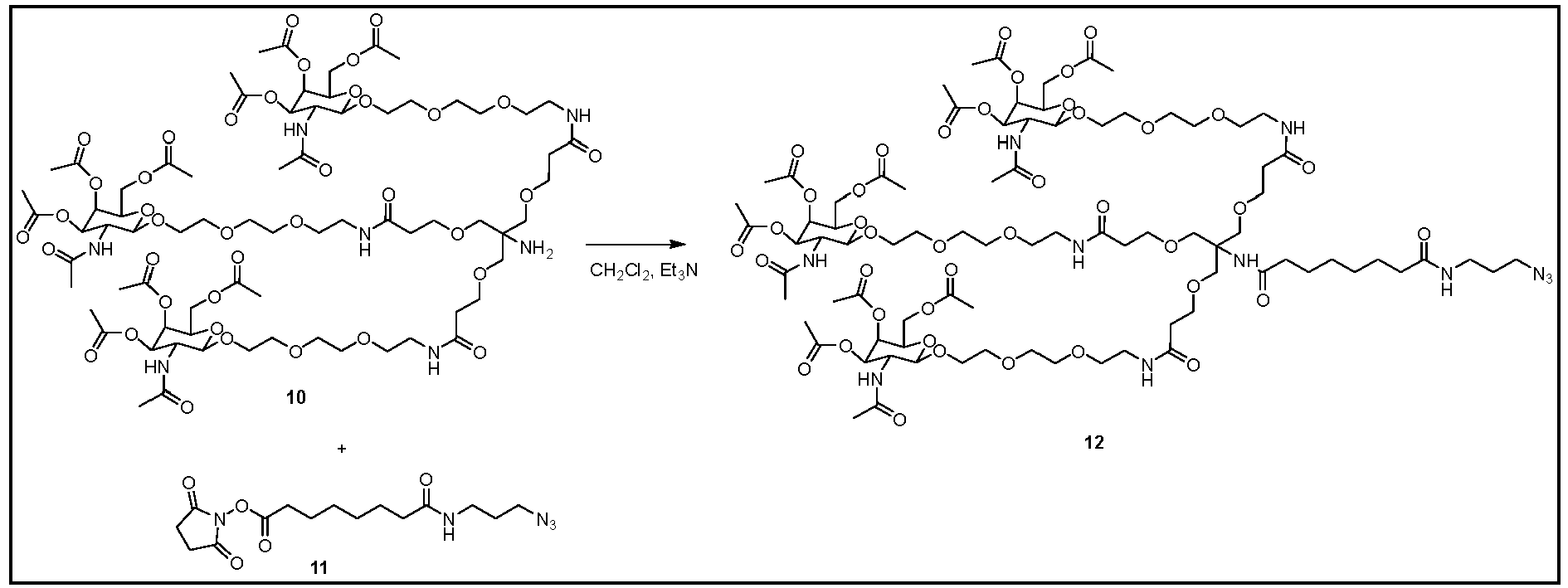
- Preparation of TriGalNAc (12): Triantennary GalNAc compound 10 (0.35 g, 0.24 mmol, 1.0 eq.) and compound 11 (0.11 g, 0.31 mmol, 1.5 eq.) were dissolved in DCM (5 mL) under argon and triethylamine (0.1 mL, 0.61 mmol, 3.0 eq.) was added. The reaction was stirred at room temperature overnight. The solvent was removed under reduced pressure, the residue was dissolved in EtOAc (100 mL) and washed with water (100 mL). The organic layer was separated and dried over Na2SO4. The solvent was evaporated and the resulting crude material was purified by flash chromatography (elution gradient: 0-10% MeOH in DCM in 20 CV) to afford the title compound as white fluffy solid (0.27 g, 67%, rf = 0.5 (10% MeOH in DCM)). MS: calculated for C84H137N11O41, 1957.1. Found 1959.6.
-


- General conditions for MFCO conjugation: Amine-modified single strand was dissolved at 700 OD/mL in 50 mM carbonate/bicarbonate buffer pH 9.6/dimethyl sulfoxide (DMSO) 4:6 (v/v) and to this solution was added one molar equivalent of a 35 mM solution of MFCO-C6-NHS ester (Berry&Associates, Cat. # LK 4300) in DMF. The reaction was carried out at room temperature and after 1 h another molar equivalent of the MFCO solution was added. The reaction was allowed to proceed for an additional hour and was monitored by LC/MS. At least two molar equivalent excess of the MFCO NHS ester reagent relative to the amino modified oligonucleotide were needed to achieve quantitative consumption of the starting material. The reaction mixture was diluted 15-fold with water, filtered through a 1.2 µm filter from Sartorius and then purified by reserve phase (RP HPLC) on an Äkta Pure instrument (GE Healthcare).
- Purification was performed using a XBridge C18 Prep 19 x 50 mm column from Waters. Buffer A was 100
mM TEAAc pH 7 and buffer B contained 95% acetonitrile in buffer A. A flow rate of 10 mL/min and a temperature of 60°C were employed. UV traces at 280 nm were recorded. A gradient of 0-100% B within 60 column volumes was employed. - Fractions containing full length conjugated oligonucleotide were pooled, precipitated in the freezer with 3 M NaOAc, pH 5.2 and 85% ethanol and the collected pellet was dissolved in water. Samples were desalted by size exclusion chromatography and concentrated using a speed-vac concentrator to yield the conjugated oligonucleotide in an isolated yield of 40-80%.
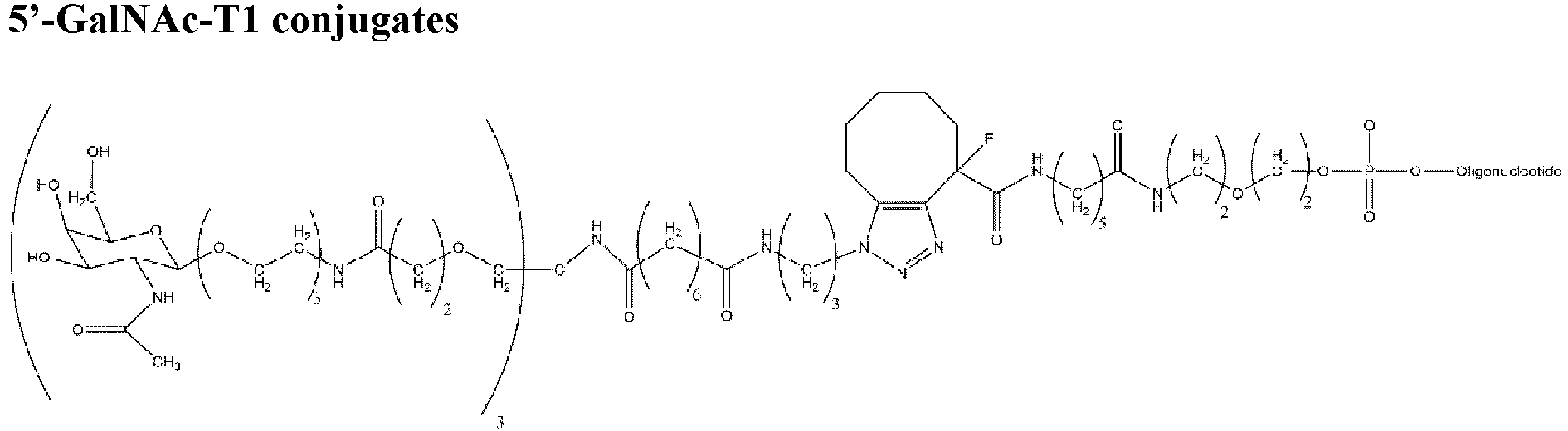

- General procedure for TriGalNAc conjugation: MFCO-modified single strand was dissolved at 2000 OD/mL in water and to this solution was added one equivalent solution of compound 12 (10 mM) in DMF. The reaction was carried out at room temperature and after 3 h 0.7 molar equivalent of the
compound 12 solution was added. The reaction was allowed to proceed overnight and completion was monitored by LCMS. The conjugate was diluted 15-fold in water, filtered through a 1.2 µm filter from Sartorius and then purified by RP HPLC on an Äkta Pure instrument (GE Healthcare). - RP HPLC purification was performed using a XBridge C18 Prep 19 x 50 mm column from Waters. Buffer A was 100 mM
triethylammonium acetate pH 7 and buffer B contained 95% acetonitrile in buffer A. A flow rate of 10 mL/min and a temperature of 60°C were employed. UV traces at 280 nm were recorded. A gradient of 0-100% B within 60 column volumes was employed. - Fractions containing full-length conjugated oligonucleotide were pooled, precipitated in the freezer with 3 M NaOAc, pH 5.2 and 85% ethanol and the collected pellet was dissolved in water to give an oligonucleotide solution of about 1000 OD/mL. The O-acetates were removed by adding 20% aqueous ammonia. Quantitative removal of these protecting groups was verified by LC-MS.
- The conjugates were desalted by size exclusion chromatography using Sephadex G25 Fine resin (GE Healthcare) on an Äkta Pure (GE Healthcare) instrument to yield the conjugated oligonucleotides in an isolated yield of 50-70%.
- The following schemes further set out the routes of synthesis:
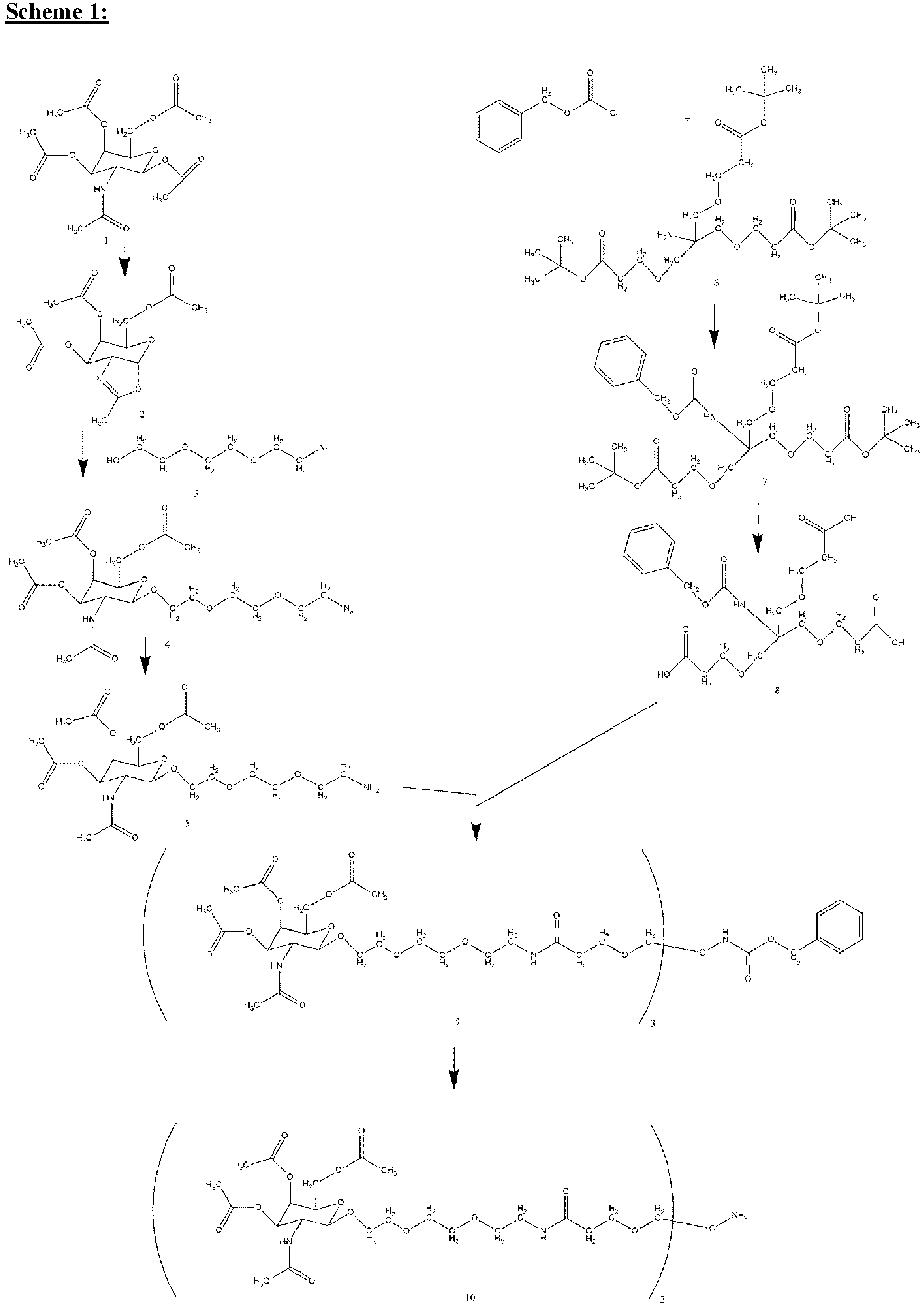


- To generate the desired siRNA duplex, the two complementary strands were annealed by combining equimolar aqueous solutions of both strands. The mixtures were placed into a water bath at 70°C for 5 minutes and subsequently allowed to cool to ambient temperature within 2 h. The duplexes were lyophilized for 2 days and stored at -20°C.
- The duplexes were analyzed by analytical SEC HPLC on Superdex™ 75
Increase 5/150 GL column 5 x 153-158 mm (Cytiva) on a Dionex Ultimate 3000 (Thermo Fisher Scientific) HPLC system. Mobile phase consisted of 1x PBS containing 10% acetonitrile. An isocratic gradient was run in 10 min at a flow rate of 1.5 mL/min at room temperature. UV traces at 260 and 280 nm were recorded. Water (LC-MS grade) was purchased from Sigma-Aldrich and Phosphate-buffered saline (PBS; 10x, pH 7.4) was purchased from GIBCO (Thermo Fisher Scientific). - Thin layer chromatography (TLC) was performed on silica-coated aluminium plates with fluorescence indicator 254 nm from Macherey-Nagel. Compounds were visualized under UV light (254 nm), or after spraying with the 5% H2SO4 in methanol (MeOH) or ninhydrin reagent according to Stahl (from Sigma-Aldrich), followed by heating. Flash chromatography was performed with a Biotage Isolera One flash chromatography instrument equipped with a dual variable UV wavelength detector (200-400 nm) using
Biotage Sfär Silica 10, 25, 50 or 100 g columns (Uppsala, Sweden). - All moisture-sensitive reactions were carried out under anhydrous conditions using dry glassware, anhydrous solvents, and argon atmosphere. All commercially available reagents were purchased from Sigma-Aldrich and solvents from Carl Roth GmbH + Co. KG. D-Galactosamine pentaacetate was purchased from AK scientific.
- HPLC/ESI-MS was performed on a Dionex UltiMate 3000 RS UHPLC system and Thermo Scientific MSQ Plus Mass spectrometer using an Acquity UPLC Protein BEH C4 column from Waters (300Å, 1.7 µm, 2.1 x 100 mm) at 60 °C. The solvent system consisted of solvent A with H2O containing 0.1% formic acid and solvent B with acetonitrile (ACN) containing 0.1% formic acid. A gradient from 5-100% of B over 15 min with a flow rate of 0.4 mL/min was employed. Detector and conditions: Corona ultra-charged aerosol detection (from esa). Nebulizer Temp.: 25°C. N2 pressure: 35.1 psi. Filter: Corona.
- 1H and 13C NMR spectra were recorded at room temperature on a Varian spectrometer at 500 MHz (1H NMR) and 125 MHz (13C NMR). Chemical shifts are given in ppm referenced to the solvent residual peak (CDCl3 - 1H NMR: δ at 7.26 ppm and 13C NMR δ at 77.2 ppm; DMSO-d 6 - 1H NMR: δ at 2.50 ppm and 13C NMR δ at 39.5 ppm). Coupling constants are given in Hertz. Signal splitting patterns are described as singlet (s), doublet (d), triplet (t) or multiplet (m).
-

- Preparation of compound 2: D-Galactosamine pentaacetate (3.00 g, 7.71 mmol, 1.0 eq.) was dissolved in anhydrous dichloromethane (DCM) (30 mL) under argon and trimethylsilyl trifluoromethanesulfonate (TMSOTf, 4.28 g, 19.27 mmol, 2.5 eq.) was added. The reaction was stirred at room temperature for 3 h. The reaction mixture was diluted with DCM (50 mL) and washed with cold saturated aq. NaHCO3 (100 mL) and water (100 mL). The organic layer was separated, dried over Na2SO4, and concentrated to afford the title compound as yellow oil, which was purified by flash chromatography (gradient elution: 0-10% MeOH in DCM in 10 CV). The product was obtained as colourless oil (2.5 g, 98%, rf= 0.45 (2% MeOH in DCM)).

- Preparation of compound 4: Compound 2 (2.30 g, 6.98 mmol, 1.0 eq.) and azido-PEG3-OH (1.83 g, 10.5 mmol, 1.5 eq.) were dissolved in anhydrous DCM (40 mL) under argon and
molecular sieves 3 Å (5 g) were added to the solution. The mixture was stirred at room temperature for 1 h. TMSOTf (0.77 g, 3.49 mmol, 0.5 eq.) was then added to the mixture and the reaction was stirred overnight. The molecular sieves were filtered, the filtrate was diluted with DCM (100 mL) and washed with cold saturated aq. NaHCO3 (100 mL) and water (100 mL). The organic layer was separated, dried over Na2SO4 and the solvent was removed under reduced pressure. The crude material was purified by flash chromatography (gradient elution: 0-3% MeOH in DCM in 10 CV) to afford the title product as light-yellow oil (3.10 g, 88%, rf = 0.25 (2% MeOH in DCM)). MS: calculated for C20H32N4O11, 504.21. Found 505.4. 1H NMR (500 MHz, CDCl3) δ 6.21-6.14 (m, 1H), 5.30 (dd, J = 3.4, 1.1 Hz, 1H), 5.04 (dd, J = 11.2, 3.4 Hz,1H), 4.76 (d, J = 8.6 Hz, 1H), 4.23-4.08 (m, 3H), 3.91-3.80 (m, 3H), 3.74-3.59 (m, 9H), 3.49-3.41 (m, 2H), 2.14 (s, 3H), 2.02 (s, 3H), 1.97 (d, J = 4.2 Hz, 6H). 13C NMR (125 MHz, CDCl3) δ 170.6 (C), 170.5 (C), 170.4 (C), 170.3 (C), 102.1 (CH), 71.6 (CH), 70.8 (CH), 70.6 (CH), 70.5 (CH), 70.3 (CH2), 69.7 (CH2), 68.5 (CH2), 66.6 (CH2), 61.5 (CH2), 23.1 (CH3), 20.7 (3xCH3).
- Preparation of compound 5: Compound 4 (1.00 g, 1.98 mmol, 1.0 eq.) was dissolved in a mixture of ethyl acetate (EtOAc) and MeOH (30 mL 1:1 v/v) and Pd/C (100 mg) was added. The reaction mixture was degassed using vacuum/argon cycles (3x) and hydrogenated under balloon pressure overnight. The reaction mixture was filtered through celite and washed with EtOAc (30 mL). The solvent was removed under reduced pressure to afford the title compound as colourless oil (0.95 g, quantitative yield, rf = 0.25 (10% MeOH in DCM)). The compound was used without further purification. MS: calculated for C20H34N2O11, 478.2. Found 479.4.

- Preparation of compound 7: Tris{[2-(tert-butoxycarbonyl)ethoxy]methyl}-methylamine 6 (3.37 g, 6.67 mmol, 1.0 eq.) was dissolved in a mixture of DCM/water (40 mL 1:1 v/v) and Na2CO3 (0.18 g, 1.7 mmol, 0.25 eq.) was added while stirring vigorously. Benzyl chloroformate (2.94 mL, 20.7 mmol, 3.10 eq.) was added dropwise to the previous mixture and the reaction was stirred at room temperature for 24 h. The reaction mixture was diluted with CH2Cl2 (100 mL) and washed with water (100 mL). The organic layer was separated and dried over Na2SO4. The solvent was removed under reduced pressure and the resulting crude material was purified by flash chromatography (gradient elution: 0-10% EtOAc in cyclohexane in 12 CV) to afford the title compound as pale yellowish oil (3.9 g, 91%, rf = 0.56 (10% EtOAc in cyclohexane)). MS: calculated for C33H53NO11, 639.3. Found 640.9. 1H NMR (500 MHz, DMSO-d6 ) δ 7.38-7.26 (m, 5H), 4.97 (s, 2H), 3.54 (t, 6H), 3.50 (s, 6H), 2.38 (t, 6H), 1.39 (s, 27H). 13C NMR (125 MHz, DMSO-d6 ) δ 170.3 (3xC), 154.5 (C), 137.1 (C), 128.2 (2xCH), 127.7 (CH), 127.6 (2xCH), 79.7 (3xC), 68.4 (3xCH2), 66.8 (3xCH2), 64.9 (C), 58.7 (CH2), 35.8 (3xCH2), 27.7 (9xCH3).
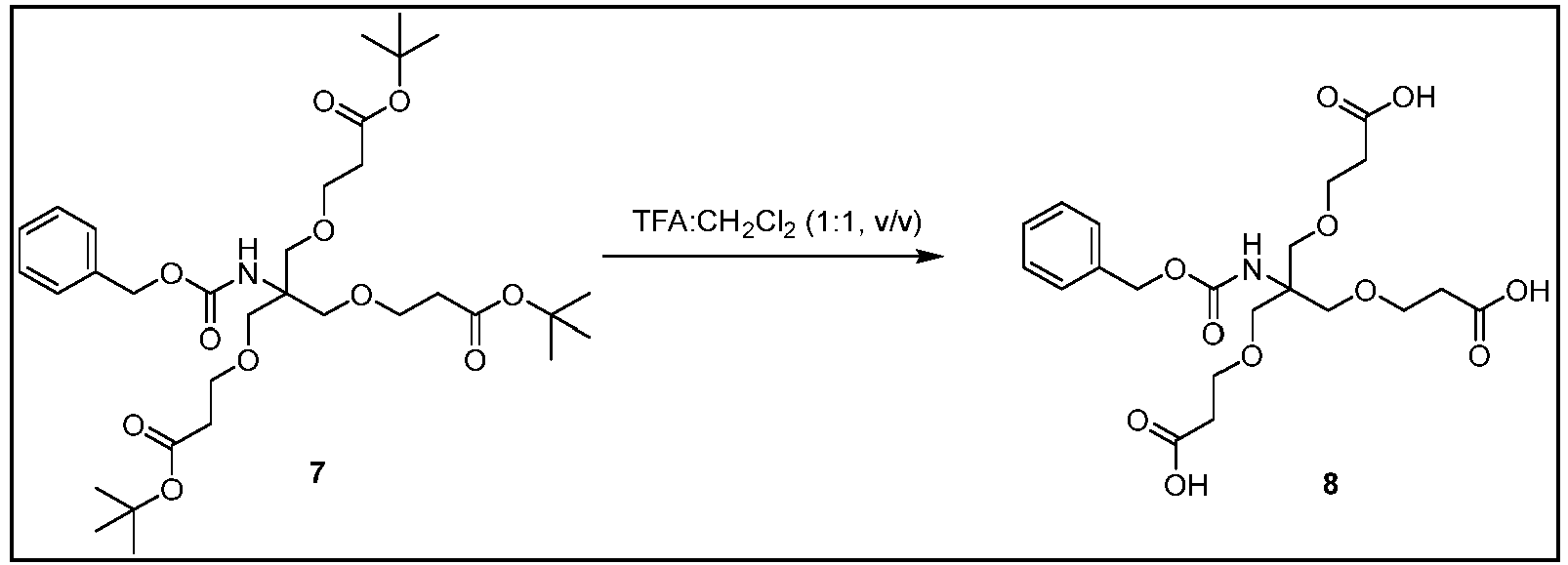
- Preparation of compound 8: Cbz-NH-tris-Boc-ester 7 (0.20 g, 0.39 mmol, 1.0 eq.) was dissolved in CH2Cl2 (1 mL) under argon, trifluoroacetic acid (TFA, 1 mL) was added and the reaction was stirred at room temperature for 1 h. The solvent was removed under reduced pressure, the residue was co-evaporated 3 times with toluene (5 mL) and dried under high vacuum to get the compound as its TFA salt (0.183 g, 98%). The compound was used without further purification. MS: calculated for C21H29NO11, 471.6. Found 472.4.

- Preparation of compound 9: CbzNH-tris-COOH 8 (0.72 g, 1.49 mmol, 1.0 eq.) and GalNAc-PEG3-NH2 5 (3.56 g, 7.44 mmol, 5.0 eq.) were dissolved in N,N-dimethylformamide (DMF) (25 mL). Then N,N,N',N'-tetramethyl-O-(1H-benzotriazol-1-yl)uronium hexafluorophosphate (HBTU) (2.78 g, 7.44 mmol, 5.0 eq.), 1-hydroxybenzotriazole hydrate (HOBt) (1.05 g, 7.44 mmol, 5.0 eq.) and N,N-diisopropylethylamine (DIPEA) (2.07 mL, 11.9 mmol, 8.0 eq.) were added to the solution and the reaction was stirred for 72 h. The solvent was removed under reduced pressure, the residue was dissolved in DCM (100 mL) and washed with saturated aq. NaHCO3 (100 mL). The organic layer was dried over Na2SO4, the solvent evaporated and the crude material was purified by flash chromatography (gradient elution: 0-5% MeOH in DCM in 14 CV). The product was obtained as pale yellowish oil (1.2 g, 43%, rf = 0.20 (5% MeOH in DCM)). MS: calculated for C81H125N7O41, 1852.9. Found 1854.7. 1H NMR (500 MHz, DMSO-d6 ) δ 7.90-7.80 (m, 10H), 7.65-7.62 (m, 4H), 7.47-7.43 (m, 3H), 7.38-7.32 (m, 8H), 5.24-5.22 (m, 3H), 5.02-4.97 (m, 4H), 4.60-4.57 (m, 3 H), 4.07-3.90 (m 10H), 3.67-3.36 (m, 70H), 3.23-3.07 (m, 25H), 2.18 (s, 10H), 2.00 (s, 13H), 1.89 (s, 11H), 1.80-1.78 (m, 17H). 13C NMR (125 MHz, DMSO-d6 ) δ 170.1 (C), 169.8 (C), 169.7 (C), 169.4 (C), 169.2 (C), 169.1 (C), 142.7 (C), 126.3 (CH), 123.9 (CH), 118.7 (CH), 109.7 (CH), 100.8 (CH), 70.5 (CH), 69.8 (CH), 69.6 (CH), 69.5 (CH), 69.3 (CH2), 69.0 (CH2), 68.2 (CH2), 67.2 (CH2), 66.7 (CH2), 61.4 (CH2), 22.6 (CH2), 22.4 (3xCH3), 20.7 (9xCH3).

- Preparation of compound 10: Triantennary GalNAc compound 9 (0.27 g, 0.14 mmol, 1.0 eq.) was dissolved in MeOH (15 mL), 3 drops of acetic acid (AcOH) and Pd/C (30 mg) was added. The reaction mixture was degassed using vacuum/argon cycles (3x) and hydrogenated under balloon pressure overnight. The completion of the reaction was followed by mass spectrometry and the resulting mixture was filtered through a thin pad of celite. The solvent was evaporated, and the residue obtained was dried under high vacuum and used for the next step without further purification. The product was obtained as pale yellowish oil (0.24 g, quantitative yield). MS: calculated for C73H119N7O39, 1718.8. Found 1719.3.

- Preparation of compound 14: Triantennary GalNAc compound 10 (0.45 g, 0.26 mmol, 1.0 eq.), HBTU (0.19 g, 0.53 mmol, 2.0 eq.) and DIPEA (0.23 mL, 1.3 mmol, 5.0 eq.) were dissolved in DCM (10 mL) under argon. To this mixture, it was added dropwise a solution of compound 13 (0.14 g, 0.53 mmol, 2.0 eq.) in DCM (5 mL). The reaction was stirred at room temperature overnight. The solvent was removed, and the residue was dissolved in EtOAc (50 mL), washed with water (50 mL) and dried over Na2SO4. The solvent was evaporated, and the crude material was purified by flash chromatography (gradient elution: 0-5% MeOH in DCM in 20 CV). The product was obtained as white fluffy solid (0.25 g, 48%, rf = 0.4 (10% MeOH in DCM)). MS: calculated for C88H137N7O42, 1965.1. Found 1965.6.

- Preparation of TriGalNAc (15): Triantennary GalNAc compound 14 (0.31 g, 0.15 mmol, 1.0 eq.) was dissolved in EtOAc (15 mL) and Pd/C (40 mg) was added. The reaction mixture was degassed by using vacuum/argon cycles (3x) and hydrogenated under balloon pressure overnight. The completion of the reaction was monitored by mass spectrometry and the resulting mixture was filtered through a thin pad of celite. The solvent was removed under reduced pressure and the resulting residue was dried under high vacuum overnight. The residue was used for conjugations to oligonucleosides without further purification (0.28 g, quantitative yield). MS: calculated for C81H131N7O42, 1874.9. Found 1875.3.
-


- Preparation of
TriGalNAc tether 2 NHS ester: To a solution of carboxylic acid tether 2 (compound 15, 227 mg, 121 µmol) in DMF (2.1 mL), N-hydroxysuccinimide (NHS) (15.3 mg, 133 µmol) and N,N'-diisopropylcarbodiimide (DIC) (19.7 µL, 127 µmol) were added. The solution was stirred at room temperature for 18 h and used without purification for the subsequent conjugation reactions. - General procedure for
triGalNAc tether 2 conjugation: Amine-modified single strand was dissolved at 700 OD/mL in 50 mM carbonate/bicarbonate buffer pH 9.6/DMSO 4:6 (v/v) and to this solution was added one molar equivalent ofTether 2 NHS ester (57 mM) solution in DMF. The reaction was carried out at room temperature and after 1 h another molar equivalent of the NHS ester solution was added. The reaction was allowed to proceed for one more hour and reaction progress was monitored by LCMS. At least two molar equivalent excess of the NHS ester reagent relative to the amino modified oligonucleoside were needed to achieve quantitative consumption of the starting material. The reaction mixture was diluted 15-fold with water, filtered once through 1.2 µm filter from Sartorius and then purified by reserve phase (RP HPLC) on an Äkta Pure (GE Healthcare) instrument. - The purification was performed using a XBridge C18 Prep 19 x 50 mm column from Waters. Buffer A was 100
mM TEAA pH 7 and buffer B contained 95% acetonitrile in buffer A. A flow rate of 10 mL/min and a temperature of 60°C were employed. UV traces at 280 nm were recorded. A gradient of 0-100% B within 60 column volumes was employed. - Fractions containing full-length conjugated oligonucleosides were pooled together, precipitated in the freezer with 3 M NaOAc, pH 5.2 and 85% ethanol and then dissolved at 1000 OD/mL in water. The O-acetates were removed with 20% ammonium hydroxide in water until completion (monitored by LC-MS).
- The conjugates were desalted by size exclusion chromatography using Sephadex G25 Fine resin (GE Healthcare) on an Äkta Pure (GE Healthcare) instrument to yield the conjugated oligonucleotides in an isolated yield of 60-80%.
- The conjugates were characterized by HPLC-MS analysis with a 2.1 x 50 mm XBridge C18 column (Waters) on a Dionex Ultimate 3000 (Thermo Fisher Scientific) HPLC system equipped with a Compact ESI-Qq-TOF mass spectrometer (Bruker Daltonics). Buffer A was 16.3 mM triethylamine, 100 mM HFIP in 1% MeOH in H2O and buffer B contained 95% MeOH in buffer A. A flow rate of 250 µL/min and a temperature of 60°C were employed. UV traces at 260 and 280 nm were recorded. A gradient of 1-100% B within 31 min was employed.
- The following schemes further set out the routes of synthesis:
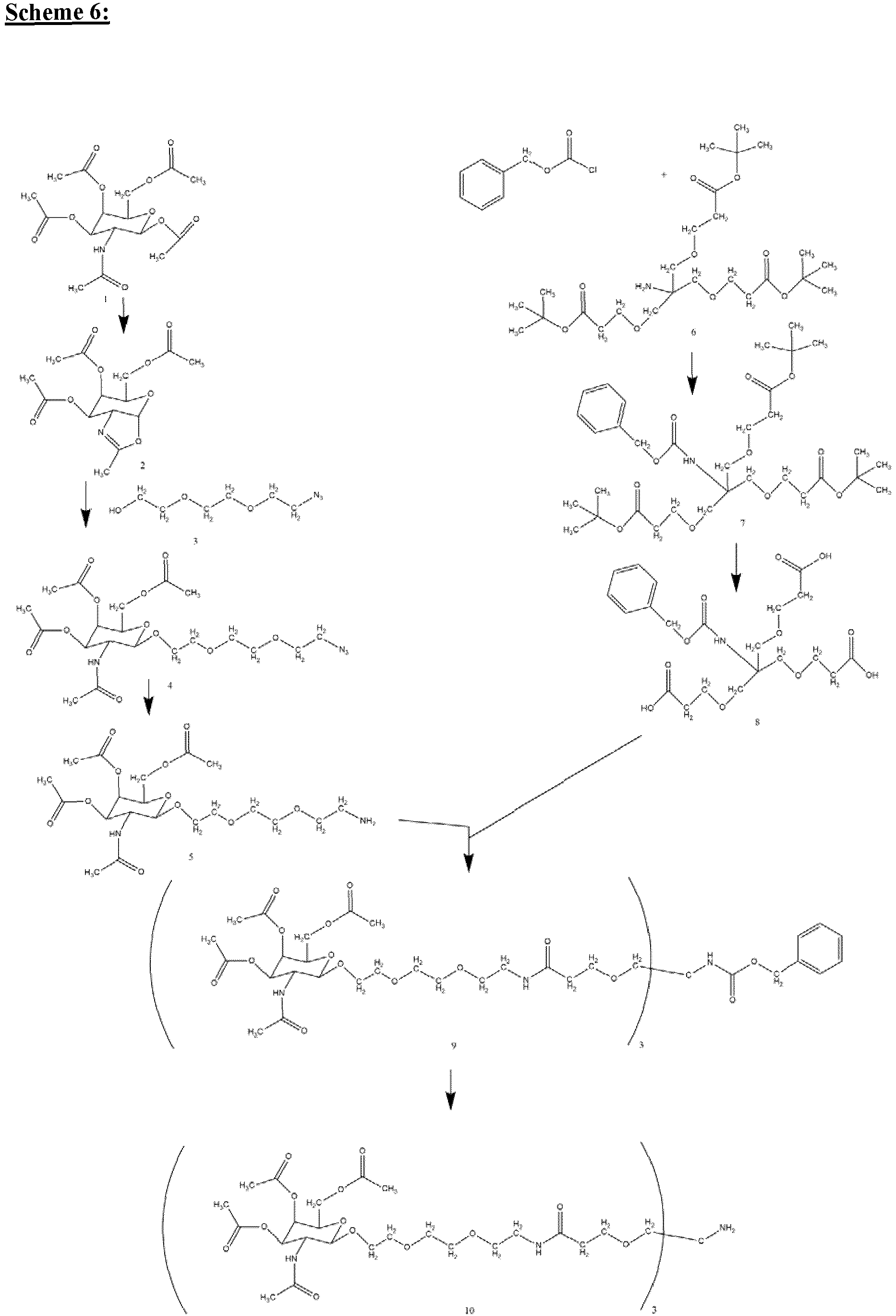


- To generate the desired siRNA duplex, the two complementary strands were annealed by combining equimolar aqueous solutions of both strands. The mixtures were placed into a water bath at 70°C for 5 minutes and subsequently allowed to cool to ambient temperature within 2 h. The duplexes were lyophilized for 2 days and stored at -20°C.
- The duplexes were analyzed by analytical SEC HPLC on Superdex™ 75
Increase 5/150 GL column 5 x 153-158 mm (Cytiva) on a Dionex Ultimate 3000 (Thermo Fisher Scientific) HPLC system. Mobile phase consisted of 1x PBS containing 10% acetonitrile. An isocratic gradient was run in 10 min at a flow rate of 1.5 mL/min at room temperature. UV traces at 260 and 280 nm were recorded. Water (LC-MS grade) was purchased from Sigma-Aldrich and Phosphate-buffered saline (PBS; 10x, pH 7.4) was purchased from GIBCO (Thermo Fisher Scientific). -


-

- Pre-activation: To a solution of compound 15 (16 umol, 4 eq.) in DMF (160 µL) was added TFA-O-PFP (15 µl, 21 eq.) followed by DIPEA (23 µl, 32 eq.) at 25°C. The tube was shaken for 2 h at 25°C. The reaction was quenched with H2O (10 µL).
- Coupling: The resulting mixture was diluted with DMF (400 µl), followed by addition of oligo-amine solution (4.0 µmol in 10 x PBS, pH 7.4, 500 µL; final oligo concentration in organic and aqueous solution: 4 µmol/ml = 4 mM). The tube was shaken at 25°C for 16 h and the reaction was analysed by LCMS. The resulting mixture was treated with 28% NH4OH (4.5 ml) and shaken for 2 h at 25°C. The mixture was analysed by LCMS, concentrated, and purified by IP-RP HPLC to produce the oligonucleotides conjugated to
tether 2 GalNAc.


- Syntheses of siRNA sense and antisense strands were performed on a MerMade192X synthesiser with commercially available solid supports made of controlled pore glass with universal linker (Universal CPG, with a loading of 40 µmol/g; LGC Biosearch or Glen Research).
- RNA phosphoramidites were purchased from ChemGenes or Hongene.
- The 2'-O-Methyl phosphoramidites used were the following: 5'-(4,4'-dimethoxytrityl)-N-benzoyl-adenosine 2'-O-methyl-3'- [(2-cyanoethyl)-(N,N-diisopropyl)]-phosphoramidite, 5'-(4,4'-dimethoxytrityl)-N-acetyl-cytidine 2'-O-methyl-3'- [(2-cyanoethyl)-(N,N-diisopropyl)]-phosphoramidite, 5'-(4,4'-dimethoxytrityl)-N-isobutyryl-guanosine 2'-O-methyl-3'-[(2-cyanoethyl)-(N,N-diisopropyl)]-phosphoramidite, 5'-(4,4'-dimethoxytrityl)-uridine 2'-O-methyl-3'-[(2-cyanoethyl)- (N,N-diisopropyl)]-phosphoramidite.
- The 2'-F phosphoramidites used were the following: 5'-dimethoxytrityl-N-benzoyl-deoxyadenosine 2'-fluoro-3'-[(2-cyanoethyl)-(N,N-diisopropyl)]-phosphoramidite, 5'-dimethoxytrityl-N-acetyl-deoxycytidine 2'-fluoro-3'-[(2-cyanoethyl)-(N,N-diisopropyl)]-phosphoramidite, 5'-dimethoxytrityl-N-isobutyryl-deoxyguanosine 2'-fluoro-3'- [(2-cyanoethyl)-(N,N-diisopropyl)]-phosphoramidite and 5'-dimethoxytrityl-deoxyuridine 2'-fluoro-3'-[(2-cyanoethyl)-(N,N-diisopropyl)]-phosphoramidite.
- All phosphoramidites were dissolved in anhydrous acetonitrile (Honeywell Research Chemicals) at a concentration of 0.05M, except 2'-O-methyl-uridine phosphoramidite which was dissolved in DMF/MeCN (1:4, v/v). Iodine at 0.02M in acetonitrile/Pyridine/H20 (DNAchem) was used as oxidizing reagent. Thiolation for phosphorothioate linkages was performed with 0.2 M PADS (TCI) in acetonitrile/pyridine 1:1 v/v. 5-Ethyl thiotetrazole (ETT), 0.25M mM in acetonitrile was used as activator solution.
- Inverted abasic phosphoramidite, 3-O-Dimethoxytrityl-2-deoxyribose-5-[(2-cyanoethyl)-(N, N-diisopropyl)]-phosphoramidite were purchased from Chemgenes (ANP-1422) or Hongene (OP-040).
- At each cycle, the DMT was removed by deblock solution, 3% TCA in DCM (DNAchem).
- The coupling time was 180 seconds. The oxidizer contact time was set to 80 seconds and thiolation time was 2*100 seconds.
- At the end of the synthesis, the oligonucleotides were cleaved from the solid support using a NH4OH:EtOH solution 4:1 (v/v) for 20 hours at 45°C (TCI). The solid support was then filtered off, the filter was thoroughly washed with H2O and the volume of the combined solution was reduced by evaporation under reduced pressure.
- Oligonucleotide were treated to form the sodium salt by ultracentrifugation using Amicon Ultra-2 Centrifugal Filter Unit; PBS buffer (10x, Teknova, pH 7.4, Sterile) or by EtOH precipitation from 1M sodium acetate.
- The single strands identity were assessed by MS ESI- and then, were annealed in water to form the final duplex siRNA and duplex purity were assessed by size exclusion chromatography.
- Syntheses of siRNA sense and antisense strands were performed on a MerMade12 synthesiser with commercially available solid supports made of controlled pore glass with universal linker (Universal CPG, with a loading of 40 µmol/g; LGC Biosearch or Glen Research) at 5 µmol scale. Sense strand destined to 3' conjugation were sytnthesised at 12 µmol on 3'-PT-Amino-Modifier C6 CPG 500 Å solid support with a loading of 86 µmol/g (LGC).
- RNA phosphoramidites were purchased from ChemGenes or Hongene.
- The 2'-O-Methyl phosphoramidites used were the following: 5'-(4,4'-dimethoxytrityl)-N-benzoyl-adenosine 2'-O-methyl-3'- [(2-cyanoethyl)-(N,N-diisopropyl)]-phosphoramidite, 5'-(4,4'-dimethoxytrityl)-N-acetyl-cytidine 2'-O-methyl-3'- [(2-cyanoethyl)-(N,N-diisopropyl)]-phosphoramidite, 5'-(4,4'-dimethoxytrityl)-N-isobutyryl-guanosine 2'-O-methyl-3'-[(2-cyanoethyl)-(N,N-diisopropyl)]-phosphoramidite, 5'-(4,4'-dimethoxytrityl)-uridine 2'-O-methyl-3'-[(2-cyanoethyl)- (N,N-diisopropyl)]-phosphoramidite.
- The 2'-F phosphoramidites used were the following: 5'-dimethoxytrityl-N-benzoyl-deoxyadenosine 2'-fluoro-3'-[(2-cyanoethyl)-(N,N-diisopropyl)]-phosphoramidite, 5'-dimethoxytrityl-N-acetyl-deoxycytidine 2'-fluoro-3'-[(2-cyanoethyl)-(N,N-diisopropyl)]-phosphoramidite, 5'-dimethoxytrityl-N-isobutyryl-deoxyguanosine 2'-fluoro-3'- [(2-cyanoethyl)-(N,N-diisopropyl)]-phosphoramidite and 5'-dimethoxytrityl-deoxyuridine 2'-fluoro-3'-[(2-cyanoethyl)-(N,N-diisopropyl)]-phosphoramidite.
- Inverted abasic phosphoramidite, 3-O-Dimethoxytrityl-2-deoxyribose-5-[(2-cyanoethyl)-(N, N-diisopropyl)]-phosphoramidite were purchased from Chemgenes (ANP-1422) or Hongene (OP-040).
- All phosphoramidites were dissolved in anhydrous acetonitrile (Honeywell Research Chemicals) at a concentration of 0.05M, except 2'-O-methyl-uridine phosphoramidite which was dissolved in DMF/MeCN (1:4, v/v). Iodine at 0.02M in acetonitrile/Pyridine/H2O (DNAchem) was used as oxidizing reagent. Thiolation for phosphorothioate linkages was performed with 0.2 M PADS (TCI) in acetonitrile/pyridine 1:1 v/v. 5-Ethyl thiotetrazole (ETT), 0.25M mM in acetonitrile was used as activator solution.
- At each cycle, the DMT was removed by deblock solution, 3% TCA in DCM (DNAchem).
- For strands synthesised on universal CPG the coupling was performed with 8 eq. of amidite for 130 seconds. The oxidation time was 47 seconds, the thiolation time was 210 seconds.
- For strands synthesised on 3'-PT-Amino-Modifier C6 CPG the coupling was performed with 8 eq. of amidite for 2*150 seconds. The oxidation time was 47 seconds, the thiolation time was 250 seconds
- At the end of the synthesis, the oligonucleotides were cleaved from the solid support using a NH4OH:EtOH solution 4:1 (v/v) for 20 hours at 45°C (TCI). The solid support was then filtered off, the filter was thoroughly washed with H2O and the volume of the combined solution was reduced by evaporation under reduced pressure.
- Oligonucleotide were treated to form the sodium salt by EtOH precipitation from 1M sodium acetate.
- The single strand oligonucleotides were purified by IP-RP HPLC on
Xbridge BEH C18 5 µm, 130 Å, 19x150 mm (Waters) column with an increasing gradient of B in A. Mobile phase A: 240 mM HFIP, 7 mM TEA and 5% methanol in water; mobile phase B: 240 mM HFIP, 7 mM TEA in methanol. - The single strands purity and identity were assessed by UPLC/MS ESI- on Xbridge BEH C18 2.5 µm, 3x50 mm (Waters) column with an increasing gradient of B in A. Mobile phase A: 100 mM HFIP, 5 mM TEA in water; mobile phase B: 20% mobile phase A: 80% Acetonitrile (v/v).
- Sense strand were conjugated as per protocols provided in any of examples 1, 3 or 5.
- Sense and Antisense strands were then annealed in water to form the final duplex siRNA and duplex purity were assessed by size exclusion chromatography.
- siRNA oligonucleosides according to the present invention target ZPI. The full DNA sequence of the ZPI target is as follows (SEQ ID NO: 1):


- Following Table 1 provides oligonucleoside mRNA target sequences of ZPI, together with the corresponding positions in transcript NM_016186.3. It is to be understood that SEQ ID NO: 2 to 121 refer to human (Homo sapiens) mRNA sequences.
Table 1 SEQ ID NO Oligonucleoside mRNA target sequence 5' → 3' Starting position on NM_016186.3 SEQ ID NO: 2 UUUGCCUUCAUCCACAAGGAUUU 991 SEQ ID NO: 3 GCUGCGAAAGAUCUCCAUGAGGC 756 SEQ ID NO: 4 AUGCUGGUGGUCCUCAUGGAGAA 1390 SEQ ID NO: 5 CUGCGAAAGAUCUCCAUGAGGCA 757 SEQ ID NO: 6 AAGUAUGAGAUGCAUGAGCUGCU 1531 SEQ ID NO: 7 CUGUUUGAUGAGAUUAAUCCUGA 1156 SEQ ID NO: 8 GAUGAGAUUAAUCCUGAAACCAA 1162 SEQ ID NO: 9 UUUGAUGAGAUUAAUCCUGAAAC 1159 SEQ ID NO: 10 UGAUGAGAUUAAUCCUGAAACCA 1161 SEQ ID NO: 11 UUGAUGAGAUUAAUCCUGAAACC 1160 SEQ ID NO: 12 AACUGUUUGAUGAGAUUAAUCCU 1154 SEQ ID NO: 13 AGUUUUGCCUUCAUCCACAAGGA 988 SEQ ID NO: 14 UGCGAAAGAUCUCCAUGAGGCAC 758 SEQ ID NO: 15 CAUGCUGGUGGUCCUCAUGGAGA 1389 SEQ ID NO: 16 UGCCUUCAUCCACAAGGAUUUUG 993 SEQ ID NO: 17 GCGAAAGAUCUCCAUGAGGCACG 759 SEQ ID NO: 18 CCUUCAUCCACAAGGAUUUUGAU 995 SEQ ID NO: 19 UGUUUGAUGAGAUUAAUCCUGAA 1157 SEQ ID NO: 20 UUUUGCCUUCAUCCACAAGGAUU 990 SEQ ID NO: 21 AAGAUCUCCAUGAGGCACGAUGG 763 SEQ ID NO: 22 ACCAUGCUGGUGGUCCUCAUGGA 1387 SEQ ID NO: 23 GUUUUGCCUUCAUCCACAAGGAU 989 SEQ ID NO: 24 UUGCCUUCAUCCACAAGGAUUUU 992 SEQ ID NO: 25 CCUACCAAGGAAAUGCCACCAUG 1370 SEQ ID NO: 26 GUUUGAUGAGAUUAAUCCUGAAA 1158 SEQ ID NO: 27 GCCUUCAUCCACAAGGAUUUUGA 994 SEQ ID NO: 28 CGAAAGAUCUCCAUGAGGCACGA 760 SEQ ID NO: 29 ACUGUUUGAUGAGAUUAAUCCUG 1155 SEQ ID NO: 30 CCAUGCUGGUGGUCCUCAUGGAG 1388 SEQ ID NO: 31 GAGUUUUGCCUUCAUCCACAAGG 987 SEQ ID NO: 32 UGCCACCAUGCUGGUGGUCCUCA 1383 SEQ ID NO: 33 GCCACCAUGCUGGUGGUCCUCAU 1384 SEQ ID NO: 34 GAAAGAUCUCCAUGAGGCACGAU 761 SEQ ID NO: 35 GGAGUUUUGCCUUCAUCCACAAG 986 SEQ ID NO: 36 CCACCAUGCUGGUGGUCCUCAUG 1385 SEQ ID NO: 37 AAAGAUCUCCAUGAGGCACGAUG 762 SEQ ID NO: 38 CACCAUGCUGGUGGUCCUCAUGG 1386 SEQ ID NO: 39 UUUGCCUCCACCUUUGACAAGAA 1321 SEQ ID NO: 40 UGCCUCCACCUUUGACAAGAAUU 1323 SEQ ID NO: 41 ACCAUUAAGGUGCCCAUGAUGUA 1285 SEQ ID NO: 42 AACUGCCCUACCAAGGAAAUGCC 1364 SEQ ID NO: 43 CUCAAACUGCCCUACCAAGGAAA 1360 SEQ ID NO: 44 CCUCAAACUGCCCUACCAAGGAA 1359 SEQ ID NO: 45 GCCUCCACCUUUGACAAGAAUUU 1324 SEQ ID NO: 46 GUCGACACUUUCCACCUGGACAA 1255 SEQ ID NO: 47 ACACUUUCCACCUGGACAAGUAC 1259 SEQ ID NO: 48 UCAAACUGCCCUACCAAGGAAAU 1361 SEQ ID NO: 49 AAACUGCCCUACCAAGGAAAUGC 1363 SEQ ID NO: 50 GACACUUUCCACCUGGACAAGUA 1258 SEQ ID NO: 51 GACCAUUAAGGUGCCCAUGAUGU 1284 SEQ ID NO: 52 GUUUGCCUCCACCUUUGACAAGA 1320 SEQ ID NO: 53 ACUUUCCACCUGGACAAGUACAA 1261 SEQ ID NO: 54 UGUCCUCAAACUGCCCUACCAAG 1356 SEQ ID NO: 55 CAAACUGCCCUACCAAGGAAAUG 1362 SEQ ID NO: 56 GUCCUCAAACUGCCCUACCAAGG 1357 SEQ ID NO: 57 AUGUCCUCAAACUGCCCUACCAA 1355 SEQ ID NO: 58 UCGACACUUUCCACCUGGACAAG 1256 SEQ ID NO: 59 AGUUUGCCUCCACCUUUGACAAG 1319 SEQ ID NO: 60 CGACACUUUCCACCUGGACAAGU 1257 SEQ ID NO: 61 CUUUCCACCUGGACAAGUACAAG 1262 SEQ ID NO: 62 CACUUUCCACCUGGACAAGUACA 1260 SEQ ID NO: 63 UCCUCAAACUGCCCUACCAAGGA 1358 SEQ ID NO: 64 GAUUACAUCUUGUUCAAAGGGAA 1198 SEQ ID NO: 65 AAUGCCACCAUGCUGGUGGUCCU 1381 SEQ ID NO: 66 UUUAUCCAAGAGGUAUUUUGAUA 1038 SEQ ID NO: 67 GGAAAUGCCACCAUGCUGGUGGU 1378 SEQ ID NO: 68 GGAUUACAUCUUGUUCAAAGGGA 1197 SEQ ID NO: 69 AUCUCCAUGAGGCACGAUGGCAA 766 SEQ ID NO: 70 AUUCCAUGCCUCCUGUCAUCAAA 1721 SEQ ID NO: 71 UUAUUCCAUGCCUCCUGUCAUCA 1719 SEQ ID NO: 72 ACCAAGGAAAUGCCACCAUGCUG 1373 SEQ ID NO: 73 GCUGGUGGUCCUCAUGGAGAAAA 1392 SEQ ID NO: 74 ACAUCUUGUUCAAAGGGAAAUGG 1202 SEQ ID NO: 75 CCAAGGAAAUGCCACCAUGCUGG 1374 SEQ ID NO: 76 UUGCCUCCACCUUUGACAAGAAU 1322 SEQ ID NO: 77 GGGAGUUUUGCCUUCAUCCACAA 985 SEQ ID NO: 78 CUGCUGCGAAAGAUCUCCAUGAG 754 SEQ ID NO: 79 CAAGUUUGCCUCCACCUUUGACA 1317 SEQ ID NO: 80 AAGUUUGCCUCCACCUUUGACAA 1318 SEQ ID NO: 81 UACAUCUUGUUCAAAGGGAAAUG 1201 SEQ ID NO: 82 GGGGAGUUUUGCCUUCAUCCACA 984 SEQ ID NO: 83 UGCUGCGAAAGAUCUCCAUGAGG 755 SEQ ID NO: 84 UUCCAUGCCUCCUGUCAUCAAAG 1722 SEQ ID NO: 85 UCUGUUUCUGGGCAGGGUGGUGA 1794 SEQ ID NO: 86 CAGCCUGCUGCGAAAGAUCUCCA 750 SEQ ID NO: 87 CAAACUGUUUGAUGAGAUUAAUC 1152 SEQ ID NO: 88 CCAUGCCUCCUGUCAUCAAAGUG 1724 SEQ ID NO: 89 GAAGUAUGAGAUGCAUGAGCUGC 1530 SEQ ID NO: 90 AGAAGUAUGAGAUGCAUGAGCUG 1529 SEQ ID NO: 91 CAUGUCCUCAAACUGCCCUACCA 1354 SEQ ID NO: 92 AAACUGUUUGAUGAGAUUAAUCC 1153 SEQ ID NO: 93 AAGACCAUUAAGGUGCCCAUGAU 1282 SEQ ID NO: 94 AGACCAUUAAGGUGCCCAUGAUG 1283 SEQ ID NO: 95 CUGUUUCUGGGCAGGGUGGUGAA 1795 SEQ ID NO: 96 GCUUCUGUUUCUGGGCAGGGUGG 1791 SEQ ID NO: 97 AGUUUUCUUUCCGAAGUUCAAGC 1500 SEQ ID NO: 98 GUUUUCUUUCCGAAGUUCAAGCU 1501 SEQ ID NO: 99 CUUCUGUUUCUGGGCAGGGUGGU 1792 SEQ ID NO: 100 UCAUGUCCUCAAACUGCCCUACC 1353 SEQ ID NO: 101 AGUCGACACUUUCCACCUGGACA 1254 SEQ ID NO: 102 CCUUCAUCCACAAGGAUUU 995 SEQ ID NO: 103 CGAAAGAUCUCCAUGAGGC 760 SEQ ID NO: 104 UGGUGGUCCUCAUGGAGAA 1394 SEQ ID NO: 105 GAAAGAUCUCCAUGAGGCA 761 SEQ ID NO: 106 AUGAGAUGCAUGAGCUGCU 1535 SEQ ID NO: 107 UUGAUGAGAUUAAUCCUGA 1160 SEQ ID NO: 108 AGAUUAAUCCUGAAACCAA 1166 SEQ ID NO: 109 AUGAGAUUAAUCCUGAAAC 1163 SEQ ID NO: 110 GAGAUUAAUCCUGAAACCA 1165 SEQ ID NO: 111 UGAGAUUAAUCCUGAAACC 1164 SEQ ID NO: 112 GUUUGAUGAGAUUAAUCCU 1158 SEQ ID NO: 113 UUGCCUUCAUCCACAAGGA 992 SEQ ID NO: 114 AAAGAUCUCCAUGAGGCAC 762 SEQ ID NO: 115 CUGGUGGUCCUCAUGGAGA 1393 SEQ ID NO: 116 UUCAUCCACAAGGAUUUUG 997 SEQ ID NO: 117 AAGAUCUCCAUGAGGCACG 763 SEQ ID NO: 118 CAUCCACAAGGAUUUUGAU 999 SEQ ID NO: 119 UGAUGAGAUUAAUCCUGAA 1161 SEQ ID NO: 120 GCCUUCAUCCACAAGGAUU 994 SEQ ID NO: 121 UCUCCAUGAGGCACGAUGG 767 - Table 2 provides the unmodified first (antisense) and corresponding unmodified second (sense) strand sequences for siRNA oligonucleosides according to the present invention, together with the corresponding positions in the overall gene sequence of SEQ ID NO: 1 as follows.
Table 2 SEQ ID NO (AS) First (Antisense) Strand Base Sequence 5' → 3' SEQ ID NO (SS) Second (Sense) Strand Base Sequence 5' → 3' Corresponding positions on NM_016186.3 (Shown as an Unmodified Nucleoside Sequence) (Shown as an Unmodified Nucleoside Sequence) SEQ ID NO: 145 
SEQ ID NO: 265 
1370-1391 SEQ ID NO: 148 
SEQ ID NO: 268 
760-781 SEQ ID NO: 122 
SEQ ID NO: 242 
991-1012 SEQ ID NO: 123 
SEQ ID NO: 243 
756-777 SEQ ID NO: 124 
SEQ ID NO: 244 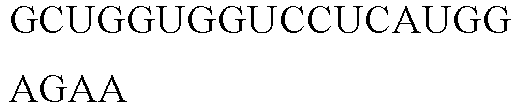
1390-1411 SEQ ID NO: 125 
SEQ ID NO: 245 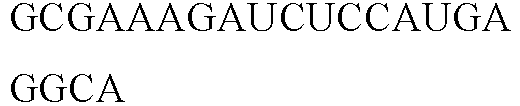
757-778 SEQ ID NO: 126 
SEQ ID NO: 246 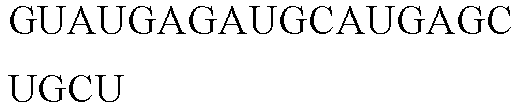
1531-1552 SEQ ID NO: 127 
SEQ ID NO: 247 
1156-1177 SEQ ID NO: 128 
SEQ ID NO: 248 
1162-1183 SEQ ID NO: 129 
SEQ ID NO: 249 
1159-1180 SEQ ID NO: 130 
SEQ ID NO: 250 
1161-1182 SEQ ID NO: 131 
SEQ ID NO: 251 
1160-1181 SEQ ID NO: 132 
SEQ ID NO: 252 
1154-1175 SEQ ID NO: 133 
SEQ ID NO: 253 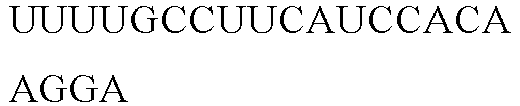
988-1009 SEQ ID NO: 134 
SEQ ID NO: 254 
758-779 SEQ ID NO: 135 
SEQ ID NO: 255 
1389-1410 SEQ ID NO: 136 
SEQ ID NO: 256 
993-1014 SEQ ID NO: 137 
SEQ ID NO: 257 
759-780 SEQ ID NO: 138 
SEQ ID NO: 258 
995-1016 SEQ ID NO: 139 
SEQ ID NO: 259 
1157-1178 SEQ ID NO: 140 
SEQ ID NO: 260 
990-1011 SEQ ID NO: 141 
SEQ ID NO: 261 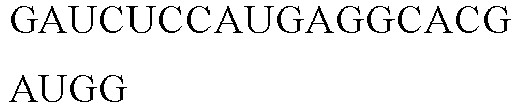
763-784 SEQ ID NO: 142 
SEQ ID NO: 262 
1387-1408 SEQ ID NO: 143 
SEQ ID NO: 263 
989-1010 SEQ ID NO: 144 
SEQ ID NO: 264 
992-1013 SEQ ID NO: 146 
SEQ ID NO: 266 
1158-1179 SEQ ID NO: 147 
SEQ ID NO: 267 
994-1015 SEQ ID NO: 149 
SEQ ID NO: 269 
1155-1176 SEQ ID NO: 150 
SEQ ID NO: 270 
1388-1409 SEQ ID NO: 151 
SEQ ID NO: 271 
987-1008 SEQ ID NO: 152 
SEQ ID NO: 272 
1383-1404 SEQ ID NO: 153 
SEQ ID NO: 273 
1384-1405 SEQ ID NO: 154 
SEQ ID NO: 274 
761-782 SEQ ID NO: 155 
SEQ ID NO: 275 
986-1007 SEQ ID NO: 156 
SEQ ID NO: 276 
1385-1406 SEQ ID NO: 157 
SEQ ID NO: 277 
762-783 SEQ ID NO: 158 
SEQ ID NO: 278 
1386-1407 SEQ ID NO: 159 
SEQ ID NO: 279 
1321-1342 SEQ ID NO: 160 
SEQ ID NO: 280 
1323-1344 SEQ ID NO: 161 
SEQ ID NO: 281 
1285-1306 SEQ ID NO: 162 
SEQ ID NO: 282 
1364-1385 SEQ ID NO: 163 
SEQ ID NO: 283 
1360-1381 SEQ ID NO: 164 
SEQ ID NO: 284 
1359-1380 SEQ ID NO: 165 
SEQ ID NO: 285 
1324-1345 SEQ ID NO: 166 
SEQ ID NO: 286 
1255-1276 SEQ ID NO: 167 
SEQ ID NO: 287 
1259-1280 SEQ ID NO: 168 
SEQ ID NO: 288 
1361-1382 SEQ ID NO: 169 
SEQ ID NO: 289 
1363-1384 SEQ ID NO: 170 
SEQ ID NO: 290 
1258-1279 SEQ ID NO: 171 
SEQ ID NO: 291 
1284-1305 SEQ ID NO: 172 
SEQ ID NO: 292 
1320-1341 SEQ ID NO: 173 
SEQ ID NO: 293 
1261-1282 SEQ ID NO: 174 
SEQ ID NO: 294 
1356-1377 SEQ ID NO: 175 
SEQ ID NO: 295 
1362-1383 SEQ ID NO: 176 
SEQ ID NO: 296 
1357-1378 SEQ ID NO: 177 
SEQ ID NO: 297 
1355-1376 SEQ ID NO: 178 
SEQ ID NO: 298 
1256-1277 SEQ ID NO: 179 
SEQ ID NO: 299 
1319-1340 SEQ ID NO: 180 
SEQ ID NO: 300 
1257-1278 SEQ ID NO: 181 
SEQ ID NO: 301 
1262-1283 SEQ ID NO: 182 
SEQ ID NO: 302 
1260-1281 SEQ ID NO: 183 
SEQ ID NO: 303 
1358-1379 SEQ ID NO: 184 
SEQ ID NO: 304 
1198-1219 SEQ ID NO: 185 
SEQ ID NO: 305 
1381-1402 SEQ ID NO: 186 
SEQ ID NO: 306 
1038-1059 SEQ ID NO: 187 
SEQ ID NO: 307 
1378-1399 SEQ ID NO: 188 
SEQ ID NO: 308 
1197-1218 SEQ ID NO: 189 
SEQ ID NO: 309 
766-787 SEQ ID NO: 190 
SEQ ID NO: 310 
1721-1742 SEQ ID NO: 191 
SEQ ID NO: 311 
1719-1740 SEQ ID NO: 192 
SEQ ID NO: 312 
1373-1394 SEQ ID NO: 193 
SEQ ID NO: 313 
1392-1413 SEQ ID NO: 194 
SEQ ID NO: 314 
1202-1223 SEQ ID NO: 195 
SEQ ID NO: 315 
1374-1395 SEQ ID NO: 196 
SEQ ID NO: 316 
1322-1343 SEQ ID NO: 197 
SEQ ID NO: 317 
985-1006 SEQ ID NO: 198 
SEQ ID NO: 318 
754-775 SEQ ID NO: 199 
SEQ ID NO: 319 
1317-1338 SEQ ID NO: 200 
SEQ ID NO: 320 
1318-1339 SEQ ID NO: 201 
SEQ ID NO: 321 
1201-1222 SEQ ID NO: 202 
SEQ ID NO: 322 
984-1005 SEQ ID NO: 203 
SEQ ID NO: 323 
755-776 SEQ ID NO: 204 
SEQ ID NO: 324 
1722-1743 SEQ ID NO: 205 
SEQ ID NO: 325 
1794-1815 SEQ ID NO: 206 
SEQ ID NO: 326 
750-771 SEQ ID NO: 207 
SEQ ID NO: 327 
1152-1173 SEQ ID NO: 208 
SEQ ID NO: 328 
1724-1745 SEQ ID NO: 209 
SEQ ID NO: 329 
1530-1551 SEQ ID NO: 210 
SEQ ID NO: 330 
1529-1550 SEQ ID NO: 211 
SEQ ID NO: 331 
1354-1375 SEQ ID NO: 212 
SEQ ID NO: 332 
1153-1174 SEQ ID NO: 213 
SEQ ID NO: 333 
1282-1303 SEQ ID NO: 214 
SEQ ID NO: 334 
1283-1304 SEQ ID NO: 215 
SEQ ID NO: 335 
1795-1816 SEQ ID NO: 216 
SEQ ID NO: 336 
1791-1812 SEQ ID NO: 217 
SEQ ID NO: 337 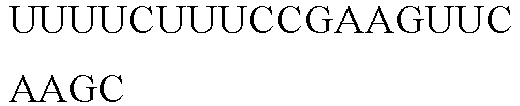
1500-1521 SEQ ID NO: 218 
SEQ ID NO: 338 
1501-1522 SEQ ID NO: 219 
SEQ ID NO: 339 
1792-1813 SEQ ID NO: 220 
SEQ ID NO: 340 
1353-1374 SEQ ID NO: 221 
SEQ ID NO: 341 
1254-1275 SEQ ID NO: 222 AAAUCCUUGUGGAUGAAGG SEQ ID NO: 342 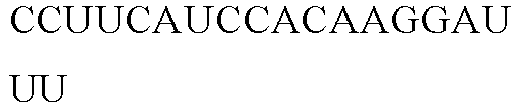
995-1014 SEQ ID NO: 223 GCCUCAUGGAGAUCUUUCG SEQ ID NO: 343 
760-779 SEQ ID NO: 224 UUCUCCAUGAGGACCACCA SEQ ID NO: 344 
1394-1413 SEQ ID NO: 225 UGCCUCAUGGAGAUCUUUC SEQ ID NO: 345 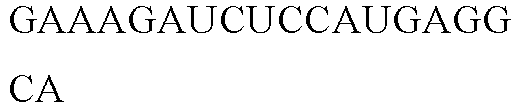
761-780 SEQ ID NO: 226 AGCAGCUCAUGCAUCUCAU SEQ ID NO: 346 
1535-1554 SEQ ID NO: 227 UCAGGAUUAAUCUCAUCAA SEQ ID NO: 347 
1160-1179 SEQ ID NO: 228 UUGGUUUCAGGAUUAAUCU SEQ ID NO: 348 
1166-1185 SEQ ID NO: 229 GUUUCAGGAUUAAUCUCAU SEQ ID NO: 349 
1163-1182 SEQ ID NO: 230 UGGUUUCAGGAUUAAUCUC SEQ ID NO: 350 
1165-1184 SEQ ID NO: 231 GGUUUCAGGAUUAAUCUCA SEQ ID NO: 351 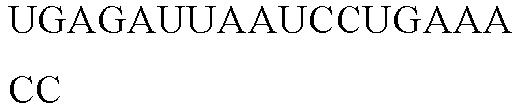
1164-1183 SEQ ID NO: 232 AGGAUUAAUCUCAUCAAAC SEQ ID NO: 352 
1158-1177 SEQ ID NO: 233 UCCUUGUGGAUGAAGGCAA SEQ ID NO: 353 
992-1011 SEQ ID NO: 234 GUGCCUCAUGGAGAUCUUU SEQ ID NO: 354 
762-781 SEQ ID NO: 235 UCUCCAUGAGGACCACCAG SEQ ID NO: 355 
1393-1412 SEQ ID NO: 236 CAAAAUCCUUGUGGAUGAA SEQ ID NO: 356 
997-1016 SEQ ID NO: 237 CGUGCCUCAUGGAGAUCUU SEQ ID NO: 357 
763-782 SEQ ID NO: 238 AUCAAAAUCCUUGUGGAUG SEQ ID NO: 358 
999-1018 SEQ ID NO: 239 UUCAGGAUUAAUCUCAUCA SEQ ID NO: 359 
1161-1180 SEQ ID NO: 240 AAUCCUUGUGGAUGAAGGC SEQ ID NO: 360 
994-1013 SEQ ID NO: 241 CCAUCGUGCCUCAUGGAGA SEQ ID NO: 361 
767-786 SEQ ID NO: 787 
SEQ ID NO: 791 
NA SEQ ID NO: 788 
SEQ ID NO: 792 
NA SEQ ID NO: 789 
SEQ ID NO: 793 
NA - Table 3 provides the modified first (antisense) sequences, together with the corresponding unmodified first (antisense) sequences for siRNA oligonucleosides according to the present invention as follows.
Table 3 Antisense strand ID Modified First (Antisense) Strand 5' → 3' SEQ ID NO (AS - mod) Underlying Base Sequence 5' → 3' SEQ ID NO (AS - unmod) (Shown as an Unmodified Nucleoside Sequence) ETXS1036 
SEQ ID NO: 764 
SEQ ID NO: 145 ETXS1040 
SEQ ID NO: 766 
SEQ ID NO: 148 ETXS632 
SEQ ID NO: 362 
SEQ ID NO: 122 ETXS634 
SEQ ID NO: 363 
SEQ ID NO: 123 ETXS636 
SEQ ID NO: 364 
SEQ ID NO: 124 ETXS638 
SEQ ID NO: 365 
SEQ ID NO: 125 ETXS640 
SEQ ID NO: 366 
SEQ ID NO: 126 ETXS642 
SEQ ID NO: 367 
SEQ ID NO: 127 ETXS644 
SEQ ID NO: 368 
SEQ ID NO: 128 ETXS646 
SEQ ID NO: 369 
SEQ ID NO: 129 ETXS648 
SEQ ID NO: 370 
SEQ ID NO: 130 ETXS650 
SEQ ID NO: 371 
SEQ ID NO: 131 ETXS652 
SEQ ID NO: 372 
SEQ ID NO: 132 ETXS654 
SEQ ID NO: 373 
SEQ ID NO: 133 ETXS656 
SEQ ID NO: 374 
SEQ ID NO: 134 ETXS658 
SEQ ID NO: 375 
SEQ ID NO: 135 ETXS660 
SEQ ID NO: 376 
SEQ ID NO: 136 ETXS662 
SEQ ID NO: 377 
SEQ ID NO: 137 ETXS664 
SEQ ID NO: 378 
SEQ ID NO: 138 ETXS666 
SEQ ID NO: 379 
SEQ ID NO: 139 ETXS668 
SEQ ID NO: 380 
SEQ ID NO: 140 ETXS670 
SEQ ID NO: 381 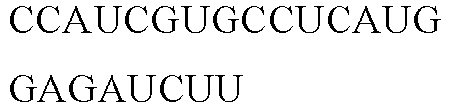
SEQ ID NO: 141 ETXS672 
SEQ ID NO: 382 
SEQ ID NO: 142 ETXS674 
SEQ ID NO: 383 
SEQ ID NO: 143 ETXS676 
SEQ ID NO: 384 
SEQ ID NO: 144 ETXS678 
SEQ ID NO: 385 
SEQ ID NO: 145 ETXS680 
SEQ ID NO: 386 
SEQ ID NO: 146 ETXS682 
SEQ ID NO: 387 
SEQ ID NO: 147 ETXS684 
SEQ ID NO: 388 
SEQ ID NO: 148 ETXS686 
SEQ ID NO: 389 
SEQ ID NO: 149 ETXS688 
SEQ ID NO: 390 
SEQ ID NO: 150 ETXS690 
SEQ ID NO: 391 
SEQ ID NO: 151 ETXS692 
SEQ ID NO: 392 
SEQ ID NO: 152 ETXS694 
SEQ ID NO: 393 
SEQ ID NO: 153 ETXS696 
SEQ ID NO: 394 
SEQ ID NO: 154 ETXS698 
SEQ ID NO: 395 
SEQ ID NO: 155 ETXS700 
SEQ ID NO: 396 
SEQ ID NO: 156 ETXS702 
SEQ ID NO: 397 
SEQ ID NO: 157 ETXS704 
SEQ ID NO: 398 
SEQ ID NO: 158 ETXS706 
SEQ ID NO: 399 
SEQ ID NO: 159 ETXS708 
SEQ ID NO: 400 
SEQ ID NO: 160 ETXS710 
SEQ ID NO: 401 
SEQ ID NO: 161 ETXS712 
SEQ ID NO: 402 
SEQ ID NO: 162 ETXS714 
SEQ ID NO: 403 
SEQ ID NO: 163 ETXS716 
SEQ ID NO: 404 
SEQ ID NO: 164 ETXS718 
SEQ ID NO: 405 
SEQ ID NO: 165 ETXS720 
SEQ ID NO: 406 
SEQ ID NO: 166 ETXS722 
SEQ ID NO: 407 
SEQ ID NO: 167 ETXS724 
SEQ ID NO: 408 
SEQ ID NO: 168 ETXS726 
SEQ ID NO: 409 
SEQ ID NO: 169 ETXS728 
SEQ ID NO: 410 
SEQ ID NO: 170 ETXS730 
SEQ ID NO: 411 
SEQ ID NO: 171 ETXS732 
SEQ ID NO: 412 
SEQ ID NO: 172 ETXS734 
SEQ ID NO: 413 
SEQ ID NO: 173 ETXS736 
SEQ ID NO: 414 
SEQ ID NO: 174 ETXS738 
SEQ ID NO: 415 
SEQ ID NO: 175 ETXS740 
SEQ ID NO: 416 
SEQ ID NO: 176 ETXS742 
SEQ ID NO: 417 
SEQ ID NO: 177 ETXS744 
SEQ ID NO: 418 
SEQ ID NO: 178 ETXS746 
SEQ ID NO: 419 
SEQ ID NO: 179 ETXS748 
SEQ ID NO: 420 
SEQ ID NO: 180 ETXS750 
SEQ ID NO: 421 
SEQ ID NO: 181 ETXS752 
SEQ ID NO: 422 
SEQ ID NO: 182 ETXS754 
SEQ ID NO: 423 
SEQ ID NO: 183 ETXS756 
SEQ ID NO: 424 
SEQ ID NO: 184 ETXS758 
SEQ ID NO: 425 
SEQ ID NO: 185 ETXS760 
SEQ ID NO: 426 
SEQ ID NO: 186 ETXS762 
SEQ ID NO: 427 
SEQ ID NO: 187 ETXS764 
SEQ ID NO: 428 
SEQ ID NO: 188 ETXS766 
SEQ ID NO: 429 
SEQ ID NO: 189 ETXS768 
SEQ ID NO: 430 
SEQ ID NO: 190 ETXS770 
SEQ ID NO: 431 
SEQ ID NO: 191 ETXS772 
SEQ ID NO: 432 
SEQ ID NO: 192 ETXS774 
SEQ ID NO: 433 
SEQ ID NO: 193 ETXS776 
SEQ ID NO: 434 
SEQ ID NO: 194 ETXS778 
SEQ ID NO: 435 
SEQ ID NO: 195 ETXS780 
SEQ ID NO: 436 
SEQ ID NO: 196 ETXS782 
SEQ ID NO: 437 
SEQ ID NO: 197 ETXS784 
SEQ ID NO: 438 
SEQ ID NO: 198 ETXS786 
SEQ ID NO: 439 
SEQ ID NO: 199 ETXS788 
SEQ ID NO: 440 
SEQ ID NO: 200 ETXS790 
SEQ ID NO: 441 
SEQ ID NO: 201 ETXS792 
SEQ ID NO: 442 
SEQ ID NO: 202 ETXS794 
SEQ ID NO: 443 
SEQ ID NO: 203 ETXS796 
SEQ ID NO: 444 
SEQ ID NO: 204 ETXS798 
SEQ ID NO: 445 
SEQ ID NO: 205 ETXS800 
SEQ ID NO: 446 
SEQ ID NO: 206 ETXS802 
SEQ ID NO: 447 
SEQ ID NO: 207 ETXS804 
SEQ ID NO: 448 
SEQ ID NO: 208 ETXS806 
SEQ ID NO: 449 
SEQ ID NO: 209 ETXS808 
SEQ ID NO: 450 
SEQ ID NO: 210 ETXS810 
SEQ ID NO: 451 
SEQ ID NO: 211 ETXS812 
SEQ ID NO: 452 
SEQ ID NO: 212 ETXS814 
SEQ ID NO: 453 
SEQ ID NO: 213 ETXS816 
SEQ ID NO: 454 
SEQ ID NO: 214 ETXS818 
SEQ ID NO: 455 
SEQ ID NO: 215 ETXS820 
SEQ ID NO: 456 
SEQ ID NO: 216 ETXS822 
SEQ ID NO: 457 
SEQ ID NO: 217 ETXS824 
SEQ ID NO: 458 
SEQ ID NO: 218 ETXS826 
SEQ ID NO: 459 
SEQ ID NO: 219 ETXS828 
SEQ ID NO: 460 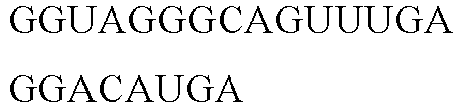
SEQ ID NO: 220 ETXS830 
SEQ ID NO: 461 
SEQ ID NO: 221 ETXS832 
SEQ ID NO: 462 
SEQ ID NO: 222 ETXS834 
SEQ ID NO: 463 
SEQ ID NO: 223 ETXS836 
SEQ ID NO: 464 
SEQ ID NO: 224 ETXS838 
SEQ ID NO: 465 
SEQ ID NO: 225 ETXS840 
SEQ ID NO: 466 
SEQ ID NO: 226 ETXS842 
SEQ ID NO: 467 
SEQ ID NO: 227 ETXS844 
SEQ ID NO: 468 
SEQ ID NO: 228 ETXS846 
SEQ ID NO: 469 
SEQ ID NO: 229 ETXS848 
SEQ ID NO: 470 
SEQ ID NO: 230 ETXS850 
SEQ ID NO: 471 
SEQ ID NO: 231 ETXS852 
SEQ ID NO: 472 
SEQ ID NO: 232 ETXS854 
SEQ ID NO: 473 
SEQ ID NO: 233 ETXS856 
SEQ ID NO: 474 
SEQ ID NO: 234 ETXS858 
SEQ ID NO: 475 
SEQ ID NO: 235 ETXS860 
SEQ ID NO: 476 
SEQ ID NO: 236 ETXS862 
SEQ ID NO: 477 
SEQ ID NO: 237 ETXS864 
SEQ ID NO: 478 
SEQ ID NO: 238 ETXS866 
SEQ ID NO: 479 
SEQ ID NO: 239 ETXS868 
SEQ ID NO: 480 
SEQ ID NO: 240 ETXS870 
SEQ ID NO: 481 
SEQ ID NO: 241 ETXS872 
SEQ ID NO: 482 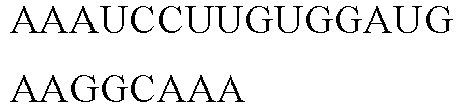
SEQ ID NO: 122 ETXS874 
SEQ ID NO: 483 
SEQ ID NO: 123 ETXS876 
SEQ ID NO: 484 
SEQ ID NO: 124 ETXS878 
SEQ ID NO: 485 
SEQ ID NO: 125 ETXS880 
SEQ ID NO: 486 
SEQ ID NO: 126 ETXS882 
SEQ ID NO: 487 
SEQ ID NO: 127 ETXS884 
SEQ ID NO: 488 
SEQ ID NO: 128 ETXS886 
SEQ ID NO: 489 
SEQ ID NO: 129 ETXS888 
SEQ ID NO: 490 
SEQ ID NO: 130 ETXS890 
SEQ ID NO: 491 
SEQ ID NO: 131 ETXS892 
SEQ ID NO: 492 
SEQ ID NO: 132 ETXS894 
SEQ ID NO: 493 
SEQ ID NO: 133 ETXS896 
SEQ ID NO: 494 
SEQ ID NO: 134 ETXS898 
SEQ ID NO: 495 
SEQ ID NO: 135 ETXS900 
SEQ ID NO: 496 
SEQ ID NO: 136 ETXS902 
SEQ ID NO: 497 
SEQ ID NO: 137 ETXS904 
SEQ ID NO: 498 
SEQ ID NO: 138 ETXS906 
SEQ ID NO: 499 
SEQ ID NO: 139 ETXS908 
SEQ ID NO: 500 
SEQ ID NO: 140 ETXS910 
SEQ ID NO: 501 
SEQ ID NO: 141 ETXS912 
SEQ ID NO: 502 
SEQ ID NO: 122 ETXS914 
SEQ ID NO: 503 
SEQ ID NO: 123 ETXS916 
SEQ ID NO: 504 
SEQ ID NO: 124 ETXS918 
SEQ ID NO: 505 
SEQ ID NO: 125 ETXS920 
SEQ ID NO: 506 
SEQ ID NO: 126 ETXS922 
SEQ ID NO: 507 
SEQ ID NO: 127 ETXS924 
SEQ ID NO: 508 
SEQ ID NO: 128 ETXS926 
SEQ ID NO: 509 
SEQ ID NO: 129 ETXS928 
SEQ ID NO: 510 
SEQ ID NO: 130 ETXS930 
SEQ ID NO: 511 
SEQ ID NO: 131 ETXS932 
SEQ ID NO: 512 
SEQ ID NO: 132 ETXS934 
SEQ ID NO: 513 
SEQ ID NO: 133 ETXS936 
SEQ ID NO: 514 
SEQ ID NO: 134 ETXS938 
SEQ ID NO: 515 
SEQ ID NO: 135 ETXS940 
SEQ ID NO: 516 
SEQ ID NO: 136 ETXS942 
SEQ ID NO: 517 
SEQ ID NO: 137 ETXS944 
SEQ ID NO: 518 
SEQ ID NO: 138 ETXS946 
SEQ ID NO: 519 
SEQ ID NO: 139 ETXS948 
SEQ ID NO: 520 
SEQ ID NO: 140 ETXS950 
SEQ ID NO: 521 
SEQ ID NO: 141 ETXS952 
SEQ ID NO: 522 
SEQ ID NO: 122 ETXS954 
SEQ ID NO: 523 
SEQ ID NO: 123 ETXS956 
SEQ ID NO: 524 
SEQ ID NO: 124 ETXS958 
SEQ ID NO: 525 
SEQ ID NO: 125 ETXS960 
SEQ ID NO: 526 
SEQ ID NO: 126 ETXS962 
SEQ ID NO: 527 
SEQ ID NO: 127 ETXS964 
SEQ ID NO: 528 
SEQ ID NO: 128 ETXS966 
SEQ ID NO: 529 
SEQ ID NO: 129 ETXS968 
SEQ ID NO: 530 
SEQ ID NO: 130 ETXS970 
SEQ ID NO: 531 
SEQ ID NO: 131 ETXS972 
SEQ ID NO: 532 
SEQ ID NO: 132 ETXS974 
SEQ ID NO: 533 
SEQ ID NO: 133 ETXS976 
SEQ ID NO: 534 
SEQ ID NO: 134 ETXS978 
SEQ ID NO: 535 
SEQ ID NO: 135 ETXS980 
SEQ ID NO: 536 
SEQ ID NO: 136 ETXS982 
SEQ ID NO: 537 
SEQ ID NO: 137 ETXS984 
SEQ ID NO: 538 
SEQ ID NO: 138 ETXS986 
SEQ ID NO: 539 
SEQ ID NO: 139 ETXS988 
SEQ ID NO: 540 
SEQ ID NO: 140 ETXS990 
SEQ ID NO: 541 
SEQ ID NO: 141 ETXS992 
SEQ ID NO: 542 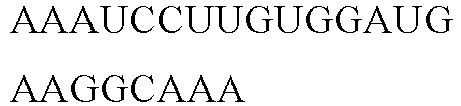
SEQ ID NO: 122 ETXS994 
SEQ ID NO: 543 
SEQ ID NO: 123 ETXS996 
SEQ ID NO: 544 
SEQ ID NO: 124 ETXS998 
SEQ ID NO: 545 
SEQ ID NO: 125 ETXS1000 
SEQ ID NO: 546 
SEQ ID NO: 126 ETXS1002 
SEQ ID NO: 547 
SEQ ID NO: 127 ETXS1004 
SEQ ID NO: 548 
SEQ ID NO: 128 ETXS1006 
SEQ ID NO: 549 
SEQ ID NO: 129 ETXS1008 
SEQ ID NO: 550 
SEQ ID NO: 130 ETXS1010 
SEQ ID NO: 551 
SEQ ID NO: 131 ETXS1012 
SEQ ID NO: 552 
SEQ ID NO: 132 ETXS1014 
SEQ ID NO: 553 
SEQ ID NO: 133 ETXS1016 
SEQ ID NO: 554 
SEQ ID NO: 134 ETXS1018 
SEQ ID NO: 555 
SEQ ID NO: 135 ETXS1020 
SEQ ID NO: 556 
SEQ ID NO: 136 ETXS1022 
SEQ ID NO: 557 
SEQ ID NO: 137 ETXS1024 
SEQ ID NO: 558 
SEQ ID NO: 138 ETXS1026 
SEQ ID NO: 559 
SEQ ID NO: 139 ETXS1028 
SEQ ID NO: 560 
SEQ ID NO: 140 ETXS1030 
SEQ ID NO: 561 
SEQ ID NO: 141 ETXS1032 
SEQ ID NO: 762 
SEQ ID NO: 144 ETXS1034 
SEQ ID NO: 763 
SEQ ID NO: 144 ETXS1038 
SEQ ID NO: 765 
SEQ ID NO: 145 ETXS1042 
SEQ ID NO: 767 
SEQ ID NO: 148 ETXS1044 
SEQ ID NO: 768 
SEQ ID NO: 165 ETXS1046 
SEQ ID NO: 769 
SEQ ID NO: 165 ETXS1048 
SEQ ID NO: 770 
SEQ ID NO: 202 ETXS1050 
SEQ ID NO: 771 
SEQ ID NO: 202 ETXS1051 
SEQ ID NO: 782 
SEQ ID NO: 144 ETXS1052 
SEQ ID NO: 783 
SEQ ID NO: 145 ETXS1053 
SEQ ID NO: 784 
SEQ ID NO: 148 ETXS1054 
SEQ ID NO: 785 
SEQ ID NO: 165 ETXS1055 
SEQ ID NO: 786 
SEQ ID NO: 202 ETXS2128 
SEQ ID NO: 795 
SEQ ID NO: 787 ETXS2144 
SEQ ID NO: 796 
SEQ ID NO: 788 ETXS2152 
SEQ ID NO: 797 
SEQ ID NO: 789 ETXS2398 
SEQ ID NO: 801 
SEQ ID NO: 145 ETSX2400 
SEQ ID NO: 802 
SEQ ID NO: 145 ETXS2402 
SEQ ID NO: 803 
SEQ ID NO: 145 ETXS2404 
SEQ ID NO: 804 
SEQ ID NO: 145 ETXS2406 
SEQ ID NO: 805 
SEQ ID NO: 145 ETXS2408 
SEQ ID NO: 806 
SEQ ID NO: 145 ETXS2410 
SEQ ID NO: 807 
SEQ ID NO: 145 ETXS2412 
SEQ ID NO: 808 
SEQ ID NO: 145 ETXS2414 
SEQ ID NO: 809 
SEQ ID NO: 145 ETXS2416 
SEQ ID NO: 810 
SEQ ID NO: 148 ETXS2418 
SEQ ID NO: 811 
SEQ ID NO: 148 ETXS2420 
SEQ ID NO: 812 
SEQ ID NO: 148 ETXS2422 
SEQ ID NO: 813 
SEQ ID NO: 148 ETXS2424 
SEQ ID NO: 814 
SEQ ID NO: 148 ETXS2426 
SEQ ID NO: 815 
SEQ ID NO: 148 ETXS2428 
SEQ ID NO: 816 
SEQ ID NO: 148 ETXS2430 
SEQ ID NO: 817 
SEQ ID NO: 148 ETXS2432 
SEQ ID NO: 818 
SEQ ID NO: 148 - Table 4 provides the modified second (sense) sequences, together with the corresponding unmodified second (sense) sequences for siRNA oligonucleosides according to the present invention as follows.
Table 4 Sense strand ID Modified Second (Sense) Strand 5' → 3' SEQ ID NO (SS - mod) Underlying Base Sequence 5' → 3' SEQ ID NO (SS - unmod) (Shown as an Unmodified Nucleoside Sequence) ETXS1035 
SEQ ID NO: 774 
SEQ ID NO: 265 ETXS1039 
SEQ ID NO: 776 
SEQ ID NO: 268 ETXS631 
SEQ ID NO: 562 
SEQ ID NO: 242 ETXS633 
SEQ ID NO: 563 
SEQ ID NO: 243 ETXS635 
SEQ ID NO: 564 
SEQ ID NO: 244 ETXS637 
SEQ ID NO: 565 
SEQ ID NO: 245 ETXS639 
SEQ ID NO: 566 
SEQ ID NO: 246 ETXS641 
SEQ ID NO: 567 
SEQ ID NO: 247 ETXS643 
SEQ ID NO: 568 
SEQ ID NO: 248 ETXS645 
SEQ ID NO: 569 
SEQ ID NO: 249 ETXS647 
SEQ ID NO: 570 
SEQ ID NO: 250 ETXS649 
SEQ ID NO: 571 
SEQ ID NO: 251 ETXS651 
SEQ ID NO: 572 
SEQ ID NO: 252 ETXS653 
SEQ ID NO: 573 
SEQ ID NO: 253 ETXS655 
SEQ ID NO: 574 
SEQ ID NO: 254 ETXS657 
SEQ ID NO: 575 
SEQ ID NO: 255 ETXS659 
SEQ ID NO: 576 
SEQ ID NO: 256 ETXS661 
SEQ ID NO: 577 
SEQ ID NO: 257 ETXS663 
SEQ ID NO: 578 
SEQ ID NO: 258 ETXS665 
SEQ ID NO: 579 
SEQ ID NO: 259 ETXS667 
SEQ ID NO: 580 
SEQ ID NO: 260 ETXS669 
SEQ ID NO: 581 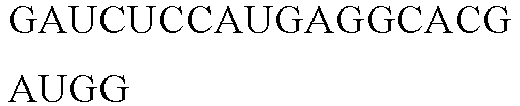
SEQ ID NO: 261 ETXS671 
SEQ ID NO: 582 
SEQ ID NO: 262 ETXS673 
SEQ ID NO: 583 
SEQ ID NO: 263 ETXS675 
SEQ ID NO: 584 
SEQ ID NO: 264 ETXS677 
SEQ ID NO: 585 
SEQ ID NO: 265 ETXS679 
SEQ ID NO: 586 
SEQ ID NO: 266 ETXS681 
SEQ ID NO: 587 
SEQ ID NO: 267 ETXS683 
SEQ ID NO: 588 
SEQ ID NO: 268 ETXS685 
SEQ ID NO: 589 
SEQ ID NO: 269 ETXS687 
SEQ ID NO: 590 
SEQ ID NO: 270 ETXS689 
SEQ ID NO: 591 
SEQ ID NO: 271 ETXS691 
SEQ ID NO: 592 
SEQ ID NO: 272 ETXS693 
SEQ ID NO: 593 
SEQ ID NO: 273 ETXS695 
SEQ ID NO: 594 
SEQ ID NO: 274 ETXS697 
SEQ ID NO: 595 
SEQ ID NO: 275 ETXS699 
SEQ ID NO: 596 
SEQ ID NO: 276 ETXS701 
SEQ ID NO: 597 
SEQ ID NO: 277 ETXS703 
SEQ ID NO: 598 
SEQ ID NO: 278 ETXS705 
SEQ ID NO: 599 
SEQ ID NO: 279 ETXS707 
SEQ ID NO: 600 
SEQ ID NO: 280 ETXS709 
SEQ ID NO: 601 
SEQ ID NO: 281 ETXS711 
SEQ ID NO: 602 
SEQ ID NO: 282 ETXS713 
SEQ ID NO: 603 
SEQ ID NO: 283 ETXS715 
SEQ ID NO: 604 
SEQ ID NO: 284 ETXS717 
SEQ ID NO: 605 
SEQ ID NO: 285 ETXS719 
SEQ ID NO: 606 
SEQ ID NO: 286 ETXS721 
SEQ ID NO: 607 
SEQ ID NO: 287 ETXS723 
SEQ ID NO: 608 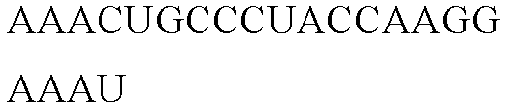
SEQ ID NO: 288 ETXS725 
SEQ ID NO: 609 
SEQ ID NO: 289 ETXS727 
SEQ ID NO: 610 
SEQ ID NO: 290 ETXS729 
SEQ ID NO: 611 
SEQ ID NO: 291 ETXS731 
SEQ ID NO: 612 
SEQ ID NO: 292 ETXS733 
SEQ ID NO: 613 
SEQ ID NO: 293 ETXS735 
SEQ ID NO: 614 
SEQ ID NO: 294 ETXS737 
SEQ ID NO: 615 
SEQ ID NO: 295 ETXS739 
SEQ ID NO: 616 
SEQ ID NO: 296 ETXS741 
SEQ ID NO: 617 
SEQ ID NO: 297 ETXS743 
SEQ ID NO: 618 
SEQ ID NO: 298 ETXS745 
SEQ ID NO: 619 
SEQ ID NO: 299 ETXS747 
SEQ ID NO: 620 
SEQ ID NO: 300 ETXS749 
SEQ ID NO: 621 
SEQ ID NO: 301 ETXS751 
SEQ ID NO: 622 
SEQ ID NO: 302 ETXS753 
SEQ ID NO: 623 
SEQ ID NO: 303 ETXS755 
SEQ ID NO: 624 
SEQ ID NO: 304 ETXS757 
SEQ ID NO: 625 
SEQ ID NO: 305 ETXS759 
SEQ ID NO: 626 
SEQ ID NO: 306 ETXS761 
SEQ ID NO: 627 
SEQ ID NO: 307 ETXS763 
SEQ ID NO: 628 
SEQ ID NO: 308 ETXS765 
SEQ ID NO: 629 
SEQ ID NO: 309 ETXS767 
SEQ ID NO: 630 
SEQ ID NO: 310 ETXS769 
SEQ ID NO: 631 
SEQ ID NO: 311 ETXS771 
SEQ ID NO: 632 
SEQ ID NO: 312 ETXS773 
SEQ ID NO: 633 
SEQ ID NO: 313 ETXS775 
SEQ ID NO: 634 
SEQ ID NO: 314 ETXS777 
SEQ ID NO: 635 
SEQ ID NO: 315 ETXS779 
SEQ ID NO: 636 
SEQ ID NO: 316 ETXS781 
SEQ ID NO: 637 
SEQ ID NO: 317 ETXS783 
SEQ ID NO: 638 
SEQ ID NO: 318 ETXS785 
SEQ ID NO: 639 
SEQ ID NO: 319 ETXS787 
SEQ ID NO: 640 
SEQ ID NO: 320 ETXS789 
SEQ ID NO: 641 
SEQ ID NO: 321 ETXS791 
SEQ ID NO: 642 
SEQ ID NO: 322 ETXS793 
SEQ ID NO: 643 
SEQ ID NO: 323 ETXS795 
SEQ ID NO: 644 
SEQ ID NO: 324 ETXS797 
SEQ ID NO: 645 
SEQ ID NO: 325 ETXS799 
SEQ ID NO: 646 
SEQ ID NO: 326 ETXS801 
SEQ ID NO: 647 
SEQ ID NO: 327 ETXS803 
SEQ ID NO: 648 
SEQ ID NO: 328 ETXS805 
SEQ ID NO: 649 
SEQ ID NO: 329 ETXS807 
SEQ ID NO: 650 
SEQ ID NO: 330 ETXS809 
SEQ ID NO: 651 
SEQ ID NO: 331 ETXS811 
SEQ ID NO: 652 
SEQ ID NO: 332 ETXS813 
SEQ ID NO: 653 
SEQ ID NO: 333 ETXS815 
SEQ ID NO: 654 
SEQ ID NO: 334 ETXS817 
SEQ ID NO: 655 
SEQ ID NO: 335 ETXS819 
SEQ ID NO: 656 
SEQ ID NO: 336 ETXS821 
SEQ ID NO: 657 
SEQ ID NO: 337 ETXS823 
SEQ ID NO: 658 
SEQ ID NO: 338 ETXS825 
SEQ ID NO: 659 
SEQ ID NO: 339 ETXS827 
SEQ ID NO: 660 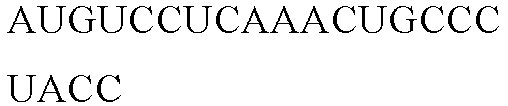
SEQ ID NO: 340 ETXS829 
SEQ ID NO: 661 
SEQ ID NO: 341 ETXS831 
SEQ ID NO: 662 
SEQ ID NO: 342 ETXS833 
SEQ ID NO: 663 
SEQ ID NO: 343 ETXS835 
SEQ ID NO: 664 
SEQ ID NO: 344 ETXS837 
SEQ ID NO: 665 
SEQ ID NO: 345 ETXS839 
SEQ ID NO: 666 
SEQ ID NO: 346 ETXS841 
SEQ ID NO: 667 
SEQ ID NO: 347 ETXS843 
SEQ ID NO: 668 
SEQ ID NO: 348 ETXS845 
SEQ ID NO: 669 
SEQ ID NO: 349 ETXS847 
SEQ ID NO: 670 
SEQ ID NO: 350 ETXS849 
SEQ ID NO: 671 
SEQ ID NO: 351 ETXS851 
SEQ ID NO: 672 
SEQ ID NO: 352 ETXS853 
SEQ ID NO: 673 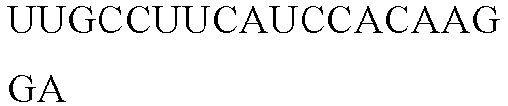
SEQ ID NO: 353 ETXS855 
SEQ ID NO: 674 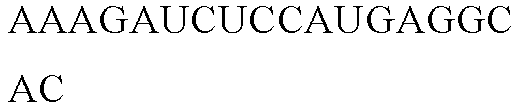
SEQ ID NO: 354 ETXS857 
SEQ ID NO: 675 
SEQ ID NO: 355 ETXS859 
SEQ ID NO: 676 
SEQ ID NO: 356 ETXS861 
SEQ ID NO: 677 
SEQ ID NO: 357 ETXS863 
SEQ ID NO: 678 
SEQ ID NO: 358 ETXS865 
SEQ ID NO: 679 
SEQ ID NO: 359 ETXS867 
SEQ ID NO: 680 
SEQ ID NO: 360 ETXS869 
SEQ ID NO: 681 
SEQ ID NO: 361 ETXS871 
SEQ ID NO: 682 
SEQ ID NO: 242 ETXS873 
SEQ ID NO: 683 
SEQ ID NO: 243 ETXS875 
SEQ ID NO: 684 
SEQ ID NO: 244 ETXS877 
SEQ ID NO: 685 
SEQ ID NO: 245 ETXS879 
SEQ ID NO: 686 
SEQ ID NO: 246 ETXS881 
SEQ ID NO: 687 
SEQ ID NO: 247 ETXS883 
SEQ ID NO: 688 
SEQ ID NO: 248 ETXS885 
SEQ ID NO: 689 
SEQ ID NO: 249 ETXS887 
SEQ ID NO: 690 
SEQ ID NO: 250 ETXS889 
SEQ ID NO: 691 
SEQ ID NO: 251 ETXS891 
SEQ ID NO: 692 
SEQ ID NO: 252 ETXS893 
SEQ ID NO: 693 
SEQ ID NO: 253 ETXS895 
SEQ ID NO: 694 
SEQ ID NO: 254 ETXS897 
SEQ ID NO: 695 
SEQ ID NO: 255 ETXS899 
SEQ ID NO: 696 
SEQ ID NO: 256 ETXS901 
SEQ ID NO: 697 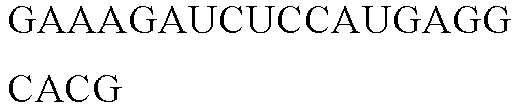
SEQ ID NO: 257 ETXS903 
SEQ ID NO: 698 
SEQ ID NO: 258 ETXS905 
SEQ ID NO: 699 
SEQ ID NO: 259 ETXS907 
SEQ ID NO: 700 
SEQ ID NO: 260 ETXS909 
SEQ ID NO: 701 
SEQ ID NO: 261 ETXS911 
SEQ ID NO: 702 
SEQ ID NO: 242 ETXS913 
SEQ ID NO: 703 
SEQ ID NO: 243 ETXS915 
SEQ ID NO: 704 
SEQ ID NO: 244 ETXS917 
SEQ ID NO: 705 
SEQ ID NO: 245 ETXS919 
SEQ ID NO: 706 
SEQ ID NO: 246 ETXS921 
SEQ ID NO: 707 
SEQ ID NO: 247 ETXS923 
SEQ ID NO: 708 
SEQ ID NO: 248 ETXS925 
SEQ ID NO: 709 
SEQ ID NO: 249 ETXS927 
SEQ ID NO: 710 
SEQ ID NO: 250 ETXS929 
SEQ ID NO: 711 
SEQ ID NO: 251 ETXS931 
SEQ ID NO: 712 
SEQ ID NO: 252 ETXS933 
SEQ ID NO: 713 
SEQ ID NO: 253 ETXS935 
SEQ ID NO: 714 
SEQ ID NO: 254 ETXS937 
SEQ ID NO: 715 
SEQ ID NO: 255 ETXS939 
SEQ ID NO: 716 
SEQ ID NO: 256 ETXS941 
SEQ ID NO: 717 
SEQ ID NO: 257 ETXS943 
SEQ ID NO: 718 
SEQ ID NO: 258 ETXS945 
SEQ ID NO: 719 
SEQ ID NO: 259 ETXS947 
SEQ ID NO: 720 
SEQ ID NO: 260 ETXS949 
SEQ ID NO: 721 
SEQ ID NO: 261 ETXS951 
SEQ ID NO: 722 
SEQ ID NO: 242 ETXS953 
SEQ ID NO: 723 
SEQ ID NO: 243 ETXS955 
SEQ ID NO: 724 
SEQ ID NO: 244 ETXS957 
SEQ ID NO: 725 
SEQ ID NO: 245 ETXS959 
SEQ ID NO: 726 
SEQ ID NO: 246 ETXS961 
SEQ ID NO: 727 
SEQ ID NO: 247 ETXS963 
SEQ ID NO: 728 
SEQ ID NO: 248 ETXS965 
SEQ ID NO: 729 
SEQ ID NO: 249 ETXS967 
SEQ ID NO: 730 
SEQ ID NO: 250 ETXS969 
SEQ ID NO: 731 
SEQ ID NO: 251 ETXS971 
SEQ ID NO: 732 
SEQ ID NO: 252 ETXS973 
SEQ ID NO: 733 
SEQ ID NO: 253 ETXS975 
SEQ ID NO: 734 
SEQ ID NO: 254 ETXS977 
SEQ ID NO: 735 
SEQ ID NO: 255 ETXS979 
SEQ ID NO: 736 
SEQ ID NO: 256 ETXS981 
SEQ ID NO: 737 
SEQ ID NO: 257 ETXS983 
SEQ ID NO: 738 
SEQ ID NO: 258 ETXS985 
SEQ ID NO: 739 
SEQ ID NO: 259 ETXS987 
SEQ ID NO: 740 
SEQ ID NO: 260 ETXS989 
SEQ ID NO: 741 
SEQ ID NO: 261 ETXS991 
SEQ ID NO: 742 
SEQ ID NO: 242 ETXS993 
SEQ ID NO: 743 
SEQ ID NO: 243 ETXS995 
SEQ ID NO: 744 
SEQ ID NO: 244 ETXS997 
SEQ ID NO: 745 
SEQ ID NO: 245 ETXS999 
SEQ ID NO: 746 
SEQ ID NO: 246 ETXS1001 
SEQ ID NO: 747 
SEQ ID NO: 247 ETXS1003 
SEQ ID NO: 748 
SEQ ID NO: 248 ETXS1005 
SEQ ID NO: 749 
SEQ ID NO: 249 ETXS1007 
SEQ ID NO: 750 
SEQ ID NO: 250 ETXS1009 
SEQ ID NO: 751 
SEQ ID NO: 251 ETXS1011 
SEQ ID NO: 752 
SEQ ID NO: 252 ETXS1013 
SEQ ID NO: 753 
SEQ ID NO: 253 ETXS1015 
SEQ ID NO: 754 
SEQ ID NO: 254 ETXS1017 
SEQ ID NO: 755 
SEQ ID NO: 255 ETXS1019 
SEQ ID NO: 756 
SEQ ID NO: 256 ETXS1021 
SEQ ID NO: 757 
SEQ ID NO: 257 ETXS1023 
SEQ ID NO: 758 
SEQ ID NO: 258 ETXS1025 
SEQ ID NO: 759 
SEQ ID NO: 259 ETXS1027 
SEQ ID NO: 760 
SEQ ID NO: 260 ETXS1029 
SEQ ID NO: 761 
SEQ ID NO: 261 ETXS1031 
SEQ ID NO: 772 
SEQ ID NO: 264 ETXS1033 
SEQ ID NO: 773 
SEQ ID NO: 264 ETXS1037 
SEQ ID NO: 775 
SEQ ID NO: 265 ETXS1041 
SEQ ID NO: 777 
SEQ ID NO: 268 ETXS1043 
SEQ ID NO: 778 
SEQ ID NO: 285 ETXS1045 
SEQ ID NO: 779 
SEQ ID NO: 285 ETXS1047 
SEQ ID NO: 780 
SEQ ID NO: 322 ETXS1049 
SEQ ID NO: 781 
SEQ ID NO: 322 ETXS2127 
SEQ ID NO: 798 
SEQ ID NO: 791 ETXS2143 
SEQ ID NO: 799 
SEQ ID NO: 792 ETXS2151 
SEQ ID NO: 800 
SEQ ID NO: 793 ETXS2397 
SEQ ID NO: 819 
SEQ ID NO: 265 ETXS2399 
SEQ ID NO: 820 
SEQ ID NO: 268 - Some of the modified second strand sequences as illustrated above in Table 4 include the preferred 5' iaia motif. However, it should also be understood that the scope of these modified second strand sequences additionally includes the Me / F modified second strand in the absence of the 5'iaia motif.
- Table 5 identifies duplexes with Duplex IDs referencing the modified antisense and sense IDs from previous Tables 3 and 4.
Table 5 Duplex ID First (Antisense) strand ID Second (Sense) strand ID ETXM1184 ETXS1036 ETXS1035 ETXM1157 ETXS1040 ETXS1039 ETXM316 ETXS632 ETXS631 ETXM317 ETXS634 ETXS633 ETXM318 ETXS636 ETXS635 ETXM319 ETXS638 ETXS637 ETXM320 ETXS640 ETXS639 ETXM321 ETXS642 ETXS641 ETXM322 ETXS644 ETXS643 ETXM323 ETXS646 ETXS645 ETXM324 ETXS648 ETXS647 ETXM325 ETXS650 ETXS649 ETXM326 ETXS652 ETXS651 ETXM327 ETXS654 ETXS653 ETXM328 ETXS656 ETXS655 ETXM329 ETXS658 ETXS657 ETXM330 ETXS660 ETXS659 ETXM331 ETXS662 ETXS661 ETXM332 ETXS664 ETXS663 ETXM333 ETXS666 ETXS665 ETXM334 ETXS668 ETXS667 ETXM335 ETXS670 ETXS669 ETXM336 ETXS672 ETXS671 ETXM337 ETXS674 ETXS673 ETXM338 ETXS676 ETXS675 ETXM339 ETXS678 ETXS677 ETXM340 ETXS680 ETXS679 ETXM341 ETXS682 ETXS681 ETXM342 ETXS684 ETXS683 ETXM343 ETXS686 ETXS685 ETXM344 ETXS688 ETXS687 ETXM345 ETXS690 ETXS689 ETXM346 ETXS692 ETXS691 ETXM347 ETXS694 ETXS693 ETXM348 ETXS696 ETXS695 ETXM349 ETXS698 ETXS697 ETXM350 ETXS700 ETXS699 ETXM351 ETXS702 ETXS701 ETXM352 ETXS704 ETXS703 ETXM353 ETXS706 ETXS705 ETXM354 ETXS708 ETXS707 ETXM355 ETXS710 ETXS709 ETXM356 ETXS712 ETXS711 ETXM357 ETXS714 ETXS713 ETXM358 ETXS716 ETXS715 ETXM359 ETXS718 ETXS717 ETXM360 ETXS720 ETXS719 ETXM361 ETXS722 ETXS721 ETXM362 ETXS724 ETXS723 ETXM363 ETXS726 ETXS725 ETXM364 ETXS728 ETXS727 ETXM365 ETXS730 ETXS729 ETXM366 ETXS732 ETXS731 ETXM367 ETXS734 ETXS733 ETXM368 ETXS736 ETXS735 ETXM369 ETXS738 ETXS737 ETXM370 ETXS740 ETXS739 ETXM371 ETXS742 ETXS741 ETXM372 ETXS744 ETXS743 ETXM373 ETXS746 ETXS745 ETXM374 ETXS748 ETXS747 ETXM375 ETXS750 ETXS749 ETXM376 ETXS752 ETXS751 ETXM377 ETXS754 ETXS753 ETXM378 ETXS756 ETXS755 ETXM379 ETXS758 ETXS757 ETXM380 ETXS760 ETXS759 ETXM381 ETXS762 ETXS761 ETXM382 ETXS764 ETXS763 ETXM383 ETXS766 ETXS765 ETXM384 ETXS768 ETXS767 ETXM385 ETXS770 ETXS769 ETXM386 ETXS772 ETXS771 ETXM387 ETXS774 ETXS773 ETXM388 ETXS776 ETXS775 ETXM389 ETXS778 ETXS777 ETXM390 ETXS780 ETXS779 ETXM391 ETXS782 ETXS781 ETXM392 ETXS784 ETXS783 ETXM393 ETXS786 ETXS785 ETXM394 ETXS788 ETXS787 ETXM395 ETXS790 ETXS789 ETXM396 ETXS792 ETXS791 ETXM397 ETXS794 ETXS793 ETXM398 ETXS796 ETXS795 ETXM399 ETXS798 ETXS797 ETXM400 ETXS800 ETXS799 ETXM401 ETXS802 ETXS801 ETXM402 ETXS804 ETXS803 ETXM403 ETXS806 ETXS805 ETXM404 ETXS808 ETXS807 ETXM405 ETXS810 ETXS809 ETXM406 ETXS812 ETXS811 ETXM407 ETXS814 ETXS813 ETXM408 ETXS816 ETXS815 ETXM409 ETXS818 ETXS817 ETXM410 ETXS820 ETXS819 ETXM411 ETXS822 ETXS821 ETXM412 ETXS824 ETXS823 ETXM413 ETXS826 ETXS825 ETXM414 ETXS828 ETXS827 ETXM415 ETXS830 ETXS829 ETXM416 ETXS832 ETXS831 ETXM417 ETXS834 ETXS833 ETXM418 ETXS836 ETXS835 ETXM419 ETXS838 ETXS837 ETXM420 ETXS840 ETXS839 ETXM421 ETXS842 ETXS841 ETXM422 ETXS844 ETXS843 ETXM423 ETXS846 ETXS845 ETXM424 ETXS848 ETXS847 ETXM425 ETXS850 ETXS849 ETXM426 ETXS852 ETXS851 ETXM427 ETXS854 ETXS853 ETXM428 ETXS856 ETXS855 ETXM429 ETXS858 ETXS857 ETXM430 ETXS860 ETXS859 ETXM431 ETXS862 ETXS861 ETXM432 ETXS864 ETXS863 ETXM433 ETXS866 ETXS865 ETXM434 ETXS868 ETXS867 ETXM435 ETXS870 ETXS869 ETXM436 ETXS872 ETXS871 ETXM437 ETXS874 ETXS873 ETXM438 ETXS876 ETXS875 ETXM439 ETXS878 ETXS877 ETXM440 ETXS880 ETXS879 ETXM441 ETXS882 ETXS881 ETXM442 ETXS884 ETXS883 ETXM443 ETXS886 ETXS885 ETXM444 ETXS888 ETXS887 ETXM445 ETXS890 ETXS889 ETXM446 ETXS892 ETXS891 ETXM447 ETXS894 ETXS893 ETXM448 ETXS896 ETXS895 ETXM449 ETXS898 ETXS897 ETXM450 ETXS900 ETXS899 ETXM451 ETXS902 ETXS901 ETXM452 ETXS904 ETXS903 ETXM453 ETXS906 ETXS905 ETXM454 ETXS908 ETXS907 ETXM455 ETXS910 ETXS909 ETXM456 ETXS912 ETXS911 ETXM457 ETXS914 ETXS913 ETXM458 ETXS916 ETXS915 ETXM459 ETXS918 ETXS917 ETXM460 ETXS920 ETXS919 ETXM461 ETXS922 ETXS921 ETXM462 ETXS924 ETXS923 ETXM463 ETXS926 ETXS925 ETXM464 ETXS928 ETXS927 ETXM465 ETXS930 ETXS929 ETXM466 ETXS932 ETXS931 ETXM467 ETXS934 ETXS933 ETXM468 ETXS936 ETXS935 ETXM469 ETXS938 ETXS937 ETXM470 ETXS940 ETXS939 ETXM471 ETXS942 ETXS941 ETXM472 ETXS944 ETXS943 ETXM473 ETXS946 ETXS945 ETXM474 ETXS948 ETXS947 ETXM475 ETXS950 ETXS949 ETXM476 ETXS952 ETXS951 ETXM477 ETXS954 ETXS953 ETXM478 ETXS956 ETXS955 ETXM479 ETXS958 ETXS957 ETXM480 ETXS960 ETXS959 ETXM481 ETXS962 ETXS961 ETXM482 ETXS964 ETXS963 ETXM483 ETXS966 ETXS965 ETXM484 ETXS968 ETXS967 ETXM485 ETXS970 ETXS969 ETXM486 ETXS972 ETXS971 ETXM487 ETXS974 ETXS973 ETXM488 ETXS976 ETXS975 ETXM489 ETXS978 ETXS977 ETXM490 ETXS980 ETXS979 ETXM491 ETXS982 ETXS981 ETXM492 ETXS984 ETXS983 ETXM493 ETXS986 ETXS985 ETXM494 ETXS988 ETXS987 ETXM495 ETXS990 ETXS989 ETXM496 ETXS992 ETXS991 ETXM497 ETXS994 ETXS993 ETXM498 ETXS996 ETXS995 ETXM499 ETXS998 ETXS997 ETXM500 ETXS 1000 ETXS999 ETXM501 ETXS 1002 ETXS1001 ETXM502 ETXS 1004 ETXS1003 ETXM503 ETXS 1006 ETXS 1005 ETXM504 ETXS1008 ETXS 1007 ETXM505 ETXS1010 ETXS 1009 ETXM506 ETXS1012 ETXS1011 ETXM507 ETXS1014 ETXS1013 ETXM508 ETXS1016 ETXS1015 ETXM509 ETXS1018 ETXS1017 ETXM510 ETXS 1020 ETXS1019 ETXM511 ETXS 1022 ETXS 1021 ETXM512 ETXS 1024 ETXS1023 ETXM513 ETXS 1026 ETXS1025 ETXM514 ETXS1028 ETXS 1027 ETXM515 ETXS1030 ETXS 1029 ETXM1064 ETXS2128 ETXS2127 ETXM1072 ETXS2144 ETXS2143 ETXM1076 ETXS2152 ETXS2151 ETXM1180 ETXS1032 ETXS1031 ETXM1181 ETXS1034 ETXS1033 ETXM1185 ETXS1038 ETXS1037 ETXM1162 ETXS 1042 ETXS1041 ETXM1188 ETXS 1044 ETXS 1043 ETXM1189 ETXS 1046 ETXS 1045 ETXM1192 ETXS1048 ETXS1047 ETXM1193 ETXS 1050 ETXS1049 ETXM1194 ETXS1051 ETXS1033 ETXM1195 ETXS1052 ETXS1037 ETXM1196 ETXS1053 ETXS1041 ETXM1197 ETXS1054 ETXS1045 ETXM1198 ETXS1055 ETXS1049 ETXM1199 ETXS2398 ETXS2397 ETXM1200 ETSX2400 ETXS2397 ETXM1201 ETXS2402 ETXS2397 ETXM1202 ETXS2404 ETXS2397 ETXM1203 ETXS2406 ETXS2397 ETXM1204 ETXS2408 ETXS2397 ETXM1205 ETXS2410 ETXS2397 ETXM1206 ETXS2412 ETXS2397 ETXM1207 ETXS2414 ETXS2397 ETXM1208 ETXS2416 ETXS2399 ETXM1209 ETXS2418 ETXS2399 ETXM1210 ETXS2420 ETXS2399 ETXM1211 ETXS2422 ETXS2399 ETXM1212 ETXS2424 ETXS2399 ETXM1213 ETXS2426 ETXS2399 ETXM1214 ETXS2428 ETXS2399 ETXM1215 ETXS2430 ETXS2399 ETXM1216 ETXS2432 ETXS2399 - For duplexes of Table 5:
- ETXM316 - ETXM415, ETXM436 - ETXM515 and ETXM1180 - ETXM1216 have a duplex structure according to
Figure 8a with a 2 nucleoside overhang at the 3' end of the antisense; - ETXM416 - ETXM435:have a duplex structure according to
Figure 8b , namely a 19mer blunt ended construct. - Definitions as provided in the above Tables:
- A - adenosine
- C - cytidine
- G - guanosine
- T - thymidine
- m - 2'-O-methyl
- f - 2'fluro
- s - phosphorothioate bond
- o - thermally destabilised nucleoside
- ia - inverted abasic nucleoside
- Huh7 cells (human hepatocyte-derived cell line, obtained from JCRB Cell Bank) were maintained in Dulbecco's Modified Eagle Medium (DMEM) supplemented with 10% FBS at 37°C in at atmosphere of 5% CO2. Cells were transfected with siRNA duplexes targeting ZPI mRNA or a negative control siRNA (siRNA-control; sense strand 5'-UUCUCCGAACGUGUCACGUTT-3' (SEQ ID NO:794), antisense strand 5'-ACGUGACACGUUCGGAGAATT-3' (SEQ ID NO:790)) at a final duplex concentration of 5 nM and 0.1 nM. Transfection was carried out by adding 9.7 µL Opti-MEM (ThermoFisher) plus 0.3 µL Lipofectamine RNAiMAX (ThermoFisher) to 10 µL of each siRNA duplex. The mixture was incubated at room temperature for 15 minutes before being added to 100 µL of complete growth medium containing 20,000 Huh7 cells. Cells were incubated for 24 hours at 37°C/5% CO2 prior to total RNA purification using a RNeasy 96 Kit (Qiagen). Each duplex was tested by transfection in duplicate wells in two independent experiments.
- cDNA synthesis was performed using FastQuant RT (with gDNase) Kit (Tiangen). Real-time quantitative PCR (qPCR) was performed on an ABI Prism 7900HT or
ABI QuantStudio 7 with primers specific for human ZPI (Hs01547819_m1) and human GAPDH (Hs02786624_gl) using FastStart Universal Probe Master Kit (Roche). - qPCR was performed in duplicate on cDNA derived from each well and the mean Ct calculated. Relative ZPI expression was calculated from mean Ct values using the comparative Ct (ΔΔCt) method, normalised to GAPDH and relative to untreated cells. Based on the results of primary screen, siRNA duplexes displaying good activity were selected for dose-response follow-up. Results are shown in
Figure 9 . Sequences of RNAi molecules are depicted in Table 5. - Huh7 cells (human hepatocyte-derived cell line, obtained from JCRB Cell Bank) were maintained in Dulbecco's Modified Eagle Medium (DMEM) supplemented with 10% FBS at 37°C in at atmosphere of 5% CO2. Cells were transfected with siRNA duplexes targeting ZPI mRNA or a negative control siRNA (siRNA-control; sense strand 5'-UUCUCCGAACGUGUCACGUTT-3' (SEQ ID NO:794), antisense strand 5'-ACGUGACACGUUCGGAGAATT-3' (SEQ ID NO:790)) using 10x3-fold serial dilutions over a final duplex concentration range of 20 nM to 1 pM. Transfection was carried out by adding 9.7 µL Opti-MEM (ThermoFisher) plus 0.3 µL Lipofectamine RNAiMAX (ThermoFisher) to 10 µL of each siRNA duplex. The mixture was incubated at room temperature for 15 minutes before being added to 100 µL of complete growth medium containing 20,000 Huh7 cells. Cells were incubated for 24 hours at 37°C/5% CO2 prior to total RNA purification using a RNeasy 96 Kit (Qiagen). Each duplex was tested by transfection in duplicate wells in a single experiment.
- cDNA synthesis was performed using FastQuant RT (with gDNase) Kit (Tiangen). Real-time quantitative PCR (qPCR) was performed on an ABI Prism 7900HT or
ABI QuantStudio 7 with primers specific for human ZPI (Hs01547819_m1) and human GAPDH (Hs02786624_gl) using FastStart Universal Probe Master Kit (Roche). - qPCR was performed in duplicate on cDNA derived from each well and the mean Ct calculated. Relative ZPI expression was calculated from mean Ct values using the comparative Ct (ΔΔCt) method, normalised to GAPDH and relative to untreated cells. Maximum percent inhibition of ZPI expression and IC50 values were calculated using a four parameter (variable slope) model using GraphPad Prism 9. Results are shown in
Figure 9 . Sequences of RNAi molecules are depicted in the relevant Tables herein.Table 6 - Relative mRNA Expression Duplex ID Antisense strand ID SEQ ID NO (AS - mod) Sense strand ID SEQ ID NO (SS - mod) Mean Relative Expression /0.1 nM Mean Relative Expressio n/5 nM ETXM316 ETXS632 SEQ ID NO: 362 ETXS631 SEQ ID NO: 562 0.72 0.38 ETXM317 ETXS634 SEQ ID NO: 363 ETXS633 SEQ ID NO: 563 1.01 0.54 ETXM318 ETXS636 SEQ ID NO: 364 ETXS635 SEQ ID NO: 564 0.97 0.56 ETXM319 ETXS638 SEQ ID NO: 365 ETXS637 SEQ ID NO: 565 0.91 0.43 ETXM320 ETXS640 SEQ ID NO: 366 ETXS639 SEQ ID NO: 566 0.84 0.34 ETXM321 ETXS642 SEQ ID NO: 367 ETXS641 SEQ ID NO: 567 0.58 0.27 ETXM322 ETXS644 SEQ ID NO: 368 ETXS643 SEQ ID NO: 568 0.5 0.27 ETXM323 ETXS646 SEQ ID NO: 369 ETXS645 SEQ ID NO: 569 0.69 0.3 ETXM324 ETXS648 SEQ ID NO: 370 ETXS647 SEQ ID NO: 570 0.87 0.46 ETXM325 ETXS650 SEQ ID NO: 371 ETXS649 SEQ ID NO: 571 0.74 0.31 ETXM326 ETXS652 SEQ ID NO: 372 ETXS651 SEQ ID NO: 572 0.99 0.33 ETXM327 ETXS654 SEQ ID NO: 373 ETXS653 SEQ ID NO: 573 0.79 0.37 ETXM328 ETXS656 SEQ ID NO: 374 ETXS655 SEQ ID NO: 574 0.9 0.49 ETXM329 ETXS658 SEQ ID NO: 375 ETXS657 SEQ ID NO: 575 1.11 0.81 ETXM330 ETXS660 SEQ ID NO: 376 ETXS659 SEQ ID NO: 576 1 0.83 ETXM331 ETXS662 SEQ ID NO: 377 ETXS661 SEQ ID NO: 577 1.04 0.84 ETXM332 ETXS664 SEQ ID NO: 378 ETXS663 SEQ ID NO: 578 0.42 0.22 ETXM333 ETXS666 SEQ ID NO: 379 ETXS665 SEQ ID NO: 579 0.58 0.28 ETXM334 ETXS668 SEQ ID NO: 380 ETXS667 SEQ ID NO: 580 0.91 0.57 ETXM335 ETXS670 SEQ ID NO: 381 ETXS669 SEQ ID NO: 581 1.04 0.74 ETXM336 ETXS672 SEQ ID NO: 382 ETXS671 SEQ ID NO: 582 1.07 0.85 ETXM337 ETXS674 SEQ ID NO: 383 ETXS673 SEQ ID NO: 583 0.84 0.51 ETXM338 ETXS676 SEQ ID NO: 384 ETXS675 SEQ ID NO: 584 0.38 0.23 ETXM339 ETXS678 SEQ ID NO: 385 ETXS677 SEQ ID NO: 585 0.85 0.4 ETXM340 ETXS680 SEQ ID NO: 386 ETXS679 SEQ ID NO: 586 0.75 0.36 ETXM341 ETXS682 SEQ ID NO: 387 ETXS681 SEQ ID NO: 587 0.55 0.22 ETXM342 ETXS684 SEQ ID NO: 388 ETXS683 SEQ ID NO: 588 0.55 0.42 ETXM343 ETXS686 SEQ ID NO: 389 ETXS685 SEQ ID NO: 589 0.45 0.29 ETXM344 ETXS688 SEQ ID NO: 390 ETXS687 SEQ ID NO: 590 0.98 1.01 ETXM345 ETXS690 SEQ ID NO: 391 ETXS689 SEQ ID NO: 591 0.78 0.57 ETXM346 ETXS692 SEQ ID NO: 392 ETXS691 SEQ ID NO: 592 1.09 1.12 ETXM347 ETXS694 SEQ ID NO: 393 ETXS693 SEQ ID NO: 593 0.93 0.45 ETXM348 ETXS696 SEQ ID NO: 394 ETXS695 SEQ ID NO: 594 0.91 0.65 ETXM349 ETXS698 SEQ ID NO: 395 ETXS697 SEQ ID NO: 595 0.88 0.49 ETXM350 ETXS700 SEQ ID NO: 396 ETXS699 SEQ ID NO: 596 0.87 0.75 ETXM351 ETXS702 SEQ ID NO: 397 ETXS701 SEQ ID NO: 597 0.96 0.96 ETXM352 ETXS704 SEQ ID NO: 398 ETXS703 SEQ ID NO: 598 0.95 1.04 ETXM353 ETXS706 SEQ ID NO: 399 ETXS705 SEQ ID NO: 599 0.71 0.5 ETXM354 ETXS708 SEQ ID NO: 400 ETXS707 SEQ ID NO: 600 0.7 0.43 ETXM355 ETXS710 SEQ ID NO: 401 ETXS709 SEQ ID NO: 601 0.69 0.34 ETXM356 ETXS712 SEQ ID NO: 402 ETXS711 SEQ ID NO: 602 0.92 0.71 ETXM357 ETXS714 SEQ ID NO: 403 ETXS713 SEQ ID NO: 603 0.88 0.49 ETXM358 ETXS716 SEQ ID NO: 404 ETXS715 SEQ ID NO: 604 0.98 0.5 ETXM359 ETXS718 SEQ ID NO: 405 ETXS717 SEQ ID NO: 605 0.66 0.33 ETXM360 ETXS720 SEQ ID NO: 406 ETXS719 SEQ ID NO: 606 0.75 0.54 ETXM361 ETXS722 SEQ ID NO: 407 ETXS721 SEQ ID NO: 607 0.68 0.48 ETXM362 ETXS724 SEQ ID NO: 408 ETXS723 SEQ ID NO: 608 0.95 0.9 ETXM363 ETXS726 SEQ ID NO: 409 ETXS725 SEQ ID NO: 609 0.96 0.75 ETXM364 ETXS728 SEQ ID NO: 410 ETXS727 SEQ ID NO: 610 0.88 0.44 ETXM365 ETXS730 SEQ ID NO: 411 ETXS729 SEQ ID NO: 611 0.82 0.49 ETXM366 ETXS732 SEQ ID NO: 412 ETXS731 SEQ ID NO: 612 0.95 0.6 ETXM367 ETXS734 SEQ ID NO: 413 ETXS733 SEQ ID NO: 613 0.92 0.51 ETXM368 ETXS736 SEQ ID NO: 414 ETXS735 SEQ ID NO: 614 1.02 0.84 ETXM369 ETXS738 SEQ ID NO: 415 ETXS737 SEQ ID NO: 615 1.02 1 ETXM370 ETXS740 SEQ ID NO: 416 ETXS739 SEQ ID NO: 616 1.37 0.96 ETXM371 ETXS742 SEQ ID NO: 417 ETXS741 SEQ ID NO: 617 0.94 0.65 ETXM372 ETXS744 SEQ ID NO: 418 ETXS743 SEQ ID NO: 618 0.95 0.67 ETXM373 ETXS746 SEQ ID NO: 419 ETXS745 SEQ ID NO: 619 1.05 0.96 ETXM374 ETXS748 SEQ ID NO: 420 ETXS747 SEQ ID NO: 620 0.97 0.91 ETXM375 ETXS750 SEQ ID NO: 421 ETXS749 SEQ ID NO: 621 0.81 0.39 ETXM376 ETXS752 SEQ ID NO: 422 ETXS751 SEQ ID NO: 622 0.97 0.76 ETXM377 ETXS754 SEQ ID NO: 423 ETXS753 SEQ ID NO: 623 0.93 0.59 ETXM378 ETXS756 SEQ ID NO: 424 ETXS755 SEQ ID NO: 624 0.93 0.52 ETXM379 ETXS758 SEQ ID NO: 425 ETXS757 SEQ ID NO: 625 0.96 0.81 ETXM380 ETXS760 SEQ ID NO: 426 ETXS759 SEQ ID NO: 626 0.61 0.31 ETXM381 ETXS762 SEQ ID NO: 427 ETXS761 SEQ ID NO: 627 0.84 0.82 ETXM382 ETXS764 SEQ ID NO: 428 ETXS763 SEQ ID NO: 628 0.8 0.47 ETXM383 ETXS766 SEQ ID NO: 429 ETXS765 SEQ ID NO: 629 0.82 0.37 ETXM384 ETXS768 SEQ ID NO: 430 ETXS767 SEQ ID NO: 630 0.67 0.38 ETXM385 ETXS770 SEQ ID NO: 431 ETXS769 SEQ ID NO: 631 0.9 0.87 ETXM386 ETXS772 SEQ ID NO: 432 ETXS771 SEQ ID NO: 632 0.91 0.73 ETXM387 ETXS774 SEQ ID NO: 433 ETXS773 SEQ ID NO: 633 0.86 0.97 ETXM388 ETXS776 SEQ ID NO: 434 ETXS775 SEQ ID NO: 634 0.96 0.7 ETXM389 ETXS778 SEQ ID NO: 435 ETXS777 SEQ ID NO: 635 0.95 0.68 ETXM390 ETXS780 SEQ ID NO: 436 ETXS779 SEQ ID NO: 636 0.87 0.51 ETXM391 ETXS782 SEQ ID NO: 437 ETXS781 SEQ ID NO: 637 0.76 0.35 ETXM392 ETXS784 SEQ ID NO: 438 ETXS783 SEQ ID NO: 638 0.99 0.76 ETXM393 ETXS786 SEQ ID NO: 439 ETXS785 SEQ ID NO: 639 0.94 1.06 ETXM394 ETXS788 SEQ ID NO: 440 ETXS787 SEQ ID NO: 640 0.85 0.8 ETXM395 ETXS790 SEQ ID NO: 441 ETXS789 SEQ ID NO: 641 0.95 0.53 ETXM396 ETXS792 SEQ ID NO: 442 ETXS791 SEQ ID NO: 642 0.62 0.27 ETXM397 ETXS794 SEQ ID NO: 443 ETXS793 SEQ ID NO: 643 0.96 0.64 ETXM398 ETXS796 SEQ ID NO: 444 ETXS795 SEQ ID NO: 644 0.93 0.55 ETXM399 ETXS798 SEQ ID NO: 445 ETXS797 SEQ ID NO: 645 0.94 0.66 ETXM400 ETXS800 SEQ ID NO: 446 ETXS799 SEQ ID NO: 646 0.77 0.57 ETXM401 ETXS802 SEQ ID NO: 447 ETXS801 SEQ ID NO: 647 0.69 0.25 ETXM402 ETXS804 SEQ ID NO: 448 ETXS803 SEQ ID NO: 648 1.05 0.95 ETXM403 ETXS806 SEQ ID NO: 449 ETXS805 SEQ ID NO: 649 0.86 0.5 ETXM404 ETXS808 SEQ ID NO: 450 ETXS807 SEQ ID NO: 650 0.83 0.35 ETXM405 ETXS810 SEQ ID NO: 451 ETXS809 SEQ ID NO: 651 0.97 0.73 ETXM406 ETXS812 SEQ ID NO: 452 ETXS811 SEQ ID NO: 652 0.84 0.33 ETXM407 ETXS814 SEQ ID NO: 453 ETXS813 SEQ ID NO: 653 0.77 0.51 ETXM408 ETXS816 SEQ ID NO: 454 ETXS815 SEQ ID NO: 654 0.89 0.51 ETXM409 ETXS818 SEQ ID NO: 455 ETXS817 SEQ ID NO: 655 1 0.59 ETXM410 ETXS820 SEQ ID NO: 456 ETXS819 SEQ ID NO: 656 0.98 0.71 ETXM411 ETXS822 SEQ ID NO: 457 ETXS821 SEQ ID NO: 657 0.77 0.36 ETXM412 ETXS824 SEQ ID NO: 458 ETXS823 SEQ ID NO: 658 0.97 0.42 ETXM413 ETXS826 SEQ ID NO: 459 ETXS825 SEQ ID NO: 659 1 0.77 ETXM414 ETXS828 SEQ ID NO: 460 ETXS827 SEQ ID NO: 660 0.98 0.79 ETXM415 ETXS830 SEQ ID NO: 461 ETXS829 SEQ ID NO: 661 0.96 0.62 ETXM416 ETXS832 SEQ ID NO: 462 ETXS831 SEQ ID NO: 662 0.96 0.52 ETXM417 ETXS834 SEQ ID NO: 463 ETXS833 SEQ ID NO: 663 1.03 0.75 ETXM418 ETXS836 SEQ ID NO: 464 ETXS835 SEQ ID NO: 664 1.11 0.74 ETXM419 ETXS838 SEQ ID NO: 465 ETXS837 SEQ ID NO: 665 0.99 0.6 ETXM420 ETXS840 SEQ ID NO: 466 ETXS839 SEQ ID NO: 666 0.91 0.54 ETXM421 ETXS842 SEQ ID NO: 467 ETXS841 SEQ ID NO: 667 0.8 0.27 ETXM422 ETXS844 SEQ ID NO: 468 ETXS843 SEQ ID NO: 668 0.82 0.33 ETXM423 ETXS846 SEQ ID NO: 469 ETXS845 SEQ ID NO: 669 0.91 0.36 ETXM424 ETXS848 SEQ ID NO: 470 ETXS847 SEQ ID NO: 670 0.98 0.62 ETXM425 ETXS850 SEQ ID NO: 471 ETXS849 SEQ ID NO: 671 0.81 0.32 ETXM426 ETXS852 SEQ ID NO: 472 ETXS851 SEQ ID NO: 672 0.91 0.49 ETXM427 ETXS854 SEQ ID NO: 473 ETXS853 SEQ ID NO: 673 1.02 0.46 ETXM428 ETXS856 SEQ ID NO: 474 ETXS855 SEQ ID NO: 674 1.09 0.94 ETXM429 ETXS858 SEQ ID NO: 475 ETXS857 SEQ ID NO: 675 1.14 0.7 ETXM430 ETXS860 SEQ ID NO: 476 ETXS859 SEQ ID NO: 676 0.92 0.71 ETXM431 ETXS862 SEQ ID NO: 477 ETXS861 SEQ ID NO: 677 1.18 0.9 ETXM432 ETXS864 SEQ ID NO: 478 ETXS863 SEQ ID NO: 678 0.7 0.26 ETXM433 ETXS866 SEQ ID NO: 479 ETXS865 SEQ ID NO: 679 1.07 0.31 ETXM434 ETXS868 SEQ ID NO: 480 ETXS867 SEQ ID NO: 680 1.11 0.63 ETXM435 ETXS870 SEQ ID NO: 481 ETXS869 SEQ ID NO: 681 1 0.8 ETXM436 ETXS872 SEQ ID NO: 482 ETXS871 SEQ ID NO: 682 0.72 0.44 ETXM437 ETXS874 SEQ ID NO: 483 ETXS873 SEQ ID NO: 683 0.98 0.47 ETXM438 ETXS876 SEQ ID NO: 484 ETXS875 SEQ ID NO: 684 1.05 0.75 ETXM439 ETXS878 SEQ ID NO: 485 ETXS877 SEQ ID NO: 685 0.91 0.49 ETXM440 ETXS880 SEQ ID NO: 486 ETXS879 SEQ ID NO: 686 0.91 0.46 ETXM441 ETXS882 SEQ ID NO: 487 ETXS881 SEQ ID NO: 687 0.74 0.36 ETXM442 ETXS884 SEQ ID NO: 488 ETXS883 SEQ ID NO: 688 0.62 0.36 ETXM443 ETXS886 SEQ ID NO: 489 ETXS885 SEQ ID NO: 689 0.73 0.3 ETXM444 ETXS888 SEQ ID NO: 490 ETXS887 SEQ ID NO: 690 1 0.59 ETXM445 ETXS890 SEQ ID NO: 491 ETXS889 SEQ ID NO: 691 0.71 0.37 ETXM446 ETXS892 SEQ ID NO: 492 ETXS891 SEQ ID NO: 692 0.73 0.27 ETXM447 ETXS894 SEQ ID NO: 493 ETXS893 SEQ ID NO: 693 0.81 0.39 ETXM448 ETXS896 SEQ ID NO: 494 ETXS895 SEQ ID NO: 694 0.81 0.61 ETXM449 ETXS898 SEQ ID NO: 495 ETXS897 SEQ ID NO: 695 0.91 0.8 ETXM450 ETXS900 SEQ ID NO: 496 ETXS899 SEQ ID NO: 696 0.97 0.52 ETXM451 ETXS902 SEQ ID NO: 497 ETXS901 SEQ ID NO: 697 0.96 0.61 ETXM452 ETXS904 SEQ ID NO: 498 ETXS903 SEQ ID NO: 698 0.4 0.24 ETXM453 ETXS906 SEQ ID NO: 499 ETXS905 SEQ ID NO: 699 0.62 0.3 ETXM454 ETXS908 SEQ ID NO: 500 ETXS907 SEQ ID NO: 700 0.81 0.46 ETXM455 ETXS910 SEQ ID NO: 501 ETXS909 SEQ ID NO: 701 0.94 0.68 ETXM456 ETXS912 SEQ ID NO: 502 ETXS911 SEQ ID NO: 702 0.75 0.36 ETXM457 ETXS914 SEQ ID NO: 503 ETXS913 SEQ ID NO: 703 0.98 0.52 ETXM458 ETXS916 SEQ ID NO: 504 ETXS915 SEQ ID NO: 704 1 0.61 ETXM459 ETXS918 SEQ ID NO: 505 ETXS917 SEQ ID NO: 705 0.92 0.44 ETXM460 ETXS920 SEQ ID NO: 506 ETXS919 SEQ ID NO: 706 0.86 0.4 ETXM461 ETXS922 SEQ ID NO: 507 ETXS921 SEQ ID NO: 707 0.84 0.27 ETXM462 ETXS924 SEQ ID NO: 508 ETXS923 SEQ ID NO: 708 0.72 0.33 ETXM463 ETXS926 SEQ ID NO: 509 ETXS925 SEQ ID NO: 709 0.76 0.35 ETXM464 ETXS928 SEQ ID NO: 510 ETXS927 SEQ ID NO: 710 0.95 0.55 ETXM465 ETXS930 SEQ ID NO: 511 ETXS929 SEQ ID NO: 711 0.77 0.36 ETXM466 ETXS932 SEQ ID NO: 512 ETXS931 SEQ ID NO: 712 0.84 0.33 ETXM467 ETXS934 SEQ ID NO: 513 ETXS933 SEQ ID NO: 713 0.91 0.39 ETXM468 ETXS936 SEQ ID NO: 514 ETXS935 SEQ ID NO: 714 1.14 0.8 ETXM469 ETXS938 SEQ ID NO: 515 ETXS937 SEQ ID NO: 715 1.17 0.67 ETXM470 ETXS940 SEQ ID NO: 516 ETXS939 SEQ ID NO: 716 1.12 0.79 ETXM471 ETXS942 SEQ ID NO: 517 ETXS941 SEQ ID NO: 717 1.16 0.86 ETXM472 ETXS944 SEQ ID NO: 518 ETXS943 SEQ ID NO: 718 0.49 0.25 ETXM473 ETXS946 SEQ ID NO: 519 ETXS945 SEQ ID NO: 719 0.91 0.34 ETXM474 ETXS948 SEQ ID NO: 520 ETXS947 SEQ ID NO: 720 1.12 0.68 ETXM475 ETXS950 SEQ ID NO: 521 ETXS949 SEQ ID NO: 721 1.25 0.84 ETXM476 ETXS952 SEQ ID NO: 522 ETXS951 SEQ ID NO: 722 0.87 0.42 ETXM477 ETXS954 SEQ ID NO: 523 ETXS953 SEQ ID NO: 723 1.12 0.52 ETXM478 ETXS956 SEQ ID NO: 524 ETXS955 SEQ ID NO: 724 1.03 0.62 ETXM479 ETXS958 SEQ ID NO: 525 ETXS957 SEQ ID NO: 725 1.13 0.51 ETXM480 ETXS960 SEQ ID NO: 526 ETXS959 SEQ ID NO: 726 0.93 0.56 ETXM481 ETXS962 SEQ ID NO: 527 ETXS961 SEQ ID NO: 727 0.89 0.36 ETXM482 ETXS964 SEQ ID NO: 528 ETXS963 SEQ ID NO: 728 0.68 0.46 ETXM483 ETXS966 SEQ ID NO: 529 ETXS965 SEQ ID NO: 729 0.82 0.5 ETXM484 ETXS968 SEQ ID NO: 530 ETXS967 SEQ ID NO: 730 1.06 0.74 ETXM485 ETXS970 SEQ ID NO: 531 ETXS969 SEQ ID NO: 731 0.91 0.41 ETXM486 ETXS972 SEQ ID NO: 532 ETXS971 SEQ ID NO: 732 0.68 0.23 ETXM487 ETXS974 SEQ ID NO: 533 ETXS973 SEQ ID NO: 733 0.8 0.31 ETXM488 ETXS976 SEQ ID NO: 534 ETXS975 SEQ ID NO: 734 0.89 0.64 ETXM489 ETXS978 SEQ ID NO: 535 ETXS977 SEQ ID NO: 735 0.89 0.67 ETXM490 ETXS980 SEQ ID NO: 536 ETXS979 SEQ ID NO: 736 0.91 0.56 ETXM491 ETXS982 SEQ ID NO: 537 ETXS981 SEQ ID NO: 737 1.06 0.75 ETXM492 ETXS984 SEQ ID NO: 538 ETXS983 SEQ ID NO: 738 0.43 0.22 ETXM493 ETXS986 SEQ ID NO: 539 ETXS985 SEQ ID NO: 739 0.59 0.33 ETXM494 ETXS988 SEQ ID NO: 540 ETXS987 SEQ ID NO: 740 0.93 0.59 ETXM495 ETXS990 SEQ ID NO: 541 ETXS989 SEQ ID NO: 741 1.08 0.74 ETXM496 ETXS992 SEQ ID NO: 542 ETXS991 SEQ ID NO: 742 0.73 0.42 ETXM497 ETXS994 SEQ ID NO: 543 ETXS993 SEQ ID NO: 743 1.01 0.59 ETXM498 ETXS996 SEQ ID NO: 544 ETXS995 SEQ ID NO: 744 0.95 0.59 ETXM499 ETXS998 SEQ ID NO: 545 ETXS997 SEQ ID NO: 745 1.08 0.53 ETXM500 ETXS 1000 SEQ ID NO: 546 ETXS999 SEQ ID NO: 746 0.87 0.46 ETXM501 ETXS1002 SEQ ID NO: 547 ETXS1001 SEQ ID NO: 747 0.6 0.27 ETXM502 ETXS 1004 SEQ ID NO: 548 ETXS1003 SEQ ID NO: 748 0.6 0.28 ETXM503 ETXS 1006 SEQ ID NO: 549 ETXS1005 SEQ ID NO: 749 0.73 0.36 ETXM504 ETXS1008 SEQ ID NO: 550 ETXS1007 SEQ ID NO: 750 0.9 0.68 ETXM505 ETXS1010 SEQ ID NO: 551 ETXS1009 SEQ ID NO: 751 0.72 0.36 ETXM506 ETXS1012 SEQ ID NO: 552 ETXS1011 SEQ ID NO: 752 0.62 0.25 ETXM507 ETXS1014 SEQ ID NO: 553 ETXS1013 SEQ ID NO: 753 1.21 0.33 ETXM508 ETXS1016 SEQ ID NO: 554 ETXS1015 SEQ ID NO: 754 1.08 0.83 ETXM509 ETXS1018 SEQ ID NO: 555 ETXS1017 SEQ ID NO: 755 1.09 0.85 ETXM510 ETXS 1020 SEQ ID NO: 556 ETXS1019 SEQ ID NO: 756 0.98 0.62 ETXM511 ETXS 1022 SEQ ID NO: 557 ETXS1021 SEQ ID NO: 757 0.81 0.87 ETXM512 ETXS 1024 SEQ ID NO: 558 ETXS1023 SEQ ID NO: 758 0.34 0.17 ETXM513 ETXS 1026 SEQ ID NO: 559 ETXS1025 SEQ ID NO: 759 0.49 0.22 ETXM514 ETXS1028 SEQ ID NO: 560 ETXS1027 SEQ ID NO: 760 0.84 0.56 ETXM515 ETXS1030 SEQ ID NO: 561 ETXS1029 SEQ ID NO: 761 0.93 0.74 Table 7 - Dose-Response Data Table Duplex ID Antisense strand ID SEQ ID NO (AS - mod) Sense strand ID SEQ ID NO (SS - mod) IC50 [pM] % Max Inhibition ETXM320 ETXS640 SEQ ID NO: 366 ETXS639 SEQ ID NO: 566 556 77 ETXM321 ETXS642 SEQ ID NO: 367 ETXS641 SEQ ID NO: 567 172 82 ETXM322 ETXS644 SEQ ID NO: 368 ETXS643 SEQ ID NO: 568 101 79 ETXM323 ETXS646 SEQ ID NO: 369 ETXS645 SEQ ID NO: 569 268 79 ETXM325 ETXS650 SEQ ID NO: 371 ETXS649 SEQ ID NO: 571 274 79 ETXM326 ETXS652 SEQ ID NO: 372 ETXS651 SEQ ID NO: 572 607 86 ETXM332 ETXS664 SEQ ID NO: 378 ETXS663 SEQ ID NO: 578 81 85 ETXM333 ETXS666 SEQ ID NO: 379 ETXS665 SEQ ID NO: 579 130 83 ETXM338 ETXS676 SEQ ID NO: 384 ETXS675 SEQ ID NO: 584 33 77 ETXM339 ETXS678 SEQ ID NO: 385 ETXS677 SEQ ID NO: 585 1180 78 ETXM341 ETXS682 SEQ ID NO: 387 ETXS681 SEQ ID NO: 587 186 83 ETXM342 ETXS684 SEQ ID NO: 388 ETXS683 SEQ ID NO: 588 71 63 ETXM343 ETXS686 SEQ ID NO: 389 ETXS685 SEQ ID NO: 589 60 79 ETXM420 ETXS840 SEQ ID NO: 466 ETXS839 SEQ ID NO: 666 2450 77 ETXM421 ETXS842 SEQ ID NO: 467 ETXS841 SEQ ID NO: 667 305 81 ETXM422 ETXS844 SEQ ID NO: 468 ETXS843 SEQ ID NO: 668 502 80 ETXM423 ETXS846 SEQ ID NO: 469 ETXS845 SEQ ID NO: 669 1660 80 ETXM425 ETXS850 SEQ ID NO: 471 ETXS849 SEQ ID NO: 671 1050 89 ETXM426 ETXS852 SEQ ID NO: 472 ETXS851 SEQ ID NO: 672 1570 74 ETXM432 ETXS864 SEQ ID NO: 478 ETXS863 SEQ ID NO: 678 239 85 ETXM433 ETXS866 SEQ ID NO: 479 ETXS865 SEQ ID NO: 679 703 86 ETXM452 ETXS904 SEQ ID NO: 498 ETXS903 SEQ ID NO: 698 82 78 ETXM472 ETXS944 SEQ ID NO: 518 ETXS943 SEQ ID NO: 718 130 77 ETXM492 ETXS984 SEQ ID NO: 538 ETXS983 SEQ ID NO: 738 47 84 ETXM500 ETXS1000 SEQ ID NO: 546 ETXS999 SEQ ID NO: 746 607 70 ETXM501 ETXS1002 SEQ ID NO: 547 ETXS1001 SEQ ID NO: 747 190 74 ETXM502 ETXS1004 SEQ ID NO: 548 ETXS1003 SEQ ID NO: 748 132 76 ETXM503 ETXS1006 SEQ ID NO: 549 ETXS1005 SEQ ID NO: 749 322 75 ETXM505 ETXS1010 SEQ ID NO: 551 ETXS1009 SEQ ID NO: 751 199 72 ETXM506 ETXS1012 SEQ ID NO: 552 ETXS1011 SEQ ID NO: 752 162 82 ETXM512 ETXS1024 SEQ ID NO: 558 ETXS1023 SEQ ID NO: 758 76 84 ETXM513 ETXS1026 SEQ ID NO: 559 ETXS1025 SEQ ID NO: 759 146 77 - The present invention is not intended to be limited in scope to the particular disclosed embodiments, which are provided, for example, to illustrate various aspects of the invention. Various modifications to the compositions and methods described will become apparent from the description and teachings herein. Such variations may be practiced without departing from the true scope of the disclosure and are intended to fall within the scope of the present disclosure.
- In case of ambiguity between the sequences in this specification and the sequences in the attached sequence listing, the sequences provided herein are considered to be the correct sequences.
- The 5 siRNA sequences identified in a Huh7 cell line transfection screen as being inhibitors of ZPI expression are shown in Table 8.
Table 8 Sequence ID Sense (5' to 3') Antisense (5' to 3') ETXM342 AAAGAUCUCCAUGAGGCACGA (SEQ ID NO:268) UCGUGCCUCAUGGAGAUCUUUCG (SEQ ID NO: 148) ETXM339 UACCAAGGAAAUGCCACCAUG (SEQ ID NO:265) CAUGGUGGCAUUUCCUUGGUAGG (SEQ ID NO: 145) ETXM338 GCCUUCAUCCACAAGGAUUUU (SEQ ID NO:264) AAAAUCCUUGUGGAUGAAGGCAA (SEQ ID NO: 144) ETXM359 CUCCACCUUUGACAAGAAUUU (SEQ ID NO:285) AAAUUCUUGUCAAAGGUGGAGGC (SEQ ID NO:165) ETXM396 GGAGUUUUGCCUUCAUCCACA (SEQ ID NO:322) UGUGGAUGAAGGCAAAACUCCCC (SEQ ID NO:202) - ETXM338, ETXM359 and ETXM396 do not cross react with mouse ZPI sequences and will not be used in mouse PoC studies. These sequences were murinised so that they are homologous with mouse ZPI sequence for use in mouse studies. The siRNA sequences were aligned with mouse ZPI transcripts NM_144834.4 and NM_001301404.1 and nucleotides that mismatched the mouse sequence changed to match the mouse sequence.
- ETXM338 was changed to a C at position 18 of the sense strand and a G at
position 4 of the antisense strand to give ETXM1064. - ETXM359 was changed to a G at position 19 of the sense strand, a C at
position 3 of the antisense strand and a C at position 23 of the antisense strand to give ETXM1072. - ETXM396 was changed to a U at
position 2 of the sense strand, a C atposition 5 of the sense strand, a G at position 17 of the antisense strand and an A at position 20 of the antisense strand to give ETXM1076. - The murinised sequences were checked by BLAST search to ensure that they did not cross-react with other mouse transcripts.
- The murinised siRNA sequences are shown in Table 9. Positions changed to mouse sequence are underlined.
Table 9 Sequence ID Sense (5' to 3') Antisense (5' to 3') ETXM1064 GCCUUCAUCCACAAGGA C UUU (SEQ ID NO:791) AAA G UCCUUGUGGAUGAAGGCAA (SEQ ID NO:787) ETXM1072 CUCCACCUUUGACAAGAA G UU (SEQ ID NO:792) AA C UUCUUGUCAAAGGUGGAGG C (SEQ ID NO:788) ETXM1076 G U AG C UUUGCCUUCAUCCACA UGUGGAUGAAGGCAAA G CU A CCC (SEQ ID NO:793) (SEQ ID NO:789) - Haemarthrosis is defined as a bleeding into joint spaces that is a common feature of haemophilia. A long-term consequence of repeated haemarthrosis is the development of permanent joint disease known as haemophilic arthropathy. Around 50% of patients with haemophilia develop severe arthropathy resulting in chronic joint pain, reduced range of motion and function, and reduced quality of life. Haemophilic arthropathy is characterised by synovial hyperplasia, chronic inflammation, fibrosis, and haemosiderosis.
- The model of haemarthrosis used was the induction of a knee bleed in haem A mice and the appropriate background wild-type (WT) strain, with progression of the bleed into the joint monitored up to 10 days post-injury. Identical studies were conducted twice to increase number of animals for analysis.
- The objective of these repeat studies was to demonstrate that prophylactic administration of ETXM1184 could reduce haemarthrosis in Haemophilia A mice after a joint bleed injury. Fitusiran (siRNA targeting antithrombin (AT)) was used as a reference. Advate (recombinant FVIII) was used as positive control.
- For that, a total of 20 Haem A mice (Bi, L., Lawler, A., Antonarakis, S. et al. Targeted disruption of the mouse factor VIII gene produces a model of haemophilia A. Nat Genet 10, 119-121 (1995). https://doi.org/10.1038/ng0595-119) and 10 WT mice were used in this study:
Group Mouse strain Treatment Dosing time (pre-injury; days) Termination time (post injury; days) N 1 WT Vehicle -8 10 10 2 Haem A Vehicle -8 10 10 3 Haem A Fitusiran - 3 mg/kg s.c -8 10 10 4 Haem A Fitusiran - 10 mg/kg s.c -8 10 10 5 Haem A ETXM1184 - 3 mg/kg s.c. -8 10 10 6 Haem A ETXM1184 - 10 mg/kg s.c. -8 10 10 7 Haem A FVIII (Advate) - 300 IU/kg i.v 15 mins 10 10 - 8 days prior to induction of knee bleed, mice were injected subcutaneously (s.c.) with the GalNAc-siRNA construct ETXM1184, fitusiran or a vehicle (0.9% saline) at a dose volume of 5 ml/kg. Advate was injected intravenously 15 minutes prior to joint bleed induction.
- To induce knee bleed, mice were weighed and anaesthetised using isoflurane inhaled anaesthetic. Both legs were shaved to expose the knee joint. Mice were injected s.c. with buprenorphine at 10 ml/kg for analgesia and the diameter of both knees was measured with electronic calipers. Subsequently, both knees were wiped with 70% ethanol.
- A 30 G sterile hypodermic needle was inserted into the infrapatellar ligament of one knee. The injected knee was randomised between left and right, and the injected side was recorded. Mice were removed from anaesthetic and allowed to recover in a warmed cage before being returned to the home cage.
- Mice were monitored regularly for the first 6 hours and were injected subcutaneously with buprenorphine at 10 ml/kg for analgesia at 6 hours post injury. The visual bleeding score (VBS) of the injured knee was assessed at 72 hours and 10 days post-injury.
- All mice were carefully inspected daily for clinical signs of excessive blood loss. Mice showing clinical signs of excessive blood loss, piloerection, withdrawing from cage mates or grimacing were killed for welfare reasons.
- Mice were taken off study at 10 days post-injury.
- A citrated blood sample was taken by cardiac puncture, under isoflurane anaesthesia, plasma prepared and aliquots frozen on dry ice before storing at -80°C. For that, blood was collected into 3.8% Sodium Citrate at a ratio of 1 to 9 followed by centrifugation at 7000 x g for 10 minutes at 4°C. In detail, the following steps were performed:
- 1. Collect blood by cardiac puncture.
- 2. Flush the syringe and needle with sodium citrate solution (3.8%), leaving solution in the hub of the syringe (~30 µl).
- 3. Following blood collection, expel sample into a 1.5 ml microcentrifuge tube and ensure sufficient sodium citrate solution (3.8%) is added to achieve a 1:9 ratio of sodium citrate:blood. Add the sodium citrate solution to the side of the tube, not directly to the sample. Mix by inverting 4-6 times. If not centrifuging sample immediately, keep in a fridge if available or alternatively on a wrapped ice block and continue to invert the collection tube regularly.
- 4. Centrifuge the samples as soon as possible at a spin speed of 7000 x g for 10 minutes at 4°C.
- 5. Remove all plasma from the sample and place into a fresh microcentrifuge tube.
- 6. Aliquot the plasma into pre-labelled tubes (Thermo Scientific; 10775974) as follows:
- ∘ 30 µl for potential TGA assay
- ∘ 100 µl for potential APTT assay
- ∘ All remaining for potential target protein abundance analysis.
- 7. Place all aliquots on wet/dry ice immediately.
- 8. Transport samples on wet/dry ice.
- 9. Transfer samples to -20°C/-80°C freezer to be stored until use.
- The liver was removed and up to 3 portions of each lobe were placed in RNA later and kept at 4°C for 24 to 72 hours. Tissue was then blotted dry, weighed and stored at -80°C. In detail, the following steps were performed:
- 1. Immediately after the cardiac puncture, kill the mouse by cervical dislocation.
- 2. Make an incision into the abdominal wall and remove the liver as quickly as possible.
- 3. Place the liver on a petri dish on wet ice, to minimise sample degradation.
- 4. Cut 3 x ~50 mg pieces of liver from each of the following lobes: left lateral lobe, medial lobe, right lateral lobe and caudate lobe. Place these liver pieces immediately into pre-labelled tubes (1.5 ml microcentrifuge tubes) containing 500 µl RNAlater, and place the collection tube on wet ice.
- a. Transport on wet ice and transfer to storage at 4°C.
- b. After a period of 24-72 hours, blot the liver samples and weigh. Record the weights on the terminal sheet.
- c. Transfer to -80°C for long-term storage.
- 5. Collect any spare liver and place into separate pre-labelled collection tubes (2 ml microcentrifuge tubes).
- a. Freeze on dry ice for potential future analyses.
- b. Transport samples on dry ice.
- c. Transfer to -80°C for long-term storage.
- 6. Clean all dissection tools between animals to prevent any cross contamination.
- The skin was removed from the legs and the knee joint measured. Legs were subsequently placed in 10% formalin before decalcification and slide preparation. In detail, the following steps were performed:
- 1. Following the removal of the liver, measure and record the diameter of both the injured and uninjured knee.
- 2. Remove the skin from both knees. Carry out a visual bleeding score and measure knee joints.
- 3. Dissect the legs from the top of the femur to the ankle joint and remove some excess muscle, being careful not to cause any damage to the knee and associated structures. Place the knees in pre-labelled tubes (7 ml bijou tubes) containing 10% neutral buffered formalin to be processed for histological analysis.
- Both at
day 3 andday 10 after induction of knee bleed, Haem A mice that received the GalNAc-siRNA construct ETXM1184 showed a significantly reduced visual bleeding score in comparison to Haem A mice that received the vehicle (0.9% saline) (seeFig. 12A &B ). Furthermore, the knee diameter of mice that received the GalNAc-siRNA construct ETXM1184 recovered faster following the induction of knee bleed compared to mice that received the vehicle (Fig 13A ). This observation was confirmed by comparing the differences between the diameter of the injured and non-injured skinned knee diameter (Fig. 13B ). - Analysis of the
Haem A mice 10 days post injury further revealed less severe bone marrow hyperplasia (Fig. 14A ), less severe osteoarthritis (Fig. 14B ), less severe chondrocyte degeneration/necrosis (Fig. 14C ), less severe haemorrhage (Fig. 14D ), less severe haemosiderin deposition (Fig. 14E ), less severe haematoma (Fig. 14F ), less severe osteoclastogenic bone resorption (Fig. 14G ), less severe osteolysis (Fig. 14H ), less severe periostitis (Fig. 14I ), less severe sub-chondral bone sclerosis (Fig. 14J ), less severe tendon degeneration (Fig. 14K ), less severe tendonitis (Fig. 14L ) and less severe tenosynovitis (Fig. 14M ) in mice that received the GalNAc-siRNA construct ETXM1184 in comparison to Haem A mice that received the vehicle (0.9% saline). - Comparative data between ETXM1184 and fitusiran is provided in
Figs. 15-20 . - Huh7 cells (human hepatocyte-derived cell line, obtained from JCRB Cell Bank) were maintained in Dulbecco's Modified Eagle Medium (DMEM) supplemented with 10% FBS at 37°C in at atmosphere of 5% CO2. Cells were transfected with siRNA duplexes designed against the target or a negative control siRNA at 0.1nM and InM. Transfection was carried out by adding 9.7 µL Opti-MEM (ThermoFisher) plus 0.3 µL Lipofectamine RNAiMAX (ThermoFisher) to 10 µL of each siRNA duplex. The mixture was incubated at room temperature for 15 minutes before being added to 100 µL of complete growth medium containing 20,000 Huh7 cells. Cells were incubated for 24 hours at 37°C/5% CO2 prior to total RNA purification using a RNeasy 96 Kit (Qiagen). Each duplex was tested by transfection in duplicate wells and the experiment was repeated three time.
- cDNA synthesis was performed using FastKing RT kit (with gDNase) Kit (Tiangen). Real-time quantitative PCR (qPCR) was performed on an ABI Prism 7900HT or
ABI QuantStudio 7 with primers specific for human ZPI (Hs01547819_m1) and human GAPDH (Hs02786624_gl) using a TaqMan Gene Expression Assay Kit (ThermoFisher Scientific). - qPCR was performed in duplicate on cDNA derived from each well and the mean Ct calculated. Relative target expression was calculated from mean Ct values using the comparative Ct (ΔΔCt) method, normalised to GAPDH and relative to untreated cells.
- For the inhibition of ZPI, the siRNA duplexes ETXM1184, ETXM1199, ETXM1200, ETXM1201, ETXM1202, ETXM1203, ETXM1204, ETXM1205, ETXM1206 and ETXM1207 were tested (
Fig.21 ).
Claims (15)
- A nucleic acid for use in prevention or treatment of a disease related to a disorder of haemostasis, such as haemophilia,wherein the nucleic acid is for inhibiting expression of ZPI, and comprises a duplex region that comprises a first strand and a second strand that is at least partially complementary to the first strand, wherein said first strand is:(i) at least partially complementary to a portion of RNA transcribed from the ZPI gene, and(ii) comprises at least 17 contiguous nucleosides differing by 0 or 1 nucleosides from any one of the first strand sequences as listed in Table 2, andwherein the nucleic acid comprises first and second strands that comprises, consists of, or consists essentially of a nucleoside sequence differing by 0 or 1 nucleosides from any one of the following first and second sequences:
Unmodified first strand Unmodified second strand SEQ ID NO: 145 SEQ ID NO: 265 SEQ ID NO: 148 SEQ ID NO: 268 SEQ ID NO: 126 SEQ ID NO: 246 SEQ ID NO: 127 SEQ ID NO: 247 SEQ ID NO: 128 SEQ ID NO: 248 SEQ ID NO: 129 SEQ ID NO: 249 SEQ ID NO: 131 SEQ ID NO: 251 SEQ ID NO: 132 SEQ ID NO: 252 SEQ ID NO: 138 SEQ ID NO: 258 SEQ ID NO: 139 SEQ ID NO: 259 SEQ ID NO: 144 SEQ ID NO: 264 SEQ ID NO: 147 SEQ ID NO: 267 SEQ ID NO: 149 SEQ ID NO: 269 SEQ ID NO: 226 SEQ ID NO: 346 SEQ ID NO: 227 SEQ ID NO: 347 SEQ ID NO: 228 SEQ ID NO: 348 SEQ ID NO: 229 SEQ ID NO: 349 SEQ ID NO: 231 SEQ ID NO: 351 SEQ ID NO: 232 SEQ ID NO: 352 SEQ ID NO: 238 SEQ ID NO: 358 SEQ ID NO: 239 SEQ ID NO: 359 - A nucleic acid for use according to claim 1, comprising first and second strands that comprise, consist of, or consist essentially of a nucleoside sequence differing by 0 or 1 nucleosides from any one of the following first and second sequences:
Unmodified first strand Unmodified second strand SEQ ID NO: 128 SEQ ID NO: 248 SEQ ID NO: 144 SEQ ID NO: 264 SEQ ID NO: 148 SEQ ID NO: 268 SEQ ID NO: 149 SEQ ID NO: 269 SEQ ID NO: 138 SEQ ID NO: 258 - A nucleic acid for use according to claim 1, comprising first and second strands that comprise, consist of, or consist essentially of a nucleoside sequence differing by 0 or 1 nucleosides from any one of the following first and second sequences:
Unmodified first strand Unmodified second strand SEQ ID NO: 148 SEQ ID NO: 268 SEQ ID NO: 145 SEQ ID NO: 265 SEQ ID NO: 144 SEQ ID NO: 264 SEQ ID NO: 165 SEQ ID NO: 285 SEQ ID NO: 202 SEQ ID NO: 322 - A nucleic acid for use according to claim 1, comprising first and second strands that comprise, consist of, or consist essentially of a nucleoside sequence differing by 0 or 1 nucleosides from any one of the following first and second sequences:
Unmodified first strand Unmodified second strand SEQ ID NO: 145 SEQ ID NO: 265 SEQ ID NO: 148 SEQ ID NO: 268 Unmodified first strand Unmodified second strand SEQ ID NO: 145 SEQ ID NO: 265 - A nucleic acid for use according to any preceding claim, wherein the first strand has a length in the range of 17 to 30 nucleosides, preferably 19 to 25 nucleosides, more preferably 19 or 23 nucleosides.
- A nucleic acid for use according to any preceding claim, wherein the second strand has a length in the range of 17 to 30 nucleosides, preferably 19 to 25 nucleosides, more preferably 19 or 21 nucleosides.
- A nucleic acid for use according to any preceding claim, wherein the duplex region of the nucleic acid is between 17 and 30 nucleosides in length, more preferably is 19 or 21 nucleosides in length.
- A nucleic acid for use according to any preceding claim, wherein the region of complementarity between the first strand and the portion of RNA transcribed from the ZPI gene is between 17 and 30 nucleosides in length.
- A nucleic acid for use according to any preceding claim, wherein the nucleic acid comprises one or more single-stranded nucleoside overhangs, optionally wherein the overhang is present on the first or second strand, preferably at the 3' terminus of the first or second strand, and/or wherein the overhang comprises 1 to 4 nucleosides, more preferably 2 nucleosides.
- A nucleic acid for use according to any preceding claim, wherein the nucleic acid is an siRNA oligonucleoside.
- A nucleic acid for use according to any preceding claim, wherein one or more nucleosides on the first and/or second strand are modified, to form modified nucleosides.
- A nucleic acid for use according to any preceding claim, which further comprises one or more abasic nucleosides, optionally wherein the one or more abasic nucleosides are in a terminal region of the second strand, and/or wherein at least one abasic nucleoside is linked to an adjacent basic nucleoside through a reversed internucleoside linkage.
- A nucleic acid for use according to any preceding claim, wherein the nucleic acid comprises one or more phosphorothioate internucleoside linkages.
- A nucleic acid for use according to any preceding claim, wherein the nucleic acid is conjugated directly or indirectly to one or more ligand moieties, optionally wherein said ligand moiety is present at a terminal region of the second strand, preferably at the 3' terminal region thereof.
- A pharmaceutical composition for use in prevention or treatment of a disease related to a disorder of haemostasis, such as haemophilia comprising a nucleic acid as disclosed in any preceding claim, in combination with a pharmaceutically acceptable excipient or carrier.
Applications Claiming Priority (3)
| Application Number | Priority Date | Filing Date | Title |
|---|---|---|---|
| US202263369631P | 2022-07-27 | 2022-07-27 | |
| EP23155105 | 2023-02-06 | ||
| PCT/EP2023/070899 WO2024023251A1 (en) | 2022-07-27 | 2023-07-27 | Double stranded nucleic acid compounds inhibiting zpi |
Publications (2)
| Publication Number | Publication Date |
|---|---|
| EP4388100A1 EP4388100A1 (en) | 2024-06-26 |
| EP4388100B1 true EP4388100B1 (en) | 2025-03-05 |
Family
ID=87553700
Family Applications (1)
| Application Number | Title | Priority Date | Filing Date |
|---|---|---|---|
| EP23749018.0A Active EP4388100B1 (en) | 2022-07-27 | 2023-07-27 | Double stranded nucleic acid compounds inhibiting zpi |
Country Status (10)
| Country | Link |
|---|---|
| US (1) | US20240352458A1 (en) |
| EP (1) | EP4388100B1 (en) |
| JP (1) | JP2025524133A (en) |
| KR (1) | KR20250044333A (en) |
| CN (1) | CN120035666A (en) |
| AU (1) | AU2023313029A1 (en) |
| CA (1) | CA3258625A1 (en) |
| ES (1) | ES3024951T3 (en) |
| IL (1) | IL318095A (en) |
| WO (1) | WO2024023251A1 (en) |
Families Citing this family (2)
| Publication number | Priority date | Publication date | Assignee | Title |
|---|---|---|---|---|
| EP4707391A1 (en) * | 2024-09-10 | 2026-03-11 | e-therapeutics PLC | Nucleic acid compounds for zpi inhibition |
| EP4652283A1 (en) * | 2024-01-31 | 2025-11-26 | E-Therapeutics plc | Nucleic acid compounds for zpi inhibition |
Family Cites Families (3)
| Publication number | Priority date | Publication date | Assignee | Title |
|---|---|---|---|---|
| GB0606096D0 (en) * | 2006-03-27 | 2006-05-03 | Cbmm Sa | Screening method |
| KR102857148B1 (en) | 2018-04-05 | 2025-09-11 | 사일런스 테라퓨틱스 게엠베하 | siRNA having vinylphosphonate at the 5' end of the antisense strand |
| WO2023059948A1 (en) * | 2021-10-08 | 2023-04-13 | E-Therapeutics Plc | Nucleic acids containing abasic nucleosides |
-
2023
- 2023-07-27 IL IL318095A patent/IL318095A/en unknown
- 2023-07-27 JP JP2025504416A patent/JP2025524133A/en active Pending
- 2023-07-27 EP EP23749018.0A patent/EP4388100B1/en active Active
- 2023-07-27 ES ES23749018T patent/ES3024951T3/en active Active
- 2023-07-27 CA CA3258625A patent/CA3258625A1/en active Pending
- 2023-07-27 CN CN202380056148.4A patent/CN120035666A/en active Pending
- 2023-07-27 WO PCT/EP2023/070899 patent/WO2024023251A1/en not_active Ceased
- 2023-07-27 AU AU2023313029A patent/AU2023313029A1/en active Pending
- 2023-07-27 KR KR1020257006002A patent/KR20250044333A/en active Pending
-
2024
- 2024-04-02 US US18/624,912 patent/US20240352458A1/en active Pending
Also Published As
| Publication number | Publication date |
|---|---|
| JP2025524133A (en) | 2025-07-25 |
| KR20250044333A (en) | 2025-03-31 |
| US20240352458A1 (en) | 2024-10-24 |
| IL318095A (en) | 2025-02-01 |
| EP4388100A1 (en) | 2024-06-26 |
| CA3258625A1 (en) | 2024-02-01 |
| ES3024951T3 (en) | 2025-06-05 |
| AU2023313029A1 (en) | 2024-12-12 |
| WO2024023251A1 (en) | 2024-02-01 |
| CN120035666A (en) | 2025-05-23 |
Similar Documents
| Publication | Publication Date | Title |
|---|---|---|
| US20250376680A1 (en) | Nucleic acid compounds | |
| US20250368992A1 (en) | Nucleic acid compounds | |
| US20240352458A1 (en) | Double stranded nucleic acid compounds inhibiting zpi | |
| US20250320494A1 (en) | Inhibitors of expression and/or function | |
| WO2024023254A1 (en) | Nucleic acid compounds | |
| EP4707391A1 (en) | Nucleic acid compounds for zpi inhibition | |
| US20250388897A1 (en) | Nucleic acid compounds | |
| JP2026505829A (en) | Inhibitors of expression and/or function | |
| WO2025021989A1 (en) | Inhibitors of expression and/or function | |
| EP4652283A1 (en) | Nucleic acid compounds for zpi inhibition |
Legal Events
| Date | Code | Title | Description |
|---|---|---|---|
| STAA | Information on the status of an ep patent application or granted ep patent |
Free format text: STATUS: UNKNOWN |
|
| STAA | Information on the status of an ep patent application or granted ep patent |
Free format text: STATUS: THE INTERNATIONAL PUBLICATION HAS BEEN MADE |
|
| PUAI | Public reference made under article 153(3) epc to a published international application that has entered the european phase |
Free format text: ORIGINAL CODE: 0009012 |
|
| STAA | Information on the status of an ep patent application or granted ep patent |
Free format text: STATUS: REQUEST FOR EXAMINATION WAS MADE |
|
| STAA | Information on the status of an ep patent application or granted ep patent |
Free format text: STATUS: EXAMINATION IS IN PROGRESS |
|
| 17P | Request for examination filed |
Effective date: 20240318 |
|
| AK | Designated contracting states |
Kind code of ref document: A1 Designated state(s): AL AT BE BG CH CY CZ DE DK EE ES FI FR GB GR HR HU IE IS IT LI LT LU LV MC ME MK MT NL NO PL PT RO RS SE SI SK SM TR |
|
| 17Q | First examination report despatched |
Effective date: 20240625 |
|
| GRAP | Despatch of communication of intention to grant a patent |
Free format text: ORIGINAL CODE: EPIDOSNIGR1 |
|
| STAA | Information on the status of an ep patent application or granted ep patent |
Free format text: STATUS: GRANT OF PATENT IS INTENDED |
|
| DAV | Request for validation of the european patent (deleted) | ||
| DAX | Request for extension of the european patent (deleted) | ||
| INTG | Intention to grant announced |
Effective date: 20241023 |
|
| P01 | Opt-out of the competence of the unified patent court (upc) registered |
Free format text: CASE NUMBER: APP_64882/2024 Effective date: 20241209 |
|
| GRAS | Grant fee paid |
Free format text: ORIGINAL CODE: EPIDOSNIGR3 |
|
| GRAA | (expected) grant |
Free format text: ORIGINAL CODE: 0009210 |
|
| STAA | Information on the status of an ep patent application or granted ep patent |
Free format text: STATUS: THE PATENT HAS BEEN GRANTED |
|
| AK | Designated contracting states |
Kind code of ref document: B1 Designated state(s): AL AT BE BG CH CY CZ DE DK EE ES FI FR GB GR HR HU IE IS IT LI LT LU LV MC ME MK MT NL NO PL PT RO RS SE SI SK SM TR |
|
| REG | Reference to a national code |
Ref country code: GB Ref legal event code: FG4D |
|
| REG | Reference to a national code |
Ref country code: CH Ref legal event code: EP |
|
| REG | Reference to a national code |
Ref country code: DE Ref legal event code: R096 Ref document number: 602023002323 Country of ref document: DE |
|
| REG | Reference to a national code |
Ref country code: IE Ref legal event code: FG4D |
|
| REG | Reference to a national code |
Ref country code: ES Ref legal event code: FG2A Ref document number: 3024951 Country of ref document: ES Kind code of ref document: T3 Effective date: 20250605 |
|
| REG | Reference to a national code |
Ref country code: NL Ref legal event code: FP |
|
| PG25 | Lapsed in a contracting state [announced via postgrant information from national office to epo] |
Ref country code: RS Free format text: LAPSE BECAUSE OF FAILURE TO SUBMIT A TRANSLATION OF THE DESCRIPTION OR TO PAY THE FEE WITHIN THE PRESCRIBED TIME-LIMIT Effective date: 20250605 |
|
| PG25 | Lapsed in a contracting state [announced via postgrant information from national office to epo] |
Ref country code: FI Free format text: LAPSE BECAUSE OF FAILURE TO SUBMIT A TRANSLATION OF THE DESCRIPTION OR TO PAY THE FEE WITHIN THE PRESCRIBED TIME-LIMIT Effective date: 20250305 |
|
| REG | Reference to a national code |
Ref country code: LT Ref legal event code: MG9D |
|
| PG25 | Lapsed in a contracting state [announced via postgrant information from national office to epo] |
Ref country code: NO Free format text: LAPSE BECAUSE OF FAILURE TO SUBMIT A TRANSLATION OF THE DESCRIPTION OR TO PAY THE FEE WITHIN THE PRESCRIBED TIME-LIMIT Effective date: 20250605 |
|
| PG25 | Lapsed in a contracting state [announced via postgrant information from national office to epo] |
Ref country code: HR Free format text: LAPSE BECAUSE OF FAILURE TO SUBMIT A TRANSLATION OF THE DESCRIPTION OR TO PAY THE FEE WITHIN THE PRESCRIBED TIME-LIMIT Effective date: 20250305 |
|
| PG25 | Lapsed in a contracting state [announced via postgrant information from national office to epo] |
Ref country code: LV Free format text: LAPSE BECAUSE OF FAILURE TO SUBMIT A TRANSLATION OF THE DESCRIPTION OR TO PAY THE FEE WITHIN THE PRESCRIBED TIME-LIMIT Effective date: 20250305 |
|
| PG25 | Lapsed in a contracting state [announced via postgrant information from national office to epo] |
Ref country code: BG Free format text: LAPSE BECAUSE OF FAILURE TO SUBMIT A TRANSLATION OF THE DESCRIPTION OR TO PAY THE FEE WITHIN THE PRESCRIBED TIME-LIMIT Effective date: 20250305 Ref country code: GR Free format text: LAPSE BECAUSE OF FAILURE TO SUBMIT A TRANSLATION OF THE DESCRIPTION OR TO PAY THE FEE WITHIN THE PRESCRIBED TIME-LIMIT Effective date: 20250606 |
|
| PG25 | Lapsed in a contracting state [announced via postgrant information from national office to epo] |
Ref country code: SE Free format text: LAPSE BECAUSE OF FAILURE TO SUBMIT A TRANSLATION OF THE DESCRIPTION OR TO PAY THE FEE WITHIN THE PRESCRIBED TIME-LIMIT Effective date: 20250305 |
|
| PG25 | Lapsed in a contracting state [announced via postgrant information from national office to epo] |
Ref country code: SM Free format text: LAPSE BECAUSE OF FAILURE TO SUBMIT A TRANSLATION OF THE DESCRIPTION OR TO PAY THE FEE WITHIN THE PRESCRIBED TIME-LIMIT Effective date: 20250305 |
|
| PG25 | Lapsed in a contracting state [announced via postgrant information from national office to epo] |
Ref country code: PT Free format text: LAPSE BECAUSE OF FAILURE TO SUBMIT A TRANSLATION OF THE DESCRIPTION OR TO PAY THE FEE WITHIN THE PRESCRIBED TIME-LIMIT Effective date: 20250707 |
|
| PGFP | Annual fee paid to national office [announced via postgrant information from national office to epo] |
Ref country code: ES Payment date: 20250801 Year of fee payment: 3 |
|
| PGFP | Annual fee paid to national office [announced via postgrant information from national office to epo] |
Ref country code: DE Payment date: 20250729 Year of fee payment: 3 |
|
| PG25 | Lapsed in a contracting state [announced via postgrant information from national office to epo] |
Ref country code: PL Free format text: LAPSE BECAUSE OF FAILURE TO SUBMIT A TRANSLATION OF THE DESCRIPTION OR TO PAY THE FEE WITHIN THE PRESCRIBED TIME-LIMIT Effective date: 20250305 |
|
| PGFP | Annual fee paid to national office [announced via postgrant information from national office to epo] |
Ref country code: IT Payment date: 20250731 Year of fee payment: 3 |
|
| PG25 | Lapsed in a contracting state [announced via postgrant information from national office to epo] |
Ref country code: AT Free format text: LAPSE BECAUSE OF FAILURE TO SUBMIT A TRANSLATION OF THE DESCRIPTION OR TO PAY THE FEE WITHIN THE PRESCRIBED TIME-LIMIT Effective date: 20250305 |
|
| PGFP | Annual fee paid to national office [announced via postgrant information from national office to epo] |
Ref country code: FR Payment date: 20250728 Year of fee payment: 3 |
|
| PG25 | Lapsed in a contracting state [announced via postgrant information from national office to epo] |
Ref country code: EE Free format text: LAPSE BECAUSE OF FAILURE TO SUBMIT A TRANSLATION OF THE DESCRIPTION OR TO PAY THE FEE WITHIN THE PRESCRIBED TIME-LIMIT Effective date: 20250305 Ref country code: CZ Free format text: LAPSE BECAUSE OF FAILURE TO SUBMIT A TRANSLATION OF THE DESCRIPTION OR TO PAY THE FEE WITHIN THE PRESCRIBED TIME-LIMIT Effective date: 20250305 |
|
| PG25 | Lapsed in a contracting state [announced via postgrant information from national office to epo] |
Ref country code: RO Free format text: LAPSE BECAUSE OF FAILURE TO SUBMIT A TRANSLATION OF THE DESCRIPTION OR TO PAY THE FEE WITHIN THE PRESCRIBED TIME-LIMIT Effective date: 20250305 |
|
| PG25 | Lapsed in a contracting state [announced via postgrant information from national office to epo] |
Ref country code: SK Free format text: LAPSE BECAUSE OF FAILURE TO SUBMIT A TRANSLATION OF THE DESCRIPTION OR TO PAY THE FEE WITHIN THE PRESCRIBED TIME-LIMIT Effective date: 20250305 |
|
| PG25 | Lapsed in a contracting state [announced via postgrant information from national office to epo] |
Ref country code: IS Free format text: LAPSE BECAUSE OF FAILURE TO SUBMIT A TRANSLATION OF THE DESCRIPTION OR TO PAY THE FEE WITHIN THE PRESCRIBED TIME-LIMIT Effective date: 20250705 |
|
| REG | Reference to a national code |
Ref country code: DE Ref legal event code: R097 Ref document number: 602023002323 Country of ref document: DE |
|
| PLBE | No opposition filed within time limit |
Free format text: ORIGINAL CODE: 0009261 |
|
| STAA | Information on the status of an ep patent application or granted ep patent |
Free format text: STATUS: NO OPPOSITION FILED WITHIN TIME LIMIT |
|
| PG25 | Lapsed in a contracting state [announced via postgrant information from national office to epo] |
Ref country code: DK Free format text: LAPSE BECAUSE OF FAILURE TO SUBMIT A TRANSLATION OF THE DESCRIPTION OR TO PAY THE FEE WITHIN THE PRESCRIBED TIME-LIMIT Effective date: 20250305 |
|
| REG | Reference to a national code |
Ref country code: CH Ref legal event code: L10 Free format text: ST27 STATUS EVENT CODE: U-0-0-L10-L00 (AS PROVIDED BY THE NATIONAL OFFICE) Effective date: 20260114 |
|
| 26N | No opposition filed |
Effective date: 20251208 |
|
| PG25 | Lapsed in a contracting state [announced via postgrant information from national office to epo] |
Ref country code: LU Free format text: LAPSE BECAUSE OF NON-PAYMENT OF DUE FEES Effective date: 20250727 |
|
| REG | Reference to a national code |
Ref country code: BE Ref legal event code: MM Effective date: 20250731 |
|
| PG25 | Lapsed in a contracting state [announced via postgrant information from national office to epo] |
Ref country code: BE Free format text: LAPSE BECAUSE OF NON-PAYMENT OF DUE FEES Effective date: 20250731 |