EP4387615B1 - Flüssig-flüssig-extraktion von gereinigtem psychoaktivem alkaloid - Google Patents
Flüssig-flüssig-extraktion von gereinigtem psychoaktivem alkaloid Download PDFInfo
- Publication number
- EP4387615B1 EP4387615B1 EP22877738.9A EP22877738A EP4387615B1 EP 4387615 B1 EP4387615 B1 EP 4387615B1 EP 22877738 A EP22877738 A EP 22877738A EP 4387615 B1 EP4387615 B1 EP 4387615B1
- Authority
- EP
- European Patent Office
- Prior art keywords
- psychoactive
- acid
- sodium
- potassium
- filtrate
- Prior art date
- Legal status (The legal status is an assumption and is not a legal conclusion. Google has not performed a legal analysis and makes no representation as to the accuracy of the status listed.)
- Active
Links
Images
Classifications
-
- A—HUMAN NECESSITIES
- A61—MEDICAL OR VETERINARY SCIENCE; HYGIENE
- A61K—PREPARATIONS FOR MEDICAL, DENTAL OR TOILETRY PURPOSES
- A61K36/00—Medicinal preparations of undetermined constitution containing material from algae, lichens, fungi or plants, or derivatives thereof, e.g. traditional herbal medicines
- A61K36/06—Fungi, e.g. yeasts
- A61K36/07—Basidiomycota, e.g. Cryptococcus
- A61K36/078—Psilocybe
-
- A—HUMAN NECESSITIES
- A61—MEDICAL OR VETERINARY SCIENCE; HYGIENE
- A61K—PREPARATIONS FOR MEDICAL, DENTAL OR TOILETRY PURPOSES
- A61K31/00—Medicinal preparations containing organic active ingredients
- A61K31/33—Heterocyclic compounds
- A61K31/395—Heterocyclic compounds having nitrogen as a ring hetero atom, e.g. guanethidine or rifamycins
- A61K31/40—Heterocyclic compounds having nitrogen as a ring hetero atom, e.g. guanethidine or rifamycins having five-membered rings with one nitrogen as the only ring hetero atom, e.g. sulpiride, succinimide, tolmetin, buflomedil
- A61K31/403—Heterocyclic compounds having nitrogen as a ring hetero atom, e.g. guanethidine or rifamycins having five-membered rings with one nitrogen as the only ring hetero atom, e.g. sulpiride, succinimide, tolmetin, buflomedil condensed with carbocyclic rings, e.g. carbazole
- A61K31/404—Indoles, e.g. pindolol
- A61K31/4045—Indole-alkylamines; Amides thereof, e.g. serotonin, melatonin
-
- B—PERFORMING OPERATIONS; TRANSPORTING
- B01—PHYSICAL OR CHEMICAL PROCESSES OR APPARATUS IN GENERAL
- B01D—SEPARATION
- B01D11/00—Solvent extraction
- B01D11/02—Solvent extraction of solids
- B01D11/0215—Solid material in other stationary receptacles
- B01D11/0253—Fluidised bed of solid materials
- B01D11/0257—Fluidised bed of solid materials using mixing mechanisms, e.g. stirrers, jets
-
- B—PERFORMING OPERATIONS; TRANSPORTING
- B01—PHYSICAL OR CHEMICAL PROCESSES OR APPARATUS IN GENERAL
- B01D—SEPARATION
- B01D11/00—Solvent extraction
- B01D11/02—Solvent extraction of solids
- B01D11/028—Flow sheets
- B01D11/0284—Multistage extraction
-
- B—PERFORMING OPERATIONS; TRANSPORTING
- B01—PHYSICAL OR CHEMICAL PROCESSES OR APPARATUS IN GENERAL
- B01D—SEPARATION
- B01D11/00—Solvent extraction
- B01D11/02—Solvent extraction of solids
- B01D11/0288—Applications, solvents
-
- B—PERFORMING OPERATIONS; TRANSPORTING
- B01—PHYSICAL OR CHEMICAL PROCESSES OR APPARATUS IN GENERAL
- B01D—SEPARATION
- B01D11/00—Solvent extraction
- B01D11/04—Solvent extraction of solutions which are liquid
- B01D11/0446—Juxtaposition of mixers-settlers
- B01D11/0457—Juxtaposition of mixers-settlers comprising rotating mechanisms, e.g. mixers, mixing pumps
-
- B—PERFORMING OPERATIONS; TRANSPORTING
- B01—PHYSICAL OR CHEMICAL PROCESSES OR APPARATUS IN GENERAL
- B01D—SEPARATION
- B01D11/00—Solvent extraction
- B01D11/04—Solvent extraction of solutions which are liquid
- B01D11/0488—Flow sheets
-
- B—PERFORMING OPERATIONS; TRANSPORTING
- B01—PHYSICAL OR CHEMICAL PROCESSES OR APPARATUS IN GENERAL
- B01D—SEPARATION
- B01D11/00—Solvent extraction
- B01D11/04—Solvent extraction of solutions which are liquid
- B01D11/0492—Applications, solvents used
-
- C—CHEMISTRY; METALLURGY
- C07—ORGANIC CHEMISTRY
- C07D—HETEROCYCLIC COMPOUNDS
- C07D209/00—Heterocyclic compounds containing five-membered rings, condensed with other rings, with one nitrogen atom as the only ring hetero atom
- C07D209/02—Heterocyclic compounds containing five-membered rings, condensed with other rings, with one nitrogen atom as the only ring hetero atom condensed with one carbocyclic ring
- C07D209/04—Indoles; Hydrogenated indoles
- C07D209/10—Indoles; Hydrogenated indoles with substituted hydrocarbon radicals attached to carbon atoms of the hetero ring
- C07D209/14—Radicals substituted by nitrogen atoms, not forming part of a nitro radical
- C07D209/16—Tryptamines
-
- A—HUMAN NECESSITIES
- A61—MEDICAL OR VETERINARY SCIENCE; HYGIENE
- A61K—PREPARATIONS FOR MEDICAL, DENTAL OR TOILETRY PURPOSES
- A61K2236/00—Isolation or extraction methods of medicinal preparations of undetermined constitution containing material from algae, lichens, fungi or plants, or derivatives thereof, e.g. traditional herbal medicine
Definitions
- This application relates to the extraction of active ingredients from psychoactive alkaloid sources. More specifically, it relates to extracting and purifying psychoactive compounds from psychedelic organisms or lower-purity psychoactive extracts using liquid-liquid extractions.
- the Journal of forensic science vol. 30 no. 1 discloses an aqueous-organic extraction method for the isolation and identification of psilocin from hallucinogenic mushrooms.
- the material is prepared by drying and grinding followed by the extraction using water acetic acid mixture. This is followed by filtration and basifying to a pH of 8. In a single liquid-liquid extraction the extract is extracted twice with diethyl ether.
- the website psilocybintechnology.com discloses magic mushroom compositions and a method on separating individual molecules from mushroom extract.
- the components are first extracted from mushroom by means of using a solvent.
- the solution is then filtered and optionally liquid residues are evaporated to arrive at a mushroom extract.
- Said extract may be further purified by using e.g. distillation, chromatography, crystallization.
- GB 1 114 116 A discloses a method for the production of an isoxazole derivative, which compound and its salts should have an inhibiting action on the central nervous system.
- the method includes reacting a reactive ester with aqueous ammonia or ammonia in an alcoholic solution.
- BE 575 588 A discloses a method to obtaining psilocybin and psilocin from mushrooms.
- the desired compounds are extracted by usual means and later purified, separated from each other and possibly evaporated under reduced pressure from a used halogen.
- a psychoactive substance is a chemical substance that changes brain function and results in alterations in perception, mood, consciousness, cognition, or behavior.
- the psychoactivity of these substances may include sedative, stimulant, euphoric, deliriant, and hallucinogenic effects. These substances have been used recreationally, to purposefully improve performance or alter one's consciousness, and as entheogens for ritual, spiritual, or shamanic purposes.
- Some categories of psychoactive compounds have also shown therapeutic values and are prescribed by physicians and other healthcare practitioners. Varieties of mushrooms have played important roles in some societies.
- the active ingredients in psychedelic mushrooms especially psilocybin mushrooms with psychoactive compounds such as psilocybin, psilocin, baeocystin, norbaeocystin, ibotenic acid, and norpsilocin, have been found to have medicinal properties including relief of symptoms of various diseases and conditions.
- alkaloids e.g. nicotine, morphine, cocaine, mescaline, caffeine, ephedrine, psilocin.
- Alkaloids have a wide range of pharmacological activities including antimalarial, antiasthma, anticancer, cholinomimetic, vasodilatory, antiarrhythmic, analgesic, antibacterial, and antihyperglycemic activities.
- Many alkaloids have found use in traditional or modern medicine, or as starting points for drug discovery. Recently, psychotropic and stimulant activities of psychoactive alkaloids have been gaining interest from researchers as therapeutic agents for treating various conditions such as alcoholism, opioid addiction and pain to name a few.
- Phosphorylated psychoactive alkaloids are phosphoric acid esters of dephosphorylated psychoactive alkaloids.
- psilocybin is a phosphoric acid ester of psilocin, at the 4th position.
- Phosphorylated psychoactive alkaloids are biosynthesized in natural sources.
- Dephosphorylated psychoactive alkaloids are the bioactive forms that are converted from phosphorylated alkaloids, through phosphatase action or chemical hydrolysis, and released when the natural source is damaged, harvested, or eaten. Because of this phenomenon, phosphorylated psychoactive alkaloids are often either partially or entirely converted to dephosphorylated psychoactive alkaloids during the alkaloid extraction process, which involves harvesting as a necessary prior step.
- dephosphorylated psychoactive alkaloids are the bioactive form of their counterpart phosphorylated psychoactive alkaloids
- dephosphorylated psychoactive alkaloids are easily degraded into non-bioactive compounds in the presence of light, heat, and oxygen.
- oxidation of psilocin begins rapidly when exposed to air, especially in solution, and heat increases the oxidation rate.
- the oxidation of psilocin in a moist and/or high light environment begins immediately. For example, this leads to about 10% decay within 30 minutes, 25% after 5 hours, and 40-60% at 20 hours when shielded from light. Due to this instability of the dephosphorylated psychoactive alkaloids, the bioactivity of the psychoactive alkaloid extracts may also be unstable over time.
- the concentration of active psilocybin mushroom compounds varies not only from species to species, but also from mushroom to mushroom within a given species, subspecies or variety. The same holds true even for different parts of the same mushroom or mycelium.
- Various methods of extraction which have been used to separate natural extracts from a variety of mushrooms, have resulted in difficulties with large crop-to-crop variability. This is also true for plants.
- Different solvent choices extract the psychoactive compounds equally, some of them selectively extract one or the other, and some convert the compounds between each other or degrade them into non-psychoactive compounds.
- Many extraction processes for extracting standardized concentrations of the compounds for direct medical use are usually complex. This results in expensive extraction processes and a high cost of isolated, natural extracts.
- Extracts or compositions containing psychoactive alkaloids are often not amenable to drying, processing (due to poor flowability), or packaging methods such as tabulation or encapsulation.
- the pH of the filtrate is adjusted using any strong or weak organic or mineral base.
- the base may be ammonium bicarbonate, ammonium carbonate, ammonium hydroxide, calcium acetate, calcium carbonate, calcium chloride, calcium hydroxide, calcium lactate, calcium oxide, calcium phosphate dibasic, calcium phosphate monobasic, magnesium carbonate, potassium aluminum sulphate, potassium bicarbonate, potassium carbonate, potassium hydroxide, potassium lactate, potassium phosphate dibasic, potassium pyrophosphate tetrabasic, potassium phosphate tribasic, potassium tripolyphosphate, sodium acetate, sodium acid pyrophosphate, sodium aluminum phosphate, sodium aluminum sulphate, sodium bicarbonate, sodium bisulphate, sodium carbonate, sodium hexametaphosphate, sodium hydroxide, sodium lactate, sodium phosphate dibasic, sodium phosphate monobasic, sodium phosphate tribasic or any combination therefrom.
- the base is solely sodium hydroxide, for example.
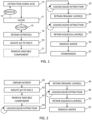
- step 22 the first liquid-liquid extraction is performed on the basified filtrate resulting from the prior step 20, or the reconstituted basified filtrate from step 21.
- the general term "basified filtrate” as used hereinafter refers to either the basified filtrate from step 20 or the reconstituted basified filtrate from step 21 depending on whether step 21 is implemented.
- the basified filtrate is considered to be aqueous, because the extraction solvent included water or the base added to the filtrate included water.
- the liquid added to the basified filtrate is a water-immiscible solvent, which may include, but is not limited to, benzene, butanol, butyl acetate, carbon tetrachloride, chloroform, cyclohexane, 1,2-dichloroethane, dichloromethane, diisopropyl ether, ethyl acetate, diethyl ether, heptane, hexane, isooctane, methyl tert-butyl ether, methyl ethyl ketone, pentane, tetrahydrofuran, trichloroethylene, toluene, xylene or naphthalene, or any combination of two or more selected from this list.
- benzene butanol, butyl acetate, carbon tetrachloride, chloroform, cyclohexane, 1,2-dichloroethane, dich
- the liquid-liquid extraction may be carried out in a separatory funnel, for example, in which the basified filtrate and the water-immiscible solvent are vigorously shaken.
- the psychoactive alkaloids pass from the aqueous phase (i.e. basified filtrate, which may include some alcohol and ketone) to the organic phase (water-immiscible solvent).
- basified filtrate which may include some alcohol and ketone
- organic phase water-immiscible solvent
- Some of the non-psychoactive, extracted components, such as sugars, carbohydrates, salts, or polyphenols in the basified filtrate do not pass into the organic phase, therefore a degree of purification is achieved at this step. However, lipids and other nitrogenous compounds move into the organic phase.
- nitrogenous or similarly ionizable compounds any compound that can achieve both ionic polarizability and neutrality in a similar way that an alkaloid can
- urea or uric acid some proteins, tyrosine, tryptophan and ergosterol.
- the organic layer may be subjected to an assay for determining its alkaloid content using, for example, Dragendorff's reagent or high-performance liquid chromatography (HPLC). If there is a significant amount of alkaloid still in the organic layer, then the second liquid-liquid extraction may be repeated on the organic layer with a fresh volume of weakly acidified water.
- HPLC high-performance liquid chromatography
- step 32 standardization occurs at step 32.
- the concentration of psychoactive alkaloids in the extract is measured.
- HPLC coupled with diode array detection or mass spectrometry is used to determine the alkaloid content of the dried powder extract.
- additional characterization techniques such thermal analysis, particle size analysis, X-ray diffraction, etc. may be run to identify the physical properties of the dried powder extract.
- a suitable quantity of excipient is added to the extract to result in a composition with a specified concentration of dephosphorylated psychoactive alkaloids, thereby achieving standardization of the extract.
- the excipient added in the standardization process may include a stabilizer, a carrier, or any other type of excipient depending on the desired properties of the formulation.
- the extracted psychoactive alkaloid may be partially dephosphorylated and partially phosphorylated.
- a psychoactive filtrate is obtained from the psychoactive alkaloid source using a solvent which is, or includes, a C1-C4 aliphatic alcohol, a C3-C4 ketone, water, or any combination selected from these.
- the solvent is acidified by the addition of an acid or by being buffered to an acidic pH.
- the pH of the solvent is ⁇ 6, and in other embodiments, the pH is ⁇ 4.
- Obtaining the filtrate may involve soaking the pre-existing extract in the solvent and agitating the mixture of the extract and the solvent.
- the temperature of the soaking step may be in the range 5-95°C, and the duration of the soaking may be, for example, 10 minutes to 12 hours.
- a filtration step follows to produce the psychoactive filtrate.
- the filtrate is brought to an alkaline pH.
- the psychedelic alkaloid source is an extract of Psilocybe cubensis mushrooms, which include primarily psilocybin and psilocin as the psychoactive alkaloids
- the pH is brought to a value of 9 ⁇ 0.5 in order to convert the psilocin cation in the filtrate to its deprotonated form.
- the pH should be brought within the range of 9 ⁇ 2 in step 20 for other psychoactive alkaloids.
- the filtrate can be considered to be a basified psychoactive filtrate.
- step 43 if necessary, then components in the solvent that are miscible with the water-immiscible solvent for the first liquid-liquid extraction are removed. This results in a reconstituted basified filtrate that is immiscible with the water-immiscible solvent.
- step 44 a first liquid-liquid extraction is performed, in a similar way to step 22 of FIG. 1 .
- the organic phase is retained in step 46 and a second liquid-liquid extraction is performed on it in step 48, in a similar way to step 26 of FIG. 1 .
- the aqueous phase is retained in step 50 and then dried in step 52.
- the evaporation of the water in step 50 may be interrupted to standardize the extract, or standardization may be carried out after the drying.
- the result is a dry, psychoactive extract with a psychoactive alkaloid concentration, by weight, that is higher than the concentration of the psychoactive alkaloid in the pre-existing extract. Due to the liquid-liquid extractions, some of the undesired components present in the pre-existing extract are removed, leading to a resulting extract of higher purity than the pre-existing extract.
- the extracted psychoactive alkaloid may not be fully dephosphorylated.
- a mass of 10 kg of raw psychedelic mushrooms from the Psilocybe cubensis species was dried in a forced air oven at 25°C for 7.5 hours.
- the resulting, dried biomass was 489.3 g, which was pulverized to a particle size of 100 mesh using a cutting mill.
- the dried powdered biomass was placed into an agitated, heat-controlled vessel with 10 liters of solvent.
- the solvent was 2.5 M acetic acid in water.
- the extraction was controlled to a constant 70°C, and the duration of extraction was 45 minutes.
- the resulting extraction slurry was filtered while hot, and the filter residue was placed back into the extraction vessel and extracted with an additional 10 liters of 2.5 M acetic acid.
- the temperature of extraction was again 70°C and the duration of extraction was 45 minutes.
- the extraction slurry was again filtered while hot and the filtrates from the first and second extraction were pooled to form a bulk filtrate.
- the bulk filtrate was placed into an agitated separation vessel and the pH was titrated to pH 8.95 with 5 M sodium carbonate.
- the water-immiscible solvent used for the first liquid-liquid extraction was a volume of 1 L of chloroform, which was then added to the separation vessel.
- the mixture in the separation vessel was agitated for 10 minutes before being allowed to separate.
- the bottom, organic layer was removed and retained.
- 1 L of chloroform was added to the aqueous layer remaining in the separation vessel, the mixture agitated and allowed to separate, and the bottom, organic layer removed and retained.
- the process was repeated three times before pooling the organic layers together to form 4 L of chloroform extract (a "psychoactive organic layer").
- the chloroform extract was then placed into a new separation vessel along with a 500 mL solution of 0.10% fumaric acid in water (weakly acidified water). This separation vessel was agitated for 15 minutes before the layers were allowed to settle and then separated. The upper, aqueous layer was set aside. An additional 500 mL of 0.10% fumaric acid in water was combined with the chloroform extract in the separation vessel.
- the total volume and strength chosen for the weakly acidified water depend on the estimated amount of alkaloid and the desire to have a small excess of fumarate (e.g. 5%). If there is too much fumarate, then the purity of the extract may be decreased.
- the separation vessel was again agitated for 15 minutes before allowing separation of the mixture inside.
- any of the solvents described herein may be used with any of the organisms that have psychoactive alkaloids.
Landscapes
- Chemical & Material Sciences (AREA)
- Health & Medical Sciences (AREA)
- Chemical Kinetics & Catalysis (AREA)
- Life Sciences & Earth Sciences (AREA)
- Organic Chemistry (AREA)
- Natural Medicines & Medicinal Plants (AREA)
- Mycology (AREA)
- Pharmacology & Pharmacy (AREA)
- Animal Behavior & Ethology (AREA)
- Veterinary Medicine (AREA)
- Medicinal Chemistry (AREA)
- Public Health (AREA)
- General Health & Medical Sciences (AREA)
- Epidemiology (AREA)
- Biotechnology (AREA)
- Botany (AREA)
- Microbiology (AREA)
- Medical Informatics (AREA)
- Alternative & Traditional Medicine (AREA)
- Engineering & Computer Science (AREA)
- Pharmaceuticals Containing Other Organic And Inorganic Compounds (AREA)
- Medicines Containing Plant Substances (AREA)
- Nitrogen Condensed Heterocyclic Rings (AREA)
- Compounds Of Unknown Constitution (AREA)
Claims (14)
- Verfahren zur Extraktion von psychoaktivem Alkaloid aus einer Biomasse von einem oder mehreren getrockneten, gemahlenen, rohen psychedelischen Organismen, die Amanita muscaria, Psilocybe cubensis, Psilocybe cyanescens oder eine beliebige Kombination davon umfassen, wobei das Verfahren die folgenden Schritte umfasst:Gewinnen eines psychoaktiven Filtrats aus der Biomasse unter Verwendung eines Lösungsmittels, das aus einer Säure und einem oder mehreren Elementen, ausgewählt aus der Gruppe bestehend aus aliphatischen C1-C4-Alkoholen, C3-C4-Ketonen und Wasser, besteht, wobei das psychoaktive Filtrat das psychoaktive Alkaloid in seiner dephosphorylierten Form umfasst, die Psilocin, Norpsilocin, 4-Hydroxytryptamin, N,N,N-Trimethyl-4-hydroxytryptamin oder eine beliebige Kombination daraus enthält;Alkalisieren des psychoaktiven Filtrats, um ein alkalisiertes psychoaktives Filtrat zu erhalten;Durchführen einer ersten Flüssig-Flüssig-Extraktion mit dem alkalisierten psychoaktiven Filtrat unter Verwendung eines mit Wasser nicht mischbaren Lösungsmittels, um eine psychoaktive organische Schicht zu erhalten, wobei das mit Wasser nicht mischbare Lösungsmittel nicht mit dem alkalisierten psychoaktiven Filtrat mischbar ist,gekennzeichnet durchDurchführen einer zweiten Flüssig-Flüssig-Extraktion der psychoaktiven organischen Schicht unter Verwendung von schwach angesäuertem Wasser, um eine psychoaktive wässrige Schicht zu erhalten, wobei das schwach angesäuerte Wasser eine Konzentration im Bereich von 0,001 - 0,5 N aufweist; undEntfernen des Wassers aus der psychoaktiven wässrigen Schicht, um einen trockenen, psychoaktiven Extrakt zu erhalten, der ein Salz des psychoaktiven Alkaloids in seiner dephosphorylierten Form enthält.
- Verfahren nach Anspruch 1, umfassend das Entfernen einer oder mehrerer Komponenten des Lösungsmittels aus dem alkalisierten psychoaktiven Filtrat vor der ersten Flüssig-Flüssig-Extraktion, wobei die eine oder mehreren Komponenten mit dem mit Wasser nicht mischbaren Lösungsmittel mischbar sind.
- Verfahren nach Anspruch 1, wobei der Gewinnungsschritt umfasst:Einweichen der Biomasse in dem Lösungsmittel; undFiltrieren eines ungelösten Teils der Biomasse aus dem Lösungsmittel, um das psychoaktive Filtrat zu erhalten
- Verfahren nach Anspruch 1, wobei die Säure Essigsäure, Adipinsäure, Ascorbinsäure, Ammoniumaluminiumsulfat, Ammoniumcitrat dibasisch, Ammoniumcitrat monobasisch, Calciumcitrat, Calciumfumarat, Calciumgluconat, Calciumphosphat dibasisch, Calciumphosphat monobasisch, Salzsäure, Schwefelsäure monobasisch, Calciumphosphat tribasisch, Zitronensäure, Fumarsäure, Gluconsäure, Magnesiumfumarat, Apfelsäure, Maleinsäure, Malonsäure, Oxalsäure, Bernsteinsäure, Gluconsäure, Glutaminsäure, Phosphorsäure, Kaliumhydrogentartrat, Kaliumcitrat, Kaliumfumarat, Natriumcitrat, Natriumfumarat, Natriumgluconat, Natriumlactat, Natriumkaliumhexametaphosphat, Natriumkaliumtartrat, Natriumkaliumtripolyphosphat, Natriumpyrophosphat tetrabasisch, Natriumtripolyphosphat oder Weinsäure, oder eine beliebige Kombination daraus ist.
- Verfahren nach Anspruch 1, wobei das Verhältnis des Lösungsmittels zur Biomasse im Bereich von 1 l:1 kg bis 50 l:1 kg liegt.
- Verfahren nach Anspruch 1, wobei das Salz ein Fumaratsalz ist.
- Verfahren nach Anspruch 1, wobei das alkalisierte psychoaktive Filtrat einen pH-Wert= 9± 0,5 aufweist.
- Verfahren nach Anspruch 1, wobei das alkalisierte psychoaktive Filtrat einen pH-Wert von 9 ± 2 aufweist.
- Verfahren nach Anspruch 1, wobei das psychoaktive Filtrat alkalisiert wird durch Zugabe von Ammoniumbicarbonat, Ammoniumcarbonat, Ammoniumhydroxid, Calciumacetat, Calciumcarbonat, Calciumchlorid, Calciumhydroxid, Calciumlactat, Calciumoxid, Calciumphosphat dibasisch, Calciumphosphat monobasisch, Magnesiumcarbonat, Kaliumaluminiumsulfat, Kaliumbicarbonat, Kaliumcarbonat, Kaliumhydroxid, Kaliumlactat, Kaliumphosphat dibasisch, Kaliumpyrophosphat tetrabasisch, Kaliumphosphat tribasisch, Kaliumtripolyphosphat, Natriumacetat, Dinatriumpyrophosphat, Natriumaluminiumphosphat, Natriumaluminiumsulfat, Natriumbicarbonat, Natriumbisulfat, Natriumcarbonat, Natriumhexametaphosphat, Natriumhydroxid, Natriumlactat, Natriumphosphat dibasisch, Natriumphosphat monobasisch oder Natriumphosphat tribasisch oder eine beliebige Kombination daraus.
- Verfahren nach Anspruch 1, wobei das mit Wasser nicht mischbare Lösungsmittel Benzol, Butanol, Butylacetat, Tetrachlorkohlenstoff, Chloroform, Cyclohexan, 1,2-Dichlorethan, Dichlormethan, Diisopropylether, Ethylacetat, Diethylether, Heptan, Hexan, Isooctan, Methyl-tert.-butylether, Methylethylketon, Pentan, Tetrahydrofuran, Trichlorethylen, Toluol, Xylol oder Naphthalin, oder eine beliebige Kombination daraus ist.
- Verfahren nach Anspruch 1, umfassend die Bildung des schwach angesäuerten Wassers unter Verwendung von Essigsäure, Adipinsäure, Ascorbinsäure, Ammoniumaluminiumsulfat, Ammoniumcitrat dibasisch, Ammoniumcitrat monobasisch, Calciumcitrat, Calciumfumarat, Calciumgluconat, Calciumphosphat dibasisch, Calciumphosphat monobasisch, Salzsäure, Schwefelsäure monobasisch, Calciumphosphat tribasisch, Zitronensäure, Fumarsäure, Gluconsäure, Magnesiumfumarat, Apfelsäure, Maleinsäure, Malonsäure, Oxalsäure, Bernsteinsäure, Gluconsäure, Glutaminsäure, Phosphorsäure, Kaliumhydrogentartrat, Kaliumcitrat, Kaliumfumarat, Natriumcitrat, Natriumfumarat, Natriumgluconat, Natriumlactat, Natriumkaliumhexametaphosphat, Natriumkaliumtartrat, Natriumkaliumtripolyphosphat, Natriumpyrophosphat tetrabasisch, Natriumtripolyphosphat oder Weinsäure oder einer beliebige Kombination daraus.
- Verfahren nach Anspruch 1, wobei das Entfernen des Wassers das Verdampfen eines Teils des Wassers mit einem Rotationsverdampfer und eines Rests des Wassers durch Gefriertrocknung umfasst.
- Verfahren nach Anspruch 1, bei dem vor der zweiten Flüssig-Flüssig-ExtraktionWiederholung der ersten Flüssig-Flüssig-Extraktion mit dem alkalisierten psychoaktiven Filtrat unter Verwendung eines weiteren mit Wasser nicht mischbaren Lösungsmittels, um eine weitere psychoaktive organische Schicht zu erhalten; undHinzufügen der weiteren psychoaktiven organischen Schicht zu der psychoaktiven organischen Schicht.
- Verfahren nach Anspruch 1, bei dem vor dem Entfernen des WassersWiederholung der zweiten Flüssig-Flüssig-Extraktion an der psychoaktiven organischen Schicht unter Verwendung von weiterem schwach angesäuertem Wasser, um eine weitere psychoaktive wässrige Schicht zu erhalten; undZugabe der weiteren psychoaktiven wässrigen Schicht zu der psychoaktiven wässrigen Schicht.
Applications Claiming Priority (2)
| Application Number | Priority Date | Filing Date | Title |
|---|---|---|---|
| CA3133547A CA3133547C (en) | 2021-10-07 | 2021-10-07 | LIQUID-LIQUID EXTRACTION OF PURIFIED PSYCHOACTIVE ALKALOIDS |
| PCT/CA2022/051482 WO2023056561A1 (en) | 2021-10-07 | 2022-10-06 | Liquid-liquid extraction of purified psychoactive alkaloid |
Publications (4)
| Publication Number | Publication Date |
|---|---|
| EP4387615A1 EP4387615A1 (de) | 2024-06-26 |
| EP4387615A4 EP4387615A4 (de) | 2024-10-30 |
| EP4387615B1 true EP4387615B1 (de) | 2025-07-09 |
| EP4387615C0 EP4387615C0 (de) | 2025-07-09 |
Family
ID=85785396
Family Applications (1)
| Application Number | Title | Priority Date | Filing Date |
|---|---|---|---|
| EP22877738.9A Active EP4387615B1 (de) | 2021-10-07 | 2022-10-06 | Flüssig-flüssig-extraktion von gereinigtem psychoaktivem alkaloid |
Country Status (6)
| Country | Link |
|---|---|
| US (1) | US12139460B2 (de) |
| EP (1) | EP4387615B1 (de) |
| AU (1) | AU2022361507B2 (de) |
| CA (1) | CA3133547C (de) |
| ES (1) | ES3041146T3 (de) |
| WO (1) | WO2023056561A1 (de) |
Families Citing this family (1)
| Publication number | Priority date | Publication date | Assignee | Title |
|---|---|---|---|---|
| EP4486448A1 (de) | 2022-03-04 | 2025-01-08 | Reset Pharmaceuticals, Inc. | Co-kristalle oder salze mit psilocin |
Family Cites Families (8)
| Publication number | Priority date | Publication date | Assignee | Title |
|---|---|---|---|---|
| BE575588A (de) | 1959-02-11 | 1959-08-11 | ||
| LU36879A1 (de) | 1958-02-21 | |||
| IL23592A (en) | 1964-07-22 | 1969-01-29 | Geigy Ag J R | Isoxazole derivative and a process for its production |
| US20180021326A1 (en) | 2016-07-23 | 2018-01-25 | Paul Edward Stamets | Compositions and methods for enhancing neuroregeneration and cognition by combining mushroom extracts containing active ingredients psilocin or psilocybin with erinacines or hericenones enhanced with niacin |
| CN110087663B (zh) * | 2016-11-09 | 2022-01-25 | 帕万·库玛·戈尔 | 从萝芙木属物种中提取α育亨宾(萝芙素)的新方法 |
| CA3088384C (en) * | 2020-06-17 | 2021-08-03 | Psilo Scientific Ltd. | Extraction of psychoactive compounds from psilocybin fungus |
| CA3169783C (en) * | 2020-03-19 | 2025-12-02 | Caamtech, Inc. | Crystalline psilacetin derivatives |
| AU2021290454B2 (en) * | 2020-06-17 | 2024-01-11 | Psilo Scientific Ltd | Process for Obtaining a Purified Psychoactive Alkaloid Solution |
-
2021
- 2021-10-07 CA CA3133547A patent/CA3133547C/en active Active
-
2022
- 2022-10-06 WO PCT/CA2022/051482 patent/WO2023056561A1/en not_active Ceased
- 2022-10-06 ES ES22877738T patent/ES3041146T3/es active Active
- 2022-10-06 US US18/683,505 patent/US12139460B2/en active Active
- 2022-10-06 AU AU2022361507A patent/AU2022361507B2/en active Active
- 2022-10-06 EP EP22877738.9A patent/EP4387615B1/de active Active
Also Published As
| Publication number | Publication date |
|---|---|
| EP4387615A4 (de) | 2024-10-30 |
| ES3041146T3 (en) | 2025-11-07 |
| WO2023056561A1 (en) | 2023-04-13 |
| EP4387615C0 (de) | 2025-07-09 |
| CA3133547A1 (en) | 2023-04-07 |
| EP4387615A1 (de) | 2024-06-26 |
| US12139460B2 (en) | 2024-11-12 |
| US20240327348A1 (en) | 2024-10-03 |
| AU2022361507A1 (en) | 2024-02-22 |
| CA3133547C (en) | 2024-07-02 |
| AU2022361507B2 (en) | 2024-04-18 |
Similar Documents
| Publication | Publication Date | Title |
|---|---|---|
| AU2021291583B2 (en) | Extraction of psychoactive compounds from psychedelic fungus | |
| US11642385B2 (en) | Basic extraction of psychoactive compounds from psychoactive organisms | |
| CA3169140C (en) | EXTRACTION OF PSYCHOACTIVE ALKALOIDS CAPABLE OF CONTROLLED DEPHOSPHORYLATION | |
| US11382942B2 (en) | Extraction of psychoactive compounds from psilocybin fungus | |
| EP4387615B1 (de) | Flüssig-flüssig-extraktion von gereinigtem psychoaktivem alkaloid | |
| AU2022372239B2 (en) | Purified psychoactive alkaloid extraction using acidified acetone | |
| US11510952B2 (en) | Ethanol extraction of psychoactive compounds from psilocybin fungus | |
| AU2022321046B2 (en) | Pre-evaporation standardization of extracted psychoactive compounds | |
| CA3101765A1 (en) | Psychoactive alkaloid extraction and composition with controlled dephosphorylation | |
| CA3137016A1 (en) | Psychoactive alkaloid extraction and composition with inhibited dephosphorylation |
Legal Events
| Date | Code | Title | Description |
|---|---|---|---|
| STAA | Information on the status of an ep patent application or granted ep patent |
Free format text: STATUS: THE INTERNATIONAL PUBLICATION HAS BEEN MADE |
|
| PUAI | Public reference made under article 153(3) epc to a published international application that has entered the european phase |
Free format text: ORIGINAL CODE: 0009012 |
|
| STAA | Information on the status of an ep patent application or granted ep patent |
Free format text: STATUS: REQUEST FOR EXAMINATION WAS MADE |
|
| 17P | Request for examination filed |
Effective date: 20240320 |
|
| AK | Designated contracting states |
Kind code of ref document: A1 Designated state(s): AL AT BE BG CH CY CZ DE DK EE ES FI FR GB GR HR HU IE IS IT LI LT LU LV MC ME MK MT NL NO PL PT RO RS SE SI SK SM TR |
|
| A4 | Supplementary search report drawn up and despatched |
Effective date: 20240926 |
|
| RIC1 | Information provided on ipc code assigned before grant |
Ipc: B01D 11/04 20060101ALI20240920BHEP Ipc: C07D 209/16 20060101ALI20240920BHEP Ipc: B01D 11/02 20060101ALI20240920BHEP Ipc: A61K 36/07 20060101ALI20240920BHEP Ipc: A61K 31/4045 20060101AFI20240920BHEP |
|
| DAV | Request for validation of the european patent (deleted) | ||
| DAX | Request for extension of the european patent (deleted) | ||
| GRAP | Despatch of communication of intention to grant a patent |
Free format text: ORIGINAL CODE: EPIDOSNIGR1 |
|
| STAA | Information on the status of an ep patent application or granted ep patent |
Free format text: STATUS: GRANT OF PATENT IS INTENDED |
|
| RIC1 | Information provided on ipc code assigned before grant |
Ipc: B01D 11/04 20060101ALI20250123BHEP Ipc: C07D 209/16 20060101ALI20250123BHEP Ipc: B01D 11/02 20060101ALI20250123BHEP Ipc: A61K 36/07 20060101ALI20250123BHEP Ipc: A61K 31/4045 20060101AFI20250123BHEP |
|
| INTG | Intention to grant announced |
Effective date: 20250206 |
|
| GRAS | Grant fee paid |
Free format text: ORIGINAL CODE: EPIDOSNIGR3 |
|
| GRAA | (expected) grant |
Free format text: ORIGINAL CODE: 0009210 |
|
| STAA | Information on the status of an ep patent application or granted ep patent |
Free format text: STATUS: THE PATENT HAS BEEN GRANTED |
|
| AK | Designated contracting states |
Kind code of ref document: B1 Designated state(s): AL AT BE BG CH CY CZ DE DK EE ES FI FR GB GR HR HU IE IS IT LI LT LU LV MC ME MK MT NL NO PL PT RO RS SE SI SK SM TR |
|
| REG | Reference to a national code |
Ref country code: GB Ref legal event code: FG4D |
|
| REG | Reference to a national code |
Ref country code: CH Ref legal event code: EP |
|
| REG | Reference to a national code |
Ref country code: IE Ref legal event code: FG4D |
|
| REG | Reference to a national code |
Ref country code: DE Ref legal event code: R096 Ref document number: 602022017478 Country of ref document: DE |
|
| U01 | Request for unitary effect filed |
Effective date: 20250731 |
|
| U07 | Unitary effect registered |
Designated state(s): AT BE BG DE DK EE FI FR IT LT LU LV MT NL PT RO SE SI Effective date: 20250808 |
|
| REG | Reference to a national code |
Ref country code: ES Ref legal event code: FG2A Ref document number: 3041146 Country of ref document: ES Kind code of ref document: T3 Effective date: 20251107 |
|
| U20 | Renewal fee for the european patent with unitary effect paid |
Year of fee payment: 4 Effective date: 20251030 |