EP4387352A1 - Verfahren und vorrichtung zum ausschliessen einer ressource auf basis einer teilweisen erfassungsoperation in nr v2x - Google Patents
Verfahren und vorrichtung zum ausschliessen einer ressource auf basis einer teilweisen erfassungsoperation in nr v2x Download PDFInfo
- Publication number
- EP4387352A1 EP4387352A1 EP22856102.3A EP22856102A EP4387352A1 EP 4387352 A1 EP4387352 A1 EP 4387352A1 EP 22856102 A EP22856102 A EP 22856102A EP 4387352 A1 EP4387352 A1 EP 4387352A1
- Authority
- EP
- European Patent Office
- Prior art keywords
- resource
- interval
- transmission
- available
- resource set
- Prior art date
- Legal status (The legal status is an assumption and is not a legal conclusion. Google has not performed a legal analysis and makes no representation as to the accuracy of the status listed.)
- Pending
Links
- 238000000034 method Methods 0.000 title claims abstract description 112
- 230000005540 biological transmission Effects 0.000 claims abstract description 279
- 238000004891 communication Methods 0.000 claims abstract description 114
- 230000015654 memory Effects 0.000 claims description 57
- 239000010410 layer Substances 0.000 description 163
- 230000000875 corresponding effect Effects 0.000 description 26
- 238000005516 engineering process Methods 0.000 description 26
- 230000006870 function Effects 0.000 description 23
- 238000012544 monitoring process Methods 0.000 description 21
- 230000001960 triggered effect Effects 0.000 description 16
- 238000010187 selection method Methods 0.000 description 15
- 230000000737 periodic effect Effects 0.000 description 11
- 238000012545 processing Methods 0.000 description 11
- 238000013468 resource allocation Methods 0.000 description 11
- 101000741965 Homo sapiens Inactive tyrosine-protein kinase PRAG1 Proteins 0.000 description 9
- 102100038659 Inactive tyrosine-protein kinase PRAG1 Human genes 0.000 description 9
- 230000011664 signaling Effects 0.000 description 9
- 238000005259 measurement Methods 0.000 description 7
- 238000013473 artificial intelligence Methods 0.000 description 5
- 239000000969 carrier Substances 0.000 description 4
- 238000013507 mapping Methods 0.000 description 4
- 238000011867 re-evaluation Methods 0.000 description 4
- 238000012546 transfer Methods 0.000 description 4
- 125000004122 cyclic group Chemical group 0.000 description 3
- 238000001514 detection method Methods 0.000 description 3
- 230000000694 effects Effects 0.000 description 3
- 238000012384 transportation and delivery Methods 0.000 description 3
- 241000700159 Rattus Species 0.000 description 2
- 230000006978 adaptation Effects 0.000 description 2
- 230000006399 behavior Effects 0.000 description 2
- 230000001276 controlling effect Effects 0.000 description 2
- 230000007774 longterm Effects 0.000 description 2
- 238000010295 mobile communication Methods 0.000 description 2
- 239000004984 smart glass Substances 0.000 description 2
- 230000027311 M phase Effects 0.000 description 1
- 230000004913 activation Effects 0.000 description 1
- 230000003044 adaptive effect Effects 0.000 description 1
- 238000003491 array Methods 0.000 description 1
- 230000003190 augmentative effect Effects 0.000 description 1
- 230000001413 cellular effect Effects 0.000 description 1
- 230000006835 compression Effects 0.000 description 1
- 238000007906 compression Methods 0.000 description 1
- 239000000470 constituent Substances 0.000 description 1
- 238000012937 correction Methods 0.000 description 1
- 239000003814 drug Substances 0.000 description 1
- 238000011156 evaluation Methods 0.000 description 1
- 230000007717 exclusion Effects 0.000 description 1
- 239000000446 fuel Substances 0.000 description 1
- PCHJSUWPFVWCPO-UHFFFAOYSA-N gold Chemical group [Au] PCHJSUWPFVWCPO-UHFFFAOYSA-N 0.000 description 1
- 238000005286 illumination Methods 0.000 description 1
- 239000002346 layers by function Substances 0.000 description 1
- 238000007726 management method Methods 0.000 description 1
- 239000011159 matrix material Substances 0.000 description 1
- 230000010363 phase shift Effects 0.000 description 1
- 238000012913 prioritisation Methods 0.000 description 1
- 230000000630 rising effect Effects 0.000 description 1
- 230000011218 segmentation Effects 0.000 description 1
- 230000008054 signal transmission Effects 0.000 description 1
- 239000010454 slate Substances 0.000 description 1
- 238000001228 spectrum Methods 0.000 description 1
- 238000005406 washing Methods 0.000 description 1
Images









Classifications
-
- H—ELECTRICITY
- H04—ELECTRIC COMMUNICATION TECHNIQUE
- H04W—WIRELESS COMMUNICATION NETWORKS
- H04W72/00—Local resource management
- H04W72/20—Control channels or signalling for resource management
- H04W72/25—Control channels or signalling for resource management between terminals via a wireless link, e.g. sidelink
-
- H—ELECTRICITY
- H04—ELECTRIC COMMUNICATION TECHNIQUE
- H04W—WIRELESS COMMUNICATION NETWORKS
- H04W4/00—Services specially adapted for wireless communication networks; Facilities therefor
- H04W4/30—Services specially adapted for particular environments, situations or purposes
- H04W4/40—Services specially adapted for particular environments, situations or purposes for vehicles, e.g. vehicle-to-pedestrians [V2P]
-
- H—ELECTRICITY
- H04—ELECTRIC COMMUNICATION TECHNIQUE
- H04B—TRANSMISSION
- H04B17/00—Monitoring; Testing
- H04B17/30—Monitoring; Testing of propagation channels
- H04B17/309—Measuring or estimating channel quality parameters
- H04B17/318—Received signal strength
- H04B17/328—Reference signal received power [RSRP]; Reference signal received quality [RSRQ]
-
- H—ELECTRICITY
- H04—ELECTRIC COMMUNICATION TECHNIQUE
- H04L—TRANSMISSION OF DIGITAL INFORMATION, e.g. TELEGRAPHIC COMMUNICATION
- H04L5/00—Arrangements affording multiple use of the transmission path
- H04L5/003—Arrangements for allocating sub-channels of the transmission path
- H04L5/0044—Allocation of payload; Allocation of data channels, e.g. PDSCH or PUSCH
-
- H—ELECTRICITY
- H04—ELECTRIC COMMUNICATION TECHNIQUE
- H04L—TRANSMISSION OF DIGITAL INFORMATION, e.g. TELEGRAPHIC COMMUNICATION
- H04L5/00—Arrangements affording multiple use of the transmission path
- H04L5/0091—Signalling for the administration of the divided path, e.g. signalling of configuration information
- H04L5/0094—Indication of how sub-channels of the path are allocated
-
- H—ELECTRICITY
- H04—ELECTRIC COMMUNICATION TECHNIQUE
- H04W—WIRELESS COMMUNICATION NETWORKS
- H04W24/00—Supervisory, monitoring or testing arrangements
- H04W24/08—Testing, supervising or monitoring using real traffic
-
- H—ELECTRICITY
- H04—ELECTRIC COMMUNICATION TECHNIQUE
- H04W—WIRELESS COMMUNICATION NETWORKS
- H04W72/00—Local resource management
- H04W72/02—Selection of wireless resources by user or terminal
-
- H—ELECTRICITY
- H04—ELECTRIC COMMUNICATION TECHNIQUE
- H04W—WIRELESS COMMUNICATION NETWORKS
- H04W72/00—Local resource management
- H04W72/04—Wireless resource allocation
-
- H—ELECTRICITY
- H04—ELECTRIC COMMUNICATION TECHNIQUE
- H04W—WIRELESS COMMUNICATION NETWORKS
- H04W72/00—Local resource management
- H04W72/04—Wireless resource allocation
- H04W72/044—Wireless resource allocation based on the type of the allocated resource
- H04W72/0446—Resources in time domain, e.g. slots or frames
-
- H—ELECTRICITY
- H04—ELECTRIC COMMUNICATION TECHNIQUE
- H04W—WIRELESS COMMUNICATION NETWORKS
- H04W72/00—Local resource management
- H04W72/12—Wireless traffic scheduling
- H04W72/1263—Mapping of traffic onto schedule, e.g. scheduled allocation or multiplexing of flows
-
- H—ELECTRICITY
- H04—ELECTRIC COMMUNICATION TECHNIQUE
- H04W—WIRELESS COMMUNICATION NETWORKS
- H04W72/00—Local resource management
- H04W72/40—Resource management for direct mode communication, e.g. D2D or sidelink
-
- H—ELECTRICITY
- H04—ELECTRIC COMMUNICATION TECHNIQUE
- H04W—WIRELESS COMMUNICATION NETWORKS
- H04W76/00—Connection management
- H04W76/10—Connection setup
- H04W76/14—Direct-mode setup
-
- H—ELECTRICITY
- H04—ELECTRIC COMMUNICATION TECHNIQUE
- H04W—WIRELESS COMMUNICATION NETWORKS
- H04W76/00—Connection management
- H04W76/20—Manipulation of established connections
- H04W76/28—Discontinuous transmission [DTX]; Discontinuous reception [DRX]
-
- H—ELECTRICITY
- H04—ELECTRIC COMMUNICATION TECHNIQUE
- H04W—WIRELESS COMMUNICATION NETWORKS
- H04W74/00—Wireless channel access
- H04W74/08—Non-scheduled access, e.g. ALOHA
- H04W74/0808—Non-scheduled access, e.g. ALOHA using carrier sensing, e.g. carrier sense multiple access [CSMA]
-
- H—ELECTRICITY
- H04—ELECTRIC COMMUNICATION TECHNIQUE
- H04W—WIRELESS COMMUNICATION NETWORKS
- H04W92/00—Interfaces specially adapted for wireless communication networks
- H04W92/16—Interfaces between hierarchically similar devices
- H04W92/18—Interfaces between hierarchically similar devices between terminal devices
Definitions
- This disclosure relates to a wireless communication system.
- SL communication is a communication scheme in which a direct link is established between User Equipments (UEs) and the UEs exchange voice and data directly with each other without intervention of an evolved Node B (eNB).
- UEs User Equipments
- eNB evolved Node B
- SL communication is under consideration as a solution to the overhead of an eNB caused by rapidly increasing data traffic.
- V2X Vehicle-to-everything refers to a communication technology through which a vehicle exchanges information with another vehicle, a pedestrian, an object having an infrastructure (or infra) established therein, and so on.
- the V2X may be divided into 4 types, such as vehicle-to-vehicle (V2V), vehicle-to-infrastructure (V2I), vehicle-to-network (V2N), and vehicle-to-pedestrian (V2P).
- V2V vehicle-to-vehicle
- V2I vehicle-to-infrastructure
- V2N vehicle-to-network
- V2P vehicle-to-pedestrian
- the V2X communication may be provided via a PC5 interface and/or Uu interface.
- RAT Radio Access Technology
- V2X vehicle-to-everything
- a first device for performing wireless communication may comprise: one or more memories storing instructions; one or more transceivers; and one or more processors connected to the one or more memories and the one or more transceivers.
- the one or more processors may execute the instructions to: obtain a sidelink (SL) discontinuous reception (DRX) configuration related to a second device; obtain information related to a resource pool; trigger resource selection for a transmission of a medium access control (MAC) protocol data unit (PDU); determine a resource selection window for the resource selection in the resource pool; determine a plurality of intervals included in the resource selection window, and including a first interval and a second interval; determine a first available resource set that causes a first ratio related to the first interval to be met, and a second available resource set that causes a second ratio related to the second interval to be met; select a transmission resource from the first available resource set; transmit, to the second device, sidelink control information (SCI) for scheduling of a physical sidelink shared channel (PSSCH) through a physical sidelink control channel (PSCCH), based on the transmission resource; and transmit, to the second device, the MAC PDU through the PSSCH, based on the transmission resource, wherein the first interval may include a first active time of
- a device adapted to control a first user equipment may be proposed.
- the device may comprise: one or more processors; and one or more memories operably connectable to the one or more processors and storing instructions.
- the one or more processors may execute the instructions to: obtain a sidelink (SL) discontinuous reception (DRX) configuration related to a second UE; obtain information related to a resource pool; trigger resource selection for a transmission of a medium access control (MAC) protocol data unit (PDU); determine a resource selection window for the resource selection in the resource pool; determine a plurality of intervals included in the resource selection window, and including a first interval and a second interval; determine a first available resource set that causes a first ratio related to the first interval to be met, and a second available resource set that causes a second ratio related to the second interval to be met; select a transmission resource from the first available resource set; transmit, to the second UE, sidelink control information (SCI) for scheduling of a physical side
- SCI sidelink control information
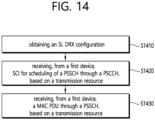
- a method for performing, by a second device, wireless communication may comprise: obtaining a sidelink (SL) discontinuous reception (DRX) configuration; receiving, from a first device, sidelink control information (SCI) for scheduling of a physical sidelink shared channel (PSSCH) through a physical sidelink control channel (PSCCH), based on a transmission resource; and receiving, from the first device, the MAC PDU through the PSSCH, based on the transmission resource, wherein the transmission resource may be selected from a first available resource set, wherein the first available resource set be determined such that a first ratio related to a first interval is met, wherein a second interval that causes a first ratio related to a second interval to be met and the first interval may be included in a resource selection window in a resource pool, and wherein the first interval may include a first active time of the SL DRX configuration.
- SCI sidelink control information
- PSSCH physical sidelink shared channel
- PSCCH physical sidelink control channel
- a second device for performing wireless communication may comprise: one or more memories storing instructions; one or more transceivers; and one or more processors connected to the one or more memories and the one or more transceivers.
- a slash (/) or comma used in the present disclosure may mean “and/or”.
- A/B may mean “A and/or B”.
- A/B may mean “only A”, “only B”, or “both A and B”.
- A, B, C may mean “A, B, or C”.
- At least one of A and B may mean “only A”, “only B”, or “both A and B”.
- the expression “at least one of A or B” or “at least one of A and/or B” may be interpreted as "at least one of A and B”.
- At least one of A, B, and C may mean “only A”, “only B”, “only C”, or “any combination of A, B, and C”.
- at least one of A, B, or C or “at least one of A, B, and/or C” may mean “at least one of A, B, and C”.
- a technical feature described individually in one figure in the present disclosure may be individually implemented, or may be simultaneously implemented.
- CDMA code division multiple access
- FDMA frequency division multiple access
- TDMA time division multiple access
- OFDMA orthogonal frequency division multiple access
- SC-FDMA single carrier frequency division multiple access
- the CDMA may be implemented with a radio technology, such as universal terrestrial radio access (UTRA) or CDMA-2000.
- UTRA universal terrestrial radio access
- the TDMA may be implemented with a radio technology, such as global system for mobile communications (GSM)/general packet ratio service (GPRS)/enhanced data rate for GSM evolution (EDGE).
- GSM global system for mobile communications
- GPRS general packet ratio service
- EDGE enhanced data rate for GSM evolution
- the OFDMA may be implemented with a radio technology, such as institute of electrical and electronics engineers (IEEE) 802.11 (Wi-Fi), IEEE 802.16 (WiMAX), IEEE 802.20, evolved UTRA (E-UTRA), and so on.
- IEEE 802.16m is an evolved version of IEEE 802.16e and provides backward compatibility with a system based on the IEEE 802.16e.
- the UTRA is part of a universal mobile telecommunication system (UMTS).
- 3rd generation partnership project (3GPP) long term evolution (LTE) is part of an evolved UMTS (E-UMTS) using the E-UTRA.
- the 3GPP LTE uses the OFDMA in a downlink and uses the SC-FDMA in an uplink.
- LTE-advanced (LTE-A) is an evolution of the LTE.
- 5G NR is a successive technology of LTE-A corresponding to a new Clean-slate type mobile communication system having the characteristics of high performance, low latency, high availability, and so on.
- 5G NR may use resources of all spectrum available for usage including low frequency bands of less than 1GHz, middle frequency bands ranging from 1GHz to 10GHz, high frequency (millimeter waves) of 24GHz or more, and so on.
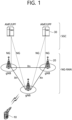
- FIG. 1 shows a structure of an NR system, based on an embodiment of the present disclosure.
- the embodiment of FIG. 1 may be combined with various embodiments of the present disclosure.
- a next generation-radio access network may include a BS 20 providing a UE 10 with a user plane and control plane protocol termination.
- the BS 20 may include a next generation-Node B (gNB) and/or an evolved-NodeB (eNB).
- the UE 10 may be fixed or mobile and may be referred to as other terms, such as a mobile station (MS), a user terminal (UT), a subscriber station (SS), a mobile terminal (MT), wireless device, and so on.
- the BS may be referred to as a fixed station which communicates with the UE 10 and may be referred to as other terms, such as a base transceiver system (BTS), an access point (AP), and so on.
- BTS base transceiver system
- AP access point
- the embodiment of FIG. 1 exemplifies a case where only the gNB is included.
- the BSs 20 may be connected to one another via Xn interface.
- the BS 20 may be connected to one another via 5th generation (5G) core network (5GC) and NG interface. More specifically, the BSs 20 may be connected to an access and mobility management function (AMF) 30 via NG-C interface, and may be connected to a user plane function (UPF) 30 via NG-U interface.
- 5G 5th generation
- GC 5th generation core network
- AMF access and mobility management function
- UPF user plane function
- Layers of a radio interface protocol between the UE and the network can be classified into a first layer (layer 1, L1), a second layer (layer 2, L2), and a third layer (layer 3, L3) based on the lower three layers of the open system interconnection (OSI) model that is well-known in the communication system.
- a physical (PHY) layer belonging to the first layer provides an information transfer service by using a physical channel
- a radio resource control (RRC) layer belonging to the third layer serves to control a radio resource between the UE and the network.
- the RRC layer exchanges an RRC message between the UE and the BS.
- FIG. 2 shows a radio protocol architecture, based on an embodiment of the present disclosure.
- the embodiment of FIG. 2 may be combined with various embodiments of the present disclosure.
- (a) of FIG. 2 shows a radio protocol stack of a user plane for Uu communication
- (b) of FIG. 2 shows a radio protocol stack of a control plane for Uu communication
- (c) of FIG. 2 shows a radio protocol stack of a user plane for SL communication
- (d) of FIG. 2 shows a radio protocol stack of a control plane for SL communication.
- a physical layer provides a higher layer with an information transfer service through a physical channel.
- the physical layer is connected to a medium access control (MAC) layer which is a higher layer of the physical layer through a transport channel.
- MAC medium access control
- Data is transferred between the MAC layer and the physical layer through the transport channel.
- the transport channel is classified according to how and with what characteristics data is transmitted through a radio interface.
- the physical channel is modulated using an orthogonal frequency division multiplexing (OFDM) scheme, and utilizes time and frequency as a radio resource.
- OFDM orthogonal frequency division multiplexing
- the MAC layer provides services to a radio link control (RLC) layer, which is a higher layer of the MAC layer, via a logical channel.
- RLC radio link control
- the MAC layer provides a function of mapping multiple logical channels to multiple transport channels.
- the MAC layer also provides a function of logical channel multiplexing by mapping multiple logical channels to a single transport channel.
- the MAC layer provides data transfer services over logical channels.
- the RLC layer performs concatenation, segmentation, and reassembly of Radio Link Control Service Data Unit (RLC SDU).
- RLC SDU Radio Link Control Service Data Unit
- TM transparent mode
- UM unacknowledged mode
- AM acknowledged mode
- An AM RLC provides error correction through an automatic repeat request (ARQ).
- a radio resource control (RRC) layer is defined only in the control plane.
- the RRC layer serves to control the logical channel, the transport channel, and the physical channel in association with configuration, reconfiguration and release of RBs.
- the RB is a logical path provided by the first layer (i.e., the physical layer or the PHY layer) and the second layer (i.e., a MAC layer, an RLC layer, a packet data convergence protocol (PDCP) layer, and a service data adaptation protocol (SDAP) layer) for data delivery between the UE and the network.
- the first layer i.e., the physical layer or the PHY layer
- the second layer i.e., a MAC layer, an RLC layer, a packet data convergence protocol (PDCP) layer, and a service data adaptation protocol (SDAP) layer
- Functions of a packet data convergence protocol (PDCP) layer in the user plane include user data delivery, header compression, and ciphering.
- Functions of a PDCP layer in the control plane include control-plane data delivery and ciphering/integrity protection.
- PDCP packet data convergence protocol
- SDAP service data adaptation protocol
- QoS Quality of Service
- DRB data radio bearer
- QFI QoS flow ID
- the configuration of the RB implies a process for specifying a radio protocol layer and channel properties to provide a particular service and for determining respective detailed parameters and operations.
- the RB can be classified into two types, i.e., a signaling RB (SRB) and a data RB (DRB).
- SRB signaling RB
- DRB data RB
- the SRB is used as a path for transmitting an RRC message in the control plane.
- the DRB is used as a path for transmitting user data in the user plane.
- an RRC_CONNECTED state When an RRC connection is established between an RRC layer of the UE and an RRC layer of the E-UTRAN, the UE is in an RRC_CONNECTED state, and, otherwise, the UE may be in an RRC_IDLE state.
- an RRC_INACTIVE state is additionally defined, and a UE being in the RRC_INACTIVE state may maintain its connection with a core network whereas its connection with the BS is released.
- Data is transmitted from the network to the UE through a downlink transport channel.
- the downlink transport channel include a broadcast channel (BCH) for transmitting system information and a downlink-shared channel (SCH) for transmitting user traffic or control messages. Traffic of downlink multicast or broadcast services or the control messages can be transmitted on the downlink-SCH or an additional downlink multicast channel (MCH).
- Data is transmitted from the UE to the network through an uplink transport channel.
- Examples of the uplink transport channel include a random access channel (RACH) for transmitting an initial control message and an uplink SCH for transmitting user traffic or control messages.
- RACH random access channel
- Examples of logical channels belonging to a higher channel of the transport channel and mapped onto the transport channels include a broadcast channel (BCCH), a paging control channel (PCCH), a common control channel (CCCH), a multicast control channel (MCCH), a multicast traffic channel (MTCH), etc.
- BCCH broadcast channel
- PCCH paging control channel
- CCCH common control channel
- MCCH multicast control channel
- MTCH multicast traffic channel
- FIG. 3 shows a structure of a radio frame of an NR, based on an embodiment of the present disclosure.
- the embodiment of FIG. 3 may be combined with various embodiments of the present disclosure.
- a radio frame may be used for performing uplink and downlink transmission.
- a radio frame has a length of 10ms and may be defined to be configured of two half-frames (HFs).
- a half-frame may include five 1ms subframes (SFs).
- a subframe (SF) may be divided into one or more slots, and the number of slots within a subframe may be determined based on subcarrier spacing (SCS).
- SCS subcarrier spacing
- Each slot may include 12 or 14 OFDM(A) symbols according to a cyclic prefix (CP).
- CP cyclic prefix
- each slot may include 14 symbols.
- each slot may include 12 symbols.
- a symbol may include an OFDM symbol (or CP-OFDM symbol) and a Single Carrier-FDMA (SC-FDMA) symbol (or Discrete Fourier Transform-spread-OFDM (DFT-s-OFDM) symbol).
- Table 1 shown below represents an example of a number of symbols per slot (N slot symb ), a number slots per frame (N frame,u slot ), and a number of slots per subframe (N subframe,u slot ) based on an SCS configuration (u), in a case where a normal CP is used.
- Table 2 shows an example of a number of symbols per slot, a number of slots per frame, and a number of slots per subframe based on the SCS, in a case where an extended CP is used.
- OFDM(A) numerologies e.g., SCS, CP length, and so on
- a (absolute time) duration (or section) of a time resource e.g., subframe, slot or TTI
- a time unit (TU) for simplicity
- multiple numerologies or SCSs for supporting diverse 5G services may be supported.
- an SCS is 15kHz
- a wide area of the conventional cellular bands may be supported, and, in case an SCS is 30kHz/60kHz a dense-urban, lower latency, wider carrier bandwidth may be supported.
- the SCS is 60kHz or higher, a bandwidth that is greater than 24.25GHz may be used in order to overcome phase noise.
- An NR frequency band may be defined as two different types of frequency ranges.
- the two different types of frequency ranges may be FR1 and FR2.
- the values of the frequency ranges may be changed (or varied), and, for example, the two different types of frequency ranges may be as shown below in Table 3.
- FR1 may mean a "sub 6GHz range”
- FR2 may mean an "above 6GHz range” and may also be referred to as a millimeter wave (mmW).
- mmW millimeter wave
- FR1 may include a band within a range of 410MHz to 7125MHz. More specifically, FR1 may include a frequency band of 6GHz (or 5850, 5900, 5925 MHz, and so on) and higher. For example, a frequency band of 6GHz (or 5850, 5900, 5925 MHz, and so on) and higher being included in FR1 mat include an unlicensed band. The unlicensed band may be used for diverse purposes, e.g., the unlicensed band for vehicle-specific communication (e.g., automated driving).
- SCS Corresponding frequency range Subcarrier Spacing
- FIG. 4 shows a structure of a slot of an NR frame, based on an embodiment of the present disclosure.
- the embodiment of FIG. 4 may be combined with various embodiments of the present disclosure.
- a slot includes a plurality of symbols in a time domain.
- one slot may include 14 symbols.
- one slot may include 12 symbols.
- one slot may include 7 symbols.
- one slot may include 6 symbols.
- a carrier includes a plurality of subcarriers in a frequency domain.
- a Resource Block (RB) may be defined as a plurality of consecutive subcarriers (e.g., 12 subcarriers) in the frequency domain.
- a Bandwidth Part (BWP) may be defined as a plurality of consecutive (Physical) Resource Blocks ((P)RBs) in the frequency domain, and the BWP may correspond to one numerology (e.g., SCS, CP length, and so on).
- a carrier may include a maximum of N number BWPs (e.g., 5 BWPs). Data communication may be performed via an activated BWP.
- Each element may be referred to as a Resource Element (RE) within a resource grid and one complex symbol may be mapped to each element.
- RE Resource Element
- bandwidth part BWP
- carrier a bandwidth part (BWP) and a carrier
- the BWP may be a set of consecutive physical resource blocks (PRBs) in a given numerology.
- the PRB may be selected from consecutive sub-sets of common resource blocks (CRBs) for the given numerology on a given carrier
- the BWP may be at least any one of an active BWP, an initial BWP, and/or a default BWP.
- the UE may not monitor downlink radio link quality in a DL BWP other than an active DL BWP on a primary cell (PCell).
- the UE may not receive PDCCH, physical downlink shared channel (PDSCH), or channel state information - reference signal (CSI-RS) (excluding RRM) outside the active DL BWP.
- PDSCH physical downlink shared channel
- CSI-RS channel state information - reference signal
- the UE may not trigger a channel state information (CSI) report for the inactive DL BWP.
- the UE may not transmit physical uplink control channel (PUCCH) or physical uplink shared channel (PUSCH) outside an active UL BWP.
- the initial BWP may be given as a consecutive RB set for a remaining minimum system information (RMSI) control resource set (CORESET) (configured by physical broadcast channel (PBCH)).
- RMSI remaining minimum system information
- CORESET control resource set
- PBCH physical broadcast channel
- SIB system information block
- the default BWP may be configured by a higher layer.
- an initial value of the default BWP may be an initial DL BWP.
- DCI downlink control information
- the BWP may be defined for SL.
- the same SL BWP may be used in transmission and reception.
- a transmitting UE may transmit an SL channel or an SL signal on a specific BWP
- a receiving UE may receive the SL channel or the SL signal on the specific BWP.
- the SL BWP may be defined separately from a Uu BWP, and the SL BWP may have configuration signaling separate from the Uu BWP.
- the UE may receive a configuration for the SL BWP from the BS/network.
- the UE may receive a configuration for the Uu BWP from the BS/network.
- the SL BWP may be (pre-)configured in a carrier with respect to an out-of-coverage NR V2X UE and an RRC_IDLE UE. For the UE in the RRC_CONNECTED mode, at least one SL BWP may be activated in the carrier.
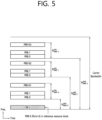
- FIG. 5 shows an example of a BWP, based on an embodiment of the present disclosure.
- the embodiment of FIG. 5 may be combined with various embodiments of the present disclosure. It is assumed in the embodiment of FIG. 5 that the number of BWPs is 3.
- a common resource block may be a carrier resource block numbered from one end of a carrier band to the other end thereof.
- the PRB may be a resource block numbered within each BWP.
- a point A may indicate a common reference point for a resource block grid.
- the BWP may be configured by a point A, an offset NstartBWP from the point A, and a bandwidth NsizeBWP.
- the point A may be an external reference point of a PRB of a carrier in which a subcarrier 0 of all numerologies (e.g., all numerologies supported by a network on that carrier) is aligned.
- the offset may be a PRB interval between a lowest subcarrier and the point A in a given numerology.
- the bandwidth may be the number of PRBs in the given numerology.
- V2X or SL communication will be described.
- a sidelink synchronization signal may include a primary sidelink synchronization signal (PSSS) and a secondary sidelink synchronization signal (SSSS), as an SL-specific sequence.
- PSSS primary sidelink synchronization signal
- SSSS secondary sidelink synchronization signal
- the PSSS may be referred to as a sidelink primary synchronization signal (S-PSS)
- S-SSS sidelink secondary synchronization signal
- S-SSS sidelink secondary synchronization signal
- length-127 M-sequences may be used for the S-PSS
- length-127 gold sequences may be used for the S-SSS.
- a UE may use the S-PSS for initial signal detection and for synchronization acquisition.
- the UE may use the S-PSS and the S-SSS for acquisition of detailed synchronization and for detection of a synchronization signal ID.
- a physical sidelink broadcast channel may be a (broadcast) channel for transmitting default (system) information which must be first known by the UE before SL signal transmission/reception.
- the default information may be information related to SLSS, a duplex mode (DM), a time division duplex (TDD) uplink/downlink (UL/DL) configuration, information related to a resource pool, a type of an application related to the SLSS, a subframe offset, broadcast information, or the like.
- DM duplex mode
- TDD time division duplex
- UL/DL uplink/downlink
- a payload size of the PSBCH may be 56 bits including 24-bit cyclic redundancy check (CRC).
- the S-PSS, the S-SSS, and the PSBCH may be included in a block format (e.g., SL synchronization signal (SS)/PSBCH block, hereinafter, sidelink-synchronization signal block (S-SSB)) supporting periodical transmission.
- the S-SSB may have the same numerology (i.e., SCS and CP length) as a physical sidelink control channel (PSCCH)/physical sidelink shared channel (PSSCH) in a carrier, and a transmission bandwidth may exist within a (pre-)configured sidelink (SL) BWP.
- the S-SSB may have a bandwidth of 11 resource blocks (RBs).
- the PSBCH may exist across 11 RBs.
- a frequency position of the S-SSB may be (pre-)configured. Accordingly, the UE does not have to perform hypothesis detection at frequency to discover the S-SSB in the carrier.
- FIG. 6 shows a procedure of performing V2X or SL communication by a UE based on a transmission mode, based on an embodiment of the present disclosure.
- the transmission mode may be called a mode or a resource allocation mode.
- the transmission mode may be called an LTE transmission mode.
- the transmission mode may be called an NR resource allocation mode.
- (a) of FIG. 6 shows a UE operation related to an LTE transmission mode 1 or an LTE transmission mode 3.
- (a) of FIG. 6 shows a UE operation related to an NR resource allocation mode 1.
- the LTE transmission mode 1 may be applied to general SL communication
- the LTE transmission mode 3 may be applied to V2X communication.
- (b) of FIG. 6 shows a UE operation related to an LTE transmission mode 2 or an LTE transmission mode 4.
- (b) of FIG. 6 shows a UE operation related to an NR resource allocation mode 2.
- a base station may schedule SL resource(s) to be used by a UE for SL transmission.
- a base station may transmit information related to SL resource(s) and/or information related to UL resource(s) to a first UE.
- the UL resource(s) may include PUCCH resource(s) and/or PUSCH resource(s).
- the UL resource(s) may be resource(s) for reporting SL HARQ feedback to the base station.
- the first UE may receive information related to dynamic grant (DG) resource(s) and/or information related to configured grant (CG) resource(s) from the base station.
- the CG resource(s) may include CG type 1 resource(s) or CG type 2 resource(s).
- the DG resource(s) may be resource(s) configured/allocated by the base station to the first UE through a downlink control information (DCI).
- the CG resource(s) may be (periodic) resource(s) configured/allocated by the base station to the first UE through a DCI and/or an RRC message.
- the base station may transmit an RRC message including information related to CG resource(s) to the first UE.
- the base station may transmit an RRC message including information related to CG resource(s) to the first UE, and the base station may transmit a DCI related to activation or release of the CG resource(s) to the first UE.
- the first UE may transmit a PSCCH (e.g., sidelink control information (SCI) or 1st-stage SCI) to a second UE based on the resource scheduling.
- a PSCCH e.g., sidelink control information (SCI) or 1st-stage SCI
- the first UE may transmit a PSSCH (e.g., 2nd-stage SCI, MAC PDU, data, etc.) related to the PSCCH to the second UE.
- the first UE may receive a PSFCH related to the PSCCH/PSSCH from the second UE.
- HARQ feedback information e.g., NACK information or ACK information
- the first UE may transmit/report HARQ feedback information to the base station through the PUCCH or the PUSCH.
- the HARQ feedback information reported to the base station may be information generated by the first UE based on the HARQ feedback information received from the second UE.
- the HARQ feedback information reported to the base station may be information generated by the first UE based on a pre-configured rule.
- the DCI may be a DCI for SL scheduling.
- a format of the DCI may be a DCI format 3_0 or a DCI format 3_1.
- a UE may determine SL transmission resource(s) within SL resource(s) configured by a base station/network or pre-configured SL resource(s).
- the configured SL resource(s) or the pre-configured SL resource(s) may be a resource pool.
- the UE may autonomously select or schedule resource(s) for SL transmission.
- the UE may perform SL communication by autonomously selecting resource(s) within the configured resource pool.
- the UE may autonomously select resource(s) within a selection window by performing a sensing procedure and a resource (re)selection procedure.
- the sensing may be performed in a unit of subchannel(s).
- a first UE which has selected resource(s) from a resource pool by itself may transmit a PSCCH (e.g., sidelink control information (SCI) or 1st-stage SCI) to a second UE by using the resource(s).
- the first UE may transmit a PSSCH (e.g., 2nd-stage SCI, MAC PDU, data, etc.) related to the PSCCH to the second UE.
- the first UE may receive a PSFCH related to the PSCCH/PSSCH from the second UE.
- the first UE may transmit a SCI to the second UE through the PSCCH.
- the first UE may transmit two consecutive SCIs (e.g., 2-stage SCI) to the second UE through the PSCCH and/or the PSSCH.
- the second UE may decode two consecutive SCIs (e.g., 2-stage SCI) to receive the PSSCH from the first UE.
- a SCI transmitted through a PSCCH may be referred to as a 1st SCI, a first SCI, a 1st-stage SCI or a 1st-stage SCI format, and a SCI transmitted through a PSSCH may be referred to as a 2nd SCI, a second SCI, a 2nd-stage SCI or a 2nd-stage SCI format.
- the 1st-stage SCI format may include a SCI format 1-A
- the 2nd-stage SCI format may include a SCI format 2-A and/or a SCI format 2-B.
- SCI format 1-A is used for the scheduling of PSSCH and 2nd-stage-SCI on PSSCH.
- SCI format 2-A is used for the decoding of PSSCH, with HARQ operation when HARQ-ACK information includes ACK or NACK, when HARQ-ACK information includes only NACK, or when there is no feedback of HARQ-ACK information.
- SCI format 2-B is used for the decoding of PSSCH, with HARQ operation when HARQ-ACK information includes only NACK, or when there is no feedback of HARQ-ACK information.
- the first UE may receive the PSFCH.
- the first UE and the second UE may determine a PSFCH resource, and the second UE may transmit HARQ feedback to the first UE using the PSFCH resource.
- the first UE may transmit SL HARQ feedback to the base station through the PUCCH and/or the PUSCH.
- FIG. 7 shows three types of casts according to an embodiment of the present disclosure.
- the embodiment of FIG. 7 may be combined with various embodiments of the present disclosure.
- FIG. 7(a) shows broadcast type SL communication
- FIG. 7(b) shows unicast type SL communication
- FIG. 7(c) shows groupcast type SL communication.
- a UE may perform one-to-one communication with another UE.
- a UE may perform SL communication with one or more UEs in a group to which the UE belongs.
- SL groupcast communication may be replaced with SL multicast communication, SL one-to-many communication, or the like.
- a higher layer may request a UE to determine a subset of resources, from which the higher layer will select a resource for PSSCH/PSCCH transmission.
- a higher layer provides the following parameters for a PSSCH/PSCCH transmission.
- the resource reservation interval, P rsvp_TX if provided, is converted from units of msec to units of logical slots, resulting in P rsvp _ TX ′ .
- the UE shall assume that any set of L subcH contiguous sub-channels included in the corresponding resource pool within the time interval [ n + T 1 , n + T 2 ] correspond to one candidate single-slot resource, where - selection of T 1 is up to UE implementation under 0 ⁇ T 1 ⁇ T proc , 1 SL , where T proc , 1 SL is define d in slots in Table 8.1.4-2 where ⁇ SL is the SCS configuration of the SL BWP; - if T 2 min is shorter than the remaining packet delay budget (in slots) then T 2 is up to UE implementation subject to T 2 min ⁇ T 2 ⁇ remaining packet delay budget (in slots); otherw ise T 2 is set to the remaining packet delay budget (in slots).
- the total number of candidate single-slot resources is denoted by M total .
- the sensing window is defined by the range of slots n ⁇ T 0 , n ⁇ T proc , 0 SL where T 0 is defined above and T proc , 0 SL is defined in slots in Table 8.1.4-1 where ⁇ SL is the SCS configuration of the SL BWP.
- the UE shall monitor slots which belongs to a sidelink resource pool within the sensing window except for those in which its own transmissions occur. The UE shall perform the behaviour in the following steps based on PSCCH decoded and RSRP measured in these slots.
- the set S A is initialized to the set of all the candidate single-slot resources.
- the UE shall exclude any candidate single-slot resource R x,y from the set S A if it meets all the following conditions: - the UE has not monitored slot t ′ m SL in Step 2.
- condition c in step 6 would be met. 5a) If the number of candidate single-slot resources R x,y remaining in the set S A is smaller than X ⁇ M total , the set S A is initialized to the set of all the candidate single-slot resources as in step 4.
- the UE shall exclude any candidate single-slot resource R x,y from the set S A if it meets all the following conditions: a) the UE receives an SCI format 1-A in slot t ′ m SL , and ' Resource reservation period ' field, if present, and ' Priority ' field in the received SCI format 1-A indicate the values P rsvp_RX and prio RX , respectively according to Clause 16.4 in [6, TS 38.213]; b) the RSRP measurement performed, according to clause 8.4.2.1 for the received SCI format 1-A, is higher than Th ( prio RX , prio TX ); c) the SCI format received in slot t ′ m SL or the same SCI format which, if and only if the ' Resource reservation period ' field is present in the received SCI format 1-A, is assumed to be received in slot(s) t ′ m + q ⁇ P rsvp _ RX
- T scal is set to selection window size T 2 convert ed to units of msec. 7) If the number of candidate single-slot resources remaining in the set S A is smaller than X ⁇ M total , then Th ( p i , p j ) is increased by 3 dB for each priority value Th ( p i , p j ) and the procedure continues with step 4.
- the UE shall report set S A to higher layers. If a resource r i from the set ( r 0 , r 1 , r 2 , ...) is not a member of S A , then the UE shall report re-evaluation of the resource r i to higher layers.
- a resource r i ′ from the set ( r 0 ′ , r 1 ′ , r 2 ′ , ... ) meets the conditions below then the UE shall report pre-emption of the resource r i ′ to higher layers - r/ is not a member of S A , and - r/ meets the conditions for exclusion in step 6, with Th ( prio RX , prio TX ) set to the final threshold after executing steps 1)-7), i.e.
- partial sensing may be supported for power saving of a UE.
- a UE may perform partial sensing
- the wordings "set or define” may be interpreted as being (pre)configured by a base station or network (via predefined signaling (e.g., SIB signaling, MAC signaling, RRC signaling).
- predefined signaling e.g., SIB signaling, MAC signaling, RRC signaling.
- a may be set may include "a base station or network (pre)sets/defines or informs a UE of A”.
- the word “set or define” may be interpreted as being preset or predefined by the system.
- “A may be set” may include "A is preset/predefined by the system”.
- periodic-based partial sensing may refer to an operation of performing sensing at a time point corresponding to an integer multiple (k) of each period, based on periods of the number corresponding to a specific configuration value, when performing sensing for resource selection.
- the periods may be periods of transmission resources configured in a resource pool.
- a resource at a time point that is earlier by an integer multiple k of each period may be sensed from a time point of a candidate resource that is a target for determining resource conflict.
- the k value may be configured in a form of a bitmap.
- FIGS. 8 and 9 show a method for a UE to perform PPS according to an embodiment of the present disclosure.
- the embodiments of FIGS. 8 and 9 may be combined with various embodiments of the present disclosure.
- a resource reservation period allowed for a resource pool or a resource reservation period configured for PPS is P1 and P2. Furthermore, it is assumed that a UE performs partial sensing (i.e., PPS) for selecting an SL resource in slot #Y1.
- a UE may perform sensing on a slot positioned before P1 from slot #Y1 and a slot positioned before P2 from slot #Y1.
- a UE may perform sensing on a slot located before P1 from slot #Y1 and a slot located before P2 from slot #Y1. Furthermore, optionally, a UE may perform sensing on a slot positioned before A * P1 from slot #Y1 and a slot positioned before B * P2 from slot #Y1.
- a and B may be positive integers of 2 or greater.
- a UE selecting slot #Y1 as a candidate slot may perform sensing for slot #(Y1-resource reservation period *k), and k may be a bitmap.
- a UE selecting slot #Y1 as a candidate slot may perform sensing for slot #(Y1-P1*1), slot #(Y1-P1*5), slot #(Y1-P2*1), and slot #(Y1-P2*5).
- continuous partial sensing may refer to an operation of sensing all or a part of a time domain given as a specific configuration value.
- CPS may include a short-term sensing operation in which sensing is performed for a relatively short period.
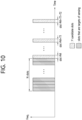
- FIG. 10 shows a method for a UE to perform CPS, according to an embodiment of the present disclosure.
- the embodiment of FIG. 10 may be combined with various embodiments of the present disclosure.
- Y candidate slots selected by a UE are slot #M, slot #(M+T1), and slot #(M+T1+T2).
- a slot in which a UE needs to perform sensing may be determined based on the first slot (i.e., slot #M) among Y candidate slots. For example, after determining the first slot among Y candidate slots as a reference slot, a UE may perform sensing for (previous) N slots from the reference slot.
- a UE may perform sensing of N slots. For example, a UE may perform sensing for N slots before slot #M, the UE may select at least one SL resource from in Y candidate slots (i.e., slot #M, slot #(M+T1), and slot #(M+T1+T2)) based on a sensing result.
- N may be configured or pre-configured for a UE.
- a time gap for processing may exist between the last slot among the N slots and slot #M.
- Parameters L subCH the number of sub-channels to be used for the PSSCH transmission in a subframe, P rsvp_TX the resource reservation interval, and prio TX the priority to be transmitted in the associated SCI format 1 by the UE are all provided by higher layers (described in [8]).
- C resel is determined according to Subclause 14.1.1.4B.
- the UE In sidelink transmission mode 3, when requested by higher layers in subframe n for a carrier, the UE shall determine the set of resources to be reported to higher layers in sensing measurement according to the steps described in this Subclause.
- Parameters L subCH , P rsvp_TX and prio TX are all provided by higher layers (described in [11]).
- the UE shall determine by its implementation a set of subframes which consists of at least Y subframes within the time interval [ n + T 1 , n + T 2 ] where selections of T 1 and T 2 are up to UE implementations under T 1 ⁇ 4 and T 2min ( prio TX ) ⁇ T 2 ⁇ 100, if T 2min ( prio TX ) is provided by higher layers for prio TX , otherwise 20 ⁇ T 2 ⁇ 100 .
- UE selection of T 2 shall fulfil the latency requirement and Y shall be greater than or equal to the high layer parameter minNumCandidateSF.
- the UE shall assume that any set of L subCH contiguous sub-channels included in the corresponding PSSCH resource pool (described in 14.1.5) within the determined set of subframes correspond to one candidate single-subframe resource.
- the total number of the candidate single-subframe resources is denoted by M total .
- the UE shall monitor any subframe t y ⁇ k ⁇ P step SL if k-th bit of the high layer parameter gapCandidateSensing is set to 1.
- the UE shall perform the behaviour in the following steps based on PSCCH decoded and S-RSSI measured in these subframes.
- the set S A is initialized to the union of all the candidate single-subframe resources.
- the set S B is initialized to an empty set.
- the UE shall exclude any candidate single-subframe resource R x,y from the set S A if it meets all the following conditions: - the UE receives an SCI format 1 in subframe t m SL , and "Resource reservation" field and "Priority” field in the received SCI format 1 indicate the values P rsvp_RX and prio RX , respectively according to Subclause 14.2.1. - PSSCH-RSRP measurement according to the received SCI format 1 is higher than Th prio TX ,prio RX .
- Step 4 is repeated with Th a,b increased by 3 dB.
- the UE moves the candidate single-subframe resource R x,y with the smallest metric E x,y from the set S A to S B . This step is repeated until the number of candidate single-subframe resources in the set S B becomes greater than or equal to 0.2 ⁇ M total .
- the UE When the UE is configured by upper layers to transmit using resource pools on multiple carriers, it shall exclude a candidate single-subframe resource R x,y from S B if the UE does not support transmission in the candidate single-subframe resource in the carrier under the assumption that transmissions take place in other carrier(s) using the already selected resources due to its limitation in the number of simultaneous transmission carriers, its limitation in the supported carrier combinations, or interruption for RF retuning time [10].
- the UE shall report set S B to higher layers. [Table 11]
- the UE shall report set S B to higher layers.
- the UE shall assume that any set of L subCH contiguous sub-channels included in the corresponding PSSCH resource pool (described in 14.1.5) within the time interval [ n + T 1 , n + T 2 ] corresponds to one candidate single-subframe resource, where selections of T 1 and T 2 are up to UE implementations under T 1 ⁇ 4 and T 2min ( prio TX ) ⁇ T 2 ; ⁇ 100, if T 2minn ( prio TX ) is provided by higher layers for prio TX , otherwise 20 ⁇ T 2 ⁇ 100. UE selection of T 2 shall fulfil the latency requirement.
- the total number of the candidate single-subframe resources is denoted by M total .
- the set S A is initialized to the union of all the candidate single-subframe resources.
- the set S B is initialized to an empty set.
- the UE moves the candidate single-subframe resource R x,y from the set S A to S B .
- the UE shall exclude a candidate single-subframe resource R x,y from S B if the UE does not support transmission in the candidate single-subframe resource in the carrier under the assumption that transmissions take place in other carrier(s) using the already selected resources due to its limitation in the number of simultaneous transmission carriers, its limitation in the supported carrier combinations, or interruption for RF retuning time [10].
- the UE shall report set S B to higher layers.
- SL-CSI Sidelink Channel State Information
- RRC configures the following parameters to control the SL-CSI reporting procedure: - sl-LatencyBound-CSI-Report, which is maintained for each PC5-RRC connection.
- the MAC entity maintains a sl-CSI-ReportTimer for each pair of the Source Layer-2 ID and the Destination Layer-2 ID corresponding to a PC5-RRC connection.
- sl-CSI-ReportTimer is used for a SL-CSI reporting UE to follow the latency requirement signalled from a CSI triggering UE.
- the value of sl-CSI-ReportTimer is the same as the latency requirement of the SL-CSI reporting in sl-LatencyBound-CSI-Report configured by RRC.
- the MAC entity shall for each pair of the Source Layer-2 ID and the Destination Layer-2 ID corresponding to a PC5-RRC connection which has been established by upper layers: 1> if the SL-CSI reporting has been triggered by a SCI and not cancelled: 2> if the sl-CSI-ReportTimer for the triggered SL-CSI reporting is not running: 3> start the sl-CSI-ReportTimer. 2> if the sl-CSI-ReportTimer for the triggered SL-CSI reporting expires: 3> cancel the triggered SL-CSI reporting.
- existing partial sensing operation does not define a operation that excludes resources from partial sensing operation, so resource conflicts are not efficiently avoided when allocating resources based on partial sensing.
- a method for excluding resources for transmission conflict avoidance from an operation that allocates resources based on partial sensing, and a device that supports the method are proposed.
- LCH or service priority and/or QOS requirements (e.g., latency, reliability, minimum communication range) and/or PQI parameters)
- QOS requirements e.g., latency, reliability, minimum communication range
- PQI parameters e.g., HARQ feedback enabled (and/or disabled) LCH/MAC PDU (transmission) and/or CBR measurement value of a resource pool and/or SL cast type (e.g., unicast, groupcast, broadcast) and/or SL groupcast HARQ feedback option (e.g., NACK only feedback, ACK/NACK feedback, NACK only feedback based on TX-RX distance) and/or SL mode 1 CG type (e.g., SL CG type 1/2) and/or SL mode type (e.g., mode 1/2) and/or resource pool and/or PSFCH resource configured resource pool and/or source (L2) ID (and/or destination (L2) ID) and/or PC5 RRC connection/link and/or SL link and
- configuration (or “designation”) wording may be extended and interpreted as a form in which a base station informs a UE through a predefined (physical layer or higher layer) channel/signal (e.g., SIB, RRC, MAC CE) (and/or a form provided through pre-configuration and/or a form in which a UE informs other UEs through a predefined (physical layer or higher layer) channel/signal (e.g., SL MAC CE, PC5 RRC)), etc.
- a predefined (physical layer or higher layer) channel/signal e.g., SIB, RRC, MAC CE
- PSFCH Physical Downlink Control Channel
- PSSCH and/or (NR or LTE) PSSCH (and/or (NR or LTE) PSCCH) (and/or (NR or LTE) SL SSB (and/or UL channel/signal)
- methods proposed in the present disclosure may be used in combination with each other (in a new type of manner).
- the term "specific threshold” below may refer to a threshold value defined in advance or (pre-)configured by a higher layer (including an application layer) of a network, a base station, or a UE.
- the term “specific configuration value” may refer to a value defined in advance or (pre-)configured by a higher layer (including an application layer) of a network, a base station, or a UE.
- “configured by a network/base station” may mean an operation in which a base station configures (in advance) a UE by higher layer RRC signaling, configures/signals a UE through MAC CE, or signals a UE through DCI.
- PPS means periodic-based partial sensing, and may mean an operation of performing sensing at a time point corresponding to an integer multiple (k) of each period based on periods of a specific configuration value number when sensing for resource selection is performed.
- the periods may be a period of the transmission resource configured in a transmission pool, a resource of an integer multiple (k value) of each period before the candidate resource time, which is a target for determining resource conflict in time, may be sensed, the k value may be configured in a form of a bitmap.
- CPS may mean continuous partial sensing, and may mean an operation of sensing all or a part of a time domain given as a specific configuration value.
- CPS may include a short-term sensing (STS) operation in which sensing is performed for a relatively short period.
- STS short-term sensing
- partial sensing may refer to partial sensing comprising the PPS operation and/or the CPS operation.
- REV may refer to resource re-evaluation and PEC may refer to resource pre-emption checking.
- “candidate resource/slot” may refer to a resource selected by a UE to perform partial sensing when transmission resource selection is first triggered to transmit an arbitrary packet, wherein the UE selects a resource selection window to perform partial sensing and detects whether a resource conflict is detected within the resource selection window.
- “available resource/slot” may mean a resource that is reported to the medium access control (MAC) layer from the physical (PHY) layer based on the partial sensing, wherein no resource conflicts are detected among the candidate resources and thus the resource is determined to be available for transmission.
- transmission resource/slot may refer to a resource that is finally selected by the MAC layer for use in a sidelink transmission from among the reported resources.
- the UE may exclude the candidate/available/transmission resource based on the partial sensing results according to the following operation
- the UE may exclude the candidate resource A (or only A) as an available/transmission resource.
- the UE may exclude the candidate resource A and the candidate resources corresponding to time points lagging from the candidate resource A by an integer multiple less than or equal to all (or, some) transmission periods configured in the resource pool or an integer L of transmission periods for the partial sensing from available/transmission resources.
- a UE may exclude the candidate resource A (or only A) from available/transmission resources.
- a UE may exclude the candidate resource A and the candidate resources corresponding to time points lagging from the candidate resource A by an integer multiple less than or equal to all (or some) of the transmission periods configured in the resource pool or an integer L of transmission periods for the partial sensing from available/transmission resources.
- the UE may exclude the candidate resource corresponding to time points lagging from the candidate resource A by an integer, which is less than or equal to an integer L, multiple of the transmission period for the partial sensing for which the monitoring was not performed from available/transmission resources.
- the UE may exclude the candidate resource A (or only A) from available/transmission resources.
- the UE may exclude the candidate resource A and the candidate resources corresponding to time points lagging from the candidate resource A by all (or some) of the transmission periods configured in the resource pool, or by an integer, which is less than or equal to an integer L, multiple of the transmission periods for the partial sensing, from available/transmission resources.
- the UE may exclude the candidate resource A and the candidate resources corresponding to time points lagging from the candidate resource A by an integer, which is less than or equal to an integer L, multiple of the transmission periods for partial sensing for which the monitoring has not been performed from available/transmission resources.
- the UE may exclude the candidate resource A (or only A) from available/transmission resources.
- the UE may exclude the candidate resources corresponding to time points lagging from the time point of the candidate resource A and time points lagging from the time point of the candidate resource A or time points lagging from the time point of the monitoring occasion B by an integer, which is less than or equal to an integer L, multiples of the transmission period for partial sensing linked to the time point of the monitoring occasion B, from available/transmission resources.
- the UE may exclude the candidate resources corresponding to time points lagging from the time point of the monitoring occasion B by an integer, which is less than or equal to an integer L, multiple of a transmission resource reservation period, based on the transmission resource reservation period signaled by SCI transmitted by the other UE received at the time point of the monitoring occasion B, from available/transmission resources.
- the UE may exclude the first candidate resource (or only the candidate resource) among the candidate resources corresponding to time points lagging from the time point of the monitoring occasion B by an integer, which is less than or equal to an integer L, multiple of a transmission resource reservation period, based on the transmission resource reservation period signaled via SCI transmitted by the other UE received at the time point of the monitoring occasion B, from available/transmission resources.
- the integer L may be a maximum integer value that is not greater than (or a minimum integer value that is not less than) a value derived by dividing a resource selection window length or a region of candidate resources (i.e., a time region from the first candidate resource to the last candidate resource) by all (or some) transmission periods configured for the resource pool or a transmission period for the partial sensing or transmission periods for partial sensing for which the monitoring was not performed.
- the integer L value may be a value set to a specific threshold by the network or higher layer.
- a UE when a UE allocates resources based on partial sensing, it has the effect of avoiding transmission conflicts as much as possible by excluding resources subject to transmission conflicts.
- the transmitting UE performing the operation may select a transmission resource considering the SL-DRX configuration of a receiving UE, as follows
- a transmitting UE may perform an initial transmission and some retransmissions of the packet to be transmitted within the ON duration or active duration (hereinafter referred to as the Running Active Time (RAT)) of a receiving UE at the time point when resource selection for packet transmission is triggered.
- RAT Running Active Time
- Extension Time Unit set to a specific threshold value (e.g., the ETU may be determined based on a retransmission timer value of the receiving UE)
- the transmitting UE may perform the remaining retransmissions, excluding the initial transmission and some retransmissions, in the expected extended active duration (hereinafter referred to as Extended Active Time (EAT)).
- EAT Extended Active Time
- a transmitting UE may perform the resource selection procedure in the following manner based on the SL DRX configuration of the receiving UE performing the SL DRX operation.
- the MAC layer of a transmitting UE may trigger a (re)transmission resource selection operation to the PHY layer to select and report to the transmission resources that meet the target transmission resource ratio, determined by a specific threshold value X1, within a interval P1 determined by a specific set value including a RAT based on the SL DRX configuration of the receiving UE.
- the PHY layer of the transmitting UE may, when the operation is triggered, select and report to the MAC layer the available resources such that the X1 resource ratio is met within the interval P1, and the MAC layer may randomly select from among the available resources reported by the PHY layer transmission resources that are less than or equal to a specific threshold value.
- the MAC layer may expect the EAT interval to be extended by the receiving UE, based on the last resource or the resource determined by a specific set value among the transmission resources selected in the P1 interval, and may trigger a (re)transmission resource selection operation of the PHY layer to select and report a transmission resource that meets the target transmission resource ratio determined by a specific threshold X2 within an interval P2 determined by a specific set value that includes the EAT interval.
- the P2 interval may be determined not to include the P1 interval to avoid overlapping resource selection intervals with previous resource selection intervals, or may include the P1 interval to maximize flexibility of resource selection.
- the PHY layer of the transmitting UE may, when the operation is triggered, select and report to the MAC layer available resources within the P2 interval such that the X2 resource ratio is met, and the MAC layer may randomly select transmission resources from among the available resources reported by the PHY layer that are less than or equal to a specific threshold value.
- the MAC layer may expect an EAT interval to be extended by the receiving UE, based on the last resource or a resource determined by a specific set value among the selected transmission resources in the interval P2, and may trigger a (re)transmission resource selection operation of the PHY layer to select and report a transmission resource that meets a target transmission resource ratio determined by a specific threshold X3 within an interval P3 determined by a specific set value that includes the EAT interval.
- the above operation may be repeated iteratively until the X1+X2+X3+...+XN value is finally greater than or equal to a value X of the target transmission resource ratio to be selected by the transmitting UE, and/or the PN interval linked to the XN is limited to within a PDB of the packet to be transmitted.
- the Pn interval belonging to each of the P1, P2, ..., PN intervals may include all (or some) of the Pm intervals for values m less than n, or each of the P1, P2, ..., PN intervals may be configured such that they do not overlap with each other.
- the MAC layer may preferentially select an available resource belonging to a set of available resources belonging to the P1 interval as the final transmission resource. For example, the MAC layer may preferentially select a specific threshold number or more of resources among available resources belonging to the available resource set belonging to the P1 interval as the final transmission resource.
- the MAC layer of a transmitting UE may trigger the (re)transmission resource selection of the PHY layer to report a plurality of available resource sets (S1, S2, ..., SM), by dividing the resource selection window into M intervals (P1, P2, ..., PM), and separately setting a target resource ratio (X1, X2, ..., XM) for each interval.
- the length of each of the intervals may be set equal to a time interval set to a specific set value, or the length of the interval may be set separately for each of the intervals to a specific set value.
- each of the X1, X2, ..., XM may be set the same for each of the time intervals with a specific set value, or each of the intervals may be set separately with a specific set value.
- the PHY layer may, when the (re)transmission resource selection is triggered, select available resources that meet the respective resource ratios (X1, X2, ..., XM) for each of the intervals (P1, P2, ..., PM) and report a plurality of available resource sets (S1, S2, ..., SM) to the MAC layer.
- a common RSRP threshold value initialized to a specific set value may be used, or the RSRP threshold value may be adjusted independently for each of the above intervals, based on an initial value of a separate RSRP threshold value determined to a specific set value for each of the above intervals.
- At least one particular interval of each of the intervals may be configured to include the RAT of the receiving UE itself.
- the MAC layer may preferentially select as the final transmission resource an available resource belonging to the set of available resources belonging to the specific interval including the RAT interval.
- the MAC layer may preferentially select as the final transmission resources a specific threshold number or more of the available resources belonging to the set of available resources belonging to the specific interval including the RAT interval.
- the specific interval may be the P1 interval that is temporally fastest among the respective intervals.
- the sum of each of the resource ratios (X1, X2, ..., XM) may be configured to be greater than or equal to a resource ratio X set for the entire resource selection window interval.
- the sum of each of the above time intervals P1, P2, ..., PM may be configured to be less than or equal to the PDB for the packet to be transmitted.
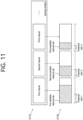
- FIG. 11 shows a procedure for a transmitting UE to select an available resource, according to one embodiment of the present disclosure.
- the embodiment of FIG. 11 may be combined with various embodiments of the present disclosure.
- a transmitting UE may determine a plurality of intervals within a sensing window.
- the plurality of intervals may include the first interval, the second interval, and the third interval.
- the transmitting UE may determine a set of available resources, based on a threshold ratio determined for each interval.
- the threshold ratio determined for the first interval may be threshold ratio 1
- the threshold ratio determined for the second interval may be threshold ratio 2
- the threshold ratio determined for the third interval may be threshold ratio 3.
- the intercepted region may represent a percentage of the resources in each interval that are selected as available resources.
- the transmitting UE may determine the first available resource set such that a percentage of the first available resource set of the total resources in the first interval is greater than or equal to the threshold ratio 1.
- the transmitting UE may determine the second available resource set such that a percentage of the second available resource set of the total resources in the second interval is greater than or equal to the threshold ratio 2.
- the transmitting UE may determine the third available resource set such that a percentage of the third available resource set of the total resources in the third interval is greater than or equal to the threshold ratio 3.
- the threshold ratio for a lagging interval may be smaller than the threshold ratio for a leading interval.
- FIG. 12 shows an embodiment in which a transmitting UE determines a plurality of intervals within a sensing window, according to one embodiment of the present disclosure.
- the embodiment of FIG. 12 may be combined with various embodiments of the present disclosure.
- a transmitting UE may determine the first to third intervals within a sensing window for determining a transmission resource for transmitting a MAC PDU. For example, the transmitting UE may determine the first to third intervals such that the sum of the time lengths of the first to third intervals is less than the PDB related to the MAC PDU. For example, the transmitting UE may determine the first to third intervals such that at least one of the first to third intervals includes the RAT of the receiving UE. Referring to FIG.
- the transmitting UE has determined that the sum of the time lengths of the first to third intervals is less than the PDB related to the MAC PDU, and that the transmitting UE has determined that the first interval and the second interval include an active time of the receiving UE.
- the active time may be a RAT or an EAT as described in the present disclosure.
- a target resource ratio X set to a specific threshold value within the entire resource selection window and an RSRP threshold value used in the resource selection procedure may be configured.
- a target resource ratio Xmin that is set to a specific threshold value and an RSRP minimum threshold value may be set separately for a time interval that is additionally determined (by the MAC layer) to a specific set value that includes the RAT of the receiving UE.
- the PHY layer may report to the MAC layer both an available resource set S that meets the resource ratio X within the resource selection window and an available resource set Smin that further meets the resource ratio X within the resource selection window while simultaneously meeting the Xmin resource ratio condition in a specific time interval comprising the RAT within the resource selection window.
- the MAC layer may, among the two reported available resource sets S and Smin, preferentially select a resource belonging to the RAT of the receiving UE among the Smin resources as the final transmission resource.
- the MAC layer may preferentially select, among the Smin resources, a specific threshold number or more of the resources belonging to the RAT of the receiving UE as the final transmission resources.
- a transmission resource being selected adaptably based on the SL DRX configuration of the receiving UE when the UE performing the SL DRX operation selects the transmission resource based on partial sensing, the effect of maximizing resource usage efficiency and minimizing channel congestion is achieved.
- the UE when partial sensing is enabled in a resource pool for which periodic transmissions are allowed and a UE has triggered a (re)transmission resource for periodic transmissions, the UE may configure a resource selection window and configure Y candidate slots that are greater than or equal to at least Ymin set as a specific threshold within the resource selection window. And, the UE may perform both PPS and CPS to detect resource conflicts for the candidate slots. In the above-described operation, the UE may select a (re)transmission resource for the periodic transmission by the following operation.
- a UE initially limits the candidate resources (or, the initial candidate resource set, S_A) that can be available resources to all or some of the candidate resources included in the Y candidate slots, and for all or some of the transmission periods configured for the resource pool configured for performing the PPS for each of the Y candidate slots, if not all of the required sensing occasions corresponding to an integer multiple of the transmission period for the PPS with respect to each of the Y candidate slots have been performed, the corresponding candidate slot may be excluded from the candidate resource (S_A) or transmission resources. For example, simultaneously and/or in parallel, the UE may exclude a candidate slot for which a resource conflict is detected based on the CPS for the Y candidate slots from the candidate resource S_A or final transmission resources.
- the PHY layer of the UE may perform the PPS and report the remaining available resources S_A to the MAC layer.
- the UE may include the available resources, in addition to the remaining available resources, among the resources for which a resource conflict can be detected based on the CPS result within the resource selection window, excluding the Y candidate slots for which no resource conflict is detected.
- the PHY layer of the UE may report the total available resources (S_A) belonging to the union to the MAC layer.
- the available resources remaining based on the PPS and the candidate resources excluded based on the CPS may again be included in the available resources based on sensing occasions that were not monitored when performing the PPS or the CPS in conflict with the UE's transmission timing.
- the UE may randomly select an available resource or a transmission resource from the resource pool if random resource selection is allowed in the resource pool.
- the UE may randomly select an available resource or a transmission resource from a separately configured exceptional resource pool if random resource selection is not allowed in the resource pool.
- the UE may randomly select an available resource or a transmission resource from the resource pool if random resource selection is allowed in the resource pool.
- the UE may randomly select an available resource or a transmission resource from a separately configured exceptional resource pool if random resource selection is not allowed in the resource pool.
- the UE may randomly select an available resource or a transmission resource from the resource pool if random resource selection is allowed in the resource pool.
- the UE may randomly select an available resource or a transmission resource from a separately configured exceptional resource pool if random resource selection is not allowed in the resource pool.
- the UE may configure a resource selection window and configure Y candidate slots within the resource selection window that are greater than or equal to at least Ymin set as a specific threshold value, and then perform both PPS and CPS to detect whether there is a resource conflict for the candidate slots.
- the UE may select a (re)transmission resource for the periodic transmission by the following operation.
- the UE may determine that PPS results are not available for the candidate slot. For example, as described above, a candidate slot for which PPS results are not available may be excluded from candidate slots/resources.
- the UE may select the remaining candidate slots as the final candidate slots to be used for the resource selection procedure.
- the UE may, within the resource selection window, among the slots from which the Y candidate slots are excluded, include slots including resources for which the CPS result is available as candidate slots/resources.
- the UE may select the candidate slots included in the union as the final candidate slots to be used for the resource selection procedure.
- (embodiment 17) in the case of embodiment 15 above for example, if the total number of candidate slots belonging to the union of candidate slots where the PPS result is available and slots including resources where the CPS result is available is less than the Ymin and/or less than a specific threshold, the (candidate) slots that were excluded based on sensing occasions that were not monitored when performing the PPS or the CPS due to conflicts with the UE's transmission time point may be re-included in the final candidate slots to be used for the resource selection procedure.
- the UE may select the candidate slots as the final candidate slots to be used for the resource selection procedure.
- the UE may randomly select a transmission resource from a separately configured exceptional resource pool, if random resource selection is not allowed in the resource pool.
- the UE may randomly select a transmission resource from the resource pool by selecting all slots included in the resource selection window as final candidate slots.
- the UE may randomly select an available resource or a transmission resource from a separately configured exceptional resource pool.
- the UE may randomly select a transmission resource from the resource pool by selecting all the slots included in the resource selection window as final candidate slots.
- the UE may select the number, which is less than the Ymin, of candidate slots as the final candidate slots for resource selection and perform the resource selection procedure. For example, in the case described above, the UE may select the initially selected Y candidate slots as the final candidate slots for resource selection and perform the resource selection procedure. For example, the above operation may be limited to be performed when REV and/or PEC is configured for the resource pool.
- Example 26 In the case of Example 15 above, for example, if the total number of candidate slots after including slots that includes resources for which the CPS result is available in the candidate slots is less than the Ymin or less than a specific threshold value, the UE may select the number, which is less than the Ymin, of candidate slots as the final candidate slots for resource selection and perform the resource selection procedure. For example, in the case described above, the UE may select the initially selected Y candidate slots as the final candidate slots for resource selection and perform the resource selection process. For example, the above operation may be limited to be performed when REV and/or PEC is configured for the resource pool.
- the UE may select the number, which is less than the Ymin, of candidate slots as the final candidate slots for resource selection and perform the resource selection procedure. For example, in the case described above, the UE may select the initially selected Y candidate slots as the final candidate slots for resource selection and perform the resource selection process. For example, the above operation may be limited to be performed when REV and/or PEC is configured for the resource pool.
- the resources when selecting resources for periodic transmissions based on partial sensing, if the number of candidate resources for which partial sensing results are available is insufficient, by selecting resources based on other additional partial sensing, the resources are selected to minimize resource conflicts.
- resources may be selected inefficiently when considering, for example, the RAT of the receiving UE.
- resources since resources are selected such that a threshold ratio is met in each of a plurality of intervals determined within the selection window, resources may be selected more efficiently considering the SL DRX operation of a receiving UE.
- FIG. 13 shows a procedure for a first device to perform wireless communication, according to one embodiment of the present disclosure.
- the embodiment of FIG. 13 may be combined with various embodiments of the present disclosure.
- a first device may obtain a sidelink (SL) discontinuous reception (DRX) configuration related to a second device.
- the first device may obtain information related to a resource pool.
- the first device may trigger resource selection for a transmission of a medium access control (MAC) protocol data unit (PDU).
- the first device may determine a resource selection window for the resource selection in the resource pool.
- the first device may determine a plurality of intervals included in the resource selection window, and including a first interval and a second interval.
- the first device may determine a first available resource set that causes a first ratio related to the first interval to be met, and a second available resource set that causes a second ratio related to the second interval to be met.
- the first device may select a transmission resource from the first available resource set.
- the first device may transmit, to the second device, sidelink control information (SCI) for scheduling of a physical sidelink shared channel (PSSCH) through a physical sidelink control channel (PSCCH), based on the transmission resource.
- SCI sidelink control information
- PSSCH physical sidelink shared channel
- PSCCH physical sidelink control channel
- the first device may transmit, to the second device, the MAC PDU through the PSSCH, based on the transmission resource.
- the first interval may include a first active time of the SL DRX configuration.
- the first ratio may be the same as the second ratio.
- the first ratio may be different from the second ratio.
- a first reference signal receiver power (RSRP) threshold value related to the first interval may be the same as a second RSRP threshold value related to the second interval.
- RSRP reference signal receiver power
- a first RSRP threshold value related to the first interval may be different from a second RSRP threshold value related to the second interval.
- the first interval may be a temporally earliest interval among the plurality of intervals.
- a sum of time lengths of the plurality of intervals may be smaller than or equal to packet delay budget (PDB) related to the MAC PDU.
- PDB packet delay budget
- a sum of a plurality of ratios related to the plurality of intervals may be greater than or equal to an entire threshold ratio related to the selection window.
- the transmission resource may be selected from the first available resource set and the second available resource set.
- the transmission resource may be selected to preferentially include at least one resource in the first available resource set.
- the first device may determine a third available resource set that causes a third ratio related to a third interval to be met.
- the transmission resource may be selected from the first available resource set, the second available resource set, and the third available resource set, and the transmission resource may be selected to preferentially include at least one resource in the first available resource set.
- the second interval may include a second active time extended based on a transmission performed within the first interval
- the third interval may include a third active time extended based on a transmission performed within the second interval
- a first available resource set and a second available resource set may be transferred from a physical layer of the first device to a MAC layer of the first device.
- a processor 102 of a first device 100 may obtain a sidelink (SL) discontinuous reception (DRX) configuration related to a second device 200. And, the processor 102 of the first device 100 may obtain information related to a resource pool. And, the processor 102 of the first device 100 may trigger resource selection for a transmission of a medium access control (MAC) protocol data unit (PDU). And, the processor 102 of the first device 100 may determine a resource selection window for the resource selection in the resource pool. And, the processor 102 of the first device 100 may determine a plurality of intervals included in the resource selection window, and including a first interval and a second interval.
- SL sidelink
- DRX discontinuous reception
- the processor 102 of the first device 100 may obtain information related to a resource pool. And, the processor 102 of the first device 100 may trigger resource selection for a transmission of a medium access control (MAC) protocol data unit (PDU). And, the processor 102 of the first device 100 may determine a resource selection window for the resource selection in the resource pool
- the processor 102 of the first device 100 may determine a first available resource set that causes a first ratio related to the first interval to be met, and a second available resource set that causes a second ratio related to the second interval to be met. And, the processor 102 of the first device 100 may select a transmission resource from the first available resource set. And, the processor 102 of the first device 100 may control a transceiver 106 to transmit, to the second device 200, sidelink control information (SCI) for scheduling of a physical sidelink shared channel (PSSCH) through a physical sidelink control channel (PSCCH), based on the transmission resource.
- SCI sidelink control information
- the processor 102 of the first device 100 may control the transceiver 106 to transmit, to the second device 200, the MAC PDU through the PSSCH, based on the transmission resource.
- the first interval may include a first active time of the SL DRX configuration.
- a first device for performing wireless communication may comprise: one or more memories storing instructions; one or more transceivers; and one or more processors connected to the one or more memories and the one or more transceivers.
- the one or more processors may execute the instructions to: obtain a sidelink (SL) discontinuous reception (DRX) configuration related to a second device; obtain information related to a resource pool; trigger resource selection for a transmission of a medium access control (MAC) protocol data unit (PDU); determine a resource selection window for the resource selection in the resource pool; determine a plurality of intervals included in the resource selection window, and including a first interval and a second interval; determine a first available resource set that causes a first ratio related to the first interval to be met, and a second available resource set that causes a second ratio related to the second interval to be met; select a transmission resource from the first available resource set; transmit, to the second device, sidelink control information (SCI) for scheduling of a physical sidelink shared channel (PSSCH) through a physical sidelink control channel (PSCCH), based on the transmission resource; and transmit, to the second device, the MAC PDU through the PSSCH, based on the transmission resource, wherein the first interval may include a first active time of
- the first ratio may be the same as the second ratio.
- the first ratio may be different from the second ratio.
- a first reference signal receiver power (RSRP) threshold value related to the first interval may be the same as a second RSRP threshold value related to the second interval.
- RSRP reference signal receiver power
- a first RSRP threshold value related to the first interval may be different from a second RSRP threshold value related to the second interval.
- the first interval may be a temporally earliest interval among the plurality of intervals.
- a sum of time lengths of the plurality of intervals may be smaller than or equal to packet delay budget (PDB) related to the MAC PDU.
- PDB packet delay budget
- a sum of a plurality of ratios related to the plurality of intervals may be greater than or equal to an entire threshold ratio related to the selection window.
- the transmission resource may be selected from the first available resource set and the second available resource set.
- the transmission resource may be selected to preferentially include at least one resource in the first available resource set.
- the first device may determine a third available resource set that causes a third ratio related to a third interval to be met.
- the transmission resource may be selected from the first available resource set, the second available resource set, and the third available resource set, and the transmission resource may be selected to preferentially include at least one resource in the first available resource set.
- the second interval may include a second active time extended based on a transmission performed within the first interval
- the third interval may include a third active time extended based on a transmission performed within the second interval
- a first available resource set and a second available resource set may be transferred from a physical layer of the first device to a MAC layer of the first device.
- a device adapted to control a first user equipment may be proposed.
- the device may comprise: one or more processors; and one or more memories operably connectable to the one or more processors and storing instructions.
- the one or more processors may execute the instructions to: obtain a sidelink (SL) discontinuous reception (DRX) configuration related to a second UE; obtain information related to a resource pool; trigger resource selection for a transmission of a medium access control (MAC) protocol data unit (PDU); determine a resource selection window for the resource selection in the resource pool; determine a plurality of intervals included in the resource selection window, and including a first interval and a second interval; determine a first available resource set that causes a first ratio related to the first interval to be met, and a second available resource set that causes a second ratio related to the second interval to be met; select a transmission resource from the first available resource set; transmit, to the second UE, sidelink control information (SCI) for scheduling of a physical side
- SCI sidelink control information
- a non-transitory computer-readable storage medium storing instructions may be proposed.
- the instructions when executed, may cause a first device to: obtain a sidelink (SL) discontinuous reception (DRX) configuration related to a second device; obtain information related to a resource pool; trigger resource selection for a transmission of a medium access control (MAC) protocol data unit (PDU); determine a resource selection window for the resource selection in the resource pool; determine a plurality of intervals included in the resource selection window, and including a first interval and a second interval; determine a first available resource set that causes a first ratio related to the first interval to be met, and a second available resource set that causes a second ratio related to the second interval to be met; select a transmission resource from the first available resource set; transmit, to the second device, sidelink control information (SCI) for scheduling of a physical sidelink shared channel (PSSCH) through a physical sidelink control channel (PSCCH), based on the transmission resource; and transmit, to the second device,
- SCI sidelink control information
- FIG. 14 shows a procedure for a second device to perform wireless communication, according to one embodiment of the present disclosure.
- the embodiment of FIG. 14 may be combined with various embodiments of the present disclosure.
- a second device may obtain a sidelink (SL) discontinuous reception (DRX) configuration.
- the second device may receive, from a first device, sidelink control information (SCI) for scheduling of a physical sidelink shared channel (PSSCH) through a physical sidelink control channel (PSCCH), based on a transmission resource.
- SCI sidelink control information
- PSSCH physical sidelink shared channel
- PSCCH physical sidelink control channel
- the second device may receive, from the first device, the MAC PDU through the PSSCH, based on the transmission resource.
- the transmission resource may be selected from a first available resource set, the first available resource set may be determined such that a first ratio related to a first interval is met, a second interval that causes a first ratio related to a second interval to be met and the first interval may be included in a resource selection window in a resource pool, and the first interval may include a first active time of the SL DRX configuration.
- the transmission resource may be selected from the first available resource set and the second available resource set, and the transmission resource may be selected to preferentially include at least one resource in the first available resource set.
- a processor 202 of a second device 200 may obtain a sidelink (SL) discontinuous reception (DRX) configuration. And, the processor 202 of the second device 200 may control a transceiver 206 to receive, from a first device 100, sidelink control information (SCI) for scheduling of a physical sidelink shared channel (PSSCH) through a physical sidelink control channel (PSCCH), based on a transmission resource. And, the processor 202 of the second device 200 may control the transceiver 206 to receive, from the first device 100, the MAC PDU through the PSSCH, based on the transmission resource.
- SCI sidelink control information
- PSSCH physical sidelink shared channel
- PSCCH physical sidelink control channel
- the transmission resource may be selected from a first available resource set, the first available resource set may be determined such that a first ratio related to a first interval is met, a second interval that causes a first ratio related to a second interval to be met and the first interval may be included in a resource selection window in a resource pool, and the first interval may include a first active time of the SL DRX configuration.
- a second device for performing wireless communication may comprise: one or more memories storing instructions; one or more transceivers; and one or more processors connected to the one or more memories and the one or more transceivers.
- the one or more processors may execute the instructions to: obtain a sidelink (SL) discontinuous reception (DRX) configuration; receive, from a first device, sidelink control information (SCI) for scheduling of a physical sidelink shared channel (PSSCH) through a physical sidelink control channel (PSCCH), based on a transmission resource; and receive, from the first device, the MAC PDU through the PSSCH, based on the transmission resource, wherein the transmission resource may be selected from a first available resource set, wherein the first available resource set may be determined such that a first ratio related to a first interval is met, wherein a second interval that causes a first ratio related to a second interval to be met and the first interval may be included in a resource selection window in a resource pool, and wherein the first interval may include a first active time of the SL DRX configuration.
- SCI sidelink control information
- PSSCH physical sidelink shared channel
- PSCCH physical sidelink control channel
- the transmission resource may be selected from the first available resource set and the second available resource set, and the transmission resource may be selected to preferentially include at least one resource in the first available resource set.
- FIG. 15 shows a communication system 1, based on an embodiment of the present disclosure.
- the embodiment of FIG. 15 may be combined with various embodiments of the present disclosure.
- a communication system 1 to which various embodiments of the present disclosure are applied includes wireless devices, Base Stations (BSs), and a network.
- the wireless devices represent devices performing communication using Radio Access Technology (RAT) (e.g., 5G New RAT (NR)) or Long-Term Evolution (LTE)) and may be referred to as communication/radio/5G devices.
- RAT Radio Access Technology
- the wireless devices may include, without being limited to, a robot 100a, vehicles 100b-1 and 100b-2, an extended Reality (XR) device 100c, a hand-held device 100d, a home appliance 100e, an Internet of Things (IoT) device 100f, and an Artificial Intelligence (AI) device/server 400.
- RAT Radio Access Technology
- NR 5G New RAT
- LTE Long-Term Evolution
- the wireless devices may include, without being limited to, a robot 100a, vehicles 100b-1 and 100b-2, an extended Reality (XR) device 100c, a hand-held device 100d, a home appliance 100
- the vehicles may include a vehicle having a wireless communication function, an autonomous vehicle, and a vehicle capable of performing communication between vehicles.
- the vehicles may include an Unmanned Aerial Vehicle (UAV) (e.g., a drone).
- UAV Unmanned Aerial Vehicle
- the XR device may include an Augmented Reality (AR)/Virtual Reality (VR)/Mixed Reality (MR) device and may be implemented in the form of a Head-Mounted Device (HMD), a Head-Up Display (HUD) mounted in a vehicle, a television, a smartphone, a computer, a wearable device, a home appliance device, a digital signage, a vehicle, a robot, etc.
- the hand-held device may include a smartphone, a smartpad, a wearable device (e.g., a smartwatch or a smartglasses), and a computer (e.g., a notebook).
- the home appliance may include a TV, a refrigerator, and a washing machine.
- the IoT device may include a sensor and a smartmeter.
- the BSs and the network may be implemented as wireless devices and a specific wireless device 200a may operate as a BS/network node with respect to other wireless devices.
- wireless communication technology implemented in wireless devices 100a to 100f of the present disclosure may include Narrowband Internet of Things for low-power communication in addition to LTE, NR, and 6G.
- NB-IoT technology may be an example of Low Power Wide Area Network (LPWAN) technology and may be implemented as standards such as LTE Cat NB1, and/or LTE Cat NB2, and is not limited to the name described above.
- the wireless communication technology implemented in the wireless devices 100a to 100f of the present disclosure may perform communication based on LTE-M technology.
- the LTE-M technology may be an example of the LPWAN and may be called by various names including enhanced Machine Type Communication (eMTC), and the like.
- eMTC enhanced Machine Type Communication
- the LTE-M technology may be implemented as at least any one of various standards such as 1) LTE CAT 0, 2) LTE Cat M1, 3) LTE Cat M2, 4) LTE non-Bandwidth Limited (non-BL), 5) LTE-MTC, 6) LTE Machine Type Communication, and/or 7) LTE M, and is not limited to the name described above.
- the wireless communication technology implemented in the wireless devices 100a to 100f of the present disclosure may include at least one of Bluetooth, Low Power Wide Area Network (LPWAN), and ZigBee considering the low-power communication, and is not limited to the name described above.
- the ZigBee technology may generate personal area networks (PAN) related to small/low-power digital communication based on various standards including IEEE 802.15.4, and the like, and may be called by various names.
- PAN personal area networks
- the wireless devices 100a to 100f may be connected to the network 300 via the BSs 200.
- An AI technology may be applied to the wireless devices 100a to 100f and the wireless devices 100a to 100f may be connected to the AI server 400 via the network 300.
- the network 300 may be configured using a 3G network, a 4G (e.g., LTE) network, or a 5G (e.g., NR) network.
- the wireless devices 100a to 100f may communicate with each other through the BSs 200/network 300, the wireless devices 100a to 100f may perform direct communication (e.g., sidelink communication) with each other without passing through the BSs/network.
- the vehicles 100b-1 and 100b-2 may perform direct communication (e.g.
- V2V Vehicle-to-Vehicle
- V2X Vehicle-to-everything
- Wireless communication/connections 150a, 150b, or 150c may be established between the wireless devices 100a to 100f/BS 200, or BS 200BS 200.
- the wireless communication/connections may be established through various RATs (e.g., 5G NR) such as uplink/downlink communication 150a, sidelink communication 150b (or, D2D communication), or inter BS communication (e.g. relay, Integrated Access Backhaul (IAB)).
- the wireless devices and the BSs/the wireless devices may transmit/receive radio signals to/from each other through the wireless communication/connections 150a and 150b.
- the wireless communication/connections 150a and 150b may transmit/receive signals through various physical channels.
- various configuration information configuring processes various signal processing processes (e.g., channel encoding/decoding, modulation/demodulation, and resource mapping/demapping), and resource allocating processes, for transmitting/receiving radio signals, may be performed based on the various proposals of the present disclosure.
- various signal processing processes e.g., channel encoding/decoding, modulation/demodulation, and resource mapping/demapping
- resource allocating processes for transmitting/receiving radio signals
- FIG. 16 shows wireless devices, based on an embodiment of the present disclosure.
- the embodiment of FIG. 16 may be combined with various embodiments of the present disclosure.
- a first wireless device 100 and a second wireless device 200 may transmit radio signals through a variety of RATs (e.g., LTE and NR).
- ⁇ the first wireless device 100 and the second wireless device 200 ⁇ may correspond to ⁇ the wireless device 100x and the BS 200 ⁇ and/or ⁇ the wireless device 100x and the wireless device 100x ⁇ of FIG. 15 .
- the first wireless device 100 may include one or more processors 102 and one or more memories 104 and additionally further include one or more transceivers 106 and/or one or more antennas 108.
- the processor(s) 102 may control the memory(s) 104 and/or the transceiver(s) 106 and may be configured to implement the descriptions, functions, procedures, proposals, methods, and/or operational flowcharts disclosed in this document.
- the processor(s) 102 may process information within the memory(s) 104 to generate first information/signals and then transmit radio signals including the first information/signals through the transceiver(s) 106.
- the processor(s) 102 may receive radio signals including second information/signals through the transceiver 106 and then store information obtained by processing the second information/signals in the memory(s) 104.
- the memory(s) 104 may be connected to the processor(s) 102 and may store a variety of information related to operations of the processor(s) 102.
- the memory(s) 104 may store software code including commands for performing a part or the entirety of processes controlled by the processor(s) 102 or for performing the descriptions, functions, procedures, proposals, methods, and/or operational flowcharts disclosed in this document.
- the processor(s) 102 and the memory(s) 104 may be a part of a communication modem/circuit/chip designed to implement RAT (e.g., LTE or NR).
- the transceiver(s) 106 may be connected to the processor(s) 102 and transmit and/or receive radio signals through one or more antennas 108.
- Each of the transceiver(s) 106 may include a transmitter and/or a receiver.
- the transceiver(s) 106 may be interchangeably used with Radio Frequency (RF) unit(s).
- the wireless device may represent a communication modem/circuit/chip.
- the second wireless device 200 may include one or more processors 202 and one or more memories 204 and additionally further include one or more transceivers 206 and/or one or more antennas 208.
- the processor(s) 202 may control the memory(s) 204 and/or the transceiver(s) 206 and may be configured to implement the descriptions, functions, procedures, proposals, methods, and/or operational flowcharts disclosed in this document.
- the processor(s) 202 may process information within the memory(s) 204 to generate third information/signals and then transmit radio signals including the third information/signals through the transceiver(s) 206.
- the processor(s) 202 may receive radio signals including fourth information/signals through the transceiver(s) 106 and then store information obtained by processing the fourth information/signals in the memory(s) 204.
- the memory(s) 204 may be connected to the processor(s) 202 and may store a variety of information related to operations of the processor(s) 202.
- the memory(s) 204 may store software code including commands for performing a part or the entirety of processes controlled by the processor(s) 202 or for performing the descriptions, functions, procedures, proposals, methods, and/or operational flowcharts disclosed in this document.
- the processor(s) 202 and the memory(s) 204 may be a part of a communication modem/circuit/chip designed to implement RAT (e.g., LTE or NR).
- the transceiver(s) 206 may be connected to the processor(s) 202 and transmit and/or receive radio signals through one or more antennas 208.
- Each of the transceiver(s) 206 may include a transmitter and/or a receiver.
- the transceiver(s) 206 may be interchangeably used with RF unit(s).
- the wireless device may represent a communication modem/circuit/chip.
- One or more protocol layers may be implemented by, without being limited to, one or more processors 102 and 202.
- the one or more processors 102 and 202 may implement one or more layers (e.g., functional layers such as PHY, MAC, RLC, PDCP, RRC, and SDAP).
- the one or more processors 102 and 202 may generate one or more Protocol Data Units (PDUs) and/or one or more Service Data Unit (SDUs) according to the descriptions, functions, procedures, proposals, methods, and/or operational flowcharts disclosed in this document.
- PDUs Protocol Data Units
- SDUs Service Data Unit
- the one or more processors 102 and 202 may generate messages, control information, data, or information according to the descriptions, functions, procedures, proposals, methods, and/or operational flowcharts disclosed in this document.
- the one or more processors 102 and 202 may generate signals (e.g., baseband signals) including PDUs, SDUs, messages, control information, data, or information according to the descriptions, functions, procedures, proposals, methods, and/or operational flowcharts disclosed in this document and provide the generated signals to the one or more transceivers 106 and 206.
- the one or more processors 102 and 202 may receive the signals (e.g., baseband signals) from the one or more transceivers 106 and 206 and acquire the PDUs, SDUs, messages, control information, data, or information according to the descriptions, functions, procedures, proposals, methods, and/or operational flowcharts disclosed in this document.
- signals e.g., baseband signals
- the one or more processors 102 and 202 may be referred to as controllers, microcontrollers, microprocessors, or microcomputers.
- the one or more processors 102 and 202 may be implemented by hardware, firmware, software, or a combination thereof.
- ASICs Application Specific Integrated Circuits
- DSPs Digital Signal Processors
- DSPDs Digital Signal Processing Devices
- PLDs Programmable Logic Devices
- FPGAs Field Programmable Gate Arrays
- the descriptions, functions, procedures, proposals, methods, and/or operational flowcharts disclosed in this document may be implemented using firmware or software and the firmware or software may be configured to include the modules, procedures, or functions.
- Firmware or software configured to perform the descriptions, functions, procedures, proposals, methods, and/or operational flowcharts disclosed in this document may be included in the one or more processors 102 and 202 or stored in the one or more memories 104 and 204 so as to be driven by the one or more processors 102 and 202.
- the descriptions, functions, procedures, proposals, methods, and/or operational flowcharts disclosed in this document may be implemented using firmware or software in the form of code, commands, and/or a set of commands.
- the one or more memories 104 and 204 may be connected to the one or more processors 102 and 202 and store various types of data, signals, messages, information, programs, code, instructions, and/or commands.
- the one or more memories 104 and 204 may be configured by Read-Only Memories (ROMs), Random Access Memories (RAMs), Electrically Erasable Programmable Read-Only Memories (EPROMs), flash memories, hard drives, registers, cash memories, computer-readable storage media, and/or combinations thereof.
- the one or more memories 104 and 204 may be located at the interior and/or exterior of the one or more processors 102 and 202.
- the one or more memories 104 and 204 may be connected to the one or more processors 102 and 202 through various technologies such as wired or wireless connection.
- the one or more transceivers 106 and 206 may transmit user data, control information, and/or radio signals/channels, mentioned in the methods and/or operational flowcharts of this document, to one or more other devices.
- the one or more transceivers 106 and 206 may receive user data, control information, and/or radio signals/channels, mentioned in the descriptions, functions, procedures, proposals, methods, and/or operational flowcharts disclosed in this document, from one or more other devices.
- the one or more transceivers 106 and 206 may be connected to the one or more processors 102 and 202 and transmit and receive radio signals.
- the one or more processors 102 and 202 may perform control so that the one or more transceivers 106 and 206 may transmit user data, control information, or radio signals to one or more other devices.
- the one or more processors 102 and 202 may perform control so that the one or more transceivers 106 and 206 may receive user data, control information, or radio signals from one or more other devices.
- the one or more transceivers 106 and 206 may be connected to the one or more antennas 108 and 208 and the one or more transceivers 106 and 206 may be configured to transmit and receive user data, control information, and/or radio signals/channels, mentioned in the descriptions, functions, procedures, proposals, methods, and/or operational flowcharts disclosed in this document, through the one or more antennas 108 and 208.
- the one or more antennas may be a plurality of physical antennas or a plurality of logical antennas (e.g., antenna ports).
- the one or more transceivers 106 and 206 may convert received radio signals/channels etc.
- the one or more transceivers 106 and 206 may convert the user data, control information, radio signals/channels, etc. processed using the one or more processors 102 and 202 from the base band signals into the RF band signals.
- the one or more transceivers 106 and 206 may include (analog) oscillators and/or filters.
- FIG. 17 shows a signal process circuit for a transmission signal, based on an embodiment of the present disclosure.
- the embodiment of FIG. 17 may be combined with various embodiments of the present disclosure.
- a signal processing circuit 1000 may include scramblers 1010, modulators 1020, a layer mapper 1030, a precoder 1040, resource mappers 1050, and signal generators 1060.
- An operation/function of FIG. 17 may be performed, without being limited to, the processors 102 and 202 and/or the transceivers 106 and 206 of FIG. 16 .
- Hardware elements of FIG. 17 may be implemented by the processors 102 and 202 and/or the transceivers 106 and 206 of FIG. 16 .
- blocks 1010 to 1060 may be implemented by the processors 102 and 202 of FIG. 16 .
- the blocks 1010 to 1050 may be implemented by the processors 102 and 202 of FIG. 16 and the block 1060 may be implemented by the transceivers 106 and 206 of FIG. 16 .
- Codewords may be converted into radio signals via the signal processing circuit 1000 of FIG. 17 .
- the codewords are encoded bit sequences of information blocks.
- the information blocks may include transport blocks (e.g., a UL-SCH transport block, a DL-SCH transport block).
- the radio signals may be transmitted through various physical channels (e.g., a PUSCH and a PDSCH).
- the codewords may be converted into scrambled bit sequences by the scramblers 1010.
- Scramble sequences used for scrambling may be generated based on an initialization value, and the initialization value may include ID information of a wireless device.
- the scrambled bit sequences may be modulated to modulation symbol sequences by the modulators 1020.
- a modulation scheme may include pi/2-Binary Phase Shift Keying (pi/2-BPSK), m-Phase Shift Keying (m-PSK), and m-Quadrature Amplitude Modulation (m-QAM).
- Complex modulation symbol sequences may be mapped to one or more transport layers by the layer mapper 1030.
- Modulation symbols of each transport layer may be mapped (precoded) to corresponding antenna port(s) by the precoder 1040.
- Outputs z of the precoder 1040 may be obtained by multiplying outputs y of the layer mapper 1030 by an N*M precoding matrix W.
- N is the number of antenna ports and M is the number of transport layers.
- the precoder 1040 may perform precoding after performing transform precoding (e.g., DFT) for complex modulation symbols. Alternatively, the precoder 1040 may perform precoding without performing transform precoding.
- transform precoding e.g., DFT
- the resource mappers 1050 may map modulation symbols of each antenna port to time-frequency resources.
- the time-frequency resources may include a plurality of symbols (e.g., a CP-OFDMA symbols and DFT-s-OFDMA symbols) in the time domain and a plurality of subcarriers in the frequency domain.
- the signal generators 1060 may generate radio signals from the mapped modulation symbols and the generated radio signals may be transmitted to other devices through each antenna.
- the signal generators 1060 may include Inverse Fast Fourier Transform (IFFT) modules, Cyclic Prefix (CP) inserters, Digital-to-Analog Converters (DACs), and frequency up-converters.
- IFFT Inverse Fast Fourier Transform
- CP Cyclic Prefix
- DACs Digital-to-Analog Converters
- Signal processing procedures for a signal received in the wireless device may be configured in a reverse manner of the signal processing procedures 1010 to 1060 of FIG. 17 .
- the wireless devices e.g., 100 and 200 of FIG. 16
- the received radio signals may be converted into baseband signals through signal restorers.
- the signal restorers may include frequency downlink converters, Analog-to-Digital Converters (ADCs), CP remover, and Fast Fourier Transform (FFT) modules.
- ADCs Analog-to-Digital Converters
- FFT Fast Fourier Transform
- the baseband signals may be restored to codewords through a resource demapping procedure, a postcoding procedure, a demodulation processor, and a descrambling procedure.
- a signal processing circuit for a reception signal may include signal restorers, resource demappers, a postcoder, demodulators, descramblers, and decoders.
- FIG. 18 shows another example of a wireless device, based on an embodiment of the present disclosure.
- the wireless device may be implemented in various forms according to a use-case/service (refer to FIG. 15 ).
- the embodiment of FIG. 18 may be combined with various embodiments of the present disclosure.
- wireless devices 100 and 200 may correspond to the wireless devices 100 and 200 of FIG. 16 and may be configured by various elements, components, units/portions, and/or modules.
- each of the wireless devices 100 and 200 may include a communication unit 110, a control unit 120, a memory unit 130, and additional components 140.
- the communication unit may include a communication circuit 112 and transceiver(s) 114.
- the communication circuit 112 may include the one or more processors 102 and 202 and/or the one or more memories 104 and 204 of FIG. 16 .
- the transceiver(s) 114 may include the one or more transceivers 106 and 206 and/or the one or more antennas 108 and 208 of FIG. 16 .
- the control unit 120 is electrically connected to the communication unit 110, the memory 130, and the additional components 140 and controls overall operation of the wireless devices. For example, the control unit 120 may control an electric/mechanical operation of the wireless device based on programs/code/commands/information stored in the memory unit 130.
- the control unit 120 may transmit the information stored in the memory unit 130 to the exterior (e.g., other communication devices) via the communication unit 110 through a wireless/wired interface or store, in the memory unit 130, information received through the wireless/wired interface from the exterior (e.g., other communication devices) via the communication unit 110.
- the additional components 140 may be variously configured according to types of wireless devices.
- the additional components 140 may include at least one of a power unit/battery, input/output (I/O) unit, a driving unit, and a computing unit.
- the wireless device may be implemented in the form of, without being limited to, the robot (100a of FIG. 15 ), the vehicles (100b-1 and 100b-2 of FIG. 15 ), the XR device (100c of FIG. 15 ), the hand-held device (100d of FIG. 15 ), the home appliance (100e of FIG. 15 ), the IoT device (100f of FIG.
- the wireless device may be used in a mobile or fixed place according to a use-example/service.
- the entirety of the various elements, components, units/portions, and/or modules in the wireless devices 100 and 200 may be connected to each other through a wired interface or at least a part thereof may be wirelessly connected through the communication unit 110.
- the control unit 120 and the communication unit 110 may be connected by wire and the control unit 120 and first units (e.g., 130 and 140) may be wirelessly connected through the communication unit 110.
- Each element, component, unit/portion, and/or module within the wireless devices 100 and 200 may further include one or more elements.
- the control unit 120 may be configured by a set of one or more processors.
- control unit 120 may be configured by a set of a communication control processor, an application processor, an Electronic Control Unit (ECU), a graphical processing unit, and a memory control processor.
- memory 130 may be configured by a Random Access Memory (RAM), a Dynamic RAM (DRAM), a Read Only Memory (ROM)), a flash memory, a volatile memory, a non-volatile memory, and/or a combination thereof.
- RAM Random Access Memory
- DRAM Dynamic RAM
- ROM Read Only Memory
- flash memory a volatile memory
- non-volatile memory and/or a combination thereof.
- FIG. 18 An example of implementing FIG. 18 will be described in detail with reference to the drawings.
- FIG. 19 shows a hand-held device, based on an embodiment of the present disclosure.
- the hand-held device may include a smartphone, a smartpad, a wearable device (e.g., a smartwatch or a smartglasses), or a portable computer (e.g., a notebook).
- the hand-held device may be referred to as a mobile station (MS), a user terminal (UT), a Mobile Subscriber Station (MSS), a Subscriber Station (SS), an Advanced Mobile Station (AMS), or a Wireless Terminal (WT).
- the embodiment of FIG. 19 may be combined with various embodiments of the present disclosure.
- a hand-held device 100 may include an antenna unit 108, a communication unit 110, a control unit 120, a memory unit 130, a power supply unit 140a, an interface unit 140b, and an I/O unit 140c.
- the antenna unit 108 may be configured as a part of the communication unit 110.
- Blocks 110 to 130/140a to140c correspond to the blocks 110 to 130/140 of FIG. 18 , respectively.
- the communication unit 110 may transmit and receive signals (e.g., data and control signals) to and from other wireless devices or BSs.
- the control unit 120 may perform various operations by controlling constituent elements of the hand-held device 100.
- the control unit 120 may include an Application Processor (AP).
- the memory unit 130 may store data/parameters/programs/code/commands needed to drive the hand-held device 100.
- the memory unit 130 may store input/output data/information.
- the power supply unit 140a may supply power to the hand-held device 100 and include a wired/wireless charging circuit, a battery, etc.
- the interface unit 140b may support connection of the hand-held device 100 to other external devices.
- the interface unit 140b may include various ports (e.g., an audio I/O port and a video I/O port) for connection with external devices.
- the I/O unit 140c may input or output video information/signals, audio information/signals, data, and/or information input by a user.
- the I/O unit 140c may include a camera, a microphone, a user input unit, a display unit 140d, a speaker, and/or a haptic module.
- the I/O unit 140c may acquire information/signals (e.g., touch, text, voice, images, or video) input by a user and the acquired information/signals may be stored in the memory unit 130.
- the communication unit 110 may convert the information/signals stored in the memory into radio signals and transmit the converted radio signals to other wireless devices directly or to a BS.
- the communication unit 110 may receive radio signals from other wireless devices or the BS and then restore the received radio signals into original information/signals.
- the restored information/signals may be stored in the memory unit 130 and may be output as various types (e.g., text, voice, images, video, or haptic) through the I/O unit 140c.
- FIG. 20 shows a vehicle or an autonomous vehicle, based on an embodiment of the present disclosure.
- the vehicle or autonomous vehicle may be implemented by a mobile robot, a car, a train, a manned/unmanned Aerial Vehicle (AV), a ship, etc.
- the embodiment of FIG. 20 may be combined with various embodiments of the present disclosure.
- a vehicle or autonomous vehicle 100 may include an antenna unit 108, a communication unit 110, a control unit 120, a driving unit 140a, a power supply unit 140b, a sensor unit 140c, and an autonomous driving unit 140d.
- the antenna unit 108 may be configured as a part of the communication unit 110.
- the blocks 110/130/140a to 140d correspond to the blocks 110/130/140 of FIG. 18 , respectively.
- the communication unit 110 may transmit and receive signals (e.g., data and control signals) to and from external devices such as other vehicles, BSs (e.g., gNBs and road side units), and servers.
- the control unit 120 may perform various operations by controlling elements of the vehicle or the autonomous vehicle 100.
- the control unit 120 may include an Electronic Control Unit (ECU).
- the driving unit 140a may cause the vehicle or the autonomous vehicle 100 to drive on a road.
- the driving unit 140a may include an engine, a motor, a powertrain, a wheel, a brake, a steering device, etc.
- the power supply unit 140b may supply power to the vehicle or the autonomous vehicle 100 and include a wired/wireless charging circuit, a battery, etc.
- the sensor unit 140c may acquire a vehicle state, ambient environment information, user information, etc.
- the sensor unit 140c may include an Inertial Measurement Unit (IMU) sensor, a collision sensor, a wheel sensor, a speed sensor, a slope sensor, a weight sensor, a heading sensor, a position module, a vehicle forward/backward sensor, a battery sensor, a fuel sensor, a tire sensor, a steering sensor, a temperature sensor, a humidity sensor, an ultrasonic sensor, an illumination sensor, a pedal position sensor, etc.
- IMU Inertial Measurement Unit
- the autonomous driving unit 140d may implement technology for maintaining a lane on which a vehicle is driving, technology for automatically adjusting speed, such as adaptive cruise control, technology for autonomously driving along a determined path, technology for driving by automatically setting a path if a destination is set, and the like.
- the communication unit 110 may receive map data, traffic information data, etc. from an external server.
- the autonomous driving unit 140d may generate an autonomous driving path and a driving plan from the obtained data.
- the control unit 120 may control the driving unit 140a such that the vehicle or the autonomous vehicle 100 may move along the autonomous driving path according to the driving plan (e.g., speed/direction control).
- the communication unit 110 may aperiodically/periodically acquire recent traffic information data from the external server and acquire surrounding traffic information data from neighboring vehicles.
- the sensor unit 140c may obtain a vehicle state and/or surrounding environment information.
- the autonomous driving unit 140d may update the autonomous driving path and the driving plan based on the newly obtained data/information.
- the communication unit 110 may transfer information about a vehicle position, the autonomous driving path, and/or the driving plan to the external server.
- the external server may predict traffic information data using AI technology, etc., based on the information collected from vehicles or autonomous vehicles and provide the predicted traffic information data to the vehicles or the autonomous vehicles.
Landscapes
- Engineering & Computer Science (AREA)
- Signal Processing (AREA)
- Computer Networks & Wireless Communication (AREA)
- Quality & Reliability (AREA)
- Physics & Mathematics (AREA)
- Electromagnetism (AREA)
- Mobile Radio Communication Systems (AREA)
Applications Claiming Priority (5)
| Application Number | Priority Date | Filing Date | Title |
|---|---|---|---|
| KR20210107368 | 2021-08-13 | ||
| US202163236680P | 2021-08-24 | 2021-08-24 | |
| KR20210111646 | 2021-08-24 | ||
| US202163237480P | 2021-08-26 | 2021-08-26 | |
| PCT/KR2022/011535 WO2023018103A1 (ko) | 2021-08-13 | 2022-08-04 | Nr v2x에서 부분 센싱 동작 기반의 자원 배제 방법 및 장치 |
Publications (2)
| Publication Number | Publication Date |
|---|---|
| EP4387352A1 true EP4387352A1 (de) | 2024-06-19 |
| EP4387352A4 EP4387352A4 (de) | 2025-01-08 |
Family
ID=85200305
Family Applications (1)
| Application Number | Title | Priority Date | Filing Date |
|---|---|---|---|
| EP22856102.3A Pending EP4387352A4 (de) | 2021-08-13 | 2022-08-04 | Verfahren und vorrichtung zum ausschliessen einer ressource auf basis einer teilweisen erfassungsoperation in nr v2x |
Country Status (4)
| Country | Link |
|---|---|
| US (1) | US20240365344A1 (de) |
| EP (1) | EP4387352A4 (de) |
| KR (1) | KR20240039140A (de) |
| WO (1) | WO2023018103A1 (de) |
Families Citing this family (2)
| Publication number | Priority date | Publication date | Assignee | Title |
|---|---|---|---|---|
| US20240057137A1 (en) * | 2021-09-24 | 2024-02-15 | Apple Inc. | Procedures of sidelink resource pool resource use with reduced sensing |
| CN117981456A (zh) * | 2021-09-28 | 2024-05-03 | 高通股份有限公司 | 用于自包含的用户装备间协调消息的资源选择 |
Family Cites Families (1)
| Publication number | Priority date | Publication date | Assignee | Title |
|---|---|---|---|---|
| EP3962229A1 (de) * | 2017-02-06 | 2022-03-02 | Apple Inc. | Partielle erfassung und überlastungssteuerung für long term evolution (lte)-fahrzeugkommunikation |
-
2022
- 2022-08-04 KR KR1020247004996A patent/KR20240039140A/ko active Pending
- 2022-08-04 WO PCT/KR2022/011535 patent/WO2023018103A1/ko not_active Ceased
- 2022-08-04 US US18/683,386 patent/US20240365344A1/en active Pending
- 2022-08-04 EP EP22856102.3A patent/EP4387352A4/de active Pending
Also Published As
| Publication number | Publication date |
|---|---|
| WO2023018103A1 (ko) | 2023-02-16 |
| KR20240039140A (ko) | 2024-03-26 |
| EP4387352A4 (de) | 2025-01-08 |
| US20240365344A1 (en) | 2024-10-31 |
Similar Documents
| Publication | Publication Date | Title |
|---|---|---|
| EP4358610A1 (de) | Verfahren und vorrichtung zur verbindung von ressourcen durch ressourcenneuauswahl unter sl-drx-betrieb in nr v2x | |
| US12245207B2 (en) | Method and apparatus for determining an idle resource related to resource re-evaluation in NR V2X | |
| US11963138B2 (en) | Method and apparatus for determining candidate resource for partial sensing in NR V2X | |
| EP4380081A1 (de) | Verfahren und vorrichtung zur durchführung einer drahtlosen kommunikation im zusammenhang mit sl-csi-bericht in nr v2x | |
| EP4336920A1 (de) | Verfahren und vorrichtung zur auswahl einer ressource in nr v2x | |
| EP4376518A1 (de) | Verfahren und vorrichtung zur verlängerung der aktiven zeit in nr v2x | |
| EP4307794A1 (de) | Verfahren und vorrichtung zur durchführung einer partiellen erfassung während eines sldrx-betriebs in nr v2x | |
| US12150097B2 (en) | Method and apparatus for measuring CBR related to partial sensing in NR V2X | |
| EP4404652A1 (de) | Verfahren und vorrichtung zur bestimmung der minimalen partiellen messfensterlänge in nr v2x | |
| EP4373181A1 (de) | Verfahren und vorrichtung zur auswahl einer ressource auf basis von partieller erfassung unter sl-drx-betrieb in nr v2x | |
| EP4280735B1 (de) | Verfahren und vorrichtung zur durchführung von partieller erfassung auf der basis der priorität in nr v2x | |
| EP4280730A1 (de) | Verfahren und vorrichtung zur durchführung von sl-kommunikation auf basis aggregierter ressourcen in nr v2x | |
| EP4387352A1 (de) | Verfahren und vorrichtung zum ausschliessen einer ressource auf basis einer teilweisen erfassungsoperation in nr v2x | |
| EP4456629A1 (de) | Verfahren und vorrichtung zur durchführung von abtastung gemäss sldrx in nr v2x | |
| EP4380268A1 (de) | Verfahren und vorrichtung zur kommunikation auf basis von inter-ue-koordinationsinformationen in nr v2x | |
| EP4380267A1 (de) | Verfahren und vorrichtung zur durchführung von drahtloser kommunikation im zusammenhang mit der koordination von benutzergeräten zwischen sidelink in nr v2x | |
| EP4369644A1 (de) | Verfahren und vorrichtung zur partiellen erfassung auf der basis von sl-harq-rückkopplung in nr v2x | |
| EP4336924A1 (de) | Verfahren und vorrichtung zur durchführung von partieller erfassung auf basis der übertragungsperiode eines benutzergeräts in nr v2x | |
| EP4325962A1 (de) | Verfahren und vorrichtung zur durchführung von partieller erfassung in nr v2x | |
| EP4336921A1 (de) | Verfahren und vorrichtung zur auswahl einer ressource in nr v2x auf basis von partieller erfassung | |
| EP4307793A1 (de) | Verfahren und vorrichtung zur einstellung von kandidatenressourcen während des sldrx-betriebs in nr v2x | |
| US20240430867A1 (en) | Method and apparatus for selecting resource on basis of partial sensing in nr v2x | |
| EP4322646A1 (de) | Verfahren und vorrichtung zur auswahl einer ressource in nr v2x auf basis von partieller erfassung | |
| EP4304258A1 (de) | Verfahren und vorrichtung zur konfiguration eines ressourcenauswahlfensters für sl-gruppenübertragung in nr v2x | |
| EP4280732A1 (de) | Verfahren und vorrichtung zur durchführung einer zufälligen ressourcenauswahl in nr v2x |
Legal Events
| Date | Code | Title | Description |
|---|---|---|---|
| STAA | Information on the status of an ep patent application or granted ep patent |
Free format text: STATUS: THE INTERNATIONAL PUBLICATION HAS BEEN MADE |
|
| PUAI | Public reference made under article 153(3) epc to a published international application that has entered the european phase |
Free format text: ORIGINAL CODE: 0009012 |
|
| STAA | Information on the status of an ep patent application or granted ep patent |
Free format text: STATUS: REQUEST FOR EXAMINATION WAS MADE |
|
| 17P | Request for examination filed |
Effective date: 20240215 |
|
| AK | Designated contracting states |
Kind code of ref document: A1 Designated state(s): AL AT BE BG CH CY CZ DE DK EE ES FI FR GB GR HR HU IE IS IT LI LT LU LV MC MK MT NL NO PL PT RO RS SE SI SK SM TR |
|
| DAV | Request for validation of the european patent (deleted) | ||
| DAX | Request for extension of the european patent (deleted) | ||
| A4 | Supplementary search report drawn up and despatched |
Effective date: 20241211 |
|
| RIC1 | Information provided on ipc code assigned before grant |
Ipc: H04W 76/14 20180101ALI20241205BHEP Ipc: H04W 74/0808 20240101ALI20241205BHEP Ipc: H04W 72/40 20230101ALI20241205BHEP Ipc: H04W 72/1263 20230101ALI20241205BHEP Ipc: H04W 72/0446 20230101ALI20241205BHEP Ipc: H04W 24/08 20090101ALI20241205BHEP Ipc: H04L 5/00 20060101ALI20241205BHEP Ipc: H04W 92/18 20090101ALI20241205BHEP Ipc: H04W 4/40 20180101ALI20241205BHEP Ipc: H04W 76/28 20180101ALI20241205BHEP Ipc: H04W 72/04 20230101ALI20241205BHEP Ipc: H04W 72/02 20090101AFI20241205BHEP |