EP4387326B1 - Verfahren, teilnehmergerät, system, komputerprogram und computerlesbares medium zur kommunikation zwischen einem teilnehmergerät und wenigstens zwei netzwerkdienste oder netzwerkfunktionen über wenigstens einem telekommunikationsnetzwerk - Google Patents
Verfahren, teilnehmergerät, system, komputerprogram und computerlesbares medium zur kommunikation zwischen einem teilnehmergerät und wenigstens zwei netzwerkdienste oder netzwerkfunktionen über wenigstens einem telekommunikationsnetzwerk Download PDFInfo
- Publication number
- EP4387326B1 EP4387326B1 EP22212870.4A EP22212870A EP4387326B1 EP 4387326 B1 EP4387326 B1 EP 4387326B1 EP 22212870 A EP22212870 A EP 22212870A EP 4387326 B1 EP4387326 B1 EP 4387326B1
- Authority
- EP
- European Patent Office
- Prior art keywords
- access stratum
- network
- user equipment
- service
- security context
- Prior art date
- Legal status (The legal status is an assumption and is not a legal conclusion. Google has not performed a legal analysis and makes no representation as to the accuracy of the status listed.)
- Active
Links
Images


Classifications
-
- H—ELECTRICITY
- H04—ELECTRIC COMMUNICATION TECHNIQUE
- H04W—WIRELESS COMMUNICATION NETWORKS
- H04W12/00—Security arrangements; Authentication; Protecting privacy or anonymity
- H04W12/30—Security of mobile devices; Security of mobile applications
- H04W12/37—Managing security policies for mobile devices or for controlling mobile applications
-
- H—ELECTRICITY
- H04—ELECTRIC COMMUNICATION TECHNIQUE
- H04W—WIRELESS COMMUNICATION NETWORKS
- H04W12/00—Security arrangements; Authentication; Protecting privacy or anonymity
- H04W12/03—Protecting confidentiality, e.g. by encryption
- H04W12/037—Protecting confidentiality, e.g. by encryption of the control plane, e.g. signalling traffic
-
- G—PHYSICS
- G06—COMPUTING OR CALCULATING; COUNTING
- G06F—ELECTRIC DIGITAL DATA PROCESSING
- G06F9/00—Arrangements for program control, e.g. control units
- G06F9/06—Arrangements for program control, e.g. control units using stored programs, i.e. using an internal store of processing equipment to receive or retain programs
- G06F9/44—Arrangements for executing specific programs
- G06F9/4401—Bootstrapping
- G06F9/4416—Network booting; Remote initial program loading [RIPL]
-
- H—ELECTRICITY
- H04—ELECTRIC COMMUNICATION TECHNIQUE
- H04L—TRANSMISSION OF DIGITAL INFORMATION, e.g. TELEGRAPHIC COMMUNICATION
- H04L63/00—Network architectures or network communication protocols for network security
- H04L63/20—Network architectures or network communication protocols for network security for managing network security; network security policies in general
-
- H—ELECTRICITY
- H04—ELECTRIC COMMUNICATION TECHNIQUE
- H04W—WIRELESS COMMUNICATION NETWORKS
- H04W76/00—Connection management
- H04W76/10—Connection setup
- H04W76/15—Setup of multiple wireless link connections
-
- H—ELECTRICITY
- H04—ELECTRIC COMMUNICATION TECHNIQUE
- H04W—WIRELESS COMMUNICATION NETWORKS
- H04W36/00—Hand-off or reselection arrangements
- H04W36/0005—Control or signalling for completing the hand-off
- H04W36/0011—Control or signalling for completing the hand-off for data sessions of end-to-end connection
- H04W36/0033—Control or signalling for completing the hand-off for data sessions of end-to-end connection with transfer of context information
- H04W36/0038—Control or signalling for completing the hand-off for data sessions of end-to-end connection with transfer of context information of security context information
-
- H—ELECTRICITY
- H04—ELECTRIC COMMUNICATION TECHNIQUE
- H04W—WIRELESS COMMUNICATION NETWORKS
- H04W36/00—Hand-off or reselection arrangements
- H04W36/14—Reselecting a network or an air interface
Definitions
- the present invention relates a method for operating a user equipment with a telecommunications network and for communicating with at least two of a plurality of network functions or services of the telecommunications network or of a further telecommunications network.
- the present invention relates to a user equipment for being operated with a telecommunications network and for communicating with at least two of a plurality of network functions or services of the telecommunications network or of a further telecommunications network.
- the present invention relates to a system or telecommunications network for operating a user equipment with the telecommunications network and for providing at least two of a plurality of network functions or services of the telecommunications network or of a further telecommunications network.
- the present invention relates to a program and to a computer-readable medium for operating, according to the inventive method, a user equipment with a telecommunications network and for communicating with at least two of a plurality of network functions or services of the telecommunications network or of a further telecommunications network.
- NAS communication refers to the logical interface between the user equipment and the CN.
- the non-access stratum protocol typically a non-access stratum mobility management protocol, NAS-MM
- NAS-MM is, e.g., transported on top of the NG-AP protocol stack (gNB-5G core application protocol stack), the NG-AP protocol stack typically comprising the NG-AP on top of an L1 layer (physical layer), an L2 layer (data link layer), an IP (internet protocol) layer, and an SCTP (stream control transmission protocol) layer, thereby, e.g. realizing the N2 interface, or N2-reference point, between the 5G access network and the access and mobility management function (AMF) network function or service of the core (5G) core network.
- AMF access and mobility management function
- the NG-AP protocol stack (NG-AP being a 3GPP protocol defined in TS 38.413) is used to transport control plane (CP) information between a user equipment and the core network between the radio access network and the access and mobility function (AMF).
- the (radio) access network acts as a relay for the non-access stratum signaling (NAS-MM) - between the 5G access network protocol layer (used between the user equipment and a station entity, especially a gNodeB) and the NG-AP protocol stack which is transported to the AMF using NG-AP as lower protocol layer - , and the (radio) access network (AN) has no access to (the content of) the non-access stratum information (i.e.
- the (radio) access network determines the AMF network function or service (out of, potentially, a plurality of different (instances of) AMF network functions or services within a telecommunications network) with which to communicate with based on configuration; typically, based on the requested telecommunications network (especially a public land mobile network, PLMN) and a network slice (or network slices), the (radio) access network routes a given registration request (being transmitted by a user equipment) to one AMF network function or service, or, potentially, one out of a list of possible AMFs.
- AMF access and mobility management function
- the non-access stratum communication relates to control plane information exchanged between the UE and CN elements or network nodes of the core network: E.g., in the case of a 5G system, that includes communication between the user equipment and a plurality of different network function functionalities, such as, e.g., AMF (for access and mobility), SMF (for session management), PCF (for policy information), and LMF (for location information).
- AMF for access and mobility
- SMF for session management
- PCF for policy information
- LMF for location information
- the access and mobility management function serves as a central element for the non-access stratum communication between the user equipment and the (other kinds of) network functions or services of the core network (i.e.
- non-access stratum communication of the user equipment towards other network function functionalities is realized by a mixture of using, on the one hand, non-access stratum protocol for the transport between the radio access network and the access and mobility management function, and, on the other hand, Nxxx service based communication (e.g. N11/Nsmf towards NAS-SM of the session management function, N20/Nsmsf towards the short message service function, N15/Npcf towards UE policy of the policy and charging function, or NL1/Nlmf towards LCS of the location management function) between the access and mobility management function and the other kinds of network functions or services (or network function functionalities).
- Nxxx service based communication e.g. N11/Nsmf towards NAS-SM of the session management function, N20/Nsmsf towards the short message service function, N15/Npcf towards UE policy of the policy and charging function, or NL1/Nlmf towards LCS of the location management function
- a non-access stratum security context is created.
- the security context applies to the non-access stratum connection, i.e. between the user equipment and the access and mobility management function; this means that Information sent via the access and mobility management function (e.g. towards the session management function, etc.) is visible to the access and mobility management function.
- This is a drawback in case that it cannot be assured (or that it is not strived for to assure) that all components or network functions or services of a core network are part of a trusted domain; the same drawback applies to roaming with regard to the home and/or visited networks.
- An object of the present invention is to provide a technically simple, effective and cost effective solution for operating a user equipment with a telecommunications network and for communicating with at least two of a plurality of network functions or services of the telecommunications network or of a further telecommunications network (i.e.
- a further object of the present invention is to provide a corresponding user equipment, a corresponding system or telecommunications
- the object of the present invention is achieved by a method according to claim 1.
- the present invention it is advantageously possible to combine a higher level of security and/or trust (especially by means of the first non-access stratum communication link involving establishing a first non-access stratum security context between the user equipment and the first network function or service, and the second non-access stratum communication link involving establishing a second non-access stratum security context between the user equipment and the second network function or service) with the possibility to provide for a solution to link (or chain) different non-access stratum communication links or non-access stratum security contexts together - or, otherwise stated, to provide for a possibility to realize a sort of connection between different non-access stratum communication links and/or non-access stratum security contexts, especially in case that the different involved network nodes need to share at least a part of the information content that is exchanged between these network nodes and the user equipment.
- direct non-access stratum communication links including non-access stratum security contexts and/or including conducting authentication of the user equipment with regard to the respective endpoints of the non-access stratum security contexts, are realized, leading to the possibility to realize, or use, a zero trust architecture.
- direct (or end-to-end) non-access stratum communication links between the user equipment and respective instances of a network function or service are easily and efficiently possible to be established according to the present invention.
- the telecommunications network comprises a plurality of network functions or services, and these network functions or services are able to provide different kinds of network function functionalities - within the telecommunications network, but also to, or towards, the user equipment.
- the establishment of the (first and/or second) non-access stratum communication link between the user equipment and a (first and/or second) network function or service also involves establishing a non-access stratum security context between the user equipment and the corresponding (first and/or second) network function or service, this non-access stratum security context corresponding to the non-access stratum communication link.
- this advantageously provides the possibility that network functions or services, as part of the core network of the telecommunications network, are able to be placed in different trust domains, i.e. it is not necessary any more to place these network functions or services in the same trust domain, potentially reducing complexity within the core network and, hence, leading potentially to a higher security and trust level within the telecommunications network (especially as less complexity is typically less error-prone, especially regarding configuration errors).
- the user equipment is able to be aware of the network functions or services it is communicating with as there is a direct and authenticated communication or connection between the user equipment and those different network functions or services - especially network functions or services being able to provide different kinds of network function functionalities - instead of implicitly trusting the next hop. Allowing a zero-trust architecture provides the possibility of more decentralized and flexible deployments, e.g. deploying certain network functions or services in public clouds or in environments within less trusted environments (e.g.
- the present invention especially relates to - besides to the establishment of different non-access stratum communication links and different non-access stratum security contexts from a user equipment towards a plurality of different network functions or services - providing a solution to link (or chain) different non-access stratum communication links or non-access stratum security contexts together - or, otherwise stated, to provide for a possibility to realize a sort of connection between different non-access stratum communication links and/or non-access stratum security contexts.
- the visited network (V-PLMN) and the home network (H-PLMN) need to exchange information so as to build an end-to-end (E2E) path including policies, charging, etc. to provide connectivity to the user equipment 20 while the user equipment 20 is not within its home network.
- the network functions or services of the V-PLMN are not aware of any parameters that the user equipment 20 exchanges with its home network (H-PLMN); e.g. the V-PLMN is not able to relay control plane messages to the correct network function or service (e.g. session management function) within the H-PLMN if it does not know what the user equipment 20 has actually requested.
- PCF policy
- SMF session management
- the user equipment is operated using at least a first non-access stratum communication link and a second non-access stratum communication link, wherein the first non-access stratum communication link involves establishing a first non-access stratum security context between the user equipment and the first network function or service and the second non-access stratum communication link involves establishing a second non-access stratum security context between the user equipment and the second network function or service.
- operating the user equipment, using at least the first and second non-access stratum communication links comprises the following steps:
- the non-access stratum communication relates to control plane information exchanged between the user equipment and the core network or network nodes of the core network, wherein such network functions or services include different network function functionalities, such as e.g., at least in case of a 5G system, an access and mobility management function (for access and mobility), a session management function (for session management), a policy and charging function (for policy information), and a location management function (for location information).
- network functions or services include different network function functionalities, such as e.g., at least in case of a 5G system, an access and mobility management function (for access and mobility), a session management function (for session management), a policy and charging function (for policy information), and a location management function (for location information).
- the question which one or which ones (or which instance(s)) of the different kinds of network functions or services (such as SMF, SMSF, PCF, LMF, etc.) actually serve(s) a given user equipment (that has initiated, e.g., by means of a request, the non-access stratum communication) at a given time is decided by the telecommunications network based on, or dependent on, at least one of the following: the service(s) requested by the user equipment, subscription parameters, network deployment and other parameters.
- the (radio) access network and/or the user equipment typically do not decide specifically which instance of a plurality of different SMF/SMSF/PCF/LMF instances (i.e.
- the non-access stratum interface is terminated at the access and mobility management function, and as such, there is no visibility outside of the core network how non-access stratum messages are forwarded, routed, or otherwise processed.
- the access and mobility management function serves as the one central element for the non-access stratum communication between the user equipment and the (other kinds of) network functions or services of the core network; e.g., for the session management (function) communication between the user equipment and the session management function, the access and mobility management function performs a similar - only, or at least predominantly, forwarding - functionality, as mentioned previously regarding the (radio) access network:
- the access and mobility management function performs - in a conventional telecommunications network - a transport or a relaying of the non-access stratum message containers to and from the session management function, with the security context being terminated at the access and mobility function, typically via the service-based interface and corresponding SBI n1-n2-messages requests.
- the service-based interfaces (between the access and mobility management function and the session management function) use the HTTP/2 protocol with JSON as the application layer serialization protocol; furthermore, the protocol stack comprises - on top of the L2 layer - the IP layer, the transport control protocol (TCP) layer, the transport layer security (TLS) layer, the HTTP/2 layer and the application layer, and additionally, regarding security protection at the transport layer, all 3GPP core network functions or services support SBI; authorization is typically supported by means of OAuth2, which allows network functions or services to be authorized for given network function service(s) via the network repository function (NRF) (i.e.
- NRF network repository function
- N1 message classes 5GMM (the whole NAS message as received (for e.g. used in forwarding the Registration message to target AMF during Registration procedure with AMF redirection)
- SM N1 Session Management message
- LPP N1 LTE Positioning Protocol message
- SMS N1 SMS message as specified in TS 23.040 and TS 24.011
- UPDP N1 messages for UE Policy Delivery (See Annex D of TS 24.501)
- LCS N1 message of Location service message type)
- HTTP/2-based interfaces service based interfaces SBIs
- TLS tunnel based interfaces
- NFs network functions or services
- E2E End-to-End
- security when user equipment registers with the network, a non-access stratum security context is created which applies to the non-access stratum connection, i.e. between the user equipment and the access and mobility management function - hence, information sent via the access and mobility management function (e.g.
- a core network is part of a trusted domain, i.e. the network elements within it can be trusted and security is provided on a hop-by-hop basis.
- the Inter-PLMN user plane Security is a Rel'16 functionality of the user plane function that enforces GTP-U security on the N9 interface between user plane functions of the visited and home PLMN; in order to realize roaming, certain network functions or services need to communicate with each other, mainly the session management functions and the policy and charging functions of the visited PLMN (V-PLMN) and home PLMH (H-PLMN), so as to establish a protocol data unit session (PDU session) connecting the user equipment and the data network (DN) via the V-PLMN; the control plane and the user plane connectivity is secured between the PLMNs (but not within) via the SEPP and IPUPS.
- the V-PLMN locates the appropriate network functions or services to address, within the H-PLMN (via the SEPP
- the first non-access stratum communication link as well as the first non-access stratum security context are established using a first key information and/or a first encryption method
- the second non-access stratum communication link as well as the second non-access stratum security context is established using a second key information and/or a second encryption method, wherein especially the first key information and/or the first encryption method is different from the second key information and/or the second encryption method.
- the second network function or service is a network function or service of a further telecommunications network, especially in case of a roaming situation of the user equipment being connected to, or roaming within, the further telecommunications network, wherein especially the first network function or service and the second network function or service are corresponding network functions or services, especially providing the same kind of network function functionalities, of the telecommunications network, and the further telecommunications network, respectively,
- one of the first and second information element if used as a piece of referencing information, referencing the other one of the first and second information element, comprises at least one out of the following:
- At least the first and second non-access stratum security contexts are used, especially in order to transmit user equipment route selection policy rules, wherein especially an information element, or part thereof, is visible and/or decodable by the first network function or service or the second network function or service only in case the respective information element, or part thereof, is part of the respective non-access stratum security context.
- the establishment of at least one of the first non-access stratum communication link and the second non-access stratum communication link involves using a user equipment bootstrapping function or service, the user equipment bootstrapping function or service either being a part of the telecommunications network or being accessible via the telecommunications network or by a network node thereof, wherein especially the user equipment first requests the at least one of the first non-access stratum communication link and the second non-access stratum communication link to be established, wherein the user equipment bootstrapping function or service then provides a non-access stratum endpoint information regarding the at least one of the first network function or service and the second network function or service, and the non-access stratum endpoint information is used to establish the at least one of the first non-access stratum security context and the second non-access stratum security context and/or to conduct authentication of the user equipment with regard to the one of the first network function or service and the second network function or service.
- the inventive method - and especially realize, or conduct the first step of the inventive method - in a comparatively simple and efficient manner by means of the telecommunications network - especially its core network - comprising a user equipment bootstrapping function or service, or, at least, a user equipment bootstrapping function or service being accessible via the telecommunications network, especially its core network, or via a network node thereof:
- the (first and/or second) non-access stratum communication link - and the (first and/or second) non-access stratum security context - is established using or involving the user equipment bootstrapping function or service by means of the user equipment bootstrapping function or service providing a (first and/or second) non-access stratum endpoint information regarding the endpoint of the (first and/or second) non-access stratum communication link (and the (first and/or second) non-access stratum security context) to be established (especially, this endpoint (or these endpoints) of the (first
- the user equipment bootstrapping function or service it is advantageously possible according to the present invention and regarding a considered non-access stratum communication link, that as part of the first step of the inventive method, in a first sub-step, the user equipment requests the considered non-access stratum communication link to be established, the considered non-access stratum communication link involving a specific network function or service or a specific kind of network function functionality; in a second sub-step, the user equipment bootstrapping function or service provides a non-access stratum endpoint information regarding the request of the user equipment: In case that the user equipment request refers to the specific network function or service, i.e.
- the non-access stratum endpoint information is able to be provided by the user equipment bootstrapping function or service; otherwise, in case that the user equipment only refers to a specific kind of network function functionality (i.e. not to a network function or service specifically defined by the user equipment's request) the user equipment bootstrapping function or service provides the non-access stratum endpoint information regarding a specified network function or service corresponding to the specific kind of network function functionality.
- the non-access stratum endpoint information is used to establish the considered non-access stratum security context and/or to conduct authentication of the user equipment with regard to either the specific network function or service, or the specified network function or service corresponding to the specific kind of network function functionality.
- the respective non-access stratum endpoint information is included in such information elements and/or messages sent by the user equipment, wherein the access network or the access network node of the telecommunications network uses the non-access stratum endpoint information to forward such information elements and/or messages to its destination, wherein such information elements and/or messages sent by the user equipment especially comprise both a source information, referring to or indicating the user equipment, and a destination information, referring to or indicating the first network function or service or the second network function or service.
- a non-access stratum endpoint information of the user equipment is included in such information elements and/or messages sent by the first network function or service or the second network function or service, wherein the access network or the access network node of the telecommunications network uses the non-access stratum endpoint information of the user equipment to forward such information elements and/or messages to the user equipment.
- the present invention relates to a user equipment according to claim 9.
- the present invention relates to a system or telecommunications network according to claim 10.
- the present invention relates to a program according to claim 11.
- the present invention relates to a computer-readable medium according to claim 12.
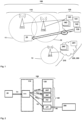
- a telecommunications network 100 comprising an access network 110, and a core network 120 is schematically shown.
- the telecommunications network 100 is schematically shown as a mobile communication network 100, typically a cellular mobile communication network 100.
- the telecommunications network 100 might also be realized - at least in part - as a fixed-line telecommunications network 100 (not shown).
- the telecommunications network 100, especially the core network 120 typically comprises a number of network functions or services 140.
- the network functions or services 140 there might be different (kinds of) network functions or services, i.e.
- the access network 110 comprises a plurality of radio cells 11, 12.
- a first base station entity 111 generates or is associated with or spans the first radio cell 11
- a second base station entity 112 generates or is associated with or spans the second radio cell 12.
- a user equipment 20 is schematically shown, in Figure 1 , as part of or within the radio coverage area of the first radio cell 11/first base station entity 111.
- the user equipment 20 is typically, but not necessarily, mobile i.e. able to move with respect to the (typically, but not necessarily, static) radio cells 11, 12 or corresponding base station entities 111, 112 of the access network 110.
- the core network 120 of the telecommunications network 100 comprises a first network function or service 141 (in the following also called specific network function or service 141), a further network function or service 142, and a second network function or service 143 (in the following also called further specific network function or service 143).
- the core network 120 is schematically shown, in Figure 1 , as comprising a user equipment bootstrapping function or service 130.
- the user equipment bootstrapping function or service 130 is at least accessible by the user equipment 20 or by network nodes or network functions or services 140 of the core network (i.e. the user equipment bootstrapping function or service 130 being located outside of the core network 120 (e.g. as part of another network, not shown in Figure 1 )), but - of course - it is also possible according to the present invention that the user equipment bootstrapping function or service 130 is part of the telecommunications network 100.
- Figure 1 shows a further telecommunications network 200, the further telecommunications network 200 likewise being represented as a further mobile communication network 200, comprising a further access network 210 and a further core network 220, and comprising - exemplarily - a further radio cell 13 with a further base station entity 211.
- the further telecommunications network 200 especially the further core network 220, typically also comprises a number of further network functions or services 240.
- the further network functions or services 240 there might be different kinds of network functions or services, i.e. network functions or services providing different network function functionalities analogous to the scenario of the telecommunications network 100.
- the further core network 220 of the further telecommunications network 200 comprises a network function or service, designated by means of reference sign 241, that is especially of the same kind (or network function functionality) as the first network function or service 141.
- Figure 1 primarily shows the simple situation that the user equipment 20 is connected to its home network 100, especially its home public land mobile network, i.e. the telecommunications network 100 represented in Figure 1 corresponds to the home network of the user equipment 20.
- the user equipment 20 is connected using access network 120, typically a radio access network.
- this access network 120 does not correspond to (or belong to) the home network or home public land mobile network of the user equipment 20 (i.e. in case the telecommunications network 100 is not the home network of the user equipment 20)
- the access network 120 to which the user equipment 20 is connected is called the visited network or visited public land mobile network of the user equipment 20; and in this case, the user equipment 20 is typically also connected to its home network, or to the core network of its home network, i.e. the network to which the subscription information in the user equipment 20 relates to.
- the telecommunications network 100 corresponds to the visited telecommunications network (or visited public land mobile network or visited network) and the further telecommunications network 200 corresponds to the home telecommunications network (or home public land mobile network or home network) of the user equipment 20.
- the present invention provides a method for operating the user equipment 20 with the telecommunications network 100 and for communicating with at least two of a plurality of network functions or services 140 of the telecommunications network 100 or of the further telecommunications network 200 (i.e. either the user equipment 20 is operated with at least two of the plurality of network functions or services of the telecommunications network 100 (e.g. the first network function or service 141, and the second network function or service 143 (of the telecommunications network 100)), or the user equipment 20 is operated with at least one of the plurality of network functions or services of the telecommunications network 100 (e.g.
- the user equipment 20 is operated using at least a first non-access stratum communication link 21 and a second non-access stratum communication link 22, the first non-access stratum communication link 21 being established between the user equipment 20 and the first network function or service 141 of the plurality of network functions or services 140, and the second non-access stratum communication link 22 being established between the user equipment 20 and a second network function or service 143, 241 (either of the telecommunications network 100 or of the further telecommunications network 200).
- the first non-access stratum communication link 21 involves establishing a first non-access stratum security context between the user equipment 20 and the first network function or service 141 and the second non-access stratum communication link 22 involves establishing a second non-access stratum security context between the user equipment 20 and the second network function or service 143, 241.
- second network function or service 143, 241 either refers to a scenario where the endpoints of both the first and second non-access stratum communication link 21, 22 (and, as well, the first and second non-access stratum security context) are part of (or within) the telecommunications network 100; in this scenario, the second network function or service is designated by means of reference sign 143 (cf. Figure 5 ).
- the endpoint of the first non-access stratum communication link 21 (and the first non-access stratum security context) is part of (or within) the telecommunications network 100
- the endpoint of the second non-access stratum communication link 22 (and the second non-access stratum security context) is part of (or within) the further telecommunications network 200
- the second network function or service is designated by means of reference sign 241 (cf. Figures 6 and 7 ).
- the first non-access stratum communication link 21 as well as the first non-access stratum security context is established, especially using a first non-access stratum endpoint information;
- the second non-access stratum communication link 22 as well as the second non-access stratum security context is established, especially using a second non-access stratum endpoint information; for the purposes of establishing the non-access stratum communication links 21, 22, the user equipment 20 receives - especially from a user equipment bootstrapping function or service 130 - and uses the first and second endpoint information.
- the first and second non-access stratum communication links 21, 22 are used between their respective endpoints, wherein a first information element of or transmitted using the first non-access stratum security context is able to be referenced by a second information element of or transmitted using the second considered non-access stratum security context and/or wherein a first information element of or transmitted using the first non-access stratum security context is able to reference a second information element of or transmitted using the second considered non-access stratum security context.
- a user equipment bootstrapping function or service 130 (especially being part of the telecommunications network 100 or, at least, accessible via the telecommunications network 100 or by a network node thereof) for establishing the non-access stratum communication links.
- the user equipment 20 requests the non-access stratum communication links to be established: Either the user equipment 20 requests the non-access stratum communication link(s) to be realized or established towards a first network function or service 141 i.e.
- the user equipment 20 requests the non-access stratum communication link(s) to be realized or established towards a specific kind of network function functionality and leaves it to either the access network 110 or the core network 120 to decide which instance of the plurality of network functions or services of the same kind is to involve.
- the user equipment bootstrapping function or service 130 provides a non-access stratum endpoint information 141' (or a plurality thereof for the at least two non-access stratum communication links) regarding the first network function or service 141 and/or regarding a specified network function or service i.e.
- the non-access stratum endpoint information 141' (or plurality of pieces of non-access stratum endpoint information) is/are used to establish the considered non-access stratum security context(s) and/or to conduct authentication of the user equipment 20 with regard to the first network function or service 141 and/or the specified network function or service corresponding to the specific kind of network function functionality.
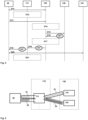
- the user equipment 20 is schematically shown, having established a plurality direct non-access stratum communication links to different network functions or services 140 of the core network 120 of the telecommunications network 100.
- Examples of the network functions or services 140 provided or shown in Figure 2 are the access and mobility management function (AMF), the session management function (SMF), the policy and charging function (PCF).
- AMF access and mobility management function
- SMF session management function
- PCF policy and charging function
- the user plane function is also shown and also constitutes a network function or service of the plurality of network functions or services 140, but the user equipment 20 is connected to the user plane function using a user plane (UP) connection (indicated, in Figure 2 , by means of a drawn-through line) using (besides the Uu interface or Uu reference point between the user equipment 20 and the base station entity 111 (or gNB or the access network 110)) the N3 interface or N3 reference point between the base station entity 111 (or gNB or the access network 110) to the user plane function, whereas the connections between the user equipment 20 and the other network functions or services 140 (besides the user plane function) correspond to non-access stratum communication links, i.e.
- UP user plane
- control plane (CP) connections towards the core network (indicated, in Figure 2 , by means of a dotted line): NAS-MM towards the access and mobility management function, NAS-SM towards the session management function, and NAS-P towards the policy and charging function.
- the user plane function connects the user equipment 20 towards a data network 300, e.g. the internet.
- the present invention by means of the architecture shown in Figure 2 , (i.e. by means of the different direct non-access stratum communication links (or multiple non-access stratum communication links and non-access stratum security contexts) between the user equipment 20 and the different network functions or services 140) it is advantageously possible - instead of using the access and mobility management function as (especially the sole) trusted termination of the user equipment's non-access stratum security context - that the user equipment 20 maintains, transparently via the access network, a respective non-access stratum security context with multiple core network entities (i.e. different network functions or services) for different purposes, i.e. the user equipment 20 maintains multiple non-access stratum security contexts.
- the access and mobility management function as (especially the sole) trusted termination of the user equipment's non-access stratum security context - that the user equipment 20 maintains, transparently via the access network, a respective non-access stratum security context with multiple core network entities (i.e. different network functions or services) for different purposes, i.e. the user
- this enables the network functions or services to be placed in different trust domains:
- the user equipment 20 is aware of the network functions or services it is communicating with (authenticated communication), instead of implicitly trusting the next hop.
- this allows for a zero-trust architecture, and accordingly more decentralized and flexible deployments, e.g. deploying certain network functions or services in public clouds or in environments within less trusted environments (e.g. customer premise); in conventionally known telecommunications networks, this would not be possible as a conventional 5G core network deployment assumes a trust domain, and, e.g., if not, a "supposedly trusted NF" could do whatever it wants with messages it receives and other elements, including the user equipment 20, will not be aware of it.
- such an architecture is possible to be realized, especially by means of implementing bootstrapping, i.e. using the user equipment bootstrapping function or service 130:
- bootstrapping i.e. using the user equipment bootstrapping function or service 130:
- the access network 110 must route control plane messages from the user equipment 20 to the core network 120, the access network needs to know to which network function or service 140 (of the core network 120) it needs to route respective control plane messages, and this especially in case that the user equipment 20 will be associated with many control plane network functions or services 140, and potentially dynamically assigned.
- the user equipment 20 is provided with the non-access stratum endpoints (or endpoint information), allowing the user equipment 20 to address the different network functions or services 140, and this endpoint information can then subsequently be used by the access network 110 (or base station entity 111) to route (non-access stratum) messages, hence the use of the user equipment bootstrapping function or service 130 (UBF).
- UPF user equipment bootstrapping function or service 130
- the user equipment bootstrapping function or service 130 is treated as or corresponds to a non-access stratum component, or, alternatively, the user equipment bootstrapping function or service 130 is located or treated as being behind a network function or service, especially the access and mobility management function (or, interpreted otherwise, an enhanced version of the access and mobility management function might include the functionality of the user equipment bootstrapping function or service 130).
- a communication diagram is schematically shown between the user equipment 20, the base station entity 111, the user equipment bootstrapping function or service 130, and the access and mobility management function as the first network function or service 141, the communication diagram showing - the user equipment bootstrapping function or service 130 being a non-access stratum component - a direct communication between the user equipment 20 and the user equipment bootstrapping function or service 130, and illustrating the establishment of a (considered) non-access stratum communication link (together with a (considered) non-access stratum security context) towards the access and mobility management function as the first network function or service 141.
- an initial message (user equipment request) is sent, by the user equipment 20, towards the access network 110 (i.e. towards the base station entity 111), the initial message being directed or intended towards the user equipment bootstrapping function or service 130 (the first message especially comprising a network identifier information and a user identifier information); in a second processing step 502, the access network 110 (or base station entity 111) routes user equipment request to the user equipment bootstrapping function or service 130 (or to an instance of a user equipment bootstrapping function or service 130) based on the provided information and the configuration. In a third processing step 503, the Initial message (user equipment request) is transmitted towards the user equipment bootstrapping function or service 130 (based on the network identifier information and the user identifier information).
- a non-access stratum security context is established or authenticated towards the user equipment bootstrapping function or service 130 (i.e. between the user equipment 20 and the user equipment bootstrapping function or service 130).
- a non-access stratum message is sent, by the user equipment 20 towards the user equipment bootstrapping function or service 130, requesting an non-access stratum endpoint information for NAS-MM + parameters, i.e. towards the first network function or service 141 being (of the kind of) an access and mobility management function.
- the user equipment bootstrapping function or service 130 maps the request and returns, in a seventh processing step 507, the requested non-access stratum endpoint information 141' (NAS-MM endpoint(s)) to the user equipment 20.
- the (considered) non-access stratum security context (between the user equipment 20 and the access and mobility management function as the first network function or service 141) is established and/or authenticated, using the non-access stratum endpoint information 141', i.e. with non-access stratum endpoint for NAS-MM.
- the access network routes the corresponding user equipment request to the first network function or service 141 based on the provided non-access stratum endpoint information 141'.
- non-access stratum messages in the considered case (of a access and mobility management function) NAS-MM messages
- NAS-MM messages are able to be exchanged between the user equipment 20 and the first network function or service 141 directly and in a secure manner.
- the user equipment bootstrapping function or service 130 is the only component required to be configured, at the access network, for bootstrapping the user equipment-non-access stratum connectivity; based on an initial bootstrapping message (first processing step 501) containing network-related information and user-related information, the access network 110/111 can route the message to the user equipment bootstrapping function or service 130 (third processing step 503) such that a non-access stratum security context can be established. From this point onwards, the access network 110 plays a transparent role in the information exchange between the user equipment 20 and the user equipment bootstrapping function or service 130 (information relay).
- non-access stratum endpoint or non-access stratum endpoint information 141' including the type of non-access stratum endpoint requested (e.g. NAS-MM)
- the user equipment 20 queries the user equipment bootstrapping function or service 130 (processing steps 505, 506, 507). Based on the request, one or more non-access stratum endpoints or pieces of non-access stratum endpoint information are returned.
- the user equipment 20 With the provided endpoint (information 141'), the user equipment 20 is able to establish a non-access stratum security context.
- the non-access stratum endpoint contains information so that the access network can route the message towards the respective network function or service.
- the non-access stratum endpoint (information) 141' is or contains an IP address and/or contains information that can be mapped to an IP address (e.g. a FQDN, information that can be used to construct a well-known FQDN) and/or points to data in a configured list and/or maps to a default value (either pre-configured or well-known).
- a FQDN information that can be used to construct a well-known FQDN
- a default value either pre-configured or well-known
- any kind of (non-user plane) network function or service could be used as the first network function or service 141 instead of the access and mobility management function as the first network function or service 141 in order to establish a respective (considered) non-access stratum communication link with a (considered) non-access stratum security context, e.g., instead of the access and mobility management function: the session management function, the policy and charging function, the location management function, the short message service function.
- a communication diagram is schematically shown between the user equipment 20, the base station entity 111, the user equipment bootstrapping function or service 130, the session management function as the first network function or service 141, and the access and mobility management function as the further network function or service 142, the communication diagram showing - the user equipment bootstrapping function or service 130 being located or treated as being behind the further network function or service 142, especially the access and mobility management function - a communication between the user equipment 20 and the user equipment bootstrapping function or service 130 via the access and mobility management function, i.e. via the further network function or service 142, and illustrating the establishment of a (considered) non-access stratum communication link (together with a (considered) non-access stratum security context) towards the session management function as the first network function or service 141.
- a first processing step 511 the user equipment 20 registers to the network (i.e. user equipment registration occurs especially via a request in a manner according to established procedures); this comprises the establishment of a non-access stratum security context between the user equipment 20 and the access and mobility management function and involves communication between the user equipment 20 with the access and mobility management function as the further network function or service 142.
- the access network 110, and especially the base station entity 111 routes the user equipment request to an access and mobility management function (i.e. an instance of potentially a plurality of access and mobility management function instances) as the further network function or service 142; this occurs based on provided information and configuration.
- an access and mobility management function i.e. an instance of potentially a plurality of access and mobility management function instances
- the user equipment 20 transmits a non-access stratum message requesting a (non-access stratum communication link) endpoint for NAS-SM communication (i.e. to either the session management function or to an instance providing session management functionality); this non-access stratum message also comprises appropriate parameters.
- the further network function or service 142 retrieves the NAS-SM related endpoint request information from the user equipment bootstrapping function or service 130, comprising requesting - in a fifth processing step 515, from the user equipment bootstrapping function or service 130 - the NAS-SM endpoint(s) or endpoint information 141', and retrieving (or receiving) - in a sixth processing step 516, from the user equipment bootstrapping function or service 130 - the NAS-SM endpoint(s) or endpoint information 141'.
- the access and mobility management function (as the further network function or service 142) produces the NAS-SM endpoint(s), i.e.
- the non-access stratum endpoint information 141' to be sent to the user equipment 20 based on the information received from the user equipment bootstrapping function or service 130, and transmits this non-access stratum endpoint information 141' towards the user equipment 20, via the access network 110, i.e. the base station entity 111, cf. an eighth processing step 518, and a ninth processing step 519 in Figure 4 .
- the (considered) non-access stratum security context between the user equipment 20 and the session management function as the first network function or service 141 is established and/or authenticated, using the non-access stratum endpoint information 141', i.e. with non-access stratum endpoint for NAS-SM.
- the access network routes the corresponding user equipment request to the first network function or service 141 (session management function in Figure 4 )) based on the provided non-access stratum endpoint information 141'; then, non-access stratum messages (in the considered case (of an session management function) NAS-SM messages) are able to be exchanged between the user equipment 20 and the first network function or service 141 directly and in a secure manner.
- non-access stratum messages in the considered case (of an session management function) NAS-SM messages
- the access and mobility management function is enhanced to further include the functionality to provide non-access stratum endpoints (or non-access stratum endpoint information) to the user equipment 20.
- the user equipment network registration and establishment of the non-access stratum security context with the access and mobility management function is performed based on the conventionally known procedures, and messages are routed to the access and mobility management function based on existing means.
- the user equipment 20 can then request the access and mobility management function (as the further network function or service 142) to provide a non-access stratum endpoint of or towards a session management function (e.g.
- the access and mobility management function as further network function or service 142 then retrieves the non-access stratum endpoint information from the user equipment bootstrapping function or service 130 based on the information provided by the user equipment 20 (the user equipment bootstrapping function or service functionality could especially be an integral part of the access and mobility management function and based on simple means such as configuration within the access and mobility management function), and one or more non-access stratum endpoints (or pieces of endpoint information) are returned to the user equipment 20; with the provided non-access stratum endpoint, the user equipment 20 is then able to establish the (considered) non-access stratum security context with the session management function, i.e. the first network function or service 141.
- the session management function i.e. the first network function or service 141.
- Figure 5 schematically illustrates the user equipment 20 having established two different non-access stratum communication links 21, 22, that is, in parallel, to two different network functions or services 141, 143 (first and second network functions or services) of the core network 120 of the telecommunications network 100, namely a first non-access stratum communication link 21 to the first network function or service 141, and a second non-access stratum communication link 22 to the second network function or service 143.
- the non-access stratum signaling is transported via (in case of a mobile communication network) the air interface towards the base station entity 111, especially a gNB.
- the (radio) access network 110 forwards (transparent forwarding done by the gNB) the non-access stratum signaling but its content is encrypted. Between the (radio) access network 110 and the core network 120, parallel security contexts transport the non-access stratum signaling between the user equipment 20 and several network functions or services in the core network 120.
- Figure 6 schematically illustrates another example of two parallel non-access stratum security contexts, with the user equipment 20 having established a first non-access stratum communication link 21 to a first network function or service 141 of the core network 120 of the telecommunications network 100 (e.g. as its visited network), and a second non-access stratum communication link 22 to a second network function or service 241 of the further core network 220 of the further telecommunications network 200 (e.g. as its home network).
- a first network function or service 141 of the core network 120 of the telecommunications network 100 e.g. as its visited network
- second non-access stratum communication link 22 to a second network function or service 241 of the further core network 220 of the further telecommunications network 200 (e.g. as its home network).
- Figure 6 especially shows the case of roaming and the application of multiple security contexts 21, 22 to, e.g., the policy and charging function case:
- the H-PCF second network function or service 241
- the V-PCF 141 can directly send information that needs to be protected via the user equipment-to-H-PCF 241 security context 22 and send the V-PCF 141 a reference that the V-PCF 141 can use to construct its messages if the information (even if the content is not known to the V-PCF) should be referenced in its communication with the user equipment 20.
- the double arrow between the first network function or service 141 e.g. a policy and charging function of the visited network
- the second network function or service 241 e.g. a policy and charging function of the home network
- Figure 7 schematically illustrates the user equipment 20 communicating with different network functions with multiple non-access stratum security contexts in a nested manner, with the user equipment 20 having established the first non-access stratum communication link 21 to the first network function or service 141 of the core network 120 of the telecommunications network 100, and the second non-access stratum communication link 22 to the second network function or service 241 of the further core network 220 of the further telecommunications network 200, especially the telecommunications network 100 corresponding to the visited network of the user equipment 20 and the further telecommunications network 200 corresponding to the home network of the user equipment 20.
- Figure 7 shows an example where non-access stratum communication links between the user equipment 20 and a plurality of network functions or services are chained together or nested (network function chaining by means of nesting security contexts), used, e.g., for the case of URSP rule signaling in home-routed roaming.
- two PCFs i.e.
- the gNB or base station entity 111 in the radio access network 110 may not even be aware that there are multiple, nested non-access stratum security contexts (it nevertheless fulfills the same role of transparent forwarding as previously explained; between the radio access network 110 and the core network 120 of the visited network, the nested non-access stratum security contexts transport non-access stratum signaling between the user equipment 20 and a network function or service in the core network; the V-PCF 141 can access information from its security context but otherwise realizes transparent forwarding of the nested security content.
- the V-PCF 141 needs to setup the V-SMF (not shown in Figure 7 ) and thus indirectly QoS in the V-UPF (not shown in Figure 7 ) so that the agreed quality-of-service can be established.
- the URSP rule can be sent via current means from the H-PCF 241 to the V-PCF 141, whereas information parts the H-PLMN does not want to disclose to the V-PLMN (e.g.
- an application ID are sent via the a NAS security context between the H-PCF and UE, either in parallel or nested within the NAS security context of the V-PCF 141.
- an information element in one non-access stratum security context is referencing another non-access stratum security context or an information element thereof.
- the relay functionality of the V-PCF 141 (used for forwarding communication towards the H-PCF 241, and for receiving from there) is able to access transmitted information in the N24 (or N32/SEPP) interface between H-PCF 241 and V-PCF 141 but not between H-PCF 241 and the user equipment 20, such that the user equipment 20 is able to reconstruct the full information received via the NAS security context with the V-PLMN's PCF 141 and the H-PLMN's PCF 241, information elements can be referenced between security contexts.
- the reference includes:
- the V-PCF 141 (intermediate network function or service) relays the NAS messages between the user equipment 20 and the H-PCF 241 (final network function or service). While the intermediate network function or service 141 is aware that some information is transmitted via a second channel, it cannot access this information.
- the H-PCF 241 is able to send a data element to a V-PCF 141 (e.g. a UE policy container) composed of information elements (IEs), e.g. NAS IEs in the case of a UE policy container, where some IEs are visible to the V-PCF 141 (e.g. securely using the security context between H-PCF 241 and V-PCF 141), whereas some other elements are not visible: either the IE content (e.g. the V-PCF 141 can be aware that a URSP rule references an application descriptor but cannot see the actual descriptor) or IE content and IE type (e.g.
- the V-PCF 141 can only see that some information contained in the URSP rule is encrypted).
- cryptographic methods e.g. signing
- a data element e.g. the mentioned URSP rule
- the user equipment 20 is able to contain or comprise information from two security contexts, i.e. the IEs being verifiably originating from the V-PCF 141 and/or from the H-PCF 241.
- FIG. 8 shows a communication diagram between the user equipment 20, the base station entity 111, the further network function or service 142 (for example an access and mobility management function, AMF), the visited policy and charging function V-PCF as the first network function or service 141, and the home policy and charging function H-PCF as the second network function or service 241, the communication diagram showing examples of messages: a first message (in a first processing step 531) from the H-PCF 241 to the V-PCF 141, a second message (in a second processing step 532) from the V-PCF 141 to the AMF 142, a third message (in a third processing step 533) from the AMF 142 to the user equipment 20.
- AMF access and mobility management function
- the first message comprises a Parameter A (or information element A) transported in a non-access stratum security context from H-PCF 241 to V-PCF 141, and a Parameter B (or information element B) transported in a non-access stratum security context from H-PCF 241 to the user equipment 20.
- the second message comprises a Parameter A (or information element A) transported in a non-access stratum security context from V-PCF 141 to the user equipment 20, a Parameter B (or information element B) transported in a non-access stratum security context from H-PCF 241 to the user equipment 20, and a Parameter C (or information element C) transported in a non-access stratum security context from V-PCF 141 to AMF 142.
- the third message comprises a Parameter A (or information element A) transported in a non-access stratum security context from V-PCF 141 to the user equipment 20, a Parameter B (or information element B) transported in a non-access stratum security context from H-PCF 241 to the user equipment 20, and a Parameter C (or information element C) transported in a non-access stratum security context from AMF 142 to the user equipment 20.
- a given parameter can be sent so that an intermediary recipient can be aware of it (if this is desired) and, also, that an information is able to be concealed from an intermediary recipient (if this is desired).
- IEs non-access stratum Information Elements
Landscapes
- Engineering & Computer Science (AREA)
- Computer Security & Cryptography (AREA)
- Computer Networks & Wireless Communication (AREA)
- Signal Processing (AREA)
- Software Systems (AREA)
- Theoretical Computer Science (AREA)
- General Engineering & Computer Science (AREA)
- Physics & Mathematics (AREA)
- General Physics & Mathematics (AREA)
- Computer Hardware Design (AREA)
- Computing Systems (AREA)
- Mobile Radio Communication Systems (AREA)
- Data Exchanges In Wide-Area Networks (AREA)
Claims (12)
- Verfahren zum Betreiben einer Benutzerausrüstung (20) mit einem Telekommunikationsnetz (100) und zum Kommunizieren mit mindestens zwei von mehreren Netzfunktionen oder Netzdiensten (140) des Telekommunikationsnetzes (100) oder eines weiteren Telekommunikationsnetzes (200), wobei die Benutzerausrüstung (20) unter Verwendung mindestens einer ersten Nichtzugangsschicht-Kommunikationsverbindung (21) und einer zweiten Nichtzugangsschicht-Kommunikationsverbindung (22) betrieben wird, wobei die erste Nichtzugangsschicht-Kommunikationsverbindung (21) zwischen der Benutzerausrüstung (20) und einer ersten Netzfunktion oder einem ersten Netzdienst (141) der mehreren Netzfunktionen oder Netzdienste (140) hergestellt wird, und die zweite Nichtzugangsschicht-Kommunikationsverbindung (22) zwischen der Benutzerausrüstung (20) und einer zweiten Netzfunktion oder einem zweiten Netzdienst (143, 241) hergestellt wird, wobei die erste Nichtzugangsschicht-Kommunikationsverbindung (21) das Herstellen eines ersten Nichtzugangsschicht-Sicherheitskontextes zwischen der Benutzerausrüstung (20) und der ersten Netzfunktion oder dem ersten Netzdienst (141) umfasst und die zweite Nichtzugangsschicht-Kommunikationsverbindung (22) das Herstellen eines zweiten Nichtzugangsschicht-Sicherheitskontextes zwischen der Benutzerausrüstung (20) und der zweiten Netzfunktion oder dem zweiten Netzdienst (143, 241) umfasst,
wobei der Betrieb der Benutzerausrüstung (20) unter Verwendung mindestens der ersten und der zweiten Nichtzugangsschicht-Kommunikationsverbindung (21, 22) die folgenden Schritte umfasst:- in einem ersten Schritt werden die erste Nichtzugangsschicht-Kommunikationsverbindung (21) sowie der erste Nichtzugangsschicht-Sicherheitskontext unter Verwendung einer ersten Nichtzugangsschicht-Endpunktinformation bezüglich der ersten Netzfunktion oder des ersten Netzdienstes (141) eingerichtet, und die zweite Nichtzugangsschicht-Kommunikationsverbindung (22) sowie der zweite Nichtzugangsschicht-Sicherheitskontext werden unter Verwendung einer zweiten Nichtzugangsschicht-Endpunktinformation bezüglich der zweiten Netzfunktion oder des zweiten Netzdienstes (143, 241) eingerichtet, wobei die erste und die zweite Endpunktinformation durch die Benutzerausrüstung (20) empfangen werden,- in einem zweiten Schritt werden die erste und die zweite Nichtzugangsschicht-Kommunikationsverbindung (21, 22) zwischen ihren jeweiligen Endpunkten verwendet, wobei ein erstes Informationselement, das Teil des ersten Nichtzugangsschicht-Sicherheitskontextes ist oder unter Verwendung des ersten Nichtzugangsschicht-Sicherheitskontextes gesendet wird, in der Lage ist, durch ein zweites Informationselement, das Teil des zweiten Nichtzugangsschicht-Sicherheitskontextes ist oder unter Verwendung des zweiten Nichtzugangsschicht-Sicherheitskontextes gesendet wird, referenziert zu werden, und/oder wobei ein erstes Informationselement, das Teil des ersten Nichtzugangsschicht-Sicherheitskontextes ist oder unter Verwendung des ersten Nichtzugangsschicht-Sicherheitskontextes gesendet wird, in der Lage ist, ein zweites Informationselement, das Teil des zweiten Nichtzugangsschicht-Sicherheitskontextes ist oder unter Verwendung des zweiten Nichtzugangsschicht-Sicherheitskontextes gesendet wird, zu referenzieren, wobei eines des ersten und des zweiten Informationselements, falls es als ein Referenzierungsinformationsteil verwendet wird, die das andere des ersten und des zweiten Informationselements referenziert, mindestens eines von Folgendem umfasst:- eine Nichtzugangsschicht-Sicherheitskontext-Kennungsinformation für die referenzierte Nichtzugangsschicht-Kommunikationsverbindung oder den referenzierten Nichtzugangsschicht-Sicherheitskontext,- eine Informationselement-Kennung des referenzierten Informationselements. - Verfahren nach Anspruch 1, wobei die erste Nichtzugangsschicht-Kommunikationsverbindung (21) sowie der erste Nichtzugangsschicht-Sicherheitskontext unter Verwendung einer ersten Schlüsselinformation und/oder eines ersten Verschlüsselungsverfahrens hergestellt werden, und wobei die zweite Nichtzugangsschicht-Kommunikationsverbindung (22) sowie der zweite Nichtzugangsschicht-Sicherheitskontext unter Verwendung einer zweiten Schlüsselinformation und/oder eines zweiten Verschlüsselungsverfahrens hergestellt werden,
wobei sich insbesondere die erste Schlüsselinformation und/oder das erste Verschlüsselungsverfahren von der zweiten Schlüsselinformation und/oder dem zweiten Verschlüsselungsverfahren unterscheiden. - Verfahren nach einem der vorangehenden Ansprüche, wobei die zweite Netzfunktion oder der zweite Netzdienst (143, 241) eine Netzfunktion oder ein Netzdienst eines weiteren Telekommunikationsnetzes (200) ist, insbesondere im Fall einer Roaming-Situation, in der die Benutzerausrüstung (20) mit dem weiteren Telekommunikationsnetz (200) verbunden ist oder innerhalb des weiteren Telekommunikationsnetzes (200) roamt,wobei insbesondere die erste Netzfunktion oder der erste Netzdienst (141) und die zweite Netzfunktion oder der zweite Netzdienst (143, 241) entsprechende Netzfunktionen oder Netzdienste, die insbesondere die gleiche Art von Netzfunktionsfunktionalitäten bereitstellen, des Telekommunikationsnetzes (100) bzw. des weiteren Telekommunikationsnetzes (200) sind,wobei insbesondere die erste Nichtzugangsschicht-Kommunikationsverbindung (21) und/oder der erste Nichtzugangsschicht-Sicherheitskontext einerseits und die zweite Nichtzugangsschicht-Kommunikationsverbindung (22) und/oder der zweite Nichtzugangsschicht-Sicherheitskontext andererseits in einer verschachtelten Weise realisiert sind,wobei insbesondere die erste Netzfunktion oder der erste Netzdienst (141) und die zweite Netzfunktion oder der zweite Netzdienst (143, 241) parallel durch die Benutzerausrüstung (20) verwendet werden und nichtentsprechende Netzfunktionen oder Netzdienste sind, die die verschiedenen Arten von Netzfunktionsfunktionalitäten bereitstellen.
- Verfahren nach einem der vorangehenden Ansprüche, wobei die Nichtzugangsschicht-Sicherheitskontext-Kennungsinformation die Nichtzugangsschicht-Endpunktinformation des referenzierten Nichtzugangsschicht-Sicherheitskontextes umfasst.
- Verfahren nach einem der vorangehenden Ansprüche, wobei in der Nichtzugangsschicht-Kommunikation, an der die Benutzerausrüstung (20) und sowohl die erste Netzfunktion oder den ersten Netzdienst (141) als auch die zweite Netzfunktion oder den zweiten Netzdienst (143, 241) beteiligt sind, mindestens der erste und der zweite Nichtzugangsschicht-Sicherheitskontext verwendet werden, insbesondere, um Benutzerausrüstungs-Routenwahlvorschrift-Regeln zu senden,
wobei insbesondere ein Informationselement, oder ein Teil davon, durch die erste Netzfunktion oder den ersten Netzdienst (141) oder die zweite Netzfunktion oder den zweiten Netzdienst (143, 241) nur dann sichtbar und/oder decodierbar ist, falls das jeweilige Informationselement, oder ein Teil davon, Teil des jeweiligen Nichtzugangsschicht-Sicherheitskontextes ist. - Verfahren nach einem der vorangehenden Ansprüche, wobei die Herstellung mindestens einer der ersten Nichtzugangsschicht-Kommunikationsverbindung und der zweiten Nichtzugangsschicht-Kommunikationsverbindung die Verwendung einer Benutzerausrüstungs-Bootstrapping-Funktion oder eines Benutzerausrüstungs-Bootstrapping-Dienstes (130) umfasst, wobei die Benutzerausrüstungs-Bootstrapping-Funktion oder der Benutzerausrüstungs-Bootstrapping-Dienst (130) entweder ein Teil des Telekommunikationsnetzes (100) ist oder über das Telekommunikationsnetz (100) oder durch einen Netzknoten desselben zugänglich ist,
wobei insbesondere die Benutzerausrüstung (20) zuerst anfordert, dass die mindestens eine der ersten Nichtzugangsschicht-Kommunikationsverbindung und der zweiten Nichtzugangsschicht-Kommunikationsverbindung hergestellt wird, wobei die Benutzerausrüstungs-Bootstrapping-Funktion oder der Benutzerausrüstungs-Bootstrapping-Dienst (130) dann eine Nichtzugangsschicht-Endpunktinformation (141') in Bezug auf das mindestens eine der ersten Netzfunktion oder des ersten Netzdienstes (141) und der zweiten Netzfunktion oder des zweiten Netzdienstes (143, 241) bereitstellt, und die Nichtzugangsschicht-Endpunktinformation (141') verwendet wird, um den mindestens einen des ersten Nichtzugangsschicht-Sicherheitskontextes und des zweiten Nichtzugangsschicht-Sicherheitskontextes herzustellen und/oder eine Authentifizierung der Benutzerausrüstung (20) in Bezug auf das mindestens eine der ersten Netzfunktion oder des ersten Netzdienstes (141) und der zweiten Netzfunktion oder des zweiten Netzdienstes (143, 241) durchzuführen. - Verfahren nach einem der vorangehenden Ansprüche, wobei in Bezug auf Informationselemente und/oder -nachrichten, die durch die Benutzerausrüstung (20) in Richtung der ersten Netzfunktion oder des ersten Netzdienstes (141) oder der zweiten Netzfunktion oder des zweiten Netzdienstes (143, 241) gesendet werden, die jeweilige Nichtzugangsschicht-Endpunktinformation (141') in solchen durch die Benutzerausrüstung (20) gesendeten Informationselementen und/oder -nachrichten enthalten ist, wobei das Zugangsnetz (110) oder der Zugangsnetzknoten (111) des Telekommunikationsnetzes (100) die Nichtzugangsschicht-Endpunktinformation (141') verwendet, um solche Informationselemente und/oder -nachrichten an ihren Zielort weiterzuleiten, wobei solche durch die Benutzerausrüstung (20) gesendeten Informationselemente und/oder -nachrichten insbesondere sowohl eine Quelleninformation, die sich auf die Benutzerausrüstung (20) bezieht oder diese angibt, als auch eine Zielortinformation, die auf die erste Netzfunktion oder den ersten Netzdienst (141) oder die zweite Netzfunktion oder den zweiten Netzdienst (143, 241) verweist oder diese angibt, umfassen.
- Verfahren nach einem der vorangehenden Ansprüche, wobei in Bezug auf Informationselemente und/oder -nachrichten, die durch die ersten Netzfunktion oder den ersten Netzdienst (141) oder die zweite Netzfunktion oder den zweiten Netzdienst (143, 241) in Richtung der Benutzerausrüstung (20) gesendet werden, eine Nichtzugangsschicht-Endpunktinformation der Benutzerausrüstung (20) in solchen Informationselementen und/oder -nachrichten, die durch die erste Netzfunktion oder den ersten Netzdienst (141) oder die zweite Netzfunktion oder den zweiten Netzdienst (143, 241) gesendet werden, enthalten ist, wobei das Zugangsnetz (110) oder der Zugangsnetzknoten (111) des Telekommunikationsnetzes (100) die Nichtzugangsschicht-Endpunktinformation der Benutzerausrüstung (20) verwendet, um solche Informationselemente und/oder -nachrichten an die Benutzerausrüstung (20) weiterzuleiten.
- Benutzerausrüstung (20) für den Betrieb mit einem Telekommunikationsnetz (100) und zum Kommunizieren mit mindestens zwei von mehreren Netzfunktionen oder Netzdiensten (140) des Telekommunikationsnetzes (100) oder eines weiteren Telekommunikationsnetzes (200), wobei die Benutzerausrüstung (20) dazu eingerichtet ist, mindestens eine erste Nichtzugangsschicht-Kommunikationsverbindung (21) und eine zweite Nichtzugangsschicht-Kommunikationsverbindung (22) zu verwenden, wobei die erste Nichtzugangsschicht-Kommunikationsverbindung (21) zwischen der Benutzerausrüstung (20) und einer ersten Netzfunktion oder einem ersten Netzdienst (141) der mehreren Netzfunktionen oder Netzdienste (140) hergestellt ist, und die zweite Nichtzugangsschicht-Kommunikationsverbindung (22) zwischen der Benutzerausrüstung (20) und einer zweiten Netzfunktion oder einem zweiten Netzdienst (143, 241) hergestellt ist, wobei die erste Nichtzugangsschicht-Kommunikationsverbindung (21) das Herstellen eines ersten Nichtzugangsschicht-Sicherheitskontextes zwischen der Benutzerausrüstung (20) und der ersten Netzfunktion oder dem ersten Netzdienst (141) umfasst und die zweite Nichtzugangsschicht-Kommunikationsverbindung (22) das Herstellen eines zweiten Nichtzugangsschicht-Sicherheitskontextes zwischen der Benutzerausrüstung (20) und der zweiten Netzfunktion oder dem zweiten Netzdienst (143, 241) umfasst,
wobei die Benutzerausrüstung (20), die mindestens die erste und die zweite Nichtzugangsschicht-Kommunikationsverbindung (21, 22) verwendet, so eingerichtet ist, dass:- die erste Nichtzugangsschicht-Kommunikationsverbindung (21) sowie der erste Nichtzugangsschicht-Sicherheitskontext unter Verwendung einer ersten Nichtzugangsschicht-Endpunktinformation bezüglich der ersten Netzfunktion oder des ersten Netzdienstes (141) eingerichtet sind, und die zweite Nichtzugangsschicht-Kommunikationsverbindung (22) sowie der zweite Nichtzugangsschicht-Sicherheitskontext unter Verwendung einer zweiten Nichtzugangsschicht-Endpunktinformation bezüglich der zweiten Netzfunktion oder des zweiten Netzdienstes (143, 241) eingerichtet sind, wobei die Benutzerausrüstung (20) die erste und die zweite Endpunktinformation, insbesondere vom Telekommunikationsnetz (100), empfängt,- die erste und die zweite Nichtzugangsschicht-Kommunikationsverbindung (21, 22) zwischen ihren jeweiligen Endpunkten verwendet werden, wobei ein erstes Informationselement, das Teil des ersten Nichtzugangsschicht-Sicherheitskontextes ist oder unter Verwendung des ersten Nichtzugangsschicht-Sicherheitskontextes gesendet wird, in der Lage ist, durch ein zweites Informationselement, das Teil des zweiten Nichtzugangsschicht-Sicherheitskontextes ist oder unter Verwendung des zweiten Nichtzugangsschicht-Sicherheitskontextes gesendet wird, referenziert zu werden, und/oder wobei ein erstes Informationselement, das Teil des ersten Nichtzugangsschicht-Sicherheitskontextes ist oder unter Verwendung des ersten Nichtzugangsschicht-Sicherheitskontextes gesendet wird, in der Lage ist, ein zweites Informationselement, das Teil des zweiten Nichtzugangsschicht-Sicherheitskontextes ist oder unter Verwendung des zweiten Nichtzugangsschicht-Sicherheitskontextes gesendet wird, zu referenzieren, wobei eines des ersten und des zweiten Informationselements, falls es als ein Referenzierungsinformationsteil verwendet wird, die das andere des ersten und des zweiten Informationselements referenziert, mindestens eines von Folgendem umfasst:- eine Nichtzugangsschicht-Sicherheitskontext-Kennungsinformation für die referenzierte Nichtzugangsschicht-Kommunikationsverbindung oder den referenzierten Nichtzugangsschicht-Sicherheitskontext,- eine Informationselement-Kennung des referenzierten Informationselements. - System oder Telekommunikationsnetz (100) zum Betreiben einer Benutzerausrüstung (20) mit dem Telekommunikationsnetz (100) und zum Bereitstellen von mindestens zwei von mehreren Netzfunktionen oder Netzdiensten (140), wobei die mehreren Netzfunktionen oder Netzdienste (140) in der Lage sind, verschiedene Arten von Netzfunktionsfunktionalitäten bereitzustellen, wobei die Benutzerausrüstung (20) unter Verwendung mindestens einer ersten Nichtzugangsschicht-Kommunikationsverbindung (21) und einer zweiten Nichtzugangsschicht-Kommunikationsverbindung (22) betrieben ist, wobei die erste Nichtzugangsschicht-Kommunikationsverbindung (21) zwischen der Benutzerausrüstung (20) und einer ersten Netzfunktion oder einem ersten Netzdienst (141) der mehreren Netzfunktionen oder Netzdienste (140) hergestellt ist, und die zweite Nichtzugangsschicht-Kommunikationsverbindung (22) zwischen der Benutzerausrüstung (20) und einer zweiten Netzfunktion oder einem zweiten Netzdienst (143, 241) hergestellt ist, wobei die erste Nichtzugangsschicht-Kommunikationsverbindung (21) das Herstellen eines ersten Nichtzugangsschicht-Sicherheitskontextes zwischen der Benutzerausrüstung (20) und der ersten Netzfunktion oder dem ersten Netzdienst (141) umfasst und die zweite Nichtzugangsschicht-Kommunikationsverbindung (22) das Herstellen eines zweiten Nichtzugangsschicht-Sicherheitskontextes zwischen der Benutzerausrüstung (20) und der zweiten Netzfunktion oder dem zweiten Netzdienst (143, 241) umfasst,
wobei das System oder Telekommunikationsnetz (100) so eingerichtet ist, dass:- die erste Nichtzugangsschicht-Kommunikationsverbindung (21) sowie der erste Nichtzugangsschicht-Sicherheitskontext unter Verwendung einer ersten Nichtzugangsschicht-Endpunktinformation bezüglich der ersten Netzfunktion oder des ersten Netzdienstes (141) eingerichtet sind, und die zweite Nichtzugangsschicht-Kommunikationsverbindung (22) sowie der zweite Nichtzugangsschicht-Sicherheitskontext unter Verwendung einer zweiten Nichtzugangsschicht-Endpunktinformation bezüglich der zweiten Netzfunktion oder des zweiten Netzdienstes (143, 241) eingerichtet sind, wobei die erste und die zweite Endpunktinformation, durch das Telekommunikationsnetz (100), an die Benutzerausrüstung (20) gesendet werden,- die erste und die zweite Nichtzugangsschicht-Kommunikationsverbindung (21, 22) zwischen ihren jeweiligen Endpunkten verwendet werden, wobei ein erstes Informationselement, das Teil des ersten Nichtzugangsschicht-Sicherheitskontextes ist oder unter Verwendung des ersten Nichtzugangsschicht-Sicherheitskontextes gesendet wird, in der Lage ist, durch ein zweites Informationselement, das Teil des zweiten Nichtzugangsschicht-Sicherheitskontextes ist oder unter Verwendung des zweiten Nichtzugangsschicht-Sicherheitskontextes gesendet wird, referenziert zu werden, und/oder wobei ein erstes Informationselement, das Teil des ersten Nichtzugangsschicht-Sicherheitskontextes ist oder unter Verwendung des ersten Nichtzugangsschicht-Sicherheitskontextes gesendet wird, in der Lage ist, ein zweites Informationselement, das Teil des zweiten Nichtzugangsschicht-Sicherheitskontextes ist oder unter Verwendung des zweiten Nichtzugangsschicht-Sicherheitskontextes gesendet wird, zu referenzieren, wobei eines des ersten und des zweiten Informationselements, falls es als ein Referenzierungsinformationsteil verwendet wird, die das andere des ersten und des zweiten Informationselements referenziert, mindestens eines von Folgendem umfasst:- eine Nichtzugangsschicht-Sicherheitskontext-Kennungsinformation für die referenzierte Nichtzugangsschicht-Kommunikationsverbindung oder den referenzierten Nichtzugangsschicht-Sicherheitskontext,- eine Informationselement-Kennung des referenzierten Informationselements. - Programm, umfassend einen computerlesbaren Programmcode, der, wenn er in einer Benutzerausrüstung (20) und/oder in einer Netzfunktion oder einem Netzdienst (140) eines Telekommunikationsnetzes (100) ausgeführt wird, die Benutzerausrüstung (20) und/oder die Netzfunktion oder den Netzdienst (140) des Telekommunikationsnetzes (100) veranlasst, ein Verfahren nach einem der Ansprüche 1 bis 8 durchzuführen.
- Computerlesbares Medium, umfassend Instruktionen, die, wenn sie in einer Benutzerausrüstung (20) und/oder in einer Netzfunktion oder einem Netzdienst (140) eines Telekommunikationsnetzes (100) ausgeführt werden, die Benutzerausrüstung (20) und/oder die Netzfunktion oder den Netzdienst (140) des Telekommunikationsnetzes (100) veranlassen, ein Verfahren nach einem der Ansprüche 1 bis 8 durchzuführen.
Priority Applications (5)
| Application Number | Priority Date | Filing Date | Title |
|---|---|---|---|
| EP22212870.4A EP4387326B1 (de) | 2022-12-12 | 2022-12-12 | Verfahren, teilnehmergerät, system, komputerprogram und computerlesbares medium zur kommunikation zwischen einem teilnehmergerät und wenigstens zwei netzwerkdienste oder netzwerkfunktionen über wenigstens einem telekommunikationsnetzwerk |
| ES22212870T ES3014916T3 (en) | 2022-12-12 | 2022-12-12 | Method, user equipment, system, computer program and computer-readable medium for a user equipment to communicate with at least two network functions or services over one or more telecommunication networks |
| PCT/EP2023/084132 WO2024126136A1 (en) | 2022-12-12 | 2023-12-04 | Method, system and computer program for a user equipment to communicate with at least two network functions or services over one or more telecommunication networks |
| CN202380080668.9A CN120239982A (zh) | 2022-12-12 | 2023-12-04 | 用于用户装备与一个或多个电信网络上的至少两个网络功能或服务进行通信的方法、系统和计算机程序 |
| US19/131,543 US20260006434A1 (en) | 2022-12-12 | 2023-12-04 | User equipment communicating with at least two of a plurality of network functions or services of a telecommunications network |
Applications Claiming Priority (1)
| Application Number | Priority Date | Filing Date | Title |
|---|---|---|---|
| EP22212870.4A EP4387326B1 (de) | 2022-12-12 | 2022-12-12 | Verfahren, teilnehmergerät, system, komputerprogram und computerlesbares medium zur kommunikation zwischen einem teilnehmergerät und wenigstens zwei netzwerkdienste oder netzwerkfunktionen über wenigstens einem telekommunikationsnetzwerk |
Publications (2)
| Publication Number | Publication Date |
|---|---|
| EP4387326A1 EP4387326A1 (de) | 2024-06-19 |
| EP4387326B1 true EP4387326B1 (de) | 2025-02-12 |
Family
ID=84488474
Family Applications (1)
| Application Number | Title | Priority Date | Filing Date |
|---|---|---|---|
| EP22212870.4A Active EP4387326B1 (de) | 2022-12-12 | 2022-12-12 | Verfahren, teilnehmergerät, system, komputerprogram und computerlesbares medium zur kommunikation zwischen einem teilnehmergerät und wenigstens zwei netzwerkdienste oder netzwerkfunktionen über wenigstens einem telekommunikationsnetzwerk |
Country Status (5)
| Country | Link |
|---|---|
| US (1) | US20260006434A1 (de) |
| EP (1) | EP4387326B1 (de) |
| CN (1) | CN120239982A (de) |
| ES (1) | ES3014916T3 (de) |
| WO (1) | WO2024126136A1 (de) |
Family Cites Families (6)
| Publication number | Priority date | Publication date | Assignee | Title |
|---|---|---|---|---|
| WO2018108786A1 (en) * | 2016-12-13 | 2018-06-21 | Deutsche Telekom Ag | Method for provisioning enhanced communication capabilities to user equipment |
| US11102649B2 (en) * | 2017-01-30 | 2021-08-24 | Telefonaktiebolaget Lm Ericsson (Publ) | Wireless communications |
| EP3937521A1 (de) * | 2020-07-09 | 2022-01-12 | Deutsche Telekom AG | Verfahren für eine verbesserte austausch- und/oder zusammenarbeitsfunktionalität zwischen einem ersten mobilkommunikationsnetzwerk und einem zweiten mobilkommunikationsnetzwerk, system, netzwerkaustauschfunktion, programm und computerprogrammprodukt |
| US12507190B2 (en) * | 2020-09-23 | 2025-12-23 | Telefonaktiebolaget Lm Ericsson (Publ) | Handling registrations of a user equipment in different communication networks |
| WO2022087964A1 (en) * | 2020-10-29 | 2022-05-05 | Apple Inc. | Nas counts for multiple wireless connections |
| CN114866991A (zh) * | 2021-02-03 | 2022-08-05 | 维沃移动通信有限公司 | 核心网系统 |
-
2022
- 2022-12-12 ES ES22212870T patent/ES3014916T3/es active Active
- 2022-12-12 EP EP22212870.4A patent/EP4387326B1/de active Active
-
2023
- 2023-12-04 WO PCT/EP2023/084132 patent/WO2024126136A1/en not_active Ceased
- 2023-12-04 CN CN202380080668.9A patent/CN120239982A/zh active Pending
- 2023-12-04 US US19/131,543 patent/US20260006434A1/en active Pending
Also Published As
| Publication number | Publication date |
|---|---|
| EP4387326A1 (de) | 2024-06-19 |
| ES3014916T3 (en) | 2025-04-28 |
| US20260006434A1 (en) | 2026-01-01 |
| CN120239982A (zh) | 2025-07-01 |
| WO2024126136A1 (en) | 2024-06-20 |
Similar Documents
| Publication | Publication Date | Title |
|---|---|---|
| US12425857B2 (en) | Security management between edge proxy and internetwork exchange node in a communication system | |
| EP4152691B1 (de) | Roaming-hub zur sicheren verbindung in roaming-szenarien | |
| JP2022529234A (ja) | テレスコピックfqdnをハンドリングするためのシステムおよび方法 | |
| US20230379853A1 (en) | Core network system | |
| WO2021094349A1 (en) | Multi-step service authorization for indirect communication in a communication system | |
| EP3937521A1 (de) | Verfahren für eine verbesserte austausch- und/oder zusammenarbeitsfunktionalität zwischen einem ersten mobilkommunikationsnetzwerk und einem zweiten mobilkommunikationsnetzwerk, system, netzwerkaustauschfunktion, programm und computerprogrammprodukt | |
| US20250254596A1 (en) | Diverse pathway integration | |
| US20260040063A1 (en) | Distributed Network Edge Security Architecture | |
| KR100702288B1 (ko) | 이동 통신망 시스템 및 이동 통신 방법 | |
| US20250126466A1 (en) | Error message generation and processing | |
| EP4387326B1 (de) | Verfahren, teilnehmergerät, system, komputerprogram und computerlesbares medium zur kommunikation zwischen einem teilnehmergerät und wenigstens zwei netzwerkdienste oder netzwerkfunktionen über wenigstens einem telekommunikationsnetzwerk | |
| EP4387301B1 (de) | Verfahren zum aufbau einer non-access-stratum-kommunikationsverbindung | |
| CN120380786A (zh) | 用于针对归属路由会话疏导向vplmn传达业务卸载策略的方法和装置 | |
| WO2023187574A1 (en) | System and method for active standby policy based routing in a network | |
| EP4412384B1 (de) | Verfahren zur nutzung eines nutzerendgerätes mit mindestens einem telekommunikationsnetz, nutzerendgerät, system oder telekommunikationsnetz, programm und computerlesbares medium | |
| WO2025158368A1 (en) | Partial user plane protection in mobile networks | |
| WO2023187575A1 (en) | System and method of primary secondary routing in 5g networks | |
| WO2023187582A1 (en) | System and method for hybrid routing in 5g networks | |
| CN119562303A (zh) | 通信方法及相关装置 |
Legal Events
| Date | Code | Title | Description |
|---|---|---|---|
| PUAI | Public reference made under article 153(3) epc to a published international application that has entered the european phase |
Free format text: ORIGINAL CODE: 0009012 |
|
| STAA | Information on the status of an ep patent application or granted ep patent |
Free format text: STATUS: REQUEST FOR EXAMINATION WAS MADE |
|
| REG | Reference to a national code |
Ref country code: DE Ref legal event code: R079 Free format text: PREVIOUS MAIN CLASS: H04W0036000000 Ipc: H04W0012370000 Ref document number: 602022010463 Country of ref document: DE |
|
| 17P | Request for examination filed |
Effective date: 20231026 |
|
| AK | Designated contracting states |
Kind code of ref document: A1 Designated state(s): AL AT BE BG CH CY CZ DE DK EE ES FI FR GB GR HR HU IE IS IT LI LT LU LV MC ME MK MT NL NO PL PT RO RS SE SI SK SM TR |
|
| GRAP | Despatch of communication of intention to grant a patent |
Free format text: ORIGINAL CODE: EPIDOSNIGR1 |
|
| STAA | Information on the status of an ep patent application or granted ep patent |
Free format text: STATUS: GRANT OF PATENT IS INTENDED |
|
| RIC1 | Information provided on ipc code assigned before grant |
Ipc: H04L 9/40 20220101ALI20240613BHEP Ipc: H04W 36/00 20090101ALI20240613BHEP Ipc: H04W 36/14 20090101ALI20240613BHEP Ipc: H04W 12/37 20210101AFI20240613BHEP |
|
| INTG | Intention to grant announced |
Effective date: 20240702 |
|
| GRAJ | Information related to disapproval of communication of intention to grant by the applicant or resumption of examination proceedings by the epo deleted |
Free format text: ORIGINAL CODE: EPIDOSDIGR1 |
|
| STAA | Information on the status of an ep patent application or granted ep patent |
Free format text: STATUS: REQUEST FOR EXAMINATION WAS MADE |
|
| GRAP | Despatch of communication of intention to grant a patent |
Free format text: ORIGINAL CODE: EPIDOSNIGR1 |
|
| STAA | Information on the status of an ep patent application or granted ep patent |
Free format text: STATUS: GRANT OF PATENT IS INTENDED |
|
| INTC | Intention to grant announced (deleted) | ||
| INTG | Intention to grant announced |
Effective date: 20241018 |
|
| GRAS | Grant fee paid |
Free format text: ORIGINAL CODE: EPIDOSNIGR3 |
|
| GRAA | (expected) grant |
Free format text: ORIGINAL CODE: 0009210 |
|
| STAA | Information on the status of an ep patent application or granted ep patent |
Free format text: STATUS: THE PATENT HAS BEEN GRANTED |
|
| AK | Designated contracting states |
Kind code of ref document: B1 Designated state(s): AL AT BE BG CH CY CZ DE DK EE ES FI FR GB GR HR HU IE IS IT LI LT LU LV MC ME MK MT NL NO PL PT RO RS SE SI SK SM TR |
|
| REG | Reference to a national code |
Ref country code: GB Ref legal event code: FG4D |
|
| REG | Reference to a national code |
Ref country code: CH Ref legal event code: EP |
|
| REG | Reference to a national code |
Ref country code: DE Ref legal event code: R096 Ref document number: 602022010463 Country of ref document: DE |
|
| REG | Reference to a national code |
Ref country code: IE Ref legal event code: FG4D |
|
| REG | Reference to a national code |
Ref country code: NL Ref legal event code: MP Effective date: 20250212 |
|
| PG25 | Lapsed in a contracting state [announced via postgrant information from national office to epo] |
Ref country code: RS Free format text: LAPSE BECAUSE OF FAILURE TO SUBMIT A TRANSLATION OF THE DESCRIPTION OR TO PAY THE FEE WITHIN THE PRESCRIBED TIME-LIMIT Effective date: 20250512 |
|
| PG25 | Lapsed in a contracting state [announced via postgrant information from national office to epo] |
Ref country code: FI Free format text: LAPSE BECAUSE OF FAILURE TO SUBMIT A TRANSLATION OF THE DESCRIPTION OR TO PAY THE FEE WITHIN THE PRESCRIBED TIME-LIMIT Effective date: 20250212 |
|
| PG25 | Lapsed in a contracting state [announced via postgrant information from national office to epo] |
Ref country code: PL Free format text: LAPSE BECAUSE OF FAILURE TO SUBMIT A TRANSLATION OF THE DESCRIPTION OR TO PAY THE FEE WITHIN THE PRESCRIBED TIME-LIMIT Effective date: 20250212 |
|
| REG | Reference to a national code |
Ref country code: LT Ref legal event code: MG9D |
|
| PG25 | Lapsed in a contracting state [announced via postgrant information from national office to epo] |
Ref country code: IS Free format text: LAPSE BECAUSE OF FAILURE TO SUBMIT A TRANSLATION OF THE DESCRIPTION OR TO PAY THE FEE WITHIN THE PRESCRIBED TIME-LIMIT Effective date: 20250612 Ref country code: NO Free format text: LAPSE BECAUSE OF FAILURE TO SUBMIT A TRANSLATION OF THE DESCRIPTION OR TO PAY THE FEE WITHIN THE PRESCRIBED TIME-LIMIT Effective date: 20250512 |
|
| PG25 | Lapsed in a contracting state [announced via postgrant information from national office to epo] |
Ref country code: NL Free format text: LAPSE BECAUSE OF FAILURE TO SUBMIT A TRANSLATION OF THE DESCRIPTION OR TO PAY THE FEE WITHIN THE PRESCRIBED TIME-LIMIT Effective date: 20250212 |
|
| PG25 | Lapsed in a contracting state [announced via postgrant information from national office to epo] |
Ref country code: HR Free format text: LAPSE BECAUSE OF FAILURE TO SUBMIT A TRANSLATION OF THE DESCRIPTION OR TO PAY THE FEE WITHIN THE PRESCRIBED TIME-LIMIT Effective date: 20250212 |
|
| PG25 | Lapsed in a contracting state [announced via postgrant information from national office to epo] |
Ref country code: PT Free format text: LAPSE BECAUSE OF FAILURE TO SUBMIT A TRANSLATION OF THE DESCRIPTION OR TO PAY THE FEE WITHIN THE PRESCRIBED TIME-LIMIT Effective date: 20250612 Ref country code: LV Free format text: LAPSE BECAUSE OF FAILURE TO SUBMIT A TRANSLATION OF THE DESCRIPTION OR TO PAY THE FEE WITHIN THE PRESCRIBED TIME-LIMIT Effective date: 20250212 |
|
| PG25 | Lapsed in a contracting state [announced via postgrant information from national office to epo] |
Ref country code: BG Free format text: LAPSE BECAUSE OF FAILURE TO SUBMIT A TRANSLATION OF THE DESCRIPTION OR TO PAY THE FEE WITHIN THE PRESCRIBED TIME-LIMIT Effective date: 20250212 Ref country code: GR Free format text: LAPSE BECAUSE OF FAILURE TO SUBMIT A TRANSLATION OF THE DESCRIPTION OR TO PAY THE FEE WITHIN THE PRESCRIBED TIME-LIMIT Effective date: 20250513 |
|
| PG25 | Lapsed in a contracting state [announced via postgrant information from national office to epo] |
Ref country code: SE Free format text: LAPSE BECAUSE OF FAILURE TO SUBMIT A TRANSLATION OF THE DESCRIPTION OR TO PAY THE FEE WITHIN THE PRESCRIBED TIME-LIMIT Effective date: 20250212 |
|
| PG25 | Lapsed in a contracting state [announced via postgrant information from national office to epo] |
Ref country code: SM Free format text: LAPSE BECAUSE OF FAILURE TO SUBMIT A TRANSLATION OF THE DESCRIPTION OR TO PAY THE FEE WITHIN THE PRESCRIBED TIME-LIMIT Effective date: 20250212 |
|
| PG25 | Lapsed in a contracting state [announced via postgrant information from national office to epo] |
Ref country code: DK Free format text: LAPSE BECAUSE OF FAILURE TO SUBMIT A TRANSLATION OF THE DESCRIPTION OR TO PAY THE FEE WITHIN THE PRESCRIBED TIME-LIMIT Effective date: 20250212 |
|
| PG25 | Lapsed in a contracting state [announced via postgrant information from national office to epo] |
Ref country code: AT Free format text: LAPSE BECAUSE OF FAILURE TO SUBMIT A TRANSLATION OF THE DESCRIPTION OR TO PAY THE FEE WITHIN THE PRESCRIBED TIME-LIMIT Effective date: 20250212 |
|
| PG25 | Lapsed in a contracting state [announced via postgrant information from national office to epo] |
Ref country code: CZ Free format text: LAPSE BECAUSE OF FAILURE TO SUBMIT A TRANSLATION OF THE DESCRIPTION OR TO PAY THE FEE WITHIN THE PRESCRIBED TIME-LIMIT Effective date: 20250212 Ref country code: EE Free format text: LAPSE BECAUSE OF FAILURE TO SUBMIT A TRANSLATION OF THE DESCRIPTION OR TO PAY THE FEE WITHIN THE PRESCRIBED TIME-LIMIT Effective date: 20250212 |
|
| PG25 | Lapsed in a contracting state [announced via postgrant information from national office to epo] |
Ref country code: RO Free format text: LAPSE BECAUSE OF FAILURE TO SUBMIT A TRANSLATION OF THE DESCRIPTION OR TO PAY THE FEE WITHIN THE PRESCRIBED TIME-LIMIT Effective date: 20250212 |
|
| PG25 | Lapsed in a contracting state [announced via postgrant information from national office to epo] |
Ref country code: SK Free format text: LAPSE BECAUSE OF FAILURE TO SUBMIT A TRANSLATION OF THE DESCRIPTION OR TO PAY THE FEE WITHIN THE PRESCRIBED TIME-LIMIT Effective date: 20250212 |
|
| REG | Reference to a national code |
Ref country code: DE Ref legal event code: R097 Ref document number: 602022010463 Country of ref document: DE |
|
| PLBE | No opposition filed within time limit |
Free format text: ORIGINAL CODE: 0009261 |
|
| STAA | Information on the status of an ep patent application or granted ep patent |
Free format text: STATUS: NO OPPOSITION FILED WITHIN TIME LIMIT |
|
| PGFP | Annual fee paid to national office [announced via postgrant information from national office to epo] |
Ref country code: FR Payment date: 20251217 Year of fee payment: 4 |
|
| 26N | No opposition filed |
Effective date: 20251113 |