EP4386568B1 - Computernetzwerkschnittstellenkarte mit metadaten-zwischenspeicherung - Google Patents
Computernetzwerkschnittstellenkarte mit metadaten-zwischenspeicherung Download PDFInfo
- Publication number
- EP4386568B1 EP4386568B1 EP23183791.5A EP23183791A EP4386568B1 EP 4386568 B1 EP4386568 B1 EP 4386568B1 EP 23183791 A EP23183791 A EP 23183791A EP 4386568 B1 EP4386568 B1 EP 4386568B1
- Authority
- EP
- European Patent Office
- Prior art keywords
- metadata
- nic
- computational
- dfs
- permission
- Prior art date
- Legal status (The legal status is an assumption and is not a legal conclusion. Google has not performed a legal analysis and makes no representation as to the accuracy of the status listed.)
- Active
Links
Images




Classifications
-
- G—PHYSICS
- G06—COMPUTING OR CALCULATING; COUNTING
- G06F—ELECTRIC DIGITAL DATA PROCESSING
- G06F12/00—Accessing, addressing or allocating within memory systems or architectures
- G06F12/02—Addressing or allocation; Relocation
- G06F12/08—Addressing or allocation; Relocation in hierarchically structured memory systems, e.g. virtual memory systems
- G06F12/0802—Addressing of a memory level in which the access to the desired data or data block requires associative addressing means, e.g. caches
- G06F12/0877—Cache access modes
- G06F12/0884—Parallel mode, e.g. in parallel with main memory or CPU
-
- G—PHYSICS
- G06—COMPUTING OR CALCULATING; COUNTING
- G06F—ELECTRIC DIGITAL DATA PROCESSING
- G06F13/00—Interconnection of, or transfer of information or other signals between, memories, input/output devices or central processing units
- G06F13/14—Handling requests for interconnection or transfer
- G06F13/16—Handling requests for interconnection or transfer for access to memory bus
- G06F13/18—Handling requests for interconnection or transfer for access to memory bus based on priority control
-
- G—PHYSICS
- G06—COMPUTING OR CALCULATING; COUNTING
- G06F—ELECTRIC DIGITAL DATA PROCESSING
- G06F12/00—Accessing, addressing or allocating within memory systems or architectures
- G06F12/02—Addressing or allocation; Relocation
- G06F12/08—Addressing or allocation; Relocation in hierarchically structured memory systems, e.g. virtual memory systems
- G06F12/0802—Addressing of a memory level in which the access to the desired data or data block requires associative addressing means, e.g. caches
- G06F12/0806—Multiuser, multiprocessor or multiprocessing cache systems
- G06F12/084—Multiuser, multiprocessor or multiprocessing cache systems with a shared cache
-
- G—PHYSICS
- G06—COMPUTING OR CALCULATING; COUNTING
- G06F—ELECTRIC DIGITAL DATA PROCESSING
- G06F12/00—Accessing, addressing or allocating within memory systems or architectures
- G06F12/02—Addressing or allocation; Relocation
- G06F12/08—Addressing or allocation; Relocation in hierarchically structured memory systems, e.g. virtual memory systems
- G06F12/0802—Addressing of a memory level in which the access to the desired data or data block requires associative addressing means, e.g. caches
- G06F12/0806—Multiuser, multiprocessor or multiprocessing cache systems
- G06F12/0811—Multiuser, multiprocessor or multiprocessing cache systems with multilevel cache hierarchies
-
- G—PHYSICS
- G06—COMPUTING OR CALCULATING; COUNTING
- G06F—ELECTRIC DIGITAL DATA PROCESSING
- G06F12/00—Accessing, addressing or allocating within memory systems or architectures
- G06F12/02—Addressing or allocation; Relocation
- G06F12/08—Addressing or allocation; Relocation in hierarchically structured memory systems, e.g. virtual memory systems
- G06F12/0802—Addressing of a memory level in which the access to the desired data or data block requires associative addressing means, e.g. caches
- G06F12/0806—Multiuser, multiprocessor or multiprocessing cache systems
- G06F12/0815—Cache consistency protocols
-
- G—PHYSICS
- G06—COMPUTING OR CALCULATING; COUNTING
- G06F—ELECTRIC DIGITAL DATA PROCESSING
- G06F12/00—Accessing, addressing or allocating within memory systems or architectures
- G06F12/02—Addressing or allocation; Relocation
- G06F12/08—Addressing or allocation; Relocation in hierarchically structured memory systems, e.g. virtual memory systems
- G06F12/0802—Addressing of a memory level in which the access to the desired data or data block requires associative addressing means, e.g. caches
- G06F12/0806—Multiuser, multiprocessor or multiprocessing cache systems
- G06F12/0815—Cache consistency protocols
- G06F12/0817—Cache consistency protocols using directory methods
- G06F12/0824—Distributed directories, e.g. linked lists of caches
-
- G—PHYSICS
- G06—COMPUTING OR CALCULATING; COUNTING
- G06F—ELECTRIC DIGITAL DATA PROCESSING
- G06F12/00—Accessing, addressing or allocating within memory systems or architectures
- G06F12/02—Addressing or allocation; Relocation
- G06F12/08—Addressing or allocation; Relocation in hierarchically structured memory systems, e.g. virtual memory systems
- G06F12/0802—Addressing of a memory level in which the access to the desired data or data block requires associative addressing means, e.g. caches
- G06F12/0866—Addressing of a memory level in which the access to the desired data or data block requires associative addressing means, e.g. caches for peripheral storage systems, e.g. disk cache
- G06F12/0868—Data transfer between cache memory and other subsystems, e.g. storage devices or host systems
-
- G—PHYSICS
- G06—COMPUTING OR CALCULATING; COUNTING
- G06F—ELECTRIC DIGITAL DATA PROCESSING
- G06F13/00—Interconnection of, or transfer of information or other signals between, memories, input/output devices or central processing units
- G06F13/14—Handling requests for interconnection or transfer
- G06F13/16—Handling requests for interconnection or transfer for access to memory bus
- G06F13/1668—Details of memory controller
-
- G—PHYSICS
- G06—COMPUTING OR CALCULATING; COUNTING
- G06F—ELECTRIC DIGITAL DATA PROCESSING
- G06F13/00—Interconnection of, or transfer of information or other signals between, memories, input/output devices or central processing units
- G06F13/38—Information transfer, e.g. on bus
- G06F13/42—Bus transfer protocol, e.g. handshake; Synchronisation
-
- G—PHYSICS
- G06—COMPUTING OR CALCULATING; COUNTING
- G06F—ELECTRIC DIGITAL DATA PROCESSING
- G06F16/00—Information retrieval; Database structures therefor; File system structures therefor
- G06F16/10—File systems; File servers
- G06F16/17—Details of further file system functions
- G06F16/172—Caching, prefetching or hoarding of files
-
- G—PHYSICS
- G06—COMPUTING OR CALCULATING; COUNTING
- G06F—ELECTRIC DIGITAL DATA PROCESSING
- G06F16/00—Information retrieval; Database structures therefor; File system structures therefor
- G06F16/10—File systems; File servers
- G06F16/17—Details of further file system functions
- G06F16/176—Support for shared access to files; File sharing support
- G06F16/1767—Concurrency control, e.g. optimistic or pessimistic approaches
- G06F16/1774—Locking methods, e.g. locking methods for file systems allowing shared and concurrent access to files
-
- G—PHYSICS
- G06—COMPUTING OR CALCULATING; COUNTING
- G06F—ELECTRIC DIGITAL DATA PROCESSING
- G06F16/00—Information retrieval; Database structures therefor; File system structures therefor
- G06F16/10—File systems; File servers
- G06F16/18—File system types
- G06F16/182—Distributed file systems
-
- G—PHYSICS
- G06—COMPUTING OR CALCULATING; COUNTING
- G06F—ELECTRIC DIGITAL DATA PROCESSING
- G06F3/00—Input arrangements for transferring data to be processed into a form capable of being handled by the computer; Output arrangements for transferring data from processing unit to output unit, e.g. interface arrangements
- G06F3/06—Digital input from, or digital output to, record carriers, e.g. RAID, emulated record carriers or networked record carriers
- G06F3/0601—Interfaces specially adapted for storage systems
- G06F3/0668—Interfaces specially adapted for storage systems adopting a particular infrastructure
- G06F3/067—Distributed or networked storage systems, e.g. storage area networks [SAN], network attached storage [NAS]
-
- G—PHYSICS
- G06—COMPUTING OR CALCULATING; COUNTING
- G06F—ELECTRIC DIGITAL DATA PROCESSING
- G06F9/00—Arrangements for program control, e.g. control units
- G06F9/06—Arrangements for program control, e.g. control units using stored programs, i.e. using an internal store of processing equipment to receive or retain programs
- G06F9/46—Multiprogramming arrangements
- G06F9/54—Interprogram communication
- G06F9/547—Remote procedure calls [RPC]; Web services
-
- G—PHYSICS
- G06—COMPUTING OR CALCULATING; COUNTING
- G06F—ELECTRIC DIGITAL DATA PROCESSING
- G06F2212/00—Indexing scheme relating to accessing, addressing or allocation within memory systems or architectures
- G06F2212/10—Providing a specific technical effect
- G06F2212/1012—Design facilitation
-
- G—PHYSICS
- G06—COMPUTING OR CALCULATING; COUNTING
- G06F—ELECTRIC DIGITAL DATA PROCESSING
- G06F2212/00—Indexing scheme relating to accessing, addressing or allocation within memory systems or architectures
- G06F2212/10—Providing a specific technical effect
- G06F2212/1016—Performance improvement
- G06F2212/1021—Hit rate improvement
-
- G—PHYSICS
- G06—COMPUTING OR CALCULATING; COUNTING
- G06F—ELECTRIC DIGITAL DATA PROCESSING
- G06F2212/00—Indexing scheme relating to accessing, addressing or allocation within memory systems or architectures
- G06F2212/15—Use in a specific computing environment
- G06F2212/154—Networked environment
-
- G—PHYSICS
- G06—COMPUTING OR CALCULATING; COUNTING
- G06F—ELECTRIC DIGITAL DATA PROCESSING
- G06F2212/00—Indexing scheme relating to accessing, addressing or allocation within memory systems or architectures
- G06F2212/72—Details relating to flash memory management
- G06F2212/7207—Details relating to flash memory management management of metadata or control data
-
- G—PHYSICS
- G06—COMPUTING OR CALCULATING; COUNTING
- G06F—ELECTRIC DIGITAL DATA PROCESSING
- G06F2213/00—Indexing scheme relating to interconnection of, or transfer of information or other signals between, memories, input/output devices or central processing units
- G06F2213/0026—PCI express
-
- G—PHYSICS
- G06—COMPUTING OR CALCULATING; COUNTING
- G06F—ELECTRIC DIGITAL DATA PROCESSING
- G06F2213/00—Indexing scheme relating to interconnection of, or transfer of information or other signals between, memories, input/output devices or central processing units
- G06F2213/38—Universal adapter
- G06F2213/3808—Network interface controller
Definitions
- NIC computational network interface card
- a network interface card is a hardware device used to connect a computer to a network to communicate.
- a NIC may also be referred to as a network interface controller, a local area network (LAN) card, a physical network interface, a network adapter, a network card, and an Ethernet card.
- LAN local area network
- a NIC transmits data stored in a memory or cache to outside of the NIC. That is, a NIC may include a cache that serves as a buffer for storing information generated during the transmission/reception of data (e.g., during signal conversion).
- US 2022/100687 A1 refers to remote sharing of directly connected storage.
- a host system may include a computational processing unit implemented using hardware and a hardware virtualizing and remote sharing, HVRS, server that virtualizes and shares the computational processing unit with other host systems, where the host system is directly connected to an internal fabric of a storage system.
- a storage system interface, SSI, of the host system may be directly connected to the internal fabric of the storage system and is also directly connected to a same peripheral device interconnect as the CPU, the computational processing unit and/or other hardware resources of the host system.
- the SSI may communicate with storage resources of the storage system using remote direct memory access, RDMA, and zero-copy technologies.
- RDMA remote direct memory access
- Such a host system may provide the storage capacity and data protection services of a storage system at relatively fast speeds e.g., comparable to non-volatile RAM on a host system configured for use as persistent memory.
- the memory expander is a CXL memory expander that supports CXL.mem as defined in a CXL protocol.
- the computational NIC may be configured to: based on obtained metadata management permission, assign the metadata read permission to both the first process and a second process executing on the processor.
- a memory expander supports CXL.mem as defined in a compute express link (CXL) protocol
- the memory expander includes: a memory device in which pieces of DFS metadata of a DFS are stored; and a controller configured to control the memory device, wherein the controller is configured to: receive a work request for an operation on one of the pieces of metadata from an electronic device including a computational network interface card (NIC) connected with the memory expander; and in response to the work request, perform at least one operation on one of the pieces of DFS metadata stored in the memory device.
- CXL compute express link
- the controller may be further configured to: communicate directly with the computational NIC or the electronic device through a CXL interface.
- the computational NIC may be a type 2 or type 3 device as defined in the CXL protocol, and includes a NIC memory supporting CXL.mem as defined in the CXL protocol.
- the controller may be further configured to: receive, from the electronic device, a metadata read request for reading the one of the pieces of DFS metadata; and in response to the metadata read request, transmit the one of the pieces of DFS metadata to the electronic device.
- the controller may be further configured to: receive, from the electronic device, a metadata write request for writing the one of the pieces of DFS metadata and associated result data; and in response to the metadata write request, change the one of the pieces of DFS metadata to the result data and store the result data.
- first,” “second,” and “third”, or A, B, (a), (b), and the like may be used herein to describe various members, components, regions, layers, or sections, these members, components, regions, layers, or sections are not to be limited by these terms.
- Each of these terminologies is not used to define an essence, order, or sequence of corresponding members, components, regions, layers, or sections, for example, but used merely to distinguish the corresponding members, components, regions, layers, or sections from other members, components, regions, layers, or sections.
- a first member, component, region, layer, or section referred to in the examples described herein may also be referred to as a second member, component, region, layer, or section without departing from the teachings of the examples.
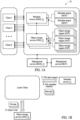
- FIGS. 1 and 1B illustrate example structure and operation of a distributed file system, according to one or more embodiments.
- a high-performance computing system may include multiple computer system nodes connected in parallel to perform billions of operations per second.
- a distributed file system 10 in which multiple computer system nodes are connected through a parallel input/output (I/O) path may be used.
- Clients and servers of the high-performance computing system may be equipped with NICs for network communication, and NICs may be connected to each other through a high-performance network for a data center, for example, and Infiniband or high bandwidth Ethernet network.
- the distributed file system 10 may provide high-speed access to extremely large and/or numerous file data to support high-performance computing as used, for example, in weather modeling and seismic prospecting.
- the distributed file system 10 is not limited to use with high-performance applications.
- the distributed file system 10 may be a variation of a Lustre distributed file system.
- the distributed file system 10 may include metadata servers 11 for managing metadata of the distributed file system 10 and object storage servers 12 for storing file data of the distributed file system 10 (e.g., filesystem objects such as file objects, directory objects, or the like).
- the metadata describes file data/objects such as namespace data, locations of file system objects, permission data, etc.
- the distributed file system 10 may be scalable and performance may be improved by the separation of an I/O path of the file data and an I/O path of the metadata (in other words, by allowing data and metadata to be separately accessed).
- client devices e.g., clients 1 to N
- the metadata servers 11, and/or the object storage servers 12 may transmit and/or receive data (e.g., the file data and the metadata) while communicating with each other through a network.
- data e.g., the file data and the metadata
- the metadata referred to herein is distributed file system (DFS) metadata.
- DFS distributed file system
- the metadata servers 11 may include metadata targets in which the metadata is stored.
- the object storage servers 12 may include object storage targets in which file data is stored.
- Management servers 13 may manage the metadata servers 11 and the object storage servers 12.
- the management servers 13 may include a management target (MGT) in which data associated with management of the metadata servers 11 and the object storage servers 12 is stored.
- MCT management target
- a client device accessing the distributed file system 10 may (1) request metadata (e.g., metadata describing file data to be used, e.g. a file open request specifying a namespace filepath) from a metadata server 11 to use file data.
- a client device may then (2) obtain, from the metadata server 11, a piece of metadata such as position information (e.g., block information) indicating a position where the file data is stored in the distributed file system 10 (or other information about the file data).
- the client device may, according to the obtained metadata, access the object storage server 12 where a block is positioned and (3) read/write data (e.g., the file data) from/to the block.
- the performance of the metadata servers 11 may be increased to, for example, meet service level agreements (SLAs) when client devices create overload (e.g., burst demand) to the distributed file system 10.
- SLAs service level agreements
- the performance improvement of the metadata server 11 may be partly addressed through server expansion (adding servers), but server expansion requires additional cost for server installation and maintenance/repair, and often, such additional resources for demand spikes go under-utilized at other times.
- FIG. 2 illustrates an example electronic device (e.g., a client device) according to one or more example embodiments.
- the example electronic device may be a client participating in (or accessing) the distributed file system 10.
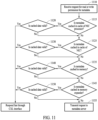
- An electronic device 100 may use local metadata caching to reduce latency of its distributed file system (DFS) requests (such latency that would be incurred by accessing the metadata servers 20) by instead accessing locally cached metadata for DFS requests, which may also reduce load on the metadata servers 20.
- DFS distributed file system
- the electronic device 100 may provide locally cached DFS metadata through the use of a computational network interface card (NIC) 200 and possibly other components, such as, for example a compute express link (CXL) memory expander 300.
- the computational NIC 200 may also be referred to as a computational network interface controller or a smart NIC.
- the electronic device 100 may increase its local metadata caching capacity by using memory of the CXL memory expander 300 and/or the computational NIC 200 for its local metadata cache.
- the electronic device 100 may be connected to the metadata server 20 through a network (e.g., an InfiniBand network).
- the computational NIC 200 may manage local permissions for its locally cached metadata, for example, permission for local processes to work on (modify, access, etc.) the locally cached metadata.
- the computational NIC 200 may manage the permissions for the cached metadata in a local storage area, and the metadata server 20 may manage the permissions for metadata in a global area/scope. Accordingly, data coherency (or integrity) of the metadata may be maintained efficiently.
- the electronic device 100 may function as a client device in a distributed file system.
- the electronic device 100 may be a personal computer (PC), a portable device, an application server, or a storage server, to name some examples.
- a portable device may be implemented as, for example, a laptop computer, a mobile phone, a smartphone, a tablet PC, a mobile Internet device (MID), a personal digital assistant (PDA), an enterprise digital assistant (EDA), a digital still camera, a digital video camera, a portable multimedia player (PMP), a personal (or portable) navigation device (PND), a handheld game console, an e-book, or a smart device.
- a smart device may be implemented as, for example, a smartwatch, a smart band, or a smart ring.
- the processor 110 may be a hardware-implemented data processing device with a physically structured circuit to execute desired operations.
- the desired operations may include, for example, code or instructions included in a program.
- the hardware-implemented data processing device may include, for example, a microprocessor, a central processing unit (CPU), a processor core, a multi-core processor, a multiprocessor, an application-specific integrated circuit (ASIC), a field-programmable gate array (FPGA), or combinations thereof.
- the memory 120 may be implemented as a volatile memory device or a non-volatile memory device.
- a volatile memory device may be implemented as, for example, a dynamic random-access memory (DRAM), a static RAM (SRAM), a thyristor RAM (T-RAM), a zero capacitor RAM (Z-RAM), or a twin transistor RAM (TTRAM).
- DRAM dynamic random-access memory
- SRAM static RAM
- T-RAM thyristor RAM
- Z-RAM zero capacitor RAM
- TTRAM twin transistor RAM
- a CXL device that supports a CXL protocol (CXL.cache, CXL.mem, and CXL,io) may be classified as type 1, type 2, or type 3 device according to a supported type of the CXL protocol.
- a CXL device that supports CXL.cache through a CXL interface may be a type 1 device.
- a CXL device that supports CXL.mem through the CXL interface may be a type 3 device.
- a CXL device that supports both CXL.cache and CXL.mem through the CXL interface may be a type 2 device.
Landscapes
- Engineering & Computer Science (AREA)
- Theoretical Computer Science (AREA)
- Physics & Mathematics (AREA)
- General Engineering & Computer Science (AREA)
- General Physics & Mathematics (AREA)
- Data Mining & Analysis (AREA)
- Databases & Information Systems (AREA)
- Software Systems (AREA)
- Human Computer Interaction (AREA)
- Information Retrieval, Db Structures And Fs Structures Therefor (AREA)
Claims (13)
- Computergestützte Netzwerkschnittstellenkarte, (network interface card) NIC, die sich einen Speicherbereich mit einem Speicherexpander (300) davon teilt, wobei der Speicherexpander (300) ein CXL-Speicherexpander ist, der CXL.mem, wie in einem CXL-Protokoll definiert, unterstützt, wobei die computergestützte NIC (200) umfasst:einen NIC-Speicher (220) umfassend Instruktionen;einen NIC-Prozessor (210) umfassend einen Cache (240) und elektrisch verbunden mit dem NIC-Speicher (220); undeinen NIC (230) konfiguriert zum Übertragen von in dem NIC-Speicher (220) oder dem Cache (240) gespeicherten Daten an ein Netzwerk,wobei die Anweisungen konfiguriert sind, um den NIC-Prozessor (210) zu veranlassen, Operationen durchzuführen, umfassend:Empfangen (1010) einer Anforderung zum Lesen oder Schreiben von Metadaten, wobei die Metadaten in einem verteilten Dateisystem verwendet werden und ein Client-Gerät (100), das die computergestützte NIC (200) umfasst, an dem verteilten Dateisystem teilnimmt;Prüfen (1020), ob die angeforderten Metadaten in einem lokalen Metadaten-Cache der computergestützten NIC (200) gespeichert sind, durch sequentielles Prüfen, ob die Metadaten in dem Cache (240) des NIC-Prozessors (210), einem Cache (250) der NIC, dem NIC-Speicher (220) oder dem Speicherexpander (300) gespeichert sind; undwenn festgestellt wird, dass die angeforderten Metadaten in dem lokalen Metadaten-Cache gespeichert sind, Überprüfen der Gültigkeit der im Cache gespeicherten Metadaten; oderwenn festgestellt wird, dass die angeforderten Metadaten nicht in dem lokalen Metadaten-Cache gespeichert sind, Anfordern einer Metadaten-Verwaltungsberechtigung für die angeforderten Metadaten von einem Metadatenserver (20).
- Computergestützte NIC nach Anspruch 1, wobei die NIC (230) eine Compute-Express-Link-, CXL-NIC ist, die CXL.cache unterstützt, wie in einem CXL-Protokoll definiert.
- Computergestützte NIC nach Anspruch 1, wobei die computergestützte NIC (200) ein Gerät vom Typ 1, Typ 2 oder Typ 3 ist, wie in einem CXL-Protokoll definiert.
- Computergestützte NIC nach einem der Ansprüche 1 bis 3, wobei die NIC (230) und der NIC-Prozessor (210) in Reihe geschaltet sind und ein Client-Gerät, das die computergestützte NIC (200) umfasst, über den NIC-Prozessor (210) auf die Metadaten zugreift.
- Computergestützte NIC nach einem der Ansprüche 1 bis 3, wobei die NIC (230) und der NIC-Prozessor (210) parallelgeschaltet sind und ein Client-Gerät, das die computergestützte NIC (200) umfasst, auf die Metadaten zugreift, ohne den NIC-Prozessor (210) zu passieren.
- Computergestützte NIC nach einem der Ansprüche 1 bis 5, wobei das Überprüfen der Gültigkeit umfasst:Überprüfen einer Gültigkeitsdauer der gespeicherten Metadaten; undÜberprüfen, ob die computergestützte NIC (200) eine Berechtigung besitzt, die der Metadaten-Arbeitsberechtigung entspricht.
- Computerlesbares Speichermedium, das Instruktionen speichert, die, wenn sie von einem Prozessor (100) und/oder einer computergestützten Netzwerkschnittstellenkarte, NIC (200), eines elektronischen Geräts (100), die den Prozessor (110) und die computergestützte NIC (200) umfasst, ausgeführt werden, den Prozessor (110) und/oder die computergestützte NIC (200) veranlassen, Operationen durchzuführen, wobei die computergestützte NIC (200) konfiguriert ist, zum Verwalten von verteilten Dateisystem-, DFS-, Metadaten-Arbeitsberechtigungen für DFS-Metadaten in einem lokalen DFS-Metadaten-Cache der computergestützten NIC (200), wobei die DFS-Metadaten Metadaten für ein DFS sind, und wobei die Operationen Folgendes umfassen:Anfordern (910) einer Metadaten-Arbeitsberechtigung für einen Teil von DFS-Metadaten, die von einem ersten Prozess, der auf dem Prozessor (110) ausgeführt wird, benötigt werden, durch den Prozessor (110) an die computergestützte NIC (200);basierend auf der Feststellung, dass die computergestützte NIC (200) keine Metadaten-Verwaltungsberechtigung für den Teil der DFS-Metadaten hat, Anfordern (920) einer Metadaten-Verwaltungsberechtigung für den Teil der DFS-Metadaten durch die computergestützte NIC (200) bei einem Metadatenserver (20) des DFS; undErhalten (930) einer Metadaten-Verwaltungsberechtigung für den Teil der DFS-Metadaten durch die computergestützte NIC (200) von dem Metadatenserver (20) und basierend darauf, Zuweisen einer Metadaten-Arbeitsberechtigung an den ersten Prozess.
- Computerlesbares Speichermedium nach Anspruch 7, wobei die Metadaten-Arbeitsberechtigung eine Metadaten-Leseberechtigung oder eine Metadaten-Schreibberechtigung ist, und die Metadaten-Verwaltungsberechtigung von dem Metadatenserver (20) eine Berechtigung erteilt, um dem von dem Prozessor (110) ausgeführten Prozess eine DFS-Metadaten-Leseberechtigung oder eine Schreibberechtigung zuzuweisen, oderwobei der Metadatenserver (20) konfiguriert ist, um die Metadaten-Arbeitsberechtigung für alle Metadaten von mindestens einem Teil des DFS zu verwalten, und wobei die computergestützte NIC (200) konfiguriert ist, um von dem Metadatenserver (20) mit der Metadaten-Verwaltungsberechtigung für mindestens einige der DFS-Metadaten in dem lokalen DFS-Metadaten-Cache betraut zu werden, oderferner umfassend Anweisungen, um die computergestützte NIC (200) zu veranlassen, basierend auf der erhaltenen Metadaten-Verwaltungsberechtigung, die Metadaten-Leseberechtigung sowohl dem ersten Prozess als auch einem zweiten Prozess, der auf dem Prozessor (110) ausgeführt wird, zuzuweisen.
- Computerlesbares Speichermedium nach Anspruch 7 oder 8, wobei, wenn ein anderes elektronisches Gerät, das sich von dem elektronischen Gerät unterscheidet, die Metadaten-Schreibberechtigung für den Teil der DFS-Metadaten erhält, die Metadaten-Arbeitsberechtigung für den Teil der DFS-Metadaten von dem elektronischen Gerät zurückgegeben wird.
- Computerlesbares Speichermedium nach einem der Ansprüche 7 bis 9, wobei die computergestützte NIC (200) umfasst:einen NIC-Speicher (220) umfassend Instruktionen;einen NIC-Prozessor (210) umfassend einen Cache (240) und elektrisch verbunden mit dem NIC-Speicher (220); undeine NIC (230) konfiguriert zum Übertragen von in dem NIC-Speicher (220) oder dem Cache (240) gespeicherten Daten an ein mit der NIC (230) verbundenes Netzwerk.
- Verfahren zum Betreiben eines Speicherexpanders, der CXL.mem unterstützt, wie es in einem Compute-Express-Link-, CXL-Protokoll definiert ist, wobei der Speicherexpander (300) ein Speichergerät (310), in dem Teile von verteilten Dateisystem-, DFS-, Metadaten eines DFS gespeichert sind, und einen Controller (320) umfasst, der konfiguriert ist, zum Steuern des Speichergeräts (310), wobei das Verfahren umfasst:Empfangen, durch den Controller (320), einer Arbeitsanforderung für eine Operation an einem von den Teilen von Metadaten von einem elektronischen Gerät (100), das eine computergestützte Netzwerkschnittstellenkarte, NIC (200), umfasst, die einen NIC-Speicher (220) umfasst, der CXL.mem unterstützt, wie im CXL-Protokoll definiert, wobei die computergestützte NIC (200) einem von dem elektronischen Gerät (100) ausgeführten Prozess eine Metadaten-Arbeitsberechtigung zuweist, um an einem Teil von DFS-Metadaten in einem lokalen DFS-Metadaten-Cache der computergestützten NIC (200) zu arbeiten, wobei die computergestützte NIC (200) mit dem Speicherexpander (300) verbunden ist; undin Reaktion auf die Arbeitsanforderung, Durchführen mindestens einer Operation an einem der in der Speichervorrichtung gespeicherten Teile von DFS-Metadaten durch den Controller (320).
- Verfahren nach Anspruch 11, ferner umfassend direkte Kommunikation mit der computergestützten NIC (200) oder dem elektronischen Gerät (100) über eine CXL-Schnittstelle.
- Verfahren nach Anspruch 11 oder 12, wobei die computergestützte NIC (200) ein Gerät des Typs 2 oder des Typs 3 ist, wie im CXL-Protokoll definiert, oderferner umfassend das Empfangen einer Metadaten-Leseanforderung von dem elektronischen Gerät (100) zum Lesen des einen Teils der DFS-Metadaten; und in Reaktion auf die Metadaten-Leseanforderung, das Übertragen des einen Teils der DFS-Metadaten an das elektronische Gerät, oderferner umfassend das Empfangen einer Metadaten-Schreibanforderung von dem elektronischen Gerät (100) zum Schreiben des einen Teils der DFS-Metadaten und verknüpfter Ergebnisdaten; und in Reaktion auf die Metadaten-Schreibanforderung, das Ändern des einen Teils der DFS-Metadaten in die Ergebnisdaten und Speichern der Ergebnisdaten, oderwobei die Teile der DFS-Metadaten Metadaten sind, die für den Zugriff auf Dateisystemobjekte in einem verteilten Dateisystem verwendet werden.
Applications Claiming Priority (1)
| Application Number | Priority Date | Filing Date | Title |
|---|---|---|---|
| KR1020220173904A KR20240090078A (ko) | 2022-12-13 | 2022-12-13 | 연산가능한 네트워크 인터페이스 카드 및 이를 포함하는 전자 장치 |
Publications (2)
| Publication Number | Publication Date |
|---|---|
| EP4386568A1 EP4386568A1 (de) | 2024-06-19 |
| EP4386568B1 true EP4386568B1 (de) | 2025-04-09 |
Family
ID=87158107
Family Applications (1)
| Application Number | Title | Priority Date | Filing Date |
|---|---|---|---|
| EP23183791.5A Active EP4386568B1 (de) | 2022-12-13 | 2023-07-06 | Computernetzwerkschnittstellenkarte mit metadaten-zwischenspeicherung |
Country Status (4)
| Country | Link |
|---|---|
| US (1) | US20240193091A1 (de) |
| EP (1) | EP4386568B1 (de) |
| KR (1) | KR20240090078A (de) |
| CN (1) | CN118193413A (de) |
Families Citing this family (1)
| Publication number | Priority date | Publication date | Assignee | Title |
|---|---|---|---|---|
| US12526617B2 (en) * | 2021-12-08 | 2026-01-13 | Palo Alto Networks, Inc. | Targeted PDU capture by a network device for roaming detection in wireless networks |
Family Cites Families (8)
| Publication number | Priority date | Publication date | Assignee | Title |
|---|---|---|---|---|
| US8621101B1 (en) * | 2000-09-29 | 2013-12-31 | Alacritech, Inc. | Intelligent network storage interface device |
| US6697846B1 (en) * | 1998-03-20 | 2004-02-24 | Dataplow, Inc. | Shared file system |
| US6842754B2 (en) * | 2001-04-17 | 2005-01-11 | Hewlett Packard Development Company, L.P. | Lease enforcement in a distributed file system |
| US9323681B2 (en) * | 2008-09-18 | 2016-04-26 | Avere Systems, Inc. | File storage system, cache appliance, and method |
| US9575974B2 (en) * | 2013-10-23 | 2017-02-21 | Netapp, Inc. | Distributed file system gateway |
| JP2016057763A (ja) * | 2014-09-08 | 2016-04-21 | 株式会社東芝 | キャッシュ装置、及びプロセッサ |
| US11561915B2 (en) * | 2020-09-30 | 2023-01-24 | EMC IP Holding Company LLC | Remote sharing of directly connected storage |
| KR102863856B1 (ko) * | 2020-10-29 | 2025-09-25 | 삼성전자주식회사 | 메모리 확장기, 이종 컴퓨팅 장치, 및 이종 컴퓨팅 장치의 동작 방법 |
-
2022
- 2022-12-13 KR KR1020220173904A patent/KR20240090078A/ko active Pending
-
2023
- 2023-07-06 EP EP23183791.5A patent/EP4386568B1/de active Active
- 2023-07-13 US US18/351,529 patent/US20240193091A1/en active Pending
- 2023-07-28 CN CN202310942857.4A patent/CN118193413A/zh active Pending
Also Published As
| Publication number | Publication date |
|---|---|
| CN118193413A (zh) | 2024-06-14 |
| US20240193091A1 (en) | 2024-06-13 |
| KR20240090078A (ko) | 2024-06-21 |
| EP4386568A1 (de) | 2024-06-19 |
Similar Documents
| Publication | Publication Date | Title |
|---|---|---|
| US10523585B2 (en) | System on a chip comprising multiple compute sub-systems | |
| US11868657B2 (en) | Memory controller, method of operating the memory controller, and electronic device including the memory controller | |
| US12056066B2 (en) | System, device, and method for accessing memory based on multi-protocol | |
| US20060173851A1 (en) | Systems and methods for accessing data | |
| US11921626B2 (en) | Processing-in-memory and method and apparatus with memory access | |
| US11907575B2 (en) | Memory controller and memory control method | |
| US12314604B2 (en) | Data processing apparatus and method for zswap acceleration | |
| US20150312366A1 (en) | Unified caching of storage blocks and memory pages in a compute-node cluster | |
| US20180143906A1 (en) | Memory access architecture with coherence | |
| US10225344B2 (en) | High-performance key-value store using a coherent attached bus | |
| EP4386568A1 (de) | Computernetzwerkschnittstellenkarte mit metadaten-zwischenspeicherung | |
| Islam et al. | In-memory i/o and replication for hdfs with memcached: Early experiences | |
| US20250165153A1 (en) | Memory device and scheduling method thereof | |
| WO2023140911A1 (en) | Systems and methods with integrated memory pooling and direct swap caching | |
| Youn et al. | Cloud computing burst system (CCBS): for exa-scale computing system | |
| US12613813B2 (en) | CXL device, electronic device, and data storing method | |
| US12511053B2 (en) | Memory system with hot page logic, an electronic system including the same memory system and a method of operating the same electronic system | |
| US20240393955A1 (en) | Collaborative caching exploiting near-storage memory | |
| US20260140796A1 (en) | Local object transport accelerator proxy for data center computing nodes | |
| US20250148093A1 (en) | Memory system and method of operating the same | |
| US20250077283A1 (en) | System and method for memory pooling | |
| Malinowski et al. | Distributed NVRAM cache–optimization and evaluation with power of adjacency matrix | |
| Capelli et al. | NVRAM as an enabler to new horizons in graph processing | |
| Mendes et al. | Topology Considerations | |
| Wang et al. | HSM 2: A Hybrid and Scalable Metadata Management Method in Distributed File Systems |
Legal Events
| Date | Code | Title | Description |
|---|---|---|---|
| PUAI | Public reference made under article 153(3) epc to a published international application that has entered the european phase |
Free format text: ORIGINAL CODE: 0009012 |
|
| STAA | Information on the status of an ep patent application or granted ep patent |
Free format text: STATUS: REQUEST FOR EXAMINATION WAS MADE |
|
| 17P | Request for examination filed |
Effective date: 20230706 |
|
| AK | Designated contracting states |
Kind code of ref document: A1 Designated state(s): AL AT BE BG CH CY CZ DE DK EE ES FI FR GB GR HR HU IE IS IT LI LT LU LV MC ME MK MT NL NO PL PT RO RS SE SI SK SM TR |
|
| GRAP | Despatch of communication of intention to grant a patent |
Free format text: ORIGINAL CODE: EPIDOSNIGR1 |
|
| STAA | Information on the status of an ep patent application or granted ep patent |
Free format text: STATUS: GRANT OF PATENT IS INTENDED |
|
| INTG | Intention to grant announced |
Effective date: 20241218 |
|
| GRAS | Grant fee paid |
Free format text: ORIGINAL CODE: EPIDOSNIGR3 |
|
| GRAA | (expected) grant |
Free format text: ORIGINAL CODE: 0009210 |
|
| STAA | Information on the status of an ep patent application or granted ep patent |
Free format text: STATUS: THE PATENT HAS BEEN GRANTED |
|
| AK | Designated contracting states |
Kind code of ref document: B1 Designated state(s): AL AT BE BG CH CY CZ DE DK EE ES FI FR GB GR HR HU IE IS IT LI LT LU LV MC ME MK MT NL NO PL PT RO RS SE SI SK SM TR |
|
| REG | Reference to a national code |
Ref country code: GB Ref legal event code: FG4D |
|
| REG | Reference to a national code |
Ref country code: CH Ref legal event code: EP |
|
| REG | Reference to a national code |
Ref country code: DE Ref legal event code: R096 Ref document number: 602023002806 Country of ref document: DE |
|
| REG | Reference to a national code |
Ref country code: IE Ref legal event code: FG4D |
|
| PGFP | Annual fee paid to national office [announced via postgrant information from national office to epo] |
Ref country code: FR Payment date: 20250623 Year of fee payment: 3 |
|
| REG | Reference to a national code |
Ref country code: NL Ref legal event code: MP Effective date: 20250409 |
|
| PG25 | Lapsed in a contracting state [announced via postgrant information from national office to epo] |
Ref country code: NL Free format text: LAPSE BECAUSE OF FAILURE TO SUBMIT A TRANSLATION OF THE DESCRIPTION OR TO PAY THE FEE WITHIN THE PRESCRIBED TIME-LIMIT Effective date: 20250409 |
|
| REG | Reference to a national code |
Ref country code: AT Ref legal event code: MK05 Ref document number: 1784157 Country of ref document: AT Kind code of ref document: T Effective date: 20250409 |
|
| PG25 | Lapsed in a contracting state [announced via postgrant information from national office to epo] |
Ref country code: FI Free format text: LAPSE BECAUSE OF FAILURE TO SUBMIT A TRANSLATION OF THE DESCRIPTION OR TO PAY THE FEE WITHIN THE PRESCRIBED TIME-LIMIT Effective date: 20250409 Ref country code: PT Free format text: LAPSE BECAUSE OF FAILURE TO SUBMIT A TRANSLATION OF THE DESCRIPTION OR TO PAY THE FEE WITHIN THE PRESCRIBED TIME-LIMIT Effective date: 20250811 Ref country code: ES Free format text: LAPSE BECAUSE OF FAILURE TO SUBMIT A TRANSLATION OF THE DESCRIPTION OR TO PAY THE FEE WITHIN THE PRESCRIBED TIME-LIMIT Effective date: 20250409 |
|
| PGFP | Annual fee paid to national office [announced via postgrant information from national office to epo] |
Ref country code: DE Payment date: 20250611 Year of fee payment: 3 |
|
| REG | Reference to a national code |
Ref country code: LT Ref legal event code: MG9D |
|
| PG25 | Lapsed in a contracting state [announced via postgrant information from national office to epo] |
Ref country code: GR Free format text: LAPSE BECAUSE OF FAILURE TO SUBMIT A TRANSLATION OF THE DESCRIPTION OR TO PAY THE FEE WITHIN THE PRESCRIBED TIME-LIMIT Effective date: 20250710 Ref country code: NO Free format text: LAPSE BECAUSE OF FAILURE TO SUBMIT A TRANSLATION OF THE DESCRIPTION OR TO PAY THE FEE WITHIN THE PRESCRIBED TIME-LIMIT Effective date: 20250709 |
|
| PG25 | Lapsed in a contracting state [announced via postgrant information from national office to epo] |
Ref country code: PL Free format text: LAPSE BECAUSE OF FAILURE TO SUBMIT A TRANSLATION OF THE DESCRIPTION OR TO PAY THE FEE WITHIN THE PRESCRIBED TIME-LIMIT Effective date: 20250409 |
|
| PG25 | Lapsed in a contracting state [announced via postgrant information from national office to epo] |
Ref country code: BG Free format text: LAPSE BECAUSE OF FAILURE TO SUBMIT A TRANSLATION OF THE DESCRIPTION OR TO PAY THE FEE WITHIN THE PRESCRIBED TIME-LIMIT Effective date: 20250409 |
|
| PG25 | Lapsed in a contracting state [announced via postgrant information from national office to epo] |
Ref country code: HR Free format text: LAPSE BECAUSE OF FAILURE TO SUBMIT A TRANSLATION OF THE DESCRIPTION OR TO PAY THE FEE WITHIN THE PRESCRIBED TIME-LIMIT Effective date: 20250409 |
|
| PG25 | Lapsed in a contracting state [announced via postgrant information from national office to epo] |
Ref country code: AT Free format text: LAPSE BECAUSE OF FAILURE TO SUBMIT A TRANSLATION OF THE DESCRIPTION OR TO PAY THE FEE WITHIN THE PRESCRIBED TIME-LIMIT Effective date: 20250409 |
|
| PG25 | Lapsed in a contracting state [announced via postgrant information from national office to epo] |
Ref country code: RS Free format text: LAPSE BECAUSE OF FAILURE TO SUBMIT A TRANSLATION OF THE DESCRIPTION OR TO PAY THE FEE WITHIN THE PRESCRIBED TIME-LIMIT Effective date: 20250709 |
|
| PG25 | Lapsed in a contracting state [announced via postgrant information from national office to epo] |
Ref country code: IS Free format text: LAPSE BECAUSE OF FAILURE TO SUBMIT A TRANSLATION OF THE DESCRIPTION OR TO PAY THE FEE WITHIN THE PRESCRIBED TIME-LIMIT Effective date: 20250809 |
|
| PG25 | Lapsed in a contracting state [announced via postgrant information from national office to epo] |
Ref country code: LV Free format text: LAPSE BECAUSE OF FAILURE TO SUBMIT A TRANSLATION OF THE DESCRIPTION OR TO PAY THE FEE WITHIN THE PRESCRIBED TIME-LIMIT Effective date: 20250409 |
|
| REG | Reference to a national code |
Ref country code: DE Ref legal event code: R097 Ref document number: 602023002806 Country of ref document: DE |
|
| PG25 | Lapsed in a contracting state [announced via postgrant information from national office to epo] |
Ref country code: DK Free format text: LAPSE BECAUSE OF FAILURE TO SUBMIT A TRANSLATION OF THE DESCRIPTION OR TO PAY THE FEE WITHIN THE PRESCRIBED TIME-LIMIT Effective date: 20250409 Ref country code: SM Free format text: LAPSE BECAUSE OF FAILURE TO SUBMIT A TRANSLATION OF THE DESCRIPTION OR TO PAY THE FEE WITHIN THE PRESCRIBED TIME-LIMIT Effective date: 20250409 |
|
| PG25 | Lapsed in a contracting state [announced via postgrant information from national office to epo] |
Ref country code: CZ Free format text: LAPSE BECAUSE OF FAILURE TO SUBMIT A TRANSLATION OF THE DESCRIPTION OR TO PAY THE FEE WITHIN THE PRESCRIBED TIME-LIMIT Effective date: 20250409 |
|
| PG25 | Lapsed in a contracting state [announced via postgrant information from national office to epo] |
Ref country code: EE Free format text: LAPSE BECAUSE OF FAILURE TO SUBMIT A TRANSLATION OF THE DESCRIPTION OR TO PAY THE FEE WITHIN THE PRESCRIBED TIME-LIMIT Effective date: 20250409 |
|
| PG25 | Lapsed in a contracting state [announced via postgrant information from national office to epo] |
Ref country code: SK Free format text: LAPSE BECAUSE OF FAILURE TO SUBMIT A TRANSLATION OF THE DESCRIPTION OR TO PAY THE FEE WITHIN THE PRESCRIBED TIME-LIMIT Effective date: 20250409 |
|
| PG25 | Lapsed in a contracting state [announced via postgrant information from national office to epo] |
Ref country code: IT Free format text: LAPSE BECAUSE OF FAILURE TO SUBMIT A TRANSLATION OF THE DESCRIPTION OR TO PAY THE FEE WITHIN THE PRESCRIBED TIME-LIMIT Effective date: 20250409 |
|
| PLBE | No opposition filed within time limit |
Free format text: ORIGINAL CODE: 0009261 |
|
| STAA | Information on the status of an ep patent application or granted ep patent |
Free format text: STATUS: NO OPPOSITION FILED WITHIN TIME LIMIT |
|
| REG | Reference to a national code |
Ref country code: CH Ref legal event code: L10 Free format text: ST27 STATUS EVENT CODE: U-0-0-L10-L00 (AS PROVIDED BY THE NATIONAL OFFICE) Effective date: 20260218 |
|
| PG25 | Lapsed in a contracting state [announced via postgrant information from national office to epo] |
Ref country code: RO Free format text: LAPSE BECAUSE OF FAILURE TO SUBMIT A TRANSLATION OF THE DESCRIPTION OR TO PAY THE FEE WITHIN THE PRESCRIBED TIME-LIMIT Effective date: 20250409 |
|
| PG25 | Lapsed in a contracting state [announced via postgrant information from national office to epo] |
Ref country code: LU Free format text: LAPSE BECAUSE OF NON-PAYMENT OF DUE FEES Effective date: 20250706 |
|
| 26N | No opposition filed |
Effective date: 20260112 |
|
| REG | Reference to a national code |
Ref country code: BE Ref legal event code: MM Effective date: 20250731 |
|
| PG25 | Lapsed in a contracting state [announced via postgrant information from national office to epo] |
Ref country code: BE Free format text: LAPSE BECAUSE OF NON-PAYMENT OF DUE FEES Effective date: 20250731 |