EP4386266A1 - A household appliance with automatic fan control and the control method thereof - Google Patents
A household appliance with automatic fan control and the control method thereof Download PDFInfo
- Publication number
- EP4386266A1 EP4386266A1 EP23207214.0A EP23207214A EP4386266A1 EP 4386266 A1 EP4386266 A1 EP 4386266A1 EP 23207214 A EP23207214 A EP 23207214A EP 4386266 A1 EP4386266 A1 EP 4386266A1
- Authority
- EP
- European Patent Office
- Prior art keywords
- fan
- value
- air
- odor
- control unit
- Prior art date
- Legal status (The legal status is an assumption and is not a legal conclusion. Google has not performed a legal analysis and makes no representation as to the accuracy of the status listed.)
- Withdrawn
Links
Images



Classifications
-
- F—MECHANICAL ENGINEERING; LIGHTING; HEATING; WEAPONS; BLASTING
- F24—HEATING; RANGES; VENTILATING
- F24C—DOMESTIC STOVES OR RANGES ; DETAILS OF DOMESTIC STOVES OR RANGES, OF GENERAL APPLICATION
- F24C15/00—Details
- F24C15/20—Removing cooking fumes
- F24C15/2021—Arrangement or mounting of control or safety systems
-
- F—MECHANICAL ENGINEERING; LIGHTING; HEATING; WEAPONS; BLASTING
- F24—HEATING; RANGES; VENTILATING
- F24C—DOMESTIC STOVES OR RANGES ; DETAILS OF DOMESTIC STOVES OR RANGES, OF GENERAL APPLICATION
- F24C15/00—Details
- F24C15/20—Removing cooking fumes
- F24C15/2042—Devices for removing cooking fumes structurally associated with a cooking range e.g. downdraft
-
- F—MECHANICAL ENGINEERING; LIGHTING; HEATING; WEAPONS; BLASTING
- F24—HEATING; RANGES; VENTILATING
- F24C—DOMESTIC STOVES OR RANGES ; DETAILS OF DOMESTIC STOVES OR RANGES, OF GENERAL APPLICATION
- F24C7/00—Stoves or ranges heated by electric energy
- F24C7/08—Arrangement or mounting of control or safety devices
- F24C7/082—Arrangement or mounting of control or safety devices on ranges, e.g. control panels, illumination
- F24C7/083—Arrangement or mounting of control or safety devices on ranges, e.g. control panels, illumination on tops, hot plates
Definitions
- the present invention relates to a household appliance comprising a fan and wherein the operation of said fan is automatically controlled, having an exhaust hood integrated with the cooker.
- the odors and humidity released from the foodstuffs cooked on the cooking zones provided on the cooking devices are enabled to be discharged to the exterior environment by means of the exhaust hood.
- the low, medium and high stages of the fan motor are generally adjusted by the user.
- the user operates the exhaust hood when required during the cooking process and selects the desired level.
- Cookers with integrated exhaust hoods are also known wherein the operational level is automatically determined in order to provide convenience to the user and for security purposes. Therefore, sensors which monitor changes in odor and temperature in the environment are used. It is observed that the automatic operation function does not work efficiently while causing faulty situations in cooking processes with no odor but intense hot steam output in products only with an odor sensor.
- the temperature over the cooking device for example of the cooker, is detected, thus automatically determining the operational level of the fan.
- the temperature sensor measures the temperature of the cooking zone which is caused by the heat of the cooked food and of the cooker. Consequently, the fan can be automatically started with the level thereof being automatically increased when the thermal load increases, and automatically decreased when the thermal load decreases, and the fan can be automatically turned off when the thermal load is zero.
- Sensorless products have an automatic operation function according to the cooker power level. In such products, malfunctions may occur completely independent of the heat load released during the cooking process. In order for the automatic ventilation function to work correctly, in cooking processes where no odor is generated, it is important to detect the thermal load of the cooking process where no odor is generated and to detect the odor load in cooking processes where intense odor is generated.
- the aim of the present invention is the realization of a household appliance wherein the operation of the fan is efficiently controlled.
- the household appliance of the present invention is a household appliance where a cooker and an exhaust hood are integrated.
- the household appliance comprises a body.
- the cooker is disposed on the upper surface of the body.
- a flat cooker surface and a cooking zone on the cooker surface are positioned on the upper part of the body.
- a fan is disposed in the body so as to be positioned under the cooker surface. When the fan is activated, the air rising from the foodstuffs in the cooking vessel on the cooking zone is sucked through an air suction duct and discharged to the outside environment.
- the cooking vessel can be a container such as a pot, pan or coffee pot.
- the air suction duct is positioned adjacent to the cooker surface.
- An odor sensor is provided on the air suction duct.
- the household appliance further comprises a control unit which controls the operation of the fan according to a temperature value received from the temperature sensor, a power transfer value which is obtained by the control unit and which shows the power transferred to the cooking vessel, and an odor value received from the odor sensor.
- the control unit evaluates the temperature value, the odor value and the power transfer value together so as to decide whether to activate or deactivate the fan, or as to determine the operating speed level.
- the control unit calculates an air reference value by using the temperature value, the power transfer value and the odor value.
- the operating level of the fan is adjusted by the control unit according to the calculated air reference value.
- the air reference value increases and decreases in direct proportion to the temperature value, the odor value and the power transfer value. Therefore, as the air reference value increases, the operating level of the fan is also increased.
- the control unit can control the operation of the fan by evaluating the temperature value, the odor value and the power transfer value together.
- the control unit controls the fan so as to increase the operating level of the fan when the odor value reaches a predetermined threshold value.
- a predetermined threshold value can be a value which increases the operating speed level of the fan or a value at which the fan is activated.
- control unit controls the fan so as to increase the operating level of the fan when the temperature value reaches a predetermined threshold value.
- the temperature value of the cooking zone is used to decide whether there is steam coming out of the cooked foodstuffs such that the speed level of the fan is increased and the ambient air is cleaned.
- control unit controls the fan so as to increase the operating level of the fan when the power transfer value reaches a predetermined threshold value.
- the speed level of the fan is increased by deciding that the amount of steam coming out of the cooked foodstuffs is high when the power transferred to the cooking vessel is high. Consequently, the ambient air is cleaned quickly.
- control unit adjusts the operating time and speed of the fan according to the air reference value calculated when it is determined that the cooking process is completed.
- the air reference value calculated when it is determined that the cooking process is completed.
- the operation of the fan is controlled such that the fan operating speed is gradually reduced when the cooking process ends.
- the odor sensor is disposed on an outlet duct which is provided in the body and which extends between an air outlet opening, where the air suction duct opens to the outside environment, and the fan such that the air suction duct opens to the outside environment.
- the air coming out of the cooked foodstuffs is at high temperature when sucked through the air suction opening.
- the temperature of the air sucked by means of the fan and delivered to the outlet duct decreases in the air suction duct.
- the odor sensor disposed in the outlet duct is prevented from being exposed to very high temperatures.
- the odor sensor is disposed on the side wall of the outlet duct. In the air flow diagrams, it is determined that the majority of the air sucked by the fan flows over the side wall while moving through the outlet duct.
- the odor sensor is disposed on the side wall so as to enable more air to pass over the odor sensor.
- the odor sensor is positioned in the vicinity of the air outlet opening. Thus, more air is allowed to pass over the odor sensor.
- the odor sensor is disposed on the outer surface of the side wall so as to exchange air with an air transfer opening provided on the side wall.
- the odor value of the air flowing in the air suction duct is calculated without narrowing the air suction duct.
- the control method of the present invention comprises the steps, executed by the control unit, of receiving a temperature value from the temperature sensor; obtaining a power transfer value by the control unit showing the power transferred to the cooking vessel during the cooking process; receiving an odor value from the odor sensor; and automatically determining the operating level of the fan according to the temperature value, the power transfer value and the odor value.
- the control method comprises the steps of calculating an air reference value by weighting the temperature value, the power transfer value and the odor value by a first constant factor, a second constant factor and a third constant factor , respectively, and of determining the operating level of the fan according to the air reference value calculated.
- the values such as temperature value, power transfer value and odor value are evaluated by being weighted. Consequently, the fan operation is controlled more efficiently.
- the first constant factor, the second constant factor and the third constant factor are predetermined by the manufacturer.
- the fan speed optimally, the fan is prevented from being operated at unnecessarily high speeds.
- the household appliance (1) comprises a body (2); a cooker surface (21) which is disposed on the body (2); at least one cooking zone (22) which is provided on the cooker surface (21) and which is suitable for placing a cooking vessel thereon; at least one temperature sensor (23) which provides the measurement of the temperature of the cooking zone (22); a control unit (3) which provides the determination of the power transferred to the cooking vessel placed on the cooking zone (22) during the cooking process; a fan (4) which is disposed in the body (2) so as to be positioned under the cooker surface (21); an air suction duct (5) which has an air inlet opening (51) arranged on the cooker surface (21) and which enables the air sucked through the air inlet opening (51) to be discharged to the outside environment by operating the fan (4); and a odor sensor (6) which is disposed on the air suction duct (5) As shown in Figure and 2, the cooker surface (21) is a flat surface.
- a plurality of cooking zones (22) are provided on the cooker surface (21).
- the temperature sensor (23) is provided under each cooking zone (22).
- the cooker is an induction heating cooker. Therefore, the cooking zone (22) is heated by means of an induction coil.
- the control unit (3) can calculate the power transferred to the cooking vessel placed on the cooking zone (22) during the cooking process.
- the fan (4) disposed under the cooker surface (21), the air generated during the cooking process is sucked in and the environment is cleaned.
- the fan (4) is configured to create a vertical air flow.
- the air coming out of the cooking vessel passes through the air inlet opening (51) arranged on the cooker surface (21) and is delivered to the air suction duct (5).
- the sucked air is transferred to the outside environment through the air suction duct (5).
- An odor sensor (6) is provided on the air suction duct (5).
- the odor sensor (6) is a volatile organic compound sensor.
- the household appliance (1) comprises the control unit (3) which calculates an air reference value by using the temperature value, the power transfer value and the odor value and which controls the operation of the fan (4) according to the calculated air reference value.
- the fan (4) operating speed levels corresponding to the calculated air reference value are recorded in the memory of the control unit (3) by the manufacturer. After the air reference value is calculated, the fan (4) is operated at the speed level corresponding to the calculated air reference value. Thus, the fan (4) is enabled to be easily controlled by the control unit (3).
- the fan (4) is operated at high speed levels so as to prevent the pollution of the ambient air especially during the cooking of foodstuffs which generate significant odor even if they are not exposed to very high temperatures.
- the household appliance (1) comprises the control unit (3) which controls the fan (4) so as to increase the operating speed of the fan (4) when it is determined that the odor value received from the odor sensor (6) reaches a predetermined threshold value. It is understood that as the odor value increases, the amount of odor particles in the air inside the air suction duct (5) also increases. In this case, the operating speed of the fan (4) is increased such that the odor-containing air is discharged to the outside environment, thus enabling the ambient air to be cleaned quickly.
- the household appliance (1) comprises the control unit (3) which controls the fan (4) so as to increase the operating speed of the fan (4) when it is determined that the power transfer value reaches a predetermined threshold value.
- the power transfer value is calculated by the control unit (3) by using the power drawn by the induction coils. As the power transfer value increases, the temperature to which the foodstuffs cooked in the cooking vessel is exposed also increases. By increasing the operating speed of the fan (4), the air rising from the cooked foodstuffs is quickly sucked and the ambient air is cleaned.
- the household appliance (1) comprises the control unit (3) which adjusts the operating time and speed of the fan (4) according to the air reference value calculated when the control unit (3) determines that the cooking process is completed.
- the cooking process can be ended by the user by means of the buttons provided on the cooker surface (21). It is determined that the cooking process is completed by the deactivation of the heating source provided under the cooking zone (22).
- the control unit (3) determines how long the fan (4) is to be operated and at what speed the same is to be operated, according to the air reference value calculated at that moment.
- the operating time and speed level of the fan (4) according to the air reference value calculated at the end of the cooking process can be recorded in the memory of the control unit (3) by the manufacturer.
- the household appliance (1) comprises the odor sensor (6) which is disposed on an outlet duct (53) which is provided in the body (2) and which extends between an air outlet opening (52), where the air suction duct (5) opens to the outside environment, and the fan (4) such that the air suction duct (5) opens to the outside environment.
- the outlet duct (53) ensures that the air sucked from the air inlet opening (51) is transferred to the outside environment.
- a chimney is connected to the air outlet opening (52).
- the odor sensor (6) is disposed on the walls of the outlet duct (53).
- the odor sensor (6) is positioned on the side wall (54) so as to enable more air to pass over the odor sensor (6).
- the household appliance (1) comprises an air transfer opening (55) which is arranged on the side wall (54); and the odor sensor (6) which is disposed on the outer surface of the side wall (54) so as to exchange air with said air transfer opening (55).
- An air transfer opening (55) is arranged on the side wall (54) of the outlet duct (53).
- the odor sensor (6) has a receptacle with one surface comprising a perforated grill.
- the odor sensor (6) is disposed on the outer surface of the side wall (54) of the outlet duct (53) such that the perforated grill and the air transfer opening (55) face each other.
- the inner surface of the side wall (54) is the surface through which the air sucked by the fan (4) is passed.
- the outer surface of the side wall (54) is the opposite surface of said inner surface.
- the control method of the present invention comprises the steps of receiving a temperature value from the temperature sensor (21); obtaining a power transfer value by the control unit (3) showing the power transferred to the cooking vessel during the cooking process; receiving an odor value from the odor sensor (6); and automatically determining the operating level of the fan (4) according to the temperature value, the power transfer value and the odor value.
- the steps of the control method are executed by the control unit (3).
- the control method comprises the steps of calculating an air reference value by weighting the temperature value, the power transfer value and the odor value by a first constant factor, a second constant factor and a third constant factor , respectively, and of determining the operating level of the fan (4) according to the air reference value calculated. Said steps of the control method are also executed by the control unit (3).
- the air reference value is calculated by summing the temperature value multiplied by the first constant factor, the power transfer value multiplied by the second constant factor, and the odor value multiplied by the third constant factor.
- the third constant factor has the largest value among the constant factors.
- the odor value is determined with more weight compared to the other two variable values while calculating the air reference value. Consequently, during the cooking of foodstuffs which generate odor even if they are not exposed to high temperatures, the operating speed level of the fan (4) is increased and the air coming out of the foodstuffs is quickly removed from the environment.
Landscapes
- Engineering & Computer Science (AREA)
- Chemical & Material Sciences (AREA)
- Combustion & Propulsion (AREA)
- Mechanical Engineering (AREA)
- General Engineering & Computer Science (AREA)
- Ventilation (AREA)
Abstract
Description
- The present invention relates to a household appliance comprising a fan and wherein the operation of said fan is automatically controlled, having an exhaust hood integrated with the cooker.
- In household appliances having an exhaust hood integrated with the cooker, the odors and humidity released from the foodstuffs cooked on the cooking zones provided on the cooking devices are enabled to be discharged to the exterior environment by means of the exhaust hood. In some state of the art household appliances, the low, medium and high stages of the fan motor are generally adjusted by the user. The user operates the exhaust hood when required during the cooking process and selects the desired level. Cookers with integrated exhaust hoods are also known wherein the operational level is automatically determined in order to provide convenience to the user and for security purposes. Therefore, sensors which monitor changes in odor and temperature in the environment are used. It is observed that the automatic operation function does not work efficiently while causing faulty situations in cooking processes with no odor but intense hot steam output in products only with an odor sensor. During the cooking process, the temperature over the cooking device, for example of the cooker, is detected, thus automatically determining the operational level of the fan. The temperature sensor measures the temperature of the cooking zone which is caused by the heat of the cooked food and of the cooker. Consequently, the fan can be automatically started with the level thereof being automatically increased when the thermal load increases, and automatically decreased when the thermal load decreases, and the fan can be automatically turned off when the thermal load is zero. Sensorless products have an automatic operation function according to the cooker power level. In such products, malfunctions may occur completely independent of the heat load released during the cooking process. In order for the automatic ventilation function to work correctly, in cooking processes where no odor is generated, it is important to detect the thermal load of the cooking process where no odor is generated and to detect the odor load in cooking processes where intense odor is generated.
- In the state of the art European Patent Application Document No.
EP3255348A1 , an exhaust hood is disclosed, wherein the fan level is adjusted depending on the power transfer value. - In the state of the art European Patent Application Document No.
EP2880368B1 , an exhaust hood is disclosed, wherein the fan level is adjusted depending on the odor value received from the odor sensor. - The aim of the present invention is the realization of a household appliance wherein the operation of the fan is efficiently controlled.
- The household appliance of the present invention is a household appliance where a cooker and an exhaust hood are integrated. The household appliance comprises a body. The cooker is disposed on the upper surface of the body. A flat cooker surface and a cooking zone on the cooker surface are positioned on the upper part of the body. A fan is disposed in the body so as to be positioned under the cooker surface. When the fan is activated, the air rising from the foodstuffs in the cooking vessel on the cooking zone is sucked through an air suction duct and discharged to the outside environment. The cooking vessel can be a container such as a pot, pan or coffee pot. The air suction duct is positioned adjacent to the cooker surface. An odor sensor is provided on the air suction duct. The household appliance further comprises a control unit which controls the operation of the fan according to a temperature value received from the temperature sensor, a power transfer value which is obtained by the control unit and which shows the power transferred to the cooking vessel, and an odor value received from the odor sensor. The control unit evaluates the temperature value, the odor value and the power transfer value together so as to decide whether to activate or deactivate the fan, or as to determine the operating speed level. Thus, even if there is no odor from the cooking process which can be detected by the odor sensor, by determining the thermal load of the steam coming out of the foodstuff, automatic operation functions are activated and the ambient air is cleaned. Similarly, the operational speed of the fan is increased in case foodstuffs which may produce high amount of odor even if not sufficiently heated are cooked, quickly cleaning the ambient air. Moreover, energy savings are achieved by preventing the fan from being operated in unnecessary situations.
- In an embodiment of the present invention, the control unit calculates an air reference value by using the temperature value, the power transfer value and the odor value. The operating level of the fan is adjusted by the control unit according to the calculated air reference value. The air reference value increases and decreases in direct proportion to the temperature value, the odor value and the power transfer value. Therefore, as the air reference value increases, the operating level of the fan is also increased. Thus, the control unit can control the operation of the fan by evaluating the temperature value, the odor value and the power transfer value together.
- In an embodiment of the present invention, the control unit controls the fan so as to increase the operating level of the fan when the odor value reaches a predetermined threshold value. A predetermined threshold value can be a value which increases the operating speed level of the fan or a value at which the fan is activated. Thus, as soon as it is determined that the odor value in the air suction duct has reached the threshold level, the fan operating speed is increased and the odor emitted by the cooked foodstuffs is sucked without mixing with the ambient air. Consequently, the ambient air is kept clean by quickly adjusting the fan operating level.
- In an embodiment of the present invention, the control unit controls the fan so as to increase the operating level of the fan when the temperature value reaches a predetermined threshold value. Thus, even if there is no odor from the cooking process which can be detected by the odor sensor, the temperature value of the cooking zone is used to decide whether there is steam coming out of the cooked foodstuffs such that the speed level of the fan is increased and the ambient air is cleaned.
- In an embodiment of the present invention, the control unit controls the fan so as to increase the operating level of the fan when the power transfer value reaches a predetermined threshold value. Thus, even if the cooking zone temperature does not increase, the speed level of the fan is increased by deciding that the amount of steam coming out of the cooked foodstuffs is high when the power transferred to the cooking vessel is high. Consequently, the ambient air is cleaned quickly.
- In an embodiment of the present invention, the control unit adjusts the operating time and speed of the fan according to the air reference value calculated when it is determined that the cooking process is completed. Thus, the air which continues to rise from the foodstuffs is removed from the environment even after the cooking process ends. In a preferred version of the present invention, the operation of the fan is controlled such that the fan operating speed is gradually reduced when the cooking process ends.
- In an embodiment of the present invention, the odor sensor is disposed on an outlet duct which is provided in the body and which extends between an air outlet opening, where the air suction duct opens to the outside environment, and the fan such that the air suction duct opens to the outside environment. The air coming out of the cooked foodstuffs is at high temperature when sucked through the air suction opening. The temperature of the air sucked by means of the fan and delivered to the outlet duct decreases in the air suction duct. Thus, the odor sensor disposed in the outlet duct is prevented from being exposed to very high temperatures.
- In an embodiment of the present invention, the odor sensor is disposed on the side wall of the outlet duct. In the air flow diagrams, it is determined that the majority of the air sucked by the fan flows over the side wall while moving through the outlet duct. The odor sensor is disposed on the side wall so as to enable more air to pass over the odor sensor. The odor sensor is positioned in the vicinity of the air outlet opening. Thus, more air is allowed to pass over the odor sensor.
- In an embodiment of the present invention, the odor sensor is disposed on the outer surface of the side wall so as to exchange air with an air transfer opening provided on the side wall. Thus, the odor value of the air flowing in the air suction duct is calculated without narrowing the air suction duct.
- The control method of the present invention comprises the steps, executed by the control unit, of receiving a temperature value from the temperature sensor; obtaining a power transfer value by the control unit showing the power transferred to the cooking vessel during the cooking process; receiving an odor value from the odor sensor; and automatically determining the operating level of the fan according to the temperature value, the power transfer value and the odor value.
- In an embodiment of the present invention, the control method comprises the steps of calculating an air reference value by weighting the temperature value, the power transfer value and the odor value by a first constant factor, a second constant factor and a third constant factor , respectively, and of determining the operating level of the fan according to the air reference value calculated. Thus, the values such as temperature value, power transfer value and odor value are evaluated by being weighted. Consequently, the fan operation is controlled more efficiently. The first constant factor, the second constant factor and the third constant factor are predetermined by the manufacturer. Thus, by evaluating the temperature value and the odor value together, the air from the cooked foodstuffs is enabled to be transferred to the outside environment without polluting the ambient air. Moreover, by adjusting the fan speed optimally, the fan is prevented from being operated at unnecessarily high speeds.
- The household appliance realized in order to attain the aim of the present invention is illustrated in the attached figures, where:
-
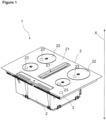
Figure 1 - is the front perspective view of the household appliance related to an embodiment of the present invention. -
Figure 2 - is the rear perspective view of the household appliance related to an embodiment of the present invention. -
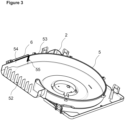
Figure 3 - is the rear perspective view of the outlet duct related to an embodiment of the present invention. -
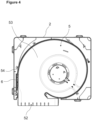
Figure 4 - is the top perspective view of the outlet duct related to an embodiment of the present invention. -
Figure 5 - is the partial perspective view of the air suction duct related to an embodiment of the present invention. -
Figure 6 - is the rear perspective view of the outlet duct related to an embodiment of the present invention. - The elements illustrated in the figures are numbered as follows:
- 1. Household appliance
- 2. Body
- 21. Cooking surface
- 22. Cooking zone
- 23. Temperature sensor
- 3. Control unit
- 4. Fan
- 5. Air suction duct
- 51. Air inlet opening
- 52. Air outlet opening
- 53. Outlet duct
- 54. Side wall
- 55. Air transfer opening
- 6. Odor sensor
- X. Height axis
- The household appliance (1) comprises a body (2); a cooker surface (21) which is disposed on the body (2); at least one cooking zone (22) which is provided on the cooker surface (21) and which is suitable for placing a cooking vessel thereon; at least one temperature sensor (23) which provides the measurement of the temperature of the cooking zone (22); a control unit (3) which provides the determination of the power transferred to the cooking vessel placed on the cooking zone (22) during the cooking process; a fan (4) which is disposed in the body (2) so as to be positioned under the cooker surface (21); an air suction duct (5) which has an air inlet opening (51) arranged on the cooker surface (21) and which enables the air sucked through the air inlet opening (51) to be discharged to the outside environment by operating the fan (4); and a odor sensor (6) which is disposed on the air suction duct (5) As shown in Figure and 2, the cooker surface (21) is a flat surface. Preferably a plurality of cooking zones (22) are provided on the cooker surface (21). The temperature sensor (23) is provided under each cooking zone (22). The cooker is an induction heating cooker. Therefore, the cooking zone (22) is heated by means of an induction coil. By using the level of the power drawn from the induction coil and the other data obtained from the induction coil, the control unit (3) can calculate the power transferred to the cooking vessel placed on the cooking zone (22) during the cooking process. By means of the fan (4) disposed under the cooker surface (21), the air generated during the cooking process is sucked in and the environment is cleaned. The fan (4) is configured to create a vertical air flow. By operating the fan (4), the air coming out of the cooking vessel passes through the air inlet opening (51) arranged on the cooker surface (21) and is delivered to the air suction duct (5). The sucked air is transferred to the outside environment through the air suction duct (5). An odor sensor (6) is provided on the air suction duct (5). Thus, odor particles in the sucked air can be detected. In a preferred version of the present invention, the odor sensor (6) is a volatile organic compound sensor.
- The household appliance (1) of the present invention further comprises the control unit (3) which controls the operation of the fan (4) according to a temperature value received from the temperature sensor (23), a power transfer value which is obtained by the control unit (3) and which shows the power transferred to the cooking vessel, and an odor value received from the odor sensor (6). The operation of the fan is controlled by the control unit (3) by evaluating the temperature value, the odor value and the power transfer value. Thus, the operation of the fan (4) is controlled by evaluating the factors which may affect the air quality of the environment. Consequently, the air of the environment where the household appliance (1) is installed is effectively cleaned. In other words, thus, the odor from the foodstuffs cooked in the cooking vessel is automatically transferred to the outside environment without allowing the same to pollute the air. The operation of the fan (4), the operation time thereof, the operation speed thereof and the termination of the operation thereof are automatically determined by the control unit (3).
- In an embodiment of the present invention, the household appliance (1) comprises the control unit (3) which calculates an air reference value by using the temperature value, the power transfer value and the odor value and which controls the operation of the fan (4) according to the calculated air reference value. In a preferred embodiment of the present invention, the fan (4) operating speed levels corresponding to the calculated air reference value are recorded in the memory of the control unit (3) by the manufacturer. After the air reference value is calculated, the fan (4) is operated at the speed level corresponding to the calculated air reference value. Thus, the fan (4) is enabled to be easily controlled by the control unit (3). While calculating the air reference value, the temperature value, the power transfer value and the odor value, which are the air reference variables, are weighted with a factor In the preferred version of the present invention, the change in the odor value has the highest impact on the air reference value. Thus, the fan (4) is operated at high speed levels so as to prevent the pollution of the ambient air especially during the cooking of foodstuffs which generate significant odor even if they are not exposed to very high temperatures.
- In an embodiment of the present invention, the household appliance (1) comprises the control unit (3) which controls the fan (4) so as to increase the operating speed of the fan (4) when it is determined that the odor value received from the odor sensor (6) reaches a predetermined threshold value. It is understood that as the odor value increases, the amount of odor particles in the air inside the air suction duct (5) also increases. In this case, the operating speed of the fan (4) is increased such that the odor-containing air is discharged to the outside environment, thus enabling the ambient air to be cleaned quickly.
- In an embodiment of the present invention, the household appliance (1) comprises the control unit (3) which controls the fan (4) so as to increase the operating speed of the fan (4) when it is determined that the temperature value received from the temperature sensor (23) reaches a predetermined threshold value. Since when the temperature value exceeds a threshold value it is understood that the temperature of the cooking zone (23) is very high, it is determined that high temperature cooking is being performed. In this case, since the amount of air coming out of the foodstuffs in the cooking vessel increases, the operating speed of the fan (4) is required be increased to prevent the pollution of the ambient air. Thus, the pollution of the air in the environment where the household appliance (1) is installed is prevented.
- In an embodiment of the present invention, the household appliance (1) comprises the control unit (3) which controls the fan (4) so as to increase the operating speed of the fan (4) when it is determined that the power transfer value reaches a predetermined threshold value. The power transfer value is calculated by the control unit (3) by using the power drawn by the induction coils. As the power transfer value increases, the temperature to which the foodstuffs cooked in the cooking vessel is exposed also increases. By increasing the operating speed of the fan (4), the air rising from the cooked foodstuffs is quickly sucked and the ambient air is cleaned.
- In an embodiment of the present invention, the household appliance (1) comprises the control unit (3) which adjusts the operating time and speed of the fan (4) according to the air reference value calculated when the control unit (3) determines that the cooking process is completed. The cooking process can be ended by the user by means of the buttons provided on the cooker surface (21). It is determined that the cooking process is completed by the deactivation of the heating source provided under the cooking zone (22). When it is determined that the cooking process is completed, the control unit (3) determines how long the fan (4) is to be operated and at what speed the same is to be operated, according to the air reference value calculated at that moment. The operating time and speed level of the fan (4) according to the air reference value calculated at the end of the cooking process can be recorded in the memory of the control unit (3) by the manufacturer. Thus, the air released from the cooked foodstuffs is removed from the environment efficiently and automatically, even when the cooking process is completed.
- In an embodiment of the present invention, the household appliance (1) comprises the odor sensor (6) which is disposed on an outlet duct (53) which is provided in the body (2) and which extends between an air outlet opening (52), where the air suction duct (5) opens to the outside environment, and the fan (4) such that the air suction duct (5) opens to the outside environment. The outlet duct (53) ensures that the air sucked from the air inlet opening (51) is transferred to the outside environment. A chimney is connected to the air outlet opening (52). The odor sensor (6) is disposed on the walls of the outlet duct (53). Thus, since all of the sucked air is passed through the outlet duct (53) and discharged to the outside environment, the majority of the sucked air can be passed through the odor sensor (6). Consequently, the odor value in the sucked air is detected more accurately and precisely.
- In an embodiment of the present invention, the household appliance (1) comprises the odor sensor (6) disposed on a side wall (54) which extends in a height axis (X) of the body (2), which is provided on the outlet duct (53) and which at least partially surrounds the fan (4). The height axis (X) is an axis extending upwards from the floor where the household appliance (1) is installed. In other words, as shown in
Figure 1 , the height axis (X) extends in the height direction of the household appliance (1) and hence of the body (2). As shown inFigure 6 , the side wall (54) almost completely surrounds the fan (4). The air leaving the fan (4) is directed by means of the side wall (54) and delivered to the air outlet opening (52). When the air flow diagrams are examined, it is observed that the air sucked by the fan (4) moves mostly by hitting the side wall (54). The odor sensor (6) is positioned on the side wall (54) so as to enable more air to pass over the odor sensor (6). - In an embodiment of the present invention, the household appliance (1) comprises an air transfer opening (55) which is arranged on the side wall (54); and the odor sensor (6) which is disposed on the outer surface of the side wall (54) so as to exchange air with said air transfer opening (55). An air transfer opening (55) is arranged on the side wall (54) of the outlet duct (53). The odor sensor (6) has a receptacle with one surface comprising a perforated grill. The odor sensor (6) is disposed on the outer surface of the side wall (54) of the outlet duct (53) such that the perforated grill and the air transfer opening (55) face each other. The inner surface of the side wall (54) is the surface through which the air sucked by the fan (4) is passed. The outer surface of the side wall (54) is the opposite surface of said inner surface. Thus, the odor sensor (6) is enabled to be disposed on the outlet duct (53) without blocking the air flow in the outlet duct (53).
- The control method of the present invention comprises the steps of receiving a temperature value from the temperature sensor (21); obtaining a power transfer value by the control unit (3) showing the power transferred to the cooking vessel during the cooking process; receiving an odor value from the odor sensor (6); and automatically determining the operating level of the fan (4) according to the temperature value, the power transfer value and the odor value. Thus, the operation of the fan is optimally controlled. The steps of the control method are executed by the control unit (3).
- In an embodiment of the present invention, the control method comprises the steps of calculating an air reference value by weighting the temperature value, the power transfer value and the odor value by a first constant factor, a second constant factor and a third constant factor , respectively, and of determining the operating level of the fan (4) according to the air reference value calculated. Said steps of the control method are also executed by the control unit (3). In a preferred version of the present invention, the air reference value is calculated by summing the temperature value multiplied by the first constant factor, the power transfer value multiplied by the second constant factor, and the odor value multiplied by the third constant factor. The third constant factor has the largest value among the constant factors. Thus, the odor value is determined with more weight compared to the other two variable values while calculating the air reference value. Consequently, during the cooking of foodstuffs which generate odor even if they are not exposed to high temperatures, the operating speed level of the fan (4) is increased and the air coming out of the foodstuffs is quickly removed from the environment.
- By means of the present invention, a household appliance (1) is realized, wherein the operation of the fan is effectively controlled according to a temperature value received from the temperature sensor (23), a power transfer value obtained by the control unit (3) and showing the power transferred to the cooking vessel and an odor value received from the odor sensor (6), and thus, the air coming out of the cooked foodstuffs is removed from the ambient air in the fastest and energy efficient way.
Claims (11)
- A household appliance (1) comprising a body (2); a cooker surface (21) which is disposed on the body (2); at least one cooking zone (22) which is provided on the cooker surface (21) and which is suitable for placing a cooking vessel thereon; at least one temperature sensor (23) which provides the measurement of the temperature of the cooking zone (22); a control unit (3) which provides the determination of the power transferred to the cooking vessel placed on the cooking zone (22) during the cooking process; a fan (4) which is disposed in the body (2) so as to be positioned under the cooker surface (21); an air suction duct (5) which has an air inlet opening (51) arranged on the cooker surface (21) and which enables the air sucked through the air inlet opening (51) to be discharged to the outside environment by operating the fan (4); and a odor sensor (6) which is disposed on the air suction duct (5),- characterized by the control unit (3) which controls the operation of the fan (4) according to a temperature value received from the temperature sensor (23), a power transfer value which is obtained by the control unit (3) and which shows the power transferred to the cooking vessel, and an odor value received from the odor sensor (6).
- A household appliance (1) as in Claim 1, characterized by the control unit (3) which calculates an air reference value by using the temperature value, the power transfer value and the odor value and which controls the operation of the fan (4) according to the calculated air reference value.
- A household appliance (1) as in Claim 1 or 2, characterized by the control unit (3) which controls the fan (4) so as to increase the operating speed of the fan (4) when it is determined that the odor value received from the odor sensor (6) reaches a predetermined threshold value.
- A household appliance (1) as in any one of the above claims, characterized by the control unit (3) which controls the fan (4) so as to increase the operating speed of the fan (4) when it is determined that the temperature value received from the temperature sensor (23) reaches a predetermined threshold value.
- A household appliance (1) as in any one of the above claims, characterized by the control unit (3) which controls the fan (4) so as to increase the operating speed of the fan (4) when it is determined that the power transfer value reaches a predetermined threshold value.
- A household appliance (1) as in any one of Claims 2 to 5, characterized by the control unit (3) which adjusts the operating time and speed of the fan (4) according to the air reference value calculated when the control unit (3) determines that the cooking process is completed.
- A household appliance (1) as in any one of the above claims, characterized by the odor sensor (6) which is disposed on an outlet duct (53) which is provided in the body (2) and which extends between an air outlet opening (52), where the air suction duct (5) opens to the outside environment, and the fan (4) such that the air suction duct (5) opens to the outside environment.
- A household appliance (1) as in Claim 7, characterized by the odor sensor (6) disposed on a side wall (54) which extends in a height axis (X) of the body (2), which is provided on the outlet duct (53) and which at least partially surrounds the fan (4).
- A household appliance (1) as in Claim 8, characterized by an air transfer opening (55) which is arranged on the side wall (54); and the odor sensor (6) which is disposed on the outer surface of the side wall (54) so as to exchange air with the air transfer opening (55).
- A control method suitable to be used in a household appliance (1) as in any one of Claims 1 to 9 and executed by the control unit (3), comprising the steps of- receiving a temperature value from the temperature sensor (21);- obtaining a power transfer value by the control unit (3) showing the power transferred to the cooking vessel during the cooking process;- receiving an odor value from the odor sensor (6); and- automatically determining the operating level of the fan (4) according to the temperature value, the power transfer value and the odor value.
- A control method as Claim 10, comprising the steps of calculating an air reference value by weighting the temperature value, the power transfer value and the odor value by a first constant factor, a second constant factor and a third constant factor , respectively, and of determining the operating level of the fan (4) according to the air reference value calculated.
Applications Claiming Priority (1)
| Application Number | Priority Date | Filing Date | Title |
|---|---|---|---|
| TR202219149 | 2022-12-13 |
Publications (1)
| Publication Number | Publication Date |
|---|---|
| EP4386266A1 true EP4386266A1 (en) | 2024-06-19 |
Family
ID=88647354
Family Applications (1)
| Application Number | Title | Priority Date | Filing Date |
|---|---|---|---|
| EP23207214.0A Withdrawn EP4386266A1 (en) | 2022-12-13 | 2023-10-31 | A household appliance with automatic fan control and the control method thereof |
Country Status (1)
| Country | Link |
|---|---|
| EP (1) | EP4386266A1 (en) |
Citations (8)
| Publication number | Priority date | Publication date | Assignee | Title |
|---|---|---|---|---|
| US20070023420A1 (en) * | 2005-08-01 | 2007-02-01 | Gagas John M | Induction cook top system with integrated ventilator |
| US20100163549A1 (en) * | 2005-08-01 | 2010-07-01 | Gagas John M | Low Profile Induction Cook Top with Heat Management System |
| EP2824395A2 (en) * | 2013-07-10 | 2015-01-14 | E.G.O. Elektro-Gerätebau GmbH | Method for operating an extractor hood and extractor hood |
| EP2880368B1 (en) | 2012-08-02 | 2017-09-06 | BSH Hausgeräte GmbH | Vapour extraction device and method for controlling a fan motor of a fan |
| EP3255348A1 (en) | 2016-06-09 | 2017-12-13 | BSH Hausgeräte GmbH | Cooking hob with extractor fan and power stage adjustment of an energy provider dependent on the operating mode of the extractor fan and method for operating a cooking hob |
| WO2019238421A1 (en) * | 2018-06-13 | 2019-12-19 | BSH Hausgeräte GmbH | Appliance combination of domestic appliances, method for operating a fume extraction device, and computer program product |
| EP3951267A1 (en) * | 2020-08-05 | 2022-02-09 | Electrolux Appliances Aktiebolag | Combination appliance and the use of the combination appliance |
| DE102020124068A1 (en) * | 2020-09-16 | 2022-03-17 | Miele & Cie. Kg | Downdraft fans and method of operation |
-
2023
- 2023-10-31 EP EP23207214.0A patent/EP4386266A1/en not_active Withdrawn
Patent Citations (8)
| Publication number | Priority date | Publication date | Assignee | Title |
|---|---|---|---|---|
| US20070023420A1 (en) * | 2005-08-01 | 2007-02-01 | Gagas John M | Induction cook top system with integrated ventilator |
| US20100163549A1 (en) * | 2005-08-01 | 2010-07-01 | Gagas John M | Low Profile Induction Cook Top with Heat Management System |
| EP2880368B1 (en) | 2012-08-02 | 2017-09-06 | BSH Hausgeräte GmbH | Vapour extraction device and method for controlling a fan motor of a fan |
| EP2824395A2 (en) * | 2013-07-10 | 2015-01-14 | E.G.O. Elektro-Gerätebau GmbH | Method for operating an extractor hood and extractor hood |
| EP3255348A1 (en) | 2016-06-09 | 2017-12-13 | BSH Hausgeräte GmbH | Cooking hob with extractor fan and power stage adjustment of an energy provider dependent on the operating mode of the extractor fan and method for operating a cooking hob |
| WO2019238421A1 (en) * | 2018-06-13 | 2019-12-19 | BSH Hausgeräte GmbH | Appliance combination of domestic appliances, method for operating a fume extraction device, and computer program product |
| EP3951267A1 (en) * | 2020-08-05 | 2022-02-09 | Electrolux Appliances Aktiebolag | Combination appliance and the use of the combination appliance |
| DE102020124068A1 (en) * | 2020-09-16 | 2022-03-17 | Miele & Cie. Kg | Downdraft fans and method of operation |
Similar Documents
| Publication | Publication Date | Title |
|---|---|---|
| AU2021202547B2 (en) | Cooking device and components thereof | |
| EP3365605B1 (en) | Method and household appliance for controlling humidity | |
| US20190045964A1 (en) | Cooking device and components thereof | |
| CN109237541B (en) | Smoke stove linkage control method and smoke stove linkage system | |
| CN109152497A (en) | air fryer | |
| JP2015010743A (en) | Cooking equipment | |
| US11985734B2 (en) | Countertop cooking system | |
| EP3867576B1 (en) | An exhaust hood comprising a temperature sensor | |
| EP3867575B1 (en) | An exhaust hood for detecting the cooking device type | |
| WO2015043648A1 (en) | Cooking oven having a cooling fan and improved method of controlling the cooling fan of the cooking oven | |
| EP4043799B1 (en) | Extractor hood for a hob and method for operating an extractor hood | |
| JP2009284926A (en) | Cooking range | |
| JP2012189274A (en) | Heating cooker | |
| TR2022019149A2 (en) | A HOME DEVICE AND CONTROL METHOD WHERE THE FAN IS AUTOMATICALLY CONTROLLED | |
| JP2010276257A (en) | Cooker | |
| KR100725737B1 (en) | Cooking device and drain control method thereof | |
| JP2010276256A (en) | Cooker | |
| JP2006038254A (en) | Cooker | |
| JP2006292234A (en) | Cooker | |
| JPH0610709U (en) | Microwave with heater |
Legal Events
| Date | Code | Title | Description |
|---|---|---|---|
| PUAI | Public reference made under article 153(3) epc to a published international application that has entered the european phase |
Free format text: ORIGINAL CODE: 0009012 |
|
| STAA | Information on the status of an ep patent application or granted ep patent |
Free format text: STATUS: REQUEST FOR EXAMINATION WAS MADE |
|
| 17P | Request for examination filed |
Effective date: 20231101 |
|
| AK | Designated contracting states |
Kind code of ref document: A1 Designated state(s): AL AT BE BG CH CY CZ DE DK EE ES FI FR GB GR HR HU IE IS IT LI LT LU LV MC ME MK MT NL NO PL PT RO RS SE SI SK SM TR |
|
| STAA | Information on the status of an ep patent application or granted ep patent |
Free format text: STATUS: EXAMINATION IS IN PROGRESS |
|
| 17Q | First examination report despatched |
Effective date: 20250710 |
|
| STAA | Information on the status of an ep patent application or granted ep patent |
Free format text: STATUS: THE APPLICATION IS DEEMED TO BE WITHDRAWN |
|
| 18D | Application deemed to be withdrawn |
Effective date: 20251111 |