EP4385478A1 - Disposable diaper - Google Patents
Disposable diaper Download PDFInfo
- Publication number
- EP4385478A1 EP4385478A1 EP22866919.8A EP22866919A EP4385478A1 EP 4385478 A1 EP4385478 A1 EP 4385478A1 EP 22866919 A EP22866919 A EP 22866919A EP 4385478 A1 EP4385478 A1 EP 4385478A1
- Authority
- EP
- European Patent Office
- Prior art keywords
- fixed portion
- notch
- fixed
- disposable diaper
- width direction
- Prior art date
- Legal status (The legal status is an assumption and is not a legal conclusion. Google has not performed a legal analysis and makes no representation as to the accuracy of the status listed.)
- Granted
Links
Images





Classifications
-
- A—HUMAN NECESSITIES
- A61—MEDICAL OR VETERINARY SCIENCE; HYGIENE
- A61F—FILTERS IMPLANTABLE INTO BLOOD VESSELS; PROSTHESES; DEVICES PROVIDING PATENCY TO, OR PREVENTING COLLAPSING OF, TUBULAR STRUCTURES OF THE BODY, e.g. STENTS; ORTHOPAEDIC, NURSING OR CONTRACEPTIVE DEVICES; FOMENTATION; TREATMENT OR PROTECTION OF EYES OR EARS; BANDAGES, DRESSINGS OR ABSORBENT PADS; FIRST-AID KITS
- A61F13/00—Bandages or dressings; Absorbent pads
- A61F13/15—Absorbent pads, e.g. sanitary towels, swabs or tampons for external or internal application to the body; Supporting or fastening means therefor; Tampon applicators
- A61F13/45—Absorbent pads, e.g. sanitary towels, swabs or tampons for external or internal application to the body; Supporting or fastening means therefor; Tampon applicators characterised by the shape
- A61F13/49—Absorbent pads, e.g. sanitary towels, swabs or tampons for external or internal application to the body; Supporting or fastening means therefor; Tampon applicators characterised by the shape specially adapted to be worn around the waist, e.g. diapers or nappies
- A61F13/493—Absorbent pads, e.g. sanitary towels, swabs or tampons for external or internal application to the body; Supporting or fastening means therefor; Tampon applicators characterised by the shape specially adapted to be worn around the waist, e.g. diapers or nappies adjustable by adding or removing material, e.g. umbilical cord arrangements
-
- A—HUMAN NECESSITIES
- A61—MEDICAL OR VETERINARY SCIENCE; HYGIENE
- A61F—FILTERS IMPLANTABLE INTO BLOOD VESSELS; PROSTHESES; DEVICES PROVIDING PATENCY TO, OR PREVENTING COLLAPSING OF, TUBULAR STRUCTURES OF THE BODY, e.g. STENTS; ORTHOPAEDIC, NURSING OR CONTRACEPTIVE DEVICES; FOMENTATION; TREATMENT OR PROTECTION OF EYES OR EARS; BANDAGES, DRESSINGS OR ABSORBENT PADS; FIRST-AID KITS
- A61F13/00—Bandages or dressings; Absorbent pads
- A61F13/15—Absorbent pads, e.g. sanitary towels, swabs or tampons for external or internal application to the body; Supporting or fastening means therefor; Tampon applicators
- A61F13/51—Absorbent pads, e.g. sanitary towels, swabs or tampons for external or internal application to the body; Supporting or fastening means therefor; Tampon applicators characterised by the outer layers of the pads
-
- A—HUMAN NECESSITIES
- A61—MEDICAL OR VETERINARY SCIENCE; HYGIENE
- A61F—FILTERS IMPLANTABLE INTO BLOOD VESSELS; PROSTHESES; DEVICES PROVIDING PATENCY TO, OR PREVENTING COLLAPSING OF, TUBULAR STRUCTURES OF THE BODY, e.g. STENTS; ORTHOPAEDIC, NURSING OR CONTRACEPTIVE DEVICES; FOMENTATION; TREATMENT OR PROTECTION OF EYES OR EARS; BANDAGES, DRESSINGS OR ABSORBENT PADS; FIRST-AID KITS
- A61F13/00—Bandages or dressings; Absorbent pads
- A61F13/15—Absorbent pads, e.g. sanitary towels, swabs or tampons for external or internal application to the body; Supporting or fastening means therefor; Tampon applicators
- A61F13/56—Supporting or fastening means
-
- A—HUMAN NECESSITIES
- A61—MEDICAL OR VETERINARY SCIENCE; HYGIENE
- A61F—FILTERS IMPLANTABLE INTO BLOOD VESSELS; PROSTHESES; DEVICES PROVIDING PATENCY TO, OR PREVENTING COLLAPSING OF, TUBULAR STRUCTURES OF THE BODY, e.g. STENTS; ORTHOPAEDIC, NURSING OR CONTRACEPTIVE DEVICES; FOMENTATION; TREATMENT OR PROTECTION OF EYES OR EARS; BANDAGES, DRESSINGS OR ABSORBENT PADS; FIRST-AID KITS
- A61F13/00—Bandages or dressings; Absorbent pads
- A61F13/15—Absorbent pads, e.g. sanitary towels, swabs or tampons for external or internal application to the body; Supporting or fastening means therefor; Tampon applicators
- A61F13/56—Supporting or fastening means
- A61F13/5622—Supporting or fastening means specially adapted for diapers or the like
- A61F13/5633—Supporting or fastening means specially adapted for diapers or the like open type diaper
-
- A—HUMAN NECESSITIES
- A61—MEDICAL OR VETERINARY SCIENCE; HYGIENE
- A61F—FILTERS IMPLANTABLE INTO BLOOD VESSELS; PROSTHESES; DEVICES PROVIDING PATENCY TO, OR PREVENTING COLLAPSING OF, TUBULAR STRUCTURES OF THE BODY, e.g. STENTS; ORTHOPAEDIC, NURSING OR CONTRACEPTIVE DEVICES; FOMENTATION; TREATMENT OR PROTECTION OF EYES OR EARS; BANDAGES, DRESSINGS OR ABSORBENT PADS; FIRST-AID KITS
- A61F13/00—Bandages or dressings; Absorbent pads
- A61F13/15—Absorbent pads, e.g. sanitary towels, swabs or tampons for external or internal application to the body; Supporting or fastening means therefor; Tampon applicators
- A61F13/56—Supporting or fastening means
- A61F13/5622—Supporting or fastening means specially adapted for diapers or the like
- A61F13/5633—Supporting or fastening means specially adapted for diapers or the like open type diaper
- A61F13/5638—Supporting or fastening means specially adapted for diapers or the like open type diaper adjustable open type diapers
-
- A—HUMAN NECESSITIES
- A61—MEDICAL OR VETERINARY SCIENCE; HYGIENE
- A61F—FILTERS IMPLANTABLE INTO BLOOD VESSELS; PROSTHESES; DEVICES PROVIDING PATENCY TO, OR PREVENTING COLLAPSING OF, TUBULAR STRUCTURES OF THE BODY, e.g. STENTS; ORTHOPAEDIC, NURSING OR CONTRACEPTIVE DEVICES; FOMENTATION; TREATMENT OR PROTECTION OF EYES OR EARS; BANDAGES, DRESSINGS OR ABSORBENT PADS; FIRST-AID KITS
- A61F13/00—Bandages or dressings; Absorbent pads
- A61F13/15—Absorbent pads, e.g. sanitary towels, swabs or tampons for external or internal application to the body; Supporting or fastening means therefor; Tampon applicators
- A61F13/56—Supporting or fastening means
- A61F13/62—Mechanical fastening means ; Fabric strip fastener elements, e.g. hook and loop
- A61F13/622—Fabric strip fastener elements, e.g. hook and loop
-
- A—HUMAN NECESSITIES
- A61—MEDICAL OR VETERINARY SCIENCE; HYGIENE
- A61F—FILTERS IMPLANTABLE INTO BLOOD VESSELS; PROSTHESES; DEVICES PROVIDING PATENCY TO, OR PREVENTING COLLAPSING OF, TUBULAR STRUCTURES OF THE BODY, e.g. STENTS; ORTHOPAEDIC, NURSING OR CONTRACEPTIVE DEVICES; FOMENTATION; TREATMENT OR PROTECTION OF EYES OR EARS; BANDAGES, DRESSINGS OR ABSORBENT PADS; FIRST-AID KITS
- A61F13/00—Bandages or dressings; Absorbent pads
- A61F13/15—Absorbent pads, e.g. sanitary towels, swabs or tampons for external or internal application to the body; Supporting or fastening means therefor; Tampon applicators
- A61F13/84—Accessories, not otherwise provided for, for absorbent pads
-
- A—HUMAN NECESSITIES
- A61—MEDICAL OR VETERINARY SCIENCE; HYGIENE
- A61F—FILTERS IMPLANTABLE INTO BLOOD VESSELS; PROSTHESES; DEVICES PROVIDING PATENCY TO, OR PREVENTING COLLAPSING OF, TUBULAR STRUCTURES OF THE BODY, e.g. STENTS; ORTHOPAEDIC, NURSING OR CONTRACEPTIVE DEVICES; FOMENTATION; TREATMENT OR PROTECTION OF EYES OR EARS; BANDAGES, DRESSINGS OR ABSORBENT PADS; FIRST-AID KITS
- A61F13/00—Bandages or dressings; Absorbent pads
- A61F13/15—Absorbent pads, e.g. sanitary towels, swabs or tampons for external or internal application to the body; Supporting or fastening means therefor; Tampon applicators
- A61F13/84—Accessories, not otherwise provided for, for absorbent pads
- A61F2013/8497—Accessories, not otherwise provided for, for absorbent pads having decorations or indicia means
Definitions
- the present invention relates to a disposable diaper.
- Patent Literatures 1 to 3 A disposable diaper with fastening tapes that fasten a backside portion and an abdominal side portion of a diaper body at the time of wearing the diaper is known (see, for example, Patent Literatures 1 to 3).
- a diaper body includes a side flap on each side of a backside portion, and each fastening tape includes a fixed portion fixed to the side flap and a protruding piece extending from the fixed portion to an outside of the diaper body in a width direction.
- Patent Literatures 1 and 2 disclose a configuration in which a cutout or notch is formed in the fixed portion, wherein the notch is recessed from an inside edge of the diaper body in the width direction toward an outside in the width direction.
- Patent Literature 3 discloses a configuration in which the fixed portion extends below the protruding piece (toward a leg side of a wearer).
- the fixed portion of the fastening tape disclosed in Patent Literatures 1 and 2 does not extend below the protruding piece (toward the leg side of the wearer). Therefore, when the backside portion and the abdominal side portion are tied together, a force that acts on a lower portion of the side flap is weakened to reduce the fit of the diaper body around the legs.
- the fixed portion extends below the protruding piece (toward the leg side of the wearer). This extension of the fixed portion increases the rigidity of a part of the side flap that is lower than the protruding piece. Therefore, when the backside portion and the abdominal side portion are fastened together, and the lower portion of the side flap is not deformed properly, which reduces the fit of the diaper body around the legs.
- a disposable diaper of the present invention includes a diaper body that includes a front surface sheet, a back surface sheet, and an absorber disposed between the front surface sheet and the back surface sheet, the diaper body extending from a backside portion of the diaper body to an abdominal side portion of the diaper body; a side flap that is provided in each of side portions of the backside portion, the side flap extending outward beyond the absorber in a width direction of the diaper body; and a fastening tape that is provided in the side flap to be fastened to the abdominal side portion when the diaper body is used.
- the fastening tape includes a fixed portion that is fixed to the side flap; and a protruding piece that extends outward from the fixed portion in the width direction.
- the fixed portion includes a notch in a lower region of the fixed portion that is closer to a leg side of a wearer than the protruding piece, the notch being recessed from an outer edge in the width direction toward an inner side in the width direction.
- the disposable diaper of the present invention configured as described above can improve the fit of the diaper body around the legs.
- a disposable diaper according to the present invention is described with reference to Examples 1 and 2 illustrated in the drawings.
- a disposable diaper 1 of Example 1 is a diaper that is attached to a wearer P by a caregiver.
- the wearer P is covered with a diaper body 10 from his or her back through a crotch to his or her abdomen.
- the disposable diaper 1 includes the diaper body 10 and fastening tapes 20.
- the diaper body 10 includes a backside portion 10X, a crotch portion 10Y, and an abdominal side portion 10Z.
- the fastening tapes 20 are provided in the diaper body 10.
- the backside portion 10X, the abdominal side portion 10Z, and the crotch portion 10Y between the backside portion 10X and the abdominal side portion 10Z are formed integrally.
- a side flap 17 is provided on each side of the backside portion 10X and is attached to the abdominal side portion 10Z via the fastening tape 20.
- the disposable diaper 1 may be used together with an inner pad set inside the diaper 1.
- a direction that connects the backside portion 10X and the abdominal side portion 10Z is defined as an "extending direction D" while a direction that is orthogonal to the extending direction D is defined as a "width direction E”.
- the terms “up and down”, “left and right”, “front and rear”, and the like are used with reference to the wearer P.
- the extending direction D is a front-rear direction of the diaper body 10. The front side corresponds to an abdominal side of the wearer P, and the rear side corresponds to a back side of the wearer P.
- the diaper body 10 includes a top sheet 11 (a front surface sheet), a back sheet 12 (a back surface sheet), an absorber 13, and a pair of gathered sheets 14.
- the top sheet 11 is provided on a body side or inner side of the diaper body 10 to cover a front surface of the absorber 13.
- the top sheet 11 is liquid permeable, which is a property that allows the liquid to permeate through it.
- the top sheet 11 is formed of, for example, liquid-permeable non-woven fabric or the like. The top sheet 11 allows body fluid to pass quickly toward the absorber 13.
- the back sheet 12 is provided on a cloth side or outer side of the diaper body 10 to cover a back surface of the absorber 13.
- the back sheet 12 is liquid-impermeable, which is a property that does not allow the liquid to pass through it.
- the back sheet 12 is formed of, for example, a resin film. The back sheet 12 prevents the body fluid retained by the absorber 13 from passing through it, thereby clothes or the like do not get wet.
- the absorber 13 is provided between the top sheet 11 and the back sheet 12 to absorb and retain the liquid (i.e., body fluid) that has passed through the top sheet 11.
- the absorber 13 is formed with pulp fibers and absorbent polymer particles formed in a sheet and is wrapped by a core wrap sheet (not shown) made of crepe paper, nonwoven fabric, or the like. Note that the absorber 13 is not necessarily wrapped by the core wrap sheet.
- the absorber 13 has a band shape extending in the extending direction D of the diaper body 10 has a smaller outer shape than those of the top sheet 11 and the back sheet 12.
- the absorber 13 may be single-layered or multilayered.
- top sheet 11 and the back sheet 12 are layered each other with the absorber 13 provided therebetween, and portions of the sheets 11 and 12 other than regions that overlap the absorber 13 are attached by an adhesive such as a hot melt adhesive, or the like.
- water-repellent or liquid-impermeable non-woven fabric may be used for the gathered sheet 14.
- Each of the gathered sheet 14 has a band shape that extends in the extending direction D.
- the gathered sheet 14 is provided on each side of the diaper body 10 with the center of the diaper body 10 being located between the pair of the gathered sheets 14 in the width direction E.
- the first end of the gathered sheet 14 in the width direction E is fixed to the top sheet 11 by an adhesive such as, for example, a hot melt adhesive, welding, or the like.
- an adhesive such as, for example, a hot melt adhesive, welding, or the like.
- two elongated shaped elastically stretchable members 14a (see Fig. 2 ) extending in the extending direction D are provided in a predetermined stretched state.
- thread-shaped or band-shaped synthetic rubber or the like may be used as the elastically stretchable members 14a.
- the elastically stretchable members 14a extend respectively from the backside portion 10X to the abdominal side portion 10Z.
- the contraction force of the elastically stretchable members 14a forms gathers at the second end of the gathered sheet 14 in the width direction E to raise or lift the gathered sheet 14 from the top sheet 11.
- the raised or lifted gathered sheet 14 forms three-dimensional gathers 15.
- the three-dimensional gathers 15 are deformable to conform to the body of the wearer P, thereby preventing the lateral leakage of the excrement of the wearer P.
- the diaper body 10 includes a plurality of elastically stretchable members 16a provided in portions along the groin of the wearer P to extend in the extending direction D in a predetermined stretched state.
- the elastically stretchable members 16a are elongated shaped, and for example, thread-shaped or band-shaped synthetic rubber or the like may be used for the elastically stretchable members 16a.
- the contractive force of the elastically stretchable members 16a forms flat gathers 16 in the portions along the groin of the diaper body 10.
- the flat gathers 16 extend along the extending direction D of the diaper body 10 with the crotch portion 10Y as a center. As illustrated in Fig. 2 , the flat gathers 16 are provided on the outside of the three-dimensional gathers 15 in the width direction E. The flat gathers 16 are deformable to conform to the body of the wearer P. In the diaper body 10, the flat gathers 16 are deformed to improve the fit around the groin of the wearer P.
- the side flap 17 is formed on each side of the backside portion 10X in the width direction E.
- Each of the side flaps 17 is formed by the top sheet 11 and the back sheet 12 which extend laterally (outwardly in the width direction E) from a side edge 13a of the absorber 13 in the width direction E. Note that in the side flap 17, the entire surface of the top sheet 11 is bonded to the back sheet 12.
- the side flap 17 on each side of the backside portion 10X is provided with a fastening tape 20.
- the fastening tapes 20 may be formed of, for example, non-woven fabric, a plastic film, poly-laminate non-woven fabric having a surface covered with a thin polyethylene film, paper, or a sheet material made of these composite materials.
- the fastening tapes 20 are used to pull the side flap 17 when a caregiver applies the disposable diaper 1 to the wearer P.
- a material used for the fastening tapes 20 has a basis weight (or basis weight) higher than those of the top sheet 11, the back sheet 12, or the like to prevent undesirable or unexpected tearing or stretching during use.
- each of the fastening tape 20 includes a fixed portion 21 and a single protruding piece 22.
- the fixed portion 21 is fixed to a side end 17a of the side flap 17.
- the entire surface of the fixed portion 21 is fixed to the side flap 17 in this embodiment.
- the fixed portion 21 may be fixed to the side flap 17 in a state where the fixed portion 21 partially protrudes from the side end 17a.
- the fixed portion 21 is fixed to an outer side (i.e., cloth side) of the side flap 17, that is, to the back sheet 12 in this embodiment.
- the fixed portion 21 may be fixed to the front and back surfaces of the side flap 17 to sandwich the side flap 17.
- the fixed portion 21 may be fixed to an inner side (i.e., body side) of the side flap 17, that is to the top sheet 11.
- the fixed portion 21 is fixed to the side flap 17 by an adhesive such as a hot melt adhesive, or welding.
- the fixed portion 21 has a rectangular shape in a plan view and extends in the extending direction D of the diaper body 10.
- the protruding piece 22 is formed by partially extending an outer edge 21a (see Fig. 3 ) of the fixed portion 21 outwardly in the width direction E.
- the protruding piece 22 extends from the outer edge 21a of the fixed portion 21 to the outside of the diaper body 10 in the width direction E.
- the "outer edge 21a of the fixed portion 21" is an outer side edge of the fixed portion 21 in the width direction E.
- the protruding piece 22 protrudes from the side flap 17 to a side of the diaper body 10, that is, outwardly in the width direction E.
- the fixed portion 21 is provided with only one protruding piece 22.
- the protruding piece 22 has a substantially rectangular shape that is smaller than the fixed portion 21 in a plan view.
- the protruding pieces 22 are configured to be grasped or held by a caregiver when the disposable diaper 1 is applied or attached to the wearer P.
- an engaging member 23 is provided on an inner surface (i.e., surface on the body side) of the protruding piece 22.
- the engaging member 23 removably and detachably engages with a target tape 24 provided on the outer side (i.e., cloth side) of the abdominal side portion 10Z of the diaper body 10.
- a hook member of a hook and loop fastener or an adhesive tape is used as the engaging member 23 . Any material, shape, or the like of the engaging member 23 may be used as long as the engaging member 23 can repeatedly engage with and disengage from the target tape 24.
- the engaging member 23 is the hook member of the hook and loop fastener
- a sheet having, on its surface, a large number of loop threads that tangle or interlock with the hook member can be used as the target tape 24.
- the target tape 24 may be, for example, a smooth and/or flat sheet applied with a peeling process on its surface.
- the target tape 24 may be omitted.
- the engaging member 23 is entangled with the fibers of the back sheet 12 to be fastened.
- a cutout or notch 30 is formed in the fixed portion 21 of the fastening tape 20. Furthermore, a mark 25 is formed in the protruding piece 22 of the fastening tape 20.
- the mark 25 indicates a position of the protruding piece 22 to be grasped or held by a caregiver when the disposable diaper 1 is applied to the wearer.
- the mark 25 is formed at an outer side edge 22a of the protruding piece 22 in the width direction E.
- the mark 25 in Example 1 is formed by outwardly protruding an upper portion of the outer side edge 22a of the protruding piece 22 (i.e., a corner portion on an upper side of the protruding piece 22) in a semicircular shape in the width direction E.
- the engaging member 23 is provided in an intermediate portion of the protruding piece 22 in the width direction E, which is a position that does not interfere with the mark 25. Therefore, the mark 25 does not engage with the target tape 24, and accordingly, it is easily pinched or held to disengage the fastening tape 20. Therefore, the mark 25 does not engage with the target tape 24 to be easily pinched or held to release the fastening tape 20.
- Each of the notch 30 is provided at the outer edge 21a of the fixed portion 21 in the width direction E and is recessed inwardly from the outer edge 21a in the width direction E.
- the notch 30 is formed by partially cutting out the outer edge 21a of the fixed portion 21 inwardly in an arc shape in the width direction E.
- the notch 30 is formed in a lower region ⁇ (i.e., the region enclosed by a dashed-and-dotted line in Fig. 4 ) of the fixed portion 21.
- the notch 30 is formed in a position that is continuous from a lower end 22b of the protruding piece 22.
- the protruding piece 22 and the notch 30 are formed in an integrally continuous curved shape in a plan view.
- lower region ⁇ corresponds to a region lower than the position of the fixed portion 21 from which the protruding piece 22 protrudes, that is, a region lower than the lower end 22b of the protruding piece 22 (i.e., the region on a side of the crotch portion 10Y and a leg side of the wearer P).
- each of the marks 25 is formed in an upper corner of the protruding piece 22.
- the mark 25 and the notch 30 face each other across the protruding piece 22 since the notch 30 is formed at the outer edge 21a of the fixed portion 21 in the width direction E continuously from the lower end 22b of the protruding piece 22.
- a position where the mark 25 is formed and a position where the notch 30 is formed are approximately arranged on the same diagonal line of the protruding piece 22.
- each of the fixed portions 21 includes a non-fixed region R1 (a region enclosed by a broken line in Fig. 4 ), and each of the side flaps 17 includes a non-adhesion region R2 (a region enclosed by a dashed-and-double-dotted line in Fig. 3 ).
- the non-fixed region R1 is a region that is not fixed to the side flap 17 in the fixed portion 21.
- the non-fixed region R1 extends from the notch 30 to an inner edge 21b of the fixed portion 21 in the width direction E and extends obliquely downward through the lower region ⁇ .
- the extending direction of the non-fixed region R1 is not limited to the direction illustrated in Fig. 3 , and may be set in any direction as long as the extending direction passes through the lower region ⁇ of the fixed portion 21.
- the non-adhesion region R2 is a region where the top sheet 11 and the back sheet 12 are not bonded to each other in the side flap 17 that is formed by layering the top sheet 11 and the back sheet 12 together.
- the non-adhesion region R2 extends from a position overlapping the notch 30 to a position where the gathered sheet 14 is provided and extends in the same direction as the non-fixed region R1 (i.e., obliquely downward direction through the lower region ⁇ ). Therefore, the non-fixed region R1 and the non-adhesion region R2 overlap each other.
- non-adhesion region R2 may extend in a direction different from the extending direction of the non-fixed region R1.
- the extending direction of the non-adhesion region R2 is not limited to the direction illustrated in Fig. 3 and may be set in any direction as long as the direction passes through the lower region ⁇ of the fixed portion 21.
- the non-adhesion region R2 may extend from the side end 17a of the side flap 17 to an intermediate position (i.e., a position before the gathered sheet 14) of the side flap 17.
- a caregiver In applying the disposable diaper 1 of Example 1 to the wearer P, a caregiver first unfolds the diaper body 10 of the disposable diaper 1, and places the diaper body 10 over the body of the wearer P who is in a supine position state. At this time, the caregiver places the backside portion 10X of the diaper body 10 against the back of the wearer P. Next, the caregiver covers the abdomen of the wearer P with the abdominal side portion 10Z of the diaper body 10. Subsequently, the caregiver holds the protruding pieces 22 and pulls the side flaps 17 via the fastening tapes 20 to fit the backside portion 10X to the body of the wearer P. Then, the caregiver fastens the engaging members 23 in the protruding pieces 22 onto the target tape 24 while pulling the side flaps 17. As a result, the side flaps 17 are bound together with the abdominal side portion 10Z, and the disposable diaper 1 is worn by the wearer P.
- each of the fastening tapes 20 of the disposable diaper 1 of Example 1 is provided with the notch 30 formed in the lower region ⁇ of the fixed portion 21 that is located on the side closer to the leg of the wearer P than the protruding piece 22. Therefore, the fastening tape 20 does not overlap a portion of the side end 17a of the side flap 17 where the notch 30 overlaps.
- the lower region ⁇ of the fixed portion 21 has a portion with decreased rigidity. Therefore, when each of the side flaps 17 is pulled, the lower side portion (i.e., leg side of the wearer P) of the protruding piece 22 where the notch 30 overlaps is appropriately deformed. As a result, at the time of using the disposable diaper 1, as illustrated in Fig.
- a portion of the side flap 17 that overlaps the notch 30 is bent to generate folds or wrinkles S around the notch 30.
- the lower portion of the side flap 17 is prevented from being loosening or floating to thereby fit the body of the wearer P, and accordingly, the fit of the diaper body 10 around the legs can be improved.
- the marks 25 are formed on the outer side edges 22a of each of the protruding pieces 22 in the width direction E. Therefore, in the disposable diaper 1, the caregiver can hold the protruding pieces 22 at the positions where the marks 25 are formed. In this embodiment, the caregiver can hold the upper portions of the outer side edges 22a of the protruding pieces 22 (i.e., upper corner portions of the protruding pieces 22). Furthermore, the caregiver can easily pull the side flaps 17 obliquely downward in the width direction E by holding the portions where the marks 25 are provided and pulling the fastening tapes 20.
- the marks 25 formed on the outer side edges 22a of the protruding pieces 22 in the width direction E guide the caregiver to pull the side flaps 17 obliquely downward below the width direction E, thereby improving the fit of the diaper body 10 around the waist.
- the notches 30 in the fixed portions 21 are provided to face the marks 25 across the protruding pieces 22, respectively. Therefore, when each of the side flaps 17 is pulled obliquely downward and a first force F1 directed obliquely downward acts on the upper portion of the side flap 17, a second force F2 in an obliquely upward direction toward the notch 30 acts on the lower portion of the side flap 17. In other words, the force (second force F2) that pulls the lower side (leg side) of the fastening tape 20 upward is applied to the side flap 17.
- the wrinkles S around each of the notches 30 extend obliquely downward from the notch 30.
- the wrinkles S that extend obliquely downward from each of the notches 30 are generated in each of the side flaps 17. This prevents the lower portions of the side flaps 17 from loosening or floating, and accordingly, the fit of the diaper body 10 around the legs can be improved.
- the fixed portion 21 of the fastening tape 20 includes the non-fixed region R1 that is not fixed to the side flap 17.
- the fixed portion 21 is separated from the side flap 17, and in the side flap 17, the rigidity in the non-fixed region R1 is lower than that in a portion that is fixed to the fixed portion 21. Therefore, the side flap 17 can be easily deformed in the non-fixed region R1.
- the non-fixed region R1 extends obliquely downward from the notch 30 through the lower region ⁇ of the fixed portion 21, and therefore, the first force F1 and the second force F2 that act on the side flap 17 can be focused on the notch 30.
- the wrinkles S extending in the obliquely upward direction toward the notch 30 can be easily generated in the lower portion of the side flap 17, thereby improving the fit of the diaper body 10 around the legs.
- each of the side flaps 17 is formed by laminating the top sheet 11 and the back sheet 12, wherein the top sheet 11 is bonded to the back sheet 12.
- each of the side flaps 17 includes the non-adhesion region R2 where the top sheet 11 is not bonded to the back sheet 12.
- the top sheet 11 is separated from the back sheet 12, and in the side flap 17, the rigidity in the non-adhesion region R2 is lower than that in the portion where the top sheet 11 is bonded to the back sheet 12. Therefore, the side flap 17 can be easily deformed in the non-adhesion region R2. Furthermore, the non-adhesion region R2 extends obliquely downward from the position where the notch 30 overlaps through the lower region ⁇ of the fixed portion 21. Therefore, the wrinkles S generated in the side flap 17 to extend in the obliquely upward direction toward the notch 30 can be expanded or developed toward the center in the width direction E of the backside portion 10X. As a result, the fit of the diaper body 10 around the legs can be further improved.
- a disposable diaper 1A of Example 2 As illustrated in Fig. 6 , the notch 30 is formed in a fixed portion 21 of a fastening tape 20A, and a fragile structure 40 is formed at the periphery of the notch 30 to suppress the rigidity of the fastening tape 20A.
- the configuration of the disposable diaper 1A of Example 2 other than the fastening tape 20A is similar to that of the disposable diaper 1 of Example 1. Therefore, a detailed description of such a configuration is omitted.
- the fragile structure 40 in the fastening tape 20A consists of a plurality of perforations 41 (three perforations in this embodiment) formed in the fixed portion 21.
- Each of the perforations 41 includes cut portions that penetrate the fixed portion 21 and uncut portions that do not penetrate the fixed portion 21 which are alternately arranged in a predetermined direction passing through the lower region ⁇ of the fixed portion 21.
- the plurality of perforations 41 constituting the fragile structure 40 are aligned in the extending direction D at predetermined intervals.
- the fixed portion 21 of the fastening tape 20A includes the fragile structure 40 consisting of the plurality of perforations 41, and accordingly, the rigidity in the portion where the fragile structure 40 is formed is reduced compared to that in a portion where the fragile structure 40 is not formed. In other words, in the fixed portion 21 of the fastening tape 20A, the rigidity is suppressed at the periphery of the notch 30.
- the disposable diaper 1A of Example 2 when the caregiver pulls the side flaps 17 obliquely downward, the first force F1 directed obliquely downward acts on the upper portions of the side flaps 17. Furthermore, the second force F2 in the obliquely upward direction toward the notch 30 acts on the lower portions of the side flaps 17.
- the notches 30 are formed in the fixed portions 21 of the fastening tapes 20, and therefore, the folds or wrinkles S extending obliquely downward from the notches 30 are generated in the side flaps 17.
- the disposable diaper 1A of Example 2 can suppress any loosening or floating in the lower portions of the side flaps 17, thereby improving the fit of the diaper body 10 around the legs.
- the fragile structure 40 is formed at the periphery of the notch 30 formed in the fixed portion 21.
- the fragile structure 40 suppresses the rigidity of the fixed portion 21. Therefore, in the fixed portion 21, the portion where the fragile structure 40 is formed can be deformed more easily than the portion where the fragile structure 40 is not formed. Therefore, when the side flap 17 is pulled, and the wrinkles S are generated in the side flap 17 with the notch 30 as the center, the portion in the fixed portion 21 where the fragile structure 40 is formed, that is, the lower region ⁇ of the fixed portion 21, can be easily deformed. As a result, the periphery of the notch 30 is deformed to conform to the body of the wearer P, thereby improving the wearing comfort of the diaper body 10.
- the fragile structure 40 formed in the fixed portion 21 to suppress the rigidity at the periphery of the notch 30 is not limited to the one having the plurality of perforations 41.
- the fragile structure 40 may have a configuration that suppresses the rigidity of the fixed portion 21 at the periphery of the notch 30.
- a fragile structure 40A may be configured by not providing the fixed portion 21 in a portion below a straight line L that connects a position where the notch 30 is formed to a position where the mark 25 is formed (i.e., a portion closer to the side of the crotch portion 10Y and the leg side of the wearer P).
- Each of the fixed portion 21 includes the fragile structure 40A of the first variation illustrated in Fig. 7 , and therefore, the area of the fixed portion 21 can be smaller than that in a case where the fragile structure 40 consists of, for example, the perforations 41. Therefore, the area of the side flap 17 where the rigidity is increased by the fixed portion 21 can be made small so that the side flap 17 can be easily deformed. Thus, the periphery of the notch 30 is deformed to conform to the body of the wearer P, thereby improving the wearing comfort of the diaper body 10.
- the disposable diaper of the present invention has been described above in accordance with Examples 1 and 2.
- the specific configuration of the disposable diaper is not limited to these examples, and design changes, combinations of respective examples, additions, or the like are acceptable without departing from the scope of the invention according to each claim.
- a notch 30A may be provided to have a length W1 extending inwardly from an outer edge 21a of the fixed portion 21 in the width direction E wherein the length W1 is longer than the length of the notch 30 in Example 1.
- the area of the fixed portion 21 of the fastening tape 20 can be smaller than that of the fixed portion 21 in Example 1 where the notch 30 is formed.
- the mark 25 provided in the protruding piece 22 is formed by protruding the outer side edge 22a of the protruding piece 22 outward in the width direction E.
- the mark 25 may be formed to guide a caregiver to hold a position where the mark 25 is formed. Therefore, the mark 25 may be formed, for example, by coloring an upper portion of the outer side edge 22a of the protruding piece 22.
- each of the marks 25 is formed is not limited to the upper portion of the outer side edge 22a of the protruding piece 22 (i.e., the upper corner portion of the protruding piece 22).
- Each of the marks 25 may be formed in any position as long as the position is desirable for a caregiver to grasp or hold.
- each of the side flaps 17 is formed by laminating the top sheet 11 and the back sheet 12, wherein the top sheet 11 is the front surface sheet and the back sheet 12 is the back surface sheet.
- the configuration of the side flap 17 is not limited to the above.
- the front surface sheet may consist of the top sheet 11 and the gathered sheet 14 disposed on both sides of the top sheet 11, while the side flap 17 may be formed by laminating the gathered sheet 14 and the back sheet 12.
Landscapes
- Health & Medical Sciences (AREA)
- Engineering & Computer Science (AREA)
- Life Sciences & Earth Sciences (AREA)
- Biomedical Technology (AREA)
- Heart & Thoracic Surgery (AREA)
- Vascular Medicine (AREA)
- Epidemiology (AREA)
- Animal Behavior & Ethology (AREA)
- General Health & Medical Sciences (AREA)
- Public Health (AREA)
- Veterinary Medicine (AREA)
- Mechanical Engineering (AREA)
- Absorbent Articles And Supports Therefor (AREA)
Abstract
Description
- The present invention relates to a disposable diaper.
- A disposable diaper with fastening tapes that fasten a backside portion and an abdominal side portion of a diaper body at the time of wearing the diaper is known (see, for example,
Patent Literatures 1 to 3). Here, in a conventional disposable diaper, a diaper body includes a side flap on each side of a backside portion, and each fastening tape includes a fixed portion fixed to the side flap and a protruding piece extending from the fixed portion to an outside of the diaper body in a width direction. In addition,Patent Literatures 1 and 2 disclose a configuration in which a cutout or notch is formed in the fixed portion, wherein the notch is recessed from an inside edge of the diaper body in the width direction toward an outside in the width direction. Furthermore,Patent Literature 3 discloses a configuration in which the fixed portion extends below the protruding piece (toward a leg side of a wearer). -
- Patent Literature 1:
JP 2010-136788 A - Patent Literature 2:
JP 2012-120663 A - Patent Literature 3:
JP 2021-074077 A - Meanwhile, the fixed portion of the fastening tape disclosed in
Patent Literatures 1 and 2 does not extend below the protruding piece (toward the leg side of the wearer). Therefore, when the backside portion and the abdominal side portion are tied together, a force that acts on a lower portion of the side flap is weakened to reduce the fit of the diaper body around the legs. - Furthermore, in the fastening tape disclosed in
Patent Literature 3, the fixed portion extends below the protruding piece (toward the leg side of the wearer). This extension of the fixed portion increases the rigidity of a part of the side flap that is lower than the protruding piece. Therefore, when the backside portion and the abdominal side portion are fastened together, and the lower portion of the side flap is not deformed properly, which reduces the fit of the diaper body around the legs. - In view of the above, it is an object of the present invention to provide a disposable diaper capable of improving the fit of a diaper body around the legs.
- To achieve the object described above, a disposable diaper of the present invention includes a diaper body that includes a front surface sheet, a back surface sheet, and an absorber disposed between the front surface sheet and the back surface sheet, the diaper body extending from a backside portion of the diaper body to an abdominal side portion of the diaper body; a side flap that is provided in each of side portions of the backside portion, the side flap extending outward beyond the absorber in a width direction of the diaper body; and a fastening tape that is provided in the side flap to be fastened to the abdominal side portion when the diaper body is used. The fastening tape includes a fixed portion that is fixed to the side flap; and a protruding piece that extends outward from the fixed portion in the width direction. The fixed portion includes a notch in a lower region of the fixed portion that is closer to a leg side of a wearer than the protruding piece, the notch being recessed from an outer edge in the width direction toward an inner side in the width direction.
- The disposable diaper of the present invention configured as described above can improve the fit of the diaper body around the legs.
-
-
Fig. 1 is an external perspective view illustrating the state of use of a disposable diaper in Example 1. -
Fig. 2 is a plan view illustrating the disposable diaper in Example 1. -
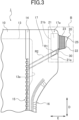
Fig. 3 is an enlarged view of a portion A inFig. 2 . -
Fig. 4 is an enlarged view of a portion B inFig. 3 . -
Fig. 5 is an explanatory diagram illustrating wrinkles generated by the use of the disposable diaper in Example 1. -
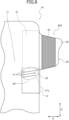
Fig. 6 is an enlarged view illustrating a principal portion of the disposable diaper in Example 2. -
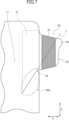
Fig. 7 is an enlarged view of a principal portion illustrating a variation of the disposable diaper in Example 2. -
Fig. 8 is an enlarged view of a principal portion illustrating a first variation of a disposable diaper. - A disposable diaper according to the present invention is described with reference to Examples 1 and 2 illustrated in the drawings.
- A
disposable diaper 1 of Example 1 is a diaper that is attached to a wearer P by a caregiver. As illustrated inFig. 1 , at the time of use of thedisposable diaper 1, the wearer P is covered with adiaper body 10 from his or her back through a crotch to his or her abdomen. As illustrated inFig. 2 , thedisposable diaper 1 includes thediaper body 10 andfastening tapes 20. Thediaper body 10 includes abackside portion 10X, acrotch portion 10Y, and an abdominal side portion 10Z. Thefastening tapes 20 are provided in thediaper body 10. Thebackside portion 10X, the abdominal side portion 10Z, and thecrotch portion 10Y between thebackside portion 10X and the abdominal side portion 10Z are formed integrally. Note that there are no boundaries or structural differences between thebackside portion 10X and thecrotch portion 10Y and between the abdominal side portion 10Z and thecrotch portion 10Y. In thedisposable diaper 1, aside flap 17 is provided on each side of thebackside portion 10X and is attached to the abdominal side portion 10Z via thefastening tape 20. Thedisposable diaper 1 may be used together with an inner pad set inside thediaper 1. - In the description, a direction that connects the
backside portion 10X and the abdominal side portion 10Z is defined as an "extending direction D" while a direction that is orthogonal to the extending direction D is defined as a "width direction E". Furthermore, in the description, the terms "up and down", "left and right", "front and rear", and the like are used with reference to the wearer P. In other words, the extending direction D is a front-rear direction of thediaper body 10. The front side corresponds to an abdominal side of the wearer P, and the rear side corresponds to a back side of the wearer P. - As illustrated in
Fig. 2 , thediaper body 10 includes a top sheet 11 (a front surface sheet), a back sheet 12 (a back surface sheet), anabsorber 13, and a pair of gatheredsheets 14. - The
top sheet 11 is provided on a body side or inner side of thediaper body 10 to cover a front surface of theabsorber 13. Thetop sheet 11 is liquid permeable, which is a property that allows the liquid to permeate through it. Thetop sheet 11 is formed of, for example, liquid-permeable non-woven fabric or the like. Thetop sheet 11 allows body fluid to pass quickly toward theabsorber 13. - The
back sheet 12 is provided on a cloth side or outer side of thediaper body 10 to cover a back surface of theabsorber 13. Theback sheet 12 is liquid-impermeable, which is a property that does not allow the liquid to pass through it. Theback sheet 12 is formed of, for example, a resin film. Theback sheet 12 prevents the body fluid retained by theabsorber 13 from passing through it, thereby clothes or the like do not get wet. - The
absorber 13 is provided between thetop sheet 11 and theback sheet 12 to absorb and retain the liquid (i.e., body fluid) that has passed through thetop sheet 11. Theabsorber 13 is formed with pulp fibers and absorbent polymer particles formed in a sheet and is wrapped by a core wrap sheet (not shown) made of crepe paper, nonwoven fabric, or the like. Note that theabsorber 13 is not necessarily wrapped by the core wrap sheet. Theabsorber 13 has a band shape extending in the extending direction D of thediaper body 10 has a smaller outer shape than those of thetop sheet 11 and theback sheet 12. Theabsorber 13 may be single-layered or multilayered. - The
top sheet 11 and theback sheet 12 are layered each other with theabsorber 13 provided therebetween, and portions of thesheets absorber 13 are attached by an adhesive such as a hot melt adhesive, or the like. - For example, water-repellent or liquid-impermeable non-woven fabric may be used for the gathered
sheet 14. Each of the gatheredsheet 14 has a band shape that extends in the extending direction D. The gatheredsheet 14 is provided on each side of thediaper body 10 with the center of thediaper body 10 being located between the pair of the gatheredsheets 14 in the width direction E. The first end of the gatheredsheet 14 in the width direction E is fixed to thetop sheet 11 by an adhesive such as, for example, a hot melt adhesive, welding, or the like. At a second end in the width direction E of the gatheredsheet 14, two elongated shaped elasticallystretchable members 14a (seeFig. 2 ) extending in the extending direction D are provided in a predetermined stretched state. For example, thread-shaped or band-shaped synthetic rubber or the like may be used as the elasticallystretchable members 14a. The elasticallystretchable members 14a extend respectively from thebackside portion 10X to the abdominal side portion 10Z. The contraction force of the elasticallystretchable members 14a forms gathers at the second end of the gatheredsheet 14 in the width direction E to raise or lift the gatheredsheet 14 from thetop sheet 11. The raised or lifted gatheredsheet 14 forms three-dimensional gathers 15. The three-dimensional gathers 15 are deformable to conform to the body of the wearer P, thereby preventing the lateral leakage of the excrement of the wearer P. - Furthermore, the
diaper body 10 includes a plurality of elasticallystretchable members 16a provided in portions along the groin of the wearer P to extend in the extending direction D in a predetermined stretched state. The elasticallystretchable members 16a are elongated shaped, and for example, thread-shaped or band-shaped synthetic rubber or the like may be used for the elasticallystretchable members 16a. The contractive force of the elasticallystretchable members 16a forms flat gathers 16 in the portions along the groin of thediaper body 10. - The flat gathers 16 extend along the extending direction D of the
diaper body 10 with thecrotch portion 10Y as a center. As illustrated inFig. 2 , the flat gathers 16 are provided on the outside of the three-dimensional gathers 15 in the width direction E. The flat gathers 16 are deformable to conform to the body of the wearer P. In thediaper body 10, the flat gathers 16 are deformed to improve the fit around the groin of the wearer P. - Moreover, in the
diaper body 10, theside flap 17 is formed on each side of thebackside portion 10X in the width direction E. Each of the side flaps 17 is formed by thetop sheet 11 and theback sheet 12 which extend laterally (outwardly in the width direction E) from aside edge 13a of theabsorber 13 in the width direction E. Note that in theside flap 17, the entire surface of thetop sheet 11 is bonded to theback sheet 12. In addition, as illustrated inFig. 2 , theside flap 17 on each side of thebackside portion 10X is provided with afastening tape 20. - The
fastening tapes 20 may be formed of, for example, non-woven fabric, a plastic film, poly-laminate non-woven fabric having a surface covered with a thin polyethylene film, paper, or a sheet material made of these composite materials. Thefastening tapes 20 are used to pull theside flap 17 when a caregiver applies thedisposable diaper 1 to the wearer P. A material used for thefastening tapes 20 has a basis weight (or basis weight) higher than those of thetop sheet 11, theback sheet 12, or the like to prevent undesirable or unexpected tearing or stretching during use. In addition, each of thefastening tape 20 includes a fixedportion 21 and a single protrudingpiece 22. - The fixed
portion 21 is fixed to aside end 17a of theside flap 17. The entire surface of the fixedportion 21 is fixed to theside flap 17 in this embodiment. However, the fixedportion 21 may be fixed to theside flap 17 in a state where the fixedportion 21 partially protrudes from theside end 17a. The fixedportion 21 is fixed to an outer side (i.e., cloth side) of theside flap 17, that is, to theback sheet 12 in this embodiment. The fixedportion 21 may be fixed to the front and back surfaces of theside flap 17 to sandwich theside flap 17. Alternatively, the fixedportion 21 may be fixed to an inner side (i.e., body side) of theside flap 17, that is to thetop sheet 11. The fixedportion 21 is fixed to theside flap 17 by an adhesive such as a hot melt adhesive, or welding. Furthermore, the fixedportion 21 has a rectangular shape in a plan view and extends in the extending direction D of thediaper body 10. - The protruding
piece 22 is formed by partially extending anouter edge 21a (seeFig. 3 ) of the fixedportion 21 outwardly in the width direction E. In other words, the protrudingpiece 22 extends from theouter edge 21a of the fixedportion 21 to the outside of thediaper body 10 in the width direction E. Note that the "outer edge 21a of the fixedportion 21" is an outer side edge of the fixedportion 21 in the width direction E. In addition, the protrudingpiece 22 protrudes from theside flap 17 to a side of thediaper body 10, that is, outwardly in the width direction E. - Furthermore, the fixed
portion 21 is provided with only one protrudingpiece 22. The protrudingpiece 22 has a substantially rectangular shape that is smaller than the fixedportion 21 in a plan view. In addition, the protrudingpieces 22 are configured to be grasped or held by a caregiver when thedisposable diaper 1 is applied or attached to the wearer P. - Furthermore, an engaging
member 23 is provided on an inner surface (i.e., surface on the body side) of the protrudingpiece 22. The engagingmember 23 removably and detachably engages with atarget tape 24 provided on the outer side (i.e., cloth side) of the abdominal side portion 10Z of thediaper body 10. - As the engaging
member 23, a hook member of a hook and loop fastener or an adhesive tape is used. Any material, shape, or the like of the engagingmember 23 may be used as long as the engagingmember 23 can repeatedly engage with and disengage from thetarget tape 24. For example, in a case where the engagingmember 23 is the hook member of the hook and loop fastener, a sheet having, on its surface, a large number of loop threads that tangle or interlock with the hook member can be used as thetarget tape 24. In a case where the engagingmember 23 is the adhesive tape, thetarget tape 24 may be, for example, a smooth and/or flat sheet applied with a peeling process on its surface. Moreover, in a case where the engagingmember 23 consists of the hook member, and the outer side (i.e., cloth side) surface of theback sheet 12 is made of non-woven fabric, thetarget tape 24 may be omitted. In this case, the engagingmember 23 is entangled with the fibers of theback sheet 12 to be fastened. - In addition, in the
disposable diaper 1 of Example 1, a cutout or notch 30 is formed in the fixedportion 21 of thefastening tape 20. Furthermore, amark 25 is formed in the protrudingpiece 22 of thefastening tape 20. - The
mark 25 indicates a position of the protrudingpiece 22 to be grasped or held by a caregiver when thedisposable diaper 1 is applied to the wearer. Themark 25 is formed at anouter side edge 22a of the protrudingpiece 22 in the width direction E. Themark 25 in Example 1 is formed by outwardly protruding an upper portion of theouter side edge 22a of the protruding piece 22 (i.e., a corner portion on an upper side of the protruding piece 22) in a semicircular shape in the width direction E. - Note that the engaging
member 23 is provided in an intermediate portion of the protrudingpiece 22 in the width direction E, which is a position that does not interfere with themark 25. Therefore, themark 25 does not engage with thetarget tape 24, and accordingly, it is easily pinched or held to disengage thefastening tape 20. Therefore, themark 25 does not engage with thetarget tape 24 to be easily pinched or held to release thefastening tape 20. - Each of the
notch 30 is provided at theouter edge 21a of the fixedportion 21 in the width direction E and is recessed inwardly from theouter edge 21a in the width direction E. In other words, thenotch 30 is formed by partially cutting out theouter edge 21a of the fixedportion 21 inwardly in an arc shape in the width direction E. Thenotch 30 is formed in a lower region α (i.e., the region enclosed by a dashed-and-dotted line inFig. 4 ) of the fixedportion 21. In this embodiment, thenotch 30 is formed in a position that is continuous from alower end 22b of the protrudingpiece 22. In other words, the protrudingpiece 22 and thenotch 30 are formed in an integrally continuous curved shape in a plan view. The term "lower region α" corresponds to a region lower than the position of the fixedportion 21 from which the protrudingpiece 22 protrudes, that is, a region lower than thelower end 22b of the protruding piece 22 (i.e., the region on a side of thecrotch portion 10Y and a leg side of the wearer P). - In addition, each of the
marks 25 is formed in an upper corner of the protrudingpiece 22. Themark 25 and thenotch 30 face each other across the protrudingpiece 22 since thenotch 30 is formed at theouter edge 21a of the fixedportion 21 in the width direction E continuously from thelower end 22b of the protrudingpiece 22. In other words, a position where themark 25 is formed and a position where thenotch 30 is formed are approximately arranged on the same diagonal line of the protrudingpiece 22. - Moreover, in the
disposable diaper 1 of Example 1, each of the fixedportions 21 includes a non-fixed region R1 (a region enclosed by a broken line inFig. 4 ), and each of the side flaps 17 includes a non-adhesion region R2 (a region enclosed by a dashed-and-double-dotted line inFig. 3 ). - The non-fixed region R1 is a region that is not fixed to the
side flap 17 in the fixedportion 21. The non-fixed region R1 extends from thenotch 30 to aninner edge 21b of the fixedportion 21 in the width direction E and extends obliquely downward through the lower region α. Note that the extending direction of the non-fixed region R1 is not limited to the direction illustrated inFig. 3 , and may be set in any direction as long as the extending direction passes through the lower region α of the fixedportion 21. - The non-adhesion region R2 is a region where the
top sheet 11 and theback sheet 12 are not bonded to each other in theside flap 17 that is formed by layering thetop sheet 11 and theback sheet 12 together. The non-adhesion region R2 extends from a position overlapping thenotch 30 to a position where the gatheredsheet 14 is provided and extends in the same direction as the non-fixed region R1 (i.e., obliquely downward direction through the lower region α). Therefore, the non-fixed region R1 and the non-adhesion region R2 overlap each other. - Note that the non-adhesion region R2 may extend in a direction different from the extending direction of the non-fixed region R1. The extending direction of the non-adhesion region R2 is not limited to the direction illustrated in
Fig. 3 and may be set in any direction as long as the direction passes through the lower region α of the fixedportion 21. Moreover, the non-adhesion region R2 may extend from theside end 17a of theside flap 17 to an intermediate position (i.e., a position before the gathered sheet 14) of theside flap 17. - The effects of the
disposable diaper 1 of Example 1 are described below. - In applying the
disposable diaper 1 of Example 1 to the wearer P, a caregiver first unfolds thediaper body 10 of thedisposable diaper 1, and places thediaper body 10 over the body of the wearer P who is in a supine position state. At this time, the caregiver places thebackside portion 10X of thediaper body 10 against the back of the wearer P. Next, the caregiver covers the abdomen of the wearer P with the abdominal side portion 10Z of thediaper body 10. Subsequently, the caregiver holds the protrudingpieces 22 and pulls the side flaps 17 via thefastening tapes 20 to fit thebackside portion 10X to the body of the wearer P. Then, the caregiver fastens the engagingmembers 23 in the protrudingpieces 22 onto thetarget tape 24 while pulling the side flaps 17. As a result, the side flaps 17 are bound together with the abdominal side portion 10Z, and thedisposable diaper 1 is worn by the wearer P. - Here, each of the
fastening tapes 20 of thedisposable diaper 1 of Example 1 is provided with thenotch 30 formed in the lower region α of the fixedportion 21 that is located on the side closer to the leg of the wearer P than the protrudingpiece 22. Therefore, thefastening tape 20 does not overlap a portion of theside end 17a of theside flap 17 where thenotch 30 overlaps. In other words, the lower region α of the fixedportion 21 has a portion with decreased rigidity. Therefore, when each of the side flaps 17 is pulled, the lower side portion (i.e., leg side of the wearer P) of the protrudingpiece 22 where thenotch 30 overlaps is appropriately deformed. As a result, at the time of using thedisposable diaper 1, as illustrated inFig. 5 , a portion of theside flap 17 that overlaps thenotch 30 is bent to generate folds or wrinkles S around thenotch 30. In addition, the lower portion of theside flap 17 is prevented from being loosening or floating to thereby fit the body of the wearer P, and accordingly, the fit of thediaper body 10 around the legs can be improved. - Furthermore, in the
disposable diaper 1 of Example 1, themarks 25 are formed on theouter side edges 22a of each of the protrudingpieces 22 in the width direction E. Therefore, in thedisposable diaper 1, the caregiver can hold the protrudingpieces 22 at the positions where themarks 25 are formed. In this embodiment, the caregiver can hold the upper portions of theouter side edges 22a of the protruding pieces 22 (i.e., upper corner portions of the protruding pieces 22). Furthermore, the caregiver can easily pull the side flaps 17 obliquely downward in the width direction E by holding the portions where themarks 25 are provided and pulling thefastening tapes 20. In other words, in thedisposable diaper 1, themarks 25 formed on theouter side edges 22a of the protrudingpieces 22 in the width direction E guide the caregiver to pull the side flaps 17 obliquely downward below the width direction E, thereby improving the fit of thediaper body 10 around the waist. - On the other hand, in the
disposable diaper 1 of Example 1, thenotches 30 in the fixedportions 21 are provided to face themarks 25 across the protrudingpieces 22, respectively. Therefore, when each of the side flaps 17 is pulled obliquely downward and a first force F1 directed obliquely downward acts on the upper portion of theside flap 17, a second force F2 in an obliquely upward direction toward thenotch 30 acts on the lower portion of theside flap 17. In other words, the force (second force F2) that pulls the lower side (leg side) of thefastening tape 20 upward is applied to theside flap 17. - Therefore, the wrinkles S around each of the
notches 30 extend obliquely downward from thenotch 30. The wrinkles S that extend obliquely downward from each of thenotches 30 are generated in each of the side flaps 17. This prevents the lower portions of the side flaps 17 from loosening or floating, and accordingly, the fit of thediaper body 10 around the legs can be improved. - Furthermore, in the
disposable diaper 1 of Example 1, the fixedportion 21 of thefastening tape 20 includes the non-fixed region R1 that is not fixed to theside flap 17. In the non-fixed region R1, the fixedportion 21 is separated from theside flap 17, and in theside flap 17, the rigidity in the non-fixed region R1 is lower than that in a portion that is fixed to the fixedportion 21. Therefore, theside flap 17 can be easily deformed in the non-fixed region R1. - In addition, the non-fixed region R1 extends obliquely downward from the
notch 30 through the lower region α of the fixedportion 21, and therefore, the first force F1 and the second force F2 that act on theside flap 17 can be focused on thenotch 30. As a result, the wrinkles S extending in the obliquely upward direction toward thenotch 30 can be easily generated in the lower portion of theside flap 17, thereby improving the fit of thediaper body 10 around the legs. - Moreover, in the
disposable diaper 1 of Example 1, each of the side flaps 17 is formed by laminating thetop sheet 11 and theback sheet 12, wherein thetop sheet 11 is bonded to theback sheet 12. In addition, each of the side flaps 17 includes the non-adhesion region R2 where thetop sheet 11 is not bonded to theback sheet 12. - In the non-adhesion region R2, the
top sheet 11 is separated from theback sheet 12, and in theside flap 17, the rigidity in the non-adhesion region R2 is lower than that in the portion where thetop sheet 11 is bonded to theback sheet 12. Therefore, theside flap 17 can be easily deformed in the non-adhesion region R2. Furthermore, the non-adhesion region R2 extends obliquely downward from the position where thenotch 30 overlaps through the lower region α of the fixedportion 21. Therefore, the wrinkles S generated in theside flap 17 to extend in the obliquely upward direction toward thenotch 30 can be expanded or developed toward the center in the width direction E of thebackside portion 10X. As a result, the fit of thediaper body 10 around the legs can be further improved. - In a
disposable diaper 1A of Example 2, as illustrated inFig. 6 , thenotch 30 is formed in a fixedportion 21 of afastening tape 20A, and afragile structure 40 is formed at the periphery of thenotch 30 to suppress the rigidity of thefastening tape 20A. Note that the configuration of thedisposable diaper 1A of Example 2 other than thefastening tape 20A is similar to that of thedisposable diaper 1 of Example 1. Therefore, a detailed description of such a configuration is omitted. - In the
disposable diaper 1A of Example 2, thefragile structure 40 in thefastening tape 20A consists of a plurality of perforations 41 (three perforations in this embodiment) formed in the fixedportion 21. Each of theperforations 41 includes cut portions that penetrate the fixedportion 21 and uncut portions that do not penetrate the fixedportion 21 which are alternately arranged in a predetermined direction passing through the lower region α of the fixedportion 21. Furthermore, the plurality ofperforations 41 constituting thefragile structure 40 are aligned in the extending direction D at predetermined intervals. - The fixed
portion 21 of thefastening tape 20A includes thefragile structure 40 consisting of the plurality ofperforations 41, and accordingly, the rigidity in the portion where thefragile structure 40 is formed is reduced compared to that in a portion where thefragile structure 40 is not formed. In other words, in the fixedportion 21 of thefastening tape 20A, the rigidity is suppressed at the periphery of thenotch 30. - The effects of the
disposable diaper 1A of Example 2 are described below. - In the
disposable diaper 1A of Example 2, when the caregiver pulls the side flaps 17 obliquely downward, the first force F1 directed obliquely downward acts on the upper portions of the side flaps 17. Furthermore, the second force F2 in the obliquely upward direction toward thenotch 30 acts on the lower portions of the side flaps 17. In addition, thenotches 30 are formed in the fixedportions 21 of thefastening tapes 20, and therefore, the folds or wrinkles S extending obliquely downward from thenotches 30 are generated in the side flaps 17. As a result, thedisposable diaper 1A of Example 2 can suppress any loosening or floating in the lower portions of the side flaps 17, thereby improving the fit of thediaper body 10 around the legs. - Furthermore, in the
disposable diaper 1A of Example 2, thefragile structure 40 is formed at the periphery of thenotch 30 formed in the fixedportion 21. Thefragile structure 40 suppresses the rigidity of the fixedportion 21. Therefore, in the fixedportion 21, the portion where thefragile structure 40 is formed can be deformed more easily than the portion where thefragile structure 40 is not formed. Therefore, when theside flap 17 is pulled, and the wrinkles S are generated in theside flap 17 with thenotch 30 as the center, the portion in the fixedportion 21 where thefragile structure 40 is formed, that is, the lower region α of the fixedportion 21, can be easily deformed. As a result, the periphery of thenotch 30 is deformed to conform to the body of the wearer P, thereby improving the wearing comfort of thediaper body 10. - Note that the
fragile structure 40 formed in the fixedportion 21 to suppress the rigidity at the periphery of thenotch 30 is not limited to the one having the plurality ofperforations 41. Thefragile structure 40 may have a configuration that suppresses the rigidity of the fixedportion 21 at the periphery of thenotch 30. For example, as in a first variation illustrated inFig. 7 , afragile structure 40A may be configured by not providing the fixedportion 21 in a portion below a straight line L that connects a position where thenotch 30 is formed to a position where themark 25 is formed (i.e., a portion closer to the side of thecrotch portion 10Y and the leg side of the wearer P). - Each of the fixed
portion 21 includes thefragile structure 40A of the first variation illustrated inFig. 7 , and therefore, the area of the fixedportion 21 can be smaller than that in a case where thefragile structure 40 consists of, for example, theperforations 41. Therefore, the area of theside flap 17 where the rigidity is increased by the fixedportion 21 can be made small so that theside flap 17 can be easily deformed. Thus, the periphery of thenotch 30 is deformed to conform to the body of the wearer P, thereby improving the wearing comfort of thediaper body 10. - The disposable diaper of the present invention has been described above in accordance with Examples 1 and 2. However, the specific configuration of the disposable diaper is not limited to these examples, and design changes, combinations of respective examples, additions, or the like are acceptable without departing from the scope of the invention according to each claim.
- For example, as in the first variation as illustrated in
Fig. 8 , anotch 30A may be provided to have a length W1 extending inwardly from anouter edge 21a of the fixedportion 21 in the width direction E wherein the length W1 is longer than the length of thenotch 30 in Example 1. In this case, the area of the fixedportion 21 of thefastening tape 20 can be smaller than that of the fixedportion 21 in Example 1 where thenotch 30 is formed. This reduces an area of theside flap 17 with the rigidity increased by the fixedportion 21 similar to the case where thefragile structure 40A that suppresses the rigidity at the periphery of thenotch 30 is provided in the first variation. Therefore, theside flap 17 can be easily deformed, and the periphery of thenotch 30A can be deformed to conform to the body of the wearer P, thereby improving the wearing comfort of thediaper body 10. - Furthermore, in the
disposable diaper 1 of Example 1, themark 25 provided in the protrudingpiece 22 is formed by protruding theouter side edge 22a of the protrudingpiece 22 outward in the width direction E. However, themark 25 may be formed to guide a caregiver to hold a position where themark 25 is formed. Therefore, themark 25 may be formed, for example, by coloring an upper portion of theouter side edge 22a of the protrudingpiece 22. - Furthermore, the position where each of the
marks 25 is formed is not limited to the upper portion of theouter side edge 22a of the protruding piece 22 (i.e., the upper corner portion of the protruding piece 22). Each of themarks 25 may be formed in any position as long as the position is desirable for a caregiver to grasp or hold. - Moreover, in the
disposable diaper 1 of Example 1, each of the side flaps 17 is formed by laminating thetop sheet 11 and theback sheet 12, wherein thetop sheet 11 is the front surface sheet and theback sheet 12 is the back surface sheet. However, the configuration of theside flap 17 is not limited to the above. For example, the front surface sheet may consist of thetop sheet 11 and the gatheredsheet 14 disposed on both sides of thetop sheet 11, while theside flap 17 may be formed by laminating the gatheredsheet 14 and theback sheet 12. - The present application is based upon and claims the benefit of priority of
Japanese Patent Application No. 2021-148996, filed with the Japan Patent Office on September 13, 2021
Claims (5)
- A disposable diaper comprising:a diaper body that comprises a front surface sheet, a back surface sheet, and an absorber disposed between the front surface sheet and the back surface sheet, the diaper body extending from a backside portion of the diaper body to an abdominal side portion of the diaper body;a side flap that is provided in each of side portions of the backside portion, the side flap extending outward beyond the absorber in a width direction of the diaper body; anda fastening tape that is provided in the side flap to be fastened to the abdominal side portion when the diaper body is used;wherein the fastening tape comprises:a fixed portion that is fixed to the side flap; anda protruding piece that extends outward from the fixed portion in the width direction;wherein the fixed portion comprises a notch in a lower region of the fixed portion that is closer to a leg side of a wearer than the protruding piece, the notch being recessed from an outer edge in the width direction toward an inner side in the width direction.
- The disposable diaper according to claim 1, whereinthe protruding piece comprises a mark on an outer edge of the protruding piece in the width direction, the mark being held when the diaper body is attached to the wearer, andthe notch is provided in a position facing the mark with the protruding piece therebetween.
- The disposable diaper according to claim 1 or 2, whereinthe fixed portion comprises a non-fixed region that is not fixed to the side flap, andthe non-fixed region extends from the notch in a direction passing through the lower region of the fixed portion.
- The disposable diaper according to any one of claims 1 to 3, whereinthe side flap is formed by laminating the front surface sheet and the back surface sheet, and comprises a non-adhesion region where the front surface sheet is not bonded to the back surface sheet, andthe non-adhesion region extends from a position where the notch overlaps in a direction passing through the lower region of the fixed portion.
- The disposable diaper according to any one of claims 1 to 4, wherein
the fixed portion comprises a fragile structure at a periphery of the notch, the fragile structure suppressing rigidity of the fastening tape.
Applications Claiming Priority (2)
| Application Number | Priority Date | Filing Date | Title |
|---|---|---|---|
| JP2021148996A JP7432565B2 (en) | 2021-09-13 | 2021-09-13 | disposable diapers |
| PCT/JP2022/008523 WO2023037584A1 (en) | 2021-09-13 | 2022-03-01 | Disposable diaper |
Publications (3)
| Publication Number | Publication Date |
|---|---|
| EP4385478A1 true EP4385478A1 (en) | 2024-06-19 |
| EP4385478A4 EP4385478A4 (en) | 2024-11-20 |
| EP4385478B1 EP4385478B1 (en) | 2026-05-13 |
Family
ID=85507323
Family Applications (1)
| Application Number | Title | Priority Date | Filing Date |
|---|---|---|---|
| EP22866919.8A Active EP4385478B1 (en) | 2021-09-13 | 2022-03-01 | Disposable diaper |
Country Status (7)
| Country | Link |
|---|---|
| US (1) | US12622819B2 (en) |
| EP (1) | EP4385478B1 (en) |
| JP (1) | JP7432565B2 (en) |
| KR (1) | KR20240054918A (en) |
| CN (1) | CN117915876A (en) |
| TW (1) | TWI891984B (en) |
| WO (1) | WO2023037584A1 (en) |
Family Cites Families (18)
| Publication number | Priority date | Publication date | Assignee | Title |
|---|---|---|---|---|
| US5496298A (en) * | 1993-12-28 | 1996-03-05 | Kimberly-Clark Corporation | Elastomeric ears for disposable absorbent article |
| US7219403B2 (en) * | 2002-07-23 | 2007-05-22 | The Procter & Gamble Company | Fastening member comprising shaped tab |
| JP4683522B2 (en) * | 2003-11-28 | 2011-05-18 | 大王製紙株式会社 | Disposable paper diapers |
| JP5337464B2 (en) | 2008-12-10 | 2013-11-06 | 花王株式会社 | Unfolding diaper, unfolding diaper cover, and fastening tape used therefor |
| CA2760912A1 (en) * | 2009-05-04 | 2010-11-11 | The Procter & Gamble Company | Wearable article with highly extensible fastening member having stress distribution features |
| JP5328590B2 (en) * | 2009-09-30 | 2013-10-30 | ユニ・チャーム株式会社 | Disposable diapers |
| CA2787540A1 (en) * | 2010-01-20 | 2011-07-28 | The Procter & Gamble Company | Refastenable absorbent article |
| JP5764316B2 (en) | 2010-12-08 | 2015-08-19 | 花王株式会社 | Disposable diapers |
| US8777919B2 (en) * | 2010-12-07 | 2014-07-15 | 3M Innovative Properties Company | Fastening tab and method of making the same |
| JP5956182B2 (en) | 2012-02-24 | 2016-07-27 | 大王製紙株式会社 | Tape type disposable diaper and method of manufacturing and attaching fastening tape |
| JP6205244B2 (en) | 2012-11-09 | 2017-09-27 | 花王株式会社 | Disposable diapers |
| EP2956103B1 (en) * | 2013-02-15 | 2016-12-21 | The Procter & Gamble Company | Fastening systems for use with absorbent articles |
| JP6712421B2 (en) | 2015-09-29 | 2020-06-24 | 大王製紙株式会社 | Tape type disposable diaper |
| JP6220923B1 (en) | 2016-06-03 | 2017-10-25 | 花王株式会社 | Absorbent articles |
| JP7049185B2 (en) | 2018-05-28 | 2022-04-06 | 大王製紙株式会社 | Tape type disposable diapers |
| JP7391617B2 (en) | 2019-11-06 | 2023-12-05 | 花王株式会社 | disposable diapers |
| US11793685B2 (en) * | 2019-11-15 | 2023-10-24 | The Procter And Gamble Company | Absorbent article having fastening system |
| JP2021148996A (en) | 2020-03-19 | 2021-09-27 | 株式会社リコー | Power supply device and image forming apparatus |
-
2021
- 2021-09-13 JP JP2021148996A patent/JP7432565B2/en active Active
-
2022
- 2022-03-01 US US18/560,529 patent/US12622819B2/en active Active
- 2022-03-01 KR KR1020237039066A patent/KR20240054918A/en active Pending
- 2022-03-01 EP EP22866919.8A patent/EP4385478B1/en active Active
- 2022-03-01 WO PCT/JP2022/008523 patent/WO2023037584A1/en not_active Ceased
- 2022-03-01 CN CN202280060374.5A patent/CN117915876A/en active Pending
- 2022-03-08 TW TW111108393A patent/TWI891984B/en active
Also Published As
| Publication number | Publication date |
|---|---|
| JP2023041558A (en) | 2023-03-24 |
| CN117915876A (en) | 2024-04-19 |
| US12622819B2 (en) | 2026-05-12 |
| EP4385478A4 (en) | 2024-11-20 |
| KR20240054918A (en) | 2024-04-26 |
| TWI891984B (en) | 2025-08-01 |
| EP4385478B1 (en) | 2026-05-13 |
| WO2023037584A1 (en) | 2023-03-16 |
| US20240252367A1 (en) | 2024-08-01 |
| TW202310814A (en) | 2023-03-16 |
| JP7432565B2 (en) | 2024-02-16 |
Similar Documents
| Publication | Publication Date | Title |
|---|---|---|
| JP4652724B2 (en) | Disposable absorbent article and method for producing the same | |
| JP6213878B2 (en) | Absorbent articles | |
| JP7147912B2 (en) | tape type disposable diaper | |
| JP5417063B2 (en) | Disposable diapers | |
| JP4284216B2 (en) | Openable disposable pants | |
| EP3815658B1 (en) | Absorbent item and sheet member | |
| EP4385478B1 (en) | Disposable diaper | |
| JP5243079B2 (en) | Inner absorbent article | |
| JP6074927B2 (en) | Pants-type disposable diaper | |
| JP6087087B2 (en) | Pad type disposable diaper | |
| JP5410079B2 (en) | Disposable diapers | |
| JP4315848B2 (en) | Absorbent articles | |
| JP6229977B2 (en) | Pants-type disposable diaper | |
| JP6712421B2 (en) | Tape type disposable diaper | |
| JP2010125042A5 (en) | ||
| JP7360235B2 (en) | Pad type absorbent article | |
| CN223504441U (en) | Underpants type absorbent article | |
| JP6238404B2 (en) | Absorbent articles | |
| JP7724669B2 (en) | Disposable diapers | |
| JP6168696B2 (en) | Pants-type disposable diaper | |
| JP2024143190A (en) | Tape-type disposable diapers | |
| JP5306761B2 (en) | Wearing article | |
| CN121694949A (en) | Underpants type absorbent article | |
| JP2014198177A (en) | Tape type disposable diaper | |
| JP2014028325A (en) | Disposable diaper |
Legal Events
| Date | Code | Title | Description |
|---|---|---|---|
| STAA | Information on the status of an ep patent application or granted ep patent |
Free format text: STATUS: THE INTERNATIONAL PUBLICATION HAS BEEN MADE |
|
| PUAI | Public reference made under article 153(3) epc to a published international application that has entered the european phase |
Free format text: ORIGINAL CODE: 0009012 |
|
| STAA | Information on the status of an ep patent application or granted ep patent |
Free format text: STATUS: REQUEST FOR EXAMINATION WAS MADE |
|
| 17P | Request for examination filed |
Effective date: 20240312 |
|
| AK | Designated contracting states |
Kind code of ref document: A1 Designated state(s): AL AT BE BG CH CY CZ DE DK EE ES FI FR GB GR HR HU IE IS IT LI LT LU LV MC MK MT NL NO PL PT RO RS SE SI SK SM TR |
|
| A4 | Supplementary search report drawn up and despatched |
Effective date: 20241017 |
|
| RIC1 | Information provided on ipc code assigned before grant |
Ipc: A61F 13/56 20060101ALI20241014BHEP Ipc: A61F 13/51 20060101ALI20241014BHEP Ipc: A61F 13/493 20060101AFI20241014BHEP |
|
| DAV | Request for validation of the european patent (deleted) | ||
| DAX | Request for extension of the european patent (deleted) | ||
| STAA | Information on the status of an ep patent application or granted ep patent |
Free format text: STATUS: EXAMINATION IS IN PROGRESS |
|
| 17Q | First examination report despatched |
Effective date: 20250730 |
|
| GRAP | Despatch of communication of intention to grant a patent |
Free format text: ORIGINAL CODE: EPIDOSNIGR1 |
|
| STAA | Information on the status of an ep patent application or granted ep patent |
Free format text: STATUS: GRANT OF PATENT IS INTENDED |
|
| INTG | Intention to grant announced |
Effective date: 20260123 |
|
| P01 | Opt-out of the competence of the unified patent court (upc) registered |
Free format text: CASE NUMBER: UPC_APP_0004324_4385478/2026 Effective date: 20260206 |
|
| GRAS | Grant fee paid |
Free format text: ORIGINAL CODE: EPIDOSNIGR3 |
|
| GRAA | (expected) grant |
Free format text: ORIGINAL CODE: 0009210 |
|
| STAA | Information on the status of an ep patent application or granted ep patent |
Free format text: STATUS: THE PATENT HAS BEEN GRANTED |
|
| AK | Designated contracting states |
Kind code of ref document: B1 Designated state(s): AL AT BE BG CH CY CZ DE DK EE ES FI FR GB GR HR HU IE IS IT LI LT LU LV MC MK MT NL NO PL PT RO RS SE SI SK SM TR |
|
| REG | Reference to a national code |
Ref country code: CH Ref legal event code: F10 Free format text: ST27 STATUS EVENT CODE: U-0-0-F10-F00 (AS PROVIDED BY THE NATIONAL OFFICE) Effective date: 20260513 Ref country code: GB Ref legal event code: FG4D |
|
| REG | Reference to a national code |
Ref country code: DE Ref legal event code: R096 Ref document number: 602022036957 Country of ref document: DE Ref country code: IE Ref legal event code: FG4D |