EP4383628A1 - Signal transmission method and apparatus, user equipment, network device, and storage medium - Google Patents
Signal transmission method and apparatus, user equipment, network device, and storage medium Download PDFInfo
- Publication number
- EP4383628A1 EP4383628A1 EP22852262.9A EP22852262A EP4383628A1 EP 4383628 A1 EP4383628 A1 EP 4383628A1 EP 22852262 A EP22852262 A EP 22852262A EP 4383628 A1 EP4383628 A1 EP 4383628A1
- Authority
- EP
- European Patent Office
- Prior art keywords
- srs
- frequency bandwidth
- partial frequency
- start position
- parameter
- Prior art date
- Legal status (The legal status is an assumption and is not a legal conclusion. Google has not performed a legal analysis and makes no representation as to the accuracy of the status listed.)
- Pending
Links
- 230000008054 signal transmission Effects 0.000 title claims abstract description 61
- 238000000034 method Methods 0.000 title claims abstract description 57
- 230000005540 biological transmission Effects 0.000 claims description 272
- 230000011664 signaling Effects 0.000 claims description 35
- 230000015654 memory Effects 0.000 claims description 34
- 230000006870 function Effects 0.000 claims description 30
- 238000004590 computer program Methods 0.000 claims description 29
- 230000004044 response Effects 0.000 claims description 7
- 238000001774 stimulated Raman spectroscopy Methods 0.000 description 33
- 238000010586 diagram Methods 0.000 description 10
- 238000001724 coherent Stokes Raman spectroscopy Methods 0.000 description 8
- 238000012545 processing Methods 0.000 description 7
- 230000003287 optical effect Effects 0.000 description 6
- 238000004891 communication Methods 0.000 description 5
- 230000008859 change Effects 0.000 description 4
- 238000007726 management method Methods 0.000 description 3
- 238000010295 mobile communication Methods 0.000 description 3
- 230000008569 process Effects 0.000 description 3
- 101100339496 Caenorhabditis elegans hop-1 gene Proteins 0.000 description 2
- 230000000694 effects Effects 0.000 description 2
- 230000007774 longterm Effects 0.000 description 2
- 238000012986 modification Methods 0.000 description 2
- 230000004048 modification Effects 0.000 description 2
- 230000000737 periodic effect Effects 0.000 description 2
- 230000002093 peripheral effect Effects 0.000 description 2
- 239000003381 stabilizer Substances 0.000 description 2
- 101100129500 Caenorhabditis elegans max-2 gene Proteins 0.000 description 1
- 235000008694 Humulus lupulus Nutrition 0.000 description 1
- 241001025261 Neoraja caerulea Species 0.000 description 1
- 238000004422 calculation algorithm Methods 0.000 description 1
- 238000004364 calculation method Methods 0.000 description 1
- 230000001413 cellular effect Effects 0.000 description 1
- 239000003795 chemical substances by application Substances 0.000 description 1
- 125000004122 cyclic group Chemical group 0.000 description 1
- 238000013500 data storage Methods 0.000 description 1
- 238000005516 engineering process Methods 0.000 description 1
- 230000000977 initiatory effect Effects 0.000 description 1
- 239000004065 semiconductor Substances 0.000 description 1
- 235000012976 tarts Nutrition 0.000 description 1
Images


Classifications
-
- H—ELECTRICITY
- H04—ELECTRIC COMMUNICATION TECHNIQUE
- H04L—TRANSMISSION OF DIGITAL INFORMATION, e.g. TELEGRAPHIC COMMUNICATION
- H04L5/00—Arrangements affording multiple use of the transmission path
- H04L5/003—Arrangements for allocating sub-channels of the transmission path
- H04L5/0048—Allocation of pilot signals, i.e. of signals known to the receiver
-
- H—ELECTRICITY
- H04—ELECTRIC COMMUNICATION TECHNIQUE
- H04L—TRANSMISSION OF DIGITAL INFORMATION, e.g. TELEGRAPHIC COMMUNICATION
- H04L5/00—Arrangements affording multiple use of the transmission path
- H04L5/0001—Arrangements for dividing the transmission path
- H04L5/0003—Two-dimensional division
- H04L5/0005—Time-frequency
- H04L5/0007—Time-frequency the frequencies being orthogonal, e.g. OFDM(A) or DMT
- H04L5/0012—Hopping in multicarrier systems
-
- H—ELECTRICITY
- H04—ELECTRIC COMMUNICATION TECHNIQUE
- H04L—TRANSMISSION OF DIGITAL INFORMATION, e.g. TELEGRAPHIC COMMUNICATION
- H04L5/00—Arrangements affording multiple use of the transmission path
- H04L5/0001—Arrangements for dividing the transmission path
- H04L5/0003—Two-dimensional division
- H04L5/0005—Time-frequency
- H04L5/0007—Time-frequency the frequencies being orthogonal, e.g. OFDM(A) or DMT
-
- H—ELECTRICITY
- H04—ELECTRIC COMMUNICATION TECHNIQUE
- H04B—TRANSMISSION
- H04B7/00—Radio transmission systems, i.e. using radiation field
- H04B7/02—Diversity systems; Multi-antenna system, i.e. transmission or reception using multiple antennas
- H04B7/04—Diversity systems; Multi-antenna system, i.e. transmission or reception using multiple antennas using two or more spaced independent antennas
- H04B7/06—Diversity systems; Multi-antenna system, i.e. transmission or reception using multiple antennas using two or more spaced independent antennas at the transmitting station
- H04B7/0686—Hybrid systems, i.e. switching and simultaneous transmission
- H04B7/0695—Hybrid systems, i.e. switching and simultaneous transmission using beam selection
- H04B7/06952—Selecting one or more beams from a plurality of beams, e.g. beam training, management or sweeping
- H04B7/06966—Selecting one or more beams from a plurality of beams, e.g. beam training, management or sweeping using beam correspondence; using channel reciprocity, e.g. downlink beam training based on uplink sounding reference signal [SRS]
-
- H—ELECTRICITY
- H04—ELECTRIC COMMUNICATION TECHNIQUE
- H04L—TRANSMISSION OF DIGITAL INFORMATION, e.g. TELEGRAPHIC COMMUNICATION
- H04L5/00—Arrangements affording multiple use of the transmission path
- H04L5/003—Arrangements for allocating sub-channels of the transmission path
- H04L5/0048—Allocation of pilot signals, i.e. of signals known to the receiver
- H04L5/0051—Allocation of pilot signals, i.e. of signals known to the receiver of dedicated pilots, i.e. pilots destined for a single user or terminal
-
- H—ELECTRICITY
- H04—ELECTRIC COMMUNICATION TECHNIQUE
- H04L—TRANSMISSION OF DIGITAL INFORMATION, e.g. TELEGRAPHIC COMMUNICATION
- H04L5/00—Arrangements affording multiple use of the transmission path
- H04L5/0091—Signalling for the administration of the divided path, e.g. signalling of configuration information
- H04L5/0094—Indication of how sub-channels of the path are allocated
-
- H—ELECTRICITY
- H04—ELECTRIC COMMUNICATION TECHNIQUE
- H04W—WIRELESS COMMUNICATION NETWORKS
- H04W72/00—Local resource management
- H04W72/20—Control channels or signalling for resource management
- H04W72/23—Control channels or signalling for resource management in the downlink direction of a wireless link, i.e. towards a terminal
-
- H—ELECTRICITY
- H04—ELECTRIC COMMUNICATION TECHNIQUE
- H04L—TRANSMISSION OF DIGITAL INFORMATION, e.g. TELEGRAPHIC COMMUNICATION
- H04L27/00—Modulated-carrier systems
- H04L27/26—Systems using multi-frequency codes
-
- H—ELECTRICITY
- H04—ELECTRIC COMMUNICATION TECHNIQUE
- H04L—TRANSMISSION OF DIGITAL INFORMATION, e.g. TELEGRAPHIC COMMUNICATION
- H04L5/00—Arrangements affording multiple use of the transmission path
- H04L5/003—Arrangements for allocating sub-channels of the transmission path
- H04L5/0078—Timing of allocation
Definitions
- the present disclosure relates to the field of mobile communication technology, in particular to a signal transmission method, a signal transmission device, a User Equipment (UE), a network device and a storage medium.
- UE User Equipment
- a network side performs uplink channel estimation using a Sounding Reference Signal (SRS), so as to transmit uplink or downlink data.
- SRS Sounding Reference Signal
- One SRS resource includes 1, 2, 4, 8 or 12 symbols, and it is reported by a UE to the network side within one slot periodically, semi-persistently or aperiodically, or in a hopping or non-hopping manner.
- the SRS is supported to be transmitted using a partial frequency bandwidth (i.e., partial frequency sounding), so as to enhance the SRS capacity and the SRS coverage range.
- a partial frequency bandwidth i.e., partial frequency sounding
- SRS is not transmitted on the partial bandwidth.
- the network side calculates channel information through an interpolation algorithm on the partial bandwidth where the SRS is not transmitted.
- a calculation complexity at the network side increases, such that the channel accuracy calculated at the network side degrades.
- the SRS is not transmitted on a part of resources within a very long time period, such that the data transmission performance deteriorates.
- An object of the present disclosure is to provide a signal transmission method, a signal transmission device, a UE, a network device and a storage medium, so as to solve the problem in the related art where the SRS is not transmitted on the partial bandwidth in a transmission mode using the partial frequency bandwidth.
- the present disclosure provides in some embodiments a signal transmission method, including: determining a start position parameter of a partial frequency bandwidth corresponding to each Orthogonal Frequency Division Multiplexing (OFDM) symbol in accordance with a relative index of an SRS symbol and a partial frequency bandwidth parameter configured by a network device; and determining a start position in an SRS frequency-domain resource bandwidth corresponding to each OFDM symbol in accordance with each start position parameter, and transmitting an SRS resource in accordance with the start position.
- OFDM Orthogonal Frequency Division Multiplexing
- the relative index of the SRS symbol indicates a position of an OFDM symbol for an SRS transmitted in each hop in SRS hopping transmission, or a position of an OFDM symbol for an SRS transmitted in SRS non-hopping transmission.
- the partial frequency bandwidth parameter includes at least more than one of the quantity of repeated transmission symbols, a partial frequency bandwidth transmission factor, a start position index factor, or a resource bandwidth parameter.
- the determining the start position parameter of the partial frequency bandwidth corresponding to each OFDM symbol in accordance with the relative index of the SRS symbol and the partial frequency bandwidth parameter configured by the network device includes: determining an index of an initial Resource Block (RB) for the SRS resource in the SRS frequency-domain resource bandwidth corresponding to each OFDM symbol in accordance with the relative index of the SRS symbol and the partial frequency bandwidth parameter; and determining the start position parameter of the partial frequency bandwidth corresponding to each OFDM symbol in accordance with the index of the initial RB.
- RB initial Resource Block
- the signal transmission method prior to determining the start position parameter of the partial frequency bandwidth corresponding to each OFDM symbol in accordance with the relative index of the SRS symbol and the partial frequency bandwidth parameter configured by the network device, the signal transmission method further includes receiving target indication information, and the target indication information is used to perform at least one of: indicating a UE to set the quantity of repeated transmission symbols as a first predetermined value; indicating the UE that a hopping function for the index of the initial RB is enabled; or indicating a value of the partial frequency bandwidth transmission factor.
- the present disclosure provides in some embodiments a signal transmission method, including configuring a partial frequency bandwidth parameter for a UE, and indicating the UE to determine a start position parameter of a partial frequency bandwidth corresponding to each OFDM symbol in accordance with a relative index of an SRS symbol and the partial frequency bandwidth parameter configured by a network device, determine a start position in an SRS frequency-domain resource bandwidth corresponding to each OFDM symbol in accordance with the start position parameter, and transmit an SRS resource in accordance with the start position.
- the partial frequency bandwidth parameter includes at least more than one of the quantity of repeated transmission symbols, a partial frequency bandwidth transmission factor, a start position index factor, or a resource bandwidth parameter.
- the target data relation includes a first data relation or a second data relation
- the indicating the UE to determine the start position parameter of the partial frequency bandwidth corresponding to each OFDM symbol in accordance with the relative index of the SRS symbol and the partial frequency bandwidth parameter configured by the network device includes transmitting target indication information to the UE, the target indication information is used to indicate the UE to determine the start position parameter of the partial frequency bandwidth corresponding to each OFDM symbol in accordance with the relative index of the SRS symbol and the partial frequency bandwidth parameter configured by the network device, and the target indication information is used to perform at least one of: indicating the UE to set the quantity of repeated transmission symbols as a first predetermined value; indicating the UE that a hopping function for the index of the initial RB is enabled; or indicating a value of the partial frequency bandwidth transmission factor.
- the target indication information is carried in at least one of Radio Resource Control (RRC) signaling, Medium Access Control Control Element (MAC-CE) signaling or Downlink Control Information (DCI) signaling.
- RRC Radio Resource Control
- MAC-CE Medium Access Control Control Element
- DCI Downlink Control Information
- the signal transmission method subsequent to configuring the partial frequency bandwidth parameter for the UE, further includes receiving the SRS resource at the start position in the SRS frequency-domain resource bandwidth corresponding to each OFDM symbol.
- the present disclosure provides in some embodiments a UE, including a memory, a transceiver and a processor.
- the memory is configured to store therein a computer program.
- the transceiver is configured to transmit and receive data under the control of the processor.
- the processor is configured to read the computer program in the memory, so as to perform the following operations: determining a start position parameter of a partial frequency bandwidth corresponding to each OFDM symbol in accordance with a relative index of an SRS symbol and a partial frequency bandwidth parameter configured by a network device; and determining a start position in an SRS frequency-domain resource bandwidth corresponding to each OFDM symbol in accordance with each start position parameter, and transmitting an SRS resource in accordance with the start position.
- the relative index of the SRS symbol indicates a position of an OFDM symbol for an SRS transmitted in each hop in SRS hopping transmission, or a position of an OFDM symbol for an SRS transmitted in SRS non-hopping transmission.
- the partial frequency bandwidth parameter includes at least more than one of the quantity of repeated transmission symbols, a partial frequency bandwidth transmission factor, a start position index factor, or a resource bandwidth parameter.
- the determining the start position parameter of the partial frequency bandwidth corresponding to each OFDM symbol in accordance with the relative index of the SRS symbol and the partial frequency bandwidth parameter configured by the network device includes: determining an index of an initial RB for the SRS resource in the SRS frequency-domain resource bandwidth corresponding to each OFDM symbol in accordance with the relative index of the SRS symbol and the partial frequency bandwidth parameter; and determining the start position parameter of the partial frequency bandwidth corresponding to each OFDM symbol in accordance with the index of the initial RB.
- the processor prior to determining the start position parameter of the partial frequency bandwidth corresponding to each OFDM symbol in accordance with the relative index of the SRS symbol and the partial frequency bandwidth parameter configured by the network device, is further configured to receive target indication information, and the target indication information is used to perform at least one of: indicating the UE to set the quantity of repeated transmission symbols as a first predetermined value; indicating the UE that a hopping function for the index of the initial RB is enabled; or indicating a value of the partial frequency bandwidth transmission factor.
- the present disclosure provides in some embodiments a network device, including a memory, a transceiver and a processor.
- the memory is configured to store therein a computer program.
- the transceiver is configured to transmit and receive data under the control of the processor.
- the processor is configured to read the computer program in the memory so as to configure a partial frequency bandwidth parameter for a UE, and indicate the UE to determine a start position parameter of a partial frequency bandwidth corresponding to each OFDM symbol in accordance with a relative index of an SRS symbol and the partial frequency bandwidth parameter configured by a network device, determine a start position in an SRS frequency-domain resource bandwidth corresponding to each OFDM symbol in accordance with the start position parameter, and transmit an SRS resource in accordance with the start position.
- the partial frequency bandwidth parameter includes at least more than one of the quantity of repeated transmission symbols, a partial frequency bandwidth transmission factor, a start position index factor, or a resource bandwidth parameter.
- the target data relation includes a first data relation or a second data relation
- the processor when the UE is indicated to determine the start position parameter of the partial frequency bandwidth corresponding to each OFDM symbol in accordance with the relative index of the SRS symbol and the partial frequency bandwidth parameter configured by the network device, the processor is configured to transmit target indication information to the UE, the target indication information is used to indicate the UE to determine the start position parameter of the partial frequency bandwidth corresponding to each OFDM symbol in accordance with the relative index of the SRS symbol and the partial frequency bandwidth parameter configured by the network device, and the target indication information is used to perform at least one of: indicating the UE to set the quantity of repeated transmission symbols as a first predetermined value; indicating the UE that a hopping function for the index of the initial RB is enabled; or indicating a value of the partial frequency bandwidth transmission factor.
- the target indication information is carried in at least one of RRC signaling, MAC-CE signaling or DCI signaling.
- the processor is configured to receive the SRS resource at the start position in the SRS frequency-domain resource bandwidth corresponding to each OFDM symbol.
- the present disclosure provides in some embodiments a signal transmission device, including: a parameter determination module configured to determine a start position parameter of a partial frequency bandwidth corresponding to each OFDM symbol in accordance with a relative index of an SRS symbol and a partial frequency bandwidth parameter configured by a network device; and a position determination module configured to determine a start position in an SRS frequency-domain resource bandwidth corresponding to each OFDM symbol in accordance with each start position parameter, and transmit an SRS resource in accordance with the start position.
- the relative index of the SRS symbol indicates a position of an OFDM symbol for an SRS transmitted in each hop in SRS hopping transmission, or a position of an OFDM symbol for an SRS transmitted in SRS non-hopping transmission.
- the partial frequency bandwidth parameter includes at least more than one of the quantity of repeated transmission symbols, a partial frequency bandwidth transmission factor, a start position index factor, or a resource bandwidth parameter.
- the parameter determination module when determining the start position parameter of the partial frequency bandwidth corresponding to each OFDM symbol in accordance with the relative index of the SRS symbol and the partial frequency bandwidth parameter configured by the network device, includes: a first determination sub-module configured to determine an index of an initial Resource Block (RB) for the SRS resource in the SRS frequency-domain resource bandwidth corresponding to each OFDM symbol in accordance with the relative index of the SRS symbol and the partial frequency bandwidth parameter; and a second determination sub-module configured to determine the start position parameter of the partial frequency bandwidth corresponding to each OFDM symbol in accordance with the index of the initial RB.
- RB initial Resource Block
- the parameter determination module when determining the start position parameter of the partial frequency bandwidth corresponding to each OFDM symbol in accordance with the relative index of the SRS symbol and the partial frequency bandwidth parameter configured by the network device, includes: a reception sub-module configured to receive target indication information; and a response sub-module configured to determine the start position parameter of the partial frequency bandwidth corresponding to each OFDM symbol in response to the target indication information in accordance with the relative index of the SRS symbol and the partial frequency bandwidth parameter configured by the network device.
- the target indication information is used to perform at least one of: indicating a UE to set the quantity of repeated transmission symbols as a first predetermined value; indicating the UE that a hopping function for the index of the initial RB is enabled; or indicating a value of the partial frequency bandwidth transmission factor.
- the present disclosure provides in some embodiments a signal transmission device, including a configuration module configured to configure a partial frequency bandwidth parameter for a UE, and indicate the UE to determine a start position parameter of a partial frequency bandwidth corresponding to each OFDM symbol in accordance with a relative index of an SRS symbol and the partial frequency bandwidth parameter configured by a network device, determine a start position in an SRS frequency-domain resource bandwidth corresponding to each OFDM symbol in accordance with the start position parameter, and transmit an SRS resource in accordance with the start position.
- a configuration module configured to configure a partial frequency bandwidth parameter for a UE, and indicate the UE to determine a start position parameter of a partial frequency bandwidth corresponding to each OFDM symbol in accordance with a relative index of an SRS symbol and the partial frequency bandwidth parameter configured by a network device, determine a start position in an SRS frequency-domain resource bandwidth corresponding to each OFDM symbol in accordance with the start position parameter, and transmit an SRS resource in accordance with the start position.
- the partial frequency bandwidth parameter includes at least more than one of the quantity of repeated transmission symbols, a partial frequency bandwidth transmission factor, a start position index factor, or a resource bandwidth parameter.
- the target data relation includes a first data relation or a second data relation
- the configuration module includes an indication sub-module configured to transmit target indication information to the UE, the target indication information is used to indicate the UE to determine the start position parameter of the partial frequency bandwidth corresponding to each OFDM symbol in accordance with the relative index of the SRS symbol and the partial frequency bandwidth parameter configured by the network device, and the target indication information is used to perform at least one of: indicating the UE to set the quantity of repeated transmission symbols as a first predetermined value; indicating the UE that a hopping function for the index of the initial RB is enabled; or indicating a value of the partial frequency bandwidth transmission factor.
- the target indication information is carried in at least one of RRC signaling, MAC-CE signaling or DCI signaling.
- the signal transmission device includes an SRS reception module configured to receive the SRS resource at the start position in the SRS frequency-domain resource bandwidth corresponding to each OFDM symbol.
- the present disclosure provides in some embodiments an electronic device, including a memory, a processor, and a computer program stored in the memory and executed by the processor.
- the processor is configured to execute the computer program so as to implement the steps in the above-mentioned methods.
- the present disclosure provides in some embodiments a processor-readable storage medium storing therein a computer program.
- the computer program is executed by a processor so as to implement the steps in the above-mentioned methods.
- the start position parameter of the partial frequency bandwidth corresponding to each OFDM symbol is determined in accordance with the relative index of the SRS symbol and the partial frequency bandwidth parameter configured by the network device. Then, the start position in the SRS frequency-domain resource bandwidth corresponding to each OFDM symbol is determined in accordance with each start position parameter, and the SRS resource is transmitted in accordance with the start position.
- the SRSs are transmitted on an entire uplink bandwidth. As a result, it is able for the network device to estimate channel information on the uplink bandwidth in accordance with the SRSs received on the entire bandwidth, thereby to improve the accuracy of the uplink channel estimation and the data transmission performance.
- An object of the present disclosure is to provide a signal transmission method, a signal transmission device, a UE, a network device and a storage medium, so as to solve the problem in the related art where an SRS is not transmitted on a partial bandwidth in a transmission mode using a partial frequency bandwidth.
- the method and the device are provided on the basis of a same inventive concept, and a principle of the method for solving the problem is similar to that of the device, so the implementation of the device may refer to that of the method.
- Schemes in the embodiments of the present disclosure may be applied to various systems, especially a 5G system, e.g., Global System of Mobile communication (GSM), Code Division Multiple Access (CDMA) system, Wideband Code Division Multiple Access (WCDMA) system, General Packet Radio Service (GPRS) system, Long Term Evolution (LTE) system, LTE Frequency Division Duplexing (FDD) system, LTE Time Division Duplexing (TDD) system, Long Term Evolution Advanced (LTE-A) system, Universal Mobile Telecommunication System (UMTS), Worldwide Interoperability for Microwave Access (WiMAX) system, or 5 th -Generation (5G) New Radio (NR) system.
- GSM Global System of Mobile communication
- CDMA Code Division Multiple Access
- WCDMA Wideband Code Division Multiple Access
- GPRS General Packet Radio Service
- LTE Long Term Evolution
- FDD Frequency Division Duplexing
- TDD Time Division Duplexing
- LTE-A Long Term Evolution Advanced
- UMTS Universal
- the terminal device (UE) involved in the embodiments of the present disclosure is a device for providing voice data and/or any other service data to a user, e.g., a handheld device having a wireless connection function, or any other processing device capable of being connected to a wireless modem.
- the terminal device may have different names.
- the terminal device is called as User Equipment (UE).
- UE User Equipment
- a wireless terminal device communicates with one or more Core Networks (CNs) via a Radio Access Network (RAN).
- CNs Core Networks
- RAN Radio Access Network
- the wireless terminal device may be a mobile terminal, e.g., a mobile phone (or cellular phone), or a computer having the mobile terminal device, e.g., a portable, pocket-sized, handheld, built-in or vehicle-mounted mobile device, which are capable of exchanging voice and/or data with the RAN.
- the wireless terminal device may be a Personal Communication Service (PCS) telephone, a cordless telephone, a Session Initiation Protocol (SIP) phone, a Wireless Local Loop (WLL) station, or a Personal Digital Assistant (PDA).
- PCS Personal Communication Service
- SIP Session Initiation Protocol
- WLL Wireless Local Loop
- PDA Personal Digital Assistant
- the wireless terminal device may also be called as system, subscriber unit, subscriber station, mobile station, mobile, remote station, remote terminal, access terminal, user terminal, user agent or user device, which will not be particularly defined herein.
- the network device of the core network involved in the embodiments of the present disclosure may be a base station which includes a plurality of cells providing services for the terminal.
- the base station is called as an access point, a device in an access network in communication with the wireless terminal device through one or more sectors on an air interface, or any other name.
- the network device is used to exchange a received air frame with an Internet Protocol (IP) packet, and it serves as a router between the wireless terminal device and the other part of the access network.
- IP Internet Protocol
- the other part of the access network includes an IP communication network.
- the network device may further coordinate attribute management on the air interface.
- the network device involved in the embodiments of the present disclosure is a Base Transceiver Station (BTS) in the GSM or CDMA system, a NodeB in the WCDMA system, an evolutional Node B (eNB, or e-NodeB) in the LTE system, a 5G base station (gNB) in 5G network architecture (next generation system), a Home evolved Node B (HeNB), a relay node, a femto, or a pico, which will not be particularly defined herein.
- the network device includes a Centralized Unit (CU) and a Distributed Unit (DU), which may be geographically separated from each other.
- CU Centralized Unit
- DU Distributed Unit
- MIMO Multi Input Multi Output
- SU-MIMO Single User MIMO
- MU-MIMO Multiple User MIMO
- the MIMO transmission may be 2D-MIMO, 3D-MIMO, FD-MIMO or massive-MIMO, and it may also be diversity transmission, precoding transmission or beam-forming transmission.
- the present disclosure provides in some embodiments a signal transmission method which is executed by any electronic device, e.g., a UE.
- a signal transmission method which is executed by any electronic device, e.g., a UE.
- the method will be described hereinafter when it is executed by the UE.
- the signal transmission method includes the following steps.
- Step 101 determining a start position parameter of a partial frequency bandwidth corresponding to each OFDM symbol in accordance with a relative index of an SRS symbol and a partial frequency bandwidth parameter configured by a network device.
- One SRS resource is transmitted on N ymb consecutive OFDM symbols, where N symb SRS is 1, 2, 4 or any other value.
- N symb SRS is 1, 2, 4 or any other value.
- each rectangle represents an OFDM symbols
- an SRS resourcel occupies one OFDM symbol
- an SRS resource2 occupies four OFDM symbols
- an SRS resources occupies two OFDM symbols.
- the network device (i.e., a network side) configures the partial frequency bandwidth parameter for the UE, and the UE determines the start position parameter of the partial frequency bandwidth corresponding to each OFDM symbol in accordance with the relative index of the SRS symbol and the partial frequency bandwidth parameter.
- the start position parameter is used to determine a start position in an SRS frequency-domain resource bandwidth corresponding to each OFDM symbol. In other words, a position of each OFDM symbol determined in accordance with the start position parameter is taken as the start position in a frequency-domain resource during the transmission of the SRS resource.
- the partial frequency bandwidth parameter includes a partial frequency bandwidth transmission factor P F and a start position index factor k F , P F is used to calculate a size of the partial frequency bandwidth for transmitting the SRS, k F ⁇ ⁇ 0, ... , P F - 1 ⁇ , and k F is used to determine a start position index of the partial frequency bandwidth.
- the relative index of the SRS symbol indicates a position of a symbol for the transmitted SRS in a unit transmission resource.
- the network device configures N symb hop neighboring or non-neighboring SRS symbols in each hop for the UE, and the relative index of the SRS symbol indicates a position of an OFDM symbol for the transmitted SRS in each hop.
- the SRS resource configured by the network device for the UE includes N symb SRS neighboring or non-neighboring SRS symbols, and the relative index of the SRS symbol indicates a position of an OFDM symbol for the transmitted SRS.
- the start position parameter determined in accordance with the relative index of the SRS symbol and the partial frequency bandwidth parameter is associated with the relative index of the SRS symbol and the partial frequency bandwidth parameter.
- the relative index of the SRS symbol is not constant, and the partial frequency bandwidth parameters may be different.
- the start position parameter is configured in accordance with the relative index of the SRS symbol and the partial frequency bandwidth parameter, the SRSs are transmitted on an entire uplink bandwidth, so it is able to dynamically change the start position of the partial frequency bandwidth for the SRS transmission.
- Step 102 determining a start position in an SRS frequency-domain resource bandwidth corresponding to each OFDM symbol in accordance with each start position parameter, and transmitting an SRS resource in accordance with the start position.
- the start position in the SRS frequency-domain resource bandwidth corresponding to each OFDM symbol is determined in accordance with each start position parameter, and the SRS resource starts to be transmitted at the start position.
- the SRSs are transmitted on the entire bandwidth, so it is able for the network device to estimate the channel information on the entire uplink bandwidth in accordance with the SRS received on each partial sub-band, i.e., the SRSs on the entire bandwidth, thereby to improve the data transmission performance.
- the start position parameter of the partial frequency bandwidth corresponding to each OFDM symbol is determined in accordance with the relative index of the SRS symbol and the partial frequency bandwidth parameter configured by the network device. Then, the start position in the SRS frequency-domain resource bandwidth corresponding to each OFDM symbol is determined in accordance with each start position parameter, and the SRS resource is transmitted in accordance with the start position.
- the SRSs are transmitted on an entire uplink bandwidth.
- the network device it is able for the network device to estimate channel information on the uplink bandwidth in accordance with the SRSs received on the entire bandwidth, thereby to improve the accuracy of the uplink channel estimation and the data transmission performance.
- it is able to solve the problem in the related art where no SRS is transmitted on the partial bandwidth in a transmission mode using the partial frequency bandwidth.
- the relative index of the SRS symbol indicates a position of an OFDM symbol for an SRS transmitted in each hop in SRS hopping transmission, or a position of an OFDM symbol for an SRS transmitted in SRS non-hopping transmission.
- the relative index of the SRS symbol indicates the position of the OFDM symbol for the transmission in each hop, and during the non-hopping transmission, the relative index of the SRS symbol indicates the position of the OFDM symbol for the transmitted SRS.
- the partial frequency bandwidth parameter includes at least more than one of the quantity of repeated transmission symbols, a partial frequency bandwidth transmission factor, a start position index factor, or a resource bandwidth parameter.
- the quantity R of repeated transmission symbols represents the quantity of retransmission.
- P F is used to calculate a size of the partial frequency bandwidth for transmitting the SRS
- k F is used to determine a start position index of the partial frequency bandwidth.
- the resource bandwidth parameter m SRS , BSRS represents an SRS frequency-domain resource bandwidth corresponding to each OFDM symbol configured by a network side.
- the partial frequency bandwidth parameter includes at least more than one of the above-mentioned parameters (the quantity of repeated transmission symbols, the partial frequency bandwidth transmission factor, the start position index factor and the resource bandwidth parameter), e.g., at least two or three of them, or all of them, which will not be particularly defined herein.
- the determining the start position parameter of the partial frequency bandwidth corresponding to each OFDM symbol in accordance with the relative index of the SRS symbol and the partial frequency bandwidth parameter configured by the network device includes: determining an index of an initial RB for the SRS resource in the SRS frequency-domain resource bandwidth corresponding to each OFDM symbol in accordance with the relative index of the SRS symbol and the partial frequency bandwidth parameter; and determining the start position parameter of the partial frequency bandwidth corresponding to each OFDM symbol in accordance with the index of the initial RB.
- the index of the initial RB indicates a position of the initial RB.
- One RB consists of 12 subcarriers in a frequency domain, totally 180 kHz, i.e., each subcarrier spacing is 15 kHz.
- one RB consists of 14 OFDM symbols in a time domain, and one RB represents a slot of 0.5 ms.
- the UE determines the index of the initial RB in accordance with the relative index of the SRS symbol and the partial frequency bandwidth parameter, and determines the start position for transmitting the SRS resource in accordance with the index of the initial RB.
- the target data relation includes a first data relation or a second data relation.
- the determining the index of the initial RB for the SRS resource in the SRS frequency-domain resource bandwidth corresponding to each OFDM symbol in accordance with the relative index of the SRS symbol and the partial frequency bandwidth parameter includes determining the index of the initial RB in accordance with the relative index of the SRS symbol, the partial frequency bandwidth parameter and the target data relation, and the target data relation includes the first data relation or the second data relation.
- the first data relation and the second data relation will be described hereinafter in conjunction with a first circumstance and a second circumstance.
- the index of the initial RB determined in accordance with the first data relation is associated with m SRS , B SRS , k F , P F , R and the relative index of the SRS symbol in each hop.
- the relative index of the SRS symbol is not constant, and k F , P F and R may be different.
- N offset corresponding to different OFDM symbols are different, so the SRSs are transmitted on the entire uplink bandwidth, and the SRS transmission is performed through dynamically changing the start position of the partial frequency bandwidth.
- P F N symb hop .
- FIG. 3 illustratively shows an SRS transmission procedure by taking the hopping transmission as an example.
- N symb hop neighboring or non-neighboring SRS symbols are configured
- the index of the initial RB for the partial frequency bandwidth in m SRS , B SRS is determined in each hop on a ( l offset ′ ⁇ ⁇ 0 , ⁇ , N symb hop ⁇ 1 ⁇ ) th symbol in accordance with the first data relation.
- the SRS is transmitted on each partial frequency bandwidth (the partial frequency bandwidth corresponding to m SRS, BSRS ), so the SRSs are transmitted on the entire uplink bandwidth.
- the network device it is able for the network device to, within one hopping period, estimate the uplink channel on the entire bandwidth in accordance with the SRSs transmitted for the partial bandwidth on different symbols.
- FIG. 4 shows a hopping mode.
- C SRS is a parameter configured by the network side, and it is used to determine a size of the entire bandwidth for transmitting the SRS resource.
- C SRS ⁇ ⁇ 0, 1, 2 ... ... , 63 ⁇ .
- B SRS is a configurable parameter at the network side, and it is used to determine the quantity of hops during the hopping transmission of the SRS resource.
- b hop ⁇ ⁇ 0, 1, 2, 3 ⁇ , and it is a configurable parameter at the network side and used to determine whether the hopping transmission is performed on the SRS. When this parameter is not configured, its value is 0.
- the value of m SRS, BSRS corresponding to them is inquired in accordance with a predetermined table.
- l offset ′ represents the relative index of the SRS symbol for N symb hop symbols in each hop, and it has a value of 0 or 1.
- the UE calculates a frequency-domain start position for the SRS transmitted on each symbol in accordance with N offset and the following formula (3).
- A-SRS aperiodic SRS
- a hopping mode is shown in FIG. 3 , so as to implement the hopping transmission between the slots.
- the network side indicates, through DCI signaling, the UE to enable a hopping function for the index of the initial RB, the UE calculates the index of the initial RB through the formula (1), and enables R to fall back to 1.
- the UE calculates the frequency-domain start position for the SRS transmitted on each symbol in accordance with N offset and the following formula (3).
- the SRSs are transmitted on the entire uplink bandwidth.
- the network device estimates the channel information about the uplink bandwidth in accordance with the SRSs received on the entire bandwidth, so it is able to improve the uplink channel estimation accuracy as well as the data transmission performance.
- l offset ′ 0 , 1 , 2 , 3 represents the relative indices of the symbols in one SRS resource, so the indices N offset of the initial RBs corresponding to the symbols are 0, 12, 24 and 36 respectively.
- N offset corresponding to different OFDM symbols is not constant, so the SRSs are transmitted on the entire uplink bandwidth, and the SRS transmission is performed through dynamically changing the start position of the partial frequency bandwidth.
- the network side may configure or indicate a new R (marked as R', and R' ⁇ R) through one or more of RRC signaling, MAC-CE signaling and DCI signaling.
- FIG. 6 illustratively shows a procedure of the SRS transmission in a hopping period by taking the hopping transmission as an example.
- the index of the initial RB for the partial frequency bandwidth in m SRS, BSRS is determined in each hop on a ( l offset ′ ⁇ ⁇ 0 , ⁇ , N symb hop ⁇ 1 ⁇ ) th symbol in accordance with the formula (2).
- a value of the quantity N symb hop of SRS symbols in one hop is configured as P F R, so that the SRSs are transmitted on the entire bandwidth within one hopping period.
- the SRSs are transmitted on a same OFDM symbol or different OFDM symbols within each slot, and the SRS transmission bandwidths on different symbols have a same size, i.e., 1 P F m SRS , B SRS .
- the SRS transmission bandwidth on a part of symbols in each hop is 1 P F 1 m SRS , B SRS
- the SRS transmission bandwidth on the other part of symbols is 1 P F 2 m SRS , B SRS
- P F 1 and P F 2 are different partial frequency transmission actors configured by the network side.
- a hopping mode is shown in FIG. 6 , so as to implement the hopping transmission between the slots.
- the UE calculates the frequency-domain start position for the transmission of the SRS on each symbol in accordance with N offset .
- n shift is a predetermined parameter value configured by the network side for determining an offset of the SRS resource transmission relative to a reference grid point in the frequency domain.
- M sc , b SRS m SRS , B SRS N sc RB / K TC , and m SRS, BSRS represents the SRS frequency-domain resource bandwidth configured by the network side on each OFDM symbol.
- N sc RB represents the quantity of subcarriers in each RB
- K TC represents a comb value of the SRS configured by the network side.
- k offset l ′ is a function of K TC and l', where l ′ ⁇ 0 , 1 , ... , N symb SRS ⁇ 1 , and N symb SRS represents the quantity of OFDM symbols for the transmitting the SRS in the SRS resource.
- n SRS cs , max represents the maximum quantity of cyclic shifts determined through Table 2
- n SRS cs , max is a function of K TC .
- n SRS cs is a value configured by the network side, and it is used to determine the generation of an SRS sequence.
- N ap SRS represents the quantity of SRS antenna ports in one SRS resource.
- the determining the index of the initial RB in accordance with the relative index of the SRS symbol, the partial frequency bandwidth parameter and the target data relation includes receiving target indication information, and determining the index of the initial RB in accordance with the relative index of the SRS symbol, the partial frequency bandwidth parameter and the target data relation.
- the target indication information is used to perform at least one of: indicating the UE to set the quantity of repeated transmission symbols as a first predetermined value, e.g., 1 or 2; indicating the UE that a hopping function for the index of the initial RB is enabled (when the SRS hopping function is enabled, one SRS resource occupies consecutive OFDM symbols within one slot but occupies different sub-bands in the frequency domain); or indicating a value of the partial frequency bandwidth transmission factor.
- the UE Upon the receipt of the tart indication information, the UE determines the index of the initial RB, and the target indication information is transmitted by the network side.
- the target indication information is carried in one or more of RRC signaling, MAC-CE signaling or DCI signaling.
- the start position parameter of the partial frequency bandwidth corresponding to each OFDM symbol is determined in accordance with the relative index of the SRS symbol and the partial frequency bandwidth parameter configured by the network device. Then, the start position in the SRS frequency-domain resource bandwidth corresponding to each OFDM symbol is determined in accordance with each start position parameter, and the SRS resource is transmitted in accordance with the start position.
- the SRSs are transmitted on an entire uplink bandwidth. As a result, it is able for the network device to estimate channel information on the uplink bandwidth in accordance with the SRSs received on the entire bandwidth, thereby to improve the accuracy of the uplink channel estimation and the data transmission performance.
- the present disclosure further provides in some embodiments a signal transmission method executed by any electronic device, e.g., a network device.
- a signal transmission method executed by any electronic device, e.g., a network device.
- the method will be described hereinafter when it is executed by the network device.
- the signal transmission method includes Step 701 of configuring a partial frequency bandwidth parameter for a UE, and indicating the UE to determine a start position parameter of a partial frequency bandwidth corresponding to each OFDM symbol in accordance with a relative index of an SRS symbol and the partial frequency bandwidth parameter configured by a network device, determine a start position in an SRS frequency-domain resource bandwidth corresponding to each OFDM symbol in accordance with the start position parameter, and transmit an SRS resource in accordance with the start position.
- One SRS resource is transmitted on N ymb consecutive OFDM symbols, where N symb SRS is 1, 2, 3 or any other value.
- N symb SRS is 1, 2, 3 or any other value.
- each rectangle represents an OFDM symbols
- an SRS resourcel occupies one OFDM symbol
- an SRS resource2 occupies four OFDM symbols
- an SRS resource3 occupies two OFDM symbols.
- the network device (i.e., a network side) configures the partial frequency bandwidth parameter for the UE, and indicates the UE to determine the start position parameter of the partial frequency bandwidth corresponding to each OFDM symbol in accordance with the relative index of the SRS symbol and the partial frequency bandwidth parameter.
- the start position parameter is used to determine a start position in an SRS frequency-domain resource bandwidth corresponding to each OFDM symbol. In other words, a position of each OFDM symbol determined in accordance with the start position parameter is taken as the start position in a frequency-domain resource during the transmission of the SRS resource.
- the partial frequency bandwidth parameter includes a partial frequency bandwidth transmission factor P F and a start position index factor k F , P F is used to calculate a size of the partial frequency bandwidth for transmitting the SRS, k F ⁇ ⁇ 0, ... , P F - 1 ⁇ , and k F is used to determine a start position index of the partial frequency bandwidth.
- the relative index of the SRS symbol indicates a position of a symbol for the transmitted SRS in a unit transmission resource.
- the network device configures N symb hop neighboring or non-neighboring SRS symbols in each hop for the UE, and the relative index of the SRS symbol indicates a position of an OFDM symbol for the transmitted SRS in each hop.
- the SRS resource configured by the network device for the UE includes N symb SRS neighboring or non-neighboring SRS symbols, and the relative index of the SRS symbol indicates a position of an OFDM symbol for the transmitted SRS.
- the start position parameter determined in accordance with the relative index of the SRS symbol and the partial frequency bandwidth parameter is associated with the relative index of the SRS symbol and the partial frequency bandwidth parameter.
- the relative index of the SRS symbol is not constant, and the partial frequency bandwidth parameters may be different.
- the start position parameter is configured in accordance with the relative index of the SRS symbol and the partial frequency bandwidth parameter, the SRSs are transmitted on an entire uplink bandwidth, so it is able to dynamically change the start position of the partial frequency bandwidth for the SRS transmission.
- the network device further indicates the UE to determine the start position in the SRS frequency-domain resource bandwidth corresponding to each OFDM symbol in accordance with the start position parameter, and transmit the SRS resource in accordance with the start position.
- the UE determines the start position in the SRS frequency-domain resource bandwidth corresponding to each OFDM symbol in accordance with each start position parameter, and starts to transmit the SRS resource at the start position.
- the SRSs are transmitted on the entire bandwidth, so it is able for the network device to estimate the channel information on the entire uplink bandwidth in accordance with the SRS received on each partial sub-band, i.e., the SRSs on the entire bandwidth, thereby to improve the data transmission performance.
- the indicating the UE to determine the start position parameter of the partial frequency bandwidth corresponding to each OFDM symbol in accordance with the relative index of the SRS symbol and the partial frequency bandwidth parameter configured by the network device includes transmitting target indication information to the UE, the target indication information is used to indicate the UE to determine the start position parameter of the partial frequency bandwidth corresponding to each OFDM symbol in accordance with the relative index of the SRS symbol and the partial frequency bandwidth parameter configured by the network device.
- the target indication information is used to perform at least one of: indicating the UE to set the quantity of repeated transmission symbols as a first predetermined value, e.g., 1 or 2; indicating the UE that a hopping function for the index of the initial RB is enabled (when the SRS hopping function is enabled, one SRS resource occupies consecutive OFDM symbols within one slot but occupies different sub-bands in the frequency domain); or indicating a value of the partial frequency bandwidth transmission factor.
- the target indication information is carried in at least one of RRC signaling, MAC-CE signaling or DCI signaling.
- the signal transmission method subsequent to configuring the partial frequency bandwidth parameter for the UE, further includes receiving the SRS resource at the start position in the SRS frequency-domain resource bandwidth corresponding to each OFDM symbol.
- the UE transmits the SRSs on the entire bandwidth, and the network device estimates the channel information on the entire uplink bandwidth in accordance with the SRS received on each partial sub-band, i.e., the SRSs on the entire bandwidth, so as to improve the data transmission performance.
- the network device configures the partial frequency bandwidth for the UE, and indicates the UE to determine the start position parameter of the partial frequency bandwidth corresponding to each OFDM symbol in accordance with the relative index of the SRS symbol and the partial frequency bandwidth parameter configured by the network device, determine the start position in the SRS frequency-domain resource bandwidth corresponding to each OFDM symbol in accordance with the start position parameter, and transmit the SRS resource in accordance with the start position.
- the SRSs are transmitted on an entire uplink bandwidth.
- the present disclosure further provides in some embodiments a signal transmission device which, as shown in FIG. 8 , includes: a parameter determination module 801 configured to determine a start position parameter of a partial frequency bandwidth corresponding to each OFDM symbol in accordance with a relative index of an SRS symbol and a partial frequency bandwidth parameter configured by a network device; and a position determination module 802 configured to determine a start position in an SRS frequency-domain resource bandwidth corresponding to each OFDM symbol in accordance with each start position parameter, and transmit an SRS resource in accordance with the start position.
- a parameter determination module 801 configured to determine a start position parameter of a partial frequency bandwidth corresponding to each OFDM symbol in accordance with a relative index of an SRS symbol and a partial frequency bandwidth parameter configured by a network device
- a position determination module 802 configured to determine a start position in an SRS frequency-domain resource bandwidth corresponding to each OFDM symbol in accordance with each start position parameter, and transmit an SRS resource in accordance with the start position.
- One SRS resource is transmitted on N symb SRS consecutive OFDM symbols, where N symb SRS is 1, 2, 4 or any other value.
- N symb SRS is 1, 2, 4 or any other value.
- each rectangle represents an OFDM symbols
- an SRS resourcel occupies one OFDM symbol
- an SRS resource2 occupies four OFDM symbols
- an SRS resources occupies two OFDM symbols.
- the network device (i.e., a network side) configures the partial frequency bandwidth parameter for the UE, and the UE determines the start position parameter of the partial frequency bandwidth corresponding to each OFDM symbol in accordance with the relative index of the SRS symbol and the partial frequency bandwidth parameter.
- the start position parameter is used to determine a start position in an SRS frequency-domain resource bandwidth corresponding to each OFDM symbol. In other words, a position of each OFDM symbol determined in accordance with the start position parameter is taken as the start position in a frequency-domain resource during the transmission of the SRS resource.
- the partial frequency bandwidth parameter includes a partial frequency bandwidth transmission factor P F and a start position index factor k F , P F is used to calculate a size of the partial frequency bandwidth for transmitting the SRS, k F ⁇ ⁇ 0, ... , P F - 1 ⁇ , and k F is used to determine a start position index of the partial frequency bandwidth.
- the relative index of the SRS symbol indicates a position of a symbol for the transmitted SRS in a unit transmission resource.
- the network device configures N symb hop neighboring or non-neighboring SRS symbols in each hop for the UE, and the relative index of the SRS symbol indicates a position of an OFDM symbol for the transmitted SRS in each hop.
- the SRS resource configured by the network device for the UE includes N symb SRS neighboring or non-neighboring SRS symbols, and the relative index of the SRS symbol indicates a position of an OFDM symbol for the transmitted SRS.
- the start position parameter determined in accordance with the relative index of the SRS symbol and the partial frequency bandwidth parameter is associated with the relative index of the SRS symbol and the partial frequency bandwidth parameter.
- the relative index of the SRS symbol is not constant, and the partial frequency bandwidth parameters may be different.
- the start position parameter is determined in accordance with the relative index of the SRS symbol and the partial frequency bandwidth parameter, the SRS is transmitted on an entire uplink bandwidth, so it is able to dynamically change the start position of the partial frequency bandwidth for the SRS transmission.
- the position determination module 802 is configured to determine the start position of each OFDM symbol within the corresponding SRS frequency domain bandwidth, and transmit the SRS resource(s) in accordance with the start position determined.
- the start position in the SRS frequency-domain resource bandwidth corresponding to each OFDM symbol is determined in accordance with each start position parameter, and the SRS resource starts to be transmitted at the start position.
- the SRS is transmitted on the entire bandwidth, so it is able for the network device to estimate the channel information on the entire uplink bandwidth in accordance with the SRS received on each partial sub-band, i.e., the SRSs on the entire bandwidth, thereby to improve the data transmission performance.
- the relative index of the SRS symbol indicates a position of an OFDM symbol for an SRS transmitted in each hop in SRS hopping transmission, or a position of an OFDM symbol for an SRS transmitted in SRS non-hopping transmission.
- the partial frequency bandwidth parameter includes at least more than one of the quantity of repeated transmission symbols, a partial frequency bandwidth transmission factor, a start position index factor, or a resource bandwidth parameter.
- the parameter determination module 801 includes: a first determination sub-module configured to determine an index of an initial RB for the SRS resource in the SRS frequency-domain resource bandwidth corresponding to each OFDM symbol in accordance with the relative index of the SRS symbol and the partial frequency bandwidth parameter; and a second determination sub-module configured to determine the start position parameter of the partial frequency bandwidth corresponding to each OFDM symbol in accordance with the index of the initial RB.
- the parameter determination module 801 includes: a reception sub-module configured to receive target indication information; and a response sub-module configured to determine the start position parameter of the partial frequency bandwidth corresponding to each OFDM symbol in response to the target indication information in accordance with the relative index of the SRS symbol and the partial frequency bandwidth parameter configured by the network device.
- the target indication information is used to perform at least one of: indicating a UE to set the quantity of repeated transmission symbols as a first predetermined value; indicating the UE that a hopping function for the index of the initial RB is enabled; or indicating a value of the partial frequency bandwidth transmission factor.
- the signal transmission device in the embodiments of the present disclosure is capable of implementing the procedures implemented by the UE in the method embodiments in FIGS. 1 to 7 , which will not be particularly defined herein.
- the parameter determination module 801 is configured to determine the start position parameter of the partial frequency bandwidth corresponding to each OFDM symbol in accordance with the relative index of the SRS symbol and the partial frequency bandwidth parameter configured by the network device, and the position determination module 802 is configured to determine the start position in the SRS frequency-domain resource bandwidth corresponding to each OFDM symbol in accordance with each start position parameter, and transmit the SRS resource in accordance with the start position.
- the SRSs are transmitted on the entire uplink bandwidth.
- the network device it is able for the network device to estimate channel information on the uplink bandwidth in accordance with the SRSs received on the entire bandwidth, thereby to improve the accuracy of the uplink channel estimation and the data transmission performance.
- the present disclosure further provides in some embodiments a signal transmission device which, as shown in FIG. 9 , includes a configuration module 901 configured to configure a partial frequency bandwidth parameter for a UE, and indicate the UE to determine a start position parameter of a partial frequency bandwidth corresponding to each OFDM symbol in accordance with a relative index of an SRS symbol and the partial frequency bandwidth parameter configured by a network device, determine a start position in an SRS frequency-domain resource bandwidth corresponding to each OFDM symbol in accordance with the start position parameter, and transmit an SRS resource in accordance with the start position.
- a configuration module 901 configured to configure a partial frequency bandwidth parameter for a UE, and indicate the UE to determine a start position parameter of a partial frequency bandwidth corresponding to each OFDM symbol in accordance with a relative index of an SRS symbol and the partial frequency bandwidth parameter configured by a network device, determine a start position in an SRS frequency-domain resource bandwidth corresponding to each OFDM symbol in accordance with the start position parameter, and transmit an SRS resource in accordance
- One SRS resource is transmitted on N symb SRS consecutive OFDM symbols, where N symb SRS is 1, 2, 4 or any other value.
- N symb SRS is 1, 2, 4 or any other value.
- each rectangle represents an OFDM symbols
- an SRS resource1 occupies one OFDM symbol
- an SRS resource2 occupies four OFDM symbols
- an SRS resources occupies two OFDM symbols.
- the configuration module 901 is configured to configure the partial frequency bandwidth parameter for the UE, and indicate the UE to determine the start position parameter of the partial frequency bandwidth corresponding to each OFDM symbol in accordance with the relative index of the SRS symbol and the partial frequency bandwidth parameter.
- the start position parameter is used to determine a start position in an SRS frequency-domain resource bandwidth corresponding to each OFDM symbol. In other words, a position of each OFDM symbol determined in accordance with the start position parameter is taken as the start position in a frequency-domain resource during the transmission of the SRS resource.
- the partial frequency bandwidth parameter includes a partial frequency bandwidth transmission factor P F and a start position index factor k F , P F is used to calculate a size of the partial frequency bandwidth for transmitting the SRS, k F ⁇ ⁇ 0, ... , P F - 1 ⁇ , and k F is used to determine a start position index of the partial frequency bandwidth.
- the relative index of the SRS symbol indicates a position of a symbol for the transmitted SRS in a unit transmission resource.
- the network device configures N symb hop neighboring or non-neighboring SRS symbols in each hop for the UE, and the relative index of the SRS symbol indicates a position of an OFDM symbol for the transmitted SRS in each hop.
- the SRS resource configured by the network device for the UE includes N symb SRS neighboring or non-neighboring SRS symbols, and the relative index of the SRS symbol indicates a position of an OFDM symbol for the transmitted SRS.
- the start position parameter determined in accordance with the relative index of the SRS symbol and the partial frequency bandwidth parameter is associated with the relative index of the SRS symbol and the partial frequency bandwidth parameter.
- the relative index of the SRS symbol is not constant, and the partial frequency bandwidth parameters may be different.
- the start position parameter is configured in accordance with the relative index of the SRS symbol and the partial frequency bandwidth parameter, the SRSs are transmitted on an entire uplink bandwidth, so it is able to dynamically change the start position of the partial frequency bandwidth for the SRS transmission.
- the network device further indicates the UE to determine the start position in the SRS frequency-domain resource bandwidth corresponding to each OFDM symbol in accordance with the start position parameter, and transmit the SRS resource in accordance with the start position.
- the UE determines the start position in the SRS frequency-domain resource bandwidth corresponding to each OFDM symbol in accordance with each start position parameter, and starts to transmit the SRS resource at the start position.
- the SRSs are transmitted on the entire bandwidth, so it is able for the network device to estimate the channel information on the entire uplink bandwidth in accordance with the SRS received on each partial sub-band, i.e., the SRSs on the entire bandwidth, thereby to improve the data transmission performance.
- the configuration module includes an indication sub-module configured to transmit target indication information to the UE, the target indication information is used to indicate the UE to determine the start position parameter of the partial frequency bandwidth corresponding to each OFDM symbol in accordance with the relative index of the SRS symbol and the partial frequency bandwidth parameter configured by the network device, and the target indication information is used to perform at least one of: indicating the UE to set the quantity of repeated transmission symbols as a first predetermined value; indicating the UE that a hopping function for the index of the initial RB is enabled; or indicating a value of the partial frequency bandwidth transmission factor.
- the target indication information is carried in at least one of RRC signaling, MAC-CE signaling or DCI signaling.
- the signal transmission device includes an SRS reception module configured to receive the SRS resource at the start position in the SRS frequency-domain resource bandwidth corresponding to each OFDM symbol.
- the signal transmission device in the embodiments of the present disclosure is capable of implementing the procedures implemented by the network device in the above-mentioned method embodiments in FIGS. 1 to 7 , which will not be particularly defined herein.
- the configuration module 901 is configured to configure the partial frequency bandwidth parameter for the UE, and indicates the UE to determine the start position parameter of the partial frequency bandwidth corresponding to each OFDM symbol in accordance with the relative index of the SRS symbol and the partial frequency bandwidth parameter configured by the network device, determine the start position in the SRS frequency-domain resource bandwidth corresponding to each OFDM symbol in accordance with the start position parameter, and transmit the SRS resource in accordance with the start position.
- the SRSs are transmitted on an entire uplink bandwidth. As a result, it is able to estimate channel information on the uplink bandwidth in accordance with the SRSs received on the entire bandwidth, thereby to improve the accuracy of the uplink channel estimation and the data transmission performance.
- modules in the embodiments of the present disclosure are for illustrative purposes, and they are provided merely on the basis of their logic functions.
- the modules may be integrated in a processing module, or physically separated from each other, or two or more modules may be integrated in one module.
- the integrated modules may be implemented in the form of hardware or a software functional module.
- the functional modules are implemented in a software form and sold or used as a separate product, they may be stored in a computer-readable medium.
- the technical solutions of the present disclosure partial or full, or parts of the technical solutions of the present disclosure contributing to the related art, may appear in the form of software products, which may be stored in a storage medium and include several instructions so as to enable computer equipment (a personal computer, a server or network equipment) to execute all or parts of the steps of the method according to the embodiments of the present disclosure.
- the storage medium includes any medium capable of storing therein program codes, e.g., a universal serial bus (USB) flash disk, a mobile hard disk (HD), a read-only memory (ROM), a random access memory (RAM), a magnetic disk or an optical disk.
- program codes e.g., a universal serial bus (USB) flash disk, a mobile hard disk (HD), a read-only memory (ROM), a random access memory (RAM), a magnetic disk or an optical disk.
- the above-mentioned device in the embodiments of the present disclosure is capable of implementing the steps of the above-mentioned method with a same technical effect, which will not be particularly defined herein.
- the present disclosure further provides in some embodiments a UE, which includes a memory 1020, a transceiver 1040 and a processor 1010.
- the memory 1020 is configured to store therein a computer program.
- the transceiver 1040 is configured to receive and transmit data under the control of the processor 1010.
- the processor 1010 is configured to read the computer program in the memory 1020 so as to perform the following operations: determining a start position parameter of a partial frequency bandwidth corresponding to each OFDM symbol in accordance with a relative index of an SRS symbol and a partial frequency bandwidth parameter configured by a network device; and determining a start position in an SRS frequency-domain resource bandwidth corresponding to each OFDM symbol in accordance with each start position parameter, and transmitting an SRS resource in accordance with the start position.
- the relative index of the SRS symbol indicates a position of an OFDM symbol for an SRS transmitted in each hop in SRS hopping transmission, or a position of an OFDM symbol for an SRS transmitted in SRS non-hopping transmission.
- the partial frequency bandwidth parameter includes at least more than one of the quantity of repeated transmission symbols, a partial frequency bandwidth transmission factor, a start position index factor, or a resource bandwidth parameter.
- the determining the start position parameter of the partial frequency bandwidth corresponding to each OFDM symbol in accordance with the relative index of the SRS symbol and the partial frequency bandwidth parameter configured by the network device includes: determining an index of an initial RB for the SRS resource in the SRS frequency-domain resource bandwidth corresponding to each OFDM symbol in accordance with the relative index of the SRS symbol and the partial frequency bandwidth parameter; and determining the start position parameter of the partial frequency bandwidth corresponding to each OFDM symbol in accordance with the index of the initial RB.
- the determining the start position parameter of the partial frequency bandwidth corresponding to each OFDM symbol in accordance with the relative index of the SRS symbol and the partial frequency bandwidth parameter configured by the network device includes: receiving target indication information; and determining the start position parameter of the partial frequency bandwidth corresponding to each OFDM symbol in response to the target indication information in accordance with the relative index of the SRS symbol and the partial frequency bandwidth parameter configured by the network device.
- the target indication information is used to perform at least one of: indicating the UE to set the quantity of repeated transmission symbols as a first predetermined value; indicating the UE that a hopping function for the index of the initial RB is enabled; or indicating a value of the partial frequency bandwidth transmission factor.
- bus architecture may include a number of buses and bridges connected to each other, so as to connect various circuits for one or more processors 1010 and one or more memories 1020.
- the bus architecture may be used to connect any other circuits, such as a circuit for a peripheral device, a circuit for a voltage stabilizer and a power management circuit.
- a bus interface 1030 may be provided, and the transceiver 1040 may consist of a plurality of elements, i.e., a transmitter and a receiver for communication with any other devices over a transmission medium.
- the transmission medium includes a wireless channel, a wired channel, or an optical cable.
- the processor 1010 may take charge of managing the bus architecture as well as general processings.
- the memory 1020 may store therein data for the operation of the processor 1010.
- a user interface 1050 may also be provided for devices which are to be arranged inside or outside the UE, and these devices may include but not limited to a keypad, a display, a speaker, a microphone and a joystick.
- the processor 1010 is a Central Processing Unit (CPU), an Application Specific Integrated Circuit (ASIC), a Field-Programmable Gate Array (FPGA) or a Complex Programmable Logic Device (CPLD).
- the processor 1010 may also use multi-core architecture.
- the processor 1010 is configured to call the computer program in the memory 1020, so as to implement the above-mentioned method in accordance with obtained executable instructions.
- the processor 1010 may also be physically separated from the memory 1020.
- the present disclosure further provides in some embodiments a network device, which includes a memory 1120, a transceiver 1140 and a processor 1110.
- the memory 1120 is configured to store therein a computer program.
- the transceiver 1140 is configured to receive and transmit data under the control of the processor 1110.
- the processor 1110 is configured to read the computer program in the memory 1120 so as to configure a partial frequency bandwidth parameter for a UE, and indicate the UE to determine a start position parameter of a partial frequency bandwidth corresponding to each OFDM symbol in accordance with a relative index of an SRS symbol and the partial frequency bandwidth parameter configured by a network device, determine a start position in an SRS frequency-domain resource bandwidth corresponding to each OFDM symbol in accordance with the start position parameter, and transmit an SRS resource in accordance with the start position.
- the indicating the UE to determine the start position parameter of the partial frequency bandwidth corresponding to each OFDM symbol in accordance with the relative index of the SRS symbol and the partial frequency bandwidth parameter configured by the network device includes transmitting target indication information to the UE, the target indication information is used to indicate the UE to determine the start position parameter of the partial frequency bandwidth corresponding to each OFDM symbol in accordance with the relative index of the SRS symbol and the partial frequency bandwidth parameter configured by the network device, and the target indication information is used to perform at least one of: indicating the UE to set the quantity of repeated transmission symbols as a first predetermined value; indicating the UE that a hopping function for the index of the initial RB is enabled; or indicating a value of the partial frequency bandwidth transmission factor.
- the target indication information is carried in at least one of RRC signaling, MAC-CE signaling or DCI signaling.
- the processor 1110 is configured to receive the SRS resource at the start position in the SRS frequency-domain resource bandwidth corresponding to each OFDM symbol.
- bus architecture may include a number of buses and bridges connected to each other, so as to connect various circuits for one or more processors 1110 and one or more memories 1120.
- the bus architecture may be used to connect any other circuits, such as a circuit for a peripheral device, a circuit for a voltage stabilizer and a power management circuit.
- a bus interface 1130 may be provided, and the transceiver 1140 may consist of a plurality of elements, i.e., a transmitter and a receiver for communication with any other devices over a transmission medium.
- the transmission medium includes a wireless channel, a wired channel, or an optical cable.
- the processor 1110 may take charge of managing the bus architecture as well as general processings.
- the memory 1120 may store therein data for the operation of the processor 1110.
- the processor 1110 is a CPU, an ASIC, an FPGA or a CPLD.
- the processor 1110 may also use multi-core architecture.
- the processor 1110 is configured to call the computer program in the memory 1120, so as to implement the above-mentioned method in accordance with obtained executable instructions.
- the processor 1110 may also be physically separated from the memory 1120.
- the UE and the network device in the embodiments of the present disclosure are capable of implementing the above-mentioned methods implemented by the UE and the network device respectively with a same technical effect, which will not be particularly defined herein.
- the present disclosure further provides in some embodiments a processor-readable storage medium storing therein a computer program.
- the computer program is executed by a processor so as to implement the above-mentioned signal transmission method.
- the processor-readable storage medium may be any available medium or data storage device capable of being accessed by the processor, which includes, but not limited to, a magnetic memory (e.g., floppy disk, hard disk, magnetic tape, or Magnetic Optical disk (MO)), an optical memory (e.g., Compact Disk (CD), Digital Video Disk (DVD), Blue-ray Disk (BD), or High-definition Versatile Disk (HVD)), or a semiconductor memory (e.g., ROM, Electrically Programmable ROM (EPROM), Electrically Erasable PROM (EEPROM), NAND flash, or Solid-State Disk (SSD)).
- a magnetic memory e.g., floppy disk, hard disk, magnetic tape, or Magnetic Optical disk (MO)
- an optical memory e.g., Compact Disk (CD), Digital Video Disk (DVD), Blue-ray Disk (BD), or High-definition Versatile Disk (HVD)
- ROM Read Only Memory
- the present disclosure may be provided as a method, a system or a computer program product, so the present disclosure may be in the form of full hardware embodiments, full software embodiments, or combinations thereof.
- the present disclosure may be in the form of a computer program product implemented on one or more computer-readable storage mediums (including but not limited to disk memory, Compact Disc-Read Only Memory (CD-ROM) and optical memory) including computer-readable program codes.
- CD-ROM Compact Disc-Read Only Memory
- optical memory including computer-readable program codes.
- These computer program instructions may also be stored in a computer readable storage that may guide the computer or the other programmable data process devices to function in a certain way, so that the instructions stored in the computer readable storage may create a product including an instruction unit which achieves the functions assigned in one or more flows in the flow chart and/or one or more blocks in the block diagram.
- These computer program instructions may also be loaded in the computer or the other programmable data process devices, so that a series of operation steps are executed on the computer or the other programmable devices to create processes achieved by the computer. Therefore, the instructions executed in the computer or the other programmable devices provide the steps for achieving the function assigned in one or more flows in the flow chart and/or one or more blocks in the block diagram.
Landscapes
- Engineering & Computer Science (AREA)
- Signal Processing (AREA)
- Computer Networks & Wireless Communication (AREA)
- Mobile Radio Communication Systems (AREA)
Abstract
Description
- This application claims a priority of the
Chinese patent application No. 202110927259.0 filed on August 6, 2021 - The present disclosure relates to the field of mobile communication technology, in particular to a signal transmission method, a signal transmission device, a User Equipment (UE), a network device and a storage medium.
- In a mobile communication system, a network side performs uplink channel estimation using a Sounding Reference Signal (SRS), so as to transmit uplink or downlink data. One SRS resource includes 1, 2, 4, 8 or 12 symbols, and it is reported by a UE to the network side within one slot periodically, semi-persistently or aperiodically, or in a hopping or non-hopping manner.
- In the related art, the SRS is supported to be transmitted using a partial frequency bandwidth (i.e., partial frequency sounding), so as to enhance the SRS capacity and the SRS coverage range. However, in the transmission mode using the partial frequency bandwidth, SRS is not transmitted on the partial bandwidth. In order to solve this problem, the network side calculates channel information through an interpolation algorithm on the partial bandwidth where the SRS is not transmitted. At this time, on one hand, a calculation complexity at the network side increases, such that the channel accuracy calculated at the network side degrades. On the other hand, the SRS is not transmitted on a part of resources within a very long time period, such that the data transmission performance deteriorates.
- Hence, there is an urgent need to provide a scheme for transmitting the SRS on the partial bandwidth.
- An object of the present disclosure is to provide a signal transmission method, a signal transmission device, a UE, a network device and a storage medium, so as to solve the problem in the related art where the SRS is not transmitted on the partial bandwidth in a transmission mode using the partial frequency bandwidth.
- In one aspect, the present disclosure provides in some embodiments a signal transmission method, including: determining a start position parameter of a partial frequency bandwidth corresponding to each Orthogonal Frequency Division Multiplexing (OFDM) symbol in accordance with a relative index of an SRS symbol and a partial frequency bandwidth parameter configured by a network device; and determining a start position in an SRS frequency-domain resource bandwidth corresponding to each OFDM symbol in accordance with each start position parameter, and transmitting an SRS resource in accordance with the start position.
- In some possible embodiments of the present disclosure, the relative index of the SRS symbol indicates a position of an OFDM symbol for an SRS transmitted in each hop in SRS hopping transmission, or a position of an OFDM symbol for an SRS transmitted in SRS non-hopping transmission.
- In some possible embodiments of the present disclosure, the partial frequency bandwidth parameter includes at least more than one of the quantity of repeated transmission symbols, a partial frequency bandwidth transmission factor, a start position index factor, or a resource bandwidth parameter.
- In some possible embodiments of the present disclosure, the determining the start position parameter of the partial frequency bandwidth corresponding to each OFDM symbol in accordance with the relative index of the SRS symbol and the partial frequency bandwidth parameter configured by the network device includes: determining an index of an initial Resource Block (RB) for the SRS resource in the SRS frequency-domain resource bandwidth corresponding to each OFDM symbol in accordance with the relative index of the SRS symbol and the partial frequency bandwidth parameter; and determining the start position parameter of the partial frequency bandwidth corresponding to each OFDM symbol in accordance with the index of the initial RB.
- In some possible embodiments of the present disclosure, the determining the index of the initial RB for the SRS resource in the SRS frequency-domain resource bandwidth corresponding to each OFDM symbol in accordance with the relative index of the SRS symbol and the partial frequency bandwidth parameter includes determining the index of the initial RB in accordance with the relative index of the SRS symbol, the partial frequency bandwidth parameter and a target data relation, the target data relation includes a first data relation or a second data relation, the first data relation includes


- In some possible embodiments of the present disclosure, prior to determining the start position parameter of the partial frequency bandwidth corresponding to each OFDM symbol in accordance with the relative index of the SRS symbol and the partial frequency bandwidth parameter configured by the network device, the signal transmission method further includes receiving target indication information, and the target indication information is used to perform at least one of: indicating a UE to set the quantity of repeated transmission symbols as a first predetermined value; indicating the UE that a hopping function for the index of the initial RB is enabled; or indicating a value of the partial frequency bandwidth transmission factor.
- In another aspect, the present disclosure provides in some embodiments a signal transmission method, including configuring a partial frequency bandwidth parameter for a UE, and indicating the UE to determine a start position parameter of a partial frequency bandwidth corresponding to each OFDM symbol in accordance with a relative index of an SRS symbol and the partial frequency bandwidth parameter configured by a network device, determine a start position in an SRS frequency-domain resource bandwidth corresponding to each OFDM symbol in accordance with the start position parameter, and transmit an SRS resource in accordance with the start position.
- In some possible embodiments of the present disclosure, the partial frequency bandwidth parameter includes at least more than one of the quantity of repeated transmission symbols, a partial frequency bandwidth transmission factor, a start position index factor, or a resource bandwidth parameter.
- In some possible embodiments of the present disclosure, there is a target data relation among the relative index of the SRS symbol, the partial frequency bandwidth parameter and the index of the initial RB.
- In some possible embodiments of the present disclosure, the target data relation includes a first data relation or a second data relation, the first data relation includes Noffset =


- In some possible embodiments of the present disclosure, the indicating the UE to determine the start position parameter of the partial frequency bandwidth corresponding to each OFDM symbol in accordance with the relative index of the SRS symbol and the partial frequency bandwidth parameter configured by the network device includes transmitting target indication information to the UE, the target indication information is used to indicate the UE to determine the start position parameter of the partial frequency bandwidth corresponding to each OFDM symbol in accordance with the relative index of the SRS symbol and the partial frequency bandwidth parameter configured by the network device, and the target indication information is used to perform at least one of: indicating the UE to set the quantity of repeated transmission symbols as a first predetermined value; indicating the UE that a hopping function for the index of the initial RB is enabled; or indicating a value of the partial frequency bandwidth transmission factor.
- In some possible embodiments of the present disclosure, the target indication information is carried in at least one of Radio Resource Control (RRC) signaling, Medium Access Control Control Element (MAC-CE) signaling or Downlink Control Information (DCI) signaling.
- In some possible embodiments of the present disclosure, subsequent to configuring the partial frequency bandwidth parameter for the UE, the signal transmission method further includes receiving the SRS resource at the start position in the SRS frequency-domain resource bandwidth corresponding to each OFDM symbol.
- In yet another aspect, the present disclosure provides in some embodiments a UE, including a memory, a transceiver and a processor. The memory is configured to store therein a computer program. The transceiver is configured to transmit and receive data under the control of the processor. The processor is configured to read the computer program in the memory, so as to perform the following operations: determining a start position parameter of a partial frequency bandwidth corresponding to each OFDM symbol in accordance with a relative index of an SRS symbol and a partial frequency bandwidth parameter configured by a network device; and determining a start position in an SRS frequency-domain resource bandwidth corresponding to each OFDM symbol in accordance with each start position parameter, and transmitting an SRS resource in accordance with the start position.
- In some possible embodiments of the present disclosure, the relative index of the SRS symbol indicates a position of an OFDM symbol for an SRS transmitted in each hop in SRS hopping transmission, or a position of an OFDM symbol for an SRS transmitted in SRS non-hopping transmission.
- In some possible embodiments of the present disclosure, the partial frequency bandwidth parameter includes at least more than one of the quantity of repeated transmission symbols, a partial frequency bandwidth transmission factor, a start position index factor, or a resource bandwidth parameter.
- In some possible embodiments of the present disclosure, the determining the start position parameter of the partial frequency bandwidth corresponding to each OFDM symbol in accordance with the relative index of the SRS symbol and the partial frequency bandwidth parameter configured by the network device includes: determining an index of an initial RB for the SRS resource in the SRS frequency-domain resource bandwidth corresponding to each OFDM symbol in accordance with the relative index of the SRS symbol and the partial frequency bandwidth parameter; and determining the start position parameter of the partial frequency bandwidth corresponding to each OFDM symbol in accordance with the index of the initial RB.
- In some possible embodiments of the present disclosure, the determining the index of the initial RB for the SRS resource in the SRS frequency-domain resource bandwidth corresponding to each OFDM symbol in accordance with the relative index of the SRS symbol and the partial frequency bandwidth parameter includes determining the index of the initial RB in accordance with the relative index of the SRS symbol, the partial frequency bandwidth parameter and a target data relation, the target data relation includes a first data relation or a second data relation, the first data relation includes


- In some possible embodiments of the present disclosure, prior to determining the start position parameter of the partial frequency bandwidth corresponding to each OFDM symbol in accordance with the relative index of the SRS symbol and the partial frequency bandwidth parameter configured by the network device, the processor is further configured to receive target indication information, and the target indication information is used to perform at least one of: indicating the UE to set the quantity of repeated transmission symbols as a first predetermined value; indicating the UE that a hopping function for the index of the initial RB is enabled; or indicating a value of the partial frequency bandwidth transmission factor.
- In still yet another aspect, the present disclosure provides in some embodiments a network device, including a memory, a transceiver and a processor. The memory is configured to store therein a computer program. The transceiver is configured to transmit and receive data under the control of the processor. The processor is configured to read the computer program in the memory so as to configure a partial frequency bandwidth parameter for a UE, and indicate the UE to determine a start position parameter of a partial frequency bandwidth corresponding to each OFDM symbol in accordance with a relative index of an SRS symbol and the partial frequency bandwidth parameter configured by a network device, determine a start position in an SRS frequency-domain resource bandwidth corresponding to each OFDM symbol in accordance with the start position parameter, and transmit an SRS resource in accordance with the start position.
- In some possible embodiments of the present disclosure, the partial frequency bandwidth parameter includes at least more than one of the quantity of repeated transmission symbols, a partial frequency bandwidth transmission factor, a start position index factor, or a resource bandwidth parameter.
- In some possible embodiments of the present disclosure, there is a target data relation among the relative index of the SRS symbol, the partial frequency bandwidth parameter and the index of the initial RB, the target data relation includes a first data relation or a second data relation, the first data relation includes


- In some possible embodiments of the present disclosure, when the UE is indicated to determine the start position parameter of the partial frequency bandwidth corresponding to each OFDM symbol in accordance with the relative index of the SRS symbol and the partial frequency bandwidth parameter configured by the network device, the processor is configured to transmit target indication information to the UE, the target indication information is used to indicate the UE to determine the start position parameter of the partial frequency bandwidth corresponding to each OFDM symbol in accordance with the relative index of the SRS symbol and the partial frequency bandwidth parameter configured by the network device, and the target indication information is used to perform at least one of: indicating the UE to set the quantity of repeated transmission symbols as a first predetermined value; indicating the UE that a hopping function for the index of the initial RB is enabled; or indicating a value of the partial frequency bandwidth transmission factor.
- In some possible embodiments of the present disclosure, the target indication information is carried in at least one of RRC signaling, MAC-CE signaling or DCI signaling.
- In some possible embodiments of the present disclosure, after the partial frequency bandwidth parameter is configured for the UE, the processor is configured to receive the SRS resource at the start position in the SRS frequency-domain resource bandwidth corresponding to each OFDM symbol.
- In still yet another aspect, the present disclosure provides in some embodiments a signal transmission device, including: a parameter determination module configured to determine a start position parameter of a partial frequency bandwidth corresponding to each OFDM symbol in accordance with a relative index of an SRS symbol and a partial frequency bandwidth parameter configured by a network device; and a position determination module configured to determine a start position in an SRS frequency-domain resource bandwidth corresponding to each OFDM symbol in accordance with each start position parameter, and transmit an SRS resource in accordance with the start position.
- In some possible embodiments of the present disclosure, the relative index of the SRS symbol indicates a position of an OFDM symbol for an SRS transmitted in each hop in SRS hopping transmission, or a position of an OFDM symbol for an SRS transmitted in SRS non-hopping transmission.
- In some possible embodiments of the present disclosure, the partial frequency bandwidth parameter includes at least more than one of the quantity of repeated transmission symbols, a partial frequency bandwidth transmission factor, a start position index factor, or a resource bandwidth parameter.
- In some possible embodiments of the present disclosure, when determining the start position parameter of the partial frequency bandwidth corresponding to each OFDM symbol in accordance with the relative index of the SRS symbol and the partial frequency bandwidth parameter configured by the network device, the parameter determination module includes: a first determination sub-module configured to determine an index of an initial Resource Block (RB) for the SRS resource in the SRS frequency-domain resource bandwidth corresponding to each OFDM symbol in accordance with the relative index of the SRS symbol and the partial frequency bandwidth parameter; and a second determination sub-module configured to determine the start position parameter of the partial frequency bandwidth corresponding to each OFDM symbol in accordance with the index of the initial RB.
- In some possible embodiments of the present disclosure, when determining the index of the initial RB for the SRS resource in the SRS frequency-domain resource bandwidth corresponding to each OFDM symbol in accordance with the relative index of the SRS symbol and the partial frequency bandwidth parameter, the first determination sub-module is configured to determine the index of the initial RB in accordance with the relative index of the SRS symbol, the partial frequency bandwidth parameter and a target data relation, the target data relation includes a first data relation or a second data relation, the first data relation includes Noffset =
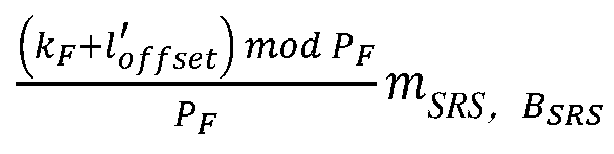


- In some possible embodiments of the present disclosure, when determining the start position parameter of the partial frequency bandwidth corresponding to each OFDM symbol in accordance with the relative index of the SRS symbol and the partial frequency bandwidth parameter configured by the network device, the parameter determination module includes: a reception sub-module configured to receive target indication information; and a response sub-module configured to determine the start position parameter of the partial frequency bandwidth corresponding to each OFDM symbol in response to the target indication information in accordance with the relative index of the SRS symbol and the partial frequency bandwidth parameter configured by the network device. The target indication information is used to perform at least one of: indicating a UE to set the quantity of repeated transmission symbols as a first predetermined value; indicating the UE that a hopping function for the index of the initial RB is enabled; or indicating a value of the partial frequency bandwidth transmission factor.
- In still yet another aspect, the present disclosure provides in some embodiments a signal transmission device, including a configuration module configured to configure a partial frequency bandwidth parameter for a UE, and indicate the UE to determine a start position parameter of a partial frequency bandwidth corresponding to each OFDM symbol in accordance with a relative index of an SRS symbol and the partial frequency bandwidth parameter configured by a network device, determine a start position in an SRS frequency-domain resource bandwidth corresponding to each OFDM symbol in accordance with the start position parameter, and transmit an SRS resource in accordance with the start position.
- In some possible embodiments of the present disclosure, the partial frequency bandwidth parameter includes at least more than one of the quantity of repeated transmission symbols, a partial frequency bandwidth transmission factor, a start position index factor, or a resource bandwidth parameter.
- In some possible embodiments of the present disclosure, there is a target data relation among the relative index of the SRS symbol, the partial frequency bandwidth parameter and the index of the initial RB, the target data relation includes a first data relation or a second data relation, the first data relation includes


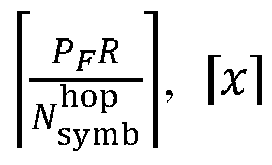


- In some possible embodiments of the present disclosure, the configuration module includes an indication sub-module configured to transmit target indication information to the UE, the target indication information is used to indicate the UE to determine the start position parameter of the partial frequency bandwidth corresponding to each OFDM symbol in accordance with the relative index of the SRS symbol and the partial frequency bandwidth parameter configured by the network device, and the target indication information is used to perform at least one of: indicating the UE to set the quantity of repeated transmission symbols as a first predetermined value; indicating the UE that a hopping function for the index of the initial RB is enabled; or indicating a value of the partial frequency bandwidth transmission factor.
- In some possible embodiments of the present disclosure, the target indication information is carried in at least one of RRC signaling, MAC-CE signaling or DCI signaling.
- In some possible embodiments of the present disclosure, the signal transmission device includes an SRS reception module configured to receive the SRS resource at the start position in the SRS frequency-domain resource bandwidth corresponding to each OFDM symbol.
- In still yet another aspect, the present disclosure provides in some embodiments an electronic device, including a memory, a processor, and a computer program stored in the memory and executed by the processor. The processor is configured to execute the computer program so as to implement the steps in the above-mentioned methods.
- In still yet another aspect, the present disclosure provides in some embodiments a processor-readable storage medium storing therein a computer program. The computer program is executed by a processor so as to implement the steps in the above-mentioned methods.
- According to the embodiments of the present disclosure, the start position parameter of the partial frequency bandwidth corresponding to each OFDM symbol is determined in accordance with the relative index of the SRS symbol and the partial frequency bandwidth parameter configured by the network device. Then, the start position in the SRS frequency-domain resource bandwidth corresponding to each OFDM symbol is determined in accordance with each start position parameter, and the SRS resource is transmitted in accordance with the start position. Through dynamically changing the start position of the partial frequency bandwidth, the SRSs are transmitted on an entire uplink bandwidth. As a result, it is able for the network device to estimate channel information on the uplink bandwidth in accordance with the SRSs received on the entire bandwidth, thereby to improve the accuracy of the uplink channel estimation and the data transmission performance.
- In order to illustrate the technical solutions of the present disclosure in a clearer manner, the drawings desired for the present disclosure will be described hereinafter briefly. Obviously, the following drawings merely relate to some embodiments of the present disclosure, and based on these drawings, a person skilled in the art may obtain the other drawings without any creative effort.
-
FIG. 1 is a flow chart of a signal transmission method according to one embodiment of the present disclosure; -
FIG. 2 is a schematic view showing a first instance according to one embodiment of the present disclosure; -
FIG. 3 is a schematic view showing a second instance according to one embodiment of the present disclosure; -
FIG. 4 is another schematic view showing the second instance according to one embodiment of the present disclosure; -
FIG. 5 is a schematic view showing a third instance according to one embodiment of the present disclosure; -
FIG. 6 is a schematic view showing a fourth instance according to one embodiment of the present disclosure; -
FIG. 7 is another schematic view showing the signal transmission method according to one embodiment of the present disclosure; -
FIG. 8 is a block diagram of a signal transmission device according to one embodiment of the present disclosure; -
FIG. 9 is another block diagram of the signal transmission device according to one embodiment of the present disclosure; -
FIG. 10 is a block diagram of a UE according to one embodiment of the present disclosure; and -
FIG. 11 is a block diagram of a network device according to one embodiment of the present disclosure. - The expression "and/or" is merely used to describe the relationship between objects, and it includes three relationships. For example, "A and/or B" may represent that, there is only A, there are both A and B, and there is only B. Further, the symbol "/" usually refers to "or".
- The expression "a plurality of" refers to two or more, and the other quantifiers are similar.
- An object of the present disclosure is to provide a signal transmission method, a signal transmission device, a UE, a network device and a storage medium, so as to solve the problem in the related art where an SRS is not transmitted on a partial bandwidth in a transmission mode using a partial frequency bandwidth.
- The method and the device are provided on the basis of a same inventive concept, and a principle of the method for solving the problem is similar to that of the device, so the implementation of the device may refer to that of the method.
- Schemes in the embodiments of the present disclosure may be applied to various systems, especially a 5G system, e.g., Global System of Mobile communication (GSM), Code Division Multiple Access (CDMA) system, Wideband Code Division Multiple Access (WCDMA) system, General Packet Radio Service (GPRS) system, Long Term Evolution (LTE) system, LTE Frequency Division Duplexing (FDD) system, LTE Time Division Duplexing (TDD) system, Long Term Evolution Advanced (LTE-A) system, Universal Mobile Telecommunication System (UMTS), Worldwide Interoperability for Microwave Access (WiMAX) system, or 5th-Generation (5G) New Radio (NR) system. Each of these systems includes a terminal device and a network device. Each system further includes a core network part, e.g., an Evolved Packet System (EPS) or 5G system (5GS).
- The terminal device (UE) involved in the embodiments of the present disclosure is a device for providing voice data and/or any other service data to a user, e.g., a handheld device having a wireless connection function, or any other processing device capable of being connected to a wireless modem. In different systems, the terminal device may have different names. For example, in a 5G system, the terminal device is called as User Equipment (UE). A wireless terminal device communicates with one or more Core Networks (CNs) via a Radio Access Network (RAN). The wireless terminal device may be a mobile terminal, e.g., a mobile phone (or cellular phone), or a computer having the mobile terminal device, e.g., a portable, pocket-sized, handheld, built-in or vehicle-mounted mobile device, which are capable of exchanging voice and/or data with the RAN. For example, the wireless terminal device may be a Personal Communication Service (PCS) telephone, a cordless telephone, a Session Initiation Protocol (SIP) phone, a Wireless Local Loop (WLL) station, or a Personal Digital Assistant (PDA). In addition, the wireless terminal device may also be called as system, subscriber unit, subscriber station, mobile station, mobile, remote station, remote terminal, access terminal, user terminal, user agent or user device, which will not be particularly defined herein.
- The network device of the core network involved in the embodiments of the present disclosure may be a base station which includes a plurality of cells providing services for the terminal. Depending on different application scenarios, the base station is called as an access point, a device in an access network in communication with the wireless terminal device through one or more sectors on an air interface, or any other name. The network device is used to exchange a received air frame with an Internet Protocol (IP) packet, and it serves as a router between the wireless terminal device and the other part of the access network. The other part of the access network includes an IP communication network. The network device may further coordinate attribute management on the air interface. For example, the network device involved in the embodiments of the present disclosure is a Base Transceiver Station (BTS) in the GSM or CDMA system, a NodeB in the WCDMA system, an evolutional Node B (eNB, or e-NodeB) in the LTE system, a 5G base station (gNB) in 5G network architecture (next generation system), a Home evolved Node B (HeNB), a relay node, a femto, or a pico, which will not be particularly defined herein. In some network structures, the network device includes a Centralized Unit (CU) and a Distributed Unit (DU), which may be geographically separated from each other.
- Multi Input Multi Output (MIMO) transmission is performed between the network device and the terminal device each with one or more antennae, and the MIMO transmission is Single User MIMO (SU-MIMO) or Multiple User MIMO (MU-MIMO). Depending on the form of an antenna combination and the quantity of antennae, the MIMO transmission may be 2D-MIMO, 3D-MIMO, FD-MIMO or massive-MIMO, and it may also be diversity transmission, precoding transmission or beam-forming transmission.
- As shown in
FIG. 1 , the present disclosure provides in some embodiments a signal transmission method which is executed by any electronic device, e.g., a UE. For ease of description, the method will be described hereinafter when it is executed by the UE. - As shown in
FIG. 1 , the signal transmission method includes the following steps. - Step 101: determining a start position parameter of a partial frequency bandwidth corresponding to each OFDM symbol in accordance with a relative index of an SRS symbol and a partial frequency bandwidth parameter configured by a network device.
- One SRS resource is transmitted on N ymb consecutive OFDM symbols, where

FIG. 2 , each rectangle represents an OFDM symbols, an SRS resourcel occupies one OFDM symbol, an SRS resource2 occupies four OFDM symbols, and an SRS resources occupies two OFDM symbols. Through the transmission of one SRS resource on a plurality of OFDM symbols, it is able to increase the coverage of an SRS, and achieve the hopping within one slot (i.e., intra-slot hopping) as well as the hopping within slots (i.e., inter-slot hopping). - The network device (i.e., a network side) configures the partial frequency bandwidth parameter for the UE, and the UE determines the start position parameter of the partial frequency bandwidth corresponding to each OFDM symbol in accordance with the relative index of the SRS symbol and the partial frequency bandwidth parameter. The start position parameter is used to determine a start position in an SRS frequency-domain resource bandwidth corresponding to each OFDM symbol. In other words, a position of each OFDM symbol determined in accordance with the start position parameter is taken as the start position in a frequency-domain resource during the transmission of the SRS resource.
- In a possible embodiment of the present disclosure, for example, the partial frequency bandwidth parameter includes a partial frequency bandwidth transmission factor PF and a start position index factor kF , PF is used to calculate a size of the partial frequency bandwidth for transmitting the SRS, kF ∈ {0, ... , PF - 1}, and kF is used to determine a start position index of the partial frequency bandwidth.
- The relative index of the SRS symbol indicates a position of a symbol for the transmitted SRS in a unit transmission resource. For example, in the hopping transmission, the network device configures


- In this regard, the start position parameter determined in accordance with the relative index of the SRS symbol and the partial frequency bandwidth parameter is associated with the relative index of the SRS symbol and the partial frequency bandwidth parameter. During the transmission of the SRS each time, the relative index of the SRS symbol is not constant, and the partial frequency bandwidth parameters may be different. When the start position parameter is configured in accordance with the relative index of the SRS symbol and the partial frequency bandwidth parameter, the SRSs are transmitted on an entire uplink bandwidth, so it is able to dynamically change the start position of the partial frequency bandwidth for the SRS transmission.
- Step 102: determining a start position in an SRS frequency-domain resource bandwidth corresponding to each OFDM symbol in accordance with each start position parameter, and transmitting an SRS resource in accordance with the start position.
- After obtaining the start position parameters, the start position in the SRS frequency-domain resource bandwidth corresponding to each OFDM symbol is determined in accordance with each start position parameter, and the SRS resource starts to be transmitted at the start position. In this way, the SRSs are transmitted on the entire bandwidth, so it is able for the network device to estimate the channel information on the entire uplink bandwidth in accordance with the SRS received on each partial sub-band, i.e., the SRSs on the entire bandwidth, thereby to improve the data transmission performance.
- According to the embodiments of the present disclosure, the start position parameter of the partial frequency bandwidth corresponding to each OFDM symbol is determined in accordance with the relative index of the SRS symbol and the partial frequency bandwidth parameter configured by the network device. Then, the start position in the SRS frequency-domain resource bandwidth corresponding to each OFDM symbol is determined in accordance with each start position parameter, and the SRS resource is transmitted in accordance with the start position. Through dynamically changing the start position of the partial frequency bandwidth, the SRSs are transmitted on an entire uplink bandwidth. As a result, it is able for the network device to estimate channel information on the uplink bandwidth in accordance with the SRSs received on the entire bandwidth, thereby to improve the accuracy of the uplink channel estimation and the data transmission performance. In the embodiments of the present disclosure, it is able to solve the problem in the related art where no SRS is transmitted on the partial bandwidth in a transmission mode using the partial frequency bandwidth.
- In a possible embodiment of the present disclosure, the relative index of the SRS symbol indicates a position of an OFDM symbol for an SRS transmitted in each hop in SRS hopping transmission, or a position of an OFDM symbol for an SRS transmitted in SRS non-hopping transmission. During the hopping transmission, the relative index of the SRS symbol indicates the position of the OFDM symbol for the transmission in each hop, and during the non-hopping transmission, the relative index of the SRS symbol indicates the position of the OFDM symbol for the transmitted SRS.
- In a possible embodiment of the present disclosure, the partial frequency bandwidth parameter includes at least more than one of the quantity of repeated transmission symbols, a partial frequency bandwidth transmission factor, a start position index factor, or a resource bandwidth parameter.
- The quantity R of repeated transmission symbols represents the quantity of retransmission. For the partial frequency bandwidth transmission factor PF and the start position index factor kF , PF is used to calculate a size of the partial frequency bandwidth for transmitting the SRS, kF ∈ {0, ... , PF - 1}, and kF is used to determine a start position index of the partial frequency bandwidth. The resource bandwidth parameter m SRS , BSRS represents an SRS frequency-domain resource bandwidth corresponding to each OFDM symbol configured by a network side.
- It should be appreciated that, the partial frequency bandwidth parameter includes at least more than one of the above-mentioned parameters (the quantity of repeated transmission symbols, the partial frequency bandwidth transmission factor, the start position index factor and the resource bandwidth parameter), e.g., at least two or three of them, or all of them, which will not be particularly defined herein.
- In a possible embodiment of the present disclosure, the determining the start position parameter of the partial frequency bandwidth corresponding to each OFDM symbol in accordance with the relative index of the SRS symbol and the partial frequency bandwidth parameter configured by the network device includes: determining an index of an initial RB for the SRS resource in the SRS frequency-domain resource bandwidth corresponding to each OFDM symbol in accordance with the relative index of the SRS symbol and the partial frequency bandwidth parameter; and determining the start position parameter of the partial frequency bandwidth corresponding to each OFDM symbol in accordance with the index of the initial RB.
- The index of the initial RB indicates a position of the initial RB. One RB consists of 12 subcarriers in a frequency domain, totally 180 kHz, i.e., each subcarrier spacing is 15 kHz. Usually, one RB consists of 14 OFDM symbols in a time domain, and one RB represents a slot of 0.5 ms. The UE determines the index of the initial RB in accordance with the relative index of the SRS symbol and the partial frequency bandwidth parameter, and determines the start position for transmitting the SRS resource in accordance with the index of the initial RB.
- In a possible embodiment of the present disclosure, there is a target data relation among the relative index of the SRS symbol, the partial frequency bandwidth parameter and the index of the initial RB. The target data relation includes a first data relation or a second data relation.
- In a possible embodiment of the present disclosure, the determining the index of the initial RB for the SRS resource in the SRS frequency-domain resource bandwidth corresponding to each OFDM symbol in accordance with the relative index of the SRS symbol and the partial frequency bandwidth parameter includes determining the index of the initial RB in accordance with the relative index of the SRS symbol, the partial frequency bandwidth parameter and the target data relation, and the target data relation includes the first data relation or the second data relation. The first data relation and the second data relation will be described hereinafter in conjunction with a first circumstance and a second circumstance.
- In the first circumstance, the first data relation includes a formula (1) Noffset =


- As a second instance,
FIG. 3 illustratively shows an SRS transmission procedure by taking the hopping transmission as an example. In each hop,


- As shown in
FIG. 3 , within a hopping period (slot0 to slot3), the SRS is transmitted on each partial frequency bandwidth (the partial frequency bandwidth corresponding to mSRS, BSRS ), so the SRSs are transmitted on the entire uplink bandwidth. In this regard, it is able for the network device to, within one hopping period, estimate the uplink channel on the entire bandwidth in accordance with the SRSs transmitted for the partial bandwidth on different symbols. - To be specific, in a scenario for the second instance, as shown in
FIG. 4 , taking the transmission of the hopping, aperiodic SRS resource within a same slot as an example, the network device configures the aperiodic SRS resource including
FIG. 4 shows a hopping mode. - In addition, CSRS is a parameter configured by the network side, and it is used to determine a size of the entire bandwidth for transmitting the SRS resource. In a possible embodiment of the present disclosure, CSRS ∈ {0, 1, 2 ... ... , 63}.
- BSRS is a configurable parameter at the network side, and it is used to determine the quantity of hops during the hopping transmission of the SRS resource. B SRS ∈ {0, 1, 2 ...... , 63}, and when this parameter is not configured by the network side, its value is 0.
- b hop ∈ {0, 1, 2, 3}, and it is a configurable parameter at the network side and used to determine whether the hopping transmission is performed on the SRS. When this parameter is not configured, its value is 0.
- After determining the values of CSRS , BSRS and bhop , the value of m SRS, BSRS corresponding to them is inquired in accordance with a predetermined table.
- As shown in
FIG. 4 , the UE determines, in accordance with R configured by the network side, that the quantity of symbols in each hop is

- When the network side indicates, through DCI signaling, the UE to enable a hopping function for the index of the initial RB, the UE calculates the index of the initial RB in accordance with the first data relation, and enables R to fall back to 1.


- When
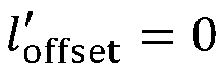

- In another scenario of the second instance, taking the transmission of the hopping, aperiodic SRS (A-SRS) within different slots (slot0 to slot4) as an example, the network side configures the A-SRS resource including
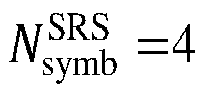
FIG. 3 , so as to implement the hopping transmission between the slots. - In addition, the UE determines, in accordance with R configured by the network side, that the quantity of symbols in each hop is



values - In this regard, during the hopping transmission, through dynamically changing the start position of the partial frequency bandwidth, the SRSs are transmitted on the entire uplink bandwidth. The network device estimates the channel information about the uplink bandwidth in accordance with the SRSs received on the entire bandwidth, so it is able to improve the uplink channel estimation accuracy as well as the data transmission performance.
- As a third instance, as shown in
FIG. 5 , taking the transmission of the non-hopping A-SRS resource as an example, the network side configures the A-SRS resource including
- The UE determines, in accordance with the parameters configured by the network side, that the size of the bandwidth in each hop is m SRS, BSRS = 48 RBs, determines, in accordance with the configured parameters PF and kF , that the bandwidth on the partial frequency for transmitting the SRS is


FIG. 5 , the indices of the initial RBs havevalues 0, 12, 24 and 36 in the transmission sub-band m SRS, BSRS =12. - In the second circumstance, the second data relation includes a formula (2)


- In a possible embodiment of the present disclosure, in an application scenario of the second data relation, the network side may configure or indicate a new R (marked as R', and R'<R) through one or more of RRC signaling, MAC-CE signaling and DCI signaling. When the UE calculates the index of the initial RB in accordance with the second data relation, it is necessary to fall R back to R' newly indicated by the network side.
- As a fourth instance,
FIG. 6 illustratively shows a procedure of the SRS transmission in a hopping period by taking the hopping transmission as an example. The index of the initial RB for the partial frequency bandwidth in mSRS, BSRS is determined in each hop on a

FIG. 6 , the index of the initial RB is changed to
- Alternatively, a value of the quantity


- In a scenario of the third instance, taking a hopping Periodic SRS (P-SRS) or a Semi-Persistent SRS (SP-SRS) as an example, the network side configures a periodic SRS resource including

FIG. 6 , so as to implement the hopping transmission between the slots. - The UE determines that a bandwidth size in each hop is m SRS, BSRS = 12 RBs in accordance with the parameters configured by the network side, and determines that the bandwidth size for the transmission of the SRS on the partial frequency is
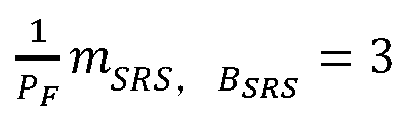

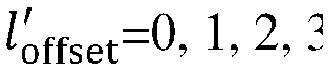
- When i mod Nmax = 0, values of Noffset for the symbols in each hop are 0, 0, 3 and 3 respectively. When i mod Nmax = 1, values of Noffset for the symbols in each hop are 6, 6, 9 and 9 respectively.
- Then, the UE calculates the frequency-domain start position for the transmission of the SRS on each symbol in accordance with Noffset . For example, when i mod Nmax = 0, the indices of the initial RBs in the transmission sub-band m SRS, BSRS =12 are 0, 0, 3 and 3, and when i mod Nmax = 1, the indices of the initial RBs in the transmission sub-band mSRS, BSRS =12 are 6, 6, 9 and 9.
- In a possible embodiment of the present disclosure, the start position parameter of the partial frequency bandwidth corresponding to each OFDM symbol is determined in accordance with the index of the initial RB, the start position parameter is determined in accordance with a third data relation expressed as a formula (3)


- pi ∈ {1000, 1001, 1002, 1003} represents indexes of ports, K TC represents a subcarrier spacing of the SRS, and n shift is a predetermined parameter value configured by the network side for determining an offset of the SRS resource transmission relative to a reference grid point in the frequency domain.


- Further, when the SRS is configured as an SRS resource for positioning, the value of


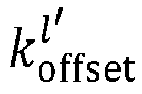


Table 1 K TC 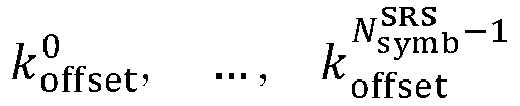


2 0 0, 1 0, 1, 0, 1 - - 4 - 0, 2 0, 2, 1, 3 0, 2, 1, 3, 0, 2, 1, 3 0, 2, 1, 3, 0, 2, 1, 3, 0, 2, 1, 3 8 - - 0, 4, 2, 6 0, 4, 2, 6, 1, 5, 3, 7 0, 4, 2, 6, 1, 5, 3, 7, 0, 4, 2, 6 -
k TC ∈ {0, 1, ..., K TC - 1}, and it is a parameter configured by the network side.

Table 2 K TC 
2 8 4 12 8 6 

- In a possible embodiment of the present disclosure, the determining the index of the initial RB in accordance with the relative index of the SRS symbol, the partial frequency bandwidth parameter and the target data relation includes receiving target indication information, and determining the index of the initial RB in accordance with the relative index of the SRS symbol, the partial frequency bandwidth parameter and the target data relation. The target indication information is used to perform at least one of: indicating the UE to set the quantity of repeated transmission symbols as a first predetermined value, e.g., 1 or 2; indicating the UE that a hopping function for the index of the initial RB is enabled (when the SRS hopping function is enabled, one SRS resource occupies consecutive OFDM symbols within one slot but occupies different sub-bands in the frequency domain); or indicating a value of the partial frequency bandwidth transmission factor.
- Upon the receipt of the tart indication information, the UE determines the index of the initial RB, and the target indication information is transmitted by the network side. In a possible embodiment of the present disclosure, the target indication information is carried in one or more of RRC signaling, MAC-CE signaling or DCI signaling.
- According to the embodiments of the present disclosure, the start position parameter of the partial frequency bandwidth corresponding to each OFDM symbol is determined in accordance with the relative index of the SRS symbol and the partial frequency bandwidth parameter configured by the network device. Then, the start position in the SRS frequency-domain resource bandwidth corresponding to each OFDM symbol is determined in accordance with each start position parameter, and the SRS resource is transmitted in accordance with the start position. Through dynamically changing the start position of the partial frequency bandwidth, the SRSs are transmitted on an entire uplink bandwidth. As a result, it is able for the network device to estimate channel information on the uplink bandwidth in accordance with the SRSs received on the entire bandwidth, thereby to improve the accuracy of the uplink channel estimation and the data transmission performance.
- The present disclosure further provides in some embodiments a signal transmission method executed by any electronic device, e.g., a network device. For ease of description, the method will be described hereinafter when it is executed by the network device.
- As shown in
FIG. 7 , the signal transmission method includesStep 701 of configuring a partial frequency bandwidth parameter for a UE, and indicating the UE to determine a start position parameter of a partial frequency bandwidth corresponding to each OFDM symbol in accordance with a relative index of an SRS symbol and the partial frequency bandwidth parameter configured by a network device, determine a start position in an SRS frequency-domain resource bandwidth corresponding to each OFDM symbol in accordance with the start position parameter, and transmit an SRS resource in accordance with the start position. - One SRS resource is transmitted on N ymb consecutive OFDM symbols, where

FIG. 2 , each rectangle represents an OFDM symbols, an SRS resourcel occupies one OFDM symbol, an SRS resource2 occupies four OFDM symbols, and an SRS resource3 occupies two OFDM symbols. Through the transmission of one SRS resource on a plurality of OFDM symbols, it is able to increase the coverage of an SRS, and achieve the hopping within one slot (i.e., intra-slot hopping) as well as the hopping between slots (i.e., inter-slot hopping). - The network device (i.e., a network side) configures the partial frequency bandwidth parameter for the UE, and indicates the UE to determine the start position parameter of the partial frequency bandwidth corresponding to each OFDM symbol in accordance with the relative index of the SRS symbol and the partial frequency bandwidth parameter. The start position parameter is used to determine a start position in an SRS frequency-domain resource bandwidth corresponding to each OFDM symbol. In other words, a position of each OFDM symbol determined in accordance with the start position parameter is taken as the start position in a frequency-domain resource during the transmission of the SRS resource.
- In a possible embodiment of the present disclosure, for example, the partial frequency bandwidth parameter includes a partial frequency bandwidth transmission factor PF and a start position index factor kF , PF is used to calculate a size of the partial frequency bandwidth for transmitting the SRS, kF ∈ {0, ... , PF - 1}, and kF is used to determine a start position index of the partial frequency bandwidth.
- The relative index of the SRS symbol indicates a position of a symbol for the transmitted SRS in a unit transmission resource. For example, in the hopping transmission, the network device configures


- In this regard, the start position parameter determined in accordance with the relative index of the SRS symbol and the partial frequency bandwidth parameter is associated with the relative index of the SRS symbol and the partial frequency bandwidth parameter. During the transmission of the SRS each time, the relative index of the SRS symbol is not constant, and the partial frequency bandwidth parameters may be different. When the start position parameter is configured in accordance with the relative index of the SRS symbol and the partial frequency bandwidth parameter, the SRSs are transmitted on an entire uplink bandwidth, so it is able to dynamically change the start position of the partial frequency bandwidth for the SRS transmission.
- The network device further indicates the UE to determine the start position in the SRS frequency-domain resource bandwidth corresponding to each OFDM symbol in accordance with the start position parameter, and transmit the SRS resource in accordance with the start position. After obtaining the start position parameters, the UE determines the start position in the SRS frequency-domain resource bandwidth corresponding to each OFDM symbol in accordance with each start position parameter, and starts to transmit the SRS resource at the start position. In this way, the SRSs are transmitted on the entire bandwidth, so it is able for the network device to estimate the channel information on the entire uplink bandwidth in accordance with the SRS received on each partial sub-band, i.e., the SRSs on the entire bandwidth, thereby to improve the data transmission performance.
- In a possible embodiment of the present disclosure, the indicating the UE to determine the start position parameter of the partial frequency bandwidth corresponding to each OFDM symbol in accordance with the relative index of the SRS symbol and the partial frequency bandwidth parameter configured by the network device includes transmitting target indication information to the UE, the target indication information is used to indicate the UE to determine the start position parameter of the partial frequency bandwidth corresponding to each OFDM symbol in accordance with the relative index of the SRS symbol and the partial frequency bandwidth parameter configured by the network device. The target indication information is used to perform at least one of: indicating the UE to set the quantity of repeated transmission symbols as a first predetermined value, e.g., 1 or 2; indicating the UE that a hopping function for the index of the initial RB is enabled (when the SRS hopping function is enabled, one SRS resource occupies consecutive OFDM symbols within one slot but occupies different sub-bands in the frequency domain); or indicating a value of the partial frequency bandwidth transmission factor.
- In a possible embodiment of the present disclosure, the target indication information is carried in at least one of RRC signaling, MAC-CE signaling or DCI signaling.
- In a possible embodiment of the present disclosure, subsequent to configuring the partial frequency bandwidth parameter for the UE, the signal transmission method further includes receiving the SRS resource at the start position in the SRS frequency-domain resource bandwidth corresponding to each OFDM symbol.
- The UE transmits the SRSs on the entire bandwidth, and the network device estimates the channel information on the entire uplink bandwidth in accordance with the SRS received on each partial sub-band, i.e., the SRSs on the entire bandwidth, so as to improve the data transmission performance.
- According to the embodiments of the present disclosure, the network device configures the partial frequency bandwidth for the UE, and indicates the UE to determine the start position parameter of the partial frequency bandwidth corresponding to each OFDM symbol in accordance with the relative index of the SRS symbol and the partial frequency bandwidth parameter configured by the network device, determine the start position in the SRS frequency-domain resource bandwidth corresponding to each OFDM symbol in accordance with the start position parameter, and transmit the SRS resource in accordance with the start position. Through configuring the partial frequency bandwidth parameter for the UE and dynamically changing the start position of the partial frequency bandwidth, the SRSs are transmitted on an entire uplink bandwidth. As a result, it is able to estimate channel information on the uplink bandwidth in accordance with the SRSs received on the entire bandwidth, thereby to improve the accuracy of the uplink channel estimation and the data transmission performance. In the embodiments of the present disclosure, it is able to solve the problem in the related art where no SRS is transmitted on the partial bandwidth in a transmission mode using the partial frequency bandwidth.
- Based on a same principle as that of the above-mentioned method, the present disclosure further provides in some embodiments a signal transmission device which, as shown in
FIG. 8 , includes: aparameter determination module 801 configured to determine a start position parameter of a partial frequency bandwidth corresponding to each OFDM symbol in accordance with a relative index of an SRS symbol and a partial frequency bandwidth parameter configured by a network device; and aposition determination module 802 configured to determine a start position in an SRS frequency-domain resource bandwidth corresponding to each OFDM symbol in accordance with each start position parameter, and transmit an SRS resource in accordance with the start position. - One SRS resource is transmitted on


FIG. 2 , each rectangle represents an OFDM symbols, an SRS resourcel occupies one OFDM symbol, an SRS resource2 occupies four OFDM symbols, and an SRS resources occupies two OFDM symbols. Through the transmission of one SRS resource on a plurality of OFDM symbols, it is able to increase the coverage of an SRS, and achieve the hopping within one slot (i.e., intra-slot hopping) as well as the hopping between slots (i.e., inter-slot hopping). - The network device (i.e., a network side) configures the partial frequency bandwidth parameter for the UE, and the UE determines the start position parameter of the partial frequency bandwidth corresponding to each OFDM symbol in accordance with the relative index of the SRS symbol and the partial frequency bandwidth parameter. The start position parameter is used to determine a start position in an SRS frequency-domain resource bandwidth corresponding to each OFDM symbol. In other words, a position of each OFDM symbol determined in accordance with the start position parameter is taken as the start position in a frequency-domain resource during the transmission of the SRS resource.
- In a possible embodiment of the present disclosure, for example, the partial frequency bandwidth parameter includes a partial frequency bandwidth transmission factor PF and a start position index factor kF , PF is used to calculate a size of the partial frequency bandwidth for transmitting the SRS, kF ∈ {0, ... , PF - 1}, and kF is used to determine a start position index of the partial frequency bandwidth.
- The relative index of the SRS symbol indicates a position of a symbol for the transmitted SRS in a unit transmission resource. For example, in the hopping transmission, the network device configures


- In this regard, the start position parameter determined in accordance with the relative index of the SRS symbol and the partial frequency bandwidth parameter is associated with the relative index of the SRS symbol and the partial frequency bandwidth parameter. During the transmission of the SRS each time, the relative index of the SRS symbol is not constant, and the partial frequency bandwidth parameters may be different. When the start position parameter is determined in accordance with the relative index of the SRS symbol and the partial frequency bandwidth parameter, the SRS is transmitted on an entire uplink bandwidth, so it is able to dynamically change the start position of the partial frequency bandwidth for the SRS transmission.
- The
position determination module 802 is configured to determine the start position of each OFDM symbol within the corresponding SRS frequency domain bandwidth, and transmit the SRS resource(s) in accordance with the start position determined. - After obtaining the start position parameters, the start position in the SRS frequency-domain resource bandwidth corresponding to each OFDM symbol is determined in accordance with each start position parameter, and the SRS resource starts to be transmitted at the start position. In this way, the SRS is transmitted on the entire bandwidth, so it is able for the network device to estimate the channel information on the entire uplink bandwidth in accordance with the SRS received on each partial sub-band, i.e., the SRSs on the entire bandwidth, thereby to improve the data transmission performance.
- In a possible embodiment of the present disclosure, the relative index of the SRS symbol indicates a position of an OFDM symbol for an SRS transmitted in each hop in SRS hopping transmission, or a position of an OFDM symbol for an SRS transmitted in SRS non-hopping transmission.
- In a possible embodiment of the present disclosure, the partial frequency bandwidth parameter includes at least more than one of the quantity of repeated transmission symbols, a partial frequency bandwidth transmission factor, a start position index factor, or a resource bandwidth parameter.
- In a possible embodiment of the present disclosure, the
parameter determination module 801 includes: a first determination sub-module configured to determine an index of an initial RB for the SRS resource in the SRS frequency-domain resource bandwidth corresponding to each OFDM symbol in accordance with the relative index of the SRS symbol and the partial frequency bandwidth parameter; and a second determination sub-module configured to determine the start position parameter of the partial frequency bandwidth corresponding to each OFDM symbol in accordance with the index of the initial RB. - In a possible embodiment of the present disclosure, the first determination sub-module is configured to determine the index of the initial RB in accordance with the relative index of the SRS symbol, the partial frequency bandwidth parameter and a target data relation, the target data relation includes a first data relation or a second data relation, the first data relation includes


- In a possible embodiment of the present disclosure, the
parameter determination module 801 includes: a reception sub-module configured to receive target indication information; and a response sub-module configured to determine the start position parameter of the partial frequency bandwidth corresponding to each OFDM symbol in response to the target indication information in accordance with the relative index of the SRS symbol and the partial frequency bandwidth parameter configured by the network device. The target indication information is used to perform at least one of: indicating a UE to set the quantity of repeated transmission symbols as a first predetermined value; indicating the UE that a hopping function for the index of the initial RB is enabled; or indicating a value of the partial frequency bandwidth transmission factor. - The signal transmission device in the embodiments of the present disclosure is capable of implementing the procedures implemented by the UE in the method embodiments in
FIGS. 1 to 7 , which will not be particularly defined herein. - According to the signal transmission device in the embodiments of the present disclosure, the
parameter determination module 801 is configured to determine the start position parameter of the partial frequency bandwidth corresponding to each OFDM symbol in accordance with the relative index of the SRS symbol and the partial frequency bandwidth parameter configured by the network device, and theposition determination module 802 is configured to determine the start position in the SRS frequency-domain resource bandwidth corresponding to each OFDM symbol in accordance with each start position parameter, and transmit the SRS resource in accordance with the start position. Through dynamically changing the start position of the OFDM symbol in the partial frequency bandwidth, the SRSs are transmitted on the entire uplink bandwidth. As a result, it is able for the network device to estimate channel information on the uplink bandwidth in accordance with the SRSs received on the entire bandwidth, thereby to improve the accuracy of the uplink channel estimation and the data transmission performance. - The present disclosure further provides in some embodiments a signal transmission device which, as shown in
FIG. 9 , includes a configuration module 901 configured to configure a partial frequency bandwidth parameter for a UE, and indicate the UE to determine a start position parameter of a partial frequency bandwidth corresponding to each OFDM symbol in accordance with a relative index of an SRS symbol and the partial frequency bandwidth parameter configured by a network device, determine a start position in an SRS frequency-domain resource bandwidth corresponding to each OFDM symbol in accordance with the start position parameter, and transmit an SRS resource in accordance with the start position. - One SRS resource is transmitted on


FIG. 2 , each rectangle represents an OFDM symbols, an SRS resource1 occupies one OFDM symbol, an SRS resource2 occupies four OFDM symbols, and an SRS resources occupies two OFDM symbols. Through the transmission of one SRS resource on a plurality of OFDM symbols, it is able to increase the coverage of an SRS, and achieve the hopping within one slot (i.e., intra-slot hopping) as well as the hopping between slots (i.e., inter-slot hopping). - The configuration module 901 is configured to configure the partial frequency bandwidth parameter for the UE, and indicate the UE to determine the start position parameter of the partial frequency bandwidth corresponding to each OFDM symbol in accordance with the relative index of the SRS symbol and the partial frequency bandwidth parameter. The start position parameter is used to determine a start position in an SRS frequency-domain resource bandwidth corresponding to each OFDM symbol. In other words, a position of each OFDM symbol determined in accordance with the start position parameter is taken as the start position in a frequency-domain resource during the transmission of the SRS resource.
- In a possible embodiment of the present disclosure, for example, the partial frequency bandwidth parameter includes a partial frequency bandwidth transmission factor PF and a start position index factor kF , PF is used to calculate a size of the partial frequency bandwidth for transmitting the SRS, kF ∈ {0, ... , PF - 1}, and kF is used to determine a start position index of the partial frequency bandwidth.
- The relative index of the SRS symbol indicates a position of a symbol for the transmitted SRS in a unit transmission resource. For example, in the hopping transmission, the network device configures


- In this regard, the start position parameter determined in accordance with the relative index of the SRS symbol and the partial frequency bandwidth parameter is associated with the relative index of the SRS symbol and the partial frequency bandwidth parameter. During the transmission of the SRS each time, the relative index of the SRS symbol is not constant, and the partial frequency bandwidth parameters may be different. When the start position parameter is configured in accordance with the relative index of the SRS symbol and the partial frequency bandwidth parameter, the SRSs are transmitted on an entire uplink bandwidth, so it is able to dynamically change the start position of the partial frequency bandwidth for the SRS transmission.
- The network device further indicates the UE to determine the start position in the SRS frequency-domain resource bandwidth corresponding to each OFDM symbol in accordance with the start position parameter, and transmit the SRS resource in accordance with the start position. After obtaining the start position parameters, the UE determines the start position in the SRS frequency-domain resource bandwidth corresponding to each OFDM symbol in accordance with each start position parameter, and starts to transmit the SRS resource at the start position. In this way, the SRSs are transmitted on the entire bandwidth, so it is able for the network device to estimate the channel information on the entire uplink bandwidth in accordance with the SRS received on each partial sub-band, i.e., the SRSs on the entire bandwidth, thereby to improve the data transmission performance.
- In a possible embodiment of the present disclosure, the configuration module includes an indication sub-module configured to transmit target indication information to the UE, the target indication information is used to indicate the UE to determine the start position parameter of the partial frequency bandwidth corresponding to each OFDM symbol in accordance with the relative index of the SRS symbol and the partial frequency bandwidth parameter configured by the network device, and the target indication information is used to perform at least one of: indicating the UE to set the quantity of repeated transmission symbols as a first predetermined value; indicating the UE that a hopping function for the index of the initial RB is enabled; or indicating a value of the partial frequency bandwidth transmission factor.
- In a possible embodiment of the present disclosure, the target indication information is carried in at least one of RRC signaling, MAC-CE signaling or DCI signaling.
- In a possible embodiment of the present disclosure, the signal transmission device includes an SRS reception module configured to receive the SRS resource at the start position in the SRS frequency-domain resource bandwidth corresponding to each OFDM symbol.
- The signal transmission device in the embodiments of the present disclosure is capable of implementing the procedures implemented by the network device in the above-mentioned method embodiments in
FIGS. 1 to 7 , which will not be particularly defined herein. - According to the embodiments of the present disclosure, the configuration module 901 is configured to configure the partial frequency bandwidth parameter for the UE, and indicates the UE to determine the start position parameter of the partial frequency bandwidth corresponding to each OFDM symbol in accordance with the relative index of the SRS symbol and the partial frequency bandwidth parameter configured by the network device, determine the start position in the SRS frequency-domain resource bandwidth corresponding to each OFDM symbol in accordance with the start position parameter, and transmit the SRS resource in accordance with the start position. Through configuring the partial frequency bandwidth parameter for the UE and dynamically changing the start position of the partial frequency bandwidth, the SRSs are transmitted on an entire uplink bandwidth. As a result, it is able to estimate channel information on the uplink bandwidth in accordance with the SRSs received on the entire bandwidth, thereby to improve the accuracy of the uplink channel estimation and the data transmission performance.
- It should be appreciated that, the modules (units) in the embodiments of the present disclosure are for illustrative purposes, and they are provided merely on the basis of their logic functions. The modules may be integrated in a processing module, or physically separated from each other, or two or more modules may be integrated in one module. The integrated modules may be implemented in the form of hardware or a software functional module.
- In the case that the functional modules are implemented in a software form and sold or used as a separate product, they may be stored in a computer-readable medium. Based on this, the technical solutions of the present disclosure, partial or full, or parts of the technical solutions of the present disclosure contributing to the related art, may appear in the form of software products, which may be stored in a storage medium and include several instructions so as to enable computer equipment (a personal computer, a server or network equipment) to execute all or parts of the steps of the method according to the embodiments of the present disclosure. The storage medium includes any medium capable of storing therein program codes, e.g., a universal serial bus (USB) flash disk, a mobile hard disk (HD), a read-only memory (ROM), a random access memory (RAM), a magnetic disk or an optical disk.
- It should be appreciated that, the above-mentioned device in the embodiments of the present disclosure is capable of implementing the steps of the above-mentioned method with a same technical effect, which will not be particularly defined herein.
- As shown in
FIG. 10 , the present disclosure further provides in some embodiments a UE, which includes amemory 1020, atransceiver 1040 and aprocessor 1010. Thememory 1020 is configured to store therein a computer program. Thetransceiver 1040 is configured to receive and transmit data under the control of theprocessor 1010. Theprocessor 1010 is configured to read the computer program in thememory 1020 so as to perform the following operations: determining a start position parameter of a partial frequency bandwidth corresponding to each OFDM symbol in accordance with a relative index of an SRS symbol and a partial frequency bandwidth parameter configured by a network device; and determining a start position in an SRS frequency-domain resource bandwidth corresponding to each OFDM symbol in accordance with each start position parameter, and transmitting an SRS resource in accordance with the start position. - In a possible embodiment of the present disclosure, the relative index of the SRS symbol indicates a position of an OFDM symbol for an SRS transmitted in each hop in SRS hopping transmission, or a position of an OFDM symbol for an SRS transmitted in SRS non-hopping transmission.
- In a possible embodiment of the present disclosure, the partial frequency bandwidth parameter includes at least more than one of the quantity of repeated transmission symbols, a partial frequency bandwidth transmission factor, a start position index factor, or a resource bandwidth parameter.
- In a possible embodiment of the present disclosure, the determining the start position parameter of the partial frequency bandwidth corresponding to each OFDM symbol in accordance with the relative index of the SRS symbol and the partial frequency bandwidth parameter configured by the network device includes: determining an index of an initial RB for the SRS resource in the SRS frequency-domain resource bandwidth corresponding to each OFDM symbol in accordance with the relative index of the SRS symbol and the partial frequency bandwidth parameter; and determining the start position parameter of the partial frequency bandwidth corresponding to each OFDM symbol in accordance with the index of the initial RB.
- In a possible embodiment of the present disclosure, the determining the index of the initial RB for the SRS resource in the SRS frequency-domain resource bandwidth corresponding to each OFDM symbol in accordance with the relative index of the SRS symbol and the partial frequency bandwidth parameter includes determining the index of the initial RB in accordance with the relative index of the SRS symbol, the partial frequency bandwidth parameter and a target data relation, the target data relation includes a first data relation or a second data relation, the first data relation includes


- In a possible embodiment of the present disclosure, the determining the start position parameter of the partial frequency bandwidth corresponding to each OFDM symbol in accordance with the relative index of the SRS symbol and the partial frequency bandwidth parameter configured by the network device includes: receiving target indication information; and determining the start position parameter of the partial frequency bandwidth corresponding to each OFDM symbol in response to the target indication information in accordance with the relative index of the SRS symbol and the partial frequency bandwidth parameter configured by the network device. The target indication information is used to perform at least one of: indicating the UE to set the quantity of repeated transmission symbols as a first predetermined value; indicating the UE that a hopping function for the index of the initial RB is enabled; or indicating a value of the partial frequency bandwidth transmission factor.
- In
FIG. 10 , bus architecture may include a number of buses and bridges connected to each other, so as to connect various circuits for one ormore processors 1010 and one ormore memories 1020. In addition, as is known in the art, the bus architecture may be used to connect any other circuits, such as a circuit for a peripheral device, a circuit for a voltage stabilizer and a power management circuit. Abus interface 1030 may be provided, and thetransceiver 1040 may consist of a plurality of elements, i.e., a transmitter and a receiver for communication with any other devices over a transmission medium. The transmission medium includes a wireless channel, a wired channel, or an optical cable. Theprocessor 1010 may take charge of managing the bus architecture as well as general processings. Thememory 1020 may store therein data for the operation of theprocessor 1010. With respect to different UEs, auser interface 1050 may also be provided for devices which are to be arranged inside or outside the UE, and these devices may include but not limited to a keypad, a display, a speaker, a microphone and a joystick. - The
processor 1010 is a Central Processing Unit (CPU), an Application Specific Integrated Circuit (ASIC), a Field-Programmable Gate Array (FPGA) or a Complex Programmable Logic Device (CPLD). Theprocessor 1010 may also use multi-core architecture. - The
processor 1010 is configured to call the computer program in thememory 1020, so as to implement the above-mentioned method in accordance with obtained executable instructions. Theprocessor 1010 may also be physically separated from thememory 1020. - As shown in
FIG. 11 , the present disclosure further provides in some embodiments a network device, which includes amemory 1120, atransceiver 1140 and aprocessor 1110. Thememory 1120 is configured to store therein a computer program. Thetransceiver 1140 is configured to receive and transmit data under the control of theprocessor 1110. Theprocessor 1110 is configured to read the computer program in thememory 1120 so as to configure a partial frequency bandwidth parameter for a UE, and indicate the UE to determine a start position parameter of a partial frequency bandwidth corresponding to each OFDM symbol in accordance with a relative index of an SRS symbol and the partial frequency bandwidth parameter configured by a network device, determine a start position in an SRS frequency-domain resource bandwidth corresponding to each OFDM symbol in accordance with the start position parameter, and transmit an SRS resource in accordance with the start position. - In a possible embodiment of the present disclosure, the indicating the UE to determine the start position parameter of the partial frequency bandwidth corresponding to each OFDM symbol in accordance with the relative index of the SRS symbol and the partial frequency bandwidth parameter configured by the network device includes transmitting target indication information to the UE, the target indication information is used to indicate the UE to determine the start position parameter of the partial frequency bandwidth corresponding to each OFDM symbol in accordance with the relative index of the SRS symbol and the partial frequency bandwidth parameter configured by the network device, and the target indication information is used to perform at least one of: indicating the UE to set the quantity of repeated transmission symbols as a first predetermined value; indicating the UE that a hopping function for the index of the initial RB is enabled; or indicating a value of the partial frequency bandwidth transmission factor.
- In a possible embodiment of the present disclosure, the target indication information is carried in at least one of RRC signaling, MAC-CE signaling or DCI signaling.
- In a possible embodiment of the present disclosure, after the partial frequency bandwidth parameter is configured for the UE, the
processor 1110 is configured to receive the SRS resource at the start position in the SRS frequency-domain resource bandwidth corresponding to each OFDM symbol. - In
FIG. 11 , bus architecture may include a number of buses and bridges connected to each other, so as to connect various circuits for one ormore processors 1110 and one ormore memories 1120. In addition, as is known in the art, the bus architecture may be used to connect any other circuits, such as a circuit for a peripheral device, a circuit for a voltage stabilizer and a power management circuit. Abus interface 1130 may be provided, and thetransceiver 1140 may consist of a plurality of elements, i.e., a transmitter and a receiver for communication with any other devices over a transmission medium. The transmission medium includes a wireless channel, a wired channel, or an optical cable. Theprocessor 1110 may take charge of managing the bus architecture as well as general processings. Thememory 1120 may store therein data for the operation of theprocessor 1110. - The
processor 1110 is a CPU, an ASIC, an FPGA or a CPLD. Theprocessor 1110 may also use multi-core architecture. - The
processor 1110 is configured to call the computer program in thememory 1120, so as to implement the above-mentioned method in accordance with obtained executable instructions. Theprocessor 1110 may also be physically separated from thememory 1120. - It should be appreciated that, the UE and the network device in the embodiments of the present disclosure are capable of implementing the above-mentioned methods implemented by the UE and the network device respectively with a same technical effect, which will not be particularly defined herein.
- The present disclosure further provides in some embodiments a processor-readable storage medium storing therein a computer program. The computer program is executed by a processor so as to implement the above-mentioned signal transmission method.
- The processor-readable storage medium may be any available medium or data storage device capable of being accessed by the processor, which includes, but not limited to, a magnetic memory (e.g., floppy disk, hard disk, magnetic tape, or Magnetic Optical disk (MO)), an optical memory (e.g., Compact Disk (CD), Digital Video Disk (DVD), Blue-ray Disk (BD), or High-definition Versatile Disk (HVD)), or a semiconductor memory (e.g., ROM, Electrically Programmable ROM (EPROM), Electrically Erasable PROM (EEPROM), NAND flash, or Solid-State Disk (SSD)).
- It should be appreciated that, the present disclosure may be provided as a method, a system or a computer program product, so the present disclosure may be in the form of full hardware embodiments, full software embodiments, or combinations thereof. In addition, the present disclosure may be in the form of a computer program product implemented on one or more computer-readable storage mediums (including but not limited to disk memory, Compact Disc-Read Only Memory (CD-ROM) and optical memory) including computer-readable program codes.
- The present disclosure has been described with reference to the flow charts and/or block diagrams of the method, device (system) and computer program product according to the embodiments of the present disclosure. It should be understood that computer program instructions may be used to implement each of the work flows and/or blocks in the flow charts and/or the block diagrams, and the combination of the work flows and/or blocks in the flow charts and/or the block diagrams. These computer program instructions may be provided to a processor of a common computer, a dedicated computer, an embedded processor or any other programmable data processing devices to create a machine, so that instructions capable of being executed by the processor of the computer or the other programmable data processing devices may create a device to achieve the functions assigned in one or more work flows in the flow chart and/or one or more blocks in the block diagram.
- These computer program instructions may also be stored in a computer readable storage that may guide the computer or the other programmable data process devices to function in a certain way, so that the instructions stored in the computer readable storage may create a product including an instruction unit which achieves the functions assigned in one or more flows in the flow chart and/or one or more blocks in the block diagram.
- These computer program instructions may also be loaded in the computer or the other programmable data process devices, so that a series of operation steps are executed on the computer or the other programmable devices to create processes achieved by the computer. Therefore, the instructions executed in the computer or the other programmable devices provide the steps for achieving the function assigned in one or more flows in the flow chart and/or one or more blocks in the block diagram.
- The above embodiments are for illustrative purposes only, but the present disclosure is not limited thereto. Obviously, a person skilled in the art may make further modifications and improvements without departing from the spirit of the present disclosure, and these modifications and improvements shall also fall within the scope of the present disclosure.
Claims (37)
- A signal transmission method, comprising:determining a start position parameter of a partial frequency bandwidth corresponding to each Orthogonal Frequency Division Multiplexing (OFDM) symbol in accordance with a relative index of a Sounding Reference Signal (SRS) symbol and a partial frequency bandwidth parameter configured by a network device; anddetermining a start position in an SRS frequency-domain resource bandwidth corresponding to each OFDM symbol in accordance with each start position parameter, and transmitting an SRS resource in accordance with the start position.
- The signal transmission method according to claim 1, wherein the relative index of the SRS symbol indicates a position of an OFDM symbol for an SRS transmitted in each hop in SRS hopping transmission, or a position of an OFDM symbol for an SRS transmitted in SRS non-hopping transmission.
- The signal transmission method according to claim 1, wherein the partial frequency bandwidth parameter comprises at least more than one of the quantity of repeated transmission symbols, a partial frequency bandwidth transmission factor, a start position index factor, or a resource bandwidth parameter.
- The signal transmission method according to claim 3, wherein the determining the start position parameter of the partial frequency bandwidth corresponding to each OFDM symbol in accordance with the relative index of the SRS symbol and the partial frequency bandwidth parameter configured by the network device comprises:determining an index of an initial Resource Block (RB) for the SRS resource in the SRS frequency-domain resource bandwidth corresponding to each OFDM symbol in accordance with the relative index of the SRS symbol and the partial frequency bandwidth parameter; anddetermining the start position parameter of the partial frequency bandwidth corresponding to each OFDM symbol in accordance with the index of the initial RB.
- The signal transmission method according to claim 4, wherein the determining the index of the initial RB for the SRS resource in the SRS frequency-domain resource bandwidth corresponding to each OFDM symbol in accordance with the relative index of the SRS symbol and the partial frequency bandwidth parameter comprises determining the index of the initial RB in accordance with the relative index of the SRS symbol, the partial frequency bandwidth parameter and a target data relation, and the target data relation comprises a first data relation or a second data relation,wherein the first data relation comprises

 wherein the second data relation comprises Noffset =


- The signal transmission method according to any one of claims 3 to 5, wherein prior to determining the start position parameter of the partial frequency bandwidth corresponding to each OFDM symbol in accordance with the relative index of the SRS symbol and the partial frequency bandwidth parameter configured by the network device, the signal transmission method further comprises receiving target indication information,
wherein the target indication information is used to perform at least one of: indicating a User Equipment (UE) to set the quantity of repeated transmission symbols as a first predetermined value; indicating the UE that a hopping function for the index of the initial RB is enabled; or indicating a value of the partial frequency bandwidth transmission factor. - A signal transmission method, comprising:configuring a partial frequency bandwidth parameter for a User Equipment (UE); andindicating the UE to determine a start position parameter of a partial frequency bandwidth corresponding to each Orthogonal Frequency Division Multiplexing (OFDM) symbol in accordance with a relative index of a Sounding Reference Signal (SRS) symbol and the partial frequency bandwidth parameter configured by a network device, determine a start position in an SRS frequency-domain resource bandwidth corresponding to each OFDM symbol in accordance with the start position parameter, and transmit an SRS resource in accordance with the start position.
- The signal transmission method according to claim 7, wherein the partial frequency bandwidth parameter comprises at least more than one of the quantity of repeated transmission symbols, a partial frequency bandwidth transmission factor, a start position index factor, or a resource bandwidth parameter.
- The signal transmission method according to claim 7 or 8, wherein there is a target data relation among the relative index of the SRS symbol, the partial frequency bandwidth parameter and the index of the initial RB, and the target data relation comprises a first data relation or a second data relation,wherein the first data relation comprises

 wherein the second data relation comprises Noffset =


- The signal transmission method according to claim 7, wherein the indicating the UE to determine the start position parameter of the partial frequency bandwidth corresponding to each OFDM symbol in accordance with the relative index of the SRS symbol and the partial frequency bandwidth parameter configured by the network device comprises transmitting target indication information to the UE, and the target indication information is used to indicate the UE to determine the start position parameter of the partial frequency bandwidth corresponding to each OFDM symbol in accordance with the relative index of the SRS symbol and the partial frequency bandwidth parameter configured by the network device,
wherein the target indication information is used to perform at least one of: indicating the UE to set the quantity of repeated transmission symbols as a first predetermined value; indicating the UE that a hopping function for the index of the initial RB is enabled; or indicating a value of the partial frequency bandwidth transmission factor. - The signal transmission method according to claim 10, wherein the target indication information is carried in at least one of Radio Resource Control (RRC) signaling, Medium Access Control Control Element (MAC-CE) signaling or Downlink Control Information (DCI) signaling.
- The signal transmission method according to any one of claims 7 to 11, wherein subsequent to configuring the partial frequency bandwidth parameter for the UE, the signal transmission method further comprises receiving the SRS resource at the start position in the SRS frequency-domain resource bandwidth corresponding to each OFDM symbol.
- A User Equipment (UE), comprising a memory, a transceiver and a processor, wherein the memory is configured to store therein a computer program, and the transceiver is configured to transmit and receive data under the control of the processor, wherein the processor is configured to read the computer program in the memory to perform the following operations:determining a start position parameter of a partial frequency bandwidth corresponding to each Orthogonal Frequency Division Multiplexing (OFDM) symbol in accordance with a relative index of a Sounding Reference Signal (SRS) symbol and a partial frequency bandwidth parameter configured by a network device; anddetermining a start position in an SRS frequency-domain resource bandwidth corresponding to each OFDM symbol in accordance with each start position parameter, and transmitting an SRS resource in accordance with the start position.
- The UE according to claim 13, wherein the relative index of the SRS symbol indicates a position of an OFDM symbol for an SRS transmitted in each hop in SRS hopping transmission, or a position of an OFDM symbol for an SRS transmitted in SRS non-hopping transmission.
- The UE according to claim 13, wherein the partial frequency bandwidth parameter comprises at least more than one of the quantity of repeated transmission symbols, a partial frequency bandwidth transmission factor, a start position index factor, or a resource bandwidth parameter.
- The UE according to claim 13, wherein the determining the start position parameter of the partial frequency bandwidth corresponding to each OFDM symbol in accordance with the relative index of the SRS symbol and the partial frequency bandwidth parameter configured by the network device comprises:determining an index of an initial RB for the SRS resource in the SRS frequency-domain resource bandwidth corresponding to each OFDM symbol in accordance with the relative index of the SRS symbol and the partial frequency bandwidth parameter; anddetermining the start position parameter of the partial frequency bandwidth corresponding to each OFDM symbol in accordance with the index of the initial RB.
- The UE according to claim 16, wherein the determining the index of the initial RB for the SRS resource in the SRS frequency-domain resource bandwidth corresponding to each OFDM symbol in accordance with the relative index of the SRS symbol and the partial frequency bandwidth parameter comprises determining the index of the initial RB in accordance with the relative index of the SRS symbol, the partial frequency bandwidth parameter and a target data relation, and the target data relation comprises a first data relation or a second data relation,wherein the first data relation comprises

 wherein the second data relation comprises Noffset =


- The UE according to any one of claims 13 to 17, wherein prior to determining the start position parameter of the partial frequency bandwidth corresponding to each OFDM symbol in accordance with the relative index of the SRS symbol and the partial frequency bandwidth parameter configured by the network device, the processor is further configured to receive target indication information,
wherein the target indication information is used to perform at least one of: indicating the UE to set the quantity of repeated transmission symbols as a first predetermined value; indicating the UE that a hopping function for the index of the initial RB is enabled; or indicating a value of the partial frequency bandwidth transmission factor. - A network device, comprising a memory, a transceiver and a processor, wherein the memory is configured to store therein a computer program, and the transceiver is configured to transmit and receive data under the control of the processor, wherein the processor is configured to read the computer program in the memory to perform the following operations:configuring a partial frequency bandwidth parameter for a User Equipment (UE); andindicating the UE to determine a start position parameter of a partial frequency bandwidth corresponding to each Orthogonal Frequency Division Multiplexing (OFDM) symbol in accordance with a relative index of a Sounding Reference Signal (SRS) symbol and the partial frequency bandwidth parameter configured by a network device, determine a start position in an SRS frequency-domain resource bandwidth corresponding to each OFDM symbol in accordance with the start position parameter, and transmit an SRS resource in accordance with the start position.
- The network device according to claim 19, wherein the partial frequency bandwidth parameter comprises at least more than one of the quantity of repeated transmission symbols, a partial frequency bandwidth transmission factor, a start position index factor, or a resource bandwidth parameter.
- The network device according to claim 19 or 20, wherein there is a target data relation among the relative index of the SRS symbol, the partial frequency bandwidth parameter and the index of the initial RB, and the target data relation comprises a first data relation or a second data relation,wherein the first data relation comprises

 wherein the second data relation comprises Noffset =


- The network device according to claim 19, wherein when the UE is indicated to determine the start position parameter of the partial frequency bandwidth corresponding to each OFDM symbol in accordance with the relative index of the SRS symbol and the partial frequency bandwidth parameter configured by the network device, the processor is configured to transmit target indication information to the UE, and the target indication information is used to indicate the UE to determine the start position parameter of the partial frequency bandwidth corresponding to each OFDM symbol in accordance with the relative index of the SRS symbol and the partial frequency bandwidth parameter configured by the network device,
wherein the target indication information is used to perform at least one of: indicating the UE to set the quantity of repeated transmission symbols as a first predetermined value; indicating the UE that a hopping function for the index of the initial RB is enabled; or indicating a value of the partial frequency bandwidth transmission factor. - The network device according to claim 22, wherein the target indication information is carried in at least one of RRC signaling, MAC-CE signaling or DCI signaling.
- The network device according to any one of claims 19 to 23, wherein after the partial frequency bandwidth parameter is configured for the UE, the processor is configured to receive the SRS resource at the start position in the SRS frequency-domain resource bandwidth corresponding to each OFDM symbol.
- A signal transmission device, comprising:a parameter determination module configured to determine a start position parameter of a partial frequency bandwidth corresponding to each Orthogonal Frequency Division Multiplexing (OFDM) symbol in accordance with a relative index of a Sounding Reference Signal (SRS) symbol and a partial frequency bandwidth parameter configured by a network device; anda position determination module configured to determine a start position in an SRS frequency-domain resource bandwidth corresponding to each OFDM symbol in accordance with each start position parameter, and transmit an SRS resource in accordance with the start position.
- The signal transmission device according to claim 25, wherein the relative index of the SRS symbol indicates a position of an OFDM symbol for an SRS transmitted in each hop in SRS hopping transmission, or a position of an OFDM symbol for an SRS transmitted in SRS non-hopping transmission.
- The signal transmission device according to claim 25, wherein the partial frequency bandwidth parameter comprises at least more than one of the quantity of repeated transmission symbols, a partial frequency bandwidth transmission factor, a start position index factor, or a resource bandwidth parameter.
- The signal transmission device according to any one of claims 25 to 27, wherein when determining the start position parameter of the partial frequency bandwidth corresponding to each OFDM symbol in accordance with the relative index of the SRS symbol and the partial frequency bandwidth parameter configured by the network device, the parameter determination module comprises:a first determination sub-module configured to determine an index of an initial Resource Block (RB) for the SRS resource in the SRS frequency-domain resource bandwidth corresponding to each OFDM symbol in accordance with the relative index of the SRS symbol and the partial frequency bandwidth parameter; anda second determination sub-module configured to determine the start position parameter of the partial frequency bandwidth corresponding to each OFDM symbol in accordance with the index of the initial RB.
- The signal transmission device according to claim 28, wherein when determining the index of the initial RB for the SRS resource in the SRS frequency-domain resource bandwidth corresponding to each OFDM symbol in accordance with the relative index of the SRS symbol and the partial frequency bandwidth parameter, the first determination sub-module is configured to determine the index of the initial RB in accordance with the relative index of the SRS symbol, the partial frequency bandwidth parameter and a target data relation, and the target data relation comprises a first data relation or a second data relation,wherein the first data relation comprises

 wherein the second data relation comprises Noffset =


- The signal transmission device according to any one of claims 25 to 29, wherein when determining the start position parameter of the partial frequency bandwidth corresponding to each OFDM symbol in accordance with the relative index of the SRS symbol and the partial frequency bandwidth parameter configured by the network device, the parameter determination module comprises:a reception sub-module configured to receive target indication information; anda response sub-module configured to determine the start position parameter of the partial frequency bandwidth corresponding to each OFDM symbol in response to the target indication information in accordance with the relative index of the SRS symbol and the partial frequency bandwidth parameter configured by the network device,wherein the target indication information is used to perform at least one of: indicating a UE to set the quantity of repeated transmission symbols as a first predetermined value; indicating the UE that a hopping function for the index of the initial RB is enabled; or indicating a value of the partial frequency bandwidth transmission factor.
- A signal transmission device, comprising a configuration module configured to configure a partial frequency bandwidth parameter for a User Equipment (UE), and indicate the UE to determine a start position parameter of a partial frequency bandwidth corresponding to each Orthogonal Frequency Division Multiplexing (OFDM) symbol in accordance with a relative index of a Sounding Reference Signal (SRS) symbol and the partial frequency bandwidth parameter configured by a network device, determine a start position in an SRS frequency-domain resource bandwidth corresponding to each OFDM symbol in accordance with the start position parameter, and transmit an SRS resource in accordance with the start position.
- The signal transmission device according to claim 31, wherein the partial frequency bandwidth parameter comprises at least more than one of the quantity of repeated transmission symbols, a partial frequency bandwidth transmission factor, a start position index factor, or a resource bandwidth parameter.
- The signal transmission device according to claim 31 or 32, wherein there is a target data relation among the relative index of the SRS symbol, the partial frequency bandwidth parameter and the index of the initial RB, and the target data relation comprises a first data relation or a second data relation,wherein the first data relation comprises

 wherein the second data relation comprises Noffset =


- The signal transmission device according to claim 31, wherein the configuration module comprises an indication sub-module configured to transmit target indication information to the UE, and the target indication information is used to indicate the UE to determine the start position parameter of the partial frequency bandwidth corresponding to each OFDM symbol in accordance with the relative index of the SRS symbol and the partial frequency bandwidth parameter configured by the network device,
wherein the target indication information is used to perform at least one of: indicating the UE to set the quantity of repeated transmission symbols as a first predetermined value; indicating the UE that a hopping function for the index of the initial RB is enabled; or indicating a value of the partial frequency bandwidth transmission factor. - The signal transmission device according to claim 34, wherein the target indication information is carried in at least one of RRC signaling, MAC-CE signaling or DCI signaling.
- The signal transmission device according to any one of claims 31 to 35, wherein the signal transmission device comprises an SRS reception module configured to receive the SRS resource at the start position in the SRS frequency-domain resource bandwidth corresponding to each OFDM symbol.
- A processor-readable storage medium storing therein a computer program, wherein the computer program is executed by a processor so as to implement the signal transmission method according to any one of claims 1 to 12.
Applications Claiming Priority (2)
| Application Number | Priority Date | Filing Date | Title |
|---|---|---|---|
| CN202110927259.0A CN115913481B (en) | 2021-08-06 | 2021-08-06 | Signal transmission method and device, user equipment, network equipment, storage medium |
| PCT/CN2022/110054 WO2023011550A1 (en) | 2021-08-06 | 2022-08-03 | Signal transmission method and apparatus, user equipment, network device, and storage medium |
Publications (2)
| Publication Number | Publication Date |
|---|---|
| EP4383628A1 true EP4383628A1 (en) | 2024-06-12 |
| EP4383628A4 EP4383628A4 (en) | 2024-12-18 |
Family
ID=85155259
Family Applications (1)
| Application Number | Title | Priority Date | Filing Date |
|---|---|---|---|
| EP22852262.9A Pending EP4383628A4 (en) | 2021-08-06 | 2022-08-03 | SIGNAL TRANSMISSION METHOD AND DEVICE, USER DEVICE, NETWORK DEVICE AND STORAGE MEDIUM |
Country Status (6)
| Country | Link |
|---|---|
| US (1) | US20240340121A1 (en) |
| EP (1) | EP4383628A4 (en) |
| JP (1) | JP2024529057A (en) |
| KR (1) | KR20240045266A (en) |
| CN (2) | CN120498618A (en) |
| WO (1) | WO2023011550A1 (en) |
Families Citing this family (4)
| Publication number | Priority date | Publication date | Assignee | Title |
|---|---|---|---|---|
| CN118828897A (en) * | 2023-04-07 | 2024-10-22 | 展讯半导体(南京)有限公司 | Resource configuration method, device, chip and module equipment for positioning reference signal |
| CN120417045A (en) * | 2024-02-01 | 2025-08-01 | 华为技术有限公司 | Communication method and device |
| CN121367511A (en) * | 2024-07-19 | 2026-01-20 | 华为技术有限公司 | Communication method, device, program product and storage medium |
| CN121643830A (en) * | 2024-09-03 | 2026-03-10 | 华为技术有限公司 | Communication method and device |
Family Cites Families (9)
| Publication number | Priority date | Publication date | Assignee | Title |
|---|---|---|---|---|
| CN101651469B (en) * | 2008-08-15 | 2013-07-24 | 三星电子株式会社 | Frequency hopping method for sending uplink monitoring reference mark in LET system |
| EP3813464B1 (en) * | 2015-05-14 | 2023-11-29 | Huawei Technologies Co., Ltd. | Methods and apparatus for reception and transmission of sounding reference signal |
| KR102733990B1 (en) * | 2017-01-17 | 2024-11-22 | 광동 오포 모바일 텔레커뮤니케이션즈 코포레이션 리미티드 | Sounding reference signal transmission method, terminal device and network device |
| WO2018199696A1 (en) * | 2017-04-27 | 2018-11-01 | 엘지전자 주식회사 | Method for transmitting srs and terminal therefor |
| CN107911203B (en) * | 2017-08-11 | 2023-11-14 | 华为技术有限公司 | Methods, network equipment, terminal equipment and systems for transmitting and receiving reference signals |
| CN109802810B (en) * | 2017-11-17 | 2021-07-09 | 华为技术有限公司 | Method and apparatus for sending sounding reference signal SRS |
| WO2020032571A1 (en) * | 2018-08-07 | 2020-02-13 | 엘지전자 주식회사 | Method for transmitting and receiving sounding reference signal and channel state information in consideration of channel reciprocity, and apparatus therefor |
| CN113162874B (en) * | 2020-01-22 | 2023-06-27 | 维沃移动通信有限公司 | Reference signal sending method, device and system |
| WO2023012983A1 (en) * | 2021-08-05 | 2023-02-09 | 株式会社Nttドコモ | Terminal, radio communication method, and base station |
-
2021
- 2021-08-06 CN CN202510622539.9A patent/CN120498618A/en active Pending
- 2021-08-06 CN CN202110927259.0A patent/CN115913481B/en active Active
-
2022
- 2022-08-03 US US18/293,857 patent/US20240340121A1/en active Pending
- 2022-08-03 WO PCT/CN2022/110054 patent/WO2023011550A1/en not_active Ceased
- 2022-08-03 KR KR1020247007491A patent/KR20240045266A/en active Pending
- 2022-08-03 JP JP2024507103A patent/JP2024529057A/en active Pending
- 2022-08-03 EP EP22852262.9A patent/EP4383628A4/en active Pending
Also Published As
| Publication number | Publication date |
|---|---|
| US20240340121A1 (en) | 2024-10-10 |
| JP2024529057A (en) | 2024-08-01 |
| WO2023011550A1 (en) | 2023-02-09 |
| CN115913481A (en) | 2023-04-04 |
| KR20240045266A (en) | 2024-04-05 |
| CN115913481B (en) | 2025-06-03 |
| EP4383628A4 (en) | 2024-12-18 |
| CN120498618A (en) | 2025-08-15 |
Similar Documents
| Publication | Publication Date | Title |
|---|---|---|
| US11937239B2 (en) | Sidelink communication method and terminal device | |
| EP4383628A1 (en) | Signal transmission method and apparatus, user equipment, network device, and storage medium | |
| EP4240080A1 (en) | Channel transmission method and apparatus, terminal device, network device, and storage medium | |
| CN117560125A (en) | Frequency domain resource determination method, indication method, device, terminal and network equipment | |
| CN115701012B (en) | Information transmission method, device, terminal equipment and network equipment | |
| CN114828228B (en) | PDCCH transmission method, device, terminal and network side equipment | |
| CN114826505B (en) | Information transmission method, terminal equipment and network equipment | |
| EP4513810A1 (en) | Information transmission method and apparatus, and terminal device and network device | |
| EP4572206A1 (en) | Dmrs port determining method and apparatus, device, and storage medium | |
| EP4319354A1 (en) | Information reporting method, network side configuration method, apparatus, device and storage medium | |
| CN117580144A (en) | Preamble sequence sending and receiving method, device and storage medium | |
| CN117040706A (en) | DCI determination method, equipment and device | |
| CN115915430B (en) | Uplink control channel resource allocation method and device | |
| EP4572208A1 (en) | Dmrs port determination method and apparatus, and storage medium | |
| EP4597897A1 (en) | Coherent joint transmission method and apparatus | |
| EP4716316A1 (en) | Srs transmission method, indication method, apparatus, terminal and network device | |
| EP4701317A1 (en) | Random access method and apparatus | |
| CN115174016B (en) | Information transmission method, device, equipment and storage medium | |
| CN114362894B (en) | Feedback codebook determining method, receiving method, terminal and network equipment | |
| EP4716327A1 (en) | Resource allocation method, device and apparatus for sidelink positioning | |
| CN121604158A (en) | Resource determination method, device, terminal and network equipment | |
| CN117998558A (en) | Method and device for controlling PRACH (physical random Access channel) transmission power in random access process | |
| CN117580177A (en) | Resource allocation method, device, equipment and storage medium | |
| CN119485749A (en) | Resource determination method, information indication method, device and storage medium | |
| CN119325148A (en) | Msg4 repetition number determining method, device and storage medium |
Legal Events
| Date | Code | Title | Description |
|---|---|---|---|
| STAA | Information on the status of an ep patent application or granted ep patent |
Free format text: STATUS: THE INTERNATIONAL PUBLICATION HAS BEEN MADE |
|
| PUAI | Public reference made under article 153(3) epc to a published international application that has entered the european phase |
Free format text: ORIGINAL CODE: 0009012 |
|
| STAA | Information on the status of an ep patent application or granted ep patent |
Free format text: STATUS: REQUEST FOR EXAMINATION WAS MADE |
|
| 17P | Request for examination filed |
Effective date: 20240202 |
|
| AK | Designated contracting states |
Kind code of ref document: A1 Designated state(s): AL AT BE BG CH CY CZ DE DK EE ES FI FR GB GR HR HU IE IS IT LI LT LU LV MC MK MT NL NO PL PT RO RS SE SI SK SM TR |
|
| DAV | Request for validation of the european patent (deleted) | ||
| DAX | Request for extension of the european patent (deleted) | ||
| A4 | Supplementary search report drawn up and despatched |
Effective date: 20241115 |
|
| RIC1 | Information provided on ipc code assigned before grant |
Ipc: H04L 5/00 20060101AFI20241111BHEP |