EP4382557A1 - Thermoplastic resin prepreg and method for manufacturing same - Google Patents
Thermoplastic resin prepreg and method for manufacturing same Download PDFInfo
- Publication number
- EP4382557A1 EP4382557A1 EP22852949.1A EP22852949A EP4382557A1 EP 4382557 A1 EP4382557 A1 EP 4382557A1 EP 22852949 A EP22852949 A EP 22852949A EP 4382557 A1 EP4382557 A1 EP 4382557A1
- Authority
- EP
- European Patent Office
- Prior art keywords
- thermoplastic resin
- fiber
- resin composition
- prepreg
- glass transition
- Prior art date
- Legal status (The legal status is an assumption and is not a legal conclusion. Google has not performed a legal analysis and makes no representation as to the accuracy of the status listed.)
- Pending
Links
- 229920005992 thermoplastic resin Polymers 0.000 title claims abstract description 201
- 238000000034 method Methods 0.000 title claims description 44
- 238000004519 manufacturing process Methods 0.000 title claims description 35
- 239000011342 resin composition Substances 0.000 claims abstract description 75
- 239000000758 substrate Substances 0.000 claims abstract description 51
- 239000004696 Poly ether ether ketone Substances 0.000 claims abstract description 34
- 229920002530 polyetherether ketone Polymers 0.000 claims abstract description 34
- 238000010438 heat treatment Methods 0.000 claims description 58
- 238000001816 cooling Methods 0.000 claims description 52
- 230000009477 glass transition Effects 0.000 claims description 51
- 238000002844 melting Methods 0.000 claims description 23
- 230000008018 melting Effects 0.000 claims description 23
- 238000012360 testing method Methods 0.000 claims description 14
- 229920000049 Carbon (fiber) Polymers 0.000 claims description 13
- 239000004917 carbon fiber Substances 0.000 claims description 13
- VNWKTOKETHGBQD-UHFFFAOYSA-N methane Chemical compound C VNWKTOKETHGBQD-UHFFFAOYSA-N 0.000 claims description 12
- 239000011800 void material Substances 0.000 claims description 9
- 229920005989 resin Polymers 0.000 description 46
- 239000011347 resin Substances 0.000 description 46
- 239000000843 powder Substances 0.000 description 25
- 230000037303 wrinkles Effects 0.000 description 24
- 239000000835 fiber Substances 0.000 description 23
- 239000000463 material Substances 0.000 description 21
- 239000012783 reinforcing fiber Substances 0.000 description 17
- 239000003733 fiber-reinforced composite Substances 0.000 description 16
- 238000012545 processing Methods 0.000 description 15
- 239000002245 particle Substances 0.000 description 11
- 239000000725 suspension Substances 0.000 description 11
- 238000000465 moulding Methods 0.000 description 9
- LFQSCWFLJHTTHZ-UHFFFAOYSA-N Ethanol Chemical compound CCO LFQSCWFLJHTTHZ-UHFFFAOYSA-N 0.000 description 8
- 239000011159 matrix material Substances 0.000 description 8
- 229920001652 poly(etherketoneketone) Polymers 0.000 description 8
- -1 polyethylene Polymers 0.000 description 8
- 239000007788 liquid Substances 0.000 description 7
- 238000005259 measurement Methods 0.000 description 7
- KFZMGEQAYNKOFK-UHFFFAOYSA-N Isopropanol Chemical compound CC(C)O KFZMGEQAYNKOFK-UHFFFAOYSA-N 0.000 description 6
- 239000002904 solvent Substances 0.000 description 6
- 230000000052 comparative effect Effects 0.000 description 5
- 229920001721 polyimide Polymers 0.000 description 5
- CSCPPACGZOOCGX-UHFFFAOYSA-N Acetone Chemical compound CC(C)=O CSCPPACGZOOCGX-UHFFFAOYSA-N 0.000 description 4
- 229920002302 Nylon 6,6 Polymers 0.000 description 4
- 239000004642 Polyimide Substances 0.000 description 4
- 239000004734 Polyphenylene sulfide Substances 0.000 description 4
- 239000004793 Polystyrene Substances 0.000 description 4
- 239000002131 composite material Substances 0.000 description 4
- 239000000203 mixture Substances 0.000 description 4
- 229920001707 polybutylene terephthalate Polymers 0.000 description 4
- 229920000139 polyethylene terephthalate Polymers 0.000 description 4
- 239000005020 polyethylene terephthalate Substances 0.000 description 4
- 229920000069 polyphenylene sulfide Polymers 0.000 description 4
- 229920002223 polystyrene Polymers 0.000 description 4
- 239000002759 woven fabric Substances 0.000 description 4
- ZWEHNKRNPOVVGH-UHFFFAOYSA-N 2-Butanone Chemical compound CCC(C)=O ZWEHNKRNPOVVGH-UHFFFAOYSA-N 0.000 description 3
- YMWUJEATGCHHMB-UHFFFAOYSA-N Dichloromethane Chemical compound ClCCl YMWUJEATGCHHMB-UHFFFAOYSA-N 0.000 description 3
- OKKJLVBELUTLKV-UHFFFAOYSA-N Methanol Chemical compound OC OKKJLVBELUTLKV-UHFFFAOYSA-N 0.000 description 3
- 230000006866 deterioration Effects 0.000 description 3
- 238000001035 drying Methods 0.000 description 3
- 238000011156 evaluation Methods 0.000 description 3
- 238000009472 formulation Methods 0.000 description 3
- 230000000704 physical effect Effects 0.000 description 3
- 229920002239 polyacrylonitrile Polymers 0.000 description 3
- 229920006260 polyaryletherketone Polymers 0.000 description 3
- 238000001953 recrystallisation Methods 0.000 description 3
- 238000003303 reheating Methods 0.000 description 3
- 239000000126 substance Substances 0.000 description 3
- 229920001187 thermosetting polymer Polymers 0.000 description 3
- XLYOFNOQVPJJNP-UHFFFAOYSA-N water Substances O XLYOFNOQVPJJNP-UHFFFAOYSA-N 0.000 description 3
- JHWNWJKBPDFINM-UHFFFAOYSA-N Laurolactam Chemical compound O=C1CCCCCCCCCCCN1 JHWNWJKBPDFINM-UHFFFAOYSA-N 0.000 description 2
- 229920000299 Nylon 12 Polymers 0.000 description 2
- 229920002292 Nylon 6 Polymers 0.000 description 2
- 229920008285 Poly(ether ketone) PEK Polymers 0.000 description 2
- 229920012266 Poly(ether sulfone) PES Polymers 0.000 description 2
- 239000004698 Polyethylene Substances 0.000 description 2
- 239000004743 Polypropylene Substances 0.000 description 2
- 239000000654 additive Substances 0.000 description 2
- 230000000996 additive effect Effects 0.000 description 2
- 150000001298 alcohols Chemical class 0.000 description 2
- 229920006231 aramid fiber Polymers 0.000 description 2
- 230000002457 bidirectional effect Effects 0.000 description 2
- 238000004364 calculation method Methods 0.000 description 2
- 238000005266 casting Methods 0.000 description 2
- 238000000151 deposition Methods 0.000 description 2
- 230000000694 effects Effects 0.000 description 2
- 230000004927 fusion Effects 0.000 description 2
- 239000003365 glass fiber Substances 0.000 description 2
- 150000008282 halocarbons Chemical class 0.000 description 2
- 239000012943 hotmelt Substances 0.000 description 2
- 150000002576 ketones Chemical class 0.000 description 2
- 238000003475 lamination Methods 0.000 description 2
- 239000012046 mixed solvent Substances 0.000 description 2
- 229920006122 polyamide resin Polymers 0.000 description 2
- 229920002312 polyamide-imide Polymers 0.000 description 2
- 239000004417 polycarbonate Substances 0.000 description 2
- 229920000515 polycarbonate Polymers 0.000 description 2
- 229920001225 polyester resin Polymers 0.000 description 2
- 229920000573 polyethylene Polymers 0.000 description 2
- 229920001470 polyketone Polymers 0.000 description 2
- 229920005672 polyolefin resin Polymers 0.000 description 2
- 229920001155 polypropylene Polymers 0.000 description 2
- 238000005979 thermal decomposition reaction Methods 0.000 description 2
- SCYULBFZEHDVBN-UHFFFAOYSA-N 1,1-Dichloroethane Chemical compound CC(Cl)Cl SCYULBFZEHDVBN-UHFFFAOYSA-N 0.000 description 1
- XNWFRZJHXBZDAG-UHFFFAOYSA-N 2-METHOXYETHANOL Chemical compound COCCO XNWFRZJHXBZDAG-UHFFFAOYSA-N 0.000 description 1
- ZOXJGFHDIHLPTG-UHFFFAOYSA-N Boron Chemical compound [B] ZOXJGFHDIHLPTG-UHFFFAOYSA-N 0.000 description 1
- 239000004831 Hot glue Substances 0.000 description 1
- 229920004695 VICTREX™ PEEK Polymers 0.000 description 1
- 238000002441 X-ray diffraction Methods 0.000 description 1
- 229910052782 aluminium Inorganic materials 0.000 description 1
- XAGFODPZIPBFFR-UHFFFAOYSA-N aluminium Chemical compound [Al] XAGFODPZIPBFFR-UHFFFAOYSA-N 0.000 description 1
- PNEYBMLMFCGWSK-UHFFFAOYSA-N aluminium oxide Inorganic materials [O-2].[O-2].[O-2].[Al+3].[Al+3] PNEYBMLMFCGWSK-UHFFFAOYSA-N 0.000 description 1
- 229910052796 boron Inorganic materials 0.000 description 1
- 239000000919 ceramic Substances 0.000 description 1
- 238000010924 continuous production Methods 0.000 description 1
- 238000012937 correction Methods 0.000 description 1
- 239000013078 crystal Substances 0.000 description 1
- 230000001186 cumulative effect Effects 0.000 description 1
- 230000008021 deposition Effects 0.000 description 1
- 239000006185 dispersion Substances 0.000 description 1
- 238000009826 distribution Methods 0.000 description 1
- 230000008030 elimination Effects 0.000 description 1
- 238000003379 elimination reaction Methods 0.000 description 1
- 239000000839 emulsion Substances 0.000 description 1
- 239000003822 epoxy resin Substances 0.000 description 1
- 238000001125 extrusion Methods 0.000 description 1
- 239000002657 fibrous material Substances 0.000 description 1
- 239000000945 filler Substances 0.000 description 1
- 238000005470 impregnation Methods 0.000 description 1
- 238000007561 laser diffraction method Methods 0.000 description 1
- 230000007774 longterm Effects 0.000 description 1
- 238000000691 measurement method Methods 0.000 description 1
- 229910052751 metal Inorganic materials 0.000 description 1
- 239000002184 metal Substances 0.000 description 1
- 239000002557 mineral fiber Substances 0.000 description 1
- 239000004745 nonwoven fabric Substances 0.000 description 1
- 239000000049 pigment Substances 0.000 description 1
- 229920000647 polyepoxide Polymers 0.000 description 1
- 229920000728 polyester Polymers 0.000 description 1
- 239000009719 polyimide resin Substances 0.000 description 1
- 238000010926 purge Methods 0.000 description 1
- 239000002994 raw material Substances 0.000 description 1
- 230000003014 reinforcing effect Effects 0.000 description 1
- 239000011435 rock Substances 0.000 description 1
- 238000000790 scattering method Methods 0.000 description 1
- HBMJWWWQQXIZIP-UHFFFAOYSA-N silicon carbide Chemical compound [Si+]#[C-] HBMJWWWQQXIZIP-UHFFFAOYSA-N 0.000 description 1
- 229910010271 silicon carbide Inorganic materials 0.000 description 1
- GPTONYMQFTZPKC-UHFFFAOYSA-N sulfamethoxydiazine Chemical compound N1=CC(OC)=CN=C1NS(=O)(=O)C1=CC=C(N)C=C1 GPTONYMQFTZPKC-UHFFFAOYSA-N 0.000 description 1
- 229920001169 thermoplastic Polymers 0.000 description 1
- 239000004416 thermosoftening plastic Substances 0.000 description 1
- 229920006337 unsaturated polyester resin Polymers 0.000 description 1
- 238000004736 wide-angle X-ray diffraction Methods 0.000 description 1
Classifications
-
- C—CHEMISTRY; METALLURGY
- C08—ORGANIC MACROMOLECULAR COMPOUNDS; THEIR PREPARATION OR CHEMICAL WORKING-UP; COMPOSITIONS BASED THEREON
- C08J—WORKING-UP; GENERAL PROCESSES OF COMPOUNDING; AFTER-TREATMENT NOT COVERED BY SUBCLASSES C08B, C08C, C08F, C08G or C08H
- C08J5/00—Manufacture of articles or shaped materials containing macromolecular substances
- C08J5/04—Reinforcing macromolecular compounds with loose or coherent fibrous material
-
- C—CHEMISTRY; METALLURGY
- C08—ORGANIC MACROMOLECULAR COMPOUNDS; THEIR PREPARATION OR CHEMICAL WORKING-UP; COMPOSITIONS BASED THEREON
- C08J—WORKING-UP; GENERAL PROCESSES OF COMPOUNDING; AFTER-TREATMENT NOT COVERED BY SUBCLASSES C08B, C08C, C08F, C08G or C08H
- C08J5/00—Manufacture of articles or shaped materials containing macromolecular substances
- C08J5/24—Impregnating materials with prepolymers which can be polymerised in situ, e.g. manufacture of prepregs
- C08J5/241—Impregnating materials with prepolymers which can be polymerised in situ, e.g. manufacture of prepregs using inorganic fibres
- C08J5/243—Impregnating materials with prepolymers which can be polymerised in situ, e.g. manufacture of prepregs using inorganic fibres using carbon fibres
-
- B—PERFORMING OPERATIONS; TRANSPORTING
- B29—WORKING OF PLASTICS; WORKING OF SUBSTANCES IN A PLASTIC STATE IN GENERAL
- B29B—PREPARATION OR PRETREATMENT OF THE MATERIAL TO BE SHAPED; MAKING GRANULES OR PREFORMS; RECOVERY OF PLASTICS OR OTHER CONSTITUENTS OF WASTE MATERIAL CONTAINING PLASTICS
- B29B15/00—Pretreatment of the material to be shaped, not covered by groups B29B7/00 - B29B13/00
- B29B15/08—Pretreatment of the material to be shaped, not covered by groups B29B7/00 - B29B13/00 of reinforcements or fillers
- B29B15/10—Coating or impregnating independently of the moulding or shaping step
- B29B15/12—Coating or impregnating independently of the moulding or shaping step of reinforcements of indefinite length
-
- B—PERFORMING OPERATIONS; TRANSPORTING
- B29—WORKING OF PLASTICS; WORKING OF SUBSTANCES IN A PLASTIC STATE IN GENERAL
- B29C—SHAPING OR JOINING OF PLASTICS; SHAPING OF MATERIAL IN A PLASTIC STATE, NOT OTHERWISE PROVIDED FOR; AFTER-TREATMENT OF THE SHAPED PRODUCTS, e.g. REPAIRING
- B29C70/00—Shaping composites, i.e. plastics material comprising reinforcements, fillers or preformed parts, e.g. inserts
- B29C70/04—Shaping composites, i.e. plastics material comprising reinforcements, fillers or preformed parts, e.g. inserts comprising reinforcements only, e.g. self-reinforcing plastics
- B29C70/28—Shaping operations therefor
- B29C70/40—Shaping or impregnating by compression not applied
- B29C70/50—Shaping or impregnating by compression not applied for producing articles of indefinite length, e.g. prepregs, sheet moulding compounds [SMC] or cross moulding compounds [XMC]
-
- C—CHEMISTRY; METALLURGY
- C08—ORGANIC MACROMOLECULAR COMPOUNDS; THEIR PREPARATION OR CHEMICAL WORKING-UP; COMPOSITIONS BASED THEREON
- C08J—WORKING-UP; GENERAL PROCESSES OF COMPOUNDING; AFTER-TREATMENT NOT COVERED BY SUBCLASSES C08B, C08C, C08F, C08G or C08H
- C08J5/00—Manufacture of articles or shaped materials containing macromolecular substances
- C08J5/04—Reinforcing macromolecular compounds with loose or coherent fibrous material
- C08J5/0405—Reinforcing macromolecular compounds with loose or coherent fibrous material with inorganic fibres
- C08J5/042—Reinforcing macromolecular compounds with loose or coherent fibrous material with inorganic fibres with carbon fibres
-
- C—CHEMISTRY; METALLURGY
- C08—ORGANIC MACROMOLECULAR COMPOUNDS; THEIR PREPARATION OR CHEMICAL WORKING-UP; COMPOSITIONS BASED THEREON
- C08J—WORKING-UP; GENERAL PROCESSES OF COMPOUNDING; AFTER-TREATMENT NOT COVERED BY SUBCLASSES C08B, C08C, C08F, C08G or C08H
- C08J2371/00—Characterised by the use of polyethers obtained by reactions forming an ether link in the main chain; Derivatives of such polymers
-
- C—CHEMISTRY; METALLURGY
- C08—ORGANIC MACROMOLECULAR COMPOUNDS; THEIR PREPARATION OR CHEMICAL WORKING-UP; COMPOSITIONS BASED THEREON
- C08J—WORKING-UP; GENERAL PROCESSES OF COMPOUNDING; AFTER-TREATMENT NOT COVERED BY SUBCLASSES C08B, C08C, C08F, C08G or C08H
- C08J2371/00—Characterised by the use of polyethers obtained by reactions forming an ether link in the main chain; Derivatives of such polymers
- C08J2371/08—Polyethers derived from hydroxy compounds or from their metallic derivatives
- C08J2371/10—Polyethers derived from hydroxy compounds or from their metallic derivatives from phenols
Definitions
- the present invention relates to a thermoplastic resin prepreg and a method for manufacturing the same. More specifically, the present invention relates to a thermoplastic resin prepreg having high surface smoothness and high thermal processability during heat molding, and a method for manufacturing the same.
- a fiber-reinforced composite material made of a reinforcing fiber and a resin has features such as light weight, high strength, and high elastic modulus, and is widely applied to aircraft, sports and leisure, and general industries.
- This fiber-reinforced composite material is often manufactured via a prepreg in which a reinforcing fiber and a resin called a matrix resin are integrated in advance.
- thermosetting resins such as an unsaturated polyester resin, an epoxy resin, and a polyimide resin are mainly used as a matrix resin in the aerospace field, industrial field, and the like where high mechanical properties, heat resistance, and the like are required.
- these thermosetting resins have disadvantages of being brittle and having poor impact resistance. Therefore, in particular, in the aerospace field, use of a thermoplastic resin as a matrix resin has been studied from the viewpoint of impact resistance of a composite material to be obtained and molding cost.
- polyaryletherketones such as polyether ether ketone (PEEK) and polyetherketoneketone (PEKK) have excellent heat resistance, chemical resistance, and mechanical strength, and therefore are expected in the aerospace field.
- Patent Literature 1 discloses a method for manufacturing a prepreg including a thin layer of a hot-melt adhesive on a surface of the prepreg in order to improve difficulty in lamination caused by relatively incomplete uniformity and hardness of a surface of a composite material. This provides a technique for manufacturing prepregs that can be bonded to each other by applying sufficient heat and pressure.
- Patent Literature 2 discloses a thermoplastic resin prepreg, in which the adhesiveness of the surface of the prepreg is efficiently improved without causing deterioration in mechanical properties due to the type of the matrix resin itself of the thermoplastic resin prepreg when thermoplastic resin prepregs are laminated or insert (or outsert) molding is performed using a thermoplastic prepreg, and desirable adhesiveness during molding of a pre-molded body and/or a composite molded body using the thermoplastic resin prepreg can be ensured, a pre-molded body and a composite molded body obtained using the thermoplastic resin prepreg, and methods for manufacturing the same.
- a method of applying a resin to a thermoplastic resin prepreg does not lead to elimination of nonuniformity of the prepreg during molding, and therefore residual stress cannot be removed during molding, and the method is insufficient for preventing deformation and wrinkles.
- An object of the present invention is to provide a prepreg in which surface smoothness of the prepreg itself is high and deformation and wrinkles during thermal processing are less likely to occur, and to provide a method for manufacturing the prepreg.
- the present invention for achieving the above-described object includes those described below.
- thermoplastic resin prepreg of the present invention has high surface smoothness before heat molding, and deformation and wrinkles are less likely to occur during thermal processing.
- voids are less likely to occur between layers or the like. Therefore, the moldability of the fiber-reinforced composite material can be improved.
- the prepreg is a type of fiber-reinforced composite material, but particularly refers to a material in a state before being formed into a fiber-reinforced composite material having an intended shape.
- the fiber-reinforced composite material refers to a material after being molded into an intended shape.
- thermoplastic resin prepreg of the present invention includes a fiber-reinforced substrate and a thermoplastic resin composition partially or completely impregnated into the fiber-reinforced substrate.
- thermoplastic resin composition included in the thermoplastic resin prepreg of the present invention contains 50 [mass%] or more of polyether ether ketone, and a sum of a crystallinity W C [%] of the thermoplastic resin composition and a rigid amorphous component proportion W RAP [%] in the thermoplastic resin composition in a state of the thermoplastic resin prepreg (rigid component proportion) is in a range of 51 to 100 [%].
- a crystalline thermoplastic resin includes a crystalline region and an amorphous region, and the amorphous region can be further divided into a rigid amorphous region (rigid amorphous phase: RAP) and a complete (mobile) amorphous (MA) region. Therefore, the crystalline thermoplastic resin can be described by a phase model including three phases of a crystalline region, a rigid amorphous region, and a complete (mobile) amorphous region.
- the rigid amorphous region is an intermediate region between the crystalline region and the complete amorphous region, and refers to a region in which molecular motion is frozen even at a glass transition temperature Tg or higher.
- thermoplastic resin composition included in the prepreg is considered as a model including the three phases, and the sum of the crystallinity W C [%] indicating the proportion of the crystalline region and the rigid amorphous component proportion W RAP [%] indicating the proportion of the rigid amorphous region is defined as the rigid component proportion.
- the rigid amorphous component proportion W RAP [%] is a value obtained by subtracting the crystallinity W C [%] and a complete amorphous component proportion W MA [%] from 100 [%], and can be defined by the following mathematical formula (1).
- W RAP 100 ⁇ W C ⁇ W MA
- the complete amorphous component proportion W MA [%] is a value obtained by dividing ⁇ Cp, which is the amount of change in heat capacity of the entire thermoplastic resin composition at the glass transition temperature, by ⁇ Cp 100 , which is the amount of change in heat capacity when the thermoplastic resin composition is 100% completely amorphous, and is represented by the following mathematical formula (2).
- W MA 100 ⁇ ⁇ Cp / ⁇ Cp 100
- the crystallinity W C is determined by wide angle X-ray diffractometry using a method described later.
- the rigid component proportion which is the sum of the rigid amorphous component proportion W RAP and the crystallinity W C of the thermoplastic resin composition in a state of the thermoplastic resin prepreg, is 51 to 100 [%], preferably 53 to 95 [%], more preferably 53 to 91 [%], and particularly preferably 80 to 91 [%].
- the rigid component proportion can be adjusted by the manufacturing conditions of the prepreg described later as well as the formulation of the thermoplastic resin composition.
- the crystallinity W C of the thermoplastic resin composition in a state of the thermoplastic resin prepreg is preferably 20 to 50 [%], more preferably 20 to 35 [%], still more preferably 20 to 30 [%], and particularly preferably 20 to 25 [%].
- the crystallinity is too low, wrinkles are likely to occur during thermal processing due to the influence of change in volume by recrystallization of an amorphous portion.
- the crystallinity is too high, wrinkles are likely to occur during thermal processing.
- the rigid amorphous component proportion W RAP of the thermoplastic resin composition in a state of the thermoplastic resin prepreg is preferably 25 to 80 [%], more preferably 25 to 70 [%], still more preferably 35 to 70 [%], and particularly preferably 55 to 70 [%].
- the rigid amorphous component proportion is too low, wrinkles are likely to occur during thermal processing due to the influence of change in volume by recrystallization of a complete amorphous portion.
- the rigid amorphous component proportion is too high, wrinkles are likely to occur during thermal processing.
- the void fraction in a laminate test described later is preferably 9.5 [area%] or less, more preferably 6.5 [area%] or less, still more preferably 4.0 [area%] or less, and particularly preferably 3.0 [area%] or less.
- the void fraction is preferably as low as possible, and the lower limit thereof is not particularly limited, but may be generally 0.01 [area%] or more, and may also be 0.1 [area%] or more.
- the reinforcing fiber used as a fiber-reinforced substrate of the present invention is not particularly limited, and examples thereof include a carbon fiber, a glass fiber, an aramid fiber, a silicon carbide fiber, a polyester fiber, a ceramic fiber, an alumina fiber, a boron fiber, a metal fiber, a mineral fiber, a rock fiber, and a slug fiber.
- a carbon fiber, a glass fiber, and an aramid fiber are preferable.
- a carbon fiber is more preferable because it has a good specific strength and a good specific modulus and provides a fiber-reinforced composite material which is lightweight and has high strength.
- a polyacrylonitrile (PAN)-based carbon fiber is particularly preferable because it has an excellent tensile strength.
- the tensile elastic modulus thereof is preferably 100 to 600 [GPa], more preferably 200 to 500 [GPa], and particularly preferably 230 to 450 [GPa].
- the tensile strength is preferably 2,000 to 10,000 [MPa], and more preferably 3,000 to 8,000 [MPa].
- the diameter of the carbon fiber is preferably 4 to 20 [pm], and more preferably 5 to 10 [pm]. Use of such a carbon fiber can particularly improve the mechanical properties of the resulting fiber-reinforced composite material.
- the fiber-reinforced substrate may be a reinforcing fiber bundle, or may be used as a reinforcing fiber sheet obtained by forming a reinforcing fiber into a sheet. It is more preferable to use a reinforcing fiber sheet obtained by forming a reinforcing fiber into a sheet.
- the reinforcing fiber sheet examples include a sheet (UD sheet) in which a large number of reinforcing fibers are aligned in one direction, a laminated sheet in which a plurality of UD sheets are laminated while the fiber direction is aligned or the fiber direction is changed, a bidirectional woven fabric such as a plain weave or a twill weave, a multiaxial woven fabric, a nonwoven fabric, a mat, a knit, a braid, and a paper obtained by papermaking using a reinforcing fiber.
- UD sheet sheet
- laminated sheet in which a plurality of UD sheets are laminated while the fiber direction is aligned or the fiber direction is changed
- a bidirectional woven fabric such as a plain weave or a twill weave, a multiaxial woven fabric, a nonwoven fabric, a mat, a knit, a braid, and a paper obtained by papermaking using a reinforcing fiber.
- a UD sheet, a laminated sheet, a bidirectional woven fabric, or a multiaxial woven fabric substrate obtained by forming a reinforcing fiber into a sheet as a continuous fiber is preferable because a fiber-reinforced composite material having more excellent mechanical properties can be obtained.
- the thickness of the sheet-like fiber-reinforced substrate is preferably 0.01 to 3 [mm], and more preferably 0.1 to 1.5 [mm].
- the content of the fiber-reinforced substrate in the entire thermoplastic resin prepreg of the present invention is preferably 40 to 85 [mass%], and more preferably 45 to 80 [mass%] based on the total mass of the prepreg.
- the fiber content is within this range, a fiber-reinforced composite material having more excellent mechanical properties can be obtained.
- the fiber content is too high, voids and the like are generated in the resulting fiber-reinforced composite material, and the mechanical properties may be deteriorated.
- the fiber content is too low, the reinforcing effect of the fiber is insufficient, and the mechanical properties relative to mass may be substantially low.
- thermoplastic resin composition included in the thermoplastic resin prepreg of the present invention contains 50 [mass%] or more of polyether ether ketone.
- the sum of the crystallinity W C [%] of the thermoplastic resin composition and the rigid amorphous component proportion W RAP [%] in a state of the thermoplastic resin prepreg is in a range of 51 to 100 [%].
- thermoplastic resin composition included in the thermoplastic resin prepreg of the present invention contains polyether ether ketone as an essential component, and may contain another thermoplastic resin, a filler, a pigment, or the like as necessary. Usually, a thermosetting resin is not contained.
- the polyether ether ketone has a structural unit represented by the following Chemical Formula (1).
- polyether ether ketone a commercially available product can be used, and examples thereof include "VestaKeep” (trade name) manufactured by Daicel-Evonik Ltd., and "450G” (trade name) manufactured by Victrex plc.
- VestaKeep trade name
- 450G trade name
- Victrex plc One type of these materials may be used alone or two or more types of these materials may be used in combination.
- the proportion of the structural unit represented by Chemical Formula (1) in the polyether ether ketone is preferably 70 to 100 [mass%], more preferably 80 to 100 [mass%], and particularly preferably 90 to 100 [mass%].
- the proportion of the polyether ether ketone in the thermoplastic resin composition is 50 [mass%] or more, preferably 60 to 100 [mass%], and particularly preferably 80 to 100 [mass%]. When the proportion is less than 50 [mass%], the heat resistance of a fiber-reinforced composite material obtained by molding the prepreg tends to be low.
- the polyether ether ketone preferably has a crystal melting peak temperature as measured by a differential scanning calorimeter (DSC) of 300 [°C] or higher from the viewpoint of heat resistance, and more preferably 320 [°C] or higher.
- DSC differential scanning calorimeter
- the thermoplastic resin to be blended other than the polyether ether ketone is not particularly limited. Specific examples thereof include polyolefin-based resins such as polyethylene and polypropylene; polystyrene-based resins such as polystyrene, ABS, and AS; polyester-based resins such as polyethylene terephthalate (PET) and polybutylene terephthalate (PBT); polyamide resins such as nylon 6 (polycaproamide), nylon 66 (polyhexamethylene adipamide), and nylon 12 (polydodecanamide); a polycarbonate (PC) resin; a polyphenylene sulfide (PPS) resin; a polyethersulfone (PES) resin; a polyketone resin; polyaryletherketone resins such as polyetherketone (PEK) and polyetherketoneketone (PEKK); a polyimide (PI) resin; a polyamideimide (PAI) resin; and a fluororesin.
- the melting point of the thermoplastic resin composition is preferably 200 [°C] or higher, more preferably 250 [°C] or higher, still more preferably 280 [°C] or higher, and particularly preferably 300 [°C] or higher.
- the upper limit of the melting point is preferably 450 [°C] or lower, more preferably 400 [°C] or lower, and particularly preferably 350 [°C] or lower.
- a prepreg having excellent moldability can be formed.
- the thermoplastic resin included in the prepreg, an additive contained therein, or the like may cause thermal decomposition, leading to deterioration in the physical properties of the resulting fiber-reinforced composite material.
- thermoplastic resin prepreg of the present invention described above can be manufactured by a known method.
- Specific examples thereof include a method in which a fiber-reinforced substrate is thermally fused to a film made of a thermoplastic resin composition (hot-melt method); a method in which a fiber-reinforced substrate is immersed in a solution or an emulsion of a thermoplastic resin, dried and then melted; a method in which a fiber-reinforced substrate is allowed to pass through the inside of a bed of a thermoplastic resin powder to adhere the powder thereto, followed by heating and fusion; and a method in which a fiber-reinforced substrate is immersed in a suspension solution (suspended solution) of a thermoplastic resin powder to adhere the thermoplastic resin powder to the substrate, followed by heating and melting (powder suspension method).
- a powder suspension method is preferable because the inside of the reinforcing fiber can be uniformly impregnated with the thermoplastic resin.
- thermoplastic resin prepreg of the present invention can be preferably manufactured by the method described below.
- the method for manufacturing a thermoplastic resin prepreg of the present invention includes a step of heating at a heat treatment temperature equal to or higher than a glass transition temperature of the thermoplastic resin composition and then cooling to the glass transition temperature or lower in a state in which the thermoplastic resin composition is impregnated into the fiber-reinforced substrate or when the thermoplastic resin composition is impregnated into the fiber-reinforced substrate, wherein an average cooling rate during the cooling satisfies Condition (A) or (B) below.
- This manufacturing method is suitable for manufacturing the prepreg of the present invention described above.
- thermoplastic resin prepreg the method for manufacturing a thermoplastic resin prepreg will be described in detail.
- the fiber-reinforced substrate is as described above.
- the thermoplastic resin composition is not particularly limited. Specific examples thereof include polyolefin-based resins such as polyethylene and polypropylene; polystyrene-based resins such as polystyrene, ABS, and AS; polyester-based resins such as polyethylene terephthalate (PET) and polybutylene terephthalate (PBT); polyamide resins such as nylon 6 (polycaproamide), nylon 66 (polyhexamethylene adipamide), and nylon 12 (polydodecanamide); a polycarbonate (PC) resin; a polyphenylene sulfide (PPS) resin; a polyethersulfone (PES) resin; a polyketone resin; a polyetherketone (PEK) resin; a polyetherketoneketone (PEKK) resin; a polyether ether ketone (PEEK) resin; a polyimide (PI) resin; a polyamideimide (PAI) resin; and a fluororesin.
- the melting point of the thermoplastic resin composition is preferably 200 [°C] or higher, more preferably 250 [°C] or higher, still more preferably 280 [°C] or higher, and particularly preferably 300 [°C] or higher.
- the upper limit of the melting point is preferably 450 [°C] or lower, more preferably 400 [°C] or lower, and particularly preferably 350 [°C] or lower.
- a prepreg having excellent moldability can be formed.
- the thermoplastic resin included in the prepreg, an additive contained therein, or the like may cause thermal decomposition, leading to deterioration in the physical properties of the resulting fiber-reinforced composite material.
- the thermoplastic resin composition preferably contains the above-mentioned polyether ether ketone in an amount of 50 [mass%] or more, preferably 60 to 100 [mass%], and preferably 80 to 100 [mass%].
- the proportion is less than 50 [mass%]
- the heat resistance of a fiber-reinforced composite material obtained by molding the prepreg tends to be low.
- the method for forming the thermoplastic resin composition into a resin composition film is not particularly limited, and any conventionally known method can be used.
- a resin composition film can be obtained by flow-casting or casting the resin composition on a support such as a release paper or a film using die extrusion, an applicator, a reverse roll coater, a comma coater, or the like.
- the resin temperature in producing the film is appropriately determined according to the formulation and viscosity of the resin composition.
- the heat fusion of the resin composition to the fiber-reinforced substrate and the impregnation into the fiber layer may be performed once or in multiple times.
- the thermoplastic resin composition in a powder form is used.
- the particle diameter of the thermoplastic resin powder is 50 [pm] or less, and from the viewpoint of handleability, the particle diameter is preferably not less than 1 [pm], and the average particle diameter is more preferably in a range of 5 to 50 [pm].
- the thermoplastic resin powder in the above-mentioned particle size range is dispersed in a liquid described below, the dispersibility of the powder (the dispersibility of the resin powder in the suspension) is stable, and the resin powder can be stably deposited on the fiber-reinforced substrate even in long-term production.
- the average particle diameter means a value of a cumulative 50 vol% particle diameter (D50) in a particle size distribution measured using a laser diffraction/scattering method.
- a liquid for dispersing the thermoplastic resin powder it is preferable to use a liquid for dispersing the thermoplastic resin powder.
- the liquid to be used one type or two or more types of solvents selected from water, alcohols, ketones, and halogenated hydrocarbons, or a mixed solvent is preferable.
- the alcohols include methanol, ethanol, isopropyl alcohol, and methyl cellosolve
- examples of the ketones include acetone and methyl ethyl ketone
- examples of halogenated hydrocarbons include methylene chloride and dichloroethane.
- ethanol, isopropyl alcohol, acetone, or a mixed solvent thereof and water, or water is preferable.
- a commercially available product containing the above-mentioned solvent and having a suitable solvent composition can also be used, and examples of such a commercially available product include SOLMIX (product name, manufactured by Japan Alcohol Trading CO., LTD.).
- SOLMIX product name, manufactured by Japan Alcohol Trading CO., LTD.
- Such a liquid also has an effect of moderately opening the fiber-reinforced substrate, and thus is effective in uniformly depositing the resin powder in the suspension on the fiber material.
- the solvent is a poor solvent for the thermoplastic resin, and it is preferable that the resin is not dissolved therein.
- the concentration of the thermoplastic resin in the suspension is preferably 1 to 50 [mass%], more preferably 1 to 30 [mass%], and still more preferably 1 to 15 [mass%].
- the temperature of the suspension when the fiber-reinforced substrate is immersed is not particularly limited as long as the dispersion state of the resin is kept good, and varies depending on the type and concentration of the thermoplastic resin or the liquid to be used, but is usually 5 to 50 [°C], preferably 5 to 30 [°C], and more preferably 15 to 30 [°C].
- the amount of the thermoplastic resin powder to be adhered to the fiber-reinforced substrate is preferably 10 to 70 [mass%] with respect to the total amount of the fiber-reinforced substrate and the thermoplastic resin powder, and more preferably 20 to 50 [mass%] from the viewpoint of manufacturing the prepreg.
- the fiber-reinforced substrate to which the thermoplastic resin powder is adhered in this manner is usually dried at a temperature at which the thermoplastic resin does not decompose or react.
- the drying temperature is preferably 80 to 200 [°C]
- the drying time is preferably 1 to 20 [min] in terms of manufacturing.
- thermoplastic resin powder is softened or melted, and the fiber-reinforced substrate and the thermoplastic resin composition are integrated into a thermoplastic resin prepreg in a heated state. Subsequently, the thermoplastic resin prepreg in the heated state is cooled to a temperature equal to or lower than the glass transition temperature of the thermoplastic resin composition.
- This cooling is characterized in that the average cooling rate satisfies Condition (A) or (B) below.
- the average cooling rate is preferably 50 [°C/sec] or less, more preferably 30 [°C/sec] or less, and particularly preferably 10 [°C/sec] or less in each condition.
- the average cooling rate is preferably 50 [°C/sec] or less, more preferably 30 [°C/sec] or less, and particularly preferably 10 [°C/sec] or less in each condition.
- the proportion of the amorphous portion in the thermoplastic resin increases, and wrinkles may be likely to occur due to the influence of change in volume by recrystallization of the amorphous portion.
- thermoplastic resin prepreg of the present invention is obtained.
- the thermoplastic resin composition is impregnated into the fiber-reinforced substrate, and also heating under pressure is performed, but the manufacturing method is not limited thereto, and the thermoplastic resin prepreg in which the thermoplastic resin composition is impregnated in advance into the fiber-reinforced substrate may be heated under pressure again.
- the thermoplastic resin prepreg is heated to a temperature equal to or higher than the glass transition point a plurality of times during the manufacturing, the above-mentioned conditions are applied during the final cooling.
- the temperature in the case of performing heating under pressure again is equal to or higher than the glass transition point of the thermoplastic resin composition.
- the temperature when the temperature during heating under pressure is equal to or higher than the glass transition point and lower than the melting point is preferably higher than the glass transition point by 20 [°C] or more, and more preferably by 30 [°C] or more.
- the temperature during heating under pressure is equal to or higher than the melting point, the temperature is preferably higher than the melting point by 20 [°C] or more, and more preferably by 30 [°C] or more.
- the heating temperature is preferably 160 to 330 [°C], and more preferably 170 to 320 [°C] when the heating temperature is lower than the melting point.
- the heating temperature is preferably 360 to 450 [°C], and more preferably 370 to 450 [°C].
- the time for holding the thermoplastic resin composition at the glass transition point or higher is not particularly limited, but when the temperature during heating under pressure is lower than the melting point, the holding time at the glass transition point or higher is preferably 10 to 1,800 [sec], and more preferably 10 to 1,500 [sec]. When the temperature during heating under pressure is the melting point or higher, the holding time at the melting point or higher is preferably 10 to 600 [sec], and more preferably 10 to 300 [sec].
- the surface pressure during heating under pressure is not particularly limited, but is preferably 0.1 to 10 [MPa], and more preferably 0.5 to 7.5 [MPa]. Pressurization at 0.1 [MPa] or more under heating to the glass transition point or higher increases the surface smoothness of the thermoplastic resin prepreg.
- the surface pressure is too high, the surface smoothness immediately after heating under pressure is high, but wrinkles may occur during thermal processing of the thermoplastic resin prepreg.
- the internal stress is not sufficiently relaxed, and wrinkles may be likely to occur during thermal processing of the thermoplastic resin prepreg.
- the surface pressure is within the above-mentioned range, the surface smoothness of the thermoplastic resin prepreg is high, and deformation and wrinkles during thermal processing of the thermoplastic resin prepreg are less likely to occur.
- the end temperature of the cooling under pressure is equal to or lower than the glass transition temperature of the crystalline thermoplastic resin contained in the thermoplastic resin composition. Cooling to the glass transition temperature or lower under pressure can increase the surface smoothness of the thermoplastic resin prepreg.
- the cooling end temperature is preferably 140 [°C] or lower, and more preferably 135 [°C] or lower.
- the surface pressure during cooling under pressure is preferably 0.1 to 10 [MPa], and more preferably 0.5 to 7.5 [MPa].
- pressurization is performed at 0.1 [MPa] or more during cooling, the surface smoothness of the thermoplastic resin prepreg is high, and deformation and wrinkles during thermal processing of the thermoplastic resin prepreg are less likely to occur.
- a device used for heating under pressure and cooling under pressure of the fiber-reinforced substrate to which the thermoplastic resin powder is adhered is not particularly limited, and a heating roller, a heat press device, a double belt press device, or the like can be used.
- a double belt press device is preferable because it can pressurize the prepreg while the prepreg is conveyed with upper and lower endless belts, and is suitable for continuous production.
- thermoplastic resin prepreg of the present invention The presence or absence of wrinkles immediately after manufacturing of the thermoplastic resin prepreg of the present invention was visually evaluated. Further, the thermoplastic resin prepreg was heated at 385 [°C] for 5 [min] and then further heated at 200 [°C] for 5 [min], and then the presence or absence of wrinkles was visually evaluated.
- the evaluation criteria are as follows.
- the measurement conditions are as follows.
- the rigid amorphous component proportion W RAP is a value obtained by subtracting the crystallinity W C [%] and a complete amorphous component proportion W MA [%] from 100 [%], and was calculated by the following mathematical formula (1).
- W RAP 100 ⁇ W MA ⁇ W C
- the amorphous component proportion W MA [%] is a value obtained by dividing the amount of change ⁇ Cp in heat capacity of the entire thermoplastic resin composition at the glass transition temperature by 0.27 J/(g ⁇ K), which is the amount of change in heat capacity when polyether ether ketone is 100% completely amorphous, and is represented by the following mathematical formula (2).
- W MA 100 ⁇ ⁇ Cp / 0.27
- the amount of change ⁇ Cp in heat capacity of the entire thermoplastic resin composition at the glass transition temperature was measured as follows.
- the amount of change ⁇ Cp in heat capacity of the entire thermoplastic resin composition was determined by performing measurement in a temperature modulation mode using a differential scanning calorimeter DSC and performing calculation by the following calculation method.
- the amount of change ⁇ Cp in heat capacity of the thermoplastic resin composition was calculated by dividing ⁇ Cp' by the weight fraction of the thermoplastic resin in the prepreg.
- the measurement conditions are as follows.
- PEEK VESTAKEEP 2000G (trade name) (polyether ether ketone, manufactured by Daicel-Evonik Ltd., glass transition temperature: 143°C, melting point: about 340°C, average particle diameter (D50): 20 um)
- Reinforcing fiber bundles were aligned in one direction to obtain a fiber-reinforced substrate having a fiber basis weight of 190 g/mm 2 .
- thermoplastic resin particles were dispersed in ethanol to prepare a suspension solution having a concentration of 5.5 mass%.
- the fiber-reinforced substrate was immersed in the suspension solution for 15 seconds to adhere the thermoplastic resin particles to the fiber-reinforced substrate.
- the obtained fiber-reinforced substrate with the resin was dried in a drying furnace at 100°C for 1 minute, and then a plurality of heating bars at 400°C were allowed to pass therethrough to melt and impregnate the thermoplastic resin, thereby producing a unidirectional thermoplastic resin prepreg (primary prepreg).
- the average cooling rate from the glass transition temperature + 150°C (that is, 293°C) to the glass transition temperature (that is, 143°C) was 84°C/sec.
- the content of carbon fibers in the entire prepreg was 57 [vol%].
- thermoplastic resin prepreg (primary prepreg) was heated under pressure again to a temperature equal to or higher than the glass transition temperature, and then cooled under pressure using a double belt press device (a hydraulic double belt press device, manufactured by Morita Giken Co., Ltd.) to obtain a thermoplastic resin prepreg (a prepreg of the present invention) (a reheating under pressure treatment of the primary prepreg).
- a double belt press device a hydraulic double belt press device, manufactured by Morita Giken Co., Ltd.
- a preheating roller, two heating rollers, three cooling rollers, and a residual heat roller were provided in this order from the prepreg charging port, and pressure was applied by heating roller and cooling roller parts.
- the maximum reached temperature of the heating roller part and the temperature at the outlet of the cooling roller part were defined as a heating temperature and a cooling temperature, respectively, and were set as shown in Table 1.
- the set pressures of the heating roller and cooling roller parts and the average cooling rate from the heating temperature to the glass transition temperature were set as shown in Table 1.
- thermoplastic resin prepreg was produced in the same manner as in Example 1 except that in the step of cooling the primary prepreg, the average cooling rate from the glass transition temperature + 150°C to the glass transition temperature was set to 23°C/sec, and the obtained primary prepreg was not subjected to the reheating under pressure treatment.
- thermoplastic resin prepreg (primary prepreg) was produced in the same manner as in Example 1, and then subjected to a heating under pressure treatment again using a heat press to obtain a thermoplastic resin prepreg.
- the heating temperature using the heat press, the cooling temperature, and the average cooling rate from the heating temperature to the glass transition temperature were set as shown in Table 1.
- thermoplastic resin prepreg (primary prepreg) was produced in the same manner as in Example 1.
- the obtained prepreg was not subjected to the reheating under pressure treatment.
- the prepregs of two comparative examples are from different lots.
- thermoplastic resin prepregs of Examples 1 to 4 had no problems with appearance in the wrinkle test and the laminate test, and also had a low void fraction in the laminate test. Meanwhile, in the thermoplastic resin prepregs of Comparative Examples 1 and 2, the average cooling rate in the prepreg production step was high, and the subsequent heating under pressure and cooling under pressure were not performed, and therefore, the rigid component proportion was low, a problem occurred in the appearance in the wrinkle test and the laminate test, and the void fraction in the laminate test was also high.
Landscapes
- Chemical & Material Sciences (AREA)
- Engineering & Computer Science (AREA)
- Materials Engineering (AREA)
- Medicinal Chemistry (AREA)
- Manufacturing & Machinery (AREA)
- Health & Medical Sciences (AREA)
- Chemical Kinetics & Catalysis (AREA)
- Polymers & Plastics (AREA)
- Organic Chemistry (AREA)
- Inorganic Chemistry (AREA)
- Mechanical Engineering (AREA)
- Composite Materials (AREA)
- Reinforced Plastic Materials (AREA)
Abstract
Description
- The present invention relates to a thermoplastic resin prepreg and a method for manufacturing the same. More specifically, the present invention relates to a thermoplastic resin prepreg having high surface smoothness and high thermal processability during heat molding, and a method for manufacturing the same.
- A fiber-reinforced composite material made of a reinforcing fiber and a resin has features such as light weight, high strength, and high elastic modulus, and is widely applied to aircraft, sports and leisure, and general industries. This fiber-reinforced composite material is often manufactured via a prepreg in which a reinforcing fiber and a resin called a matrix resin are integrated in advance.
- Conventionally, thermosetting resins such as an unsaturated polyester resin, an epoxy resin, and a polyimide resin are mainly used as a matrix resin in the aerospace field, industrial field, and the like where high mechanical properties, heat resistance, and the like are required. However, these thermosetting resins have disadvantages of being brittle and having poor impact resistance. Therefore, in particular, in the aerospace field, use of a thermoplastic resin as a matrix resin has been studied from the viewpoint of impact resistance of a composite material to be obtained and molding cost.
- Among thermoplastic resins, polyaryletherketones (PAEK) such as polyether ether ketone (PEEK) and polyetherketoneketone (PEKK) have excellent heat resistance, chemical resistance, and mechanical strength, and therefore are expected in the aerospace field.
- However, when a prepreg is produced using such a thermoplastic resin having a high melting point, irregularities are generated on the surface of the prepreg, and the surface smoothness may not be sufficiently high. When the prepreg is thermally processed at a high temperature, deformation or wrinkles may occur.
- Patent Literature 1 discloses a method for manufacturing a prepreg including a thin layer of a hot-melt adhesive on a surface of the prepreg in order to improve difficulty in lamination caused by relatively incomplete uniformity and hardness of a surface of a composite material. This provides a technique for manufacturing prepregs that can be bonded to each other by applying sufficient heat and pressure.
- Patent Literature 2 discloses a thermoplastic resin prepreg, in which the adhesiveness of the surface of the prepreg is efficiently improved without causing deterioration in mechanical properties due to the type of the matrix resin itself of the thermoplastic resin prepreg when thermoplastic resin prepregs are laminated or insert (or outsert) molding is performed using a thermoplastic prepreg, and desirable adhesiveness during molding of a pre-molded body and/or a composite molded body using the thermoplastic resin prepreg can be ensured, a pre-molded body and a composite molded body obtained using the thermoplastic resin prepreg, and methods for manufacturing the same.
- In view of this problem, a method of applying a resin to a thermoplastic resin prepreg does not lead to elimination of nonuniformity of the prepreg during molding, and therefore residual stress cannot be removed during molding, and the method is insufficient for preventing deformation and wrinkles.
-
- Patent Literature 1:
JP H02-1303 A - Patent Literature 2:
WO 2013/008720 A - An object of the present invention is to provide a prepreg in which surface smoothness of the prepreg itself is high and deformation and wrinkles during thermal processing are less likely to occur, and to provide a method for manufacturing the prepreg.
- The present inventor considered that the cause of wrinkles occurring during thermal processing is internal stress remaining in the prepreg or the phase state of the matrix resin. Then, the relaxation of such internal stress and the phase state of the matrix resin were examined. As a result, the present inventor found that the above-described object can be achieved by setting the rigid component proportion [%], which is the sum of the crystallinity WC [%] of the matrix resin and the rigid amorphous component proportion WRAP [%], within a predetermined range. Then, the present inventor found that such adjustment of the rigid component proportion [%] can be achieved by controlling the formulation of the resin composition included in the prepreg and the surface pressure and/or temperature conditions during manufacturing of the prepreg, and completed the present invention.
- The present invention for achieving the above-described object includes those described below.
- [1] A thermoplastic resin prepreg including a fiber-reinforced substrate and a thermoplastic resin composition partially or completely impregnated into the fiber-reinforced substrate, wherein
- the thermoplastic resin composition contains 50 [mass%] or more of polyether ether ketone among all thermoplastic resins contained in the thermoplastic resin composition, and
- a sum of a crystallinity WC [%] of the thermoplastic resin composition and a rigid amorphous component proportion WRAP [%] in the thermoplastic resin composition is in a range of 51 to 100 [%].
- [2] The thermoplastic resin prepreg according to [1], wherein the crystallinity WC is 20 to 50 [%].
- [3] The thermoplastic resin prepreg according to [1], wherein the rigid amorphous component proportion WRAP is 25 to 80 [%].
- [4] The thermoplastic resin prepreg according to [1], wherein a void fraction in a laminate test is 9.5 [area%] or less.
- [5] The thermoplastic resin prepreg according to [1], wherein the fiber-reinforced substrate includes a carbon fiber.
- [6] A method for manufacturing a thermoplastic resin prepreg, which includes a fiber-reinforced substrate and a thermoplastic resin composition containing a crystalline thermoplastic resin, and in which the thermoplastic resin composition is partially or completely impregnated into the fiber-reinforced substrate,
- the method including a step of heating at a heat treatment temperature equal to or higher than a glass transition temperature of the thermoplastic resin composition and then cooling to the glass transition temperature or lower in a state in which the thermoplastic resin composition is impregnated into the fiber-reinforced substrate or when the thermoplastic resin composition is impregnated into the fiber-reinforced substrate, wherein an average cooling rate during the cooling satisfies Condition (A) or (B) below.
- Condition (A): In a case of (the heat treatment temperature) < (the glass transition temperature + 150 [°C]), the average cooling rate from the heat treatment temperature to the glass transition temperature is 80 [°C/sec] or less.
- Condition (B): In a case of (the heat treatment temperature) > (the glass transition temperature + 150 [°C]), the average cooling rate from (the glass transition temperature + 150 [°C]) to the glass transition temperature is 80 [°C/sec] or less.
- [7] The method for manufacturing a thermoplastic resin prepreg according to [6], wherein the heat treatment temperature is equal to or higher than a melting point of the crystalline thermoplastic resin.
- [8] The method for manufacturing a thermoplastic resin prepreg according to [6] or [7], wherein heating under pressure and cooling under pressure are performed at a surface pressure of 0.1 to 10 [MPa] during the heating and during the cooling.
- [9] The method for manufacturing a thermoplastic resin prepreg according to [8], wherein the heating under pressure and the cooling under pressure are performed using a double belt press device.
- [10] The method for manufacturing a thermoplastic resin prepreg according to any one of [6] to [9], wherein the crystalline thermoplastic resin is polyether ether ketone.
- [11] The method for manufacturing a thermoplastic resin prepreg according to any one of [6] to [10], wherein the fiber-reinforced substrate includes a carbon fiber.
- The thermoplastic resin prepreg of the present invention has high surface smoothness before heat molding, and deformation and wrinkles are less likely to occur during thermal processing. In addition, when a plurality of thermoplastic resin prepregs of the present invention are laminated and molded, voids are less likely to occur between layers or the like. Therefore, the moldability of the fiber-reinforced composite material can be improved.
- Hereinafter, the present invention will be described in detail.
- In the present description, the prepreg is a type of fiber-reinforced composite material, but particularly refers to a material in a state before being formed into a fiber-reinforced composite material having an intended shape. In the present description, the fiber-reinforced composite material refers to a material after being molded into an intended shape.
- The thermoplastic resin prepreg of the present invention includes a fiber-reinforced substrate and a thermoplastic resin composition partially or completely impregnated into the fiber-reinforced substrate.
- The thermoplastic resin composition included in the thermoplastic resin prepreg of the present invention contains 50 [mass%] or more of polyether ether ketone, and a sum of a crystallinity WC [%] of the thermoplastic resin composition and a rigid amorphous component proportion WRAP [%] in the thermoplastic resin composition in a state of the thermoplastic resin prepreg (rigid component proportion) is in a range of 51 to 100 [%].
- A crystalline thermoplastic resin includes a crystalline region and an amorphous region, and the amorphous region can be further divided into a rigid amorphous region (rigid amorphous phase: RAP) and a complete (mobile) amorphous (MA) region. Therefore, the crystalline thermoplastic resin can be described by a phase model including three phases of a crystalline region, a rigid amorphous region, and a complete (mobile) amorphous region. The rigid amorphous region is an intermediate region between the crystalline region and the complete amorphous region, and refers to a region in which molecular motion is frozen even at a glass transition temperature Tg or higher. In the present invention, the thermoplastic resin composition included in the prepreg is considered as a model including the three phases, and the sum of the crystallinity WC [%] indicating the proportion of the crystalline region and the rigid amorphous component proportion WRAP [%] indicating the proportion of the rigid amorphous region is defined as the rigid component proportion.
- The rigid amorphous component proportion WRAP [%] is a value obtained by subtracting the crystallinity WC [%] and a complete amorphous component proportion WMA [%] from 100 [%], and can be defined by the following mathematical formula (1).

- The complete amorphous component proportion WMA [%] is a value obtained by dividing ΔCp, which is the amount of change in heat capacity of the entire thermoplastic resin composition at the glass transition temperature, by ΔCp100, which is the amount of change in heat capacity when the thermoplastic resin composition is 100% completely amorphous, and is represented by the following mathematical formula (2).

- In the present invention, the crystallinity WC is determined by wide angle X-ray diffractometry using a method described later.
- In the thermoplastic resin prepreg of the present invention, the rigid component proportion, which is the sum of the rigid amorphous component proportion WRAP and the crystallinity WC of the thermoplastic resin composition in a state of the thermoplastic resin prepreg, is 51 to 100 [%], preferably 53 to 95 [%], more preferably 53 to 91 [%], and particularly preferably 80 to 91 [%]. By setting the rigid component proportion within this range, wrinkles are less likely to occur during thermal processing, and voids are less likely to occur during lamination of prepregs. When the rigid component proportion is too low, wrinkles are likely to occur during thermal processing. The rigid component proportion can be adjusted by the manufacturing conditions of the prepreg described later as well as the formulation of the thermoplastic resin composition.
- In the thermoplastic resin prepreg of the present invention, the crystallinity WC of the thermoplastic resin composition in a state of the thermoplastic resin prepreg is preferably 20 to 50 [%], more preferably 20 to 35 [%], still more preferably 20 to 30 [%], and particularly preferably 20 to 25 [%]. When the crystallinity is too low, wrinkles are likely to occur during thermal processing due to the influence of change in volume by recrystallization of an amorphous portion. When the crystallinity is too high, wrinkles are likely to occur during thermal processing.
- In the thermoplastic resin prepreg of the present invention, the rigid amorphous component proportion WRAP of the thermoplastic resin composition in a state of the thermoplastic resin prepreg is preferably 25 to 80 [%], more preferably 25 to 70 [%], still more preferably 35 to 70 [%], and particularly preferably 55 to 70 [%]. When the rigid amorphous component proportion is too low, wrinkles are likely to occur during thermal processing due to the influence of change in volume by recrystallization of a complete amorphous portion. When the rigid amorphous component proportion is too high, wrinkles are likely to occur during thermal processing.
- In the thermoplastic resin prepreg of the present invention, the void fraction in a laminate test described later is preferably 9.5 [area%] or less, more preferably 6.5 [area%] or less, still more preferably 4.0 [area%] or less, and particularly preferably 3.0 [area%] or less. As the void fraction is reduced, the physical properties of the resulting fiber-reinforced composite material can be improved. The void fraction is preferably as low as possible, and the lower limit thereof is not particularly limited, but may be generally 0.01 [area%] or more, and may also be 0.1 [area%] or more.
- The reinforcing fiber used as a fiber-reinforced substrate of the present invention is not particularly limited, and examples thereof include a carbon fiber, a glass fiber, an aramid fiber, a silicon carbide fiber, a polyester fiber, a ceramic fiber, an alumina fiber, a boron fiber, a metal fiber, a mineral fiber, a rock fiber, and a slug fiber.
- Among these reinforcing fibers, a carbon fiber, a glass fiber, and an aramid fiber are preferable. A carbon fiber is more preferable because it has a good specific strength and a good specific modulus and provides a fiber-reinforced composite material which is lightweight and has high strength. A polyacrylonitrile (PAN)-based carbon fiber is particularly preferable because it has an excellent tensile strength.
- When a PAN-based carbon fiber is used as the reinforcing fiber, the tensile elastic modulus thereof is preferably 100 to 600 [GPa], more preferably 200 to 500 [GPa], and particularly preferably 230 to 450 [GPa]. The tensile strength is preferably 2,000 to 10,000 [MPa], and more preferably 3,000 to 8,000 [MPa]. The diameter of the carbon fiber is preferably 4 to 20 [pm], and more preferably 5 to 10 [pm]. Use of such a carbon fiber can particularly improve the mechanical properties of the resulting fiber-reinforced composite material.
- In the present invention, the fiber-reinforced substrate may be a reinforcing fiber bundle, or may be used as a reinforcing fiber sheet obtained by forming a reinforcing fiber into a sheet. It is more preferable to use a reinforcing fiber sheet obtained by forming a reinforcing fiber into a sheet. Examples of the reinforcing fiber sheet include a sheet (UD sheet) in which a large number of reinforcing fibers are aligned in one direction, a laminated sheet in which a plurality of UD sheets are laminated while the fiber direction is aligned or the fiber direction is changed, a bidirectional woven fabric such as a plain weave or a twill weave, a multiaxial woven fabric, a nonwoven fabric, a mat, a knit, a braid, and a paper obtained by papermaking using a reinforcing fiber. Among these, use of a UD sheet, a laminated sheet, a bidirectional woven fabric, or a multiaxial woven fabric substrate obtained by forming a reinforcing fiber into a sheet as a continuous fiber is preferable because a fiber-reinforced composite material having more excellent mechanical properties can be obtained. The thickness of the sheet-like fiber-reinforced substrate is preferably 0.01 to 3 [mm], and more preferably 0.1 to 1.5 [mm].
- The content of the fiber-reinforced substrate in the entire thermoplastic resin prepreg of the present invention is preferably 40 to 85 [mass%], and more preferably 45 to 80 [mass%] based on the total mass of the prepreg. When the fiber content is within this range, a fiber-reinforced composite material having more excellent mechanical properties can be obtained. When the fiber content is too high, voids and the like are generated in the resulting fiber-reinforced composite material, and the mechanical properties may be deteriorated. When the fiber content is too low, the reinforcing effect of the fiber is insufficient, and the mechanical properties relative to mass may be substantially low.
- The thermoplastic resin composition included in the thermoplastic resin prepreg of the present invention contains 50 [mass%] or more of polyether ether ketone. In addition, the sum of the crystallinity WC [%] of the thermoplastic resin composition and the rigid amorphous component proportion WRAP [%] in a state of the thermoplastic resin prepreg is in a range of 51 to 100 [%].
- The thermoplastic resin composition included in the thermoplastic resin prepreg of the present invention contains polyether ether ketone as an essential component, and may contain another thermoplastic resin, a filler, a pigment, or the like as necessary. Usually, a thermosetting resin is not contained.
- The polyether ether ketone has a structural unit represented by the following Chemical Formula (1).

- As such polyether ether ketone, a commercially available product can be used, and examples thereof include "VestaKeep" (trade name) manufactured by Daicel-Evonik Ltd., and "450G" (trade name) manufactured by Victrex plc. One type of these materials may be used alone or two or more types of these materials may be used in combination.
- The proportion of the structural unit represented by Chemical Formula (1) in the polyether ether ketone is preferably 70 to 100 [mass%], more preferably 80 to 100 [mass%], and particularly preferably 90 to 100 [mass%].
- The proportion of the polyether ether ketone in the thermoplastic resin composition is 50 [mass%] or more, preferably 60 to 100 [mass%], and particularly preferably 80 to 100 [mass%]. When the proportion is less than 50 [mass%], the heat resistance of a fiber-reinforced composite material obtained by molding the prepreg tends to be low.
- The polyether ether ketone preferably has a crystal melting peak temperature as measured by a differential scanning calorimeter (DSC) of 300 [°C] or higher from the viewpoint of heat resistance, and more preferably 320 [°C] or higher.
- The thermoplastic resin to be blended other than the polyether ether ketone is not particularly limited. Specific examples thereof include polyolefin-based resins such as polyethylene and polypropylene; polystyrene-based resins such as polystyrene, ABS, and AS; polyester-based resins such as polyethylene terephthalate (PET) and polybutylene terephthalate (PBT); polyamide resins such as nylon 6 (polycaproamide), nylon 66 (polyhexamethylene adipamide), and nylon 12 (polydodecanamide); a polycarbonate (PC) resin; a polyphenylene sulfide (PPS) resin; a polyethersulfone (PES) resin; a polyketone resin; polyaryletherketone resins such as polyetherketone (PEK) and polyetherketoneketone (PEKK); a polyimide (PI) resin; a polyamideimide (PAI) resin; and a fluororesin. In particular, a polyetherketoneketone (PEKK) resin is preferable. Two or more types of these thermoplastic resins may be contained.
- The melting point of the thermoplastic resin composition is preferably 200 [°C] or higher, more preferably 250 [°C] or higher, still more preferably 280 [°C] or higher, and particularly preferably 300 [°C] or higher. The upper limit of the melting point is preferably 450 [°C] or lower, more preferably 400 [°C] or lower, and particularly preferably 350 [°C] or lower. When the melting point of the thermoplastic resin composition is within this range, a prepreg having excellent moldability can be formed. When the melting point of the thermoplastic resin composition is too high, the thermoplastic resin included in the prepreg, an additive contained therein, or the like may cause thermal decomposition, leading to deterioration in the physical properties of the resulting fiber-reinforced composite material.
- The thermoplastic resin prepreg of the present invention described above can be manufactured by a known method. Specific examples thereof include a method in which a fiber-reinforced substrate is thermally fused to a film made of a thermoplastic resin composition (hot-melt method); a method in which a fiber-reinforced substrate is immersed in a solution or an emulsion of a thermoplastic resin, dried and then melted; a method in which a fiber-reinforced substrate is allowed to pass through the inside of a bed of a thermoplastic resin powder to adhere the powder thereto, followed by heating and fusion; and a method in which a fiber-reinforced substrate is immersed in a suspension solution (suspended solution) of a thermoplastic resin powder to adhere the thermoplastic resin powder to the substrate, followed by heating and melting (powder suspension method). Among them, a powder suspension method is preferable because the inside of the reinforcing fiber can be uniformly impregnated with the thermoplastic resin.
- The thermoplastic resin prepreg of the present invention can be preferably manufactured by the method described below.
- The method for manufacturing a thermoplastic resin prepreg of the present invention includes
a step of heating at a heat treatment temperature equal to or higher than a glass transition temperature of the thermoplastic resin composition and then cooling to the glass transition temperature or lower in a state in which the thermoplastic resin composition is impregnated into the fiber-reinforced substrate or when the thermoplastic resin composition is impregnated into the fiber-reinforced substrate, wherein an average cooling rate during the cooling satisfies Condition (A) or (B) below. - Condition (A): In a case of (the heat treatment temperature) < (the glass transition temperature + 150 [°C]), the average cooling rate from the heat treatment temperature to the glass transition temperature is 80 [°C/sec] or less.
- Condition (B): In a case of (the heat treatment temperature) > (the glass transition temperature + 150 [°C]), the average cooling rate from (the glass transition temperature + 150 [°C]) to the glass transition temperature is 80 [°C/sec] or less.
- This manufacturing method is suitable for manufacturing the prepreg of the present invention described above.
- Hereinafter, the method for manufacturing a thermoplastic resin prepreg will be described in detail.
- The fiber-reinforced substrate is as described above.
- The thermoplastic resin composition is not particularly limited. Specific examples thereof include polyolefin-based resins such as polyethylene and polypropylene; polystyrene-based resins such as polystyrene, ABS, and AS; polyester-based resins such as polyethylene terephthalate (PET) and polybutylene terephthalate (PBT); polyamide resins such as nylon 6 (polycaproamide), nylon 66 (polyhexamethylene adipamide), and nylon 12 (polydodecanamide); a polycarbonate (PC) resin; a polyphenylene sulfide (PPS) resin; a polyethersulfone (PES) resin; a polyketone resin; a polyetherketone (PEK) resin; a polyetherketoneketone (PEKK) resin; a polyether ether ketone (PEEK) resin; a polyimide (PI) resin; a polyamideimide (PAI) resin; and a fluororesin. In particular, a polyether ether ketone (PEEK) resin is preferable. Two or more types of these thermoplastic resins may be contained.
- The melting point of the thermoplastic resin composition is preferably 200 [°C] or higher, more preferably 250 [°C] or higher, still more preferably 280 [°C] or higher, and particularly preferably 300 [°C] or higher. The upper limit of the melting point is preferably 450 [°C] or lower, more preferably 400 [°C] or lower, and particularly preferably 350 [°C] or lower. When the melting point of the thermoplastic resin composition is within this range, a prepreg having excellent moldability can be formed. When the melting point of the thermoplastic resin composition is too high, the thermoplastic resin included in the prepreg, an additive contained therein, or the like may cause thermal decomposition, leading to deterioration in the physical properties of the resulting fiber-reinforced composite material.
- The thermoplastic resin composition preferably contains the above-mentioned polyether ether ketone in an amount of 50 [mass%] or more, preferably 60 to 100 [mass%], and preferably 80 to 100 [mass%]. When the proportion is less than 50 [mass%], the heat resistance of a fiber-reinforced composite material obtained by molding the prepreg tends to be low.
- When a hot-melt method is used, the method for forming the thermoplastic resin composition into a resin composition film is not particularly limited, and any conventionally known method can be used. Specifically, a resin composition film can be obtained by flow-casting or casting the resin composition on a support such as a release paper or a film using die extrusion, an applicator, a reverse roll coater, a comma coater, or the like. The resin temperature in producing the film is appropriately determined according to the formulation and viscosity of the resin composition. The heat fusion of the resin composition to the fiber-reinforced substrate and the impregnation into the fiber layer may be performed once or in multiple times.
- In the powder suspension method, the thermoplastic resin composition in a powder form is used. In consideration of good deposition on the fiber-reinforced substrate (a state in which the resin powder is held between fibers or on the fiber surface), the particle diameter of the thermoplastic resin powder is 50 [pm] or less, and from the viewpoint of handleability, the particle diameter is preferably not less than 1 [pm], and the average particle diameter is more preferably in a range of 5 to 50 [pm]. When the thermoplastic resin powder in the above-mentioned particle size range is dispersed in a liquid described below, the dispersibility of the powder (the dispersibility of the resin powder in the suspension) is stable, and the resin powder can be stably deposited on the fiber-reinforced substrate even in long-term production. The average particle diameter means a value of a cumulative 50 vol% particle diameter (D50) in a particle size distribution measured using a laser diffraction/scattering method.
- In the powder suspension method, it is preferable to use a liquid for dispersing the thermoplastic resin powder. As the liquid to be used, one type or two or more types of solvents selected from water, alcohols, ketones, and halogenated hydrocarbons, or a mixed solvent is preferable. Examples of the alcohols include methanol, ethanol, isopropyl alcohol, and methyl cellosolve, examples of the ketones include acetone and methyl ethyl ketone, and examples of halogenated hydrocarbons include methylene chloride and dichloroethane. Among them, ethanol, isopropyl alcohol, acetone, or a mixed solvent thereof and water, or water is preferable. In addition, a commercially available product containing the above-mentioned solvent and having a suitable solvent composition can also be used, and examples of such a commercially available product include SOLMIX (product name, manufactured by Japan Alcohol Trading CO., LTD.). Such a liquid also has an effect of moderately opening the fiber-reinforced substrate, and thus is effective in uniformly depositing the resin powder in the suspension on the fiber material.
- In the combination of the thermoplastic resin powder and the liquid (solvent) for dispersing the thermoplastic resin powder, it is preferable that the solvent is a poor solvent for the thermoplastic resin, and it is preferable that the resin is not dissolved therein.
- The concentration of the thermoplastic resin in the suspension [the mass of thermoplastic resin/(the mass of liquid + the mass of thermoplastic resin) × 100] is preferably 1 to 50 [mass%], more preferably 1 to 30 [mass%], and still more preferably 1 to 15 [mass%].
- The temperature of the suspension when the fiber-reinforced substrate is immersed is not particularly limited as long as the dispersion state of the resin is kept good, and varies depending on the type and concentration of the thermoplastic resin or the liquid to be used, but is usually 5 to 50 [°C], preferably 5 to 30 [°C], and more preferably 15 to 30 [°C].
- The amount of the thermoplastic resin powder to be adhered to the fiber-reinforced substrate is preferably 10 to 70 [mass%] with respect to the total amount of the fiber-reinforced substrate and the thermoplastic resin powder, and more preferably 20 to 50 [mass%] from the viewpoint of manufacturing the prepreg.
- The fiber-reinforced substrate to which the thermoplastic resin powder is adhered in this manner is usually dried at a temperature at which the thermoplastic resin does not decompose or react. The drying temperature is preferably 80 to 200 [°C], and the drying time is preferably 1 to 20 [min] in terms of manufacturing.
- The fiber-reinforced substrate to which the thermoplastic resin powder is adhered is heated under pressure at a temperature equal to or higher than the melting point of the crystalline thermoplastic resin contained in the thermoplastic resin composition. By this heat treatment, the thermoplastic resin powder is softened or melted, and the fiber-reinforced substrate and the thermoplastic resin composition are integrated into a thermoplastic resin prepreg in a heated state. Subsequently, the thermoplastic resin prepreg in the heated state is cooled to a temperature equal to or lower than the glass transition temperature of the thermoplastic resin composition. This cooling is characterized in that the average cooling rate satisfies Condition (A) or (B) below.
- Condition (A): In a case of (the heat treatment temperature) < (the glass transition temperature + 150 [°C]), the average cooling rate from the heat treatment temperature to the glass transition temperature is 80 [°C/sec] or less.
- Condition (B): In a case of (the heat treatment temperature) > (the glass transition temperature + 150 [°C]), the average cooling rate from (the glass transition temperature + 150 [°C]) to the glass transition temperature is 80 [°C/sec] or less.
- The average cooling rate is preferably 50 [°C/sec] or less, more preferably 30 [°C/sec] or less, and particularly preferably 10 [°C/sec] or less in each condition. By setting the average cooling rate within this range, the crystallinity or the like of the thermoplastic resin tends to fall within an appropriate range, so that it is possible to obtain a prepreg which has high surface smoothness and is less likely to be deformed or wrinkled during thermal processing.
- When the average cooling rate is more than 80 [°C/sec], the proportion of the amorphous portion in the thermoplastic resin increases, and wrinkles may be likely to occur due to the influence of change in volume by recrystallization of the amorphous portion.
- By the above-mentioned method, the thermoplastic resin prepreg of the present invention is obtained. In this manufacturing method, the thermoplastic resin composition is impregnated into the fiber-reinforced substrate, and also heating under pressure is performed, but the manufacturing method is not limited thereto, and the thermoplastic resin prepreg in which the thermoplastic resin composition is impregnated in advance into the fiber-reinforced substrate may be heated under pressure again. When the thermoplastic resin prepreg is heated to a temperature equal to or higher than the glass transition point a plurality of times during the manufacturing, the above-mentioned conditions are applied during the final cooling.
- The temperature in the case of performing heating under pressure again is equal to or higher than the glass transition point of the thermoplastic resin composition. The temperature when the temperature during heating under pressure is equal to or higher than the glass transition point and lower than the melting point is preferably higher than the glass transition point by 20 [°C] or more, and more preferably by 30 [°C] or more. When the temperature during heating under pressure is equal to or higher than the melting point, the temperature is preferably higher than the melting point by 20 [°C] or more, and more preferably by 30 [°C] or more. By heating to the above-mentioned temperature, the rigid amorphous component proportion and the crystallinity of the thermoplastic resin composition can be controlled within the desired ranges. As an example, in a case where a polyether ether ketone (PEEK) resin is used as the thermoplastic resin, the heating temperature is preferably 160 to 330 [°C], and more preferably 170 to 320 [°C] when the heating temperature is lower than the melting point. When the heating temperature is equal to or higher than the melting point, the heating temperature is preferably 360 to 450 [°C], and more preferably 370 to 450 [°C].
- The time for holding the thermoplastic resin composition at the glass transition point or higher is not particularly limited, but when the temperature during heating under pressure is lower than the melting point, the holding time at the glass transition point or higher is preferably 10 to 1,800 [sec], and more preferably 10 to 1,500 [sec]. When the temperature during heating under pressure is the melting point or higher, the holding time at the melting point or higher is preferably 10 to 600 [sec], and more preferably 10 to 300 [sec].
- The surface pressure during heating under pressure is not particularly limited, but is preferably 0.1 to 10 [MPa], and more preferably 0.5 to 7.5 [MPa]. Pressurization at 0.1 [MPa] or more under heating to the glass transition point or higher increases the surface smoothness of the thermoplastic resin prepreg. When the surface pressure is too high, the surface smoothness immediately after heating under pressure is high, but wrinkles may occur during thermal processing of the thermoplastic resin prepreg. In addition, as a result of hindering movement of the fiber or the resin in the prepreg, the internal stress is not sufficiently relaxed, and wrinkles may be likely to occur during thermal processing of the thermoplastic resin prepreg. When the surface pressure is within the above-mentioned range, the surface smoothness of the thermoplastic resin prepreg is high, and deformation and wrinkles during thermal processing of the thermoplastic resin prepreg are less likely to occur.
- The end temperature of the cooling under pressure is equal to or lower than the glass transition temperature of the crystalline thermoplastic resin contained in the thermoplastic resin composition. Cooling to the glass transition temperature or lower under pressure can increase the surface smoothness of the thermoplastic resin prepreg. As an example, when a polyether ether ketone (PEEK) resin is used as the thermoplastic resin, the cooling end temperature is preferably 140 [°C] or lower, and more preferably 135 [°C] or lower.
- The surface pressure during cooling under pressure is preferably 0.1 to 10 [MPa], and more preferably 0.5 to 7.5 [MPa]. When pressurization is performed at 0.1 [MPa] or more during cooling, the surface smoothness of the thermoplastic resin prepreg is high, and deformation and wrinkles during thermal processing of the thermoplastic resin prepreg are less likely to occur.
- A device used for heating under pressure and cooling under pressure of the fiber-reinforced substrate to which the thermoplastic resin powder is adhered is not particularly limited, and a heating roller, a heat press device, a double belt press device, or the like can be used. In particular, a double belt press device is preferable because it can pressurize the prepreg while the prepreg is conveyed with upper and lower endless belts, and is suitable for continuous production.
- Hereinafter, the present invention will be specifically described with reference to examples and comparative examples. A laminate test, a wrinkle test, and measurement of a crystallinity and a rigid amorphous component proportion in each of examples and comparative examples were performed by the following methods.
- The presence or absence of wrinkles immediately after manufacturing of the thermoplastic resin prepreg of the present invention was visually evaluated. Further, the thermoplastic resin prepreg was heated at 385 [°C] for 5 [min] and then further heated at 200 [°C] for 5 [min], and then the presence or absence of wrinkles was visually evaluated. The evaluation criteria are as follows.
- ∘: The appearance is extremely good. The uniformity of the surface of the prepreg and the linearity of the fiber are ensured, and waviness due to thermal shrinkage does not occur in the prepreg.
- △: The appearance is good. The uniformity of the surface of the prepreg and the linearity of the fiber are ensured, and slight waviness due to thermal shrinkage occurred in the prepreg. There is no problem to use in appearance.
- ×: The appearance is poor. Waviness occurred in the prepreg, the linearity of the fiber was lost, and wrinkles occurred.
- Twenty four prepregs were laminated and heated at 380 [°C] and 0.1 [MPa] for 60 [min]. The cross section of the obtained laminated body was photographed, and the void fraction (area%) was calculated by image processing.
- The crystallinity WC of the thermoplastic resin composition was obtained by converting two-dimensional data obtained by wide-angle X-ray diffraction measurement into a 20 profile, subtracting the CF component to perform baseline correction, and then performing peak fitting in a range of 20 = 7 to 36°. The crystallinity was determined according to the following formula from the integrated intensities Ic and Ia of the respective peaks.
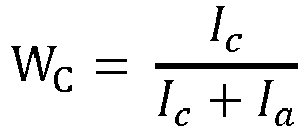
- WC: a crystallinity [%]
- Ic: an integrated intensity of a crystalline component
- Ia: an integrated intensity of an amorphous component
- In addition, the measurement conditions are as follows.
- Measuring device: Nano-Viewer (manufactured by Rigaku Corporation)
- Generator: UltraX 18
- Tube voltage/tube current: 45 kV/60 mA
- Target: CuKα (λ = 0.1542 nm)
- Camera length: 56.6 mm
- Measurement time: 3 min × 3 sheets
- Measurement temperature: room temperature
- Detector: PILATUS-100K
- The rigid amorphous component proportion WRAP is a value obtained by subtracting the crystallinity WC [%] and a complete amorphous component proportion WMA [%] from 100 [%], and was calculated by the following mathematical formula (1).

- The amorphous component proportion WMA [%] is a value obtained by dividing the amount of change ΔCp in heat capacity of the entire thermoplastic resin composition at the glass transition temperature by 0.27 J/(g·K), which is the amount of change in heat capacity when polyether ether ketone is 100% completely amorphous, and is represented by the following mathematical formula (2).

- The amount of change ΔCp in heat capacity of the entire thermoplastic resin composition at the glass transition temperature was measured as follows.
- The amount of change ΔCp in heat capacity of the entire thermoplastic resin composition was determined by performing measurement in a temperature modulation mode using a differential scanning calorimeter DSC and performing calculation by the following calculation method.
- A direct function F(T) of Reversing Cp of a tangent before glass transition and a direct function G(T) of a tangent after glass transition were each extrapolated, and F(Tg) - G(Tg) obtained by substituting T = Tg as a representative of the glass transition temperature (Tg) at the midpoint was defined as an amount of change ΔCp' in heat capacity of the prepreg. The amount of change ΔCp in heat capacity of the thermoplastic resin composition was calculated by dividing ΔCp' by the weight fraction of the thermoplastic resin in the prepreg.
- In addition, the measurement conditions are as follows.
- Measuring apparatus: a differential scanning calorimeter Q200 manufactured by TA Instruments, Inc.
- Sample purge gas: He, 25 ml/min
- Sample pan: T-Zero pan made of aluminum
- Mass of sample: 10 mg
- Temperature rise conditions: a temperature range of 50 to 200°C, an average temperature rise rate of 2°C/min, a temperature modulation amplitude of ± 1°C/120 sec.
- As raw materials of the prepreg, the following materials were used.
- PEEK: VESTAKEEP 2000G (trade name) (polyether ether ketone, manufactured by Daicel-Evonik Ltd., glass transition temperature: 143°C, melting point: about 340°C, average particle diameter (D50): 20 um)
- "Tenax" (trade name) IMS65 P12 24K (carbon fiber strand, manufactured by TEIJIN LIMITED, number of filaments: 24,000)
- Reinforcing fiber bundles were aligned in one direction to obtain a fiber-reinforced substrate having a fiber basis weight of 190 g/mm2. In addition, thermoplastic resin particles were dispersed in ethanol to prepare a suspension solution having a concentration of 5.5 mass%.
- Subsequently, the fiber-reinforced substrate was immersed in the suspension solution for 15 seconds to adhere the thermoplastic resin particles to the fiber-reinforced substrate. The obtained fiber-reinforced substrate with the resin was dried in a drying furnace at 100°C for 1 minute, and then a plurality of heating bars at 400°C were allowed to pass therethrough to melt and impregnate the thermoplastic resin, thereby producing a unidirectional thermoplastic resin prepreg (primary prepreg). The average cooling rate from the glass transition temperature + 150°C (that is, 293°C) to the glass transition temperature (that is, 143°C) was 84°C/sec. The content of carbon fibers in the entire prepreg was 57 [vol%].
- The thermoplastic resin prepreg (primary prepreg) was heated under pressure again to a temperature equal to or higher than the glass transition temperature, and then cooled under pressure using a double belt press device (a hydraulic double belt press device, manufactured by Morita Giken Co., Ltd.) to obtain a thermoplastic resin prepreg (a prepreg of the present invention) (a reheating under pressure treatment of the primary prepreg).
- In the double belt press device, a preheating roller, two heating rollers, three cooling rollers, and a residual heat roller were provided in this order from the prepreg charging port, and pressure was applied by heating roller and cooling roller parts. The maximum reached temperature of the heating roller part and the temperature at the outlet of the cooling roller part were defined as a heating temperature and a cooling temperature, respectively, and were set as shown in Table 1. The set pressures of the heating roller and cooling roller parts and the average cooling rate from the heating temperature to the glass transition temperature were set as shown in Table 1.
- A thermoplastic resin prepreg was produced in the same manner as in Example 1 except that in the step of cooling the primary prepreg, the average cooling rate from the glass transition temperature + 150°C to the glass transition temperature was set to 23°C/sec, and the obtained primary prepreg was not subjected to the reheating under pressure treatment.
- A thermoplastic resin prepreg (primary prepreg) was produced in the same manner as in Example 1, and then subjected to a heating under pressure treatment again using a heat press to obtain a thermoplastic resin prepreg. The heating temperature using the heat press, the cooling temperature, and the average cooling rate from the heating temperature to the glass transition temperature were set as shown in Table 1.
- A thermoplastic resin prepreg (primary prepreg) was produced in the same manner as in Example 1. The obtained prepreg was not subjected to the reheating under pressure treatment.
-
Table 1 Matrix resin Base TPUD production condition Post-treatment Temperature drop condition Evaluation results Type of resin Tg Heating temperature Average cooling rate (Tg + 150 to Tg) Treatment method Heating temperature Cooling temperature Average cooling rate Pressure Pattern Average cooling rate wrinkle test (appea rance) Laminate test (void fraction) Crystallinity W c Mobile amorphous proportion W MA Rigid amorphous component proportion W RAP Rigid component proportion WR = WRAP +W C [°C] [°C] [°C/sec] [°C] [°C] [°C/sec] [MPa] [°C/sec] [%] [%] [%] [%] [%] Example 1 PEEK 143 400 84 Double belt press 390 140 2.2 5 (B) 2.2 Δ 2.5 22.0 17.0 61.0 83 Example 2 PEEK 143 400 84 Double belt press 450 100 1.9 2 (B) 1.9 ○ 0.2 23.8 10.6 65.6 89 Example 3 PEEK 143 400 23 - - - - - (B) 23 Δ 0.5 26.4 45.3 28.3 55 Example 4 PEEK 143 400 84 Heat press 250 50 0.25 1 (A) 0.25 Δ 3.7 33.3 6.4 60.3 94 Comp. Example 1 PEEK 143 400 84 - - - - - (B) 84 × 9.7 18.2 50.5 31.3 50 Comp. Example 2 PEEK 143 400 84 - - - - - (B) 84 × 10 23.0 56.1 20.9 44 - The prepregs of two comparative examples are from different lots.
- As shown in Table 1, the thermoplastic resin prepregs of Examples 1 to 4 had no problems with appearance in the wrinkle test and the laminate test, and also had a low void fraction in the laminate test. Meanwhile, in the thermoplastic resin prepregs of Comparative Examples 1 and 2, the average cooling rate in the prepreg production step was high, and the subsequent heating under pressure and cooling under pressure were not performed, and therefore, the rigid component proportion was low, a problem occurred in the appearance in the wrinkle test and the laminate test, and the void fraction in the laminate test was also high.
Claims (11)
- A thermoplastic resin prepreg comprising a fiber-reinforced substrate and a thermoplastic resin composition partially or completely impregnated into the fiber-reinforced substrate, whereinthe thermoplastic resin composition contains 50 [mass%] or more of polyether ether ketone among all thermoplastic resins contained in the thermoplastic resin composition, anda sum of a crystallinity WC [%] of the thermoplastic resin composition and a rigid amorphous component proportion WRAP [%] in the thermoplastic resin composition is in a range of 51 to 100 [%].
- The thermoplastic resin prepreg according to claim 1, wherein the crystallinity WC is 20 to 50 [%].
- The thermoplastic resin prepreg according to claim 1, wherein the rigid amorphous component proportion WRAP is 25 to 80 [%].
- The thermoplastic resin prepreg according to claim 1, wherein a void fraction in a laminate test is 9.5 [area%] or less.
- The thermoplastic resin prepreg according to claim 1, wherein the fiber-reinforced substrate includes a carbon fiber.
- A method for manufacturing a thermoplastic resin prepreg, which includes a fiber-reinforced substrate and a thermoplastic resin composition containing a crystalline thermoplastic resin, and in which the thermoplastic resin composition is partially or completely impregnated into the fiber-reinforced substrate,
the method comprising a step of heating at a heat treatment temperature equal to or higher than a glass transition temperature of the thermoplastic resin composition and then cooling to the glass transition temperature or lower in a state in which the thermoplastic resin composition is impregnated into the fiber-reinforced substrate or when the thermoplastic resin composition is impregnated into the fiber-reinforced substrate, wherein an average cooling rate during the cooling satisfies Condition (A) or (B) below:Condition (A): in a case of (the heat treatment temperature) < (the glass transition temperature + 150 [°C]), the average cooling rate from the heat treatment temperature to the glass transition temperature is 80 [°C/sec] or less; orCondition (B): in a case of (the heat treatment temperature) > (the glass transition temperature + 150 [°C]), the average cooling rate from (the glass transition temperature + 150 [°C]) to the glass transition temperature is 80 [°C/sec] or less. - The method for manufacturing a thermoplastic resin prepreg according to claim 6, wherein the heat treatment temperature is equal to or higher than a melting point of the crystalline thermoplastic resin.
- The method for manufacturing a thermoplastic resin prepreg according to claim 6 or 7, wherein heating under pressure and cooling under pressure are performed at a surface pressure of 0.1 to 10 [MPa] during the heating and during the cooling.
- The method for manufacturing a thermoplastic resin prepreg according to claim 8, wherein the heating under pressure and the cooling under pressure are performed using a double belt press device.
- The method for manufacturing a thermoplastic resin prepreg according to any one of claims 6 to 9, wherein the crystalline thermoplastic resin is polyether ether ketone.
- The method for manufacturing a thermoplastic resin prepreg according to any one of claims 6 to 10, wherein the fiber-reinforced substrate includes a carbon fiber.
Applications Claiming Priority (2)
| Application Number | Priority Date | Filing Date | Title |
|---|---|---|---|
| JP2021127020A JP2023021876A (en) | 2021-08-02 | 2021-08-02 | Thermoplastic resin prepreg and method for manufacturing the same |
| PCT/JP2022/029212 WO2023013527A1 (en) | 2021-08-02 | 2022-07-28 | Thermoplastic resin prepreg and method for manufacturing same |
Publications (2)
| Publication Number | Publication Date |
|---|---|
| EP4382557A1 true EP4382557A1 (en) | 2024-06-12 |
| EP4382557A4 EP4382557A4 (en) | 2024-11-27 |
Family
ID=85154560
Family Applications (1)
| Application Number | Title | Priority Date | Filing Date |
|---|---|---|---|
| EP22852949.1A Pending EP4382557A4 (en) | 2021-08-02 | 2022-07-28 | THERMOPLASTIC RESIN PREPREG AND METHOD FOR ITS PRODUCTION |
Country Status (4)
| Country | Link |
|---|---|
| US (1) | US20240343871A1 (en) |
| EP (1) | EP4382557A4 (en) |
| JP (1) | JP2023021876A (en) |
| WO (1) | WO2023013527A1 (en) |
Family Cites Families (19)
| Publication number | Priority date | Publication date | Assignee | Title |
|---|---|---|---|---|
| JP2676532B2 (en) * | 1987-10-30 | 1997-11-17 | 呉羽化学工業株式会社 | Highly heat-stable polyarylene thioether ketone prepreg and molded articles thereof |
| GB8728887D0 (en) | 1987-12-10 | 1988-01-27 | Ici Plc | Fibre reinforced thermoplastic composite structures |
| JPH02191635A (en) * | 1988-10-03 | 1990-07-27 | Asahi Chem Ind Co Ltd | Fiber-reinforcing thermoplastic resin sheet excellent in surface smoothness |
| JPH04175114A (en) * | 1990-11-09 | 1992-06-23 | Yokohama Rubber Co Ltd:The | Manufacturing device for synthetic resin molded body |
| JPH05285948A (en) * | 1992-04-14 | 1993-11-02 | Yokohama Rubber Co Ltd:The | Manufacture of fiber reinforced thermoplastic resin prepreg sheet with smooth surface |
| WO1996041836A1 (en) * | 1995-06-09 | 1996-12-27 | Hoechst Celanese Corporation | Highly-filled, moldable polyaryletherketones |
| KR101513112B1 (en) * | 2011-06-24 | 2015-04-17 | 도레이 카부시키가이샤 | Molding material, molding method using same, method for producing molding material, and method for producing fiber-reinforced composite material |
| JP5589972B2 (en) * | 2011-06-24 | 2014-09-17 | 東レ株式会社 | Molding material and molding method using the same |
| WO2013008720A1 (en) | 2011-07-11 | 2013-01-17 | 東レ株式会社 | Thermoplastic resin pre-preg, molded preform and molded composite using same, and method for producing molded preform and molded composite |
| US11077644B2 (en) * | 2016-12-14 | 2021-08-03 | The Boeing Company | Material systems and methods of manufacturing material systems |
| US11014337B2 (en) * | 2016-12-14 | 2021-05-25 | The Boeing Company | Laminate structures comprising fiber-reinforced thermoplastic prepreg plies |
| US10682822B2 (en) * | 2018-03-23 | 2020-06-16 | The Boeing Company | Materials and methods for nucleating aligned thermoplastic crystals while fabricating thermoplastic carbon fiber reinforced polymer structures |
| EP3816212A4 (en) * | 2018-06-29 | 2021-09-08 | Mitsubishi Chemical Corporation | FIBER REINFORCED RESIN PREPREG, MOLDED PART AND FIBER REINFORCED THERMOPLASTIC RESIN PREPREG |
| US20220195134A1 (en) * | 2019-04-19 | 2022-06-23 | Teijin Limited | Thermoplastic resin prepreg, production method thereof, and fiber-reinforced composite material |
| US11851541B2 (en) * | 2019-07-12 | 2023-12-26 | Solvay Specialty Polymers Usa, Llc | Fiber reinforced thermoplastic matrix composite material |
| CN114901731A (en) * | 2019-12-27 | 2022-08-12 | 三菱化学株式会社 | Member for composite material, moving body, and method for producing film for composite material |
| JP7302587B2 (en) * | 2019-12-27 | 2023-07-04 | 三菱ケミカル株式会社 | Composite material member, composite material, moving object, and method for manufacturing film |
| JP7745824B2 (en) * | 2019-12-27 | 2025-09-30 | 三菱ケミカル株式会社 | Composite material member, composite material, mobile body, and film manufacturing method |
| CN112590252A (en) * | 2020-11-27 | 2021-04-02 | 哈尔滨工业大学 | Method for enhancing interlayer performance of thermoplastic automatic laying component |
-
2021
- 2021-08-02 JP JP2021127020A patent/JP2023021876A/en active Pending
-
2022
- 2022-07-28 US US18/294,380 patent/US20240343871A1/en active Pending
- 2022-07-28 EP EP22852949.1A patent/EP4382557A4/en active Pending
- 2022-07-28 WO PCT/JP2022/029212 patent/WO2023013527A1/en not_active Ceased
Also Published As
| Publication number | Publication date |
|---|---|
| EP4382557A4 (en) | 2024-11-27 |
| US20240343871A1 (en) | 2024-10-17 |
| WO2023013527A1 (en) | 2023-02-09 |
| JP2023021876A (en) | 2023-02-14 |
Similar Documents
| Publication | Publication Date | Title |
|---|---|---|
| Luo et al. | Bi-scale interfacial bond behaviors of CCF/PEEK composites by plasma-laser cooperatively assisted 3D printing process | |
| EP2725055B1 (en) | Molding material, molding method using same, method for producing molding material, and method for producing fiber-reinforced composite material | |
| EP3156439B1 (en) | Molding material, prepreg, fiber-reinforced composite material, and process for production of fiber-reinforced molding base material | |
| US9550330B2 (en) | Thermoplastic composites and methods of making and using same | |
| EP2445714B1 (en) | Process for manufacturing composite materials | |
| JP6306575B2 (en) | Improvement of composite materials | |
| US20200223101A1 (en) | Process for manufacturing a fibrous material pre-impregnated with thermoplastic polymer in powder form | |
| EP2909011B1 (en) | Surface engineering of thermoplastic materials and tooling | |
| US20200122359A1 (en) | Process for manufacturing a fibrous material pre-impregnated with thermoplastic polymer in dry powder form | |
| CN112566765B (en) | Prepreg manufacturing method and manufacturing device | |
| JP2020501951A (en) | Method for producing fibrous material pre-impregnated with thermoplastic polymer by injection | |
| KR102891740B1 (en) | Fiber material impregnated with a thermoplastic polymer having a thickness of 100 micrometers or less and a method for producing the same | |
| WO2020176263A1 (en) | Process for producing a fiber composite | |
| Leal et al. | Novel approach for the development of ultra-light, fully-thermoplastic composites | |
| US20240343871A1 (en) | Thermoplastic resin prepreg and method for manufacturing same | |
| JP2022190471A (en) | Thermoplastic resin prepreg and method for manufacturing the same | |
| AU2010298260B2 (en) | Thermoplastic composites and methods of making and using same | |
| Tamburrino et al. | Enhancing Mechanical Performance of 3D-Printed PEEK Via Vacuum Infiltration | |
| WO2026068929A1 (en) | A method of producing a fibre-reinforced composite | |
| Blok | Development of improved fibre reinforced feedstocks for high performance 3D printing | |
| BOSSHARD et al. | Effect of compression during post-treatment to improve the mechanical strength of printed carbon fiber/PEKK composites |
Legal Events
| Date | Code | Title | Description |
|---|---|---|---|
| STAA | Information on the status of an ep patent application or granted ep patent |
Free format text: STATUS: THE INTERNATIONAL PUBLICATION HAS BEEN MADE |
|
| PUAI | Public reference made under article 153(3) epc to a published international application that has entered the european phase |
Free format text: ORIGINAL CODE: 0009012 |
|
| STAA | Information on the status of an ep patent application or granted ep patent |
Free format text: STATUS: REQUEST FOR EXAMINATION WAS MADE |
|
| 17P | Request for examination filed |
Effective date: 20240209 |
|
| AK | Designated contracting states |
Kind code of ref document: A1 Designated state(s): AL AT BE BG CH CY CZ DE DK EE ES FI FR GB GR HR HU IE IS IT LI LT LU LV MC MK MT NL NO PL PT RO RS SE SI SK SM TR |
|
| DAV | Request for validation of the european patent (deleted) | ||
| DAX | Request for extension of the european patent (deleted) | ||
| STAA | Information on the status of an ep patent application or granted ep patent |
Free format text: STATUS: EXAMINATION IS IN PROGRESS |
|
| A4 | Supplementary search report drawn up and despatched |
Effective date: 20241030 |
|
| RIC1 | Information provided on ipc code assigned before grant |
Ipc: C08J 5/04 20060101AFI20241024BHEP |
|
| 17Q | First examination report despatched |
Effective date: 20241112 |