EP4382082A2 - Vorrichtungen und systeme zur urinsammlung - Google Patents
Vorrichtungen und systeme zur urinsammlung Download PDFInfo
- Publication number
- EP4382082A2 EP4382082A2 EP24172054.9A EP24172054A EP4382082A2 EP 4382082 A2 EP4382082 A2 EP 4382082A2 EP 24172054 A EP24172054 A EP 24172054A EP 4382082 A2 EP4382082 A2 EP 4382082A2
- Authority
- EP
- European Patent Office
- Prior art keywords
- covering
- collection device
- urine collection
- urine
- fluid
- Prior art date
- Legal status (The legal status is an assumption and is not a legal conclusion. Google has not performed a legal analysis and makes no representation as to the accuracy of the status listed.)
- Granted
Links
Images






Classifications
-
- A—HUMAN NECESSITIES
- A61—MEDICAL OR VETERINARY SCIENCE; HYGIENE
- A61F—FILTERS IMPLANTABLE INTO BLOOD VESSELS; PROSTHESES; DEVICES PROVIDING PATENCY TO, OR PREVENTING COLLAPSING OF, TUBULAR STRUCTURES OF THE BODY, e.g. STENTS; ORTHOPAEDIC, NURSING OR CONTRACEPTIVE DEVICES; FOMENTATION; TREATMENT OR PROTECTION OF EYES OR EARS; BANDAGES, DRESSINGS OR ABSORBENT PADS; FIRST-AID KITS
- A61F5/00—Orthopaedic methods or devices for non-surgical treatment of bones or joints; Nursing devices ; Anti-rape devices
- A61F5/44—Devices worn by the patient for reception of urine, faeces, catamenial or other discharge; Colostomy devices
- A61F5/451—Genital or anal receptacles
- A61F5/455—Genital or anal receptacles for collecting urine or discharge from female member
-
- A—HUMAN NECESSITIES
- A61—MEDICAL OR VETERINARY SCIENCE; HYGIENE
- A61F—FILTERS IMPLANTABLE INTO BLOOD VESSELS; PROSTHESES; DEVICES PROVIDING PATENCY TO, OR PREVENTING COLLAPSING OF, TUBULAR STRUCTURES OF THE BODY, e.g. STENTS; ORTHOPAEDIC, NURSING OR CONTRACEPTIVE DEVICES; FOMENTATION; TREATMENT OR PROTECTION OF EYES OR EARS; BANDAGES, DRESSINGS OR ABSORBENT PADS; FIRST-AID KITS
- A61F5/00—Orthopaedic methods or devices for non-surgical treatment of bones or joints; Nursing devices ; Anti-rape devices
- A61F5/44—Devices worn by the patient for reception of urine, faeces, catamenial or other discharge; Colostomy devices
- A61F5/441—Devices worn by the patient for reception of urine, faeces, catamenial or other discharge; Colostomy devices having venting or deodorant means, e.g. filters ; having antiseptic means, e.g. bacterial barriers
-
- A—HUMAN NECESSITIES
- A61—MEDICAL OR VETERINARY SCIENCE; HYGIENE
- A61F—FILTERS IMPLANTABLE INTO BLOOD VESSELS; PROSTHESES; DEVICES PROVIDING PATENCY TO, OR PREVENTING COLLAPSING OF, TUBULAR STRUCTURES OF THE BODY, e.g. STENTS; ORTHOPAEDIC, NURSING OR CONTRACEPTIVE DEVICES; FOMENTATION; TREATMENT OR PROTECTION OF EYES OR EARS; BANDAGES, DRESSINGS OR ABSORBENT PADS; FIRST-AID KITS
- A61F5/00—Orthopaedic methods or devices for non-surgical treatment of bones or joints; Nursing devices ; Anti-rape devices
- A61F5/44—Devices worn by the patient for reception of urine, faeces, catamenial or other discharge; Colostomy devices
- A61F5/443—Devices worn by the patient for reception of urine, faeces, catamenial or other discharge; Colostomy devices having adhesive seals for securing to the body, e.g. of hydrocolloid type seals, e.g. gels, starches, karaya gums
-
- A—HUMAN NECESSITIES
- A61—MEDICAL OR VETERINARY SCIENCE; HYGIENE
- A61F—FILTERS IMPLANTABLE INTO BLOOD VESSELS; PROSTHESES; DEVICES PROVIDING PATENCY TO, OR PREVENTING COLLAPSING OF, TUBULAR STRUCTURES OF THE BODY, e.g. STENTS; ORTHOPAEDIC, NURSING OR CONTRACEPTIVE DEVICES; FOMENTATION; TREATMENT OR PROTECTION OF EYES OR EARS; BANDAGES, DRESSINGS OR ABSORBENT PADS; FIRST-AID KITS
- A61F5/00—Orthopaedic methods or devices for non-surgical treatment of bones or joints; Nursing devices ; Anti-rape devices
- A61F5/44—Devices worn by the patient for reception of urine, faeces, catamenial or other discharge; Colostomy devices
- A61F5/451—Genital or anal receptacles
Definitions
- the present disclosure generally relates to devices and systems for collecting urine discharged from the body of a user and carrying the urine away from the body.
- a user may have limited or impaired mobility such that ordinary urinary functions and processes are rendered difficult (or impossible).
- a person may have impaired mobility due to a disability or may be bedridden due to an injury or illness.
- a person may be subject to restricted occupational conditions under which the person has limited mobility.
- urine collection may be needed for monitoring purposes, such as for monitoring inputs and outputs in a clinical setting (e.g., in an intensive care unit, or for other clinical and/or laboratory testing).
- a urine collection device in an example, includes a covering defining a recessed receptacle, and a fluid collection assembly positioned in the recessed receptacle defined by the covering.
- the fluid collection assembly includes (i) a foam sleeve including a bore extending from a first end of the foam sleeve to a second end of the foam sleeve and (ii) a shape retaining element positioned in the bore of the foam sleeve.
- the shape retaining element is configured to conform the fluid collection assembly to a curved configuration for placement against a body of a user and maintain the curved configuration of the fluid collection assembly until the curved configuration is adjusted.
- the shape retaining element defines a passage extending from between a proximal end of the shape retaining element and a distal end of the shape retaining element.
- the fluid collection assembly also includes (iii) a tube extending through the passage defined by the shape retaining element.
- the urine collection further includes a top sheet coupled to the covering.
- the top sheet and the covering define an internal chamber of the urine collection device.
- the top sheet is configured to draw urine into the internal chamber and toward the fluid collection assembly.
- a method of making a urine collection device includes forming a covering such that the covering defines a recessed receptacle and forming a fluid collection assembly.
- the fluid collection assembly includes (i) a foam sleeve including a bore extending from a first end of the foam sleeve to a second end of the foam sleeve and (ii) a shape retaining element positioned in the bore of the foam sleeve.
- the shape retaining element is configured to conform the fluid collection assembly to a curved configuration for placement against a body of a user and maintain the curved configuration of the fluid collection assembly until the curved configuration is adjusted.
- the shape retaining element defines a passage extending from between a proximal end of the shape retaining element and a distal end of the shape retaining element.
- the fluid collection assembly also includes (iii) a tube extending through the passage defined by the shape retaining element.
- the method also includes positioning the fluid collection assembly in the recessed receptacle defined by the covering, wherein the fluid collection assembly; and coupling a top sheet to the covering with the fluid collection assembly positioned between the top sheet and the covering.
- the top sheet and the covering define an internal chamber of the urine collection device.
- the top sheet is configured to draw urine into the internal chamber and toward the fluid collection assembly.
- a method of collecting urine discharged from a body of a user includes providing a urine collection device.
- the urine collection device includes a covering defining a recessed receptacle, and a fluid collection assembly positioned in the recessed receptacle defined by the covering.
- the fluid collection assembly includes (i) a foam sleeve including a bore extending from a first end of the foam sleeve to a second end of the foam sleeve and (ii) a shape retaining element positioned in the bore of the foam sleeve.
- the shape retaining element is configured to conform the fluid collection assembly to a curved configuration for placement against a body of a user and maintain the curved configuration of the fluid collection assembly until the curved configuration is adjusted.
- the shape retaining element defines a passage extending from between a proximal end of the shape retaining element and a distal end of the shape retaining element.
- the fluid collection assembly also includes (iii) a tube extending through the passage defined by the shape retaining element.
- the urine collection further includes a top sheet coupled to the covering. The top sheet and the covering define an internal chamber of the urine collection device. The top sheet is configured to draw urine into the internal chamber and toward the fluid collection assembly.
- the method includes positioning the urine collection device against the body of the user with the top sheet in operative relation with a urethral opening of the user.
- the method also includes receiving, through the top sheet and by the fluid collection assembly, urine discharged from the urethral opening.
- the method further includes evacuating the urine from the fluid collection assembly through the tube.
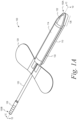
- Figure 1A depicts a perspective view of the urine collection device 100
- Figure 1B depicts an exploded view of the urine collection device 100
- Figure 1C depicts a first cross-sectional view of the urine collection device 100 through a line 1C-1C
- Figure 1D depicts a second cross-sectional view of the urine collection device 100.
- the urine collection device 100 includes a covering 110, a fluid collection assembly 112, and a top sheet 114.
- the fluid collection assembly 112 includes a foam sleeve 116, a shape retaining element 118, and a tube 120.
- the urine collection device 100 can include a fluid-impermeable barrier 122, an anchor 124, and/or a suction adapter 126.
- the urine collection device 100 includes a covering 110 that defines a recessed receptacle 128.
- the covering 110 can provide a fluid impermeable layer that can assist in retaining a fluid, such as urine, in the recessed receptacle 128.
- the covering 110 can be made from a foam material such as, for instance, a polymer film, a fabric coated with a film, and/or an elastomeric polymer (e.g., silicone). Making the covering 110 from a foam material can beneficially provide for forming the covering 110 using a thermoforming process, which can help to improve manufacturing efficiency, improve manufacturing speed, improve manufacturing quality, and/or reduce manufacturing costs relative to other types of materials.
- the covering 110 can be made from other materials and/or made by other manufacturing processes (e.g., vacuum forming, injection molding, and/or compression molding).
- the covering 110 includes an upper peripheral edge 130.
- the upper peripheral edge 130 can assist in coupling the covering 110 to the top sheet 114.
- the upper peripheral edge 130 defines a flange portion extending outwardly in a plane away from the recessed receptacle 128. This can help to increase a surface area for coupling the covering 110 to the top sheet 114.
- the upper peripheral edge 130 can omit the flange portion (i.e., the upper peripheral edge can be entirely coplanar with a wall of the recessed receptacle 128). This can reduce (or avoid) forming a seam 132 (shown in Figure 1A ) at an interface between the covering 110 and the top sheet 114.
- the top sheet 114 is coupled to the covering 110 at the upper peripheral edge 130.
- the top sheet 114 can be coupled to the covering 110 by heating sealing and/or welding (e.g., ultrasonic welding and/or radiofrequency welding) the top sheet 114 and the covering 110.
- the top sheet 114 can additionally or alternatively be coupled to the covering 110 by an adhesive.
- a relatively thin layer of film and/or adhesive e.g., a polyurethane adhesive and/or a polyethylene adhesive
- a relatively thin layer of film and/or adhesive can be applied to the covering 110 to the covering 110 before or after forming the recessed receptacle 128 in the covering 110 (e.g., before or after thermoforming), and prior to coupling the top sheet 114 to the covering 110.
- the film and/or the adhesive can help to strengthen the coupling between the top sheet 114 and the covering 110 imparted by the heat sealing.
- the top sheet 114 When the top sheet 114 is coupled to the covering 110, the top sheet 114 and the covering 110 define an internal chamber 134 of the urine collection device 100 as shown in Figure 1D .
- the top sheet 114 can draw fluids such as urine into the internal chamber 134 and toward the fluid collection assembly 112.
- the top sheet 114 can be formed of a material having a relatively high absorptive rate, a relatively high adsorption rate, and/or a relatively high permeation rate such that fluids such as urine can be rapidly wicked and drawn into the internal chamber 134 of the urine collection device 100 (and toward the fluid collection assembly 112).
- the top sheet 114 can be made from an absorbent polyester mesh material (e.g., a jersey mesh material).
- the top sheet 114 can be made of a blend of polyester and spandex (e.g., a blend including approximately 90 percent polyester and approximately 10 percent spandex).
- the top sheet 114 can include a fibrous material that is configured to draw the urine toward the fluid collection assembly 112 under capillary action.
- the top sheet 114 can be formed from a material having a total weight of approximately 4.0 ounces per square yard (plus or minus approximately 5%), a fiber that is a mechanically wicking yarn, a knit configured as a circular knit, a dimpled face, a wicking finish, and a width of approximately 60 inches to approximately 61 inches.
- the urine collection device 100 can have a tapered section 136 at a distal end 100A of the urine collection device 100.
- the upper peripheral edge 130 of the covering 110 tapers inwardly toward a center axis 138 of the covering 110 such that the covering 110 includes a tapered portion 140 at a distal end 110A of the covering 110.
- the top sheet 114 can include a peripheral edge 142 that tapers inwardly in a manner similar to the tapered portion 140 of the covering 110.
- the tapered section 136 of the urine collection device 100 which is formed by the tapered portion 140 of the covering 110 and the tapered portion of the top sheet 114, can help to improve patient comfort and assist in retaining the urine collection device 100 at a desired position on a user.
- the tapered section 136 can be sized and/or shaped to fit into gluteal folds and a perineum of a body of the user such that the urine collection device 100 remains in a relatively fixed position on the body of the user.
- the tapered section 136 can be wedge shaped to assist in retaining the urine collection device 100 in the gluteal folds and/or the perineum of the user.
- the wedge shape of the tapered section 136 can define an edge at the distal end 100A, the edge can have a length and a width, and the length can be greater than the width.
- the tapered section 136 can have a length of approximately 1 inch to approximately 2 inches. In another example, the tapered section 136 can have a length of approximately 1.75 inches. These example lengths can additionally or alternatively assist in retaining the tapered shape in the gluteal folds and/or the perineum of the user.
- example materials described herein with respect to components of the urine collection device 100 at the distal end 100A can provide the tapered section 136 with a flexibility that allows the tapered section 136 to conform to a shape of the gluteal folds and/or the perineum of the user when the tapered section 136 is positioned in the gluteal folds and/or the perineum of the user.
- the fluid collection assembly 112 is in the internal chamber 134 of the urine collection device 100 between the covering 110 and the top sheet 114.
- the recessed receptacle 128 of the covering 110 can facilitate positioning and retaining the fluid collection assembly 112 between the covering 110 and the top sheet 114 during a manufacturing process.
- the recessed receptacle 128 of the covering 110 can receive the fluid collection assembly 112.
- the recessed receptacle 128 can define a trough into which the fluid collection assembly 112 can be positioned.
- the recessed receptacle 128 of the covering 110 and the fluid collection assembly 112 can have respective sizes and/or shapes such that the covering 110 engages approximately 30 percent to approximately 70 percent of an outermost surface of the fluid collection assembly 112 (i.e., the outermost surface of the foam sleeve 116). In another example, the recessed receptacle 128 of the covering 110 and the fluid collection assembly 112 can have respective sizes and/or shapes such that the covering 110 engages at least approximately 50 percent of the outermost surface of the fluid collection assembly 112.
- the relative sizes and/or shapes of the recessed receptacle 128 and the fluid collection assembly 112 can help manufacturing processes by assisting in retaining the fluid collection assembly 112 in a desired position relative to the covering 110 while one or more manufacturing operations are performed (e.g., such as coupling the top sheet 114 to the covering 110 and/or the manufacturing operations described below).
- the relative sizes and/or shapes of the recessed receptacle 128 and the fluid collection assembly 112 can additionally or alternatively help to provide the fluid impermeable layer of the covering 110 over a surface area that is suitable for retaining fluid, such as urine, within the urine collection device 100 during use.
- the covering 110 can also include a channel 144 that extends from the recessed receptacle 128 to an opening 145 at a proximal end 110B of the covering 110.
- the upper peripheral edge 130 can extend continuously around a periphery of the covering 110, except at the opening 145.
- the channel 144 can receive the tube 120 to provide egress of fluid, such as urine, in a proximal direction out of the internal chamber 134.
- the channel 144 can have a depth that is less than a depth of the recessed receptacle 128. This can help to more closely conform the covering 110 to the fluid collection assembly 112 based on a position of the tube 120 in the fluid collection assembly 112 (i.e., the position of the tube 120 relative to the outermost surface of the foam sleeve 116).
- the covering 110 can include one or more vent apertures 147 extending through the covering 147 (e.g., in the recessed receptacle 128 adjacent to the proximal end 110B of the covering 110).
- the one or more vent apertures 147 can be configured to allow air to pass between the internal chamber 134 and an external environment in the event that the urine collection device 100. This can help to mitigate relatively high pressures being applied to the patient in the evet that the urine collection device 100 fully suctioned to the user.
- the one or more vent apertures 147 can be formed during or after forming the covering 110, and after placing the top sheet 114 (e.g., by mechanically punching the vent apertures 147 in the covering 110 and/or by laser cutting the vent apertures 147 in the covering 110).
- the urine collection device 100 includes two vent apertures 147 in the illustrated example, the urine collection device 100 can include a different quantity of vent apertures 147 in other examples (e.g., one vent aperture 147, three vent apertures 147, four vent apertures 147, etc.).
- the fluid collection assembly 112 is positioned in the recessed receptacle 128 defined by the covering 110.
- Figure 3 depicts the fluid collection assembly 112 including the foam sleeve 116, the shape retaining element 118, and the tube 120.
- the foam sleeve 116 includes a bore 146 extending from a first end 116A of the foam sleeve 116 to a second end 116B of the foam sleeve 116.
- the shape retaining element 118 is positioned in the bore 146 of the foam sleeve 116.
- the shape retaining element 118 defines a passage 148 extending from between a distal end 118A of the shape retaining element 118 and a proximal end 118B of the shape retaining element 118.
- the tube 120 extends through the passage 148 defined by the shape retaining element 118.
- the foam sleeve 116 can help to reduce a contact pressure of the tube 120 and/or the shape retaining element 118 on a body of a user.
- the foam sleeve 116 can be made from any suitable material and has suitable shape that allows for collecting fluid (e.g., urine) and/or directing fluid flow into the internal chamber 134 of the urine collection device 100.
- the foam sleeve 116 can be made from a reticulated foam material (e.g., VOLARA ® Type EO foam, which is currently manufactured by Sekisui Voltek having a place of business in Lawrence, Massachusetts).
- the foam sleeve 116 can have a pore size between approximately 20 pores per inch (PPI) and approximately 90 PPI (e.g., approximately 45 PPI), a density between approximately 1.36 pounds per cubic feet and approximately 2.10 pounds per cubic feet (e.g., approximately 1.86 pounds per cubic feet), a tensile strength of at least approximately 20.0 pounds per square inch (PSI) (e.g., approximately 22.3 PSI), an elongation of at least approximately 240 percent (e.g., approximately 254 percent), a tear of at least approximately 3.5 pounds per inch (e.g., approximately 4.5 pounds per inch), a compression load deflection (CLD) 25%R of at least approximately 0.30 PSI (e.g., approximately 0.49 PSI), a CLD 65%R of at least approximately 0.50 PSI (e.g., approximately 0.96 PSI), and/or a compression set 50% of less than approximately 20 percent (e.g., approximately 4 percent).
- PPI pores per inch
- PSI pounds per square
- the foam sleeve 116 can be formed by first positioning the shape retaining element 118 between a first sheet of foam and a second sheet of foam. After positioning the shape retaining element between the first sheet of foam and the second sheet of foam, the first sheet of foam can be coupled to the second sheet of foam on opposing sides of the shape retaining element. For instance, in one implementation, the first sheet of foam and the second sheet of foam can be heat sealed to each other (e.g., via a C-shaped heat sealing tool).
- the foam sleeve 116 After coupling the first sheet of foam to the second sheet of foam, cutting the first sheet of foam and the second sheet of foam on the opposing sides of the shape retaining element 118 to form the foam sleeve 116 with the shape retaining element 118 positioned in the bore 146 of the foam sleeve 116.
- This process can help to rapidly and/or efficiently manufacture the foam sleeve 116.
- the foam sleeve 116 can be formed by an extrusion process.
- the foam sleeve 116 can extend into the tapered section 136 of the urine collection device 100).
- the foam sleeve 116 extends into the tapered portion 140 at the distal end 110A of the covering 110 to a position proximate to and/or abutting with the distal end 110A of the covering 110. This can help to mitigate (or prevent) the urine collection device 100 collapsing at the distal end 100A and, thus, assist with retaining the urine collection device 100 at a desired position on a body of a user.
- the foam sleeve 116 can include a chamfer 150 at the tapered portion 140 of the covering 110.
- the chamfer 150 and the bore 146 of the foam sleeve 116 are further shown in Figures 4A-4C.
- Figure 4A depicts a side view of the foam sleeve 116
- Figure 4B depicts a top view of the foam sleeve 116
- Figure 4C depicts a plan view of the first end 116A of the foam sleeve 116.
- the chamfer 150 can reduce a size of the foam sleeve 116 such that the foam sleeve 116 can fit in the tapered portion 140 of the covering 110.
- the shape retaining element 118 is configured to conform the fluid collection assembly 112 to a curved configuration for placement against a body of a user and maintain the curved configuration of the fluid collection assembly 112 until the curved configuration is adjusted. This can help to adjust a shape of the urine collection device 100 based on a shape of the user's anatomy and thereby improve collecting and diverting urine from the user into the internal chamber 134 of the urine collection device 100.
- the shape retaining element 118 can additionally or alternatively facilitate adjusting the shape of the urine collection device 100 based on a shape of the user's anatomy to improve user comfort.
- the shape retaining element 118 can include a plurality of linking segments 152 that are moveably coupled to each other.
- Figure 5A depicts the shape retaining element 118 including the linking segments 152
- Figure 5B depicts a representative one of the linking segments 152
- Figure 5C depicts a cross-sectional view of the linking segment 152 in Figure 5B according to an example.
- the linking segments 152 are arranged sequentially along a longitudinal direction of the shape retaining element 118.
- each of the linking segments 152 has a first portion 152A, a second portion 152B, and a third portion 152C.
- Each of the first portion 152A, the second portion 152B, and the third portion 152C is hollow or has at least an open portion for passing the tube 120 therethrough.
- the first portion 152A includes a spherically shaped body with an opening therein.
- the first portion 152A is connected to a second portion 152B having a cylindrical shape and a passage therethrough for passing the tube 120.
- the second portion 152B is connected to the third portion 152C having a semi-spherical shape and forming a hollow cup.
- the first portion 152A (the spherical shape) of one segment 152 is configured to fit within the hollow cup of the third portion 152C of an immediately successive segment 152.
- the linked segments 152 include a series of individual segments linked to (e.g., by snapping together) a successive individual segment, wherein each segment 152 is moveable relative to the successive segment as the first portion 152A moves within the hollow cup of the third portion 152C.
- the shape retaining element 118 can be manipulated by a person (e.g., a healthcare provider or a user) in various directions and is configured to retain its shape following the manipulation.
- a curvature of urine collection device 100 is adjustable, for example, to fit the anatomical curvature of a particular user.
- the linking segments 152 can collectively define the passage 148 extending between the distal end 118A and the proximal end 118B of the shape retaining element 118. As shown in Figures 1C , 1D , and 3 , the tube 120 extends through the passage 148 defined by the shape retaining element 118.
- the tube 120 is configured to allow a vacuum (e.g. a pressure lower than ambient air pressure) to be produced in the internal chamber 134 of the urine collection device 100 when suction is applied to the tube 120. In this way, fluid (e.g., urine) collected in the internal chamber 134 of the urine collection device 100 can be evacuated from the urine collection device 100 through the tube 120.
- a vacuum e.g. a pressure lower than ambient air pressure
- the tube 120 includes a distal end 120A in the internal chamber 134 at the distal end 100A of the urine collection device 100 and a proximal end 120B that extends proximally from the internal chamber 134 at the proximal end 100B of the urine collection device 100. More specifically, as shown in Figures 1C-1D , the tube 120 extends distally from the shape retaining element 118 into the tapered portion 140 at the distal end 110A of the covering 110. In this way, the tube 120 can be in fluid communication with the distal end 100A of the urine collection device 100. As such, when fluid (e.g., urine) is received in the internal chamber 134, the fluid can flow down (e.g., under gravity and/or vacuum pressure) and enter the distal end 120A of the tube 120.
- fluid e.g., urine
- the tube 120 can include a plurality of apertures 154 at a distal portion of the tube 120. Providing a plurality of apertures 154 at the distal portion of the tube 120 can help to enhance air flow into the tapered section 136 at the distal end 110A of the urine collection device 100 and/or inhibit (or prevent) a vacuum lock, which would prevent the flow of fluid (e.g., urine) through the tube 120.
- fluid e.g., urine
- the distal end 120A of the tube 120 can be approximately flush with the first end 116A of the foam sleeve 116.
- the distal end 118A of the shape retaining element 118 is located proximal to the distal end 120A of the tube 120. This can help to expose the apertures 154 to enhance air flow and/or receive fluid into the tube 120.
- the distal end 118A of the shape retaining element 118 can be approximately 0.25 inches from the distal end 120A of the tube 120.
- the tube 120 can be a flexible material to facilitate directing the tube 120 away from the user's body. It can be beneficial to direct the tube 120 away from the user's body (e.g., off the side of a bed) to reduce (or prevent) the tube 120 from accidental pulling and leakage resulting from such pulling (e.g., due to the tube 120 accidentally decoupling from another drain tube at the suction adapter 126). This may also be beneficial in that the tube 120 can be routed to either side of the bed and this can provide greater flexibility in positioning additional equipment (e.g., the equipment described below with respect to Figure 6 ) relative to the user. Additionally, in implementations in which the suction adapter 126 is made of a relatively hard material (e.g., a relatively hard plastic), directing the tube 120 and the suction adapter 120 away from the user's body can enhance user comfort.
- a relatively hard material e.g., a relatively hard plastic
- the tube 120 can have a length that is greater than approximately six inches. Additionally, in one example, the tube 120 can have a durometer of approximately 72 Shore A, an inner diameter of approximately 0.170 inches, and an outer diameter of approximately 0.253 inches. These example durometer and dimension parameters of the tube 120 can achieve the benefits associated with the flexibility of the tube 120 described above. However, the tube 120 can have a different hardness and/or different dimensions in other examples. For instance, the tube 120 can have a durometer between approximately 50 Shore A and approximately 100 Shore A in another example.
- the tube 120 can have a kink distance of approximately 1 as determined in accordance with a test conducted in accordance with the standard provided by "BS EN 13868:2002 Catheters - Test methods for kinking of single lumen catheters and medical tubing". In another example, the tube 120 can have a kink distance less than approximately 2 as determined in accordance with a test conducted in accordance with the standard provided by "BS EN 13868:2002 Catheters - Test methods for kinking of single lumen catheters and medical tubing".
- the tube 120 can have a kink distances less than approximately 3 as determined in accordance with a test conducted in accordance with the standard provided by "BS EN 13868:2002 Catheters - Test methods for kinking of single lumen catheters and medical tubing".
- the urine collection device 100 can also include a suction adapter 126.
- the suction adapter 126 can include a stepped tapering to help couple the tube 120 to a suction tube of a vacuum device.
- Providing the suction adapter 126 with a shape that tapers inwardly along a direction from the distal end 110A toward the proximal end 100B can help to couple the suction adapter 126 with a relatively wide variety of different tubes (e.g., a drain tube as described below with respect to Figure 6 ) having differently sized tube diameters.
- the tapered shape of the suction adapter 126 can help to make the urine collection device 100 more universally compatible with other equipment in a healthcare environment.
- the suction adapter 126 can additionally or alternatively include a thread, a hose barb, and/or a Luer lock for coupling with the tube of the suction tube of the vacuum device.
- the suction adapter 126 is shown in Figures 1A-1D as a male-type component that is configured to be received by a female-type component (e.g., an open end of a drain tube), the suction adapter 126 can alternatively be provided as a female-type component that is configured to couple with a male-type component of other equipment in a healthcare environment.
- the suction adapter 126 can include a socket in which a male-type adapter of a drain tube can be inserted and retained.
- the urine collection device 100 can also include a fluid-impermeable barrier 122.
- the fluid-impermeable barrier 122 is coupled to a distal portion of the covering 110 (e.g., at the tapered portion 140 of the covering 110).
- the fluid-impermeable barrier 122 and the distal portion of the covering 110 can define a fluid-impermeable chamber.
- the fluid-impermeable barrier 122 can assist in retaining the fluid (e.g., urine) in the internal chamber 134 of the urine collection device 100.
- the fluid-impermeable barrier 122 can help to provide a barrier against fecal contamination.
- the fluid-impermeable barrier 122 can be made from a fluid-impermeable material such as, for instance, a foam, silicone, urethane, and/or other types of impermeable elastomeric polymers.
- the fluid-impermeable barrier 122 can be made from a material that is the same as a material of the covering 110.
- the fluid-impermeable barrier 122 can be made from a material that is different than a material of the covering 110.
- the anchor 124 is coupled to a proximal portion of the covering 110.
- the anchor 124 includes an adhesive configured to couple the urine collection device 100 to the user.
- the anchor 124 is configured to secure the urine collection device 100 to the user in a position in which the urine collection device 100 can collect and divert the fluid (e.g., urine) into the internal chamber 134 of the urine collection device 100.
- the anchor 124 can have a shape that can conform to a surface area of a pelvic region of the user without pulling or pinching the skin or otherwise causing discomfort.
- the anchor 124 can have any suitable shape for securing the urine collection device 100 to the body of a user (e.g., and remain secured to the user despite motion by the user, moisture accumulation on the body, and/or passage of time).
- the anchor 124 includes a first arm 124A and a second arm 124B laterally extending from a center portion 124C.
- the center portion 124C can be located at a middle area of the user's pelvic area and/or abdomen so that the first arm 124A and the second arm 124B extend to areas adjacent to the middle area of the user's pelvic area and/or abdomen. This can help to improve stability of the urine collection device 100 secured to the user.
- the first arm 124A and the second arm 124B can include the adhesive, whereas the center portion 124C can omit the adhesive.
- This can additionally or alternatively assist in reducing (or minimizing) an extent to which the adhesive adheres to hair of the user. Omitting the adhesive at the center portion 124C also can be beneficial for users that do not have hair at the middle area of the user's pelvic area and/or abdomen as omitting the adhesive at the center portion 124C reduces an amount of adhesive on the user's skin and, thus, improves patient comfort.
- the center portion 124C omitting the adhesive can be, for instance, approximately 1.6 inches wide.
- first arm 124A, the second arm 124B, and the center portion 124C can include the adhesive such that the adhesive can adhere to the user at the first arm 124A, the second arm 124B, and/or the center portion 124C of the anchor 124.
- the anchor 124 can include a liner that can initially cover the adhesive prior to coupling the anchor 124 to the user, and be removed to expose the adhesive to facilitate coupling the anchor 124 to the user.
- the tube 120 can be coupled to the anchor 124. This can help to mitigate (or prevent) the tube 120 from migrating from a desired position in the internal chamber 134 relative to the distal end 110A of the covering 110.
- the tube 120 can be additionally or alternatively coupled to the shape retaining element 118.
- the system 660 includes the urine collection device 100 described above. Additionally, the system 660 includes a drain tube 662, a waste collection reservoir 664, and a vacuum device 666.
- a first end 668 of the drain tube 662 is coupled to the suction adapter 126 of the urine collection device 100.
- the drain tube 662 can include a thread, a Luer lock, and/or other feature for coupling the drain tube 662 to the suction adapter 126.
- the drain tube 662 can be a flexible material to facilitate directing the drain tube away from the user's body. It can be beneficial to direct the drain tube 662 away from the user's body (e.g., off the side of a bed) to reduce (or prevent) the drain tube 662 from accidental pulling and leakage resulting from such pulling.
- the waste collection reservoir 664 is coupled to a second end 670 of the drain tube 662 to receive the urine from the drain tube 662.
- the waste collection reservoir 664 can be a leg bag, a drainage bag, or other container.
- the waste collection reservoir 664 can include a hanger and/or another structure for coupling the waste collection reservoir 664 to a patient support surface 672 (e.g., a bed and/or a wheelchair) used by the patient.
- the waste collection reservoir 664 can be a sealed container. This can, for example, reduce (or minimize) a risk of spillage and/or contamination.
- the waste collection reservoir 664 can be disposable. In other examples, the waste collection reservoir 664 can be reusable. For instance, the waste collection reservoir 664 can be configured to be sterilized after a use and reused.
- the vacuum device 666 can apply a vacuum pressure to the drain tube 662 to assist in directing the urine from the suction adapter 126 to the waste collection reservoir 664.
- the vacuum device 666 can include an air pump or other vacuum source, which is coupled to the waste collection reservoir 664 by an air tube 674.
- the air tube 674 can also be made of a flexible material.
- the vacuum device 666 can be a wall vacuum integrated into a room of a medical facility. In other examples, the vacuum device 666 can be integrated with the patient support surface 672. For instance, the vacuum device 666 can be integrated with a bed in a medical facility.
- the system can also include an occlusion clip for selectively controlling the flow of urine in the drain tube.
- the occlusion clip can provide for stopping the flow of urine in the drain tube to facilitate changing and/or emptying the waste collection reservoir.
- the urine collection device 100 can be attached to the user.
- the urine collection device 100 can be against the body of the user with the top sheet 114 in operative relation with a urethral opening of the user.
- this can include positioning the urine collection device 100 in a vertical orientation relative to a urethral opening of a female user.
- positioning the urine collection device 100 relative to the user can include adjusting a curvature of the urine collection device 100 (e.g., by bending the shape retaining element 118) to conform a shape of the urine collection device 100 to a shape of the user.
- the urine collection device 100 can be secured to the user with an adhesive on an anchor 124 of the urine collection device 100. Additionally or alternatively, the urine collection device 100 can be secured to the user by engaging the distal end 100A of the urine collection device 100 (i.e., the tapered section 136) with a portion of the user's anatomy.
- the drain tube 662 can be coupled to the suction adapter 126 at the first end 668 and the waste collection reservoir 664 at the second end 670.
- the vacuum device 666 can also be connected to the waste collection reservoir 654 by the air tube 674. The vacuum device 666 can then be operated to apply the vacuum pressure at the suction adapter 126 (e.g., via the air tube 674, the waste collection reservoir 664, and the drain tube 662).
- the urine collection device 100 can receive, through the top sheet 114 and by the fluid collection assembly 112, urine discharged from the urethral opening of the user.
- the urine can flow through the foam sleeve 116 and toward the distal end 120A of the tube 120.
- the urine can then be evacuated from the fluid collection assembly 112 through the tube 120.
- the recessed receptacle 128 can be formed in a sheet of foam to form the covering 110.
- a thermoforming machine can apply thermal energy while pressing the sheet of foam into a mold in the shape of the recessed receptacle 128 to form the covering 110.
- the sheet of foam includes a single recessed receptacle 128.
- the thermoforming machine can form a plurality of recessed receptacles 128 in the sheet of foam and the sheet of foam can remain uncut between the recessed receptacles 128. This can help to more rapidly and/or efficiently manufacture a plurality of urine collection devices 100 by providing for simultaneous performance one or more operations of the manufacturing process described herein on the urine collection devices 100.
- the process can also include inserting the tube 120 in the passage 148 of the shape retaining element 118.
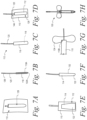
- Figure 7B shows the tube 120 inserted in the passage 148 of the shape retaining element 118.
- the distal end 120A of the tube 120 extends distally past the distal end 118A of the shape retaining element 118.
- the suction adapter 126 is coupled to the proximal end 120B of the tube 120.
- the shape retaining element 118 and the tube 120 are positioned in the bore 146 of the foam sleeve 116 as shown in Figure 7C .
- this can include positioning the shape retaining element 118 and the tube 120 between a first sheet of foam and a second sheet of foam and then coupling the first sheet of foam to the second sheet of foam on opposing sides of the shape retaining element 118 and the tube 120.
- a heat sealer machine can apply thermal energy and/or pressure to the first sheet of foam and the second sheet of form on the opposing sides of the shape retaining element 118 and the tube 120 to form a heat seal.
- the heat sealer can include, for example, a C-shaped tool to form the heat seal on the opposing sides of the shape retaining element 118 and the tube 120.
- a machine can cut the first sheet of foam and the second sheet of foam on the opposing sides of the shape retaining element to form the foam sleeve 116 with the shape retaining element 118 positioned in the bore 146 of the foam sleeve 116 and the tube 120 positioned in the passage 148 of the shape retaining element 118.
- the fluid collection assembly 112 can be positioned in the recessed receptacle 128 of the covering 110.
- the tube 120 can be positioned in the channel 144 of the covering 110 such that the tube 120 extends proximally from the covering 110.
- the top sheet 114 can be positioned on the covering 110 and the fluid collection assembly 112 such that the fluid collection assembly 112 is between the covering 110 and the top sheet 114 as shown in Figure 7E .
- the fluid-impermeable barrier 122 is coupled to the top sheet 114 prior to positioning the top sheet 114 on the covering 110 and the fluid collection assembly 112.
- the fluid-impermeable barrier 122 can be coupled to the top sheet 114 by an adhesive, welding the fluid-impermeable barrier 122 to the top sheet 114, and/or melting the fluid-impermeable barrier 122 into the top sheet 114.
- the fluid-impermeable barrier 122 overlaps a portion of the top sheet 114.
- the fluid-impermeable barrier 122 can extend from the top sheet 114 such that the fluid-impermeable barrier 122 dos not overlap with the top sheet 114 (e.g., the top sheet 114 may be omitted at the tapered portion 140 of the covering 110.
- the top sheet 114 can be coupled to the covering 110 as shown in Figure 7F .
- a heat sealing machine can apply thermal energy and/or pressure to the top sheet 114 and the covering 110 (e.g., at the upper peripheral edge 130 shown in Figure 1B ) to heat seal the top sheet 114 to the covering 110.
- the top sheet 114 and the covering 110 can then be cut to form the seam 132 around the periphery of the urine collection device 100 at an interface between the covering 110 and the top sheet 114.
- the process of coupling the top sheet 114 to the covering 110 simultaneously couples the fluid-impermeable barrier 122 to the covering 110.
- the upper peripheral edge 130 defines a flange portion extending outwardly in a plane away from the recessed receptacle 128. This can help to increase a surface area for coupling the covering 110 to the top sheet 114 (e.g., at the peripheral edge 142 of the top sheet 114). Additionally, the upper peripheral edge 130 of the covering 110 and the peripheral edge 142 of the top sheet 114 can help to inhibit leakage. For instance, when urine is applied to a central area of the top sheet 114 and the foam sleeve 116 at a rate that exceeds a rate of absorption for the top sheet 114 and the foam sleeve 116, the excess urine waiting to be absorbed may spread out toward the upper peripheral edge 130 and the peripheral edge 142.
- the upper peripheral edge 130 and the peripheral edge 142 can act as gutters that direct the excess urine down toward less saturated portions of the top sheet 114 and the foam sleeve 116 and toward the distal end 120A of the tube 120 where the urine can be suctioned. In this way, the upper peripheral edge can inhibit (or prevent) the urine from leaking off the sides.
- the upper peripheral edge 130 and the peripheral edge 142 can have a width of approximately 0.1875 inches to provide the gutter function for directing the urine down toward the distal end 120A of the tube 120. Additionally, as noted above, the top sheet 114 and the foam sleeve 116 can extend downward to the distal end 120A of the tube 120, which can help to direct the urine to the position at which it can be more effectively suctioned away from the urine collection device 100.
- the upper peripheral edge 130 and/or the peripheral edge 142 can form a slightly concave shape to help provide the gutter function (e.g., the concavity can face the user).
- the top sheet 114 can be kept under tension before sealing the upper peripheral edge 130 and the peripheral edge 142 such that the top sheet 114 pulls the upper peripheral edge 130 and the peripheral edge 142 inward once the profile of the urine collection device 100 is cut.
- the anchor 124 can be coupled to the covering 110 at the proximal end 110B of the covering 110.
- the anchor 124 can be coupled to the covering 110 by an adhesive.
- the anchor 124 can additionally be coupled to the tube 120 to help mitigate (or prevent) movement of the tube 120 in an axial direction relative to the covering 110.
- the tube 120 can be adhered to the covering 110 and/or the top sheet 114 such that the tube 120 is sandwiched between (i) the covering 110 and/or the top sheet 114, and (ii) the anchor 124.
- the process can result in the urine collection device 100 described above according to an example.
- the one or more vent apertures 147 can be formed during or after forming the covering 110, and after placing the top sheet 114 (e.g., by mechanically punching the vent apertures 147 in the covering 110 and/or by laser cutting the vent apertures 147 in the covering 110).
- the fluid-impermeable barrier 122 is coupled to the top sheet 114 prior to coupling the top sheet 114 to the covering 110. Additionally, in the example illustrated in Figure 1A and 7H , the fluid-impermeable barrier 122 is co-extensive with the top sheet 114 on lateral sides of the urine collection device 100 (i.e., the fluid-impermeable barrier 122 does not extend past the top sheet 114 to overlap with portions of the covering 110 that are not overlapped by the top sheet 114).
- the fluid-impermeable barrier 122 can be coupled to top sheet 114 and the covering 110 after the top sheet 114 is coupled to the covering 110, and/or the fluid-impermeable barrier 122 can extend past the top sheet 114 to wrap substantially around the covering 110.
- Figure 8 depicts the urine collection device 100, except with a fluid-impermeable barrier 822 instead of the fluid-impermeable barrier 122 shown in Figures 1A and 7H .
- the fluid-impermeable barrier 822 wraps around the distal end 100A of the urine collection device 100 such that the fluid-impermeable barrier 822 covers the seam 132 at the distal end 100A. Covering the seam 132 at the distal end 100A with the fluid-impermeable barrier 822 can help to improve patient comfort.
- the tube 120 can be coupled to the anchor 124 and/or the shape retaining element 118 to help (or prevent) the tube 120 from migrating from a desired position in the internal chamber 134 relative to the distal end 110A of the covering 110.
- the tube 120 can be additionally or alternatively coupled to another component of the urine collection device 100 to help maintain the position of the tube 120.
- Figure 9 depicts an example in which the urine collection device 100 further includes a retention collar 976 coupled to the tube 120 to help maintain the position of the tube 120.
- the retention collar 976 can be located adjacent to the distal end 120A (shown in Figure 1B ) of the tube 120 and have a size that is greater than a size of the passage 148 (shown in Figure 1B ) defined by the shape retaining element 118 (e.g., the retention collar 976 can be a flange that extends outwardly from the tube 120).
- the retention collar 976 can engage the shape retaining element 118 (i.e., as a stop) to inhibit or prevent proximal movement of the tube 120 relative to the shape retaining element 118.
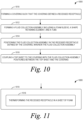
- the process 1000 includes forming a covering such that the covering defines a recessed receptacle.
- the process 1000 includes forming a fluid collection assembly including a foam sleeve, a shape retaining element, and a tube.
- the foam sleeve includes a bore extending from a first end of the foam sleeve to a second end of the foam sleeve.
- the shape retaining element is positioned in the bore of the foam sleeve.
- the shape retaining element is configured to conform the fluid collection assembly to a curved configuration for placement against a body of a user and maintain the curved configuration of the fluid collection assembly until the curved configuration is adjusted.
- the shape retaining element defines a passage extending from between a proximal end of the shape retaining element and a distal end of the shape retaining element.
- the tube extends through the passage defined by the shape retaining element.
- the process 1000 includes positioning the fluid collection assembly in the recessed receptacle defined by the covering, wherein the fluid collection assembly.
- the process 1000 includes coupling a top sheet to the covering with the fluid collection assembly positioned between the top sheet and the covering.
- the top sheet and the covering define an internal chamber of the urine collection device.
- the top sheet is configured to draw urine into the internal chamber and toward the fluid collection assembly
- FIGS 11-21 depict additional aspects of the process 1000 according to further examples.
- forming the covering at block 1010 can include thermoforming the recessed receptacle in a sheet of foam at block 1018.
- forming the fluid collection assembly at block 1012 can include (i) positioning the shape retaining element between a first sheet of foam and a second sheet of foam at block 1020, (ii) after positioning the shape retaining element between the first sheet of foam and the second sheet of foam at block 1020, coupling the first sheet of foam to the second sheet of foam on opposing sides of the shape retaining element at block 1022, and (iii) after coupling the first sheet of foam to the second sheet of foam at block 1022, cutting the first sheet of foam and the second sheet of foam on the opposing sides of the shape retaining element to form the foam sleeve with the shape retaining element positioned in the bore of the foam sleeve at block 1024.
- coupling the first sheet of foam to the second sheet of foam at block 1022 can include heat sealing the first sheet of foam to the second sheet of foam at block 1026.
- forming the fluid collection assembly at block 1012 can include forming a chamfer at a distal end of the foam sleeve at block 1028.
- forming the covering at block 1010 can include forming a tapered portion at a distal end of the covering at block 1030. Also, in Figure 15 , positioning the fluid collection assembly in the recessed receptacle defined by the covering at block 1014 can include positioning the chamfer in the tapered portion of the covering at block 1032.
- forming the fluid collection assembly at block 1012 can include inserting the tube in the shape retaining element such that the tube extends distally from the shape retaining element at block 1034.
- the process 1000 can further include coupling a fluid-impermeable barrier to a distal portion of the covering to form a fluid-impermeable chamber between the fluid-impermeable barrier and the distal portion of the covering at block 1036.
- the process 1000 can also include coupling an anchor to a proximal portion of the covering at block 1038.
- the anchor can include an adhesive configured to couple the urine collection device to a patient.
- the process 1000 can also include coupling the tube to the anchor to inhibit proximal movement of the tube relative to the shape retaining element at block 1040.
- the process 1000 can further include applying a layer of adhesive to the covering at block 1042 prior to coupling the top sheet to the covering at block 1016. Additionally, in Figure 20 , coupling the top sheet to the covering at block 1016 can include coupling the top sheet to the covering via the layer of adhesive at block 1044.
- coupling the top sheet to the covering at block 1016 can include coupling the top sheet to the covering via the layer of adhesive and heat sealing the top sheet and the covering at block 1046.
- the process 2200 includes providing a urine collection device.
- the urine collection device includes a covering defining a recessed receptacle, and a fluid collection assembly positioned in the recessed receptacle defined by the covering.
- the fluid collection assembly includes (i) a foam sleeve including a bore extending from a first end of the foam sleeve to a second end of the foam sleeve and (ii) a shape retaining element positioned in the bore of the foam sleeve.
- the shape retaining element is configured to conform the fluid collection assembly to a curved configuration for placement against a body of a user and maintain the curved configuration of the fluid collection assembly until the curved configuration is adjusted.
- the shape retaining element defines a passage extending from between a proximal end of the shape retaining element and a distal end of the shape retaining element.
- the fluid collection assembly also includes (iii) a tube extending through the passage defined by the shape retaining element.
- the urine collection further includes a top sheet coupled to the covering. The top sheet and the covering define an internal chamber of the urine collection device. The top sheet is configured to draw urine into the internal chamber and toward the fluid collection assembly.
- the process 2200 includes positioning the urine collection device against the body of the user with the top sheet in operative relation with a urethral opening of the user.
- the process 2200 includes receiving, through the top sheet and by the fluid collection assembly, urine discharged from the urethral opening.
- the process 2200 includes evacuating the urine from the fluid collection assembly through the tube.
- FIGS 23-25 depict additional aspects of the process 2200 according to further examples.
- positioning the urine collection device against the body of the user at block 2212 can include positioning the fluid collection assembly in a vertical orientation relative to a urethral opening of a female user at block 2218.
- the process 2200 can also include securing the urine collection device to the user with an adhesive on an anchor of the urine collection device at block 2220.
- the process 2200 can further include securing the urine collection device to the user by engaging a distal end of the urine collection device with a portion of the user's anatomy at block 2222.
Landscapes
- Health & Medical Sciences (AREA)
- Life Sciences & Earth Sciences (AREA)
- General Health & Medical Sciences (AREA)
- Orthopedic Medicine & Surgery (AREA)
- Engineering & Computer Science (AREA)
- Biomedical Technology (AREA)
- Heart & Thoracic Surgery (AREA)
- Vascular Medicine (AREA)
- Epidemiology (AREA)
- Nursing (AREA)
- Public Health (AREA)
- Animal Behavior & Ethology (AREA)
- Veterinary Medicine (AREA)
- Chemical & Material Sciences (AREA)
- Dispersion Chemistry (AREA)
- Orthopedics, Nursing, And Contraception (AREA)
- Investigating Or Analysing Biological Materials (AREA)
- Sampling And Sample Adjustment (AREA)
Priority Applications (1)
| Application Number | Priority Date | Filing Date | Title |
|---|---|---|---|
| EP25151651.4A EP4527361A3 (de) | 2019-09-06 | 2020-09-07 | Vorrichtungen und systeme zur urinsammlung |
Applications Claiming Priority (3)
| Application Number | Priority Date | Filing Date | Title |
|---|---|---|---|
| US201962897058P | 2019-09-06 | 2019-09-06 | |
| PCT/US2020/049628 WO2021046501A1 (en) | 2019-09-06 | 2020-09-07 | Devices and systems for urine collection |
| EP20775534.9A EP4025163B1 (de) | 2019-09-06 | 2020-09-07 | Verfahren zur herstellung einer urinsammelvorrichtung |
Related Parent Applications (1)
| Application Number | Title | Priority Date | Filing Date |
|---|---|---|---|
| EP20775534.9A Division EP4025163B1 (de) | 2019-09-06 | 2020-09-07 | Verfahren zur herstellung einer urinsammelvorrichtung |
Related Child Applications (1)
| Application Number | Title | Priority Date | Filing Date |
|---|---|---|---|
| EP25151651.4A Division EP4527361A3 (de) | 2019-09-06 | 2020-09-07 | Vorrichtungen und systeme zur urinsammlung |
Publications (3)
| Publication Number | Publication Date |
|---|---|
| EP4382082A2 true EP4382082A2 (de) | 2024-06-12 |
| EP4382082A3 EP4382082A3 (de) | 2024-06-19 |
| EP4382082B1 EP4382082B1 (de) | 2025-01-15 |
Family
ID=72562012
Family Applications (3)
| Application Number | Title | Priority Date | Filing Date |
|---|---|---|---|
| EP25151651.4A Pending EP4527361A3 (de) | 2019-09-06 | 2020-09-07 | Vorrichtungen und systeme zur urinsammlung |
| EP20775534.9A Active EP4025163B1 (de) | 2019-09-06 | 2020-09-07 | Verfahren zur herstellung einer urinsammelvorrichtung |
| EP24172054.9A Active EP4382082B1 (de) | 2019-09-06 | 2020-09-07 | Vorrichtungen und systeme zur urinsammlung |
Family Applications Before (2)
| Application Number | Title | Priority Date | Filing Date |
|---|---|---|---|
| EP25151651.4A Pending EP4527361A3 (de) | 2019-09-06 | 2020-09-07 | Vorrichtungen und systeme zur urinsammlung |
| EP20775534.9A Active EP4025163B1 (de) | 2019-09-06 | 2020-09-07 | Verfahren zur herstellung einer urinsammelvorrichtung |
Country Status (5)
| Country | Link |
|---|---|
| US (3) | US11890221B2 (de) |
| EP (3) | EP4527361A3 (de) |
| AU (3) | AU2020341827B2 (de) |
| CA (1) | CA3153479A1 (de) |
| WO (1) | WO2021046501A1 (de) |
Cited By (31)
| Publication number | Priority date | Publication date | Assignee | Title |
|---|---|---|---|---|
| US12171685B2 (en) | 2014-03-19 | 2024-12-24 | Purewick Corporation | Apparatus and methods for receiving discharged urine |
| US12186229B2 (en) | 2021-01-19 | 2025-01-07 | Purewick Corporation | Variable fit fluid collection devices, systems, and methods |
| US12208031B2 (en) | 2020-10-21 | 2025-01-28 | Purewick Corporation | Adapters for fluid collection devices |
| US12233003B2 (en) | 2021-04-29 | 2025-02-25 | Purewick Corporation | Fluid collection assemblies including at least one length adjusting feature |
| US12245966B2 (en) | 2021-02-26 | 2025-03-11 | Purewick Corporation | Fluid collection devices having a sump between a tube opening and a barrier, and related systems and methods |
| US12245967B2 (en) | 2020-11-18 | 2025-03-11 | Purewick Corporation | Fluid collection assemblies including an adjustable spine |
| US12251333B2 (en) | 2021-05-21 | 2025-03-18 | Purewick Corporation | Fluid collection assemblies including at least one inflation device and methods and systems of using the same |
| US12257174B2 (en) | 2020-10-21 | 2025-03-25 | Purewick Corporation | Fluid collection assemblies including at least one of a protrusion or at least one expandable material |
| US12257173B2 (en) | 2017-01-31 | 2025-03-25 | Purewick Corporation | Apparatus and methods for receiving discharged urine |
| US12268627B2 (en) | 2021-01-06 | 2025-04-08 | Purewick Corporation | Fluid collection assemblies including at least one securement body |
| US12274638B2 (en) | 2018-05-01 | 2025-04-15 | Purewick Corporation | Fluid collection devices, related systems, and related methods |
| US12285352B2 (en) | 2018-05-01 | 2025-04-29 | Purewick Corporation | Fluid collection devices, systems, and methods |
| US12290485B2 (en) | 2020-11-11 | 2025-05-06 | Purewick Corporation | Urine collection system including a flow meter and related methods |
| US12295876B2 (en) | 2018-05-01 | 2025-05-13 | Purewick Corporation | Fluid collection devices and methods of using the same |
| US12324767B2 (en) | 2021-05-24 | 2025-06-10 | Purewick Corporation | Fluid collection assembly including a customizable external support and related methods |
| US12329364B2 (en) | 2019-07-19 | 2025-06-17 | Purewick Corporation | Fluid collection devices including at least one shape memory material |
| US12350190B2 (en) | 2020-01-03 | 2025-07-08 | Purewick Corporation | Urine collection devices having a relatively wide portion and an elongated portion and related methods |
| US12350187B2 (en) | 2020-08-11 | 2025-07-08 | Purewick Corporation | Fluid collection assemblies defining waist and leg openings |
| US12419778B2 (en) | 2019-06-21 | 2025-09-23 | Purewick Corporation | Fluid collection devices including a base securement area, and related systems and methods |
| US12440370B2 (en) | 2020-10-21 | 2025-10-14 | Purewick Corporation | Apparatus with compressible casing for receiving discharged urine |
| US12440371B2 (en) | 2020-08-06 | 2025-10-14 | Purewick Corporation | Fluid collection system including a garment and a fluid collection device |
| US12447042B2 (en) | 2020-04-17 | 2025-10-21 | Purewick Corporation | Fluid collection assemblies including a fluid impermeable barrier having a sump and a base |
| US12458525B2 (en) | 2021-03-10 | 2025-11-04 | Purewick Corporation | Acoustic silencer for a urine suction system |
| US12465515B2 (en) | 2019-10-28 | 2025-11-11 | Purewick Corporation | Fluid collection assemblies including a sample port |
| US12465514B2 (en) | 2020-04-17 | 2025-11-11 | Purewick Corporation | Fluid collection devices, systems, and methods securing a protruding portion in position for use |
| US12472090B2 (en) | 2020-04-17 | 2025-11-18 | Purewick Corporation | Female external catheter devices having a urethral cup, and related systems and methods |
| US12478499B2 (en) | 2021-01-07 | 2025-11-25 | Purewick Corporation | Wheelchair securable urine collection systems and related methods |
| US12491104B2 (en) | 2020-04-20 | 2025-12-09 | Purewick Corporation | Fluid collection devices adjustable between a vacuum-based orientation and a gravity-based orientation, and related systems and methods |
| US12521288B2 (en) | 2020-03-26 | 2026-01-13 | Purewick Corporation | Multi-layer urine capture device and related methods |
| US12521272B2 (en) | 2020-09-09 | 2026-01-13 | Purewick Corporation | Fluid collection devices, systems, and methods |
| US12551385B2 (en) | 2022-03-02 | 2026-02-17 | Purewick Corporation | Fluid collection assembly including a tube having porous wicking material for improved fluid transport |
Families Citing this family (27)
| Publication number | Priority date | Publication date | Assignee | Title |
|---|---|---|---|---|
| US10952889B2 (en) | 2016-06-02 | 2021-03-23 | Purewick Corporation | Using wicking material to collect liquid for transport |
| US11090183B2 (en) | 2014-11-25 | 2021-08-17 | Purewick Corporation | Container for collecting liquid for transport |
| US11806266B2 (en) | 2014-03-19 | 2023-11-07 | Purewick Corporation | Apparatus and methods for receiving discharged urine |
| US10226376B2 (en) | 2014-03-19 | 2019-03-12 | Purewick Corporation | Apparatus and methods for receiving discharged urine |
| US10390989B2 (en) | 2014-03-19 | 2019-08-27 | Purewick Corporation | Apparatus and methods for receiving discharged urine |
| US10973678B2 (en) | 2016-07-27 | 2021-04-13 | Purewick Corporation | Apparatus and methods for receiving discharged urine |
| US10376406B2 (en) | 2016-07-27 | 2019-08-13 | Purewick Corporation | Male urine collection device using wicking material |
| KR102519976B1 (ko) | 2018-05-01 | 2023-04-10 | 퓨어윅 코포레이션 | 유체 수집 의복 |
| ES2966946T3 (es) | 2018-05-01 | 2024-04-25 | Purewick Corp | Dispositivos de recogida de fluido, sistemas relacionados y métodos relacionados |
| USD1010109S1 (en) | 2019-07-23 | 2024-01-02 | Sage Products, Llc | Urine collection device |
| EP4527361A3 (de) * | 2019-09-06 | 2025-05-14 | Sage Products, LLC | Vorrichtungen und systeme zur urinsammlung |
| US20230049924A1 (en) * | 2020-01-30 | 2023-02-16 | Purewick Corporation | Fluid coolection assemblies including a skirt |
| WO2021207621A1 (en) | 2020-04-10 | 2021-10-14 | Purewick Corporation | Fluid collection assemblies including one or more leak prevention features |
| US12048643B2 (en) | 2020-05-27 | 2024-07-30 | Purewick Corporation | Fluid collection assemblies including at least one inflation device and methods and systems of using the same |
| US11504265B2 (en) | 2020-06-18 | 2022-11-22 | Medline Industries, Lp | Urine collection device, system, and method |
| USD967409S1 (en) | 2020-07-15 | 2022-10-18 | Purewick Corporation | Urine collection apparatus cover |
| WO2022031798A1 (en) * | 2020-08-04 | 2022-02-10 | Cm Technologies, Inc. | Fecal management systems and methods |
| US11801186B2 (en) | 2020-09-10 | 2023-10-31 | Purewick Corporation | Urine storage container handle and lid accessories |
| US12156792B2 (en) | 2020-09-10 | 2024-12-03 | Purewick Corporation | Fluid collection assemblies including at least one inflation device |
| US12042423B2 (en) | 2020-10-07 | 2024-07-23 | Purewick Corporation | Fluid collection systems including at least one tensioning element |
| US12048644B2 (en) | 2020-11-03 | 2024-07-30 | Purewick Corporation | Apparatus for receiving discharged urine |
| US12178735B2 (en) | 2021-02-09 | 2024-12-31 | Purewick Corporation | Noise reduction for a urine suction system |
| US11938054B2 (en) | 2021-03-10 | 2024-03-26 | Purewick Corporation | Bodily waste and fluid collection with sacral pad |
| US12029677B2 (en) | 2021-04-06 | 2024-07-09 | Purewick Corporation | Fluid collection devices having a collection bag, and related systems and methods |
| US12150885B2 (en) | 2021-05-26 | 2024-11-26 | Purewick Corporation | Fluid collection system including a cleaning system and methods |
| USD1041003S1 (en) | 2022-02-10 | 2024-09-03 | Medline Industries, Lp | Catheter connector |
| WO2025175272A1 (en) | 2024-02-15 | 2025-08-21 | Sage Products Llc | Devices, systems, and methods for urine diversion |
Family Cites Families (67)
| Publication number | Priority date | Publication date | Assignee | Title |
|---|---|---|---|---|
| GB1059680A (en) | 1965-02-16 | 1967-02-22 | Francis Xavier Keane | Personal wear apparatus for use in incontinent and voluntary micturition |
| US3528423A (en) | 1967-06-20 | 1970-09-15 | John W Lee | Female incontinence device |
| US3722503A (en) * | 1968-02-07 | 1973-03-27 | Gambrell J | Apparatus for collection of urine in females |
| SE321051B (de) | 1968-12-31 | 1970-02-23 | Peanna Laangstroem & Co | |
| US3661155A (en) * | 1970-02-24 | 1972-05-09 | Rosemary Lindan | Female urinary incontinence device |
| US4681572A (en) * | 1982-09-13 | 1987-07-21 | Hollister Incorporated | Female urinary incontinence device |
| DD252543A1 (de) | 1986-09-09 | 1987-12-23 | Medizin Labortechnik Veb K | Auffangbeutel fuer urin und sekrete |
| US4820297A (en) | 1986-12-12 | 1989-04-11 | Baxter International Inc. | Fluid delivery system with integrally formed sample cell |
| US4747166A (en) * | 1987-05-15 | 1988-05-31 | Kuntz David H | Fluid aspiration system for the management of urinary incontinence |
| US4804377A (en) | 1987-08-05 | 1989-02-14 | Sage Products, Inc. | Urine collector |
| US4846818A (en) * | 1988-05-17 | 1989-07-11 | Conceptus, Inc. | Incontinence appliance |
| US4886508A (en) | 1988-07-11 | 1989-12-12 | Washington Douglas L | Ladies external catheter assembly |
| US5049144A (en) * | 1988-10-31 | 1991-09-17 | Payton Hugh W | Female urinary incontinence apparatus |
| US5678564A (en) * | 1992-08-07 | 1997-10-21 | Bristol Myers Squibb | Liquid removal system |
| US6551292B1 (en) | 1999-06-28 | 2003-04-22 | The Procter & Gamble Company | Shaped flange for a urine collector |
| US7186245B1 (en) | 1999-06-29 | 2007-03-06 | Cheng Gordon C | Personal urine management system for human males |
| US6592560B2 (en) | 2000-01-25 | 2003-07-15 | Matthew G. LaPointe | Urine retention and collection devices for incontinent women |
| JP2001276107A (ja) | 2000-03-30 | 2001-10-09 | Masatoshi Ishii | 男性用排尿レシーバー |
| US20040176731A1 (en) * | 2000-04-06 | 2004-09-09 | Cheng Gordon C. | Personal urine management system for humans |
| US6569133B2 (en) | 2000-04-06 | 2003-05-27 | Uroscientific, Inc. | Urine management system for human females |
| US6668388B2 (en) | 2001-09-10 | 2003-12-30 | Yamamoto Limited | Retractable and disposable urinal |
| SE0103340D0 (sv) * | 2001-10-06 | 2001-10-06 | Peter Unger Med P U Med Konsul | Metod och anordning för analys av biologiskt material |
| US7135012B2 (en) | 2002-02-26 | 2006-11-14 | Harvie Mark R | Automatic self cleaning bladder relief system |
| US7131964B2 (en) * | 2002-02-26 | 2006-11-07 | Harvie Mark R | Automatic self cleaning bladder relief system and failsafe |
| TWI265024B (en) | 2003-03-10 | 2006-11-01 | Hitachi Ltd | Automatic urine disposal device and urine receptacle used therefor |
| JP4267379B2 (ja) | 2003-06-11 | 2009-05-27 | ユニ・チャーム株式会社 | 自動排尿処理装置およびそれに用いる尿レシーバ |
| TWI248809B (en) | 2003-08-06 | 2006-02-11 | Hitachi Ltd | Automatic urine disposal device and urine receptacle used therefor |
| EP2423127B2 (de) * | 2003-08-08 | 2024-02-14 | Hollister Incorporated | Dampfhydration eines hydrophilen Katheters in einer Verpackung |
| JP4283631B2 (ja) | 2003-09-30 | 2009-06-24 | 株式会社日立製作所 | 自動排尿処理装置およびそれに用いる尿レシーバ |
| JP3813969B2 (ja) * | 2004-07-15 | 2006-08-23 | ユニ・チャーム株式会社 | 尿レシーバおよびこれを用いた収尿処理システム |
| US20110077495A1 (en) | 2005-02-08 | 2011-03-31 | Gilbert Paul J | Detection indicator |
| US7699818B2 (en) | 2005-02-08 | 2010-04-20 | Paul J. Gilbert | Insertion system and methods for nasogastric tubes |
| US7740620B2 (en) | 2005-02-08 | 2010-06-22 | Paul J. Gilbert | Insertion system and methods for nasogastric tubes including feeding tubes |
| US7695459B2 (en) | 2005-02-08 | 2010-04-13 | Paul J. Gilbert | Nasogastric tube insertion system and method |
| JP4979999B2 (ja) | 2005-07-13 | 2012-07-18 | ユニ・チャーム株式会社 | 尿センサ |
| JP4980000B2 (ja) * | 2005-07-14 | 2012-07-18 | ユニ・チャーム株式会社 | 尿レシーバ |
| US20070093840A1 (en) | 2005-10-06 | 2007-04-26 | Pacelli Nicolas J | Flexible shaft |
| GB0520864D0 (en) * | 2005-10-13 | 2005-11-23 | Univ Brunel | Urine collection device |
| US7727206B2 (en) | 2005-12-27 | 2010-06-01 | Gorres Geoffrey H | Device for monitoring a patient for a urinary tract infection |
| US20100286791A1 (en) * | 2006-11-21 | 2010-11-11 | Goldsmith David S | Integrated system for the ballistic and nonballistic infixion and retrieval of implants |
| EP2107889B1 (de) | 2007-01-29 | 2012-08-01 | Hollister Incorporated | Vorrichtung und verfahren zur entnahme einer urinprobe |
| BRPI0818512A2 (pt) | 2007-10-18 | 2016-05-24 | Convatec Technologies Inc | sistema de aspiração para remover líquido exceto urina e descarregado pelo corpo humano |
| EP2380532B1 (de) | 2008-09-19 | 2014-12-03 | Unicharm Corporation | Urinfänger und Kleidungsstück damit |
| SG176789A1 (en) * | 2009-06-18 | 2012-01-30 | Dept Of Biotechnology India | Device for collecting fecal discharge in incontinent patients |
| AU2010263216B2 (en) | 2009-06-26 | 2013-10-24 | Hollister Incorporated | Urinary incontinence device and method |
| US20110028922A1 (en) | 2009-07-31 | 2011-02-03 | Kay Dennis M | Female External Incontinence Device |
| US8287508B1 (en) | 2010-07-21 | 2012-10-16 | Sanchez Robert A | Using moisture-wicking article wrapped over openings in an elongated urine collecting container for drawing urine from a region surrounding an urethral opening |
| JP5743566B2 (ja) | 2011-01-21 | 2015-07-01 | ユニ・チャーム株式会社 | 尿レシーバ |
| JP5911232B2 (ja) | 2011-07-29 | 2016-04-27 | ユニ・チャーム株式会社 | 尿吸引装置 |
| WO2013025993A1 (en) | 2011-08-18 | 2013-02-21 | Gilbert Paul J | Fluid characteristic measurement |
| US20190336319A1 (en) * | 2013-01-16 | 2019-11-07 | Martha Fallis | Portable female urinal |
| EP3077037B1 (de) | 2013-12-04 | 2021-11-17 | ReShape Lifesciences Inc. | System zur lokalisierung intragastrischer vorrichtungen |
| US20160367226A1 (en) | 2014-03-19 | 2016-12-22 | Camille Rose Newton | Urine collection apparatus and related methods |
| US10390989B2 (en) | 2014-03-19 | 2019-08-27 | Purewick Corporation | Apparatus and methods for receiving discharged urine |
| US11376152B2 (en) * | 2014-03-19 | 2022-07-05 | Purewick Corporation | Apparatus and methods for receiving discharged urine |
| US10226376B2 (en) * | 2014-03-19 | 2019-03-12 | Purewick Corporation | Apparatus and methods for receiving discharged urine |
| US11806266B2 (en) * | 2014-03-19 | 2023-11-07 | Purewick Corporation | Apparatus and methods for receiving discharged urine |
| US9869204B2 (en) | 2015-03-06 | 2018-01-16 | United Technologies Corporation | Integrated inner case heat shield |
| US10376407B2 (en) | 2016-08-16 | 2019-08-13 | Purewick Corporation | Using wicking material to collect urine from a male for transport |
| US10376406B2 (en) * | 2016-07-27 | 2019-08-13 | Purewick Corporation | Male urine collection device using wicking material |
| US10973678B2 (en) | 2016-07-27 | 2021-04-13 | Purewick Corporation | Apparatus and methods for receiving discharged urine |
| US12257173B2 (en) | 2017-01-31 | 2025-03-25 | Purewick Corporation | Apparatus and methods for receiving discharged urine |
| AU2018221471B2 (en) * | 2017-02-14 | 2021-01-21 | Sage Products, Llc | Devices and methods for urine collection |
| USD882768S1 (en) * | 2017-09-08 | 2020-04-28 | Sage Products, Llc | Urine collection device |
| EP4640192A3 (de) * | 2018-05-01 | 2025-12-31 | Purewick Corporation | Flüssigkeitssammelvorrichtungen, -systeme und -verfahren |
| EP4527361A3 (de) * | 2019-09-06 | 2025-05-14 | Sage Products, LLC | Vorrichtungen und systeme zur urinsammlung |
| CN115335012A (zh) * | 2021-01-19 | 2022-11-11 | 普利维克公司 | 可变配合式流体收集设备、系统和方法 |
-
2020
- 2020-09-07 EP EP25151651.4A patent/EP4527361A3/de active Pending
- 2020-09-07 EP EP20775534.9A patent/EP4025163B1/de active Active
- 2020-09-07 EP EP24172054.9A patent/EP4382082B1/de active Active
- 2020-09-07 WO PCT/US2020/049628 patent/WO2021046501A1/en not_active Ceased
- 2020-09-07 CA CA3153479A patent/CA3153479A1/en active Pending
- 2020-09-07 AU AU2020341827A patent/AU2020341827B2/en active Active
- 2020-09-07 US US17/013,822 patent/US11890221B2/en active Active
-
2023
- 2023-11-02 US US18/386,350 patent/US12133813B2/en active Active
-
2024
- 2024-03-06 AU AU2024201460A patent/AU2024201460B2/en active Active
- 2024-09-19 US US18/890,434 patent/US20250009552A1/en active Pending
-
2026
- 2026-01-16 AU AU2026200299A patent/AU2026200299A1/en active Pending
Cited By (35)
| Publication number | Priority date | Publication date | Assignee | Title |
|---|---|---|---|---|
| US12171685B2 (en) | 2014-03-19 | 2024-12-24 | Purewick Corporation | Apparatus and methods for receiving discharged urine |
| US12324765B2 (en) | 2014-03-19 | 2025-06-10 | Purewick Corporation | Apparatus and methods for receiving discharged urine |
| US12239567B2 (en) | 2014-03-19 | 2025-03-04 | Purewick Corporation | Apparatus and methods for receiving discharged urine |
| US12257173B2 (en) | 2017-01-31 | 2025-03-25 | Purewick Corporation | Apparatus and methods for receiving discharged urine |
| US12539227B2 (en) | 2017-01-31 | 2026-02-03 | Purewick Corporation | Apparatus and methods for receiving discharged urine |
| US12285352B2 (en) | 2018-05-01 | 2025-04-29 | Purewick Corporation | Fluid collection devices, systems, and methods |
| US12274638B2 (en) | 2018-05-01 | 2025-04-15 | Purewick Corporation | Fluid collection devices, related systems, and related methods |
| US12295876B2 (en) | 2018-05-01 | 2025-05-13 | Purewick Corporation | Fluid collection devices and methods of using the same |
| US12419778B2 (en) | 2019-06-21 | 2025-09-23 | Purewick Corporation | Fluid collection devices including a base securement area, and related systems and methods |
| US12329364B2 (en) | 2019-07-19 | 2025-06-17 | Purewick Corporation | Fluid collection devices including at least one shape memory material |
| US12465515B2 (en) | 2019-10-28 | 2025-11-11 | Purewick Corporation | Fluid collection assemblies including a sample port |
| US12350190B2 (en) | 2020-01-03 | 2025-07-08 | Purewick Corporation | Urine collection devices having a relatively wide portion and an elongated portion and related methods |
| US12521288B2 (en) | 2020-03-26 | 2026-01-13 | Purewick Corporation | Multi-layer urine capture device and related methods |
| US12472090B2 (en) | 2020-04-17 | 2025-11-18 | Purewick Corporation | Female external catheter devices having a urethral cup, and related systems and methods |
| US12465514B2 (en) | 2020-04-17 | 2025-11-11 | Purewick Corporation | Fluid collection devices, systems, and methods securing a protruding portion in position for use |
| US12447042B2 (en) | 2020-04-17 | 2025-10-21 | Purewick Corporation | Fluid collection assemblies including a fluid impermeable barrier having a sump and a base |
| US12491104B2 (en) | 2020-04-20 | 2025-12-09 | Purewick Corporation | Fluid collection devices adjustable between a vacuum-based orientation and a gravity-based orientation, and related systems and methods |
| US12440371B2 (en) | 2020-08-06 | 2025-10-14 | Purewick Corporation | Fluid collection system including a garment and a fluid collection device |
| US12350187B2 (en) | 2020-08-11 | 2025-07-08 | Purewick Corporation | Fluid collection assemblies defining waist and leg openings |
| US12521272B2 (en) | 2020-09-09 | 2026-01-13 | Purewick Corporation | Fluid collection devices, systems, and methods |
| US12440370B2 (en) | 2020-10-21 | 2025-10-14 | Purewick Corporation | Apparatus with compressible casing for receiving discharged urine |
| US12257174B2 (en) | 2020-10-21 | 2025-03-25 | Purewick Corporation | Fluid collection assemblies including at least one of a protrusion or at least one expandable material |
| US12208031B2 (en) | 2020-10-21 | 2025-01-28 | Purewick Corporation | Adapters for fluid collection devices |
| US12290485B2 (en) | 2020-11-11 | 2025-05-06 | Purewick Corporation | Urine collection system including a flow meter and related methods |
| US12245967B2 (en) | 2020-11-18 | 2025-03-11 | Purewick Corporation | Fluid collection assemblies including an adjustable spine |
| US12268627B2 (en) | 2021-01-06 | 2025-04-08 | Purewick Corporation | Fluid collection assemblies including at least one securement body |
| US12478499B2 (en) | 2021-01-07 | 2025-11-25 | Purewick Corporation | Wheelchair securable urine collection systems and related methods |
| US12186229B2 (en) | 2021-01-19 | 2025-01-07 | Purewick Corporation | Variable fit fluid collection devices, systems, and methods |
| US12245966B2 (en) | 2021-02-26 | 2025-03-11 | Purewick Corporation | Fluid collection devices having a sump between a tube opening and a barrier, and related systems and methods |
| US12458525B2 (en) | 2021-03-10 | 2025-11-04 | Purewick Corporation | Acoustic silencer for a urine suction system |
| US12233003B2 (en) | 2021-04-29 | 2025-02-25 | Purewick Corporation | Fluid collection assemblies including at least one length adjusting feature |
| US12251333B2 (en) | 2021-05-21 | 2025-03-18 | Purewick Corporation | Fluid collection assemblies including at least one inflation device and methods and systems of using the same |
| US12324767B2 (en) | 2021-05-24 | 2025-06-10 | Purewick Corporation | Fluid collection assembly including a customizable external support and related methods |
| US12551385B2 (en) | 2022-03-02 | 2026-02-17 | Purewick Corporation | Fluid collection assembly including a tube having porous wicking material for improved fluid transport |
| US12551366B2 (en) | 2022-08-01 | 2026-02-17 | Purewick Corporation | Fluid collection devices having multiple fluid collection regions, and related systems and methods |
Also Published As
| Publication number | Publication date |
|---|---|
| EP4025163B1 (de) | 2024-05-01 |
| AU2020341827B2 (en) | 2023-12-07 |
| US20210069008A1 (en) | 2021-03-11 |
| US12133813B2 (en) | 2024-11-05 |
| EP4025163A1 (de) | 2022-07-13 |
| AU2020341827A1 (en) | 2022-03-24 |
| US20250009552A1 (en) | 2025-01-09 |
| EP4382082A3 (de) | 2024-06-19 |
| EP4527361A3 (de) | 2025-05-14 |
| US11890221B2 (en) | 2024-02-06 |
| AU2024201460B2 (en) | 2025-10-16 |
| EP4382082B1 (de) | 2025-01-15 |
| CA3153479A1 (en) | 2021-03-11 |
| WO2021046501A1 (en) | 2021-03-11 |
| EP4527361A2 (de) | 2025-03-26 |
| AU2024201460A1 (en) | 2024-03-21 |
| US20240058161A1 (en) | 2024-02-22 |
| AU2026200299A1 (en) | 2026-02-05 |
Similar Documents
| Publication | Publication Date | Title |
|---|---|---|
| US12133813B2 (en) | Devices and systems for urine collection | |
| EP4240296B1 (de) | Männliche flüssigkeitssammelanordnungen und systeme | |
| EP4240297B1 (de) | Externer katheter für männer mit vliesstoff | |
| US11207206B2 (en) | Fluid removal device | |
| EP4395719B1 (de) | Externer männlicher katheter mit vliesstoff und abstandsstoff | |
| AU2021299304B2 (en) | Male fluid collection assemblies and systems, methods of using, and methods of manufacturing the same | |
| WO2025038088A1 (en) | Male fluid collection assemblies and systems, methods of using, and methods of manufacturing the same | |
| WO2025038087A1 (en) | Male fluid collection assemblies and systems, methods of using, and methods of manufacturing the same | |
| WO2024258400A1 (en) | At least one porous material attached to a fluid impermeable barrier | |
| CA3184066A1 (en) | Male fluid collection assemblies and systems, methods of using, and methods of manufacturing the same |
Legal Events
| Date | Code | Title | Description |
|---|---|---|---|
| PUAI | Public reference made under article 153(3) epc to a published international application that has entered the european phase |
Free format text: ORIGINAL CODE: 0009012 |
|
| STAA | Information on the status of an ep patent application or granted ep patent |
Free format text: STATUS: THE APPLICATION HAS BEEN PUBLISHED |
|
| PUAL | Search report despatched |
Free format text: ORIGINAL CODE: 0009013 |
|
| AC | Divisional application: reference to earlier application |
Ref document number: 4025163 Country of ref document: EP Kind code of ref document: P |
|
| AK | Designated contracting states |
Kind code of ref document: A2 Designated state(s): AL AT BE BG CH CY CZ DE DK EE ES FI FR GB GR HR HU IE IS IT LI LT LU LV MC MK MT NL NO PL PT RO RS SE SI SK SM TR |
|
| AK | Designated contracting states |
Kind code of ref document: A3 Designated state(s): AL AT BE BG CH CY CZ DE DK EE ES FI FR GB GR HR HU IE IS IT LI LT LU LV MC MK MT NL NO PL PT RO RS SE SI SK SM TR |
|
| RIC1 | Information provided on ipc code assigned before grant |
Ipc: A61F 5/455 20060101ALI20240511BHEP Ipc: A61F 5/451 20060101AFI20240511BHEP |
|
| STAA | Information on the status of an ep patent application or granted ep patent |
Free format text: STATUS: REQUEST FOR EXAMINATION WAS MADE |
|
| 17P | Request for examination filed |
Effective date: 20240624 |
|
| RBV | Designated contracting states (corrected) |
Designated state(s): AL AT BE BG CH CY CZ DE DK EE ES FI FR GB GR HR HU IE IS IT LI LT LU LV MC MK MT NL NO PL PT RO RS SE SI SK SM TR |
|
| GRAP | Despatch of communication of intention to grant a patent |
Free format text: ORIGINAL CODE: EPIDOSNIGR1 |
|
| STAA | Information on the status of an ep patent application or granted ep patent |
Free format text: STATUS: GRANT OF PATENT IS INTENDED |
|
| RIC1 | Information provided on ipc code assigned before grant |
Ipc: A61F 5/455 20060101ALI20240813BHEP Ipc: A61F 5/451 20060101AFI20240813BHEP |
|
| INTG | Intention to grant announced |
Effective date: 20240906 |
|
| GRAS | Grant fee paid |
Free format text: ORIGINAL CODE: EPIDOSNIGR3 |
|
| GRAA | (expected) grant |
Free format text: ORIGINAL CODE: 0009210 |
|
| STAA | Information on the status of an ep patent application or granted ep patent |
Free format text: STATUS: THE PATENT HAS BEEN GRANTED |
|
| P01 | Opt-out of the competence of the unified patent court (upc) registered |
Free format text: CASE NUMBER: APP_62871/2024 Effective date: 20241126 |
|
| AC | Divisional application: reference to earlier application |
Ref document number: 4025163 Country of ref document: EP Kind code of ref document: P |
|
| AK | Designated contracting states |
Kind code of ref document: B1 Designated state(s): AL AT BE BG CH CY CZ DE DK EE ES FI FR GB GR HR HU IE IS IT LI LT LU LV MC MK MT NL NO PL PT RO RS SE SI SK SM TR |
|
| REG | Reference to a national code |
Ref country code: CH Ref legal event code: EP Ref country code: GB Ref legal event code: FG4D |
|
| REG | Reference to a national code |
Ref country code: DE Ref legal event code: R096 Ref document number: 602020045030 Country of ref document: DE |
|
| REG | Reference to a national code |
Ref country code: IE Ref legal event code: FG4D |
|
| REG | Reference to a national code |
Ref country code: NL Ref legal event code: FP |
|
| PG25 | Lapsed in a contracting state [announced via postgrant information from national office to epo] |
Ref country code: RS Free format text: LAPSE BECAUSE OF FAILURE TO SUBMIT A TRANSLATION OF THE DESCRIPTION OR TO PAY THE FEE WITHIN THE PRESCRIBED TIME-LIMIT Effective date: 20250415 |
|
| PG25 | Lapsed in a contracting state [announced via postgrant information from national office to epo] |
Ref country code: FI Free format text: LAPSE BECAUSE OF FAILURE TO SUBMIT A TRANSLATION OF THE DESCRIPTION OR TO PAY THE FEE WITHIN THE PRESCRIBED TIME-LIMIT Effective date: 20250115 |
|
| PG25 | Lapsed in a contracting state [announced via postgrant information from national office to epo] |
Ref country code: PL Free format text: LAPSE BECAUSE OF FAILURE TO SUBMIT A TRANSLATION OF THE DESCRIPTION OR TO PAY THE FEE WITHIN THE PRESCRIBED TIME-LIMIT Effective date: 20250115 |
|
| PG25 | Lapsed in a contracting state [announced via postgrant information from national office to epo] |
Ref country code: ES Free format text: LAPSE BECAUSE OF FAILURE TO SUBMIT A TRANSLATION OF THE DESCRIPTION OR TO PAY THE FEE WITHIN THE PRESCRIBED TIME-LIMIT Effective date: 20250115 |
|
| REG | Reference to a national code |
Ref country code: LT Ref legal event code: MG9D |
|
| PG25 | Lapsed in a contracting state [announced via postgrant information from national office to epo] |
Ref country code: IS Free format text: LAPSE BECAUSE OF FAILURE TO SUBMIT A TRANSLATION OF THE DESCRIPTION OR TO PAY THE FEE WITHIN THE PRESCRIBED TIME-LIMIT Effective date: 20250515 Ref country code: NO Free format text: LAPSE BECAUSE OF FAILURE TO SUBMIT A TRANSLATION OF THE DESCRIPTION OR TO PAY THE FEE WITHIN THE PRESCRIBED TIME-LIMIT Effective date: 20250415 |
|
| REG | Reference to a national code |
Ref country code: AT Ref legal event code: MK05 Ref document number: 1759374 Country of ref document: AT Kind code of ref document: T Effective date: 20250115 |
|
| PG25 | Lapsed in a contracting state [announced via postgrant information from national office to epo] |
Ref country code: HR Free format text: LAPSE BECAUSE OF FAILURE TO SUBMIT A TRANSLATION OF THE DESCRIPTION OR TO PAY THE FEE WITHIN THE PRESCRIBED TIME-LIMIT Effective date: 20250115 |
|
| PG25 | Lapsed in a contracting state [announced via postgrant information from national office to epo] |
Ref country code: LV Free format text: LAPSE BECAUSE OF FAILURE TO SUBMIT A TRANSLATION OF THE DESCRIPTION OR TO PAY THE FEE WITHIN THE PRESCRIBED TIME-LIMIT Effective date: 20250115 Ref country code: PT Free format text: LAPSE BECAUSE OF FAILURE TO SUBMIT A TRANSLATION OF THE DESCRIPTION OR TO PAY THE FEE WITHIN THE PRESCRIBED TIME-LIMIT Effective date: 20250515 |
|
| PG25 | Lapsed in a contracting state [announced via postgrant information from national office to epo] |
Ref country code: GR Free format text: LAPSE BECAUSE OF FAILURE TO SUBMIT A TRANSLATION OF THE DESCRIPTION OR TO PAY THE FEE WITHIN THE PRESCRIBED TIME-LIMIT Effective date: 20250416 Ref country code: BG Free format text: LAPSE BECAUSE OF FAILURE TO SUBMIT A TRANSLATION OF THE DESCRIPTION OR TO PAY THE FEE WITHIN THE PRESCRIBED TIME-LIMIT Effective date: 20250115 |
|
| PG25 | Lapsed in a contracting state [announced via postgrant information from national office to epo] |
Ref country code: AT Free format text: LAPSE BECAUSE OF FAILURE TO SUBMIT A TRANSLATION OF THE DESCRIPTION OR TO PAY THE FEE WITHIN THE PRESCRIBED TIME-LIMIT Effective date: 20250115 |
|
| PGFP | Annual fee paid to national office [announced via postgrant information from national office to epo] |
Ref country code: NL Payment date: 20250704 Year of fee payment: 6 |
|
| PG25 | Lapsed in a contracting state [announced via postgrant information from national office to epo] |
Ref country code: SE Free format text: LAPSE BECAUSE OF FAILURE TO SUBMIT A TRANSLATION OF THE DESCRIPTION OR TO PAY THE FEE WITHIN THE PRESCRIBED TIME-LIMIT Effective date: 20250115 |
|
| PG25 | Lapsed in a contracting state [announced via postgrant information from national office to epo] |
Ref country code: SM Free format text: LAPSE BECAUSE OF FAILURE TO SUBMIT A TRANSLATION OF THE DESCRIPTION OR TO PAY THE FEE WITHIN THE PRESCRIBED TIME-LIMIT Effective date: 20250115 |
|
| PG25 | Lapsed in a contracting state [announced via postgrant information from national office to epo] |
Ref country code: DK Free format text: LAPSE BECAUSE OF FAILURE TO SUBMIT A TRANSLATION OF THE DESCRIPTION OR TO PAY THE FEE WITHIN THE PRESCRIBED TIME-LIMIT Effective date: 20250115 |
|
| PGFP | Annual fee paid to national office [announced via postgrant information from national office to epo] |
Ref country code: DE Payment date: 20250702 Year of fee payment: 6 |
|
| PG25 | Lapsed in a contracting state [announced via postgrant information from national office to epo] |
Ref country code: IT Free format text: LAPSE BECAUSE OF FAILURE TO SUBMIT A TRANSLATION OF THE DESCRIPTION OR TO PAY THE FEE WITHIN THE PRESCRIBED TIME-LIMIT Effective date: 20250115 |
|
| PGFP | Annual fee paid to national office [announced via postgrant information from national office to epo] |
Ref country code: GB Payment date: 20250703 Year of fee payment: 6 |
|
| REG | Reference to a national code |
Ref country code: DE Ref legal event code: R097 Ref document number: 602020045030 Country of ref document: DE |
|
| PGFP | Annual fee paid to national office [announced via postgrant information from national office to epo] |
Ref country code: FR Payment date: 20250703 Year of fee payment: 6 |
|
| PG25 | Lapsed in a contracting state [announced via postgrant information from national office to epo] |
Ref country code: EE Free format text: LAPSE BECAUSE OF FAILURE TO SUBMIT A TRANSLATION OF THE DESCRIPTION OR TO PAY THE FEE WITHIN THE PRESCRIBED TIME-LIMIT Effective date: 20250115 Ref country code: CZ Free format text: LAPSE BECAUSE OF FAILURE TO SUBMIT A TRANSLATION OF THE DESCRIPTION OR TO PAY THE FEE WITHIN THE PRESCRIBED TIME-LIMIT Effective date: 20250115 |
|
| PG25 | Lapsed in a contracting state [announced via postgrant information from national office to epo] |
Ref country code: RO Free format text: LAPSE BECAUSE OF FAILURE TO SUBMIT A TRANSLATION OF THE DESCRIPTION OR TO PAY THE FEE WITHIN THE PRESCRIBED TIME-LIMIT Effective date: 20250115 |
|
| PG25 | Lapsed in a contracting state [announced via postgrant information from national office to epo] |
Ref country code: SK Free format text: LAPSE BECAUSE OF FAILURE TO SUBMIT A TRANSLATION OF THE DESCRIPTION OR TO PAY THE FEE WITHIN THE PRESCRIBED TIME-LIMIT Effective date: 20250115 |
|
| PLBE | No opposition filed within time limit |
Free format text: ORIGINAL CODE: 0009261 |
|
| STAA | Information on the status of an ep patent application or granted ep patent |
Free format text: STATUS: NO OPPOSITION FILED WITHIN TIME LIMIT |
|
| 26N | No opposition filed |
Effective date: 20251016 |