EP4380271A1 - Hybrides automatisches wiederholungsanfragerückkopplungsverfahren und vorrichtung - Google Patents
Hybrides automatisches wiederholungsanfragerückkopplungsverfahren und vorrichtung Download PDFInfo
- Publication number
- EP4380271A1 EP4380271A1 EP21951386.8A EP21951386A EP4380271A1 EP 4380271 A1 EP4380271 A1 EP 4380271A1 EP 21951386 A EP21951386 A EP 21951386A EP 4380271 A1 EP4380271 A1 EP 4380271A1
- Authority
- EP
- European Patent Office
- Prior art keywords
- slot
- harq
- offset value
- delay feedback
- ack
- Prior art date
- Legal status (The legal status is an assumption and is not a legal conclusion. Google has not performed a legal analysis and makes no representation as to the accuracy of the status listed.)
- Pending
Links
- 238000000034 method Methods 0.000 title claims abstract description 176
- 230000005540 biological transmission Effects 0.000 claims abstract description 96
- 238000004590 computer program Methods 0.000 claims description 35
- 238000012545 processing Methods 0.000 claims description 12
- 230000015654 memory Effects 0.000 claims description 11
- 238000013468 resource allocation Methods 0.000 claims description 9
- 238000004891 communication Methods 0.000 abstract description 51
- 230000003111 delayed effect Effects 0.000 abstract description 21
- 238000005516 engineering process Methods 0.000 abstract description 6
- 238000010295 mobile communication Methods 0.000 abstract description 5
- 230000006870 function Effects 0.000 description 38
- 230000011664 signaling Effects 0.000 description 30
- 238000010586 diagram Methods 0.000 description 8
- 230000008569 process Effects 0.000 description 6
- 238000013461 design Methods 0.000 description 4
- 239000004065 semiconductor Substances 0.000 description 4
- 230000004913 activation Effects 0.000 description 3
- 229910044991 metal oxide Inorganic materials 0.000 description 3
- 150000004706 metal oxides Chemical class 0.000 description 3
- 229910000577 Silicon-germanium Inorganic materials 0.000 description 2
- 230000001413 cellular effect Effects 0.000 description 2
- 230000001934 delay Effects 0.000 description 2
- JBRZTFJDHDCESZ-UHFFFAOYSA-N AsGa Chemical compound [As]#[Ga] JBRZTFJDHDCESZ-UHFFFAOYSA-N 0.000 description 1
- LEVVHYCKPQWKOP-UHFFFAOYSA-N [Si].[Ge] Chemical compound [Si].[Ge] LEVVHYCKPQWKOP-UHFFFAOYSA-N 0.000 description 1
- 238000013473 artificial intelligence Methods 0.000 description 1
- 230000003190 augmentative effect Effects 0.000 description 1
- 230000000295 complement effect Effects 0.000 description 1
- 238000013500 data storage Methods 0.000 description 1
- 239000000835 fiber Substances 0.000 description 1
- 230000010354 integration Effects 0.000 description 1
- 230000007774 longterm Effects 0.000 description 1
- 230000007246 mechanism Effects 0.000 description 1
- 238000012986 modification Methods 0.000 description 1
- 230000004048 modification Effects 0.000 description 1
- 230000003287 optical effect Effects 0.000 description 1
- 230000004044 response Effects 0.000 description 1
- 239000007787 solid Substances 0.000 description 1
- 238000001356 surgical procedure Methods 0.000 description 1
Images





Classifications
-
- H—ELECTRICITY
- H04—ELECTRIC COMMUNICATION TECHNIQUE
- H04L—TRANSMISSION OF DIGITAL INFORMATION, e.g. TELEGRAPHIC COMMUNICATION
- H04L1/00—Arrangements for detecting or preventing errors in the information received
- H04L1/12—Arrangements for detecting or preventing errors in the information received by using return channel
- H04L1/16—Arrangements for detecting or preventing errors in the information received by using return channel in which the return channel carries supervisory signals, e.g. repetition request signals
- H04L1/18—Automatic repetition systems, e.g. Van Duuren systems
- H04L1/1829—Arrangements specially adapted for the receiver end
- H04L1/1854—Scheduling and prioritising arrangements
-
- H—ELECTRICITY
- H04—ELECTRIC COMMUNICATION TECHNIQUE
- H04L—TRANSMISSION OF DIGITAL INFORMATION, e.g. TELEGRAPHIC COMMUNICATION
- H04L1/00—Arrangements for detecting or preventing errors in the information received
- H04L1/12—Arrangements for detecting or preventing errors in the information received by using return channel
- H04L1/16—Arrangements for detecting or preventing errors in the information received by using return channel in which the return channel carries supervisory signals, e.g. repetition request signals
- H04L1/18—Automatic repetition systems, e.g. Van Duuren systems
- H04L1/1867—Arrangements specially adapted for the transmitter end
- H04L1/1893—Physical mapping arrangements
-
- H—ELECTRICITY
- H04—ELECTRIC COMMUNICATION TECHNIQUE
- H04L—TRANSMISSION OF DIGITAL INFORMATION, e.g. TELEGRAPHIC COMMUNICATION
- H04L1/00—Arrangements for detecting or preventing errors in the information received
- H04L1/12—Arrangements for detecting or preventing errors in the information received by using return channel
- H04L1/16—Arrangements for detecting or preventing errors in the information received by using return channel in which the return channel carries supervisory signals, e.g. repetition request signals
- H04L1/18—Automatic repetition systems, e.g. Van Duuren systems
- H04L1/1825—Adaptation of specific ARQ protocol parameters according to transmission conditions
-
- H—ELECTRICITY
- H04—ELECTRIC COMMUNICATION TECHNIQUE
- H04L—TRANSMISSION OF DIGITAL INFORMATION, e.g. TELEGRAPHIC COMMUNICATION
- H04L1/00—Arrangements for detecting or preventing errors in the information received
- H04L1/12—Arrangements for detecting or preventing errors in the information received by using return channel
- H04L1/16—Arrangements for detecting or preventing errors in the information received by using return channel in which the return channel carries supervisory signals, e.g. repetition request signals
- H04L1/18—Automatic repetition systems, e.g. Van Duuren systems
- H04L1/1829—Arrangements specially adapted for the receiver end
- H04L1/1861—Physical mapping arrangements
-
- H—ELECTRICITY
- H04—ELECTRIC COMMUNICATION TECHNIQUE
- H04L—TRANSMISSION OF DIGITAL INFORMATION, e.g. TELEGRAPHIC COMMUNICATION
- H04L1/00—Arrangements for detecting or preventing errors in the information received
- H04L1/12—Arrangements for detecting or preventing errors in the information received by using return channel
- H04L1/16—Arrangements for detecting or preventing errors in the information received by using return channel in which the return channel carries supervisory signals, e.g. repetition request signals
- H04L1/18—Automatic repetition systems, e.g. Van Duuren systems
- H04L1/1867—Arrangements specially adapted for the transmitter end
- H04L1/1896—ARQ related signaling
-
- H—ELECTRICITY
- H04—ELECTRIC COMMUNICATION TECHNIQUE
- H04W—WIRELESS COMMUNICATION NETWORKS
- H04W72/00—Local resource management
- H04W72/04—Wireless resource allocation
-
- H—ELECTRICITY
- H04—ELECTRIC COMMUNICATION TECHNIQUE
- H04W—WIRELESS COMMUNICATION NETWORKS
- H04W72/00—Local resource management
- H04W72/04—Wireless resource allocation
- H04W72/044—Wireless resource allocation based on the type of the allocated resource
- H04W72/0446—Resources in time domain, e.g. slots or frames
-
- H—ELECTRICITY
- H04—ELECTRIC COMMUNICATION TECHNIQUE
- H04W—WIRELESS COMMUNICATION NETWORKS
- H04W72/00—Local resource management
- H04W72/20—Control channels or signalling for resource management
- H04W72/21—Control channels or signalling for resource management in the uplink direction of a wireless link, i.e. towards the network
-
- H—ELECTRICITY
- H04—ELECTRIC COMMUNICATION TECHNIQUE
- H04L—TRANSMISSION OF DIGITAL INFORMATION, e.g. TELEGRAPHIC COMMUNICATION
- H04L5/00—Arrangements affording multiple use of the transmission path
- H04L5/003—Arrangements for allocating sub-channels of the transmission path
- H04L5/0053—Allocation of signalling, i.e. of overhead other than pilot signals
- H04L5/0055—Physical resource allocation for ACK/NACK
Definitions
- the present disclosure relates to the field of communication technologies, in particularly, to a method and an apparatus for hybrid automatic repeat request feedback.
- a terminal device can transmit hybrid automatic repeat request (HARQ-ACK) information of a semi-persistent scheduling (SPS) physical downlink shared channel (PDSCH) to a base station through a physical uplink control channel (PUCCH).
- HARQ-ACK hybrid automatic repeat request
- SPS semi-persistent scheduling
- PDSCH physical downlink shared channel
- PUCCH physical uplink control channel
- a HARQ-ACK feedback delay transmission mechanism is introduced.
- backward search for subsequent available PUCCH resources for HARQ-ACK transmission in SPS PDSCH may be delayed.
- this method of transmitting the HARQ-ACK cannot meet requirements for transmission latency and transmission effectiveness of ultra reliable and low latency communication (URLLC).
- Embodiments of the present disclosure provide a method and an apparatus for hybrid automatic repeat request feedback, capable of applying to a scenario of communication between a terminal device and a network device in cellular mobile communication technology, causing the terminal device to send HARQ-ACK based on a valid PUCCH resource on a slot no later than a last delay feedback slot, ensuring transmission latency and transmission effectiveness of ultra reliable and low latency communication (URLLC).
- URLLC ultra reliable and low latency communication
- a method for hybrid automatic repeat request feedback is provided.
- the method is performed by a terminal device.
- the method includes: determining an initial slot where a hybrid automatic repeat request acknowledgement (HARQ-ACK) transmission is located; determining a last delay feedback slot for the HARQ-ACK in a case of determining that a first physical uplink control channel (PUCCH) resource on the initial slot is invalid; and sending the HARQ-ACK by determining a valid second PUCCH resource, in which a slot where the second PUCCH resource is located is a slot after the initial slot and no later than the last delay feedback slot.
- HARQ-ACK hybrid automatic repeat request acknowledgement
- PUCCH physical uplink control channel
- the initial slot where the HARQ-ACK transmission is located is determined.
- the last delay feedback slot for the HARQ-ACK is determined in a case of determining that the PUCCH resource on the initial slot is invalid.
- the HARQ-ACK is sent through the valid PUCCH resource on any slot between the initial slot and the last delay feedback slot or on the last delay feedback slot. Therefore, the method may ensure the transmission latency and the transmission effectiveness of the ultra reliable and low latency communication (URLLC) while supporting delayed feedback of the HARQ-ACK.
- URLLC ultra reliable and low latency communication
- determining the last delay feedback slot for the HARQ-ACK includes at least one of: determining the last delay feedback slot for the HARQ-ACK based on a protocol agreement; determining more than one candidate last delay feedback slot for the HARQ-ACK based on a protocol agreement, and determine the last delay feedback slot from the more than one candidate last delay feedback slot; extending a time-domain resource allocation (TDRA) table based on a protocol agreement, and determining the last delay feedback slot from the TDRA table; or acquiring a last delay feedback slot corresponding to the first PUCCH resource based on a protocol agreement.
- TDRA time-domain resource allocation
- determining the last delay feedback slot for the HARQ-ACK includes: determining a maximum delay feedback slot offset value for the HARQ-ACK; determining the last delay feedback slot for the HARQ-ACK based on the initial slot and the maximum delay feedback slot offset value.
- determining the maximum delay feedback slot offset value for the HARQ-ACK includes at least one of: determining the maximum delay feedback slot offset value for the HARQ-ACK based on a protocol agreement; determining more than one candidate maximum delay feedback slot offset value for the HARQ-ACK based on a protocol agreement, and determining the maximum delay feedback slot offset value from the more than one candidate maximum delay feedback slot offset value; expanding a time-domain resource allocation (TDRA) table based on a protocol agreement, and acquiring a corresponding slot offset value from the TDRA table, and determining the slot offset value as the maximum delay feedback slot offset value; or acquiring a slot offset value corresponding to the first PUCCH resource based on a protocol agreement, and determining the slot offset value as the maximum delay feedback slot offset value.
- TDRA time-domain resource allocation
- determining the maximum delay feedback slot offset value based on the maximum K1 value includes: determining the maximum K1 value as the maximum delay feedback slot offset value; or performing an operation on the maximum K1 value according to a preset operation rule, and determining a value obtained from the operation as the maximum delay feedback slot offset value.
- determining the maximum delay feedback slot offset value for the HARQ-ACK includes: determining a maximum number of delayable times for the initial slot; and determining the maximum delay feedback slot offset value based on the maximum number of delayable times.
- determining the maximum delay feedback slot offset value for the HARQ-ACK includes: determining the maximum delay feedback slot offset value for the HARQ-ACK based on a transmission cycle of a semi-persistent scheduling (SPS) physical downlink shared channel (PDSCH); or determining the maximum delay feedback slot offset value for the HARQ-ACK based on a grouping binding size or a time window length of the SPS PDSCH.
- SPS semi-persistent scheduling
- PDSCH physical downlink shared channel
- determining the maximum delay feedback slot offset value for the HARQ-ACK includes: receiving a first configuration instruction sent by a network device, wherein the first configuration instruction is configured to indicate the maximum delay feedback slot offset value; or receiving a second configuration instruction sent by a network device, and receiving an indication instruction sent by the network device, determining, based on the indication instruction, one slot offset value among more than one candidate maximum delay feedback slot offset value indicated by the second configuration instruction, and determining the determined slot offset value as the maximum delay feedback slot offset value.
- the first configuration instruction includes a first indication field for indicating the maximum delay feedback slot offset value; or, the second configuration instruction comprises a second indication field for indicating the more than one candidate maximum delay feedback slot offset value, and the indication instruction comprises a third indication field for indicating one slot offset value among the more than one candidate maximum delay feedback slot offset value being as the maximum delay feedback slot offset value.
- a method for hybrid automatic repeat request feedback is provided.
- the method is performed by a network device.
- the method includes: receiving a hybrid automatic repeat request acknowledgement (HARQ-ACK) sent by a terminal device on a valid physical uplink control channel (PUCCH) resource, in which a slot where the PUCCH resource is located is a slot after an initial slot where the HARQ-ACK is located and no later than a last delay feedback slot.
- HARQ-ACK hybrid automatic repeat request acknowledgement
- PUCCH physical uplink control channel
- the method supports the delayed transmission of the HARQ-ACK, ensuring the transmission latency and the transmission effectiveness of the ultra reliable and low latency communication (URLLC).
- URLLC ultra reliable and low latency communication
- the last delay feedback slot is determined based on the initial slot and the maximum delay feedback slot offset value for the HARQ-ACK.
- the method further includes: sending a first configuration instruction to the terminal device, in which, the first configuration instruction is configured to indicate the maximum delay feedback slot offset value; or sending a second configuration instruction to the terminal device, and sending an indication instruction to the terminal device, in which the second configuration instruction comprises more than one candidate maximum delay feedback slot offset value, the indication instruction is configured to indicate one slot offset value among the more than one candidate maximum delay feedback slot offset value.
- the first configuration instruction includes a first indication field for indicating the maximum delay feedback slot offset value; or, the second configuration instruction includes a second indication field for indicating the more than one candidate maximum delay feedback slot offset value, and the indication instruction includes a third indication field for indicating one slot offset value among the more than one candidate maximum delay feedback slot offset value being as the maximum delay feedback slot offset value.
- an apparatus for hybrid automatic repeat request (HARQ) feedback has part or all of functions of the terminal device for implementing the method as described in the first aspect.
- functions of the apparatus may have functions of implementing part or all of embodiments of the present disclosure, or may have functions of implementing any one of embodiments of the present disclosure independently.
- the functions may be implemented through hardware or by executing corresponding software through hardware.
- the hardware or software includes one or more units or modules corresponding to the above functions.
- an apparatus for hybrid automatic repeat request (HARQ) feedback has part or all of functions of the network device for implementing the method as described in the second aspect.
- functions of the apparatus may have functions of implementing part or all of embodiments of the present disclosure, or may have functions of implementing any one of embodiments of the present disclosure independently.
- the functions may be implemented through hardware or by executing corresponding software through hardware.
- the hardware or software includes one or more units or modules corresponding to the above functions.
- an apparatus for hybrid automatic repeat request (HARQ) feedback includes a processor.
- the processor is configured to execute the method as described in the first aspect when invoking a computer program in memory.
- an apparatus for hybrid automatic repeat request (HARQ) feedback includes a processor.
- the processor is configured to execute the method as described in the second aspect when invoking a computer program in memory.
- an apparatus for hybrid automatic repeat request (HARQ) feedback includes a processor and a memory having a computer program stored thereon. When the computer program is executed by the processor, the method as described in the first aspect is implemented.
- HARQ hybrid automatic repeat request
- an apparatus for hybrid automatic repeat request (HARQ) feedback includes a processor and a memory having a computer program stored thereon. When the computer program is executed by the processor, the method as described in the second aspect is implemented.
- HARQ hybrid automatic repeat request
- an apparatus for hybrid automatic repeat request (HARQ) feedback includes a processor and an interface circuit.
- the interface circuit is configured to receive code instructions and transmit the code instructions to the processor.
- the processor is configured to run the code instructions to enable the apparatus to execute the method as described in the first aspect.
- an apparatus for hybrid automatic repeat request (HARQ) feedback includes a processor and an interface circuit.
- the interface circuit is configured to receive code instructions and transmit the code instructions to the processor.
- the processor is configured to run the code instructions to enable the apparatus to execute the method as described in the second aspect.
- a communication system includes the apparatus for hybrid automatic repeat request (HARQ) feedback as described in the third aspect and the apparatus for hybrid automatic repeat request (HARQ) feedback as described in the fourth aspect, or the system includes the apparatus for hybrid automatic repeat request (HARQ) feedback as described in the fifth aspect and the apparatus for hybrid automatic repeat request (HARQ) feedback as described in the sixth aspect, or the system includes the apparatus for hybrid automatic repeat request (HARQ) feedback as described in the seventh aspect and the apparatus for hybrid automatic repeat request (HARQ) feedback as described in the eighth aspect, or, the system includes the apparatus for hybrid automatic repeat request (HARQ) feedback as described in the ninth aspect and the apparatus for hybrid automatic repeat request (HARQ) feedback as described in the tenth aspect.
- HARQ hybrid automatic repeat request
- HARQ hybrid automatic repeat request
- a computer-readable storage medium configured to store instructions performed by the terminal device as described above.
- the terminal device is caused to implement the method as described in the first aspect when the instructions are executed.
- a computer-readable storage medium configured to store instructions performed by the network device as described above.
- the terminal device is caused to implement the method as described in the second aspect when the instructions are executed.
- a computer program product including a computer program is provided.
- the computer program is run on a computer, the computer is caused to implement the method as described in the first aspect.
- a computer program product including a computer program is provided.
- the computer program is run on a computer, the computer is caused to implement the method as described in the second aspect.
- a chip system in a sixteenth aspect of an embodiment of the present disclosure, includes at least one processor and an interface, and is configured to support a network device to implement functions related to the first aspect, such as determining or processing at least one of data and information related to the above method.
- the chip system further includes a memory, configured to store a computer program and data necessary for the network device.
- the chip system may be composed of chips or include a chip and other discrete devices.
- an embodiment of the present disclosure provides a chip system.
- the chip system includes at least one processor and an interface, and is configured to support a terminal device to implement functions related to the second aspect, such as determining or processing at least one of data and information related to the above method.
- the chip system further includes a memory, configured to store a computer program and data necessary for the terminal device.
- the chip system may be composed of chips or include a chip and other discrete devices.
- a computer program is provided.
- the computer program is run on a computer, the computer is caused to implement the method as described in the first aspect.
- a computer program is provided.
- the computer program is run on a computer, the computer is caused to implement the method as described in the second aspect.
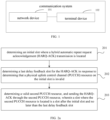
- FIG. 1 is a schematic diagram illustrating an architecture of a communication system provided in an embodiment of the present disclosure.
- the communication system may include, but is not limited to, one network device and one terminal device. Numbers and forms of the devices as illustrated in FIG. 1 are for example only and do not constitute a limitation to embodiments of the present disclosure. In practical applications, the system may include two or more network devices or two or more terminal devices.
- the communication system as illustrated in FIG. 1 takes including one network device 101 and one terminal device 102 as an example.
- LTE long-term evolution
- 5G 5th generation
- NR 5G new radio
- the network device 101 in embodiments of the present disclosure is a physical device for transmitting or receiving signals at a network side.
- the network device 101 may be an evolved NodeB (eNB), a transmission reception point (TRP), a next generation NodeB (gNB) in an NR system, base stations in other future mobile communication systems, or access nodes in wireless fidelity (WiFi) systems.
- eNB evolved NodeB
- TRP transmission reception point
- gNB next generation NodeB
- gNB next generation NodeB
- WiFi wireless fidelity
- a specific technology and a specific device form adopted by the network device are not limited in embodiments of the present disclosure.
- the network device 11 provided in embodiments of the present disclosure may be composed of a central unit (CU) and a distributed unit (DU).
- the CU may also be referred to as a control unit.
- a CU-DU structure may be adopted to separate protocol layers of the network device, such as a base station. Functions of some protocol layers may be controlled centrally by
- the terminal device 102 in embodiments of the present disclosure is physical device for receiving or transmitting signals at a user side, such as a mobile phone.
- the terminal device may also be referred to as a terminal, a user equipment (UE), a mobile station (MS), a mobile terminal (MT), etc.
- the terminal device may be a vehicle with a communication feature, a smart vehicle, a mobile phone, a wearable device, a pad, a computer with a wireless transceiver feature, a virtual reality (VR) terminal, an augmented reality (AR) terminal, a wireless terminal in industrial control, and a wireless terminal in self-driving, a wireless terminal in remote medical surgery, a wireless terminal in smart grid, a wireless terminal in transportation safety, a wireless terminal in smart city, and a wireless terminal in smart home, etc.
- a specific technology and a specific device form adopted by the terminal device are not limited in embodiments of the present disclosure.
- an initial slot where HARQ-ACK transmission is located is determined.
- a last delay feedback slot for the HARQ-ACK is determined in a case of determining that a PUCCH resource on the initial slot is invalid.
- the HARQ-ACK is sent through a valid PUCCH resource on any slot between the initial slot and the last delay feedback slot or on the last delay feedback slot. Therefore, the method may ensure the transmission latency and the transmission effectiveness of the ultra reliable and low latency communication (URLLC) while supporting delayed feedback of the HARQ-ACK.
- URLLC ultra reliable and low latency communication
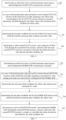
- FIG. 2a is a flowchart illustrating a method for hybrid automatic repeat request feedback according to an embodiment of the present disclosure. The method may be performed by a terminal device in the communication system as illustrated in FIG. 1 .
- the method may include, but is not limited to, following steps.
- an initial slot where a HARQ-ACK transmission is located is determined.
- the initial slot where the HARQ-ACK transmission is located may be determined based on an activation instruction sent by a network device. Taking the HARQ-ACK as an example for a HARQ-ACK for a SPS PDSCH, the initial slot where the HARQ-ACK transmission for the SPS PDSCH is located may be determined based on an activation instruction of the SPS PDSCH sent by the network device.
- the activation instruction may be a downlink control information (DCI) signaling.
- DCI downlink control information
- a last delay feedback slot for the HARQ-ACK is determined in response to determining that a first PUCCH resource on the initial slot is invalid.
- a symbol set corresponding to a first PUCCH resource on the initial slot may be acquired. In a case of determining that the symbol set includes an invalid symbol, it may be determined that the first PUCCH resource on the initial slot is invalid.
- the last delay feedback slot for HARQ-ACK transmission may be determined by means of following methods.
- a maximum delay feedback slot offset value for the HARQ-ACK is determined in a case of determining that the first PUCCH resource on the initial slot is invalid.
- the last delay feedback slot for the HARQ-ACK is determined based on the initial slot and the maximum delay feedback slot offset value.
- the last delay feedback slot that can be applicable for the HARQ-ACK transmission in an embodiment of the present disclosure may be determined based on a communication protocol (such as a TDRA table, more than one candidate position that can be applicable for the HARQ-ACK transmission, or a maximum K1 value among more than one initial slots K1), may be also determined based on other parameters (such as a maximum number of delayable times for the initial slot, a transmission cycle of a semi-persistent scheduling (SPS) physical downlink shared channel (PDSCH), a grouping binding size or a time window length of the SPS PDSCH), may be also determined based on configuration at a network side.
- SPS semi-persistent scheduling
- the maximum delay feedback slot offset value is based on continuous slots.
- the initial slot and the maximum delay feedback slot offset value may be added together, and the added value may be used as the last delay feedback slot for the HARQ-ACK.
- the last delay feedback slot offset is based on available slots, and the initial slot and the maximum delay feedback slot offset value cannot be directly added as the last delay feedback slot for HARQ-ACK.
- a valid second PUCCH resource is determined, and the above HARQ-ACK is sent through the second PUCCH resource.
- a slot where the second PUCCH resource is located is a slot after the initial slot and no later than the last delay feedback slot.
- the valid second PUCCH resource can be searched and determined sequentially from the initial slot onwards.
- the valid second PUCCH resource can be determined in any method, which will not be limited in embodiments of the present disclosure.
- the initial slot where the HARQ-ACK transmission is located is determined.
- the last delay feedback slot for the HARQ-ACK is determined in a case of determining that the PUCCH resource on the initial slot is invalid.
- the HARQ-ACK is sent through the valid PUCCH resource on any slot between the initial slot and the last delay feedback slot or on the last delay feedback slot. Therefore, the method may ensure the transmission latency and the transmission effectiveness of the ultra reliable and low latency communication (URLLC) while supporting delayed feedback of the HARQ-ACK.
- URLLC ultra reliable and low latency communication
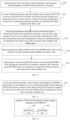
- FIG. 3 is a flowchart illustrating another method for hybrid automatic repeat request feedback according to an embodiment of the present disclosure.
- the method may be performed by a terminal device in the communication system as illustrated in FIG. 1 .
- the method may be performed independently, or may be performed together with any one embodiment of the present disclosure or a possible implementation in an embodiment, or may be performed together with any one technical solution in the related arts.
- the method may include, but is not limited to, following steps.
- an initial slot where a HARQ-ACK transmission is located is determined.
- the step 301 may be implemented by using any one method in respective embodiments of the present disclosure.
- Embodiments of the present disclosure make no limitation on this and will not repeat it.
- a maximum delay feedback slot offset value for the HARQ-ACK is determined based on a protocol agreement in a case of determining that a first PUCCH resource on the initial slot is invalid.
- the maximum delay feedback slot offset value for the HARQ-ACK may be pre-agreed between the network device and the terminal device, causing the terminal device to determine the maximum delay feedback slot offset value for the HARQ-ACK based on the protocol agreement in a case that it is required to obtain the maximum delay feedback slot offset value for the HARQ-ACK.
- the protocol may agree that the maximum delay feedback slot offset value is a fixed value, such as 8. It should be noted that the above is only an illustrative explanation, and the maximum delay feedback slot offset value may also be agreed upon as other values. Embodiments of the present disclosure make no limitation on this value.
- the last delay feedback slot for the above HARQ-ACK is determined based on the initial slot and the maximum delay feedback slot offset value.
- the maximum delay feedback slot offset value is based on continuous slots.
- the initial slot and the maximum delay feedback slot offset value may be added together, and the added value may be used as the last delay feedback slot for the HARQ-ACK.
- the last delay feedback slot offset is based on available slots, and the initial slot and the maximum delay feedback slot offset value cannot be directly added as the last delay feedback slot for HARQ-ACK.
- a valid second PUCCH resource is determined, and the above HARQ-ACK is sent through the second PUCCH resource.
- a slot where the second PUCCH resource is located is a slot after the initial slot and no later than the last delay feedback slot.
- the slot where the second PUCCH resource may be a slot between the initial slot and the last delay feedback slot.
- the slot where the second PUCCH resource may be the last delay feedback slot.
- the method may ensure the transmission latency and the transmission effectiveness of the ultra reliable and low latency communication (URLLC) while supporting delayed feedback of the HARQ-ACK.
- URLLC ultra reliable and low latency communication
- FIG. 4 is a flowchart illustrating another method for hybrid automatic repeat request feedback according to an embodiment of the present disclosure.
- the method may be performed by a terminal device in the communication system as illustrated in FIG. 1 .
- the method may be performed independently, or may be performed together with any one embodiment of the present disclosure or a possible implementation in an embodiment, or may be performed together with any one technical solution in the related arts.
- the method may include, but is not limited to, following steps.
- an initial slot where a HARQ-ACK transmission is located is determined.
- the step 401 may be implemented by using any one method in respective embodiments of the present disclosure.
- Embodiments of the present disclosure make no limitation on this and will not repeat it.
- step 402 in a case of determining that a first PUCCH resource on the initial slot is invalid, more than one candidate maximum delay feedback slot offset value for the HARQ-ACK is determined based on a protocol agreement, and the maximum delay feedback slot offset value is determined from the more than one candidate maximum delay feedback slot offset value.
- the more than one candidate maximum delay feedback slot offset value for the HARQ-ACK may be pre-agreed between the network device and the terminal device through a protocol, causing the terminal device to determine the more than one candidate maximum delay feedback slot offset value for the HARQ-ACK based on the protocol agreement.
- a possible implementation of determining the maximum delay feedback slot offset value from the more than one candidate maximum delay feedback slot offset value may include: receiving an indication instruction sent by the network device, in which the indication instruction is configured to select and indicate one slot offset value among the more than one candidate maximum delay feedback slot offset value; and determining the maximum delay feedback slot offset value from the more than one candidate maximum delay feedback slot offset value based on the indication instruction.
- the slot offset value indicated by the indication instruction may be determined as the maximum delay feedback slot offset value.
- the more than one candidate maximum delay feedback slot offset value may be ⁇ 0, 8, 16, 24, ... ⁇ . Assumed that the slot offset value indicated by the indication instruction may be 8, it may be determined that the maximum delay feedback slot offset value may be 8.
- the last delay feedback slot for the HARQ-ACK is determined based on the initial slot and the maximum delay feedback slot offset value.
- the maximum delay feedback slot offset value is based on continuous slots.
- the initial slot and the maximum delay feedback slot offset value may be added together, and the added value may be used as the last delay feedback slot for the HARQ-ACK.
- the last delay feedback slot offset is based on available slots, and the initial slot and the maximum delay feedback slot offset value cannot be directly added as the last delay feedback slot for HARQ-ACK.
- a valid second PUCCH resource is determined, and the above HARQ-ACK is sent through the second PUCCH resource.
- a slot where the second PUCCH resource is located is a slot after the initial slot and no later than the last delay feedback slot.
- the slot where the second PUCCH resource may be a slot between the initial slot and the last delay feedback slot.
- the slot where the second PUCCH resource may be the last delay feedback slot.
- the maximum delay feedback slot offset value for the HARQ-ACK is determined based on the protocol agreement
- the more than one candidate maximum delay feedback slot offset value for the HARQ-ACK is determined based on a protocol agreement
- the maximum delay feedback slot offset value is determined from the more than one candidate maximum delay feedback slot offset value.
- the last delay feedback slot for the HARQ-ACK is determined based on the initial slot and the maximum delay feedback slot offset value, and the HARQ-ACK is transmitted through the valid PUCCH resource on the last delay feedback slot or on the slot between the initial slot and the last delay feedback slot. Therefore, the method may ensure the transmission latency and the transmission effectiveness of the ultra reliable and low latency communication (URLLC) while supporting delayed feedback of the HARQ-ACK.
- URLLC ultra reliable and low latency communication
- FIG. 5 is a flowchart illustrating another method for hybrid automatic repeat request feedback according to an embodiment of the present disclosure.
- the method may be performed by a terminal device in the communication system as illustrated in FIG. 1 .
- the method may be performed independently, or may be performed together with any one embodiment of the present disclosure or a possible implementation in an embodiment, or may be performed together with any one technical solution in the related arts.
- the method may include, but is not limited to, following steps.
- an initial slot where a HARQ-ACK transmission is located is determined.
- the step 501 may be implemented by using any one method in respective embodiments of the present disclosure.
- Embodiments of the present disclosure make no limitation on this and will not repeat it.
- TDRA time-domain resource allocation
- a protocol in a case of determining that the first PUCCH resource on the initial slot is invalid, a protocol may be pre-agreed between the network device and the terminal device, the time-domain resource allocation (TDRA) table is agreed in the protocol agreement.
- Each row of the TDRA table is bound with some slot offset values, causing the terminal device to determine a row index of the TDRA table based on the protocol agreement, and obtain a slot offset value bound to the row index in the TDRA table, and determine the obtained slot offset value as the maximum delay feedback slot offset value for the HARQ-ACK.
- each row in the TDRA table has one or more slot offset values, and row indexes of the TDRA table can be indicated by the protocol. Therefore, the slot offset value bound to the row index in the TDRA table can be obtained as the maximum delay feedback slot offset value.
- the last delay feedback slot for the HARQ-ACK is determined based on the initial slot and the maximum delay feedback slot offset value.
- the maximum delay feedback slot offset value is based on continuous slots.
- the initial slot and the maximum delay feedback slot offset value may be added together, and the added value may be used as the last delay feedback slot for the HARQ-ACK.
- the last delay feedback slot offset is based on available slots, and the initial slot and the maximum delay feedback slot offset value cannot be directly added as the last delay feedback slot for HARQ-ACK.
- a valid second PUCCH resource is determined, and the above HARQ-ACK is sent through the second PUCCH resource.
- a slot where the second PUCCH resource is located is a slot after the initial slot and no later than the last delay feedback slot.
- the slot where the second PUCCH resource may be a slot between the initial slot and the last delay feedback slot.
- the slot where the second PUCCH resource may be the last delay feedback slot.
- the time-domain resource allocation (TDRA) table is expanded based on the protocol agreement, and the corresponding slot offset value is acquired from the TDRA table, and the slot offset value is determined as the maximum delay feedback slot offset value.
- the last delay feedback slot for the HARQ-ACK is determined based on the maximum delay feedback slot offset value and the initial slot for the HARQ-ACK, and the HARQ-ACK is transmitted through the valid PUCCH resource on the last delay feedback slot or on the slot between the initial slot and the last delay feedback slot. Therefore, the method may ensure the transmission latency and the transmission effectiveness of the ultra reliable and low latency communication (URLLC) while supporting delayed feedback of the HARQ-ACK.
- URLLC ultra reliable and low latency communication
- FIG. 6 is a flowchart illustrating another method for hybrid automatic repeat request feedback according to an embodiment of the present disclosure.
- the method may be performed by a terminal device in the communication system as illustrated in FIG. 1 .
- the method may be performed independently, or may be performed together with any one embodiment of the present disclosure or a possible implementation in an embodiment, or may be performed together with any one technical solution in the related arts.
- the method may include, but is not limited to, following steps.
- an initial slot where a HARQ-ACK transmission is located is determined.
- the step 601 may be implemented by using any one method in respective embodiments of the present disclosure.
- Embodiments of the present disclosure make no limitation on this and will not repeat it.
- a slot offset value corresponding to the first PUCCH resource is acquired based on a protocol agreement, and the slot offset value is determined as the maximum delay feedback slot offset value.
- a protocol in a case of determining that the first PUCCH resource on the initial slot is invalid, a protocol may be pre-agreed between the network device and the terminal device, the slot offset value bound to the PUCCH resource is agreed in the protocol agreement, causing the terminal device to acquire the slot offset value bound to the first PUCCH resource based on the protocol agreement, and determine the acquired slot offset value as the maximum delay feedback slot offset value.
- the last delay feedback slot for the HARQ-ACK is determined based on the initial slot and the maximum delay feedback slot offset value.
- the maximum delay feedback slot offset value is based on continuous slots.
- the initial slot and the maximum delay feedback slot offset value may be added together, and the added value may be used as the last delay feedback slot for the HARQ-ACK.
- a valid second PUCCH resource is determined, and the above HARQ-ACK is sent through the second PUCCH resource.
- a slot where the second PUCCH resource is located is a slot after the initial slot and no later than the last delay feedback slot.
- the slot where the second PUCCH resource may be the last delay feedback slot.
- the slot offset value corresponding to the first PUCCH resource is acquired based on the protocol agreement, and the slot offset value is determined as the maximum delay feedback slot offset value.
- the last delay feedback slot for the HARQ-ACK is determined based on the maximum delay feedback slot offset value and the initial slot for the HARQ-ACK, and the HARQ-ACK is transmitted through the valid PUCCH resource on the last delay feedback slot or on the slot between the initial slot and the last delay feedback slot. Therefore, the method may ensure the transmission latency and the transmission effectiveness of the ultra reliable and low latency communication (URLLC) while supporting delayed feedback of the HARQ-ACK.
- URLLC ultra reliable and low latency communication
- FIG. 7 is a flowchart illustrating another method for hybrid automatic repeat request feedback according to an embodiment of the present disclosure.
- the method may be performed by a terminal device in the communication system as illustrated in FIG. 1 .
- the method may be performed independently, or may be performed together with any one embodiment of the present disclosure or a possible implementation in an embodiment, or may be performed together with any one technical solution in the related arts.
- the method may include, but is not limited to, following steps.
- an initial slot where a HARQ-ACK transmission is located is determined.
- the step 701 may be implemented by using any one method in respective embodiments of the present disclosure.
- Embodiments of the present disclosure make no limitation on this and will not repeat it.
- the maximum delay feedback slot offset value is determined based on the maximum K1 value.
- an operation may be performed on the maximum K1 value according to a preset operation rule, and a value obtained from the operation is determined as the maximum delay feedback slot offset value.
- the preset operation rule mentioned above may be: adding the maximum K1 value to a specified slot interval value.
- the specified slot interval value is 2, assumed that the maximum K1 value is 16, a slot value 18 obtained by adding the maximum K1 value to the specified slot interval value can be used as the maximum delay feedback slot offset value for the HARQ-ACK.
- the preset operation rule mentioned above may be multiplying the maximum K1 value by a specified multiple.
- the specified multiple is 2 and assumed that the maximum K1 value is 16, the maximum K1 value is multiplied by the specified multiple, and a value 32 obtained by multiplying is determined as the maximum delay feedback slot offset value for the HARQ-ACK.
- the last delay feedback slot for the HARQ-ACK is determined based on the initial slot and the maximum delay feedback slot offset value.
- the maximum delay feedback slot offset value is based on continuous slots.
- the initial slot and the maximum delay feedback slot offset value may be added together, and the added value may be used as the last delay feedback slot for the HARQ-ACK.
- the last delay feedback slot offset is based on available slots, and the initial slot and the maximum delay feedback slot offset value cannot be directly added as the last delay feedback slot for HARQ-ACK.
- a valid second PUCCH resource is determined, and the above HARQ-ACK is sent through the second PUCCH resource.
- a slot where the second PUCCH resource is located is a slot after the initial slot and no later than the last delay feedback slot.
- the slot where the second PUCCH resource may be a slot between the initial slot and the last delay feedback slot.
- the slot where the second PUCCH resource may be the last delay feedback slot.
- the maximum delay feedback slot offset value for the HARQ-ACK when it is necessary to determine the maximum delay feedback slot offset value corresponding to HARQ-ACK, the maximum delay feedback slot offset value for the HARQ-ACK can be determined based on the maximum K1 value among the more than one initial time slot configured for the HARQ-ACK. Therefore, the network device does not need to indicate the maximum delay feedback slot offset value for the HARQ-ACK, and the terminal device can determine the maximum delay feedback slot offset value for the HARQ-ACK based on the fixed rule.
- the method may ensure the transmission latency and the transmission effectiveness of the ultra reliable and low latency communication (URLLC) while supporting delayed feedback of the HARQ-ACK.
- URLLC ultra reliable and low latency communication
- FIG. 8 is a flowchart illustrating another method for hybrid automatic repeat request feedback according to an embodiment of the present disclosure.
- the method may be performed by a terminal device in the communication system as illustrated in FIG. 1 .
- the method may be performed independently, or may be performed together with any one embodiment of the present disclosure or a possible implementation in an embodiment, or may be performed together with any one technical solution in the related arts.
- the method may include, but is not limited to, following steps.
- the step 801 may be implemented by using any one method in respective embodiments of the present disclosure.
- Embodiments of the present disclosure make no limitation on this and will not repeat it.
- a maximum number of delayable times for the initial slot is determined.
- the maximum delay feedback slot offset value is determined based on the maximum number of delayable times.
- the maximum number of times that the initial slot can be delayed backwards can be defined, and the maximum delay feedback slot offset value can be determined based on the above maximum number of times that the initial slot can be delayed backwards.
- the maximum number of times that can be delayed backwards mentioned above can be determined as the maximum delay feedback slot offset value.
- the maximum number of delayable times can refer to the maximum number of times that the initial time slot can be offset backwards, and a unit of each offset can be any one of symbol, slot, or subframe.
- Step 804 the last delay feedback slot for the HARQ-ACK may be determined based on the initial slot, a semi-persistent configured time division duplexing (TDD) structure, and the maximum delay feedback slot offset value.
- TDD time division duplexing
- the last delay feedback slot for the HARQ-ACK may be determined based on the initial slot, the semi-persistent TDD structure, and the maximum delay feedback slot offset value.
- the TDD structure is a DSUUUDDSUU structure, where D is a downlink slot, S is a special slot, and U is an uplink slot.
- the initial slot is a slot where a first uplink symbol is located, and attempting to delay the slot (i.e., an available slot) of the uplink symbol for 3 times until it reaches a slot where a fourth uplink symbol is located (i.e., skipping an unavailable slot after the initial slot), the last delay feedback slot for the HARQ-ACK may be determined based on a slot offset value between the slot where the fourth uplink symbol is located and the slot where the first uplink symbol is located.
- a valid second PUCCH resource is determined, and the above HARQ-ACK is sent through the second PUCCH resource.
- a slot where the second PUCCH resource is located is a slot after the initial slot and no later than the last delay feedback slot.
- the slot where the second PUCCH resource may be a slot between the initial slot and the last delay feedback slot.
- the slot where the second PUCCH resource may be the last delay feedback slot.
- the maximum number of delayable times for the initial slot may be determined, and the maximum delay feedback slot offset value is determined based on the maximum number of delayable times for the initial slot. Therefore, even though the network device does not indicate the maximum delay feedback slot offset value for the HARQ-ACK, and the terminal device can determine the maximum delay feedback slot offset value for the HARQ-ACK based on a fixed rule.
- the maximum number of delayable times for the initial slot may be determined, and the maximum delay feedback slot offset value is determined based on the maximum number of delayable times for the initial slot.
- the last delay feedback slot for the HARQ-ACK is determined based on the initial slot, the semi-persistent configured TDD structure and the maximum delay feedback slot offset value, and the HARQ-ACK is transmitted through the valid PUCCH resource on the last delay feedback slot or on the slot between the initial slot and the last delay feedback slot. Therefore, the method may ensure the transmission latency and the transmission effectiveness of the ultra reliable and low latency communication (URLLC) while supporting delayed feedback of the HARQ-ACK.
- URLLC ultra reliable and low latency communication
- FIG. 9 is a flowchart illustrating another method for hybrid automatic repeat request feedback according to an embodiment of the present disclosure.
- the method may be performed by a terminal device in the communication system as illustrated in FIG. 1 .
- the method may be performed independently, or may be performed together with any one embodiment of the present disclosure or a possible implementation in an embodiment, or may be performed together with any one technical solution in the related arts.
- the method may include, but is not limited to, following steps.
- an initial slot where a HARQ-ACK transmission is located is determined.
- the step 901 may be implemented by using any one method in respective embodiments of the present disclosure.
- Embodiments of the present disclosure make no limitation on this and will not repeat it.
- the maximum delay feedback slot offset value for the HARQ-ACK is determined based on a transmission cycle of a SPS PDSCH.
- the slot offset value corresponding to the transmission cycle of the SPS PDSCH may be acquired, and the acquired slot offset value may be determined as the maximum delay feedback slot offset value for the HARQ-ACK.
- a specified operation is performed on the transmission cycle of the SPS PDSCH and an obtained operation result may be determined as the maximum delay feedback slot offset value for the HARQ-ACK.
- the specified operation may be: adding the transmission cycle of the SPS PDSCH to a specified value.
- the specified operation may be: multiplying the transmission cycle of the SPS PDSCH by a specified value.
- Performing the specified operation on the transmission cycle of the SPS PDSCH may be pre-agreed by the terminal device and the network device.
- the maximum delay feedback slot offset value is based on continuous slots.
- the initial slot and the maximum delay feedback slot offset value may be added together, and the added value may be used as the last delay feedback slot for the HARQ-ACK.
- the last delay feedback slot offset is based on available slots, and the initial slot and the maximum delay feedback slot offset value cannot be directly added as the last delay feedback slot for HARQ-ACK.
- a valid second PUCCH resource is determined, and the above HARQ-ACK is sent through the second PUCCH resource.
- a slot where the second PUCCH resource is located is a slot after the initial slot and no later than the last delay feedback slot.
- the slot where the second PUCCH resource may be a slot between the initial slot and the last delay feedback slot.
- the slot where the second PUCCH resource may be the last delay feedback slot.
- the maximum delay feedback slot offset value for the HARQ-ACK is determined based on the transmission cycle of the SPS PDSCH. Therefore, even though the network device does not indicate the maximum delay feedback slot offset value for the HARQ-ACK, and the terminal device can determine the maximum delay feedback slot offset value for the HARQ-ACK based on a fixed rule.
- the maximum delay feedback slot offset value for the HARQ-ACK is determined based on the transmission cycle of the SPS PDSCH.
- the last delay feedback slot for the HARQ-ACK is determined based on the maximum delay feedback slot offset value and the initial slot for the HARQ-ACK, and the HARQ-ACK is transmitted through the valid PUCCH resource on the last delay feedback slot or on the slot between the initial slot and the last delay feedback slot. Therefore, the method may ensure the transmission latency and the transmission effectiveness of the ultra reliable and low latency communication (URLLC) while supporting delayed feedback of the HARQ-ACK.
- URLLC ultra reliable and low latency communication
- FIG. 10 is a flowchart illustrating another method for hybrid automatic repeat request feedback according to an embodiment of the present disclosure.
- the method may be performed by a terminal device in the communication system as illustrated in FIG. 1 .
- the method may be performed independently, or may be performed together with any one embodiment of the present disclosure or a possible implementation in an embodiment, or may be performed together with any one technical solution in the related arts.
- the method may include, but is not limited to, following steps.
- an initial slot where a HARQ-ACK transmission is located is determined.
- the step 1001 may be implemented by using any one method in respective embodiments of the present disclosure.
- Embodiments of the present disclosure make no limitation on this and will not repeat it.
- the maximum delay feedback slot offset value for the HARQ-ACK is determined based on a grouping binding size or a time window length of the SPS PDSCH.
- the slot offset value corresponding to the grouping binding size of the SPS PDSCH may be acquired, and the acquired slot offset value may be determined as the maximum delay feedback slot offset value for the HARQ-ACK.
- the slot offset value corresponding to the time window length of the SPS PDSCH may be acquired, and the acquired slot offset value may be determined as the maximum delay feedback slot offset value for the HARQ-ACK.
- a specified operation is performed on the grouping binding size of the SPS PDSCH and an obtained operation result may be determined as the maximum delay feedback slot offset value for the HARQ-ACK.
- the specified operation may be: adding the grouping binding size of the SPS PDSCH to a specified value.
- the specified operation may be: multiplying the grouping binding size of the SPS PDSCH by a specified value.
- a specified operation is performed on the time window length of the SPS PDSCH and an obtained operation result may be determined as the maximum delay feedback slot offset value for the HARQ-ACK.
- the specified operation may be: adding the time window length of the SPS PDSCH to a specified value.
- the specified operation may be: multiplying the time window length of the SPS PDSCH by a specified value.
- Performing the specified operation on the time window length of the SPS PDSCH may be pre-agreed by the terminal device and the network device.
- the last delay feedback slot for the HARQ-ACK is determined based on the initial slot and the maximum delay feedback slot offset value.
- the maximum delay feedback slot offset value is based on continuous slots.
- the initial slot and the maximum delay feedback slot offset value may be added together, and the added value may be used as the last delay feedback slot for the HARQ-ACK.
- the last delay feedback slot offset is based on available slots, and the initial slot and the maximum delay feedback slot offset value cannot be directly added as the last delay feedback slot for HARQ-ACK.
- a valid second PUCCH resource is determined, and the above HARQ-ACK is sent through the second PUCCH resource.
- a slot where the second PUCCH resource is located is a slot after the initial slot and no later than the last delay feedback slot.
- the slot where the second PUCCH resource may be a slot between the initial slot and the last delay feedback slot.
- the slot where the second PUCCH resource may be the last delay feedback slot.
- the maximum delay feedback slot offset value for the HARQ-ACK is determined based on the grouping binding size or the time window length of the SPS PDSCH. Therefore, even though the network device does not indicate the maximum delay feedback slot offset value for the HARQ-ACK, and the terminal device can determine the maximum delay feedback slot offset value for the HARQ-ACK based on a fixed rule.
- the maximum delay feedback slot offset value for the HARQ-ACK is determined based on the grouping binding size or the time window length of the SPS PDSCH.
- the last delay feedback slot for the HARQ-ACK is determined based on the maximum delay feedback slot offset value and the initial slot for the HARQ-ACK, and the HARQ-ACK is transmitted through the valid PUCCH resource on the last delay feedback slot or on the slot between the initial slot and the last delay feedback slot. Therefore, the method may ensure the transmission latency and the transmission effectiveness of the ultra reliable and low latency communication (URLLC) while supporting delayed feedback of the HARQ-ACK.
- URLLC ultra reliable and low latency communication
- FIG. 11 is a flowchart illustrating another method for hybrid automatic repeat request feedback according to an embodiment of the present disclosure.
- the method may be performed by a terminal device in the communication system as illustrated in FIG. 1 .
- the method may be performed independently, or may be performed together with any one embodiment of the present disclosure or a possible implementation in an embodiment, or may be performed together with any one technical solution in the related arts.
- the method may include, but is not limited to, following steps.
- an initial slot where a HARQ-ACK transmission is located is determined.
- the step 1101 may be implemented by using any one method in respective embodiments of the present disclosure.
- Embodiments of the present disclosure make no limitation on this and will not repeat it.
- a first configuration instruction sent by a network device is received.
- the first configuration instruction is configured to indicate the maximum delay feedback slot offset value.
- the first configuration instruction may include a first indication field for indicating the maximum delay feedback slot offset value, and the maximum delay feedback slot offset value may be determined based on the first indication field in the first configuration instruction.
- the above first indication field may be an existing field in the first configuration instruction.
- the above first configuration instruction may be a radio resource control (RRC) signaling, which may indicate the maximum delay feedback slot offset value by multiplexing PUCCH resource information (PRI).
- RRC radio resource control
- PRI PUCCH resource information
- the above first indication field may be an indication field newly configured by the first configuration instruction.
- the above first configuration instruction may be the RRC signaling, a downlink control information (DCI) signaling, and a media access control control element (MAC CE) signaling.
- DCI downlink control information
- MAC CE media access control control element
- the last delay feedback slot for the HARQ-ACK is determined based on the initial slot and the maximum delay feedback slot offset value.
- the maximum delay feedback slot offset value is based on continuous slots.
- the initial slot and the maximum delay feedback slot offset value may be added together, and the added value may be used as the last delay feedback slot for the HARQ-ACK.
- the last delay feedback slot offset is based on available slots, and the initial slot and the maximum delay feedback slot offset value cannot be directly added as the last delay feedback slot for HARQ-ACK.
- a valid second PUCCH resource is determined, and the above HARQ-ACK is sent through the second PUCCH resource.
- a slot where the second PUCCH resource is located is a slot after the initial slot and no later than the last delay feedback slot.
- the slot where the second PUCCH resource may be a slot between the initial slot and the last delay feedback slot.
- the slot where the second PUCCH resource may be the last delay feedback slot.
- the terminal device may determine the maximum delay feedback slot offset value based on the configuration instruction of the network device.
- the maximum delay feedback slot offset value for the HARQ-ACK is determined based on the first configuration instruction sent by the network device.
- the last delay feedback slot for the HARQ-ACK is determined based on the maximum delay feedback slot offset value and the initial slot for the HARQ-ACK, and the HARQ-ACK is transmitted through the valid PUCCH resource on the last delay feedback slot or on the slot between the initial slot and the last delay feedback slot. Therefore, the method may ensure the transmission latency and the transmission effectiveness of the ultra reliable and low latency communication (URLLC) while supporting delayed feedback of the HARQ-ACK.
- URLLC ultra reliable and low latency communication
- FIG. 12 is a flowchart illustrating another method for hybrid automatic repeat request feedback according to an embodiment of the present disclosure.
- the method may be performed by a terminal device in the communication system as illustrated in FIG. 1 .
- the method may be performed independently, or may be performed together with any one embodiment of the present disclosure or a possible implementation in an embodiment, or may be performed together with any one technical solution in the related arts.
- the method may include, but is not limited to, following steps.
- an initial slot where a HARQ-ACK transmission is located is determined.
- the step 1201 may be implemented by using any one method in respective embodiments of the present disclosure.
- Embodiments of the present disclosure make no limitation on this and will not repeat it.
- a second configuration instruction sent by a network device is received.
- the second configuration instruction is configured to indicate more than one candidate maximum delay feedback slot offset value for the HARQ-ACK.
- the second configuration instruction may include a second indication field for indicating the more than one candidate maximum delay feedback slot offset value for the HARQ-ACK, and the more than one candidate maximum delay feedback slot offset value for the HARQ-ACK may be determined based on the second indication field in the second configuration instruction.
- the above second indication field may be an existing field in the second configuration instruction.
- the above second configuration instruction may be a radio resource control (RRC) signaling, and the more than one candidate maximum delay feedback slot offset value for the HARQ-ACK may be indicated by multiplexing PUCCH resource information (PRI).
- RRC radio resource control
- PRI PUCCH resource information
- the above second configuration instruction may be the RRC signaling, and the maximum delay feedback slot offset value may be indicated by multiplexing an L field in a TDRA table.
- the above second indication field may be an indication field newly configured by the second configuration instruction.
- an indication field may be added for the second configuration instruction to indicate the more than one candidate maximum delay feedback slot offset values for the HARQ-ACK.
- the above second configuration instruction may be the RRC signaling, a DCI signaling, and an MAC CE signaling.
- an indication instruction sent by the network device is received, one slot offset value among more than one candidate maximum delay feedback slot offset value indicated by the second configuration instruction is determined based on the indication instruction, and the determined slot offset value is determined as the maximum delay feedback slot offset value.
- the above indication instruction may be the DCI signaling.
- the above indication instruction may be the MAC CE signaling.
- the above indication instruction may be the DCI signaling.
- the above indication instruction may include a third indication field a third indication field for indicating one slot offset value among the more than one candidate maximum delay feedback slot offset value being as the maximum delay feedback slot offset value.
- the above third indication field may be an existing field in the indication instruction, or can be an indication field newly added in the indication instruction. An embodiment of the present disclosure does not limit this.
- the last delay feedback slot for the HARQ-ACK is determined based on the initial slot and the maximum delay feedback slot offset value.
- the maximum delay feedback slot offset value is based on continuous slots.
- the initial slot and the maximum delay feedback slot offset value may be added together, and the added value may be used as the last delay feedback slot for the HARQ-ACK.
- the last delay feedback slot offset is based on available slots, and the initial slot and the maximum delay feedback slot offset value cannot be directly added as the last delay feedback slot for HARQ-ACK.
- a valid second PUCCH resource is determined, and the above HARQ-ACK is sent through the second PUCCH resource.
- a slot where the second PUCCH resource is located is a slot after the initial slot and no later than the last delay feedback slot.
- the slot where the second PUCCH resource may be a slot between the initial slot and the last delay feedback slot.
- the slot where the second PUCCH resource may be the last delay feedback slot.
- the terminal device may determine the maximum delay feedback slot offset value based on the configuration instruction and the indication instruction of the network device.
- the more than one candidate maximum delay feedback slot offset value is configured through the configuration instruction of the network device, and one slot offset value among the more than one candidate maximum delay feedback slot offset value is indicated as the maximum delay feedback slot offset value for the HARQ-ACK by the indication instruction.
- the last delay feedback slot for the HARQ-ACK is determined based on the maximum delay feedback slot offset value and the initial slot for the HARQ-ACK, and the HARQ-ACK is transmitted through the valid PUCCH resource on the last delay feedback slot or on the slot between the initial slot and the last delay feedback slot. Therefore, the method may ensure the transmission latency and the transmission effectiveness of the ultra reliable and low latency communication (URLLC) while supporting delayed feedback of the HARQ-ACK.
- URLLC ultra reliable and low latency communication
- FIG. 13 is a flowchart illustrating another method for hybrid automatic repeat request feedback according to an embodiment of the present disclosure.
- the method may be performed by a network device in the communication system as illustrated in FIG. 1 .
- the method may be performed independently, or may be performed together with any one embodiment of the present disclosure or a possible implementation in an embodiment, or may be performed together with any one technical solution in the related arts.
- the method may include, but is not limited to, following steps.
- HARQ-ACK hybrid automatic repeat request acknowledgement
- PUCCH physical uplink control channel
- the network device may receive the HARQ-ACK sent by the terminal device through the PUCCH resource on the slot no later than the last delay feedback slot. Therefore, the method supports delayed transmission of the HARQ-ACK, ensuring transmission latency and transmission effectiveness of ultra reliable and low latency communication (URLLC).
- URLLC ultra reliable and low latency communication
- the last delay feedback slot may be determined based on the initial slot and the maximum delay feedback slot offset value for the HARQ-ACK.
- the network device may send a first configuration instruction to the terminal device.
- the first configuration instruction is configured to indicate the maximum delay feedback slot offset value.
- the network device may send the configuration instruction to the terminal device, so that the terminal device may determine the maximum delay feedback slot offset value for the HARQ-ACK through the configuration instruction of the network device.
- the first configuration instruction may include a first indication field for indicating the maximum delay feedback slot offset value.
- the above first indication field may be an existing indication field in the first configuration instruction, or an indication field newly added in the first configuration instruction.
- the above first configuration instruction may be a RRC signaling, a DCI signaling, an MAC CE signaling.
- the network device may send a second configuration instruction to the terminal device, and send an indication instruction to the terminal device.
- the second configuration instruction comprises more than one candidate maximum delay feedback slot offset value
- the indication instruction is configured to indicate one slot offset value among the more than one candidate maximum delay feedback slot offset value.
- the second configuration instruction may include a second indication field for indicating the more than one candidate maximum delay feedback slot offset value.
- the more than one candidate maximum delay feedback slot offset value for the HARQ-ACK may be determined according to the second indication field in the second configuration instruction.
- the above second indication field may be an existing field in the second configuration instruction.
- the above second configuration instruction may be a radio resource control (RRC) signaling, and the more than one candidate maximum delay feedback slot offset value for the HARQ-ACK may be indicated by multiplexing PUCCH resource information (PRI).
- RRC radio resource control
- PRI PUCCH resource information
- the above second configuration instruction may be the RRC signaling, and the maximum delay feedback slot offset value may be indicated by multiplexing an L field in a TDRA table.
- the above second indication field may be an indication field newly configured by the second configuration instruction.
- an indication field may be added for the second configuration instruction to indicate the more than one candidate maximum delay feedback slot offset values for the HARQ-ACK.
- the above second configuration instruction may be the RRC signaling, a DCI signaling, and an MAC CE signaling.
- the above indication instruction may be the DCI signaling.
- the above indication instruction may be the MAC CE signaling.
- the above indication instruction may be the DCI signaling.
- the above indication instruction may include a third indication field a third indication field for indicating one slot offset value among the more than one candidate maximum delay feedback slot offset value being as the maximum delay feedback slot offset value.
- the above third indication field may be an existing field in the indication instruction, or can be an indication field newly added in the indication instruction. An embodiment of the present disclosure does not limit this.
- the method proposed in the present disclosure is introduced from perspectives of the network device and the terminal device.
- the network device and the terminal device may include hardware structures and software modules, to achieve the above functions in form of hardware structures, software modules, or a combination of hardware structures and software modules.
- One of the above functions can be executed in the form of hardware structures, software modules, or the combination of hardware structures and software modules.
- FIG. 14 is a block diagram illustrating an apparatus 140 for hybrid automatic repeat request (HARQ) feedback according to an embodiment of the present disclosure.
- the apparatus 140 for hybrid automatic repeat request (HARQ) feedback may include a transceiver unit 1401 and a processing unit 1402.
- the transceiver unit 1401 may include a sending unit and/or a receiving unit.
- the sending unit is configured to achieve a sending function
- the receiving unit is configured to achieve a receiving function.
- the transceiver unit 1401 may achieve the sending function and/or the receiving function.
- the apparatus 140 may be a network device, an apparatus in the network device, or an apparatus that can be matched and used with the network device.
- the apparatus 140 may be a terminal device, an apparatus within the terminal device, or an apparatus that can be matched and used with the terminal device.
- the transceiver unit 1401 is configured to determine an initial slot where a hybrid automatic repeat request acknowledgement (HARQ-ACK) transmission is located; determine a last delay feedback slot for the HARQ-ACK in a case of determining that a first physical uplink control channel (PUCCH) resource on the initial slot is invalid; and determine a valid second PUCCH resource and send the HARQ-ACK through the second PUCCH resource, in which, a slot where the second PUCCH resource is located is a slot after the initial slot and no later than the last delay feedback slot
- HARQ-ACK hybrid automatic repeat request acknowledgement
- the processing unit 1402 is configured to determine the last delay feedback slot for the HARQ-ACK comprises at least one of: determining the last delay feedback slot for the HARQ-ACK based on a protocol agreement; determining more than one candidate last delay feedback slot for the HARQ-ACK based on a protocol agreement, and determine the last delay feedback slot from the more than one candidate last delay feedback slot; extending a time-domain resource allocation (TDRA) table based on a protocol agreement, and determining the last delay feedback slot from the TDRA table; or acquiring a last delay feedback slot corresponding to the first PUCCH resource based on a protocol agreement.
- TDRA time-domain resource allocation
- the processing unit 1402 is configured to: determine a maximum delay feedback slot offset value for the HARQ-ACK; determine the last delay feedback slot for the HARQ-ACK based on the initial slot and the maximum delay feedback slot offset value.
- the processing unit 1402 is configured to determine determining the maximum delay feedback slot offset value for the HARQ-ACK comprises at least one of: determining the maximum delay feedback slot offset value for the HARQ-ACK based on a protocol agreement; determining more than one candidate maximum delay feedback slot offset value for the HARQ-ACK based on a protocol agreement, and determining the maximum delay feedback slot offset value from the more than one candidate maximum delay feedback slot offset value; expanding a time-domain resource allocation (TDRA) table based on a protocol agreement, and acquiring a corresponding slot offset value from the TDRA table, and determining the slot offset value as the maximum delay feedback slot offset value; or acquiring a slot offset value corresponding to the first PUCCH resource based on a protocol agreement, and determining the slot offset value as the maximum delay feedback slot offset value.
- TDRA time-domain resource allocation
- the processing unit 1402 is configured to acquire a maximum K1 value among more than one initial slot K1 configured for the HARQ-ACK; and determine the maximum delay feedback slot offset value based on the maximum K1 value.
- the processing unit 1402 is configured to determine the maximum K1 value as the maximum delay feedback slot offset value; or perform an operation on the maximum K1 value according to a preset operation rule, and determine a value obtained from the operation as the maximum delay feedback slot offset value.
- the processing unit 1402 is configured to determine a maximum number of delayable times for the initial slot; and determine the maximum delay feedback slot offset value based on the maximum number of delayable times.
- the processing unit 1402 is configured to determine the maximum delay feedback slot offset value for the HARQ-ACK based on a transmission cycle of a semi-persistent scheduling (SPS) physical downlink shared channel (PDSCH); or determine the maximum delay feedback slot offset value for the HARQ-ACK based on a grouping binding size or a time window length of the SPS PDSCH.
- SPS semi-persistent scheduling
- PDSCH physical downlink shared channel
- the transceiver unit 1401 is configured to receive a first configuration instruction sent by a network device, in which the first configuration instruction is configured to indicate the maximum delay feedback slot offset value; or receive a second configuration instruction sent by a network device, and receive an indication instruction sent by the network device, determine, based on the indication instruction, one slot offset value among more than one candidate maximum delay feedback slot offset value indicated by the second configuration instruction, and determine the determined slot offset value as the maximum delay feedback slot offset value.
- the first configuration instruction includes a first indication field for indicating the maximum delay feedback slot offset value; or, the second configuration instruction includes a second indication field for indicating the more than one candidate maximum delay feedback slot offset value, and the indication instruction includes a third indication field for indicating one slot offset value among the more than one candidate maximum delay feedback slot offset value being as the maximum delay feedback slot offset value.
- the transceiver unit 1401 is configured to receive a hybrid automatic repeat request acknowledgement (HARQ-ACK) sent by a terminal device on a valid physical uplink control channel (PUCCH) resource, in which, a slot where the PUCCH resource is located is a slot after an initial slot where the HARQ-ACK is located and no later than a last delay feedback slot.
- HARQ-ACK hybrid automatic repeat request acknowledgement
- PUCCH physical uplink control channel
- the last delay feedback slot is determined based on the initial slot and the maximum delay feedback slot offset value for the HARQ-ACK.
- he transceiver unit 1401 is configured to send a first configuration instruction to the terminal device, in which, the first configuration instruction is configured to indicate the maximum delay feedback slot offset value; or send a second configuration instruction to the terminal device, and send an indication instruction to the terminal device, in which the second configuration instruction comprises more than one candidate maximum delay feedback slot offset value, the indication instruction is configured to indicate one slot offset value among the more than one candidate maximum delay feedback slot offset value.
- the first configuration instruction includes a first indication field for indicating the maximum delay feedback slot offset value; or, the second configuration instruction includes a second indication field for indicating the more than one candidate maximum delay feedback slot offset value, and the indication instruction includes a third indication field for indicating one slot offset value among the more than one candidate maximum delay feedback slot offset value being as the maximum delay feedback slot offset value.
- FIG. 15 is a block diagram illustrating an apparatus for hybrid automatic repeat request (HARQ) feedback provided in another embodiment of the present disclosure.
- the apparatus 150 for hybrid automatic repeat request (HARQ) feedback may be a terminal device, or a chip, a chip system, or a processor that supports a network device to implement the above method, or a chip, a chip system, or a processor that supports the terminal device to implement the above method.
- This device may be configured to implement the method as described in the above method embodiments, the details of which may refer to illustration of the above method embodiments.
- the apparatus 150 may include one or more processors 1501.
- the processor 1501 may be a general-purpose processor, a dedicated processor, or the like.
- the processor 1501 may be a baseband processor or a central processing unit.
- the baseband processor may be configured to process a communication protocol and communication data
- the central processor may be configured to control the communication devices (such as a base station, a baseband chip, a terminal device, a terminal chip, a DU or a CU, etc.), execute a computer program, and process data from computer program.
- the apparatus 150 may further include one or more memories 1502, each with a computer program 1503 stored thereon.
- the processor 1501 may execute the computer program 1503 to enable the apparatus 150 to execute the method as described in the above method embodiments.
- the computer program 1503 may be embedded in the processor 1501, in which case the processor 1501 may be implemented by hardware.
- the memory 1502 may further store data.
- the apparatus 150 and the memory 1502 may be set separately or integrated together.
- the apparatus 150 may further include a transceiver 1505 and an antenna 1506.
- the transceiver 1505 may be referred to as a transceiver unit, transceiver, or transceiver circuit, etc., configured to achieve a transceiver function.
- the transceiver 1505 may include a receiver and a transmitter, and the receiver may be referred to as a receiver or a reception circuit, etc., configured to achieve a reception function; the transmitters may be referred to as a transmitter or a transmission circuit, etc., configured to achieve a transmission function.
- the apparatus 150 may also include one or more interface circuits 1507.
- the interface circuit 1507 is configured to receive code instructions and transmit the code instructions to the processor 1501.
- the processor 1501 runs the code instructions causing the apparatus 150 to execute the method as described in the above method embodiment.
- the apparatus 150 is a terminal device.
- the transceiver 1505 is configured to perform steps 201 to 202 in FIG. 2a ; perform steps 201, 202a, and 202b in FIG. 2b ; perform steps 301 to 303 in FIG. 3 ; perform steps 401 to 403 in FIG. 4 ; perform steps 501 to 503 in FIG. 5 ; perform steps 601 to 603 in FIG. 6 ; perform steps 701 to 704 in FIG. 7 : perform steps 801 to 804 in FIG. 8 ; perform steps 901 to 903 in FIG. 9 ; perform steps 1001 to 1003 in FIG. 10 ; perform steps 1101 to 1103 in FIG. 11 ; perform steps 1201 to 1204 in FIG. 12 .
- the transceiver 1505 is configured to perform step 203 in FIGs. 2a and 2b ; perform step 304 in FIG. 3 ; perform step 404 in FIG. 4 ; perform step 504 in FIG. 5 ; perform step 604 in FIG. 6 ; perform step 705 in FIG. 7 ; perform step 805 in FIG. 8 ; perform step 904 in FIG. 9 ; perform step 1004 in FIG. 10 ; perform step 1104 in FIG. 11 ; perform step 1205 in FIG. 12 .
- the apparatus 150 is a terminal device.
- the transceiver 1505 is configured to perform step 1301 in FIG. 13 .
- processor 1501 may include a transceiver for implementing reception and transmission functions.
- the transceiver may be a transceiver circuit, an interface, or an interface circuit.
- the transceiver circuit, the interface, or the interface circuit for achieving the reception and transmission functions may be separate or integrated together.
- the above-mentioned transceiver circuit, interface or interface circuit may be configured for reading and writing codes/data, or the aforementioned transceiver circuit, interface or interface circuit may be configured for transmitting or transferring of signals.
- the apparatus 150 may include a circuit that may achieve functions of sending, receiving, or communicating in the aforementioned method embodiments.
- the processor and the transceiver described in the present disclosure may be implemented on an integrated circuit (IC), an analog IC, a radio frequency integrated circuit (RFIC), a mixed signal IC, an application specific integrated circuits (ASIC), a printed circuit boards (PCB), an electronic device, and the like.
- IC integrated circuit
- RFIC radio frequency integrated circuit
- ASIC application specific integrated circuits
- PCB printed circuit boards
- the processor and the transceiver may also be manufactured using various IC process technologies, such as complementary metal oxide semiconductor (CMOS), N-type metal oxide semiconductor (NMOS), P-type metal oxide semiconductor (PMOS), bipolar junction transistor (BJT), bipolar CMOS (BiCMOS), silicon germanium (SiGe), gallium arsenide (GaAs), etc.
- CMOS complementary metal oxide semiconductor
- NMOS N-type metal oxide semiconductor
- PMOS P-type metal oxide semiconductor
- BJT bipolar junction transistor
- BiCMOS bipolar CMOS
- SiGe silicon germanium
- GaAs gallium arsenide
- the apparatus for hybrid automatic repeat request (HARQ) feedback described in the above embodiments may be a network device or a terminal device (such as the first terminal device in the aforementioned method embodiment), but the scope of the apparatus for hybrid automatic repeat request (HARQ) feedback described in the present disclosure is not limited to this, and the structure of the apparatus for hybrid automatic repeat request (HARQ) feedback may not be limited by FIG. 15 .
- the apparatus for hybrid automatic repeat request (HARQ) feedback can be an independent device or can be part of a larger device.
- the apparatus for hybrid automatic repeat request (HARQ) feedback may be:
- the chip shown in FIG. 16 includes a processor 1601 and an interface 1602.
- a number of processors 1601 may be one or more, and a number of interfaces 1602 may be multiple.
- the chip may further include a memory 1603, configured to store a necessary computer program and data.
- the present disclosed embodiment also provides a communication system, which includes an apparatus for hybrid automatic repeat request (HARQ) feedback as a terminal device as described the aforementioned embodiment of FIG. 14 and an apparatus for hybrid automatic repeat request (HARQ) feedback as a network device, or an apparatus for hybrid automatic repeat request (HARQ) feedback as a terminal device as described the aforementioned embodiment of FIG. 15 and an apparatus for hybrid automatic repeat request (HARQ) feedback as a network device.
- HARQ hybrid automatic repeat request
- HARQ hybrid automatic repeat request
- HARQ hybrid automatic repeat request
- the present disclosure also provides a computer-readable storage medium with instructions stored thereon; the instructions is configured to implement functions of any of the above method embodiments when executed by a computer.
- the present disclosure also provides a computer program product, configured to implement functions of any of the above method embodiments when executed by a computer.
- All or part of the above embodiments can be implemented through software, hardware, firmware, or any combination thereof.
- all or part of the above embodiments can be implemented in the form of computer program product.
- the computer program product includes one or more computer programs.
- the computer programs When loading and executing the computer programs on a computer, the computer programs may be generated all or part of processes or functions according to embodiments of the present disclosure.
- the computer can be a general-purpose computer, a specialized computer, a computer network, or other programmable devices.
- the computer programs can be stored on a computer-readable storage media or transmitted from one computer readable storage medium to another, for example, the computer programs can be transmitted from a website site, a computer, a server or a data center to another website site, computer, server, or data center through wired (such as coaxial cable, fiber optic, digital subscriber line (DSL)) or wireless (such as infrared, wireless, microwave, etc.) methods.
- the computer-readable storage medium can be any available medium that a computer can access, or a data storage device such as a server including one or more available media integrations or a data center.
- the available media can be a magnetic media (such as a floppy disk, a hard drive, a magnetic tape), an optical media (such as a high-density digital video disc (DVD)), or a semiconductor media (such as a solid state disk (SSD)), etc.
- a magnetic media such as a floppy disk, a hard drive, a magnetic tape
- an optical media such as a high-density digital video disc (DVD)
- DVD high-density digital video disc
- SSD solid state disk
- At least one in this disclosure can also be described as one or more, and a plurality can be two, three, four, or more, without limitation in this disclosure.
- technical features in the type of technical feature are distinguished by “first”, “second”, “third”, “A”, “B”, “C”, and “D”.
- the technical features described by “first”, “second”, “third”, “A”, “B”, “C”, and “D” are without any order or sequence.
- Correspondences shown in respective tables in the present disclosure can be configured or predefined.
- the values of information in each table are only examples and can be configured as other values, which will not be limited in the present disclosure.
- the correspondences shown in certain rows may not be configured.
- an appropriate deformation adjustment can be made based on the above table, such as splitting, merging, etc.
- Names of parameters shown in a title of the above table can also use other names that can be understood by the communication device, and the values or representations of the parameters can also use other values or representations that can be understood by the communication device.
- other data structures can also be used, such as an array, a queue, a container, a stack, a linear table, a pointer, a linked list, a tree, a graph, a structure, a class, a heap, a hash table, or a hash table.
- predetermined in this disclosure can be understood as defined, predefined, stored, pre-stored, pre-negotiated, preconfigured, cured, or pre-fired.
Landscapes
- Engineering & Computer Science (AREA)
- Computer Networks & Wireless Communication (AREA)
- Signal Processing (AREA)
- Mobile Radio Communication Systems (AREA)
Applications Claiming Priority (1)
| Application Number | Priority Date | Filing Date | Title |
|---|---|---|---|
| PCT/CN2021/109822 WO2023004796A1 (zh) | 2021-07-30 | 2021-07-30 | 混合自动重传请求反馈方法及装置 |
Publications (2)
| Publication Number | Publication Date |
|---|---|
| EP4380271A1 true EP4380271A1 (de) | 2024-06-05 |
| EP4380271A4 EP4380271A4 (de) | 2024-08-21 |
Family
ID=85087462
Family Applications (1)
| Application Number | Title | Priority Date | Filing Date |
|---|---|---|---|
| EP21951386.8A Pending EP4380271A4 (de) | 2021-07-30 | 2021-07-30 | Hybrides automatisches wiederholungsanfragerückkopplungsverfahren und vorrichtung |
Country Status (4)
| Country | Link |
|---|---|
| US (1) | US20240348381A1 (de) |
| EP (1) | EP4380271A4 (de) |
| CN (1) | CN115918208A (de) |
| WO (1) | WO2023004796A1 (de) |
Families Citing this family (1)
| Publication number | Priority date | Publication date | Assignee | Title |
|---|---|---|---|---|
| CN115941131B (zh) * | 2021-08-02 | 2025-10-31 | 维沃移动通信有限公司 | 反馈方法、相关设备及可读存储介质 |
Family Cites Families (8)
| Publication number | Priority date | Publication date | Assignee | Title |
|---|---|---|---|---|
| CN111106903B (zh) * | 2018-10-26 | 2021-06-04 | 电信科学技术研究院有限公司 | 混合自动重传的反馈方法、接收方法、终端及网络设备 |
| CN112787771B (zh) * | 2019-11-08 | 2022-04-22 | 大唐移动通信设备有限公司 | Sps pdsch的harq反馈方法、装置、终端及网络侧设备 |
| CN112787765B (zh) * | 2019-11-08 | 2021-11-12 | 大唐移动通信设备有限公司 | 一种harq反馈方法、终端、基站和存储介质 |
| CN112787772A (zh) * | 2019-11-08 | 2021-05-11 | 大唐移动通信设备有限公司 | Sps pdsch的harq反馈方法、装置及存储介质 |
| CN113115592B (zh) * | 2019-11-11 | 2022-11-22 | 北京小米移动软件有限公司 | Harq-ack传输方法及装置、通信设备 |
| CN112839379B (zh) * | 2019-11-22 | 2024-11-19 | 北京三星通信技术研究有限公司 | 发送上行链路信号的方法及设备 |
| CN112910610B (zh) * | 2021-01-15 | 2022-05-24 | 中国信息通信研究院 | 一种混合自动重传请求应答方法和设备 |
| CN112911713B (zh) * | 2021-01-15 | 2023-07-11 | 中国信息通信研究院 | 一种上行控制信道的配置方法和设备 |
-
2021
- 2021-07-30 WO PCT/CN2021/109822 patent/WO2023004796A1/zh not_active Ceased
- 2021-07-30 EP EP21951386.8A patent/EP4380271A4/de active Pending
- 2021-07-30 US US18/293,741 patent/US20240348381A1/en active Pending
- 2021-07-30 CN CN202180002125.6A patent/CN115918208A/zh active Pending
Also Published As
| Publication number | Publication date |
|---|---|
| US20240348381A1 (en) | 2024-10-17 |
| WO2023004796A1 (zh) | 2023-02-02 |
| CN115918208A (zh) | 2023-04-04 |
| EP4380271A4 (de) | 2024-08-21 |
Similar Documents
| Publication | Publication Date | Title |
|---|---|---|
| US20240397528A1 (en) | Feedback information transmission method, communication device, and storage medium | |
| EP4322648A1 (de) | Verfahren und vorrichtung zur zuweisung von zeitbereichsressourcen | |
| JP2025514252A (ja) | 伝送設定指示状態を決定する方法及び装置 | |
| JP7637804B2 (ja) | ビーム使用時間の決定方法及びその装置 | |
| CN113785645B (zh) | 一种波束应用的方法及其装置 | |
| CN115299007A (zh) | 一种传输配置指示tci状态使用时间的确定方法及其装置 | |
| US20250330294A1 (en) | Method and device for determining transmission resource in unlicensed frequency band | |
| CN115336222B (zh) | 一种混合自动重传请求harq反馈的确定方法及其装置 | |
| EP4550707A1 (de) | Anzeigeverfahren und -vorrichtung sowie vorrichtung und speichermedium | |
| US20260046069A1 (en) | Harq feedback method and device | |
| JP2025118963A (ja) | ハイブリッド自動再送要求確認のフィードバック方法及びその装置 | |
| EP4380271A1 (de) | Hybrides automatisches wiederholungsanfragerückkopplungsverfahren und vorrichtung | |
| US20250089045A1 (en) | Method and apparatus for determining processing time parameter of physical downlink shared channel | |
| US20250151118A1 (en) | Terminal device scheduling method and apparatus | |
| EP4618460A1 (de) | Verfahren zur bestimmung der verarbeitungsverzögerung sowie vorrichtung, vorrichtung und speichermedium | |
| EP4593487A1 (de) | Informationsmeldeverfahren und vorrichtung | |
| US20240214130A1 (en) | Timing method and apparatus for determining harq feedback information | |
| RU2831520C2 (ru) | Способ и устройство для возврата подтверждения гибридного автоматического запроса на повторную передачу | |
| RU2843342C2 (ru) | Способ и устройство планирования для терминального устройства | |
| CN114503751B (zh) | 一种时域资源传输位置的确定方法和装置 | |
| EP4572260A1 (de) | Verfahren zur erkennung von planungssignalisierung und vorrichtung | |
| RU2827137C1 (ru) | Способ и устройство для определения ресурсов временной области | |
| US20250386339A1 (en) | Indication method and apparatus | |
| EP4408093A1 (de) | Trägerumschaltverfahren und -vorrichtung | |
| US20240188052A1 (en) | Method and device for determining time domain resources |
Legal Events
| Date | Code | Title | Description |
|---|---|---|---|
| STAA | Information on the status of an ep patent application or granted ep patent |
Free format text: STATUS: THE INTERNATIONAL PUBLICATION HAS BEEN MADE |
|
| PUAI | Public reference made under article 153(3) epc to a published international application that has entered the european phase |
Free format text: ORIGINAL CODE: 0009012 |
|
| STAA | Information on the status of an ep patent application or granted ep patent |
Free format text: STATUS: REQUEST FOR EXAMINATION WAS MADE |
|
| 17P | Request for examination filed |
Effective date: 20240220 |
|
| AK | Designated contracting states |
Kind code of ref document: A1 Designated state(s): AL AT BE BG CH CY CZ DE DK EE ES FI FR GB GR HR HU IE IS IT LI LT LU LV MC MK MT NL NO PL PT RO RS SE SI SK SM TR |
|
| A4 | Supplementary search report drawn up and despatched |
Effective date: 20240724 |
|
| RIC1 | Information provided on ipc code assigned before grant |
Ipc: H04L 1/1867 20230101ALI20240718BHEP Ipc: H04L 1/1829 20230101ALI20240718BHEP Ipc: H04W 72/04 20230101AFI20240718BHEP |
|
| DAV | Request for validation of the european patent (deleted) | ||
| DAX | Request for extension of the european patent (deleted) |