EP4379085A2 - Microalloyed martensitic stainless steel grade 403cb with improved toughness and strength - Google Patents
Microalloyed martensitic stainless steel grade 403cb with improved toughness and strength Download PDFInfo
- Publication number
- EP4379085A2 EP4379085A2 EP23176186.7A EP23176186A EP4379085A2 EP 4379085 A2 EP4379085 A2 EP 4379085A2 EP 23176186 A EP23176186 A EP 23176186A EP 4379085 A2 EP4379085 A2 EP 4379085A2
- Authority
- EP
- European Patent Office
- Prior art keywords
- stainless steel
- martensitic stainless
- steel grade
- microalloyed
- nickel
- Prior art date
- Legal status (The legal status is an assumption and is not a legal conclusion. Google has not performed a legal analysis and makes no representation as to the accuracy of the status listed.)
- Pending
Links
Images



Classifications
-
- C—CHEMISTRY; METALLURGY
- C22—METALLURGY; FERROUS OR NON-FERROUS ALLOYS; TREATMENT OF ALLOYS OR NON-FERROUS METALS
- C22C—ALLOYS
- C22C38/00—Ferrous alloys, e.g. steel alloys
- C22C38/18—Ferrous alloys, e.g. steel alloys containing chromium
- C22C38/40—Ferrous alloys, e.g. steel alloys containing chromium with nickel
- C22C38/48—Ferrous alloys, e.g. steel alloys containing chromium with nickel with niobium or tantalum
-
- C—CHEMISTRY; METALLURGY
- C22—METALLURGY; FERROUS OR NON-FERROUS ALLOYS; TREATMENT OF ALLOYS OR NON-FERROUS METALS
- C22C—ALLOYS
- C22C38/00—Ferrous alloys, e.g. steel alloys
- C22C38/02—Ferrous alloys, e.g. steel alloys containing silicon
-
- C—CHEMISTRY; METALLURGY
- C22—METALLURGY; FERROUS OR NON-FERROUS ALLOYS; TREATMENT OF ALLOYS OR NON-FERROUS METALS
- C22C—ALLOYS
- C22C38/00—Ferrous alloys, e.g. steel alloys
- C22C38/04—Ferrous alloys, e.g. steel alloys containing manganese
-
- C—CHEMISTRY; METALLURGY
- C21—METALLURGY OF IRON
- C21D—MODIFYING THE PHYSICAL STRUCTURE OF FERROUS METALS; GENERAL DEVICES FOR HEAT TREATMENT OF FERROUS OR NON-FERROUS METALS OR ALLOYS; MAKING METAL MALLEABLE, e.g. BY DECARBURISATION OR TEMPERING
- C21D1/00—General methods or devices for heat treatment, e.g. annealing, hardening, quenching or tempering
- C21D1/18—Hardening; Quenching with or without subsequent tempering
-
- C—CHEMISTRY; METALLURGY
- C21—METALLURGY OF IRON
- C21D—MODIFYING THE PHYSICAL STRUCTURE OF FERROUS METALS; GENERAL DEVICES FOR HEAT TREATMENT OF FERROUS OR NON-FERROUS METALS OR ALLOYS; MAKING METAL MALLEABLE, e.g. BY DECARBURISATION OR TEMPERING
- C21D1/00—General methods or devices for heat treatment, e.g. annealing, hardening, quenching or tempering
- C21D1/18—Hardening; Quenching with or without subsequent tempering
- C21D1/19—Hardening; Quenching with or without subsequent tempering by interrupted quenching
- C21D1/22—Martempering
-
- C—CHEMISTRY; METALLURGY
- C21—METALLURGY OF IRON
- C21D—MODIFYING THE PHYSICAL STRUCTURE OF FERROUS METALS; GENERAL DEVICES FOR HEAT TREATMENT OF FERROUS OR NON-FERROUS METALS OR ALLOYS; MAKING METAL MALLEABLE, e.g. BY DECARBURISATION OR TEMPERING
- C21D1/00—General methods or devices for heat treatment, e.g. annealing, hardening, quenching or tempering
- C21D1/26—Methods of annealing
-
- C—CHEMISTRY; METALLURGY
- C21—METALLURGY OF IRON
- C21D—MODIFYING THE PHYSICAL STRUCTURE OF FERROUS METALS; GENERAL DEVICES FOR HEAT TREATMENT OF FERROUS OR NON-FERROUS METALS OR ALLOYS; MAKING METAL MALLEABLE, e.g. BY DECARBURISATION OR TEMPERING
- C21D6/00—Heat treatment of ferrous alloys
- C21D6/004—Heat treatment of ferrous alloys containing Cr and Ni
-
- C—CHEMISTRY; METALLURGY
- C21—METALLURGY OF IRON
- C21D—MODIFYING THE PHYSICAL STRUCTURE OF FERROUS METALS; GENERAL DEVICES FOR HEAT TREATMENT OF FERROUS OR NON-FERROUS METALS OR ALLOYS; MAKING METAL MALLEABLE, e.g. BY DECARBURISATION OR TEMPERING
- C21D6/00—Heat treatment of ferrous alloys
- C21D6/02—Hardening by precipitation
-
- C—CHEMISTRY; METALLURGY
- C21—METALLURGY OF IRON
- C21D—MODIFYING THE PHYSICAL STRUCTURE OF FERROUS METALS; GENERAL DEVICES FOR HEAT TREATMENT OF FERROUS OR NON-FERROUS METALS OR ALLOYS; MAKING METAL MALLEABLE, e.g. BY DECARBURISATION OR TEMPERING
- C21D8/00—Modifying the physical properties of ferrous metals or ferrous alloys by deformation combined with, or followed by, heat treatment
-
- C—CHEMISTRY; METALLURGY
- C22—METALLURGY; FERROUS OR NON-FERROUS ALLOYS; TREATMENT OF ALLOYS OR NON-FERROUS METALS
- C22C—ALLOYS
- C22C38/00—Ferrous alloys, e.g. steel alloys
- C22C38/18—Ferrous alloys, e.g. steel alloys containing chromium
- C22C38/40—Ferrous alloys, e.g. steel alloys containing chromium with nickel
- C22C38/44—Ferrous alloys, e.g. steel alloys containing chromium with nickel with molybdenum or tungsten
-
- C—CHEMISTRY; METALLURGY
- C22—METALLURGY; FERROUS OR NON-FERROUS ALLOYS; TREATMENT OF ALLOYS OR NON-FERROUS METALS
- C22C—ALLOYS
- C22C38/00—Ferrous alloys, e.g. steel alloys
- C22C38/18—Ferrous alloys, e.g. steel alloys containing chromium
- C22C38/40—Ferrous alloys, e.g. steel alloys containing chromium with nickel
- C22C38/46—Ferrous alloys, e.g. steel alloys containing chromium with nickel with vanadium
Definitions
- Embodiments of this disclosure relate generally to martensitic stainless steel alloys, and more specifically, to microalloying a martensitic stainless steel grade 403Cb alloy to improve toughness and strength.
- Martensitic stainless steel grade 403Cb alloy is a grade of specialty martensitic stainless steel that is used primarily for turbine and compressor components in applications requiring high strength and corrosion resistance.
- martensitic stainless steel grade 403Cb is commonly used for rotating components due to its good balance between mechanical properties and cost.
- composition ranges For example, it is common to specify composition ranges for carbon, manganese, chromium and niobium, while not specifying lower limits for other alloy elements that comprise the martensitic stainless steel grade 403Cb.
- Nickel, molybdenum, and vanadium are some of those elements with compositions that are typically not specified with lower limits. In order to save costs, these elements in the martensitic stainless steel grade 403Cb alloy that are not specified with lower limits in their compositions are often decreased to nearly zero.
- martensitic stainless steel grade 403Cb that has some its compositional elements specified to nearly zero such as nickel, molybdenum, and vanadium, has decreased toughness and strength/hardness. Decreased toughness and strength/hardness corresponds to an increased sensitivity to temper brittleness. Consequently, this martensitic stainless steel grade 403Cb alloy will have difficulty in heat treatment which necessitates rework of the material, and ultimately undesired costs.
- the inventor has discovered that the shortcomings of conventional martensitic stainless steel grade 403Cb can be overcome by specifying trace elements of some of the elements that are nearly zero. For example, the inventor proposes specifying trace elements such as nickel and molybdenum with compositions that enhance toughness and strength.
- the nickel and molybdenum in martensitic stainless steel grade 403Cb are specified with a composition range including a minimum level and a maximum level.
- the compositional amount of nickel in the martensitic stainless steel grade 403Cb alloy can be specified to range from 0.3% to 0.6%, while the amount of molybdenum can be specified to range from 0.05% to 0.2%.
- the Chromium-Nickel equivalent balance can be controlled to within a predetermined range based on the formula that CNB equals (Cr + 1.5W + 4Mo + 5Nb + 6Si + 9Ti + 11V + 12AI) - (40C + 30N + 4Ni + 2Mn + Cu).
- the CNB of the martensitic stainless steel grade 403Cb alloy can be controlled within a range of 5.0 to 7.5.
- Microalloying martensitic stainless steel grade 403Cb in this manner leads to increased toughness and strength. With increased toughness and strength, the sensitivity to temper brittleness is decreased. Overall, the stability of the martensitic stainless steel grade 403Cb alloy is improved with the microalloying of these embodiments. As a result, rotating components made from the microalloyed martensitic stainless steel grade 403Cb described herein will perform more reliably due to the enhanced stability of this alloy.
- a microalloyed martensitic stainless steel grade 403Cb is provided.
- the microalloyed martensitic stainless steel grade 403Cb consists essentially of, by weight percent: carbon 0.13 to 0.18 manganese 0.40 to 0.60 silicon up to 0.50 phosphorous up to 0.025 sulfur up to 0.010 nickel 0.30 to 0.60 chromium 11.5 to 13.0 molybdenum 0.05 to 0.20 niobium 0.15 to 0.25 vanadium up to 0.10 iron balance CNB (Cr-Ni equivalent balance) 5.0 to 7.5
- a microalloyed martensitic stainless steel grade 403Cb is disclosed.
- the microalloyed martensitic stainless steel grade 403Cb consists essentially of, by weight percent: carbon 0.13 to 0.18 manganese 0.40 to 0.60 silicon up to 0.50 phosphorous up to 0.025 sulfur up to 0.010 nickel 0.30 to 0.6 chromium 11.5 to 13.0 molybdenum 0.05 to 0.2 niobium 0.15 to 0.25 vanadium up to 0.10 iron balance CNB (Cr-Ni equivalent balance) 5.0 to 7.5 and having an impact toughness ranging over 50 J.
- CNB Cr-Ni equivalent balance
- a turbine component comprises a microalloyed martensitic stainless steel grade 403Cb comprising, by weight percent: carbon 0.13 to 0.18 manganese 0.40 to 0.60 silicon up to 0.50 phosphorous up to 0.025 sulfur up to 0.010 nickel 0.30 to 0.60 chromium 11.5 to 13.0 molybdenum 0.05 to 0.20 niobium 0.15 to 0.25 vanadium up to 0.10 iron balance CNB (Cr-Ni equivalent balance) 5.0 to 7.5 and wherein a weight ratio of the nickel to the molybdenum is larger than 3.
- CNB Cr-Ni equivalent balance
- the chemical composition of martensitic stainless steel grade 403Cb comprises a number of different elements.
- the primary elements in the chemical composition of martensitic stainless steel grade 403Cb include carbon, manganese, silicon, phosphorus, sulfur, nickel, chromium, molybdenum, niobium, vanadium and iron. Residual elements in the chemical composition of martensitic stainless steel grade 403Cb can include lead, tin and aluminum.
- Martensitic stainless steel grade 403Cb is known as a much cost competitive alloy with elevated toughness and strength combination through lowest alloy elements addition, however, the inventor has determined that material properties of this alloy including toughness and strength/hardness has potential for improvement. In particular, the inventor has established that current supplies of martensitic stainless steel grade 403Cb are formulated with some of its primary chemical composition elements with a weight percent that is nearly zero. As used herein, "nearly zero" means an absolute contribution of the added alloy element to Chromium-Nickel equivalent balance (CNB) that is less than 0.5.
- CB Chromium-Nickel equivalent balance
- CNB (Cr + 1.5W + 4Mo + 5Nb + 6Si + 9Ti + 11V + 12Al) - (40C + 30N + 4Ni + 2Mn + Cu).
- Ni ⁇ 0.125%, Mo ⁇ 0.125%, Si ⁇ 0.10% and V ⁇ 0.05% can be roughly regarded as zero, but it doesn't mean these values are absolute critical values because the actual function of alloy elements is very complex and interactive. The reason that these elements have a weight percent that is nearly zero is because they are not specified with a lower limit.
- FIG. 1 shows a plot of assorted martensitic stainless steel grade 403Cb alloys showing differing composition by weight percent of various elements that comprise the 403Cb alloy.
- FIG. 1 shows the weight percent of carbon, manganese, silicon, phosphorus, sulfur, nickel, molybdenum, niobium, vanadium, lead, tin, and aluminum in four different supplies of martensitic stainless steel grade 403Cb taken over varying time spans (i.e., time periods 1, 2, 3 and 4).
- the weight percent values of nickel were 0.32, 0.19, 0.16, and 0.43, while the weight percent values of molybdenum were 0.05, 0.04, 0.04, and 0.14.
- RT strength tests were also performed.
- the results of the RT strength tests in the form of yield strength and tensile strength for each of the martensitic stainless steel grade 403Cb supplies are presented in FIG. 3 .
- the martensitic stainless steel grade 403Cb from the supply of time period 3 had a lower yield strength and a lower tensile strength in comparison to the martensitic stainless steel grade 403Cb supplies from time periods 1, 2, and 4.
- the inventor proposes microalloying martensitic stainless steel grade 403Cb with nickel and molybdenum in a manner that enhances the toughness and strength of the alloy.
- nickel helps stabilize austenite and promotes hardenability
- molybdenum helps delay detrimental segregation and depress brittleness. Both elements provide solution strengthening and increase diffusion resistance like preventing impurity elements segregation and grain growth.
- the combination of microalloying nickel and molybdenum will result in an improvement to toughness and strength.
- the improvement in toughness and strength of the martensitic stainless steel grade 403Cb can be attained by microalloying the nickel and molybdenum according to different embodiments.
- the composition of nickel and molybdenum in martensitic stainless steel grade 403Cb can each be specified as a range with a lower limit and an upper limit.
- a microalloyed martensitic stainless steel grade 403Cb consists essentially of, by weight percent: carbon 0.13 to 0.18 manganese 0.40 to 0.60 silicon up to 0.50 phosphorous up to 0.025 sulfur up to 0.010 nickel 0.3 to 0.6 chromium 11.5 to 13.0 molybdenum 0.05 to 0.2 niobium 0.15 to 0.25 vanadium up to 0.10 iron balance
- the microalloyed martensitic stainless steel grade 403Cb can include residual amounts of other elements.
- the residual elements can include lead, tin and aluminum.
- the residual amounts of these elements can include: lead up to 0.005 tin up to 0.05 aluminum up to 0.05
- the chromium-nickel equivalent balance level (CNB) in the microalloyed martensitic stainless steel grade 403Cb can be controlled to also promote a toughening and strengthening effect of the alloy.
- CNB (Cr + 1.5W+ 4Mo + 5Nb + 6Si + 9Ti + 11V + 12Al) - (40C + 30N + 4Ni + 2Mn + Cu)
- the CNB in the above microalloyed martensitic stainless steel grade 403Cb can be controlled within 5.0 to 7.5.
- CNB in the microalloyed martensitic stainless steel grade 403Cb that is in the range of 5.0 to 7.5 can be beneficial to promoting toughness and strengthening because a delicate balance between austenite and ferrite can be maintained.
- both austenite and ferrite are microstructures of low strength.
- Higher CNB i.e., > 7.5
- lower CNB i.e., ⁇ 5.0
- CNB controlled within a proper range like 5.0-7.5 helps stabilize austenite at high temperature and ensures effective martensite transformation when quenched to low temperature.
- the nickel and molybdenum can be specified with specific amounts to improve the toughness and strength of the martensitic stainless steel grade 403Cb alloy, of which make the material properties of the alloy more stable.
- the microalloyed martensitic stainless steel grade 403Cb will have decreased sensitivity to temper brittleness, making it more heat treatable. Further, microalloying the martensitic stainless steel grade 403Cb in this manner as well as according to the other embodiments, will minimize the effect of manufacturing process variation.
- the weight percent of nickel can be about 0.51 and the weight percent of molybdenum can be about 0.04.
- the weight percent of nickel can be about 0.44 and the weight percent of molybdenum can be about 0.16. Both of these composition amounts for nickel and molybdenum have improved toughness and strength. In contrast to the compositional amounts described herein for nickel and molybdenum amounts that do not conform with the above ranges can have decreased toughness. For example, a martensitic stainless steel grade 403Cb alloy with about 0.12 percent of nickel and 0.02 percent of molybdenum can obviously decrease toughness though still has acceptable strength. As used herein, "about” is inclusive of values with +/- ten percent of state value.
- the microalloying of the nickel and molybdenum can be performed by using one of a number of known techniques.
- the martensitic stainless steel grade 403Cb alloy can be microalloyed in the above manner by a basic electric furnace (BEF) process with Argon-Oxygen-Decarburization (AOD) refining or Vacuum Ladle Degassing (VLD), and then followed by either Electro-Slag Re-Melt (ESR) or a Vacuum-Arc-Re-Melt (VAR) process.
- BEF basic electric furnace
- AOD Argon-Oxygen-Decarburization
- VLD Vacuum Ladle Degassing
- ESR Electro-Slag Re-Melt
- VAR Vacuum-Arc-Re-Melt
- FIGS. 4A-4C are plots of CVN impact test results, yield strength and tensile strength, and hardness for martensitic stainless steel grade 403Cb alloys specified with nickel and molybdenum amounts and chromium-nickel equivalent balance levels that do not conform with those amounts and levels specified to embodiments of the invention.
- Room temperature CVN impact results were obtained using a number of temper cooling methods.
- a first temper method included using still air In particular, material or parts are tempered within 700-720 C for sufficient time in furnace and then taken out for natural cooling in still air to room temperature.
- a second temper method included using fast air In particular, fast moving air (e.g., by air fan) is directed to the material or parts for cooling it to room temperature after similar temper in furnace.
- a third temper method included using oil In particular, the material or parts are immersed into room temperature oil for cooling after 675 C temper.
- the CVN impact results were obtained by measuring the energy absorbed when a standard Charpy V-notched specimen is struck and broken by a single blow in a special testing machine per specification ASTM A370.
- FIG. 4A Plots of the CVN impact results are shown in FIG. 4A .
- conventional air cooling (still and fast air) and even oil cooling after temper shows that it is difficult to eliminate such brittleness given the very low content of Ni ( ⁇ 0.14%) and Mo ( ⁇ 0.04%) in the two tested alloys.
- FIGS. 4B and 4C show further results of the first and second martensitic stainless steel grade 403Cb alloys obtained after temper cooling utilizing the fast air approach.
- FIG. 4B shows yield strength and tensile strength results that were obtained for the first and second martensitic stainless steel grade 403Cb alloys. The yield strength and tensile strength results were obtained by tension test of a standard round specimen per specification ASTM A370.
- FIG. 4A also shows obvious toughness improvement with water cooling after temper, which indicates reversible temper brittleness in cases of low Ni and Mo.
- FIGS. 5A-5C are plots of CVN impact test results, yield strength and tensile strength, and hardness for another martensitic stainless steel grade 403Cb alloy specified in another manner that also does not conform with those amounts and levels specified to the embodiments of the invention.
- this martensitic stainless steel grade 403Cb alloy was tested after being subjected to a heat treatment: austenitized at 1140 degrees Celsius for 30 minutes with air cooling to room temperature, and tempered at 710 degrees Celsius for 60 minutes with air cooling to room temperature.
- the martensitic stainless steel grade 403Cb alloy was also subjected to the same austenization and air quench, and then tempered at 720 degrees Celsius for 60 minutes with air cooling to room temperature.
- this martensitic stainless steel grade 403Cb alloy with Ni increased to 0.53% exhibited significant improvement in toughness at 710 degrees Celsius temper with air cooling and balances very well with strength/hardness.
- temper temperature increased by 10 degrees Celsius strength shows significant decrease regardless of the pretty large improvement in toughness, which means a decrease of the temper resistance.
- Ni is a sensitive toughening and strengthening element, but might reduce temper resistance and can be balanced with the addition of Mo.
- an embodiment of this invention proposes to control Ni within 0.3-0.6%, Mo within 0.05-0.2%, Ni/Mo>3.0 and Cr-Ni equivalent balance level within 5.0-7.5.
- the microalloyed martensitic stainless steel grade 403Cb alloy can have a weight ratio of nickel to molybdenum that is larger than 3.
- Ni plays a major role in improving both toughness and strength, but it would also reduce temper resistance.
- Mo is added to balance such reduction, but meanwhile maintain Ni/Mo>3 to make full use of Ni's strengthening and toughening effect.
- the improvements in the toughness and strength that can be attained by microalloying the martensitic stainless steel grade 403Cb with above-mentioned nickel and molybdenum amounts and chromium-nickel equivalent balance levels, and proportions of nickel to molybdenum can be noticeable in comparison to conventional martensitic stainless steel grade 403Cb.
- the microalloyed martensitic stainless steel grade 403Cb can have a yield strength that ranges from 740 MPa to 800 MPa.
- the microalloyed martensitic stainless steel grade 403Cb can also have a tensile strength that ranges from 880 MPa to 950 MPa.
- the microalloyed martensitic stainless steel grade 403Cb can have an impact toughness that is greater than 50 J.
- the increased toughness and strength that is attained through the microalloyed martensitic stainless steel grade 403Cb makes the alloy more heat treatable as the sensitivity to temper brittleness is decreased with the improvement in toughness and strength. For example, fast air cooling or even still air cooling after high temperature temper is adequate to avoid reversible temper brittleness.
- microalloyed martensitic stainless steel grade 403Cb that has been formulated according to embodiments described herein.
- FIGS. 6A-6C are plots of CVN impact test, yield strength and tensile strength, and hardness for martensitic stainless steel grade 403Cb alloys specified with nickel and molybdenum amounts, CNB levels and nickel to molybdenum proportions described herein.
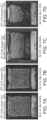
- FIGS. 7A-7D fractography on CVN impact samples with different composition control confirms fracture mode transition from brittle to ductile with increasing amount of Ni and Mo added, as shown in FIGS. 7A-7D .
- the brittle zone is circled by a dashed line for each case.
- Scanning electron microscopy (SEM) observations from the fractography of FIGS. 7A and 7D are shown in FIGS. 8A-8C and 8D-8F , respectively.
- the SEM observations reveal cleavage + IG (intergranular) fracture is the predominant fracture mechanism for FIGS. 7A and 7B , while it changes to ductile tearing (dimpled) plus cleavage fracture mechanism for FIGS. 7C and 7D with Ni and Mo added to the extent specified per the embodiments described herein.
- a microalloyed martensitic stainless steel grade 403Cb consisting essentially of, by weight percent: carbon 0.13 to 0.18 manganese 0.40 to 0.60 silicon up to 0.50 phosphorous up to 0.025 sulfur up to 0.010 nickel 0.30 to 0.60 chromium 11.5 to 13.0 molybdenum 0.05 to 0.20 niobium 0.15 to 0.25 vanadium up to 0.10 iron balance CNB (Cr-Ni equivalent balance) 5.0 to 7.5
- microalloyed martensitic stainless steel grade 403Cb of the preceding clause wherein the weight percent of nickel is about 0.53 and the weight percent of molybdenum is about 0.04.
- microalloyed martensitic stainless steel grade 403Cb of any of the preceding clauses wherein the microalloyed martensitic stainless steel grade 403Cb has a yield strength that ranges from 740 MPa to 800 MPa.
- microalloyed martensitic stainless steel grade 403Cb of any of the preceding clauses wherein the microalloyed martensitic stainless steel grade 403Cb has a tensile strength that ranges from 880 MPa to 950MPa.
- a microalloyed martensitic stainless steel grade 403Cb consisting essentially of, by weight percent: carbon 0.13 to 0.18 manganese 0.40 to 0.60 silicon up to 0.50 phosphorous up to 0.025 sulfur up to 0.010 nickel 0.30 to 0.6 chromium 11.5 to 13.0 molybdenum 0.05 to 0.2 niobium 0.15 to 0.25 vanadium up to 0.10 iron balance CNB (Cr-Ni equivalent balance) 5.0 to 7.5 and having an impact toughness ranging over 50 J.
- microalloyed martensitic stainless steel grade 403Cb of the preceding clause wherein the microalloyed martensitic stainless steel grade 403Cb has a yield strength that ranges from 740 MPa to 800 MPa.
- microalloyed martensitic stainless steel grade 403Cb of any of the preceding clauses wherein the microalloyed martensitic stainless steel grade 403Cb has a tensile strength that ranges from 880 MPa to 950MPa.
- a turbine component comprising a microalloyed martensitic stainless steel grade 403Cb comprising, by weight percent: carbon 0.13 to 0.18 manganese 0.40 to 0.60 silicon up to 0.50 phosphorous up to 0.025 sulfur up to 0.010 nickel 0.30 to 0.60 chromium 11.5 to 13.0 molybdenum 0.05 to 0.20 niobium 0.15 to 0.25 vanadium up to 0.10 iron balance CNB (Cr-Ni equivalent balance) 5.0 to 7.5 and wherein a weight ratio of the nickel to the molybdenum is larger than 3.
- microalloyed martensitic stainless steel grade 403Cb has an impact toughness over 50 J.
- microalloyed martensitic stainless steel grade 403Cb has a yield strength that ranges from 740 MPa to 800 MPa.
- microalloyed martensitic stainless steel grade 403Cb has a tensile strength that ranges from 880 MPa to 950MPa.
Landscapes
- Chemical & Material Sciences (AREA)
- Engineering & Computer Science (AREA)
- Mechanical Engineering (AREA)
- Materials Engineering (AREA)
- Metallurgy (AREA)
- Organic Chemistry (AREA)
- Physics & Mathematics (AREA)
- Thermal Sciences (AREA)
- Crystallography & Structural Chemistry (AREA)
- Heat Treatment Of Steel (AREA)
- Heat Treatment Of Articles (AREA)
Abstract
Description
- Embodiments of this disclosure relate generally to martensitic stainless steel alloys, and more specifically, to microalloying a martensitic stainless steel grade 403Cb alloy to improve toughness and strength.
- Martensitic stainless steel grade 403Cb alloy is a grade of specialty martensitic stainless steel that is used primarily for turbine and compressor components in applications requiring high strength and corrosion resistance. For example, martensitic stainless steel grade 403Cb is commonly used for rotating components due to its good balance between mechanical properties and cost. Typically, only some of the elements that comprise martensitic stainless steel grade 403Cb are specified with composition ranges. For example, it is common to specify composition ranges for carbon, manganese, chromium and niobium, while not specifying lower limits for other alloy elements that comprise the martensitic stainless steel grade 403Cb. Nickel, molybdenum, and vanadium are some of those elements with compositions that are typically not specified with lower limits. In order to save costs, these elements in the martensitic stainless steel grade 403Cb alloy that are not specified with lower limits in their compositions are often decreased to nearly zero.
- The following presents a simplified summary of the disclosed subject matter in order to provide a basic understanding of some aspects of the various embodiments described herein. This summary is not an extensive overview of the various embodiments. It is not intended to exclusively identify key features or essential features of the claimed subject matter set forth in the Claims, nor is it intended as an aid in determining the scope of the claimed subject matter. Its sole purpose is to present some concepts of the disclosure in a streamlined form as a prelude to the more detailed description that is presented later.
- The inventor to this disclosure has determined that martensitic stainless steel grade 403Cb that has some its compositional elements specified to nearly zero such as nickel, molybdenum, and vanadium, has decreased toughness and strength/hardness. Decreased toughness and strength/hardness corresponds to an increased sensitivity to temper brittleness. Consequently, this martensitic stainless steel grade 403Cb alloy will have difficulty in heat treatment which necessitates rework of the material, and ultimately undesired costs.
- The inventor has discovered that the shortcomings of conventional martensitic stainless steel grade 403Cb can be overcome by specifying trace elements of some of the elements that are nearly zero. For example, the inventor proposes specifying trace elements such as nickel and molybdenum with compositions that enhance toughness and strength. In one embodiment, the nickel and molybdenum in martensitic stainless steel grade 403Cb are specified with a composition range including a minimum level and a maximum level. For example, the compositional amount of nickel in the martensitic stainless steel grade 403Cb alloy can be specified to range from 0.3% to 0.6%, while the amount of molybdenum can be specified to range from 0.05% to 0.2%. In addition, the Chromium-Nickel equivalent balance (CNB) can be controlled to within a predetermined range based on the formula that CNB equals (Cr + 1.5W + 4Mo + 5Nb + 6Si + 9Ti + 11V + 12AI) - (40C + 30N + 4Ni + 2Mn + Cu). For example, the CNB of the martensitic stainless steel grade 403Cb alloy can be controlled within a range of 5.0 to 7.5.
- Microalloying martensitic stainless steel grade 403Cb in this manner leads to increased toughness and strength. With increased toughness and strength, the sensitivity to temper brittleness is decreased. Overall, the stability of the martensitic stainless steel grade 403Cb alloy is improved with the microalloying of these embodiments. As a result, rotating components made from the microalloyed martensitic stainless steel grade 403Cb described herein will perform more reliably due to the enhanced stability of this alloy.
- In accordance with one embodiment, a microalloyed martensitic stainless steel grade 403Cb is provided. The microalloyed martensitic stainless steel grade 403Cb consists essentially of, by weight percent:
carbon 0.13 to 0.18 manganese 0.40 to 0.60 silicon up to 0.50 phosphorous up to 0.025 sulfur up to 0.010 nickel 0.30 to 0.60 chromium 11.5 to 13.0 molybdenum 0.05 to 0.20 niobium 0.15 to 0.25 vanadium up to 0.10 iron balance CNB (Cr-Ni equivalent balance) 5.0 to 7.5 - In accordance with another embodiment, a microalloyed martensitic stainless steel grade 403Cb is disclosed. The microalloyed martensitic stainless steel grade 403Cb consists essentially of, by weight percent:
carbon 0.13 to 0.18 manganese 0.40 to 0.60 silicon up to 0.50 phosphorous up to 0.025 sulfur up to 0.010 nickel 0.30 to 0.6 chromium 11.5 to 13.0 molybdenum 0.05 to 0.2 niobium 0.15 to 0.25 vanadium up to 0.10 iron balance CNB (Cr-Ni equivalent balance) 5.0 to 7.5 - In accordance with a third embodiment, a turbine component is provided. The turbine component comprises a microalloyed martensitic stainless steel grade 403Cb comprising, by weight percent:
carbon 0.13 to 0.18 manganese 0.40 to 0.60 silicon up to 0.50 phosphorous up to 0.025 sulfur up to 0.010 nickel 0.30 to 0.60 chromium 11.5 to 13.0 molybdenum 0.05 to 0.20 niobium 0.15 to 0.25 vanadium up to 0.10 iron balance CNB (Cr-Ni equivalent balance) 5.0 to 7.5 - The present invention will be better understood from reading the following description of non-limiting embodiments, with reference to the attached drawings, wherein below:
-
FIG. 1 is a plot of assorted martensitic stainless steel grade 403Cb alloys showing differing compositions by weight percent of various elements that comprise the 403Cb alloy; -
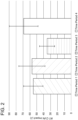
FIG. 2 is a plot of Charpy V-notch (CVN) impact tests performed on the martensitic stainless steel grade 403Cb alloys represented inFIG. 1 ; -
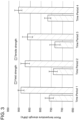
FIG. 3 are plots of yield strength and tensile strength of the martensitic stainless steel grade 403Cb alloys represented inFIG. 1 ; -
FIGS. 4A-4C are plots of CVN impact tests, yield strength and tensile strength, and hardness for martensitic stainless steel grade 403Cb alloys specified with nickel and molybdenum amounts and chromium-nickel equivalent balance levels (CNB) that do not conform with those amounts and levels specified to embodiments of the present invention; -
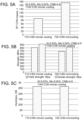
FIGS. 5A-5C are plots of CVN impact tests, yield strength and tensile strength, and hardness for another martensitic stainless steel grade 403Cb alloy specified in another manner that also does not conform with those amounts and levels specified to embodiments of the present invention; -
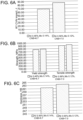
FIGS. 6A-6C are plots of CVN impact tests, yield strength and tensile strength, and hardness for martensitic stainless steel grade 403Cb alloys specified with nickel and molybdenum amounts and CNB specified to embodiments of the present invention; -
FIGS. 7A-7D show fractography on CVN impact test samples obtained from martensitic stainless steel grade 403Cb alloys with different nickel and molybdenum compositions; and -
FIGS. 8A-8C and 8D-8F show various scanning electron microscopy (SEM) observations from the fractography shown inFIGS. 7A and 7D , respectively. - The chemical composition of martensitic stainless steel grade 403Cb comprises a number of different elements. The primary elements in the chemical composition of martensitic stainless steel grade 403Cb include carbon, manganese, silicon, phosphorus, sulfur, nickel, chromium, molybdenum, niobium, vanadium and iron. Residual elements in the chemical composition of martensitic stainless steel grade 403Cb can include lead, tin and aluminum.
- Martensitic stainless steel grade 403Cb is known as a much cost competitive alloy with elevated toughness and strength combination through lowest alloy elements addition, however, the inventor has determined that material properties of this alloy including toughness and strength/hardness has potential for improvement. In particular, the inventor has established that current supplies of martensitic stainless steel grade 403Cb are formulated with some of its primary chemical composition elements with a weight percent that is nearly zero. As used herein, "nearly zero" means an absolute contribution of the added alloy element to Chromium-Nickel equivalent balance (CNB) that is less than 0.5. Considering ferrite forming and austenite forming elements weight percent, CNB can be calculated through the formula CNB = (Cr + 1.5W + 4Mo + 5Nb + 6Si + 9Ti + 11V + 12Al) - (40C + 30N + 4Ni + 2Mn + Cu). For example, Ni<0.125%, Mo < 0.125%, Si< 0.10% and V<0.05% can be roughly regarded as zero, but it doesn't mean these values are absolute critical values because the actual function of alloy elements is very complex and interactive. The reason that these elements have a weight percent that is nearly zero is because they are not specified with a lower limit. As a result, suppliers will take cost cutting measures and produce the martensitic stainless steel grade 403Cb with these elements having a weight percent that is nearly zero. Nickel, molybdenum, and vanadium are some of those elements in the chemical composition of martensitic stainless steel grade 403Cb that are typically not specified with a lower limit, and as a result, are formulated in martensitic stainless steel grade 403Cb supplies with a weight percent that is nearly zero.
- The inventor has substantiated that martensitic stainless steel grade 403Cb supplies that have a chemical composition with nickel and molybdenum that are nearly zero have decreased toughness and strength/hardness. For example,
FIG. 1 shows a plot of assorted martensitic stainless steel grade 403Cb alloys showing differing composition by weight percent of various elements that comprise the 403Cb alloy. In particular,FIG. 1 shows the weight percent of carbon, manganese, silicon, phosphorus, sulfur, nickel, molybdenum, niobium, vanadium, lead, tin, and aluminum in four different supplies of martensitic stainless steel grade 403Cb taken over varying time spans (i.e.,time periods - Room temperature (RT) Charpy V-notch (CVN) impact tests were performed on each of the martensitic stainless steel grade 403Cb supplies that are represented in
FIG. 1 . As shown inFIG. 2 , the martensitic stainless steel grade 403Cb supply fromtime period 3 has RT CVN impact results that are significantly less than the RT CVN impact results of the supplies fromtime periods time period 3 in comparison to the RT CVN impact results of the supplies fromtime periods time period 3 is not as tough as the martensitic stainless steel grade 403Cb from the supplies oftime periods time period 3 can be attributed to the lower weight percent of nickel and molybdenum in the alloy as illustrated inFIG. 1 . - In addition to the RT CVN impact tests performed on the martensitic stainless steel grade 403Cb supplies that are represented in
FIG. 1 , RT strength tests were also performed. The results of the RT strength tests in the form of yield strength and tensile strength for each of the martensitic stainless steel grade 403Cb supplies are presented inFIG. 3 . As shown inFIG. 3 , the martensitic stainless steel grade 403Cb from the supply oftime period 3 had a lower yield strength and a lower tensile strength in comparison to the martensitic stainless steel grade 403Cb supplies fromtime periods time period 3 versus the results from the supplies oftime periods FIG. 1 . - Based on analysis of the results presented in
FIG. 1-3 , the inventor proposes microalloying martensitic stainless steel grade 403Cb with nickel and molybdenum in a manner that enhances the toughness and strength of the alloy. From the perspective of physical metallurgy, nickel helps stabilize austenite and promotes hardenability, and molybdenum helps delay detrimental segregation and depress brittleness. Both elements provide solution strengthening and increase diffusion resistance like preventing impurity elements segregation and grain growth. Thus, the combination of microalloying nickel and molybdenum will result in an improvement to toughness and strength. - The improvement in toughness and strength of the martensitic stainless steel grade 403Cb can be attained by microalloying the nickel and molybdenum according to different embodiments. For example, the composition of nickel and molybdenum in martensitic stainless steel grade 403Cb can each be specified as a range with a lower limit and an upper limit. A microalloyed martensitic stainless steel grade 403Cb according to an embodiment consists essentially of, by weight percent:
carbon 0.13 to 0.18 manganese 0.40 to 0.60 silicon up to 0.50 phosphorous up to 0.025 sulfur up to 0.010 nickel 0.3 to 0.6 chromium 11.5 to 13.0 molybdenum 0.05 to 0.2 niobium 0.15 to 0.25 vanadium up to 0.10 iron balance lead up to 0.005 tin up to 0.05 aluminum up to 0.05 - In another embodiment, the chromium-nickel equivalent balance level (CNB) in the microalloyed martensitic stainless steel grade 403Cb can be controlled to also promote a toughening and strengthening effect of the alloy. For example, using the aforementioned formula, CNB = (Cr + 1.5W+ 4Mo + 5Nb + 6Si + 9Ti + 11V + 12Al) - (40C + 30N + 4Ni + 2Mn + Cu), the CNB in the above microalloyed martensitic stainless steel grade 403Cb can be controlled within 5.0 to 7.5. Having the CNB in the microalloyed martensitic stainless steel grade 403Cb that is in the range of 5.0 to 7.5 can be beneficial to promoting toughness and strengthening because a delicate balance between austenite and ferrite can be maintained. In particular, both austenite and ferrite are microstructures of low strength. Higher CNB (i.e., > 7.5) could increase risk of ferrite formation while lower CNB (i.e., < 5.0) could increase risk of excessive retained austenite. CNB controlled within a proper range like 5.0-7.5 helps stabilize austenite at high temperature and ensures effective martensite transformation when quenched to low temperature.
- It is understood that the nickel and molybdenum can be specified with specific amounts to improve the toughness and strength of the martensitic stainless steel grade 403Cb alloy, of which make the material properties of the alloy more stable. To this extent, the microalloyed martensitic stainless steel grade 403Cb will have decreased sensitivity to temper brittleness, making it more heat treatable. Further, microalloying the martensitic stainless steel grade 403Cb in this manner as well as according to the other embodiments, will minimize the effect of manufacturing process variation. In one embodiment, the weight percent of nickel can be about 0.51 and the weight percent of molybdenum can be about 0.04. In another embodiment, the weight percent of nickel can be about 0.44 and the weight percent of molybdenum can be about 0.16. Both of these composition amounts for nickel and molybdenum have improved toughness and strength. In contrast to the compositional amounts described herein for nickel and molybdenum amounts that do not conform with the above ranges can have decreased toughness. For example, a martensitic stainless steel grade 403Cb alloy with about 0.12 percent of nickel and 0.02 percent of molybdenum can obviously decrease toughness though still has acceptable strength. As used herein, "about" is inclusive of values with +/- ten percent of state value.
- The microalloying of the nickel and molybdenum can be performed by using one of a number of known techniques. For example, the martensitic stainless steel grade 403Cb alloy can be microalloyed in the above manner by a basic electric furnace (BEF) process with Argon-Oxygen-Decarburization (AOD) refining or Vacuum Ladle Degassing (VLD), and then followed by either Electro-Slag Re-Melt (ESR) or a Vacuum-Arc-Re-Melt (VAR) process. The CNB shall be controlled within 5.0 - 7.5 according to the formula CNB = (Cr + 1.5W + 4Mo + 5Nb + 6Si + 9Ti + 11V + 12Al) - (40C + 30N + 4Ni + 2Mn + Cu) during steel making, which helps promote toughening and the strengthening effect of such microalloying method.
- The above ranges with the lower limit and the upper limit, and specific composition amounts specified for both nickel and molybdenum, as well as the CNB range can be critical to obtaining an improvement in the toughness and strength of the microalloyed martensitic stainless steel grade 403Cb. Particularly, if both Ni and Mo, especially Ni, are reduced to nearly zero, unbalance between toughness and strength is difficult to avoid. Basically all the alloy elements like C, Cr, Nb, Si and V only work to enhance strength, but it is still easy to cause brittleness.
-
FIGS. 4A-4C are plots of CVN impact test results, yield strength and tensile strength, and hardness for martensitic stainless steel grade 403Cb alloys specified with nickel and molybdenum amounts and chromium-nickel equivalent balance levels that do not conform with those amounts and levels specified to embodiments of the invention. For example, a first martensitic stainless steel grade 403Cb alloy was specified with 0.14% Ni, 0.04% Mo, and CNB=8.74 (Experiment 1) and a second martensitic stainless steel grade 403Cb alloy was specified with 0.12% Ni, 0.02% Mo, and CNB=7.43 (Experiment 2). Room temperature CVN impact results were obtained using a number of temper cooling methods. For example, a first temper method included using still air. In particular, material or parts are tempered within 700-720 C for sufficient time in furnace and then taken out for natural cooling in still air to room temperature. A second temper method included using fast air. In particular, fast moving air (e.g., by air fan) is directed to the material or parts for cooling it to room temperature after similar temper in furnace. A third temper method included using oil. In particular, the material or parts are immersed into room temperature oil for cooling after 675 C temper. A fourth temper method included using water. In particular, the material or parts are immersed into room temperature water for cooling after 700-720 C temper. In these temper methods, the CVN impact results were obtained by measuring the energy absorbed when a standard Charpy V-notched specimen is struck and broken by a single blow in a special testing machine per specification ASTM A370. - Plots of the CVN impact results are shown in
FIG. 4A . As shown inFIG. 4A , conventional air cooling (still and fast air) and even oil cooling after temper shows that it is difficult to eliminate such brittleness given the very low content of Ni (<0.14%) and Mo (<0.04%) in the two tested alloys.FIGS. 4B and 4C show further results of the first and second martensitic stainless steel grade 403Cb alloys obtained after temper cooling utilizing the fast air approach. In particular,FIG. 4B shows yield strength and tensile strength results that were obtained for the first and second martensitic stainless steel grade 403Cb alloys. The yield strength and tensile strength results were obtained by tension test of a standard round specimen per specification ASTM A370. With either heat treated to a high or a low hardness/strength level with air cooling, as shown inFIGS. 4B and 4C , toughness is still difficult to improve, as shown inFIG. 4A. FIG. 4A also shows obvious toughness improvement with water cooling after temper, which indicates reversible temper brittleness in cases of low Ni and Mo. -
FIGS. 5A-5C are plots of CVN impact test results, yield strength and tensile strength, and hardness for another martensitic stainless steel grade 403Cb alloy specified in another manner that also does not conform with those amounts and levels specified to the embodiments of the invention. In particular, this martensitic stainless steel grade 403Cb alloy was specified with 0.53% Ni, 0.04% Mo, and CNB=4.9. Results of this martensitic stainless steel grade 403Cb alloy were obtained by tempering the alloy using an air cooling method. For example, this martensitic stainless steel grade 403Cb alloy was tested after being subjected to a heat treatment: austenitized at 1140 degrees Celsius for 30 minutes with air cooling to room temperature, and tempered at 710 degrees Celsius for 60 minutes with air cooling to room temperature. The martensitic stainless steel grade 403Cb alloy was also subjected to the same austenization and air quench, and then tempered at 720 degrees Celsius for 60 minutes with air cooling to room temperature. - As shown in
FIGS. 5A-5C , this martensitic stainless steel grade 403Cb alloy with Ni increased to 0.53%, exhibited significant improvement in toughness at 710 degrees Celsius temper with air cooling and balances very well with strength/hardness. However, when temper temperature increased by 10 degrees Celsius, strength shows significant decrease regardless of the pretty large improvement in toughness, which means a decrease of the temper resistance. These results ofFIGS. 5A-5C indicate that Ni is a sensitive toughening and strengthening element, but might reduce temper resistance and can be balanced with the addition of Mo. Thus, it's necessary to specify both ranges of Ni and Mo to improve 403Cb alloy toughness and strength, while keeping other properties not changed too much. To achieve the best practice, an embodiment of this invention proposes to control Ni within 0.3-0.6%, Mo within 0.05-0.2%, Ni/Mo>3.0 and Cr-Ni equivalent balance level within 5.0-7.5. - Thus, in one embodiment, the microalloyed martensitic stainless steel grade 403Cb alloy can have a weight ratio of nickel to molybdenum that is larger than 3. Compared with Mo, Ni plays a major role in improving both toughness and strength, but it would also reduce temper resistance. For example, it's reported that a Ni increase from 0 to 2% would reduce critical transformation temperature (Ac3) by 50 degrees Celsius for steel containing 0.15% C. That is, 0.5% Ni could reduce about 15 degrees Celsius in temper resistance. Thus, Mo is added to balance such reduction, but meanwhile maintain Ni/Mo>3 to make full use of Ni's strengthening and toughening effect.
- The improvements in the toughness and strength that can be attained by microalloying the martensitic stainless steel grade 403Cb with above-mentioned nickel and molybdenum amounts and chromium-nickel equivalent balance levels, and proportions of nickel to molybdenum can be noticeable in comparison to conventional martensitic stainless steel grade 403Cb. For example, the microalloyed martensitic stainless steel grade 403Cb can have a yield strength that ranges from 740 MPa to 800 MPa. The microalloyed martensitic stainless steel grade 403Cb can also have a tensile strength that ranges from 880 MPa to 950 MPa. The microalloyed martensitic stainless steel grade 403Cb can have an impact toughness that is greater than 50 J. The increased toughness and strength that is attained through the microalloyed martensitic stainless steel grade 403Cb makes the alloy more heat treatable as the sensitivity to temper brittleness is decreased with the improvement in toughness and strength. For example, fast air cooling or even still air cooling after high temperature temper is adequate to avoid reversible temper brittleness.
- The following provides particular examples of microalloyed martensitic stainless steel grade 403Cb that has been formulated according to embodiments described herein.
-
FIGS. 6A-6C are plots of CVN impact test, yield strength and tensile strength, and hardness for martensitic stainless steel grade 403Cb alloys specified with nickel and molybdenum amounts, CNB levels and nickel to molybdenum proportions described herein. In particular, the plots of these examples are obtained from a first martensitic stainless steel grade 403Cb alloy controlled with 0.46% Ni, 0.14% Mo, and CNB=6.7, and a second martensitic stainless steel grade 403Cb alloy controlled with 0.56% Ni, 0.12% Mo, and CNB=7.0. Both of these alloys were subjected to the heat treatment: austenitized at 1140 degrees Celsius / 40 minutes with fast air cooling to room temperature and tempered at 718 degrees Celsius / 90 minutes with air cooling. Both cases show a much better combination of toughness, strength/hardness and temper resistance, as compared with previous cases shown inFIGS.4A-4C andFIGS. 5A-5C . Air cooling after temper is enough to achieve good toughness, which means temper brittleness can be effectively depressed per the embodiments described herein. - In addition, fractography on CVN impact samples with different composition control confirms fracture mode transition from brittle to ductile with increasing amount of Ni and Mo added, as shown in
FIGS. 7A-7D . In the fractography ofFIGS. 7A-7D , the brittle zone is circled by a dashed line for each case. Scanning electron microscopy (SEM) observations from the fractography ofFIGS. 7A and 7D are shown inFIGS. 8A-8C and 8D-8F , respectively. The SEM observations reveal cleavage + IG (intergranular) fracture is the predominant fracture mechanism forFIGS. 7A and 7B , while it changes to ductile tearing (dimpled) plus cleavage fracture mechanism forFIGS. 7C and 7D with Ni and Mo added to the extent specified per the embodiments described herein. These results indicate further toughening and strengthening of conventional 403Cb alloy with the embodiments described herein is effective. - The above description of illustrated embodiments of the subject disclosure, including what is described in the Abstract, is not intended to beexhaustive or to limit the disclosed embodiments to the precise forms disclosed. While specific embodiments and examples are described herein for illustrative purposes, various modifications are possible that are considered within the scope of such embodiments and examples, as those skilled in the relevant art can recognize. For example, parts, components, steps and aspects from different embodiments may be combined or suitable for use in other embodiments even though not described in the disclosure or depicted in the figures. Therefore, since certain changes may be made in the above-described invention, without departing from the spirit and scope of the invention herein involved, it is intended that all of the subject matter of the above description shown in the accompanying drawings shall be interpreted merely as examples illustrating the inventive concept herein and shall not be construed as limiting the invention.
- In this regard, while the disclosed subject matter has been described in connection with various embodiments and corresponding figures, where applicable, it is to be understood that other similar embodiments can be used or modifications and additions can be made to the described embodiments for performing the same, similar, alternative, or substitute function of the disclosed subject matter without deviating therefrom. Therefore, the disclosed subject matter should not be limited to any single embodiment described herein, but rather should be construed in breadth and scope in accordance with the appended claims below. For example, references to "one embodiment" of the present invention are not intended to be interpreted as excluding the existence of additional embodiments that also incorporate the recited features.
- In the appended claims, the terms "including" and "in which" are used as the plain-English equivalents of the respective terms "comprising" and "wherein." Moreover, in the following claims, terms such as "first," "second," "third," "upper," "lower," "bottom," "top," etc. are used merely as labels, and are not intended to impose numerical or positional requirements on their objects. The terms "substantially," "generally," and "about" indicate conditions within reasonably achievable manufacturing and assembly tolerances, relative to ideal desired conditions suitable for achieving the functional purpose of a component or assembly. Further, the limitations of the following claims are not written in means-plus-function format and are not intended to be interpreted as such, unless and until such claim limitations expressly use the phrase "means for" followed by a statement of function void of further structure.
- What has been described above includes examples of systems and methods illustrative of the disclosed subject matter. It is, of course, not possible to describe every combination of components or methodologies here. One of ordinary skill in the art may recognize that many further combinations and permutations of the claimed subject matter are possible. Furthermore, to the extent that the terms "includes," "has," "possesses," and the like are used in the detailed description, claims, appendices and drawings, such terms are intended to be inclusive in a manner similar to the term "comprising" as "comprising" is interpreted when employed as a transitional word in a claim. That is, unless explicitly stated to the contrary, embodiments "comprising," "including," or "having" an element or a plurality of elements having a particular property may include additional such elements not having that property.
- This written description uses examples to disclose several embodiments of the invention, including the best mode, and also to enable one of ordinary skill in the art to practice the embodiments of invention, including making and using any devices or systems and performing any incorporated methods. The patentable scope of the invention is defined by the claims, and may include other examples that occur to one of ordinary skill in the art. Such other examples are intended to be within the scope of the claims if they have structural elements that do not differ from the literal language of the claims, or if they include equivalent structural elements with insubstantial differences from the literal languages of the claims.
- Further aspects of the invention are provided by the subject matter of the following clauses:
- A microalloyed martensitic stainless steel grade 403Cb consisting essentially of, by weight percent:
carbon 0.13 to 0.18 manganese 0.40 to 0.60 silicon up to 0.50 phosphorous up to 0.025 sulfur up to 0.010 nickel 0.30 to 0.60 chromium 11.5 to 13.0 molybdenum 0.05 to 0.20 niobium 0.15 to 0.25 vanadium up to 0.10 iron balance CNB (Cr-Ni equivalent balance) 5.0 to 7.5 - The microalloyed martensitic stainless steel grade 403Cb of the preceding clause, wherein the weight percent of nickel is about 0.53 and the weight percent of molybdenum is about 0.04.
- The microalloyed martensitic stainless steel grade 403Cb of any of the preceding clauses, wherein a weight ratio of the nickel to the molybdenum is larger than 3.
- The microalloyed martensitic stainless steel grade 403Cb of any of the preceding clauses, wherein the microalloyed martensitic stainless steel grade 403Cb has a yield strength that ranges from 740 MPa to 800 MPa.
- The microalloyed martensitic stainless steel grade 403Cb of any of the preceding clauses, wherein the microalloyed martensitic stainless steel grade 403Cb has a tensile strength that ranges from 880 MPa to 950MPa.
- The microalloyed martensitic stainless steel grade 403Cb of any of the preceding clauses, wherein the microalloyed martensitic stainless steel grade 403Cb has an impact toughness over 50 J.
- A microalloyed martensitic stainless steel grade 403Cb consisting essentially of, by weight percent:
carbon 0.13 to 0.18 manganese 0.40 to 0.60 silicon up to 0.50 phosphorous up to 0.025 sulfur up to 0.010 nickel 0.30 to 0.6 chromium 11.5 to 13.0 molybdenum 0.05 to 0.2 niobium 0.15 to 0.25 vanadium up to 0.10 iron balance CNB (Cr-Ni equivalent balance) 5.0 to 7.5 - The microalloyed martensitic stainless steel grade 403Cb of the preceding clause, wherein the microalloyed martensitic stainless steel grade 403Cb has a yield strength that ranges from 740 MPa to 800 MPa.
- The microalloyed martensitic stainless steel grade 403Cb of any of the preceding clauses, wherein the microalloyed martensitic stainless steel grade 403Cb has a tensile strength that ranges from 880 MPa to 950MPa.
- The microalloyed martensitic stainless steel grade 403Cb of any of the preceding clauses, wherein a weight ratio of the nickel to the molybdenum is larger than 3.
- A turbine component comprising a microalloyed martensitic stainless steel grade 403Cb comprising, by weight percent:
carbon 0.13 to 0.18 manganese 0.40 to 0.60 silicon up to 0.50 phosphorous up to 0.025 sulfur up to 0.010 nickel 0.30 to 0.60 chromium 11.5 to 13.0 molybdenum 0.05 to 0.20 niobium 0.15 to 0.25 vanadium up to 0.10 iron balance CNB (Cr-Ni equivalent balance) 5.0 to 7.5 - The turbine component of the preceding clause, wherein the microalloyed martensitic stainless steel grade 403Cb has an impact toughness over 50 J.
- The turbine component of any of the preceding clauses, wherein the microalloyed martensitic stainless steel grade 403Cb has a yield strength that ranges from 740 MPa to 800 MPa.
- The turbine component of any of the preceding clauses, wherein the microalloyed martensitic stainless steel grade 403Cb has a tensile strength that ranges from 880 MPa to 950MPa.
Claims (14)
- A microalloyed martensitic stainless steel grade 403Cb consisting essentially of, by weight percent:
carbon 0.13 to 0.18 manganese 0.40 to 0.60 silicon up to 0.50 phosphorous up to 0.025 sulfur up to 0.010 nickel 0.30 to 0.60 chromium 11.5 to 13.0 molybdenum 0.05 to 0.20 niobium 0.15 to 0.25 vanadium up to 0.10 iron balance CNB (Cr-Ni equivalent balance) 5.0 to 7.5 - The microalloyed martensitic stainless steel grade 403Cb of claim 1, wherein the weight percent of nickel is about 0.53 and the weight percent of molybdenum is about 0.04.
- The microalloyed martensitic stainless steel grade 403Cb of claim 1, wherein a weight ratio of the nickel to the molybdenum is larger than 3.
- The microalloyed martensitic stainless steel grade 403Cb of claim 1, wherein the microalloyed martensitic stainless steel grade 403Cb has a yield strength that ranges from 740 MPa to 800 MPa.
- The microalloyed martensitic stainless steel grade 403Cb of claim 1, wherein the microalloyed martensitic stainless steel grade 403Cb has a tensile strength that ranges from 880 MPa to 950MPa.
- The microalloyed martensitic stainless steel grade 403Cb of claim 1, wherein the microalloyed martensitic stainless steel grade 403Cb has an impact toughness over 50 J.
- A microalloyed martensitic stainless steel grade 403Cb consisting essentially of, by weight percent:
carbon 0.13 to 0.18 manganese 0.40 to 0.60 silicon up to 0.50 phosphorous up to 0.025 sulfur up to 0.010 nickel 0.30 to 0.6 chromium 11.5 to 13.0 molybdenum 0.05 to 0.2 niobium 0.15 to 0.25 vanadium up to 0.10 iron balance CNB (Cr-Ni equivalent balance) 5.0 to 7.5 - The microalloyed martensitic stainless steel grade 403Cb of claim 7, wherein the microalloyed martensitic stainless steel grade 403Cb has a yield strength that ranges from 740 MPa to 800 MPa.
- The microalloyed martensitic stainless steel grade 403Cb of claim 7, wherein the microalloyed martensitic stainless steel grade 403Cb has a tensile strength that ranges from 880 MPa to 950MPa.
- The microalloyed martensitic stainless steel grade 403Cb of claim 7, wherein a weight ratio of the nickel to the molybdenum is larger than 3.
- A turbine component comprising a microalloyed martensitic stainless steel grade 403Cb comprising, by weight percent:
carbon 0.13 to 0.18 manganese 0.40 to 0.60 silicon up to 0.50 phosphorous up to 0.025 sulfur up to 0.010 nickel 0.30 to 0.60 chromium 11.5 to 13.0 molybdenum 0.05 to 0.20 niobium 0.15 to 0.25 vanadium up to 0.10 iron balance CNB (Cr-Ni equivalent balance) 5.0 to 7.5 - The turbine component of claim 11, wherein the microalloyed martensitic stainless steel grade 403Cb has an impact toughness over 50 J.
- The turbine component of claim 11, wherein the microalloyed martensitic stainless steel grade 403Cb has a yield strength that ranges from 740 MPa to 800 MPa.
- The turbine component of claim 11, wherein the microalloyed martensitic stainless steel grade 403Cb has a tensile strength that ranges from 880 MPa to 950MPa.
Applications Claiming Priority (1)
| Application Number | Priority Date | Filing Date | Title |
|---|---|---|---|
| CN202210679727.1A CN117286419A (en) | 2022-06-16 | 2022-06-16 | Microalloyed 403Cb grade martensitic stainless steel with improved toughness and strength |
Publications (2)
| Publication Number | Publication Date |
|---|---|
| EP4379085A2 true EP4379085A2 (en) | 2024-06-05 |
| EP4379085A3 EP4379085A3 (en) | 2024-08-14 |
Family
ID=86609502
Family Applications (1)
| Application Number | Title | Priority Date | Filing Date |
|---|---|---|---|
| EP23176186.7A Pending EP4379085A3 (en) | 2022-06-16 | 2023-05-30 | Microalloyed martensitic stainless steel grade 403cb with improved toughness and strength |
Country Status (4)
| Country | Link |
|---|---|
| US (1) | US20230407444A1 (en) |
| EP (1) | EP4379085A3 (en) |
| JP (1) | JP2023184446A (en) |
| CN (1) | CN117286419A (en) |
Family Cites Families (6)
| Publication number | Priority date | Publication date | Assignee | Title |
|---|---|---|---|---|
| JPH05311347A (en) * | 1992-05-06 | 1993-11-22 | Toshiba Corp | Turbine blade |
| US20150308275A1 (en) * | 2014-04-29 | 2015-10-29 | General Electric Company | Coating method and coated article |
| US11434766B2 (en) * | 2015-03-05 | 2022-09-06 | General Electric Company | Process for producing a near net shape component with consolidation of a metallic powder |
| US11001916B2 (en) * | 2016-04-22 | 2021-05-11 | Aperam | Method for manufacturing a martensitic stainless steel part from a sheet |
| CN105734237B (en) * | 2016-04-25 | 2018-01-02 | 东北大学 | A kind of process of the heat-resisting Blade Steel high temperature creep properties of raising 403Nb |
| BR112020008649B1 (en) * | 2017-11-03 | 2023-01-10 | Aperam | MARTENSITIC STAINLESS STEEL AND METHOD FOR PREPARING A MARTENSITIC STAINLESS STEEL PRODUCT |
-
2022
- 2022-06-16 CN CN202210679727.1A patent/CN117286419A/en active Pending
-
2023
- 2023-05-15 JP JP2023080161A patent/JP2023184446A/en active Pending
- 2023-05-30 EP EP23176186.7A patent/EP4379085A3/en active Pending
- 2023-06-13 US US18/334,048 patent/US20230407444A1/en active Pending
Also Published As
| Publication number | Publication date |
|---|---|
| CN117286419A (en) | 2023-12-26 |
| US20230407444A1 (en) | 2023-12-21 |
| EP4379085A3 (en) | 2024-08-14 |
| JP2023184446A (en) | 2023-12-28 |
Similar Documents
| Publication | Publication Date | Title |
|---|---|---|
| US6358336B1 (en) | Heat resistance Cr-Mo alloy steel | |
| US11624098B2 (en) | Precipitation hardening steel and its manufacture | |
| US20110250088A1 (en) | Ferritic-austenitic stainless steel | |
| US10480043B2 (en) | Seamless steel pipe for line pipe and method for producing the same | |
| EP3395991A1 (en) | High strength seamless stainless steel pipe for oil wells and manufacturing method therefor | |
| EP1873270B1 (en) | Low alloy steel | |
| JP5974623B2 (en) | Age-hardening bainite non-tempered steel | |
| JPH05287455A (en) | Martensitic stainless steel for oil well | |
| CA2603772A1 (en) | Ferritic heat-resistant steel | |
| JP2024077551A (en) | Vacuum carburizing steel and vacuum carburizing steel parts | |
| US10745772B2 (en) | Age hardening non-heat treated bainitic steel | |
| JP5046398B2 (en) | High nitrogen martensitic stainless steel | |
| US20230407444A1 (en) | MICROALLOYED MARTENSITIC STAINLESS STEEL GRADE 403Cb WITH IMPROVED TOUGHNESS AND STRENGTH | |
| JP2024071975A (en) | Steel for vacuum carburizing with excellent grain size characteristics | |
| JPWO2000068450A1 (en) | High-strength oil well steel with excellent resistance to sulfide cracking and its manufacturing method | |
| US4689198A (en) | Austenitic stainless steel with high corrosion resistance and high strength when heat treated | |
| JP2002194485A (en) | Low alloy heat resistant steel | |
| WO2007029687A1 (en) | Low alloy steel | |
| EP0498105A1 (en) | High strength and high toughness stainless steel and method of manufacturing the same | |
| KR20010030473A (en) | High-chromium containing ferrite based heat resistant steel | |
| JP4071924B2 (en) | Low alloy heat resistant steel, method for producing the same, and turbine rotor | |
| JP7499691B2 (en) | Bolt steel and bolts | |
| RU2860714C1 (en) | Austenitic-ferritic high-strength corrosion-resistant nitrogen-containing steel zi134 | |
| JP2001164340A (en) | High corrosion resistance free cutting stainless steel with excellent hot workability | |
| RU2291912C1 (en) | High-strength corrosion-resistant steel of martensite class and article made of its |
Legal Events
| Date | Code | Title | Description |
|---|---|---|---|
| PUAI | Public reference made under article 153(3) epc to a published international application that has entered the european phase |
Free format text: ORIGINAL CODE: 0009012 |
|
| STAA | Information on the status of an ep patent application or granted ep patent |
Free format text: STATUS: THE APPLICATION HAS BEEN PUBLISHED |
|
| AK | Designated contracting states |
Kind code of ref document: A2 Designated state(s): AL AT BE BG CH CY CZ DE DK EE ES FI FR GB GR HR HU IE IS IT LI LT LU LV MC ME MK MT NL NO PL PT RO RS SE SI SK SM TR |
|
| REG | Reference to a national code |
Ref country code: DE Ref legal event code: R079 Free format text: PREVIOUS MAIN CLASS: C22C0038440000 Ipc: C22C0038480000 |
|
| PUAL | Search report despatched |
Free format text: ORIGINAL CODE: 0009013 |
|
| AK | Designated contracting states |
Kind code of ref document: A3 Designated state(s): AL AT BE BG CH CY CZ DE DK EE ES FI FR GB GR HR HU IE IS IT LI LT LU LV MC ME MK MT NL NO PL PT RO RS SE SI SK SM TR |
|
| RIC1 | Information provided on ipc code assigned before grant |
Ipc: C21D 1/26 20060101ALI20240710BHEP Ipc: C21D 1/22 20060101ALI20240710BHEP Ipc: C21D 1/18 20060101ALI20240710BHEP Ipc: C21D 6/00 20060101ALI20240710BHEP Ipc: C21D 6/02 20060101ALI20240710BHEP Ipc: C21D 8/00 20060101ALI20240710BHEP Ipc: C22C 38/46 20060101ALI20240710BHEP Ipc: C22C 38/02 20060101ALI20240710BHEP Ipc: C22C 38/04 20060101ALI20240710BHEP Ipc: C22C 38/44 20060101ALI20240710BHEP Ipc: C22C 38/48 20060101AFI20240710BHEP |
|
| STAA | Information on the status of an ep patent application or granted ep patent |
Free format text: STATUS: REQUEST FOR EXAMINATION WAS MADE |
|
| 17P | Request for examination filed |
Effective date: 20250210 |
|
| RAP3 | Party data changed (applicant data changed or rights of an application transferred) |
Owner name: GE VERNOVA TECHNOLOGY GMBH |