EP4377277B1 - Trennung von gehärteter betonpaste vom zuschlagsstoff - Google Patents
Trennung von gehärteter betonpaste vom zuschlagsstoff Download PDFInfo
- Publication number
- EP4377277B1 EP4377277B1 EP22754397.2A EP22754397A EP4377277B1 EP 4377277 B1 EP4377277 B1 EP 4377277B1 EP 22754397 A EP22754397 A EP 22754397A EP 4377277 B1 EP4377277 B1 EP 4377277B1
- Authority
- EP
- European Patent Office
- Prior art keywords
- cement
- carbonated
- carbon dioxide
- feedstock
- recycled concrete
- Prior art date
- Legal status (The legal status is an assumption and is not a legal conclusion. Google has not performed a legal analysis and makes no representation as to the accuracy of the status listed.)
- Active
Links
Images
Classifications
-
- C—CHEMISTRY; METALLURGY
- C04—CEMENTS; CONCRETE; ARTIFICIAL STONE; CERAMICS; REFRACTORIES
- C04B—LIME, MAGNESIA; SLAG; CEMENTS; COMPOSITIONS THEREOF, e.g. MORTARS, CONCRETE OR LIKE BUILDING MATERIALS; ARTIFICIAL STONE; CERAMICS; REFRACTORIES; TREATMENT OF NATURAL STONE
- C04B7/00—Hydraulic cements
- C04B7/24—Cements from oil shales, residues or waste other than slag
- C04B7/243—Mixtures thereof with activators or composition-correcting additives, e.g. mixtures of fly ash and alkali activators
-
- C—CHEMISTRY; METALLURGY
- C04—CEMENTS; CONCRETE; ARTIFICIAL STONE; CERAMICS; REFRACTORIES
- C04B—LIME, MAGNESIA; SLAG; CEMENTS; COMPOSITIONS THEREOF, e.g. MORTARS, CONCRETE OR LIKE BUILDING MATERIALS; ARTIFICIAL STONE; CERAMICS; REFRACTORIES; TREATMENT OF NATURAL STONE
- C04B20/00—Use of materials as fillers for mortars, concrete or artificial stone according to more than one of groups C04B14/00 - C04B18/00 and characterised by shape or grain distribution; Treatment of materials according to more than one of the groups C04B14/00 - C04B18/00 specially adapted to enhance their filling properties in mortars, concrete or artificial stone; Expanding or defibrillating materials
- C04B20/02—Treatment
- C04B20/023—Chemical treatment
- C04B20/0232—Chemical treatment with carbon dioxide
-
- C—CHEMISTRY; METALLURGY
- C04—CEMENTS; CONCRETE; ARTIFICIAL STONE; CERAMICS; REFRACTORIES
- C04B—LIME, MAGNESIA; SLAG; CEMENTS; COMPOSITIONS THEREOF, e.g. MORTARS, CONCRETE OR LIKE BUILDING MATERIALS; ARTIFICIAL STONE; CERAMICS; REFRACTORIES; TREATMENT OF NATURAL STONE
- C04B7/00—Hydraulic cements
- C04B7/24—Cements from oil shales, residues or waste other than slag
- C04B7/246—Cements from oil shales, residues or waste other than slag from waste building materials, e.g. waste asbestos-cement products, demolition waste
-
- C—CHEMISTRY; METALLURGY
- C04—CEMENTS; CONCRETE; ARTIFICIAL STONE; CERAMICS; REFRACTORIES
- C04B—LIME, MAGNESIA; SLAG; CEMENTS; COMPOSITIONS THEREOF, e.g. MORTARS, CONCRETE OR LIKE BUILDING MATERIALS; ARTIFICIAL STONE; CERAMICS; REFRACTORIES; TREATMENT OF NATURAL STONE
- C04B7/00—Hydraulic cements
- C04B7/36—Manufacture of hydraulic cements in general
- C04B7/38—Preparing or treating the raw materials individually or as batches, e.g. mixing with fuel
- C04B7/40—Dehydrating; Forming, e.g. granulating
-
- Y—GENERAL TAGGING OF NEW TECHNOLOGICAL DEVELOPMENTS; GENERAL TAGGING OF CROSS-SECTIONAL TECHNOLOGIES SPANNING OVER SEVERAL SECTIONS OF THE IPC; TECHNICAL SUBJECTS COVERED BY FORMER USPC CROSS-REFERENCE ART COLLECTIONS [XRACs] AND DIGESTS
- Y02—TECHNOLOGIES OR APPLICATIONS FOR MITIGATION OR ADAPTATION AGAINST CLIMATE CHANGE
- Y02W—CLIMATE CHANGE MITIGATION TECHNOLOGIES RELATED TO WASTEWATER TREATMENT OR WASTE MANAGEMENT
- Y02W30/00—Technologies for solid waste management
- Y02W30/50—Reuse, recycling or recovery technologies
- Y02W30/91—Use of waste materials as fillers for mortars or concrete
Definitions
- EP21163464.7 describes carbonation of the recycled concrete fines while applying centrifugal forces.
- EP 3 744 700 A1 combines grinding in a CO 2 containing atmosphere with a reactor for completing carbonation and CO 2 sequestration by recirculation of gas and solids between mill and reactor until the solids show a sufficient carbonation degree and/or the gas a low enough CO 2 level.
- JP H05 238790 A describes a carbonation of the fines from concrete recycling in an atmosphere of 30 to 900 °C and ⁇ 5 Vol.-% CO 2 concentration.
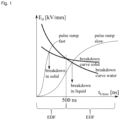
- the present invention presents an alternative solution to prior proposals relying on mechanical comminution or other attrition forces acting on the outside of the particles having waste concrete adhered to aggregate in the presence of carbon dioxide or relying only on EPF acting on the boundary between aggregate and RCP inside the particles., by using electric-pulse fragmentation combined with carbonation to separate waste concrete, especially the fraction ⁇ 32 mm, into clean aggregate and high quality carbonated recycled concrete paste (abbreviated cRCP).
- cRCP is substantially pure, i.e. comprises (almost) only the products of RCP carbonation. This renders it very suitable for the production of new low CO 2 -cements in various functions, especially as filler, SCM and calcium carbonate cement.
- clinker designates a sinter product obtained by burning a raw material at elevated temperature and containing at least one hydraulic phase.
- Burning means a change of one or more property of the starting material such as chemistry, crystallinity, phase composition, spatial arrangement and bonds of lattice atoms which is brought about by a supply of thermal energy.
- the starting material may be a single material, but usually it is a mixture.
- the starting material is typically finely ground and then designated as raw meal.
- the starting material may contain mineralizers, which are substances decreasing the temperature necessary for melting and/or act as fluxes and/or enhance clinker formation e.g. by forming solid solutions or stabilisation of phases. Mineralizers can be part of the starting material components or be added as separate component.
- Cement designates a material that, after mixing with an aqueous liquid to form a paste, is able to develop mechanical strength by hydraulic reaction (then it is a hydraulic cement) or by dissolution-precipitation.
- cement mostly denotes a clinker ground with or without further components, but also mixtures like super sulphated cement, geopolymer binder, and hydraulic materials not obtained by sintering like a dicalcium silicate obtained by hydrothermal treatment.
- Composite cement or binder mixture means a mixture containing an hydraulic cement and a supplementary cementitious material.
- a cement, composite cement or binder is usually used adding water or another liquid and mostly also aggregate. Typically, admixtures and/or additives are added to the binder and/or the paste.
- a supplementary cementitious material is defined as a pozzolanic and/or latent hydraulic material useful to replace a part of the clinker in a binder.
- Latent hydraulic materials have a composition that allows hydraulic reaction upon contact with water, wherein typically an activator is needed to enable hardening within technically feasible times.
- Activator means a substance that accelerates the hardening of latent hydraulic materials. It can be an addition like sulfate or calcium (hydr)oxide and/or products of the hydraulic reaction of the ground clinker, e.g. calcium silicates liberate calcium hydroxide during hardening.
- Pozzolanic materials are characterized by a content of reactive silica and/or alumina which form strength providing calcium silicate hydrates and calcium aluminate hydrates, respectively, during hydration of the clinker together with the calcium hydroxides liberated.
- the limit between latent hydraulic and pozzolanic materials is not well defined, for example fly ashes can be both latent hydraulic and pozzolanic depending on their calcium oxide content. Consequently, the term SCM designates both latent hydraulic as well as pozzolanic materials.
- SCM designates both latent hydraulic as well as pozzolanic materials.
- not reactive or only slightly reactive materials like limestone that substantially do not take part in the hydraulic reactivity have to be clearly differentiated from SCM, with which they are sometimes summarized as mineral additions.
- Calcium carbonate filler although not pozzolanic or latent hydraulic on its own, shows a synergistic effect with alumina rich SCMs and clinker phases and is hence often used in combination with SCMs. Generally, it is used as a filler in cements, optimizing strength and water demand by adding particles with sizes not covered by the other components.
- Hydraulically hardening building material means a wet mixture that is able to harden hydraulically, and comprises a cement or binder as well as optionally any other addition contained to adjust the properties like final strength, processability of the wet mixture and strength development properties, to the intended use of the building material.
- a concrete used to build a bridge needs other properties than a screed for casting a floor or a mortar for laying bricks.
- Building structure denotes the hardened building material, e.g. a pre-cast concrete element or a floor or a bridge part from cast in place concrete.
- waste concrete is converted into cRCP and clean aggregate by a particularly efficient separation of RCP from aggregate achieved by the combination of EPF and carbonation.
- Rich in carbonatable Ca and/or Mg phases means that at least 12.5 wt.-% of the waste material calculated as oxides is CaO and/or MgO and at least 80 wt.-% of the CaO and MgO is in carbonatable phases before carbonation.
- CaO and/or MgO constitute at least 20 wt.-%, more preferably at least 30 wt.-% and most preferred at least 50 wt.-% of the waste material.
- at least 85 wt.-%, more preferably at least 90 wt.-% of the CaO and MgO are in carbonatable phases.
- Suitable materials include amines like alkanolamines, for example primary amines like monoethanolamine (MEA) and diglycolamine (DGA), secondary amines like diethanolamine (DEA) and diisopropanolamine (DIPA), and tertiary amines like methyldiethanolamine (MDEA) and triethanolamine (TEA), or mixtures thereof, halogenides, ethylenediaminetetraacetic acid (EDTA) or other substances that improve dissolution of CO 2 in the solution.
- enzymes such as carbonic anhydrase can be used to enhance carbonation efficiency and modify the properties of the reaction products.
- amino acids e.g.
- the fraction recovered with a particle size ⁇ 250 ⁇ m, preferably ⁇ 125 ⁇ m, can be used for further processing as constituent in raw meal preparation for clinker production or as a filler in cement products.
- EPF cRCP with high carbonation degree when due to the conditions during subjecting the wet feedstock to EPF cRCP with high carbonation degree is recovered as fine fraction it can be used directly as SCM replacing clinker in cement production.
- carbon dioxide concentration and treatment time for EPF are adjusted to ensure the desired carbonation degree, preferably also one or more other parameters like temperature, pulse intensity, pressure and/or particle size in the wet feedstock are chosen and set to optimize, i.e. enhance, carbonation.
- RS aggregate with sizes from 0.125 or 0.250 mm - 2 or 4 mm
- RA aggregate with sizes > 2 or > 4 mm
- the carbonated RCP according to the invention is especially useful as filler and/or SCM in composite cements.
- the very efficient detaching of RCP from aggregate achieved by the EPF acting directly at the boundary between aggregate and RCP in combination with carbonation results in a fine product usually having a high carbonation degree of the cRCP of at least 50 wt.-%, often at least 65 wt.-%, even at least 80 wt.-%, of the CaO and MgO being carbonated, i.e. obtained in the form of a calcium or magnesium carbonate or hydrogen carbonate or other carbonate compound.
- Such cRCP is considered an SCM herein.
- the carbonated RCP obtained by the method according to the invention is mixed with an hydraulic cement.
- cRCP is not sufficiently carbonated for use as SCM, e.g. due to very low CO 2 concentrations or short treatment times, it can still be used as filler to replace mineral fillers like limestone, and, thus, is a valuable material.
- the carbonated RCP behaves substantially as filler when the carbonation degree is up to 40 wt.-% or up to 30 wt.-%.
- a use as component of cement raw meal is possible and preferred at very low carbonation degrees like up to 20 wt.-% or up to 10 wt.-%.
- the amount of carbonated RCP according to the invention ranges from 1 to 60 wt.-%, preferably from 5 to 40 wt.-%, most preferred from 10 to 20 wt.-%.
- the composite cements obtained according to the invention are useful for all applications where ordinary Portland cement and known composite cements are used, especially concrete, mortar, and construction chemical products such as screed, tile adhesive etc.
- aggregate and admixtures are added when making a hydraulically hardening building material like concrete or mortar from the composite cement.
- the known aggregate and usual admixtures are used in the usual amounts.
- any necessary aggregate and admixture is typically added to the composite cement to form a dry mix, as far as possible.
- the aggregate and admixture are chosen depending on use in a manner well known per se.
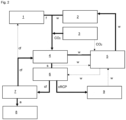
- the liquid phase is subjected to high voltage discharge pulses applied by a generator not shown.
- the liquid phase flows through the vessel allowing a continuous process.
- the fragmentation vessel can also be operated in batch mode. In that case several vessels can be operated in parallel to obtain a quasi-continuous process.
- the water is withdrawn separately from the wet solid material.
- the water is passed into a treatment device 5.
- carbon dioxide can be added if desired.
- present solid material can be separated from the water if needed, and e.g. passed to a sieving device.
- Treated water is then recirculated into the tank 2 and thus recycled.
- the recirculated process liquid may contain (unreacted) CO 2 in solution and can be recirculated back to the treatment vessel.
- the recirculation may include reconditioning the input of fresh CO 2 in order to adjust its concentration/saturation within the process liquid.
Landscapes
- Chemical & Material Sciences (AREA)
- Engineering & Computer Science (AREA)
- Ceramic Engineering (AREA)
- Materials Engineering (AREA)
- Structural Engineering (AREA)
- Organic Chemistry (AREA)
- Chemical Kinetics & Catalysis (AREA)
- General Chemical & Material Sciences (AREA)
- Processing Of Solid Wastes (AREA)
- Preparation Of Clay, And Manufacture Of Mixtures Containing Clay Or Cement (AREA)
Claims (18)
- Verfahren zur Herstellung von karbonatisiertem Recyclingzementstein und sauberer Gesteinskörnung, umfassend die folgenden Schritte:- Bereitstellen eines Ausgangsmaterials umfassend Betonabfall mit einem D10 ≥ 0,1 mm und einem D90 ≤ 100 mm- Einbringen von Ausgangsmaterial, einer wasserhaltigen Flüssigkeit und Kohlendioxid in einer Menge, die eine Konzentration von mindestens 0,1 Gew.-% Kohlendioxid in der Flüssigkeit bereitstellt, in einen Fragmentierungsbehälter, worin das nasse Ausgangsmaterial einer Elektroimpuls-Fragmentierung unterzogen wird,- Entnahme des fragmentierten festen Materials aus dem Fragmentierungsbehälter,- Trennung des fragmentierten festen Materials von der beigemischten flüssigen Phase,- Trennung des fragmentierten festen Materials in eine Feinfraktion mit einer maximalen Teilchengröße von 250 µm, um den karbonatisierten Recyclingzementstein bereitzustellen, und eine Grobfraktion- Rückführung der Grobfraktion in den Fragmentierungsbehälter und/oder Austragung der Grobfraktion als saubere Gesteinskörnung.
- Verfahren gemäß Anspruch 1, wobei als Betonabfall Betonabbruchabfall; Betonreste, die beim Bauen anfallen; Zement, der teilweise bei zu langer Lagerung ausgehärtet ist; Abfall, der bei der Reinigung von beim Betonieren verwendeten Vorrichtungen anfällt; oder Gemische aus zwei oder mehreren davon verwendet werden, wobei das Ausgangsmaterial bevorzugt aus einem Betonabfall oder mehreren Betonabfällen besteht.
- Verfahren gemäß Anspruch 1 oder 2, wobei das Ausgangsmaterial in einer Primär- oder Sekundärzerkleinerung von Betonabfall gewonnen wird, bevorzugt durch Techniken, welche die Produktion von Feinfraktionen minimieren, und/oder mit einer Korngrößenverteilung mit einem D90 von ≤ 50 mm, bevorzugt ≤ 32 mm, und/oder einem D10 ≥ 1 mm, bevorzugt ≥ 2 mm, bestimmt durch Sieben.
- Verfahren gemäß einem der Ansprüche 1 bis 3, wobei das Ausgangsmaterial zusätzliches Material enthält, das den Karbonatisierungsprozess beschleunigt und/oder die Endeigenschaften des karbonatisierten Recyclingzementsteins oder des damit hergestellten Zements oder eines mit dem Zement hergestellten Baumaterials verbessert, wobei bevorzugt auch das Ausgangsmaterial aus einem Betonabfall oder mehreren Betonabfällen besteht.
- Verfahren gemäß einem der Ansprüche 1 bis 4, wobei das zusätzliche Material eines oder mehrere von Alkanolaminen; Halogeniden; Substanzen, die die Löslichkeit von CO2 in der Lösung verbessern; Enzymen; Aminosäuren; Ammoniumsalzen; Substanzen, die den pH-Wert während der Karbonatisierung regulieren; Substanzen, die Alkalimetallionen bereitstellen; Magnesiumsalzen; Polyacrylsäure; Polyacrylamid; Polyvinylalkohol; Polyvinylsulfonsäuren; Styrolsulfonat; organischen Säuren; Polysacchariden; Phosphonaten; Polycarboxylaten; Verflüssigern; Fließmitteln; Luftporenbildnern; Verzögerern; Rheologiemodifizierern; Füllstoffen; Pigmenten; Bewehrungselementen; Selbstheilungsmitteln und Mischungen aus zwei oder mehr davon ist.
- Verfahren gemäß einem der Ansprüche 1 bis 5, wobei die flüssige Phase Wasser ist und/oder als Teil des Ausgangsmaterials bereitgestellt wird und/oder die vom festen Material abgetrennte flüssige Phase in den Behälter zurückgeführt wird.
- Verfahren gemäß einem der Ansprüche 1 bis 6, wobei Abgas als Kohlendioxid verwendet wird, bevorzugt Abgas aus Zementwerken, Kalkwerken, Kohlekraftwerken, Gaskraftwerken, Müllverbrennungsanlagen oder eine Mischung aus solchen Abgasen.
- Verfahren gemäß einem der Ansprüche 1 bis 6, wobei eine Kohlendioxidlösung als Kohlendioxid verwendet wird, bevorzugt eine Lösung von Kohlendioxid in der flüssigen Phase oder die einen Teil der flüssigen Phase bildet.
- Verfahren gemäß einem der Ansprüche 1 bis 8, wobei die Kohlendioxidkonzentration in der Flüssigkeit im Inneren des Behälters im Bereich von 0,1 bis 20 Gew.-% liegt, bevorzugt von 0,5 bis 10 Gew.-%, besonders bevorzugt von 1 bis 5 Gew.-%, am meisten bevorzugt die flüssige Phase Wasser und mit CO2 gesättigt ist.
- Verfahren gemäß einem der Ansprüche 1 bis 9, wobei die Temperatur auf einen Bereich von 30 bis 95 °C, bevorzugt auf 40 bis 95 °C, eingestellt wird.
- Verfahren gemäß einem der Ansprüche 1 bis 10, wobei elektrische Impulse während der Elektroimpuls-Fragmentierung eine Anstiegszeit von ≤ 1 µsec. und/oder eine Spannung von ≥ 90 kV aufweisen.
- Verfahren gemäß einem der Ansprüche 1 bis 11, wobei das fragmentierte feste Material von der flüssigen Phase durch Filtration oder Dekantieren, bevorzugt durch Filtration, abgetrennt wird.
- Verfahren gemäß einem der Ansprüche 1 bis 12, wobei die abgezogene flüssige Phase, von der das feste Material abgetrennt wurde, in den Reaktionsbehälter zurückgeführt wird, gegebenenfalls nach Erhöhung ihrer Kohlendioxidkonzentration.
- Verfahren zur Herstellung eines Kompositzements, umfassend die Bereitstellung von karbonatisiertem Recyclingzementstein erhältlich durch ein Verfahren gemäß einem der Ansprüche 1 bis 13 und Mischen des karbonatisierten Recyclingzementsteins mit einem hydraulischen Zement.
- Verfahren gemäß Anspruch 14, wobei der Kompositzement den karbonatisierten Recyclingzementstein als Klinkerersatzmaterial umfasst und 95 bis 5 Gew.-% karbonatisierten Recyclingzementstein, bevorzugt 70 bis 10 Gew.-% karbonatisierten Recyclingzementstein, am meisten bevorzugt 50 bis 20 Gew.-% karbonatisierten Recyclingzementstein, umfasst; oder wobei der Kompositzement den karbonatisierten Recyclingzementstein als Füllstoff umfasst und 1 bis 60 Gew.-% karbonatisierten Recyclingzementstein, bevorzugt 5 bis 40 Gew.-% karbonatisierten Recyclingzementstein, am meisten bevorzugt 10 bis 20 Gew.-% karbonatisierten Recyclingzementstein, umfasst.
- Verfahren gemäß Anspruch 14 oder 15, wobei der hydraulische Zement Portlandzement, Portlandkompositzement, Calciumsulfoaluminatzement, Calciumaluminatzement und/oder Dicalciumsilikat-Zement ist, bevorzugt ein Portlandzement nach DIN EN 197-1, Calciumsulfoaluminatzement oder Calciumaluminatzement, besonders bevorzugt ein Portlandzement nach DIN EN 197-1.
- Verfahren gemäß einem der Ansprüche 14 bis 16, wobei während der Elektroimpuls-Fragmentierung des nassen Ausgangsmaterials die Kohlendioxidkonzentration und die Behandlungszeit so eingestellt werden, dass der karbonatisierte Recyclingzementstein einen Karbonatisierungsgrad von mindestens 50 Gew.-% aufweist.
- Verfahren zur Herstellung eines Calciumcarbonatzements, umfassend die Bereitstellung von karbonatisiertem Recyclingzementstein durch ein Verfahren gemäß einem der Ansprüche 1 bis 13, wobei während der Elektroimpuls-Fragmentierung des nassen Ausgangsmaterials die Kohlendioxidkonzentration und die Behandlungszeit so eingestellt werden, dass der karbonatisierte Recyclingzementstein einen Karbonatisierungsgrad von mindestens 50 Gew.-% aufweist.
Applications Claiming Priority (2)
| Application Number | Priority Date | Filing Date | Title |
|---|---|---|---|
| EP21188485.3A EP4124609A1 (de) | 2021-07-29 | 2021-07-29 | Trennung von gehärteter betonpaste aus zuschlagstoffen |
| PCT/EP2022/070679 WO2023006623A1 (en) | 2021-07-29 | 2022-07-22 | Separation of hardened concrete paste from aggregate |
Publications (3)
| Publication Number | Publication Date |
|---|---|
| EP4377277A1 EP4377277A1 (de) | 2024-06-05 |
| EP4377277B1 true EP4377277B1 (de) | 2025-07-02 |
| EP4377277C0 EP4377277C0 (de) | 2025-07-02 |
Family
ID=77126658
Family Applications (2)
| Application Number | Title | Priority Date | Filing Date |
|---|---|---|---|
| EP21188485.3A Withdrawn EP4124609A1 (de) | 2021-07-29 | 2021-07-29 | Trennung von gehärteter betonpaste aus zuschlagstoffen |
| EP22754397.2A Active EP4377277B1 (de) | 2021-07-29 | 2022-07-22 | Trennung von gehärteter betonpaste vom zuschlagsstoff |
Family Applications Before (1)
| Application Number | Title | Priority Date | Filing Date |
|---|---|---|---|
| EP21188485.3A Withdrawn EP4124609A1 (de) | 2021-07-29 | 2021-07-29 | Trennung von gehärteter betonpaste aus zuschlagstoffen |
Country Status (7)
| Country | Link |
|---|---|
| US (1) | US20240262743A1 (de) |
| EP (2) | EP4124609A1 (de) |
| AU (1) | AU2022320862A1 (de) |
| CA (1) | CA3221551A1 (de) |
| ES (1) | ES3036809T3 (de) |
| PL (1) | PL4377277T3 (de) |
| WO (1) | WO2023006623A1 (de) |
Families Citing this family (7)
| Publication number | Priority date | Publication date | Assignee | Title |
|---|---|---|---|---|
| CN116693225B (zh) * | 2023-06-02 | 2024-04-02 | 山东大学 | 一种再生骨料旧砂浆薄弱层剔除方法 |
| EP4488346A1 (de) | 2023-07-03 | 2025-01-08 | Heidelberg Materials AG | Verfahren zum aufbereiten von biogas und synthesegas |
| EP4530272A1 (de) * | 2023-09-29 | 2025-04-02 | amaTEQ Holding GmbH | Recycling von beton |
| WO2025093623A1 (en) * | 2023-10-30 | 2025-05-08 | Holcim Technology Ltd | Method of obtaining calcium rich particles from a construction demolition waste |
| CN118290115B (zh) * | 2024-06-06 | 2024-09-24 | 内蒙古蒙西鄂尔多斯铝业有限公司 | 一种硅钙渣碳化制作建筑材料的方法 |
| EP4692021A1 (de) | 2024-08-07 | 2026-02-11 | Heidelberg Materials AG | Zugabe von recyceltem zementstein in den klinkerkühler |
| WO2026039852A1 (de) * | 2024-08-23 | 2026-02-26 | Sequestra Flexco | Anlage und verfahren zur karbonatisierung |
Family Cites Families (7)
| Publication number | Priority date | Publication date | Assignee | Title |
|---|---|---|---|---|
| US2802719A (en) | 1954-05-07 | 1957-08-13 | Souren Z Avedikian | Process of preparing completely carbonated lime |
| JP3123810B2 (ja) | 1992-02-29 | 2001-01-15 | 住友大阪セメント株式会社 | セメント増量材およびその製造方法 |
| EP2708520A1 (de) | 2012-09-14 | 2014-03-19 | Cemex Research Group AG | Verfahren zur Herstellung von Zuschlag sowie von Kalziumcarbonat aus Beton-Gesteinskörnung sowie eine Vorrichtung zur Durchführung des Verfahrens |
| CN105102396B (zh) | 2013-03-28 | 2019-01-22 | Sika技术股份公司 | 从拆除废料收回骨料和粉状矿物材料 |
| AU2018382566B2 (en) | 2017-12-13 | 2023-12-21 | Heidelbergcement Ag | Method for simultaneous exhaust gas cleaning and manufacturing of supplementary cementitious material |
| EP3498681A1 (de) | 2017-12-13 | 2019-06-19 | HeidelbergCement AG | Verwendung von kohlensäurehaltigen recycelten wiederverwendeten betonteilchen als zusätzliches zementmaterial |
| DK3744700T3 (da) | 2019-05-28 | 2022-09-26 | Heidelbergcement Ag | Forbedret fremgangsmåde og indretning til karbonisering af betonaffald og/eller sekvestrering af co2 |
-
2021
- 2021-07-29 EP EP21188485.3A patent/EP4124609A1/de not_active Withdrawn
-
2022
- 2022-07-22 AU AU2022320862A patent/AU2022320862A1/en active Pending
- 2022-07-22 ES ES22754397T patent/ES3036809T3/es active Active
- 2022-07-22 US US18/567,112 patent/US20240262743A1/en active Pending
- 2022-07-22 CA CA3221551A patent/CA3221551A1/en active Pending
- 2022-07-22 EP EP22754397.2A patent/EP4377277B1/de active Active
- 2022-07-22 PL PL22754397.2T patent/PL4377277T3/pl unknown
- 2022-07-22 WO PCT/EP2022/070679 patent/WO2023006623A1/en not_active Ceased
Also Published As
| Publication number | Publication date |
|---|---|
| EP4377277A1 (de) | 2024-06-05 |
| EP4124609A1 (de) | 2023-02-01 |
| PL4377277T3 (pl) | 2025-08-11 |
| CA3221551A1 (en) | 2023-02-02 |
| AU2022320862A1 (en) | 2023-11-30 |
| US20240262743A1 (en) | 2024-08-08 |
| WO2023006623A1 (en) | 2023-02-02 |
| EP4377277C0 (de) | 2025-07-02 |
| ES3036809T3 (en) | 2025-09-24 |
Similar Documents
| Publication | Publication Date | Title |
|---|---|---|
| US20240262743A1 (en) | Separation of hardened concrete paste from aggregate | |
| EP4308516B1 (de) | Verfahren und vorrichtung zur karbonatisierung | |
| EP3808713A1 (de) | Integriertes verfahren zur herstellung von hydraulisch härtendem baumaterial | |
| EP4396149B1 (de) | Verfahren zur herstellung von klinkerersatzmaterial | |
| AU2022351051B2 (en) | Improving reactivity of carbonated recycled concrete fines | |
| US12428353B2 (en) | Classification and recombination of different SCM and cement fractions to efficiently manufacture cement-SCM compositions | |
| US20250289756A1 (en) | Composite cement containing recycled cement paste and calcined clay | |
| Soomro et al. | Quality improvement of recycled aggregate | |
| WO2023169798A1 (en) | Method for carbonating waste materials | |
| KR20250097800A (ko) | 배합 시멘트, 이의 제조 방법, 및 배합 시멘트의 성능을 증가시키기 위한 혼합물의 용도 | |
| EP4484396A1 (de) | Verfahren zur herstellung von verbundzement | |
| WO2025233483A1 (en) | Separation methods | |
| EP4692021A1 (de) | Zugabe von recyceltem zementstein in den klinkerkühler | |
| JP2005320201A (ja) | 廃コンクリート微粉末を用いたセメント組成物及びその製造方法 |
Legal Events
| Date | Code | Title | Description |
|---|---|---|---|
| STAA | Information on the status of an ep patent application or granted ep patent |
Free format text: STATUS: UNKNOWN |
|
| STAA | Information on the status of an ep patent application or granted ep patent |
Free format text: STATUS: THE INTERNATIONAL PUBLICATION HAS BEEN MADE |
|
| PUAI | Public reference made under article 153(3) epc to a published international application that has entered the european phase |
Free format text: ORIGINAL CODE: 0009012 |
|
| STAA | Information on the status of an ep patent application or granted ep patent |
Free format text: STATUS: REQUEST FOR EXAMINATION WAS MADE |
|
| 17P | Request for examination filed |
Effective date: 20231222 |
|
| AK | Designated contracting states |
Kind code of ref document: A1 Designated state(s): AL AT BE BG CH CY CZ DE DK EE ES FI FR GB GR HR HU IE IS IT LI LT LU LV MC MK MT NL NO PL PT RO RS SE SI SK SM TR |
|
| DAV | Request for validation of the european patent (deleted) | ||
| DAX | Request for extension of the european patent (deleted) | ||
| GRAP | Despatch of communication of intention to grant a patent |
Free format text: ORIGINAL CODE: EPIDOSNIGR1 |
|
| STAA | Information on the status of an ep patent application or granted ep patent |
Free format text: STATUS: GRANT OF PATENT IS INTENDED |
|
| INTG | Intention to grant announced |
Effective date: 20250225 |
|
| GRAS | Grant fee paid |
Free format text: ORIGINAL CODE: EPIDOSNIGR3 |
|
| GRAA | (expected) grant |
Free format text: ORIGINAL CODE: 0009210 |
|
| STAA | Information on the status of an ep patent application or granted ep patent |
Free format text: STATUS: THE PATENT HAS BEEN GRANTED |
|
| AK | Designated contracting states |
Kind code of ref document: B1 Designated state(s): AL AT BE BG CH CY CZ DE DK EE ES FI FR GB GR HR HU IE IS IT LI LT LU LV MC MK MT NL NO PL PT RO RS SE SI SK SM TR |
|
| REG | Reference to a national code |
Ref country code: GB Ref legal event code: FG4D |
|
| REG | Reference to a national code |
Ref country code: CH Ref legal event code: EP |
|
| REG | Reference to a national code |
Ref country code: DE Ref legal event code: R096 Ref document number: 602022016993 Country of ref document: DE |
|
| REG | Reference to a national code |
Ref country code: IE Ref legal event code: FG4D |
|
| U01 | Request for unitary effect filed |
Effective date: 20250710 |
|
| U07 | Unitary effect registered |
Designated state(s): AT BE BG DE DK EE FI FR IT LT LU LV MT NL PT RO SE SI Effective date: 20250716 |
|
| REG | Reference to a national code |
Ref country code: ES Ref legal event code: FG2A Ref document number: 3036809 Country of ref document: ES Kind code of ref document: T3 Effective date: 20250924 |
|
| PGFP | Annual fee paid to national office [announced via postgrant information from national office to epo] |
Ref country code: ES Payment date: 20250925 Year of fee payment: 4 |
|
| PGFP | Annual fee paid to national office [announced via postgrant information from national office to epo] |
Ref country code: PL Payment date: 20250822 Year of fee payment: 4 |
|
| U20 | Renewal fee for the european patent with unitary effect paid |
Year of fee payment: 4 Effective date: 20250929 |
|
| PG25 | Lapsed in a contracting state [announced via postgrant information from national office to epo] |
Ref country code: IS Free format text: LAPSE BECAUSE OF FAILURE TO SUBMIT A TRANSLATION OF THE DESCRIPTION OR TO PAY THE FEE WITHIN THE PRESCRIBED TIME-LIMIT Effective date: 20251102 |
|
| PG25 | Lapsed in a contracting state [announced via postgrant information from national office to epo] |
Ref country code: NO Free format text: LAPSE BECAUSE OF FAILURE TO SUBMIT A TRANSLATION OF THE DESCRIPTION OR TO PAY THE FEE WITHIN THE PRESCRIBED TIME-LIMIT Effective date: 20251002 |
|
| PG25 | Lapsed in a contracting state [announced via postgrant information from national office to epo] |
Ref country code: HR Free format text: LAPSE BECAUSE OF FAILURE TO SUBMIT A TRANSLATION OF THE DESCRIPTION OR TO PAY THE FEE WITHIN THE PRESCRIBED TIME-LIMIT Effective date: 20250702 |
|
| PG25 | Lapsed in a contracting state [announced via postgrant information from national office to epo] |
Ref country code: GR Free format text: LAPSE BECAUSE OF FAILURE TO SUBMIT A TRANSLATION OF THE DESCRIPTION OR TO PAY THE FEE WITHIN THE PRESCRIBED TIME-LIMIT Effective date: 20251003 |
|
| PG25 | Lapsed in a contracting state [announced via postgrant information from national office to epo] |
Ref country code: CZ Free format text: LAPSE BECAUSE OF FAILURE TO SUBMIT A TRANSLATION OF THE DESCRIPTION OR TO PAY THE FEE WITHIN THE PRESCRIBED TIME-LIMIT Effective date: 20250702 |
|
| PG25 | Lapsed in a contracting state [announced via postgrant information from national office to epo] |
Ref country code: RS Free format text: LAPSE BECAUSE OF FAILURE TO SUBMIT A TRANSLATION OF THE DESCRIPTION OR TO PAY THE FEE WITHIN THE PRESCRIBED TIME-LIMIT Effective date: 20251002 |
|
| REG | Reference to a national code |
Ref country code: CH Ref legal event code: H13 Free format text: ST27 STATUS EVENT CODE: U-0-0-H10-H13 (AS PROVIDED BY THE NATIONAL OFFICE) Effective date: 20260224 |
|
| PG25 | Lapsed in a contracting state [announced via postgrant information from national office to epo] |
Ref country code: SM Free format text: LAPSE BECAUSE OF FAILURE TO SUBMIT A TRANSLATION OF THE DESCRIPTION OR TO PAY THE FEE WITHIN THE PRESCRIBED TIME-LIMIT Effective date: 20250702 |
|
| PG25 | Lapsed in a contracting state [announced via postgrant information from national office to epo] |
Ref country code: CH Free format text: LAPSE BECAUSE OF NON-PAYMENT OF DUE FEES Effective date: 20250731 |
|
| PG25 | Lapsed in a contracting state [announced via postgrant information from national office to epo] |
Ref country code: SK Free format text: LAPSE BECAUSE OF FAILURE TO SUBMIT A TRANSLATION OF THE DESCRIPTION OR TO PAY THE FEE WITHIN THE PRESCRIBED TIME-LIMIT Effective date: 20250702 |
|
| PLBE | No opposition filed within time limit |
Free format text: ORIGINAL CODE: 0009261 |
|
| STAA | Information on the status of an ep patent application or granted ep patent |
Free format text: STATUS: NO OPPOSITION FILED WITHIN TIME LIMIT |