EP4376397A1 - Multi-region communication detail records - Google Patents
Multi-region communication detail records Download PDFInfo
- Publication number
- EP4376397A1 EP4376397A1 EP23212748.0A EP23212748A EP4376397A1 EP 4376397 A1 EP4376397 A1 EP 4376397A1 EP 23212748 A EP23212748 A EP 23212748A EP 4376397 A1 EP4376397 A1 EP 4376397A1
- Authority
- EP
- European Patent Office
- Prior art keywords
- cdr
- country
- specific
- router
- metadata
- Prior art date
- Legal status (The legal status is an assumption and is not a legal conclusion. Google has not performed a legal analysis and makes no representation as to the accuracy of the status listed.)
- Granted
Links
Images


Classifications
-
- H—ELECTRICITY
- H04—ELECTRIC COMMUNICATION TECHNIQUE
- H04M—TELEPHONIC COMMUNICATION
- H04M3/00—Automatic or semi-automatic exchanges
- H04M3/22—Arrangements for supervision, monitoring or testing
- H04M3/2218—Call detail recording
-
- H—ELECTRICITY
- H04—ELECTRIC COMMUNICATION TECHNIQUE
- H04L—TRANSMISSION OF DIGITAL INFORMATION, e.g. TELEGRAPHIC COMMUNICATION
- H04L12/00—Data switching networks
- H04L12/02—Details
- H04L12/14—Charging, metering or billing arrangements specially adapted for data communications, e.g. authentication, authorisation and accounting [AAA] framework
-
- H—ELECTRICITY
- H04—ELECTRIC COMMUNICATION TECHNIQUE
- H04M—TELEPHONIC COMMUNICATION
- H04M15/00—Arrangements for metering, time-control or time indication ; Metering, charging or billing arrangements for voice wireline or wireless communications, e.g. VoIP
-
- H—ELECTRICITY
- H04—ELECTRIC COMMUNICATION TECHNIQUE
- H04M—TELEPHONIC COMMUNICATION
- H04M15/00—Arrangements for metering, time-control or time indication ; Metering, charging or billing arrangements for voice wireline or wireless communications, e.g. VoIP
- H04M15/41—Billing record details, i.e. parameters, identifiers, structure of call data record [CDR]
-
- H—ELECTRICITY
- H04—ELECTRIC COMMUNICATION TECHNIQUE
- H04M—TELEPHONIC COMMUNICATION
- H04M15/00—Arrangements for metering, time-control or time indication ; Metering, charging or billing arrangements for voice wireline or wireless communications, e.g. VoIP
- H04M15/43—Billing software details
-
- H—ELECTRICITY
- H04—ELECTRIC COMMUNICATION TECHNIQUE
- H04M—TELEPHONIC COMMUNICATION
- H04M15/00—Arrangements for metering, time-control or time indication ; Metering, charging or billing arrangements for voice wireline or wireless communications, e.g. VoIP
- H04M15/44—Augmented, consolidated or itemized billing statement or bill presentation
-
- H—ELECTRICITY
- H04—ELECTRIC COMMUNICATION TECHNIQUE
- H04M—TELEPHONIC COMMUNICATION
- H04M15/00—Arrangements for metering, time-control or time indication ; Metering, charging or billing arrangements for voice wireline or wireless communications, e.g. VoIP
- H04M15/58—Arrangements for metering, time-control or time indication ; Metering, charging or billing arrangements for voice wireline or wireless communications, e.g. VoIP based on statistics of usage or network monitoring
-
- H—ELECTRICITY
- H04—ELECTRIC COMMUNICATION TECHNIQUE
- H04M—TELEPHONIC COMMUNICATION
- H04M3/00—Automatic or semi-automatic exchanges
- H04M3/22—Arrangements for supervision, monitoring or testing
- H04M3/2281—Call monitoring, e.g. for law enforcement purposes; Call tracing; Detection or prevention of malicious calls
-
- H—ELECTRICITY
- H04—ELECTRIC COMMUNICATION TECHNIQUE
- H04W—WIRELESS COMMUNICATION NETWORKS
- H04W4/00—Services specially adapted for wireless communication networks; Facilities therefor
- H04W4/24—Accounting or billing
-
- H—ELECTRICITY
- H04—ELECTRIC COMMUNICATION TECHNIQUE
- H04M—TELEPHONIC COMMUNICATION
- H04M2203/00—Aspects of automatic or semi-automatic exchanges
- H04M2203/15—Aspects of automatic or semi-automatic exchanges related to dial plan and call routing
- H04M2203/158—Call-type dependent routing
-
- H—ELECTRICITY
- H04—ELECTRIC COMMUNICATION TECHNIQUE
- H04M—TELEPHONIC COMMUNICATION
- H04M2203/00—Aspects of automatic or semi-automatic exchanges
- H04M2203/60—Aspects of automatic or semi-automatic exchanges related to security aspects in telephonic communication systems
- H04M2203/6009—Personal information, e.g. profiles or personal directories being only provided to authorised persons
Definitions
- This disclosure relates to systems and methods for routing a communication detail record (CDR) or portions thereof to one or more country-specific CDR storage units.
- CDR communication detail record
- a telecom system operator (or “operator” or “service operator”) may adopt the privacy laws of the country for the address in which a customer's account is based. There is a risk, however, that following such a rule would be found to be a violation of a region's or a country's privacy act.
- Methods and systems of this disclosure address the problem of storing telecom metadata to meet country-specific or region-specific laws. They utilize a CDR router that is capable of inspecting/analyzing CDRs (or portions thereof) and routing the CDRs to the appropriate country(ies) to meet regulatory laws governing their storage.
- "law” or “laws” means any law, treaty, contract, rule, or regulation
- “CDR” means a CDR or another portion thereof.
- IPDRs Internet Protocol Detail Records
- a first aspect of this disclosure provides a computer system configured to store and/or route portions of a communication detail record (CDR), wherein the computer system comprises: a telecommunication server of a telecommunication system operator, wherein the telecommunication server is configured to facilitate a communication; a metadata database in communication with the telecommunication server, wherein the metadata database is configured to store metadata of the communications as a CDR; and a CDR router configured to analyze the metadata in each CDR and based on the analysis route the CDR to one or more of (a) a telecommunication system operator CDR storage unit, and (b) one or more country-specific and/or region-specific CDR storage units.
- CDR communication detail record
- the communication may be a phone call, a video conference, a text, or an email.
- the CDR router may be further configured to route the CDR from the telecommunication system operator CDR storage unit to one or more country-specific CDR storage units and/or region-specific CDR storage units based on either (a) an analysis of the metadata of the CDRs, or (b) a request to the CDR router from a country-specific server or a region-specific server.
- the computer system may further include a legal database in communication with the CDR router, wherein the legal database includes the legal requirements for CDR storage of one or more countries and/or one or more regions.
- the computer system may further include a legal server in communication with the legal database, wherein the legal server is configured to obtain updates to the legal requirements and store them in the legal database.
- the telecommunication system operator may be a communication service provider.
- the computer system may further comprise a transfer database in communication with the CDR router, and the CDR router is further configured to (a) create a record for each routed CDR, wherein the transfer record comprises information regarding a routing of the CDR, and (b) store the transfer record in the transfer database.
- Each CDR may comprise country-origin metadata of a communication by one or more of: a participant, a group, an organization, an organization head office, an organization satellite office at which a participant works, the telecommunication system operator the participant used, and a billing address.
- the CDR may include country information for one or more countries associated with the CDR, and the computer system may further comprise a country resolver in communication with the CDR router, wherein the country resolver is configured to determine a country associated with a CDR if the CDR lacks the information, wherein the determination is based on an analysis by the country resolver of the metadata of the CDR.
- the CDR router may be further configured to route the CDR to the one or more country-specific CDR storage units or region-specific CDR storage units and to not store the CDR in the telecommunication system operator CDR storage unit.
- the CDR router may be further configured to: analyze the CDR for details of participants' respective country(ies) of origin, and/or the country of a group or organization to which a participant belongs, and based on the details route a copy of the CDR to the one or more country-specific CDR storage units or region-specific CDR storage units and optionally wherein the CDR router is further configured to automatically route a copy of the CDR to a country-specific CDR storage unit or region-specific CDR storage unit in which the participant resides, and exclude from the routed CDR metadata related to participants on a country exemption list.
- the country resolver may be further configured to provide to a service operations team an identification of participants in a CDR whose country cannot be resolved in order for the service operations team to (a) determine if the CDR is corrupted and if so, uncorrupt the CDR, and/or (b) program an algorithm of the country resolver to modify a function of the country resolver in order to automatically uncorrupt a similar CDR in the future.
- the computer system may be further configured to exclude CDR storage in either the telecommunication system operator CDR storage unit, a country-specific CDR storage unit, or a region-specific CDR storage unit if the storage is prohibited by the laws of any country or region.
- a second aspect of this disclosure provides a computer method operable on a telecommunications system for storing and/or a routing a CDR, wherein the computer method comprises the following steps: a metadata database receiving, from a telecommunication server of a telecommunication system operator, metadata from a communication that occurs on the telecommunication server; the metadata database storing the metadata as a CDR; and routing, utilizing a CDR router, the CDR to one or more of (a) a telecommunication system operator CDR storage unit, and (b) one or more country-specific CDR storage units and/or one or more region-specific CDR storage units.
- the computer method may further include the steps of: utilizing a legal server in communication with a legal database, determining one or more county or regional laws pertaining to storing CDR; and the CDR router routing the CDR to one or more country-specific CDR storage units and/or one or more region-specific CDR storage units based on the one or more country or regional laws pertaining to storing CDR.
- the computer method may further comprises the steps of: the CDR router receiving from a country-specific server or a region-specific server a request to route a CDR; the CDR router checking cross-border transfer agreements stored in a legal database; and utilizing the CDR router, determine the metadata in the requested CDR and, if the request does not violate a cross-border transfer agreement, routing the requested CDR to the country-specific CDR storage unit or region-specific CDR storage unit.
- the computer method may further include the step of, by utilizing a legal server in communication with a legal database, determining to which country-specific CDR storage unit or region-specific CDR storage unit each piece of metadata in a CDR must be routed.
- the computer method may further include the step of the CDR router transferring a CDR from the metadata database based on a communication by a customer processor to the CDR router.
- the computer method may further include the step of deleting the CDR from the metadata database if the CDR is routed to a country-specific CDR storage unit or a region-specific CDR storage unit.
- a third aspect of this disclosure provides a computer system configured to store and/or route a CDR
- the computer-system comprises: a telecommunication server of a telecommunication system operator, wherein the telecommunication server is configured to facilitate a communication; a metadata database in communication with the telecommunication server, wherein the metadata database is configured to store metadata of the communication as a CDR, wherein the CDR includes country information for one or more countries associated with the CDR; a CDR router configured to analyze the metadata in the CDR and based on the analysis route the CDR to one or more of (a) a telecommunication system operator CDR storage unit, and (b) one or more country-specific or region-specific CDR storage units; and a country resolver in communication with the CDR router, wherein the country resolver is configured to determine a country associated with a CDR if the CDR lacks the information, wherein the determination is based on an analysis by the country resolver of the metadata of the CDR.
- the CDR router may be further configured to route the CDR to the one or more country-specific CDR storage units or region-specific CDR storage units and to not store the CDR in the telecommunication system operator CDR storage unit.
- the CDR router may be further configured to: analyze the CDR for details of participants' respective country(ies) of origin, and/or the country of a group or organization to which a participant belongs, and based on the details route a copy of the CDR to the one or more country-specific CDR storage units or region-specific CDR storage units.
- the country resolver may be further configured to provide to a service operations team an identification of participants in a CDR whose country cannot be resolved in order for the service operations team to (a) determine if the CDR is corrupted and if so, uncorrupt the CDR, and/or (b) program an algorithm of the country resolver to modify a function of the country resolver in order to automatically uncorrupt a similar CDR in the future.
- the CDR router may be further configured to automatically route a copy of the CDR to a country-specific CDR storage unit or region-specific CDR storage unit in which the participant resides, and exclude from the routed CDR metadata related to participants on a country exemption list.
- the computer system may be further configured to exclude CDR storage in either the telecommunication system operator CDR storage unit, a country-specific CDR storage unit, or a region-specific CDR storage unit if the storage is prohibited by the laws of any country or region.
- a computer storage medium can be, or be included in, a computer-readable storage device, a computer-readable storage substrate, a random or serial access memory array or device, or a combination of one or more of the substrates and devices.
- a computer storage medium is not a propagated signal, a computer storage medium can be a source or destination of computer program instructions encoded in an artificially-generated propagated signal.
- the computer storage medium can also be, or be included in, one or more separate physical components or media (e.g., solid-state memory that forms part of a device, disks, or other storage devices).
- a non-transient computer readable medium containing program can perform functions of one or more methods, modules, engines and/or other system components as described herein.
- database refers to any suitable database for storing information, electronic files or code to be utilized to practice embodiments of this disclosure.
- server processor
- router refers to any suitable server, processor, router, computer or computing device suitable for performing functions utilized to practice embodiments of this disclosure.
- CDR router that is capable of analyzing CDRs and routing the CDRs ("CDR" includes a portion or all of a CDR) to the appropriate country or countries for storage to satisfy country and regional CDR laws.
- CDR includes a portion or all of a CDR
- a country may only require storage of CDRs involving its citizens, or a country may require all CDRs of a telecom event in which one of its citizens participated.
- Methods and systems of this disclosure can also be used to regionalize CDR based on criteria. For example, updates to regulations due to Network Information Systems (NIS) directives require proper audit logging of the distribution of CDRs.
- NIS Network Information Systems
- FIG. 1 illustrates a system 10 according to this disclosure.
- System 10 includes a telecommunications server 18 that is configured to communicate with participant devices 12, 14, and 16, although the participant devices used not be part of a claimed system or method herein.
- a telecom event 20 occurs.
- Telecom event 20 can be a phone call or conference, a video call or conference, a text, a chat, an email, or any type of communication facilitated by telecommunications server 18.
- Telecommunications server 18 is operated by a service operator and is resident in a country.
- the CDR includes information such as the names of the people who participated (each being a "participant") in the telecom event 20, each participant's phone number or internet protocol (IP) addresses, the name of each participant's organization, the location of each organization, the location from which each participant participated in the telecom event, the date and time that each telecom event 20 started and stopped, and the time that each participant joined and left the telecom event 20.
- IP internet protocol
- the CDRs 22 can either be first sent to a CDR router 24 or to a service operator storage 30.
- CDR router 24 is configured to analyze and route (both in the manner described herein) CDRs 22.
- the service operator storage 30 is any suitable electronic storage, such as those known for storing CDRs, and can be cloud-based electronic storage.
- Service operator storage 30 may be in communication with CDR router 24 and receive CDRs 22 directly and send CDRs 22 to CDR router 24.
- CDR router 24 can send CDRs 22 to service operator storage 30.
- a CDR 22 will not be stored in service operator storage 30 because of a country or regional law prohibiting the storage.
- CDR router 24 has a country resolver 25.
- Country resolver 25 is software that operates to (1) resolve the origin country of a participant of a telecom event 20 if that information is not in the CDR 22, and (2) adding the information.
- Country resolver 25 may, for example, identify the country of a participant by a participant's phone number, IP address, or the location of the participant's organization.
- Country resolver as shown is resident and operates on CDR router 24 although it may be part of another processor, computer, or other device in communication with CDR router 24. Any suitable process, however, to determine the country associated with a participant may be used by country.
- a legal database 26 is in communication with, and could be resident on, CDR router 24.
- Legal database 26 includes country and regional laws regarding the storage of CDRs 22.
- a legal server 28 may be utilized to update legal database 26 and legal server 28 may be part of CDR router 24 or be separate from it.
- Legal server 28 could be in communication with outside electronic sources to automatically obtain new laws or changed laws related to CDR storage, and could automatically update legal database 26.
- the service operator or a third party could add updates to legal database 24, in which case legal server 28 need not be used.
- CDR router 24 is configured to inspect/analyze CDRs 22 and, based on the information in legal database 26, route each CDR 22 to one or more country-specific storages 34.
- CDR router 24 may, if required or not prohibited by the law governing the treatment of a CDR 22, also route a CDR 22 to the service operator database 30.
- a transfer database 32 is in communication with CDR router 24 and may be resident on CDR router 24.
- Transfer database 22 maintains a log of information regarding the transfer of each CDR 22. The log may include sufficient information to identify the CDR 22, when the CDR 22 was created, when the CDR 22 was routed by CDR router 24, and to each location where the CDR 22 was routed.
- a customer processor 27 is separate from system 10 but may be in constant or intermittent communication with CDR router 24 and be able to send a command or request to CDR router 24 to route a CDR 22 to a particular country storage 34 and/or to a particular customer storage 35.
- FIG. 2 shows an exemplary method 100 according to this disclosure.
- 114, 116 are created and are typically correlated to form a CDR 22-A, 22-B, 22N (steps 118, 119, 120).
- CDRs 22 are typically routed CDR router 24 (step 122) and stored in the service operator storage 30 (step 126) at the service operator's location. According to any system and method of this disclosure, if the law prohibits the storage in service operator storage 30 the CDR 22 will not be stored there.
- the CDR router 24 which can be introduced prior to the operator's storage 30 as shown in FIG. 1 , or after the service operator storage 30 as shown in FIG. 1 and FIG. 2 .
- the CDR router 24 can inspect/analyze a CDR 22 for information about a participant's country of origin, or the country of origin of a group to which the participant belongs. Using this data, the CDR router 24 can make a copy of each CDR 22 and transmit it (steps 124, 126, 128) to the appropriate countries to satisfy country-specific or region-specific laws.
- country resolver 25 is configured to deduce the necessary country data based on the address information typically in a CDR 22.
- Figure 3 illustrates an alternate method to FIG. 2 , in which the CDRs 22 are first routed to the service operator storage 30.
- FIGs. 4-5 illustrate similar methods, but in FIG. 3 the CDR 22 is sent immediately for inspections/analysis, wherein in FIG. 5 the CDR 22 is extracted from operator storage 30 and sent for inspection/analysis.
- the CDR router 24 copies (if required because the CDR will be routed to more than one location) at step 308 the CDR 22 and routes CDR 22 if the telecom events 20 and subsequent CDRs 22 contain the country origin metadata for the participants.
- step 308 there may be three basic parameters defined on a per-country bases: (1) store CDRs 22 in a country based on participants residing in that country, (2) store all CDRs 22 in a country for a telecom event 20 that includes one or more participants who reside in that country, and/or (3) store all CDRs 22 in a country for a telecom event that includes one or more participants who reside in that country, and exclude participants that are on a country exemption list.
- the first option is related to a more traditional CDR 22, which includes metadata regarding a communication between two parties - a caller and a callee. If the caller or callee in the CDR 22 resides in a particular country, a copy of the CDR 22 will be stored in that country.
- country resolver 25 attempts to determine the country origin data from a CDR 22 and to provide a list of participant and group identifiers with their countries to the CDR router 24. The list also includes participants for which the county cannot be resolved.
- the situation is flagged at step 316 for a service operations team to examine.
- the service operations team identifies the cause of the issue and fixes it by including the origin country(ies) (step 316) if the CDR 22 is corrupted. If the CDR 22 is not corrupted, and the country origin information was in the CDR 22, the service operations team can train or change (step 318) the country resolver 25 algorithm to address the issue automatically in the future.
- a "group” typically represents the organization to which a participant belongs and the physical location of the organization. The location could be the head office of the organization or a satellite office to which the participant is assigned. For a mere consumer or personal use, the "group" could be the respective communication service provider the participant is using.
- the country for each participant is determined based on the information found in steps 506, 508.
- the system 10 interfaces with a third-party lookup service to resolve any outstanding country IDs for participants.
- method 500 may utilize country resolver 25 before or after step 510 and/or transfer a CDR 22 to the service operations team to resolve the origin country for a participant. Utilizing the country resolver 25 or the service operations team could be done prior to or after sending the CDR 22 to a third-party country lookup service.
- the CDR 22 with all participant IDs is returned to CDR router 24 for routing.
- Company A has offices in the UK, Germany, and France. Company A uses a Meet service hosted by a service operator, which is based in Germany. The retention law for CDRs 22 is one year for the UK and France, and ten days for Germany. There are three C-level employees (or participants) (Tom from the UK, Arthur from France, and Hannah from Germany) from Company A that participate in the Meet (which is a telecom event 20). The Meet lasts for one hour. After the Meet three CDRs 22 are generated as follows:
- CDR 22-1 Tom joining the meet for one hour.
- CDR 22-1 is routed by CDR router 24 of the service operator of the Meet to country storage 34 in the UK for a retention of one year.
- CDR 22-2 Arthur joining the Meet for fifty-seven minutes.
- CDR 22-2 is routed by CDR router 24 of the service operator of the Meet to country storage 34 in France for a retention of one year.
- CDR 22-3 Hannah joining the Meet for thirty minutes.
- CDR 22-3 is routed by CDR router 24 of the service operator of the Meet to county storage 34 in Germany for a retention of ten days.
- each of the three CDRs 22-1, 22-2, and 22-3 is routed by CDR router 24 of the service operator of the Meet to country storage 34 in Germany with a retention of ten days to satisfy the service operator's legal requirements as an operator in Germany
- the Meet is re-convened days later and two participants were invited.
- One participant is a contractor from a Company B located in Sweden.
- Company B is registered with the service operator of the Meet service in this example.
- the second participant is not registered with the service operator of the Meet service and will be joining the Meet as a guest user.
- the Meet application can determine the country of origin of any user registered with the Meet service. It is not possible to determine the country of origin of the guest user (Samantha) in this example.
- the Meet lasts one hour. After the Meet five CDRs 22 are generated, which include:
- a copy of each of the CDRs 22-4, 22-5, 22-6, 22-7, and 22-8, are routed by CDR router 24 of the service operator of the Meet to storage in Germany with a retention of ten days to meet the service operator's legal requirements as an operator in Germany.
- the CDRs created and the location of the various CDRs includes:
- the systems and methods disclosed herein collectively address the needs of meeting users by getting more utility out of the information that is supplied to collaboration and event scheduling applications. Furthermore, the methods and ideas disclosed allow users to increase their productivity based on the detection of such information and by applying techniques not traditionally used in meeting applications to create a more results-oriented experience that is more engaging and to make meetings more effective.
Landscapes
- Engineering & Computer Science (AREA)
- Signal Processing (AREA)
- Computer Networks & Wireless Communication (AREA)
- Computer Security & Cryptography (AREA)
- Technology Law (AREA)
- Physics & Mathematics (AREA)
- Probability & Statistics with Applications (AREA)
- Business, Economics & Management (AREA)
- Accounting & Taxation (AREA)
- Data Exchanges In Wide-Area Networks (AREA)
Abstract
Description
- This disclosure relates to systems and methods for routing a communication detail record (CDR) or portions thereof to one or more country-specific CDR storage units.
- Countries often have country-specific privacy laws. With the advent of privacy and trade agreements at a regional and continental level (such as the General Data Protection Regulation (GDPR) and the Canada-United States-Mexico Agreement (CUSMA)), countries often agree on protocol for cross-border data transfers. There are sometimes, however, exceptions that allow regional (such as the European Union) or country privacy laws to override an agreement. It can become complicated when countries that are parties to a regional agreement have respective country-specific privacy laws that contradict each other and/or that contradict the agreement. Telecommunication (or telecom) metadata is one item for which agreements may have differing laws from countries, and for which countries themselves may have different laws. As an example, Germany and France have their own respective country-specific privacy laws that override the GDPR rules, and those country-specific laws differ regarding how long telecom metadata can be retained.
- Currently, a telecom system operator (or "operator" or "service operator") may adopt the privacy laws of the country for the address in which a customer's account is based. There is a risk, however, that following such a rule would be found to be a violation of a region's or a country's privacy act.
- Methods and systems of this disclosure address the problem of storing telecom metadata to meet country-specific or region-specific laws. They utilize a CDR router that is capable of inspecting/analyzing CDRs (or portions thereof) and routing the CDRs to the appropriate country(ies) to meet regulatory laws governing their storage. As used herein, "law" or "laws" means any law, treaty, contract, rule, or regulation, and "CDR" means a CDR or another portion thereof.
- Another example is the internet equivalent of CDRs called Internet Protocol Detail Records (IPDRs). It is foreseeable that IPDRs will have a regionalization aspect moving forward. The invention may apply to all applications that may be impacted by conflicting data sovereignty related laws. And the term CDR as used herein includes IPDRs.
- A first aspect of this disclosure provides a computer system configured to store and/or route portions of a communication detail record (CDR), wherein the computer system comprises: a telecommunication server of a telecommunication system operator, wherein the telecommunication server is configured to facilitate a communication; a metadata database in communication with the telecommunication server, wherein the metadata database is configured to store metadata of the communications as a CDR; and a CDR router configured to analyze the metadata in each CDR and based on the analysis route the CDR to one or more of (a) a telecommunication system operator CDR storage unit, and (b) one or more country-specific and/or region-specific CDR storage units.
- The communication may be a phone call, a video conference, a text, or an email. The CDR router may be further configured to route the CDR from the telecommunication system operator CDR storage unit to one or more country-specific CDR storage units and/or region-specific CDR storage units based on either (a) an analysis of the metadata of the CDRs, or (b) a request to the CDR router from a country-specific server or a region-specific server.
- The computer system may further include a legal database in communication with the CDR router, wherein the legal database includes the legal requirements for CDR storage of one or more countries and/or one or more regions.
- The computer system may further include a legal server in communication with the legal database, wherein the legal server is configured to obtain updates to the legal requirements and store them in the legal database.
- The telecommunication system operator may be a communication service provider.
- The computer system may further comprise a transfer database in communication with the CDR router, and the CDR router is further configured to (a) create a record for each routed CDR, wherein the transfer record comprises information regarding a routing of the CDR, and (b) store the transfer record in the transfer database.
- Each CDR may comprise country-origin metadata of a communication by one or more of: a participant, a group, an organization, an organization head office, an organization satellite office at which a participant works, the telecommunication system operator the participant used, and a billing address.
- The CDR may include country information for one or more countries associated with the CDR, and the computer system may further comprise a country resolver in communication with the CDR router, wherein the country resolver is configured to determine a country associated with a CDR if the CDR lacks the information, wherein the determination is based on an analysis by the country resolver of the metadata of the CDR.
- The CDR router may be further configured to route the CDR to the one or more country-specific CDR storage units or region-specific CDR storage units and to not store the CDR in the telecommunication system operator CDR storage unit.
- The CDR router may be further configured to: analyze the CDR for details of participants' respective country(ies) of origin, and/or the country of a group or organization to which a participant belongs, and based on the details route a copy of the CDR to the one or more country-specific CDR storage units or region-specific CDR storage units and optionally wherein the CDR router is further configured to automatically route a copy of the CDR to a country-specific CDR storage unit or region-specific CDR storage unit in which the participant resides, and exclude from the routed CDR metadata related to participants on a country exemption list.
- The country resolver may be further configured to provide to a service operations team an identification of participants in a CDR whose country cannot be resolved in order for the service operations team to (a) determine if the CDR is corrupted and if so, uncorrupt the CDR, and/or (b) program an algorithm of the country resolver to modify a function of the country resolver in order to automatically uncorrupt a similar CDR in the future.
- The computer system may be further configured to exclude CDR storage in either the telecommunication system operator CDR storage unit, a country-specific CDR storage unit, or a region-specific CDR storage unit if the storage is prohibited by the laws of any country or region.
- A second aspect of this disclosure provides a computer method operable on a telecommunications system for storing and/or a routing a CDR, wherein the computer method comprises the following steps: a metadata database receiving, from a telecommunication server of a telecommunication system operator, metadata from a communication that occurs on the telecommunication server; the metadata database storing the metadata as a CDR; and routing, utilizing a CDR router, the CDR to one or more of (a) a telecommunication system operator CDR storage unit, and (b) one or more country-specific CDR storage units and/or one or more region-specific CDR storage units.
- The computer method may further include the steps of: utilizing a legal server in communication with a legal database, determining one or more county or regional laws pertaining to storing CDR; and the CDR router routing the CDR to one or more country-specific CDR storage units and/or one or more region-specific CDR storage units based on the one or more country or regional laws pertaining to storing CDR.
- The computer method may further comprises the steps of: the CDR router receiving from a country-specific server or a region-specific server a request to route a CDR; the CDR router checking cross-border transfer agreements stored in a legal database; and utilizing the CDR router, determine the metadata in the requested CDR and, if the request does not violate a cross-border transfer agreement, routing the requested CDR to the country-specific CDR storage unit or region-specific CDR storage unit.
- The computer method may further include the step of, by utilizing a legal server in communication with a legal database, determining to which country-specific CDR storage unit or region-specific CDR storage unit each piece of metadata in a CDR must be routed.
- The computer method may further include the step of the CDR router transferring a CDR from the metadata database based on a communication by a customer processor to the CDR router.
- The computer method may further include the step of deleting the CDR from the metadata database if the CDR is routed to a country-specific CDR storage unit or a region-specific CDR storage unit.
- A third aspect of this disclosure provides a computer system configured to store and/or route a CDR, wherein the computer-system comprises: a telecommunication server of a telecommunication system operator, wherein the telecommunication server is configured to facilitate a communication; a metadata database in communication with the telecommunication server, wherein the metadata database is configured to store metadata of the communication as a CDR, wherein the CDR includes country information for one or more countries associated with the CDR; a CDR router configured to analyze the metadata in the CDR and based on the analysis route the CDR to one or more of (a) a telecommunication system operator CDR storage unit, and (b) one or more country-specific or region-specific CDR storage units; and a country resolver in communication with the CDR router, wherein the country resolver is configured to determine a country associated with a CDR if the CDR lacks the information, wherein the determination is based on an analysis by the country resolver of the metadata of the CDR.
- The CDR router may be further configured to route the CDR to the one or more country-specific CDR storage units or region-specific CDR storage units and to not store the CDR in the telecommunication system operator CDR storage unit.
- The CDR router may be further configured to: analyze the CDR for details of participants' respective country(ies) of origin, and/or the country of a group or organization to which a participant belongs, and based on the details route a copy of the CDR to the one or more country-specific CDR storage units or region-specific CDR storage units.
- The country resolver may be further configured to provide to a service operations team an identification of participants in a CDR whose country cannot be resolved in order for the service operations team to (a) determine if the CDR is corrupted and if so, uncorrupt the CDR, and/or (b) program an algorithm of the country resolver to modify a function of the country resolver in order to automatically uncorrupt a similar CDR in the future.
- The CDR router may be further configured to automatically route a copy of the CDR to a country-specific CDR storage unit or region-specific CDR storage unit in which the participant resides, and exclude from the routed CDR metadata related to participants on a country exemption list.
- The computer system may be further configured to exclude CDR storage in either the telecommunication system operator CDR storage unit, a country-specific CDR storage unit, or a region-specific CDR storage unit if the storage is prohibited by the laws of any country or region.
- The subject matter of the present disclosure is particularly pointed out and distinctly claimed in the concluding portion of the specification. A more complete understanding of the present disclosure, however, may best be obtained by referring to the detailed description and claims when considered in connection with the drawing figures, wherein like numerals denote like elements and wherein:
-
FIG. 1 illustrates an electronic system for CDR routing according to aspects of this disclosure. -
FIG. 2 illustrates a method for CDR routing according to aspects of this disclosure. -
FIG. 3 illustrates an alternate method for CDR routing according to aspects of this disclosure. -
FIG. 4 illustrates an alternative method for CDR routing according to aspects of this disclosure. -
FIG. 5 illustrates an alternative method for CDR routing according to aspects of this disclosure. -
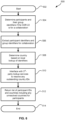
FIG. 6 illustrates an alternative method for CDR routing according to aspects of this disclosure. - It will be appreciated that elements in the figures are illustrated for simplicity and clarity and have not necessarily been drawn to scale. For example, the dimensions of some of the elements in the figures may be exaggerated relative to other elements to help to improve understanding of illustrated embodiments of the present invention.
- The description of embodiments provided herein is merely exemplary and is intended for purposes of illustration only; the following description is not intended to limit the scope of the claims. Moreover, recitation of multiple embodiments having stated features is not intended to exclude other embodiments having additional or fewer features or other embodiments incorporating different combinations of the stated features. The methods and systems according to this disclosure and claims can operate in a premise, cloud-based, or hybrid environment.
- A computer storage medium can be, or be included in, a computer-readable storage device, a computer-readable storage substrate, a random or serial access memory array or device, or a combination of one or more of the substrates and devices. Moreover, while a computer storage medium is not a propagated signal, a computer storage medium can be a source or destination of computer program instructions encoded in an artificially-generated propagated signal. The computer storage medium can also be, or be included in, one or more separate physical components or media (e.g., solid-state memory that forms part of a device, disks, or other storage devices). In accordance with examples of the disclosure, a non-transient computer readable medium containing program can perform functions of one or more methods, modules, engines and/or other system components as described herein.
- As used herein, "database" refers to any suitable database for storing information, electronic files or code to be utilized to practice embodiments of this disclosure. As used herein, "server," "processor," or "router" refers to any suitable server, processor, router, computer or computing device suitable for performing functions utilized to practice embodiments of this disclosure.
- Methods and systems of this disclosure utilize a CDR router that is capable of analyzing CDRs and routing the CDRs ("CDR" includes a portion or all of a CDR) to the appropriate country or countries for storage to satisfy country and regional CDR laws. As examples, a country may only require storage of CDRs involving its citizens, or a country may require all CDRs of a telecom event in which one of its citizens participated.
- Methods and systems of this disclosure can also be used to regionalize CDR based on criteria. For example, updates to regulations due to Network Information Systems (NIS) directives require proper audit logging of the distribution of CDRs.
- Turning now to the Figures, wherein the purpose is to describe embodiments of this disclosure and not to limit the scope of the claims.
FIG. 1 illustrates asystem 10 according to this disclosure.System 10 includes atelecommunications server 18 that is configured to communicate withparticipant devices more participant devices telecommunication server 18, atelecom event 20 occurs.Telecom event 20 can be a phone call or conference, a video call or conference, a text, a chat, an email, or any type of communication facilitated bytelecommunications server 18.Telecommunications server 18 is operated by a service operator and is resident in a country. - When a
telecom event 20 occurs, it includes metadata that forms a communication detail record (CDR) 22. The CDR includes information such as the names of the people who participated (each being a "participant") in thetelecom event 20, each participant's phone number or internet protocol (IP) addresses, the name of each participant's organization, the location of each organization, the location from which each participant participated in the telecom event, the date and time that eachtelecom event 20 started and stopped, and the time that each participant joined and left thetelecom event 20. - The CDRs 22 can either be first sent to a
CDR router 24 or to aservice operator storage 30.CDR router 24 is configured to analyze and route (both in the manner described herein)CDRs 22. Theservice operator storage 30 is any suitable electronic storage, such as those known for storing CDRs, and can be cloud-based electronic storage.Service operator storage 30 may be in communication withCDR router 24 and receiveCDRs 22 directly and sendCDRs 22 toCDR router 24. Or,CDR router 24 can sendCDRs 22 toservice operator storage 30. In some instances aCDR 22 will not be stored inservice operator storage 30 because of a country or regional law prohibiting the storage. - As shown,
CDR router 24 has acountry resolver 25.Country resolver 25 is software that operates to (1) resolve the origin country of a participant of atelecom event 20 if that information is not in theCDR 22, and (2) adding the information.Country resolver 25 may, for example, identify the country of a participant by a participant's phone number, IP address, or the location of the participant's organization. - Country resolver as shown is resident and operates on
CDR router 24 although it may be part of another processor, computer, or other device in communication withCDR router 24. Any suitable process, however, to determine the country associated with a participant may be used by country. - A
legal database 26 is in communication with, and could be resident on,CDR router 24.Legal database 26 includes country and regional laws regarding the storage ofCDRs 22. Alegal server 28 may be utilized to updatelegal database 26 andlegal server 28 may be part ofCDR router 24 or be separate from it.Legal server 28 could be in communication with outside electronic sources to automatically obtain new laws or changed laws related to CDR storage, and could automatically updatelegal database 26. Alternatively, the service operator or a third party could add updates tolegal database 24, in which caselegal server 28 need not be used. -
CDR router 24 is configured to inspect/analyzeCDRs 22 and, based on the information inlegal database 26, route eachCDR 22 to one or more country-specific storages 34.CDR router 24 may, if required or not prohibited by the law governing the treatment of aCDR 22, also route aCDR 22 to theservice operator database 30. - A
transfer database 32 is in communication withCDR router 24 and may be resident onCDR router 24.Transfer database 22 maintains a log of information regarding the transfer of eachCDR 22. The log may include sufficient information to identify theCDR 22, when theCDR 22 was created, when theCDR 22 was routed byCDR router 24, and to each location where theCDR 22 was routed. - A
customer processor 27 is separate fromsystem 10 but may be in constant or intermittent communication withCDR router 24 and be able to send a command or request toCDR router 24 to route aCDR 22 to aparticular country storage 34 and/or to aparticular customer storage 35. -
FIG. 2 shows anexemplary method 100 according to this disclosure. When customer places a call viatelecommunication server 18telecom events steps CDRs 22 are typically routed CDR router 24 (step 122) and stored in the service operator storage 30 (step 126) at the service operator's location. According to any system and method of this disclosure, if the law prohibits the storage inservice operator storage 30 theCDR 22 will not be stored there. -
CDR router 24, which can be introduced prior to the operator'sstorage 30 as shown inFIG. 1 , or after theservice operator storage 30 as shown inFIG. 1 andFIG. 2 . TheCDR router 24 can inspect/analyze aCDR 22 for information about a participant's country of origin, or the country of origin of a group to which the participant belongs. Using this data, theCDR router 24 can make a copy of eachCDR 22 and transmit it (steps 124, 126, 128) to the appropriate countries to satisfy country-specific or region-specific laws. - If the country origin metadata does not exist for a participant, country resolver 25 (step 120) is configured to deduce the necessary country data based on the address information typically in a
CDR 22. -
Figure 3 illustrates an alternate method toFIG. 2 , in which theCDRs 22 are first routed to theservice operator storage 30. -
FIGs. 4-5 illustrate similar methods, but inFIG. 3 theCDR 22 is sent immediately for inspections/analysis, wherein inFIG. 5 theCDR 22 is extracted fromoperator storage 30 and sent for inspection/analysis. AsFIGs. 4-5 illustrate, theCDR router 24 copies (if required because the CDR will be routed to more than one location) atstep 308 theCDR 22 androutes CDR 22 if thetelecom events 20 andsubsequent CDRs 22 contain the country origin metadata for the participants. Atstep 308 there may be three basic parameters defined on a per-country bases: (1)store CDRs 22 in a country based on participants residing in that country, (2) store all CDRs 22 in a country for atelecom event 20 that includes one or more participants who reside in that country, and/or (3) store all CDRs 22 in a country for a telecom event that includes one or more participants who reside in that country, and exclude participants that are on a country exemption list. - The first option is related to a more
traditional CDR 22, which includes metadata regarding a communication between two parties - a caller and a callee. If the caller or callee in theCDR 22 resides in a particular country, a copy of theCDR 22 will be stored in that country. - Again with reference to
FIGs. 4-5 , if country origin metadata does not exist, thecountry resolver 25 is consulted atstep 312. The country resolver 25 attempts to determine the country origin data from aCDR 22 and to provide a list of participant and group identifiers with their countries to theCDR router 24. The list also includes participants for which the county cannot be resolved. - For participants for which the country origin information cannot be resolved, the situation is flagged at
step 316 for a service operations team to examine. The service operations team identifies the cause of the issue and fixes it by including the origin country(ies) (step 316) if theCDR 22 is corrupted. If theCDR 22 is not corrupted, and the country origin information was in theCDR 22, the service operations team can train or change (step 318) thecountry resolver 25 algorithm to address the issue automatically in the future. - Referring to
FIG. 6 , for the case of a collaboration scenario, atsteps - At
step 508, the country for each participant is determined based on the information found insteps step 510 thesystem 10 interfaces with a third-party lookup service to resolve any outstanding country IDs for participants. Alternatively,method 500 may utilizecountry resolver 25 before or afterstep 510 and/or transfer aCDR 22 to the service operations team to resolve the origin country for a participant. Utilizing thecountry resolver 25 or the service operations team could be done prior to or after sending theCDR 22 to a third-party country lookup service. Atstep 512 theCDR 22 with all participant IDs is returned toCDR router 24 for routing. - The following example illustrates a case of utilizing a method and system of this disclosure.
- Company A has offices in the UK, Germany, and France. Company A uses a Meet service hosted by a service operator, which is based in Germany. The retention law for
CDRs 22 is one year for the UK and France, and ten days for Germany. There are three C-level employees (or participants) (Tom from the UK, Noah from France, and Hannah from Germany) from Company A that participate in the Meet (which is a telecom event 20). The Meet lasts for one hour. After the Meet threeCDRs 22 are generated as follows: - CDR 22-1: Tom joining the meet for one hour. CDR 22-1 is routed by
CDR router 24 of the service operator of the Meet tocountry storage 34 in the UK for a retention of one year. - CDR 22-2: Noah joining the Meet for fifty-seven minutes. CDR 22-2 is routed by
CDR router 24 of the service operator of the Meet tocountry storage 34 in France for a retention of one year. - CDR 22-3: Hannah joining the Meet for thirty minutes. CDR 22-3 is routed by
CDR router 24 of the service operator of the Meet tocounty storage 34 in Germany for a retention of ten days. - Further, a copy of each of the three CDRs 22-1, 22-2, and 22-3 is routed by
CDR router 24 of the service operator of the Meet tocountry storage 34 in Germany with a retention of ten days to satisfy the service operator's legal requirements as an operator in Germany - The Meet is re-convened days later and two participants were invited. One participant (Jerry) is a contractor from a Company B located in Sweden. Company B is registered with the service operator of the Meet service in this example. The second participant (Samantha) is not registered with the service operator of the Meet service and will be joining the Meet as a guest user. The Meet application can determine the country of origin of any user registered with the Meet service. It is not possible to determine the country of origin of the guest user (Samantha) in this example.
- The Meet lasts one hour. After the Meet five
CDRs 22 are generated, which include: - CDR 22-4: Tom joining the one-hour Meet. This CDR 22-4 is routed by
CDR router 24 of the service operator of the Meet tocountry storage 34 in the UK for a retention of one year. - CDR 22-5: Noah joining the Meet for sixty minutes. This CDR 22-5 is routed by
CDR router 24 of the service operator of the Meet tocountry storage 34 in France for a retention of one year. - CDR 22-6: Hannah joining the Meet for fifty minutes. This CDR 22-6 is routed by
CDR router 24 of the service operator of the Meet tocountry storage 34 in Germany for a retention of ten days. - CDR 22-7: The Meet service recognized Jerry and determined the customer account to which he belongs. CDR 22-7 is generated detailing Jerry joining the Meet for twenty minutes. This CDR is routed by
CDR router 24 of the service operator of the Meet tocountry storage 34 in Sweden for a retention of the time required by Sweden. - CDR 22-8: CDR 22-8 is created for Samantha who joined the Meet for ten minutes. All external guest access is routed by
CDR router 24 of the service operator of the Meet to thecountry storage 34 in which the Meet service is hosted (Germany in this case for a retention of ten days). - A copy of each of the CDRs 22-4, 22-5, 22-6, 22-7, and 22-8, are routed by
CDR router 24 of the service operator of the Meet to storage in Germany with a retention of ten days to meet the service operator's legal requirements as an operator in Germany. - A week later, Tom added an attachment to the chat for the Meet while other participants were offline. A short time later, Noah and Hannah downloaded the attachment.
- The CDRs created and the location of the various CDRs includes:
- CDR 22-9: CDR 22-9 includes details of Tom uploading the attachment and Noah and Hannah reading the attachment, and is routed by
CDR router 24 of the service operator of the Meet tocountry storage 34 in the UK with a retention of one year. - CDR 22-10: CDR 22-10 includes details of Noah and Hannah downloading the attachment and Tom uploading the attachment, and is routed by
CDR router 24 of the service operator of the Meet tocountry storage 34 in France with a retention of one year. - CDR 22-11: CDR 22-11 includes details of Hannah downloading the attachment, and is routed by
CDR router 24 of the service operator of the Meet tocountry storage 34 in Germany with a retention of ten days. - CDRs 22-9, 22-10, and 22-11: The service operator (because it is a service operator) routes by its CDR router 24 a copy of all three CDRs 22-9, 22-10, and 22-11 to
country storage 34 in Germany with a retention of ten days to meet the service operator's legal requirements as an operator in Germany. - The systems and methods disclosed herein collectively address the needs of meeting users by getting more utility out of the information that is supplied to collaboration and event scheduling applications. Furthermore, the methods and ideas disclosed allow users to increase their productivity based on the detection of such information and by applying techniques not traditionally used in meeting applications to create a more results-oriented experience that is more engaging and to make meetings more effective.
- The present invention has been described above with reference to a number of exemplary embodiments and examples. It should be appreciated that the particular embodiments shown and described herein are illustrative of the invention and its best mode and are not intended to limit in any way the scope of the invention as set forth in the claims. It will be recognized that changes and modifications may be made to the exemplary embodiments without departing from the scope of the present invention. These and other changes or modifications are intended to be included within the scope of the present invention, as expressed in the following claims.
Claims (15)
- A computer system configured to store and/or route portions of a communication detail record (CDR), wherein the computer system comprises:a telecommunication server of a telecommunication system operator, wherein the telecommunication server is configured to facilitate a communication;a metadata database in communication with the telecommunication server, wherein the metadata database is configured to store metadata of the communications as a CDR; anda CDR router configured to analyze the metadata in each CDR and based on the analysis route the CDR to one or more of (a) a telecommunication system operator CDR storage unit, and (b) one or more country-specific and/or region-specific CDR storage units.
- The computer system of claim 1, wherein the communication is a phone call, a video conference, a text, or an email.
- The computer system of claim 1 or claim 2, wherein the CDR router is further configured to route the CDR from the telecommunication system operator CDR storage unit to one or more country-specific CDR storage units and/or region-specific CDR storage units based on either (a) an analysis of the metadata of the CDRs, or (b) a request to the CDR router from a country-specific server or a region-specific server.
- The computer system of any preceding claim that further comprises a transfer database in communication with the CDR router, and the CDR router is further configured to (a) create a record for each routed CDR, wherein the transfer record comprises information regarding a routing of the CDR, and (b) store the transfer record in the transfer database.
- The computer system of any preceding claim, wherein each CDR comprises country-origin metadata of a communication by one or more of: a participant, a group, an organization, an organization head office, an organization satellite office at which a participant works, the telecommunication system operator the participant used, and a billing address.
- The computer system of any preceding claim, wherein the CDR includes country information for one or more countries associated with the CDR,
and wherein the computer system further comprises a country resolver in communication with the CDR router, wherein the country resolver is configured to determine a country associated with a CDR if the CDR lacks the information, wherein the determination is based on an analysis by the country resolver of the metadata of the CDR. - The computer system of claim 6, wherein the CDR router is further configured to route the CDR to the one or more country-specific CDR storage units or region-specific CDR storage units and to not store the CDR in the telecommunication system operator CDR storage unit.
- The computer system of claim 6 or claim 7, wherein the CDR router is further configured to: analyze the CDR for details of participants' respective country(ies) of origin, and/or the country of a group or organization to which a participant belongs, and based on the details route a copy of the CDR to the one or more country-specific CDR storage units or region-specific CDR storage units and optionally wherein the CDR router is further configured to automatically route a copy of the CDR to a country-specific CDR storage unit or region-specific CDR storage unit in which the participant resides, and exclude from the routed CDR metadata related to participants on a country exemption list.
- The computer system of any of claims 6 to 8, wherein the country resolver is further configured to provide to a service operations team an identification of participants in a CDR whose country cannot be resolved in order for the service operations team to (a) determine if the CDR is corrupted and if so, uncorrupt the CDR, and/or (b) program an algorithm of the country resolver to modify a function of the country resolver in order to automatically uncorrupt a similar CDR in the future.
- The computer system of any of claims 6 to 9 that is further configured to exclude CDR storage in either the telecommunication system operator CDR storage unit, a country-specific CDR storage unit, or a region-specific CDR storage unit if the storage is prohibited by the laws of any country or region.
- A computer method operable on a telecommunications system for storing and/or a routing a CDR, wherein the computer method comprises the following steps:a metadata database receiving, from a telecommunication server of a telecommunication system operator, metadata from a communication that occurs on the telecommunication server;the metadata database storing the metadata as a CDR; androuting, utilizing a CDR router, the CDR to one or more of (a) a telecommunication system operator CDR storage unit, and (b) one or more country-specific CDR storage units and/or one or more region-specific CDR storage units.
- The computer method of claim 11 that further includes the steps of:utilizing a legal server in communication with a legal database, determining one or more county or regional laws pertaining to storing CDR; andthe CDR router routing the CDR to one or more country-specific CDR storage units and/or one or more region-specific CDR storage units based on the one or more country or regional laws pertaining to storing CDR.
- The computer method of claim 11 or claim 12 that further comprises the steps of:the CDR router receiving from a country-specific server or a region-specific server a request to route a CDR;the CDR router checking cross-border transfer agreements stored in a legal database; andutilizing the CDR router, determine the metadata in the requested CDR and, if the request does not violate a cross-border transfer agreement, routing the requested CDR to the country-specific CDR storage unit or region-specific CDR storage unit.
- The computer method of any of claims 11 to 13 that further includes the step of, by utilizing a legal server in communication with a legal database, determining to which country-specific CDR storage unit or region-specific CDR storage unit each piece of metadata in a CDR must be routed.
- The computer method of any of claims 11 to 14 that further includes:the step of the CDR router transferring a CDR from the metadata database based on a communication by a customer processor to the CDR router; and/orthe step of deleting the CDR from the metadata database if the CDR is routed to a country-specific CDR storage unit or a region-specific CDR storage unit.
Applications Claiming Priority (1)
| Application Number | Priority Date | Filing Date | Title |
|---|---|---|---|
| US18/070,323 US12335433B2 (en) | 2022-11-28 | 2022-11-28 | Multi-region communication detail records |
Publications (2)
| Publication Number | Publication Date |
|---|---|
| EP4376397A1 true EP4376397A1 (en) | 2024-05-29 |
| EP4376397B1 EP4376397B1 (en) | 2026-05-20 |
Family
ID=88978203
Family Applications (1)
| Application Number | Title | Priority Date | Filing Date |
|---|---|---|---|
| EP23212748.0A Active EP4376397B1 (en) | 2022-11-28 | 2023-11-28 | MULTI-AREA DETAIL COMMUNICATION RECORDS |
Country Status (3)
| Country | Link |
|---|---|
| US (1) | US12335433B2 (en) |
| EP (1) | EP4376397B1 (en) |
| CA (1) | CA3220646A1 (en) |
Families Citing this family (1)
| Publication number | Priority date | Publication date | Assignee | Title |
|---|---|---|---|---|
| US12609967B1 (en) * | 2025-11-06 | 2026-04-21 | Morgan Stanley Services Group Inc. | System and method for unified access management for federated technology infrastructure |
Family Cites Families (18)
| Publication number | Priority date | Publication date | Assignee | Title |
|---|---|---|---|---|
| US5357564A (en) * | 1992-08-12 | 1994-10-18 | At&T Bell Laboratories | Intelligent call screening in a virtual communications network |
| US7062024B2 (en) * | 2001-12-19 | 2006-06-13 | Ameritech Communications, Inc. | Telecommunication services reporting system |
| US7447645B2 (en) * | 2003-02-28 | 2008-11-04 | Arbinet-Theexchange, Inc. | Method and system for call screening |
| US7496185B1 (en) * | 2003-12-30 | 2009-02-24 | Mantas, Inc. | System and method of collecting, correlating and storing telecom data as call detail records |
| WO2006009929A2 (en) * | 2004-06-18 | 2006-01-26 | Tekelec | METHODS, SYSTEMS, AND COMPUTER PROGRAM PRODUCTS FOR SELECTING OR GENERATING A SINGLE CALL DETAIL RECORD (CDR) FROM A PLURALITY OF CDRs ASSOCIATED WITH A CALL HAVING A PLURALITY OF LEGS |
| US8078509B2 (en) * | 2006-08-17 | 2011-12-13 | Cheng Gang Yap Ye | Method and system for auditing and reconciling telecommunications data |
| US8315363B2 (en) * | 2008-08-08 | 2012-11-20 | Verizon Patent And Licensing Inc. | Network call recording |
| US8611894B2 (en) * | 2009-08-09 | 2013-12-17 | Qualcomm Incorporated | Apparatus and method for destination phone number string creation |
| US8437266B2 (en) * | 2009-08-26 | 2013-05-07 | Avaya Inc. | Flow through call control |
| US8942683B2 (en) * | 2012-08-14 | 2015-01-27 | Gregory Joseph Doerr | System and method of routing conference call participants |
| US9602367B2 (en) * | 2013-03-15 | 2017-03-21 | Teoco Corporation | System, method, and computer program product for creating a header detail record |
| US9338658B1 (en) * | 2014-09-25 | 2016-05-10 | Sprint Communications Company L.P. | Telecommunication service provider customer account portal for strategic partners |
| US9965525B2 (en) * | 2015-04-09 | 2018-05-08 | At&T Mobility Ii Llc | Protecting personal data |
| US9736297B2 (en) * | 2015-07-31 | 2017-08-15 | Google Inc. | Phone number canonicalization and information discoverability |
| US10263954B2 (en) * | 2016-06-17 | 2019-04-16 | At&T Intellectual Property I, L.P | Identifying the source and destination sites for a VoIP call with dynamic-IP address end points |
| KR101803392B1 (en) * | 2016-10-28 | 2017-11-30 | (주) 비미오 | System and method for detecting a format of each nation's telephone number system with machine learning |
| US11470194B2 (en) * | 2019-08-19 | 2022-10-11 | Pindrop Security, Inc. | Caller verification via carrier metadata |
| US11343373B1 (en) * | 2021-01-29 | 2022-05-24 | T-Mobile Usa, Inc. | Machine intelligent isolation of international calling performance degradation |
-
2022
- 2022-11-28 US US18/070,323 patent/US12335433B2/en active Active
-
2023
- 2023-11-22 CA CA3220646A patent/CA3220646A1/en active Pending
- 2023-11-28 EP EP23212748.0A patent/EP4376397B1/en active Active
Non-Patent Citations (2)
| Title |
|---|
| ABHISHEK SINGH ET AL: "Mobility Data Analysis and Applications: A mid-year 2021 Survey", ARXIV.ORG, CORNELL UNIVERSITY LIBRARY, 201 OLIN LIBRARY CORNELL UNIVERSITY ITHACA, NY 14853, 31 August 2021 (2021-08-31), XP091041483 * |
| MAHDIZADEH MOHAMMAD SALEH ET AL: "A regression framework for predicting user's next location using Call Detail Records", COMPUTER NETWORKS, ELSEVIER, AMSTERDAM, NL, vol. 183, 15 October 2020 (2020-10-15), XP086387592, ISSN: 1389-1286, [retrieved on 20201015], DOI: 10.1016/J.COMNET.2020.107618 * |
Also Published As
| Publication number | Publication date |
|---|---|
| US20240179238A1 (en) | 2024-05-30 |
| US12335433B2 (en) | 2025-06-17 |
| EP4376397B1 (en) | 2026-05-20 |
| CA3220646A1 (en) | 2024-05-28 |
Similar Documents
| Publication | Publication Date | Title |
|---|---|---|
| US7343008B1 (en) | Identity-based conferencing systems and methods | |
| US8352303B2 (en) | Computer implemented method for integrating services in a calendar application via meeting request e-mails | |
| CN107465692B (en) | Unified user identity authentication method, system and storage medium | |
| US20260012458A1 (en) | Conference security for user groups | |
| US11431800B2 (en) | Systems and methods for recording an indeterministic transaction on a distributed ledger network | |
| US9946984B2 (en) | System and method for transporting a document between a first service provider and a second service provider | |
| US12526155B2 (en) | Multi-signature wallets in public trust ledger actions via a database system | |
| US10887460B2 (en) | System and method for establishing communications over a plurality of communications platforms | |
| US9241072B2 (en) | Conference call authentication utilizing passcodes personal to users | |
| US20150081803A1 (en) | Recipient Control System for Ensuring Non-Conflicting and Comprehensive Distribution of Digital Information and Method Thereof | |
| CN111181833B (en) | Enterprise interconnection realization method and device | |
| US12335433B2 (en) | Multi-region communication detail records | |
| US20080253546A1 (en) | Telephone Conference Call Management | |
| CN114238927A (en) | Business system login method, system, device, computer equipment and storage medium | |
| US20140215357A1 (en) | Controlling which users from an organization are to be part of a community space in an easy and error-free manner | |
| JP6215508B1 (en) | Method and system for compliance monitoring in a secure media-based conference | |
| US9661141B1 (en) | Managing agent login to multiple conference call bridges | |
| US10735574B1 (en) | Unique call alias assignment between user devices | |
| US20070187481A1 (en) | Controlling transactions | |
| Ilag et al. | Teams Audio Conferencing and Phone System Management | |
| US20250337839A1 (en) | Multiple routing systems | |
| CN115170352A (en) | Electronic signing system based on WEB application interface access | |
| Ilag et al. | Microsoft Teams Phone (Voice) Configuration and Management | |
| CN115225635A (en) | Multi-cloud nanotube management method and device | |
| CN113239385A (en) | Information processing method, information platform node, electronic device and medium |
Legal Events
| Date | Code | Title | Description |
|---|---|---|---|
| PUAI | Public reference made under article 153(3) epc to a published international application that has entered the european phase |
Free format text: ORIGINAL CODE: 0009012 |
|
| STAA | Information on the status of an ep patent application or granted ep patent |
Free format text: STATUS: THE APPLICATION HAS BEEN PUBLISHED |
|
| AK | Designated contracting states |
Kind code of ref document: A1 Designated state(s): AL AT BE BG CH CY CZ DE DK EE ES FI FR GB GR HR HU IE IS IT LI LT LU LV MC ME MK MT NL NO PL PT RO RS SE SI SK SM TR |
|
| STAA | Information on the status of an ep patent application or granted ep patent |
Free format text: STATUS: REQUEST FOR EXAMINATION WAS MADE |
|
| 17P | Request for examination filed |
Effective date: 20241127 |
|
| RBV | Designated contracting states (corrected) |
Designated state(s): AL AT BE BG CH CY CZ DE DK EE ES FI FR GB GR HR HU IE IS IT LI LT LU LV MC ME MK MT NL NO PL PT RO RS SE SI SK SM TR |
|
| GRAP | Despatch of communication of intention to grant a patent |
Free format text: ORIGINAL CODE: EPIDOSNIGR1 |
|
| STAA | Information on the status of an ep patent application or granted ep patent |
Free format text: STATUS: GRANT OF PATENT IS INTENDED |
|
| RIC1 | Information provided on ipc code assigned before grant |
Ipc: H04M 3/22 20060101AFI20260219BHEP Ipc: H04M 15/00 20240101ALI20260219BHEP Ipc: H04W 4/24 20240101ALI20260219BHEP Ipc: H04L 12/14 20240101ALI20260219BHEP |
|
| GRAS | Grant fee paid |
Free format text: ORIGINAL CODE: EPIDOSNIGR3 |
|
| GRAA | (expected) grant |
Free format text: ORIGINAL CODE: 0009210 |
|
| STAA | Information on the status of an ep patent application or granted ep patent |
Free format text: STATUS: THE PATENT HAS BEEN GRANTED |
|
| INTG | Intention to grant announced |
Effective date: 20260323 |