EP4375148B1 - Passenger air bag device - Google Patents
Passenger air bag device Download PDFInfo
- Publication number
- EP4375148B1 EP4375148B1 EP22217009.4A EP22217009A EP4375148B1 EP 4375148 B1 EP4375148 B1 EP 4375148B1 EP 22217009 A EP22217009 A EP 22217009A EP 4375148 B1 EP4375148 B1 EP 4375148B1
- Authority
- EP
- European Patent Office
- Prior art keywords
- pab
- door
- air bag
- cutting groove
- protruding
- Prior art date
- Legal status (The legal status is an assumption and is not a legal conclusion. Google has not performed a legal analysis and makes no representation as to the accuracy of the status listed.)
- Active
Links
Images




Classifications
-
- B—PERFORMING OPERATIONS; TRANSPORTING
- B60—VEHICLES IN GENERAL
- B60R—VEHICLES, VEHICLE FITTINGS, OR VEHICLE PARTS, NOT OTHERWISE PROVIDED FOR
- B60R21/00—Arrangements or fittings on vehicles for protecting or preventing injuries to occupants or pedestrians in case of accidents or other traffic risks
- B60R21/02—Occupant safety arrangements or fittings, e.g. crash pads
- B60R21/16—Inflatable occupant restraints or confinements designed to inflate upon impact or impending impact, e.g. air bags
- B60R21/20—Arrangements for storing inflatable members in their non-use or deflated condition; Arrangement or mounting of air bag modules or components
- B60R21/215—Arrangements for storing inflatable members in their non-use or deflated condition; Arrangement or mounting of air bag modules or components characterised by the covers for the inflatable member
- B60R21/2165—Arrangements for storing inflatable members in their non-use or deflated condition; Arrangement or mounting of air bag modules or components characterised by the covers for the inflatable member characterised by a tear line for defining a deployment opening
-
- B—PERFORMING OPERATIONS; TRANSPORTING
- B60—VEHICLES IN GENERAL
- B60R—VEHICLES, VEHICLE FITTINGS, OR VEHICLE PARTS, NOT OTHERWISE PROVIDED FOR
- B60R21/00—Arrangements or fittings on vehicles for protecting or preventing injuries to occupants or pedestrians in case of accidents or other traffic risks
- B60R21/02—Occupant safety arrangements or fittings, e.g. crash pads
- B60R21/16—Inflatable occupant restraints or confinements designed to inflate upon impact or impending impact, e.g. air bags
-
- B—PERFORMING OPERATIONS; TRANSPORTING
- B60—VEHICLES IN GENERAL
- B60R—VEHICLES, VEHICLE FITTINGS, OR VEHICLE PARTS, NOT OTHERWISE PROVIDED FOR
- B60R21/00—Arrangements or fittings on vehicles for protecting or preventing injuries to occupants or pedestrians in case of accidents or other traffic risks
- B60R21/02—Occupant safety arrangements or fittings, e.g. crash pads
- B60R21/16—Inflatable occupant restraints or confinements designed to inflate upon impact or impending impact, e.g. air bags
- B60R21/20—Arrangements for storing inflatable members in their non-use or deflated condition; Arrangement or mounting of air bag modules or components
- B60R21/215—Arrangements for storing inflatable members in their non-use or deflated condition; Arrangement or mounting of air bag modules or components characterised by the covers for the inflatable member
-
- B—PERFORMING OPERATIONS; TRANSPORTING
- B60—VEHICLES IN GENERAL
- B60R—VEHICLES, VEHICLE FITTINGS, OR VEHICLE PARTS, NOT OTHERWISE PROVIDED FOR
- B60R21/00—Arrangements or fittings on vehicles for protecting or preventing injuries to occupants or pedestrians in case of accidents or other traffic risks
- B60R21/02—Occupant safety arrangements or fittings, e.g. crash pads
- B60R21/16—Inflatable occupant restraints or confinements designed to inflate upon impact or impending impact, e.g. air bags
- B60R21/20—Arrangements for storing inflatable members in their non-use or deflated condition; Arrangement or mounting of air bag modules or components
- B60R21/215—Arrangements for storing inflatable members in their non-use or deflated condition; Arrangement or mounting of air bag modules or components characterised by the covers for the inflatable member
- B60R2021/21506—Arrangements for storing inflatable members in their non-use or deflated condition; Arrangement or mounting of air bag modules or components characterised by the covers for the inflatable member comprising tearing tabs, legs or the like for holding the lid before deployment
-
- B—PERFORMING OPERATIONS; TRANSPORTING
- B60—VEHICLES IN GENERAL
- B60R—VEHICLES, VEHICLE FITTINGS, OR VEHICLE PARTS, NOT OTHERWISE PROVIDED FOR
- B60R21/00—Arrangements or fittings on vehicles for protecting or preventing injuries to occupants or pedestrians in case of accidents or other traffic risks
- B60R21/02—Occupant safety arrangements or fittings, e.g. crash pads
- B60R21/16—Inflatable occupant restraints or confinements designed to inflate upon impact or impending impact, e.g. air bags
- B60R21/20—Arrangements for storing inflatable members in their non-use or deflated condition; Arrangement or mounting of air bag modules or components
- B60R21/215—Arrangements for storing inflatable members in their non-use or deflated condition; Arrangement or mounting of air bag modules or components characterised by the covers for the inflatable member
- B60R21/2165—Arrangements for storing inflatable members in their non-use or deflated condition; Arrangement or mounting of air bag modules or components characterised by the covers for the inflatable member characterised by a tear line for defining a deployment opening
- B60R2021/21652—Arrangements for storing inflatable members in their non-use or deflated condition; Arrangement or mounting of air bag modules or components characterised by the covers for the inflatable member characterised by a tear line for defining a deployment opening the tearing being done or assisted by cutters
-
- B—PERFORMING OPERATIONS; TRANSPORTING
- B60—VEHICLES IN GENERAL
- B60R—VEHICLES, VEHICLE FITTINGS, OR VEHICLE PARTS, NOT OTHERWISE PROVIDED FOR
- B60R21/00—Arrangements or fittings on vehicles for protecting or preventing injuries to occupants or pedestrians in case of accidents or other traffic risks
- B60R21/02—Occupant safety arrangements or fittings, e.g. crash pads
- B60R21/16—Inflatable occupant restraints or confinements designed to inflate upon impact or impending impact, e.g. air bags
- B60R21/20—Arrangements for storing inflatable members in their non-use or deflated condition; Arrangement or mounting of air bag modules or components
- B60R21/205—Arrangements for storing inflatable members in their non-use or deflated condition; Arrangement or mounting of air bag modules or components in dashboards
Definitions
- the present disclosure relates to a passenger air bag device.
- a passenger air bag is a device for protecting a passenger sitting in the front passenger seat.
- a PAB is installed in a crash pad and has a structure that deploys through an air bag door of a PAB chute in the case of a vehicle crash. As the deployment structure, the air bag door is opened along a designated cutting line of the crash pad and allows the air bag to deploy.
- JP 2004 026053 A relates to an air bag door.
- US 7 631 890 B1 relates to a door panel structure that has a pre-weakened hinge and tearable seams formed for air bag deployment.
- DE 10 2015 220302 B3 relates to an airbag cover.
- KR 2011 0030195 A relates to an airbag door integrated type crash pad.
- US 2010/295275 A1 relates to an airbag door connecting structure of a passenger seat of a vehicle.
- a passenger air bag (PAB) device that includes a crash pad and a PAB chute.
- the crash pad includes a cutting groove recessed at a predetermined depth in an inner side surface of the crash pad.
- the PAB chute includes an air bag door welded to the inner side surface in a shape covering the cutting groove.
- the air bag door includes a protruding portion protruding from a surface of the airbag door, disposed, in a state in which the air bag door is welded to the inner side surface, inside a space forming the cutting groove.
- the cutting groove includes an inclined surface reflecting a draft angle, and a flat surface facing the inclined surface and not reflecting the draft angle.
- the cutting groove extends in a width direction of a vehicle and constitutes a cutting line configured to be cut open by the air bag door, and the space is provided between the inclined surface and the flat surface.
- the protruding portion may be formed of one of a single split member and a plurality of split members, and may be arranged in a shape extending along the cutting groove.
- the plurality of split members may be formed in different sizes.
- the crash pad may include a panel portion in which the cutting groove is formed and a skin portion configured to cover an upper surface of the panel portion.
- a portion of the skin portion that is exposed toward the cutting groove between the inclined surface and the flat surface may constitute the cutting line.
- the air bag door may include a pair of door portions disposed in an opening formed in the PAB chute and a hinge portion configured to rotatably connect the pair of door portions to the PAB chute.
- the protruding portion may be provided in an area of the door portion disposed below the inclined surface among the pair of door portions that vertically overlaps the inclined surface.
- the door portion may include a welding rib protruding from a surface of the door portion, and a protruding length of the protruding portion may be larger than a protruding length of the welding rib.
- the door portion may be partially connected to the PAB chute through a connecting rib extending from a side surface of the door portion in a short side direction of the door portion.
- the PAB device may further include an air bag mounted on the PAB chute.
- first, second, A, B, (a), (b) or the like may be used herein to describe components.
- Each of these terminologies is not used to define an essence, order or sequence of a corresponding component but used merely to distinguish the corresponding component from other component(s).
- a first component may be referred to as a second component, and similarly the second component may also be referred to as the first component.
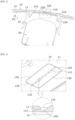
- FIG. 1 is a view schematically illustrating a configuration of a passenger air bag (PAB) device according to an embodiment of the present disclosure
- FIG. 2 is a view schematically illustrating a cross-section of the PAB device according to an embodiment of the present disclosure
- FIG. 3 is a view schematically illustrating an inner side surface of a crash pad in the PAB device
- FIG. 4 is a view schematically illustrating a cross-section of a portion of the crash pad of FIG. 3 where a cutting groove is formed.
- PAB passenger air bag
- the crash pad 10 may have a cutting line 100 positioned at the front passenger seat of a vehicle.
- the cutting line 100 is cut open by an air bag door 200 upon the inflation of the air bag 30 that is caused by a crash of the vehicle. In this way, the cutting line 100 allows the air bag 30 to deploy.
- the PAB chute 20 has the air bag door 200 welded to the inner side surface of the crash pad 10 in a shape that covers the cutting groove 110.
- the air bag door 200 may be disposed in the opening H of the main body portion 21.
- the air bag door 200 may be made of a thermoplastic olefin (TPO) material.
- TPO thermoplastic olefin
- the air bag door 200 may include a pair of door portions 210 disposed in the opening H formed in the PAB chute 20 and a hinge portion 220 configured to rotatably connect the pair of door portions 210 to the PAB chute 20.
- the door portion 210 may include a welding rib 211 formed to protrude from a surface thereof. Also, the protruding portion 230 may be provided on the surface of the door portion 210 parallel to the welding rib 211.
- a protruding length of the protruding portion 230 may be relatively larger than a protruding length of the welding rib 211.
- the protruding portion 230 may be provided in an area of the door portion 210 disposed below the inclined surface 111 of the cutting groove 110 among the pair of door portions 210 that vertically overlaps the inclined surface 111.
- the protruding portion 230 may include a first surface 231 which extends upward from the surface and is disposed parallel to the inclined surface 111 of the cutting groove 110 and a second surface 232 which extends downward from an end of the first surface 231 toward the surface and is disposed parallel to the flat surface 112 of the cutting groove 110.
- the protruding portion 230 may have a triangular cross-sectional structure having the first surface 231 as a hypotenuse. That is, the protruding portion 230 may have a shape that corresponds to the cross-sectional shape of the empty space S forming the cutting groove 110.
Landscapes
- Engineering & Computer Science (AREA)
- Mechanical Engineering (AREA)
- Air Bags (AREA)
Description
- The present disclosure relates to a passenger air bag device.
- Generally, air bag devices are installed in vehicles for safety of passengers, and among air bag devices, a passenger air bag (PAB) is a device for protecting a passenger sitting in the front passenger seat.
- A PAB is installed in a crash pad and has a structure that deploys through an air bag door of a PAB chute in the case of a vehicle crash. As the deployment structure, the air bag door is opened along a designated cutting line of the crash pad and allows the air bag to deploy.
-
JP 2004 026053 A US 7 631 890 B1 relates to a door panel structure that has a pre-weakened hinge and tearable seams formed for air bag deployment.DE 10 2015 220302 B3 relates to an airbag cover.KR 2011 0030195 A US 2010/295275 A1 relates to an airbag door connecting structure of a passenger seat of a vehicle. - This Summary is provided to introduce a selection of concepts in a simplified form that are further described below in the Detailed Description. This Summary is not intended to identify key features or essential features of the claimed subject matter, nor is it intended to be used as an aid in determining the scope of the claimed subject matter. The invention is defined by
independent claim 1. Further embodiments of the invention are defined by the dependent claims. - In one general aspect, here is provided a passenger air bag (PAB) device that includes a crash pad and a PAB chute. The crash pad includes a cutting groove recessed at a predetermined depth in an inner side surface of the crash pad. The PAB chute includes an air bag door welded to the inner side surface in a shape covering the cutting groove. The air bag door includes a protruding portion protruding from a surface of the airbag door, disposed, in a state in which the air bag door is welded to the inner side surface, inside a space forming the cutting groove.
- The cutting groove includes an inclined surface reflecting a draft angle, and a flat surface facing the inclined surface and not reflecting the draft angle. The cutting groove extends in a width direction of a vehicle and constitutes a cutting line configured to be cut open by the air bag door, and the space is provided between the inclined surface and the flat surface.
- The protruding portion may include a first surface extending upward from the surface, disposed parallel to the inclined surface, and a second surface extending downward from an end of the first surface toward the surface, disposed parallel to the flat surface. The protruding portion has a triangular cross-sectional structure having the first surface as a hypotenuse.
- The protruding portion may further include an auxiliary protruding portion protruding outward from the second surface.
- The protruding portion may be formed of one of a single split member and a plurality of split members, and may be arranged in a shape extending along the cutting groove.
- The plurality of split members may be formed in different sizes.
- The crash pad may include a panel portion in which the cutting groove is formed and a skin portion configured to cover an upper surface of the panel portion.
- A portion of the skin portion that is exposed toward the cutting groove between the inclined surface and the flat surface may constitute the cutting line.
- The air bag door may include a pair of door portions disposed in an opening formed in the PAB chute and a hinge portion configured to rotatably connect the pair of door portions to the PAB chute.
- The protruding portion may be provided in an area of the door portion disposed below the inclined surface among the pair of door portions that vertically overlaps the inclined surface.
- The door portion may include a welding rib protruding from a surface of the door portion, and a protruding length of the protruding portion may be larger than a protruding length of the welding rib.
- The door portion may be partially connected to the PAB chute through a connecting rib extending from a side surface of the door portion in a short side direction of the door portion.
- The PAB device may further include an air bag mounted on the PAB chute.
- Other features and aspects will be apparent from the following detailed description, the drawings, and the claims.
-
-
FIG. 1 is a view schematically illustrating a configuration of a passenger air bag (PAB) device according to an embodiment of the present disclosure. -
FIG. 2 is a view schematically illustrating a cross-section of the PAB device according to an embodiment of the present disclosure. -
FIG. 3 is a view schematically illustrating an inner side surface of a crash pad in the PAB device. -
FIG. 4 is a view schematically illustrating a cross-section of a portion of the crash pad ofFIG. 3 where a cutting groove is formed. -
FIG. 5 is an enlarged view of an area indicated by a dotted line inFIG. 2 . -
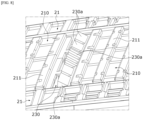
FIGS. 6 and7 are views schematically illustrating a PAB chute including an air bag door in the PAB device. -
FIG. 8 is a view schematically illustrating a protruding portion provided on the air bag door. -
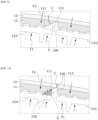
FIG. 9 is a view schematically illustrating a state in which a crack is formed in the crash pad due to the air bag door in a structure without the protruding portion. -
FIG. 10 is a view schematically illustrating a state in which a crack is formed in the crash pad due to the air bag door in a structure with the protruding portion according to an embodiment of the present disclosure. -
FIG. 11 is a view schematically illustrating a modified example of the protruding portion. - Throughout the drawings and the detailed description, unless otherwise described or provided, the same drawing reference numerals will be understood to refer to the same elements, features, and structures. The drawings may not be to scale, and the relative size, proportions, and depiction of elements in the drawings may be exaggerated for clarity, illustration, and convenience.
- The following detailed description is provided to assist the reader in gaining a comprehensive understanding of the methods, apparatuses, and/or systems described herein. For example, the sequences of operations described herein are merely examples, and are not limited to those set forth herein, but may be changed as will be apparent after an understanding of the disclosure of this application, with the exception of operations necessarily occurring in a certain order.
- The features described herein may be embodied in different forms and are not to be construed as being limited to the examples described herein. Rather, the examples described herein have been provided merely to illustrate some of the many possible ways of implementing the methods, apparatuses, and/or systems described herein that will be apparent after an understanding of the disclosure of this application.
- Advantages and features of the present disclosure and methods of achieving the advantages and features will be clear with reference to embodiments described in detail below together with the accompanying drawings. However, the present disclosure is not limited to the embodiments disclosed herein but will be implemented in various forms. The embodiments of the present disclosure are provided so that the present disclosure is completely disclosed, and a person with ordinary skill in the art can fully understand the scope of the present disclosure. The present disclosure will be defined only by the scope of the appended claims. Meanwhile, the terms used in the present specification are for explaining the embodiments, not for limiting the present disclosure.
- Terms, such as first, second, A, B, (a), (b) or the like, may be used herein to describe components. Each of these terminologies is not used to define an essence, order or sequence of a corresponding component but used merely to distinguish the corresponding component from other component(s). For example, a first component may be referred to as a second component, and similarly the second component may also be referred to as the first component.
- Throughout the specification, when a component is described as being "connected to," or "coupled to" another component, it may be directly "connected to," or "coupled to" the other component, or there may be one or more other components intervening therebetween. In contrast, when an element is described as being "directly connected to," or "directly coupled to" another element, there can be no other elements intervening therebetween.
- The singular forms "a", "an", and "the" are intended to include the plural forms as well, unless the context clearly indicates otherwise. It will be further understood that the terms "comprises/comprising" and/or "includes/including" when used herein, specify the presence of stated features, integers, steps, operations, elements, and/or components, but do not preclude the presence or addition of one or more other features, integers, steps, operations, elements, components and/or groups thereof.
- Spatially relative terms such as "above," "upper," "below," and "lower" may be used herein for ease of description to describe one element's relationship to another element as shown in the figures. Such spatially relative terms are intended to encompass different orientations of the device in use or operation in addition to the orientation depicted in the figures. For example, if the device in the figures is turned over, an element described as being "above" or "upper" relative to another element will then be "below" or "lower" relative to the other element. Thus, the term "above" encompasses both the above and below orientations depending on the spatial orientation of the device. The device may also be oriented in other ways (for example, rotated 90 degrees or at other orientations), and the spatially relative terms used herein are to be interpreted accordingly.
- Due to manufacturing techniques and/or tolerances, variations of the shapes shown in the drawings may occur. Thus, the examples described herein are not limited to the specific shapes shown in the drawings, but include changes in shape that occur during manufacturing.
- The features of the examples described herein may be combined in various ways as will be apparent after an understanding of the disclosure of this application. Further, although the examples described herein have a variety of configurations, other configurations are possible as will be apparent after an understanding of the disclosure of this application.
-
FIG. 1 is a view schematically illustrating a configuration of a passenger air bag (PAB) device according to an embodiment of the present disclosure,FIG. 2 is a view schematically illustrating a cross-section of the PAB device according to an embodiment of the present disclosure,FIG. 3 is a view schematically illustrating an inner side surface of a crash pad in the PAB device, andFIG. 4 is a view schematically illustrating a cross-section of a portion of the crash pad ofFIG. 3 where a cutting groove is formed. - Referring to the drawings, the
PAB device 1 according to an embodiment of the present disclosure includes acrash pad 10, aPAB chute 20, and anair bag 30. - The
crash pad 10 may have acutting line 100 positioned at the front passenger seat of a vehicle. Thecutting line 100 is cut open by anair bag door 200 upon the inflation of theair bag 30 that is caused by a crash of the vehicle. In this way, thecutting line 100 allows theair bag 30 to deploy. - The
crash pad 10 includes a cuttinggroove 110 formed to be recessed at a predetermined depth in an inner side surface thereof, and the cuttinggroove 110 may extend in a width direction of the vehicle and constitute thecutting line 100. - As in the drawings, the
crash pad 10 may include apanel portion 11 in which the cuttinggroove 110 is formed and askin portion 12 configured to cover an upper surface of thepanel portion 11. - The
panel portion 11 corresponds to a lower layer of thecrash pad 10 and may be formed by injection molding. In an embodiment, thepanel portion 11 may be made of a paint protection film (PPF) material. - The cutting
groove 110 is formed along with thepanel portion 11 during injection molding of thepanel portion 11 due to a shape processed in a mold for injection molding of thepanel portion 11 and may be formed by so-called "in-mold scoring." - Accordingly, the cutting
groove 110 has a structure including aninclined surface 111 reflecting a draft angle and aflat surface 112 which faces theinclined surface 111 and does not reflect the draft angle. Also, a space (for example, an empty space) S forming the cuttinggroove 110 may form a triangular cross-sectional structure having theinclined surface 111 as a hypotenuse between theinclined surface 111 and theflat surface 112. - The
inclined surface 111 and theflat surface 112 may each be formed to have a structure extending from a lower surface of thepanel portion 11 to an upper surface thereof, and the cuttinggroove 110 may be formed to pass through thepanel portion 11 due to a thickness of the mold. - Such a structure of the cutting
groove 110 corresponds to a feature due to the application of in-mold scoring, and the structure may be formed to have a substantially triangular cross-section due to a draft angle for ejection from the mold. - Of course, according to embodiments, a method of forming the cutting
groove 110 by postprocessing through milling, laser, or the like after injection molding of thepanel portion 11 may also be considered. However, since there is a problem of an increase in manufacturing costs in this case, forming the cuttinggroove 110 by in-mold scoring in order to reduce costs is described in the present embodiment. - The cutting
groove 110 formed in this way may longitudinally extend in the width direction of the vehicle and constitute thecutting line 100. - In an embodiment, reinforcing
ribs 113 may be provided at predetermined intervals in the cuttinggroove 110 in a longitudinal direction thereof. The reinforcingribs 113 prevent distortion of thepanel portion 11 due to the formation of the cuttinggroove 110 and may be formed during injection molding of thepanel portion 11. - A
breakage groove 120 and ahinge groove 130 may be formed at a periphery of the cuttinggroove 110. - The
skin portion 12 corresponds to an upper layer of thecrash pad 10. Theskin portion 12 may cover the upper surface of thepanel portion 11 and be exposed inside the vehicle. - A portion of the
skin portion 12 that is exposed toward the cuttinggroove 110 between theinclined surface 111 and theflat surface 112 may constitute thecutting line 100. - The
skin portion 12 may be formed by injection molding. Thepanel portion 11 may be inserted, and theskin portion 12 may be integrally injection molded with thepanel portion 11. In an embodiment, theskin portion 12 may be made of a thermoplastic polyurethane (TPU) material. -
FIGS. 5 to 8 schematically illustrate thePAB chute 20 and theair bag door 200 according to an embodiment of the present disclosure. - Referring to the drawings, the
PAB chute 20 may include amain body portion 21 and asidewall portion 22. - The
main body portion 21 may be provided in a substantially plate-like shape and may be coupled to the inner side surface of thecrash pad 10 by welding. In an embodiment, themain body portion 21 may include awelding rib 21a and be coupled by methods such as vibration welding. - An opening H formed to pass through a central area may be provided in the
main body portion 21. - The
sidewall portion 22 may be provided to extend to a lower portion of themain body portion 21 and may have an accommodation space configured to accommodate theair bag 30 therein. - The
air bag 30 may be mounted in thesidewall portion 22. Theair bag 30 may be made of a fabric material having flexibility and may be configured to inflate due to a gas generated from an inflator (not illustrated). - The
PAB chute 20 has theair bag door 200 welded to the inner side surface of thecrash pad 10 in a shape that covers the cuttinggroove 110. - The
air bag door 200 may be disposed in the opening H of themain body portion 21. - The
air bag door 200 includes a protrudingportion 230 protruding from a surface thereof. Also, theair bag door 200 is configured so that, in a state in which theair bag door 200 is welded to the inner side surface of thecrash pad 10, the protrudingportion 230 is disposed inside the empty space S forming the cuttinggroove 110. - That is, the
cutting line 100 of thecrash pad 10 is a portion whose thickness is weakened due to the formation of the cuttinggroove 110 and thus may easily break. Also, due to a decrease in flexural rigidity, sinking may occur in the empty space S forming the cuttinggroove 110. Thus, the protrudingportion 230 is formed on the surface of theair bag door 200 to fill the empty space S forming the cuttinggroove 110, and in this way, thecrash pad 10 is supported so as not to sink where thecutting line 100 is formed, and rigidity may be improved so that thecutting line 100 does not easily break. - In an embodiment, the
air bag door 200 may be made of a thermoplastic olefin (TPO) material. - The
air bag door 200 may include a pair ofdoor portions 210 disposed in the opening H formed in thePAB chute 20 and ahinge portion 220 configured to rotatably connect the pair ofdoor portions 210 to thePAB chute 20. - The
door portions 210 may open or close the opening H in a split structure. Thedoor portions 210 may be configured to open toward each of the interior and an engine room. - The
hinge portion 220 may connect a side surface of eachdoor portion 210 in a long side direction thereof to themain body portion 21 of thePAB chute 20. Thehinge portion 220 may have a substantially V-shaped or U-shaped cross-sectional structure. - Also, the
door portion 210 may be partially connected to themain body portion 21 of thePAB chute 20 through a connectingrib 221 extending across the opening H from a side surface of thedoor portion 210 in a short side direction thereof. The connectingrib 221 may be formed to have a small thickness to break upon opening of thedoor portion 210. - The
door portion 210 may include awelding rib 211 formed to protrude from a surface thereof. Also, the protrudingportion 230 may be provided on the surface of thedoor portion 210 parallel to thewelding rib 211. - A protruding length of the protruding
portion 230 may be relatively larger than a protruding length of thewelding rib 211. - The protruding
portion 230 may be provided in an area of thedoor portion 210 disposed below theinclined surface 111 of the cuttinggroove 110 among the pair ofdoor portions 210 that vertically overlaps theinclined surface 111. - As in the drawings, the protruding
portion 230 may include afirst surface 231 which extends upward from the surface and is disposed parallel to theinclined surface 111 of the cuttinggroove 110 and asecond surface 232 which extends downward from an end of thefirst surface 231 toward the surface and is disposed parallel to theflat surface 112 of the cuttinggroove 110. - The protruding
portion 230 may have a triangular cross-sectional structure having thefirst surface 231 as a hypotenuse. That is, the protrudingportion 230 may have a shape that corresponds to the cross-sectional shape of the empty space S forming the cuttinggroove 110. - The protruding
portion 230 is disposed in the empty space S of the cuttinggroove 110 in a state in which the protrudingportion 230 is welded to the inner side surface of thecrash pad 10 through thewelding rib 211. In this way, a vulnerable structure of thecrash pad 10 can be compensated for. - Also, in a process in which the
air bag 30 inflates and thedoor portions 210 open, the protrudingportion 230 provides support by coming in direct contact with theinclined surface 111 of the cuttinggroove 110. In this way, an inflation force of theair bag 30 is fully applied to thecutting line 100 and allows breakage to occur along thecutting line 100. - That is, in a structure without the protruding
portion 230 as inFIG. 9 , upon opening of thedoor portions 210 receiving the inflation force of theair bag 30, due to a force F1 applied to thecrash pad 10 by thedoor portions 210 and a force F2 of theskin portion 12 lasting until theskin portion 12 is cut open, a crack C starts along theinclined surface 111, and irregular breakage deviating from an intended scoring line occurs. - As a result, a sharp cross-sectional shape is formed along the cut-open cross-section, and this may cause separated fragments to scatter and the deployed
air bag 30 to be caught. In particular, in a low-temperature environment, thecutting line 100 deviates from a set scoring line, and the shape of thecutting line 100 becomes irregular and unstable. This may cause damage to theair bag 30 and incorrect deployment of theair bag 30, which may cause an injury to a passenger. - Referring to
FIG. 10 , in the structure in which the protrudingportion 230 fills the empty space of the cuttinggroove 110, since the protrudingportion 230 supports theinclined surface 111, a crack C starts along thecutting line 100, and breakage occurs in a regular shape along an intended scoring line. As a result, theuniform cutting line 100 may be maintained, and a risk of causing damage to theair bag 30 is significantly reduced, which may contribute to quality improvement. - In an embodiment, the protruding
portion 230 may be formed of a plurality ofsplit members 230a and may be arranged in a shape that extends along the cuttinggroove 110. The reinforcingribs 113 of the cuttinggroove 110 may be positioned in spaces between thesplit members 230a. That is, when the protrudingportion 230 is disposed in the cuttinggroove 110, in order to prevent interference with the reinforcingribs 113 of the cuttinggroove 110, thesplit members 230a may be separated from each other at the positions of the reinforcingribs 113. - The plurality of
split members 230a may be formed in different sizes. For example, the size of thesplit member 230a disposed at a central area of thedoor portions 210 may be configured to be larger than the size of thesplit member 230a disposed at both side edge areas of thedoor portions 210. Such a configuration has an effect of allowing an inflation force of theair bag 30, which is applied to thecutting line 100 in thecrash pad 10, to be applied more to a central area of thecutting line 100 than to edge areas of thecutting line 100. - Of course, the protruding
portion 230 may be formed of a single structure. -
FIG. 11 schematically illustrates a modified example of the protrudingportion 230. - Referring to the drawing, the protruding
portion 230 may further include an auxiliary protrudingportion 240 protruding outward from thesecond surface 232. - The auxiliary protruding
portion 240 may extend from the protrudingportion 230 toward theflat surface 112 of the cuttinggroove 110 and may be configured to, upon opening of thedoor portions 210, press theskin portion 12 constituting thecutting line 100. - Accordingly, the auxiliary protruding
portion 240 may allow an inflation force of theair bag 30 to be more directly applied to thecutting line 100 so that breakage occurs along thecutting line 100 as intended. - An embodiment of the present invention can provide a PAB device allowing breakage to occur along a cutting line of a crash pad upon opening of an air bag door due to the inflation of an air bag, thus preventing a problem that fragments scatter or an air bag is caught and damaged.
- The PAB device provides the aforementioned benefit in contrast to a crash pad in which a cutting line is processed by in-mold scoring and may have a problem that breakage irregularly occurs away from the cutting line instead of occurring along the cutting line. Fragments resulting from the irregular breakage may cause an injury to a passenger or cause an air bag to be caught and damaged.
Claims (12)
- A passenger air bag PAB device comprising:a crash pad (10) including a cutting groove (110) recessed at a predetermined depth in an inner side surface of the crash pad (10); anda PAB chute (20) including an air bag door (200) welded to said inner side surface in a shape covering the cutting groove (110),wherein the air bag door (200) includes a protruding portion (230), protruding from a surface of the airbag door (200), disposed, in a state in which the air bag door (200) is welded to said inner side surface, inside a space (S) forming the cutting groove (110) to fill the space (S) to support the crash pad (10),wherein the cutting groove (110) comprises:an inclined surface (111) reflecting a draft angle; anda flat surface (112) facing the inclined surface (111) and not reflecting the draft angle, andwherein the cutting groove (110) extends in a width direction of a vehicle and constitutes a cutting line (100) configured to be cut open by the air bag door, and the space (S) is provided between the inclined surface (111) and the flat surface (112).
- The PAB device of claim 1, wherein the protruding portion (230) comprises:a first surface (231) extending upward from the surface, disposed parallel to the inclined surface (111); anda second surface (232) extending downward from an end of the first surface (231) toward the surface, disposed parallel to the flat surface (112), andwherein the protruding portion (230) has a triangular cross-sectional structure having the first surface (231) as a hypotenuse.
- The PAB device of claim 2, wherein the protruding portion (230) further comprises an auxiliary protruding portion (240) protruding outward from the second surface (232).
- The PAB device of any one of claims 1 to 3, wherein the protruding portion (230), formed of one of a single split member (230a) and a plurality of split members (230a), is arranged in a shape extending along the cutting groove (110).
- The PAB device of claim 4, wherein the plurality of split members (230a) are formed in different sizes.
- The PAB device of any one of claims 1 to 5, wherein the crash pad (10) includes a panel portion (11) in which the cutting groove (110) is formed and a skin portion (12) configured to cover an upper surface of the panel portion (11).
- The PAB device of claim 6, wherein a portion of the skin portion (12) that is exposed toward the cutting groove (110) between the inclined surface (111) and the flat surface (112) constitutes the cutting line (100).
- The PAB device of any one of claims 1 to 7, wherein the air bag door (200) comprises:a pair of door portions (210) disposed in an opening formed in the PAB chute (20); anda hinge portion (220) configured to rotatably connect the pair of door portions (210) to the PAB chute (20).
- The PAB device of claim 8, wherein the protruding portion (230) is provided in an area of the door portion (210) disposed below the inclined surface (111) among a pair of door portions (210) that vertically overlap the inclined surface (111).
- The PAB device of claim 8 or 9, wherein the door portion (210) includes a welding rib (211) protruding from a surface of the door portion (210), and a protruding length of the protruding portion (230) is larger than a protruding length of the welding rib (211).
- The PAB device of any one of claims 8 to 10, wherein the door portion (210) is partially connected to the PAB chute (20) through a connecting rib (221) extending from a side surface of the door portion (210) in a short side direction of the door portion (210).
- The PAB device of any one of claims 1 to 11, further comprising an air bag (30) mounted on the PAB chute (20).
Applications Claiming Priority (1)
| Application Number | Priority Date | Filing Date | Title |
|---|---|---|---|
| KR1020220160121A KR102789100B1 (en) | 2022-11-25 | 2022-11-25 | Passenger air bag device |
Publications (2)
| Publication Number | Publication Date |
|---|---|
| EP4375148A1 EP4375148A1 (en) | 2024-05-29 |
| EP4375148B1 true EP4375148B1 (en) | 2025-07-02 |
Family
ID=84688426
Family Applications (1)
| Application Number | Title | Priority Date | Filing Date |
|---|---|---|---|
| EP22217009.4A Active EP4375148B1 (en) | 2022-11-25 | 2022-12-28 | Passenger air bag device |
Country Status (4)
| Country | Link |
|---|---|
| US (1) | US12030452B2 (en) |
| EP (1) | EP4375148B1 (en) |
| KR (1) | KR102789100B1 (en) |
| CN (1) | CN118082741A (en) |
Citations (1)
| Publication number | Priority date | Publication date | Assignee | Title |
|---|---|---|---|---|
| KR20220122903A (en) * | 2021-02-26 | 2022-09-05 | 현대모비스 주식회사 | Passenger air bag apparatus |
Family Cites Families (30)
| Publication number | Priority date | Publication date | Assignee | Title |
|---|---|---|---|---|
| US5997030A (en) * | 1997-03-19 | 1999-12-07 | Lear Automotive Dearborn, Inc. | Vehicle instrument panel with seamless airbag cover |
| ATE361223T1 (en) * | 1998-05-27 | 2007-05-15 | Volkswagen Ag | VEHICLE PART HAVING AN AIR BAG DEVICE AND PRODUCTION METHOD FOR SUCH A VEHICLE PART |
| KR100410880B1 (en) * | 2000-12-29 | 2003-12-18 | 현대자동차주식회사 | Structure for opening air bag door of PAB |
| KR100477089B1 (en) * | 2002-05-03 | 2005-03-17 | 덕양산업주식회사 | Instrument panel having an invisible PAB Door structure |
| JP2004026053A (en) * | 2002-06-26 | 2004-01-29 | Inoac Corp | Air bag door |
| DE102004045757A1 (en) * | 2004-09-21 | 2006-04-06 | Trw Automotive Safety Systems Gmbh | Method for producing a vehicle interior trim part, and vehicle interior trim part |
| JP2007038868A (en) * | 2005-08-03 | 2007-02-15 | Takata Corp | Cover for air bag device and air bag device |
| US7631890B1 (en) * | 2008-08-12 | 2009-12-15 | Automotive Components Holdings, Llc | Invisible molded-in tear seam and hinge for an airbag deployment door |
| KR20100125861A (en) | 2009-05-22 | 2010-12-01 | 기아자동차주식회사 | Combination structure of airbag door of vehicle passenger seat |
| KR20110030195A (en) * | 2009-09-17 | 2011-03-23 | 현대모비스 주식회사 | Airbag Door Integrated Crash Pad |
| US8511706B2 (en) * | 2010-09-22 | 2013-08-20 | Automotive Components Holdings, Llc | Air bag deployment system with deflector rib |
| KR101240603B1 (en) * | 2010-11-22 | 2013-03-06 | 현대모비스 주식회사 | Passenger air bag door |
| JP5725170B2 (en) * | 2011-05-24 | 2015-05-27 | トヨタ自動車株式会社 | Instrument panel with integrated airbag door |
| WO2013029240A1 (en) * | 2011-08-30 | 2013-03-07 | Faurecia (Shanghai) Management Company, Ltd | Trim assembly for covering airbag |
| JP6046256B2 (en) * | 2013-07-10 | 2016-12-14 | 本田技研工業株式会社 | Vibration welding apparatus and vibration welding method |
| US9061643B1 (en) * | 2014-09-10 | 2015-06-23 | Ford Global Technologies, Llc | Active bolster with interlocking gas barrier |
| KR102290047B1 (en) * | 2014-11-07 | 2021-08-13 | 현대모비스 주식회사 | Air bag door |
| DE102015220302B3 (en) | 2015-10-19 | 2017-01-12 | Bayerische Motoren Werke Aktiengesellschaft | airbag cover |
| FR3052722B1 (en) * | 2016-06-15 | 2019-07-26 | Faurecia Interieur Industrie | INFLATABLE SAFETY BAG SYSTEM COMPRISING A MEANS FOR PROTECTING THE PRE-CUTTER |
| EP3478539B1 (en) * | 2016-06-30 | 2021-07-21 | Shanghai Yanfeng Jinqiao Automotive Trim Systems Co. Ltd | Trim component for vehicle interior |
| US10377336B2 (en) * | 2017-11-13 | 2019-08-13 | Ford Global Technologies, Llc | Molded air bag chute with door reinforced by hollow channel |
| ES2873823T3 (en) * | 2018-04-26 | 2021-11-04 | Faurecia Interieur Ind | Airbag system for a vehicle and manufacturing method of the airbag system |
| EP3814177B1 (en) * | 2018-06-28 | 2025-01-08 | Shanghai Yanfeng Jinqiao Automotive Trim Systems Co. Ltd | Vehicle trim component |
| DE202018104587U1 (en) * | 2018-08-09 | 2019-11-19 | Dalphi Metal Espana, S.A. | Cover cap for an airbag module and airbag module with such a cover cap |
| ES2927600T3 (en) * | 2019-04-24 | 2022-11-08 | Faurecia Interieur Ind | Airbag system for a vehicle and method for manufacturing the airbag system |
| KR102764110B1 (en) * | 2019-07-09 | 2025-02-05 | 현대자동차주식회사 | Crash Pad having the Air-bag Door Opening |
| KR102680264B1 (en) * | 2020-01-10 | 2024-07-01 | 현대모비스 주식회사 | Air bag door with integrated scrim and manufacturing method thereof |
| KR102572301B1 (en) * | 2021-01-25 | 2023-08-30 | 현대모비스 주식회사 | Tear inducing apparatus for PAB door and manufacturing method thereof |
| JP7041314B1 (en) * | 2021-08-16 | 2022-03-23 | マレリ株式会社 | Airbag mounting structure |
| WO2023177758A1 (en) * | 2022-03-16 | 2023-09-21 | Yanfeng International Automotive Technology Co., Ltd. | Component for vehicle interior |
-
2022
- 2022-11-25 KR KR1020220160121A patent/KR102789100B1/en active Active
- 2022-12-27 US US18/088,886 patent/US12030452B2/en active Active
- 2022-12-28 EP EP22217009.4A patent/EP4375148B1/en active Active
- 2022-12-30 CN CN202211724599.4A patent/CN118082741A/en active Pending
Patent Citations (1)
| Publication number | Priority date | Publication date | Assignee | Title |
|---|---|---|---|---|
| KR20220122903A (en) * | 2021-02-26 | 2022-09-05 | 현대모비스 주식회사 | Passenger air bag apparatus |
Also Published As
| Publication number | Publication date |
|---|---|
| KR20240077815A (en) | 2024-06-03 |
| US20240174196A1 (en) | 2024-05-30 |
| US12030452B2 (en) | 2024-07-09 |
| CN118082741A (en) | 2024-05-28 |
| EP4375148A1 (en) | 2024-05-29 |
| KR102789100B1 (en) | 2025-04-01 |
Similar Documents
| Publication | Publication Date | Title |
|---|---|---|
| US7665758B2 (en) | Airbag cover, instrument panel, and airbag apparatus | |
| KR100890774B1 (en) | Car airbag door | |
| US7213837B2 (en) | Airbag module | |
| KR102378052B1 (en) | Passenger air bag door for vehicle | |
| EP4389538B1 (en) | Airbag attachment structure | |
| US20050275197A1 (en) | Airbag cover and airbag system | |
| US6328333B1 (en) | Pillar trim for inflatable restraint system | |
| US20060017268A1 (en) | Set for masking safety airbag with reinforcing members and corresponding methods for making same | |
| US6045153A (en) | Instrument panel cover arrangement and method of making | |
| JPH0781512A (en) | Closure element for airbag deployment opening | |
| US8100431B2 (en) | Front passenger seat airbag apparatus | |
| EP4375148B1 (en) | Passenger air bag device | |
| JP2008201325A (en) | Cover body for airbag device | |
| JP4379287B2 (en) | Cover body of airbag device | |
| KR101606477B1 (en) | Air bag door for vehicles | |
| JP4842854B2 (en) | Cover body of airbag device | |
| KR102443541B1 (en) | Air bag device | |
| JP2010083216A (en) | Interior structure of vehicle equipped with curtain airbag | |
| JP2009248610A (en) | Airbag door supporting structure | |
| KR101549661B1 (en) | Suit for airbag module | |
| JP7804783B2 (en) | Pedestrian protection airbag system | |
| JP7793252B2 (en) | Pedestrian protection airbag system | |
| EP1602533B1 (en) | Airbag apparatus and method of manufacturing vehicle's airbag | |
| KR101684944B1 (en) | Passenger air-bag apparatus | |
| US8002306B2 (en) | Vehicle interior cladding with airbag cover |
Legal Events
| Date | Code | Title | Description |
|---|---|---|---|
| PUAI | Public reference made under article 153(3) epc to a published international application that has entered the european phase |
Free format text: ORIGINAL CODE: 0009012 |
|
| STAA | Information on the status of an ep patent application or granted ep patent |
Free format text: STATUS: REQUEST FOR EXAMINATION WAS MADE |
|
| 17P | Request for examination filed |
Effective date: 20230127 |
|
| AK | Designated contracting states |
Kind code of ref document: A1 Designated state(s): AL AT BE BG CH CY CZ DE DK EE ES FI FR GB GR HR HU IE IS IT LI LT LU LV MC ME MK MT NL NO PL PT RO RS SE SI SK SM TR |
|
| RBV | Designated contracting states (corrected) |
Designated state(s): AL AT BE BG CH CY CZ DE DK EE ES FI FR GB GR HR HU IE IS IT LI LT LU LV MC ME MK MT NL NO PL PT RO RS SE SI SK SM TR |
|
| STAA | Information on the status of an ep patent application or granted ep patent |
Free format text: STATUS: EXAMINATION IS IN PROGRESS |
|
| 17Q | First examination report despatched |
Effective date: 20241129 |
|
| GRAP | Despatch of communication of intention to grant a patent |
Free format text: ORIGINAL CODE: EPIDOSNIGR1 |
|
| STAA | Information on the status of an ep patent application or granted ep patent |
Free format text: STATUS: GRANT OF PATENT IS INTENDED |
|
| INTG | Intention to grant announced |
Effective date: 20250415 |
|
| GRAS | Grant fee paid |
Free format text: ORIGINAL CODE: EPIDOSNIGR3 |
|
| GRAA | (expected) grant |
Free format text: ORIGINAL CODE: 0009210 |
|
| STAA | Information on the status of an ep patent application or granted ep patent |
Free format text: STATUS: THE PATENT HAS BEEN GRANTED |
|
| AK | Designated contracting states |
Kind code of ref document: B1 Designated state(s): AL AT BE BG CH CY CZ DE DK EE ES FI FR GB GR HR HU IE IS IT LI LT LU LV MC ME MK MT NL NO PL PT RO RS SE SI SK SM TR |
|
| P01 | Opt-out of the competence of the unified patent court (upc) registered |
Free format text: CASE NUMBER: APP_25271/2025 Effective date: 20250527 |
|
| REG | Reference to a national code |
Ref country code: GB Ref legal event code: FG4D |
|
| REG | Reference to a national code |
Ref country code: CH Ref legal event code: EP |
|
| REG | Reference to a national code |
Ref country code: DE Ref legal event code: R096 Ref document number: 602022016839 Country of ref document: DE |
|
| REG | Reference to a national code |
Ref country code: IE Ref legal event code: FG4D |
|
| REG | Reference to a national code |
Ref country code: NL Ref legal event code: MP Effective date: 20250702 |
|
| PG25 | Lapsed in a contracting state [announced via postgrant information from national office to epo] |
Ref country code: PT Free format text: LAPSE BECAUSE OF FAILURE TO SUBMIT A TRANSLATION OF THE DESCRIPTION OR TO PAY THE FEE WITHIN THE PRESCRIBED TIME-LIMIT Effective date: 20251103 |
|
| PG25 | Lapsed in a contracting state [announced via postgrant information from national office to epo] |
Ref country code: NL Free format text: LAPSE BECAUSE OF FAILURE TO SUBMIT A TRANSLATION OF THE DESCRIPTION OR TO PAY THE FEE WITHIN THE PRESCRIBED TIME-LIMIT Effective date: 20250702 |
|
| REG | Reference to a national code |
Ref country code: AT Ref legal event code: MK05 Ref document number: 1808909 Country of ref document: AT Kind code of ref document: T Effective date: 20250702 |
|
| PG25 | Lapsed in a contracting state [announced via postgrant information from national office to epo] |
Ref country code: IS Free format text: LAPSE BECAUSE OF FAILURE TO SUBMIT A TRANSLATION OF THE DESCRIPTION OR TO PAY THE FEE WITHIN THE PRESCRIBED TIME-LIMIT Effective date: 20251102 |
|
| PGFP | Annual fee paid to national office [announced via postgrant information from national office to epo] |
Ref country code: DE Payment date: 20251120 Year of fee payment: 4 |
|
| PG25 | Lapsed in a contracting state [announced via postgrant information from national office to epo] |
Ref country code: NO Free format text: LAPSE BECAUSE OF FAILURE TO SUBMIT A TRANSLATION OF THE DESCRIPTION OR TO PAY THE FEE WITHIN THE PRESCRIBED TIME-LIMIT Effective date: 20251002 |
|
| REG | Reference to a national code |
Ref country code: LT Ref legal event code: MG9D |
|
| PG25 | Lapsed in a contracting state [announced via postgrant information from national office to epo] |
Ref country code: AT Free format text: LAPSE BECAUSE OF FAILURE TO SUBMIT A TRANSLATION OF THE DESCRIPTION OR TO PAY THE FEE WITHIN THE PRESCRIBED TIME-LIMIT Effective date: 20250702 |
|
| PG25 | Lapsed in a contracting state [announced via postgrant information from national office to epo] |
Ref country code: FI Free format text: LAPSE BECAUSE OF FAILURE TO SUBMIT A TRANSLATION OF THE DESCRIPTION OR TO PAY THE FEE WITHIN THE PRESCRIBED TIME-LIMIT Effective date: 20250702 |
|
| PG25 | Lapsed in a contracting state [announced via postgrant information from national office to epo] |
Ref country code: HR Free format text: LAPSE BECAUSE OF FAILURE TO SUBMIT A TRANSLATION OF THE DESCRIPTION OR TO PAY THE FEE WITHIN THE PRESCRIBED TIME-LIMIT Effective date: 20250702 |
|
| PGFP | Annual fee paid to national office [announced via postgrant information from national office to epo] |
Ref country code: FR Payment date: 20251125 Year of fee payment: 4 |
|
| PG25 | Lapsed in a contracting state [announced via postgrant information from national office to epo] |
Ref country code: GR Free format text: LAPSE BECAUSE OF FAILURE TO SUBMIT A TRANSLATION OF THE DESCRIPTION OR TO PAY THE FEE WITHIN THE PRESCRIBED TIME-LIMIT Effective date: 20251003 |
|
| PG25 | Lapsed in a contracting state [announced via postgrant information from national office to epo] |
Ref country code: SE Free format text: LAPSE BECAUSE OF FAILURE TO SUBMIT A TRANSLATION OF THE DESCRIPTION OR TO PAY THE FEE WITHIN THE PRESCRIBED TIME-LIMIT Effective date: 20250702 Ref country code: CZ Free format text: LAPSE BECAUSE OF FAILURE TO SUBMIT A TRANSLATION OF THE DESCRIPTION OR TO PAY THE FEE WITHIN THE PRESCRIBED TIME-LIMIT Effective date: 20250702 |
|
| PG25 | Lapsed in a contracting state [announced via postgrant information from national office to epo] |
Ref country code: LV Free format text: LAPSE BECAUSE OF FAILURE TO SUBMIT A TRANSLATION OF THE DESCRIPTION OR TO PAY THE FEE WITHIN THE PRESCRIBED TIME-LIMIT Effective date: 20250702 |
|
| PG25 | Lapsed in a contracting state [announced via postgrant information from national office to epo] |
Ref country code: PL Free format text: LAPSE BECAUSE OF FAILURE TO SUBMIT A TRANSLATION OF THE DESCRIPTION OR TO PAY THE FEE WITHIN THE PRESCRIBED TIME-LIMIT Effective date: 20250702 Ref country code: BG Free format text: LAPSE BECAUSE OF FAILURE TO SUBMIT A TRANSLATION OF THE DESCRIPTION OR TO PAY THE FEE WITHIN THE PRESCRIBED TIME-LIMIT Effective date: 20250702 |
|
| PG25 | Lapsed in a contracting state [announced via postgrant information from national office to epo] |
Ref country code: RS Free format text: LAPSE BECAUSE OF FAILURE TO SUBMIT A TRANSLATION OF THE DESCRIPTION OR TO PAY THE FEE WITHIN THE PRESCRIBED TIME-LIMIT Effective date: 20251002 |
|
| PG25 | Lapsed in a contracting state [announced via postgrant information from national office to epo] |
Ref country code: ES Free format text: LAPSE BECAUSE OF FAILURE TO SUBMIT A TRANSLATION OF THE DESCRIPTION OR TO PAY THE FEE WITHIN THE PRESCRIBED TIME-LIMIT Effective date: 20250702 |
|
| PG25 | Lapsed in a contracting state [announced via postgrant information from national office to epo] |
Ref country code: RO Free format text: LAPSE BECAUSE OF FAILURE TO SUBMIT A TRANSLATION OF THE DESCRIPTION OR TO PAY THE FEE WITHIN THE PRESCRIBED TIME-LIMIT Effective date: 20250702 |
|
| PG25 | Lapsed in a contracting state [announced via postgrant information from national office to epo] |
Ref country code: SM Free format text: LAPSE BECAUSE OF FAILURE TO SUBMIT A TRANSLATION OF THE DESCRIPTION OR TO PAY THE FEE WITHIN THE PRESCRIBED TIME-LIMIT Effective date: 20250702 |
|
| PG25 | Lapsed in a contracting state [announced via postgrant information from national office to epo] |
Ref country code: DK Free format text: LAPSE BECAUSE OF FAILURE TO SUBMIT A TRANSLATION OF THE DESCRIPTION OR TO PAY THE FEE WITHIN THE PRESCRIBED TIME-LIMIT Effective date: 20250702 |
|
| PG25 | Lapsed in a contracting state [announced via postgrant information from national office to epo] |
Ref country code: IT Free format text: LAPSE BECAUSE OF FAILURE TO SUBMIT A TRANSLATION OF THE DESCRIPTION OR TO PAY THE FEE WITHIN THE PRESCRIBED TIME-LIMIT Effective date: 20250702 |
|
| PG25 | Lapsed in a contracting state [announced via postgrant information from national office to epo] |
Ref country code: SK Free format text: LAPSE BECAUSE OF FAILURE TO SUBMIT A TRANSLATION OF THE DESCRIPTION OR TO PAY THE FEE WITHIN THE PRESCRIBED TIME-LIMIT Effective date: 20250702 Ref country code: EE Free format text: LAPSE BECAUSE OF FAILURE TO SUBMIT A TRANSLATION OF THE DESCRIPTION OR TO PAY THE FEE WITHIN THE PRESCRIBED TIME-LIMIT Effective date: 20250702 |