EP4371992B1 - Verfahren zur herstellung von glufosinat - Google Patents
Verfahren zur herstellung von glufosinat Download PDFInfo
- Publication number
- EP4371992B1 EP4371992B1 EP23171798.4A EP23171798A EP4371992B1 EP 4371992 B1 EP4371992 B1 EP 4371992B1 EP 23171798 A EP23171798 A EP 23171798A EP 4371992 B1 EP4371992 B1 EP 4371992B1
- Authority
- EP
- European Patent Office
- Prior art keywords
- group
- compound
- formula
- membered
- reaction
- Prior art date
- Legal status (The legal status is an assumption and is not a legal conclusion. Google has not performed a legal analysis and makes no representation as to the accuracy of the status listed.)
- Active
Links
Classifications
-
- C—CHEMISTRY; METALLURGY
- C07—ORGANIC CHEMISTRY
- C07F—ACYCLIC, CARBOCYCLIC OR HETEROCYCLIC COMPOUNDS CONTAINING ELEMENTS OTHER THAN CARBON, HYDROGEN, HALOGEN, OXYGEN, NITROGEN, SULFUR, SELENIUM OR TELLURIUM
- C07F9/00—Compounds containing elements of Groups 5 or 15 of the Periodic Table
- C07F9/02—Phosphorus compounds
- C07F9/547—Heterocyclic compounds, e.g. containing phosphorus as a ring hetero atom
- C07F9/6564—Heterocyclic compounds, e.g. containing phosphorus as a ring hetero atom having phosphorus atoms, with or without nitrogen, oxygen, sulfur, selenium or tellurium atoms, as ring hetero atoms
- C07F9/6581—Heterocyclic compounds, e.g. containing phosphorus as a ring hetero atom having phosphorus atoms, with or without nitrogen, oxygen, sulfur, selenium or tellurium atoms, as ring hetero atoms having phosphorus and nitrogen atoms with or without oxygen or sulfur atoms, as ring hetero atoms
- C07F9/6584—Heterocyclic compounds, e.g. containing phosphorus as a ring hetero atom having phosphorus atoms, with or without nitrogen, oxygen, sulfur, selenium or tellurium atoms, as ring hetero atoms having phosphorus and nitrogen atoms with or without oxygen or sulfur atoms, as ring hetero atoms having one phosphorus atom as ring hetero atom
- C07F9/65842—Cyclic amide derivatives of acids of phosphorus, in which one nitrogen atom belongs to the ring
-
- C—CHEMISTRY; METALLURGY
- C07—ORGANIC CHEMISTRY
- C07F—ACYCLIC, CARBOCYCLIC OR HETEROCYCLIC COMPOUNDS CONTAINING ELEMENTS OTHER THAN CARBON, HYDROGEN, HALOGEN, OXYGEN, NITROGEN, SULFUR, SELENIUM OR TELLURIUM
- C07F9/00—Compounds containing elements of Groups 5 or 15 of the Periodic Table
- C07F9/02—Phosphorus compounds
- C07F9/28—Phosphorus compounds with one or more P—C bonds
- C07F9/30—Phosphinic acids [R2P(=O)(OH)]; Thiophosphinic acids ; [R2P(=X1)(X2H) (X1, X2 are each independently O, S or Se)]
- C07F9/301—Acyclic saturated acids which can have further substituents on alkyl
-
- C—CHEMISTRY; METALLURGY
- C07—ORGANIC CHEMISTRY
- C07F—ACYCLIC, CARBOCYCLIC OR HETEROCYCLIC COMPOUNDS CONTAINING ELEMENTS OTHER THAN CARBON, HYDROGEN, HALOGEN, OXYGEN, NITROGEN, SULFUR, SELENIUM OR TELLURIUM
- C07F9/00—Compounds containing elements of Groups 5 or 15 of the Periodic Table
- C07F9/02—Phosphorus compounds
- C07F9/28—Phosphorus compounds with one or more P—C bonds
- C07F9/48—Phosphonous acids [RP(OH)2] including [RHP(=O)(OH)]; Thiophosphonous acids including [RP(SH)2], [RHP(=S)(SH)]; Derivatives thereof
- C07F9/4883—Amides or esteramides thereof, e.g. RP(NR'2)2 or RP(XR')(NR''2) (X = O, S)
-
- C—CHEMISTRY; METALLURGY
- C07—ORGANIC CHEMISTRY
- C07F—ACYCLIC, CARBOCYCLIC OR HETEROCYCLIC COMPOUNDS CONTAINING ELEMENTS OTHER THAN CARBON, HYDROGEN, HALOGEN, OXYGEN, NITROGEN, SULFUR, SELENIUM OR TELLURIUM
- C07F9/00—Compounds containing elements of Groups 5 or 15 of the Periodic Table
- C07F9/02—Phosphorus compounds
- C07F9/28—Phosphorus compounds with one or more P—C bonds
- C07F9/48—Phosphonous acids [RP(OH)2] including [RHP(=O)(OH)]; Thiophosphonous acids including [RP(SH)2], [RHP(=S)(SH)]; Derivatives thereof
- C07F9/4891—Monohalide derivatives RP (XR') (Hal) (X = O, S, N)
Definitions
- NACHEV I Total synthesis and enzyme-substrate interaction of D-, DL-, AND L-phosphinotricine, 'bialapos' (SF-1293) and its cyclic analogs
- JOURNAL OF THE CHEMICAL SOCIETY, PERKIN TRANSCATIONS 1, ROYAL SOCIETY OF CHEMOSTRY, CAMRBIDGE, UK, vol. 89, no.1, 1, January 1989 (1989-01-01), pages 125-131, XP002087193 discloses that DL-Phosphonotricine (3) and its cyclic analogue (4) have been synthesized using the four-component isocyanide condensation of Ugi an Ugi-analogous three-component condensation, respectively.
- haloalkyl group refers to an alkyl group having one or more halogen substituents (at most a perhaloalkyl group, that is, each hydrogen atom of the alkyl group is substituted by a halogen atom).
- a term "C 1 -C 6 haloalkyl group” refers to a C 1 -C 6 alkyl group having one or more halogen substituents (at most a perhaloalkyl group, that is, each hydrogen atom of the alkyl group is substituted by a halogen atom).
- C 1 haloalkyl group refers to a methyl group having 1, 2, or 3 halogen substituents. Examples of the haloalkyl group include CF 3 , C 2 F 5 , CHF 2 , CH 2 F, CH 2 CF 3 , CH 2 Cl, and the like.
- number ranges related to the number of substituents, the number of carbon atoms, and the number of ring atoms represent enumerations of all integers within the range, and the range is only used as a simplified representation.
- “1-4 substituents” represent 1, 2, 3, or 4 substituents
- "3-8 carbon atoms” represent 3, 4, 5, 6, 7, or 8 carbon atoms. Therefore, the number ranges related to the number of substituents, the number of carbon atoms, and the number of ring atoms also cover any one of its sub-ranges, and each sub-range is also construed as being disclosed herein.
- the L-enantiomer of the compound of formula (I) in the present disclosure may be preferably present in a greater ratio in the mixture of enantiomers.
- the mixture of enantiomers in any ratio of the compound of formula (I) includes L-glufosinate and D-glufosinate in a ratio of 50: 50 to 99.9: 0.1 (for example, 60: 40, 70: 30, 80: 20, 90: 10, 95: 5, or 99: 1).
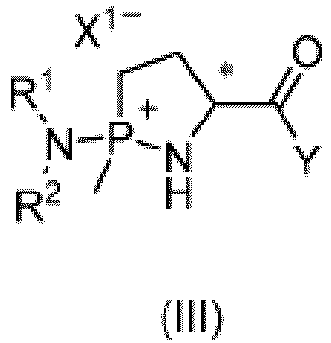
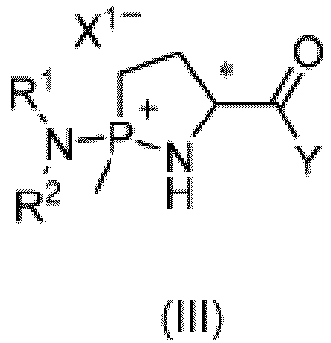
- the compound of formula (III) can be hydrolyzed directly in a neutral condition, that is, a hydrolysis reaction can be performed directly in presence of water.
- a hydrolysis reaction can be performed directly in presence of water.
- the hydrolysis can also preferably be performed in presence of an acid or an alkali.
- the acids may be at least one selected from hydrochloric acid, sulfuric acid, hydrobromic acid, hydroiodic acid, phosphoric acid, nitric acid, formic acid, and acetic acid, and is preferably hydrochloric acid or sulfuric acid; and the alkali can be selected from hydroxide, carbonate, bicarbonate, or basic carbonate of alkali metal or alkaline earth metal, ammonia, organic alkali, or organic amine, and is preferably sodium hydroxide or triethylamine.
- the hydrolysis can be performed, for example, at a temperature of 30°C to 140°C (for example, 40°C, 50°C, 60°C, 70°C, 80°C, 90°C, 100°C, 110°C, 120°C, or 130°C) or preferably 70°C to 110°C.
- halogen may be selected from fluorine, chlorine, or bromine;
- the C 1 -C 6 alkyl group may be selected from a methyl group, an ethyl group, a propyl group, or an isopropyl group;
- the C 2 -C 6 alkenyl group may be selected from a vinyl group, a propenyl group, a 1-butenyl group, a 2-butenyl group, or an isobutenyl group;
- the C 2 -C 6 alkynyl group may be selected from an ethynyl group, a propynyl group, a 1-butynyl group, or 2-butynyl group;
- the C 3 -C 6 cycloalkyl group may be selected from a cyclopropyl group, a cyclobutyl group, a cyclopentyl group, or a cyclohexyl group; the three-membered
- R 1 , R 2 , R 3 , R 4 , and R 5 may be each independently selected from -Si(R 6 )(R 7 )(R 8 ), and R 6 , R 7 , and R 8 are each independently selected from hydrogen, a C 1 -C 6 alkyl group, a C 2 -C 6 alkenyl group, a C 2 -C 6 alkynyl group, a C 3 -C 6 cycloalkyl group, a three-membered to six-membered heterocycloalkyl group, a C 6 -C 10 aryl group, or a five-membered to ten-membered heteroaryl group, where the C 1 -C 6 alkyl group, the C 2 -C 6 alkenyl group, the C 2 -C 6 alkynyl group, the C 3 -C 6 cycloalkyl group, the three-membered to six-membered heteroaryl group, where the C 1 -C
- preparation method in the first aspect of the present disclosure may further include a step of preparing the compound of formula (III).
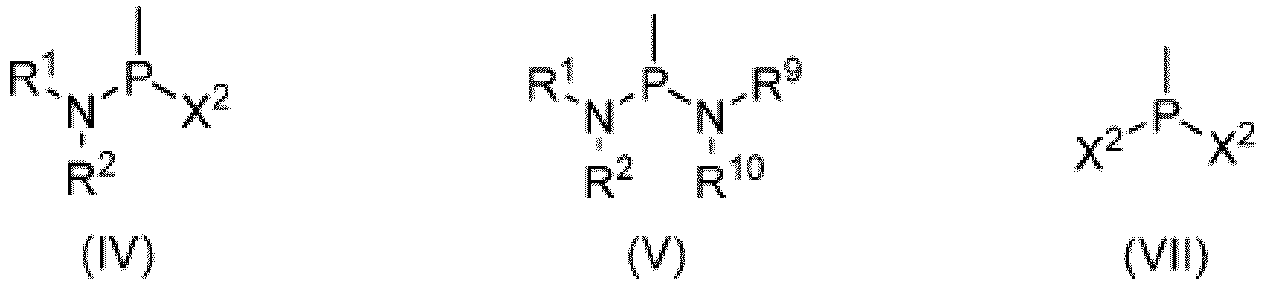
- the compound of formula (IV), the compound of formula (V), and/or the compound of formula (VII) used can be added to a reaction system as initial reactants, or can also be obtained by in situ reaction of another compound.
- the compound of formula (IV) can be obtained by the in-situ reaction of the compound of formula (VII) and the compound NHR 1 R 2 of formula (VIII), or obtained by the in-situ reaction of the compound of formula (V) and the compound of formula (VII); and the compound of formula (V) (herein, R 9 and R 10 can correspond to R 1 and R 2 , respectively) can be obtained by the in-situ reaction of the compound of formula (VII) and the compound of formula (VIII).
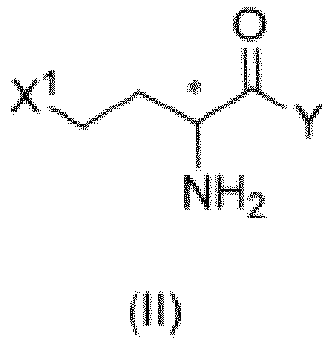
- the compound of formula (III) can also be obtained by subjecting the compound of formula (II) to a reaction with the compound of formula (VII) and the compound of formula (VIII).
- various steps for preparing the compound of formula (III) there is no limitation on a feeding order of various raw materials, that is, the various raw materials can be fed into the reaction system in any order.
- the foregoing steps for preparing the compound of formula (III) can preferably be performed in presence of a deacid reagent.
- the deacid reagent may be selected from NR 11 R 12 R 13 , where R 11 , R 12 , and R 13 are each independently selected from hydrogen, a C 1 -C 6 alkyl group, a C 2 -C 6 alkenyl group, a C 2 -C 6 alkynyl group, a C 3 -C 6 cycloalkyl group, a three-membered to six-membered heterocycloalkyl group, a C 6 -C 10 aryl group, or a five-membered to ten-membered heteroaryl group, or any two of R 11 , R 12 , and R 13 form a three-membered to six-membered heterocycloalkyl group together with the N atom to which they are attached, where the C 1 -C 6 alkyl group, the C
- the deacid reagent may be at least one selected from excesses of the compound of formula (VIII), ammonia, triethylamine, morpholine, and piperidine.
- the foregoing step for preparing the compound of formula (III) can be performed in absence of a solvent or in presence of an organic solvent.
- the organic solvent is selected from aromatic hydrocarbon solvents (for example, benzene, xylene, trimethylbenzene, ethylbenzene, diethylbenzene, cumene, diisopropylbenzene, halogenated benzene, or dihalobenzene), alkane solvents (for example, n-hexane, cyclohexane, n-heptane, methylcyclohexane, or ethylcyclohexane), halogenated hydrocarbon solvents (for example, dichloromethane, dichloroethane, chloroform, or carbon tetrachloride), ether solvents (for example, tetrahydrofuran, methyl tetrahydrofuran, methyl tert-butyl ether,
- aromatic hydrocarbon solvents
- a molar ratio among the compound of formula (II), total usage of the compounds of formulas (IV), (V) and (VII), and the deacid reagent may be 1: (0.9-5): (0.9-5), or preferably 1: (1.05-1.5): (1.05-1.5).
- the reaction may be performed at a temperature of -20°C to 10°C (for example, -10°C, -5°C, 0°C, or 5°C) for 1 to 15 hours (for example, 2h, 4h, 6h, or 12h), and then at 10°C to 120°C (for example, 20°C, 40°C, 60°C, 80°C, or 100°C) for 0.5 to 24 hours (for example, 1h, 2h, 4h, 6h, 12h, or 18h).
- 10°C to 120°C for example, 20°C, 40°C, 60°C, 80°C, or 100°C
- the compound of formula (III) may be further prepared in a method including steps of:
- a reaction raw material is basically the same as that in the foregoing solution except that it is clarified that the compound of formula (VI) obtained is used as an intermediate for a subsequent reaction. Therefore, for selection of the reaction raw material, the reaction system, reaction conditions, and the like in the alternative solution, refer to the foregoing solution for preparing the compound of formula (III). Details are not described herein again to avoid unnecessary redundancy.
- the reaction in step a) may be performed at a temperature of -20°C to 10°C for 1 to 15 hours; and the reaction in step b) is performed at a temperature of 10°C to 120°C for 0.5 to 24 hours.
- the present disclosure provides a method of preparing glufosinate represented by formula (I) or its salt or enantiomer, or a mixture of its enantiomers in any ratio, including steps of: in absence of a solvent or in presence of an organic solvent, subjecting a compound of formula (II) to a reaction with any one of the following compounds or mixtures: a compound of formula (IV), a compound of formula (V), a compound of formula (IV) and a compound of formula (V), a compound of formula (IV) and a compound of formula (VII), a compound of formula (V) and a compound of formula (VII), or a compound of formula (IV), a compound of formula (V) and a compound of formula (VII), to obtain an intermediate; and hydrolyzing the intermediate under an acidic, neutral, or alkaline condition, to obtain a compound of formula (I); where X 1 , X 2 , Y, R 1 , R 2 , R 9 , R
- the present disclosure provides a compound of formula (III) or its salt or enantiomer, or a mixture of its enantiomers in any ratio; where X 1 , Y, R 1 , R 2 , and * are as defined above.
- the compound of formula (III) can be prepared with reference to the first aspect of the present disclosure.
- the present disclosure provides a method of preparing a compound of formula (III) or its salt or enantiomer, or a mixture of its enantiomers in any ratio, including a step of: subjecting a compound of formula (II) to a reaction with any one of the following compounds or mixtures: a compound of formula (IV); a compound of formula (V); a compound of formula (IV) and a compound of formula (V); a compound of formula (IV) and a compound of formula (VII); a compound of formula (V) and a compound of formula (VII); or a compound of formula (IV), a compound of formula (V), and a compound of formula (VII); where X 1 , X 2 , Y, R 1 , R 2 , R 9 , R 10 , and * are as defined above.
- the present disclosure provides a method of preparing a compound of formula (III) or its salt or enantiomer, or a mixture of its enantiomers in any ratio, and the method includes preparing the compound of formula (III) from a reaction with the compound of formula (VI), where X 1 , Y, R 1 , R 2 , and * are as defined above.
- the present disclosure provides a compound of formula (VI) or its salt or enantiomer, or a mixture of its enantiomers in any ratio; where X 1 , Y, R 1 , R 2 , and * are as defined above.
- the compound of formula (VI) can be prepared with reference to the first aspect of the present disclosure.
- the present disclosure provides a method of preparing a compound of formula (VI) or its salt or enantiomer, or a mixture of its enantiomers in any ratio, and the method includes subjecting a compound of formula (II) to a reaction with any one of the following compounds or mixtures: a compound of formula (IV); a compound of formula (V); a compound of formula (IV) and a compound of formula (V); a compound of formula (IV) and a compound of formula (VII); a compound of formula (V) and a compound of formula (VII); or a compound of formula (IV), a compound of formula (V), and a compound of formula (VII); where X 1 , X 2 , Y, R 1 , R 2 , R 9 , R 10 , and * are as defined above.
- the present disclosure provides a method of preparing a compound of formula (VI) or its salt or enantiomer, or a mixture of its enantiomers in any ratio, and the method includes subjecting a compound of formula (II) to a reaction with a compound of formula (VII) and a compound of formula (VIII); where X 1 , X 2 , Y, R 1 , R 2 , and * are as defined above.
- the present disclosure provides a composition including a compound of formula (IV) and a compound of formula (V); a compound of formula (IV) and a compound of formula (VII); or a compound of formula (IV), a compound of formula (V), and a compound of formula (VII); where X 2 , R 1 , R 2 , R 9 , R 10 , and * are as defined above.
- the present disclosure provides use of the composition in the ninth aspect in preparation of glufosinate represented by formula (I) or its salt or enantiomer, or a mixture of its enantiomers in any ratio:
- the compound (II-2) (32.84g, 0.163mol, 0.95eq.) was added into 50g of toluene, and the above compound (V-1) was added dropwise under ice bath cooling.
- the inner temperature of the reaction solution was controlled at 5°C to 10°C.
- the reaction was held for 2 hours after the dripping was completed.
- Nitrogen pressure filtration was performed, and the filter cake was washed twice with toluene.
- the combined filtrate was the solution of compound (VI-1), which can be directly used for the next reaction.
- the compound (II-2) (32.84g, 0.163mol, 0.95eq.) was added into 50g of toluene, and the above compound (V-2) was added dropwise under ice bath cooling.
- the inner temperature of the reaction solution was controlled at 5°C to 10°C.
- the reaction was held for 2 hours after the dropwise addition was completed.
- Nitrogen pressure filtration was performed, and the filter cake was washed twice with toluene.
- the combined filtrate was the solution of compound (VI-2), which can be directly used for the next reaction.
- the compound (II-3) (27.48g, 0.166mol, 0.97eq.) was added into 50g of toluene, then dimethylamine (7.48g, 0.166mol, 0.97eq.) was slowly added under ice bath cooling, the inner temperature of the reaction solution was controlled at 5°C to 10°C, then the above compound (IV-2) solution was added dropwise. The reaction was held for 2 hours after the dripping was completed. Nitrogen pressure filtration was performed, and the filter cake was washed twice with toluene. The combined filtrate was the solution of compound (VI-4), which can be directly used for the next reaction.
- the compound (II-4) (32.84g, 0.163mol, 0.95eq.) was added into 50g of toluene, and the above compound (V-1) was added dropwise under ice bath cooling.
- the inner temperature of the reaction solution was controlled at 5°C to 10°C.
- the reaction was held for 2 hours after the addition was completed.
- Nitrogen pressure filtration was performed, and the filter cake was washed twice with toluene.
- the combined filtrate was the solution of compound (VI-3), which can be directly used for the next reaction.
- the compound (II-4) (32.84g, 0.163mol, 0.95eq.) was added into 50g of toluene, and the above compound (V-2) was added dropwise under ice bath cooling.
- the inner temperature of the reaction solution was controlled at 5°C to 10°C.
- the reaction was held for 2 hours after the dropwise addition was completed.
- Nitrogen pressure filtration was performed, and the filter cake was washed twice with toluene.
- the combined filtrate was the solution of compound (VI-4), which can be directly used for the next reaction.
- the compound (II-1) (33.78g, 0.204mol, 0.95eq.) was added into 150g of toluene.
- Methyldichlorophosphine (25.1g, 0.215mol, 1.0eq.) was then added dropwise under ice bath cooling, simultaneously ammonia gas (18.46g, 1.084mol, 5.05eq.) was slowly Injected into the mixture.
- the inner temperature of the reaction solution was controlled at 5°C to 10°C.
- the reaction was held for 2 hours after the dropwise addition was completed, nitrogen pressure filtration was then performed, and the filter cake was washed twice with toluene.
- the combined filtrate was the solution of compound (VI-5), which can be directly used for the next reaction.
Landscapes
- Chemical & Material Sciences (AREA)
- Organic Chemistry (AREA)
- Health & Medical Sciences (AREA)
- Life Sciences & Earth Sciences (AREA)
- Biochemistry (AREA)
- General Health & Medical Sciences (AREA)
- Molecular Biology (AREA)
- Organic Low-Molecular-Weight Compounds And Preparation Thereof (AREA)
Claims (29)
- Verfahren zur Herstellung von Glufosinat der Formel (I) oder seines Salzes oder Enantiomers oder einer Mischung seiner Enantiomere in einem beliebigen Verhältnis, umfassend:

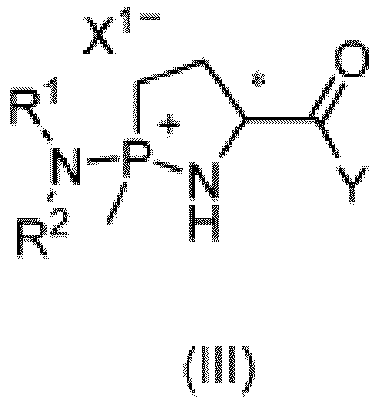 X1 Halogen ist,Y -OR3 oder -N(R4)(R5) ist,R1 und R2 jeweils unabhängig voneinander ausgewählt sind aus Wasserstoff, einer C1-C6-Alkylgruppe, einer C2-C6-Alkenylgruppe, einer C2-C6-Alkinylgruppe, einer C3-C6-Cycloalkylgruppe, einer drei- bis sechsgliedrigen Heterocycloalkylgruppe, einer C6-C10-Arylgruppe oder einer fünf- bis zehngliedrigen Heteroarylgruppe, oder R1 und R2 zusammen mit dem N-Atom, an das sie gebunden sind, eine drei- bis sechsgliedrige Heterocycloalkylgruppe bilden, wobei die C1-C6-Alkylgruppe, die C2-C6-Alkenylgruppe, die C2-C6-Alkinylgruppe, die C3-C6-Cycloalkylgruppe, die dreibis sechsgliedrige Heterocycloalkylgruppe, die C6-C10-Arylgruppe oder die fünf- bis zehngliedrige Heteroarylgruppe gegebenenfalls durch Halogen substituiert ist, eine Carboxylgruppe, eine Hydroxylgruppe, eine Cyangruppe, eine Aminogruppe, eine Nitrogruppe, eine C1-C3-Alkylgruppe, eine C1-C3-Halogenalkylgruppe, eine C1-C3-Alkoxygruppe, eine C3-C6-Cycloalkylgruppe oder eine C6-C10-Arylgruppe, R3, R4 und R5 jeweils unabhängig voneinander ausgewählt sind aus Wasserstoff, einer C1-C6-Alkylgruppe, einer C2-C6-Alkenylgruppe, einer C2-C6-Alkinylgruppe, einer C3-C6-Cycloalkylgruppe, einer drei- bis sechsgliedrigen Heterocycloalkylgruppe, einer C6-C10-Arylgruppe, oder einer fünf- bis zehngliedrige Heteroarylgruppe, oder R4 und R5 bilden zusammen mit dem N-Atom, an das sie gebunden sind, eine drei- bis sechsgliedrige Heterocycloalkylgruppe, wobei die C1-C6-Alkylgruppe, die C2-C6-Alkenylgruppe, die C2-C6-Alkinylgruppe, die C3-C6-Cycloalkylgruppe, die drei- bis sechsgliedrige Heterocycloalkylgruppe, die C6-C10-Arylgruppe oder die fünf- bis zehngliedrige Heteroarylgruppe gegebenenfalls durch Halogen, eine Carboxylgruppe, eine Hydroxylgruppe, eine Cyangruppe, eine Aminogruppe, eine Nitrogruppe, eine C1-C3-Alkylgruppe, eine C1-C3-Halogenalkylgruppe, eine C1-C3-Alkoxygruppe, eine C3-C6-Cycloalkylgruppe oder eine C6-C10-Arylgruppe substituiert ist, und* ein chirales Kohlenstoffatom bezeichnet.
 - Verfahren nach Anspruch 1, wobei die Hydrolyse in Gegenwart einer Säure oder eines Alkalis durchgeführt wird.
- Verfahren nach Anspruch 2, wobei die Säure mindestens eine, ausgewählt aus Salzsäure, Schwefelsäure, Bromwasserstoffsäure, lodwasserstoffsäure, Phosphorsäure, Salpetersäure, Ameisensäure und Essigsäure, und vorzugsweise Salzsäure oder Schwefelsäure ist.
- Verfahren nach Anspruch 2, wobei das Alkali ausgewählt aus Hydroxid, Carbonat, Bicarbonat oder basischem Carbonat eines Alkalimetalls oder Erdalkalimetalls, Ammoniak, organischem Alkali oder organischem Amin und vorzugsweise Natriumhydroxid oder Triethylamin ist.
- Verfahren nach Anspruch 1, wobei die Hydrolyse bei einer Temperatur von 30°C bis 140°C oder vorzugsweise 70°C bis 110°C durchgeführt wird.
- Verfahren nach Anspruch 1, wobei das Enantiomer des Glufosinats L-Glufosinat oder D-Glufosinat ist.
- Verfahren nach Anspruch 1, wobei das Gemisch seiner Enantiomere in einem beliebigen Verhältnis L-Glufosinat und D-Glufosinat in einem Verhältnis von 0,1: 99,9 bis 99,9 : 0,1 oder vorzugsweise in einem Verhältnis von 50 : 50 bis 99,9 : 0,1 umfasst.
- Verfahren nach Anspruch 1, wobeidas Halogen aus Fluor, Chlor oder Brom ausgewählt ist,die C1-C6-Alkylgruppe aus einer Methylgruppe, einer Ethylgruppe, einer Propylgruppe oder einer Isopropylgruppe ausgewählt ist,die C2-C6-Alkenylgruppe aus einer Vinylgruppe, einer Propenylgruppe, einer 1-Butenylgruppe, einer 2-Butenylgruppe oder einer Isobutenylgruppe ausgewählt ist,die C2-C6-Alkinylgruppe aus einer Ethinylgruppe, einer Propinylgruppe, einer 1-Butinylgruppe oder einer 2-Butinylgruppe ausgewählt ist,die C3-C6-Cycloalkylgruppe aus einer Cyclopropylgruppe, einer Cyclobutylgruppe, einer Cyclopentylgruppe oder einer Cyclohexylgruppe ausgewählt ist,die dreigliedrige bis sechsgliedrige Heterocycloalkylgruppe aus einer Cyclopropylgruppe, einer Cyclobutylgruppe, einer Cyclopentylgruppe oder einer Cyclohexylgruppe ausgewählt ist, die mindestens ein Heteroatom aus N, O oder S enthält,die C6-C10-Arylgruppe aus einer Phenylgruppe oder einer Naphthylgruppe ausgewählt ist und/oderdie fünfgliedrige bis zehngliedrige Heteroarylgruppe aus einer Pyrazinylgruppe, einer Pyrazolylgruppe, einer Pyrrolylgruppe, einer Furylgruppe, einer Thienylgruppe, einer Thiazolylgruppe oder einer Pyridylgruppe ausgewählt ist.
- Verfahren nach Anspruch 1, wobei R1, R2, R3, R4 und R5 jeweils unabhängig voneinander aus Wasserstoff, einer C1-C6-Alkylgruppe oder einer C3-C6-Cycloalkylgruppe ausgewählt sind und vorzugsweise Wasserstoff, eine Methylgruppe, eine Ethylgruppe, eine Propylgruppe, eine Isopropylgruppe, eine Butylgruppe, eine Isobutylgruppe, eine tert-Butylgruppe, eine Pentylgruppe, eine Hexylgruppe, eine Cyclopropylgruppe, eine Cyclobutylgruppe, eine Cyclopentylgruppe oder eine Cyclohexylgruppe sind.
- Verfahren nach Anspruch 1, wobei die Verbindung der Formel (III) hergestellt wird, indem eine Verbindung der Formel (II)
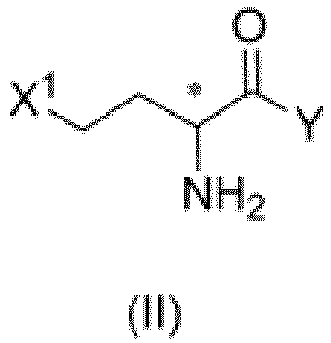
eine Verbindung der Formel (IV), eine Verbindung der Formel (V), eine Verbindung der Formel (IV) und eine Verbindung der Formel (V), eine Verbindung der Formel (IV) und eine Verbindung der Formel (VII), eine Verbindung der Formel (V) und eine Verbindung der Formel (VII), oder eine Verbindung der Formel (IV), eine Verbindung der Formel (V) und eine Verbindung der Formel (VII),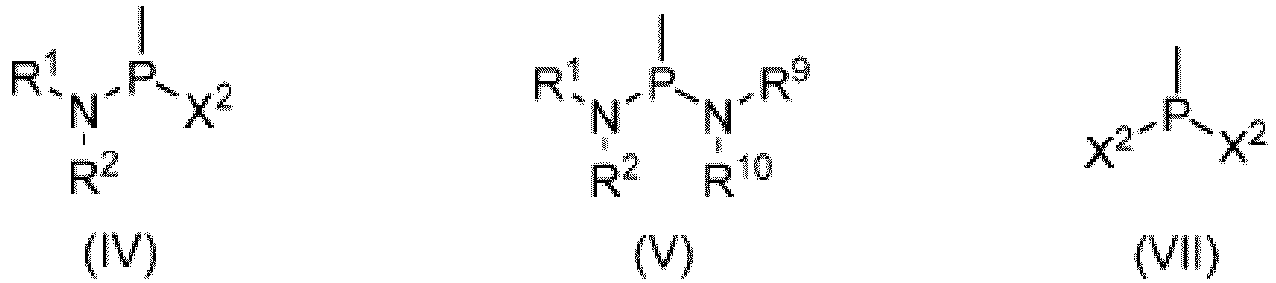 X2 Halogen ist,R1, R2, X1, Y und * wie in einem der Ansprüche 1, 8 oder 9 definiert sind undR9 und R10 jeweils unabhängig voneinander ausgewählt sind aus Wasserstoff, einer C1-C6-Alkylgruppe, einer C2-C6-Alkenylgruppe, einer C2-C6-Alkinylgruppe, einer C3-C6-Cycloalkylgruppe, einer drei- bis sechsgliedrigen Heterocycloalkylgruppe, einer C6-C10-Arylgruppe oder einer fünf- bis zehngliedrigen Heteroarylgruppe, oder R9 und R10 zusammen mit dem N-Atom, an das sie gebunden sind, eine drei- bis sechsgliedrige Heterocycloalkylgruppe bilden, wobei die C1-C6-Alkylgruppe, die C2-C6-Alkenylgruppe, die C2-C6-Alkinylgruppe, die C3-C6-Cycloalkylgruppe, die drei- bis sechsgliedrige Heterocycloalkylgruppe, die C6-C10-Arylgruppe oder die fünf- bis zehngliedrige Heteroarylgruppe gegebenenfalls durch Halogen, eine Carboxylgruppe, eine Hydroxylgruppe, eine Cyangruppe, eine Aminogruppe, eine Nitrogruppe, eine C1-C3-Alkylgruppe, eine C1-C3-Halogenalkylgruppe, eine C1-C3-Alkoxygruppe, eine C3-C6-Cycloalkylgruppe oder eine C6-C10-Arylgruppe substituiert ist.
 - Verfahren nach Anspruch 10, wobei die Reaktion in Gegenwart eines Entsäuerungsreagens durchgeführt wird.
- Verfahren nach Anspruch 11, wobei das Entsäuerungsreagens ausgewählt ist aus NR11R12R13, wobei R11, R12 und R13 jeweils unabhängig voneinander ausgewählt sind aus Wasserstoff, einer C1-C6-Alkylgruppe, einer C2-C6-Alkenylgruppe, einer C2-C6-Alkinylgruppe, einer C3-C6-Cycloalkylgruppe, einer dreibis sechsgliedrigen Heterocycloalkylgruppe, einer C6-C10-Arylgruppe oder einer fünf- bis zehngliedrigen Heteroarylgruppe, oder zwei beliebige von R11, R12 und R13 bilden zusammen mit dem N-Atom, an das sie gebunden sind, eine dreigliedrige bis sechsgliedrige Heterocycloalkylgruppe, wobei die C1-C6-Alkylgruppe, die C2-C6-Alkenylgruppe, die C2-C6-Alkinylgruppe, die C3-C6-Cycloalkylgruppe, die drei- bis sechsgliedrige Heterocycloalkylgruppe, die C6-C10-Arylgruppe oder die fünf- bis zehngliedrige Heteroarylgruppe gegebenenfalls durch Halogen, eine Carboxylgruppe, eine Hydroxylgruppe, eine Cyangruppe, eine Aminogruppe, eine Nitrogruppe, eine C1-C3-Alkylgruppe, eine C1-C3-Halogenalkylgruppe, eine C1-C3-Alkoxygruppe, eine C3-C6-Cycloalkylgruppe oder eine C6-C10-Arylgruppe substituiert ist.
- Verfahren nach Anspruch 11, wobei das Molverhältnis zwischen der Verbindung der Formel (II), dem Gesamteinsatz der Verbindungen der Formeln (IV), (V) und (VII) und dem Entsäuerungsreagens 1 : (0,9-5) : (0,9-5) oder vorzugsweise 1 : (1,05-1,5) : (1,05-1,5) beträgt.
- Verfahren nach Anspruch 10, wobei die Reaktion in Abwesenheit eines Lösungsmittels oder in Gegenwart eines organischen Lösungsmittels durchgeführt wird.
- Verfahren nach Anspruch 14, wobei das organische Lösungsmittel aus einem aromatischen Kohlenwasserstoff-Lösungsmittel, einem Alkan-Lösungsmittel, einem halogenierten Kohlenwasserstoff-Lösungsmittel, einem Ether-Lösungsmittel, einem Ester-Lösungsmittel, einem Amid-Lösungsmittel oder einem schwefelhaltigen Lösungsmittel ausgewählt ist, und das organische Lösungsmittel vorzugsweise mindestens eines ausgewählt aus Toluol und Chlorbenzol ist.
- Verfahren nach Anspruch 10, wobei die Reaktion bei einer Temperatur von - 20°C bis 10°C für 1 bis 15 Stunden und dann bei 10°C bis 120°C für 0,5 bis 24 Stunden durchgeführt wird.
- Verfahren nach Anspruch 1, wobei die Verbindung der Formel (III) durch ein Verfahren hergestellt wird, das die folgenden Schritte umfasst:a) Unterwerfen einer Verbindung der Formel (II)


 b) Herstellen der Verbindung der Formel (III) durch eine Reaktion mit der Verbindung der Formel (VI),worin X1, X2, Y, R1, R2, R9, R10 und * wie in Anspruch 10 definiert sind.
 - Verfahren nach Anspruch 17, wobei die Reaktion in Schritt a) bei einer Temperatur von -20°C bis 10°C für 1 bis 15 Stunden durchgeführt wird.
- Verfahren nach Anspruch 17, wobei die Reaktion in Schritt b) bei einer Temperatur von 10°C bis 120°C für 0,5 bis 24 Stunden durchgeführt wird.
- Verfahren zur Herstellung von Glufosinat der Formel (I) oder seines Salzes oder Enantiomers oder einer Mischung seiner Enantiomere in beliebigem Verhältnis, umfassend die folgenden Schritte:
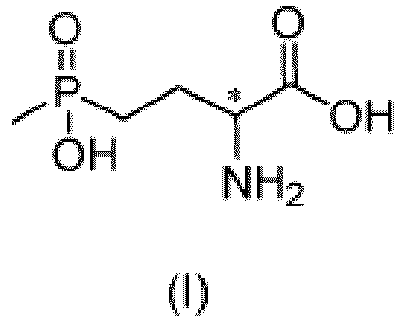
 Hydrolysieren des Zwischenprodukts unter sauren, neutralen oder alkalischen Bedingungen, um eine Verbindung der Formel (I) zu erhalten,worin X1, X2, Y, R1, R2, R9, R10 und * wie in Anspruch 10 definiert sind.
 - Verbindung der Formel (III) oder ihr Salz oder Enantiomer oder eine Mischung ihrer Enantiomere in einem beliebigen Verhältnis,

- Verbindung der Formel (III) oder ihr Salz oder Enantiomer oder die Mischung ihrer Enantiomere in einem beliebigen Verhältnis nach Anspruch 21, wobei die Verbindung der Formel (III) oder ihr Salz oder ihr Enantiomer oder die Mischung ihrer Enantiomere in einem beliebigen Verhältnis durch die Schritte des Verfahrens nach einem der Ansprüche 10 bis 19 hergestellt wird.
- Verfahren zur Herstellung einer Verbindung der Formel (III) oder ihres Salzes oder Enantiomers oder einer Mischung ihrer Enantiomere in einem beliebigen Verhältnis, umfassend:


- Verfahren zur Herstellung einer Verbindung der Formel (III) oder ihres Salzes oder Enantiomers oder einer Mischung ihrer Enantiomere in einem beliebigen Verhältnis, umfassend:

- Verbindung der Formel (VI) oder ihr Salz oder Enantiomer oder eine Mischung ihrer Enantiomere in einem beliebigen Verhältnis,

- Verbindung der Formel (VI) oder ihr Salz oder Enantiomer oder die Mischung ihrer Enantiomere in einem beliebigen Verhältnis nach Anspruch 25, wobei die Verbindung der Formel (VI) oder ihr Salz oder Enantiomer oder die Mischung ihrer Enantiomere in einem beliebigen Verhältnis durch die Schritte des Verfahrens nach einem der Ansprüche 17 bis 19 hergestellt wird.
- Verfahren zur Herstellung einer Verbindung der Formel (VI) oder ihres Salzes oder Enantiomers oder einer Mischung ihrer Enantiomere in einem beliebigen Verhältnis, umfassend:


- Verfahren zur Herstellung einer Verbindung der Formel (VI) oder ihres Salzes oder Enantiomers oder einer Mischung ihrer Enantiomere in einem beliebigen Verhältnis, umfassend:


- Verwendung einer Zusammensetzung zur Herstellung von Glufosinat der Formel (I) oder seines Salzes oder Enantiomers oder einer Mischung seiner Enantiomere in einem beliebigen Verhältnis:
 wobei die Zusammensetzung eine Verbindung der Formel (IV) und eine Verbindung der Formel (V), eine Verbindung der Formel (IV) und eine Verbindung der Formel (VII), oder eine Verbindung der Formel (IV), eine Verbindung der Formel (V) und eine Verbindung der Formel (VII) umfasst, und
 worin X2, R1, R2, R9, R10 und * wie in Anspruch 10 definiert sind.
Applications Claiming Priority (2)
| Application Number | Priority Date | Filing Date | Title |
|---|---|---|---|
| CN202211440553 | 2022-11-17 | ||
| CN202310033931.0A CN116041387B (zh) | 2022-11-17 | 2023-01-10 | 一种草铵膦的制备方法 |
Publications (3)
| Publication Number | Publication Date |
|---|---|
| EP4371992A1 EP4371992A1 (de) | 2024-05-22 |
| EP4371992B1 true EP4371992B1 (de) | 2025-07-02 |
| EP4371992C0 EP4371992C0 (de) | 2025-07-02 |
Family
ID=86330319
Family Applications (1)
| Application Number | Title | Priority Date | Filing Date |
|---|---|---|---|
| EP23171798.4A Active EP4371992B1 (de) | 2022-11-17 | 2023-05-05 | Verfahren zur herstellung von glufosinat |
Country Status (1)
| Country | Link |
|---|---|
| EP (1) | EP4371992B1 (de) |
Families Citing this family (1)
| Publication number | Priority date | Publication date | Assignee | Title |
|---|---|---|---|---|
| AU2023331400B2 (en) | 2022-12-02 | 2025-04-03 | Lier Chemical Co., Ltd. | Preparation method for glufosinate or derivative thereof |
Citations (1)
| Publication number | Priority date | Publication date | Assignee | Title |
|---|---|---|---|---|
| EP4063374A1 (de) * | 2020-10-14 | 2022-09-28 | Lier Chemical Co., Ltd. | Verfahren zum herstellen von l-glufosinat |
Family Cites Families (4)
| Publication number | Priority date | Publication date | Assignee | Title |
|---|---|---|---|---|
| NZ239252A (en) * | 1990-08-09 | 1997-07-27 | Genta Inc | Reagent for attaching a psoralen-containing moiety to an oligonucleotide(derivative); oligonucleotide(derivative)-psoralen conjugates |
| TW353663B (en) | 1991-04-06 | 1999-03-01 | Hoechst Ag | Process for the preparation of phosphorus-containing L-amino acids, their derivatives and intermediates for this process |
| US9068045B2 (en) * | 2013-04-05 | 2015-06-30 | Reichhold, Inc. | Curing of liquid thermosetting resins |
| AU2021209728B2 (en) * | 2020-01-20 | 2022-08-18 | Guangan Lier Chemical Co., Ltd. | Preparation method for glufosinate ammonium |
-
2023
- 2023-05-05 EP EP23171798.4A patent/EP4371992B1/de active Active
Patent Citations (1)
| Publication number | Priority date | Publication date | Assignee | Title |
|---|---|---|---|---|
| EP4063374A1 (de) * | 2020-10-14 | 2022-09-28 | Lier Chemical Co., Ltd. | Verfahren zum herstellen von l-glufosinat |
Non-Patent Citations (2)
| Title |
|---|
| "Names Reactions", 1 January 2014, SPRINGER, article LI JIE JACK: "Names Reactions", XP093231940 * |
| "Stratetic Applications of Named Reactions in Organic Synthesis", 1 January 2014, ELSEVIER, article KURTI LASZLO ET AL: "Stratetic Applications of Named Reactions in Organic Synthesis", XP093231943 * |
Also Published As
| Publication number | Publication date |
|---|---|
| EP4371992C0 (de) | 2025-07-02 |
| EP4371992A1 (de) | 2024-05-22 |
Similar Documents
| Publication | Publication Date | Title |
|---|---|---|
| CA3157884C (en) | Preparation method for glufosinate | |
| CN115873033B (zh) | 一种草铵膦的制备方法 | |
| US20250163083A1 (en) | Methods of preparing glufosinate | |
| US12312371B2 (en) | Optically-active 2-amino-phosphonoalkane acid, optically-active 2-amino-phosphonoalkane acid salt, and hydrates of these | |
| EP4371992A1 (de) | Verfahren zur herstellung von glufosinat | |
| US6197998B1 (en) | Process for producing N-glycyltyrosine and its crystal structure | |
| CN116478207B (zh) | 一种草铵膦的制备方法 | |
| CN116375764B (zh) | 一种草铵膦的制备方法 | |
| EP2241552B1 (de) | Produktionsverfahren und beckmann-neuordnungskatalysator zur herstellung einer zyklischen lactam-verbindung | |
| US8183408B2 (en) | Process for production of N-carbamoyl-tert-leucine | |
| RU2844557C2 (ru) | Способы получения глюфосината | |
| BR102023014787B1 (pt) | Métodos de preparo de glufosinato | |
| CN117164621A (zh) | 一种草铵膦的制备方法 | |
| US20200377456A1 (en) | Process for the preparation of glycopyrrolate tosylate | |
| PT1581475E (pt) | Síntese de (r)- e (s)-aminocarnitinas e de seus derivados a partir dos ácidos d- e l-aspártico | |
| JPWO2004018407A1 (ja) | アミノ酸エステル塩結晶およびその製法 | |
| EP0281393B1 (de) | Methode zur Herstellung von Indan-Derivaten | |
| JP2023180566A (ja) | エルゴチオネイン誘導体の製造方法 | |
| JP2003300952A (ja) | スルフィド誘導体の製法 |
Legal Events
| Date | Code | Title | Description |
|---|---|---|---|
| PUAI | Public reference made under article 153(3) epc to a published international application that has entered the european phase |
Free format text: ORIGINAL CODE: 0009012 |
|
| STAA | Information on the status of an ep patent application or granted ep patent |
Free format text: STATUS: EXAMINATION IS IN PROGRESS |
|
| 17P | Request for examination filed |
Effective date: 20230505 |
|
| AK | Designated contracting states |
Kind code of ref document: A1 Designated state(s): AL AT BE BG CH CY CZ DE DK EE ES FI FR GB GR HR HU IE IS IT LI LT LU LV MC ME MK MT NL NO PL PT RO RS SE SI SK SM TR |
|
| RBV | Designated contracting states (corrected) |
Designated state(s): AL AT BE BG CH CY CZ DE DK EE ES FI FR GB GR HR HU IE IS IT LI LT LU LV MC ME MK MT NL NO PL PT RO RS SE SI SK SM TR |
|
| R17C | First examination report despatched (corrected) |
Effective date: 20240126 |
|
| GRAP | Despatch of communication of intention to grant a patent |
Free format text: ORIGINAL CODE: EPIDOSNIGR1 |
|
| STAA | Information on the status of an ep patent application or granted ep patent |
Free format text: STATUS: GRANT OF PATENT IS INTENDED |
|
| R17C | First examination report despatched (corrected) |
Effective date: 20240126 |
|
| INTG | Intention to grant announced |
Effective date: 20241220 |
|
| GRAS | Grant fee paid |
Free format text: ORIGINAL CODE: EPIDOSNIGR3 |
|
| GRAA | (expected) grant |
Free format text: ORIGINAL CODE: 0009210 |
|
| STAA | Information on the status of an ep patent application or granted ep patent |
Free format text: STATUS: THE PATENT HAS BEEN GRANTED |
|
| AK | Designated contracting states |
Kind code of ref document: B1 Designated state(s): AL AT BE BG CH CY CZ DE DK EE ES FI FR GB GR HR HU IE IS IT LI LT LU LV MC ME MK MT NL NO PL PT RO RS SE SI SK SM TR |
|
| REG | Reference to a national code |
Ref country code: GB Ref legal event code: FG4D |
|
| REG | Reference to a national code |
Ref country code: CH Ref legal event code: EP |
|
| REG | Reference to a national code |
Ref country code: DE Ref legal event code: R096 Ref document number: 602023004415 Country of ref document: DE |
|
| REG | Reference to a national code |
Ref country code: IE Ref legal event code: FG4D |
|
| U01 | Request for unitary effect filed |
Effective date: 20250730 |
|
| U07 | Unitary effect registered |
Designated state(s): AT BE BG DE DK EE FI FR IT LT LU LV MT NL PT RO SE SI Effective date: 20250805 |
|
| PG25 | Lapsed in a contracting state [announced via postgrant information from national office to epo] |
Ref country code: IS Free format text: LAPSE BECAUSE OF FAILURE TO SUBMIT A TRANSLATION OF THE DESCRIPTION OR TO PAY THE FEE WITHIN THE PRESCRIBED TIME-LIMIT Effective date: 20251102 |
|
| PG25 | Lapsed in a contracting state [announced via postgrant information from national office to epo] |
Ref country code: NO Free format text: LAPSE BECAUSE OF FAILURE TO SUBMIT A TRANSLATION OF THE DESCRIPTION OR TO PAY THE FEE WITHIN THE PRESCRIBED TIME-LIMIT Effective date: 20251002 |
|
| PG25 | Lapsed in a contracting state [announced via postgrant information from national office to epo] |
Ref country code: HR Free format text: LAPSE BECAUSE OF FAILURE TO SUBMIT A TRANSLATION OF THE DESCRIPTION OR TO PAY THE FEE WITHIN THE PRESCRIBED TIME-LIMIT Effective date: 20250702 |
|
| PG25 | Lapsed in a contracting state [announced via postgrant information from national office to epo] |
Ref country code: GR Free format text: LAPSE BECAUSE OF FAILURE TO SUBMIT A TRANSLATION OF THE DESCRIPTION OR TO PAY THE FEE WITHIN THE PRESCRIBED TIME-LIMIT Effective date: 20251003 |
|
| PG25 | Lapsed in a contracting state [announced via postgrant information from national office to epo] |
Ref country code: CZ Free format text: LAPSE BECAUSE OF FAILURE TO SUBMIT A TRANSLATION OF THE DESCRIPTION OR TO PAY THE FEE WITHIN THE PRESCRIBED TIME-LIMIT Effective date: 20250702 |
|
| PG25 | Lapsed in a contracting state [announced via postgrant information from national office to epo] |
Ref country code: PL Free format text: LAPSE BECAUSE OF FAILURE TO SUBMIT A TRANSLATION OF THE DESCRIPTION OR TO PAY THE FEE WITHIN THE PRESCRIBED TIME-LIMIT Effective date: 20250702 |
|
| PG25 | Lapsed in a contracting state [announced via postgrant information from national office to epo] |
Ref country code: RS Free format text: LAPSE BECAUSE OF FAILURE TO SUBMIT A TRANSLATION OF THE DESCRIPTION OR TO PAY THE FEE WITHIN THE PRESCRIBED TIME-LIMIT Effective date: 20251002 |
|
| PG25 | Lapsed in a contracting state [announced via postgrant information from national office to epo] |
Ref country code: ES Free format text: LAPSE BECAUSE OF FAILURE TO SUBMIT A TRANSLATION OF THE DESCRIPTION OR TO PAY THE FEE WITHIN THE PRESCRIBED TIME-LIMIT Effective date: 20250702 |
|
| PG25 | Lapsed in a contracting state [announced via postgrant information from national office to epo] |
Ref country code: SM Free format text: LAPSE BECAUSE OF FAILURE TO SUBMIT A TRANSLATION OF THE DESCRIPTION OR TO PAY THE FEE WITHIN THE PRESCRIBED TIME-LIMIT Effective date: 20250702 |
|
| PG25 | Lapsed in a contracting state [announced via postgrant information from national office to epo] |
Ref country code: SK Free format text: LAPSE BECAUSE OF FAILURE TO SUBMIT A TRANSLATION OF THE DESCRIPTION OR TO PAY THE FEE WITHIN THE PRESCRIBED TIME-LIMIT Effective date: 20250702 |
|
| PLBE | No opposition filed within time limit |
Free format text: ORIGINAL CODE: 0009261 |
|
| STAA | Information on the status of an ep patent application or granted ep patent |
Free format text: STATUS: NO OPPOSITION FILED WITHIN TIME LIMIT |