EP4366266A1 - Nachrichtenübertragungsverfahren und zugehörige vorrichtung - Google Patents
Nachrichtenübertragungsverfahren und zugehörige vorrichtung Download PDFInfo
- Publication number
- EP4366266A1 EP4366266A1 EP22847949.9A EP22847949A EP4366266A1 EP 4366266 A1 EP4366266 A1 EP 4366266A1 EP 22847949 A EP22847949 A EP 22847949A EP 4366266 A1 EP4366266 A1 EP 4366266A1
- Authority
- EP
- European Patent Office
- Prior art keywords
- rdma
- network device
- packet
- transmission identifier
- packets
- Prior art date
- Legal status (The legal status is an assumption and is not a legal conclusion. Google has not performed a legal analysis and makes no representation as to the accuracy of the status listed.)
- Pending
Links
- 230000005540 biological transmission Effects 0.000 title claims abstract description 172
- 238000000034 method Methods 0.000 title claims abstract description 68
- 230000015654 memory Effects 0.000 claims abstract description 49
- 238000012545 processing Methods 0.000 claims description 47
- 238000011144 upstream manufacturing Methods 0.000 claims description 6
- 238000010586 diagram Methods 0.000 description 18
- 230000006870 function Effects 0.000 description 17
- 238000004891 communication Methods 0.000 description 15
- 239000004744 fabric Substances 0.000 description 14
- 230000008569 process Effects 0.000 description 12
- 230000008878 coupling Effects 0.000 description 8
- 238000010168 coupling process Methods 0.000 description 8
- 238000005859 coupling reaction Methods 0.000 description 8
- 238000005516 engineering process Methods 0.000 description 5
- 238000004590 computer program Methods 0.000 description 4
- 238000013473 artificial intelligence Methods 0.000 description 2
- 230000010076 replication Effects 0.000 description 2
- 230000009286 beneficial effect Effects 0.000 description 1
- 238000007405 data analysis Methods 0.000 description 1
- 230000000694 effects Effects 0.000 description 1
- RGNPBRKPHBKNKX-UHFFFAOYSA-N hexaflumuron Chemical compound C1=C(Cl)C(OC(F)(F)C(F)F)=C(Cl)C=C1NC(=O)NC(=O)C1=C(F)C=CC=C1F RGNPBRKPHBKNKX-UHFFFAOYSA-N 0.000 description 1
- 238000012423 maintenance Methods 0.000 description 1
- 230000004048 modification Effects 0.000 description 1
- 238000012986 modification Methods 0.000 description 1
- 230000006855 networking Effects 0.000 description 1
- 230000011664 signaling Effects 0.000 description 1
Images


Classifications
-
- H—ELECTRICITY
- H04—ELECTRIC COMMUNICATION TECHNIQUE
- H04L—TRANSMISSION OF DIGITAL INFORMATION, e.g. TELEGRAPHIC COMMUNICATION
- H04L47/00—Traffic control in data switching networks
- H04L47/10—Flow control; Congestion control
- H04L47/12—Avoiding congestion; Recovering from congestion
- H04L47/125—Avoiding congestion; Recovering from congestion by balancing the load, e.g. traffic engineering
-
- H—ELECTRICITY
- H04—ELECTRIC COMMUNICATION TECHNIQUE
- H04L—TRANSMISSION OF DIGITAL INFORMATION, e.g. TELEGRAPHIC COMMUNICATION
- H04L45/00—Routing or path finding of packets in data switching networks
- H04L45/302—Route determination based on requested QoS
- H04L45/306—Route determination based on the nature of the carried application
-
- H—ELECTRICITY
- H04—ELECTRIC COMMUNICATION TECHNIQUE
- H04L—TRANSMISSION OF DIGITAL INFORMATION, e.g. TELEGRAPHIC COMMUNICATION
- H04L45/00—Routing or path finding of packets in data switching networks
- H04L45/38—Flow based routing
-
- H—ELECTRICITY
- H04—ELECTRIC COMMUNICATION TECHNIQUE
- H04L—TRANSMISSION OF DIGITAL INFORMATION, e.g. TELEGRAPHIC COMMUNICATION
- H04L45/00—Routing or path finding of packets in data switching networks
- H04L45/66—Layer 2 routing, e.g. in Ethernet based MAN's
-
- H—ELECTRICITY
- H04—ELECTRIC COMMUNICATION TECHNIQUE
- H04L—TRANSMISSION OF DIGITAL INFORMATION, e.g. TELEGRAPHIC COMMUNICATION
- H04L45/00—Routing or path finding of packets in data switching networks
- H04L45/74—Address processing for routing
-
- H—ELECTRICITY
- H04—ELECTRIC COMMUNICATION TECHNIQUE
- H04L—TRANSMISSION OF DIGITAL INFORMATION, e.g. TELEGRAPHIC COMMUNICATION
- H04L49/00—Packet switching elements
- H04L49/10—Packet switching elements characterised by the switching fabric construction
- H04L49/113—Arrangements for redundant switching, e.g. using parallel planes
- H04L49/118—Address processing within a device, e.g. using internal ID or tags for routing within a switch
-
- H—ELECTRICITY
- H04—ELECTRIC COMMUNICATION TECHNIQUE
- H04L—TRANSMISSION OF DIGITAL INFORMATION, e.g. TELEGRAPHIC COMMUNICATION
- H04L49/00—Packet switching elements
- H04L49/35—Switches specially adapted for specific applications
- H04L49/356—Switches specially adapted for specific applications for storage area networks
- H04L49/357—Fibre channel switches
-
- H—ELECTRICITY
- H04—ELECTRIC COMMUNICATION TECHNIQUE
- H04L—TRANSMISSION OF DIGITAL INFORMATION, e.g. TELEGRAPHIC COMMUNICATION
- H04L49/00—Packet switching elements
- H04L49/35—Switches specially adapted for specific applications
- H04L49/356—Switches specially adapted for specific applications for storage area networks
- H04L49/358—Infiniband Switches
-
- H—ELECTRICITY
- H04—ELECTRIC COMMUNICATION TECHNIQUE
- H04L—TRANSMISSION OF DIGITAL INFORMATION, e.g. TELEGRAPHIC COMMUNICATION
- H04L69/00—Network arrangements, protocols or services independent of the application payload and not provided for in the other groups of this subclass
- H04L69/06—Notations for structuring of protocol data, e.g. abstract syntax notation one [ASN.1]
Definitions
- This application relates to the field of communication technologies, and in particular, to a packet transmission method and a related apparatus.
- TCP/IP Transmission Control Protocol/Internet Protocol
- the remote direct memory access (Remote Direct Memory Access, RDMA) technology satisfies the high-concurrency and low-latency storage I/O requirements of the applications.
- RDMA can quickly move data from a system to a memory of a remote system over a network without affecting an operating system.
- RDMA eliminates external memory replication and text exchange operations, thereby releasing a memory bandwidth and a CPU cycle and improving data transmission efficiency.
- the RDMA transmission protocol is widely used in applications in fields such as high-performance computing and artificial intelligence to implement data transmission.
- RDMA data transmission is carried on a connection established by an application. Once the application establishes a connection between two devices, RDMA data between the two devices is transmitted in a network through a same forwarding path, which easily causes an unbalanced network load and limits proper utilization of a network bandwidth resource.
- This application provides a packet transmission method. Packets needing to be transmitted in sequence are marked by including a transmission identifier in the packets, and a network device selects a forwarding path for the packets based on the transmission identifier in the packets. In this way, it is ensured that the packets needing to be transmitted in sequence can be forwarded through a same forwarding path, and packets having different transmission identifiers can be forwarded through different forwarding paths, thereby implementing network load balancing and improving utilization of a network bandwidth resource.
- a first aspect of this application provides a packet transmission method.
- a first network device obtains an RDMA packet, where the RDMA packet includes a transmission identifier, and RDMA packets having a same transmission identifier need to be transmitted in sequence.
- the RDMA packet obtained by the first network device is a packet used for transmitting RDMA data, and the RDMA packet includes the transmission identifier and the RDMA data.
- the RDMA data is data needing to be sent by a source server to a destination server.
- the first network device determines a target forwarding path based on the transmission identifier and a destination address of the RDMA packet.
- the destination address of the RDMA packet is used for determining a forwarding path that is capable of being used for forwarding the RDMA packet, and the transmission identifier in the RDMA packet is used for selecting the target forwarding path from a plurality of forwarding paths that are capable of being used for forwarding the RDMA packet.
- the first network device forwards the RDMA packet through the target forwarding path.
- packets needing to be transmitted in sequence are marked by including a transmission identifier in the RDMA packets, and a network device selects a forwarding path for the RDMA packets based on the transmission identifier in the RDMA packets.
- a network device selects a forwarding path for the RDMA packets based on the transmission identifier in the RDMA packets.
- the first network device determines, based on the destination address of the RDMA packet, a plurality of forwarding paths that are capable of being used for forwarding the RDMA packet.
- the first network device determines the target forwarding path from the plurality of forwarding paths based on the transmission identifier.
- Each of the plurality of forwarding paths is identified by using one egress port of the first network device.
- the first network device may search for a routing table based on the destination address of the RDMA packet, to determine a plurality of egress ports that are capable of being used for forwarding the RDMA packet, where the plurality of egress ports respectively correspond to the plurality of forwarding paths.
- the first network device may select a target egress port from the plurality of egress ports based on the transmission identifier, and forward the RDMA packet through the target egress port.
- the first network device determines the target forwarding path from the plurality of forwarding paths based on the transmission identifier and one or more of a source address, the destination address, a source port number, a destination port number, and a protocol number of the RDMA packet.
- the first network device may use the transmission identifier and one or more of the source address, the destination address, the source port number, the destination port number, and the protocol number of the RDMA packet together as hash factors, and calculate hash values of the plurality of hash factors, to determine the target forwarding path from the plurality of forwarding paths based on the calculated hash values.
- the first network device sequentially obtains a plurality of RDMA packets, where all the plurality of RDMA packets include the transmission identifier, and destination addresses of the plurality of RDMA packets are the same.
- the first network device sequentially forwards the plurality of RDMA packets through the target forwarding path.
- the transmission identifier is located in an RDMA header of the RDMA packet.
- the RDMA header may refer to a standard packet header of the RDMA packet, for example, a base transport header (Base Transport Header, BTH) of the RDMA packet.
- BTH Base Transport Header
- the transmission identifier is located in one or more reserved fields in the RDMA header.
- the RDMA header includes one or more reserved fields, and the transmission identifier may be represented by using a value in the one or more reserved fields.
- the one or more reserved fields in the RDMA header are used for representing the transmission identifier, so that a modification to the conventional technologies can be reduced, and implementability of a solution can be improved.
- the transmission identifier is located in an extended field in the RDMA header.
- the RDMA packet includes an RDMA over converged Ethernet RoCE packet, an iWARP packet, or an InfiniBand InfiniBand packet.
- the first network device when obtaining the remote direct memory access RDMA packet, obtains a message sent by an application layer. The first network device generates at least one RDMA packet based on the message, where the at least one RDMA packet includes a same transmission identifier.
- the first network device receives the RDMA packet sent by a second network device, where the second network device is an upstream device of the first network device.
- a second aspect of this application provides a network device, including an obtaining unit, a processing unit, and a sending unit.
- the obtaining unit is configured to obtain an RDMA packet, where the RDMA packet includes a transmission identifier, and RDMA packets having a same transmission identifier need to be transmitted in sequence.
- the processing unit is configured to determine a target forwarding path based on the transmission identifier and a destination address of the RDMA packet.
- the sending unit is configured to forward the RDMA packet through the target forwarding path.
- the processing unit is further configured to: determine, based on the destination address of the RDMA packet, a plurality of forwarding paths that are capable of being used for forwarding the RDMA packet; and determine the target forwarding path from the plurality of forwarding paths based on the transmission identifier.
- the processing unit is specifically configured to determine the target forwarding path from the plurality of forwarding paths based on the transmission identifier and one or more of a source address, the destination address, a source port number, a destination port number, and a protocol number of the RDMA packet.
- the obtaining unit is further configured to sequentially obtain a plurality of RDMA packets, where all the plurality of RDMA packets include the transmission identifier, and destination addresses of the plurality of RDMA packets are the same.
- the processing unit is further configured to sequentially forward the plurality of RDMA packets through the target forwarding path.
- the transmission identifier is located in an RDMA header of the RDMA packet.
- the transmission identifier is located in one or more reserved fields in the RDMA header.
- the transmission identifier is located in an extended field in the RDMA header.
- the RDMA packet includes an RDMA over converged Ethernet RoCE packet, an iWARP packet, or an InfiniBand InfiniBand packet.
- the obtaining unit is configured to obtain a message sent by an application layer.
- the processing unit is configured to generate at least one RDMA packet based on the message, where the at least one RDMA packet includes a same transmission identifier.
- the obtaining unit is configured to receive the RDMA packet sent by a second network device, where the second network device is an upstream device of a first network device.
- a third aspect of this application provides a network device.
- the network device includes a processor, configured to enable the network device to implement the method described in any one of the first aspect or the possible implementations of the first aspect.
- the device may further include a memory.
- the memory is coupled to the processor.
- the processor executes instructions stored in the memory, the network device is enabled to implement the method described in any one of the possible implementations of the first aspect.
- the device may further include a communication interface.
- the communication interface is used by the apparatus to communicate with another device.
- the communication interface may be a transceiver, a circuit, a bus, a module, or a communication interface of another type.
- the instructions in the memory in this application may be pre-stored, or may be downloaded from the internet and then stored when the network device is used.
- a source of the instructions in the memory is not specifically limited in this application.
- the coupling in this application is indirect coupling or a connection between apparatuses, units, or modules, may be in an electrical form, a mechanical form, or another form, and is used for information exchange between the apparatuses, the units, or the modules.
- a fourth aspect of this application provides a computer storage medium.
- the computer storage medium may be non-volatile.
- the computer storage medium stores computer-readable instructions, and when the computer-readable instructions are executed by a processor, the method described in any one of the first aspect or the possible implementations of the first aspect is implemented.
- a fifth aspect of this application provides a computer program product including instructions.
- the computer program product runs on a computer, the computer is enabled to perform the method described in any one of the first aspect or the possible implementations of the first aspect.
- a sixth aspect of this application provides a network system.
- the network system includes a plurality of network devices according to the second aspect or the third aspect.
- Names or numbers of steps in this application do not mean that the steps in the method procedure need to be performed in a time/logical sequence indicated by the names or numbers.
- An execution sequence of the steps in the procedure that have been named or numbered can be changed based on a technical objective to be achieved, provided that same or similar technical effects can be achieved.
- Division into units in this application is logical division. During actual application, there may be another division manner. For example, a plurality of units may be combined or integrated into another system, or some features may be ignored or not performed.
- the displayed or discussed mutual coupling or direct coupling or communication connection may be implemented through some interfaces.
- the indirect coupling or communication connection between the units may be implemented in an electrical form or another similar form. This is not limited in this application.
- units or subunits described as separate components may or may not be physically separate, may or may not be physical units, or may be distributed into a plurality of circuit units. Some or all of the units may be selected based on actual requirements to achieve the objectives of the solutions of this application.
- RDMA can quickly move data from a system to a memory of a remote system over a network without affecting an operating system.
- RDMA eliminates external memory replication and text exchange operations, thereby releasing a memory bandwidth and a CPU cycle and improving data transmission efficiency.
- the RDMA transmission protocol is widely used in applications in fields such as high-performance computing and artificial intelligence to implement data transmission.
- RDMA data transmission is carried on a connection established by an application. Once the application establishes a connection between two devices, RDMA data between the two devices is transmitted in a network through a same forwarding path, which easily causes an unbalanced network load and limits proper utilization of a network bandwidth resource.
- an embodiment of this application provides a packet transmission method.
- Packets needing to be transmitted in sequence are marked by including a transmission identifier in the packets, and a network device selects a forwarding path for the packets based on the transmission identifier in the packets. In this way, it is ensured that the packets needing to be transmitted in sequence can be forwarded through a same forwarding path, and packets having different transmission identifiers can be forwarded through different forwarding paths, thereby implementing network load balancing and improving utilization of a network bandwidth resource.
- FIG. 1 is a schematic diagram of an application architecture of a packet transmission method according to an embodiment of this application.
- the application architecture includes a source network device, an intermediate network device 1 to an intermediate network device 4, and a destination network device.
- the source network device and the destination network device may be servers, and the intermediate network device 1 to the intermediate network device 4 may be physical devices such as routers, switches, or gateways.
- the source network device needs to send an RDMA packet to the destination network device, and the RDMA packet passes through an intermediate network device between the source network device and the destination network device.
- a network device responsible for forwarding the RDMA packet selects a forwarding path for the RDMA packet based on a transmission identifier in the RDMA packet, so that RDMA packets having a same transmission identifier are forwarded through a same forwarding path.
- FIG. 2 is a schematic flowchart of a packet transmission method 200 according to an embodiment of this application. As shown in FIG. 2 , the packet transmission method 200 includes the following steps 201 to 203.
- Step 201 A first network device obtains an RDMA packet, where the RDMA packet includes a transmission identifier, and RDMA packets having a same transmission identifier need to be transmitted in sequence.
- the RDMA packet obtained by the first network device is a packet used for transmitting RDMA data
- the RDMA packet includes the transmission identifier and the RDMA data.
- the RDMA data is data needing to be sent by a source server to a destination server.
- the destination server accesses data in the source server by using the RDMA technology
- the source server sends, to the destination server, the RDMA data that the destination server requests to access.
- the transmission identifier may also be referred to as a transaction (transaction) identifier.
- the first network device may be, for example, a server.
- an application layer in the first network device sends a message (message) to a transport layer in the first network device, where the message includes the RDMA data needing to be sent to the destination server.
- the first network device After obtaining the message sent by the application layer, the first network device generates at least one RDMA packet based on the message, where the at least one RDMA packet includes a same transmission identifier.
- RDMA data in a same message sent by the application layer may be divided by the first network device into one or more RDMA packets for transmission.
- the MTU is a size of a maximum data packet that can pass through a network.
- the first network device When a data volume of the message obtained by the first network device is greater than the MTU, the first network device generates a plurality of RDMA packets based on the message, where the plurality of RDMA packets respectively carry a part of the RDMA data in the message; or when a data volume of the message obtained by the first network device is less than or equal to the MTU, the first network device generates one RDMA packet based on the message, where the RDMA packet carries all the RDMA data in the message.
- the first network device When the first network device generates a plurality of RDMA packets based on the message sent by the application layer, the first network device adds a same transmission identifier to the plurality of RDMA packets.
- RDMA data included in the plurality of RDMA packets generated by the first network device belongs to a same message, and the plurality of RDMA packets need to be transmitted in sequence to ensure that the destination server can receive complete RDMA data in the message. Therefore, the first network device adds a same transmission identifier to the plurality of RDMA packets, to ensure that the plurality of RDMA packets can be transmitted in sequence.
- the first network device may allocate a transmission identifier to the message, and all the plurality of RDMA packets generated by the first network device based on the message include the transmission identifier corresponding to the message, to ensure that the plurality of RDMA packets corresponding to the message include a same transmission identifier.
- the first network device When the first network device obtains a plurality of messages sent by the application layer, and the plurality of messages are indicated to be transmitted in sequence, the first network device allocates a same transmission identifier to the plurality of messages. In this way, when the first network device generates the plurality of RDMA packets based on the plurality of messages, the plurality of RDMA packets generated by the first network device and corresponding to the plurality of messages include a same transmission identifier. For example, when the application layer sends a plurality of messages to the first network device, and RDMA data in the plurality of messages is associated with each other, the application layer indicates that the plurality of messages need to be transmitted in sequence.
- the first network device may be, for example, a physical device such as a router, a switch, or a gateway, or may be a virtual device that supports packet forwarding.
- a manner in which the first network device obtains the RDMA packet may be as follows:
- the first network device receives the RDMA packet sent by a second network device, where the second network device is an upstream device of the first network device.
- the second network device may be a physical device such as a source server, a router, a switch, or a gateway, or may be a virtual device that supports packet forwarding.
- both the first network device and the second network device are network devices on a forwarding path for the RDMA packet.
- the second network device forwards the RDMA packet to the first network device, and the first network device continues to forward the RDMA packet to a next hop device of the first network device.
- the RDMA packet in this embodiment may include an RDMA over converged Ethernet (RDMA over Converged Ethernet, RoCE) packet, an iWARP packet, or an InfiniBand (InfiniBand) packet.
- the RoCE packet is a packet transmitted based on the RoCE protocol
- the iWARP packet is a packet transmitted based on the iWARP protocol
- the InfiniBand packet is a packet transmitted based on the InfiniBand protocol.
- the RoCE protocol is a network protocol that allows RDMA to be performed by using the Ethernet;
- the iWARP protocol is a network protocol that allows RDMA to be performed by using the transmission control protocol (Transmission Control Protocol, TCP);
- TCP Transmission Control Protocol
- the iWARP protocol is actually an internet wide-area RDMA protocol;
- the InfiniBand protocol is a next-generation network protocol that supports RDMA.
- the RDMA packet in this embodiment may also be a packet transmitted based on another protocol, and a specific form of the RDMA packet is not limited in this embodiment.
- Step 202 The first network device determines a target forwarding path based on the transmission identifier and a destination address of the RDMA packet.
- the first network device determines the target forwarding path for the RDMA packet based on the transmission identifier and the destination address of the RDMA packet.
- the destination address of the RDMA packet is used for determining a forwarding path that is capable of being used for forwarding the RDMA packet, and the transmission identifier in the RDMA packet is used for selecting the target forwarding path from a plurality of forwarding paths that are capable of being used for forwarding the RDMA packet.
- the first network device may determine, based on the destination address of the RDMA packet, a plurality of forwarding paths that are capable of being used for forwarding the RDMA packet. Each of the plurality of forwarding paths is identified by using one egress port of the first network device.
- the first network device may search for a routing table based on the destination address of the RDMA packet, to determine a plurality of egress ports that are capable of being used for forwarding the RDMA packet, where the plurality of egress ports respectively correspond to the plurality of forwarding paths.
- the first network device determines the target forwarding path from the plurality of forwarding paths based on the transmission identifier. That is, the first network device selects a target egress port from the plurality of egress ports based on the transmission identifier, and forwards the RDMA packet through the target egress port.
- the first network device may use the transmission identifier as a hash factor, and calculate a hash value of the transmission identifier, to determine the target forwarding path from the plurality of forwarding paths based on the hash value of the transmission identifier.
- the first network device may use the transmission identifier and one or more of a source address, the destination address, a source port number, a destination port number, and a protocol number of the RDMA packet as hash factors, and calculate hash values of the plurality of hash factors, to determine the target forwarding path from the plurality of forwarding paths based on the calculated hash values.
- the first network device may use the transmission identifier and the source address and the destination address of the RDMA packet as hash factors, and calculate hash values of the three hash factors, to determine the target forwarding path based on the calculated hash values.
- the first network device may use the transmission identifier and the source address, the destination address, the source port number, the destination port number, and the protocol number of the RDMA packet as hash factors, and calculate hash values of the six hash factors, to determine the target forwarding path based on the calculated hash values.
- Step 203 The first network device forwards the RDMA packet through the target forwarding path.
- the first network device After determining the target forwarding path, the first network device forwards the RDMA packet through the determined target forwarding path. For example, when the target forwarding path is identified by using the target egress port, the first network device forwards the RDMA packet through the target egress port, to forward the RDMA packet to a next hop device of the first network device.
- RDMA packets needing to be transmitted in sequence are marked by including a transmission identifier in the RDMA packets, and a network device selects a forwarding path for the RDMA packets based on the transmission identifier in the RDMA packets.
- a network device selects a forwarding path for the RDMA packets based on the transmission identifier in the RDMA packets.
- the first network device may sequentially obtain a plurality of RDMA packets, where all the plurality of RDMA packets include the transmission identifier, and destination addresses of the plurality of RDMA packets are the same. Because both the destination addresses of the plurality of RDMA packets and included transmission identifiers are the same, the first network device determines a same target forwarding path from the plurality of forwarding paths. In addition, the first network device sequentially forwards the plurality of RDMA packets through the target forwarding path.
- the first network device selects the forwarding path for the RDMA packet based on the transmission identifier in the RDMA packet, so that the first network device can sequentially forward, through a same forwarding path, the plurality of RDMA packets needing to be transmitted in sequence, thereby ensuring that the RDMA packets are transmitted in sequence.
- the foregoing describes a process in which the network device forwards the RDMA packet based on the transmission identifier in the RDMA packet.
- the following describes a manner in which the RDMA packet carries the transmission identifier.
- the transmission identifier in the RDMA packet is located in an RDMA header of the RDMA packet.
- the RDMA header may refer to a packet header of the RDMA packet, for example, a base transport header (Base Transport Header, BTH) of the RDMA packet.
- FIG. 3 is a schematic diagram of a format of an RDMA packet according to an embodiment of this application.
- the RDMA packet separately includes an Ethernet header (Eth Header), an internet protocol header (Internet Protocol Header, IP Header), a user datagram protocol header (User Datagram Protocol Header, UDP Header), a BTH, and a payload (payload).
- a transmission identifier in the RDMA packet may be located in a BTH of the RDMA packet.
- the transmission identifier is located in one or more reserved fields in the RDMA header.
- the RDMA header includes one or more reserved fields, and the transmission identifier may be represented by using a value in the one or more reserved fields.
- FIG. 4 is a schematic diagram of a format of an RDMA header according to an embodiment of this application. As shown in FIG. 4 , the RDMA header includes a plurality of reserved fields. A pad count (pad count) field (2 bits), a first reserved field (8 bits), and a second reserved field (7 bits) are all reserved fields in the RDMA header, and the transmission identifier may be represented by using values in the plurality of reserved fields.
- a length of the transmission identifier is 17 bits.
- a length of the transmission identifier is 15 bits.
- the transmission identifier is located in an extended field in the RDMA header.
- the RDMA header in the standard protocol may be extended, so that the RDMA header includes a newly extended field.
- a size of the extended field in the RDMA header may be determined according to actual application. For example, a length of the extended field in the RDMA header may be 10 bits or 15 bits.
- a location of the extended field in the RDMA header may also be determined according to actual application. For example, the extended field is at an end location or any middle location of the RDMA header.
- the size and the location of the extended field in the RDMA header are not specifically limited in this embodiment of this application.
- the system architecture shown in FIG. 1 is used as an example.
- the source network device After obtaining a message sent by an application layer, the source network device generates an RDMA packet, where the RDMA packet includes RDMA data to be transmitted to the destination network device and a transmission identifier.
- the source network device After generating the RDMA packet, the source network device transmits the RDMA packet by using an intermediate network device between the source network device and the destination network device, so that the RDMA packet can be forwarded by the intermediate network device to the destination network device.
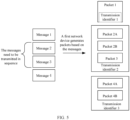
- FIG. 5 is a schematic diagram of generating a packet by a source network device based on a message according to an embodiment of this application.
- the source network device receives a message 1, a message 2, a message 3, and a message 4 sent by an application layer, where the message 2 and the message 3 are messages to be transmitted in sequence. Then, the source network device generates corresponding packets based on an MTU and the message 1, the message 2, the message 3, and the message 4.
- the source network device may generate a packet 1 based on the message 1, where the packet 1 includes RDMA data in the message 1 and a transmission identifier 1.
- the source network device Because a data volume of the message 2 is greater than the MTU, the source network device generates a packet 2A and a packet 2B based on the message 2, where the packet 2A and the packet 2B respectively carry a part of RDMA data in the message 2. By using the packet 2A and the packet 2B, the source network device may transmit all the RDMA data in the message 2. In addition, because a data volume of the message 3 is less than the MTU, the source network device may generate a packet 3 based on the message 3. Based on that the message 2 and the message 3 are transmitted in sequence, the source network device may allocate a same transmission identifier, that is, a transmission identifier 2, to the message 2 and the message 3. In this way, the packet 2A, the packet 2B, and the packet 3 generated by the source network device all include the transmission identifier 2.
- the source network device Because a data volume of the message 4 is greater than the MTU, the source network device generates a packet 4A and a packet 4B based on the message 4, where the packet 4A and the packet 4B respectively carry a part of RDMA data in the message 4.
- the packet 4A and the packet 4B include a same transmission identifier, that is, a transmission identifier 3.
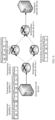
- FIG. 6 is a schematic diagram of a packet transmission according to an embodiment of this application.
- the source network device generates the packet 1, the packet 2A, the packet 2B, the packet 3, the packet 4A, and the packet 4B, and sequentially sends the plurality of foregoing packets to the intermediate network device 1.
- the intermediate network device 1 determines a forwarding path 1 and a forwarding path 2 based on destination addresses of the packets.
- the forwarding path 1 is a path to the destination network device through the intermediate network device 2, and the forwarding path 1 may be identified by using an egress port in the intermediate network device 1 that is connected to the intermediate network device 2.
- the forwarding path 2 is a path to the destination network device through the intermediate network device 3, and the forwarding path 2 may be identified by using an egress port in the intermediate network device 1 that is connected to the intermediate network device 3.
- the intermediate network device 1 selects the forwarding path 1 based on the transmission identifier 1 in the packet 1, to send the packet 1 to the intermediate network device 2.
- the intermediate network device 1 selects the forwarding path 2 based on the transmission identifier 2 in the packet 2A, the packet 2B, and the packet 3, to sequentially send the packet 2A, the packet 2B, and the packet 3 to the intermediate network device 3.
- the intermediate network device 1 selects the forwarding path 1 based on the transmission identifier 3 in the packet 4A and the packet 4B, to sequentially send the packet 4A and the packet 4B to the intermediate network device 2.
- the intermediate network device 2 sequentially sends the packet 1, the packet 4A, and the packet 4B to the intermediate network device 4, and the intermediate network device 3 sequentially sends the packet 2A, the packet 2B, and the packet 3 to the intermediate network device 4.
- the intermediate network device 4 sequentially sends the packet 1, the packet 4A, and the packet 4B to the destination network device.
- the intermediate network device 4 sequentially sends the packet 2A, the packet 2B, and the packet 3 to the destination network device.
- the packet 1, the packet 2A, the packet 2B, the packet 3, the packet 4A, and the packet 4B are forwarded through the forwarding path 1
- the packet 2A, the packet 2B, and the packet 3 are forwarded through the forwarding path 2, to implement network load balancing and improve utilization of a network bandwidth resource.
- FIG. 6 describes a process in which the intermediate network device selects a target forwarding path from a plurality of forwarding paths based on the transmission identifier in the packet.
- the source network device may be usually dual-homed to a plurality of intermediate network devices. Therefore, the source network device may also select the target forwarding path from the plurality of forwarding paths based on the transmission identifier in the packet. For example, in a data center scenario, a source server is dual-homed to two switches, and forwards data by using the two switches.
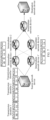
- FIG. 7 is a schematic diagram of another packet transmission according to an embodiment of this application.
- the source network device further accesses an intermediate network device 1', that is, the source network device is dual-homed to the intermediate network device 1 and the intermediate network device 1'.
- the intermediate network device 1 is separately connected to the intermediate network device 2 and the intermediate network device 3
- the intermediate network device 1' is also separately connected to the intermediate network device 2 and the intermediate network device 3.
- the source network device After generating the packet 1, the packet 2A, the packet 2B, the packet 3, the packet 4A, and the packet 4B, the source network device forwards the packets based on the transmission identifiers in the foregoing packets.
- the source network device selects, based on the transmission identifier 1 in the packet 1, a forwarding path through the intermediate network device 1, to send the packet 1 to the intermediate network device 1.
- the intermediate network device 1 selects, based on the transmission identifier 1 in the packet 1, a forwarding path through the intermediate network device 2, to send the packet 1 to the intermediate network device 2.
- the source network device selects, based on the transmission identifier 2 in the packet 2A, the packet 2B, and the packet 3, a forwarding path through the intermediate network device 1', to sequentially send the packet 2A, the packet 2B, and the packet 3 to the intermediate network device 1'.
- the intermediate network device 1' selects, based on the transmission identifier 2, a forwarding path through the intermediate network device 3, to send the packet 2A, the packet 2B, and the packet 3 to the intermediate network device 3.
- the source network device selects, based on the transmission identifier 3 in the packet 4A and the packet 4B, a forwarding path through the intermediate network device 1, to sequentially send the packet 4A and the packet 4B to the intermediate network device 1.
- the intermediate network device 1 selects, based on the transmission identifier 3, a forwarding path through the intermediate network device 2, to send the packet 4A and the packet 4B to the intermediate network device 2.
- the source network device may also select, based on the transmission identifier in the packet, a corresponding forwarding path from a plurality of forwarding paths to forward the packet, thereby implementing network load balancing and improving utilization of a network bandwidth resource.
- FIG. 8 is a schematic diagram of a structure of a network device 800 according to an embodiment of this application.
- the network device 800 includes an obtaining unit 801, a processing unit 802, and a sending unit 803.
- the obtaining unit 801 is configured to obtain an RDMA packet, where the RDMA packet includes a transmission identifier, and RDMA packets having a same transmission identifier need to be transmitted in sequence.
- the processing unit 802 is configured to determine a target forwarding path based on the transmission identifier and a destination address of the RDMA packet.
- the sending unit 803 is configured to forward the RDMA packet through the target forwarding path.
- the processing unit 802 is further configured to: determine, based on the destination address of the RDMA packet, a plurality of forwarding paths that are capable of being used for forwarding the RDMA packet; and determine the target forwarding path from the plurality of forwarding paths based on the transmission identifier.
- the processing unit 802 is specifically configured to determine the target forwarding path from the plurality of forwarding paths based on the transmission identifier and one or more of a source address, the destination address, a source port number, a destination port number, and a protocol number of the RDMA packet.
- the obtaining unit 801 is further configured to sequentially obtain a plurality of RDMA packets, where all the plurality of RDMA packets include the transmission identifier, and destination addresses of the plurality of RDMA packets are the same.
- the processing unit 802 is further configured to sequentially forward the plurality of RDMA packets through the target forwarding path.
- the transmission identifier is located in an RDMA header of the RDMA packet.
- the transmission identifier is located in one or more reserved fields in the RDMA header.
- the transmission identifier is located in an extended field in the RDMA header.
- the RDMA packet includes an RDMA over converged Ethernet RoCE packet, an iWARP packet, or an InfiniBand InfiniBand packet.
- the obtaining unit 801 is configured to obtain a message sent by an application layer.
- the processing unit 802 is configured to generate at least one RDMA packet based on the message, where the at least one RDMA packet includes a same transmission identifier.
- the obtaining unit 801 is configured to receive the RDMA packet sent by a second network device, where the second network device is an upstream device of a first network device.
- FIG. 9 is a schematic diagram of a structure of a network device 900 according to an embodiment of this application.
- the network device 900 shown in FIG. 9 shows some specific features, a person skilled in the art may be aware from embodiments of this application that, for brevity, FIG. 9 does not show various other features, to avoid confusing more related aspects of the implementations disclosed in embodiments of this application.
- the network device 900 includes one or more processing units (for example, a CPU) 901, a network interface 902, a programming interface 903, a memory 904, and one or more communication buses 905 that are configured to interconnect various components.
- some functional components or units may be omitted from or added to the network device 900 based on the foregoing example.
- the network interface 902 is configured to connect to one or more other network devices/servers in a network system.
- the communication bus 905 includes a circuit that interconnects system components and controls communication between the system components.
- the memory 904 may include a non-volatile memory, for example, a read-only memory (read-only memory, ROM), a programmable read-only memory (programmable ROM, PROM), an erasable programmable read-only memory (erasable PROM, EPROM), an electrically erasable programmable read-only memory (electrically EPROM, EEPROM), or a flash memory.
- the memory 904 may also include a volatile memory.
- the volatile memory may be a random access memory (random access memory, RAM), and is used as an external cache.
- the memory 904 or a non-transitory computer-readable storage medium of the memory 904 stores the following program, module, and data structure, or a subset thereof, and for example, includes an obtaining unit (not shown), a sending unit (not shown), and a processing unit 9041.
- the network device 900 may have any function of the first network device in the method embodiment corresponding to FIG. 2 .
- the network device 900 corresponds to the first network device in the foregoing method embodiment, and the modules and the foregoing other operations and/or functions in the network device 900 are separately used for implementing various steps and methods implemented by the first network device in the foregoing method embodiment.
- the modules and the foregoing other operations and/or functions in the network device 900 are separately used for implementing various steps and methods implemented by the first network device in the foregoing method embodiment.
- the method embodiment corresponding to FIG. 2 For specific details, refer to the method embodiment corresponding to FIG. 2 . For brevity, details are not described herein again.
- the network interface 902 on the network device 900 may complete data receiving and transmitting operations, or a processor may invoke program code in the memory, and implement a function of a transceiver unit in cooperation with the network interface 902 when required.
- the network device 900 is configured to perform the packet transmission method provided in embodiments of this application, for example, perform the packet transmission method corresponding to the embodiment shown in FIG. 2 .
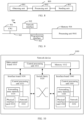
- FIG. 10 A specific structure of the network device in FIG. 9 in this application may be shown in FIG. 10 .
- FIG. 10 is a schematic diagram of a structure of a network device 1000 according to an embodiment of this application.
- the network device 1000 includes a main control board 1010 and an interface board 1030.
- the main control board 1010 is also referred to as a main processing unit (main processing unit, MPU) or a route processor (route processor).
- the main control board 1010 is configured to control and manage components in the network device 1000, and includes route computation, device management, device maintenance, and protocol processing functions.
- the main control board 1010 includes a central processing unit 1011 and a memory 1012.
- the interface board 1030 is also referred to as a line processing unit (line processing unit, LPU), a line card (line card), or a service board.
- the interface board 1030 is configured to provide various service interfaces and forward a data packet.
- the service interfaces include but are not limited to an Ethernet interface, a POS (Packet over SONET/SDH) interface, and the like.
- the interface board 1030 includes a central processing unit 1031, a network processor 1032, a forwarding entry memory 1034, and a physical interface card (physical interface card, PIC) 1033.
- the central processing unit 1031 on the interface board 1030 is configured to control and manage the interface board 1030 and communicate with the central processing unit 1011 on the main control board 1010.
- the network processor 1032 is configured to forward a packet.
- the network processor 1032 may be in form of a forwarding chip.
- the physical interface card 1033 is configured to implement a physical layer connection function. Original traffic enters the interface board 1030 from the physical interface card 1033, and a processed packet is sent out from the physical interface card 1033.
- the physical interface card 1033 includes at least one physical interface.
- the physical interface is also referred to as a physical port, and the physical interface may be a flexible Ethernet (Flexible Ethernet, FlexE) physical interface.
- the physical interface card 1033 also referred to as a subcard, may be mounted on the interface board 1030, and is responsible for converting a photoelectric signal into a packet, performing validity check on the packet, and then forwarding the packet to the network processor 1032 for processing.
- the central processing unit 1031 on the interface board 1030 may also perform a function of the network processor 1032, for example, forward software based on a general-purpose CPU, so that the interface board 1030 does not need the network processor 1032.
- the network device 1000 includes a plurality of interface boards.
- the network device 1000 further includes an interface board 1040, and the interface board 1040 includes a central processing unit 1041, a network processor 1042, a forwarding entry memory 1044, and a physical interface card 1043.
- the network device 1000 further includes a switch fabric 1020.
- the switch fabric 1020 may also be referred to as a switch fabric unit (switch fabric unit, SFU).
- switch fabric unit switch fabric unit
- the switch fabric 1020 is configured to complete data exchange between the interface boards.
- the interface board 1030 and the interface board 1040 may communicate with each other by using the switch fabric 1020.
- the main control board 1010 is coupled to the interface board.
- the main control board 1010, the interface board 1030 and the interface board 1040, and the switch fabric 1020 are connected by using a system bus and/or a system backplane to implement communication.
- an inter-process communication (inter-process communication, IPC) channel is established between the main control board 1010 and the interface board 1030, and the main control board 1010 communicates with the interface board 1030 through the IPC channel.
- IPC inter-process communication
- the network device 1000 includes a control plane and a forwarding plane.
- the control plane includes the main control board 1010 and the central processing unit 1031.
- the forwarding plane includes components that perform forwarding, such as the forwarding entry memory 1034, the physical interface card 1033, and the network processor 1032.
- the control plane performs functions such as distributing a route, generating a forwarding table, processing signaling and a protocol packet, and configuring and maintaining a status of a device.
- the control plane delivers the generated forwarding table to the forwarding plane.
- the network processor 1032 searches the forwarding table delivered by the control plane to forward a packet received by the physical interface card 1033.
- the forwarding table delivered by the control plane may be stored in the forwarding entry memory 1034. In some embodiments, the control plane and the forwarding plane may be completely separated, and are not on a same device.
- the obtaining unit 801 and the sending unit 803 in the network device 800 may be equivalent to the physical interface card 1033 or the physical interface card 1043 in the network device 1000.
- the processing unit 802 in the network device 800 may be equivalent to the central processing unit 1011 or the central processing unit 1031 in the network device 1000, or may be equivalent to program code or instructions stored in the memory 1012.
- the network device 1000 in this embodiment may correspond to the first network device in the foregoing method embodiments.
- the main control board 1010, the interface board 1030, and/or the interface board 1040 in the network device 1000 may implement functions that the first network device has and/or various steps implemented by the first network device in the foregoing method embodiments. For brevity, details are not described herein again.
- main control boards there may be one or more main control boards.
- the main control boards may include an active main control board and a standby main control board.
- a network device having a stronger data processing capability provides more interface boards.
- the network device may not need the switch fabric, and the interface board provides a function of processing service data in an entire system.
- the network device may have at least one switch fabric, and data exchange between a plurality of interface boards is implemented by using the switch fabric, to provide a large-capacity data exchange and processing capability.
- the network device may also be in a form in which there is only a board, that is, there is no switch fabric, and functions of the interface board and the main control board are integrated on the board.
- a central processing unit on the interface board and a central processing unit on the main control board may be combined into one central processing unit on the board, to perform a function obtained after the central processing unit on the interface board and the central processing unit on the main control board are superimposed.
- Which architecture is specifically used depends on a specific networking deployment scenario, and is not uniquely limited herein.
- the foregoing first network device may be implemented as a virtual device.
- the virtual device may be a virtual machine (virtual machine, VM), a virtual router, or a virtual switch that runs a program for implementing a packet sending function.
- the virtual device is deployed on a hardware device (for example, a physical server).
- the first network device may be implemented based on a general-purpose physical server in combination with a network functions virtualization (network functions virtualization, NFV) technology.
- network functions virtualization network functions virtualization
- network devices in the various foregoing product forms separately have any function of the first network device in the foregoing method embodiments, and details are not described herein again.
- an embodiment of this application further provides a computer program product.
- the computer program product runs on a network device, the network device is enabled to perform the method performed by the first network device in the method embodiment corresponding to FIG. 2 .
- An embodiment of this application further provides a chip system, including a processor and an interface circuit.
- the interface circuit is configured to receive instructions and transmit the instructions to the processor.
- the processor is configured to implement the method in any one of the foregoing method embodiments.
- the chip system further includes a memory, and there may be one or more processors in the chip system.
- the processor may be implemented by using hardware, or may be implemented by using software.
- the processor may be a logic circuit, an integrated circuit, or the like.
- the processor may be a general-purpose processor, and the method in any one of the foregoing method embodiments is implemented by reading software code stored in the memory.
- the memory may be integrated with the processor, or may be disposed separately from the processor.
- the memory may be a non-transitory processor, for example, a read-only memory ROM.
- the memory and the processor may be integrated into a same chip, or may be separately disposed on different chips.
- a type of the memory and a manner of disposing the memory and the processor are not specifically limited in this application.
- Steps in the methods in embodiments of this application may be sequentially scheduled, combined, or deleted according to an actual requirement.
- Modules in the apparatus in embodiments of this application may be divided, combined, or deleted according to an actual requirement.
- B corresponding to A indicates that B is associated with A, and B may be determined based on A.
- determining B based on A does not mean that B is determined based only on A, and B may alternatively be determined based on A and/or other information.
- the disclosed system, apparatus, and method may be implemented in another manner.
- the apparatus embodiment described above is merely an example.
- division into units is merely logical function division and during actual implementation, there may be another division manner.
- a plurality of units or components may be combined or integrated into another system, or some features may be ignored or not performed.
- the displayed or discussed mutual coupling or direct coupling or communication connection may be implemented through some interfaces.
- the indirect coupling or communication connection between the apparatuses or units may be implemented in an electrical form, a mechanical form, or another form.
- the units described as separate components may or may not be physically separate, and components displayed as units may or may not be physical units, in other words, may be located in one position, or may be distributed on a plurality of network units. Some or all of the units may be selected based on actual requirements to achieve the objectives of the solutions of embodiments.
- functional units in embodiments of this application may be integrated into one processing unit, each of the units may exist alone physically, or two or more units are integrated into one unit.
- the integrated units may be implemented in a form of hardware, or may be implemented in a form of a software functional unit.
Landscapes
- Engineering & Computer Science (AREA)
- Computer Networks & Wireless Communication (AREA)
- Signal Processing (AREA)
- Computer Security & Cryptography (AREA)
- Data Exchanges In Wide-Area Networks (AREA)
Applications Claiming Priority (2)
| Application Number | Priority Date | Filing Date | Title |
|---|---|---|---|
| CN202110866839.3A CN115701060A (zh) | 2021-07-29 | 2021-07-29 | 一种报文传输方法及相关装置 |
| PCT/CN2022/091979 WO2023005335A1 (zh) | 2021-07-29 | 2022-05-10 | 一种报文传输方法及相关装置 |
Publications (2)
| Publication Number | Publication Date |
|---|---|
| EP4366266A1 true EP4366266A1 (de) | 2024-05-08 |
| EP4366266A4 EP4366266A4 (de) | 2024-10-16 |
Family
ID=85086246
Family Applications (1)
| Application Number | Title | Priority Date | Filing Date |
|---|---|---|---|
| EP22847949.9A Pending EP4366266A4 (de) | 2021-07-29 | 2022-05-10 | Nachrichtenübertragungsverfahren und zugehörige vorrichtung |
Country Status (5)
| Country | Link |
|---|---|
| US (1) | US20240214312A1 (de) |
| EP (1) | EP4366266A4 (de) |
| JP (1) | JP2024527081A (de) |
| CN (1) | CN115701060A (de) |
| WO (1) | WO2023005335A1 (de) |
Families Citing this family (2)
| Publication number | Priority date | Publication date | Assignee | Title |
|---|---|---|---|---|
| US20250274380A1 (en) * | 2024-02-23 | 2025-08-28 | Mellanox Technologies, Ltd. | Adaptive routing with endpoint feedback |
| US20250317352A1 (en) * | 2024-04-03 | 2025-10-09 | Mellanox Technologies, Ltd. | Systems and devices for network data collection, transmission, and processing |
Family Cites Families (7)
| Publication number | Priority date | Publication date | Assignee | Title |
|---|---|---|---|---|
| US9282034B2 (en) * | 2013-02-20 | 2016-03-08 | International Business Machines Corporation | Directed route load/store packets for distributed switch initialization |
| US10509764B1 (en) * | 2015-06-19 | 2019-12-17 | Amazon Technologies, Inc. | Flexible remote direct memory access |
| CN109936510B (zh) * | 2017-12-15 | 2022-11-15 | 微软技术许可有限责任公司 | 多路径rdma传输 |
| CN111654447B (zh) * | 2018-01-16 | 2023-04-18 | 华为技术有限公司 | 一种报文传输的方法及装置 |
| CN111628921B (zh) * | 2019-02-27 | 2021-07-20 | 华为技术有限公司 | 一种报文的处理方法、报文转发装置以及报文处理装置 |
| US12212502B2 (en) * | 2019-10-31 | 2025-01-28 | Intel Corporation | Reliable transport architecture |
| CN111049752B (zh) * | 2019-12-17 | 2023-01-10 | 锐捷网络股份有限公司 | 多传输线路的负载均衡方法及装置 |
-
2021
- 2021-07-29 CN CN202110866839.3A patent/CN115701060A/zh active Pending
-
2022
- 2022-05-10 WO PCT/CN2022/091979 patent/WO2023005335A1/zh not_active Ceased
- 2022-05-10 EP EP22847949.9A patent/EP4366266A4/de active Pending
- 2022-05-10 JP JP2024505160A patent/JP2024527081A/ja not_active Withdrawn
-
2024
- 2024-01-26 US US18/423,689 patent/US20240214312A1/en active Pending
Also Published As
| Publication number | Publication date |
|---|---|
| US20240214312A1 (en) | 2024-06-27 |
| EP4366266A4 (de) | 2024-10-16 |
| JP2024527081A (ja) | 2024-07-19 |
| WO2023005335A1 (zh) | 2023-02-02 |
| CN115701060A (zh) | 2023-02-07 |
Similar Documents
| Publication | Publication Date | Title |
|---|---|---|
| Qi et al. | Assessing container network interface plugins: Functionality, performance, and scalability | |
| US11736402B2 (en) | Fast data center congestion response based on QoS of VL | |
| US20240214312A1 (en) | Packet transmission method and related apparatus | |
| US9900238B2 (en) | Overlay network-based original packet flow mapping apparatus and method therefor | |
| CN104811382B (zh) | 数据包的处理方法与装置 | |
| JPH05219065A (ja) | メッセージ経路指定装置 | |
| EP4611344A1 (de) | Paketverarbeitungsverfahren und zugehörige vorrichtung | |
| US20230291684A1 (en) | Packet transmission method and apparatus, device, and computer-readable storage medium | |
| EP4622214A1 (de) | Datenübertragungsverfahren, -vorrichtung, -vorrichtung und -system sowie speichermedium | |
| JP2024504845A (ja) | パケット処理方法および関連装置 | |
| CN112929264A (zh) | 业务流量传输方法、系统及网络设备 | |
| US20100238930A1 (en) | Router and method of forwarding ipv6 packets | |
| US20250254120A1 (en) | Path fault detection method and related apparatus | |
| WO2022188530A1 (zh) | 一种路由处理方法及网络设备 | |
| Perino et al. | A programmable data plane for heterogeneous NFV platforms | |
| EP4525393A1 (de) | Nachrichtensteuerungsverfahren und zugehörige vorrichtung | |
| CN117857257A (zh) | 一种云虚拟机和传统网络互通的方法及系统 | |
| US12184541B2 (en) | Service processing method and network device | |
| CN117097818A (zh) | 一种报文处理的方法及相关设备 | |
| WO2022214854A1 (en) | Methods and systems for efficient metadata and data delivery between a network interface and applications | |
| US12388676B2 (en) | Data transfer device, data processing device and data processing method | |
| CN114827027B (zh) | 一种报文处理方法及相关装置 | |
| US20240223504A1 (en) | Packet processing method, flow specification transmission method, device, system, and storage medium | |
| Grigoryan et al. | P4Kube: In-Network Load Balancer for Kubernetes | |
| Fukuda et al. | PRS: a payload inspection mechanism for software defined network |
Legal Events
| Date | Code | Title | Description |
|---|---|---|---|
| STAA | Information on the status of an ep patent application or granted ep patent |
Free format text: STATUS: THE INTERNATIONAL PUBLICATION HAS BEEN MADE |
|
| PUAI | Public reference made under article 153(3) epc to a published international application that has entered the european phase |
Free format text: ORIGINAL CODE: 0009012 |
|
| STAA | Information on the status of an ep patent application or granted ep patent |
Free format text: STATUS: REQUEST FOR EXAMINATION WAS MADE |
|
| 17P | Request for examination filed |
Effective date: 20240201 |
|
| AK | Designated contracting states |
Kind code of ref document: A1 Designated state(s): AL AT BE BG CH CY CZ DE DK EE ES FI FR GB GR HR HU IE IS IT LI LT LU LV MC MK MT NL NO PL PT RO RS SE SI SK SM TR |
|
| A4 | Supplementary search report drawn up and despatched |
Effective date: 20240913 |
|
| RIC1 | Information provided on ipc code assigned before grant |
Ipc: H04L 69/06 20220101ALI20240909BHEP Ipc: H04L 49/356 20220101ALI20240909BHEP Ipc: H04L 49/118 20220101ALI20240909BHEP Ipc: H04L 45/00 20220101ALI20240909BHEP Ipc: H04L 45/302 20220101ALI20240909BHEP Ipc: H04L 47/00 20220101ALI20240909BHEP Ipc: H04L 45/74 20220101AFI20240909BHEP |
|
| DAV | Request for validation of the european patent (deleted) | ||
| DAX | Request for extension of the european patent (deleted) |