EP4365974A2 - Lithium metal secondary battery and method of charging and discharging the same - Google Patents
Lithium metal secondary battery and method of charging and discharging the same Download PDFInfo
- Publication number
- EP4365974A2 EP4365974A2 EP23199809.7A EP23199809A EP4365974A2 EP 4365974 A2 EP4365974 A2 EP 4365974A2 EP 23199809 A EP23199809 A EP 23199809A EP 4365974 A2 EP4365974 A2 EP 4365974A2
- Authority
- EP
- European Patent Office
- Prior art keywords
- negative electrode
- lithium metal
- porous body
- electrically
- group
- Prior art date
- Legal status (The legal status is an assumption and is not a legal conclusion. Google has not performed a legal analysis and makes no representation as to the accuracy of the status listed.)
- Pending
Links
- 229910052744 lithium Inorganic materials 0.000 title claims abstract description 48
- 238000007600 charging Methods 0.000 title claims abstract description 40
- 238000007599 discharging Methods 0.000 title claims abstract description 24
- 238000000034 method Methods 0.000 title claims description 31
- 239000011148 porous material Substances 0.000 claims abstract description 63
- 239000003792 electrolyte Substances 0.000 claims abstract description 26
- 238000006243 chemical reaction Methods 0.000 claims abstract description 17
- 230000008021 deposition Effects 0.000 claims abstract description 17
- 238000004090 dissolution Methods 0.000 claims abstract description 9
- 229910001416 lithium ion Inorganic materials 0.000 claims abstract description 8
- -1 imide salt Chemical class 0.000 claims description 52
- 239000002904 solvent Substances 0.000 claims description 18
- 229920001721 polyimide Polymers 0.000 claims description 15
- 239000004642 Polyimide Substances 0.000 claims description 14
- 229920002647 polyamide Polymers 0.000 claims description 11
- 239000004952 Polyamide Substances 0.000 claims description 9
- 239000000075 oxide glass Substances 0.000 claims description 9
- 229920002312 polyamide-imide Polymers 0.000 claims description 6
- HBBGRARXTFLTSG-UHFFFAOYSA-N Lithium ion Chemical compound [Li+] HBBGRARXTFLTSG-UHFFFAOYSA-N 0.000 claims description 4
- 239000004962 Polyamide-imide Substances 0.000 claims description 4
- 229910052751 metal Inorganic materials 0.000 abstract description 50
- 239000002184 metal Substances 0.000 abstract description 50
- 239000002245 particle Substances 0.000 description 99
- 239000010410 layer Substances 0.000 description 77
- 229920005989 resin Polymers 0.000 description 45
- 239000011347 resin Substances 0.000 description 45
- 239000007774 positive electrode material Substances 0.000 description 38
- 239000010954 inorganic particle Substances 0.000 description 24
- 150000001875 compounds Chemical class 0.000 description 21
- 238000010248 power generation Methods 0.000 description 21
- OKTJSMMVPCPJKN-UHFFFAOYSA-N Carbon Chemical compound [C] OKTJSMMVPCPJKN-UHFFFAOYSA-N 0.000 description 18
- 150000005676 cyclic carbonates Chemical class 0.000 description 18
- 239000011146 organic particle Substances 0.000 description 17
- KMTRUDSVKNLOMY-UHFFFAOYSA-N Ethylene carbonate Chemical compound O=C1OCCO1 KMTRUDSVKNLOMY-UHFFFAOYSA-N 0.000 description 16
- 239000011230 binding agent Substances 0.000 description 16
- 239000000203 mixture Substances 0.000 description 16
- 239000007773 negative electrode material Substances 0.000 description 16
- 238000000151 deposition Methods 0.000 description 15
- VYPSYNLAJGMNEJ-UHFFFAOYSA-N Silicium dioxide Chemical compound O=[Si]=O VYPSYNLAJGMNEJ-UHFFFAOYSA-N 0.000 description 14
- 229910000314 transition metal oxide Inorganic materials 0.000 description 14
- 229910013191 LiMO2 Inorganic materials 0.000 description 13
- 239000011149 active material Substances 0.000 description 13
- JBTWLSYIZRCDFO-UHFFFAOYSA-N ethyl methyl carbonate Chemical compound CCOC(=O)OC JBTWLSYIZRCDFO-UHFFFAOYSA-N 0.000 description 13
- 239000000463 material Substances 0.000 description 13
- PXHVJJICTQNCMI-UHFFFAOYSA-N nickel Substances [Ni] PXHVJJICTQNCMI-UHFFFAOYSA-N 0.000 description 13
- 229910045601 alloy Inorganic materials 0.000 description 12
- 239000000956 alloy Substances 0.000 description 12
- IEJIGPNLZYLLBP-UHFFFAOYSA-N dimethyl carbonate Chemical compound COC(=O)OC IEJIGPNLZYLLBP-UHFFFAOYSA-N 0.000 description 12
- 238000009826 distribution Methods 0.000 description 12
- 239000002019 doping agent Substances 0.000 description 12
- 238000002156 mixing Methods 0.000 description 12
- 239000004698 Polyethylene Substances 0.000 description 11
- 239000004743 Polypropylene Substances 0.000 description 11
- 230000014509 gene expression Effects 0.000 description 11
- 229920000573 polyethylene Polymers 0.000 description 11
- 229920001155 polypropylene Polymers 0.000 description 11
- 239000007787 solid Substances 0.000 description 11
- RTZKZFJDLAIYFH-UHFFFAOYSA-N Diethyl ether Chemical compound CCOCC RTZKZFJDLAIYFH-UHFFFAOYSA-N 0.000 description 10
- BPQQTUXANYXVAA-UHFFFAOYSA-N Orthosilicate Chemical compound [O-][Si]([O-])([O-])[O-] BPQQTUXANYXVAA-UHFFFAOYSA-N 0.000 description 10
- 239000000654 additive Substances 0.000 description 10
- 230000000996 additive effect Effects 0.000 description 10
- 229910052782 aluminium Inorganic materials 0.000 description 10
- 239000004020 conductor Substances 0.000 description 10
- 229910002804 graphite Inorganic materials 0.000 description 10
- 239000010439 graphite Substances 0.000 description 10
- 239000011888 foil Substances 0.000 description 9
- 238000001465 metallisation Methods 0.000 description 9
- 229920000447 polyanionic polymer Polymers 0.000 description 9
- 230000002829 reductive effect Effects 0.000 description 9
- 239000002388 carbon-based active material Substances 0.000 description 8
- 239000011248 coating agent Substances 0.000 description 8
- 238000000576 coating method Methods 0.000 description 8
- BJWMSGRKJIOCNR-UHFFFAOYSA-N 4-ethenyl-1,3-dioxolan-2-one Chemical compound C=CC1COC(=O)O1 BJWMSGRKJIOCNR-UHFFFAOYSA-N 0.000 description 7
- GWEVSGVZZGPLCZ-UHFFFAOYSA-N Titan oxide Chemical compound O=[Ti]=O GWEVSGVZZGPLCZ-UHFFFAOYSA-N 0.000 description 7
- PNEYBMLMFCGWSK-UHFFFAOYSA-N aluminium oxide Inorganic materials [O-2].[O-2].[O-2].[Al+3].[Al+3] PNEYBMLMFCGWSK-UHFFFAOYSA-N 0.000 description 7
- 230000008859 change Effects 0.000 description 7
- 239000007771 core particle Substances 0.000 description 7
- 239000007772 electrode material Substances 0.000 description 7
- 239000008151 electrolyte solution Substances 0.000 description 7
- 239000011244 liquid electrolyte Substances 0.000 description 7
- 229910052748 manganese Inorganic materials 0.000 description 7
- 238000005259 measurement Methods 0.000 description 7
- 239000004745 nonwoven fabric Substances 0.000 description 7
- 239000000843 powder Substances 0.000 description 7
- 239000000377 silicon dioxide Substances 0.000 description 7
- 239000010936 titanium Substances 0.000 description 7
- OIFBSDVPJOWBCH-UHFFFAOYSA-N Diethyl carbonate Chemical compound CCOC(=O)OCC OIFBSDVPJOWBCH-UHFFFAOYSA-N 0.000 description 6
- 229910011116 LiM2O4 Inorganic materials 0.000 description 6
- MCMNRKCIXSYSNV-UHFFFAOYSA-N Zirconium dioxide Chemical compound O=[Zr]=O MCMNRKCIXSYSNV-UHFFFAOYSA-N 0.000 description 6
- 229910021383 artificial graphite Inorganic materials 0.000 description 6
- 229910052796 boron Inorganic materials 0.000 description 6
- 150000005678 chain carbonates Chemical class 0.000 description 6
- 229910021382 natural graphite Inorganic materials 0.000 description 6
- 229910052759 nickel Inorganic materials 0.000 description 6
- 230000000452 restraining effect Effects 0.000 description 6
- 150000003839 salts Chemical class 0.000 description 6
- 229910052721 tungsten Inorganic materials 0.000 description 6
- XTHFKEDIFFGKHM-UHFFFAOYSA-N Dimethoxyethane Chemical compound COCCOC XTHFKEDIFFGKHM-UHFFFAOYSA-N 0.000 description 5
- 125000004429 atom Chemical group 0.000 description 5
- 239000011246 composite particle Substances 0.000 description 5
- 229910052593 corundum Inorganic materials 0.000 description 5
- 239000013078 crystal Substances 0.000 description 5
- 229910052742 iron Inorganic materials 0.000 description 5
- 229910052698 phosphorus Inorganic materials 0.000 description 5
- RUOJZAUFBMNUDX-UHFFFAOYSA-N propylene carbonate Chemical compound CC1COC(=O)O1 RUOJZAUFBMNUDX-UHFFFAOYSA-N 0.000 description 5
- 229910052710 silicon Inorganic materials 0.000 description 5
- 239000006104 solid solution Substances 0.000 description 5
- 125000001424 substituent group Chemical group 0.000 description 5
- 229910052719 titanium Inorganic materials 0.000 description 5
- 229910001845 yogo sapphire Inorganic materials 0.000 description 5
- 229910052726 zirconium Inorganic materials 0.000 description 5
- FSSPGSAQUIYDCN-UHFFFAOYSA-N 1,3-Propane sultone Chemical compound O=S1(=O)CCCO1 FSSPGSAQUIYDCN-UHFFFAOYSA-N 0.000 description 4
- LFQSCWFLJHTTHZ-UHFFFAOYSA-N Ethanol Chemical compound CCO LFQSCWFLJHTTHZ-UHFFFAOYSA-N 0.000 description 4
- CPLXHLVBOLITMK-UHFFFAOYSA-N Magnesium oxide Chemical compound [Mg]=O CPLXHLVBOLITMK-UHFFFAOYSA-N 0.000 description 4
- 229920003171 Poly (ethylene oxide) Polymers 0.000 description 4
- WYURNTSHIVDZCO-UHFFFAOYSA-N Tetrahydrofuran Chemical compound C1CCOC1 WYURNTSHIVDZCO-UHFFFAOYSA-N 0.000 description 4
- 238000004833 X-ray photoelectron spectroscopy Methods 0.000 description 4
- 229910052799 carbon Inorganic materials 0.000 description 4
- JKWMSGQKBLHBQQ-UHFFFAOYSA-N diboron trioxide Chemical compound O=BOB=O JKWMSGQKBLHBQQ-UHFFFAOYSA-N 0.000 description 4
- ZUOUZKKEUPVFJK-UHFFFAOYSA-N diphenyl Chemical compound C1=CC=CC=C1C1=CC=CC=C1 ZUOUZKKEUPVFJK-UHFFFAOYSA-N 0.000 description 4
- 238000011156 evaluation Methods 0.000 description 4
- 239000011521 glass Substances 0.000 description 4
- 150000004820 halides Chemical class 0.000 description 4
- AMXOYNBUYSYVKV-UHFFFAOYSA-M lithium bromide Chemical compound [Li+].[Br-] AMXOYNBUYSYVKV-UHFFFAOYSA-M 0.000 description 4
- TZIHFWKZFHZASV-UHFFFAOYSA-N methyl formate Chemical compound COC=O TZIHFWKZFHZASV-UHFFFAOYSA-N 0.000 description 4
- 229920002239 polyacrylonitrile Polymers 0.000 description 4
- 229920002981 polyvinylidene fluoride Polymers 0.000 description 4
- 239000000047 product Substances 0.000 description 4
- 239000005288 shirasu porous glass Substances 0.000 description 4
- 229910052725 zinc Inorganic materials 0.000 description 4
- WFDIJRYMOXRFFG-UHFFFAOYSA-N Acetic anhydride Chemical compound CC(=O)OC(C)=O WFDIJRYMOXRFFG-UHFFFAOYSA-N 0.000 description 3
- 229920002134 Carboxymethyl cellulose Polymers 0.000 description 3
- LYCAIKOWRPUZTN-UHFFFAOYSA-N Ethylene glycol Chemical compound OCCO LYCAIKOWRPUZTN-UHFFFAOYSA-N 0.000 description 3
- 229910010182 Li2MO3—LiMO2 Inorganic materials 0.000 description 3
- 229910010941 LiFSI Inorganic materials 0.000 description 3
- OKKJLVBELUTLKV-UHFFFAOYSA-N Methanol Chemical compound OC OKKJLVBELUTLKV-UHFFFAOYSA-N 0.000 description 3
- 229920002125 Sokalan® Polymers 0.000 description 3
- 239000006230 acetylene black Substances 0.000 description 3
- WNROFYMDJYEPJX-UHFFFAOYSA-K aluminium hydroxide Chemical compound [OH-].[OH-].[OH-].[Al+3] WNROFYMDJYEPJX-UHFFFAOYSA-K 0.000 description 3
- 239000004760 aramid Substances 0.000 description 3
- 229920003235 aromatic polyamide Polymers 0.000 description 3
- 230000002902 bimodal effect Effects 0.000 description 3
- 229910001593 boehmite Inorganic materials 0.000 description 3
- KGBXLFKZBHKPEV-UHFFFAOYSA-N boric acid Chemical compound OB(O)O KGBXLFKZBHKPEV-UHFFFAOYSA-N 0.000 description 3
- 239000002131 composite material Substances 0.000 description 3
- 229920001577 copolymer Polymers 0.000 description 3
- 229910052731 fluorine Inorganic materials 0.000 description 3
- 239000003779 heat-resistant material Substances 0.000 description 3
- FAHBNUUHRFUEAI-UHFFFAOYSA-M hydroxidooxidoaluminium Chemical compound O[Al]=O FAHBNUUHRFUEAI-UHFFFAOYSA-M 0.000 description 3
- 229910052745 lead Inorganic materials 0.000 description 3
- VDVLPSWVDYJFRW-UHFFFAOYSA-N lithium;bis(fluorosulfonyl)azanide Chemical compound [Li+].FS(=O)(=O)[N-]S(F)(=O)=O VDVLPSWVDYJFRW-UHFFFAOYSA-N 0.000 description 3
- QSZMZKBZAYQGRS-UHFFFAOYSA-N lithium;bis(trifluoromethylsulfonyl)azanide Chemical compound [Li+].FC(F)(F)S(=O)(=O)[N-]S(=O)(=O)C(F)(F)F QSZMZKBZAYQGRS-UHFFFAOYSA-N 0.000 description 3
- 229910052749 magnesium Inorganic materials 0.000 description 3
- 230000004048 modification Effects 0.000 description 3
- 238000012986 modification Methods 0.000 description 3
- 229910052757 nitrogen Inorganic materials 0.000 description 3
- 239000002861 polymer material Substances 0.000 description 3
- 239000011163 secondary particle Substances 0.000 description 3
- 239000002153 silicon-carbon composite material Substances 0.000 description 3
- 238000000992 sputter etching Methods 0.000 description 3
- 239000000126 substance Substances 0.000 description 3
- 229910052718 tin Inorganic materials 0.000 description 3
- GETTZEONDQJALK-UHFFFAOYSA-N (trifluoromethyl)benzene Chemical compound FC(F)(F)C1=CC=CC=C1 GETTZEONDQJALK-UHFFFAOYSA-N 0.000 description 2
- ZZXUZKXVROWEIF-UHFFFAOYSA-N 1,2-butylene carbonate Chemical compound CCC1COC(=O)O1 ZZXUZKXVROWEIF-UHFFFAOYSA-N 0.000 description 2
- LZDKZFUFMNSQCJ-UHFFFAOYSA-N 1,2-diethoxyethane Chemical compound CCOCCOCC LZDKZFUFMNSQCJ-UHFFFAOYSA-N 0.000 description 2
- GOYDNIKZWGIXJT-UHFFFAOYSA-N 1,2-difluorobenzene Chemical compound FC1=CC=CC=C1F GOYDNIKZWGIXJT-UHFFFAOYSA-N 0.000 description 2
- VAYTZRYEBVHVLE-UHFFFAOYSA-N 1,3-dioxol-2-one Chemical compound O=C1OC=CO1 VAYTZRYEBVHVLE-UHFFFAOYSA-N 0.000 description 2
- MMZYCBHLNZVROM-UHFFFAOYSA-N 1-fluoro-2-methylbenzene Chemical compound CC1=CC=CC=C1F MMZYCBHLNZVROM-UHFFFAOYSA-N 0.000 description 2
- RNFJDJUURJAICM-UHFFFAOYSA-N 2,2,4,4,6,6-hexaphenoxy-1,3,5-triaza-2$l^{5},4$l^{5},6$l^{5}-triphosphacyclohexa-1,3,5-triene Chemical compound N=1P(OC=2C=CC=CC=2)(OC=2C=CC=CC=2)=NP(OC=2C=CC=CC=2)(OC=2C=CC=CC=2)=NP=1(OC=1C=CC=CC=1)OC1=CC=CC=C1 RNFJDJUURJAICM-UHFFFAOYSA-N 0.000 description 2
- LTMRRSWNXVJMBA-UHFFFAOYSA-L 2,2-diethylpropanedioate Chemical compound CCC(CC)(C([O-])=O)C([O-])=O LTMRRSWNXVJMBA-UHFFFAOYSA-L 0.000 description 2
- DXYYSGDWQCSKKO-UHFFFAOYSA-N 2-methylbenzothiazole Chemical compound C1=CC=C2SC(C)=NC2=C1 DXYYSGDWQCSKKO-UHFFFAOYSA-N 0.000 description 2
- YEJRWHAVMIAJKC-UHFFFAOYSA-N 4-Butyrolactone Chemical compound O=C1CCCO1 YEJRWHAVMIAJKC-UHFFFAOYSA-N 0.000 description 2
- 229910011255 B2O3 Inorganic materials 0.000 description 2
- ODINCKMPIJJUCX-UHFFFAOYSA-N Calcium oxide Chemical compound [Ca]=O ODINCKMPIJJUCX-UHFFFAOYSA-N 0.000 description 2
- 229920003043 Cellulose fiber Polymers 0.000 description 2
- RYGMFSIKBFXOCR-UHFFFAOYSA-N Copper Chemical compound [Cu] RYGMFSIKBFXOCR-UHFFFAOYSA-N 0.000 description 2
- 229910005187 FSO3Li Inorganic materials 0.000 description 2
- KRHYYFGTRYWZRS-UHFFFAOYSA-N Fluorane Chemical compound F KRHYYFGTRYWZRS-UHFFFAOYSA-N 0.000 description 2
- FUJCRWPEOMXPAD-UHFFFAOYSA-N Li2O Inorganic materials [Li+].[Li+].[O-2] FUJCRWPEOMXPAD-UHFFFAOYSA-N 0.000 description 2
- 229910013188 LiBOB Inorganic materials 0.000 description 2
- 229910012406 LiNi0.5 Inorganic materials 0.000 description 2
- 229910002991 LiNi0.5Co0.2Mn0.3O2 Inorganic materials 0.000 description 2
- 229910015872 LiNi0.8Co0.1Mn0.1O2 Inorganic materials 0.000 description 2
- 229910012265 LiPO2F2 Inorganic materials 0.000 description 2
- 229910001228 Li[Ni1/3Co1/3Mn1/3]O2 (NCM 111) Inorganic materials 0.000 description 2
- WMFOQBRAJBCJND-UHFFFAOYSA-M Lithium hydroxide Chemical compound [Li+].[OH-] WMFOQBRAJBCJND-UHFFFAOYSA-M 0.000 description 2
- RJUFJBKOKNCXHH-UHFFFAOYSA-N Methyl propionate Chemical compound CCC(=O)OC RJUFJBKOKNCXHH-UHFFFAOYSA-N 0.000 description 2
- SECXISVLQFMRJM-UHFFFAOYSA-N N-Methylpyrrolidone Chemical compound CN1CCCC1=O SECXISVLQFMRJM-UHFFFAOYSA-N 0.000 description 2
- 229910019142 PO4 Inorganic materials 0.000 description 2
- 239000002202 Polyethylene glycol Substances 0.000 description 2
- 239000004721 Polyphenylene oxide Substances 0.000 description 2
- 239000004372 Polyvinyl alcohol Substances 0.000 description 2
- XBDQKXXYIPTUBI-UHFFFAOYSA-M Propionate Chemical compound CCC([O-])=O XBDQKXXYIPTUBI-UHFFFAOYSA-M 0.000 description 2
- 229910052772 Samarium Inorganic materials 0.000 description 2
- KXKVLQRXCPHEJC-UHFFFAOYSA-N acetic acid trimethyl ester Natural products COC(C)=O KXKVLQRXCPHEJC-UHFFFAOYSA-N 0.000 description 2
- 239000002253 acid Substances 0.000 description 2
- NIXOWILDQLNWCW-UHFFFAOYSA-N acrylic acid group Chemical group C(C=C)(=O)O NIXOWILDQLNWCW-UHFFFAOYSA-N 0.000 description 2
- 230000009471 action Effects 0.000 description 2
- 230000001464 adherent effect Effects 0.000 description 2
- 125000003545 alkoxy group Chemical group 0.000 description 2
- 229910003481 amorphous carbon Inorganic materials 0.000 description 2
- 229910052787 antimony Inorganic materials 0.000 description 2
- COHDHYZHOPQOFD-UHFFFAOYSA-N arsenic pentoxide Chemical compound O=[As](=O)O[As](=O)=O COHDHYZHOPQOFD-UHFFFAOYSA-N 0.000 description 2
- IOJUPLGTWVMSFF-UHFFFAOYSA-N benzothiazole Chemical compound C1=CC=C2SC=NC2=C1 IOJUPLGTWVMSFF-UHFFFAOYSA-N 0.000 description 2
- 230000015572 biosynthetic process Effects 0.000 description 2
- 239000004305 biphenyl Substances 0.000 description 2
- 235000010290 biphenyl Nutrition 0.000 description 2
- 229910052810 boron oxide Inorganic materials 0.000 description 2
- 229910000149 boron phosphate Inorganic materials 0.000 description 2
- 229910052791 calcium Inorganic materials 0.000 description 2
- 239000002134 carbon nanofiber Substances 0.000 description 2
- 239000002041 carbon nanotube Substances 0.000 description 2
- 229910021393 carbon nanotube Inorganic materials 0.000 description 2
- 239000003660 carbonate based solvent Substances 0.000 description 2
- 239000001768 carboxy methyl cellulose Substances 0.000 description 2
- 235000010948 carboxy methyl cellulose Nutrition 0.000 description 2
- 239000008112 carboxymethyl-cellulose Substances 0.000 description 2
- 229910052804 chromium Inorganic materials 0.000 description 2
- 229910052681 coesite Inorganic materials 0.000 description 2
- 229910052802 copper Inorganic materials 0.000 description 2
- 229910052906 cristobalite Inorganic materials 0.000 description 2
- 125000000753 cycloalkyl group Chemical group 0.000 description 2
- HHNHBFLGXIUXCM-GFCCVEGCSA-N cyclohexylbenzene Chemical compound [CH]1CCCC[C@@H]1C1=CC=CC=C1 HHNHBFLGXIUXCM-GFCCVEGCSA-N 0.000 description 2
- XUCJHNOBJLKZNU-UHFFFAOYSA-M dilithium;hydroxide Chemical compound [Li+].[Li+].[OH-] XUCJHNOBJLKZNU-UHFFFAOYSA-M 0.000 description 2
- 239000006185 dispersion Substances 0.000 description 2
- 229920006351 engineering plastic Polymers 0.000 description 2
- 238000005516 engineering process Methods 0.000 description 2
- 239000004210 ether based solvent Substances 0.000 description 2
- 239000003063 flame retardant Substances 0.000 description 2
- 229910052733 gallium Inorganic materials 0.000 description 2
- 229910052732 germanium Inorganic materials 0.000 description 2
- YBMRDBCBODYGJE-UHFFFAOYSA-N germanium dioxide Chemical compound O=[Ge]=O YBMRDBCBODYGJE-UHFFFAOYSA-N 0.000 description 2
- 229910052737 gold Inorganic materials 0.000 description 2
- ZQBFAOFFOQMSGJ-UHFFFAOYSA-N hexafluorobenzene Chemical compound FC1=C(F)C(F)=C(F)C(F)=C1F ZQBFAOFFOQMSGJ-UHFFFAOYSA-N 0.000 description 2
- 229910052738 indium Inorganic materials 0.000 description 2
- 239000003112 inhibitor Substances 0.000 description 2
- 239000011256 inorganic filler Substances 0.000 description 2
- 229910003475 inorganic filler Inorganic materials 0.000 description 2
- 238000003780 insertion Methods 0.000 description 2
- 230000037431 insertion Effects 0.000 description 2
- 239000012774 insulation material Substances 0.000 description 2
- 239000002608 ionic liquid Substances 0.000 description 2
- 229910003473 lithium bis(trifluoromethanesulfonyl)imide Inorganic materials 0.000 description 2
- 229910052808 lithium carbonate Inorganic materials 0.000 description 2
- XGZVUEUWXADBQD-UHFFFAOYSA-L lithium carbonate Chemical compound [Li+].[Li+].[O-]C([O-])=O XGZVUEUWXADBQD-UHFFFAOYSA-L 0.000 description 2
- HSZCZNFXUDYRKD-UHFFFAOYSA-M lithium iodide Inorganic materials [Li+].[I-] HSZCZNFXUDYRKD-UHFFFAOYSA-M 0.000 description 2
- 229910001386 lithium phosphate Inorganic materials 0.000 description 2
- 229910001496 lithium tetrafluoroborate Inorganic materials 0.000 description 2
- 239000000395 magnesium oxide Substances 0.000 description 2
- 230000007246 mechanism Effects 0.000 description 2
- QSHDDOUJBYECFT-UHFFFAOYSA-N mercury Chemical compound [Hg] QSHDDOUJBYECFT-UHFFFAOYSA-N 0.000 description 2
- 229910052753 mercury Inorganic materials 0.000 description 2
- 229940017219 methyl propionate Drugs 0.000 description 2
- 239000011859 microparticle Substances 0.000 description 2
- 229910052750 molybdenum Inorganic materials 0.000 description 2
- PYLWMHQQBFSUBP-UHFFFAOYSA-N monofluorobenzene Chemical compound FC1=CC=CC=C1 PYLWMHQQBFSUBP-UHFFFAOYSA-N 0.000 description 2
- 229910052758 niobium Inorganic materials 0.000 description 2
- 150000004767 nitrides Chemical class 0.000 description 2
- 239000012766 organic filler Substances 0.000 description 2
- 229910052760 oxygen Inorganic materials 0.000 description 2
- NBIIXXVUZAFLBC-UHFFFAOYSA-K phosphate Chemical compound [O-]P([O-])([O-])=O NBIIXXVUZAFLBC-UHFFFAOYSA-K 0.000 description 2
- 239000010452 phosphate Substances 0.000 description 2
- 150000003016 phosphoric acids Chemical class 0.000 description 2
- 229920005575 poly(amic acid) Polymers 0.000 description 2
- 239000004584 polyacrylic acid Substances 0.000 description 2
- 229920001225 polyester resin Polymers 0.000 description 2
- 229920000570 polyether Polymers 0.000 description 2
- 229920001223 polyethylene glycol Polymers 0.000 description 2
- 229920001955 polyphenylene ether Polymers 0.000 description 2
- 239000004810 polytetrafluoroethylene Substances 0.000 description 2
- 229920001343 polytetrafluoroethylene Polymers 0.000 description 2
- 229920002451 polyvinyl alcohol Polymers 0.000 description 2
- 229920000036 polyvinylpyrrolidone Polymers 0.000 description 2
- 239000001267 polyvinylpyrrolidone Substances 0.000 description 2
- 235000013855 polyvinylpyrrolidone Nutrition 0.000 description 2
- BDERNNFJNOPAEC-UHFFFAOYSA-N propan-1-ol Chemical compound CCCO BDERNNFJNOPAEC-UHFFFAOYSA-N 0.000 description 2
- 239000003223 protective agent Substances 0.000 description 2
- 229910052709 silver Inorganic materials 0.000 description 2
- 239000002002 slurry Substances 0.000 description 2
- 229910052708 sodium Inorganic materials 0.000 description 2
- RPACBEVZENYWOL-XFULWGLBSA-M sodium;(2r)-2-[6-(4-chlorophenoxy)hexyl]oxirane-2-carboxylate Chemical compound [Na+].C=1C=C(Cl)C=CC=1OCCCCCC[C@]1(C(=O)[O-])CO1 RPACBEVZENYWOL-XFULWGLBSA-M 0.000 description 2
- 239000007784 solid electrolyte Substances 0.000 description 2
- 229910052682 stishovite Inorganic materials 0.000 description 2
- 239000000758 substrate Substances 0.000 description 2
- 229910052717 sulfur Inorganic materials 0.000 description 2
- YLQBMQCUIZJEEH-UHFFFAOYSA-N tetrahydrofuran Natural products C=1C=COC=1 YLQBMQCUIZJEEH-UHFFFAOYSA-N 0.000 description 2
- DLYUQMMRRRQYAE-UHFFFAOYSA-N tetraphosphorus decaoxide Chemical compound O1P(O2)(=O)OP3(=O)OP1(=O)OP2(=O)O3 DLYUQMMRRRQYAE-UHFFFAOYSA-N 0.000 description 2
- 229910052905 tridymite Inorganic materials 0.000 description 2
- TWQULNDIKKJZPH-UHFFFAOYSA-K trilithium;phosphate Chemical compound [Li+].[Li+].[Li+].[O-]P([O-])([O-])=O TWQULNDIKKJZPH-UHFFFAOYSA-K 0.000 description 2
- 229910052727 yttrium Inorganic materials 0.000 description 2
- DOESGSGKEZIPFW-UHFFFAOYSA-N 1,1,1,2,3,3-hexafluoro-3-(2,2,3,3-tetrafluoropropoxy)propane Chemical compound FC(F)C(F)(F)COC(F)(F)C(F)C(F)(F)F DOESGSGKEZIPFW-UHFFFAOYSA-N 0.000 description 1
- ZNBGTBKGFZMWKR-UHFFFAOYSA-N 1,1,2,2,3,3,4,4-octafluoro-5-(1,1,2,2-tetrafluoroethoxy)pentane Chemical compound FC(F)C(F)(F)OCC(F)(F)C(F)(F)C(F)(F)C(F)F ZNBGTBKGFZMWKR-UHFFFAOYSA-N 0.000 description 1
- HCBRSIIGBBDDCD-UHFFFAOYSA-N 1,1,2,2-tetrafluoro-3-(1,1,2,2-tetrafluoroethoxy)propane Chemical compound FC(F)C(F)(F)COC(F)(F)C(F)F HCBRSIIGBBDDCD-UHFFFAOYSA-N 0.000 description 1
- USPWUOFNOTUBAD-UHFFFAOYSA-N 1,2,3,4,5-pentafluoro-6-(trifluoromethyl)benzene Chemical compound FC1=C(F)C(F)=C(C(F)(F)F)C(F)=C1F USPWUOFNOTUBAD-UHFFFAOYSA-N 0.000 description 1
- WACNXHCZHTVBJM-UHFFFAOYSA-N 1,2,3,4,5-pentafluorobenzene Chemical compound FC1=CC(F)=C(F)C(F)=C1F WACNXHCZHTVBJM-UHFFFAOYSA-N 0.000 description 1
- SOZFIIXUNAKEJP-UHFFFAOYSA-N 1,2,3,4-tetrafluorobenzene Chemical compound FC1=CC=C(F)C(F)=C1F SOZFIIXUNAKEJP-UHFFFAOYSA-N 0.000 description 1
- UHHYOKRQTQBKSB-UHFFFAOYSA-N 1,2,3,5-tetrafluorobenzene Chemical compound FC1=CC(F)=C(F)C(F)=C1 UHHYOKRQTQBKSB-UHFFFAOYSA-N 0.000 description 1
- AJKNNUJQFALRIK-UHFFFAOYSA-N 1,2,3-trifluorobenzene Chemical compound FC1=CC=CC(F)=C1F AJKNNUJQFALRIK-UHFFFAOYSA-N 0.000 description 1
- SDXUIOOHCIQXRP-UHFFFAOYSA-N 1,2,4,5-tetrafluorobenzene Chemical compound FC1=CC(F)=C(F)C=C1F SDXUIOOHCIQXRP-UHFFFAOYSA-N 0.000 description 1
- PEBWOGPSYUIOBP-UHFFFAOYSA-N 1,2,4-trifluorobenzene Chemical compound FC1=CC=C(F)C(F)=C1 PEBWOGPSYUIOBP-UHFFFAOYSA-N 0.000 description 1
- ZNEHIDGAPGVZSA-UHFFFAOYSA-N 1,2-difluoro-3-methylbenzene Chemical compound CC1=CC=CC(F)=C1F ZNEHIDGAPGVZSA-UHFFFAOYSA-N 0.000 description 1
- FZMPLKVGINKUJZ-UHFFFAOYSA-N 1,2-difluoro-4-methylbenzene Chemical compound CC1=CC=C(F)C(F)=C1 FZMPLKVGINKUJZ-UHFFFAOYSA-N 0.000 description 1
- ZPFAVCIQZKRBGF-UHFFFAOYSA-N 1,3,2-dioxathiolane 2,2-dioxide Chemical compound O=S1(=O)OCCO1 ZPFAVCIQZKRBGF-UHFFFAOYSA-N 0.000 description 1
- WDXYVJKNSMILOQ-UHFFFAOYSA-N 1,3,2-dioxathiolane 2-oxide Chemical compound O=S1OCCO1 WDXYVJKNSMILOQ-UHFFFAOYSA-N 0.000 description 1
- JXUKFFRPLNTYIV-UHFFFAOYSA-N 1,3,5-trifluorobenzene Chemical compound FC1=CC(F)=CC(F)=C1 JXUKFFRPLNTYIV-UHFFFAOYSA-N 0.000 description 1
- MZLSNIREOQCDED-UHFFFAOYSA-N 1,3-difluoro-2-methylbenzene Chemical compound CC1=C(F)C=CC=C1F MZLSNIREOQCDED-UHFFFAOYSA-N 0.000 description 1
- UEMGWPRHOOEKTA-UHFFFAOYSA-N 1,3-difluorobenzene Chemical compound FC1=CC=CC(F)=C1 UEMGWPRHOOEKTA-UHFFFAOYSA-N 0.000 description 1
- WNXJIVFYUVYPPR-UHFFFAOYSA-N 1,3-dioxolane Chemical compound C1COCO1 WNXJIVFYUVYPPR-UHFFFAOYSA-N 0.000 description 1
- RYHBNJHYFVUHQT-UHFFFAOYSA-N 1,4-Dioxane Chemical compound C1COCCO1 RYHBNJHYFVUHQT-UHFFFAOYSA-N 0.000 description 1
- YSNVKDGEALPJGC-UHFFFAOYSA-N 1,4-difluoro-2-methylbenzene Chemical compound CC1=CC(F)=CC=C1F YSNVKDGEALPJGC-UHFFFAOYSA-N 0.000 description 1
- QUGUFLJIAFISSW-UHFFFAOYSA-N 1,4-difluorobenzene Chemical compound FC1=CC=C(F)C=C1 QUGUFLJIAFISSW-UHFFFAOYSA-N 0.000 description 1
- OOWNNCMFKFBNOF-UHFFFAOYSA-N 1,4-ditert-butylbenzene Chemical compound CC(C)(C)C1=CC=C(C(C)(C)C)C=C1 OOWNNCMFKFBNOF-UHFFFAOYSA-N 0.000 description 1
- AWLDSXJCQWTJPC-UHFFFAOYSA-N 1-fluoro-2,3-dimethylbenzene Chemical group CC1=CC=CC(F)=C1C AWLDSXJCQWTJPC-UHFFFAOYSA-N 0.000 description 1
- BGVGHYOIWIALFF-UHFFFAOYSA-N 1-fluoro-2-(trifluoromethyl)benzene Chemical compound FC1=CC=CC=C1C(F)(F)F BGVGHYOIWIALFF-UHFFFAOYSA-N 0.000 description 1
- RCWIWNUVHNAUQC-UHFFFAOYSA-N 1-fluoro-3,5-dimethylbenzene Chemical group CC1=CC(C)=CC(F)=C1 RCWIWNUVHNAUQC-UHFFFAOYSA-N 0.000 description 1
- GBOWGKOVMBDPJF-UHFFFAOYSA-N 1-fluoro-3-(trifluoromethyl)benzene Chemical compound FC1=CC=CC(C(F)(F)F)=C1 GBOWGKOVMBDPJF-UHFFFAOYSA-N 0.000 description 1
- BTQZKHUEUDPRST-UHFFFAOYSA-N 1-fluoro-3-methylbenzene Chemical compound CC1=CC=CC(F)=C1 BTQZKHUEUDPRST-UHFFFAOYSA-N 0.000 description 1
- UNNNAIWPDLRVRN-UHFFFAOYSA-N 1-fluoro-4-(trifluoromethyl)benzene Chemical compound FC1=CC=C(C(F)(F)F)C=C1 UNNNAIWPDLRVRN-UHFFFAOYSA-N 0.000 description 1
- WRWPPGUCZBJXKX-UHFFFAOYSA-N 1-fluoro-4-methylbenzene Chemical compound CC1=CC=C(F)C=C1 WRWPPGUCZBJXKX-UHFFFAOYSA-N 0.000 description 1
- DVFVNJHIVAPTMS-UHFFFAOYSA-N 1-methyl-2-(trifluoromethyl)benzene Chemical compound CC1=CC=CC=C1C(F)(F)F DVFVNJHIVAPTMS-UHFFFAOYSA-N 0.000 description 1
- VJYXZJGDFJJDGF-UHFFFAOYSA-N 1-methyl-3-(trifluoromethyl)benzene Chemical compound CC1=CC=CC(C(F)(F)F)=C1 VJYXZJGDFJJDGF-UHFFFAOYSA-N 0.000 description 1
- LRLRAYMYEXQKID-UHFFFAOYSA-N 1-methyl-4-(trifluoromethyl)benzene Chemical compound CC1=CC=C(C(F)(F)F)C=C1 LRLRAYMYEXQKID-UHFFFAOYSA-N 0.000 description 1
- 125000004206 2,2,2-trifluoroethyl group Chemical group [H]C([H])(*)C(F)(F)F 0.000 description 1
- NOGFHTGYPKWWRX-UHFFFAOYSA-N 2,2,6,6-tetramethyloxan-4-one Chemical compound CC1(C)CC(=O)CC(C)(C)O1 NOGFHTGYPKWWRX-UHFFFAOYSA-N 0.000 description 1
- 125000004778 2,2-difluoroethyl group Chemical group [H]C([H])(*)C([H])(F)F 0.000 description 1
- MPXDAIBTYWGBSL-UHFFFAOYSA-N 2,4-difluoro-1-methylbenzene Chemical compound CC1=CC=C(F)C=C1F MPXDAIBTYWGBSL-UHFFFAOYSA-N 0.000 description 1
- SBASXUCJHJRPEV-UHFFFAOYSA-N 2-(2-methoxyethoxy)ethanol Chemical compound COCCOCCO SBASXUCJHJRPEV-UHFFFAOYSA-N 0.000 description 1
- FALRKNHUBBKYCC-UHFFFAOYSA-N 2-(chloromethyl)pyridine-3-carbonitrile Chemical compound ClCC1=NC=CC=C1C#N FALRKNHUBBKYCC-UHFFFAOYSA-N 0.000 description 1
- JTAUTNBVFDTYTI-UHFFFAOYSA-N 2-fluoro-1,3-dimethylbenzene Chemical group CC1=CC=CC(C)=C1F JTAUTNBVFDTYTI-UHFFFAOYSA-N 0.000 description 1
- NEAQRZUHTPSBBM-UHFFFAOYSA-N 2-hydroxy-3,3-dimethyl-7-nitro-4h-isoquinolin-1-one Chemical compound C1=C([N+]([O-])=O)C=C2C(=O)N(O)C(C)(C)CC2=C1 NEAQRZUHTPSBBM-UHFFFAOYSA-N 0.000 description 1
- QHTJSSMHBLGUHV-UHFFFAOYSA-N 2-methylbutan-2-ylbenzene Chemical compound CCC(C)(C)C1=CC=CC=C1 QHTJSSMHBLGUHV-UHFFFAOYSA-N 0.000 description 1
- PCTQNZRJAGLDPD-UHFFFAOYSA-N 3-(difluoromethoxy)-1,1,2,2-tetrafluoropropane Chemical compound FC(F)OCC(F)(F)C(F)F PCTQNZRJAGLDPD-UHFFFAOYSA-N 0.000 description 1
- VUZHZBFVQSUQDP-UHFFFAOYSA-N 4,4,5,5-tetrafluoro-1,3-dioxolan-2-one Chemical compound FC1(F)OC(=O)OC1(F)F VUZHZBFVQSUQDP-UHFFFAOYSA-N 0.000 description 1
- CRJXZTRTJWAKMU-UHFFFAOYSA-N 4,4,5-trifluoro-1,3-dioxolan-2-one Chemical compound FC1OC(=O)OC1(F)F CRJXZTRTJWAKMU-UHFFFAOYSA-N 0.000 description 1
- FPBJCOIQZLWHFK-UHFFFAOYSA-N 4,4-difluoro-5-methyl-1,3-dioxolan-2-one Chemical compound CC1OC(=O)OC1(F)F FPBJCOIQZLWHFK-UHFFFAOYSA-N 0.000 description 1
- DSMUTQTWFHVVGQ-UHFFFAOYSA-N 4,5-difluoro-1,3-dioxolan-2-one Chemical compound FC1OC(=O)OC1F DSMUTQTWFHVVGQ-UHFFFAOYSA-N 0.000 description 1
- WYHBENDEZDFJNU-UHFFFAOYSA-N 4-fluoro-1,2-dimethylbenzene Chemical group CC1=CC=C(F)C=C1C WYHBENDEZDFJNU-UHFFFAOYSA-N 0.000 description 1
- SBLRHMKNNHXPHG-UHFFFAOYSA-N 4-fluoro-1,3-dioxolan-2-one Chemical compound FC1COC(=O)O1 SBLRHMKNNHXPHG-UHFFFAOYSA-N 0.000 description 1
- 229910000838 Al alloy Inorganic materials 0.000 description 1
- 229910018632 Al0.05O2 Inorganic materials 0.000 description 1
- 229910002706 AlOOH Inorganic materials 0.000 description 1
- BVKZGUZCCUSVTD-UHFFFAOYSA-L Carbonate Chemical compound [O-]C([O-])=O BVKZGUZCCUSVTD-UHFFFAOYSA-L 0.000 description 1
- 229910052684 Cerium Inorganic materials 0.000 description 1
- 235000008733 Citrus aurantifolia Nutrition 0.000 description 1
- 229910000881 Cu alloy Inorganic materials 0.000 description 1
- RWSOTUBLDIXVET-UHFFFAOYSA-N Dihydrogen sulfide Chemical class S RWSOTUBLDIXVET-UHFFFAOYSA-N 0.000 description 1
- 229910052692 Dysprosium Inorganic materials 0.000 description 1
- 229910052691 Erbium Inorganic materials 0.000 description 1
- 229910052693 Europium Inorganic materials 0.000 description 1
- YCKRFDGAMUMZLT-UHFFFAOYSA-N Fluorine atom Chemical compound [F] YCKRFDGAMUMZLT-UHFFFAOYSA-N 0.000 description 1
- 229910052688 Gadolinium Inorganic materials 0.000 description 1
- 229910052689 Holmium Inorganic materials 0.000 description 1
- 229910011131 Li2B4O7 Inorganic materials 0.000 description 1
- 229910010364 Li2MSiO4 Inorganic materials 0.000 description 1
- 229910001556 Li2Si2O5 Inorganic materials 0.000 description 1
- 229910007562 Li2SiO3 Inorganic materials 0.000 description 1
- 229910007848 Li2TiO3 Inorganic materials 0.000 description 1
- 229910002986 Li4Ti5O12 Inorganic materials 0.000 description 1
- 229910009771 Li8SiO6 Inorganic materials 0.000 description 1
- 229910013098 LiBF2 Inorganic materials 0.000 description 1
- 229910032387 LiCoO2 Inorganic materials 0.000 description 1
- 229910052493 LiFePO4 Inorganic materials 0.000 description 1
- 229910011154 LiMBO3 Inorganic materials 0.000 description 1
- 229910001305 LiMPO4 Inorganic materials 0.000 description 1
- 229910016118 LiMn1.5Ni0.5O4 Inorganic materials 0.000 description 1
- 229910014169 LiMn2-xMxO4 Inorganic materials 0.000 description 1
- 229910014435 LiMn2−xMxO4 Inorganic materials 0.000 description 1
- 229910002993 LiMnO2 Inorganic materials 0.000 description 1
- 229910013406 LiN(SO2CF3)2 Inorganic materials 0.000 description 1
- 229910013426 LiN(SO2F)2 Inorganic materials 0.000 description 1
- 229910003327 LiNbO3 Inorganic materials 0.000 description 1
- 229910013879 LiNi0.3Co0.3Mn0.4O2 Inorganic materials 0.000 description 1
- 229910013905 LiNi0.3Co0.4Mn0.3O2 Inorganic materials 0.000 description 1
- 229910012529 LiNi0.4Co0.3Mn0.3O2 Inorganic materials 0.000 description 1
- 229910012742 LiNi0.5Co0.3Mn0.2O2 Inorganic materials 0.000 description 1
- 229910012888 LiNi0.6Co0.1Mn0.3O2 Inorganic materials 0.000 description 1
- 229910011328 LiNi0.6Co0.2Mn0.2O2 Inorganic materials 0.000 description 1
- 229910011325 LiNi0.6Co0.3Mn0.1O2 Inorganic materials 0.000 description 1
- 229910011624 LiNi0.7Co0.1Mn0.2O2 Inorganic materials 0.000 description 1
- 229910011681 LiNi0.7Co0.2Al0.1O2 Inorganic materials 0.000 description 1
- 229910011669 LiNi0.7Co0.2Mn0.1O2 Inorganic materials 0.000 description 1
- 229910002995 LiNi0.8Co0.15Al0.05O2 Inorganic materials 0.000 description 1
- 229910015596 LiNi0.8Co0.17Al0.03O2 Inorganic materials 0.000 description 1
- 229910015866 LiNi0.8Co0.1Al0.1O2 Inorganic materials 0.000 description 1
- 229910016222 LiNi0.9Co0.1O2 Inorganic materials 0.000 description 1
- 229910003005 LiNiO2 Inorganic materials 0.000 description 1
- 229910013876 LiPF2 Inorganic materials 0.000 description 1
- 229910001290 LiPF6 Inorganic materials 0.000 description 1
- 229910002097 Lithium manganese(III,IV) oxide Inorganic materials 0.000 description 1
- 229910052765 Lutetium Inorganic materials 0.000 description 1
- 229910015820 MPO4F Inorganic materials 0.000 description 1
- YNAVUWVOSKDBBP-UHFFFAOYSA-N Morpholine Chemical class C1COCCN1 YNAVUWVOSKDBBP-UHFFFAOYSA-N 0.000 description 1
- KKCBUQHMOMHUOY-UHFFFAOYSA-N Na2O Inorganic materials [O-2].[Na+].[Na+] KKCBUQHMOMHUOY-UHFFFAOYSA-N 0.000 description 1
- 229910052779 Neodymium Inorganic materials 0.000 description 1
- 229910006179 NixCoyAlzO2 Inorganic materials 0.000 description 1
- LGRFSURHDFAFJT-UHFFFAOYSA-N Phthalic anhydride Natural products C1=CC=C2C(=O)OC(=O)C2=C1 LGRFSURHDFAFJT-UHFFFAOYSA-N 0.000 description 1
- NQRYJNQNLNOLGT-UHFFFAOYSA-N Piperidine Chemical class C1CCNCC1 NQRYJNQNLNOLGT-UHFFFAOYSA-N 0.000 description 1
- 239000005062 Polybutadiene Substances 0.000 description 1
- 229910052777 Praseodymium Inorganic materials 0.000 description 1
- JUJWROOIHBZHMG-UHFFFAOYSA-N Pyridine Chemical class C1=CC=NC=C1 JUJWROOIHBZHMG-UHFFFAOYSA-N 0.000 description 1
- RWRDLPDLKQPQOW-UHFFFAOYSA-N Pyrrolidine Chemical class C1CCNC1 RWRDLPDLKQPQOW-UHFFFAOYSA-N 0.000 description 1
- 239000006087 Silane Coupling Agent Substances 0.000 description 1
- XUIMIQQOPSSXEZ-UHFFFAOYSA-N Silicon Chemical compound [Si] XUIMIQQOPSSXEZ-UHFFFAOYSA-N 0.000 description 1
- NINIDFKCEFEMDL-UHFFFAOYSA-N Sulfur Chemical compound [S] NINIDFKCEFEMDL-UHFFFAOYSA-N 0.000 description 1
- UCKMPCXJQFINFW-UHFFFAOYSA-N Sulphide Chemical compound [S-2] UCKMPCXJQFINFW-UHFFFAOYSA-N 0.000 description 1
- 229910052771 Terbium Inorganic materials 0.000 description 1
- 229910052775 Thulium Inorganic materials 0.000 description 1
- 235000011941 Tilia x europaea Nutrition 0.000 description 1
- ATJFFYVFTNAWJD-UHFFFAOYSA-N Tin Chemical compound [Sn] ATJFFYVFTNAWJD-UHFFFAOYSA-N 0.000 description 1
- 229910052769 Ytterbium Inorganic materials 0.000 description 1
- 229910021536 Zeolite Inorganic materials 0.000 description 1
- 150000001242 acetic acid derivatives Chemical class 0.000 description 1
- 229910052768 actinide Inorganic materials 0.000 description 1
- 150000001255 actinides Chemical class 0.000 description 1
- 125000002252 acyl group Chemical group 0.000 description 1
- 125000004442 acylamino group Chemical group 0.000 description 1
- 125000004423 acyloxy group Chemical group 0.000 description 1
- BTGRAWJCKBQKAO-UHFFFAOYSA-N adiponitrile Chemical compound N#CCCCCC#N BTGRAWJCKBQKAO-UHFFFAOYSA-N 0.000 description 1
- 239000003463 adsorbent Substances 0.000 description 1
- 150000001336 alkenes Chemical class 0.000 description 1
- 125000003342 alkenyl group Chemical group 0.000 description 1
- 125000004453 alkoxycarbonyl group Chemical group 0.000 description 1
- 125000004466 alkoxycarbonylamino group Chemical group 0.000 description 1
- 125000003282 alkyl amino group Chemical group 0.000 description 1
- 150000005215 alkyl ethers Chemical class 0.000 description 1
- 125000000217 alkyl group Chemical group 0.000 description 1
- 125000004414 alkyl thio group Chemical group 0.000 description 1
- 125000000304 alkynyl group Chemical group 0.000 description 1
- 229910021502 aluminium hydroxide Inorganic materials 0.000 description 1
- 229910000147 aluminium phosphate Inorganic materials 0.000 description 1
- 125000003277 amino group Chemical group 0.000 description 1
- 125000004397 aminosulfonyl group Chemical group NS(=O)(=O)* 0.000 description 1
- 229910000148 ammonium phosphate Inorganic materials 0.000 description 1
- 150000003863 ammonium salts Chemical class 0.000 description 1
- 238000004458 analytical method Methods 0.000 description 1
- 239000003963 antioxidant agent Substances 0.000 description 1
- 230000003078 antioxidant effect Effects 0.000 description 1
- 229910052785 arsenic Inorganic materials 0.000 description 1
- 125000003118 aryl group Chemical group 0.000 description 1
- 125000005162 aryl oxy carbonyl amino group Chemical group 0.000 description 1
- 125000005161 aryl oxy carbonyl group Chemical group 0.000 description 1
- 125000005110 aryl thio group Chemical group 0.000 description 1
- 125000004104 aryloxy group Chemical group 0.000 description 1
- QVQLCTNNEUAWMS-UHFFFAOYSA-N barium oxide Inorganic materials [Ba]=O QVQLCTNNEUAWMS-UHFFFAOYSA-N 0.000 description 1
- 230000008901 benefit Effects 0.000 description 1
- 229910052790 beryllium Inorganic materials 0.000 description 1
- 229910052797 bismuth Inorganic materials 0.000 description 1
- 239000004327 boric acid Substances 0.000 description 1
- YZYDPPZYDIRSJT-UHFFFAOYSA-K boron phosphate Chemical compound [B+3].[O-]P([O-])([O-])=O YZYDPPZYDIRSJT-UHFFFAOYSA-K 0.000 description 1
- 229910052794 bromium Inorganic materials 0.000 description 1
- YFRNYWVKHCQRPE-UHFFFAOYSA-N buta-1,3-diene;prop-2-enoic acid Chemical compound C=CC=C.OC(=O)C=C YFRNYWVKHCQRPE-UHFFFAOYSA-N 0.000 description 1
- JHIWVOJDXOSYLW-UHFFFAOYSA-N butyl 2,2-difluorocyclopropane-1-carboxylate Chemical compound CCCCOC(=O)C1CC1(F)F JHIWVOJDXOSYLW-UHFFFAOYSA-N 0.000 description 1
- 125000003917 carbamoyl group Chemical group [H]N([H])C(*)=O 0.000 description 1
- 125000001951 carbamoylamino group Chemical group C(N)(=O)N* 0.000 description 1
- 239000003575 carbonaceous material Substances 0.000 description 1
- 150000004649 carbonic acid derivatives Chemical class 0.000 description 1
- 125000003178 carboxy group Chemical group [H]OC(*)=O 0.000 description 1
- 150000001244 carboxylic acid anhydrides Chemical class 0.000 description 1
- 230000010261 cell growth Effects 0.000 description 1
- 229920002678 cellulose Polymers 0.000 description 1
- 239000001913 cellulose Substances 0.000 description 1
- 239000003795 chemical substances by application Substances 0.000 description 1
- 229910052801 chlorine Inorganic materials 0.000 description 1
- 238000004140 cleaning Methods 0.000 description 1
- 238000010277 constant-current charging Methods 0.000 description 1
- 239000007822 coupling agent Substances 0.000 description 1
- DMSZORWOGDLWGN-UHFFFAOYSA-N ctk1a3526 Chemical group NP(N)(N)=O DMSZORWOGDLWGN-UHFFFAOYSA-N 0.000 description 1
- 230000001186 cumulative effect Effects 0.000 description 1
- 238000013461 design Methods 0.000 description 1
- 125000004663 dialkyl amino group Chemical group 0.000 description 1
- 125000001028 difluoromethyl group Chemical group [H]C(F)(F)* 0.000 description 1
- HNPSIPDUKPIQMN-UHFFFAOYSA-N dioxosilane;oxo(oxoalumanyloxy)alumane Chemical compound O=[Si]=O.O=[Al]O[Al]=O HNPSIPDUKPIQMN-UHFFFAOYSA-N 0.000 description 1
- 239000002612 dispersion medium Substances 0.000 description 1
- 230000000694 effects Effects 0.000 description 1
- 239000003759 ester based solvent Substances 0.000 description 1
- 238000002474 experimental method Methods 0.000 description 1
- 239000000835 fiber Substances 0.000 description 1
- 239000011737 fluorine Substances 0.000 description 1
- KGPPDNUWZNWPSI-UHFFFAOYSA-N flurotyl Chemical compound FC(F)(F)COCC(F)(F)F KGPPDNUWZNWPSI-UHFFFAOYSA-N 0.000 description 1
- 230000004907 flux Effects 0.000 description 1
- 125000000524 functional group Chemical group 0.000 description 1
- 229910001679 gibbsite Inorganic materials 0.000 description 1
- 229910021389 graphene Inorganic materials 0.000 description 1
- 229910052736 halogen Inorganic materials 0.000 description 1
- 125000005843 halogen group Chemical group 0.000 description 1
- 150000002367 halogens Chemical class 0.000 description 1
- 229910021385 hard carbon Inorganic materials 0.000 description 1
- 238000010438 heat treatment Methods 0.000 description 1
- 150000002391 heterocyclic compounds Chemical class 0.000 description 1
- 125000000623 heterocyclic group Chemical group 0.000 description 1
- 125000000717 hydrazino group Chemical group [H]N([*])N([H])[H] 0.000 description 1
- XLYOFNOQVPJJNP-UHFFFAOYSA-M hydroxide Chemical compound [OH-] XLYOFNOQVPJJNP-UHFFFAOYSA-M 0.000 description 1
- 125000002887 hydroxy group Chemical group [H]O* 0.000 description 1
- 150000004693 imidazolium salts Chemical class 0.000 description 1
- 125000001841 imino group Chemical group [H]N=* 0.000 description 1
- 239000012535 impurity Substances 0.000 description 1
- 229910010272 inorganic material Inorganic materials 0.000 description 1
- 239000011147 inorganic material Substances 0.000 description 1
- 229910052500 inorganic mineral Inorganic materials 0.000 description 1
- 229910052909 inorganic silicate Inorganic materials 0.000 description 1
- 230000016507 interphase Effects 0.000 description 1
- 229910052740 iodine Inorganic materials 0.000 description 1
- 239000003273 ketjen black Substances 0.000 description 1
- 229910052746 lanthanum Inorganic materials 0.000 description 1
- 239000004571 lime Substances 0.000 description 1
- 150000002642 lithium compounds Chemical class 0.000 description 1
- 229910001547 lithium hexafluoroantimonate(V) Inorganic materials 0.000 description 1
- 229910001540 lithium hexafluoroarsenate(V) Inorganic materials 0.000 description 1
- 229910000032 lithium hydrogen carbonate Inorganic materials 0.000 description 1
- 229910001486 lithium perchlorate Inorganic materials 0.000 description 1
- MHCFAGZWMAWTNR-UHFFFAOYSA-M lithium perchlorate Chemical compound [Li+].[O-]Cl(=O)(=O)=O MHCFAGZWMAWTNR-UHFFFAOYSA-M 0.000 description 1
- 229910001537 lithium tetrachloroaluminate Inorganic materials 0.000 description 1
- 239000000314 lubricant Substances 0.000 description 1
- FPYJFEHAWHCUMM-UHFFFAOYSA-N maleic anhydride Chemical compound O=C1OC(=O)C=C1 FPYJFEHAWHCUMM-UHFFFAOYSA-N 0.000 description 1
- 238000004519 manufacturing process Methods 0.000 description 1
- 239000011159 matrix material Substances 0.000 description 1
- 239000006262 metallic foam Substances 0.000 description 1
- 239000011707 mineral Substances 0.000 description 1
- 235000010755 mineral Nutrition 0.000 description 1
- 239000003607 modifier Substances 0.000 description 1
- 229910052961 molybdenite Inorganic materials 0.000 description 1
- CWQXQMHSOZUFJS-UHFFFAOYSA-N molybdenum disulfide Chemical compound S=[Mo]=S CWQXQMHSOZUFJS-UHFFFAOYSA-N 0.000 description 1
- 229910052982 molybdenum disulfide Inorganic materials 0.000 description 1
- 239000002105 nanoparticle Substances 0.000 description 1
- 125000000449 nitro group Chemical group [O-][N+](*)=O 0.000 description 1
- QGLKJKCYBOYXKC-UHFFFAOYSA-N nonaoxidotritungsten Chemical compound O=[W]1(=O)O[W](=O)(=O)O[W](=O)(=O)O1 QGLKJKCYBOYXKC-UHFFFAOYSA-N 0.000 description 1
- 230000006911 nucleation Effects 0.000 description 1
- 238000010899 nucleation Methods 0.000 description 1
- JRZJOMJEPLMPRA-UHFFFAOYSA-N olefin Natural products CCCCCCCC=C JRZJOMJEPLMPRA-UHFFFAOYSA-N 0.000 description 1
- 239000005416 organic matter Substances 0.000 description 1
- PFPYHYZFFJJQFD-UHFFFAOYSA-N oxalic anhydride Chemical compound O=C1OC1=O PFPYHYZFFJJQFD-UHFFFAOYSA-N 0.000 description 1
- 230000003647 oxidation Effects 0.000 description 1
- 238000007254 oxidation reaction Methods 0.000 description 1
- TWNQGVIAIRXVLR-UHFFFAOYSA-N oxo(oxoalumanyloxy)alumane Chemical compound O=[Al]O[Al]=O TWNQGVIAIRXVLR-UHFFFAOYSA-N 0.000 description 1
- SIWVEOZUMHYXCS-UHFFFAOYSA-N oxo(oxoyttriooxy)yttrium Chemical compound O=[Y]O[Y]=O SIWVEOZUMHYXCS-UHFFFAOYSA-N 0.000 description 1
- RVTZCBVAJQQJTK-UHFFFAOYSA-N oxygen(2-);zirconium(4+) Chemical compound [O-2].[O-2].[Zr+4] RVTZCBVAJQQJTK-UHFFFAOYSA-N 0.000 description 1
- DSNHSQKRULAAEI-UHFFFAOYSA-N para-diethylbenzene Natural products CCC1=CC=C(CC)C=C1 DSNHSQKRULAAEI-UHFFFAOYSA-N 0.000 description 1
- 230000036961 partial effect Effects 0.000 description 1
- 239000012466 permeate Substances 0.000 description 1
- 238000005191 phase separation Methods 0.000 description 1
- 150000004714 phosphonium salts Chemical class 0.000 description 1
- 229910052697 platinum Inorganic materials 0.000 description 1
- 229920002857 polybutadiene Polymers 0.000 description 1
- 229920000642 polymer Polymers 0.000 description 1
- 229920002635 polyurethane Polymers 0.000 description 1
- 239000004814 polyurethane Substances 0.000 description 1
- 238000002459 porosimetry Methods 0.000 description 1
- 229910052700 potassium Inorganic materials 0.000 description 1
- NOTVAPJNGZMVSD-UHFFFAOYSA-N potassium monoxide Inorganic materials [K]O[K] NOTVAPJNGZMVSD-UHFFFAOYSA-N 0.000 description 1
- 230000008569 process Effects 0.000 description 1
- 238000012545 processing Methods 0.000 description 1
- POSICDHOUBKJKP-UHFFFAOYSA-N prop-2-enoxybenzene Chemical compound C=CCOC1=CC=CC=C1 POSICDHOUBKJKP-UHFFFAOYSA-N 0.000 description 1
- WYVAMUWZEOHJOQ-UHFFFAOYSA-N propionic anhydride Chemical compound CCC(=O)OC(=O)CC WYVAMUWZEOHJOQ-UHFFFAOYSA-N 0.000 description 1
- 230000009467 reduction Effects 0.000 description 1
- 230000002441 reversible effect Effects 0.000 description 1
- 229910052701 rubidium Inorganic materials 0.000 description 1
- 229910052706 scandium Inorganic materials 0.000 description 1
- 238000000926 separation method Methods 0.000 description 1
- RMAQACBXLXPBSY-UHFFFAOYSA-N silicic acid Chemical class O[Si](O)(O)O RMAQACBXLXPBSY-UHFFFAOYSA-N 0.000 description 1
- 239000010703 silicon Substances 0.000 description 1
- 229910052814 silicon oxide Inorganic materials 0.000 description 1
- 125000003808 silyl group Chemical group [H][Si]([H])([H])[*] 0.000 description 1
- 239000002356 single layer Substances 0.000 description 1
- 229910021384 soft carbon Inorganic materials 0.000 description 1
- 239000000243 solution Substances 0.000 description 1
- 239000010935 stainless steel Substances 0.000 description 1
- 229910001220 stainless steel Inorganic materials 0.000 description 1
- 229910052712 strontium Inorganic materials 0.000 description 1
- 229920003048 styrene butadiene rubber Polymers 0.000 description 1
- 229940014800 succinic anhydride Drugs 0.000 description 1
- IAHFWCOBPZCAEA-UHFFFAOYSA-N succinonitrile Chemical compound N#CCCC#N IAHFWCOBPZCAEA-UHFFFAOYSA-N 0.000 description 1
- 125000000213 sulfino group Chemical group [H]OS(*)=O 0.000 description 1
- 125000000475 sulfinyl group Chemical group [*:2]S([*:1])=O 0.000 description 1
- 125000000020 sulfo group Chemical group O=S(=O)([*])O[H] 0.000 description 1
- 125000006296 sulfonyl amino group Chemical group [H]N(*)S(*)(=O)=O 0.000 description 1
- 125000000472 sulfonyl group Chemical group *S(*)(=O)=O 0.000 description 1
- 239000011593 sulfur Substances 0.000 description 1
- 239000004094 surface-active agent Substances 0.000 description 1
- 238000010998 test method Methods 0.000 description 1
- BFKJFAAPBSQJPD-UHFFFAOYSA-N tetrafluoroethene Chemical group FC(F)=C(F)F BFKJFAAPBSQJPD-UHFFFAOYSA-N 0.000 description 1
- ZUHZGEOKBKGPSW-UHFFFAOYSA-N tetraglyme Chemical compound COCCOCCOCCOCCOC ZUHZGEOKBKGPSW-UHFFFAOYSA-N 0.000 description 1
- FHCPAXDKURNIOZ-UHFFFAOYSA-N tetrathiafulvalene Chemical compound S1C=CSC1=C1SC=CS1 FHCPAXDKURNIOZ-UHFFFAOYSA-N 0.000 description 1
- OGIDPMRJRNCKJF-UHFFFAOYSA-N titanium oxide Inorganic materials [Ti]=O OGIDPMRJRNCKJF-UHFFFAOYSA-N 0.000 description 1
- 239000011573 trace mineral Substances 0.000 description 1
- 235000013619 trace mineral Nutrition 0.000 description 1
- DQWPFSLDHJDLRL-UHFFFAOYSA-N triethyl phosphate Chemical compound CCOP(=O)(OCC)OCC DQWPFSLDHJDLRL-UHFFFAOYSA-N 0.000 description 1
- YFNKIDBQEZZDLK-UHFFFAOYSA-N triglyme Chemical compound COCCOCCOCCOC YFNKIDBQEZZDLK-UHFFFAOYSA-N 0.000 description 1
- WVLBCYQITXONBZ-UHFFFAOYSA-N trimethyl phosphate Chemical compound COP(=O)(OC)OC WVLBCYQITXONBZ-UHFFFAOYSA-N 0.000 description 1
- 229910001930 tungsten oxide Inorganic materials 0.000 description 1
- ZNOKGRXACCSDPY-UHFFFAOYSA-N tungsten(VI) oxide Inorganic materials O=[W](=O)=O ZNOKGRXACCSDPY-UHFFFAOYSA-N 0.000 description 1
- 229910052720 vanadium Inorganic materials 0.000 description 1
- 239000010457 zeolite Substances 0.000 description 1
- 229910001928 zirconium oxide Inorganic materials 0.000 description 1
Images






Classifications
-
- H—ELECTRICITY
- H01—ELECTRIC ELEMENTS
- H01M—PROCESSES OR MEANS, e.g. BATTERIES, FOR THE DIRECT CONVERSION OF CHEMICAL ENERGY INTO ELECTRICAL ENERGY
- H01M10/00—Secondary cells; Manufacture thereof
- H01M10/05—Accumulators with non-aqueous electrolyte
- H01M10/058—Construction or manufacture
-
- H—ELECTRICITY
- H01—ELECTRIC ELEMENTS
- H01M—PROCESSES OR MEANS, e.g. BATTERIES, FOR THE DIRECT CONVERSION OF CHEMICAL ENERGY INTO ELECTRICAL ENERGY
- H01M10/00—Secondary cells; Manufacture thereof
- H01M10/05—Accumulators with non-aqueous electrolyte
- H01M10/052—Li-accumulators
- H01M10/0525—Rocking-chair batteries, i.e. batteries with lithium insertion or intercalation in both electrodes; Lithium-ion batteries
-
- H—ELECTRICITY
- H01—ELECTRIC ELEMENTS
- H01M—PROCESSES OR MEANS, e.g. BATTERIES, FOR THE DIRECT CONVERSION OF CHEMICAL ENERGY INTO ELECTRICAL ENERGY
- H01M10/00—Secondary cells; Manufacture thereof
- H01M10/05—Accumulators with non-aqueous electrolyte
- H01M10/052—Li-accumulators
-
- H—ELECTRICITY
- H01—ELECTRIC ELEMENTS
- H01M—PROCESSES OR MEANS, e.g. BATTERIES, FOR THE DIRECT CONVERSION OF CHEMICAL ENERGY INTO ELECTRICAL ENERGY
- H01M10/00—Secondary cells; Manufacture thereof
- H01M10/05—Accumulators with non-aqueous electrolyte
- H01M10/056—Accumulators with non-aqueous electrolyte characterised by the materials used as electrolytes, e.g. mixed inorganic/organic electrolytes
- H01M10/0564—Accumulators with non-aqueous electrolyte characterised by the materials used as electrolytes, e.g. mixed inorganic/organic electrolytes the electrolyte being constituted of organic materials only
- H01M10/0566—Liquid materials
- H01M10/0568—Liquid materials characterised by the solutes
-
- H—ELECTRICITY
- H01—ELECTRIC ELEMENTS
- H01M—PROCESSES OR MEANS, e.g. BATTERIES, FOR THE DIRECT CONVERSION OF CHEMICAL ENERGY INTO ELECTRICAL ENERGY
- H01M10/00—Secondary cells; Manufacture thereof
- H01M10/05—Accumulators with non-aqueous electrolyte
- H01M10/056—Accumulators with non-aqueous electrolyte characterised by the materials used as electrolytes, e.g. mixed inorganic/organic electrolytes
- H01M10/0564—Accumulators with non-aqueous electrolyte characterised by the materials used as electrolytes, e.g. mixed inorganic/organic electrolytes the electrolyte being constituted of organic materials only
- H01M10/0566—Liquid materials
- H01M10/0569—Liquid materials characterised by the solvents
-
- H—ELECTRICITY
- H01—ELECTRIC ELEMENTS
- H01M—PROCESSES OR MEANS, e.g. BATTERIES, FOR THE DIRECT CONVERSION OF CHEMICAL ENERGY INTO ELECTRICAL ENERGY
- H01M10/00—Secondary cells; Manufacture thereof
- H01M10/42—Methods or arrangements for servicing or maintenance of secondary cells or secondary half-cells
- H01M10/44—Methods for charging or discharging
-
- H—ELECTRICITY
- H01—ELECTRIC ELEMENTS
- H01M—PROCESSES OR MEANS, e.g. BATTERIES, FOR THE DIRECT CONVERSION OF CHEMICAL ENERGY INTO ELECTRICAL ENERGY
- H01M4/00—Electrodes
- H01M4/02—Electrodes composed of, or comprising, active material
- H01M4/13—Electrodes for accumulators with non-aqueous electrolyte, e.g. for lithium-accumulators; Processes of manufacture thereof
-
- H—ELECTRICITY
- H01—ELECTRIC ELEMENTS
- H01M—PROCESSES OR MEANS, e.g. BATTERIES, FOR THE DIRECT CONVERSION OF CHEMICAL ENERGY INTO ELECTRICAL ENERGY
- H01M4/00—Electrodes
- H01M4/02—Electrodes composed of, or comprising, active material
- H01M4/13—Electrodes for accumulators with non-aqueous electrolyte, e.g. for lithium-accumulators; Processes of manufacture thereof
- H01M4/134—Electrodes based on metals, Si or alloys
-
- H—ELECTRICITY
- H01—ELECTRIC ELEMENTS
- H01M—PROCESSES OR MEANS, e.g. BATTERIES, FOR THE DIRECT CONVERSION OF CHEMICAL ENERGY INTO ELECTRICAL ENERGY
- H01M4/00—Electrodes
- H01M4/02—Electrodes composed of, or comprising, active material
- H01M4/64—Carriers or collectors
- H01M4/66—Selection of materials
- H01M4/661—Metal or alloys, e.g. alloy coatings
-
- H—ELECTRICITY
- H01—ELECTRIC ELEMENTS
- H01M—PROCESSES OR MEANS, e.g. BATTERIES, FOR THE DIRECT CONVERSION OF CHEMICAL ENERGY INTO ELECTRICAL ENERGY
- H01M4/00—Electrodes
- H01M4/02—Electrodes composed of, or comprising, active material
- H01M4/64—Carriers or collectors
- H01M4/66—Selection of materials
- H01M4/665—Composites
- H01M4/667—Composites in the form of layers, e.g. coatings
-
- H—ELECTRICITY
- H01—ELECTRIC ELEMENTS
- H01M—PROCESSES OR MEANS, e.g. BATTERIES, FOR THE DIRECT CONVERSION OF CHEMICAL ENERGY INTO ELECTRICAL ENERGY
- H01M4/00—Electrodes
- H01M4/02—Electrodes composed of, or comprising, active material
- H01M4/64—Carriers or collectors
- H01M4/66—Selection of materials
- H01M4/668—Composites of electroconductive material and synthetic resins
-
- H—ELECTRICITY
- H01—ELECTRIC ELEMENTS
- H01M—PROCESSES OR MEANS, e.g. BATTERIES, FOR THE DIRECT CONVERSION OF CHEMICAL ENERGY INTO ELECTRICAL ENERGY
- H01M4/00—Electrodes
- H01M4/02—Electrodes composed of, or comprising, active material
- H01M4/64—Carriers or collectors
- H01M4/70—Carriers or collectors characterised by shape or form
- H01M4/72—Grids
- H01M4/74—Meshes or woven material; Expanded metal
-
- H—ELECTRICITY
- H01—ELECTRIC ELEMENTS
- H01M—PROCESSES OR MEANS, e.g. BATTERIES, FOR THE DIRECT CONVERSION OF CHEMICAL ENERGY INTO ELECTRICAL ENERGY
- H01M4/00—Electrodes
- H01M4/02—Electrodes composed of, or comprising, active material
- H01M4/64—Carriers or collectors
- H01M4/70—Carriers or collectors characterised by shape or form
- H01M4/80—Porous plates, e.g. sintered carriers
-
- H—ELECTRICITY
- H01—ELECTRIC ELEMENTS
- H01M—PROCESSES OR MEANS, e.g. BATTERIES, FOR THE DIRECT CONVERSION OF CHEMICAL ENERGY INTO ELECTRICAL ENERGY
- H01M4/00—Electrodes
- H01M4/02—Electrodes composed of, or comprising, active material
- H01M4/64—Carriers or collectors
- H01M4/70—Carriers or collectors characterised by shape or form
- H01M4/80—Porous plates, e.g. sintered carriers
- H01M4/808—Foamed, spongy materials
-
- H—ELECTRICITY
- H01—ELECTRIC ELEMENTS
- H01M—PROCESSES OR MEANS, e.g. BATTERIES, FOR THE DIRECT CONVERSION OF CHEMICAL ENERGY INTO ELECTRICAL ENERGY
- H01M4/00—Electrodes
- H01M4/02—Electrodes composed of, or comprising, active material
- H01M2004/021—Physical characteristics, e.g. porosity, surface area
-
- H—ELECTRICITY
- H01—ELECTRIC ELEMENTS
- H01M—PROCESSES OR MEANS, e.g. BATTERIES, FOR THE DIRECT CONVERSION OF CHEMICAL ENERGY INTO ELECTRICAL ENERGY
- H01M4/00—Electrodes
- H01M4/02—Electrodes composed of, or comprising, active material
- H01M2004/026—Electrodes composed of, or comprising, active material characterised by the polarity
- H01M2004/027—Negative electrodes
-
- H—ELECTRICITY
- H01—ELECTRIC ELEMENTS
- H01M—PROCESSES OR MEANS, e.g. BATTERIES, FOR THE DIRECT CONVERSION OF CHEMICAL ENERGY INTO ELECTRICAL ENERGY
- H01M2300/00—Electrolytes
- H01M2300/0017—Non-aqueous electrolytes
- H01M2300/0025—Organic electrolyte
- H01M2300/0028—Organic electrolyte characterised by the solvent
- H01M2300/0034—Fluorinated solvents
-
- Y—GENERAL TAGGING OF NEW TECHNOLOGICAL DEVELOPMENTS; GENERAL TAGGING OF CROSS-SECTIONAL TECHNOLOGIES SPANNING OVER SEVERAL SECTIONS OF THE IPC; TECHNICAL SUBJECTS COVERED BY FORMER USPC CROSS-REFERENCE ART COLLECTIONS [XRACs] AND DIGESTS
- Y02—TECHNOLOGIES OR APPLICATIONS FOR MITIGATION OR ADAPTATION AGAINST CLIMATE CHANGE
- Y02E—REDUCTION OF GREENHOUSE GAS [GHG] EMISSIONS, RELATED TO ENERGY GENERATION, TRANSMISSION OR DISTRIBUTION
- Y02E60/00—Enabling technologies; Technologies with a potential or indirect contribution to GHG emissions mitigation
- Y02E60/10—Energy storage using batteries
Definitions
- the present disclosure relates to a lithium metal secondary battery and a method of charging and discharging the same.
- Japanese Patent Laying-Open No. 2001-250559 discloses a lithium metal secondary battery.
- a charging reaction of the negative electrode is a deposition reaction of Li metal.
- the thickness of the negative electrode increases.
- the cell may expand.
- an object of the present disclosure is to reduce expansion of a cell that can take place concomitantly with Li metal deposition.
- the negative electrode includes a porous body.
- the porous body is a framework, in other words. Li metal deposition occurs in the pores of the porous body. It is conceivable that Li metal deposition within the pores is less likely to cause a change in the contour dimensions of the porous body (framework). Hence, as a result of Li metal deposition occurring only inside the framework, an increase in the thickness of the negative electrode may be reduced. That is, expansion of the cell that can take place concomitantly with Li metal deposition is expected to be reduced.
- the skeleton of the porous body is electrically insulating. If the skeleton of the porous body is electrically conductive, cell expansion may not be reduced, for the following reason. If the skeleton is electrically conductive, electrons may be supplied throughout the porous body. Then, at the surface of the porous body (which is an area that is the closest to the positive electrode), Li ions can receive electrons to become Li metal to be deposited. During charging, the Li metal may grow toward the positive electrode. That is, the Li metal may spread in a direction away from the porous body. Due to this, it is conceivable to be difficult to contain the Li metal within the porous body (framework). As examples of a porous body having an electrically-conductive skeleton, a metal porous body, a metal foam, and the like may be mentioned.
- Li ions may receive electrons at the surface of the negative electrode current collector and Li metal may be deposited there.
- Li metal deposition starts at the surface of the negative electrode current collector, Li metal may spread inside the porous body during charging.
- the electrically-insulating skeleton may include at least one selected from the group consisting of polyimide, polyamide-imide, and polyamide.
- the skeleton of the porous body may be formed of resin material, for example.
- Polyimide (PI), polyamide-imide (PAI), and polyamide (PA), for example, may have a preferable degree of strength to form the skeleton.
- PI polyimide
- PAI polyamide-imide
- PA polyamide
- the electrically-insulating skeleton may include oxide glass, for example.
- the skeleton of the porous body may be formed of oxide glass, for example.
- Oxide glass may have a preferable degree of strength to form the skeleton.
- breakage of the skeleton due to Li metal deposition may be reduced, for example.
- the porous body may have an average pore size of 1 ⁇ m or more, for example.
- Li metal that is deposited on the surface of the negative electrode current collector tends to enter into the pores of the porous body.
- the porous body may have a porosity from 50 to 80%, for example.
- the balance between the skeleton strength and the Li-filling amount (negative electrode capacity) tends to be good, for example.
- the electrolyte may include a solvent and a solute, for example.
- the solvent may include a hydrofluoroether (HFE), for example.
- the solute may include an imide salt, for example.
- the electrolyte includes HFE and an imide salt
- battery power output is expected to be enhanced, for example.
- a method of charging and discharging a lithium metal secondary battery comprises the following (a) and (b):
- the lithium metal secondary battery comprises a positive electrode, a negative electrode, and an electrolyte.
- the negative electrode includes a negative electrode current collector and a porous body.
- the porous body is placed on a surface of the negative electrode current collector.
- the porous body includes an electrically-insulating skeleton.
- the electrically-insulating skeleton is contiguous in mesh form. Gaps in the electrically-insulating skeleton form pores. Lithium ions are dissolved in the electrolyte.
- the above (a) includes deposition of a lithium metal in the pores.
- the above (b) includes dissolution of the lithium metal present in the pores into the electrolyte.
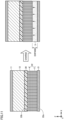
- the porous body may have a first main face and a second main face.
- the second main face is located opposite to the first main face.
- the first main face is in contact with the negative electrode current collector.
- the lithium metal starts to be deposited at the first main face.
- the lithium metal fills the pores. Charging completes by the time when the lithium metal reaches the second main face.
- Expressions such as “comprise”, “include”, and “have”, and other similar expressions are open-ended expressions.
- an additional component may or may not be further included.
- the expression “consist of” is a closed-end expression. However, even when a closed-end expression is used, impurities present under ordinary circumstances as well as an additional element irrelevant to the technique according to the present disclosure are not excluded.
- the expression “consist essentially of” is a semiclosed-end expression. A semiclosed-end expression tolerates addition of an element that does not substantially affect the fundamental, novel features of the technique according to the present disclosure.
- a particle may mean not only “one particle” but also “a plurality of particles (a particle group)” and “a group of particles (powder)”.
- any geometric term should not be interpreted solely in its exact meaning.
- "parallel” may mean a geometric state that is deviated, to some extent, from exact “parallel”.
- Any geometric term herein may include tolerances and/or errors in terms of design, operation, production, and/or the like.
- the dimensional relationship in each figure may not necessarily coincide with the actual dimensional relationship.
- the dimensional relationship (in length, width, thickness, and the like) in each figure may have been changed for the purpose of assisting understanding for the readers. Further, a part of a given configuration may have been omitted.
- a numerical range such as “from m to n%” includes both the upper limit and the lower limit, unless otherwise specified. That is, “from m to n%” means a numerical range of "not less than m% and not more than n%". Moreover, “not less than m% and not more than n%” includes “more than m% and less than n%”. Further, any numerical value selected from a certain numerical range may be used as a new upper limit or a new lower limit. For example, any numerical value from a certain numerical range may be combined with any numerical value described in another location of the present specification or in a table or a drawing to set a new numerical range.
- each numerical value may be an approximate value that can vary depending on the implementation configuration of the technique according to the present disclosure.
- Each numerical value may be expressed in significant figures.
- each measured value may be the average value obtained from multiple measurements performed. The number of measurements may be 3 or more, or may be 5 or more, or may be 10 or more. Generally, the greater the number of measurements is, the more reliable the average value is expected to be.
- Each measured value may be rounded off based on the number of the significant figures.
- Each measured value may include an error occurring due to an identification limit of the measurement apparatus, for example.
- a stoichiometric composition formula represents a typical example of a compound.
- a compound may have a non-stoichiometric composition.
- Al 2 O 3 represents a compound that includes Al and O in any composition ratio, unless otherwise specified. Further, the compound may be doped with a trace element, or some of Al and/or O may be replaced by another element, for example.
- Derivative refers to a compound that is derived from its original compound by at least one partial modification selected from the group consisting of functional group introduction, atom replacement, oxidation, reduction, and other chemical reactions.
- the position of modification may be one position, or may be a plurality of positions.
- Substituent may include, for example, at least one selected from the group consisting of alkyl group, alkenyl group, alkynyl group, cycloalkyl group, unsaturated cycloalkyl group, aromatic group, heterocyclic group, halogen atom (F, Cl, Br, I, etc.), OH group, SH group, CN group, SCN group, OCN group, nitro group, alkoxy group, unsaturated alkoxy group, amino group, alkylamino group, dialkylamino group, aryloxy group, acyl group, alkoxycarbonyl group, acyloxy group, aryloxycarbonyl group, acylamino group, alkoxycarbonylamino group, aryloxy carbonylamino group, sulfonylamino group, sulfamoyl group, carbamoyl group, alkylthio group, arylthio group, sulfonyl group, sulfam
- FIG. 1 is a conceptual view illustrating an example of a lithium metal secondary battery according to the present embodiment.
- a cell 100 includes a power generation element 50 and an electrolyte (not illustrated).
- Cell 100 may include an exterior package (not illustrated).
- the exterior package may accommodate power generation element 50 and the electrolyte.
- the exterior package may have any configuration.
- the exterior package may be a case made of metal, or may be a pouch made of a metal foil laminated film, for example.
- the case may have any shape.
- the case may be cylindrical, prismatic, flat, coin-shaped, and/or the like, for example.
- the exterior package may include Al and/or the like, for example.
- the exterior package may accommodate a single power generation element 50, or may accommodate a plurality of power generation elements 50, for example.
- the plurality of power generation elements 50 may form a series circuit, or may form a parallel circuit, for example. Inside the exterior package, the plurality of power generation elements 50 may be stacked in the thickness direction of cell 100.
- Power generation element 50 includes a positive electrode 10 and a negative electrode 20. Power generation element 50 may further include a separator 30. Separator 30 is interposed between positive electrode 10 and negative electrode 20. Power generation element 50 may have any configuration. For example, power generation element 50 may be a stack-type one. For example, positive electrode 10 and negative electrode 20 may be alternately stacked with separator 30 interposed between positive electrode 10 and negative electrode 20 to form power generation element 50. For example, power generation element 50 may be a wound-type one. For example, positive electrode 10 having a belt-like shape, separator 30 having a belt-like shape, and negative electrode 20 having a belt-like shape may be stacked to form a stacked body. The resulting stacked body may be wound spirally to form power generation element 50. After being wound, the wound power generation element 50 may be shaped into a flat form.
- Power generation element 50 may have an anode-free structure, for example.
- the "anode-free structure” refers to a structure in which no solid negative electrode active material is present before initial charging. It would be obvious that power generation element 50 may not have the anode-free structure.
- Negative electrode 20 may be in sheet form, for example.
- Negative electrode 20 includes a negative electrode current collector 21 and a porous body 22.
- Negative electrode current collector 21 is electrically conductive. Negative electrode current collector 21 supports porous body 22.
- Negative electrode current collector 21 may be in sheet form, for example.
- Negative electrode current collector 21 may have a thickness from 5 to 50 ⁇ m, for example.
- Negative electrode current collector 21 may include a metal foil and/or the like, for example.
- Negative electrode current collector 21 may include, for example, at least one selected from the group consisting of Cu, Ni, Fe, Zn, Pb, Ag, and Au.
- Negative electrode current collector 21 may include a Cu foil, a Cu alloy foil, and/or the like, for example.
- Porous body 22 is placed on the surface of negative electrode current collector 21.
- Porous body 22 may be placed on only one side of negative electrode current collector 21.
- Porous body 22 may be placed on both sides of negative electrode current collector 21.
- porous body 22 may be simply in contact with the surface of negative electrode current collector 21.
- porous body 22 may be interposed between positive electrode 10 (separator 30) and negative electrode current collector 21.
- porous body 22 may be adhered to negative electrode current collector 21.
- porous body 22 may be welded to negative electrode current collector 21.
- Porous body 22 may have any contour.
- Porous body 22 may be in layer form, in film form, in sheet form, and/or the like, for example.
- Porous body 22 may have a thickness from 10 to 5000 ⁇ m, or from 50 to 1000 ⁇ m, or from 50 to 500 ⁇ m, for example.
- Porous body 22 has a first main face 22a and a second main face 22b.
- Second main face 22b is located opposite to first main face 22a.
- First main face 22a is in contact with negative electrode current collector 21.
- Second main face 22b faces positive electrode 10.
- Second main face 22b may be in contact with separator 30, for example.
- Second main face 22b may be in contact with positive electrode 10, for example.
- Porous body 22 includes an electrically-insulating skeleton 1. Gaps in electrically-insulating skeleton 1 form pores 2. Inside the pores 2, a charge-discharge reaction (a dissolution-deposition reaction of Li metal) may proceed.
- Porous body 22 may have an average pore size of 1 ⁇ m or more, for example.
- the average pore size of porous body 22 may be 1 ⁇ m or more, or may be 2.5 ⁇ m or more, or may be 10 ⁇ m or more, for example.
- the average pore size may be 100 ⁇ m or less, or may be 50 ⁇ m or less, or may be 10 ⁇ m or less, for example.
- the average pore size of porous body 22 may be larger than that of separator 30, for example.
- the structure of the pores of separator 30 does not allow easy entry of deposited Li metal thereinto.
- Separator 30 may have an average pore size of less than 1 ⁇ m, for example.
- the structure of the pores of porous body 22 (framework) may allow easy entry of Li metal. For example, this characteristic may differentiate porous body 22 from separator 30.
- Porous body 22 may have a porosity from 50 to 80%, for example. When porous body 22 has a porosity from 50 to 80%, the balance between the strength of electrically-insulating skeleton 1 and the Li-filling amount tends to be good, for example.
- the porosity may be 55% or more, or may be 60% or more, or may be 70% or more, for example.
- the porosity may be 70% or less, or may be 60% or less, or may be 55% or less, for example.
- Electrically-insulating skeleton 1 is contiguous in mesh form. Electrically-insulating skeleton 1 may be contiguous in three-dimensional mesh form, for example. Electrically-insulating skeleton 1 may also be called "a mesh-like structure", "a three-dimensional mesh-like structure", and the like, for example. Electrically-insulating skeleton 1 may have an orderly structure, or may have a disorderly structure, for example.
- Electrically-insulating skeleton 1 is electrically insulating. Electrically-insulating skeleton 1 may have a volume resistivity of 1 ⁇ 10 5 Q.cm or more, for example. Electrically-insulating skeleton 1 may have a volume resistivity of 1 ⁇ 10 10 ⁇ cm or more, or 1 ⁇ 10 15 Q.cm or more, for example.
- Electrically-insulating skeleton 1 may be formed of any material as long as it is electrically insulating. Electrically-insulating skeleton 1 may be insoluble in the electrolyte. Electrically-insulating skeleton 1 may be formed of resin material, for example. Electrically-insulating skeleton 1 may include engineering plastic, super engineering plastic, and/or the like, for example. Electrically-insulating skeleton 1 may include, for example, at least one selected from the group consisting of PI, PAI, and PA. PI, PAI, and PA may have a preferable degree of strength to form the skeleton.
- electrically-insulating skeleton 1 made of PI may be formed.
- a polyamic acid solution and spherical silica powder are mixed together to form a dispersion.
- the resulting dispersion is applied to a substrate to form a coating film.
- the resulting coating film is heated to imidize the coating film (the polyamic acid).
- hydrofluoric acid for example, the spherical silica powder is cleaned off from the coating film, and thereby a plurality of pores may be formed.
- the pores may be formed as a result of a plurality of spherical air holes coalescing with each other.
- the coating film is peeled off from the substrate to recover the coating film (electrically-insulating skeleton 1).
- electrically-insulating skeleton 1 having a uniform pore distribution may be formed.
- the average pore size to the range of 0.1 to 2.5 ⁇ m, for example.
- the porosity to the range of 60 to 80%, for example.
- Electrically-insulating skeleton 1 may be formed of inorganic material, for example. Electrically-insulating skeleton 1 may be formed of oxide glass, for example. Oxide glass may have a preferable degree of strength to form the skeleton. Electrically-insulating skeleton 1 may include, for example, at least one selected from the group consisting of SiO 2 , GeO 2 , B 2 O 3 , P 2 O 5 , As 2 O 5 , Li 2 O, Na 2 O, K 2 O, MgO, CaO, BaO, Al 2 O 3 , TiO 2 , and ZrO 2 . Electrically-insulating skeleton 1 may be formed of mineral material, for example. Electrically-insulating skeleton 1 may be formed of shirasu glass and/or the like, for example.
- electrically-insulating skeleton 1 may be formed.
- a mixture of shirasu (a type of volcanic ash), lime, and boric acid is melted to form a glass formed body.
- the resulting glass formed body is subjected to heat treatment at a temperature within the range of 600 to 800°C to facilitate separation into two phases. One of the two phases is dissolved and removed, and thereby pores may be formed. That is, electrically-insulating skeleton 1 may be formed.
- Electrically-insulating skeleton 1 may form a three-dimensional network, for example.
- Electrically-insulating skeleton 1 formed of shirasu may include Al 2 O 3 -SiO 2 -based glass and/or the like, for example. With this method, the average pore size may be controlled to the range of 0.5 to 50 ⁇ m, for example.
- Electrically-insulating skeleton 1 may include a composite material composed of oxide glass and resin material, for example.
- Negative electrode 20 may further include seed particles (not illustrated), for example.
- the seed particles may serve as seeds for Li nucleation during charging.
- the seed particles may be placed on the surface of negative electrode current collector 21, for example.
- the seed particles may be placed at the interface between negative electrode current collector 21 and porous body 22, for example.
- the seed particles may be placed inside the pores 2.
- the seed particles may include, for example, at least one selected from the group consisting of Li, Mg, Al, Zn, Ag, Pt, and Au.
- the seed particles may be nanoparticles, for example.
- the seed particles may have a D50 from 1 to 200 nm, for example.
- Negative electrode 20 may further include a negative electrode active material other than Li (hereinafter also called "a second negative electrode active material"), for example.
- the second negative electrode active material may include insertion-based active material, alloy-based active material, and/or the like, for example. A combination of Li metal and an insertion-based active material can enhance cycle endurance and/or the like, for example.
- the second negative electrode active material may be in particle form, for example.
- the second negative electrode active material may be placed inside the pores 2, for example.
- the second negative electrode active material may be placed on the surface of porous body 22 (second main face 22b), for example.
- the second negative electrode active material may be placed at the interface between negative electrode current collector 21 and porous body 22.
- the second negative electrode active material may include, for example, at least one selected from the group consisting of natural graphite, artificial graphite, soft carbon, hard carbon, silicon (Si), SiO, Li silicate, Si-based alloy, tin (Sn), SnO, Sn-based alloy, and Li 4 Ti 5 O 12 .
- Graphite collectively refers to natural graphite and artificial graphite.
- Graphite may be a mixture of natural graphite and artificial graphite.
- Graphite may include a dopant.
- the dopant may include, for example, at least one selected from the group consisting of B, N, P, Li, and Ca.
- the amount to be added, in molar fraction may be from 0.01 to 5%, or from 0.1 to 3%, or from 0.1 to 1%, for example.
- the surface of graphite may be covered with amorphous carbon, for example.
- the surface of graphite may be covered with another type of material, for example.
- This another type of material may include, for example, at least one selected from the group consisting of P, W, Al, and O.
- the another type of material may include, for example, at least one selected from the group consisting of Al(OH) 3 , AlOOH, Al 2 O 3 , WO 3 , Li 2 CO 3 , LiHCO 3 , and Li 3 PO 4 .
- SiO may be represented by the following formula (A-1), for example. SiO x ... (A-1)
- x may satisfy 0.5 ⁇ x ⁇ 1.5 or 0.8 ⁇ x ⁇ 1.2, for example.
- Li silicate may include, for example, at least one selected from the group consisting of Li 4 SiO 4 , Li 2 SiO 3 , Li 2 Si 2 O 5 , and Li 8 SiO 6 .
- the second negative electrode active material may include a mixture of Si and Li silicate, for example.
- the alloy-based active material may include an additive.
- the additive may be a substituted solid solution atom or an intruding solid solution atom, for example.
- the additive may be an adherent adhered to the surface of the alloy-based active material.
- the adherent may be an elementary substance, an oxide, a carbide, a nitride, a halide, and/or the like, for example.
- the amount to be added may be, in molar fraction, from 0.01 to 5%, or from 0.1 to 3%, or from 0.1 to 1%, for example.
- the additive may include, for example, at least one selected from the group consisting of Li, Na, K, Rb, Be, Mg, Ca, Sr, Fe, Ba, B, Al, Ga, In, C, Ge, Sn, Pb, N, P, As, Y, Sb, and S. That is, SiO may be doped with Mg and/or Na.
- Mg silicate and/or Na silicate may be formed.
- boron oxide such as B 2 O 3 , for example
- yttrium oxide such as Y 2 O 3 , for example
- the second negative electrode active material may include a composite material of the carbon-based active material (such as graphite) and the alloy-based active material (such as Si), for example.
- a composite material including Si and carbon may also be called "a Si-C composite material".
- Si microparticles may be dispersed inside carbon particles.
- Si microparticles may be dispersed inside graphite particles.
- Li silicate particles may be covered with a carbon material (such as amorphous carbon).
- the Si-C composite material and graphite may be mixed together for use.
- the second negative electrode active material may include two or more components.
- the second negative electrode active material may include the carbon-based active material (such as graphite) and the alloy-based active material (such as Si, SiO).
- the second negative electrode active material may be fixed to negative electrode current collector 21, porous body 22, and/or the like by means of a binder, for example.
- the binder may include any component.
- the binder may include, for example, at least one selected from the group consisting of polyacrylic acid (PAA), carboxymethylcellulose (CMC), styrene-butadiene rubber (SBR), acrylate butadiene rubber (ABR), polyacrylonitrile (PAN), and derivatives of these.
- Positive electrode 10 may be in sheet form, for example.
- Positive electrode 10 may include a positive electrode current collector 11 and a positive electrode active material layer 12, for example.
- Positive electrode current collector 11 is electrically conductive.
- Positive electrode current collector 11 supports positive electrode active material layer 12.
- Positive electrode current collector 11 may be in sheet form, for example.
- Positive electrode current collector 11 may have a thickness from 5 to 50 ⁇ m, for example.
- Positive electrode current collector 11 may include a metal foil, for example.
- Positive electrode current collector 11 may include, for example, at least one selected from the group consisting of Al, Mn, Ti, Fe, and Cr.
- Positive electrode current collector 11 may include an Al foil, an Al alloy foil, a Ti foil, a stainless steel (SUS) foil, and/or the like, for example.
- an intermediate layer (not illustrated) may be formed.
- the intermediate layer does not include a positive electrode active material.
- the intermediate layer may have a thickness from 0.1 to 5 ⁇ m, for example.
- the intermediate layer may include a conductive material, an insulation material, a binder, and/or the like, for example.
- the conductive material and the binder are described below.
- the insulation material may include alumina, boehmite, aluminum hydroxide, and/or the like, for example.
- Positive electrode active material layer 12 is placed on the surface of positive electrode current collector 11. Positive electrode active material layer 12 may be placed on only one side of positive electrode current collector 11. Positive electrode active material layer 12 may be placed on both sides of positive electrode current collector 11. Positive electrode active material layer 12 may have a thickness from 10 to 1000 ⁇ m, or from 50 to 500 ⁇ m, or from 100 to 300 ⁇ m, for example. Positive electrode active material layer 12 includes a positive electrode active material. Positive electrode active material layer 12 may further include a conductive material, a binder, and the like, for example.
- the conductive material may form an electron conduction path inside the positive electrode active material layer 12.
- the amount of the conductive material to be used may be, for example, from 0.1 to 10 parts by mass relative to 100 parts by mass of the positive electrode active material.
- the conductive material may include any component.
- the conductive material may include, for example, at least one selected from the group consisting of graphite, acetylene black (AB), Ketjenblack (registered trademark), vapor grown carbon fiber (VGCF), carbon nanotube (CNT), and graphene flake (GF).
- the binder is capable of fixing positive electrode active material layer 12 to positive electrode current collector 11.
- the amount of the binder to be used may be, for example, from 0.1 to 10 parts by mass relative to 100 parts by mass of the positive electrode active material.
- the binder may include any component.
- the binder may include, for example, at least one selected from the group consisting of polyvinylidene difluoride (PVdF), vinylidene difluoride-hexafluoropropylene copolymer (PVdF-HFP), tetrafluoroethylene (PTFE), CMC, PAA, polyvinyl alcohol (PVA), polyvinylpyrrolidone (PVP), polyoxyethylene alkyl ether, and derivatives of these.
- PVdF polyvinylidene difluoride
- PVdF-HFP vinylidene difluoride-hexafluoropropylene copolymer
- PTFE tetrafluoroethylene
- CMC CMC
- Positive electrode active material layer 12 may further include an inorganic filler, an organic filler, a solid electrolyte, a surface modifier, a lubricant, a flame retardant, a protective agent, a flux, a coupling agent, an adsorbent, and/or the like, for example.
- Positive electrode active material layer 12 may include polyoxyethylene allylphenyl ether phosphate, zeolite, a silane coupling agent, MoS 2 , WO 3 , and/or the like, for example.
- the positive electrode active material may be in particle form, for example.
- the positive electrode active material may include any component.
- the positive electrode active material may include a transition metal oxide, a polyanion compound, and/or the like, for example.
- the composition may be uniform, or may be non-uniform. For example, there may be a gradient in the composition from the surface of the particle toward the center.
- the composition may change contiguously, or may change non-contiguously (in steps).
- the transition metal oxide may have any crystal structure.
- the transition metal oxide may include a crystal structure that belongs to a space group R-3m and/or the like.
- a compound represented by the general formula "LiMO 2 " may have a crystal structure that belongs to a space group R-3m.
- the transition metal oxide may be represented by the following formula (C-1), for example. Li 1-a Ni x M 1-x O 2 ... (C-1)
- M may include, for example, at least one selected from the group consisting of Co, Mn, and Al.
- x may satisfy the relationship of 0 ⁇ x ⁇ 0.1, 0.1 ⁇ x ⁇ 0.2, 0.2 ⁇ x ⁇ 0.3, 0.3 ⁇ x ⁇ 0.4, 0.4 ⁇ x ⁇ 0.5, 0.5 ⁇ x ⁇ 0.6, 0.6 ⁇ x ⁇ 0.7, 0.7 ⁇ x ⁇ 0.8, 0.8 ⁇ x ⁇ 0.9, or 0.9 ⁇ x ⁇ 1, for example.
- a may satisfy the relationship of -0.4 ⁇ a ⁇ 0.4, - 0.3 ⁇ a ⁇ 0.3, -0.2 ⁇ a ⁇ 0.2, or -0. 1 ⁇ a ⁇ 0.1, for example.
- the transition metal oxide may include, for example, at least one selected from the group consisting of LiCoO 2 , LiMnO 2 , LiNi 0.9 Co 0.1 O 2 , LiNi 0.9 Mn 0.1 O 2 , and LiNiO 2 .
- the transition metal oxide may be represented by the following formula (C-2), for example.
- a compound represented by the following formula (C-2) may also be called "NCM”. Li 1-a Ni x Co y Mn z O 2 ... (C-2)
- x may satisfy the relationship of 0 ⁇ x ⁇ 0.1, 0.1 ⁇ x ⁇ 0.2, 0.2 ⁇ x ⁇ 0.3, 0.3 ⁇ x ⁇ 0.4, 0.4 ⁇ x ⁇ 0.5, 0.5 ⁇ x ⁇ 0.6, 0.6 ⁇ x ⁇ 0.7, 0.7 ⁇ x ⁇ 0.8, 0.8 ⁇ x ⁇ 0.9, or 0.9 ⁇ x ⁇ 1, for example.
- y may satisfy the relationship of 0 ⁇ y ⁇ 0.1, 0.1 ⁇ y ⁇ 0.2, 0.2 ⁇ y ⁇ 0.3, 0.3 ⁇ y ⁇ 0.4, 0.4 ⁇ y ⁇ 0.5, 0.5 ⁇ y ⁇ 0.6, 0.6 ⁇ y ⁇ 0.7, 0.7 ⁇ y ⁇ 0.8, 0.8 ⁇ y ⁇ 0.9, or 0.9 ⁇ y ⁇ 1, for example.
- z may satisfy the relationship of 0 ⁇ z ⁇ 0.1, 0.1 ⁇ z ⁇ 0.2, 0.2 ⁇ z ⁇ 0.3, 0.3 ⁇ z ⁇ 0.4, 0.4 ⁇ z ⁇ 0.5, 0.5 ⁇ z ⁇ 0.6, 0.6 ⁇ z ⁇ 0.7, 0.7 ⁇ z ⁇ 0.8, 0.8 ⁇ z ⁇ 0.9, or 0.9 ⁇ z ⁇ 1, for example.
- NCM may include, for example, at least one selected from the group consisting of LiNi 1/3 Co 1/3 Mn 1/3 O 2 , LiNi 0.4 Co 0.3 Mn 0.3 O 2 , LiNi 0.3 Co 0.4 Mn 0.3 O 2 , LiNi 0.3 Co 0.3 Mn 0.4 O 2 , LiNi 0.5 Co 0.2 Mn 0.3 O 2 , LiNi 0.5 Co 0.3 Mn 0.2 O 2 , LiNi 0.5 Co 0.4 Mn 0.1 O 2 , LiNi 0.5 Co 0.1 Mn 0.4 O 2 , LiNi 0.6 Co 0.2 Mn 0.2 O 2 , LiNi 0.6 Co 0.3 Mn 0.1 O 2 , LiNi 0.6 Co 0.1 Mn 0.3 O 2 , LiNi 0.6 Co 0.1 Mn 0.3 O 2 , LiNi 0.7 Co 0.1 Mn 0.2 O 2 , LiNi 0.7 Co 0.2 Mn 0.1 O 2 , LiNi 0.8 Co 0.1 Mn 0.1 O 2
- the transition metal oxide may be represented by the following formula (C-3), for example.
- a compound represented by the following formula (C-3) may also be called "NCA”. Li 1-a Ni x Co y Al z O 2 ... (C-3)
- x may satisfy the relationship of 0 ⁇ x ⁇ 0.1, 0.1 ⁇ x ⁇ 0.2, 0.2 ⁇ x ⁇ 0.3, 0.3 ⁇ x ⁇ 0.4, 0.4 ⁇ x ⁇ 0.5, 0.5 ⁇ x ⁇ 0.6, 0.6 ⁇ x ⁇ 0.7, 0.7 ⁇ x ⁇ 0.8, 0.8 ⁇ x ⁇ 0.9, or 0.9 ⁇ x ⁇ 1, for example.
- y may satisfy the relationship of 0 ⁇ y ⁇ 0.1, 0.1 ⁇ y ⁇ 0.2, 0.2 ⁇ y ⁇ 0.3, 0.3 ⁇ y ⁇ 0.4, 0.4 ⁇ y ⁇ 0.5, 0.5 ⁇ y ⁇ 0.6, 0.6 ⁇ y ⁇ 0.7, 0.7 ⁇ y ⁇ 0.8, 0.8 ⁇ y ⁇ 0.9, or 0.9 ⁇ y ⁇ 1, for example.
- z may satisfy the relationship of 0 ⁇ z ⁇ 0.1, 0.1 ⁇ z ⁇ 0.2, 0.2 ⁇ z ⁇ 0.3, 0.3 ⁇ z ⁇ 0.4, 0.4 ⁇ z ⁇ 0.5, 0.5 ⁇ z ⁇ 0.6, 0.6 ⁇ z ⁇ 0.7, 0.7 ⁇ z ⁇ 0.8, 0.8 ⁇ z ⁇ 0.9, or 0.9 ⁇ z ⁇ 1, for example.
- NCA may include, for example, at least one selected from the group consisting of LiNi 0.7 Co 0.1 Al 0.2 O 2 , LiNi 0.7 Co 0.2 Al 0.1 O 2 , LiNi 0.8 Co 0.1 Al 0.1 O 2 , LiNi 0.8 Co 0.17 Al 0.03 O 2 , LiNi 0.8 Co 0.15 Al 0.05 O 2 , and LiNi 0.9 Co 0.05 Al 0.05 O 2 .
- the positive electrode active material may include two or more NCMs and/or the like, for example.
- the positive electrode active material may include NCM (0.6 ⁇ x) and NCM (x ⁇ 0.6), for example.
- NCM (0.6 ⁇ x) refers to a compound in which x (Ni ratio) in the above formula (C-2) is 0.6 or more.
- NCM (0.6 ⁇ x) may also be called “a high-nickel material", for example.
- NCM (0.6 ⁇ x) includes LiNi 0.8 Co 0.1 Mn 0.1 O 2 and/or the like, for example.
- NCM(x ⁇ 0.6) refers to a compound in which x (Ni ratio) in the above formula (C-2) is less than 0.6.
- NCM (x ⁇ 0.6) includes LiNi 1/3 Co 1/3 Mn 1/3 O 2 and/or the like, for example.
- the positive electrode active material may include NCA and NCM, for example.
- the Ni ratio may be the same or may be different.
- the Ni ratio of NCA may be more than the Ni ratio of NCM.
- the Ni ratio of NCA may be less than the Ni ratio of NCM.
- Transition Metal Oxide (Space Group C2/m)
- the transition metal oxide may include a crystal structure that belongs to a space group C2/m and/or the like, for example.
- the transition metal oxide may be represented by the following formula (C-4), for example. Li 2 MO 3 ... (C-4)
- M may include, for example, at least one selected from the group consisting of Ni, Co, Mn, and Fe.
- the positive electrode active material may include a mixture of LiMO 2 (space group R-3m) and Li 2 MO 3 (space group C2/m), for example.
- the positive electrode active material may include a solid solution that is formed of LiMO 2 and Li 2 MO 3 (Li 2 MO 3 -LiMO 2 ), and/or the like, for example.
- Transition Metal Oxide (Space Group Fd-3m)
- the transition metal oxide may include a crystal structure that belongs to a space group Fd-3m, and/or the like, for example.
- the transition metal oxide may be represented by, for example, the following formula (C-5): LiMn 2-x M x O 4 ... (C-5) where the relationship of 0 ⁇ x ⁇ 2 is satisfied.
- M may include, for example, at least one selected from the group consisting of Ni, Fe, and Zn.
- LiM 2 O 4 (space group Fd-3m) may include, for example, at least one selected from the group consisting of LiMn 2 O 4 and LiMn 1.5 Ni 0.5 O 4 .
- the positive electrode active material may include a mixture of LiMO 2 (space group R-3m) and LiM 2 O 4 (space group Fd-3m), for example.
- the polyanion compound may include a phosphoric acid salt (such as LiFePO 4 for example), a silicic acid salt, a boric acid salt, and/or the like, for example.
- the polyanion compound may be represented by the following formulae (C-6) to (C-9), for example.
- LiMPO 4 ... (C-6) Li 2-x MPO 4 F ... (C-7)
- M may include, for example, at least one selected from the group consisting of Fe, Mn, Co.
- the relationship of 0 ⁇ x ⁇ 2 may be satisfied, for example.
- the positive electrode active material may include a mixture of LiMO 2 (space group R-3m) and the polyanion compound, for example.
- a dopant may be added.
- the dopant may be diffused throughout the entire particle, or may be locally distributed.
- the dopant may be locally distributed on the particle surface.
- the dopant may be a substituted solid solution atom, or may be an intruding solid solution atom.
- the amount of the dopant to be added (the molar fraction relative to the total amount of the positive electrode active material) may be from 0.01 to 5%, or may be from 0.1 to 3%, or may be from 0.1 to 1%, for example.
- a single type of dopant may be added, or two or more types of dopant may be added. The two or more dopants may form a complex.
- the dopant may include, for example, at least one selected from the group consisting of B, C, N, a halogen, Si, Na, Mg, Al, Mn, Co, Cr, Sc, Ti, V, Cu, Zn, Ga, Ge, Se, Sr, Y, Zr, Nb, Mo, In, Pb, Bi, Sb, Sn, W, La, Ce, Pr, Nd, Pm, Sm, Eu, Gd, Tb, Dy, Ho, Er, Tm, Yb, Lu, and an actinoid.
- NCA a combination of "Zr, Mg, W, Sm", a combination of "Ti, Mn, Nb, Si, Mo", or a combination of "Er, Mg” may be added.
- Ti may be added.
- a combination of "Zr, W", a combination of "Si, W”, or a combination of "Zr, W, Al, Ti, Co" may be added.
- Positive electrode 10 may include a composite particle.
- the composite particle includes a core particle and a covering layer.
- the core particle includes a positive electrode active material.
- the covering layer covers at least part of the surface of the core particle.
- the covering layer may have a thickness from 1 to 3000 nm, or from 5 to 2000 nm, or from 10 to 1000 nm, or from 10 to 100 nm, or from 10 to 50 nm, for example.
- the thickness of the covering layer may be measured in an SEM (Scanning Electron Microscope) image of a cross section of the particle, and/or the like, for example.
- the composite particle is embedded in a resin material to prepare a sample. With the use of an ion milling apparatus, a cross section of the sample is exposed.
- an ion milling apparatus with the trade name "ArBlade (registered trademark) 5000" manufactured by Hitachi High-Technologies (or a similar product) may be used.
- the cross section of the sample is examined by an SEM.
- an SEM apparatus with the trade name "SU8030” manufactured by Hitachi High-Technologies (or a similar product) may be used.
- the thickness of the covering layer is measured in twenty fields of view. The arithmetic mean of a total of 200 thickness measurements is used.
- the ratio of the part of the surface of the core particle covered by the covering layer is also called "a covering rate".
- the covering rate may be 1% or more, or 10% or more, or 30% or more, or 50% or more, or 70% or more, for example.
- the covering rate may be 100% or less, or 90% or less, or 80% or less, for example.
- the covering rate may be measured by XPS (X-ray Photoelectron Spectroscopy).
- XPS X-ray Photoelectron Spectroscopy
- an XPS apparatus with the trade name "PHI X-tool” manufactured by ULVAC-PHI (or a similar product) may be used.
- a sample powder consisting of the composite particle is loaded in the XPS apparatus.
- Narrow scan analysis is carried out.
- the measurement data is processed with an analysis software.
- an analysis software with the trade name "MulTiPak" manufactured by ULVAC-PHI (or a similar product) may be used.
- the measurement data is analyzed to detect a plurality of types of elements. From the area of each peak, the ratio of the detected element is determined.
- the covering rate is determined.
- ⁇ I 1 / I 0 + I 1 ⁇ 100
- I 0 represents the total ratio of the elements "Ni, Co, Mn".
- I 0 represents the total ratio of the elements "Ni, Co, Al”.
- I 1 represents the total ratio of the elements "P, B”.
- the covering layer may include any component.
- the covering layer may include an elementary substance, organic matter, an inorganic acid salt, an organic acid salt, a hydroxide, an oxide, a carbide, a nitride, a sulfide, a halide, and/or the like, for example.
- the covering layer may include, for example, at least one selected from the group consisting of B, Al, W, Zr, Ti, Co, F, lithium compound (such as Li 2 CO 3 , LiHCOs, LiOH, Li 2 O, for example), tungsten oxide (such as WO 3 , for example), titanium oxide (such as TiO 2 , for example), zirconium oxide (such as ZrO 2 , for example), boron oxide, boron phosphate (such as BPO 4 , for example), aluminum oxide (such as Al 2 O 3 , for example), boehmite, aluminum hydroxide, phosphoric acid salt [such as Li 3 PO 4 , (NH 4 ) 3 PO 4 , AlPO 4 , for example], boric acid salt (such as Li 2 B 4 O 7 , LiBO 3 , for example), polyacrylic acid salt (such as Li salt, Na salt, NH 4 salt), acetic acid salt (such as Li salt, for example), CMC (such as acid type, Na salt, Li salt,
- “Hollow particle” refers to a secondary particle that has a central cavity whose area occupies 30% or more of the entire cross-sectional area of the particle in a cross-sectional image of the particle.
- the proportion of the cavity in the hollow particle may be 40%, or 50% or more, or 60% or more, for example.
- Solid particle refers to a secondary particle that has a central cavity whose area occupies less than 30% of the entire cross-sectional area of the particle in a cross-sectional image of the particle.
- the proportion of the cavity in the solid particle may be 20% or less, or 10% or less, or 5% or less, for example.
- the positive electrode active material may be hollow particles, or may be solid particles. A mixture of hollow particles and solid particles may be used.
- Electrode active material collectively refers to a positive electrode active material and a negative electrode active material.
- the electrode active material may have a unimodal particle size distribution (based on the number), for example.
- the electrode active material may have a multimodal particle size distribution, for example.
- the electrode active material may have a bimodal particle size distribution, for example. That is, the electrode active material may include large particles and small particles.
- the particle size distribution is bimodal, the particle size corresponding to the peak top of the larger particle size is regarded as the particle size of the large particles (d L ).
- the particle size corresponding to the peak top of the smaller particle size is regarded as the particle size of the small particles (ds).
- the particle size ratio (d L /d S ) may be from 2 to 10, or from 2 to 5, or from 2 to 4, for example.
- d L may be from 8 to 20 ⁇ m, or from 8 to 15 ⁇ m, for example.
- ds may be from 1 to 10 ⁇ m, or from 1 to 5 ⁇ m, for example.
- peak separating processing may be carried out for the particle size distribution.
- the number-based particle size distribution is measured by a microscope method. From the electrode active material layer, a plurality of cross-sectional samples are taken.
- the cross-sectional sample may include a cross section vertical to the surface of the electrode active material layer, for example. By ion milling and/or the like, for example, cleaning is carried out to the side that is to be observed.
- SEM the cross-sectional sample is examined. The magnification for the examination is adjusted in such a way that 10 to 100 particles are contained within the examination field of view.
- the Feret diameters of all the particles in the image are measured. "Feret diameter" refers to the distance between two points located farthest apart from each other on the outline of the secondary particle.
- the plurality of the cross-sectional samples are examined to obtain a total of 1000 or more Feret diameters. From the 1000 or more Feret diameters, number-based particle size distribution is created.
- the bimodal particle size distribution may be formed by two types of particles mixed together. These two types of particles have different particle size distributions.
- the two types of particles may have different D50.
- D50 refers to a particle size in volume-based particle size distribution at which the cumulative frequency accumulated from the side of small particle sizes reaches 50%. D50 may be measured by laser diffraction.
- the sample to be measured is powder.
- the large particles may have a D50 from 8 to 20 ⁇ m, or from 8 to 15 ⁇ m.
- the small particles may have a D50 from 1 to 10 ⁇ m, or from 1 to 5 ⁇ m.
- the ratio of the D50 of the large particles to the D50 of the small particles may be from 2 to 10, or from 2 to 5, or from 2 to 4, for example.
- the large particles and the small particles may have the same composition, or may have different compositions.
- the large particles may be NCA and the small particles may be NCM.
- the large particles may be NCM (0.6 ⁇ x) and the small particles may be NCM (x ⁇ 0.6).
- the electrolyte Li ions are dissolved.
- the electrolyte may be a liquid electrolyte, or may be a gelled electrolyte.
- the liquid electrolyte may include an electrolyte solution, for example.
- the electrolyte solution includes a solvent and a solute.
- the concentration of the solute may be from 0.5 to 1 mol/L, or from 1 to 1.5 mol/L, or from 1.5 to 2 mol/L, or from 2 to 2.5 mol/L, or from 2.5 to 3 mol/L, for example.
- the solute includes a supporting salt (a Li salt).
- the solute may include an inorganic acid salt, an organic acid salt, an imide salt, an oxalato complex, a halide, and/or the like, for example.
- the solute may include, for example, at least one selected from the group consisting of LiPF 6 , LiBF 4 , LiClO 4 , LiAsF 6 , LiSbF 6 , LiN(SO 2 F) 2 "LiFSI", LiN(SO 2 CF 3 ) 2 "LiTFSI", LiB(C 2 O 4 ) 2 "LiBOB", LiBF 2 (C 2 O 4 ) "LiDFOB”, LiPF 2 (C 2 O 4 ) 2 "LiDFOP”, LiPO 2 F 2 , FSO 3 Li, LiI, LiBr, and derivatives of these.
- the electrolyte solution may include an ether-based solvent and/or the like, for example.
- the solvent may include HFE and/or the like, for example.
- HFE may include, for example, at least one selected from the group consisting of a difluoromethyl group, a 2,2-difluoroethyl group, a 2,2,2-trifluoroethyl group, a 1,1,2,2-tetrafluoroethyl group, a 2,2,3,3,3-pentafluoropropyl group, a 2,2,3,3-tetrafluoropropyl group, a 1,1,1,3,3,3-hexafluoroisopropyl group, a 1,1,2,3,3,3-hexafluoropropyl group, a 2,2,3,3,4,4,4-heptafluorobutyl group, a 2,2,3,3,4,4-hexafluorobutyl group, and a 2,2,3,3,4,4,5,5-octafluor
- HFE may include, for example, at least one selected from the group consisting of 1,1,2,2-tetrafluoroethyl 2,2,3,3-tetrafluoropropyl ether (TTE), 2,2,2-trifluoroethyl ether, difluoromethyl 2,2,3,3-tetrafluoropropyl ether, 2,2,3,3-tetrafluoropropyl 1,1,2,3,3,3-hexafluoropropyl ether, 2,2,3,3,4,4,5,5-octafluoropentyl 1,1,2,2-tetrafluoroethyl ether, and derivatives of these.
- TTE 1,1,2,2-tetrafluoroethyl 2,2,3,3-tetrafluoropropyl ether
- TTE 1,1,2,2-tetrafluoroethyl 2,2,3,3-tetrafluoropropyl ether
- the solvent may also include an ether other than HFE (hereinafter also called “a second ether”).
- the second ether may include, for example, at least one selected from the group consisting of tetrahydrofuran (THF), 1,4-dioxane (DOX), 1,3-dioxolane (DOL), 1,2-dimethoxyethane (DME), 1,2-diethoxyethane (DEE), ethylglyme, triglyme, tetraglyme, and derivatives of these.
- the solvent may include the second ether (such as DME) in an amount from 1 to 50% in terms of volume fraction, with the remainder being made up of HFE.
- the solvent may include the second ether in an amount of 10 to 40% in terms of volume fraction, with the remainder being made up of HFE.
- the electrolyte solution may include a carbonate-based solvent (a carbonate-ester-based solvent), for example.
- the solvent may include a cyclic carbonate, a chain carbonate, a fluorinated carbonate, and/or the like, for example.
- the solvent may include, for example, at least one selected from the group consisting of ethylene carbonate (EC), propylene carbonate (PC), butylene carbonate (BC), dimethyl carbonate (DMC), diethyl carbonate (DEC), ethyl methyl carbonate (EMC), monofluoroethylene carbonate (FEC), difluoroethylene carbonate, 4,4-difluoroethylene carbonate, trifluoroethylene carbonate, perfluoroethylene carbonate, fluoropropylene carbonate, difluoropropylene carbonate, and derivatives of these.
- EC ethylene carbonate
- PC propylene carbonate
- BC butylene carbonate
- DMC dimethyl carbonate
- DEC diethyl carbonate
- EMC ethyl methyl carbonate
- FEC monofluoroethylene carbonate
- difluoroethylene carbonate 4,4-difluoroethylene carbonate
- trifluoroethylene carbonate trifluoroethylene carbonate
- the solvent may include a cyclic carbonate (such as EC, PC, FEC) and a chain carbonate (such as EMC, DMC, DEC).
- a cyclic carbonate such as EC, PC, FEC
- a chain carbonate such as EMC, DMC, DEC
- the solvent may include a cyclic carbonate (such as EC, PC) and a fluorinated cyclic carbonate (such as FEC).
- the solvent may include EC, FEC, EMC, DMC, and DEC, for example.
- the volume ratio of these components may satisfy the relationship represented by the following equation (E-1), for example.
- each of V EC , V FEC , V EMC , V DMC , and V DEC represents the volume ratio of EC, FEC, EMC, DMC, and DEC, respectively.
- the electrolyte solution may include any additive.
- the amount to be added (the mass fraction to the total amount of the electrolyte solution) may be from 0.01 to 5%, or from 0.05 to 3%, or from 0.1 to 1%, for example.
- the additive may include an SEI (Solid Electrolyte Interphase) formation promoter, an SEI formation inhibitor, a gas generation agent, an overcharging inhibitor, a flame retardant, an antioxidant, an electrode-protecting agent, a surfactant, and/or the like, for example.
- SEI Solid Electrolyte Interphase
- the additive may include, for example, at least one selected from the group consisting of vinylene carbonate (VC), vinylethylene carbonate (VEC), 1,3-propane sultone (PS), tert-amylbenzene, 1,4-di-tert-butylbenzene, biphenyl (BP), cyclohexylbenzene (CHB), ethylene sulfite (ES), propane sultone (PS), ethylene sulfate (DTD), ⁇ -butyrolactone, phosphazene compound, carboxylate ester [such as methyl formate (MF), methyl acetate (MA), methyl propionate (MP), diethyl malonate (DEM), for example], fluorobenzene (such as monofluorobenzene (FB), 1,2-difluorobenzene, 1,3-difluorobenzene, 1,4-difluorobenzene, 1,2,3-trifluorobenzene, 1,2,
- the components described above as the solute and the solvent may be used as a trace component (an additive).
- the additive may include, for example, at least one selected from the group consisting of LiBF 4 , LiFSI, LiTFSI, LiBOB, LiDFOB, LiDFOP, LiPO 2 F 2 , FSO 3 Li, LiI, LiBr, HFE, DOX, PC, FEC, and derivatives of these.
- the liquid electrolyte may include an ionic liquid.
- the liquid electrolyte may include, for example, at least one selected from the group consisting of a sulfonium salt, an ammonium salt, a pyridinium salt, a piperidinium salt, a pyrrolidinium salt, a morpholinium salt, a phosphonium salt, an imidazolium salt, and derivatives of these.
- the gelled electrolyte may include a liquid electrolyte and a polymer material.
- the polymer material may form a polymer matrix.
- the polymer material may include, for example, at least one selected from the group consisting of PVdF, PVdF-HFP, PAN, PVdF-PAN, polyethylene oxide (PEO), polyethylene glycol (PEG), derivatives of these, and copolymers of these.
- the "copolymer” includes at least one selected from the group consisting of unspecified-type, statistical-type, random-type, alternating-type, periodic-type, block-type, and graft-type.
- Separator 30 is capable of separating positive electrode 10 from negative electrode 20. Separator 30 is electrically insulating. Separator 30 may include, for example, at least one selected from the group consisting of a resin film, an inorganic particle layer, and an organic particle layer. Separator 30 may include a resin film and an inorganic particle layer, for example.
- the resin film is porous.
- the resin film may include a microporous film, a nonwoven fabric, and/or the like, for example.
- the resin film includes a resin skeleton.
- the resin skeleton may be contiguous in mesh form, for example. Gaps in the resin skeleton form pores.
- the resin film allows the electrolyte to permeate therethrough.
- the resin film may have an average pore size of less than 1 ⁇ m, for example.
- the resin film may have an average pore size from 0.01 to 0.5 ⁇ m, for example.
- the resin film may have a Gurley value from 50 to 250 s/100cm 3 , for example. "Gurley value" may be measured by a Gurley test method.
- the resin film may include, for example, at least one selected from the group consisting of an olefin-based resin, a polyurethane-based resin, a polyamide-based resin, a cellulose-based resin, a polyether-based resin, an acrylic-based resin, a polyester-based resin, and the like.
- the resin film may include, for example, at least one selected from the group consisting of polyethylene (PE), polypropylene (PP), polyamide (PA), polyamide-imide (PAI), polyimide (PI), aromatic polyamide (aramid), and polyphenylene ether (PPE), and derivatives of these.
- the resin film may be formed by stretching, phase separation, and/or the like, for example.
- the resin film may have a thickness from 5 to 50 ⁇ m, or from 10 to 25 ⁇ m, for example.
- the resin film may have a monolayer structure.
- the resin film may consist of a PE layer, for example.
- a skeleton of a PE layer is formed of PE.
- the PE layer may have shut-down function.
- the resin film may have a multilayer structure, for example.
- the resin film may include a PP layer and a PE layer, for example.
- a skeleton of a PP layer is formed of PP.
- the resin film may have a three-layer structure, for example.
- the resin film may be formed by stacking a PP layer, a PE layer, and a PP layer in this order, for example.
- the thickness of the PE layer may be from 5 to 20 ⁇ m, for example.
- the thickness of the PP layer may be from 3 to 10 ⁇ m, for example.
- the inorganic particle layer may be formed on the surface of the resin film.
- the inorganic particle layer may be formed on only one side of the resin film, or may be formed on both sides of the resin film.
- the inorganic particle layer may be formed on the side facing positive electrode 10, or may be formed on the side facing negative electrode 20.
- the inorganic particle layer may be formed on the surface of positive electrode 10, or may be formed on the surface of negative electrode 20 (porous body 22).
- the inorganic particle layer is porous.
- the inorganic particle layer includes inorganic particles.
- the inorganic particles may also be called “an inorganic filler”. Gaps between the inorganic particles form pores.
- the inorganic particle layer may have a thickness from 0.5 to 10 ⁇ m, or from 1 to 5 ⁇ m, for example.
- the inorganic particles may include a heat-resistant material, for example.
- the inorganic particle layer that includes a heat-resistant material is also called "HRL (Heat Resistance Layer)".
- the inorganic particles may include at least one selected from the group consisting of boehmite, alumina, zirconia, titania, magnesia, silica, and the like.
- the inorganic particles may have any shape.
- the inorganic particles may be spherical, rod-like, plate-like, fibrous, and/or the like, for example.
- the inorganic particles may have a D50 from 0.1 to 10 ⁇ m, or from 0.5 to 3 ⁇ m, for example.
- the inorganic particle layer may further include a binder.
- the binder may include, for example, at least one selected from the group consisting of an acrylic-based resin, a polyamide-based resin, a fluorine-based resin, an aromatic-polyether-based resin, and a liquid-crystal-polyester-based resin, and the like.
- Separator 30 may include an organic particle layer, for example. Separator 30 may include an organic particle layer instead of the resin film, for example. Separator 30 may include an organic particle layer instead of the inorganic particle layer, for example. Separator 30 may include both the resin film and an organic particle layer. Separator 30 may include both the inorganic particle layer and an organic particle layer. Separator 30 may include the resin film, the inorganic particle layer, and an organic particle layer.
- the organic particle layer may have a thickness from 0.1 to 50 ⁇ m, or from 0.5 to 20 ⁇ m, or from 0.5 to 10 ⁇ m, or from 1 to 5 ⁇ m, for example.
- the organic particle layer includes organic particles.
- the organic particles may also be called "an organic filler".
- the organic particles may include a heat-resistant material.
- the organic particles may include, for example, at least one selected from the group consisting of PE, PP, PTFE, PI, PAI, PA, aramid, and the like.
- the organic particles may be spherical, rod-like, plate-like, fibrous, and/or the like, for example.
- the organic particles may have a D50 from 0.1 to 10 ⁇ m, or from 0.5 to 3 ⁇ m, for example.
- Separator 30 may include a mixed layer, for example.
- the mixed layer includes both inorganic particles and organic particles.
- Fig. 2 is a table showing a first cell configuration.
- Fig. 3 is a table showing a second cell configuration.
- Fig. 4 is a table showing a third cell configuration.
- each table when a plurality of materials are described in a single cell, this description is intended to mean one of them as well as a combination of them. For example, when materials " ⁇ , ⁇ , ⁇ " are described in a single cell, this description is intended to mean "at least one selected from the group consisting of ⁇ , ⁇ , and ⁇ ". Certain elements may be extracted from the first to third cell configurations and optionally combined together.
- the present embodiment may be incorporated into the first to third cell configurations.
- the present embodiment may be combined with the first to third cell configurations.
- the present embodiment may replace part of the first to third cell configurations.
- the negative electrode in the first cell configuration may be replaced by the negative electrode according to the present embodiment (negative electrode current collector 21, porous body 22).
- the negative electrode in the first cell configuration may be used in combination with the negative electrode according to the present embodiment. Combining the first to third cell configurations with the present embodiment, for example, may improve battery performance.
- Fig. 5 is a schematic flowchart illustrating a method of charging and discharging according to the present embodiment.
- the present method includes “(a) charging” and “(b) discharging”.
- the order illustrated in Fig. 5 is merely an example.
- the present method includes “(a) charging” and “(b) discharging” in any order as long as it includes at least one "(a) charging” and at least one "(b) discharging”.
- charging may be successively carried out twice, followed by discharging.
- "(a) charging” and “(b) discharging” may be carried out with a pause between them.
- the present method includes charging cell 100.
- Fig. 6 is a conceptual view illustrating a deposition behavior according to the present embodiment.
- Charging includes deposition of a Li metal 5 in the pores 2.
- Li metal 5 may start to be deposited at first main face 22a (the interface between electrically-insulating skeleton 1 and negative electrode current collector 21).
- Deposition of Li metal 5 may proceed in the thickness direction of porous body 22 (the Z-axis direction). That is, in a direction heading from first main face 22a toward second main face 22b, sequentially from those close to first main face 22a, Li metal 5 may fill pores 2.
- Charging completes by the time when Li metal 5 reaches second main face 22b. Charging is carried out in such a manner that Li metal 5 is present only inside the porous body 22, and thereby expansion of cell 100 may be reduced.
- the present method includes discharging cell 100.
- Discharging includes dissolution of Li metal 5 present in the pores 2 into the electrolyte.
- Li metal 5 may start to be dissolved at a side close to second main face 22b (a side close to positive electrode 10).
- Dissolution of Li metal 5 may proceed in the thickness direction of porous body 22. That is, in a direction heading from second main face 22b toward first main face 22a, sequentially from those close to second main face 22b, Li metal 5 may be dissolved.
- the entire amount of Li metal 5 may be dissolved, or part of Li metal 5 may be dissolved. It is conceivable that dissolution of Li metal 5 is less likely to cause a change in the contour dimensions of porous body 22 (framework).
- a volume change (shrinkage) of the cell may be reduced.
- FIG. 7 is a conceptual view illustrating a battery system according to the present embodiment.
- a battery system 1000 may be mounted on an electric vehicle and/or the like, for example.
- Battery system 1000 may include cell 100, a charge-discharge apparatus 200, and a control apparatus 300, for example.
- Battery system 1000 may include a single cell 100, or may include a plurality of cells 100.
- the plurality of cells 100 may form a module or a battery pack.
- Charge-discharge apparatus 200 and control apparatus 300 are capable of implementing the present method described above ( Fig. 5 ).
- Charge-discharge apparatus 200 either charges or discharges cell 100.
- Control apparatus 300 may include various sensors (such as a current sensor, a voltage sensor, a temperature sensor). Based on various types of information acquired by the sensor, control apparatus 300 may control the amount of current and/or the like, for example.
- charge-discharge apparatus 200 may be integrally formed with control apparatus 300.
- control apparatus 300 may include charge-discharge apparatus 200.
- the cell according to No. 1 may be simply referred to as “No. 1” and/or the like, for example.
- a positive electrode active material LiNi 0.5 Co 0.2 Mn 0.3 O 2
- a conductive material AB
- a binder PVdF
- a dispersion medium N-methyl-2-pyrrolidone
- As a positive electrode current collector an Al foil (thickness, 15 ⁇ m) was prepared. The slurry was applied to the surface of the positive electrode current collector to form a coating film. The resulting coating film was dried to form a positive electrode active material layer. The resulting positive electrode active material layer was pressed to produce a positive electrode.
- a negative electrode current collector a Cu foil (thickness, 10 ⁇ m) was prepared.
- a separator a resin film (thickness, 20 ⁇ m) was prepared. The resin film had a three-layer structure (PP layer/ PE layer/PP layer).
- the positive electrode, the separator, and the negative electrode current collector were stacked to form a power generation element.
- an exterior package a pouch made of an Al-laminated film was prepared. The power generation element and a liquid electrolyte (electrolyte solution) were sealed into the exterior package to produce a cell.
- the liquid electrolyte included the below components.
- a metal porous body was prepared.
- the metal porous body included an electrically-conductive skeleton.
- the metal porous body was stacked on the negative electrode current collector to produce a negative electrode.
- the positive electrode, the separator, and the negative electrode were stacked to form a power generation element. Except for these, in the same manner as for No. 1, a cell was produced.
- a nonwoven fabric was prepared.
- the nonwoven fabric was formed of cellulose fibers.
- the cellulose fibers were electrically insulating.
- the nonwoven fabric was stacked on the negative electrode current collector to produce a negative electrode. Except for this, in the same manner as for No. 2, a cell was produced.
- a polyimide porous film was prepared.
- the polyimide porous film included an electrically-insulating skeleton.
- the polyimide porous film was stacked on the negative electrode current collector to produce a negative electrode. Except for this, in the same manner as for No. 2, a cell was produced.
- Fig. 8 is a table showing cell configurations and evaluation results. Except that the average pore size and the porosity of the polyimide film were changed, in the same manner as for No. 4, cells were produced.
- Shirasu porous glass was prepared.
- the skeleton of the shirasu porous glass was formed of shirasu (oxide glass).
- the shirasu porous glass was stacked on the negative electrode current collector to produce a negative electrode. Except for this, in the same manner as for No. 2, a cell was produced.
- a restraint jig On the cell, a restraint jig was mounted.
- the restraint jig restrains the outside of the cell.
- the dimensions of the restraint jig are fixed.
- This restraining method may also be called "fixed-dimension restraining", "fixed-dimension securing", and/or the like.
- the restraint jig is equipped with a load cell.
- the load cell measures the restraining load. During charging, as the cell expands, force is applied to the restraint jig, and thereby the restraining load increases (the thickness of the cell does not substantially change).
- No. 1 has a high load increase rate.
- Fig. 9 is a conceptual view illustrating the deposition behavior of No. 1.
- No. 1 does not include porous body 22.
- Li metal 5 becomes deposited on the surface of negative electrode current collector 21. It is conceivable that Li metal 5 thus deposited pushes aside the surrounding members to cause expansion of the cell.
- No. 2 has a high load increase rate.
- Fig. 10 is a conceptual view illustrating the deposition behavior of No. 2.
- porous body 22 includes an electrically-conductive skeleton 3.
- Deposition of Li metal 5 starts at the edge of porous body 22. Li metal 5 grows in a direction toward positive electrode 10. It is conceivable that Li metal 5 thus deposited pushes aside the surrounding members to cause expansion of the cell.
- No. 3 has a high load increase rate.
- Fig. 11 is a conceptual view illustrating the deposition behavior of No. 3.
- Porous body 22 in No. 3 is a nonwoven fabric 4.
- Li metal 5 becomes deposited on the surface of negative electrode current collector 21. Li metal 5 thus deposited cannot enter into nonwoven fabric 4 and, thereby, becomes deposited in a manner that it pushes aside the nonwoven fabric 4. It may be because Li metal 5 tends not to enter into gaps between fibers that are entangled to each other in a complex fashion.
- No. 8 has a low load increase rate.
- the porous body in No. 8 (a polyimide porous film) includes an electrically-insulating skeleton.
- Li metal 5 becomes deposited on the surface of negative electrode current collector 21 (see Fig. 6 ).
- Li metal 5 thus deposited enters into pores 2 of porous body 22.
- Li metal 5 grows inside the porous body 22. It is conceivable that even when the amount of deposited Li metal 5 increases, the contour dimensions of porous body 22 tend not to change. This may reduce the expansion of the cell.
Landscapes
- Chemical & Material Sciences (AREA)
- Chemical Kinetics & Catalysis (AREA)
- Electrochemistry (AREA)
- General Chemical & Material Sciences (AREA)
- Engineering & Computer Science (AREA)
- Manufacturing & Machinery (AREA)
- Materials Engineering (AREA)
- Physics & Mathematics (AREA)
- General Physics & Mathematics (AREA)
- Inorganic Chemistry (AREA)
- Condensed Matter Physics & Semiconductors (AREA)
- Composite Materials (AREA)
- Secondary Cells (AREA)
- Battery Electrode And Active Subsutance (AREA)
- Cell Electrode Carriers And Collectors (AREA)
Abstract
Description
- This nonprovisional application is based on
Japanese Patent Application No. 2022-177510 filed on November 4, 2022 - The present disclosure relates to a lithium metal secondary battery and a method of charging and discharging the same.
-
Japanese Patent Laying-Open No. 2001-250559 - In a lithium metal secondary battery (hereinafter also called "a cell"), a charging reaction of the negative electrode is a deposition reaction of Li metal. As Li metal is deposited, the thickness of the negative electrode increases. As the thickness of the negative electrode increases, the cell may expand. Hence, an object of the present disclosure is to reduce expansion of a cell that can take place concomitantly with Li metal deposition.
- Hereinafter, the technical configuration and effects of the present disclosure will be described. It should be noted that the action mechanism according to the present specification includes presumption. The action mechanism does not limit the technical scope of the present disclosure.
- 1. A lithium metal secondary battery comprises a positive electrode, a negative electrode, and an electrolyte. The negative electrode includes a negative electrode current collector and a porous body. The porous body is placed on a surface of the negative electrode current collector. The porous body includes an electrically-insulating skeleton. The electrically-insulating skeleton is contiguous in mesh form. Gaps in the electrically-insulating skeleton form pores. Lithium ions are dissolved in the electrolyte. A charging reaction of the negative electrode is a deposition reaction of lithium metal occurring in the pores. A discharging reaction of the negative electrode is a dissolution reaction of the lithium metal occurring in the pores.
- In the cell according to "1" above, the negative electrode includes a porous body. The porous body is a framework, in other words. Li metal deposition occurs in the pores of the porous body. It is conceivable that Li metal deposition within the pores is less likely to cause a change in the contour dimensions of the porous body (framework). Hence, as a result of Li metal deposition occurring only inside the framework, an increase in the thickness of the negative electrode may be reduced. That is, expansion of the cell that can take place concomitantly with Li metal deposition is expected to be reduced.
- It should be noted that the skeleton of the porous body is electrically insulating. If the skeleton of the porous body is electrically conductive, cell expansion may not be reduced, for the following reason. If the skeleton is electrically conductive, electrons may be supplied throughout the porous body. Then, at the surface of the porous body (which is an area that is the closest to the positive electrode), Li ions can receive electrons to become Li metal to be deposited. During charging, the Li metal may grow toward the positive electrode. That is, the Li metal may spread in a direction away from the porous body. Due to this, it is conceivable to be difficult to contain the Li metal within the porous body (framework). As examples of a porous body having an electrically-conductive skeleton, a metal porous body, a metal foam, and the like may be mentioned.
- When the skeleton of the porous body is electrically insulating, at the start of charging, Li ions may receive electrons at the surface of the negative electrode current collector and Li metal may be deposited there. When Li metal deposition starts at the surface of the negative electrode current collector, Li metal may spread inside the porous body during charging.
- 2. In the lithium metal secondary battery according to "1" above, the electrically-insulating skeleton may include at least one selected from the group consisting of polyimide, polyamide-imide, and polyamide.
- The skeleton of the porous body may be formed of resin material, for example. Polyimide (PI), polyamide-imide (PAI), and polyamide (PA), for example, may have a preferable degree of strength to form the skeleton. When the skeleton is formed of PI and/or the like, breakage of the skeleton due to Li metal deposition may be reduced, for example.
- 3. In the lithium metal secondary battery according to "1" or "2" above, the electrically-insulating skeleton may include oxide glass, for example.
- The skeleton of the porous body may be formed of oxide glass, for example. Oxide glass may have a preferable degree of strength to form the skeleton. When the skeleton is formed of oxide glass, breakage of the skeleton due to Li metal deposition may be reduced, for example.
- 4. In the lithium metal secondary battery according to any one of" 1" to "3 " above, the porous body may have an average pore size of 1 µm or more, for example.
- When the average pore size of the porous body is 1 µm or more, Li metal that is deposited on the surface of the negative electrode current collector tends to enter into the pores of the porous body.
- 5. In the lithium metal secondary battery according to any one of "1" to "4" above, the porous body may have a porosity from 50 to 80%, for example.
- When the porous body has a porosity from 50 to 80%, the balance between the skeleton strength and the Li-filling amount (negative electrode capacity) tends to be good, for example.
- 6. In the lithium metal secondary battery according to any one of" 1" to "5" above, the electrolyte may include a solvent and a solute, for example. The solvent may include a hydrofluoroether (HFE), for example. The solute may include an imide salt, for example.
- When the electrolyte includes HFE and an imide salt, battery power output is expected to be enhanced, for example.
- 7. A method of charging and discharging a lithium metal secondary battery comprises the following (a) and (b):
- (a) charging a lithium metal secondary battery; and
- (b) discharging the lithium metal secondary battery.
- The lithium metal secondary battery comprises a positive electrode, a negative electrode, and an electrolyte. The negative electrode includes a negative electrode current collector and a porous body. The porous body is placed on a surface of the negative electrode current collector. The porous body includes an electrically-insulating skeleton. The electrically-insulating skeleton is contiguous in mesh form. Gaps in the electrically-insulating skeleton form pores. Lithium ions are dissolved in the electrolyte.
- The above (a) includes deposition of a lithium metal in the pores.
- The above (b) includes dissolution of the lithium metal present in the pores into the electrolyte.
- 8. In the method of charging and discharging a lithium metal secondary battery according to "7" above, the porous body may have a first main face and a second main face. The second main face is located opposite to the first main face. The first main face is in contact with the negative electrode current collector.
- In the above (a), the lithium metal starts to be deposited at the first main face. In a direction heading from the first main face toward the second main face, sequentially from the pores close to the first main face, the lithium metal fills the pores. Charging completes by the time when the lithium metal reaches the second main face.
- Next, an embodiment of the present disclosure (which may also be simply called "the present embodiment" hereinafter) and an example of the present disclosure (which may also be simply called "the present example" hereinafter) will be described. It should be noted that neither the present embodiment nor the present example limits the technical scope of the present disclosure. The present embodiment and the present example are illustrative in any respect. The present embodiment and the present example are non-restrictive. The technical scope of the present disclosure encompasses any modifications within the meaning and the scope equivalent to the terms of the claims. For example, it is originally planned that certain configurations of the present embodiment and the present example can be optionally combined.
- The foregoing and other objects, features, aspects and advantages of the present disclosure will become more apparent from the following detailed description of the present disclosure when taken in conjunction with the accompanying drawings.
-
-
Fig. 1 is a conceptual view illustrating an example of a lithium metal secondary battery according to the present embodiment. -
Fig. 2 is a table showing a first cell configuration. -
Fig. 3 is a table showing a second cell configuration. -
Fig. 4 is a table showing a third cell configuration. -
Fig. 5 is a schematic flowchart illustrating a method of charging and discharging according to the present embodiment. -
Fig. 6 is a conceptual view illustrating a deposition behavior according to the present embodiment. -
Fig. 7 is a conceptual view illustrating a battery system according to the present embodiment. -
Fig. 8 is a table showing cell configurations and evaluation results. -
Fig. 9 is a conceptual view illustrating the deposition behavior of No. 1. -
Fig. 10 is a conceptual view illustrating the deposition behavior of No. 2. -
Fig. 11 is a conceptual view illustrating the deposition behavior of No. 3. - Expressions such as "comprise", "include", and "have", and other similar expressions (such as "be composed of", for example) are open-ended expressions. In an open-ended expression, in addition to an essential component, an additional component may or may not be further included. The expression "consist of" is a closed-end expression. However, even when a closed-end expression is used, impurities present under ordinary circumstances as well as an additional element irrelevant to the technique according to the present disclosure are not excluded. The expression "consist essentially of" is a semiclosed-end expression. A semiclosed-end expression tolerates addition of an element that does not substantially affect the fundamental, novel features of the technique according to the present disclosure.
- Expressions such as "may" and "can" are not intended to mean "must" (obligation) but rather mean "there is a possibility" (tolerance).
- Regarding a plurality of steps, operations, processes, and the like that are included in various methods, the order for implementing those things is not limited to the described order, unless otherwise specified. For example, a plurality of steps may proceed simultaneously. For example, a plurality of steps may be implemented in reverse order.
- A singular form also includes its plural meaning, unless otherwise specified. For example, "a particle" may mean not only "one particle" but also "a plurality of particles (a particle group)" and "a group of particles (powder)".
- Any geometric term (such as "parallel", "vertical", and "orthogonal", for example) should not be interpreted solely in its exact meaning. For example, "parallel" may mean a geometric state that is deviated, to some extent, from exact "parallel". Any geometric term herein may include tolerances and/or errors in terms of design, operation, production, and/or the like. The dimensional relationship in each figure may not necessarily coincide with the actual dimensional relationship. The dimensional relationship (in length, width, thickness, and the like) in each figure may have been changed for the purpose of assisting understanding for the readers. Further, a part of a given configuration may have been omitted.
- A numerical range such as "from m to n%" includes both the upper limit and the lower limit, unless otherwise specified. That is, "from m to n%" means a numerical range of "not less than m% and not more than n%". Moreover, "not less than m% and not more than n%" includes "more than m% and less than n%". Further, any numerical value selected from a certain numerical range may be used as a new upper limit or a new lower limit. For example, any numerical value from a certain numerical range may be combined with any numerical value described in another location of the present specification or in a table or a drawing to set a new numerical range.
- All the numerical values are regarded as being modified by the term "about". The term "about" may mean ±5%, ±3%, ±1%, and/or the like, for example. Each numerical value may be an approximate value that can vary depending on the implementation configuration of the technique according to the present disclosure. Each numerical value may be expressed in significant figures. Unless otherwise specified, each measured value may be the average value obtained from multiple measurements performed. The number of measurements may be 3 or more, or may be 5 or more, or may be 10 or more. Generally, the greater the number of measurements is, the more reliable the average value is expected to be. Each measured value may be rounded off based on the number of the significant figures. Each measured value may include an error occurring due to an identification limit of the measurement apparatus, for example.
- A stoichiometric composition formula represents a typical example of a compound. A compound may have a non-stoichiometric composition. For example, "Al2O3" is not limited to a compound where the ratio of the amount of substance is "Al/O=2/3". "Al2O3" represents a compound that includes Al and O in any composition ratio, unless otherwise specified. Further, the compound may be doped with a trace element, or some of Al and/or O may be replaced by another element, for example.
- "Derivative" refers to a compound that is derived from its original compound by at least one partial modification selected from the group consisting of functional group introduction, atom replacement, oxidation, reduction, and other chemical reactions. The position of modification may be one position, or may be a plurality of positions. "Substituent" may include, for example, at least one selected from the group consisting of alkyl group, alkenyl group, alkynyl group, cycloalkyl group, unsaturated cycloalkyl group, aromatic group, heterocyclic group, halogen atom (F, Cl, Br, I, etc.), OH group, SH group, CN group, SCN group, OCN group, nitro group, alkoxy group, unsaturated alkoxy group, amino group, alkylamino group, dialkylamino group, aryloxy group, acyl group, alkoxycarbonyl group, acyloxy group, aryloxycarbonyl group, acylamino group, alkoxycarbonylamino group, aryloxy carbonylamino group, sulfonylamino group, sulfamoyl group, carbamoyl group, alkylthio group, arylthio group, sulfonyl group, sulfinyl group, ureido group, phosphoramide group, sulfo group, carboxy group, hydroxamic acid group, sulfino group, hydrazino group, imino group, silyl group, and the like. These substituents may be further substituted. When there are two or more substituents, these substituents may be the same as one another or may be different from each other. A plurality of substituents may be bonded together to form a ring.
- "Average pore size (average pore diameter)" of a porous body may be measured by mercury porosimetry. More specifically, a mercury porosimeter is used to measure the total pore volume and the specific surface area of the porous body. By the following equation, the average pore size is determined.

- ϕ: Average pore size
- v: Total pore volume
- A: Specific surface area
- "Porosity" of a porous body is measured by the procedure described below.
- From the porous body, a sample of a certain size is cut out. For example, a hole punch and/or the like may be used. The mass and the thickness of the sample are measured. From the area and the thickness of the sample, the volume of the sample is calculated. From the mass and the volume of the sample, the apparent density is calculated. By the following equation, the porosity is determined.

- ρ: Apparent density of sample
- ρ0: True density of skeleton material
-
Fig. 1 is a conceptual view illustrating an example of a lithium metal secondary battery according to the present embodiment. Acell 100 includes apower generation element 50 and an electrolyte (not illustrated). -
Cell 100 may include an exterior package (not illustrated). The exterior package may accommodatepower generation element 50 and the electrolyte. The exterior package may have any configuration. The exterior package may be a case made of metal, or may be a pouch made of a metal foil laminated film, for example. The case may have any shape. The case may be cylindrical, prismatic, flat, coin-shaped, and/or the like, for example. The exterior package may include Al and/or the like, for example. The exterior package may accommodate a singlepower generation element 50, or may accommodate a plurality ofpower generation elements 50, for example. The plurality ofpower generation elements 50 may form a series circuit, or may form a parallel circuit, for example. Inside the exterior package, the plurality ofpower generation elements 50 may be stacked in the thickness direction ofcell 100. -
Power generation element 50 includes apositive electrode 10 and anegative electrode 20.Power generation element 50 may further include aseparator 30.Separator 30 is interposed betweenpositive electrode 10 andnegative electrode 20.Power generation element 50 may have any configuration. For example,power generation element 50 may be a stack-type one. For example,positive electrode 10 andnegative electrode 20 may be alternately stacked withseparator 30 interposed betweenpositive electrode 10 andnegative electrode 20 to formpower generation element 50. For example,power generation element 50 may be a wound-type one. For example,positive electrode 10 having a belt-like shape,separator 30 having a belt-like shape, andnegative electrode 20 having a belt-like shape may be stacked to form a stacked body. The resulting stacked body may be wound spirally to formpower generation element 50. After being wound, the woundpower generation element 50 may be shaped into a flat form. -
Power generation element 50 may have an anode-free structure, for example. The "anode-free structure" refers to a structure in which no solid negative electrode active material is present before initial charging. It would be obvious thatpower generation element 50 may not have the anode-free structure. -
Negative electrode 20 may be in sheet form, for example.Negative electrode 20 includes a negative electrodecurrent collector 21 and aporous body 22. Negative electrodecurrent collector 21 is electrically conductive. Negative electrodecurrent collector 21 supportsporous body 22. Negative electrodecurrent collector 21 may be in sheet form, for example. Negative electrodecurrent collector 21 may have a thickness from 5 to 50 µm, for example. Negative electrodecurrent collector 21 may include a metal foil and/or the like, for example. Negative electrodecurrent collector 21 may include, for example, at least one selected from the group consisting of Cu, Ni, Fe, Zn, Pb, Ag, and Au. Negative electrodecurrent collector 21 may include a Cu foil, a Cu alloy foil, and/or the like, for example. -
Porous body 22 is placed on the surface of negative electrodecurrent collector 21.Porous body 22 may be placed on only one side of negative electrodecurrent collector 21.Porous body 22 may be placed on both sides of negative electrodecurrent collector 21. For example,porous body 22 may be simply in contact with the surface of negative electrodecurrent collector 21. For example,porous body 22 may be interposed between positive electrode 10 (separator 30) and negative electrodecurrent collector 21. For example,porous body 22 may be adhered to negative electrodecurrent collector 21. For example,porous body 22 may be welded to negative electrodecurrent collector 21.Porous body 22 may have any contour.Porous body 22 may be in layer form, in film form, in sheet form, and/or the like, for example.Porous body 22 may have a thickness from 10 to 5000 µm, or from 50 to 1000 µm, or from 50 to 500 µm, for example. -
Porous body 22 has a firstmain face 22a and a secondmain face 22b. Secondmain face 22b is located opposite to firstmain face 22a. Firstmain face 22a is in contact with negative electrodecurrent collector 21. Secondmain face 22b facespositive electrode 10. Secondmain face 22b may be in contact withseparator 30, for example. Secondmain face 22b may be in contact withpositive electrode 10, for example. -
Porous body 22 includes an electrically-insulatingskeleton 1. Gaps in electrically-insulatingskeleton 1 form pores 2. Inside thepores 2, a charge-discharge reaction (a dissolution-deposition reaction of Li metal) may proceed. -
Porous body 22 may have an average pore size of 1 µm or more, for example. When the average pore size ofporous body 22 is 1 µm or more, Li metal deposited on the surface of negative electrodecurrent collector 21 tends to enter intopores 2 ofporous body 22. The average pore size may be 2 µm or more, or may be 2.5 µm or more, or may be 10 µm or more, for example. The average pore size may be 100 µm or less, or may be 50 µm or less, or may be 10 µm or less, for example. - When
power generation element 50 includesseparator 30, for example, the average pore size ofporous body 22 may be larger than that ofseparator 30, for example. Usually, the structure of the pores ofseparator 30 does not allow easy entry of deposited Li metal thereinto.Separator 30 may have an average pore size of less than 1 µm, for example. On the other hand, the structure of the pores of porous body 22 (framework) may allow easy entry of Li metal. For example, this characteristic may differentiateporous body 22 fromseparator 30. -
Porous body 22 may have a porosity from 50 to 80%, for example. Whenporous body 22 has a porosity from 50 to 80%, the balance between the strength of electrically-insulatingskeleton 1 and the Li-filling amount tends to be good, for example. The porosity may be 55% or more, or may be 60% or more, or may be 70% or more, for example. The porosity may be 70% or less, or may be 60% or less, or may be 55% or less, for example. - Electrically-insulating
skeleton 1 is contiguous in mesh form. Electrically-insulatingskeleton 1 may be contiguous in three-dimensional mesh form, for example. Electrically-insulatingskeleton 1 may also be called "a mesh-like structure", "a three-dimensional mesh-like structure", and the like, for example. Electrically-insulatingskeleton 1 may have an orderly structure, or may have a disorderly structure, for example. - Electrically-insulating
skeleton 1 is electrically insulating. Electrically-insulatingskeleton 1 may have a volume resistivity of 1 × 10⁵ Q.cm or more, for example. Electrically-insulatingskeleton 1 may have a volume resistivity of 1×10¹⁰ Ω·cm or more, or 1 × 10¹⁵ Q.cm or more, for example. - Electrically-insulating
skeleton 1 may be formed of any material as long as it is electrically insulating. Electrically-insulatingskeleton 1 may be insoluble in the electrolyte. Electrically-insulatingskeleton 1 may be formed of resin material, for example. Electrically-insulatingskeleton 1 may include engineering plastic, super engineering plastic, and/or the like, for example. Electrically-insulatingskeleton 1 may include, for example, at least one selected from the group consisting of PI, PAI, and PA. PI, PAI, and PA may have a preferable degree of strength to form the skeleton. - For example, by the following method, electrically-insulating
skeleton 1 made of PI may be formed. A polyamic acid solution and spherical silica powder are mixed together to form a dispersion. The resulting dispersion is applied to a substrate to form a coating film. The resulting coating film is heated to imidize the coating film (the polyamic acid). With the use of hydrofluoric acid, for example, the spherical silica powder is cleaned off from the coating film, and thereby a plurality of pores may be formed. For example, the pores may be formed as a result of a plurality of spherical air holes coalescing with each other. The coating film is peeled off from the substrate to recover the coating film (electrically-insulating skeleton 1). With this method, by changing the amount of the spherical silica powder to add the particle size distribution of the spherical silica powder, etc., it is possible to control the pore structure. For example, electrically-insulatingskeleton 1 having a uniform pore distribution may be formed. With this method, it is possible to control the average pore size to the range of 0.1 to 2.5 µm, for example. With this method, it is possible to control the porosity to the range of 60 to 80%, for example. - Electrically-insulating
skeleton 1 may be formed of inorganic material, for example. Electrically-insulatingskeleton 1 may be formed of oxide glass, for example. Oxide glass may have a preferable degree of strength to form the skeleton. Electrically-insulatingskeleton 1 may include, for example, at least one selected from the group consisting of SiO2, GeO2, B2O3, P2O5, As2O5, Li2O, Na2O, K2O, MgO, CaO, BaO, Al2O3, TiO2, and ZrO2. Electrically-insulatingskeleton 1 may be formed of mineral material, for example. Electrically-insulatingskeleton 1 may be formed of shirasu glass and/or the like, for example. - For example, by the following method, electrically-insulating
skeleton 1 may be formed. A mixture of shirasu (a type of volcanic ash), lime, and boric acid is melted to form a glass formed body. The resulting glass formed body is subjected to heat treatment at a temperature within the range of 600 to 800°C to facilitate separation into two phases. One of the two phases is dissolved and removed, and thereby pores may be formed. That is, electrically-insulatingskeleton 1 may be formed. Electrically-insulatingskeleton 1 may form a three-dimensional network, for example. Electrically-insulatingskeleton 1 formed of shirasu may include Al2O3-SiO2-based glass and/or the like, for example. With this method, the average pore size may be controlled to the range of 0.5 to 50 µm, for example. Electrically-insulatingskeleton 1 may include a composite material composed of oxide glass and resin material, for example. -
Negative electrode 20 may further include seed particles (not illustrated), for example. The seed particles may serve as seeds for Li nucleation during charging. The seed particles may be placed on the surface of negative electrodecurrent collector 21, for example. The seed particles may be placed at the interface between negative electrodecurrent collector 21 andporous body 22, for example. The seed particles may be placed inside thepores 2. The seed particles may include, for example, at least one selected from the group consisting of Li, Mg, Al, Zn, Ag, Pt, and Au. The seed particles may be nanoparticles, for example. The seed particles may have a D50 from 1 to 200 nm, for example. -
Negative electrode 20 may further include a negative electrode active material other than Li (hereinafter also called "a second negative electrode active material"), for example. The second negative electrode active material may include insertion-based active material, alloy-based active material, and/or the like, for example. A combination of Li metal and an insertion-based active material can enhance cycle endurance and/or the like, for example. The second negative electrode active material may be in particle form, for example. The second negative electrode active material may be placed inside thepores 2, for example. The second negative electrode active material may be placed on the surface of porous body 22 (secondmain face 22b), for example. The second negative electrode active material may be placed at the interface between negative electrodecurrent collector 21 andporous body 22. - The second negative electrode active material may include, for example, at least one selected from the group consisting of natural graphite, artificial graphite, soft carbon, hard carbon, silicon (Si), SiO, Li silicate, Si-based alloy, tin (Sn), SnO, Sn-based alloy, and Li4Ti5O12.
- "Graphite" collectively refers to natural graphite and artificial graphite. Graphite may be a mixture of natural graphite and artificial graphite. The mixing ratio (mass ratio) may be "(natural graphite)/(artificial graphite) =1/9 to 9/1", "(natural graphite)/(artificial graphite) =2/8 to 8/2", or "(natural graphite)/(artificial graphite) =3/7 to 7/3", for example.
- Graphite may include a dopant. The dopant may include, for example, at least one selected from the group consisting of B, N, P, Li, and Ca. The amount to be added, in molar fraction, may be from 0.01 to 5%, or from 0.1 to 3%, or from 0.1 to 1%, for example.
- The surface of graphite may be covered with amorphous carbon, for example. The surface of graphite may be covered with another type of material, for example. This another type of material may include, for example, at least one selected from the group consisting of P, W, Al, and O. The another type of material may include, for example, at least one selected from the group consisting of Al(OH)3, AlOOH, Al2O3, WO3, Li2CO3, LiHCO3, and Li3PO4.
- SiO may be represented by the following formula (A-1), for example.
SiOx... (A-1)
- In the above formula, the relationship of 0<x<2 is satisfied.
- In the above formula (A-1), x may satisfy 0.5≤x≤1.5 or 0.8≤x≤1.2, for example.
- Li silicate may include, for example, at least one selected from the group consisting of Li4SiO4, Li2SiO3, Li2Si2O5, and Li8SiO6. The second negative electrode active material may include a mixture of Si and Li silicate, for example. The mixing ratio (mass ratio) may be "Si/(Li silicate)=1/9 to 9/1", "Si/(Li silicate)=2/8 to 8/2", "Si/(Li silicate)=3/7 to 7/3", or "Si/(Li silicate)=4/6 to 6/4", for example.
- The alloy-based active material (such as Si, SiO) may include an additive. The additive may be a substituted solid solution atom or an intruding solid solution atom, for example. The additive may be an adherent adhered to the surface of the alloy-based active material. The adherent may be an elementary substance, an oxide, a carbide, a nitride, a halide, and/or the like, for example. The amount to be added may be, in molar fraction, from 0.01 to 5%, or from 0.1 to 3%, or from 0.1 to 1%, for example. The additive may include, for example, at least one selected from the group consisting of Li, Na, K, Rb, Be, Mg, Ca, Sr, Fe, Ba, B, Al, Ga, In, C, Ge, Sn, Pb, N, P, As, Y, Sb, and S. That is, SiO may be doped with Mg and/or Na. For example, Mg silicate and/or Na silicate may be formed. For example, boron oxide (such as B2O3, for example), yttrium oxide (such as Y2O3, for example), and/or the like may be added to SiO.
- The second negative electrode active material may include a composite material of the carbon-based active material (such as graphite) and the alloy-based active material (such as Si), for example. A composite material including Si and carbon may also be called "a Si-C composite material". For example, Si microparticles may be dispersed inside carbon particles. For example, Si microparticles may be dispersed inside graphite particles. For example, Li silicate particles may be covered with a carbon material (such as amorphous carbon). The Si-C composite material and graphite may be mixed together for use.
- The second negative electrode active material may include two or more components. The second negative electrode active material may include the carbon-based active material (such as graphite) and the alloy-based active material (such as Si, SiO). The mixing ratio (mass ratio) of the carbon-based active material and the alloy-based active material may be "(carbon-based active material)/(alloy-based active material)=1/9 to 9/1", "(carbon-based active material)/(alloy-based active material)=2/8 to 8/2", "(carbon-based active material)/(alloy-based active material)=3/7 to 7/3", or "(carbon-based active material)/(alloy-based active material)=4/6 to 6/4", for example.
- The second negative electrode active material may be fixed to negative electrode
current collector 21,porous body 22, and/or the like by means of a binder, for example. The binder may include any component. The binder may include, for example, at least one selected from the group consisting of polyacrylic acid (PAA), carboxymethylcellulose (CMC), styrene-butadiene rubber (SBR), acrylate butadiene rubber (ABR), polyacrylonitrile (PAN), and derivatives of these. -
Positive electrode 10 may be in sheet form, for example.Positive electrode 10 may include a positive electrodecurrent collector 11 and a positive electrodeactive material layer 12, for example. Positive electrodecurrent collector 11 is electrically conductive. Positive electrodecurrent collector 11 supports positive electrodeactive material layer 12. Positive electrodecurrent collector 11 may be in sheet form, for example. Positive electrodecurrent collector 11 may have a thickness from 5 to 50 µm, for example. Positive electrodecurrent collector 11 may include a metal foil, for example. Positive electrodecurrent collector 11 may include, for example, at least one selected from the group consisting of Al, Mn, Ti, Fe, and Cr. Positive electrodecurrent collector 11 may include an Al foil, an Al alloy foil, a Ti foil, a stainless steel (SUS) foil, and/or the like, for example. - Between positive electrode
current collector 11 and positive electrodeactive material layer 12, an intermediate layer (not illustrated) may be formed. The intermediate layer does not include a positive electrode active material. The intermediate layer may have a thickness from 0.1 to 5 µm, for example. The intermediate layer may include a conductive material, an insulation material, a binder, and/or the like, for example. The conductive material and the binder are described below. The insulation material may include alumina, boehmite, aluminum hydroxide, and/or the like, for example. - Positive electrode
active material layer 12 is placed on the surface of positive electrodecurrent collector 11. Positive electrodeactive material layer 12 may be placed on only one side of positive electrodecurrent collector 11. Positive electrodeactive material layer 12 may be placed on both sides of positive electrodecurrent collector 11. Positive electrodeactive material layer 12 may have a thickness from 10 to 1000 µm, or from 50 to 500 µm, or from 100 to 300 µm, for example. Positive electrodeactive material layer 12 includes a positive electrode active material. Positive electrodeactive material layer 12 may further include a conductive material, a binder, and the like, for example. - The conductive material may form an electron conduction path inside the positive electrode
active material layer 12. The amount of the conductive material to be used may be, for example, from 0.1 to 10 parts by mass relative to 100 parts by mass of the positive electrode active material. The conductive material may include any component. The conductive material may include, for example, at least one selected from the group consisting of graphite, acetylene black (AB), Ketjenblack (registered trademark), vapor grown carbon fiber (VGCF), carbon nanotube (CNT), and graphene flake (GF). - The binder is capable of fixing positive electrode
active material layer 12 to positive electrodecurrent collector 11. The amount of the binder to be used may be, for example, from 0.1 to 10 parts by mass relative to 100 parts by mass of the positive electrode active material. The binder may include any component. The binder may include, for example, at least one selected from the group consisting of polyvinylidene difluoride (PVdF), vinylidene difluoride-hexafluoropropylene copolymer (PVdF-HFP), tetrafluoroethylene (PTFE), CMC, PAA, polyvinyl alcohol (PVA), polyvinylpyrrolidone (PVP), polyoxyethylene alkyl ether, and derivatives of these. - Positive electrode
active material layer 12 may further include an inorganic filler, an organic filler, a solid electrolyte, a surface modifier, a lubricant, a flame retardant, a protective agent, a flux, a coupling agent, an adsorbent, and/or the like, for example. Positive electrodeactive material layer 12 may include polyoxyethylene allylphenyl ether phosphate, zeolite, a silane coupling agent, MoS2, WO3, and/or the like, for example. - The positive electrode active material may be in particle form, for example. The positive electrode active material may include any component. The positive electrode active material may include a transition metal oxide, a polyanion compound, and/or the like, for example. In a single particle (positive electrode active material), the composition may be uniform, or may be non-uniform. For example, there may be a gradient in the composition from the surface of the particle toward the center. The composition may change contiguously, or may change non-contiguously (in steps).
- The transition metal oxide may have any crystal structure. For example, the transition metal oxide may include a crystal structure that belongs to a space group R-3m and/or the like. For example, a compound represented by the general formula "LiMO2" may have a crystal structure that belongs to a space group R-3m. The transition metal oxide may be represented by the following formula (C-1), for example.
Li1-aNixM1-xO2 ... (C-1)
- In the above formula, the relationships of -0.5≤a≤0.5, 0<x≤1 are satisfied.
- M may include, for example, at least one selected from the group consisting of Co, Mn, and Al.
- In the above formula (C-1), x may satisfy the relationship of 0<x≤0.1, 0.1≤x≤0.2, 0.2≤x≤0.3, 0.3≤x≤0.4, 0.4≤x≤0.5, 0.5≤x≤0.6, 0.6≤x≤0.7, 0.7≤x≤0.8, 0.8≤x≤0.9, or 0.9≤x≤1, for example. a may satisfy the relationship of -0.4≤a≤0.4, - 0.3≤a≤0.3, -0.2≤a≤0.2, or -0. 1≤a≤0.1, for example.
- The transition metal oxide may include, for example, at least one selected from the group consisting of LiCoO2, LiMnO2, LiNi0.9Co0.1O2, LiNi0.9Mn0.1O2, and LiNiO2.
- The transition metal oxide may be represented by the following formula (C-2), for example. A compound represented by the following formula (C-2) may also be called "NCM".
Li1-aNixCoyMnzO2 ... (C-2)
- In the above formula, the relationships of -0.5≤a≤0.5, 0<x<1, 0<y<1, 0<z<1, x+y+z=1 are satisfied.
- In the above formula (C-2), x may satisfy the relationship of 0<x≤0.1, 0.1≤x≤0.2, 0.2≤x≤0.3, 0.3≤x≤0.4, 0.4≤x≤0.5, 0.5≤x≤0.6, 0.6≤x≤0.7, 0.7≤x≤0.8, 0.8≤x≤0.9, or 0.9≤x<1, for example.
- In the above formula (C-2), y may satisfy the relationship of 0<y≤0.1, 0.1≤y≤0.2, 0.2≤y≤0.3, 0.3≤y≤0.4, 0.4≤y≤0.5, 0.5≤y≤0.6, 0.6≤y≤0.7, 0.7≤y≤0.8, 0.8≤y≤0.9, or 0.9≤y<1, for example.
- In the above formula (C-2), z may satisfy the relationship of 0<z≤0.1, 0.1≤z≤0.2, 0.2≤z≤0.3, 0.3≤z≤0.4, 0.4≤z≤0.5, 0.5≤z≤0.6, 0.6≤z≤0.7, 0.7≤z≤0.8, 0.8≤z≤0.9, or 0.9≤z<1, for example.
- NCM may include, for example, at least one selected from the group consisting of LiNi1/3Co1/3Mn1/3O2, LiNi0.4Co0.3Mn0.3O2, LiNi0.3Co0.4Mn0.3O2, LiNi0.3Co0.3Mn0.4O2, LiNi0.5Co0.2Mn0.3O2, LiNi0.5Co0.3Mn0.2O2, LiNi0.5Co0.4Mn0.1O2, LiNi0.5Co0.1Mn0.4O2, LiNi0.6Co0.2Mn0.2O2, LiNi0.6Co0.3Mn0.1O2, LiNi0.6Co0.1Mn0.3O2, LiNi0.7Co0.1Mn0.2O2, LiNi0.7Co0.2Mn0.1O2, LiNi0.8Co0.1Mn0.1O2, and LiNi0.9Co0.05Mn0.05O2.
- The transition metal oxide may be represented by the following formula (C-3), for example. A compound represented by the following formula (C-3) may also be called "NCA".
Li1-aNixCoyAlzO2 ... (C-3)
- In the above formula, the relationships of -0.5≤a≤0.5, 0<x<1, 0<y<1, 0<z<1, x+y+z=1 are satisfied.
- In the above formula (C-3), x may satisfy the relationship of 0<x≤0.1, 0.1≤x≤0.2, 0.2≤x≤0.3, 0.3≤x≤0.4, 0.4≤x≤0.5, 0.5≤x≤0.6, 0.6≤x≤0.7, 0.7≤x≤0.8, 0.8≤x≤0.9, or 0.9≤x<1, for example.
- In the above formula (C-3), y may satisfy the relationship of 0<y≤0.1, 0.1≤y≤0.2, 0.2≤y≤0.3, 0.3≤y≤0.4, 0.4≤y≤0.5, 0.5≤y≤0.6, 0.6≤y≤0.7, 0.7≤y≤0.8, 0.8≤y≤0.9, or 0.9≤y<1, for example.
- In the above formula (C-3), z may satisfy the relationship of 0<z≤0.1, 0.1≤z≤0.2, 0.2≤z≤0.3, 0.3≤z≤0.4, 0.4≤z≤0.5, 0.5≤z≤0.6, 0.6≤z≤0.7, 0.7≤z≤0.8, 0.8≤z≤0.9, or 0.9≤z<1, for example.
- NCA may include, for example, at least one selected from the group consisting of LiNi0.7Co0.1Al0.2O2, LiNi0.7Co0.2Al0.1O2, LiNi0.8Co0.1Al0.1O2, LiNi0.8Co0.17Al0.03O2, LiNi0.8Co0.15Al0.05O2, and LiNi0.9Co0.05Al0.05O2.
- The positive electrode active material may include two or more NCMs and/or the like, for example. The positive electrode active material may include NCM (0.6≤x) and NCM (x<0.6), for example. "NCM (0.6≤x)" refers to a compound in which x (Ni ratio) in the above formula (C-2) is 0.6 or more. NCM (0.6≤x) may also be called "a high-nickel material", for example. NCM (0.6≤x) includes LiNi0.8Co0.1Mn0.1O2 and/or the like, for example. "NCM(x<0.6)" refers to a compound in which x (Ni ratio) in the above formula (C-2) is less than 0.6. NCM (x<0.6) includes LiNi1/3Co1/3Mn1/3O2 and/or the like, for example. The mixing ratio (mass ratio) between NCM (0.6≤x) and NCM (x<0.6) may be "NCM (0.6≤x)/NCM (x<0.6)=9/1 to 1/9", or "NCM (0.6≤x)/NCM (x<0.6)=9/1 to 4/6", or "NCM (0.6≤x)/NCM (x<0.6)=9/1 to 3/7", for example.
- The positive electrode active material may include NCA and NCM, for example. The mixing ratio (mass ratio) between NCA and NCM may be "NCA/NCM=9/1 to 1/9", "NCA/NCM=9/1 to 4/6", or "NCA/NCM=9/1 to 3/7", for example. Between NCA and NCM, the Ni ratio may be the same or may be different. The Ni ratio of NCA may be more than the Ni ratio of NCM. The Ni ratio of NCA may be less than the Ni ratio of NCM.
- The transition metal oxide may include a crystal structure that belongs to a space group C2/m and/or the like, for example. The transition metal oxide may be represented by the following formula (C-4), for example.
Li2MO3 ... (C-4)
- In the above formula, M may include, for example, at least one selected from the group consisting of Ni, Co, Mn, and Fe.
- The positive electrode active material may include a mixture of LiMO2 (space group R-3m) and Li2MO3 (space group C2/m), for example. The positive electrode active material may include a solid solution that is formed of LiMO2 and Li2MO3 (Li2MO3-LiMO2), and/or the like, for example.
- The transition metal oxide may include a crystal structure that belongs to a space group Fd-3m, and/or the like, for example. The transition metal oxide may be represented by, for example, the following formula (C-5):
LiMn2-xMxO4 ... (C-5)
where the relationship of 0≤x≤2 is satisfied. - M may include, for example, at least one selected from the group consisting of Ni, Fe, and Zn.
- LiM2O4 (space group Fd-3m) may include, for example, at least one selected from the group consisting of LiMn2O4 and LiMn1.5Ni0.5O4. The positive electrode active material may include a mixture of LiMO2 (space group R-3m) and LiM2O4 (space group Fd-3m), for example. The mixing ratio (mass ratio) between LiMO2 (space group R-3m) and LiM2O4 (space group Fd-3m) may be "LiMO2/LiM2O4=9/1 to 9/1", "LiMO2/LiM2O4=9/1 to 5/5", or "LiMO2/LiM2O4=9/1 to 7/3", for example.
- The polyanion compound may include a phosphoric acid salt (such as LiFePO4 for example), a silicic acid salt, a boric acid salt, and/or the like, for example. The polyanion compound may be represented by the following formulae (C-6) to (C-9), for example.
LiMPO4 ... (C-6)
Li2-xMPO4F ... (C-7)
Li2MSiO4 ... (C-8)
LiMBO3 ... (C-9)
- In the above formulae (C-6) to (C-9), M may include, for example, at least one selected from the group consisting of Fe, Mn, Co. In the above formula (C-7), the relationship of 0≤x≤2 may be satisfied, for example.
- The positive electrode active material may include a mixture of LiMO2 (space group R-3m) and the polyanion compound, for example. The mixing ratio (mass ratio) between LiMO2 (space group R-3m) and the polyanion compound may be "LiMO2/(polyanion compound) =9/1 to 9/1", "LiMO2/(polyanion compound) =9/1 to 5/5", or "LiMO2/(polyanion compound) =9/1 to 7/3", for example.
- To the positive electrode active material, a dopant may be added. The dopant may be diffused throughout the entire particle, or may be locally distributed. For example, the dopant may be locally distributed on the particle surface. The dopant may be a substituted solid solution atom, or may be an intruding solid solution atom. The amount of the dopant to be added (the molar fraction relative to the total amount of the positive electrode active material) may be from 0.01 to 5%, or may be from 0.1 to 3%, or may be from 0.1 to 1%, for example. A single type of dopant may be added, or two or more types of dopant may be added. The two or more dopants may form a complex.
- The dopant may include, for example, at least one selected from the group consisting of B, C, N, a halogen, Si, Na, Mg, Al, Mn, Co, Cr, Sc, Ti, V, Cu, Zn, Ga, Ge, Se, Sr, Y, Zr, Nb, Mo, In, Pb, Bi, Sb, Sn, W, La, Ce, Pr, Nd, Pm, Sm, Eu, Gd, Tb, Dy, Ho, Er, Tm, Yb, Lu, and an actinoid.
- For example, to NCA, a combination of "Zr, Mg, W, Sm", a combination of "Ti, Mn, Nb, Si, Mo", or a combination of "Er, Mg" may be added.
- For example, to NCM, Ti may be added. For example, to NCM, a combination of "Zr, W", a combination of "Si, W", or a combination of "Zr, W, Al, Ti, Co" may be added.
-
Positive electrode 10 may include a composite particle. The composite particle includes a core particle and a covering layer. The core particle includes a positive electrode active material. The covering layer covers at least part of the surface of the core particle. The covering layer may have a thickness from 1 to 3000 nm, or from 5 to 2000 nm, or from 10 to 1000 nm, or from 10 to 100 nm, or from 10 to 50 nm, for example. The thickness of the covering layer may be measured in an SEM (Scanning Electron Microscope) image of a cross section of the particle, and/or the like, for example. More specifically, the composite particle is embedded in a resin material to prepare a sample. With the use of an ion milling apparatus, a cross section of the sample is exposed. For example, an ion milling apparatus with the trade name "ArBlade (registered trademark) 5000" manufactured by Hitachi High-Technologies (or a similar product) may be used. The cross section of the sample is examined by an SEM. For example, an SEM apparatus with the trade name "SU8030" manufactured by Hitachi High-Technologies (or a similar product) may be used. For each of ten composite particles, the thickness of the covering layer is measured in twenty fields of view. The arithmetic mean of a total of 200 thickness measurements is used. - The ratio of the part of the surface of the core particle covered by the covering layer is also called "a covering rate". The covering rate may be 1% or more, or 10% or more, or 30% or more, or 50% or more, or 70% or more, for example. The covering rate may be 100% or less, or 90% or less, or 80% or less, for example.
- For example, the covering rate may be measured by XPS (X-ray Photoelectron Spectroscopy). For example, an XPS apparatus with the trade name "PHI X-tool" manufactured by ULVAC-PHI (or a similar product) may be used. A sample powder consisting of the composite particle is loaded in the XPS apparatus. Narrow scan analysis is carried out. The measurement data is processed with an analysis software. For example, an analysis software with the trade name "MulTiPak" manufactured by ULVAC-PHI (or a similar product) may be used. The measurement data is analyzed to detect a plurality of types of elements. From the area of each peak, the ratio of the detected element is determined. By the following equation, the covering rate is determined.

- θ: Covering rate [%]
- I0: Ratio of element attributable to core particle
- I1: Ratio of element attributable to covering layer
- For example, when the core particle includes NCM, I0 represents the total ratio of the elements "Ni, Co, Mn". For example, when the core particle includes NCA, I0 represents the total ratio of the elements "Ni, Co, Al". For example, when the covering layer includes P and B, I1 represents the total ratio of the elements "P, B".
- The covering layer may include any component. The covering layer may include an elementary substance, organic matter, an inorganic acid salt, an organic acid salt, a hydroxide, an oxide, a carbide, a nitride, a sulfide, a halide, and/or the like, for example. The covering layer may include, for example, at least one selected from the group consisting of B, Al, W, Zr, Ti, Co, F, lithium compound (such as Li2CO3, LiHCOs, LiOH, Li2O, for example), tungsten oxide (such as WO3, for example), titanium oxide (such as TiO2, for example), zirconium oxide (such as ZrO2, for example), boron oxide, boron phosphate (such as BPO4, for example), aluminum oxide (such as Al2O3, for example), boehmite, aluminum hydroxide, phosphoric acid salt [such as Li3PO4, (NH4)3PO4, AlPO4, for example], boric acid salt (such as Li2B4O7, LiBO3, for example), polyacrylic acid salt (such as Li salt, Na salt, NH4 salt), acetic acid salt (such as Li salt, for example), CMC (such as acid type, Na salt, Li salt, NH4 salt), LiNbO3, Li2TiO3, and Li-containing halide (such as LiAlCl4, LiTiAlF6, LiYBr6, LiYCl6, for example).
- "Hollow particle" refers to a secondary particle that has a central cavity whose area occupies 30% or more of the entire cross-sectional area of the particle in a cross-sectional image of the particle. The proportion of the cavity in the hollow particle may be 40%, or 50% or more, or 60% or more, for example. "Solid particle" refers to a secondary particle that has a central cavity whose area occupies less than 30% of the entire cross-sectional area of the particle in a cross-sectional image of the particle. The proportion of the cavity in the solid particle may be 20% or less, or 10% or less, or 5% or less, for example. The positive electrode active material may be hollow particles, or may be solid particles. A mixture of hollow particles and solid particles may be used. The mixing ratio (mass ratio) between hollow particles and solid particles may be "(hollow particles)/(solid particles)=1/9 to 9/1", or "(hollow particles)/(solid particles)=2/8 to 8/2", or "(hollow particles)/(solid particles)=3/7 to 7/3", or "(hollow particles)/(solid particles)=4/6 to 6/4", for example.
- "Electrode active material" collectively refers to a positive electrode active material and a negative electrode active material. The electrode active material may have a unimodal particle size distribution (based on the number), for example. The electrode active material may have a multimodal particle size distribution, for example. The electrode active material may have a bimodal particle size distribution, for example. That is, the electrode active material may include large particles and small particles. When the particle size distribution is bimodal, the particle size corresponding to the peak top of the larger particle size is regarded as the particle size of the large particles (dL). The particle size corresponding to the peak top of the smaller particle size is regarded as the particle size of the small particles (ds). The particle size ratio (dL/dS) may be from 2 to 10, or from 2 to 5, or from 2 to 4, for example. dL may be from 8 to 20 µm, or from 8 to 15 µm, for example. ds may be from 1 to 10 µm, or from 1 to 5 µm, for example.
- For example, with the use of a waveform analysis software, peak separating processing may be carried out for the particle size distribution. The ratio between the peak area of the large particles (SL) and the peak area of the small particles (Ss) may be "SL/SS=1/9 to 9/1", or "SL/SS=5/5 to 9/1", or "SL/SS=7/3 to 9/1", for example.
- The number-based particle size distribution is measured by a microscope method. From the electrode active material layer, a plurality of cross-sectional samples are taken. The cross-sectional sample may include a cross section vertical to the surface of the electrode active material layer, for example. By ion milling and/or the like, for example, cleaning is carried out to the side that is to be observed. By SEM, the cross-sectional sample is examined. The magnification for the examination is adjusted in such a way that 10 to 100 particles are contained within the examination field of view. The Feret diameters of all the particles in the image are measured. "Feret diameter" refers to the distance between two points located farthest apart from each other on the outline of the secondary particle. The plurality of the cross-sectional samples are examined to obtain a total of 1000 or more Feret diameters. From the 1000 or more Feret diameters, number-based particle size distribution is created.
- The bimodal particle size distribution may be formed by two types of particles mixed together. These two types of particles have different particle size distributions. For example, the two types of particles may have different D50. "D50" refers to a particle size in volume-based particle size distribution at which the cumulative frequency accumulated from the side of small particle sizes reaches 50%. D50 may be measured by laser diffraction. The sample to be measured is powder. For example, the large particles may have a D50 from 8 to 20 µm, or from 8 to 15 µm. For example, the small particles may have a D50 from 1 to 10 µm, or from 1 to 5 µm. The ratio of the D50 of the large particles to the D50 of the small particles may be from 2 to 10, or from 2 to 5, or from 2 to 4, for example. The mixing ratio (mass ratio) between the large particles and the small particles may be "(large particles)/(small particles)=1/9 to 9/1", or "(large particles)/(small particles)=5/5 to 9/1", or "(large particles)/(small particles)=7/3 to 9/1", for example.
- The large particles and the small particles may have the same composition, or may have different compositions. For example, the large particles may be NCA and the small particles may be NCM. For example, the large particles may be NCM (0.6≤x) and the small particles may be NCM (x<0.6).
- In the electrolyte, Li ions are dissolved. The electrolyte may be a liquid electrolyte, or may be a gelled electrolyte. The liquid electrolyte may include an electrolyte solution, for example. The electrolyte solution includes a solvent and a solute.
- The concentration of the solute may be from 0.5 to 1 mol/L, or from 1 to 1.5 mol/L, or from 1.5 to 2 mol/L, or from 2 to 2.5 mol/L, or from 2.5 to 3 mol/L, for example. The solute includes a supporting salt (a Li salt). The solute may include an inorganic acid salt, an organic acid salt, an imide salt, an oxalato complex, a halide, and/or the like, for example. The solute may include, for example, at least one selected from the group consisting of LiPF6, LiBF4, LiClO4, LiAsF6, LiSbF6, LiN(SO2F)2 "LiFSI", LiN(SO2CF3)2 "LiTFSI", LiB(C2O4)2 "LiBOB", LiBF2(C2O4) "LiDFOB", LiPF2(C2O4)2 "LiDFOP", LiPO2F2, FSO3Li, LiI, LiBr, and derivatives of these.
- The electrolyte solution may include an ether-based solvent and/or the like, for example. The solvent may include HFE and/or the like, for example. HFE may include, for example, at least one selected from the group consisting of a difluoromethyl group, a 2,2-difluoroethyl group, a 2,2,2-trifluoroethyl group, a 1,1,2,2-tetrafluoroethyl group, a 2,2,3,3,3-pentafluoropropyl group, a 2,2,3,3-tetrafluoropropyl group, a 1,1,1,3,3,3-hexafluoroisopropyl group, a 1,1,2,3,3,3-hexafluoropropyl group, a 2,2,3,3,4,4,4-heptafluorobutyl group, a 2,2,3,3,4,4-hexafluorobutyl group, and a 2,2,3,3,4,4,5,5-octafluoropentyl group.
- HFE may include, for example, at least one selected from the group consisting of 1,1,2,2-
tetrafluoroethyl difluoromethyl tetrafluoropropyl octafluoropentyl - The solvent may also include an ether other than HFE (hereinafter also called "a second ether"). The second ether may include, for example, at least one selected from the group consisting of tetrahydrofuran (THF), 1,4-dioxane (DOX), 1,3-dioxolane (DOL), 1,2-dimethoxyethane (DME), 1,2-diethoxyethane (DEE), ethylglyme, triglyme, tetraglyme, and derivatives of these. For example, the solvent may include the second ether (such as DME) in an amount from 1 to 50% in terms of volume fraction, with the remainder being made up of HFE. For example, the solvent may include the second ether in an amount of 10 to 40% in terms of volume fraction, with the remainder being made up of HFE.
- The electrolyte solution may include a carbonate-based solvent (a carbonate-ester-based solvent), for example. The solvent may include a cyclic carbonate, a chain carbonate, a fluorinated carbonate, and/or the like, for example. The solvent may include, for example, at least one selected from the group consisting of ethylene carbonate (EC), propylene carbonate (PC), butylene carbonate (BC), dimethyl carbonate (DMC), diethyl carbonate (DEC), ethyl methyl carbonate (EMC), monofluoroethylene carbonate (FEC), difluoroethylene carbonate, 4,4-difluoroethylene carbonate, trifluoroethylene carbonate, perfluoroethylene carbonate, fluoropropylene carbonate, difluoropropylene carbonate, and derivatives of these.
- The solvent may include a cyclic carbonate (such as EC, PC, FEC) and a chain carbonate (such as EMC, DMC, DEC). The mixing ratio between the cyclic carbonate and the chain carbonate (volume ratio) may be "(cyclic carbonate)/(chain carbonate)=1/9 to 4/6", or "(cyclic carbonate)/(chain carbonate)=2/8 to 3/7", or "(cyclic carbonate)/(chain carbonate)=3/7 to 4/6", for example.
- The solvent may include a cyclic carbonate (such as EC, PC) and a fluorinated cyclic carbonate (such as FEC). The mixing ratio between the cyclic carbonate and the fluorinated cyclic carbonate (volume ratio) may be "(cyclic carbonate)/(fluorinated cyclic carbonate)=99/1 to 90/10", or "(cyclic carbonate)/(fluorinated cyclic carbonate)=9/1 to 1/9", or "(cyclic carbonate)/(fluorinated cyclic carbonate)=9/1 to 7/3", or "(cyclic carbonate)/(fluorinated cyclic carbonate)=3/7 to 1/9", for example.
- The solvent may include EC, FEC, EMC, DMC, and DEC, for example. The volume ratio of these components may satisfy the relationship represented by the following equation (E-1), for example.

- In the above formula, each of VEC, VFEC, VEMC, VDMC, and VDEC represents the volume ratio of EC, FEC, EMC, DMC, and DEC, respectively.
- The following relationships are satisfied: 1≤VEC≤4, 0≤VFEC≤3, VEC+VFEC≤4, 0≤VEMC≤9, 0≤VDMC≤9, 0≤VDEC≤9, 6≤VEMC+VDMC+VDEC≤9.
- In the above equation (E-1),
- the relationship of 1≤VEC≤2 or 2≤VEC≤3 may be satisfied, for example;
- the relationship of 1≤VFEC≤2 or 2≤VFEC≤4 may be satisfied, for example;
- the relationship of 3≤VEMC≤4 or 6≤VEMC≤8 may be satisfied, for example;
- the relationship of 3≤VDMC≤4 or 6≤VDMC≤8 may be satisfied, for example; and
- the relationship of 3≤VDEC≤4 or 6≤VDEC≤8 may be satisfied, for example.
- The solvent may have a composition of "EC/EMC=3/7", "EC/DMC=3/7", "EC/FEC/DEC=1/2/7", "EC/DMC/EMC=3/4/3", "EC/DMC/EMC=3/3/4", "EC/FEC/DMC/EMC=2/1/4/3", "EC/FEC/DMC/EMC=1/2/4/3", "EC/FEC/DMC/EMC=2/1/3/4", "EC/FEC/DMC/EMC=1/2/3/4" (volume ratio), and/or the like, for example.
- The electrolyte solution may include any additive. The amount to be added (the mass fraction to the total amount of the electrolyte solution) may be from 0.01 to 5%, or from 0.05 to 3%, or from 0.1 to 1%, for example. The additive may include an SEI (Solid Electrolyte Interphase) formation promoter, an SEI formation inhibitor, a gas generation agent, an overcharging inhibitor, a flame retardant, an antioxidant, an electrode-protecting agent, a surfactant, and/or the like, for example.
- The additive may include, for example, at least one selected from the group consisting of vinylene carbonate (VC), vinylethylene carbonate (VEC), 1,3-propane sultone (PS), tert-amylbenzene, 1,4-di-tert-butylbenzene, biphenyl (BP), cyclohexylbenzene (CHB), ethylene sulfite (ES), propane sultone (PS), ethylene sulfate (DTD), γ-butyrolactone, phosphazene compound, carboxylate ester [such as methyl formate (MF), methyl acetate (MA), methyl propionate (MP), diethyl malonate (DEM), for example], fluorobenzene (such as monofluorobenzene (FB), 1,2-difluorobenzene, 1,3-difluorobenzene, 1,4-difluorobenzene, 1,2,3-trifluorobenzene, 1,2,4-trifluorobenzene, 1,3,5-trifluorobenzene, 1,2,3,4-tetrafluorobenzene, 1,2,3,5-tetrafluorobenzene, 1,2,4,5-tetrafluorobenzene, pentafluorobenzene, hexafluorobenzene, for example), fluorotoluene (such as 2-fluorotoluene, 3-fluorotoluene, 4-fluorotoluene, 2,3-difluorotoluene, 2,4-difluorotoluene, 2,5-difluorotoluene, 2,6-difluorotoluene, 3,4-difluorotoluene, octafluorotoluene, for example), benzotrifluoride (such as benzotrifluoride, 2-fluorobenzotrifluoride, 3-fluorobenzotrifluoride, 4-fluorobenzotrifluoride, 2-methylbenzotrifluoride, 3-methylbenzotrifluoride, 4-methylbenzotrifluoride, for example), fluoroxylene (such as 3-fluoro-o-xylene, 4-fluoro-o-xylene, 2-fluoro-m-xylene, 5-fluoro-m-xylene, for example), sulfur-containing heterocyclic compound (such as benzothiazole, 2-methylbenzothiazole, tetrathiafulvalene, for example), nitrile compound (such as adiponitrile, succinonitrile, for example), phosphate (such as trimethyl phosphate, triethyl phosphate, for example), carboxylic anhydride (such as acetic anhydride, propionic anhydride, oxalic anhydride, succinic anhydride, maleic anhydride, phthalic anhydride, benzoic anhydride, for example), alcohol (such as methanol, ethanol, n-propyl alcohol, ethylene glycol, diethylene glycol monomethyl ether, for example), and derivatives of these.
- The components described above as the solute and the solvent may be used as a trace component (an additive). The additive may include, for example, at least one selected from the group consisting of LiBF4, LiFSI, LiTFSI, LiBOB, LiDFOB, LiDFOP, LiPO2F2, FSO3Li, LiI, LiBr, HFE, DOX, PC, FEC, and derivatives of these.
- The liquid electrolyte may include an ionic liquid. The liquid electrolyte may include, for example, at least one selected from the group consisting of a sulfonium salt, an ammonium salt, a pyridinium salt, a piperidinium salt, a pyrrolidinium salt, a morpholinium salt, a phosphonium salt, an imidazolium salt, and derivatives of these.
- The gelled electrolyte may include a liquid electrolyte and a polymer material. The polymer material may form a polymer matrix. The polymer material may include, for example, at least one selected from the group consisting of PVdF, PVdF-HFP, PAN, PVdF-PAN, polyethylene oxide (PEO), polyethylene glycol (PEG), derivatives of these, and copolymers of these. The "copolymer" includes at least one selected from the group consisting of unspecified-type, statistical-type, random-type, alternating-type, periodic-type, block-type, and graft-type.
-
Separator 30 is capable of separatingpositive electrode 10 fromnegative electrode 20.Separator 30 is electrically insulating.Separator 30 may include, for example, at least one selected from the group consisting of a resin film, an inorganic particle layer, and an organic particle layer.Separator 30 may include a resin film and an inorganic particle layer, for example. - The resin film is porous. The resin film may include a microporous film, a nonwoven fabric, and/or the like, for example. The resin film includes a resin skeleton. The resin skeleton may be contiguous in mesh form, for example. Gaps in the resin skeleton form pores. The resin film allows the electrolyte to permeate therethrough. The resin film may have an average pore size of less than 1 µm, for example. The resin film may have an average pore size from 0.01 to 0.5 µm, for example. The resin film may have a Gurley value from 50 to 250 s/100cm3, for example. "Gurley value" may be measured by a Gurley test method.
- The resin film may include, for example, at least one selected from the group consisting of an olefin-based resin, a polyurethane-based resin, a polyamide-based resin, a cellulose-based resin, a polyether-based resin, an acrylic-based resin, a polyester-based resin, and the like. The resin film may include, for example, at least one selected from the group consisting of polyethylene (PE), polypropylene (PP), polyamide (PA), polyamide-imide (PAI), polyimide (PI), aromatic polyamide (aramid), and polyphenylene ether (PPE), and derivatives of these. The resin film may be formed by stretching, phase separation, and/or the like, for example. The resin film may have a thickness from 5 to 50 µm, or from 10 to 25 µm, for example.
- The resin film may have a monolayer structure. The resin film may consist of a PE layer, for example. A skeleton of a PE layer is formed of PE. The PE layer may have shut-down function. The resin film may have a multilayer structure, for example. The resin film may include a PP layer and a PE layer, for example. A skeleton of a PP layer is formed of PP. The resin film may have a three-layer structure, for example. The resin film may be formed by stacking a PP layer, a PE layer, and a PP layer in this order, for example. The thickness of the PE layer may be from 5 to 20 µm, for example. The thickness of the PP layer may be from 3 to 10 µm, for example.
- The inorganic particle layer may be formed on the surface of the resin film. The inorganic particle layer may be formed on only one side of the resin film, or may be formed on both sides of the resin film. The inorganic particle layer may be formed on the side facing
positive electrode 10, or may be formed on the side facingnegative electrode 20. The inorganic particle layer may be formed on the surface ofpositive electrode 10, or may be formed on the surface of negative electrode 20 (porous body 22). - The inorganic particle layer is porous. The inorganic particle layer includes inorganic particles. The inorganic particles may also be called "an inorganic filler". Gaps between the inorganic particles form pores. The inorganic particle layer may have a thickness from 0.5 to 10 µm, or from 1 to 5 µm, for example. The inorganic particles may include a heat-resistant material, for example. The inorganic particle layer that includes a heat-resistant material is also called "HRL (Heat Resistance Layer)". The inorganic particles may include at least one selected from the group consisting of boehmite, alumina, zirconia, titania, magnesia, silica, and the like. The inorganic particles may have any shape. The inorganic particles may be spherical, rod-like, plate-like, fibrous, and/or the like, for example. The inorganic particles may have a D50 from 0.1 to 10 µm, or from 0.5 to 3 µm, for example. The inorganic particle layer may further include a binder. The binder may include, for example, at least one selected from the group consisting of an acrylic-based resin, a polyamide-based resin, a fluorine-based resin, an aromatic-polyether-based resin, and a liquid-crystal-polyester-based resin, and the like.
-
Separator 30 may include an organic particle layer, for example.Separator 30 may include an organic particle layer instead of the resin film, for example.Separator 30 may include an organic particle layer instead of the inorganic particle layer, for example.Separator 30 may include both the resin film and an organic particle layer.Separator 30 may include both the inorganic particle layer and an organic particle layer.Separator 30 may include the resin film, the inorganic particle layer, and an organic particle layer. - The organic particle layer may have a thickness from 0.1 to 50 µm, or from 0.5 to 20 µm, or from 0.5 to 10 µm, or from 1 to 5 µm, for example. The organic particle layer includes organic particles. The organic particles may also be called "an organic filler". The organic particles may include a heat-resistant material. The organic particles may include, for example, at least one selected from the group consisting of PE, PP, PTFE, PI, PAI, PA, aramid, and the like. The organic particles may be spherical, rod-like, plate-like, fibrous, and/or the like, for example. The organic particles may have a D50 from 0.1 to 10 µm, or from 0.5 to 3 µm, for example.
-
Separator 30 may include a mixed layer, for example. The mixed layer includes both inorganic particles and organic particles. -
Fig. 2 is a table showing a first cell configuration.Fig. 3 is a table showing a second cell configuration.Fig. 4 is a table showing a third cell configuration. In each table, when a plurality of materials are described in a single cell, this description is intended to mean one of them as well as a combination of them. For example, when materials "α, β, γ" are described in a single cell, this description is intended to mean "at least one selected from the group consisting of α, β, and γ". Certain elements may be extracted from the first to third cell configurations and optionally combined together. - For example, the present embodiment may be incorporated into the first to third cell configurations. For example, the present embodiment may be combined with the first to third cell configurations. For example, the present embodiment may replace part of the first to third cell configurations. For example, the negative electrode in the first cell configuration may be replaced by the negative electrode according to the present embodiment (negative electrode
current collector 21, porous body 22). For example, the negative electrode in the first cell configuration may be used in combination with the negative electrode according to the present embodiment. Combining the first to third cell configurations with the present embodiment, for example, may improve battery performance. -
Fig. 5 is a schematic flowchart illustrating a method of charging and discharging according to the present embodiment. Hereinafter, "the method of charging and discharging according to the present embodiment" may also be simply called "the present method". The present method includes "(a) charging" and "(b) discharging". The order illustrated inFig. 5 is merely an example. The present method includes "(a) charging" and "(b) discharging" in any order as long as it includes at least one "(a) charging" and at least one "(b) discharging". For example, charging may be successively carried out twice, followed by discharging. For example, "(a) charging" and "(b) discharging" may be carried out with a pause between them. - The present method includes charging
cell 100.Fig. 6 is a conceptual view illustrating a deposition behavior according to the present embodiment. Charging includes deposition of aLi metal 5 in thepores 2. During charging,Li metal 5 may start to be deposited at firstmain face 22a (the interface between electrically-insulatingskeleton 1 and negative electrode current collector 21). Deposition ofLi metal 5 may proceed in the thickness direction of porous body 22 (the Z-axis direction). That is, in a direction heading from firstmain face 22a toward secondmain face 22b, sequentially from those close to firstmain face 22a,Li metal 5 may fill pores 2. Charging completes by the time whenLi metal 5 reaches secondmain face 22b. Charging is carried out in such a manner thatLi metal 5 is present only inside theporous body 22, and thereby expansion ofcell 100 may be reduced. - The present method includes discharging
cell 100. Discharging includes dissolution ofLi metal 5 present in thepores 2 into the electrolyte. During discharging,Li metal 5 may start to be dissolved at a side close to secondmain face 22b (a side close to positive electrode 10). Dissolution ofLi metal 5 may proceed in the thickness direction ofporous body 22. That is, in a direction heading from secondmain face 22b toward firstmain face 22a, sequentially from those close to secondmain face 22b,Li metal 5 may be dissolved. The entire amount ofLi metal 5 may be dissolved, or part ofLi metal 5 may be dissolved. It is conceivable that dissolution ofLi metal 5 is less likely to cause a change in the contour dimensions of porous body 22 (framework). As a result of dissolution ofLi metal 5 occurring only inside theporous body 22, a volume change (shrinkage) of the cell may be reduced. -
Fig. 7 is a conceptual view illustrating a battery system according to the present embodiment. Abattery system 1000 may be mounted on an electric vehicle and/or the like, for example.Battery system 1000 may includecell 100, a charge-discharge apparatus 200, and acontrol apparatus 300, for example. -
Battery system 1000 may include asingle cell 100, or may include a plurality ofcells 100. The plurality ofcells 100 may form a module or a battery pack. Charge-discharge apparatus 200 andcontrol apparatus 300 are capable of implementing the present method described above (Fig. 5 ). Charge-discharge apparatus 200 either charges or dischargescell 100.Control apparatus 300 may include various sensors (such as a current sensor, a voltage sensor, a temperature sensor). Based on various types of information acquired by the sensor,control apparatus 300 may control the amount of current and/or the like, for example. For example, charge-discharge apparatus 200 may be integrally formed withcontrol apparatus 300. For example,control apparatus 300 may include charge-discharge apparatus 200. - In the manner described below, cells according to Nos. 1 to 14 were produced. Hereinafter, "the cell according to No. 1" may be simply referred to as "No. 1" and/or the like, for example.
- A positive electrode active material (LiNi0.5Co0.2Mn0.3O2), a conductive material (AB), a binder (PVdF), and a dispersion medium (N-methyl-2-pyrrolidone) were mixed together to form a slurry. The mixing ratio was "(positive electrode active material)/(conductive material)/binder=90/5/5 (mass ratio)". As a positive electrode current collector, an Al foil (thickness, 15 µm) was prepared. The slurry was applied to the surface of the positive electrode current collector to form a coating film. The resulting coating film was dried to form a positive electrode active material layer. The resulting positive electrode active material layer was pressed to produce a positive electrode.
- As a negative electrode current collector, a Cu foil (thickness, 10 µm) was prepared. As a separator, a resin film (thickness, 20 µm) was prepared. The resin film had a three-layer structure (PP layer/ PE layer/PP layer). The positive electrode, the separator, and the negative electrode current collector were stacked to form a power generation element. As an exterior package, a pouch made of an Al-laminated film was prepared. The power generation element and a liquid electrolyte (electrolyte solution) were sealed into the exterior package to produce a cell.
- The liquid electrolyte included the below components.
- Solvent: DME/TTE=1/2 (volume ratio)
- Solute: LiFSI (1.8 mol/L)
- A metal porous body was prepared. The metal porous body included an electrically-conductive skeleton. The metal porous body was stacked on the negative electrode current collector to produce a negative electrode. The positive electrode, the separator, and the negative electrode were stacked to form a power generation element. Except for these, in the same manner as for No. 1, a cell was produced.
- A nonwoven fabric was prepared. The nonwoven fabric was formed of cellulose fibers. The cellulose fibers were electrically insulating. The nonwoven fabric was stacked on the negative electrode current collector to produce a negative electrode. Except for this, in the same manner as for No. 2, a cell was produced.
- A polyimide porous film was prepared. The polyimide porous film included an electrically-insulating skeleton. The polyimide porous film was stacked on the negative electrode current collector to produce a negative electrode. Except for this, in the same manner as for No. 2, a cell was produced.
-
Fig. 8 is a table showing cell configurations and evaluation results. Except that the average pore size and the porosity of the polyimide film were changed, in the same manner as for No. 4, cells were produced. - Shirasu porous glass was prepared. The skeleton of the shirasu porous glass was formed of shirasu (oxide glass). The shirasu porous glass was stacked on the negative electrode current collector to produce a negative electrode. Except for this, in the same manner as for No. 2, a cell was produced.
- Except that the average pore size of the shirasu porous glass was changed, in the same manner as for No. 12, cells were produced.
- On the cell, a restraint jig was mounted. The restraint jig restrains the outside of the cell. The dimensions of the restraint jig are fixed. By the restraint jig, expansion of the cell is limited. This restraining method may also be called "fixed-dimension restraining", "fixed-dimension securing", and/or the like. The restraint jig is equipped with a load cell. The load cell measures the restraining load. During charging, as the cell expands, force is applied to the restraint jig, and thereby the restraining load increases (the thickness of the cell does not substantially change).
- In a charge-discharge apparatus, the cell was set. At a current density of 1 mA/cm2, until the voltage of the cell reached 4.2 V, constant-current charging was carried out. By the following equation, the load increase rate was determined.

- L: Restraining load after charging
- L0: Restraining load before charging (which was "L0=1.3 MPa" in the present evaluation)
- In the column "Load increase rate" in the table in
Fig. 8 , "A" indicates a load increase rate of less than 10%. "B" indicates a load increase rate not less than 10% and less than 20%. "C" indicates a load increase rate of 20% or more. It is conceivable that the lower the load increase rate, the more reduced the expansion of the cell taking place concomitantly with Li metal deposition. - No. 1 has a high load increase rate.
Fig. 9 is a conceptual view illustrating the deposition behavior of No. 1. No. 1 does not includeporous body 22. As a result of charging,Li metal 5 becomes deposited on the surface of negative electrodecurrent collector 21. It is conceivable thatLi metal 5 thus deposited pushes aside the surrounding members to cause expansion of the cell. - No. 2 has a high load increase rate.
Fig. 10 is a conceptual view illustrating the deposition behavior of No. 2. In No. 2,porous body 22 includes an electrically-conductive skeleton 3. Deposition ofLi metal 5 starts at the edge ofporous body 22.Li metal 5 grows in a direction towardpositive electrode 10. It is conceivable thatLi metal 5 thus deposited pushes aside the surrounding members to cause expansion of the cell. - No. 3 has a high load increase rate.
Fig. 11 is a conceptual view illustrating the deposition behavior of No. 3.Porous body 22 in No. 3 is anonwoven fabric 4. As a result of charging,Li metal 5 becomes deposited on the surface of negative electrodecurrent collector 21.Li metal 5 thus deposited cannot enter intononwoven fabric 4 and, thereby, becomes deposited in a manner that it pushes aside thenonwoven fabric 4. It may be becauseLi metal 5 tends not to enter into gaps between fibers that are entangled to each other in a complex fashion. - No. 8 has a low load increase rate. The porous body in No. 8 (a polyimide porous film) includes an electrically-insulating skeleton. As a result of charging,
Li metal 5 becomes deposited on the surface of negative electrode current collector 21 (seeFig. 6 ).Li metal 5 thus deposited enters intopores 2 ofporous body 22.Li metal 5 grows inside theporous body 22. It is conceivable that even when the amount of depositedLi metal 5 increases, the contour dimensions ofporous body 22 tend not to change. This may reduce the expansion of the cell. - In Nos. 4 to 11, the greater the average pore size of the porous body is, the more reduced the expansion of the cell tends to be.
Claims (8)
- A lithium metal secondary battery comprising:a positive electrode (10);a negative electrode (20); andan electrolyte, whereinthe negative electrode (20) includes a negative electrode current collector (21) and a porous body (22),the porous body (22) is placed on a surface of the negative electrode current collector (21),the porous body (22) includes an electrically-insulating skeleton (1),the electrically-insulating skeleton (1) is contiguous in mesh form,gaps in the electrically-insulating skeleton (1) form pores (2),lithium ions are dissolved in the electrolyte,a charging reaction of the negative electrode (20) is a deposition reaction of a lithium metal (5) occurring in the pores (2), anda discharging reaction of the negative electrode (20) is a dissolution reaction of the lithium metal (5) occurring in the pores (2).
- The lithium metal secondary battery according to claim 1, wherein the electrically-insulating skeleton (1) includes at least one selected from the group consisting of polyimide, polyamide-imide, and polyamide.
- The lithium metal secondary battery according to claim 1, wherein the electrically-insulating skeleton (1) includes oxide glass.
- The lithium metal secondary battery according to any one of claims 1 to 3, wherein the porous body (22) has an average pore size of 1 µm or more.
- The lithium metal secondary battery according to claim 1, wherein the porous body (22) has a porosity from 50 to 80%.
- The lithium metal secondary battery according to claim 1, whereinthe electrolyte includes a solvent and a solute,the solvent includes a hydrofluoroether, andthe solute includes an imide salt.
- A method of charging and discharging a lithium metal secondary battery, the method comprising:(a) charging a lithium metal secondary battery (100); and(b) discharging the lithium metal secondary battery (100), whereinthe lithium metal secondary battery (100) comprises a positive electrode (10), a negative electrode (20), and an electrolyte,the negative electrode (20) includes a negative electrode current collector (21) and a porous body (22),the porous body (22) is placed on a surface of the negative electrode current collector (21),the porous body (22) includes an electrically-insulating skeleton (1),the electrically-insulating skeleton (1) is contiguous in mesh form,gaps in the electrically-insulating skeleton (1) form pores (2),lithium ions are dissolved in the electrolyte,the above (a) includes deposition of a lithium metal (5) in the pores (2), andthe above (b) includes dissolution of the lithium metal (5) present in the pores (2) into the electrolyte.
- The method of charging and discharging a lithium metal secondary battery according to claim 7, whereinthe porous body (22) has a first main face (22a) and a second main face (22b),the second main face (22b) is located opposite to the first main face (22a),the first main face (22a) is in contact with the negative electrode current collector (21), andin the above (a),the lithium metal (5) starts to be deposited at the first main face (22a),in a direction heading from the first main face (22a) toward the second main face (22b), sequentially from the pores close to the first main face (22a), the lithium metal (5) fills the pores (2), andcharging completes by the time when the lithium metal (5) reaches the second main face (22b).
Applications Claiming Priority (1)
| Application Number | Priority Date | Filing Date | Title |
|---|---|---|---|
| JP2022177510A JP2024067441A (en) | 2022-11-04 | 2022-11-04 | Lithium metal secondary battery and method for charging and discharging the same |
Publications (2)
| Publication Number | Publication Date |
|---|---|
| EP4365974A2 true EP4365974A2 (en) | 2024-05-08 |
| EP4365974A3 EP4365974A3 (en) | 2024-08-14 |
Family
ID=88204339
Family Applications (1)
| Application Number | Title | Priority Date | Filing Date |
|---|---|---|---|
| EP23199809.7A Pending EP4365974A3 (en) | 2022-11-04 | 2023-09-26 | Lithium metal secondary battery and method of charging and discharging the same |
Country Status (5)
| Country | Link |
|---|---|
| US (1) | US20240154153A1 (en) |
| EP (1) | EP4365974A3 (en) |
| JP (1) | JP2024067441A (en) |
| KR (1) | KR20240064568A (en) |
| CN (1) | CN117996152A (en) |
Citations (1)
| Publication number | Priority date | Publication date | Assignee | Title |
|---|---|---|---|---|
| JP2001250559A (en) | 2000-03-08 | 2001-09-14 | Sanyo Electric Co Ltd | Lithium secondary cell |
Family Cites Families (9)
| Publication number | Priority date | Publication date | Assignee | Title |
|---|---|---|---|---|
| JPS5667167A (en) * | 1979-11-06 | 1981-06-06 | Hitachi Maxell Ltd | Battery with nonaqueous electrolyte |
| JPS59181587U (en) * | 1983-05-20 | 1984-12-04 | 日立マクセル株式会社 | lithium secondary battery |
| CN111416103B (en) * | 2019-01-08 | 2022-07-22 | 宁德新能源科技有限公司 | Electrode with composite layer and protective layer of support structure for improving battery performance |
| EP4106051A4 (en) * | 2020-03-11 | 2023-03-29 | Ningde Amperex Technology Limited | ANODE POLAR PIECE, BATTERY USING IT AND ELECTRONIC DEVICE |
| JP7501110B2 (en) * | 2020-05-26 | 2024-06-18 | 株式会社Gsユアサ | Non-aqueous electrolyte storage element |
| FR3111741B1 (en) * | 2020-06-23 | 2022-12-30 | Hfg | HIGH ENERGY AND POWER DENSITY ANODE FOR BATTERIES |
| JP7565624B2 (en) * | 2020-09-14 | 2024-10-11 | TeraWatt Technology株式会社 | Lithium secondary battery |
| PL4264709T3 (en) * | 2020-12-16 | 2025-08-04 | Syensqo Sa | Electrolyte composition for lithium metal batteries |
| CN115280550B (en) * | 2021-07-09 | 2025-03-14 | 宁德新能源科技有限公司 | Negative electrode sheet and electrochemical device and electronic device containing the same |
-
2022
- 2022-11-04 JP JP2022177510A patent/JP2024067441A/en active Pending
-
2023
- 2023-09-26 EP EP23199809.7A patent/EP4365974A3/en active Pending
- 2023-10-11 US US18/484,649 patent/US20240154153A1/en active Pending
- 2023-10-26 CN CN202311397101.2A patent/CN117996152A/en active Pending
- 2023-11-03 KR KR1020230150752A patent/KR20240064568A/en active Pending
Patent Citations (1)
| Publication number | Priority date | Publication date | Assignee | Title |
|---|---|---|---|---|
| JP2001250559A (en) | 2000-03-08 | 2001-09-14 | Sanyo Electric Co Ltd | Lithium secondary cell |
Also Published As
| Publication number | Publication date |
|---|---|
| JP2024067441A (en) | 2024-05-17 |
| EP4365974A3 (en) | 2024-08-14 |
| CN117996152A (en) | 2024-05-07 |
| KR20240064568A (en) | 2024-05-13 |
| US20240154153A1 (en) | 2024-05-09 |
Similar Documents
| Publication | Publication Date | Title |
|---|---|---|
| EP4428937A1 (en) | Lithium metal negative electrode secondary battery | |
| EP4397620A1 (en) | Negative electrode active material, non-aqueous electrolyte secondary battery, and method of producing negative electrode active material | |
| EP4365974A2 (en) | Lithium metal secondary battery and method of charging and discharging the same | |
| US20240170737A1 (en) | Lithium metal secondary battery, method of producing negative electrode, and method of charging and discharging lithium metal secondary battery | |
| EP4418391A1 (en) | Lithium metal negative electrode secondary battery | |
| EP4418342A1 (en) | Non-aqueous electrolyte secondary battery | |
| EP4428939A1 (en) | Negative electrode and non-aqueous electrolyte secondary battery | |
| EP4418343A1 (en) | Lithium metal negative electrode secondary battery | |
| US20250046804A1 (en) | Positive electrode active material particle, positive electrode, and lithium-ion battery | |
| US20250174708A1 (en) | Lithium secondary battery | |
| KR102865143B1 (en) | Lithium-ion battery | |
| EP4391096A2 (en) | Electrode current collector, bipolar battery, all solid state battery, and method of producing electrode current collector | |
| US20240405256A1 (en) | Lithium Metal Secondary Battery | |
| EP4645444A1 (en) | Electrode manufacturing method, manufacturing system, and electrode | |
| US20250372642A1 (en) | Positive Electrode Active Material, Secondary Battery, and Method of Producing Positive Electrode Active Material | |
| US20250140853A1 (en) | Electrode for Battery and Battery | |
| JP7838702B1 (en) | Positive electrode active material, electrode, and battery | |
| US20250125343A1 (en) | Electrode for battery, battery, and method of producing electrode for battery | |
| EP4401160A1 (en) | Battery component, bipolar battery, and method of producing battery component | |
| US20250372641A1 (en) | Positive Electrode Active Material, Secondary Battery, and Method of Producing Positive Electrode Active Material | |
| US20250372643A1 (en) | Positive Electrode Active Material, Secondary Battery, and Method of Producing Positive Electrode Active Material |
Legal Events
| Date | Code | Title | Description |
|---|---|---|---|
| PUAI | Public reference made under article 153(3) epc to a published international application that has entered the european phase |
Free format text: ORIGINAL CODE: 0009012 |
|
| STAA | Information on the status of an ep patent application or granted ep patent |
Free format text: STATUS: REQUEST FOR EXAMINATION WAS MADE |
|
| 17P | Request for examination filed |
Effective date: 20231011 |
|
| AK | Designated contracting states |
Kind code of ref document: A2 Designated state(s): AL AT BE BG CH CY CZ DE DK EE ES FI FR GB GR HR HU IE IS IT LI LT LU LV MC ME MK MT NL NO PL PT RO RS SE SI SK SM TR |
|
| PUAL | Search report despatched |
Free format text: ORIGINAL CODE: 0009013 |
|
| AK | Designated contracting states |
Kind code of ref document: A3 Designated state(s): AL AT BE BG CH CY CZ DE DK EE ES FI FR GB GR HR HU IE IS IT LI LT LU LV MC ME MK MT NL NO PL PT RO RS SE SI SK SM TR |
|
| RIC1 | Information provided on ipc code assigned before grant |
Ipc: H01M 10/0569 20100101ALI20240711BHEP Ipc: H01M 10/0568 20100101ALI20240711BHEP Ipc: H01M 10/052 20100101ALI20240711BHEP Ipc: H01M 4/80 20060101ALI20240711BHEP Ipc: H01M 4/66 20060101ALI20240711BHEP Ipc: H01M 4/13 20100101AFI20240711BHEP |