EP4365740B1 - Chipüberwachungsverfahren und -vorrichtung - Google Patents
Chipüberwachungsverfahren und -vorrichtung Download PDFInfo
- Publication number
- EP4365740B1 EP4365740B1 EP23197503.8A EP23197503A EP4365740B1 EP 4365740 B1 EP4365740 B1 EP 4365740B1 EP 23197503 A EP23197503 A EP 23197503A EP 4365740 B1 EP4365740 B1 EP 4365740B1
- Authority
- EP
- European Patent Office
- Prior art keywords
- processing unit
- identifier
- access
- access information
- shared memory
- Prior art date
- Legal status (The legal status is an assumption and is not a legal conclusion. Google has not performed a legal analysis and makes no representation as to the accuracy of the status listed.)
- Active
Links
Images



Classifications
-
- G—PHYSICS
- G06—COMPUTING OR CALCULATING; COUNTING
- G06F—ELECTRIC DIGITAL DATA PROCESSING
- G06F11/00—Error detection; Error correction; Monitoring
- G06F11/07—Responding to the occurrence of a fault, e.g. fault tolerance
- G06F11/0703—Error or fault processing not based on redundancy, i.e. by taking additional measures to deal with the error or fault not making use of redundancy in operation, in hardware, or in data representation
- G06F11/0706—Error or fault processing not based on redundancy, i.e. by taking additional measures to deal with the error or fault not making use of redundancy in operation, in hardware, or in data representation the processing taking place on a specific hardware platform or in a specific software environment
- G06F11/0721—Error or fault processing not based on redundancy, i.e. by taking additional measures to deal with the error or fault not making use of redundancy in operation, in hardware, or in data representation the processing taking place on a specific hardware platform or in a specific software environment within a central processing unit [CPU]
-
- G—PHYSICS
- G06—COMPUTING OR CALCULATING; COUNTING
- G06F—ELECTRIC DIGITAL DATA PROCESSING
- G06F11/00—Error detection; Error correction; Monitoring
- G06F11/07—Responding to the occurrence of a fault, e.g. fault tolerance
- G06F11/0703—Error or fault processing not based on redundancy, i.e. by taking additional measures to deal with the error or fault not making use of redundancy in operation, in hardware, or in data representation
- G06F11/0751—Error or fault detection not based on redundancy
- G06F11/0754—Error or fault detection not based on redundancy by exceeding limits
- G06F11/0757—Error or fault detection not based on redundancy by exceeding limits by exceeding a time limit, i.e. time-out, e.g. watchdogs
-
- G—PHYSICS
- G06—COMPUTING OR CALCULATING; COUNTING
- G06F—ELECTRIC DIGITAL DATA PROCESSING
- G06F11/00—Error detection; Error correction; Monitoring
- G06F11/07—Responding to the occurrence of a fault, e.g. fault tolerance
- G06F11/0703—Error or fault processing not based on redundancy, i.e. by taking additional measures to deal with the error or fault not making use of redundancy in operation, in hardware, or in data representation
- G06F11/0706—Error or fault processing not based on redundancy, i.e. by taking additional measures to deal with the error or fault not making use of redundancy in operation, in hardware, or in data representation the processing taking place on a specific hardware platform or in a specific software environment
- G06F11/0721—Error or fault processing not based on redundancy, i.e. by taking additional measures to deal with the error or fault not making use of redundancy in operation, in hardware, or in data representation the processing taking place on a specific hardware platform or in a specific software environment within a central processing unit [CPU]
- G06F11/0724—Error or fault processing not based on redundancy, i.e. by taking additional measures to deal with the error or fault not making use of redundancy in operation, in hardware, or in data representation the processing taking place on a specific hardware platform or in a specific software environment within a central processing unit [CPU] in a multiprocessor or a multi-core unit
-
- G—PHYSICS
- G06—COMPUTING OR CALCULATING; COUNTING
- G06F—ELECTRIC DIGITAL DATA PROCESSING
- G06F11/00—Error detection; Error correction; Monitoring
- G06F11/07—Responding to the occurrence of a fault, e.g. fault tolerance
- G06F11/0703—Error or fault processing not based on redundancy, i.e. by taking additional measures to deal with the error or fault not making use of redundancy in operation, in hardware, or in data representation
- G06F11/079—Root cause analysis, i.e. error or fault diagnosis
-
- G—PHYSICS
- G06—COMPUTING OR CALCULATING; COUNTING
- G06F—ELECTRIC DIGITAL DATA PROCESSING
- G06F11/00—Error detection; Error correction; Monitoring
- G06F11/30—Monitoring
- G06F11/3003—Monitoring arrangements specially adapted to the computing system or computing system component being monitored
- G06F11/3024—Monitoring arrangements specially adapted to the computing system or computing system component being monitored where the computing system component is a central processing unit [CPU]
-
- G—PHYSICS
- G06—COMPUTING OR CALCULATING; COUNTING
- G06F—ELECTRIC DIGITAL DATA PROCESSING
- G06F21/00—Security arrangements for protecting computers, components thereof, programs or data against unauthorised activity
- G06F21/30—Authentication, i.e. establishing the identity or authorisation of security principals
- G06F21/44—Program or device authentication
- G06F21/445—Program or device authentication by mutual authentication, e.g. between devices or programs
-
- G—PHYSICS
- G06—COMPUTING OR CALCULATING; COUNTING
- G06F—ELECTRIC DIGITAL DATA PROCESSING
- G06F21/00—Security arrangements for protecting computers, components thereof, programs or data against unauthorised activity
- G06F21/50—Monitoring users, programs or devices to maintain the integrity of platforms, e.g. of processors, firmware or operating systems
- G06F21/55—Detecting local intrusion or implementing counter-measures
- G06F21/552—Detecting local intrusion or implementing counter-measures involving long-term monitoring or reporting
-
- G—PHYSICS
- G06—COMPUTING OR CALCULATING; COUNTING
- G06F—ELECTRIC DIGITAL DATA PROCESSING
- G06F21/00—Security arrangements for protecting computers, components thereof, programs or data against unauthorised activity
- G06F21/60—Protecting data
- G06F21/602—Providing cryptographic facilities or services
-
- G—PHYSICS
- G06—COMPUTING OR CALCULATING; COUNTING
- G06F—ELECTRIC DIGITAL DATA PROCESSING
- G06F21/00—Security arrangements for protecting computers, components thereof, programs or data against unauthorised activity
- G06F21/70—Protecting specific internal or peripheral components, in which the protection of a component leads to protection of the entire computer
- G06F21/71—Protecting specific internal or peripheral components, in which the protection of a component leads to protection of the entire computer to assure secure computing or processing of information
- G06F21/74—Protecting specific internal or peripheral components, in which the protection of a component leads to protection of the entire computer to assure secure computing or processing of information operating in dual or compartmented mode, i.e. at least one secure mode
Definitions
- This disclosure relates to the technical field of chips, and in particular, to a chip monitoring method and apparatus.
- a chip not only includes a high-performance master core (which is also known as a main processing unit), but also includes a slave core (which is also known as a slave processing unit) with an auxiliary processing function.
- the master core under this architecture can support a Trustzone technology.
- the master core supporting the Trustzone technology generally uses dedicated firmware that can switch between a non-security zone and a security zone.
- Document US2014298026 discloses a processor unit is configured to switch between secure and non-secure modes, read/write data from/to a memory unit, and write an OS execution image of a secure OS unit to the memory unit.
- the setting unit is configured to set a shared memory area allowing reading and writing in both modes and an execution module memory area allowing reading and writing in the secure mode but not allowing reading or writing in the non-secure mode with respect to the control unit.
- Embodiments of this disclosure provide a chip monitoring method and apparatus.
- a chip monitoring method is provided, which is applicable to a chip including a first processing unit and a second processing unit.
- the method includes:
- a chip monitoring apparatus which is applicable to a chip including a first processing unit and a second processing unit.
- the chip monitoring apparatus includes:
- a computer readable storage medium stores a computer program, and the computer program is used for implementing the chip monitoring method described in any one of the foregoing embodiments of this disclosure.
- an electronic device wherein the electronic device includes:
- Embodiments of this disclosure provide a chip monitoring method and apparatus.
- the method is applicable to the chip including the first processing unit and the second processing unit.
- the chip is provided with shared content of the first processing unit and the second processing unit.
- the first processing unit stores the access information into the shared memory when accessing the security zone of the first processing unit.
- the access information includes the access-state identifier that can indicate whether the first processing unit completes the access to the security zone and the service-type identifier of the current access.
- the second processing unit starts timing when determining that the first processing unit accesses the security zone, and reads the access information from the shared memory.
- the second processing unit determines, based on the service-type identifier in the access information, the service type with a fault in the first processing unit, when the second processing unit determines that the duration of the timing and the execution duration required for the current access meet the preset size relationship and determines that the access-state identifier in the access information is the first identifier.
- a fault type of the first processing unit can be determined when a fault occurs to the first processing unit, thereby resolving a problem that a cause of the fault cannot be determined according to an existing technology, and implementing chip monitoring.
- a chip not only includes a high-performance master core, but also includes a slave core with an auxiliary processing function.
- the master core under this architecture can support a Trustzone technology.
- the master core typically includes a security zone (secure) and a non-security zone (non-secure).
- the master core supporting the Trustzone technology generally uses dedicated firmware to switch between the non-security zone and the security zone.
- the master core can invoke a secure monitor call (SMC) instruction.
- the SMC instruction includes a plurality types of instructions, and can correspondingly implement various types of services, such as key creation, key deletion, encryption and decryption, signature, and signature verification.
- the master core may have a fault (such as hanging) when executing various services.
- a fault such as hanging
- the chip usually needs to be monitored.
- a debugger is used to debug the master core.
- the master core performs operations corresponding to various services again.
- the debugger determines a problem that occurs in the process in which the master core performs the operations corresponding to the various services, and determines a cause of the hanging of the master core based on the problem that occurs.
- the debugger is required to be configured during a process of implementing this scheme, and the master core is required to perform the operations corresponding to the various services again.
- the implementation is complex and time-consuming, and thus this scheme is not widely applied.
- a second scheme is commonly used to monitor the chip.
- the master core is monitored by viewing logs recorded in a log system, or by disposing monitoring software of watchdog in the slave core.
- whether a fault occurs to the master core can be determined through records of the logs or monitoring of the watchdog.
- the watchdog can also only monitor whether a fault occurs to the master core. In other words, through a chip monitoring scheme in a relevant technology, merely whether a fault occurs to the master core can be determined while a cause of the fault of the master core cannot be determined.
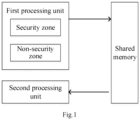
- a chip includes a master core and a slave core.
- the master core includes a security zone and a non-security zone.
- the master core can access the security zone by invoking an instruction (such as an SMC instruction).
- the chip further includes shared content of the master core and the slave core, and both the master core and the slave core can access the shared content.
- the master core When accessing the security zone, the master core can store access information into a shared memory.
- the access information can include an access-state identifier and a service-type identifier of the current access.
- the access-state identifier is used to indicate whether the master core completes the current access to the security zone.
- the slave core can read the access information stored in the shared memory by accessing the shared memory, and determine whether a fault occurs to the master core and a type of the fault based on the access information, thereby implementing the chip monitoring.
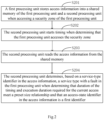
- FIG 2 is a schematic flowchart of a chip monitoring method according to an exemplary embodiment of this disclosure. This embodiment can be applicable to a chip.
- the chip includes a first processing unit and a second processing unit.
- the first processing unit includes a security zone and a non-security zone.
- the first processing unit is a master core of the chip
- the second processing unit is a slave core of the chip.
- the first processing unit and the second processing unit can also be other modules in the chip. This is not limited in this disclosure.
- the chip monitoring method can include the following steps.
- a first processing unit stores access information into a shared memory of the first processing unit and a second processing unit when accessing a security zone of the first processing unit.
- the access information includes an access-state identifier and a service-type identifier of the current access.
- the access-state identifier is a first identifier or a second identifier.
- the first identifier indicates that the first processing unit starts the access to the security zone.
- the second identifier indicates that the first processing unit completes the access to the security zone.
- whether the first processing unit completes the access to the security zone can be determined through the access-state identifier in the access information.
- the first identifier is represented by 1, and the second identifier is represented by 2.
- the first identifier 1 is stored into the shared memory.
- the first processing unit modifies the access-state identifier stored in the shared memory as the second identifier 2.
- the access-state identifier stored in the shared memory can indicate whether the first processing unit accesses the security zone.
- the access information further includes a service-type identifier.
- the first processing unit can implement a plurality of services by accessing the security zone, and corresponding service-type identifiers can be preset for the services, respectively. In this case, a corresponding service type when the first processing unit accesses the security zone for this time can be determined based on the service-type identifier.
- Step 202 The second processing unit starts timing when determining that the first processing unit accesses the security zone.
- the second processing unit can start a timer for timing.
- the timer can be disposed within the second processing unit, or can be disposed within the chip and be independent of the second processing unit. This is not limited in this disclosure.
- Step 203 The second processing unit reads the access information from the shared memory.
- the shared memory refers to a memory shared by the first processing unit and the second processing unit.
- the second processing unit can also access the shared memory and read the access information stored by the first processing unit.
- Step 204 The second processing unit determines, based on a service-type identifier in the access information, a service type with a fault in the first processing unit when determining that duration of the timing and execution duration required for the current access meet a preset size relationship and that an access-state identifier in the access information is a first identifier.
- duration of the timing and the execution duration required for the current access meet the preset size relationship may be that the duration of the timing is greater than the execution duration required for the current access.
- the access-state identifier in the access information is the first identifier
- the first processing unit does not complete the access to the security zone.
- the duration of the timing is greater than the execution duration required for the current access
- This embodiment of this disclosure provides a chip monitoring method.
- the method is applicable to the chip including the first processing unit and the second processing unit.
- the chip is provided with shared content of the first processing unit and the second processing unit.
- the first processing unit stores the access information into the shared memory when accessing the security zone of the first processing unit.
- the access information includes the access-state identifier that can indicate whether the first processing unit completes the access to the security zone and the service-type identifier of the current access.
- the second processing unit starts timing when determining that the first processing unit accesses the security zone, and reads the access information from the shared memory.
- the second processing unit determines, based on the service-type identifier in the access information, the service type with a fault in the first processing unit when determining that the duration of the timing and the execution duration required for the current access meet the preset size relationship and that the access-state identifier in the access information is the first identifier.
- a fault type of the first processing unit can be determined when a fault occurs to the first processing unit, thereby resolving a problem that a cause of the fault cannot be determined according to an existing technology.
- the solution of this disclosure is to determine the service type with a fault in the first processing unit based on the access information stored in the shared memory, without requiring a debugger for debugging. Therefore, compared with an existing scheme of debugging by using a debugger, there is no need to configure a debugger, and time required for chip monitoring is shorter, which can improve chip monitoring efficiency.
- the second processing unit needs to determine whether the duration of the timing and the execution duration required for the current access meet the preset size relationship.
- the second processing unit can determine the execution duration required for the current access in a plurality of manners.
- the execution duration required for the current access is execution duration required for the current access that is included in the access information.
- the access information stored in the shared memory by the first processing unit further includes the execution duration required for the current access.
- the second processing unit accesses the shared memory to obtain the access information stored in the shared memory, so as to determine the execution duration required for the current access based on the access information.
- a corresponding relationship between execution duration respectively corresponding to each type of service implemented by the first processing unit and service information can be predetermined, and the corresponding relationship is stored in a storage module that can be accessed by the first processing unit or the first processing unit.
- the execution duration required for the current access can be determined based on the service information executed by the first processing unit and the corresponding relationship, and the execution duration required for the current access is stored in the shared memory, so that the access information stored in the shared memory by the first processing unit further includes the execution duration required for the current access.
- the service information in the corresponding relationship can be used to distinguish between different types of services that are implemented by the first processing unit.
- the service information can include the service-type identifier.
- the second processing unit can determine the execution duration required for the current access by reading the access information in the shared memory. Therefore, the execution duration required for the current access can be determined efficiently.
- the execution duration required for the current access is execution duration that is determined by the second processing unit based on a preset protocol and the service-type identifier included in the access information.
- the preset protocol includes a corresponding relationship between at least one service-type identifier and the execution duration.
- the preset protocol can be pre-stored in the second processing unit. After reading the service-type identifier stored in the shared memory, the second processing unit can determine the execution duration required for the current access based on the corresponding relationship included in the preset protocol and the service-type identifier.
- the first processing unit is not required to store the execution duration required for the current access in the shared memory.
- the second processing unit is not required to determine the execution duration required for the current access by means of accessing the shared memory. In this way, amounts of data respectively interacted with the shared memory by the first processing unit and the second processing unit can be reduced.
- the first processing unit stores the access information into the shared memory.
- the access information includes the access-state identifier and the service-type identifier of the current access. Further, the access information can further include a core identifier of the first processing unit that is called for the current access, or the access information can further include a core identifier and a thread identifier of the first processing unit that is called for the current access.
- a chip monitoring method can further include the following step.
- Step 205 When the access information further includes a core identifier of the first processing unit, the second processing unit determines the first processing unit with a fault based on the core identifier after determining, based on the service-type identifier, the service type with a fault in the first processing unit.
- a plurality of first processing units may be included in a same chip.
- corresponding core identifiers can be pre-allocated to various first processing units in the chip, and different first processing units have different core identifiers.
- the access information stored in the shared memory by the first processing unit further includes the core identifier of the first processing unit.
- the second processing unit can further determine the first processing unit with a fault based on the core identifier stored in the shared memory, thereby further implementing the chip monitoring.
- a chip monitoring method according to another embodiment of this disclosure can further include the following step.
- Step 206 When the access information further includes a core identifier and a thread identifier of the first processing unit that is called for the current access, the second processing unit determines the first processing unit with a fault and a thread with a fault based on the core identifier and the thread identifier after determining, based on the service-type identifier, the service type with a fault in the first processing unit.
- the second processing unit can perform corresponding operations by calling the thread.
- corresponding thread identifiers can be pre-allocated to various threads, and different thread identifiers have different threads.
- the access information stored in the shared memory by the first processing unit further includes the core identifier and the thread identifier of the first processing unit.
- the second processing unit can further determine the first processing unit with a fault and the thread with a fault in the first processing unit based on the core identifier and the thread identifier that are stored in the shared memory, thereby implementing the chip monitoring more accurately.
- step 203 of this disclosure the second processing unit reads the access information from the shared memory.
- this step can be implemented in various ways.
- that the second processing unit reads the access information from the shared memory includes: periodically reading, by the second processing unit, the access information from the shared memory based on a preset first period.
- the second processing unit can include a timer or can be connected to a timer.
- the timer generates a corresponding trigger signal every first period.
- the second processing unit reads the access information from the shared memory after obtaining the trigger signal.
- the second processing unit can read the access information in the shared memory by accessing the shared memory periodically, thereby determining whether a fault occurs to the first unit in time.
- that the second processing unit reads the access information from the shared memory can include the following steps.
- the second processing unit determines a target moment at which the second processing unit reads the access information, based on the execution duration required for the current access and a moment at which the access information is stored in the shared memory.
- the second processing unit reads the access information from the shared memory at the target moment.
- the second processing unit can access the shared memory to determine the moment at which the access information is stored in the shared memory, then determine the target moment based on the execution duration required for the current access and the moment at which the access information is stored in the shared memory, and then access the shared memory at the target moment again to read the access information in the shared memory.
- Duration between the target moment and the moment at which the access information is stored into the shared memory can be greater than or equal to the execution duration required for the current access.
- the first processing unit if the first processing unit has no fault during a process of implementing a current service, the first processing unit needs to complete the current access at the target moment.
- the access-state identifier stored in the shared memory is represented by the second identifier.
- the duration between the target moment and the moment at which the access information is stored into the shared memory is equal to the execution duration required for the current access. For example, if the execution duration required for the current access is a and the moment at which the access information is stored into the shared memory is referred to as a first moment, a difference between the target moment and the first moment is a.
- the difference between the target moment and the first moment is a, it indicates that duration from the first moment to the target moment is the execution duration required for the current access. In this case, if the first processing unit has no fault during the process of implementing the current service, the first processing unit needs to complete the current access at the target moment.
- the duration between the target moment and the moment at which the access information is stored into the shared memory is greater than the execution duration required for the current access.
- duration b can be preset
- the duration between the target moment and the moment at which the access information is stored into the shared memory is equal to a sum of execution duration a required for the current access and the duration b.
- a difference between the target moment and the first moment is the sum of a and b.
- the difference between the target moment and the first moment is greater than a, it indicates that duration from the first moment to the target moment is greater than the execution duration required for the current access.
- the first processing unit needs to complete the current access at the target moment.
- b is usually set to smaller duration.
- the duration between the target moment and the moment at which the access information is stored into the shared memory is close to the execution duration required for the current access, so that the second processing unit can be enabled to determine whether a fault occurs to the first processing unit in time.
- the access-state identifier stored in the shared memory is represented by the second identifier. If the first processing unit has a fault during the process of implementing the current service, the first processing unit usually does not complete the current access at the target moment. Correspondingly, the access-state identifier stored in the shared memory is represented by the first identifier. Therefore, whether the first processing unit has a fault during the process of implementing the current service can be determined through the access information read from the shared memory by the second processing at the target moment.
- the second processing unit is required to read the access information in the shared memory for less times. Therefore, power consumption of the chip can be reduced.
- step 201 the operations for the first processing unit to store the access information into the shared memory of the first processing unit and the second processing unit are disclosed according to step 201.
- step 201 can include the following steps.
- Step 2011 When starting the current access, the first processing unit stores the service-type identifier of the current access and the first identifier into the shared memory.
- the first processing unit can store the corresponding access-state identifier into the shared memory based on whether the current access has been completed thereby, so that the second processing unit determines whether the first processing unit has completed the current access through the access-state identifier stored in the shared memory.
- step 202 the operation for the second processing unit to start the timing when it determines that the first processing unit accesses the security zone is disclosed according to step 202.
- the operation can be implemented in various ways.
- that the second processing unit starts the timing when determining that the first processing unit accesses the security zone includes:
- the first processing unit may generate the trigger instruction when accessing the security zone, and may transmit the trigger instruction to the second processing unit.
- the second processing unit starts the timing after receiving the trigger instruction.
- the second processing unit can start the timing based on the trigger instruction generated by the first processing unit.
- the second processing unit can monitor a state of the first processing unit, and start the timing when it is monitored that the first processing unit accesses the security zone.
- another processing unit in the chip can monitor a state of the first processing unit, generate the trigger instruction when it is monitored that the first processing unit accesses the security zone, and transmit the trigger instruction to the second processing unit, so that the second processing unit starts the timing.
- the second processing unit can also start the timing in another manner when determining that the first processing unit accesses the security zone. This is not limited in this disclosure.
- Service types for accessing the security zone by the first processing unit include, but are not limited to any one of the following: key creation, key deletion, key importing, key exporting, symmetric encryption and decryption, hash obtaining, asymmetric encryption and decryption, asymmetric signature, and signature verification.
- corresponding service-type identifiers can be preset for the various service types described above, and the corresponding service-type identifier can be stored in the shared memory when the first processing unit implements a corresponding service, so that the second processing unit can determine, based on the service-type identifier stored in the shared memory, the service type for the first processing unit to implement the service.
- the service type can also be another type. This is not limited in this disclosure.
- a schematic diagram of a chip architecture is disclosed according to FIG 6 .
- a chip includes a first processing unit, a second processing unit, and a shared memory. Both the first processing unit and the second processing unit can access the shared memory.
- the first processing unit includes a security zone and a non-security zone.
- the first processing unit can access the security zone by invoking an instruction.
- the instruction can be an SMC instruction.
- the non-security zone of the first processing unit can transmit a service request instruction to the security zone. After the current access is completed, the security zone can transmit a feedback instruction to the non-security zone.
- the first processing unit when accessing the security zone, can store access information into the shared memory according to the solutions provided in the foregoing embodiments of this disclosure.
- the access information can include an access-state identifier and a service-type identifier of the current access.
- the access information can further include execution duration required for the current access.
- the access information can further include a core identifier of the first processing unit that is called for the current access, or can include a core identifier and a thread identifier of the first processing unit that is called for the current access.
- the second processing unit can read the access information from the shared memory. Specifically, referring to FIG 6 , an application program of the second processing unit starts timing when determining that the first processing unit accesses the security zone, reads the access information from the shared memory, and monitors a fault situation of the first processing unit according to the chip monitoring method provided in the foregoing embodiments of this disclosure.
- the first processing unit can store the access information into the shared memory by means of an information list. Corresponding fields can be set in the information list, and corresponding access information is stored respectively through the fields.
- the fields included in the information list can include: a field (such as a command ID field) used to store the service-type identifier of the current access, a field (such as an execution time field) used to store the execution duration required for the current access, a field (such as a core ID field) used to store the core identifier of the first processing unit that is called for the current access, and a field (such as a thread ID field) used to store the thread identifier of the first processing unit that is called for the current access.
- the non-security zone transmits the service request instruction to the security zone (the instruction can be an SMC instruction). After the current access is completed, the security zone transmits a feedback instruction to the non-security zone.
- the access information is displayed in a list that can be referred to as a message index.
- the list includes a command ID field, an execution time field, a core ID field, and a thread ID field, which are respectively used to store the corresponding access information.
- the access-state identifier in the access information changes with an access state of the first processing unit.
- the access-state identifier stored in the shared memory by the first processing unit is a first identifier. If the first processing unit completes the access to the security zone, the access-state identifier stored in the shared memory by the first processing unit is a second identifier.
- the second processing unit can read the access information from the shared memory periodically based on a preset first period, or can read the access information from the shared memory at a target moment. If the access-state identifier in the shared memory is read as the second identifier when timing duration is less than or equal to the execution duration required for the current access, it is determined that no fault occurs to the first processing unit during the current access.
- the non-security zone transmits the service request instruction to the security zone.
- the first processing unit does not adjust the first identifier in the shared memory to the second identifier.
- the second processing unit by accessing the shared memory, the second processing unit usually does not read the second identifier after reading the first identifier. Therefore, the second processing unit can determine a service type with a fault in the first processing unit based on the service-type identifier stored in the command ID field, determine the first processing unit with a fault based on the core identifier stored in the core ID field, and determine a thread with a fault based on the thread identifier stored in the thread ID field.
- this embodiment respectively discloses operations performed by the first processing unit and the second processing unit.
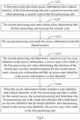
- the first processing unit performs the following operations.
- Step 301 The first processing unit starts access to a security zone of the first processing unit.
- the first processing unit when sending an SMC instruction to the security zone, the first processing unit starts the access to the security zone.
- Step 302. The first processing unit stores access information into a shared memory.
- the access-state identifier in the access information is a first identifier.
- Step 303 The first processing unit implements a current service.
- Step 304 If no fault occurs to the first processing unit, the first processing unit completes the current service within execution duration required for the current access, and it adjusts an access-state identifier in the shared memory from a first identifier to a second identifier after completing the current access.
- the second processing unit can perform the following operations.
- Step 401 The second processing unit starts timing when determining that the first processing unit accesses the security zone.
- the first processing unit can transmit a trigger instruction to the second processing unit when starting to access the security zone. After receiving the trigger instruction, the second processing unit determines that the first processing unit accesses the security zone, and starts the timing.
- Step 402. The second processing unit reads the access information from the shared memory.
- Step 403. The second processing unit determines whether the access-state identifier in the access information is the first identifier, and if yes, performs an operation of step 404.
- step 401 can be returned to, so as to start the timing again when the first processing unit accesses the security zone again.
- Step 404 If the access-state identifier is the first identifier and duration of the timing and execution duration required for the current access meet a preset size relationship, the second processing unit determines a service type with a fault in the first processing unit based on a service-type identifier in the access information.
- the access-state identifier is the first identifier and the duration of the timing and the execution duration required for the current access meet the preset size relationship, it indicates that the first processing unit does not complete the current access within the execution duration required for the current access, and a fault occurs to the first processing unit during the current access. Therefore, the service type with a fault in the first processing unit can be determined based on the service-type identifier in the access information.
- Step 405. If the access information further includes a core identifier of the first processing unit, the second processing unit determines the first processing unit with a fault based on the core identifier; or if the access information further includes a core identifier and a thread identifier of the first processing unit that is called for the current access, the second processing unit determines the first processing unit with a fault and a thread with a fault in the first processing unit based on the core identifier and a thread identifier.
- Whether a fault occurs to the first processing unit can be monitored according to the foregoing steps. If the fault occurs, the service type with a fault in the first processing unit can be determined, and the first processing unit with a fault and the thread with a fault in the first processing unit can be further determined, thereby implementing the chip monitoring.
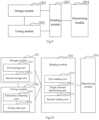
- FIG 9 is a diagram of a structure of a chip monitoring apparatus according to an exemplary embodiment of this disclosure.
- the chip monitoring apparatus can be disposed in an electronic device such as a terminal device or a server, to implement the chip monitoring method according to any one of the foregoing embodiments of this disclosure.
- a chip is disposed in the electronic device.
- the chip includes chips of a first processing unit and a second processing unit.
- the chip monitoring apparatus includes a storage module 201, a timing module 202, a reading module 203, and a determining module 204.
- the storage module 201 is configured to store access information into a shared memory of the first processing unit and the second processing unit when the first processing unit accesses a security zone of the first processing unit.
- the access information includes an access-state identifier and a service-type identifier of the current access.
- the access-state identifier is a first identifier or a second identifier.
- the first identifier indicates that the first processing unit starts the access to the security zone.
- the second identifier indicates that the first processing unit completes the access to the security zone.
- the timing module 202 is configured to start timing when it is determined that the first processing unit accesses the security zone.
- the reading module 203 is configured to read the access information stored by the storage module from the shared memory.
- the determining module 204 is configured to determine a service type that causes a fault to the first processing unit based on the service-type identifier read by the reading module when it is determined that duration of the timing that is determined by the timing module 202 and execution duration required for the current access meet a preset size relationship and it is determined that the access-state identifier read by the reading module 203 is the first identifier.
- the execution duration required for the current access is execution duration that is determined by the second processing unit based on a preset protocol and the service-type identifier included in the access information.
- the preset protocol includes a corresponding relationship between at least one service-type identifier and the execution duration.
- the execution duration required for the current access is execution duration required for the current access that is included in the access information.
- the access information further includes a core identifier of the first processing unit that is called for the current access, or the access information further includes a core identifier and a thread identifier of the first processing unit that is called for the current access.
- the determining module 204 is further configured to determine the first processing unit with a fault based on the core identifier after the second processing unit determines a service type with a fault in the first processing unit based on the service-type identifier.
- the determining module 204 is further configured to determine the first processing unit with a fault and a thread with a fault after the second processing unit determines the service type with a fault in the first processing unit based on the service-type identifier.
- the reading module 203 includes a first reading unit 2031.
- the first reading unit 2031 is configured to read the access information from the shared memory periodically based on a preset first period.
- the reading module 203 includes a target moment determining unit 2032 and a second reading unit 2033.
- the target moment determining unit 2032 is configured to determine a target moment at which the second processing unit reads the access information based on the execution duration required for the current access and a moment at which the access information is stored into the shared memory.
- the second reading unit 2033 is configured to read the access information from the shared memory at the target moment.
- the storage module 201 includes a first storage unit 2011 and a second storage unit 2012.
- the first storage unit 2011 is configured to store the service-type identifier of the current access and the first identifier in the shared memory when the first processing unit starts the current access.
- the second storage unit 2012 is configured to update the first identifier in the shared memory as the second identifier.
- the timing module 202 includes an instruction obtaining unit 2021 and a timing start unit 2022.
- the instruction obtaining unit 2021 is configured to obtain a trigger instruction generated by the first processing unit when the first processing unit accesses the security zone.
- the timing start unit 2022 is configured to start timing in response to the trigger instruction.
- service types for accessing the security zone by the first processing unit include, but are not limited to any one of the following: key creation, key deletion, key importing, key exporting, symmetric encryption and decryption, hash obtaining, asymmetric encryption and decryption, asymmetric signature, and signature verification.
- Whether a fault occurs to the first processing unit can be monitored according to the chip monitoring apparatus provided in this embodiment of this disclosure. If the fault occurs, the service type with a fault in the first processing unit can be determined, and the first processing unit with a fault and the thread with a fault in the first processing unit can be further determined, thereby implementing the chip monitoring.
- a chip of the electronic device includes a first processing unit and a second processing unit.
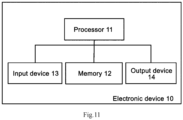
- FIG 11 shows a block diagram of an electronic device according to an embodiment of this disclosure.
- an electronic device 10 includes one or more processors 11 and a memory 12.
- the processor 11 may be a central processing unit (CPU) or another form of processing unit having a data processing capability and/or an instruction execution capability, and can control another component in the electronic device 10 to perform a desired function.
- CPU central processing unit
- the processor 11 may be a central processing unit (CPU) or another form of processing unit having a data processing capability and/or an instruction execution capability, and can control another component in the electronic device 10 to perform a desired function.
- the memory 12 can include one or more computer program products.
- the computer program product can include various forms of computer readable storage media, such as a volatile memory and/or a non-volatile memory.
- the volatile memory can include, for example, a random access memory (RAM) and/or a cache.
- the nonvolatile memory can include, for example, a read-only memory (ROM), a hard disk, and a flash memory.
- One or more computer program instructions can be stored on the computer readable storage medium.
- the processor 11 can execute the program instructions to implement the chip monitoring method according to various embodiments of this disclosure that are described above and/or other desired functions.
- Various contents such as access information can also be stored in the computer readable storage medium.
- the electronic device 10 can further include an input device 13 and an output device 14. These components are connected with each other through a bus system and/or another form of connection mechanism (not shown).
- the input device 13 can further include, for example, a keyboard and a mouse.
- the output device 14 can output various information to the outside, including a service type with a fault in the first processing unit that is determined, a core identifier of the first processing unit with a fault, and/or a thread identifier with a fault.
- the output device 14 can include, for example, a display, a loudspeaker, a printer, a communication network, and a remote output device connected to the communication network.
- FIG 10 shows only some of components in the electronic device 10 that are related to this disclosure, and components such as a bus and an input/output interface are omitted.
- the electronic device 10 can further include any other appropriate components.
- the embodiments of this disclosure can also relate to a computer program product, which includes computer program instructions.
- the processor is enabled to perform the steps, of the chip monitoring method according to the embodiments of this disclosure, that are described in the "exemplary method" part of this specification.
- the computer program product may be program codes, written with one or any combination of a plurality of programming languages, that is configured to perform the operations in the embodiments of this application.
- the programming languages include an object-oriented programming language such as Java or C++, and further include a conventional procedural programming language such as a "C" language or a similar programming language.
- the program codes can be entirely or partially executed on a user computing device, executed as an independent software package, partially executed on the user computing device and partially executed on a remote computing device, or entirely executed on the remote computing device or a server.
- the embodiments of this disclosure can further relate to a computer readable storage medium, which stores computer program instructions.
- the processor When the computer program instructions are run by the processor, the processor is enabled to perform the steps, of the chip monitoring method according to the embodiments of this disclosure, that are described in the "exemplary method" part of this specification.
- the computer readable storage medium may be one readable medium or any combination of a plurality of readable media.
- the readable medium may be a readable signal medium or a readable storage medium.
- the readable storage medium can include, for example, but is not limited to electricity, magnetism, light, electromagnetism, infrared ray, or a semiconductor system, an apparatus, or a device, or any combination of the above.
- the readable storage medium include: an electrical connection with one or more conducting wires, a portable disk, a hard disk, a random access memory (RAM), a read-only memory (ROM), an erasable programmable read-only memory (EPROM or a flash memory), an optical fiber, a portable compact disk read-only memory (CD-ROM), an optical storage device, a magnetic storage device, or any suitable combination of the above.
Landscapes
- Engineering & Computer Science (AREA)
- Theoretical Computer Science (AREA)
- Physics & Mathematics (AREA)
- General Engineering & Computer Science (AREA)
- General Physics & Mathematics (AREA)
- Computer Security & Cryptography (AREA)
- Computer Hardware Design (AREA)
- Software Systems (AREA)
- Quality & Reliability (AREA)
- Mathematical Physics (AREA)
- Health & Medical Sciences (AREA)
- Computing Systems (AREA)
- Bioethics (AREA)
- General Health & Medical Sciences (AREA)
- Biomedical Technology (AREA)
- Debugging And Monitoring (AREA)
- Storage Device Security (AREA)
Claims (15)
- Ein Chip-Überwachungsverfahren, das auf einen Chip anwendbar ist, der eine erste Verarbeitungseinheit und eine zweite Verarbeitungseinheit umfasst, wobei das Verfahren umfasst:Speichern (Schritt 201) von Zugriffsinformationen in einen gemeinsamen Speicher der ersten Verarbeitungseinheit und der zweiten Verarbeitungseinheit durch die erste Verarbeitungseinheit, wenn die erste Verarbeitungseinheit auf eine Sicherheitszone der ersten Verarbeitungseinheit zugreift, wobei die Zugriffsinformationen einen Zugriffsstatus-Identifikator und einen Diensttyp-Identifikator des aktuellen Zugriffs umfassen und der Zugriffsstatus-Identifikator ein erster Identifikator ist, der anzeigt, dass die erste Verarbeitungseinheit den Zugriff auf die Sicherheitszone beginnt, oder ein zweiter Identifikator, der anzeigt, dass die erste Verarbeitungseinheit den Zugriff auf die Sicherheitszone beendet;Starten (Schritt 202) der Zeitmessung durch die zweite Verarbeitungseinheit, wenn festgestellt wird, dass die erste Verarbeitungseinheit auf die Sicherheitszone zugreift;Lesen (Schritt 203) der Zugriffsinformationen aus dem gemeinsamen Speicher durch die zweite Verarbeitungseinheit; undBestimmen (Schritt 204) eines Diensttyps mit einem Fehler in der ersten Verarbeitungseinheit durch die zweite Verarbeitungseinheit auf der Grundlage des Diensttyp-Identifizierers in den Zugriffsinformationen, wenn die zweite Verarbeitungseinheit feststellt, dass die Dauer des Zeitablaufs und die Ausführungsdauer, die für den aktuellen Zugriff erforderlich sind, eine vorgegebene Größenbeziehung erfüllen, und feststellt, dass der Zugriffszustand-Identifizierer in den Zugriffsinformationen der erste Identifizierer ist.
- Verfahren nach Anspruch 1, wobeidie für den aktuellen Zugriff erforderliche Ausführungsdauer eine Ausführungsdauer ist, die von der zweiten Verarbeitungseinheit auf der Grundlage eines voreingestellten Protokolls und des in den Zugriffsinformationen enthaltenen Diensttyp-Identifikators bestimmt wird, wobei das voreingestellte Protokoll eine entsprechende Beziehung zwischen mindestens einem Diensttyp-Identifikator und der Ausführungsdauer umfasst;
oderdie für den aktuellen Zugriff erforderliche Ausführungsdauer ist die für den aktuellen Zugriff erforderliche Ausführungsdauer, die in den Zugriffsinformationen enthalten ist. - Verfahren nach Anspruch 1, wobei
die Zugriffsinformationen ferner eine Kernkennung der ersten Verarbeitungseinheit umfassen, die für den aktuellen Zugriff aufgerufen wird, oder die Zugriffsinformationen ferner eine Kernkennung und eine Thread-Kennung der ersten Verarbeitungseinheit umfassen, die für den aktuellen Zugriff aufgerufen wird. - Verfahren nach Anspruch 3, wobei nach der Bestimmung des Diensttyps mit einem Fehler in der ersten Verarbeitungseinheit durch die zweite Verarbeitungseinheit auf der Grundlage des Diensttyp-Identifizierers das Verfahren ferner umfasst:wenn die Zugriffsinformationen ferner die Kernkennung der ersten Verarbeitungseinheit umfassen, Bestimmen (Schritt 205) der ersten Verarbeitungseinheit mit einem Fehler auf der Grundlage der Kernkennung durch die zweite Verarbeitungseinheit; oderwenn die Zugriffsinformationen ferner die Kernkennung und die Thread-Kennung der ersten Verarbeitungseinheit umfassen, die für den aktuellen Zugriff aufgerufen wird, Bestimmen (Schritt 206) der ersten Verarbeitungseinheit mit einem Fehler und eines Threads mit einem Fehler durch die zweite Verarbeitungseinheit auf der Grundlage der Kernkennung und der Thread-Kennung.
- Verfahren nach einem der Ansprüche 1 bis 4, wobei das Lesen der Zugriffsinformationen aus dem gemeinsamen Speicher durch die zweite Verarbeitungseinheit umfasst:Lesen der Zugriffsinformationen aus dem gemeinsamen Speicher durch die zweite Verarbeitungseinheit in regelmäßigen Abständen auf der Grundlage einer voreingestellten ersten Periode;
oderBestimmen, durch die zweite Verarbeitungseinheit, eines Zielzeitpunkts, zu dem die zweite Verarbeitungseinheit die Zugriffsinformation liest, basierend auf der Ausführungsdauer, die für den aktuellen Zugriff erforderlich ist, und einem Zeitpunkt, zu dem die Zugriffsinformation in dem gemeinsamen Speicher gespeichert ist; undLesen der Zugriffsinformationen aus dem gemeinsamen Speicher zum Zielzeitpunkt durch die zweite Verarbeitungseinheit. - Verfahren nach einem der Ansprüche 1 bis 4, wobei das Speichern von Zugriffsinformationen in einem gemeinsamen Speicher der ersten Verarbeitungseinheit und der zweiten Verarbeitungseinheit umfasst:beim Starten des aktuellen Zugriffs, Speichern (Schritt 2011) des Diensttyp-Identifikators des aktuellen Zugriffs und des ersten Identifikators in den gemeinsamen Speicher durch die erste Verarbeitungseinheit; undnach Beendigung des aktuellen Zugriffs Aktualisierung (Schritt 2012) der ersten Kennung im gemeinsamen Speicher als zweite Kennung durch die erste Verarbeitungseinheit.
- Verfahren nach einem der Ansprüche 1 bis 4, wobei die Startzeit durch die zweite Verarbeitungseinheit, wenn festgestellt wird, dass die erste Verarbeitungseinheit auf die Sicherheitszone zugreift, Folgendes umfasst:Erhalten eines Auslösebefehls durch die zweite Verarbeitungseinheit, der von der ersten Verarbeitungseinheit beim Zugriff auf die Sicherheitszone erzeugt wird; undals Reaktion auf den Auslösebefehl, Starten der Zeitmessung durch die zweite Verarbeitungseinheit.
- Verfahren nach einem der Ansprüche 1 bis 4, wobei die Diensttypen für den Zugriff auf die Sicherheitszone durch die erste Verarbeitungseinheit einen der folgenden umfassen:
Schlüsselerstellung, Schlüssellöschung, Schlüsselimport, Schlüsselexport, symmetrische Ver- und Entschlüsselung, Hash-Ermittlung, asymmetrische Ver- und Entschlüsselung, asymmetrische Signatur und Signaturprüfung. - Eine Chip-Überwachungsvorrichtung, die auf einen Chip anwendbar ist, der eine erste Verarbeitungseinheit und eine zweite Verarbeitungseinheit umfasst, wobei die Chip-Überwachungsvorrichtung umfasst:ein Speichermodul (201), das so konfiguriert ist, dass es Zugriffsinformationen in einem gemeinsamen Speicher der ersten Verarbeitungseinheit und der zweiten Verarbeitungseinheit speichert, wenn die erste Verarbeitungseinheit auf eine Sicherheitszone der ersten Verarbeitungseinheit zugreift, wobei die Zugriffsinformationen eine Zugriffszustandskennung und eine Dienstartkennung des aktuellen Zugriffs umfassen und die Zugriffszustandskennung eine erste Kennung ist, die anzeigt, dass die erste Verarbeitungseinheit den Zugriff auf die Sicherheitszone beginnt, oder eine zweite Kennung, die anzeigt, dass die erste Verarbeitungseinheit den Zugriff auf die Sicherheitszone beendet;ein Zeitmessmodul (202), das so konfiguriert ist, dass es mit der Zeitmessung beginnt, wenn festgestellt wird, dass die erste Verarbeitungseinheit auf die Sicherheitszone zugreift;ein Lesemodul (203), das so konfiguriert ist, dass es die von dem Speichermodul gespeicherten Zugriffsinformationen aus dem gemeinsamen Speicher liest; undein Bestimmungsmodul (204), das so konfiguriert ist, dass es auf der Grundlage des vom Lesemodul (203) gelesenen Diensttyp-Identifizierers einen Diensttyp bestimmt, der einen Fehler in der ersten Verarbeitungseinheit verursacht, wenn festgestellt wird, dass die Dauer der Zeitsteuerung, die vom Zeitsteuerungsmodul (202) bestimmt wird, und die für den aktuellen Zugriff erforderliche Ausführungsdauer eine voreingestellte Größenbeziehung erfüllen, und wenn festgestellt wird, dass der vom Lesemodul (203) gelesene Zugriffsstatus-Identifizierer der erste Identifizierer ist.
- Chipüberwachungsvorrichtung nach Anspruch 9, wobei, wenn die Zugriffsinformationen ferner die Kernkennung der ersten Verarbeitungseinheit enthalten, das Bestimmungsmodul (204) ferner so konfiguriert ist, dass es die erste Verarbeitungseinheit mit einem Fehler auf der Grundlage der Kernkennung bestimmt, nachdem die zweite Verarbeitungseinheit einen Diensttyp mit einem Fehler in der ersten Verarbeitungseinheit auf der Grundlage der Diensttypkennung bestimmt;
Oder
wobei das Bestimmungsmodul (204), wenn die Zugriffsinformationen ferner die Kernkennung und die Thread-Kennung der ersten Verarbeitungseinheit enthalten, ferner so konfiguriert ist, dass es die erste Verarbeitungseinheit mit einem Fehler und einen Thread mit einem Fehler bestimmt, nachdem die zweite Verarbeitungseinheit den Diensttyp mit einem Fehler in der ersten Verarbeitungseinheit auf der Grundlage der Diensttyp-Kennung bestimmt. - Chipüberwachungsgerät nach Anspruch 9, wobei das Lesemodul (203) eine erste Leseeinheit (2031) enthält, die so konfiguriert ist, dass sie die Zugriffsinformationen aus dem gemeinsamen Speicher periodisch auf der Grundlage einer voreingestellten ersten Periode liest;
Oder
wobei das Lesemodul (203) eine Zielmoment-Bestimmungseinheit (2032) und eine zweite Leseeinheit (2033) enthält, wobei die Zielmoment-Bestimmungseinheit (2032) konfiguriert ist, um einen Zielmoment zu bestimmen, zu dem die zweite Verarbeitungseinheit die Zugriffsinformationen liest, basierend auf der Ausführungsdauer, die für den aktuellen Zugriff erforderlich ist, und einem Moment, zu dem die Zugriffsinformationen in dem gemeinsamen Speicher gespeichert sind; und die zweite Leseeinheit (2033) konfiguriert ist, um die Zugriffsinformationen zu dem Zielmoment aus dem gemeinsamen Speicher zu lesen. - Chipüberwachungsvorrichtung nach Anspruch 9, wobei das Speichermodul (201) eine erste Speichereinheit (2011) und eine zweite Speichereinheit (2012) enthält, wobei die erste Speichereinheit (2011) so konfiguriert ist, dass sie den Diensttyp-Identifikator des aktuellen Zugriffs und den ersten Identifikator in dem gemeinsamen Speicher speichert, wenn die erste Verarbeitungseinheit den aktuellen Zugriff beginnt; und nachdem die erste Verarbeitungseinheit den aktuellen Zugriff abgeschlossen hat, ist die zweite Speichereinheit (2012) so konfiguriert, dass sie den ersten Identifikator in dem gemeinsamen Speicher als den zweiten Identifikator aktualisiert.
- Chipüberwachungsvorrichtung nach Anspruch 9, wobei das Zeitsteuerungsmodul (202) eine Befehlserfassungseinheit (2021) und eine Zeitsteuerungsstarteinheit (2022) enthält, wobei die Befehlserfassungseinheit (2021) so konfiguriert ist, dass sie einen von der ersten Verarbeitungseinheit erzeugten Auslösebefehl erhält, wenn die erste Verarbeitungseinheit auf die Sicherheitszone zugreift, und die Zeitsteuerungsstarteinheit (2022) so konfiguriert ist, dass sie die Zeitsteuerung in Reaktion auf den Auslösebefehl startet.
- Computerlesbares Speichermedium, wobei das Speichermedium ein Computerprogramm speichert und das Computerprogramm zur Implementierung des Chipüberwachungsverfahrens nach einem der Ansprüche 1 bis 8 verwendet wird.
- Eine elektronische Vorrichtung (10), wobei die elektronische Vorrichtung umfasst:einen Prozessor (11); undeinen Speicher (12), der so konfiguriert ist, dass er prozessorausführbare Anweisungen speichert,wobei der Prozessor so konfiguriert ist, dass er die ausführbaren Anweisungen aus dem Speicher liest und die Anweisungen ausführt, um das Chipüberwachungsverfahren nach einem der Ansprüche 1 bis 8 zu implementieren.
Applications Claiming Priority (1)
| Application Number | Priority Date | Filing Date | Title |
|---|---|---|---|
| CN202211364803.6A CN115617560A (zh) | 2022-11-02 | 2022-11-02 | 一种芯片监控方法及装置 |
Publications (2)
| Publication Number | Publication Date |
|---|---|
| EP4365740A1 EP4365740A1 (de) | 2024-05-08 |
| EP4365740B1 true EP4365740B1 (de) | 2025-05-21 |
Family
ID=84875980
Family Applications (1)
| Application Number | Title | Priority Date | Filing Date |
|---|---|---|---|
| EP23197503.8A Active EP4365740B1 (de) | 2022-11-02 | 2023-09-14 | Chipüberwachungsverfahren und -vorrichtung |
Country Status (4)
| Country | Link |
|---|---|
| US (1) | US20240143849A1 (de) |
| EP (1) | EP4365740B1 (de) |
| JP (1) | JP7537805B2 (de) |
| CN (1) | CN115617560A (de) |
Family Cites Families (10)
| Publication number | Priority date | Publication date | Assignee | Title |
|---|---|---|---|---|
| GB2402785B (en) * | 2002-11-18 | 2005-12-07 | Advanced Risc Mach Ltd | Processor switching between secure and non-secure modes |
| WO2012147176A1 (ja) * | 2011-04-27 | 2012-11-01 | 富士通株式会社 | プログラム、情報処理装置、および監視方法 |
| US8775757B2 (en) * | 2012-09-25 | 2014-07-08 | Apple Inc. | Trust zone support in system on a chip having security enclave processor |
| JP6067449B2 (ja) * | 2013-03-26 | 2017-01-25 | 株式会社東芝 | 情報処理装置、情報処理プログラム |
| US10057260B2 (en) * | 2015-08-27 | 2018-08-21 | International Business Machines Corporation | Electronic device identification |
| CN107835990A (zh) * | 2016-03-22 | 2018-03-23 | 株式会社东芝 | 控制装置 |
| JP7006461B2 (ja) * | 2018-04-02 | 2022-01-24 | 株式会社デンソー | 電子制御装置および電子制御システム |
| GB2589594B (en) * | 2019-12-03 | 2023-10-11 | Siemens Ind Software Inc | Detecting anomalous latent communications in an integrated circuit chip |
| CN115480884A (zh) * | 2021-05-31 | 2022-12-16 | 比亚迪半导体股份有限公司 | 芯片、芯片的测试监控方法及计算机可读存储介质 |
| US12229591B2 (en) * | 2021-09-07 | 2025-02-18 | Visa International Service Association | System and method of scheduling processes for execution on a resource |
-
2022
- 2022-11-02 CN CN202211364803.6A patent/CN115617560A/zh active Pending
-
2023
- 2023-09-04 JP JP2023142755A patent/JP7537805B2/ja active Active
- 2023-09-12 US US18/465,339 patent/US20240143849A1/en active Pending
- 2023-09-14 EP EP23197503.8A patent/EP4365740B1/de active Active
Also Published As
| Publication number | Publication date |
|---|---|
| JP7537805B2 (ja) | 2024-08-21 |
| EP4365740A1 (de) | 2024-05-08 |
| JP2024066984A (ja) | 2024-05-16 |
| CN115617560A (zh) | 2023-01-17 |
| US20240143849A1 (en) | 2024-05-02 |
Similar Documents
| Publication | Publication Date | Title |
|---|---|---|
| AU2021206497B2 (en) | Method and apparatus for authority control, computer device and storage medium | |
| US10545851B2 (en) | Breakpoint insertion into kernel pages | |
| US10540524B2 (en) | Memory access protection using processor transactional memory support | |
| US11755341B2 (en) | Class loading method and apparatus | |
| CN109558372B (zh) | 用于安全处理器的设备和方法 | |
| CN110489310B (zh) | 一种记录用户操作的方法、装置、存储介质及计算机设备 | |
| CN110945475A (zh) | 用于提供可打补丁的rom固件的系统和方法 | |
| US11868799B2 (en) | Command information transmission method, system, and apparatus, and readable storage medium | |
| CN113064643B (zh) | 一种即时生效的修改bios设定值的方法、系统及介质 | |
| CN117493114A (zh) | 一种异常处理方法、装置、处理器及电子设备 | |
| EP4550155A1 (de) | Datenkopierverfahren und -vorrichtung, computerlesbares speichermedium und elektronische vorrichtung | |
| US20250307384A1 (en) | Security Resource Access Method For Integrated Circuit, And Electronic Device | |
| EP4365740B1 (de) | Chipüberwachungsverfahren und -vorrichtung | |
| US9038075B2 (en) | Batch execution of system calls in an operating system | |
| CN115328523A (zh) | 应用程序热更新方法、装置、设备及介质 | |
| CN117272412B (zh) | 中断控制寄存器保护方法、装置、计算机设备及存储介质 | |
| WO2025066306A1 (zh) | 一种中断处理程序无感升级方法和计算机系统 | |
| CN114594975B (zh) | 固件管理方法、装置、存储介质及电子设备 | |
| CN116737213A (zh) | 热补丁升级方法、多核处理器及相关设备与存储介质 | |
| CN117032818A (zh) | 一种基本输入输出系统bios选项配置方法和装置 | |
| KR102700503B1 (ko) | 원격 보안 서비스 제공 방법 및 이를 수행하는 서버 | |
| US20260057121A1 (en) | Method for access through bus in integrated circuit, integrated circuit, and electronic device | |
| US20260119625A1 (en) | Method For Verifying Access Permission, Integrated Circuit System, And Electronic Device | |
| EP4715644A1 (de) | Verfahren zur überprüfung der zugangsberechtigung, integriertes schaltungssystem und elektronische vorrichtung | |
| US20250259174A1 (en) | Block chain-based transaction processing method and apparatus, device, and medium |
Legal Events
| Date | Code | Title | Description |
|---|---|---|---|
| PUAI | Public reference made under article 153(3) epc to a published international application that has entered the european phase |
Free format text: ORIGINAL CODE: 0009012 |
|
| STAA | Information on the status of an ep patent application or granted ep patent |
Free format text: STATUS: REQUEST FOR EXAMINATION WAS MADE |
|
| 17P | Request for examination filed |
Effective date: 20230914 |
|
| AK | Designated contracting states |
Kind code of ref document: A1 Designated state(s): AL AT BE BG CH CY CZ DE DK EE ES FI FR GB GR HR HU IE IS IT LI LT LU LV MC ME MK MT NL NO PL PT RO RS SE SI SK SM TR |
|
| GRAP | Despatch of communication of intention to grant a patent |
Free format text: ORIGINAL CODE: EPIDOSNIGR1 |
|
| STAA | Information on the status of an ep patent application or granted ep patent |
Free format text: STATUS: GRANT OF PATENT IS INTENDED |
|
| INTG | Intention to grant announced |
Effective date: 20250108 |
|
| GRAS | Grant fee paid |
Free format text: ORIGINAL CODE: EPIDOSNIGR3 |
|
| GRAA | (expected) grant |
Free format text: ORIGINAL CODE: 0009210 |
|
| STAA | Information on the status of an ep patent application or granted ep patent |
Free format text: STATUS: THE PATENT HAS BEEN GRANTED |
|
| AK | Designated contracting states |
Kind code of ref document: B1 Designated state(s): AL AT BE BG CH CY CZ DE DK EE ES FI FR GB GR HR HU IE IS IT LI LT LU LV MC ME MK MT NL NO PL PT RO RS SE SI SK SM TR |
|
| REG | Reference to a national code |
Ref country code: GB Ref legal event code: FG4D |
|
| REG | Reference to a national code |
Ref country code: CH Ref legal event code: EP |
|
| REG | Reference to a national code |
Ref country code: DE Ref legal event code: R096 Ref document number: 602023003596 Country of ref document: DE |
|
| REG | Reference to a national code |
Ref country code: IE Ref legal event code: FG4D |
|
| REG | Reference to a national code |
Ref country code: NL Ref legal event code: MP Effective date: 20250521 |
|
| PG25 | Lapsed in a contracting state [announced via postgrant information from national office to epo] |
Ref country code: PT Free format text: LAPSE BECAUSE OF FAILURE TO SUBMIT A TRANSLATION OF THE DESCRIPTION OR TO PAY THE FEE WITHIN THE PRESCRIBED TIME-LIMIT Effective date: 20250922 Ref country code: FI Free format text: LAPSE BECAUSE OF FAILURE TO SUBMIT A TRANSLATION OF THE DESCRIPTION OR TO PAY THE FEE WITHIN THE PRESCRIBED TIME-LIMIT Effective date: 20250521 Ref country code: ES Free format text: LAPSE BECAUSE OF FAILURE TO SUBMIT A TRANSLATION OF THE DESCRIPTION OR TO PAY THE FEE WITHIN THE PRESCRIBED TIME-LIMIT Effective date: 20250521 |
|
| PGFP | Annual fee paid to national office [announced via postgrant information from national office to epo] |
Ref country code: DE Payment date: 20250724 Year of fee payment: 3 |
|
| REG | Reference to a national code |
Ref country code: LT Ref legal event code: MG9D |
|
| PG25 | Lapsed in a contracting state [announced via postgrant information from national office to epo] |
Ref country code: NO Free format text: LAPSE BECAUSE OF FAILURE TO SUBMIT A TRANSLATION OF THE DESCRIPTION OR TO PAY THE FEE WITHIN THE PRESCRIBED TIME-LIMIT Effective date: 20250821 Ref country code: GR Free format text: LAPSE BECAUSE OF FAILURE TO SUBMIT A TRANSLATION OF THE DESCRIPTION OR TO PAY THE FEE WITHIN THE PRESCRIBED TIME-LIMIT Effective date: 20250822 |
|
| PG25 | Lapsed in a contracting state [announced via postgrant information from national office to epo] |
Ref country code: NL Free format text: LAPSE BECAUSE OF FAILURE TO SUBMIT A TRANSLATION OF THE DESCRIPTION OR TO PAY THE FEE WITHIN THE PRESCRIBED TIME-LIMIT Effective date: 20250521 Ref country code: PL Free format text: LAPSE BECAUSE OF FAILURE TO SUBMIT A TRANSLATION OF THE DESCRIPTION OR TO PAY THE FEE WITHIN THE PRESCRIBED TIME-LIMIT Effective date: 20250521 |
|
| PG25 | Lapsed in a contracting state [announced via postgrant information from national office to epo] |
Ref country code: BG Free format text: LAPSE BECAUSE OF FAILURE TO SUBMIT A TRANSLATION OF THE DESCRIPTION OR TO PAY THE FEE WITHIN THE PRESCRIBED TIME-LIMIT Effective date: 20250521 |
|
| PG25 | Lapsed in a contracting state [announced via postgrant information from national office to epo] |
Ref country code: HR Free format text: LAPSE BECAUSE OF FAILURE TO SUBMIT A TRANSLATION OF THE DESCRIPTION OR TO PAY THE FEE WITHIN THE PRESCRIBED TIME-LIMIT Effective date: 20250521 |
|
| PGFP | Annual fee paid to national office [announced via postgrant information from national office to epo] |
Ref country code: AT Payment date: 20251020 Year of fee payment: 3 Ref country code: FR Payment date: 20250717 Year of fee payment: 3 |
|
| PG25 | Lapsed in a contracting state [announced via postgrant information from national office to epo] |
Ref country code: RS Free format text: LAPSE BECAUSE OF FAILURE TO SUBMIT A TRANSLATION OF THE DESCRIPTION OR TO PAY THE FEE WITHIN THE PRESCRIBED TIME-LIMIT Effective date: 20250821 |
|
| PG25 | Lapsed in a contracting state [announced via postgrant information from national office to epo] |
Ref country code: IS Free format text: LAPSE BECAUSE OF FAILURE TO SUBMIT A TRANSLATION OF THE DESCRIPTION OR TO PAY THE FEE WITHIN THE PRESCRIBED TIME-LIMIT Effective date: 20250921 |
|
| PG25 | Lapsed in a contracting state [announced via postgrant information from national office to epo] |
Ref country code: LV Free format text: LAPSE BECAUSE OF FAILURE TO SUBMIT A TRANSLATION OF THE DESCRIPTION OR TO PAY THE FEE WITHIN THE PRESCRIBED TIME-LIMIT Effective date: 20250521 |
|
| REG | Reference to a national code |
Ref country code: AT Ref legal event code: MK05 Ref document number: 1797348 Country of ref document: AT Kind code of ref document: T Effective date: 20250521 |
|
| PG25 | Lapsed in a contracting state [announced via postgrant information from national office to epo] |
Ref country code: SM Free format text: LAPSE BECAUSE OF FAILURE TO SUBMIT A TRANSLATION OF THE DESCRIPTION OR TO PAY THE FEE WITHIN THE PRESCRIBED TIME-LIMIT Effective date: 20250521 Ref country code: AT Free format text: LAPSE BECAUSE OF FAILURE TO SUBMIT A TRANSLATION OF THE DESCRIPTION OR TO PAY THE FEE WITHIN THE PRESCRIBED TIME-LIMIT Effective date: 20250521 Ref country code: DK Free format text: LAPSE BECAUSE OF FAILURE TO SUBMIT A TRANSLATION OF THE DESCRIPTION OR TO PAY THE FEE WITHIN THE PRESCRIBED TIME-LIMIT Effective date: 20250521 |
|
| PG25 | Lapsed in a contracting state [announced via postgrant information from national office to epo] |
Ref country code: CZ Free format text: LAPSE BECAUSE OF FAILURE TO SUBMIT A TRANSLATION OF THE DESCRIPTION OR TO PAY THE FEE WITHIN THE PRESCRIBED TIME-LIMIT Effective date: 20250521 |
|
| PG25 | Lapsed in a contracting state [announced via postgrant information from national office to epo] |
Ref country code: EE Free format text: LAPSE BECAUSE OF FAILURE TO SUBMIT A TRANSLATION OF THE DESCRIPTION OR TO PAY THE FEE WITHIN THE PRESCRIBED TIME-LIMIT Effective date: 20250521 |
|
| PG25 | Lapsed in a contracting state [announced via postgrant information from national office to epo] |
Ref country code: SK Free format text: LAPSE BECAUSE OF FAILURE TO SUBMIT A TRANSLATION OF THE DESCRIPTION OR TO PAY THE FEE WITHIN THE PRESCRIBED TIME-LIMIT Effective date: 20250521 |
|
| PG25 | Lapsed in a contracting state [announced via postgrant information from national office to epo] |
Ref country code: IT Free format text: LAPSE BECAUSE OF FAILURE TO SUBMIT A TRANSLATION OF THE DESCRIPTION OR TO PAY THE FEE WITHIN THE PRESCRIBED TIME-LIMIT Effective date: 20250521 |
|
| REG | Reference to a national code |
Ref country code: DE Ref legal event code: R097 Ref document number: 602023003596 Country of ref document: DE |
|
| PG25 | Lapsed in a contracting state [announced via postgrant information from national office to epo] |
Ref country code: RO Free format text: LAPSE BECAUSE OF FAILURE TO SUBMIT A TRANSLATION OF THE DESCRIPTION OR TO PAY THE FEE WITHIN THE PRESCRIBED TIME-LIMIT Effective date: 20250521 |
|
| PLBE | No opposition filed within time limit |
Free format text: ORIGINAL CODE: 0009261 |
|
| STAA | Information on the status of an ep patent application or granted ep patent |
Free format text: STATUS: NO OPPOSITION FILED WITHIN TIME LIMIT |
|
| REG | Reference to a national code |
Ref country code: CH Ref legal event code: L10 Free format text: ST27 STATUS EVENT CODE: U-0-0-L10-L00 (AS PROVIDED BY THE NATIONAL OFFICE) Effective date: 20260402 |