EP4365164A1 - Novel compound for capping layer, and organic light-emitting device comprising same - Google Patents
Novel compound for capping layer, and organic light-emitting device comprising same Download PDFInfo
- Publication number
- EP4365164A1 EP4365164A1 EP22833647.5A EP22833647A EP4365164A1 EP 4365164 A1 EP4365164 A1 EP 4365164A1 EP 22833647 A EP22833647 A EP 22833647A EP 4365164 A1 EP4365164 A1 EP 4365164A1
- Authority
- EP
- European Patent Office
- Prior art keywords
- group
- capping layer
- substituted
- unsubstituted
- compound
- Prior art date
- Legal status (The legal status is an assumption and is not a legal conclusion. Google has not performed a legal analysis and makes no representation as to the accuracy of the status listed.)
- Pending
Links
Images

Classifications
-
- C—CHEMISTRY; METALLURGY
- C07—ORGANIC CHEMISTRY
- C07C—ACYCLIC OR CARBOCYCLIC COMPOUNDS
- C07C233/00—Carboxylic acid amides
- C07C233/64—Carboxylic acid amides having carbon atoms of carboxamide groups bound to carbon atoms of six-membered aromatic rings
- C07C233/65—Carboxylic acid amides having carbon atoms of carboxamide groups bound to carbon atoms of six-membered aromatic rings having the nitrogen atoms of the carboxamide groups bound to hydrogen atoms or to carbon atoms of unsubstituted hydrocarbon radicals
-
- C—CHEMISTRY; METALLURGY
- C07—ORGANIC CHEMISTRY
- C07D—HETEROCYCLIC COMPOUNDS
- C07D211/00—Heterocyclic compounds containing hydrogenated pyridine rings, not condensed with other rings
- C07D211/04—Heterocyclic compounds containing hydrogenated pyridine rings, not condensed with other rings with only hydrogen or carbon atoms directly attached to the ring nitrogen atom
- C07D211/06—Heterocyclic compounds containing hydrogenated pyridine rings, not condensed with other rings with only hydrogen or carbon atoms directly attached to the ring nitrogen atom having no double bonds between ring members or between ring members and non-ring members
- C07D211/08—Heterocyclic compounds containing hydrogenated pyridine rings, not condensed with other rings with only hydrogen or carbon atoms directly attached to the ring nitrogen atom having no double bonds between ring members or between ring members and non-ring members with hydrocarbon or substituted hydrocarbon radicals directly attached to ring carbon atoms
- C07D211/10—Heterocyclic compounds containing hydrogenated pyridine rings, not condensed with other rings with only hydrogen or carbon atoms directly attached to the ring nitrogen atom having no double bonds between ring members or between ring members and non-ring members with hydrocarbon or substituted hydrocarbon radicals directly attached to ring carbon atoms with radicals containing only carbon and hydrogen atoms attached to ring carbon atoms
- C07D211/16—Heterocyclic compounds containing hydrogenated pyridine rings, not condensed with other rings with only hydrogen or carbon atoms directly attached to the ring nitrogen atom having no double bonds between ring members or between ring members and non-ring members with hydrocarbon or substituted hydrocarbon radicals directly attached to ring carbon atoms with radicals containing only carbon and hydrogen atoms attached to ring carbon atoms with acylated ring nitrogen atom
-
- C—CHEMISTRY; METALLURGY
- C07—ORGANIC CHEMISTRY
- C07C—ACYCLIC OR CARBOCYCLIC COMPOUNDS
- C07C13/00—Cyclic hydrocarbons containing rings other than, or in addition to, six-membered aromatic rings
- C07C13/28—Polycyclic hydrocarbons or acyclic hydrocarbon derivatives thereof
- C07C13/32—Polycyclic hydrocarbons or acyclic hydrocarbon derivatives thereof with condensed rings
- C07C13/54—Polycyclic hydrocarbons or acyclic hydrocarbon derivatives thereof with condensed rings with three condensed rings
- C07C13/605—Polycyclic hydrocarbons or acyclic hydrocarbon derivatives thereof with condensed rings with three condensed rings with a bridged ring system
- C07C13/615—Polycyclic hydrocarbons or acyclic hydrocarbon derivatives thereof with condensed rings with three condensed rings with a bridged ring system with an adamantane ring
-
- C—CHEMISTRY; METALLURGY
- C07—ORGANIC CHEMISTRY
- C07C—ACYCLIC OR CARBOCYCLIC COMPOUNDS
- C07C211/00—Compounds containing amino groups bound to a carbon skeleton
- C07C211/01—Compounds containing amino groups bound to a carbon skeleton having amino groups bound to acyclic carbon atoms
- C07C211/16—Compounds containing amino groups bound to a carbon skeleton having amino groups bound to acyclic carbon atoms of a saturated carbon skeleton containing rings other than six-membered aromatic rings
- C07C211/18—Compounds containing amino groups bound to a carbon skeleton having amino groups bound to acyclic carbon atoms of a saturated carbon skeleton containing rings other than six-membered aromatic rings containing at least two amino groups bound to the carbon skeleton
-
- C—CHEMISTRY; METALLURGY
- C07—ORGANIC CHEMISTRY
- C07C—ACYCLIC OR CARBOCYCLIC COMPOUNDS
- C07C211/00—Compounds containing amino groups bound to a carbon skeleton
- C07C211/43—Compounds containing amino groups bound to a carbon skeleton having amino groups bound to carbon atoms of six-membered aromatic rings of the carbon skeleton
- C07C211/44—Compounds containing amino groups bound to a carbon skeleton having amino groups bound to carbon atoms of six-membered aromatic rings of the carbon skeleton having amino groups bound to only one six-membered aromatic ring
- C07C211/53—Compounds containing amino groups bound to a carbon skeleton having amino groups bound to carbon atoms of six-membered aromatic rings of the carbon skeleton having amino groups bound to only one six-membered aromatic ring having the nitrogen atom of at least one of the amino groups further bound to a hydrocarbon radical substituted by amino groups
-
- C—CHEMISTRY; METALLURGY
- C07—ORGANIC CHEMISTRY
- C07C—ACYCLIC OR CARBOCYCLIC COMPOUNDS
- C07C211/00—Compounds containing amino groups bound to a carbon skeleton
- C07C211/43—Compounds containing amino groups bound to a carbon skeleton having amino groups bound to carbon atoms of six-membered aromatic rings of the carbon skeleton
- C07C211/54—Compounds containing amino groups bound to a carbon skeleton having amino groups bound to carbon atoms of six-membered aromatic rings of the carbon skeleton having amino groups bound to two or three six-membered aromatic rings
-
- C—CHEMISTRY; METALLURGY
- C07—ORGANIC CHEMISTRY
- C07C—ACYCLIC OR CARBOCYCLIC COMPOUNDS
- C07C233/00—Carboxylic acid amides
- C07C233/01—Carboxylic acid amides having carbon atoms of carboxamide groups bound to hydrogen atoms or to acyclic carbon atoms
- C07C233/02—Carboxylic acid amides having carbon atoms of carboxamide groups bound to hydrogen atoms or to acyclic carbon atoms having nitrogen atoms of carboxamide groups bound to hydrogen atoms or to carbon atoms of unsubstituted hydrocarbon radicals
- C07C233/10—Carboxylic acid amides having carbon atoms of carboxamide groups bound to hydrogen atoms or to acyclic carbon atoms having nitrogen atoms of carboxamide groups bound to hydrogen atoms or to carbon atoms of unsubstituted hydrocarbon radicals with carbon atoms of carboxamide groups bound to carbon atoms of an unsaturated carbon skeleton containing rings other than six-membered aromatic rings
-
- C—CHEMISTRY; METALLURGY
- C07—ORGANIC CHEMISTRY
- C07C—ACYCLIC OR CARBOCYCLIC COMPOUNDS
- C07C233/00—Carboxylic acid amides
- C07C233/57—Carboxylic acid amides having carbon atoms of carboxamide groups bound to carbon atoms of rings other than six-membered aromatic rings
-
- C—CHEMISTRY; METALLURGY
- C07—ORGANIC CHEMISTRY
- C07C—ACYCLIC OR CARBOCYCLIC COMPOUNDS
- C07C233/00—Carboxylic acid amides
- C07C233/57—Carboxylic acid amides having carbon atoms of carboxamide groups bound to carbon atoms of rings other than six-membered aromatic rings
- C07C233/58—Carboxylic acid amides having carbon atoms of carboxamide groups bound to carbon atoms of rings other than six-membered aromatic rings having the nitrogen atoms of the carboxamide groups bound to hydrogen atoms or to carbon atoms of unsubstituted hydrocarbon radicals
-
- C—CHEMISTRY; METALLURGY
- C07—ORGANIC CHEMISTRY
- C07C—ACYCLIC OR CARBOCYCLIC COMPOUNDS
- C07C233/00—Carboxylic acid amides
- C07C233/57—Carboxylic acid amides having carbon atoms of carboxamide groups bound to carbon atoms of rings other than six-membered aromatic rings
- C07C233/59—Carboxylic acid amides having carbon atoms of carboxamide groups bound to carbon atoms of rings other than six-membered aromatic rings having the nitrogen atom of at least one of the carboxamide groups bound to a carbon atom of a hydrocarbon radical substituted by halogen atoms or by nitro or nitroso groups
-
- C—CHEMISTRY; METALLURGY
- C07—ORGANIC CHEMISTRY
- C07C—ACYCLIC OR CARBOCYCLIC COMPOUNDS
- C07C233/00—Carboxylic acid amides
- C07C233/57—Carboxylic acid amides having carbon atoms of carboxamide groups bound to carbon atoms of rings other than six-membered aromatic rings
- C07C233/60—Carboxylic acid amides having carbon atoms of carboxamide groups bound to carbon atoms of rings other than six-membered aromatic rings having the nitrogen atom of at least one of the carboxamide groups bound to a carbon atom of a hydrocarbon radical substituted by singly-bound oxygen atoms
-
- C—CHEMISTRY; METALLURGY
- C07—ORGANIC CHEMISTRY
- C07C—ACYCLIC OR CARBOCYCLIC COMPOUNDS
- C07C233/00—Carboxylic acid amides
- C07C233/57—Carboxylic acid amides having carbon atoms of carboxamide groups bound to carbon atoms of rings other than six-membered aromatic rings
- C07C233/61—Carboxylic acid amides having carbon atoms of carboxamide groups bound to carbon atoms of rings other than six-membered aromatic rings having the nitrogen atom of at least one of the carboxamide groups bound to a carbon atom of a hydrocarbon radical substituted by doubly-bound oxygen atoms
-
- C—CHEMISTRY; METALLURGY
- C07—ORGANIC CHEMISTRY
- C07C—ACYCLIC OR CARBOCYCLIC COMPOUNDS
- C07C233/00—Carboxylic acid amides
- C07C233/57—Carboxylic acid amides having carbon atoms of carboxamide groups bound to carbon atoms of rings other than six-membered aromatic rings
- C07C233/62—Carboxylic acid amides having carbon atoms of carboxamide groups bound to carbon atoms of rings other than six-membered aromatic rings having the nitrogen atom of at least one of the carboxamide groups bound to a carbon atom of a hydrocarbon radical substituted by amino groups
-
- C—CHEMISTRY; METALLURGY
- C07—ORGANIC CHEMISTRY
- C07C—ACYCLIC OR CARBOCYCLIC COMPOUNDS
- C07C233/00—Carboxylic acid amides
- C07C233/64—Carboxylic acid amides having carbon atoms of carboxamide groups bound to carbon atoms of six-membered aromatic rings
- C07C233/66—Carboxylic acid amides having carbon atoms of carboxamide groups bound to carbon atoms of six-membered aromatic rings having the nitrogen atom of at least one of the carboxamide groups bound to a carbon atom of a hydrocarbon radical substituted by halogen atoms or by nitro or nitroso groups
-
- C—CHEMISTRY; METALLURGY
- C07—ORGANIC CHEMISTRY
- C07C—ACYCLIC OR CARBOCYCLIC COMPOUNDS
- C07C233/00—Carboxylic acid amides
- C07C233/64—Carboxylic acid amides having carbon atoms of carboxamide groups bound to carbon atoms of six-membered aromatic rings
- C07C233/67—Carboxylic acid amides having carbon atoms of carboxamide groups bound to carbon atoms of six-membered aromatic rings having the nitrogen atom of at least one of the carboxamide groups bound to a carbon atom of a hydrocarbon radical substituted by singly-bound oxygen atoms
-
- C—CHEMISTRY; METALLURGY
- C07—ORGANIC CHEMISTRY
- C07C—ACYCLIC OR CARBOCYCLIC COMPOUNDS
- C07C233/00—Carboxylic acid amides
- C07C233/64—Carboxylic acid amides having carbon atoms of carboxamide groups bound to carbon atoms of six-membered aromatic rings
- C07C233/77—Carboxylic acid amides having carbon atoms of carboxamide groups bound to carbon atoms of six-membered aromatic rings having the nitrogen atom of at least one of the carboxamide groups bound to a carbon atom of a hydrocarbon radical substituted by amino groups
-
- C—CHEMISTRY; METALLURGY
- C07—ORGANIC CHEMISTRY
- C07C—ACYCLIC OR CARBOCYCLIC COMPOUNDS
- C07C233/00—Carboxylic acid amides
- C07C233/64—Carboxylic acid amides having carbon atoms of carboxamide groups bound to carbon atoms of six-membered aromatic rings
- C07C233/77—Carboxylic acid amides having carbon atoms of carboxamide groups bound to carbon atoms of six-membered aromatic rings having the nitrogen atom of at least one of the carboxamide groups bound to a carbon atom of a hydrocarbon radical substituted by amino groups
- C07C233/79—Carboxylic acid amides having carbon atoms of carboxamide groups bound to carbon atoms of six-membered aromatic rings having the nitrogen atom of at least one of the carboxamide groups bound to a carbon atom of a hydrocarbon radical substituted by amino groups with the substituted hydrocarbon radical bound to the nitrogen atom of the carboxamide group by a carbon atom of a ring other than a six-membered aromatic ring
-
- C—CHEMISTRY; METALLURGY
- C07—ORGANIC CHEMISTRY
- C07C—ACYCLIC OR CARBOCYCLIC COMPOUNDS
- C07C233/00—Carboxylic acid amides
- C07C233/90—Carboxylic acid amides having nitrogen atoms of carboxamide groups further acylated
- C07C233/92—Carboxylic acid amides having nitrogen atoms of carboxamide groups further acylated with at least one carbon atom of the carboxamide groups bound to a carbon atom of a six-membered aromatic ring
-
- C—CHEMISTRY; METALLURGY
- C07—ORGANIC CHEMISTRY
- C07C—ACYCLIC OR CARBOCYCLIC COMPOUNDS
- C07C235/00—Carboxylic acid amides, the carbon skeleton of the acid part being further substituted by oxygen atoms
- C07C235/40—Carboxylic acid amides, the carbon skeleton of the acid part being further substituted by oxygen atoms having carbon atoms of carboxamide groups bound to carbon atoms of rings other than six-membered aromatic rings and singly-bound oxygen atoms bound to the same carbon skeleton
-
- C—CHEMISTRY; METALLURGY
- C07—ORGANIC CHEMISTRY
- C07C—ACYCLIC OR CARBOCYCLIC COMPOUNDS
- C07C235/00—Carboxylic acid amides, the carbon skeleton of the acid part being further substituted by oxygen atoms
- C07C235/70—Carboxylic acid amides, the carbon skeleton of the acid part being further substituted by oxygen atoms having carbon atoms of carboxamide groups and doubly-bound oxygen atoms bound to the same carbon skeleton
- C07C235/72—Carboxylic acid amides, the carbon skeleton of the acid part being further substituted by oxygen atoms having carbon atoms of carboxamide groups and doubly-bound oxygen atoms bound to the same carbon skeleton with the carbon atoms of the carboxamide groups bound to acyclic carbon atoms
- C07C235/74—Carboxylic acid amides, the carbon skeleton of the acid part being further substituted by oxygen atoms having carbon atoms of carboxamide groups and doubly-bound oxygen atoms bound to the same carbon skeleton with the carbon atoms of the carboxamide groups bound to acyclic carbon atoms of a saturated carbon skeleton
-
- C—CHEMISTRY; METALLURGY
- C07—ORGANIC CHEMISTRY
- C07C—ACYCLIC OR CARBOCYCLIC COMPOUNDS
- C07C237/00—Carboxylic acid amides, the carbon skeleton of the acid part being further substituted by amino groups
- C07C237/24—Carboxylic acid amides, the carbon skeleton of the acid part being further substituted by amino groups having the carbon atom of at least one of the carboxamide groups bound to a carbon atom of a ring other than a six-membered aromatic ring of the carbon skeleton
-
- C—CHEMISTRY; METALLURGY
- C07—ORGANIC CHEMISTRY
- C07C—ACYCLIC OR CARBOCYCLIC COMPOUNDS
- C07C257/00—Compounds containing carboxyl groups, the doubly-bound oxygen atom of a carboxyl group being replaced by a doubly-bound nitrogen atom, this nitrogen atom not being further bound to an oxygen atom, e.g. imino-ethers, amidines
- C07C257/10—Compounds containing carboxyl groups, the doubly-bound oxygen atom of a carboxyl group being replaced by a doubly-bound nitrogen atom, this nitrogen atom not being further bound to an oxygen atom, e.g. imino-ethers, amidines with replacement of the other oxygen atom of the carboxyl group by nitrogen atoms, e.g. amidines
- C07C257/16—Compounds containing carboxyl groups, the doubly-bound oxygen atom of a carboxyl group being replaced by a doubly-bound nitrogen atom, this nitrogen atom not being further bound to an oxygen atom, e.g. imino-ethers, amidines with replacement of the other oxygen atom of the carboxyl group by nitrogen atoms, e.g. amidines having carbon atoms of amidino groups bound to carbon atoms of rings other than six-membered aromatic rings
-
- C—CHEMISTRY; METALLURGY
- C07—ORGANIC CHEMISTRY
- C07C—ACYCLIC OR CARBOCYCLIC COMPOUNDS
- C07C259/00—Compounds containing carboxyl groups, an oxygen atom of a carboxyl group being replaced by a nitrogen atom, this nitrogen atom being further bound to an oxygen atom and not being part of nitro or nitroso groups
- C07C259/04—Compounds containing carboxyl groups, an oxygen atom of a carboxyl group being replaced by a nitrogen atom, this nitrogen atom being further bound to an oxygen atom and not being part of nitro or nitroso groups without replacement of the other oxygen atom of the carboxyl group, e.g. hydroxamic acids
- C07C259/08—Compounds containing carboxyl groups, an oxygen atom of a carboxyl group being replaced by a nitrogen atom, this nitrogen atom being further bound to an oxygen atom and not being part of nitro or nitroso groups without replacement of the other oxygen atom of the carboxyl group, e.g. hydroxamic acids having carbon atoms of hydroxamic groups bound to carbon atoms of rings other than six-membered aromatic rings
-
- C—CHEMISTRY; METALLURGY
- C07—ORGANIC CHEMISTRY
- C07C—ACYCLIC OR CARBOCYCLIC COMPOUNDS
- C07C271/00—Derivatives of carbamic acids, i.e. compounds containing any of the groups, the nitrogen atom not being part of nitro or nitroso groups
- C07C271/06—Esters of carbamic acids
- C07C271/32—Esters of carbamic acids having oxygen atoms of carbamate groups bound to carbon atoms of rings other than six-membered aromatic rings
- C07C271/36—Esters of carbamic acids having oxygen atoms of carbamate groups bound to carbon atoms of rings other than six-membered aromatic rings with the nitrogen atom of at least one of the carbamate groups bound to a carbon atom of a ring other than a six-membered aromatic ring
-
- C—CHEMISTRY; METALLURGY
- C07—ORGANIC CHEMISTRY
- C07C—ACYCLIC OR CARBOCYCLIC COMPOUNDS
- C07C313/00—Sulfinic acids; Sulfenic acids; Halides, esters or anhydrides thereof; Amides of sulfinic or sulfenic acids, i.e. compounds having singly-bound oxygen atoms of sulfinic or sulfenic groups replaced by nitrogen atoms, not being part of nitro or nitroso groups
- C07C313/08—Sulfenic acids; Derivatives thereof
- C07C313/18—Sulfenamides
- C07C313/26—Compounds containing any of the groups, X being a hetero atom, Y being any atom
- C07C313/28—Y being a hydrogen or a carbon atom
-
- C—CHEMISTRY; METALLURGY
- C07—ORGANIC CHEMISTRY
- C07C—ACYCLIC OR CARBOCYCLIC COMPOUNDS
- C07C321/00—Thiols, sulfides, hydropolysulfides or polysulfides
- C07C321/22—Thiols, sulfides, hydropolysulfides, or polysulfides having thio groups bound to carbon atoms of rings other than six-membered aromatic rings
-
- C—CHEMISTRY; METALLURGY
- C07—ORGANIC CHEMISTRY
- C07C—ACYCLIC OR CARBOCYCLIC COMPOUNDS
- C07C321/00—Thiols, sulfides, hydropolysulfides or polysulfides
- C07C321/24—Thiols, sulfides, hydropolysulfides, or polysulfides having thio groups bound to carbon atoms of six-membered aromatic rings
- C07C321/26—Thiols
-
- C—CHEMISTRY; METALLURGY
- C07—ORGANIC CHEMISTRY
- C07C—ACYCLIC OR CARBOCYCLIC COMPOUNDS
- C07C323/00—Thiols, sulfides, hydropolysulfides or polysulfides substituted by halogen, oxygen or nitrogen atoms, or by sulfur atoms not being part of thio groups
- C07C323/23—Thiols, sulfides, hydropolysulfides or polysulfides substituted by halogen, oxygen or nitrogen atoms, or by sulfur atoms not being part of thio groups containing thio groups and nitrogen atoms, not being part of nitro or nitroso groups, bound to the same carbon skeleton
- C07C323/30—Thiols, sulfides, hydropolysulfides or polysulfides substituted by halogen, oxygen or nitrogen atoms, or by sulfur atoms not being part of thio groups containing thio groups and nitrogen atoms, not being part of nitro or nitroso groups, bound to the same carbon skeleton having the sulfur atom of at least one of the thio groups bound to a carbon atom of a ring other than a six-membered aromatic ring of the carbon skeleton
-
- C—CHEMISTRY; METALLURGY
- C07—ORGANIC CHEMISTRY
- C07C—ACYCLIC OR CARBOCYCLIC COMPOUNDS
- C07C323/00—Thiols, sulfides, hydropolysulfides or polysulfides substituted by halogen, oxygen or nitrogen atoms, or by sulfur atoms not being part of thio groups
- C07C323/50—Thiols, sulfides, hydropolysulfides or polysulfides substituted by halogen, oxygen or nitrogen atoms, or by sulfur atoms not being part of thio groups containing thio groups and carboxyl groups bound to the same carbon skeleton
- C07C323/61—Thiols, sulfides, hydropolysulfides or polysulfides substituted by halogen, oxygen or nitrogen atoms, or by sulfur atoms not being part of thio groups containing thio groups and carboxyl groups bound to the same carbon skeleton having the sulfur atom of at least one of the thio groups bound to a carbon atom of a ring other than a six-membered aromatic ring of the carbon skeleton
-
- C—CHEMISTRY; METALLURGY
- C07—ORGANIC CHEMISTRY
- C07C—ACYCLIC OR CARBOCYCLIC COMPOUNDS
- C07C327/00—Thiocarboxylic acids
- C07C327/38—Amides of thiocarboxylic acids
- C07C327/46—Amides of thiocarboxylic acids having carbon atoms of thiocarboxamide groups bound to carbon atoms of rings other than six-membered aromatic rings
-
- C—CHEMISTRY; METALLURGY
- C07—ORGANIC CHEMISTRY
- C07C—ACYCLIC OR CARBOCYCLIC COMPOUNDS
- C07C333/00—Derivatives of thiocarbamic acids, i.e. compounds containing any of the groups, the nitrogen atom not being part of nitro or nitroso groups
- C07C333/02—Monothiocarbamic acids; Derivatives thereof
- C07C333/06—Monothiocarbamic acids; Derivatives thereof having nitrogen atoms of thiocarbamic groups bound to carbon atoms of rings other than six-membered aromatic rings
-
- C—CHEMISTRY; METALLURGY
- C07—ORGANIC CHEMISTRY
- C07C—ACYCLIC OR CARBOCYCLIC COMPOUNDS
- C07C43/00—Ethers; Compounds having groups, groups or groups
- C07C43/02—Ethers
- C07C43/18—Ethers having an ether-oxygen atom bound to a carbon atom of a ring other than a six-membered aromatic ring
-
- C—CHEMISTRY; METALLURGY
- C07—ORGANIC CHEMISTRY
- C07C—ACYCLIC OR CARBOCYCLIC COMPOUNDS
- C07C49/00—Ketones; Ketenes; Dimeric ketenes; Ketonic chelates
- C07C49/29—Saturated compounds containing keto groups bound to rings
- C07C49/313—Saturated compounds containing keto groups bound to rings polycyclic
- C07C49/323—Saturated compounds containing keto groups bound to rings polycyclic having keto groups bound to condensed ring systems
-
- C—CHEMISTRY; METALLURGY
- C07—ORGANIC CHEMISTRY
- C07D—HETEROCYCLIC COMPOUNDS
- C07D209/00—Heterocyclic compounds containing five-membered rings, condensed with other rings, with one nitrogen atom as the only ring hetero atom
- C07D209/02—Heterocyclic compounds containing five-membered rings, condensed with other rings, with one nitrogen atom as the only ring hetero atom condensed with one carbocyclic ring
- C07D209/04—Indoles; Hydrogenated indoles
- C07D209/08—Indoles; Hydrogenated indoles with only hydrogen atoms or radicals containing only hydrogen and carbon atoms, directly attached to carbon atoms of the hetero ring
-
- C—CHEMISTRY; METALLURGY
- C07—ORGANIC CHEMISTRY
- C07D—HETEROCYCLIC COMPOUNDS
- C07D209/00—Heterocyclic compounds containing five-membered rings, condensed with other rings, with one nitrogen atom as the only ring hetero atom
- C07D209/56—Ring systems containing three or more rings
- C07D209/80—[b, c]- or [b, d]-condensed
- C07D209/82—Carbazoles; Hydrogenated carbazoles
- C07D209/86—Carbazoles; Hydrogenated carbazoles with only hydrogen atoms, hydrocarbon or substituted hydrocarbon radicals, directly attached to carbon atoms of the ring system
-
- C—CHEMISTRY; METALLURGY
- C07—ORGANIC CHEMISTRY
- C07D—HETEROCYCLIC COMPOUNDS
- C07D211/00—Heterocyclic compounds containing hydrogenated pyridine rings, not condensed with other rings
- C07D211/04—Heterocyclic compounds containing hydrogenated pyridine rings, not condensed with other rings with only hydrogen or carbon atoms directly attached to the ring nitrogen atom
- C07D211/06—Heterocyclic compounds containing hydrogenated pyridine rings, not condensed with other rings with only hydrogen or carbon atoms directly attached to the ring nitrogen atom having no double bonds between ring members or between ring members and non-ring members
- C07D211/36—Heterocyclic compounds containing hydrogenated pyridine rings, not condensed with other rings with only hydrogen or carbon atoms directly attached to the ring nitrogen atom having no double bonds between ring members or between ring members and non-ring members with hetero atoms or with carbon atoms having three bonds to hetero atoms with at the most one bond to halogen, e.g. ester or nitrile radicals, directly attached to ring carbon atoms
- C07D211/56—Nitrogen atoms
- C07D211/58—Nitrogen atoms attached in position 4
-
- C—CHEMISTRY; METALLURGY
- C07—ORGANIC CHEMISTRY
- C07D—HETEROCYCLIC COMPOUNDS
- C07D211/00—Heterocyclic compounds containing hydrogenated pyridine rings, not condensed with other rings
- C07D211/04—Heterocyclic compounds containing hydrogenated pyridine rings, not condensed with other rings with only hydrogen or carbon atoms directly attached to the ring nitrogen atom
- C07D211/06—Heterocyclic compounds containing hydrogenated pyridine rings, not condensed with other rings with only hydrogen or carbon atoms directly attached to the ring nitrogen atom having no double bonds between ring members or between ring members and non-ring members
- C07D211/36—Heterocyclic compounds containing hydrogenated pyridine rings, not condensed with other rings with only hydrogen or carbon atoms directly attached to the ring nitrogen atom having no double bonds between ring members or between ring members and non-ring members with hetero atoms or with carbon atoms having three bonds to hetero atoms with at the most one bond to halogen, e.g. ester or nitrile radicals, directly attached to ring carbon atoms
- C07D211/60—Carbon atoms having three bonds to hetero atoms with at the most one bond to halogen, e.g. ester or nitrile radicals
- C07D211/62—Carbon atoms having three bonds to hetero atoms with at the most one bond to halogen, e.g. ester or nitrile radicals attached in position 4
-
- C—CHEMISTRY; METALLURGY
- C07—ORGANIC CHEMISTRY
- C07D—HETEROCYCLIC COMPOUNDS
- C07D213/00—Heterocyclic compounds containing six-membered rings, not condensed with other rings, with one nitrogen atom as the only ring hetero atom and three or more double bonds between ring members or between ring members and non-ring members
- C07D213/02—Heterocyclic compounds containing six-membered rings, not condensed with other rings, with one nitrogen atom as the only ring hetero atom and three or more double bonds between ring members or between ring members and non-ring members having three double bonds between ring members or between ring members and non-ring members
- C07D213/04—Heterocyclic compounds containing six-membered rings, not condensed with other rings, with one nitrogen atom as the only ring hetero atom and three or more double bonds between ring members or between ring members and non-ring members having three double bonds between ring members or between ring members and non-ring members having no bond between the ring nitrogen atom and a non-ring member or having only hydrogen or carbon atoms directly attached to the ring nitrogen atom
- C07D213/60—Heterocyclic compounds containing six-membered rings, not condensed with other rings, with one nitrogen atom as the only ring hetero atom and three or more double bonds between ring members or between ring members and non-ring members having three double bonds between ring members or between ring members and non-ring members having no bond between the ring nitrogen atom and a non-ring member or having only hydrogen or carbon atoms directly attached to the ring nitrogen atom with hetero atoms or with carbon atoms having three bonds to hetero atoms with at the most one bond to halogen, e.g. ester or nitrile radicals, directly attached to ring carbon atoms
- C07D213/72—Nitrogen atoms
- C07D213/75—Amino or imino radicals, acylated by carboxylic or carbonic acids, or by sulfur or nitrogen analogues thereof, e.g. carbamates
-
- C—CHEMISTRY; METALLURGY
- C07—ORGANIC CHEMISTRY
- C07D—HETEROCYCLIC COMPOUNDS
- C07D213/00—Heterocyclic compounds containing six-membered rings, not condensed with other rings, with one nitrogen atom as the only ring hetero atom and three or more double bonds between ring members or between ring members and non-ring members
- C07D213/02—Heterocyclic compounds containing six-membered rings, not condensed with other rings, with one nitrogen atom as the only ring hetero atom and three or more double bonds between ring members or between ring members and non-ring members having three double bonds between ring members or between ring members and non-ring members
- C07D213/04—Heterocyclic compounds containing six-membered rings, not condensed with other rings, with one nitrogen atom as the only ring hetero atom and three or more double bonds between ring members or between ring members and non-ring members having three double bonds between ring members or between ring members and non-ring members having no bond between the ring nitrogen atom and a non-ring member or having only hydrogen or carbon atoms directly attached to the ring nitrogen atom
- C07D213/60—Heterocyclic compounds containing six-membered rings, not condensed with other rings, with one nitrogen atom as the only ring hetero atom and three or more double bonds between ring members or between ring members and non-ring members having three double bonds between ring members or between ring members and non-ring members having no bond between the ring nitrogen atom and a non-ring member or having only hydrogen or carbon atoms directly attached to the ring nitrogen atom with hetero atoms or with carbon atoms having three bonds to hetero atoms with at the most one bond to halogen, e.g. ester or nitrile radicals, directly attached to ring carbon atoms
- C07D213/78—Carbon atoms having three bonds to hetero atoms, with at the most one bond to halogen, e.g. ester or nitrile radicals
- C07D213/81—Amides; Imides
-
- C—CHEMISTRY; METALLURGY
- C07—ORGANIC CHEMISTRY
- C07D—HETEROCYCLIC COMPOUNDS
- C07D215/00—Heterocyclic compounds containing quinoline or hydrogenated quinoline ring systems
- C07D215/02—Heterocyclic compounds containing quinoline or hydrogenated quinoline ring systems having no bond between the ring nitrogen atom and a non-ring member or having only hydrogen atoms or carbon atoms directly attached to the ring nitrogen atom
- C07D215/16—Heterocyclic compounds containing quinoline or hydrogenated quinoline ring systems having no bond between the ring nitrogen atom and a non-ring member or having only hydrogen atoms or carbon atoms directly attached to the ring nitrogen atom with hetero atoms or with carbon atoms having three bonds to hetero atoms with at the most one bond to halogen, e.g. ester or nitrile radicals, directly attached to ring carbon atoms
- C07D215/38—Nitrogen atoms
-
- C—CHEMISTRY; METALLURGY
- C07—ORGANIC CHEMISTRY
- C07D—HETEROCYCLIC COMPOUNDS
- C07D215/00—Heterocyclic compounds containing quinoline or hydrogenated quinoline ring systems
- C07D215/02—Heterocyclic compounds containing quinoline or hydrogenated quinoline ring systems having no bond between the ring nitrogen atom and a non-ring member or having only hydrogen atoms or carbon atoms directly attached to the ring nitrogen atom
- C07D215/16—Heterocyclic compounds containing quinoline or hydrogenated quinoline ring systems having no bond between the ring nitrogen atom and a non-ring member or having only hydrogen atoms or carbon atoms directly attached to the ring nitrogen atom with hetero atoms or with carbon atoms having three bonds to hetero atoms with at the most one bond to halogen, e.g. ester or nitrile radicals, directly attached to ring carbon atoms
- C07D215/48—Carbon atoms having three bonds to hetero atoms with at the most one bond to halogen
- C07D215/54—Carbon atoms having three bonds to hetero atoms with at the most one bond to halogen attached in position 3
-
- C—CHEMISTRY; METALLURGY
- C07—ORGANIC CHEMISTRY
- C07D—HETEROCYCLIC COMPOUNDS
- C07D249/00—Heterocyclic compounds containing five-membered rings having three nitrogen atoms as the only ring hetero atoms
- C07D249/16—Heterocyclic compounds containing five-membered rings having three nitrogen atoms as the only ring hetero atoms condensed with carbocyclic rings or ring systems
- C07D249/18—Benzotriazoles
-
- C—CHEMISTRY; METALLURGY
- C07—ORGANIC CHEMISTRY
- C07D—HETEROCYCLIC COMPOUNDS
- C07D263/00—Heterocyclic compounds containing 1,3-oxazole or hydrogenated 1,3-oxazole rings
- C07D263/02—Heterocyclic compounds containing 1,3-oxazole or hydrogenated 1,3-oxazole rings not condensed with other rings
- C07D263/30—Heterocyclic compounds containing 1,3-oxazole or hydrogenated 1,3-oxazole rings not condensed with other rings having two or three double bonds between ring members or between ring members and non-ring members
- C07D263/34—Heterocyclic compounds containing 1,3-oxazole or hydrogenated 1,3-oxazole rings not condensed with other rings having two or three double bonds between ring members or between ring members and non-ring members with hetero atoms or with carbon atoms having three bonds to hetero atoms with at the most one bond to halogen, e.g. ester or nitrile radicals, directly attached to ring carbon atoms
-
- C—CHEMISTRY; METALLURGY
- C07—ORGANIC CHEMISTRY
- C07D—HETEROCYCLIC COMPOUNDS
- C07D263/00—Heterocyclic compounds containing 1,3-oxazole or hydrogenated 1,3-oxazole rings
- C07D263/02—Heterocyclic compounds containing 1,3-oxazole or hydrogenated 1,3-oxazole rings not condensed with other rings
- C07D263/30—Heterocyclic compounds containing 1,3-oxazole or hydrogenated 1,3-oxazole rings not condensed with other rings having two or three double bonds between ring members or between ring members and non-ring members
- C07D263/34—Heterocyclic compounds containing 1,3-oxazole or hydrogenated 1,3-oxazole rings not condensed with other rings having two or three double bonds between ring members or between ring members and non-ring members with hetero atoms or with carbon atoms having three bonds to hetero atoms with at the most one bond to halogen, e.g. ester or nitrile radicals, directly attached to ring carbon atoms
- C07D263/48—Nitrogen atoms not forming part of a nitro radical
-
- C—CHEMISTRY; METALLURGY
- C07—ORGANIC CHEMISTRY
- C07D—HETEROCYCLIC COMPOUNDS
- C07D263/00—Heterocyclic compounds containing 1,3-oxazole or hydrogenated 1,3-oxazole rings
- C07D263/52—Heterocyclic compounds containing 1,3-oxazole or hydrogenated 1,3-oxazole rings condensed with carbocyclic rings or ring systems
- C07D263/54—Benzoxazoles; Hydrogenated benzoxazoles
- C07D263/58—Benzoxazoles; Hydrogenated benzoxazoles with hetero atoms or with carbon atoms having three bonds to hetero atoms with at the most one bond to halogen, e.g. ester or nitrile radicals, directly attached in position 2
-
- C—CHEMISTRY; METALLURGY
- C07—ORGANIC CHEMISTRY
- C07D—HETEROCYCLIC COMPOUNDS
- C07D271/00—Heterocyclic compounds containing five-membered rings having two nitrogen atoms and one oxygen atom as the only ring hetero atoms
- C07D271/02—Heterocyclic compounds containing five-membered rings having two nitrogen atoms and one oxygen atom as the only ring hetero atoms not condensed with other rings
- C07D271/10—1,3,4-Oxadiazoles; Hydrogenated 1,3,4-oxadiazoles
-
- C—CHEMISTRY; METALLURGY
- C07—ORGANIC CHEMISTRY
- C07D—HETEROCYCLIC COMPOUNDS
- C07D271/00—Heterocyclic compounds containing five-membered rings having two nitrogen atoms and one oxygen atom as the only ring hetero atoms
- C07D271/02—Heterocyclic compounds containing five-membered rings having two nitrogen atoms and one oxygen atom as the only ring hetero atoms not condensed with other rings
- C07D271/10—1,3,4-Oxadiazoles; Hydrogenated 1,3,4-oxadiazoles
- C07D271/113—1,3,4-Oxadiazoles; Hydrogenated 1,3,4-oxadiazoles with oxygen, sulfur or nitrogen atoms, directly attached to ring carbon atoms, the nitrogen atoms not forming part of a nitro radical
-
- C—CHEMISTRY; METALLURGY
- C07—ORGANIC CHEMISTRY
- C07D—HETEROCYCLIC COMPOUNDS
- C07D277/00—Heterocyclic compounds containing 1,3-thiazole or hydrogenated 1,3-thiazole rings
- C07D277/02—Heterocyclic compounds containing 1,3-thiazole or hydrogenated 1,3-thiazole rings not condensed with other rings
- C07D277/20—Heterocyclic compounds containing 1,3-thiazole or hydrogenated 1,3-thiazole rings not condensed with other rings having two or three double bonds between ring members or between ring members and non-ring members
- C07D277/32—Heterocyclic compounds containing 1,3-thiazole or hydrogenated 1,3-thiazole rings not condensed with other rings having two or three double bonds between ring members or between ring members and non-ring members with hetero atoms or with carbon atoms having three bonds to hetero atoms with at the most one bond to halogen, e.g. ester or nitrile radicals, directly attached to ring carbon atoms
- C07D277/38—Nitrogen atoms
- C07D277/44—Acylated amino or imino radicals
- C07D277/46—Acylated amino or imino radicals by carboxylic acids, or sulfur or nitrogen analogues thereof
-
- C—CHEMISTRY; METALLURGY
- C07—ORGANIC CHEMISTRY
- C07D—HETEROCYCLIC COMPOUNDS
- C07D277/00—Heterocyclic compounds containing 1,3-thiazole or hydrogenated 1,3-thiazole rings
- C07D277/02—Heterocyclic compounds containing 1,3-thiazole or hydrogenated 1,3-thiazole rings not condensed with other rings
- C07D277/20—Heterocyclic compounds containing 1,3-thiazole or hydrogenated 1,3-thiazole rings not condensed with other rings having two or three double bonds between ring members or between ring members and non-ring members
- C07D277/32—Heterocyclic compounds containing 1,3-thiazole or hydrogenated 1,3-thiazole rings not condensed with other rings having two or three double bonds between ring members or between ring members and non-ring members with hetero atoms or with carbon atoms having three bonds to hetero atoms with at the most one bond to halogen, e.g. ester or nitrile radicals, directly attached to ring carbon atoms
- C07D277/56—Carbon atoms having three bonds to hetero atoms with at the most one bond to halogen
-
- C—CHEMISTRY; METALLURGY
- C07—ORGANIC CHEMISTRY
- C07D—HETEROCYCLIC COMPOUNDS
- C07D277/00—Heterocyclic compounds containing 1,3-thiazole or hydrogenated 1,3-thiazole rings
- C07D277/60—Heterocyclic compounds containing 1,3-thiazole or hydrogenated 1,3-thiazole rings condensed with carbocyclic rings or ring systems
- C07D277/62—Benzothiazoles
- C07D277/68—Benzothiazoles with hetero atoms or with carbon atoms having three bonds to hetero atoms with at the most one bond to halogen, e.g. ester or nitrile radicals, directly attached in position 2
- C07D277/82—Nitrogen atoms
-
- C—CHEMISTRY; METALLURGY
- C07—ORGANIC CHEMISTRY
- C07D—HETEROCYCLIC COMPOUNDS
- C07D285/00—Heterocyclic compounds containing rings having nitrogen and sulfur atoms as the only ring hetero atoms, not provided for by groups C07D275/00 - C07D283/00
- C07D285/01—Five-membered rings
- C07D285/02—Thiadiazoles; Hydrogenated thiadiazoles
- C07D285/04—Thiadiazoles; Hydrogenated thiadiazoles not condensed with other rings
- C07D285/12—1,3,4-Thiadiazoles; Hydrogenated 1,3,4-thiadiazoles
-
- C—CHEMISTRY; METALLURGY
- C07—ORGANIC CHEMISTRY
- C07D—HETEROCYCLIC COMPOUNDS
- C07D285/00—Heterocyclic compounds containing rings having nitrogen and sulfur atoms as the only ring hetero atoms, not provided for by groups C07D275/00 - C07D283/00
- C07D285/01—Five-membered rings
- C07D285/02—Thiadiazoles; Hydrogenated thiadiazoles
- C07D285/04—Thiadiazoles; Hydrogenated thiadiazoles not condensed with other rings
- C07D285/12—1,3,4-Thiadiazoles; Hydrogenated 1,3,4-thiadiazoles
- C07D285/125—1,3,4-Thiadiazoles; Hydrogenated 1,3,4-thiadiazoles with oxygen, sulfur or nitrogen atoms, directly attached to ring carbon atoms, the nitrogen atoms not forming part of a nitro radical
- C07D285/135—Nitrogen atoms
-
- C—CHEMISTRY; METALLURGY
- C07—ORGANIC CHEMISTRY
- C07D—HETEROCYCLIC COMPOUNDS
- C07D285/00—Heterocyclic compounds containing rings having nitrogen and sulfur atoms as the only ring hetero atoms, not provided for by groups C07D275/00 - C07D283/00
- C07D285/01—Five-membered rings
- C07D285/02—Thiadiazoles; Hydrogenated thiadiazoles
- C07D285/14—Thiadiazoles; Hydrogenated thiadiazoles condensed with carbocyclic rings or ring systems
-
- C—CHEMISTRY; METALLURGY
- C07—ORGANIC CHEMISTRY
- C07D—HETEROCYCLIC COMPOUNDS
- C07D295/00—Heterocyclic compounds containing polymethylene-imine rings with at least five ring members, 3-azabicyclo [3.2.2] nonane, piperazine, morpholine or thiomorpholine rings, having only hydrogen atoms directly attached to the ring carbon atoms
- C07D295/16—Heterocyclic compounds containing polymethylene-imine rings with at least five ring members, 3-azabicyclo [3.2.2] nonane, piperazine, morpholine or thiomorpholine rings, having only hydrogen atoms directly attached to the ring carbon atoms acylated on ring nitrogen atoms
- C07D295/20—Heterocyclic compounds containing polymethylene-imine rings with at least five ring members, 3-azabicyclo [3.2.2] nonane, piperazine, morpholine or thiomorpholine rings, having only hydrogen atoms directly attached to the ring carbon atoms acylated on ring nitrogen atoms by radicals derived from carbonic acid, or sulfur or nitrogen analogues thereof
- C07D295/205—Radicals derived from carbonic acid
-
- C—CHEMISTRY; METALLURGY
- C07—ORGANIC CHEMISTRY
- C07D—HETEROCYCLIC COMPOUNDS
- C07D295/00—Heterocyclic compounds containing polymethylene-imine rings with at least five ring members, 3-azabicyclo [3.2.2] nonane, piperazine, morpholine or thiomorpholine rings, having only hydrogen atoms directly attached to the ring carbon atoms
- C07D295/22—Heterocyclic compounds containing polymethylene-imine rings with at least five ring members, 3-azabicyclo [3.2.2] nonane, piperazine, morpholine or thiomorpholine rings, having only hydrogen atoms directly attached to the ring carbon atoms with hetero atoms directly attached to ring nitrogen atoms
- C07D295/28—Nitrogen atoms
- C07D295/32—Nitrogen atoms acylated with carboxylic or carbonic acids, or their nitrogen or sulfur analogues
-
- C—CHEMISTRY; METALLURGY
- C07—ORGANIC CHEMISTRY
- C07D—HETEROCYCLIC COMPOUNDS
- C07D307/00—Heterocyclic compounds containing five-membered rings having one oxygen atom as the only ring hetero atom
- C07D307/02—Heterocyclic compounds containing five-membered rings having one oxygen atom as the only ring hetero atom not condensed with other rings
- C07D307/34—Heterocyclic compounds containing five-membered rings having one oxygen atom as the only ring hetero atom not condensed with other rings having two or three double bonds between ring members or between ring members and non-ring members
- C07D307/56—Heterocyclic compounds containing five-membered rings having one oxygen atom as the only ring hetero atom not condensed with other rings having two or three double bonds between ring members or between ring members and non-ring members with hetero atoms or with carbon atoms having three bonds to hetero atoms with at the most one bond to halogen, e.g. ester or nitrile radicals, directly attached to ring carbon atoms
- C07D307/66—Nitrogen atoms
-
- C—CHEMISTRY; METALLURGY
- C07—ORGANIC CHEMISTRY
- C07D—HETEROCYCLIC COMPOUNDS
- C07D307/00—Heterocyclic compounds containing five-membered rings having one oxygen atom as the only ring hetero atom
- C07D307/02—Heterocyclic compounds containing five-membered rings having one oxygen atom as the only ring hetero atom not condensed with other rings
- C07D307/34—Heterocyclic compounds containing five-membered rings having one oxygen atom as the only ring hetero atom not condensed with other rings having two or three double bonds between ring members or between ring members and non-ring members
- C07D307/56—Heterocyclic compounds containing five-membered rings having one oxygen atom as the only ring hetero atom not condensed with other rings having two or three double bonds between ring members or between ring members and non-ring members with hetero atoms or with carbon atoms having three bonds to hetero atoms with at the most one bond to halogen, e.g. ester or nitrile radicals, directly attached to ring carbon atoms
- C07D307/68—Carbon atoms having three bonds to hetero atoms with at the most one bond to halogen
-
- C—CHEMISTRY; METALLURGY
- C07—ORGANIC CHEMISTRY
- C07D—HETEROCYCLIC COMPOUNDS
- C07D307/00—Heterocyclic compounds containing five-membered rings having one oxygen atom as the only ring hetero atom
- C07D307/77—Heterocyclic compounds containing five-membered rings having one oxygen atom as the only ring hetero atom ortho- or peri-condensed with carbocyclic rings or ring systems
- C07D307/78—Benzo [b] furans; Hydrogenated benzo [b] furans
- C07D307/82—Benzo [b] furans; Hydrogenated benzo [b] furans with hetero atoms or with carbon atoms having three bonds to hetero atoms with at the most one bond to halogen, e.g. ester or nitrile radicals, directly attached to carbon atoms of the hetero ring
-
- C—CHEMISTRY; METALLURGY
- C07—ORGANIC CHEMISTRY
- C07D—HETEROCYCLIC COMPOUNDS
- C07D309/00—Heterocyclic compounds containing six-membered rings having one oxygen atom as the only ring hetero atom, not condensed with other rings
- C07D309/02—Heterocyclic compounds containing six-membered rings having one oxygen atom as the only ring hetero atom, not condensed with other rings having no double bonds between ring members or between ring members and non-ring members
- C07D309/08—Heterocyclic compounds containing six-membered rings having one oxygen atom as the only ring hetero atom, not condensed with other rings having no double bonds between ring members or between ring members and non-ring members with hetero atoms or with carbon atoms having three bonds to hetero atoms with at the most one bond to halogen, e.g. ester or nitrile radicals, directly attached to ring carbon atoms
-
- C—CHEMISTRY; METALLURGY
- C07—ORGANIC CHEMISTRY
- C07D—HETEROCYCLIC COMPOUNDS
- C07D309/00—Heterocyclic compounds containing six-membered rings having one oxygen atom as the only ring hetero atom, not condensed with other rings
- C07D309/02—Heterocyclic compounds containing six-membered rings having one oxygen atom as the only ring hetero atom, not condensed with other rings having no double bonds between ring members or between ring members and non-ring members
- C07D309/08—Heterocyclic compounds containing six-membered rings having one oxygen atom as the only ring hetero atom, not condensed with other rings having no double bonds between ring members or between ring members and non-ring members with hetero atoms or with carbon atoms having three bonds to hetero atoms with at the most one bond to halogen, e.g. ester or nitrile radicals, directly attached to ring carbon atoms
- C07D309/14—Nitrogen atoms not forming part of a nitro radical
-
- C—CHEMISTRY; METALLURGY
- C07—ORGANIC CHEMISTRY
- C07D—HETEROCYCLIC COMPOUNDS
- C07D333/00—Heterocyclic compounds containing five-membered rings having one sulfur atom as the only ring hetero atom
- C07D333/02—Heterocyclic compounds containing five-membered rings having one sulfur atom as the only ring hetero atom not condensed with other rings
- C07D333/04—Heterocyclic compounds containing five-membered rings having one sulfur atom as the only ring hetero atom not condensed with other rings not substituted on the ring sulphur atom
- C07D333/26—Heterocyclic compounds containing five-membered rings having one sulfur atom as the only ring hetero atom not condensed with other rings not substituted on the ring sulphur atom with hetero atoms or with carbon atoms having three bonds to hetero atoms with at the most one bond to halogen, e.g. ester or nitrile radicals, directly attached to ring carbon atoms
- C07D333/30—Hetero atoms other than halogen
- C07D333/36—Nitrogen atoms
-
- C—CHEMISTRY; METALLURGY
- C07—ORGANIC CHEMISTRY
- C07D—HETEROCYCLIC COMPOUNDS
- C07D333/00—Heterocyclic compounds containing five-membered rings having one sulfur atom as the only ring hetero atom
- C07D333/02—Heterocyclic compounds containing five-membered rings having one sulfur atom as the only ring hetero atom not condensed with other rings
- C07D333/04—Heterocyclic compounds containing five-membered rings having one sulfur atom as the only ring hetero atom not condensed with other rings not substituted on the ring sulphur atom
- C07D333/26—Heterocyclic compounds containing five-membered rings having one sulfur atom as the only ring hetero atom not condensed with other rings not substituted on the ring sulphur atom with hetero atoms or with carbon atoms having three bonds to hetero atoms with at the most one bond to halogen, e.g. ester or nitrile radicals, directly attached to ring carbon atoms
- C07D333/38—Carbon atoms having three bonds to hetero atoms with at the most one bond to halogen, e.g. ester or nitrile radicals
-
- C—CHEMISTRY; METALLURGY
- C07—ORGANIC CHEMISTRY
- C07D—HETEROCYCLIC COMPOUNDS
- C07D333/00—Heterocyclic compounds containing five-membered rings having one sulfur atom as the only ring hetero atom
- C07D333/50—Heterocyclic compounds containing five-membered rings having one sulfur atom as the only ring hetero atom condensed with carbocyclic rings or ring systems
- C07D333/52—Benzo[b]thiophenes; Hydrogenated benzo[b]thiophenes
- C07D333/62—Benzo[b]thiophenes; Hydrogenated benzo[b]thiophenes with hetero atoms or with carbon atoms having three bonds to hetero atoms with at the most one bond to halogen, e.g. ester or nitrile radicals, directly attached to carbon atoms of the hetero ring
- C07D333/66—Nitrogen atoms not forming part of a nitro radical
-
- C—CHEMISTRY; METALLURGY
- C07—ORGANIC CHEMISTRY
- C07D—HETEROCYCLIC COMPOUNDS
- C07D333/00—Heterocyclic compounds containing five-membered rings having one sulfur atom as the only ring hetero atom
- C07D333/50—Heterocyclic compounds containing five-membered rings having one sulfur atom as the only ring hetero atom condensed with carbocyclic rings or ring systems
- C07D333/52—Benzo[b]thiophenes; Hydrogenated benzo[b]thiophenes
- C07D333/62—Benzo[b]thiophenes; Hydrogenated benzo[b]thiophenes with hetero atoms or with carbon atoms having three bonds to hetero atoms with at the most one bond to halogen, e.g. ester or nitrile radicals, directly attached to carbon atoms of the hetero ring
- C07D333/68—Carbon atoms having three bonds to hetero atoms with at the most one bond to halogen
-
- C—CHEMISTRY; METALLURGY
- C07—ORGANIC CHEMISTRY
- C07D—HETEROCYCLIC COMPOUNDS
- C07D335/00—Heterocyclic compounds containing six-membered rings having one sulfur atom as the only ring hetero atom
- C07D335/02—Heterocyclic compounds containing six-membered rings having one sulfur atom as the only ring hetero atom not condensed with other rings
-
- C—CHEMISTRY; METALLURGY
- C07—ORGANIC CHEMISTRY
- C07D—HETEROCYCLIC COMPOUNDS
- C07D401/00—Heterocyclic compounds containing two or more hetero rings, having nitrogen atoms as the only ring hetero atoms, at least one ring being a six-membered ring with only one nitrogen atom
- C07D401/02—Heterocyclic compounds containing two or more hetero rings, having nitrogen atoms as the only ring hetero atoms, at least one ring being a six-membered ring with only one nitrogen atom containing two hetero rings
- C07D401/12—Heterocyclic compounds containing two or more hetero rings, having nitrogen atoms as the only ring hetero atoms, at least one ring being a six-membered ring with only one nitrogen atom containing two hetero rings linked by a chain containing hetero atoms as chain links
-
- C—CHEMISTRY; METALLURGY
- C07—ORGANIC CHEMISTRY
- C07D—HETEROCYCLIC COMPOUNDS
- C07D407/00—Heterocyclic compounds containing two or more hetero rings, at least one ring having oxygen atoms as the only ring hetero atoms, not provided for by group C07D405/00
- C07D407/02—Heterocyclic compounds containing two or more hetero rings, at least one ring having oxygen atoms as the only ring hetero atoms, not provided for by group C07D405/00 containing two hetero rings
- C07D407/12—Heterocyclic compounds containing two or more hetero rings, at least one ring having oxygen atoms as the only ring hetero atoms, not provided for by group C07D405/00 containing two hetero rings linked by a chain containing hetero atoms as chain links
-
- C—CHEMISTRY; METALLURGY
- C07—ORGANIC CHEMISTRY
- C07D—HETEROCYCLIC COMPOUNDS
- C07D409/00—Heterocyclic compounds containing two or more hetero rings, at least one ring having sulfur atoms as the only ring hetero atoms
- C07D409/02—Heterocyclic compounds containing two or more hetero rings, at least one ring having sulfur atoms as the only ring hetero atoms containing two hetero rings
- C07D409/12—Heterocyclic compounds containing two or more hetero rings, at least one ring having sulfur atoms as the only ring hetero atoms containing two hetero rings linked by a chain containing hetero atoms as chain links
-
- C—CHEMISTRY; METALLURGY
- C07—ORGANIC CHEMISTRY
- C07D—HETEROCYCLIC COMPOUNDS
- C07D413/00—Heterocyclic compounds containing two or more hetero rings, at least one ring having nitrogen and oxygen atoms as the only ring hetero atoms
- C07D413/02—Heterocyclic compounds containing two or more hetero rings, at least one ring having nitrogen and oxygen atoms as the only ring hetero atoms containing two hetero rings
- C07D413/12—Heterocyclic compounds containing two or more hetero rings, at least one ring having nitrogen and oxygen atoms as the only ring hetero atoms containing two hetero rings linked by a chain containing hetero atoms as chain links
-
- C—CHEMISTRY; METALLURGY
- C07—ORGANIC CHEMISTRY
- C07D—HETEROCYCLIC COMPOUNDS
- C07D417/00—Heterocyclic compounds containing two or more hetero rings, at least one ring having nitrogen and sulfur atoms as the only ring hetero atoms, not provided for by group C07D415/00
- C07D417/02—Heterocyclic compounds containing two or more hetero rings, at least one ring having nitrogen and sulfur atoms as the only ring hetero atoms, not provided for by group C07D415/00 containing two hetero rings
- C07D417/12—Heterocyclic compounds containing two or more hetero rings, at least one ring having nitrogen and sulfur atoms as the only ring hetero atoms, not provided for by group C07D415/00 containing two hetero rings linked by a chain containing hetero atoms as chain links
-
- C—CHEMISTRY; METALLURGY
- C07—ORGANIC CHEMISTRY
- C07D—HETEROCYCLIC COMPOUNDS
- C07D519/00—Heterocyclic compounds containing more than one system of two or more relevant hetero rings condensed among themselves or condensed with a common carbocyclic ring system not provided for in groups C07D453/00 or C07D455/00
-
- C—CHEMISTRY; METALLURGY
- C07—ORGANIC CHEMISTRY
- C07F—ACYCLIC, CARBOCYCLIC OR HETEROCYCLIC COMPOUNDS CONTAINING ELEMENTS OTHER THAN CARBON, HYDROGEN, HALOGEN, OXYGEN, NITROGEN, SULFUR, SELENIUM OR TELLURIUM
- C07F7/00—Compounds containing elements of Groups 4 or 14 of the Periodic Table
- C07F7/02—Silicon compounds
- C07F7/08—Compounds having one or more C—Si linkages
- C07F7/0803—Compounds with Si-C or Si-Si linkages
- C07F7/081—Compounds with Si-C or Si-Si linkages comprising at least one atom selected from the elements N, O, halogen, S, Se or Te
-
- H—ELECTRICITY
- H10—SEMICONDUCTOR DEVICES; ELECTRIC SOLID-STATE DEVICES NOT OTHERWISE PROVIDED FOR
- H10K—ORGANIC ELECTRIC SOLID-STATE DEVICES
- H10K50/00—Organic light-emitting devices
- H10K50/80—Constructional details
- H10K50/85—Arrangements for extracting light from the devices
- H10K50/858—Arrangements for extracting light from the devices comprising refractive means, e.g. lenses
-
- H—ELECTRICITY
- H10—SEMICONDUCTOR DEVICES; ELECTRIC SOLID-STATE DEVICES NOT OTHERWISE PROVIDED FOR
- H10K—ORGANIC ELECTRIC SOLID-STATE DEVICES
- H10K85/00—Organic materials used in the body or electrodes of devices covered by this subclass
- H10K85/60—Organic compounds having low molecular weight
- H10K85/615—Polycyclic condensed aromatic hydrocarbons, e.g. anthracene
-
- H—ELECTRICITY
- H10—SEMICONDUCTOR DEVICES; ELECTRIC SOLID-STATE DEVICES NOT OTHERWISE PROVIDED FOR
- H10K—ORGANIC ELECTRIC SOLID-STATE DEVICES
- H10K85/00—Organic materials used in the body or electrodes of devices covered by this subclass
- H10K85/60—Organic compounds having low molecular weight
- H10K85/631—Amine compounds having at least two aryl rest on at least one amine-nitrogen atom, e.g. triphenylamine
-
- H—ELECTRICITY
- H10—SEMICONDUCTOR DEVICES; ELECTRIC SOLID-STATE DEVICES NOT OTHERWISE PROVIDED FOR
- H10K—ORGANIC ELECTRIC SOLID-STATE DEVICES
- H10K85/00—Organic materials used in the body or electrodes of devices covered by this subclass
- H10K85/60—Organic compounds having low molecular weight
- H10K85/649—Aromatic compounds comprising a hetero atom
- H10K85/657—Polycyclic condensed heteroaromatic hydrocarbons
- H10K85/6572—Polycyclic condensed heteroaromatic hydrocarbons comprising only nitrogen in the heteroaromatic polycondensed ring system, e.g. phenanthroline or carbazole
-
- H—ELECTRICITY
- H10—SEMICONDUCTOR DEVICES; ELECTRIC SOLID-STATE DEVICES NOT OTHERWISE PROVIDED FOR
- H10K—ORGANIC ELECTRIC SOLID-STATE DEVICES
- H10K85/00—Organic materials used in the body or electrodes of devices covered by this subclass
- H10K85/60—Organic compounds having low molecular weight
- H10K85/649—Aromatic compounds comprising a hetero atom
- H10K85/657—Polycyclic condensed heteroaromatic hydrocarbons
- H10K85/6574—Polycyclic condensed heteroaromatic hydrocarbons comprising only oxygen in the heteroaromatic polycondensed ring system, e.g. cumarine dyes
-
- H—ELECTRICITY
- H10—SEMICONDUCTOR DEVICES; ELECTRIC SOLID-STATE DEVICES NOT OTHERWISE PROVIDED FOR
- H10K—ORGANIC ELECTRIC SOLID-STATE DEVICES
- H10K85/00—Organic materials used in the body or electrodes of devices covered by this subclass
- H10K85/60—Organic compounds having low molecular weight
- H10K85/649—Aromatic compounds comprising a hetero atom
- H10K85/657—Polycyclic condensed heteroaromatic hydrocarbons
- H10K85/6576—Polycyclic condensed heteroaromatic hydrocarbons comprising only sulfur in the heteroaromatic polycondensed ring system, e.g. benzothiophene
-
- C—CHEMISTRY; METALLURGY
- C07—ORGANIC CHEMISTRY
- C07C—ACYCLIC OR CARBOCYCLIC COMPOUNDS
- C07C2601/00—Systems containing only non-condensed rings
- C07C2601/02—Systems containing only non-condensed rings with a three-membered ring
-
- C—CHEMISTRY; METALLURGY
- C07—ORGANIC CHEMISTRY
- C07C—ACYCLIC OR CARBOCYCLIC COMPOUNDS
- C07C2601/00—Systems containing only non-condensed rings
- C07C2601/04—Systems containing only non-condensed rings with a four-membered ring
-
- C—CHEMISTRY; METALLURGY
- C07—ORGANIC CHEMISTRY
- C07C—ACYCLIC OR CARBOCYCLIC COMPOUNDS
- C07C2601/00—Systems containing only non-condensed rings
- C07C2601/06—Systems containing only non-condensed rings with a five-membered ring
-
- C—CHEMISTRY; METALLURGY
- C07—ORGANIC CHEMISTRY
- C07C—ACYCLIC OR CARBOCYCLIC COMPOUNDS
- C07C2601/00—Systems containing only non-condensed rings
- C07C2601/12—Systems containing only non-condensed rings with a six-membered ring
- C07C2601/14—The ring being saturated
-
- C—CHEMISTRY; METALLURGY
- C07—ORGANIC CHEMISTRY
- C07C—ACYCLIC OR CARBOCYCLIC COMPOUNDS
- C07C2601/00—Systems containing only non-condensed rings
- C07C2601/18—Systems containing only non-condensed rings with a ring being at least seven-membered
-
- C—CHEMISTRY; METALLURGY
- C07—ORGANIC CHEMISTRY
- C07C—ACYCLIC OR CARBOCYCLIC COMPOUNDS
- C07C2602/00—Systems containing two condensed rings
- C07C2602/02—Systems containing two condensed rings the rings having only two atoms in common
- C07C2602/14—All rings being cycloaliphatic
- C07C2602/26—All rings being cycloaliphatic the ring system containing ten carbon atoms
- C07C2602/28—Hydrogenated naphthalenes
-
- C—CHEMISTRY; METALLURGY
- C07—ORGANIC CHEMISTRY
- C07C—ACYCLIC OR CARBOCYCLIC COMPOUNDS
- C07C2603/00—Systems containing at least three condensed rings
- C07C2603/56—Ring systems containing bridged rings
- C07C2603/58—Ring systems containing bridged rings containing three rings
- C07C2603/70—Ring systems containing bridged rings containing three rings containing only six-membered rings
-
- C—CHEMISTRY; METALLURGY
- C07—ORGANIC CHEMISTRY
- C07C—ACYCLIC OR CARBOCYCLIC COMPOUNDS
- C07C2603/00—Systems containing at least three condensed rings
- C07C2603/56—Ring systems containing bridged rings
- C07C2603/58—Ring systems containing bridged rings containing three rings
- C07C2603/70—Ring systems containing bridged rings containing three rings containing only six-membered rings
- C07C2603/74—Adamantanes
-
- C—CHEMISTRY; METALLURGY
- C07—ORGANIC CHEMISTRY
- C07C—ACYCLIC OR CARBOCYCLIC COMPOUNDS
- C07C2603/00—Systems containing at least three condensed rings
- C07C2603/56—Ring systems containing bridged rings
- C07C2603/58—Ring systems containing bridged rings containing three rings
- C07C2603/76—Ring systems containing bridged rings containing three rings containing at least one ring with more than six ring members
- C07C2603/78—Ring systems containing bridged rings containing three rings containing at least one ring with more than six ring members containing seven-membered rings
Definitions
- the present disclosure relates to a novel compound for a capping layer and an organic light emitting device including the same.
- Materials used for organic layers in organic light emitting devices can be classified into light emitting materials, hole injection materials, hole transport materials, electron transport materials, electron injection materials, and the like, according to the functions thereof.
- the light emitting materials can be classified into a fluorescent material derived from a singlet excited state of an electron and a phosphorescent material derived from a triplet excited state of an electron according to the light emitting mechanisms and also classified into blue, green, and red light emitting materials according to the emission colors.
- a typical organic light emitting device may have a structure in which an anode is disposed on a substrate, and a hole transport layer, a light emitting layer, an electron transport layer, and a cathode are sequentially stacked on the anode.
- the hole transport layer, the light emitting layer, and the electron transport layer are organic thin films made of organic compounds.
- the holes and electrons recombine in the light emitting layer to generate excitons.
- the internal luminous efficiency is related to how efficiently excitons are generated and photoconverted in the organic layers interposed between the anode and cathode, such as the hole transport layer, the light emitting layer, and the electron transport layer.
- the internal luminous efficiency is theoretically known to be 25% for the fluorescence and 100% for the phosphorescence.
- the external luminous efficiency refers to how to efficiently extract the light generated in the organic layers so that the light can exit the organic light emitting device, and it is known that the level of the external luminous efficiency is about 20% of level of the internal luminous efficiency.
- various organic compounds with a refractive index of 1.7 or more have been used for a capping layer to prevent light from being lost by total reflection.
- organic light-emitting devices including a composite capping structure composed of a high refractive index capping layer and a low refractive index capping layer are being developed to further increase the external luminous efficiency.
- LiF has been commercially used as a capping layer material with low refractive index.
- the present disclosure is to provide a compound for a capping layer and an organic light-emitting device including the same, in which the compound has a structure in which two or more amine or carbonyl substituents have a structure connected through a cycloalkylene group, so that a low refractive index can be formed and, in particular, a broad band gap can be maintained, thereby enabling a lower extinction coefficient even in a short wavelength range and providing a low refractive index.
- the present disclosure is to provide a compound for a capping layer and an organic light-emitting device including the same, in which the compound has a substituent having a low polarizability, which have a lower refractive index, thereby being highly effective in improving the efficiency and color purity of an organic light-emitting device.
- the present disclosure is to provide a compound for a capping layer and an organic light-emitting device including the same, in which the compound has thermal stability due to a structure including a cycloalkylene linker and has excellent film orientation due to a structure in which two or more amine-based or carbonyl-based substituents are bonded through a cycloalkylene linker, and thus has improved stability against contamination from external oxygen, air, moisture, etc. Therefore, when the compound is used to form a capping layer of an organic light-emitting device, the capping layer highly effectively improve the lifespan of the organic light-emitting device.
- the present disclosure provides a compound for a capping layer, the compound being represented by the following Formula 1: In Formula 1,
- an organic light-emitting device including the compound described above.
- the compound for a capping layer according to one embodiment of the present disclosure has a structure in which two or more amine or carbonyl substituents have a structure connected through a cycloalkylene group, so that a low refractive index can be formed and, in particular, a broad band gap can be maintained, thereby enabling a lower extinction coefficient even in a short wavelength range and providing a low refractive index.
- the compound has a lower refractive index because the compound includes a substituent having a low polarizability, thereby being capable of highly effectively improving the efficiency and color purity of organic light-emitting devices.
- the compound for a capping layer has thermal stability due to a structure including a cycloalkylene linker and has excellent film orientation due to a structure in which two or more amine-based or carbonyl-based substituents are bonded through a cycloalkylene linker, and thus has improved stability against contamination from external oxygen, air, moisture, etc. Therefore, when the compound is used to form a capping layer of an organic light-emitting device, the capping layer highly effectively improve the lifespan of the organic light-emitting device.
- FIG. 1 is a schematic cross-sectional view illustrating the construction of an organic light-emitting device according to one embodiment of the present disclosure.
- aryl refers to a functional group having a C5-50 aromatic hydrocarbon ring, and examples thereof include phenyl, benzyl, naphthyl, biphenyl, terphenyl, fluorene, phenanthrenyl, triphenylenyl, perylenyl, chrysenyl, fluoranthenyl, benzofluorenyl, benzotriphenylenyl, benzochrysenyl, anthracenyl, stilbenyl, or pyrenyl.
- heteroaryl refers to a C2-50 aromatic ring structure containing at least one heteroatom, and it includes a heterocyclic ring formed from pyrrolyl, pyrazinyl, pyridinyl, indolyl, isoindolyl, furyl, benzofuranyl, isobenzofuranyl, dibenzofuranyl, benzothiophenyl, dibenzothiophenyl, quinolyl group, isoquinolyl, quinoxalyl, carbazolyl, phenanthridinyl, acridinyl, phenanthrolinyl, thienyl, a pyridine ring, a pyrazine ring, a pyrimidine ring, a pyridazine ring, a triazine ring, an indole ring, a quinoline ring, an acridine ring, a pyrrolidine ring, a di
- Arx means a substituted or unsubstituted C6-C50 aryl group, or a substituted or unsubstituted C2-C50 heteroaryl group, unless otherwise defined
- Lx means a directly bonded and substituted or unsubstituted C6-C50 arylene group or a substituted or unsubstituted C2-C50 heteroarylene group, unless otherwise defined
- Rx means a hydrogen, deuterium, halogen, a nitro group, a nitrile group, a substituted or unsubstituted C1-C30 alkyl group, a substituted or unsubstituted C2-C30 alkenyl group, a substituted or unsubstituted C1-C30 alkoxy group, a substituted or unsubstituted C1-C30 sulfide group, a substituted or unsub
- substituted or unsubstituted means that a portion is substituted or unsubstituted by at least one selected from the group consisting of deuterium, halogen, amino groups, cyano groups, nitrile groups, nitro groups, nitroso groups, sulfamoyl groups, isothiocyanate groups, thiocyanate groups, carboxyl groups, C1-C30 alkyl groups, C1-C30 alkylsulfinyl groups, C1-C30 alkylsulfonyl groups, C1-C30 alkylsulfanyl groups, C1-C12 fluoroalkyl groups, C2-C30 alkenyl groups, C1-C30 alkoxy groups, C1-C12 N-alkylamino groups, C2-C20 N,N-dialkylamino groups, substituted or unsubstituted C1-C30 sulfide groups, C1-
- An organic light-emitting device may be an organic light-emitting device including a capping layer.
- the organic light-emitting device may include a first electrode, a second electrode, one or more organic layers disposed between the first electrode and the second electrode, and a capping layer disposed on an outer surface of either the first electrode or the second electrode and made of the compound of the present disclosure.
- Cy may specifically be a substituted or unsubstituted C3 ⁇ C10 cycloalkylene group.
- the compound of Formula 1 refers a capping layer compound represented by Formula 2 or 3 shown below.
- Formulas 2 to 3 the same symbols as in Formula 1 above have the same definitions as in Formula 1, m is an integer in a range of from 1 to 5 and can be 1 or 2.
- the capping layer compound of the present disclosure represented by Formula 2 or Formula 3 above, maintains a low refractive index through an amide linker and has excellent chemical and thermal stability.
- R1 and R2 may be a substituted or unsubstituted C3 ⁇ C50 cycloalkyl group, or a substituted or unsubstituted C1 ⁇ C50 heterocyclyl group. This structure further improves thermal stability and can simultaneously lower the polarizability to form a low refractive index.
- R1 and R2 may both be a substituted or unsubstituted C3 ⁇ C50 cycloalkyl group, or a substituted or unsubstituted C1 ⁇ C50 heterocyclyl group.
- This structure may form a lower refractive index by lowering the intramolecular polarizability and at the same time having a low extinction coefficient even in the short wavelength range.
- R1 and R2 may be a substituted C3 ⁇ C50 cycloalkyl group, or a substituted C1 ⁇ C50 heterocyclyl group. This substituted structure may improve thermal stability.
- Substituents of R1 and R2 are each independently selected from the group consisting of hydroxyl groups, thiol groups, amino groups, C1-C30 alkyl groups, C1-C30 alkoxy groups, C1-C30 sulfide groups, silyl groups, halogen groups, C3-C30 cycloalkyl groups, C1-C30 heterocyclyl groups, and combinations thereof, but are not limited thereto. With the inclusion of these substituents, it is possible to maintain a low refractive index and high thermal stability.
- Cy may be selected from Structural Formula Formulas A-1 to A-15 shown below.
- Q is each independently a methyl group, an ethyl group, a t-butyl group, a cyclohexyl group, an adamantane group, a dihydroamine group, a dimethylamine group, a hydroxy group, a methoxy group, a mercaptan group, methylthio group, a fluoro group, a trifluoromethyl group, or a trimethylsilyl group,
- Cy when l is 1, Cy may be a cycloalkylene where -L1-R1 and -L2-R2 are bonded to the two immediately adjacent carbons or a cycloalkylene in which -L1-R1 and -L2-R2 are each bonded to two carbons immediately adjacent to either side of any carbon.
- This structure can further lower the refractive index and is more effective in improving the efficiency and lifespan of organic light-emitting devices.
- the cycloalkylene may be in the form of a single ring, a bridge form such as norbonane, or a form in which two or more rings are fused. Additionally, the cycloalkylene may have no double bond or may have one or two double bonds present at any position.
- the cycloalkylene may be substituted or unsubstituted, as defined in Formula 1, and the number of carbon atoms may be within the range of C3 to C50.
- the cycloalkylene may be 1,2-cyclopentylene, 1,2-cyclohexylene, 1,2-cycloheptylene, 1,2-cyclooctylene, 1,2-cyclononylene, 1-2-cyclodecylene , 1,3-cyclopentylene, 1,3-cyclohexylene, 1,3-cycloheptylene, 1,3-cyclooctylene, 1,3-cyclononylene, 1,3-cyclodecylene, 1 , 2-cyclohex-1-ene, 4,5-cyclohex-1-ene, or 2,3-decahydronaphthalene.
- At least one of -L1-R1 and - L2-R2 may each be independently selected from Structural Formulas B-1 to B-47 shown below.
- W1 is each independently a methyl group, an ethyl group, a t-butyl group, a cyclohexyl group, an adamantane group, a dihydroamine group, a dimethylamine group, a hydroxy group, a methoxy group, a mercaptan group, methylthio group, a fluoro group, a trifluoromethyl group, or a trimethylsilyl group,
- At least one of -L1-R1 and -L2-R2 may each be independently selected from Structural Formulas C-1 through C-12 shown below.
- At least one of -L1-R1 and -L2-R2 may each independently have a structural formula in which -CO-N-* structure in Structural Formulas C-1 through C-12 is replaced by -N-*.
- the capping layer compound represented by Formula 1 may have a low refractive index, such as a refractive index of 1.55 or less at a wavelength of 450 nm, when the refractive index is measured for a thickness range of 20 nm to 100 nm.
- the capping layer compound may have a refractive index of 1.50 or less at a wavelength of 450 nm and more specifically a low refractive index of 1.47 or less at a wavelength of 450 nm.
- the compound of Formula 1 may be a capping layer compound represented by any one of the compounds shown below.
- the compounds shown below are presented only to help understanding of the present disclosure, and thus the scope of the present disclosure is not limited thereby.
- an organic light-emitting device including a capping layer containing the capping layer compound described above.
- the organic light-emitting device includes a first electrode, a second electrode, one or more organic layers interposed between the first electrode and the second electrode, and a capping layer, in which the capping layer is disposed on the outer surface of either the first electrode or the second electrode.
- a surface adjacent to the organic layer interposed between the first electrode and the second electrode is referred to as an inner surface
- a surface not adjacent to the organic material layer is referred to as an outer surface. That is, when the capping layer is disposed on the outer surface of the first electrode, the first electrode is interposed between the capping layer and the organic layer.
- the capping layer is disposed on the outer surface of the second electrode, the second electrode is interposed between the capping layer and the organic layer.
- one or more organic layers may be interposed between the first electrode and the second electrode or may be disposed on the outer surface of at least one of the first and second electrodes. That is, the capping layer may be formed on the outer surface of each of the first and second electrodes or may be formed on the outer surface of either one of the first and second electrodes.
- the capping layer may contain the capping layer compound according to the present disclosure.
- the capping layer may contain only one compound or two or more compounds, selected from the capping layer compounds of the present disclosure.
- the capping layer may contain one or more of the capping layer compounds and other known compounds.
- the capping layer may have a thickness of 100 to 3000 ⁇ .
- the capping layer may have a composite capping layer structure in which a first capping layer having a relatively low refractive index and a second capping layer having a higher refractive index than the first capping layer are laminated.
- the compound for a capping layer may be included in the first capping layer.
- the stacking order of the first capping layer and the second capping layer is not limited.
- the first capping layer may be disposed on the outer side of the second capping layer.
- the second capping layer may be disposed on the outer side of the first capping layer.
- the second capping layer may be interposed between the first capping layer and the first or second electrode.
- the second capping layer may be in contact with the first capping layer and the first electrode or in contact with the first capping layer and the second electrode.
- the capping layer may be a multilayer structure in which a plurality of first capping layers and a plurality of second capping layers are stacked.
- the first capping layers and the second capping layers may be alternately stacked. That is, the stacking order is not limited as described above.
- the first capping layer may be disposed on the outer side of the second capping layer.
- the second capping layer may be disposed on the outer side of the first capping layer.
- the first capping layer may have a refractive index of 1.55 or less, specifically a refractive index of 1.50 or less, and more specifically a refractive index of 1.47 or less, at a wavelength of 450 nm.
- the second capping layer may have a refractive index of 2.10 or more, specifically a refractive index of 2.25 or more, and more specifically 2.30 or more, at a wavelength of 450 nm.
- the difference in refractive index between the first capping layer and the second capping layer at a wavelength of 450 nm may be in the range of 0.2 to 1.2 and more specifically 0.4 to 1.2. When the refractive index difference is less than 0.2 or greater than 1.2, the light extraction efficiency will be reduced.
- the total thickness of the first capping layer may be in the range of from 50 ⁇ to 2000 ⁇ , and the total thickness of the second capping layer may be in the range of 50 ⁇ to 2000 ⁇ .
- the capping layer may have a refractive index gradient.
- the refractive index gradient may have a descending profile in which the refractive index gradually decreases in an outward direction or an ascending profile in which the refractive index gradually increases in the outward direction.
- the refractive index gradient in the capping layer may be implemented by gradually varying the concentration of the capping layer compound according to the present disclosure during the formation of the capping layer.
- the organic layers may include a hole transport layer, a light-emitting layer, and an electron transport layer that that constitute a light-emitting unit but may not be limited thereto.
- the organic light-emitting device includes one or more organic layers between the first electrode (anode) and the second electrode (cathode), in which the organic layers are layers selected from a hole injection layer (HIL), a hole transport layer (HTL), and a light-emitting layer (HTL), an electron transport layer (ETL), and an electron injection layer (EIL).
- HIL hole injection layer
- HTL hole transport layer
- ETL electron transport layer
- EIL electron injection layer
- a hole-blocking layer (HBL, not shown) or an electron transport auxiliary layer may be further disposed between the light-emitting layer (EML) and the electron transport layer (ETL), and an electron-blocking layer (EBL, not shown) or a light-emitting auxiliary layer may be disposed between the hole transport layer (HTL) and the light-emitting layer (EML).
- FIG. 1 is a cross-sectional view schematically illustrating the construction of an organic light-emitting device according to one embodiment of the present disclosure.
- the organic light-emitting device according to one embodiment of the present disclosure may be manufactured to have a structure illustrated in FIG. 1 .
- the organic light-emitting device includes a substrate 100, a first electrode 1000, a hole injection layer 200, a hole transport layer 300, a light-emitting layer 400, an electron transport layer 500, an electron injection layer 600, a second electrode 2000, and a capping layer 3000 that are stacked in this order.
- the capping layer 3000 may be a laminate in which the first capping layer and the second capping layer are stacked on another, as described above.
- the capping layer 3000 may be a laminate that includes not only the first and second capping layers and a third capping layer having a different refractive index from each of the first and second capping layers.
- the capping layer may have a refractive index gradient.
- the refractive index gradient may have a descending profile in which the refractive index gradually decreases in an outward direction or an ascending profile in which the refractive index gradually increases in the outward direction.
- the substrate 100 a substrate that is commonly used for organic light-emitting devices may be used. Specifically, a transparent glass substrate or a flexible plastic substrate excellent in mechanical strength, thermal stability, transparency, surface flatness, easy handling, and waterproofness may be used.
- the first electrode 1000 is used as a hole injection electrode for injecting holes.
- the first electrode 1000 is made of a material having a low work function to enable hole injection. Specifically, the first electrode 1000 is made of a transparent material such as indium tin oxide (ITO), indium zinc oxide (IZO), or graphene.
- ITO indium tin oxide
- IZO indium zinc oxide
- graphene graphene
- the hole injection layer 200 may be formed by depositing a hole injection material on the first electrode 1000 by a method such as a vacuum deposition method, a spin coating method, a casting method, Langmuir-Blodgett (LB), or the like.
- a vacuum deposition method to form the hole injection layer 200
- the deposition conditions vary depending on the compound used as the material of the hole injection layer 200, the structure and thermal characteristics of the desired hole injection layer 200, and the like. The conditions are appropriately set to fall within a temperature range of 50°C to 500°C, a vacuum degree range of 10-8 to 10-3 torr, a deposition rate range of 0.01 to 100 ⁇ /sec, and a layer thickness range of 10 ⁇ to 5 um.
- a charge generating layer may be optionally deposited on the surface of the hole injection layer 200 if necessary.
- a conventional material may be used as the material of the charge generation layer. For example, HATCN may be used.
- the hole transport layer 300 may be formed by depositing a hole transport material on the hole injection layer 200 by a method such as a vacuum deposition method, a spin coating method, a casting method, or LB.
- a vacuum deposition method the deposition conditions vary depending on the compound used. However, the conditions may be selected from the same ranges described in connection with the hole injection layer 200.
- the hole transport layer 300 may be formed using a known compound.
- the hole transport layer 300 may be a single layer structure or a multilayer structure.
- a light-emitting auxiliary layer may be additionally formed on the hole transport layer 300.
- the light-emitting layer 400 may be formed by depositing a light-emitting material on the hole transport layer 300 or the light-emitting auxiliary layer by a method such as a vacuum deposition method, a spin coating method, a casting method, or LB.
- a vacuum deposition method to form the light-emitting layer 400
- the deposition conditions vary depending on the compound used. However, the conditions may be selected from the same ranges as in the deposition conditions of the hole injection layer 200.
- the light-emitting material a known compound may be used as a host or a dopant. The dopant is not limited to a specific substance.
- the light-emitting layer may be formed using a phosphorescent or fluorescent dopant.
- BD142 N6,N12-bis(3,4-dimethylphenyl)-N6,N12-dimethylchrysene-6,12-diamine
- the fluorescent dopant can be used as the fluorescent dopant
- the red phosphorescent dopant "RD61” available from UDC Corporation can be vacuum-deposited (doped) together as the phosphorescent dopants.
- the doping concentration of the dopant is not particularly limited, but it is preferred that the doping concentration of the dopant may be in the range of from 0.01 to 15 parts by weight relative to 100 parts by weight of the host.
- the content of the dopant is less than 0.01 wt%, since the amount of the dopant is insufficient, the coloration is not properly achieved.
- the content of the dopant exceeds 15 wt%, the efficiency is sharply reduced due to the concentration quenching phenomenon.
- a hole-blocking material may be deposited on the light-emitting layer 400 by a vacuum deposition method or a spin coating method to prevent triplet excitons or holes from diffusing into the electron transport layer 500.
- the material that can be used as the hole-blocking material is not particularly limited, and an arbitrary existing material may be selected and used. Examples of the hole blocking material include oxadiazole derivatives, triazole derivatives, phenanthroline derivatives, and hole blocking materials described in Japanese Patent Application Publication No. H11-329734(A1 ).
- Balq bis(8-hydroxy-2-methylquinolinolato)-aluminum biphenoxide
- phenanthrolines-based compounds for example, Bathocuproine (BCP) available from UDC
- BCP Bathocuproine
- the light-emitting layer 400 used in the embodiment of the present disclosure may include one or more blue light-emitting layer.
- the electron transport layer 500 is formed on the light-emitting layer 400 by a vacuum deposition method, a spin coating method, a casting method, or the like.
- the deposition conditions for the electron transport layer 500 vary depending on the compound used. However, the conditions may be selected from almost the same ranges as in the deposition conditions of the hole injection layer 200.
- quinoline derivatives in particular tris(8-quinolinolato)aluminum (Alq3), or 6,6'-(3,4-dimethyl-1,1-dimethyl-1H-silol-2,5-diyl)di-2,2'-bipyridine)(ET4), can be commonly used.
- the electron injection layer 600 is formed by depositing an electron injection material on the electron transport 500 by a vacuum deposition method, a spin coating method, a casting method, or the like.
- a vacuum deposition method a spin coating method, a casting method, or the like.
- the material for the electron injection layer LiF, NaCl, CsF, Li2O, BaO, and the like may be used.
- the second electrode 2000 is used as an electron injection electrode and may be formed on the electron injection layer 600 by a method such as a vacuum deposition method or a sputtering method.
- Various metals may be used to form the second electrode 2000. Specific examples include, but are not limited to, lithium (Li), aluminum (Al), gold (Au), silver (Ag), magnesium (Mg), aluminum-lithium (Al-Li), calcium (Ca), magnesium-indium (Mg-In), and magnesium-silver (Mg-Ag).
- a transmissive electrode made of ITO or IZO may be used to manufacture front-emission light-emitting devices.
- the organic light-emitting device may be an organic light-emitting device including the first electrode 1000, the hole injection layer 200, the hole transport layer 300, the light-emitting layer 400, the electron transport layer 500, the electron injection layer 600, the second electrode 2000, and the capping layer 300.
- the organic light-emitting device may further include one or more intermediate layers if necessary.
- each organic layer formed according to the present disclosure can be adjusted as desired. Specifically, the thickness may fall within a range of from 1 to 1,000 nm and more specifically a range of from 1 to 150 nm.
- the capping layer 3000 may be formed on the outer surface of the first electrode 1000, of the both surfaces of the first electrode 1000. That is, the capping layer 3000 may be formed on the surface that is not adjacent to the hole injection layer 200. In addition, of both surfaces (inner and outer surfaces) of the second electrode 2000, the capping layer 3000 may also be formed on the outer surface of the second electrode 2000. The outer surface is a surface that is not adjacent to the electron injection layer 600.
- the capping layer 3000 may be formed by a deposition process, and the capping layer 3000 may have a thickness in a range of 100 ⁇ to 3,000 ⁇ and more specifically a range of 300 ⁇ to 2,000 ⁇ . The thickness is adjusted to prevent a decrease in the transmittance of the capping layer 3000.
- organic layer having various functions may be additionally formed between the capping layer 3000 and the first electrode 1000 or between the capping layer 3000 and the second electrode 2000.
- organic layers having various function may be additionally formed on the top surface (outer surface) of the capping layer 3000, and an additional functional layer may be provided in the middle of the capping layer 3000.
- the present disclosure is not limited to the structure described above.
- OLEDs organic light-emitting devices
- Compound 440 was synthesized using adamantane-1-carbonyl chloride and cyclohexane-1,3-diamine instead of 1-adamantanamine hydrochloride and cyclohexane-1,4-dicarbonyl dichloride in the same manner as Example 1 (yield 83%). m/z: 438.3246 (100.0%), 439.3280 (30.3%), 440.3313 (4.4%)
- FIG. 1 illustrates the construction of a typical organic light-emitting device.
- an organic light-emitting device having the structure shown in FIG. 1 was manufactured as an example.
- the manufactured organic light-emitting device includes a, an anode (hole injection electrode 1000), a hole injection layer 200, a hole transport layer 300, a light-emitting layer 400, an electron transport layer 500, an electron injection layer 600, a cathode (electron injection electrode 2000), and a capping layer 3000 are stacked in this order from the bottom.
- the capping layer 3000 may be a multilayer structure in which the first capping layer and the second capping layer are combined.
- a transparent glass substrate or a flexible plastic substrate is used as a substrate 10.
- the hole injection electrode 1000 is used as the anode.
- a material having a low work function is used to enable hole injection.
- the hole injection electrode is made of a transparent material such as indium tin oxide (ITO), indium zinc oxide (IZO), or graphene.
- the materials used for the hole injection layer 200, hole transport layer 300, light-emitting layer 400, electron transport layer 500, electron injection layer 600, and high refractive index capping layer are summarized in Table 4 below.
- the cathode 2000 for electron injection was formed on the electron injection layer 600.
- Various metals can be used to form the cathode. Specific examples of the metal include aluminum, gold, silver, magnesium, and magnesium-silver alloys. [Table 4] HT01 NDP9 BH01 BD01 ET01 Liq CPM01 (n 2.13@450nm)
- ITO indium tin oxide
- a reflective layer containing silver (Ag) was cleaned with distilled water by ultrasonic cleaning. After the completion of the distilled water washing, the substrate was cleaned with a solvent such as isopropyl alcohol, acetone, or methanol by ultrasonic cleaning and then dried.
- HT01 doped with 3% by weight of NDP9 was formed to have a thickness of 100 ⁇ on top of the ITO substrate.
- HT01 with a thickness of 1000 ⁇ was deposited thereon as a hole transport layer.
- BH01 (host layer) doped with 3% by weight of BD01 (dopant) was formed to have a thickness of 250 ⁇ as a light-emitting layer.
- an electron transport layer with a thickness of 300 ⁇ was deposited using a mixture of ET01 and Liq (in a weight ratio of 1:1), and then LiF was deposited to form an electron injection layer with a thickness of 10 ⁇ .
- MgAg was then deposited to a thickness of 15 nm to form a cathode.
- a high refractive index capping layer with a thickness of 950 ⁇ was formed on the cathode by depositing CPM01, and a low refractive index capping layer with a thickness of 400 ⁇ was then formed by depositing the compound prepared in Synthesis Example 1.
- the resulting structure was encapsulated in a glove box to produce an organic light-emitting device.
- Organic light-emitting devices were manufactured in the same manner as in Example 1 except that the compounds prepared in Synthesis Examples 2 to 25 were used, respectively, to form the respective low refractive index capping layers.
- Electrons and holes were injected by applying a voltage using a source measure unit (Kiethley 2400 manufactured by Keithley Instruments, Inc.) and the luminance was measured using a spectroradiometer (CS-2000 manufactured by Konica Minolta Inc.) when light is emitted.
- a source measure unit Kelvin 2400 manufactured by Keithley Instruments, Inc.
- CS-2000 manufactured by Konica Minolta Inc. spectroradiometer
- Example 1 3.45 10 10.11 0.140 0.043 170
- Example 2 3.45 10 10.15 0.140 0.043 185
- Example 3 3.45 10 12.07 0.139 0.042 161
- Example 4 3.44 10 11.13 0.139 0.042 178
- Example 5 3.45 10 11.70 0.139 0.042 182
- Example 6 3.45 10 9.41 0.139 0.042 153
- Example 16 3.45 10 11.90 0.139 0.042 166
- Example 17 3.45 10 11.85 0.139 0.042 166
- Example 18 3.45 10 11.93 0.139 0.042 158
- Example 21 3.45 10 10.85 0.139 0.042 172
- Example 22 3.45 10 10.85 0.139 0.042 172
- Example 23 3.45 10 11.00 0.139 0.042 174
- Example 24 3.45 10 11.05 0.139 0.042 175 Comparative Example 1 3.47 10 6.46 0.134 0.054 101 Comparative Example 2 3.46 10 8.22 0.135 0.047 144 Comparative Example 3 3.46 10 7.44 0.137 0.050 123
- the present invention has a cycloalkylene core, so it has a low refractive index by forming a low polarizability within the molecule, and at the same time, it has an even lower refractive index because two or more aminebased substituents are connected. At the same time, thin film formation and thermal stability are excellent, making it possible to provide organic light-emitting devices with high color purity, high efficiency, and long lifespan.
- Example 1 and Example 2 by having an additional substituent, thermal stability is excellent, and the lifespan can be effectively improved.
- Example 1 and Example 3 the structure with an adamantane group as a substituent has excellent thermal stability and can effectively improve lifespan, and the structure with cyclohexylene has a lower refractive index, and can effectively improve efficiency.
- Example 1 with Examples 4 and 5 the structure in which the amine is directly bonded to the linking group can have better thermal stability and a lower refractive index.
- the cycloalkylene core is 1,2-cycloalkylene, it has a lower refractive index and is effective in improving efficiency and lifespan.
- Examples 1 to 5 with Example 6 it can be seen that when a cycloalkyl group with a low polarizability is used as a substituent, a low refractive index is maintained and efficiency is effectively improved.
- the compounds according to the present disclosure exhibit a low refractive index of 1.55 or less at a wavelength of 450 nm.
- other compounds (not listed in Table 7) according to the present disclosure also exhibited a low refractive index of 1.55 or less at a wavelength of 450 nm.
Landscapes
- Chemical & Material Sciences (AREA)
- Organic Chemistry (AREA)
- Physics & Mathematics (AREA)
- Spectroscopy & Molecular Physics (AREA)
- Engineering & Computer Science (AREA)
- Materials Engineering (AREA)
- Optics & Photonics (AREA)
- Electroluminescent Light Sources (AREA)
- Organic Low-Molecular-Weight Compounds And Preparation Thereof (AREA)
Abstract
Description
- The present disclosure relates to a novel compound for a capping layer and an organic light emitting device including the same.
- Materials used for organic layers in organic light emitting devices can be classified into light emitting materials, hole injection materials, hole transport materials, electron transport materials, electron injection materials, and the like, according to the functions thereof.
- The light emitting materials can be classified into a fluorescent material derived from a singlet excited state of an electron and a phosphorescent material derived from a triplet excited state of an electron according to the light emitting mechanisms and also classified into blue, green, and red light emitting materials according to the emission colors.
- A typical organic light emitting device may have a structure in which an anode is disposed on a substrate, and a hole transport layer, a light emitting layer, an electron transport layer, and a cathode are sequentially stacked on the anode. Here, the hole transport layer, the light emitting layer, and the electron transport layer are organic thin films made of organic compounds.
- The principle for driving such an organic light emitting device having the structure will be described below.
- When a voltage is applied between the anode and the cathode, holes injected from the anode move to the light emitting layer through the hole transport layer, and electrons injected from the cathode move to the light emitting layer through the electron transport layer. The holes and electrons recombine in the light emitting layer to generate excitons.
- The holes and electrons recombine in the light emitting layer to generate excitons.
- Light is generated when the excitons change from an excited state to a ground state. Regarding the efficiency of the organic light emitting device, internal luminous efficiency and external luminous efficiency are considered. The internal luminous efficiency is related to how efficiently excitons are generated and photoconverted in the organic layers interposed between the anode and cathode, such as the hole transport layer, the light emitting layer, and the electron transport layer. The internal luminous efficiency is theoretically known to be 25% for the fluorescence and 100% for the phosphorescence.
- On the other hand, the external luminous efficiency refers to how to efficiently extract the light generated in the organic layers so that the light can exit the organic light emitting device, and it is known that the level of the external luminous efficiency is about 20% of level of the internal luminous efficiency. To increase the light extraction, various organic compounds with a refractive index of 1.7 or more have been used for a capping layer to prevent light from being lost by total reflection. In addition, organic light-emitting devices including a composite capping structure composed of a high refractive index capping layer and a low refractive index capping layer are being developed to further increase the external luminous efficiency. LiF has been commercially used as a capping layer material with low refractive index. However, since inorganic compounds such as LiF have high deposition temperatures and poor processability, efforts to use organic compounds rather than inorganic compounds are being made. Boron coordination compounds are known as materials with a low refractive index, but the boron coordination compounds suffer low stability which causes problems such as reducing the lifetime of organic light-emitting devices. Therefore, efforts are being continuously made to develop organic capping layer materials that maintain a low refractive index and have good compound stability.
- The present disclosure is to provide a compound for a capping layer and an organic light-emitting device including the same, in which the compound has a structure in which two or more amine or carbonyl substituents have a structure connected through a cycloalkylene group, so that a low refractive index can be formed and, in particular, a broad band gap can be maintained, thereby enabling a lower extinction coefficient even in a short wavelength range and providing a low refractive index.
- Additionally, the present disclosure is to provide a compound for a capping layer and an organic light-emitting device including the same, in which the compound has a substituent having a low polarizability, which have a lower refractive index, thereby being highly effective in improving the efficiency and color purity of an organic light-emitting device.
- Additionally, the present disclosure is to provide a compound for a capping layer and an organic light-emitting device including the same, in which the compound has thermal stability due to a structure including a cycloalkylene linker and has excellent film orientation due to a structure in which two or more amine-based or carbonyl-based substituents are bonded through a cycloalkylene linker, and thus has improved stability against contamination from external oxygen, air, moisture, etc. Therefore, when the compound is used to form a capping layer of an organic light-emitting device, the capping layer highly effectively improve the lifespan of the organic light-emitting device.
- The above-mentioned objectives and other objectives will be understood from the description provided below.
- To address the above challenges, in one aspect, the present disclosure provides a compound for a capping layer, the compound being represented by the following Formula 1:


- Cy is a substituted or unsubstituted C3~C50 cycloalkylene group, or a C3~C50 cycloalkenylene group,
- L and L1 are each independently a direct bond, a substituted or unsubstituted C1~C50 alkylene group, a substituted or unsubstituted C2~C50 alkenylene group, a substituted or unsubstituted C1~C50 alkyleneoxy group, an ether group, a substituted or unsubstituted C1~C50 sulfide group, a thioether group, a substituted or unsubstituted C1~C50 carbonyl group, substituted or unsubstituted -C(X1)NR3-, substituted or unsubstituted -NR4C(X2)-, substituted or unsubstituted -NR-, a substituted or unsubstituted C3~C50 cycloalkylene group, a substituted or unsubstituted C1~C50 heterocyclylene group, or a combination thereof,
- X1 and X2 are each independently O, S, Se, Te, NR5, or CR6R7,
- R and R1 to R7 are each independently hydrogen, deuterium, halogen, a nitro group, a nitrile group, a hydroxy group, a thiol group, a substituted or unsubstituted amino group, a substituted or unsubstituted C1 to C50 alkyl group, a substituted or unsubstituted C2~C50 alkenyl group, a substituted or unsubstituted C1~C50 alkoxy group, a substituted or unsubstituted C1~C50 sulfide group, a substituted or unsubstituted silyl group, a substituted or unsubstituted C3~C50 cycloalkyl group, a substituted or unsubstituted C1~C50 heterocyclyl group, a substituted or unsubstituted C3~C50 aryl group, or a substituted or unsubstituted C2~C50 heteroaryl group, and a plurality of adjacent R, R1 to R7 form or not form a ring by bonding with each other,
- l is an integer in a range of from 1 to 5.
- In addition, in one embodiment, there is provided an organic light-emitting device including the compound described above.
- The compound for a capping layer according to one embodiment of the present disclosure has a structure in which two or more amine or carbonyl substituents have a structure connected through a cycloalkylene group, so that a low refractive index can be formed and, in particular, a broad band gap can be maintained, thereby enabling a lower extinction coefficient even in a short wavelength range and providing a low refractive index.
- In addition, the compound has a lower refractive index because the compound includes a substituent having a low polarizability, thereby being capable of highly effectively improving the efficiency and color purity of organic light-emitting devices.
- In addition, the compound for a capping layer has thermal stability due to a structure including a cycloalkylene linker and has excellent film orientation due to a structure in which two or more amine-based or carbonyl-based substituents are bonded through a cycloalkylene linker, and thus has improved stability against contamination from external oxygen, air, moisture, etc. Therefore, when the compound is used to form a capping layer of an organic light-emitting device, the capping layer highly effectively improve the lifespan of the organic light-emitting device.
- The above effects and other effects will be described in detail below.
-
FIG. 1 is a schematic cross-sectional view illustrating the construction of an organic light-emitting device according to one embodiment of the present disclosure. -
- 100: substrate
- 200: Hole injection layer
- 300: Hole transport layer
- 400: light emitting layer
- 500: electron transport layer
- 600: Electron injection layer
- 1000: first electrode
- 2000: Second electrode
- 3000: capping layer
- Prior to a description of the present disclosure, it should be noted that the terms used in the present specification are used only to describe specific examples and are not intended to limit the scope of the present disclosure which will be defined only by the appended claims.
- Unless otherwise defined herein, all terms including technical and scientific terms used herein have the same meaning as commonly understood by those who are ordinarily skilled in the art to which the present disclosure pertains.
- Unless otherwise stated herein, it will be further understood that the terms "comprise", "comprises", and "comprising", when used in this specification, specify the presence of stated features, regions, integers, steps, operations, elements and/or components but do not preclude the presence or addition of one or more other features, regions, integers, steps, operations, elements, components and/or groups thereof.
- Throughout the specification and claims of the disclosure, the term "aryl" refers to a functional group having a C5-50 aromatic hydrocarbon ring, and examples thereof include phenyl, benzyl, naphthyl, biphenyl, terphenyl, fluorene, phenanthrenyl, triphenylenyl, perylenyl, chrysenyl, fluoranthenyl, benzofluorenyl, benzotriphenylenyl, benzochrysenyl, anthracenyl, stilbenyl, or pyrenyl. The term "heteroaryl" refers to a C2-50 aromatic ring structure containing at least one heteroatom, and it includes a heterocyclic ring formed from pyrrolyl, pyrazinyl, pyridinyl, indolyl, isoindolyl, furyl, benzofuranyl, isobenzofuranyl, dibenzofuranyl, benzothiophenyl, dibenzothiophenyl, quinolyl group, isoquinolyl, quinoxalyl, carbazolyl, phenanthridinyl, acridinyl, phenanthrolinyl, thienyl, a pyridine ring, a pyrazine ring, a pyrimidine ring, a pyridazine ring, a triazine ring, an indole ring, a quinoline ring, an acridine ring, a pyrrolidine ring, a dioxane ring, a piperidine ring, a morpholine ring, a piperazine ring, a carbazole ring, a furan ring, a thiophene ring, an oxazole ring, an oxadiazole ring, a benzofuran ring, a thiazole ring, a thiadiazole ring, a benzothiophene ring, a triazole ring, an imidazole ring, a benzoimidazole ring, a pyran ring, or a dibenzofuran ring.
- In chemical formulas: Arx (where x is an integer) means a substituted or unsubstituted C6-C50 aryl group, or a substituted or unsubstituted C2-C50 heteroaryl group, unless otherwise defined; Lx (where x is an integer) means a directly bonded and substituted or unsubstituted C6-C50 arylene group or a substituted or unsubstituted C2-C50 heteroarylene group, unless otherwise defined; and Rx (where x is an integer), means a hydrogen, deuterium, halogen, a nitro group, a nitrile group, a substituted or unsubstituted C1-C30 alkyl group, a substituted or unsubstituted C2-C30 alkenyl group, a substituted or unsubstituted C1-C30 alkoxy group, a substituted or unsubstituted C1-C30 sulfide group, a substituted or unsubstituted C6-C50 aryl group, or a substituted or unsubstituted C2-C50 heteroaryl group, unless otherwise defined.
- Throughout the present specification and claims, the term "substituted or unsubstituted" means that a portion is substituted or unsubstituted by at least one selected from the group consisting of deuterium, halogen, amino groups, cyano groups, nitrile groups, nitro groups, nitroso groups, sulfamoyl groups, isothiocyanate groups, thiocyanate groups, carboxyl groups, C1-C30 alkyl groups, C1-C30 alkylsulfinyl groups, C1-C30 alkylsulfonyl groups, C1-C30 alkylsulfanyl groups, C1-C12 fluoroalkyl groups, C2-C30 alkenyl groups, C1-C30 alkoxy groups, C1-C12 N-alkylamino groups, C2-C20 N,N-dialkylamino groups, substituted or unsubstituted C1-C30 sulfide groups, C1-C6 N-alkylsulfamoyl groups, C2-C12 N,N-dialkylsulfamoyl groups, C0-C30 silyl groups, C3-C20 cycloalkyl groups, C3-C20 heterocycloalkyl groups, C6-C50 aryl groups, C3-C50 heteroaryl groups, etc.
- In addition, the same symbols throughout the present specification may have the same meaning unless otherwise specified.
- All or some embodiments described herein may be selectively combined and configured so that the embodiments may be modified in various ways unless the context clearly indicates otherwise.
- Hereinafter, embodiments of the present disclosure and the effects thereof will be described in detail below.
- An organic light-emitting device according to an embodiment of the present disclosure may be an organic light-emitting device including a capping layer.
- Specifically, the organic light-emitting device may include a first electrode, a second electrode, one or more organic layers disposed between the first electrode and the second electrode, and a capping layer disposed on an outer surface of either the first electrode or the second electrode and made of the compound of the present disclosure.
- Specific examples of the compound of the present disclosure include compounds represented Formula 1 shown below.

- Cy is a substituted or unsubstituted C3~C50 cycloalkylene group, or a C3~C50 cycloalkenylene group,
- L and L1 are each independently a direct bond, a substituted or unsubstituted C1~C50 alkylene group, a substituted or unsubstituted C2~C50 alkenylene group, a substituted or unsubstituted C1~C50 alkyleneoxy group, an ether group, a substituted or unsubstituted C1~C50 sulfide group, a thioether group, a substituted or unsubstituted C1~C50 carbonyl group, substituted or unsubstituted -C(X1)NR3-, substituted or unsubstituted -NR4C(X2)-, substituted or unsubstituted -NR-, a substituted or unsubstituted C3~C50 cycloalkylene group, a substituted or unsubstituted C1~C50 heterocyclylene group, or a combination thereof, and specifically, it may be a combination of three or less of these,
- X1 and X2 are each independently O, S, Se, Te, NR5, or CR6R7,
- R and R1 to R7 are each independently hydrogen, deuterium, halogen, a nitro group, a nitrile group, a hydroxy group, a thiol group, a substituted or unsubstituted amino group, a substituted or unsubstituted C1 to C50 alkyl group, a substituted or unsubstituted C2~C50 alkenyl group, a substituted or unsubstituted C1~C50 alkoxy group, a substituted or unsubstituted C1~C50 sulfide group, a substituted or unsubstituted silyl group, a substituted or unsubstituted C3~C50 cycloalkyl group, a substituted or unsubstituted C1~C50 heterocyclyl group, a substituted or unsubstituted C3~C50 aryl group, or a substituted or unsubstituted C2~C50 heteroaryl group, and a plurality of adjacent R, R1 to R7 may or may not form a ring by bonding with each other,
- l is an integer in a range of from 1 to 5.
- In the above, Cy may specifically be a substituted or unsubstituted C3~C10 cycloalkylene group.
- In addition, in the specific examples of the capping layer compound of the present disclosure, the compound of Formula 1 refers a capping layer compound represented by
Formula 2 or 3 shown below.

m is an integer in a range of from 1 to 5 and can be 1 or 2. - The capping layer compound of the present disclosure represented by Formula 2 or
Formula 3 above, maintains a low refractive index through an amide linker and has excellent chemical and thermal stability. - In Formula 1, one or more of R1 and R2 may be a substituted or unsubstituted C3~C50 cycloalkyl group, or a substituted or unsubstituted C1~C50 heterocyclyl group. This structure further improves thermal stability and can simultaneously lower the polarizability to form a low refractive index.
- Specifically, R1 and R2 may both be a substituted or unsubstituted C3~C50 cycloalkyl group, or a substituted or unsubstituted C1~C50 heterocyclyl group. This structure may form a lower refractive index by lowering the intramolecular polarizability and at the same time having a low extinction coefficient even in the short wavelength range.
- Additionally, at least one of R1 and R2 may be a substituted C3~C50 cycloalkyl group, or a substituted C1~C50 heterocyclyl group. This substituted structure may improve thermal stability.
- Substituents of R1 and R2 are each independently selected from the group consisting of hydroxyl groups, thiol groups, amino groups, C1-C30 alkyl groups, C1-C30 alkoxy groups, C1-C30 sulfide groups, silyl groups, halogen groups, C3-C30 cycloalkyl groups, C1-C30 heterocyclyl groups, and combinations thereof, but are not limited thereto. With the inclusion of these substituents, it is possible to maintain a low refractive index and high thermal stability.
- Furthermore, in Formula 1, Cy may be selected from Structural Formula Formulas A-1 to A-15 shown below.


- In Structural Formulas A-1 to A-15, Q is each independently a methyl group, an ethyl group, a t-butyl group, a cyclohexyl group, an adamantane group, a dihydroamine group, a dimethylamine group, a hydroxy group, a methoxy group, a mercaptan group, methylthio group, a fluoro group, a trifluoromethyl group, or a trimethylsilyl group,
- n is each independently an integer in a range of from 0 to 8, specifically an integer in a range of from 0 to 4,
- * indicates a bonding site.
- Additionally, in Formula 1, when l is 1, Cy may be a cycloalkylene where -L1-R1 and -L2-R2 are bonded to the two immediately adjacent carbons or a cycloalkylene in which -L1-R1 and -L2-R2 are each bonded to two carbons immediately adjacent to either side of any carbon. This structure can further lower the refractive index and is more effective in improving the efficiency and lifespan of organic light-emitting devices. Here, the cycloalkylene may be in the form of a single ring, a bridge form such as norbonane, or a form in which two or more rings are fused. Additionally, the cycloalkylene may have no double bond or may have one or two double bonds present at any position. Specifically, the cycloalkylene may be substituted or unsubstituted, as defined in Formula 1, and the number of carbon atoms may be within the range of C3 to C50. Specifically, the cycloalkylene may be 1,2-cyclopentylene, 1,2-cyclohexylene, 1,2-cycloheptylene, 1,2-cyclooctylene, 1,2-cyclononylene, 1-2-cyclodecylene , 1,3-cyclopentylene, 1,3-cyclohexylene, 1,3-cycloheptylene, 1,3-cyclooctylene, 1,3-cyclononylene, 1,3-cyclodecylene, 1 , 2-cyclohex-1-ene, 4,5-cyclohex-1-ene, or 2,3-decahydronaphthalene.
- In addition, in Formula 1, at least one of -L1-R1 and - L2-R2 may each be independently selected from Structural Formulas B-1 to B-47 shown below.


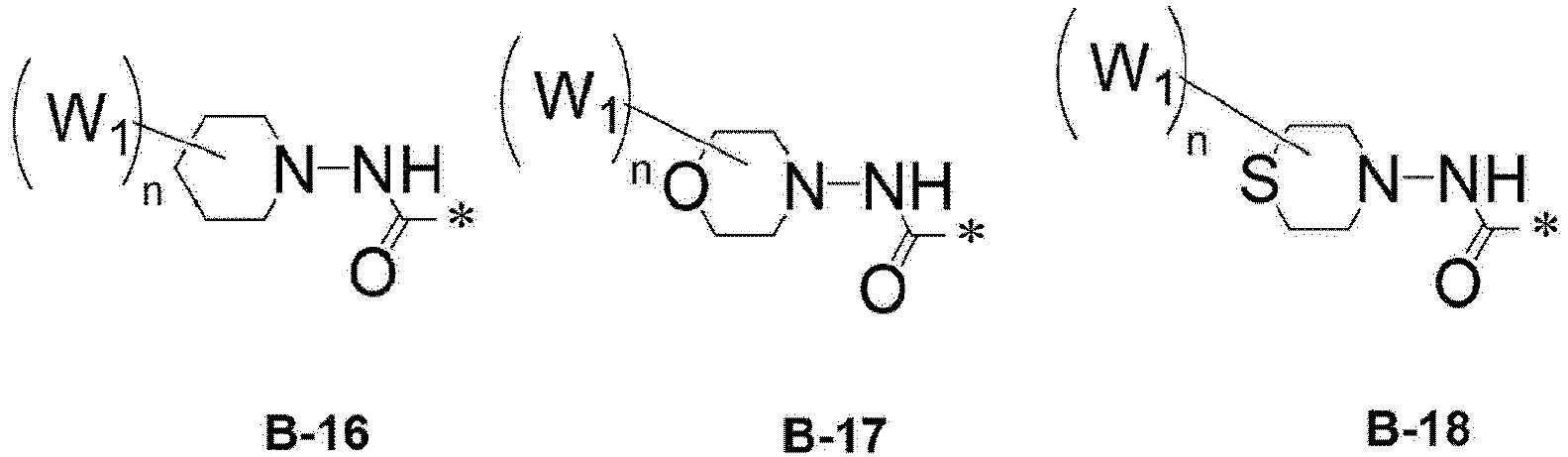


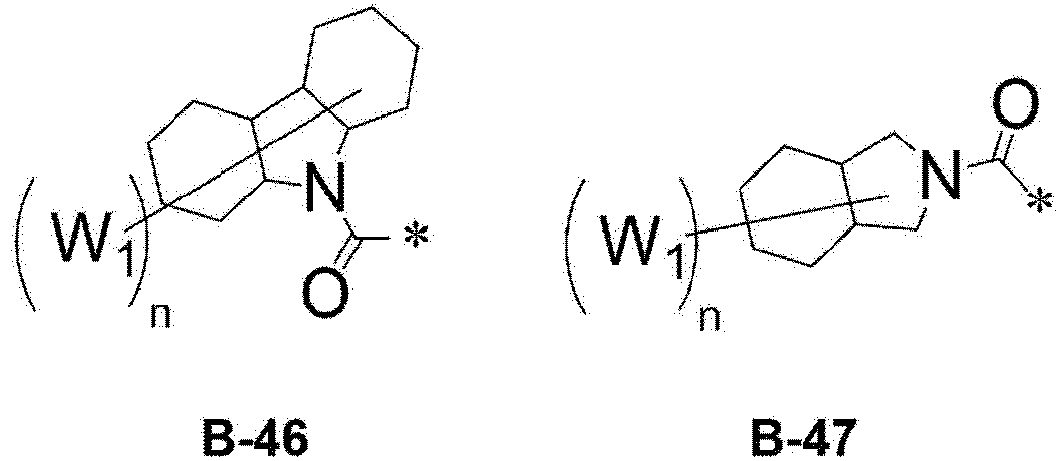
- In the structural Formulas, W1 is each independently a methyl group, an ethyl group, a t-butyl group, a cyclohexyl group, an adamantane group, a dihydroamine group, a dimethylamine group, a hydroxy group, a methoxy group, a mercaptan group, methylthio group, a fluoro group, a trifluoromethyl group, or a trimethylsilyl group,
- n is each independently an integer in a range of from 0 to 10, specifically an integer in a range of from 0 to 4,
- * indicates a bonding site.
- In addition, at least one of -L1-R1 and -L2-R2 may each independently have a structural formula in which -NH-CO-* in Structural Formulas B-1 to B-37 is replaced by -Z-* or *-Z-, in which Z is -NH-CS-, -NH-C(=NH)-, -CH2-NH-CO-, -CH2-CO-NH-, -O-NH-CO-, -S-NH-CO-, -CO-NH-CO-, -NH-C(=NMe)-, -NHC(=CHMe)-, -NHCOO-, -NH-, -CO-NH-, -OCONH-, -SCONH-, -CO-CO-NH-, -CH2-, - O-, -S-, -C0-, or "-".
- In addition, at least one of -L1-R1 and -L2-R2 may each independently have a structural formula in which N-C0-* structure in Structural Formulas B-38 to B-47 is replaced by N-CS-*, N-C(=NH)-*, N-C(=NMe)-*, NC(=CHMe)-*, NCOO-*, N-*, NCH2-*, NO-*, or NS-*.
- In addition, at least one of -L1-R1 and -L2-R2 may each be independently selected from Structural Formulas C-1 through C-12 shown below.


- In addition, at least one of -L1-R1 and -L2-R2 may each independently have a structural formula in which -CO-N-* structure in Structural Formulas C-1 through C-12 is replaced by -N-*.
- In addition, the capping layer compound represented by Formula 1 may have a low refractive index, such as a refractive index of 1.55 or less at a wavelength of 450 nm, when the refractive index is measured for a thickness range of 20 nm to 100 nm. Specifically, the capping layer compound may have a refractive index of 1.50 or less at a wavelength of 450 nm and more specifically a low refractive index of 1.47 or less at a wavelength of 450 nm.
- In addition, the compound of Formula 1 may be a capping layer compound represented by any one of the compounds shown below. The compounds shown below are presented only to help understanding of the present disclosure, and thus the scope of the present disclosure is not limited thereby.


1 2 3 


4 5 6 


7 8 9 
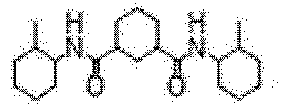

10 11 12 


13 14 15 


16 17 18 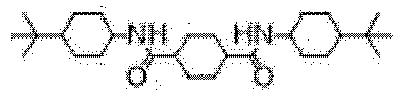


19 20 21 

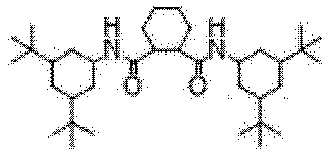
22 23 24 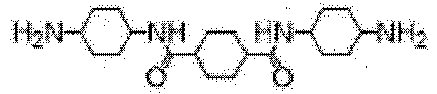


25 26 27 


28 29 30 


31 32 33 


34 35 36 


37 38 39 

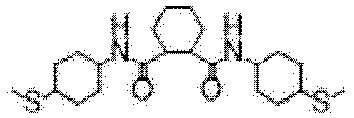
40 41 42 
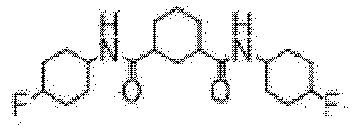

43 44 45 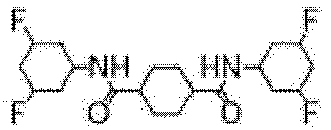


46 47 48 


49 50 51 


52 33 54 


55 56 57 

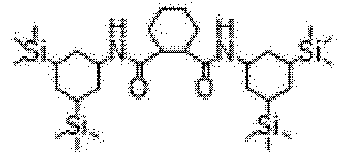
58 59 60 


61 62 63 


64 65 66 


67 68 69 


70 71 72 
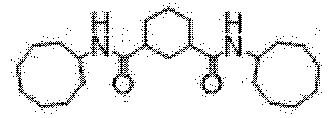

73 74 75 


76 77 78 


79 80 81 


82 83 84 


85 86 87 


88 89 90 


91 92 93 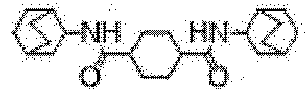


94 95 96 


97 98 99 


100 101 102 


103 104 105 


106 107 108 


109 110 111 


112 113 114 


115 116 117 


118 119 120 


121 122 123 


124 125 126 


127 128 129 


130 131 132 

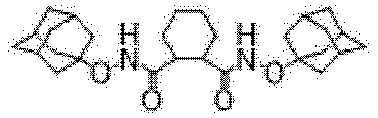
133 134 135 


136 137 138 


139 140 141 


142 143 144 


145 146 147 


148 149 150 


151 152 153 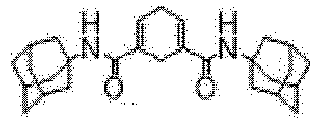


154 155 156 


157 158 159 


160 161 162 


163 164 165 


166 167 168 


169 170 171 


172 173 174 


175 176 171 
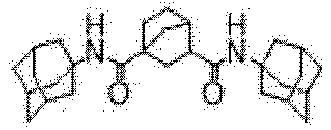

178 179 180 


181 182 183 


184 185 186 
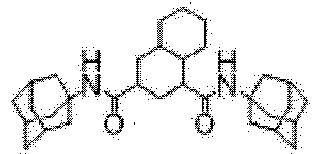

187 188 189 


190 191 192 


193 194 195 


196 197 198 


199 200 201 


202 203 204 


205 206 207 


208 209 210 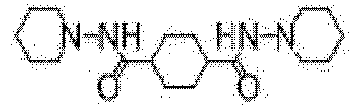


211 212 213 


214 215 216 
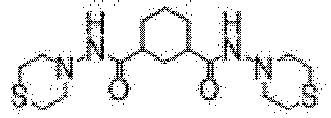

217 218 219 


220 221 222 


223 224 225 


226 227 228 


229 230 231 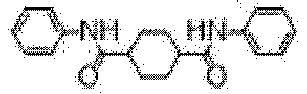


232 233 234 


235 236 237 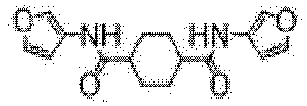


238 239 240 


241 242 243 


244 245 246 


247 248 249 


250 251 252 


253 254 255 


256 257 258 


259 260 261 
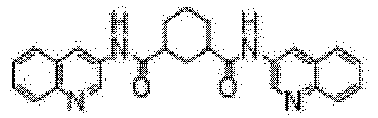

262 263 264 


265 266 267 


268 269 270 


271 212 273 

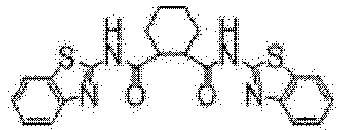
274 275 276 


277 278 279 

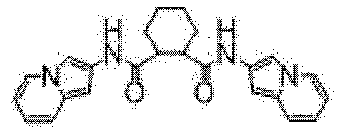
280 281 282 


283 284 285 


286 287 288 


289 290 291 


292 293 294 
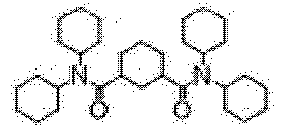

295 296 297 


298 299 300 


301 302 303 


304 305 306 

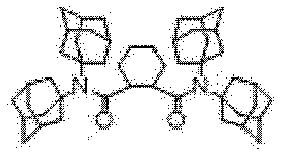
307 308 309 


310 311 312 


313 314 315 


316 317 318 


319 320 321 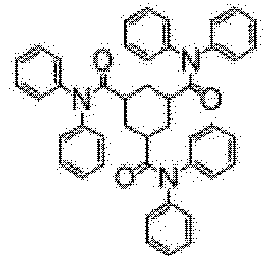


322 323 324 


325 326 327 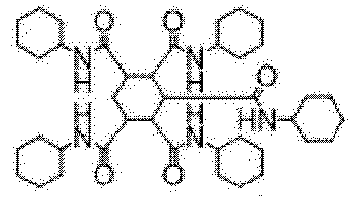


328 329 330 

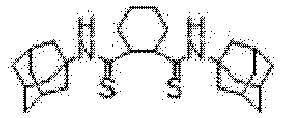
331 332 333 


334 335 336 


337 338 339 


340 341 342 


343 344 345 


346 347 348 


349 350 351 


352 353 354 


355 356 357 


358 359 360 


361 362 363 


364 365 366 


367 368 369 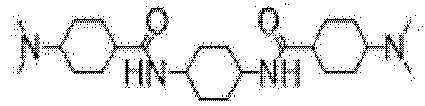


370 371 372 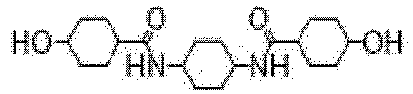


373 374 375 


376 377 378 


379 380 381 


382 383 384 


385 386 387 


388 389 390 


391 392 393 


394 395 396 


397 398 399 


400 401 402 


403 404 405 
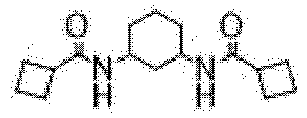

406 407 408 

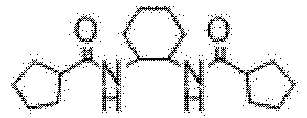
409 410 411 


412 413 414 


415 416 417 


418 419 420 


421 422 423 


424 425 426 


427 428 429 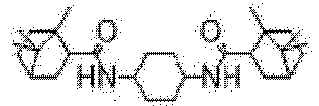


430 431 432 


433 434 435 


436 437 438 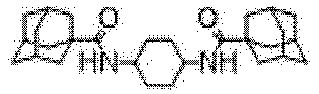


439 440 441 


442 443 444 


445 446 447 


448 449 450 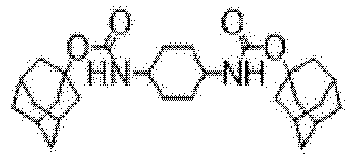


451 452 453 


454 455 456 


457 458 459 


460 461 462 


463 464 465 


466 467 468 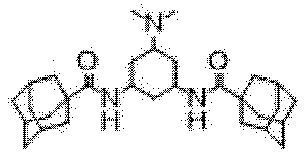


469 470 471 


472 473 474 


475 476 477 
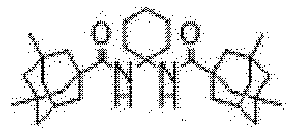

478 479 480 


481 482 483 


484 485 486 
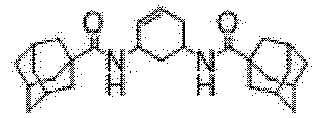

487 488 489 


490 491 492 


493 494 495 


496 497 498 

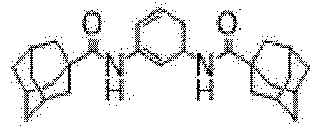
499 500 501 


502 503 504 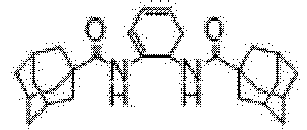


505 506 507 


508 509 510 


511 512 513 


514 515 516 


517 518 519 


520 521 522 

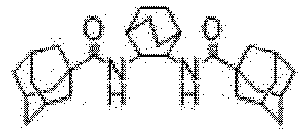
523 524 525 

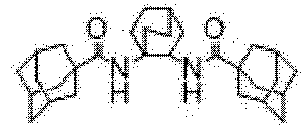
526 527 528 

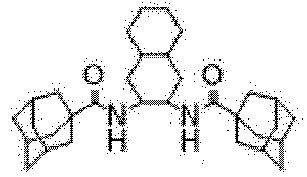
529 530 531 


532 533 534 


535 536 537 

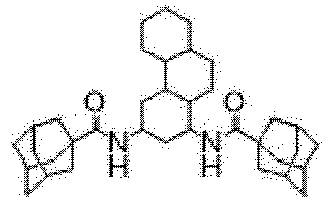
538 539 540 


541 542 543 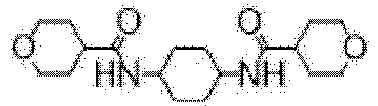


544 545 546 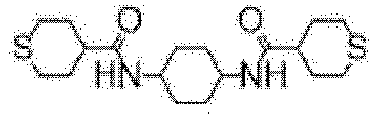


547 548 549 


550 551 552 


553 554 555 


556 557 558 


559 560 561 


562 563 564 


565 566 567 


568 569 570 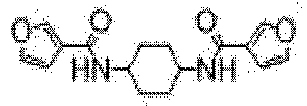


571 572 573 


574 575 576 


577 578 579 


580 581 582 


583 584 585 


586 587 588 


589 590 591 


592 593 594 


595 596 597 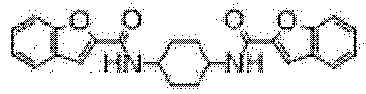


598 599 600 


601 602 603 


604 605 606 


607 608 609 


610 611 612 


613 614 615 


616 617 618 


619 620 621 


622 623 624 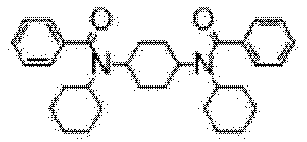
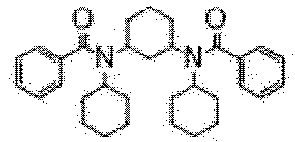

625 626 627 


628 629 630 


631 632 633 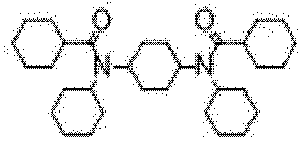


634 635 636 


637 638 639 


640 641 642 


643 644 645 


646 647 648 
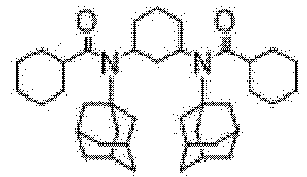

649 650 651 


652 653 654 


655 656 657 


658 659 660 


661 662 663 


664 665 666 


667 668 669 


670 671 672 
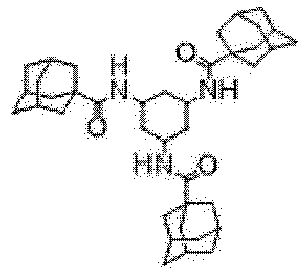

673 674 675 


676 677 678 


679 680 681 
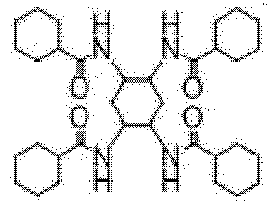

682 683 684 


685 686 687 


688 689 690 

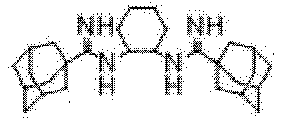
691 692 693 


694 695 696 


697 698 699 


700 701 702 
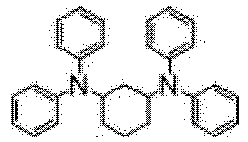

703 704 705 
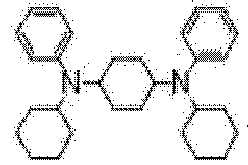

706 707 708 

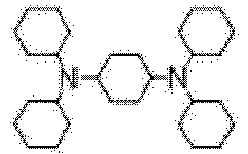
709 710 711 


712 713 714 


715 716 717 


718 719 720 


721 722 723 


724 725 726 


727 728 729 

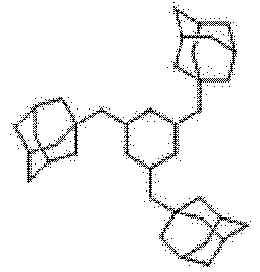
730 731 732 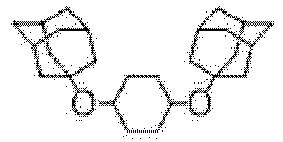


733 734 735 


736 737 738 


739 740 741 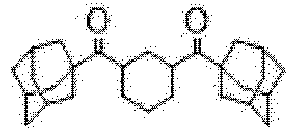
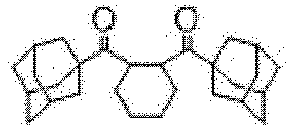
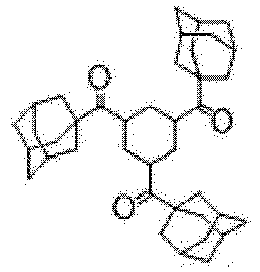
742 743 744 - One example of the compound of the present disclosure can be synthesized by schematic reaction formulas shown below.

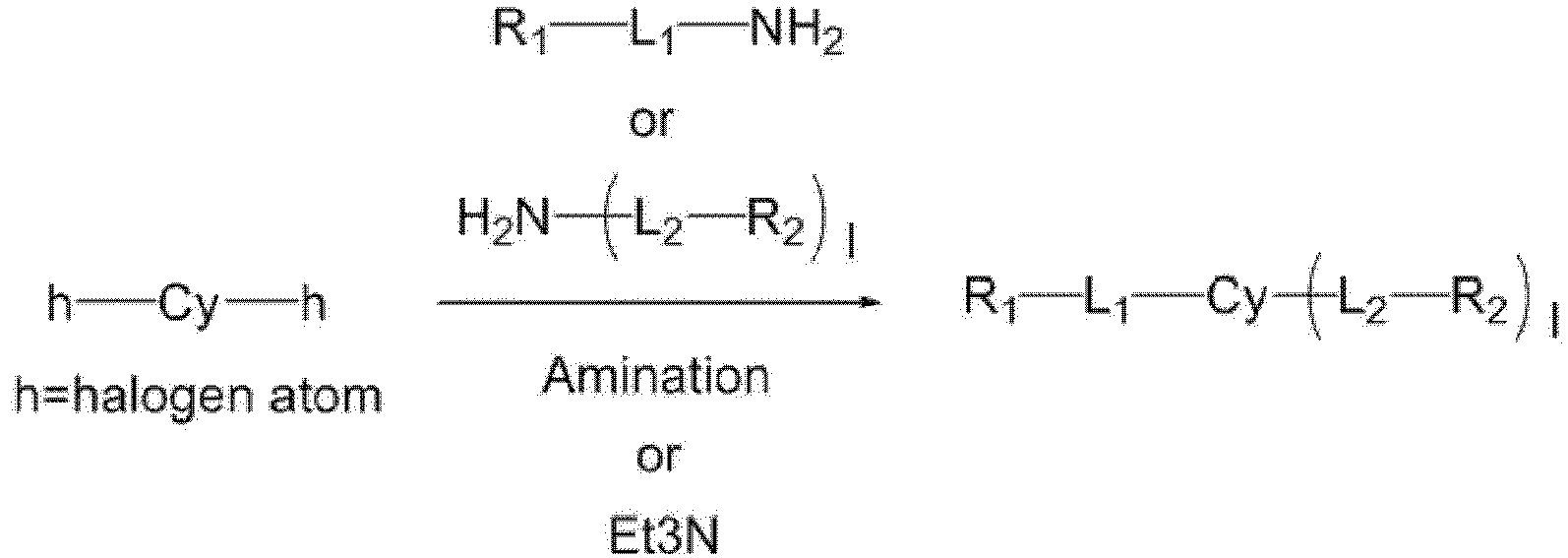

- In another aspect of the present disclosure, there is provided an organic light-emitting device including a capping layer containing the capping layer compound described above.
- Hereinafter, an organic light-emitting device according to one embodiment of the present disclosure will be described in detail.
- According to one embodiment of the present disclosure, the organic light-emitting device includes a first electrode, a second electrode, one or more organic layers interposed between the first electrode and the second electrode, and a capping layer, in which the capping layer is disposed on the outer surface of either the first electrode or the second electrode.
- Specifically, of the both surfaces of each of the first and second electrodes, a surface adjacent to the organic layer interposed between the first electrode and the second electrode is referred to as an inner surface, and a surface not adjacent to the organic material layer is referred to as an outer surface. That is, when the capping layer is disposed on the outer surface of the first electrode, the first electrode is interposed between the capping layer and the organic layer. When the capping layer is disposed on the outer surface of the second electrode, the second electrode is interposed between the capping layer and the organic layer.
- According to one embodiment of the present disclosure, in the organic light-emitting device, one or more organic layers may be interposed between the first electrode and the second electrode or may be disposed on the outer surface of at least one of the first and second electrodes. That is, the capping layer may be formed on the outer surface of each of the first and second electrodes or may be formed on the outer surface of either one of the first and second electrodes. The capping layer may contain the capping layer compound according to the present disclosure. The capping layer may contain only one compound or two or more compounds, selected from the capping layer compounds of the present disclosure. The capping layer may contain one or more of the capping layer compounds and other known compounds.
- The capping layer may have a thickness of 100 to 3000 Å.
- On the other hand, the capping layer may have a composite capping layer structure in which a first capping layer having a relatively low refractive index and a second capping layer having a higher refractive index than the first capping layer are laminated. In this case, the compound for a capping layer, according to the present disclosure, may be included in the first capping layer. The stacking order of the first capping layer and the second capping layer is not limited. The first capping layer may be disposed on the outer side of the second capping layer. Alternatively, the second capping layer may be disposed on the outer side of the first capping layer. In a specific example, the second capping layer may be interposed between the first capping layer and the first or second electrode. Specifically, the second capping layer may be in contact with the first capping layer and the first electrode or in contact with the first capping layer and the second electrode.
- In addition, the capping layer may be a multilayer structure in which a plurality of first capping layers and a plurality of second capping layers are stacked. The first capping layers and the second capping layers may be alternately stacked. That is, the stacking order is not limited as described above. The first capping layer may be disposed on the outer side of the second capping layer. Conversely, the second capping layer may be disposed on the outer side of the first capping layer.
- In addition, the first capping layer may have a refractive index of 1.55 or less, specifically a refractive index of 1.50 or less, and more specifically a refractive index of 1.47 or less, at a wavelength of 450 nm. The second capping layer may have a refractive index of 2.10 or more, specifically a refractive index of 2.25 or more, and more specifically 2.30 or more, at a wavelength of 450 nm. The difference in refractive index between the first capping layer and the second capping layer at a wavelength of 450 nm may be in the range of 0.2 to 1.2 and more specifically 0.4 to 1.2. When the refractive index difference is less than 0.2 or greater than 1.2, the light extraction efficiency will be reduced.
- The total thickness of the first capping layer may be in the range of from 50 Å to 2000 Å, and the total thickness of the second capping layer may be in the range of 50 Å to 2000 Å.
- On the other hand, the capping layer may have a refractive index gradient. The refractive index gradient may have a descending profile in which the refractive index gradually decreases in an outward direction or an ascending profile in which the refractive index gradually increases in the outward direction. To this end, the refractive index gradient in the capping layer may be implemented by gradually varying the concentration of the capping layer compound according to the present disclosure during the formation of the capping layer.
- On the other hand, the organic layers may include a hole transport layer, a light-emitting layer, and an electron transport layer that that constitute a light-emitting unit but may not be limited thereto.
- More specifically, the organic light-emitting device according to one embodiment of the present disclosure includes one or more organic layers between the first electrode (anode) and the second electrode (cathode), in which the organic layers are layers selected from a hole injection layer (HIL), a hole transport layer (HTL), and a light-emitting layer (HTL), an electron transport layer (ETL), and an electron injection layer (EIL). Optionally, a hole-blocking layer (HBL, not shown) or an electron transport auxiliary layer may be further disposed between the light-emitting layer (EML) and the electron transport layer (ETL), and an electron-blocking layer (EBL, not shown) or a light-emitting auxiliary layer may be disposed between the hole transport layer (HTL) and the light-emitting layer (EML).
-
FIG. 1 is a cross-sectional view schematically illustrating the construction of an organic light-emitting device according to one embodiment of the present disclosure. The organic light-emitting device according to one embodiment of the present disclosure may be manufactured to have a structure illustrated inFIG. 1 . - Referring to
FIG. 1 , the organic light-emitting device includes asubstrate 100, afirst electrode 1000, ahole injection layer 200, ahole transport layer 300, a light-emittinglayer 400, anelectron transport layer 500, anelectron injection layer 600, asecond electrode 2000, and acapping layer 3000 that are stacked in this order. Although not shown in the illustration, thecapping layer 3000 may be a laminate in which the first capping layer and the second capping layer are stacked on another, as described above. Thecapping layer 3000 may be a laminate that includes not only the first and second capping layers and a third capping layer having a different refractive index from each of the first and second capping layers. In addition, the capping layer may have a refractive index gradient. The refractive index gradient may have a descending profile in which the refractive index gradually decreases in an outward direction or an ascending profile in which the refractive index gradually increases in the outward direction. - Here, as the
substrate 100, a substrate that is commonly used for organic light-emitting devices may be used. Specifically, a transparent glass substrate or a flexible plastic substrate excellent in mechanical strength, thermal stability, transparency, surface flatness, easy handling, and waterproofness may be used. - In the organic light-emitting device, the
first electrode 1000 is used as a hole injection electrode for injecting holes. - The
first electrode 1000 is made of a material having a low work function to enable hole injection. Specifically, thefirst electrode 1000 is made of a transparent material such as indium tin oxide (ITO), indium zinc oxide (IZO), or graphene. - The
hole injection layer 200 may be formed by depositing a hole injection material on thefirst electrode 1000 by a method such as a vacuum deposition method, a spin coating method, a casting method, Langmuir-Blodgett (LB), or the like. In the case of using a vacuum deposition method to form thehole injection layer 200, the deposition conditions vary depending on the compound used as the material of thehole injection layer 200, the structure and thermal characteristics of the desiredhole injection layer 200, and the like. The conditions are appropriately set to fall within a temperature range of 50°C to 500°C, a vacuum degree range of 10-8 to 10-3 torr, a deposition rate range of 0.01 to 100 Å/sec, and a layer thickness range of 10 Å to 5 um. A charge generating layer may be optionally deposited on the surface of thehole injection layer 200 if necessary. A conventional material may be used as the material of the charge generation layer. For example, HATCN may be used. - The
hole transport layer 300 may be formed by depositing a hole transport material on thehole injection layer 200 by a method such as a vacuum deposition method, a spin coating method, a casting method, or LB. In the case of forming thehole transport layer 300 by the vacuum deposition method, the deposition conditions vary depending on the compound used. However, the conditions may be selected from the same ranges described in connection with thehole injection layer 200. Thehole transport layer 300 may be formed using a known compound. Thehole transport layer 300 may be a single layer structure or a multilayer structure. Although not illustrated inFIG. 1 , a light-emitting auxiliary layer may be additionally formed on thehole transport layer 300. - The light-emitting
layer 400 may be formed by depositing a light-emitting material on thehole transport layer 300 or the light-emitting auxiliary layer by a method such as a vacuum deposition method, a spin coating method, a casting method, or LB. In the case of using a vacuum deposition method to form the light-emittinglayer 400, the deposition conditions vary depending on the compound used. However, the conditions may be selected from the same ranges as in the deposition conditions of thehole injection layer 200. As the light-emitting material, a known compound may be used as a host or a dopant. The dopant is not limited to a specific substance. The light-emitting layer may be formed using a phosphorescent or fluorescent dopant. For example, BD142 (N6,N12-bis(3,4-dimethylphenyl)-N6,N12-dimethylchrysene-6,12-diamine) can be used as the fluorescent dopant, and the green phosphorescent dopant "Ir(ppy)3 (tris(2-phenylpyridine)iridium)", the blue phosphorescent dopant "F2Irpic (iridium(III) bis[4,6-difluorophenyl-pyridinato-N,C2']picolinate)", and the red phosphorescent dopant "RD61" available from UDC Corporation can be vacuum-deposited (doped) together as the phosphorescent dopants. The doping concentration of the dopant is not particularly limited, but it is preferred that the doping concentration of the dopant may be in the range of from 0.01 to 15 parts by weight relative to 100 parts by weight of the host. When the content of the dopant is less than 0.01 wt%, since the amount of the dopant is insufficient, the coloration is not properly achieved. When the content of the dopant exceeds 15 wt%, the efficiency is sharply reduced due to the concentration quenching phenomenon. - Here, in the case where the phosphorescent dopant and the light-emitting material are used together, a hole-blocking material (HBL) may be deposited on the light-emitting
layer 400 by a vacuum deposition method or a spin coating method to prevent triplet excitons or holes from diffusing into theelectron transport layer 500. The material that can be used as the hole-blocking material is not particularly limited, and an arbitrary existing material may be selected and used. Examples of the hole blocking material include oxadiazole derivatives, triazole derivatives, phenanthroline derivatives, and hole blocking materials described inJapanese Patent Application Publication No. H11-329734(A1 layer 400 used in the embodiment of the present disclosure may include one or more blue light-emitting layer. - The
electron transport layer 500 is formed on the light-emittinglayer 400 by a vacuum deposition method, a spin coating method, a casting method, or the like. The deposition conditions for theelectron transport layer 500 vary depending on the compound used. However, the conditions may be selected from almost the same ranges as in the deposition conditions of thehole injection layer 200. For example, quinoline derivatives, in particular tris(8-quinolinolato)aluminum (Alq3), or 6,6'-(3,4-dimethyl-1,1-dimethyl-1H-silol-2,5-diyl)di-2,2'-bipyridine)(ET4), can be commonly used. - The
electron injection layer 600 is formed by depositing an electron injection material on theelectron transport 500 by a vacuum deposition method, a spin coating method, a casting method, or the like. As the material for the electron injection layer, LiF, NaCl, CsF, Li2O, BaO, and the like may be used. - The
second electrode 2000 is used as an electron injection electrode and may be formed on theelectron injection layer 600 by a method such as a vacuum deposition method or a sputtering method. Various metals may be used to form thesecond electrode 2000. Specific examples include, but are not limited to, lithium (Li), aluminum (Al), gold (Au), silver (Ag), magnesium (Mg), aluminum-lithium (Al-Li), calcium (Ca), magnesium-indium (Mg-In), and magnesium-silver (Mg-Ag). A transmissive electrode made of ITO or IZO may be used to manufacture front-emission light-emitting devices. - The organic light-emitting device according to the present disclosure may be an organic light-emitting device including the
first electrode 1000, thehole injection layer 200, thehole transport layer 300, the light-emittinglayer 400, theelectron transport layer 500, theelectron injection layer 600, thesecond electrode 2000, and thecapping layer 300. The organic light-emitting device may further include one or more intermediate layers if necessary. - On the other hand, the thickness of each organic layer formed according to the present disclosure can be adjusted as desired. Specifically, the thickness may fall within a range of from 1 to 1,000 nm and more specifically a range of from 1 to 150 nm.
- The
capping layer 3000 may be formed on the outer surface of thefirst electrode 1000, of the both surfaces of thefirst electrode 1000. That is, thecapping layer 3000 may be formed on the surface that is not adjacent to thehole injection layer 200. In addition, of both surfaces (inner and outer surfaces) of thesecond electrode 2000, thecapping layer 3000 may also be formed on the outer surface of thesecond electrode 2000. The outer surface is a surface that is not adjacent to theelectron injection layer 600. Thecapping layer 3000 may be formed by a deposition process, and thecapping layer 3000 may have a thickness in a range of 100 Å to 3,000 Å and more specifically a range of 300 Å to 2,000 Å. The thickness is adjusted to prevent a decrease in the transmittance of thecapping layer 3000. - In addition, although not illustrated in
FIG. 1 , according to one embodiment of the present disclosure, organic layer having various functions may be additionally formed between thecapping layer 3000 and thefirst electrode 1000 or between thecapping layer 3000 and thesecond electrode 2000. Alternatively, organic layers having various function may be additionally formed on the top surface (outer surface) of thecapping layer 3000, and an additional functional layer may be provided in the middle of thecapping layer 3000. However, the present disclosure is not limited to the structure described above. - Hereinafter, the present disclosure will be described in greater detail with reference to compound synthesis examples of and examples of organic light-emitting devices (OLEDs).
- The OLED examples and compound synthesis examples described below are presented only for illustrative purposes and the scope of the present disclosure is not limited thereby.
-

- In a round bottom flask, 5.0 g of 1-adamantanamine hydrochloride and 27.8 g of triethylamine were dissolved in 100 ml of 1,4-dioxane. Next, 3.4ml of cyclohexane-1,4-dicarbonyl dichloride dissolved in 35 ml of 1,4-dioxane was slowly added to the flask, stirred for 5 hours at 60°C, and then stirred for 24 hours at room temperature. The reaction solution was added dropwise to 400 ml of a dilute hydrochloric acid solution, and the reaction ended. The precipitated solid was collected by filtering under reduced pressure, and then the solid was recrystallized to produce 6.0 g of Compound 97 (83% yield).
m/z: 438.3246 (100.0%), 439.3280 (30.3%), 440.3313 (4.4%) -

- Compound 103 was synthesized using memantine instead of 1-adamantanamine hydrochloride in the same manner as in Synthesis Example 1 (yield 84%).
m/z: 494.3872 (100.0%), 495.3906 (34.6%), 496.3939 (5.8%) -

- Compound 295 was synthesized using dicyclohexylamine instead of 1-adamantanamine hydrochloride in the same manner as in Synthesis Example 1 (yield 80%).
m/z: 498.4185 (100.0%), 499.4219 (34.6%), 500.4252 (5.8%) -

- Compound 440 was synthesized using adamantane-1-carbonyl chloride and cyclohexane-1,3-diamine instead of 1-adamantanamine hydrochloride and cyclohexane-1,4-dicarbonyl dichloride in the same manner as Example 1 (yield 83%).
m/z: 438.3246 (100.0%), 439.3280 (30.3%), 440.3313 (4.4%) -

- Compound 441 was synthesized using adamantane-1-carbonyl chloride and cyclohexane-1,2-diamine instead of 1-adamantanamine hydrochloride and cyclohexane-1,4-dicarbonyl dichloride in the same manner as Example 1 (yield 87%).
m/z: 438.3246 (100.0%), 439.3280 (30.3%), 440.3313 (4.4%) -

- Compound 566 was synthesized using benzoyl chloride and cyclohexane-1,3-diamine instead of 1-adamantanamine hydrochloride and cyclohexane-1,4-dicarbonyl dichloride in the same manner as Example 1 (yield 76%).
m/z: 322.1681 (100.0%), 323.1715 (21.6%), 324.1748 (2.2%) - Compounds were synthesized using Starting Material 1 and Starting Material 2 shown in Table 1 to Table 3 below instead of 1-adamantanamine hydrochloride and cyclohexane-1,4-dicarbonyl dichloride in the same manner as in Example 1.
[Table 1] Starting Material 1 Starting Material 2 m/z Synthesis Example 7 Compou nd 1 
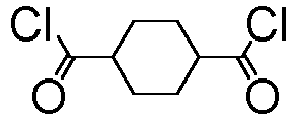
m/z: 334.26 (100.0%) Synthesis Example 8 Compou nd 19 

m/z: 446.39 (100.0%) [Table 2] Synthesis Example 9 Compou nd 28 

m/z: 420.35 (100.0%) Synthesis Example 10 Compou nd 34 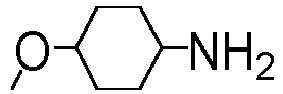
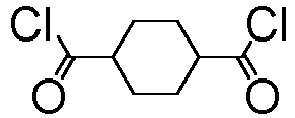
m/z: 394.28 (100.0%) Synthesis Example 11 Compou nd 40 

m/z: 426.24 (100.0%) Synthesis Example 12 Compou nd 43 

m/z: 370.24 (100.0%) Synthesis Example 13 Compou nd 49 

m/z: 470.24 (100.0%) Synthesis Example 14 Compou nd 55 

m/z: 478.34 (100.0%) Synthesis Example 15 Compou nd 70 

m/z: 362.29 (100.0%) Synthesis Example 16 Compou nd 88 
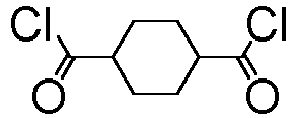
m/z: 442.36 (100.0%) Synthesis Example 17 Compou nd 94 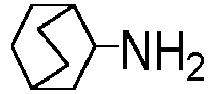

m/z: 386.29 (100.0%) Synthesis Example 18 Compou nd 214 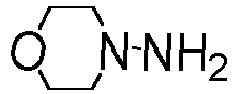

m/z: 340.21 (100.0%) Synthesis Example 19 Compou nd 217 
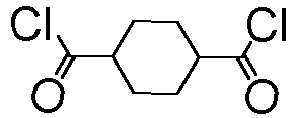
m/z: 372.17 (100.0%) Synthesis Example 20 Compou nd 226 

m/z: 330.23 (100.0%) Synthesis Example 21 Compou nd 489 

m/z: 436.31 (100.0%) Synthesis Example 22 Compou nd 492 

m/z: 436.31 (100.0%) [Table 3] Synthesis Example 23 Compou nd 520 

m/z: 450.32 (100.0%) Synthesis Example 24 Compou nd 526 

m/z: 464.34 (100.0%) Synthesis Example 25 Compou nd 531 

m/z: 492.37 (100.0%) -
FIG. 1 illustrates the construction of a typical organic light-emitting device. In the present disclosure, an organic light-emitting device having the structure shown inFIG. 1 was manufactured as an example. Specifically, in the manufactured organic light-emitting device includes a, an anode (hole injection electrode 1000), ahole injection layer 200, ahole transport layer 300, a light-emittinglayer 400, anelectron transport layer 500, anelectron injection layer 600, a cathode (electron injection electrode 2000), and acapping layer 3000 are stacked in this order from the bottom. Thecapping layer 3000 may be a multilayer structure in which the first capping layer and the second capping layer are combined. - When manufacturing the organic light-emitting device, as a substrate 10, a transparent glass substrate or a flexible plastic substrate is used.
- In the organic light-emitting device, the
hole injection electrode 1000 is used as the anode. For the hole injection electrode, a material having a low work function is used to enable hole injection. Specifically, the hole injection electrode is made of a transparent material such as indium tin oxide (ITO), indium zinc oxide (IZO), or graphene. - The materials used for the
hole injection layer 200,hole transport layer 300, light-emittinglayer 400,electron transport layer 500,electron injection layer 600, and high refractive index capping layer are summarized in Table 4 below. - In addition, the
cathode 2000 for electron injection was formed on theelectron injection layer 600. Various metals can be used to form the cathode. Specific examples of the metal include aluminum, gold, silver, magnesium, and magnesium-silver alloys.[Table 4] 

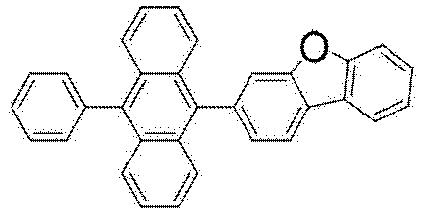
HT01 NDP9 BH01 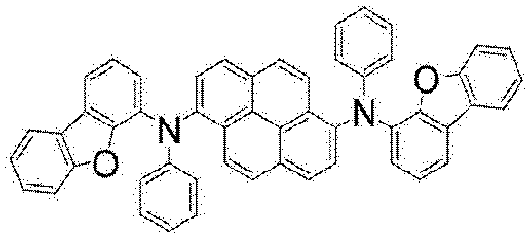


BD01 ET01 Liq 
CPM01 (n 2.13@450nm) - An indium tin oxide (ITO) substrate with a reflective layer containing silver (Ag) was cleaned with distilled water by ultrasonic cleaning. After the completion of the distilled water washing, the substrate was cleaned with a solvent such as isopropyl alcohol, acetone, or methanol by ultrasonic cleaning and then dried. As a hole-injection layer, HT01 doped with 3% by weight of NDP9 was formed to have a thickness of 100 Å on top of the ITO substrate. Next, HT01 with a thickness of 1000 Å was deposited thereon as a hole transport layer. BH01 (host layer) doped with 3% by weight of BD01 (dopant) was formed to have a thickness of 250 Å as a light-emitting layer. Next, an electron transport layer with a thickness of 300 Å was deposited using a mixture of ET01 and Liq (in a weight ratio of 1:1), and then LiF was deposited to form an electron injection layer with a thickness of 10 Å. MgAg was then deposited to a thickness of 15 nm to form a cathode. Next, a high refractive index capping layer with a thickness of 950 Å was formed on the cathode by depositing CPM01, and a low refractive index capping layer with a thickness of 400 Å was then formed by depositing the compound prepared in Synthesis Example 1. The resulting structure was encapsulated in a glove box to produce an organic light-emitting device.
- Organic light-emitting devices were manufactured in the same manner as in Example 1 except that the compounds prepared in Synthesis Examples 2 to 25 were used, respectively, to form the respective low refractive index capping layers.
- Organic light-emitting devices were manufactured in the same manner as in Example 1 except that Comparative Compounds 1 to 5 listed in Table 5 were respectively used to form the respective low refractive index capping layers.
[Table 5] 


Comparative Comound 1 Comparative Comound 2 Comparative Comound 3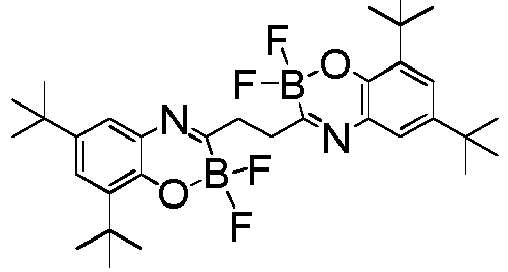
Comparative Comound 4 - Electrons and holes were injected by applying a voltage using a source measure unit (Kiethley 2400 manufactured by Keithley Instruments, Inc.) and the luminance was measured using a spectroradiometer (CS-2000 manufactured by Konica Minolta Inc.) when light is emitted. To evaluate the performance of each of the organic light-emitting devices of Examples 1 to 6, 16 to 18, 21 to 24, and Comparative Examples 1 to 4, the current density and luminance with respect to the applied voltage were measured under atmospheric pressure, and the results are shown in Table 6.
[Table 6] Op. V mA/cm2 Cd/A CIEx ClEy LT97 Example 1 3.45 10 10.11 0.140 0.043 170 Example 2 3.45 10 10.15 0.140 0.043 185 Example 3 3.45 10 12.07 0.139 0.042 161 Example 4 3.44 10 11.13 0.139 0.042 178 Example 5 3.45 10 11.70 0.139 0.042 182 Example 6 3.45 10 9.41 0.139 0.042 153 Example 16 3.45 10 11.90 0.139 0.042 166 Example 17 3.45 10 11.85 0.139 0.042 166 Example 18 3.45 10 11.93 0.139 0.042 158 Example 21 3.45 10 10.85 0.139 0.042 172 Example 22 3.45 10 10.85 0.139 0.042 172 Example 23 3.45 10 11.00 0.139 0.042 174 Example 24 3.45 10 11.05 0.139 0.042 175 Comparative Example 1 3.47 10 6.46 0.134 0.054 101 Comparative Example 2 3.46 10 8.22 0.135 0.047 144 Comparative Example 3 3.46 10 7.44 0.137 0.050 123 Comparative Example 4 3.46 10 8.30 0.137 0.047 75 - Comparing the examples of the present invention with the comparative examples, the present invention has a cycloalkylene core, so it has a low refractive index by forming a low polarizability within the molecule, and at the same time, it has an even lower refractive index because two or more aminebased substituents are connected. At the same time, thin film formation and thermal stability are excellent, making it possible to provide organic light-emitting devices with high color purity, high efficiency, and long lifespan.
- Specifically, comparing Example 1 and Example 2, by having an additional substituent, thermal stability is excellent, and the lifespan can be effectively improved. Comparing Example 1 and Example 3, the structure with an adamantane group as a substituent has excellent thermal stability and can effectively improve lifespan, and the structure with cyclohexylene has a lower refractive index, and can effectively improve efficiency. Additionally, comparing Example 1 with Examples 4 and 5, the structure in which the amine is directly bonded to the linking group can have better thermal stability and a lower refractive index. In particular, when the cycloalkylene core is 1,2-cycloalkylene, it has a lower refractive index and is effective in improving efficiency and lifespan. Lastly, comparing Examples 1 to 5 with Example 6, it can be seen that when a cycloalkyl group with a low polarizability is used as a substituent, a low refractive index is maintained and efficiency is effectively improved.
- With the use of each of the compounds of Synthesis Examples 1 to 6 and Comparative Compounds 1 to 4, deposition films with a thickness of 30 nm were formed on respective silicon substrates, and the refractive index at a wavelength of 450 nm was measured using an ellipsometer device (M-2000X available from J.A.Woollam Co., Inc.). The measurement results are summarized in Table 7.
[Table 7] Compara tive Compound 1 Compara tive Compound 2 Compara tive Compound 3Compara tive Compound 4Compo und 97 Compo und 103 Compo und 295 Compou nd 440 Compou nd 441 Compo und 566 n@450nm 1.88 1.59 1.74 1.58 1.49 1.49 1.44 1.47 1.45 1.54 - Referring to Table 7 above, it can be seen that the compounds according to the present disclosure exhibit a low refractive index of 1.55 or less at a wavelength of 450 nm. In addition, other compounds (not listed in Table 7) according to the present disclosure also exhibited a low refractive index of 1.55 or less at a wavelength of 450 nm.
Claims (23)
- A compound for a capping layer, the compound being represented by Formula 1 below:
 Cy is a substituted or unsubstituted C3∼C50 cycloalkylene group, or a C3~C50 cycloalkenylene group,L and L1 are each independently a direct bond, a substituted or unsubstituted C1~C50 alkylene group, a substituted or unsubstituted C2~C50 alkenylene group, a substituted or unsubstituted C1~C50 alkyleneoxy group, an ether group, a substituted or unsubstituted C1~C50 sulfide group, a thioether group, a substituted or unsubstituted C1~C50 carbonyl group, substituted or unsubstituted -C(X1)NR3-, substituted or unsubstituted -NR4C(X2)-, substituted or unsubstituted -NR-, a substituted or unsubstituted C3∼C50 cycloalkylene group, a substituted or unsubstituted C1~C50 heterocyclylene group, or a combination thereof,X1 and X2 are each independently O, S, Se, Te, NR5, or CR6R7,R and R1 to R7 are each independently hydrogen, deuterium, halogen, a nitro group, a nitrile group, a hydroxy group, a thiol group, a substituted or unsubstituted amino group, a substituted or unsubstituted C1 to C50 alkyl group, a substituted or unsubstituted C2~C50 alkenyl group, a substituted or unsubstituted C1~C50 alkoxy group, a substituted or unsubstituted C1~C50 sulfide group, a substituted or unsubstituted silyl group, a substituted or unsubstituted C3~C50 cycloalkyl group, a substituted or unsubstituted C1~C50 heterocyclyl group, a substituted or unsubstituted C3∼C50 aryl group, or a substituted or unsubstituted C2∼C50 heteroaryl group, and a plurality of adjacent R, R1 to R7 may or may not form a ring by bonding with each other,l is an integer in a range of from 1 to 5).
 - The compound for a capping layer of claim 1, wherein Formula 1 is represented by Formula 2 or Formula 3 below:
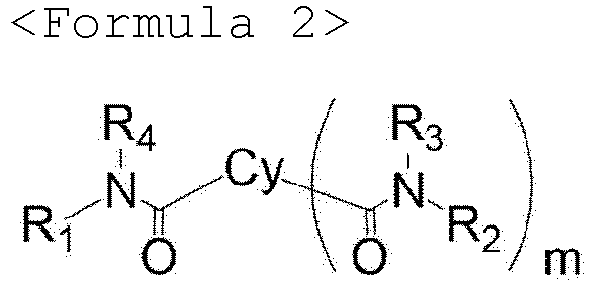
 the same symbols as in Formula 1 above have the same definitions as in Formula 1,m is an integer in a range of from 1 to 5).
 - The compound for a capping layer of claim 1, wherein in Formula 1, one or more of R1 and R2 are a substituted or unsubstituted C3∼C50 cycloalkyl group, or a substituted or unsubstituted C1~C50 heterocyclyl group.
- The compound for a capping layer of claim 3, wherein substituents of R1 and R2 are each independently selected from the group consisting of hydroxyl groups, thiol groups, amino groups, C1-C30 alkyl groups, C1-C30 alkoxy groups, C1-C30 sulfide groups, silyl groups, halogen groups, C3-C30 cycloalkyl groups, C1-C30 heterocyclyl groups, and combinations thereof.
- The compound for a capping layer of claim 1, wherein Cy is selected from Structural Formula Formulas A-1 to A-15:


 n is each independently an integer in a range of from 0 to 8,* indicates a bonding site).
 - The compound for a capping layer of claim 1, wherein when l is 1, Cy is a cycloalkylene where -L1-R1 and -L2-R2 are bonded to the two immediately adjacent carbons or a cycloalkylene in which -L1-R1 and -L2-R2 are each bonded to two carbons immediately adjacent to either side of any carbon.
- The compound for a capping layer of claim 1, wherein Cy is 1,2-cyclopentylene, 1,2-cyclohexylene, 1,2-cycloheptylene, 1,2-cyclooctylene, 1,2-cyclononylene, 1-2-cyclodecylene , 1,3-cyclopentylene, 1,3-cyclohexylene, 1,3-cycloheptylene, 1,3-cyclooctylene, 1,3-cyclononylene, 1,3-cyclodecylene, 1 , 2-cyclohex-1-ene, 4,5-cyclohex-1-ene, or 2,3-decahydronaphthalene.
- The compound for a capping layer of claim 1, wherein in Formula 1, at least one of -L1-R1 and -L2-R2 is independently selected from Structural Formulas B-1 to B-47:


 n is each independently an integer in a range of from 0 to 10,* indicates a bonding site).
 - The compound for a capping layer of claim 8, wherein at least one of -L1-R1 and -L2-R2 has each independently a structural formula in which -NH-CO-* in Structural Formulas B-1 to B-37 is replaced by -Z-* or *-Z-, in which Z is -NH-CS-, -NH-C(=NH)-, -CH2-NH-CO-, -CH2-CO-NH-, -O-NH-CO-, -S-NH-CO-, - CO-NH-CO-, -NH-C(=NMe)-, -NHC(=CHMe)-, -NHCOO-, -NH-, -CO-NH-, -OCONH-, -SCONH-, -CO-CO-NH-, -CH2-, -O-, -S-, -C0-, or "-".
- The compound for a capping layer of claim 8, wherein at least one of -L1-R1 and -L2-R2 has each independently a structural formula in which N-C0-* structure in Structural Formulas B-38 to B-47 is replaced by N-CS-*, N-C(=NH)-*, N-C(=NMe)-*, NC(=CHMe)-*, NCOO-*, N-*, NCH2-*, NO-*, or NS-*.
- The compound for a capping layer of claim 1, wherein in Formula 1, at least one of -L1-R1 and -L2-R2 is independently selected from Structural Formulas C-1 through C-12:


- The compound for a capping layer of claim 11, wherein at least one of -L1-R1 and -L2-R2 has independently a structural formula in which -CO-N-* structure in Structural Formulas C-1 through C-12 is replaced by -N-*.
- The compound for a capping layer of claim 1, wherein the compound is any one of the following compounds:


1 2 3 


4 5 6 


7 8 9 
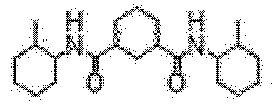

10 11 12 


13 14 15 


16 17 18 


19 20 21 


22 23 24 


25 26 27 
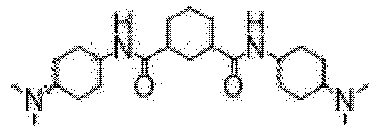

28 29 30 
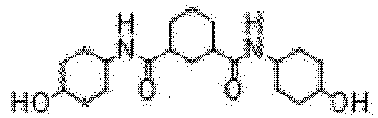

31 32 33 


34 35 36 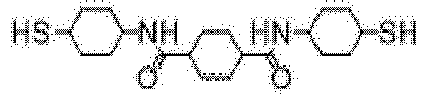


37 38 39 


40 41 42 


43 44 45 

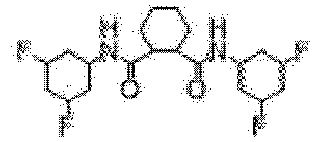
46 47 48 


49 50 51 


52 33 54 


55 56 57 


58 59 60 


61 62 63 


64 65 66 
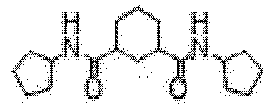

67 68 69 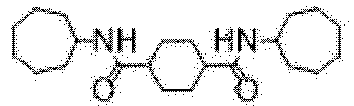


70 71 72 

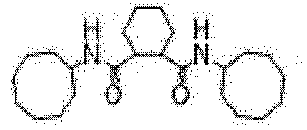
73 74 75 
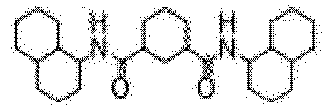

76 77 78 
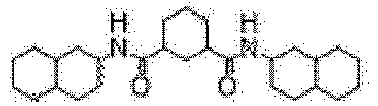

79 80 81 


82 83 84 


85 86 87 


88 89 90 


91 92 93 

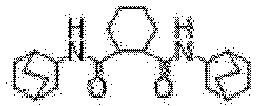
94 95 96 


97 98 99 


100 101 102 


103 104 105 


106 107 108 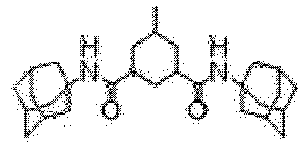


109 110 111 


112 113 114 


115 116 117 


118 119 120 


121 122 123 


124 125 126 

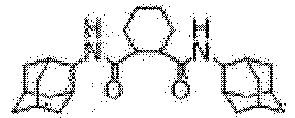
127 128 129 


130 131 132 


133 134 135 


136 137 138 


139 140 141 


142 143 144 


145 146 147 


148 149 150 
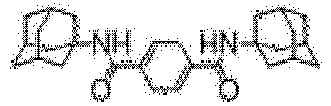

151 152 153 


154 155 156 


157 158 159 


160 161 162 


163 164 165 


166 167 168 


169 170 171 


172 173 174 


175 176 177 


178 179 180 
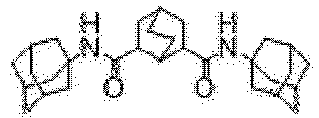

181 182 183 


184 185 186 


187 188 189 


190 191 192 


193 194 195 


196 197 198 


199 200 201 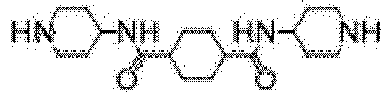


202 203 204 


205 206 207 
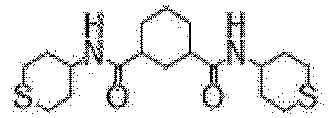

208 209 210 


211 212 213 


214 215 216 


217 218 219 


220 221 222 
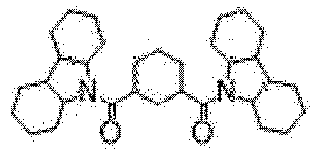

223 224 225 
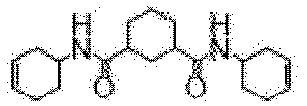

226 227 228 


229 230 231 


232 233 234 


235 236 237 


238 239 240 


241 242 243 


244 245 246 


247 248 249 


250 251 252 


253 254 255 


256 257 258 


259 260 261 


262 263 264 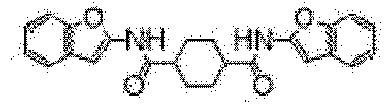


265 266 267 


268 269 270 


271 212 273 


274 275 276 


277 218 279 


280 281 282 


283 284 285 


286 287 288 


289 290 291 


292 293 294 


295 296 297 


298 299 300 


301 302 303 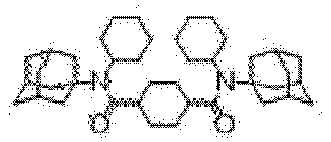


304 305 306 


307 308 309 


310 311 312 


313 314 315 


316 317 318 


319 320 321 


322 323 324 


325 326 327 


328 329 330 


331 332 333 

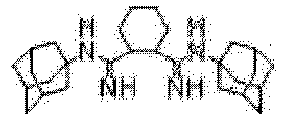
334 335 336 


337 338 339 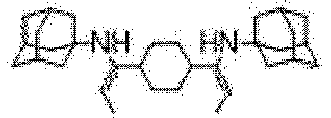


340 341 342 


343 344 345 


346 347 348 


349 350 351 


352 353 354 


355 356 357 


358 359 360 


361 362 363 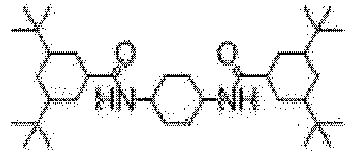


364 365 366 


367 368 369 


370 371 372 


373 374 375 


376 377 378 


379 380 381 


382 383 384 


385 386 387 


388 389 390 


391 392 393 


394 395 396 


397 398 399 


400 401 402 


403 404 405 


406 407 408 


409 410 411 


412 413 414 
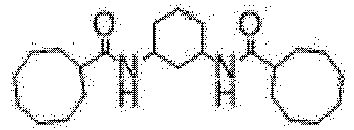

415 416 417 


418 419 420 


421 422 423 


424 425 426 


427 428 429 


430 431 432 


433 434 435 


436 437 438 


439 440 441 


442 443 444 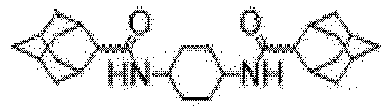
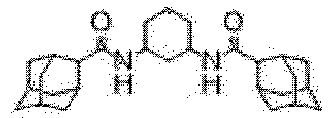

445 446 447 


448 449 450 


451 452 453 


454 455 456 


457 458 459 


460 461 462 


463 464 465 


466 467 468 


469 470 471 
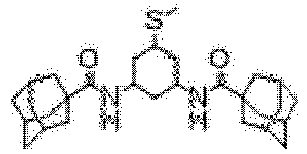

472 473 474 


475 476 477 


478 479 480 


481 482 483 


484 485 486 
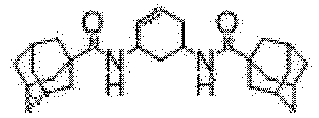

487 488 489 


490 491 492 


493 494 495 

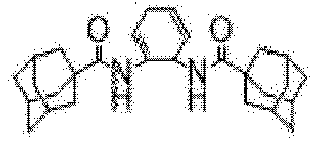
496 497 498 


499 500 501 


502 503 504 


505 506 507 


508 509 510 


511 512 513 


514 515 516 


517 518 519 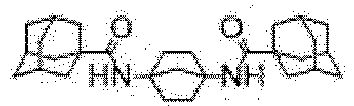


520 521 522 


523 524 525 


526 527 528 


529 530 531 


532 533 534 


535 536 537 


538 539 540 


541 542 543 


544 545 546 


547 548 549 


550 551 552 


553 554 555 


556 557 558 


559 560 561 


562 563 564 


565 566 567 


568 569 570 


571 572 573 


574 575 576 


577 578 579 
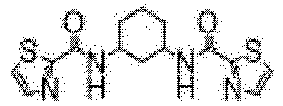
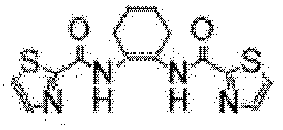
580 581 582 


583 594 585 


586 587 588 

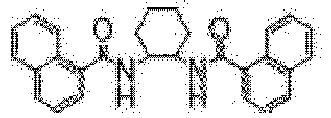
589 590 591 


592 593 594 
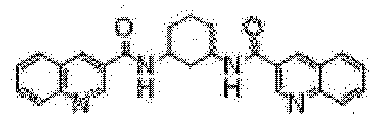

595 596 597 


598 599 600 
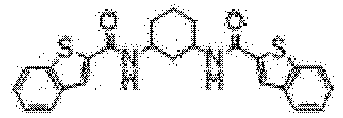

601 602 603 


604 605 606 


607 608 609 
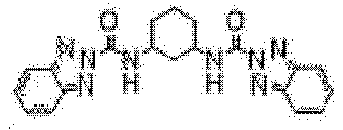

610 611 612 


613 614 615 

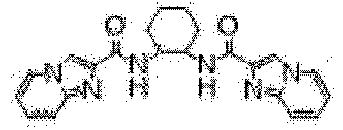
616 617 618 
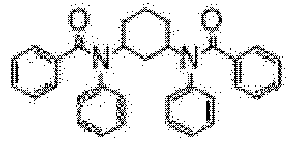

619 620 621 


622 623 624 


625 626 627 
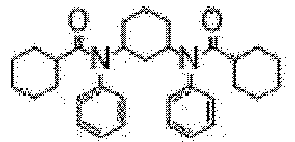

628 629 630 


631 632 633 
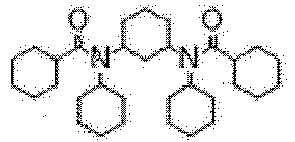

634 635 636 


637 638 639 


640 641 642 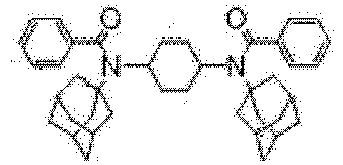
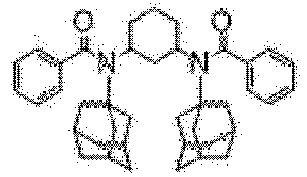

643 644 645 


646 647 648 


649 650 651 


652 653 654 


655 656 657 


658 659 660 
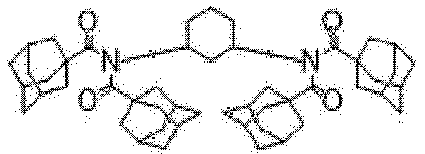

661 662 663 


664 665 666 


667 668 669 


670 671 672 


673 674 675 


676 677 678 


679 680 681 


682 683 684 


685 686 687 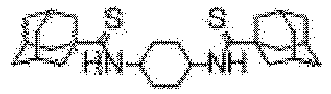

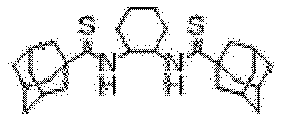
688 689 690 


691 692 693 


694 695 696 


697 698 699 


700 701 702 


703 704 705 

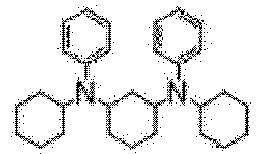
706 707 708 


709 710 711 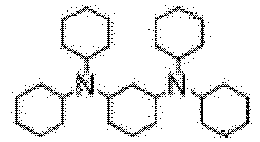


712 713 714 


715 716 717 

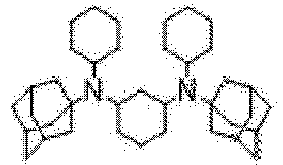
718 719 720 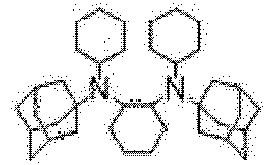


721 722 723 


724 725 726 

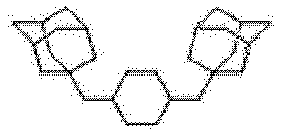
727 728 729 


730 731 732 


733 734 735 


736 737 738 


739 740 741 


742 743 744 - The compound for a capping layer of claim 1, wherein the compound has a refractive index of 1.55 or less at a wavelength of 450 nm.
- An organic light-emitting device comprising a capping layer comprising the compound for a capping layer of claim 1.
- The organic light-emitting device of claim 15, wherein the organic light-emitting device comprises:a first electrode;a second electrode; andone or more organic layers interposed between the first electrode and the second electrode,wherein the capping layer is disposed on an outer surface of either one of the first and electrodes.
- The organic light-emitting device of claim 15, wherein the capping layer has a thickness of 100 Å to 3000 Å.
- The organic light-emitting device of claim 15, wherein the capping layer has a refractive index of 1.55 or less at a wavelength of 450 nm.
- The organic light-emitting device of claim 16, wherein the capping layer comprises a first capping layer comprising the compound of claim 1 and a second capping layer having a refractive index higher than that of the first capping layer.
- The organic light-emitting device of claim 19, wherein the second capping layer is interposed between the first capping layer and the first electrode or between the first capping layer and said the electrode.
- The organic light-emitting device of claim 19, wherein the second capping layer is in contact with the first capping layer and the first electrode or in contact with the first capping layer and the second electrode.
- The organic light-emitting device of claim 19, wherein a total thickness of the first capping layer and the second capping layer is in a range of 100 Å to 3000 Å.
- The organic light-emitting device of claim 19, wherein the first capping layer has a refractive index of 1.55 or less at a wavelength of 450 nm, the second capping layer has a refractive index of 2.10 or more at a wavelength of 450 nm, and a refractive index difference between the first capping layer and the second capping layer at a wavelength of 450 nm is in a range of 0.2 to 1.2.
Applications Claiming Priority (3)
| Application Number | Priority Date | Filing Date | Title |
|---|---|---|---|
| KR20210086131 | 2021-06-30 | ||
| KR1020220011861A KR20230005048A (en) | 2021-06-30 | 2022-01-26 | New compound for capping layer and Organic light emitting diode comprising to the same |
| PCT/KR2022/009366 WO2023277593A1 (en) | 2021-06-30 | 2022-06-29 | Novel compound for capping layer, and organic light-emitting device comprising same |
Publications (2)
| Publication Number | Publication Date |
|---|---|
| EP4365164A1 true EP4365164A1 (en) | 2024-05-08 |
| EP4365164A4 EP4365164A4 (en) | 2025-07-09 |
Family
ID=84690480
Family Applications (1)
| Application Number | Title | Priority Date | Filing Date |
|---|---|---|---|
| EP22833647.5A Pending EP4365164A4 (en) | 2021-06-30 | 2022-06-29 | NOVEL COMPOUND FOR COVER LAYER AND ORGANIC LIGHT-EMITTING DEVICE THEREOF |
Country Status (4)
| Country | Link |
|---|---|
| US (1) | US20240190810A1 (en) |
| EP (1) | EP4365164A4 (en) |
| JP (1) | JP2024524466A (en) |
| WO (1) | WO2023277593A1 (en) |
Families Citing this family (2)
| Publication number | Priority date | Publication date | Assignee | Title |
|---|---|---|---|---|
| CN117362191A (en) * | 2023-09-28 | 2024-01-09 | 京东方科技集团股份有限公司 | Low refractive index organic materials and flexible OLED devices containing the same |
| WO2025250521A1 (en) * | 2024-05-28 | 2025-12-04 | Board Of Regents, The University Of Texas System | Polyacetamidosaccharides and methods of making and use thereof |
Family Cites Families (10)
| Publication number | Priority date | Publication date | Assignee | Title |
|---|---|---|---|---|
| JPH11329734A (en) | 1998-03-10 | 1999-11-30 | Mitsubishi Chemical Corp | Organic electroluminescent device |
| US8049850B2 (en) * | 2004-12-28 | 2011-11-01 | Fujifilm Corporation | Liquid crystal display device, optical compensatory sheet, and polarizer and liquid crystal display device employing the same |
| KR101395110B1 (en) * | 2012-03-30 | 2014-05-13 | 에스케이씨 주식회사 | Porous polypropylene film, preparation method thereof and separator for secondary battery comprising same |
| CN104380842B (en) * | 2012-05-31 | 2016-08-24 | 保土谷化学工业株式会社 | Organic Electroluminescent Devices |
| KR102298757B1 (en) * | 2014-10-24 | 2021-09-07 | 삼성디스플레이 주식회사 | Organic light emitting diode device |
| KR102414017B1 (en) * | 2015-10-27 | 2022-06-28 | 삼성디스플레이 주식회사 | Organic light emitting diode display |
| KR102553880B1 (en) * | 2017-08-07 | 2023-07-10 | 삼성디스플레이 주식회사 | Light emitting diode |
| KR20200050407A (en) * | 2018-11-01 | 2020-05-11 | 주식회사 동진쎄미켐 | Compound for capping layer and organic electroluminescent divice including the same |
| KR102210267B1 (en) * | 2020-05-26 | 2021-02-01 | (주)피엔에이치테크 | An electroluminescent compound and an electroluminescent device comprising the same |
| KR20230084144A (en) * | 2020-10-09 | 2023-06-12 | 호도가야 가가쿠 고교 가부시키가이샤 | Adamantane compounds and organic electroluminescent elements, electronic devices |
-
2022
- 2022-06-29 EP EP22833647.5A patent/EP4365164A4/en active Pending
- 2022-06-29 WO PCT/KR2022/009366 patent/WO2023277593A1/en not_active Ceased
- 2022-06-29 JP JP2023580956A patent/JP2024524466A/en active Pending
-
2023
- 2023-12-29 US US18/401,072 patent/US20240190810A1/en active Pending
Also Published As
| Publication number | Publication date |
|---|---|
| JP2024524466A (en) | 2024-07-05 |
| WO2023277593A1 (en) | 2023-01-05 |
| EP4365164A4 (en) | 2025-07-09 |
| US20240190810A1 (en) | 2024-06-13 |
Similar Documents
| Publication | Publication Date | Title |
|---|---|---|
| EP4365166A1 (en) | Novel compound for capping layer and organic light-emitting device comprising same | |
| EP4417604A1 (en) | Novel compound for capping layer, and organic light-emitting device comprising same | |
| KR20200050407A (en) | Compound for capping layer and organic electroluminescent divice including the same | |
| US20240279158A1 (en) | Novel compound for capping layer and organic light emitting device including same | |
| US20240190810A1 (en) | Compound for capping layer and organic light emitting device including same | |
| US20240276871A1 (en) | Novel compound for light emitting device and organic light emitting device including same | |
| KR20230005050A (en) | New compound for capping layer and Organic light emitting diode comprising to the same | |
| KR20230005048A (en) | New compound for capping layer and Organic light emitting diode comprising to the same | |
| EP4368612A1 (en) | Novel compound for capping layer, and organic light-emitting device comprising same | |
| US20240190811A1 (en) | Compound for capping layer and organic light emitting device including same | |
| KR20240035062A (en) | New compound for light emitting diode and Organic light emitting diode comprising to the same | |
| KR20230041941A (en) | New compound for capping layer and Organic light emitting diode comprising to the same | |
| EP4365165A1 (en) | Novel compound for capping layer, and organic light-emitting device comprising same | |
| EP4403551A1 (en) | Novel compound for light-emitting device, and organic light-emitting device comprising same | |
| KR20230005049A (en) | New compound for capping layer and Organic light emitting diode comprising to the same | |
| KR20230005052A (en) | New compound for capping layer and Organic light emitting diode comprising to the same | |
| KR20240035063A (en) | New compound for light emitting diode and Organic light emitting diode comprising to the same | |
| KR20230005051A (en) | New compound for capping layer and Organic light emitting diode comprising to the same | |
| KR20230041942A (en) | New compound for light emitting diode and Organic light emitting diode comprising to the same | |
| KR20240035064A (en) | New compound for light emitting diode and Organic light emitting diode comprising to the same | |
| KR20250042285A (en) | New compound for capping layer and Organic light emitting diode comprising to the same | |
| KR20250077639A (en) | New compound for capping layer and Organic light emitting diode comprising to the same | |
| KR20240057464A (en) | New compound for light emitting diode and Organic light emitting diode comprising to the same | |
| KR20250102484A (en) | New compound for light emitting diode and Organic light emitting diode comprising to the same | |
| KR20240057461A (en) | New compound for light emitting diode and Organic light emitting diode comprising to the same |
Legal Events
| Date | Code | Title | Description |
|---|---|---|---|
| STAA | Information on the status of an ep patent application or granted ep patent |
Free format text: STATUS: THE INTERNATIONAL PUBLICATION HAS BEEN MADE |
|
| PUAI | Public reference made under article 153(3) epc to a published international application that has entered the european phase |
Free format text: ORIGINAL CODE: 0009012 |
|
| STAA | Information on the status of an ep patent application or granted ep patent |
Free format text: STATUS: REQUEST FOR EXAMINATION WAS MADE |
|
| 17P | Request for examination filed |
Effective date: 20231222 |
|
| AK | Designated contracting states |
Kind code of ref document: A1 Designated state(s): AL AT BE BG CH CY CZ DE DK EE ES FI FR GB GR HR HU IE IS IT LI LT LU LV MC MK MT NL NO PL PT RO RS SE SI SK SM TR |
|
| DAV | Request for validation of the european patent (deleted) | ||
| DAX | Request for extension of the european patent (deleted) | ||
| A4 | Supplementary search report drawn up and despatched |
Effective date: 20250612 |
|
| RIC1 | Information provided on ipc code assigned before grant |
Ipc: C07D 403/10 20060101ALI20250605BHEP Ipc: C07D 209/10 20060101ALI20250605BHEP Ipc: C07D 295/14 20060101ALI20250605BHEP Ipc: C07D 409/12 20060101ALI20250605BHEP Ipc: C07D 335/02 20060101ALI20250605BHEP Ipc: C07D 407/12 20060101ALI20250605BHEP Ipc: C07D 309/08 20060101ALI20250605BHEP Ipc: C07D 401/10 20060101ALI20250605BHEP Ipc: C07D 211/32 20060101ALI20250605BHEP Ipc: C07C 233/57 20060101AFI20250605BHEP |