EP4361417A2 - Split cycle engine - Google Patents
Split cycle engine Download PDFInfo
- Publication number
- EP4361417A2 EP4361417A2 EP24163387.4A EP24163387A EP4361417A2 EP 4361417 A2 EP4361417 A2 EP 4361417A2 EP 24163387 A EP24163387 A EP 24163387A EP 4361417 A2 EP4361417 A2 EP 4361417A2
- Authority
- EP
- European Patent Office
- Prior art keywords
- combustion
- piston
- parameter
- cylinder
- combustion cylinder
- Prior art date
- Legal status (The legal status is an assumption and is not a legal conclusion. Google has not performed a legal analysis and makes no representation as to the accuracy of the status listed.)
- Pending
Links
Images







Classifications
-
- F—MECHANICAL ENGINEERING; LIGHTING; HEATING; WEAPONS; BLASTING
- F02—COMBUSTION ENGINES; HOT-GAS OR COMBUSTION-PRODUCT ENGINE PLANTS
- F02D—CONTROLLING COMBUSTION ENGINES
- F02D19/00—Controlling engines characterised by their use of non-liquid fuels, pluralities of fuels, or non-fuel substances added to the combustible mixtures
- F02D19/02—Controlling engines characterised by their use of non-liquid fuels, pluralities of fuels, or non-fuel substances added to the combustible mixtures peculiar to engines working with gaseous fuels
- F02D19/021—Control of components of the fuel supply system
- F02D19/023—Control of components of the fuel supply system to adjust the fuel mass or volume flow
-
- F—MECHANICAL ENGINEERING; LIGHTING; HEATING; WEAPONS; BLASTING
- F02—COMBUSTION ENGINES; HOT-GAS OR COMBUSTION-PRODUCT ENGINE PLANTS
- F02B—INTERNAL-COMBUSTION PISTON ENGINES; COMBUSTION ENGINES IN GENERAL
- F02B33/00—Engines characterised by provision of pumps for charging or scavenging
- F02B33/02—Engines with reciprocating-piston pumps; Engines with crankcase pumps
- F02B33/06—Engines with reciprocating-piston pumps; Engines with crankcase pumps with reciprocating-piston pumps other than simple crankcase pumps
- F02B33/22—Engines with reciprocating-piston pumps; Engines with crankcase pumps with reciprocating-piston pumps other than simple crankcase pumps with pumping cylinder situated at side of working cylinder, e.g. the cylinders being parallel
-
- F—MECHANICAL ENGINEERING; LIGHTING; HEATING; WEAPONS; BLASTING
- F02—COMBUSTION ENGINES; HOT-GAS OR COMBUSTION-PRODUCT ENGINE PLANTS
- F02B—INTERNAL-COMBUSTION PISTON ENGINES; COMBUSTION ENGINES IN GENERAL
- F02B33/00—Engines characterised by provision of pumps for charging or scavenging
- F02B33/02—Engines with reciprocating-piston pumps; Engines with crankcase pumps
- F02B33/06—Engines with reciprocating-piston pumps; Engines with crankcase pumps with reciprocating-piston pumps other than simple crankcase pumps
-
- F—MECHANICAL ENGINEERING; LIGHTING; HEATING; WEAPONS; BLASTING
- F01—MACHINES OR ENGINES IN GENERAL; ENGINE PLANTS IN GENERAL; STEAM ENGINES
- F01N—GAS-FLOW SILENCERS OR EXHAUST APPARATUS FOR MACHINES OR ENGINES IN GENERAL; GAS-FLOW SILENCERS OR EXHAUST APPARATUS FOR INTERNAL-COMBUSTION ENGINES
- F01N11/00—Monitoring or diagnostic devices for exhaust-gas treatment apparatus
- F01N11/002—Monitoring or diagnostic devices for exhaust-gas treatment apparatus the diagnostic devices measuring or estimating temperature or pressure in, or downstream of the exhaust apparatus
-
- F—MECHANICAL ENGINEERING; LIGHTING; HEATING; WEAPONS; BLASTING
- F01—MACHINES OR ENGINES IN GENERAL; ENGINE PLANTS IN GENERAL; STEAM ENGINES
- F01N—GAS-FLOW SILENCERS OR EXHAUST APPARATUS FOR MACHINES OR ENGINES IN GENERAL; GAS-FLOW SILENCERS OR EXHAUST APPARATUS FOR INTERNAL-COMBUSTION ENGINES
- F01N3/00—Exhaust or silencing apparatus having means for purifying, rendering innocuous, or otherwise treating exhaust
- F01N3/08—Exhaust or silencing apparatus having means for purifying, rendering innocuous, or otherwise treating exhaust for rendering innocuous
- F01N3/10—Exhaust or silencing apparatus having means for purifying, rendering innocuous, or otherwise treating exhaust for rendering innocuous by thermal or catalytic conversion of noxious components of exhaust
- F01N3/18—Exhaust or silencing apparatus having means for purifying, rendering innocuous, or otherwise treating exhaust for rendering innocuous by thermal or catalytic conversion of noxious components of exhaust characterised by methods of operation; Control
- F01N3/20—Exhaust or silencing apparatus having means for purifying, rendering innocuous, or otherwise treating exhaust for rendering innocuous by thermal or catalytic conversion of noxious components of exhaust characterised by methods of operation; Control specially adapted for catalytic conversion
- F01N3/2006—Periodically heating or cooling catalytic reactors, e.g. at cold starting or overheating
-
- F—MECHANICAL ENGINEERING; LIGHTING; HEATING; WEAPONS; BLASTING
- F01—MACHINES OR ENGINES IN GENERAL; ENGINE PLANTS IN GENERAL; STEAM ENGINES
- F01N—GAS-FLOW SILENCERS OR EXHAUST APPARATUS FOR MACHINES OR ENGINES IN GENERAL; GAS-FLOW SILENCERS OR EXHAUST APPARATUS FOR INTERNAL-COMBUSTION ENGINES
- F01N5/00—Exhaust or silencing apparatus combined or associated with devices profiting by exhaust energy
- F01N5/02—Exhaust or silencing apparatus combined or associated with devices profiting by exhaust energy the devices using heat
-
- F—MECHANICAL ENGINEERING; LIGHTING; HEATING; WEAPONS; BLASTING
- F01—MACHINES OR ENGINES IN GENERAL; ENGINE PLANTS IN GENERAL; STEAM ENGINES
- F01P—COOLING OF MACHINES OR ENGINES IN GENERAL; COOLING OF INTERNAL-COMBUSTION ENGINES
- F01P3/00—Liquid cooling
- F01P3/22—Liquid cooling characterised by evaporation and condensation of coolant in closed cycles; characterised by the coolant reaching higher temperatures than normal atmospheric boiling-point
-
- F—MECHANICAL ENGINEERING; LIGHTING; HEATING; WEAPONS; BLASTING
- F02—COMBUSTION ENGINES; HOT-GAS OR COMBUSTION-PRODUCT ENGINE PLANTS
- F02B—INTERNAL-COMBUSTION PISTON ENGINES; COMBUSTION ENGINES IN GENERAL
- F02B41/00—Engines characterised by special means for improving conversion of heat or pressure energy into mechanical power
- F02B41/02—Engines with prolonged expansion
- F02B41/06—Engines with prolonged expansion in compound cylinders
-
- F—MECHANICAL ENGINEERING; LIGHTING; HEATING; WEAPONS; BLASTING
- F02—COMBUSTION ENGINES; HOT-GAS OR COMBUSTION-PRODUCT ENGINE PLANTS
- F02B—INTERNAL-COMBUSTION PISTON ENGINES; COMBUSTION ENGINES IN GENERAL
- F02B47/00—Methods of operating engines involving adding non-fuel substances or anti-knock agents to combustion air, fuel, or fuel-air mixtures of engines
-
- F—MECHANICAL ENGINEERING; LIGHTING; HEATING; WEAPONS; BLASTING
- F02—COMBUSTION ENGINES; HOT-GAS OR COMBUSTION-PRODUCT ENGINE PLANTS
- F02B—INTERNAL-COMBUSTION PISTON ENGINES; COMBUSTION ENGINES IN GENERAL
- F02B47/00—Methods of operating engines involving adding non-fuel substances or anti-knock agents to combustion air, fuel, or fuel-air mixtures of engines
- F02B47/02—Methods of operating engines involving adding non-fuel substances or anti-knock agents to combustion air, fuel, or fuel-air mixtures of engines the substances being water or steam
-
- F—MECHANICAL ENGINEERING; LIGHTING; HEATING; WEAPONS; BLASTING
- F02—COMBUSTION ENGINES; HOT-GAS OR COMBUSTION-PRODUCT ENGINE PLANTS
- F02B—INTERNAL-COMBUSTION PISTON ENGINES; COMBUSTION ENGINES IN GENERAL
- F02B47/00—Methods of operating engines involving adding non-fuel substances or anti-knock agents to combustion air, fuel, or fuel-air mixtures of engines
- F02B47/04—Methods of operating engines involving adding non-fuel substances or anti-knock agents to combustion air, fuel, or fuel-air mixtures of engines the substances being other than water or steam only
-
- F—MECHANICAL ENGINEERING; LIGHTING; HEATING; WEAPONS; BLASTING
- F02—COMBUSTION ENGINES; HOT-GAS OR COMBUSTION-PRODUCT ENGINE PLANTS
- F02B—INTERNAL-COMBUSTION PISTON ENGINES; COMBUSTION ENGINES IN GENERAL
- F02B51/00—Other methods of operating engines involving pretreating of, or adding substances to, combustion air, fuel, or fuel-air mixture of the engines
-
- F—MECHANICAL ENGINEERING; LIGHTING; HEATING; WEAPONS; BLASTING
- F02—COMBUSTION ENGINES; HOT-GAS OR COMBUSTION-PRODUCT ENGINE PLANTS
- F02B—INTERNAL-COMBUSTION PISTON ENGINES; COMBUSTION ENGINES IN GENERAL
- F02B51/00—Other methods of operating engines involving pretreating of, or adding substances to, combustion air, fuel, or fuel-air mixture of the engines
- F02B51/02—Other methods of operating engines involving pretreating of, or adding substances to, combustion air, fuel, or fuel-air mixture of the engines involving catalysts
-
- F—MECHANICAL ENGINEERING; LIGHTING; HEATING; WEAPONS; BLASTING
- F02—COMBUSTION ENGINES; HOT-GAS OR COMBUSTION-PRODUCT ENGINE PLANTS
- F02D—CONTROLLING COMBUSTION ENGINES
- F02D13/00—Controlling the engine output power by varying inlet or exhaust valve operating characteristics, e.g. timing
- F02D13/02—Controlling the engine output power by varying inlet or exhaust valve operating characteristics, e.g. timing during engine operation
- F02D13/0203—Variable control of intake and exhaust valves
-
- F—MECHANICAL ENGINEERING; LIGHTING; HEATING; WEAPONS; BLASTING
- F02—COMBUSTION ENGINES; HOT-GAS OR COMBUSTION-PRODUCT ENGINE PLANTS
- F02D—CONTROLLING COMBUSTION ENGINES
- F02D13/00—Controlling the engine output power by varying inlet or exhaust valve operating characteristics, e.g. timing
- F02D13/02—Controlling the engine output power by varying inlet or exhaust valve operating characteristics, e.g. timing during engine operation
- F02D13/0203—Variable control of intake and exhaust valves
- F02D13/0207—Variable control of intake and exhaust valves changing valve lift or valve lift and timing
-
- F—MECHANICAL ENGINEERING; LIGHTING; HEATING; WEAPONS; BLASTING
- F02—COMBUSTION ENGINES; HOT-GAS OR COMBUSTION-PRODUCT ENGINE PLANTS
- F02D—CONTROLLING COMBUSTION ENGINES
- F02D13/00—Controlling the engine output power by varying inlet or exhaust valve operating characteristics, e.g. timing
- F02D13/02—Controlling the engine output power by varying inlet or exhaust valve operating characteristics, e.g. timing during engine operation
- F02D13/0242—Variable control of the exhaust valves only
-
- F—MECHANICAL ENGINEERING; LIGHTING; HEATING; WEAPONS; BLASTING
- F02—COMBUSTION ENGINES; HOT-GAS OR COMBUSTION-PRODUCT ENGINE PLANTS
- F02D—CONTROLLING COMBUSTION ENGINES
- F02D13/00—Controlling the engine output power by varying inlet or exhaust valve operating characteristics, e.g. timing
- F02D13/02—Controlling the engine output power by varying inlet or exhaust valve operating characteristics, e.g. timing during engine operation
- F02D13/0242—Variable control of the exhaust valves only
- F02D13/0249—Variable control of the exhaust valves only changing the valve timing only
-
- F—MECHANICAL ENGINEERING; LIGHTING; HEATING; WEAPONS; BLASTING
- F02—COMBUSTION ENGINES; HOT-GAS OR COMBUSTION-PRODUCT ENGINE PLANTS
- F02D—CONTROLLING COMBUSTION ENGINES
- F02D19/00—Controlling engines characterised by their use of non-liquid fuels, pluralities of fuels, or non-fuel substances added to the combustible mixtures
- F02D19/06—Controlling engines characterised by their use of non-liquid fuels, pluralities of fuels, or non-fuel substances added to the combustible mixtures peculiar to engines working with pluralities of fuels, e.g. alternatively with light and heavy fuel oil, other than engines indifferent to the fuel consumed
- F02D19/08—Controlling engines characterised by their use of non-liquid fuels, pluralities of fuels, or non-fuel substances added to the combustible mixtures peculiar to engines working with pluralities of fuels, e.g. alternatively with light and heavy fuel oil, other than engines indifferent to the fuel consumed simultaneously using pluralities of fuels
- F02D19/10—Controlling engines characterised by their use of non-liquid fuels, pluralities of fuels, or non-fuel substances added to the combustible mixtures peculiar to engines working with pluralities of fuels, e.g. alternatively with light and heavy fuel oil, other than engines indifferent to the fuel consumed simultaneously using pluralities of fuels peculiar to compression-ignition engines in which the main fuel is gaseous
- F02D19/105—Controlling engines characterised by their use of non-liquid fuels, pluralities of fuels, or non-fuel substances added to the combustible mixtures peculiar to engines working with pluralities of fuels, e.g. alternatively with light and heavy fuel oil, other than engines indifferent to the fuel consumed simultaneously using pluralities of fuels peculiar to compression-ignition engines in which the main fuel is gaseous operating in a special mode, e.g. in a liquid fuel only mode for starting
-
- F—MECHANICAL ENGINEERING; LIGHTING; HEATING; WEAPONS; BLASTING
- F02—COMBUSTION ENGINES; HOT-GAS OR COMBUSTION-PRODUCT ENGINE PLANTS
- F02D—CONTROLLING COMBUSTION ENGINES
- F02D19/00—Controlling engines characterised by their use of non-liquid fuels, pluralities of fuels, or non-fuel substances added to the combustible mixtures
- F02D19/12—Controlling engines characterised by their use of non-liquid fuels, pluralities of fuels, or non-fuel substances added to the combustible mixtures peculiar to engines working with non-fuel substances or with anti-knock agents, e.g. with anti-knock fuel
-
- F—MECHANICAL ENGINEERING; LIGHTING; HEATING; WEAPONS; BLASTING
- F02—COMBUSTION ENGINES; HOT-GAS OR COMBUSTION-PRODUCT ENGINE PLANTS
- F02D—CONTROLLING COMBUSTION ENGINES
- F02D35/00—Controlling engines, dependent on conditions exterior or interior to engines, not otherwise provided for
- F02D35/02—Controlling engines, dependent on conditions exterior or interior to engines, not otherwise provided for on interior conditions
-
- F—MECHANICAL ENGINEERING; LIGHTING; HEATING; WEAPONS; BLASTING
- F02—COMBUSTION ENGINES; HOT-GAS OR COMBUSTION-PRODUCT ENGINE PLANTS
- F02D—CONTROLLING COMBUSTION ENGINES
- F02D35/00—Controlling engines, dependent on conditions exterior or interior to engines, not otherwise provided for
- F02D35/02—Controlling engines, dependent on conditions exterior or interior to engines, not otherwise provided for on interior conditions
- F02D35/023—Controlling engines, dependent on conditions exterior or interior to engines, not otherwise provided for on interior conditions by determining the cylinder pressure
-
- F—MECHANICAL ENGINEERING; LIGHTING; HEATING; WEAPONS; BLASTING
- F02—COMBUSTION ENGINES; HOT-GAS OR COMBUSTION-PRODUCT ENGINE PLANTS
- F02D—CONTROLLING COMBUSTION ENGINES
- F02D35/00—Controlling engines, dependent on conditions exterior or interior to engines, not otherwise provided for
- F02D35/02—Controlling engines, dependent on conditions exterior or interior to engines, not otherwise provided for on interior conditions
- F02D35/025—Controlling engines, dependent on conditions exterior or interior to engines, not otherwise provided for on interior conditions by determining temperatures inside the cylinder, e.g. combustion temperatures
-
- F—MECHANICAL ENGINEERING; LIGHTING; HEATING; WEAPONS; BLASTING
- F02—COMBUSTION ENGINES; HOT-GAS OR COMBUSTION-PRODUCT ENGINE PLANTS
- F02D—CONTROLLING COMBUSTION ENGINES
- F02D41/00—Electrical control of supply of combustible mixture or its constituents
- F02D41/0025—Controlling engines characterised by use of non-liquid fuels, pluralities of fuels, or non-fuel substances added to the combustible mixtures
-
- F—MECHANICAL ENGINEERING; LIGHTING; HEATING; WEAPONS; BLASTING
- F02—COMBUSTION ENGINES; HOT-GAS OR COMBUSTION-PRODUCT ENGINE PLANTS
- F02D—CONTROLLING COMBUSTION ENGINES
- F02D41/00—Electrical control of supply of combustible mixture or its constituents
- F02D41/02—Circuit arrangements for generating control signals
- F02D41/04—Introducing corrections for particular operating conditions
- F02D41/06—Introducing corrections for particular operating conditions for engine starting or warming up
- F02D41/062—Introducing corrections for particular operating conditions for engine starting or warming up for starting
- F02D41/064—Introducing corrections for particular operating conditions for engine starting or warming up for starting at cold start
-
- F—MECHANICAL ENGINEERING; LIGHTING; HEATING; WEAPONS; BLASTING
- F02—COMBUSTION ENGINES; HOT-GAS OR COMBUSTION-PRODUCT ENGINE PLANTS
- F02F—CYLINDERS, PISTONS OR CASINGS, FOR COMBUSTION ENGINES; ARRANGEMENTS OF SEALINGS IN COMBUSTION ENGINES
- F02F7/00—Casings, e.g. crankcases
- F02F7/0085—Materials for constructing engines or their parts
- F02F7/0087—Ceramic materials
-
- F—MECHANICAL ENGINEERING; LIGHTING; HEATING; WEAPONS; BLASTING
- F02—COMBUSTION ENGINES; HOT-GAS OR COMBUSTION-PRODUCT ENGINE PLANTS
- F02M—SUPPLYING COMBUSTION ENGINES IN GENERAL WITH COMBUSTIBLE MIXTURES OR CONSTITUENTS THEREOF
- F02M21/00—Apparatus for supplying engines with non-liquid fuels, e.g. gaseous fuels stored in liquid form
- F02M21/02—Apparatus for supplying engines with non-liquid fuels, e.g. gaseous fuels stored in liquid form for gaseous fuels
- F02M21/0218—Details on the gaseous fuel supply system, e.g. tanks, valves, pipes, pumps, rails, injectors or mixers
- F02M21/0248—Injectors
- F02M21/0275—Injectors for in-cylinder direct injection, e.g. injector combined with spark plug
-
- F—MECHANICAL ENGINEERING; LIGHTING; HEATING; WEAPONS; BLASTING
- F02—COMBUSTION ENGINES; HOT-GAS OR COMBUSTION-PRODUCT ENGINE PLANTS
- F02M—SUPPLYING COMBUSTION ENGINES IN GENERAL WITH COMBUSTIBLE MIXTURES OR CONSTITUENTS THEREOF
- F02M21/00—Apparatus for supplying engines with non-liquid fuels, e.g. gaseous fuels stored in liquid form
- F02M21/02—Apparatus for supplying engines with non-liquid fuels, e.g. gaseous fuels stored in liquid form for gaseous fuels
- F02M21/0218—Details on the gaseous fuel supply system, e.g. tanks, valves, pipes, pumps, rails, injectors or mixers
- F02M21/0287—Details on the gaseous fuel supply system, e.g. tanks, valves, pipes, pumps, rails, injectors or mixers characterised by the transition from liquid to gaseous phase ; Injection in liquid phase; Cooling and low temperature storage
-
- F—MECHANICAL ENGINEERING; LIGHTING; HEATING; WEAPONS; BLASTING
- F02—COMBUSTION ENGINES; HOT-GAS OR COMBUSTION-PRODUCT ENGINE PLANTS
- F02M—SUPPLYING COMBUSTION ENGINES IN GENERAL WITH COMBUSTIBLE MIXTURES OR CONSTITUENTS THEREOF
- F02M25/00—Engine-pertinent apparatus for adding non-fuel substances or small quantities of secondary fuel to combustion-air, main fuel or fuel-air mixture
-
- F—MECHANICAL ENGINEERING; LIGHTING; HEATING; WEAPONS; BLASTING
- F02—COMBUSTION ENGINES; HOT-GAS OR COMBUSTION-PRODUCT ENGINE PLANTS
- F02M—SUPPLYING COMBUSTION ENGINES IN GENERAL WITH COMBUSTIBLE MIXTURES OR CONSTITUENTS THEREOF
- F02M26/00—Engine-pertinent apparatus for adding exhaust gases to combustion-air, main fuel or fuel-air mixture, e.g. by exhaust gas recirculation [EGR] systems
- F02M26/01—Internal exhaust gas recirculation, i.e. wherein the residual exhaust gases are trapped in the cylinder or pushed back from the intake or the exhaust manifold into the combustion chamber without the use of additional passages
-
- F—MECHANICAL ENGINEERING; LIGHTING; HEATING; WEAPONS; BLASTING
- F02—COMBUSTION ENGINES; HOT-GAS OR COMBUSTION-PRODUCT ENGINE PLANTS
- F02M—SUPPLYING COMBUSTION ENGINES IN GENERAL WITH COMBUSTIBLE MIXTURES OR CONSTITUENTS THEREOF
- F02M31/00—Apparatus for thermally treating combustion-air, fuel, or fuel-air mixture
- F02M31/02—Apparatus for thermally treating combustion-air, fuel, or fuel-air mixture for heating
- F02M31/04—Apparatus for thermally treating combustion-air, fuel, or fuel-air mixture for heating combustion-air or fuel-air mixture
- F02M31/042—Combustion air
-
- F—MECHANICAL ENGINEERING; LIGHTING; HEATING; WEAPONS; BLASTING
- F02—COMBUSTION ENGINES; HOT-GAS OR COMBUSTION-PRODUCT ENGINE PLANTS
- F02M—SUPPLYING COMBUSTION ENGINES IN GENERAL WITH COMBUSTIBLE MIXTURES OR CONSTITUENTS THEREOF
- F02M31/00—Apparatus for thermally treating combustion-air, fuel, or fuel-air mixture
- F02M31/02—Apparatus for thermally treating combustion-air, fuel, or fuel-air mixture for heating
- F02M31/04—Apparatus for thermally treating combustion-air, fuel, or fuel-air mixture for heating combustion-air or fuel-air mixture
- F02M31/06—Apparatus for thermally treating combustion-air, fuel, or fuel-air mixture for heating combustion-air or fuel-air mixture by hot gases, e.g. by mixing cold and hot air
- F02M31/08—Apparatus for thermally treating combustion-air, fuel, or fuel-air mixture for heating combustion-air or fuel-air mixture by hot gases, e.g. by mixing cold and hot air the gases being exhaust gases
-
- F—MECHANICAL ENGINEERING; LIGHTING; HEATING; WEAPONS; BLASTING
- F01—MACHINES OR ENGINES IN GENERAL; ENGINE PLANTS IN GENERAL; STEAM ENGINES
- F01P—COOLING OF MACHINES OR ENGINES IN GENERAL; COOLING OF INTERNAL-COMBUSTION ENGINES
- F01P3/00—Liquid cooling
- F01P3/22—Liquid cooling characterised by evaporation and condensation of coolant in closed cycles; characterised by the coolant reaching higher temperatures than normal atmospheric boiling-point
- F01P2003/2214—Condensers
-
- F—MECHANICAL ENGINEERING; LIGHTING; HEATING; WEAPONS; BLASTING
- F02—COMBUSTION ENGINES; HOT-GAS OR COMBUSTION-PRODUCT ENGINE PLANTS
- F02B—INTERNAL-COMBUSTION PISTON ENGINES; COMBUSTION ENGINES IN GENERAL
- F02B75/00—Other engines
- F02B75/02—Engines characterised by their cycles, e.g. six-stroke
-
- F—MECHANICAL ENGINEERING; LIGHTING; HEATING; WEAPONS; BLASTING
- F02—COMBUSTION ENGINES; HOT-GAS OR COMBUSTION-PRODUCT ENGINE PLANTS
- F02D—CONTROLLING COMBUSTION ENGINES
- F02D13/00—Controlling the engine output power by varying inlet or exhaust valve operating characteristics, e.g. timing
- F02D13/02—Controlling the engine output power by varying inlet or exhaust valve operating characteristics, e.g. timing during engine operation
- F02D2013/0292—Controlling the engine output power by varying inlet or exhaust valve operating characteristics, e.g. timing during engine operation in the start-up phase, e.g. for warming-up cold engine or catalyst
-
- F—MECHANICAL ENGINEERING; LIGHTING; HEATING; WEAPONS; BLASTING
- F02—COMBUSTION ENGINES; HOT-GAS OR COMBUSTION-PRODUCT ENGINE PLANTS
- F02D—CONTROLLING COMBUSTION ENGINES
- F02D41/00—Electrical control of supply of combustible mixture or its constituents
- F02D41/0002—Controlling intake air
- F02D2041/001—Controlling intake air for engines with variable valve actuation
Definitions
- the present disclosure relates to a split cycle internal combustion engine and method of operating the same.
- a working fluid comprising air is compressed in a first, compression, cylinder and provided to a second, combustion, cylinder, where fuel is injected and the mixture of the fuel and the high pressure fluid combusts to produce drive.
- Thermodynamic benefits may be derived from separating the compression and the expansion/combustion processes in this manner.
- WO 2010/067080 describes a split cycle engine and associated thermodynamic advantages.
- thermodynamic benefits may be achieved by injecting a cryogenic fluid into the compression cylinder during the compression stroke.
- a cryogenic fluid such as WO 2016/016664 .
- a recuperator may be provided, having a first fluid path carrying compressed fluid from the compression cylinder to the expansion cylinder, and a second fluid path carrying exhaust gases from an outlet of the combustion cylinder, in order to heat the compressed fluid on its way to the combustion cylinder. This may help to ensure that the compressed fluid arriving at the combustion cylinder is sufficiently hot that combustion may occur when the fuel is injected.
- cryogenic fluid or liquid is used to refer to a fluid which has been condensed into its liquid phase via a refrigeration process.
- Embodiments described herein relate to a split cycle engine in which a cryogenic fluid is injected during the compression stroke.
- the methods described herein could be implemented without the injection of a cryogen.
- other fluids water as an example, may be added to the recuperator to control terminal temperature at the exit from the recuperator.
- the split cycle engine has a controller which is arranged to receive an indication of a parameter associated with the combustion cylinder and/or a fluid associated therewith and to control a feature of the engine in dependence on the indicated parameter.
- the parameter may be one or more of a temperature, pressure and oxygen concentration, therefore an indication of a parameter may comprise one or more of temperature data, pressure data and oxygen concentration data.
- the controller may receive temperature and pressure data, temperature and oxygen concentration data, pressure and oxygen concentration data or temperature, pressure and oxygen concentration data and use this date to control one or more of the cryogen injection, exhaust valve timing and recuperator water injection, individually or in combination.
- the indicated temperature could be at least one of a temperature inside the combustion cylinder, a temperature inside the recuperator of the engine, in particular a surface of the recuperator which is coated with a catalyst, a temperature of the compressed fluid in the recuperator, a temperature of the compressed fluid at the inlet of the combustion cylinder or a temperature of the exhaust gas.
- the indicated pressure could be at least one of a pressure inside the combustion cylinder, a pressure inside the recuperator of the engine, a pressure of the compressed fluid in the recuperator, a pressure of the compressed fluid at the inlet of the combustion cylinder or a pressure of the exhaust gas.
- the indicated oxygen concentration could be at least one of an oxygen concentration inside the combustion cylinder, an oxygen concentration inside the recuperator of the engine, an oxygen concentration of the compressed fluid in the recuperator, an oxygen concentration of the compressed fluid at the inlet of the combustion cylinder or an oxygen concentration of the exhaust gas.
- the feature of the engine which is controlled may be one or more of the timing of closure of the exhaust valve, the quantity or rate of cryogen injection during the compression stroke and rate, quantity or timing of fuel injection into the combustion cylinder.
- the feature of the engine is controlled based on a comparison between the indication of the parameter and a target value for the parameter.
- the feature of the engine is controlled based on a difference between the indication of the parameter and a target value for the parameter.
- the controller is arranged to receive an indication of a temperature of the compressed fluid at the inlet of the combustion cylinder and to control the closure of the exhaust valve of the combustion cylinder based on a comparison between the indicated temperature and a target temperature for the compressed fluid at the combustion cylinder inlet.
- the target temperature may be defined based on a desired temperature for combustion in the cylinder.
- the controller is arranged to cause the exhaust valve to close during the return stroke of the combustion piston (108, 128), before the combustion piston has reached its top dead centre position (TDC), when the indicated temperature is less than a temperature; and to close on completion of the return stroke of the combustion piston, as the combustion piston reaches its top dead centre position (TDC), when the indicated temperature is equal to or greater than the target temperature.
- Closing the exhaust valve before the combustion piston has reached its top dead centre position (TDC), when the indicated temperature is less than a temperature, may be described as a "cold start" mode of operation. This corresponds to the indicated temperature being sub-optimal for combustion, which may be due to the lack of heat available for collection in the recuperator.
- TDC top dead centre position
- Closing the exhaust on completion of the return stroke of the combustion piston, as the combustion piston reaches its top dead centre position (TDC), may be described as a "normal mode" of operation, which corresponds to the indicated temperature being acceptable for combustion. This condition would usually be expected to be reached after the recuperator, and thereby the temperature of the compressed fluid supplied to the combustion cylinder inlet, has warmed up as hot exhaust gases flow through the recuperator.
- the exhaust valve may, in this condition, be closed as the combustion piston completes its return stroke, expelling all exhaust gases from the combustion cylinder and into the recuperator pathway.
- valve timing control is based on the measurement of a pressure and/or an oxygen concentration, optionally in addition to a temperature measurement.
- the controller is arranged to receive an indication of a temperature of the compressed fluid at the inlet of the combustion cylinder and to control the amount of cryogenic fluid provided to the compression cylinder during the compression stroke. This reduces the limitation on the temperature rise of the compressed fluid during "cold” cycles in which there is insufficient heat in the recuperator to raise the compressed fluid to a target combustion temperature at the combustion cylinder inlet.
- the control may be based on a comparison between the indicated temperature and a target temperature for the compressed fluid at the combustion cylinder inlet.
- the target temperature may be defined based on a desired temperature for combustion in the cylinder.
- the controller may be arranged to control the quantity of cryogenic fluid injected into the compression cylinder such that a "normal mode” quantity of cryogenic liquid is provided to the compression cylinder when the indicated temperature is equal to or greater than a target temperature, and a "cold mode” quantity of cryogenic liquid is provided to the compression cylinder when the indicated temperature is less than the target temperature, wherein the "cold mode" quantity is less than the "normal mode” quantity.
- the "normal mode" quantity of cryogen will generally be understood to be the rate and quantity of cryogen injection such that the cryogenic liquid vaporises into its gaseous phase during the compression stroke of the compression piston, such that a rise in temperature caused by the compression stroke is limited to approximately zero by the absorption of heat by the cryogenic liquid. This may allow more efficient compression. This may also allow a maximal amount of heat to be recuperated from exhaust gases.
- a "hot mode” of operation When the indicated temperature is greater than a target temperature for "normal mode” operation, a "hot mode” of operation may be enabled.
- the amount of cryogenic liquid added may be optimised based on the temperature at the inlet, so under high load conditions when more heat is available, temperature is lower at the end of compression than before performing compression work.
- the "hot mode" quantity of cryogen will be understood as being a higher quantity and/or rate of cryogen injection per compression stroke than the "normal mode” quantity, such that the temperature of the fluid within the compression cylinder is allowed to be controlled within safe limits.
- water could be added to the recuperator under high load conditions.
- the "cold mode" quantity of cryogen will be understood as being a lower quantity and/or rate of cryogen injection per compression stroke than the "normal mode” quantity, such that the temperature of the fluid within the compression cylinder is allowed to rise as a result of the compression. This allows the compressed fluid to exit the compression cylinder in a hotter state, to compensate for the lack of heat available in the recuperator.
- the cryogen injection control is based on the measurement of a pressure and/or an oxygen concentration, optionally in addition to a temperature measurement.
- the exhaust valve timing and cryogen injection are both controlled based on one or more measured engine parameters.
- FIG. 1 shows a schematic diagram of a split cycle internal combustion engine 101.
- the engine comprises a compression cylinder 104 and a combustion cylinder 126, each cylinder having an associated piston configured to reciprocate within it.
- the compression cylinder 104 comprises a cryogen inlet valve 110 that is connected to a cryogen reservoir 112.
- the compression cylinder 104 has a fluid inlet valve 106 connected to a turbo charger 102 to receive a compressed air supply and a fluid outlet valve 116.
- a fluid inlet valve 124 of the combustion cylinder 126 is coupled to the fluid outlet valve 116 to receive compressed fluid from the compression cylinder 104.
- the combustion cylinder also has a fuel inlet valve 130 coupled to a fuel source 132 and an exhaust valve 134.
- compressed fluid passes through a recuperator 118.
- This recuperator 118 is heated by exhaust gases from the combustion cylinder exhaust valve 134 passing along an exhaust pathway 136 to an exhaust outlet 138.
- the split cycle engine 101 comprises a controller 100.
- This controller 100 is connected to at least one sensor 122.
- at least one sensor 122 could be a temperature sensor, a pressure sensor, an oxygen concentration sensor or any combination thereof.
- a temperature sensor 122 is disposed near the combustion cylinder 126 fluid intake, at a point along the path 120 of the compressed fluid between the recuperator 118 and the combustion cylinder fluid intake valve 124.
- This sensor 122 is operable to sense the temperature of the compressed fluid and report sensed temperature data back to the controller 100.
- the controller 100 is arranged to receive this temperature data and control the timing of the exhaust valve 134 on the combustion cylinder 126 based at least in part on the received temperature data.
- the controller 100 may also be operable to adjust the operation of the cryogen inlet valve 110 to control the amount of cryogen that is injected into the compression cylinder 104.
- the exhaust gas leaves the combustion cylinder 126 via the exhaust valve 134 and travels along exhaust pathway 136 coming into thermal communication with the recuperator 118 to heat compressed fluid travelling along the pathway 120 between the compression cylinder outlet valve 116 and the combustion cylinder inlet valve 124.
- sensor or sensors can be located in a multitude of places.
- one or more sensors may be placed near the inlet valve 124 on the combustion cylinder as shown in Figure 1 , in the recuperator 118 or near the compression cylinder outlet valve 116.
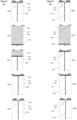
- Figure 2a shows schematically a process of controlling the combustion cylinder during a cold start mode of operation, including stages 200a, 202a, 204a, 206a and 208a by comparison to Figure 2b which shows stages 200b, 202b, 204b, 206b and 208b of a normal running mode.
- the compressed fluid-fuel mixture is igniting as the combustion piston 128 is at TDC.
- this ignition could be initiated by a spark plug or auto-ignition.
- the increased pressure due to the released energy from the fuel combustion drives the combustion piston towards bottom dead centre (BDC), further driving the crankshaft 114.
- BDC bottom dead centre
- the exhaust valve 134 is closed before the combustion piston reaches TDC. This is shown at stage 204a, where the exhaust valve 134 is closed when the piston is about 65% of the way from BDC to TDC. The remaining exhaust gas is then compressed as the piston reaches TDC and, as shown at stage 206a, the inlet valve is opened to allow the compressed fluid into the combustion cylinder 126. The inlet valve 124 is closed and the injected fuel is ignited (stage 208a), starting the cycle over again. The exhaust gas left in the combustion cylinder 126 when the exhaust valve 134 is closed will heat up the compressed fluid. This may lead to an increase in efficiency of the engine by offsetting the lack of heat in the engine, and in particular the recuperator 188. The compressed fluid therefore arrives at the combustion cylinder inlet at a sufficiently high temperature, having recuperated heat from the exhaust gases.
- stage 200b, 202b, 206b and 208b correspond to 200a, 202a, 206a and 208a respectively.
- stage 204b the exhaust valve 134 is open until the combustion piston reaches TDC such that most of the exhaust gas is expelled from the cylinder.
- the engine is running "normally" whereby all, or most, of the exhaust gases are expelled into the recuperator.
- FIG. 3 shows a flow diagram for a control process that occurs at the controller 100.
- the controller 100 receives an indication of the combustion cylinder 126 inlet temperature from a temperature sensor located near the combustion cylinder 126 inlet. This temperature, T i , is then compared against a target temperature, T target .
- T target is a desired temperature for the compressed fluid at the combustion cylinder inlet 124, such as will allow efficient combustion when the fuel is injected.
- T i is not greater than or equal to T target (corresponding to a "normal running" mode)
- the controller controls the exhaust valve 134 timing so that the exhaust valve 134 is closed before the combustion piston reaches TDC, causing a portion of the exhaust gas to be trapped in the combustion cylinder 126.
- controller controls the exhaust valve 134 operation timing so that the exhaust valve 134 is closed at the point at which the combustion piston is at TDC, at which point, most of the exhaust gas will have been expelled as the compressed gas is sufficiently heated by the recuperator.
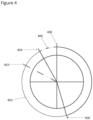
- Figure 4 shows a representation of the relative timings (as phase angles/crank angles) of the opening and closing operations of the combustion cylinder valves in a normal running mode.
- the longer radial lines (400, 404 and 408) represent valve control events.
- a full 360° clockwise traverse of the circle represents a full piston cycle..
- phase angle 408 all of the valves of the combustion cylinder 126 are closed and a combustible mix is present in the combustion cylinder.
- the combustion piston is at TDC.
- the mixture is then ignited and the piston moves towards BDC.
- phase angle 400 represents the opening of the exhaust valve (EVO), which occurs a short amount of time before the combustion piston reaches BDC. This position can be described by the amount of degrees clockwise from the vertical line, corresponding, to the phase angle offset of the combustion piston from TDC. For example EVO may occur at 170° as in the example shown in Figure 4 .
- the exhaust valve 134 is open until phase angle 404, approximately 340° in the example shown, at which point the exhaust valve closing (EVC) event, occurs. This is just before the fluid intake valve opening event (IVO) which will occur immediately after EVC. In Figure 4 , the line for this event is not separately shown as the time between this event and the exhaust valve closing (EVC) event is too short to show clearly.
- the inlet valve is then open until the full cycle is completed at 360° at which point the inlet valve is closed (IVC), the combustion piston is at TDC and the combustible mixture is ignited at 0°/360° and the cycle is then repeated.
- phase angle of the EVC/IVO changes as the time the exhaust valve 134 is open for is reduced. This means EVC/IVO occurs at a smaller phase angle offset.
- This phase angle offset can be described as a number of degrees before TDC (0°). An example is shown as a dashed line 403 in Figure 4 , where the EVO/IVO occurs approximately 60° before TDC.
- Figure 5a shows a combustion piston 128 within the combustion cylinder 126.
- Various possible combustion piston 128 positions indicated by dashed lines, corresponding to early closure positions of the exhaust valve 134 are shown.
- TDC is indicated by the uppermost dashed line 500.
- This is the piston position that corresponds to the "normal closure" position of the exhaust valve, wherein the indicated temperature is found to be sufficiently high and all of the exhaust gases are expelled from the combustion cylinder during the course of a full return stroke of the combustion piston (128).
- the piston positions for various early exhaust valve closure positions, corresponding to various cold start modes of operation, are indicated by further dashed lines (501, 502 and 503).
- a first early exhaust valve closure position is represented by line 501, which corresponds to the combustion piston being at a phase angle of x° before TDC.
- the position marked x° represents a position (360-x)° clockwise around the circle described in reference to Figure 4 .
- a second early exhaust valve closure position is represented by line (502), which corresponds to the combustion piston being at a phase angle of y° before TDC, in which y° is a greater angular from TDC offset than x°. This position corresponds to an earlier valve closure position than the first closure position.
- a third early exhaust valve closure position is represented by line 503, which corresponds to the combustion piston being at a phase angle of z° before TDC.
- TDC in which z° is a greater angular from TDC offset than y°.
- This position corresponds to an earlier exhaust valve closure position than the first and second exhaust valve closure positions.
- the third early exhaust valve closure position represents the maximum early exhaust valve closure position. This is the earliest that the exhaust valve 134 can close and leaves the most exhaust gas in the combustion cylinder 126 which will allow the compressed fluid, which is taken into the cylinder when the inlet valve is opened, to be heated as much as possible. Retention of any greater quantity of exhaust gas, may however have a deleterious effect.
- the choice of which position the exhaust valve 134 closes at varies based on the data that the controller 100 receives from any attached sensors. As discussed above, the point at which the exhaust valve 134 closes can vary depending on temperature data from a temperature sensor. When the temperature sensor indicates a temperature that is above or equal to the target temperature, a normal running mode is used and the exhaust valve 134 closes at TDC. This target temperature could be a target temperature for combustion such that the fluid fuel mixture is at this temperature before ignition.
- the exhaust valve 134 can be closed at a position (phase angle) z°, y° or x°, for example, before TDC.
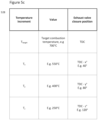
- the selection of the appropriate early exhaust valve closure point may be determined by reference to a look-up table, such as that shown in Figure 5c , in which different early closure positions are mapped onto different indicated temperature ranges.
- the controller 100 may select the maximum early exhaust valve closure position z° 503, to retain the maximum acceptable quantity of exhaust gas inside the combustion cylinder for maximum heating effect.
- the controller may select an intermediate early exhaust valve closure position such as y° 502.
- the controller 100 may select another early exhaust valve closure position, x° 501, which is closer to TDC.
- the controller may select the normal closure position, with the piston at TDC, in which all of the exhaust gases are expelled on completion of the return stroke, as no additional heating is required.
- the controller's decision process is shown by the flowchart in Figure 5b .
- the controller 100 receives temperature data from the temperature sensor.
- the indicated temperature, T i is compared to the target temperature, T target . If the indicated temperature, T i , is greater than or equal to T target , the controller 100 will control the exhaust valve 134 to close when the combustion piston reaches TDC. If T i is less than T target then the controller 100 will compare T i to a second temperature, T x , which is less than the target temperature. If T i is larger than T x then the controller 100 controls the exhaust valve 134 to close at a phase angle of x° before the combustion piston reaches TDC, as can be seen in Figure 5a .
- T x is the cut off temperature, T cut off . If these temperatures match, the controller 100 controls the exhaust valve to close at the corresponding position as this is the cut off position, or "maximum early exhaust valve closure position", for the engine.
- T i is compared successively to T y and T z . Each of these has an associated position, corresponding respectively to the combustion piston being a phase angle of y° and z° before TDC. In examples, there could be additional temperature thresholds ranging from T target to T out off .
- T z is equal to the cut off temperature corresponding to the maximum early closure position and therefore the controller 100 controls the exhaust valve 134 to close at a maximum early exhaust valve closure position in which the combustion cylinder is at a phase angle z° before TDC.
- the maximum early exhaust valve closure position may be defined as the point at which no greater value would be derived from retaining more exhaust gases within the combustion cylinder, or at which point the negative effects of retaining exhaust gases would outweigh the temperature benefit. This decision process can occur after every cycle of the combustion piston such that the controller 100 can provide an updated early closure position for every piston cycle.
- the earlier closure position is calculated based on an algorithm that takes the indicated temperature and/or a target temperature into account. This may be a simple proportional dependence relation or of a more complex form.
- Figure 6 shows an embodiment in which the amount of cryogen injected into the compression cylinder is controlled in dependence on a temperature indication.
- the controller 100 Upon receipt of a temperature indication, the controller 100 compares T i to a target temperature, T target . If the indicated temperature is larger, the controller 100 controls the cryogen inlet to the compression cylinder 104 to allow a "normal operation" quantity of cryogen into the compression cylinder 104. The amount may be controlled by the controller that determines the amount of cryogen.
- this may use the same temperature data as used by the controller for operating the exhaust valve timing and can be done in addition to valve timing and recuperator water injection.
- the controller may use separate temperature data, collected by a different sensor. Of course, this applies to both pressure and oxygen concentration sensor data and the corresponding sensors in embodiments where this data is collected.
- the controller 100 can control the cryogen inlet to allow a "cold start" quantity of cryogen into the compression cylinder 104. This quantity may be determined by further decision making, such as comparing the indicated temperature to a range of set temperature values, or calculation. In some embodiments no cryogen is injected into the compression cylinder 104 during cold start mode.
- the process described above where the sensed parameter is the indicated temperature which is compared with target temperatures may be applied in the circumstance where the sensed parameter is pressure or oxygen concentration.
- the pressures or oxygen concentrations sensor indication would of course be compared to target pressures or oxygen concentrations, as the case may be, enabling the controller 100 to determine an early exhaust closure position for the exhaust valve 134 based on these parameters or indications.
- a "hot mode” of operation When the indicated temperature is greater than a target temperature for "normal mode” operation, a "hot mode” of operation may be enabled.
- the amount of cryogenic liquid added may be optimised based on the temperature at the inlet, so under high load conditions when more heat is available, temperature is lower at the end of compression than before performing compression work.
- the "hot mode" quantity of cryogen will be understood as being a higher quantity and/or rate of cryogen injection per compression stroke than the "normal mode” quantity, such that the temperature of the fluid within the compression cylinder is allowed to be controlled within safe limits.
- water could be added to the recuperator under high load conditions.
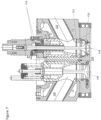
- FIG. 7 shows cross-sectional view illustrating an example of combustion cylinder 126 head that may be used in the split cycle engine and including the inlet 124 and outlet 134 valves.
- the inlet valve 124 opens in a direction away from the combustion cylinder 126.
- the inlet valve 124 is operable to move between a first closed position 710 and a second open position 712.
- the exhaust valve 134 is an inwardly opening valve which is operable to allow the exhaust gas out of the combustion cylinder 126, into the exhaust pathway 136 which is coupled to the recuperator 118.
- the valves are operated by the valve control apparatus which is connected to the controller 100 referenced in Figure 1 .
- Figure 8 shows a schematic of a split cycle internal combustion engine 101.
- Figure 8 is similar to Figure 1 and with the same or similar elements having the same or similar functionality.
- Figure 8 illustrates a controller 100 connected to the inlet valve 124.
- a temperature sensor 122 is disposed near a combustion cylinder 126 fluid intake, at a point along the path 120 of the compressed fluid between the recuperator 118 and the combustion cylinder fluid intake valve 124.
- This sensor 122 is operable to sense the temperature of the compressed fluid and report sensed temperature data back to the controller 100.
- the controller 100 is arranged to receive this temperature data and control the timing of the inlet valve 124 on the combustion cylinder 126 based at least in part on the received temperature data.
- the senor could be placed in any suitable location to sense an indication of a parameter associated with the combustion cylinder and/or a fluid associated therewith.
- the sensor may be placed in the recuperator or in an exhaust outlet from the combustion cylinder.
- the inlet valve 124 is configured to control fluid flow in to the combustion cylinder.
- the controller is arranged to receive an indication of a parameter associated with the combustion cylinder and/or a fluid associated therewith. In response to receiving the indication, the controller is configured to determine whether the indicated parameter satisfies threshold criteria, for example, whether a value for the indicated parameter is equal to or greater than a target value.
- the controller 100 is connected to the inlet valve 124 to control the opening and closing of the inlet valve.
- the cycle of the piston may be considered to start with the combustion piston 128 at its bottom dead centre position ( ⁇ BDC').
- the combustion piston 128 moves up from BDC towards its top dead centre position ('TDC'), before proceeding back down to BDC.
- the cycle of the piston may be considered to comprise the combustion piston 128 moving from BDC to BDC via TDC.
- the combustion piston 128 is constrained to move along only one axis, which is the longitudinal axis of the combustion cylinder.
- This movement of the combustion piston 128 is in accordance with the rotation of the crankshaft 114, which rotates in a circular fashion, and so movement of the combustion piston near TDC and BDC is slower as the circular motion of the crankshaft produces only a small movement in the direction of said one axis for each degree of rotation in that region. Therefore, near TDC and BDC, the change in the volume of the cylinder enclosed by the combustion piston changes slowly, and the change in pressure in the combustion cylinder 126 per unit rotation of the crankshaft 114 (i.e. the "phase angle" or "crank angle") decreases. It is to be appreciated that the position of the combustion piston 128 in the combustion cylinder 126 may be expressed in terms of degrees of rotation of the crankshaft.
- the controller 100 is configured to control the opening and closing of the inlet valve 124 dynamically so that the inlet valve 124 may be opened when the combustion piston 128 is at different positions in the combustion cylinder 126. Thus, the inlet valve 124 may be opened at different stages during the cycle of the piston.
- the controller 100 will be arranged to cause the inlet valve 124, e.g. to control the inlet valve 124, to open at an early opening position during the cycle of the piston.
- the controller 100 will control the inlet valve 124 to open at a late opening position.
- the controller 100 is configured to determine whether to operate the engine in the cold-start mode or in the normal mode based on the received indicated parameter.
- the indicated parameter received by the controller 100 will be indicative of a property of the combustion cylinder and/or the fluid associated therewith. Achieving stable, rapid combustion has been problematic with split cycle internal combustion engines. In particular, during cold-start of the engine, the working fluid may be relatively cool which often results in inferior combustion, and so such engines may not be able to suitably start-up. Additionally, the presence of too much water and/or not enough oxygen may prevent suitable combustion from occurring.
- the indicated parameter received by the controller 100 may comprise one of: a temperature, a pressure, an oxygen concentration or a water concentration associated with the working fluid in the combustion cylinder 126.
- the target value for the parameter will correspond to the indicated parameter.
- the indicated parameter satisfying the target value will represent the indicated parameter indicating that the conditions in the combustion cylinder 126 are suitable for combustion. Accordingly, where the target value is a temperature, pressure or oxygen concentration, a value greater than or equal to the target parameter will indicate suitable combustion conditions. If the indicated parameter is a water concentration, a value less than the target parameter would indicate suitable combustion conditions.
- the controller 100 will control the inlet valve 124 to operate in accordance with a 'cold-start' mode of operation. In this mode, the controller 100 will control the inlet valve 124 to open at an 'early opening position' during the cycle of the piston.
- the early opening position will be before TDC, during the return stroke of the combustion piston 128 before said combustion piston 128 reaches its TDC position. The location of the early opening position is such that the continued movement of the combustion piston 128 will provide a substantial compression effect on the working fluid.
- the controller 100 is configured to open the inlet valve 124 at the early opening position in which the combustion piston 128 is at a crank angle of x° behind TDC, where, for example, the early opening position may be 5° ahead of TDC, 10° ahead of TDC, 20° ahead of TDC, 30° ahead of TDC. Opening the inlet valve 124 before TDC enables the working fluid to flow into the combustion cylinder 126 while the combustion piston 128 is still moving towards TDC. The continued movement of the combustion piston 128 provides a compression of the working fluid which will increase its temperature. Increasing the temperature of the working fluid may improve the combustion conditions in the combustion cylinder 126.
- the exhaust from the combustion cylinder 126 is fed back through a recuperator 118, which is thermally coupled to the working fluid to be input into the combustion cylinder 126. Therefore, for the recuperator 118 to sufficiently warm up the fluid to be input into the combustion cylinder 126, it is desirable for the recuperator 118 to be receiving sufficiently hot exhaust fluids from the combustion cylinder 126. If this heat transfer is insufficient, for example due to insufficient combustion in the combustion cylinder 126, it may not be possible to maintain operation of the engine. Accordingly, it is important that the working fluid is warm enough to allow for suitable combustion and thus continued operation of the engine.
- the controller 100 may be configured so that there is a maximum early opening position for the inlet valve 124, in which the inlet valve 124 opens z° behind TDC.
- the controller may be configured to provide dynamic monitoring and control of the inlet valve 124 by continuously monitoring the indicated parameter and varying the opening position of the inlet valve 124 based on the indicated parameter. For instance, the value of x for the early opening position in which the combustion piston 128 is x° ahead of TDC may be continuously varied based on a difference between the indicated parameter and the target value for the parameter.
- the controller 100 may therefore control the inlet valve 124 to open earlier in the cycle of the piston when the indicated parameter of the combustion cylinder and/or the working fluid is further away from the target value. Accordingly, when the fluid is very cool, the controller 100 will control the inlet valve 124 to open very early, for example at z°, to provide the working fluid with a larger amount of compression and thus heating.
- the controller 100 may be configured to open the inlet valve 124 in a continuum of positions in the cycle of the piston. In other embodiments, the controller 100 may be configured to select one of a plurality of discrete early opening positions for the inlet valve 124 for positions of the combustion piston 128 between a phase angle z° ahead of TDC and TDC, according to the difference between the indicated temperature and the target temperature. The controller 100 may perform this operation in a manner analogous to that described above for the exhaust valve.
- the controller 100 will control the inlet valve 124 to operate in accordance with a 'normal mode of operation'. In this mode, the inlet valve 124 will open to allow the flow of fluid into the combustion cylinder 126 at a ⁇ late opening position' position during the cycle of the piston.
- the late opening position is later in the cycle of the piston than the early opening position. Typically, it will be nearer to TDC than the early opening position; it may be at TDC, or just before it.
- the controller 100 may control the inlet valve 124 to open at TDC or very shortly after TDC. Alternatively, the controller 100 may control the inlet valve 124 to open slightly before the combustion piston has reached its TDC position. For example, the inlet valve 124 may be controlled to open during the return stroke of the combustion piston, before the combustion piston has reached its TDC position. For example, 1° before TDC, for example 3° before TDC, for example 5° before TDC.
- Figure 9a shows schematically a process of controlling the combustion cylinder during a cold-start mode of operation, including stages 900a, 902a, 904a, 906a and 908a by comparison to Figure 9b which shows stages 900b, 902b, 904b, 906b and 908b of a normal running mode.
- Figure 9b shows stages 900b, 902b, 904b, 906b and 908b of a normal running mode.
- an indication of a parameter associated with the combustion cylinder and/or a fluid associated therewith is received, and the inlet valve 124 of the combustion cylinder 126 is controlled based on the indicated parameter.
- the indicated parameter is less than a target value, and the inlet valve 124 is controlled to open at an early opening position.
- the indicated parameter is equal to or greater than the target value, and the inlet valve 124 is controlled to open at a late opening position.
- the compressed fluid-fuel mixture (“the working fluid") is igniting as the combustion piston 128 is at, or shortly after, TDC. Depending on the type of fuel of the engine, this ignition could be initiated by a spark plug or auto-ignition.
- the increased pressure due to the released energy from the fuel combustion drives the combustion piston towards bottom dead centre (BDC), further driving the crankshaft 114.
- BDC bottom dead centre
- the combusted mixture has expanded to fill the combustion cylinder 126 and the exhaust valve 134 is opened (stage 902a). The combustion piston then proceeds towards TDC, expelling the exhaust gases out the exhaust valve 134.
- the inlet valve 124 is opened before the combustion piston 128 reaches TDC.
- the inlet valve 124 is opened shortly after the exhaust valve 134 is closed. This is shown at stage 904a, where the inlet valve 124 is opened when the piston is about 65% of the way from BDC to TDC. This allows the compressed fluid from the compression cylinder/recuperator to flow into the combustion cylinder 126. This inlet fluid is then further compressed until the piston reaches TDC, as shown at stage 906a.
- the inlet valve 124 is closed and the injected fuel is ignited (stage 908a), starting the cycle over again. Providing extra heating/compression of the working fluid may lead to an increase in efficiency of the engine by offsetting the lack of heat in the engine, and in particular the recuperator 188.
- stage 900b, 902b, 906b and 908b correspond to 900a, 902a, 906a and 908a respectively.
- stage 904b the inlet valve 124 is closed until the combustion piston reaches TDC such that no further compression of the inlet fluid may be achieved using the combustion piston 128.
- the engine is running "normally" whereby little or no fluid is inlet into the compression cylinder substantially before TDC.
- substantially before TDC refers to timing the inlet of fluid so that the fluid will undergo a substantial amount of compression from the combustion piston 128.
- the controller 100 is arranged to control both the inlet valve 124 and the exhaust valve 134 based on a received indication of a parameter of the combustion cylinder 128 and/or a fluid associated therewith. As described above with reference to the early opening of the inlet valve 124, the controller 100 is arranged to control the inlet valve 124 of the combustion cylinder 126 to open at an early opening position during a cycle of the piston, when a value for the received indicated parameter is less than a target value for the parameter.
- the controller 100 is arranged to control the exhaust valve 134 of the combustion cylinder 126 to close at an early closing position during the cycle of the piston, when a value for the received indicated parameter is less than a target value for the parameter.
- the controller may control the inlet valve 124 to open at a late opening position, in response to the received indicated parameter being equal to or greater than the target value.
- the controller may control the exhaust valve 134 to close at a late closing position, in response to the received indicated parameter being equal to or greater than the target value.
- the controller 100 may be configured to determine a position in the cycle of the piston for the opening and closing of each valve based at least in part on a determined opening and/or closing position for the other valve.
- the controller 100 is configured to ensure that the exhaust valve 134 is shut before the inlet valve 124 is opened. Otherwise, the inlet of compressed air may flow in through the inlet valve 124 and directly out the exhaust valve 134 without being used to perform any substantial work on the combustion piston 128.
- the controller 100 is configured to ensure both valves remain closed to ensure that the maximum amount of work possible is being done on the combustion piston 128. In other positions during the cycle of the piston only one of the two valves will be open.
- the controller 100 may determine which valve should be open, at what position and for how long based on the received indicated parameter.
- the controller 100 is thus configured to control the exhaust valve 134 to close earlier in the cycle of the piston than the opening of the inlet valve 124.
- the controller 100 may be configured to control the inlet valve 124 to open.
- the difference between the controller 100 controlling the exhaust valve 134 to close and the inlet valve 124 to open may be expressed either as a time lag between the two events occurring, or as a difference in the position of the cycle of the piston for the two different events occurring.
- the exhaust valve 134 may be closed a° before TDC and the inlet valve 124 may be opened (a-b)° before TDC, where b is either a constant or a variable. The value for b may depend on the received indicated parameter.
- b may be a constant which represents transitioning between the two states in the fastest time allowable by the setup of the engine and the control system.
- b may be a variable which is proportional to the difference in value between the value for the indicated parameter and the target value. It may be desirable to transition between the two states in as short as time as possible.
- the controller 100 may comprise a memory comprising data, for example in the form of a look-up table.
- the controller 100 may determine based on the indicated parameter how much heating of the combustion cylinder and/or the fluid associated therewith is needed to achieve selected combustion conditions. Based on this determination, the controller 100 may use the look-up table to determine a relative contribution of each approach (inlet/exhaust) to the heat generation. For instance, how much heat should be generated by compressing the exhaust fluid (e.g. from early closure of the exhaust valve 134) and how much heat should be generated by further compressing the working fluid (e.g.
- the controller may control both valves to achieve a desired ratio of heat generation from the two approaches.
- the controller may favour one approach over the other, and control the valves to maximise heat generation by that means.
- the controller 100 may determine, and control the valves to achieve, heat generation from the exhaust and the inlet in a selected proportion to achieve the desired level of heating.
- the controller 100 may be configured to delay the time difference between the exhaust valve 134 closing and the inlet valve 124 opening so that only a small fraction of the extra heat generation comes from the compression of the inlet fluid. Accordingly, the controller 100 may dynamically control the opening of the inlet valve 124 relative to the closing of exhaust valve 134 based on the received indicated parameter.
- the controller 100 may be configured to control the opening/closing of the valves so that the exhaust valve is closed as late as possible before TDC.
- the inlet valve 124 may be opened slightly before TDC to allow all of the working fluid to be inlet into the combustion cylinder 126 to achieve the desired combustion effect. Accordingly, the controller 100 may control the exhaust valve 134 to close as soon as possible directly before it controls the inlet valve 124 to open.
- Figure 10a illustrates the method of operation of the split cycle internal combustion engine during a 'cold-start'
- Figure 10b illustrates the method during 'normal running conditions'.
- the method comprises receiving an indication of a parameter associated with the combustion cylinder and/or a fluid associated therewith, and determining that the indicated parameter is less than a target value for the parameter.
- Figure 10b is included as an example for illustrative purposes of a method including determining that the indicated parameter is equal to or greater than the target value.
- step 1004a the exhaust valve 134 is controlled to close before the combustion piston 128 has reached TDC.
- step 1006a the inlet valve 124 is controlled to open before the combustion piston 128 has reached TDC, but after the exhaust valve 134 has shut.
- step 1004b the exhaust valve 134 remains open, and is only closed at step 1006b, where the combustion piston 128b is there or thereabouts at TDC.
- the inlet valve 124 is then opened at step 1008b where the combustion piston 128 is at TDC.
- Figure 11 shows an example pressure trace for optimal operation of the split cycle internal combustion engine during a normal running mode.
- the cylinder pressure remains fairly constant as the combustion piston 128 moves towards TDC from BDC with the exhaust valve 134 open and the inlet valve 124 closed.
- the exhaust valve 134 begins to close, and at point B it is fully closed.
- the cylinder pressure begins to rise.
- point C which is slightly before TDC
- the inlet valve 124 begins to open so that it is fully open at TDC.
- the inlet valve 124 remains fully open until point D, which is shortly after TDC where it begins to close.
- the inlet valve 124 is fully closed.
- the cylinder pressure steadily increases until the combustion begins, at which point the cylinder pressure rapidly increases to a maximum at point F. After point F, the cylinder pressure steadily decreases as the combustion piston 128 moves from TDC towards BDC.
- Figure 12 shows a graph illustrating results from varying the timing of the opening of the inlet valve and the closing of the exhaust valve. The results illustrated in Figure 12 were obtained based on the engine running at 800 rpm. The solid lines represent the early opening of the inlet valve and the early closing of the exhaust valve, and the dashed lines represent the late opening and late closing.
- Lines A and B represent opening/closing of the exhaust valve.
- Line A shows the exhaust valve being opened early at approximately 65° before TDC
- line B shows the exhaust valve being opened late at 35° before TDC.
- the graph shows that it takes around 5 to 10° of rotation for the exhaust valve to move from fully opened to fully closed.
- the effect of closing the exhaust valve early results in a corresponding increase in the cylinder pressure illustrated by lines G and H respectively.
- Lines C and D represent opening/closing of the inlet valve. For line C the inlet valve begins opening at around 23° before TDC, whereas line D the inlet valve begins opening at around 13° before TDC.
- Lines E and F represent injection of the fuel into the cylinder. In both cases the injection is short and sharp, progressing from zero to its peak level within around 2° before returning back to zero, again within about 2°.
- Line E represents the injection starting at around 10° before TDC
- line F represents the injection starting at around 3° after TDC.
- lines G and H represent the cylinder pressure.
- line G which corresponds to the early closing of the exhaust valve and the early opening of the inlet valve, reaches a substantially higher peak (and thus higher temperature) of around 51 bar compared to the delayed and smaller peak (41 bar) of line H. Accordingly, this graph illustrates the benefits associated with the early opening of the inlet valve and the early closure of the exhaust valve.
- Figure 13 shows a graph illustrating results from varying the timing of the opening of the inlet valve and the closing of the exhaust valve. The results illustrated in Figure 13 were obtained based on the engine running at 1200 rpm. Again, the solid lines represent the early opening of the inlet valve and the early closing of the exhaust valve, and the dashed lines represent the late opening and late closing.
- Line A of Figure 13 shows the exhaust valve closing early, at around 75° before TDC
- line B shows the exhaust valve closing at around 60° before TDC. Both valve closures result in a slight increase in the cylinder pressure (lines G and H respectively).
- lines C and D show the inlet valve being opened, with line D opening slightly beforehand.
- Line D also remains opening for longer, with the inlet valve being fully closed at around 3° after TDC, compared to the inlet valve being fully closed around 3° before TDC for line C.
- Line E shows the injection commencing at around 14° before TDC
- line F shows the injection commencing at around 8° before TDC.
- the lines G and H represent the cylinder pressure, and it is evident that line G reaches a higher pressure (around 53 bar and thereby represents a higher temperature) than line H (around 50 bar). Additionally, the peak of line G arrives about 5° before that of line H, with line G peaking just after TDC. Accordingly, this graph illustrates the benefits of an earlier timing system for the engine.
- control of any of the cryogen input, exhaust valve timings and recuperator water injection could be implemented individually or in combination, to improve the efficiently of split cycle engines.
- the split cycle engine need not employ cryogen injection in the compression cylinder.
- the split cycle engine could use petrol, diesel or another fuel.
- one or more memory elements can store data and/or program instructions used to implement the operations described herein.
- Embodiments of the disclosure provide tangible, non-transitory storage media comprising program instructions operable to program a processor to perform any one or more of the methods described and/or claimed herein and/or to provide data processing apparatus as described and/or claimed herein.
- programmable logic may be implemented with fixed logic such as assemblies of logic gates or programmable logic such as software and/or computer program instructions executed by a processor.
- Other kinds of programmable logic include programmable processors, programmable digital logic (e.g., a field programmable gate array (FPGA), an erasable programmable read only memory (EPROM), an electrically erasable programmable read only memory (EEPROM)), an application specific integrated circuit, ASIC, or any other kind of digital logic, software, code, electronic instructions, flash memory, optical disks, CD-ROMs, DVD ROMs, magnetic or optical cards, other types of machinereadable mediums suitable for storing electronic instructions, or any suitable combination thereof.
- FPGA field programmable gate array
- EPROM erasable programmable read only memory
- EEPROM electrically erasable programmable read only memory
- ASIC application specific integrated circuit
Landscapes
- Engineering & Computer Science (AREA)
- Chemical & Material Sciences (AREA)
- Combustion & Propulsion (AREA)
- Mechanical Engineering (AREA)
- General Engineering & Computer Science (AREA)
- Chemical Kinetics & Catalysis (AREA)
- Oil, Petroleum & Natural Gas (AREA)
- General Chemical & Material Sciences (AREA)
- Health & Medical Sciences (AREA)
- Toxicology (AREA)
- Ceramic Engineering (AREA)
- Output Control And Ontrol Of Special Type Engine (AREA)
- Cylinder Crankcases Of Internal Combustion Engines (AREA)
- Exhaust Gas After Treatment (AREA)
- Combined Controls Of Internal Combustion Engines (AREA)
- Pharmaceuticals Containing Other Organic And Inorganic Compounds (AREA)
Abstract
Description
- The present disclosure relates to a split cycle internal combustion engine and method of operating the same.
- In a split cycle internal combustion engine, a working fluid comprising air is compressed in a first, compression, cylinder and provided to a second, combustion, cylinder, where fuel is injected and the mixture of the fuel and the high pressure fluid combusts to produce drive. Thermodynamic benefits may be derived from separating the compression and the expansion/combustion processes in this manner.
WO 2010/067080 describes a split cycle engine and associated thermodynamic advantages. - In a split cycle engine, further thermodynamic benefits may be achieved by injecting a cryogenic fluid into the compression cylinder during the compression stroke. Such a system and method is described in
WO 2016/016664 . - In particular in engines in which a cryogen is used, a recuperator may be provided, having a first fluid path carrying compressed fluid from the compression cylinder to the expansion cylinder, and a second fluid path carrying exhaust gases from an outlet of the combustion cylinder, in order to heat the compressed fluid on its way to the combustion cylinder. This may help to ensure that the compressed fluid arriving at the combustion cylinder is sufficiently hot that combustion may occur when the fuel is injected.
- The inventor in the present case has appreciated that difficulties in achieving efficient combustion may be encountered during start-up of the engine ("cold start"), when there is little or no exhaust heat in the recuperator, leading to the compressed fluid arriving at the combustion cylinder at a sub-optimal temperature for combustion.
- Embodiments described herein address these difficulties.
- The invention is set out in the claims appended hereto.
- In the following description, the term "cryogenic" fluid or liquid is used to refer to a fluid which has been condensed into its liquid phase via a refrigeration process.
- Embodiments described herein relate to a split cycle engine in which a cryogenic fluid is injected during the compression stroke. In other examples, the methods described herein could be implemented without the injection of a cryogen. Additionally, other fluids, water as an example, may be added to the recuperator to control terminal temperature at the exit from the recuperator.
- As described herein, the split cycle engine has a controller which is arranged to receive an indication of a parameter associated with the combustion cylinder and/or a fluid associated therewith and to control a feature of the engine in dependence on the indicated parameter.
- The parameter may be one or more of a temperature, pressure and oxygen concentration, therefore an indication of a parameter may comprise one or more of temperature data, pressure data and oxygen concentration data.
- The controller may receive temperature and pressure data, temperature and oxygen concentration data, pressure and oxygen concentration data or temperature, pressure and oxygen concentration data and use this date to control one or more of the cryogen injection, exhaust valve timing and recuperator water injection, individually or in combination.
- In the case where the parameter is a temperature, the indicated temperature could be at least one of a temperature inside the combustion cylinder, a temperature inside the recuperator of the engine, in particular a surface of the recuperator which is coated with a catalyst, a temperature of the compressed fluid in the recuperator, a temperature of the compressed fluid at the inlet of the combustion cylinder or a temperature of the exhaust gas.
- In the case where the parameter is a pressure, the indicated pressure could be at least one of a pressure inside the combustion cylinder, a pressure inside the recuperator of the engine, a pressure of the compressed fluid in the recuperator, a pressure of the compressed fluid at the inlet of the combustion cylinder or a pressure of the exhaust gas.
- In the case where the parameter is an oxygen concentration, the indicated oxygen concentration could be at least one of an oxygen concentration inside the combustion cylinder, an oxygen concentration inside the recuperator of the engine, an oxygen concentration of the compressed fluid in the recuperator, an oxygen concentration of the compressed fluid at the inlet of the combustion cylinder or an oxygen concentration of the exhaust gas.
- The feature of the engine which is controlled may be one or more of the timing of closure of the exhaust valve, the quantity or rate of cryogen injection during the compression stroke and rate, quantity or timing of fuel injection into the combustion cylinder.
- In embodiments, the feature of the engine is controlled based on a comparison between the indication of the parameter and a target value for the parameter.
- In embodiments, the feature of the engine is controlled based on a difference between the indication of the parameter and a target value for the parameter.
- In embodiments, the controller is arranged to receive an indication of a temperature of the compressed fluid at the inlet of the combustion cylinder and to control the closure of the exhaust valve of the combustion cylinder based on a comparison between the indicated temperature and a target temperature for the compressed fluid at the combustion cylinder inlet. The target temperature may be defined based on a desired temperature for combustion in the cylinder. As described herein, the controller is arranged to cause the exhaust valve to close during the return stroke of the combustion piston (108, 128), before the combustion piston has reached its top dead centre position (TDC), when the indicated temperature is less than a temperature; and to close on completion of the return stroke of the combustion piston, as the combustion piston reaches its top dead centre position (TDC), when the indicated temperature is equal to or greater than the target temperature.
- Closing the exhaust valve before the combustion piston has reached its top dead centre position (TDC), when the indicated temperature is less than a temperature, may be described as a "cold start" mode of operation. This corresponds to the indicated temperature being sub-optimal for combustion, which may be due to the lack of heat available for collection in the recuperator. By closing the exhaust valve before the combustion piston reaches TDC, a portion of the hot exhaust gases of combustion may be retained inside the combustion cylinder and compressed to raise the temperature of the cylinder to assist combustion on the next engine cycle.
- Closing the exhaust on completion of the return stroke of the combustion piston, as the combustion piston reaches its top dead centre position (TDC), may be described as a "normal mode" of operation, which corresponds to the indicated temperature being acceptable for combustion. This condition would usually be expected to be reached after the recuperator, and thereby the temperature of the compressed fluid supplied to the combustion cylinder inlet, has warmed up as hot exhaust gases flow through the recuperator. The exhaust valve may, in this condition, be closed as the combustion piston completes its return stroke, expelling all exhaust gases from the combustion cylinder and into the recuperator pathway.
- In other examples, the valve timing control is based on the measurement of a pressure and/or an oxygen concentration, optionally in addition to a temperature measurement.
- In embodiments, the controller is arranged to receive an indication of a temperature of the compressed fluid at the inlet of the combustion cylinder and to control the amount of cryogenic fluid provided to the compression cylinder during the compression stroke. This reduces the limitation on the temperature rise of the compressed fluid during "cold" cycles in which there is insufficient heat in the recuperator to raise the compressed fluid to a target combustion temperature at the combustion cylinder inlet.
- The control may be based on a comparison between the indicated temperature and a target temperature for the compressed fluid at the combustion cylinder inlet. The target temperature may be defined based on a desired temperature for combustion in the cylinder. As described herein, the controller may be arranged to control the quantity of cryogenic fluid injected into the compression cylinder such that a "normal mode" quantity of cryogenic liquid is provided to the compression cylinder when the indicated temperature is equal to or greater than a target temperature, and a "cold mode" quantity of cryogenic liquid is provided to the compression cylinder when the indicated temperature is less than the target temperature, wherein the "cold mode" quantity is less than the "normal mode" quantity.
- The "normal mode" quantity of cryogen will generally be understood to be the rate and quantity of cryogen injection such that the cryogenic liquid vaporises into its gaseous phase during the compression stroke of the compression piston, such that a rise in temperature caused by the compression stroke is limited to approximately zero by the absorption of heat by the cryogenic liquid. This may allow more efficient compression. This may also allow a maximal amount of heat to be recuperated from exhaust gases.
- When the indicated temperature is greater than a target temperature for "normal mode" operation, a "hot mode" of operation may be enabled. In this mode, the amount of cryogenic liquid added may be optimised based on the temperature at the inlet, so under high load conditions when more heat is available, temperature is lower at the end of compression than before performing compression work. The "hot mode" quantity of cryogen will be understood as being a higher quantity and/or rate of cryogen injection per compression stroke than the "normal mode" quantity, such that the temperature of the fluid within the compression cylinder is allowed to be controlled within safe limits. For additional temperature control and hardware protection, water could be added to the recuperator under high load conditions.
- The "cold mode" quantity of cryogen will be understood as being a lower quantity and/or rate of cryogen injection per compression stroke than the "normal mode" quantity, such that the temperature of the fluid within the compression cylinder is allowed to rise as a result of the compression. This allows the compressed fluid to exit the compression cylinder in a hotter state, to compensate for the lack of heat available in the recuperator.
- In other examples, the cryogen injection control is based on the measurement of a pressure and/or an oxygen concentration, optionally in addition to a temperature measurement.
- In other examples, the exhaust valve timing and cryogen injection are both controlled based on one or more measured engine parameters.
- Embodiments of the present invention will now be described, by way of example, with reference to the accompanying drawings.
-
Figure 1 shows a schematic diagram of a split cycle internal combustion engine. -
Figure 2a shows stages in the operation of a combustion cylinder of the split cycle engine during a cold start mode. -
Figure 2b shows stages in the operation of the combustion cylinder during a normal running mode. -
Figure 3 shows a decision chart for controlling an exhaust valve of the combustion cylinder. -
Figure 4 represents relative valve timings in the combustion cylinder. -
Figure 5a shows examples of exhaust valve closure positions illustrated by positions of the combustion piston within the combustion cylinder. -
Figure 5b shows a controller decision process for controlling the exhaust valve. -
Figure 5c shows a look-up table for use in controlling the exhaust valve. -
Figure 6 shows a decision process for controlling a cryogen inlet valve of a compression cylinder of the split cycle engine. -
Figure 7 shows examples of valve arrangements within the cylinder head of the combustion cylinder. -
Figure 8 shows a schematic diagram of a split cycle internal combustion engine. -
Figure 9a shows stages in the operation of a combustion cylinder of the split cycle engine during a cold start mode. -
Figure 9b shows stages in the operation of the combustion cylinder during a normal running mode. -
Figure 10a shows stages in the operation of a combustion cylinder of the split cycle engine during a cold start mode. -
Figure 10b shows stages in the operation of the combustion cylinder during a normal running mode. -
Figure 11 shows an ideal pressure trace for optimal operation of the split cycle internal combustion engine during a normal running mode. -
Figure 12 shows a graph illustrating results from varying the timing of the opening of the inlet valve and the closing of the exhaust valve. -
Figure 13 shows a graph illustrating results from varying the timing of the opening of the inlet valve and the closing of the exhaust valve. -
Figure 1 shows a schematic diagram of a split cycleinternal combustion engine 101. As illustrated, the engine comprises acompression cylinder 104 and acombustion cylinder 126, each cylinder having an associated piston configured to reciprocate within it. As the skilled person will appreciate, multiple similar compression cylinders and combustion cylinders may be present. Thecompression cylinder 104 comprises acryogen inlet valve 110 that is connected to acryogen reservoir 112. Thecompression cylinder 104 has afluid inlet valve 106 connected to aturbo charger 102 to receive a compressed air supply and afluid outlet valve 116. Afluid inlet valve 124 of thecombustion cylinder 126 is coupled to thefluid outlet valve 116 to receive compressed fluid from thecompression cylinder 104. The combustion cylinder also has afuel inlet valve 130 coupled to afuel source 132 and anexhaust valve 134. - Along the
path 120 between the compression cylinderfluid outlet valve 116 and the combustion cylinderfluid inlet valve 124, compressed fluid passes through arecuperator 118. Thisrecuperator 118 is heated by exhaust gases from the combustioncylinder exhaust valve 134 passing along anexhaust pathway 136 to anexhaust outlet 138. - The
split cycle engine 101 comprises acontroller 100. Thiscontroller 100 is connected to at least onesensor 122. In examples, at least onesensor 122 could be a temperature sensor, a pressure sensor, an oxygen concentration sensor or any combination thereof. In the illustrated example, atemperature sensor 122 is disposed near thecombustion cylinder 126 fluid intake, at a point along thepath 120 of the compressed fluid between therecuperator 118 and the combustion cylinderfluid intake valve 124. Thissensor 122 is operable to sense the temperature of the compressed fluid and report sensed temperature data back to thecontroller 100. Thecontroller 100 is arranged to receive this temperature data and control the timing of theexhaust valve 134 on thecombustion cylinder 126 based at least in part on the received temperature data. Thecontroller 100 may also be operable to adjust the operation of thecryogen inlet valve 110 to control the amount of cryogen that is injected into thecompression cylinder 104. - After combustion occurs in the
combustion cylinder 126, the exhaust gas leaves thecombustion cylinder 126 via theexhaust valve 134 and travels alongexhaust pathway 136 coming into thermal communication with therecuperator 118 to heat compressed fluid travelling along thepathway 120 between the compressioncylinder outlet valve 116 and the combustioncylinder inlet valve 124. - The above mentioned sensor or sensors can be located in a multitude of places. In particular, one or more sensors may be placed near the
inlet valve 124 on the combustion cylinder as shown inFigure 1 , in therecuperator 118 or near the compressioncylinder outlet valve 116. -
Figure 2a shows schematically a process of controlling the combustion cylinder during a cold start mode of operation, includingstages Figure 2b which showsstages stage 200a the compressed fluid-fuel mixture is igniting as thecombustion piston 128 is at TDC. Depending on the type of fuel of the engine, this ignition could be initiated by a spark plug or auto-ignition. The increased pressure due to the released energy from the fuel combustion drives the combustion piston towards bottom dead centre (BDC), further driving thecrankshaft 114. Once the piston reaches BDC the combusted mixture has expanded to fill thecombustion cylinder 126 and theexhaust valve 134 is opened (stage 202a). The combustion piston then proceeds towards TDC, expelling the exhaust gases out theexhaust valve 134. - In the cold start mode, the
exhaust valve 134 is closed before the combustion piston reaches TDC. This is shown atstage 204a, where theexhaust valve 134 is closed when the piston is about 65% of the way from BDC to TDC. The remaining exhaust gas is then compressed as the piston reaches TDC and, as shown atstage 206a, the inlet valve is opened to allow the compressed fluid into thecombustion cylinder 126. Theinlet valve 124 is closed and the injected fuel is ignited (stage 208a), starting the cycle over again. The exhaust gas left in thecombustion cylinder 126 when theexhaust valve 134 is closed will heat up the compressed fluid. This may lead to an increase in efficiency of the engine by offsetting the lack of heat in the engine, and in particular the recuperator 188. The compressed fluid therefore arrives at the combustion cylinder inlet at a sufficiently high temperature, having recuperated heat from the exhaust gases. - This is in contrast to the normal running mode in
Figure 2b . In this cycle,stage stage 204b. Here, theexhaust valve 134 is open until the combustion piston reaches TDC such that most of the exhaust gas is expelled from the cylinder. In this mode, the engine is running "normally" whereby all, or most, of the exhaust gases are expelled into the recuperator. -
Figure 3 shows a flow diagram for a control process that occurs at thecontroller 100. Thecontroller 100 receives an indication of thecombustion cylinder 126 inlet temperature from a temperature sensor located near thecombustion cylinder 126 inlet. This temperature, Ti, is then compared against a target temperature, Ttarget. In this example, Ttarget is a desired temperature for the compressed fluid at thecombustion cylinder inlet 124, such as will allow efficient combustion when the fuel is injected. - If Ti is not greater than or equal to Ttarget (corresponding to a "normal running" mode), the controller controls the
exhaust valve 134 timing so that theexhaust valve 134 is closed before the combustion piston reaches TDC, causing a portion of the exhaust gas to be trapped in thecombustion cylinder 126. - If Ti is greater than or equal to Ttarget (corresponding to a "cold start" mode), controller controls the
exhaust valve 134 operation timing so that theexhaust valve 134 is closed at the point at which the combustion piston is at TDC, at which point, most of the exhaust gas will have been expelled as the compressed gas is sufficiently heated by the recuperator. -
Figure 4 shows a representation of the relative timings (as phase angles/crank angles) of the opening and closing operations of the combustion cylinder valves in a normal running mode. The longer radial lines (400, 404 and 408) represent valve control events. A full 360° clockwise traverse of the circle represents a full piston cycle.. - At
phase angle 408, all of the valves of thecombustion cylinder 126 are closed and a combustible mix is present in the combustion cylinder. The combustion piston is at TDC. The mixture is then ignited and the piston moves towards BDC. - Moving clockwise,
phase angle 400 represents the opening of the exhaust valve (EVO), which occurs a short amount of time before the combustion piston reaches BDC. This position can be described by the amount of degrees clockwise from the vertical line, corresponding, to the phase angle offset of the combustion piston from TDC. For example EVO may occur at 170° as in the example shown inFigure 4 . - The
exhaust valve 134 is open untilphase angle 404, approximately 340° in the example shown, at which point the exhaust valve closing (EVC) event, occurs. This is just before the fluid intake valve opening event (IVO) which will occur immediately after EVC. InFigure 4 , the line for this event is not separately shown as the time between this event and the exhaust valve closing (EVC) event is too short to show clearly. The inlet valve is then open until the full cycle is completed at 360° at which point the inlet valve is closed (IVC), the combustion piston is at TDC and the combustible mixture is ignited at 0°/360° and the cycle is then repeated. - In a cold start mode, the phase angle of the EVC/IVO changes as the time the
exhaust valve 134 is open for is reduced. This means EVC/IVO occurs at a smaller phase angle offset. This phase angle offset can be described as a number of degrees before TDC (0°). An example is shown as a dashedline 403 inFigure 4 , where the EVO/IVO occurs approximately 60° before TDC. -
Figure 5a shows acombustion piston 128 within thecombustion cylinder 126. Variouspossible combustion piston 128 positions, indicated by dashed lines, corresponding to early closure positions of theexhaust valve 134 are shown. - TDC is indicated by the uppermost dashed
line 500. This is the piston position that corresponds to the "normal closure" position of the exhaust valve, wherein the indicated temperature is found to be sufficiently high and all of the exhaust gases are expelled from the combustion cylinder during the course of a full return stroke of the combustion piston (128). The piston positions for various early exhaust valve closure positions, corresponding to various cold start modes of operation, are indicated by further dashed lines (501, 502 and 503). - A first early exhaust valve closure position is represented by
line 501, which corresponds to the combustion piston being at a phase angle of x° before TDC. (In this example, the position marked x° represents a position (360-x)° clockwise around the circle described in reference toFigure 4 .) - A second early exhaust valve closure position is represented by line (502), which corresponds to the combustion piston being at a phase angle of y° before TDC, in which y° is a greater angular from TDC offset than x°. This position corresponds to an earlier valve closure position than the first closure position.
- A third early exhaust valve closure position is represented by
line 503, which corresponds to the combustion piston being at a phase angle of z° before TDC. TDC, in which z° is a greater angular from TDC offset than y°. This position corresponds to an earlier exhaust valve closure position than the first and second exhaust valve closure positions. In this example, the third early exhaust valve closure position represents the maximum early exhaust valve closure position. This is the earliest that theexhaust valve 134 can close and leaves the most exhaust gas in thecombustion cylinder 126 which will allow the compressed fluid, which is taken into the cylinder when the inlet valve is opened, to be heated as much as possible. Retention of any greater quantity of exhaust gas, may however have a deleterious effect. - The choice of which position the
exhaust valve 134 closes at varies based on the data that thecontroller 100 receives from any attached sensors. As discussed above, the point at which theexhaust valve 134 closes can vary depending on temperature data from a temperature sensor. When the temperature sensor indicates a temperature that is above or equal to the target temperature, a normal running mode is used and theexhaust valve 134 closes at TDC. This target temperature could be a target temperature for combustion such that the fluid fuel mixture is at this temperature before ignition. - If the temperature is below Ttarget, the
exhaust valve 134 can be closed at a position (phase angle) z°, y° or x°, for example, before TDC. The selection of the appropriate early exhaust valve closure point (cold start mode) may be determined by reference to a look-up table, such as that shown inFigure 5c , in which different early closure positions are mapped onto different indicated temperature ranges. In general, upon start-up, when Ti is generally at its lowest, thecontroller 100 may select the maximum early exhaust valve closure position z° 503, to retain the maximum acceptable quantity of exhaust gas inside the combustion cylinder for maximum heating effect. On a subsequent engine cycle when Ti has increased, but is still below Tt, the controller may select an intermediate early exhaust valve closure position such as y° 502. Again on a subsequent cycle when Ti has increased further but it still below Ttarget, thecontroller 100 may select another early exhaust valve closure position, x° 501, which is closer to TDC. On a later engine cycle when Ti matches or exceeds Ttarget, the controller may select the normal closure position, with the piston at TDC, in which all of the exhaust gases are expelled on completion of the return stroke, as no additional heating is required. - The controller's decision process is shown by the flowchart in
Figure 5b . Thecontroller 100 receives temperature data from the temperature sensor. The indicated temperature, Ti, is compared to the target temperature, Ttarget. If the indicated temperature, Ti, is greater than or equal to Ttarget, thecontroller 100 will control theexhaust valve 134 to close when the combustion piston reaches TDC. If Ti is less than Ttarget then thecontroller 100 will compare Ti to a second temperature, Tx, which is less than the target temperature. If Ti is larger than Tx then thecontroller 100 controls theexhaust valve 134 to close at a phase angle of x° before the combustion piston reaches TDC, as can be seen inFigure 5a . After this comparison thecontroller 100 checks to see if Tx is the cut off temperature, T cut off. If these temperatures match, thecontroller 100 controls the exhaust valve to close at the corresponding position as this is the cut off position, or "maximum early exhaust valve closure position", for the engine. This decision tree continues inFigure 5b with Ti being compared successively to Ty and Tz. Each of these has an associated position, corresponding respectively to the combustion piston being a phase angle of y° and z° before TDC. In examples, there could be additional temperature thresholds ranging from Ttarget to Tout off. Finally, Tz is equal to the cut off temperature corresponding to the maximum early closure position and therefore thecontroller 100 controls theexhaust valve 134 to close at a maximum early exhaust valve closure position in which the combustion cylinder is at a phase angle z° before TDC. - The maximum early exhaust valve closure position may be defined as the point at which no greater value would be derived from retaining more exhaust gases within the combustion cylinder, or at which point the negative effects of retaining exhaust gases would outweigh the temperature benefit. This decision process can occur after every cycle of the combustion piston such that the
controller 100 can provide an updated early closure position for every piston cycle. -
Figure 5c shows a look-up table of these values, with the set temperature points and theircorresponding exhaust valve 134 closure positions. This can be stored by thecontroller 100 in a memory, allowing the target temperature and other threshold temperatures to be recalled from a look up table and compared to the indicated temperature. For example, there could be a situation where z° = 120°, y° = 80° and x° = 40°. In other examples there could be more or fewer intermediate positions between the maximum early closure position and TDC. - In other embodiments, the earlier closure position is calculated based on an algorithm that takes the indicated temperature and/or a target temperature into account. This may be a simple proportional dependence relation or of a more complex form.
-
Figure 6 shows an embodiment in which the amount of cryogen injected into the compression cylinder is controlled in dependence on a temperature indication. Upon receipt of a temperature indication, thecontroller 100 compares Ti to a target temperature, Ttarget. If the indicated temperature is larger, thecontroller 100 controls the cryogen inlet to thecompression cylinder 104 to allow a "normal operation" quantity of cryogen into thecompression cylinder 104. The amount may be controlled by the controller that determines the amount of cryogen. - In embodiments, this may use the same temperature data as used by the controller for operating the exhaust valve timing and can be done in addition to valve timing and recuperator water injection. In other examples, the controller may use separate temperature data, collected by a different sensor. Of course, this applies to both pressure and oxygen concentration sensor data and the corresponding sensors in embodiments where this data is collected.
- If the indicated temperature is smaller than the target temperature, the
controller 100 can control the cryogen inlet to allow a "cold start" quantity of cryogen into thecompression cylinder 104. This quantity may be determined by further decision making, such as comparing the indicated temperature to a range of set temperature values, or calculation. In some embodiments no cryogen is injected into thecompression cylinder 104 during cold start mode. - The process described above where the sensed parameter is the indicated temperature which is compared with target temperatures may be applied in the circumstance where the sensed parameter is pressure or oxygen concentration. In these cases, the pressures or oxygen concentrations sensor indication would of course be compared to target pressures or oxygen concentrations, as the case may be, enabling the
controller 100 to determine an early exhaust closure position for theexhaust valve 134 based on these parameters or indications. - When the indicated temperature is greater than a target temperature for "normal mode" operation, a "hot mode" of operation may be enabled. In this mode, the amount of cryogenic liquid added may be optimised based on the temperature at the inlet, so under high load conditions when more heat is available, temperature is lower at the end of compression than before performing compression work. The "hot mode" quantity of cryogen will be understood as being a higher quantity and/or rate of cryogen injection per compression stroke than the "normal mode" quantity, such that the temperature of the fluid within the compression cylinder is allowed to be controlled within safe limits. For additional temperature control and hardware protection, water could be added to the recuperator under high load conditions.
Figure 7 shows cross-sectional view illustrating an example ofcombustion cylinder 126 head that may be used in the split cycle engine and including theinlet 124 andoutlet 134 valves. In this diagram theinlet valve 124 opens in a direction away from thecombustion cylinder 126. Theinlet valve 124 is operable to move between a firstclosed position 710 and a secondopen position 712. Theexhaust valve 134 is an inwardly opening valve which is operable to allow the exhaust gas out of thecombustion cylinder 126, into theexhaust pathway 136 which is coupled to therecuperator 118. The valves are operated by the valve control apparatus which is connected to thecontroller 100 referenced inFigure 1 . -
Figure 8 shows a schematic of a split cycleinternal combustion engine 101.Figure 8 is similar toFigure 1 and with the same or similar elements having the same or similar functionality.Figure 8 illustrates acontroller 100 connected to theinlet valve 124. In the illustrated example, atemperature sensor 122 is disposed near acombustion cylinder 126 fluid intake, at a point along thepath 120 of the compressed fluid between therecuperator 118 and the combustion cylinderfluid intake valve 124. Thissensor 122 is operable to sense the temperature of the compressed fluid and report sensed temperature data back to thecontroller 100. Thecontroller 100 is arranged to receive this temperature data and control the timing of theinlet valve 124 on thecombustion cylinder 126 based at least in part on the received temperature data. It is to be appreciated in the context of this disclosure that the sensor could be placed in any suitable location to sense an indication of a parameter associated with the combustion cylinder and/or a fluid associated therewith. For example, the sensor may be placed in the recuperator or in an exhaust outlet from the combustion cylinder. - The
inlet valve 124 is configured to control fluid flow in to the combustion cylinder. In operation, the controller is arranged to receive an indication of a parameter associated with the combustion cylinder and/or a fluid associated therewith. In response to receiving the indication, the controller is configured to determine whether the indicated parameter satisfies threshold criteria, for example, whether a value for the indicated parameter is equal to or greater than a target value. Thecontroller 100 is connected to theinlet valve 124 to control the opening and closing of the inlet valve. - In this example, the cycle of the piston may be considered to start with the
combustion piston 128 at its bottom dead centre position (`BDC'). In accordance with the rotation of thecrankshaft 114, thecombustion piston 128 moves up from BDC towards its top dead centre position ('TDC'), before proceeding back down to BDC. Accordingly, the cycle of the piston may be considered to comprise thecombustion piston 128 moving from BDC to BDC via TDC. Thecombustion piston 128 is constrained to move along only one axis, which is the longitudinal axis of the combustion cylinder. This movement of thecombustion piston 128 is in accordance with the rotation of thecrankshaft 114, which rotates in a circular fashion, and so movement of the combustion piston near TDC and BDC is slower as the circular motion of the crankshaft produces only a small movement in the direction of said one axis for each degree of rotation in that region. Therefore, near TDC and BDC, the change in the volume of the cylinder enclosed by the combustion piston changes slowly, and the change in pressure in thecombustion cylinder 126 per unit rotation of the crankshaft 114 (i.e. the "phase angle" or "crank angle") decreases. It is to be appreciated that the position of thecombustion piston 128 in thecombustion cylinder 126 may be expressed in terms of degrees of rotation of the crankshaft. - The
controller 100 is configured to control the opening and closing of theinlet valve 124 dynamically so that theinlet valve 124 may be opened when thecombustion piston 128 is at different positions in thecombustion cylinder 126. Thus, theinlet valve 124 may be opened at different stages during the cycle of the piston. During a 'cold start' of the engine thecontroller 100 will be arranged to cause theinlet valve 124, e.g. to control theinlet valve 124, to open at an early opening position during the cycle of the piston. During 'normal' running conditions of the engine, when the working fluid is warm enough for sufficient combustion to occur, thecontroller 100 will control theinlet valve 124 to open at a late opening position. Thecontroller 100 is configured to determine whether to operate the engine in the cold-start mode or in the normal mode based on the received indicated parameter. - The indicated parameter received by the
controller 100 will be indicative of a property of the combustion cylinder and/or the fluid associated therewith. Achieving stable, rapid combustion has been problematic with split cycle internal combustion engines. In particular, during cold-start of the engine, the working fluid may be relatively cool which often results in inferior combustion, and so such engines may not be able to suitably start-up. Additionally, the presence of too much water and/or not enough oxygen may prevent suitable combustion from occurring. - To account for this, the indicated parameter received by the
controller 100 may comprise one of: a temperature, a pressure, an oxygen concentration or a water concentration associated with the working fluid in thecombustion cylinder 126. The target value for the parameter will correspond to the indicated parameter. The indicated parameter satisfying the target value will represent the indicated parameter indicating that the conditions in thecombustion cylinder 126 are suitable for combustion. Accordingly, where the target value is a temperature, pressure or oxygen concentration, a value greater than or equal to the target parameter will indicate suitable combustion conditions. If the indicated parameter is a water concentration, a value less than the target parameter would indicate suitable combustion conditions. - Where the received indicated parameter indicates that the target value has not been satisfied, and that the conditions are not suitable for combustion, the
controller 100 will control theinlet valve 124 to operate in accordance with a 'cold-start' mode of operation. In this mode, thecontroller 100 will control theinlet valve 124 to open at an 'early opening position' during the cycle of the piston. The early opening position will be before TDC, during the return stroke of thecombustion piston 128 before saidcombustion piston 128 reaches its TDC position. The location of the early opening position is such that the continued movement of thecombustion piston 128 will provide a substantial compression effect on the working fluid. Thecontroller 100 is configured to open theinlet valve 124 at the early opening position in which thecombustion piston 128 is at a crank angle of x° behind TDC, where, for example, the early opening position may be 5° ahead of TDC, 10° ahead of TDC, 20° ahead of TDC, 30° ahead of TDC. Opening theinlet valve 124 before TDC enables the working fluid to flow into thecombustion cylinder 126 while thecombustion piston 128 is still moving towards TDC. The continued movement of thecombustion piston 128 provides a compression of the working fluid which will increase its temperature. Increasing the temperature of the working fluid may improve the combustion conditions in thecombustion cylinder 126. - For the illustrated split cycle
internal combustion engine 101 inFigure 8 , the exhaust from thecombustion cylinder 126 is fed back through arecuperator 118, which is thermally coupled to the working fluid to be input into thecombustion cylinder 126. Therefore, for therecuperator 118 to sufficiently warm up the fluid to be input into thecombustion cylinder 126, it is desirable for therecuperator 118 to be receiving sufficiently hot exhaust fluids from thecombustion cylinder 126. If this heat transfer is insufficient, for example due to insufficient combustion in thecombustion cylinder 126, it may not be possible to maintain operation of the engine. Accordingly, it is important that the working fluid is warm enough to allow for suitable combustion and thus continued operation of the engine. - Providing a sufficiently warm working fluid may be achieved by the early opening of the
inlet valve 124 as extra compression from thecombustion piston 128 may provide the necessary heating of the working fluid. It is to be understood that there may be a trade-off between opening too early and impeding the motion of thecombustion piston 128 due to the inlet of pressurised fluid, and opening early enough to achieve a sufficient warming of the working fluid. Accordingly, thecontroller 100 may be configured so that there is a maximum early opening position for theinlet valve 124, in which theinlet valve 124 opens z° behind TDC. - Additionally, the controller may be configured to provide dynamic monitoring and control of the
inlet valve 124 by continuously monitoring the indicated parameter and varying the opening position of theinlet valve 124 based on the indicated parameter. For instance, the value of x for the early opening position in which thecombustion piston 128 is x° ahead of TDC may be continuously varied based on a difference between the indicated parameter and the target value for the parameter. Thecontroller 100 may therefore control theinlet valve 124 to open earlier in the cycle of the piston when the indicated parameter of the combustion cylinder and/or the working fluid is further away from the target value. Accordingly, when the fluid is very cool, thecontroller 100 will control theinlet valve 124 to open very early, for example at z°, to provide the working fluid with a larger amount of compression and thus heating. - In some embodiments, the
controller 100 may be configured to open theinlet valve 124 in a continuum of positions in the cycle of the piston. In other embodiments, thecontroller 100 may be configured to select one of a plurality of discrete early opening positions for theinlet valve 124 for positions of thecombustion piston 128 between a phase angle z° ahead of TDC and TDC, according to the difference between the indicated temperature and the target temperature. Thecontroller 100 may perform this operation in a manner analogous to that described above for the exhaust valve. - Where the received indicated parameter indicates that the target value has been satisfied, and that there are suitable conditions for combustion, the
controller 100 will control theinlet valve 124 to operate in accordance with a 'normal mode of operation'. In this mode, theinlet valve 124 will open to allow the flow of fluid into thecombustion cylinder 126 at a `late opening position' position during the cycle of the piston. The late opening position is later in the cycle of the piston than the early opening position. Typically, it will be nearer to TDC than the early opening position; it may be at TDC, or just before it. - It is desirable for all of the working fluid in the
recuperator 118 to have been transferred into thecombustion cylinder 126 as soon as possible after thecombustion piston 128 has reached its TDC position so that the crank angle is not too great before ignition occurs. Thecontroller 100 may control theinlet valve 124 to open at TDC or very shortly after TDC. Alternatively, thecontroller 100 may control theinlet valve 124 to open slightly before the combustion piston has reached its TDC position. For example, theinlet valve 124 may be controlled to open during the return stroke of the combustion piston, before the combustion piston has reached its TDC position. For example, 1° before TDC, for example 3° before TDC, for example 5° before TDC. As the movement of thecombustion piston 128 in thecombustion cylinder 126 in these positions before TDC is very small with relation to the angular rotation of thecrankshaft 114, there is only a negligible amount of compression performed on any working fluid in thecombustion cylinder 126. Therefore, any increase in the temperature of the working fluid or of the fluid resistance to the movement of thecombustion piston 128 is not a significant issue. Once all of the fluid is in thecombustion cylinder 126, thecontroller 100 will control theinlet valve 124 to close. - A method of operation of the split cycle internal combustion engine will now be described with reference to
Figures 9a and b.Figure 9a shows schematically a process of controlling the combustion cylinder during a cold-start mode of operation, includingstages Figure 9b which showsstages Figures 9a and 9b , an indication of a parameter associated with the combustion cylinder and/or a fluid associated therewith is received, and theinlet valve 124 of thecombustion cylinder 126 is controlled based on the indicated parameter. InFigure 9a , the indicated parameter is less than a target value, and theinlet valve 124 is controlled to open at an early opening position. InFigure 9b , the indicated parameter is equal to or greater than the target value, and theinlet valve 124 is controlled to open at a late opening position. - In
Figure 9a , atstage 900a the compressed fluid-fuel mixture ("the working fluid") is igniting as thecombustion piston 128 is at, or shortly after, TDC. Depending on the type of fuel of the engine, this ignition could be initiated by a spark plug or auto-ignition. The increased pressure due to the released energy from the fuel combustion drives the combustion piston towards bottom dead centre (BDC), further driving thecrankshaft 114. Once the piston reaches BDC the combusted mixture has expanded to fill thecombustion cylinder 126 and theexhaust valve 134 is opened (stage 902a). The combustion piston then proceeds towards TDC, expelling the exhaust gases out theexhaust valve 134. - In the cold-start mode, the
inlet valve 124 is opened before thecombustion piston 128 reaches TDC. Theinlet valve 124 is opened shortly after theexhaust valve 134 is closed. This is shown atstage 904a, where theinlet valve 124 is opened when the piston is about 65% of the way from BDC to TDC. This allows the compressed fluid from the compression cylinder/recuperator to flow into thecombustion cylinder 126. This inlet fluid is then further compressed until the piston reaches TDC, as shown atstage 906a. Theinlet valve 124 is closed and the injected fuel is ignited (stage 908a), starting the cycle over again. Providing extra heating/compression of the working fluid may lead to an increase in efficiency of the engine by offsetting the lack of heat in the engine, and in particular the recuperator 188. - This is in contrast to the normal running mode in
Figure 9b . In this cycle,stage stage 904b. Here, theinlet valve 124 is closed until the combustion piston reaches TDC such that no further compression of the inlet fluid may be achieved using thecombustion piston 128. In this mode, the engine is running "normally" whereby little or no fluid is inlet into the compression cylinder substantially before TDC. Here, as discussed above, substantially before TDC refers to timing the inlet of fluid so that the fluid will undergo a substantial amount of compression from thecombustion piston 128. - Another aspect of the disclosure will now be described with reference again to
Figure 8 . In this aspect, thecontroller 100 is arranged to control both theinlet valve 124 and theexhaust valve 134 based on a received indication of a parameter of thecombustion cylinder 128 and/or a fluid associated therewith. As described above with reference to the early opening of theinlet valve 124, thecontroller 100 is arranged to control theinlet valve 124 of thecombustion cylinder 126 to open at an early opening position during a cycle of the piston, when a value for the received indicated parameter is less than a target value for the parameter. Additionally, as described above with reference to the early closing of theexhaust valve 134, thecontroller 100 is arranged to control theexhaust valve 134 of thecombustion cylinder 126 to close at an early closing position during the cycle of the piston, when a value for the received indicated parameter is less than a target value for the parameter. Correspondingly, the controller may control theinlet valve 124 to open at a late opening position, in response to the received indicated parameter being equal to or greater than the target value. Likewise, the controller may control theexhaust valve 134 to close at a late closing position, in response to the received indicated parameter being equal to or greater than the target value. - The
controller 100 may be configured to determine a position in the cycle of the piston for the opening and closing of each valve based at least in part on a determined opening and/or closing position for the other valve. Thecontroller 100 is configured to ensure that theexhaust valve 134 is shut before theinlet valve 124 is opened. Otherwise, the inlet of compressed air may flow in through theinlet valve 124 and directly out theexhaust valve 134 without being used to perform any substantial work on thecombustion piston 128. Likewise, during and/or after combustion as thecombustion piston 128 moves to BDC, thecontroller 100 is configured to ensure both valves remain closed to ensure that the maximum amount of work possible is being done on thecombustion piston 128. In other positions during the cycle of the piston only one of the two valves will be open. Thecontroller 100 may determine which valve should be open, at what position and for how long based on the received indicated parameter. - The
controller 100 is thus configured to control theexhaust valve 134 to close earlier in the cycle of the piston than the opening of theinlet valve 124. In response to receiving a signal indicating that theexhaust valve 134 is closed, thecontroller 100 may be configured to control theinlet valve 124 to open. The difference between thecontroller 100 controlling theexhaust valve 134 to close and theinlet valve 124 to open may be expressed either as a time lag between the two events occurring, or as a difference in the position of the cycle of the piston for the two different events occurring. For example, theexhaust valve 134 may be closed a° before TDC and theinlet valve 124 may be opened (a-b)° before TDC, where b is either a constant or a variable. The value for b may depend on the received indicated parameter. For example, b may be a constant which represents transitioning between the two states in the fastest time allowable by the setup of the engine and the control system. For example, b may be a variable which is proportional to the difference in value between the value for the indicated parameter and the target value. It may be desirable to transition between the two states in as short as time as possible. - Scientific data obtained from running tests with this valve setup suggests that the more effective way to improve the combustion conditions when the engine is cold is to open the
inlet valve 124 early. Thecontroller 100 may comprise a memory comprising data, for example in the form of a look-up table. Thecontroller 100 may determine based on the indicated parameter how much heating of the combustion cylinder and/or the fluid associated therewith is needed to achieve selected combustion conditions. Based on this determination, thecontroller 100 may use the look-up table to determine a relative contribution of each approach (inlet/exhaust) to the heat generation. For instance, how much heat should be generated by compressing the exhaust fluid (e.g. from early closure of the exhaust valve 134) and how much heat should be generated by further compressing the working fluid (e.g. from early opening of the inlet valve 124). In accordance with this, the controller may control both valves to achieve a desired ratio of heat generation from the two approaches. Alternatively, the controller may favour one approach over the other, and control the valves to maximise heat generation by that means. Accordingly, thecontroller 100 may determine, and control the valves to achieve, heat generation from the exhaust and the inlet in a selected proportion to achieve the desired level of heating. - For example, where the desired increase in heat in the
combustion cylinder 126 may be almost achievable by only closing theexhaust valve 134 early, thecontroller 100 may be configured to delay the time difference between theexhaust valve 134 closing and theinlet valve 124 opening so that only a small fraction of the extra heat generation comes from the compression of the inlet fluid. Accordingly, thecontroller 100 may dynamically control the opening of theinlet valve 124 relative to the closing ofexhaust valve 134 based on the received indicated parameter. - During a normal running phase of operation of the engine, the
controller 100 may be configured to control the opening/closing of the valves so that the exhaust valve is closed as late as possible before TDC. As described above, theinlet valve 124 may be opened slightly before TDC to allow all of the working fluid to be inlet into thecombustion cylinder 126 to achieve the desired combustion effect. Accordingly, thecontroller 100 may control theexhaust valve 134 to close as soon as possible directly before it controls theinlet valve 124 to open. - A method of operation of the above aspect of the disclosure will now be described with reference to
Figures 10a and b.Figures 10a and correspond very closely to those ofFigures 9a and 9b , and so similar steps will not be described again. Similarly,Figure 10a illustrates the method of operation of the split cycle internal combustion engine during a 'cold-start', andFigure 10b illustrates the method during 'normal running conditions'. InFigure 10a , the method comprises receiving an indication of a parameter associated with the combustion cylinder and/or a fluid associated therewith, and determining that the indicated parameter is less than a target value for the parameter.Figure 10b is included as an example for illustrative purposes of a method including determining that the indicated parameter is equal to or greater than the target value. - The main difference between the two Figures occurs at steps 1004 and 1006. At
step 1004a, theexhaust valve 134 is controlled to close before thecombustion piston 128 has reached TDC. Atstep 1006a, theinlet valve 124 is controlled to open before thecombustion piston 128 has reached TDC, but after theexhaust valve 134 has shut. In contrast, atstep 1004b, theexhaust valve 134 remains open, and is only closed atstep 1006b, where the combustion piston 128b is there or thereabouts at TDC. Theinlet valve 124 is then opened atstep 1008b where thecombustion piston 128 is at TDC. -
Figure 11 shows an example pressure trace for optimal operation of the split cycle internal combustion engine during a normal running mode. Moving from left to right, during the return leg of thecombustion piston 128, the cylinder pressure remains fairly constant as thecombustion piston 128 moves towards TDC from BDC with theexhaust valve 134 open and theinlet valve 124 closed. At point A, theexhaust valve 134 begins to close, and at point B it is fully closed. In response to the closing of theexhaust valve 134, the cylinder pressure begins to rise. At point C, which is slightly before TDC, theinlet valve 124 begins to open so that it is fully open at TDC. Theinlet valve 124 remains fully open until point D, which is shortly after TDC where it begins to close. At point E, theinlet valve 124 is fully closed. During the opening and closing of the inlet valve, the cylinder pressure steadily increases until the combustion begins, at which point the cylinder pressure rapidly increases to a maximum at point F. After point F, the cylinder pressure steadily decreases as thecombustion piston 128 moves from TDC towards BDC. -
Figure 12 shows a graph illustrating results from varying the timing of the opening of the inlet valve and the closing of the exhaust valve. The results illustrated inFigure 12 were obtained based on the engine running at 800 rpm. The solid lines represent the early opening of the inlet valve and the early closing of the exhaust valve, and the dashed lines represent the late opening and late closing. - Lines A and B represent opening/closing of the exhaust valve. Line A shows the exhaust valve being opened early at approximately 65° before TDC, whereas line B shows the exhaust valve being opened late at 35° before TDC. In both cases, the graph shows that it takes around 5 to 10° of rotation for the exhaust valve to move from fully opened to fully closed. In both cases, the effect of closing the exhaust valve early results in a corresponding increase in the cylinder pressure illustrated by lines G and H respectively. Lines C and D represent opening/closing of the inlet valve. For line C the inlet valve begins opening at around 23° before TDC, whereas line D the inlet valve begins opening at around 13° before TDC. In both cases, it takes around 13° to reach the fully open state, at which point the valve begins to close again, which takes around 13° to fully close. Lines E and F represent injection of the fuel into the cylinder. In both cases the injection is short and sharp, progressing from zero to its peak level within around 2° before returning back to zero, again within about 2°. Line E represents the injection starting at around 10° before TDC, whereas line F represents the injection starting at around 3° after TDC.
- The effect of the two timings is illustrated by lines G and H respectively, which represent the cylinder pressure. As can be seen, line G, which corresponds to the early closing of the exhaust valve and the early opening of the inlet valve, reaches a substantially higher peak (and thus higher temperature) of around 51 bar compared to the delayed and smaller peak (41 bar) of line H. Accordingly, this graph illustrates the benefits associated with the early opening of the inlet valve and the early closure of the exhaust valve.
-
Figure 13 shows a graph illustrating results from varying the timing of the opening of the inlet valve and the closing of the exhaust valve. The results illustrated inFigure 13 were obtained based on the engine running at 1200 rpm. Again, the solid lines represent the early opening of the inlet valve and the early closing of the exhaust valve, and the dashed lines represent the late opening and late closing. - The lines of
Figure 13 and their reference letters correspond to those described above in relation toFigure 12 and so will not be repeated. Line A ofFigure 13 shows the exhaust valve closing early, at around 75° before TDC, and line B shows the exhaust valve closing at around 60° before TDC. Both valve closures result in a slight increase in the cylinder pressure (lines G and H respectively). At around 30° before TDC, both lines C and D show the inlet valve being opened, with line D opening slightly beforehand. Line D also remains opening for longer, with the inlet valve being fully closed at around 3° after TDC, compared to the inlet valve being fully closed around 3° before TDC for line C. Line E shows the injection commencing at around 14° before TDC, whereas line F shows the injection commencing at around 8° before TDC. - As with
Figure 12 , the lines G and H represent the cylinder pressure, and it is evident that line G reaches a higher pressure (around 53 bar and thereby represents a higher temperature) than line H (around 50 bar). Additionally, the peak of line G arrives about 5° before that of line H, with line G peaking just after TDC. Accordingly, this graph illustrates the benefits of an earlier timing system for the engine. - It is envisaged that control of any of the cryogen input, exhaust valve timings and recuperator water injection could be implemented individually or in combination, to improve the efficiently of split cycle engines.
- In examples, the split cycle engine need not employ cryogen injection in the compression cylinder.
- In examples, the split cycle engine could use petrol, diesel or another fuel.
- In some examples, one or more memory elements can store data and/or program instructions used to implement the operations described herein. Embodiments of the disclosure provide tangible, non-transitory storage media comprising program instructions operable to program a processor to perform any one or more of the methods described and/or claimed herein and/or to provide data processing apparatus as described and/or claimed herein.
- The activities and apparatus outlined herein may be implemented with fixed logic such as assemblies of logic gates or programmable logic such as software and/or computer program instructions executed by a processor. Other kinds of programmable logic include programmable processors, programmable digital logic (e.g., a field programmable gate array (FPGA), an erasable programmable read only memory (EPROM), an electrically erasable programmable read only memory (EEPROM)), an application specific integrated circuit, ASIC, or any other kind of digital logic, software, code, electronic instructions, flash memory, optical disks, CD-ROMs, DVD ROMs, magnetic or optical cards, other types of machinereadable mediums suitable for storing electronic instructions, or any suitable combination thereof.
- It will be appreciated from the discussion above that the embodiments shown in the Figures are merely exemplary, and include features which may be generalised, removed or replaced as described herein and as set out in the claims. In the context of the present disclosure other examples and variations of the apparatus and methods described herein will be apparent to a person of skill in the art.
- The present disclosure also contains the following numbered clauses:
- 1. A split cycle internal combustion engine, comprising:
- a combustion cylinder accommodating a combustion piston;
- a compression cylinder accommodating a compression piston and being arranged to provide compressed fluid to the combustion cylinder;
and - a controller arranged to receive an indication of a parameter associated with the combustion cylinder and/or a fluid associated therewith and to control an exhaust valve of the combustion cylinder in dependence on the indicated parameter to cause the exhaust valve to:
- close during the return stroke of the combustion piston, before the combustion piston has reached its top dead centre position (TDC), when the indicated parameter is less than a target value for the parameter; and
- close on completion of the return stroke of the combustion piston, as the combustion piston reaches its top dead centre position (TDC), when the indicated parameter is equal to or greater than the target value for the parameter.
- 2. The split cycle engine of
clause 1, wherein the indication of a parameter is an indication of a temperature associated with the combustion cylinder and/or a fluid associated therewith, and the target value for the parameter is a target temperature. - 3. The split cycle engine of
clause 2, wherein the target temperature is a target temperature for combustion. - 4. The split cycle engine of
clause - 5. The split cycle engine of
clause 4, wherein in a cold start mode, the controller is configured to close the exhaust valve at an early closure position in which the combustion piston is ahead of TDC, in which a maximum early closure position is given by the combustion piston being at a phase angle z° ahead of TDC. - 6. The split cycle engine of
clause 5, wherein the controller is configured to continuously vary the closure position of the exhaust valve between the maximum early closure position and a normal mode closing position in which the combustion piston is at TDC, according to the difference between the indicated temperature and the target temperature. - 7. The split cycle engine of any of
clauses 2 to 5, wherein the controller is configured to select one of a plurality of discrete early closure positions for the exhaust valve for positions of the combustion piston between a phase angle z° ahead of TDC and TDC, according to the difference between the indicated temperature and the target temperature. - 8. The split cycle engine of clause 7, wherein the controller is configured to select the discrete closure position using a look-up table.
- 9. The split cycle engine of clause 8, wherein, according to a lookup table, a first early closure position corresponds to the combustion piston being at a phase angle x° ahead of TDC, a second early closure position corresponds to the combustion piston being at a phase angle y° ahead of TDC and a third early closure position corresponds to the combustion piston being at a phase angle z° ahead of TDC, wherein:
- the first early closure position maps onto indicated temperatures of up to x°C lower than the target temperature;
- the second early closure position maps onto indicated temperatures of between y°C and x°C lower than the target temperature; and
- the third early closure position maps onto indicated temperatures of between z°C and a y°C lower than the target temperature.
- 10. The split cycle engine of any of
clauses 2 to 9, wherein the controller is arranged to receive an indication of a pressure associated with the engine or a fluid therein and to control the exhaust valve based on the indicated pressure. - 11. The split cycle engine of any of
clauses 2 to 10, wherein the controller is arranged to receive an indication of an oxygen concentration associated with the engine or a fluid therein and to control the exhaust valve based on the indicated oxygen concentration. - 12. The split cycle engine of any of
clauses 2 to 11, wherein the compression cylinder is arranged to receive a liquid which has been condensed into its liquid phase via a refrigeration process, such that the liquid vaporises into its gaseous phase during the compression stroke of the compression piston, such that a rise in temperature caused by the compression stroke is limited by the absorption of heat by the liquid. - 13. The split cycle engine of clause 12, wherein the liquid comprises at least one of liquid nitrogen, argon and neon.
- 14. The split cycle engine of
clause 12 or 13, wherein the controller is arranged to control the amount of the liquid provided to the compression cylinder in dependence upon the indicated temperature. - 15. The split cycle engine of
clause 12 or 13, wherein the controller has memory which defines a hot mode of operation for indicated temperatures in excess of a threshold temperature which is greater than the target temperature, wherein the controller is arranged in the hot mode to:- control at least one of the rate and quantity of the liquid provided to the compression cylinder in dependence upon the indicated temperature; and optionally to
- control the injection of water into a recuperator of the split cycle engine in dependence upon the indicated temperature.
- 16. The split cycle engine of any of clauses 12 to 15, wherein the controller is arranged to receive an indication of a pressure associated with the engine or a fluid therein and to control the amount of the liquid provided to the compression cylinder in dependence upon the indicated pressure.
- 17. The split cycle engine of any of clauses 12 to 16, wherein the controller is arranged to receive an indication of an oxygen concentration associated with the engine or a fluid therein control the amount of the liquid provided to the compression cylinder in dependence upon the indicated oxygen concentration.
- 18. The split cycle engine of any of
clauses 2 to 17, comprising a recuperator arranged to thermally couple the compressed fluid to an exhaust product of the combustion cylinder to heat the compressed fluid provided to the combustion cylinder. - 19. The split cycle engine of
clause 18, wherein a catalytic coating is provided on a surface of the recuperator which is, in use, in contact with the exhaust product. - 20. The split cycle engine of
clauses 18 or 19, wherein the catalytic coating is provided so as to be, in use, in thermal communication with the compressed fluid and the exhaust product in order to be heated by both to accelerate light-off of the catalyst. - 21. The split cycle engine of any of
clauses 18 to 20, wherein, for indicated temperatures in excess of a threshold temperature which is greater than the target temperature, the controller is arranged to control the injection of water into the recuperator. - 22. The split cycle engine of
clause 18 to 21, wherein the indication of the temperature associated with the combustion cylinder is provided by a sensor which is arranged to sense at least one of: a temperature at the compression cylinder outlet, a temperature at combustion cylinder inlet, a temperature at combustion cylinder outlet, and a temperature at the recuperator. - 23. The split cycle engine of clause 19, wherein the indication of the temperature of the combustion cylinder is provided by a sensor which is arranged to sense a temperature at the location of the catalyst.
- 24. The split cycle engine of any preceding clause, wherein an inlet valve of the combustion cylinder is arranged to open into the combustion cylinder to allow the compressed fluid into the combustion cylinder.
- 25. The split cycle engine of any of
clauses 1 to 24, wherein an inlet valve of the combustion cylinder is arranged to open outward from the combustion cylinder to allow the compressed fluid into the combustion cylinder. - 26. The split cycle engine of any preceding clause, wherein the compression cylinder is thermally insulated with one or more layers, each layer comprising steel or ceramic.
- 27. The split cycle engine of any preceding clause, wherein the combustion cylinder is thermally insulated with one or more layers, each layer comprising steel or ceramic.
- 28. A split cycle internal combustion engine, comprising:
- a combustion cylinder accommodating a combustion piston;
- a compression cylinder accommodating a compression piston and being arranged to provide compressed fluid to the combustion cylinder, wherein the compression cylinder is arranged to receive a liquid which has been condensed into its liquid phase via a refrigeration process, such that the liquid vaporises into its gaseous phase during the compression stroke of the compression piston, such that a rise in temperature caused by the compression stroke is limited by the absorption of heat by the liquid;
- a controller arranged to receive an indication of a parameter associated with the combustion cylinder and/or a fluid associated therewith and to control the amount of the liquid provided to the compression cylinder in dependence in the indicated parameter so that:
- a "normal mode" quantity of the liquid is provided to the compression cylinder when the indicated parameter is equal to or greater than a target value for the parameter; and
- a "cold mode" quantity of the liquid is provided to the compression cylinder when the indicated parameter is less than a target value for the parameter,
- wherein the "cold mode" quantity is less than in the "normal mode" quantity.
- 29. The split cycle engine of clause 28, wherein the liquid comprises at least one of liquid nitrogen, argon and neon.
- 30. The split cycle engine of clause 28 or 29, wherein the controller is arranged to receive an indication of a pressure associated with the engine or a fluid therein and to control the amount of the liquid provided to the compression cylinder in dependence upon the indicated pressure.
- 31. The split cycle engine of any of clauses 28 to 30, wherein the controller is arranged to receive an indication of an oxygen concentration associated with the engine or a fluid therein control the amount of the liquid provided to the compression cylinder in dependence upon the indicated oxygen concentration.
- 32. The split cycle engine of any of clauses 28 to 31, comprising a recuperator arranged to thermally couple the compressed fluid to an exhaust product of the combustion cylinder to heat the compressed fluid provided to the combustion cylinder.
- 33. The split cycle engine of clause 32, wherein a catalytic coating is provided on a surface of the recuperator which is, in use, in contact with the exhaust product.
- 34. The split cycle engine of clause 33, wherein the catalytic coating is provided so as to be, in use, in thermal communication with the compressed fluid and the exhaust product in order to be heated by both to accelerate light-off of the catalyst.
- 35. The split cycle engine of any of clauses 32 to 34, wherein, for indicated temperatures in excess of a threshold temperature which is greater than the target temperature, the controller is arranged to control the injection of water into the recuperator.
- 36. The split cycle engine of any of clauses 32 to 35, wherein the controller has memory which defines a hot mode of operation for indicated temperatures in excess of a threshold temperature which is greater than the target temperature, wherein the controller is arranged in the hot mode to:
- control at least one of the rate and quantity of the liquid provided to the compression cylinder in dependence upon the indicated temperature; and optionally to
- control the injection of water into a recuperator of the split cycle engine in dependence upon the indicated temperature.
- 37. The split cycle engine of any of clauses 32 to 36, wherein the indication of the temperature associated with the combustion cylinder is provided by a sensor which is arranged to sense at least one of: a temperature at the compression cylinder outlet, a temperature at combustion cylinder inlet, a temperature at combustion cylinder outlet, and a temperature at the recuperator.
- 38. The split cycle engine of clause 33, wherein the indication of the temperature of the combustion cylinder is provided by a sensor which is arranged to sense a temperature at the location of the catalyst.
- 39. The split cycle engine of any of clauses 28 to 38, wherein an inlet valve of the combustion cylinder is arranged to open into the combustion cylinder to allow the compressed fluid into the combustion cylinder.
- 40. The split cycle engine of any of clauses 28 to 38, wherein an inlet valve of the combustion cylinder is arranged to open outward from the combustion cylinder to allow the compressed fluid into the combustion cylinder.
- 41. The split cycle engine of any of clauses 28 to 40, wherein the compression cylinder is thermally insulated with one or more layers, each layer comprising steel or ceramic.
- 42. The split cycle engine of any of clauses 28 to 41, wherein the combustion cylinder is thermally insulated with one or more layers, each layer comprising steel or ceramic.
- 43. A split cycle internal combustion engine, comprising:
- a combustion cylinder accommodating a combustion piston;
- a compression cylinder accommodating a compression piston and being arranged to provide compressed fluid to the combustion cylinder;
and - a controller arranged to receive an indication of a parameter associated with the combustion cylinder and/or a fluid associated therewith and to control an exhaust valve of the combustion cylinder in dependence on the indicated parameter to cause the exhaust valve to:
- close during the return stroke of the combustion piston, before the combustion piston has reached its top dead centre position (TDC), when the indicated temperature is less than a target temperature; and
- close on completion of the return stroke of the combustion piston, as the combustion piston reaches its top dead centre position (TDC), when the indicated temperature is equal to or greater than the target temperature.
- 44. A split cycle internal combustion engine, comprising:
- a combustion cylinder accommodating a combustion piston;
- a compression cylinder accommodating a compression piston and being arranged to provide compressed fluid to the combustion cylinder, wherein the compression cylinder is arranged to receive a liquid which has been condensed into its liquid phase via a refrigeration process, such that the liquid vaporises into its gaseous phase during the compression stroke of the compression piston, such that a rise in temperature caused by the compression stroke is limited by the absorption of heat by the liquid;
- a controller arranged to receive an indication of a temperature associated with the combustion cylinder and/or a fluid associated therewith and to control the amount of the liquid provided to the compression cylinder in dependence in the indicated temperature so that:
- a "normal mode" quantity of liquid is provided to the compression cylinder when the indicated temperature is equal to or greater than a target temperature; and
- a "cold mode" quantity of liquid is provided to the compression cylinder when the indicated temperature is less than a target temperature,
- wherein the "cold mode" quantity is less than the "normal mode" quantity.
- 45. A method of operating a split cycle internal combustion engine, the engine comprising:
- a combustion cylinder accommodating a combustion piston; and
- a compression cylinder accommodating a compression piston and being arranged to provide compressed fluid to the combustion cylinder;
- receiving an indication of a parameter associated with the combustion cylinder and/or a fluid associated therewith and;
- controlling an exhaust valve of the combustion cylinder in dependence in the indicated parameter to cause the exhaust valve to:
- close during the return stroke of the combustion piston, before the combustion piston has reached its top dead centre position, when the indicated parameter is less than a target value for the parameter; and
- close on completion of the return stroke of the combustion piston, as the combustion piston reaches its top dead centre position, when the indicated parameter is equal to or greater than the target value for the parameter.
- 46. The method of clause 45, wherein the indication of a parameter is an indication of a temperature associated with the combustion cylinder and/or a fluid associated therewith, and the target value for the parameter is a target temperature.
- 47. The method of clause 45, wherein the indication of a parameter is an indication of a pressure associated with the combustion cylinder and/or a fluid associated therewith, and the target value for the parameter is a target pressure.
- 48. The method of clause 45, wherein the indication of a parameter is an indication of an oxygen concentration of a fluid associated with the combustion cylinder, and the target value for the parameter is a target oxygen concentration.
- 49. A method of operating a split cycle internal combustion engine, the engine comprising:
- a combustion cylinder accommodating a combustion piston; and
- a compression cylinder accommodating a compression piston and being arranged to provide compressed fluid to the combustion cylinder, wherein the compression cylinder is arranged to receive a liquid which has been condensed into its liquid phase via a refrigeration process, such that the liquid vaporises into its gaseous phase during the compression stroke of the compression piston, such that a rise in temperature caused by the compression stroke is limited by the absorption of heat by the liquid;
- receiving an indication of a temperature associated with the combustion cylinder and;
- controlling the amount of liquid provided to the compression cylinder in dependence in the indicated temperature so that:
- a "normal mode" quantity of the liquid is provided to the compression cylinder when the indicated temperature is equal to or greater than a target temperature; and
- a "cold mode" quantity of the liquid is provided to the compression cylinder when the indicated temperature is less than a target temperature,
- wherein the "cold mode" quantity is less than the "normal mode" quantity.
- 50. The method of clause 49, wherein the indication of a parameter is an indication of a temperature associated with the combustion cylinder and/or a fluid associated therewith, and the target value for the parameter is a target temperature.
- 51. The method of clause 49, wherein the indication of a parameter is an indication of a pressure associated with the combustion cylinder and/or a fluid associated therewith, and the target value for the parameter is a target pressure.
- 52. The method of clause 49, wherein the indication of a parameter is an indication of an oxygen concentration of a fluid associated with the combustion cylinder, and the target value for the parameter is a target oxygen concentration.
- 53. A split cycle internal combustion engine, comprising:
- a combustion cylinder accommodating a combustion piston and comprising an inlet valve for controlling fluid flow into the combustion cylinder;
- a compression cylinder accommodating a compression piston and being arranged to provide compressed fluid to the combustion cylinder through the inlet valve; and
- a controller arranged to receive an indication of a parameter associated with the combustion cylinder and/or a fluid associated therewith and to control the inlet valve of the combustion cylinder based on the indicated parameter to cause the inlet valve to:
- open at an early opening position during a cycle of the piston, when the indicated parameter is less than a target value for the parameter; and
- open at a late opening position, wherein the late opening position is after the early opening position during the cycle of the piston, when the indicated parameter is equal to or greater than the target value.
- 54. The split cycle internal combustion engine of clause 53, wherein the cycle of the piston starts and finishes with the combustion piston at its bottom dead centre position, BDC, and the cycle comprises the piston travelling from BDC to BDC via its top dead centre position, TDC.
- 55. The split cycle internal combustion engine of clause 54, wherein the early opening position is during the return stroke of the combustion piston, before the combustion piston has reached its TDC position.
- 56. The split cycle internal combustion engine of clause 53 or 54, wherein the late opening position is closer to TDC than the early opening position.
- 57. The split cycle internal combustion engine of clause 54, 55 or 56, wherein the late opening position is during the return stroke of the combustion piston, before the combustion piston has reached its TDC position.
- 58. The split cycle internal combustion engine of any of clauses 53 to 57, wherein the indication of a parameter is an indication of a temperature associated with the combustion cylinder and/or a fluid associated therewith, and the target value for the parameter is a target temperature.
- 59. The split cycle internal combustion engine of clause 58, wherein the target temperature is a target temperature for combustion.
- 60. The split cycle internal combustion engine of clauses 53 to 59, wherein the controller is configured to open the inlet valve at the early opening position in which the combustion piston is x° behind TDC.
- 61. The split cycle internal combustion engine of
clause 60, wherein the controller is configured so that there is a maximum early opening position in which the combustion piston is z° degrees behind TDC. - 62. The split cycle internal combustion engine of
clause 60 or 61, wherein the controller is configured so that the value for x° is based on a difference in temperature between the indicated temperature and the target temperature. - 63. The split cycle internal combustion engine of clause 62, wherein the controller is configured to continuously vary the early opening position of the inlet valve according to the difference between the indicated temperature and the target temperature.
- 64. The split cycle internal combustion engine of clause 61 or any clause dependent thereon, wherein the controller is configured to select one of a plurality of discrete early opening positions for the inlet valve for positions of the combustion piston between a phase angle z° behind TDC and TDC, according to the difference between the indicated temperature and the target temperature.
- 65. The split cycle internal combustion engine of clause 58 or any clause dependent thereon, wherein the controller is arranged to receive an indication of a pressure associated with the engine or a fluid therein and to control the inlet valve based on the indicated pressure.
- 66. The split cycle internal combustion engine of any of the preceding clauses comprising a recuperator arranged to thermally couple the compressed fluid to an exhaust product of the combustion cylinder to heat the compressed fluid provided to the combustion cylinder.
- 67. The split cycle internal combustion engine of clause 66, wherein the recuperator is coupled to the combustion cylinder and the compression cylinder to provide compressed fluid from the compression cylinder through the inlet valve into the combustion cylinder.
- 68. The split cycle internal combustion engine of any of the preceding clauses, wherein the combustion cylinder comprises an exhaust valve and the controller is configured to control the exhaust valve to close earlier in the cycle of the piston than the opening of the inlet valve.
- 69. The split cycle internal combustion engine of clause 68, wherein the controller is configured to control the exhaust valve to close at a position based on the indicated parameter.
- 70. The split cycle engine of clause 68 or 69, wherein the controller is configured to control the exhaust valve based on the indicated parameter to cause the exhaust valve to close at an early closing position during the return stroke of the combustion piston, before the combustion piston has reached its TDC position, when the indicated parameter is less than a target value for the parameter.
- 71. The split cycle engine of
clause 70, wherein the controller is configured to control the exhaust valve based on the indicated parameter to cause the exhaust valve to close at a late closing position, wherein the late closing position is after the early closing position during the cycle of the piston, when the parameter is equal to or greater than the target value. - 72. The split cycle internal combustion engine of any of clauses 68 to 71, wherein the controller is configured to control the time difference between the exhaust valve closing and the inlet valve opening to be constant.
- 73. The split cycle internal combustion engine of any of clauses 68 to 71, wherein the controller is configured to control the difference in crank angle in the cycle of the piston between the exhaust valve closing and the inlet valve opening to be constant.
- 74. The split cycle internal combustion engine of clause 72 or 73, wherein the size of the difference is controlled by the controller.
- 75. The split cycle internal combustion engine of clause 74, wherein the controller is configured to determine the size of the difference based on the indicated parameter.
- 76. The split cycle internal combustion engine of any of clauses 68 to 75, wherein the controller is configured to control the exhaust valve to close at a position based on the early opening position.
- 77. The split cycle internal combustion engine of any of clauses 68 to 76, wherein the controller is configured to close the exhaust valve at the early closing position in which the combustion piston is w° behind TDC.
- 78. The split cycle internal combustion engine of clause 77, wherein the controller is configured so that there is a maximum early closing position for the exhaust valve in which the combustion piston is y° degrees behind TDC.
- 79. A method of operating a split cycle internal combustion engine, the engine comprising:
- a combustion cylinder accommodating a combustion piston and comprising an inlet valve for controlling fluid flow into the combustion cylinder; and
- a compression cylinder accommodating a compression piston and being arranged to provide compressed fluid to the combustion cylinder through the inlet valve;
- receiving an indication of a parameter associated with the combustion cylinder and/or a fluid associated therewith and;
- controlling the inlet valve of the combustion cylinder based on the indicated parameter to cause the inlet valve to:
- open at an early opening position during a cycle of the piston, when the indicated parameter is less than a target value for the parameter; and
- open at a late opening position, wherein the late opening position is after the early opening position during the cycle of the piston, when the indicated parameter is equal to or greater than the target value.
- 80. The method of clause 79, wherein the cycle of the piston starts and finishes with the combustion piston at its bottom dead centre position, BDC, and the cycle comprises the piston travelling from BDC to BDC via its top dead centre position, TDC.
- 81. The method of clause 80, wherein the early opening position is during the return stroke of the combustion piston, before the combustion piston has reached its top dead centre position.
- 82. The method of clause 80 or 81, wherein the late opening position is closer to TDC than the early opening position.
- 83. The split cycle engine of clause 80, 81 or 82, wherein the late opening position is during the return stroke of the combustion piston, before the combustion piston has reached its TDC position.
- 84. The method of any of clauses 79 to 82, wherein the indication of a parameter is an indication of a temperature associated with the combustion cylinder and/or a fluid associated therewith, and the target value for the parameter is a target temperature.
- 85. The method of any of clauses 79 to 82, wherein the indication of a parameter is an indication of a pressure associated with the combustion cylinder and/or a fluid associated therewith, and the target value for the parameter is a target pressure.
- 86. The method of any of clauses 79 to 82, wherein the indication of a parameter is an indication of an oxygen concentration of a fluid associated with the combustion cylinder, and the target value for the parameter is a target oxygen concentration.
- 87. A split cycle internal combustion engine, comprising:
- a combustion cylinder accommodating a combustion piston and comprising an inlet valve for controlling fluid flow into the combustion cylinder;
- a compression cylinder accommodating a compression piston and being arranged to provide compressed fluid to the combustion cylinder through the inlet valve; and
- a controller arranged to:
- receive an indication of a parameter associated with the combustion cylinder and/or a fluid associated therewith and to control the inlet valve of the combustion cylinder based on the indicated parameter to open at an early opening position during a cycle of the piston, when the indicated parameter is less than a target value for the parameter; and
- to control an exhaust valve of the combustion cylinder based on the indicated parameter to close at an early closing position during the cycle of the piston, when the indicated parameter is less than a target value for the parameter.
- 88. The split cycle internal combustion engine of clause 87, wherein the cycle of the piston starts and finishes with the combustion piston at its bottom dead centre position, BDC, and the cycle comprises the piston travelling from BDC to BDC via its top dead centre position, TDC.
- 89. The split cycle internal combustion engine of clause 87 or 88, wherein the early opening position of the inlet valve is during the return stroke of the combustion piston, before the combustion piston has reached its TDC position.
- 90. The split cycle internal combustion engine of any of clauses 87 to 89, wherein the early closing position of the exhaust valve is during the return stroke of the combustion piston, before the combustion piston has reached its TDC position.
- 91. The split cycle internal combustion engine of any of clauses 87 to 90, wherein the controller is arranged to control the inlet valve of the combustion cylinder based on the indicated parameter to open at a late opening position, wherein the late opening position is after the early opening position during the cycle of the piston, when the indicated parameter is equal to or greater than the target value.
- 92. The split cycle internal combustion engine of any of clauses 87 to 91, wherein the controller is arranged to control the exhaust valve of the combustion cylinder based on the indicated parameter to close at a late closing position, wherein the late closing position is after the early closing position during the cycle of the piston, when the indicated parameter is equal to or greater than the target value.
- 93. The split cycle internal combustion engine of clause 92, as dependent on clause 91, wherein the controller is configured to continuously vary at least one of the early opening position and the early closing position according to the difference between the indicated parameter and the target value for the parameter.
- 94. The split cycle internal combustion engine of clause 93, wherein the controller is configured to continuously vary both the early opening position and the early closing position.
- 95. The split cycle internal combustion engine of any of clauses 87 to 94, wherein the controller is configured to control the time difference between the exhaust valve closing and the inlet valve opening to be constant.
- 96. The split cycle internal combustion engine of any of clauses 87 to 94, wherein the controller is configured to control the difference in crank angle in the cycle of the piston between the exhaust valve closing and the inlet valve opening to be constant.
- 97. The split cycle engine of clause 95 or 96, wherein the size of the difference is controlled by the controller.
- 98. The split cycle engine of clause 97, wherein the controller is configured to determine the size of the difference based on the indicated parameter.
- 99. The split cycle engine of any of clauses 87 to 96, wherein the controller is configured to control the exhaust valve to close at a position based on the early opening position of the inlet valve.
- 100. A method of operating a split cycle internal combustion engine, the engine comprising:
- a combustion cylinder accommodating a combustion piston and comprising an inlet valve for controlling fluid flow into the combustion cylinder; and
- a compression cylinder accommodating a compression piston and being arranged to provide compressed fluid to the combustion cylinder through the inlet valve;
- receiving an indication of a parameter associated with the combustion cylinder and/or a fluid associated therewith;
- controlling the inlet valve of the combustion cylinder based on the indicated parameter to open at an early opening position during a cycle of the piston, when the indicated parameter is less than a target value for the parameter; and
- controlling the exhaust valve of the combustion cylinder based on the indicated parameter to close at an early closing position during the cycle of the piston, when the indicated parameter is less than a target value for the parameter.
- 101. The method of
clause 100, wherein the method comprises controlling the inlet valve of the combustion cylinder based on the indicated parameter to open at a late opening position, wherein the late opening position is after the early opening position during the cycle of the piston, when the indicated parameter is equal to or greater than the target value. - 102. The method of
clause - 103. The method of any of
clauses 100 to 102, wherein the cycle of the piston starts and finishes with the combustion piston at its bottom dead centre position, BDC, and the cycle comprises the piston travelling from BDC to BDC via its top dead centre position, TDC. - 104. The method of any of
clauses 100 to 103, wherein the early opening position of the inlet valve is during the return stroke of the combustion piston, before the combustion piston has reached its TDC position. - 105. The method of any of
clauses 100 to 104, wherein the early closing position of the exhaust valve is during the return stroke of the combustion piston, before the combustion piston has reached its TDC position. - 106. The method of
clause 102 or any clause dependent thereon, as dependent onclause 101, wherein the method comprises controlling at least one of the inlet valve and the exhaust valve to continuously vary at least one of the early opening position and the early closing position according to the difference between the indicated parameter and the target value for the parameter. - 107. The method of
clause 106, wherein the method comprises continuously varying both the early opening position and the early closing position. - 108. The method of any of
clauses 100 to 107, wherein the method comprises controlling the time difference between the exhaust valve closing and the inlet valve opening to be constant. - 109. The method of any of
clauses 100 to 108, wherein the method comprises controlling the difference in crank angle in the cycle of the piston between the exhaust valve closing and the inlet valve opening to be constant. - 110. The method of
clause 108 or 109, wherein the method comprises controlling the size of the difference. - 111. The method of
clause 110, wherein the method comprises determining the size of the difference based on the indicated parameter. - 112. The method of any of
clauses 100 to 107, wherein the method comprises controlling the exhaust valve to close at a position based on the early opening position of the inlet valve. - 113. A non-transitory computer readable medium comprising computer program instructions configured to program a processor to perform the method of any of clauses 45 to 52, 79 to 86 and/or any of
clauses 100 to 112.
Claims (15)
- A split cycle internal combustion engine, comprising:a combustion cylinder accommodating a combustion piston and comprising an inlet valve for controlling fluid flow into the combustion cylinder;a compression cylinder accommodating a compression piston and being arranged to provide compressed fluid to the combustion cylinder through the inlet valve; anda controller arranged to receive an indication of a parameter associated with the combustion cylinder and/or a fluid associated therewith and to control the inlet valve of the combustion cylinder based on the indicated parameter to cause the inlet valve to:open at an early opening position during a cycle of the piston, when the indicated parameter is less than a target value for the parameter; andopen at a late opening position, wherein the late opening position is after the early opening position during the cycle of the piston, when the indicated parameter is equal to or greater than the target value.
- The split cycle internal combustion engine of claim 1, wherein the cycle of the piston starts and finishes with the combustion piston at its bottom dead centre position, BDC, and the cycle comprises the piston travelling from BDC to BDC via its top dead centre position, TDC, and wherein the early opening position is during the return stroke of the combustion piston, before the combustion piston has reached its TDC position.
- The split cycle internal combustion engine of claim 2, wherein the late opening position is closer to TDC than the early opening position, optionally wherein the late opening position is during the return stroke of the combustion piston, before the combustion piston has reached its TDC position.
- The split cycle internal combustion engine of any preceding claim, wherein the indication of a parameter is an indication of a temperature associated with the combustion cylinder and/or a fluid associated therewith, and the target value for the parameter is a target temperature, optionally wherein the target temperature is a target temperature for combustion.
- The split cycle internal combustion engine of any preceding claim, wherein the controller is configured to open the inlet valve at the early opening position in which the combustion piston is x° behind TDC, and wherein the controller is configured so that there is a maximum early opening position in which the combustion piston is z° degrees behind TDC.
- The split cycle internal combustion engine of claim 5, wherein the controller is configured so that the value for x° is based on a difference in temperature between the indicated temperature and the target temperature.
- The split cycle internal combustion engine of any preceding claim comprising a recuperator arranged to thermally couple the compressed fluid to an exhaust product of the combustion cylinder to heat the compressed fluid provided to the combustion cylinder.
- The split cycle internal combustion engine of any preceding claim, wherein the combustion cylinder comprises an exhaust valve and the controller is configured to control the exhaust valve to close earlier in the cycle of the piston than the opening of the inlet valve.
- The split cycle internal combustion engine of claim 8, wherein the controller is configured to control the exhaust valve to close at a position based on the indicated parameter.
- The split cycle engine of claim 8 or 9, wherein the controller is configured to control the exhaust valve based on the indicated parameter to cause the exhaust valve to close at an early closing position during the return stroke of the combustion piston, before the combustion piston has reached its TDC position, when the indicated parameter is less than a target value for the parameter, optionally wherein the controller is configured to control the exhaust valve based on the indicated parameter to cause the exhaust valve to close at a late closing position, wherein the late closing position is after the early closing position during the cycle of the piston, when the parameter is equal to or greater than the target value.
- The split cycle internal combustion engine of any of claims 8 to 10, wherein the controller is configured to control the difference in time and/or crank angle between the exhaust valve closing and the inlet valve opening to be constant.
- A split cycle internal combustion engine, comprising:a combustion cylinder accommodating a combustion piston and comprising an inlet valve for controlling fluid flow into the combustion cylinder;a compression cylinder accommodating a compression piston and being arranged to provide compressed fluid to the combustion cylinder through the inlet valve; anda controller arranged to:receive an indication of a parameter associated with the combustion cylinder and/or a fluid associated therewith and to control the inlet valve of the combustion cylinder based on the indicated parameter to open at an early opening position during a cycle of the piston, when the indicated parameter is less than a target value for the parameter; andto control an exhaust valve of the combustion cylinder based on the indicated parameter to close at an early closing position during the cycle of the piston, when the indicated parameter is less than a target value for the parameter.
- A method of operating a split cycle internal combustion engine, the engine comprising:a combustion cylinder accommodating a combustion piston and comprising an inlet valve for controlling fluid flow into the combustion cylinder; anda compression cylinder accommodating a compression piston and being arranged to provide compressed fluid to the combustion cylinder through the inlet valve;the method comprising:receiving an indication of a parameter associated with the combustion cylinder and/or a fluid associated therewith and;controlling the inlet valve of the combustion cylinder based on the indicated parameter to cause the inlet valve to:open at an early opening position during a cycle of the piston, when the indicated parameter is less than a target value for the parameter; andopen at a late opening position, wherein the late opening position is after the early opening position during the cycle of the piston, when the indicated parameter is equal to or greater than the target value.
- A method of operating a split cycle internal combustion engine, the engine comprising:a combustion cylinder accommodating a combustion piston and comprising an inlet valve for controlling fluid flow into the combustion cylinder; anda compression cylinder accommodating a compression piston and being arranged to provide compressed fluid to the combustion cylinder through the inlet valve;the method comprising:receiving an indication of a parameter associated with the combustion cylinder and/or a fluid associated therewith;controlling the inlet valve of the combustion cylinder based on the indicated parameter to open at an early opening position during a cycle of the piston, when the indicated parameter is less than a target value for the parameter; andcontrolling the exhaust valve of the combustion cylinder based on the indicated parameter to close at an early closing position during the cycle of the piston, when the indicated parameter is less than a target value for the parameter.
- A non-transitory computer readable medium comprising computer program instructions configured to program a processor to perform the method of claims 13 or 14.
Applications Claiming Priority (4)
| Application Number | Priority Date | Filing Date | Title |
|---|---|---|---|
| GB1622114.5A GB2560872B (en) | 2016-12-23 | 2016-12-23 | Split cycle engine |
| GB1706792.7A GB2558330B (en) | 2016-12-23 | 2017-04-28 | Split cycle engine |
| PCT/GB2017/053831 WO2018115863A1 (en) | 2016-12-23 | 2017-12-20 | Split cycle engine |
| EP17829004.5A EP3559428B1 (en) | 2016-12-23 | 2017-12-20 | Split cycle engine |
Related Parent Applications (2)
| Application Number | Title | Priority Date | Filing Date |
|---|---|---|---|
| EP17829004.5A Division-Into EP3559428B1 (en) | 2016-12-23 | 2017-12-20 | Split cycle engine |
| EP17829004.5A Division EP3559428B1 (en) | 2016-12-23 | 2017-12-20 | Split cycle engine |
Publications (2)
| Publication Number | Publication Date |
|---|---|
| EP4361417A2 true EP4361417A2 (en) | 2024-05-01 |
| EP4361417A3 EP4361417A3 (en) | 2024-08-14 |
Family
ID=58360732
Family Applications (2)
| Application Number | Title | Priority Date | Filing Date |
|---|---|---|---|
| EP17829004.5A Active EP3559428B1 (en) | 2016-12-23 | 2017-12-20 | Split cycle engine |
| EP24163387.4A Pending EP4361417A3 (en) | 2016-12-23 | 2017-12-20 | Split cycle engine |
Family Applications Before (1)
| Application Number | Title | Priority Date | Filing Date |
|---|---|---|---|
| EP17829004.5A Active EP3559428B1 (en) | 2016-12-23 | 2017-12-20 | Split cycle engine |
Country Status (8)
| Country | Link |
|---|---|
| US (3) | US11078829B2 (en) |
| EP (2) | EP3559428B1 (en) |
| JP (3) | JP7129982B2 (en) |
| KR (3) | KR102441292B1 (en) |
| CN (3) | CN114856800B (en) |
| ES (1) | ES2979125T3 (en) |
| GB (4) | GB2560872B (en) |
| WO (1) | WO2018115863A1 (en) |
Families Citing this family (8)
| Publication number | Priority date | Publication date | Assignee | Title |
|---|---|---|---|---|
| GB2560872B (en) | 2016-12-23 | 2020-03-18 | Ricardo Uk Ltd | Split cycle engine |
| GB2565050B (en) | 2017-07-27 | 2020-06-17 | Dolphin N2 Ltd | Split cycle engine with peak combustion temperature control |
| GB2581960B (en) | 2019-02-26 | 2023-11-22 | Dolphin N2 Ltd | Split cycle engine |
| IT201900023358A1 (en) * | 2019-12-09 | 2021-06-09 | Fpt Ind Spa | INTERNAL COMBUSTION ENGINE WITH SEPARATE CYCLE |
| US11598292B1 (en) * | 2020-02-06 | 2023-03-07 | Michael Anthony Tieman | Engine system |
| GB2598093B (en) | 2020-08-07 | 2022-08-03 | Dolphin N2 Ltd | Split cycle engine |
| CN113187606B (en) * | 2021-03-29 | 2022-12-13 | 王国犬 | Automatic transmission engine with high running stability |
| US11920546B2 (en) | 2022-05-17 | 2024-03-05 | Jaime Ruvalcaba | Buffered internal combustion engine |
Citations (2)
| Publication number | Priority date | Publication date | Assignee | Title |
|---|---|---|---|---|
| WO2010067080A1 (en) | 2008-12-12 | 2010-06-17 | Ricardo Uk Limited | Split cycle reciprocating piston engine |
| WO2016016664A1 (en) | 2014-07-31 | 2016-02-04 | Ricardo Uk Limited | Internal combustion engine |
Family Cites Families (45)
| Publication number | Priority date | Publication date | Assignee | Title |
|---|---|---|---|---|
| US4224798A (en) * | 1979-07-05 | 1980-09-30 | Brinkerhoff Verdon C | Split cycle engine and method |
| GB9225103D0 (en) | 1992-12-01 | 1993-01-20 | Nat Power Plc | A heat engine and heat pump |
| AUPP700398A0 (en) * | 1998-11-09 | 1998-12-03 | Rotec Design Pty Ltd | Improvements to engines |
| JP2001065375A (en) * | 1999-08-30 | 2001-03-13 | Toyota Motor Corp | Intake valve opening timing control device for internal combustion engine |
| JP4016568B2 (en) * | 2000-03-30 | 2007-12-05 | 日産自動車株式会社 | Gasoline self-ignition internal combustion engine |
| US6394051B1 (en) | 2000-09-01 | 2002-05-28 | Ford Global Technologies, Inc. | Spark ignition engine with negative valve-overlap |
| JP4038979B2 (en) * | 2000-11-15 | 2008-01-30 | 日産自動車株式会社 | Engine control device |
| EP1496231B1 (en) * | 2003-07-01 | 2008-05-14 | Ford Global Technologies, LLC | An arrangement and a computer readable storage device for controlling homogeneous charge compression ignition combustion |
| WO2006096850A2 (en) * | 2005-03-09 | 2006-09-14 | Zajac Optimum Output Motors, Inc. | Internal combustion engine and method |
| US7353786B2 (en) * | 2006-01-07 | 2008-04-08 | Scuderi Group, Llc | Split-cycle air hybrid engine |
| JP2007211730A (en) * | 2006-02-13 | 2007-08-23 | Nissan Motor Co Ltd | Reciprocating internal combustion engine |
| US7434551B2 (en) * | 2006-03-09 | 2008-10-14 | Zajac Optimum Output Motors, Inc. | Constant temperature internal combustion engine and method |
| JP2007247438A (en) | 2006-03-14 | 2007-09-27 | Nissan Motor Co Ltd | Control device for internal combustion engine |
| US20080202454A1 (en) | 2007-02-27 | 2008-08-28 | Scuderi Group. Llc. | Split-cycle engine with water injection |
| US7506535B2 (en) * | 2007-04-24 | 2009-03-24 | Gm Global Technology Operations, Inc. | Method and apparatus for determining a combustion parameter for an internal combustion engine |
| KR20100043152A (en) * | 2007-06-01 | 2010-04-28 | 로텍 디자인 리미티드 | Improved low heat rejection high efficiency engine system |
| JP2009019538A (en) * | 2007-07-11 | 2009-01-29 | Denso Corp | In-cylinder injection internal combustion engine control device |
| US20100294224A1 (en) * | 2008-01-29 | 2010-11-25 | Mack Trucks Inc. | Method for starting an engine, and an engine |
| CN101832199A (en) * | 2009-05-14 | 2010-09-15 | 靳北彪 | Low-entropy mixed-fuel engine |
| US9249696B2 (en) * | 2009-06-16 | 2016-02-02 | Zajac Optimum Output Motors, Inc. | Valve assembly and method for high temperature engines |
| ITPI20090117A1 (en) | 2009-09-23 | 2011-03-23 | Roberto Gentili | SPONTANEOUS IGNITION ENGINE WITH PROGRESSIVE LOAD ENTRY IN THE COMBUSTION PHASE |
| GB2474709B (en) | 2009-10-23 | 2016-02-03 | Ultramo Ltd | A heat engine |
| US8646421B2 (en) * | 2009-10-23 | 2014-02-11 | GM Global Technology Operations LLC | Engine with internal exhaust gas recirculation and method thereof |
| US20110220083A1 (en) * | 2010-03-15 | 2011-09-15 | Scuderi Group, Llc | Split-cycle engine having a crossover expansion valve for load control |
| MX2011011837A (en) * | 2010-03-15 | 2011-11-29 | Scuderi Group Llc | Electrically alterable circuit for use in an integrated circuit device. |
| US8096283B2 (en) * | 2010-07-29 | 2012-01-17 | Ford Global Technologies, Llc | Method and system for controlling fuel usage |
| AU2011314063A1 (en) | 2010-09-29 | 2013-05-02 | Scuderi Group, Inc. | Exhaust valve timing for split-cycle engine |
| EP2699777B1 (en) | 2011-04-19 | 2017-01-18 | MISTRY, Jiban Jyoti | Split cycle reciprocating piston spark ignition engine |
| CN102207028A (en) * | 2011-04-21 | 2011-10-05 | 郑福建 | Zero-overpressure internal combustion engine |
| JP5758711B2 (en) | 2011-06-20 | 2015-08-05 | 廣海 礒崎 | engine |
| CN102852633A (en) | 2011-08-18 | 2013-01-02 | 摩尔动力(北京)技术股份有限公司 | Unequal loading capacity piston-type thermal power system |
| EP2829710B1 (en) * | 2012-03-22 | 2016-11-30 | Toyota Jidosha Kabushiki Kaisha | Control device for internal combustion engine |
| DE102012206372A1 (en) | 2012-04-18 | 2013-10-24 | Bayerische Motoren Werke Aktiengesellschaft | Variable-speed 4-stroke reciprocating internal combustion engine and method for operating the 4-stroke reciprocating internal combustion engine |
| US20140026873A1 (en) * | 2012-07-27 | 2014-01-30 | Caterpillar Inc. | Variable Miller Cycle for Reactivity Controlled Compression Ignition Engine and Method |
| US20140182559A1 (en) * | 2012-12-28 | 2014-07-03 | Caterpillar Inc. | Gaseous Fuel System, Direct Injection Gas Engine System, and Method |
| CA2809495C (en) * | 2013-03-15 | 2014-06-03 | Westport Power Inc. | Temperature control of a fluid discharged from a heat exchanger |
| JP6015565B2 (en) | 2013-06-06 | 2016-10-26 | トヨタ自動車株式会社 | Internal combustion engine |
| KR102184145B1 (en) * | 2013-07-17 | 2020-11-30 | 투어 엔진 인코퍼레이티드 | Spool shuttle crossover valve in split-cycle engine |
| WO2015013696A1 (en) * | 2013-07-26 | 2015-01-29 | Pinnacle Engines, Inc. | Early exhaust valve opening for improved catalyst light off |
| CN105026699B (en) * | 2013-12-25 | 2018-04-03 | 爱信精机株式会社 | Valve opening/closing timing control device |
| US9739221B2 (en) * | 2014-01-16 | 2017-08-22 | Ford Global Technologies, Llc | Method to improve blowthrough and EGR via split exhaust |
| CN104405498B (en) * | 2014-10-24 | 2017-01-25 | 廖玮 | Variable compression ratio capacity-increasing cycle piston type internal combustion engine |
| GB2535693B (en) * | 2015-01-27 | 2019-05-15 | Ricardo Uk Ltd | Split Cycle Engine Comprising Two Working Fluid Systems |
| US10100767B2 (en) * | 2015-06-08 | 2018-10-16 | Ford Global Technologies, Llc | Method and system for engine cold-start control |
| GB2560872B (en) * | 2016-12-23 | 2020-03-18 | Ricardo Uk Ltd | Split cycle engine |
-
2016
- 2016-12-23 GB GB1622114.5A patent/GB2560872B/en not_active Expired - Fee Related
- 2016-12-23 GB GB1709012.7A patent/GB2558333B/en active Active
-
2017
- 2017-04-28 GB GB1706792.7A patent/GB2558330B/en active Active
- 2017-04-28 GB GB2001558.2A patent/GB2578264B/en active Active
- 2017-12-20 KR KR1020197021503A patent/KR102441292B1/en active Active
- 2017-12-20 US US16/472,678 patent/US11078829B2/en active Active
- 2017-12-20 WO PCT/GB2017/053831 patent/WO2018115863A1/en not_active Ceased
- 2017-12-20 CN CN202210268563.3A patent/CN114856800B/en active Active
- 2017-12-20 EP EP17829004.5A patent/EP3559428B1/en active Active
- 2017-12-20 CN CN202210264509.1A patent/CN114776439B/en active Active
- 2017-12-20 ES ES17829004T patent/ES2979125T3/en active Active
- 2017-12-20 JP JP2019534284A patent/JP7129982B2/en active Active
- 2017-12-20 KR KR1020237040318A patent/KR102747199B1/en active Active
- 2017-12-20 CN CN201780085449.4A patent/CN110402325B/en active Active
- 2017-12-20 EP EP24163387.4A patent/EP4361417A3/en active Pending
- 2017-12-20 KR KR1020227030441A patent/KR102606818B1/en active Active
-
2021
- 2021-06-24 US US17/356,673 patent/US11391198B2/en active Active
-
2022
- 2022-06-17 US US17/843,271 patent/US11639683B2/en active Active
- 2022-08-19 JP JP2022131096A patent/JP7352703B2/en active Active
-
2023
- 2023-09-14 JP JP2023148922A patent/JP7579405B2/en active Active
Patent Citations (2)
| Publication number | Priority date | Publication date | Assignee | Title |
|---|---|---|---|---|
| WO2010067080A1 (en) | 2008-12-12 | 2010-06-17 | Ricardo Uk Limited | Split cycle reciprocating piston engine |
| WO2016016664A1 (en) | 2014-07-31 | 2016-02-04 | Ricardo Uk Limited | Internal combustion engine |
Also Published As
Similar Documents
| Publication | Publication Date | Title |
|---|---|---|
| US11639683B2 (en) | Split cycle engine | |
| US7628145B2 (en) | Control method of compression self ignition internal combustion engine | |
| JP6669602B2 (en) | Internal combustion engine control device and internal combustion engine control method | |
| WO2012057310A1 (en) | Two-stroke engine | |
| CN109415984B (en) | Control device for internal combustion engine and control method for internal combustion engine | |
| KR20140138051A (en) | Dual fuel engine and method of operating the same | |
| JP6421802B2 (en) | Engine control device | |
| JP6421801B2 (en) | Engine control device | |
| JP6271722B2 (en) | Internal combustion engine starting method, apparatus, and computer program product | |
| US10690071B1 (en) | Control system for variable displacement engine |
Legal Events
| Date | Code | Title | Description |
|---|---|---|---|
| PUAI | Public reference made under article 153(3) epc to a published international application that has entered the european phase |
Free format text: ORIGINAL CODE: 0009012 |
|
| STAA | Information on the status of an ep patent application or granted ep patent |
Free format text: STATUS: THE APPLICATION HAS BEEN PUBLISHED |
|
| AC | Divisional application: reference to earlier application |
Ref document number: 3559428 Country of ref document: EP Kind code of ref document: P |
|
| AK | Designated contracting states |
Kind code of ref document: A2 Designated state(s): AL AT BE BG CH CY CZ DE DK EE ES FI FR GB GR HR HU IE IS IT LI LT LU LV MC MK MT NL NO PL PT RO RS SE SI SK SM TR |
|
| REG | Reference to a national code |
Ref country code: DE Ref legal event code: R079 Free format text: PREVIOUS MAIN CLASS: F02B0051000000 Ipc: F02B0033220000 |
|
| PUAL | Search report despatched |
Free format text: ORIGINAL CODE: 0009013 |
|
| STAA | Information on the status of an ep patent application or granted ep patent |
Free format text: STATUS: REQUEST FOR EXAMINATION WAS MADE |
|
| AK | Designated contracting states |
Kind code of ref document: A3 Designated state(s): AL AT BE BG CH CY CZ DE DK EE ES FI FR GB GR HR HU IE IS IT LI LT LU LV MC MK MT NL NO PL PT RO RS SE SI SK SM TR |
|
| RIC1 | Information provided on ipc code assigned before grant |
Ipc: F02D 35/02 20060101ALI20240710BHEP Ipc: F02D 19/12 20060101ALI20240710BHEP Ipc: F02B 51/00 20060101ALI20240710BHEP Ipc: F02B 47/02 20060101ALI20240710BHEP Ipc: F02B 33/06 20060101ALI20240710BHEP Ipc: F02M 27/02 20060101ALI20240710BHEP Ipc: F02M 25/00 20060101ALI20240710BHEP Ipc: F02M 21/02 20060101ALI20240710BHEP Ipc: F02B 51/02 20060101ALI20240710BHEP Ipc: F02D 13/02 20060101ALI20240710BHEP Ipc: F02B 75/02 20060101ALI20240710BHEP Ipc: F02B 47/04 20060101ALI20240710BHEP Ipc: F02B 41/06 20060101ALI20240710BHEP Ipc: F02B 33/22 20060101AFI20240710BHEP |
|
| 17P | Request for examination filed |
Effective date: 20240808 |
|
| RBV | Designated contracting states (corrected) |
Designated state(s): AL AT BE BG CH CY CZ DE DK EE ES FI FR GB GR HR HU IE IS IT LI LT LU LV MC MK MT NL NO PL PT RO RS SE SI SK SM TR |
|
| RAP1 | Party data changed (applicant data changed or rights of an application transferred) |
Owner name: FPT INDUSTRIAL S.P.A. |
|
| STAA | Information on the status of an ep patent application or granted ep patent |
Free format text: STATUS: EXAMINATION IS IN PROGRESS |
|
| 17Q | First examination report despatched |
Effective date: 20250827 |