EP4357482A1 - Electrocatalytic generation of imines from alcohols and amines - Google Patents
Electrocatalytic generation of imines from alcohols and amines Download PDFInfo
- Publication number
- EP4357482A1 EP4357482A1 EP22202245.1A EP22202245A EP4357482A1 EP 4357482 A1 EP4357482 A1 EP 4357482A1 EP 22202245 A EP22202245 A EP 22202245A EP 4357482 A1 EP4357482 A1 EP 4357482A1
- Authority
- EP
- European Patent Office
- Prior art keywords
- alcohol
- amine
- use according
- anyone
- electrocatalytic
- Prior art date
- Legal status (The legal status is an assumption and is not a legal conclusion. Google has not performed a legal analysis and makes no representation as to the accuracy of the status listed.)
- Withdrawn
Links
Classifications
-
- C—CHEMISTRY; METALLURGY
- C25—ELECTROLYTIC OR ELECTROPHORETIC PROCESSES; APPARATUS THEREFOR
- C25B—ELECTROLYTIC OR ELECTROPHORETIC PROCESSES FOR THE PRODUCTION OF COMPOUNDS OR NON-METALS; APPARATUS THEREFOR
- C25B3/00—Electrolytic production of organic compounds
- C25B3/01—Products
- C25B3/09—Nitrogen containing compounds
-
- C—CHEMISTRY; METALLURGY
- C25—ELECTROLYTIC OR ELECTROPHORETIC PROCESSES; APPARATUS THEREFOR
- C25B—ELECTROLYTIC OR ELECTROPHORETIC PROCESSES FOR THE PRODUCTION OF COMPOUNDS OR NON-METALS; APPARATUS THEREFOR
- C25B1/00—Electrolytic production of inorganic compounds or non-metals
- C25B1/01—Products
- C25B1/02—Hydrogen or oxygen
-
- C—CHEMISTRY; METALLURGY
- C25—ELECTROLYTIC OR ELECTROPHORETIC PROCESSES; APPARATUS THEREFOR
- C25B—ELECTROLYTIC OR ELECTROPHORETIC PROCESSES FOR THE PRODUCTION OF COMPOUNDS OR NON-METALS; APPARATUS THEREFOR
- C25B1/00—Electrolytic production of inorganic compounds or non-metals
- C25B1/01—Products
- C25B1/23—Carbon monoxide or syngas
-
- C—CHEMISTRY; METALLURGY
- C25—ELECTROLYTIC OR ELECTROPHORETIC PROCESSES; APPARATUS THEREFOR
- C25B—ELECTROLYTIC OR ELECTROPHORETIC PROCESSES FOR THE PRODUCTION OF COMPOUNDS OR NON-METALS; APPARATUS THEREFOR
- C25B1/00—Electrolytic production of inorganic compounds or non-metals
- C25B1/50—Processes
-
- C—CHEMISTRY; METALLURGY
- C25—ELECTROLYTIC OR ELECTROPHORETIC PROCESSES; APPARATUS THEREFOR
- C25B—ELECTROLYTIC OR ELECTROPHORETIC PROCESSES FOR THE PRODUCTION OF COMPOUNDS OR NON-METALS; APPARATUS THEREFOR
- C25B3/00—Electrolytic production of organic compounds
- C25B3/20—Processes
- C25B3/23—Oxidation
-
- C—CHEMISTRY; METALLURGY
- C25—ELECTROLYTIC OR ELECTROPHORETIC PROCESSES; APPARATUS THEREFOR
- C25B—ELECTROLYTIC OR ELECTROPHORETIC PROCESSES FOR THE PRODUCTION OF COMPOUNDS OR NON-METALS; APPARATUS THEREFOR
- C25B3/00—Electrolytic production of organic compounds
- C25B3/20—Processes
- C25B3/29—Coupling reactions
Definitions
- the invention generally relates to a process of electrocatalytic generation of imines from alcohols and amines using Acceptor-less Alcohol Dehydrogenation (AAD) catalysts.
- AAD Acceptor-less Alcohol Dehydrogenation
- AAD Acceptor-less Alcohol Dehydrogenation
- alcohols are dehydrogenated in the presence of a transition metal complex to yield carbonyls compounds, such as aldehydes or ketones, together with molecular hydrogen.
- carbonyls compounds such as aldehydes or ketones
- hydrogen gas is formed, making those systems extremely interesting in terms of atom efficiency and green synthesis.
- AAD catalysts have been used extensively for the oxidation of alcohols to e.g. esters, amides, acids, thiosesters, under thermal conditions (high temperatures).
- AAD catalysts Various pincer complexes have been reported as AAD catalysts, the transition metal used being e.g. manganese, ruthenium, rhodium, osmium, platinum, cobalt, iridium.
- Various complexes are commercially available for the acceptorless alcohol oxidation, such as RuCI 3 ⁇ nH 2 O/phosphine/NaOH system and [RuCl 2 (p-Cymene)] 2 /diamine ligand, Grubb's catalyst in presence of KOH, base free Shvo di nuclear ruthenium complex, and Milstein complex and various Milstein pincer-ligands.
- a recent review of manganese-based pincer complexes as AAD is presented by Chandra et al. (Recent advancement in oxidation or acceptorless dehydrogenation of alcohols to valorized products using manganese based catalysts, Coordination chemistry reviews, 411, 2020, 10.1016/j.ccr.2020.213241 ) .
- a recent review of pincer transition metal catalysts used for AAD is presented by Piccirilli et al. (Catalysts, 10, 773, 2020, 10.3390/catal10070773 ) .
- a recent review of homogeneously catalyzed acceptorless dehydrogenation of alcohols is presented by Trincado et al. (Coordination Chemistry Reviews 443, 2021, 10.1016/j.ccr.2021.213967 ) .
- Imines are versatile functional groups used in pharmaceuticals or agrochemicals, imines being important intermediates in the formation of other organic compounds, e.g. products of reaction of azomethine includes derivatives of pyrazoles, triazoles, triazepanes.
- Pincer complexes have been tested as catalysts for the dehydrogenation of alcohol and the production of imines. Examples can be found e.g. in Zhang et al. (Cobalt-catalyzed acceptorless alcohol dehydrogenation: synthesis of imines from alcohols and amines, Org. Lett. 15, 2013, 10.1021/0l303479f ), Midya et al. (Direct access to N-alkylated amines and imines via acceptorless dehydrogenative coupling catalyzed by a cobalt (ii)-NNN pincer complex, Catal. Sci. Technol. 8, 2018, 10.1039/C8CY00859K ) , Bottaro et al. (In situ generated cobalt catalyst for the dehydrogenative coupling of alcohols and amines into imines, ChemCatChem, 11, 2019, 10.1002/cctc.201900392 ) .
- Higuchi et al. disclose the selective synthesis of imines using RuCl 2 (dpea) 2 , in the presence of catalytic amounts of Zn(OCOCF 3 ) 2 and KO t Bu, alcohol being preferably methoxy or methyl substituted benzyl alcohols.
- Sindhuja et al. (Direct synthesis of imines from primary alcohols and amines using an active ruthenium pincer complex, Tetrahedron Letters 55, 2014 ) disclose the use of a ruthenium pincer metal complex, containing bis(benzimidazole)pyridine ligand, for the coupling reaction between benzylalcohol and benzylamine, the temperature being between 30°C and 189°C.
- electrochemistry allows to control the energy input directly via the applied potentials and makes the coupling of chemical reactions to renewable energy resources feasible.
- electrochemistry can thus help to overcome the limitations of thermal chemistry outlined above.
- WO2022136475 disclose the use of acceptor-less dehydrogenation catalyst for an electrocatalytic oxidation of an alcohol to an ester or/and an acid.
- the invention provides AAD catalysts that can be used under electrochemical conditions to conduct the selective oxidation of alcohols in the presence of amines to the corresponding imines.
- the invention provides use of an acceptor-less alcohol dehydrogenation (AAD) catalyst for an electrocatalytic oxidation of an alcohol with an amine, to an imine, by electrocatalytic synthesis, the acceptor-less dehydrogenation catalyst used under electrochemical conditions being represented by the structure of any one of the formulae F1 or F2:
- AAD acceptor-less alcohol dehydrogenation
- Phosphine PR2 are for example monodentate phosphine of the type PR 2 , R being Ph, Me, Et, i -Pr, t -Bu, Cy.
- Phosphine PR3 are for example tertiary phosphine PR 3 , where R is alkyl, aryl, alkoxyl.
- the electrocatalytic oxidation is carried out in a homogeneous phase.
- the alcohol oxidation is carried out under neat conditions without added solvent.
- the alcohol oxidation is carried out in the presence of a solvent or binary solvent mixtures.
- the alcohol oxidation is carried out in heterogeneous phase, the acceptor-less dehydrogenation catalyst being immobilized on a conductive support.
- Advantageously water is used as solvent and the pH is between 7 and 14.
- the alcohol oxidation is carried out under potential control, with an applied potential in the range of -0.5-0.5 V vs Ag/AgCl.
- the alcohol oxidation is carried out under current control, with an applied current between 0.2 and 50 mA.
- the alcohol oxidation is carried out in a divided electrochemical cell with ratio working electrode surface/cell volume between 0.5 and 10 cm -1 .
- the alcohol oxidation is carried at a temperature below 60°C. In some embodiments the alcohol oxidation is carried at room temperature without heating.
- the organometallic catalyst is in contact with a working solution comprising the alcohol, the amine and a base chosen in the group comprising: LiOH, NaOH, KOH, CsOH, tetramethylammonium hydroxide, tetrabutylammonium hydroxide, trimethylbenzylammonium hydroxide, Cs 2 CO 3 , Li 2 CO 3 , NaOPiv, KOPiv, LiOPiv, CsOPiv, tetrabutylammonium dihydrogen phosphate, Na t Bu, K t Bu, Li t Bu, Cs t Bu, NaOEt, KOEt, LiOEt, CsOEt, NaOBn, KOBn, LiOBn, CsOBn, or a tertiary amine NR 3 , with R being a substituent selected from the group of: i -Pr, t-Bu, Cyclohexyl, Bn, Ph, Me, Et, Pr, Bu,
- the alcohol is a primary or secondary alcohol of the form HOR' and the amine is a primary amine of the form H 2 NR', with R' being an alkyl or benzyl group bearing substituents from the group of H, Me, Et, Pr, i -Pr, Bu, n-Bu, cyclopropyl, vinyl, allyl, fluoro, chloro, bromo, iodo, nitro, phenyl, alkoxo , borane , a borate , silyl , siloxyl , vinyl, allyl, furanyl, thiophenyl, a thiolate , an ester , a ketone, a sulfoxide.
- R' being an alkyl or benzyl group bearing substituents from the group of H, Me, Et, Pr, i -Pr, Bu, n-Bu, cyclopropyl, vinyl, allyl, fluoro, chloro,
- the amine presents a center of chirality which is maintained in the imine product.
- the organometallic catalyst is chosen among the following structures
- an anodic half-cell reaction is coupled with a cathodic half-cell reaction, the cathodic half-cell reaction being an electrochemical reduction of CO 2 to CO, H 2 production or O 2 reduction and the reaction being carried out in a flow-cell.
- the alcohol is oxidized with at least 50-100 FE% (Faradaic efficiency), 50-100% amine conversion and 50-100% selectivity (from amine) to an imine, in the presence of 0.1-2 M base, 0.1-3 M alcohol, 0.05-1.5 M amine 0.01-10 mM catalysts, at a potential between -0.5-0.5 V vs Ag/AgCl, using a carbon-based working electrode, in a divided cell with cell dimensions (working electrode surface-to-cell volume) comprised between 0.1 - 10 cm -1 , the temperature being below 60°C, for instance under argon atmosphere.
- the alcohol is oxidized with at least 50-100 FE% (Faradaic efficiency), 50-100% amine conversion and 50-100% selectivity (from amine) to an imine in the presence of 0.1-2 M Base, at an alcohol to amine ratio between 20:1-200:1, an amine to catalyst ratio of 20:1-200:1 and an alcohol to catalyst ratio of 50:1-5000:1, at a potential between -0.5-0.5 V vs Ag/AgCl, using a carbon-based working electrode, in a divided cell with working electrode surface-to-cell volume comprised between 0.1-10 cm -1 , at a temperature below 60°C.
- the amine can be an aliphatic amine, or a benzylic amine.
- the reaction scheme and conditions for the selective electrocatalytic synthesis of imines from alcohol and amines, together with possible other side-products is presented below:
- Possible side-products are an aldehyde, ester, secondary amine.
- the synthesis is conducted at room temperature (25°C), and ambient pressure.
- the synthesis is conducted without the use of solvent.
- the working electrode (WE) is a carbon cloth and the counter electrode (CE) is Pt-mesh, the cell being a divided cell.
- the use of carbon cloth ensures the effective penetration of electrolyte into the electrode surface.
- the reference electrode is an Ag/AgCl electrode, and the working electrode is maintained at a constant trajectory of 0.3V (controlled potential electrolysis CPE).
- amine nucleophiles can be used for the generation of the corresponding imines, including aliphatic, benzylic and aromatics.
- a variety of functional groups can be tolerated such as, bromo, trifluromethyl, nitro, methyl, thiophenyl, furanyl and methoxy substituents.
- These parameters include the concentration of the alcohol, the nature of co-solvents, the alcohol to amine ratio, the nature and concentration of the supporting electrolyte/base, water content, working potential, as well as cell/electrode dimensions.
- reaction conditions such as concentration ranges, electrolyte composition, electrochemical cell dimensions, applied potential, it is possible to selectively carry out the two-electron oxidation of alcohols in the presence of amines to the imine product with negligible amount of 4-electron overoxidation products and complete conversion of the limiting amine reagent.
- the invention combines the advantages of homogeneous electrocatalysis with the selectivities and products so-far only observed under thermal conditions, opening the way towards more sustainable synthetic procedures.
- thermal AAD catalysts in an electrochemical set-up that produces imines is an important step beyond the current state-of-the-art in homogeneous electrocatalysis.
- the technology can be used to generate amount of imine on a reasonable time scale (roughly 6 h) at room temperature.
- An alcohol (preferentially under neat conditions) can be oxidized in the presence of an amine as the limiting agent to the corresponding imine with the help of an Acceptor-less Alcohol Dehydrogenation catalysts and an applied potential.
- Some of the AAD are commercially available.
- the invention allows to form the corresponding imine with excellent conversions (generally above >95%), selectivities (around 80%) and faradaic efficiency (up to 100%) at catalyst loading of 1 mM, low working potential of 0.3 V vs Ag/AgCl and at room temperature (25°C).
- ruthenium pincer complexes A large range of ruthenium pincer complexes can be employed successfully. Under the employed conditions, catalytic turnover is generally in the order of 30-50 TONs.
- the process allows to retain chiral centers, making it possibly attractive for pathways towards chiral (pharmaceutical) molecular targets.
- electrochemical approach benefits from the advantages of electrochemistry, such as safety, scalability, cheapest redox agent (electron), possibility to couple to other redox processes, direct usage of renewable energy for chemical synthesis and importantly direct control of the energy input.
- electrochemistry such as safety, scalability, cheapest redox agent (electron), possibility to couple to other redox processes, direct usage of renewable energy for chemical synthesis and importantly direct control of the energy input.
Landscapes
- Chemical & Material Sciences (AREA)
- Organic Chemistry (AREA)
- Engineering & Computer Science (AREA)
- Chemical Kinetics & Catalysis (AREA)
- Electrochemistry (AREA)
- Materials Engineering (AREA)
- Metallurgy (AREA)
- Inorganic Chemistry (AREA)
- Catalysts (AREA)
- Organic Low-Molecular-Weight Compounds And Preparation Thereof (AREA)
- Electrolytic Production Of Non-Metals, Compounds, Apparatuses Therefor (AREA)
Abstract
A use of an acceptor-less alcohol dehydrogenation catalyst for an electrocatalytic oxidation of an alcohol with an amine, to an imine by electrocatalytic synthesis under electrochemical conditions.
Description
- The invention generally relates to a process of electrocatalytic generation of imines from alcohols and amines using Acceptor-less Alcohol Dehydrogenation (AAD) catalysts.
- Acceptor-less Alcohol Dehydrogenation (AAD) catalysts have become a powerful tool for green synthetic approaches and energy storage over recent years.
- Acceptorless alcohol dehydrogenation catalyzed by transition metal complexes was first reported in 1987 by Murahashi et al. (Ruthenium-catalyzed oxidative transformation of alcohols and aldehydes to esters and lactones, J.Org. Chem. 52, 10.1021/jo00228a032).
- In the acceptorless alcohols dehydrogenation reaction, alcohols are dehydrogenated in the presence of a transition metal complex to yield carbonyls compounds, such as aldehydes or ketones, together with molecular hydrogen. As the only byproduct, hydrogen gas is formed, making those systems extremely interesting in terms of atom efficiency and green synthesis.
- In particular, AAD catalysts have been used extensively for the oxidation of alcohols to e.g. esters, amides, acids, thiosesters, under thermal conditions (high temperatures).
- Various pincer complexes have been reported as AAD catalysts, the transition metal used being e.g. manganese, ruthenium, rhodium, osmium, platinum, cobalt, iridium. Various complexes are commercially available for the acceptorless alcohol oxidation, such as RuCI3·nH2O/phosphine/NaOH system and [RuCl2(p-Cymene)]2/diamine ligand, Grubb's catalyst in presence of KOH, base free Shvo di nuclear ruthenium complex, and Milstein complex and various Milstein pincer-ligands.
- A recent review of manganese-based pincer complexes as AAD is presented by Chandra et al. (Recent advancement in oxidation or acceptorless dehydrogenation of alcohols to valorized products using manganese based catalysts, Coordination chemistry reviews, 411, 2020, 10.1016/j.ccr.2020.213241). A recent review of pincer transition metal catalysts used for AAD is presented by Piccirilli et al. (Catalysts, 10, 773, 2020, 10.3390/catal10070773). A recent review of homogeneously catalyzed acceptorless dehydrogenation of alcohols is presented by Trincado et al. (Coordination Chemistry Reviews 443, 2021, 10.1016/j.ccr.2021.213967).
- Imines are compounds containing the N=C double bond. In other words, imines are related to ketones and aldehydes by replacement of the oxygen with an NR group. When R is H, the compound is a primary imine. When R is hydrocarbyl, the compound is a secondary imine. Various subclass of imines are known, e.g. aldimines having the structure RCH-NH or RCH-NR', ketimines have the structure R'2C=NR (where R' is not H). Imines are versatile functional groups used in pharmaceuticals or agrochemicals, imines being important intermediates in the formation of other organic compounds, e.g. products of reaction of azomethine includes derivatives of pyrazoles, triazoles, triazepanes.
- Classical synthetic pathways to imines generally employ stoichiometric amounts of oxidants and/or high temperature. Recently, there has been growing interest in catalytic processes utilizing biomass-derived alcohols for sustainable production of imines.
- Pincer complexes have been tested as catalysts for the dehydrogenation of alcohol and the production of imines. Examples can be found e.g. in Zhang et al. (Cobalt-catalyzed acceptorless alcohol dehydrogenation: synthesis of imines from alcohols and amines, Org. Lett. 15, 2013, 10.1021/0l303479f), Midya et al. (Direct access to N-alkylated amines and imines via acceptorless dehydrogenative coupling catalyzed by a cobalt (ii)-NNN pincer complex, Catal. Sci. Technol. 8, 2018, 10.1039/C8CY00859K), Bottaro et al. (In situ generated cobalt catalyst for the dehydrogenative coupling of alcohols and amines into imines, ChemCatChem, 11, 2019, 10.1002/cctc.201900392).
- Higuchi et al. (Tunable ligand effects on ruthenium catalyst activity for selectively preparing imines or amides by dehydrogenative coupling reactions of alcohols and amines, Chem. Eur. J. 2017, 10.1002/chem.201701342) disclose the selective synthesis of imines using RuCl2(dpea)2, in the presence of catalytic amounts of Zn(OCOCF3)2 and KOtBu, alcohol being preferably methoxy or methyl substituted benzyl alcohols.
- Sindhuja et al. (Direct synthesis of imines from primary alcohols and amines using an active ruthenium pincer complex, Tetrahedron Letters 55, 2014 ) disclose the use of a ruthenium pincer metal complex, containing bis(benzimidazole)pyridine ligand, for the coupling reaction between benzylalcohol and benzylamine, the temperature being between 30°C and 189°C.
- AAD systems of the prior art have some limitations.
- These systems often work under refluxing conditions to eliminate evolving H2 gas, thus relying on elevated temperatures.
- When it comes to specific molecular motifs, in particular imines, additional problems arise from difficulties in selectively oxidizing primary alcohols to the two-electron imine product, without over-oxidation to possible four electron products.
- In principal, electrochemistry allows to control the energy input directly via the applied potentials and makes the coupling of chemical reactions to renewable energy resources feasible. In combination with catalysts that allow to follow reaction pathways with minimal thermal dissipation, electrochemistry can thus help to overcome the limitations of thermal chemistry outlined above.
- Over recent years, electrochemical processes for the homogeneous electrocatalytic oxidation of alcohols have emerged, using a variety of well-defined catalysts or electro-transfer mediators.
- In 2010, Grützmacher et al. have described a fuel cell operating in a strongly basic media (2M KOH) for the oxidation of ethanol to acetate (CH3COO-), using as the anode catalyst a molecular [Rh(OTf)(trop2NH)(PPh3)] complex, deposited on a conductive carbon support (Angewandte Chemie International Edition 2010, 49 (40), 7229-7233, 10.1002/anie.201002234 ).
- In a 2020 review paper, Cook et al. have presented the current state-of-the-art for molecular electrocatalysis capable of alcohol oxidation, illustrated by three case studies; namely a copper/nitroxyl radical cooperative catalyst system, noble metal-hydrides with proximal amine group for transfer hydrogenation, nickel hydrides with P2N2 ligands ( Molecular Electrocatalysts for Alcohol Oxidation: Insights and Challenges for Catalyst Design, ACS Appl. Energy Mater. 2020, 3 (1), 38-46, 10.1021/acsaem.9b01820).
-
WO2022136475 disclose the use of acceptor-less dehydrogenation catalyst for an electrocatalytic oxidation of an alcohol to an ester or/and an acid. - Although prior art systems demonstrate that electrocatalytic oxidation is possible, they often operate at high potentials (many Tempo-based mediators, Ru=O species), with low turnover number TON for most transition metal-based systems, and limited access to functionalized products involving C-N bonds.
- No reports on such systems for the synthesis of imines (or other C-N functionalized alcohol oxidation products) exist to the best of the knowledge of the inventors.
- In contrast, classical methodologies to access imines from alcohols and amines due to their thermal nature, do not offer the advantages of electrochemical approaches.
- The invention provides AAD catalysts that can be used under electrochemical conditions to conduct the selective oxidation of alcohols in the presence of amines to the corresponding imines.
- Various embodiments are directed to address the effects of one or more of the problems set forth above. The following presents a simplified summary of embodiments in order to provide a basic understanding of some aspects of the various embodiments. This summary is not an exhaustive overview of these various embodiments. It is not intended to identify key/critical elements or to delineate the scope of these various embodiments. Its sole purpose is to present some concepts in a simplified form as a prelude to the more detailed description that is discussed later. The invention provides use of an acceptor-less alcohol dehydrogenation (AAD) catalyst for an electrocatalytic oxidation of an alcohol with an amine, to an imine, by electrocatalytic synthesis,
the acceptor-less dehydrogenation catalyst used under electrochemical conditions being represented by the structure of any one of the formulae F1 or F2:


- L and L* being tridentate aliphatic or aromatic pincer ligands, with L* being the deprotonated or dearomatized anionic form of the pincer ligand L,
- D being a donor group chosen from: a phosphine PR2, tertiary amine NR2, secondary amine NHR, thiol SR, or an N-heterocyclic carbene derived from imidazole, imidazoline, thiazole or triazole units,
- R being a substituent selected from the group of: i-Pr, t-Bu, Cyclohexyl, Bn, Ph, Me, Et, Pr, Bu, H,
- X being an anionic ligand, selected from the group of: H-, BH4 -, OH-, Cl-, Br-, F-, PF6 -, NH2 -, NHR-, NR2 -, OR-, with R as defined above,
- L' being a mono-dentate strong field ligand selected from the group of: CO, a phosphine PR3, NO, a nitrile RCN, an isonitrile RNC or an N-heterocyclic carbene, derived from imidazole, imidazoline, thiazole or triazole units, with R as defined above,
- L" and L"* being bidentate ligands with 1 to 4 CH2 units and with R and D as defined above and L"* being the deprotonated anionic form of the ligand L".
- Phosphine PR2 are for example monodentate phosphine of the type PR2, R being Ph, Me, Et, i-Pr, t-Bu, Cy.
- Phosphine PR3 are for example tertiary phosphine PR3, where R is alkyl, aryl, alkoxyl.
- Advantageously, the electrocatalytic oxidation is carried out in a homogeneous phase.
- Advantageously, the alcohol oxidation is carried out under neat conditions without added solvent.
- In some embodiments, the alcohol oxidation is carried out in the presence of a solvent or binary solvent mixtures.
- In other embodiments, the alcohol oxidation is carried out in heterogeneous phase, the acceptor-less dehydrogenation catalyst being immobilized on a conductive support.
- Advantageously water is used as solvent and the pH is between 7 and 14.
- Advantageously, the alcohol oxidation is carried out under potential control, with an applied potential in the range of -0.5-0.5 V vs Ag/AgCl. Advantageously, the alcohol oxidation is carried out under current control, with an applied current between 0.2 and 50 mA.
- In some embodiments, the alcohol oxidation is carried out in a divided electrochemical cell with ratio working electrode surface/cell volume between 0.5 and 10 cm-1.
- Advantageously, the alcohol oxidation is carried at a temperature below 60°C. In some embodiments the alcohol oxidation is carried at room temperature without heating.
- In some embodiments, the organometallic catalyst is in contact with a working solution comprising the alcohol, the amine and a base chosen in the group comprising: LiOH, NaOH, KOH, CsOH, tetramethylammonium hydroxide, tetrabutylammonium hydroxide, trimethylbenzylammonium hydroxide, Cs2CO3, Li2CO3, NaOPiv, KOPiv, LiOPiv, CsOPiv, tetrabutylammonium dihydrogen phosphate, NatBu, KtBu, LitBu, CstBu, NaOEt, KOEt, LiOEt, CsOEt, NaOBn, KOBn, LiOBn, CsOBn, or a tertiary amine NR3 , with R being a substituent selected from the group of: i-Pr, t-Bu, Cyclohexyl, Bn, Ph, Me, Et, Pr, Bu, H.
- In some embodiments, the alcohol is a primary or secondary alcohol of the form HOR' and the amine is a primary amine of the form H2NR', with R' being an alkyl or benzyl group bearing substituents from the group of H, Me, Et, Pr, i-Pr, Bu, n-Bu, cyclopropyl, vinyl, allyl, fluoro, chloro, bromo, iodo, nitro, phenyl, alkoxo , borane , a borate , silyl , siloxyl , vinyl, allyl, furanyl, thiophenyl, a thiolate , an ester , a ketone, a sulfoxide.
- Advantageously, the amine presents a center of chirality which is maintained in the imine product.
- Advantageously, the organometallic catalyst is chosen among the following structures


- In some embodiments, an anodic half-cell reaction is coupled with a cathodic half-cell reaction, the cathodic half-cell reaction being an electrochemical reduction of CO2 to CO, H2 production or O2 reduction and the reaction being carried out in a flow-cell.
- In some embodiments, the alcohol is oxidized with at least 50-100 FE% (Faradaic efficiency), 50-100% amine conversion and 50-100% selectivity (from amine) to an imine, in the presence of 0.1-2 M base, 0.1-3 M alcohol, 0.05-1.5 M amine 0.01-10 mM catalysts, at a potential between -0.5-0.5 V vs Ag/AgCl, using a carbon-based working electrode, in a divided cell with cell dimensions (working electrode surface-to-cell volume) comprised between 0.1 - 10 cm-1, the temperature being below 60°C, for instance under argon atmosphere.
- In some embodiments, the alcohol is oxidized with at least 50-100 FE% (Faradaic efficiency), 50-100% amine conversion and 50-100% selectivity (from amine) to an imine in the presence of 0.1-2 M Base, at an alcohol to amine ratio between 20:1-200:1, an amine to catalyst ratio of 20:1-200:1 and an alcohol to catalyst ratio of 50:1-5000:1, at a potential between -0.5-0.5 V vs Ag/AgCl, using a carbon-based working electrode, in a divided cell with working electrode surface-to-cell volume comprised between 0.1-10 cm-1, at a temperature below 60°C.
- Detailed description
- Examples presented below concerns the synthesis of imines from amines and alcohols. The amine can be an aliphatic amine, or a benzylic amine. The reaction scheme and conditions for the selective electrocatalytic synthesis of imines from alcohol and amines, together with possible other side-products is presented below:

- Possible side-products are an aldehyde, ester, secondary amine. Advantageously, the synthesis is conducted at room temperature (25°C), and ambient pressure.
- Advantageously, the synthesis is conducted without the use of solvent. In the presented scheme, the working electrode (WE) is a carbon cloth and the counter electrode (CE) is Pt-mesh, the cell being a divided cell. The use of carbon cloth ensures the effective penetration of electrolyte into the electrode surface.
- The reference electrode is an Ag/AgCl electrode, and the working electrode is maintained at a constant potentiel of 0.3V (controlled potential electrolysis CPE).
- The process is demonstrated in a home-made 8 mL working compartment H-Cell, using a simple carbon cloth as the working electrode (3x 1*1*0.5 cm carbon felt connected to 2.0*0.6 cm graphite rod) under controlled potential (CPE, vs. Ag/AgCl) with shut-off after 2F electrons corresponding to reaction times generally between 4-6 hours.
- In the examples given below, the following range of catalysts were successfully tested for the reaction presented in the above scheme.
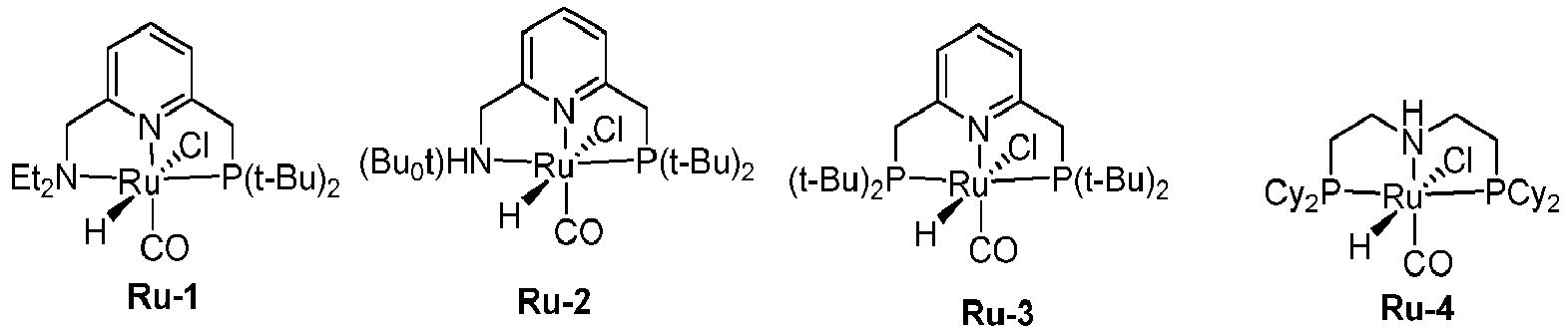


- Elevated conversion of amine and high imine selectivity is obtained using the above-mentioned catalysts Ru1-Ru10 or Mn-1 for the reaction presented in the above scheme. Results are given below, in standard condition: neat 0.2M LiOH/BnOH (6mL), 50 µL hexylamine, 1.3 mM catalyst, CPE 0.3 V vs Ag/AgCl, 25°C, 2F mol amine.
- For Ru-1, Ru-2, Ru5, Ru-10 and Mn-1, imine selectivity is higher than 99%. For Ru-3, Ru6, Ru7 and Ru8, imine selectivity is 99%. The reaction scheme and conditions for the electrocatalytic synthesis of imines from alcohol and amines enable the production of imines nearly without any other side-products such as aldehyde, ester or secondary amine.
Entry Catalyst Conversion Selectivity (%) F.E. (%) Amine (%) BnOH (mmol) Imine 1 Ru-1 >99 0.40 >99 102 2 Ru-2 >99 0.34 >99 85 3 Ru-3 >99 0.33 99 85 4 Ru-4 62 0.22 65 55 5 Ru-5 90 0.26 >99 66 6 Ru-6 93 0.25 99 65 7 Ru-7 97 0.27 99 69 8 Ru-8 91 0.27 99 70 9 Ru-9 72 0.25 65 63 10 Ru-10 93 0.36 >99 66 11 Mn-1 >99 0.38 >99 98 - In standard condition (neat 0.2M LiOH/BnOH (6mL), 0.38 mmol amine, 1.3 mM catalyst, CPE 0.3 V vs Ag/AgCl, 25°C, 2F mol per amine), elevated conversion of various amines and high imine selectivity is obtained using the above-mentioned catalysts Ru1-Ru10 or Mn-1 for the reaction presented in the above scheme. Results are presented below for various amines (aliphatic or aromatic).
Entry Amine Conversion Selectivity (%) F.E. (%) Amine (%) BnOH (mmol) Imine 1 
>99 0.40 >99 102 2 
>99 0.41 >99 105 3 
85 0.43 76 99 4 
22 0.14 77 35 5 
>99 0.42 >99 107 6 
>99 0.38 >99 98 7 
>99 0.44 99 110 8 
75 0.31 >99 80 9 
>99 0.46 >99 110 10 
98 0.41 >99 103 12 
99 0.34 >99 88 12 
88 0.39 99 101 13 
>99 0.43 >99 110 14 
>99 0.41 >99 106 15 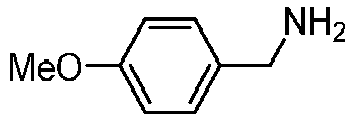
>99 0.43 >99 108 16 
84 0.34 >99 88 17 
69 0.29 >99 (diamine) 75 - Results of different alcohol derivatives screened in the study in standard condition (3 M alcohol, 0.2 M LiOH/(THF/H2O - 7:1 v/v) (6 mL), 0.38 mmol n-hexylamine, 1.3 mM catalyst, CPE 0.3 V vs Ag/AgCl, 25oC, 2F mol amine) are presented below:
Entry Alcohol Conversion Selectivity (%) F.E. (%) Amine (%) BnOH (mmol) Imine 1∗ 
>99 0.40 >99 102 2 
52 0.18 93 47 3 
86 0.31 95 79 4 
60 0.22 72 68 5 
90 0.36 98 94 6 
90 0.34 73 104 7 
42 0.16 91 42 8 
53 0.22 90 56 9 
82 0.28 91 75 10 
52 0.21 >99 53 11 
26 0.06 80 17 12 
72 0.39 >99 100 - A variety of amine nucleophiles can be used for the generation of the corresponding imines, including aliphatic, benzylic and aromatics.
- A variety of functional groups can be tolerated such as, bromo, trifluromethyl, nitro, methyl, thiophenyl, furanyl and methoxy substituents.
- A number of different parameters were optimized in order to obtain the desirable results.
- These parameters include the concentration of the alcohol, the nature of co-solvents, the alcohol to amine ratio, the nature and concentration of the supporting electrolyte/base, water content, working potential, as well as cell/electrode dimensions.
- Some results are presented below.
- By finely tuning the reaction conditions, such as concentration ranges, electrolyte composition, electrochemical cell dimensions, applied potential, it is possible to selectively carry out the two-electron oxidation of alcohols in the presence of amines to the imine product with negligible amount of 4-electron overoxidation products and complete conversion of the limiting amine reagent.
- Results of different electrolyte (base) screened in the study in standard condition (neat 0.1M BnOH (6 mL), 100 µL hexylamine (130 mM), 1.3 mM Ru-1, CPE 0.3 V vs Ag/AgCl, 25°C, 6 hours) are presented below:
Entry Electrolyte (0.1 M) Conversion Selectivity (%) F.E. (%) Amine (%) BnOH (mmol) Imine 1 LiOH 43 0.31 96 90 2 NaOH 41 0.31 95 98 3 KOH 28 0.20 96 102 4 CsOH 34 0.26 95 108 5 Cs2CO3 13 0.11 90 135 6 Li2CO3 4 0.04 78 373 7 (CH3)3CCOOK 0 0 0 0 8 (C4H9)4NH2PO4 15 0.14 86 158 9 (CH3)4NOH ∗10% of water presence 49 0.34 95 62 - Results of different electrolyte (base) concentration screened in the study in standard condition (neat 0.1M BnOH (6 mL), 100 µL hexylamine (130 mM), 1.3 mM Ru-1, CPE 0.3 V vs Ag/AgCl, 25°C, 6 hours) are presented below:
Entry [LiOH] (M) Conversion Selectivity (%) F.E. (%) Amine (%) BnOH (mmol) Imine 1 0.1 43 0.31 96 90 2 0.2 62 0.49 92 77 3 0.5 32 0.24 97 99 4 1.0 29 0.21 98 101 - Results of different benzyl alcohol (BnOH) concentration screened in the study in standard condition (0.1M LiOH 1:7 v/v H2O/THF*, 100 µL hexylamine (130 mM), 1.3 mM Ru-1, CPE 0.3 V vs Ag/AgCl, 25°C, 6 hours) are presented below.
*(the amount of BnOH was replaced by for retaining the total amount of working solution at 6 mL)Entry [BnOH] (M) Conversion Selectivity (%) F.E. (%) Amine (%) BnOH (mmol) Imine 1 Neat 43 0.31 96 90 2 3.0 32 0.20 88 70 3 1.6 30 0.20 84 55 4 0.6 46 0.29 73 29 - Results of different amine concentration screened in the study in standard condition (0.1M LiOH/BnOH, x mM hexylamine, 1.3 mM Ru-1, CPE 0.3 V vs Ag/AgCl, 25oC, 6 hours) are presented below:
Entry [Hexylamine] (mM) Conversion Selectivity (%) F.E. (%) Amine (%) BnOH (mmol) Imine 1 1,500 0.01 0.06 96 28 2 130 62 0.49 92 77 3 63 100 0.39 85 84 - Results of different solvent screened in the study in standard condition (0.1M LiOH/solvent, 0.6 M BnOH, 130 mM hexylamine, 1.3 mM Ru-1, CPE 0.3 V vs Ag/AgCl, 25oC, 6 hours) are presented below:
Entry Solvent (0.1 M LiOH) Conversion Selectivity (%) F.E. (%) Amine (%) BnOH (mmol) Imine 1 Neat 43 0.31 96 90 2 CH2Cl2/water (7:1) 20 0.15 84 78 3 PhCF3/water (7:1) 4 0.087 94 980 4 THF/water (7:1) 46 0.29 73 29 5 1,4-Dioxane/water (7:1) 22 0.23 96 32 - Table below allows comparison of blank experiments to standard conditions in terms of amine conversion, as well as product selectivity. (neat 0.2 M LiOH/BnOH (6 mL), 50 µL hexylamine, 25 °C, 6 hours, 1.3 mM catalyst, CPE 0.3 V vs Ag/AgCl; the presence of two latter conditions is indicated in the table):
Entry Catalyst Applied potential Conversion Selectivity (%) F.E. (%) Amine (%) BnOH (mmol) Imine 1 • • 43 0.31 96 90 2 • - 11 0.03 100 - 3 - • 4 0.02 50 4 4 - - 0 0 0 - 5 As entry 4, the 1.2 mL of 1 M (CH3)4NOH/H2O solution was replaced LiOH and BnOH 6 0.03 79 - - In the absence of applied potential, or catalysts, or both, conversions under otherwise identical conditions are negligible (<15%), demonstrating the electrification of the AAD systems.
- Possible applications of the invention are anyone or a combination of the following:
- safe, room temperature and energy efficient (as controlled) synthesis of imines from renewable feedstock (alcohol),
- use as a anode reaction for electrolyzers (H2 or CO2) for the co-generation of imines from renewable feedstock (alcohols) with small molecule transformation (CO2 reduction, H2 production, O2 reduction),
- value-added co-generation of oxidized products in low-voltage (compared to oxygen evolution) electrolyzers (e.g. in water reduction, CO2 reduction etc.),
- association with other electrochemical set-ups, such as convergent synthetic routes, e.g. with concomitant reduction of nitro-compounds to amines on the cathode and utilization of the so-formed amines in the anodic coupling reactions;
- hydrogen release from small amino-alcohols (equally via intermolecular coupling) to form possible cyclic imine-hydrogen storage molecules.
- The invention combines the advantages of homogeneous electrocatalysis with the selectivities and products so-far only observed under thermal conditions, opening the way towards more sustainable synthetic procedures. Using thermal AAD catalysts in an electrochemical set-up that produces imines is an important step beyond the current state-of-the-art in homogeneous electrocatalysis.
- The technology can be used to generate amount of imine on a reasonable time scale (roughly 6 h) at room temperature.
- An alcohol (preferentially under neat conditions) can be oxidized in the presence of an amine as the limiting agent to the corresponding imine with the help of an Acceptor-less Alcohol Dehydrogenation catalysts and an applied potential. Some of the AAD are commercially available.
- The invention allows to form the corresponding imine with excellent conversions (generally above >95%), selectivities (around 80%) and faradaic efficiency (up to 100%) at catalyst loading of 1 mM, low working potential of 0.3 V vs Ag/AgCl and at room temperature (25°C).
- A large range of ruthenium pincer complexes can be employed successfully. Under the employed conditions, catalytic turnover is generally in the order of 30-50 TONs.
- The process allows to retain chiral centers, making it possibly attractive for pathways towards chiral (pharmaceutical) molecular targets.
- An electrochemical approach benefits from the advantages of electrochemistry, such as safety, scalability, cheapest redox agent (electron), possibility to couple to other redox processes, direct usage of renewable energy for chemical synthesis and importantly direct control of the energy input.
- The use of potentially renewable feedstocks, such as alcohols, for the production of imines under energy efficient conditions (energy input controlled) is a key development towards more sustainable processes for fine chemistry.
Claims (18)
- A use of an acceptor-less alcohol dehydrogenation catalyst for an electrocatalytic oxidation of an alcohol with an amine, to an imine by electrocatalytic synthesis under electrochemical conditions,
the acceptor-less dehydrogenation catalyst used under electrochemical conditions being represented by the structure of any one of the formulae F1 or F2:


 L and L* being tridentate aliphatic or aromatic pincer ligands of the type shown-above, with L* being the deprotonated or dearomatized anionic form of the pincer ligand L,D being a donor group chosen from: a phosphine PR2, tertiary amine NR2, secondary amine NHR, thiol SR, or an N-heterocyclic carbene derived from imidazole, imidazoline, thiazole or triazole units,with R being a substituent selected from the group of: i-Pr, t-Bu, Cyclohexyl, Bn, Ph, Me, Et, Pr, Bu, H,X being an anionic ligand, selected from the group of: H-, BH4 -, OH-, Cl-, Br-, F-, PF6 -, NH2 -, NHR-, NR2 -, OR-, with R as defined above,L' being a mono-dentate strong field ligand selected from the group of: CO, a phosphine PR3, NO, a nitrile RCN, an isonitrile RNC or an N-heterocyclic carbene, derived from imidazole, imidazoline, thiazole or triazole units, with R as defined above,L" and L"* being bidentate ligands as shown above with 1 to 4 CH2 units and with R and D as defined above and L"* being the deprotonated anionic form of the ligand L".
 - The use according to claim 1, wherein in that the electrocatalytic alcohol oxidation is carried out in a homogeneous phase.
- The use according to claim 2, wherein the electrocatalytic alcohol oxidation is carried out under neat conditions without added solvent.
- The use according to claim 2, wherein that the electrocatalytic alcohol oxidation is carried out in the presence of a solvent or binary solvent mixtures.
- The use according to claim 1, wherein in that the electrocatalytic alcohol oxidation is carried out in heterogeneous phase, and in that the acceptor-less dehydrogenation catalyst is immobilized on a conductive support.
- The use according to anyone of claims 1, 2, 4 or 5, wherein solvent is water and the pH is between 7 and 14.
- The use according to anyone of claims 1 to 6, wherein the electrocatalytic alcohol oxidation is carried out under potential control, with an applied potential in the range of -0.5-0.5 V vs Ag/AgCl.
- The use according to anyone of claims 1 to 6, wherein the electrocatalytic alcohol oxidation is carried out under current control, with an applied current between 0.2 and 50 mA.
- The use according to anyone of claims 1 to 8, wherein the electrocatalytic alcohol oxidation is carried out in a divided electrochemical cell with a ratio of working electrode surface to cell volume between 0.5 and 10 cm-1.
- The use according to anyone of claims 1 to 9, wherein the electrocatalytic alcohol oxidation is carried at a temperature below 60°C.
- The use according to anyone of claims 1 to 10, wherein the electrocatalytic alcohol oxidation is carried at room temperature without heating.
- The use according to anyone of claims 1 to 11, wherein in that the organometallic catalyst is in contact with a working solution comprising the alcohol, the amine and a base chosen in the group comprising: LiOH, NaOH, KOH, CsOH, tetramethylammonium hydroxide, tetrabutylammonium hydroxide, trimethylbenzylammonium hydroxide, Cs2CO3, Li2CO3, NaOPiv, KOPiv, LiOPiv, CsOPiv, tetrabutylammonium dihydrogen phosphate, NatBu, KtBu, LitBu, CstBu, NaOEt, KOEt, LiOEt, CsOEt, NaOBn, KOBn, LiOBn, CsOBn, or a tertiary amine NR3 , with R being a substituent selected from the group of: i-Pr, t-Bu, Cyclohexyl, Bn, Ph, Me, Et, Pr, Bu, H.
- The use according to anyone of claims 1 to 12, wherein in that the alcohol oxidized is a primary or secondary alcohol of the form HOR' and the amine is a primary amine of the form H2NR', with R' being an alkyl or benzyl group bearing substituents from the group of: H, Me, Et, Pr, i-Pr, Bu, n-Bu, cyclopropyl, vinyl, allyl, fluoro, chloro, bromo, iodo, nitro, phenyl, alkoxo , borane , a borate , silyl , siloxyl , vinyl, allyl, furanyl, thiophenyl, a thiolate , an ester , a ketone, a sulfoxide.
- The use according to anyone of claims 1 to 13, wherein the amine presents a center of chirality which is maintained in the imine product.
- The use according to anyone of claims 1 to 14, wherein in that the organometallic catalyst is chosen among the following structures



- The use according to anyone of claim 1 to 15, wherein in that an anodic half-cell reaction is coupled with a cathodic half-cell reaction, the cathodic half-cell reaction being an electrochemical reduction of CO2 to CO, H2 production or O2 reduction and the reaction being carried out in a flow-cell.
- The use according to anyone of claims 1 to 16, wherein in that the alcohol is oxidized with at least 50-100 FE% (Faradaic efficiency), 50-100% amine conversion and 50-100% selectivity (from amine) to an imine in the presence of 0.1-2 M Base, 0.1-3 M alcohol, 0.05-1.5 M amine 0.01-10 mM catalysts, at a potential between -0.5-0.5 V vs Ag/AgCl, using a carbon-based working electrode, in a divided cell with working electrode surface-to-cell volume comprised between 0.1 - 10 cm-1, at a temperature below 60°C.
- The use according to anyone of claims 1 to 17, wherein in that the alcohol is oxidized with at least 50-100 FE% (Faradaic efficiency), 50-100% amine conversion and 50-100% selectivity (from amine) to an imine in the presence of 0.1-2 M Base, at an alcohol to amine ratio between 20:1-200:1, an amine to catalyst ratio of 20:1-200:1 and an alcohol to catalyst ratio of 50:1-5000:1, at a potential between -0.5-0.5 V vs Ag/AgCl, using a carbon-based working electrode, in a divided cell with working electrode surface-to-cell volume comprised between 0.1-10 cm-1, at a temperature below 60°C.
Priority Applications (3)
| Application Number | Priority Date | Filing Date | Title |
|---|---|---|---|
| EP22202245.1A EP4357482A1 (en) | 2022-10-18 | 2022-10-18 | Electrocatalytic generation of imines from alcohols and amines |
| EP23789283.1A EP4605578A2 (en) | 2022-10-18 | 2023-10-09 | Electrocatalytic generation of imines from alcohols and amines |
| PCT/EP2023/077916 WO2024083554A2 (en) | 2022-10-18 | 2023-10-09 | Electrocatalytic generation of imines from alcohols and amines |
Applications Claiming Priority (1)
| Application Number | Priority Date | Filing Date | Title |
|---|---|---|---|
| EP22202245.1A EP4357482A1 (en) | 2022-10-18 | 2022-10-18 | Electrocatalytic generation of imines from alcohols and amines |
Publications (1)
| Publication Number | Publication Date |
|---|---|
| EP4357482A1 true EP4357482A1 (en) | 2024-04-24 |
Family
ID=83903424
Family Applications (2)
| Application Number | Title | Priority Date | Filing Date |
|---|---|---|---|
| EP22202245.1A Withdrawn EP4357482A1 (en) | 2022-10-18 | 2022-10-18 | Electrocatalytic generation of imines from alcohols and amines |
| EP23789283.1A Pending EP4605578A2 (en) | 2022-10-18 | 2023-10-09 | Electrocatalytic generation of imines from alcohols and amines |
Family Applications After (1)
| Application Number | Title | Priority Date | Filing Date |
|---|---|---|---|
| EP23789283.1A Pending EP4605578A2 (en) | 2022-10-18 | 2023-10-09 | Electrocatalytic generation of imines from alcohols and amines |
Country Status (2)
| Country | Link |
|---|---|
| EP (2) | EP4357482A1 (en) |
| WO (1) | WO2024083554A2 (en) |
Families Citing this family (1)
| Publication number | Priority date | Publication date | Assignee | Title |
|---|---|---|---|---|
| CN120119268B (en) * | 2025-03-06 | 2025-12-09 | 南开大学 | Synthesis method of chiral 1-tetrahydronaphthalene amide compound |
Citations (2)
| Publication number | Priority date | Publication date | Assignee | Title |
|---|---|---|---|---|
| WO2022136476A1 (en) * | 2020-12-21 | 2022-06-30 | Université de Paris | Electrocatalytic oxidation of alcohols using acceptor-less dehydrogenation catalysts |
| WO2022136475A1 (en) | 2020-12-24 | 2022-06-30 | Ocado Innovation Limited | Motion control of a motion device |
-
2022
- 2022-10-18 EP EP22202245.1A patent/EP4357482A1/en not_active Withdrawn
-
2023
- 2023-10-09 WO PCT/EP2023/077916 patent/WO2024083554A2/en not_active Ceased
- 2023-10-09 EP EP23789283.1A patent/EP4605578A2/en active Pending
Patent Citations (2)
| Publication number | Priority date | Publication date | Assignee | Title |
|---|---|---|---|---|
| WO2022136476A1 (en) * | 2020-12-21 | 2022-06-30 | Université de Paris | Electrocatalytic oxidation of alcohols using acceptor-less dehydrogenation catalysts |
| WO2022136475A1 (en) | 2020-12-24 | 2022-06-30 | Ocado Innovation Limited | Motion control of a motion device |
Non-Patent Citations (13)
| Title |
|---|
| "Molecular Electrocatalysis for Alcohol Oxidation: Insights and Challenges for Catalyst Design", ACS APPL. ENERGY MATER., vol. 3, no. 1, 2020, pages 38 - 46 |
| ANGEWANDTE CHEMIE INTERNATIONAL EDITION, vol. 49, no. 40, 2010, pages 7229 - 7233 |
| BOOPATHY GNANAPRAKASAM ET AL: "Direct Synthesis of Imines from Alcohols and Amines with Liberation of H2", ANGEWANDTE CHEMIE, WILEY - V C H VERLAG GMBH & CO. KGAA, DE, vol. 122, no. 8, 25 January 2010 (2010-01-25), pages 1510 - 1513, XP071348472, ISSN: 0044-8249, DOI: 10.1002/ANGE.200907018 * |
| BOTTARO ET AL.: "In situ generated cobalt catalyst for the dehydrogenative coupling of alcohols and amines into imines", CHEMCATCHEM, vol. 11, 2019 |
| BUNSHO OHTANI ET AL: "Electrolytic N-Alkylation of Amines with Alcohols", CHEMISTRY LETTERS, 1 January 1986 (1986-01-01), pages 1917 - 1920, XP055167189, DOI: 10.1246/cl.1986.1917 * |
| CHANDRA ET AL.: "Recent advancement in oxidation or acceptorless dehydrogenation of alcohols to valorized products using manganese based catalysts", COORDINATION CHEMISTRY REVIEWS, vol. 411, 2020 |
| HIGUCHI ET AL.: "Tunable ligand effects on ruthenium catalyst activity for selectively preparing imines or amides by dehydrogenative coupling reactions of alcohols and amines", CHEM. EUR. J., 2017 |
| MIDYA ET AL.: "Direct access to N-alkylated amines and imines via acceptorless dehydrogenative coupling catalyzed by a cobalt (ii)-NNN pincer complex", CATAL. SCI. TECHNOL., vol. 8, 2018 |
| MURAHASHI ET AL.: "Ruthenium-catalyzed oxidative transformation of alcohols and aldehydes to esters and lactones", J.ORG. CHEM., vol. 52, 1987, XP002758118, DOI: 10.1021/jo00228a032 |
| PICCIRILLI ET AL., CATALYSTS, vol. 10, 2020, pages 773 |
| SINDHUJA ET AL.: "Direct synthesis of imines from primary alcohols and amines using an active ruthenium pincer complex", TETRAHEDRON LETTERS, vol. 55, 2014 |
| TRINCADO ET AL., COORDINATION CHEMISTRY REVIEWS, vol. 443, 2021 |
| ZHANG ET AL.: "Cobalt-catalyzed acceptorless alcohol dehydrogenation: synthesis of imines from alcohols and amines", ORG. LETT., vol. 15, 2013 |
Also Published As
| Publication number | Publication date |
|---|---|
| WO2024083554A3 (en) | 2024-06-13 |
| WO2024083554A2 (en) | 2024-04-25 |
| EP4605578A2 (en) | 2025-08-27 |
| WO2024083554A4 (en) | 2024-08-22 |
Similar Documents
| Publication | Publication Date | Title |
|---|---|---|
| Meyer et al. | Resource economy by metallaelectrocatalysis: merging electrochemistry and CH activation | |
| Wang et al. | Homogeneous manganese-catalyzed hydrogenation and dehydrogenation reactions | |
| Crabtree | Homogeneous transition metal catalysis of acceptorless dehydrogenative alcohol oxidation: applications in hydrogen storage and to heterocycle synthesis | |
| Sklyaruk et al. | Methanol as the hydrogen source in the selective transfer hydrogenation of alkynes enabled by a manganese pincer complex | |
| Song et al. | Integrated catalytic and electrocatalytic conversion of substituted phenols and diaryl ethers | |
| Baratta et al. | Pincer and diamine Ru and Os diphosphane complexes as efficient catalysts for the dehydrogenation of alcohols to ketones | |
| Yuwen et al. | Additive-free cobalt-catalyzed hydrogenation of esters to alcohols | |
| Waldie et al. | Electrocatalytic alcohol oxidation with ruthenium transfer hydrogenation catalysts | |
| Bertini et al. | Iron (II) complexes of the linear rac-tetraphos-1 ligand as efficient homogeneous catalysts for sodium bicarbonate hydrogenation and formic acid dehydrogenation | |
| Canaguier et al. | A structural and functional mimic of the active site of NiFe hydrogenases | |
| Liu et al. | Dehydrogenation of alcohols to carboxylic acid catalyzed by in situ-generated facial ruthenium-CPP complex | |
| Kanega et al. | Electroreduction of carbon dioxide to formate by homogeneous Ir catalysts in water | |
| Mori et al. | Pd-Catalyzed dehydrogenative oxidation of alcohols to functionalized molecules | |
| Machan et al. | Electrocatalytic reduction of carbon dioxide with Mn (terpyridine) carbonyl complexes | |
| Yang et al. | Recent advances for alkylation of ketones and secondary alcohols using alcohols in homogeneous catalysis | |
| McLoughlin et al. | Electrochemically regenerable hydrogen atom acceptors: mediators in electrocatalytic alcohol oxidation reactions | |
| Thenarukandiyil et al. | α-Methylation of ketones and indoles catalyzed by a manganese (I) PCNHCP pincer complex with methanol as a C1 source | |
| Fokin et al. | Electroreduction of carbonyl compounds catalyzed by a manganese complex | |
| Changmai et al. | Review of electrochemical transition‐metal‐catalyzed C− H functionalization reactions | |
| EP4015673A1 (en) | Electrocatalytic oxidation of alcohols using acceptor-less dehydrogenation catalysts | |
| Qian et al. | Imidazolium carboxylates boost Ru-catalyzed hydroaminomethylation of olefins with CO2 | |
| Fokin et al. | Transition metal complex catalyzed photo-and electrochemical (de) hydrogenations involving C= O and C= N bonds | |
| EP4605578A2 (en) | Electrocatalytic generation of imines from alcohols and amines | |
| Kerner et al. | A Rapid and Additive‐Free Ruthenium‐Catalyzed Reductive Amination of Aromatic Aldehydes | |
| Tang et al. | Electrocatalytic and photocatalytic hydrogen generation from water by a water-soluble cobalt complex supported by 2-ethyl-2-(2-hydroxybenzylideneamino) propane-1, 3-diol |
Legal Events
| Date | Code | Title | Description |
|---|---|---|---|
| PUAI | Public reference made under article 153(3) epc to a published international application that has entered the european phase |
Free format text: ORIGINAL CODE: 0009012 |
|
| STAA | Information on the status of an ep patent application or granted ep patent |
Free format text: STATUS: THE APPLICATION HAS BEEN PUBLISHED |
|
| AK | Designated contracting states |
Kind code of ref document: A1 Designated state(s): AL AT BE BG CH CY CZ DE DK EE ES FI FR GB GR HR HU IE IS IT LI LT LU LV MC ME MK MT NL NO PL PT RO RS SE SI SK SM TR |
|
| STAA | Information on the status of an ep patent application or granted ep patent |
Free format text: STATUS: THE APPLICATION IS DEEMED TO BE WITHDRAWN |
|
| 18D | Application deemed to be withdrawn |
Effective date: 20241025 |