EP4349479A1 - Exhaust gas purification catalyst - Google Patents
Exhaust gas purification catalyst Download PDFInfo
- Publication number
- EP4349479A1 EP4349479A1 EP22811121.7A EP22811121A EP4349479A1 EP 4349479 A1 EP4349479 A1 EP 4349479A1 EP 22811121 A EP22811121 A EP 22811121A EP 4349479 A1 EP4349479 A1 EP 4349479A1
- Authority
- EP
- European Patent Office
- Prior art keywords
- mass
- composite oxide
- exhaust gas
- gas purification
- alkaline earth
- Prior art date
- Legal status (The legal status is an assumption and is not a legal conclusion. Google has not performed a legal analysis and makes no representation as to the accuracy of the status listed.)
- Pending
Links
Images



Classifications
-
- F—MECHANICAL ENGINEERING; LIGHTING; HEATING; WEAPONS; BLASTING
- F01—MACHINES OR ENGINES IN GENERAL; ENGINE PLANTS IN GENERAL; STEAM ENGINES
- F01N—GAS-FLOW SILENCERS OR EXHAUST APPARATUS FOR MACHINES OR ENGINES IN GENERAL; GAS-FLOW SILENCERS OR EXHAUST APPARATUS FOR INTERNAL-COMBUSTION ENGINES
- F01N3/00—Exhaust or silencing apparatus having means for purifying, rendering innocuous, or otherwise treating exhaust
- F01N3/08—Exhaust or silencing apparatus having means for purifying, rendering innocuous, or otherwise treating exhaust for rendering innocuous
- F01N3/10—Exhaust or silencing apparatus having means for purifying, rendering innocuous, or otherwise treating exhaust for rendering innocuous by thermal or catalytic conversion of noxious components of exhaust
- F01N3/24—Exhaust or silencing apparatus having means for purifying, rendering innocuous, or otherwise treating exhaust for rendering innocuous by thermal or catalytic conversion of noxious components of exhaust characterised by constructional aspects of converting apparatus
- F01N3/28—Construction of catalytic reactors
-
- B—PERFORMING OPERATIONS; TRANSPORTING
- B01—PHYSICAL OR CHEMICAL PROCESSES OR APPARATUS IN GENERAL
- B01D—SEPARATION
- B01D53/00—Separation of gases or vapours; Recovering vapours of volatile solvents from gases; Chemical or biological purification of waste gases, e.g. engine exhaust gases, smoke, fumes, flue gases, aerosols
- B01D53/34—Chemical or biological purification of waste gases
- B01D53/92—Chemical or biological purification of waste gases of engine exhaust gases
- B01D53/94—Chemical or biological purification of waste gases of engine exhaust gases by catalytic processes
-
- B—PERFORMING OPERATIONS; TRANSPORTING
- B01—PHYSICAL OR CHEMICAL PROCESSES OR APPARATUS IN GENERAL
- B01J—CHEMICAL OR PHYSICAL PROCESSES, e.g. CATALYSIS OR COLLOID CHEMISTRY; THEIR RELEVANT APPARATUS
- B01J23/00—Catalysts comprising metals or metal oxides or hydroxides, not provided for in group B01J21/00
- B01J23/02—Catalysts comprising metals or metal oxides or hydroxides, not provided for in group B01J21/00 of the alkali- or alkaline earth metals or beryllium
-
- F—MECHANICAL ENGINEERING; LIGHTING; HEATING; WEAPONS; BLASTING
- F01—MACHINES OR ENGINES IN GENERAL; ENGINE PLANTS IN GENERAL; STEAM ENGINES
- F01N—GAS-FLOW SILENCERS OR EXHAUST APPARATUS FOR MACHINES OR ENGINES IN GENERAL; GAS-FLOW SILENCERS OR EXHAUST APPARATUS FOR INTERNAL-COMBUSTION ENGINES
- F01N3/00—Exhaust or silencing apparatus having means for purifying, rendering innocuous, or otherwise treating exhaust
- F01N3/08—Exhaust or silencing apparatus having means for purifying, rendering innocuous, or otherwise treating exhaust for rendering innocuous
- F01N3/0807—Exhaust or silencing apparatus having means for purifying, rendering innocuous, or otherwise treating exhaust for rendering innocuous by using absorbents or adsorbents
- F01N3/0828—Exhaust or silencing apparatus having means for purifying, rendering innocuous, or otherwise treating exhaust for rendering innocuous by using absorbents or adsorbents characterised by the absorbed or adsorbed substances
- F01N3/0864—Oxygen
-
- B—PERFORMING OPERATIONS; TRANSPORTING
- B01—PHYSICAL OR CHEMICAL PROCESSES OR APPARATUS IN GENERAL
- B01D—SEPARATION
- B01D2255/00—Catalysts
- B01D2255/10—Noble metals or compounds thereof
- B01D2255/102—Platinum group metals
- B01D2255/1021—Platinum
-
- B—PERFORMING OPERATIONS; TRANSPORTING
- B01—PHYSICAL OR CHEMICAL PROCESSES OR APPARATUS IN GENERAL
- B01D—SEPARATION
- B01D2255/00—Catalysts
- B01D2255/10—Noble metals or compounds thereof
- B01D2255/102—Platinum group metals
- B01D2255/1023—Palladium
-
- B—PERFORMING OPERATIONS; TRANSPORTING
- B01—PHYSICAL OR CHEMICAL PROCESSES OR APPARATUS IN GENERAL
- B01D—SEPARATION
- B01D2255/00—Catalysts
- B01D2255/10—Noble metals or compounds thereof
- B01D2255/102—Platinum group metals
- B01D2255/1025—Rhodium
-
- B—PERFORMING OPERATIONS; TRANSPORTING
- B01—PHYSICAL OR CHEMICAL PROCESSES OR APPARATUS IN GENERAL
- B01D—SEPARATION
- B01D2255/00—Catalysts
- B01D2255/20—Metals or compounds thereof
- B01D2255/204—Alkaline earth metals
-
- B—PERFORMING OPERATIONS; TRANSPORTING
- B01—PHYSICAL OR CHEMICAL PROCESSES OR APPARATUS IN GENERAL
- B01D—SEPARATION
- B01D2255/00—Catalysts
- B01D2255/20—Metals or compounds thereof
- B01D2255/204—Alkaline earth metals
- B01D2255/2042—Barium
-
- B—PERFORMING OPERATIONS; TRANSPORTING
- B01—PHYSICAL OR CHEMICAL PROCESSES OR APPARATUS IN GENERAL
- B01D—SEPARATION
- B01D2255/00—Catalysts
- B01D2255/20—Metals or compounds thereof
- B01D2255/204—Alkaline earth metals
- B01D2255/2047—Magnesium
-
- B—PERFORMING OPERATIONS; TRANSPORTING
- B01—PHYSICAL OR CHEMICAL PROCESSES OR APPARATUS IN GENERAL
- B01D—SEPARATION
- B01D2255/00—Catalysts
- B01D2255/20—Metals or compounds thereof
- B01D2255/206—Rare earth metals
- B01D2255/2063—Lanthanum
-
- B—PERFORMING OPERATIONS; TRANSPORTING
- B01—PHYSICAL OR CHEMICAL PROCESSES OR APPARATUS IN GENERAL
- B01D—SEPARATION
- B01D2255/00—Catalysts
- B01D2255/20—Metals or compounds thereof
- B01D2255/206—Rare earth metals
- B01D2255/2068—Neodymium
-
- B—PERFORMING OPERATIONS; TRANSPORTING
- B01—PHYSICAL OR CHEMICAL PROCESSES OR APPARATUS IN GENERAL
- B01D—SEPARATION
- B01D2255/00—Catalysts
- B01D2255/20—Metals or compounds thereof
- B01D2255/209—Other metals
- B01D2255/2092—Aluminium
-
- B—PERFORMING OPERATIONS; TRANSPORTING
- B01—PHYSICAL OR CHEMICAL PROCESSES OR APPARATUS IN GENERAL
- B01D—SEPARATION
- B01D2255/00—Catalysts
- B01D2255/40—Mixed oxides
- B01D2255/407—Zr-Ce mixed oxides
-
- B—PERFORMING OPERATIONS; TRANSPORTING
- B01—PHYSICAL OR CHEMICAL PROCESSES OR APPARATUS IN GENERAL
- B01D—SEPARATION
- B01D2255/00—Catalysts
- B01D2255/90—Physical characteristics of catalysts
- B01D2255/908—O2-storage component incorporated in the catalyst
-
- B—PERFORMING OPERATIONS; TRANSPORTING
- B01—PHYSICAL OR CHEMICAL PROCESSES OR APPARATUS IN GENERAL
- B01D—SEPARATION
- B01D2255/00—Catalysts
- B01D2255/90—Physical characteristics of catalysts
- B01D2255/91—NOx-storage component incorporated in the catalyst
-
- F—MECHANICAL ENGINEERING; LIGHTING; HEATING; WEAPONS; BLASTING
- F01—MACHINES OR ENGINES IN GENERAL; ENGINE PLANTS IN GENERAL; STEAM ENGINES
- F01N—GAS-FLOW SILENCERS OR EXHAUST APPARATUS FOR MACHINES OR ENGINES IN GENERAL; GAS-FLOW SILENCERS OR EXHAUST APPARATUS FOR INTERNAL-COMBUSTION ENGINES
- F01N2370/00—Selection of materials for exhaust purification
- F01N2370/02—Selection of materials for exhaust purification used in catalytic reactors
-
- F—MECHANICAL ENGINEERING; LIGHTING; HEATING; WEAPONS; BLASTING
- F01—MACHINES OR ENGINES IN GENERAL; ENGINE PLANTS IN GENERAL; STEAM ENGINES
- F01N—GAS-FLOW SILENCERS OR EXHAUST APPARATUS FOR MACHINES OR ENGINES IN GENERAL; GAS-FLOW SILENCERS OR EXHAUST APPARATUS FOR INTERNAL-COMBUSTION ENGINES
- F01N2510/00—Surface coverings
- F01N2510/06—Surface coverings for exhaust purification, e.g. catalytic reaction
-
- Y—GENERAL TAGGING OF NEW TECHNOLOGICAL DEVELOPMENTS; GENERAL TAGGING OF CROSS-SECTIONAL TECHNOLOGIES SPANNING OVER SEVERAL SECTIONS OF THE IPC; TECHNICAL SUBJECTS COVERED BY FORMER USPC CROSS-REFERENCE ART COLLECTIONS [XRACs] AND DIGESTS
- Y02—TECHNOLOGIES OR APPLICATIONS FOR MITIGATION OR ADAPTATION AGAINST CLIMATE CHANGE
- Y02A—TECHNOLOGIES FOR ADAPTATION TO CLIMATE CHANGE
- Y02A50/00—TECHNOLOGIES FOR ADAPTATION TO CLIMATE CHANGE in human health protection, e.g. against extreme weather
- Y02A50/20—Air quality improvement or preservation, e.g. vehicle emission control or emission reduction by using catalytic converters
Definitions
- the present invention relates to an exhaust gas purification catalyst.
- Nitrogen oxides (NO x ), carbon monoxide (CO), and hydrocarbons (HC) are contained in exhaust gases from internal combustion engines such as automobile engines. These exhaust gases are purified by exhaust gas purification catalysts that oxidize CO and HC and reduce NOx, and are then released into the atmosphere.
- the emissions weight per unit driving distance of an automobile is regulated in each country from the viewpoint of mitigating air pollution.
- PTL 1 discloses an exhaust gas purification catalyst comprising
- PTL 1 describes that a solid solution of an alkaline earth metal in a composite oxide improves the NOx adsorption characteristics of the composite oxide.
- PTL 2 discloses a redox catalyst composed of palladium and an alkaline earth metal supported on an oxide having oxygen storage/release ability.
- PTL 2 describes that by configuring the catalyst as described above, the alkaline earth metal is preferably involved in NOx adsorption or reaction.
- PTL 1 and 2 described above both belong to exhaust gas purification catalysts of the prior art, and the NOx adsorption amount in cold region, such as at engine start-up, is insufficient.
- the present invention has been made in view of the above circumstances, and has an object of providing an exhaust gas purification catalyst having a large NOx adsorption amount in cold region and decreased NOx emissions in cold region.
- the present invention is as follows.
- the exhaust gas purification catalyst of the present invention has a large NOx adsorption amount in cold region and decreased NOx emissions in cold region.
- the exhaust gas purification catalyst of the present invention comprises
- a noble metal may be further supported on the above composite oxide carrier with the second alkaline earth metal oxide.
- the composite oxide carrier comprises an OSC material, for example, ceria.
- the exhaust gas atmosphere at engine start-up is in the rich to stoichiometric range.
- an OSC material such as ceria is in a reduced state and an oxygen-deficient state at engine start-up.
- the composite oxide carrier further comprises a first alkaline earth metal oxide.
- the composite oxide carrier comprises divalent alkaline earth metal ions, thereby increasing the amount of oxygen vacancies in an OSC material, for example, ceria (an oxide of tetravalent cerium) and further increasing NOx adsorption sites in cold state.
- a second alkaline earth metal oxide is supported on the composite oxide carrier.
- the second alkaline earth metal oxide has a function of adsorbing and retaining (storing) NOx.
- NOx adsorption sites in the composite oxide carrier and NOx storage sites consisting of the second alkaline earth metal oxide are located in close proximity.
- a composite oxide carrier comprises a first alkaline earth metal oxide
- supporting rate of a second alkaline earth metal oxide is improved and dispersibility of the second alkaline earth metal oxide on the composite oxide carrier surface is improved. It was presumed that these phenomena were due to an interaction between the first alkaline earth metal oxide in the composite oxide carrier and the supported second alkaline earth metal oxide. Surprisingly, it was confirmed that these phenomena occur even when the types of the first alkaline earth metal oxide and the second alkaline earth metal oxide are different.
- the exhaust gas purification catalyst of the present invention coupled with the factors described above, exhibits an improved NOx adsorption amount in cold state.
- the composite oxide carrier of the exhaust gas purification catalyst of the present invention comprises an OSC material and a first alkaline earth metal oxide.
- the composite oxide carrier of the exhaust gas purification catalyst of the present invention comprises an OSC material.
- OSC is an abbreviation for "Oxygen Storage Capacity” or “Oxygen Storage/release Capacity” and means an “oxygen storage/release ability”.
- OSC material means a “material having an oxygen storage/release ability”.
- the OSC material is, for example, ceria (CeO 2 ).
- Ceria as an OSC material is a concept that includes ceria which constitutes a composite oxide of cerium and another metal, in addition to ceria present as a single type in the composite oxide carrier.
- the composite oxide may be, for example, a cerium-zirconium composite oxide.
- ceria is present as a cerium-zirconium composite oxide, the amount of oxygen vacancies in ceria in the rich to stoichiometric region is increased, and as a result, the number of NOx adsorption sites in the composite oxide carrier in cold state is further increased.
- the particle size of the composite oxide carrier may be appropriately set according to intended use.
- the particle size of the composite oxide carrier can be exemplified in the range of, for example, 1 ⁇ m or more and 100 ⁇ m or less.
- the particle size of the composite oxide carrier is a particle size corresponding to 50% cumulative on the small particle-size side in the volume frequency distribution on a volume basis, determined by image processing of an observation image obtained by observing a cross-section of the catalyst with an electron microscope.
- the image processing of an observation image from an electron microscope may be carried out by, for example, the public-domain image analysis software "ImageJ".
- the ceria content in the cerium-zirconium composite oxide as a ratio of the mass of the cerium atom amount in the composite oxide expressed in terms of ceria (Ce 2 O 3 ) to the total mass of the composite oxide, may be 5% by mass or greater, 10% by mass or greater, 15% by mass or greater, or 20% by mass or greater, and may be 50% by mass or less, 45% by mass or less, 40% by mass or less, 35% by mass or less, 30% by mass or less, or 25% by mass or less.
- the amount of OSC material contained in the composite oxide carrier when the total mass of the composite oxide carrier is 100% by mass, may be 5% by mass or greater, 7.5% by mass or greater, 15% by mass or greater, or 20% by mass or greater.
- the amount of OSC material contained in the composite oxide carrier when the total mass of the composite oxide carrier is 100% by mass, may be 50% by mass or less, 45% by mass or less, 40% by mass or less, 35% by mass or less, 30% by mass or less, or 25% by mass or less.
- the OSC amount (ceria amount) when the OSC material is ceria which constitutes a composite oxide of cerium and another metal is an amount expressed as the amount of cerium atoms in the composite oxide in terms of ceria (Ce 2 O 3 ).
- the composite oxide carrier of the exhaust gas purification catalyst of the present invention comprises a first alkaline earth metal oxide.
- alkaline earth metal in the present specification is a concept including beryllium (Be) and magnesium (Mg), in addition to calcium (Ca), strontium (Sr), barium (Ba), and radium (Ra) (the same for the second alkaline earth metal described below).
- the first alkaline earth metal oxide contained in the composite oxide carrier of the exhaust gas purification catalyst of the present invention may be, for example, one or more selected from magnesium oxide, calcium oxide, and strontium oxide, and may be magnesium oxide in particular.
- the first alkaline earth metal oxide may be present as a single type of alkaline earth metal oxide in the composite oxide carrier, or may be formed as a solid solution with an OSC material or a composite oxide comprising an OSC material (for example, a cerium-zirconium composite oxide).
- the amount of the first alkaline earth metal oxide contained in the composite oxide carrier, when the total mass of the composite oxide carrier is 100% by mass, may be 0.1% by mass or greater, 0.5% by mass or greater, 1.0% by mass or greater, 2.0% by mass or greater, 3.0% by mass or greater, or 4.0% by mass or greater, from the viewpoint of sufficiently increasing the number of NOx adsorption sites in the composite oxide carrier.
- the amount of the first alkaline earth metal oxide, when the total mass of the composite oxide carrier is 100% by mass may be 20% by mass or less, 15% by mass or less, 12% by mass or less, 10% by mass or less, or 8% by mass or less.
- the amount of the first alkaline earth metal oxide when the first alkaline earth metal oxide is formed as a solid solution with an OSC material or a composite oxide comprising an OSC material is an amount expressed as the amount of the first alkaline earth metal in the solid solution in terms of oxide.
- the amount of ceria as an OSC material is expressed as CeO 2 .
- the composite oxide may comprise an optional component in addition to the OSC material and the first alkaline earth metal oxide described above.
- the OSC material in the composite oxide may be present as, for example, ceria in a cerium-zirconium composite oxide
- the composite oxide may comprise zirconia.
- the composite oxide may comprise one or more selected from rare earth metal oxides other than ceria, in addition to alumina, silica, and titania.
- the composite oxide comprises two or more of these oxides, the two or more oxides may be present as individual oxides, or may be present as a composite oxide.
- the amount of oxygen vacancies in the OSC material in the rich to stoichiometric region can be increased, and the number of NOx adsorption sites in the composite oxide carrier in cold state is further increased.
- the amount of zirconia in the composite oxide when the total mass of the composite oxide carrier is 100% by mass, may be 20% by mass or greater, 30% by mass or greater, 40% by mass or greater, 50% by mass or greater, 60% by mass or greater, or 65% by mass or greater, from the viewpoint of sufficiently demonstrating the above effect.
- the amount of the first alkaline earth metal oxide when the total mass of the composite oxide carrier is 100% by mass, may be 90% by mass or less, 85% by mass or less, 80% by mass or less, 75% by mass or less, or 70% by mass or less.
- the amount of zirconia when zirconium constitutes the composite oxide with another metal is an amount expressed as the amount of zirconium atoms in the composite oxide in terms of zirconia (ZrO 2 ).
- the composite oxide may comprise alumina.
- alumina which has high heat resistance, in the composite oxide, an effect of preventing deterioration due to heat can be obtained in the composite oxide.
- the alumina may be present as a single type of alumina, or may be present as a composite oxide with another metal oxide, for example, a rare earth element oxide other than ceria.
- the amount of alumina in the composite oxide when the total mass of the composite oxide carrier is 100% by mass, may be 5% by mass or greater, 10% by mass or greater, 15% by mass or greater, 20% by mass or greater, or 25% by mass or greater, from the viewpoint of sufficiently demonstrating the above effect.
- the amount of the first alkaline earth metal oxide when the total mass of the composite oxide carrier is 100% by mass, may be 50% by mass or less, 40% by mass or less, 30% by mass or less, 20% by mass or less, 10% by mass or less, or 5% by mass or less, or may be 0% by mass.
- the alumina amount when alumina constitutes the composite oxide with another metal is an amount expressed as the amount of aluminum atoms in the composite oxide in terms of alumina (Al 2 O 3 ).
- a second alkaline earth metal oxide is supported on the composite oxide carrier as described above.
- the second alkaline earth metal oxide is considered to function as storage sites for NOx.
- the second alkaline earth metal oxide may be one or more selected from the group consisting of magnesium oxide, barium oxide, and strontium oxide.
- the second alkaline earth metal oxide may be barium oxide or strontium oxide.
- the second alkaline earth metal oxide may be supported on particles.
- the particle size of the second alkaline earth metal oxide as a number-average value of primary particle sizes calculated from XRD, may be 10 nm or more, 15 nm or more, 20 nm or more, or 25 nm or more, and may be 50 nm or less, 45 nm or less, 40 nm or less, or 35 nm or less.
- the supported amount of the second alkaline earth metal oxide, when the mass of the composite oxide carrier is 100% by mass, may be 0.5% by mass or greater, 1.0% by mass or greater, 2.0% by mass or greater, 3.0% by mass or greater, 4.0% by mass or greater, 5.0% by mass or greater, or 6.0% by mass or greater, from the viewpoint of ensuring a sufficient adsorption amount of NOx.
- the adsorption amount of NOx does not increase indefinitely.
- it is considered to be related to an increase in free second alkaline earth metal oxide unsupported on the composite oxide carrier when the amount of the second alkaline earth metal oxide is excessively large.
- NOx is adsorbed on the composite oxide carrier having an increased number of adsorption sites, since NOx cannot be transferred to the free second alkaline earth metal oxide, there is presumably a limit to the adsorption amount of NOx.
- the adsorption amount of NOx may actually be impaired.
- the second alkaline earth metal oxide is excessively increased, it is presumed that a large portion of the surfaces of the composite oxide is covered by the second alkaline earth metal oxide, interfering with contact between the composite oxide and NOx and thereby decreasing the NOx adsorption amount of the material as a whole.
- the supported amount of the second alkaline earth metal oxide when the mass of the composite oxide carrier is 100% by mass, may be 25% by mass or less, 20% by mass or less, 15% by mass or less, 12% by mass or less, 10% by mass or less, or 8% by mass or less.
- a noble metal may be further supported on the above composite oxide carrier with the second alkaline earth metal oxide.
- a noble metal When a noble metal is supported on the composite oxide carrier, an effect of further increasing the adsorption amount of NOx can be obtained. This is presumably because the noble metal functions as storage sites for NOx.
- the noble metal may be one or more selected from the group consisting of platinum (Pt), palladium (Pd), and rhodium (Rh).
- the particle size of the noble metal particles may be 0.7 nm or more or 3 nm or more, and may be 100 nm or less or 50 nm or less.
- the supported amount of the noble metal when the mass of the composite oxide carrier is 100% by mass, may be 0.1% by mass or greater, 0.3% by mass or greater, 0.5% by mass or greater, 0.7% by mass or greater, or 1.0% by mass or greater.
- the adsorption amount of NOx proportional to the supported amount is not necessarily increased. Therefore, in consideration of manufacturing cost vs.
- the supported amount of the noble metal, when the mass of the composite oxide carrier is 100% by mass may be 15% by mass or less, 10% by mass or less, 8% by mass or less, 5% by mass or less, 3% by mass or less, 2% by mass or less, or 1% by mass or less.
- the manufacturing method thereof is not limited.
- the exhaust gas purification catalyst of the present invention may be manufactured by, for example, a method comprising
- the manufacturing method of the exhaust gas purification catalyst when a second alkaline earth metal oxide and a noble metal are supported on the composite oxide carrier may be a method further comprising supporting the noble metal on the composite oxide carrier.
- the manufacture of the composite oxide carrier may be carried out by, for example, a coprecipitation method. Specifically, the method may be carried out by drying and baking a precipitate obtained by adding a suitable precipitant to a liquid mixture (preferably an aqueous solution) comprising a precursor of the OSC material, a precursor of the first alkaline earth metal oxide, and as needed, a precursor of an optional component, followed by pulverization and classification.
- a suitable precipitant preferably an aqueous solution
- a liquid mixture preferably an aqueous solution
- the precursor of the OSC material As each of the precursor of the OSC material, the precursor of the first alkaline earth metal oxide, and the precursor of the optional component, a nitrate, a sulfate, a hydrochloride, or an acetate of a desired metal may be used.
- the precipitant may be an alkali, for example, sodium hydroxide, potassium hydroxide, or ammonium hydroxide, and may be used as a solution thereof, preferably an aqueous solution.
- Drying and baking of the precipitate and pulverization and classification of the baked product may each be carried out by a known method or a method appropriately modified therefrom by a person skilled in the art.
- Supporting of a second alkaline earth metal oxide on the composite oxide carrier may be carried out by bringing a precursor of the second alkaline earth metal oxide into contact with the composite oxide carrier in a suitable liquid medium, preferably water, and then drying and baking the recovered solid content.
- a suitable liquid medium preferably water
- a nitrate, a sulfate, a hydrochloride, or an acetate of a desired alkaline earth metal oxide may be used.
- Supporting of a noble metal on the composite oxide carrier may be carried out by bringing a precursor of the noble metal into contact with the composite oxide carrier in a suitable liquid medium, preferably water, and then drying and baking the recovered solid content.
- a precursor of the noble metal a nitrate, a sulfate, a hydrochloride, or an acetate of a desired noble metal may be used.
- the supporting of the noble metal on the composite oxide carrier may be carried out before or after the supporting of the second alkaline earth metal oxide on the composite oxide carrier, or may be carried out simultaneously with the supporting of the second alkaline earth metal oxide on the composite oxide carrier.
- the supporting of the noble metal and the supporting of the second alkaline earth metal oxide on the composite oxide carrier may be carried out by the following method when carried out simultaneously.
- the supporting may be carried out by bringing a precursor of the second alkaline earth metal oxide and a precursor of the noble metal into contact with the composite oxide carrier in a suitable liquid medium, preferably water, and then drying and baking the recovered solid content.
- drying and baking of the solid content may each be carried out by a known method or a method appropriately modified therefrom by a person skilled in the art.
- the present invention provides an exhaust gas purification catalytic device.
- the exhaust gas purification catalytic device of the present invention comprises
- the substrate may be appropriately selected according to the type of substrate of the desired exhaust gas purification catalytic device.
- a straight-flow-type or wall-flow-type honeycomb substrate composed of a material such as cordierite, SiC, stainless steel, or inorganic oxide particles may be used.
- the coating layer of the exhaust gas purification catalytic device of the present invention comprises the exhaust gas purification catalyst of the present invention.
- the coating layer of the exhaust gas purification catalytic device of the present invention may comprise an optional component, as needed, in addition to the exhaust gas purification catalyst of the present invention.
- the optional component may be, for example, an inorganic oxide, a noble metal, or a binder.
- the exhaust gas purification catalytic device of the present invention may be manufactured by a known method or a method appropriately modified therefrom by a person skilled in the art, in addition to containing the exhaust gas purification catalyst of the present invention in a coating layer.
- the exhaust gas purification catalytic device of the present invention may be manufactured by, for example, coating a coating liquid comprising the exhaust gas purification catalyst of the present invention and an optional component or a precursor thereof on a substrate, followed by baking.
- Zirconium oxynitrate, cerium nitrate, aluminum nitrate, neodymium nitrate, lanthanum nitrate, and magnesium acetate (a precursor of the first alkali metal oxide) were used as raw materials for the composite oxide carrier and were dissolved in pure water in the oxide-equivalent mass ratios listed in Table 3 to obtain an acidic mixed solution.
- a sodium hydroxide aqueous solution was added to the mixed solution until the pH reached 7, and a coprecipitation operation was carried out to obtain a precipitate.
- the precipitate was collected by filtration, sufficiently washed with pure water, dried in air at 250 °C for 8 h, and then baked in air at 500 °C for 2 h to obtain a baked product.
- the obtained baked product was pulverized in an agate mortar and classified, whereby a powdered composite oxide carrier having a particle size range of 2 to 10 ⁇ m was obtained.
- the powdered composite oxide carrier obtained above was added to an aqueous solution obtained by dissolving magnesium acetate as a raw material compound of the second alkaline earth metal oxide in pure water, and the mixture was thoroughly stirred to form a suspension.
- the use amount of magnesium acetate was an amount such that the oxide-equivalent mass was 4 parts by mass based on 100 parts by mass of the composite oxide carrier (supported amount of 4% by mass).
- the obtained suspension was dried in air at 250 °C for 8 h and then baked in air at 500 °C for 2 h to obtain a baked product, which was pulverized in an agate mortar and passed through a 500- ⁇ m mesh, whereby an exhaust gas purification catalyst was prepared.
- the primary particle size of the supported second alkaline earth metal oxide (MgO) particles calculated from XRD of the obtained exhaust gas purification catalyst was 10 to 40 nm.
- the NO adsorption test was carried out in the catalyst bed temperature and gas composition sequences shown in Tables 1 and 2, and the cumulative amount of NH 3 recovered in the final desorption step was converted to NO 2 and calculated as the NO 2 adsorption amount (mg/g-cat) per unit mass of used catalyst. The results are shown in Table 3.
- composite oxide carriers were prepared in the same manner as in Example 1.
- a second alkaline earth metal oxide was supported on a composite oxide carrier to prepare an exhaust gas purification catalyst in the same manner as in Example 1.
- the oxide-equivalent supported amount was the amount indicated in Table 3. The following raw material compounds were used, in accordance with the type of alkaline earth metal.
- the first alkaline earth metal oxide in the composite oxide carrier promoted the release of oxygen from the OSC material (ceria) in the composite oxide carrier, facilitating NO to be oxidized to NO 2 and/or NO 3 - .
- the second alkaline earth metal supported on the composite oxide carrier could adsorb the oxidized NO (NO 2 and/or NO 3 - ) with high efficiency.
- the exhaust gas purification catalysts of Comparative Examples 2 and 3 each comprised a supported alkaline earth metal oxide on a composite oxide carrier, and thus potentially had the ability to adsorb oxidized NO. However, since no alkaline earth metal oxide was contained in the composite oxide carrier, it is considered that oxidation of NO did not proceed and the adsorption amounts of NO were thus small.
- composite oxide carriers were prepared in the same manner as in Example 1.
- aluminum nitrate was additionally used as a raw material for the composite oxide carrier.
- the noble metal (PGM) raw material compounds indicated in Table 4 were used in addition to magnesium acetate, a noble metal and a second alkaline earth metal oxide were supported on a composite oxide carrier in the same manner as in Example 1 to prepare an exhaust gas purification catalyst.
- the metalequivalent supported amount was the amount indicated in Table 4. The following raw material compounds were used, in accordance with the type of noble metal.
- the exhaust gas purification catalysts of Examples 7 to 10 in which a first alkaline earth metal was contained in a composite oxide carrier and a second alkaline earth metal and a catalytic noble metal were supported on the composite oxide carrier, exhibited a significantly increased NO adsorption amount compared to the exhaust gas purification catalysts of the Comparative Examples.
- FIG. 5 is a Mg mapping obtained by EPMA analysis of the exhaust gas purification catalyst of Example 1. Referring to FIG. 5 , it is found that Mg is present both at the inner portion and on the surface of the composite oxide carrier. It can be confirmed that Mg on the composite oxide carrier surface is in a very good state of dispersibility and evenly supported on the surface of the composite oxide carrier, and there is almost no free Mg from the composite oxide carrier.
- FIG. 6 is a Mg mapping obtained by EPMA analysis of the exhaust gas purification catalyst of Comparative Example 1. In FIG. 6 , Mg is present only at the inner portion of the composite oxide carrier.
- FIG. 7 is a Mg mapping obtained by EPMA analysis of the exhaust gas purification catalyst of Comparative Example 2.
- Mg is present only at the outer portion of the composite oxide carrier. It can be confirmed that Mg is segregated on the surface of the composite oxide carrier in an aggregated state and free from the composite oxide carrier.
- FIG. 8 is a Ba mapping obtained by EPMA analysis of the exhaust gas purification catalyst of Comparative Example 3.
- Ba is present only at the outer portion of the composite oxide carrier. It can be confirmed that Ba is segregated on the surface of the composite oxide carrier in an aggregated state and free from the composite oxide carrier.
Landscapes
- Chemical & Material Sciences (AREA)
- Engineering & Computer Science (AREA)
- Chemical Kinetics & Catalysis (AREA)
- Health & Medical Sciences (AREA)
- Combustion & Propulsion (AREA)
- Mechanical Engineering (AREA)
- General Engineering & Computer Science (AREA)
- Environmental & Geological Engineering (AREA)
- Materials Engineering (AREA)
- Organic Chemistry (AREA)
- Emergency Medicine (AREA)
- Biomedical Technology (AREA)
- Toxicology (AREA)
- Analytical Chemistry (AREA)
- General Chemical & Material Sciences (AREA)
- Oil, Petroleum & Natural Gas (AREA)
- Catalysts (AREA)
- Exhaust Gas Treatment By Means Of Catalyst (AREA)
- Exhaust Gas After Treatment (AREA)
Abstract
Description
- The present invention relates to an exhaust gas purification catalyst.
- Nitrogen oxides (NOx), carbon monoxide (CO), and hydrocarbons (HC) are contained in exhaust gases from internal combustion engines such as automobile engines. These exhaust gases are purified by exhaust gas purification catalysts that oxidize CO and HC and reduce NOx, and are then released into the atmosphere.
- Regarding the three components of CO, HC, and NOx contained in exhaust gases, the emissions weight per unit driving distance of an automobile is regulated in each country from the viewpoint of mitigating air pollution.
- Exhaust gas regulations have been tightening year after year. Currently, the LEV III regulations are applied in the United States, and the Euro 6 standards are applied in Europe. Europe is expected to transition to the Euro 7 standards in the near future.
- In the Euro 7 standards, for example, a decrease in NOx emissions in cold region such as at engine start-up is required. The exhaust gas atmosphere at engine start-up is in a rich to stoichiometric range. Therefore, decreasing NOx emissions in cold region using NOx purification techniques of the prior art that assumes a lean-burn engine is difficult.
- As a NOx emissions decreasing technique of the prior art, for example,
PTL 1 discloses an exhaust gas purification catalyst comprising - a lower catalyst layer containing a first composite oxide comprising Ce and Zr and Pd supported on the first composite oxide, and
- an upper catalyst layer containing a second composite oxide comprising Ce and Zr and Rh supported on the second composite oxide, wherein an alkaline earth metal selected from Ca, Sr, and Mg forms a solid solution with at least one of the first composite oxide and the second composite oxide.
-
PTL 1 describes that a solid solution of an alkaline earth metal in a composite oxide improves the NOx adsorption characteristics of the composite oxide. -
PTL 2 discloses a redox catalyst composed of palladium and an alkaline earth metal supported on an oxide having oxygen storage/release ability. -
PTL 2 describes that by configuring the catalyst as described above, the alkaline earth metal is preferably involved in NOx adsorption or reaction. -
- [PTL 1]
Japanese Unexamined Patent Publication (Kokai) No. 2010-119994 - [PTL 2]
Japanese Unexamined Patent Publication (Kokai) No. 2001-198461 -
PTL - The present invention has been made in view of the above circumstances, and has an object of providing an exhaust gas purification catalyst having a large NOx adsorption amount in cold region and decreased NOx emissions in cold region.
- The present invention is as follows.
-
- «
Aspect 1» An exhaust gas purification catalyst, comprising- a composite oxide carrier comprising an OSC material and a first alkaline earth metal oxide, and
- a second alkaline earth metal oxide supported on the composite oxide carrier.
- «
Aspect 2» The exhaust gas purification catalyst according toAspect 1, wherein the first alkaline earth metal oxide is magnesium oxide. - «
Aspect 3» The exhaust gas purification catalyst according toAspect - «Aspect 4» The exhaust gas purification catalyst according to any one of
Aspects 1 to 3, wherein the OSC material comprises a cerium-zirconium composite oxide. - «Aspect 5» The exhaust gas purification catalyst according to any one of
Aspects 1 to 4, wherein the composite oxide carrier further comprises alumina. - «Aspect 6» The exhaust gas purification catalyst according to any one of
Aspects 1 to 5, wherein an amount of the first alkaline earth metal oxide, when a total mass of the composite oxide carrier is 100% by mass, is 0.1% by mass or greater and 20% by mass or less. - «Aspect 7» The exhaust gas purification catalyst according to any one of
Aspects 1 to 6, wherein a supported amount of the second alkaline earth metal oxide, when a mass of the composite oxide carrier is 100% by mass, is 0.5% by mass or greater and 25% by mass or less. - «Aspect 8» The exhaust gas purification catalyst according to any one of
Aspects 1 to 7, further comprising a noble metal supported on the composite oxide carrier. - «Aspect 9» The exhaust gas purification catalyst according to Aspect 8, wherein the noble metal is one or more selected from the group consisting of platinum, palladium, and rhodium.
- «Aspect 10» The exhaust gas purification catalyst according to Aspect 8 or 9, wherein a supported amount of the noble metal, when a mass of the composite oxide carrier is 100% by mass, is 0.1% by mass or greater and 15% by mass or less.
- «Aspect 11» An exhaust gas purification catalytic device, comprising a substrate and a coating layer on the substrate, wherein
the coating layer comprises an exhaust gas purification catalyst according to any one ofAspects 1 to 10. - The exhaust gas purification catalyst of the present invention has a large NOx adsorption amount in cold region and decreased NOx emissions in cold region.
-
-
FIG. 1 is a conceptual diagram for describing an example of a configuration of the exhaust gas purification catalyst of the present invention. -
FIG. 2 is a conceptual diagram for describing another example of a configuration of the exhaust gas purification catalyst of the present invention. -
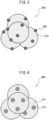
FIG. 3 is a conceptual diagram for describing an example of a configuration of an exhaust gas purification catalyst in the prior art. -
FIG. 4 is a conceptual diagram for describing another example of a configuration of an exhaust gas purification catalyst in the prior art. -
FIG. 5 is a Mg mapping obtained by EPMA analysis of the exhaust gas purification catalyst of Example 1. -
FIG. 6 is a Mg mapping obtained by EPMA analysis of the exhaust gas purification catalyst of Comparative Example 1. -
FIG. 7 is a Mg mapping obtained by EPMA analysis of the exhaust gas purification catalyst of Comparative Example 2. -
FIG. 8 is a Ba mapping obtained by EPMA analysis of the exhaust gas purification catalyst of Comparative Example 3. - The exhaust gas purification catalyst of the present invention comprises
- a composite oxide carrier comprising an OSC material and a first alkaline earth metal oxide, and
- a second alkaline earth metal oxide supported on the above composite oxide carrier.
- In the exhaust gas purification catalyst of the present invention, a noble metal may be further supported on the above composite oxide carrier with the second alkaline earth metal oxide.
- In the exhaust gas purification catalyst of the present invention, the composite oxide carrier comprises an OSC material, for example, ceria. The exhaust gas atmosphere at engine start-up (in cold state) is in the rich to stoichiometric range. Thus, it is considered that an OSC material such as ceria is in a reduced state and an oxygen-deficient state at engine start-up. By including a composite oxide carrier containing an OSC material in an oxygen-deficient state at engine start-up in the exhaust gas purification catalyst of the present invention, the number of NOx adsorption sites in cold state is increased.
- In the exhaust gas purification catalyst of the present invention, the composite oxide carrier further comprises a first alkaline earth metal oxide. As a result, the amount of basic sites in the composite oxide carrier is increased and the number of NOx adsorption sites is increased. In addition, the composite oxide carrier comprises divalent alkaline earth metal ions, thereby increasing the amount of oxygen vacancies in an OSC material, for example, ceria (an oxide of tetravalent cerium) and further increasing NOx adsorption sites in cold state.
- In the exhaust gas purification catalyst of the present invention, a second alkaline earth metal oxide is supported on the composite oxide carrier. The second alkaline earth metal oxide has a function of adsorbing and retaining (storing) NOx.
- In the exhaust gas purification catalyst of the present invention, NOx adsorption sites in the composite oxide carrier and NOx storage sites consisting of the second alkaline earth metal oxide are located in close proximity. As a result, in the exhaust gas purification catalyst of the present invention, the process from NOx adsorption to storage proceeds smoothly and quickly.
- According to investigations by the present inventors, it was confirmed that when a composite oxide carrier comprises a first alkaline earth metal oxide, supporting rate of a second alkaline earth metal oxide is improved and dispersibility of the second alkaline earth metal oxide on the composite oxide carrier surface is improved. It was presumed that these phenomena were due to an interaction between the first alkaline earth metal oxide in the composite oxide carrier and the supported second alkaline earth metal oxide. Surprisingly, it was confirmed that these phenomena occur even when the types of the first alkaline earth metal oxide and the second alkaline earth metal oxide are different.
- The exhaust gas purification catalyst of the present invention, coupled with the factors described above, exhibits an improved NOx adsorption amount in cold state.
- The composite oxide carrier of the exhaust gas purification catalyst of the present invention comprises an OSC material and a first alkaline earth metal oxide.
- The composite oxide carrier of the exhaust gas purification catalyst of the present invention comprises an OSC material. "OSC" is an abbreviation for "Oxygen Storage Capacity" or "Oxygen Storage/release Capacity" and means an "oxygen storage/release ability". "OSC material" means a "material having an oxygen storage/release ability".
- The OSC material is, for example, ceria (CeO2). Ceria as an OSC material is a concept that includes ceria which constitutes a composite oxide of cerium and another metal, in addition to ceria present as a single type in the composite oxide carrier.
- When the OSC material is ceria which constitutes a composite oxide of cerium and another metal, the composite oxide may be, for example, a cerium-zirconium composite oxide. When ceria is present as a cerium-zirconium composite oxide, the amount of oxygen vacancies in ceria in the rich to stoichiometric region is increased, and as a result, the number of NOx adsorption sites in the composite oxide carrier in cold state is further increased.
- The particle size of the composite oxide carrier may be appropriately set according to intended use. The particle size of the composite oxide carrier can be exemplified in the range of, for example, 1 µm or more and 100 µm or less. The particle size of the composite oxide carrier is a particle size corresponding to 50% cumulative on the small particle-size side in the volume frequency distribution on a volume basis, determined by image processing of an observation image obtained by observing a cross-section of the catalyst with an electron microscope. The image processing of an observation image from an electron microscope may be carried out by, for example, the public-domain image analysis software "ImageJ".
- The ceria content in the cerium-zirconium composite oxide, as a ratio of the mass of the cerium atom amount in the composite oxide expressed in terms of ceria (Ce2O3) to the total mass of the composite oxide, may be 5% by mass or greater, 10% by mass or greater, 15% by mass or greater, or 20% by mass or greater, and may be 50% by mass or less, 45% by mass or less, 40% by mass or less, 35% by mass or less, 30% by mass or less, or 25% by mass or less.
- In order to ensure a sufficient number of NOx adsorption sites in cold state, the amount of OSC material contained in the composite oxide carrier, when the total mass of the composite oxide carrier is 100% by mass, may be 5% by mass or greater, 7.5% by mass or greater, 15% by mass or greater, or 20% by mass or greater. In order to benefit from the composite oxide comprising an additional component, the amount of OSC material contained in the composite oxide carrier, when the total mass of the composite oxide carrier is 100% by mass, may be 50% by mass or less, 45% by mass or less, 40% by mass or less, 35% by mass or less, 30% by mass or less, or 25% by mass or less.
- The OSC amount (ceria amount) when the OSC material is ceria which constitutes a composite oxide of cerium and another metal is an amount expressed as the amount of cerium atoms in the composite oxide in terms of ceria (Ce2O3).
- The composite oxide carrier of the exhaust gas purification catalyst of the present invention comprises a first alkaline earth metal oxide.
- The "alkaline earth metal" in the present specification is a concept including beryllium (Be) and magnesium (Mg), in addition to calcium (Ca), strontium (Sr), barium (Ba), and radium (Ra) (the same for the second alkaline earth metal described below).
- The first alkaline earth metal oxide contained in the composite oxide carrier of the exhaust gas purification catalyst of the present invention may be, for example, one or more selected from magnesium oxide, calcium oxide, and strontium oxide, and may be magnesium oxide in particular.
- The first alkaline earth metal oxide may be present as a single type of alkaline earth metal oxide in the composite oxide carrier, or may be formed as a solid solution with an OSC material or a composite oxide comprising an OSC material (for example, a cerium-zirconium composite oxide).
- The amount of the first alkaline earth metal oxide contained in the composite oxide carrier, when the total mass of the composite oxide carrier is 100% by mass, may be 0.1% by mass or greater, 0.5% by mass or greater, 1.0% by mass or greater, 2.0% by mass or greater, 3.0% by mass or greater, or 4.0% by mass or greater, from the viewpoint of sufficiently increasing the number of NOx adsorption sites in the composite oxide carrier. In order to benefit from the composite oxide comprising an additional component, the amount of the first alkaline earth metal oxide, when the total mass of the composite oxide carrier is 100% by mass, may be 20% by mass or less, 15% by mass or less, 12% by mass or less, 10% by mass or less, or 8% by mass or less.
- The amount of the first alkaline earth metal oxide when the first alkaline earth metal oxide is formed as a solid solution with an OSC material or a composite oxide comprising an OSC material is an amount expressed as the amount of the first alkaline earth metal in the solid solution in terms of oxide. The amount of ceria as an OSC material is expressed as CeO2.
- The composite oxide may comprise an optional component in addition to the OSC material and the first alkaline earth metal oxide described above.
- As described above, since the OSC material in the composite oxide may be present as, for example, ceria in a cerium-zirconium composite oxide, the composite oxide may comprise zirconia. In addition, the composite oxide may comprise one or more selected from rare earth metal oxides other than ceria, in addition to alumina, silica, and titania. When the composite oxide comprises two or more of these oxides, the two or more oxides may be present as individual oxides, or may be present as a composite oxide.
- As described above, by including zirconia in the composite oxide, the amount of oxygen vacancies in the OSC material in the rich to stoichiometric region can be increased, and the number of NOx adsorption sites in the composite oxide carrier in cold state is further increased.
- The amount of zirconia in the composite oxide, when the total mass of the composite oxide carrier is 100% by mass, may be 20% by mass or greater, 30% by mass or greater, 40% by mass or greater, 50% by mass or greater, 60% by mass or greater, or 65% by mass or greater, from the viewpoint of sufficiently demonstrating the above effect. In order to benefit from the composite oxide comprising an additional component, the amount of the first alkaline earth metal oxide, when the total mass of the composite oxide carrier is 100% by mass, may be 90% by mass or less, 85% by mass or less, 80% by mass or less, 75% by mass or less, or 70% by mass or less.
- The amount of zirconia when zirconium constitutes the composite oxide with another metal is an amount expressed as the amount of zirconium atoms in the composite oxide in terms of zirconia (ZrO2).
- The composite oxide may comprise alumina. By including alumina, which has high heat resistance, in the composite oxide, an effect of preventing deterioration due to heat can be obtained in the composite oxide. The alumina may be present as a single type of alumina, or may be present as a composite oxide with another metal oxide, for example, a rare earth element oxide other than ceria.
- The amount of alumina in the composite oxide, when the total mass of the composite oxide carrier is 100% by mass, may be 5% by mass or greater, 10% by mass or greater, 15% by mass or greater, 20% by mass or greater, or 25% by mass or greater, from the viewpoint of sufficiently demonstrating the above effect. In order to benefit from the composite oxide comprising an additional component, the amount of the first alkaline earth metal oxide, when the total mass of the composite oxide carrier is 100% by mass, may be 50% by mass or less, 40% by mass or less, 30% by mass or less, 20% by mass or less, 10% by mass or less, or 5% by mass or less, or may be 0% by mass.
- The alumina amount when alumina constitutes the composite oxide with another metal is an amount expressed as the amount of aluminum atoms in the composite oxide in terms of alumina (Al2O3).
- In the exhaust gas purification catalyst of the present invention, a second alkaline earth metal oxide is supported on the composite oxide carrier as described above. The second alkaline earth metal oxide is considered to function as storage sites for NOx.
- The second alkaline earth metal oxide may be one or more selected from the group consisting of magnesium oxide, barium oxide, and strontium oxide. In particular, the second alkaline earth metal oxide may be barium oxide or strontium oxide.
- The second alkaline earth metal oxide may be supported on particles. The particle size of the second alkaline earth metal oxide, as a number-average value of primary particle sizes calculated from XRD, may be 10 nm or more, 15 nm or more, 20 nm or more, or 25 nm or more, and may be 50 nm or less, 45 nm or less, 40 nm or less, or 35 nm or less.
- The supported amount of the second alkaline earth metal oxide, when the mass of the composite oxide carrier is 100% by mass, may be 0.5% by mass or greater, 1.0% by mass or greater, 2.0% by mass or greater, 3.0% by mass or greater, 4.0% by mass or greater, 5.0% by mass or greater, or 6.0% by mass or greater, from the viewpoint of ensuring a sufficient adsorption amount of NOx.
- Even if the supported amount of the second alkaline earth metal oxide is increased, the adsorption amount of NOx does not increase indefinitely. Although the reason therefor is not clear, it is considered to be related to an increase in free second alkaline earth metal oxide unsupported on the composite oxide carrier when the amount of the second alkaline earth metal oxide is excessively large. In other words, even if NOx is adsorbed on the composite oxide carrier having an increased number of adsorption sites, since NOx cannot be transferred to the free second alkaline earth metal oxide, there is presumably a limit to the adsorption amount of NOx.
- When the supported amount of the second alkaline earth metal oxide is excessively large, the adsorption amount of NOx may actually be impaired. When the second alkaline earth metal oxide is excessively increased, it is presumed that a large portion of the surfaces of the composite oxide is covered by the second alkaline earth metal oxide, interfering with contact between the composite oxide and NOx and thereby decreasing the NOx adsorption amount of the material as a whole.
- By excessively increasing the supported amount of the second alkaline earth metal, heat resistance of the composite oxide may be impaired.
- From the above viewpoints, the supported amount of the second alkaline earth metal oxide, when the mass of the composite oxide carrier is 100% by mass, may be 25% by mass or less, 20% by mass or less, 15% by mass or less, 12% by mass or less, 10% by mass or less, or 8% by mass or less.
- In the exhaust gas purification catalyst of the present invention, a noble metal may be further supported on the above composite oxide carrier with the second alkaline earth metal oxide. When a noble metal is supported on the composite oxide carrier, an effect of further increasing the adsorption amount of NOx can be obtained. This is presumably because the noble metal functions as storage sites for NOx.
- The noble metal may be one or more selected from the group consisting of platinum (Pt), palladium (Pd), and rhodium (Rh).
- The particle size of the noble metal particles, as an average value of particle sizes of the noble metal particles calculated from a CO pulse method, may be 0.7 nm or more or 3 nm or more, and may be 100 nm or less or 50 nm or less.
- In order to sufficiently demonstrate an effect of increased NOx adsorption amount, the supported amount of the noble metal, when the mass of the composite oxide carrier is 100% by mass, may be 0.1% by mass or greater, 0.3% by mass or greater, 0.5% by mass or greater, 0.7% by mass or greater, or 1.0% by mass or greater. However, when the supported amount of the noble metal is excessively increased, the adsorption amount of NOx proportional to the supported amount is not necessarily increased. Therefore, in consideration of manufacturing cost vs. effect of the obtained exhaust gas purification catalyst, the supported amount of the noble metal, when the mass of the composite oxide carrier is 100% by mass, may be 15% by mass or less, 10% by mass or less, 8% by mass or less, 5% by mass or less, 3% by mass or less, 2% by mass or less, or 1% by mass or less.
- As long as the exhaust gas purification catalyst of the present invention comprises the above configuration, the manufacturing method thereof is not limited.
- The exhaust gas purification catalyst of the present invention may be manufactured by, for example, a method comprising
- manufacturing a composite oxide carrier comprising an OSC material and a first alkaline earth metal oxide, and
- supporting a second alkaline earth metal oxide on the obtained composite oxide carrier.
- In the exhaust gas purification catalyst of the present invention, the manufacturing method of the exhaust gas purification catalyst when a second alkaline earth metal oxide and a noble metal are supported on the composite oxide carrier may be a method further comprising supporting the noble metal on the composite oxide carrier.
- The manufacture of the composite oxide carrier may be carried out by, for example, a coprecipitation method. Specifically, the method may be carried out by drying and baking a precipitate obtained by adding a suitable precipitant to a liquid mixture (preferably an aqueous solution) comprising a precursor of the OSC material, a precursor of the first alkaline earth metal oxide, and as needed, a precursor of an optional component, followed by pulverization and classification.
- As each of the precursor of the OSC material, the precursor of the first alkaline earth metal oxide, and the precursor of the optional component, a nitrate, a sulfate, a hydrochloride, or an acetate of a desired metal may be used. The precipitant may be an alkali, for example, sodium hydroxide, potassium hydroxide, or ammonium hydroxide, and may be used as a solution thereof, preferably an aqueous solution.
- Drying and baking of the precipitate and pulverization and classification of the baked product may each be carried out by a known method or a method appropriately modified therefrom by a person skilled in the art.
- Supporting of a second alkaline earth metal oxide on the composite oxide carrier may be carried out by bringing a precursor of the second alkaline earth metal oxide into contact with the composite oxide carrier in a suitable liquid medium, preferably water, and then drying and baking the recovered solid content. As the precursor of the second alkaline earth metal oxide, a nitrate, a sulfate, a hydrochloride, or an acetate of a desired alkaline earth metal oxide may be used.
- Supporting of a noble metal on the composite oxide carrier may be carried out by bringing a precursor of the noble metal into contact with the composite oxide carrier in a suitable liquid medium, preferably water, and then drying and baking the recovered solid content. As the precursor of the noble metal, a nitrate, a sulfate, a hydrochloride, or an acetate of a desired noble metal may be used.
- The supporting of the noble metal on the composite oxide carrier may be carried out before or after the supporting of the second alkaline earth metal oxide on the composite oxide carrier, or may be carried out simultaneously with the supporting of the second alkaline earth metal oxide on the composite oxide carrier.
- The supporting of the noble metal and the supporting of the second alkaline earth metal oxide on the composite oxide carrier may be carried out by the following method when carried out simultaneously. For example, the supporting may be carried out by bringing a precursor of the second alkaline earth metal oxide and a precursor of the noble metal into contact with the composite oxide carrier in a suitable liquid medium, preferably water, and then drying and baking the recovered solid content.
- In the above description, drying and baking of the solid content may each be carried out by a known method or a method appropriately modified therefrom by a person skilled in the art.
- In another aspect, the present invention provides an exhaust gas purification catalytic device.
- The exhaust gas purification catalytic device of the present invention comprises
- a substrate and a coating layer on the substrate, wherein
- the coating layer comprises the exhaust gas purification catalyst of the present invention described above.
- The substrate may be appropriately selected according to the type of substrate of the desired exhaust gas purification catalytic device. For example, a straight-flow-type or wall-flow-type honeycomb substrate composed of a material such as cordierite, SiC, stainless steel, or inorganic oxide particles may be used.
- The coating layer of the exhaust gas purification catalytic device of the present invention comprises the exhaust gas purification catalyst of the present invention.
- The coating layer of the exhaust gas purification catalytic device of the present invention may comprise an optional component, as needed, in addition to the exhaust gas purification catalyst of the present invention. The optional component may be, for example, an inorganic oxide, a noble metal, or a binder.
- The exhaust gas purification catalytic device of the present invention may be manufactured by a known method or a method appropriately modified therefrom by a person skilled in the art, in addition to containing the exhaust gas purification catalyst of the present invention in a coating layer.
- The exhaust gas purification catalytic device of the present invention may be manufactured by, for example, coating a coating liquid comprising the exhaust gas purification catalyst of the present invention and an optional component or a precursor thereof on a substrate, followed by baking.
- Zirconium oxynitrate, cerium nitrate, aluminum nitrate, neodymium nitrate, lanthanum nitrate, and magnesium acetate (a precursor of the first alkali metal oxide) were used as raw materials for the composite oxide carrier and were dissolved in pure water in the oxide-equivalent mass ratios listed in Table 3 to obtain an acidic mixed solution. A sodium hydroxide aqueous solution was added to the mixed solution until the pH reached 7, and a coprecipitation operation was carried out to obtain a precipitate. The precipitate was collected by filtration, sufficiently washed with pure water, dried in air at 250 °C for 8 h, and then baked in air at 500 °C for 2 h to obtain a baked product. The obtained baked product was pulverized in an agate mortar and classified, whereby a powdered composite oxide carrier having a particle size range of 2 to 10 µm was obtained.
- The powdered composite oxide carrier obtained above was added to an aqueous solution obtained by dissolving magnesium acetate as a raw material compound of the second alkaline earth metal oxide in pure water, and the mixture was thoroughly stirred to form a suspension. The use amount of magnesium acetate was an amount such that the oxide-equivalent mass was 4 parts by mass based on 100 parts by mass of the composite oxide carrier (supported amount of 4% by mass). The obtained suspension was dried in air at 250 °C for 8 h and then baked in air at 500 °C for 2 h to obtain a baked product, which was pulverized in an agate mortar and passed through a 500-µm mesh, whereby an exhaust gas purification catalyst was prepared.
- The primary particle size of the supported second alkaline earth metal oxide (MgO) particles calculated from XRD of the obtained exhaust gas purification catalyst was 10 to 40 nm.
- About 2 g of the exhaust gas purification catalyst prepared as described above was precisely weighed and then loaded into a fixed-bed flow-type adsorption testing apparatus, and a NO adsorption test was carried out at 200 °C using a model gas.
- The NO adsorption test was carried out in the catalyst bed temperature and gas composition sequences shown in Tables 1 and 2, and the cumulative amount of NH3 recovered in the final desorption step was converted to NO2 and calculated as the NO2 adsorption amount (mg/g-cat) per unit mass of used catalyst. The results are shown in Table 3.
- Except that the blending amounts of raw materials were adjusted so that the composite oxide carrier compositions were as shown in Table 3, composite oxide carriers were prepared in the same manner as in Example 1.
- Except that raw material compounds for the alkaline earth metal oxides indicated in Table 3 were used in place of magnesium acetate, a second alkaline earth metal oxide was supported on a composite oxide carrier to prepare an exhaust gas purification catalyst in the same manner as in Example 1. For the use amount of the raw material compound for the second alkaline earth metal oxide, the oxide-equivalent supported amount was the amount indicated in Table 3. The following raw material compounds were used, in accordance with the type of alkaline earth metal.
- Mg: magnesium acetate
- Ba: barium acetate
- Sr: strontium nitrate
- NO adsorption tests were carried out in the same manner as in Example 1, using the exhaust gas purification catalysts prepared as described above. The results are shown in Table 3.
-
Table 1. Reduction step N2 purge step Adsorption step N2 purge step Desorption step Sequence number 1 2 3 4 5 6 Temperature room temperature → 500 °C 500 °C 500 → 200 °C 200 °C 200 ° C 200 → 500 °C Temperature change rate 35 °C/min - -35 °C/min - - 35 °C/min Time 820 s 30 s 514 s 600 s 240 s 514 s Gas composition A A B C B A -
Table 2. Gas composition Flow rate (NL/min) NO H2 N2 Total A 0 0.149 7.851 8.000 B 0 0 8.000 8.000 C 0.306 0 7.694 8.000 -
Table 3. Composite oxide carrier composition [wt%] Second alkaline earth metal oxide supported amount [wt%] NO adsorption amount [mg/g-cat] ZrO2 CeO2 Nd2O3 La2O3 MgO*) MgO BaO SrO Example 1 71.0 21.0 5.3 1.7 1.0 4.0 0 0 364 Example 2 69.0 21.0 5.3 1.7 3.0 2.0 0 0 289 Example 3 69.0 21.0 5.3 1.7 3.0 0 2.0 0 274 Example 4 69.0 21.0 5.3 1.7 3.0 0 0 2.0 377 Example 5 66.0 21.0 5.3 1.7 6.0 4.0 0 0 360 Example 6 66.0 21.0 5.3 1.7 6.0 14.0 0 0 240 Comparative Example 1 67.0 21.0 5.3 1.7 5.0 0.0 0 0 233 Comparative Example 2 72.0 21.0 5.3 1.7 0 5.0 0 0 184 Comparative Example 3 72.0 21.0 5.3 1.7 0 0 2.0 0 213 *) first alkaline earth metal oxide - From the results shown in Table 3, the following was understood.
- In the exhaust gas purification catalysts of Comparative Example 1, in which an alkaline earth metal was contained in a composite oxide carrier and no alkaline earth metal was supported on the composite oxide carrier, and of Comparative Examples 2 and 3, in which no alkaline earth metal was contained in a composite oxide carrier and an alkaline earth metal was supported on the composite oxide carrier, the NO adsorption amounts were small.
- In the exhaust gas purification catalysts of Examples 1 to 6, in which a first alkaline earth metal was contained in a composite oxide carrier and a second alkaline earth metal was supported on the composite oxide carrier, increased NO adsorption amounts were exhibited.
- Presumably, this was a result of the cooperation between the first alkaline earth metal oxide present in the composite oxide carrier and the second alkaline earth metal oxide supported on the composite oxide carrier, whereby NO was adsorbed by the exhaust gas purification catalyst in a state where the NO was oxidized to NO2 and/or NO3.
- Specifically, it is considered that the first alkaline earth metal oxide in the composite oxide carrier promoted the release of oxygen from the OSC material (ceria) in the composite oxide carrier, facilitating NO to be oxidized to NO2 and/or NO3 -. Presumably, the second alkaline earth metal supported on the composite oxide carrier could adsorb the oxidized NO (NO2 and/or NO3 -) with high efficiency.
- In the exhaust gas purification catalyst of Comparative Example 1, oxidation of NO to NO2 and/or NO3 was promoted by the alkaline earth metal oxide in the composite oxide carrier. However, since there was no alkaline earth metal oxide supported on the composite oxide carrier, the adsorption amount of oxidized NO was presumably small.
- The exhaust gas purification catalysts of Comparative Examples 2 and 3 each comprised a supported alkaline earth metal oxide on a composite oxide carrier, and thus potentially had the ability to adsorb oxidized NO. However, since no alkaline earth metal oxide was contained in the composite oxide carrier, it is considered that oxidation of NO did not proceed and the adsorption amounts of NO were thus small.
- Except that the blending amounts of raw materials were adjusted so that the composite oxide carrier compositions were as indicated in Table 4, composite oxide carriers were prepared in the same manner as in Example 1. In Example 10, aluminum nitrate was additionally used as a raw material for the composite oxide carrier.
- Except that the noble metal (PGM) raw material compounds indicated in Table 4 were used in addition to magnesium acetate, a noble metal and a second alkaline earth metal oxide were supported on a composite oxide carrier in the same manner as in Example 1 to prepare an exhaust gas purification catalyst. For the use amount of the noble metal raw material compound, the metalequivalent supported amount was the amount indicated in Table 4. The following raw material compounds were used, in accordance with the type of noble metal.
- Pd: palladium nitrate
- Rh: rhodium nitrate
- Pt: platinum (II) nitrate
- NO adsorption tests were carried out in the same manner as in Example 1, using the exhaust gas purification catalysts prepared as described above. The results are shown in Table 4.
-
Table 4. Composite oxide carrier composition [wt%] Noble metal Second alkaline earth metal oxide supported amount [wt%] NO adsorption amount [mg/g-cat] ZrO2 CeO2 Al2O3 Nd2O3 La2O3 MgO*) Type Supported amount [wt%] MgO BaO SrO Example 7 66.0 21.0 0 5.3 1.7 6.0 Pd 1.0 4.0 0 0 1015 Example 8 66.0 21.0 0 5.3 1.7 6.0 Rh 1.0 4.0 0 0 3384 Example 9 66.0 21.0 0 5.3 1.7 6.0 Pt 1.0 4.0 0 0 1389 Example 10 36.0 21.0 30.0 5.3 1.7 6.0 Pd 1.0 4.0 0 0 1708 Comparative Example 4 72.0 21.0 0 5.3 1.7 0 Pd 1.0 0.0 0 0 875 *) first alkaline earth metal oxide - From the results shown in Table 4, the following is understood.
- It is generally known that when catalytic noble metal particles are supported on a composite oxide carrier, adsorption amount of NO increases. In fact, the exhaust gas purification catalyst of Comparative Example 4, in which catalytic noble metal particles were supported on a composite oxide carrier, exhibited a relatively large NO adsorption amount.
- The exhaust gas purification catalysts of Examples 7 to 10, in which a first alkaline earth metal was contained in a composite oxide carrier and a second alkaline earth metal and a catalytic noble metal were supported on the composite oxide carrier, exhibited a significantly increased NO adsorption amount compared to the exhaust gas purification catalysts of the Comparative Examples.
- For the exhaust gas purification catalyst obtained in each of Example 1 and Comparative Examples 1 to 3, the distribution of alkaline earth metals in the catalyst was examined by elemental analysis via electron probe microanalysis (EPMA). The measurement conditions are as follows.
- Acceleration voltage: 20 kV
- Probe current: 100 nA
- Collection time: 20 ms
- Resolution: 256 × 256 pixels
- Sample thermal history: none (fresh product measured immediately after preparation) Observation magnification: 500×
- The resulting alkaline earth metal element mappings are shown in
FIG. 5 to FIG. 8 . -
FIG. 5 is a Mg mapping obtained by EPMA analysis of the exhaust gas purification catalyst of Example 1. Referring toFIG. 5 , it is found that Mg is present both at the inner portion and on the surface of the composite oxide carrier. It can be confirmed that Mg on the composite oxide carrier surface is in a very good state of dispersibility and evenly supported on the surface of the composite oxide carrier, and there is almost no free Mg from the composite oxide carrier. -
FIG. 6 is a Mg mapping obtained by EPMA analysis of the exhaust gas purification catalyst of Comparative Example 1. InFIG. 6 , Mg is present only at the inner portion of the composite oxide carrier. -
FIG. 7 is a Mg mapping obtained by EPMA analysis of the exhaust gas purification catalyst of Comparative Example 2. InFIG. 7 , Mg is present only at the outer portion of the composite oxide carrier. It can be confirmed that Mg is segregated on the surface of the composite oxide carrier in an aggregated state and free from the composite oxide carrier. -
FIG. 8 is a Ba mapping obtained by EPMA analysis of the exhaust gas purification catalyst of Comparative Example 3. InFIG. 8 , Ba is present only at the outer portion of the composite oxide carrier. It can be confirmed that Ba is segregated on the surface of the composite oxide carrier in an aggregated state and free from the composite oxide carrier. - From the comparison between
FIG. 5 regarding the exhaust gas purification catalyst of Example 1 andFIGS. 7 and 8 regarding the exhaust gas purification catalysts of Comparative Examples 2 and 3, it was confirmed that the presence of an alkaline earth metal in the composite oxide carrier improves the dispersibility of supported alkaline earth metal and suppresses generation of free alkaline earth metal. -
- 100, 200, 300, 400 exhaust gas purification catalyst
- 110, 210, 310 composite oxide carrier
- 111, 211, 411 OSC material
- 112, 212, 412 first alkaline earth metal oxide
- 120, 220, 320 second alkaline earth metal oxide
- 230 noble metal
Claims (11)
- An exhaust gas purification catalyst, comprisinga composite oxide carrier comprising an OSC material and a first alkaline earth metal oxide, anda second alkaline earth metal oxide supported on the composite oxide carrier.
- The exhaust gas purification catalyst according to claim 1, wherein the first alkaline earth metal oxide is magnesium oxide.
- The exhaust gas purification catalyst according to claim 1 or 2, wherein the second alkaline earth metal oxide is one or more selected from the group consisting of magnesium oxide, barium oxide, and strontium oxide.
- The exhaust gas purification catalyst according to any one of claims 1 to 3, wherein the OSC material comprises a cerium-zirconium composite oxide.
- The exhaust gas purification catalyst according to any one of claims 1 to 4, wherein the composite oxide carrier further comprises alumina.
- The exhaust gas purification catalyst according to any one of claims 1 to 5, wherein an amount of the first alkaline earth metal oxide, when a total mass of the composite oxide carrier is 100% by mass, is 0.1% by mass or greater and 20% by mass or less.
- The exhaust gas purification catalyst according to any one of claims 1 to 6, wherein a supported amount of the second alkaline earth metal oxide, when a mass of the composite oxide carrier is 100% by mass, is 0.5% by mass or greater and 25% by mass or less.
- The exhaust gas purification catalyst according to any one of claims 1 to 7, further comprising a noble metal supported on the composite oxide carrier.
- The exhaust gas purification catalyst according to claim 8, wherein the noble metal is one or more selected from the group consisting of platinum, palladium, and rhodium.
- The exhaust gas purification catalyst according to claim 8 or 9, wherein a supported amount of the noble metal, when a mass of the composite oxide carrier is 100% by mass, is 0.1% by mass or greater and 15% by mass or less.
- An exhaust gas purification catalytic device, comprising a substrate and a coating layer on the substrate, wherein
the coating layer comprises the exhaust gas purification catalyst according to any one of claims 1 to 10.
Applications Claiming Priority (2)
| Application Number | Priority Date | Filing Date | Title |
|---|---|---|---|
| JP2021090349A JP7428681B2 (en) | 2021-05-28 | 2021-05-28 | Exhaust gas purification catalyst |
| PCT/JP2022/019115 WO2022249847A1 (en) | 2021-05-28 | 2022-04-27 | Exhaust gas purification catalyst |
Publications (2)
| Publication Number | Publication Date |
|---|---|
| EP4349479A1 true EP4349479A1 (en) | 2024-04-10 |
| EP4349479A4 EP4349479A4 (en) | 2025-04-30 |
Family
ID=84228747
Family Applications (1)
| Application Number | Title | Priority Date | Filing Date |
|---|---|---|---|
| EP22811121.7A Pending EP4349479A4 (en) | 2021-05-28 | 2022-04-27 | Exhaust gas purification catalyst |
Country Status (3)
| Country | Link |
|---|---|
| EP (1) | EP4349479A4 (en) |
| JP (1) | JP7428681B2 (en) |
| WO (1) | WO2022249847A1 (en) |
Families Citing this family (1)
| Publication number | Priority date | Publication date | Assignee | Title |
|---|---|---|---|---|
| JP2023116200A (en) * | 2022-02-09 | 2023-08-22 | 株式会社キャタラー | Exhaust gas purification catalyst device |
Family Cites Families (7)
| Publication number | Priority date | Publication date | Assignee | Title |
|---|---|---|---|---|
| JP2001198461A (en) | 2000-01-17 | 2001-07-24 | Toyota Motor Corp | Redox catalyst |
| JP4590733B2 (en) | 2000-02-22 | 2010-12-01 | マツダ株式会社 | Exhaust gas purification catalyst and exhaust gas purification method using the catalyst |
| JP2004167464A (en) | 2002-11-22 | 2004-06-17 | Mazda Motor Corp | Exhaust gas purification catalyst |
| JP5391664B2 (en) | 2008-11-21 | 2014-01-15 | マツダ株式会社 | Exhaust gas purification catalyst |
| JP6618924B2 (en) | 2013-12-23 | 2019-12-11 | ローディア オペレーションズ | Inorganic oxide material |
| JP6319278B2 (en) | 2015-11-27 | 2018-05-09 | トヨタ自動車株式会社 | Method for producing oxygen storage material |
| EP3471877A4 (en) * | 2016-06-17 | 2020-07-29 | BASF Corporation | Palladium diesel oxidation catalyst |
-
2021
- 2021-05-28 JP JP2021090349A patent/JP7428681B2/en active Active
-
2022
- 2022-04-27 WO PCT/JP2022/019115 patent/WO2022249847A1/en not_active Ceased
- 2022-04-27 EP EP22811121.7A patent/EP4349479A4/en active Pending
Also Published As
| Publication number | Publication date |
|---|---|
| JP2022182662A (en) | 2022-12-08 |
| EP4349479A4 (en) | 2025-04-30 |
| WO2022249847A1 (en) | 2022-12-01 |
| JP7428681B2 (en) | 2024-02-06 |
Similar Documents
| Publication | Publication Date | Title |
|---|---|---|
| EP1317953B2 (en) | Catalyst for lowering the amount of nitrogen oxides in the exhaust gas from lean burn engines | |
| EP2050497B1 (en) | Exhaust gas purifying catalyst and method of preparation | |
| US7314846B2 (en) | Method for preparing metal oxide particles and an exhaust gas purifying catalyst | |
| RU2549402C1 (en) | Catalytic exhaust gas neutraliser | |
| EP1925361B1 (en) | Catalyst for purification of exhaust gas | |
| EP1729872B1 (en) | Nitrogen oxide storage catalyst | |
| EP1726359B1 (en) | Exhaust gas-purifying catalyst | |
| EP0525677A1 (en) | Exhaust gas purifying catalyst and method of preparing the same | |
| US7297654B2 (en) | Exhaust gas-purifying catalyst | |
| EP3885030A1 (en) | Exhaust gas purification catalyst | |
| CN108883397B (en) | Exhaust gas purification catalyst, method for producing the same, and exhaust gas purification device using the exhaust gas purification catalyst | |
| US20180311616A1 (en) | Exhaust gas purifying catalyst and method for producing same, and exhaust gas purification device using same | |
| JP6339013B2 (en) | Exhaust gas purification catalyst carrier, exhaust gas purification catalyst, and exhaust gas purification catalyst structure | |
| EP4349479A1 (en) | Exhaust gas purification catalyst | |
| CN101687177B (en) | Catalyst carrier and exhaust gas purifying catalyst | |
| EP1205236A2 (en) | Exhaust gas purifying catalyst and method of producing same | |
| EP4316654A1 (en) | Catalyst composition for exhaust gas purification and catalyst for exhaust gas purification | |
| JP3246295B2 (en) | Exhaust gas purification catalyst and method for producing the same | |
| JP3229054B2 (en) | Exhaust gas purification catalyst and method for producing the same | |
| JP7691819B2 (en) | Exhaust gas purification catalyst | |
| JP4779271B2 (en) | catalyst | |
| EP4420776B1 (en) | Exhaust gas purification catalyst | |
| EP4477296A1 (en) | Exhaust gas purification catalytic device | |
| EP4316650A1 (en) | Exhaust gas purifying catalyst and exhaust gas purification system | |
| JP2000325787A (en) | Method for producing exhaust gas purifying catalyst |
Legal Events
| Date | Code | Title | Description |
|---|---|---|---|
| STAA | Information on the status of an ep patent application or granted ep patent |
Free format text: STATUS: THE INTERNATIONAL PUBLICATION HAS BEEN MADE |
|
| PUAI | Public reference made under article 153(3) epc to a published international application that has entered the european phase |
Free format text: ORIGINAL CODE: 0009012 |
|
| STAA | Information on the status of an ep patent application or granted ep patent |
Free format text: STATUS: REQUEST FOR EXAMINATION WAS MADE |
|
| 17P | Request for examination filed |
Effective date: 20231114 |
|
| AK | Designated contracting states |
Kind code of ref document: A1 Designated state(s): AL AT BE BG CH CY CZ DE DK EE ES FI FR GB GR HR HU IE IS IT LI LT LU LV MC MK MT NL NO PL PT RO RS SE SI SK SM TR |
|
| DAV | Request for validation of the european patent (deleted) | ||
| DAX | Request for extension of the european patent (deleted) | ||
| A4 | Supplementary search report drawn up and despatched |
Effective date: 20250401 |
|
| RIC1 | Information provided on ipc code assigned before grant |
Ipc: B01J 23/02 20060101ALI20250326BHEP Ipc: F01N 3/10 20060101ALI20250326BHEP Ipc: B01J 32/00 20060101ALI20250326BHEP Ipc: B01D 53/94 20060101ALI20250326BHEP Ipc: B01J 23/63 20060101AFI20250326BHEP |