EP4345418A2 - Information processing system and information processing method - Google Patents
Information processing system and information processing method Download PDFInfo
- Publication number
- EP4345418A2 EP4345418A2 EP23182281.8A EP23182281A EP4345418A2 EP 4345418 A2 EP4345418 A2 EP 4345418A2 EP 23182281 A EP23182281 A EP 23182281A EP 4345418 A2 EP4345418 A2 EP 4345418A2
- Authority
- EP
- European Patent Office
- Prior art keywords
- wind
- condition
- information
- data
- information processing
- Prior art date
- Legal status (The legal status is an assumption and is not a legal conclusion. Google has not performed a legal analysis and makes no representation as to the accuracy of the status listed.)
- Pending
Links
Images




Classifications
-
- G—PHYSICS
- G01—MEASURING; TESTING
- G01C—MEASURING DISTANCES, LEVELS OR BEARINGS; SURVEYING; NAVIGATION; GYROSCOPIC INSTRUMENTS; PHOTOGRAMMETRY OR VIDEOGRAMMETRY
- G01C21/00—Navigation; Navigational instruments not provided for in groups G01C1/00 - G01C19/00
- G01C21/20—Instruments for performing navigational calculations
-
- G—PHYSICS
- G06—COMPUTING OR CALCULATING; COUNTING
- G06Q—INFORMATION AND COMMUNICATION TECHNOLOGY [ICT] SPECIALLY ADAPTED FOR ADMINISTRATIVE, COMMERCIAL, FINANCIAL, MANAGERIAL OR SUPERVISORY PURPOSES; SYSTEMS OR METHODS SPECIALLY ADAPTED FOR ADMINISTRATIVE, COMMERCIAL, FINANCIAL, MANAGERIAL OR SUPERVISORY PURPOSES, NOT OTHERWISE PROVIDED FOR
- G06Q10/00—Administration; Management
- G06Q10/06—Resources, workflows, human or project management; Enterprise or organisation planning; Enterprise or organisation modelling
- G06Q10/063—Operations research, analysis or management
- G06Q10/0639—Performance analysis of employees; Performance analysis of enterprise or organisation operations
-
- G—PHYSICS
- G05—CONTROLLING; REGULATING
- G05D—SYSTEMS FOR CONTROLLING OR REGULATING NON-ELECTRIC VARIABLES
- G05D1/00—Control of position, course, altitude or attitude of land, water, air or space vehicles, e.g. using automatic pilots
- G05D1/20—Control system inputs
- G05D1/24—Arrangements for determining position or orientation
- G05D1/246—Arrangements for determining position or orientation using environment maps, e.g. simultaneous localisation and mapping [SLAM]
- G05D1/2464—Arrangements for determining position or orientation using environment maps, e.g. simultaneous localisation and mapping [SLAM] using an occupancy grid
-
- G—PHYSICS
- G05—CONTROLLING; REGULATING
- G05D—SYSTEMS FOR CONTROLLING OR REGULATING NON-ELECTRIC VARIABLES
- G05D1/00—Control of position, course, altitude or attitude of land, water, air or space vehicles, e.g. using automatic pilots
- G05D1/20—Control system inputs
- G05D1/24—Arrangements for determining position or orientation
- G05D1/246—Arrangements for determining position or orientation using environment maps, e.g. simultaneous localisation and mapping [SLAM]
- G05D1/2465—Arrangements for determining position or orientation using environment maps, e.g. simultaneous localisation and mapping [SLAM] using a 3D model of the environment
-
- G—PHYSICS
- G05—CONTROLLING; REGULATING
- G05D—SYSTEMS FOR CONTROLLING OR REGULATING NON-ELECTRIC VARIABLES
- G05D1/00—Control of position, course, altitude or attitude of land, water, air or space vehicles, e.g. using automatic pilots
- G05D1/40—Control within particular dimensions
- G05D1/46—Control of position or course in three dimensions [3D]
-
- G—PHYSICS
- G05—CONTROLLING; REGULATING
- G05D—SYSTEMS FOR CONTROLLING OR REGULATING NON-ELECTRIC VARIABLES
- G05D1/00—Control of position, course, altitude or attitude of land, water, air or space vehicles, e.g. using automatic pilots
- G05D1/60—Intended control result
- G05D1/606—Compensating for or utilising external environmental conditions, e.g. wind or water currents
-
- G—PHYSICS
- G06—COMPUTING OR CALCULATING; COUNTING
- G06F—ELECTRIC DIGITAL DATA PROCESSING
- G06F16/00—Information retrieval; Database structures therefor; File system structures therefor
- G06F16/20—Information retrieval; Database structures therefor; File system structures therefor of structured data, e.g. relational data
- G06F16/29—Geographical information databases
-
- G—PHYSICS
- G06—COMPUTING OR CALCULATING; COUNTING
- G06Q—INFORMATION AND COMMUNICATION TECHNOLOGY [ICT] SPECIALLY ADAPTED FOR ADMINISTRATIVE, COMMERCIAL, FINANCIAL, MANAGERIAL OR SUPERVISORY PURPOSES; SYSTEMS OR METHODS SPECIALLY ADAPTED FOR ADMINISTRATIVE, COMMERCIAL, FINANCIAL, MANAGERIAL OR SUPERVISORY PURPOSES, NOT OTHERWISE PROVIDED FOR
- G06Q10/00—Administration; Management
- G06Q10/04—Forecasting or optimisation specially adapted for administrative or management purposes, e.g. linear programming or "cutting stock problem"
- G06Q10/047—Optimisation of routes or paths, e.g. travelling salesman problem
-
- G—PHYSICS
- G06—COMPUTING OR CALCULATING; COUNTING
- G06Q—INFORMATION AND COMMUNICATION TECHNOLOGY [ICT] SPECIALLY ADAPTED FOR ADMINISTRATIVE, COMMERCIAL, FINANCIAL, MANAGERIAL OR SUPERVISORY PURPOSES; SYSTEMS OR METHODS SPECIALLY ADAPTED FOR ADMINISTRATIVE, COMMERCIAL, FINANCIAL, MANAGERIAL OR SUPERVISORY PURPOSES, NOT OTHERWISE PROVIDED FOR
- G06Q50/00—Information and communication technology [ICT] specially adapted for implementation of business processes of specific business sectors, e.g. utilities or tourism
- G06Q50/40—Business processes related to the transportation industry
-
- G—PHYSICS
- G06—COMPUTING OR CALCULATING; COUNTING
- G06T—IMAGE DATA PROCESSING OR GENERATION, IN GENERAL
- G06T17/00—Three-dimensional [3D] modelling for computer graphics
- G06T17/20—Finite element generation, e.g. wire-frame surface description, tesselation
-
- G—PHYSICS
- G08—SIGNALLING
- G08G—TRAFFIC CONTROL SYSTEMS
- G08G5/00—Traffic control systems for aircraft
- G08G5/20—Arrangements for acquiring, generating, sharing or displaying traffic information
- G08G5/22—Arrangements for acquiring, generating, sharing or displaying traffic information located on the ground
-
- G—PHYSICS
- G08—SIGNALLING
- G08G—TRAFFIC CONTROL SYSTEMS
- G08G5/00—Traffic control systems for aircraft
- G08G5/50—Navigation or guidance aids
- G08G5/55—Navigation or guidance aids for a single aircraft
-
- G—PHYSICS
- G08—SIGNALLING
- G08G—TRAFFIC CONTROL SYSTEMS
- G08G5/00—Traffic control systems for aircraft
- G08G5/70—Arrangements for monitoring traffic-related situations or conditions
- G08G5/74—Arrangements for monitoring traffic-related situations or conditions for monitoring terrain
-
- G—PHYSICS
- G08—SIGNALLING
- G08G—TRAFFIC CONTROL SYSTEMS
- G08G5/00—Traffic control systems for aircraft
- G08G5/70—Arrangements for monitoring traffic-related situations or conditions
- G08G5/76—Arrangements for monitoring traffic-related situations or conditions for monitoring atmospheric conditions
-
- G—PHYSICS
- G05—CONTROLLING; REGULATING
- G05D—SYSTEMS FOR CONTROLLING OR REGULATING NON-ELECTRIC VARIABLES
- G05D2109/00—Types of controlled vehicles
- G05D2109/20—Aircraft, e.g. drones
- G05D2109/25—Rotorcrafts
- G05D2109/254—Flying platforms, e.g. multicopters
-
- G—PHYSICS
- G08—SIGNALLING
- G08G—TRAFFIC CONTROL SYSTEMS
- G08G5/00—Traffic control systems for aircraft
- G08G5/30—Flight plan management
- G08G5/32—Flight plan management for flight plan preparation
-
- G—PHYSICS
- G08—SIGNALLING
- G08G—TRAFFIC CONTROL SYSTEMS
- G08G5/00—Traffic control systems for aircraft
- G08G5/50—Navigation or guidance aids
- G08G5/57—Navigation or guidance aids for unmanned aircraft
-
- G—PHYSICS
- G08—SIGNALLING
- G08G—TRAFFIC CONTROL SYSTEMS
- G08G5/00—Traffic control systems for aircraft
- G08G5/50—Navigation or guidance aids
- G08G5/59—Navigation or guidance aids in accordance with predefined flight zones, e.g. to avoid prohibited zones
-
- Y—GENERAL TAGGING OF NEW TECHNOLOGICAL DEVELOPMENTS; GENERAL TAGGING OF CROSS-SECTIONAL TECHNOLOGIES SPANNING OVER SEVERAL SECTIONS OF THE IPC; TECHNICAL SUBJECTS COVERED BY FORMER USPC CROSS-REFERENCE ART COLLECTIONS [XRACs] AND DIGESTS
- Y02—TECHNOLOGIES OR APPLICATIONS FOR MITIGATION OR ADAPTATION AGAINST CLIMATE CHANGE
- Y02A—TECHNOLOGIES FOR ADAPTATION TO CLIMATE CHANGE
- Y02A90/00—Technologies having an indirect contribution to adaptation to climate change
- Y02A90/10—Information and communication technologies [ICT] supporting adaptation to climate change, e.g. for weather forecasting or climate simulation
Definitions
- the present invention relates to an information processing system and an information processing method for evaluating flight difficulty and economic efficiency of each space region in which a small aircraft represented by a drone or eVTOL can fly.
- a small-sized aircraft (referred to simply as a "small aircraft” below) represented by a drone and eVTOL is expected to spread.
- This type of small aircraft is much lightweight compared to the conventional large aircraft and assumes low altitude flight, so that information required for stable flight is significantly different from information required for large aircraft.
- the conventional large aircraft flies at a high altitude of 400 m or higher from the ground surface, it is not necessary to consider the influence of terrain and buildings except the time of take-off and landing, and it is only necessary to determine the flight path mainly in consideration of the wide area wind condition of the upper atmosphere.
- a small aircraft flies at a low altitude of lower than 400 m from the ground surface, it is necessary to consider the terrain and the building themselves as obstacles.
- the small aircraft is much lightweight and has a characteristic of being greatly influenced by the wind, it is necessary to determine a flight path that allows stably flying in consideration of the influence of local wind conditions (turbulence and the like) caused by the topography and the building.
- JP 2019-89538 A As a conventional technique for improving such a problem, a system in JP 2019-89538 A is known.
- Claim 1 in the same document discloses "A system for taking into account micro wind conditions in a region, comprising: a plurality of aerial vehicles within the region...
- the wind speed calculator configured to determine wind vectors within the region using measurements from the plurality of aerial vehicles, wherein the plurality of aerial vehicles is a plurality of unmanned aerial vehicles, a three-dimensional wind map generator configured to create a three-dimensional wind map with interpolated wind vectors within the region, wherein the interpolated wind vectors are associated with set grid points of a three-dimensional grid, wherein the flight plan generator is configured to create the flight plan using the three-dimensional wind prediction map for the region for the future time, further comprising: a communication system configured to communicate flight plans with the plurality of aerial vehicles.”
- Path 908 is an initial path. Path 908 may be determined using any desirable method. In some illustrative examples, path 908 may be the fastest path without winds. In some illustrative examples, path 908 may be the most direct path.” In the paragraph [0080], it is disclosed, "Path 910 is a modified flight path... In this illustrative example, path 910 is created based on wind vectors 912 in region 902....when wind vectors 912 are determined in real-time, wind vectors 912 may be directly measured by unmanned aerial vehicles.”
- JP 2019-89538 A discloses a method of planning another flight path obtained by modifying the initially planned flight path (fastest path, shortest path) by considering the wind vector in the region, which is directly measured by the unmanned aerial vehicle.
- an object of the present invention is to provide an information processing system and an information processing method for evaluating flight difficulty and economic efficiency as a flight path for each local space region in which a small aircraft can fly during flight from a departure point to a destination and generating an evaluation result in the form of three-dimensional information.
- an information processing system includes a wind-condition estimation unit that estimates wind-condition information in a predetermined space region, and an evaluation unit that evaluates flight difficulty or economic efficiency of an aircraft based on the estimated wind-condition information.
- the information processing system and the information processing method of the present invention it is possible to evaluate flight difficulty and economic efficiency as a flight path for each local space region in which a small aircraft can fly during flight from a departure point to a destination and generate an evaluation result in the form of three-dimensional information. Then, based on the three-dimensional information, it is possible to easily determine a flight path that is excellent in flight difficulty and economic efficiency.
- Fig. 1 is a functional block diagram illustrating an information processing system 1 according to the present embodiment.
- the information processing system 1 refers to the latest wide-area wind-condition forecast data (for example, wind-condition forecast data in a municipal unit) of a region through which a small aircraft can pass during a flight from a departure point to a destination to evaluate flight difficulty and economic efficiency for each local space region S in which a flight is assumed, and then integrates the evaluation results in a form of three-dimensional information, and provides the result of the integration to an external path planning system.
- wind-condition forecast data for example, wind-condition forecast data in a municipal unit
- the information processing system 1 includes a wind-condition database 2, a local wind-condition acquisition unit 3, a local wind-condition learning unit 4, a local wind-condition estimation unit 5, an evaluation unit 6, an aircraft database 7, a three-dimensional information generation unit 8, and a map database 9.
- the information processing system 1 is a computer that includes an arithmetic device such as a CPU, a storage device such as a semiconductor memory, and hardware such as a communication device, or a server on a cloud.
- the arithmetic device executes a desired program while referring to various databases to realize each functional unit such as the local wind-condition acquisition unit 3.
- each functional unit such as the local wind-condition acquisition unit 3.
- the wind-condition database 2 is a database that stores terrain data D21, obstacle data D22, past wind-condition forecast data D23, and past wind-condition measurement data D24.
- the terrain data D21 is three-dimensional data indicating positions and shapes of various types of terrain represented by mountains and rivers.
- the obstacle data D22 is three-dimensional data indicating positions and shapes of various artificial objects represented by buildings and houses.
- the past wind-condition forecast data D23 is a data group in which wide-area wind-condition forecast data acquired in the past is accumulated.
- the past wind-condition measurement data D24 is a data group in which wind-condition measurement data acquired in the past is accumulated.
- the local wind-condition acquisition unit 3 acquires, as necessary, the terrain data D21, the obstacle data D22, the past wind-condition forecast data D23, and the past wind-condition measurement data D24, which are related to the local space region S in which a small aircraft is assumed to fly. In addition, the local wind-condition acquisition unit 3 generates a local wind-condition data group D3 indicating the wind direction and the wind speed in a three-dimensional space, based on the acquired data.
- a method of generating the local wind-condition data group D3 As a method of generating the local wind-condition data group D3, a method of generating the local wind-condition data group D3 by simulating the wind condition of each local space region S based on the terrain data D21 and the obstacle data D22, which have been acquired, may be adopted. Alternatively, a method of directly using the past wind-condition forecast data D23 or the past wind-condition measurement data D24, which have been acquired, as the local wind-condition data group D3 may be adopted.
- the local wind-condition learning unit 4 performs learning processing such as machine learning on the local wind-condition data group D3 to extract feature group information D4 in a three-dimensional space.
- the feature group information D4 is data that is substituted for the local wind-condition data group D3 because the feature group information D4 is lighter than the local wind-condition data group D3, but has characteristics of withstanding the use, which is equivalent to the local wind-condition data group D3.
- the local wind-condition estimation unit 5 estimates estimated local wind-condition information D5 by using the latest wide-area wind-condition forecast data D10 announced by the weather forecast organization 10 such as the Meteorological Agency and the feature group information D4 extracted by the local wind-condition learning unit 4.
- the estimated local wind-condition information D5 is a three-dimensional data group of wind-condition vectors V w based on the wind speed and the wind direction. As illustrated in Fig. 2 , the estimated local wind-condition information D5 is information in which wind-condition vectors V w (wind-speed and wind-direction information) are stored in three-dimensional lattices L (in Fig.
- the evaluation unit 6 evaluates flight difficulty D61 and economic efficiency D62 as a flight path in each local space region S based on the estimated local wind-condition information D5 (more specifically, the wind-condition vector V w in the three-dimensional lattice L illustrated in Fig. 2 ) and aircraft information D7 acquired from the aircraft database 7.
- the aircraft information D7 is reported by a flight plan or the like and registered in the aircraft database 7.
- evaluation is performed based on the wind-condition vector V w of the three-dimensional lattice L in an airspace in which a flight is scheduled, with the aircraft information D7 as a threshold value.
- the wind-condition vector V w falls below an allowable value with respect to wind-resistance performance, with reference to the wind-resistance performance included in the aircraft information D7.
- the wind-condition vector V w falls below the allowable value, it is determined that the flight difficulty D61 in the local space region S is low.
- evaluation is performed based on the wind-condition vector V w of the three-dimensional lattice L in an airspace in which a flight is scheduled, with the appropriate aircraft performance included in the aircraft information D7 as a threshold value. Specifically, as illustrated in Fig. 5 , in the case of a wind having a wind-condition vector V w that follows the traveling direction of the small aircraft 12, it is determined that the economic efficiency D62 of the local space region S is high.
- the three-dimensional information generation unit 8 generates three-dimensional information D8 to be provided to a flight path planning system (not illustrated) by mapping the three-dimensional evaluation information D63 generated by the evaluation unit 6 on a three-dimensional map D9 acquired from the map database 9.
- the three-dimensional map D9 in the map database 9, and the terrain data D21 and the obstacle data D22 in the wind-condition database 2 will be described. Since both types of data in the wind-condition database 2 are data used for wind-condition simulation in the local wind-condition acquisition unit 3, only the position data and the shape data necessary for the wind-condition simulation are recorded.
- the three-dimensional map D9 includes attribute data of each region in addition to the position data and the shape data corresponding to the terrain data D21 and the obstacle data D22.
- the attribute data examples include an attribute indicating a flight recommendation region (corresponding to a sky region of a river area or the like) and an attribute indicating a flight prohibition area (corresponding to a sky region of an airport, a fire department, a hospital, a school, and the like).
- the flight path planning system that has received the three-dimensional information D8 from the three-dimensional information generation unit 8, it is possible to optimize the plan of the flight path of the small aircraft in consideration of not only the flight difficulty and economic efficiency as the flight path of each local space region S but also the various attributes described above.
- a flight path R that avoids the mountainous area M or the building B, which is considered to enable a stable flight if estimation is performed based on the latest wide-area wind-condition forecast data D10, as illustrated in Fig. 6 , is finally determined.
- the information processing system of the present invention for each local space region of a flight path in which a small aircraft can fly during flight from a departure point to a destination, it is possible to evaluate flight difficulty and economic efficiency as the flight path and generate the evaluation result as three-dimensional information. Then, based on the three-dimensional information, it is possible to easily finalize a flight path that is excellent in flight difficulty and economic efficiency.
- the estimated local wind-condition information D5 is estimated based on the latest wide-area wind-condition forecast data D10 announced by the weather forecast organization 10, and the flight path R is planned by using the estimated local wind-condition information D5. Therefore, when the departure point and the destination of the small aircraft 12 are spaced apart from each other, there is a probability that the flight path R planned before take-off is inappropriate for weather changes in various places.
- the announcement interval of the wide-area wind-condition forecast data D10 by the weather forecast organization 10 is relatively long, when the estimated local wind-condition information D5 is estimated based on the latest wide-area wind-condition forecast data D10 for which a considerable time has elapsed from the announcement time, there is a probability that it is not possible to estimate a sudden weather change (socalled torrential rain and the like) that cannot be known from the old wide-area wind-condition forecast data D10, and it is not possible to plan an appropriate flight path R.
- the information processing system 1 in the present embodiment is made for improving these problems, and is configured as follows.
- Fig. 7 is a functional block diagram illustrating an information processing system 1 according to the present embodiment.
- the information processing system 1 in the present embodiment estimates the estimated local wind-condition information D5 by using wind-condition measurement data D11 measured by a weather sensor 11, instead of the wide-area wind-condition forecast data D10 in the first embodiment.
- the weather sensor 11 is installed in each region through which the small aircraft 12 arrives at the destination from the departure point.
- the information processing system 1 in the present embodiment can generate three-dimensional information D8 corresponding to the sudden weather change in each region.
- a path planning system that has received the three-dimensional information D8 in the present embodiment can plan the optimum flight path R' in consideration of the sudden weather change in each region.
- the local wind-condition acquisition unit 3 first acquires the local wind-condition data group D3, and then the local wind-condition learning unit 4 extracts the feature group information D4. If there are the local wind-condition data group D3 and the feature group information D4, which have been generated in advance, the above processing can be omitted by utilizing the local wind-condition data group D3 and the feature group information D4.
- the local wind-condition estimation unit 5 estimates the estimated local wind-condition information D5 by using the current wind-condition measurement data D11 measured by the weather sensor 11 installed in the local space region S in which the small aircraft 12 is assumed to fly, and the feature group information D4 described above. It is assumed that the wind-condition measurement data D11, which is the output of the weather sensor 11, includes the same type of information as the wide-area wind-condition forecast data D10 announced by the weather forecast organization 10.
- the current wind-condition measurement data D11 measured by the weather sensor 11 in each region is reflected in the three-dimensional information D8 in the present embodiment.
- the flight path R' planned by the path planning system based on the three-dimensional information D8 in the present embodiment is a path optimized in consideration of not only the economic efficiency D62, the flight difficulty D61, and obstacles such as terrain and buildings (also considered in the flight path R in the first embodiment), but also the current wind-condition measurement data D11 in the current place.
- a wide-area wind condition W indicated by the latest wide-area wind-condition forecast data D10 at the time of planning a flight path of a certain small aircraft 12 is the wind direction forecast facing 20° north with respect to the east direction as illustrated in Fig. 6
- the optimum path on this assumption is the flight path R passing between the mountainous area M and the building B
- the current wide-area wind condition W' is the wind direction facing 40° north with respect to the east direction as illustrated in Fig. 8
- the turbulence T has occurred between the mountainous area M and the building B.
- the flight path R in Fig. 6 which is excellent in flight difficulty and economic efficiency under the environment indicated by the wide-area wind-condition forecast data D10 is planned as the optimal path. Therefore, the small aircraft 12 passes through an inappropriate path of passing through the turbulence T that has occurred suddenly.
- the flight path R' in Fig. 8 avoiding the turbulence T can be determined to be optimal. Therefore, the small aircraft 12 can safely continue flight.
- the present invention is not limited to the above embodiments, and various modification examples may be provided.
- the above embodiments are described in detail in order to explain the present invention in an easy-to-understand manner, and the above embodiments are not necessarily limited to a case including all the described configurations.
- some components in one embodiment can be replaced with the components in another embodiment, and the configuration of another embodiment can be added to the configuration of one embodiment.
- other components can be added, deleted, and replaced.
Landscapes
- Engineering & Computer Science (AREA)
- Physics & Mathematics (AREA)
- General Physics & Mathematics (AREA)
- Business, Economics & Management (AREA)
- Remote Sensing (AREA)
- Human Resources & Organizations (AREA)
- Radar, Positioning & Navigation (AREA)
- Aviation & Aerospace Engineering (AREA)
- Strategic Management (AREA)
- Economics (AREA)
- Theoretical Computer Science (AREA)
- Automation & Control Theory (AREA)
- Development Economics (AREA)
- Marketing (AREA)
- Tourism & Hospitality (AREA)
- General Business, Economics & Management (AREA)
- Entrepreneurship & Innovation (AREA)
- Operations Research (AREA)
- Quality & Reliability (AREA)
- Game Theory and Decision Science (AREA)
- Databases & Information Systems (AREA)
- Educational Administration (AREA)
- Health & Medical Sciences (AREA)
- Software Systems (AREA)
- General Health & Medical Sciences (AREA)
- Data Mining & Analysis (AREA)
- General Engineering & Computer Science (AREA)
- Computer Graphics (AREA)
- Geometry (AREA)
- Primary Health Care (AREA)
- Traffic Control Systems (AREA)
- Instructional Devices (AREA)
- Navigation (AREA)
- Management, Administration, Business Operations System, And Electronic Commerce (AREA)
- Life Sciences & Earth Sciences (AREA)
- Atmospheric Sciences (AREA)
Abstract
Description
- The present invention relates to an information processing system and an information processing method for evaluating flight difficulty and economic efficiency of each space region in which a small aircraft represented by a drone or eVTOL can fly.
- In various fields such as inspection, cargo transportation, and passenger transportation, a small-sized aircraft (referred to simply as a "small aircraft" below) represented by a drone and eVTOL is expected to spread. This type of small aircraft is much lightweight compared to the conventional large aircraft and assumes low altitude flight, so that information required for stable flight is significantly different from information required for large aircraft.
- Specifically, since the conventional large aircraft flies at a high altitude of 400 m or higher from the ground surface, it is not necessary to consider the influence of terrain and buildings except the time of take-off and landing, and it is only necessary to determine the flight path mainly in consideration of the wide area wind condition of the upper atmosphere. On the other hand, since a small aircraft flies at a low altitude of lower than 400 m from the ground surface, it is necessary to consider the terrain and the building themselves as obstacles. Furthermore, since the small aircraft is much lightweight and has a characteristic of being greatly influenced by the wind, it is necessary to determine a flight path that allows stably flying in consideration of the influence of local wind conditions (turbulence and the like) caused by the topography and the building.
- As a conventional technique for improving such a problem, a system in
JP 2019-89538 A Claim 1 in the same document discloses "A system for taking into account micro wind conditions in a region, comprising: a plurality of aerial vehicles within the region... ; and a wind speed calculator, the wind speed calculator configured to determine wind vectors within the region using measurements from the plurality of aerial vehicles, wherein the plurality of aerial vehicles is a plurality of unmanned aerial vehicles, a three-dimensional wind map generator configured to create a three-dimensional wind map with interpolated wind vectors within the region, wherein the interpolated wind vectors are associated with set grid points of a three-dimensional grid, wherein the flight plan generator is configured to create the flight plan using the three-dimensional wind prediction map for the region for the future time, further comprising: a communication system configured to communicate flight plans with the plurality of aerial vehicles." - Further, in the paragraph [0079] in
JP 2019-89538 A - As described above,
JP 2019-89538 A - However, in the system of
JP 2019-89538 A - Therefore, an object of the present invention is to provide an information processing system and an information processing method for evaluating flight difficulty and economic efficiency as a flight path for each local space region in which a small aircraft can fly during flight from a departure point to a destination and generating an evaluation result in the form of three-dimensional information.
- In order to achieve the above objects, according to the present invention, an information processing system includes a wind-condition estimation unit that estimates wind-condition information in a predetermined space region, and an evaluation unit that evaluates flight difficulty or economic efficiency of an aircraft based on the estimated wind-condition information.
- According to the information processing system and the information processing method of the present invention, it is possible to evaluate flight difficulty and economic efficiency as a flight path for each local space region in which a small aircraft can fly during flight from a departure point to a destination and generate an evaluation result in the form of three-dimensional information. Then, based on the three-dimensional information, it is possible to easily determine a flight path that is excellent in flight difficulty and economic efficiency.
-
-
Fig. 1 is a functional block diagram illustrating an information processing system according to a first embodiment; -
Fig. 2 is a diagram illustrating a three-dimensional grid of a local space region; -
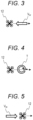
Fig. 3 is a diagram illustrating an example of a situation of low flight difficulty; -
Fig. 4 is a diagram illustrating an example of a situation of high flight difficulty; -
Fig. 5 is a diagram illustrating an example of a situation of high economic efficiency; -
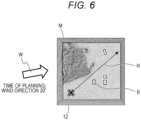
Fig. 6 is a diagram illustrating an example of a flight path planned based on three-dimensional information in the first embodiment; -
Fig. 7 is a functional block diagram illustrating an information processing system according to a second embodiment; and -
Fig. 8 is a diagram illustrating an example of a flight path planned based on three-dimensional information in the second embodiment. - Hereinafter, embodiments of an information processing system of the present invention will be described in detail with reference to the drawings.
- First, an
information processing system 1 according to a first embodiment of the present invention will be described with reference toFigs. 1 to 6 . -
Fig. 1 is a functional block diagram illustrating aninformation processing system 1 according to the present embodiment. Theinformation processing system 1 refers to the latest wide-area wind-condition forecast data (for example, wind-condition forecast data in a municipal unit) of a region through which a small aircraft can pass during a flight from a departure point to a destination to evaluate flight difficulty and economic efficiency for each local space region S in which a flight is assumed, and then integrates the evaluation results in a form of three-dimensional information, and provides the result of the integration to an external path planning system. As illustrated inFig. 1 , theinformation processing system 1 includes a wind-condition database 2, a local wind-condition acquisition unit 3, a local wind-condition learning unit 4, a local wind-condition estimation unit 5, anevaluation unit 6, anaircraft database 7, a three-dimensionalinformation generation unit 8, and amap database 9. - Specifically, the
information processing system 1 is a computer that includes an arithmetic device such as a CPU, a storage device such as a semiconductor memory, and hardware such as a communication device, or a server on a cloud. The arithmetic device executes a desired program while referring to various databases to realize each functional unit such as the local wind-condition acquisition unit 3. In the followings, such a well-known technique will be appropriately omitted, and the function of each unit for generating three-dimensional information in theinformation processing system 1 will be described. - The wind-
condition database 2 is a database that stores terrain data D21, obstacle data D22, past wind-condition forecast data D23, and past wind-condition measurement data D24. The terrain data D21 is three-dimensional data indicating positions and shapes of various types of terrain represented by mountains and rivers. The obstacle data D22 is three-dimensional data indicating positions and shapes of various artificial objects represented by buildings and houses. The past wind-condition forecast data D23 is a data group in which wide-area wind-condition forecast data acquired in the past is accumulated. The past wind-condition measurement data D24 is a data group in which wind-condition measurement data acquired in the past is accumulated. - The local wind-
condition acquisition unit 3 acquires, as necessary, the terrain data D21, the obstacle data D22, the past wind-condition forecast data D23, and the past wind-condition measurement data D24, which are related to the local space region S in which a small aircraft is assumed to fly. In addition, the local wind-condition acquisition unit 3 generates a local wind-condition data group D3 indicating the wind direction and the wind speed in a three-dimensional space, based on the acquired data. - As a method of generating the local wind-condition data group D3, a method of generating the local wind-condition data group D3 by simulating the wind condition of each local space region S based on the terrain data D21 and the obstacle data D22, which have been acquired, may be adopted. Alternatively, a method of directly using the past wind-condition forecast data D23 or the past wind-condition measurement data D24, which have been acquired, as the local wind-condition data group D3 may be adopted.
- The local wind-
condition learning unit 4 performs learning processing such as machine learning on the local wind-condition data group D3 to extract feature group information D4 in a three-dimensional space. The feature group information D4 is data that is substituted for the local wind-condition data group D3 because the feature group information D4 is lighter than the local wind-condition data group D3, but has characteristics of withstanding the use, which is equivalent to the local wind-condition data group D3. - The local wind-
condition estimation unit 5 estimates estimated local wind-condition information D5 by using the latest wide-area wind-condition forecast data D10 announced by theweather forecast organization 10 such as the Meteorological Agency and the feature group information D4 extracted by the local wind-condition learning unit 4. The estimated local wind-condition information D5 is a three-dimensional data group of wind-condition vectors Vw based on the wind speed and the wind direction. As illustrated inFig. 2 , the estimated local wind-condition information D5 is information in which wind-condition vectors Vw (wind-speed and wind-direction information) are stored in three-dimensional lattices L (inFig. 2 , four lattices are shown as representatives) obtained by dividing each local space region S where the small aircraft is assumed to fly, at any interval designated by a user. Although the three-dimensional grid lattice is a cube inFig. 2 , other polyhedron shapes may be used. - The
evaluation unit 6 evaluates flight difficulty D61 and economic efficiency D62 as a flight path in each local space region S based on the estimated local wind-condition information D5 (more specifically, the wind-condition vector Vw in the three-dimensional lattice L illustrated inFig. 2 ) and aircraft information D7 acquired from theaircraft database 7. The aircraft information D7 is reported by a flight plan or the like and registered in theaircraft database 7. - For example, in the case of evaluating the flight difficulty D61 of a certain local space region S, evaluation is performed based on the wind-condition vector Vw of the three-dimensional lattice L in an airspace in which a flight is scheduled, with the aircraft information D7 as a threshold value. Specifically, as illustrated in
Fig. 3 , in the case of a wind in which a wind-condition vector Vw of the three-dimensional lattice L is directed to the traveling direction of asmall aircraft 12, it is determined whether the wind-condition vector Vw falls below an allowable value with respect to wind-resistance performance, with reference to the wind-resistance performance included in the aircraft information D7. When the wind-condition vector Vw falls below the allowable value, it is determined that the flight difficulty D61 in the local space region S is low. - As illustrated in
Fig. 4 , when it is determined that the turbulence T such as a vortex has occurred, with reference to a plurality of wind-condition vectors Vw of the three-dimensional lattices L in a certain local space region S, it is determined that the flight difficulty D61 in the local space region S is very high, and the local space region S is set as a flight prohibition area. - Even in the case of evaluating the economic efficiency D62, evaluation is performed based on the wind-condition vector Vw of the three-dimensional lattice L in an airspace in which a flight is scheduled, with the appropriate aircraft performance included in the aircraft information D7 as a threshold value. Specifically, as illustrated in
Fig. 5 , in the case of a wind having a wind-condition vector Vw that follows the traveling direction of thesmall aircraft 12, it is determined that the economic efficiency D62 of the local space region S is high. - By mapping the above determination result (flight difficulty D61, economic efficiency D62) to each three-dimensional lattice L, three-dimensional evaluation information D63 indicating the evaluation result of each local space region S in which the
small aircraft 12 is assumed to fly is generated. - The three-dimensional
information generation unit 8 generates three-dimensional information D8 to be provided to a flight path planning system (not illustrated) by mapping the three-dimensional evaluation information D63 generated by theevaluation unit 6 on a three-dimensional map D9 acquired from themap database 9. - Here, a difference between the three-dimensional map D9 in the
map database 9, and the terrain data D21 and the obstacle data D22 in the wind-condition database 2 will be described. Since both types of data in the wind-condition database 2 are data used for wind-condition simulation in the local wind-condition acquisition unit 3, only the position data and the shape data necessary for the wind-condition simulation are recorded. On the other hand, the three-dimensional map D9 includes attribute data of each region in addition to the position data and the shape data corresponding to the terrain data D21 and the obstacle data D22. Examples of the attribute data include an attribute indicating a flight recommendation region (corresponding to a sky region of a river area or the like) and an attribute indicating a flight prohibition area (corresponding to a sky region of an airport, a fire department, a hospital, a school, and the like). - Therefore, in the flight path planning system that has received the three-dimensional information D8 from the three-dimensional
information generation unit 8, it is possible to optimize the plan of the flight path of the small aircraft in consideration of not only the flight difficulty and economic efficiency as the flight path of each local space region S but also the various attributes described above. As a result, in the flight path planning system, a flight path R that avoids the mountainous area M or the building B, which is considered to enable a stable flight if estimation is performed based on the latest wide-area wind-condition forecast data D10, as illustrated inFig. 6 , is finally determined. - As described above, according to the information processing system of the present invention, for each local space region of a flight path in which a small aircraft can fly during flight from a departure point to a destination, it is possible to evaluate flight difficulty and economic efficiency as the flight path and generate the evaluation result as three-dimensional information. Then, based on the three-dimensional information, it is possible to easily finalize a flight path that is excellent in flight difficulty and economic efficiency.
- Next, an
information processing system 1 according to a second embodiment of the present invention will be described with reference toFigs. 7 and8 . Repetitive descriptions of points common to the first embodiment will be omitted. - In the first embodiment, before take-off of the
small aircraft 12, the estimated local wind-condition information D5 is estimated based on the latest wide-area wind-condition forecast data D10 announced by theweather forecast organization 10, and the flight path R is planned by using the estimated local wind-condition information D5. Therefore, when the departure point and the destination of thesmall aircraft 12 are spaced apart from each other, there is a probability that the flight path R planned before take-off is inappropriate for weather changes in various places. In addition, since the announcement interval of the wide-area wind-condition forecast data D10 by theweather forecast organization 10 is relatively long, when the estimated local wind-condition information D5 is estimated based on the latest wide-area wind-condition forecast data D10 for which a considerable time has elapsed from the announcement time, there is a probability that it is not possible to estimate a sudden weather change (socalled torrential rain and the like) that cannot be known from the old wide-area wind-condition forecast data D10, and it is not possible to plan an appropriate flight path R. Theinformation processing system 1 in the present embodiment is made for improving these problems, and is configured as follows. -
Fig. 7 is a functional block diagram illustrating aninformation processing system 1 according to the present embodiment. As illustrated inFig. 7 , theinformation processing system 1 in the present embodiment estimates the estimated local wind-condition information D5 by using wind-condition measurement data D11 measured by aweather sensor 11, instead of the wide-area wind-condition forecast data D10 in the first embodiment. Theweather sensor 11 is installed in each region through which thesmall aircraft 12 arrives at the destination from the departure point. Thus, theinformation processing system 1 in the present embodiment can generate three-dimensional information D8 corresponding to the sudden weather change in each region. In addition, a path planning system that has received the three-dimensional information D8 in the present embodiment can plan the optimum flight path R' in consideration of the sudden weather change in each region. - Also in the present embodiment, in the
information processing system 1, the local wind-condition acquisition unit 3 first acquires the local wind-condition data group D3, and then the local wind-condition learning unit 4 extracts the feature group information D4. If there are the local wind-condition data group D3 and the feature group information D4, which have been generated in advance, the above processing can be omitted by utilizing the local wind-condition data group D3 and the feature group information D4. - Subsequently, in the
information processing system 1, the local wind-condition estimation unit 5 estimates the estimated local wind-condition information D5 by using the current wind-condition measurement data D11 measured by theweather sensor 11 installed in the local space region S in which thesmall aircraft 12 is assumed to fly, and the feature group information D4 described above. It is assumed that the wind-condition measurement data D11, which is the output of theweather sensor 11, includes the same type of information as the wide-area wind-condition forecast data D10 announced by theweather forecast organization 10. - When processing similar to that in the first embodiment is performed on the estimated local wind-condition information D5 in the present embodiment, which has been estimated in this manner, the current wind-condition measurement data D11 measured by the
weather sensor 11 in each region is reflected in the three-dimensional information D8 in the present embodiment. Thus, the flight path R' planned by the path planning system based on the three-dimensional information D8 in the present embodiment is a path optimized in consideration of not only the economic efficiency D62, the flight difficulty D61, and obstacles such as terrain and buildings (also considered in the flight path R in the first embodiment), but also the current wind-condition measurement data D11 in the current place. - For example, a case is considered in which a wide-area wind condition W indicated by the latest wide-area wind-condition forecast data D10 at the time of planning a flight path of a certain
small aircraft 12 is the wind direction forecast facing 20° north with respect to the east direction as illustrated inFig. 6 , and the optimum path on this assumption is the flight path R passing between the mountainous area M and the building B, but the current wide-area wind condition W' is the wind direction facing 40° north with respect to the east direction as illustrated inFig. 8 , and the turbulence T has occurred between the mountainous area M and the building B. - In this case, if the three-dimensional information D8 in the first embodiment is used, the flight path R in
Fig. 6 , which is excellent in flight difficulty and economic efficiency under the environment indicated by the wide-area wind-condition forecast data D10 is planned as the optimal path. Therefore, thesmall aircraft 12 passes through an inappropriate path of passing through the turbulence T that has occurred suddenly. However, if the three-dimensional information D8 in the present embodiment is used, the flight path R' inFig. 8 avoiding the turbulence T can be determined to be optimal. Therefore, thesmall aircraft 12 can safely continue flight. - The present invention is not limited to the above embodiments, and various modification examples may be provided. For example, the above embodiments are described in detail in order to explain the present invention in an easy-to-understand manner, and the above embodiments are not necessarily limited to a case including all the described configurations. Further, some components in one embodiment can be replaced with the components in another embodiment, and the configuration of another embodiment can be added to the configuration of one embodiment. Regarding some components in the embodiments, other components can be added, deleted, and replaced.
Claims (8)
- An information processing system comprising:a wind-condition estimation unit that estimates wind-condition information in a predetermined space region; andan evaluation unit that evaluates flight difficulty or economic efficiency of an aircraft based on the estimated wind-condition information.
- The information processing system according to claim 1, wherein the evaluation unitacquires aircraft performance of the aircraft as a threshold value, andevaluates the flight difficulty or the economic efficiency based on a comparison between the aircraft performance, and a wind speed and a wind direction obtained from the estimated wind-condition information.
- The information processing system according to claim 1 or 2, wherein the evaluation unit generates the flight difficulty or the economic efficiency of each space region as three-dimensional evaluation information.
- The information processing system according to claim 3, further comprising a three-dimensional information generation unit that generates three-dimensional information by adding the three-dimensional evaluation information to a three-dimensional map space including position data, shape data, and attribute data.
- The information processing system according to claim 4, wherein the three-dimensional information generation unit transmits the three-dimensional information to a path planning system that performs optimization calculation of a flight path of the aircraft.
- The information processing system according to claim 1 or 2, further comprising:a wind-condition acquisition unit that generates a wind-condition data group of each space region based on past wind-condition data, terrain data, and obstacle data; anda wind-condition learning unit that learns feature group information based on the wind-condition data group, whereinthe wind-condition estimation unit estimates the wind-condition information based on latest wind-condition forecast data acquired from a weather forecast organization and the feature group information.
- The information processing system according to claim 1 or 2, further comprising:a wind-condition acquisition unit that generates a wind-condition data group of each space region based on past wind-condition data, terrain data, and obstacle data; anda wind-condition learning unit that learns feature group information based on the wind-condition data group, whereinthe wind-condition estimation unit estimates the wind-condition information based on current wind-condition measurement data acquired from a weather sensor and the feature group information.
- An information processing method comprising:estimating wind-condition information in a predetermined space region; andevaluating flight difficulty or economic efficiency of an aircraft based on the estimated wind-condition information.
Applications Claiming Priority (1)
| Application Number | Priority Date | Filing Date | Title |
|---|---|---|---|
| JP2022126913A JP7832074B2 (en) | 2022-08-09 | 2022-08-09 | Information processing system and information processing method |
Publications (2)
| Publication Number | Publication Date |
|---|---|
| EP4345418A2 true EP4345418A2 (en) | 2024-04-03 |
| EP4345418A3 EP4345418A3 (en) | 2024-05-29 |
Family
ID=87060232
Family Applications (1)
| Application Number | Title | Priority Date | Filing Date |
|---|---|---|---|
| EP23182281.8A Pending EP4345418A3 (en) | 2022-08-09 | 2023-06-29 | Information processing system and information processing method |
Country Status (4)
| Country | Link |
|---|---|
| US (1) | US20240054902A1 (en) |
| EP (1) | EP4345418A3 (en) |
| JP (1) | JP7832074B2 (en) |
| CN (1) | CN117592824A (en) |
Families Citing this family (3)
| Publication number | Priority date | Publication date | Assignee | Title |
|---|---|---|---|---|
| US12451021B2 (en) * | 2022-08-04 | 2025-10-21 | The Mitre Corporation | Microscale weather hazard products for urban aviation transportation |
| JP7736836B1 (en) | 2024-02-28 | 2025-09-09 | Kddi株式会社 | Information processing device, information processing method, and program |
| JP2026066418A (en) * | 2024-10-07 | 2026-04-17 | 株式会社日立製作所 | Environmental information generation device, environmental information generation system, and environmental information generation method |
Citations (2)
| Publication number | Priority date | Publication date | Assignee | Title |
|---|---|---|---|---|
| JP2019089538A (en) | 2017-11-16 | 2019-06-13 | ザ・ボーイング・カンパニーThe Boeing Company | System for taking into account micro wind conditions in flight plans for aerial vehicles |
| JP2022038675A (en) * | 2020-08-27 | 2022-03-10 | ソニーグループ株式会社 | Information processor and information processing method, computer program and mobile device |
Family Cites Families (7)
| Publication number | Priority date | Publication date | Assignee | Title |
|---|---|---|---|---|
| FR2939505B1 (en) * | 2008-12-09 | 2011-02-11 | Thales Sa | FLIGHT MANAGEMENT SYSTEM WITH LATERAL FLIGHT PLAN OPTIMIZATION |
| WO2015175440A1 (en) | 2014-05-12 | 2015-11-19 | Unmanned Innovation, Inc. | Unmanned aerial vehicle authorization and geofence envelope determination |
| JP6196699B1 (en) * | 2016-03-23 | 2017-09-13 | 株式会社Subaru | MOBILE BODY OPERATION CONTROL DEVICE, MOBILE BODY OPERATION CONTROL METHOD, AND MOBILE BODY OPERATION CONTROL PROGRAM |
| EP3564621A4 (en) | 2016-12-28 | 2020-08-19 | SZ DJI Technology Co., Ltd. | FLIGHT PATH DISPLAY PROCEDURE, MOBILE PLATFORM, FLIGHT SYSTEM, RECORDING MEDIUM AND PROGRAM |
| US11029168B2 (en) | 2017-10-10 | 2021-06-08 | The Government Of The United States Of America, As Represented By The Secretary Of The Navy | Method for identifying optimal vehicle paths when energy is a key metric or constraint |
| WO2021210139A1 (en) | 2020-04-16 | 2021-10-21 | 日本電気株式会社 | Flight path generation device, aircraft system, flight path generation method and readable medium |
| DE112022005772T5 (en) * | 2022-02-10 | 2024-10-02 | Mitsubishi Electric Corporation | WIND CONDITION LEARNING DEVICE, WIND CONDITION PREDICTION DEVICE AND DRONE SYSTEM |
-
2022
- 2022-08-09 JP JP2022126913A patent/JP7832074B2/en active Active
-
2023
- 2023-06-29 EP EP23182281.8A patent/EP4345418A3/en active Pending
- 2023-07-11 US US18/220,310 patent/US20240054902A1/en active Pending
- 2023-07-13 CN CN202310858368.0A patent/CN117592824A/en active Pending
Patent Citations (3)
| Publication number | Priority date | Publication date | Assignee | Title |
|---|---|---|---|---|
| JP2019089538A (en) | 2017-11-16 | 2019-06-13 | ザ・ボーイング・カンパニーThe Boeing Company | System for taking into account micro wind conditions in flight plans for aerial vehicles |
| JP2022038675A (en) * | 2020-08-27 | 2022-03-10 | ソニーグループ株式会社 | Information processor and information processing method, computer program and mobile device |
| US20230306857A1 (en) * | 2020-08-27 | 2023-09-28 | Sony Group Corporation | Information processing device, information processing method, computer program, and mobile device |
Also Published As
| Publication number | Publication date |
|---|---|
| EP4345418A3 (en) | 2024-05-29 |
| US20240054902A1 (en) | 2024-02-15 |
| JP2024024235A (en) | 2024-02-22 |
| CN117592824A (en) | 2024-02-23 |
| JP7832074B2 (en) | 2026-03-17 |
Similar Documents
| Publication | Publication Date | Title |
|---|---|---|
| EP4345418A2 (en) | Information processing system and information processing method | |
| US6456226B1 (en) | Nowcast of conviction-induced turbulence using information from airborne radar | |
| JP6357176B2 (en) | Moving path setting device, moving path setting method, and moving path setting program | |
| Garcia et al. | Dynamic graph-search algorithm for global path planning in presence of hazardous weather | |
| CN104965518A (en) | Power inspection tour flying robot air route planning method based on three-dimensional digital map | |
| Kapoor et al. | Airplanes aloft as a sensor network for wind forecasting | |
| Xu et al. | Iterative construction of low-altitude UAV air route network in urban areas: Case planning and assessment | |
| JP6846253B2 (en) | Emergency response instruction device for drones, emergency response instruction method for drones, and emergency response instruction program for drones | |
| GB2567810A (en) | Method and system for determining optimal path for drones | |
| Schilke et al. | Dynamic route optimization based on adverse weather data | |
| CN119296384B (en) | A method for intelligently generating flight routes for flight management equipment | |
| CN118863194A (en) | A geographic surveying and mapping system for collecting outdoor terrain information using drones | |
| CN118012103A (en) | Unmanned aerial vehicle flight path planning method and system for urban low altitude | |
| CN118938957A (en) | Parameter determination method and system for power grid inspection drone | |
| CN118838392A (en) | Power transmission line unmanned aerial vehicle inspection method and system based on positioning communication | |
| CN120252739B (en) | UAV situation planning system and method | |
| Shen et al. | A dynamic airspace planning framework with ads-b tracks for manned and unmanned aircraft at low-altitude sharing airspace | |
| WO2026061300A1 (en) | Automatic emergency flight route planning method for unmanned aerial vehicle | |
| CN121209536A (en) | A method and system for dynamic planning of flight paths for unmanned aerial vehicles (UAVs) | |
| CN120213037A (en) | Low-altitude traffic emergency rescue path planning method and system based on spatiotemporal analysis of geographic information | |
| Lee et al. | Path planning for urban air mobility considering weather conditions | |
| CN115953700B (en) | A method for UAV mission recognition by fusing map task elements and state features | |
| Roosenbrand et al. | Assessing and Modelling Climate Optimal Flights Using Open Surveillance and Remote Sensing Data | |
| DiFelici et al. | UAS safety planning and contingency assessment and advisory reseach | |
| CN116682291A (en) | A Control Method of Aircraft Required Time of Arrival under Multiple Meteorological Conditions |
Legal Events
| Date | Code | Title | Description |
|---|---|---|---|
| PUAI | Public reference made under article 153(3) epc to a published international application that has entered the european phase |
Free format text: ORIGINAL CODE: 0009012 |
|
| STAA | Information on the status of an ep patent application or granted ep patent |
Free format text: STATUS: REQUEST FOR EXAMINATION WAS MADE |
|
| 17P | Request for examination filed |
Effective date: 20230629 |
|
| AK | Designated contracting states |
Kind code of ref document: A2 Designated state(s): AL AT BE BG CH CY CZ DE DK EE ES FI FR GB GR HR HU IE IS IT LI LT LU LV MC ME MK MT NL NO PL PT RO RS SE SI SK SM TR |
|
| PUAL | Search report despatched |
Free format text: ORIGINAL CODE: 0009013 |
|
| AK | Designated contracting states |
Kind code of ref document: A3 Designated state(s): AL AT BE BG CH CY CZ DE DK EE ES FI FR GB GR HR HU IE IS IT LI LT LU LV MC ME MK MT NL NO PL PT RO RS SE SI SK SM TR |
|
| STAA | Information on the status of an ep patent application or granted ep patent |
Free format text: STATUS: EXAMINATION IS IN PROGRESS |
|
| 17Q | First examination report despatched |
Effective date: 20251216 |