EP4344155B1 - Paketplanungsverfahren und -vorrichtung - Google Patents
Paketplanungsverfahren und -vorrichtung Download PDFInfo
- Publication number
- EP4344155B1 EP4344155B1 EP22885989.8A EP22885989A EP4344155B1 EP 4344155 B1 EP4344155 B1 EP 4344155B1 EP 22885989 A EP22885989 A EP 22885989A EP 4344155 B1 EP4344155 B1 EP 4344155B1
- Authority
- EP
- European Patent Office
- Prior art keywords
- packet
- queue
- token bucket
- network device
- path
- Prior art date
- Legal status (The legal status is an assumption and is not a legal conclusion. Google has not performed a legal analysis and makes no representation as to the accuracy of the status listed.)
- Active
Links
Images
Classifications
-
- H—ELECTRICITY
- H04—ELECTRIC COMMUNICATION TECHNIQUE
- H04L—TRANSMISSION OF DIGITAL INFORMATION, e.g. TELEGRAPHIC COMMUNICATION
- H04L47/00—Traffic control in data switching networks
- H04L47/10—Flow control; Congestion control
- H04L47/215—Flow control; Congestion control using token-bucket
-
- H—ELECTRICITY
- H04—ELECTRIC COMMUNICATION TECHNIQUE
- H04L—TRANSMISSION OF DIGITAL INFORMATION, e.g. TELEGRAPHIC COMMUNICATION
- H04L47/00—Traffic control in data switching networks
- H04L47/10—Flow control; Congestion control
- H04L47/36—Flow control; Congestion control by determining packet size, e.g. maximum transfer unit [MTU]
-
- H—ELECTRICITY
- H04—ELECTRIC COMMUNICATION TECHNIQUE
- H04L—TRANSMISSION OF DIGITAL INFORMATION, e.g. TELEGRAPHIC COMMUNICATION
- H04L47/00—Traffic control in data switching networks
- H04L47/50—Queue scheduling
- H04L47/62—Queue scheduling characterised by scheduling criteria
- H04L47/625—Queue scheduling characterised by scheduling criteria for service slots or service orders
- H04L47/6255—Queue scheduling characterised by scheduling criteria for service slots or service orders queue load conditions, e.g. longest queue first
-
- H—ELECTRICITY
- H04—ELECTRIC COMMUNICATION TECHNIQUE
- H04L—TRANSMISSION OF DIGITAL INFORMATION, e.g. TELEGRAPHIC COMMUNICATION
- H04L45/00—Routing or path finding of packets in data switching networks
- H04L45/24—Multipath
-
- H—ELECTRICITY
- H04—ELECTRIC COMMUNICATION TECHNIQUE
- H04L—TRANSMISSION OF DIGITAL INFORMATION, e.g. TELEGRAPHIC COMMUNICATION
- H04L45/00—Routing or path finding of packets in data switching networks
- H04L45/302—Route determination based on requested QoS
Definitions
- This application relates to the field of communication technologies, and in particular, to a packet scheduling method and apparatus.
- Quality of service is an indicator reflecting a network status, and the network status includes a state such as network delay or network congestion.
- QoS Quality of service
- a packet received by a network device may be added to a queue, and a packet cached in the queue is removed from the queue based on a specific policy.
- a traffic burst can be shaped. Specifically, a rate at which a token is injected into the token bucket may be limited, to limit a rate at which the packet is removed from the queue. If a rate at which the packet is added to the queue reaches or exceeds the rate at which the token is injected into the token bucket, scheduling of the packet in the queue may be suspended. In this way, burst shaping is implemented.
- a combination of a plurality of token buckets may further reduce impact of a burst.
- the patent EP 1 705 851 discloses such an example of issuing tokens to packets from two token buckets. Specifically, if the rate at which the packet is added to the queue is low, the packet may be removed from the queue through scheduling of one token bucket. If the rate at which the packet is added to the queue is high, the packet may be removed from the queue through scheduling of a plurality of token buckets. However, if the packet in the queue is scheduled by using a plurality of token buckets, a problem of frequent token bucket switching may occur.
- Embodiments of this application provide a packet scheduling method and apparatus, to reduce a frequency of token bucket switching.
- the present invention is defined as the subject matter of the claims.
- FIG. 1 is a schematic diagram of a structure of a system 100 according to an embodiment of this application.
- the system 100 includes a device 111, a device 112, a network device 121, a network device 122, a network device 123, a network device 124, and a network device 125.
- the network device 121 is separately connected to the device 111, the network device 122, and the network device 123
- the network device 124 is separately connected to the network device 123 and the network device 125
- the device 112 is separately connected to the network device 122 and the network device 125.
- the network device 121 is connected to the device 111 through a network interface A1, the network device 121 is connected to the network device 122 through a network interface A2, and the network device 121 is connected to the network device 123 through a network interface A3.
- the devices can send packets to each other.
- the device 111 may send a packet to the device 112 through a path "network device 121 ⁇ network device 122", or may send a packet to the device 112 through a path "network device 121 ⁇ network device 123 ⁇ network device 124-network device 125".
- one or more token buckets may be configured in the network device 121 to determine whether a packet in a queue of the network device 121 can be removed from the queue. If a quantity of remaining tokens in a token bucket can satisfy that a packet is to be removed from a queue, the packet may be removed from the queue through scheduling, and subsequent processing is performed on the packet based on the token bucket corresponding to the packet removed from the queue.
- the network device 121 includes a first token bucket and a second token bucket.
- the network device 121 may first determine whether a quantity of remaining tokens in the first token bucket satisfies that the packet X is to be removed from the queue. If the quantity of remaining tokens in the first token bucket satisfies that the packet X is to be removed from the queue, the network device 121 may issue a token in the first token bucket to the packet X, and remove the packet X from the queue.
- the network device 121 may determine whether a quantity of remaining tokens in the second token bucket satisfies that the packet X is to be removed from the queue. If the quantity of remaining tokens in the second token bucket satisfies that the packet X is to be removed from the queue, the network device 121 may issue a token in the second token bucket to the packet X, and remove the packet X from the queue.
- the packet X may be processed based on the token issued to the packet X. For example, in an application scenario shown in FIG. 1 , if the packet X is a packet sent by the device 111 to the device 112, the network device 121 may determine a forwarding path of the packet based on the token of the packet X. If the token in the first token bucket is issued to the packet X, the network device 121 may send the packet X through the path "network device 121 ⁇ network device 122". If the token corresponding to the second token bucket is issued to the packet X, the network device 121 may send the packet X through the path "network device 121 ⁇ network device 123-network device 124-network device 125".
- the network device 121 may forward the packets through two different paths. In this way, impact of the traffic burst on a network system can be reduced. It may be understood that, even if the network device 121 does not forward the packets through two different paths, the network device 121 may still perform differentiated processing on the packet to which the token in the first token bucket is issued and the packet to which the token in the second token bucket is issued, to achieve an objective of traffic shaping.
- a conventional method for performing packet scheduling by using a plurality of token buckets may have a problem of frequent token bucket switching, and consequently, a processing method corresponding to a token bucket may be invoked frequently, which affects the network system. Specifically, if different token buckets correspond to different forwarding paths, frequent token bucket switching may cause actual utilization of a path to be lower than utilization achievable by the path.
- the network device 121 may schedule and remove the packet from the queue by using the second token bucket; or when a rate at which a packet is added to a queue is less than or equal to a rate at which a token is injected into the first token bucket, the network device 121 may schedule and remove the packet from the queue by using the first token bucket.
- the network device 121 repeatedly performs switching between the first token bucket and the second token bucket for a plurality of times when issuing a token in a token bucket to the packet. If the token in the first token bucket and the token in the second token bucket respectively correspond to different paths, utilization of a path by the network device 121 may be lower than actually achievable utilization of the path.
- a token is injected into the first token bucket of the network device 121 at a rate V; a packet is added to a queue of the network device 121 at a rate of 0.5 V between a moment t1 and a moment t2; the packet is added to the queue of the network device 121 at a rate of 1.5 V between the moment t2 and a moment t3; and the packet is added to the queue of the network device 121 at a rate of 0.5 V between the moment t3 and a moment t4.
- the rate at which the network device 121 forwards the packet through the path "network device 121-network device 122" corresponds to 0.5 V between the moment t1 and the moment t2 and before the moment t3 and the moment t4.
- an average rate at which the network device 121 forwards the packet through the path "network device 121 ⁇ network device 122" is lower than a rate corresponding to V.
- utilization of the path "network device 121 ⁇ network device 122" by the network device 121 does not reach 100%, but the network device 121 may forward the packet through another path. Consequently, actual utilization of the path "network device 121 ⁇ network device 122" by the network device 121 is lower than maximum utilization, and utilization of the path "network device 121 ⁇ network device 122" by the network device 121 is low.
- embodiments of this application provide a packet scheduling method and apparatus, to reduce a frequency of token bucket switching, and further improve utilization of a processing manner corresponding to a token bucket.
- the packet scheduling method provided in this embodiment of this application may be applied to the system shown in FIG. 1 .
- the method may be performed by any one or more of the network device 121, the network device 122, the network device 123, the network device 124, and the network device 125 in the embodiment shown in FIG. 1 .
- the network device may be a device having a forwarding function, for example, a forwarding device such as a router (router) or a switch (switch), or may be a device having a forwarding function such as a server or a terminal device.
- the packet scheduling method provided in this embodiment of this application is performed by the network device 121.
- the method may be for scheduling a packet received by the network device 121 through a network port A1.
- the device 111 and the device 112 may be terminal devices, servers, or other devices.
- the packet scheduling method provided in this embodiment of this application may also be performed by an access device.
- the method may be performed by an access device having a BRAS function, and is for scheduling a packet that is received by the access device and is from a terminal device.
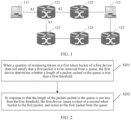
- FIG. 2 is a schematic flowchart of a packet scheduling method according to an embodiment of this application. The method includes the following steps.
- the second token bucket is also a token bucket that the first device has, and is configured to store a token.
- the token stored in the second token bucket may be referred to as a second token
- a maximum quantity of tokens that can be accommodated by the second token bucket may be referred to as a second threshold
- a rate at which the first device injects the second token into the second token bucket may be referred to as a second preset rate. It may be understood that, it is assumed that different token buckets may correspond to different forwarding priorities, and a forwarding priority of the second token bucket may be lower than a forwarding priority of the first token bucket.
- the first device may preferentially schedule and remove the packet from the queue by using the first token bucket.
- the first token bucket may be referred to as a C token bucket
- the second token bucket may be referred to as a P token bucket.
- the queue for caching a packet may also be referred to as a cache queue.
- the first device may first add the packet to the cache queue.
- a packet stored in the cache queue may be removed from the queue by using the first token bucket or the second token bucket.
- the cache queue may have a queue upper limit. After a quantity of packets cached in the cache queue reaches the queue upper limit, the first device no longer adds a newly received packet to the cache queue. For example, the first device may discard a packet received after the quantity of packets cached in the cache queue reaches the queue upper limit.
- the queue upper limit may be determined by storage space allocated by the first device to the cache queue, or may be divided by a skilled person based on an actual application situation.
- the quantity of packets may indicate a quantity of packets or a total quantity of bytes of packets.
- the first device may perform a corresponding operation based on a determining result.
- the first device determines that the quantity of remaining tokens in the first token bucket cannot satisfy the condition that the first packet is to be removed from the queue. In this case, the first device may determine whether the length of the packet cached in the queue is less than the first threshold, and schedule the first packet based on a determining result. That the quantity of remaining tokens in the first token bucket cannot satisfy the condition that the first packet is to be removed from the queue may include that the quantity of remaining tokens in the first token bucket is less than the quantity of bytes of the first packet.
- the first threshold may be a threshold for enabling the second token bucket.
- the first device may first determine that the length of the packet cached in the queue is greater than the first threshold.
- the length of the packet cached in the queue may include a total quantity of bytes of all packets cached in the queue, and a unit of the first threshold may be byte (Byte).
- the length of the packet cached in the queue may also include a total quantity of packets cached in the queue.
- the first device determines that the quantity of remaining tokens in the first token bucket can satisfy the condition that the first packet is to be removed from the queue.
- the first device may issue a token in the first token bucket to the first packet, and remove the first token bucket from the queue. Issuing the token in the first token bucket to the first packet is to process the first packet in a processing manner corresponding to the first token bucket in a subsequent processing process.
- the issuing the token in the first token bucket to the first packet may include adding a marker corresponding to the first token bucket to the first packet, or may include recording the first packet as a packet that is scheduled, by using the first token bucket, to be the removed from the queue.
- the first device may adjust the quantity of remaining tokens in the first token bucket based on the first packet after the first packet is removed from the queue. For example, the first device may remove some or all tokens from the first token bucket, and a quantity of removed tokens may be equal to a quantity of bytes of a target packet. Assuming that a quantity of tokens represents a quantity of bytes that can be scheduled, after a packet whose quantity of bytes is i is removed from the queue through scheduling, the first device may remove i tokens from the first token bucket.
- the first device may issue the token in the second token bucket to the first packet, and remove the first packet from the queue.
- the first threshold is a threshold for the first device to enable the second token bucket to perform packet scheduling. If the length of the packet cached in the queue is greater than or equal to the first threshold, the first device may enable the second token bucket to schedule the packet cached in the queue to be removed from the queue.
- the first threshold may indicate a length of a packet that may cause network congestion, for example, may be 50% of the foregoing queue threshold.
- the first threshold may be determined based on a burst limit that can be tolerated in the processing manner corresponding to the first token bucket. In other words, in the processing manner corresponding to the first token bucket, that a packet less than or equal to the first threshold is not scheduled can be tolerated.
- the length of the packet cached in the queue may be a quantity of packets cached in the queue, or may be a total quantity of bytes of the packets cached in the queue.
- the first device issues the token in the second token bucket to the first packet, to process the first packet in a processing manner corresponding to the second token bucket in a subsequent processing process.
- the issuing the token in the second token bucket to the first packet may include adding a marker corresponding to the second token bucket to the first packet, or may include recording the first packet as a packet that is scheduled, by using the second token bucket, to be removed from the queue.
- the first device may adjust the quantity of remaining tokens in the second token bucket based on the first packet after the first packet is removed from the queue.
- the quantity of remaining tokens in the second token bucket may not satisfy that the first packet is to be removed from the queue.
- the quantity of remaining second tokens in the second token bucket may be less than the quantity of bytes of the first packet.
- the first device may not remove the first packet from the queue.
- the first device may keep the first packet in the queue.
- the first device may wait until the quantity of remaining tokens in the first token bucket (or the second token bucket) is accumulated to satisfy the condition that the first packet is to be removed from the queue, and then remove the first packet from the queue.
- the first threshold is the threshold for the first device to enable the second token bucket.
- the first device may not schedule and remove the packet from the queue by using the second token bucket. It may be understood that, even if the quantity of remaining tokens in the first token bucket does not satisfy the condition that the first packet is to be removed from the queue, if the length of the packet cached in the queue is less than the first threshold, the first device may not schedule and remove the first packet from the queue, and keep the first packet in the cache queue.
- the first device may further determine, based on the length of the packet cached in the queue, whether to use the second token bucket to schedule and remove the first packet from the queue. In this way, by determining whether the length of the packet cached in the queue is less than the first threshold, when the quantity of remaining tokens in the first token bucket is insufficient, the first device does not directly schedule and remove the packet from the queue by using the second token bucket, so that frequent switching between the first token bucket and the second token bucket is avoided, and utilization of the processing manner corresponding to the first token bucket is improved.
- a rate at which a packet is added to a queue fluctuates up and down based on the first preset rate.
- the rate at which a packet is added to a queue is higher than the first preset rate, the quantity of remaining tokens in the first token bucket may not satisfy that the packet is to be removed from the queue.
- the first device may keep, in the queue, the packet that is added to the queue but cannot be scheduled.
- the rate at which a packet is added to a queue is lower than the first preset rate, the packet added to the queue cannot fully consume the token injected into the first token bucket.
- the remaining tokens in the first token bucket may be configured to schedule the packet cached in the queue to be removed from the queue, thereby reducing the quantity of packets cached in the queue.
- it is equivalent to using the token injected into the first token bucket when the rate at which a packet is added to a queue is low, and scheduling is performed on a packet that cannot be scheduled in the queue when the rate at which a packet is added to a queue is high.
- the queue is used as a buffer, so that frequent switching between the first token bucket and the second token bucket is avoided, and traffic shaping of a packet flow is implemented.
- the foregoing describes a method in which the first device schedules and removes the first packet from the queue.
- the following describes a method for processing, by the first device, the first packet based on a token issued to the first packet after the first packet is removed from the queue.
- the first device may determine a forwarding path of the first packet based on the token issued to the first packet, or may determine a forwarding priority of the first packet based on the token issued to the first packet.
- the first device may determine a forwarding path of the first packet based on the token issued to the first packet, or may determine a forwarding priority of the first packet based on the token issued to the first packet.
- the first device determines the forwarding path of the first packet based on the token issued to the first packet.
- the token in the first token bucket corresponds to a forwarding path
- the token in the second token bucket may correspond to another forwarding path.
- the forwarding path corresponding to the token in the first token bucket may be referred to as a second path
- the forwarding path corresponding to the token in the second token bucket may be referred to as a first path.
- the first device may preferentially schedule and remove the packet from the queue by using the first token bucket.
- the network device may preferentially select the second path to forward the packet.
- the second path corresponding to the first token bucket may be a path with high link quality. That is, link quality of the second path may be higher than link quality of the first path.
- the first device may determine the forwarding path of the first packet from the first path and the second path based on the token issued to the first packet, thereby determining an outbound interface for sending the first packet, and sending the first packet from the corresponding outbound interface. If the token in the first token bucket is issued to the first packet, the first device may forward the first packet through an outbound interface corresponding to the second path. If the token in the second token bucket is issued to the first packet, the first device may forward the first packet through an outbound interface corresponding to the first path.
- the first device is the network device 121 in FIG. 1
- the first packet is a packet X sent by the device 111 to the device 112.
- the network device 121 may receive the packet X through the network interface A1, and forward the packet through the network interface A2 or the network interface A3.
- the method provided in this embodiment of this application may be applied to an inbound interface of the network device 121, namely, the network interface A1, configured to forward the packet X based on a status of a token bucket and a queue after the network device 121 receives the packet X.
- link quality of the path "network device 121 -network device 123-network device 124-network device 125" may be low.
- a delay value of the path may be high.
- the path "network device 121 ⁇ network device 123-network device 124-network device 125" may be determined as the first path, and a path “network device 121 ⁇ network device 122" may be determined as the second path.
- the network device 121 may schedule the packet X to be removed from the queue through the network interface A2, so that the packet X is forwarded through the path "network device 121 ⁇ network device 122"; or if the token in the second token bucket is issued to the packet X, the network device 121 may schedule the packet X to be removed from the queue through the network interface A3, so that the packet X is forwarded through the path "network device 121 ⁇ network device 123 ⁇ network device 124 ⁇ network device 125".
- the network device 121 may forward the packet through the path "network device 121 ⁇ network device 122" with high link quality. As the rate at which a packet is added to a queue increases, the network device 121 may share pressure of the path "network device 121 ⁇ network device 122" through the path "network device 121-network device 123-network device 124-network device 125".
- the queue and the first threshold are used for buffering, so that frequent switching between the first token bucket and the second token bucket can be avoided, and traffic shaping of the packet flow is implemented.
- a network type of an access network in which the first path is located may be different from a network type of an access network in which the second path is located.
- the first device may select, based on a situation in which a packet is added to a queue, different access networks to forward the packet.
- the access network in which the second path is located may have better performance than the access network in which the first path is located.
- the first device preferentially forwards the first packet through the second path, so that a QoS parameter of the first packet can be improved, or packet forwarding costs can be reduced.
- Hybrid Access Aggregation Point in a hybrid access (Hybrid Access, HA) scenario
- a user may be supported to be bound to two types of access networks: a digital subscriber line (Digital Subscriber Line, DSL) and/or long term evolution (Long Term Evolution, LTE).
- DSL Digital Subscriber Line
- LTE Long Term Evolution
- the packet may be preferentially transmitted through a path corresponding to the DSL.
- the packet is transmitted through a path corresponding to the LTE.
- the first path may be the path corresponding to the LTE
- the second path may be the path corresponding to the DSL.
- the first device determines the forwarding priority of the first packet based on the token issued to the first packet.
- the forwarding priority indicates the network device that forwards the first packet to forward the first packet.
- the first token bucket and the second token bucket respectively correspond to different forwarding priorities.
- forwarding priorities set by the first device for the first packet are also different.
- a forwarding priority corresponding to the token in the first token bucket is referred to as a second priority
- a forwarding priority corresponding to the token in the second token bucket is referred to as a first priority.
- a forwarding priority of the first priority is lower than a forwarding priority of the second priority. That is, in a process of forwarding a packet, the device may preferentially forward a packet with a first priority.
- the first device may forward the first packet based on the forwarding priority of the first packet.
- the first device may add, to the first packet, a marker indicating the forwarding priority, and then send the marked first packet to a next-hop device.
- the next-hop device may determine the forwarding priority of the first packet based on the marker in the first packet, to select a forwarding manner corresponding to the forwarding priority to forward the first packet.
- the network device 121 may determine a forwarding priority of the packet Y based on a token issued to the packet Y, and add a corresponding marker to the packet Y. Assuming that the token in the first token bucket is issued to the packet Y, the network device 121 may determine that the forwarding priority of the packet Y is the second priority, and add a marker corresponding to the second priority to the packet Y. For example, the network device may mark the packet Y in a green (Green) state.
- Green green
- the network device 121 may determine that the forwarding priority of the packet Y is the first priority, and add a marker corresponding to the first priority to the packet Y. For example, the network device may mark the packet Y in a yellow (Yellow) state.
- the network device 121 may send the packet Y to the network device 122.
- a single rate three color marker (Single Rate Three Color Marker, SRTCM) algorithm or a two rate three color marker (Two Rate Three Color Marker, TRTCM) algorithm may be deployed on the network device 122.
- SRTCM Single Rate Three Color Marker
- TRTCM Two Rate Three Color Marker
- the network device 122 may determine a scheduling manner of the packet Y based on the marker in the packet Y, to forward the packet Y based on the forwarding priority.
- the first device may determine the forwarding path of the first packet based on the token issued to the first packet, or may determine the forwarding priority of the first packet based on the token issued to the first packet. In some possible implementations, the first device may determine the forwarding path and the forwarding priority of the first packet based on the token issued to the first packet.
- the network device 121 is configured to receive a packet flow from the device 111, and a target device of each packet in the packet flow is the device 112 for description.
- the token in the first token bucket corresponds to the first path
- the token in the second token bucket corresponds to the second path.
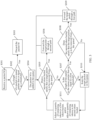
- FIG. 3 is a method flowchart of a packet scheduling method according to an embodiment of this application. The method includes the following steps.
- a network device 121 receives a packet M.
- the network device 121 may receive, through a network interface A1, the packet M sent by a device 111. After the packet M receives the packet M, the network device 121 may serve as a first device to perform the packet scheduling method provided in this embodiment of this application.
- the network device 121 determines whether a length of a packet cached in a queue is not less than a threshold.
- the network device 121 may determine whether the length of the packet cached in the queue is not less than the threshold.
- the queue is a queue for storing a to-be-scheduled packet
- the threshold may be a maximum value of a length of a packet that can be accommodated by the queue, or a difference between a maximum value of a length of a packet that can be accommodated by the queue and a length of the packet M.
- the threshold may be represented by a quantity of packets or a total quantity of bytes of packets.
- the network device 121 may perform step S303. If the length of the packet cached in the queue is less than the threshold, the network device 121 may perform step S304.
- the network device 121 may also perform step S304 when the length of the packet cached in the queue is equal to the threshold.
- the network device 121 may discard the packet M.
- the network device 121 may alternatively not discard the packet M when the length of the packet cached in the queue is greater than or equal to the threshold.
- the network device 121 may store the packet M in another storage location different from the queue, to schedule the packet M when a condition is satisfied.
- the network device 121 may add the packet M to the queue, and continue to perform step S305.
- the network device 121 may add the packet M to a tail of the queue.
- S305 The network device 121 determines whether remaining tokens in a first token bucket satisfy that a target packet is to be removed from the queue.
- the network device 121 may determine whether the remaining tokens in the first token bucket satisfy that the target packet is to be removed from the queue.
- the target packet is a packet that is cached in the queue and that is located at a head of the queue. That is, the target packet is the 1 st packet that needs to be scheduled in the to-be-scheduled packet.
- another packet in the queue is kept in the queue and is not removed from the queue.
- the network device 121 may determine, as a new target packet, a packet that is located at the head of the queue after the target packet is removed from the queue, that is, the target packet is always the 1 st to-be-scheduled packet in the queue.
- the network device 121 may determine, through comparison, whether a quantity of remaining tokens in the first token bucket is greater than or equal to a quantity of bytes of the target packet. If the quantity of remaining tokens in the first token bucket is greater than or equal to the quantity of bytes of the target packet, the network device may determine that the remaining tokens in the first token bucket satisfy that the target packet is to be removed from the queue, and perform step S306. If the quantity of remaining tokens in the first token bucket is greater than or equal to the quantity of bytes of the target packet, the network device may determine that the remaining tokens in the first token bucket do not satisfy that the target packet is to be removed from the queue, and perform step S307.
- S306 The network device 121 forwards the target packet through a second path.
- the network device 121 may issue a token in the first token bucket to the target packet, and schedule and remove the target packet from the queue. Then, the network device 121 may forward the target packet through the second path corresponding to the token in the first token bucket.
- the second path may be a path "network device 121 ⁇ network device 122".
- the network device 121 may adjust the quantity of remaining tokens in the first token bucket. For example, some or all tokens may be removed from the first token bucket, and a quantity of removed tokens may be equal to the quantity of bytes of the target packet.
- the network device 121 may determine the packet located at the head of the queue as the new target packet, and return to perform step S305.
- the network device 121 determines whether the length of the packet cached in the queue is not less than a first threshold.
- the network device 121 may further determine whether the length of the packet cached in the queue is less than the first threshold. If the length of the packet cached in the queue is not less than the first threshold, the network device 121 may perform step S308; or if the length of the packet cached in the queue is less than the first threshold, the network device 121 may perform step S310.
- S308 The network device 121 determines whether remaining tokens in a second token bucket satisfy that the target packet is to be removed from the queue.
- the "first threshold" in this embodiment of this application is a threshold for enabling the second token bucket to perform packet scheduling. If the length of the packet cached in the queue is greater than or equal to the first threshold, it indicates that the network device 121 may enable the second token bucket to schedule the packet. In a process of scheduling the packet by using the second token bucket, the network device 121 may first determine whether the remaining tokens in the second token bucket satisfy that the target packet is to be removed from the queue. For a specific process of determining, by the network device 121, whether the remaining tokens in the second token bucket satisfy that the target packet is to be removed from the queue, refer to the descriptions in the foregoing corresponding embodiment. Details are not described herein again.
- step S309 If the remaining tokens in the second token bucket satisfy that the target packet is to be removed from the queue, it indicates that the second token bucket allows the network device 121 to remove the target packet from the queue based on the second token bucket, and the network device 121 may perform step S309; or if the remaining tokens in the second token bucket do not satisfy that the target packet is to be removed from the queue, it indicates that the network device 121 cannot schedule and remove the target packet from the queue by using the second token bucket, and the network device 121 may perform step S310.
- S309 The network device 121 forwards the target packet through a first path.
- the network device 121 may issue a token in the second token bucket to the target packet, and schedule and remove the target packet from the queue. Then, the network device 121 may forward the target packet through the first path corresponding to the token in the second token bucket.
- the first path may be a path "network device 121 ⁇ network device 123 ⁇ network device 124 ⁇ network device 125".
- the network device 121 may adjust a quantity of remaining tokens in the second token bucket after the target packet is removed from the queue through scheduling. For example, some or all tokens may be removed from the second token bucket, and a quantity of removed tokens may be equal to the quantity of bytes of the target packet. In addition, after the target packet is removed from the queue through scheduling, the network device 121 may determine the packet located at the head of the queue as the new target packet, and return to perform step S305.
- S310 The network device 121 keeps the target packet in the queue.
- the network device 121 may keep the target packet in the queue, and do not schedule and remove the target packet from the queue. Specifically, if the length of the packet cached in the queue is less than the first threshold, the network device 121 does not enable the second token bucket to schedule the packet. In this case, because the remaining tokens in the first token bucket do not satisfy that the target packet is to be removed from the queue, the network device 121 may keep the target packet in the queue, and does not schedule and remove the target packet from the queue.
- the network device 121 may keep the target packet in the queue, and does not schedule and remove the target packet from the queue.
- the network device 121 may not enable the second token bucket to schedule the packet, and keeps the target packet not removed from the queue.
- the network device 121 may enable the second token bucket to schedule the target packet.
- the network device 121 adjusts the quantity of remaining tokens in the first token bucket, and/or adjusts the quantity of remaining tokens in the second token bucket.
- the network device 121 may adjust the quantity of remaining tokens in the first token bucket based on a first preset rate, and/or the network device 121 may adjust the quantity of remaining tokens in the second token bucket based on a second preset rate.
- the network device may periodically inject tokens into the first token bucket and/or the second token bucket.
- the network device 121 may return to perform step S305, to determine whether the token bucket satisfies the condition that the packet is to be removed from the queue.
- step S311 is performed after step S310. Actually, there is no sequence relationship between injection of the token in the token bucket and keeping of the target packet in the queue, that is, step S311 may be performed at any moment. In an actual application scenario, adjustment of a level quantity of remaining tokens in a token bucket is irrelevant to whether a packet is to be removed from a queue.
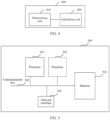
- An embodiment of this application further provides a packet scheduling apparatus 400.
- the packet scheduling apparatus 400 may implement functions of the first device in the embodiment shown in FIG. 2 or FIG. 3 .
- the packet scheduling apparatus 400 includes a determining unit 410 and a scheduling unit 420.
- the determining unit 410 is configured to implement S201 in the embodiment shown in FIG. 2
- the scheduling unit 420 is configured to implement S202 in the embodiment shown in FIG. 2 .
- the determining unit 410 is configured to: when a quantity of remaining tokens in a first token bucket does not satisfy that a first packet is to be removed from a queue, determine whether a length of a packet cached in the queue is less than a first threshold.
- the scheduling unit 402 is configured to: in response to that the length of the packet cached in the queue is not less than the first threshold, issue a token in a second token bucket to the first packet, and remove the first packet from the queue.
- division into the units is an example, and is merely a logical function division. During actual implementation, another division manner may be used.
- Functional units in embodiments of this application may be integrated into one processing unit, or each of the units may exist alone physically, or two or more units are integrated into one unit.
- the scheduling unit and the determining unit may be a same unit or different units.
- the integrated unit may be implemented in a form of hardware, or may be implemented in a form of a software functional unit.
- FIG. 5 is a schematic diagram of a structure of a device 500 according to an embodiment of this application.
- the foregoing packet scheduling apparatus 400 may be implemented by using the device shown in FIG. 5 .
- the device 500 includes at least one processor 501, a communication bus 502, and at least one network interface 504.
- the device 500 may further include a memory 503.
- the processor 501 may be a general-purpose central processing unit (Central Processing Unit, CPU), an application-specific integrated circuit (Application-specific Integrated Circuit, ASIC), or one or more integrated circuits (Integrated Circuit, IC) configured to control program execution of the solution of this application.
- the processor may be configured to process a packet and a token bucket, to implement the packet scheduling method provided in embodiments of this application.
- the processor may be configured to: when a quantity of remaining tokens in a first token bucket does not satisfy that a first packet is to be removed from a queue, determine whether a length of a packet cached in the queue is less than a first threshold; and in response to that the length of the packet cached in the queue is not less than the first threshold, issue a token in a second token bucket to the first packet, and remove the first packet from the queue.
- the communication bus 502 is configured to transmit information among the processor 501, the network interface 504, and the memory 503.
- the memory 503 may be a read-only memory (Read-only Memory, ROM) or another type of static storage device that can store static information and instructions, or the memory 503 may be a random access memory (Random Access Memory, RAM) or another type of dynamic storage device that can store information and instructions, or may be a compact disc read-only memory (Compact Disc Read-only Memory, CD-ROM) or another compact disc storage, optical disc storage (including a compressed optical disc, a laser disc, an optical disc, a digital versatile optical disc, a Blu-ray disc, or the like), a magnetic disk storage medium or another magnetic storage device, or any other medium that can be configured to carry or store expected program code in a form of instructions or a data structure and can be accessed by a computer. This is not limited thereto.
- the memory 503 may exist independently, and is connected to the processor 501 through the communication bus 502.
- the memory 503 may alternatively be integrated with the processor 501.
- the memory 503 is configured to store program code or instructions for executing the technical solutions provided in embodiments of this application, and the processor 501 controls the execution.
- the processor 501 is configured to execute the program code or the instructions stored in the memory 503.
- the program code may include one or more software modules.
- the processor 501 may also store the program code or the instructions for executing the technical solutions provided in embodiments of this application. In this case, the processor 501 does not need to read the program code or the instructions from the memory 503.
- the network interface 504 may be an apparatus such as a transceiver, and is configured to communicate with another device or a communication network.
- the communication network may be Ethernet, a radio access network (RAN), a wireless local area network (Wireless Local Area Network, WLAN), or the like.
- the network interface 504 may be configured to receive a packet sent by another node in a segment routing network, or may send a packet to another node in a segment routing network.
- the network interface 504 may be an Ethernet interface (Ethernet) interface, a fast Ethernet (Fast Ethernet, FE) interface, a gigabit Ethernet (Gigabit Ethernet, GE) interface, or the like.
- the device 500 may include a plurality of processors, for example, the processor 501 and a processor 505 shown in FIG. 5 .
- Each of the processors may be a single-core (single-CPU) processor, or may be a multi-core (multi-CPU) processor.
- the processor herein may be one or more devices, circuits, and/or processing cores configured to process data (for example, computer program instructions).
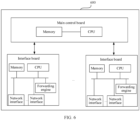
- FIG. 6 is a schematic diagram of a structure of a device 600 according to an embodiment of this application.
- the first device in FIG. 2 or FIG. 3 may be implemented by using the device shown in FIG. 6 .
- the device 600 includes a main control board and one or more interface boards.
- the main control board is communicatively connected to the interface board.
- the main control board is also referred to as a main processing unit (Main Processing Unit, MPU) or a route processor card (Route Processor Card).
- the main control board includes a CPU and a memory.
- the main control board is responsible for controlling and managing each component in the device 600, including route calculation, device management and function maintenance.
- the interface board is also referred to as a line processing unit (Line Processing Unit, LPU) or a line card (Line Card), and is configured to receive and send packets.
- the main control board communicates with the interface board through a bus, or the interface boards communicate with each other through a bus.
- the interface boards communicate with each other through a switching board.
- the device 600 also includes the switching board.
- the switching board is communicatively connected to the main control board and the interface board, and is configured to forward data between the interface boards.
- the switching board may also be referred to as a switch fabric unit (Switch Fabric Unit, SFU).
- the interface board includes a CPU, a memory, a forwarding engine, and an interface card (Interface Card, IC).
- the interface card may include one or more network interfaces.
- the network interface may be an Ethernet interface, an FE interface, a GE interface, or the like.
- the CPU is communicatively connected to the memory, the forwarding engine, and the interface card.
- the memory is configured to store a forwarding table.
- the forwarding engine is configured to forward a received packet based on the forwarding table stored in the memory.
- the forwarding engine sends the packet to the CPU of the main control board or the CPU of the interface board for processing; or if a destination address of the received packet is not an IP address of the device 600, the forwarding engine searches the forwarding table based on the destination address, and if a next hop and an outbound interface that correspond to the destination address are found from the forwarding table, the forwarding engine forwards the packet to the outbound interface corresponding to the destination address.
- the forwarding engine may be a network processor (Network Processor, NP).
- the interface card also referred to as a subcard, may be installed on the interface board.
- the interface card is responsible for converting an optical/electrical signal into a data frame, checking validity of the data frame, and forwarding the data frame to the forwarding engine for processing or the CPU of the interface board.
- the CPU may also perform functions of the forwarding engine, such as implementing software forwarding based on a general-purpose CPU, so that no forwarding engine is required in the interface board.
- the forwarding engine may be implemented by using an ASIC or a field programmable gate array (Field Programmable Gate Array, FPGA).
- the memory that stores the forwarding table may alternatively be integrated into the forwarding engine, and is used as a part of the forwarding engine.
- An embodiment of this application further provides a chip system, including a processor, where the processor is coupled to a memory, the memory is configured to store a program or instructions, and when the program or the instructions are executed by the processor, the chip system is enabled to implement the packet scheduling method performed by the first device in the embodiment shown in FIG. 2 .
- processors in the chip system there may be one or more processors in the chip system.
- the processor may be implemented by using hardware, or may be implemented by using software.
- the processor When the processor is implemented by using the hardware, the processor may be a logic circuit, an integrated circuit, or the like.
- the processor When the processor is implemented by using the software, the processor may be a general-purpose processor, and is implemented by reading software code stored in the memory.
- the memory may be integrated with the processor, or may be disposed separately from the processor.
- the memory may be a non-transitory processor, for example, a read-only memory ROM.
- the memory and the processor may be integrated into a same chip, or may be separately disposed on different chips.
- a type of the memory and a manner of disposing the memory and the processor are not specifically limited in this application.
- the chip system may be an FPGA, an ASIC, a system on chip (System on Chip, SoC), a CPU, an NP, a digital signal processing circuit (Digital Signal Processor, DSP), a micro controller unit (Micro Controller Unit, MCU), a programmable controller (Programmable Logic Device, PLD), or another integrated chip.
- SoC System on Chip
- DSP Digital Signal Processor
- MCU Micro Controller Unit
- PLD programmable controller
- An embodiment of this application further provides a computer-readable storage medium, including instructions.
- the instructions When the instructions are run on a computer, the computer is enabled to perform the packet scheduling method performed by the first device according to the foregoing method embodiments.
- An embodiment of this application further provides a computer program product including instructions.
- the computer program product When the computer program product is run on a computer, the computer is enabled to perform the packet scheduling method performed by the first device according to the foregoing method embodiments.
- the disclosed system, apparatus, and method may be implemented in other manners.
- the described apparatus embodiments are merely examples.
- division into the units is merely logical module division and may be other division during actual implementation.
- a plurality of units or components may be combined or integrated into another system, or some features may be ignored or not performed.
- the displayed or discussed mutual couplings or direct couplings or communication connections may be implemented by using some interfaces.
- the indirect couplings or communication connections between the apparatuses or units may be implemented in electronic, mechanical, or other forms.
- the units described as separate parts may or may not be physically separate, and parts displayed as units may or may not be physical units, may be located in one position, or may be distributed on a plurality of network units. Some or all of the units may be obtained based on actual requirements to achieve the objectives of the solutions of embodiments.
- module units in embodiments of this application may be integrated into one processing unit, or each of the units may exist alone physically, or two or more units are integrated into one unit.
- the integrated unit may be implemented in a form of hardware, or may be implemented in a form of a software module unit.
- the integrated unit When the integrated unit is implemented in the form of a software module unit and sold or used as an independent product, the integrated unit may be stored in a computer-readable storage medium.
- the computer software product is stored in a storage medium and includes several instructions for instructing a computer device (which may be a personal computer, a server, or a network device) to perform all or some of the steps of the methods described in embodiments of this application.
- the storage medium includes any medium that can store program code, such as a USB flash drive, a removable hard disk, a read-only memory (ROM, Read-Only Memory), a random access memory (RAM, Random Access Memory), a magnetic disk, or an optical disc.
- the computer-readable medium includes a computer storage medium and a communication medium, where the communication medium includes any medium that enables a computer program to be transmitted from one place to another.
- the storage medium may be any available medium accessible to a general-purpose or a dedicated computer.
Landscapes
- Engineering & Computer Science (AREA)
- Computer Networks & Wireless Communication (AREA)
- Signal Processing (AREA)
- Data Exchanges In Wide-Area Networks (AREA)
Claims (15)
- Paketplanungsverfahren, wobei das Verfahren Folgendes umfasst:wenn eine Menge verbleibender Token in einem ersten Token-Bucket einer ersten Vorrichtung nicht ausreicht, um ein erstes Paket aus einer Warteschlange zu entfernen, Bestimmen (S201) durch die erste Vorrichtung, ob eine Länge eines in der Warteschlange zwischengespeicherten Pakets kleiner als ein erster Schwellenwert ist; undals Reaktion darauf, dass die Länge des in der Warteschlange zwischengespeicherten Pakets nicht kleiner als der erste Schwellenwert ist, Ausgeben (S202) eines Tokens in einem zweiten Token-Bucket durch die erste Vorrichtung für das erste Paket und Entfernen des ersten Pakets aus der Warteschlange, wobei das Verfahren dadurch gekennzeichnet ist, dass es weiterhin Folgendes umfasst:wenn die Menge der verbleibenden Token im ersten Token-Bucket der ersten Vorrichtung nicht ausreicht, um ein zweites Paket aus der Warteschlange zu entfernen, Bestimmen (S307) durch die erste Vorrichtung, ob die Länge des in der Warteschlange zwischengespeicherten Pakets kleiner als der erste Schwellenwert ist; undals Reaktion darauf, dass die Länge des in der Warteschlange zwischengespeicherten Pakets kleiner als der erste Schwellenwert ist, Behalten (S310) des zweiten Pakets in der Warteschlange durch die erste Vorrichtung, bevor die Menge der verbleibenden Token im ersten Token-Bucket ausreicht, um das zweite Paket aus der Warteschlange zu entfernen, undwobei das Verfahren nach dem Behalten (S310) des zweiten Pakets in der Warteschlange weiterhin Folgendes umfasst:Bestimmen (S311) durch die erste Vorrichtung, dass die Menge der verbleibenden Token im ersten Token-Bucket ausreicht, damit das zweite Paket aus der Warteschlange entfernt werden kann; undAusgeben (S311) eines Tokens im ersten Token-Bucket durch die erste Vorrichtung für das zweite Paket und Entfernen des zweiten Pakets aus der Warteschlange.
- Verfahren nach Anspruch 1, wobei das Entfernen des ersten Pakets aus der Warteschlange Folgendes umfasst:
Senden (S309) des ersten Pakets durch die erste Vorrichtung über einen ersten Pfad, wobei der erste Pfad ein Weiterleitungspfad ist, der dem zweiten Token-Bucket entspricht, die Verbindungsqualität des ersten Pfads niedriger ist als die Verbindungsqualität eines zweiten Pfads und der zweite Pfad ein Weiterleitungspfad ist, der dem ersten Token-Bucket entspricht. - Verfahren nach Anspruch 2, wobei sich ein Netzwerktyp eines Zugangsnetzwerks, in dem sich der erste Pfad befindet, von einem Netzwerktyp eines Zugangsnetzwerks, in dem sich der zweite Pfad befindet, unterscheidet.
- Verfahren nach Anspruch 1, wobei das Entfernen des ersten Pakets aus der Warteschlange Folgendes umfasst:
Senden des ersten Pakets durch die erste Vorrichtung basierend auf einer ersten Priorität, wobei die erste Priorität eine Weiterleitungspriorität ist, die dem zweiten Token-Bucket entspricht, eine Weiterleitungspriorität der ersten Priorität niedriger ist als eine Weiterleitungspriorität einer zweiten Priorität und die Weiterleitungspriorität der zweiten Priorität eine Weiterleitungspriorität ist, die dem ersten Token-Bucket entspricht. - Verfahren nach Anspruch 1, wobei das Entfernen des zweiten Pakets aus der Warteschlange Folgendes umfasst:
Senden (S306) des zweiten Pakets durch die erste Vorrichtung über den zweiten Pfad, wobei der zweite Pfad der Weiterleitungspfad ist, der dem ersten Token-Bucket entspricht. - Verfahren nach Anspruch 1, wobei das Entfernen des zweiten Pakets aus der Warteschlange Folgendes umfasst:
Senden des zweiten Pakets durch die erste Vorrichtung basierend auf der zweiten Priorität, wobei die zweite Priorität die Weiterleitungspriorität ist, die dem ersten Token-Bucket entspricht. - Verfahren nach den Ansprüchen 1 bis 6, wobei das Verfahren vor dem Bestimmen durch die erste Vorrichtung, ob eine Länge eines in der Warteschlange zwischengespeicherten Pakets kleiner als ein erster Schwellenwert ist, ferner Folgendes umfasst:
als Reaktion darauf ein drittes Paket zur Warteschlange hinzugefügt wird, und Bestimmen, durch die erste Vorrichtung, ob die Menge der verbleibenden Token im ersten Token-Bucket ausreicht, um das erste Paket aus der Warteschlange zu entfernen. - Paketplanungsvorrichtung (400), wobei die Vorrichtung in einer ersten Vorrichtung verwendet wird und Folgendes umfasst:eine Bestimmungseinheit (410), die für Folgendes konfiguriert ist: wenn eine Menge verbleibender Token in einem ersten Token-Bucket nicht ausreicht, um ein erstes Paket aus einer Warteschlange zu entfernen, Bestimmen, ob eine Länge eines in der Warteschlange zwischengespeicherten Pakets kleiner als ein erster Schwellenwert ist; undeine Planungseinheit (420), die dazu konfiguriert ist, als Reaktion darauf, dass die Länge des in der Warteschlange zwischengespeicherten Pakets nicht kleiner als der erste Schwellenwert ist, ein Token in einem zweiten Token-Bucket für das erste Paket auszugeben und das erste Paket aus der Warteschlange zu entfernen,wobei die Vorrichtung dadurch gekennzeichnet ist, dass sie weiterhin Folgendes umfasst:die Bestimmungseinheit (410) ist ferner konfiguriert zum: wenn die Menge der verbleibenden Token im ersten Token-Bucket nicht ausreicht, um ein zweites Paket aus der Warteschlange zu entfernen, Bestimmen, ob die Länge des in der Warteschlange zwischengespeicherten Pakets kleiner als der erste Schwellenwert ist; unddie Planungseinheit (420) ist ferner konfiguriert zum: als Reaktion darauf, dass die Länge des in der Warteschlange zwischengespeicherten Pakets kleiner als der erste Schwellenwert ist, Behalten des zweiten Pakets in der Warteschlange, bis die Menge der verbleibenden Token im ersten Token-Bucket ausreicht, um das zweite Paket aus der Warteschlange zu entfernen, undwobeidie Bestimmungseinheit (410) ferner konfiguriert ist, zu bestimmen, dass die Menge der verbleibenden Token im ersten Token-Bucket ausreicht, um das zweite Paket aus der Warteschlange zu entfernen; unddie Planungseinheit (420) ferner konfiguriert ist, um ein Token im ersten Token-Bucket für das zweite Paket auszugeben und das zweite Paket aus der Warteschlange zu entfernen.
- Vorrichtung (400) nach Anspruch 8, wobei die Vorrichtung weiterhin eine Sendeeinheit umfasst,wobei die Sendeeinheit so konfiguriert ist, dass sie das erste Paket über einen ersten Pfad sendet, wobei der erste Pfad ein Weiterleitungspfad ist, der dem zweiten Token-Bucket entspricht,die Verbindungsqualität des ersten Pfads niedriger ist als die Verbindungsqualität eines zweiten Pfads und der zweite Pfad ein Weiterleitungspfad ist, der dem ersten Token-Bucket entspricht.
- Vorrichtung (400) nach Anspruch 8, wobei die Vorrichtung ferner eine Sendeeinheit umfasst, wobei
die Sendeeinheit konfiguriert ist, um das erste Paket basierend auf einer ersten Priorität zu senden, wobei die erste Priorität eine Weiterleitungspriorität ist, die dem zweiten Token-Bucket entspricht, eine Weiterleitungspriorität der ersten Priorität niedriger ist als eine Weiterleitungspriorität einer zweiten Priorität, und die Weiterleitungspriorität der zweiten Priorität eine Weiterleitungspriorität ist, die dem ersten Token-Bucket entspricht. - Vorrichtung (400) nach Anspruch 8, wobei die Vorrichtung ferner die Sendeeinheit umfasst, wobei
die Sendeeinheit konfiguriert ist, um das zweite Paket über den zweiten Pfad zu senden, wobei der zweite Pfad der Weiterleitungspfad ist, der dem ersten Token-Bucket entspricht. - Vorrichtung (400) nach Anspruch 8, wobei die Vorrichtung ferner die Sendeeinheit umfasst, wobei
die Sendeeinheit konfiguriert ist, um das zweite Paket basierend auf der zweiten Priorität zu senden, wobei die zweite Priorität die Weiterleitungspriorität ist, die dem ersten Token-Bucket entspricht. - Vorrichtung (400) nach einem der Ansprüche 8 bis 12, wobei die Planungseinheit (420) ferner konfiguriert ist zum: als Reaktion darauf, dass ein drittes Paket zur Warteschlange hinzugefügt wird, Bestimmen, ob die Menge der verbleibenden Token im ersten Token-Bucket ausreicht, um das erste Paket aus der Warteschlange zu entfernen.
- Chip, der einen Speicher und einen Prozessor umfasst, wobei der Speicher zum Speichern von Anweisungen oder Programmcode konfiguriert ist und der Prozessor zum Aufrufen der Anweisungen oder des Programmcodes aus dem Speicher und zum Ausführen der Anweisungen oder des Programmcodes konfiguriert ist, um das Paketplanungsverfahren nach einem der Ansprüche 1 bis 7 durchzuführen.
- Computerlesbares Speichermedium, umfassend Anweisungen, ein Programm oder Code, wobei, wenn die Anweisungen, das Programm oder der Code auf einem Computer ausgeführt werden, der Computer in die Lage versetzt wird, das Paketplanungsverfahren nach einem der Ansprüche 1 bis 7 auszuführen.
Applications Claiming Priority (2)
| Application Number | Priority Date | Filing Date | Title |
|---|---|---|---|
| CN202111266385.2A CN116055407A (zh) | 2021-10-28 | 2021-10-28 | 一种报文调度的方法及装置 |
| PCT/CN2022/127533 WO2023072112A1 (zh) | 2021-10-28 | 2022-10-26 | 一种报文调度的方法及装置 |
Publications (3)
| Publication Number | Publication Date |
|---|---|
| EP4344155A1 EP4344155A1 (de) | 2024-03-27 |
| EP4344155A4 EP4344155A4 (de) | 2024-05-22 |
| EP4344155B1 true EP4344155B1 (de) | 2025-04-23 |
Family
ID=86126052
Family Applications (1)
| Application Number | Title | Priority Date | Filing Date |
|---|---|---|---|
| EP22885989.8A Active EP4344155B1 (de) | 2021-10-28 | 2022-10-26 | Paketplanungsverfahren und -vorrichtung |
Country Status (3)
| Country | Link |
|---|---|
| EP (1) | EP4344155B1 (de) |
| CN (1) | CN116055407A (de) |
| WO (1) | WO2023072112A1 (de) |
Families Citing this family (3)
| Publication number | Priority date | Publication date | Assignee | Title |
|---|---|---|---|---|
| CN118869610B (zh) * | 2024-05-17 | 2025-08-19 | 腾讯云计算(北京)有限责任公司 | 消息发送与接收方法、相关装置和介质 |
| CN119960694B (zh) * | 2025-01-14 | 2026-01-02 | 成都芯忆联信息技术有限公司 | 固态硬盘的多命名空间流量控制方法、设备及存储介质 |
| CN120729801A (zh) * | 2025-08-25 | 2025-09-30 | 新华三工业互联网有限公司 | 大模型推理服务的优化调度方法、装置、设备及介质 |
Family Cites Families (7)
| Publication number | Priority date | Publication date | Assignee | Title |
|---|---|---|---|---|
| US7609634B2 (en) * | 2005-03-22 | 2009-10-27 | Alcatel Lucent | Communication traffic policing apparatus and methods |
| US8045456B1 (en) * | 2006-11-27 | 2011-10-25 | Marvell International Ltd. | Hierarchical port-based rate limiting |
| JP5445271B2 (ja) * | 2010-03-30 | 2014-03-19 | 富士通株式会社 | 帯域制御装置,帯域制御方法,及びプログラム |
| CN109218215B (zh) * | 2017-06-29 | 2021-11-19 | 华为技术有限公司 | 一种报文传输的方法和网络设备 |
| CN110572329B (zh) * | 2019-07-08 | 2022-07-01 | 紫光云技术有限公司 | 一种网络自适应流量整形方法及系统 |
| CN112825511B (zh) * | 2019-11-20 | 2025-09-16 | 深圳市中兴微电子技术有限公司 | 一种交换网络拥塞管理方法、装置、设备和存储介质 |
| CN113422736B (zh) * | 2021-06-16 | 2022-06-14 | 中移(杭州)信息技术有限公司 | 基于令牌桶的请求管理方法、装置、设备及存储介质 |
-
2021
- 2021-10-28 CN CN202111266385.2A patent/CN116055407A/zh active Pending
-
2022
- 2022-10-26 WO PCT/CN2022/127533 patent/WO2023072112A1/zh not_active Ceased
- 2022-10-26 EP EP22885989.8A patent/EP4344155B1/de active Active
Also Published As
| Publication number | Publication date |
|---|---|
| EP4344155A4 (de) | 2024-05-22 |
| WO2023072112A1 (zh) | 2023-05-04 |
| CN116055407A (zh) | 2023-05-02 |
| EP4344155A1 (de) | 2024-03-27 |
Similar Documents
| Publication | Publication Date | Title |
|---|---|---|
| EP4344155B1 (de) | Paketplanungsverfahren und -vorrichtung | |
| JP2023529883A (ja) | パケット転送方法、装置及び電子デバイス | |
| US8040889B2 (en) | Packet forwarding device | |
| CN101489263B (zh) | 一种数据传输控制方法、装置及系统 | |
| EP2670094B1 (de) | Lastenteilungsverfahren und -vorrichtung | |
| US9608927B2 (en) | Packet exchanging device, transmission apparatus, and packet scheduling method | |
| EP4440075A1 (de) | Warteschlangensteuerungsverfahren und -vorrichtung | |
| US9154441B2 (en) | Adaptive buffer allocation management | |
| US6473815B1 (en) | Queue sharing | |
| CN116566907A (zh) | 一种网络拥塞控制方法及相关装置 | |
| US12010023B2 (en) | Network congestion handling method and related apparatus | |
| JP2012186788A (ja) | パケット転送装置及びQoS制御回路の電力供給制御方法 | |
| CN113543209A (zh) | 一种基于令牌调度的拥塞控制方法及装置 | |
| CN112005528B (zh) | 一种数据交换方法、数据交换节点及数据中心网络 | |
| US20260074998A1 (en) | Congestion control method, apparatus, and system | |
| CN113037651B (zh) | 流量转发的提升QoS的方法、装置、设备及存储介质 | |
| EP3989515A1 (de) | Paketverarbeitungsverfahren und -einrichtung und kommunikationsvorrichtung | |
| US11936570B1 (en) | Modular switch and a method for scaling switches | |
| WO2024217051A1 (zh) | 业务流的路径确定方法及电子设备 | |
| CN114221916B (zh) | 一种交换芯片的转发队列冲刷方法及系统 | |
| CN116318554A (zh) | 网络传输方法及装置 | |
| CN116489154A (zh) | 一种负载分担方法和相关装置 | |
| EP4478682A1 (de) | Warteschlangenplanungsverfahren und -vorrichtung | |
| CN114070776B (zh) | 一种改进的时间敏感网络数据传输方法、装置及设备 | |
| CN113472692B (zh) | 数据传输方法及相关设备 |
Legal Events
| Date | Code | Title | Description |
|---|---|---|---|
| STAA | Information on the status of an ep patent application or granted ep patent |
Free format text: STATUS: THE INTERNATIONAL PUBLICATION HAS BEEN MADE |
|
| PUAI | Public reference made under article 153(3) epc to a published international application that has entered the european phase |
Free format text: ORIGINAL CODE: 0009012 |
|
| STAA | Information on the status of an ep patent application or granted ep patent |
Free format text: STATUS: REQUEST FOR EXAMINATION WAS MADE |
|
| 17P | Request for examination filed |
Effective date: 20231220 |
|
| AK | Designated contracting states |
Kind code of ref document: A1 Designated state(s): AL AT BE BG CH CY CZ DE DK EE ES FI FR GB GR HR HU IE IS IT LI LT LU LV MC ME MK MT NL NO PL PT RO RS SE SI SK SM TR |
|
| A4 | Supplementary search report drawn up and despatched |
Effective date: 20240419 |
|
| RIC1 | Information provided on ipc code assigned before grant |
Ipc: H04L 47/215 20220101AFI20240415BHEP |
|
| GRAP | Despatch of communication of intention to grant a patent |
Free format text: ORIGINAL CODE: EPIDOSNIGR1 |
|
| STAA | Information on the status of an ep patent application or granted ep patent |
Free format text: STATUS: GRANT OF PATENT IS INTENDED |
|
| DAV | Request for validation of the european patent (deleted) | ||
| DAX | Request for extension of the european patent (deleted) | ||
| INTG | Intention to grant announced |
Effective date: 20241210 |
|
| GRAS | Grant fee paid |
Free format text: ORIGINAL CODE: EPIDOSNIGR3 |
|
| GRAA | (expected) grant |
Free format text: ORIGINAL CODE: 0009210 |
|
| STAA | Information on the status of an ep patent application or granted ep patent |
Free format text: STATUS: THE PATENT HAS BEEN GRANTED |
|
| AK | Designated contracting states |
Kind code of ref document: B1 Designated state(s): AL AT BE BG CH CY CZ DE DK EE ES FI FR GB GR HR HU IE IS IT LI LT LU LV MC ME MK MT NL NO PL PT RO RS SE SI SK SM TR |
|
| REG | Reference to a national code |
Ref country code: GB Ref legal event code: FG4D |
|
| REG | Reference to a national code |
Ref country code: CH Ref legal event code: EP |
|
| REG | Reference to a national code |
Ref country code: DE Ref legal event code: R096 Ref document number: 602022013717 Country of ref document: DE |
|
| REG | Reference to a national code |
Ref country code: IE Ref legal event code: FG4D |
|
| REG | Reference to a national code |
Ref country code: NL Ref legal event code: MP Effective date: 20250423 |
|
| PG25 | Lapsed in a contracting state [announced via postgrant information from national office to epo] |
Ref country code: NL Free format text: LAPSE BECAUSE OF FAILURE TO SUBMIT A TRANSLATION OF THE DESCRIPTION OR TO PAY THE FEE WITHIN THE PRESCRIBED TIME-LIMIT Effective date: 20250423 |
|
| REG | Reference to a national code |
Ref country code: AT Ref legal event code: MK05 Ref document number: 1788915 Country of ref document: AT Kind code of ref document: T Effective date: 20250423 |
|
| PG25 | Lapsed in a contracting state [announced via postgrant information from national office to epo] |
Ref country code: FI Free format text: LAPSE BECAUSE OF FAILURE TO SUBMIT A TRANSLATION OF THE DESCRIPTION OR TO PAY THE FEE WITHIN THE PRESCRIBED TIME-LIMIT Effective date: 20250423 Ref country code: PT Free format text: LAPSE BECAUSE OF FAILURE TO SUBMIT A TRANSLATION OF THE DESCRIPTION OR TO PAY THE FEE WITHIN THE PRESCRIBED TIME-LIMIT Effective date: 20250825 Ref country code: ES Free format text: LAPSE BECAUSE OF FAILURE TO SUBMIT A TRANSLATION OF THE DESCRIPTION OR TO PAY THE FEE WITHIN THE PRESCRIBED TIME-LIMIT Effective date: 20250423 |
|
| REG | Reference to a national code |
Ref country code: LT Ref legal event code: MG9D |
|
| PG25 | Lapsed in a contracting state [announced via postgrant information from national office to epo] |
Ref country code: GR Free format text: LAPSE BECAUSE OF FAILURE TO SUBMIT A TRANSLATION OF THE DESCRIPTION OR TO PAY THE FEE WITHIN THE PRESCRIBED TIME-LIMIT Effective date: 20250724 Ref country code: NO Free format text: LAPSE BECAUSE OF FAILURE TO SUBMIT A TRANSLATION OF THE DESCRIPTION OR TO PAY THE FEE WITHIN THE PRESCRIBED TIME-LIMIT Effective date: 20250723 |
|
| PG25 | Lapsed in a contracting state [announced via postgrant information from national office to epo] |
Ref country code: PL Free format text: LAPSE BECAUSE OF FAILURE TO SUBMIT A TRANSLATION OF THE DESCRIPTION OR TO PAY THE FEE WITHIN THE PRESCRIBED TIME-LIMIT Effective date: 20250423 |
|
| PG25 | Lapsed in a contracting state [announced via postgrant information from national office to epo] |
Ref country code: BG Free format text: LAPSE BECAUSE OF FAILURE TO SUBMIT A TRANSLATION OF THE DESCRIPTION OR TO PAY THE FEE WITHIN THE PRESCRIBED TIME-LIMIT Effective date: 20250423 |
|
| PG25 | Lapsed in a contracting state [announced via postgrant information from national office to epo] |
Ref country code: HR Free format text: LAPSE BECAUSE OF FAILURE TO SUBMIT A TRANSLATION OF THE DESCRIPTION OR TO PAY THE FEE WITHIN THE PRESCRIBED TIME-LIMIT Effective date: 20250423 |
|
| PG25 | Lapsed in a contracting state [announced via postgrant information from national office to epo] |
Ref country code: AT Free format text: LAPSE BECAUSE OF FAILURE TO SUBMIT A TRANSLATION OF THE DESCRIPTION OR TO PAY THE FEE WITHIN THE PRESCRIBED TIME-LIMIT Effective date: 20250423 |
|
| PG25 | Lapsed in a contracting state [announced via postgrant information from national office to epo] |
Ref country code: RS Free format text: LAPSE BECAUSE OF FAILURE TO SUBMIT A TRANSLATION OF THE DESCRIPTION OR TO PAY THE FEE WITHIN THE PRESCRIBED TIME-LIMIT Effective date: 20250723 |
|
| PG25 | Lapsed in a contracting state [announced via postgrant information from national office to epo] |
Ref country code: IS Free format text: LAPSE BECAUSE OF FAILURE TO SUBMIT A TRANSLATION OF THE DESCRIPTION OR TO PAY THE FEE WITHIN THE PRESCRIBED TIME-LIMIT Effective date: 20250823 |
|
| PG25 | Lapsed in a contracting state [announced via postgrant information from national office to epo] |
Ref country code: LV Free format text: LAPSE BECAUSE OF FAILURE TO SUBMIT A TRANSLATION OF THE DESCRIPTION OR TO PAY THE FEE WITHIN THE PRESCRIBED TIME-LIMIT Effective date: 20250423 |
|
| PGFP | Annual fee paid to national office [announced via postgrant information from national office to epo] |
Ref country code: DE Payment date: 20250902 Year of fee payment: 4 |
|
| PG25 | Lapsed in a contracting state [announced via postgrant information from national office to epo] |
Ref country code: SM Free format text: LAPSE BECAUSE OF FAILURE TO SUBMIT A TRANSLATION OF THE DESCRIPTION OR TO PAY THE FEE WITHIN THE PRESCRIBED TIME-LIMIT Effective date: 20250423 Ref country code: DK Free format text: LAPSE BECAUSE OF FAILURE TO SUBMIT A TRANSLATION OF THE DESCRIPTION OR TO PAY THE FEE WITHIN THE PRESCRIBED TIME-LIMIT Effective date: 20250423 |
|
| PG25 | Lapsed in a contracting state [announced via postgrant information from national office to epo] |
Ref country code: CZ Free format text: LAPSE BECAUSE OF FAILURE TO SUBMIT A TRANSLATION OF THE DESCRIPTION OR TO PAY THE FEE WITHIN THE PRESCRIBED TIME-LIMIT Effective date: 20250423 |
|
| PG25 | Lapsed in a contracting state [announced via postgrant information from national office to epo] |
Ref country code: EE Free format text: LAPSE BECAUSE OF FAILURE TO SUBMIT A TRANSLATION OF THE DESCRIPTION OR TO PAY THE FEE WITHIN THE PRESCRIBED TIME-LIMIT Effective date: 20250423 |
|
| REG | Reference to a national code |
Ref country code: DE Ref legal event code: R097 Ref document number: 602022013717 Country of ref document: DE |
|
| PG25 | Lapsed in a contracting state [announced via postgrant information from national office to epo] |
Ref country code: SK Free format text: LAPSE BECAUSE OF FAILURE TO SUBMIT A TRANSLATION OF THE DESCRIPTION OR TO PAY THE FEE WITHIN THE PRESCRIBED TIME-LIMIT Effective date: 20250423 |
|
| PG25 | Lapsed in a contracting state [announced via postgrant information from national office to epo] |
Ref country code: IT Free format text: LAPSE BECAUSE OF FAILURE TO SUBMIT A TRANSLATION OF THE DESCRIPTION OR TO PAY THE FEE WITHIN THE PRESCRIBED TIME-LIMIT Effective date: 20250423 |
|
| PLBE | No opposition filed within time limit |
Free format text: ORIGINAL CODE: 0009261 |
|
| STAA | Information on the status of an ep patent application or granted ep patent |
Free format text: STATUS: NO OPPOSITION FILED WITHIN TIME LIMIT |
|
| REG | Reference to a national code |
Ref country code: CH Ref legal event code: L10 Free format text: ST27 STATUS EVENT CODE: U-0-0-L10-L00 (AS PROVIDED BY THE NATIONAL OFFICE) Effective date: 20260304 |
|
| PG25 | Lapsed in a contracting state [announced via postgrant information from national office to epo] |
Ref country code: RO Free format text: LAPSE BECAUSE OF FAILURE TO SUBMIT A TRANSLATION OF THE DESCRIPTION OR TO PAY THE FEE WITHIN THE PRESCRIBED TIME-LIMIT Effective date: 20250423 |