EP4340322A2 - Verbessertes pfcp-assoziationsverfahren zur sitzungswiederherstellung - Google Patents
Verbessertes pfcp-assoziationsverfahren zur sitzungswiederherstellung Download PDFInfo
- Publication number
- EP4340322A2 EP4340322A2 EP24154258.8A EP24154258A EP4340322A2 EP 4340322 A2 EP4340322 A2 EP 4340322A2 EP 24154258 A EP24154258 A EP 24154258A EP 4340322 A2 EP4340322 A2 EP 4340322A2
- Authority
- EP
- European Patent Office
- Prior art keywords
- pfcp
- node
- sessions
- function
- core network
- Prior art date
- Legal status (The legal status is an assumption and is not a legal conclusion. Google has not performed a legal analysis and makes no representation as to the accuracy of the status listed.)
- Granted
Links
Images


Classifications
-
- H—ELECTRICITY
- H04—ELECTRIC COMMUNICATION TECHNIQUE
- H04W—WIRELESS COMMUNICATION NETWORKS
- H04W28/00—Network traffic management; Network resource management
- H04W28/02—Traffic management, e.g. flow control or congestion control
- H04W28/10—Flow control between communication endpoints
- H04W28/12—Flow control between communication endpoints using signalling between network elements
-
- H—ELECTRICITY
- H04—ELECTRIC COMMUNICATION TECHNIQUE
- H04L—TRANSMISSION OF DIGITAL INFORMATION, e.g. TELEGRAPHIC COMMUNICATION
- H04L12/00—Data switching networks
- H04L12/28—Data switching networks characterised by path configuration, e.g. LAN [Local Area Networks] or WAN [Wide Area Networks]
- H04L12/40—Bus networks
- H04L12/407—Bus networks with decentralised control
- H04L12/413—Bus networks with decentralised control with random access, e.g. carrier-sense multiple-access with collision detection [CSMA-CD]
-
- H—ELECTRICITY
- H04—ELECTRIC COMMUNICATION TECHNIQUE
- H04L—TRANSMISSION OF DIGITAL INFORMATION, e.g. TELEGRAPHIC COMMUNICATION
- H04L41/00—Arrangements for maintenance, administration or management of data switching networks, e.g. of packet switching networks
- H04L41/06—Management of faults, events, alarms or notifications
- H04L41/0654—Management of faults, events, alarms or notifications using network fault recovery
-
- H—ELECTRICITY
- H04—ELECTRIC COMMUNICATION TECHNIQUE
- H04L—TRANSMISSION OF DIGITAL INFORMATION, e.g. TELEGRAPHIC COMMUNICATION
- H04L47/00—Traffic control in data switching networks
- H04L47/70—Admission control; Resource allocation
- H04L47/74—Admission control; Resource allocation measures in reaction to resource unavailability
- H04L47/746—Reaction triggered by a failure
-
- H—ELECTRICITY
- H04—ELECTRIC COMMUNICATION TECHNIQUE
- H04W—WIRELESS COMMUNICATION NETWORKS
- H04W28/00—Network traffic management; Network resource management
- H04W28/02—Traffic management, e.g. flow control or congestion control
- H04W28/10—Flow control between communication endpoints
Definitions
- the present disclosure relates to Packet Forwarding Control Protocol (PFCP) session management in a cellular communications network.
- PFCP Packet Forwarding Control Protocol
- the Third Generation Partnership Project (3GPP) Technical Specification (TS) 29.244, version 16.1.0 defines the Packet Forwarding Control Protocol (PFCP) used on an interface between a control plane (CP) function and a user plane (UP) function in a cellular communications network.
- PFCP Packet Forwarding Control Protocol
- CP control plane
- UP user plane
- 3GPP TS 29.244 specifies that, for a PFCP node represented by a Node ID, there can exist multiple PFCP entities that are each represented by respective different Internet Protocol (IP) addresses.
- IP Internet Protocol
- a heartbeat procedure is performed to monitor path status between each CP PFCP entity and a corresponding UP PFCP entity.
- 3GPP TS 29.244 also defines functionality enabling PFCP sessions that are successively controlled by different Session Management Functions (SMFs) of an SMF set, and defines two features in support of this functionality.
- SMFs Session Management Functions
- the first feature, SMF Set (SSET) enables one PFCP association to be set up per SMF set
- MPAS Multiple PFCP Associations to the SMFs in an SMF set
- 3GPP TS 23.007, version 15.4.0 further provides that, when a PFCP entity detects a path failure of a path between the PFCP entity and a peer entity, the PFCP sessions associated with the failed path can be deleted.
- PFCP session management may encounter a number of issues. For example, when a PFCP entity fails without restart, the PFCP sessions associated with that PFCP entity may be immediately lost. However, a peer entity of the PFCP entity cannot detect the failure of the PFCP entity until the failure of the path between the PFCP entity and the peer entity is detected. This may result in a mismatch in session status between, e.g., a CP PFCP entity and a UP PFCP entity for a period of time.
- a resource e.g., a user equipment (UE) IP address or user plane Fully Qualified Tunnel Endpoint Identifier (F-TEID)
- UE user equipment
- F-TEID Fully Qualified Tunnel Endpoint Identifier
- a corresponding UP function may not be able to determine whether the PFCP sessions belonging to this association should be deleted or not. This is because the PFCP association setup may be triggered by failure of one SMF instance failure, while the PFCP sessions may be kept or may be triggered due to failure of the whole SMF set, resulting in loss of all of the PFCP sessions belonging to the SMF set.
- Embodiments of a method by a Packet Forwarding Control Protocol (PFCP) node for providing an enhanced PFCP association procedure for session restoration are disclosed.
- the method comprises deleting one or more PFCP sessions of the PFCP node that are associated with a failed PFCP entity or with a failed PFCP path.
- PFCP Packet Forwarding Control Protocol
- the method further comprises sending, to a PFCP peer node, a node level message to request that the PFCP peer node delete a corresponding one or more PFCP sessions of the PFCP peer node that are associated with the failed PFCP entity or with the failed PFCP path, wherein the node level message comprises an indication of the corresponding one or more PFCP sessions.
- the method further comprises, prior to deleting the one or more PFCP sessions, sending, to the PFCP peer node, a PFCP Association Setup Request to initiate a PFCP association setup procedure.
- the PFCP node comprises a control plane (CP) function
- the PFCP peer node comprises a user plane (UP) function.
- the PFCP node comprises a UP function
- the PFCP peer node comprises a CP function.
- the PFCP node comprises a CP function
- the PFCP peer node comprises a UP function
- the node level message comprises a PFCP Association Setup Request
- the PFCP Association Setup Request comprises sessions retention information to indicate whether PFCP sessions associated with the PFCP Association Setup Request should be retained.
- the method further comprises receiving, by the PFCP node from the PFCP peer node, a PFCP Association Setup Response comprising a sessions retention indication to indicate that the PFCP sessions associated with the PFCP Association Setup Request are successfully retained.
- the sessions retention information indicates that all of the PFCP sessions associated with the PFCP Association Setup Request should be retained.
- the sessions retention information comprises a list of IP addresses corresponding to a subset of the PFCP entities to be retained.
- the indication of the corresponding one or more PFCP session comprises a "PFCP Sessions to be deleted information" element.
- the node level message comprises one of a PFCP Association Update Request, a PFCP Session Set Deletion Request, or a custom message.
- the method further comprises receiving, by the PFCP node from the PFCP peer node, a response message confirming deletion of the corresponding one or more PFCP sessions of the PFCP peer node.
- Embodiments of a method performed by a PFCP node comprising a CP function for providing PFCP sessions retention information comprises sending, to a PFCP peer node comprising a UP function, a PFCP Association Setup Request to initiate a PFCP association setup procedure, wherein the PFCP Association Setup Request comprises sessions retention information to indicate whether PFCP sessions associated with the PFCP Association Setup Request should be retained.
- the method further comprises receiving, by the PFCP node from the PFCP peer node, a PFCP Association Setup Response comprising a sessions retention indication to indicate that the PFCP sessions associated with the PFCP Association Setup Request are successfully retained.
- the sessions retention information indicates that all of the PFCP sessions associated with the PFCP Association Setup Request should be retained. In some embodiments, the sessions retention information comprises a list of IP addresses corresponding to a subset of the PFCP entities to be retained.
- Embodiments of a core network entity are also disclosed.
- the core network entity is configured to perform any of the steps of any of the above-disclosed methods.
- Embodiments of a core network entity are also disclosed.
- the core network entity is adapted to perform any of the steps of any of the above-disclosed methods.
- Embodiments of a network node for implementing a core network entity are also disclosed.
- the network node comprises a network interface, and processing circuitry associated with the network interface, the processing circuitry configured to cause the network node to implement the core network entity, wherein the core network entity is configured to perform any of the steps of any of the above-disclosed methods.
- Embodiments of a network node for implementing a core network entity are also disclosed.
- the network node comprises a network interface, and processing circuitry associated with the network interface, the processing circuitry adapted to cause the network node to implement the core network entity, wherein the core network entity is adapted to perform any of the steps of any of the above-disclosed methods.
- Radio Node As used herein, a "radio node” is either a radio access node or a wireless communication device.
- Radio Access Node As used herein, a “radio access node” or “radio network node” or “radio access network node” is any node in a radio access network of a cellular communications network that operates to wirelessly transmit and/or receive signals.
- a radio access node examples include, but are not limited to, a base station (e.g., a New Radio (NR) base station (gNB) in a Third Generation Partnership Project (3GPP) Fifth Generation (5G) NR network or an enhanced or evolved Node B (eNB) in a 3GPP Long Term Evolution (LTE) network), a high-power or macro base station, a low-power base station (e.g., a micro base station, a pico base station, a home eNB, or the like), a relay node, a network node that implements part of the functionality of a base station or a network node that implements a gNB Distributed Unit (gNB-DU)) or a network node that implements part of the functionality of some other type of radio access node.
- a base station e.g., a New Radio (NR) base station (gNB) in a Third Generation Partnership Project (3GPP) Fifth Generation (5G) NR network or an enhanced or evolved Node B
- a "core network node” is any type of node in a core network or any node that implements a core network function.
- Some examples of a core network node include, e.g., a Mobility Management Entity (MME), a Packet Data Network Gateway (P-GW), a Service Capability Exposure Function (SCEF), a Home Subscriber Server (HSS), or the like.
- MME Mobility Management Entity
- P-GW Packet Data Network Gateway
- SCEF Service Capability Exposure Function
- HSS Home Subscriber Server
- a core network node examples include a node implementing a Access and Mobility Function (AMF), a UPF, a Session Management Function (SMF), an Authentication Server Function (AUSF), a Network Slice Selection Function (NSSF), a Network Exposure Function (NEF), a Network Function (NF) Repository Function (NRF), a Policy Control Function (PCF), a Unified Data Management (UDM), or the like.
- AMF Access and Mobility Function
- UPF User Planet Control Function
- UPF Unified Data Management
- a "communication device” is any type of device that has access to an access network.
- Some examples of a communication device include, but are not limited to: mobile phone, smart phone, sensor device, meter, vehicle, household appliance, medical appliance, media player, camera, or any type of consumer electronic, for instance, but not limited to, a television, radio, lighting arrangement, tablet computer, laptop, or Personal Computer (PC).
- the communication device may be a portable, hand-held, computer-comprised, or vehicle-mounted mobile device, enabled to communicate voice and/or data via a wireless or wireline connection.
- One type of communication device is a wireless communication device, which may be any type of wireless device that has access to (i.e., is served by) a wireless network (e.g., a cellular network).
- a wireless communication device include, but are not limited to: a User Equipment device (UE) in a 3GPP network, a Machine Type Communication (MTC) device, and an Internet of Things (IoT) device.
- UE User Equipment
- MTC Machine Type Communication
- IoT Internet of Things
- Such wireless communication devices may be, or may be integrated into, a mobile phone, smart phone, sensor device, meter, vehicle, household appliance, medical appliance, media player, camera, or any type of consumer electronic, for instance, but not limited to, a television, radio, lighting arrangement, tablet computer, laptop, or PC.
- the wireless communication device may be a portable, hand-held, computer-comprised, or vehicle-mounted mobile device, enabled to communicate voice and/or data via a wireless connection.
- Network Node As used herein, a "network node” is any node that is either part of the radio access network or the core network of a cellular communications network/system.
- a CP function initiates a new PFCP association setup procedure when dealing with Session Management Function (SMF) sets (e.g., using MPAS)
- SMF Session Management Function
- a corresponding UP function may not be able to determine whether the PFCP sessions belonging to this association should be deleted or not. This is because the PFCP association setup may be triggered by failure of one SMF instance failure, while the PFCP sessions may be kept or may be triggered due to failure of the whole SMF set, resulting in loss of all of the PFCP sessions belonging to the SMF set.
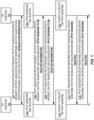
- Figure 1 illustrates signaling flows between PFCP nodes for providing an enhanced PFCP association procedure.
- the PFCP nodes in Figure 1 are a CP function 100 and a UP function 102.
- the CP function 100 may be considered a "PFCP node” and the UP function 102 may be considered a "PFCP peer node,” or vice versa.
- some steps illustrated in Figure 1 may be omitted depending on whether the CP function 100 is considered a "PFCP node” and the UP function 102 is considered a "PFCP peer node,” or vice versa.
- CP function 100 is considered a "PFCP node” and the UP function 102 is considered a "PFCP peer node,” then steps 106b, 108b, 110b, and 112b may be omitted. Conversely, if the UP function 102 is considered a "PFCP node” and the CP function 100 is considered a "PFCP peer node,” then steps 106a, 108a, 110a, and 112a may be omitted.
- the CP function 100 and the UP function 102 negotiate support of the features of session synchronization, using PFCP Association Setup messages or PFCP Association Update messages.
- the PFCP sessions are then deleted in the PFCP node (i.e., the CP function 100 at step 106a or the UP function 102 at step 106b), which is caused by, e.g., a PFCP entity failure or a detection of PFCP path failure towards a peer PFCP entity.
- the CP function 100 or the UP function 102 sends a node level message to notify the PFCP peer node to delete the corresponding PFCP sessions.
- the node level message may be a PFCP Association Setup Request message, a PFCP Association Update Request message, a PFCP Session Set Deletion Request message, or a custom message.
- the CP function 100 or the UP function 102 includes an information element that comprises an indication of the PFCP sessions to be deleted.
- the receiving UP function 102 or the receiving CP function 100 starts to delete the PFCP sessions at steps 110a and 110b.
- the receiving UP function 102 or the receiving CP function 100 sends a response message to the sending CP function 100 or UP function 102 confirming the deletion of the PFCP sessions.
- the UP function 102 or CP function 100 includes a "PFCP Sessions deleted" indication.
- Table 1 Information Elements in a PFCP Session Set Deletion Request Information elements P Condition / Comment Appl.
- X X - Node ID PFCP Sessions to be deleted information C In case of entity failure, this IE includes the IP address of the failed entity; in case of path failure, this IE includes the source IP address and destination IP address of a path between two peer entities.
- Table 2 Information Elements in a PFCP Association Update Request Information elements P Condition / Comment IE
- Type PFCP Sessions to be deleted information O
- this IE includes the IP address of the failed entity; in case of path failure, this IE includes the source IP address and destination IP address of a path between two peer entities.
- PFCP Sessions to be deleted information In case of entity failure, this IE includes the IP address of the failed entity; in case of path failure, this IE includes the source IP address and destination IP address of a path between two peer entities.
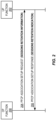
- Figure 2 illustrates signaling flows between PFCP nodes for providing sessions retention information during PFCP association setup.
- the sessions retention information may be provided as part of a PFCP Association Setup Request sent in steps 108a and 108b of Figure 1 .
- a PFCP node comprises a CP function 200
- a PFCP peer node comprises a UP function 202.
- the CP function 200 initiates the PFCP association setup procedure and sends the PFCP Association Setup Request to the UP function 202
- sessions retention information is included within the PFCP Association Setup Request to indicate whether the PFCP sessions associated with the PFCP Association Setup Request need to be retained or not.
- the UP function 202 sends a PFCP Association Setup Response to the CP function 200.
- the PFCP Association Setup Response includes a sessions retention indication to indicate that the PFCP sessions are successfully retained.
- the sessions retention information indicates that all of the PFCP sessions associated with the PFCP Association Setup Request should be retained. Some embodiments may provide that the sessions retention information comprises a list of IP addresses corresponding to a subset of the PFCP entities to be retained.
- Table 3 Information Elements in a PFCP Association Setup Request Information elements
- P Condition / Comment IE
- Type PFCP Sessions retention information O Indicating whether all or part of the PFCP sessions need to be retained.
- PFCP Sessions retention information If part of the PFCP sessions need to be retained, additional information of the IP addresses representing the PFCP entities is included.
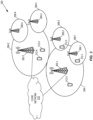
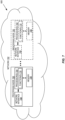
- FIG. 3 illustrates one example of a cellular communications system 300 in which embodiments of the present disclosure may be implemented.
- the cellular communications system 300 is 5G System (5GS) including a 5G radio access network (e.g., a NR radio access network) and a 5G Core Network (5GC); however, the present disclosure is not limited thereto.
- the RAN includes base stations 302-1 and 302-2, which in 5G NR are referred to as gNBs, controlling corresponding (macro) cells 304-1 and 304-2.
- the base stations 302-1 and 302-2 are generally referred to herein collectively as base stations 302 and individually as base station 302.
- the (macro) cells 304-1 and 304-2 are generally referred to herein collectively as (macro) cells 304 and individually as (macro) cell 304.
- the RAN may also include a number of low power nodes 306-1 through 306-4 controlling corresponding small cells 308-1 through 308-4.
- the low power nodes 306-1 through 306-4 can be small base stations (such as pico or femto base stations) or Remote Radio Heads (RRHs), or the like.
- RRHs Remote Radio Heads
- one or more of the small cells 308-1 through 308-4 may alternatively be provided by the base stations 302.
- the low power nodes 306-1 through 306-4 are generally referred to herein collectively as low power nodes 306 and individually as low power node 306.
- the cellular communications system 300 also includes a core network 310, which in the 5GS is referred to as the 5G core (5GC).
- the base stations 302 (and optionally the low power nodes 306) are connected to the core network 310.
- the base stations 302 and the low power nodes 306 provide service to wireless communication devices 312-1 through 312-5 in the corresponding cells 304 and 308.
- the wireless communication devices 312-1 through 312-5 are generally referred to herein collectively as wireless communication devices 312 and individually as wireless communication device 312.
- the wireless communication devices 312 are oftentimes User Equipment (UEs), but the present disclosure is not limited thereto.
- UEs User Equipment
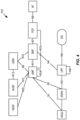
- Figure 4 illustrates a wireless communication system represented as a 5G network architecture composed of core Network Functions (NFs), where interaction between any two NFs is represented by a point-to-point reference point/interface.
- Figure 4 can be viewed as one particular implementation of the system 300 of Figure 3 .
- NFs Network Functions
- the 5G network architecture shown in Figure 4 comprises a plurality of UEs connected to either a Radio Access Network (RAN) or an Access Network (AN) as well as an Access and Mobility Management Function (AMF).
- the (R)AN comprises base stations, e.g. such as evolved Node Bs (eNBs) or NR base stations (gNBs) or similar.
- the 5G core NFs shown in Figure 4 include a Network Slice Selection Function (NSSF), an Authentication Server Function (AUSF), a Unified Data Management (UDM), an AMF, a Session Management Function (SMF), a Policy Control Function (PCF), and an Application Function (AF).
- NSSF Network Slice Selection Function
- AUSF Authentication Server Function
- UDM Unified Data Management
- AMF Policy Control Function
- AF Application Function
- the N1 reference point is defined to carry signaling between the UE and AMF.
- the reference points for connecting between the AN and AMF and between the AN and UPF are defined as N2 and N3, respectively.
- N4 is used by the SMF and UPF so that the UPF can be set using the control signal generated by the SMF, and the UPF can report its state to the SMF.
- N9 is the reference point for the connection between different UPFs
- N14 is the reference point connecting between different AMFs, respectively.
- N15 and N7 are defined since the PCF applies policy to the AMF and SMP, respectively.
- N12 is required for the AMF to perform authentication of the UE.
- N8 and N10 are defined because the subscription data of the UE is required for the AMF and SMF.
- the 5G core network aims at separating user plane and control plane.
- the user plane carries user traffic while the control plane carries signaling in the network.
- the UPF is in the user plane and all other NFs, i.e., the AMF, SMF, PCF, AF, AUSF, and UDM, are in the control plane. Separating the user and control planes guarantees each plane resource to be scaled independently. It also allows UPFs to be deployed separately from control plane functions in a distributed fashion. In this architecture, UPFs may be deployed very close to UEs to shorten the Round Trip Time (RTT) between UEs and data network for some applications requiring low latency.
- RTT Round Trip Time
- the core 5G network architecture is composed of modularized functions.
- the AMF and SMF are independent functions in the control plane. Separated AMF and SMF allows independent evolution and scaling.
- Other control plane functions like the PCF and AUSF can be separated as shown in Figure 4 .
- Modularized function design enables the 5G core network to support various services flexibly.
- Each NF interacts with another NF directly. It is possible to use intermediate functions to route messages from one NF to another NF.
- a set of interactions between two NFs is defined as service so that its reuse is possible. This service enables support for modularity.
- the user plane supports interactions such as forwarding operations between different UPFs.
- Figure 5 illustrates a 5G network architecture using service-based interfaces between the NFs in the control plane, instead of the point-to-point reference points/interfaces used in the 5G network architecture of Figure 4 .
- the NFs described above with reference to Figure 4 correspond to the NFs shown in Figure 5 .
- the service(s), etc. that an NF provides to other authorized NFs can be exposed to the authorized NFs through the service-based interface.
- the service based interfaces are indicated by the letter "N" followed by the name of the NF, e.g. Namf for the service based interface of the AMF and Nsmf for the service based interface of the SMF etc.
- NEF Network Exposure Function
- NF Network Function Repository Function
- the AMF provides UE-based authentication, authorization, mobility management, etc.
- a UE using multiple access technologies is still basically connected to a single AMF because the AMF is independent of the access technologies.
- the SMF is responsible for session management and allocates Internet Protocol (IP) addresses to UEs. It also selects and controls the UPF for data transfer. If a UE has multiple sessions, different SMFs may be allocated to each session to manage them individually and possibly provide different functionalities per session.
- the AF provides information on the packet flow to the PCF responsible for policy control in order to support Quality of Service (QoS). Based on the information, the PCF determines policies about mobility and session management to make the AMF and SMF operate properly.
- the AUSF supports authentication function for UEs or similar and thus stores data for authentication of UEs or similar while the UDM stores subscription data of the UE.
- the Data Network (DN) not part of the 5G core network, provides Internet access or operator services and similar.
- An NF may be implemented either as a network element on a dedicated hardware, as a software instance running on a dedicated hardware, or as a virtualized function instantiated on an appropriate platform, e.g., a cloud infrastructure.
- FIG 6 is a schematic block diagram of a network node 600 according to some embodiments of the present disclosure.
- the network node 600 may be, for example, a network node that implements all or part of the functionality of a PFCP node described herein, such as the CP function 100 and the UP function 102 of Figure 1 and the CP function 200 and the UP function 202 of Figure 2 .
- the network node 600 includes one or more processor(s) 604 (e.g., Central Processing Units (CPUs), Application Specific Integrated Circuits (ASICs), Field Programmable Gate Arrays (FPGAs), and/or the like), a memory 606, and a network interface 608.
- the one or more processor(s) 604 are also referred to herein as processing circuitry.
- the one or more processors 604 operate to provide one or more function(s) of a network node 600 as described herein (e.g., one or more functions of a PFCP node described herein, e.g., with respect to Figures 5 and 6 ).
- the function(s) are implemented in software that is stored, e.g., in the memory 606 and executed by the one or more processor(s) 604.
- Figure 7 is a schematic block diagram that illustrates a virtualized embodiment of the network node 600 according to some embodiments of the present disclosure. This discussion is equally applicable to other types of network nodes. Further, other types of network nodes may have similar virtualized architectures. Optional features are represented by dashed boxes.
- a "virtualized" network node is an implementation of the network node 600 in which at least a portion of the functionality of the network node 600 is implemented as a virtual component(s) (e.g., via a virtual machine(s) executing on a physical processing node(s) in a network(s)).
- the network node 600 includes one or more processing node(s) 700 coupled to or included as part of a network(s) 702.
- Each processing node 700 includes one or more processor(s) 704 (e.g., CPUs, ASICs, FPGAs, and/or the like), a memory 706, and a network interface 708.
- function(s) 710 of the network node 600 described herein are implemented at the one or more processing node(s) 700.
- some or all of the function(s) 710 of the network node 600 described herein are implemented as virtual components executed by one or more virtual machine(s) implemented in a virtual environment(s) hosted by the processing node(s) 700.
- a computer program including instructions which, when executed by at least one processor, causes the at least one processor to carry out the functionality of network node 600 or a node (e.g., a processing node 700) implementing one or more of the function(s) 710 of the network node 600 in a virtual environment according to any of the embodiments described herein is provided.
- a carrier comprising the aforementioned computer program product is provided. The carrier is one of an electronic signal, an optical signal, a radio signal, or a computer readable storage medium (e.g., a non-transitory computer readable medium such as memory).
- FIG 8 is a schematic block diagram of the network node 600 according to some other embodiments of the present disclosure.
- the network node 600 includes one or more module(s) 800, each of which is implemented in software.
- the module(s) 800 provide the functionality of the network node 600 described herein (e.g., one or more functions of a PFCP node described herein, e.g., with respect to Figures 5 and 6 ).
- This discussion is equally applicable to the processing node(s) 700 of Figure 7 where the module(s) 800 may be implemented at one of the processing node(s) 700 or distributed across multiple processing node(s) 700.
- any appropriate steps, methods, features, functions, or benefits disclosed herein may be performed through one or more functional units or modules of one or more virtual apparatuses.
- Each virtual apparatus may comprise a number of these functional units.
- These functional units may be implemented via processing circuitry, which may include one or more microprocessor or microcontrollers, as well as other digital hardware, which may include DSPs, special-purpose digital logic, and the like.
- the processing circuitry may be configured to execute program code stored in memory, which may include one or several types of memory such as ROM, RAM, cache memory, flash memory devices, optical storage devices, etc.
- Program code stored in memory includes program instructions for executing one or more telecommunications and/or data communications protocols as well as instructions for carrying out one or more of the techniques described herein.
- the processing circuitry may be used to cause the respective functional unit to perform corresponding functions according one or more embodiments of the present disclosure.
Landscapes
- Engineering & Computer Science (AREA)
- Computer Networks & Wireless Communication (AREA)
- Signal Processing (AREA)
- Mobile Radio Communication Systems (AREA)
- Data Exchanges In Wide-Area Networks (AREA)
Applications Claiming Priority (3)
| Application Number | Priority Date | Filing Date | Title |
|---|---|---|---|
| CN2019109817 | 2019-10-03 | ||
| EP20789886.7A EP3903449B1 (de) | 2019-10-03 | 2020-10-02 | Verbessertes pfcp-assoziationsverfahren zur sitzungswiederherstellung |
| PCT/EP2020/077725 WO2021064211A1 (en) | 2019-10-03 | 2020-10-02 | Enhanced pfcp association procedure for session restoration |
Related Parent Applications (2)
| Application Number | Title | Priority Date | Filing Date |
|---|---|---|---|
| EP20789886.7A Division EP3903449B1 (de) | 2019-10-03 | 2020-10-02 | Verbessertes pfcp-assoziationsverfahren zur sitzungswiederherstellung |
| EP20789886.7A Division-Into EP3903449B1 (de) | 2019-10-03 | 2020-10-02 | Verbessertes pfcp-assoziationsverfahren zur sitzungswiederherstellung |
Publications (3)
| Publication Number | Publication Date |
|---|---|
| EP4340322A2 true EP4340322A2 (de) | 2024-03-20 |
| EP4340322A3 EP4340322A3 (de) | 2024-05-15 |
| EP4340322B1 EP4340322B1 (de) | 2026-01-21 |
Family
ID=72840500
Family Applications (2)
| Application Number | Title | Priority Date | Filing Date |
|---|---|---|---|
| EP24154258.8A Active EP4340322B1 (de) | 2019-10-03 | 2020-10-02 | Verbessertes pfcp-assoziationsverfahren zur sitzungswiederherstellung |
| EP20789886.7A Active EP3903449B1 (de) | 2019-10-03 | 2020-10-02 | Verbessertes pfcp-assoziationsverfahren zur sitzungswiederherstellung |
Family Applications After (1)
| Application Number | Title | Priority Date | Filing Date |
|---|---|---|---|
| EP20789886.7A Active EP3903449B1 (de) | 2019-10-03 | 2020-10-02 | Verbessertes pfcp-assoziationsverfahren zur sitzungswiederherstellung |
Country Status (5)
| Country | Link |
|---|---|
| US (1) | US12108284B2 (de) |
| EP (2) | EP4340322B1 (de) |
| BR (1) | BR112022006049A2 (de) |
| WO (1) | WO2021064211A1 (de) |
| ZA (1) | ZA202202875B (de) |
Cited By (1)
| Publication number | Priority date | Publication date | Assignee | Title |
|---|---|---|---|---|
| US20230062904A1 (en) * | 2021-08-24 | 2023-03-02 | Mavenir Systems, Inc. | Method and apparatus for session audit for control and user plane separation |
Families Citing this family (3)
| Publication number | Priority date | Publication date | Assignee | Title |
|---|---|---|---|---|
| CN113785553B (zh) * | 2019-05-02 | 2024-12-06 | 诺基亚技术有限公司 | 用于由一组控制器进行用户面功能控制的装置、方法及计算机程序 |
| WO2022260321A1 (en) * | 2021-06-11 | 2022-12-15 | Samsung Electronics Co., Ltd. | Method and node for transmitting critical information in a wireless network |
| CN119012242A (zh) * | 2023-05-17 | 2024-11-22 | 中兴通讯股份有限公司 | 实现容灾通信的方法及相关设备 |
Family Cites Families (8)
| Publication number | Priority date | Publication date | Assignee | Title |
|---|---|---|---|---|
| US10447787B2 (en) * | 2016-04-21 | 2019-10-15 | Servicenow, Inc. | System and method for session restoration after node failure |
| CN110167079B (zh) | 2018-02-12 | 2020-08-25 | 华为技术有限公司 | 承载处理方法、设备及系统 |
| WO2019162378A1 (en) * | 2018-02-26 | 2019-08-29 | Telefonaktiebolaget Lm Ericsson (Publ) | Buffering support |
| US11570828B2 (en) * | 2018-07-12 | 2023-01-31 | Telefonaktiebolaget Lm Ericsson (Publ) | Enabling functionality at a user plane function, UPF, by a session management function, SMF, in a telecommunication network |
| US11224093B2 (en) * | 2018-08-13 | 2022-01-11 | Ofinno, Llc | Network initiated UPF sessions transfer |
| US10448268B1 (en) * | 2019-01-30 | 2019-10-15 | Cisco Technology, Inc. | Preservation of policy and charging for a subscriber following a user-plane element failover |
| CN113785553B (zh) * | 2019-05-02 | 2024-12-06 | 诺基亚技术有限公司 | 用于由一组控制器进行用户面功能控制的装置、方法及计算机程序 |
| US11122491B2 (en) * | 2019-09-05 | 2021-09-14 | Cisco Technology, Inc. | In-situ best path selection for mobile core network |
-
2020
- 2020-10-02 BR BR112022006049A patent/BR112022006049A2/pt unknown
- 2020-10-02 US US17/765,563 patent/US12108284B2/en active Active
- 2020-10-02 WO PCT/EP2020/077725 patent/WO2021064211A1/en not_active Ceased
- 2020-10-02 EP EP24154258.8A patent/EP4340322B1/de active Active
- 2020-10-02 EP EP20789886.7A patent/EP3903449B1/de active Active
-
2022
- 2022-03-09 ZA ZA2022/02875A patent/ZA202202875B/en unknown
Cited By (2)
| Publication number | Priority date | Publication date | Assignee | Title |
|---|---|---|---|---|
| US20230062904A1 (en) * | 2021-08-24 | 2023-03-02 | Mavenir Systems, Inc. | Method and apparatus for session audit for control and user plane separation |
| US12452708B2 (en) * | 2021-08-24 | 2025-10-21 | Mavenir Systems, Inc. | Method and apparatus for session audit for control and user plane separation |
Also Published As
| Publication number | Publication date |
|---|---|
| US20220400410A1 (en) | 2022-12-15 |
| WO2021064211A1 (en) | 2021-04-08 |
| EP4340322A3 (de) | 2024-05-15 |
| ZA202202875B (en) | 2022-10-26 |
| EP3903449B1 (de) | 2024-05-01 |
| US12108284B2 (en) | 2024-10-01 |
| BR112022006049A2 (pt) | 2022-10-11 |
| EP4340322B1 (de) | 2026-01-21 |
| EP3903449A1 (de) | 2021-11-03 |
Similar Documents
| Publication | Publication Date | Title |
|---|---|---|
| EP4052502B1 (de) | Report application programming interface (api) fähigkeitsänderung auf der grundlage des api-filters | |
| EP3903449B1 (de) | Verbessertes pfcp-assoziationsverfahren zur sitzungswiederherstellung | |
| US20220151004A1 (en) | Avoiding transmission of unnecessary 5gsm message | |
| CN113632512B (zh) | 在移动性过程期间传输监视事件信息 | |
| EP3925182A1 (de) | Verfahren und vorrichtungen zur alternativen datenbreitstellung via daten über nichtzugangsschicht (donas) in einem roaming-szenario | |
| EP4197226B1 (de) | Mechanismus zur koordinierung der nahtlosen dienstkontinuität für edge application server bei umzug | |
| WO2019219619A1 (en) | Methods, system and nodes of optimized inactivity timer usage in 5gs | |
| US12279125B2 (en) | Registered UE count in slice service area | |
| WO2020229409A1 (en) | Smf set support over n4 interface | |
| US20240015493A1 (en) | CORE NETWORK BECOMING AWARE OF PLMNs WITH DISASTER CONDITIONS | |
| US20250126475A1 (en) | Oauth2 requirement per plmn to the definition of type nfservice | |
| EP4011105A1 (de) | Abonnementdatenverbesserung für slice-auswahl | |
| US20240323708A1 (en) | Network slice quotas in the presence of interworking | |
| EP3900261B1 (de) | Meldung von multicast-mac-adressen | |
| EP4133814B1 (de) | Netzwerkangeforderte initiierung eines registrierungsverfahrens | |
| WO2020171765A1 (en) | Mitigating dos attacks | |
| US20250234320A1 (en) | Network slice admission control function (nsacf) triggered ue deregistration | |
| US20240023182A1 (en) | Handling the unknown rrc establishment cause value in nr | |
| KR20250168387A (ko) | 5g-rg 뒤의 인증 가능한 비-3gpp 디바이스의 등록 및 등록 해제를 처리하기 위한 방법 | |
| JP2025509174A (ja) | サブスクリプションによる時刻同期と時間回復性サービスの有効化 |
Legal Events
| Date | Code | Title | Description |
|---|---|---|---|
| PUAI | Public reference made under article 153(3) epc to a published international application that has entered the european phase |
Free format text: ORIGINAL CODE: 0009012 |
|
| STAA | Information on the status of an ep patent application or granted ep patent |
Free format text: STATUS: THE APPLICATION HAS BEEN PUBLISHED |
|
| AC | Divisional application: reference to earlier application |
Ref document number: 3903449 Country of ref document: EP Kind code of ref document: P |
|
| AK | Designated contracting states |
Kind code of ref document: A2 Designated state(s): AL AT BE BG CH CY CZ DE DK EE ES FI FR GB GR HR HU IE IS IT LI LT LU LV MC MK MT NL NO PL PT RO RS SE SI SK SM TR |
|
| REG | Reference to a national code |
Ref country code: DE Ref legal event code: R079 Free format text: PREVIOUS MAIN CLASS: H04L0047740000 Ipc: H04L0012000000 Ref country code: DE Ref legal event code: R079 Ref document number: 602020065734 Country of ref document: DE Free format text: PREVIOUS MAIN CLASS: H04L0047740000 Ipc: H04L0012000000 |
|
| PUAL | Search report despatched |
Free format text: ORIGINAL CODE: 0009013 |
|
| AK | Designated contracting states |
Kind code of ref document: A3 Designated state(s): AL AT BE BG CH CY CZ DE DK EE ES FI FR GB GR HR HU IE IS IT LI LT LU LV MC MK MT NL NO PL PT RO RS SE SI SK SM TR |
|
| RIC1 | Information provided on ipc code assigned before grant |
Ipc: H04L 41/0654 20220101ALI20240410BHEP Ipc: H04W 28/12 20090101ALI20240410BHEP Ipc: H04W 28/10 20090101ALI20240410BHEP Ipc: H04L 47/74 20220101ALI20240410BHEP Ipc: H04L 12/413 20060101ALI20240410BHEP Ipc: H04L 67/14 20220101ALI20240410BHEP Ipc: H04L 12/00 20060101AFI20240410BHEP |
|
| STAA | Information on the status of an ep patent application or granted ep patent |
Free format text: STATUS: REQUEST FOR EXAMINATION WAS MADE |
|
| 17P | Request for examination filed |
Effective date: 20241031 |
|
| RBV | Designated contracting states (corrected) |
Designated state(s): AL AT BE BG CH CY CZ DE DK EE ES FI FR GB GR HR HU IE IS IT LI LT LU LV MC MK MT NL NO PL PT RO RS SE SI SK SM TR |
|
| STAA | Information on the status of an ep patent application or granted ep patent |
Free format text: STATUS: EXAMINATION IS IN PROGRESS |
|
| 17Q | First examination report despatched |
Effective date: 20250206 |
|
| GRAP | Despatch of communication of intention to grant a patent |
Free format text: ORIGINAL CODE: EPIDOSNIGR1 |
|
| STAA | Information on the status of an ep patent application or granted ep patent |
Free format text: STATUS: GRANT OF PATENT IS INTENDED |
|
| INTG | Intention to grant announced |
Effective date: 20250917 |
|
| GRAS | Grant fee paid |
Free format text: ORIGINAL CODE: EPIDOSNIGR3 |
|
| GRAA | (expected) grant |
Free format text: ORIGINAL CODE: 0009210 |
|
| STAA | Information on the status of an ep patent application or granted ep patent |
Free format text: STATUS: THE PATENT HAS BEEN GRANTED |
|
| AC | Divisional application: reference to earlier application |
Ref document number: 3903449 Country of ref document: EP Kind code of ref document: P |
|
| AK | Designated contracting states |
Kind code of ref document: B1 Designated state(s): AL AT BE BG CH CY CZ DE DK EE ES FI FR GB GR HR HU IE IS IT LI LT LU LV MC MK MT NL NO PL PT RO RS SE SI SK SM TR |
|
| REG | Reference to a national code |
Ref country code: CH Ref legal event code: F10 Free format text: ST27 STATUS EVENT CODE: U-0-0-F10-F00 (AS PROVIDED BY THE NATIONAL OFFICE) Effective date: 20260121 |
|
| REG | Reference to a national code |
Ref country code: DE Ref legal event code: R096 Ref document number: 602020065734 Country of ref document: DE |
|
| REG | Reference to a national code |
Ref country code: IE Ref legal event code: FG4D |