EP4339826A2 - Maschinelles lernen für topologisch bewusste cad-wiederauffindung - Google Patents
Maschinelles lernen für topologisch bewusste cad-wiederauffindung Download PDFInfo
- Publication number
- EP4339826A2 EP4339826A2 EP24150188.1A EP24150188A EP4339826A2 EP 4339826 A2 EP4339826 A2 EP 4339826A2 EP 24150188 A EP24150188 A EP 24150188A EP 4339826 A2 EP4339826 A2 EP 4339826A2
- Authority
- EP
- European Patent Office
- Prior art keywords
- edge
- rep
- neural network
- graph
- face
- Prior art date
- Legal status (The legal status is an assumption and is not a legal conclusion. Google has not performed a legal analysis and makes no representation as to the accuracy of the status listed.)
- Pending
Links
Images





Classifications
-
- G—PHYSICS
- G06—COMPUTING OR CALCULATING; COUNTING
- G06T—IMAGE DATA PROCESSING OR GENERATION, IN GENERAL
- G06T19/00—Manipulating three-dimensional [3D] models or images for computer graphics
-
- G—PHYSICS
- G06—COMPUTING OR CALCULATING; COUNTING
- G06F—ELECTRIC DIGITAL DATA PROCESSING
- G06F30/00—Computer-aided design [CAD]
- G06F30/20—Design optimisation, verification or simulation
- G06F30/27—Design optimisation, verification or simulation using machine learning, e.g. artificial intelligence, neural networks, support vector machines [SVM] or training a model
-
- G—PHYSICS
- G06—COMPUTING OR CALCULATING; COUNTING
- G06N—COMPUTING ARRANGEMENTS BASED ON SPECIFIC COMPUTATIONAL MODELS
- G06N20/00—Machine learning
-
- G—PHYSICS
- G06—COMPUTING OR CALCULATING; COUNTING
- G06F—ELECTRIC DIGITAL DATA PROCESSING
- G06F30/00—Computer-aided design [CAD]
- G06F30/10—Geometric CAD
-
- G—PHYSICS
- G06—COMPUTING OR CALCULATING; COUNTING
- G06N—COMPUTING ARRANGEMENTS BASED ON SPECIFIC COMPUTATIONAL MODELS
- G06N3/00—Computing arrangements based on biological models
- G06N3/02—Neural networks
- G06N3/04—Architecture, e.g. interconnection topology
- G06N3/042—Knowledge-based neural networks; Logical representations of neural networks
-
- G—PHYSICS
- G06—COMPUTING OR CALCULATING; COUNTING
- G06N—COMPUTING ARRANGEMENTS BASED ON SPECIFIC COMPUTATIONAL MODELS
- G06N3/00—Computing arrangements based on biological models
- G06N3/02—Neural networks
- G06N3/04—Architecture, e.g. interconnection topology
- G06N3/0464—Convolutional networks [CNN, ConvNet]
-
- G—PHYSICS
- G06—COMPUTING OR CALCULATING; COUNTING
- G06N—COMPUTING ARRANGEMENTS BASED ON SPECIFIC COMPUTATIONAL MODELS
- G06N3/00—Computing arrangements based on biological models
- G06N3/02—Neural networks
- G06N3/08—Learning methods
- G06N3/0895—Weakly supervised learning, e.g. semi-supervised or self-supervised learning
-
- G—PHYSICS
- G06—COMPUTING OR CALCULATING; COUNTING
- G06N—COMPUTING ARRANGEMENTS BASED ON SPECIFIC COMPUTATIONAL MODELS
- G06N5/00—Computing arrangements using knowledge-based models
- G06N5/01—Dynamic search techniques; Heuristics; Dynamic trees; Branch-and-bound
-
- G—PHYSICS
- G06—COMPUTING OR CALCULATING; COUNTING
- G06N—COMPUTING ARRANGEMENTS BASED ON SPECIFIC COMPUTATIONAL MODELS
- G06N5/00—Computing arrangements using knowledge-based models
- G06N5/02—Knowledge representation; Symbolic representation
- G06N5/022—Knowledge engineering; Knowledge acquisition
-
- G—PHYSICS
- G06—COMPUTING OR CALCULATING; COUNTING
- G06V—IMAGE OR VIDEO RECOGNITION OR UNDERSTANDING
- G06V10/00—Arrangements for image or video recognition or understanding
- G06V10/70—Arrangements for image or video recognition or understanding using pattern recognition or machine learning
- G06V10/82—Arrangements for image or video recognition or understanding using pattern recognition or machine learning using neural networks
-
- G—PHYSICS
- G06—COMPUTING OR CALCULATING; COUNTING
- G06V—IMAGE OR VIDEO RECOGNITION OR UNDERSTANDING
- G06V20/00—Scenes; Scene-specific elements
- G06V20/60—Type of objects
- G06V20/64—Three-dimensional [3D] objects
-
- G—PHYSICS
- G06—COMPUTING OR CALCULATING; COUNTING
- G06N—COMPUTING ARRANGEMENTS BASED ON SPECIFIC COMPUTATIONAL MODELS
- G06N20/00—Machine learning
- G06N20/10—Machine learning using kernel methods, e.g. support vector machines [SVM]
-
- G—PHYSICS
- G06—COMPUTING OR CALCULATING; COUNTING
- G06N—COMPUTING ARRANGEMENTS BASED ON SPECIFIC COMPUTATIONAL MODELS
- G06N3/00—Computing arrangements based on biological models
- G06N3/02—Neural networks
- G06N3/04—Architecture, e.g. interconnection topology
- G06N3/045—Combinations of networks
-
- G—PHYSICS
- G06—COMPUTING OR CALCULATING; COUNTING
- G06N—COMPUTING ARRANGEMENTS BASED ON SPECIFIC COMPUTATIONAL MODELS
- G06N3/00—Computing arrangements based on biological models
- G06N3/02—Neural networks
- G06N3/08—Learning methods
- G06N3/088—Non-supervised learning, e.g. competitive learning
Definitions
- the disclosure relates to the field of computer programs and systems, and more specifically to a method, system and program of machine-learning.
- CAD Computer-Aided Design
- CAE Computer-Aided Engineering
- CAM Computer-Aided Manufacturing
- the graphical user interface plays an important role as regards the efficiency of the technique.
- PLM refers to a business strategy that helps companies to share product data, apply common processes, and leverage corporate knowledge for the development of products from conception to the end of their life, across the concept of extended enterprise.
- the PLM solutions provided by Dassault Systèmes (under the trademarks CATIA, ENOVIA and DELMIA) provide an Engineering Hub, which organizes product engineering knowledge, a Manufacturing Hub, which manages manufacturing engineering knowledge, and an Enterprise Hub which enables enterprise integrations and connections into both the Engineering and Manufacturing Hubs. All together the system delivers an open object model linking products, processes, resources to enable dynamic, knowledge-based product creation and decision support that drives optimized product definition, manufacturing preparation, production and service.
- the method comprises obtaining a training dataset of B-rep graphs.
- Each B-rep graph represents a respective B-rep.
- Each B-rep graph comprises graph nodes each representing an edge, a face or a co-edge of the respective B-rep and being associated with one or more geometrical and/or topological features.
- Each B-rep graph comprises graph edges each between a respective first graph node representing a respective co-edge and a respective second graph node representing a face, an edge, an adjacent co-edge, or a mating co-edge associated with the respective co-edge.
- the method further comprises learning, based on the training dataset, a Deep CAD neural network.
- the Deep CAD neural network is configured to take as input a B-rep graph and to output a topological signature of the B-rep represented by the input B-rep graph.
- the method may comprise one or more of the following:
- a neural network learnable according to the method that is a computer-implemented neural network data structure having the weights of a neural network learnt by the method.
- the provided neural network may for example have been learnt directly by the method, with its weights having been fixed by the learning step of the method.
- the method of use comprises obtaining a B-rep graph representing a B-rep.
- the method of use further comprises applying the neural network to the B-rep graph, thereby obtaining a topological signature of the B-rep.
- a computer system comprising a processor coupled to a memory, the memory having recorded thereon the computer program and/or the neural network.
- the method comprises obtaining a training dataset of B-rep graphs.
- Each B-rep graph represents a respective B-rep.
- Each B-rep graph comprises graph nodes each representing an edge, a face or a co-edge of the respective B-rep and being associated with one or more geometrical and/or topological features.
- Each B-rep graph comprises graph edges each between a respective first graph node representing a respective co-edge and a respective second graph node representing a face, an edge, an adjacent co-edge, or a mating co-edge associated with the respective co-edge.
- the method further comprises learning, based on the training dataset, a Deep CAD neural network.
- the Deep CAD neural network is configured to take as input a B-rep graph and to output a topological signature of the B-rep represented by the input B-rep graph.
- the method may be referred to as "the learning method”.
- the learning method forms an improved solution for CAD object retrieval.
- the learning method learns a Deep CAD neural network configured to take as input a B-rep graph, that is a graph capturing the topology of a B-rep model (i.e . boundary representation model) of a product, and to compute a topological signature of the B-rep.
- the topological signature of the B-rep is a vector outputted by the Deep CAD neural network further to the processing of the input B-rep graph by the neural network's layers, and thereby forms a vector representation of the input B-rep graph. Now, such a vector is obtained by the Deep CAD neural network's layers processing the input B-rep graph.
- Such a graph represents both the geometry and the topology of a B-rep, as it comprises graph nodes representing the elements of the B-rep (edge, face, co-edge) and graph edges representing the topological relationships between the elements represented by the nodes connected by the edges.
- the graph also comprises topological and/or geometrical features of the underlying B-rep, that is feature vector encapsulating topological and/or geometrical information.
- the input B-rep graph is in other words a data structure that describes the geometry and topology of the B-rep, and the neural network learnt by the method takes such graph as input and extract thereof a B-rep topological signature (because the network is trained/learnt to do so).
- the learning method learns a neural network configured to encode a B-rep graph into a compact topological signature vector of the B-rep capturing the topology thereof.
- the learning method may thereby be used for CAD object retrieval or similarity evaluation between CAD objects, or more generally for manipulation of CAD objects through the use of their topological signatures.
- the learnt Deep CAD neural network is usable for such tasks.
- a CAD model or object is a feature-based object represented by a feature tree from which a B-rep representation of the model may be generated ( i.e . by executing the feature tree).
- the neural network is trained to find the topological signature of such CAD model ( i.e . specifically of a B-rep graph thereof), and thus allows manipulation of the CAD model through the use of its signature.
- the neural network may for example be used to find the signatures of two CAD models so as to compare them and to assess a topological similarity between them. This may for example be used for searching a CAD model in a CAD models database already comprising the topological signatures of the CAD models of the database: for a given CAD model of interest, the learnt neural network may be used to extract the topological signature of the CAD model and to query the database based on this signature. This allows the retrieval of the CAD model(s) of the database having the topological signature the closest to that of the given CAD model. Such retrieval may be used during CAD model design ( i.e .
- the topological signature is indeed a representation of a CAD model that costs less, in terms of memory requirements (storage, memory footprint) and in terms of CPU resources during use/manipulation, than the corresponding B-rep model or graph, which makes the topological signature a computer object allowing for CPU-efficient and memory-efficient manipulation of CAD models.
- the signature may for example be a vector of relatively small dimension (for example 64), while yet providing good performances as the input B-rep graph is accurate topologically.
- the method is thereby in other words a machine-learning method for finding a compact topological vector representation of a given B-rep that is more efficient, in terms of memory and CPU, for manipulation, than the B-rep itself.
- the learning method thus provides a framework to perform efficient and generic topological object retrieval of B-rep.
- Object retrieval refers to the task of which goal is to find effective and efficient similarity functions to allow searching, ranking and clustering of 3D object data for similarity.
- objects typically comprise many different geometries, structures, topologies and visual appearance properties, in addition to different material and functional properties.
- the notion of similarity may be domain-specific depending on the target task, it can be local, global, topological, geometric, and/or functional.
- Topological retrieval stands for object retrieval based on topological information similarity. Topological information provide the relationships among vertices, edges and faces. In addition to relationships, topological information also include orientation of edges and faces.
- the method is based on a deep learning model that processes B-rep models without having to convert it to an approximate format (e.g . point cloud, mesh).
- the method uses a neural network to compute a signature from any given B-rep model. This signature is sensitive to the topology of the input B-rep model, such that two B-rep models with close topologies will have close signatures.
- the method provides:
- the learning method is for machine learning.
- the processing of an input by a neural network includes applying operations to the input, the operations being defined by data including weight values.
- Learning a neural network thus includes determining values of the weights based on a dataset configured for such learning, such a dataset being possibly referred to as a learning dataset or a training dataset.
- the dataset includes data pieces each forming a respective training sample.
- the training samples represent the diversity of the situations where the neural network is to be used after being learnt. Any training dataset herein may comprise a number of training samples higher than 1000, 10000, 100000, or 1000000.
- the dataset is a learning/training dataset of the neural network, based on which the values of the weights (also referred to as “parameters”) are set.
- the training dataset is the provided dataset of B-rep graphs, which is now discussed. Prior to the discussion on the providing of the dataset, data structures involved therein are now discussed.
- B-rep also referred to as “BRep”, stands for "Boundary Representation”.
- B-rep is, in CAD applications, the most common type of modeling.
- B-rep is a mathematically precise representation of a 3D object. This representation defines a solid as a collection of connected surface elements, which define the boundary between interior and exterior points.
- topological components comprises vertices, edges and faces defining 3D object surface, and the connections between them.
- topological information also include orientation of edges and face, while, geometric information consists usually of mathematical equations describing vertices, edges and faces (points, curves and surfaces respectively).
- the B-rep (i.e. boundary representation) is a 3D representation of a mechanical part.
- the B-rep is a persistent data representation describing the 3D modeled object representing the mechanical part.
- the B-rep may be the result of computations and/or a series of operations carried out during a designing phase of the 3D modeled object representing the mechanical part.
- the shape of the mechanical part displayed on the screen of the computer when the modeled object is represented is (e.g. a tessellation of) the B-rep.
- the B-rep represents a part of the model object.
- a B-Rep includes topological entities and geometrical entities.
- Topological entities are: face, edge, and vertex.
- Geometrical entities are 3D objects: surface, plane, curve, line, point.
- a face is a bounded portion of a surface, named the supporting surface.
- An edge is a bounded portion of a curve, named the supporting curve.
- a vertex is a point in 3D space. They are related to each other as follows.
- the bounded portion of a curve is defined by two points (the vertices) lying on the curve.
- the bounded portion of a surface is defined by its boundary, this boundary being a set of edges lying on the surface.
- the boundary of the edges of the face are connected by sharing vertices. Faces are connected by sharing edges.
- B-Rep gathers in an appropriate data structure the "is bounded by" relationship, the relationship between topological entities and supporting geometries, and mathematical descriptions of supporting geometries.
- An internal edge of a B-Rep is an edge shared by exactly two faces. By definition, a boundary edge is not shared, it bounds only one face. By definition, a boundary face is bounded by at least one boundary edge.
- a B-Rep is said to be closed if all its edges are internal edges.
- a B-Rep is said to be open is it includes at least one boundary edge.
- a closed B-Rep is used to model a thick 3D volume because it defines the inside portion of space (virtually) enclosing material.
- An open B-Rep is used to model a 3D skin, which represents a 3D object the thickness of which is sufficiently small to be ignored.
- a key advantage of the B-Rep over any other representation types used in CAD modeling is its ability to represent arbitrary shapes exactly. All other representations in use, such as point clouds, distance fields and meshes, perform an approximation of the shape to represent by discretization.
- the B-Rep contains surface equations that represent the exact design and therefore constitutes a true "master model" for further manufacturing, whether this be generation of toolpaths for CNC, or discretizing into the correct sample density for a given 3D Printer technology.
- the 3D model may be an exact representation of the manufactured object.
- the B-Rep is also advantageous for simulating the behavior of a 3D model.
- a B-Rep allows a small memory and/or file footprint.
- the representation contains surfaces based only on parameters.
- the equivalent surface comprises up to thousands of triangles.
- a B-Rep doesn't contain any history-based information.
- each B-rep herein also comprises co-edges.
- a co-edge is an oriented edge, i.e . an edge of the B-rep with additional orientation information.
- the co-edges thereby define an ordering around the B-rep faces and the faces adjacency, i.e . they define the topology of the B-rep.
- the co-edges link the B-rep entities altogether.
- Each co-edge has one parent face ( i.e . the face for which it defines a bound), one parent edge, ( i.e .
- a co-edge is an oriented edge and thus has a parent edge), one mate co-edge which is the co-edge having the same parent edge, one next co-edge, corresponding to the next co-edge in the loop where the co-edge belongs, and one previous co-edge, corresponding to the previous co-edge in the loop where the co-edge belongs.
- Each co-edge maintains an adjacency relationship with the next and previous co-edge around its parent face, the mating co-edge on the adjacent face, the parent face and the parent edge.
- FIG. 1 illustrates an example of co-edge interactions with other entities for two faces of a cube (F: Face, E: Edge, C: co-edge, N: Next interaction, M: Mate Interaction, PF: Parent Face, PE: Parent Edge).
- Each B-rep graph herein is a graph representation of a respective B-rep, and comprises graph nodes and graph edges.
- Each graph node represents a respective edge, a respective face or a respective co-edge of the respective B-rep. This means that for each edge of the B-rep, there is a respective graph node, for each face of the B-rep, there is a respective graph node, and for each co-edge of the B-rep, there is a respective graph node.
- Each graph node further comprises a geometrical and/or topological feature associated with ( i.e . attached to) the graph nodes.
- the feature is data, for example a vector (also referred to as feature vector), associated with the node and describing geometrical data and/or topological data characterizing the B-rep element represented by the graph nodes.
- Table 1 shows, for each B-rep-entity (edge, co-edge or face), the list of names of the geometrical and/or topological elements comprised in the feature vector attached to the corresponding graph nodes according to examples of the method, with for each geometrical and/or topological element a description of the element.
- the numbers between parentheses indicate the dimension of the corresponding vector.
- Edge Entity Name Description Edge
- Type of Geometry One-hot vector indicating the type of Edge (Line, Circle, Ellipse, B-Spline, Intersection Curve) Close Loop (1) Boolean set to True if the Edge bounds a Face on its own Line Length (1) Length of the Line (0 if not a Line) Circle Radius (1) Radius of the circle edge (0 if not a circle) Ellipse Axis (2) Semi-major and Semi-minor Ellipse axis (0 if not an Ellipse) Plane-to-Plane convexity (3) In the case of an Edge between two Planes, indicates if the Edge is concave or convex B-Spline degree & Control Points (2) If the Edge is a B-Spline, the degree and the number of control points that controls the B-Spline Coedge (1)
- Direction Flag (1) Indicates if the coedge has the same orientation that its parent Edge Face (8)
- One-hot vector indicating the type of Face (Plane,
- Table 1 example of geometrical and / or topological feature vector
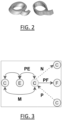
- FIG. 2 illustrates the disentanglement of geometric and topological features, showing two B-rep models that are geometrically very similar, while being topologically very different.
- the graph also comprises graph edges. Each respective graph edge connects two respective graph nodes, a respective first node and a respective second node.
- the first graph node represents a respective co-edge.
- the second graph node represents one of:
- Obtaining the training dataset may comprise creating the training dataset, that is creating or generating the B-rep graphs.
- Creating/generating the B-rep graphs may comprise:
- Obtaining the training dataset may alternatively comprise retrieving or downloading from a (e.g . distant) memory or server or database the B-rep graphs.
- the method then comprises the learning of the Deep CAD neural network based on the training dataset.
- Learning means that the method feeds B-rep graphs of the training dataset as input to the neural network and modifies the weights of the neural network as long as the neural network does not output sufficiently satisfactory outputs ( e.g . with respect to a suitable convergence criterion, e.g . with respect to a loss optimization).
- the output of the neural network, for an input B-rep graph is a topological signature of the B-rep represented by the B-rep graph.
- the topological signature is an embedding vector that the neural network outputs for the input B-rep and that captures the topology of the underlying B-rep.
- the Deep CAD neural network is a Deep Neural Network, also referred to as DNN.
- DNNs are a powerful set of techniques for learning in Neural Networks which is a biologically-inspired programming paradigm enabling a computer to learn from observational data.
- object recognition the success of DNNs is attributed to their ability to learn rich midlevel media representations as opposed to hand-designed low-level features (Zernike moments, HOG, Bag-of-Words, SIFT, etc.) used in other methods (min-cut, SVM, Boosting, Random Forest, etc.). More specifically, DNNs are focused on end-to-end learning based on raw data.
- the Deep CAD neural network may have an architecture of a classical graph convolutional network, as discussed for example in reference T. N. Kipf and M. Welling, "Semi-Supervised Classification with Graph Convolutional Networks", 2016 , which is incorporated herein by reference.
- Such an architecture is particularly adapted since the input data of the Deep CAD neural network is a graph.
- the standard objective of such models is to compute an embedding vector for each node of the graph. These models are usually based on message passing: in order to compute an embedding vector to describe the node of the graph, each node will gather the previous feature vector from its neighborhood and pass it to a deep learning network.
- the Deep CAD neural network architecture may specifically be that proposed in reference J. G. Lambourne, K. D.
- BRepNet A topological message passing system for solid models
- CVPR 2021 which is incorporated herein by reference: a deep learning model based on the same principles as classical graph convolutional network (as discussed in previously-cited reference T. N. Kipf and M. Welling, "Semi-Supervised Classification with Graph Convolutional Networks", 2016 ), but with a message passing based on the topological interaction of co-edges.
- the Deep CAD neural network may comprise a convolution unit, which is a layer of the neural network in which the message passing occurs.
- the convolution unit is configured to perform a kernel concatenation.
- the kernel concatenation concatenates a feature vector of each co-edge with the feature vectors of its neighboring B-rep elements according to a kernel of the neural network.
- the kernel is a specified walk according to which the neural network concatenates the features of the input, the features being here the topological and/or geometrical features.
- the kernel concatenates the feature of each co-edge with the features of its neighborhood according to this walk.
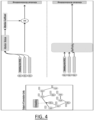
- the kernel walk may be a combination of the five following elementary walk operations: next co-edge, previous co-edge, mate co-edge, parent face, and parent edge.
- FIG. 3 illustrates these operations (PE: parent edge, PF: parent face, N: next, P: previous, M: mate, C: co-edge, E: edge, F: face).
- the last two walk operations are terminative since they end up on an entity that is not a co-edge.
- the kernel may be ⁇ I , N, P, M, PE, PF ⁇ , i.e.
- the convolution unit may be further configured to pass each concatenated feature vector of a co-edge resulting from the kernel concatenation as input to a dense neural network.
- the dense neural network is a deep neural network which is a Multi-Layer Perception (MLP).
- MLP Multi-Layer Perception
- the convolution unit may be further configured to compute, for each vector outputted by the dense neural network for an input concatenated feature vector of a co-edge, a new edge feature vector, a new face feature vector, and a new co-edge feature vector.
- the computation of the new feature vectors may be referred to as "Entity Pooling” since this computation pools the feature vectors previously computed ( i.e . at the co-edge level) to obtain the new features of the face and edge entities.
- Entity Pooling The fact that this computation separates the intermediate vectors used for pooling by entities helps the learnt neural network to learn specific features for each type of entity.
- the output may thereby be still a graph, with a new feature vector attached to each entity.
- the Deep CAD neural network may be configured to apply the convolution unit repeatedly a predetermined number of times, for example at least three times, for example three times.
- the method may in other words stack several convolutional units one after another. Just like stacking convolutional layers in computer vision increase the receptive field of the model, stacking the convolutional unit helps each co-edge to see a larger portion of its neighborhood and can thus help to capture more global and/or complex features.
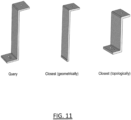
- the Deep CAD neural network may be further configured to compute global feature vectors by performing an aggregation of face feature vectors that result from the convolution unit application(s). This computation is referred to as "global pooling". This computation of global feature vectors allows to fulfill the objective of the Deep CAD neural network to return a single signature for an input CAD model, as it allows generating a single embedding from a graph where each node entity has an embedding vector.
- the global pooling only aggregates the face features, which is sufficient because each face is connected in the B-rep graph to a set of co-edges. As such, they gather thereby more information on their local neighborhood than edges or co-edges.
- the aggregation may be based on a Max Pooling method/strategy, i.e . the aggregation may use a Max Pooling strategy/method over the faces.
- the aggregation may be based on an Attention Mechanism method. Such method is discussed in reference M. Ilse, J. M. Tomczak and M. Welling, "Attention-based Deep Multiple Instance Learning", 2018 , which is incorporated herein by reference This alternative aggregation strategy introduces an additional learning module in the model.
- FIG. 4 illustrates the two strategies (F: Face, C: co-edge, E: Edge).
- FIG. 5 shows an example of a global architecture of the Deep CAD neural network, where three convolution units are applied successively before the global pooling is performed. Each convolution unit performs the kernel concatenation, the application of the Multi-Layer Perceptron (MLP) and the entity pooling.
- MLP Multi-Layer Perceptron
- the learning of the Deep CAD neural network may comprise performing a contrastive learning to train the Deep CAD neural network to compute a topological signature of a global feature vector.
- the constantive learning allows to handle the case where B-Rep graphs, or the B-rep models form which the graphs stem, are unlabelled.
- the concept of contrastive learning is known from reference T. Chen, S. Kornblith, M. Norouzi and G. E. Hinton, "A Simple Framework for Contrastive Learning of Visual Representations” 2020 , which is incorporated herein by reference, and is adapted for being implemented in the method.
- the framework proposes to learn embeddings of images in an unsupervised way using the contrastive learning paradigm as illustrated in FIG. 6 .
- the goal is to learn expressive latent representations of the training data such as two similar inputs (positive pair) that have close embedding vectors and different outputs (negative pair) that have distant embedding vectors.
- positive and negative pairs are not initially accessible.
- Contrastive learning paradigm sidesteps this limitation by synthetically creating these pairs via data augmentation techniques. Specifically, each input data undergoes random transformation as illustrated on FIG. 6 (step 1)), so that two transformations of the same input constitute a positive pair and a negative pair otherwise. For instance, for their application on image datasets, classical image transformations such as random color shifting and random cropping may be chosen.
- the contrastive learning of the present method may be based on positive transformations that include:
- these transformations may be the transformations used for generating the pairs of the constantive learning framework. This allows to implement the contrastive learning framework for the specific inputs considered by the method (B-rep graphs, possible unlabelled), as these positive transformations are adapted to the specific input data type. All transformations preserve the graph topology, which leads the learned network to capture topological similarity.
- the loss is used on a mini-batch by mini-batch training where N is the mini-batch size.
- the augmented batch (with the pairs) has thus 2N elements.
- the augmented batch is passed to the Deep CAD neural network to compute embeddings (as in step 2) of FIG. 6 ).
- the objective of the neural network (as illustrated on FIG.
- step 3) is to maximize the similarity between the embedding and its positive pair, and minimize the similarity between the other 2(N-1) embeddings.
- the similarity function is the cosine similarity.
- ( i , j ) represents a positive pair in the augmented batch of size 2N.
- a neural network learnable according to the method that is a computer-implemented neural network data structure having the weights of a neural network learnt by the method.
- the provided neural network may for example have been learnt directly by the method, with its weights having been fixed by the learning step of the method.
- the method of use comprises obtaining a B-rep graph representing a B-rep.
- the method of use further comprises applying the neural network to the B-rep graph, thereby obtaining a topological signature of the B-rep.
- the method of use may be for similarity search between CAD models and for CAD object retrieval.
- the learnt neural network generates topological signatures from input B-Reps (CAD) objects. These signatures embed topological information.
- CAD B-Reps
- B-reps topologically similar CAD models
- the method of use may be for topological similarity search between two CAD models.
- the method of use may comprise:
- the method of use may be for CAD object retrieval in a database through topological similarity search.
- the method of use may comprise:
- providing a B-rep graph of a B-rep may comprise generating the B-rep graph as discussed hereinabove for the providing of the training dataset in the learning method.
- Providing the database may comprise obtaining the topological signatures of at least some ( e.g . all) of the models in the database, by applying the Deep CAD neural network to these models' B-rep graphs (which the providing of the database may comprise generating).
- Evaluating the similarity between a signature and another signature may comprise computing the cosine similarity between the two signatures.
- FIG. 7 shows example results obtained from the Deep CAD neural network trained on a database of 150k industrial equipment (screws, nut, knob, or the like), and tested on an industrial equipment dataset and on academic dataset Solid Letters of alphabetical upper letters (discussed in reference P. K. Jayaraman, A. Sanghi, J. G. Lambourne, K. D. Willis, T. Davies, H. Shayani and N. Morris, "UV-Net: Learning from Boundary Representations" CVPR 2021 , which is incorporated herein by reference) displayed in the 3 top rows and 3 bottom rows respectively. The number on top of each object is the similarity with the input signature.
- FIG. 7 illustrates that the most similar object is the object itself when the latter belongs to the database.
- the learning method and the method of use may be implemented in a same CAD object retrieval process which comprises first performing the learning method (this step may be referred to as "offline stage”) and then performing the method of use (this step may be referred to as "online stage”).
- FIG.s 8 and 9 shows flowchart of examples of such process. The process examples are illustrated in these figures, with the offline and the online stages:
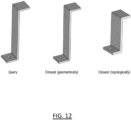
- FIG.s 10 to 13 illustrate examples of the online stage. Each figure shows a query B-rep and the most topologically similar B-rep retrieved in the database. Each figure also shows the most geometrically similar B-rep, for illustrating the difference between geometrical vs topological retrieval.
- the methods are computer-implemented. This means that steps (or substantially all the steps) of the methods are executed by at least one computer, or any system alike. Thus, steps of the methods are performed by the computer, possibly fully automatically, or, semi-automatically. In examples, the triggering of at least some of the steps of the methods may be performed through user-computer interaction.
- the level of user-computer interaction required may depend on the level of automatism foreseen and put in balance with the need to implement user's wishes. In examples, this level may be user-defined and/or pre-defined.
- a typical example of computer-implementation of a method is to perform the method with a system adapted for this purpose.
- the system may comprise a processor coupled to a memory and a graphical user interface (GUI), the memory having recorded thereon a computer program comprising instructions for performing the method.
- GUI graphical user interface
- the memory may also store a database.
- the memory is any hardware adapted for such storage, possibly comprising several physical distinct parts (e.g. one for the program, and possibly one for the database).
- FIG. 14 shows an example of the system, wherein the system is a client computer system, e.g. a workstation of a user.
- the system is a client computer system, e.g. a workstation of a user.
- the client computer of the example comprises a central processing unit (CPU) 1010 connected to an internal communication BUS 1000, a random access memory (RAM) 1070 also connected to the BUS.
- the client computer is further provided with a graphical processing unit (GPU) 1110 which is associated with a video random access memory 1100 connected to the BUS.
- Video RAM 1100 is also known in the art as frame buffer.
- a mass storage device controller 1020 manages accesses to a mass memory device, such as hard drive 1030.
- Mass memory devices suitable for tangibly embodying computer program instructions and data include all forms of nonvolatile memory, including by way of example semiconductor memory devices, such as EPROM, EEPROM, and flash memory devices; magnetic disks such as internal hard disks and removable disks; magneto-optical disks.
- a network adapter 1050 manages accesses to a network 1060.
- the client computer may also include a haptic device 1090 such as cursor control device, a keyboard or the like.
- a cursor control device is used in the client computer to permit the user to selectively position a cursor at any desired location on display 1080.
- the cursor control device allows the user to select various commands, and input control signals.
- the cursor control device includes a number of signal generation devices for input control signals to system.
- a cursor control device may be a mouse, the button of the mouse being used to generate the signals.
- the client computer system may comprise a sensitive pad, and/or a sensitive screen.
- the computer program may comprise instructions executable by a computer, the instructions comprising means for causing the above system to perform the methods.
- the program may be recordable on any data storage medium, including the memory of the system.
- the program may for example be implemented in digital electronic circuitry, or in computer hardware, firmware, software, or in combinations of them.
- the program may be implemented as an apparatus, for example a product tangibly embodied in a machine-readable storage device for execution by a programmable processor. Method steps may be performed by a programmable processor executing a program of instructions to perform functions of the method by operating on input data and generating output.
- the processor may thus be programmable and coupled to receive data and instructions from, and to transmit data and instructions to, a data storage system, at least one input device, and at least one output device.
- the application program may be implemented in a high-level procedural or object-oriented programming language, or in assembly or machine language if desired. In any case, the language may be a compiled or interpreted language.
- the program may be a full installation program or an update program. Application of the program on the system results in any case in instructions for performing the method.
- the computer program may alternatively be stored and executed on a server of a cloud computing environment, the server being in communication across a network with one or more clients. In such a case a processing unit executes the instructions comprised by the program, thereby causing the methods to be performed on the cloud computing environment.
Landscapes
- Engineering & Computer Science (AREA)
- Theoretical Computer Science (AREA)
- Physics & Mathematics (AREA)
- Evolutionary Computation (AREA)
- General Physics & Mathematics (AREA)
- Software Systems (AREA)
- General Engineering & Computer Science (AREA)
- Artificial Intelligence (AREA)
- Computing Systems (AREA)
- Data Mining & Analysis (AREA)
- Mathematical Physics (AREA)
- Computational Linguistics (AREA)
- Computer Hardware Design (AREA)
- Computer Vision & Pattern Recognition (AREA)
- Medical Informatics (AREA)
- Geometry (AREA)
- Health & Medical Sciences (AREA)
- General Health & Medical Sciences (AREA)
- Life Sciences & Earth Sciences (AREA)
- Biophysics (AREA)
- Biomedical Technology (AREA)
- Molecular Biology (AREA)
- Multimedia (AREA)
- Computer Graphics (AREA)
- Computational Mathematics (AREA)
- Mathematical Analysis (AREA)
- Mathematical Optimization (AREA)
- Pure & Applied Mathematics (AREA)
- Databases & Information Systems (AREA)
- Image Analysis (AREA)
- Information Retrieval, Db Structures And Fs Structures Therefor (AREA)
Priority Applications (1)
| Application Number | Priority Date | Filing Date | Title |
|---|---|---|---|
| EP24150188.1A EP4339826A3 (de) | 2022-08-17 | 2022-08-17 | Maschinelles lernen für topologisch bewusste cad-wiederauffindung |
Applications Claiming Priority (2)
| Application Number | Priority Date | Filing Date | Title |
|---|---|---|---|
| EP22306233.2A EP4325388B1 (de) | 2022-08-17 | 2022-08-17 | Maschinelles lernen für topologisch bewusste cad-wiederauffindung |
| EP24150188.1A EP4339826A3 (de) | 2022-08-17 | 2022-08-17 | Maschinelles lernen für topologisch bewusste cad-wiederauffindung |
Related Parent Applications (2)
| Application Number | Title | Priority Date | Filing Date |
|---|---|---|---|
| EP22306233.2A Division EP4325388B1 (de) | 2022-08-17 | 2022-08-17 | Maschinelles lernen für topologisch bewusste cad-wiederauffindung |
| EP22306233.2A Division-Into EP4325388B1 (de) | 2022-08-17 | 2022-08-17 | Maschinelles lernen für topologisch bewusste cad-wiederauffindung |
Publications (2)
| Publication Number | Publication Date |
|---|---|
| EP4339826A2 true EP4339826A2 (de) | 2024-03-20 |
| EP4339826A3 EP4339826A3 (de) | 2024-05-15 |
Family
ID=83193374
Family Applications (2)
| Application Number | Title | Priority Date | Filing Date |
|---|---|---|---|
| EP22306233.2A Active EP4325388B1 (de) | 2022-08-17 | 2022-08-17 | Maschinelles lernen für topologisch bewusste cad-wiederauffindung |
| EP24150188.1A Pending EP4339826A3 (de) | 2022-08-17 | 2022-08-17 | Maschinelles lernen für topologisch bewusste cad-wiederauffindung |
Family Applications Before (1)
| Application Number | Title | Priority Date | Filing Date |
|---|---|---|---|
| EP22306233.2A Active EP4325388B1 (de) | 2022-08-17 | 2022-08-17 | Maschinelles lernen für topologisch bewusste cad-wiederauffindung |
Country Status (4)
| Country | Link |
|---|---|
| US (1) | US20240061980A1 (de) |
| EP (2) | EP4325388B1 (de) |
| JP (1) | JP2024028206A (de) |
| CN (1) | CN117592576A (de) |
Families Citing this family (6)
| Publication number | Priority date | Publication date | Assignee | Title |
|---|---|---|---|---|
| EP4636610A1 (de) * | 2024-04-15 | 2025-10-22 | Dassault Systèmes | Lokaltopologieähnlichkeitswiederauffindung in einem b-rep-modell |
| CN118862757B (zh) * | 2024-09-27 | 2025-01-14 | 深圳博瑞晶芯科技有限公司 | 电路拓扑关联数据构建方法、集成电路设计方法及系统 |
| CN119203698B (zh) * | 2024-12-02 | 2025-04-29 | 浙江大学 | 一种借助三维边界曲线的工业cad模型离散化方法 |
| CN119693178B (zh) * | 2024-12-17 | 2025-11-07 | 北京航空航天大学 | 一种基于B-rep自监督学习的制造工艺策略预测方法 |
| KR102834265B1 (ko) * | 2024-12-20 | 2025-07-15 | 주식회사 인포인 | 3차원 모델링을 위한 스마트 설계 및 오류 검증 시스템 |
| CN121053411A (zh) * | 2025-08-28 | 2025-12-02 | 中铁第四勘察设计院集团有限公司 | 一种基于深度学习语义分割与形状匹配的自动化审图方法 |
-
2022
- 2022-08-17 EP EP22306233.2A patent/EP4325388B1/de active Active
- 2022-08-17 EP EP24150188.1A patent/EP4339826A3/de active Pending
-
2023
- 2023-08-17 JP JP2023132744A patent/JP2024028206A/ja active Pending
- 2023-08-17 CN CN202311042214.0A patent/CN117592576A/zh active Pending
- 2023-08-17 US US18/451,551 patent/US20240061980A1/en active Pending
Non-Patent Citations (2)
| Title |
|---|
| D. E. RUMELHARTG. E. HINTONR. J. WILLIAMS: "Learning internal representations by error propagation, Parallel distributed processing: explorations in the microstructure of cognition", vol. 1, 1986, MIT PRESS |
| P. K. JAYARAMANA. SANGHIJ. G. LAMBOURNEK. D. WILLIST. DAVIESH. SHAYANIN. MORRIS: "BRepNet: A topological message passing system for solid models", 2021, CVPR |
Also Published As
| Publication number | Publication date |
|---|---|
| US20240061980A1 (en) | 2024-02-22 |
| CN117592576A (zh) | 2024-02-23 |
| EP4325388C0 (de) | 2024-06-05 |
| JP2024028206A (ja) | 2024-03-01 |
| EP4339826A3 (de) | 2024-05-15 |
| EP4325388A1 (de) | 2024-02-21 |
| EP4325388B1 (de) | 2024-06-05 |
Similar Documents
| Publication | Publication Date | Title |
|---|---|---|
| EP4339826A2 (de) | Maschinelles lernen für topologisch bewusste cad-wiederauffindung | |
| Xie et al. | Point clouds learning with attention-based graph convolution networks | |
| CN112529015B (zh) | 一种基于几何解缠的三维点云处理方法、装置及设备 | |
| EP3179407B1 (de) | Erkennung eines aus einem 2d-bild modellierten 3d-objekts | |
| Santa Cruz et al. | Visual permutation learning | |
| Rostami et al. | A survey on data‐driven 3D shape descriptors | |
| CN116543192B (zh) | 一种基于多视角特征融合的遥感图像小样本分类方法 | |
| CN115527036A (zh) | 电网场景点云语义分割方法、装置、计算机设备和介质 | |
| CN115222896B (zh) | 三维重建方法、装置、电子设备及计算机可读存储介质 | |
| Luciano et al. | Deep similarity network fusion for 3D shape classification | |
| Ahmad et al. | 3D capsule networks for object classification from 3D model data | |
| US20250117528A1 (en) | Machine-learning for local topological similarity retrieval | |
| Chang et al. | 3D shape knowledge graph for cross‐domain 3D shape retrieval | |
| Ma et al. | Deformable convolutional networks for multi‐view 3D shape classification | |
| Nie et al. | The assessment of 3D model representation for retrieval with CNN-RNN networks | |
| CN116486030A (zh) | 基于地表图像的三维地质体模型的建模方法和相关装置 | |
| CN114386562B (zh) | 减少神经模型的资源需求的方法、系统和存储介质 | |
| Lakhili et al. | Rigid and non-rigid 3D shape classification based on 3D Hahn moments neural networks model | |
| Nie et al. | Multi-scale CNNs for 3D model retrieval | |
| Lian et al. | SORCNet: robust non-rigid shape correspondence with enhanced descriptors by Shared Optimized Res-CapsuleNet | |
| CN115294431A (zh) | 一种雷达点云识别方法、装置、设备及计算机存储介质 | |
| US20240370612A1 (en) | Machine-Learning for CAD Model-Retrieval | |
| Liang et al. | Multimodal information fusion based on LSTM for 3D model retrieval | |
| Yin et al. | Recognition of 3D Shapes Based on 3V‐DepthPano CNN | |
| Medi et al. | FullFormer: Generating shapes inside shapes |
Legal Events
| Date | Code | Title | Description |
|---|---|---|---|
| PUAI | Public reference made under article 153(3) epc to a published international application that has entered the european phase |
Free format text: ORIGINAL CODE: 0009012 |
|
| STAA | Information on the status of an ep patent application or granted ep patent |
Free format text: STATUS: THE APPLICATION HAS BEEN PUBLISHED |
|
| AC | Divisional application: reference to earlier application |
Ref document number: 4325388 Country of ref document: EP Kind code of ref document: P |
|
| AK | Designated contracting states |
Kind code of ref document: A2 Designated state(s): AL AT BE BG CH CY CZ DE DK EE ES FI FR GB GR HR HU IE IS IT LI LT LU LV MC MK MT NL NO PL PT RO RS SE SI SK SM TR |
|
| PUAL | Search report despatched |
Free format text: ORIGINAL CODE: 0009013 |
|
| AK | Designated contracting states |
Kind code of ref document: A3 Designated state(s): AL AT BE BG CH CY CZ DE DK EE ES FI FR GB GR HR HU IE IS IT LI LT LU LV MC MK MT NL NO PL PT RO RS SE SI SK SM TR |
|
| RIC1 | Information provided on ipc code assigned before grant |
Ipc: G06N 3/042 20230101ALI20240411BHEP Ipc: G06N 3/0464 20230101ALI20240411BHEP Ipc: G06N 3/088 20230101ALI20240411BHEP Ipc: G06N 5/01 20230101ALI20240411BHEP Ipc: G06N 5/022 20230101ALI20240411BHEP Ipc: G06T 19/00 20110101ALI20240411BHEP Ipc: G06V 10/82 20220101ALI20240411BHEP Ipc: G06V 20/64 20220101ALI20240411BHEP Ipc: G06N 3/08 20230101ALI20240411BHEP Ipc: G06N 3/04 20230101ALI20240411BHEP Ipc: G06T 17/30 20060101ALI20240411BHEP Ipc: G06F 30/27 20200101ALI20240411BHEP Ipc: G06F 30/10 20200101AFI20240411BHEP |
|
| STAA | Information on the status of an ep patent application or granted ep patent |
Free format text: STATUS: REQUEST FOR EXAMINATION WAS MADE |
|
| 17P | Request for examination filed |
Effective date: 20241115 |
|
| RBV | Designated contracting states (corrected) |
Designated state(s): AL AT BE BG CH CY CZ DE DK EE ES FI FR GB GR HR HU IE IS IT LI LT LU LV MC MK MT NL NO PL PT RO RS SE SI SK SM TR |
|
| STAA | Information on the status of an ep patent application or granted ep patent |
Free format text: STATUS: EXAMINATION IS IN PROGRESS |
|
| 17Q | First examination report despatched |
Effective date: 20260226 |