EP4339800A2 - Systeme, verfahren und datenstrukturen zur hochgeschwindigkeitssuche oder -filterung grosser datensätze - Google Patents
Systeme, verfahren und datenstrukturen zur hochgeschwindigkeitssuche oder -filterung grosser datensätze Download PDFInfo
- Publication number
- EP4339800A2 EP4339800A2 EP23211796.0A EP23211796A EP4339800A2 EP 4339800 A2 EP4339800 A2 EP 4339800A2 EP 23211796 A EP23211796 A EP 23211796A EP 4339800 A2 EP4339800 A2 EP 4339800A2
- Authority
- EP
- European Patent Office
- Prior art keywords
- node
- data
- terminal
- level branch
- string
- Prior art date
- Legal status (The legal status is an assumption and is not a legal conclusion. Google has not performed a legal analysis and makes no representation as to the accuracy of the status listed.)
- Withdrawn
Links
Images




Classifications
-
- G—PHYSICS
- G06—COMPUTING OR CALCULATING; COUNTING
- G06F—ELECTRIC DIGITAL DATA PROCESSING
- G06F16/00—Information retrieval; Database structures therefor; File system structures therefor
- G06F16/20—Information retrieval; Database structures therefor; File system structures therefor of structured data, e.g. relational data
- G06F16/22—Indexing; Data structures therefor; Storage structures
- G06F16/2228—Indexing structures
- G06F16/2246—Trees, e.g. B+trees
-
- G—PHYSICS
- G06—COMPUTING OR CALCULATING; COUNTING
- G06F—ELECTRIC DIGITAL DATA PROCESSING
- G06F16/00—Information retrieval; Database structures therefor; File system structures therefor
- G06F16/20—Information retrieval; Database structures therefor; File system structures therefor of structured data, e.g. relational data
- G06F16/24—Querying
- G06F16/245—Query processing
- G06F16/2453—Query optimisation
- G06F16/24532—Query optimisation of parallel queries
-
- G—PHYSICS
- G06—COMPUTING OR CALCULATING; COUNTING
- G06F—ELECTRIC DIGITAL DATA PROCESSING
- G06F16/00—Information retrieval; Database structures therefor; File system structures therefor
- G06F16/20—Information retrieval; Database structures therefor; File system structures therefor of structured data, e.g. relational data
- G06F16/24—Querying
- G06F16/245—Query processing
- G06F16/2455—Query execution
-
- G—PHYSICS
- G06—COMPUTING OR CALCULATING; COUNTING
- G06F—ELECTRIC DIGITAL DATA PROCESSING
- G06F16/00—Information retrieval; Database structures therefor; File system structures therefor
- G06F16/20—Information retrieval; Database structures therefor; File system structures therefor of structured data, e.g. relational data
- G06F16/28—Databases characterised by their database models, e.g. relational or object models
- G06F16/282—Hierarchical databases, e.g. IMS, LDAP data stores or Lotus Notes
Definitions
- the field of the present invention relates to electronic data storage, searching, filtering, listing, enumeration, or retrieval.
- systems, methods, and data structures are disclosed herein for high-speed searching or filtering of large datasets.
- indicia representing the dataset are stored according to a data structure arranged so that information in the dataset can be searched, filtered, listed, enumerated, located, or retrieved.
- data structures often comprised printed alphanumeric indicia on suitable media (often including an accompanying printed index), and data search and retrieval were manual functions performed by humans.
- alphanumeric indicia representative of a dataset are typically stored according to digital, electronic data structures such as an electronic spreadsheet or an electronic relational database.
- a spreadsheet also referred to as a flat file database
- a spreadsheet can be thought of as a single table with rows and columns, with each row corresponding to a specific data record, and with each column corresponding to a specific data field of that data record.
- each data record can correspond to a registered voter in a dataset of all registered voters in a particular state, e.g ., Oregon.
- the data fields in each data record can include, e.g ., last name, first name, middle name or initial, age, gender, marital status, race, ethnicity, religion, other demographic information, street address (likely divided into multiple data fields for street number, street name, and so on), city, state, zip code, party affiliation, voting history, county, U.S. house district, state senate or house district, school district, other administrative districts, and so on.
- a relational database typically comprises multiple tables, each comprising multiple records with multiple fields, and relations defined among various fields in different tables.
- a "voter” table might include voter records with name and demographic information in corresponding fields
- an "address” table might include address records that includes street address and district information in corresponding fields.
- a field in the voter table can include a pointer to the corresponding address in the address table, defining a one-to-many relationship between each address and one or more corresponding voters.
- Other tables and relationships can be defined (including many-to-many relationships and so called pivot tables to define them).
- Electronic spreadsheets and electronic relational databases have become standard methods for storing digital datasets. They offer nearly unlimited flexibility in arranging the data, for updating the data, for adding new data, and for sorting, searching, filtering, or retrieving data.
- spreadsheets and databases tend to become unwieldy to store, access, and search.
- search and retrieval of information from such a large electronic dataset can become so slow as to render it essentially useless for certain data retrieval applications.
- the inline tree patents cited above disclose alternative systems and methods for high-speed searching and filtering of large datasets.
- the dataset is stored as a specialized, highly compressed binary data structure that is generated from a more conventional data structure using a dedicated, specifically adapted conversion program; that binary data structure is searched and filtered using a dedicated, specifically adapted search and filter program.
- the inline tree data structure typically can be stored in a binary file that occupies less than about 1 to 2 bytes per field per record on a digital storage medium (e.g., a dataset of one million records having 100 fields each can be stored in less than about 100 to 200 MB).
- the significant size reduction relative to a spreadsheet or a relational database can often enable the entire dataset to be loaded into random access memory for searching and filtering, significantly increasing the speed of those operations.
- the small size and contiguous arrangement of the inline tree data structure also speeds search and filter processes, so that a large dataset (e.g ., 10 6 , 10 8 , or more data records each including over 100 data fields) can be searched and filtered in less than about 150 to 500 nanoseconds per record per processor core.
- a so-called clump header table can be employed to indicate groups of data records that share a large number of data field values (e.g., geographically constrained field values such as country, city, legislative district, school district, and so on, that cannot appear in arbitrary combinations) and to direct the search and filter program to only those portions of the inline tree data structure for which the clumped data field values match the search or filter criteria.
- data field values e.g., geographically constrained field values such as country, city, legislative district, school district, and so on, that cannot appear in arbitrary combinations
- an auxiliary, parallel data structure of can be employed along with the inline tree data structure to store additional or replacement data field values.
- the search and filter program can be adapted to interrogate the inline tree data structure and the auxiliary data structure in parallel.
- the auxiliary data structure can be employed for enabling modifications to certain data field values without regenerating the entire inline tree data structure, to enable different users of the inline tree data structure to append their own additional data fields, to facilitate aggregation of certain data records for licensing or purchase, or for other purposes.
- inline tree data structures of the inline tree patents have a highly specialized structure that must be generated by a dedicated, specially adapted conversion program, and must be search and filtered by a dedicated, specially adapted search and filter program.
- an inline tree data structure is unwieldy to modify to include new or updated data.
- the conversion program is executed to generate an entirely new inline tree structure.
- the conversion program For new data fields to be added to the dataset, the conversion program must be adapted to accommodate those new fields before generating a new inline tree structure, and the search and filter program must be adapted to accommodate the new inline tree data structure.
- this loss of flexibility and updateability is the price paid to obtain the small size and speedy searching of the inline tree data structure.
- Electronic indicia of a dataset comprises an inline tree data structure and one or more auxiliary data structures.
- the dataset comprises a multitude of data records, and each data record includes field value strings for multiple corresponding defined data fields.
- the defined data fields include terminal-node data fields and first-level branch node data fields, and can further include one or more levels of higher-level branch-node data fields; the branch-node data fields define a hierarchical tree relationship among subranges of field value strings of the branch-node data fields, which subranges correspond to one or more levels of multiple branch-node subsets of the data records of the dataset.
- the inline tree data structure comprises an ordered sequence of only terminal-node binary strings. There is a one-to-one correspondence between the terminal-node binary strings and the data records of the dataset, and the terminal-node binary strings have the same length as one another.
- Each terminal-node binary string includes an indicator string, and for each terminal-node binary string the indicator string indicates (i) the terminal-node binary string and an immediately adjacent terminal-node binary string in the ordered sequence correspond to respective data records that are both in the same first-level branch-node subset, (ii) the respective data records are in first-level branch-node subsets different from each other, or (iii) the terminal-node binary string is the last terminal-node binary string of the inline tree data structure.
- the adjacent terminal-node binary string is the immediately preceding terminal-node binary string.
- the adjacent terminal-node binary string is the immediately succeeding terminal-node binary string.
- the corresponding terminal-node binary strings form a single contiguous string sequence within the inline tree data structure.
- the corresponding terminal-node binary strings form a single contiguous string sequence within the inline tree data structure.
- the one or more auxiliary data structures include electronic indicia of field value strings of the data records of the dataset arranged, indexed, or otherwise accessible in the same order as the ordered sequence of terminal-node binary strings in the inline tree data structure.
- a computer-implemented method comprises: (A) receiving at a computer system or reading from one or more computer-readable storage media first electronic indicia of the dataset; (B) using one or more electronic processors of the computer system that are programmed therefor and operatively coupled to the one or more storage media, generating second electronic indicia of the dataset, the second electronic indicia comprising the inline tree data structure and the one or more auxiliary data structures; and (C) storing the inline tree data structure and the one or more auxiliary data structures on one or more computer-readable storage media operatively coupled to the one or more electronic processors of the computer system.
- a computer-implemented method comprises: (A) receiving at a computer system a search query for data records of the dataset that include, for each one of one or more selected queried data fields among the defined data fields of the dataset, a corresponding field value that falls within a corresponding queried field value subrange; (B) automatically, with a computer processor programmed therefor, interrogating, in order, the ordered sequence of the terminal-node binary strings of the inline tree data structure to identify the corresponding indicator string; (C) as each terminal node binary string interrogated in part (B), automatically interrogating, in the one or more auxiliary data structures with a computer processor programmed therefor, field value strings only among the selected queried data fields of the corresponding data record, to identify data records that satisfy the search query of part (A), wherein the field value strings interrogated in part (C) for each data record are determined in part by the corresponding indicator string identified in part (B); (D) for each first-level branch-node field value that does not satisfy the search query of part (
- the data comprise a multitude of alphanumeric data records, and each one of those data records in turn comprises a corresponding alphanumeric field value string (i.e., a field value) in each of multiple data fields.
- the dataset can be organized according to a hierarchical, multilevel tree structure.
- the lowest level of the tree structure includes so-called terminal nodes (also referred to as "leaf" nodes in keeping with the tree analogy) that correspond to individual data records of the dataset; data fields associated with the terminal nodes are referred to as terminal-node data fields.
- first-level branch nodes and possibly second-level or even higher-level branch nodes; those data fields associated with the first-level branch nodes are referred to as first-level branch-node data fields, those associated with the second-level branch nodes (if there are second-level branch nodes) are referred to as second-level branch-node data fields, and so on for higher-level branch nodes (if any).
- Each first-level branch node of such a tree structure typically represents a one-to-many relationship between (i) a single subrange of values in each one of one or more first-level branch-node data fields, and (ii) one or more terminal nodes for which the corresponding data records include field values for those first-level branch-node data fields that fall within the corresponding subrange.
- the data records corresponding to those terminal nodes form a first-level branch-node subset of data records, all of which have value(s) in the first-level branch-node data field(s) within the corresponding subrange(s).
- each data record belongs to only one first-level branch-node subset, consistent with the arrangement of the multilevel tree hierarchy; each terminal node therefore can be said to "belong" to only one first-level branch node.
- each second-level branch node of the tree structure typically represents a one-to-many relationship between (i) a single subrange of values in each one of one or more second-level branch-node data fields, and (ii) one or more terminal nodes for which the corresponding data record include values for those second-level branch-node data fields fall within the corresponding subrange.
- the data records corresponding to those terminal nodes form a second-level branch-node subset of data records, all of which have value(s) in the second-level branch-node data field(s) within the corresponding subrange(s).
- Each first-level branch-node subset is a subset of only one second-level branch-node subset, consistent with the arrangement of the multilevel tree hierarchy; each first-level branch node therefore can be said to "belong" to only one second-level branch node.
- Higher-level branch node data fields and higher-level branch-node subsets can be similarly defined, if additional higher levels are present are present in the hierarchy.
- the Oregon registered voter dataset includes data records for about 1.9 ⁇ 10 6 individual voters (as the terminal nodes) at about 1.0 ⁇ 10 6 distinct addresses (as the first-level branch nodes).
- Fig. 1 illustrates schematically an example of a generic tree structure for organizing data into a three-level hierarchy (levels designated by A, B, and C in Fig.
- A"-level nodes are the second-level branch nodes
- B"-level nodes are the first-level branch nodes
- C are the terminal nodes.
- There are several dozen possible data fields for each voter i.e., terminal node data fields
- about 100 possible data fields for each address i.e., first- and second- level branch-node data fields.
- a conventional spreadsheet or flat file database containing the Oregon registered voter dataset is about 2 GB (gigabytes) in size when stored on a computer hard disk.
- One example of a three-level data hierarchy for the registered voter example might comprise streets A[x] as the second-level branch nodes, addresses B[xy] as the first-level branch nodes, and voters C[xyz] as the terminal nodes.
- streets A[1], A[2], ..., A[x], and so on that encompass the entire dataset in this example.
- Each data record comprises alphanumeric field value strings in corresponding data fields that designate the terminal node and indicate its associated attributes (i.e., field values in the terminal-node data fields labelled FC1, FC2, FC3, and so on), and can also include field value strings in corresponding data fields that (i) designate the first-level branch nodes and, if present, second- or higher-level branch nodes to which the corresponding terminal node is connected, and (ii) indicate attributes associated with those higher level nodes ( i.e., field values in the first-level branch-node data fields labelled FB1, FB2, FB3, and so on; field values in the second-level branch-node data fields (if present) labelled FA1, FA2, FA3, and so on; and field values in higher-level branch-node data fields (if present)).
- Specific field values of a given data record are designated by, e.g., FA2(i), FB4(i,j), FC7(i,j,k), and so forth.
- each second-level branch node A[x] can be defined by specifying, for each data field FAn, a subrange of field value strings (equivalently, data values) that appear in that field in one or more data records. Note that a given subrange can comprise a single string, or a null string ( i.e., no string stored in the field).
- Each node A[x] therefore corresponds to a second-level branch-node subset of data records in the dataset, wherein the second-level branch-node subset includes only those data records for which the field value string of each second-level data field FAn falls within the corresponding subrange.
- the data fields FB1, FB2, etc. can be referred to as first-level branch-node data fields.
- Each node B[xy] can be defined by specifying, for each field FBm, a subrange of field value strings (equivalently, data values) that appear in that field in one or more data records (again, a given subrange can comprise a single string or a null string).
- Each node B[xy] therefore corresponds to a first-level branch-node subset of data records within the corresponding second-level subset, wherein the first-level subset includes only those data records for which the field value string of each first-level data field FBm falls within the corresponding subrange.
- each data record is included in only one first-level branch-node subset, and each first-level branch node subset is a subset of only a single second-level branch-node subset ( i.e., all data records of a given first-level branch-node subset belong to the same second-level branch-node subset).
- the foregoing description can be generalized to third-, fourth-, or even higher-level branch nodes, data fields, and data record subsets.
- a hierarchical data tree can include as many levels as needed or desired (which in some cases can vary by branch of the tree), and can include as many nodes as needed or desired at any given level.
- the entire hierarchical data arrangement of Fig. 1 can itself constitute a terminal node of a larger tree structure.
- census data e.g ., organized by state (A), county (B), tract (C), census block (D), and record (E); sales data, e.g ., organized by customers (A), orders (B), and payments (C); geopolitical data, e.g ., organized by continents (A), countries (B), states or provinces (C), and cities (D); geospatial data, e.g ., organized by degrees (A), minutes (B), and seconds (C) of latitude and longitude; time series data, e.g ., organized by year (A), month (B), day (C), hour (D), and minute (E); or combinations of different hierarchies, e.g ., time series data generated by devices at different geospatial locations.
- Those and any other suitable examples shall fall within the scope of the present disclosure or appended claims.
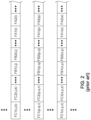
- Fig. 1 one conventional electronic data structure that can be employed to store the data represented in Fig. 1 is an electronic spreadsheet in which electronic indicia representing the data are organized into rows and columns (i.e., a flat file database, with "rows” and “columns” defined in the usual way).
- a flat file database i.e., a flat file database
- Several rows of such a spreadsheet are illustrated schematically in Fig. 2 .
- Each row of the spreadsheet corresponds to one data record of the dataset, hence to one of the "leaf nodes" of the tree of Fig. 1 (e.g ., C[xyz],
- the columns of the spreadsheet correspond to data fields and include field values FC1(x,y,z), FC2(x,y,z), etc.
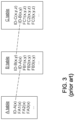
- FIG. 1 Another conventional electronic data structure that can be employed to store the data represented in Fig. 1 is an electronic relational database in which electronic indicia representing the data are organized into tables, as illustrated schematically in Fig. 3 .
- Each table record in the "C" table represents a corresponding "leaf node” C[xyz] and includes an identifier field value ID-C(x,y,z), corresponding data field values FC1(x,y,z), FC2(x,y,z), etc., and an identifier field value ID-B(x,y) of the corresponding first-level branch node B[xy].
- Each table record in the "B” table represents a corresponding first-level branch node B[xy] and includes an identifier field value ID-B(x,y), corresponding data field values FB1(x,y), FB2(x,y), etc., and an identifier field value ID-A(x) of the corresponding second-level branch node A[x].
- Each table record in the "A" table represents a corresponding second-level branch node A[x] and includes an identifier field value ID-A(x) and corresponding data field values FA1(x), FA2(x), etc.
- Each table diagram of Fig. 3 is understood to represent multiple different table records of the illustrated types and contents, as is understood by those skilled in database administration.
- the dotted lines connecting certain fields of different tables represent one-to-many relationships established within the relational database structure (e.g., one second-level branch node A[x] to one or more first-level branch nodes B[xy]; one first-level branch node B[xy] to one or more terminal nodes C[xyz]). Note that, as with the spreadsheet data structure of Fig.
- Fig. 3 is a relatively simple example of a relational database structure that includes only one-to-many relationships; more complicated examples might include more tables and many-to-many relationships that require so-called "pivot tables.”
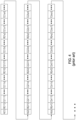
- FIG. 4 An example of an inline tree data structure arranged according to one or more of the inline tree patents is illustrated schematically in Fig. 4 .
- the objectives of the data structure of Fig. 4 are (i) to enable dramatic reduction in the overall size of the stored data structure (among other reasons, to allow it to be stored in RAM in its entirety, even if it includes millions, tens of millions, or hundreds of millions of records, or more) and (ii) to reduce the number of times a given segment of the data is retrieved from RAM into the processor cache or registers (preferably reduced to a single such retrieval per data segment).
- the data structure of Fig. 4 can be referred to as an "inline tree" data structure in which the branches and leaves of the tree of Fig. 1 are separated and arranged sequentially. There is no row/column arrangement as in a spreadsheet, nor is there any table arrangement as in a relational database.
- the data structure of Fig. 4 can be regarded as a single, long, continuous ordered sequence of binary strings ( i.e., a single line of binary digits). Each binary string within the ordered sequence represents a corresponding alphanumeric string in a data fields in the underlying dataset in a way that reduces their size.
- the binary strings are also arranged so as to increase the likelihood (i) that when one data segment is pulled into the processor cache for processing, the next segments to be processed have been pulled in along with it, and (ii) that all fields in that segment will be processed after it is first pulled into the processor cache, so that it does not need to be pulled into the processor cache again.
- Each block in the diagram corresponds to a substantially contiguous set of binary strings, each set representing one or more branch-node data field values or terminal-node data field values of the underlying data records.
- the terminal-node binary string sets labeled C[xyz] i.e., C[111], C[112], etc.
- the terminal-node binary string sets labeled C[xyz] include binary strings representing the values in one or more data fields FC1(x,y,z), FC2(x,y,z), etc. for each corresponding data record ( i.e., for each corresponding terminal node).
- the first-level branch-node binary string sets labeled B[xy] include binary strings representing the values in one or more data fields FB1(x,y), FB2(x,y), etc., for the corresponding first-level branch-node subsets of the data records
- the second-level branch-node binary string sets labeled A[x] include binary strings representing the values FA1(x), FA2(x), etc. in one or more second-level data fields FA1 data fields etc. for the corresponding second-level subsets of the data records.
- the binary string sets A[x], B[xy], and C[xyz] can be arranged in the inline tree so that each second-level branch-node subset of data records is represented by binary indicia that comprise a corresponding substantially contiguous second-level branch-node binary string sequence, e.g., all of the binary string sets A[1], B[1y], and C[1yz] together form a first substantially contiguous second-level branch-node binary string sequence that represents a first corresponding second-level branch-node subset of data records, all of the binary string sets A[2], B[2y], and C[2yz] together form a second corresponding substantially contiguous second-level branch-node binary string sequence that represents a different, second corresponding second-level branch-node subset of the data records, and so on.
- Each second-level branch-node binary string set A[x] can act as a header for its corresponding substantially contiguous second-level branch-n
- each first-level branch-node binary string sequence in the example of Fig. 4 the binary string sets B[xy] and C[xyz] are arranged in the inline tree so that each first-level branch-node subset of data records is represented by binary indicia that comprise a corresponding substantially contiguous first-level binary string sequence, e.g., all of the binary string sets B[11] and C[11z] together form a corresponding substantially contiguous first-level binary string sequence that represents a corresponding first-level subset of data records, all of the binary string sets B[23] and C[23z] together form a different substantially contiguous second-level binary string sequence that represents a different corresponding first-level subset of the data records, and so on.
- Each first-level branch-node binary string set B[xy] can act as a header for its corresponding substantially contiguous first-level binary string sequence.
- the inline tree can include binary strings encoding field values for multiple fields; in some examples field values for all fields are thus encoded, while in other examples values are encoded in the binary strings for only certain fields selected to be filterable for that dataset.
- a large dataset can include dozens or hundreds of fields (or more) for each data record.
- the arrangement of Fig. 4 can be an optimum arrangement for enabling fast searching and filtering for large datasets.
- the data records includes, for each binary string in the inline tree, a determination of the size of that binary string (based on the field it represents) so that it can be properly interpreted (if the corresponding field was part of the query) or properly skipped over (if the corresponding field was not part of the query). If has been observed that in some instances ( e.g., when only one or two or a handful of fields are included in a given search or filter query), the necessary string-by-string size determination consumes a significant fraction of the computation time expended. In other words, when only a few fields are included in a query, a search or filter program tends to spend much (perhaps most) of its computation time determining just how to skip over binary strings of Fig.
- Fig. 5 illustrates schematically an inventive data structure referred to in the Description as a "stripped inline tree,” but recited in the Claims as an "inline tree data structure” with additional limitations recited therein to define its “stripped” nature.
- the inventive inline tree data structure is referred to as “stripped” because (i) it includes no encoding or representation of any branch-node data field value and includes no branch-node binary strings, and (ii) in its most basic form ( i.e., its most "stripped” form), it includes no terminal-node binary strings that represent or encode any terminal-node data field values.
- the stripped inline tree comprises an ordered sequence of terminal-node binary strings C[xyz] representing the terminal nodes of the hierarchical tree, i.e., representing the data records of the dataset.
- the stripped inline tree of Fig. 5 includes no binary strings that correspond to the first-, second-, or higher-level branch nodes, and encodes or represents no branch-node data field values.
- the terminal-node binary strings C[xyz] are nevertheless arranged in the stripped inline tree of Fig. 5 in the same order as in the inline tree of Fig. 4 . More specifically, in the example of Fig.
- the terminal-node binary strings C[xyz] are arranged in the stripped inline tree so that each second-level branch-node subset of data records is represented by binary indicia that comprise a corresponding single substantially contiguous second-level branch-node binary string sequence within the stripped inline tree, e.g., all of the terminal-node binary strings C[1yz] together form a first substantially contiguous second-level branch-node binary string sequence that represents a first corresponding second-level branch-node subset of data records, all of the terminal-node binary strings C[2yz] together form a second corresponding substantially contiguous second-level branch-node binary string sequence that represents a different, second corresponding second-level branch-node subset of the data records, and so on.
- each first-level branch-node binary string sequence in the example of Fig. 5 the terminal-node binary strings C[xyz] are arranged in the stripped inline tree so that each first-level branch-node subset of data records is represented by binary indicia that comprise a corresponding substantially contiguous first-level binary string sequence, e.g., all of the terminal-node binary strings C[11z] together form a corresponding substantially contiguous first-level binary string sequence that represents a corresponding first-level subset of data records, all of the terminal-node binary strings C[54z] together form a different substantially contiguous second-level binary string sequence that represents a different corresponding first-level subset of the data records, and so on.
- Each given terminal-node binary string C[xyz] includes an indicator binary string (sometimes referred to as a "sentinel" string) that indicates one of the following: (i) the terminal-node binary string and an immediately adjacent terminal-node binary string in the ordered sequence correspond to respective data records that are both in the same first-level branch-node subset, (ii) the respective data records are in first-level branch-node subsets different from each other, or (iii) the terminal-node binary string is the last terminal-node binary string of the inline tree data structure.
- an indicator binary string sometimes referred to as a "sentinel" string
- the indicator string can further indicate (ii') the respective data records are in first-level branch-node subsets different from each other but are not in different higher-level branch-node subsets, or (ii") a highest level among the branch-node subsets, higher than the first level, at which the respective data records also are in higher-level branch-node subsets different from each other.
- the adjacent terminal-node binary string is the immediately preceding terminal-node binary string; in other examples, for all of the terminal-node binary strings except the last, the adjacent terminal-node binary string is the immediately succeeding terminal-node binary string.
- each terminal-node binary string refers to the preceding string
- the "last string" string can act as an indicator to determine the end of a search; such an example is discussed below, but the present disclosure and appended claims shall be construed as encompassing both scenarios unless explicitly limited to one or the other.
- One portion of a search or filter program includes traversing the ordered sequence of terminal-node binary strings C[xyz] of the stripped inline tree and determining at each step, based on the indicator string, where in the hierarchical dataset is the data record represented by the current terminal-node binary string. All of the terminal-node binary strings C[xyz] are the same length, so that the search or filter program need not include any determination of the size of the next binary string in the stripped inline tree. Because of the constant size among the terminal-node binary strings, a significant computational burden is removed from the traversal of the stripped inline tree of Fig. 5 , relative to traversal of the inline tree of Fig. 4 . For search or filter operations in which only a handful data fields out of many are queried in any single search query, the reduction in computation time can a factor of 2 or 3, or even 10 or 20 or more, depending on the number of fields queried relative to the total number of fields stored.
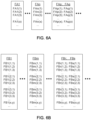
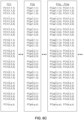
- auxiliary data structures typically flat files, spreadsheets, or alphanumeric or binary arrays (e.g., as in Figs. 6A through 6C for a three-level hierarchy, or as in only Figs. 6B and 6C for a two-level hierarchy).
- array or auxiliary array used herein shall encompass any suitable auxiliary data structure, including those listed, for storing, representing, or encoding field values for the data records of the dataset.
- the field values for the terminal-node data fields are stored or encoded in a set of one or more terminal-node auxiliary arrays ( Fig. 6C ), arranged, indexed, or otherwise accessible in the same order as the corresponding terminal-node binary strings are ordered in the stripped tree of Fig. 5 .
- the field values for the first-level branch-node data fields are stored or encoded in a set of one or more first-level branch-node auxiliary arrays ( Fig. 6B ), arranged, indexed, or accessible in the same order as the corresponding contiguous first-level branch-node binary string sequences are ordered in the stripped tree of Fig. 5 .
- the corresponding field values are stored or encoded in corresponding set(s) of one or more second- or higher-level branch-node auxiliary arrays ( Fig. 6A ), arranged, indexed, or accessible in the same order as the corresponding contiguous second- or higher-level branch-node binary string sequences are ordered in the stripped tree of Fig. 5 .
- Each array can store values for only a single data field, or for a set of multiple data fields. If field values for multiple data fields are stored together in a single array, they can be grouped in any suitable, desirable, or necessary way.
- fields that are frequently searched together can be stored together in the same array.
- somewhat arbitrary groupings of data fields might be employed to "pad out" array entries to an integer number of bytes per array element (e.g., eight one-bit field values, which may or may not be logically related to one another, might be stored together so that each array element consists of a whole byte); such an arrangement typically improves speed or efficiency of storage of the array, of loading of the array into memory (e.g., RAM or processor cache), or of interrogating the array during a search.
- a search is performed for voters within a certain age range (a terminal-node data field in the Oregon voter example), within a certain legislative district (a first-level branch-node data field), and a particular political party affiliation (another terminal-node data field), then only the arrays that encode those three data fields need to be loaded into memory for performing the search. The other dozens (or even hundreds) of fields need not be loaded.
- the data field values can be stored or encoded according to any suitable, desirable, or necessary format or protocol; those formats or protocols can be the same for all arrays, or can differ among the multiple arrays.
- the raw alphanumeric representation of the data field values, or an encoding thereof such as ASCII can be stored in the arrays.
- standard techniques such as string indexing or string interning can be employed to encode alphanumeric data field values as binary numerical indices.
- some sort of master string table is employed to relate the string indices stored in an array to the data field values they represent.
- field values from multiple data fields that are relatively constrained can be replaced by a so-called clump index, resulting in substantial reduction in space requirements for storage.
- some sort of clump index table is employed to relate a clump index stored in an array to the corresponding set of field values.
- a search or filter operation that is performed on the inventive data structure, with a computer processor programmed therefor, operates as follows: (i) a set of selected queried data fields is received; (ii) a set of one or more search criteria are received ( i.e., corresponding queried field subranges are selected for each selected queried data field); (iii) the terminal-node binary strings of the stripped inline tree are interrogated in order, and, in parallel, one or more of the auxiliary data structures corresponding to the selected queried data fields are interrogated in the same order; and (iv) based on the interrogation of the one or more auxiliary data structures, data records are identified that fulfill, meet, or match the search criteria.
- FIG. 7 An example of a search method is illustrated by the flowchart of Fig. 7 .
- the dataset is organized into a three-level tree structure comprising second- and first-level branch nodes (i.e., the A-level and B-level branch nodes, respectively) and terminal nodes ( i.e., the C-level nodes, which correspond to individual data records).
- the search method of Fig. 7 can be modified or generalized as needed to a hierarchical tree dataset having any number of two or more levels (e.g., a two-level example is illustrated by the flowchart of Fig. 8 , and the following descriptions of Fig. 7 also apply to Fig. 8 as appropriate).
- a two-level example is illustrated by the flowchart of Fig. 8 , and the following descriptions of Fig. 7 also apply to Fig. 8 as appropriate.
- a search query can include selected queried data fields at all three levels of the hierarchy.
- the most general search query specifies: (i) one or more selected second-level queried data fields ( i.e., A-level data fields) and a corresponding field value query subrange for each selected second-level queried data field; (ii) one or more selected first-level queried data fields ( i.e., B-level data fields) and a corresponding field value query subrange for each selected first-level queried data field; and (iii) one or more selected terminal-node queried data fields ( i.e., C-level data fields) and a corresponding field value query subrange for each selected terminal-node queried data field.
- the terminal-node, first-level, and second-level arrays corresponding to the selected queried data fields are loaded into memory.
- the search query might not include queried data fields at all levels of the hierarchy.
- Some example search queries can include only terminal-node queried data fields, only first-level branch-node queried data fields, only higher-level branch-node queried data fields, queried data fields at only two levels of the hierarchy, and so on.
- the ordered sequence of the terminal-node binary strings of the inline tree data structure is automatically interrogated (e.g., at 115, 125, and 135 in the flowchart of Fig. 7 , or 125 and 135 in the flowchart of Fig. 8 ), using a computer processor programmed therefor, to determine the corresponding indicator string.
- the indicator string indicates: (i) the next data record is in the same first-level branch-node subset (e.g., "C" branch at 115/125/135 of Fig. 7 or at 125/135 of Fig.
- the next data record is in a different first-level branch-node subset but not in different higher-level branch node-subset (which includes the case wherein there is no higher-level subset; e.g., "B” branch at 115/125/135 of Fig. 7 or 125/135 of Fig. 8 ), or (iii) the highest level among higher-level branch-node subsets at which the next data records differs (e.g., "A" branch at 115/125/135 of Fig. 7 ; not applicable to Fig. 8 ).
- field value strings are automatically interrogated (e.g., at 110, 120, or 130 in the flowchart of Fig. 7 , or at 120 or 130 in the flowchart of Fig. 8 ), using a computer processor programmed therefor, only among those one or more auxiliary data structures that include field value strings of the selected queried data fields.
- Data records that satisfy (i.e., fulfill, meet, or match) the search query are identified by the interrogation of the one or more auxiliary data structures and added to the search results at 140 ( i.e., added to a list or enumeration of data records satisfying the search query).
- auxiliary data structures that include data field values pertinent to the search query
- memory used e.g., RAM or processor cache
- search time required By interrogating only those auxiliary data structures that include data field values pertinent to the search query, significant reductions in memory used (e.g., RAM or processor cache) or in search time required can be achieved.
- Which, if not all, of those field values are interrogated for each data record is determined in part by the indicator string read from the inline tree structure. For example, at 135 of Fig. 7 , the indicator string from the inline tree data structure determines which fields are interrogated in the next data record, i.e., the "A" branch leads to A-level queried field values being interrogated, the "B" branch leads to B-level queried field values being interrogated, while the "C” branch leads to C-level queried field values being interrogated.
- a search query that includes no A-level queried data fields will always follow the "YES" branch at 110 in Fig. 7 ; in some examples, a search query that includes no B-level queried data fields will always follow the "YES” branch at 120 in Figs. 7 or 8 ; in some examples, a search query that includes no C-level queried data fields will always follow the "YES” branch at 130 in Figs. 7 or 8 .
- the one or more of the corresponding decision points 115 or 125 can be omitted entirely from the generated program code.
- the terminal-node data fields (C-fields) of the corresponding first-level branch-node subset of the data records can be omitted from the interrogation ("C" branch from 125 in Figs. 7 or 8 ).
- the search program loops through 125 without interrogating any field values until an indicator string is reached that indicates a different first-level branch-node subset ("B" branch from 125 in Figs. 7 or 8 ).
- the search program proceeds by interrogating the next B-level queried data fields at 120.
- first-level and terminal-node data fields (B- and C-fields) of the corresponding second-level branch-node subset of the data records can be omitted from the interrogation ("B" and "C" branches from 115 in Fig. 7 ).
- the search program loops through 115 without interrogating any field values until an indicator string is reached in the inline tree that indicates a different second-level branch-node subset ("A" branch from 115 in Fig. 7 ).
- the search program proceeds by interrogating the next A-level queried data fields at 110.
- the indicator strings of the inline tree data structure are used by the search program (at 115, 125, and 135 of Fig. 7 ; at 125 and 135 of Fig. 8 ) to properly navigate through the hierarchical organization of the data records and to reduce unnecessary interrogations of data field values.
- the search program automatically generates, with a computer processor programmed therefor, a list or an enumeration of data records that are identified in the course of the various interrogations described above as fulfilling, meeting, or matching the search query.
- the list or enumeration constitute the results of the search.
- Progress of the search program can be controlled, e.g., simply by moving from one array element to the next in the auxiliary data structures, or from one binary string to the next in the inline tree data structure.
- any suitable one or more counters, indicators, indices, or pointers can be employed in any suitable way, and are incremented or moved as the search program progresses through the inline tree and auxiliary data structures.
- the search (sometimes also referred to as filtering) process typically is embodied as a computer program operating on one or more computers, computer systems, or servers, which include one or more processors and include or are otherwise operatively coupled to one or more computer-readable media of any suitable type.
- the computers, systems, or servers that perform the search or filtering functions need not be, and often are not, the same as those that performed the data conversion process that produced the inline tree and auxiliary data structures from the original dataset.
- the computer, server, or system can be a stand-alone machine or can comprise one or machines connected by a local- or wide-area network (LAN or WAN) or the Internet. Any suitable hardware or hardware-plus-software implementation can be employed for searching or filtering.
- a suitable hierarchical arrangement for the data structure For conversion of the original dataset, its data fields are examined for determining a suitable hierarchical arrangement for the data structure. In some instances, a suitable choice will be readily apparent, e.g., if the original dataset is arranged in a series of data tables arranged as a series of one-to-many relationships (as in Fig. 3 ). In other instances, several choices for a suitable hierarchy might be possible, and one might be selected on the basis of the nature of searches to be performed ( e.g., choosing streets as the highest level nodes in the voter data example lends itself to geographic searching or filtering).
- organizing the dataset with customers as the highest-level nodes might facilitate searching and filtering based on customer-related data fields, while organizing the dataset with products as the highest-level nodes might facilitate searching or filtering based on product-related data fields.
- data fields can be distributed in any suitable, desirable, or necessary way among one or more auxiliary data structures, using any suitable, desirable, or necessary storage format or encoding scheme (e.g., string interning, data clumping, and so forth).
- each terminal-node binary string of the inline tree data structure includes only the indicator string.
- each terminal-node binary string can include, along with the indicator string, a data string encoding one or more data field values of the corresponding data record.
- the same data fields must be encoded by the data string for all data records, and the corresponding field values must be encoded so that the resulting data strings (and so also the terminal-node binary strings) are the same length as one another.
- the additional data field values encoded in the stripped inline tree should not require any string-by-string determination of length or decision as to the contents of each string.
- Data field values encoded in the stripped inline tree can be advantageous for data fields that almost always appear in searches of the dataset, e.g., spatial coordinates of spatially linked data, or a time index of time series data.
- the stripped inline tree data structure and the one or more auxiliary data structures determined to be pertinent to a given search query can be loaded into one or more computer-readable media that are directly accessible to a computer processor, e.g., computer or server RAM, or processor cache.
- a computer system of any suitable type or configuration can be structured and connected to perform any of the preceding methods.
- An article comprising a tangible medium can encode computer-readable instructions that, when applied to a computer system, instruct the computer system to perform any of the preceding methods.
- An article comprising one or more tangible computer-readable media can be encoded to store the inline tree data structure and the one or more auxiliary data structures generated by any of the preceding methods.
- An article comprising a tangible computer-readable medium can be encoded to store electronic indicia of the list or enumeration generated by any of the preceding methods.
- the systems and methods disclosed herein can be implemented as or with general or special purpose computers or servers or other programmable hardware devices programmed through software, or as hardware or equipment “programmed” through hard wiring, or a combination of the two.
- a "computer” or “server” can comprise a single machine or can comprise multiple interacting machines (located at a single location or at multiple remote locations).
- Computer programs or other software code can be implemented in temporary or permanent storage or in replaceable media, such as by including programming in microcode, machine code, network-based or web-based or distributed software modules that operate together, RAM, ROM, CD-ROM, CD-R, CD-R/W, DVD-ROM, DVD ⁇ R, DVD ⁇ R/W, hard drives, thumb drives, flash memory, optical media, magnetic media, semiconductor media, or any other one or more suitable, presently extant or future-developed, tangible, non-transitory storage media.
- One or more binary data files embodying the inline tree data structure or the one or more auxiliary data structures also can be stored on any one or more suitable, presently extant or future-developed, tangible, non-transitory computer-readable storage media, including those listed above.
- each such phrase shall denote the case wherein the quantity in question has been reduced or diminished to such an extent that, for practical purposes in the context of the intended operation or use of the disclosed or claimed apparatus or method, the overall behavior or performance of the apparatus or method does not differ from that which would have occurred had the null quantity in fact been completely removed, exactly equal to zero, or otherwise exactly nulled.
- any labelling of elements, steps, limitations, or other portions of a claim e.g., first, second, third, etc., (a), (b), (c), etc., or (i), (ii), (iii), etc.) is only for purposes of clarity, and shall not be construed as implying any sort of ordering or precedence of the claim portions so labelled. If any such ordering or precedence is intended, it will be explicitly recited in the claim or, in some instances, it will be implicit or inherent based on the specific content of the claim.
- the provisions of 35 USC ⁇ 112(f) are desired to be invoked in an apparatus claim, then the word "means" will appear in that apparatus claim.
Landscapes
- Engineering & Computer Science (AREA)
- Theoretical Computer Science (AREA)
- Databases & Information Systems (AREA)
- Data Mining & Analysis (AREA)
- Physics & Mathematics (AREA)
- General Engineering & Computer Science (AREA)
- General Physics & Mathematics (AREA)
- Computational Linguistics (AREA)
- Software Systems (AREA)
- Information Retrieval, Db Structures And Fs Structures Therefor (AREA)
- Radar Systems Or Details Thereof (AREA)
Applications Claiming Priority (3)
| Application Number | Priority Date | Filing Date | Title |
|---|---|---|---|
| US15/233,047 US10521411B2 (en) | 2016-08-10 | 2016-08-10 | Systems, methods, and data structures for high-speed searching or filtering of large datasets |
| EP17839988.7A EP3494497A4 (de) | 2016-08-10 | 2017-07-18 | Systeme, verfahren und datenstrukturen zur sehr schnellen suche oder filterung von grossen datensätzen |
| PCT/US2017/042471 WO2018031199A1 (en) | 2016-08-10 | 2017-07-18 | Systems, methods, and data structures for high-speed searching or filtering of large datasets |
Related Parent Applications (1)
| Application Number | Title | Priority Date | Filing Date |
|---|---|---|---|
| EP17839988.7A Division EP3494497A4 (de) | 2016-08-10 | 2017-07-18 | Systeme, verfahren und datenstrukturen zur sehr schnellen suche oder filterung von grossen datensätzen |
Publications (2)
| Publication Number | Publication Date |
|---|---|
| EP4339800A2 true EP4339800A2 (de) | 2024-03-20 |
| EP4339800A3 EP4339800A3 (de) | 2024-06-12 |
Family
ID=61159100
Family Applications (2)
| Application Number | Title | Priority Date | Filing Date |
|---|---|---|---|
| EP17839988.7A Ceased EP3494497A4 (de) | 2016-08-10 | 2017-07-18 | Systeme, verfahren und datenstrukturen zur sehr schnellen suche oder filterung von grossen datensätzen |
| EP23211796.0A Withdrawn EP4339800A3 (de) | 2016-08-10 | 2017-07-18 | Systeme, verfahren und datenstrukturen zur hochgeschwindigkeitssuche oder -filterung grosser datensätze |
Family Applications Before (1)
| Application Number | Title | Priority Date | Filing Date |
|---|---|---|---|
| EP17839988.7A Ceased EP3494497A4 (de) | 2016-08-10 | 2017-07-18 | Systeme, verfahren und datenstrukturen zur sehr schnellen suche oder filterung von grossen datensätzen |
Country Status (7)
| Country | Link |
|---|---|
| US (3) | US10521411B2 (de) |
| EP (2) | EP3494497A4 (de) |
| JP (2) | JP7011848B2 (de) |
| CN (1) | CN109952568B (de) |
| AU (1) | AU2017310296B2 (de) |
| CA (1) | CA3033173C (de) |
| WO (1) | WO2018031199A1 (de) |
Families Citing this family (15)
| Publication number | Priority date | Publication date | Assignee | Title |
|---|---|---|---|---|
| US10248621B2 (en) | 2016-02-09 | 2019-04-02 | Moonshadow Mobile, Inc. | Systems and methods for storing, updating, searching, and filtering time-series datasets |
| US10521411B2 (en) | 2016-08-10 | 2019-12-31 | Moonshadow Mobile, Inc. | Systems, methods, and data structures for high-speed searching or filtering of large datasets |
| US11182549B2 (en) | 2017-03-06 | 2021-11-23 | AppExtremes, LLC | Systems and methods for modifying and reconciling negotiated documents |
| US11093896B2 (en) * | 2017-05-01 | 2021-08-17 | Symbol Technologies, Llc | Product status detection system |
| US11003654B2 (en) * | 2017-09-20 | 2021-05-11 | AppExtremes, LLC | Systems and methods for requesting, tracking and reporting modifications to a record |
| AU2019309856B2 (en) * | 2018-07-25 | 2022-05-26 | Ab Initio Technology Llc | Structured record retrieval |
| WO2020142719A1 (en) | 2019-01-04 | 2020-07-09 | AppExtremes, LLC, d/b/a Conga | Systems and methods for dynamic assignment, monitoring and management of discrete tasks |
| CN110825733B (zh) * | 2019-10-08 | 2022-08-09 | 华中科技大学 | 一种面向多采样流的时间序列数据管理方法及系统 |
| CN112000667B (zh) * | 2020-08-10 | 2024-04-12 | 多点(深圳)数字科技有限公司 | 用于检索树形数据的方法、装置、服务器和介质 |
| CN112925792B (zh) * | 2021-03-26 | 2024-01-05 | 北京中经惠众科技有限公司 | 数据存储控制方法、装置、计算设备及介质 |
| CN115221360A (zh) * | 2021-04-19 | 2022-10-21 | 奇安信科技集团股份有限公司 | 树形结构配置方法和系统 |
| EP4198759A1 (de) * | 2021-12-17 | 2023-06-21 | Aptiv Technologies Limited | Datenbanksystem und verfahren |
| US11593401B1 (en) * | 2022-03-03 | 2023-02-28 | iDesignEDU, LLC | Systems and methods for a multi-hierarchy physical storage architecture for managing program and outcome data |
| CN115827703B (zh) * | 2023-02-10 | 2023-06-30 | 美云智数科技有限公司 | 枚举数据查询方法及装置 |
| US12147458B1 (en) * | 2023-07-18 | 2024-11-19 | Christopher Alex Hooton | Method and system for integrating and processing geospatial and locational data from different taxonomies |
Citations (3)
| Publication number | Priority date | Publication date | Assignee | Title |
|---|---|---|---|---|
| US8977656B2 (en) | 2011-01-10 | 2015-03-10 | Moonshadow Mobile, Inc. | Inline tree data structure for high-speed searching and filtering of large datasets |
| US9002859B1 (en) | 2010-12-17 | 2015-04-07 | Moonshadow Mobile, Inc. | Systems and methods for high-speed searching and filtering of large datasets |
| US9171054B1 (en) | 2012-01-04 | 2015-10-27 | Moonshadow Mobile, Inc. | Systems and methods for high-speed searching and filtering of large datasets |
Family Cites Families (81)
| Publication number | Priority date | Publication date | Assignee | Title |
|---|---|---|---|---|
| US5276868A (en) | 1990-05-23 | 1994-01-04 | Digital Equipment Corp. | Method and apparatus for pointer compression in structured databases |
| US5737732A (en) | 1992-07-06 | 1998-04-07 | 1St Desk Systems, Inc. | Enhanced metatree data structure for storage indexing and retrieval of information |
| US5557786A (en) | 1994-01-24 | 1996-09-17 | Advanced Computer Applications, Inc. | Threaded, height-balanced binary tree data structure |
| JP2683870B2 (ja) | 1994-05-23 | 1997-12-03 | 日本アイ・ビー・エム株式会社 | 文字列検索システム及び方法 |
| JPH08235221A (ja) * | 1994-10-17 | 1996-09-13 | Matsushita Electric Ind Co Ltd | インデックス付けされたデータベースを生成する方法およびデータベースにインデックス付けを行う方法 |
| JP3152868B2 (ja) | 1994-11-16 | 2001-04-03 | 富士通株式会社 | 検索装置および辞書/テキスト検索方法 |
| US5710915A (en) | 1995-12-21 | 1998-01-20 | Electronic Data Systems Corporation | Method for accelerating access to a database clustered partitioning |
| US5829004A (en) | 1996-05-20 | 1998-10-27 | Au; Lawrence | Device for storage and retrieval of compact contiguous tree index records |
| US6175835B1 (en) | 1996-07-26 | 2001-01-16 | Ori Software Development, Ltd. | Layered index with a basic unbalanced partitioned index that allows a balanced structure of blocks |
| US5978797A (en) | 1997-07-09 | 1999-11-02 | Nec Research Institute, Inc. | Multistage intelligent string comparison method |
| US6012057A (en) | 1997-07-30 | 2000-01-04 | Quarterdeck Corporation | High speed data searching for information in a computer system |
| US7266560B2 (en) | 1998-01-30 | 2007-09-04 | Navteq North America, Llc | Parcelized geographic data medium with internal spatial indices and method and system for use and formation thereof |
| US6374251B1 (en) | 1998-03-17 | 2002-04-16 | Microsoft Corporation | Scalable system for clustering of large databases |
| US6070164A (en) | 1998-05-09 | 2000-05-30 | Information Systems Corporation | Database method and apparatus using hierarchical bit vector index structure |
| US6581058B1 (en) | 1998-05-22 | 2003-06-17 | Microsoft Corporation | Scalable system for clustering of large databases having mixed data attributes |
| FI982095L (fi) | 1998-09-29 | 2000-03-30 | Nokia Networks Oy | Menetelmä muistin toteuttamiseksi ja muistijärjestely |
| US6341280B1 (en) | 1998-10-30 | 2002-01-22 | Netscape Communications Corporation | Inline tree filters |
| US7801913B2 (en) | 1998-12-07 | 2010-09-21 | Oracle International Corporation | System and method for querying data for implicit hierarchies |
| US6714936B1 (en) | 1999-05-25 | 2004-03-30 | Nevin, Iii Rocky Harry W. | Method and apparatus for displaying data stored in linked nodes |
| FI991261A7 (fi) | 1999-06-02 | 2000-12-03 | Nokia Corp | Trie-rakenteeseen perustuva funktionaalinen muisti |
| FI991262L (fi) * | 1999-06-02 | 2000-12-03 | Nokia Networks Oy | Digitaaliseen trie-rakenteeseen perustuva muisti |
| US6560610B1 (en) | 1999-08-10 | 2003-05-06 | Washington University | Data structure using a tree bitmap and method for rapid classification of data in a database |
| US6684219B1 (en) | 1999-11-24 | 2004-01-27 | The United States Of America As Represented By The Secretary Of The Navy | Method and apparatus for building and maintaining an object-oriented geospatial database |
| DE10085390T1 (de) * | 1999-12-10 | 2003-04-30 | Mosaid Technologies Inc Kanata | Verfahren und Vorrichtung zur Adressuche längster Übereinstimmung |
| US6721723B1 (en) | 1999-12-23 | 2004-04-13 | 1St Desk Systems, Inc. | Streaming metatree data structure for indexing information in a data base |
| US7143339B2 (en) | 2000-09-20 | 2006-11-28 | Sap Aktiengesellschaft | Method and apparatus for dynamically formatting and displaying tabular data in real time |
| GB0100331D0 (en) | 2001-01-06 | 2001-02-14 | Secr Defence | Method of querying a structure of compressed data |
| US6816856B2 (en) | 2001-06-04 | 2004-11-09 | Hewlett-Packard Development Company, L.P. | System for and method of data compression in a valueless digital tree representing a bitset |
| US6654760B2 (en) | 2001-06-04 | 2003-11-25 | Hewlett-Packard Development Company, L.P. | System and method of providing a cache-efficient, hybrid, compressed digital tree with wide dynamic ranges and simple interface requiring no configuration or tuning |
| US6718338B2 (en) | 2001-06-26 | 2004-04-06 | International Business Machines Corporation | Storing data mining clustering results in a relational database for querying and reporting |
| ATE341901T1 (de) | 2001-07-13 | 2006-10-15 | France Telecom | Verfahren zur komprimierung einer baumhierarchie, zugehöriges signal und verfahren zur dekodierung eines signals |
| US7376620B2 (en) | 2001-07-23 | 2008-05-20 | Consona Crm Inc. | System and method for measuring the quality of information retrieval |
| US20030105745A1 (en) | 2001-12-05 | 2003-06-05 | Davidson Jason A. | Text-file based relational database |
| WO2003069509A2 (en) | 2002-02-14 | 2003-08-21 | Transwitch Corporation | Efficient ipv4/ipv6 best matching prefix method and apparatus |
| US20040133590A1 (en) | 2002-08-08 | 2004-07-08 | Henderson Alex E. | Tree data structure with range-specifying keys and associated methods and apparatuses |
| US7451143B2 (en) | 2002-08-28 | 2008-11-11 | Cisco Technology, Inc. | Programmable rule processing apparatus for conducting high speed contextual searches and characterizations of patterns in data |
| US7099881B2 (en) | 2002-12-06 | 2006-08-29 | Stmicroelectronics, Inc. | Method for increasing average storage capacity in a bit-mapped tree-based storage engine by using remappable prefix representations and a run-length encoding scheme that defines multi-length fields to compactly store IP prefixes |
| US6829602B2 (en) | 2002-12-12 | 2004-12-07 | Microsoft Corporation | System and method for using a compressed trie to estimate like predicates |
| US7426518B2 (en) | 2003-03-28 | 2008-09-16 | Netlogic Microsystems, Inc. | System and method for efficiently searching a forwarding database that is split into a bounded number of sub-databases having a bounded size |
| US8341120B2 (en) | 2003-09-05 | 2012-12-25 | Oracle International Corporation | Apparatus and methods for transferring database objects into and out of database systems |
| US7609257B2 (en) | 2004-03-29 | 2009-10-27 | Oculus Info Inc. | System and method for applying link analysis tools for visualizing connected temporal and spatial information on a user interface |
| US7373244B2 (en) | 2004-04-20 | 2008-05-13 | Keith Kreft | Information mapping approaches |
| US7366728B2 (en) | 2004-04-27 | 2008-04-29 | International Business Machines Corporation | System for compressing a search tree structure used in rule classification |
| US7496837B1 (en) | 2004-04-29 | 2009-02-24 | Microsoft Corporation | Structural editing with schema awareness |
| US8051252B2 (en) | 2005-03-11 | 2011-11-01 | Ross Neil Williams | Method and apparatus for detecting the presence of subblocks in a reduced-redundancy storage system |
| US8356021B2 (en) | 2005-03-11 | 2013-01-15 | Ross Neil Williams | Method and apparatus for indexing in a reduced-redundancy storage system |
| US7814129B2 (en) | 2005-03-11 | 2010-10-12 | Ross Neil Williams | Method and apparatus for storing data with reduced redundancy using data clusters |
| US20060288024A1 (en) | 2005-04-28 | 2006-12-21 | Freescale Semiconductor Incorporated | Compressed representations of tries |
| FR2885712B1 (fr) | 2005-05-12 | 2007-07-13 | Kabire Fidaali | Dispositif et procede d'analyse semantique de documents par constitution d'arbres n-aire et semantique |
| US7689602B1 (en) | 2005-07-20 | 2010-03-30 | Bakbone Software, Inc. | Method of creating hierarchical indices for a distributed object system |
| US7420161B2 (en) | 2006-03-09 | 2008-09-02 | Thermo Finnigan Llc | Branched radio frequency multipole |
| US8156156B2 (en) | 2006-04-06 | 2012-04-10 | Universita Di Pisa | Method of structuring and compressing labeled trees of arbitrary degree and shape |
| US7958562B2 (en) | 2006-04-27 | 2011-06-07 | Xerox Corporation | Document access management system |
| US8374623B2 (en) | 2006-07-21 | 2013-02-12 | Microsoft Corporation | Location based, software control of mobile devices |
| US11341202B2 (en) | 2006-10-04 | 2022-05-24 | Craxel, Inc. | Efficient method of location-based content management and delivery |
| US7827218B1 (en) | 2006-11-18 | 2010-11-02 | X-Engines, Inc. | Deterministic lookup using hashed key in a multi-stride compressed trie structure |
| US8055645B1 (en) * | 2006-12-15 | 2011-11-08 | Packeteer, Inc. | Hierarchical index for enhanced storage of file changes |
| EP2153608B1 (de) | 2007-06-01 | 2013-09-18 | BlackBerry Limited | Bestimmung von kompressionszustandsinformationen zur verwendung für interaktive kompression |
| CN101123613B (zh) * | 2007-08-23 | 2013-06-05 | 张建中 | 一种多维地址编址数据处理的方法和装置以及系统 |
| JP5075653B2 (ja) | 2008-01-21 | 2012-11-21 | 株式会社日立製作所 | データベース管理方法、データベース管理装置、データベース管理プログラム、及び、データベースシステム |
| US20100281082A1 (en) | 2009-04-30 | 2010-11-04 | Tatu Ylonen Oy Ltd | Subordinate Multiobjects |
| US20100023515A1 (en) | 2008-07-28 | 2010-01-28 | Andreas Marx | Data clustering engine |
| US7987214B2 (en) | 2008-08-29 | 2011-07-26 | Tatu Ylonen Oy | Determining the address range of a subtree of a linearized tree |
| US7965207B2 (en) | 2008-10-03 | 2011-06-21 | Seomoz, Inc. | Variable length integer encoding system and method |
| US7764202B2 (en) | 2008-11-26 | 2010-07-27 | Red Hat, Inc. | Lossless data compression with separated index values and literal values in output stream |
| US8239406B2 (en) * | 2008-12-31 | 2012-08-07 | International Business Machines Corporation | Expression tree data structure for representing a database query |
| CA2756679C (en) | 2009-03-31 | 2016-07-05 | Commvault Systems, Inc. | Information management systems and methods for heterogeneous data sources |
| US8370394B2 (en) | 2009-07-17 | 2013-02-05 | International Business Machines Corporation | Parallel processing of data organized in a tree structure |
| US8606818B2 (en) | 2010-07-19 | 2013-12-10 | International Business Machines Corporation | Optimizing the storage of one-to-many external references to contiguous regions of hierarchical data structures |
| US20120117067A1 (en) * | 2010-10-29 | 2012-05-10 | Navteq North America, Llc | Method and apparatus for providing a range ordered tree structure |
| US8745061B2 (en) * | 2010-11-09 | 2014-06-03 | Tibco Software Inc. | Suffix array candidate selection and index data structure |
| US8990204B1 (en) | 2012-01-17 | 2015-03-24 | Roy W. Ward | Processing and storage of spatial data |
| CN104145472B (zh) * | 2012-02-29 | 2016-06-15 | 瑞典爱立信有限公司 | 存储数据记录的方法和装置 |
| JP2014130492A (ja) * | 2012-12-28 | 2014-07-10 | Hitachi Ltd | インデックスの生成方法及び計算機システム |
| WO2014109109A1 (ja) | 2013-01-11 | 2014-07-17 | 日本電気株式会社 | インデックスキー生成装置及びインデックスキー生成方法並びに検索方法 |
| US10394848B2 (en) * | 2013-07-29 | 2019-08-27 | Amazon Technologies, Inc. | Generating a multi-column index for relational databases by interleaving data bits for selectivity |
| US9268502B2 (en) * | 2013-09-16 | 2016-02-23 | Netapp, Inc. | Dense tree volume metadata organization |
| US9940343B2 (en) * | 2014-05-07 | 2018-04-10 | Sas Institute Inc. | Data structure supporting contingency table generation |
| US10248621B2 (en) | 2016-02-09 | 2019-04-02 | Moonshadow Mobile, Inc. | Systems and methods for storing, updating, searching, and filtering time-series datasets |
| US10366065B2 (en) * | 2016-04-29 | 2019-07-30 | Netapp, Inc. | Memory efficient lookup structure |
| US10521411B2 (en) | 2016-08-10 | 2019-12-31 | Moonshadow Mobile, Inc. | Systems, methods, and data structures for high-speed searching or filtering of large datasets |
-
2016
- 2016-08-10 US US15/233,047 patent/US10521411B2/en active Active
-
2017
- 2017-07-18 CA CA3033173A patent/CA3033173C/en active Active
- 2017-07-18 EP EP17839988.7A patent/EP3494497A4/de not_active Ceased
- 2017-07-18 WO PCT/US2017/042471 patent/WO2018031199A1/en not_active Ceased
- 2017-07-18 EP EP23211796.0A patent/EP4339800A3/de not_active Withdrawn
- 2017-07-18 JP JP2019506695A patent/JP7011848B2/ja active Active
- 2017-07-18 CN CN201780056310.7A patent/CN109952568B/zh not_active Expired - Fee Related
- 2017-07-18 AU AU2017310296A patent/AU2017310296B2/en not_active Ceased
-
2019
- 2019-12-18 US US16/719,853 patent/US11106646B2/en active Active
-
2021
- 2021-08-30 US US17/460,326 patent/US11573941B2/en active Active
-
2022
- 2022-01-07 JP JP2022001450A patent/JP7257068B2/ja active Active
Patent Citations (3)
| Publication number | Priority date | Publication date | Assignee | Title |
|---|---|---|---|---|
| US9002859B1 (en) | 2010-12-17 | 2015-04-07 | Moonshadow Mobile, Inc. | Systems and methods for high-speed searching and filtering of large datasets |
| US8977656B2 (en) | 2011-01-10 | 2015-03-10 | Moonshadow Mobile, Inc. | Inline tree data structure for high-speed searching and filtering of large datasets |
| US9171054B1 (en) | 2012-01-04 | 2015-10-27 | Moonshadow Mobile, Inc. | Systems and methods for high-speed searching and filtering of large datasets |
Also Published As
| Publication number | Publication date |
|---|---|
| EP3494497A4 (de) | 2020-03-25 |
| CA3033173A1 (en) | 2018-02-15 |
| JP7011848B2 (ja) | 2022-01-27 |
| US10521411B2 (en) | 2019-12-31 |
| EP4339800A3 (de) | 2024-06-12 |
| JP2022058529A (ja) | 2022-04-12 |
| US20220058168A1 (en) | 2022-02-24 |
| US11106646B2 (en) | 2021-08-31 |
| JP2019527898A (ja) | 2019-10-03 |
| CA3033173C (en) | 2024-01-23 |
| US20200233843A1 (en) | 2020-07-23 |
| WO2018031199A1 (en) | 2018-02-15 |
| US20180046655A1 (en) | 2018-02-15 |
| AU2017310296A1 (en) | 2019-03-28 |
| US11573941B2 (en) | 2023-02-07 |
| EP3494497A1 (de) | 2019-06-12 |
| AU2017310296B2 (en) | 2021-12-23 |
| CN109952568A (zh) | 2019-06-28 |
| JP7257068B2 (ja) | 2023-04-13 |
| CN109952568B (zh) | 2023-05-12 |
Similar Documents
| Publication | Publication Date | Title |
|---|---|---|
| US11573941B2 (en) | Systems, methods, and data structures for high-speed searching or filtering of large datasets | |
| US9002859B1 (en) | Systems and methods for high-speed searching and filtering of large datasets | |
| US9652467B2 (en) | Inline tree data structure for high-speed searching and filtering of large datasets | |
| CN111459985B (zh) | 标识信息处理方法及装置 | |
| US20120131022A1 (en) | Methods and systems for merging data sets | |
| CN106326429A (zh) | 一种基于solr的Hbase秒级查询方案 | |
| US9626401B1 (en) | Systems and methods for high-speed searching and filtering of large datasets | |
| US11144522B2 (en) | Data storage using vectors of vectors | |
| CN106599153A (zh) | 一种基于多个数据源的废旧行业搜索系统以及其方法 | |
| US20210319000A1 (en) | Data deduplication and data merging | |
| CN115686939B (zh) | 数据备份方法、装置、计算机设备和存储介质 | |
| CN115905637A (zh) | 数据的分组方法和装置 | |
| US20140114993A1 (en) | Method and system for maintaining data in a data storage system | |
| CN121808110A (zh) | 一种渔业资源样品的智能网库检索与管理方法及系统 | |
| CN118193568A (zh) | 数据查询处理方法、装置、计算机设备和存储介质 | |
| HK1183541A (en) | Method for data processing of sstable file and system thereof | |
| EP1227410A1 (de) | Verfahren zum Zugreifen auf eine Datenbank mittels benutzerdefinierter Eigenschaften | |
| US20140229499A1 (en) | Ad-hoc temporary record relationship management |
Legal Events
| Date | Code | Title | Description |
|---|---|---|---|
| PUAI | Public reference made under article 153(3) epc to a published international application that has entered the european phase |
Free format text: ORIGINAL CODE: 0009012 |
|
| STAA | Information on the status of an ep patent application or granted ep patent |
Free format text: STATUS: THE APPLICATION HAS BEEN PUBLISHED |
|
| AC | Divisional application: reference to earlier application |
Ref document number: 3494497 Country of ref document: EP Kind code of ref document: P |
|
| AK | Designated contracting states |
Kind code of ref document: A2 Designated state(s): AL AT BE BG CH CY CZ DE DK EE ES FI FR GB GR HR HU IE IS IT LI LT LU LV MC MK MT NL NO PL PT RO RS SE SI SK SM TR |
|
| REG | Reference to a national code |
Ref country code: DE Ref legal event code: R079 Free format text: PREVIOUS MAIN CLASS: G06F0016245500 Ipc: G06F0016245300 |
|
| PUAL | Search report despatched |
Free format text: ORIGINAL CODE: 0009013 |
|
| AK | Designated contracting states |
Kind code of ref document: A3 Designated state(s): AL AT BE BG CH CY CZ DE DK EE ES FI FR GB GR HR HU IE IS IT LI LT LU LV MC MK MT NL NO PL PT RO RS SE SI SK SM TR |
|
| RIC1 | Information provided on ipc code assigned before grant |
Ipc: G06F 16/2455 20190101ALI20240503BHEP Ipc: G06F 16/22 20190101ALI20240503BHEP Ipc: G06F 16/28 20190101ALI20240503BHEP Ipc: G06F 16/2453 20190101AFI20240503BHEP |
|
| STAA | Information on the status of an ep patent application or granted ep patent |
Free format text: STATUS: THE APPLICATION IS DEEMED TO BE WITHDRAWN |
|
| 18D | Application deemed to be withdrawn |
Effective date: 20241213 |