EP4334256B1 - Aufbereitung von abwasser durch einen kontinuierlichen fluss von aerober granulärer biomasse - Google Patents
Aufbereitung von abwasser durch einen kontinuierlichen fluss von aerober granulärer biomasse Download PDFInfo
- Publication number
- EP4334256B1 EP4334256B1 EP22727048.5A EP22727048A EP4334256B1 EP 4334256 B1 EP4334256 B1 EP 4334256B1 EP 22727048 A EP22727048 A EP 22727048A EP 4334256 B1 EP4334256 B1 EP 4334256B1
- Authority
- EP
- European Patent Office
- Prior art keywords
- tank
- compartment
- reactor
- conditions
- aerobic
- Prior art date
- Legal status (The legal status is an assumption and is not a legal conclusion. Google has not performed a legal analysis and makes no representation as to the accuracy of the status listed.)
- Active
Links
Images



Classifications
-
- C—CHEMISTRY; METALLURGY
- C02—TREATMENT OF WATER, WASTE WATER, SEWAGE, OR SLUDGE
- C02F—TREATMENT OF WATER, WASTE WATER, SEWAGE, OR SLUDGE
- C02F3/00—Biological treatment of water, waste water, or sewage
- C02F3/006—Regulation methods for biological treatment
-
- C—CHEMISTRY; METALLURGY
- C02—TREATMENT OF WATER, WASTE WATER, SEWAGE, OR SLUDGE
- C02F—TREATMENT OF WATER, WASTE WATER, SEWAGE, OR SLUDGE
- C02F3/00—Biological treatment of water, waste water, or sewage
- C02F3/30—Aerobic and anaerobic processes
- C02F3/301—Aerobic and anaerobic treatment in the same reactor
-
- C—CHEMISTRY; METALLURGY
- C02—TREATMENT OF WATER, WASTE WATER, SEWAGE, OR SLUDGE
- C02F—TREATMENT OF WATER, WASTE WATER, SEWAGE, OR SLUDGE
- C02F3/00—Biological treatment of water, waste water, or sewage
- C02F3/30—Aerobic and anaerobic processes
- C02F3/302—Nitrification and denitrification treatment
-
- C—CHEMISTRY; METALLURGY
- C02—TREATMENT OF WATER, WASTE WATER, SEWAGE, OR SLUDGE
- C02F—TREATMENT OF WATER, WASTE WATER, SEWAGE, OR SLUDGE
- C02F3/00—Biological treatment of water, waste water, or sewage
- C02F3/30—Aerobic and anaerobic processes
- C02F3/308—Biological phosphorus removal
-
- C—CHEMISTRY; METALLURGY
- C02—TREATMENT OF WATER, WASTE WATER, SEWAGE, OR SLUDGE
- C02F—TREATMENT OF WATER, WASTE WATER, SEWAGE, OR SLUDGE
- C02F3/00—Biological treatment of water, waste water, or sewage
- C02F3/34—Biological treatment of water, waste water, or sewage characterised by the microorganisms used
-
- C—CHEMISTRY; METALLURGY
- C02—TREATMENT OF WATER, WASTE WATER, SEWAGE, OR SLUDGE
- C02F—TREATMENT OF WATER, WASTE WATER, SEWAGE, OR SLUDGE
- C02F1/00—Treatment of water, waste water, or sewage
- C02F2001/007—Processes including a sedimentation step
-
- C—CHEMISTRY; METALLURGY
- C02—TREATMENT OF WATER, WASTE WATER, SEWAGE, OR SLUDGE
- C02F—TREATMENT OF WATER, WASTE WATER, SEWAGE, OR SLUDGE
- C02F3/00—Biological treatment of water, waste water, or sewage
- C02F2003/001—Biological treatment of water, waste water, or sewage using granular carriers or supports for the microorganisms
-
- C—CHEMISTRY; METALLURGY
- C02—TREATMENT OF WATER, WASTE WATER, SEWAGE, OR SLUDGE
- C02F—TREATMENT OF WATER, WASTE WATER, SEWAGE, OR SLUDGE
- C02F2203/00—Apparatus and plants for the biological treatment of water, waste water or sewage
- C02F2203/004—Apparatus and plants for the biological treatment of water, waste water or sewage comprising a selector reactor for promoting floc-forming or other bacteria
-
- C—CHEMISTRY; METALLURGY
- C02—TREATMENT OF WATER, WASTE WATER, SEWAGE, OR SLUDGE
- C02F—TREATMENT OF WATER, WASTE WATER, SEWAGE, OR SLUDGE
- C02F2209/00—Controlling or monitoring parameters in water treatment
- C02F2209/08—Chemical Oxygen Demand [COD]; Biological Oxygen Demand [BOD]
-
- C—CHEMISTRY; METALLURGY
- C02—TREATMENT OF WATER, WASTE WATER, SEWAGE, OR SLUDGE
- C02F—TREATMENT OF WATER, WASTE WATER, SEWAGE, OR SLUDGE
- C02F2209/00—Controlling or monitoring parameters in water treatment
- C02F2209/22—O2
-
- C—CHEMISTRY; METALLURGY
- C02—TREATMENT OF WATER, WASTE WATER, SEWAGE, OR SLUDGE
- C02F—TREATMENT OF WATER, WASTE WATER, SEWAGE, OR SLUDGE
- C02F2209/00—Controlling or monitoring parameters in water treatment
- C02F2209/36—Biological material, e.g. enzymes or ATP
-
- C—CHEMISTRY; METALLURGY
- C02—TREATMENT OF WATER, WASTE WATER, SEWAGE, OR SLUDGE
- C02F—TREATMENT OF WATER, WASTE WATER, SEWAGE, OR SLUDGE
- C02F2209/00—Controlling or monitoring parameters in water treatment
- C02F2209/38—Gas flow rate
-
- C—CHEMISTRY; METALLURGY
- C02—TREATMENT OF WATER, WASTE WATER, SEWAGE, OR SLUDGE
- C02F—TREATMENT OF WATER, WASTE WATER, SEWAGE, OR SLUDGE
- C02F2209/00—Controlling or monitoring parameters in water treatment
- C02F2209/44—Time
-
- Y—GENERAL TAGGING OF NEW TECHNOLOGICAL DEVELOPMENTS; GENERAL TAGGING OF CROSS-SECTIONAL TECHNOLOGIES SPANNING OVER SEVERAL SECTIONS OF THE IPC; TECHNICAL SUBJECTS COVERED BY FORMER USPC CROSS-REFERENCE ART COLLECTIONS [XRACs] AND DIGESTS
- Y02—TECHNOLOGIES OR APPLICATIONS FOR MITIGATION OR ADAPTATION AGAINST CLIMATE CHANGE
- Y02W—CLIMATE CHANGE MITIGATION TECHNOLOGIES RELATED TO WASTEWATER TREATMENT OR WASTE MANAGEMENT
- Y02W10/00—Technologies for wastewater treatment
- Y02W10/10—Biological treatment of water, waste water, or sewage
Definitions
- US 2020/0048131 A1 (Ovivo Inc., Montreal, CA ) discloses a continuous flow granular/flocculent sludge wastewater treatment process that selects granular biomass capable of removing nitrogen and phosphorus and controls the granule size and concentration of the granular and flocculent sludge for optimal nutrient, organic and solid removal in a compact footprint.
- This process includes anaerobic, anoxic and aerobic treatment zones, a first reactor loaded with highly soluble biodegradable COD operating under anaerobic or anoxic conditions, a granular sludge sorter with recycling of underflow granular sludge to the first reactor (anaerobic/anoxic overhead), a secondary clarifier to settle the flocculent sludge and particles, and a system for recycling the underflow flocculent sludge from the secondary clarifier to an aerobic treatment zone to give a competitive advantage to the granules.
- Sludge discharge from the two separate recycle lines controls the flocculent and granular bioprocess sludge concentrations and SRTs (solid retention times).
- On/off mixer operation of both the anaerobic and anoxic reactors can be used. Sludge can be purged from both recirculation lines to control the floc-to-granule ratio.
- the sorter is equipped with a bypass and recirculation to control the upward flow.
- This document describes a reactor comprising successively an anoxic head compartment, an anaerobic (feed point) and an aerobic compartment.
- the aerobic zone is divided into two aerobic compartments, a first compartment (10 to 30% of the volume) providing a feast zone and a second, larger compartment providing a starvation zone (70 to 90% of the volume).
- a selective purge concept is also described.
- the document WO 2008/141413 A1 discloses a wastewater treatment system using aerobic granules that has a large number of sequencing batch reactors with a high volumetric exchange rate, variable cycle time, and constant batch volume.
- the batch reactors operate for the removal of C, N, and P is chemically removed. Suspended solids are removed in a downstream separation step.
- a flow-through reactor may include an aerobic zone, an alternating aerobic and anoxic zone, or discrete aerobic and anoxic zones, and a settling zone.
- An anaerobic zone may be located at the bottom of a mass of settled granules. Feed may be introduced through the settled granules.
- An aerobic/anoxic zone may be like a CSTR (Completely Stirred Tank Reactor) but with aeration varying in space or time.
- Sludge granules may move intermittently from an aerobic zone to an aerobic/anoxic zone.
- a settling zone may have an upward flow to wash the flocculated biomass.
- a dual sludge process may be used in which an unsettled floc fraction is recycled to a region upstream of the settling tank. granules.
- a fermentation zone can be used to pretreat feed water or to treat a recycled waste stream, for example a waste stream containing floc.
- the present invention aims to provide a reactor and a process for the treatment of biomass in the form of mainly municipal or industrial wastewater, using aerobic granular sludge technology, which can perform well in continuous flow operation, compared to conventional processes/reactors (CAS, MBR, MBBR, IFAS, MB-MBR, etc.) or competitors (granular SBR).
- the invention aims to develop process conditions which allow stable formation of BNR granules (removing nutrients) and consequently good settling of the treated sludge.
- the feast conditions in the second basin correspond, in the present invention, to a residual presence of less than 30%, and ideally less than 10%, of the initial readily biodegradable COD ( fbio COD) of the wastewater.
- the starvation conditions in the third basin are obtained according to the invention by limiting the mass load to 0.35 kg DCO kg -1 MVS day -1 , preferably to 0.25 kg DCO kg -1 MVS day -1 .
- the biological selector (second basin) which allows the reserve to be extended and therefore reduces the bio COD at the inlet of the third basin and on the other hand by recirculating the sludge settled from the clarifier to the third basin (the “MVS” denominator therefore increases between the second and third basins).
- the recirculation of the clarifier sludge to the third basin makes it possible to limit the returns at the top of the reactor to only dense sludge from the physical selector.
- This strategy makes it possible to obtain an F/M ratio greater than 5 kg of DCO fbio kg -1 MVS, preferably greater than 10 kg DCO fbio kg -1 MVS in the first basin, while reducing the value of "M", which corresponds to a strengthening of the feast conditions in the first basin.
- filamentous or dense microorganisms is conditioned by the concentrations of pollutants in direct contact with the biomass (feast, famine) and the type of electron acceptors present in the environment.
- anoxic conditions presence of oxygen bound in nitrites or nitrates
- strict anaerobic conditions absence of oxygen, nitrites, nitrates
- This dynamic management is based on the oxygen demand, which is, according to the present invention, the factor triggering the switching of aeration.
- the oxygen demand is high in the first compartment of the second basin, it is assumed that the easily assimilated (biodegradable) COD remains abundant and that the storage in anaerobic conditions must be prolonged in the first compartment of the second basin; conversely, when the oxygen demand is/becomes low in the first compartment of the second basin, it is assumed that the COD easily assimilated is not abundant and that the aeration of the first compartment of the second basin can be started.
- the oxygen demand can advantageously be determined on the basis of the supply of oxygen, by one or more aeration devices required to achieve a dissolved oxygen setpoint in the first compartment of the second basin.
- a high oxygen demand corresponds to a significant supply of oxygen by these aeration devices to achieve said setpoint.
- the amount of oxygen supplied can advantageously be measured by means of ad hoc instrumentation, for example a pO2 probe, an air flow meter and a speed controller of the aeration equipment.
- the hydraulic residence time of this compartment and the management are such that the production of nitrites and nitrates is avoided (strict anaerobic conditions in the absence of aeration).
- the first granular structures are visible ( FIG. 3A ). Relatively dense, these structures evolve towards granules characterized by an SVI 30 lower than 70 mL g -1 ( FIG. 4A ).
- This densification of the biomass is achieved by establishing conditions favorable to the selection of storage metabolisms.
- the fbio COD is stored in the form of storage polymers under anaerobic conditions (PHA).
- PHA anaerobic conditions
- the biological selector ensures a degradation of the residual fraction into fbio COD under aerobic feast conditions, also favorable to the storage of fbio COD in PHA form.
- the objective is to investigate a novel treatment configuration adapted to urban residual wastewater (URW) regularly diluted by rainfall events or by an infiltration/exfiltration problem at the collection network level.
- Table 1 describes the main operating conditions tested during the trials.
- the experimental plan was divided into 3 stages in order to: - optimize the coupling between biological selection and the sorter (Periods or phases I to III); - study the resilience of the process to load peaks (Period or phase IV); - optimize the dynamic management of redox conditions at the level of the biological selector (Periods or phases V and VI).
- the average concentrations of N-NH 4 and P-PO 4 were respectively ⁇ 35 mg/L and ⁇ 6 mg/L.
- the granular sludge exhibited stable morphological and physicochemical properties.
- the granule diameter varied between 0.2 and 0.6 mm.
- the purification performances were estimated based on spot samples. They were stable with a removal of more than 90% of total COD, 95% of ammoniacal nitrogen and 81% of total nitrogen.
- the average suspended solids concentration at the clarifier outlet was 20.4 mg/L.
- phase IVa purification balances were established and weekly samples were taken at the inlet of the pilot plant to precisely determine the load received by the structure according to the invention.
- the parameters analyzed were MES, total and soluble COD, total Kjeldahl nitrogen (TKN), N-NH 4 , N-NO 3 , N-NO 2 , total nitrogen (by calculation), P-PO 4 (o) and P tot in accordance with international standards (APHA 2005).
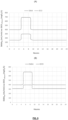
- phase IVb the daily organic load to be treated was increased by 66% while maintaining a daily hydraulic profile identical to phase IVa ( FIG. 9 ).
- the management mode of the biological selector ( 1st compartment) was adapted to increase the metabolic and kinetic selection pressure.
- the first compartment of the biological selector was no longer aerated during phase V in order to optimize the anaerobic contact time with the incoming load. This adaptation made it possible to stabilize the pilot in stationary conditions. Then (from day 374 - Phase VI), this same compartment was aerated so as to maintain an oxygen setpoint above 1.5 mg/L. When the aeration capacity was insufficient to maintain this setpoint, the basin was no longer aerated. After a certain downtime (typically 10 minutes), the basin was reoxygenated again. This aeration strategy made it possible to increase the kinetics of storage of the readily biodegradable COD 1 ( FIG.
- the sludge obtained after a few weeks of testing, was in the form of dense and stable microbial aggregates between 0.1 and 0.6 mm in diameter and the observed sedimentation rate was greater than 3.4 m/h, making it possible to maintain a high concentration of granular sludge in the reactor (MLSS: 9.4 g/L; 94% MVS).
- This high concentration of granules secured the treatment at loads high average organic matter ( ⁇ 1.5 kg COD m -3 reactor D -1 ) and low hydraulic residence times ( ⁇ 4 hours).
- the purification performances remained good with a removal of more than 86% of total COD and 74% of total nitrogen.
- Table 3 shows the average purification performances at the end of phase VI. ⁇ b>Table 3 ⁇ /b>: Average purification performance at the end of phase VI. Average 24-hour sampling. Settings Influential Effluent Purification mg/L mg/L % DCO 179 25 86 DCOs 11 94 Ntot 32 8.2 74 N KJ 1.5 95 N-NH4 0.6 98 N-NO3 6.7 P-PO4 (o) 6.0 4.3 28 MY 14
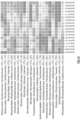
- FIG. 10 presents a mapping of the 20 most abundant operational taxonomic units (OTUs) during the pilot operation.
- the genus Defluviicoccus is also well represented.
- GEO glycogen-accumulating bacterium
- This genus is particularly abundant in the reactor according to the invention provided that the anaerobic contact time is less than 80 minutes.
- An increase in the selection pressure on the sorter also makes it possible to enrich the biomass with Defluviicoccus.
- Zoogloea spp. (up to 16%), belonging to the order Rhodocyclales, should also be noted during phases of process malfunction (anaerobic contact time too long). Although often considered favorable to granulation by participating in the structural maintenance of granular architectures, this bacterial genus is mainly known for its capacity to produce extracellular polymers (EPS), which can lead to a viscous "bulking" phenomenon. In the context of the process according to the invention, Zoogloea spp. therefore constitutes an indicator of dysfunction of the biological selector.
- EPS extracellular polymers
Landscapes
- Life Sciences & Earth Sciences (AREA)
- Microbiology (AREA)
- Biodiversity & Conservation Biology (AREA)
- Hydrology & Water Resources (AREA)
- Engineering & Computer Science (AREA)
- Environmental & Geological Engineering (AREA)
- Water Supply & Treatment (AREA)
- Chemical & Material Sciences (AREA)
- Organic Chemistry (AREA)
- Health & Medical Sciences (AREA)
- Molecular Biology (AREA)
- Purification Treatments By Anaerobic Or Anaerobic And Aerobic Bacteria Or Animals (AREA)
Claims (10)
- Reaktor (1) zum Erzeugen von aeroben Körnchen in einer kontinuierlichen Durchflusskonfiguration zur biologischen Aufbereitung von Biomasse in Form von städtischem oder industriellem Abwasser, umfassend, nacheinander in Fließrichtung:- eine Einflussöffnung (19) für das Abwasser;- ein erstes Vorbecken (11), das im Modus "Überfluss" und unter anaeroben Bedingungen betrieben ist;- ein zweites Becken (12), das als biologischer Selektor für die Mikroorganismen wirkt, welche für die Bildung von dichten Strukturen wie Körnchen günstig sind, wobei das zweite Becken im Modus "Überfluss" betrieben und in zwei Abteilungen unterteilt ist: Eine erste Abteilung (12A), die konfiguriert ist, um nacheinander und abwechselnd unter aeroben und anaeroben Bedingungen und umgekehrt betrieben zu werden, so dass die Biomasse auf dynamische Weise abwechselnd entsprechenden oxidierenden bzw. reduzierenden Bedingungen ausgesetzt wird, und so dass die Anaerobiose des ersten Vorbeckens in der ersten Abteilung des zweiten Beckens verlängert oder ausgeweitet werden kann und eine entsprechende Verlängerung der Bevorratung von mindestens 70 %, vorzugsweise mindestens 90 % leicht biologisch abbaubaren CSB (chemischer Sauerstoffbedarf) in Form von Polymeren durchgeführt werden kann, und eine zweite Abteilung (12B), die konfiguriert ist, um auf kontinuierliche Weise unter aeroben Bedingungen betrieben zu werden,- ein drittes Becken (13), das im Modus "Knappheit" betrieben ist und konfiguriert ist, um unter aeroben oder anoxischen Bedingungen geführt zu werden, wobei die Bedingungen des Modus "Knappheit" durch eine Begrenzung der Stoffbelastung auf 0,35 kg CSB kg-1 VSS Tag-1, vorzugsweise auf 0,25 kg CSB kg-1 VSS Tag-1 definiert sind;- einen physischen oder Schwerkraft-Selektor (18), der ausgelegt ist, um Partikel mit einer erhöhten Sedimentationsgeschwindigkeit von mindestens 2 m/h, vorzugsweise mindestens 3 m/h auszuwählen und eine Rezirkulation (25) derselben hin zur Einflussöffnung (19) des Reaktors (1) durchzuführen und gleichzeitig die anderen Schlämme in die Kläranlage zu (14) fördern;- die oben angegebene Kläranlage (14), versehen mit einem ersten Abfluss für das Abwasser und einem zweiten Abfluss für eine Rezirkulation der Schlämme (15) hin zum dritten Becken (13) des Reaktors (1) und für die Entleerung (17) der überschüssigen Schlämme;wobei die erste Abteilung (12A) des zweiten Beckens (12) mit Folgendem ausgestattet ist: Belüftungsmitteln zur Messung des gelösten Sauerstoffgehalts und der Menge der injizierten Luft, basierend auf der Luftdurchflussrate oder der Betriebsgeschwindigkeit der Belüftungsmittel, und Regulierungsmitteln, die durch die Steuerung der Belüftung die Umstellung des aeroben Modus hin zum anaeroben Modus und umgekehrt in der ersten Abteilung des zweiten Beckens (12A) auf der Basis eines Sollwerts des Sauerstoffbedarfs ermöglichen, wobei der Sauerstoffbedarf als die Sauerstoffmenge berechnet wird, die bereitgestellt werden muss, um einen gegebenen Gehalt an gelöstem Sauerstoff in mg O2 g-1 VSS h-1 als Sollwert zu erreichen und beizubehalten, wobei der anaerobe Modus für einen Wert ausgewählt und beibehalten wird, der grösser als dieser Sollwert ist.
- Reaktor (1) nach Anspruch 1, dadurch gekennzeichnet, dass die erste Abteilung (12A) und die zweite Abteilung (12B) des zweiten Beckens (12) im Wesentlichen die gleiche Größe aufweisen, wobei jede dieser Abteilungen (12A, 12B) kleiner als das dritte Becken (13) ist.
- Reaktor (1) nach Anspruch 1 oder 2, dadurch gekennzeichnet, dass die Verteilung der relativen Größen der Becken im Verhältnis zum verfügbaren Volumen 20 bis 30 % für das erste Becken, 5 bis 10 % für das zweite Becken und 60 bis 75 % für das dritte Becken ist.
- Reaktor (1) nach Anspruch 1, dadurch gekennzeichnet, dass das erste Becken (11) unterteilt ist.
- Reaktor (1) nach Anspruch 1, dadurch gekennzeichnet, dass er einen Bypass umfasst, um die hydraulische Belastung auf den physischen oder Schwerkraft-Selektor (18) zu begrenzen.
- Verfahren zur biologischen Aufbereitung von städtischem oder industriellem Abwasser mit Hilfe des Reaktors (1) zum Erzeugen von aeroben Körnchen in einer kontinuierlichen Durchflusskonfiguration nach einem der vorhergehenden Ansprüche, dadurch gekennzeichnet, dass es mindestens die folgenden sukzessiven Schritte in Fließrichtung umfasst:- Einleiten des Abwassers in die Einflussöffnung (19) des kontinuierlichen Durchflussreaktors (1),- Behandeln des Abwassers im ersten Vorbecken (11), das im Modus "Überfluss" und unter anaeroben Bedingungen betrieben wird;- Aufbereiten des Abwassers, das aus dem ersten Vorbecken (11) in das zweite Becken (12, 12A, 12B) hineinläuft, das als biologischer Selektor für die Mikroorganismen wirkt, welche für die Bildung von dichten Strukturen wie Körnchen günstig sind; insbesondere Betreiben der ersten Abteilung (12A) im Modus "Überfluss" gemäß einer dynamischen Steuerung der Sauerstoffzufuhr, basierend auf einer in der ersten Abteilung des zweiten Beckens (12A) durchgeführten Messung des Gehalts an gelöstem Sauerstoff und der Menge von injizierter Luft, basierend auf der Luftdurchflussrate oder der Betriebsgeschwindigkeit der Belüftungsmittel, was sich in einem Wert des Sauerstoffbedarfs bemerkbar macht, wobei dieser Wert der ausgewählte Parameter ist, um die Umstellung vom aeroben Betriebsmodus hin zum anaeroben Betriebsmodus und umgekehrt zu ermöglichen; und Betreiben der zweiten Abteilung (12B) auf kontinuierliche Weise unter aeroben Bedingungen im Modus "Überfluss";- Aufbereiten des Abwassers, das aus dem zweiten Becken (12, 12A, 12 B) in das dritte Becken (13) hineinläuft, das unter aeroben oder anoxischen Bedingungen im Modus "Knappheit" betrieben ist;- im physischen oder Schwerkraft-Selektor (18) : Sedimentierenlassen der Körnchen und Rezirkulation (25) einer Fraktion dieser Körnchen an der Einflussöffnung des Durchflussreaktors (1);- in der Kläranlage (14) : Ablaufenlassen des Abwassers des Reaktors (1) an einem ersten Abfluss und Rezirkulation (15) der Schlämme, an einem zweiten Abfluss, hin zum dritten Becken (13) des kontinuierlichen Durchflussreaktors (1), wobei ein Teil der Schlämme entleert wird;wobei das Verfahren dadurch gekennzeichnet ist, dass durch die dynamische Steuerung der Sauerstoffzufuhr die anaerobe Phase, die im ersten Vorbecken (11) stattfindet, in der ersten Abteilung (12A) des zweiten Beckens (12) verlängert/erweitert wird, solange der Sauerstoffbedarf grösser als ein Sollwert von 30 - 50 mg O2 g-1 VSS h-1 ist, wobei der Sauerstoffbedarf als die Sauerstoffmenge berechnet wird, die bereitgestellt werden muss, um diesen Sollwert zu erreichen und beizubehalten, gemäß einer hydraulischen Verweilzeit in der ersten Abteilung (12A) des zweiten Beckens (12), die im Bereich zwischen 5 und 30 Minuten liegt und somit ausgewählt ist, um einerseits die Bevorratungsleistung des leicht biologisch abbaubaren CSB in Form vom Polymeren zu erhöhen und gleichzeitig das Auslaufen des leicht biologischen abbaubaren CSB in das dritte Becken zu begrenzen, und andererseits die Erzeugung von Nitriten und Nitraten zu minimieren.
- Verfahren nach Anspruch 6, dadurch gekennzeichnet, dass die Vorratspolymere PHA (Polyhydroxyalkanoate) sind.
- Verfahren nach Anspruch 6, dadurch gekennzeichnet, dass die Verlängerung/Erweiterung der anaeroben Phase in der ersten Abteilung (12A) des zweiten Beckens (12) im Falle von Belastungsspitzen durchgeführt wird.
- Verfahren nach Anspruch 6, dadurch gekennzeichnet, dass die Rate der Rezirkulation (15) der Schlämme in der Kläranlage (14) modifiziert wird, um die Steiggeschwindigkeit im physischen oder Schwerkraft-Selektor (18) und somit den Druck zur Auswahl der Körnchen zu variieren und zu steuern.
- Verfahren nach Anspruch 6, dadurch gekennzeichnet, dass der Überfluss eines Mikroorganismus, der Flocken bildet, z. B. Zoogloea spp., überwacht wird, um eine Fehlfunktion des biologischen Selektors bemerken zu können.
Applications Claiming Priority (2)
| Application Number | Priority Date | Filing Date | Title |
|---|---|---|---|
| EP21171902.6A EP4086231A1 (de) | 2021-05-03 | 2021-05-03 | Aufbereitung von abwasser durch einen kontinuierlichen fluss von aerober granulärer biomasse |
| PCT/EP2022/061602 WO2022233743A1 (fr) | 2021-05-03 | 2022-04-29 | Traitement des eaux usees par biomasse granulaire aerobie en flux continu |
Publications (3)
| Publication Number | Publication Date |
|---|---|
| EP4334256A1 EP4334256A1 (de) | 2024-03-13 |
| EP4334256C0 EP4334256C0 (de) | 2025-04-09 |
| EP4334256B1 true EP4334256B1 (de) | 2025-04-09 |
Family
ID=75787023
Family Applications (2)
| Application Number | Title | Priority Date | Filing Date |
|---|---|---|---|
| EP21171902.6A Withdrawn EP4086231A1 (de) | 2021-05-03 | 2021-05-03 | Aufbereitung von abwasser durch einen kontinuierlichen fluss von aerober granulärer biomasse |
| EP22727048.5A Active EP4334256B1 (de) | 2021-05-03 | 2022-04-29 | Aufbereitung von abwasser durch einen kontinuierlichen fluss von aerober granulärer biomasse |
Family Applications Before (1)
| Application Number | Title | Priority Date | Filing Date |
|---|---|---|---|
| EP21171902.6A Withdrawn EP4086231A1 (de) | 2021-05-03 | 2021-05-03 | Aufbereitung von abwasser durch einen kontinuierlichen fluss von aerober granulärer biomasse |
Country Status (6)
| Country | Link |
|---|---|
| US (2) | US20240059596A1 (de) |
| EP (2) | EP4086231A1 (de) |
| KR (1) | KR20240027586A (de) |
| CA (1) | CA3219072A1 (de) |
| ES (1) | ES3026126T3 (de) |
| WO (1) | WO2022233743A1 (de) |
Families Citing this family (2)
| Publication number | Priority date | Publication date | Assignee | Title |
|---|---|---|---|---|
| CN119504027B (zh) * | 2024-12-12 | 2025-07-08 | 北京城市排水集团有限责任公司 | 交替式连续流好氧颗粒污泥培养系统 |
| CN119750773B (zh) * | 2024-12-19 | 2025-12-26 | 南京大学 | 一种污泥厌氧消化同步驯化的废水处理系统及其运行方法 |
Family Cites Families (5)
| Publication number | Priority date | Publication date | Assignee | Title |
|---|---|---|---|---|
| US7060185B2 (en) * | 2003-04-21 | 2006-06-13 | Korea Institute Of Construction Technology | Sewage treatment apparatus using self-granulated activated sludge and sewage treatment method thereof |
| WO2008141413A1 (en) | 2007-05-18 | 2008-11-27 | Zenon Technology Partnership | Wastewater treatment with aerobic granules |
| JP6841922B2 (ja) | 2017-02-06 | 2021-03-10 | テレフオンアクチーボラゲット エルエム エリクソン(パブル) | スケジューリング制限による無線技術使用の制御 |
| WO2019195918A1 (en) | 2018-04-11 | 2019-10-17 | University Of Manitoba | Design of aerobic granular sludge in continuous flow reactors |
| WO2020036832A1 (en) | 2018-08-13 | 2020-02-20 | Ovivo Inc. | Biomass selection and control for continuous flow granular/flocculent activated sludge processes |
-
2021
- 2021-05-03 EP EP21171902.6A patent/EP4086231A1/de not_active Withdrawn
-
2022
- 2022-04-29 KR KR1020237041374A patent/KR20240027586A/ko active Pending
- 2022-04-29 ES ES22727048T patent/ES3026126T3/es active Active
- 2022-04-29 WO PCT/EP2022/061602 patent/WO2022233743A1/fr not_active Ceased
- 2022-04-29 CA CA3219072A patent/CA3219072A1/fr active Pending
- 2022-04-29 EP EP22727048.5A patent/EP4334256B1/de active Active
-
2023
- 2023-11-02 US US18/500,202 patent/US20240059596A1/en not_active Abandoned
-
2024
- 2024-02-19 US US18/444,801 patent/US12139427B2/en active Active
Also Published As
| Publication number | Publication date |
|---|---|
| EP4334256C0 (de) | 2025-04-09 |
| EP4334256A1 (de) | 2024-03-13 |
| KR20240027586A (ko) | 2024-03-04 |
| EP4086231A1 (de) | 2022-11-09 |
| US20240059596A1 (en) | 2024-02-22 |
| CA3219072A1 (fr) | 2022-11-10 |
| WO2022233743A1 (fr) | 2022-11-10 |
| ES3026126T3 (en) | 2025-06-10 |
| US12139427B2 (en) | 2024-11-12 |
| US20240208845A1 (en) | 2024-06-27 |
Similar Documents
| Publication | Publication Date | Title |
|---|---|---|
| US12221369B2 (en) | Method and apparatus for nutrient removal using anoxic biofilms | |
| US9758405B2 (en) | Hybrid wastewater treatment | |
| Monclús et al. | Biological nutrient removal in an MBR treating municipal wastewater with special focus on biological phosphorus removal | |
| Arrojo et al. | Aerobic granulation with industrial wastewater in sequencing batch reactors | |
| Zhang et al. | Enhanced biological nutrient removal using MUCT–MBR system | |
| US20210355010A1 (en) | Design of Aerobic Granular Sludge in Continuous Flow Reactors | |
| KR101018587B1 (ko) | 질소, 인 제거 막분리 고도처리장치 | |
| US12139427B2 (en) | Treatment of wastewater by aerobic granular biomass in continuous flow | |
| Li et al. | Sustainable operation of submerged Anammox membrane bioreactor with recycling biogas sparging for alleviating membrane fouling | |
| Wang et al. | Morphological image analysis of biofilm evolution with quantitative analysis in a moving bed biofilm reactor | |
| US20250034015A1 (en) | Continuous flow cyclic-operating wastewater treatment plant and process for growing, selecting and maintaining aerobic granular sludge while treating wastewater | |
| BE1029845B1 (fr) | Traitement des eaux usees par biomasse granulaire aerobie en flux continu | |
| EP3186200A2 (de) | Verfahren zur behandlung von wasser mit kontinuierlicher oder halbkontinuierlicher produktion von biomasse mit erhöhtem polyhydroxyalkanoatgehalt | |
| Tobino et al. | Inline thickener-MBR as a compact, energy efficient organic carbon removal and sludge production devise for municipal wastewater treatment | |
| US20240286939A1 (en) | Advanced granular sludge bed reactor | |
| EP2571820A1 (de) | Bioreaktor mit separaten sauerstoffanreicherungs- und tropfkörperbereichen sowie behandlungsverfahren | |
| HK40106601A (zh) | 利用缺氧生物膜进行营养物去除的方法和装置 | |
| CN117337272A (zh) | 利用缺氧生物膜进行营养物去除的方法和装置 | |
| HK1205497B (en) | Hybrid wastewater treatment | |
| Wu | Effects of varying environmental conditions on performance of completely autotrophic nitrogen removal from dewatered sludge liquors | |
| Bumbac et al. | Aerobic granular sludge SBR limits and performances. | |
| HK1241846A1 (en) | Bioreactor for treating water fluid(s) |
Legal Events
| Date | Code | Title | Description |
|---|---|---|---|
| STAA | Information on the status of an ep patent application or granted ep patent |
Free format text: STATUS: UNKNOWN |
|
| STAA | Information on the status of an ep patent application or granted ep patent |
Free format text: STATUS: THE INTERNATIONAL PUBLICATION HAS BEEN MADE |
|
| PUAI | Public reference made under article 153(3) epc to a published international application that has entered the european phase |
Free format text: ORIGINAL CODE: 0009012 |
|
| STAA | Information on the status of an ep patent application or granted ep patent |
Free format text: STATUS: REQUEST FOR EXAMINATION WAS MADE |
|
| 17P | Request for examination filed |
Effective date: 20231123 |
|
| AK | Designated contracting states |
Kind code of ref document: A1 Designated state(s): AL AT BE BG CH CY CZ DE DK EE ES FI FR GB GR HR HU IE IS IT LI LT LU LV MC MK MT NL NO PL PT RO RS SE SI SK SM TR |
|
| DAV | Request for validation of the european patent (deleted) | ||
| DAX | Request for extension of the european patent (deleted) | ||
| GRAP | Despatch of communication of intention to grant a patent |
Free format text: ORIGINAL CODE: EPIDOSNIGR1 |
|
| STAA | Information on the status of an ep patent application or granted ep patent |
Free format text: STATUS: GRANT OF PATENT IS INTENDED |
|
| INTG | Intention to grant announced |
Effective date: 20241106 |
|
| GRAS | Grant fee paid |
Free format text: ORIGINAL CODE: EPIDOSNIGR3 |
|
| GRAA | (expected) grant |
Free format text: ORIGINAL CODE: 0009210 |
|
| STAA | Information on the status of an ep patent application or granted ep patent |
Free format text: STATUS: THE PATENT HAS BEEN GRANTED |
|
| AK | Designated contracting states |
Kind code of ref document: B1 Designated state(s): AL AT BE BG CH CY CZ DE DK EE ES FI FR GB GR HR HU IE IS IT LI LT LU LV MC MK MT NL NO PL PT RO RS SE SI SK SM TR |
|
| REG | Reference to a national code |
Ref country code: GB Ref legal event code: FG4D Free format text: NOT ENGLISH |
|
| REG | Reference to a national code |
Ref country code: CH Ref legal event code: EP |
|
| REG | Reference to a national code |
Ref country code: DE Ref legal event code: R096 Ref document number: 602022012966 Country of ref document: DE |
|
| REG | Reference to a national code |
Ref country code: IE Ref legal event code: FG4D Free format text: LANGUAGE OF EP DOCUMENT: FRENCH |
|
| U01 | Request for unitary effect filed |
Effective date: 20250409 |
|
| U07 | Unitary effect registered |
Designated state(s): AT BE BG DE DK EE FI FR IT LT LU LV MT NL PT RO SE SI Effective date: 20250416 |
|
| U20 | Renewal fee for the european patent with unitary effect paid |
Year of fee payment: 4 Effective date: 20250417 |
|
| REG | Reference to a national code |
Ref country code: ES Ref legal event code: FG2A Ref document number: 3026126 Country of ref document: ES Kind code of ref document: T3 Effective date: 20250610 |
|
| PGFP | Annual fee paid to national office [announced via postgrant information from national office to epo] |
Ref country code: ES Payment date: 20250704 Year of fee payment: 4 |
|
| PG25 | Lapsed in a contracting state [announced via postgrant information from national office to epo] |
Ref country code: NO Free format text: LAPSE BECAUSE OF FAILURE TO SUBMIT A TRANSLATION OF THE DESCRIPTION OR TO PAY THE FEE WITHIN THE PRESCRIBED TIME-LIMIT Effective date: 20250709 Ref country code: GR Free format text: LAPSE BECAUSE OF FAILURE TO SUBMIT A TRANSLATION OF THE DESCRIPTION OR TO PAY THE FEE WITHIN THE PRESCRIBED TIME-LIMIT Effective date: 20250710 |
|
| PG25 | Lapsed in a contracting state [announced via postgrant information from national office to epo] |
Ref country code: PL Free format text: LAPSE BECAUSE OF FAILURE TO SUBMIT A TRANSLATION OF THE DESCRIPTION OR TO PAY THE FEE WITHIN THE PRESCRIBED TIME-LIMIT Effective date: 20250409 |
|
| PG25 | Lapsed in a contracting state [announced via postgrant information from national office to epo] |
Ref country code: HR Free format text: LAPSE BECAUSE OF FAILURE TO SUBMIT A TRANSLATION OF THE DESCRIPTION OR TO PAY THE FEE WITHIN THE PRESCRIBED TIME-LIMIT Effective date: 20250409 |
|
| PGFP | Annual fee paid to national office [announced via postgrant information from national office to epo] |
Ref country code: CH Payment date: 20250701 Year of fee payment: 4 |
|
| PG25 | Lapsed in a contracting state [announced via postgrant information from national office to epo] |
Ref country code: RS Free format text: LAPSE BECAUSE OF FAILURE TO SUBMIT A TRANSLATION OF THE DESCRIPTION OR TO PAY THE FEE WITHIN THE PRESCRIBED TIME-LIMIT Effective date: 20250709 |
|
| PG25 | Lapsed in a contracting state [announced via postgrant information from national office to epo] |
Ref country code: IS Free format text: LAPSE BECAUSE OF FAILURE TO SUBMIT A TRANSLATION OF THE DESCRIPTION OR TO PAY THE FEE WITHIN THE PRESCRIBED TIME-LIMIT Effective date: 20250809 |
|
| PG25 | Lapsed in a contracting state [announced via postgrant information from national office to epo] |
Ref country code: SM Free format text: LAPSE BECAUSE OF FAILURE TO SUBMIT A TRANSLATION OF THE DESCRIPTION OR TO PAY THE FEE WITHIN THE PRESCRIBED TIME-LIMIT Effective date: 20250409 |
|
| PG25 | Lapsed in a contracting state [announced via postgrant information from national office to epo] |
Ref country code: CZ Free format text: LAPSE BECAUSE OF FAILURE TO SUBMIT A TRANSLATION OF THE DESCRIPTION OR TO PAY THE FEE WITHIN THE PRESCRIBED TIME-LIMIT Effective date: 20250409 |
|
| PG25 | Lapsed in a contracting state [announced via postgrant information from national office to epo] |
Ref country code: SK Free format text: LAPSE BECAUSE OF FAILURE TO SUBMIT A TRANSLATION OF THE DESCRIPTION OR TO PAY THE FEE WITHIN THE PRESCRIBED TIME-LIMIT Effective date: 20250409 |
|
| PG25 | Lapsed in a contracting state [announced via postgrant information from national office to epo] |
Ref country code: MC Free format text: LAPSE BECAUSE OF FAILURE TO SUBMIT A TRANSLATION OF THE DESCRIPTION OR TO PAY THE FEE WITHIN THE PRESCRIBED TIME-LIMIT Effective date: 20250409 |
|
| PLBE | No opposition filed within time limit |
Free format text: ORIGINAL CODE: 0009261 |
|
| STAA | Information on the status of an ep patent application or granted ep patent |
Free format text: STATUS: NO OPPOSITION FILED WITHIN TIME LIMIT |
|
| REG | Reference to a national code |
Ref country code: CH Ref legal event code: L10 Free format text: ST27 STATUS EVENT CODE: U-0-0-L10-L00 (AS PROVIDED BY THE NATIONAL OFFICE) Effective date: 20260218 |
|
| 26N | No opposition filed |
Effective date: 20260112 |
|
| PGFP | Annual fee paid to national office [announced via postgrant information from national office to epo] |
Ref country code: GB Payment date: 20260324 Year of fee payment: 5 |
|
| PG25 | Lapsed in a contracting state [announced via postgrant information from national office to epo] |
Ref country code: IE Free format text: LAPSE BECAUSE OF NON-PAYMENT OF DUE FEES Effective date: 20250429 |
|
| REG | Reference to a national code |
Ref country code: CH Ref legal event code: U11 Free format text: ST27 STATUS EVENT CODE: U-0-0-U10-U11 (AS PROVIDED BY THE NATIONAL OFFICE) Effective date: 20260501 |