EP4332802A1 - Bedrohungsdetektion und endpunktverwendungssichtbarkeit für pki-chipkarte - Google Patents
Bedrohungsdetektion und endpunktverwendungssichtbarkeit für pki-chipkarte Download PDFInfo
- Publication number
- EP4332802A1 EP4332802A1 EP22193308.8A EP22193308A EP4332802A1 EP 4332802 A1 EP4332802 A1 EP 4332802A1 EP 22193308 A EP22193308 A EP 22193308A EP 4332802 A1 EP4332802 A1 EP 4332802A1
- Authority
- EP
- European Patent Office
- Prior art keywords
- event
- authenticator device
- authenticator
- events
- apps
- Prior art date
- Legal status (The legal status is an assumption and is not a legal conclusion. Google has not performed a legal analysis and makes no representation as to the accuracy of the status listed.)
- Withdrawn
Links
Images






Classifications
-
- H—ELECTRICITY
- H04—ELECTRIC COMMUNICATION TECHNIQUE
- H04L—TRANSMISSION OF DIGITAL INFORMATION, e.g. TELEGRAPHIC COMMUNICATION
- H04L9/00—Cryptographic mechanisms or cryptographic arrangements for secret or secure communications; Network security protocols
- H04L9/32—Cryptographic mechanisms or cryptographic arrangements for secret or secure communications; Network security protocols including means for verifying the identity or authority of a user of the system or for message authentication, e.g. authorization, entity authentication, data integrity or data verification, non-repudiation, key authentication or verification of credentials
- H04L9/3263—Cryptographic mechanisms or cryptographic arrangements for secret or secure communications; Network security protocols including means for verifying the identity or authority of a user of the system or for message authentication, e.g. authorization, entity authentication, data integrity or data verification, non-repudiation, key authentication or verification of credentials involving certificates, e.g. public key certificate [PKC] or attribute certificate [AC]; Public key infrastructure [PKI] arrangements
- H04L9/3268—Cryptographic mechanisms or cryptographic arrangements for secret or secure communications; Network security protocols including means for verifying the identity or authority of a user of the system or for message authentication, e.g. authorization, entity authentication, data integrity or data verification, non-repudiation, key authentication or verification of credentials involving certificates, e.g. public key certificate [PKC] or attribute certificate [AC]; Public key infrastructure [PKI] arrangements using certificate validation, registration, distribution or revocation, e.g. certificate revocation list [CRL]
-
- H—ELECTRICITY
- H04—ELECTRIC COMMUNICATION TECHNIQUE
- H04L—TRANSMISSION OF DIGITAL INFORMATION, e.g. TELEGRAPHIC COMMUNICATION
- H04L9/00—Cryptographic mechanisms or cryptographic arrangements for secret or secure communications; Network security protocols
- H04L9/006—Cryptographic mechanisms or cryptographic arrangements for secret or secure communications; Network security protocols involving public key infrastructure [PKI] trust models
-
- H—ELECTRICITY
- H04—ELECTRIC COMMUNICATION TECHNIQUE
- H04L—TRANSMISSION OF DIGITAL INFORMATION, e.g. TELEGRAPHIC COMMUNICATION
- H04L9/00—Cryptographic mechanisms or cryptographic arrangements for secret or secure communications; Network security protocols
- H04L9/32—Cryptographic mechanisms or cryptographic arrangements for secret or secure communications; Network security protocols including means for verifying the identity or authority of a user of the system or for message authentication, e.g. authorization, entity authentication, data integrity or data verification, non-repudiation, key authentication or verification of credentials
- H04L9/3234—Cryptographic mechanisms or cryptographic arrangements for secret or secure communications; Network security protocols including means for verifying the identity or authority of a user of the system or for message authentication, e.g. authorization, entity authentication, data integrity or data verification, non-repudiation, key authentication or verification of credentials involving additional secure or trusted devices, e.g. TPM, smartcard, USB or software token
-
- G—PHYSICS
- G06—COMPUTING OR CALCULATING; COUNTING
- G06F—ELECTRIC DIGITAL DATA PROCESSING
- G06F21/00—Security arrangements for protecting computers, components thereof, programs or data against unauthorised activity
- G06F21/50—Monitoring users, programs or devices to maintain the integrity of platforms, e.g. of processors, firmware or operating systems
- G06F21/55—Detecting local intrusion or implementing counter-measures
-
- G—PHYSICS
- G06—COMPUTING OR CALCULATING; COUNTING
- G06F—ELECTRIC DIGITAL DATA PROCESSING
- G06F21/00—Security arrangements for protecting computers, components thereof, programs or data against unauthorised activity
- G06F21/50—Monitoring users, programs or devices to maintain the integrity of platforms, e.g. of processors, firmware or operating systems
- G06F21/55—Detecting local intrusion or implementing counter-measures
- G06F21/552—Detecting local intrusion or implementing counter-measures involving long-term monitoring or reporting
-
- G—PHYSICS
- G06—COMPUTING OR CALCULATING; COUNTING
- G06F—ELECTRIC DIGITAL DATA PROCESSING
- G06F21/00—Security arrangements for protecting computers, components thereof, programs or data against unauthorised activity
- G06F21/70—Protecting specific internal or peripheral components, in which the protection of a component leads to protection of the entire computer
-
- G—PHYSICS
- G06—COMPUTING OR CALCULATING; COUNTING
- G06F—ELECTRIC DIGITAL DATA PROCESSING
- G06F21/00—Security arrangements for protecting computers, components thereof, programs or data against unauthorised activity
- G06F21/70—Protecting specific internal or peripheral components, in which the protection of a component leads to protection of the entire computer
- G06F21/71—Protecting specific internal or peripheral components, in which the protection of a component leads to protection of the entire computer to assure secure computing or processing of information
- G06F21/77—Protecting specific internal or peripheral components, in which the protection of a component leads to protection of the entire computer to assure secure computing or processing of information in smart cards
-
- H—ELECTRICITY
- H04—ELECTRIC COMMUNICATION TECHNIQUE
- H04L—TRANSMISSION OF DIGITAL INFORMATION, e.g. TELEGRAPHIC COMMUNICATION
- H04L63/00—Network architectures or network communication protocols for network security
- H04L63/14—Network architectures or network communication protocols for network security for detecting or protecting against malicious traffic
- H04L63/1408—Network architectures or network communication protocols for network security for detecting or protecting against malicious traffic by monitoring network traffic
- H04L63/1425—Traffic logging, e.g. anomaly detection
Definitions
- the present invention relates generally to smart card security, and more specifically, to detection of PKI based smart card attacks in an organization leveraging PKI based Multi-Factor Authentication (MFA) and Identify Access & Management (IAM) policies.
- MFA Multi-Factor Authentication
- IAM Identify Access & Management
- a smart card is a physical card that has an embedded integrated chip that acts as a security token. Smart cards are designed to be tamper-resistant and use encryption to provide protection for in-memory information. Cards with microcontroller chips can perform on-card processing functions and manipulate information in the chip's memory. Smart cards are also used as cryptographic tokens for a number of authentication purposes, including physical access to buildings, rooms, computer and network access, and some secure remote access solutions, such as virtual private networks (VPN), and portals. Using smart cards for authentication dramatically increases security.
- VPN virtual private networks
- MFA Multi-factor Authentication
- PIN personal identification numbers
- MFA Multi-factor Authentication
- PIN personal identification number
- a user is granted access only after successfully presenting several separate pieces of evidence to an authentication mechanism - usually from at least two of the following three categories: knowledge--something one knows such as a password or personal identification number (PIN), possession--something one has such as a cryptographic identification device, smart card or secure token, and inherence--biometrics such as fingerprints, iris, face, palm print, etc.
- the goal of MFA is to create a layered defense and make it more difficult for an unauthorized person to access a target such as a physical location, computing device, network or database.
- PKI certificate-based smart cards with MFA offer a single solution for strong authentication and applications access control, including remote access, network access, password management, network logon, as well as corporate ID badges, magnetic stripes and proximity.
- This module facilitates the generation and security of public key infrastructure (PKI) keys and certificates that are used to authenticate operating systems and applications, sign documents, or encrypt data, such as files or emails.
- PKI public key infrastructure
- This cryptographic module contains the critical public/private keys, which allows a user access on the critical data and infrastructure, which can be of very high value to attackers.
- the initial step of a data breach in an attack is to compromise user access.
- Organizations that manage the user access usually only rely on user name and password, which are comparatively easy to compromise due to many known attack methods.
- an organization using MFA smart card based authentication provides the highest-level security.
- This type of organization requires middleware, which provides for application and smart card interaction, which makes the PKI based authentication possible on any endpoint.
- middleware provides for application and smart card interaction, which makes the PKI based authentication possible on any endpoint.
- it is difficult to bypass the MFA there are many potential ways to abuse the MFA while using a Smart Card. For example, if there is an unknown key logger application able to compromise the PIN of any end user, the malicious application can make use of the smart card authentication while the user's smart card is still connected on a specific endpoint.
- a Middleware (14) is provided on a local side connecting one or more Applications (15) to an authenticator device (5) by way of an Operating system (OS)(13) there in between.
- the Middleware (14) comprises an Event Generator (22) to generate events (50) related to access and usage of the authenticator device (5) by one or more apps executing on an end-point; an Event Viewer (23) that makes visible events related to certificate based PKI authenticator device interactions by the one or more apps; and an Event Uploader (24) to upload the events.
- the Event Viewer (23) receives an event report (400) from an Analytics Engine (48) on a server-side that correlates the events with the one or more apps and keep records of the correlations in a Database (40) by way of an an App Inventory Manager (44).
- the Analytics Engine (48) identifies an application useage status of the authenticator device (5) in view of the correlations, builds analytics on usage patterns from the application useage status on PKI authenticator device interactions by the one or more apps, and identifies anamolies and potential atttacks on the authenticator device in view of the analytics and produces an event threat analysis.
- the Event Viewer (23) presents information from the report (400) to a local user on the local side regarding application level activities associated with the authenticator device.
- a system (100) is provided to detect targeted Public Key Infrastructure (PKI) threats and attacks on an end-point (10) communicatively coupled to an authenticator device (5) providing PKI based Multi-Factor Authentication (MFA).
- the system comprises, on a local side, a Middleware (14) connecting one or more Applications (15) to the authenticator device (5) by way of an Operating system (OS)(13) there in between, and, on a server side, communicatively coupled to the local side an Event Receiver (31) to receive the events (50) presented by the Event Uploader, an Event Parser (32) to parse and categorize the events, from the Event Receiver, specific to each of the one or more apps executing on the end-point, an App Inventory Manager (44) coupled to the Event Parser to correlate the events with the one or more apps and keep records of the correlations in a Database (40), and an Analytics Engine (48) that identifies an application useage status of the authenticator device (5) in view of the correlations, builds analytics on
- FIG. 1A depicts a system 100, in accordance with one embodiment, to detect targeted Public Key Infrastructure (PKI) threats and attacks on an end-point 10 communicatively coupled to an authenticator device 5, for instance, providing PKI based Multi-Factor Authentication (MFA).
- the certificate based authenticator device 5 can be one of a Smart Card, an eToken, or USB key device based on PKI authentication.
- the end-point 10 can be one of a mobile device, a smart card reader, a computer or other PKI certificate based authenticator host device.
- the system 100 comprises components on a local side and a server side communicatively coupled thereto over a secure channel 27 in the cloud or over the internet.
- the local side includes a Middleware 14 connecting one or more applications 15 to the authenticator device 5 by way of an Operating System (OS) 13 there in between.
- the Middleware 14 includes an Event Generator 22, an Event Viewer 33 and Event Uploader 24.
- the Event Generator 22 generates events 50 related to access and usage of the authenticator device 5 by the one or more apps 15 executing on the end-point 10.
- the Event Viewer 23 makes visible events related to certificate based PKI authenticator device 5 interactions by the one or more apps 15.
- the Event Uploader 24 uploads the events.
- the server 30 comprises an Event Receiver 31, Event Parser 32 and Event Viewer 33.
- the Event Receiver 31 receives the events 50 presented by the Event Uploader 24.
- the Event Parser 32 parses and categorizes the events, from the Event Receiver, specific to each of the one or more apps 15 executing on the end-
- the Analytics Engine 48 is communicatively coupled to the Event Parser 32 and Event Viewer 33. It provides for reporting and visualization of endpoint activities with the authenticator device 5 on both the server side and the local side. It builds analytics on good and bad usage patterns from the application usage status on PKI authenticator device interactions by the one or more apps; identifies anomalies and potential attacks on the authenticator device in view of the analytics and produces an event threat analysis.
- the system 100 monitors endpoint activities related to the smart card public/private keys/objects, and along with the Analytics Engine 48 helps detect unwanted usage of the smart card and behavior pattern of the users.
- FIG. 1B provides for a workflow illustration of how the components of system 100 interact together to generate events, which are reported and visualized on both the local side and the server side. Briefly, the same components on the local side of FIG 1A are reproduced, but now showing further the event files 25. The event files 25 are discussed ahead in detail. Similarly, the same components on the server side of FIG 1A are reproduced, but now showing further the database 40 and app inventory management 42.
- MFA factors 6 are pieces of information and a process used to authenticate a person's identity for security purposes.
- Two-factor authentication is an authentication mechanism based on two pieces of information: something one has, such as a smart card, token ID, etc. and something one knows, such as a PIN.
- MFA multi-factor authentication
- Cloud applications offered by the organization hosting the end-points 10 may employ multi-factor authentication (MFA) factors 6 as a security measure whereby a user is granted access to a website or application only after successfully presenting certain pieces of evidence to an authentication mechanism.
- Credentials may include a password (or PIN), a biometric factor (e.g. fingerprint, thumbprint, iris scan), and/or a hardware security device (e.g. Fast IDentity Online USB device).
- a password or PIN
- a biometric factor e.g. fingerprint, thumbprint, iris scan
- a hardware security device e.g. Fast IDentity Online USB device
- the monitoring, analytics and visualization aspects identify unwanted/unknown application interacting with smart card directly on a specific endpoint, assesses use behavior analysis and detects anomalies in usage, PIN attempts and patterns, authentication without the PIN (e.g., SSO/tailgate), key logger activities while the user is entering the PIN on a popup, unknown application launching the user application seeking PKI operation, and any other MFA related activities with the authenticator device 5.
- Analytics Engine 48 is coupled to the App Inventory Manager 42, which correlates events with the one or more apps 15. By way of the database 40, it keep records of the correlations with respect to which apps generate events.
- the Analytics Engine 48 identifies application 15 usage status of the authenticator device 5 in view of the correlations.
- the Event Viewer 33 can report the event threat analysis provided by the Analytics Engine 48, and make visible to system administrators certain events related to user and attacker interactions with the authenticator device.
- PKI threat detection on the local endpoint informs users when their card keys are being used by any application, how the applications are using the authenticator device, and which application(s) is/are using the private keys or interacting with smart card in a malicious way, so in case of misuse, user can disconnect the card or take any action locally. It correlates events and informs the user of which application tried to use smart card, successful and failed attempt of the card by specific binary, any unknown workflow of smart card is being triggered, if the card is in Login State/SSO/SingleSignon, card usage during SingleSignOn, and Success/failed PIN Attempts.
- the Analytics Engine 48 can investigate first detection of a binary (associated with invocation of the application 15 of interest) accessing the authenticator device 5 and MFA 6 activities. It can evaluate the binary information, its reputation, and availability of the binary deployed in the corporate organization. It assesses and categorizes the binary doing smart card specific operations, for example, 1) known binaries and trusted operations, 2) known binaries and unknown operations, and 3) unknown binaries and card operations.
- known Binaries are those doing specific smart card operations.
- a reputable (allowed) application is trying to use smart card, but is not intended since an unknown operation with the card is detected. In this case further investigation of the purpose is done.
- unknown/bad binaries are doing specific smart card operations.
- a dynamic library 21 is loaded by the one or more apps 15 and configured to communicate with the authenticator device 5 for certificate based PKI authenticator device interaction.
- the dynamic library 21 reports an origin of a binary of the calling application 15 loading the dynamic library 21, and signature information of the binary.
- Dynamic Link Libraries (DLL) files such as dynamic library 21, are binary files that can contain executable code and resources such as images, icons, files, etc. Unlike applications, DLLs cannot be directly executed. Rather, the application will load the DLL when it are required, or will load it at launch time, during startup.
- a DLL contains functions, classes, variables, Uls and resources that an .exe, or other DLL uses.
- DLLs There are 2 types of DLLs; namely, static libraries and dynamic libraries.
- the file extensions for the DLL are: (.lib) for static libraries and (.dll) for dynamic libraries.
- static libraries are linked to the executable at compile time; whereas dynamic linked libraries are not linked until run-time.
- a DLL is loaded at runtime when an executable (.exe) explicitly loads the DLL.
- an application 15, or program loads the DLL at startup in Windows via the Win32 API LoadLibrary, or when it is a dependency of another DLL.
- the application 15, or program uses the Get Process Address to load a function or a resource.
- a DLL is distinct from a device driver.
- a device driver is a piece of software that tells the Operating System (OS) and other software how to communicate with a piece of hardware.
- the driver is a collection of one or more routines that serve the specific purpose of providing an interface to particular hardware.
- the device driver 11 is one available communication mechanism between the application 15 and the authentication device 5.
- the OS loads the device driver, and applications 15, or programs, that want to access the device driver call OS utilities/functions to access and communicate with the authentication device.
- An application 15 using device drivers managed by the OS includes OS function calls from within the application 15 to access the device driver for communicating with the authentication device 5.
- the DLL previously discussed may be loaded by the application directly, not the OS.
- the application 15 may instead load the DLL to communicate with the authentication device 5; and in this case, it does not call the OS to communicate with it. Both approaches are contemplated in the embodiments herein described below.
- the Middleware 14 is configured to retrieve information from the Operating System (OS) 13 regarding a calling application (e.g. the one or more apps 15 that loads the device driver 11 by way of the OS to communicate with the authenticator device 5 for certificate based PKI authenticator device interactions.
- the information identifies an origin of a binary of the calling application 15 invoking the device driver 11 by way of the OS, OS process tree information related to invocation of the binary and the the device driver 11, and signature information of the binary.
- the Middleware 14 further comprises an Operating System (OS) extension to a device driver 11 configured to retrieve information from a calling application 15 of the one or more apps that loads the device driver 11 to communicate with the authenticator device for certificate based PKI authenticator device interactions.
- OS Operating System
- the information identifies an origin of a binary of the calling application 15 invoking the device driver 11, OS process tree information related to invocation of the binary and the calling application, and signature information of the binary.
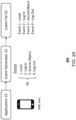
- FIG 2A illustrates an Event Generator 22 to generate events 50 related to access and usage of the authenticator device 5 by the one or more apps 15 executing on the endpoint.
- the events 50 for a particular application, or app use scenario, are collected and contained in an event file 25.
- the Event Viewer 23 makes visible events 50 related to certificate based PKI authenticator device interactions with the one or more apps 15.
- the Middleware 14 is aware of the caller application, and so it can report what applications are invoking or using the device drivers 11 and/or dynamic link libraries 21.
- the Middleware 14 generates verbose events 50 on authenticator device 5 interactions using Public Key Cryptography Standards (PKCS) #11, Cryptographic Service Provider (CSP), Key Storage Provider (KSP) or Minidriver interfaces.
- PKCS Public Key Cryptography Standards
- CSP Cryptographic Service Provider
- KSP Key Storage Provider
- API Application Programming Interface
- the event generator 50 includes a first part 1 for caller analytics to evaluate all details about the caller application, and a second part 2 for interactions with the smart card.
- the interactions may be one among a Login, a Logout, Read, Write, Encrypt, and Decrypt.
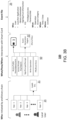
- FIG 2B correspondingly illustrates exemplary event generation components in accordance with an embodiment.
- system information 51, consumer application information 52, and smart card usage information 53 are reported for the load event 1.
- these information groups are reported for the log-in (event 2), access object (event 3), and log out (event 4). They are also available to show to the local user to visualize use of his/her smart card, where the intention is to make the user aware of any misuse of their authenticator device 5 (e.g. smart card, token, etc.).
- Part-1 and 2 are also sent to the server for visualization and analytics reporting to admin and security teams on the server side.
- FIG. 3A illustrates a work-flow diagram for event 50 generation on the end-point 10 at a local side coupled with event reception and analysis on the server side in accordance with one embodiment.
- the events 50 are formatted (e.g., XML) and compressed before the event uploader 24 shares them with the middleware web server 30.
- the event receiver 31 processes the events 50 as received and then parses them by way of the parser 32, which are then stored in the database 40.
- the Analytics Engine 48 identifies a list of Uniform Resource Locator (URLs) configured for client authentication that read the authenticator device 5 via a trusted or untrusted browser; and reports which URLS to block based on identified anomalies and patterns in user or attacker usage statistics on the authenticator device 5. For example, it correlates events 50 for key logging when a user or attacker enters a Personal Identification Number (PIN), including login state for single sign on (SSO), number of wrong PIN attempts, and Denial of Service (DOS) for invalid PIN attacks to block PIN entry. It will also list the URLs engaging in client authentication and accessing the smart card, for example, public information.
- PIN Personal Identification Number
- SSO single sign on
- DOS Denial of Service
- FIG. 3B illustrates an event generation example 320 related to PKI based Multi-Factor Authentication (MFA) on a smartcard (authenticator device 5).
- MFA Multi-Factor Authentication
- one or more apps may be executing on the same endpoint 10 device (laptop, phone, smart card reader, etc.) using the same authenticator device 5 (smart card), and/or one or more apps on different endpoint 10 devices each with their own authenticator devices connected.
- the system identifies the endpoint 10 along with who initiated the application(s) using the authenticator device(s) 5 (e.g. smart card), and the what/how/when interaction with the smart card, and which applications 15 loaded the DLL, for example.
- the interactions are available from the DLL that is loaded 21, which was custom configured for this event reporting activity.
- the event generation engine 22 (which may be part of the DLL, or an OS extension) reports how and what the smart card was used for (e.g. encryption, decryption, which certificates uses/accessed, private/public key pairs, read/write, signatures, access category, other operations, etc.), when the smart card was used (e.g. date, time, etc.) and where it was used (e.g., GPS location, etc.) among other information.
- the event file 25 contains the information necessary to know who launched the application, and other related information, such as, binary application info (such as the signature or app certificate), the process identifier (PID) assigned by the OS 13 and any related privileges or access, and child/parent processes.
- FIG. 4 illustrates a generic example of an event report 400 for targeted threats and attacks on an end-point communicatively coupled to an authenticator device providing PKI based Multi-Factor Authentication (MFA) in accordance with one embodiment.
- the report 400 identifies, among other information, the application name with an indication level (e.g. good app, bad app, questionable app, non-registered app, unlicensed app, etc.) for each activity/use of the respective authenticator device (e.g. smartcard, eToken, USB dongle), and event information, such as when the DLL was loaded, whether it succeeded/failed at loading, who/when a user logged in/out and whether it succeeded/failed, what operations were performed with the authenticator device (e.g. key hash), and any other PKI based interaction/activity with the authenticator device.
- an indication level e.g. good app, bad app, questionable app, non-registered app, unlicensed app, etc.
- event information such as when the D
- the report 400 includes information on user behaviors, for example, where/when the user launches applications, extent of PIN activity (e.g. mode, median, average: X times a day), if there is frequent usage during holidays, whether the smart Card is continually or only occasionally plugged in, the number or activity related to infrequent PIN retries, whether multiple cards are used by the same app or different apps on same system, whether different cards are accessed on same system, whether the card is accessed via remote desktop (RDP usage), and keeping track of logins to remote machines using the smart card. It also includes reporting/analysis of application behaviors, for example, which applications are using the smart card, which objects are traversed (e.g. certs, keys, hashes, signatures, etc.) during smart card use, and other related activities such as login and logout, and encrypt/decrypt operations with the smart card.
- extent of PIN activity e.g. mode, median, average: X times a day
- RDP usage remote desktop
- FIG. 5 depicts an alert mechanism reporting environment 500 based on event threat analysis. Administrators need to know what applications are allowed or which all apps are not allowed.
- the environment 500 makes visible to system administrators all events related to user and attacker interactions with all applications and respective authenticator devices in accordance with one embodiment. Unknown application need to be identified and blocked by other means in corporate network.
- a list of applications interacting with smart cards (or other authentictor device) are consolidated. It provides for reporting of behavioral analysis of the user, for example, what are the daily/weekly usage pattern by a specific user. It identifies anomalies or anti patterns in the usage behavior, thereby allowing the admin to investigate the circumstances; information previously discussed with the exemplary report 400.
- Information Technology (IT) admin/security team receives visibility on every action happening on every endpoint 10 that is using an authenticator device 5 leveraging the middleware 14.
- Every activity happening at/on the endpoint 10 related to that smart card public/private keys/objects can be monitored on the server side, and the analytics and algorithms can help to detect unwanted usage of the smart card and behavior pattern of the users.
- the system identifies a list of URLs configured for client authentication, which can read card via trusted browser applications. In this way, admin can review those URLs, and can block its usage if required by other means. Also, the user is also informed of any suspicious activity by other apps using the smart card as an additional precaution, whereby the user can elect to remove the smart card in response.
- the environment 500 is able to generate PKI based events 50 with all the relevant information for all endpoints 10 using authenticator devices 5. It collects all relevant information when producing the real-time report 400 and detects if there is any misuse of authorized smart cards happening inside the organization at the respective endpoints. All approval, denial, and other interaction activities and attempts with the authenticator device 5 are logged into the database. This includes binary/user details, the timestamp and the binary reputation to help the CISO team to detect end-point use scenario anomalies. It provides for full visibility of the threats targeting smart card based authentication and access management, while monitoring all access attempt of the private/public keys or smart card usage on local machine.
- a first benefit is that the IT Admin or the Security team will be able to find anomalies on end points being authenticated or denied for any smart card based workflow. They can find the end-point where private keys are being accessed beyond the permitted scope.
- the system admin can see all the systems where an unknown application interacting with card, admin can take action to mitigate the threat at organization level. This allows them to know if there are targeted attacks happening to bypass or compromise MFA to gain access to the IP.
- a second benefit is that it provides visibility to the local user about the live and logs of all smart card interactions. This helps the local user to know whenever their private key or any critical smart card operation is occurring. This permits the user to silently disconnect the token whenever they are informed that a suspect attacker is accessing/using the smart card. It is also applicable to hardware level innovations leveraging touch sense tokens, which waits for user to touch the token for any private key operation. Such interactions are also monitored, analyzed and visualized.
- FIG. 6 depicts an exemplary diagrammatic representation of a machine 600 and hardware platform suitable for use to perform the methods and steps exemplified above in system 100 and the components therein in accordance with various embodiments.
- method steps and operations of the Event Generator 22, Event Viewer 33 and Event Uploader 24 on the local side, and/or the Event Receiver 31, Event Parser 32 and Event Viewer 33 and Analytics Engine 48 may be performed by a hardware processor of the machine 600 executing computer program code instructions (from software) from an electronic memory to execute the method steps.
- At least one a hardware processor of machine 600 can execute computer program code instructions from an electronic memory to execute processes above.
- the machine 600 is shown in the form of a computer system within which a set of instructions, when executed, may cause the machine to perform any one or more of the methodologies discussed above.
- the machine operates as a standalone device, such as a computer, laptop, mobile device, remote control, or display.
- the machine may be connected over the network to other machines.
- the machine may operate in the capacity of a server or a client user machine in server-client user network environment, or as a peer machine in a peer-to-peer, or distributed, network environment.
- the machine may comprise a server computer, a client user computer, a personal computer (PC), a tablet PC, a laptop computer, a desktop computer, a mobile device, a cell phone, a control system, a network router, switch or bridge, or any machine capable of executing a set of instructions (sequential or otherwise) that specify actions to be taken by that machine.
- a device of the present disclosure includes broadly any electronic device that provides voice, video or data communication.
- the term "machine” shall also be taken to include any collection of machines that individually or jointly execute a set (or multiple sets) of instructions to perform any one or more of the methodologies discussed herein.
- the computer system 600 may include a processor 602 (e.g., a central processing unit (CPU), a graphics processing unit (GPU, or both), a main memory 604 and a static memory 606, which communicate with each other via a bus 608.
- the computer system 600 may further include a video display unit 610 (e.g., a liquid crystal display or LCD), a flat panel, a solid state display, or a cathode ray tube (CRT)).
- the computer system 600 may include an input device 612 (e.g., a keyboard, touchless sensing unit 110), a cursor control device 614 (e.g., a mouse, keyboard), a disk drive unit 616, a signal generation device 618 (e.g., a speaker or remote control) and a network interface device 620.
- an input device 612 e.g., a keyboard, touchless sensing unit 110
- a cursor control device 614 e.g., a mouse, keyboard
- a disk drive unit 616 e.g., a disk drive unit 616
- a signal generation device 618 e.g., a speaker or remote control
- conjunctive lists make use of a comma, which may be known as an Oxford comma, a Harvard comma, a serial comma, or another like term. Such lists are intended to connect words, clauses or sentences such that the thing following the comma is also included in the list.
- each computing device or processor may be transformed from a generic and unspecific computing device or processor to a combination device comprising hardware and software configured for a specific and particular purpose providing more than conventional functions and solving a particular technical problem with a particular technical solution.
- a generic and unspecific computing device or processor to a combination device comprising hardware and software configured for a specific and particular purpose providing more than conventional functions and solving a particular technical problem with a particular technical solution.
Landscapes
- Engineering & Computer Science (AREA)
- Computer Security & Cryptography (AREA)
- Computer Networks & Wireless Communication (AREA)
- Signal Processing (AREA)
- Theoretical Computer Science (AREA)
- Computer Hardware Design (AREA)
- Physics & Mathematics (AREA)
- General Engineering & Computer Science (AREA)
- Software Systems (AREA)
- General Physics & Mathematics (AREA)
- Mathematical Physics (AREA)
- Computing Systems (AREA)
- Storage Device Security (AREA)
Priority Applications (4)
| Application Number | Priority Date | Filing Date | Title |
|---|---|---|---|
| EP22193308.8A EP4332802A1 (de) | 2022-08-31 | 2022-08-31 | Bedrohungsdetektion und endpunktverwendungssichtbarkeit für pki-chipkarte |
| US19/106,251 US20260089014A1 (en) | 2022-08-31 | 2023-08-16 | Pki smart-card threat detection and endpoint use visibility |
| EP23764492.7A EP4581505A1 (de) | 2022-08-31 | 2023-08-16 | Pki-chipkartenbedrohungserkennung und endpunktnutzungssichtbarkeit |
| PCT/US2023/030302 WO2024049637A1 (en) | 2022-08-31 | 2023-08-16 | Pki smart-card threat detection and endpoint use visibility |
Applications Claiming Priority (1)
| Application Number | Priority Date | Filing Date | Title |
|---|---|---|---|
| EP22193308.8A EP4332802A1 (de) | 2022-08-31 | 2022-08-31 | Bedrohungsdetektion und endpunktverwendungssichtbarkeit für pki-chipkarte |
Publications (1)
| Publication Number | Publication Date |
|---|---|
| EP4332802A1 true EP4332802A1 (de) | 2024-03-06 |
Family
ID=83192069
Family Applications (2)
| Application Number | Title | Priority Date | Filing Date |
|---|---|---|---|
| EP22193308.8A Withdrawn EP4332802A1 (de) | 2022-08-31 | 2022-08-31 | Bedrohungsdetektion und endpunktverwendungssichtbarkeit für pki-chipkarte |
| EP23764492.7A Pending EP4581505A1 (de) | 2022-08-31 | 2023-08-16 | Pki-chipkartenbedrohungserkennung und endpunktnutzungssichtbarkeit |
Family Applications After (1)
| Application Number | Title | Priority Date | Filing Date |
|---|---|---|---|
| EP23764492.7A Pending EP4581505A1 (de) | 2022-08-31 | 2023-08-16 | Pki-chipkartenbedrohungserkennung und endpunktnutzungssichtbarkeit |
Country Status (3)
| Country | Link |
|---|---|
| US (1) | US20260089014A1 (de) |
| EP (2) | EP4332802A1 (de) |
| WO (1) | WO2024049637A1 (de) |
Citations (3)
| Publication number | Priority date | Publication date | Assignee | Title |
|---|---|---|---|---|
| US20140337862A1 (en) * | 2012-05-14 | 2014-11-13 | Qualcomm Incorporated | Methods, Devices, and Systems for Communicating Behavioral Analysis Information |
| US10063579B1 (en) * | 2016-06-29 | 2018-08-28 | EMC IP Holding Company LLC | Embedding the capability to track user interactions with an application and analyzing user behavior to detect and prevent fraud |
| EP4009586A1 (de) * | 2020-12-07 | 2022-06-08 | Deutsche Telekom AG | System und verfahren zur automatischen neutralisierung von malware |
Family Cites Families (7)
| Publication number | Priority date | Publication date | Assignee | Title |
|---|---|---|---|---|
| WO2006033727A2 (en) * | 2004-08-17 | 2006-03-30 | Mastercard International Incorporated | Compliance assessment and security testing of smart cards |
| WO2006061754A1 (en) * | 2004-12-07 | 2006-06-15 | Philips Intellectual Property & Standards Gmbh | System and method for application management on multi-application smart cards |
| US8856024B2 (en) * | 2010-10-26 | 2014-10-07 | Cubic Corporation | Determining companion and joint cards in transit |
| US9471778B1 (en) * | 2015-11-30 | 2016-10-18 | International Business Machines Corporation | Automatic baselining of anomalous event activity in time series data |
| US10536478B2 (en) * | 2016-02-26 | 2020-01-14 | Oracle International Corporation | Techniques for discovering and managing security of applications |
| US20180255076A1 (en) * | 2017-03-02 | 2018-09-06 | ResponSight Pty Ltd | System and Method for Cyber Security Threat Detection |
| US12113830B2 (en) * | 2021-03-30 | 2024-10-08 | Cisco Technology, Inc. | Frictionless supplementary multi-factor authentication for sensitive transactions within an application session |
-
2022
- 2022-08-31 EP EP22193308.8A patent/EP4332802A1/de not_active Withdrawn
-
2023
- 2023-08-16 EP EP23764492.7A patent/EP4581505A1/de active Pending
- 2023-08-16 WO PCT/US2023/030302 patent/WO2024049637A1/en not_active Ceased
- 2023-08-16 US US19/106,251 patent/US20260089014A1/en active Pending
Patent Citations (3)
| Publication number | Priority date | Publication date | Assignee | Title |
|---|---|---|---|---|
| US20140337862A1 (en) * | 2012-05-14 | 2014-11-13 | Qualcomm Incorporated | Methods, Devices, and Systems for Communicating Behavioral Analysis Information |
| US10063579B1 (en) * | 2016-06-29 | 2018-08-28 | EMC IP Holding Company LLC | Embedding the capability to track user interactions with an application and analyzing user behavior to detect and prevent fraud |
| EP4009586A1 (de) * | 2020-12-07 | 2022-06-08 | Deutsche Telekom AG | System und verfahren zur automatischen neutralisierung von malware |
Also Published As
| Publication number | Publication date |
|---|---|
| US20260089014A1 (en) | 2026-03-26 |
| EP4581505A1 (de) | 2025-07-09 |
| WO2024049637A1 (en) | 2024-03-07 |
Similar Documents
| Publication | Publication Date | Title |
|---|---|---|
| US11784823B2 (en) | Object signing within a cloud-based architecture | |
| US11469976B2 (en) | System and method for cloud-based control-plane event monitor | |
| US10673866B2 (en) | Cross-account role management | |
| CN113841145A (zh) | 抑制集成、隔离应用中的勒索软件 | |
| AU2023378741A1 (en) | Techniques for unifying multiple identity clouds | |
| Sehgal et al. | A cross section of the issues and research activities related to both information security and cloud computing | |
| US20220376919A1 (en) | Blockchain-enabled secure messaging system, device, and method using blockchain validation and biometric authentication | |
| US12567967B2 (en) | Systems and methods for scheduling actions in remote networking environments while minimizing exposure of secured access credentials | |
| US11665166B2 (en) | Secure computing platform | |
| US11968202B2 (en) | Secure authentication in adverse environments | |
| Module | Trusted platform module | |
| Gowda et al. | Data breach as a threat in the banking sector and steps to avoid it | |
| US20150172310A1 (en) | Method and system to identify key logging activities | |
| Weigold et al. | Remote client authentication | |
| US20220150277A1 (en) | Malware detonation | |
| US20260089014A1 (en) | Pki smart-card threat detection and endpoint use visibility | |
| Simpson et al. | Secure Identity for Enterprises. | |
| EP4357948A1 (de) | Verfahren und system zur verringerung des missbrauchs einer authentifizierungsvorrichtung | |
| Alhenaki et al. | A Survey on the Cloud Computing Security | |
| Haber et al. | Evolving Identity Security Threats | |
| Thanki et al. | Online Banking Operating Pattern and Risk of Cyber Fraud-Findings from Empirical Research | |
| Berrezzouq et al. | Issues and threats of data stored in cloud | |
| Petracca et al. | Regulating Access to System Sensors in Cooperating Programs | |
| Mooney et al. | Your guide to authenticating mobile devices | |
| Shaikh | Defending Cross-Site Request Forgery (CSRF) Attacks on Web Applications |
Legal Events
| Date | Code | Title | Description |
|---|---|---|---|
| PUAI | Public reference made under article 153(3) epc to a published international application that has entered the european phase |
Free format text: ORIGINAL CODE: 0009012 |
|
| STAA | Information on the status of an ep patent application or granted ep patent |
Free format text: STATUS: THE APPLICATION HAS BEEN PUBLISHED |
|
| AK | Designated contracting states |
Kind code of ref document: A1 Designated state(s): AL AT BE BG CH CY CZ DE DK EE ES FI FR GB GR HR HU IE IS IT LI LT LU LV MC MK MT NL NO PL PT RO RS SE SI SK SM TR |
|
| STAA | Information on the status of an ep patent application or granted ep patent |
Free format text: STATUS: THE APPLICATION IS DEEMED TO BE WITHDRAWN |
|
| 18D | Application deemed to be withdrawn |
Effective date: 20240907 |