EP4332045A1 - Elevator load bearing member with conductive adhesive - Google Patents
Elevator load bearing member with conductive adhesive Download PDFInfo
- Publication number
- EP4332045A1 EP4332045A1 EP22208646.4A EP22208646A EP4332045A1 EP 4332045 A1 EP4332045 A1 EP 4332045A1 EP 22208646 A EP22208646 A EP 22208646A EP 4332045 A1 EP4332045 A1 EP 4332045A1
- Authority
- EP
- European Patent Office
- Prior art keywords
- polymer
- wires
- load bearing
- bearing member
- conductive adhesive
- Prior art date
- Legal status (The legal status is an assumption and is not a legal conclusion. Google has not performed a legal analysis and makes no representation as to the accuracy of the status listed.)
- Granted
Links
Images
Classifications
-
- B—PERFORMING OPERATIONS; TRANSPORTING
- B66—HOISTING; LIFTING; HAULING
- B66B—ELEVATORS; ESCALATORS OR MOVING WALKWAYS
- B66B11/00—Main component parts of lifts in, or associated with, buildings or other structures
- B66B11/0065—Roping
-
- B—PERFORMING OPERATIONS; TRANSPORTING
- B66—HOISTING; LIFTING; HAULING
- B66B—ELEVATORS; ESCALATORS OR MOVING WALKWAYS
- B66B7/00—Other common features of elevators
- B66B7/06—Arrangements of ropes or cables
-
- B—PERFORMING OPERATIONS; TRANSPORTING
- B66—HOISTING; LIFTING; HAULING
- B66B—ELEVATORS; ESCALATORS OR MOVING WALKWAYS
- B66B7/00—Other common features of elevators
- B66B7/06—Arrangements of ropes or cables
- B66B7/064—Power supply or signal cables
-
- B—PERFORMING OPERATIONS; TRANSPORTING
- B66—HOISTING; LIFTING; HAULING
- B66B—ELEVATORS; ESCALATORS OR MOVING WALKWAYS
- B66B7/00—Other common features of elevators
- B66B7/12—Checking, lubricating, or cleaning means for ropes, cables or guides
- B66B7/1207—Checking means
- B66B7/1215—Checking means specially adapted for ropes or cables
- B66B7/1223—Checking means specially adapted for ropes or cables by analysing electric variables
-
- D—TEXTILES; PAPER
- D07—ROPES; CABLES OTHER THAN ELECTRIC
- D07B—ROPES OR CABLES IN GENERAL
- D07B1/00—Constructional features of ropes or cables
- D07B1/06—Ropes or cables built-up from metal wires, e.g. of section wires around a hemp core
-
- D—TEXTILES; PAPER
- D07—ROPES; CABLES OTHER THAN ELECTRIC
- D07B—ROPES OR CABLES IN GENERAL
- D07B1/00—Constructional features of ropes or cables
- D07B1/14—Ropes or cables with incorporated auxiliary elements, e.g. for marking, extending throughout the length of the rope or cable
- D07B1/141—Ropes or cables with incorporated auxiliary elements, e.g. for marking, extending throughout the length of the rope or cable comprising liquid, pasty or powder agents, e.g. lubricants or anti-corrosive oils or greases
-
- D—TEXTILES; PAPER
- D07—ROPES; CABLES OTHER THAN ELECTRIC
- D07B—ROPES OR CABLES IN GENERAL
- D07B1/00—Constructional features of ropes or cables
- D07B1/14—Ropes or cables with incorporated auxiliary elements, e.g. for marking, extending throughout the length of the rope or cable
- D07B1/145—Ropes or cables with incorporated auxiliary elements, e.g. for marking, extending throughout the length of the rope or cable comprising elements for indicating or detecting the rope or cable status
-
- D—TEXTILES; PAPER
- D07—ROPES; CABLES OTHER THAN ELECTRIC
- D07B—ROPES OR CABLES IN GENERAL
- D07B1/00—Constructional features of ropes or cables
- D07B1/16—Ropes or cables with an enveloping sheathing or inlays of rubber or plastics
- D07B1/162—Ropes or cables with an enveloping sheathing or inlays of rubber or plastics characterised by a plastic or rubber enveloping sheathing
-
- H—ELECTRICITY
- H01—ELECTRIC ELEMENTS
- H01B—CABLES; CONDUCTORS; INSULATORS; SELECTION OF MATERIALS FOR THEIR CONDUCTIVE, INSULATING OR DIELECTRIC PROPERTIES
- H01B1/00—Conductors or conductive bodies characterised by the conductive materials; Selection of materials as conductors
- H01B1/20—Conductive material dispersed in non-conductive organic material
- H01B1/22—Conductive material dispersed in non-conductive organic material the conductive material comprising metals or alloys
-
- H—ELECTRICITY
- H01—ELECTRIC ELEMENTS
- H01B—CABLES; CONDUCTORS; INSULATORS; SELECTION OF MATERIALS FOR THEIR CONDUCTIVE, INSULATING OR DIELECTRIC PROPERTIES
- H01B1/00—Conductors or conductive bodies characterised by the conductive materials; Selection of materials as conductors
- H01B1/20—Conductive material dispersed in non-conductive organic material
- H01B1/24—Conductive material dispersed in non-conductive organic material the conductive material comprising carbon-silicon compounds, carbon or silicon
-
- H—ELECTRICITY
- H01—ELECTRIC ELEMENTS
- H01B—CABLES; CONDUCTORS; INSULATORS; SELECTION OF MATERIALS FOR THEIR CONDUCTIVE, INSULATING OR DIELECTRIC PROPERTIES
- H01B5/00—Non-insulated conductors or conductive bodies characterised by their form
- H01B5/14—Non-insulated conductors or conductive bodies characterised by their form comprising conductive layers or films on insulating-supports
-
- B—PERFORMING OPERATIONS; TRANSPORTING
- B66—HOISTING; LIFTING; HAULING
- B66B—ELEVATORS; ESCALATORS OR MOVING WALKWAYS
- B66B5/00—Applications of checking, fault-correcting, or safety devices in elevators
- B66B5/0006—Monitoring devices or performance analysers
- B66B5/0018—Devices monitoring the operating condition of the elevator system
-
- C—CHEMISTRY; METALLURGY
- C09—DYES; PAINTS; POLISHES; NATURAL RESINS; ADHESIVES; COMPOSITIONS NOT OTHERWISE PROVIDED FOR; APPLICATIONS OF MATERIALS NOT OTHERWISE PROVIDED FOR
- C09J—ADHESIVES; NON-MECHANICAL ASPECTS OF ADHESIVE PROCESSES IN GENERAL; ADHESIVE PROCESSES NOT PROVIDED FOR ELSEWHERE; USE OF MATERIALS AS ADHESIVES
- C09J2301/00—Additional features of adhesives in the form of films or foils
- C09J2301/40—Additional features of adhesives in the form of films or foils characterized by the presence of essential components
- C09J2301/408—Additional features of adhesives in the form of films or foils characterized by the presence of essential components additives as essential feature of the adhesive layer
-
- C—CHEMISTRY; METALLURGY
- C09—DYES; PAINTS; POLISHES; NATURAL RESINS; ADHESIVES; COMPOSITIONS NOT OTHERWISE PROVIDED FOR; APPLICATIONS OF MATERIALS NOT OTHERWISE PROVIDED FOR
- C09J—ADHESIVES; NON-MECHANICAL ASPECTS OF ADHESIVE PROCESSES IN GENERAL; ADHESIVE PROCESSES NOT PROVIDED FOR ELSEWHERE; USE OF MATERIALS AS ADHESIVES
- C09J9/00—Adhesives characterised by their physical nature or the effects produced, e.g. glue sticks
- C09J9/02—Electrically-conducting adhesives
-
- D—TEXTILES; PAPER
- D07—ROPES; CABLES OTHER THAN ELECTRIC
- D07B—ROPES OR CABLES IN GENERAL
- D07B1/00—Constructional features of ropes or cables
- D07B1/06—Ropes or cables built-up from metal wires, e.g. of section wires around a hemp core
- D07B1/0606—Reinforcing cords for rubber or plastic articles
- D07B1/0613—Reinforcing cords for rubber or plastic articles the reinforcing cords being characterised by the rope configuration
-
- D—TEXTILES; PAPER
- D07—ROPES; CABLES OTHER THAN ELECTRIC
- D07B—ROPES OR CABLES IN GENERAL
- D07B1/00—Constructional features of ropes or cables
- D07B1/06—Ropes or cables built-up from metal wires, e.g. of section wires around a hemp core
- D07B1/0606—Reinforcing cords for rubber or plastic articles
- D07B1/062—Reinforcing cords for rubber or plastic articles the reinforcing cords being characterised by the strand configuration
-
- D—TEXTILES; PAPER
- D07—ROPES; CABLES OTHER THAN ELECTRIC
- D07B—ROPES OR CABLES IN GENERAL
- D07B2201/00—Ropes or cables
- D07B2201/20—Rope or cable components
- D07B2201/2001—Wires or filaments
- D07B2201/201—Wires or filaments characterised by a coating
- D07B2201/2012—Wires or filaments characterised by a coating comprising polymers
-
- D—TEXTILES; PAPER
- D07—ROPES; CABLES OTHER THAN ELECTRIC
- D07B—ROPES OR CABLES IN GENERAL
- D07B2205/00—Rope or cable materials
- D07B2205/30—Inorganic materials
- D07B2205/3021—Metals
- D07B2205/306—Aluminium (Al)
-
- D—TEXTILES; PAPER
- D07—ROPES; CABLES OTHER THAN ELECTRIC
- D07B—ROPES OR CABLES IN GENERAL
- D07B2301/00—Controls
- D07B2301/45—Controls for diagnosing
-
- D—TEXTILES; PAPER
- D07—ROPES; CABLES OTHER THAN ELECTRIC
- D07B—ROPES OR CABLES IN GENERAL
- D07B2301/00—Controls
- D07B2301/55—Sensors
- D07B2301/5531—Sensors using electric means or elements
- D07B2301/554—Sensors using electric means or elements for measuring variable resistance
-
- D—TEXTILES; PAPER
- D07—ROPES; CABLES OTHER THAN ELECTRIC
- D07B—ROPES OR CABLES IN GENERAL
- D07B2501/00—Application field
- D07B2501/20—Application field related to ropes or cables
- D07B2501/2007—Elevators
Definitions
- a variety of elevator systems are known. Some elevator systems use a hydraulic arrangement for moving the elevator car. Others are traction-based and include roping that suspends the elevator car and a counterweight. A machine causes movement of a traction sheave that, in turn, causes movement of the roping for moving the elevator car as desired.
- An elevator load bearing member e.g. an elevator bearing member made via the method herein described, among other possible things includes a plurality of wires, e.g. load bearing wires, a polymer-based conductive adhesive coating on each of the plurality of the wires, and a jacket surrounding the wires. The jacket is adhered to the wires by the polymer-based conductive adhesive coating.
- the polymer-based conductive adhesive comprises an intrinsically conductive polymer.
- the intrinsically conductive polymer includes at least one of polyacetylene (PA), polyaniline (PAni), polypyrrole (PPy), polythiophere (PTh), poly(3,4-ethylene-dioxythiophene), PEDOT, and poly(phenylvinylene) (PPV).
- PA polyacetylene
- PAni polyaniline
- PPy polypyrrole
- PTh polythiophere
- PEDOT poly(3,4-ethylene-dioxythiophene)
- PEDOT poly(phenylvinylene)
- the intrinsically conductive polymer is functionalized to facilitate the adhesion of the jacket to the wires.
- the polymer-based conductive adhesive includes a non-conductive polymer adhesive and a conductive element.
- the conductive element includes at least one of carbon nanotubes, graphene, and metal powder.
- the nonconductive polymer adhesive includes at least one of an epoxy, a urethane, or an acrylate.
- the polymer-based conductive element comprises less than about 5% by weight of the conductive element.
- the polymer-based conductive adhesive comprises less than about 5% by weight of the conductive element.
- the conductive element comprises between about 0.5% and about 1% by weight of the polymer-based conductive adhesive.
- an electrical conductivity of the polymer-based conductive adhesive is at least about 10 siemens.
- the plurality of load bearing wires are steel wires.
- a method of making a load bearing member for an elevator system includes applying a polymer-based conductive adhesive coating onto a plurality of wires, e.g. load bearing wires, such that the polymer-based conductive adhesive facilitates electrical conduction between the wires, and surrounding the plurality of wires with a jacket, wherein the jacket is adhered to the wires by the polymer-based conductive adhesive.
- the polymer-based conductive adhesive comprises an intrinsically conductive polymer.
- the method also includes functionalizing the intrinsically conductive polymer to facilitate the adhesion of the jacket to the wires.
- the polymer-based conductive adhesive includes a non-conductive polymer adhesive and a conductive element.
- the conductive element includes at least one of carbon nanotubes, graphene, and metal powder.
- the polymer-based conductive element comprises less than about 5% by weight of the conductive element.
- the polymer-based conductive adhesive comprises less than about 5% by weight of the conductive element.
- the conductive element comprises between about 0.5% and about 1% by weight of the polymer-based conductive adhesive.
- an electrical conductivity of the polymer-based conductive adhesive is at least about 10 siemens.
- the plurality of wires are steel wires.
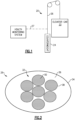
- FIG 1 schematically shows selected portions of an elevator system 20.
- An elevator car 22 and counterweight 24 are suspended by a load bearing member 26.
- a traction sheave associated with a machine selectively controls movement of the load bearing member 26 to control the movement or position of the elevator car 22.
- a single load bearing member 26 is represented in Figure 1 . Multiple load bearing members would be included in many embodiments.
- FIG 2 schematically illustrates an example load bearing member 26 including a plurality of load bearing wires 30 arranged in a bundle 32.
- the wires 30 may be wrapped or twisted around one another within the bundle 32. Though one bundle 32 is shown in Figure 2 , it should be understood that multiple bundles 32 could be used within the load bearing member 26.
- the bundles may be wrapped or twisted around one another to form one or more cords.
- the wires 30 may comprise a variety of materials that are useful for supporting the loads of the elevator system 20, such as steel or aluminum and alloys thereof.
- the bundle 32 is surrounded by a jacket 34.
- the jacket 34 includes an inner portion or layer 36 that is received against the cords 30.
- the inner portion 36 comprises a compressible material such as polyurethane, polyamide, polyester, or ethylene propylene diene monomer rubber (EPDM), or combinations thereof.
- the elevator system also includes a health monitoring system 27, schematically shown in Figure 1 .
- the health monitoring system 27 monitors the health of the load bearing member 26.
- Such health monitoring systems are known in the art, but in general, the wires 30 in the load-bearing member 26 form a circuit.
- the health monitoring system 27 compares a resistance measured within the circuit to an expected resistance for the circuit. If there is a discrepancy between the measured and expected resistance, it could indicate a fault in the load bearing member 26.
- Each of the wires 30 include a conductive adhesive coating 38.
- the conductive adhesive coating 38 adheres the wires 30 to one another and to the inner layer 36 of the jacket 34. Adequate adhesion is particularly important between the wires 30 and the jacket 34 to maintain the integrity of the load-bearing member 26 and prevent the wires 30 from debonding and/or pulling out from the jacket 34 and maintain the required tensile strength for the loadbearing member 26.
- the conductive adhesive coating 38 also facilitates formation of the circuit discussed above for the health monitoring system 27. In other words, the conductive adhesive coating 38 facilitates electrical conduction between the individual wires 30. In general, the conductive adhesive coating 38 has an electrical conductivity of at least 10 siemens.
- the conductive adhesive coating 38 may also provide corrosion protection to the wires 30, in some examples.
- the conductive adhesive coating 38 is a polymer-based adhesive coating with a conductive element.
- the conductive adhesive coating 38 comprises a polymer that is intrinsically conductive, such as polyacetylene (PA), polyaniline (PAni), polypyrrole (PPy), polythiophere (PTh), poly(3,4-ethylene-dioxythiophene), PEDOT, or poly(phenylvinylene) (PPV). That is, the intrinsically conductive polymer is itself the conductive element in this example.
- the intrinsically conductive polymer can be applied to the wires 30 by any suitable method such as painting, spraying, dipping, etc.
- the intrinsically conductive polymer is functionalized according to any known method to improve its adhesive properties.
- the conductive adhesive coating 38 is polymeric composite material that includes a non-conductive polymeric adhesive and a conductive element.
- Polymer composites are well known in the art and the composite can be made by any suitable method of combining the non-conductive polymeric adhesive with the conductive element. Any known non-conductive polymeric adhesive such as epoxies, urethanes, or acrylates could be used.
- any suitable conductive elements such as carbon nanotubes, graphene, or metal powder could be used.
- the polymeric composite material e.g. the polymer-based conductive adhesive
- the polymeric composite material comprises less than about 5% by weight of the conductive element.
- the polymeric composite material e.g. the polymer-based conductive adhesive
Landscapes
- Chemical & Material Sciences (AREA)
- Physics & Mathematics (AREA)
- Spectroscopy & Molecular Physics (AREA)
- Dispersion Chemistry (AREA)
- Structural Engineering (AREA)
- Engineering & Computer Science (AREA)
- Mechanical Engineering (AREA)
- Civil Engineering (AREA)
- Oil, Petroleum & Natural Gas (AREA)
- Lift-Guide Devices, And Elevator Ropes And Cables (AREA)
- Organic Chemistry (AREA)
- Adhesives Or Adhesive Processes (AREA)
- Inorganic Chemistry (AREA)
Abstract
Description
- A variety of elevator systems are known. Some elevator systems use a hydraulic arrangement for moving the elevator car. Others are traction-based and include roping that suspends the elevator car and a counterweight. A machine causes movement of a traction sheave that, in turn, causes movement of the roping for moving the elevator car as desired.
- Advancements have been made in monitoring systems for monitoring the health of the elevator system. Some of these health monitoring systems utilize the roping, which is more generally a load-bearing member of the elevator system. Even with the advancement, those skilled in the art have been striving to improve elevator load bearing member technology.
- An elevator load bearing member according to an exemplary embodiment of this disclosure, e.g. an elevator bearing member made via the method herein described, among other possible things includes a plurality of wires, e.g. load bearing wires, a polymer-based conductive adhesive coating on each of the plurality of the wires, and a jacket surrounding the wires. The jacket is adhered to the wires by the polymer-based conductive adhesive coating.
- In a further example of the foregoing, the polymer-based conductive adhesive comprises an intrinsically conductive polymer.
- In a further example of any of the foregoing, the intrinsically conductive polymer includes at least one of polyacetylene (PA), polyaniline (PAni), polypyrrole (PPy), polythiophere (PTh), poly(3,4-ethylene-dioxythiophene), PEDOT, and poly(phenylvinylene) (PPV).
- In a further example of any of the foregoing, the intrinsically conductive polymer is functionalized to facilitate the adhesion of the jacket to the wires.
- In a further example of any of the foregoing, the polymer-based conductive adhesive includes a non-conductive polymer adhesive and a conductive element.
- In a further example of any of the foregoing, the conductive element includes at least one of carbon nanotubes, graphene, and metal powder.
- In a further example of any of the foregoing, the nonconductive polymer adhesive includes at least one of an epoxy, a urethane, or an acrylate.
- In a further example of any of the foregoing, the polymer-based conductive element comprises less than about 5% by weight of the conductive element.
- In a further example of any of the foregoing, the polymer-based conductive adhesive comprises less than about 5% by weight of the conductive element.
- In a further example of any of the foregoing, the conductive element comprises between about 0.5% and about 1% by weight of the polymer-based conductive adhesive.
- In a further example of any of the foregoing, an electrical conductivity of the polymer-based conductive adhesive is at least about 10 siemens.
- In a further example of any of the foregoing, the plurality of load bearing wires are steel wires.
- A method of making a load bearing member for an elevator system, e.g. an elevator load bearing member as herein described, according to an exemplary embodiment of this disclosure, among other possible things includes applying a polymer-based conductive adhesive coating onto a plurality of wires, e.g. load bearing wires, such that the polymer-based conductive adhesive facilitates electrical conduction between the wires, and surrounding the plurality of wires with a jacket, wherein the jacket is adhered to the wires by the polymer-based conductive adhesive.
- In a further example of the foregoing, the polymer-based conductive adhesive comprises an intrinsically conductive polymer.
- In a further example of any of the foregoing, the method also includes functionalizing the intrinsically conductive polymer to facilitate the adhesion of the jacket to the wires.
- In a further example of any of the foregoing, the polymer-based conductive adhesive includes a non-conductive polymer adhesive and a conductive element.
- In a further example of any of the foregoing, the conductive element includes at least one of carbon nanotubes, graphene, and metal powder.
- In a further example of any of the foregoing, the polymer-based conductive element comprises less than about 5% by weight of the conductive element.
- In a further example of any of the foregoing, the polymer-based conductive adhesive comprises less than about 5% by weight of the conductive element.
- In a further example of any of the foregoing, the conductive element comprises between about 0.5% and about 1% by weight of the polymer-based conductive adhesive.
- In a further example of any of the foregoing, an electrical conductivity of the polymer-based conductive adhesive is at least about 10 siemens.
- In a further example of any of the foregoing, the plurality of wires are steel wires.
-
-
Figure 1 schematically illustrates selected portions of an elevator system including a load bearing member designed according to an embodiment of this invention. -
Figure 2 schematically illustrates an example embodiment of an elevator load bearing member. -
Figure 1 schematically shows selected portions of an elevator system 20. Anelevator car 22 andcounterweight 24 are suspended by aload bearing member 26. A traction sheave associated with a machine (not specifically illustrated) selectively controls movement of theload bearing member 26 to control the movement or position of theelevator car 22. For illustration purposes, a singleload bearing member 26 is represented inFigure 1 . Multiple load bearing members would be included in many embodiments. -
Figure 2 schematically illustrates an exampleload bearing member 26 including a plurality ofload bearing wires 30 arranged in abundle 32. Thewires 30 may be wrapped or twisted around one another within thebundle 32. Though onebundle 32 is shown inFigure 2 , it should be understood thatmultiple bundles 32 could be used within theload bearing member 26. The bundles may be wrapped or twisted around one another to form one or more cords. Thewires 30 may comprise a variety of materials that are useful for supporting the loads of the elevator system 20, such as steel or aluminum and alloys thereof. Thebundle 32 is surrounded by ajacket 34. - The
jacket 34 includes an inner portion orlayer 36 that is received against thecords 30. Theinner portion 36 comprises a compressible material such as polyurethane, polyamide, polyester, or ethylene propylene diene monomer rubber (EPDM), or combinations thereof. - With continued reference to
Figure 1 , the elevator system also includes ahealth monitoring system 27, schematically shown inFigure 1 . Thehealth monitoring system 27 monitors the health of theload bearing member 26. Such health monitoring systems are known in the art, but in general, thewires 30 in the load-bearingmember 26 form a circuit. Thehealth monitoring system 27 compares a resistance measured within the circuit to an expected resistance for the circuit. If there is a discrepancy between the measured and expected resistance, it could indicate a fault in theload bearing member 26. - Each of the
wires 30 include a conductiveadhesive coating 38. The conductiveadhesive coating 38 adheres thewires 30 to one another and to theinner layer 36 of thejacket 34. Adequate adhesion is particularly important between thewires 30 and thejacket 34 to maintain the integrity of the load-bearingmember 26 and prevent thewires 30 from debonding and/or pulling out from thejacket 34 and maintain the required tensile strength for theloadbearing member 26. - The conductive
adhesive coating 38 also facilitates formation of the circuit discussed above for thehealth monitoring system 27. In other words, the conductiveadhesive coating 38 facilitates electrical conduction between theindividual wires 30. In general, the conductiveadhesive coating 38 has an electrical conductivity of at least 10 siemens. - The conductive
adhesive coating 38 may also provide corrosion protection to thewires 30, in some examples. - The conductive
adhesive coating 38 is a polymer-based adhesive coating with a conductive element. In one example, the conductiveadhesive coating 38 comprises a polymer that is intrinsically conductive, such as polyacetylene (PA), polyaniline (PAni), polypyrrole (PPy), polythiophere (PTh), poly(3,4-ethylene-dioxythiophene), PEDOT, or poly(phenylvinylene) (PPV). That is, the intrinsically conductive polymer is itself the conductive element in this example. The intrinsically conductive polymer can be applied to thewires 30 by any suitable method such as painting, spraying, dipping, etc. - In some examples, the intrinsically conductive polymer is functionalized according to any known method to improve its adhesive properties.
- In another example the conductive
adhesive coating 38 is polymeric composite material that includes a non-conductive polymeric adhesive and a conductive element. Polymer composites are well known in the art and the composite can be made by any suitable method of combining the non-conductive polymeric adhesive with the conductive element. Any known non-conductive polymeric adhesive such as epoxies, urethanes, or acrylates could be used. - Likewise, any suitable conductive elements, such as carbon nanotubes, graphene, or metal powder could be used. In a particular example, the polymeric composite material (e.g. the polymer-based conductive adhesive) comprises less than about 5% by weight of the conductive element. In a more particular example the polymeric composite material (e.g. the polymer-based conductive adhesive) comprises between about 0.5% and about 1% by weight of the conductive element. In this way, the mechanical and adhesive properties of the conductive
adhesive coating 38 are substantially the same as the properties of the non-conductive polymer adhesive. In other words, the addition of the conductive element does not substantially change the mechanical and adhesive properties of the non-conductive polymer adhesive. - As used herein, the term "about" has the typical meaning in the art, however in a particular example "about" can mean deviations of up to 10% of the values described herein.
- Certain embodiments of the present disclosure are as follows:
- 1. An elevator load bearing member, comprising:
- a plurality of load bearing wires;
- a polymer-based conductive adhesive coating on each of the plurality of the wires; and
- a jacket surrounding the wires, wherein the jacket is adhered to the wires by the polymer-based conductive adhesive coating.
- 2. The elevator load bearing member according to embodiment 1, wherein the polymer-based conductive adhesive comprises an intrinsically conductive polymer.
- 3. The elevator load bearing member according to embodiment 2, wherein the intrinsically conductive polymer includes at least one of polyacetylene (PA), polyaniline (PAni), polypyrrole (PPy), polythiophere (PTh), poly(3,4-ethylene-dioxythiophene), PEDOT, and poly(phenylvinylene) (PPV).
- 4. The elevator load bearing member according to embodiment 2, wherein the intrinsically conductive polymer is functionalized to facilitate the adhesion of the jacket to the wires.
- 5. The elevator load bearing member according to embodiment 1, wherein the polymer-based conductive adhesive includes a non-conductive polymer adhesive and a conductive element.
- 6. The elevator load bearing member according to embodiment 5, wherein the conductive element includes at least one of carbon nanotubes, graphene, and metal powder.
- 7. The elevator load bearing member according to embodiment 5, wherein the nonconductive polymer adhesive includes at least one of an epoxy, a urethane, or an acrylate.
- 8. The elevator load bearing member according to embodiment 5, wherein the polymer-based conductive element comprises less than about 5% by weight of the conductive element.
- 9. The elevator load bearing member according to embodiment 8, wherein the conductive element comprises between about 0.5% and about 1% by weight of the polymer-based conductive adhesive.
- 10. The elevator load bearing member according to embodiment 1, wherein an electrical conductivity of the polymer-based conductive adhesive is at least about 10 siemens.
- 11. The elevator load bearing member according to embodiment 1, wherein the plurality of load bearing wires are steel wires.
- 12. A method of making a load bearing member for an elevator system, comprising:
- applying a polymer-based conductive adhesive coating onto a plurality of wires such that the polymer-based conductive adhesive facilitates electrical conduction between the wires; and
- surrounding the plurality of wires with a jacket, wherein the jacket is adhered to the wires by the polymer-based conductive adhesive.
- 13. The method according to embodiment 12, wherein the polymer-based conductive adhesive comprises an intrinsically conductive polymer.
- 14. The method according to embodiment 13, further comprising functionalizing the intrinsically conductive polymer to facilitate the adhesion of the jacket to the wires.
- 15. The method according to embodiment 12, wherein the polymer-based conductive adhesive includes a non-conductive polymer adhesive and a conductive element.
- 16. The method according to embodiment 15, wherein the conductive element includes at least one of carbon nanotubes, graphene, and metal powder.
- 17. The method according to embodiment 15, wherein the polymer-based conductive element comprises less than about 5% by weight of the conductive element.
- 18. The method according to embodiment 17, wherein the conductive element comprises between about 0.5% and about 1% by weight of the polymer-based conductive adhesive.
- 19. The method according to embodiment 12, wherein an electrical conductivity of the polymer-based conductive adhesive is at least about 10 siemens.
- 20. The method according to embodiment 12, wherein the plurality of wires are steel wires.
- The preceding description is exemplary rather than limiting in nature. Variations and modifications to the disclosed examples may become apparent to those skilled in the art that do not necessarily depart from the essence of this invention. The scope of legal protection given to this invention can only be determined by studying the following claims.
Claims (15)
- An elevator load bearing member, comprising:a plurality of load bearing wires;a polymer-based conductive adhesive coating on each of the plurality of the wires; anda jacket surrounding the wires, wherein the jacket is adhered to the wires by the polymer-based conductive adhesive coating.
- The elevator load bearing member of claim 1, wherein the polymer-based conductive adhesive comprises an intrinsically conductive polymer, said intrinsically conductive polymer optionally being functionalized to facilitate the adhesion of the jacket to the wires.
- The elevator load bearing member of claim 1 or claim 2, wherein the intrinsically conductive polymer includes at least one of polyacetylene (PA), polyaniline (PAni), polypyrrole (PPy), polythiophere (PTh), poly(3,4-ethylene-dioxythiophene), PEDOT, and poly(phenylvinylene) (PPV).
- The elevator load bearing member of any one of claims 1 to 3, wherein the polymer-based conductive adhesive includes;a non-conductive polymer adhesive, wherein said non-conductive polymer adhesive optionally includes at least one of an epoxy, a urethane, or an acrylate; anda conductive element, wherein said conductive element optionally includes at least one of carbon nanotubes, graphene, and metal powder.
- The elevator load bearing member of claim 4, wherein the polymer-based conductive element comprises less than about 5% by weight of the conductive element.
- The elevator load bearing member of claim 4 or claim 5, wherein the conductive element comprises between about 0.5% and about 1% by weight of the polymer-based conductive adhesive.
- The elevator load bearing member of any one of claims 1 to 6, wherein an electrical conductivity of the polymer-based conductive adhesive is at least about 10 siemens.
- The elevator load bearing member of any one of claims 1 to 7, wherein the plurality of load bearing wires are steel wires.
- A method of making a load bearing member for an elevator system, comprising:applying a polymer-based conductive adhesive coating onto a plurality of wires such that the polymer-based conductive adhesive facilitates electrical conduction between the wires; andsurrounding the plurality of wires with a jacket, wherein the jacket is adhered to the wires by the polymer-based conductive adhesive.
- The method of claim 9, wherein the polymer-based conductive adhesive comprises an intrinsically conductive polymer, said method optionally further comprising functionalizing the intrinsically conductive polymer to facilitate the adhesion of the jacket to the wires.
- The method of claim 9 or claim 10, wherein the polymer-based conductive adhesive includes a non-conductive polymer adhesive and a conductive element, wherein said conductive element optionally includes at least one of carbon nanotubes, graphene, and metal powder.
- The method of claim 11, wherein the polymer-based conductive element comprises less than about 5% by weight of the conductive element.
- The method of claim 11 or claim 12, wherein the conductive element comprises between about 0.5% and about 1% by weight of the polymer-based conductive adhesive.
- The method of any one of claims 9 to 13, wherein an electrical conductivity of the polymer-based conductive adhesive is at least about 10 siemens.
- The method of any one of claims 9 to 14, wherein the plurality of wires are steel wires.
Applications Claiming Priority (1)
| Application Number | Priority Date | Filing Date | Title |
|---|---|---|---|
| US17/902,409 US12522473B2 (en) | 2022-09-02 | 2022-09-02 | Elevator load bearing member with conductive adhesive |
Publications (2)
| Publication Number | Publication Date |
|---|---|
| EP4332045A1 true EP4332045A1 (en) | 2024-03-06 |
| EP4332045B1 EP4332045B1 (en) | 2025-04-30 |
Family
ID=84360862
Family Applications (1)
| Application Number | Title | Priority Date | Filing Date |
|---|---|---|---|
| EP22208646.4A Active EP4332045B1 (en) | 2022-09-02 | 2022-11-21 | Elevator load bearing member with conductive adhesive |
Country Status (4)
| Country | Link |
|---|---|
| US (2) | US12522473B2 (en) |
| EP (1) | EP4332045B1 (en) |
| CN (1) | CN117645223A (en) |
| ES (1) | ES3033847T3 (en) |
Citations (3)
| Publication number | Priority date | Publication date | Assignee | Title |
|---|---|---|---|---|
| EP1350886A1 (en) * | 2000-11-10 | 2003-10-08 | Mitsubishi Denki Kabushiki Kaisha | Synthetic resin rope, production method thereof and terminal handling method |
| EP1555233A1 (en) * | 2002-10-25 | 2005-07-20 | Mitsubishi Denki Kabushiki Kaisha | Rope for elevator |
| WO2012039781A1 (en) * | 2010-09-20 | 2012-03-29 | Otis Elevator Company | Elevator suspension and/or driving assembly having at least one traction surface comprising exposed weave fibers |
Family Cites Families (11)
| Publication number | Priority date | Publication date | Assignee | Title |
|---|---|---|---|---|
| JP2007529620A (en) | 2004-03-04 | 2007-10-25 | ナムローゼ・フェンノートシャップ・ベーカート・ソシエテ・アノニム | Metal body coated with a coating layer containing an intrinsically conductive polymer |
| US7709732B2 (en) * | 2006-12-12 | 2010-05-04 | Motorola, Inc. | Carbon nanotubes litz wire for low loss inductors and resonators |
| US8063309B2 (en) * | 2008-06-06 | 2011-11-22 | Raymond & Lae Engineering, Inc. | Twisted leak detection cable |
| CN102092702B (en) * | 2009-12-11 | 2012-12-19 | 北京富纳特创新科技有限公司 | Method for preparing carbon nanotube structure |
| CN108046083B (en) * | 2010-04-22 | 2020-02-21 | 蒂森克虏伯电梯股份有限公司 | Elevator suspension and conveyor belt |
| WO2015162263A1 (en) * | 2014-04-25 | 2015-10-29 | Thyssenkrupp Elevator Ag | Elevator hoisting member and method of use |
| EP2991079B1 (en) * | 2014-08-29 | 2017-10-04 | Heraeus Deutschland GmbH & Co. KG | Electrically conductive composition |
| US9932203B2 (en) * | 2015-07-31 | 2018-04-03 | Inventio Ag | Method and device for detecting a deterioration state of a load bearing capacity in a suspension member arrangement for an elevator |
| CN110002304B (en) * | 2017-12-06 | 2022-03-01 | 奥的斯电梯公司 | Wear detection for elevator system belt |
| WO2019173591A1 (en) * | 2018-03-07 | 2019-09-12 | The Regents Of The University Of Michigan | Thermoelectric thread for a heating and/or cooling device |
| US11655120B2 (en) * | 2019-06-28 | 2023-05-23 | Otis Elevator Company | Elevator load bearing member including a unidirectional weave |
-
2022
- 2022-09-02 US US17/902,409 patent/US12522473B2/en active Active
- 2022-11-21 EP EP22208646.4A patent/EP4332045B1/en active Active
- 2022-11-21 ES ES22208646T patent/ES3033847T3/en active Active
- 2022-11-21 CN CN202211455228.0A patent/CN117645223A/en active Pending
-
2025
- 2025-12-09 US US19/413,197 patent/US20260091956A1/en active Pending
Patent Citations (3)
| Publication number | Priority date | Publication date | Assignee | Title |
|---|---|---|---|---|
| EP1350886A1 (en) * | 2000-11-10 | 2003-10-08 | Mitsubishi Denki Kabushiki Kaisha | Synthetic resin rope, production method thereof and terminal handling method |
| EP1555233A1 (en) * | 2002-10-25 | 2005-07-20 | Mitsubishi Denki Kabushiki Kaisha | Rope for elevator |
| WO2012039781A1 (en) * | 2010-09-20 | 2012-03-29 | Otis Elevator Company | Elevator suspension and/or driving assembly having at least one traction surface comprising exposed weave fibers |
Non-Patent Citations (1)
| Title |
|---|
| IDUMAH CHRISTOPHER IGWE ED - PARK YUNG WOO: "Novel trends in conductive polymeric nanocomposites, and bionanocomposites", SYNTHETIC METALS, ELSEVIER SEQUOIA LAUSANNE, CH, vol. 273, 4 January 2021 (2021-01-04), XP086500775, ISSN: 0379-6779, [retrieved on 20210104], DOI: 10.1016/J.SYNTHMET.2020.116674 * |
Also Published As
| Publication number | Publication date |
|---|---|
| US20260091956A1 (en) | 2026-04-02 |
| EP4332045B1 (en) | 2025-04-30 |
| ES3033847T3 (en) | 2025-08-08 |
| US12522473B2 (en) | 2026-01-13 |
| US20240076164A1 (en) | 2024-03-07 |
| CN117645223A (en) | 2024-03-05 |
Similar Documents
| Publication | Publication Date | Title |
|---|---|---|
| EP2878563B1 (en) | A rope terminal assembly and an elevator | |
| EP2851325B1 (en) | A rope terminal assembly and an elevator | |
| CA2290130C (en) | Sheathless synthetic fiber rope | |
| US10773926B2 (en) | Elevator belt with additive layer | |
| EP3392186B1 (en) | Tension member for elevator system belt | |
| EP4219377A1 (en) | Elevator, suspension body for the elevator | |
| CN1289378C (en) | Rope for elevator | |
| CN108150607B (en) | Wrap-braided non-metallic tension members | |
| EP3009390B1 (en) | Method for manufacturing a hoisting rope, hoisting rope and elevator using the same | |
| FI125572B (en) | Process for producing flexible composite bands or cords | |
| US12522473B2 (en) | Elevator load bearing member with conductive adhesive | |
| US20170189952A1 (en) | Method For Manufacturing A Rope Terminal Equipment, Method For Manufacturing A Rope Terminal Arrangement And Elevator | |
| EP3819248B1 (en) | Elevator load bearing member with self healing jacket | |
| EP4430241A1 (en) | Rope and elevator | |
| US20250262809A1 (en) | Elevator load bearing suspension member including a corrosion inhibitor in the jacket | |
| EP4330173B1 (en) | Elevator | |
| EP3176117A1 (en) | Rope terminal device, rope terminal arrangement and elevator | |
| WO2015100528A1 (en) | Open rope for hoisting | |
| HK1111744B (en) | Carrier means with an interlocking connection for connecting several cables | |
| HK1207051B (en) | A rope terminal assembly and an elevator | |
| HK1111744A1 (en) | Carrier means with an interlocking connection for connecting several cables |
Legal Events
| Date | Code | Title | Description |
|---|---|---|---|
| PUAI | Public reference made under article 153(3) epc to a published international application that has entered the european phase |
Free format text: ORIGINAL CODE: 0009012 |
|
| STAA | Information on the status of an ep patent application or granted ep patent |
Free format text: STATUS: THE APPLICATION HAS BEEN PUBLISHED |
|
| AK | Designated contracting states |
Kind code of ref document: A1 Designated state(s): AL AT BE BG CH CY CZ DE DK EE ES FI FR GB GR HR HU IE IS IT LI LT LU LV MC ME MK MT NL NO PL PT RO RS SE SI SK SM TR |
|
| STAA | Information on the status of an ep patent application or granted ep patent |
Free format text: STATUS: REQUEST FOR EXAMINATION WAS MADE |
|
| 17P | Request for examination filed |
Effective date: 20240320 |
|
| RBV | Designated contracting states (corrected) |
Designated state(s): AL AT BE BG CH CY CZ DE DK EE ES FI FR GB GR HR HU IE IS IT LI LT LU LV MC ME MK MT NL NO PL PT RO RS SE SI SK SM TR |
|
| GRAP | Despatch of communication of intention to grant a patent |
Free format text: ORIGINAL CODE: EPIDOSNIGR1 |
|
| STAA | Information on the status of an ep patent application or granted ep patent |
Free format text: STATUS: GRANT OF PATENT IS INTENDED |
|
| RIC1 | Information provided on ipc code assigned before grant |
Ipc: D07B 1/16 20060101ALI20241204BHEP Ipc: D07B 1/14 20060101ALI20241204BHEP Ipc: D07B 1/06 20060101ALI20241204BHEP Ipc: B66B 7/06 20060101AFI20241204BHEP |
|
| INTG | Intention to grant announced |
Effective date: 20241220 |
|
| GRAS | Grant fee paid |
Free format text: ORIGINAL CODE: EPIDOSNIGR3 |
|
| GRAA | (expected) grant |
Free format text: ORIGINAL CODE: 0009210 |
|
| STAA | Information on the status of an ep patent application or granted ep patent |
Free format text: STATUS: THE PATENT HAS BEEN GRANTED |
|
| AK | Designated contracting states |
Kind code of ref document: B1 Designated state(s): AL AT BE BG CH CY CZ DE DK EE ES FI FR GB GR HR HU IE IS IT LI LT LU LV MC ME MK MT NL NO PL PT RO RS SE SI SK SM TR |
|
| REG | Reference to a national code |
Ref country code: CH Ref legal event code: EP Ref country code: GB Ref legal event code: FG4D |
|
| REG | Reference to a national code |
Ref country code: DE Ref legal event code: R096 Ref document number: 602022013860 Country of ref document: DE |
|
| REG | Reference to a national code |
Ref country code: IE Ref legal event code: FG4D |
|
| REG | Reference to a national code |
Ref country code: ES Ref legal event code: FG2A Ref document number: 3033847 Country of ref document: ES Kind code of ref document: T3 Effective date: 20250808 |
|
| REG | Reference to a national code |
Ref country code: NL Ref legal event code: MP Effective date: 20250430 |
|
| REG | Reference to a national code |
Ref country code: AT Ref legal event code: MK05 Ref document number: 1789903 Country of ref document: AT Kind code of ref document: T Effective date: 20250430 |
|
| PG25 | Lapsed in a contracting state [announced via postgrant information from national office to epo] |
Ref country code: PT Free format text: LAPSE BECAUSE OF FAILURE TO SUBMIT A TRANSLATION OF THE DESCRIPTION OR TO PAY THE FEE WITHIN THE PRESCRIBED TIME-LIMIT Effective date: 20250901 Ref country code: FI Free format text: LAPSE BECAUSE OF FAILURE TO SUBMIT A TRANSLATION OF THE DESCRIPTION OR TO PAY THE FEE WITHIN THE PRESCRIBED TIME-LIMIT Effective date: 20250430 |
|
| REG | Reference to a national code |
Ref country code: LT Ref legal event code: MG9D |
|
| PG25 | Lapsed in a contracting state [announced via postgrant information from national office to epo] |
Ref country code: GR Free format text: LAPSE BECAUSE OF FAILURE TO SUBMIT A TRANSLATION OF THE DESCRIPTION OR TO PAY THE FEE WITHIN THE PRESCRIBED TIME-LIMIT Effective date: 20250731 Ref country code: NO Free format text: LAPSE BECAUSE OF FAILURE TO SUBMIT A TRANSLATION OF THE DESCRIPTION OR TO PAY THE FEE WITHIN THE PRESCRIBED TIME-LIMIT Effective date: 20250730 |
|
| PG25 | Lapsed in a contracting state [announced via postgrant information from national office to epo] |
Ref country code: PL Free format text: LAPSE BECAUSE OF FAILURE TO SUBMIT A TRANSLATION OF THE DESCRIPTION OR TO PAY THE FEE WITHIN THE PRESCRIBED TIME-LIMIT Effective date: 20250430 Ref country code: NL Free format text: LAPSE BECAUSE OF FAILURE TO SUBMIT A TRANSLATION OF THE DESCRIPTION OR TO PAY THE FEE WITHIN THE PRESCRIBED TIME-LIMIT Effective date: 20250430 |
|
| PG25 | Lapsed in a contracting state [announced via postgrant information from national office to epo] |
Ref country code: BG Free format text: LAPSE BECAUSE OF FAILURE TO SUBMIT A TRANSLATION OF THE DESCRIPTION OR TO PAY THE FEE WITHIN THE PRESCRIBED TIME-LIMIT Effective date: 20250430 |
|
| PG25 | Lapsed in a contracting state [announced via postgrant information from national office to epo] |
Ref country code: HR Free format text: LAPSE BECAUSE OF FAILURE TO SUBMIT A TRANSLATION OF THE DESCRIPTION OR TO PAY THE FEE WITHIN THE PRESCRIBED TIME-LIMIT Effective date: 20250430 |
|
| PG25 | Lapsed in a contracting state [announced via postgrant information from national office to epo] |
Ref country code: AT Free format text: LAPSE BECAUSE OF FAILURE TO SUBMIT A TRANSLATION OF THE DESCRIPTION OR TO PAY THE FEE WITHIN THE PRESCRIBED TIME-LIMIT Effective date: 20250430 |
|
| PG25 | Lapsed in a contracting state [announced via postgrant information from national office to epo] |
Ref country code: RS Free format text: LAPSE BECAUSE OF FAILURE TO SUBMIT A TRANSLATION OF THE DESCRIPTION OR TO PAY THE FEE WITHIN THE PRESCRIBED TIME-LIMIT Effective date: 20250731 |
|
| PG25 | Lapsed in a contracting state [announced via postgrant information from national office to epo] |
Ref country code: IS Free format text: LAPSE BECAUSE OF FAILURE TO SUBMIT A TRANSLATION OF THE DESCRIPTION OR TO PAY THE FEE WITHIN THE PRESCRIBED TIME-LIMIT Effective date: 20250830 |
|
| PG25 | Lapsed in a contracting state [announced via postgrant information from national office to epo] |
Ref country code: LV Free format text: LAPSE BECAUSE OF FAILURE TO SUBMIT A TRANSLATION OF THE DESCRIPTION OR TO PAY THE FEE WITHIN THE PRESCRIBED TIME-LIMIT Effective date: 20250430 |
|
| PGFP | Annual fee paid to national office [announced via postgrant information from national office to epo] |
Ref country code: DE Payment date: 20251022 Year of fee payment: 4 |
|
| PG25 | Lapsed in a contracting state [announced via postgrant information from national office to epo] |
Ref country code: DK Free format text: LAPSE BECAUSE OF FAILURE TO SUBMIT A TRANSLATION OF THE DESCRIPTION OR TO PAY THE FEE WITHIN THE PRESCRIBED TIME-LIMIT Effective date: 20250430 Ref country code: SM Free format text: LAPSE BECAUSE OF FAILURE TO SUBMIT A TRANSLATION OF THE DESCRIPTION OR TO PAY THE FEE WITHIN THE PRESCRIBED TIME-LIMIT Effective date: 20250430 |
|
| PGFP | Annual fee paid to national office [announced via postgrant information from national office to epo] |
Ref country code: FR Payment date: 20251022 Year of fee payment: 4 |
|
| PG25 | Lapsed in a contracting state [announced via postgrant information from national office to epo] |
Ref country code: CZ Free format text: LAPSE BECAUSE OF FAILURE TO SUBMIT A TRANSLATION OF THE DESCRIPTION OR TO PAY THE FEE WITHIN THE PRESCRIBED TIME-LIMIT Effective date: 20250430 |
|
| PG25 | Lapsed in a contracting state [announced via postgrant information from national office to epo] |
Ref country code: EE Free format text: LAPSE BECAUSE OF FAILURE TO SUBMIT A TRANSLATION OF THE DESCRIPTION OR TO PAY THE FEE WITHIN THE PRESCRIBED TIME-LIMIT Effective date: 20250430 |
|
| PG25 | Lapsed in a contracting state [announced via postgrant information from national office to epo] |
Ref country code: SK Free format text: LAPSE BECAUSE OF FAILURE TO SUBMIT A TRANSLATION OF THE DESCRIPTION OR TO PAY THE FEE WITHIN THE PRESCRIBED TIME-LIMIT Effective date: 20250430 |
|
| PG25 | Lapsed in a contracting state [announced via postgrant information from national office to epo] |
Ref country code: IT Free format text: LAPSE BECAUSE OF FAILURE TO SUBMIT A TRANSLATION OF THE DESCRIPTION OR TO PAY THE FEE WITHIN THE PRESCRIBED TIME-LIMIT Effective date: 20250430 |
|
| PGFP | Annual fee paid to national office [announced via postgrant information from national office to epo] |
Ref country code: ES Payment date: 20251201 Year of fee payment: 4 |
|
| REG | Reference to a national code |
Ref country code: DE Ref legal event code: R097 Ref document number: 602022013860 Country of ref document: DE |
|
| PG25 | Lapsed in a contracting state [announced via postgrant information from national office to epo] |
Ref country code: RO Free format text: LAPSE BECAUSE OF FAILURE TO SUBMIT A TRANSLATION OF THE DESCRIPTION OR TO PAY THE FEE WITHIN THE PRESCRIBED TIME-LIMIT Effective date: 20250430 |
|
| PLBE | No opposition filed within time limit |
Free format text: ORIGINAL CODE: 0009261 |
|
| STAA | Information on the status of an ep patent application or granted ep patent |
Free format text: STATUS: NO OPPOSITION FILED WITHIN TIME LIMIT |
|
| REG | Reference to a national code |
Ref country code: CH Ref legal event code: L10 Free format text: ST27 STATUS EVENT CODE: U-0-0-L10-L00 (AS PROVIDED BY THE NATIONAL OFFICE) Effective date: 20260311 |
|
| 26N | No opposition filed |
Effective date: 20260202 |