EP4331154B1 - Gate-gesteuerte rahmen- oder paketreplikations- und -eliminationsfunktion in einer cloud-umgebung - Google Patents
Gate-gesteuerte rahmen- oder paketreplikations- und -eliminationsfunktion in einer cloud-umgebung Download PDFInfo
- Publication number
- EP4331154B1 EP4331154B1 EP22705594.4A EP22705594A EP4331154B1 EP 4331154 B1 EP4331154 B1 EP 4331154B1 EP 22705594 A EP22705594 A EP 22705594A EP 4331154 B1 EP4331154 B1 EP 4331154B1
- Authority
- EP
- European Patent Office
- Prior art keywords
- packet
- gate
- packets
- upstream
- downstream
- Prior art date
- Legal status (The legal status is an assumption and is not a legal conclusion. Google has not performed a legal analysis and makes no representation as to the accuracy of the status listed.)
- Active
Links
Images








Classifications
-
- H—ELECTRICITY
- H04—ELECTRIC COMMUNICATION TECHNIQUE
- H04L—TRANSMISSION OF DIGITAL INFORMATION, e.g. TELEGRAPHIC COMMUNICATION
- H04L45/00—Routing or path finding of packets in data switching networks
- H04L45/24—Multipath
-
- H—ELECTRICITY
- H04—ELECTRIC COMMUNICATION TECHNIQUE
- H04L—TRANSMISSION OF DIGITAL INFORMATION, e.g. TELEGRAPHIC COMMUNICATION
- H04L45/00—Routing or path finding of packets in data switching networks
- H04L45/22—Alternate routing
-
- H—ELECTRICITY
- H04—ELECTRIC COMMUNICATION TECHNIQUE
- H04L—TRANSMISSION OF DIGITAL INFORMATION, e.g. TELEGRAPHIC COMMUNICATION
- H04L45/00—Routing or path finding of packets in data switching networks
- H04L45/28—Routing or path finding of packets in data switching networks using route fault recovery
-
- H—ELECTRICITY
- H04—ELECTRIC COMMUNICATION TECHNIQUE
- H04L—TRANSMISSION OF DIGITAL INFORMATION, e.g. TELEGRAPHIC COMMUNICATION
- H04L47/00—Traffic control in data switching networks
- H04L47/10—Flow control; Congestion control
- H04L47/32—Flow control; Congestion control by discarding or delaying data units, e.g. packets or frames
-
- H—ELECTRICITY
- H04—ELECTRIC COMMUNICATION TECHNIQUE
- H04L—TRANSMISSION OF DIGITAL INFORMATION, e.g. TELEGRAPHIC COMMUNICATION
- H04L47/00—Traffic control in data switching networks
- H04L47/10—Flow control; Congestion control
- H04L47/34—Flow control; Congestion control ensuring sequence integrity, e.g. using sequence numbers
-
- H—ELECTRICITY
- H04—ELECTRIC COMMUNICATION TECHNIQUE
- H04L—TRANSMISSION OF DIGITAL INFORMATION, e.g. TELEGRAPHIC COMMUNICATION
- H04L49/00—Packet switching elements
- H04L49/55—Prevention, detection or correction of errors
- H04L49/552—Prevention, detection or correction of errors by ensuring the integrity of packets received through redundant connections
-
- H—ELECTRICITY
- H04—ELECTRIC COMMUNICATION TECHNIQUE
- H04L—TRANSMISSION OF DIGITAL INFORMATION, e.g. TELEGRAPHIC COMMUNICATION
- H04L1/00—Arrangements for detecting or preventing errors in the information received
- H04L1/08—Arrangements for detecting or preventing errors in the information received by repeating transmission, e.g. Verdan system
-
- H—ELECTRICITY
- H04—ELECTRIC COMMUNICATION TECHNIQUE
- H04L—TRANSMISSION OF DIGITAL INFORMATION, e.g. TELEGRAPHIC COMMUNICATION
- H04L1/00—Arrangements for detecting or preventing errors in the information received
- H04L1/20—Arrangements for detecting or preventing errors in the information received using signal quality detector
-
- H—ELECTRICITY
- H04—ELECTRIC COMMUNICATION TECHNIQUE
- H04L—TRANSMISSION OF DIGITAL INFORMATION, e.g. TELEGRAPHIC COMMUNICATION
- H04L45/00—Routing or path finding of packets in data switching networks
- H04L45/12—Shortest path evaluation
- H04L45/128—Shortest path evaluation for finding disjoint paths
-
- H—ELECTRICITY
- H04—ELECTRIC COMMUNICATION TECHNIQUE
- H04L—TRANSMISSION OF DIGITAL INFORMATION, e.g. TELEGRAPHIC COMMUNICATION
- H04L47/00—Traffic control in data switching networks
- H04L47/50—Queue scheduling
- H04L47/62—Queue scheduling characterised by scheduling criteria
- H04L47/625—Queue scheduling characterised by scheduling criteria for service slots or service orders
Definitions
- the TSN Task Group (TG) within the IEEE 802.1 Working Group (WG) deals with deterministic services through IEEE 802 networks.
- the TSN TG specifies the tools of the TSN toolbox, as well as the use of the tools for a particular purpose.
- TSN TG is chartered to provide deterministic services through IEEE 802 networks with:
- Deterministic Networking (DetNet) networks as Packet Replication and Elimination Functions (PREFs) in order to simplify implementation and allow use of the same concept in both Layer2 (TSN) and Layer3 (DetNet) networks, such as described in Internet Engineering Task Force (IETF) RFC8655 (October 2019 ).
- PREFs Packet Replication and Elimination Functions
- IEEE 802.1CB Some aspects of the present disclosure are based on IEEE 802.1CB, so various terminology and variable names described in IEEE 802.1CB are used here where appropriate, denoted as “VariableName”. In contrast, new variables, functions, and parameters follow IEEE 802.1CB naming convention and are denoted as "NewEntityName”. Note as per IEEE 802.1CB: “... this standard defines Frame Replication and Elimination for Reliability (FRER), which divides a Stream into one or more linked Member Streams, thus making the original Stream a Compound Stream. It replicates the packets of the Stream, splitting the copies into the multiple Member Streams, and then rejoins those Member Streams at one or more other points, eliminates the replicates, and delivers the reconstituted Stream from those points.”
- FRER Frame Replication and Elimination for Reliability
- An Elimination function evaluates the "sequence_number" sub-parameter of a packet of one or more Member Streams passed up from the lower layers, in order to discard duplicated packets.
- the "SequenceHistory” variable maintains a history of the "sequence_number” sub-parameters of recently received packets.
- "sequence_number” is checked against a history window (defined by "frerSeqRcvyHistoryLength”). Packets being outside the history window are discarded as invalid. Under normal operation, received packets are within the history window and only duplicates are dropped.
- FIG. 3 illustrates a system 300 that includes a transmitting (TX) node 302 and a receiving (RX) node 304 where the TX node 302 transmits a replicated stream of packets to the RX node 304 via a TSN network 306.
- TX node 302 and RX node 304 may be, for example, TSN endpoints, TSN bridges, or any other type of TSN node, in this example.
- Transmission of the replicated stream of packets involves replicating a Stream of packets into multiple Member Streams to thereby provide a Compound Stream.
- the Member Streams are then transmitted to the RX node 304 via the TSN network 306 via maximally disjoint paths.
- the nodes 302 and 304 are denoted herein as "TX node” and "RX node", respectively, it should be understood that these nodes may both transmit and receive streams via the TSN network 306.
- the TX node 302 includes a FRER function 308 that operates to provide FRER in accordance with, in this example, IEEE 802.1CB.
- the FRER 308 includes a Replication function 310 and an Elimination function 312 (illustrated as optional in the sense that it is not used for transmission of the Stream to the RX node 304).
- the RX node 304 includes a FRER function 314 that operates to provide FRER in accordance with, in this example, IEEE 802.1CB.
- the FRER 314 includes a Replication function 316 (illustrated as optional in the sense that it is not used for reception of the Stream from the TX node 302) and an Elimination function 322.
- the Replication function 310 includes a Sequence Generation function 320.
- the Sequence Generation function 320 operates to generate sequence numbers for the packets in the packet Stream.
- the Elimination function 318 includes a Sequence Recovery function 322.
- the Sequence Recovery function 322 operates on packets passed up the protocol stack towards the higher layer functions and uses the sequence number sub-parameter to decide which packets to pass and which to discard.
- the TX node 302 is part of a Cloud implementation (e.g., part of a Ctrl-cluster as described above with respect to Figure 1 ).
- a Sequencing function of the FRERs 308 and 314 provides the "sequence_number" sub-parameter for FRER functions.
- the Sequencing function has two kinds of component functions: (1) a Sequence Generation function (e.g., the Sequence Generation function 320) that operate on packets passed down the protocol stack towards the physical layer and generates a value for the sequence_number sub-parameter and (2) a Sequence Recovery function (e.g., the Sequence Recovery function 322) that operates on packets passed up the protocol stack towards the higher layer functions and uses the sequence_number sub-parameter of the received packets to decide which packets to pass and which to discard.
- a Sequence Generation function e.g., the Sequence Generation function 320
- a Sequence Recovery function e.g., the Sequence Recovery function 322
- Embodiments of the solution described herein use the flag introduced by the '379 Application to the R-TAG, namely the " SeqResetFlag ". This flag is used as follows:
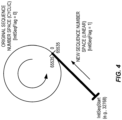
- Embodiments of the solution described herein introduce a new additional sequence number space, which is referred to herein as " InitSeqNumSpace ", which is used after initialization or reset of the Sequence Generation function 320.
- the newly introduced InitSeqNumSpace is illustrated by the bolded linear sequence number space in Figure 4 .
- the sequence_number of the next packet is stored in a new variable, namely the " InitGenSeqNum ".
- the Sequence Generation function 320 starts to use the original sequence number space, which is illustrated by the non-bolded sequence number space in Figure 4 .
- Figure 4 illustrates an example of the relation of the new (linear) sequence number space and the original (cyclic) sequence number space.
- Embodiments of the solution described herein introduce a new flag in the R-TAG, which is referred to as the " InitSeqFlag ". This flag is used by the Replication function 310 at the TX node 302 as follows:
- Embodiments of the solution herein define a new procedure for the Elimination function 318 at the RX node 304 as well. It uses the new set of variables to handle packets containing sequence_number from the above described " InitSeqNumSpace ". The size of the history window is same for both sequence number spaces.
- the Elimination function 318 operates as follows upon receiving a packet from one of the Member Streams of the Stream transmitted by TX node 302:
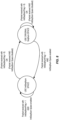
- Figure 5 illustrates a state diagram for the Replication function 310 at the TX node 302 in accordance with one embodiment of the present disclosure.
- the Replication function 310 uses the original sequence number space.
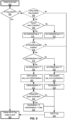
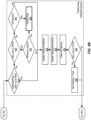
- FIG. 6 is a flow chart that illustrates the operation of the Replication function 310 at the TX node 302 in accordance with one embodiment of the present disclosure. Optional steps are represented with dashed lines.
- the Replication function 310 receives a packet (e.g., from a higher layer(s) in the protocol stack) to be sent (step 600).
- the Replication function 310 determines whether the R-Tag is present or set in the packet (step 602). If so (602, YES), the packet with the R-Tag set is ready to be sent, and as such provided to a lower layer in the protocol stack for transmission (step 604). For instance, multiple copies of the packet may then be generated and sent via different (e.g., disjoint) paths through the TSN network 306.
- step 616, YES the Replication function 310 enables "InitSeqFlag” (e.g., sets it to “1") (step 618), adds a sequence number (seq_num) equal to "InitGenSeqNum” to the packet (step 620), increments "InitGenSeqNum” (step 622), and determines whether the "InitSeqNumSpace” is exhausted (step 624). If not (step 624, NO), the process proceeds to step 628, which is described below. Otherwise (step 624, YES), the Replication function 310 sets "GenSeqNum” equal to "0” and sets "UseInitSeqNum” to False (step 626). Then, whether proceeding from the "NO” branch of step 624 or step 626, the Replication function 310 adds an R-Tag to the packet (step 628) and the procedure proceeds to step 604 where the packet is ready to send.
- seq_num e
- step 616 if "UseInitSeqNum” is not set to "TRUE”, the Replication function 310 disables the "initSeqFlag” (e.g., sets it to "0") (step 630), adds a sequence number (seq_num) equal to "GenSeqNum” to the packet (step 632), and increments "GenSeqSum” (step 634). The procedure then proceeds to step 628 where an R-Tag is added to the packet and then the packet is ready to be sent.
- the Replication function 310 disables the "initSeqFlag” (e.g., sets it to "0") (step 630), adds a sequence number (seq_num) equal to "GenSeqNum” to the packet (step 632), and increments "GenSeqSum” (step 634).
- FIG 7 is a flow chart that illustrates the operation of the Replication function 310 at the TX node 302 in accordance with another embodiment of the present disclosure. This embodiment is similar to that of Figure 6 . As illustrated, the Replication function 310 determines that the sequence generation function 310 at the TX node 302 has been reset (step 700).
- the Replication function 310 Responsive to determining that the sequence generation function 310 at the TX node 302 has been reset, the Replication function 310 transmits a first plurality of packets in a Stream of packets, wherein: (a) each of the first plurality of packets comprises a respective sequence number from a linear sequence number space and (b) at least a first packet from among the first plurality of packets that was sent after the rest further comprises an explicit indicator of the reset (step 702).
- the Replication function 310 determines that an end of the linear sequence number space has been reached or that use of the linear sequence number space has been otherwise disabled (step 704).
- the network is a DetNet network.
- the steps of determining (700) that the sequence generation function 310 at the TX node 302 has been reset, transmitting (702) the first plurality of packets in the Stream of packets, determining (704) that the end of the linear sequence number space has been reached or that use of the linear sequence number space has been otherwise disabled, and transmitting (706) the second plurality of packet in the Stream of packets are performed by a PRER of the TX node 302.
- step 902 if "UsingResetFlag" is enabled (step 902, YES), the Elimination function 318 determines whether use of "InitSeqNumSpace” is enabled (step 920). If not (step 920, NO), the Elimination function 318 determines whether "SeqResetFlag" is enabled and the sequence number of the received packet is out of the RIR (step 922). If not (step 922, NO), the procedure proceeds to step 904. Otherwise (step 922, YES), the procedure proceeds to step 912.
- step 920 if use of "InitSeqNumSpace" is enabled (step 920, YES), the Elimination function 318 determines whether "InitSeqFlag” is enabled (step 924). If not (step 924, NO), the process proceeds to step 922. Otherwise (step 924, YES), the Elimination function 318 determines whether "SeqResetFlag" is enabled and the sequence number of the received packet is out of iRIR (step 926). If so (step 926, YES), the procedure proceeds to step 932, which is described below. Otherwise (step 926, NO), the Elimination function 318 determines whether the sequence number of the packet is in iHSW (step 928).
- step 928, YES the Elimination function 318 determines whether the packet is already in history (step 930). If no (step 930), the procedure proceeds to step 932. Otherwise (step 932, NO), the Elimination function 318 drops the packet (step 944). Returning to step 928, if the sequence number of the packet is not in iHSW (step 928, NO), the Elimination function 318 determines whether "InitTakeAny" is enabled (step 942). If not (step 942, NO), the Elimination function 318 discards the packet (step 944). Otherwise (step 942, YES), the process proceeds to step 932.
- the Elimination function 318 updates the "InitRecovSeqNum” (step 932), updates "InitSequenceHistory” (step 934), and clears "InitTakeAny” (step 936).
- the Elimination function 318 determines whether the sequence number is in STAR (i.e., the range ⁇ "GenSeqSpace” - d; ...; "GenSeqSpace” - 2 x d ⁇ ) (step 938). If so (step 938, YES), the Elimination function 318 sets "TakeAny" to TRUE (step 940) and the packet is accepted (step 918). Otherwise (step 938, NO), the Elimination function 318 accepts the packet (step 918).
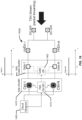
- An Application Cluster Controller (ACC) 1412 selects the downstream active application, that provides the application's output packet flow, i.e., the input for the FRER entity 1420.
- the ACC 1412 informs about its selection (provides notification of the selection) to the Gate controller 1402 (e.g., indicating which application instance is downstream active at a given time or during a time-period).
- downstream direction refers to forwarding a TSN Stream from the application instance (the “downstream active application instance”) towards the actor(s).
- upstream direction refers to forwarding a TSN Stream forwarded from the actor towards the application instance(s) (the “upstream active application instance(s)” .
- the gate controller 1402 obtains 1700 downstream information indicating which application instance in the application cluster 1410 is downstream active needing to send a stream of packets or frames in a downstream direction through the network. Based on the downstream information, the gate controller 1402 control 1710 a gate within the gate cluster 1400 that is associated with the downstream active application instance to be open state which operates to forward the stream of packets or frames in the downstream direction from the downstream active application instance to an associated packet or frame replication entity 1420a for replication and transmission via at least two disjoint paths through the network.
- the packet or frame replication entity 1420a replicates the packets or frames in the stream received from the gate associated with the downstream active application instance to create Time-Sensitive Networking (TSN) streams for transmission via the at least two disjoint paths through the network.
- TSN Time-Sensitive Networking
- control operation 1710 to change any of the gates between different ones of the open and closed states based on the downstream information is performed in a time synchronized manner, i.e., so that the gates which are controlled to switch states concurrently perform the state switching.
- control operation 1710 to control the gate within the gate cluster 1400 that is associated with the downstream active application instance to be open state operates to allow only a single one of the gates in the gate cluster 1400 to be in the open state at a time which operates to forward the stream of packets or frames in the downstream direction to the associated packet or frame replication entity 1420a for replication and transmission via the at least two disjoint paths through the network.
- the Gate-controller 1402 drives the Gates responsive to the received information.
- the Gates in the downstream direction there is only a single one of the Gates that is open (allowing packets to flow through to an associated (connected) one of the FRER entities) for a given TSN Stream at any given time, all the other Gates are closed. It is implementation dependent how to achieve that a change between the open and the closed Gate states happens at the same time for all affected Gates.
- the Gates are controlled in a time synchronized manner, e.g., based on a common synchronization clock.
- the FRER entity 1420a operates as the entry point to the FRER domain 1420.
- the FRER entity 1420a adds the sequence number information to the packet(s) received from the corresponding open Gate.
- FRER-1 adds sequence number information to packet(s) received from open state Gate-1.
- the Sequence generation function of the FRER entity 1420a that serves the newly opened Gate e.g., FRER-M serving Gate-M
- This reset can be triggered by the Gate controller 1402 (e.g., via the frerSeqRcvyReset managed object (802.1 CB-2017, Section 10.4.1.4)).
- reset can be done in the FRER entity 1420a (e.g., FRER-M) by supporting a new functionality (TimeOutBasedSequenceGenerationReset).
- the FRER entity 1420a e.g., FRER-M resets the Sequence generation function if no input frames were received for a given time by the FRER entity 1420a (e.g., FRER-M) for a given TSN Stream.
- Reset of Sequence generation function should or must happen before changing the corresponding gate state from closed to open (e.g., the Sequence generation function is reset before Gate-M is changed from closed to open state).
- the operation to trigger the packet or frame replication entity 1420a, which is associated with the identified gate, to reset the sequence number generation function 320 is performed before the identified gate is controlled to change from a closed state to the open state.
- the gate controller 1402 can operate to trigger the packet or frame replication entity 1420a to reset the sequence number generation function 320 using a frerSeqRcvyReset managed object.
- the gate controller 1402 can operate to trigger the packet or frame replication entity 1420a to reset the sequence number generation function 320 responsive to no packets or frames being received by the packet or frame replication entity 1420a in a threshold time interval.
- the gate controller 1402 and the gate cluster 1400 may be part of the FRER domain 1420.
- the Gate cluster 1400 operation depends on the characteristics of the application instances. There are two possibilities:
- the first case where all Gates are always open can be implemented by the Gate controller 1402 responsive to when the information from the ACC 1412 indicates that the packet or frame sent by the actor must reach all the application instances, i.e., where all application instances are upstream active needing to receive the packet or frame in the upstream direction from the actor via the network.
- the gate-controller 1402 controls all the Gates (e.g., Gate-1 to Gate-M) to be open and forward the TSN Stream to each of the application instances (e.g., Ctrl-1 to Ctrl-N) associated with the Gates.
- Gates e.g., Gate-1 to Gate-M
- the gate-controller 1402 controls all the Gates (e.g., Gate-1 to Gate-M) to be open and forward the TSN Stream to each of the application instances (e.g., Ctrl-1 to Ctrl-N) associated with the Gates.
- the second case where only some of the Gates are open, can be implemented by the Gate controller 1402 when the information from the ACC 1412 indicates that some of the application instances are "upstream inactive" (also referred to as "standby") during which those application instances do not require input.
- the architecture works as described below.
- the Cloud Management 1430 creates the necessary (desired) application instances.
- Each application instance may operate as a listener for the upstream TSN Stream, i.e., to receive packets of the upstream TSN Stream. Redundancy of application instances is controlled by the ACC 1412.
- the ACC 1412 selects which of the application instances are upstream active and should receive packets from the packet or frame elimination entities 1420b (e.g., selected ones of the FRER-1 through FRER-M) of the FRER domain 1420 ( Fig. 14 ).
- Input packets for the application instances are received via the Gate cluster 1400 from the packet or frame elimination entities 1420b. There is a Gate-x after each packet or frame elimination entity.
- Gate-1 selectively forwards (when in “open state”) or blocks (when in “closed state”) packets from FRER-1 to one or more associated application instances
- Gate-2 selectively forwards (when in “open state”) or blocks (when in “closed state”) packets from FRER-2 to one or more associated upstream active application instances
- Gate-M selectively forwarding (when in “open state”) or blocking (when in “closed state”) packets from FRER-M to one or more associated upstream active application instances, etc.
- a Gate-x may feed multiple application instances, e.g., feeding one or more application instances that have been programmatically defined to be associated with Gate-x.
- the ACC 1412 informs the Gate controller 1402 about a decision provided by ACC 1412 regarding which application instance(s) is(are) upstream active and need input from the FRER entities 1420b of the FRER domain 1420 ( Fig. 14 ).
- the Gate controller 1402 selectively drives individual ones of the Gates according to the received information, e.g., opening all Gates or opening a selected one or more of the Gates while maintaining as closed or closing the non-selected one or more of the Gates. All the Gates serving upstream active application instances are controlled by the Gate controller 1402 to be in the open state for a given TSN Stream so that the upstream active application instances can receive packets of the TSN Stream. In contrast, the Gates corresponding to upstream inactive application instances are controlled by the Gate-controller 1402 to be in the closed state so that the upstream inactive application instances do not receive packets of the TSN Stream.
- the gate controller 1402 obtains 1800 upstream information (e.g., from the ACC 1412) indicating which one or more application instances in the application cluster 1410 are upstream active needing to receive a stream of packets or frames in an upstream direction from the network.
- upstream information e.g., from the ACC 1412
- the gate controller 1402 controls 1810 one or more gates within the gate cluster 1400 that are associated with the upstream active one or more application instances to be open state which operates to forward the stream of packets or frames from one or more packet or frame elimination entities 1420b, which are associated with the one or more gates and eliminate replicated packets or frames in the stream, in the upstream direction to the upstream active one or more application instances.
- the packet or frame elimination (FRER) entities 1420b act as the exit point of the FRER domain 1420 ( Fig. 14 ).
- a packet or frame elimination (FRER) entity 1420b removes the sequence number information from the packet and sends it to the related one of the Gates.
- FRER-1 removes the sequence number information from a packet and sends it to the related Gate-1 which, when in the open state, forwards the packet to an associated one or more upstream active application instances.
- FRER-2 removes the sequence number information from a packet and sends it to the related Gate-2 which, when in the open state, forwards the packet to an associated one or more active application instances.
- FRER-M removes the sequence number information from a packet and sends it to the related Gate-M which, when in the closed state, blocks (prevents) forwarding of the packet to an associated one or more inactive application instances.
- the gate controller 1402 operates to receive 1800 from the ACC 1412 that controls redundancy of the application instances that are concurrently executing, upstream information indicating which one or more application instances in the application cluster 1410 are upstream active needing to receive a stream of packets or frames in an upstream direction from the network.
- the gate controller 1402 further operates to control 1810 one or more gates within the gate cluster 1400 that are associated with the upstream active one or more application instances to be open state which operates to forward the stream of packets or frames from one or more packet or frame elimination entities 1420b, which are associated with the one or more gates and eliminate replicated packets or frames in the stream, in the upstream direction to the upstream active one or more application instances.
- the gate controller 1402 operates to obtain 1800 upstream information indicating which one or more application instances in the application cluster 1410 are upstream active needing to receive a stream of packets or frames in an upstream direction from the network. Based on the upstream information, the gate controller 1402 controls 1810 one or more gates within the gate cluster (1400) that are associated with the upstream active one or more application instances to be open state.
- the one or more packet or frame elimination entities 1420b operate to remove sequence number information from a packet or frame received in the stream by the one or more packet or frame elimination entities 1420b to generate a modified packet or frame.
- the one or more packet or frame elimination entities 1420b further operate to forward the modified packet or frame to the one or more gates within the gate cluster 1400 that are associated with the upstream active one or more application instances. While the one or more gates associated with the upstream active one or more application instances are open state, the open state gates operate to forward the modified packet or frame in the upstream direction to the upstream active one or more application instances. In contrast, while the one or more gates associated with the upstream active one or more application instances are closed state, the closed state gates operate to block the modified packet or frame from being forwarded to the upstream active one or more application instances.
Landscapes
- Engineering & Computer Science (AREA)
- Computer Networks & Wireless Communication (AREA)
- Signal Processing (AREA)
- Computer Security & Cryptography (AREA)
- Data Exchanges In Wide-Area Networks (AREA)
Claims (14)
- Verfahren zur Replikation und Eliminierung von Paketen oder Rahmen in einem Time Sensitive Networking-,TSN-, oder Deterministic Networking-,DetNet,-Netzwerk, wobei das Verfahren Folgendes umfasst:Erhalten (1700) von Downstream-Informationen durch eine Gate-Steuerung (1402), die angeben, welche Anwendungsinstanz in einem Anwendungscluster (1410) downstream aktiv ist und einen Paket- oder Rahmenstrom in einer Downstream-Richtung durch das Netzwerk senden muss;wobei das Verfahren gekennzeichnet ist durch:Steuern (1710) eines Gates innerhalb eines Gate-Clusters (1400), das mit der downstream aktiven Anwendungsinstanz assoziiert ist, durch die Gate-Steuerung (1402) basierend auf den Downstream-Informationen, sodass es sich in einem offenen Zustand befindet, der dazu ausgelegt ist, den Paket- oder Rahmenstrom in der Downstream-Richtung von der downstream aktiven Anwendungsinstanz an eine assoziierte Paket- oder Rahmenreplikationsentität (1420a) zur Replikation und Übertragung über mindestens zwei getrennte Pfade durch das Netzwerk weiterzuleiten; undAuslösen der Paket- oder Rahmenreplikationsentität (1420a) durch die Gate-Steuerung (1402) zum Zurücksetzen einer Sequenznummernerzeugungsfunktion (320) basierend auf den Downstream-Informationen.
- Verfahren nach Anspruch 1, ferner umfassend:Erhalten (1800) von Upstream-Informationen durch die Gate-Steuerung (1402), die angeben, welche von einer oder mehreren Anwendungsinstanzen in einem Anwendungscluster (1410) upstream aktiv sind und einen Paket- oder Rahmenstrom in einer Upstream-Richtung von dem Netzwerk empfangen müssen;Steuern (1810) eines oder mehrerer Gates innerhalb des Gate-Clusters (1400), die mit der einen oder den mehreren upstream aktiven Anwendungsinstanzen assoziiert sind, durch die Gate-Steuerung (1402) basierend auf den Upstream-Informationen, sodass sie sich in einem offenen Zustand befinden, der dazu ausgelegt ist, die Paket- oder Rahmenströme von einer oder mehreren Paket- oder Rahmeneliminierungsentitäten (1420b), die mit dem einen oder den mehreren Gates assoziiert sind und replizierte Pakete oder Rahmen in dem Strom eliminieren, in der Upstream-Richtung an die eine oder die mehreren upstream aktiven Anwendungsinstanzen weiterzuleiten.
- Verfahren nach einem der Ansprüche 1 bis 2, wobei das Steuern (1710) zum Wechseln eines der Gates zwischen verschiedenen der offenen und geschlossenen Zustände basierend auf den Downstream-Informationen zeitsynchron erfolgt.
- Verfahren nach einem der Ansprüche 1 bis 3, wobei das Steuern (1710) des Gates innerhalb des Gate-Clusters (1400), das mit der downstream aktiven Anwendungsinstanz assoziiert ist, durch die Gate-Steuerung (1402), sodass es sich in einem offenen Zustand befindet, so ausgelegt ist, dass es ermöglicht, dass sich jeweils nur ein einziges der Gates in dem Gate-Cluster (1400) in dem offenen Zustand befindet, der dazu ausgelegt ist, den Paket- oder Rahmenstrom in der Downstream-Richtung an die assoziierte Paket- oder Rahmenreplikationsentität (1420a) zur Replikation und Übertragung über die mindestens zwei getrennten Pfade durch das Netzwerk weiterzuleiten.
- Verfahren nach einem der Ansprüche 1 bis 4, wobei die Paket- oder Rahmenreplikationsentität (1420a) die Pakete oder Rahmen in dem Strom zur Übertragung über die mindestens zwei getrennten Pfade durch ein Time-Sensitive Networking-Netzwerk, TSN-Netzwerk, repliziert.
- Verfahren nach einem der Ansprüche 1 bis 5, wobei das Auslösen der Paket- oder Rahmenreplikationsentität (1420a) zum Zurücksetzen einer Sequenznummernerzeugungsfunktion (320) basierend auf den Downstream-Informationen Folgendes umfasst:Identifizieren, welches der Gates innerhalb des Gate-Clusters (1400) mit der downstream aktiven Anwendungsinstanz assoziiert ist und durch die Gate-Steuerung (1402) so gesteuert (1710) werden muss, dass es sich in einem offenen Zustand befindet,Auslösen der mit dem identifizierten Gate assoziierten Paket- oder Rahmenreplikationsentität (1420a), um die Sequenznummernerzeugungsfunktion (320) zurückzusetzen, wobei insbesondere:
das Auslösen der mit dem identifizierten Gate assoziierten Paket- oder Rahmenreplikationsentität (1420a) zum Zurücksetzen der Sequenznummernerzeugungsfunktion (320) erfolgt, bevor das identifizierte Gate so gesteuert wird, dass es von einem geschlossenen Zustand in den offenen Zustand wechselt. - Verfahren nach Anspruch 6, wobei das Auslösen der Paket- oder Rahmenreplikationsentität (1420a) durch die Gate-Steuerung (1402) zum Zurücksetzen einer Sequenznummernerzeugungsfunktion (320) basierend auf den Downstream-Informationen Folgendes umfasst:
Auslösen der Paket- oder Rahmenreplikationsentität (1420a) zum Zurücksetzen der Sequenznummernerzeugungsfunktion (320) in Reaktion darauf, dass innerhalb eines Schwellenzeitintervalls keine Pakete oder Rahmen durch die Paket- oder Rahmenreplikationsentität (1420a) empfangen werden. - Verfahren nach einem der Ansprüche 1 bis 7 wobei:
die Gate-Steuerung (1402) und das Gate-Cluster (1400) Teil einer Domäne (1420) von Paket- oder Rahmenreplikationsentitäten sind. - Verfahren nach einem der Ansprüche 1 bis 8, ferner umfassend:
Replizieren der Pakete oder Rahmen in dem Strom, der von dem mit der downstream aktiven Anwendungsinstanz assoziierten Gate empfangen wird, durch die Replikations- oder Rahmenreplikationsentität (1420a), um Time-Sensitive Networking-Ströme, TSN-Ströme, zur Übertragung über die mindestens zwei getrennten Pfade durch das Netzwerk zu erzeugen. - Verfahren nach einem der Ansprüche 1 bis 9, ferner umfassend:Empfangen (1800) von Upstream-Informationen, die angeben, welche von einer oder mehreren Anwendungsinstanzen in dem Anwendungscluster (1410) upstream aktiv sind und einen Paket- oder Rahmenstrom in einer Upstream-Richtung von dem Netzwerk empfangen müssen, durch die Gate-Steuerung (1402) von einer Anwendungscluster-Steuerung, ACC, (1412), die Redundanz der Anwendungsinstanzen steuert, die gleichzeitig ausgeführt werden;Steuern (1810) eines oder mehrerer Gates innerhalb des Gate-Clusters (1400), die mit der einen oder den mehreren upstream aktiven Anwendungsinstanzen assoziiert sind, durch die Gate-Steuerung (1402) basierend auf den Upstream-Informationen, sodass sie sich in einem offenen Zustand befinden, der dazu ausgelegt ist, den Paket- oder Rahmenstrom von einer oder mehreren Paket- oder Rahmeneliminierungsentitäten (1420b), die mit dem einen oder den mehreren Gates assoziiert sind und replizierte Pakete oder Rahmen in dem Strom eliminieren, in der Upstream-Richtung an die eine oder die mehreren upstream aktiven Anwendungsinstanzen weiterzuleiten.
- Verfahren nach einem der Ansprüche 1 bis 10, ferner umfassend:Erhalten (1800) von Upstream-Informationen durch die Gate-Steuerung (1402), die angeben, welche von einer oder mehreren Anwendungsinstanzen in einem Anwendungscluster (1410) upstream aktiv sind und einen Paket- oder Rahmenstrom in einer Upstream-Richtung von dem Netzwerk empfangen müssen;Steuern (1810) eines oder mehrerer Gates innerhalb des Gate-Clusters (1400), die mit der einen oder den mehreren upstream aktiven Anwendungsinstanzen assoziiert sind, durch die Gate-Steuerung (1402) basierend auf den Upstream-Informationen, sodass sie sich in einem offenen Zustand befinden;Entfernen von Sequenznummerninformationen aus einem Paket oder Rahmen, das/der in dem Strom durch die eine oder die mehreren Paket- oder Rahmenreplikationsentitäten (1420b) empfangen wird, um ein modifiziertes Paket oder einen modifizierten Rahmen zu generieren;Weiterleiten des modifizierten Pakets oder Rahmens an das eine oder die mehreren Gates innerhalb des Gate-Clusters (1400), die mit der einen oder den mehreren upstream aktiven Anwendungsinstanzen assoziiert sind;während das eine oder die mehreren mit der einen oder den mehreren upstream aktiven Anwendungsinstanzen assoziierten Gates in einem offenen Zustand sind, Weiterleiten des modifizierten Pakets oder Rahmens in der Upstream-Richtung an die eine oder die mehreren upstream aktiven Anwendungsinstanzen; undwährend das eine oder die mehreren mit der einen oder den mehreren upstream aktiven Anwendungsinstanzen assoziierten Gates in einem geschlossen Zustand sind, Abhalten des modifizierten Pakets oder Rahmens davon, an die eine oder die mehreren upstream aktiven Anwendungsinstanzen weitergeleitet zu werden.
- Time Sensitive Networking-,TSN-, oder Deterministic Networking-,DetNet,-Netzwerk zur Replikation und Eliminierung von Paketen oder Rahmen, wobei das Netzwerk Folgendes umfasst:
eine Gate-Steuerung (1402), die für Folgendes geeignet ist:Erhalten von Downstream-Informationen, die angeben, welche Anwendungsinstanz in einem Anwendungscluster (1410) downstream aktiv ist und einen Paket- oder Rahmenstrom in einer Downstream-Richtung durch das Netzwerk senden muss;wobei die Gate-Steuerung (1402) dadurch gekennzeichnet ist, dass sie ferner für Folgendes geeignet ist:Steuern eines Gates innerhalb eines Gate-Clusters (1400), das mit der downstream aktiven Anwendungsinstanz assoziiert ist, basierend auf den Downstream-Informationen, sodass es sich in einem offenen Zustand befindet, der dazu ausgelegt ist, den Paket- oder Rahmenstrom in der Downstream-Richtung von der downstream aktiven Anwendungsinstanz an eine assoziierte Paket- oder Rahmenreplikationsentität (1420a) zur Replikation und Übertragung über mindestens zwei getrennte Pfade durch das Netzwerk weiterzuleiten; undAuslösen der Paket- oder Rahmenreplikationsentität (1420a) durch die Gate-Steuerung zum Zurücksetzen einer Sequenznummernerzeugungsfunktion (320) basierend auf den Downstream-Informationen. - TSN- oder DetNet-Netzwerk nach Anspruch 12, wobei das TSN- oder DetNet-Netzwerk ferner zum Durchführen des Verfahrens nach einem der Ansprüche 2 bis 11 geeignet ist.
- Computerprogrammprodukt, umfassend Anweisungen, die bei Ausführung auf mindestens einem Prozessor den mindestens einen Prozessor zum Durchführen des Verfahrens nach der Ansprüche 1 bis 11 veranlassen.
Applications Claiming Priority (2)
| Application Number | Priority Date | Filing Date | Title |
|---|---|---|---|
| US202163179818P | 2021-04-26 | 2021-04-26 | |
| PCT/IB2022/051255 WO2022229712A1 (en) | 2021-04-26 | 2022-02-11 | Gate controlled frame or packet replication and elimination function in cloud environment |
Publications (2)
| Publication Number | Publication Date |
|---|---|
| EP4331154A1 EP4331154A1 (de) | 2024-03-06 |
| EP4331154B1 true EP4331154B1 (de) | 2025-04-09 |
Family
ID=80446010
Family Applications (1)
| Application Number | Title | Priority Date | Filing Date |
|---|---|---|---|
| EP22705594.4A Active EP4331154B1 (de) | 2021-04-26 | 2022-02-11 | Gate-gesteuerte rahmen- oder paketreplikations- und -eliminationsfunktion in einer cloud-umgebung |
Country Status (3)
| Country | Link |
|---|---|
| US (1) | US20240195730A1 (de) |
| EP (1) | EP4331154B1 (de) |
| WO (1) | WO2022229712A1 (de) |
Families Citing this family (2)
| Publication number | Priority date | Publication date | Assignee | Title |
|---|---|---|---|---|
| EP4113903B1 (de) * | 2021-06-29 | 2023-12-27 | Nxp B.V. | Zählung von paketverlusten in einem sequenzwiederherstellungsverfahren |
| US12323244B2 (en) * | 2021-12-23 | 2025-06-03 | Intel Corporation | Enhanced redundancy over Wi-Fi for ultra-reliable wireless time-sensitive networking |
Family Cites Families (5)
| Publication number | Priority date | Publication date | Assignee | Title |
|---|---|---|---|---|
| WO2019145028A1 (en) * | 2018-01-24 | 2019-08-01 | Renesas Electronics Corporation | Time-sensitive networking |
| EP3664465B1 (de) * | 2018-12-04 | 2024-01-24 | Siemens Aktiengesellschaft | Verfahren zum betrieb eines kommunikationssystems zur übermittlung zeitkritischer daten, und kommunikationssteuerungseinrichtung |
| US12095657B2 (en) * | 2019-07-05 | 2024-09-17 | Telefonaktiebolaget Lm Ericsson (Publ) | Packet or frame replication and elimination with explict or implict notification to reset sequence number recovery |
| AT522898A1 (de) * | 2019-08-27 | 2021-03-15 | B & R Ind Automation Gmbh | Übertragung von Datenpaketen |
| US12574149B2 (en) * | 2020-10-02 | 2026-03-10 | Nokia Solutions And Networks Oy | FRER support of wireless communication system operable as TSN bridge |
-
2022
- 2022-02-11 EP EP22705594.4A patent/EP4331154B1/de active Active
- 2022-02-11 US US18/287,937 patent/US20240195730A1/en active Pending
- 2022-02-11 WO PCT/IB2022/051255 patent/WO2022229712A1/en not_active Ceased
Also Published As
| Publication number | Publication date |
|---|---|
| US20240195730A1 (en) | 2024-06-13 |
| EP4331154A1 (de) | 2024-03-06 |
| WO2022229712A1 (en) | 2022-11-03 |
Similar Documents
| Publication | Publication Date | Title |
|---|---|---|
| EP3994849B1 (de) | Paket- oder rahmenreplikation und -beseitigung mit expliziter oder impliziter mitteilung zur wiederherstellung der sequenznummerwiederherstellung | |
| EP3373519B1 (de) | Aktive/statische wegredundanz | |
| KR102513755B1 (ko) | 서비스 전송 방법, 설비 및 컴퓨터 저장매체 | |
| US20230105937A1 (en) | Systems and methods for seamless reset for seamless redundancy of tsn/detnet | |
| US20120026866A1 (en) | Method and apparatus for rapid switchover from primary to standby multicast trees | |
| US12289244B2 (en) | Systems and methods enabling TSN/DetNet replication function fallback | |
| EP4387184A1 (de) | Verfahren, vorrichtung und system zur bestimmung einer netzwerkoptimierungsrichtlinie | |
| EP4331154B1 (de) | Gate-gesteuerte rahmen- oder paketreplikations- und -eliminationsfunktion in einer cloud-umgebung | |
| US12218827B2 (en) | Systems and methods for avoiding duplicate delivery in the reset mechanism of seamless redundancy (of TSN/DETNET) | |
| CN111669336A (zh) | 用于无损以太网的低成本拥塞隔离 | |
| US11909546B2 (en) | Method and network node for sending and obtaining assert packet | |
| EP3224996B1 (de) | Verfahren, router, weiterer router, computerprogramm und träger für die verwaltung von datenrahmen in vermittelnden netzwerken | |
| US11330085B2 (en) | Data transmission protection method, device, system, and computer readable storage medium | |
| Biczók et al. | Combining forward error correction and network coding in bufferless networks: A case study for optical packet switching | |
| US20230163875A1 (en) | Method and apparatus for packet wash in networks | |
| CN117040951A (zh) | 组播报文的发送方法、装置和系统 | |
| CN118802479A (zh) | 一种链路检测方法、装置、计算机可读存储介质 | |
| Huang et al. | PINC: Design and implementation of inter-flow network coding in P4-enabled networks | |
| EP3968545A1 (de) | Fehlerschutzverfahren, vorrichtung und system für optisches netzwerk | |
| AU2024302237A1 (en) | Adaptive forward error correction |
Legal Events
| Date | Code | Title | Description |
|---|---|---|---|
| STAA | Information on the status of an ep patent application or granted ep patent |
Free format text: STATUS: UNKNOWN |
|
| STAA | Information on the status of an ep patent application or granted ep patent |
Free format text: STATUS: THE INTERNATIONAL PUBLICATION HAS BEEN MADE |
|
| PUAI | Public reference made under article 153(3) epc to a published international application that has entered the european phase |
Free format text: ORIGINAL CODE: 0009012 |
|
| STAA | Information on the status of an ep patent application or granted ep patent |
Free format text: STATUS: REQUEST FOR EXAMINATION WAS MADE |
|
| 17P | Request for examination filed |
Effective date: 20231124 |
|
| AK | Designated contracting states |
Kind code of ref document: A1 Designated state(s): AL AT BE BG CH CY CZ DE DK EE ES FI FR GB GR HR HU IE IS IT LI LT LU LV MC MK MT NL NO PL PT RO RS SE SI SK SM TR |
|
| DAV | Request for validation of the european patent (deleted) | ||
| DAX | Request for extension of the european patent (deleted) | ||
| GRAP | Despatch of communication of intention to grant a patent |
Free format text: ORIGINAL CODE: EPIDOSNIGR1 |
|
| STAA | Information on the status of an ep patent application or granted ep patent |
Free format text: STATUS: GRANT OF PATENT IS INTENDED |
|
| INTG | Intention to grant announced |
Effective date: 20241118 |
|
| GRAS | Grant fee paid |
Free format text: ORIGINAL CODE: EPIDOSNIGR3 |
|
| GRAA | (expected) grant |
Free format text: ORIGINAL CODE: 0009210 |
|
| STAA | Information on the status of an ep patent application or granted ep patent |
Free format text: STATUS: THE PATENT HAS BEEN GRANTED |
|
| AK | Designated contracting states |
Kind code of ref document: B1 Designated state(s): AL AT BE BG CH CY CZ DE DK EE ES FI FR GB GR HR HU IE IS IT LI LT LU LV MC MK MT NL NO PL PT RO RS SE SI SK SM TR |
|
| REG | Reference to a national code |
Ref country code: GB Ref legal event code: FG4D |
|
| REG | Reference to a national code |
Ref country code: CH Ref legal event code: EP |
|
| REG | Reference to a national code |
Ref country code: DE Ref legal event code: R096 Ref document number: 602022012898 Country of ref document: DE |
|
| REG | Reference to a national code |
Ref country code: IE Ref legal event code: FG4D |
|
| REG | Reference to a national code |
Ref country code: NL Ref legal event code: MP Effective date: 20250409 |
|
| PG25 | Lapsed in a contracting state [announced via postgrant information from national office to epo] |
Ref country code: NL Free format text: LAPSE BECAUSE OF FAILURE TO SUBMIT A TRANSLATION OF THE DESCRIPTION OR TO PAY THE FEE WITHIN THE PRESCRIBED TIME-LIMIT Effective date: 20250409 |
|
| REG | Reference to a national code |
Ref country code: AT Ref legal event code: MK05 Ref document number: 1784531 Country of ref document: AT Kind code of ref document: T Effective date: 20250409 |
|
| PG25 | Lapsed in a contracting state [announced via postgrant information from national office to epo] |
Ref country code: FI Free format text: LAPSE BECAUSE OF FAILURE TO SUBMIT A TRANSLATION OF THE DESCRIPTION OR TO PAY THE FEE WITHIN THE PRESCRIBED TIME-LIMIT Effective date: 20250409 Ref country code: PT Free format text: LAPSE BECAUSE OF FAILURE TO SUBMIT A TRANSLATION OF THE DESCRIPTION OR TO PAY THE FEE WITHIN THE PRESCRIBED TIME-LIMIT Effective date: 20250811 Ref country code: ES Free format text: LAPSE BECAUSE OF FAILURE TO SUBMIT A TRANSLATION OF THE DESCRIPTION OR TO PAY THE FEE WITHIN THE PRESCRIBED TIME-LIMIT Effective date: 20250409 |
|
| REG | Reference to a national code |
Ref country code: LT Ref legal event code: MG9D |
|
| PG25 | Lapsed in a contracting state [announced via postgrant information from national office to epo] |
Ref country code: GR Free format text: LAPSE BECAUSE OF FAILURE TO SUBMIT A TRANSLATION OF THE DESCRIPTION OR TO PAY THE FEE WITHIN THE PRESCRIBED TIME-LIMIT Effective date: 20250710 Ref country code: NO Free format text: LAPSE BECAUSE OF FAILURE TO SUBMIT A TRANSLATION OF THE DESCRIPTION OR TO PAY THE FEE WITHIN THE PRESCRIBED TIME-LIMIT Effective date: 20250709 |
|
| PG25 | Lapsed in a contracting state [announced via postgrant information from national office to epo] |
Ref country code: PL Free format text: LAPSE BECAUSE OF FAILURE TO SUBMIT A TRANSLATION OF THE DESCRIPTION OR TO PAY THE FEE WITHIN THE PRESCRIBED TIME-LIMIT Effective date: 20250409 |
|
| PG25 | Lapsed in a contracting state [announced via postgrant information from national office to epo] |
Ref country code: BG Free format text: LAPSE BECAUSE OF FAILURE TO SUBMIT A TRANSLATION OF THE DESCRIPTION OR TO PAY THE FEE WITHIN THE PRESCRIBED TIME-LIMIT Effective date: 20250409 |
|
| PG25 | Lapsed in a contracting state [announced via postgrant information from national office to epo] |
Ref country code: HR Free format text: LAPSE BECAUSE OF FAILURE TO SUBMIT A TRANSLATION OF THE DESCRIPTION OR TO PAY THE FEE WITHIN THE PRESCRIBED TIME-LIMIT Effective date: 20250409 |
|
| PG25 | Lapsed in a contracting state [announced via postgrant information from national office to epo] |
Ref country code: AT Free format text: LAPSE BECAUSE OF FAILURE TO SUBMIT A TRANSLATION OF THE DESCRIPTION OR TO PAY THE FEE WITHIN THE PRESCRIBED TIME-LIMIT Effective date: 20250409 |
|
| PG25 | Lapsed in a contracting state [announced via postgrant information from national office to epo] |
Ref country code: RS Free format text: LAPSE BECAUSE OF FAILURE TO SUBMIT A TRANSLATION OF THE DESCRIPTION OR TO PAY THE FEE WITHIN THE PRESCRIBED TIME-LIMIT Effective date: 20250709 |
|
| PG25 | Lapsed in a contracting state [announced via postgrant information from national office to epo] |
Ref country code: IS Free format text: LAPSE BECAUSE OF FAILURE TO SUBMIT A TRANSLATION OF THE DESCRIPTION OR TO PAY THE FEE WITHIN THE PRESCRIBED TIME-LIMIT Effective date: 20250809 |
|
| PG25 | Lapsed in a contracting state [announced via postgrant information from national office to epo] |
Ref country code: LV Free format text: LAPSE BECAUSE OF FAILURE TO SUBMIT A TRANSLATION OF THE DESCRIPTION OR TO PAY THE FEE WITHIN THE PRESCRIBED TIME-LIMIT Effective date: 20250409 |
|
| REG | Reference to a national code |
Ref country code: DE Ref legal event code: R097 Ref document number: 602022012898 Country of ref document: DE |
|
| PG25 | Lapsed in a contracting state [announced via postgrant information from national office to epo] |
Ref country code: SM Free format text: LAPSE BECAUSE OF FAILURE TO SUBMIT A TRANSLATION OF THE DESCRIPTION OR TO PAY THE FEE WITHIN THE PRESCRIBED TIME-LIMIT Effective date: 20250409 Ref country code: DK Free format text: LAPSE BECAUSE OF FAILURE TO SUBMIT A TRANSLATION OF THE DESCRIPTION OR TO PAY THE FEE WITHIN THE PRESCRIBED TIME-LIMIT Effective date: 20250409 |
|
| PG25 | Lapsed in a contracting state [announced via postgrant information from national office to epo] |
Ref country code: CZ Free format text: LAPSE BECAUSE OF FAILURE TO SUBMIT A TRANSLATION OF THE DESCRIPTION OR TO PAY THE FEE WITHIN THE PRESCRIBED TIME-LIMIT Effective date: 20250409 |
|
| PG25 | Lapsed in a contracting state [announced via postgrant information from national office to epo] |
Ref country code: EE Free format text: LAPSE BECAUSE OF FAILURE TO SUBMIT A TRANSLATION OF THE DESCRIPTION OR TO PAY THE FEE WITHIN THE PRESCRIBED TIME-LIMIT Effective date: 20250409 |
|
| PG25 | Lapsed in a contracting state [announced via postgrant information from national office to epo] |
Ref country code: SK Free format text: LAPSE BECAUSE OF FAILURE TO SUBMIT A TRANSLATION OF THE DESCRIPTION OR TO PAY THE FEE WITHIN THE PRESCRIBED TIME-LIMIT Effective date: 20250409 |
|
| PG25 | Lapsed in a contracting state [announced via postgrant information from national office to epo] |
Ref country code: IT Free format text: LAPSE BECAUSE OF FAILURE TO SUBMIT A TRANSLATION OF THE DESCRIPTION OR TO PAY THE FEE WITHIN THE PRESCRIBED TIME-LIMIT Effective date: 20250409 |
|
| PLBE | No opposition filed within time limit |
Free format text: ORIGINAL CODE: 0009261 |
|
| STAA | Information on the status of an ep patent application or granted ep patent |
Free format text: STATUS: NO OPPOSITION FILED WITHIN TIME LIMIT |
|
| REG | Reference to a national code |
Ref country code: CH Ref legal event code: L10 Free format text: ST27 STATUS EVENT CODE: U-0-0-L10-L00 (AS PROVIDED BY THE NATIONAL OFFICE) Effective date: 20260218 |
|
| 26N | No opposition filed |
Effective date: 20260112 |
|
| PGFP | Annual fee paid to national office [announced via postgrant information from national office to epo] |
Ref country code: GB Payment date: 20260227 Year of fee payment: 5 |
|
| PGFP | Annual fee paid to national office [announced via postgrant information from national office to epo] |
Ref country code: DE Payment date: 20260227 Year of fee payment: 5 |