EP4330111B1 - Method and system for generating compressed air of at least one vehicle, particularly at least one railway vehicle - Google Patents
Method and system for generating compressed air of at least one vehicle, particularly at least one railway vehicle Download PDFInfo
- Publication number
- EP4330111B1 EP4330111B1 EP22727978.3A EP22727978A EP4330111B1 EP 4330111 B1 EP4330111 B1 EP 4330111B1 EP 22727978 A EP22727978 A EP 22727978A EP 4330111 B1 EP4330111 B1 EP 4330111B1
- Authority
- EP
- European Patent Office
- Prior art keywords
- pressure value
- compressor
- electric motor
- state
- predetermined pressure
- Prior art date
- Legal status (The legal status is an assumption and is not a legal conclusion. Google has not performed a legal analysis and makes no representation as to the accuracy of the status listed.)
- Active
Links
Images




Classifications
-
- B—PERFORMING OPERATIONS; TRANSPORTING
- B60—VEHICLES IN GENERAL
- B60T—VEHICLE BRAKE CONTROL SYSTEMS OR PARTS THEREOF; BRAKE CONTROL SYSTEMS OR PARTS THEREOF, IN GENERAL; ARRANGEMENT OF BRAKING ELEMENTS ON VEHICLES IN GENERAL; PORTABLE DEVICES FOR PREVENTING UNWANTED MOVEMENT OF VEHICLES; VEHICLE MODIFICATIONS TO FACILITATE COOLING OF BRAKES
- B60T17/00—Component parts, details, or accessories of power brake systems not covered by groups B60T8/00, B60T13/00 or B60T15/00, or presenting other characteristic features
- B60T17/02—Arrangements of pumps or compressors, or control devices therefor
-
- B—PERFORMING OPERATIONS; TRANSPORTING
- B60—VEHICLES IN GENERAL
- B60T—VEHICLE BRAKE CONTROL SYSTEMS OR PARTS THEREOF; BRAKE CONTROL SYSTEMS OR PARTS THEREOF, IN GENERAL; ARRANGEMENT OF BRAKING ELEMENTS ON VEHICLES IN GENERAL; PORTABLE DEVICES FOR PREVENTING UNWANTED MOVEMENT OF VEHICLES; VEHICLE MODIFICATIONS TO FACILITATE COOLING OF BRAKES
- B60T13/00—Transmitting braking action from initiating means to ultimate brake actuator with power assistance or drive; Brake systems incorporating such transmitting means, e.g. air-pressure brake systems
- B60T13/10—Transmitting braking action from initiating means to ultimate brake actuator with power assistance or drive; Brake systems incorporating such transmitting means, e.g. air-pressure brake systems with fluid assistance, drive, or release
- B60T13/66—Electrical control in fluid-pressure brake systems
- B60T13/665—Electrical control in fluid-pressure brake systems the systems being specially adapted for transferring two or more command signals, e.g. railway systems
-
- B—PERFORMING OPERATIONS; TRANSPORTING
- B60—VEHICLES IN GENERAL
- B60T—VEHICLE BRAKE CONTROL SYSTEMS OR PARTS THEREOF; BRAKE CONTROL SYSTEMS OR PARTS THEREOF, IN GENERAL; ARRANGEMENT OF BRAKING ELEMENTS ON VEHICLES IN GENERAL; PORTABLE DEVICES FOR PREVENTING UNWANTED MOVEMENT OF VEHICLES; VEHICLE MODIFICATIONS TO FACILITATE COOLING OF BRAKES
- B60T17/00—Component parts, details, or accessories of power brake systems not covered by groups B60T8/00, B60T13/00 or B60T15/00, or presenting other characteristic features
- B60T17/18—Safety devices; Monitoring
- B60T17/22—Devices for monitoring or checking brake systems; Signal devices
- B60T17/228—Devices for monitoring or checking brake systems; Signal devices for railway vehicles
-
- B—PERFORMING OPERATIONS; TRANSPORTING
- B61—RAILWAYS
- B61H—BRAKES OR OTHER RETARDING DEVICES SPECIALLY ADAPTED FOR RAIL VEHICLES; ARRANGEMENT OR DISPOSITION THEREOF IN RAIL VEHICLES
- B61H13/00—Actuating rail-vehicle brakes
-
- B—PERFORMING OPERATIONS; TRANSPORTING
- B61—RAILWAYS
- B61H—BRAKES OR OTHER RETARDING DEVICES SPECIALLY ADAPTED FOR RAIL VEHICLES; ARRANGEMENT OR DISPOSITION THEREOF IN RAIL VEHICLES
- B61H13/00—Actuating rail-vehicle brakes
- B61H13/20—Transmitting mechanisms
-
- B—PERFORMING OPERATIONS; TRANSPORTING
- B61—RAILWAYS
- B61H—BRAKES OR OTHER RETARDING DEVICES SPECIALLY ADAPTED FOR RAIL VEHICLES; ARRANGEMENT OR DISPOSITION THEREOF IN RAIL VEHICLES
- B61H13/00—Actuating rail-vehicle brakes
- B61H13/34—Details
-
- F—MECHANICAL ENGINEERING; LIGHTING; HEATING; WEAPONS; BLASTING
- F04—POSITIVE - DISPLACEMENT MACHINES FOR LIQUIDS; PUMPS FOR LIQUIDS OR ELASTIC FLUIDS
- F04B—POSITIVE-DISPLACEMENT MACHINES FOR LIQUIDS; PUMPS
- F04B35/00—Piston pumps specially adapted for elastic fluids and characterised by the driving means to their working members, or by combination with, or adaptation to, specific driving engines or motors, not otherwise provided for
- F04B35/04—Piston pumps specially adapted for elastic fluids and characterised by the driving means to their working members, or by combination with, or adaptation to, specific driving engines or motors, not otherwise provided for the means being electric
-
- F—MECHANICAL ENGINEERING; LIGHTING; HEATING; WEAPONS; BLASTING
- F04—POSITIVE - DISPLACEMENT MACHINES FOR LIQUIDS; PUMPS FOR LIQUIDS OR ELASTIC FLUIDS
- F04B—POSITIVE-DISPLACEMENT MACHINES FOR LIQUIDS; PUMPS
- F04B41/00—Pumping installations or systems specially adapted for elastic fluids
- F04B41/02—Pumping installations or systems specially adapted for elastic fluids having reservoirs
-
- F—MECHANICAL ENGINEERING; LIGHTING; HEATING; WEAPONS; BLASTING
- F04—POSITIVE - DISPLACEMENT MACHINES FOR LIQUIDS; PUMPS FOR LIQUIDS OR ELASTIC FLUIDS
- F04B—POSITIVE-DISPLACEMENT MACHINES FOR LIQUIDS; PUMPS
- F04B41/00—Pumping installations or systems specially adapted for elastic fluids
- F04B41/06—Combinations of two or more pumps
-
- F—MECHANICAL ENGINEERING; LIGHTING; HEATING; WEAPONS; BLASTING
- F04—POSITIVE - DISPLACEMENT MACHINES FOR LIQUIDS; PUMPS FOR LIQUIDS OR ELASTIC FLUIDS
- F04B—POSITIVE-DISPLACEMENT MACHINES FOR LIQUIDS; PUMPS
- F04B49/00—Control, e.g. of pump delivery, or pump pressure of, or safety measures for, machines, pumps, or pumping installations, not otherwise provided for, or of interest apart from, groups F04B1/00 - F04B47/00
- F04B49/007—Installations or systems with two or more pumps or pump cylinders, wherein the flow-path through the stages can be changed, e.g. from series to parallel
-
- F—MECHANICAL ENGINEERING; LIGHTING; HEATING; WEAPONS; BLASTING
- F04—POSITIVE - DISPLACEMENT MACHINES FOR LIQUIDS; PUMPS FOR LIQUIDS OR ELASTIC FLUIDS
- F04B—POSITIVE-DISPLACEMENT MACHINES FOR LIQUIDS; PUMPS
- F04B2207/00—External parameters
- F04B2207/02—External pressure
Definitions
- the present invention generally relates to the field of braking systems, in particular railway braking systems.
- the invention relates to a method for generating compressed air of at least one vehicle or a convoy and to a system for generating compressed air of at least one vehicle or a convoy.
- Braking systems and suspension systems for railway vehicles for passenger transport are powered by compressed air.
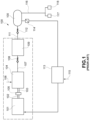
- FIG. 1 A system for generating compressed air according to the prior art is illustrated in Figure 1 .
- Such system for generating compressed air 100 comprises a motor 101 whose motor shaft 102 supplies a driving torque to a motor shaft 103 of a compressor 104 through an elastic coupling 105.
- the compressor 104 draws air at atmospheric pressure, compresses it and, through a pneumatic connection 107 and a non-return valve 108, supplies a dryer unit 109.
- the dryer unit 109 has the purpose of removing the liquid component and the vapor of the water derived from the compression of humid air and supplying dried air to a main reservoir 110 through a second duct 111 and a second non-return valve 112.
- a control unit 113 receives an electrical power supply 115 and measures a pressure in the main reservoir 110 by means of a pressure transducer 114.
- control unit 113 supplies electrical power to the electric motor 101.
- control unit 113 cuts off the electrical supply to the electric motor 101.
- the minimum value Pmin generally assumes values of between 6bar and 7 bar
- the maximum value Pmax generally assumes values of between 9bar and 10bar.
- the system for generating compressed air 100 is integrated inside an acoustically insulated metal structure provided with damping connections to the railway vehicle in order to reduce the noise emitted and the vibrations transmitted to a body of the railway vehicle, respectively.
- the compressed air stored in the main reservoir 110 is supplied to at least one user system 117, 118, such as, for example, the braking system, the suspension system, the toilets, the pantographs, the doors.
- Figure 2 illustrates a typical railway convoy 200 for carrying passengers.
- Two compressed air generation systems 201 and 202 corresponding to the compressed air generation system 100 of Figure 1 , supply compressed air to a main duct 202, which in turn supplies a main reservoir 204 through a non-return valve 215.
- various systems 205, 206, 207 such as for example the braking system, suspensions, toilets, draw compressed air for their operation.
- Two compressed air generation systems 201, 202 are considered necessary for redundancy reasons, i.e. to guarantee a permanent supply of compressed air even in the event of failure of one of the two compressed air generation systems 201, 202 during operational daily service.
- a control system 208 alternatively enables the two compressed air generation systems 201, 202 by means of the supply signals 209, 210, this disadvantageously meaning that one of the two compressed air generation systems 201, 202 is on average unused throughout service.
- each compressed air generation system 201, 202 often exceeds 500kg, disadvantageously requiring an unnecessary expenditure of energy to accelerate the mass thereof. This energy is then definitively lost during braking due to poor efficiency of the regenerative braking system or intrinsically dissipative mechanical friction braking.
- a single compressed air generation system may supply compressed air at full capacity at the total cost of two systems.
- WO 2018/185055 A1 discloses a method and a system for supplying compressed air to a vehicle as required. However, the above problems remain unsolved.
- An object of the present invention is to provide a method and a system for generating compressed air of at least one vehicle, in particular at least one railway vehicle, which reduces the weight and the cost compared to compressed air generation systems according to the prior art, while respecting the redundancy requirement.
- a method for generating compressed air of at least one vehicle, in particular a railway vehicle comprises the step of:
- the method further comprises the step of measuring a pressure value indicative of the internal pressure of a main reservoir 311 arranged to accumulate compressed air generated by said first compressor 303 and said second compressor 307.
- the pressure value inside said main reservoir 311 may assume over time a value included in a range of pressures.
- Such range of pressures includes a null value, a first predetermined pressure value Pmin (greater than said null value) and a second predetermined pressure value Pmax, greater than said first predetermined pressure value Pmin.
- step a) may comprise:
- step a) may comprise:
- step a) may selectively comprise:
- Such system for generating compressed air of at least one vehicle comprises an electric motor 301 arranged to generate a driving torque.
- the system for generating compressed air of at least one vehicle further comprises a first coupling means 304, arranged to selectively assume a first state in which it connects said electric motor 301 to said first compressor 303 or a second state in which it disconnects said motor electric motor 301 from said first compressor 303, and a second coupling means 308, arranged to selectively assume a first state in which it connects said electric motor 301 to said second compressor 307 or a second state in which it disconnects said electric motor 301 from said second compressor 307.
- the compressed air generation system of at least one vehicle further comprises a control means 320 arranged to control the transition between the first state and the second state, and vice versa, of said first coupling means 304 and the transition between the first state and the second state, and vice versa, of said second coupling means 308, so that said driving torque generated by said electric motor 301 is selectively supplied to the first compressor 303 or to the second compressor 307 or simultaneously to said first compressor 303 and to said second compressor 307.
- control means may be or comprise at least one of a control unit, a processor, a microprocessor, a controller, a microcontroller, an FPGA, a PLC, or the like.
- the compressed air generation system of at least one vehicle may comprise a main reservoir 311 arranged to store compressed air generated by said first compressor 303 and said second compressor 307, and a pressure sensor means arranged to measure a pressure value inside said main reservoir 311.
- the pressure value inside said main reservoir 311 may assume a pressure value included in a range of pressures.
- Such range of pressures includes a null value, a first predetermined pressure value Pmin (greater than said null value) and a second predetermined pressure value Pmax, greater than said first predetermined pressure value Pmin.
- the pressure sensor means may be or comprise, for example, a pressure sensor or a pressure measuring device, or the like.
- control means 320 may be arranged to:
- higher than said first predetermined pressure value Pmin for example, it may be understood a value equal to the second predetermined pressure value Pmax higher than said first predetermined pressure value Pmin, or a value between the first predetermined pressure value Pmin and the second predetermined pressure value Pmax.
- control means 320 may:
- control means 320 may be arranged to:
- the control means 320 may control the first coupling means 304 (e.g. a first electromechanical clutch) and the second coupling means 308 (e.g. a second electromechanical clutch 308) in their first state in which they transmit the driving torque of the electric motor 301 to the first compressor 303 and to the second compressor 307, and may control the electric motor 301 to rotate at a first speed V1, so as to generate a driving torque having a first torque value, suitable for bringing the pressure in the main reservoir 311 to the first predetermined pressure value Pmin as fast as possible.
- first coupling means 304 e.g. a first electromechanical clutch
- the second coupling means 308 e.g. a second electromechanical clutch 308
- control means 320 may be selectively arranged to:
- control means 320 may be arranged to selectively:
- the pressure in the main reservoir 311 may begin to drop towards the first predetermined pressure value Pmin due to a request for compressed air by one or more users 205, 206, 207.
- the control unit 320 may choose which of the first compressor 303 and the second compressor 307 is to be coupled to the electric motor 301, and may couple the selected compressor to the electric motor 301 by controlling the coupling means (e.g.
- the electromechanical clutch associated with the selected compressor, in its first state in which it transmits driving torque from the electric motor 301 to the selected compressor, and may for example control the electric motor 301 to rotate at a second speed V2, less than or equal to said first speed V1, i.e. V2 ⁇ V1.
- the other unselected compressor is not coupled to the electric motor 301 by controlling the coupling means (e.g. the electromechanical clutch) associated with the unselected compressor, in its second state in which it does not transmit driving torque from the electric motor 301 to the unselected compressor.
- the preselected compressor may be any one between the first compressor 303 and the second compressor 307.
- control means 320 may be arranged to measure a first overall activation time of said first compressor 303 and to measure a second overall activation time of said second compressor 307.
- said control means 320 may be arranged to:
- control means 320 may be arranged to:
- said control means 320 may be arranged to:
- control means 320 may be arranged to:
- the control means 320 may count the cumulative usage time of the first compressor and the second compressor and choose to connect the compressor with the shortest usage time to the electric motor, in order to better equalize the consumption of the components of the first compressor and the second compressor, so as to reach the deadline of the maintenance cycle at the same time.
- control means 320 may be arranged to measure a first overall activation time of said first compressor 303 and to measure a second overall activation time of said second compressor 307.
- the control means 320 may be arranged to:
- said control means 320 may be arranged to:
- control means 320 may be arranged to:
- said control means 320 may be arranged to:
- control means 320 may be arranged to:
- the control unit 320 may re-count the cumulative usage time of the first compressor and second compressor and, for example at the start of the operating day, the control unit 320 may choose the compressor that has the shortest cumulative usage time and, when it is necessary to bring the pressure in the main reservoir from the first predetermined pressure value Pmin to the second predetermined pressure value Pmax, it may use it for a predetermined period, inhibiting the other compressor in such predetermined period (e.g. all day).
- said control unit may be arranged to define first time-intervals in which activation of the first compressor 303 is prevented and second time-intervals in which activation of second compressor 307 is prevented. Said first time-intervals and said second time-intervals may be alternated to each other over time.
- said control means 320 may be arranged to:
- control means 320 may be arranged to:
- control means 320 may be arranged to:
- control means 320 may be arranged to:
- the control unit 320 may alternatively use the two compressors at alternate regular periods, for example non-exclusive on alternate days. In this way, the selected compressor may be kept for a period, always at temperature to limit the formation of condensation inside the compressor due to excessive cooling and the wear of the first compressor and the second compressor is balanced.
- control means 320 may be arranged to:
- control means 320 may be arranged to:
- control means 320 may be arranged to:
- the control means 320 may turn off the electric motor 301 and control the first coupling means 304 (e.g. the first electromechanical clutch) and the second coupling means 308 (e.g. the second electromechanical clutch 308) in their second state in which they do not transmit driving torque from the electric motor 301 to the first compressor 303 and the second compressor 307, respectively.
- the first coupling means 304 e.g. the first electromechanical clutch
- the second coupling means 308 e.g. the second electromechanical clutch 308
- control means 320 may be arranged to:
- the compressed air generation system of at least one vehicle may comprise a first air dryer means 310 and a second air dryer means 313.
- the first air dryer means 310 may be arranged to receive the compressed air generated by the first compressor 303 and generate first dried compressed air to be supplied to said main reservoir 311.
- the second air dryer means 313 may be arranged to receive the compressed air generated by the second compressor 307 and generate second dried compressed air to be supplied to said main reservoir 311.
- the first compressor 303 may feed a first dryer 310, which in turn may feed the main reservoir 311 through a non-return valve 312.
- the second compressor 307 may feed a second dryer 313, which in turn feeds the main reservoir 311 through a non-return valve 314.
- the compressed air generation system of at least one vehicle may comprise only one air dryer means.
- the air dryer means may be arranged to receive compressed air generated by the first compressor 303, receive compressed air generated by the second compressor 307 and generate dried compressed air to be supplied to said main reservoir 311.
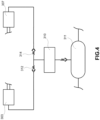
- the first compressor 303 and the second compressor 307 may supply compressed air to a single dryer 310, for example through two non-return valves 312, 314, respectively.
- the electric motor 301 may comprise a first drive shaft 302 arranged to transmit driving torque to a first compressor 303 through the first coupling means 304 and a first mechanical coupling 305, and a second drive shaft 306, arranged to be integral with the said first drive shaft 302 and to transmit the driving torque to the second compressor 307 through the second coupling means 308 and a second mechanical coupling 309.
- the electric motor 301 may comprise a drive shaft 501 on which the first coupling means 304 and the second coupling means 308 are arranged to be bound.
- the compressed air generation system of at least one vehicle may comprise a first pulley 505 and a second pulley 507.
- the first pulley 505 may be arranged to be mechanically bound to a shaft 504 of the first compressor 303
- the second pulley 507 may be arranged to be mechanically bound to a shaft 506 of a second compressor 307.
- the first coupling means 502, 304 may be arranged to transmit driving torque to the first pulley 505 by at least one drive belt 508, and the second coupling means 503, 308 may be arranged to transmit driving torque to the second pulley 507 by at least one drive belt 509.
- the first coupling means 304 may be an electromechanical clutch.
- the second coupling means 308 may also be an electromechanical clutch.
- the first predetermined pressure value Pmin may generally assume values of between 6bar and 7 bar
- the second predetermined pressure value Pmax may generally assume values of between 9bar and 10bar.
- a compressed air generation system 300 may comprise an electric motor 301 having a first drive shaft 302 for transmitting driving torque to a first compressor 303 through a first coupling means 304, such as for example a first electromechanical clutch, and a first mechanical coupling 305.
- a first coupling means 304 such as for example a first electromechanical clutch, and a first mechanical coupling 305.
- the electric motor 301 may be provided with a second drive shaft 306, integral with the first drive shaft 302, for transmitting driving torque to a second compressor 307 through a second coupling means 308, such as for example a second electromechanical clutch, and a second mechanical coupling 309.
- a second coupling means 308 such as for example a second electromechanical clutch, and a second mechanical coupling 309.
- the first compressor 303 may feed a first dryer means 310, for example a first dryer, which in turn may feed the main reservoir 311 through a non-return valve 312.
- the second compressor 307 may feed a second dryer means 313, for example a second dryer, which in turn may feed the main reservoir 311 through a non-return valve 314.
- the control means 320 for example a control unit, may be arranged to:
- the pressure sensor means 32 for example a pressure transducer 321, may measure the pressure inside the main reservoir 311 and send its value 322 to the control unit 320.
- the electric motor 301 may have a drive shaft 501 on which the first coupling means 502, for example a first electromechanical clutch, and a second coupling means, for example a second electromechanical clutch 503, are mechanically bound.
- Both coupling means 502, 503 may have the peripheral shape of a pulley for driving at least one drive belt.
- a first pulley 505 may be mechanically bound to a shaft 504 of the first compressor 303, and a second pulley 507 may be mechanically bound to a shaft 506 of a second compressor 307.
- the first coupling means 502 may transmit driving torque to the first pulley 505 by means of at least one drive belt 508.
- the second coupling means 503 may transmit driving torque to the second pulley 507 by means of at least one drive belt 509.
- the control means 320 for example a control unit 320, may be arranged to:
- At least one vehicle for example railway vehicle
- a plurality of railway vehicles connected to each other to form a convoy, for example a railway convoy.
- a vehicle referred to herein may be a locomotive or a wagon, and a route/section may include rails on which the wheels of the locomotive roll.
- the embodiments described herein are not intended to be limited to vehicles on tracks.
- the vehicle may be a car, a truck (for example a highway semi-trailer truck, a mining truck, a truck for transporting timber or the like) or the like, and the route may be a road or a trail.
- a convoy may comprise a plurality of such vehicles connected or associated with each other.
Landscapes
- Engineering & Computer Science (AREA)
- Mechanical Engineering (AREA)
- Transportation (AREA)
- General Engineering & Computer Science (AREA)
- Control Of Positive-Displacement Pumps (AREA)
- Valves And Accessory Devices For Braking Systems (AREA)
- Compressors, Vaccum Pumps And Other Relevant Systems (AREA)
Description
- The present invention generally relates to the field of braking systems, in particular railway braking systems. In particular, the invention relates to a method for generating compressed air of at least one vehicle or a convoy and to a system for generating compressed air of at least one vehicle or a convoy.
- The prior art will be described below with particular reference to the field of railway vehicles. Nevertheless, that which is described in the following may also apply, where possible, to vehicles in other fields.
- Braking systems and suspension systems for railway vehicles for passenger transport are powered by compressed air.
- A system for generating compressed air according to the prior art is illustrated in
Figure 1 . - Such system for generating compressed
air 100 comprises amotor 101 whosemotor shaft 102 supplies a driving torque to amotor shaft 103 of acompressor 104 through anelastic coupling 105. - Through an
inlet 106, thecompressor 104 draws air at atmospheric pressure, compresses it and, through apneumatic connection 107 and anon-return valve 108, supplies adryer unit 109. Thedryer unit 109 has the purpose of removing the liquid component and the vapor of the water derived from the compression of humid air and supplying dried air to a main reservoir 110 through asecond duct 111 and a secondnon-return valve 112. - A
control unit 113 receives anelectrical power supply 115 and measures a pressure in the main reservoir 110 by means of apressure transducer 114. - When the pressure in the main reservoir 110 assumes a value less than or equal to a minimum value Pmin, the
control unit 113 supplies electrical power to theelectric motor 101. - When the pressure in the main reservoir 110 assumes a value equal to or greater than a maximum value Pmax, the
control unit 113 cuts off the electrical supply to theelectric motor 101. - In the railway sector, the minimum value Pmin generally assumes values of between 6bar and 7 bar, and the maximum value Pmax generally assumes values of between 9bar and 10bar.
- It is prior art that the system for generating compressed
air 100 is integrated inside an acoustically insulated metal structure provided with damping connections to the railway vehicle in order to reduce the noise emitted and the vibrations transmitted to a body of the railway vehicle, respectively. - Through a
distribution duct 116, the compressed air stored in the main reservoir 110 is supplied to at least oneuser system -
Figure 2 illustrates atypical railway convoy 200 for carrying passengers. - Two compressed
air generation systems air generation system 100 ofFigure 1 , supply compressed air to amain duct 202, which in turn supplies amain reservoir 204 through anon-return valve 215. - From the
main reservoir 204various systems - Two compressed
air generation systems air generation systems - A
control system 208 alternatively enables the two compressedair generation systems supply signals air generation systems - The weight of each compressed
air generation system - In general, a single compressed air generation system may supply compressed air at full capacity at the total cost of two systems.
-
WO 2018/185055 A1 discloses a method and a system for supplying compressed air to a vehicle as required. However, the above problems remain unsolved. - An object of the present invention is to provide a method and a system for generating compressed air of at least one vehicle, in particular at least one railway vehicle, which reduces the weight and the cost compared to compressed air generation systems according to the prior art, while respecting the redundancy requirement.
- The aforesaid and other objects and advantages are achieved, according to an aspect of the invention, by a method for generating compressed air of at least one vehicle having the features defined in claim 1 and by a compressed air generation system of at least one vehicle having the features defined in claim 5. Preferred embodiments of the invention are defined in the dependent claims, the content of which is to be understood as an integral part of the present description.
- The functional and structural features of some preferred embodiments of a system for generating compressed air of at least one vehicle according to the invention will now be described. Reference is made to the accompanying drawings, in which:
-
Figure 1 illustrates an exemplary system for generating compressed air of at least one vehicle, particularly at least one railway vehicle, according to the prior art; -
Figure 2 illustrates an exemplary railway convoy for the transport of passengers; -
Figure 3 illustrates a first embodiment of a compressed air generation system of at least one vehicle; -
Figure 4 illustrates a further embodiment of a compressed air generation system of at least one vehicle; -
Figure 5 illustrates a still further embodiment of a compressed air generation system of at least one vehicle; -
Figure 6 illustrates a graph of an exemplary operating cycle of a compressed air generation system of at least one vehicle. - Before describing in detail a plurality of embodiments of the invention, it should be clarified that the invention is not limited in its application to the design details and configuration of the components presented in the following description or illustrated in the drawings. The invention is able to assume other embodiments and to be implemented or constructed in practice in different ways. It should also be understood that the phraseology and terminology have a descriptive purpose and should not be construed as limiting. The use of "include" and "comprise" and their variations is to be understood as encompassing the elements set out below and their equivalents, as well as additional elements and the equivalents thereof.
- In a first embodiment, a method for generating compressed air of at least one vehicle, in particular a railway vehicle, comprises the step of:
- a) selectively connecting, or disconnecting, a
first compressor 303, or asecond compressor 307, or simultaneously saidfirst compressor 303 and saidsecond compressor 307, to anelectric motor 301 arranged to generate a driving torque. - Preferably, the method further comprises the step of measuring a pressure value indicative of the internal pressure of a
main reservoir 311 arranged to accumulate compressed air generated by saidfirst compressor 303 and saidsecond compressor 307. - The pressure value inside said
main reservoir 311 may assume over time a value included in a range of pressures. Such range of pressures includes a null value, a first predetermined pressure value Pmin (greater than said null value) and a second predetermined pressure value Pmax, greater than said first predetermined pressure value Pmin. - Preferably, when the pressure value in said
main reservoir 311 is lower than the first predetermined pressure value Pmin, step a) may comprise: - connecting said
first compressor 303 to saidelectric motor 301; - connecting said
second compressor 307 to saidelectric motor 301; - keeping said
first compressor 303 and saidsecond compressor 307 connected to saidelectric motor 301, until the pressure value in saidmain reservoir 311 reaches or exceeds said first predetermined pressure value Pmin (i.e. until the pressure value in saidmain reservoir 311 is equal to the first predetermined pressure value Pmin or higher than the first predetermined pressure value Pmin). - Preferably, in addition or alternatively to what has been said for the condition in which said pressure value is lower than the first predetermined pressure value Pmin, when the pressure value in said
main reservoir 311 is equal to or greater than the second predetermined value pressure Pmax, step a) may comprise: - disconnecting, or keeping disconnected, said
first compressor 303 from saidelectric motor 301; - disconnecting, or keeping disconnected, said
second compressor 307 from saidelectric motor 301; - keeping said
first compressor 303 and saidsecond compressor 307 disconnected from saidelectric motor 301, until the pressure value in saidmain reservoir 311 is equal to or less than said first predetermined pressure value Pmin. - Preferably, in addition or alternatively to what has been said for the condition in which said pressure value is lower than the first predetermined pressure value Pmin and for the condition in which said pressure value is equal to or greater than the second predetermined value of pressure Pmax, when the pressure value in said
main reservoir 311 is equal to the first predetermined pressure value Pmin or comprised between the first predetermined pressure value Pmin and the second predetermined pressure value Pmax, step a) may selectively comprise: - connecting, or keeping connected, said
second compressor 307 to saidelectric motor 301; - disconnecting, or keeping disconnected, said
first compressor 303 from saidelectric motor 301; - keeping said
second compressor 307 connected to saidelectric motor 301, and keeping saidfirst compressor 303 disconnected from saidelectric motor 301, until the pressure value in saidmain reservoir 311 is equal to or greater than the second predetermined pressure value Pmax;
or, - disconnecting, or keeping disconnected, said
second compressor 307 from saidelectric motor 301; - connecting, or keeping connected, said
first compressor 303 to saidelectric motor 301; - keeping said
second compressor 307 disconnected from saidelectric motor 301, and keeping saidfirst compressor 303 connected to saidelectric motor 301, until the pressure value in saidmain reservoir 311 is equal to or greater than the second predetermined pressure value Pmax. - In another aspect of the invention, with reference to
Figure 3 , a first embodiment of a system for generating compressed air of at least one vehicle, particularly at least one railway vehicle, is illustrated. - Such system for generating compressed air of at least one vehicle comprises an
electric motor 301 arranged to generate a driving torque. - The system for generating compressed air of at least one vehicle further comprises a first coupling means 304, arranged to selectively assume a first state in which it connects said
electric motor 301 to saidfirst compressor 303 or a second state in which it disconnects said motorelectric motor 301 from saidfirst compressor 303, and a second coupling means 308, arranged to selectively assume a first state in which it connects saidelectric motor 301 to saidsecond compressor 307 or a second state in which it disconnects saidelectric motor 301 from saidsecond compressor 307. - The compressed air generation system of at least one vehicle further comprises a control means 320 arranged to control the transition between the first state and the second state, and vice versa, of said first coupling means 304 and the transition between the first state and the second state, and vice versa, of said second coupling means 308, so that said driving torque generated by said
electric motor 301 is selectively supplied to thefirst compressor 303 or to thesecond compressor 307 or simultaneously to saidfirst compressor 303 and to saidsecond compressor 307. - For example, the control means may be or comprise at least one of a control unit, a processor, a microprocessor, a controller, a microcontroller, an FPGA, a PLC, or the like.
- Preferably, the compressed air generation system of at least one vehicle may comprise a
main reservoir 311 arranged to store compressed air generated by saidfirst compressor 303 and saidsecond compressor 307, and a pressure sensor means arranged to measure a pressure value inside saidmain reservoir 311. - The pressure value inside said
main reservoir 311 may assume a pressure value included in a range of pressures. Such range of pressures includes a null value, a first predetermined pressure value Pmin (greater than said null value) and a second predetermined pressure value Pmax, greater than said first predetermined pressure value Pmin. - The pressure sensor means may be or comprise, for example, a pressure sensor or a pressure measuring device, or the like.
- Preferably, when the pressure value measured by said pressure sensor means is lower than the first predetermined pressure value Pmin, the control means 320 may be arranged to:
- control said first coupling means 304 so that it is in its first state in which it connects said
electric motor 301 to saidfirst compressor 303; - control said second coupling means 308 so that it is in its first state in which it connects said
electric motor 301 to saidsecond compressor 307; - keep said first coupling means 304 in the first state and said second coupling means 308 in the first state, until the pressure value measured by said pressure sensor means reaches or exceeds said first predetermined pressure value Pmin (i.e. until the pressure value in said
main reservoir 311 is equal to the first predetermined pressure value Pmin or higher than the first predetermined pressure value Pmin). - By higher than said first predetermined pressure value Pmin, for example, it may be understood a value equal to the second predetermined pressure value Pmax higher than said first predetermined pressure value Pmin, or a value between the first predetermined pressure value Pmin and the second predetermined pressure value Pmax.
- For example, the control means 320 may:
- cause said first coupling means 304 to assume the first state in which it connects said
electric motor 301 to saidfirst compressor 303, so that the driving torque generated by theelectric motor 301 is transmitted to saidfirst compressor 303; - cause said second coupling means 308 to assume the first state in which it connects said
electric motor 301 to saidsecond compressor 307, so that the driving torque generated by theelectric motor 301 is transmitted to saidsecond compressor 307. - Preferably, when the pressure value measured by the pressure sensor means is lower than the first predetermined pressure value Pmin, said control means 320 may be arranged to:
- drive the
electric motor 301, so as to generate a driving torque having a first torque value. - In other words, with reference to the exemplary operating cycle of
Figure 6 , in an instant T0 of ignition of the vehicle or convoy, for example railway vehicle or railway convoy, the control means 320 (e.g. a control unit) may control the first coupling means 304 (e.g. a first electromechanical clutch) and the second coupling means 308 (e.g. a second electromechanical clutch 308) in their first state in which they transmit the driving torque of theelectric motor 301 to thefirst compressor 303 and to thesecond compressor 307, and may control theelectric motor 301 to rotate at a first speed V1, so as to generate a driving torque having a first torque value, suitable for bringing the pressure in themain reservoir 311 to the first predetermined pressure value Pmin as fast as possible. - In addition or as an alternative to what has been said for the condition in which said pressure value is lower than the first predetermined pressure value Pmin, preferably, when the pressure value measured by said pressure sensor means is equal to the first predetermined pressure value Pmin or comprised between the first predetermined pressure value Pmin and the second predetermined pressure value Pmax, the control means 320 may be selectively arranged to:
- control said second coupling means 308 so that it is in its first state in which it connects said
electric motor 301 to saidsecond compressor 307, and control said first coupling means 304 so that it is in its second state in which it disconnects saidelectric motor 301 from saidfirst compressor 303; - keep said second coupling means 308 in its first state and said first coupling means 304 in its second state, until the pressure value measured by said pressure sensor means is equal to, or greater than, the second predetermined pressure value Pmax, greater than said first predetermined pressure value Pmin;
or, - control said first coupling means 304 so that it is in its first state in which it connects said
electric motor 301 to saidfirst compressor 303, and control said second coupling means 308 so that it is in its second state in which it disconnects saidelectric motor 301 from saidsecond compressor 307; - keep said first coupling means 304 in its first state, and said second coupling means 308 in its second state, until the pressure value measured by said pressure sensor means is equal to, or greater than, a second predetermined pressure value Pmax, which is greater than said first predetermined pressure value Pmin.
- For example, the control means 320 may be arranged to selectively:
- if said second coupling means 308 is already in its first state, keep said second coupling means 308 in its first state, and cause said first coupling means 304 to assume or keep the second state in which it disconnects said
electric motor 301 from saidfirst compressor 303, so that the driving torque generated by theelectric motor 301 is not transmitted to saidfirst compressor 303; - if said second coupling means 308 is not already in its first state, make said second coupling means 308 assume the first state in which it connects said
electric motor 301 to saidsecond compressor 307, so that the driving torque generated by theelectric motor 301 is transmitted to saidsecond compressor 307, and cause said first coupling means 304 to assume or keep the second state in which it disconnects saidelectric motor 301 from saidfirst compressor 303, so that the driving torque generated by theelectric motor 301 is not transmitted to saidfirst compressor 303;
or, - if said first coupling means 304 is already in its first state, keep said first coupling means 304 in its first state, and cause said second coupling means 308 to assume or keep the second state in which it disconnects said
electric motor 301 from saidsecond compressor 307, so that the driving torque generated by theelectric motor 301 is not transmitted to saidsecond compressor 307; - if said first coupling means 304 is not already in its first state, make said first coupling means 304 assume the first state in which it connects said
electric motor 301 to saidfirst compressor 303, so that the driving torque generated by theelectric motor 301 is transmitted to saidfirst compressor 303, and cause said second coupling means 308 to assume or keep the second state in which it disconnects saidelectric motor 301 from saidsecond compressor 307, so that the driving torque generated by theelectric motor 301 is not transmitted to saidsecond compressor 307. - For example, referring to the exemplary operating cycle of
Figure 6 , following the instant T2 in which the second predetermined pressure value Pmax is reached, the pressure in themain reservoir 311 may begin to drop towards the first predetermined pressure value Pmin due to a request for compressed air by one ormore users main reservoir 311 has reached first predetermined pressure value Pmin (i.e. when it is necessary to bring the pressure in the main reservoir from the first predetermined pressure value Pmin to the second predetermined pressure value Pmax), thecontrol unit 320 may choose which of thefirst compressor 303 and thesecond compressor 307 is to be coupled to theelectric motor 301, and may couple the selected compressor to theelectric motor 301 by controlling the coupling means (e.g. the electromechanical clutch) associated with the selected compressor, in its first state in which it transmits driving torque from theelectric motor 301 to the selected compressor, and may for example control theelectric motor 301 to rotate at a second speed V2, less than or equal to said first speed V1, i.e. V2≤V1. The other unselected compressor is not coupled to theelectric motor 301 by controlling the coupling means (e.g. the electromechanical clutch) associated with the unselected compressor, in its second state in which it does not transmit driving torque from theelectric motor 301 to the unselected compressor. In the embodiment described above, the preselected compressor may be any one between thefirst compressor 303 and thesecond compressor 307. - Preferably, according to a first criterion, the control means 320 may be arranged to measure a first overall activation time of said
first compressor 303 and to measure a second overall activation time of saidsecond compressor 307. - When the pressure value measured by said pressure sensor means is equal to the first predetermined pressure value Pmin or comprised between the first predetermined pressure value Pmin and the second predetermined pressure value Pmax, and the first overall activation time of said
first compressor 303 is greater than said second overall activation time of saidsecond compressor 307, said control means 320 may be arranged to: - control said second coupling means 308 so that it is in its first state in which it connects said
electric motor 301 to saidsecond compressor 307, and control said first coupling means 304 so that it is in its second state in which it disconnects saidelectric motor 301 from saidfirst compressor 303; - keep said second coupling means 308 in its first state and said first coupling means 304 in its second state, until the pressure value measured by said pressure sensor means is equal to, or greater than, the second predetermined pressure value Pmax, greater than said first predetermined pressure value Pmin.
- For example, the control means 320 may be arranged to:
- if said second coupling means 308 is already in its first state, keep said second coupling means 308 in its first state, and cause said first coupling means 304 to assume or keep the second state in which it disconnects said
electric motor 301 from saidfirst compressor 303, so that the driving torque generated by theelectric motor 301 is not transmitted to saidfirst compressor 303; - if said second coupling means 308 is not already in its first state, make said second coupling means 308 assume the first state in which it connects said
electric motor 301 to saidsecond compressor 307, so that the driving torque generated by theelectric motor 301 is transmitted to saidsecond compressor 307, and cause said first coupling means 304 to assume or keep the second state in which it disconnects saidelectric motor 301 from saidfirst compressor 303, so that the driving torque generated by theelectric motor 301 is not transmitted to saidfirst compressor 303. - When, instead, the pressure value measured by said pressure sensor means is equal to the first predetermined pressure value Pmin or comprised between the first predetermined pressure value Pmin and the second predetermined pressure value Pmax, and the first overall activation time of said
first compressor 303 is shorter than said second overall activation time of saidsecond compressor 307, said control means 320 may be arranged to: - control said first coupling means 304 so that it is in its first state in which it connects said
electric motor 301 to saidfirst compressor 303, and control said second coupling means 308 so that it is in its second state in which it disconnects saidelectric motor 301 from saidsecond compressor 307; - keep said first coupling means 304 in its first state, and said second coupling means 308 in its second state, until the pressure value measured by said pressure sensor means is equal to, or greater than, a second predetermined pressure value Pmax, which is greater than said first predetermined pressure value Pmin.
- For example, the control means 320 may be arranged to:
- if said first coupling means 304 is already in its first state, keep said first coupling means 304 in its first state, and cause said second coupling means 308 to assume or keep the second state in which it disconnects said
electric motor 301 from saidsecond compressor 307, so that the driving torque generated by theelectric motor 301 is not transmitted to saidsecond compressor 307; - if said first coupling means 304 is not already in its first state, make said first coupling means 304 assume the first state in which it connects said
electric motor 301 to saidfirst compressor 303, so that the driving torque generated by theelectric motor 301 is transmitted to saidfirst compressor 303, and cause said second coupling means 308 to assume or keep the second state in which it disconnects saidelectric motor 301 from saidsecond compressor 307, so that the driving torque generated by theelectric motor 301 is not transmitted to saidsecond compressor 307. - In other words, in the first criterion just described, when it is necessary to bring the pressure in the main reservoir from the first predetermined pressure value Pmin to the second predetermined pressure value Pmax, the control means 320 (e.g. the control unit) may count the cumulative usage time of the first compressor and the second compressor and choose to connect the compressor with the shortest usage time to the electric motor, in order to better equalize the consumption of the components of the first compressor and the second compressor, so as to reach the deadline of the maintenance cycle at the same time.
- Preferably, according to a second criterion, the control means 320 may be arranged to measure a first overall activation time of said
first compressor 303 and to measure a second overall activation time of saidsecond compressor 307. The control means 320 may be arranged to: - - - if the first overall activation time of said
first compressor 303 is greater than said second overall activation time of saidsecond compressor 307, prevent activation of thefirst compressor 303 for a first inhibition time period; - - - if the first overall activation time of said
first compressor 303 is shorter than said second overall activation time of saidsecond compressor 307, prevent activation of thesecond compressor 307 for a second inhibition time period. - In this case, in said first inhibition time period, when the pressure value measured by said pressure sensor means is equal to the first predetermined pressure value Pmin or comprised between the first predetermined pressure value Pmin and the second predetermined pressure value Pmax, said control means 320 may be arranged to:
- control said second coupling means 308 so that it is in its first state in which it connects said
electric motor 301 to saidsecond compressor 307, and control said first coupling means 304 so that it is in its second state in which it disconnects saidelectric motor 301 from saidfirst compressor 303; - keep said second coupling means 308 in its first state and said first coupling means 304 in its second state, until the pressure value measured by said pressure sensor means is equal to, or greater than, the second predetermined pressure value Pmax, greater than said first predetermined pressure value Pmin.
- For example, the control means 320 may be arranged to:
- if said second coupling means 308 is already in its first state, keep said second coupling means 308 in its first state, and cause said first coupling means 304 to assume or keep the second state in which it disconnects said
electric motor 301 from saidfirst compressor 303, so that the driving torque generated by theelectric motor 301 is not transmitted to saidfirst compressor 303; - if said second coupling means 308 is not already in its first state, make said second coupling means 308 assume the first state in which it connects said
electric motor 301 to saidsecond compressor 307, so that the driving torque generated by theelectric motor 301 is transmitted to saidsecond compressor 307, and cause said first coupling means 304 to assume or keep the second state in which it disconnects saidelectric motor 301 from saidfirst compressor 303, so that the driving torque generated by theelectric motor 301 is not transmitted to saidfirst compressor 303. - In said second inhibition time period, when the pressure value measured by said pressure sensor means is equal to the first predetermined pressure value Pmin or comprised between the first predetermined pressure value Pmin and the second predetermined pressure value Pmax, said control means 320 may be arranged to:
- control said first coupling means 304 so that it is in its first state in which it connects said
electric motor 301 to saidfirst compressor 303, and control said second coupling means 308 so that it is in its second state in which it disconnects saidelectric motor 301 from saidsecond compressor 307; - keep said first coupling means 304 in its first state, and said second coupling means 308 in its second state, until the pressure value measured by said pressure sensor means is equal to, or greater than, a second predetermined pressure value Pmax, which is greater than said first predetermined pressure value Pmin.
- For example, the control means 320 may be arranged to:
- if said first coupling means 304 is already in its first state, keep said first coupling means 304 in its first state, and cause said second coupling means 308 to assume or keep the second state in which it disconnects said
electric motor 301 from saidsecond compressor 307, so that the driving torque generated by theelectric motor 301 is not transmitted to saidsecond compressor 307; - if said first coupling means 304 is not already in its first state, make said first coupling means 304 assume the first state in which it connects said
electric motor 301 to saidfirst compressor 303, so that the driving torque generated by theelectric motor 301 is transmitted to saidfirst compressor 303, and cause said second coupling means 308 to assume or keep the second state in which it disconnects saidelectric motor 301 from saidsecond compressor 307, so that the driving torque generated by theelectric motor 301 is not transmitted to saidsecond compressor 307. - In other words, in the second criterion just described, the
control unit 320 may re-count the cumulative usage time of the first compressor and second compressor and, for example at the start of the operating day, thecontrol unit 320 may choose the compressor that has the shortest cumulative usage time and, when it is necessary to bring the pressure in the main reservoir from the first predetermined pressure value Pmin to the second predetermined pressure value Pmax, it may use it for a predetermined period, inhibiting the other compressor in such predetermined period (e.g. all day). - Preferably, according to a third criterion, said control unit may be arranged to define first time-intervals in which activation of the
first compressor 303 is prevented and second time-intervals in which activation ofsecond compressor 307 is prevented. Said first time-intervals and said second time-intervals may be alternated to each other over time. When in one of said first time-intervals, the pressure value measured by said pressure sensor means is equal to the first predetermined pressure value Pmin or comprised between the first predetermined pressure value Pmin and the second predetermined pressure value Pmax, said control means 320 may be arranged to: - control said second coupling means 308 so that it is in its first state in which it connects said
electric motor 301 to saidsecond compressor 307, and control said first coupling means 304 so that it is in its second state in which it disconnects saidelectric motor 301 from saidfirst compressor 303; - keep said second coupling means 308 in its first state and said first coupling means 304 in its second state, until the pressure value measured by said pressure sensor means is equal to, or greater than, the second predetermined pressure value Pmax, greater than said first predetermined pressure value Pmin.
- For example, the control means 320 may be arranged to:
- if said second coupling means 308 is already in its first state, keep said second coupling means 308 in its first state, and cause said first coupling means 304 to assume or keep the second state in which it disconnects said
electric motor 301 from saidfirst compressor 303, so that the driving torque generated by theelectric motor 301 is not transmitted to saidfirst compressor 303; - if said second coupling means 308 is not already in its first state, make said second coupling means 308 assume the first state in which it connects said
electric motor 301 to saidsecond compressor 307, so that the driving torque generated by theelectric motor 301 is transmitted to saidsecond compressor 307, and cause said first coupling means 304 to assume or keep the second state in which it disconnects saidelectric motor 301 from saidfirst compressor 303, so that the driving torque generated by theelectric motor 301 is not transmitted to saidfirst compressor 303. - Moreover, when in one of said second time-intervals, the pressure value measured by said pressure sensor means is equal to the first predetermined pressure value Pmin or comprised between the first predetermined pressure value Pmin and the second predetermined pressure value Pmax, said control means 320 may be arranged to:
- control said first coupling means 304 so that it is in its first state in which it connects said
electric motor 301 to saidfirst compressor 303, and control said second coupling means 308 so that it is in its second state in which it disconnects saidelectric motor 301 from saidsecond compressor 307; - keep said first coupling means 304 in its first state, and said second coupling means 308 in its second state, until the pressure value measured by said pressure sensor means is equal to, or greater than, a second predetermined pressure value Pmax, which is greater than said first predetermined pressure value Pmin.
- For example, the control means 320 may be arranged to:
- if said first coupling means 304 is already in its first state, keep said first coupling means 304 in its first state, and cause said second coupling means 308 to assume or keep the second state in which it disconnects said
electric motor 301 from saidsecond compressor 307, so that the driving torque generated by theelectric motor 301 is not transmitted to saidsecond compressor 307; - if said first coupling means 304 is not already in its first state, make said first coupling means 304 assume the first state in which it connects said
electric motor 301 to saidfirst compressor 303, so that the driving torque generated by theelectric motor 301 is transmitted to saidfirst compressor 303, and cause said second coupling means 308 to assume or keep the second state in which it disconnects saidelectric motor 301 from saidsecond compressor 307, so that the driving torque generated by theelectric motor 301 is not transmitted to saidsecond compressor 307. - In other words, in the third criterion just described, when it is necessary to bring the pressure in the main reservoir from the first predetermined pressure value Pmin to the second predetermined pressure value Pmax, the
control unit 320 may alternatively use the two compressors at alternate regular periods, for example non-exclusive on alternate days. In this way, the selected compressor may be kept for a period, always at temperature to limit the formation of condensation inside the compressor due to excessive cooling and the wear of the first compressor and the second compressor is balanced. - Preferably, it may apply to all the embodiments described above that when the pressure value measured by said pressure sensor means is between the first predetermined pressure value Pmin and the second predetermined pressure value Pmax, which is greater than the first predetermined pressure value Pmin, the control means 320 may be arranged to:
- drive the
electric motor 301, so as to generate a driving torque having a second torque value, less than said first torque value. - Preferably, in addition or alternatively to what has been said for the condition in which said pressure value is lower than the first predetermined pressure value Pmin and for the condition in which said pressure value is equal to the first predetermined pressure value Pmin or comprised between the first predetermined pressure value Pmin and the second predetermined pressure value Pmax, when the pressure value measured by said pressure sensor means is equal to or greater than the second predetermined pressure value Pmax, greater than said first predetermined value of pressure Pmin, said control means 320 may be arranged to:
- control said first coupling means 304 so that it is in its second state in which it disconnects said
electric motor 301 from saidfirst compressor 303; - control said second coupling means 308 so that it is in its second state in which it disconnects said
electric motor 301 from saidsecond compressor 307; - keep said first coupling means 304 in its second state, and said second coupling means 308 in its second state, until the pressure value measured by said pressure sensor means is equal to, or lower than, said first predetermined pressure value Pmin.
- For example, the control means 320 may be arranged to:
- if said first coupling means 304 is not already in its second state, cause said first coupling means 304 to assume the second state in which it disconnects said
electric motor 301 from saidfirst compressor 303, so that the driving torque generated by theelectric motor 301 is not transmitted to saidfirst compressor 303; - if said second coupling means 308 is not already in its second state, cause said second coupling means 308 to assume the second state in which it disconnects said
electric motor 301 from saidsecond compressor 307, so that the driving torque generated by theelectric motor 301 is not transmitted to saidsecond compressor 307. - In other words, with reference to the exemplary operating cycle of
Figure 6 , when at an instant T2 the pressure value Pmax is reached, the control means 320 may turn off theelectric motor 301 and control the first coupling means 304 (e.g. the first electromechanical clutch) and the second coupling means 308 (e.g. the second electromechanical clutch 308) in their second state in which they do not transmit driving torque from theelectric motor 301 to thefirst compressor 303 and thesecond compressor 307, respectively. - Preferably, when the pressure value measured by said pressure sensor means is equal to or higher than the second predetermined pressure value Pmax, the control means 320 may be arranged to:
- drive the
electric motor 301, so as to generate a driving torque of zero value. - Preferably, the compressed air generation system of at least one vehicle may comprise a first air dryer means 310 and a second air dryer means 313. The first air dryer means 310 may be arranged to receive the compressed air generated by the
first compressor 303 and generate first dried compressed air to be supplied to saidmain reservoir 311. The second air dryer means 313 may be arranged to receive the compressed air generated by thesecond compressor 307 and generate second dried compressed air to be supplied to saidmain reservoir 311. - For example, the
first compressor 303 may feed afirst dryer 310, which in turn may feed themain reservoir 311 through anon-return valve 312. Thesecond compressor 307 may feed asecond dryer 313, which in turn feeds themain reservoir 311 through anon-return valve 314. - Or, the compressed air generation system of at least one vehicle may comprise only one air dryer means. In this case, the air dryer means may be arranged to receive compressed air generated by the
first compressor 303, receive compressed air generated by thesecond compressor 307 and generate dried compressed air to be supplied to saidmain reservoir 311. - For example, referring to
Figure 4 , thefirst compressor 303 and thesecond compressor 307 may supply compressed air to asingle dryer 310, for example through twonon-return valves - Preferably, the
electric motor 301 may comprise afirst drive shaft 302 arranged to transmit driving torque to afirst compressor 303 through the first coupling means 304 and a firstmechanical coupling 305, and asecond drive shaft 306, arranged to be integral with the saidfirst drive shaft 302 and to transmit the driving torque to thesecond compressor 307 through the second coupling means 308 and a secondmechanical coupling 309. - Preferably, in a further embodiment, the
electric motor 301 may comprise adrive shaft 501 on which the first coupling means 304 and the second coupling means 308 are arranged to be bound. In this case, the compressed air generation system of at least one vehicle may comprise afirst pulley 505 and asecond pulley 507. Thefirst pulley 505 may be arranged to be mechanically bound to ashaft 504 of thefirst compressor 303, and thesecond pulley 507 may be arranged to be mechanically bound to ashaft 506 of asecond compressor 307. The first coupling means 502, 304 may be arranged to transmit driving torque to thefirst pulley 505 by at least onedrive belt 508, and the second coupling means 503, 308 may be arranged to transmit driving torque to thesecond pulley 507 by at least onedrive belt 509. - Preferably, the first coupling means 304 may be an electromechanical clutch.
- Preferably, the second coupling means 308 may also be an electromechanical clutch.
- For example, the first predetermined pressure value Pmin may generally assume values of between 6bar and 7 bar, and the second predetermined pressure value Pmax may generally assume values of between 9bar and 10bar.
- In a first implementation example, a compressed air generation system 300 may comprise an
electric motor 301 having afirst drive shaft 302 for transmitting driving torque to afirst compressor 303 through a first coupling means 304, such as for example a first electromechanical clutch, and a firstmechanical coupling 305. - Furthermore, the
electric motor 301 may be provided with asecond drive shaft 306, integral with thefirst drive shaft 302, for transmitting driving torque to asecond compressor 307 through a second coupling means 308, such as for example a second electromechanical clutch, and a secondmechanical coupling 309. - The
first compressor 303 may feed a first dryer means 310, for example a first dryer, which in turn may feed themain reservoir 311 through anon-return valve 312. - The
second compressor 307 may feed a second dryer means 313, for example a second dryer, which in turn may feed themain reservoir 311 through anon-return valve 314. - The control means 320, for example a control unit, may be arranged to:
- receive a
power supply 321; - control, through a
power signal 323, the first coupling means 304 in a first state in which the first coupling means 304 transmits driving torque from theelectric motor 301 to thefirst compressor 303 and in a second state in which the first coupling means 304 does not transmit torque from theelectric motor 301 to thefirst compressor 303; and - drive the second coupling means 308 through a
power signal 324 in a first state in which the second coupling means 308 transmits driving torque from theelectric motor 301 to thesecond compressor 307 and in a second state in which the second coupling means 308 does not transmits driving torque from theelectric motor 301 to thesecond compressor 307; - Drive the
electric motor 301 at variable speed by means of a group of power signals 325. - The pressure sensor means 321, for example a
pressure transducer 321, may measure the pressure inside themain reservoir 311 and send itsvalue 322 to thecontrol unit 320. - In a second implementation example, with reference to
Figure 5 , theelectric motor 301 may have adrive shaft 501 on which the first coupling means 502, for example a first electromechanical clutch, and a second coupling means, for example a secondelectromechanical clutch 503, are mechanically bound. Both coupling means 502, 503 may have the peripheral shape of a pulley for driving at least one drive belt. Afirst pulley 505 may be mechanically bound to ashaft 504 of thefirst compressor 303, and asecond pulley 507 may be mechanically bound to ashaft 506 of asecond compressor 307. - The first coupling means 502 may transmit driving torque to the
first pulley 505 by means of at least onedrive belt 508. The second coupling means 503 may transmit driving torque to thesecond pulley 507 by means of at least onedrive belt 509. - The control means 320, for example a
control unit 320, may be arranged to: - receive a
power supply 321; - control, through a
power signal 323, the first coupling means 503 in a first state in which the first coupling means 503 transmits driving torque from theelectric motor 301 to thefirst compressor 303 and in a second state in which the first coupling means 503 does not transmit torque from theelectric motor 301 to thefirst compressor 303; - drive the second coupling means 503 through a
power signal 324 in a first state in which the second coupling means 503 transmits driving torque from theelectric motor 301 to thesecond compressor 307 and in a second state in which the second coupling means 308 does not transmits driving torque from theelectric motor 301 to thesecond compressor 307. - Drive the
electric motor 301 at variable speed by means of a group of power signals 325. - What has been described above for at least one vehicle, for example railway vehicle, may be applied similarly for a plurality of railway vehicles connected to each other to form a convoy, for example a railway convoy.
- As described above, the present invention is particularly applicable to the field of railway vehicles/convoys that travel on railway tracks. For example, a vehicle referred to herein may be a locomotive or a wagon, and a route/section may include rails on which the wheels of the locomotive roll. The embodiments described herein are not intended to be limited to vehicles on tracks. For example, the vehicle may be a car, a truck (for example a highway semi-trailer truck, a mining truck, a truck for transporting timber or the like) or the like, and the route may be a road or a trail. For example, a convoy may comprise a plurality of such vehicles connected or associated with each other.
- Various aspects and embodiments of a method for generating compressed air of at least one railway vehicle and of a system for generating compressed air of at least one railway vehicle according to the invention have been described. It is understood that each embodiment may be combined with any other embodiment. Moreover, the invention is not limited to the embodiments described, but may be varied within the scope defined by the appended claims.
Claims (19)
- Method for generating compressed air of at least one vehicle, in particular at least one railway vehicle, comprising the step of:a) selectively connecting a first compressor (303), or a second compressor (307), or simultaneously said first compressor (303) and said second compressor (307), to an electric motor (301) arranged to generate a driving torque.
- Method for generating compressed air of at least one vehicle according to claim 1, comprising the step of:- measuring a pressure value indicative of the internal pressure of a main reservoir (311) arranged to store compressed air generated by said first compressor (303) and said second compressor (307), wherein the pressure value within said main reservoir (311) is arranged to assume over time a value within a pressure range including:- a null value;- a first predetermined pressure value (Pmin);- a second predetermined pressure value (Pmax), greater than said first predetermined pressure value (Pmin).
- Method for generating compressed air of at least one vehicle according to claim 2, wherein, when the pressure value in said main reservoir (311) is less than said first predetermined pressure value (Pmin), step a) comprises:- connecting said first compressor (303) to said electric motor (301);- connecting said second compressor (307) to said electric motor (301);- keeping said first compressor (303) and said second compressor (307) connected to said electric motor (301) until the pressure value in said main reservoir (311) reaches or exceeds said first predetermined pressure value (Pmin);and/or
when the pressure value in said main reservoir (311) is equal to, or greater than, said second predetermined pressure value (Pmax), step a) comprises:- disconnecting, or keeping disconnected, said first compressor (303) from said electric motor (301);- disconnecting, or keeping disconnected, said second compressor (307) from said electric motor (301);- keeping said first compressor (303) and said second compressor (307) disconnected from said electric motor (301), until the pressure value in said main reservoir (311) is equal to or less than said first predetermined pressure value (Pmin). - Method for generating compressed air of at least one vehicle according to any one of claims 2 or 3, wherein when the pressure value in said main reservoir (311) is equal to the first predetermined pressure value (Pmin) or comprised between the first predetermined pressure value (Pmin) and the second predetermined pressure value (Pmax), step a) selectively comprises:- connecting, or keeping connected, said second compressor (307) to said electric motor (301);- disconnecting, or keeping disconnected, said first compressor (303) from said electric motor (301);- keeping said second compressor (307) connected to said electric motor (301), and keeping said first compressor (303) disconnected from said electric motor (301), until the pressure value in said main reservoir (311) is equal to or greater than the second predetermined pressure value (Pmax);
or,- disconnecting, or keeping disconnected, said second compressor (307) from said electric motor (301);- connecting, or keeping connected, said first compressor (303) to said electric motor (301);- keeping said second compressor (307) disconnected from said electric motor (301), and keeping said first compressor (303) connected to said electric motor (301), until the pressure value in said main reservoir (311) is equal to or greater than the second predetermined pressure value (Pmax). - System for generating compressed air of at least one vehicle, particularly at least one railway vehicle, comprising:- an electric motor (301) arranged to generate a driving torque;- a first coupling means (304), arranged to selectively assume a first state in which it connects said electric motor (301) to said first compressor (303) or a second state in which it disconnects said electric motor (301) from said first compressor (303);- a second coupling means (308), arranged to selectively assume a first state in which it connects said electric motor (301) to said second compressor (307) or a second state in which it disconnects said electric motor (301) from said second compressor (307);- a control means (320) arranged to control the transition between the first state and the second state, and vice versa, of said first coupling means (304) and the transition between the first state and the second state, and vice versa, of said second coupling means (308), so that said driving torque generated by said electric motor (301) is selectively supplied to the first compressor (303) or to the second compressor (307) or simultaneously to said first compressor (303) and to said second compressor (307).
- System for generating compressed air of at least one vehicle according to claim 5, comprising:- a main reservoir (311) arranged to store compressed air generated by said first compressor (303) and said second compressor (307); and- a pressure sensor means arranged to measure a pressure value inside said main reservoir (311);wherein the pressure value within said main reservoir (311) is arranged to assume over time a pressure value within a range of pressures including a null value, a first predetermined pressure value (Pmin) greater than said null value, and a second a second predetermined pressure value (Pmax), greater than said first predetermined pressure value (Pmin).
- System for generating compressed air of at least one vehicle according to claim 6, wherein, when the pressure value measured by the pressure sensor means is less than the first predetermined pressure value (Pmin), said control means (320) is arranged to:- control said first coupling means (304) so that it is in its first state in which it connects said electric motor (301) to said first compressor (303);- control said second coupling means (308) so that it is in its first state in which it connects said electric motor (301) to said second compressor (307);- keep said first coupling means (304) in its first state and said second coupling means (308) in its first state, until the pressure value measured by said pressure sensor means reaches said first predetermined pressure value (Pmin).
- System for generating compressed air of at least one vehicle according to claim 6 or 7, wherein, when the pressure value measured by said pressure sensor means is equal to the first predetermined pressure value (Pmin) or comprised between the first predetermined pressure value (Pmin) and the second predetermined pressure value (Pmax), said control means (320) is arranged to selectively:- control said second coupling means (308) so that it is in its first state in which it connects said electric motor (301) to said second compressor (307), and control said first coupling means (304) so that it is in its second state in which it disconnects said electric motor (301) from said first compressor (303);- keep said second coupling means (308) in its first state and said first coupling means (304) in its second state, until the pressure value measured by said pressure sensor means is equal to, or greater than, the second predetermined pressure value (Pmax), greater than said first predetermined pressure value (Pmin);
or,- control said first coupling means (304) so that it is in its first state in which it connects said electric motor (301) to said first compressor (303), and control said second coupling means (308) so that it is in its second state in which it disconnects said electric motor (301) from said second compressor (307);- keep said first coupling means (304) in its first state, and said second coupling means (308) in its second state, until the pressure value measured by said pressure sensor means is equal to, or greater than, the second predetermined pressure value (Pmax), which is greater than said first predetermined pressure value (Pmin). - System for generating compressed air of at least one vehicle according to claim 6 or 7, wherein said control means (320) is arranged to measure a first overall activation time of said first compressor (303) and to measure a second overall activation time of said second compressor (307);wherein, when the pressure value measured by said pressure sensor means is equal to the first predetermined pressure value (Pmin) or comprised between the first predetermined pressure value (Pmin) and the second predetermined pressure value (Pmax), and the first overall activation time of said first compressor (303) is greater than said second overall activation time of said second compressor (307), said control means (320) is arranged to:- control said second coupling means (308) so that it is in its first state in which it connects said electric motor (301) to said second compressor (307), and control said first coupling means (304) so that it is in its second state in which it disconnects said electric motor (301) from said first compressor (303);- keep said second coupling means (308) in its first state and said first coupling means (304) in its second state, until the pressure value measured by said pressure sensor means is equal to, or greater than, the second predetermined pressure value (Pmax), greater than said first predetermined pressure value (Pmin);wherein, when the pressure value measured by said pressure sensor means is equal to the first predetermined pressure value (Pmin) or comprised between the first predetermined pressure value (Pmin) and the second predetermined pressure value (Pmax), and the first overall activation time of said first compressor (303) is shorter than said second overall activation time of said second compressor (307), said control means (320) is arranged to:- control said first coupling means (304) so that it is in its first state in which it connects said electric motor (301) to said first compressor (303), and control said second coupling means (308) so that it is in its second state in which it disconnects said electric motor (301) from said second compressor (307);- keep said first coupling means (304) in its first state, and said second coupling means (308) in its second state, until the pressure value measured by said pressure sensor means is equal to, or greater than, the second predetermined pressure value (Pmax), which is greater than said first predetermined pressure value (Pmin).
- System for generating compressed air of at least one vehicle according to claim 6 or 7, wherein said control means (320) is arranged to measure a first overall activation time of said first compressor (303) and to measure a second overall activation time of said second compressor (307);
wherein said control means (320) is arranged to:- - if the first overall activation time of said first compressor (303) is greater than said second overall activation time of said second compressor (307), prevent activation of the first compressor (303) for a first inhibition time period;- - if the first overall activation time of said first compressor (303) is shorter than said second overall activation time of said second compressor (307), prevent activation of the second compressor (307) for a second inhibition time period. - System for generating compressed air of at least one vehicle according to claim 10, wherein in said first inhibition time period, when the pressure value measured by said pressure sensor means is equal to the first predetermined pressure value (Pmin) or comprised between the first predetermined pressure value (Pmin) and the second predetermined pressure value (Pmax), said control means (320) is arranged to:- control said second coupling means (308) so that it is in its first state in which it connects said electric motor (301) to said second compressor (307), and control said first coupling means (304) so that it is in its second state in which it disconnects said electric motor (301) from said first compressor (303);- keep said second coupling means (308) in its first state and said first coupling means (304) in its second state, until the pressure value measured by said pressure sensor means is equal to, or greater than, the second predetermined pressure value (Pmax), greater than said first predetermined pressure value (Pmin);wherein, in said second inhibition time period, when the pressure value measured by said pressure sensor means is equal to the first predetermined pressure value (Pmin) or comprised between the first predetermined pressure value (Pmin) and the second predetermined pressure value (Pmax), said control means (320) is arranged to:- control said first coupling means (304) so that it is in its first state in which it connects said electric motor (301) to said first compressor (303), and control said second coupling means (308) so that it is in its second state in which it disconnects said electric motor (301) from said second compressor (307);- keep said first coupling means (304) in its first state, and said second coupling means (308) in its second state, until the pressure value measured by said pressure sensor means is equal to, or greater than, the second predetermined pressure value (Pmax), which is greater than said first predetermined pressure value (Pmin).
- System for generating compressed air of at least one vehicle according to claim 6 or 7, wherein said control unit is arranged to define first time-intervals in which activation of the first compressor (303) is prevented, and second time-intervals in which activation of the second compressor (307) is prevented, wherein said first time-intervals and said second time-intervals are alternated to each other in time;wherein, when in one of said first time-intervals, the pressure value measured by said pressure sensor means is equal to the first predetermined pressure value (Pmin) or comprised between the first predetermined pressure value (Pmin) and the second predetermined pressure value (Pmax), said control means (320) is arranged to:- control said second coupling means (308) so that it is in its first state in which it connects said electric motor (301) to said second compressor (307), and control said first coupling means (304) so that it is in its second state in which it disconnects said electric motor (301) from said first compressor (303);- keep said second coupling means (308) in its first state and said first coupling means (304) in its second state, until the pressure value measured by said pressure sensor means is equal to, or greater than, the second predetermined pressure value (Pmax), greater than said first predetermined pressure value (Pmin);wherein, when in one of said second time-intervals, the pressure value measured by said pressure sensor means is equal to the first predetermined pressure value (Pmin) or comprised between the first predetermined pressure value (Pmin) and the second predetermined pressure value (Pmax), said control means (320) is arranged to:- control said first coupling means (304) so that it is in its first state in which it connects said electric motor (301) to said first compressor (303), and control said second coupling means (308) so that it is in its second state in which it disconnects said electric motor (301) from said second compressor (307);- keep said first coupling means (304) in its first state, and said second coupling means (308) in its second state, until the pressure value measured by said pressure sensor means is equal to, or greater than, the second predetermined pressure value (Pmax), which is greater than said first predetermined pressure value (Pmin).
- System for generating compressed air of at least one vehicle according to any one of claims 6 to 12, wherein when the pressure value measured by said pressure sensor means is equal to, or greater than, the second predetermined pressure value (Pmax), greater than the first predetermined pressure value (Pmin), said control means (320) is arranged to:- control said first coupling means (304) so that it is in its second state in which it disconnects said electric motor (301) from said first compressor (303);- control said second coupling means (308) so that it is in its second state in which it disconnects said electric motor (301) from said second compressor (307);- keep said first coupling means (304) in its second state, and said second coupling means (308) in its second state, until the pressure value measured by said pressure sensor means is equal to, or lower than, said first predetermined pressure value (Pmin).
- System for generating compressed air of at least one vehicle according to claim 13, wherein when the pressure value measured by said pressure sensor means is equal to, or greater than, the second predetermined pressure value (Pmax), said control means (320) is arranged to:- drive the electric motor (301), so as to generate a driving torque of null value.
- System for generating compressed air of at least one vehicle according to any one of claims 6 to 14, wherein when the pressure value measured by the pressure sensor means is less than the first predetermined pressure value (Pmin), said control means (320) is arranged to:- drive the electric motor (301), so as to generate a driving torque having a first torque value.
- System for generating compressed air of at least one vehicle according to claim 15, wherein, when the pressure value measured by said pressure sensor means is between the first predetermined pressure value (Pmin) and the second predetermined pressure value (Pmax), which is greater than the first predetermined pressure value (Pmin), said control means (320) is arranged to:- drive the electric motor (301), so as to generate a driving torque having a second torque value, less than or equal to said first torque value.
- System for generating compressed air of at least one vehicle according to any one of claims 5 to 16, comprising an air dryer means;
wherein said air dryer means is arranged to receive compressed air generated by the first compressor (303), receive compressed air generated by the second compressor (307) and generate dried compressed air to be supplied to said main reservoir (311). - System for generating compressed air of at least one vehicle according to any one of claims 5 to 17, wherein the electric motor (301) comprises:- a first drive shaft (302) arranged to transmit driving torque to the first compressor (303) via the first coupling means (304) and a first mechanical coupling (305);- a second drive shaft (306), arranged to be integral with the first drive shaft (302) and to transmit the driving torque to the second compressor (307) through the second coupling means (308) and a second mechanical coupling (309);or,wherein the electric motor (301) comprises a drive shaft (501) on which the first coupling means (304) and the second coupling means (308) are arranged to be bound;said compressed air generation system of at least one vehicle comprising a first pulley (505) and a second pulley (507);wherein the first pulley (505) is arranged to be mechanically bound to a shaft (504) of the first compressor (303), and the second pulley (507) is arranged to be mechanically bound to a shaft (506) of the second compressor (307);wherein the first coupling means (502, 304) is arranged to transmit driving torque to the first pulley (505) by at least one drive belt (508), and the second coupling means (503, 308) is arranged to transmit driving torque to the second pulley (507) by at least one drive belt (509).
- System for generating compressed air of at least one vehicle according to any one of claims 5 to 18, wherein said first coupling means (304) is an electromechanical clutch and/or said second coupling means (308) is an electromechanical clutch.
Applications Claiming Priority (3)
| Application Number | Priority Date | Filing Date | Title |
|---|---|---|---|
| IT102021000010484A IT202100010484A1 (en) | 2021-04-26 | 2021-04-26 | SYSTEM FOR THE GENERATION OF COMPRESSED AIR OF AT LEAST ONE RAILWAY VEHICLE |
| IT102021000011222A IT202100011222A1 (en) | 2021-05-03 | 2021-05-03 | Process and system for the generation of compressed air of at least one railway vehicle |
| PCT/IB2022/053853 WO2022229837A1 (en) | 2021-04-26 | 2022-04-26 | Method and system for generating compressed air of at least one vehicle, particularly at least one railway vehicle |
Publications (3)
| Publication Number | Publication Date |
|---|---|
| EP4330111A1 EP4330111A1 (en) | 2024-03-06 |
| EP4330111B1 true EP4330111B1 (en) | 2025-06-18 |
| EP4330111B8 EP4330111B8 (en) | 2025-11-26 |
Family
ID=81940515
Family Applications (1)
| Application Number | Title | Priority Date | Filing Date |
|---|---|---|---|
| EP22727978.3A Active EP4330111B8 (en) | 2021-04-26 | 2022-04-26 | Method and system for generating compressed air of at least one vehicle, particularly at least one railway vehicle |
Country Status (8)
| Country | Link |
|---|---|
| US (1) | US20240190407A1 (en) |
| EP (1) | EP4330111B8 (en) |
| JP (1) | JP2024518774A (en) |
| KR (1) | KR20240024052A (en) |
| BR (1) | BR112023022066A2 (en) |
| ES (1) | ES3040902T3 (en) |
| HU (1) | HUE072624T2 (en) |
| WO (1) | WO2022229837A1 (en) |
Family Cites Families (21)
| Publication number | Priority date | Publication date | Assignee | Title |
|---|---|---|---|---|
| US4506516A (en) * | 1984-04-06 | 1985-03-26 | Carrier Corporation | Refrigeration unit compressor control |
| JPS6132701U (en) * | 1984-07-27 | 1986-02-27 | 株式会社日立製作所 | Pneumatic vehicle pantograph elevation control device |
| US5123256A (en) * | 1991-05-07 | 1992-06-23 | American Standard Inc. | Method of compressor staging for a multi-compressor refrigeration system |
| US6419454B1 (en) * | 2000-06-14 | 2002-07-16 | Leo P. Christiansen | Air compressor control sequencer |
| DE102006041008A1 (en) * | 2006-08-31 | 2008-03-06 | Wabco Gmbh | Pneumatic vehicle brake system and method for controlling such a brake system |
| US20100139298A1 (en) * | 2007-05-07 | 2010-06-10 | Alexander Lifson | Motor-compressor drive apparatus |
| JP5726895B2 (en) * | 2010-11-17 | 2015-06-03 | 本田技研工業株式会社 | Electric brake actuator and vehicle brake system |
| US9302682B2 (en) * | 2011-04-26 | 2016-04-05 | Norfolk Southern Corporation | Multiple compressor system and method for locomotives |
| US9469315B2 (en) * | 2013-05-22 | 2016-10-18 | Wabtec Holding Corp. | Thermally optimized railway vehicle brake system |
| DE102013212451B4 (en) * | 2013-06-27 | 2015-02-05 | Siemens Aktiengesellschaft | Rail vehicle with a toilet device |
| DE102014108681B3 (en) * | 2014-04-11 | 2015-04-30 | Knorr-Bremse Systeme für Nutzfahrzeuge GmbH | Electro-pneumatic spring brake device of a motor vehicle with sudden pressure increase during brake release |
| DE102015115368A1 (en) * | 2015-09-11 | 2017-03-16 | Knorr-Bremse Systeme für Schienenfahrzeuge GmbH | Method and device for controlling an air dryer unit of an air supply system for the main and auxiliary air supply, in particular for a rail vehicle |
| DE102015015471A1 (en) * | 2015-11-28 | 2017-06-01 | Wabco Gmbh | A compressed air braking system for a vehicle and a method of controlling such a compressed air braking system |
| DE102017107276A1 (en) * | 2017-04-05 | 2018-10-11 | Knorr-Bremse Systeme für Schienenfahrzeuge GmbH | Method and device for a demand-based compressed air supply of a vehicle, in particular a rail vehicle |
| IT201800010349A1 (en) * | 2018-11-15 | 2020-05-15 | Faiveley Transport Italia Spa | Electronic brake control system of a railway vehicle |
| IT201900016490A1 (en) * | 2019-09-17 | 2021-03-17 | Faiveley Transport Italia Spa | System for the generation of compressed air and for the conditioning of air, for a railway vehicle |
| IT202000009205A1 (en) * | 2020-04-28 | 2021-10-28 | Faiveley Transport Italia Spa | CONTROL SYSTEM FOR A RAILWAY CONVEY, PARTICULARLY FOR THE TRANSPORT OF GOODS |
| IT202000017020A1 (en) * | 2020-07-14 | 2022-01-14 | Faiveley Transport Italia Spa | SYSTEM FOR THE RECOVERY OF COMPRESSED AIR RELEASED FROM THE PNEUMATIC SUSPENSION OF AT LEAST ONE RAILWAY VEHICLE OR RAILWAY TRAIN |
| CN117227781B (en) * | 2023-09-01 | 2025-10-03 | 中车长春轨道客车股份有限公司 | Air supply control system, method, device and medium for rail vehicle |
| CA3276577A1 (en) * | 2024-06-10 | 2026-01-19 | Faiveley Transport Italia S.P.A. | Verification systems of the operation of a braking system for a vehicle, pressure measurement system for a braking system of a vehicle and vehicles |
| EP4674711A1 (en) * | 2024-07-05 | 2026-01-07 | Faiveley Transport Italia S.p.A. | Compressed air distribution systems, vehicles and group of vehicles |
-
2022
- 2022-04-26 US US18/556,326 patent/US20240190407A1/en active Pending
- 2022-04-26 WO PCT/IB2022/053853 patent/WO2022229837A1/en not_active Ceased
- 2022-04-26 EP EP22727978.3A patent/EP4330111B8/en active Active
- 2022-04-26 KR KR1020237039774A patent/KR20240024052A/en active Pending
- 2022-04-26 BR BR112023022066A patent/BR112023022066A2/en unknown
- 2022-04-26 ES ES22727978T patent/ES3040902T3/en active Active
- 2022-04-26 JP JP2023565445A patent/JP2024518774A/en active Pending
- 2022-04-26 HU HUE22727978A patent/HUE072624T2/en unknown
Also Published As
| Publication number | Publication date |
|---|---|
| ES3040902T3 (en) | 2025-11-05 |
| US20240190407A1 (en) | 2024-06-13 |
| HUE072624T2 (en) | 2025-11-28 |
| EP4330111A1 (en) | 2024-03-06 |
| JP2024518774A (en) | 2024-05-02 |
| BR112023022066A2 (en) | 2023-12-26 |
| EP4330111B8 (en) | 2025-11-26 |
| KR20240024052A (en) | 2024-02-23 |
| WO2022229837A1 (en) | 2022-11-03 |
Similar Documents
| Publication | Publication Date | Title |
|---|---|---|
| EP4031431B1 (en) | System for the generation of compressed air and for air conditioning, for a railway vehicle | |
| US5178403A (en) | Electrical energy generating device for a wheeled semi-trailer | |
| US20100158702A1 (en) | Air compressor system | |
| US20040251691A1 (en) | Method and system for optimizing energy storage in hybrid off-highway vehicle systems and trolley connected ohv systems | |
| US8674534B2 (en) | Managed pneumatic turbine power supply | |
| CN107683228A (en) | Regenerate railway brake system | |
| WO2012128770A1 (en) | Control system for vehicle equipped for regenerative braking | |
| JP5328625B2 (en) | Anti-lock brake system for accompanying cars | |
| WO2000006435A1 (en) | Railcar air motor driven generator | |
| CN112639289A (en) | Dual air compressor for hybrid vehicle | |
| CN209410036U (en) | The commercial automobile-used integrated form air braking system of new energy and its vehicle | |
| JP2009119963A (en) | Electric railway vehicle | |
| US10414215B2 (en) | Mechanically driven tire pressure controlling device, in particular for a commercial vehicle trailer | |
| EP4330111B1 (en) | Method and system for generating compressed air of at least one vehicle, particularly at least one railway vehicle | |
| CN103661481B (en) | Single shaft braking antiskid control system | |
| CN108407790A (en) | The commercial automobile-used integrated form air braking system of new energy | |
| KR20260007124A (en) | Compressed air distribution systems, vehicles and group of vehicles | |
| CN117597284A (en) | Method and system for generating compressed air for at least one vehicle, in particular at least one railway vehicle | |
| EP4448356A1 (en) | Electromechanical actuator for a braking system of a vehicle, braking system and vehicle | |
| JP4410461B2 (en) | Anti-lock brake system for accompanying cars | |
| CN107415963A (en) | A kind of configuration drawn and braked and control system | |
| US20240262317A1 (en) | Method for operating a pneumatic system, pneumatic system, vehicle | |
| IT202100010484A1 (en) | SYSTEM FOR THE GENERATION OF COMPRESSED AIR OF AT LEAST ONE RAILWAY VEHICLE | |
| EA044451B1 (en) | COMPRESSED AIR PRODUCTION AND AIR CONDITIONING SYSTEM FOR RAILWAY VEHICLES | |
| CN208469789U (en) | A kind of energy-saving electric compressor and steering pump control system |
Legal Events
| Date | Code | Title | Description |
|---|---|---|---|
| STAA | Information on the status of an ep patent application or granted ep patent |
Free format text: STATUS: UNKNOWN |
|
| STAA | Information on the status of an ep patent application or granted ep patent |
Free format text: STATUS: THE INTERNATIONAL PUBLICATION HAS BEEN MADE |
|
| PUAI | Public reference made under article 153(3) epc to a published international application that has entered the european phase |
Free format text: ORIGINAL CODE: 0009012 |
|
| STAA | Information on the status of an ep patent application or granted ep patent |
Free format text: STATUS: REQUEST FOR EXAMINATION WAS MADE |
|
| 17P | Request for examination filed |
Effective date: 20231123 |
|
| AK | Designated contracting states |
Kind code of ref document: A1 Designated state(s): AL AT BE BG CH CY CZ DE DK EE ES FI FR GB GR HR HU IE IS IT LI LT LU LV MC MK MT NL NO PL PT RO RS SE SI SK SM TR |
|
| DAV | Request for validation of the european patent (deleted) | ||
| DAX | Request for extension of the european patent (deleted) | ||
| P01 | Opt-out of the competence of the unified patent court (upc) registered |
Free format text: CASE NUMBER: APP_41534/2024 Effective date: 20240715 |
|
| GRAP | Despatch of communication of intention to grant a patent |
Free format text: ORIGINAL CODE: EPIDOSNIGR1 |
|
| STAA | Information on the status of an ep patent application or granted ep patent |
Free format text: STATUS: GRANT OF PATENT IS INTENDED |
|
| INTG | Intention to grant announced |
Effective date: 20250124 |
|
| GRAS | Grant fee paid |
Free format text: ORIGINAL CODE: EPIDOSNIGR3 |
|
| GRAA | (expected) grant |
Free format text: ORIGINAL CODE: 0009210 |
|
| STAA | Information on the status of an ep patent application or granted ep patent |
Free format text: STATUS: THE PATENT HAS BEEN GRANTED |
|
| AK | Designated contracting states |
Kind code of ref document: B1 Designated state(s): AL AT BE BG CH CY CZ DE DK EE ES FI FR GB GR HR HU IE IS IT LI LT LU LV MC MK MT NL NO PL PT RO RS SE SI SK SM TR |
|
| REG | Reference to a national code |
Ref country code: GB Ref legal event code: FG4D |
|
| REG | Reference to a national code |
Ref country code: CH Ref legal event code: EP |
|
| REG | Reference to a national code |
Ref country code: DE Ref legal event code: R096 Ref document number: 602022016119 Country of ref document: DE |
|
| REG | Reference to a national code |
Ref country code: CH Ref legal event code: EP |
|
| REG | Reference to a national code |
Ref country code: IE Ref legal event code: FG4D |
|
| PG25 | Lapsed in a contracting state [announced via postgrant information from national office to epo] |
Ref country code: FI Free format text: LAPSE BECAUSE OF FAILURE TO SUBMIT A TRANSLATION OF THE DESCRIPTION OR TO PAY THE FEE WITHIN THE PRESCRIBED TIME-LIMIT Effective date: 20250618 |
|
| REG | Reference to a national code |
Ref country code: LT Ref legal event code: MG9D |
|
| PG25 | Lapsed in a contracting state [announced via postgrant information from national office to epo] |
Ref country code: GR Free format text: LAPSE BECAUSE OF FAILURE TO SUBMIT A TRANSLATION OF THE DESCRIPTION OR TO PAY THE FEE WITHIN THE PRESCRIBED TIME-LIMIT Effective date: 20250919 Ref country code: NO Free format text: LAPSE BECAUSE OF FAILURE TO SUBMIT A TRANSLATION OF THE DESCRIPTION OR TO PAY THE FEE WITHIN THE PRESCRIBED TIME-LIMIT Effective date: 20250918 |
|
| PG25 | Lapsed in a contracting state [announced via postgrant information from national office to epo] |
Ref country code: BG Free format text: LAPSE BECAUSE OF FAILURE TO SUBMIT A TRANSLATION OF THE DESCRIPTION OR TO PAY THE FEE WITHIN THE PRESCRIBED TIME-LIMIT Effective date: 20250618 |
|
| PG25 | Lapsed in a contracting state [announced via postgrant information from national office to epo] |
Ref country code: HR Free format text: LAPSE BECAUSE OF FAILURE TO SUBMIT A TRANSLATION OF THE DESCRIPTION OR TO PAY THE FEE WITHIN THE PRESCRIBED TIME-LIMIT Effective date: 20250618 |
|
| PG25 | Lapsed in a contracting state [announced via postgrant information from national office to epo] |
Ref country code: RS Free format text: LAPSE BECAUSE OF FAILURE TO SUBMIT A TRANSLATION OF THE DESCRIPTION OR TO PAY THE FEE WITHIN THE PRESCRIBED TIME-LIMIT Effective date: 20250918 |
|
| REG | Reference to a national code |
Ref country code: CH Ref legal event code: Y10 Free format text: ST27 STATUS EVENT CODE: U-0-0-Y10-Y00 (AS PROVIDED BY THE NATIONAL OFFICE) Effective date: 20251022 Ref country code: NL Ref legal event code: MP Effective date: 20250618 |
|
| PG25 | Lapsed in a contracting state [announced via postgrant information from national office to epo] |
Ref country code: LV Free format text: LAPSE BECAUSE OF FAILURE TO SUBMIT A TRANSLATION OF THE DESCRIPTION OR TO PAY THE FEE WITHIN THE PRESCRIBED TIME-LIMIT Effective date: 20250618 |
|
| REG | Reference to a national code |
Ref country code: CH Ref legal event code: Q17 Free format text: ST27 STATUS EVENT CODE: U-0-0-Q10-Q17 (AS PROVIDED BY THE NATIONAL OFFICE) Effective date: 20251029 |
|
| REG | Reference to a national code |
Ref country code: ES Ref legal event code: FG2A Ref document number: 3040902 Country of ref document: ES Kind code of ref document: T3 Effective date: 20251105 |
|
| PG25 | Lapsed in a contracting state [announced via postgrant information from national office to epo] |
Ref country code: NL Free format text: LAPSE BECAUSE OF FAILURE TO SUBMIT A TRANSLATION OF THE DESCRIPTION OR TO PAY THE FEE WITHIN THE PRESCRIBED TIME-LIMIT Effective date: 20250618 |
|
| RIN2 | Information on inventor provided after grant (corrected) |
Inventor name: TIONE, ROBERTO Inventor name: BOUTEILLE, JEAN PHILIPPE Inventor name: ROSSINO, CORRADO |
|
| REG | Reference to a national code |
Ref country code: HU Ref legal event code: AG4A Ref document number: E072624 Country of ref document: HU |
|
| PG25 | Lapsed in a contracting state [announced via postgrant information from national office to epo] |
Ref country code: PT Free format text: LAPSE BECAUSE OF FAILURE TO SUBMIT A TRANSLATION OF THE DESCRIPTION OR TO PAY THE FEE WITHIN THE PRESCRIBED TIME-LIMIT Effective date: 20251020 |
|
| REG | Reference to a national code |
Ref country code: AT Ref legal event code: MK05 Ref document number: 1803954 Country of ref document: AT Kind code of ref document: T Effective date: 20250618 |
|
| PG25 | Lapsed in a contracting state [announced via postgrant information from national office to epo] |
Ref country code: IS Free format text: LAPSE BECAUSE OF FAILURE TO SUBMIT A TRANSLATION OF THE DESCRIPTION OR TO PAY THE FEE WITHIN THE PRESCRIBED TIME-LIMIT Effective date: 20251018 |
|
| PG25 | Lapsed in a contracting state [announced via postgrant information from national office to epo] |
Ref country code: AT Free format text: LAPSE BECAUSE OF FAILURE TO SUBMIT A TRANSLATION OF THE DESCRIPTION OR TO PAY THE FEE WITHIN THE PRESCRIBED TIME-LIMIT Effective date: 20250618 Ref country code: SM Free format text: LAPSE BECAUSE OF FAILURE TO SUBMIT A TRANSLATION OF THE DESCRIPTION OR TO PAY THE FEE WITHIN THE PRESCRIBED TIME-LIMIT Effective date: 20250618 |
|
| PG25 | Lapsed in a contracting state [announced via postgrant information from national office to epo] |
Ref country code: CZ Free format text: LAPSE BECAUSE OF FAILURE TO SUBMIT A TRANSLATION OF THE DESCRIPTION OR TO PAY THE FEE WITHIN THE PRESCRIBED TIME-LIMIT Effective date: 20250618 |
|
| PG25 | Lapsed in a contracting state [announced via postgrant information from national office to epo] |
Ref country code: PL Free format text: LAPSE BECAUSE OF FAILURE TO SUBMIT A TRANSLATION OF THE DESCRIPTION OR TO PAY THE FEE WITHIN THE PRESCRIBED TIME-LIMIT Effective date: 20250618 |
|
| PG25 | Lapsed in a contracting state [announced via postgrant information from national office to epo] |
Ref country code: SK Free format text: LAPSE BECAUSE OF FAILURE TO SUBMIT A TRANSLATION OF THE DESCRIPTION OR TO PAY THE FEE WITHIN THE PRESCRIBED TIME-LIMIT Effective date: 20250618 |
|
| PGFP | Annual fee paid to national office [announced via postgrant information from national office to epo] |
Ref country code: GB Payment date: 20260316 Year of fee payment: 5 |
|
| PG25 | Lapsed in a contracting state [announced via postgrant information from national office to epo] |
Ref country code: DK Free format text: LAPSE BECAUSE OF FAILURE TO SUBMIT A TRANSLATION OF THE DESCRIPTION OR TO PAY THE FEE WITHIN THE PRESCRIBED TIME-LIMIT Effective date: 20250618 |
|
| PLBE | No opposition filed within time limit |
Free format text: ORIGINAL CODE: 0009261 |
|
| STAA | Information on the status of an ep patent application or granted ep patent |
Free format text: STATUS: NO OPPOSITION FILED WITHIN TIME LIMIT |
|
| REG | Reference to a national code |
Ref country code: CH Ref legal event code: L10 Free format text: ST27 STATUS EVENT CODE: U-0-0-L10-L00 (AS PROVIDED BY THE NATIONAL OFFICE) Effective date: 20260430 |