EP4328780A1 - Detection device, detection method, and detection program - Google Patents
Detection device, detection method, and detection program Download PDFInfo
- Publication number
- EP4328780A1 EP4328780A1 EP21943093.1A EP21943093A EP4328780A1 EP 4328780 A1 EP4328780 A1 EP 4328780A1 EP 21943093 A EP21943093 A EP 21943093A EP 4328780 A1 EP4328780 A1 EP 4328780A1
- Authority
- EP
- European Patent Office
- Prior art keywords
- file
- alteration
- cyclic
- absence
- collation
- Prior art date
- Legal status (The legal status is an assumption and is not a legal conclusion. Google has not performed a legal analysis and makes no representation as to the accuracy of the status listed.)
- Granted
Links
Images


Classifications
-
- G—PHYSICS
- G06—COMPUTING OR CALCULATING; COUNTING
- G06F—ELECTRIC DIGITAL DATA PROCESSING
- G06F21/00—Security arrangements for protecting computers, components thereof, programs or data against unauthorised activity
- G06F21/50—Monitoring users, programs or devices to maintain the integrity of platforms, e.g. of processors, firmware or operating systems
- G06F21/57—Certifying or maintaining trusted computer platforms, e.g. secure boots or power-downs, version controls, system software checks, secure updates or assessing vulnerabilities
- G06F21/575—Secure boot
-
- G—PHYSICS
- G06—COMPUTING OR CALCULATING; COUNTING
- G06F—ELECTRIC DIGITAL DATA PROCESSING
- G06F21/00—Security arrangements for protecting computers, components thereof, programs or data against unauthorised activity
- G06F21/50—Monitoring users, programs or devices to maintain the integrity of platforms, e.g. of processors, firmware or operating systems
- G06F21/55—Detecting local intrusion or implementing counter-measures
- G06F21/552—Detecting local intrusion or implementing counter-measures involving long-term monitoring or reporting
-
- G—PHYSICS
- G06—COMPUTING OR CALCULATING; COUNTING
- G06F—ELECTRIC DIGITAL DATA PROCESSING
- G06F21/00—Security arrangements for protecting computers, components thereof, programs or data against unauthorised activity
- G06F21/50—Monitoring users, programs or devices to maintain the integrity of platforms, e.g. of processors, firmware or operating systems
- G06F21/55—Detecting local intrusion or implementing counter-measures
- G06F21/56—Computer malware detection or handling, e.g. anti-virus arrangements
- G06F21/562—Static detection
- G06F21/564—Static detection by virus signature recognition
-
- G—PHYSICS
- G06—COMPUTING OR CALCULATING; COUNTING
- G06F—ELECTRIC DIGITAL DATA PROCESSING
- G06F21/00—Security arrangements for protecting computers, components thereof, programs or data against unauthorised activity
- G06F21/50—Monitoring users, programs or devices to maintain the integrity of platforms, e.g. of processors, firmware or operating systems
- G06F21/55—Detecting local intrusion or implementing counter-measures
- G06F21/56—Computer malware detection or handling, e.g. anti-virus arrangements
- G06F21/562—Static detection
- G06F21/565—Static detection by checking file integrity
-
- G—PHYSICS
- G06—COMPUTING OR CALCULATING; COUNTING
- G06F—ELECTRIC DIGITAL DATA PROCESSING
- G06F21/00—Security arrangements for protecting computers, components thereof, programs or data against unauthorised activity
- G06F21/60—Protecting data
- G06F21/64—Protecting data integrity, e.g. using checksums, certificates or signatures
-
- G—PHYSICS
- G06—COMPUTING OR CALCULATING; COUNTING
- G06F—ELECTRIC DIGITAL DATA PROCESSING
- G06F2221/00—Indexing scheme relating to security arrangements for protecting computers, components thereof, programs or data against unauthorised activity
- G06F2221/03—Indexing scheme relating to G06F21/50, monitoring users, programs or devices to maintain the integrity of platforms
- G06F2221/034—Test or assess a computer or a system
Definitions
- the present invention relates to a detection device, a detection method, and a detection program.
- NPL 1 " Tripwire,” [online], [searched on April 26, 2021], Internet ⁇ URL: https://www.tripwire.co.jp/about/>
- the present invention has been made in view of the above, and an object of the present invention is to efficiently check alteration of software or a configuration file installed in an IoT apparatus.
- a detection device includes a collation unit that checks the presence/absence of alteration of all files, and an apparatus is started, and a cyclic collation unit that checks the presence/absence of alteration of a predetermined file, at predetermined time intervals during an operation of the apparatus.
- an apparatus such as an IoT apparatus that performs processing by a CPU (Central Processing Unit) includes a nonvolatile memory for storing permanent data and a volatile memory for temporarily storing data under processing. Since the volatile memory has an access speed higher than that of the nonvolatile memory, the apparatus loads a series of programs necessary for processing from the nonvolatile memory to the volatile memory at the time of start-up.
- a static library, a configuration file related to the apparatus and software, and the like that are contained therein are resident in the memory after once loaded into the volatile memory, and are not read again from the nonvolatile memory. Therefore, in these files, even if a file of the nonvolatile memory is altered during the operation of the apparatus, damage does not occur. Therefore, if full scanning is once performed on the entire file system at the time of starting the apparatus, it is possible to avoid damage by taking measures, such as file recovery, against the alteration detected at that time.
- a library to be dynamically loaded such as a DLL (Dynamic Link Library) file of Windows ( ® ) OS and a so (shared object) file of Linux ( ® ), a configuration file to be loaded for configuration change during operation of the apparatus, and the like are loaded from the nonvolatile memory to the volatile memory at an arbitrary timing during operation of the apparatus. If these data are altered during the operation of the apparatus, there is a possibility that an actual damage may occur unless the alteration is detected before the data are loaded into the volatile memory.
- DLL Dynamic Link Library
- the detection device of the present embodiment checks the presence/absence of alteration of the entire file system when the apparatus is started. Also, during the operation of the apparatus, only files such as DLL which may be loaded into the volatile memory are limited to a check object, and the presence/absence of repetitive alteration is checked at fixed time intervals. Thus, the detection device can efficiently check the presence/absence of alteration by reducing a useless processing load during the operation of the apparatus.
- FIG. 1 is a schematic diagram exemplifying a schematic configuration of the detection device.
- a detection device 10 according to the present embodiment is incorporated in an apparatus subject to detection processing, which will be described later, and includes a communication control unit 13, a storage unit 14, and a control unit 15.
- the communication control unit 13 is implemented by an NIC (Network Interface Card) or the like and controls communication between an external apparatus such as a server device that acquires and manages various information and the control unit 15 via a network.
- the detection device 10 may be implemented in hardware different from the apparatus subject to the detection processing. In this case, the detection device 10 executes detection processing while communicating with the apparatus via the communication control unit 13.
- the storage unit 14 is realized by a semiconductor memory element such as a RAM (Random Access Memory) or a flash memory, or a storage device such as a hard disk or an optical disk.
- the storage unit 14 stores in advance, for example, a processing program that operates the detection device 10 and data to be used during execution of the processing program, or the storage unit 14 stores the processing program and the data temporarily every time the processing is executed.
- the storage unit 14 functions as a nonvolatile memory and a volatile memory of the apparatus, and stores a collation list 14a and a cyclic collation list 14b used for detection processing to be described later. Note that the storage unit 14 may also be configured to communicate with the control unit 15 via the communication control unit 13.
- the collation list 14a includes file identification information such as a file path of each file and correct answer information such as a hash value of each file, for all files stored in a nonvolatile memory of the apparatus, and is generated in advance prior to the detection processing.
- the cyclic collation list 14b is generated by a generation unit 15c to be described later.
- the control unit 15 is implemented by using a CPU or the like, and executes a processing program stored in a memory. Thus, as illustrated in Fig. 1 , the control unit 15 functions as an acquisition unit 15a, a collation unit 15b, the generation unit 15c, and a cyclic collation unit 15d.
- the generation unit 15c may be mounted on a server device outside the detection device 10. In this case, as described later, the generation unit 15c acquires a file read log during operation of the apparatus via the communication control unit 13, and stores the generated cyclic collation list 14b in the storage unit 14 via the communication control unit 13.
- the control unit 15 may also include another functional unit.
- the control unit 15 of the present embodiment has a functional unit for controlling the operation of the apparatus.
- the acquisition unit 15a acquires a hash value of each file used for processing of the collation unit 15b and the cyclic collation unit 15d to be described later, for a file subject to the detection processing to be described later, the file being present in a nonvolatile memory of the apparatus.
- the acquisition unit 15a acquires the file read log from the nonvolatile memory from the apparatus.
- the collation unit 15b checks the presence/absence of alteration of all files when the apparatus is started. Specifically, the collation unit 15b uses a hash value of a file to check the presence/absence of the alteration of the file. For example, the collation unit 15b checks the presence/absence of alteration by collating the hash value of the file of the nonvolatile memory of the apparatus with the hash value of the collation list 14a, with the hash value of the file being correct answer information.
- the collation unit 15b stops the start of the apparatus, and takes measures such as limiting the loading of the file to the volatile memory. Thus, the occurrence of actual damage can be avoided.
- the generation unit 15c generates the cyclic collation list 14b which is a list of files read from the nonvolatile memory during operation of the apparatus by using a file read log from the nonvolatile memory of the apparatus in a predetermined period after the start of the apparatus.
- Fig. 2 is a diagram for explaining the processing of the generating unit.
- the generation unit 15c monitors file reading from the nonvolatile memory at a fixed time during operation of the apparatus in a safety environment of test operation, lists files of the read logs, and generates the cyclic collation list 14b.
- the cyclic collation list 14b associates the file path of each file with the hash value as described above.
- File_1, File_3, and File_4 are listed as the file paths, from the read logs of the files.
- the generation unit 15c creates a list of files as targets for alteration checking by limiting the files to files such as DLL which may be loaded into the volatile memory during the operation of the apparatus.
- files such as DLL which may be loaded into the volatile memory during the operation of the apparatus.
- a demon program which is resident in the volatile memory and continues to operate from the start of the apparatus to the power-off
- a dynamic link type DLL which is loaded from the nonvolatile memory in linkage with the start of the main program when the power of the apparatus is turned on, are excluded from the targets for alteration checking.
- dynamically loaded DLLs such as plug-ins that are dynamically loaded into memory at arbitrary times after the main program is started are listed as targets for alteration checking.
- the generation unit 15c monitors a read log of a file from the nonvolatile memory during the operation of the apparatus, and adds a file not in the cyclic collation list 12b. For example, as shown in Fig. 2(b) , the generation unit 15c monitors the read log during actual operation of the apparatus, and when a file not listed in the existing cyclic collation list 14b is included in the read log, the generation unit 15c adds the file path and the hash value of the file to the cyclic collation list 14b. In this manner, the generation unit 15c updates the targets of alteration checking at any time. In the example shown in Fig. 2(b) , a File_7 is added to the updated cyclic collation list 14b as a file path.
- the cyclic collation unit 15d checks the presence/absence of alteration of a predetermined file at predetermined time intervals during the operation of the apparatus. Specifically, the cyclic collation unit 15d checks the presence/absence of alteration of a file described in the generated cyclic collation list 14b. The cyclic collation unit 15d checks the presence/absence of the alteration of the file by using the hash value of the file.
- the detection device 10 excludes a file, such as a demon program and a dynamic link type DLL, which can avoid the occurrence of actual damage by performing alteration check once at the time of starting the apparatus, and limits the file to a small number of dynamic libraries or the like, to repeat the alteration check during the operation of the apparatus.
- a file such as a demon program and a dynamic link type DLL
- the cyclic collation unit 15d may preferentially check the presence/absence of alteration of the file added to the cyclic collation list 14b. For example, at the time of updating the cyclic collation list 14b, a newly added file is added to the head line of the cyclic collation list 14b, to execute alteration checking in the shortest time.
- the cyclic collation unit 15d takes a measure such as limiting the load to the volatile memory, for example. Thus, the occurrence of actual damage can be avoided.
- Fig. 3 is a flowchart showing a detection processing procedure.
- the flowchart shown in Fig. 5 starts at a timing at which an operation input instructing the start of the detection processing, for example.
- the collation unit 15b performs full scan for checking the presence/absence of alteration for all files (step S2).
- the collation unit 15b stops the start of the apparatus (step S4) when the alteration is detected (step S3, Yes), to end the series of detection processing.
- step S3 when there is no alteration (step S3, No), the cyclic collation unit 15d performs collation scan for checking the presence/absence of alteration, for a file described in the cyclic collation list 14b (step S5).
- step S6 the cyclic collation unit 15d repeats the cyclic scan of step S5 at predetermined time intervals.
- step S6 when the alteration is detected (step S6, Yes), the cyclic collation unit 15d takes a measure such as stopping loading to the volatile memory (step S7). In this manner, the series of detection processing ends.
- the collation unit 15b checks the presence/absence of alteration of all files.
- the cyclic collation unit 15d checks the presence/absence of alteration of the predetermined file, at predetermined time intervals during the operation of the apparatus.
- the generation unit 15c generates the cyclic collation list 14b of a file read from the nonvolatile memory of the apparatus during operation thereof, by using a file read log from the nonvolatile memory of the apparatus in a predetermined period after the start of the apparatus.
- the cyclic collation unit 15d checks the presence/absence of alteration of the file described in the generated cyclic collation list 14b.
- the collation unit 15b and the cyclic collation unit 15d check the presence/absence of alteration of the file by using the hash value of the file.
- the detection device 10 excludes a file, such as a demon program and a dynamic link type DLL, which can avoid the occurrence of actual damage by performing alteration check once at the time of starting the apparatus, and limits the file to a small number of dynamic libraries or the like, to repeat the alteration check during the operation of the apparatus.
- a file such as a demon program and a dynamic link type DLL
- the detection device 10 can efficiently check alteration of software and a configuration file installed in the IoT apparatus.
- the generation unit 15c monitors a read log of a file from the nonvolatile memory during the operation of the apparatus, and adds a file not in the cyclic collation list 14b.
- the detection device 10 can efficiently generate the cyclic collation list 14b and efficiently check for alteration.
- the cyclic collation unit 15d preferentially checks the presence/absence of alteration of the file added to the cyclic collation list 14b.
- the detection device 10 can execute the alteration check in the shortest time.
- the detection device 10 can be implemented by installing a detection program for executing the above-described detection processing as package software or online software in a desired computer.
- the information processing device can be caused to function as the detection device 10.
- the information processing device can be a desktop type or laptop type personal computer.
- the information processing device can be a mobile communication terminal such as a smartphone, a mobile phone and a PHS (Personal Handyphone System) or a slate terminal such as a PDA (Personal Digital Assistant).
- the function of the detection device 10 may be implemented by a cloud server.
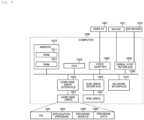
- FIG. 4 is a diagram illustrating an example of a computer that executes the detection program.
- a computer 1000 has a memory 1010, a CPU 1020, a hard disk drive interface 1030, a disk drive interface 1040, a serial port interface 1050, a video adapter 1060, and a network interface 1070, for example. These units are connected by a bus 1080.
- the memory 1010 includes a ROM (Read Only Memory) 1011 and a RAM 1012.
- the ROM 1011 stores, for example, a boot program such as a BIOS (Basic Input Output System).
- BIOS Basic Input Output System
- the hard disk drive interface 1030 is connected to a hard disk drive 1031.
- the disk drive interface 1040 is connected to a disk drive 1041.
- a removable storage medium such as a magnetic disk or an optical disk is inserted into the disk drive 1041.
- a mouse 1051 and a keyboard 1052 are connected to the serial port interface 1050.
- a display 1061 is connected to the video adapter 1060.
- the hard disk drive 1031 stores, for example, an OS 1091, an application program 1092, a program module 1093, and program data 1094.
- Each of the tables described in the foregoing embodiment is stored in, for example, the hard disk drive 1031 or the memory 1010.
- the detection program is stored in the hard disk drive 1031 as the program module 1093 in which commands executed by the computer 1000 are described, for example.
- the program module 1093 describing each processing to be executed by the detection device 10 described in the embodiment described above is stored in the hard disk drive 1031.
- the data used for information processing by the detection program is stored in the hard disk drive 1031, for example, as the program data 1094. Thereafter, the CPU 1020 reads the program module 1093 and the program data 1094 stored in the hard disk drive 1031 into the RAM 1012 when necessary, and executes each of the procedures described above.
- program module 1093 and program data 1094 related to the detection program are not limited to being stored in the hard disk drive 1031, and may also be stored in, for example, a removable storage medium and read out by the CPU 1020 via the disk drive 1041, or the like.
- the program module 1093 and the program data 1094 related to the detection program may be stored in another computer connected via a network such as a LAN (Local Area Network) or WAN (Wide Area Network) and may be read by the CPU 1020 via the network interface 1070.
- LAN Local Area Network
- WAN Wide Area Network
Landscapes
- Engineering & Computer Science (AREA)
- Computer Security & Cryptography (AREA)
- Theoretical Computer Science (AREA)
- Software Systems (AREA)
- Computer Hardware Design (AREA)
- General Engineering & Computer Science (AREA)
- Physics & Mathematics (AREA)
- General Physics & Mathematics (AREA)
- Health & Medical Sciences (AREA)
- General Health & Medical Sciences (AREA)
- Virology (AREA)
- Bioethics (AREA)
- Information Retrieval, Db Structures And Fs Structures Therefor (AREA)
- Storage Device Security (AREA)
- Input Circuits Of Receivers And Coupling Of Receivers And Audio Equipment (AREA)
- Burglar Alarm Systems (AREA)
- Geophysics And Detection Of Objects (AREA)
Abstract
Description
- The present invention relates to a detection device, a detection method, and a detection program.
- In general, unlike a PC, a server, or the like, since an IoT apparatus cannot use virus detection software, there are products that specialize in checking alteration of software or configuration files installed in the IoT apparatus (refer to NPL 1).
- NPL 1: "Tripwire," [online], [searched on April 26, 2021], Internet <URL: https://www.tripwire.co.jp/about/>
- However, it is difficult for the prior art to efficiently check alteration of software and configuration files installed in an IoT apparatus. For example, since the calculation resources of an IoT apparatus are limited, it takes time to check alteration of all files during the operation of the apparatus, delaying detection of alteration. Therefore, by assigning a priority to the files to be checked, the checking interval for the high priority files can be shortened. However, a method of repeatedly checking alteration at a predetermined time interval is often wasteful. Further, there are no efficient methods for narrowing down targets of cyclic check.
- The present invention has been made in view of the above, and an object of the present invention is to efficiently check alteration of software or a configuration file installed in an IoT apparatus.
- In order to solve the foregoing problem and to achieve the object, a detection device according to the present invention includes a collation unit that checks the presence/absence of alteration of all files, and an apparatus is started, and a cyclic collation unit that checks the presence/absence of alteration of a predetermined file, at predetermined time intervals during an operation of the apparatus.
- According to the present invention, it is possible to efficiently check alteration of software or configuration files installed in an IoT apparatus.
-
-
Fig. 1 is a schematic diagram illustrating a schematic configuration of a detection device. -
Fig. 2 is a diagram for explaining processing of a generation unit. -
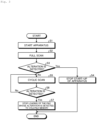
Fig. 3 is a flowchart illustrating a detection processing procedure. -
Fig. 4 is a diagram illustrating a computer that executes a detection program. - An embodiment of the present invention will be described in detail below with reference to the drawings. Note that the present invention is not limited to the embodiment. Furthermore, the same constituent elements are denoted by the same reference numerals in the description of the drawings.
- Generally, an apparatus such as an IoT apparatus that performs processing by a CPU (Central Processing Unit) includes a nonvolatile memory for storing permanent data and a volatile memory for temporarily storing data under processing. Since the volatile memory has an access speed higher than that of the nonvolatile memory, the apparatus loads a series of programs necessary for processing from the nonvolatile memory to the volatile memory at the time of start-up. A static library, a configuration file related to the apparatus and software, and the like that are contained therein are resident in the memory after once loaded into the volatile memory, and are not read again from the nonvolatile memory. Therefore, in these files, even if a file of the nonvolatile memory is altered during the operation of the apparatus, damage does not occur. Therefore, if full scanning is once performed on the entire file system at the time of starting the apparatus, it is possible to avoid damage by taking measures, such as file recovery, against the alteration detected at that time.
- On the other hand, a library to be dynamically loaded such as a DLL (Dynamic Link Library) file of Windows (®) OS and a so (shared object) file of Linux (®), a configuration file to be loaded for configuration change during operation of the apparatus, and the like are loaded from the nonvolatile memory to the volatile memory at an arbitrary timing during operation of the apparatus. If these data are altered during the operation of the apparatus, there is a possibility that an actual damage may occur unless the alteration is detected before the data are loaded into the volatile memory.
- Therefore, the detection device of the present embodiment checks the presence/absence of alteration of the entire file system when the apparatus is started. Also, during the operation of the apparatus, only files such as DLL which may be loaded into the volatile memory are limited to a check object, and the presence/absence of repetitive alteration is checked at fixed time intervals. Thus, the detection device can efficiently check the presence/absence of alteration by reducing a useless processing load during the operation of the apparatus.
-
Fig. 1 is a schematic diagram exemplifying a schematic configuration of the detection device. A detection device 10 according to the present embodiment is incorporated in an apparatus subject to detection processing, which will be described later, and includes a communication control unit 13, a storage unit 14, and acontrol unit 15. - The communication control unit 13 is implemented by an NIC (Network Interface Card) or the like and controls communication between an external apparatus such as a server device that acquires and manages various information and the
control unit 15 via a network. Note that the detection device 10 may be implemented in hardware different from the apparatus subject to the detection processing. In this case, the detection device 10 executes detection processing while communicating with the apparatus via the communication control unit 13. - The storage unit 14 is realized by a semiconductor memory element such as a RAM (Random Access Memory) or a flash memory, or a storage device such as a hard disk or an optical disk. The storage unit 14 stores in advance, for example, a processing program that operates the detection device 10 and data to be used during execution of the processing program, or the storage unit 14 stores the processing program and the data temporarily every time the processing is executed.
- In the present embodiment, the storage unit 14 functions as a nonvolatile memory and a volatile memory of the apparatus, and stores a
collation list 14a and acyclic collation list 14b used for detection processing to be described later. Note that the storage unit 14 may also be configured to communicate with thecontrol unit 15 via the communication control unit 13. - Here, the
collation list 14a includes file identification information such as a file path of each file and correct answer information such as a hash value of each file, for all files stored in a nonvolatile memory of the apparatus, and is generated in advance prior to the detection processing. Thecyclic collation list 14b is generated by a generation unit 15c to be described later. - The
control unit 15 is implemented by using a CPU or the like, and executes a processing program stored in a memory. Thus, as illustrated inFig. 1 , thecontrol unit 15 functions as anacquisition unit 15a, acollation unit 15b, the generation unit 15c, and acyclic collation unit 15d. - These functional units may be implemented in different hardware components. For example, the generation unit 15c may be mounted on a server device outside the detection device 10. In this case, as described later, the generation unit 15c acquires a file read log during operation of the apparatus via the communication control unit 13, and stores the generated
cyclic collation list 14b in the storage unit 14 via the communication control unit 13. - The
control unit 15 may also include another functional unit. Thecontrol unit 15 of the present embodiment has a functional unit for controlling the operation of the apparatus. - The
acquisition unit 15a acquires a hash value of each file used for processing of thecollation unit 15b and thecyclic collation unit 15d to be described later, for a file subject to the detection processing to be described later, the file being present in a nonvolatile memory of the apparatus. Theacquisition unit 15a acquires the file read log from the nonvolatile memory from the apparatus. - The
collation unit 15b checks the presence/absence of alteration of all files when the apparatus is started. Specifically, thecollation unit 15b uses a hash value of a file to check the presence/absence of the alteration of the file. For example, thecollation unit 15b checks the presence/absence of alteration by collating the hash value of the file of the nonvolatile memory of the apparatus with the hash value of thecollation list 14a, with the hash value of the file being correct answer information. - When the alteration is detected, for example, the
collation unit 15b stops the start of the apparatus, and takes measures such as limiting the loading of the file to the volatile memory. Thus, the occurrence of actual damage can be avoided. - The generation unit 15c generates the
cyclic collation list 14b which is a list of files read from the nonvolatile memory during operation of the apparatus by using a file read log from the nonvolatile memory of the apparatus in a predetermined period after the start of the apparatus. -
Fig. 2 is a diagram for explaining the processing of the generating unit. As shown inFig.2(a) , the generation unit 15c monitors file reading from the nonvolatile memory at a fixed time during operation of the apparatus in a safety environment of test operation, lists files of the read logs, and generates thecyclic collation list 14b. Thecyclic collation list 14b associates the file path of each file with the hash value as described above. In the example shown inFig. 2(a) , File_1, File_3, and File_4 are listed as the file paths, from the read logs of the files. - In this manner, the generation unit 15c creates a list of files as targets for alteration checking by limiting the files to files such as DLL which may be loaded into the volatile memory during the operation of the apparatus. For example, a demon program which is resident in the volatile memory and continues to operate from the start of the apparatus to the power-off, and a dynamic link type DLL which is loaded from the nonvolatile memory in linkage with the start of the main program when the power of the apparatus is turned on, are excluded from the targets for alteration checking. Then, dynamically loaded DLLs such as plug-ins that are dynamically loaded into memory at arbitrary times after the main program is started are listed as targets for alteration checking.
- Furthermore, the generation unit 15c monitors a read log of a file from the nonvolatile memory during the operation of the apparatus, and adds a file not in the cyclic collation list 12b. For example, as shown in
Fig. 2(b) , the generation unit 15c monitors the read log during actual operation of the apparatus, and when a file not listed in the existingcyclic collation list 14b is included in the read log, the generation unit 15c adds the file path and the hash value of the file to thecyclic collation list 14b. In this manner, the generation unit 15c updates the targets of alteration checking at any time. In the example shown inFig. 2(b) , a File_7 is added to the updatedcyclic collation list 14b as a file path. - Let us return to the explanation of
Fig. 1 . Thecyclic collation unit 15d checks the presence/absence of alteration of a predetermined file at predetermined time intervals during the operation of the apparatus. Specifically, thecyclic collation unit 15d checks the presence/absence of alteration of a file described in the generatedcyclic collation list 14b. Thecyclic collation unit 15d checks the presence/absence of the alteration of the file by using the hash value of the file. - In this manner, the detection device 10 excludes a file, such as a demon program and a dynamic link type DLL, which can avoid the occurrence of actual damage by performing alteration check once at the time of starting the apparatus, and limits the file to a small number of dynamic libraries or the like, to repeat the alteration check during the operation of the apparatus. Thus, the processing load is reduced, the influence on the original operation of the apparatus is minimized, and the file alteration can be efficiently checked.
- The
cyclic collation unit 15d may preferentially check the presence/absence of alteration of the file added to thecyclic collation list 14b. For example, at the time of updating thecyclic collation list 14b, a newly added file is added to the head line of thecyclic collation list 14b, to execute alteration checking in the shortest time. - When the alteration is detected, the
cyclic collation unit 15d takes a measure such as limiting the load to the volatile memory, for example. Thus, the occurrence of actual damage can be avoided. - Since the generation unit 15c is built in the apparatus, files that are the objects of alteration checking can be narrowed down even in an off-line environment.
- Next, the detection processing by the detection device 10 according to the present embodiment will be described with reference to
Fig. 3. Fig. 3 is a flowchart showing a detection processing procedure. The flowchart shown in Fig. 5 starts at a timing at which an operation input instructing the start of the detection processing, for example. - First, at the time of starting the apparatus (step S1), the
collation unit 15b performs full scan for checking the presence/absence of alteration for all files (step S2). Thecollation unit 15b then stops the start of the apparatus (step S4) when the alteration is detected (step S3, Yes), to end the series of detection processing. - On the other hand, when there is no alteration (step S3, No), the
cyclic collation unit 15d performs collation scan for checking the presence/absence of alteration, for a file described in thecyclic collation list 14b (step S5). When there is no alteration (step S6, No), thecyclic collation unit 15d repeats the cyclic scan of step S5 at predetermined time intervals. - On the other hand, when the alteration is detected (step S6, Yes), the
cyclic collation unit 15d takes a measure such as stopping loading to the volatile memory (step S7). In this manner, the series of detection processing ends. - As described above, in the detection device 10 of the present embodiment, when the apparatus is started, the
collation unit 15b checks the presence/absence of alteration of all files. Thecyclic collation unit 15d checks the presence/absence of alteration of the predetermined file, at predetermined time intervals during the operation of the apparatus. - Specifically, the generation unit 15c generates the
cyclic collation list 14b of a file read from the nonvolatile memory of the apparatus during operation thereof, by using a file read log from the nonvolatile memory of the apparatus in a predetermined period after the start of the apparatus. Thecyclic collation unit 15d checks the presence/absence of alteration of the file described in the generatedcyclic collation list 14b. In addition, thecollation unit 15b and thecyclic collation unit 15d check the presence/absence of alteration of the file by using the hash value of the file. - In this manner, the detection device 10 excludes a file, such as a demon program and a dynamic link type DLL, which can avoid the occurrence of actual damage by performing alteration check once at the time of starting the apparatus, and limits the file to a small number of dynamic libraries or the like, to repeat the alteration check during the operation of the apparatus. Thus, the wasteful consumption of the limited CPU and resources of the apparatus can be reduced, and the impact on the original operation of the apparatus can be minimized, allowing for efficient checking of file alteration.
- In particular, it is assumed that software required at the time of starting the apparatus is automatically started in the IoT apparatus, and that the software loaded in the volatile memory remains resident and continues to operate until the power of the apparatus is turned off. Therefore, the target files for alteration check are narrowed down to a small number of pieces of software or libraries read during operation, and the impact on the original operation of the IoT apparatus can be minimized. Therefore, the detection device 10 can efficiently check alteration of software and a configuration file installed in the IoT apparatus.
- Further, the generation unit 15c monitors a read log of a file from the nonvolatile memory during the operation of the apparatus, and adds a file not in the
cyclic collation list 14b. Thus, the detection device 10 can efficiently generate thecyclic collation list 14b and efficiently check for alteration. - The
cyclic collation unit 15d preferentially checks the presence/absence of alteration of the file added to thecyclic collation list 14b. Thus, the detection device 10 can execute the alteration check in the shortest time. - It is also possible to create a program describing processing to be executed by the detection device 10 according to the above embodiment in a language executable by a computer. In one embodiment, the detection device 10 can be implemented by installing a detection program for executing the above-described detection processing as package software or online software in a desired computer. For example, by causing an information processing device to execute the detection program, the information processing device can be caused to function as the detection device 10. The information processing device can be a desktop type or laptop type personal computer. In addition, the information processing device can be a mobile communication terminal such as a smartphone, a mobile phone and a PHS (Personal Handyphone System) or a slate terminal such as a PDA (Personal Digital Assistant). The function of the detection device 10 may be implemented by a cloud server.
-
Fig. 4 is a diagram illustrating an example of a computer that executes the detection program. Acomputer 1000 has amemory 1010, aCPU 1020, a harddisk drive interface 1030, adisk drive interface 1040, aserial port interface 1050, avideo adapter 1060, and anetwork interface 1070, for example. These units are connected by abus 1080. - The
memory 1010 includes a ROM (Read Only Memory) 1011 and aRAM 1012. The ROM 1011 stores, for example, a boot program such as a BIOS (Basic Input Output System). The harddisk drive interface 1030 is connected to ahard disk drive 1031. Thedisk drive interface 1040 is connected to adisk drive 1041. A removable storage medium such as a magnetic disk or an optical disk is inserted into thedisk drive 1041. For example, amouse 1051 and akeyboard 1052 are connected to theserial port interface 1050. For example, adisplay 1061 is connected to thevideo adapter 1060. - Here, the
hard disk drive 1031 stores, for example, anOS 1091, anapplication program 1092, aprogram module 1093, andprogram data 1094. Each of the tables described in the foregoing embodiment is stored in, for example, thehard disk drive 1031 or thememory 1010. - The detection program is stored in the
hard disk drive 1031 as theprogram module 1093 in which commands executed by thecomputer 1000 are described, for example. Specifically, theprogram module 1093 describing each processing to be executed by the detection device 10 described in the embodiment described above is stored in thehard disk drive 1031. - The data used for information processing by the detection program is stored in the
hard disk drive 1031, for example, as theprogram data 1094. Thereafter, theCPU 1020 reads theprogram module 1093 and theprogram data 1094 stored in thehard disk drive 1031 into theRAM 1012 when necessary, and executes each of the procedures described above. - Note that the
program module 1093 andprogram data 1094 related to the detection program are not limited to being stored in thehard disk drive 1031, and may also be stored in, for example, a removable storage medium and read out by theCPU 1020 via thedisk drive 1041, or the like. Alternatively, theprogram module 1093 and theprogram data 1094 related to the detection program may be stored in another computer connected via a network such as a LAN (Local Area Network) or WAN (Wide Area Network) and may be read by theCPU 1020 via thenetwork interface 1070. - Although the embodiments to which the invention made by the inventor thereof is applied have been described above, the present invention is not limited by the descriptions and drawings forming a part of the disclosure of the present invention according to the embodiments. That is to say, other embodiments, examples, operation techniques, and the like made by those skilled in the art on the basis of the present embodiment are all included in the scope of the present invention.
-
- 10
- Detection device
- 13
- Communication control unit
- 14
- Storage unit
- 14a
- Collation list
- 14b
- Cyclic collation list
- 15
- Control unit
- 15a
- Acquisition unit
- 15b
- Collation unit
- 15c
- Generation unit
- 15d
- Cyclic collation unit
Claims (7)
- A detection device, comprising:a collation unit that checks the presence/absence of alteration of all files when an apparatus is started; anda cyclic collation unit that checks the presence/absence of alteration of a predetermined file at predetermined time intervals during an operation of the apparatus.
- The detection device according to claim 1, further comprising a generation unit that generates a list of files to be read from a nonvolatile memory of the apparatus during the operation of the apparatus by using a file read log from the nonvolatile memory of the apparatus in a predetermined period after the apparatus is started, wherein
the cyclic collation unit checks the presence/absence of alteration of a file described in the generated list. - The detection device according to claim 2, wherein the generation unit further monitors the file read log from the nonvolatile memory during the operation of the apparatus, and adds a file that is not in the list.
- The detection device according to claim 3, wherein the cyclic collation unit preferentially checks the presence/absence of alteration of the file added to the list.
- The detection device according to claim 1, wherein the collation unit and the cyclic collation unit check the presence/absence of alteration of the file by using a hash value of the file.
- A detection method executed by a detection device, the detection method comprising:a collation step of checking the presence/absence of alteration of all files when an apparatus is started; anda cyclic collation step of checking the presence/absence of alteration of a predetermined file at predetermined time intervals during an operation of the apparatus.
- A detection program for causing a computer to execute:a collation step of checking the presence/absence of alteration of all files when an apparatus is started; anda cyclic collation step of checking the presence/absence of alteration of a predetermined file at predetermined time intervals during an operation of the apparatus.
Applications Claiming Priority (1)
| Application Number | Priority Date | Filing Date | Title |
|---|---|---|---|
| PCT/JP2021/020419 WO2022249448A1 (en) | 2021-05-28 | 2021-05-28 | Detection device, detection method, and detection program |
Publications (3)
| Publication Number | Publication Date |
|---|---|
| EP4328780A1 true EP4328780A1 (en) | 2024-02-28 |
| EP4328780A4 EP4328780A4 (en) | 2025-02-19 |
| EP4328780B1 EP4328780B1 (en) | 2026-02-11 |
Family
ID=84228491
Family Applications (1)
| Application Number | Title | Priority Date | Filing Date |
|---|---|---|---|
| EP21943093.1A Active EP4328780B1 (en) | 2021-05-28 | 2021-05-28 | Detection device, detection method, and detection program |
Country Status (6)
| Country | Link |
|---|---|
| US (1) | US12608472B2 (en) |
| EP (1) | EP4328780B1 (en) |
| JP (1) | JP7574922B2 (en) |
| CN (1) | CN117321597A (en) |
| AU (1) | AU2021447270B2 (en) |
| WO (1) | WO2022249448A1 (en) |
Family Cites Families (25)
| Publication number | Priority date | Publication date | Assignee | Title |
|---|---|---|---|---|
| US6021510A (en) | 1997-11-24 | 2000-02-01 | Symantec Corporation | Antivirus accelerator |
| BRPI0616018A2 (en) | 2005-07-29 | 2011-06-07 | Bit9 Inc | security systems and methods for computer networks |
| WO2007117574A2 (en) * | 2006-04-06 | 2007-10-18 | Smobile Systems Inc. | Non-signature malware detection system and method for mobile platforms |
| US8365283B1 (en) | 2008-08-25 | 2013-01-29 | Symantec Corporation | Detecting mutating malware using fingerprints |
| WO2010093071A1 (en) | 2009-02-12 | 2010-08-19 | 주식회사 안철수연구소 | Internet site security system and method thereof |
| GB2471716A (en) * | 2009-07-10 | 2011-01-12 | F Secure Oyj | Anti-virus scan management using intermediate results |
| US9104872B2 (en) | 2010-01-28 | 2015-08-11 | Bank Of America Corporation | Memory whitelisting |
| JP2012053635A (en) | 2010-08-31 | 2012-03-15 | Canon Software Inc | Alteration checking apparatus |
| KR102233808B1 (en) * | 2014-03-14 | 2021-03-30 | 삼성전자주식회사 | Storage device and table management method thereof |
| US10095878B2 (en) | 2015-06-02 | 2018-10-09 | ALTR Solutions, Inc. | Internal controls engine and reporting of events generated by a network or associated applications |
| JP6533771B2 (en) * | 2016-11-15 | 2019-06-19 | 富士通株式会社 | Communication method, apparatus and program |
| US10853488B2 (en) * | 2017-07-10 | 2020-12-01 | Dell Products, Lp | System and method for a security filewall system for protection of an information handling system |
| GB2566265B (en) * | 2017-09-01 | 2020-05-13 | Trustonic Ltd | Post-manufacture generation of device certificate and private key for public key infrastructure |
| US10616055B2 (en) * | 2018-03-06 | 2020-04-07 | Accenture Global Solutions Limited | Hash based device configuration management |
| US11132638B2 (en) * | 2018-08-31 | 2021-09-28 | Oracle International Corporation | Product predictions and shipments using IoT connected devices |
| US11248939B2 (en) * | 2018-09-12 | 2022-02-15 | Keysight Technologies, Inc. | Methods, systems, and computer readable media for calibration testing and traceability using a distributed ledger |
| JP6609788B1 (en) * | 2018-10-01 | 2019-11-27 | 二村 憲人 | Information communication device, authentication program for information communication device, and authentication method |
| TW202016743A (en) * | 2018-10-25 | 2020-05-01 | 財團法人資訊工業策進會 | Data processing apparatus and data processing method for internet of things system |
| JP7001236B2 (en) * | 2019-03-20 | 2022-01-19 | Necプラットフォームズ株式会社 | Information processing equipment, fault monitoring method, and fault monitoring computer program |
| JP2021002081A (en) * | 2019-06-19 | 2021-01-07 | キヤノン株式会社 | Information processing apparatus, control method thereof and program |
| JP7321795B2 (en) | 2019-06-27 | 2023-08-07 | キヤノン株式会社 | Information processing device, information processing method and program |
| US11409868B2 (en) * | 2019-09-26 | 2022-08-09 | At&T Intellectual Property I, L.P. | Ransomware detection and mitigation |
| US11461468B2 (en) * | 2019-11-06 | 2022-10-04 | Mcafee, Llc | Visual identification of malware |
| US11061958B2 (en) * | 2019-11-14 | 2021-07-13 | Jetblue Airways Corporation | Systems and method of generating custom messages based on rule-based database queries in a cloud platform |
| JP7354074B2 (en) * | 2020-09-18 | 2023-10-02 | 株式会社東芝 | Information processing device, information processing method and program |
-
2021
- 2021-05-28 WO PCT/JP2021/020419 patent/WO2022249448A1/en not_active Ceased
- 2021-05-28 CN CN202180098205.6A patent/CN117321597A/en active Pending
- 2021-05-28 AU AU2021447270A patent/AU2021447270B2/en active Active
- 2021-05-28 US US18/562,847 patent/US12608472B2/en active Active
- 2021-05-28 EP EP21943093.1A patent/EP4328780B1/en active Active
- 2021-05-28 JP JP2023523907A patent/JP7574922B2/en active Active
Also Published As
| Publication number | Publication date |
|---|---|
| AU2021447270A1 (en) | 2023-11-23 |
| US12608472B2 (en) | 2026-04-21 |
| AU2021447270B2 (en) | 2025-06-19 |
| JPWO2022249448A1 (en) | 2022-12-01 |
| EP4328780B1 (en) | 2026-02-11 |
| EP4328780A4 (en) | 2025-02-19 |
| CN117321597A (en) | 2023-12-29 |
| WO2022249448A1 (en) | 2022-12-01 |
| US20240370559A1 (en) | 2024-11-07 |
| JP7574922B2 (en) | 2024-10-29 |
Similar Documents
| Publication | Publication Date | Title |
|---|---|---|
| JP5976020B2 (en) | System and method for performing anti-malware metadata lookup | |
| US7559086B2 (en) | System and method for detecting multi-component malware | |
| US10303490B2 (en) | Apparatus and method for optimizing startup of embedded system | |
| US9134996B2 (en) | Updating anti-virus software | |
| CN113312037A (en) | Data processing method, device and equipment applied to microservice and storage medium | |
| CN111427579B (en) | Plug-in, application program implementation method and system, computer system and storage medium | |
| US20130138934A1 (en) | Loading configuration information | |
| CN110325994B (en) | Apparatus and methods for enhancing control flow integrity of software applications | |
| US10025587B2 (en) | Method of bootup and installation, and computer system thereof | |
| US11403388B2 (en) | Assignment device, assignment method, and assignment program | |
| CN114860272A (en) | Operating system installation method, computing device and storage medium | |
| US12608472B2 (en) | Detection device, detection method, and detection program | |
| CN108197020A (en) | Plug-in unit method of calibration, electronic equipment and computer storage media | |
| US9842018B2 (en) | Method of verifying integrity of program using hash | |
| US12493455B2 (en) | Container based generation of inputs for generic functions | |
| JP7355211B2 (en) | Signature generation device, signature generation method, and signature generation program | |
| US12542806B2 (en) | Analysis device, analysis method, and analysis system | |
| CN112100622B (en) | A data processing method and device | |
| US11983543B2 (en) | Information processing device, control method, and control program | |
| US11922233B2 (en) | Information creation device, information creation method, and information creation program | |
| CN113168462B (en) | Application program action control device, application program action control method, and recording medium | |
| EP2230616B1 (en) | System and method for detecting multi-component malware | |
| US20230315611A1 (en) | Bug-detection assisting device, bug-detection assisting method, and bug-detection assisting program | |
| CN117762869A (en) | Everything-based query method and device, electronic equipment and storage medium | |
| CN114518913A (en) | Program execution method, program processing method, and related apparatus |
Legal Events
| Date | Code | Title | Description |
|---|---|---|---|
| STAA | Information on the status of an ep patent application or granted ep patent |
Free format text: STATUS: THE INTERNATIONAL PUBLICATION HAS BEEN MADE |
|
| PUAI | Public reference made under article 153(3) epc to a published international application that has entered the european phase |
Free format text: ORIGINAL CODE: 0009012 |
|
| STAA | Information on the status of an ep patent application or granted ep patent |
Free format text: STATUS: REQUEST FOR EXAMINATION WAS MADE |
|
| 17P | Request for examination filed |
Effective date: 20231122 |
|
| AK | Designated contracting states |
Kind code of ref document: A1 Designated state(s): AL AT BE BG CH CY CZ DE DK EE ES FI FR GB GR HR HU IE IS IT LI LT LU LV MC MK MT NL NO PL PT RO RS SE SI SK SM TR |
|
| DAV | Request for validation of the european patent (deleted) | ||
| DAX | Request for extension of the european patent (deleted) | ||
| A4 | Supplementary search report drawn up and despatched |
Effective date: 20250117 |
|
| RIC1 | Information provided on ipc code assigned before grant |
Ipc: G06F 21/57 20130101ALI20250113BHEP Ipc: G06F 21/55 20130101ALI20250113BHEP Ipc: G06F 21/56 20130101ALI20250113BHEP Ipc: G06F 21/64 20130101AFI20250113BHEP |
|
| RAP3 | Party data changed (applicant data changed or rights of an application transferred) |
Owner name: NTT, INC. |
|
| GRAP | Despatch of communication of intention to grant a patent |
Free format text: ORIGINAL CODE: EPIDOSNIGR1 |
|
| STAA | Information on the status of an ep patent application or granted ep patent |
Free format text: STATUS: GRANT OF PATENT IS INTENDED |
|
| RIC1 | Information provided on ipc code assigned before grant |
Ipc: G06F 21/64 20130101AFI20250912BHEP Ipc: G06F 21/56 20130101ALI20250912BHEP Ipc: G06F 21/55 20130101ALI20250912BHEP Ipc: G06F 21/57 20130101ALI20250912BHEP |
|
| INTG | Intention to grant announced |
Effective date: 20251009 |
|
| GRAS | Grant fee paid |
Free format text: ORIGINAL CODE: EPIDOSNIGR3 |
|
| GRAA | (expected) grant |
Free format text: ORIGINAL CODE: 0009210 |
|
| STAA | Information on the status of an ep patent application or granted ep patent |
Free format text: STATUS: THE PATENT HAS BEEN GRANTED |
|
| AK | Designated contracting states |
Kind code of ref document: B1 Designated state(s): AL AT BE BG CH CY CZ DE DK EE ES FI FR GB GR HR HU IE IS IT LI LT LU LV MC MK MT NL NO PL PT RO RS SE SI SK SM TR |
|
| REG | Reference to a national code |
Ref country code: CH Ref legal event code: F10 Free format text: ST27 STATUS EVENT CODE: U-0-0-F10-F00 (AS PROVIDED BY THE NATIONAL OFFICE) Effective date: 20260211 Ref country code: GB Ref legal event code: FG4D |
|
| REG | Reference to a national code |
Ref country code: DE Ref legal event code: R096 Ref document number: 602021047989 Country of ref document: DE |
|
| REG | Reference to a national code |
Ref country code: IE Ref legal event code: FG4D |