EP4325618A1 - Method for preparing polymer solid electrolyte and polymer solid electrolyte prepared thereby - Google Patents
Method for preparing polymer solid electrolyte and polymer solid electrolyte prepared thereby Download PDFInfo
- Publication number
- EP4325618A1 EP4325618A1 EP22904680.0A EP22904680A EP4325618A1 EP 4325618 A1 EP4325618 A1 EP 4325618A1 EP 22904680 A EP22904680 A EP 22904680A EP 4325618 A1 EP4325618 A1 EP 4325618A1
- Authority
- EP
- European Patent Office
- Prior art keywords
- solid electrolyte
- polymer solid
- polymer
- film
- preparing
- Prior art date
- Legal status (The legal status is an assumption and is not a legal conclusion. Google has not performed a legal analysis and makes no representation as to the accuracy of the status listed.)
- Pending
Links
Images

Classifications
-
- H—ELECTRICITY
- H01—ELECTRIC ELEMENTS
- H01M—PROCESSES OR MEANS, e.g. BATTERIES, FOR THE DIRECT CONVERSION OF CHEMICAL ENERGY INTO ELECTRICAL ENERGY
- H01M10/00—Secondary cells; Manufacture thereof
- H01M10/05—Accumulators with non-aqueous electrolyte
- H01M10/056—Accumulators with non-aqueous electrolyte characterised by the materials used as electrolytes, e.g. mixed inorganic/organic electrolytes
- H01M10/0564—Accumulators with non-aqueous electrolyte characterised by the materials used as electrolytes, e.g. mixed inorganic/organic electrolytes the electrolyte being constituted of organic materials only
- H01M10/0565—Polymeric materials, e.g. gel-type or solid-type
-
- H—ELECTRICITY
- H01—ELECTRIC ELEMENTS
- H01M—PROCESSES OR MEANS, e.g. BATTERIES, FOR THE DIRECT CONVERSION OF CHEMICAL ENERGY INTO ELECTRICAL ENERGY
- H01M10/00—Secondary cells; Manufacture thereof
- H01M10/05—Accumulators with non-aqueous electrolyte
- H01M10/052—Li-accumulators
-
- H—ELECTRICITY
- H01—ELECTRIC ELEMENTS
- H01M—PROCESSES OR MEANS, e.g. BATTERIES, FOR THE DIRECT CONVERSION OF CHEMICAL ENERGY INTO ELECTRICAL ENERGY
- H01M10/00—Secondary cells; Manufacture thereof
- H01M10/05—Accumulators with non-aqueous electrolyte
- H01M10/052—Li-accumulators
- H01M10/0525—Rocking-chair batteries, i.e. batteries with lithium insertion or intercalation in both electrodes; Lithium-ion batteries
-
- H—ELECTRICITY
- H01—ELECTRIC ELEMENTS
- H01M—PROCESSES OR MEANS, e.g. BATTERIES, FOR THE DIRECT CONVERSION OF CHEMICAL ENERGY INTO ELECTRICAL ENERGY
- H01M10/00—Secondary cells; Manufacture thereof
- H01M10/05—Accumulators with non-aqueous electrolyte
- H01M10/056—Accumulators with non-aqueous electrolyte characterised by the materials used as electrolytes, e.g. mixed inorganic/organic electrolytes
- H01M10/0564—Accumulators with non-aqueous electrolyte characterised by the materials used as electrolytes, e.g. mixed inorganic/organic electrolytes the electrolyte being constituted of organic materials only
- H01M10/0566—Liquid materials
- H01M10/0567—Liquid materials characterised by the additives
-
- H—ELECTRICITY
- H01—ELECTRIC ELEMENTS
- H01M—PROCESSES OR MEANS, e.g. BATTERIES, FOR THE DIRECT CONVERSION OF CHEMICAL ENERGY INTO ELECTRICAL ENERGY
- H01M10/00—Secondary cells; Manufacture thereof
- H01M10/05—Accumulators with non-aqueous electrolyte
- H01M10/056—Accumulators with non-aqueous electrolyte characterised by the materials used as electrolytes, e.g. mixed inorganic/organic electrolytes
- H01M10/0564—Accumulators with non-aqueous electrolyte characterised by the materials used as electrolytes, e.g. mixed inorganic/organic electrolytes the electrolyte being constituted of organic materials only
- H01M10/0566—Liquid materials
- H01M10/0568—Liquid materials characterised by the solutes
-
- H—ELECTRICITY
- H01—ELECTRIC ELEMENTS
- H01M—PROCESSES OR MEANS, e.g. BATTERIES, FOR THE DIRECT CONVERSION OF CHEMICAL ENERGY INTO ELECTRICAL ENERGY
- H01M10/00—Secondary cells; Manufacture thereof
- H01M10/05—Accumulators with non-aqueous electrolyte
- H01M10/058—Construction or manufacture
-
- H—ELECTRICITY
- H01—ELECTRIC ELEMENTS
- H01M—PROCESSES OR MEANS, e.g. BATTERIES, FOR THE DIRECT CONVERSION OF CHEMICAL ENERGY INTO ELECTRICAL ENERGY
- H01M2300/00—Electrolytes
- H01M2300/0017—Non-aqueous electrolytes
- H01M2300/0065—Solid electrolytes
- H01M2300/0082—Organic polymers
-
- H—ELECTRICITY
- H01—ELECTRIC ELEMENTS
- H01M—PROCESSES OR MEANS, e.g. BATTERIES, FOR THE DIRECT CONVERSION OF CHEMICAL ENERGY INTO ELECTRICAL ENERGY
- H01M2300/00—Electrolytes
- H01M2300/0088—Composites
- H01M2300/0094—Composites in the form of layered products, e.g. coatings
-
- Y—GENERAL TAGGING OF NEW TECHNOLOGICAL DEVELOPMENTS; GENERAL TAGGING OF CROSS-SECTIONAL TECHNOLOGIES SPANNING OVER SEVERAL SECTIONS OF THE IPC; TECHNICAL SUBJECTS COVERED BY FORMER USPC CROSS-REFERENCE ART COLLECTIONS [XRACs] AND DIGESTS
- Y02—TECHNOLOGIES OR APPLICATIONS FOR MITIGATION OR ADAPTATION AGAINST CLIMATE CHANGE
- Y02E—REDUCTION OF GREENHOUSE GAS [GHG] EMISSIONS, RELATED TO ENERGY GENERATION, TRANSMISSION OR DISTRIBUTION
- Y02E60/00—Enabling technologies; Technologies with a potential or indirect contribution to GHG emissions mitigation
- Y02E60/10—Energy storage using batteries
Definitions
- One aspect of the present disclosure relates to a method for preparing a polymer solid electrolyte and the polymer solid electrolyte prepared therefrom.
- the all-solid battery means a battery in which the liquid electrolyte used in the existing lithium secondary battery is replaced by a solid material, and since the all-solid battery does not use a flammable solvent in the battery, there is no ignition or explosion caused by the decomposition reaction of the conventional electrolyte solution, so safety can be greatly improved.
- the all-solid battery since Li metal or Li alloy can be used as a material for the negative electrode, there is an advantage that the energy density relative to the mass and volume of the battery can be remarkably improved.
- the all-solid battery is attracting attention as a next-generation lithium secondary battery, in terms of safety, high energy density, high output, and simplification of the manufacturing process.
- the demand for the solid electrolyte of the thin film is increasing, however, there is a problem that as the solid electrolyte becomes thin, its strength weakens, and thus it is not easy to separate from the release film attached during the manufacturing process, and also the thin film is damaged.
- Patent Document 1 Japanese Patent Publication No. 2020-526897
- the inventors of one aspect of the present disclosure confirmed that when preparing a polymer solid electrolyte, if a polymer and a non-volatile liquid compound having poor miscibility with each other are used as raw materials, a liquid phase film and a polymer solid electrolyte film formed by the phase-separation phenomenon that occurs when mixing and drying them are formed, and the polymer solid electrolyte film exhibits the form of a uniform thin film.
- One aspect of the present disclosure relates to a method for preparing a polymer solid electrolyte, comprising the steps of (S1) preparing a solution for forming a polymer solid electrolyte by adding a polymer, a non-volatile liquid phase compound, and a lithium salt to a solvent; (S2) forming a coating layer by applying the solution for forming a polymer solid electrolyte on a substrate; (S3) drying the coating layer to separate the phase into a liquid phase film and a polymer solid electrolyte film; and (S4) separating the polymer solid electrolyte film.
- the liquid phase film may include the non-volatile liquid phase compound, and the polymer solid electrolyte film comprises the polymer and lithium salt, wherein the non-volatile liquid-phase compound is immiscible with the polymer, and wherein the liquid phase film is formed on the substrate and the polymer solid electrolyte film is formed on the liquid phase film.
- the weight ratio of the polymer and the non-volatile liquid-phase compound in the solution may be 1:0.8 to 1:5.5.
- the polymer may include one or more selected from the group consisting of polypropylene carbonate (PPC), polyacrylonitrile (PAN), and polyvinylpyrrolidone (PVP).
- PPC polypropylene carbonate
- PAN polyacrylonitrile
- PVP polyvinylpyrrolidone
- the non-volatile liquid-phase compound may include one or more selected from polyhedral oligomeric silsesquioxane (POSS) and ionic liquid.
- PES polyhedral oligomeric silsesquioxane
- the POSS may include one or more functional groups (R), wherein the functional group (R) is a functional group comprising one or more elements selected from O, N, S, Si and P, or is a functional group capable of binding to lithium ion.
- the functional group may be poly(ethylene glycol)(PEG), alcohol, amine, carboxylic acid, allyl, epoxide, thiol, silane, or silanol
- the ionic liquid may include a cation and an anion, and the cation comprises one or more selected from the group consisting of imidazolium, pyrazolium, triazolium, thiazolium, oxazolium, pyridazinium, pyrimidinium, pyrazinium, ammonium, phosphonium, pyridinium and pyrrolidinium, unsubstituted or substituted by an alkyl group having 1 to 15 carbon atoms, and the anion comprises one or more selected from the group consisting of PF 6 - , BF 4 - , CF 3 SO 3 - , N(CF 3 SO 2 ) 2 - , N(C 2 F 5 SO 2 ) 2 - , C(CF 2 SO 2 ) 3 - , AsF 6 - , SbF 6 - , AlCl 4 - , NbF 6 - , HSO 4 - , ClO 4 - , CH
- the lithium salt may include one or more selected from the group consisting of LiTFSI(lithium bis(trifluoromethanesulphonyl)imide), LiFSI(Lithium bis(fluorosulfonyl)imide), LiNO 3 , LiOH, LiCl, LiBr, LiI, LiClO 4 , LiBF 4 , LiB 10 Cl 10 , LiPF 6 , LiCF 3 SO 3 , LiCF 3 CO 2 , LiAsF 6 , LiSbF 6 , LiAlCl 4 , CH 3 SO 3 Li, CF 3 SO 3 Li, LiSCN, LiC(CF 3 SO 2 ) 3 , (CF 3 SO 2 ) 2 NLi, and (FSO 2 ) 2 NLi.
- LiTFSI lithium bis(trifluoromethanesulphonyl)imide
- LiFSI Lithium bis(fluorosulfonyl)imide
- LiNO 3 LiOH, LiCl, LiBr, Li
- the substrate may include one or more selected from the group consisting of Stainless Steel, a Cu foil, and an Al foil.
- the coating method may be bar coating, roll coating, spin coating, slit coating, die coating, blade coating, comma coating, slot die coating, lip coating, or solution casting.
- the weight ratio of the polymer and the lithium salt may be 1:0.5 to 1:3.
- the solvent may include one or more selected from the group consisting of propylene carbonate (PC), ethylene carbonate (EC), butylene carbonate (BC), diethyl carbonate (DEC), dimethyl carbonate (DMC), dipropyl carbonate (DPC), methyl propionate (MP), dimethyl sulfoxide, dimethoxyethane, diethoxyethane, tetrahydrofuran, N-methyl-2-pyrrolidone (NMP), ethylmethyl carbonate (EMC), vinylene carbonate (VC), gamma butyrolactone (GBL), fluoroethylene carbonate (FEC), methyl formate, ethyl formate, propyl formate, methyl acetate, ethyl acetate, propyl acetate, pentyl acetate, methyl propionate, ethyl propionate, ethyl propionate, and butyl propionate.
- PC propylene carbonate
- the drying of the coating layer may be performed at 150°C or less.
- Another aspect of the present disclosure also provides a polymer solid electrolyte comprising a polymer and a lithium salt.
- the thickness of the polymer solid electrolyte may be 23 ⁇ m to 35 ⁇ m.
- the thickness deviation of the polymer solid electrolyte may be 0.7 ⁇ m or less, and the thickness deviation is calculated from a deviation between the thickness at the thickest position and the thickness at the thinnest position among thicknesses measured at a total of 9 designated positions in a sample punched out of the polymer solid electrolyte to a size of 3*3cm 2 .
- the polymer solid electrolyte may be in the form of a free-standing film.
- the ionic conductivity of the polymer solid electrolyte is from 1.2 ⁇ 10 -5 to 4.5 ⁇ 10 -5 S/cm, and the ionic conductivity is measured at 80°C.
- the other aspect of the present disclosure also provides an all-solid battery comprising the polymer solid electrolyte.
- a polymer solid electrolyte in the form of a uniform thin film can be prepared by forming a laminate formed by laminating a liquid phase film and a polymer solid electrolyte film, and then separating them, by the principle that phase separation occurs when the polymer and the non-volatile liquid-phase compound are mixed, and then dried.
- the polymer solid electrolyte film when forming the liquid phase film and the polymer solid electrolyte film on the substrate, and then, separating the polymer solid electrolyte film from the substrate, the polymer solid electrolyte film can be separated without a separate resistance, due to the liquid phase film adjacent to the substrate.
- miscibility refers to the property of being immiscible with each other.
- free-standing film refers to a film capable of maintaining the shape of a film by itself without a separate support at room temperature and atmospheric pressure.
- One aspect of the present disclosure relates to a method for preparing a polymer solid electrolyte comprising the steps of (S1) preparing a solution for forming a polymer solid electrolyte by adding a polymer, a non-volatile liquid phase compound, and a lithium salt to a solvent; (S2) forming a coating layer by applying the solution for forming a polymer solid electrolyte on a substrate; (S3) drying the coating layer to separate the phase into a liquid phase film and a polymer solid electrolyte film; and (S4) separating the polymer solid electrolyte film; wherein the non-volatile liquid-phase compound is immiscible with the polymer, the liquid phase film comprises the non-volatile liquid-phase compound and the polymer solid electrolyte film comprises the polymer and lithium salt.
- a polymer and a non-volatile liquid-phase compound having poor miscibility with each other are used as raw materials.
- a phenomenon of phase separation occurs during drying after mixing them, and thus a liquid phase film containing the non-volatile liquid-phase compound and a polymer solid electrolyte film containing a polymer may be formed, and accordingly, after the formation of a laminate formed by laminating the substrate, the liquid phase film, and the polymer solid electrolyte film in the listed order, a polymer solid electrolyte can be obtained by separating the polymer solid electrolyte film. At this time, since the liquid phase film is formed between the substrate and the polymer solid electrolyte film, the polymer solid electrolyte film can be easily separated without resistance.
- FIG. 1 is a schematic diagram showing a process for preparing a polymer solid electrolyte according to an example of one aspect of the present disclosure
- FIG. 2 is a schematic diagram showing the structure of the laminate comprising the liquid phase film and the polymer solid electrolyte film formed during the preparation process of the polymer solid electrolyte according to an example of one aspect of the present disclosure.
- a polymer, a non-volatile liquid-phase compound, and lithium salt may be added to a solvent to prepare a solution for forming a polymer solid electrolyte.
- the polymer may act to form a polymer solid electrolyte in the form of a uniform thin film, without reducing the electrical and ionic conductivity of the polymer solid electrolyte.
- the polymer is not particularly limited as long as it is a polymer that exhibits immiscible property with respect to the non-volatile liquid-phase compound contained in the liquid phase film, for example, the polymer may include one or more selected from the group consisting of polypropylene carbonate (PPC), polyacrylonitrile (PAN) and polyvinylpyrrolidone (PVP).
- PPC polypropylene carbonate
- PAN polyacrylonitrile
- PVP polyvinylpyrrolidone
- the non-volatile liquid-phase compound exhibits immiscible properties with respect to the polymer, and thus may be phase-separated from the polymer to form a liquid phase film in the form of a separate layer, during the preparation process of the polymer solid electrolyte.
- non-volatile liquid-phase compound may comprise polyhedral oligomeric silsesquioxane (POSS) and/or ionic liquid.
- PES polyhedral oligomeric silsesquioxane
- the POSS is a polyhedral oligosilsesquioxane, containing one or more functional groups (R), wherein the functional group (R) is a functional group comprising one or more elements selected from O, N, S, Si and P, or comprises a functional group capable of binding to lithium ion.
- the functional group (R) may be poly(ethylene glycol)(PEG), alcohol, amine, carboxylic acid, allyl, epoxide, thiol, silane, silanol, silanol, glycidyl, octasilane or methacryl.
- the POSS may be PEG-POSS including poly(ethylene glycol) (PEG) as afunctional group, and, when the PEG-POSS is used, the phase-separation may be smoothly processed.
- PEG poly(ethylene glycol)
- the phase-separation may be smoothly processed and thus process efficiency may be enhanced.
- POSS may be solid phase or liquid phase according to the functional group(R).
- the POSS of liquid phase may be favorable so that the phase-separation from the polymer is smoothly process.
- the POSS of liquid phase may have the above functional group(R), and preferably the POSS of liquid phase may be PEG-POSS.
- the POSS of liquid phase may be shown the below chemical formula 1.
- R is same or different each other, and is selected from the group consisting of the below chemical 1-1 to 1-4:
- L1 to L5 are C1 to C30 alkylene group
- R1 to R4 are selected from the group consisting of hydrogen; hydroxy group; or C1 to C30 alkyl group
- m and n are same or different each other and are independently an integer of 0 to 1 in the chemical formula 1-1 to 1-4.
- the functional group R in the chemical formula 1 is selected from the group consisting of poly(ethylene glycol) group, glycidyl group, octa silane group, and metacryl group.
- the ionic liquid contains a cation and an anion
- the cation may comprise one or more selected from the group consisting of imidazolium, pyrazolium, triazolium, thiazolium, oxazolium, pyridazinium, pyrimidinium, pyrazinium, ammonium, phosphonium, pyridinium and pyrrolidinium unsubstituted or substituted by an alkyl group having 1 to 15 carbon atoms
- the anion may comprise one or more selected from the group consisting of PF 6 - , BF 4 - , CF 3 SO 3 - , N(CF 3 SO 2 ) 2 - , N(C 2 F 5 SO 2 ) 2 - , C(CF 2 SO 2 ) 3 - , AsF 6 - , SbF 6 - , AlCl 4 - , NbF 6 - , HSO 4 - , ClO 4 -
- the ionic liquid may contain one or more selected from the group consisting of 1-ethyl-3-methyl imidazolium, 1-butyl-3-methyl imidazolium, 1-butyl-1-methyl pyrrolidinium, 1-methyl-1-proply piperidinium, bis(trifluoromethylsulfonyl) imide (TFSI), and trifluoromethanesulfonate.
- TFSI bis(trifluoromethylsulfonyl) imide
- the lithium salt can impart ionic conductivity to the polymer solid electrolyte, and can improve ionic conductivity without reducing the electrical conductivity by the electrical conductivity polymer.
- the lithium salt may comprise one or more selected from the group consisting of LiTFSI(lithium bis(trifluoromethanesulphonyl)imide), LiFSI(Lithium bis(fluorosulfonyl)imide), LiNO 3 , LiOH, LiCl, LiBr, LiI, LiClO 4 , LiBF 4 , LiB 10 Cl 10 , LiPF 6 , LiCF 3 SO 3 , LiCF 3 CO 2 , LiAsF 6 , LiSbF 6 , LiAlCl 4 , CH 3 SO 3 Li, CF 3 SO 3 Li, LiSCN, LiC(CF 3 SO 2 ) 3 , (CF 3 SO 2 ) 2 NLi, (FSO 2 ) 2 NLi, chloroborane lithium, lower aliphatic carboxylic acid lithium, and 4-phenylboric acid lithium.
- LiTFSI lithium bis(trifluoromethanesulphonyl)imide
- LiFSI Lithium bis(flu
- the weight ratio of the polymer and the non-volatile liquid-phase compound may be 1:0.8 to 1:5.5, specifically, 1:0.8 or less, 1:0.9 or less, or 1:1 or less, and 1:5 or more, 1:5.2 or more, or 1:5.5 or more. If the weight ratio exceeds 1:0.8, the content of the polymer is excessively increased, so that a phenomenon of phase separation does not occur, a polymer solid electrolyte in the form of a free-standing film is prepared in a state where the polymer and the non-volatile liquid-phase compound are simply mixed, and the uniformity and ionic conductivity of the polymer solid electrolyte may be reduced. In addition, if the weight ratio is less than 1:5.5, the content of the non-volatile liquid-phase compound is excessively increased, so that a solid polymer electrolyte is not prepared, and an electrolyte of the liquid phase may be prepared.
- the weight ratio of the polymer and the lithium salt may be 1:0.5 to 1:3, specifically, 1:0.5 or less, 1:0.6 or less, or 1:0.7 or less, and 1:1.5 or more, 1:2 or more, or 1:3 or more. If the weight ratio exceeds 1:0.5, the content of the polymer may be excessively increased, so that the ionic conductivity of the polymer solid electrolyte may be reduced. If the weight ratio is less than 1:3, the content of the lithium salt may be excessively increased, so that the polymer electrolyte film may not be formed.
- the solvent is not particularly limited as long as it is a solvent used in the preparation of an electrolyte in the art.
- the solvent may comprise one or more selected from the group consisting of propylene carbonate (PC), ethylene carbonate (EC), butylene carbonate (BC), diethyl carbonate (DEC), dimethyl carbonate (DMC), dipropyl carbonate (DPC), methyl propionate (MP), dimethyl sulfoxide, dimethoxyethane, diethoxyethane, tetrahydrofuran, N-methyl-2-pyrrolidone (NMP), ethylmethyl carbonate (EMC), vinylene carbonate (VC), gamma butyrolactone (GBL), fluoroethylene carbonate (FEC), methyl formate, ethyl formate, propyl formate, methyl acetate, ethyl acetate, propyl acetate, pentyl acetate, methyl propionate, ethyl propionat
- the concentration of the solution for forming the polymer solid electrolyte is not particularly limited as long as the concentration is sufficient to perform the coating process.
- the concentration of the solution for forming the polymer solid electrolyte may be 10 to 40% by weight, specifically 10% by weight or more, 15% by weight or more or 20% by weight or more, and 30 % by weight or less, 35 % by weight or less or 40 % by weight or less.
- the concentration may be appropriately adjusted to a concentration sufficient to perform the coating process within the above range.
- the solution for forming the polymer solid electrolyte is in a form in which a liquid moiety and a polymer chain are mixed.
- the liquid moiety is derived from the non-volatile liquid-phase compound, and the polymer chain is derived from the polymer. Since the non-volatile liquid-phase compound and the polymer are immiscible with each other, the non-volatile liquid-phase compound and the polymer are present in a solution while being separated from each other.
- step (S2) the solution for forming the polymer solid electrolyte may be applied on a substrate to form a coating layer.
- the substrate may be in the form of a foil, and the foil may be in the form of a thin film of a metal such as aluminum, copper, or Stainless Steel.
- a metal such as aluminum, copper, or Stainless Steel.
- the coating method may be bar coating, roll coating, spin coating, slit coating, die coating, blade coating, comma coating, slot die coating, lip coating, or solution casting, but is not limited thereto as long as it is a coating method capable of forming a coating layer on the substrate.
- step (S3) the coating layer is dried, and the coating layer is phase-separated into a liquid phase film and a polymer electrolyte film.
- the drying is not particularly limited as long as it is a drying method that can induce phase-separation of the liquid moiety and the polymer chain contained in the coating layer.
- the drying may be performed at 150°C or less, 130°C or less, or 110°C or less.
- the phase-separation may occur due to the characteristic that the polymer and the non-volatile liquid-phase compound which are raw materials are immiscible with each other.
- the liquid phase film 20 comprising the non-volatile liquid-phase compound may be formed on the substrate 10, and the polymer solid electrolyte film 30 comprising the polymer and lithium salt may be formed on the liquid phase film 20.
- step (S4) the polymer solid electrolyte film may be separated.
- the strength is weakened, and thus it may be difficult to separate from the substrate.
- the liquid phase film is formed between the substrate and the polymer solid electrolyte film in step (S3), the polymer solid electrolyte film can be separated from the substrate without a separate resistance.
- a washing step is performed to remove any remianing non-volatile liquid-phase compound on the the polymer solid electrolyte film.
- Another aspect of the present disclosure also provides a polymer solid electrolyte prepared by the method for preparing a polymer solid electrolyte as described above.
- the polymer solid electrolyte includes a polymer and a lithium salt.
- the type and weight ratio of the polymer and the lithium salt are the same as described above.
- the thickness of the polymer solid electrolyte may be 23 ⁇ m to 35 ⁇ m, and may be reduced compared to the general polymer solid electrolyte, thereby representing the form of a thin-film solid electrolyte. If the thickness is less than 23 ⁇ m, the durability of the polymer solid electrolyte may be lowered. If the thickness exceeds 35 gm, it may act as a resistance during operation of the battery.
- the thickness deviation of the polymer solid electrolyte may be 0.7 ⁇ m or less. Within the above range, the smaller the thickness deviation, the better the uniformity. If the thickness deviation exceeds 0.7 ⁇ m, the uniformity of the polymer solid electrolyte is not good. For example, in the case of the thickness deviation, for the sample punched out of the polymer solid electrolyte to a size of 3*3cm 2 , the thickness was measured at a total of 9 designated positions, and then the deviation between the thickness at the thickest position and the thickness at the thinnest position was calculated. It was judged that the smaller the deviation of the calculated thickness, the more uniform.
- the polymer solid electrolyte may be in the form of a free-standing film.
- the polymer solid electrolyte in the form of a free-standing film maintains the form of a film by itself at room temperature and atmospheric pressure, and thus can be applied to various applications.
- the ionic conductivity of the polymer solid electrolyte may be from 1.2 x 10 -5 to 4.5 x 10 -5 S/cm, and the ionic conductivity is measured at 80°C.
- the polymer solid electrolyte with the ionic conductivity is applied to an all-solid battery, stability of the battery is enhanced and performance and life span of the battery are improved.
- the other aspect of the present disclosure also relates to an all-solid battery comprising the polymer solid electrolyte described above, wherein the all-solid battery may comprise a positive electrode, a negative electrode, and the polymer solid electrolyte interposed therebetween.
- the polymer solid electrolyte may be applied to the electrode, and thus may be comprised in an all-solid battery in a state of being attached to one surface of the positive electrode or the negative electrode.
- the positive electrode comprises a positive electrode current collector and a positive electrode active material layer formed on the positive electrode current collector.
- the positive electrode active material layer comprises a positive electrode active material, a binder, and an electrically conductive material.
- the positive electrode active material may be contained in an amount of 40 to 80% by weight based on the total weight of the positive electrode active material layer.
- the content of the positive electrode active material may be 40% by weight or more or 50% by weight or more, and may be 70% by weight or less or 80% by weight or less. If the content of the positive electrode active material is less than 40% by weight, the connectivity between the wet positive electrode active material layer and the dry positive electrode active material layer may be insufficient. If the content of the positive electrode active material exceeds 80 % by weight, mass transfer resistance may be increased.
- the binder is a component that assists bonding between the positive electrode active material and the electrically conductive material, and assists in bonding to the current collector.
- the binder may comprise one or more selected from the group consisting of styrene butadiene rubber, acrylated styrene butadiene rubber, acrylonitrile copolymer, acrylonitrile-butadiene rubber, nitrile butadiene rubber, acrylonitrile-styrene-butadiene copolymer, acrylic rubber, butyl rubber, fluorine rubber, polytetrafluoroethylene, polyethylene, polypropylene, ethylene/propylene copolymer, polybutadiene, polyethylene oxide, chlorosulfonated polyethylene, polyvinylpyrrolidone, polyvinylpyridine, polyvinyl alcohol, polyvinyl acetate, polyepichlorohydrin, polyphosphazene, polyacrylonitrile, polystyrene, late
- the binder may comprise one or more selected from the group consisting of styrene-butadiene rubber, polytetrafluoroethylene, carboxymethyl cellulose, polyacrylic acid, lithium polyacrylate, and polyvinylidene fluoride.
- the binder may be contained in an amount of 1% by weight to 30% by weight based on the total weight of the positive electrode active material layer, and, specifically, the content of the binder may be 1% by weight or more or 3% by weight or more, and may be 15% by weight or less or 30% by weight or less. If the content of the binder is less than 1% by weight, the adhesive force between the positive electrode active material and the positive electrode may be lowered. If the content of the binder exceeds 30% by weight, the adhesive force is improved, but the content of the positive electrode active material is reduced by that amount, and thus the capacity of the battery may be lowered.
- the electrically conductive material is not particularly limited as long as it has excellent electrical conductivity without causing side reactions in the internal environment of the all-solid battery and without causing chemical changes in the battery.
- the electrically conductive material may be typically graphite or conductive carbon, for example, as the electrically conductive material, graphite such as natural graphite, artificial graphite; carbon black such as carbon black, acetylene black, Ketjen black, Denka black, thermal black, channel black, furnace black, lamp black, thermal black; carbon-based materials whose crystal structure is graphene or graphite; electrically conductive fibers such as carbon fibers and metal fibers; carbon fluoride; metal powders such as aluminum powder and nickel powder; electrically conductive whiskers such as zinc oxide and potassium titanate; electrically conductive oxides such as titanium oxide; and electrically conductive polymers such as polyphenylene derivatives may be used alone or in combination of two or more thereof, but is not necessarily limited thereto.
- the electrically conductive material may be generally contained in an amount of 0.5% by weight to 30% by weight based on the total weight of the positive electrode active material layer, and specifically, the content of the electrically conductive material may be 0.5% by weight or more or 1% by weight or more, and may be 20% by weight or less or 30% by weight or less. If the content of the electrically conductive material is too small, i.e., less than 0.5 % by weight, it is difficult to expect an effect of improving electrical conductivity or the electrochemical properties of the battery may be deteriorated. If the content of the electrically conductive material exceeds 30% by weight and thus is too large, the amount of the positive electrode active material may be relatively small, so that the capacity and energy density may be lowered.
- a method for incorporating the electrically conductive material to the positive electrode is not particularly limited, and a conventional method known in the art, such as coating on the positive electrode active material, may be used.
- the positive electrode current collector supports the positive electrode active material layer, and serves to transfer electrons between the external conductive wire and the positive electrode active material layer.
- the positive electrode current collector is not particularly limited as long as it has high electrical conductivity without causing chemical changes in the all-solid battery.
- the positive electrode current collector copper, stainless steel, aluminum, nickel, titanium, palladium, sintered carbon; a copper or stainless steel surface-treated with carbon, nickel, silver, etc.; an aluminum-cadmium alloy, etc. may be used.
- the positive electrode current collector may have a fine irregularity structure on the surface of the positive electrode current collector or have a three-dimensional porous structure, in order to strengthen the bonding force with the positive electrode active material layer. Accordingly, the positive electrode current collector may comprise various forms such as a film, a sheet, a foil, a mesh, a net, a porous body, a foam, and a non-woven fabric.
- the positive electrode as described above may be prepared by the conventional method, and specifically, the positive electrode is manufactured by coating and drying a composition for forming the positive electrode active material layer prepared by mixing the positive electrode active material, the electrically conductive material and the binder in an solvent, onto the positive electrode current collector, and optionally compression-molding it onto the positive electrode current collector to improve the positive electrode density.
- the solvent it is preferable to use one that can uniformly disperse the positive electrode active material, the binder, and the electrically conductive material and that evaporates easily.
- acetonitrile, methanol, ethanol, tetrahydrofuran, water, isopropyl alcohol and the like are exemplified.
- the negative electrode comprises a negative electrode current collector and a negative electrode active material layer formed on negative electrode current collector.
- the negative electrode active material layer comprises a negative electrode active material, a binder, and an electrically conductive material.
- the negative electrode active material may be a material capable of reversibly intercalating or de-intercalating lithium ion (Li + ), a material capable of reacting with lithium ion to reversibly form a lithium-containing compound, lithium metal, or a lithium alloy.
- the material capable of reversibly intercalating or de-intercalating lithium ion (Li + ) may be, for example, crystalline carbon, amorphous carbon, or mixtures thereof.
- the material capable of reacting with lithium ion (Li + ) to reversibly form a lithium-containing compound may be, for example, tin oxide, titanium nitrate, or silicon.
- the lithium alloy may be, for example, an alloy of lithium (Li) and the metal selected from the group consisting of sodium (Na), potassium (K), rubidium (Rb), cesium (Cs), francium (Fr), beryllium (Be), magnesium (Mg), calcium (Ca), strontium (Sr), barium (Ba), radium (Ra), aluminum (Al), and tin (Sn).
- Li lithium
- the metal selected from the group consisting of sodium (Na), potassium (K), rubidium (Rb), cesium (Cs), francium (Fr), beryllium (Be), magnesium (Mg), calcium (Ca), strontium (Sr), barium (Ba), radium (Ra), aluminum (Al), and tin (Sn).
- the negative electrode active material may be lithium metal, and specifically, may be in the form of a lithium metal thin film or lithium metal powder.
- the negative electrode active material may be contained in an amount of 40 to 80% by weight based on the total weight of the negative electrode active material layer. Specifically, the content of the negative electrode active material may be 40 % by weight or more or 50 % by weight or more, and may be 70 % by weight or less or 80 % by weight or less. If the content of the negative electrode active material is less than 40% by weight, the connectivity between the wet negative electrode active material layer and the dry negative electrode active material layer may be insufficient. If the content of the negative electrode active material exceeds 80 % by weight, mass transfer resistance may be increased.
- the binder is the same as described above for the positive electrode active material layer.
- the electrically conductive material is the same as described above for the positive electrode active material layer.
- the negative electrode current collector is not particularly limited as long as it has electrical conductivity without causing chemical change in the battery, for example, may be copper, stainless steel, aluminum, nickel, titanium, sintered carbon; copper or stainless steel surface-treated with carbon, nickel, titanium, silver, etc.; or aluminum-cadmium alloy.
- the negative electrode current collector may be used in various forms, such as a film having a fine irregularity structure on its surface, a sheet, a foil, a net, a porous body, a foam, and a non-woven fabric, as in the positive electrode current collector.
- the manufacturing method of the negative electrode is not particularly limited, and may be manufactured by forming a negative electrode active material layer on a negative electrode current collector using a layer or film formation method commonly used in the art. For example, a method such as pressing, coating, or vapor deposition may be used. Also, a case where a thin film of a metal lithium is formed on a metal plate by initial charging after assembling the battery without a lithium thin film on the negative electrode current collector is also included in the negative electrode of the present invention.
- the manufacture of the all-solid battery having the above configuration is not particularly limited in the present invention, and a known method may be used.
- electrodes comprising the positive electrode and the negative electrode are arranged, and then press-molded to assemble a cell.
- the assembled cell is installed in the exterior material, and then sealed by heat compression or the like.
- a laminate pack made of aluminum or stainless steel, and a cylindrical or rectangular metal container are very suitable.
- polypropylene carbonate (PPC) which is the polymer
- poly(ethyleneglycol)-polyhedral oligomeric silsesquioxane (PEG-POSS) which is the non-volatile liquid-phase compound
- LiTFSI which is the lithium salt
- NMP which is the solvent
- the weight ratio of polypropylene carbonate (PPC) which is the polymer, poly(ethyleneglycol)-polyhedral oligomeric silsesquioxane(PEG-POSS) which is the non-volatile liquid-phase compound, and LiTFSI which is the lithium salt was set to 1:1:1.
- the polymer, the non-volatile liquid-phase compound, and the lithium salt were added to the solvent and mixed to prepare a solution for forming a polymer solid electrolyte at a concentration of 20%.
- the solution for forming the polymer solid electrolyte was bar-coated on a Stainless Steel(SS) Foil, which is the substrate, to form a coating layer.
- the coating layer was vacuum-dried at 100°C. During drying, phase-separation was occurred, so that a laminate, in which a liquid phase film comprising the non-volatile liquid-phase compound and a polymer solid electrolyte film comprising the polymer and lithium salt on the SS Foil are sequentially laminated, was manufactured.
- a polymer solid electrolyte comprising a liquid phase film and a polymer solid electrolyte film formed on the liquid phase film was obtained.
- a polymer solid electrolyte was prepared in the same manner as in Example 1, except that the weight ratio of PPC and PEG-POSS used as the polymer and the non-volatile liquid-phase compound is set to 1:2.
- a polymer solid electrolyte was prepared in the same manner as in Example 1, except that the weight ratio of PPC and PEG-POSS used as the polymer and the non-volatile liquid-phase compound is set to 1:5.
- a polymer solid electrolyte was prepared in the same manner as in Example 1, except that the non-volatile liquid-phase compound is not used.
- a polymer solid electrolyte was prepared in the same manner as in Example 1, except that the non-volatile liquid-phase compound is not used, and a PET (polyethylene terephthalate) release film is used instead of the SS Foil as a substrate.
- a polymer solid electrolyte was prepared in the same manner as in Example 1, except that the weight ratio of PPC and PEG-POSS used as the polymer and the non-volatile liquid-phase compound is set to 1:6.
- a polymer solid electrolyte was prepared in the same manner as in Example 1, except that the weight ratio of PPC and PEG-POSS used as the polymer and the non-volatile liquid-phase compound is set to 1:0.5.
- the average thickness was calculated by measuring the thickness at a total of 9 designated positions.
- the deviation between the thicknesses was calculated by the total measured values of the thicknesses of a total of 9 designated positions obtained in the item (2) above. It was judged that the smaller the deviation of the calculated thickness, the more uniform.
- the sample of the polymer solid electrolyte obtained in item (3) was brought into contact with a SS metal electrode having the same surface area as the sample, and then, an alternating voltage was applied through the electrodes on both sides of the sample at room temperature.
- a measurement frequency was set in an amplitude range of 0.01Hz to 1MHz, and impedance was measured using VMP3 from BioLogic company.
- the resistance of the polymer solid electrolyte was obtained from the intersection (Rb) where the semicircle or straight line of the measured impedance trajectory meets the real axis, and the ionic conductivity of the polymer solid electrolyte was calculated from the width and thickness of the sample.
- Example 2 As shown in Table 2, it was confirmed that the polymer solid electrolytes of Examples 1 to 3 prepared by using PPC, which is the polymer and PEG-POSS, which is the non-volatile liquid-phase compound, in an appropriate weight ratio are prepared in the form of a free-standing film. In addition, it can be seen that the polymer solid electrolytes of Examples 1 to 3 are prepared uniformly with a small thickness deviation, and it was confirmed that they had excellent ionic conductivity. In addition, Comparative Example 1 is a polymer solid electrolyte prepared without using a non-volatile liquid-phase compound, and it was not prepared in the form of a free-standing film, and thus the thickness and ionic conductivity could not be measured.
- Comparative Example 2 is a polymer solid electrolyte prepared without using a non-volatile liquid-phase compound and with using a PET release film instead of a SS Foil as a substrate, and it was confirmed that it was manufactured in the form of a free-standing film, but the uniformity was not good due to the large thickness deviation, and the ionic conductivity was also relatively lowered compared to Examples 1 to 3.
Landscapes
- Chemical & Material Sciences (AREA)
- Engineering & Computer Science (AREA)
- Manufacturing & Machinery (AREA)
- Chemical Kinetics & Catalysis (AREA)
- Electrochemistry (AREA)
- General Chemical & Material Sciences (AREA)
- General Physics & Mathematics (AREA)
- Inorganic Chemistry (AREA)
- Condensed Matter Physics & Semiconductors (AREA)
- Physics & Mathematics (AREA)
- Dispersion Chemistry (AREA)
- Materials Engineering (AREA)
- Secondary Cells (AREA)
Abstract
Description
- This application claims the benefit of priority based on
Korean Patent Application No. 2021-0175035 filed on December 08, 2021 Korean Patent Application No. 2022-0169918 filed on December 07, 2022 - One aspect of the present disclosure relates to a method for preparing a polymer solid electrolyte and the polymer solid electrolyte prepared therefrom.
- In terms of the capacity, safety, output, enlargement, microminiaturization, etc. of the batteries, various batteries that can overcome the limitations of current lithium secondary batteries are being studied.
- Typically, continuous research is being conducted on a metal-air battery with a very large theoretical capacity in terms of capacity, an all-solid battery with no risk of explosion in terms of safety, a supercapacitor in terms of output, a NaS battery or redox flow battery (RFB) in terms of enlargement, a thin film battery in terms of microminiaturization, etc. compared to a current lithium secondary battery.
- Among them, the all-solid battery means a battery in which the liquid electrolyte used in the existing lithium secondary battery is replaced by a solid material, and since the all-solid battery does not use a flammable solvent in the battery, there is no ignition or explosion caused by the decomposition reaction of the conventional electrolyte solution, so safety can be greatly improved. In addition, in the case of the all-solid battery, since Li metal or Li alloy can be used as a material for the negative electrode, there is an advantage that the energy density relative to the mass and volume of the battery can be remarkably improved.
- As such, the all-solid battery is attracting attention as a next-generation lithium secondary battery, in terms of safety, high energy density, high output, and simplification of the manufacturing process.
- However, in this all-solid battery, since both the electrode and the solid electrolyte are solid and there is no liquid electrolyte, there is a problem that a dead space, that is, a void without ionic conductivity, occurs at the interface between the electrode and the solid electrolyte.
- In addition, according to the thin film of the battery, the demand for the solid electrolyte of the thin film is increasing, however, there is a problem that as the solid electrolyte becomes thin, its strength weakens, and thus it is not easy to separate from the release film attached during the manufacturing process, and also the thin film is damaged.
- Therefore, there is a demand for the development of a technology capable of producing a solid electrolyte having a uniform thin film form.
- (Patent Document 1)
Japanese Patent Publication No. 2020-526897 - As a result of various studies to solve the above problems, the inventors of one aspect of the present disclosure confirmed that when preparing a polymer solid electrolyte, if a polymer and a non-volatile liquid compound having poor miscibility with each other are used as raw materials, a liquid phase film and a polymer solid electrolyte film formed by the phase-separation phenomenon that occurs when mixing and drying them are formed, and the polymer solid electrolyte film exhibits the form of a uniform thin film.
- Accordingly, it is an object of one aspect of the present disclosure to provide a method for preparing a polymer solid electrolyte in the form of a uniform thin film.
- One aspect of the present disclosure relates to a method for preparing a polymer solid electrolyte, comprising the steps of (S1) preparing a solution for forming a polymer solid electrolyte by adding a polymer, a non-volatile liquid phase compound, and a lithium salt to a solvent; (S2) forming a coating layer by applying the solution for forming a polymer solid electrolyte on a substrate; (S3) drying the coating layer to separate the phase into a liquid phase film and a polymer solid electrolyte film; and (S4) separating the polymer solid electrolyte film.
- The liquid phase film may include the non-volatile liquid phase compound, and the polymer solid electrolyte film comprises the polymer and lithium salt, wherein the non-volatile liquid-phase compound is immiscible with the polymer, and wherein the liquid phase film is formed on the substrate and the polymer solid electrolyte film is formed on the liquid phase film.
- The weight ratio of the polymer and the non-volatile liquid-phase compound in the solution may be 1:0.8 to 1:5.5.
- The polymer may include one or more selected from the group consisting of polypropylene carbonate (PPC), polyacrylonitrile (PAN), and polyvinylpyrrolidone (PVP).
- The non-volatile liquid-phase compound may include one or more selected from polyhedral oligomeric silsesquioxane (POSS) and ionic liquid.
- The POSS may include one or more functional groups (R), wherein the functional group (R) is a functional group comprising one or more elements selected from O, N, S, Si and P, or is a functional group capable of binding to lithium ion.
- The functional group may be poly(ethylene glycol)(PEG), alcohol, amine, carboxylic acid, allyl, epoxide, thiol, silane, or silanol
- The ionic liquid may include a cation and an anion, and the cation comprises one or more selected from the group consisting of imidazolium, pyrazolium, triazolium, thiazolium, oxazolium, pyridazinium, pyrimidinium, pyrazinium, ammonium, phosphonium, pyridinium and pyrrolidinium, unsubstituted or substituted by an alkyl group having 1 to 15 carbon atoms, and the anion comprises one or more selected from the group consisting of PF6 -, BF4 -, CF3SO3 -, N(CF3SO2)2 -, N(C2F5SO2)2 -, C(CF2SO2)3 -, AsF6 -, SbF6 -, AlCl4 -, NbF6 -, HSO4 -, ClO4 -, CH3SO3 - and CF3CO2 -.
- The lithium salt may include one or more selected from the group consisting of LiTFSI(lithium bis(trifluoromethanesulphonyl)imide), LiFSI(Lithium bis(fluorosulfonyl)imide), LiNO3, LiOH, LiCl, LiBr, LiI, LiClO4, LiBF4, LiB10Cl10, LiPF6, LiCF3SO3, LiCF3CO2, LiAsF6, LiSbF6, LiAlCl4, CH3SO3Li, CF3SO3Li, LiSCN, LiC(CF3SO2)3, (CF3SO2)2NLi, and (FSO2)2NLi.
- The substrate may include one or more selected from the group consisting of Stainless Steel, a Cu foil, and an Al foil.
- The coating method may be bar coating, roll coating, spin coating, slit coating, die coating, blade coating, comma coating, slot die coating, lip coating, or solution casting.
- The weight ratio of the polymer and the lithium salt may be 1:0.5 to 1:3.
- The solvent may include one or more selected from the group consisting of propylene carbonate (PC), ethylene carbonate (EC), butylene carbonate (BC), diethyl carbonate (DEC), dimethyl carbonate (DMC), dipropyl carbonate (DPC), methyl propionate (MP), dimethyl sulfoxide, dimethoxyethane, diethoxyethane, tetrahydrofuran, N-methyl-2-pyrrolidone (NMP), ethylmethyl carbonate (EMC), vinylene carbonate (VC), gamma butyrolactone (GBL), fluoroethylene carbonate (FEC), methyl formate, ethyl formate, propyl formate, methyl acetate, ethyl acetate, propyl acetate, pentyl acetate, methyl propionate, ethyl propionate, ethyl propionate, and butyl propionate.
- The drying of the coating layer may be performed at 150°C or less.
- Another aspect of the present disclosure also provides a polymer solid electrolyte comprising a polymer and a lithium salt.
- The thickness of the polymer solid electrolyte may be 23 µm to 35 µm.
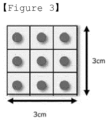
- The thickness deviation of the polymer solid electrolyte may be 0.7 µm or less, and the thickness deviation is calculated from a deviation between the thickness at the thickest position and the thickness at the thinnest position among thicknesses measured at a total of 9 designated positions in a sample punched out of the polymer solid electrolyte to a size of 3*3cm2.
- The polymer solid electrolyte may be in the form of a free-standing film.
- The ionic conductivity of the polymer solid electrolyte is from 1.2 × 10⁻⁵ to 4.5 × 10⁻⁵ S/cm, and the ionic conductivity is measured at 80°C.
- The other aspect of the present disclosure also provides an all-solid battery comprising the polymer solid electrolyte.
- According to one aspect of the present disclosure, in the polymer solid electrolyte preparation process, since a polymer and a non-volatile liquid-phase compound, which are not miscible with each other, are used as raw materials, a polymer solid electrolyte in the form of a uniform thin film can be prepared by forming a laminate formed by laminating a liquid phase film and a polymer solid electrolyte film, and then separating them, by the principle that phase separation occurs when the polymer and the non-volatile liquid-phase compound are mixed, and then dried.
- In addition, in the polymer solid electrolyte preparation process, when forming the liquid phase film and the polymer solid electrolyte film on the substrate, and then, separating the polymer solid electrolyte film from the substrate, the polymer solid electrolyte film can be separated without a separate resistance, due to the liquid phase film adjacent to the substrate.
-
-
FIG. 1 is a schematic diagram showing a process for preparing a polymer solid electrolyte according to an example of one aspect of the present disclosure. -
FIG. 2 is a schematic diagram showing the structure of the laminate comprising the liquid phase film and the polymer solid electrolyte film formed during the preparation process of the polymer solid electrolyte according to an example of one aspect of the present disclosure. -
FIG. 3 is a schematic diagram of a sample for measuring the uniformity of the polymer solid electrolyte prepared according to an example of one aspect of the present disclosure. - Hereinafter, the present invention will be described in more detail to help the understanding of the present invention.
- The terms and words used in the present specification and claims should not be construed as limited to ordinary or dictionary terms, and should be construed in a sense and concept consistent with the technical idea of the present invention, based on the principle that the inventor can properly define the concept of a term to describe his invention in the best way possible.
- As used herein, the term "miscibility" refers to the property of being immiscible with each other.
- As used herein, the term "free-standing film" refers to a film capable of maintaining the shape of a film by itself without a separate support at room temperature and atmospheric pressure.
- One aspect of the present disclosure relates to a method for preparing a polymer solid electrolyte comprising the steps of (S1) preparing a solution for forming a polymer solid electrolyte by adding a polymer, a non-volatile liquid phase compound, and a lithium salt to a solvent; (S2) forming a coating layer by applying the solution for forming a polymer solid electrolyte on a substrate; (S3) drying the coating layer to separate the phase into a liquid phase film and a polymer solid electrolyte film; and (S4) separating the polymer solid electrolyte film; wherein the non-volatile liquid-phase compound is immiscible with the polymer, the liquid phase film comprises the non-volatile liquid-phase compound and the polymer solid electrolyte film comprises the polymer and lithium salt.
- In the manufacturing method of the polymer solid electrolyte, a polymer and a non-volatile liquid-phase compound having poor miscibility with each other are used as raw materials. In the case of the polymer and the non-volatile liquid-phase compound, a phenomenon of phase separation occurs during drying after mixing them, and thus a liquid phase film containing the non-volatile liquid-phase compound and a polymer solid electrolyte film containing a polymer may be formed, and accordingly, after the formation of a laminate formed by laminating the substrate, the liquid phase film, and the polymer solid electrolyte film in the listed order, a polymer solid electrolyte can be obtained by separating the polymer solid electrolyte film. At this time, since the liquid phase film is formed between the substrate and the polymer solid electrolyte film, the polymer solid electrolyte film can be easily separated without resistance.
-
FIG. 1 is a schematic diagram showing a process for preparing a polymer solid electrolyte according to an example of one aspect of the present disclosure, andFIG. 2 is a schematic diagram showing the structure of the laminate comprising the liquid phase film and the polymer solid electrolyte film formed during the preparation process of the polymer solid electrolyte according to an example of one aspect of the present disclosure.
With reference to these drawings, the preparation method of the polymer solid electrolyte according to one aspect of the present disclosure will be described in detail for each step. - In one aspect of the present disclosure, in step (S1), a polymer, a non-volatile liquid-phase compound, and lithium salt may be added to a solvent to prepare a solution for forming a polymer solid electrolyte.
- The polymer may act to form a polymer solid electrolyte in the form of a uniform thin film, without reducing the electrical and ionic conductivity of the polymer solid electrolyte.
- In addition, the polymer is not particularly limited as long as it is a polymer that exhibits immiscible property with respect to the non-volatile liquid-phase compound contained in the liquid phase film, for example, the polymer may include one or more selected from the group consisting of polypropylene carbonate (PPC), polyacrylonitrile (PAN) and polyvinylpyrrolidone (PVP).
- The non-volatile liquid-phase compound exhibits immiscible properties with respect to the polymer, and thus may be phase-separated from the polymer to form a liquid phase film in the form of a separate layer, during the preparation process of the polymer solid electrolyte.
- In addition, the non-volatile liquid-phase compound may comprise polyhedral oligomeric silsesquioxane (POSS) and/or ionic liquid.
- The POSS is a polyhedral oligosilsesquioxane, containing one or more functional groups (R), wherein the functional group (R) is a functional group comprising one or more elements selected from O, N, S, Si and P, or comprises a functional group capable of binding to lithium ion. For example, the functional group (R) may be poly(ethylene glycol)(PEG), alcohol, amine, carboxylic acid, allyl, epoxide, thiol, silane, silanol, silanol, glycidyl, octasilane or methacryl.
- In addition, the POSS may be PEG-POSS including poly(ethylene glycol) (PEG) as afunctional group, and, when the PEG-POSS is used, the phase-separation may be smoothly processed. For example, when the PPC and PEG-POSS are used, the phase-separation may be smoothly processed and thus process efficiency may be enhanced.
- In addition, POSS may be solid phase or liquid phase according to the functional group(R). The POSS of liquid phase may be favorable so that the phase-separation from the polymer is smoothly process. The POSS of liquid phase may have the above functional group(R), and preferably the POSS of liquid phase may be PEG-POSS.
- In one aspect of the present disclosure, the POSS of liquid phase may be shown the
below chemical formula 1.
- In the
chemical formula 1,
R is same or different each other, and is selected from the group consisting of the below chemical 1-1 to 1-4:


- In the chemical formula 1-1 to 1-4,
- L1 to L5 are C1 to C30 alkylene group,
- R1 to R4 are selected from the group consisting of hydrogen; hydroxy group; amino group; thiol group; C1 to C30 alkyl group; C2 to C30 alkenyl group; C2 to C30 alkynyl group; C1 to C30 alkoxy group; and C1 to C30 carboxyl group,
- m and n are same or different each other and are independently an integer of 0 to 10,
- * is a bonding site.
- In a specific embodiment of one aspect of the present disclosure, L1 to L5 are C1 to C30 alkylene group, R1 to R4 are selected from the group consisting of hydrogen; hydroxy group; or C1 to C30 alkyl group, and m and n are same or different each other and are independently an integer of 0 to 1 in the chemical formula 1-1 to 1-4.
- In a specific embodiment of one aspect of the present disclosure, the functional group R in the
chemical formula 1 is selected from the group consisting of poly(ethylene glycol) group, glycidyl group, octa silane group, and metacryl group. - In addition, the ionic liquid contains a cation and an anion, and the cation may comprise one or more selected from the group consisting of imidazolium, pyrazolium, triazolium, thiazolium, oxazolium, pyridazinium, pyrimidinium, pyrazinium, ammonium, phosphonium, pyridinium and pyrrolidinium unsubstituted or substituted by an alkyl group having 1 to 15 carbon atoms, and the anion may comprise one or more selected from the group consisting of PF6 -, BF4 -, CF3SO3 -, N(CF3SO2)2 -, N(C2F5SO2)2 -, C(CF2SO2)3 -, AsF6 -, SbF6 -, AlCl4 -, NbF6 -, HSO4 -, ClO4 -, CH3SO3 -, and CF3CO2 -. For example, the ionic liquid may contain one or more selected from the group consisting of 1-ethyl-3-methyl imidazolium, 1-butyl-3-methyl imidazolium, 1-butyl-1-methyl pyrrolidinium, 1-methyl-1-proply piperidinium, bis(trifluoromethylsulfonyl) imide (TFSI), and trifluoromethanesulfonate.
- The lithium salt can impart ionic conductivity to the polymer solid electrolyte, and can improve ionic conductivity without reducing the electrical conductivity by the electrical conductivity polymer.
- In addition, the lithium salt may comprise one or more selected from the group consisting of LiTFSI(lithium bis(trifluoromethanesulphonyl)imide), LiFSI(Lithium bis(fluorosulfonyl)imide), LiNO3, LiOH, LiCl, LiBr, LiI, LiClO4, LiBF4, LiB10Cl10, LiPF6, LiCF3SO3, LiCF3CO2, LiAsF6, LiSbF6, LiAlCl4, CH3SO3Li, CF3SO3Li, LiSCN, LiC(CF3SO2)3, (CF3SO2)2NLi, (FSO2)2NLi, chloroborane lithium, lower aliphatic carboxylic acid lithium, and 4-phenylboric acid lithium.
- The weight ratio of the polymer and the non-volatile liquid-phase compound may be 1:0.8 to 1:5.5, specifically, 1:0.8 or less, 1:0.9 or less, or 1:1 or less, and 1:5 or more, 1:5.2 or more, or 1:5.5 or more. If the weight ratio exceeds 1:0.8, the content of the polymer is excessively increased, so that a phenomenon of phase separation does not occur, a polymer solid electrolyte in the form of a free-standing film is prepared in a state where the polymer and the non-volatile liquid-phase compound are simply mixed, and the uniformity and ionic conductivity of the polymer solid electrolyte may be reduced. In addition, if the weight ratio is less than 1:5.5, the content of the non-volatile liquid-phase compound is excessively increased, so that a solid polymer electrolyte is not prepared, and an electrolyte of the liquid phase may be prepared.
- In addition, the weight ratio of the polymer and the lithium salt may be 1:0.5 to 1:3, specifically, 1:0.5 or less, 1:0.6 or less, or 1:0.7 or less, and 1:1.5 or more, 1:2 or more, or 1:3 or more. If the weight ratio exceeds 1:0.5, the content of the polymer may be excessively increased, so that the ionic conductivity of the polymer solid electrolyte may be reduced. If the weight ratio is less than 1:3, the content of the lithium salt may be excessively increased, so that the polymer electrolyte film may not be formed.
- The solvent is not particularly limited as long as it is a solvent used in the preparation of an electrolyte in the art. For example, the solvent may comprise one or more selected from the group consisting of propylene carbonate (PC), ethylene carbonate (EC), butylene carbonate (BC), diethyl carbonate (DEC), dimethyl carbonate (DMC), dipropyl carbonate (DPC), methyl propionate (MP), dimethyl sulfoxide, dimethoxyethane, diethoxyethane, tetrahydrofuran, N-methyl-2-pyrrolidone (NMP), ethylmethyl carbonate (EMC), vinylene carbonate (VC), gamma butyrolactone (GBL), fluoroethylene carbonate (FEC), methyl formate, ethyl formate, propyl formate, methyl acetate, ethyl acetate, propyl acetate, pentyl acetate, methyl propionate, ethyl propionate, ethyl propionate, and butyl propionate.
- The concentration of the solution for forming the polymer solid electrolyte is not particularly limited as long as the concentration is sufficient to perform the coating process. For example, the concentration of the solution for forming the polymer solid electrolyte may be 10 to 40% by weight, specifically 10% by weight or more, 15% by weight or more or 20% by weight or more, and 30 % by weight or less, 35 % by weight or less or 40 % by weight or less. The concentration may be appropriately adjusted to a concentration sufficient to perform the coating process within the above range.
- In addition, the solution for forming the polymer solid electrolyte is in a form in which a liquid moiety and a polymer chain are mixed.
- The liquid moiety is derived from the non-volatile liquid-phase compound, and the polymer chain is derived from the polymer. Since the non-volatile liquid-phase compound and the polymer are immiscible with each other, the non-volatile liquid-phase compound and the polymer are present in a solution while being separated from each other.
- In the one aspect of the present disclosure, in step (S2), the solution for forming the polymer solid electrolyte may be applied on a substrate to form a coating layer.
- The substrate may be in the form of a foil, and the foil may be in the form of a thin film of a metal such as aluminum, copper, or Stainless Steel. By using the foil in the form of a metal thin film as the substrate, it may be advantageous for the preparation of a solid electrolyte in the form of a free-standing film.
- In addition, the coating method may be bar coating, roll coating, spin coating, slit coating, die coating, blade coating, comma coating, slot die coating, lip coating, or solution casting, but is not limited thereto as long as it is a coating method capable of forming a coating layer on the substrate.
- In one aspect of the present disclosure, in step (S3), the coating layer is dried, and the coating layer is phase-separated into a liquid phase film and a polymer electrolyte film.
- The drying is not particularly limited as long as it is a drying method that can induce phase-separation of the liquid moiety and the polymer chain contained in the coating layer. For example, the drying may be performed at 150°C or less, 130°C or less, or 110°C or less.
- The phase-separation may occur due to the characteristic that the polymer and the non-volatile liquid-phase compound which are raw materials are immiscible with each other.
- As shown in
FIG. 2 , theliquid phase film 20 comprising the non-volatile liquid-phase compound may be formed on thesubstrate 10, and the polymersolid electrolyte film 30 comprising the polymer and lithium salt may be formed on theliquid phase film 20. - In one aspect of the present disclosure, in step (S4), the polymer solid electrolyte film may be separated.
- In general, as the polymer solid electrolyte film is thinned, the strength is weakened, and thus it may be difficult to separate from the substrate. However, since the liquid phase film is formed between the substrate and the polymer solid electrolyte film in step (S3), the polymer solid electrolyte film can be separated from the substrate without a separate resistance.
- In addition, after separating the polymer solid electrolyte film, a washing step is performed to remove any remianing non-volatile liquid-phase compound on the the polymer solid electrolyte film.
- Another aspect of the present disclosure also provides a polymer solid electrolyte prepared by the method for preparing a polymer solid electrolyte as described above.
- The polymer solid electrolyte includes a polymer and a lithium salt. The type and weight ratio of the polymer and the lithium salt are the same as described above.
- In another aspect of the present disclosure, the thickness of the polymer solid electrolyte may be 23 µm to 35 µm, and may be reduced compared to the general polymer solid electrolyte, thereby representing the form of a thin-film solid electrolyte. If the thickness is less than 23 µm, the durability of the polymer solid electrolyte may be lowered. If the thickness exceeds 35 gm, it may act as a resistance during operation of the battery.
- In addition, the thickness deviation of the polymer solid electrolyte may be 0.7 µm or less. Within the above range, the smaller the thickness deviation, the better the uniformity. If the thickness deviation exceeds 0.7 µm, the uniformity of the polymer solid electrolyte is not good. For example, in the case of the thickness deviation, for the sample punched out of the polymer solid electrolyte to a size of 3*3cm2, the thickness was measured at a total of 9 designated positions, and then the deviation between the thickness at the thickest position and the thickness at the thinnest position was calculated. It was judged that the smaller the deviation of the calculated thickness, the more uniform.
- In another aspect of the present disclosure, the polymer solid electrolyte may be in the form of a free-standing film.
- The polymer solid electrolyte in the form of a free-standing film maintains the form of a film by itself at room temperature and atmospheric pressure, and thus can be applied to various applications.
- In another aspect of the present disclosure, the ionic conductivity of the polymer solid electrolyte may be from 1.2 x 10⁻⁵ to 4.5 x 10⁻⁵ S/cm, and the ionic conductivity is measured at 80°C. When the polymer solid electrolyte with the ionic conductivity is applied to an all-solid battery, stability of the battery is enhanced and performance and life span of the battery are improved.
- The other aspect of the present disclosure also relates to an all-solid battery comprising the polymer solid electrolyte described above, wherein the all-solid battery may comprise a positive electrode, a negative electrode, and the polymer solid electrolyte interposed therebetween.
- In addition, the polymer solid electrolyte may be applied to the electrode, and thus may be comprised in an all-solid battery in a state of being attached to one surface of the positive electrode or the negative electrode.
- In the other aspect of the present disclosure, the positive electrode comprises a positive electrode current collector and a positive electrode active material layer formed on the positive electrode current collector.
- The positive electrode active material layer comprises a positive electrode active material, a binder, and an electrically conductive material.
- The positive electrode active material is not particularly limited as long as it is a material capable of reversibly intercalating and de-intercalating lithium ions, for example, may be, but is not limited to, layered compounds or compounds substituted with one or more transition metals, such as lithium cobalt oxide (LiCoO2), lithium nickel oxide (LiNiO2), Li[NixCoyMnzMv]O2 (wherein, M is any one or two or more elements selected from the group consisting of Al, Ga and In; 0.3≤x<1.0, 0≤y, z≤0.5, 0≤v≤0.1, x+y+z+v=1), Li(LiaMb-a-b'M'b')O2-cAc (wherein, 0≤a≤0.2, 0.6≤b≤1, 0≤b'≤0.2, 0≤c≤0.2; M comprises Mn and one or more selected from the group consisting of Ni, Co, Fe, Cr, V, Cu, Zn and Ti; M' is one or more selected from the group consisting of Al, Mg and B, and A is one or more selected from the group consisting of P, F, S and N); lithium manganese oxide such as Formula Li1+yMn2-yO4 (wherein, y is 0 - 0.33), LiMnO3, LiMn2O3 and LiMnO2; lithium copper oxide (Li2CuO2) ; vanadium oxide such as LiV3O8, LiFe3O4, V2O5 and Cu2V2O7; Ni site type lithium nickel oxide represented by Formula LiNi1-yMyO2 (wherein, M=Co, Mn, Al, Cu, Fe, Mg, B or Ga, y=0.01 - 0.3); lithium manganese composite oxide represented by Formula LiMn2-yMyO2 (wherein, M=Co, Ni, Fe, Cr, Zn or Ta, y=0.01 - 0.1) or Li2Mn3MO8 (wherein, M=Fe, Co, Ni, Cu or Zn) ; disulfide compounds; Fe2(MoO4)3.
- The positive electrode active material may be contained in an amount of 40 to 80% by weight based on the total weight of the positive electrode active material layer. Specifically, the content of the positive electrode active material may be 40% by weight or more or 50% by weight or more, and may be 70% by weight or less or 80% by weight or less. If the content of the positive electrode active material is less than 40% by weight, the connectivity between the wet positive electrode active material layer and the dry positive electrode active material layer may be insufficient. If the content of the positive electrode active material exceeds 80 % by weight, mass transfer resistance may be increased.
- In addition, the binder is a component that assists bonding between the positive electrode active material and the electrically conductive material, and assists in bonding to the current collector. The binder may comprise one or more selected from the group consisting of styrene butadiene rubber, acrylated styrene butadiene rubber, acrylonitrile copolymer, acrylonitrile-butadiene rubber, nitrile butadiene rubber, acrylonitrile-styrene-butadiene copolymer, acrylic rubber, butyl rubber, fluorine rubber, polytetrafluoroethylene, polyethylene, polypropylene, ethylene/propylene copolymer, polybutadiene, polyethylene oxide, chlorosulfonated polyethylene, polyvinylpyrrolidone, polyvinylpyridine, polyvinyl alcohol, polyvinyl acetate, polyepichlorohydrin, polyphosphazene, polyacrylonitrile, polystyrene, latex, acrylic resin, phenolic resin, epoxy resin, carboxymethylcellulose, hydroxypropyl cellulose, cellulose acetate, cellulose acetate butyrate, cellulose acetate propionate, cyanoethyl cellulose, cyanoethyl sucrose, polyester, polyamide, polyether, polyimide, polycarboxylate, polycarboxylic acid, polyacrylic acid, polyacrylate, lithium polyacrylate, polymethacrylic acid, polymethacrylate, polyacrylamide, polyurethane, polyvinylidene fluoride, and poly(vinylidene fluoride)-hexafluoropropene. Preferably, the binder may comprise one or more selected from the group consisting of styrene-butadiene rubber, polytetrafluoroethylene, carboxymethyl cellulose, polyacrylic acid, lithium polyacrylate, and polyvinylidene fluoride.
- In addition, the binder may be contained in an amount of 1% by weight to 30% by weight based on the total weight of the positive electrode active material layer, and, specifically, the content of the binder may be 1% by weight or more or 3% by weight or more, and may be 15% by weight or less or 30% by weight or less. If the content of the binder is less than 1% by weight, the adhesive force between the positive electrode active material and the positive electrode may be lowered. If the content of the binder exceeds 30% by weight, the adhesive force is improved, but the content of the positive electrode active material is reduced by that amount, and thus the capacity of the battery may be lowered.
- In addition, the electrically conductive material is not particularly limited as long as it has excellent electrical conductivity without causing side reactions in the internal environment of the all-solid battery and without causing chemical changes in the battery. The electrically conductive material may be typically graphite or conductive carbon, for example, as the electrically conductive material, graphite such as natural graphite, artificial graphite; carbon black such as carbon black, acetylene black, Ketjen black, Denka black, thermal black, channel black, furnace black, lamp black, thermal black; carbon-based materials whose crystal structure is graphene or graphite; electrically conductive fibers such as carbon fibers and metal fibers; carbon fluoride; metal powders such as aluminum powder and nickel powder; electrically conductive whiskers such as zinc oxide and potassium titanate; electrically conductive oxides such as titanium oxide; and electrically conductive polymers such as polyphenylene derivatives may be used alone or in combination of two or more thereof, but is not necessarily limited thereto.
- The electrically conductive material may be generally contained in an amount of 0.5% by weight to 30% by weight based on the total weight of the positive electrode active material layer, and specifically, the content of the electrically conductive material may be 0.5% by weight or more or 1% by weight or more, and may be 20% by weight or less or 30% by weight or less. If the content of the electrically conductive material is too small, i.e., less than 0.5 % by weight, it is difficult to expect an effect of improving electrical conductivity or the electrochemical properties of the battery may be deteriorated. If the content of the electrically conductive material exceeds 30% by weight and thus is too large, the amount of the positive electrode active material may be relatively small, so that the capacity and energy density may be lowered. A method for incorporating the electrically conductive material to the positive electrode is not particularly limited, and a conventional method known in the art, such as coating on the positive electrode active material, may be used.
- In addition, the positive electrode current collector supports the positive electrode active material layer, and serves to transfer electrons between the external conductive wire and the positive electrode active material layer.
- The positive electrode current collector is not particularly limited as long as it has high electrical conductivity without causing chemical changes in the all-solid battery. For example, as the positive electrode current collector, copper, stainless steel, aluminum, nickel, titanium, palladium, sintered carbon; a copper or stainless steel surface-treated with carbon, nickel, silver, etc.; an aluminum-cadmium alloy, etc. may be used.
- The positive electrode current collector may have a fine irregularity structure on the surface of the positive electrode current collector or have a three-dimensional porous structure, in order to strengthen the bonding force with the positive electrode active material layer. Accordingly, the positive electrode current collector may comprise various forms such as a film, a sheet, a foil, a mesh, a net, a porous body, a foam, and a non-woven fabric.
- The positive electrode as described above may be prepared by the conventional method, and specifically, the positive electrode is manufactured by coating and drying a composition for forming the positive electrode active material layer prepared by mixing the positive electrode active material, the electrically conductive material and the binder in an solvent, onto the positive electrode current collector, and optionally compression-molding it onto the positive electrode current collector to improve the positive electrode density. At this time, as the solvent, it is preferable to use one that can uniformly disperse the positive electrode active material, the binder, and the electrically conductive material and that evaporates easily. Specifically, acetonitrile, methanol, ethanol, tetrahydrofuran, water, isopropyl alcohol and the like are exemplified.
- In the other aspect of the present disclosure, the negative electrode comprises a negative electrode current collector and a negative electrode active material layer formed on negative electrode current collector. The negative electrode active material layer comprises a negative electrode active material, a binder, and an electrically conductive material.
- The negative electrode active material may be a material capable of reversibly intercalating or de-intercalating lithium ion (Li+), a material capable of reacting with lithium ion to reversibly form a lithium-containing compound, lithium metal, or a lithium alloy.
- The material capable of reversibly intercalating or de-intercalating lithium ion (Li+) may be, for example, crystalline carbon, amorphous carbon, or mixtures thereof. The material capable of reacting with lithium ion (Li+) to reversibly form a lithium-containing compound may be, for example, tin oxide, titanium nitrate, or silicon. The lithium alloy may be, for example, an alloy of lithium (Li) and the metal selected from the group consisting of sodium (Na), potassium (K), rubidium (Rb), cesium (Cs), francium (Fr), beryllium (Be), magnesium (Mg), calcium (Ca), strontium (Sr), barium (Ba), radium (Ra), aluminum (Al), and tin (Sn).
- Preferably, the negative electrode active material may be lithium metal, and specifically, may be in the form of a lithium metal thin film or lithium metal powder.
- The negative electrode active material may be contained in an amount of 40 to 80% by weight based on the total weight of the negative electrode active material layer. Specifically, the content of the negative electrode active material may be 40 % by weight or more or 50 % by weight or more, and may be 70 % by weight or less or 80 % by weight or less. If the content of the negative electrode active material is less than 40% by weight, the connectivity between the wet negative electrode active material layer and the dry negative electrode active material layer may be insufficient. If the content of the negative electrode active material exceeds 80 % by weight, mass transfer resistance may be increased.
- In addition, the binder is the same as described above for the positive electrode active material layer.
- In addition, the electrically conductive material is the same as described above for the positive electrode active material layer.
- In addition, the negative electrode current collector is not particularly limited as long as it has electrical conductivity without causing chemical change in the battery, for example, may be copper, stainless steel, aluminum, nickel, titanium, sintered carbon; copper or stainless steel surface-treated with carbon, nickel, titanium, silver, etc.; or aluminum-cadmium alloy. In addition, the negative electrode current collector may be used in various forms, such as a film having a fine irregularity structure on its surface, a sheet, a foil, a net, a porous body, a foam, and a non-woven fabric, as in the positive electrode current collector.
- The manufacturing method of the negative electrode is not particularly limited, and may be manufactured by forming a negative electrode active material layer on a negative electrode current collector using a layer or film formation method commonly used in the art. For example, a method such as pressing, coating, or vapor deposition may be used. Also, a case where a thin film of a metal lithium is formed on a metal plate by initial charging after assembling the battery without a lithium thin film on the negative electrode current collector is also included in the negative electrode of the present invention.
- The manufacture of the all-solid battery having the above configuration is not particularly limited in the present invention, and a known method may be used.
- When manufacturing the all-solid battery of the present invention, electrodes comprising the positive electrode and the negative electrode are arranged, and then press-molded to assemble a cell.
- The assembled cell is installed in the exterior material, and then sealed by heat compression or the like. As the exterior material, a laminate pack made of aluminum or stainless steel, and a cylindrical or rectangular metal container are very suitable.
- Hereinafter, preferred examples of the present invention will be described in order to facilitate understanding of the present invention. It will be apparent to those skilled in the art, however, that the following examples are only illustrative of the present invention and various changes and modifications can be made within the scope and spirit of the present invention, and that such variations and modifications are within the scope of the appended claims.
- In the following Examples and Comparative Examples, solid electrolytes were prepared according to the type and weight ratio of the substrate, the polymer, the lithium salt, and the solvent as shown in Table 1 below.
Table 1: Polymer solid electrolyte Solvent Substrate Polymer Non-volatile liquid-phase compound Weight ratio (PPC:POSS) Lithium salt Example 1 SS Foil PPC PEG-POSS 1:1 LiTFSI NMP Example 2 SS Foil PPC PEG-POSS 1:2 LiTFSI NMP Example 3 SS Foil PPC PEG-POSS 1:5 LiTFSI NMP Comparative Example 1 SS Foil PPC - - LiTFSI NMP Comparative Example 2 PET release film PPC - - LiTFSI NMP Comparative Example 3 SS Foil PPC PEG-POSS 1:6 LiTFSI NMP Comparative Example 4 SS Foil PPC PEG-POSS 1:0.5 LiTFSI NMP - As raw materials for preparing a polymer solid electrolyte, polypropylene carbonate (PPC) which is the polymer, poly(ethyleneglycol)-polyhedral oligomeric silsesquioxane (PEG-POSS) which is the non-volatile liquid-phase compound, LiTFSI which is the lithium salt, and NMP which is the solvent were prepared. The weight ratio of polypropylene carbonate (PPC) which is the polymer, poly(ethyleneglycol)-polyhedral oligomeric silsesquioxane(PEG-POSS) which is the non-volatile liquid-phase compound, and LiTFSI which is the lithium salt was set to 1:1:1.
- The polymer, the non-volatile liquid-phase compound, and the lithium salt were added to the solvent and mixed to prepare a solution for forming a polymer solid electrolyte at a concentration of 20%.
- The solution for forming the polymer solid electrolyte was bar-coated on a Stainless Steel(SS) Foil, which is the substrate, to form a coating layer.
- Thereafter, the coating layer was vacuum-dried at 100°C. During drying, phase-separation was occurred, so that a laminate, in which a liquid phase film comprising the non-volatile liquid-phase compound and a polymer solid electrolyte film comprising the polymer and lithium salt on the SS Foil are sequentially laminated, was manufactured. By separating the SS Foil from the laminate, a polymer solid electrolyte comprising a liquid phase film and a polymer solid electrolyte film formed on the liquid phase film was obtained.
- A polymer solid electrolyte was prepared in the same manner as in Example 1, except that the weight ratio of PPC and PEG-POSS used as the polymer and the non-volatile liquid-phase compound is set to 1:2.
- A polymer solid electrolyte was prepared in the same manner as in Example 1, except that the weight ratio of PPC and PEG-POSS used as the polymer and the non-volatile liquid-phase compound is set to 1:5.
- A polymer solid electrolyte was prepared in the same manner as in Example 1, except that the non-volatile liquid-phase compound is not used.
- A polymer solid electrolyte was prepared in the same manner as in Example 1, except that the non-volatile liquid-phase compound is not used, and a PET (polyethylene terephthalate) release film is used instead of the SS Foil as a substrate.
- A polymer solid electrolyte was prepared in the same manner as in Example 1, except that the weight ratio of PPC and PEG-POSS used as the polymer and the non-volatile liquid-phase compound is set to 1:6.
- A polymer solid electrolyte was prepared in the same manner as in Example 1, except that the weight ratio of PPC and PEG-POSS used as the polymer and the non-volatile liquid-phase compound is set to 1:0.5.
- For the polymer solid electrolytes prepared in the Examples and the Comparative Examples, possibility of the form of a free-standing film, and thickness, uniformity, and ionic conductivity of the free-standing film were measured in the following way, and the results are shown in Table 2 below.
- By confirming whether the polymer solid electrolyte film is separated from the substrate and can be obtained as a film, it was evaluated whether the form of a free-standing film of the polymer solid electrolyte is possible.
- As shown in
FIG. 3 , for a sample punched out of the prepared polymer solid electrolyte to a size of 3*3cm2, the average thickness was calculated by measuring the thickness at a total of 9 designated positions. - The deviation between the thicknesses was calculated by the total measured values of the thicknesses of a total of 9 designated positions obtained in the item (2) above. It was judged that the smaller the deviation of the calculated thickness, the more uniform.
- The sample of the polymer solid electrolyte obtained in item (3) was brought into contact with a SS metal electrode having the same surface area as the sample, and then, an alternating voltage was applied through the electrodes on both sides of the sample at room temperature. At this time, as an applied condition, a measurement frequency was set in an amplitude range of 0.01Hz to 1MHz, and impedance was measured using VMP3 from BioLogic company. The resistance of the polymer solid electrolyte was obtained from the intersection (Rb) where the semicircle or straight line of the measured impedance trajectory meets the real axis, and the ionic conductivity of the polymer solid electrolyte was calculated from the width and thickness of the sample.
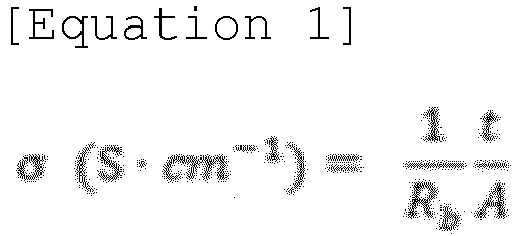
- σ: Ionic conductivity
- Rb: Intersection with the real axis of the impedance trajectory
- A: Width of the sample
- t: Thickness of the sample
- As shown in Table 2, it was confirmed that the polymer solid electrolytes of Examples 1 to 3 prepared by using PPC, which is the polymer and PEG-POSS, which is the non-volatile liquid-phase compound, in an appropriate weight ratio are prepared in the form of a free-standing film. In addition, it can be seen that the polymer solid electrolytes of Examples 1 to 3 are prepared uniformly with a small thickness deviation, and it was confirmed that they had excellent ionic conductivity. In addition, Comparative Example 1 is a polymer solid electrolyte prepared without using a non-volatile liquid-phase compound, and it was not prepared in the form of a free-standing film, and thus the thickness and ionic conductivity could not be measured.
- In addition, Comparative Example 2 is a polymer solid electrolyte prepared without using a non-volatile liquid-phase compound and with using a PET release film instead of a SS Foil as a substrate, and it was confirmed that it was manufactured in the form of a free-standing film, but the uniformity was not good due to the large thickness deviation, and the ionic conductivity was also relatively lowered compared to Examples 1 to 3. In general, in the case of PET release film, it is relatively easy to separate the electrolyte film after drying due to low adhesion with the electrolyte film prepared on metal foil, as compared to metal foils such as SS, Cu, or Al, but if the strength of the electrolyte film is weak, it may be torn or deformed by stretching, which may eventually make it difficult to use.
- On the other hand, in the case of Comparative Example 3, PEG-POSS, which is the non-volatile liquid-phase compound, was used excessively compared to PPC, which is the polymer, so that it was not prepared in the form of a film, but existed in the state of a liquid phase. Accordingly, the thickness, uniformity and ionic conductivity could not be measured.
- In addition, it was confirmed that in the case of Comparative Example 4, PEG-POSS, which is a non-volatile liquid-phase compound, is used too little compared to PPC, which is a polymer, so that phase-separation of the polymer and the non-volatile liquid-phase compound did not occur, and thus a film was formed in a state in which the polymer and the non-volatile liquid-phase compound were mixed, and the uniformity was not good due to a large thickness deviation.
- From these results, it was confirmed that by using a polymer and a non-volatile liquid-phase compound, which are not compatible with each other, in an appropriate weight ratio, when preparing a polymer solid electrolyte using the phase-separation of the polymer and the non-volatile liquid-phase compound, a polymer solid electrolyte in the form of a free-standing film comprising a liquid phase film and a polymer solid electrolyte film, which is formed by phase-separation of the polymer and the non-volatile liquid-phase compound, is prepared, and it has excellent uniformity and ionic conductivity.
- Although the present invention has been described above with limited examples and drawings, the present invention is not limited thereto, and various modifications and variations are possible, by those of ordinary skill in the art to which the present invention belongs, within the scope of equivalents to the technical spirit of the present invention and the claims to be described below.
-
- 1: Polymer solid electrolyte
- 10: Substrate
- 20: Liquid phase film
- 30: Polymer solid electrolyte film
| Possibility of form of free-standing film | Average thickness (µm) | Uniformity (deviation, µm) | Ionic conductivity (S/cm@80°C) | |
| Example 1 | possible | 28.8 | 0.63 | 1.2 E-05 |
| Example 2 | possible | 32.3 | 0.67 | 2.6 E-05 |
| Example 3 | possible | 24.7 | 0.47 | 4.5 E-05 |
| Comparative Example 1 | impossible | - | - | - |
| Comparative Example 2 | possible | 21.6 | 1.42 | 1.1 E-05 |
| Comparative Example 3 | impossible (existing as Liquid, not as a membrane) | not measurable | not measurable | - |
| Comparative Example 4 | possible (no phase-separation) | 20.2 | 1.13 | - |
Claims (20)
- A method for preparing a polymer solid electrolyte comprising the steps of,(S1) preparing a solution for forming a polymer solid electrolyte by adding a polymer, a non-volatile liquid phase compound, and a lithium salt to a solvent;(S2) forming a coating layer by applying the solution for forming a polymer solid electrolyte on a substrate;(S3) drying the coating layer to separate the phase into a liquid phase film and a polymer solid electrolyte film; and(S4) separating the polymer solid electrolyte film.
- The method for preparing a polymer solid electrolyte according to claim 1, wherein the liquid phase film comprises the non-volatile liquid phase compound, and the polymer solid electrolyte film comprises the polymer and lithium salt,wherein the non-volatile liquid-phase compound is immiscible with the polymer, andwherein the liquid phase film is formed on the substrate and the polymer solid electrolyte film is formed on the liquid phase film.
- The method for preparing a polymer solid electrolyte according to claim 1, wherein the weight ratio of the polymer and the non-volatile liquid-phase compound in the solution is 1:0.8 to 1:5.5.
- The method for preparing a polymer solid electrolyte according to claim 1, wherein the polymer comprises one or more selected from the group consisting of polypropylene carbonate (PPC), polyacrylonitrile (PAN), and polyvinylpyrrolidone (PVP).
- The method for preparing a polymer solid electrolyte according to claim 1, wherein the non-volatile liquid-phase compound comprises one or more selected from polyhedral oligomeric silsesquioxane (POSS) and ionic liquid.
- The method for preparing a polymer solid electrolyte according to claim 5, wherein the POSS comprises one or more functional groups (R), wherein the functional group (R) is a functional group comprising one or more elements selected from O, N, S, Si and P, or is a functional group capable of binding to lithium ion.
- The method for preparing a polymer solid electrolyte according to claim 6, wherein the functional group is poly(ethylene glycol)(PEG), alcohol, amine, carboxylic acid, allyl, epoxide, thiol, silane, or silanol.
- The method for preparing a polymer solid electrolyte according to claim 5, wherein the ionic liquid comprises a cation and an anion, and the cation comprises one or more selected from the group consisting of imidazolium, pyrazolium, triazolium, thiazolium, oxazolium, pyridazinium, pyrimidinium, pyrazinium, ammonium, phosphonium, pyridinium and pyrrolidinium, unsubstituted or substituted by an alkyl group having 1 to 15 carbon atoms, and the anion comprises one or more selected from the group consisting of PF6 -, BF4 -, CF3SO3 -, N(CF3SO2)2 -, N(C2F5SO2)2 -, C(CF2SO2)3 -, ASF6 -, SbF6 -, AlCl4 -, NbF6 -, HSO4 -, ClO4 -, CH3SO3 - and CF3CO2 -.
- The method for preparing a polymer solid electrolyte according to claim 1, wherein the lithium salt comprises one or more selected from the group consisting of LiTFSI(lithium bis(trifluoromethanesulphonyl)imide), LiFSI(Lithium bis(fluorosulfonyl)imide), LiNO3, LiOH, LiCl, LiBr, LiI, LiClO4, LiBF4, LiB10Cl10, LiPF6, LiCF3SO3, LiCF3CO2, LiAsF6, LiSbF6, LiAlCl4, CH3SO3Li, CF3SO3Li, LiSCN, LiC(CF3SO2)3, (CF3SO2)2NLi, and (FSO2)2NLi.
- The method for preparing a polymer solid electrolyte according to claim 1, wherein the substrate comprises one or more selected from the group consisting of Stainless Steel, a Cu foil, and an Al foil.
- The method for preparing a polymer solid electrolyte according to claim 1, wherein the coating method is bar coating, roll coating, spin coating, slit coating, die coating, blade coating, comma coating, slot die coating, lip coating, or solution casting.
- The method for preparing a polymer solid electrolyte according to claim 1, wherein the weight ratio of the polymer and the lithium salt is 1:0.5 to 1:3.
- The method for preparing a polymer solid electrolyte according to claim 1, wherein the solvent comprises one or more selected from the group consisting of propylene carbonate (PC), ethylene carbonate (EC), butylene carbonate (BC), diethyl carbonate (DEC), dimethyl carbonate (DMC), dipropyl carbonate (DPC), methyl propionate (MP), dimethyl sulfoxide, dimethoxyethane, diethoxyethane, tetrahydrofuran, N-methyl-2-pyrrolidone (NMP), ethylmethyl carbonate (EMC), vinylene carbonate (VC), gamma butyrolactone (GBL), fluoroethylene carbonate (FEC), methyl formate, ethyl formate, propyl formate, methyl acetate, ethyl acetate, propyl acetate, pentyl acetate, methyl propionate, ethyl propionate, ethyl propionate, and butyl propionate.
- The method for preparing a polymer solid electrolyte according to claim 1, wherein the drying of the coating layer is performed at 150°C or less.
- A polymer solid electrolyte comprising a polymer and a lithium salt.
- The polymer solid electrolyte according to claim 15, wherein thickness of the polymer solid electrolyte is 23 µm to 35 µm.
- The polymer solid electrolyte according to claim 15, wherein the thickness deviation of the polymer solid electrolyte is 0.7 µm or less, and the thickness deviation is calculated from a deviation between the thickness at the thickest position and the thickness at the thinnest position among thicknesses measured at a total of 9 designated positions in a sample punched out of the polymer solid electrolyte to a size of 3*3cm2.
- The polymer solid electrolyte according to claim 15, wherein the polymer solid electrolyte is in the form of a free-standing film.
- The polymer solid electrolyte according to claim 15, wherein ionic conductivity of the polymer solid electrolyte is from 1.2 x 10⁻⁵ to 4.5 x 10⁻⁵ S/cm, and the ionic conductivity is measured at 80°C.
- An all-solid battery comprising the polymer solid electrolyte of claim 15.
Applications Claiming Priority (3)
| Application Number | Priority Date | Filing Date | Title |
|---|---|---|---|
| KR20210175035 | 2021-12-08 | ||
| KR1020220169918A KR102680035B1 (en) | 2021-12-08 | 2022-12-07 | Method for preparing polymer solid electrolyte and polymer solid electrolyte prepared therefrom |
| PCT/KR2022/019897 WO2023106851A1 (en) | 2021-12-08 | 2022-12-08 | Method for preparing polymer solid electrolyte and polymer solid electrolyte prepared thereby |
Publications (2)
| Publication Number | Publication Date |
|---|---|
| EP4325618A1 true EP4325618A1 (en) | 2024-02-21 |
| EP4325618A4 EP4325618A4 (en) | 2025-08-13 |
Family
ID=86730985
Family Applications (1)
| Application Number | Title | Priority Date | Filing Date |
|---|---|---|---|
| EP22904680.0A Pending EP4325618A4 (en) | 2021-12-08 | 2022-12-08 | METHOD FOR PRODUCING A POLYMER SOLID ELECTROLYTE AND POLYMER SOLID ELECTROLYTE PRODUCED THEREFROM |
Country Status (4)
| Country | Link |
|---|---|
| US (1) | US20240243357A1 (en) |
| EP (1) | EP4325618A4 (en) |
| JP (1) | JP7554957B2 (en) |
| WO (1) | WO2023106851A1 (en) |
Families Citing this family (1)
| Publication number | Priority date | Publication date | Assignee | Title |
|---|---|---|---|---|
| CN120357039B (en) * | 2025-06-19 | 2025-09-23 | 中南大学 | A solid-state battery and its composite electrolyte, preparation and application |
Family Cites Families (12)
| Publication number | Priority date | Publication date | Assignee | Title |
|---|---|---|---|---|
| JP2001214050A (en) * | 2000-01-31 | 2001-08-07 | Toppan Printing Co Ltd | Crosslinked polymer solid electrolyte wall |
| KR101028970B1 (en) * | 2011-01-19 | 2011-04-12 | 한국씰텍주식회사 | Solid polymer electrolyte and preparation method thereof, lithium polymer secondary battery manufactured using same |
| KR101389732B1 (en) * | 2012-08-27 | 2014-04-28 | 서강대학교산학협력단 | Polymer electrolyte for lithium secondary battery |
| KR102263059B1 (en) * | 2014-08-26 | 2021-06-09 | 삼성전자주식회사 | Electrolyte Membrane for energy storage device, energy storage device including the same, and method for preparing the lectrolyte membrane for energy storage device |
| EP3001494B1 (en) * | 2014-09-19 | 2018-08-15 | Samsung Electronics Co., Ltd. | Electrolyte, method of preparing the electrolyte, and lithium secondary battery comprising the electrolyte |
| KR20160034173A (en) * | 2014-09-19 | 2016-03-29 | 삼성전자주식회사 | Electrolyte, prepraring method thereof, and lithium secondary battery comprising the electrolyte |
| KR102160709B1 (en) * | 2017-04-14 | 2020-09-28 | 주식회사 엘지화학 | Polymer solid electrolyte and lithium secondary battery comprising the same |
| US11476498B2 (en) | 2018-03-27 | 2022-10-18 | Lg Energy Solution, Ltd. | Complex solid electrolyte membrane for all-solid-state battery and all-solid-state battery including same |
| KR20210114415A (en) * | 2018-12-21 | 2021-09-23 | 솔베이(소시에떼아노님) | solid composite electrolyte |
| CN110931843B (en) * | 2019-10-28 | 2021-11-19 | 浙江锋锂新能源科技有限公司 | Novel lithium metal negative electrode high-voltage positive electrode solid-liquid battery |
| JP6916337B1 (en) * | 2020-03-27 | 2021-08-11 | 第一工業製薬株式会社 | Lithium ion secondary battery |
| JP7723098B2 (en) | 2021-06-21 | 2025-08-13 | エルジー エナジー ソリューション リミテッド | Method for joining electrode tap and metal lead and lithium secondary battery |
-
2022
- 2022-12-08 JP JP2024503963A patent/JP7554957B2/en active Active
- 2022-12-08 US US18/561,279 patent/US20240243357A1/en active Pending
- 2022-12-08 EP EP22904680.0A patent/EP4325618A4/en active Pending
- 2022-12-08 WO PCT/KR2022/019897 patent/WO2023106851A1/en not_active Ceased
Also Published As
| Publication number | Publication date |
|---|---|
| US20240243357A1 (en) | 2024-07-18 |
| JP2024531069A (en) | 2024-08-29 |
| EP4325618A4 (en) | 2025-08-13 |
| JP7554957B2 (en) | 2024-09-20 |
| WO2023106851A1 (en) | 2023-06-15 |
Similar Documents
| Publication | Publication Date | Title |
|---|---|---|
| EP3605710B1 (en) | Non-aqueous electrolyte for lithium secondary battery and lithium secondary battery comprising the same | |
| EP2169756B1 (en) | Lithium secondary battery | |
| EP1995817B1 (en) | Lithium rechargeable battery using ionic liquid | |
| EP2876723B1 (en) | Lithium secondary battery | |
| EP2849266B1 (en) | Nonaqueous electrolyte battery | |
| EP3240094B1 (en) | Electrolyte solution for secondary batteries, and secondary battery comprising the same | |
| CN112805848A (en) | Solid Polymer Matrix Electrolyte (PME) for rechargeable lithium batteries and batteries made therewith | |
| JP6275694B2 (en) | Nonaqueous electrolyte secondary battery | |
| EP4428978A1 (en) | Solid electrolyte and all solid battery comprising same | |
| EP4131303A1 (en) | Electrolyte and electricity storage device | |
| EP4325618A1 (en) | Method for preparing polymer solid electrolyte and polymer solid electrolyte prepared thereby | |
| KR102680035B1 (en) | Method for preparing polymer solid electrolyte and polymer solid electrolyte prepared therefrom | |
| JP4845245B2 (en) | Lithium battery | |
| CN117413398A (en) | Preparation method of polymer solid electrolyte and polymer solid electrolyte prepared thereby | |
| KR101209867B1 (en) | Electrolyte having improved cycle life characteristics and low temperature property and electrochemical device comprising the same | |
| KR20230086619A (en) | Solied electrolyte and method for preparing the same | |
| JP2010205739A (en) | Lithium battery | |
| EP4432414B1 (en) | Solid polymer electrolyte and method for producing same | |
| EP4329033A1 (en) | Solid electrolyte and preparation method therefor | |
| EP4329035A1 (en) | Solid electrolyte and method for producing same | |
| EP4329034A1 (en) | Solid electrolyte and method for producing same | |
| EP4443587A1 (en) | Polymer solid electrolyte and all-solid-state battery comprising same | |
| JP2024114689A (en) | Method for producing polymer solid electrolyte and polymer solid electrolyte produced by the same | |
| EP4325619A1 (en) | Polymer solid electrolyte and all solid state battery comprising same | |
| CN117397082A (en) | Solid electrolyte and preparation method thereof |
Legal Events
| Date | Code | Title | Description |
|---|---|---|---|
| STAA | Information on the status of an ep patent application or granted ep patent |
Free format text: STATUS: THE INTERNATIONAL PUBLICATION HAS BEEN MADE |
|
| PUAI | Public reference made under article 153(3) epc to a published international application that has entered the european phase |
Free format text: ORIGINAL CODE: 0009012 |
|
| STAA | Information on the status of an ep patent application or granted ep patent |
Free format text: STATUS: REQUEST FOR EXAMINATION WAS MADE |
|
| 17P | Request for examination filed |
Effective date: 20231114 |
|
| AK | Designated contracting states |
Kind code of ref document: A1 Designated state(s): AL AT BE BG CH CY CZ DE DK EE ES FI FR GB GR HR HU IE IS IT LI LT LU LV MC ME MK MT NL NO PL PT RO RS SE SI SK SM TR |
|
| DAV | Request for validation of the european patent (deleted) | ||
| DAX | Request for extension of the european patent (deleted) | ||
| A4 | Supplementary search report drawn up and despatched |
Effective date: 20250711 |
|
| RIC1 | Information provided on ipc code assigned before grant |
Ipc: H01M 10/0565 20100101AFI20250707BHEP Ipc: H01M 10/0567 20100101ALI20250707BHEP Ipc: H01M 10/0568 20100101ALI20250707BHEP Ipc: H01M 10/052 20100101ALI20250707BHEP Ipc: H01M 10/058 20100101ALI20250707BHEP |