EP4324509A2 - Wound dressings and systems with therapeutic gas and negative pressure sources for incision management and related methods - Google Patents
Wound dressings and systems with therapeutic gas and negative pressure sources for incision management and related methods Download PDFInfo
- Publication number
- EP4324509A2 EP4324509A2 EP23220586.4A EP23220586A EP4324509A2 EP 4324509 A2 EP4324509 A2 EP 4324509A2 EP 23220586 A EP23220586 A EP 23220586A EP 4324509 A2 EP4324509 A2 EP 4324509A2
- Authority
- EP
- European Patent Office
- Prior art keywords
- oxygen
- interior volume
- dressing
- gas
- tissue
- Prior art date
- Legal status (The legal status is an assumption and is not a legal conclusion. Google has not performed a legal analysis and makes no representation as to the accuracy of the status listed.)
- Withdrawn
Links
- 238000000034 method Methods 0.000 title abstract description 49
- 230000001225 therapeutic effect Effects 0.000 title abstract description 7
- QVGXLLKOCUKJST-UHFFFAOYSA-N atomic oxygen Chemical compound [O] QVGXLLKOCUKJST-UHFFFAOYSA-N 0.000 claims abstract description 211
- 239000001301 oxygen Substances 0.000 claims abstract description 211
- 229910052760 oxygen Inorganic materials 0.000 claims abstract description 211
- 238000004891 communication Methods 0.000 claims abstract description 92
- 239000007789 gas Substances 0.000 claims abstract description 31
- 239000000463 material Substances 0.000 claims description 76
- 239000012530 fluid Substances 0.000 claims description 41
- 239000002594 sorbent Substances 0.000 claims description 40
- 210000000416 exudates and transudate Anatomy 0.000 claims description 37
- -1 optionally Polymers 0.000 claims description 37
- 239000000853 adhesive Substances 0.000 claims description 26
- 230000001070 adhesive effect Effects 0.000 claims description 26
- 239000007788 liquid Substances 0.000 claims description 24
- 239000000203 mixture Substances 0.000 claims description 23
- 229920001577 copolymer Polymers 0.000 claims description 22
- 229920002635 polyurethane Polymers 0.000 claims description 22
- 239000004814 polyurethane Substances 0.000 claims description 22
- MHAJPDPJQMAIIY-UHFFFAOYSA-N Hydrogen peroxide Chemical compound OO MHAJPDPJQMAIIY-UHFFFAOYSA-N 0.000 claims description 18
- 239000004698 Polyethylene Substances 0.000 claims description 16
- 229920000573 polyethylene Polymers 0.000 claims description 16
- 239000002775 capsule Substances 0.000 claims description 15
- 239000006260 foam Substances 0.000 claims description 13
- 239000004753 textile Substances 0.000 claims description 12
- 239000003795 chemical substances by application Substances 0.000 claims description 11
- 230000002860 competitive effect Effects 0.000 claims description 11
- CDBYLPFSWZWCQE-UHFFFAOYSA-L Sodium Carbonate Chemical compound [Na+].[Na+].[O-]C([O-])=O CDBYLPFSWZWCQE-UHFFFAOYSA-L 0.000 claims description 10
- 230000008859 change Effects 0.000 claims description 10
- VQTUBCCKSQIDNK-UHFFFAOYSA-N Isobutene Chemical group CC(C)=C VQTUBCCKSQIDNK-UHFFFAOYSA-N 0.000 claims description 9
- 229920001328 Polyvinylidene chloride Polymers 0.000 claims description 9
- 239000002250 absorbent Substances 0.000 claims description 9
- 230000002745 absorbent Effects 0.000 claims description 9
- VTIIJXUACCWYHX-UHFFFAOYSA-L disodium;carboxylatooxy carbonate Chemical compound [Na+].[Na+].[O-]C(=O)OOC([O-])=O VTIIJXUACCWYHX-UHFFFAOYSA-L 0.000 claims description 9
- 229920002689 polyvinyl acetate Polymers 0.000 claims description 9
- 239000011118 polyvinyl acetate Substances 0.000 claims description 9
- 229920000915 polyvinyl chloride Polymers 0.000 claims description 9
- 239000004800 polyvinyl chloride Substances 0.000 claims description 9
- 239000005033 polyvinylidene chloride Substances 0.000 claims description 9
- 229940045872 sodium percarbonate Drugs 0.000 claims description 9
- AQLJVWUFPCUVLO-UHFFFAOYSA-N urea hydrogen peroxide Chemical compound OO.NC(N)=O AQLJVWUFPCUVLO-UHFFFAOYSA-N 0.000 claims description 9
- 239000004721 Polyphenylene oxide Substances 0.000 claims description 8
- 230000004888 barrier function Effects 0.000 claims description 8
- 229920000728 polyester Polymers 0.000 claims description 8
- 229920000570 polyether Polymers 0.000 claims description 8
- 229920001296 polysiloxane Polymers 0.000 claims description 8
- 239000003463 adsorbent Substances 0.000 claims description 7
- 230000001580 bacterial effect Effects 0.000 claims description 7
- 229920000098 polyolefin Polymers 0.000 claims description 7
- 239000002824 redox indicator Substances 0.000 claims description 7
- 230000003612 virological effect Effects 0.000 claims description 7
- 239000003522 acrylic cement Substances 0.000 claims description 6
- 229920000642 polymer Polymers 0.000 claims description 6
- 230000004044 response Effects 0.000 claims description 6
- 239000013464 silicone adhesive Substances 0.000 claims description 6
- 229910000029 sodium carbonate Inorganic materials 0.000 claims description 5
- RBTBFTRPCNLSDE-UHFFFAOYSA-N 3,7-bis(dimethylamino)phenothiazin-5-ium Chemical compound C1=CC(N(C)C)=CC2=[S+]C3=CC(N(C)C)=CC=C3N=C21 RBTBFTRPCNLSDE-UHFFFAOYSA-N 0.000 claims description 4
- BPQQTUXANYXVAA-UHFFFAOYSA-N Orthosilicate Chemical compound [O-][Si]([O-])([O-])[O-] BPQQTUXANYXVAA-UHFFFAOYSA-N 0.000 claims description 4
- PLXBWHJQWKZRKG-UHFFFAOYSA-N Resazurin Chemical compound C1=CC(=O)C=C2OC3=CC(O)=CC=C3[N+]([O-])=C21 PLXBWHJQWKZRKG-UHFFFAOYSA-N 0.000 claims description 4
- 239000003093 cationic surfactant Substances 0.000 claims description 4
- 239000003638 chemical reducing agent Substances 0.000 claims description 4
- 239000003086 colorant Substances 0.000 claims description 4
- ZWJINEZUASEZBH-UHFFFAOYSA-N fenamic acid Chemical compound OC(=O)C1=CC=CC=C1NC1=CC=CC=C1 ZWJINEZUASEZBH-UHFFFAOYSA-N 0.000 claims description 4
- KHLVKKOJDHCJMG-QDBORUFSSA-L indigo carmine Chemical compound [Na+].[Na+].N/1C2=CC=C(S([O-])(=O)=O)C=C2C(=O)C\1=C1/NC2=CC=C(S(=O)(=O)[O-])C=C2C1=O KHLVKKOJDHCJMG-QDBORUFSSA-L 0.000 claims description 4
- 229960003988 indigo carmine Drugs 0.000 claims description 4
- 235000012738 indigotine Nutrition 0.000 claims description 4
- 239000004179 indigotine Substances 0.000 claims description 4
- 229960000907 methylthioninium chloride Drugs 0.000 claims description 4
- PGSADBUBUOPOJS-UHFFFAOYSA-N neutral red Chemical compound Cl.C1=C(C)C(N)=CC2=NC3=CC(N(C)C)=CC=C3N=C21 PGSADBUBUOPOJS-UHFFFAOYSA-N 0.000 claims description 4
- 239000003973 paint Substances 0.000 claims description 4
- SOUHUMACVWVDME-UHFFFAOYSA-N safranin O Chemical compound [Cl-].C12=CC(N)=CC=C2N=C2C=CC(N)=CC2=[N+]1C1=CC=CC=C1 SOUHUMACVWVDME-UHFFFAOYSA-N 0.000 claims description 4
- 238000007726 management method Methods 0.000 abstract description 3
- 206010052428 Wound Diseases 0.000 description 27
- 208000027418 Wounds and injury Diseases 0.000 description 26
- XLYOFNOQVPJJNP-UHFFFAOYSA-N water Substances O XLYOFNOQVPJJNP-UHFFFAOYSA-N 0.000 description 10
- 238000002560 therapeutic procedure Methods 0.000 description 9
- 230000008901 benefit Effects 0.000 description 8
- IJGRMHOSHXDMSA-UHFFFAOYSA-N Atomic nitrogen Chemical compound N#N IJGRMHOSHXDMSA-UHFFFAOYSA-N 0.000 description 6
- 230000008878 coupling Effects 0.000 description 6
- 238000010168 coupling process Methods 0.000 description 6
- 238000005859 coupling reaction Methods 0.000 description 6
- OKTJSMMVPCPJKN-UHFFFAOYSA-N Carbon Chemical compound [C] OKTJSMMVPCPJKN-UHFFFAOYSA-N 0.000 description 5
- 239000000499 gel Substances 0.000 description 5
- BQCADISMDOOEFD-UHFFFAOYSA-N Silver Chemical compound [Ag] BQCADISMDOOEFD-UHFFFAOYSA-N 0.000 description 4
- 229910052709 silver Inorganic materials 0.000 description 4
- 239000004332 silver Substances 0.000 description 4
- 208000002847 Surgical Wound Diseases 0.000 description 3
- 239000004599 antimicrobial Substances 0.000 description 3
- 238000005868 electrolysis reaction Methods 0.000 description 3
- 229910052757 nitrogen Inorganic materials 0.000 description 3
- 229920001343 polytetrafluoroethylene Polymers 0.000 description 3
- 239000004810 polytetrafluoroethylene Substances 0.000 description 3
- 239000000126 substance Substances 0.000 description 3
- CURLTUGMZLYLDI-UHFFFAOYSA-N Carbon dioxide Chemical compound O=C=O CURLTUGMZLYLDI-UHFFFAOYSA-N 0.000 description 2
- 239000004952 Polyamide Substances 0.000 description 2
- 229920001247 Reticulated foam Polymers 0.000 description 2
- 230000007547 defect Effects 0.000 description 2
- 239000000835 fiber Substances 0.000 description 2
- 208000015181 infectious disease Diseases 0.000 description 2
- 229910052751 metal Inorganic materials 0.000 description 2
- 239000002184 metal Substances 0.000 description 2
- 239000002159 nanocrystal Substances 0.000 description 2
- 229920002647 polyamide Polymers 0.000 description 2
- 230000001681 protective effect Effects 0.000 description 2
- FHVDTGUDJYJELY-UHFFFAOYSA-N 6-{[2-carboxy-4,5-dihydroxy-6-(phosphanyloxy)oxan-3-yl]oxy}-4,5-dihydroxy-3-phosphanyloxane-2-carboxylic acid Chemical compound O1C(C(O)=O)C(P)C(O)C(O)C1OC1C(C(O)=O)OC(OP)C(O)C1O FHVDTGUDJYJELY-UHFFFAOYSA-N 0.000 description 1
- 241001247482 Amsonia Species 0.000 description 1
- 208000034309 Bacterial disease carrier Diseases 0.000 description 1
- 102000008186 Collagen Human genes 0.000 description 1
- 108010035532 Collagen Proteins 0.000 description 1
- BRLQWZUYTZBJKN-UHFFFAOYSA-N Epichlorohydrin Chemical compound ClCC1CO1 BRLQWZUYTZBJKN-UHFFFAOYSA-N 0.000 description 1
- 208000034693 Laceration Diseases 0.000 description 1
- 229920005830 Polyurethane Foam Polymers 0.000 description 1
- 239000004372 Polyvinyl alcohol Substances 0.000 description 1
- DPXJVFZANSGRMM-UHFFFAOYSA-N acetic acid;2,3,4,5,6-pentahydroxyhexanal;sodium Chemical compound [Na].CC(O)=O.OCC(O)C(O)C(O)C(O)C=O DPXJVFZANSGRMM-UHFFFAOYSA-N 0.000 description 1
- 230000001154 acute effect Effects 0.000 description 1
- 229940072056 alginate Drugs 0.000 description 1
- 229920000615 alginic acid Polymers 0.000 description 1
- 235000010443 alginic acid Nutrition 0.000 description 1
- 230000004075 alteration Effects 0.000 description 1
- 239000000440 bentonite Substances 0.000 description 1
- SVPXDRXYRYOSEX-UHFFFAOYSA-N bentoquatam Chemical compound O.O=[Si]=O.O=[Al]O[Al]=O SVPXDRXYRYOSEX-UHFFFAOYSA-N 0.000 description 1
- 230000015572 biosynthetic process Effects 0.000 description 1
- 229920005557 bromobutyl Polymers 0.000 description 1
- DQXBYHZEEUGOBF-UHFFFAOYSA-N but-3-enoic acid;ethene Chemical compound C=C.OC(=O)CC=C DQXBYHZEEUGOBF-UHFFFAOYSA-N 0.000 description 1
- 229910052799 carbon Inorganic materials 0.000 description 1
- 239000001569 carbon dioxide Substances 0.000 description 1
- 229910002092 carbon dioxide Inorganic materials 0.000 description 1
- 239000001768 carboxy methyl cellulose Substances 0.000 description 1
- 229920005556 chlorobutyl Polymers 0.000 description 1
- 230000001684 chronic effect Effects 0.000 description 1
- 229920001436 collagen Polymers 0.000 description 1
- 230000008602 contraction Effects 0.000 description 1
- 239000013078 crystal Substances 0.000 description 1
- 230000007123 defense Effects 0.000 description 1
- 230000023753 dehiscence Effects 0.000 description 1
- 238000009792 diffusion process Methods 0.000 description 1
- 230000002500 effect on skin Effects 0.000 description 1
- 239000005038 ethylene vinyl acetate Substances 0.000 description 1
- 239000004744 fabric Substances 0.000 description 1
- 239000010408 film Substances 0.000 description 1
- 238000001914 filtration Methods 0.000 description 1
- 230000006870 function Effects 0.000 description 1
- 239000000416 hydrocolloid Substances 0.000 description 1
- 239000000017 hydrogel Substances 0.000 description 1
- 230000002209 hydrophobic effect Effects 0.000 description 1
- 230000006872 improvement Effects 0.000 description 1
- 230000001939 inductive effect Effects 0.000 description 1
- 208000014674 injury Diseases 0.000 description 1
- 238000002595 magnetic resonance imaging Methods 0.000 description 1
- 238000012423 maintenance Methods 0.000 description 1
- 239000002906 medical waste Substances 0.000 description 1
- 201000005299 metal allergy Diseases 0.000 description 1
- 150000002739 metals Chemical class 0.000 description 1
- 238000001471 micro-filtration Methods 0.000 description 1
- 230000004048 modification Effects 0.000 description 1
- 238000012986 modification Methods 0.000 description 1
- 238000009581 negative-pressure wound therapy Methods 0.000 description 1
- 238000002640 oxygen therapy Methods 0.000 description 1
- 230000035515 penetration Effects 0.000 description 1
- 239000013500 performance material Substances 0.000 description 1
- 229920001200 poly(ethylene-vinyl acetate) Polymers 0.000 description 1
- 239000011496 polyurethane foam Substances 0.000 description 1
- 229920002451 polyvinyl alcohol Polymers 0.000 description 1
- 230000002980 postoperative effect Effects 0.000 description 1
- 239000000843 powder Substances 0.000 description 1
- 230000008569 process Effects 0.000 description 1
- 239000002516 radical scavenger Substances 0.000 description 1
- 239000003642 reactive oxygen metabolite Substances 0.000 description 1
- 238000004064 recycling Methods 0.000 description 1
- 229920006395 saturated elastomer Polymers 0.000 description 1
- 230000037390 scarring Effects 0.000 description 1
- 238000007789 sealing Methods 0.000 description 1
- 229940080314 sodium bentonite Drugs 0.000 description 1
- 229910000280 sodium bentonite Inorganic materials 0.000 description 1
- 235000019812 sodium carboxymethyl cellulose Nutrition 0.000 description 1
- 229920001027 sodium carboxymethylcellulose Polymers 0.000 description 1
- 125000006850 spacer group Chemical group 0.000 description 1
- 229920000247 superabsorbent polymer Polymers 0.000 description 1
- 239000010409 thin film Substances 0.000 description 1
- 230000000699 topical effect Effects 0.000 description 1
- 230000008733 trauma Effects 0.000 description 1
- 230000000472 traumatic effect Effects 0.000 description 1
- 239000002699 waste material Substances 0.000 description 1
- 230000029663 wound healing Effects 0.000 description 1
Images

Classifications
-
- A—HUMAN NECESSITIES
- A61—MEDICAL OR VETERINARY SCIENCE; HYGIENE
- A61F—FILTERS IMPLANTABLE INTO BLOOD VESSELS; PROSTHESES; DEVICES PROVIDING PATENCY TO, OR PREVENTING COLLAPSING OF, TUBULAR STRUCTURES OF THE BODY, e.g. STENTS; ORTHOPAEDIC, NURSING OR CONTRACEPTIVE DEVICES; FOMENTATION; TREATMENT OR PROTECTION OF EYES OR EARS; BANDAGES, DRESSINGS OR ABSORBENT PADS; FIRST-AID KITS
- A61F13/00—Bandages or dressings; Absorbent pads
- A61F13/05—Bandages or dressings; Absorbent pads specially adapted for use with sub-pressure or over-pressure therapy, wound drainage or wound irrigation, e.g. for use with negative-pressure wound therapy [NPWT]
-
- A—HUMAN NECESSITIES
- A61—MEDICAL OR VETERINARY SCIENCE; HYGIENE
- A61M—DEVICES FOR INTRODUCING MEDIA INTO, OR ONTO, THE BODY; DEVICES FOR TRANSDUCING BODY MEDIA OR FOR TAKING MEDIA FROM THE BODY; DEVICES FOR PRODUCING OR ENDING SLEEP OR STUPOR
- A61M1/00—Suction or pumping devices for medical purposes; Devices for carrying-off, for treatment of, or for carrying-over, body-liquids; Drainage systems
- A61M1/71—Suction drainage systems
- A61M1/73—Suction drainage systems comprising sensors or indicators for physical values
-
- A—HUMAN NECESSITIES
- A61—MEDICAL OR VETERINARY SCIENCE; HYGIENE
- A61M—DEVICES FOR INTRODUCING MEDIA INTO, OR ONTO, THE BODY; DEVICES FOR TRANSDUCING BODY MEDIA OR FOR TAKING MEDIA FROM THE BODY; DEVICES FOR PRODUCING OR ENDING SLEEP OR STUPOR
- A61M1/00—Suction or pumping devices for medical purposes; Devices for carrying-off, for treatment of, or for carrying-over, body-liquids; Drainage systems
- A61M1/71—Suction drainage systems
- A61M1/74—Suction control
-
- A—HUMAN NECESSITIES
- A61—MEDICAL OR VETERINARY SCIENCE; HYGIENE
- A61M—DEVICES FOR INTRODUCING MEDIA INTO, OR ONTO, THE BODY; DEVICES FOR TRANSDUCING BODY MEDIA OR FOR TAKING MEDIA FROM THE BODY; DEVICES FOR PRODUCING OR ENDING SLEEP OR STUPOR
- A61M1/00—Suction or pumping devices for medical purposes; Devices for carrying-off, for treatment of, or for carrying-over, body-liquids; Drainage systems
- A61M1/90—Negative pressure wound therapy devices, i.e. devices for applying suction to a wound to promote healing, e.g. including a vacuum dressing
-
- A—HUMAN NECESSITIES
- A61—MEDICAL OR VETERINARY SCIENCE; HYGIENE
- A61M—DEVICES FOR INTRODUCING MEDIA INTO, OR ONTO, THE BODY; DEVICES FOR TRANSDUCING BODY MEDIA OR FOR TAKING MEDIA FROM THE BODY; DEVICES FOR PRODUCING OR ENDING SLEEP OR STUPOR
- A61M1/00—Suction or pumping devices for medical purposes; Devices for carrying-off, for treatment of, or for carrying-over, body-liquids; Drainage systems
- A61M1/90—Negative pressure wound therapy devices, i.e. devices for applying suction to a wound to promote healing, e.g. including a vacuum dressing
- A61M1/94—Negative pressure wound therapy devices, i.e. devices for applying suction to a wound to promote healing, e.g. including a vacuum dressing with gas supply means
-
- A—HUMAN NECESSITIES
- A61—MEDICAL OR VETERINARY SCIENCE; HYGIENE
- A61M—DEVICES FOR INTRODUCING MEDIA INTO, OR ONTO, THE BODY; DEVICES FOR TRANSDUCING BODY MEDIA OR FOR TAKING MEDIA FROM THE BODY; DEVICES FOR PRODUCING OR ENDING SLEEP OR STUPOR
- A61M1/00—Suction or pumping devices for medical purposes; Devices for carrying-off, for treatment of, or for carrying-over, body-liquids; Drainage systems
- A61M1/90—Negative pressure wound therapy devices, i.e. devices for applying suction to a wound to promote healing, e.g. including a vacuum dressing
- A61M1/96—Suction control thereof
- A61M1/962—Suction control thereof having pumping means on the suction site, e.g. miniature pump on dressing or dressing capable of exerting suction
-
- A—HUMAN NECESSITIES
- A61—MEDICAL OR VETERINARY SCIENCE; HYGIENE
- A61M—DEVICES FOR INTRODUCING MEDIA INTO, OR ONTO, THE BODY; DEVICES FOR TRANSDUCING BODY MEDIA OR FOR TAKING MEDIA FROM THE BODY; DEVICES FOR PRODUCING OR ENDING SLEEP OR STUPOR
- A61M1/00—Suction or pumping devices for medical purposes; Devices for carrying-off, for treatment of, or for carrying-over, body-liquids; Drainage systems
- A61M1/90—Negative pressure wound therapy devices, i.e. devices for applying suction to a wound to promote healing, e.g. including a vacuum dressing
- A61M1/96—Suction control thereof
- A61M1/964—Suction control thereof having venting means on or near the dressing
-
- A—HUMAN NECESSITIES
- A61—MEDICAL OR VETERINARY SCIENCE; HYGIENE
- A61M—DEVICES FOR INTRODUCING MEDIA INTO, OR ONTO, THE BODY; DEVICES FOR TRANSDUCING BODY MEDIA OR FOR TAKING MEDIA FROM THE BODY; DEVICES FOR PRODUCING OR ENDING SLEEP OR STUPOR
- A61M1/00—Suction or pumping devices for medical purposes; Devices for carrying-off, for treatment of, or for carrying-over, body-liquids; Drainage systems
- A61M1/84—Drainage tubes; Aspiration tips
- A61M1/85—Drainage tubes; Aspiration tips with gas or fluid supply means, e.g. for supplying rinsing fluids or anticoagulants
-
- A—HUMAN NECESSITIES
- A61—MEDICAL OR VETERINARY SCIENCE; HYGIENE
- A61M—DEVICES FOR INTRODUCING MEDIA INTO, OR ONTO, THE BODY; DEVICES FOR TRANSDUCING BODY MEDIA OR FOR TAKING MEDIA FROM THE BODY; DEVICES FOR PRODUCING OR ENDING SLEEP OR STUPOR
- A61M2202/00—Special media to be introduced, removed or treated
- A61M2202/02—Gases
- A61M2202/0208—Oxygen
-
- A—HUMAN NECESSITIES
- A61—MEDICAL OR VETERINARY SCIENCE; HYGIENE
- A61M—DEVICES FOR INTRODUCING MEDIA INTO, OR ONTO, THE BODY; DEVICES FOR TRANSDUCING BODY MEDIA OR FOR TAKING MEDIA FROM THE BODY; DEVICES FOR PRODUCING OR ENDING SLEEP OR STUPOR
- A61M2205/00—General characteristics of the apparatus
- A61M2205/33—Controlling, regulating or measuring
- A61M2205/3324—PH measuring means
-
- A—HUMAN NECESSITIES
- A61—MEDICAL OR VETERINARY SCIENCE; HYGIENE
- A61M—DEVICES FOR INTRODUCING MEDIA INTO, OR ONTO, THE BODY; DEVICES FOR TRANSDUCING BODY MEDIA OR FOR TAKING MEDIA FROM THE BODY; DEVICES FOR PRODUCING OR ENDING SLEEP OR STUPOR
- A61M2205/00—General characteristics of the apparatus
- A61M2205/75—General characteristics of the apparatus with filters
- A61M2205/7536—General characteristics of the apparatus with filters allowing gas passage, but preventing liquid passage, e.g. liquophobic, hydrophobic, water-repellent membranes
-
- A—HUMAN NECESSITIES
- A61—MEDICAL OR VETERINARY SCIENCE; HYGIENE
- A61M—DEVICES FOR INTRODUCING MEDIA INTO, OR ONTO, THE BODY; DEVICES FOR TRANSDUCING BODY MEDIA OR FOR TAKING MEDIA FROM THE BODY; DEVICES FOR PRODUCING OR ENDING SLEEP OR STUPOR
- A61M2205/00—General characteristics of the apparatus
- A61M2205/82—Internal energy supply devices
- A61M2205/8206—Internal energy supply devices battery-operated
-
- A—HUMAN NECESSITIES
- A61—MEDICAL OR VETERINARY SCIENCE; HYGIENE
- A61M—DEVICES FOR INTRODUCING MEDIA INTO, OR ONTO, THE BODY; DEVICES FOR TRANSDUCING BODY MEDIA OR FOR TAKING MEDIA FROM THE BODY; DEVICES FOR PRODUCING OR ENDING SLEEP OR STUPOR
- A61M2205/00—General characteristics of the apparatus
- A61M2205/82—Internal energy supply devices
- A61M2205/8237—Charging means
- A61M2205/8243—Charging means by induction
Definitions
- the present invention relates generally to wound dressings, and more specifically, but not by way of limitation, to wound dressings and systems with therapeutic gas and negative pressure sources for incision management and related methods.
- Benefits of the present dressings, systems, and/or methods include reducing risks of dehiscence and bolstering incisional wound margins by applying negative pressure wound therapy to a wound. Additional benefits include the removal of fluid from the wound, providing an occlusive, sterile barrier to protect against infection, and boosting the body's own defense against surgical wound site infections and increasing collagen formation, which can reduce the appearance of scarring, by delivering a high concentration of therapeutic oxygen to the wound site. Further benefits include the ability to sterilize and/or replace a dressing without disturbing a negative pressure and/or oxygen source at least because the negative pressure and oxygen source are decouplable from the dressing.
- the present dressings, systems, and/or methods also allow for safely discarding a dressing as medical waste and recycle and/or discarding a negative pressure and/or oxygen source according to Waste Electrical and Electronic Equipment (WEEE) recycling standards at least because the negative pressure and oxygen source are decouplable from the dressing.
- WEEE Waste Electrical and Electronic Equipment
- the ability for a patient to remove a negative pressure and/or oxygen source from a dressing without removing the dressing from tissue allows remote recharging of the negative pressure and/or oxygen source and/or allows an individual access into areas where metals and/or electronics are prohibited (e.g., MRI scanning, metal detectors, and/or the like).
- the present dressings, systems, and methods can facilitate the ability to omit a conventional on/off switch and instead provide remote-controlled actuation of negative pressure and/or oxygen therapy upon application of the system to tissue at least until the removal of the system or, in some instances, the depletion of a finite power source.
- Some embodiments of the present systems comprise a dressing for facilitating delivery of oxygen to tissue, the dressing comprising: a manifold that defines a plurality of gas passageways and is configured to permit communication of oxygen to the target tissue; a gas-occlusive layer configured to be disposed over the manifold and coupled to the tissue such that an interior volume containing the manifold is defined between the gas-occlusive layer and the tissue and the gas-occlusive layer limits escape of oxygen from the interior volume; a housing outside the interior volume, the housing having a sidewall that defines a chamber configured to be in fluid communication with the interior volume; an oxygen source disposed within the chamber, the oxygen source configured to be in fluid communication with the interior volume; and a negative pressure source disposed within the chamber, the negative pressure source configured to be in fluid communication with the interior volume such that the negative pressure source provides sub-atmospheric pressure within the interior volume.
- the manifold defines a plurality of openings, one or more of which comprises a length and a width that is at least 50 percent less than the length.
- the negative pressure source comprises one or more elements selected from the group consisting of: a piezoelectric disc pump, a diaphragm pump, and a rotary vane pump.
- the present systems comprises a power source disposed within the chamber and configured to provide power to actuate the negative pressure source and/or the oxygen source.
- the power source comprises a primary cell battery.
- the power source comprises a secondary cell battery.
- the secondary cell battery is configured to be inductively charged through the sidewall of the housing.
- Some embodiments of the present systems comprise a controller configured to control the power provided by the power source to the negative pressure source and/or the oxygen source.
- the oxygen source is configured to provide oxygen at a volumetric flow rate ranging from approximately 3 milliliters per hour (mL/hr) to approximately 50 mL/hr. In some embodiments of the present systems, the oxygen source is configured to provide oxygen at a purity of at least 90 percent. In some embodiments of the present systems, the oxygen source comprises an electrolytic oxygen source.
- the present systems comprising a second oxygen source disposed within the interior volume, the second oxygen source having an oxygen-generating material configured to release oxygen when exposed to a liquid.
- the oxygen-generating material comprises an adduct of hydrogen peroxide.
- the adduct comprises sodium percarbonate and/or hydrogen peroxide - urea.
- the interior volume includes one or more capsules, each of which define a pocket that includes a liquid.
- Some embodiments of the present systems comprises a port coupled to the gas-occlusive layer and configured to be releasably coupled to the housing to permit communication of fluid between the chamber and the interior volume through the port.
- the port is configured to permit communication of oxygen into the interior volume through the port and permit communication of exudate out of the interior volume through the port.
- the dressing comprises a filter configured to filter fluid that flows through the port.
- the filter comprises a layer of material that is bonded to an upper surface or a lower surface of the gas-occlusive layer.
- the filter is configured to permit communication of oxygen into the interior volume through the port and restrict communication of exudate out of the interior volume through the port.
- the filter is configured to provide a viral and/or bacterial barrier.
- the housing comprises a port coupled to the sidewall and configured to be releasably coupled to the port of the dressing such that the housing can be decoupled from the dressing without decoupling the dressing from the tissue.
- Some embodiments of the present systems comprises a valve coupled to the gas-occlusive layer of the dressing and configured to relieve pressure within the interior volume when pressure within the interior volume exceeds a threshold pressure.
- the valve comprises a one-way valve configured to: permit communication of gas out of the interior volume through the valve; and prevent communication of gas into the interior volume through the valve.
- Some embodiments of the present systems comprises a patient-interface layer configured to be disposed within the interior volume and to be in contact with the tissue surrounding the target tissue, the patient-interface layer defining a plurality of openings configured to permit communication of oxygen and exudate through the patient-interface layer.
- Some embodiments of the present systems comprises a sorbent material configured to be disposed above or below the manifold and to capture exudate.
- the sorbent material comprises an absorbent material.
- the sorbent material comprises an adsorbent material.
- the patient-interface layer comprises a polymer, optionally, silicone, polyethylene, ethylene vinyl acetate, a copolymer thereof, or a blend thereof.
- the patient-interface layer includes an adhesive configured to couple the patient-interface layer to the tissue.
- the manifold comprises a foam or a non-woven textile.
- the manifold comprises polyethylene, a polyolefin, a polyether, polyurethane, a co-polyester, a copolymer thereof, or a blend thereof.
- the gas-occlusive layer comprises polyurethane, polyethylene, polyvinyl acetate, polyvinyl chloride, polyvinylidene chloride, isobutylene, a halogenated isomer, a copolymer thereof, or a blend thereof.
- the gas-occlusive layer comprises an adhesive configured to couple the gas-occlusive layer to tissue surrounding the target tissue.
- the adhesive comprises an acrylic adhesive, polyurethane gel adhesive, silicone adhesive, or a combination thereof.
- the sidewall of the housing is gas-occlusive.
- the sidewall comprises polyurethane, polyethylene, polyvinyl acetate, polyvinyl chloride, polyvinylidene chloride, isobutylene, a halogenated isomer, a copolymer thereof, or a blend thereof.
- Some embodiments of the present dressings which are configured to be coupled to tissue to facilitate delivery of oxygen to the tissue, comprise: a manifold configured to permit communication of oxygen to the tissue, the manifold defining: a plurality of gas passageways; and a plurality of openings, one or more of which comprises a length and a width that is at least 50 percent less than the length; and a gas-occlusive layer configured to be disposed over the manifold and coupled to the tissue such that an interior volume containing the manifold is defined between the gas-occlusive layer and the tissue and the gas-occlusive layer limits escape of oxygen from the interior volume.
- Some embodiments of the present dressings comprise a port coupled to the gas-occlusive layer, wherein the port is configured to be releasably coupled to a port of a housing having a sidewall defining a chamber to permit communication of fluid between the chamber and the interior volume through the ports.
- Some embodiments of the present dressings which are configured to be coupled to tissue to facilitate delivery of oxygen to the tissue, comprise: a manifold that defines a plurality of gas passageways and is configured to permit communication of oxygen to the tissue; a gas-occlusive layer configured to be disposed over the manifold and coupled to the tissue such that an interior volume containing the manifold is defined between the gas-occlusive layer and the tissue and the gas-occlusive layer limits escape of oxygen from the interior volume; and a port coupled to the gas-occlusive layer, wherein the port is configured to be releasably coupled to a port of a housing having a sidewall defining a chamber to permit communication of fluid between the chamber and the interior volume through the ports.
- the manifold defines a plurality of openings, one or more of which comprises a length and a width that is at least 50 percent less than the length.
- the housing is configured to include an oxygen source disposed within the chamber, the oxygen source configured to be in fluid communication with the interior volume such that the oxygen source provides oxygen at a volumetric flow rate ranging from approximately 3 milliliters per hour (mL/hr) to approximately 50 mL/hr.
- the oxygen source is configured to provide oxygen at a purity of at least 90 percent. In some embodiments of the present dressings, the oxygen source comprises an electrolytic oxygen source.
- Some embodiments of the present dressings comprise a second oxygen source disposed within the interior volume, the second oxygen source having an oxygen-generating material configured to release oxygen when exposed to a liquid.
- the oxygen-generating material comprises an adduct of hydrogen peroxide.
- the adduct comprises sodium percarbonate and/or hydrogen peroxide - urea.
- Some embodiments of the present dressings comprise a competitive agent disposed within the interior volume, the competitive agent configured to limit the communication of oxygen to the tissue.
- competitive agent includes sodium carbonate.
- the interior volume includes one or more capsules, each of which defines a pocket that includes a liquid. In some embodiments of the present dressings, flexion of a portion of at least one of the one or more capsules causes the capsule to release liquid from within the pocket.
- the housing is configured to include a negative pressure source disposed within the chamber, the negative pressure source configured to be in fluid communication with the interior volume such that the negative pressure source provides sub-atmospheric pressure within the interior volume.
- the negative pressure source comprises one or more elements selected from the group consisting of: a piezoelectric disc pump, a diaphragm pump, and a rotary vane pump.
- the port of the dressing is configured to permit communication of oxygen into the interior volume through the port and permit communication of exudate out of the interior volume through the port.
- Some embodiments of the present dressings comprise a filter configured to filter fluid that flows through the port.
- the filter comprises a layer of material that is bonded to an upper surface or a lower surface of the gas-occlusive layer.
- the filter is configured to permit communication of oxygen into the interior volume through the port and restrict communication of exudate out of the interior volume through the port.
- the filter is configured to provide a viral and/or bacterial barrier.
- Some embodiments of the present dressings comprise a valve coupled to the gas-occlusive layer and configured to relieve pressure within the interior volume when pressure within the interior volume exceeds a threshold pressure.
- the valve comprises a one-way valve configured to: permit communication of gas out of the interior volume through the valve; and prevent communication of gas into the interior volume through the valve.
- Some embodiments of the present dressings comprises a patient-interface layer configured to be disposed below the manifold and in contact with the tissue, the patient-interface layer defining a plurality of openings configured to permit communication of oxygen and exudate through the patient-interface layer.
- Some embodiments of the present dressings comprises a sorbent material configured to be disposed above or below the manifold and to capture exudate. Some embodiments of the present dressings comprises a sorbent layer that includes the sorbent material. In some embodiments of the present dressings, the sorbent material comprises an absorbent material. In some embodiments of the present dressings, the sorbent material comprises an adsorbent material.
- the patient-interface layer comprises a polymer, optionally, silicone, polyethylene, ethylene vinyl acetate, a copolymer thereof, or a blend thereof.
- the patient-interface layer includes an adhesive configured to couple the patient-interface layer to the tissue.
- the manifold comprises a foam or a non-woven textile. In some embodiments of the present dressings, the manifold comprises polyethylene, a polyolefin, a polyether, polyurethane, a co-polyester, a copolymer thereof, or a blend thereof.
- the gas-occlusive layer comprises polyurethane, polyethylene, polyvinyl acetate, polyvinyl chloride, polyvinylidene chloride, isobutylene, a halogenated isomer, a copolymer thereof, or a blend thereof.
- the gas-occlusive layer comprises an adhesive configured to couple the gas-occlusive layer to the tissue.
- the adhesive comprises an acrylic adhesive, polyurethane gel adhesive, silicone adhesive, or a combination thereof.
- the present dressings comprises a sensor configured to detect a presence of oxygen within the interior volume.
- the sensor comprises a material configured to be disposed within the interior volume and to change color in response to a change in oxygen concentration within the interior volume.
- the material comprises a pressure-sensitive paint.
- the material comprises a redox indicator.
- the redox indicator comprises methylene blue, phenosafranine, indigo carmine, resazurin, N-phenylanthranilic acid, and/or neutral red.
- the material is disposed on a lower surface of the gas-occlusive layer.
- the sensor comprises: a layered silicate; a cationic surfactant; an organic colorant; and a reducing agent.
- Some embodiments of the present methods comprise coupling the dressing of any of claims 1-42 to a patient's tissue; and coupling a housing to the dressing, wherein the housing comprises: a sidewall that defines a chamber configured to be in fluid communication with the interior volume; an oxygen source disposed within the chamber, the oxygen source configured to be in fluid communication with the interior volume; and a negative pressure source disposed within the chamber, the negative pressure source configured to be in fluid communication with the interior volume such that the negative pressure source provides sub-atmospheric pressure within the interior volume.
- Some embodiments of the present methods comprise introducing oxygen from the oxygen source into the interior volume.
- introducing oxygen into the interior volume is performed at a volumetric flow rate ranging from approximately 3 milliliters per hour (mL/hr) to approximately 50 mL/hr.
- oxygen introduced into the interior volume is at a purity of at least 90 percent.
- oxygen introduced into the interior volume is produced via electrolysis.
- the dressing is configured to include a second oxygen source within the interior volume, the second oxygen source having an oxygen-generating material and the method comprises introducing oxygen from the second oxygen source into the interior volume.
- oxygen introduced from the second oxygen source into the interior volume is produced by exposing the oxygen-generating material to a liquid.
- the oxygen-generating material comprises an adduct of hydrogen peroxide.
- the adduct comprises sodium percarbonate and/or hydrogen peroxide - urea.
- Some embodiments of the present methods comprise applying sub-atmospheric pressure within the interior volume.
- the sub-atmospheric pressure is applied to and oxygen is introduced into the interior volume simultaneously.
- Coupled is defined as connected, although not necessarily directly, and not necessarily mechanically; two items that are “coupled” may be unitary with each other.
- the terms “a” and “an” are defined as one or more unless this disclosure explicitly requires otherwise.
- the term “substantially” is defined as largely but not necessarily wholly what is specified (and includes what is specified; e.g., substantially 90 degrees includes 90 degrees and substantially parallel includes parallel), as understood by a person of ordinary skill in the art. In any disclosed embodiment, the term “substantially” may be substituted with "within [a percentage] of' what is specified, where the percentage includes .1, 1, 5, and 10 percent.
- A, B, and/or C includes: A alone, B alone, C alone, a combination of A and B, a combination of A and C, a combination of B and C, or a combination of A, B, and C.
- A, B, and/or C includes: A alone, B alone, C alone, a combination of A and B, a combination of A and C, a combination of B and C, or a combination of A, B, and C.
- “and/or” operates as an inclusive or.
- any embodiment of any of the apparatuses, systems, and methods can consist of or consist essentially of - rather than comprise/have/include - any of the described steps, elements, and/or features.
- the term “consisting of' or “consisting essentially of' can be substituted for any of the open-ended linking verbs recited above, in order to change the scope of a given claim from what it would otherwise be using the open-ended linking verb.
- an apparatus that is configured in a certain way is configured in at least that way, but it can also be configured in other ways than those specifically described.
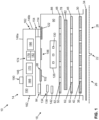
- System 10 includes a therapy housing 14 configured to be coupled to a wound dressing 18.
- Dressing 18 is configured to be coupled to target tissue 22 and/or to tissue 26 surrounding the target tissue to facilitate delivery of therapeutic gas, such as, for example, oxygen, and/or negative pressure to the target tissue.
- target tissue as used herein can broadly refer to an open wound located within tissue, such as, for example, dermal tissue.
- wound as used herein can refer to a chronic, subacute, acute, traumatic, and/or dehisced incision, laceration, puncture, penetration, avulsion, and/or the like.
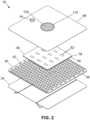
- dressing 18 can include a patient-interface layer 30 configured to be in contact with target tissue 22 and/or tissue 26 surrounding the target tissue.
- patient-interface layer 30 is configured to be disposed below one or more manifolds (e.g., 46).
- Patient-interface layer 30 can comprise an adhesive configured to couple the patient-interface layer to target tissue 22 and/or tissue 26 surrounding the target tissue.
- Such an adhesive can be configured to have low tack properties to minimize patient discomfort and/or tissue trauma as a result of the application, repositioning, and/or removal of patient-interface layer 30 from target tissue 22 and/or tissue 26 surrounding the target tissue.
- Dressing 18 may include a protective liner 34 configured to be disposed on a surface of patient-interface layer 30 such that the protective liner at least partially covers the adhesive (e.g., prior to application of the dressing onto tissue).
- Patient-interface layer 30 can comprise a plurality of gas passageways 38 defined by any suitable material, such as, for example, an open-cell foam (e.g., reticulated foam).
- patient-interface layer 30 can be configured to wick away (e.g., by capillary flow through gas passageways 38) exudate from target tissue 22 and/or tissue 26 surrounding the target tissue.
- Patient-interface layer 30 can also comprise a plurality of openings 42 configured to allow communication of oxygen and exudate through the openings.
- Patient-interface layer 30 can comprise any suitable material, such as, for example, a polymer, optionally, silicone, a hydrogel, polyvinyl alcohol, polyethylene, a polyurethane, polyether, ethylene vinyl acetate, a copolymer thereof, or a blend thereof.
- Patient-interface layer 30 can be hydrophilic.
- Non-limiting examples of patient-interface layer 30 include Silbione ® HC2 products, which are commercially available from Bluestar Silicones International, of Lyon, France, Nanova TM Dressing Perforated Silicone Wound Contact Layers, which are commercially available from Kinetic Concepts, Inc., of San Antonio, Texas, USA, and Bioflex ® Performance Materials, which are commercially available from Scapa Healthcare of Windsor, Connecticut, USA.
- Dressing 18 can include one or more manifolds 46.
- Each manifold 46 can be configured to allow communication of oxygen to target tissue 22 and/or allow communication of exudate to a sorbent material (e.g., 82) (as discussed in further detail below).
- a sorbent material e.g., 82
- the manifold Upon application of negative pressure to manifold 46, the manifold is configured to bolster target tissue 22.
- Manifold 46 may be porous.
- each manifold 46 can define a plurality of gas passageways 50 to distribute oxygen across the manifold and/or to collect exudate from target tissue 22 across the manifold.
- Plurality of gas passageways 50 of each manifold 46 can be interconnected to improve distribution and/or collection of fluids across the manifold.
- gas passageways 50 can be defined by an open-cell foam (e.g., reticulated foam), tissue paper, gauze, a non-woven textile (e.g., felt), and/or the like.
- dressing 18 can comprise two or more manifolds 46 (e.g., one or more on opposing sides of a sorbent layer (e.g., 78)).
- manifold 46 can comprise a length 54 and a width 58 that is at least 50 percent less (e.g., 50, 55, 60, 65, 70, 80, 85, 90, or 95 percent less) than the length.
- manifold 46 can define a plurality of openings 62, one or more of which comprises a length 66 and a width 70 that is at least 50 percent less (e.g., 50, 55, 60, 65, 70, 80, 85, 90, or 95 percent less) than the length.
- Openings 62 of manifold 46 may be formed by a laser or diecut process that introduces prescribable defects in the bulk of the material of manifold.
- widths 58 and 70 are at least 50 percent less than lengths 54 and 66, respectively, and/or due to the prescribable defects within the bulk of the material of manifold 46, when negative pressure is applied to the manifold, the manifold tends to contract in a direction 74 that is substantially parallel to the width of the manifold.
- Dressing 18, and thus manifold 46 can be configured and/or applied onto target tissue 22 and/or tissue 26 surrounding the target tissue such that length 54 of the manifold and/or length 66 of each opening 62 extends in a direction that is substantially parallel relative to at least a portion of a wound.
- a dressing e.g., 18
- a dressing can include one or more wound closure strips configured to be applied across an incision such that the strip urges tissue on opposing sides of a wound toward each other.
- wound closure strips can comprise an elastic polymeric material. In at least this way, an apposition force can be applied to an incision without the application of negative pressure.
- manifold 46 can have a reduced volume of material, such as, for example, a lower volume non-woven textile or a spacer fabric, which can minimize or eliminate apposition forces applied to target tissue 22.
- Manifold 46 can comprise any suitable material, such as, for example, polyethylene, a polyolefin, a polyether, polyurethane, a co-polyester, a copolymer thereof, or a blend thereof.
- a foam such a foam may be polyether-based polyurethane foam.
- such a foam can comprise a porosity ranging from approximately 20 to 120 ports per inch (ppi), such as, for example, 45 ppi, and a thickness ranging from approximately 2 mm to 12 mm, such as, for example, 6 mm.
- ppi ports per inch
- a non-woven textile such a non-woven textile can comprise a density ranging from approximately 80 to 150 grams per square meter (GSM) and a thickness ranging from approximately 2 mm to 12 mm.
- GSM grams per square meter
- Non-limiting examples of manifold 46 include MEDISPONGE ® Foams, which are commercially available from Essentra PLC of Milton Keynes, England, and Exudate Management Systems, which are commercially available from TWE Group GmbH, of Emsdetten, Germany.
- Dressing 18 can include a sorbent layer 78.
- Sorbent layer 78 can include a sorbent material 82 configured to draw exudate away from target tissue 22 and/or tissue 26 surrounding the target tissue.
- sorbent layer 78 can be configured to be disposed above patient-interface layer 30.
- Sorbent material 82 can be disposed below or above one of manifolds 46 to capture exudate. As shown in FIGs. 1 and 2 , sorbent material 82 can be disposed between a first one of manifolds 46 and a second one of the manifolds.
- Sorbent layer 78, and, more particularly, sorbent material 82 can comprise any suitable adsorbent or absorbent material.
- Sorbent layer 78 having absorbent material may comprise a hydrophilic material.
- Suitable examples of an absorbent material includes a foam, a non-woven textile, a superabsorbent polymer, and/or the like.
- sorbent material 82 having absorbent material may comprise sodium carboxymethyl cellulose (NaCMC) fiber, alginate fiber, and/or the like.
- adsorbent material e.g., a material that has a surface onto which liquid binds such that the material does not swell
- carbon filters such as, for example, an activated charcoal filter and/or the like.
- Such an activated charcoal filter can be configured to remove nitrogen from oxygen supplied from an oxygen source (e.g., 170) into dressing 18.
- an oxygen source e.g., 170
- sorbent material 82 can facilitate the filtration of nitrogen within an interior volume (e.g., 90) of dressing 18.
- Non-limiting examples of sorbent material 82 include superabsorbent wound care laminates having a density of 300 grams per square meter (GSM), which are commercially available from Gelok International of Dunbridge, Ohio, USA, and Absorflex TM , which has a density of 800 GSM and is commercially available from Texsus S.p.A. of Chiesina Uzzanese, Italy.
- GSM grams per square meter
- Absorflex TM which has a density of 800 GSM and is commercially available from Texsus S.p.A. of Chiesina Uzzanese, Italy.
- a dressing (e.g., 18) can comprise a liquid control layer that is configured to restrict communication of exudate toward the target tissue.
- a liquid control layer can comprise a plurality of perforations configured to permit exudate to flow away from target tissue 22 through the perforations and block the flow of exudate toward the target tissue through the perforations.
- Such a liquid control layer can be configured to be disposed between manifold 46 and sorbent layer 78 such that the liquid control layer prevents the backflow of exudate from the sorbent layer to the manifold.
- Dressing 18 can include a gas-occlusive layer 86.
- Gas-occlusive layer 86 can be configured to be disposed over one or more manifolds 46 and coupled to tissue 26 surrounding target tissue 22 such that an interior volume 90 containing the manifold(s) is defined between the gas-occlusive layer and the target tissue and such that the gas-occlusive layer limits the escape of oxygen and/or exudate from the interior volume between the gas-occlusive layer and the tissue surrounding the target tissue.
- gas-occlusive layer 86 can be configured to be disposed over sorbent layer 78 such that interior volume 90 contains the sorbent material.
- sorbent layer 78 and thus, sorbent material 82, can be configured to be disposed below gas-occlusive layer 86.
- a tissue-facing surface of gas-occlusive layer 86 can comprise an adhesive, such as, for example, an acrylic adhesive, polyurethane gel adhesive, silicone adhesive, a combination thereof, and/or the like, configured to couple the gas-occlusive layer to patient-interface layer 30 and/or tissue 26 surrounding target tissue 22.
- Gas-occlusive layer 86 can be sterile such that the gas-occlusive layer provides a viral and/or bacterial barrier to target tissue 22.
- Gas-occlusive layer 86 may comprise a flexible film, such as, for example, a hydrocolloid sheet.
- Gas-occlusive layer 86 can comprise any suitable material that limits escape of oxygen and/or exudate through the gas-occlusive layer, such as, for example, polyurethane, polyethylene, polyvinyl acetate, polyvinyl chloride, polyvinylidene chloride, isobutylene, a halogenated isomer (e.g., chlorobutyl and/or bromobutyl), epichlorohydrin, a copolymer thereof, or a blend thereof.
- Gas-occlusive layer 86 can comprise a thickness that is approximately any one of, or between approximately any two of the following: 5, 10, 15, 20, 25, 30, 35, 40, 45, 50, 55, and 60 micrometers.
- Dressing 18 can comprise a valve 94 coupled to gas-occlusive layer 86.
- Valve 94 can be configured to permit communication of gas out of interior volume 90 through the valve and prevent communication of gas into the interior volume through the valve.
- valve 94 can be configured to relieve pressure within interior volume 90 when the pressure within the interior volume exceeds a threshold pressure.
- a threshold pressure may range from 8 to 24 mmHg (e.g., approximately any one of, or between approximately any two of the following: 8, 10, 12, 14, 16, 18, 20, 22, and 24 mmHg).
- Valve 94 can comprise any suitable one-way valve, such as, for example, a ball-check valve, a thin film valve, a diaphragm check valve, and/or the like. In this way and others, valve 94 can be configured to ensure that interior volume 90 does not become over-pressurized with oxygen such that dressing 18 and tissue 26 surrounding target tissue 22 separate to allow oxygen therebetween.
- Dressing 18 may comprise one or more sensors 98 configured to collect data indicative of the presence, volume, and/or concentration of oxygen within interior volume 90.
- Sensor 98 can comprise a material 102 configured to be disposed within interior volume 90. Material 102 can be configured to change color in response to a change in concentration of oxygen within the interior volume.
- material 102 of sensor 98 can comprise a pressure-sensitive paint, a redox indicator (e.g., comprising methylene blue, phenosafranine, indigo carmine, resazurin, N-phenylanthranilic acid, and/or neutral red).
- a redox indicator e.g., comprising methylene blue, phenosafranine, indigo carmine, resazurin, N-phenylanthranilic acid, and/or neutral red.
- a sensor can comprise a layered silicate, a cationic surfactant, an organic colorant, and a reducing agent.
- a non-limiting example of sensor 98 includes the Ageless Eye TM Oxygen Indicator, which is commercially available from Mitsubishi Gas Chemical Company, Inc., of Tokyo, Japan, that is modified to change color in response to oxygen exceeding 20 percent purity.
- Dressing 18 may comprise one or more sensors 106 configured to collect data indicative of one or more of humidity, wound oxygen tension, and/or exudate pH.
- Gas-occlusive layer 86 can comprise one or more openings 110 configured to allow communication of oxygen into interior volume 90 of dressing 18.
- dressing 18 may comprise one or more ports 114, each of which are configured to be coupled to a respective opening 110 of gas-occlusive layer 86 or defined by the gas-occlusive layer.
- Port 114 can be configured to permit communication of oxygen into interior volume 90 through the port and permit communication of exudate out of the interior volume through the port.
- Port 114 may comprise an adhesive configured to seal around opening 110 of gas-occlusive layer 86 in order to minimize the diffusion of oxygen between the port and the gas-occlusive layer.
- Port 114 is configured to be releasably coupled to a port (e.g., 154) of housing 14.
- port 114 can comprise one or more latching and/or interlocking features 118 configured to interact with corresponding latching and/or interlocking features (e.g.,118a) of a port (e.g., 154) of housing 14 such that the port of dressing 18 can be releasably coupled to the port of the housing.
- port 114 includes the T.R.A.C. TM Pad, which is commercially available from Kinetic Concepts, Inc., of San Antonio, Texas, USA.
- Port 114 can comprise a filter 122 to filter fluid that flows through the port.
- dressing 18 comprises a filter 122 configured to filter fluid that flows through opening 110 of gas-occlusive layer 86.
- filter 122 can be sterile such that the filter provides a viral and/or bacterial barrier.
- filter 122 comprises a layer of material that is bonded to a lower (e.g., tissue-facing) surface of gas-occlusive layer 86.
- a filter (e.g., 122) comprises a layer of material that is bonded to an upper surface of a gas-occlusive layer (e.g., 86).
- Filter 122 can comprise any suitable material, such as, for example, polytetrafluoroethylene (PTFE) (e.g., an expanded PTFE), a polyester, a polyamide, polyolefin, a copolymer thereof, a blend thereof, and/or the like.
- Filter 122 can have a backing material, such as, for example, a non-woven textile, comprising a polyester, a polyamide, and/or the like.
- Filter 122 may comprise a hydrophobic material.
- filter 122 can be configured to allow communication of oxygen into interior volume 90 through opening 110 of gas-occlusive layer and restrict communication of exudate out of the interior volume through the opening of the gas-occlusive layer.
- filter 122 includes GORE ® Microfiltration Media for Medical Devices, which is commercially available from W. L. Gore & Associates, Inc., of Newark, Delaware, USA.
- dressing 18 can optionally comprise an oxygen source 126 disposed within interior volume 90.
- oxygen source 126 can comprise an oxygen-generating material 130 configured to release oxygen (e.g., a gas whose composition is approximately 99 or more percent oxygen) when exposed to water.
- Water in this context, includes any substance having H 2 O, such as, for example, liquid water, water vapor, and/or other substances that include water, such as, for example, exudate from target tissue 22.
- Oxygen-generating material 130 can comprise an adduct of hydrogen peroxide, such as, for example, sodium percarbonate and/or hydrogen peroxide - urea.
- Dressing 18 can have a liquid source 134 comprising one or more capsules 138 configured to be disposed within interior volume 90.
- Each of capsules 138 can define a pocket that includes water.
- flexion and/or breakage of a portion of at least one of capsules 138 can cause the capsule to release water from within the pocket.
- System 10 can be configured to regulate the amount of water exposed to oxygen-generating material 130, thereby preventing oversaturation of the oxygen-generating material and limiting the rate and/or volume of oxygen emission.
- system 10 can comprise a competitive agent 142 disposed within interior volume 90.
- Competitive agent 142 can comprise any suitable material that absorbs water, such as, for example, sodium carbonate, bentonite, and/or the like.
- a dressing e.g., 18
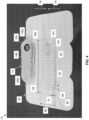
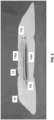
- housing 14 is outside interior volume 90.
- Housing 14 comprises a sidewall 146 that defines a chamber 150 configured to be in fluid communication with interior volume.
- housing 14 comprises port 154, which may be coupled to or defined by sidewall 146.
- Port 154 and port 114 are configured to be releasably coupled to each other such that housing 14 can be decoupled from dressing 18 without decoupling the dressing from tissue 26 surrounding target tissue 22.
- the ports are configured to permit communication of fluid between chamber 150 and interior volume 90 through the ports.
- housing 14 can be removed for maintenance and/or replaced for another housing (e.g., 14) having the same or different therapeutic specifications.
- housing 14 can comprise a thickness 158 extending in a normal direction relative to tissue (e.g., 22 or 26) that is between approximately 5 and approximately 20 mm (e.g., approximately any one of, or between approximately any two of the following: 5, 7.5, 10, 12.5, 15, 17.5, and 20 mm).
- tissue e.g., 22 or 26
- a thickness 158 extending in a normal direction relative to tissue (e.g., 22 or 26) that is between approximately 5 and approximately 20 mm (e.g., approximately any one of, or between approximately any two of the following: 5, 7.5, 10, 12.5, 15, 17.5, and 20 mm).
- Sidewall 146 of housing 14 may be gas-occlusive.
- Sidewall 146 can comprise any suitable gas-occlusive material, such as, for example, polyurethane, polyethylene, polyvinyl acetate, polyvinyl chloride, polyvinylidene chloride, isobutylene, a halogenated isomer, a copolymer thereof, or a blend thereof, and/or the like.
- Sidewall 146 can comprise a first portion 146a bonded to a second portion 146b such that the first portion and the second portion define a seam 162 therebetween. At least a portion of seam 162 can be configured to allow communication of gas out of chamber 150. For example, at least a portion of seam 162 can be configured to act as a positive exhaust outlet for a negative pressure source (e.g., 166).
- a negative pressure source e.g., 166
- Housing 14 can include a negative pressure source 166 disposed within chamber 150.
- Negative pressure source 166 is configured to be in fluid communication with dressing 18 via ports 114 and 154 such that the negative pressure source can provide negative pressure within interior volume 90 to reduce the volume of the interior volume and/or such that negative pressure is applied to target tissue 22 and/or tissue 26 surrounding the target tissue. In this way and others, negative pressure source 166 improves wound healing and/or improves sealing between dressing 18 and tissue 26 surrounding target tissue 22.
- negative pressure can refer to a pressure that is less than a local ambient pressure, such as less than atmospheric pressure.
- Negative pressure source 166 can comprise any suitable mechanically and/or electrically-powered device configured to be disposed within and/or coupled to chamber 150, such as, for example, a micro-pump (e.g., a piezoelectric disc pump), a diaphragm pump, a rotary vane pump and/or the like.
- a micro-pump e.g., a piezoelectric disc pump
- diaphragm pump e.g., a rotary vane pump and/or the like.
- Housing 14 can comprise an oxygen source 170 disposed within chamber 150.
- Oxygen supplied by oxygen source 170 can comprise a high oxygen concentration, such as an oxygen concentration of at least 80 percent (e.g., 80, 85, 90, 92, 94, 96, 98, 99, 99.9, 99.99 or more percent).
- Oxygen source 170 is configured to be in fluid communication with interior volume 90 such that the oxygen source provides oxygen to the interior volume at a volumetric flow rate ranging from approximately 3 milliliters per hour (mL/hr) to approximately 50 mL/hr (e.g., approximately any one of, or between any two of, the following: 3, 4, 5, 10, 20, 25, 30, 35, 40, and 50 mL/hr).
- Oxygen source 170 can comprise any suitable device configured to supply oxygen to dressing 18 at one or more of the volumetric flow rates and/or oxygen concentrations described herein, such as, for example, an electrolytic oxygen source (e.g., an oxygen concentrator).
- an electrolytic oxygen source e.g., an oxygen concentrator
- the oxygen source may be configured to remove nitrogen from air (e.g., via one or more filters and/or sieve beds).
- Housing 14 can comprise a power source 174 disposed within chamber 150 and configured to provide power to actuate negative pressure source 166 and/or oxygen source 170.
- Power source 174 can comprise one or more primary cell batteries 178 and/or one or more secondary cell batteries 182.
- Secondary cell battery 182 can be configured to be inductively charged through sidewall 146 of housing 14 such that the housing minimizes the number of openings in communication with chamber 150.
- housing 14 may comprise one or more magnets within chamber 150 configured to guide and/or assist in the inductive charging of secondary cell battery 182.
- System 10 may comprise a controller 186 (e.g., a processor) configured to control the power provided by power source 174 to negative pressure source 166 and/or oxygen source 170, thereby controlling the negative pressure provided by the negative pressure source and/or controlling the flow rate and/or concentration of oxygen provided by the oxygen source.
- controller 186 can be configured to titrate and/or modify levels of oxygen provided by oxygen source 170 based on an individual's wound condition and/or progression of therapy. For example, for wounds created in medical procedures, levels of oxygen and/or reactive oxygen species ("ROS") required in the immediate post-operative period may be greater than levels of oxygen and/or ROS required as time passes after the procedure.
- ROS reactive oxygen species
- controller 186 can be located within chamber 150 and may be wired or wirelessly coupled to negative pressure source 166 and/or oxygen source 170. Controller 186 may be configured to be wirelessly operated from a second controller outside of chamber 150, such as, for example, a smartphone, a tablet, a personal computer, and/or the like. Housing 14 can include one or more user control and/or feedback interfaces 190 (e.g., LEDs, knobs, buttons, haptic communication devices, speakers, and/or the like) electrically connected to controller 186 and configured to provide information regarding the operation of system 10, including the level of negative pressure applied within interior volume 90, the flow rate of oxygen being provided by the oxygen source, the existence of any leaks, data collected by sensors 98 and 106, and/or the like. Interface(s) 190 may be configured to wirelessly communicate with a second controller outside of chamber 150, such as, for example, a smartphone, a tablet, a personal computer, and/or the like, to provide information regarding the operation of system 10.
- Some embodiments of the present methods comprise coupling one of the present dressings (e.g., 18) to a patient's tissue (e.g., 22 and/or 26); and coupling a housing (e.g., 14) to the dressing, wherein the housing comprises: a sidewall (e.g., 146) that defines a chamber (e.g., 150) configured to be in fluid communication with an interior volume (e.g., 90); an oxygen source (e.g., 170) disposed within the chamber, the oxygen source configured to be in fluid communication with the interior volume; and a negative pressure source (e.g., 166) disposed within the chamber, the negative pressure source configured to be in fluid communication with the interior volume such that the negative pressure source provides sub-atmospheric pressure within the interior volume.
- a sidewall e.g., 146
- a chamber e.g., 150
- an oxygen source e.g., 170
- a negative pressure source e.g., 166
- Some embodiments of the present methods comprise introducing oxygen from the oxygen source into the interior volume.
- introducing oxygen into the interior volume is performed at a volumetric flow rate ranging from approximately 3 milliliters per hour (mL/hr) to approximately 50 mL/hr.
- oxygen introduced into the interior volume is at a purity of at least 90 percent.
- oxygen introduced into the interior volume is produced via electrolysis.
- the dressing is configured to include the second oxygen source within the interior volume, the second oxygen source having an oxygen-generating material and the method comprises introducing oxygen from the second oxygen source into the interior volume.
- oxygen introduced from the second oxygen source into the interior volume is produced by exposing the oxygen-generating material to a liquid.
- the oxygen-generating material comprises an adduct of hydrogen peroxide.
- the adduct comprises sodium percarbonate and/or hydrogen peroxide - urea.
- Some embodiments of the present methods comprise applying sub-atmospheric pressure within the interior volume.
- the sub-atmospheric pressure is applied to and oxygen is introduced into the interior volume simultaneously.
Landscapes
- Health & Medical Sciences (AREA)
- Heart & Thoracic Surgery (AREA)
- General Health & Medical Sciences (AREA)
- Engineering & Computer Science (AREA)
- Biomedical Technology (AREA)
- Life Sciences & Earth Sciences (AREA)
- Animal Behavior & Ethology (AREA)
- Vascular Medicine (AREA)
- Public Health (AREA)
- Veterinary Medicine (AREA)
- Anesthesiology (AREA)
- Hematology (AREA)
- Materials For Medical Uses (AREA)
- Media Introduction/Drainage Providing Device (AREA)
Abstract
Description
- This application claims priority to and the benefit of
U.S. Provisional Application No. 62/615,718, filed January 10, 2018 - The present invention relates generally to wound dressings, and more specifically, but not by way of limitation, to wound dressings and systems with therapeutic gas and negative pressure sources for incision management and related methods.
- Traditional negative pressure-based wound therapies for surgical wounds require the use of active antimicrobial agents, such as silver nanocrystals, to minimize the risk of bacterial colonization of a wound dressing. However, the use of silver as an antimicrobial agent can be contraindicated for individuals with a metal allergy.
- Thus, while the clinical benefits of negative pressure-based wound therapies with silver nanocrystals for surgical wounds are known, improvements to the applicability, convenience, and/or simplicity of therapy systems, components, and related methods with active antimicrobial agents other than silver may benefit healthcare providers, caregivers, and patients.
- Benefits of the present dressings, systems, and/or methods include reducing risks of dehiscence and bolstering incisional wound margins by applying negative pressure wound therapy to a wound. Additional benefits include the removal of fluid from the wound, providing an occlusive, sterile barrier to protect against infection, and boosting the body's own defense against surgical wound site infections and increasing collagen formation, which can reduce the appearance of scarring, by delivering a high concentration of therapeutic oxygen to the wound site. Further benefits include the ability to sterilize and/or replace a dressing without disturbing a negative pressure and/or oxygen source at least because the negative pressure and oxygen source are decouplable from the dressing. The present dressings, systems, and/or methods also allow for safely discarding a dressing as medical waste and recycle and/or discarding a negative pressure and/or oxygen source according to Waste Electrical and Electronic Equipment (WEEE) recycling standards at least because the negative pressure and oxygen source are decouplable from the dressing. The ability for a patient to remove a negative pressure and/or oxygen source from a dressing without removing the dressing from tissue allows remote recharging of the negative pressure and/or oxygen source and/or allows an individual access into areas where metals and/or electronics are prohibited (e.g., MRI scanning, metal detectors, and/or the like). By providing the ability to decouple a dressing from a negative pressure and/or oxygen source, a single negative pressure source can be removed and reused on multiple dressings, which can be useful where a wound is more highly exudating and a dressing becomes saturated before negative pressure therapy is completed. Finally, the present dressings, systems, and methods can facilitate the ability to omit a conventional on/off switch and instead provide remote-controlled actuation of negative pressure and/or oxygen therapy upon application of the system to tissue at least until the removal of the system or, in some instances, the depletion of a finite power source.
- Some embodiments of the present systems comprise a dressing for facilitating delivery of oxygen to tissue, the dressing comprising: a manifold that defines a plurality of gas passageways and is configured to permit communication of oxygen to the target tissue; a gas-occlusive layer configured to be disposed over the manifold and coupled to the tissue such that an interior volume containing the manifold is defined between the gas-occlusive layer and the tissue and the gas-occlusive layer limits escape of oxygen from the interior volume; a housing outside the interior volume, the housing having a sidewall that defines a chamber configured to be in fluid communication with the interior volume; an oxygen source disposed within the chamber, the oxygen source configured to be in fluid communication with the interior volume; and a negative pressure source disposed within the chamber, the negative pressure source configured to be in fluid communication with the interior volume such that the negative pressure source provides sub-atmospheric pressure within the interior volume.
- In some embodiments of the present systems, the manifold defines a plurality of openings, one or more of which comprises a length and a width that is at least 50 percent less than the length.
- In some embodiments of the present systems, the negative pressure source comprises one or more elements selected from the group consisting of: a piezoelectric disc pump, a diaphragm pump, and a rotary vane pump.
- Some embodiments of the present systems comprises a power source disposed within the chamber and configured to provide power to actuate the negative pressure source and/or the oxygen source. In some embodiments of the present systems, the power source comprises a primary cell battery. In some embodiments of the present systems, the power source comprises a secondary cell battery. In some embodiments of the present systems, the secondary cell battery is configured to be inductively charged through the sidewall of the housing.
- Some embodiments of the present systems comprise a controller configured to control the power provided by the power source to the negative pressure source and/or the oxygen source.
- In some embodiments of the present systems, the oxygen source is configured to provide oxygen at a volumetric flow rate ranging from approximately 3 milliliters per hour (mL/hr) to approximately 50 mL/hr. In some embodiments of the present systems, the oxygen source is configured to provide oxygen at a purity of at least 90 percent. In some embodiments of the present systems, the oxygen source comprises an electrolytic oxygen source.
- Some embodiments of the present systems comprising a second oxygen source disposed within the interior volume, the second oxygen source having an oxygen-generating material configured to release oxygen when exposed to a liquid. In some embodiments of the present systems, the oxygen-generating material comprises an adduct of hydrogen peroxide. In some embodiments of the present systems, the adduct comprises sodium percarbonate and/or hydrogen peroxide - urea. In some embodiments of the present systems, the interior volume includes one or more capsules, each of which define a pocket that includes a liquid.
- Some embodiments of the present systems comprises a port coupled to the gas-occlusive layer and configured to be releasably coupled to the housing to permit communication of fluid between the chamber and the interior volume through the port. In some embodiments of the present systems, the port is configured to permit communication of oxygen into the interior volume through the port and permit communication of exudate out of the interior volume through the port.
- In some embodiments of the present systems, the dressing comprises a filter configured to filter fluid that flows through the port. In some embodiments of the present systems, the filter comprises a layer of material that is bonded to an upper surface or a lower surface of the gas-occlusive layer. In some embodiments of the present systems, the filter is configured to permit communication of oxygen into the interior volume through the port and restrict communication of exudate out of the interior volume through the port. In some embodiments of the present systems, the filter is configured to provide a viral and/or bacterial barrier.
- In some embodiments of the present systems, the housing comprises a port coupled to the sidewall and configured to be releasably coupled to the port of the dressing such that the housing can be decoupled from the dressing without decoupling the dressing from the tissue.
- Some embodiments of the present systems comprises a valve coupled to the gas-occlusive layer of the dressing and configured to relieve pressure within the interior volume when pressure within the interior volume exceeds a threshold pressure. In some embodiments of the present systems, the valve comprises a one-way valve configured to: permit communication of gas out of the interior volume through the valve; and prevent communication of gas into the interior volume through the valve.
- Some embodiments of the present systems comprises a patient-interface layer configured to be disposed within the interior volume and to be in contact with the tissue surrounding the target tissue, the patient-interface layer defining a plurality of openings configured to permit communication of oxygen and exudate through the patient-interface layer.
- Some embodiments of the present systems comprises a sorbent material configured to be disposed above or below the manifold and to capture exudate. In some embodiments of the present systems, the sorbent material comprises an absorbent material. In some embodiments of the present systems, the sorbent material comprises an adsorbent material.
- In some embodiments of the present systems, the patient-interface layer comprises a polymer, optionally, silicone, polyethylene, ethylene vinyl acetate, a copolymer thereof, or a blend thereof. In some embodiments of the present systems, the patient-interface layer includes an adhesive configured to couple the patient-interface layer to the tissue.
- In some embodiments of the present systems, the manifold comprises a foam or a non-woven textile. In some embodiments of the present systems, the manifold comprises polyethylene, a polyolefin, a polyether, polyurethane, a co-polyester, a copolymer thereof, or a blend thereof.
- In some embodiments of the present systems, the gas-occlusive layer comprises polyurethane, polyethylene, polyvinyl acetate, polyvinyl chloride, polyvinylidene chloride, isobutylene, a halogenated isomer, a copolymer thereof, or a blend thereof. In some embodiments of the present systems, the gas-occlusive layer comprises an adhesive configured to couple the gas-occlusive layer to tissue surrounding the target tissue. In some embodiments of the present systems, the adhesive comprises an acrylic adhesive, polyurethane gel adhesive, silicone adhesive, or a combination thereof.
- In some embodiments of the present systems, the sidewall of the housing is gas-occlusive. In some embodiments of the present systems, the sidewall comprises polyurethane, polyethylene, polyvinyl acetate, polyvinyl chloride, polyvinylidene chloride, isobutylene, a halogenated isomer, a copolymer thereof, or a blend thereof.
- Some embodiments of the present dressings, which are configured to be coupled to tissue to facilitate delivery of oxygen to the tissue, comprise: a manifold configured to permit communication of oxygen to the tissue, the manifold defining: a plurality of gas passageways; and a plurality of openings, one or more of which comprises a length and a width that is at least 50 percent less than the length; and a gas-occlusive layer configured to be disposed over the manifold and coupled to the tissue such that an interior volume containing the manifold is defined between the gas-occlusive layer and the tissue and the gas-occlusive layer limits escape of oxygen from the interior volume.
- Some embodiments of the present dressings comprise a port coupled to the gas-occlusive layer, wherein the port is configured to be releasably coupled to a port of a housing having a sidewall defining a chamber to permit communication of fluid between the chamber and the interior volume through the ports.
- Some embodiments of the present dressings, which are configured to be coupled to tissue to facilitate delivery of oxygen to the tissue, comprise: a manifold that defines a plurality of gas passageways and is configured to permit communication of oxygen to the tissue; a gas-occlusive layer configured to be disposed over the manifold and coupled to the tissue such that an interior volume containing the manifold is defined between the gas-occlusive layer and the tissue and the gas-occlusive layer limits escape of oxygen from the interior volume; and a port coupled to the gas-occlusive layer, wherein the port is configured to be releasably coupled to a port of a housing having a sidewall defining a chamber to permit communication of fluid between the chamber and the interior volume through the ports.
- In some embodiments of the present dressings, the manifold defines a plurality of openings, one or more of which comprises a length and a width that is at least 50 percent less than the length.
- In some embodiments of the present dressings, the housing is configured to include an oxygen source disposed within the chamber, the oxygen source configured to be in fluid communication with the interior volume such that the oxygen source provides oxygen at a volumetric flow rate ranging from approximately 3 milliliters per hour (mL/hr) to approximately 50 mL/hr.
- In some embodiments of the present dressings, the oxygen source is configured to provide oxygen at a purity of at least 90 percent. In some embodiments of the present dressings, the oxygen source comprises an electrolytic oxygen source.
- Some embodiments of the present dressings comprise a second oxygen source disposed within the interior volume, the second oxygen source having an oxygen-generating material configured to release oxygen when exposed to a liquid. In some embodiments of the present dressings, the oxygen-generating material comprises an adduct of hydrogen peroxide. In some embodiments of the present dressings, the adduct comprises sodium percarbonate and/or hydrogen peroxide - urea. Some embodiments of the present dressings comprise a competitive agent disposed within the interior volume, the competitive agent configured to limit the communication of oxygen to the tissue. In some embodiments of the present dressings, competitive agent includes sodium carbonate. In some embodiments of the present dressings, the interior volume includes one or more capsules, each of which defines a pocket that includes a liquid. In some embodiments of the present dressings, flexion of a portion of at least one of the one or more capsules causes the capsule to release liquid from within the pocket.
- In some embodiments of the present dressings, the housing is configured to include a negative pressure source disposed within the chamber, the negative pressure source configured to be in fluid communication with the interior volume such that the negative pressure source provides sub-atmospheric pressure within the interior volume. In some embodiments of the present dressings, the negative pressure source comprises one or more elements selected from the group consisting of: a piezoelectric disc pump, a diaphragm pump, and a rotary vane pump.
- In some embodiments of the present dressings, the port of the dressing is configured to permit communication of oxygen into the interior volume through the port and permit communication of exudate out of the interior volume through the port. Some embodiments of the present dressings comprise a filter configured to filter fluid that flows through the port. In some embodiments of the present dressings, the filter comprises a layer of material that is bonded to an upper surface or a lower surface of the gas-occlusive layer. In some embodiments of the present dressings, the filter is configured to permit communication of oxygen into the interior volume through the port and restrict communication of exudate out of the interior volume through the port. In some embodiments of the present dressings, the filter is configured to provide a viral and/or bacterial barrier.
- Some embodiments of the present dressings comprise a valve coupled to the gas-occlusive layer and configured to relieve pressure within the interior volume when pressure within the interior volume exceeds a threshold pressure. In some embodiments of the present dressings, the valve comprises a one-way valve configured to: permit communication of gas out of the interior volume through the valve; and prevent communication of gas into the interior volume through the valve.
- Some embodiments of the present dressings comprises a patient-interface layer configured to be disposed below the manifold and in contact with the tissue, the patient-interface layer defining a plurality of openings configured to permit communication of oxygen and exudate through the patient-interface layer.
- Some embodiments of the present dressings comprises a sorbent material configured to be disposed above or below the manifold and to capture exudate. Some embodiments of the present dressings comprises a sorbent layer that includes the sorbent material. In some embodiments of the present dressings, the sorbent material comprises an absorbent material. In some embodiments of the present dressings, the sorbent material comprises an adsorbent material.
- In some embodiments of the present dressings, the patient-interface layer comprises a polymer, optionally, silicone, polyethylene, ethylene vinyl acetate, a copolymer thereof, or a blend thereof. In some embodiments of the present dressings, the patient-interface layer includes an adhesive configured to couple the patient-interface layer to the tissue.
- In some embodiments of the present dressings, the manifold comprises a foam or a non-woven textile. In some embodiments of the present dressings, the manifold comprises polyethylene, a polyolefin, a polyether, polyurethane, a co-polyester, a copolymer thereof, or a blend thereof.
- In some embodiments of the present dressings, the gas-occlusive layer comprises polyurethane, polyethylene, polyvinyl acetate, polyvinyl chloride, polyvinylidene chloride, isobutylene, a halogenated isomer, a copolymer thereof, or a blend thereof. In some embodiments of the present dressings, the gas-occlusive layer comprises an adhesive configured to couple the gas-occlusive layer to the tissue. In some embodiments of the present dressings, the adhesive comprises an acrylic adhesive, polyurethane gel adhesive, silicone adhesive, or a combination thereof.
- Some embodiments of the present dressings comprises a sensor configured to detect a presence of oxygen within the interior volume. In some embodiments of the present dressings, the sensor comprises a material configured to be disposed within the interior volume and to change color in response to a change in oxygen concentration within the interior volume. In some embodiments of the present dressings, the material comprises a pressure-sensitive paint. In some embodiments of the present dressings, the material comprises a redox indicator. In some embodiments of the present dressings, the redox indicator comprises methylene blue, phenosafranine, indigo carmine, resazurin, N-phenylanthranilic acid, and/or neutral red. In some embodiments of the present dressings, the material is disposed on a lower surface of the gas-occlusive layer. In some embodiments of the present dressings, the sensor comprises: a layered silicate; a cationic surfactant; an organic colorant; and a reducing agent.
- Some embodiments of the present methods comprise coupling the dressing of any of claims 1-42 to a patient's tissue; and coupling a housing to the dressing, wherein the housing comprises: a sidewall that defines a chamber configured to be in fluid communication with the interior volume; an oxygen source disposed within the chamber, the oxygen source configured to be in fluid communication with the interior volume; and a negative pressure source disposed within the chamber, the negative pressure source configured to be in fluid communication with the interior volume such that the negative pressure source provides sub-atmospheric pressure within the interior volume.
- Some embodiments of the present methods comprise introducing oxygen from the oxygen source into the interior volume. In some embodiments of the present methods, introducing oxygen into the interior volume is performed at a volumetric flow rate ranging from approximately 3 milliliters per hour (mL/hr) to approximately 50 mL/hr. In some embodiments of the present methods, oxygen introduced into the interior volume is at a purity of at least 90 percent. In some embodiments of the present methods, oxygen introduced into the interior volume is produced via electrolysis.
- In some embodiments of the present methods, the dressing is configured to include a second oxygen source within the interior volume, the second oxygen source having an oxygen-generating material and the method comprises introducing oxygen from the second oxygen source into the interior volume. In some embodiments of the present methods, oxygen introduced from the second oxygen source into the interior volume is produced by exposing the oxygen-generating material to a liquid. In some embodiments of the present methods, the oxygen-generating material comprises an adduct of hydrogen peroxide. In some embodiments of the present methods, the adduct comprises sodium percarbonate and/or hydrogen peroxide - urea.
- Some embodiments of the present methods comprise applying sub-atmospheric pressure within the interior volume. In some embodiments of the present methods, the sub-atmospheric pressure is applied to and oxygen is introduced into the interior volume simultaneously.
- The term "coupled" is defined as connected, although not necessarily directly, and not necessarily mechanically; two items that are "coupled" may be unitary with each other. The terms "a" and "an" are defined as one or more unless this disclosure explicitly requires otherwise. The term "substantially" is defined as largely but not necessarily wholly what is specified (and includes what is specified; e.g., substantially 90 degrees includes 90 degrees and substantially parallel includes parallel), as understood by a person of ordinary skill in the art. In any disclosed embodiment, the term "substantially" may be substituted with "within [a percentage] of' what is specified, where the percentage includes .1, 1, 5, and 10 percent.
- The phrase "and/or" means and or. The phrase "and/or" includes any and all combinations of one or more of the associated listed items. To illustrate, A, B, and/or C includes: A alone, B alone, C alone, a combination of A and B, a combination of A and C, a combination of B and C, or a combination of A, B, and C. In other words, "and/or" operates as an inclusive or.
- The terms "comprise" (and any form of comprise, such as "comprises" and "comprising"), "have" (and any form of have, such as "has" and "having"), and "include" (and any form of include, such as "includes" and "including") are open-ended linking verbs. As a result, an apparatus that "comprises," "has," or "includes" one or more elements possesses those one or more elements, but is not limited to possessing only those elements. Likewise, a method that "comprises," "has," or "includes," one or more steps possesses those one or more steps, but is not limited to possessing only those one or more steps.
- Any embodiment of any of the apparatuses, systems, and methods can consist of or consist essentially of - rather than comprise/have/include - any of the described steps, elements, and/or features. Thus, in any of the claims, the term "consisting of' or "consisting essentially of' can be substituted for any of the open-ended linking verbs recited above, in order to change the scope of a given claim from what it would otherwise be using the open-ended linking verb.
- The feature or features of one embodiment may be applied to other embodiments, even though not described or illustrated, unless expressly prohibited by this disclosure or the nature of the embodiments.
- Further, an apparatus that is configured in a certain way is configured in at least that way, but it can also be configured in other ways than those specifically described.
- Some details associated with the embodiments are described above, and others are described below.
- The following drawings illustrate by way of example and not limitation. For the sake of brevity and clarity, every feature of a given structure is not always labeled in every figure in which that structure appears. Identical reference numbers do not necessarily indicate an identical structure. Rather, the same reference number may be used to indicate a similar feature or a feature with similar functionality, as may non-identical reference numbers. The figures are drawn to scale (unless otherwise noted), meaning the sizes of the depicted elements are accurate relative to each other for at least the embodiment depicted in the figures. Figures having schematic views are not drawn to scale.
-
FIG. 1 is a schematic view of an embodiment of the present systems. -
FIG. 2 is an exploded perspective view of a first embodiment of the present wound dressings, suitable for use in some embodiments of the present systems, shown with some components omitted. -
FIG. 3 is a perspective view of the system ofFIG. 1 disposed on a model leg. -
FIG. 4 is perspective view of the system ofFIG. 1 , shown with a therapy housing of the system ofFIG. 1 decoupled from a wound dressing of the system ofFIG. 1 . -
FIG. 5 is perspective view of the system ofFIG. 1 , shown with the therapy housing of the system ofFIG. 1 coupled to the wound dressing of the system ofFIG. 1 . - Referring to
FIG. 1 , shown therein and designated by thereference numeral 10 is one embodiment of the present systems for providing negative pressure and topical wound therapy.System 10 includes atherapy housing 14 configured to be coupled to a wound dressing 18.Dressing 18 is configured to be coupled to targettissue 22 and/or to tissue 26 surrounding the target tissue to facilitate delivery of therapeutic gas, such as, for example, oxygen, and/or negative pressure to the target tissue. - The term "target tissue" as used herein can broadly refer to an open wound located within tissue, such as, for example, dermal tissue. The term "wound" as used herein can refer to a chronic, subacute, acute, traumatic, and/or dehisced incision, laceration, puncture, penetration, avulsion, and/or the like.
- Referring now to
FIGs. 1 and2 , dressing 18 can include a patient-interface layer 30 configured to be in contact withtarget tissue 22 and/or tissue 26 surrounding the target tissue. For example, patient-interface layer 30 is configured to be disposed below one or more manifolds (e.g., 46). Patient-interface layer 30 can comprise an adhesive configured to couple the patient-interface layer to targettissue 22 and/or tissue 26 surrounding the target tissue. Such an adhesive can be configured to have low tack properties to minimize patient discomfort and/or tissue trauma as a result of the application, repositioning, and/or removal of patient-interface layer 30 fromtarget tissue 22 and/or tissue 26 surrounding the target tissue.Dressing 18 may include aprotective liner 34 configured to be disposed on a surface of patient-interface layer 30 such that the protective liner at least partially covers the adhesive (e.g., prior to application of the dressing onto tissue). - Patient-
interface layer 30 can comprise a plurality ofgas passageways 38 defined by any suitable material, such as, for example, an open-cell foam (e.g., reticulated foam). For example, patient-interface layer 30 can be configured to wick away (e.g., by capillary flow through gas passageways 38) exudate fromtarget tissue 22 and/or tissue 26 surrounding the target tissue. Patient-interface layer 30 can also comprise a plurality ofopenings 42 configured to allow communication of oxygen and exudate through the openings. - Patient-
interface layer 30 can comprise any suitable material, such as, for example, a polymer, optionally, silicone, a hydrogel, polyvinyl alcohol, polyethylene, a polyurethane, polyether, ethylene vinyl acetate, a copolymer thereof, or a blend thereof. Patient-interface layer 30 can be hydrophilic. - Non-limiting examples of patient-
interface layer 30 include Silbione® HC2 products, which are commercially available from Bluestar Silicones International, of Lyon, France, Nanova™ Dressing Perforated Silicone Wound Contact Layers, which are commercially available from Kinetic Concepts, Inc., of San Antonio, Texas, USA, and Bioflex® Performance Materials, which are commercially available from Scapa Healthcare of Windsor, Connecticut, USA. -
Dressing 18 can include one ormore manifolds 46. Each manifold 46 can be configured to allow communication of oxygen to targettissue 22 and/or allow communication of exudate to a sorbent material (e.g., 82) (as discussed in further detail below). Upon application of negative pressure tomanifold 46, the manifold is configured to bolstertarget tissue 22. -
Manifold 46 may be porous. For example, each manifold 46 can define a plurality ofgas passageways 50 to distribute oxygen across the manifold and/or to collect exudate fromtarget tissue 22 across the manifold. Plurality ofgas passageways 50 of each manifold 46 can be interconnected to improve distribution and/or collection of fluids across the manifold. For example,gas passageways 50 can be defined by an open-cell foam (e.g., reticulated foam), tissue paper, gauze, a non-woven textile (e.g., felt), and/or the like. In embodiments wheremanifold 46 comprises a non-woven textile, dressing 18 can comprise two or more manifolds 46 (e.g., one or more on opposing sides of a sorbent layer (e.g., 78)). - As shown in
FIG. 4 ,manifold 46 can comprise alength 54 and awidth 58 that is at least 50 percent less (e.g., 50, 55, 60, 65, 70, 80, 85, 90, or 95 percent less) than the length. Similarly, manifold 46 can define a plurality ofopenings 62, one or more of which comprises alength 66 and awidth 70 that is at least 50 percent less (e.g., 50, 55, 60, 65, 70, 80, 85, 90, or 95 percent less) than the length.Openings 62 ofmanifold 46 may be formed by a laser or diecut process that introduces prescribable defects in the bulk of the material of manifold. At least by configuringwidths lengths manifold 46, when negative pressure is applied to the manifold, the manifold tends to contract in adirection 74 that is substantially parallel to the width of the manifold.Dressing 18, and thus manifold 46, can be configured and/or applied ontotarget tissue 22 and/or tissue 26 surrounding the target tissue such thatlength 54 of the manifold and/orlength 66 of eachopening 62 extends in a direction that is substantially parallel relative to at least a portion of a wound. In this way and others, the contraction ofmanifold 46 indirection 74 in response to the application of negative pressure can beneficially provide an apposition force ontotarget tissue 22, which urges opposing sides of a wound toward each other. In some embodiments, a dressing (e.g., 18) can include one or more wound closure strips configured to be applied across an incision such that the strip urges tissue on opposing sides of a wound toward each other. Such wound closure strips can comprise an elastic polymeric material. In at least this way, an apposition force can be applied to an incision without the application of negative pressure. - In instances where apposition forces are undesirable, manifold 46 can have a reduced volume of material, such as, for example, a lower volume non-woven textile or a spacer fabric, which can minimize or eliminate apposition forces applied to target
tissue 22. -
Manifold 46 can comprise any suitable material, such as, for example, polyethylene, a polyolefin, a polyether, polyurethane, a co-polyester, a copolymer thereof, or a blend thereof. For example, in embodiments wheremanifold 46 comprises a foam, such a foam may be polyether-based polyurethane foam. Further, in embodiments wheremanifold 46 comprises a foam, such a foam can comprise a porosity ranging from approximately 20 to 120 ports per inch (ppi), such as, for example, 45 ppi, and a thickness ranging from approximately 2 mm to 12 mm, such as, for example, 6 mm. In embodiments wheremanifold 46 comprises a non-woven textile, such a non-woven textile can comprise a density ranging from approximately 80 to 150 grams per square meter (GSM) and a thickness ranging from approximately 2 mm to 12 mm. - Non-limiting examples of
manifold 46 include MEDISPONGE® Foams, which are commercially available from Essentra PLC of Milton Keynes, England, and Exudate Management Systems, which are commercially available from TWE Group GmbH, of Emsdetten, Germany. -
Dressing 18 can include asorbent layer 78.Sorbent layer 78 can include asorbent material 82 configured to draw exudate away fromtarget tissue 22 and/or tissue 26 surrounding the target tissue. - As shown in
FIGs. 1 and2 ,sorbent layer 78 can be configured to be disposed above patient-interface layer 30.Sorbent material 82 can be disposed below or above one ofmanifolds 46 to capture exudate. As shown inFIGs. 1 and2 ,sorbent material 82 can be disposed between a first one ofmanifolds 46 and a second one of the manifolds.Sorbent layer 78, and, more particularly,sorbent material 82, can comprise any suitable adsorbent or absorbent material.Sorbent layer 78 having absorbent material may comprise a hydrophilic material. Suitable examples of an absorbent material (e.g., a material that tends to swell, by 50 percent or more, due to the binding of liquid within the material) includes a foam, a non-woven textile, a superabsorbent polymer, and/or the like. For example,sorbent material 82 having absorbent material may comprise sodium carboxymethyl cellulose (NaCMC) fiber, alginate fiber, and/or the like. Suitable examples of an adsorbent material (e.g., a material that has a surface onto which liquid binds such that the material does not swell) include carbon filters, such as, for example, an activated charcoal filter and/or the like. Such an activated charcoal filter can be configured to remove nitrogen from oxygen supplied from an oxygen source (e.g., 170) into dressing 18. In this way and others,sorbent material 82 can facilitate the filtration of nitrogen within an interior volume (e.g., 90) of dressing 18. - Non-limiting examples of
sorbent material 82 include superabsorbent wound care laminates having a density of 300 grams per square meter (GSM), which are commercially available from Gelok International of Dunbridge, Ohio, USA, and Absorflex™, which has a density of 800 GSM and is commercially available from Texsus S.p.A. of Chiesina Uzzanese, Italy. - In some embodiments, a dressing (e.g., 18) can comprise a liquid control layer that is configured to restrict communication of exudate toward the target tissue. Such a liquid control layer can comprise a plurality of perforations configured to permit exudate to flow away from
target tissue 22 through the perforations and block the flow of exudate toward the target tissue through the perforations. Such a liquid control layer can be configured to be disposed betweenmanifold 46 andsorbent layer 78 such that the liquid control layer prevents the backflow of exudate from the sorbent layer to the manifold. -
Dressing 18 can include a gas-occlusive layer 86. Gas-occlusive layer 86 can be configured to be disposed over one ormore manifolds 46 and coupled to tissue 26 surroundingtarget tissue 22 such that aninterior volume 90 containing the manifold(s) is defined between the gas-occlusive layer and the target tissue and such that the gas-occlusive layer limits the escape of oxygen and/or exudate from the interior volume between the gas-occlusive layer and the tissue surrounding the target tissue. - As shown in
FIG. 1 , gas-occlusive layer 86 can be configured to be disposed oversorbent layer 78 such thatinterior volume 90 contains the sorbent material. In other words,sorbent layer 78, and thus,sorbent material 82, can be configured to be disposed below gas-occlusive layer 86. A tissue-facing surface of gas-occlusive layer 86 can comprise an adhesive, such as, for example, an acrylic adhesive, polyurethane gel adhesive, silicone adhesive, a combination thereof, and/or the like, configured to couple the gas-occlusive layer to patient-interface layer 30 and/or tissue 26 surroundingtarget tissue 22. - Gas-
occlusive layer 86 can be sterile such that the gas-occlusive layer provides a viral and/or bacterial barrier to targettissue 22. Gas-occlusive layer 86 may comprise a flexible film, such as, for example, a hydrocolloid sheet. Gas-occlusive layer 86 can comprise any suitable material that limits escape of oxygen and/or exudate through the gas-occlusive layer, such as, for example, polyurethane, polyethylene, polyvinyl acetate, polyvinyl chloride, polyvinylidene chloride, isobutylene, a halogenated isomer (e.g., chlorobutyl and/or bromobutyl), epichlorohydrin, a copolymer thereof, or a blend thereof. Gas-occlusive layer 86 can comprise a thickness that is approximately any one of, or between approximately any two of the following: 5, 10, 15, 20, 25, 30, 35, 40, 45, 50, 55, and 60 micrometers. -
Dressing 18 can comprise avalve 94 coupled to gas-occlusive layer 86.Valve 94 can be configured to permit communication of gas out ofinterior volume 90 through the valve and prevent communication of gas into the interior volume through the valve. For example,valve 94 can be configured to relieve pressure withininterior volume 90 when the pressure within the interior volume exceeds a threshold pressure. Such a threshold pressure may range from 8 to 24 mmHg (e.g., approximately any one of, or between approximately any two of the following: 8, 10, 12, 14, 16, 18, 20, 22, and 24 mmHg).Valve 94 can comprise any suitable one-way valve, such as, for example, a ball-check valve, a thin film valve, a diaphragm check valve, and/or the like. In this way and others,valve 94 can be configured to ensure thatinterior volume 90 does not become over-pressurized with oxygen such that dressing 18 and tissue 26 surroundingtarget tissue 22 separate to allow oxygen therebetween. -
Dressing 18 may comprise one or more sensors 98 configured to collect data indicative of the presence, volume, and/or concentration of oxygen withininterior volume 90. Sensor 98 can comprise a material 102 configured to be disposed withininterior volume 90.Material 102 can be configured to change color in response to a change in concentration of oxygen within the interior volume. For example,material 102 of sensor 98 can comprise a pressure-sensitive paint, a redox indicator (e.g., comprising methylene blue, phenosafranine, indigo carmine, resazurin, N-phenylanthranilic acid, and/or neutral red). In some embodiments, a sensor (e.g., 98) can comprise a layered silicate, a cationic surfactant, an organic colorant, and a reducing agent. A non-limiting example of sensor 98 includes the Ageless Eye™ Oxygen Indicator, which is commercially available from Mitsubishi Gas Chemical Company, Inc., of Tokyo, Japan, that is modified to change color in response to oxygen exceeding 20 percent purity.Dressing 18 may comprise one or more sensors 106 configured to collect data indicative of one or more of humidity, wound oxygen tension, and/or exudate pH. - Gas-
occlusive layer 86 can comprise one ormore openings 110 configured to allow communication of oxygen intointerior volume 90 of dressing 18. For example, dressing 18 may comprise one ormore ports 114, each of which are configured to be coupled to arespective opening 110 of gas-occlusive layer 86 or defined by the gas-occlusive layer.Port 114 can be configured to permit communication of oxygen intointerior volume 90 through the port and permit communication of exudate out of the interior volume through the port. -
Port 114 may comprise an adhesive configured to seal around opening 110 of gas-occlusive layer 86 in order to minimize the diffusion of oxygen between the port and the gas-occlusive layer. -
Port 114 is configured to be releasably coupled to a port (e.g., 154) ofhousing 14. For example,port 114 can comprise one or more latching and/or interlocking features 118 configured to interact with corresponding latching and/or interlocking features (e.g.,118a) of a port (e.g., 154) ofhousing 14 such that the port of dressing 18 can be releasably coupled to the port of the housing. - A non-limiting example of
port 114 includes the T.R.A.C.™ Pad, which is commercially available from Kinetic Concepts, Inc., of San Antonio, Texas, USA. -
Port 114 can comprise afilter 122 to filter fluid that flows through the port. In this embodiment, dressing 18 comprises afilter 122 configured to filter fluid that flows through opening 110 of gas-occlusive layer 86. For example, filter 122 can be sterile such that the filter provides a viral and/or bacterial barrier. As shown inFIGs. 1 and2 ,filter 122 comprises a layer of material that is bonded to a lower (e.g., tissue-facing) surface of gas-occlusive layer 86. In some embodiments, a filter (e.g., 122) comprises a layer of material that is bonded to an upper surface of a gas-occlusive layer (e.g., 86).Filter 122 can comprise any suitable material, such as, for example, polytetrafluoroethylene (PTFE) (e.g., an expanded PTFE), a polyester, a polyamide, polyolefin, a copolymer thereof, a blend thereof, and/or the like.Filter 122 can have a backing material, such as, for example, a non-woven textile, comprising a polyester, a polyamide, and/or the like.Filter 122 may comprise a hydrophobic material. To illustrate, filter 122 can be configured to allow communication of oxygen intointerior volume 90 throughopening 110 of gas-occlusive layer and restrict communication of exudate out of the interior volume through the opening of the gas-occlusive layer. - A non-limiting example of
filter 122 includes GORE® Microfiltration Media for Medical Devices, which is commercially available from W. L. Gore & Associates, Inc., of Newark, Delaware, USA. - As shown in
FIG. 1 , dressing 18 can optionally comprise anoxygen source 126 disposed withininterior volume 90. In this embodiment,oxygen source 126 can comprise an oxygen-generatingmaterial 130 configured to release oxygen (e.g., a gas whose composition is approximately 99 or more percent oxygen) when exposed to water. Water, in this context, includes any substance having H2O, such as, for example, liquid water, water vapor, and/or other substances that include water, such as, for example, exudate fromtarget tissue 22. Oxygen-generatingmaterial 130 can comprise an adduct of hydrogen peroxide, such as, for example, sodium percarbonate and/or hydrogen peroxide - urea.Dressing 18 can have aliquid source 134 comprising one ormore capsules 138 configured to be disposed withininterior volume 90. Each ofcapsules 138 can define a pocket that includes water. In this embodiment, flexion and/or breakage of a portion of at least one ofcapsules 138 can cause the capsule to release water from within the pocket. -
System 10 can be configured to regulate the amount of water exposed to oxygen-generatingmaterial 130, thereby preventing oversaturation of the oxygen-generating material and limiting the rate and/or volume of oxygen emission. For example,system 10 can comprise acompetitive agent 142 disposed withininterior volume 90.Competitive agent 142 can comprise any suitable material that absorbs water, such as, for example, sodium carbonate, bentonite, and/or the like. In some embodiments, a dressing (e.g., 18) can comprise sodium carbonate crystals and/or powder configured to act as a carbon dioxide scavenger to increase the concentration of oxygen within an interior volume (e.g., 90), thereby intensifying the therapeutic effect of the oxygen within the interior volume. - As shown in
FIG. 1 ,housing 14 is outsideinterior volume 90.Housing 14 comprises asidewall 146 that defines achamber 150 configured to be in fluid communication with interior volume. For example,housing 14 comprisesport 154, which may be coupled to or defined bysidewall 146.Port 154 andport 114 are configured to be releasably coupled to each other such thathousing 14 can be decoupled from dressing 18 without decoupling the dressing from tissue 26 surroundingtarget tissue 22. - By interlocking
port 114 andport 154, the ports are configured to permit communication of fluid betweenchamber 150 andinterior volume 90 through the ports. In this way and others,housing 14 can be removed for maintenance and/or replaced for another housing (e.g., 14) having the same or different therapeutic specifications. - As shown in
FIG. 5 ,housing 14 can comprise athickness 158 extending in a normal direction relative to tissue (e.g., 22 or 26) that is between approximately 5 and approximately 20 mm (e.g., approximately any one of, or between approximately any two of the following: 5, 7.5, 10, 12.5, 15, 17.5, and 20 mm). At least by providing a housing within the range of thicknesses described herein and/or by interlocking a port (e.g., 154) of the housing directly with a port (e.g., 114) of a dressing (e.g., 18), a system (e.g., 10) exhibits a low profile and fits closely alongtarget tissue 22 and/or tissue 26 surrounding the target tissue. Thus,individuals using system 10 can discretely wear the device underneath clothing. -
Sidewall 146 ofhousing 14 may be gas-occlusive.Sidewall 146 can comprise any suitable gas-occlusive material, such as, for example, polyurethane, polyethylene, polyvinyl acetate, polyvinyl chloride, polyvinylidene chloride, isobutylene, a halogenated isomer, a copolymer thereof, or a blend thereof, and/or the like. -
Sidewall 146 can comprise afirst portion 146a bonded to asecond portion 146b such that the first portion and the second portion define aseam 162 therebetween. At least a portion ofseam 162 can be configured to allow communication of gas out ofchamber 150. For example, at least a portion ofseam 162 can be configured to act as a positive exhaust outlet for a negative pressure source (e.g., 166). -
Housing 14 can include anegative pressure source 166 disposed withinchamber 150.Negative pressure source 166 is configured to be in fluid communication with dressing 18 viaports interior volume 90 to reduce the volume of the interior volume and/or such that negative pressure is applied to targettissue 22 and/or tissue 26 surrounding the target tissue. In this way and others,negative pressure source 166 improves wound healing and/or improves sealing between dressing 18 and tissue 26 surroundingtarget tissue 22. As used herein, "negative pressure" can refer to a pressure that is less than a local ambient pressure, such as less than atmospheric pressure. -
Negative pressure source 166 can comprise any suitable mechanically and/or electrically-powered device configured to be disposed within and/or coupled tochamber 150, such as, for example, a micro-pump (e.g., a piezoelectric disc pump), a diaphragm pump, a rotary vane pump and/or the like. -
Housing 14 can comprise anoxygen source 170 disposed withinchamber 150. Oxygen supplied byoxygen source 170 can comprise a high oxygen concentration, such as an oxygen concentration of at least 80 percent (e.g., 80, 85, 90, 92, 94, 96, 98, 99, 99.9, 99.99 or more percent).Oxygen source 170 is configured to be in fluid communication withinterior volume 90 such that the oxygen source provides oxygen to the interior volume at a volumetric flow rate ranging from approximately 3 milliliters per hour (mL/hr) to approximately 50 mL/hr (e.g., approximately any one of, or between any two of, the following: 3, 4, 5, 10, 20, 25, 30, 35, 40, and 50 mL/hr). -
Oxygen source 170 can comprise any suitable device configured to supply oxygen to dressing 18 at one or more of the volumetric flow rates and/or oxygen concentrations described herein, such as, for example, an electrolytic oxygen source (e.g., an oxygen concentrator). In embodiments whereoxygen source 170 comprises an oxygen concentrator, the oxygen source may be configured to remove nitrogen from air (e.g., via one or more filters and/or sieve beds). -
Housing 14 can comprise apower source 174 disposed withinchamber 150 and configured to provide power to actuatenegative pressure source 166 and/oroxygen source 170.Power source 174 can comprise one or moreprimary cell batteries 178 and/or one or moresecondary cell batteries 182.Secondary cell battery 182 can be configured to be inductively charged throughsidewall 146 ofhousing 14 such that the housing minimizes the number of openings in communication withchamber 150. For example,housing 14 may comprise one or more magnets withinchamber 150 configured to guide and/or assist in the inductive charging ofsecondary cell battery 182. -
System 10 may comprise a controller 186 (e.g., a processor) configured to control the power provided bypower source 174 tonegative pressure source 166 and/oroxygen source 170, thereby controlling the negative pressure provided by the negative pressure source and/or controlling the flow rate and/or concentration of oxygen provided by the oxygen source. For examples,controller 186 can be configured to titrate and/or modify levels of oxygen provided byoxygen source 170 based on an individual's wound condition and/or progression of therapy. For example, for wounds created in medical procedures, levels of oxygen and/or reactive oxygen species ("ROS") required in the immediate post-operative period may be greater than levels of oxygen and/or ROS required as time passes after the procedure. Thus,controller 186 can ensure that the intended levels of oxygen and/or ROS are provided at the intended time. - As shown,
controller 186 can be located withinchamber 150 and may be wired or wirelessly coupled tonegative pressure source 166 and/oroxygen source 170.Controller 186 may be configured to be wirelessly operated from a second controller outside ofchamber 150, such as, for example, a smartphone, a tablet, a personal computer, and/or the like.Housing 14 can include one or more user control and/or feedback interfaces 190 (e.g., LEDs, knobs, buttons, haptic communication devices, speakers, and/or the like) electrically connected tocontroller 186 and configured to provide information regarding the operation ofsystem 10, including the level of negative pressure applied withininterior volume 90, the flow rate of oxygen being provided by the oxygen source, the existence of any leaks, data collected by sensors 98 and 106, and/or the like. Interface(s) 190 may be configured to wirelessly communicate with a second controller outside ofchamber 150, such as, for example, a smartphone, a tablet, a personal computer, and/or the like, to provide information regarding the operation ofsystem 10. - Some embodiments of the present methods comprise coupling one of the present dressings (e.g., 18) to a patient's tissue (e.g., 22 and/or 26); and coupling a housing (e.g., 14) to the dressing, wherein the housing comprises: a sidewall (e.g., 146) that defines a chamber (e.g., 150) configured to be in fluid communication with an interior volume (e.g., 90); an oxygen source (e.g., 170) disposed within the chamber, the oxygen source configured to be in fluid communication with the interior volume; and a negative pressure source (e.g., 166) disposed within the chamber, the negative pressure source configured to be in fluid communication with the interior volume such that the negative pressure source provides sub-atmospheric pressure within the interior volume.
- Some embodiments of the present methods comprise introducing oxygen from the oxygen source into the interior volume. In some embodiments of the present methods, introducing oxygen into the interior volume is performed at a volumetric flow rate ranging from approximately 3 milliliters per hour (mL/hr) to approximately 50 mL/hr. In some embodiments of the present methods, oxygen introduced into the interior volume is at a purity of at least 90 percent. In some embodiments of the present methods, oxygen introduced into the interior volume is produced via electrolysis.
- In some embodiments of the present methods, the dressing is configured to include the second oxygen source within the interior volume, the second oxygen source having an oxygen-generating material and the method comprises introducing oxygen from the second oxygen source into the interior volume. In some embodiments of the present methods, oxygen introduced from the second oxygen source into the interior volume is produced by exposing the oxygen-generating material to a liquid. In some embodiments of the present methods, the oxygen-generating material comprises an adduct of hydrogen peroxide. In some embodiments of the present methods, the adduct comprises sodium percarbonate and/or hydrogen peroxide - urea.
- Some embodiments of the present methods comprise applying sub-atmospheric pressure within the interior volume. In some embodiments of the present methods, the sub-atmospheric pressure is applied to and oxygen is introduced into the interior volume simultaneously.
- The above specification and examples provide a complete description of the structure and use of illustrative embodiments. Although certain embodiments have been described above with a certain degree of particularity, or with reference to one or more individual embodiments, those skilled in the art could make numerous alterations to the disclosed embodiments without departing from the scope of this invention. As such, the various illustrative embodiments of the methods and systems are not intended to be limited to the particular forms disclosed. Rather, they include all modifications and alternatives falling within the scope of the claims, and embodiments other than the one shown may include some or all of the features of the depicted embodiment. For example, elements may be omitted or combined as a unitary structure, and/or connections may be substituted. Further, where appropriate, aspects of any of the examples described above may be combined with aspects of any of the other examples described to form further examples having comparable or different properties and/or functions, and addressing the same or different problems. Similarly, it will be understood that the benefits and advantages described above may relate to one embodiment or may relate to several embodiments.
- The claims are not intended to include, and should not be interpreted to include, means-plus- or step-plus-function limitations, unless such a limitation is explicitly recited in a given claim using the phrase(s) "means for" or "step for," respectively.
- Aspects of the invention are disclosed in the following numbered clauses:
- 1. A dressing configured to be coupled to tissue to facilitate delivery of oxygen to the tissue, the dressing comprising:
- a manifold configured to permit communication of oxygen to the tissue, the manifold defining:
- a plurality of gas passageways; and
- a plurality of openings, one or more of which comprises a length and a width that is at least 50 percent less than the length; and
- a gas-occlusive layer configured to be disposed over the manifold and coupled to the tissue such that an interior volume containing the manifold is defined between the gas-occlusive layer and the tissue and the gas-occlusive layer limits escape of oxygen from the interior volume.
- a manifold configured to permit communication of oxygen to the tissue, the manifold defining:
- 2. The dressing of
clause 1, comprising a port coupled to the gas-occlusive layer, wherein the port is configured to be releasably coupled to a port of a housing having a sidewall defining a chamber to permit communication of fluid between the chamber and the interior volume through the ports. - 3. A dressing configured to be coupled to tissue to facilitate delivery of oxygen to the tissue, the dressing comprising:
- a manifold that defines a plurality of gas passageways and is configured to permit communication of oxygen to the tissue;
- a gas-occlusive layer configured to be disposed over the manifold and coupled to the tissue such that an interior volume containing the manifold is defined between the gas-occlusive layer and the tissue and the gas-occlusive layer limits escape of oxygen from the interior volume; and
- a port coupled to the gas-occlusive layer, wherein the port is configured to be releasably coupled to a port of a housing having a sidewall defining a chamber to permit communication of fluid between the chamber and the interior volume through the ports.
- 4. The dressing of clause 3, wherein the manifold defines a plurality of openings, one or more of which comprises a length and a width that is at least 50 percent less than the length.
- 5. The dressing of any of clauses 2-4, wherein the housing is configured to include an oxygen source disposed within the chamber, the oxygen source configured to be in fluid communication with the interior volume such that the oxygen source provides oxygen at a volumetric flow rate ranging from approximately 3 milliliters per hour (mL/hr) to approximately 50 mL/hr.
- 6. The dressing of any of clauses 5, wherein the oxygen source is configured to provide oxygen at a purity of at least 90 percent.
- 7. The dressing of clauses 5 or 6, wherein the oxygen source comprises an electrolytic oxygen source.
- 8. The dressing of any of clauses 1-7, comprising a second oxygen source disposed within the interior volume, the second oxygen source having an oxygen-generating material configured to release oxygen when exposed to a liquid.
- 9. The dressing of clause 8, wherein the oxygen-generating material comprises an adduct of hydrogen peroxide.
- 10. The dressing of clause 9, wherein the adduct comprises sodium percarbonate and/or hydrogen peroxide - urea.
- 11. The dressing of any of clauses 8-10, comprising a competitive agent disposed within the interior volume, the competitive agent configured to limit the communication of oxygen to the tissue.
- 12. The dressing of clause 11, wherein the competitive agent includes sodium carbonate.
- 13. The dressing of any of clauses 8-12, wherein the interior volume includes one or more capsules, each of which defines a pocket that includes a liquid.
- 14. The dressing of clause 13, wherein flexion of a portion of at least one of the one or more capsules causes the capsule to release liquid from within the pocket.
- 15. The dressing of any of clauses 2-14, wherein the housing is configured to include a negative pressure source disposed within the chamber, the negative pressure source configured to be in fluid communication with the interior volume such that the negative pressure source provides sub-atmospheric pressure within the interior volume.
- 16. The dressing of clause 15, wherein the negative pressure source comprises one or more elements selected from the group consisting of: a piezoelectric disc pump, a diaphragm pump, and a rotary vane pump.
- 17. The dressing of any of clauses 2-16, wherein the port of the dressing is configured to permit communication of oxygen into the interior volume through the port and permit communication of exudate out of the interior volume through the port.
- 18. The dressing of any of clauses 2-17, comprising a filter configured to filter fluid that flows through the port.
- 19. The dressing of
clause 18, wherein the filter comprises a layer of material that is bonded to an upper surface or a lower surface of the gas-occlusive layer. - 20. The dressing of
clauses 18 or 19, wherein the filter is configured to permit communication of oxygen into the interior volume through the port and restrict communication of exudate out of the interior volume through the port. - 21. The dressing of any of clauses 18-20, wherein the filter is configured to provide a viral and/or bacterial barrier.
- 22. The dressing of any of clauses 1-21, comprising a valve coupled to the gas-occlusive layer and configured to relieve pressure within the interior volume when pressure within the interior volume exceeds a threshold pressure.
- 23. The dressing of
clause 22, wherein the valve comprises a one-way valve configured to:- permit communication of gas out of the interior volume through the valve; and
- prevent communication of gas into the interior volume through the valve.
- 24. The dressing of any of clauses 1-23, comprising a patient-interface layer configured to be disposed below the manifold and in contact with the tissue, the patient-interface layer defining a plurality of openings configured to permit communication of oxygen and exudate through the patient-interface layer.
- 25. The dressing of any of clauses 1-24, comprising a sorbent material configured to be disposed above or below the manifold and to capture exudate.
- 26. The dressing of clause 25, comprising a sorbent layer that includes the sorbent material.
- 27. The dressing of any of clauses 25 or 26, wherein the sorbent material comprises an absorbent material.
- 28. The dressing of any of clauses 25-27, wherein the sorbent material comprises an adsorbent material.
- 29. The dressing of any of clauses 24-28, wherein the patient-interface layer comprises a polymer, optionally, silicone, polyethylene, ethylene vinyl acetate, a copolymer thereof, or a blend thereof.
- 30. The dressing of any of clauses 24-29, wherein the patient-interface layer includes an adhesive configured to couple the patient-interface layer to the tissue.
- 31. The dressing of any of clauses 1-30, wherein the manifold comprises a foam or a non-woven textile.
- 32. The dressing of any of clauses 1-31, wherein the manifold comprises polyethylene, a polyolefin, a polyether, polyurethane, a co-polyester, a copolymer thereof, or a blend thereof.
- 33. The dressing of any of clauses 1-32, wherein the gas-occlusive layer comprises polyurethane, polyethylene, polyvinyl acetate, polyvinyl chloride, polyvinylidene chloride, isobutylene, a halogenated isomer, a copolymer thereof, or a blend thereof.
- 34. The dressing of any of clauses 1-33, wherein the gas-occlusive layer comprises an adhesive configured to couple the gas-occlusive layer to the tissue.
- 35. The dressing of
clause 34, wherein the adhesive comprises an acrylic adhesive, polyurethane gel adhesive, silicone adhesive, or a combination thereof. - 36. The dressing of any of clauses 1-35, comprising a sensor configured to detect a presence of oxygen within the interior volume.
- 37. The dressing of clause 36, wherein the sensor comprises a material configured to be disposed within the interior volume and to change color in response to a change in oxygen concentration within the interior volume.
- 38. The dressing of clause 37, wherein the material comprises a pressure-sensitive paint.
- 39. The dressing of clause 37, wherein the material comprises a redox indicator.
- 40. The dressing of clause 39, wherein the redox indicator comprises methylene blue, phenosafranine, indigo carmine, resazurin, N-phenylanthranilic acid, and/or neutral red.
- 41. The dressing of any of clauses 36-40, wherein the material is disposed on a lower surface of the gas-occlusive layer.
- 42. The dressing of clause 37, wherein the sensor comprises:
- a layered silicate;
- a cationic surfactant;
- an organic colorant; and
- a reducing agent.
- 43. A system comprising:
- a dressing for facilitating delivery of oxygen to tissue, the dressing comprising:
- a manifold that defines a plurality of gas passageways and is configured to permit communication of oxygen to the target tissue;
- a gas-occlusive layer configured to be disposed over the manifold and coupled to the tissue such that an interior volume containing the manifold is defined between the gas-occlusive layer and the tissue and the gas-occlusive layer limits escape of oxygen from the interior volume;
- a housing outside the interior volume, the housing having a sidewall that defines a chamber configured to be in fluid communication with the interior volume;
- an oxygen source disposed within the chamber, the oxygen source configured to be in fluid communication with the interior volume; and
- a negative pressure source disposed within the chamber, the negative pressure source configured to be in fluid communication with the interior volume such that the negative pressure source provides sub-atmospheric pressure within the interior volume.
- a dressing for facilitating delivery of oxygen to tissue, the dressing comprising:
- 44. The system of clause 43, wherein the manifold defines a plurality of openings, one or more of which comprises a length and a width that is at least 50 percent less than the length.
- 45. The system of clauses 43 or 44, wherein the negative pressure source comprises one or more elements selected from the group consisting of: a piezoelectric disc pump, a diaphragm pump, and a rotary vane pump.
- 46. The system of any of clauses 43-45, comprising a power source disposed within the chamber and configured to provide power to actuate the negative pressure source and/or the oxygen source.
- 47. The system of
clause 46, wherein the power source comprises a primary cell battery. - 48. The system of
clauses 46 or 47, wherein the power source comprises a secondary cell battery. - 49. The system of clause 48, wherein the secondary cell battery is configured to be inductively charged through the sidewall of the housing.
- 50. The system of any of clauses 46-49, comprising a controller configured to control the power provided by the power source to the negative pressure source and/or the oxygen source.
- 51. The system of any of clauses 43-50, wherein the oxygen source is configured to provide oxygen at a volumetric flow rate ranging from approximately 3 milliliters per hour (mL/hr) to approximately 50 mL/hr.
- 52. The system of any of clauses 43-51, wherein the oxygen source is configured to provide oxygen at a purity of at least 90 percent.
- 53. The system of any of clauses 43-52, wherein the oxygen source comprises an electrolytic oxygen source.
- 54. The system of any of clauses 43-53, comprising a second oxygen source disposed within the interior volume, the second oxygen source having an oxygen-generating material configured to release oxygen when exposed to a liquid.
- 55. The system of
clause 54, wherein the oxygen-generating material comprises an adduct of hydrogen peroxide. - 56. The system of clause 55, wherein the adduct comprises sodium percarbonate and/or hydrogen peroxide - urea.
- 57. The system of any of clauses 43-56, wherein the interior volume includes one or more capsules, each of which define a pocket that includes a liquid.
- 58. The system of clauses 43-57, wherein the dressing comprises a port coupled to the gas-occlusive layer and configured to be releasably coupled to the housing to permit communication of fluid between the chamber and the interior volume through the port.
- 59. The system of
clause 58, wherein the port is configured to permit communication of oxygen into the interior volume through the port and permit communication of exudate out of the interior volume through the port. - 60. The system of
clauses 58 or 59, wherein the dressing comprises a filter configured to filter fluid that flows through the port. - 61. The system of clause 60, wherein the filter comprises a layer of material that is bonded to an upper surface or a lower surface of the gas-occlusive layer.
- 62. The system of clauses 60 or 61, wherein the filter is configured to permit communication of oxygen into the interior volume through the port and restrict communication of exudate out of the interior volume through the port.
- 63. The system of any of clauses 60-62, wherein the filter is configured to provide a viral and/or bacterial barrier.
- 64. The system of any of clauses 58-63, wherein the housing comprises a port coupled to the sidewall and configured to be releasably coupled to the port of the dressing such that the housing can be decoupled from the dressing without decoupling the dressing from the tissue.
- 65. The system of any of clauses 43-64, comprising a valve coupled to the gas-occlusive layer of the dressing and configured to relieve pressure within the interior volume when pressure within the interior volume exceeds a threshold pressure.
- 66. The system of clause 65, wherein the valve comprises a one-way valve configured to:
- permit communication of gas out of the interior volume through the valve; and
- prevent communication of gas into the interior volume through the valve.
- 67. The system of any of clauses 43-66, comprising a patient-interface layer configured to be disposed within the interior volume and to be in contact with the tissue surrounding the target tissue, the patient-interface layer defining a plurality of openings configured to permit communication of oxygen and exudate through the patient-interface layer.
- 68. The system of any of clauses 43-67, comprising a sorbent material configured to be disposed above or below the manifold and to capture exudate.
- 69. The system of clause 68, wherein the sorbent material comprises an absorbent material.
- 70. The system of clause 68, wherein the sorbent material comprises an adsorbent material.
- 71. The system of any of clauses 67-70, wherein the patient-interface layer comprises a polymer, optionally, silicone, polyethylene, ethylene vinyl acetate, a copolymer thereof, or a blend thereof.
- 72. The system of any of clauses 67-71, wherein the patient-interface layer includes an adhesive configured to couple the patient-interface layer to the tissue.
- 73. The system of any of clauses 43-72, wherein the manifold comprises a foam or a non-woven textile.
- 74. The system of any of clauses 43-73, wherein the manifold comprises polyethylene, a polyolefin, a polyether, polyurethane, a co-polyester, a copolymer thereof, or a blend thereof.
- 75. The system of any of clauses 43-74, wherein the gas-occlusive layer comprises polyurethane, polyethylene, polyvinyl acetate, polyvinyl chloride, polyvinylidene chloride, isobutylene, a halogenated isomer, a copolymer thereof, or a blend thereof.
- 76. The system of any of clauses 43-75, wherein the gas-occlusive layer comprises an adhesive configured to couple the gas-occlusive layer to tissue surrounding the target tissue.
- 77. The system of clause 76, wherein the adhesive comprises an acrylic adhesive, polyurethane gel adhesive, silicone adhesive, or a combination thereof.
- 78. The system of any of clauses 43-77, wherein the sidewall of the housing is gas-occlusive.
- 79. The system of
clause 78, wherein the sidewall comprises polyurethane, polyethylene, polyvinyl acetate, polyvinyl chloride, polyvinylidene chloride, isobutylene, a halogenated isomer, a copolymer thereof, or a blend thereof. - 80. A method comprising:
- coupling the dressing of any of clauses 1-42 to a patient's tissue; and
- coupling a housing to the dressing, wherein the housing comprises:
- a sidewall that defines a chamber configured to be in fluid communication with the interior volume;
- an oxygen source disposed within the chamber, the oxygen source configured to be in fluid communication with the interior volume; and
- a negative pressure source disposed within the chamber, the negative pressure source configured to be in fluid communication with the interior volume such that the negative pressure source provides sub-atmospheric pressure within the interior volume.
- 81. The method of clause 80, comprising introducing oxygen from the oxygen source into the interior volume.
- 82. The method of clause 81, wherein introducing oxygen into the interior volume is performed at a volumetric flow rate ranging from approximately 3 milliliters per hour (mL/hr) to approximately 50 mL/hr.
- 83. The method of any of clauses 80-82, wherein oxygen introduced into the interior volume is at a purity of at least 90 percent.
- 84. The method of any of clauses 81-83, wherein oxygen introduced into the interior volume is produced via electrolysis.
- 85. The method of any of clauses 80-84, wherein the dressing is configured to include a second oxygen source within the interior volume, the second oxygen source having an oxygen-generating material and the method comprises introducing oxygen from the second oxygen source into the interior volume.
- 86. The method of
clause 86, wherein oxygen introduced from the second oxygen source into the interior volume is produced by exposing the oxygen-generating material to a liquid. - 87. The method of
clauses 85 or 86, wherein the oxygen-generating material comprises an adduct of hydrogen peroxide. - 88. The method of clause 87, wherein the adduct comprises sodium percarbonate and/or hydrogen peroxide - urea.
- 89. The method of any of clauses 81-88, comprising applying sub-atmospheric pressure within the interior volume.
- 90. The method of clause 89, wherein the sub-atmospheric pressure is applied to and oxygen is introduced into the interior volume simultaneously.
Claims (15)
- A dressing configured to be coupled to tissue to facilitate delivery of oxygen to the tissue, the dressing comprising:a manifold that defines a plurality of gas passageways and is configured to permit communication of oxygen to the tissue;a gas-occlusive layer configured to be disposed over the manifold and coupled to the tissue such that an interior volume containing the manifold is defined between the gas-occlusive layer and the tissue and the gas-occlusive layer limits escape of oxygen from the interior volume; anda port coupled to the gas-occlusive layer, wherein the port is configured to be releasably coupled to a port of a housing having a sidewall defining a chamber to permit communication of fluid between the chamber and the interior volume through the ports.
- The dressing of claim 1, wherein the housing is configured to include an oxygen source disposed within the chamber, the oxygen source configured to be in fluid communication with the interior volume such that the oxygen source provides oxygen at a volumetric flow rate ranging from approximately 3 milliliters per hour (mL/hr) to approximately 50 mL/hr, in particular wherein the oxygen source is configured to provide oxygen at a purity of at least 90 percent, and/or wherein the oxygen source comprises an electrolytic oxygen source.
- The dressing of any preceding claim, comprising a second oxygen source disposed within the interior volume, the second oxygen source having an oxygen-generating material configured to release oxygen when exposed to a liquid, in particular wherein the oxygen-generating material comprises an adduct of hydrogen peroxide, in particular wherein the adduct comprises sodium percarbonate and/or hydrogen peroxide - urea,optionally wherein the dressing further comprises a competitive agent disposed within the interior volume, the competitive agent configured to limit the communication of oxygen to the tissue, in particular wherein the competitive agent includes sodium carbonate,optionally wherein the interior volume includes one or more capsules, each of which defines a pocket that includes a liquid, in particular wherein flexion of a portion of at least one of the one or more capsules causes the capsule to release liquid from within the pocket.
- The dressing of any preceding claim, wherein the housing is configured to include a negative pressure source disposed within the chamber, the negative pressure source configured to be in fluid communication with the interior volume such that the negative pressure source provides sub-atmospheric pressure within the interior volume, in particular wherein the negative pressure source comprises one or more elements selected from the group consisting of: a piezoelectric disc pump, a diaphragm pump, and a rotary vane pump.
- The dressing of any preceding claim, wherein the port of the dressing is configured to permit communication of oxygen into the interior volume through the port and permit communication of exudate out of the interior volume through the port.
- The dressing of any preceding claim, comprising a filter configured to filter fluid that flows through the port, in particular wherein the filter comprises a layer of material that is bonded to an upper surface or a lower surface of the gas-occlusive layer, and/or wherein the filter is configured to permit communication of oxygen into the interior volume through the port and restrict communication of exudate out of the interior volume through the port,
optionally wherein the filter is configured to provide a viral and/or bacterial barrier. - The dressing of any preceding claim, comprising a valve coupled to the gas-occlusive layer and configured to relieve pressure within the interior volume when pressure within the interior volume exceeds a threshold pressure, in particular wherein the valve comprises a one-way valve configured to:permit communication of gas out of the interior volume through the valve; andprevent communication of gas into the interior volume through the valve.
- The dressing of any preceding claim, wherein the manifold defines a plurality of openings, one or more of which comprises a length and a width that is at least 50 percent less than the length.
- The dressing of any preceding claim, comprising a patient-interface layer configured to be disposed below the manifold and in contact with the tissue, the patient-interface layer defining a plurality of openings configured to permit communication of oxygen and exudate through the patient-interface layeroptionally wherein the patient-interface layer comprises a polymer, optionally, silicone, polyethylene, ethylene vinyl acetate, a copolymer thereof, or a blend thereof,and/or optionally wherein the patient-interface layer includes an adhesive configured to couple the patient-interface layer to the tissue.
- The dressing of any preceding claim, comprising a sorbent material configured to be disposed above or below the manifold and to capture exudate, in particular comprising a sorbent layer that includes the sorbent material,
optionally wherein the sorbent material comprises an absorbent and/or adsorbent material. - The dressing of any preceding claim, wherein the manifold comprises a foam or a non-woven textile.
- The dressing of any preceding claim, wherein the manifold comprises polyethylene, a polyolefin, a polyether, polyurethane, a co-polyester, a copolymer thereof, or a blend thereof.
- The dressing of any preceding claim, wherein the gas-occlusive layer comprises polyurethane, polyethylene, polyvinyl acetate, polyvinyl chloride, polyvinylidene chloride, isobutylene, a halogenated isomer, a copolymer thereof, or a blend thereof.
- The dressing of any preceding claim, wherein the gas-occlusive layer comprises an adhesive configured to couple the gas-occlusive layer to the tissue, in particular wherein the adhesive comprises an acrylic adhesive, polyurethane gel adhesive, silicone adhesive, or a combination thereof.
- The dressing of any preceding claim, comprising a sensor configured to detect a presence of oxygen within the interior volume, in particular wherein the sensor comprises a material configured to be disposed within the interior volume and to change color in response to a change in oxygen concentration within the interior volume, in particular wherein the material comprises a pressure-sensitive paint or a redox indicator, in particular wherein the redox indicator comprises methylene blue, phenosafranine, indigo carmine, resazurin, N-phenylanthranilic acid, and/or neutral red,optionally wherein the material is disposed on a lower surface of the gas-occlusive layer,optionally wherein the sensor comprises:a layered silicate;a cationic surfactant;an organic colorant; anda reducing agent.
Applications Claiming Priority (3)
| Application Number | Priority Date | Filing Date | Title |
|---|---|---|---|
| US201862615718P | 2018-01-10 | 2018-01-10 | |
| PCT/US2019/012250 WO2019139823A2 (en) | 2018-01-10 | 2019-01-04 | Wound dressings and systems with therapeutic gas and negative pressure sources for incision management and related methods |
| EP19702984.6A EP3737434A2 (en) | 2018-01-10 | 2019-01-04 | Wound dressings and systems with therapeutic gas and negative pressure sources for incision management and related methods |
Related Parent Applications (1)
| Application Number | Title | Priority Date | Filing Date |
|---|---|---|---|
| EP19702984.6A Division EP3737434A2 (en) | 2018-01-10 | 2019-01-04 | Wound dressings and systems with therapeutic gas and negative pressure sources for incision management and related methods |
Publications (2)
| Publication Number | Publication Date |
|---|---|
| EP4324509A2 true EP4324509A2 (en) | 2024-02-21 |
| EP4324509A3 EP4324509A3 (en) | 2024-05-15 |
Family
ID=65276270
Family Applications (2)
| Application Number | Title | Priority Date | Filing Date |
|---|---|---|---|
| EP19702984.6A Withdrawn EP3737434A2 (en) | 2018-01-10 | 2019-01-04 | Wound dressings and systems with therapeutic gas and negative pressure sources for incision management and related methods |
| EP23220586.4A Withdrawn EP4324509A3 (en) | 2018-01-10 | 2019-01-04 | Wound dressings and systems with therapeutic gas and negative pressure sources for incision management and related methods |
Family Applications Before (1)
| Application Number | Title | Priority Date | Filing Date |
|---|---|---|---|
| EP19702984.6A Withdrawn EP3737434A2 (en) | 2018-01-10 | 2019-01-04 | Wound dressings and systems with therapeutic gas and negative pressure sources for incision management and related methods |
Country Status (3)
| Country | Link |
|---|---|
| US (1) | US12220301B2 (en) |
| EP (2) | EP3737434A2 (en) |
| WO (1) | WO2019139823A2 (en) |
Families Citing this family (2)
| Publication number | Priority date | Publication date | Assignee | Title |
|---|---|---|---|---|
| CA3176379A1 (en) * | 2020-05-04 | 2021-11-11 | Michael RANJITSINGH | Wound edge diffuser |
| USD1011523S1 (en) | 2021-09-27 | 2024-01-16 | Fisher & Paykel Healthcare Limited | Surgical gas diffuser |
Family Cites Families (28)
| Publication number | Priority date | Publication date | Assignee | Title |
|---|---|---|---|---|
| US5578022A (en) | 1995-04-12 | 1996-11-26 | Scherson; Daniel A. | Oxygen producing bandage and method |
| GB0011202D0 (en) * | 2000-05-09 | 2000-06-28 | Kci Licensing Inc | Abdominal wound dressing |
| US6810288B2 (en) | 2001-07-06 | 2004-10-26 | Ceramatec, Inc. | Device and method for wound healing and infection control |
| US7171964B2 (en) * | 2003-06-09 | 2007-02-06 | Moore Bert K | Instant chemical based flexible oxygen in a non-pressurized flexible or rigid containment system |
| US7014630B2 (en) | 2003-06-18 | 2006-03-21 | Oxyband Technologies, Inc. | Tissue dressing having gas reservoir |
| US20060200100A1 (en) | 2003-06-18 | 2006-09-07 | Rosati Coni F | Method and apparatus for supplying gas to an area |
| US8372048B1 (en) * | 2005-04-18 | 2013-02-12 | Jose Azocar | Method and device for tissue oxygenation |
| ES2776709T3 (en) * | 2007-11-21 | 2020-07-31 | Smith & Nephew | Wound dressing |
| US9782300B2 (en) * | 2008-02-01 | 2017-10-10 | Kci Licensing, Inc. | Fiber-microsphere bioresorbable composite scaffold for wound healing |
| WO2009111655A2 (en) | 2008-03-05 | 2009-09-11 | Kcl Licensing Inc. | Dressing and method for applying reduced pressure to and collecting and storing fluid from a tissue site |
| US8449508B2 (en) | 2008-03-05 | 2013-05-28 | Kci Licensing, Inc. | Dressing and method for applying reduced pressure to and collecting and storing fluid from a tissue site |
| WO2009126833A2 (en) | 2008-04-09 | 2009-10-15 | Microlin, Llc | Transdermal oxygen delivery apparatus and method |
| KR101192947B1 (en) | 2008-05-30 | 2012-10-18 | 케이씨아이 라이센싱 인코포레이티드 | Reduced-pressure, compression products and method for use on breast tissue |
| CN102123747B (en) * | 2008-06-25 | 2015-10-14 | 凯希特许有限公司 | Absorbable rod reduced pressure manifold and system |
| CN102143770B (en) | 2008-09-18 | 2015-08-12 | 凯希特许有限公司 | For in the laminar flow dressing of applying reduced pressure at tissue site and system |
| US20110015565A1 (en) | 2009-07-15 | 2011-01-20 | Hursey Francis X | Gas dispenser with therapeutic agent |
| US8469936B2 (en) * | 2009-07-15 | 2013-06-25 | Kci Licensing, Inc. | Reduced-pressure dressings, systems, and methods employing desolidifying barrier layers |
| US20120059301A1 (en) | 2010-08-30 | 2012-03-08 | Franklin Amie B | Therapuetic Diffusion Hydrocolloid Wound Dressings with Methods of Oxygen Level Indication |
| US9107990B2 (en) | 2011-02-14 | 2015-08-18 | Kci Licensing, Inc. | Reduced-pressure dressings, systems, and methods for use with linear wounds |
| US9393354B2 (en) | 2011-11-01 | 2016-07-19 | J&M Shuler Medical, Inc. | Mechanical wound therapy for sub-atmospheric wound care system |
| AU2014216501B8 (en) | 2013-02-12 | 2018-09-20 | Electrochemical Oxygen Concepts, Inc. | Dressing for wound treatment |
| US20160030722A1 (en) | 2013-03-15 | 2016-02-04 | The General Hospital Corporation | Method and apparatus for wound dressing |
| US10610623B2 (en) | 2014-02-14 | 2020-04-07 | Kci Licensing, Inc. | Systems and methods for increasing absorbent capacity of a dressing |
| US10245392B2 (en) | 2014-08-08 | 2019-04-02 | Neogenix, Llc | Oxygen concentrating device, wound care apparatus, and treatment methods |
| US9713699B2 (en) | 2014-12-22 | 2017-07-25 | Neogenix, Llc | Transport and storage apparatus for wound care exudate |
| TWM525742U (en) | 2016-05-03 | 2016-07-21 | 明基材料股份有限公司 | Oxygen generating wound dressing |
| CN205924317U (en) | 2016-05-13 | 2017-02-08 | 明基材料有限公司 | Produce dressing of oxygen wound |
| WO2019007874A1 (en) * | 2017-07-07 | 2019-01-10 | Smith & Nephew Plc | Wound therapy system and dressing for delivering oxygen to a wound |
-
2019
- 2019-01-04 EP EP19702984.6A patent/EP3737434A2/en not_active Withdrawn
- 2019-01-04 WO PCT/US2019/012250 patent/WO2019139823A2/en not_active Ceased
- 2019-01-04 EP EP23220586.4A patent/EP4324509A3/en not_active Withdrawn
- 2019-01-04 US US16/960,940 patent/US12220301B2/en active Active
Also Published As
| Publication number | Publication date |
|---|---|
| WO2019139823A3 (en) | 2019-09-06 |
| WO2019139823A2 (en) | 2019-07-18 |
| EP4324509A3 (en) | 2024-05-15 |
| US20210001021A1 (en) | 2021-01-07 |
| EP3737434A2 (en) | 2020-11-18 |
| US12220301B2 (en) | 2025-02-11 |
Similar Documents
| Publication | Publication Date | Title |
|---|---|---|
| US12447060B2 (en) | Wound dressings and systems with remote oxygen generation for topical wound therapy and related methods | |
| US20210236342A1 (en) | Wound Dressings and Systems with Low-Flow Therapeutic Gas Sources for Topical Wound Therapy and Related Methods | |
| US11576818B2 (en) | Negative pressure wound therapy dressings with local oxygen generation for topical wound therapy and related methods | |
| US11547611B2 (en) | Wound dressings and systems with high-flow therapeutic gas sources for topical wound therapy and related methods | |
| US12115302B2 (en) | Portable wound therapy system | |
| JP5850535B2 (en) | Vacuum source, system and method using polymeric porous hydrophobic materials | |
| JP6259510B2 (en) | Multi-porous conduit | |
| US8808274B2 (en) | Wound dressing | |
| US11737924B2 (en) | Forward osmosis medical and wound care devices | |
| US12115331B2 (en) | Wound dressings and systems for effluent management of topical wound therapy and related methods | |
| US12220301B2 (en) | Wound dressings and systems with therapeutic gas and negative pressure sources for incision management and related methods | |
| CN103917203B (en) | System and apparatus for treating tissue site having in-line canister | |
| AU2014200853B2 (en) | Portable wound therapy system |
Legal Events
| Date | Code | Title | Description |
|---|---|---|---|
| PUAI | Public reference made under article 153(3) epc to a published international application that has entered the european phase |
Free format text: ORIGINAL CODE: 0009012 |
|
| STAA | Information on the status of an ep patent application or granted ep patent |
Free format text: STATUS: THE APPLICATION HAS BEEN PUBLISHED |
|
| AC | Divisional application: reference to earlier application |
Ref document number: 3737434 Country of ref document: EP Kind code of ref document: P |
|
| AK | Designated contracting states |
Kind code of ref document: A2 Designated state(s): AL AT BE BG CH CY CZ DE DK EE ES FI FR GB GR HR HU IE IS IT LI LT LU LV MC MK MT NL NO PL PT RO RS SE SI SK SM TR |
|
| REG | Reference to a national code |
Ref country code: DE Ref legal event code: R079 Free format text: PREVIOUS MAIN CLASS: A61M0035000000 Ipc: A61M0001000000 |
|
| PUAL | Search report despatched |
Free format text: ORIGINAL CODE: 0009013 |
|
| AK | Designated contracting states |
Kind code of ref document: A3 Designated state(s): AL AT BE BG CH CY CZ DE DK EE ES FI FR GB GR HR HU IE IS IT LI LT LU LV MC MK MT NL NO PL PT RO RS SE SI SK SM TR |
|
| RIC1 | Information provided on ipc code assigned before grant |
Ipc: A61F 13/05 20240101ALI20240409BHEP Ipc: A61M 35/00 20060101ALI20240409BHEP Ipc: A61F 13/00 20240101ALI20240409BHEP Ipc: A61M 1/00 20060101AFI20240409BHEP |
|
| RAP1 | Party data changed (applicant data changed or rights of an application transferred) |
Owner name: SOLVENTUM INTELLECTUAL PROPERTIES COMPANY |
|
| STAA | Information on the status of an ep patent application or granted ep patent |
Free format text: STATUS: THE APPLICATION IS DEEMED TO BE WITHDRAWN |
|
| 18D | Application deemed to be withdrawn |
Effective date: 20241116 |