EP4324285B1 - Aktivierung von altstationen (nicht-eht) zum betrieb auf der bedingten verbindung eines soft-ap-mld - Google Patents
Aktivierung von altstationen (nicht-eht) zum betrieb auf der bedingten verbindung eines soft-ap-mld Download PDFInfo
- Publication number
- EP4324285B1 EP4324285B1 EP22731813.6A EP22731813A EP4324285B1 EP 4324285 B1 EP4324285 B1 EP 4324285B1 EP 22731813 A EP22731813 A EP 22731813A EP 4324285 B1 EP4324285 B1 EP 4324285B1
- Authority
- EP
- European Patent Office
- Prior art keywords
- link
- conditional
- txop
- soft
- mld
- Prior art date
- Legal status (The legal status is an assumption and is not a legal conclusion. Google has not performed a legal analysis and makes no representation as to the accuracy of the status listed.)
- Active
Links
Images













Classifications
-
- H—ELECTRICITY
- H04—ELECTRIC COMMUNICATION TECHNIQUE
- H04W—WIRELESS COMMUNICATION NETWORKS
- H04W74/00—Wireless channel access
- H04W74/04—Scheduled access
- H04W74/06—Scheduled access using polling
-
- H—ELECTRICITY
- H04—ELECTRIC COMMUNICATION TECHNIQUE
- H04W—WIRELESS COMMUNICATION NETWORKS
- H04W24/00—Supervisory, monitoring or testing arrangements
- H04W24/08—Testing, supervising or monitoring using real traffic
-
- H—ELECTRICITY
- H04—ELECTRIC COMMUNICATION TECHNIQUE
- H04W—WIRELESS COMMUNICATION NETWORKS
- H04W74/00—Wireless channel access
- H04W74/002—Transmission of channel access control information
-
- H—ELECTRICITY
- H04—ELECTRIC COMMUNICATION TECHNIQUE
- H04W—WIRELESS COMMUNICATION NETWORKS
- H04W74/00—Wireless channel access
- H04W74/02—Hybrid access
-
- H—ELECTRICITY
- H04—ELECTRIC COMMUNICATION TECHNIQUE
- H04W—WIRELESS COMMUNICATION NETWORKS
- H04W74/00—Wireless channel access
- H04W74/08—Non-scheduled access, e.g. ALOHA
- H04W74/0808—Non-scheduled access, e.g. ALOHA using carrier sensing, e.g. carrier sense multiple access [CSMA]
- H04W74/0816—Non-scheduled access, e.g. ALOHA using carrier sensing, e.g. carrier sense multiple access [CSMA] with collision avoidance
-
- H—ELECTRICITY
- H04—ELECTRIC COMMUNICATION TECHNIQUE
- H04W—WIRELESS COMMUNICATION NETWORKS
- H04W76/00—Connection management
- H04W76/10—Connection setup
- H04W76/15—Setup of multiple wireless link connections
-
- H—ELECTRICITY
- H04—ELECTRIC COMMUNICATION TECHNIQUE
- H04W—WIRELESS COMMUNICATION NETWORKS
- H04W84/00—Network topologies
- H04W84/02—Hierarchically pre-organised networks, e.g. paging networks, cellular networks, WLAN [Wireless Local Area Network] or WLL [Wireless Local Loop]
- H04W84/10—Small scale networks; Flat hierarchical networks
- H04W84/12—WLAN [Wireless Local Area Networks]
-
- Y—GENERAL TAGGING OF NEW TECHNOLOGICAL DEVELOPMENTS; GENERAL TAGGING OF CROSS-SECTIONAL TECHNOLOGIES SPANNING OVER SEVERAL SECTIONS OF THE IPC; TECHNICAL SUBJECTS COVERED BY FORMER USPC CROSS-REFERENCE ART COLLECTIONS [XRACs] AND DIGESTS
- Y02—TECHNOLOGIES OR APPLICATIONS FOR MITIGATION OR ADAPTATION AGAINST CLIMATE CHANGE
- Y02D—CLIMATE CHANGE MITIGATION TECHNOLOGIES IN INFORMATION AND COMMUNICATION TECHNOLOGIES [ICT], I.E. INFORMATION AND COMMUNICATION TECHNOLOGIES AIMING AT THE REDUCTION OF THEIR OWN ENERGY USE
- Y02D30/00—Reducing energy consumption in communication networks
- Y02D30/70—Reducing energy consumption in communication networks in wireless communication networks
Definitions
- HCF Hybrid Coordination Function
- the protocol uses an Enhanced Distributed Channel Access (EDCA) mechanism for contention based transfer and a controlled channel access, referred to as HCF Controlled Channel Access (HCCA) mechanism, for contention-free transfer.
- EDCA defines multiple Access Categories (AC) with AC-specific Contention Window (CW) sizes, Arbitration Interframe Space (AIFS) values, and Transmit Opportunity (TXOP) limits in support QoS and prioritization at the MAC level.
- AC Access Categories
- CW AC-specific Contention Window
- AIFS Arbitration Interframe Space
- TXOP Transmit Opportunity
- a soft AP MLD is designed to normally communicate with legacy (non-EHT) STAs only on the basic link to prevent In-Device Coexistence (IDC) interference; thus, limiting attainable quality of service and performance.
- legacy non-EHT
- IDC In-Device Coexistence
- the present disclosure is a protocol that allows enabling non-EHT legacy STAs which, for example may be configured for High Throughput (HT), Very High Throughput (VHT) or High Efficiency (HE) protocols, to operate on the conditional link of the Soft AP MLD.
- Legacy devices can connect and setup link connections on the conditional link through active or passive scanning.
- the scheduler is configured to allow legacy STAs to use the conditional link if no IDC interference issue will be introduced at the soft AP MLD.
- the soft AP MLD protocol can only communicate with legacy (non-EHT) STAs on the basic link; which degrades service quality and throughput for legacy STAs by limiting their channel resources.
- a cooperative HCCA schedule is created for simultaneous transmission and reception over the basic link and the conditional link.
- adaptive polling-based scheduling is performed for the conditional link according to basic link status.
- HCF Hybrid Coordination Function
- EDCA Enhanced Distributed Channel Access
- HCCA HCF Controlled Channel Access
- HCCA HCF Controlled Channel Access
- HCCA uses a Quality-of-Service (QoS)-aware centralized coordinator, named a Hybrid Coordinator (HC), to initiate frame exchange sequences and to allocate Transmit Opportunities (TXOPs) to itself and other Stations (STAs) for contention-free (CF) transmission for QoS DATA.
- QoS Quality-of-Service
- STAs Stations
- CF contention-free
- the HC has a higher Medium-Access (MAC) priority than non-Access Point (non-AP) STAs.
- MAC Medium-Access
- non-AP non-Access Point
- the HC grants a STA a polled TXOP with a duration specified in a QoS (+) CF-Poll frame.
- a STA may initiate multiple frame exchange sequences during a polled TXOP, subject to the limit on TXOP duration.
- the HC has access to the Wireless Medium (WM) to start a Controlled Access Phase (CAP) when the Wireless Medium (WM) is determined to be idle at the Transmit (Tx) PCF Interframe Space (PIFS) slot boundary.
- the HC shall transmit either a QoS(+)CF-Poll or the first frame of any permitted frame exchange sequence with the duration value set to cover the polled TXOP or the HCCA TXOP, respectively.
- a CAP shall not extend across a Target Beacon Transmission Time (TBTT) with a time interval measured in time units (TUs).
- TBTT Target Beacon Transmission Time
- TUs time units
- the occurrence of TBTT implies the end of the CAP, after which a regular channel access procedure (EDCA or HCCA) is resumed.
- EDCA regular channel access procedure
- the HC may sense the channel and reclaim the channel if the WM is determined to be idle at the TxPIFs slot boundary after the HCCA TXOP.
- the CAP ends when the HC does not reclaim the channel at the TxPIFS slot boundary after the end of an HCCA TXOP.
- FIG. 1 depicts a Controlled Access Phase (CAP) showing HCCA TXOPs within a CAP, and EDCA TXOPs and access by legacy STAs using a Distributed Coordination Function (DCF).
- DCF Distributed Coordination Function
- DTIMs Delivery Traffic Indication Messages
- the HC can poll the QoS STAs during EDCA TXOPs.
- the CAP consists of not only HCCA TXOPs but also portions of EDCA TXOPs.
- An Enhanced Distributed Channel Access (EDCA) TXOP is a TXOP obtained using Arbitration Inter-Frame Spacing (AIFS), which is a method of prioritizing one Access Category (AC) over the other categories.
- AIFS Arbitration Inter-Frame Spacing
- the length of EDCA Function (EDCAF) TXOP is specified in beacon frames.
- An HCCA TXOP is a TXOP is obtained using PIFS.
- a Polled TXOP is the result of an HCCA TXOP being obtained due to a QoS(+)CF-Poll from the HC.
- the length of polled TXOP is specified in the QoS(+)CF-Poll frame.
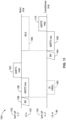
- FIG. 2 depicts an example of a polled TXOP.
- the HC polls QoS STAs in turn with QoS(+)CF-Poll.
- Non-AP STAs that receives a QoS(+)CF-Poll shall respond within a SIFS, regardless of the NAV setting.
- the QoS STA shall send a QoS (+)Null frame to indicate corresponding queue size for HC to reallocate TXOP.
- the unused portion of TXOPs shall not be used by STAs and may be reallocated by the HC.
- the polled TXOP is protected by the NAV set by the Duration field of the QoS(+)CF-Poll frame as shown in the figure. All transmissions, including response frames, within the polled TXOP are considered to be the part of the TXOP.
- MSDUs MAC Service Data Units
- A-MSDUs A-MSDUs
- MMPDUs MAC Management Protocol Data Units
- Admission control at the HC is utilized toward providing a guarantee of the amount of time that a STA has available access to the channel.
- the Hybrid Coordinator (HC) is used to administer admission control in the network.
- Contention based admission control is utilized in which the AP uses the ACM (Admission Control Mandatory) subfields advertised in the EDCA Parameter Set element to indicate whether admission control is required for each of the ACs.
- the ACM subfield shall be static for the duration of the lifetime of the Basic Service Set (BSS).
- BSS Basic Service Set
- a STA shall transmit an ADD Traffic Stream (ADDTS) request frame to the HC in order to request admission of traffic in any direction employing an AC that requires admission control.
- ADDTS ADD Traffic Stream
- the ADDTS Request frame shall contain the User Priority (UP) associated with the traffic and shall indicate EDCA as the access policy.
- UP User Priority
- each EDCA Function shall maintain two MAC variables: the allowed medium time, admitted_time, by AP and the amount of used time, named as used_time.
- the STA shall compute the admitted_time for the specified EDCAF after negotiating with the AP by ADDTS request and response frame exchanges.
- the STA updates the value of used_time at certain times, such as after each successful or unsuccessful frame exchange.
- the corresponding EDCAF shall no longer transmit QoS Data frames or QoS Null frames using the EDCA parameters for that AC as specified in the QoS Parameter Set element.
- a STA may choose to temporarily replace the EDCA parameters for that EDCAF with those specified for an AC of lower priority, if no admission control is required for those ACs.
- the Hybrid Coordinator is responsible for granting or denying polling service to an admitted TS based on the associated TSPEC.
- the polling service based on admitted TS provides a "guaranteed channel access" from the scheduler in order to have its QoS requirements met.
- the scheduler shall service the STA during a Service Period (SP), which starts at fixed intervals of time.
- An AP shall schedule the transmissions in HCCA TXOPs and communicate the service schedule to the STA.
- the service schedule could be subsequently updated by an AP as long as it meets TSPEC requirements.
- the HC may update the service schedule at any time by sending a Schedule element in a Schedule frame. The updated schedule is in effect when the HC receives the Ack frame for the Schedule frame.
- FIG. 3 depicts a QoS(+)CF-Poll frame format, having the following fields.
- a Frame control field specifies the protocol version, type, subtype, and corresponding frame control information.
- a QoS (+)CF-Poll frame refers to all four QoS data subtypes with CF-Poll: the QoS CF-Poll frame, subtype 1110; the QoS CF-Ack +CF-Poll frame, subtype 1111; the QoS Data +CF-Poll frame, subtype 1010; and the QoS Data +CF-Ack +CF-Poll frame, subtype 1011.
- the Duration/ID field value is set to one of the following: (a) one SIFS plus the TXOP limit, if the TXOP limit is nonzero, or (b) the time required for the transmission of one MPDU of nominal MSDU size and the associated Ack frame plus two SIFSs, if the TXOP limit is 0.
- the Address 1 field identifies the intended receiver of the frame; the Address 2 field identifies the transmitter of the frame.
- a Sequence Control field specifies the sequence number and fragment number, which is not present in control frames.
- a QoS Control field identifies the TC or TS to which the frame belongs as well as various other QoS-related, A-MSDU related, and mesh-related information about the frame that varies by frame type, subtype, and type of transmitting STA.
- An HT Control field indicates HT control information for the HT variant and VHT variant.
- a Frame Body field contains information specific to individual frame types and subtypes.
- An FCS field contains a 32-bit Cyclic Redundancy Check (CRC). The FCS field value is calculated over all of the fields of the MAC header and the Frame Body field.
- FIG. 4 depicts a Traffic Specification (TSPEC) element used in admission control in parameterized QoS.
- TSPEC Traffic Specification
- This provides an information element of management frames (e.g., ADDTS request/response, ADDTS Reserve Request, DMS Request/Response, and so forth). It also defines the characteristics and QoS expectation of a traffic stream.
- Main parameters of TSPEC include the following.
- the Delay Bound field specifies the maximum amount of time, in microseconds, allowed to transport an MSDU or A-MSDU belonging to the TS in this TSPEC.
- PS Power Saving
- a Minimum Service Interval specifies the minimum interval (in us) between the start of two successive SPs.
- a Maximum Service Interval field works as follows. When the TSPEC element is for admitting HCCA streams, it specifies the maximum interval, in microseconds, between the start of two successive SPs. If the TSPEC element is intended for EDCA Admission Control, then the Maximum Service Interval field indicates a latency limit, which limits the amount of aggregation (A-MSDU or A-MPDU) used, so that excessive latency does not occur.
- An Inactivity Interval field specifies the minimum amount of time, in microseconds, that can elapse without arrival or transfer of an MPDU belonging to the TS before this TS is deleted by the MAC entity at the HC.
- the Suspension Interval field specifies the minimum amount of time, in microseconds, that can elapse without arrival or transfer of an MSDU belonging to the TS before the generation of successive QoS(+)CF-Poll is stopped for this TS.
- the Service Start Time field specifies the time, in microseconds, when the first scheduled SP starts.
- the service start time indicates to the AP the time when a STA first expects to be ready to send frames and a power saving (e.g., M101 - Wi-Fi SiP module) STA needs to be awake to receive frames. If APSD and Schedule subfields are 0, this field is also set to 0 (unspecified).
- the Delay Bound field specifies the maximum amount of time, in microseconds, allowed to transport an MSDU or A-MSDU belonging to the TS in this TSPEC Element, measured between the time marking the arrival of the MSDU, or the first MSDU of the MSDUs constituting an A-MSDU, at the local MAC sublayer from the local MAC SAP and the time of completion of the successful transmission or retransmission of the MSDU or A-MSDU to the destination.
- the completion of the MSDU or A-MSDU transmission includes the relevant acknowledgment frame transmission time, if present.
- the Medium Time field contains the amount of time admitted for accessing the medium, in units of 32 us/s. This field is reserved in the ADDTS Request frame and is set by the HC in the ADDTS Response frame. This field is not used for controlled channel access.
- FIG. 5 depicts the subfields within the TS Info field shown in FIG. 4 .
- One of the primary motivations for the present disclosure is to prevent an IDC interference issue at the soft AP side.
- a soft AP MLD designed to communicate with legacy STAs only on the basic links so as to prevent such interferences.
- the basic links are the 2.4GHz and 5GHz links and the conditional link is the 6GHz link, then the following problems arise.
- Legacy STAs that support 2.4GHz, 5GHz and 6GHz links e.g., HE STAs
- the basic link is the 2.4GHz and 6GHz links and the conditional link is the 5GHz link
- Legacy STAs that only support a 5GHz channel e.g., VHT STAs
- Legacy STAs that support 2.4GHz and 5GHz channels e.g., HT STAs
- legacy devices are only allowed to use basic links only, then this severely limits the options for legacy devices.
- the present disclosure discusses a system and method to enable all legacy STAs (HT, VHT and HE) to operate on conditional links as well.
- Legacy devices can connect on conditional links through active or passive scanning.
- the legacy STAs are able to setup link connections on conditional links.
- the scheduler shall not prevent legacy STAs from using the conditional link if no IDC interference issue will be introduced at the soft AP MLD.
- the ability to enable legacy (non-EHT) stations to operate on the conditional link of a soft AP MLD can be implemented in a variety of 802.11 hardware configurations, the following being provided by way of example and not limitation.
- FIG. 6 illustrates an example embodiment 10 of STA hardware configured for executing the protocol of the present disclosure.
- An external I/O connection 14 preferably couples to an internal bus 16 of circuitry 12 upon which are connected a CPU 18 and memory (e.g., RAM) 20 for executing a program(s) which implement the communication protocol.
- the host machine accommodates at least one modem 22 to support communications coupled to at least one RF module 24, 28 each connected to one or multiple antennas 29, 26a, 26b, 26c through 26n.
- An RF module with multiple antennas allows for performing beamforming during transmission and reception. In this way, the STA can transmit signals using multiple sets of beam patterns.
- Bus 14 allows connecting various devices to the CPU, such as to sensors, actuators and so forth.
- Instructions from memory 20 are executed on processor 18 to execute a program which implements the communications protocol, which is executed to allow the STA to perform the functions of an access point (AP) station or a regular station (non-AP STA).
- AP access point
- non-AP STA non-AP STA
- the programming is configured to operate in different modes (TXOP holder, TXOP share participant, source, intermediate, destination, first AP, other AP, stations associated with the first AP, stations associated with other AP, coordinator, coordinatee, AP in an OBSS, STA in an OBSS, and so forth), depending on what role it is performing in the current communication context.
- the STA HW is shown configured with at least one modem, and associated RF circuitry for providing communication on at least one band.
- the present disclosure is primarily directed at the sub 6 GHz band.
- the present disclosure can be configured with multiple modems 22, with each modem coupled to an arbitrary number of RF circuits. In general, using a larger number of RF circuits will result in broader coverage of the antenna beam direction. It should be appreciated that the number of RF circuits and number of antennas being utilized is determined by hardware constraints of a specific device. A portion of the RF circuitry and antennas may be disabled when the STA determines it is unnecessary to communicate with neighboring STAs.
- the RF circuitry includes frequency converter, array antenna controller, and so forth, and is connected to multiple antennas which are controlled to perform beamforming for transmission and reception. In this way the STA can transmit signals using multiple sets of beam patterns, each beam pattern direction being considered as an antenna sector.
- MLD multi-link device
- FIG. 7 illustrates an example embodiment 40 of a Multi-Link Device (MLD) hardware configuration.
- Soft AP MLD is a MLD that consists of one or more affiliated STAs, which are operated as APs.
- Soft AP MLD should support multiple radio operation on 2.4GHz, 5GHz and 6GHz.
- basic link sets are the link pairs that satisfy simultaneous transmission and reception (STR) mode, e.g., basic link set (2.4 GHz and 5 GHz), basic link set (2.4 GHz and 6GHz).
- STR simultaneous transmission and reception
- the conditional link is a link that forms a non-simultaneous transmission and reception (NSTR) link pair with some basic link(s).
- these link pairs may comprise a 6 GHz link as the conditional link corresponding to 5 GHz link when 5 GHz is a basic link; 5 GHz link is the conditional link corresponding to 6 GHz link when 6 GHz is a basic link.
- the soft AP is used in different scenarios including Wi-Fi hotspots and tethering.
- Multiple STAs are affiliated with an MLD, with each STA operating on a link of a different frequency.
- the MLD has external I/O access to applications, this access connects to a MLD management entity 48 having a CPU 62 and memory (e.g., RAM) 64 to allow executing a program(s) that implement communication protocols at the MLD level.
- the MLD can distribute tasks to, and collect information from, each affiliated station to which it is connected, exemplified here as STA 1 42, STA 2 44 through to STA N 46 and the sharing of information between affiliated STAs.
- each STA of the MLD has its own CPU 50 and memory (RAM) 52, which are coupled through a bus 58 to at least one modem 54 which is connected to at least one RF circuit 56 which has one or more antennas.
- the RF circuit has multiple antennas 60a, 60b, 60c through 60n, such as in an antenna array.
- the modem in combination with the RF circuit and associated antenna(s) transmits/receives data frames with neighboring STAs.
- the RF module includes frequency converter, array antenna controller, and other circuits for interfacing with its antennas.
- each STA of the MLD does not necessarily require its own processor and memory, as the STAs may share resources with one another and/or with the MLD management entity, depending on the specific MLD implementation. It should be appreciated that the above MLD diagram is given by way of example and not limitation, whereas the present disclosure can operate with a wide range of MLD implementations.
- FIG. 8 illustrates an embodiment of an example network topology 70 of general multiple link connections.
- a soft AP MLDx 72 is shown connecting to legacy stations 74 and a non-AP STA MLDy 76 through multiple wireless links.
- the soft AP MLD has an identification (ID) denoted as "x”, while any non-AP MLD (EHT device) is exemplified with MLD ID denoted as "y”, while any legacy STAs (non-EHT device) is denoted with an ID as Legacy System (LS) "x, y and z".
- ID an identification
- the soft AP MLD x has three affiliated AP stations which are denoted as APx_1, APx_2 and APx_3.
- the non-AP MLD y has 3 affiliated non-AP stations which are denoted as STAy_1, STAy_2 and STAy_3.
- APx_1, STAy_1 and LSx are operating over link1 (L1).
- APx_2, STAy_2 and LSy are operating over link2 (L2), while APx_3, STAy_3 and LSz are operating over link3 (L3).
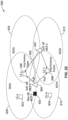
- FIG. 9 illustrates an embodiment 90 exemplifying a network topology used for purposes of discussion, and not by way of limitation.
- Soft AP MLDx 92 and non-AP MLDx 94 operate on both 5 GHz 104 and 6 GHz 106 links.
- LSx 100 and LSy 102 only operate on the 5 GHz link.
- LSm 96 and LSn 98 only operate on the 6 GHz link 106.
- the 2.4 GHz link is a basic link that is isolated, such as not subject to IDC interference, from either the 5 GHz link or the 6 GHz link, the following discussion will not include considerations of the 2.4 GHz link.
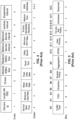
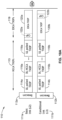
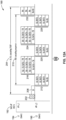
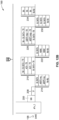
- FIG. 10A and FIG. 10B illustrate an example embodiment 110 of a cooperative HCCA schedule for NSTR over a basic link 111a and a conditional link 111b.
- APs on the conditional link and basic link have the same SME and are configured in the present disclosure to: (1) cooperate with each other to process simultaneous EDCA TXOPs and HCCA TXOPs over the basic link and the conditional link, and (2) for scheduling and allocating synchronized UL or DL HCCA TXOP over both links.
- Admission control shall be applied to both links. Initial TS setup and negotiation shall progress mainly in EDCA TXOPs (as shown in example 1-1), the admitted access policy shall be HCCA on both the basic link and conditional link. MLDs that listen on both basic link and conditional link can perform EDCA access during EDCA TXOPs on both links.
- the affiliated APs of the soft AP MLD shall schedule synchronized HCCA TXOP 113, 126 on both links based on the admitted SP information obtained from TS setup, such as including mean data rate, nominal MSDU size, minimum PHY rate, surplus bandwidth allowance, and at least one of maximum service interval and delay bound, and other fields as desired.
- the affiliated APs of the soft AP MLD obtain information, such as TID, queued traffic of the STA corresponding to specific TID or the next TXOP duration request for traffic belonging to a specific TID from the TID subfield and the QoS Control subfield of the received QoS Data frames for all MSDU.
- the AP may reallocate TXOPs if the request belongs to the TS.
- the AP shall reallocate HCCA TXOPs if a stream is added or dropped.
- the Service Interval (SI) for different admitted TS are not necessarily the same.
- the APs shall schedule TXOP accordingly.
- the data exchange, as a PPDU, on the basic link and conditional link should be aligned at both start time and end time.
- a PPDU is a Physical Layer Protocol Data Unit in the protocol and contains preamble and data fields. It will be noted that each of these TXOP are aligned between the basic and conditional link at both their start and at their end times. This also continues in FIG.
- Soft AP MLD, non-AP MLD and legacy STAs may use any type of padding to align the end time of transmitted PPDUs.
- the scheduling algorithm among two links is out of the scope of this proposal.
- a PS STA wakes up at DTIM to receives a beacon and shall gain (obtain) some information such as QoS info and admission info.
- FIG. 10A is seen an EDCA TXOP 120a with CAP 122a, and EDCA TXOP 120b with an optional CAP 122, exemplified near its end.
- FIG. 10B is seen an EDCA TXOPs 132a, 132b with CAPs 134a, 134b, after which another set of beacons 136a, 136b are sent out.
- the TS setup process shall be executed as described in example 1-1.
- soft APs on basic link and conditional link shall specify access policy as HCCA with ADDTS response frames by setting Access Policy subfield in TSPEC element to specifies the access method to be used for the TS is HCCA.
- Non-AP STAs accept admission rule shall perform channel access policy as HCCA.
- FIG. 11 and FIG. 12A through FIG. 12B illustrate an example embodiment 150, 190 of admission control.
- the admission control by frame exchange of the ADDTS request and ADDTS response can be executed based on a non-trigger-based TXOP for all legacy devices (only successful transmission that doesn't cause or suffer any error due to IDC interference) as seen in FIG. 11 , or through trigger-based MU cascading TXOP for HE devices as seen in FIG. 12A through FIG. 12B .
- FIG. 11 is shown an example TS setup 150 through a non-trigger based TXOP. Interactions are shown between a soft APx_2 152 and LSx 100 on the basic link, and soft APx_3 154 and LSm 96 on the conditional link.
- a backoff (BO) 156 on the basic link is performed in which LSx obtains the basic link and performs an exchange of ADDTS frames with Soft AP x_2 by transmitting an ADDTS request 158 and receiving ADDTS response 162, which is processed according to B-3 to B-6 cases of example 1-2 as seen in FIG. 15 .
- data 160 seen as a UL PPDU, can optionally be transmitted from LSm to Soft AP x_3 on the other link (e.g., conditional link), which doesn't cause IDC interference on the basic link.
- Another ADDTS request 166, and response 170 is shown after BO 164 on the conditional link, while the basic link can be idle 168.
- the initial TS setup sequence of exchanging of ADDTS request and response frames is based on EDCA access, the frame exchange may not be successful as shown (e.g., B-3, B-5 and B-7 in FIG. 15 and FIG. 16 )
- the exchange of ADDTS request and response frames can use HCCA TXOPs which will not follow the processes based on cases B-3 to B-6 of example 1-2 as seen in FIG. 15 and FIG. 16 .
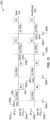
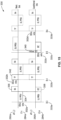
- FIG. 12A and FIG. 12B is seen TS setup 190 through trigger-based TXOP cascading.
- the figure exemplifies a soft AP MLDx 192 having APx_1 associated with basic link L1 194, APx_2 associated with basic link L2 196 and APx_3 associated with conditional link L3 198.
- Basic link L1 is not being used in this figure.
- APx_2 on basic link L2 starts a backoff (BO) 202 while the conditional link L3 in FIG. 12B is in idle 200 status.
- BO backoff
- APx_2 and APx_3 simultaneously transmit Trigger Frames (TF) 206 and 208 on L2 and L3, respectively, to start the simultaneous UL/DL cascading TXOPs 204 on L2 and L3, which serve for multi-user (MU) 210 cascading sequence.
- TF Trigger Frames
- APx_2 receives UL MU DATA 212 as responses of the TF frame 206, from some unicast RUs, along with which, Random Access RU(s) (RA-RU) may also be allocated in TF 206 for receiving UL PPDU. In this example, however, it doesn't show any STA using RA-RU 212.
- RA-RU Random Access RU
- APx_3 receives UL DATA as the responses of the TF 208, from one unicast RU and two ADDTS request frames from other two unicast RUs 214. There is another RA-RU 214 reserved, which is not used by any STA on L3.
- APx_2 and APx_3 Upon receiving UL DATA or ADDTS request frame, APx_2 and APx_3 respond with acknowledgement, respectively, in the corresponding unicast RU(s), together with the BA or ACK, the APs may transmit DL DATA and/or Tigger (TR) frames in the DL cascading sequences as shown in 216, 224, 232 in FIG. 12A and 218, 226 and 234 in FIG. 12B .
- TR Tigger
- APx_2 and APx_3 may use the RA-RU frequency slot to transmit some DL DATA and/or TR frame in the DL cascading sequences as shown in 216 and 224 in FIG. 12A and 218 and 226 in FIG. 12B .
- receiver STAs may respond with UL DATA in the UL cascading sequences if it has buffered DATA and finished the TS setup, as shown in 220, 228 in FIG. 12A and 222, 230 in FIG. 12B . Otherwise, the receiver may not respond (denoted as NONE) in the UL cascading sequences as shown in 222 in FIG. 12B .
- RA-RU is reserved for (OFDMA)-Based Random Access (UORA) in the UL cascading sequences as shown in 220, 228 in FIG. 12A and 222, 230 in FIG. 12B .
- APx_3 After APx_3 responds with ACKs 218 to the ADDTS request frame 214 on the unicast RU(s), it also responds with ADDTS response frame 226 using that RU(s), together with which, APx_3 may transmit DL DATA and/or Trigger (TR) frames in the DL cascading sequences as shown in 226 in FIG. 12B .
- TR Trigger
- TS setup is performed during TB cascade transmission.
- Non-AP station uses specific RU assigned by the AP to transmit ADDTS request frame and receive the ADDTS response frame.
- the ADDTS response frame may be transmitted in the next TXOP if it cannot be transmitted in the current TXOP.
- TS setup can also be executed during TB UL only transmissions. In this case, the ADDTS response frame should be aligned with the ACK/BA frames that are transmitted on other RU(s).
- Solution 1-2 Tx and Rx between soft AP and non-AP MLD in EDCA TXOPs
- FIG. 13 illustrates an example embodiment 250 of a second solution showing Tx and Rx in EDCA TXOPs between a soft AP MLD and a non-AP MLD.
- Soft APx_2 252a and soft APx_3 252b are affiliated APs of the same soft AP MLD; while non-AP STAx_2 254a and non-AP STAx_3 254b are affiliated non-AP STAs of the same non-AP MLD.
- section A-1 258a commences after APx_2 first obtains (wins) channel access 256a on the basic link.
- APx_2 transmits DL PPDU 260 on the basic link, while on the conditional link if access is available, APx_3 transmits a DL PPDU synchronously with AP x_2; otherwise, it does not transmit.
- the non-AP stations simultaneously send BAs 262 on the basic link and conditional link, as the responses of receiving the DL DATA.
- AP x_3 obtains 256b the conditional link. If the basic link is available, AP x_2 and AP x_3 transmit DL PPDUs simultaneously, followed by BAs; otherwise, they don't transmit and reset EDCA on the conditional link.
- the non-AP STA x_2 obtains 256c the basic link, then on the basic link the non-AP STAx_2 transmits a UL PPDU; while on the conditional link if access is available then the non-AP STAx_3 transmits a UL PPDU synchronously, with BAs 262 seen as responses to receiving UL PPDU on each link. If access is not available on the conditional link, there are no transmissions on the conditional link.
- non-AP STAx_3 senses that the conditional link is idle, and it finishes BO counting in contending for the link. If the basic link is available, then non-AP STAx_2 and non-AP STAx_3 transmit UL PPDUs simultaneously, and receive BAs simultaneously. Otherwise, they don't transmit and reset EDCA on the conditional link.
- access availability on the conditional link could be determined by PIFS sensing and whether access is available on the basic link could be determined by EDCA rules.
- FIG. 14 illustrates another example embodiment 290 in which LSx 294a and LSm 294b are legacy stations operating on the basic link and conditional link, respectively, which are associated with APx_2 292a and APx_3 292b, respectively.
- APx_2 292a and APx_3 292b are affiliated APs of the same soft AP MLD.
- APs affiliated with the soft AP MLD shall be able to detect if the received PPDU is from an EHT device or a non-EHT device (legacy device) based on the preamble of the PPDU.
- the Soft AP MLD can have different responses upon receiving the non-EHT PPDU as shown.
- APx_2 has obtained channel access 296a on the basic link, and transmits a DL PPDU 300; while if the conditional link is available, APx_3 synchronously transmits another DL PPDU 302 with end point aligned with the DL PPDU 300 transmitted on the basic link. Otherwise, if the conditional link is not available, then APx_3 does not transmit any DL PPDU.
- LSx and LSm Upon receiving the aligned DL PPDUs on the basic link and conditional link, LSx and LSm respond with aligned BAs 304 simultaneously on the corresponding links.
- APx_3 obtains 296b the conditional link access. If the basic link is available, APx_2 and APx_3 could transmit DL PPDUs 300 simultaneously (in alignment), which are followed by respective aligned BAs 304. Otherwise, if the basic link is not available, then APx_3 should not transmit and the EDCA is reset on the conditional link.
- FIG. 15 illustrates another embodiment 330 showing another example of legacy stations LSx 294a and LSm 294b operating on the basic link and conditional link, respectively, which are associated with APx_2 292a and APx_3 292b, respectively.
- APx_2 292a and APx_3 292b are affiliated APs of the same soft AP MLD.
- LSx first obtains 332a (wins) the basic link for a non-TB UL transmission, then on the basic link LSx transmits UL PPDU 334, which may follow an RTS-CTS frame exchange with APx_2.
- APx_3 On the conditional link, if access is available and if APx_3 can align the frame exchange sequences of the conditional link with that on the basic link, then APx_3 should initiate a UL TB PPDU simultaneously with APx_2. Otherwise, APx_3 should not send any frame to trigger UL PPDU nor respond to any received UL PPDU.
- Any UL PPDU on the conditional link that is not synchronized with that of the basic link may suffer IDC interference 338 at AP x_3 due to concurrent DL TX on basic link such as a BA 336.
- APx_2 first obtains 332b the basic link for TB UL transmission and initiates TB UL TXOP. Trigger Frames (TFs) 342 followed by UL PPDU are seen sent on the basic and on the conditional link if it is available. If APx_3 is unable to use the conditional link simultaneously with APx_2, then it should not send any UL PPDU. BAs are sent in response to any UL PPDUs.
- TFs Trigger Frames
- LSm obtains 332c the conditional link for UL TX, since the basic link is currently idle, LSm starts transmitting UL PPDU 340 on the conditional link. However, this UL PPDU on the conditional link will not be heard by APx_3 if APx_2 obtains the basic link and starts transmitting DL PPDU. Thus, the UL PPDU on the conditional link is shown in progress and becoming subject to IDC interference when a DL PPDU is transmitted on the basic link.
- the DL PPDU on the basic link might be an immediate response of the previously received frame or an urgent DL PPDU that needs to be sent immediately.
- APx_3 obtains 332d the conditional link for trigger UL TX, then if the basic link is available, APx_2 and APx_3 shall initiate a trigger for triggering UL PPDUs simultaneously. Otherwise, APx_3 should not transmit anything and should reset the EDCA on the conditional link.
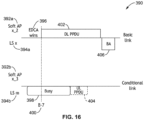
- FIG. 16 illustrates example embodiment 390 showing another example of operations on the basic and conditional link.
- Legacy station LSx 394a and LSm 394b are seen operating on the basic link and conditional link, respectively, which are associated with APx_2 392a and APx_3 392b, respectively.
- APx_2 392a and APx_3 392b are affiliated APs of the same soft AP MLD.
- APx_2 of soft AP MLDx first obtains 396 the basic link when conditional link is CCA busy 398.
- APx_2 transmits DL PPDU 402, and afterward receives BA 406.
- APx_3 cannot transmit DL PPDU because of CCA Busy 398 and cannot detect the end of CCA busy due to the interference of DL TX from the basic link.
- Any UL PPDU 404 from LSm on conditional link cannot be heard due to IDC interference.
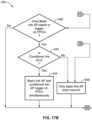
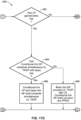
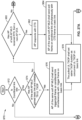
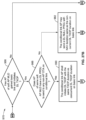
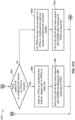
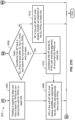
- FIG. 17A through FIG. 17E illustrate an example embodiment 430 of soft AP MLD communication with a Legacy Station (LS) during EDCA TXOPs.
- LS Legacy Station
- the AP of a soft AP MLD checks 432 to determine if it has obtained (gained, won) basic link channel access. If it has obtained the basic link, then at check 434 it is determined if it needs to send DL PPDU(s) to a Legacy System (LS). If it does need to send DL PPDU(s) to LS on the basic link, then at block 436 a check is made to determine if the conditional link is IDLE. If the conditional link is IDLE, then at block 438 the basic Link AP and conditional link AP of the same soft AP MLD transmit DL PPDU(s) simultaneously and keep (maintain) alignment, and the process ends in FIG. 17E .
- LS Legacy System
- LS Legacy System
- LS Legacy System
- block 434 in FIG. 17A for the case when the condition is not met of the basic link AP needing to send a DL PPDU to an LS, and execution moves to block 440 in FIG. 17B where a check is made to determine if the basic link AP needs to trigger a UL PPDU. If the condition is not met, then execution ends in FIG. 17E . Otherwise, block 442 is reached which determines if the conditional link is IDLE. If the conditional link is not idle, then at block 446 it is decided (determined) that only the basic link AP shall perform transmission and execution ends. If, however, at block 442, the conditional link is idle, then at block 444 the basic link AP and conditional link AP both transmit UL PPDU simultaneously before this process ends.
- block 464 which checks if the conditional link AP can schedule a simultaneous UL TXOP with the basic link. If the condition is met, then at block 466 the conditional link AP and basic link AP schedule simultaneous UL TXOPs and this process ends. Otherwise, if the condition is not met, then at block 468 the basic link AP performs a UL TXOP with the LS, but the conditional link AP shall not send any PPDU, and the process ends.
- Simultaneous scheduled UL/DL TXOP may apply to: (a) legacy STAs, (b) affiliated stations of (same or different) non-AP MLD and (c) affiliated stations of a non-AP MLD and legacy STA on either a basic link or a conditional link.
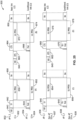
- FIG. 18 illustrates an example embodiment 510 of simultaneous scheduled UL/DL TXOP.
- Both APs affiliated with the same soft AP MLD obtain basic link 512 and conditional link 514 simultaneously if both links are idle at the TxPIFS slot boundary. All stations obey the NAV rules of the HCF, and each frame transmitted under HCF contains a NAV duration value.
- the APs may reset the NAVs of all QoS STAs in the BSS by sending a QoS CF-Poll frame with the RA matching its own MAC address and with the Duration/ID field set to 0.
- a STA When a STA receives a frame addressed to it and requires an acknowledgement, it shall respond with an Ack or QoS + CF-ACK frame regardless of its NAV.
- a non-AP STA shall accept a polled TXOP by initiating a frame exchange sequence regardless of its NAV.
- the affiliated APs of the soft AP MLD simultaneously poll non-AP stations that are operating on the basic link and conditional link by allocating the same polled TXOP duration.
- the polled TXOP durations 516a, 516b, 518a, 518b, 520a, 520b, 522a, 522b on the basic link and the conditional link are scheduled according to the traffic conditions of the polled stations.
- the polled non-AP station (which is a non-AP QoS STA that has its own address matches the address 1 field of the received QoS CF-Poll frame) shall not exceed the polled TXOP duration and may use any type of padding or frame aggregation to maintain PPDU end time alignment on the basic link and the conditional link.
- the receiver AP shall not poll until the polled TXOP on the other link is completed.
- the affiliated APs of the soft AP MLD shall poll simultaneously.
- the polled non-AP station may transmit multiple frame exchange sequences within a given polled TXOP, subject to the limit on TXOP duration
- the affiliated APs of the soft AP MLD shall simultaneously send DL PPDU(s) to non-AP stations that are operating on each link by allocating the same HCCA TXOP duration.
- the affiliated APs of the soft AP MLD may transmit multiple frame exchange sequences within given polled TXOP, subject to the limit on TXOP duration.
- the affiliated APs of the soft AP MLD may use any type of padding to align the end time of transmitted PPDUs.
- FIG. 19 illustrates an example embodiment 550 of cooperative scheduling.
- a check determines if the APs of the same soft AP MLD have obtained (gained, won) the basic link and conditional link. If the condition is not met, then a wait occurs 554 before the check is repeated (within limitations). If the condition is met, then at block 556 a check determines if the soft AP MLD needs to send a DL PPDU. If the condition is met, then at block 558 the basic link AP and conditional link AP initiate a DL HCCA PPDU simultaneously on the basic link and the conditional link and the process ends. Otherwise, if the condition at block 556 is not met, then block 560 checks if the soft AP MLD needs to poll the UL PPDU. If polling is not necessary, then the process ends. Otherwise, at block 562 the basic link AP and conditional link AP initiates simultaneous UL polled TXOP on the basic link and conditional link and the process ends.
- FIG. 20 illustrates a topology 590 for an example 1-3-1 on the problem of recovery from the absence of expected reception in a hidden terminal situation.
- the separation of the 5 GHz and 6 GHz in the figure only represent frequency band separation not spatial separation.
- a soft AP MLDy 592 operating in both 5 GHz 608 and 6 GHz 612, with the affiliated APs, e.g., soft APy_2 and soft APy_3, respectively
- a soft AP MLDx 594 operating in both 5 GHz 606 and 6 GHz 610, with the affiliated APs, e.g., soft APx_2 and soft APx_3, respectively
- the soft APy_2, soft APy_3, soft APx_2 and soft APx_3 are not shown in the figure.
- Non-AP STA x_2 and non-AP STAx_3 are not shown in the figure.
- a legacy station LSx 602 and a legacy station LSy 598 are associated with one of the affiliated APs of the soft AP MLDx 594 that is operating on 5 GHz.
- a legacy station LSm 604 and a legacy station LSn 596 are associated with one of the affiliated APs of the soft AP MLDx 594 that is operating on 6 GHz.
- LSy and LSn are located in the coverage range of the affiliated APs of the soft AP MLDy, on 5 GHz and 6 GHz, respectively.
- This figure shows an example in which a collision of a QoS CF-Poll frame and another management frame occurs in a hidden terminal scenario. It is assumed that soft APx_3 of soft AP MLDx and soft APy_3 of soft AP MLDy are operating on the 6 GHz channel and cannot hear each other. A collision is shown arising when soft APx_3 and soft APy_3 simultaneously send frames to/arrive at LSn 596. It should be noted that the interference frame may not be sent to LSn, with the arrows indicating frames that can be heard by a specific station instead of being addressed to a specific station.
- FIG. 21 illustrates 630 example 1-3-1 showing a solution embodiment to the collision issue caused by a hidden AP issue of FIG 20 .
- the figure depicts interactions between a soft APx_2 632 and LSy 598, soft APx_3 634 and LSn 596 and soft APy_3 636 and LSn 596.
- LSn is shown in the communication interactions on two lines in the figure, since it is involved in the communication between hidden terminals, with one of the hidden terminals communicating with LSn and with the other one interfering LSn.
- a very small (compact) DL PPDU that carries no DATA payload, is sent instead of immediately sending a QoS CF-Poll at the beginning of the TXOP, since the recovery/retransmission time on one link may be affected by the polled UL PPDU size on the other link.
- soft APy_3 is performing backoff 638, and soft APx_2 and soft APx_3 similarly contend for channel access.
- Soft APy_3 finishes backoff count down and soft APx_2 and soft APx_3 sense channel idle at the TxPIFs boundary 640, then each of the three obtain their respective links at the same time.
- an element (a) is performed in which both APs affiliated with the soft AP MLDx are seen sending a very small (compact) DL PPDU frame 644 and 645 (e.g., RTS, null, control or management frames) on the basic link and conditional link simultaneously if both links are idle at the TxPIFS slot boundary, in response to starting the DL PPDU transmissions NAV 642 is seen to protect the duration of the TXOP.
- soft APy_3 sends a full DL PPDU 648 at this same time.
- Conditions on element (a) include (a)(i) in which if any AP station cannot receive the CTS/ACK/BA as a response 650 of the DL PPDU after SIFS 646, it indicates that there may be a collision. A retransmission process should repeat (a) this short DL PPDU transmission.
- soft APx_2 and soft APx_3 are seen obtaining the channel again and sending short DL PPDUs 652 and 656, NAV 654 and 660 commencing, and soft APy_3 being seen as busy 658.
- both AP stations receive the CTS/ACK/BA as a response 662 and 664 of the DL PPDU after SIFS, they shall poll 666 and 668 UL TXOP or send DL TXOP simultaneously on basic link and conditional link with an updated NAV duration 654.
- Both APs affiliated with the soft AP MLDx may limit the retransmission times of the small DL PPDU frames over both links (in case the Soft APy_3 sends a very long DL PPDU).
- the AP receives the CTS/ACK/BA as the response of the DL PPDU after SIFS and should poll UL TXOP or send DL TXOP independently.
- the AP doesn't receive the CTS/ACK/BA as the response of the DL PPDU should not poll UL TXOP nor send DL TXOP.
- LSy and LSn are seen sending UL PPDU 670 and 672 to the soft AP MLD from which it receives BAs 674 and 676.
- FIG. 22 illustrates an example topology 690 for example 1-3-2 on the problem of recovery from the absence of expected reception in a hidden terminal in CFP situation, in which a collision arises between QoS CF-poll frames using HCCA. This figure is a variation of FIG.
- soft AP MLDy 592 operating in both 5 GHz 608 and 6 GHz 612, with the affiliated APs, e.g., soft APy_2 and soft APy_3, respectively; a soft AP MLDx 594 operating in both 5 GHz 606 and 6 GHz 610, with the affiliated APs, e.g., soft APx_2 and soft APx_3, respectively; the soft APy_2, soft APy_3, soft APx_2 and soft APx_3 are not shown in the figure.
- Non-AP STAx_2 and non-AP STAx_3 are not shown in the figure.
- a legacy station LSx 602 and a legacy station LSy 598 are associated with one of the affiliated APs of the soft AP MLDx 594 that is operating on 5 GHz.
- a legacy station LSm 604 and a legacy station LSn 596 are associated with one of the affiliated APs of the soft AP MLDx 594 that is operating on 6 GHz.
- LSy and LSn are located in the coverage range of the affiliated APs of the soft AP MLDy, on 5 GHz and 6 GHz links, respectively.
- FIG. 23 illustrates 710 example 1-3-2 showing a recovery scheme embodiment to the collision issue caused by a hidden terminal in CFP when initiating HCCA TXOP.
- the figure depicts interactions between a soft APx_2 712 and LSy 598, soft APy_2 714 and LSy 598, soft APx_3 716 and LSn 596, and soft APy_3 718 and LSn 596.
- step (a)(i) If any AP station cannot receive the CTS/ACK/BA as a response of the DL PPDU after SIFS, it indicates that there may be a collision. However, if it directly processes step (a), then subsequent collisions may occur. To avoid subsequent collisions, simultaneous recovery and/or retransmission of each soft AP MLD may start after aSIFSTime + n* aSlotTime, where n is a random variable.
- the soft APs obtaining 720 the link at the TxPIFs slot boundary 722 and each sending a DL PPDU 724. Since these soft APs don't receive any response of the DL PPDU, they re-contend for channel access.
- Soft APx_2 and soft APx_3 re-contend for the channel after a SIFS time; soft APy_2 and soft APy_3 re-contend for the channel after a SIFS+2*SlotTime.
- soft APx_2 and soft APx_3 are seen obtaining the channel again and sending short DL PPDUs 730 and 736, NAV 734 and 740 commencing, and soft APy_2 and 3APy_3 being seen as busy 732 and 738.
- both APx_2 and APx_3 stations receive the CTS/ACK/BA as a response 742 and 746 of the DL PPDU after SIFS, they poll 748 and 750 UL TXOP.
- UL PPDU 752 and 754 are seen being received after which APs respond with associated BA 756 and 758.
- FIG. 24 illustrates an example embodiment 790 of adaptive polling-based scheduling on the conditional link based on the basic link status.
- Non-EHT devices access the conditional link based on the HCCA policy.
- EHT devices may access the conditional link through EDCA or HEMM, which is HCCA, EDCA mixed mode. All stations obey the NAV rules of the HCF.
- the affiliated APs of a soft AP MLD are aware of UL/DL transmissions on the basic link since they have the same Station Management Entity (SME).
- SME Station Management Entity
- the AP of the soft AP MLD for conditional link shall schedule the UL/DL transmission on the conditional link according to the concurrent UL/DL transmission on the basic link.
- the AP of the soft AP MLD on the conditional link may negotiate with non-AP legacy STAs to agree on a large maximum Service Interval (SI) value during admission control.
- SI Service Interval
- An AP of the soft AP MLD may use the maximum SI of an admitted Traffic Stream (TS) for the scheduling in case it cannot service the TS at the scheduled timing, due to the simultaneous transmission and reception over the basic link and conditional link or the interference on the conditional link. If the next service start time meets the admitted maximum SI value on the conditional link, but there are one or more HCCA TXOP schedules on the conditional link that will lead to asynchronized UL/DL transmissions with concurrent basic link transmission, then the AP of the soft AP MLD on the conditional link should not service the TS.
- the AP of the soft AP MLD grants a STA a polled TXOP with a duration specified in a QoS (+)CF-Poll frame.
- One or multiple frame exchanges may occur in the polled TXOP, the start time and end time of the frame exchange sequence on the basic link and conditional link shall be aligned.
- FIG. 24 illustrates an example embodiment 790 of STAs operating on the basic link 792 accessing the channel based on EDCA policy, with legacy (non-EHT) devices accessing the conditional link 794 utilizing the HCCA policy.
- a BO 796 is seen on the basic link, and when the BO counts down to zero, the conditional link is sensed as idle at TxPIFs boundary 798.
- an EDCA UL TXOP 800 commences on basic link, while a simultaneous UL polled TXOP 802 is performed on the conditional link.
- Similar examples are seen EDCA DL TXOP 804 on the basic link with a simultaneous DL HCCA TXOP 806 on the conditional link.
- an EDCA DL TXOP 808 commences on the basic link with a simultaneous DL HCCA TXOP 810 on the conditional link.
- an EDCA UL TXOP 812 commences on the basic link with a simultaneous UL Polled TXOP 814 on the conditional link.
- the TS setup process shall be executed as described in example 1-1.
- the AP can distinguish EHT PPDU and non-EHT PPDU when receiving an ADDTS request during admission control, such as from header information.
- the soft AP on the conditional link shall specify the channel access policy as HCCA by sending an ADDTS response frame to the legacy devices and setting the Access Policy subfield in the TSPEC element indicating that the admitted TS is HCCA. If an ADDTS request is received from an EHT device, then the soft AP on the conditional link shall specify the channel access policy as EDCA or HEMM.
- FIG. 25 illustrates an example embodiment 830 showing for example 2-1 a UL TXOP alignment.
- the figure depicts interactions between APx_2 832 and LSx 602, APx_3 834 and LSm 604, APx_2 836 and non-AP STAx_2 837, and APx_3 838 and non-AP STAx_3 839.
- a basic link AP of the soft AP MLD initiates a trigger based UL TXOP for a non-EHT device by performing a backoff 840 and sending a TF 842.
- the APx_3 of the same AP MLD senses the conditional link is idle at the TxPIFs boundary, and could simultaneously poll 844 any non-EHT device on the conditional link.
- the APs are seen receiving UL PPDUs 850 and 852 to which the APs reply with BAs 858.
- a non-EHT device initiates UL TXOP on the basic link with an RTS frame 860 following its BO 840.
- the AP responds with a CTS 864, during which time the conditional link AP of the same AP MLD simultaneously polls 866 any non-EHT device on the conditional link if detecting the channel is idle at a TxPIFs boundary.
- the APs are seen receiving UL PPDUs 872 and 874 to which the APs reply with BAs 858.
- a basic link AP of a soft AP MLD initiates UL TXOP for EHT devices with a TF 846. Simultaneous to TF 846, the AP of the soft AP MLD sends TF/QoS CF-Polls 848 on the conditional link if detecting the channel is idle at a TxPIFs boundary. The APs are seen receiving UL PPDUs 854 and 856 to which the APs reply with BAs.
- an EHT device on the basic link initiates a UL TXOP to a soft AP MLD with RTS frame 862 after BO 840, to which the AP responds with CTS 868.
- the AP of the soft AP MLD send TF/QoS CF-Poll 870 on the conditional link.
- the APs are seen receiving UL PPDUs 876 and optionally 878 to which the APs reply with BAs.
- a soft AP SME shall guarantee the alignment of each simultaneous UL and DL transmission. If the conditional link is busy (e.g., due to Overlapping Basic Service Set (OBSS) interference), the conditional link AP shall not send TF/Poll/CTS frames on the conditional link.
- OBSS Basic Service Set
- FIG. 26 illustrates an example embodiment 930 of DL TXOP alignment for Example 2-2.
- the stations as previously shown in the topology example of FIG. 9 , are depicted with interactions between APx_2 832 and LSx 100, APx_3 834 and LSm 96, APx_2 836 and non-AP STAx_2 94a, and APx_3 838 and non-AP STAx_3 94b.
- a basic link AP of a soft AP MLD initiates, after BO 932, a DL TXOP with for non-EHT device.
- the DL TXOP is shown with DL PPDU 934 and BA responses 946. If the conditional link is available as shown, the conditional link AP of the same soft AP MLD shall initiate DL TXOP, after detecting the conditional link idle at a TxPIFs boundary, for any non-EHT device operating on the conditional link with each DL PPDU 936 end time aligned through fragmentation or padding 944.
- the basic link AP of a soft AP MLD initiates DL TXOP, after BO 932, for EHT device.
- the DL TXOP is shown with DL PPDU 938 and BA responses 946.
- the conditional link AP of the same soft AP MLD after sensing the conditional link is idle at a TxPIFs boundary, and may send simultaneous DL PPDU 940. If the conditional link AP has no DL PPDU to send, then this DL PPDU can be a single DL NULL PPDU with NAV set as the concurrent DL TXOP on the basic link.
- conditional link AP may send the DL PPDU 942 after sensing the conditional link idle at a TxPIFs boundary on the conditional link with the PPDU's end being in alignment with the DL PPDU from the basic link.
- a gap arises between DL PPDU, wherein non-AP STAx_3 performs a CCA sensing for a PIFS duration, obtains the channel and transmits another DL PPDU 942 to align with the DL PPDU of the basic link.
- FIG. 27A through 27D illustrate an example embodiment 970 of scheduled TXOP on conditional link according to basic link status.
- a check 972 determines if the conditional link is idle. If it is not idle, then the process ends in FIG. 27D . Otherwise, block 974 checks if the AP of the soft AP MLD has obtained the basic link and is initiating a TB UL TXOP. If the condition is met, then at block 976 the AP of the same soft AP MLD sends a trigger or poll frame on the conditional link simultaneously with a trigger frame on the basic link. Execution reaches block 978 in which the polled UP TXOP sets the same TXOP duration as the concurrent UL TXOP on the basic link.
- Execution moves to block 994 of FIG. 27C which checks if the polling STA on the conditional link has a UL PPDU to transmit. If there is a UL PPDU, then at block 996 each UL PPDU on the conditional link is transmitted so as to be aligned with the UL PPDU on the basic link, and in block 998 the APs of the soft AP MLD respond with an ACK/BA simultaneously on the basic link and the conditional link after receiving the UL PPDU, after which the process ends.
- the UL PPDU are sent only on the basic link and STAs on the conditional link are not allowed access to the conditional link until after NAV expiration.
- the AP of the soft AP MLD respond with ACK/BA after receiving UL PPDU on the basic link, after which the process ends.
- FIG. 27B A check is performed in block 986 to determine if the AP of the soft AP MLD has obtained the basic link and is initiating a DL TXOP. If the condition is not met, then the process ends in FIG. 27D . Otherwise, since the AP of the soft AP MLD has obtained the basic link and is initiating a DL TXOP, then in block 988 a check is made to determine if the AP of the same soft AP MLD has DL PPDU to send to any non-AP STA on the conditional link.
- the conditional link AP initiates a DL TXOP with the same TXOP duration as for the concurrent DL TXOP on the basic link, with execution moving to block 1004 in FIG. 27D .
- padding is applied to align the end time of each DL PPDU on the conditional link with the DL PPDU on the basic link.
- APs of the soft AP MLD shall simultaneously receive ACK/BA as responses of the DL PPDU from the non-AP STAs, after which this processing ends.
- Decision block 1008 checks if the conditional link AP has a DL PPDU to send after the DL NULL PPDU and before the concurrent DL PPDU will end on the basic link. If the condition is not met, then at block 1012 the AP of the soft AP MLD receives ACK/BA as responses to the DL PPDU of the basic link, and the process ends.
- Legacy (non-EHT) devices are able to setup a link connection on the conditional link.
- the scheduler shall not prevent legacy STAs from using the conditional link if no IDC interference issue will be caused at the soft AP MLD.
- Methodology 2 Adaptive polling-based schedule on conditional link according to basic link status.
- Embodiments of the present technology may be described herein with reference to flowchart illustrations of methods and systems according to embodiments of the technology, and/or procedures, algorithms, steps, operations, formulae, or other computational depictions, which may also be implemented as computer program products.
- each block or step of a flowchart, and combinations of blocks (and/or steps) in a flowchart, as well as any procedure, algorithm, step, operation, formula, or computational depiction can be implemented by various means, such as hardware, firmware, and/or software including one or more computer program instructions embodied in computer-readable program code.
- any such computer program instructions may be executed by one or more computer processors, including without limitation a general purpose computer or special purpose computer, or other programmable processing apparatus to produce a machine, such that the computer program instructions which execute on the computer processor(s) or other programmable processing apparatus create means for implementing the function(s) specified.
- blocks of the flowcharts, and procedures, algorithms, steps, operations, formulae, or computational depictions described herein support combinations of means for performing the specified function(s), combinations of steps for performing the specified function(s), and computer program instructions, such as embodied in computer-readable program code logic means, for performing the specified function(s).
- each block of the flowchart illustrations, as well as any procedures, algorithms, steps, operations, formulae, or computational depictions and combinations thereof described herein can be implemented by special purpose hardware-based computer systems which perform the specified function(s) or step(s), or combinations of special purpose hardware and computer-readable program code.
- these computer program instructions may also be stored in one or more computer-readable memory or memory devices that can direct a computer processor or other programmable processing apparatus to function in a particular manner, such that the instructions stored in the computer-readable memory or memory devices produce an article of manufacture including instruction means which implement the function specified in the block(s) of the flowchart(s).
- the computer program instructions may also be executed by a computer processor or other programmable processing apparatus to cause a series of operational steps to be performed on the computer processor or other programmable processing apparatus to produce a computer-implemented process such that the instructions which execute on the computer processor or other programmable processing apparatus provide steps for implementing the functions specified in the block(s) of the flowchart(s), procedure (s) algorithm(s), step(s), operation(s), formula(e), or computational depiction(s).
- programming or “program executable” as used herein refer to one or more instructions that can be executed by one or more computer processors to perform one or more functions as described herein.
- the instructions can be embodied in software, in firmware, or in a combination of software and firmware.
- the instructions can be stored local to the device in non-transitory media, or can be stored remotely such as on a server, or all or a portion of the instructions can be stored locally and remotely. Instructions stored remotely can be downloaded (pushed) to the device by user initiation, or automatically based on one or more factors.
- processor hardware processor, computer processor, central processing unit (CPU), and computer are used synonymously to denote a device capable of executing the instructions and communicating with input/output interfaces and/or peripheral devices, and that the terms processor, hardware processor, computer processor, CPU, and computer are intended to encompass single or multiple devices, single core and multicore devices, and variations thereof.
- Phrasing constructs such as "A, B and/or C", within the present disclosure describe where either A, B, or C can be present, or any combination of items A, B and C.
- a set refers to a collection of one or more objects.
- a set of objects can include a single object or multiple objects.
- Relational terms such as first and second, top and bottom, and the like may be used solely to distinguish one entity or action from another entity or action without necessarily requiring or implying any actual such relationship or order between such entities or actions.
- the terms “approximately”, “approximate”, “substantially”, “essentially”, and “about”, or any other version thereof, are used to describe and account for small variations.
- the terms can refer to instances in which the event or circumstance occurs precisely as well as instances in which the event or circumstance occurs to a close approximation.
- the terms can refer to a range of variation of less than or equal to ⁇ 10% of that numerical value, such as less than or equal to ⁇ 5%, less than or equal to ⁇ 4%, less than or equal to ⁇ 3%, less than or equal to ⁇ 2%, less than or equal to ⁇ 1 %, less than or equal to ⁇ 0.5%, less than or equal to ⁇ 0.1 %, or less than or equal to ⁇ 0.05%.
- substantially aligned can refer to a range of angular variation of less than or equal to ⁇ 10°, such as less than or equal to ⁇ 5°, less than or equal to ⁇ 4°, less than or equal to ⁇ 3°, less than or equal to ⁇ 2°, less than or equal to ⁇ 1°, less than or equal to ⁇ 0.5°, less than or equal to ⁇ 0.1°, or less than or equal to ⁇ 0.05°.
- range format is used for convenience and brevity and should be understood flexibly to include numerical values explicitly specified as limits of a range, but also to include all individual numerical values or sub-ranges encompassed within that range as if each numerical value and sub-range is explicitly specified.
- a ratio in the range of about 1 to about 200 should be understood to include the explicitly recited limits of about 1 and about 200, but also to include individual ratios such as about 2, about 3, and about 4, and sub-ranges such as about 10 to about 50, about 20 to about 100, and so forth.
- Coupled as used herein is defined as connected, although not necessarily directly and not necessarily mechanically.
- a device or structure that is “configured” in a certain way is configured in at least that way, but may also be configured in ways that are not listed.
Landscapes
- Engineering & Computer Science (AREA)
- Computer Networks & Wireless Communication (AREA)
- Signal Processing (AREA)
- Mobile Radio Communication Systems (AREA)
Claims (15)
- Einrichtung (42, 44, 46) für eine drahtlose Kommunikation in einem Netzwerk, die Einrichtung umfassend:eine drahtlose Kommunikationsschaltung (54, 56) einer Soft-Access-Point-Multilink-Vorrichtung, Soft-AP-MLD, die zum drahtlosen Kommunizieren mit anderen drahtlosen Stationen, STAs, über eine Basisverbindung und eine bedingte Verbindung bei einem Durchführen eines Multilink-Arbeitsvorgangs, MLO, in einem drahtlosen lokalen Netzwerk, WLAN, unter einem IEEE-802-Protokoll konfiguriert ist und dazu konfiguriert ist, älteren Nicht-EHT-Vorrichtungen zu erlauben, einen Verbindungsaufbau auf einer bedingten Verbindung herzustellen;einen Prozessor (50), der zum Arbeiten in dem WLAN als eine STA mit der drahtlosen Kommunikationsschaltung gekoppelt ist;einen nichtflüchtigen Speicher (52), der durch den Prozessor ausführbare Anweisungen zum Kommunizieren mit anderen STAs speichert; undwobei die Anweisungen, wenn sie durch den Prozessor (50) ausgeführt werden, die Schritte durchführen, umfassend:wobei die Soft-AP-MLD eine AP-STA zum Kommunizieren über die Basisverbindung und eine AP-STA zum Kommunizieren über die bedingte Verbindung aufweist;wobei die Soft-AP-MLD eine Stationsverwaltungseinheit, SME, aufweist, durch die die AP-STA auf der Basisverbindung und die AP-STA auf der bedingten Verbindung miteinander kooperieren, um gleichzeitig Übertragungsmöglichkeiten, TXOPs, eines erweiterten verteilten Kanalzugriffs, EDCA, und TXOPs eines mit hybrider Koordinierungsfunktion, HCF, kontrollierten Kanalzugriffs, HCCA, über die Basisverbindung und die bedingte Verbindung zu verarbeiten;Durchführen einer Zugangskontrolle auf sowohl der Basisverbindung als auch der bedingten Verbindung, mit einer Verkehrsstromherstellung, TS-Herstellung, und einem Verhandlungsfortschritt in EDCA-TXOPs, während ein Planen der HCCA-TXOPs auf Informationen einer zugelassenen Dienstdauer, SP, basiert, die während der TS-Herstellung erhalten werden, in der eine durch HCCA zugelassene Zugriffsrichtlinie auf sowohl der Basisverbindung als auch der bedingten Verbindung genutzt wird; undwobei die APs, die dem gleichen Soft-AP-MLD-Plan zugehörig sind, eine synchronisierte Uplink- oder Downlink-TXOP, UL- oder DL-TXOP, über sowohl die Basisverbindung als auch die bedingte Verbindung in dem HCCA-TXOP-Zeitraum planen und zuweisen.
- Einrichtung (42, 44, 46) nach Anspruch 1, wobei ein Planen und Zuweisen der synchronisierten UL- oder DL-TXOP über sowohl die Basisverbindung als auch die bedingte Verbindung in dem HCCA-TXOP-Zeitraum umfasst:Planen der synchronisierten HCCA-TXOP durch zugehörige APs der Soft-AP-MLD, basierend auf dem Informationsgewinn der zugelassenen SP aus der TS-Herstellung; undErhalten von Informationen über in eine Warteschlange eingereihten Verkehr für die AP-STA entsprechend einer spezifischen Verkehrskennung, TID, oder die Daueranforderung der nächsten TXOP für Verkehr, der zu einer spezifischen TID gehört, aus dem TID-Unterfeld und dem Dienstgütekontrollunterfeld, QoS-Unterfeld, der empfangenen QoS-Datenrahmen für alle MAC-Dienstdateneinheiten, MSDUs; undwobei die APs der Soft-AP-MLD konfiguriert sind, um TXOPs neu zuweisen, falls die Anforderung einem gegebenen TS gehört.
- Einrichtung (42, 44, 46) nach Anspruch 1, wobei die Informationen der zugelassenen SP aus der TS-Herstellung aus einer Gruppe von Kommunikationsinformationen ausgewählt werden, bestehend aus mittlerer Datenrate, nominaler MSDU-Größe, minimaler PHY-Rate, überschüssiger Bandbreitenzuteilung und mindestens einem von maximalem Dienstintervall und Verzögerungsbegrenzung.
- Einrichtung (42, 44, 46) nach Anspruch 1, wobei die HCCA-TXOP durch einen Scheduler der STA neu zugewiesen wird, falls ein Strom hinzugefügt oder gelöscht wird.
- Einrichtung (42, 44, 46) nach Anspruch 1, wobei die Dienstintervalle, Sis, für unterschiedliche zugelassene Verkehrsströme, TS, nicht identisch sein müssen, da die APs zum entsprechenden Planen von TXOPs konfiguriert sind.
- Einrichtung (42, 44, 46) nach Anspruch 1, wobei mehrere Rahmenaustauschsequenzen innerhalb einer HCCA-TXOP durchgeführt werden können, unter der Bedingung, dass sie auf eine Dauer der TXOP limitiert sind, und dass PPDUs auf der Basisverbindung und der bedingten Verbindung Startzeiten und Endzeiten aufweisen, die abgestimmt sind.
- Einrichtung (42, 44, 46) nach Anspruch 1, wobei ein Auffüllen genutzt wird, um die Endzeiten jeweiliger übertragener PPDUs abzustimmen.
- Einrichtung (42, 44, 46) nach Anspruch 1, wobei gleichzeitig geplante UL/DL-HCCA-TXOP durch ältere STAs oder zugehörige STAs einer gleichen oder unterschiedlichen Nicht-AP-MLD oder zugehörige STAs der Nicht-AP-MLD und ältere STAs auf der Basisverbindung und der bedingten Verbindung zu nutzen sind.
- Einrichtung (42, 44, 46) nach Anspruch 1, wobei die APs, die der Soft-AP-MLD zugehörig sind, gleichzeitig die Basisverbindung und die bedingte Verbindung erhalten, falls beide dieser Verbindungen an dem Übertragungs-PCF-Interframeraum, PIFS, als eine TxPIFS-Schlitzgrenze inaktiv sind.
- Einrichtung (42, 44, 46) nach Anspruch 1, wobei alle STAs NAV-Regeln der HCF befolgen und jeder Rahmen, der unter der HCF übertragen wird, einen NAV-Dauerwert enthält.
- Einrichtung (42, 44, 46) nach Anspruch 1, wobei während des Planens einer Uplink-HCCA-TXOP, UL-HCCA-TXOP:zugehörige APs der Soft-AP-MLD gleichzeitig Nicht-AP-Stationen abfragen, die auf der Basisverbindung und der bedingten Verbindung arbeiten, und eine identische abgefragte TXOP-Dauer zuweisen; undes einer abgefragten Nicht-AP-Station, die eine Nicht-AP-QoS-STA ist, deren eigene Adresse mit dem Feld Adresse 1 des empfangenen QoS-CF-Abfragerahmens übereinstimmt, nicht erlaubt ist, eine abgefragte TXOP-Dauer zu überschreiten;wobei, falls die abgefragte Nicht-AP-Station nur einen Teil der zugewiesenen TXOP verwendet, dann führt ein Empfänger-AP keine Abfrage durch, bis die abgefragte TXOP auf der anderen Verbindung abgeschlossen ist, wobei zugehörige APs der Soft-AP-MLD die Abfrage gleichzeitig durchführen; und/oderwobei die abgefragte Nicht-AP-Station mehrere Rahmenaustauschsequenzen innerhalb einer gegebenen abgefragten TXOP überträgt, in Abhängigkeit davon, dass sie durch die TXOP-Dauer limitiert ist.
- Einrichtung (42, 44, 46) nach Anspruch 1, wobei das Planen für die DL-HCCA-TXOP durchgeführt wird, umfassend:zugehörige APs des Soft-AP-MLD senden gleichzeitig die DL-PPDU an Nicht-AP-Stationen, die auf jeder Verbindung arbeiten, durch Zuweisen einer identischen HCCA-TXOP-Dauer;zugehörige APs der Soft-AP-MLD übertragen mehrere Rahmenaustauschsequenzen innerhalb einer gegebenen abgefragten TXOP, in Abhängigkeit von dem Limit der TXOP-Dauer; undzugehörige APs der Soft-AP-MLD verwenden das Auffüllen, um die Endzeit übertragener PPDUs abzustimmen.
- Einrichtung (42, 44, 46) für die drahtlose Kommunikation in einem Netzwerk, die Einrichtung umfassend:eine drahtlose Kommunikationsschaltung (54, 56) einer Soft-Access-Point-Multilink-Vorrichtung, Soft-AP-MLD, die zum drahtlosen Kommunizieren mit anderen drahtlosen Stationen, STAs, über eine Basisverbindung und eine bedingte Verbindung bei einem Durchführen eines Multilink-Arbeitsvorgangs, MLO, in einem drahtlosen lokalen Netzwerk, WLAN, unter einem IEEE-802-Protokoll konfiguriert ist und dazu konfiguriert ist, älteren Nicht-EHT-Vorrichtungen zu erlauben, einen Verbindungsaufbau auf einer bedingten Verbindung herzustellen;einen Prozessor (50), der zum Arbeiten in dem WLAN als eine STA mit der drahtlosen Kommunikationsschaltung gekoppelt ist;einen nichtflüchtigen Speicher (52), der durch den Prozessor ausführbare Anweisungen zum Kommunizieren mit anderen STAs speichert; undwobei die Anweisungen, wenn sie durch den Prozessor ausgeführt werden, die Schritte durchführen, umfassend:Zugreifen auf die Basisverbindung basierend auf einer Richtlinie des erweiterten verteilten Kanalzugriffs, EDCA;Zugreifen auf die bedingte Verbindung basierend auf einer Richtlinie des mit hybrider Koordinierungsfunktion, HCF, kontrollierten Kanalzugriffs, HCCA, für ältere Stationen, die nicht für das Arbeiten mit extrem hohem Durchsatz, EHT, konfiguriert sind und somit Nicht-EHT-STAs sind;Zugreifen auf die bedingte Verbindung durch entweder einen EDCA- oder HCCA-EDCA-Mischmodus, HEMM;wobei ein Access Point, AP, der auf die bedingte Verbindung zugreift, erkennt, dass eine Uplink/Downlink-Übertragung, UL/DL-Übertragung, auf der Basisverbindung durchgeführt wird, während der AP, der auf die bedingte Verbindung zugreift, und der AP, der auf den Basisverbindungs-AP der gleichen Soft-AP-MLD zugreift, eine Stationsverwaltungseinheit, SME, gemeinsam benutzen;Planen einer Übertragungsmöglichkeit, TXOP, als eine UL/DL-Übertragung auf der bedingten Verbindung durch einen AP der bedingten Verbindung gemäß der konkurrierenden UL/DL-Übertragung auf der Basisverbindung; undKommunizieren eines oder mehrerer Rahmen einer Bitübertragungsschichtprotokolldateneinheit, PPDU, in einer Rahmenaustauschsequenz während der geplanten TXOP auf der bedingten Verbindung, in der die Startzeit und die Endzeit jeder PPDU während der Rahmenaustauschsequenz auf der bedingten Verbindung mit der auf der Basisverbindung kommunizierten PPDU abgestimmt sind.
- Verfahren der drahtlosen Kommunikation in einem Netzwerk, umfassend:drahtloses Kommunizieren zwischen einer Soft-Access-Point-Multilink-Vorrichtung, Soft-AP-MLD, und anderen drahtlosen Stationen, STAs, über eine Basisverbindung und eine bedingte Verbindung bei dem Durchführen eines Multilink-Arbeitsvorgangs, MLO, in einem drahtlosen lokalen Netzwerk, WLAN, unter einem IEEE-802-Protokoll, das dazu konfiguriert ist, älteren Nicht-EHT-Vorrichtungen zu erlauben, einen Verbindungsaufbau auf einer bedingten Verbindung herzustellen;wobei die Soft-AP-MLD eine AP-STA zum Kommunizieren über die Basisverbindung und eine AP-STA zum Kommunizieren über die bedingte Verbindung aufweist;wobei die Soft-AP-MLD eine Stationsverwaltungseinheit, SME, aufweist, durch die die AP-STA auf der Basisverbindung und die AP-STA auf der bedingten Verbindung miteinander kooperieren, um gleichzeitig Übertragungsmöglichkeiten, TXOPs, des erweiterten verteilten Kanalzugriffs, EDCA, und TXOPs des mit HCF kontrollierten Kanalzugriffs, HCCA, über die Basisverbindung und die bedingte Verbindung zu verarbeiten;Durchführen der Zugangskontrolle auf sowohl der Basisverbindung als auch der bedingten Verbindung, mit der Verkehrsstromherstellung, TS-Herstellung, und dem Verhandlungsfortschritt in EDCA-TXOPs, während das Planen der HCCA-TXOPs auf Informationen der zugelassenen Dienstdauer, SP, basiert, die während der TS-Herstellung erhalten werden, in der eine durch HCCA zugelassene Zugriffsrichtlinie auf sowohl der Basisverbindung als auch der bedingten Verbindung genutzt wird; undwobei die APs, die dem gleichen Soft-AP-MLD-Plan zugehörig sind, die synchronisierte Uplink- oder Downlink-TXOP, UL- oder DL-TXOP, über sowohl die Basisverbindung als auch die bedingte Verbindung in dem HCCA-TXOP-Zeitraum planen und zuweisen.
- Verfahren der drahtlosen Kommunikation in einem Netzwerk, umfassend:drahtloses Kommunizieren zwischen einer Soft-Access-Point-Multilink-Vorrichtung, Soft-AP-MLD, und anderen drahtlosen Stationen, STAs, über eine Basisverbindung und eine bedingte Verbindung bei dem Durchführen eines Multilink-Arbeitsvorgangs, MLO, in einem drahtlosen lokalen Netzwerk, WLAN, unter einem IEEE-802-Protokoll, das dazu konfiguriert ist, älteren Nicht-EHT-Vorrichtungen zu erlauben, einen Verbindungsaufbau auf einer bedingten Verbindung herzustellen;Zugreifen auf die Basisverbindung basierend auf einer Richtlinie des erweiterten verteilten Kanalzugriffs, EDCA;Zugreifen auf die bedingte Verbindung basierend auf einer Richtlinie des mit HCF kontrollierten Kanalzugriffs, HCCA, für ältere Stationen, die nicht für das Arbeiten mit extrem hohem Durchsatz, EHT, konfiguriert sind und somit Nicht-EHT-STAs sind;Zugreifen auf die bedingte Verbindung durch entweder den EDCA- oder HCCA-EDCA-Mischmodus, HEMM;wobei ein Access Point, AP, der auf die bedingte Verbindung zugreift, erkennt, dass eine Uplink/Downlink-Übertragung, UL/DL-Übertragung, auf der Basisverbindung durchgeführt wird, während der AP, der auf die bedingte Verbindung zugreift, und der AP, der auf den Basisverbindungs-AP der gleichen Soft-AP-MLD zugreift, eine Stationsverwaltungseinheit, SME, gemeinsam benutzen;Planen einer Übertragungsmöglichkeit, TXOP, als eine UL/DL-Übertragung auf der bedingten Verbindung durch den AP der bedingten Verbindung gemäß der konkurrierenden UL/DL-Übertragung auf der Basisverbindung; undKommunizieren eines oder mehrerer Rahmen einer Bitübertragungsschichtprotokolldateneinheit, PPDU, in einer Rahmenaustauschsequenz während der geplanten TXOP auf der bedingten Verbindung, in der die Startzeit und die Endzeit jeder PPDU während der Rahmenaustauschsequenz auf der bedingten Verbindung mit der auf der Basisverbindung kommunizierten PPDU abgestimmt sind.
Applications Claiming Priority (3)
| Application Number | Priority Date | Filing Date | Title |
|---|---|---|---|
| US202163208551P | 2021-06-09 | 2021-06-09 | |
| US17/737,255 US12219555B2 (en) | 2021-06-09 | 2022-05-05 | Enabling legacy (non-EHT) stations to operate on the conditional link of a soft AP MLD |
| PCT/IB2022/055018 WO2022259080A1 (en) | 2021-06-09 | 2022-05-27 | Enabling legacy (non-eht) stations to operate on the conditional link of a soft ap mld |
Publications (2)
| Publication Number | Publication Date |
|---|---|
| EP4324285A1 EP4324285A1 (de) | 2024-02-21 |
| EP4324285B1 true EP4324285B1 (de) | 2025-02-26 |
Family
ID=82115574
Family Applications (1)
| Application Number | Title | Priority Date | Filing Date |
|---|---|---|---|
| EP22731813.6A Active EP4324285B1 (de) | 2021-06-09 | 2022-05-27 | Aktivierung von altstationen (nicht-eht) zum betrieb auf der bedingten verbindung eines soft-ap-mld |
Country Status (4)
| Country | Link |
|---|---|
| EP (1) | EP4324285B1 (de) |
| JP (1) | JP7700276B2 (de) |
| KR (1) | KR20230131893A (de) |
| WO (1) | WO2022259080A1 (de) |
Families Citing this family (5)
| Publication number | Priority date | Publication date | Assignee | Title |
|---|---|---|---|---|
| JP7794319B2 (ja) * | 2022-07-05 | 2026-01-06 | Ntt株式会社 | 送信局及び送信方法 |
| WO2025149801A1 (en) * | 2024-01-12 | 2025-07-17 | Sony Group Corporation | Enhanced hcca for uhr controlled scenarios |
| CN120530665A (zh) * | 2024-04-28 | 2025-08-22 | 北京小米移动软件有限公司 | 通信方法、通信设备及通信系统 |
| KR20260004881A (ko) * | 2024-07-02 | 2026-01-09 | 삼성전자주식회사 | 와이파이 통신 시스템에서 전송기회 공유를 위한 방법 및 장치 |
| WO2026010300A1 (ko) * | 2024-07-05 | 2026-01-08 | 삼성전자 주식회사 | 무선랜 시스템에서 idc를 고려한 qos 동작 방법 및 장치 |
Citations (1)
| Publication number | Priority date | Publication date | Assignee | Title |
|---|---|---|---|---|
| EP3790346A1 (de) * | 2019-09-06 | 2021-03-10 | MediaTek Singapore Pte. Ltd. | Verbesserter multi-link-kanalzugang und -betrieb mit hohem durchsatz |
-
2022
- 2022-05-27 WO PCT/IB2022/055018 patent/WO2022259080A1/en not_active Ceased
- 2022-05-27 KR KR1020237027074A patent/KR20230131893A/ko active Pending
- 2022-05-27 JP JP2023572832A patent/JP7700276B2/ja active Active
- 2022-05-27 EP EP22731813.6A patent/EP4324285B1/de active Active
Patent Citations (1)
| Publication number | Priority date | Publication date | Assignee | Title |
|---|---|---|---|---|
| EP3790346A1 (de) * | 2019-09-06 | 2021-03-10 | MediaTek Singapore Pte. Ltd. | Verbesserter multi-link-kanalzugang und -betrieb mit hohem durchsatz |
Non-Patent Citations (2)
| Title |
|---|
| SHUBHODEEP ADHIKARI (BROADCOM): "Proposals for an NSTR soft AP", vol. 802.11 EHT; 802.11be, 30 September 2020 (2020-09-30), pages 1 - 21, XP068173662, Retrieved from the Internet <URL:https://mentor.ieee.org/802.11/dcn/20/11-20-1540-00-00be-proposals-for-an-nstr-soft-ap.pptx> [retrieved on 20200930] * |
| YONGHO SEOK (MEDIATEK): "Synchronous Multi-link Operation", vol. 802.11 EHT; 802.11be, no. 1, 16 March 2020 (2020-03-16), pages 1 - 9, XP068167073, Retrieved from the Internet <URL:https://mentor.ieee.org/802.11/dcn/19/11-19-1305-01-00be-synchronous-multi-link-operation.pptx> [retrieved on 20200316] * |
Also Published As
| Publication number | Publication date |
|---|---|
| KR20230131893A (ko) | 2023-09-14 |
| EP4324285A1 (de) | 2024-02-21 |
| JP2024520014A (ja) | 2024-05-21 |
| WO2022259080A1 (en) | 2022-12-15 |
| JP7700276B2 (ja) | 2025-06-30 |
Similar Documents
| Publication | Publication Date | Title |
|---|---|---|
| US12477461B2 (en) | Restricted target wake time service period termination | |
| EP4324285B1 (de) | Aktivierung von altstationen (nicht-eht) zum betrieb auf der bedingten verbindung eines soft-ap-mld | |
| CN1665208B (zh) | 无线通信系统、无线通信设备、无线通信方法 | |
| EP3998799A1 (de) | Verbindungseinstellungsverfahren und -vorrichtung zur mehrfachverbindungsübertragung in drahtlos-lan-kommunikationssystem | |
| JP6006343B2 (ja) | 無線通信媒体へのアクセスを制御するための方法およびシステム | |
| US20230262770A1 (en) | Transmit opportunity sharing in a restricted target wait time | |
| US12568530B2 (en) | Triggered TXOP sharing (TXS) time termination | |
| EP4192183A1 (de) | Kanalzugriffsverfahren und kommunikationsvorrichtung | |
| US12219555B2 (en) | Enabling legacy (non-EHT) stations to operate on the conditional link of a soft AP MLD | |
| CN102859895A (zh) | 用于多用户多输入多输出无线网络中的多用户传输机会的方法和系统 | |
| US12598648B2 (en) | Enhanced quality of service status report that supports latency requirements | |
| US20240049285A1 (en) | Channel Access Control in Restricted Target Wake Time Operation | |
| WO2023017340A1 (en) | Restricted target wake time service period termination | |
| CN115486193B (zh) | 用于网络中的无线通信的装置和方法 | |
| US20250324455A1 (en) | Period for multi-access point communication | |
| US12598644B2 (en) | Multiple station access in a reserved target-wait-time service period | |
| WO2025066855A1 (zh) | 信道接入方法和装置 | |
| CN116762459A (zh) | 使遗留(非eht)站能够在软ap mld的条件链路上操作 | |
| US20260082423A1 (en) | Mechanisms for dynamic structuring of transmission opportunity preemption opportunities | |
| US20260075529A1 (en) | Multi-Access Point Channel Access Control | |
| US20250287428A1 (en) | Channel access operations for c-rtwt | |
| US20260082422A1 (en) | Mechanisms for transmission opportunity preemption | |
| US20260081873A1 (en) | Wireless communication method, and station | |
| US20240292458A1 (en) | Low Latency Relaying | |
| MAC | Medium Access Control Protocols |
Legal Events
| Date | Code | Title | Description |
|---|---|---|---|
| STAA | Information on the status of an ep patent application or granted ep patent |
Free format text: STATUS: UNKNOWN |
|
| STAA | Information on the status of an ep patent application or granted ep patent |
Free format text: STATUS: THE INTERNATIONAL PUBLICATION HAS BEEN MADE |
|
| PUAI | Public reference made under article 153(3) epc to a published international application that has entered the european phase |
Free format text: ORIGINAL CODE: 0009012 |
|
| STAA | Information on the status of an ep patent application or granted ep patent |
Free format text: STATUS: REQUEST FOR EXAMINATION WAS MADE |
|
| 17P | Request for examination filed |
Effective date: 20231115 |
|
| AK | Designated contracting states |
Kind code of ref document: A1 Designated state(s): AL AT BE BG CH CY CZ DE DK EE ES FI FR GB GR HR HU IE IS IT LI LT LU LV MC MK MT NL NO PL PT RO RS SE SI SK SM TR |
|
| DAV | Request for validation of the european patent (deleted) | ||
| DAX | Request for extension of the european patent (deleted) | ||
| GRAP | Despatch of communication of intention to grant a patent |
Free format text: ORIGINAL CODE: EPIDOSNIGR1 |
|
| STAA | Information on the status of an ep patent application or granted ep patent |
Free format text: STATUS: GRANT OF PATENT IS INTENDED |
|
| RIC1 | Information provided on ipc code assigned before grant |
Ipc: H04W 84/12 20090101ALN20240912BHEP Ipc: H04W 74/02 20090101ALI20240912BHEP Ipc: H04W 76/15 20180101AFI20240912BHEP |
|
| INTG | Intention to grant announced |
Effective date: 20240920 |
|
| RIC1 | Information provided on ipc code assigned before grant |
Ipc: H04W 84/12 20090101ALN20240913BHEP Ipc: H04W 74/02 20090101ALI20240913BHEP Ipc: H04W 76/15 20180101AFI20240913BHEP |
|
| P01 | Opt-out of the competence of the unified patent court (upc) registered |
Free format text: CASE NUMBER: APP_58831/2024 Effective date: 20241028 |
|
| GRAS | Grant fee paid |
Free format text: ORIGINAL CODE: EPIDOSNIGR3 |
|
| GRAA | (expected) grant |
Free format text: ORIGINAL CODE: 0009210 |
|
| STAA | Information on the status of an ep patent application or granted ep patent |
Free format text: STATUS: THE PATENT HAS BEEN GRANTED |
|
| AK | Designated contracting states |
Kind code of ref document: B1 Designated state(s): AL AT BE BG CH CY CZ DE DK EE ES FI FR GB GR HR HU IE IS IT LI LT LU LV MC MK MT NL NO PL PT RO RS SE SI SK SM TR |
|
| REG | Reference to a national code |
Ref country code: GB Ref legal event code: FG4D |
|
| REG | Reference to a national code |
Ref country code: CH Ref legal event code: EP |
|
| REG | Reference to a national code |
Ref country code: DE Ref legal event code: R096 Ref document number: 602022011190 Country of ref document: DE |
|
| REG | Reference to a national code |
Ref country code: IE Ref legal event code: FG4D |
|
| REG | Reference to a national code |
Ref country code: NL Ref legal event code: FP |
|
| PGFP | Annual fee paid to national office [announced via postgrant information from national office to epo] |
Ref country code: NL Payment date: 20250423 Year of fee payment: 4 |
|
| PG25 | Lapsed in a contracting state [announced via postgrant information from national office to epo] |
Ref country code: RS Free format text: LAPSE BECAUSE OF FAILURE TO SUBMIT A TRANSLATION OF THE DESCRIPTION OR TO PAY THE FEE WITHIN THE PRESCRIBED TIME-LIMIT Effective date: 20250526 |
|
| PG25 | Lapsed in a contracting state [announced via postgrant information from national office to epo] |
Ref country code: FI Free format text: LAPSE BECAUSE OF FAILURE TO SUBMIT A TRANSLATION OF THE DESCRIPTION OR TO PAY THE FEE WITHIN THE PRESCRIBED TIME-LIMIT Effective date: 20250226 |
|
| PG25 | Lapsed in a contracting state [announced via postgrant information from national office to epo] |
Ref country code: PL Free format text: LAPSE BECAUSE OF FAILURE TO SUBMIT A TRANSLATION OF THE DESCRIPTION OR TO PAY THE FEE WITHIN THE PRESCRIBED TIME-LIMIT Effective date: 20250226 |
|
| PGFP | Annual fee paid to national office [announced via postgrant information from national office to epo] |
Ref country code: DE Payment date: 20250423 Year of fee payment: 4 |
|
| PG25 | Lapsed in a contracting state [announced via postgrant information from national office to epo] |
Ref country code: ES Free format text: LAPSE BECAUSE OF FAILURE TO SUBMIT A TRANSLATION OF THE DESCRIPTION OR TO PAY THE FEE WITHIN THE PRESCRIBED TIME-LIMIT Effective date: 20250226 |
|
| REG | Reference to a national code |
Ref country code: LT Ref legal event code: MG9D |
|
| PG25 | Lapsed in a contracting state [announced via postgrant information from national office to epo] |
Ref country code: NO Free format text: LAPSE BECAUSE OF FAILURE TO SUBMIT A TRANSLATION OF THE DESCRIPTION OR TO PAY THE FEE WITHIN THE PRESCRIBED TIME-LIMIT Effective date: 20250526 Ref country code: IS Free format text: LAPSE BECAUSE OF FAILURE TO SUBMIT A TRANSLATION OF THE DESCRIPTION OR TO PAY THE FEE WITHIN THE PRESCRIBED TIME-LIMIT Effective date: 20250626 |
|
| PG25 | Lapsed in a contracting state [announced via postgrant information from national office to epo] |
Ref country code: HR Free format text: LAPSE BECAUSE OF FAILURE TO SUBMIT A TRANSLATION OF THE DESCRIPTION OR TO PAY THE FEE WITHIN THE PRESCRIBED TIME-LIMIT Effective date: 20250226 |
|
| PG25 | Lapsed in a contracting state [announced via postgrant information from national office to epo] |
Ref country code: LV Free format text: LAPSE BECAUSE OF FAILURE TO SUBMIT A TRANSLATION OF THE DESCRIPTION OR TO PAY THE FEE WITHIN THE PRESCRIBED TIME-LIMIT Effective date: 20250226 Ref country code: PT Free format text: LAPSE BECAUSE OF FAILURE TO SUBMIT A TRANSLATION OF THE DESCRIPTION OR TO PAY THE FEE WITHIN THE PRESCRIBED TIME-LIMIT Effective date: 20250626 |
|
| PGFP | Annual fee paid to national office [announced via postgrant information from national office to epo] |
Ref country code: FR Payment date: 20250423 Year of fee payment: 4 |
|
| PG25 | Lapsed in a contracting state [announced via postgrant information from national office to epo] |
Ref country code: BG Free format text: LAPSE BECAUSE OF FAILURE TO SUBMIT A TRANSLATION OF THE DESCRIPTION OR TO PAY THE FEE WITHIN THE PRESCRIBED TIME-LIMIT Effective date: 20250226 Ref country code: GR Free format text: LAPSE BECAUSE OF FAILURE TO SUBMIT A TRANSLATION OF THE DESCRIPTION OR TO PAY THE FEE WITHIN THE PRESCRIBED TIME-LIMIT Effective date: 20250527 |
|
| REG | Reference to a national code |
Ref country code: AT Ref legal event code: MK05 Ref document number: 1771939 Country of ref document: AT Kind code of ref document: T Effective date: 20250226 |
|
| PG25 | Lapsed in a contracting state [announced via postgrant information from national office to epo] |
Ref country code: SE Free format text: LAPSE BECAUSE OF FAILURE TO SUBMIT A TRANSLATION OF THE DESCRIPTION OR TO PAY THE FEE WITHIN THE PRESCRIBED TIME-LIMIT Effective date: 20250226 |
|
| PG25 | Lapsed in a contracting state [announced via postgrant information from national office to epo] |
Ref country code: SM Free format text: LAPSE BECAUSE OF FAILURE TO SUBMIT A TRANSLATION OF THE DESCRIPTION OR TO PAY THE FEE WITHIN THE PRESCRIBED TIME-LIMIT Effective date: 20250226 |
|
| PG25 | Lapsed in a contracting state [announced via postgrant information from national office to epo] |
Ref country code: DK Free format text: LAPSE BECAUSE OF FAILURE TO SUBMIT A TRANSLATION OF THE DESCRIPTION OR TO PAY THE FEE WITHIN THE PRESCRIBED TIME-LIMIT Effective date: 20250226 |
|
| PG25 | Lapsed in a contracting state [announced via postgrant information from national office to epo] |
Ref country code: IT Free format text: LAPSE BECAUSE OF FAILURE TO SUBMIT A TRANSLATION OF THE DESCRIPTION OR TO PAY THE FEE WITHIN THE PRESCRIBED TIME-LIMIT Effective date: 20250226 |
|
| PG25 | Lapsed in a contracting state [announced via postgrant information from national office to epo] |
Ref country code: AT Free format text: LAPSE BECAUSE OF FAILURE TO SUBMIT A TRANSLATION OF THE DESCRIPTION OR TO PAY THE FEE WITHIN THE PRESCRIBED TIME-LIMIT Effective date: 20250226 |
|
| PG25 | Lapsed in a contracting state [announced via postgrant information from national office to epo] |
Ref country code: CZ Free format text: LAPSE BECAUSE OF FAILURE TO SUBMIT A TRANSLATION OF THE DESCRIPTION OR TO PAY THE FEE WITHIN THE PRESCRIBED TIME-LIMIT Effective date: 20250226 Ref country code: EE Free format text: LAPSE BECAUSE OF FAILURE TO SUBMIT A TRANSLATION OF THE DESCRIPTION OR TO PAY THE FEE WITHIN THE PRESCRIBED TIME-LIMIT Effective date: 20250226 |
|
| PG25 | Lapsed in a contracting state [announced via postgrant information from national office to epo] |
Ref country code: RO Free format text: LAPSE BECAUSE OF FAILURE TO SUBMIT A TRANSLATION OF THE DESCRIPTION OR TO PAY THE FEE WITHIN THE PRESCRIBED TIME-LIMIT Effective date: 20250226 |
|
| PG25 | Lapsed in a contracting state [announced via postgrant information from national office to epo] |
Ref country code: SK Free format text: LAPSE BECAUSE OF FAILURE TO SUBMIT A TRANSLATION OF THE DESCRIPTION OR TO PAY THE FEE WITHIN THE PRESCRIBED TIME-LIMIT Effective date: 20250226 |
|
| REG | Reference to a national code |
Ref country code: DE Ref legal event code: R097 Ref document number: 602022011190 Country of ref document: DE |
|
| REG | Reference to a national code |
Ref country code: CH Ref legal event code: H13 Free format text: ST27 STATUS EVENT CODE: U-0-0-H10-H13 (AS PROVIDED BY THE NATIONAL OFFICE) Effective date: 20251223 |
|
| PLBE | No opposition filed within time limit |
Free format text: ORIGINAL CODE: 0009261 |
|
| STAA | Information on the status of an ep patent application or granted ep patent |
Free format text: STATUS: NO OPPOSITION FILED WITHIN TIME LIMIT |
|
| PG25 | Lapsed in a contracting state [announced via postgrant information from national office to epo] |
Ref country code: LU Free format text: LAPSE BECAUSE OF NON-PAYMENT OF DUE FEES Effective date: 20250527 |
|
| PG25 | Lapsed in a contracting state [announced via postgrant information from national office to epo] |
Ref country code: CH Free format text: LAPSE BECAUSE OF NON-PAYMENT OF DUE FEES Effective date: 20250531 |
|
| REG | Reference to a national code |
Ref country code: BE Ref legal event code: MM Effective date: 20250531 |
|
| PG25 | Lapsed in a contracting state [announced via postgrant information from national office to epo] |
Ref country code: MC Free format text: LAPSE BECAUSE OF FAILURE TO SUBMIT A TRANSLATION OF THE DESCRIPTION OR TO PAY THE FEE WITHIN THE PRESCRIBED TIME-LIMIT Effective date: 20250226 |
|
| 26N | No opposition filed |
Effective date: 20251127 |
|
| PGFP | Annual fee paid to national office [announced via postgrant information from national office to epo] |
Ref country code: GB Payment date: 20260317 Year of fee payment: 5 |
|
| PG25 | Lapsed in a contracting state [announced via postgrant information from national office to epo] |
Ref country code: IE Free format text: LAPSE BECAUSE OF NON-PAYMENT OF DUE FEES Effective date: 20250527 |
|
| PG25 | Lapsed in a contracting state [announced via postgrant information from national office to epo] |
Ref country code: BE Free format text: LAPSE BECAUSE OF NON-PAYMENT OF DUE FEES Effective date: 20250531 |