EP4319472A1 - Wireless communication terminal, wireless communication method, and wireless communication program - Google Patents
Wireless communication terminal, wireless communication method, and wireless communication program Download PDFInfo
- Publication number
- EP4319472A1 EP4319472A1 EP21935075.8A EP21935075A EP4319472A1 EP 4319472 A1 EP4319472 A1 EP 4319472A1 EP 21935075 A EP21935075 A EP 21935075A EP 4319472 A1 EP4319472 A1 EP 4319472A1
- Authority
- EP
- European Patent Office
- Prior art keywords
- wireless communication
- communication network
- communicator
- priority
- network
- Prior art date
- Legal status (The legal status is an assumption and is not a legal conclusion. Google has not performed a legal analysis and makes no representation as to the accuracy of the status listed.)
- Pending
Links
Images

Classifications
-
- H—ELECTRICITY
- H04—ELECTRIC COMMUNICATION TECHNIQUE
- H04W—WIRELESS COMMUNICATION NETWORKS
- H04W48/00—Access restriction; Network selection; Access point selection
- H04W48/18—Selecting a network or a communication service
-
- H—ELECTRICITY
- H04—ELECTRIC COMMUNICATION TECHNIQUE
- H04W—WIRELESS COMMUNICATION NETWORKS
- H04W76/00—Connection management
- H04W76/50—Connection management for emergency connections
-
- H—ELECTRICITY
- H04—ELECTRIC COMMUNICATION TECHNIQUE
- H04W—WIRELESS COMMUNICATION NETWORKS
- H04W24/00—Supervisory, monitoring or testing arrangements
- H04W24/08—Testing, supervising or monitoring using real traffic
-
- H—ELECTRICITY
- H04—ELECTRIC COMMUNICATION TECHNIQUE
- H04W—WIRELESS COMMUNICATION NETWORKS
- H04W36/00—Hand-off or reselection arrangements
- H04W36/14—Reselecting a network or an air interface
-
- H—ELECTRICITY
- H04—ELECTRIC COMMUNICATION TECHNIQUE
- H04W—WIRELESS COMMUNICATION NETWORKS
- H04W76/00—Connection management
- H04W76/10—Connection setup
-
- H—ELECTRICITY
- H04—ELECTRIC COMMUNICATION TECHNIQUE
- H04W—WIRELESS COMMUNICATION NETWORKS
- H04W76/00—Connection management
- H04W76/30—Connection release
-
- H—ELECTRICITY
- H04—ELECTRIC COMMUNICATION TECHNIQUE
- H04W—WIRELESS COMMUNICATION NETWORKS
- H04W76/00—Connection management
- H04W76/30—Connection release
- H04W76/34—Selective release of ongoing connections
-
- H—ELECTRICITY
- H04—ELECTRIC COMMUNICATION TECHNIQUE
- H04W—WIRELESS COMMUNICATION NETWORKS
- H04W88/00—Devices specially adapted for wireless communication networks, e.g. terminals, base stations or access point devices
- H04W88/14—Backbone network devices
-
- H—ELECTRICITY
- H04—ELECTRIC COMMUNICATION TECHNIQUE
- H04W—WIRELESS COMMUNICATION NETWORKS
- H04W88/00—Devices specially adapted for wireless communication networks, e.g. terminals, base stations or access point devices
- H04W88/02—Terminal devices
- H04W88/06—Terminal devices adapted for operation in multiple networks or having at least two operational modes, e.g. multi-mode terminals
Definitions
- the present disclosure relates to wireless communication technology.
- wireless communication devices represented by smartphones and Internet of Things (IoT) devices
- IoT Internet of Things
- 5th generation mobile communication system known as “5G”
- 3GPP Third Generation Partnership Project
- Patent Literature 1 JP-T-2021-503199
- a communication device such as a smartphone connected to a wireless communication network
- another wireless communication network with better communication quality than the currently connected wireless communication network may be available. Therefore, the quality of the emergency call can be improved by switching from the currently connected wireless communication network to another wireless communication network.
- the currently connected wireless communication network misrecognizes the event as an error of sudden disconnection of the communicator, which results in unnecessary exception processing.
- the present disclosure was made in consideration of this situation, and its purpose is to provide a wireless communication system that can facilitate connection to another wireless communication network during priority communication.
- a wireless communication system in a certain form of the present disclosure comprises: a priority communication detection unit that detects priority communication from a communicator communicating wirelessly; a connection unit for connecting the communicator for which the priority communication is detected to a second wireless communication network that is different from a first wireless communication network to which the communicator is connected; and a notification unit that notifies the first wireless communication network that the connection of the communicator to the second wireless communication network is due to the detected priority communication.
- the first wireless communication network is notified that the communicator is connected to the second wireless communication network (another wireless communication network) due to the priority communication. This prevents the first wireless communication network from misrecognizing errors.
- Another aspect of the present disclosure is a wireless communication method.
- the method comprises: detecting priority communication from a communicator communicating wirelessly; connecting the communicator for which the priority communication is detected to a second wireless communication network that is different from a first wireless communication network to which the communicator is connected; and notifying the first wireless communication network that the connection of the communicator to the second wireless communication network is due to the detected priority communication.
- connection to another wireless communication network can be facilitated during priority communication.
- Figure 1 is a schematic overview of the wireless communication system.
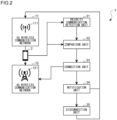
- Figure 2 is a functional block diagram of a priority communication processing apparatus.
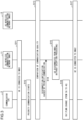
- Figure 3 shows a first example of processing of the priority communication processing apparatus.
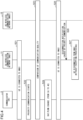
- Figure 4 shows the first example of processing of the priority communication processing apparatus.
- FIG. 1 schematically shows an overview of a wireless communication system 1 in accordance with an embodiment of the present disclosure.
- the wireless communication system 1 includes 5G wireless communication network 11 and 4G wireless communication network 12.
- 5G wireless communication network 11 that complies with the 5th generation mobile communication system (5G) uses NR (New Radio) or 5G NR (Fifth Generation New Radio) as the radio access technology (RAT) and 5GC (Fifth Generation Core) as the core network.
- 4G wireless communication network 12 that complies with the 4th generation mobile communication system (4G) uses LTE (Long Term Evolution) or LTE-Advanced as the radio access technology and EPC (Evolved Packet Core) as the core network.
- the wireless communication system 1 may include wireless communication networks of a generation prior to 4G, a generation later than 5G, or any wireless communication networks that are not associated with generations, such as Wi-Fi (registered trademark).
- the 5G wireless communication network 11 may include 5G base stations 111A, 111B, and 111C (hereinafter collectively referred to as 5G base station 111) capable of communicating by 5G NR with communication devices or communicators 2A, 2B, and 2C (hereinafter referred to as communication device 2) such as smartphones, which are also referred to as UE (User Equipment).
- 5G base station 111 is also referred to as gNodeB (gNB).
- the coverage or support range of each 5G base station 111A, 111B, and 111C is referred to as a cell 112A, 112B, and 112C (hereinafter collectively referred to as cell 112).
- the size of the cell 112 of each 5G base station 111 is arbitrary, but typically ranges from a few meters to several tens of kilometers in radius. Although there is no established definition, cells with a radius of a few meters to ten meters are called femtocells, cells with a radius of ten meters to several tens of meters are called picocells, cells with a radius of several tens of meters to several hundred meters are called microcells, and cells with a radius of more than several hundreds of meters are called macrocells.
- high frequency radio waves such as millimeter waves are often used, and their high tendency to propagate in a straight-line causes radio waves to be blocked by obstacles, shortening the communication distance. For this reason, 5G tends to use more small cells than 4G and earlier generations.
- communication device 2B in cells 112A and 112B can communicate with both 5G base stations 111A and 111B by 5G NR.
- the communication device 2C in the cell 112C can communicate with the 5G base station 111C by 5G NR.
- Communication device 2A is outside of all 5G cells 112A, 112B, and 112C, so it is not able to communicate by 5G NR.
- the 5G NR-based 5G communication between each communicator 2 and each 5G base station 111 is managed by the 5GC, which is the core network.
- the 5GC transfers data to and from each 5G base station 111, transfers data to and from external networks such as the EPC and the Internet, and manages the movement of the communicator 2.
- the 4G wireless communication network 12 comprises a plurality of 4G base stations 121 (only one of them is shown in Fig. 1 ) that can communicate with the communicator 2 by LTE or LTE-Advanced.
- the base station 121 in 4G is referred to as eNodeB (eNB).
- eNB eNodeB
- the communication range or support range of each 4G base station 121 is also called a cell and is illustrated as 122.
- the communicators 2A and 2B in the cell 122 can communicate with the 4G base station 121 by LTE or LTE-Advanced.
- Communication device 2C is outside the cell 122 and is not able to communicate by LTE or LTE-Advanced.
- the 4G communication by LTE and LTE-Advanced between each communicator 2 and each 4G base station 121 is managed by the EPC, which is the core network.
- the EPC manages the transfer of data to and from each 4G base station 121, the transfer of data to and from external networks such as 5GC and the Internet, and the movement management of the communicator 2.
- the communication device 2A is in a state that enables 4G communication with 4G base station 121
- communication device 2B is in a state that enables 5G communication with 5G base stations 111A and 111B and 4G communication with 4G base station 121
- communication device 2C is in a state that enables 5G communication with 5G base station 111C.
- one base station is selected as the most suitable in terms of communication quality, etc., under the control of the 5GC and/or EPC, which is the core network.
- FIG. 2 shows a functional block diagram of the priority communication processing apparatus 3 implemented in the wireless communication system 1.
- the priority communication processing apparatus 3 has a priority communication detection unit 31, a comparison unit 32, a connection unit 33, a notification unit 34 and a disconnection unit 35.
- These functional blocks are realized by the cooperation of hardware resources, such as the central processing unit, memory, input devices, output devices, and peripheral devices connected to the computer, and software that is executed using them. Regardless of the type of computer or its installation location, each of the above functional blocks may be realized with the hardware resources of a single computer, or by combining hardware resources distributed across multiple computers.
- each of the above functional blocks may be realized by hardware resources of at least one of: communication device 2; base station 111 in 5G wireless communication network 11 and core network (5GC) in 5G wireless communication network 11; base station 121 in 4G wireless communication network 12 and core network (EPC) in the 4G wireless communication network 12; other components in the operation system of the wireless communication system 1; and any communication device that can communicate with the wireless communication system 1.
- communication device 2 base station 111 in 5G wireless communication network 11 and core network (5GC) in 5G wireless communication network 11
- base station 121 in 4G wireless communication network 12 and core network (EPC) in the 4G wireless communication network 12 may be realized by hardware resources of at least one of: communication device 2; base station 111 in 5G wireless communication network 11 and core network (5GC) in 5G wireless communication network 11; base station 121 in 4G wireless communication network 12 and core network (EPC) in the 4G wireless communication network 12; other components in the operation system of the wireless communication system 1; and any communication device that can communicate with the wireless communication system 1.
- the communication device 2 in Fig. 2 is capable of 5G communication with 5G base station 111 and 4G communication with 4G base station 121.
- the communicator 2 is connected to the 5G wireless communication network 11 as the first wireless communication network.
- the communication device 2 starts priority communication, it is connected or switched to the 4G wireless communication network 12 as the second wireless communication network, which is judged to have better communication quality than the 5G wireless communication network 11, and is disconnected from the 5G wireless communication network 11.
- the communication device 2 that has started priority communication can be disconnected from the 4G wireless communication network 12 (the first wireless communication network) to which it has been connected.
- the communication device 2 is connected or switched to the 5G wireless communication network 11 (the second wireless communication network), which is judged to have better communication quality.
- the priority communication detection unit 31 detects priority communication from the communicator 2 that communicates wirelessly.
- the priority communication detection unit 31 is preferably realized in the communication device 2 and/or the 5G wireless communication network 11, since the communication device 2 at the time of the priority communication has been connected to the 5G wireless communication network 11.
- Priority communications are communications or phone calls that are set or assigned a higher priority, importance, urgency, etc. than normal communications, and include, for example, calls to emergency call numbers. In Japan, "110" is assigned for emergency calls to police agencies, "119" for emergency calls to fire departments, and "118" for emergency calls to the Japan Coast Guard.
- the emergency call by eCall which is an emergency call system for car accidents in Europe, is also an example of priority communication.
- the communication unit in the car (that corresponds to the communication device 2 shown in the figure) makes an emergency call on the wireless communication network about the occurrence of a car accident and its location.
- the emergency call by Emergency Services Fallback (ES-FB) and EPS Fallback (Evolved Packet System Fallback) specified in the 5th generation mobile communication system is also an example of priority communication.
- the comparison unit 32 compares the communication quality of the 5G wireless communication network 11 (the first wireless communication network) and the 4G wireless communication network 12 (the second wireless communication network) both of which the communicator 2 can communicate with.
- the criteria for comparing the communication quality are arbitrary, but for example, the communication quality of each wireless communication network can be evaluated based on signal strength, throughput, delay time, packet loss rate, packet error rate, etc.
- the communication quality of the 4G wireless communication network 12 is judged by comparison unit 32 to be superior to that of the 5G wireless communication network 11 to which the communicator 2 is connected.
- the connection unit 33 shall connect the communicator 2 for which priority communication is detected by the priority communication detection unit 31 to the 4G wireless communication network 12 which is different from the 5G wireless communication network 11 to which it has been connected, according to the comparison result of the comparison unit 32 that the communication quality of the 4G wireless communication network 12 is superior to that of the 5G wireless communication network 11.
- the notification unit 34 notifies the 5G wireless communication network 11 that the connection of the communication device 2 to the 4G wireless communication network 12 by the connection unit 33 is due to the priority communication detected by the priority communication detection section 31.
- the disconnection unit 35 disconnects the communicator 2 from the 5G wireless communication network 11.
- the 5G wireless communication network 11 can recognize in advance from notification unit 34 that the disconnection of the communicator 2 by the disconnection unit 35 is due to priority communication, and unnecessary exception processing can be omitted or avoided without misrecognizing the sudden disconnection of the communicator 2 as an error such as movement of the communicator 2 outside the cell 112, radio link failure (RLF), or power loss of the communicator 2.
- RLF radio link failure
- connection unit 33 may connect the communication device 2 to the 4G wireless communication network 12 after the communication device 2 is disconnected from the 5G wireless communication network 11, or the connection unit 33 may connect the communication device 2 to the 4G wireless communication network 12 before the communication device 2 is disconnected from the 5G wireless communication network 11.
- FIG 3 shows the first example of process of the priority communication processing apparatus 3.
- the notification unit 34 is provided in the communication device 2.
- “S” means step or process.
- the communication device 2 UE
- the 5G wireless communication network 11 NW#1
- the priority communication detection unit 31 realized in the UE and/or the 5G wireless communication network 11 detects the priority communication.
- the comparison unit 32 which is realized in the communication device 2, 5G wireless communication network 11, and/or 4G wireless communication network 12, etc., compares the communication quality of 5G wireless communication network 11 and 4G wireless communication network 12 (NW#2).
- the notification unit 34 realized in the communicator 2 notifies the 5G wireless communication network 11 that the communicator 2 is disconnected from the 5G wireless communication network 11 due to the priority communication detected in S12 (S15), and/or that the communicator 2 is connected to the 4G wireless communication network 12 (S17).
- This notification from the communicator 2 is sent to the 5G wireless communication network 11 as a message on the Access Stratum (AS) and/or Non-Access Stratum (NAS), which are functional layers in the Universal Mobile Telecommunications System (UMTS) protocol stack.
- AS Access Stratum
- NAS Non-Access Stratum
- the disconnection unit 35 disconnects the communication device 2 from the 5G wireless communication network 11 after the notification in S14.
- the 5G wireless communication network 11 or the operation system (OPS) of the wireless communication system 1 that receives the notification from the communicator 2 in S14 can recognize in advance that the disconnection of the communicator 2 in S15 is caused by the priority communication detected in S12. Therefore, unnecessary exception processing can be omitted without misrecognizing the disconnection of the communicator 2 in S15 as an error.
- the radio access technology (RAT) and the Public Land Mobile Network (PLMN) are switched from the 5G wireless communication network 11 to the 4G wireless communication network 12 to prepare for the connection of the communicator 2 to the 4G wireless communication network 12.
- the radio access technology is changed from NR or 5G NR in 5G to LTE or LTE-Advanced in 4G.
- PLMN or PLMN number is an identification number of the wireless communication network, which is a combination of MCC (Mobile Country Code) representing a country or region and MNC (Mobile Network Code) representing an operator.
- the connection unit 33 connects the communicator 2 to the 4G wireless communication network 12. In this way, priority communication with high priority can be performed on the 4G wireless communication network 12 with high communication quality.
- the connection of the communication device 2 to the 4G wireless communication network 12 by the connection unit 33 in S17 is performed after the disconnection of the communication device 2 from the 5G wireless communication network 11 by the disconnection unit 35 in S15.
- FIG 4 shows the second example of process of the priority communication processing apparatus 3.
- the notification unit 34 is realized in the 4G wireless communication network 12 (NW#2) as the second wireless communication network.
- the communication device 2 UE
- the 5G wireless communication network 11 NW#1
- the communicator 2 starts priority communication
- the priority communication detection unit 31 realized in the communicator 2 and/or the 5G wireless communication network 11 detects the priority communication.
- the comparison unit 32 which is realized in the communication device 2, 5G wireless communication network 11, and/or 4G wireless communication network 12, etc., compares the communication quality of 5G wireless communication network 11 and 4G wireless communication network 12.
- the radio access technology (RAT) and the Public Land Mobile Network (PLMN) are switched from the 5G wireless communication network 11 to the 4G wireless communication network 12 to prepare for the connection of the communicator 2 to the 4G wireless communication network 12.
- the connection unit 33 connects the communication device 2 to the 4G wireless communication network 12. In this way, priority communication with high priority can be performed on the 4G wireless communication network 12 with high communication quality.
- the notification unit 34 realized in the 4G wireless communication network 12 notifies the 5G wireless communication network 11 that the communicator 2 is disconnected from the 5G wireless communication network 11 due to the priority communication detected in S22 (S27), and/or that the communicator 2 is connected to the 4G wireless communication network 12 (S25).
- the disconnection unit 35 disconnects the communication device 2 from the 5G wireless communication network 11 after the notification in S26.
- the 5G wireless communication network 11 or the operation system (OPS) of the wireless communication system 1 that receives the notification from the 4G wireless communication network 12 in S26 can recognize in advance that the disconnection of the communicator 2 in S27 is caused by the priority communication detected in S22.
- connection of the communication device 2 to the 4G wireless communication network 12 by the connection unit 33 in S25 is performed before the disconnection of the communication device 2 from the 5G wireless communication network 11 by the disconnection unit 35 in S27.
- the communication device 2 is switched from the first wireless communication network (5G wireless communication network 11) to the second wireless communication network (4G wireless communication network 12) according to the comparison results of the communication quality by comparison unit 32.
- the communication device 2 may be switched from the first wireless communication network to the second wireless communication network following the detection of priority communication by the priority communication detection unit 31 without comparing the communication quality. For example, when a communication device 2 connected to the 5G wireless communication network 11 starts priority communication, it may immediately switch its connection and perform the priority communication on 4G wireless communication network 12.
- each device described in the embodiment can be realized by hardware resources or software resources, or by the cooperation of hardware resources and software resources.
- hardware resources processors, ROM, RAM, and other LSIs can be used.
- Operating systems, applications, and other programs can be used as software resources.
- the present disclosure relates to wireless communication technology.
- 1 wireless communication system 1 wireless communication system; 2 communication device; 3 priority communication processing apparatus; 11 5G wireless communication network; 12 4G wireless communication network; 31 priority communication detection unit; 32 comparison unit; 33 connection unit; 34 notification unit; 35 disconnection unit; 111 5G base station; 112 5G cell; 121 4G base station; 122 4G cell.
Landscapes
- Engineering & Computer Science (AREA)
- Computer Networks & Wireless Communication (AREA)
- Signal Processing (AREA)
- Computer Security & Cryptography (AREA)
- Mobile Radio Communication Systems (AREA)
Abstract
Description
- The present disclosure relates to wireless communication technology.
- The number, types, and applications of wireless communication devices, represented by smartphones and Internet of Things (IoT) devices, continue to increase, and wireless communication standards continue to be expanded and improved. For example, the commercial service of the 5th generation mobile communication system known as "5G" started in 2018, and the standards are still being developed by the 3GPP (Third Generation Partnership Project).
- Patent Literature 1:
JP-T-2021-503199 - When a communication device such as a smartphone connected to a wireless communication network is used to make an emergency call to an emergency call phone number, another wireless communication network with better communication quality than the currently connected wireless communication network may be available. Therefore, the quality of the emergency call can be improved by switching from the currently connected wireless communication network to another wireless communication network. However, the currently connected wireless communication network misrecognizes the event as an error of sudden disconnection of the communicator, which results in unnecessary exception processing.
- The present disclosure was made in consideration of this situation, and its purpose is to provide a wireless communication system that can facilitate connection to another wireless communication network during priority communication.
- In order to solve the above problem, a wireless communication system in a certain form of the present disclosure comprises: a priority communication detection unit that detects priority communication from a communicator communicating wirelessly; a connection unit for connecting the communicator for which the priority communication is detected to a second wireless communication network that is different from a first wireless communication network to which the communicator is connected; and a notification unit that notifies the first wireless communication network that the connection of the communicator to the second wireless communication network is due to the detected priority communication.
- According to this aspect, the first wireless communication network is notified that the communicator is connected to the second wireless communication network (another wireless communication network) due to the priority communication. This prevents the first wireless communication network from misrecognizing errors.
- Another aspect of the present disclosure is a wireless communication method. The method comprises: detecting priority communication from a communicator communicating wirelessly; connecting the communicator for which the priority communication is detected to a second wireless communication network that is different from a first wireless communication network to which the communicator is connected; and notifying the first wireless communication network that the connection of the communicator to the second wireless communication network is due to the detected priority communication.
- In addition, any combination of the above components, and any conversion of the expression of the present disclosure among methods, devices, systems, recording media, computer programs, and the like, is also valid as a form of the present disclosure.
- According to the present disclosure, connection to another wireless communication network can be facilitated during priority communication.
-
Figure 1 is a schematic overview of the wireless communication system.Figure 2 is a functional block diagram of a priority communication processing apparatus.Figure 3 shows a first example of processing of the priority communication processing apparatus.Figure 4 shows the first example of processing of the priority communication processing apparatus. -
Figure 1 schematically shows an overview of awireless communication system 1 in accordance with an embodiment of the present disclosure. Thewireless communication system 1 includes 5Gwireless communication network wireless communication network 12. 5Gwireless communication network 11 that complies with the 5th generation mobile communication system (5G) uses NR (New Radio) or 5G NR (Fifth Generation New Radio) as the radio access technology (RAT) and 5GC (Fifth Generation Core) as the core network. 4Gwireless communication network 12 that complies with the 4th generation mobile communication system (4G) uses LTE (Long Term Evolution) or LTE-Advanced as the radio access technology and EPC (Evolved Packet Core) as the core network. Although not shown in the figure, thewireless communication system 1 may include wireless communication networks of a generation prior to 4G, a generation later than 5G, or any wireless communication networks that are not associated with generations, such as Wi-Fi (registered trademark). - The 5G
wireless communication network 11 may include5G base stations communicators 5G base station cell - The size of the cell 112 of each 5G base station 111 is arbitrary, but typically ranges from a few meters to several tens of kilometers in radius. Although there is no established definition, cells with a radius of a few meters to ten meters are called femtocells, cells with a radius of ten meters to several tens of meters are called picocells, cells with a radius of several tens of meters to several hundred meters are called microcells, and cells with a radius of more than several hundreds of meters are called macrocells. In 5G, high frequency radio waves such as millimeter waves are often used, and their high tendency to propagate in a straight-line causes radio waves to be blocked by obstacles, shortening the communication distance. For this reason, 5G tends to use more small cells than 4G and earlier generations.
- In the example shown in the figure,
communication device 2B incells 5G base stations cell 112C can communicate with the5G base station 111C by 5G NR.Communication device 2A is outside of all5G cells communicator 2 and each 5G base station 111 is managed by the 5GC, which is the core network. For example, the 5GC transfers data to and from each 5G base station 111, transfers data to and from external networks such as the EPC and the Internet, and manages the movement of thecommunicator 2. - The 4G
wireless communication network 12 comprises a plurality of 4G base stations 121 (only one of them is shown inFig. 1 ) that can communicate with thecommunicator 2 by LTE or LTE-Advanced. Thebase station 121 in 4G is referred to as eNodeB (eNB). As well as each 5G base station 111, the communication range or support range of each4G base station 121 is also called a cell and is illustrated as 122. - In the example shown in the figure, the
communicators cell 122 can communicate with the4G base station 121 by LTE or LTE-Advanced. Communication device 2C is outside thecell 122 and is not able to communicate by LTE or LTE-Advanced. The 4G communication by LTE and LTE-Advanced between eachcommunicator 2 and each4G base station 121 is managed by the EPC, which is the core network. For example, the EPC manages the transfer of data to and from each4G base station 121, the transfer of data to and from external networks such as 5GC and the Internet, and the movement management of thecommunicator 2. - If we take a look at each
communication device communication device 2A is in a state that enables 4G communication with4G base station 121, andcommunication device 2B is in a state that enables 5G communication with5G base stations 4G base station 121, and communication device 2C is in a state that enables 5G communication with5G base station 111C. When there aremultiple base stations communicator 2B, one base station is selected as the most suitable in terms of communication quality, etc., under the control of the 5GC and/or EPC, which is the core network. -
Figure 2 shows a functional block diagram of the prioritycommunication processing apparatus 3 implemented in thewireless communication system 1. The prioritycommunication processing apparatus 3 has a prioritycommunication detection unit 31, acomparison unit 32, aconnection unit 33, anotification unit 34 and adisconnection unit 35. These functional blocks are realized by the cooperation of hardware resources, such as the central processing unit, memory, input devices, output devices, and peripheral devices connected to the computer, and software that is executed using them. Regardless of the type of computer or its installation location, each of the above functional blocks may be realized with the hardware resources of a single computer, or by combining hardware resources distributed across multiple computers. Specifically, some or all of each of the above functional blocks may be realized by hardware resources of at least one of:communication device 2; base station 111 in 5Gwireless communication network 11 and core network (5GC) in 5Gwireless communication network 11;base station 121 in 4Gwireless communication network 12 and core network (EPC) in the 4Gwireless communication network 12; other components in the operation system of thewireless communication system 1; and any communication device that can communicate with thewireless communication system 1. - The
communication device 2 inFig. 2 , like thecommunication device 2B inFig. 1 , is capable of 5G communication with5G base station 111 and 4G communication with4G base station 121. First, we assume that thecommunicator 2 is connected to the 5Gwireless communication network 11 as the first wireless communication network. In the following example, when thecommunication device 2 starts priority communication, it is connected or switched to the 4Gwireless communication network 12 as the second wireless communication network, which is judged to have better communication quality than the 5Gwireless communication network 11, and is disconnected from the 5Gwireless communication network 11. As another example, thecommunication device 2 that has started priority communication can be disconnected from the 4G wireless communication network 12 (the first wireless communication network) to which it has been connected. In this case, thecommunication device 2 is connected or switched to the 5G wireless communication network 11 (the second wireless communication network), which is judged to have better communication quality. - The priority
communication detection unit 31 detects priority communication from thecommunicator 2 that communicates wirelessly. The prioritycommunication detection unit 31 is preferably realized in thecommunication device 2 and/or the 5Gwireless communication network 11, since thecommunication device 2 at the time of the priority communication has been connected to the 5Gwireless communication network 11. Priority communications are communications or phone calls that are set or assigned a higher priority, importance, urgency, etc. than normal communications, and include, for example, calls to emergency call numbers. In Japan, "110" is assigned for emergency calls to police agencies, "119" for emergency calls to fire departments, and "118" for emergency calls to the Japan Coast Guard. The emergency call by eCall, which is an emergency call system for car accidents in Europe, is also an example of priority communication. The communication unit in the car (that corresponds to thecommunication device 2 shown in the figure) makes an emergency call on the wireless communication network about the occurrence of a car accident and its location. The emergency call by Emergency Services Fallback (ES-FB) and EPS Fallback (Evolved Packet System Fallback) specified in the 5th generation mobile communication system is also an example of priority communication. - The
comparison unit 32 compares the communication quality of the 5G wireless communication network 11 (the first wireless communication network) and the 4G wireless communication network 12 (the second wireless communication network) both of which thecommunicator 2 can communicate with. The criteria for comparing the communication quality are arbitrary, but for example, the communication quality of each wireless communication network can be evaluated based on signal strength, throughput, delay time, packet loss rate, packet error rate, etc. In the example shown in the figure, the communication quality of the 4Gwireless communication network 12 is judged bycomparison unit 32 to be superior to that of the 5Gwireless communication network 11 to which thecommunicator 2 is connected. - The
connection unit 33 shall connect thecommunicator 2 for which priority communication is detected by the prioritycommunication detection unit 31 to the 4Gwireless communication network 12 which is different from the 5Gwireless communication network 11 to which it has been connected, according to the comparison result of thecomparison unit 32 that the communication quality of the 4Gwireless communication network 12 is superior to that of the 5Gwireless communication network 11. - The
notification unit 34 notifies the 5Gwireless communication network 11 that the connection of thecommunication device 2 to the 4Gwireless communication network 12 by theconnection unit 33 is due to the priority communication detected by the prioritycommunication detection section 31. After thenotification unit 34 notifies the 5Gwireless communication network 11, thedisconnection unit 35 disconnects thecommunicator 2 from the 5Gwireless communication network 11. In this way, the 5Gwireless communication network 11 can recognize in advance fromnotification unit 34 that the disconnection of thecommunicator 2 by thedisconnection unit 35 is due to priority communication, and unnecessary exception processing can be omitted or avoided without misrecognizing the sudden disconnection of thecommunicator 2 as an error such as movement of thecommunicator 2 outside the cell 112, radio link failure (RLF), or power loss of thecommunicator 2. As shown in the following specific examples, theconnection unit 33 may connect thecommunication device 2 to the 4Gwireless communication network 12 after thecommunication device 2 is disconnected from the 5Gwireless communication network 11, or theconnection unit 33 may connect thecommunication device 2 to the 4Gwireless communication network 12 before thecommunication device 2 is disconnected from the 5Gwireless communication network 11. -
Figure 3 shows the first example of process of the prioritycommunication processing apparatus 3. In this example, thenotification unit 34 is provided in thecommunication device 2. In this figure and similar figures, "S" means step or process. In S11, the communication device 2 (UE) is connected to the 5G wireless communication network 11 (NW#1). In S12, thecommunication device 2 starts priority communication, and the prioritycommunication detection unit 31 realized in the UE and/or the 5Gwireless communication network 11 detects the priority communication. In S13, thecomparison unit 32, which is realized in thecommunication device wireless communication network 11, and/or 4Gwireless communication network 12, etc., compares the communication quality of 5Gwireless communication network - In S14, according to the result of the comparison in S13 that the communication quality of the 4G
wireless communication network 12 is better than that of the 5Gwireless communication network 11, thenotification unit 34 realized in thecommunicator 2 notifies the 5Gwireless communication network 11 that thecommunicator 2 is disconnected from the 5Gwireless communication network 11 due to the priority communication detected in S12 (S15), and/or that thecommunicator 2 is connected to the 4G wireless communication network 12 (S17). This notification from thecommunicator 2 is sent to the 5Gwireless communication network 11 as a message on the Access Stratum (AS) and/or Non-Access Stratum (NAS), which are functional layers in the Universal Mobile Telecommunications System (UMTS) protocol stack. - In S15, the
disconnection unit 35 disconnects thecommunication device 2 from the 5Gwireless communication network 11 after the notification in S14. The 5Gwireless communication network 11 or the operation system (OPS) of thewireless communication system 1 that receives the notification from thecommunicator 2 in S14 can recognize in advance that the disconnection of thecommunicator 2 in S15 is caused by the priority communication detected in S12. Therefore, unnecessary exception processing can be omitted without misrecognizing the disconnection of thecommunicator 2 in S15 as an error. - In S16, the radio access technology (RAT) and the Public Land Mobile Network (PLMN) are switched from the 5G
wireless communication network 11 to the 4Gwireless communication network 12 to prepare for the connection of thecommunicator 2 to the 4Gwireless communication network 12. Specifically, the radio access technology is changed from NR or 5G NR in 5G to LTE or LTE-Advanced in 4G. PLMN or PLMN number is an identification number of the wireless communication network, which is a combination of MCC (Mobile Country Code) representing a country or region and MNC (Mobile Network Code) representing an operator. In S17, theconnection unit 33 connects thecommunicator 2 to the 4Gwireless communication network 12. In this way, priority communication with high priority can be performed on the 4Gwireless communication network 12 with high communication quality. In the example shown inFigure 3 , the connection of thecommunication device 2 to the 4Gwireless communication network 12 by theconnection unit 33 in S17 is performed after the disconnection of thecommunication device 2 from the 5Gwireless communication network 11 by thedisconnection unit 35 in S15. -
Figure 4 shows the second example of process of the prioritycommunication processing apparatus 3. In this example, thenotification unit 34 is realized in the 4G wireless communication network 12 (NW#2) as the second wireless communication network. In S21, the communication device 2 (UE) is connected to the 5G wireless communication network 11 (NW#1). In S22, thecommunicator 2 starts priority communication, and the prioritycommunication detection unit 31 realized in thecommunicator 2 and/or the 5Gwireless communication network 11 detects the priority communication. In S23, thecomparison unit 32, which is realized in thecommunication device wireless communication network 11, and/or 4Gwireless communication network 12, etc., compares the communication quality of 5Gwireless communication network wireless communication network 12. - In S24, according to the result of the comparison in S23 that the communication quality of the 4G
wireless communication network 12 is better than that of the 5Gwireless communication network 11, the radio access technology (RAT) and the Public Land Mobile Network (PLMN) are switched from the 5Gwireless communication network 11 to the 4Gwireless communication network 12 to prepare for the connection of thecommunicator 2 to the 4Gwireless communication network 12. In S25, theconnection unit 33 connects thecommunication device 2 to the 4Gwireless communication network 12. In this way, priority communication with high priority can be performed on the 4Gwireless communication network 12 with high communication quality. - In S26, the
notification unit 34 realized in the 4Gwireless communication network 12 notifies the 5Gwireless communication network 11 that thecommunicator 2 is disconnected from the 5Gwireless communication network 11 due to the priority communication detected in S22 (S27), and/or that thecommunicator 2 is connected to the 4G wireless communication network 12 (S25). In S27, thedisconnection unit 35 disconnects thecommunication device 2 from the 5Gwireless communication network 11 after the notification in S26. The 5Gwireless communication network 11 or the operation system (OPS) of thewireless communication system 1 that receives the notification from the 4Gwireless communication network 12 in S26 can recognize in advance that the disconnection of thecommunicator 2 in S27 is caused by the priority communication detected in S22. Therefore, unnecessary exception processing can be omitted without misrecognizing the disconnection of thecommunicator 2 in S27 as an error. In the example shown inFigure 4 , the connection of thecommunication device 2 to the 4Gwireless communication network 12 by theconnection unit 33 in S25 is performed before the disconnection of thecommunication device 2 from the 5Gwireless communication network 11 by thedisconnection unit 35 in S27. - The present disclosure has been described above based on embodiments. It is understood by those skilled in the art that the embodiments are exemplary and that various variations are possible in the combination of each component and each process thereof, and that such variations are also within the scope of the present disclosure.
- In the embodiment, the
communication device 2 is switched from the first wireless communication network (5G wireless communication network 11) to the second wireless communication network (4G wireless communication network 12) according to the comparison results of the communication quality bycomparison unit 32. However, thecommunication device 2 may be switched from the first wireless communication network to the second wireless communication network following the detection of priority communication by the prioritycommunication detection unit 31 without comparing the communication quality. For example, when acommunication device 2 connected to the 5Gwireless communication network 11 starts priority communication, it may immediately switch its connection and perform the priority communication on 4Gwireless communication network 12. - The functional configuration of each device described in the embodiment can be realized by hardware resources or software resources, or by the cooperation of hardware resources and software resources. As hardware resources, processors, ROM, RAM, and other LSIs can be used. Operating systems, applications, and other programs can be used as software resources.
- The present disclosure relates to wireless communication technology.
- 1 wireless communication system; 2 communication device; 3 priority communication processing apparatus; 11 5G wireless communication network; 12 4G wireless communication network; 31 priority communication detection unit; 32 comparison unit; 33 connection unit; 34 notification unit; 35 disconnection unit; 111 5G base station; 112 5G cell; 121 4G base station; 122 4G cell.
Claims (15)
- A wireless communication system comprising:a priority communication detection unit that detects priority communication from a communicator communicating wirelessly;a connection unit for connecting the communicator for which the priority communication is detected to a second wireless communication network that is different from a first wireless communication network to which the communicator is connected; anda notification unit that notifies the first wireless communication network that the connection of the communicator to the second wireless communication network is due to the detected priority communication.
- The wireless communication system according to claim 1, wherein the notification unit is provided in the communicator.
- The wireless communication system according to claim 1, wherein the notification unit is provided in the second wireless communication network.
- The wireless communication system according to any of claims 1 through 3, further comprising a disconnection unit that disconnects the communicator from the first wireless communication network after the notification unit notifies the first wireless communication network.
- The wireless communication system according to claim 4, wherein the first wireless communication network omits exception processing regarding disconnection of the communicator by the disconnection unit.
- The wireless communication system according to claim 4 or 5, wherein the connection unit connects the communicator to the second wireless communication network after the communicator is disconnected from the first wireless communication network.
- The wireless communication system according to claim 4 or 5, wherein the connection unit connects the communicator to the second wireless communication network before the communicator is disconnected from the first wireless communication network.
- The wireless communication system according to any of claims 1 through 7, further comprising a comparison unit for comparing the communication quality of the first wireless communication network and the second wireless communication network; and
in case the communication quality of the second wireless communication network is better than the communication quality of the first wireless communication network, the connection unit connects the communicator for which the priority communication is detected to the second wireless communication network. - The wireless communication system according to any of claims 1 through 8, wherein the first wireless communication network and the second wireless communication network use different radio access technologies.
- The wireless communication system according to claim 9, wherein the radio access technology includes at least one of NR and LTE.
- The wireless communication system according to any of claims 1 through 10, wherein the first wireless communication network and the second wireless communication network use different core networks.
- The wireless communication system according to claim 11, wherein the core network includes at least one of 5GC and EPC.
- The wireless communication system according to any of claims 1 through 12, wherein the priority communication includes a call to an emergency call number.
- A wireless communication method comprising:detecting priority communication from a communicator communicating wirelessly;connecting the communicator for which the priority communication is detected to a second wireless communication network that is different from a first wireless communication network to which the communicator is connected; andnotifying the first wireless communication network that the connection of the communicator to the second wireless communication network is due to the detected priority communication.
- A wireless communication program that causes a computer to perform:detecting priority communication from a communicator communicating wirelessly;connecting the communicator for which the priority communication is detected to a second wireless communication network that is different from a first wireless communication network to which the communicator is connected; andnotifying the first wireless communication network that the connection of the communicator to the second wireless communication network is due to the detected priority communication.
Applications Claiming Priority (2)
| Application Number | Priority Date | Filing Date | Title |
|---|---|---|---|
| JP2021059614 | 2021-03-31 | ||
| PCT/JP2021/023558 WO2022208915A1 (en) | 2021-03-31 | 2021-06-22 | Wireless communication terminal, wireless communication method, and wireless communication program |
Publications (2)
| Publication Number | Publication Date |
|---|---|
| EP4319472A1 true EP4319472A1 (en) | 2024-02-07 |
| EP4319472A4 EP4319472A4 (en) | 2025-03-19 |
Family
ID=83458299
Family Applications (1)
| Application Number | Title | Priority Date | Filing Date |
|---|---|---|---|
| EP21935075.8A Pending EP4319472A4 (en) | 2021-03-31 | 2021-06-22 | WIRELESS COMMUNICATIONS TERMINAL, WIRELESS COMMUNICATIONS METHOD AND WIRELESS COMMUNICATIONS PROGRAM |
Country Status (6)
| Country | Link |
|---|---|
| US (1) | US12262310B2 (en) |
| EP (1) | EP4319472A4 (en) |
| JP (1) | JP7573728B2 (en) |
| KR (1) | KR20230165299A (en) |
| CN (1) | CN117063604A (en) |
| WO (1) | WO2022208915A1 (en) |
Families Citing this family (1)
| Publication number | Priority date | Publication date | Assignee | Title |
|---|---|---|---|---|
| JP7690361B2 (en) * | 2021-09-21 | 2025-06-10 | トヨタ自動車株式会社 | Wireless communication device, information processing device, and information processing method |
Family Cites Families (21)
| Publication number | Priority date | Publication date | Assignee | Title |
|---|---|---|---|---|
| KR101100157B1 (en) * | 2004-06-08 | 2011-12-28 | 엘지전자 주식회사 | Inter-frequency handover method applied to broadband wireless access system |
| US20100297979A1 (en) * | 2009-04-14 | 2010-11-25 | Interdigital Patent Holdings, Inc. | Method and apparatus for processing emergency calls |
| KR101650608B1 (en) * | 2009-10-30 | 2016-08-23 | 인터디지탈 패튼 홀딩스, 인크 | Signaling for wireless communications |
| JP5584081B2 (en) * | 2010-10-07 | 2014-09-03 | 株式会社Nttドコモ | Communication control system and mobile station control method |
| WO2014198045A1 (en) * | 2013-06-13 | 2014-12-18 | 华为技术有限公司 | Method, device, and system for network handover |
| US10542471B1 (en) * | 2013-08-20 | 2020-01-21 | Sprint Spectrum L.P. | Method and system for releasing at least one resource allocated to a user equipment device |
| US9584995B2 (en) | 2015-05-20 | 2017-02-28 | Apple Inc. | Emergency calling for multi-SIM devices |
| EP3307009B1 (en) * | 2016-10-05 | 2021-11-17 | Ntt Docomo, Inc. | Method for establishing a communication and communication device |
| US10911996B2 (en) * | 2016-12-20 | 2021-02-02 | Apple Inc. | Beamforming measurements based on PSS/SSS |
| WO2018194125A1 (en) * | 2017-04-21 | 2018-10-25 | 京セラ株式会社 | Wireless communication device and control method therefor |
| CN109257779B (en) * | 2017-07-14 | 2024-09-17 | 华为技术有限公司 | Network switching method and device |
| AU2018314933A1 (en) * | 2017-08-09 | 2020-02-20 | Nokia Solutions And Networks Oy | Emergency voice service support indications |
| CN109819428B (en) * | 2017-11-20 | 2021-04-20 | 华为技术有限公司 | Method and apparatus for processing business |
| CN110392403B (en) * | 2018-04-19 | 2021-03-30 | 华为技术有限公司 | Communication method and device |
| EP3634041A1 (en) | 2018-10-05 | 2020-04-08 | Ntt Docomo, Inc. | Communication terminal, method for requesting a connection, network component and method for serving a communication terminal |
| US10848949B2 (en) | 2018-11-19 | 2020-11-24 | Qualcomm Incorporated | Emergency call redial on different PS domains |
| US11337119B2 (en) * | 2019-08-07 | 2022-05-17 | Verizon Patent And Licensing Inc. | Next generation to long term evolution (LTE) fallback for voice calls |
| US10887749B1 (en) * | 2019-08-15 | 2021-01-05 | Blackberry Limited | Emergency services handling |
| EP4098007B1 (en) * | 2020-01-31 | 2023-05-24 | Telefonaktiebolaget Lm Ericsson (Publ) | Robust emergency fallback from 5g |
| US11743704B2 (en) * | 2020-02-11 | 2023-08-29 | T-Mobile Usa, Inc. | Emergency service fallback based on user equipment capability |
| WO2022151282A1 (en) * | 2021-01-14 | 2022-07-21 | 华为技术有限公司 | Method for user quality of experience measurement, and apparatus |
-
2021
- 2021-06-22 CN CN202180096314.4A patent/CN117063604A/en active Pending
- 2021-06-22 EP EP21935075.8A patent/EP4319472A4/en active Pending
- 2021-06-22 WO PCT/JP2021/023558 patent/WO2022208915A1/en not_active Ceased
- 2021-06-22 US US17/757,562 patent/US12262310B2/en active Active
- 2021-06-22 KR KR1020237037495A patent/KR20230165299A/en active Pending
- 2021-06-22 JP JP2023510177A patent/JP7573728B2/en active Active
Also Published As
| Publication number | Publication date |
|---|---|
| US20240163780A1 (en) | 2024-05-16 |
| KR20230165299A (en) | 2023-12-05 |
| JPWO2022208915A1 (en) | 2022-10-06 |
| CN117063604A (en) | 2023-11-14 |
| US12262310B2 (en) | 2025-03-25 |
| EP4319472A4 (en) | 2025-03-19 |
| WO2022208915A1 (en) | 2022-10-06 |
| JP7573728B2 (en) | 2024-10-25 |
Similar Documents
| Publication | Publication Date | Title |
|---|---|---|
| CN114765782B (en) | Reducing wireless device service interruption | |
| JP7637200B2 (en) | Wireless communication method and device | |
| EP2963966B1 (en) | Radio link failure in a dual connectivity network | |
| EP2810530B1 (en) | Mobile communications device, network controller and method for providing network-level relay capabilities of a user equipment | |
| EP2934027A1 (en) | Wireless communication system | |
| US11743961B2 (en) | Method and system for providing simultaneous voice and data services in EN-DC capable user equipment | |
| JP2013537757A (en) | Processing method and base station for fail soft processing based on digital trunking system | |
| WO2021152405A1 (en) | Optimizing paging collision in multi-usim scenarios | |
| EP3322243B1 (en) | Device-to-device communication method, apparatus and system | |
| US10542573B2 (en) | Radio aggregation | |
| WO2018202777A1 (en) | Communication apparatus in dual connectivity, method and computer program | |
| JP7213950B2 (en) | Information configuration method and device, terminal, network equipment | |
| EP4149172B1 (en) | Slice selection method, and terminal device | |
| CN110881183B (en) | Emergency service processing method and device | |
| EP2697993A1 (en) | Apparatus and method for communication | |
| EP4515941B1 (en) | Methods for ue initiated aperiodic l1 measurement report for detected cells based on l3 measurements | |
| US12262310B2 (en) | Connection and notification for priority communication | |
| EP2074837A2 (en) | Method for managing calls in a communication network | |
| US12593374B2 (en) | Recording of priority communication related information | |
| EP3928561B1 (en) | Failure recovery for multi-ue device | |
| US11589415B2 (en) | Radio barrier processing method and network device | |
| CN117545046A (en) | Terminal communication method and terminal equipment | |
| US20250358715A1 (en) | SHARING SYSTEM INFORMATION UPDATES ON A MULTIPLE SIM/eSIM WIRELESS DEVICE | |
| EP4598130A1 (en) | Time indication method and apparatus, and device and storage medium | |
| CN112889300B (en) | Isolated E-UTRAN public safety operation IOPS awareness with MBMS |
Legal Events
| Date | Code | Title | Description |
|---|---|---|---|
| STAA | Information on the status of an ep patent application or granted ep patent |
Free format text: STATUS: THE INTERNATIONAL PUBLICATION HAS BEEN MADE |
|
| PUAI | Public reference made under article 153(3) epc to a published international application that has entered the european phase |
Free format text: ORIGINAL CODE: 0009012 |
|
| STAA | Information on the status of an ep patent application or granted ep patent |
Free format text: STATUS: REQUEST FOR EXAMINATION WAS MADE |
|
| 17P | Request for examination filed |
Effective date: 20231031 |
|
| AK | Designated contracting states |
Kind code of ref document: A1 Designated state(s): AL AT BE BG CH CY CZ DE DK EE ES FI FR GB GR HR HU IE IS IT LI LT LU LV MC MK MT NL NO PL PT RO RS SE SI SK SM TR |
|
| DAV | Request for validation of the european patent (deleted) | ||
| DAX | Request for extension of the european patent (deleted) | ||
| A4 | Supplementary search report drawn up and despatched |
Effective date: 20250213 |
|
| RIC1 | Information provided on ipc code assigned before grant |
Ipc: H04W 88/06 20090101ALN20250207BHEP Ipc: H04W 36/14 20090101ALI20250207BHEP Ipc: H04W 48/18 20090101ALI20250207BHEP Ipc: H04W 76/50 20180101AFI20250207BHEP |