EP4319082A1 - Procédé, appareil et programme informatique - Google Patents
Procédé, appareil et programme informatique Download PDFInfo
- Publication number
- EP4319082A1 EP4319082A1 EP22189086.6A EP22189086A EP4319082A1 EP 4319082 A1 EP4319082 A1 EP 4319082A1 EP 22189086 A EP22189086 A EP 22189086A EP 4319082 A1 EP4319082 A1 EP 4319082A1
- Authority
- EP
- European Patent Office
- Prior art keywords
- analytics
- request
- charging
- data
- examples
- Prior art date
- Legal status (The legal status is an assumption and is not a legal conclusion. Google has not performed a legal analysis and makes no representation as to the accuracy of the status listed.)
- Pending
Links
Images




Classifications
-
- H—ELECTRICITY
- H04—ELECTRIC COMMUNICATION TECHNIQUE
- H04L—TRANSMISSION OF DIGITAL INFORMATION, e.g. TELEGRAPHIC COMMUNICATION
- H04L41/00—Arrangements for maintenance, administration or management of data switching networks, e.g. of packet switching networks
- H04L41/16—Arrangements for maintenance, administration or management of data switching networks, e.g. of packet switching networks using machine learning or artificial intelligence
-
- H—ELECTRICITY
- H04—ELECTRIC COMMUNICATION TECHNIQUE
- H04L—TRANSMISSION OF DIGITAL INFORMATION, e.g. TELEGRAPHIC COMMUNICATION
- H04L12/00—Data switching networks
- H04L12/02—Details
- H04L12/14—Charging, metering or billing arrangements specially adapted for data communications, e.g. authentication, authorisation and accounting [AAA] framework
- H04L12/1403—Architecture for metering, charging or billing
- H04L12/1407—Policy-and-charging control [PCC] architecture
-
- H—ELECTRICITY
- H04—ELECTRIC COMMUNICATION TECHNIQUE
- H04L—TRANSMISSION OF DIGITAL INFORMATION, e.g. TELEGRAPHIC COMMUNICATION
- H04L41/00—Arrangements for maintenance, administration or management of data switching networks, e.g. of packet switching networks
- H04L41/14—Network analysis or design
-
- H—ELECTRICITY
- H04—ELECTRIC COMMUNICATION TECHNIQUE
- H04M—TELEPHONIC COMMUNICATION
- H04M15/00—Arrangements for metering, time-control or time indication ; Metering, charging or billing arrangements for voice wireline or wireless communications, e.g. VoIP
- H04M15/66—Policy and charging system
-
- H—ELECTRICITY
- H04—ELECTRIC COMMUNICATION TECHNIQUE
- H04W—WIRELESS COMMUNICATION NETWORKS
- H04W4/00—Services specially adapted for wireless communication networks; Facilities therefor
- H04W4/24—Accounting or billing
Definitions
- the present application relates to a method, apparatus, and computer program for a wireless communication system.
- a communication system may be a facility that enables communication sessions between two or more entities such as user terminals, base stations/access points and/or other nodes by providing carriers between the various entities involved in the communications path.
- a communication system may be provided, for example, by means of a communication network and one or more compatible communication devices.
- the communication sessions may comprise, for example, communication of data for carrying communications such as voice, electronic mail (email), text message, multimedia and/or content data and so on.
- Non-limiting examples of services provided comprise two-way or multi-way calls, data communication or multimedia services and access to a data network system, such as the Internet.
- wireless communication system at least a part of a communication session between at least two stations occurs over a wireless link.
- wireless systems comprise public land mobile networks (PLMN), satellite-based communication systems and different wireless local networks, for example wireless local area networks (WLAN).
- PLMN public land mobile networks
- WLAN wireless local area networks
- Some wireless systems can be divided into cells, and are therefore often referred to as cellular systems.
- a user can access the communication system by means of an appropriate communication device or terminal.
- a communication device of a user may be referred to as user equipment (UE) or user device.
- UE user equipment
- a communication device is provided with an appropriate signal receiving and transmitting apparatus for enabling communications, for example enabling access to a communication network or communications directly with other users.
- the communication device may access a carrier provided by a station, for example a base station of a cell, and transmit and/or receive communications on the carrier.
- the communication system and associated devices typically operate in accordance with a given standard or specification which sets out what the various entities associated with the system are permitted to do and how that should be achieved. Communication protocols and/or parameters which shall be used for the connection are also typically defined.
- UTRAN 3G radio
- Other examples of communication systems are the long-term evolution (LTE) of the Universal Mobile Telecommunications System (UMTS) radio-access technology and so-called 5G or New Radio (NR) networks.
- LTE long-term evolution
- UMTS Universal Mobile Telecommunications System
- NR New Radio
- an apparatus comprising means for performing: receiving, at the apparatus and from a second apparatus, a first request for analytics; based on the first request, sending from the apparatus to a third apparatus a second request, the second request for coordination between the apparatus and the third apparatus to provide the analytics, the second request comprising information of the analytics; receiving, at the apparatus from the third apparatus, a response comprising information reporting at least one of an amount of computational resources used to perform the analytics at the third apparatus and data provided by the analytics at the third apparatus.
- the means are for performing: sending, to a charging function, a third request, the third request to open a charging data record for the analytics, wherein the third request comprises: information reporting at least one of an amount of computational resources used to perform the analytics at the apparatus and data provided by the analytics at the apparatus; and the information reporting the at least one of an amount of computational resources used to perform the analytics at the third apparatus and data provided by the analytics at the third apparatus; wherein the method further comprises: receiving, from the charging function, a message confirming that the charging data record has been opened.
- the third request comprises an indication of whether the charging data record is to be created after the analytics is provided or while the analytics is provided.
- the apparatus comprises a Management Data Analytics Service and the third apparatus comprises a Network Data Analytics Function.
- the apparatus comprises a Network Data Analytics Function and the third apparatus comprises a Management Data Analytics Service.
- the information of the analytics comprised in the second request comprises at least one of: a type of analytics required from the third apparatus; an Artificial Intelligence model to be used for the analytics; a Machine Learning model to be used for the analytics; an input data type for the analytics; at least one data source for the analytics; urgency of the analytics; scheduling of the analytics; type of reporting required for the analytics; one or more filtering conditions.
- the response comprises charging information corresponding to the amount of computational resources used at the third apparatus.
- the means are for performing: detecting a usage reporting trigger of the analytics, and in response: sending, to the charging function, a request for an update of the charging data record, wherein the request to update the charging data record for the analytics comprises at least one information element describing the analytics; receiving, from the charging function, a response confirming that the charging data record has been updated.
- the means are for performing: using, at the apparatus, the data provided by the analytics at the third apparatus to perform the analytics of the first request.
- the apparatus comprises a master node.
- the second apparatus comprises an analytics consumer.
- the third apparatus comprises a slave node.
- an apparatus comprising: at least one processor; and at least one memory including computer program code; the at least one memory and the computer program code configured to, with the at least one processor, cause the apparatus at least to perform: receiving, at the apparatus and from a second apparatus, a first request for analytics; based on the first request, sending from the apparatus to a third apparatus a second request, the second request for coordination between the apparatus and the third apparatus to provide the analytics, the second request comprising information of the analytics; receiving, at the apparatus from the third apparatus, a response comprising information reporting at least one of an amount of computational resources used to perform the analytics at the third apparatus and data provided by the analytics at the third apparatus.
- the at least one memory and the computer program code are configured to, with the at least one processor, cause the apparatus at least to perform: sending, to a charging function, a third request, the third request to open a charging data record for the analytics, wherein the third request comprises: information reporting at least one of an amount of computational resources used to perform the analytics at the apparatus and data provided by the analytics at the apparatus; and the information reporting the at least one of an amount of computational resources used to perform the analytics at the third apparatus and data provided by the analytics at the third apparatus; wherein the method further comprises: receiving, from the charging function, a message confirming that the charging data record has been opened.
- the third request comprises an indication of whether the charging data record is to be created after the analytics is provided or while the analytics is provided.
- the apparatus comprises a Management Data Analytics Service and the third apparatus comprises a Network Data Analytics Function.
- the apparatus comprises a Network Data Analytics Function and the third apparatus comprises a Management Data Analytics Service.
- the information of the analytics comprised in the second request comprises at least one of: a type of analytics required from the third apparatus; an Artificial Intelligence model to be used for the analytics; a Machine Learning model to be used for the analytics; an input data type for the analytics; at least one data source for the analytics; urgency of the analytics; scheduling of the analytics; type of reporting required for the analytics; one or more filtering conditions.
- the response comprises charging information corresponding to the amount of computational resources used at the third apparatus.
- the at least one memory and the computer program code are configured to, with the at least one processor, cause the apparatus at least to perform: detecting a usage reporting trigger of the analytics, and in response: sending, to the charging function, a request for an update of the charging data record, wherein the request to update the charging data record for the analytics comprises at least one information element describing the analytics; receiving, from the charging function, a response confirming that the charging data record has been updated.
- the at least one memory and the computer program code are configured to, with the at least one processor, cause the apparatus at least to perform: using, at the apparatus, the data provided by the analytics at the third apparatus to perform the analytics of the first request.
- the apparatus comprises a master node.
- the second apparatus comprises an analytics consumer.
- the third apparatus comprises a slave node.
- an apparatus comprising: circuitry for: receiving, at a first apparatus and from a second apparatus, a first request for analytics; based on the first request, sending from the first apparatus to a third apparatus a second request, the second request for coordination between the first apparatus and the third apparatus to provide the analytics, the second request comprising information of the analytics; receiving, at the first apparatus from the third apparatus, a response comprising information reporting at least one of an amount of computational resources used to perform the analytics at the third apparatus and data provided by the analytics at the third apparatus.
- a method comprising: receiving, at a first apparatus and from a second apparatus, a first request for analytics; based on the first request, sending from the first apparatus to a third apparatus a second request, the second request for coordination between the first apparatus and the third apparatus to provide the analytics, the second request comprising information of the analytics; receiving, at the first apparatus from the third apparatus, a response comprising information reporting at least one of an amount of computational resources used to perform the analytics at the third apparatus and data provided by the analytics at the third apparatus.
- the method comprises: sending, to a charging function, a third request, the third request to open a charging data record for the analytics, wherein the third request comprises: information reporting at least one of an amount of computational resources used to perform the analytics at the first apparatus and data provided by the analytics at the first apparatus; and the information reporting the at least one of an amount of computational resources used to perform the analytics at the third apparatus and data provided by the analytics at the third apparatus; wherein the method further comprises: receiving, from the charging function, a message confirming that the charging data record has been opened.
- the third request comprises an indication of whether the charging data record is to be created after the analytics is provided or while the analytics is provided.
- the first apparatus comprises a Management Data Analytics Service and the third apparatus comprises a Network Data Analytics Function.
- the first apparatus comprises a Network Data Analytics Function and the third apparatus comprises a Management Data Analytics Service.
- the information of the analytics comprised in the second request comprises at least one of: a type of analytics required from the third apparatus; an Artificial Intelligence model to be used for the analytics; a Machine Learning model to be used for the analytics; an input data type for the analytics; at least one data source for the analytics; urgency of the analytics; scheduling of the analytics; type of reporting required for the analytics; one or more filtering conditions.
- the response comprises charging information corresponding to the amount of computational resources used at the third apparatus.
- the method comprises: detecting a usage reporting trigger of the analytics, and in response: sending, to the charging function, a request for an update of the charging data record, wherein the request to update the charging data record for the analytics comprises at least one information element describing the analytics; receiving, from the charging function, a response confirming that the charging data record has been updated.
- the method comprises: using, at the first apparatus, the data provided by the analytics at the third apparatus to perform the analytics of the first request.
- the first apparatus comprises a master node.
- the second apparatus comprises an analytics consumer.
- the third apparatus comprises a slave node.
- a computer program comprising instructions for causing an apparatus to perform at least the following: receiving, at the apparatus and from a second apparatus, a first request for analytics; based on the first request, sending from the apparatus to a third apparatus a second request, the second request for coordination between the first apparatus and the third apparatus to provide the analytics, the second request comprising information of the analytics; receiving, at the apparatus from the third apparatus, a response comprising information reporting at least one of an amount of computational resources used to perform the analytics at the third apparatus and data provided by the analytics at the third apparatus.
- a computer program comprising instructions stored thereon for performing at least the following: receiving, at a first apparatus and from a second apparatus, a first request for analytics; based on the first request, sending from the first apparatus to a third apparatus a second request, the second request for coordination between the first apparatus and the third apparatus to provide the analytics, the second request comprising information of the analytics; receiving, at the first apparatus from the third apparatus, a response comprising information reporting at least one of an amount of computational resources used to perform the analytics at the third apparatus and data provided by the analytics at the third apparatus.
- a non-transitory computer readable medium comprising program instructions for causing an apparatus to perform at least the following: receiving, at the apparatus and from a second apparatus, a first request for analytics; based on the first request, sending from the apparatus to a third apparatus a second request, the second request for coordination between the first apparatus and the third apparatus to provide the analytics, the second request comprising information of the analytics; receiving, at the apparatus from the third apparatus, a response comprising information reporting at least one of an amount of computational resources used to perform the analytics at the third apparatus and data provided by the analytics at the third apparatus.
- a non-transitory computer readable medium comprising program instructions stored thereon for performing at least the following: receiving, at a first apparatus and from a second apparatus, a first request for analytics; based on the first request, sending from the first apparatus to a third apparatus a second request, the second request for coordination between the first apparatus and the third apparatus to provide the analytics, the second request comprising information of the analytics; receiving, at the first apparatus from the third apparatus, a response comprising information reporting at least one of an amount of computational resources used to perform the analytics at the third apparatus and data provided by the analytics at the third apparatus.
- an apparatus comprising means for performing: receiving, at the apparatus and from a second apparatus, a first request for analytics for a third apparatus; performing, by the apparatus, the analytics based on the first request; sending, from the apparatus to the second apparatus, a response comprising information reporting at least one of an amount of computational resources used to perform the analytics at the first apparatus and data provided by the analytics at the first apparatus.
- the apparatus comprises a Management Data Analytics Service and the second apparatus comprises a Network Data Analytics Function; or the apparatus comprises a Network Data Analytics Function and the second apparatus comprises a Management Data Analytics.
- the first request comprises at least one information element indicating: a type of analytics required from the apparatus; an Artificial Intelligence model to be used for the analytics; a Machine Learning model to be used for the analytics; an input data type for the analytics; at least one data source for the analytics; urgency of the analytics; scheduling of the analytics; type of reporting required for the analytics; one or more filtering conditions.
- the apparatus comprises a slave node.
- the second apparatus comprises a master node.
- the third apparatus comprises an analytics consumer.
- an apparatus comprising: at least one processor; and at least one memory including computer program code; the at least one memory and the computer program code configured to, with the at least one processor, cause the apparatus at least to perform: receiving, at the apparatus and from a second apparatus, a first request for analytics for a third apparatus; performing, by the apparatus, the analytics based on the first request; sending, from the apparatus to the second apparatus, a response comprising information reporting at least one of an amount of computational resources used to perform the analytics at the first apparatus and data provided by the analytics at the first apparatus.
- the apparatus comprises a Management Data Analytics Service and the second apparatus comprises a Network Data Analytics Function; or the apparatus comprises a Network Data Analytics Function and the second apparatus comprises a Management Data Analytics.
- the first request comprises at least one information element indicating: a type of analytics required from the apparatus; an Artificial Intelligence model to be used for the analytics; a Machine Learning model to be used for the analytics; an input data type for the analytics; at least one data source for the analytics; urgency of the analytics; scheduling of the analytics; type of reporting required for the analytics; one or more filtering conditions.
- the apparatus comprises a slave node.
- the second apparatus comprises a master node.
- the third apparatus comprises an analytics consumer.
- an apparatus comprising: circuitry for: receiving, at the apparatus and from a second apparatus, a first request for analytics for a third apparatus; performing, by the apparatus, the analytics based on the first request; sending, from the apparatus to the second apparatus, a response comprising information reporting at least one of an amount of computational resources used to perform the analytics at the first apparatus and data provided by the analytics at the first apparatus.
- a method comprising: receiving, at a first apparatus and from a second apparatus, a first request for analytics for a third apparatus; performing, by the first apparatus, the analytics based on the first request; sending, from the first apparatus to the second apparatus, a response comprising information reporting at least one of an amount of computational resources used to perform the analytics at the first apparatus and data provided by the analytics at the first apparatus.
- the first apparatus comprises a Management Data Analytics Service and the second apparatus comprises a Network Data Analytics Function; or the first apparatus comprises a Network Data Analytics Function and the second apparatus comprises a Management Data Analytics.
- the first request comprises at least one information element indicating: a type of analytics required from the first apparatus; an Artificial Intelligence model to be used for the analytics; a Machine Learning model to be used for the analytics; an input data type for the analytics; at least one data source for the analytics; urgency of the analytics; scheduling of the analytics; type of reporting required for the analytics; one or more filtering conditions.
- the first apparatus comprises a slave node.
- the second apparatus comprises a master node.
- the third apparatus comprises an analytics consumer.
- a computer program comprising instructions for causing an apparatus to perform at least the following: receiving, at the apparatus and from a second apparatus, a first request for analytics for a third apparatus; performing, by the apparatus, the analytics based on the first request; sending, from the apparatus to the second apparatus, a response comprising information reporting at least one of an amount of computational resources used to perform the analytics at the first apparatus and data provided by the analytics at the first apparatus.
- a fourteenth aspect there is provided a computer program comprising instructions stored thereon for performing at least the following: receiving, at a first apparatus and from a second apparatus, a first request for analytics for a third apparatus; performing, by the first apparatus, the analytics based on the first request; sending, from the first apparatus to the second apparatus, a response comprising information reporting at least one of an amount of computational resources used to perform the analytics at the first apparatus and data provided by the analytics at the first apparatus.
- a non-transitory computer readable medium comprising program instructions for causing an apparatus to perform at least the following: receiving, at the apparatus and from a second apparatus, a first request for analytics for a third apparatus; performing, by the apparatus, the analytics based on the first request; sending, from the apparatus to the second apparatus, a response comprising information reporting at least one of an amount of computational resources used to perform the analytics at the first apparatus and data provided by the analytics at the first apparatus.
- a non-transitory computer readable medium comprising program instructions stored thereon for performing at least the following: receiving, at a first apparatus and from a second apparatus, a first request for analytics for a third apparatus; performing, by the first apparatus, the analytics based on the first request; sending, from the first apparatus to the second apparatus, a response comprising information reporting at least one of an amount of computational resources used to perform the analytics at the first apparatus and data provided by the analytics at the first apparatus.
- an apparatus comprising means for performing: receiving, at the apparatus from a second apparatus, a request to open a charging data record for analytics, the analytics provided from the second apparatus and a third apparatus to a fourth apparatus, wherein the request to open a charging data record for the MDAS comprises at least one information element describing the analytics; opening the charging data record; sending, to the second apparatus, a response confirming that the charging data record has been opened.
- the apparatus comprises a Charging Enablement Function.
- the second apparatus comprises a master node.
- the third apparatus comprises a slave node.
- the fourth apparatus comprises an analytics consumer.
- an apparatus comprising: at least one processor; and at least one memory including computer program code; the at least one memory and the computer program code configured to, with the at least one processor, cause the apparatus at least to perform: receiving, at the apparatus from a second apparatus, a request to open a charging data record for analytics, the analytics provided from the second apparatus and a third apparatus to a fourth apparatus, wherein the request to open a charging data record for the MDAS comprises at least one information element describing the analytics; opening the charging data record; sending, to the second apparatus, a response confirming that the charging data record has been opened.
- the apparatus comprises a Charging Enablement Function.
- the second apparatus comprises a master node.
- the third apparatus comprises a slave node.
- the fourth apparatus comprises an analytics consumer.
- an apparatus comprising: circuitry for: receiving, at the apparatus from a second apparatus, a request to open a charging data record for analytics, the analytics provided from the second apparatus and a third apparatus to a fourth apparatus, wherein the request to open a charging data record for the MDAS comprises at least one information element describing the analytics; opening the charging data record; sending, to the second apparatus, a response confirming that the charging data record has been opened.
- a method comprising: receiving, at a first apparatus from a second apparatus, a request to open a charging data record for analytics, the analytics provided from the second apparatus and a third apparatus to a fourth apparatus, wherein the request to open a charging data record for the MDAS comprises at least one information element describing the analytics; opening the charging data record; sending, to the second apparatus, a response confirming that the charging data record has been opened.
- the first apparatus comprises a Charging Enablement Function.
- the second apparatus comprises a master node.
- the third apparatus comprises a slave node.
- the fourth apparatus comprises an analytics consumer.
- a computer program comprising instructions for causing an apparatus to perform at least the following: receiving, at the apparatus from a second apparatus, a request to open a charging data record for analytics, the analytics provided from the second apparatus and a third apparatus to a fourth apparatus, wherein the request to open a charging data record for the MDAS comprises at least one information element describing the analytics; opening the charging data record; sending, to the second apparatus, a response confirming that the charging data record has been opened.
- a computer program comprising instructions stored thereon for performing at least the following: receiving, at a first apparatus from a second apparatus, a request to open a charging data record for analytics, the analytics provided from the second apparatus and a third apparatus to a fourth apparatus, wherein the request to open a charging data record for the MDAS comprises at least one information element describing the analytics; opening the charging data record; sending, to the second apparatus, a response confirming that the charging data record has been opened.
- a non-transitory computer readable medium comprising program instructions for causing an apparatus to perform at least the following: receiving, at the apparatus from a second apparatus, a request to open a charging data record for analytics, the analytics provided from the second apparatus and a third apparatus to a fourth apparatus, wherein the request to open a charging data record for the MDAS comprises at least one information element describing the analytics; opening the charging data record; sending, to the second apparatus, a response confirming that the charging data record has been opened.
- a non-transitory computer readable medium comprising program instructions stored thereon for performing at least the following: receiving, at a first apparatus from a second apparatus, a request to open a charging data record for analytics, the analytics provided from the second apparatus and a third apparatus to a fourth apparatus, wherein the request to open a charging data record for the MDAS comprises at least one information element describing the analytics; opening the charging data record; sending, to the second apparatus, a response confirming that the charging data record has been opened.
- An electronic device may comprise an apparatus as described herein.
- mobile communication devices/terminals or user apparatuses, and/or user equipments (UE), and/or machine-type communication devices 102 are provided wireless access via at least one base station (not shown) or similar wireless transmitting and/or receiving node or point.
- a communication device is provided with an appropriate signal receiving and transmitting apparatus for enabling communications, for example enabling access to a communication network or communications directly with other devices.
- the communication device may access a carrier provided by a station or access point, and transmit and/or receive communications on the carrier.
- FIG. 1 shows a schematic representation of a 5G system (5GS) 100.
- the 5GS may comprises a device 102 such as user equipment or terminal, a 5G access network (5G-AN) 106, a 5G core network (5GC) 104, one or more network functions (NF), one or more application function (AF) 108 and one or more data networks (DN) 110.
- a device 102 such as user equipment or terminal
- 5G-AN 5G access network
- 5GC 5G core network
- NF network functions
- AF application function
- DN data networks
- the 5G-AN 106 may comprise one or more gNodeB (gNB) distributed unit functions connected to one or more gNodeB (gNB) centralized unit functions.
- gNB gNodeB
- gNB gNodeB
- the 5GC 104 may comprise an access management function (AMF) 112, a session management function (SMF) 114, an authentication server function (AUSF) 116, a user data management (UDM) 118, a user plane function (UPF) 120, a network exposure function (NEF) 122 and/or other NFs.
- AMF access management function
- SMF session management function
- AUSF authentication server function
- UDM user data management
- UPF user plane function
- NEF network exposure function
- mobile communication devices/terminals or user apparatuses, and/or user equipments (UE), and/or machine-type communication devices are provided with wireless access via at least one base station or similar wireless transmitting and/or receiving node or point.
- the terminal is provided with an appropriate signal receiving and transmitting apparatus for enabling communications, for example enabling access to a communication network or communications directly with other devices.
- the communication device may access a carrier provided by a station or access point, and transmit and/or receive communications on the carrier.
- FIG 2 illustrates an example of a control apparatus 200 for controlling a function of the 5G-AN or the 5GC as illustrated on Figure 1 .
- the control apparatus may comprise at least one random access memory (RAM) 211a, at least on read only memory (ROM) 211b, at least one processor 212, 213 and an input/output interface 214.
- the at least one processor 212, 213 may be coupled to the RAM 211a and the ROM 211b.
- the at least one processor 212, 213 may be configured to execute an appropriate software code 215.
- the software code 215 may for example allow to perform one or more steps to perform one or more of the present aspects.
- the software code 215 may be stored in the ROM 211b.
- the control apparatus 200 may be interconnected with another control apparatus 200 controlling another function of the 5G-AN or the 5GC.
- each function of the 5G-AN or the 5GC comprises a control apparatus 200.
- two or more functions of the 5G-AN or the 5GC may share a control apparatus.
- FIG 3 illustrates an example of a terminal 300, such as the terminal illustrated on Figure 1 .
- the terminal 300 may be provided by any device capable of sending and receiving radio signals.
- Non-limiting examples comprise a user equipment, a mobile station (MS) or mobile device such as a mobile phone or what is known as a 'smart phone', a computer provided with a wireless interface card or other wireless interface facility (e.g., USB dongle), a personal data assistant (PDA) or a tablet provided with wireless communication capabilities, a machine-type communications (MTC) device, a Cellular Internet of things (CloT) device or any combinations of these or the like.
- the terminal 300 may provide, for example, communication of data for carrying communications.
- the communications may be one or more of voice, electronic mail (email), text message, multimedia, data, machine data and so on.
- the terminal 300 may receive signals over an air or radio interface 307 via appropriate apparatus for receiving and may transmit signals via appropriate apparatus for transmitting radio signals.
- transceiver apparatus is designated schematically by block 306.
- the transceiver apparatus 306 may be provided for example by means of a radio part and associated antenna arrangement.
- the antenna arrangement may be arranged internally or externally to the mobile device.
- the terminal 300 may be provided with at least one processor 301, at least one memory ROM 302a, at least one RAM 302b and other possible components 303 for use in software and hardware aided execution of tasks it is designed to perform, including control of access to and communications with access systems and other communication devices.
- the at least one processor 301 is coupled to the RAM 302a and the ROM 302a.
- the at least one processor 301 may be configured to execute an appropriate software code 308.
- the software code 308 may for example allow to perform one or more of the present aspects.
- the software code 308 may be stored in the ROM 302a.
- the processor, storage and other relevant control apparatus may be provided on an appropriate circuit board and/or in chipsets. This feature is denoted by reference 304.
- the device may optionally have a user interface such as keypad 305, touch sensitive screen or pad, combinations thereof or the like.
- a display, a speaker and a microphone may be provided depending on the type of the device.
- MDA Management Data Analytics
- MDA results are provided for a specific time frame and for particular target objects, for example: a management object - Distinguished Name (DN); an area of interest (e.g., a geographical area); a User Equipment (UE); a set of UEs; etc...
- DN management object - Distinguished Name
- UE User Equipment
- UE set of UEs
- NWDAF Network Data Analytics Function
- Analytics may be provided by at least one of: MDA; NWDAF; a combination of MDA or NWDAF.
- a method for charging analytics results towards an consumer is provided.
- the analytics results may be provided by one or more of: MDA; NWDAF; a combination of MDA or NWDAF.
- an interface for charging analytics results towards an analytics consumer is provided.
- the interface can include specific conditions and events that can help the charging engine.
- the analytics can be charged for analytics performed at the NWDAF, the MDA or for interdependent analytics at the MDA and NWDAF.
- MDAS Management Data Analytics Service
- MDA MnS MDA MnS
- MnFs Management functions
- NWDAF Network Functions NFs
- SON Network and service optimization tools/functions
- SLS assurance functions human operators
- AFs AFs
- the analytics output is provided by the analytics producer to the corresponding analytics consumer that requested the analytics.
- An MDAS output provided by an MDAS producer can be consumed by any entity (any MDAS consumer) with appropriate authorisation and authentication.
- Examples provide methods for charging MDA results towards an MDAS consumer. Examples describe conditions and events that can help the charging engine charge the MDA results to the MDAS consumer. The conditions may be characterized considering the processing effort that is needed, the complexity of algorithm involved, the effort to collect input data as well as the urgency, type and amount of output data needed by the MDA MnS consumer.
- Examples provide methods for charging analytics results towards an analytics consumer. Examples describe conditions and events that can help the charging engine charge the MDA and NWDAF results to the consumer. The conditions may be characterized considering the processing effort that is needed, the complexity of algorithm involved, the effort to collect input data as well as the urgency, type and amount of output data needed by the analytics consumer.
- MDA may also rely on analytic results provide by NWDAF related to specific UE(s), session or service experience.
- NWDAF may rely on analytic results provided by MDA related to specific UE(s), session or service experience. For example this is the case of service experience described in clause 7.2.2.1 and 8.4.2.1 in 3GPP TS 28.104, or the observed service experience included in clause 6.4 of 3GPP TS 23.288, where RAN analytics are needed.
- Some examples relate the charging of these complementary analytics between MDA and NWDAF.
- the analytics between MDA and NWDAF are not independent, but related with one impacting the other in terms of the additional processing needed and the selection of algorithm types, e.g., the results of AI/ML model used in NWDAF can affect the expected input of the AI/ML model used in MDA.
- the selection of input data (i.e., raw data or other analytics), also needs to be coordinated or shared when NWDAF and MDA interoperate.
- NWDAF i.e., raw data or other analytics
- the observed service experience in NWDAF requires RAN analytics for particular UEs with the selection and plurality of managed objects, e.g., base station or cells or even the selection of slice, for calculating RAN analytics being dependent of UE mobility and UE subscription profile.
- the events can include a conventional time schedule, threshold level, e.g., load level, number and type of managed objects (DSs) involved, e.g. base stations, slices, etc., UE movement, i.e. mobility, and number of UEs.
- threshold level e.g., load level
- DSs managed objects
- UE movement i.e. mobility, and number of UEs.
- Some examples coordinate the selection of at least one of: time; objects and UEs.
- Charging Analytics is considered in 3GPP TS 32.240 (section 4.2.4); however this focuses only on the Core network domain.
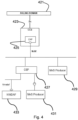
- Such an example architecture is shown in Figure 4 .
- Billing Domain 421 is connected via a Bx interface to Converged Charging System (CCS) 423.
- CCS 423 comprises Charging Function (CHF) 425.
- CHF Charging Function
- CHF is connected via an Nchf interface to Charging Enablement Function (CEF) 427 and MnS Producer 429.
- CEF 427 is connected to Network Data Analytics Function (NWDAF) 433 via a Nnwdaf interface.
- CEF 427 is also connected to MnS producer 431.
- Charging architecture for the Management Domain is supplied using NWDAF 433 in Figure 4 .
- FIG 5 shows an example that uses Management Data Analytics (MDA) 541.
- NWDAF analytics may also be provided.
- MDA 541 comprises Management Data Analytics Service (MDAS) Producer 535 and one or more MDAS Consumer such as MDAS Consumer 537 and MDAS Consumer 539.
- MDAS Management Data Analytics Service
- MDA 541 is connected to CEF 527 via an MDAS interface 542.
- CEF 527 is connected to CHF 523 via Service based architecture.
- CHF 523 is connected to the Service Based architecture via an Nchf interface.
- CEF 527 is connected to Billing Domain 521 via a Bx interface.
- MDA 541 is connected to MnS Producer 529, NWDAF 533 (via an Nnwdaf interface) and an Other MDAS Producer 543.
- 3GPP TS 28.809 and 3GPP TS 28.104 describe generic charging principles
- 3GPP TS 28.201 describes charging for analytics in the control plane (i.e. NWDAF including certain conditions for triggering an event, i.e., time schedule, threshold based and number of notify events).
- 3GPP TS 28.201 also describes a charging process for analytics.
- NWDAF or MDA may include at least one of:
- an MDAS interface 542 towards the charging system (CEF 527, CHF 523, Billing Domain 521, etc.) is used to charge for management data analytics.
- MDAS interface 542 towards the charging system is used for indirect charging and the interaction with NWDAF 533 and MDA 541 is used for indirect charging related to management data analytics and control plane analytics.
- Interdependent processes among MDA 541 and NWDAF 533 may include at least one of the following:
- Such charging conditions related to analytics are able to create charging items with respect to events and/or sessions or a mix as per 3GPP TS 32.290.
- events may be charged immediately i.e., online as the service is offered.
- offline and online charging may be combined to provide converged charging.
- charging can also take into account certain MnS capabilities such as the type of control of the MDA results, e.g., modifying any of the respective attributes listed above taking into account the need for further algorithm training, validation, etc.
- Some examples allow indirect charging, where a consumer requests analytics results which can be computed when the analytics producer receives as input cross-domain analytics in addition to the analytics produced locally. Examples of such situations could occur during service experience MDA 541 requiring NWDAF 533 QoE analytics, or when NWDAF 533 needs RAN analytics based on Minimization of Drive Test (MDT) input data from Operations, Administration and Maintenance (OAM). Charging caused by indirect requests that need interdependent coordination and information exchange among MDA 541 and NWDAF 533 may be considered. Creating a interdependent request between MDA 541 and NWDAF 533 or vice versa consumes computing and communication resource and for these reasons it shall also be included in the process of charging.
- MDT Minimization of Drive Test
- OAM Operations, Administration and Maintenance
- charging aspects shall follow a "master-slave" paradigm with one node either the MDAS 541 or NWDAF 533 (i.e., where the request is placed) in control of charging with certain updates needed in the in between communication in order to provide analytics outputs to Charging function (CHF 523), through CEF 527.
- MDAS Interface 542 can be used for offline charging.
- Offline charging may include, for example, event-based, session-based or a mix of event-based and session-based charging.
- a Charging Data Request and/or a Charging Date response or offline charging may include one or more attributes. These attributes are described in the following paragraphs.
- the attributes may include an attribute indicating processing effort for providing the MDA results. This may include one or more of CPU usage, RAM usage, storage required, consumed energy, any of the PMs in 3GPP TS 28.552.
- the attributes may indicate the type of analytics used in the MDA results. In some examples, the attributes may indicate an AI/ML Model used. In some examples, the attributes may indicate a type of result in the MDA results for example: statistics, predictions, recommendations, a combination of a plurality of types of result.
- the attributes may indicate a category of input data used for the MDA results.
- the data may be indicated as proprietary, may be from a specific group, may related to certain one or more specific geographical areas or one or more managed target objects, etc.
- the attributes may indicate a time of response or prioritization that describes a required urgency of providing the MDA results.
- Different times frames can be considered for charging, e.g., real-time, near real-time or non-real time.
- an indicated time waiting duration X may be indicated, e.g., a time waiting duration of 2 minutes.
- the attributes may indicate a size in, e.g., MBs, or number of reports or notification updates for the MDA results.
- the attributes may indicate a number of reports or notification updates, of analytics output data; (a notification update can assist in a case where an MDAS producer indicates that certain fields related to an MDA output are updated so the MDAS consumer may fetch such new data either from the MDAS producer or from a data server that stores analytics output data.
- the attributes may indicate network and UE conditions upon which the MDA results are provided e.g., upon UE movement, load threshold, etc.
- the attributes may indicate whether trouble shooting information is provided in the MDA report i.e. if the MDAS consumer is enabled to identify a source of potential errors in the MDA report.
- the attributes may indicate whether maintenance capabilities enable the MDA consumer to request AI/ML Model retraining.
- MDAS Interface 542 can be used for online charging.
- Online charging may be used for immediate charging.
- Online charging can be used for Event-based or Session-based charging.
- An Online Charging Data Request and Response may include any of the attributes indicated above for offline charging when certain circumstances are met (for example, reporting conditions related to a network, managed target objects or UEs) and/or when certain conditions are changed by request of an MDA consumer or NWDAF consumer (for example, urgency of delivering a report or an immediate report request).
- Converged charging may combine both offline and online charging.
- An MDAS 542 or NWDAF 533 can create three type of events when receiving an interrelated request:
- Figure 6 shows an example method that may take place at an Analytics Master 698, Analytics Slave 699 and a CHF 652.
- Figure 6 shows an example method including both offline and online charging scenarios for MDA.
- analytics master 670 may comprise an MDA and Analytics Slave 699 may comprise an NWDAF.
- Analytics Master 698 may comprise an NWDAF and Analytics Slave 699 may comprise an MDA.
- Each of Analytics Slave 699 and Analytics Master 698 may comprise network node.
- the Analytics Master 698 comprises the NWDAF
- Analytics Slave 699 comprises the MDA.
- the Analytics Master 698 comprises the MDA and Analytics Slave 699 comprises the NWDAF.
- Session based MDA can be used to provide a series of analytics outputs or reports.
- 661 to 663 show preparation, with 661a to 661d providing the preparation and execution of inter-related analytics, analytics request and analytics service delivery before a delivering a charging procedure in 665 to 667.
- Analytics Master 698 may perform a resource preparation event. This may comprise using input data to produce an MDA output. This may also comprise AI/ML Model training and/or AI/ML Model validation.
- Analytics Master 698 sends a request for inter-related analytics to Analytics Slave 699.
- Analytics Master 698 may send at least one of the following, determined at 661a: the type of analytics needed from the Analytics Slave 699, the AI/ML model and the input data type and sources that shall be used, the urgency, scheduling and type of the reporting indicating also optional filtering conditions.
- Analytics Slave 699 may perform resource preparation for input data of the inter-related request.
- Analytics Slave 699 sends analytics content and/or service delivery information to Analytics Master 698.
- the analytics content and/or service delivery information may also comprise charging information.
- the analytics content and/or service delivery information sent at 661d may comprise a report and corresponding charging information based on the request of 661b.
- the charging information my correspond to the amount of computational resources and data transported.
- Analytics Master 698 may provide a request for resource usage for an analytics calculation. From a charging view, it may be desired to charge for the use of these resources. This may comprise using a request to use an AI/ML model. The request may indicate the type of AI/Model to be used. The request may also indicate a type of analytics to be used.
- Analytics Master 698 may perform analytics content/service delivery. This may be provided to an analytics consumer (this may be an MDAS consumer, NWDAF analytics consumer or a consumer of both MDAS and NWDAF analytics).
- the analytics content/service delivered may be include the analytics content provided from Analytics Slave 699 to Analytics Master 698 at 661d.
- a charging procedure for at least one of 661a, 661b, 661c, 661d, 662 and 663 is performed at 664.
- CHF 652 does not have a currently open Charging Data Record (CDR) for Analytics Slave 699 or Analytics Master 698.
- CDR Charging Data Record
- Analytics Master 698 sends an initial charging data request to CHF 652.
- CHF 652 opens a CDR for Analytics Master 698.
- the CDR can also be used for any charging of Analytics Slave 699.
- CHF 652 sends an initial charging data response to Analytics Master 698 indicating a CDR for Analytics Master 698 has been opened.
- 668 to 674 show inter-related analytics charging update process due to request for maintenance of AI/ML model (i.e., a re-training request). 668 may also cause further charging events depending on the modification of the analytics request, e.g., if analytics is requested for a greater geographical area may cause a bigger size MDA output, including also charging due to inter-related analytics requests among the Analytics Master 698 and Analytics Slave 699.
- the analytics content/service delivery from 663 is ongoing.
- the analytics content/service delivery from 663 may be modified.
- an AI/ML model used by Analytics Master 698 or Analytics Master 699 may be changed or re-trained.
- Analytics Master 698 and/or Analytics Slave 699 may perform a request for at least one of AI/ML model maintenance, training, validation. This may comprise using a request to use an AI/ML model.
- the request may indicate the type of AI/Model to be used.
- the request may also indicate a type of analytics to be used.
- a charging update procedure is performed. This may include updating a CDR of Analytics Master 698 and Analytics Slave 699 with charging information of at least one of 668 and 669.
- a trigger for reporting usage is triggered.
- Analytics Master 698 sends an update charging data request to CHF 652.
- CHF 652 updates the CDR for Analytics Master 698.
- CHF 652 sends an update charging data response to Analytics Master 698 indicating the CDR for Analytics Master 698 and Analytics Slave 699 has been updated.
- the update may include charging information on any of 668, 669.
- modification 668 may cause further charging events depending on the modification of the analytics request, e.g., if analytics is requested for a greater geographical area may cause a bigger size analytics output.
- 675 to 680 show further analytics service delivery and a finalisation of the session-based charging procedure.
- analytics service delivery by Analytics Master 698 and Analytics Slave 699 may be ongoing.
- Analytics Master 698 releases the analytics service.
- 677 shows a procedure for closing a CDR of Analytics Master 698 and Analytics Slave 699 after the analytics service is released.
- Analytics Master 698 sends a termination charging data request to CHF 652.
- CHF 652 closes the CDR of Analytics Master 698 and Analytics Slave 699.
- CHF 652 sends a termination charging data response to Analytics Master 698 indicating the CDR for Analytics Master 698 and Analytics Slave 699 has been closed.
- the CDR may be updated with information from 675 and 676 before being closed.
- An on-demand analytics request step 681 may represent, e.g., a real-time urgent request for latency prediction, with steps 681b-681d showing the preparation and execution of inter-related analytics.
- Two charging options are depicted: 683 related to offline charging or post event in steps 684 to 686; and 687 related to online charging or immediate charging in 688 to 693.
- 683 related to offline charging or post event in steps 684 to 686
- 687 related to online charging or immediate charging in 688 to 693.
- negotiation of the requested MDA capabilities considering the required charging units can optionally be performed at 688.
- 681 to 694 shows event-based charging for Analytics Master 698 and Analytics Slave 699. This may be considered to be "on-demand” charging.
- Two options are provided at 682 for events-based charging as 683 and 687.
- 683 shows an offline (post-event) option.
- 687 shows an online (immediate) option.
- Analytics Master 698 may receive an on-demand request for resource usage.
- the request may comprise a request for analytics content/service delivery from a consumer.
- Analytics Master 698 sends a request for on-demand inter-related analytics to Analytics Slave 699.
- Analytics Master 698 may send at least one of the following, determined at 681: the type of analytics needed from the Analytics Slave 699, the AI/ML model and the input data type and sources that shall be used, the urgency, scheduling and type of the reporting indicating also optional filtering conditions.
- Analytics Slave 699 may perform resource preparation for input data of the inter-related request.
- Analytics Slave 699 sends analytics content and/or service delivery information to Analytics Master 698.
- the analytics content and/or service delivery information may also comprise charging information.
- the analytics content and/or service delivery information sent at 681d may comprise a report and corresponding charging information based on the request of 681b.
- the charging information my correspond to the amount of computational resources and data transported.
- a charging data request for the event is sent at 684 from Analytics Master 698 to CHF 652.
- the request may indicate information about the event, for example CPU usage, storage requirements, communications resource usage, etc.
- CHF 652 creates a CDR for the Analytics Master 698 and Analytics Slave 699 for the event.
- CHF 752 sends a charging data response to Analytics Master 698 indicating that the CDR has been created.
- Analytics service delivery shown at 694 may occur before 683. In some examples, analytics server delivery shown at 694 may continue after 683.
- a charging data request 678 may be sent from Analytics Master 698 to CHF 652 during the events 681, 681b, 681c and 681d.
- a required number of charging units may be determined/negotiated with an MDAS/NWDAF consumer.
- the event and the amount of charging units for the event can then be sent at 689.
- CHF 652 may create at least one of an account, rating, control information for Analytics Master 698 and Analytics Slave 699.
- a CDR is created for the event for the Analytics Master 698 and Analytics Slave 699.
- a charging data response is sent from CHF 652 to Analytics Master 698 with a number of granted charging units for the event.
- Analytics Master 698 may supervise the event to determine that the number of granted charging units is not exceeded.
- Analytics Master 698 may deliver the analytics service.
- the analytics service may also be provided by Analytics Slave 699.
- charging data requests and responses may be sent between an Analytics Master 698 and CHF 652 to open, update, and close a CDR.
- the requests and responses may be sent in some examples via an MDAS interface between the MDAS producer and the CHF and also via a CEF. This provides an efficient and secure method for managing charging data for events and session-based MDA.
- Table 1 An example data structure common to operations in response and request semantics.
- Session Identifier O c O c This field identifies the charging session.
- Subscriber Identifier O M O M This field contains the identification of the individual subscriber that uses the requested service.
- NF Consumer Identification M M This is a grouped field which contains a set of information identifying the NF consumer of the charging service.
- NF Functionality M M This field contains the function of the NF Name O c O c This fields holds the name (i.e. UUID) of the NF consumer. At least one of the NF Address or NF Name shall be present.
- NF Address O c O c This field holds the address (i.e. IP address and/or FQDN) of NF consumer. At least one of the NF Address or NF Name shall be present.
- NF PLMN ID O c O c This field holds the PLMN ID of the network the NF consumer belongs to.
- Type of MDA Service M M M This field holds the name or identity of the analytics.
- Inter-depended Analytics Type of Service O c O c This field holds the name or identity of the inter-depended analytics AI/ML Model M M
- This field holds the name or identity of the AI/ML learning model.
- Inter-depended Analytics AI/ML Model O c O c This field holds the name or identity of the inter-depended AI/ML learning model.
- Type of MDA Result M M This field refers to the type of MDA result, it can be (i) a numeric result, i.e., statistics or prediction, (ii) root cause analysis result or (iii) recommendation Analytics inter-depended Type of MDA Result O c O c
- This field refers to the type of result analytics that the master analytics requests from the slave analytics and it can be (i) a numeric result, i.e., statistics or prediction, (ii) root cause analysis result or (iii) recommendation.
- this reporting method can be different from the MDA or NWDAF reporting method and that it is determined at the analytics master node.
- MDA Conditions O O Correlated input that can be used for more accurate rating group or for quota granting
- Analytics inter-depended Conditions O c O c Correlated input that can be used for more accurate rating group or for quota granting in the analytics slave Offline or online M M
- This field indicate that the MDA output is related to offline or online charging.
- Analytics inter-depended O c O c This field indicates inter-dependent analytics
- MDA Real-time Reporting O M O M This field indicate that the MDA output is related to real-time reporting.
- MDA Near real-time Reporting O M O M This field indicate that the MDA output is related to near real-time reporting.
- Analytics Inter-depended Near real-time Reporting O c O c This field indicate that the inter-dependent analytics output reporting at the analytics slave is near real-time.
- MDA Non-real-time Reporting O M O M This field indicate that the MDA output is related to non-real-time reporting.
- Analytics Inter-depended non-real-time Reporting O c O c This field indicate that the inter-dependent analytics output reporting at the analytics slave is non-real time.
- Input Data Source Recording O O This field indicates the option of monitoring the data sources used as input to the AI/ML model in case of a fault to enable backtracking for root cause analysis.
- Analytics inter-depended input data source recording O c O c This field indicates the option of monitoring the data sources used as input to the AI/ML model in case of a fault to enable backtracking for root cause analysis for the case of inter-dependent analytics at the analytics slave.
- AI/ML Training Request M M This field indicates the training or retraining request from an MDA MnS consumer for the AI/ML model that is used.
- AI/ML Training Request in Analytics Slave O c O c This field indicates the training or retraining request issued from the analytics master towards the analytics slave for the AI/ML model that is used.
- Charging Identifier O M - This field contains the charging identifier allowing correlation of charging information. Only applicable if not provided in the NF (CTF) consumer specific structure.
- Invocation Timestamp M M This field holds the timestamp of the charging service invocation by the NF consumer
- Invocation Sequence Number M M This field contains the sequence number of the charging service invocation by the NF consumer in a charging session.
- Retransmission Indicator O c O c This field indicates if included, this is a retransmitted request message.
- One-time Event O c - This field indicates, if included, that this is event based charging and whether this is a one-time event in that there will be no update or termination.
- One-time Event Type O c - This field indicated the type of the one-time event, i.e. Immediate or Post event charging.
- Notify URI O c - This field contains URI to which notifications are sent by the CHF. The latest received value shall always be used at notifications.
- Supported Features O c - This field indicates the features supported by the NF consumer.
- O c O c This field identifies the event(s) triggering the request and is common to all Multiple Unit Usage occurrences. Multiple Unit Usage O c O c This field contains the parameters for the quota management request and/or usage reporting. It may have multiple occurrences. Rating Group M M This field holds the identifier of a rating group. Requested Unit O c - This field indicates, if included, that quota management is required. It may additionally contain the amount of requested service units for a particular category. Time O c - This field holds the amount of requested time. Total Volume O c - This field holds the amount of requested volume in both uplink and downlink directions. Uplink Volume O c - This field holds the amount of requested volume in uplink direction.
- Downlink Volume O c - This field holds the amount of requested volume in downlink direction.
- Service Specific Units O c - This field holds the amount of requested service specific units.
- Used Unit Container O c O c This field contains the amount of used non-monetary service units measured up to the triggers and trigger timestamp. It may have multiple occurrences.
- Service Identifier O c O c This field holds the Service Identifier.
- Quota management Indicator O c - This field holds an indicator on whether the reported used units are with quota management control, without quota management control or with quota management control temporary suspended. If the field is not present, it indicates the used unit is without quota management applied.
- Triggers O c O c This field holds reason for charging information reporting or closing for the used unit container.
- Trigger Timestamp O c O c This field holds the timestamp of the trigger.
- Time O c O c This field holds the amount of used time.
- Information Element Converged Charging Category Offline Only Charging Category Description Total Volume O c O c This field holds the amount of used volume in both uplink and downlink directions.
- Uplink Volume O c O c This field holds the amount of used volume in uplink direction.
- Downlink Volume O c O c This field holds the amount of used volume in downlink direction.
- Service Specific Unit O c O c This field holds the amount of used service specific units.
- Event Time Stamps O c O c This field holds the timestamps of the event reported in the Service Specific Units, if the reported units are event based.
- Local Sequence Number O M O M This field holds the container sequence number.
- Table 1 some information elements can be used for MDA charging records.
- an indication of an AI/ML model used for an MDAS procedure may be included as an information element in a charging data request or charging data response. According to some examples this information element may be called "AI/ML Model”.
- a size of an MDA report needed to complete a requested MDA result may be included as an information element in a charging data request or charging data response. According to some examples this information element may be called "Size of MDA Report".
- an MDA conditions information element included as an information element in a charging data request or charging data response may indicate a rating group or quota granting. According to some examples this information element may be called "MDA Conditions".
- an information element indicating whether the MDA output is related to offline or online charging may be included element in a charging data request or charging data response. According to some examples this information element may be called "Offline or online”.
- an information element in the charging data request or response may indicate that the MDA output is related to real-time reporting. According to some examples this information element may be called “MDA Real-time Reporting”. An information element in the charging data request or response may indicate that the MDA output is related to near real-time reporting. According to some examples this information element may be called “MDA Near real-time Reporting”. An information element in the charging data request or response may indicate that the MDA output is related to non-real-time reporting. According to some examples this information element may be called "MDA Non-real-time Reporting".
- an information element in the charging data request or response may indicate that an option is available to the MDAS consumer to monitor the data sources used as input to the AI/ML model in case of a fault to enable backtracking for root cause analysis. According to some examples this information element may be called "Input Data Source Recording".
- Table 1 Some information elements in Table 1 can be used for NWDAF requests and reporting or for MDA MnS requests and reporting. These are considered below.
- an information element in the charging data request or response may indicate a name or an identity of the analytics that have been or are to be used. According to some examples this information element may be called "Type of MDA Service”.
- an information element in the charging data request or response may indicate a type of MDA results, which may comprise a numeric result, i.e., statistics or prediction, root cause analysis result or recommendation. According to some examples this information element may be called "Type of MDA Result”.
- an information element in the charging data request or response may indicate the CPU cycles needed to compute the requested MDA result. According to some examples this information element may be called "MDA CPU usage”.
- an information element in the charging data request or response may indicate the memory needed to compute the requested MDA result. According to some examples this information element may be called "MDA Memory usage”.
- an information element in the charging data request or response may indicate the size of the input data needed to compute the requested MDA result. According to some examples this information element may be called "Input Data”.
- an information element in the charging data request or response may indicate the type of reporting requested. According to some examples this information element may be called "MDA Reporting Method”.
- an information element in the charging data request or response may indicate an AI/ML model that is used in a training or re-training request from an MDA MnS consumer. According to some examples this information element may be called "AI/ML Training Request”.
- Table 1 Some information elements in Table 1 can be used for inter-dependent analytics between NWDAF and MDAS. These are considered below.
- an information element in the charging data request or response may indicate the name or identity of the inter-dependent analytics. According to some examples this information element may be called "Inter-depended Analytics Type of Service”.
- an information element in the charging data request or response may indicate the name or identity of the inter-dependent AI/ML learning model. According to some examples this information element may be called "Inter-depended Analytics AI/ML Model”.
- an information element in the charging data request or response may refers to the type of result analytics that the master analytics requests from the slave analytics and it can be (i) a numeric result, i.e., statistics or prediction, (ii) root cause analysis result or (iii) recommendation. According to some examples this information element may be called "Analytics Inter-depended Type of MDA Result".
- an information element in the charging data request or response may indicate the CPU cycles needed to determine the attributes related to the inter-dependent request towards the analytics slave. According to some examples this information element may be called "CPU usage for Analytics inter-depended request”.
- an information element in the charging data request or response may indicate the CPU cycles needed to compute the requested inter-dependent analytics result on the analytics slave node. According to some examples this information element may be called "CPU usage for inter-depended analytics on Analytics slave node”.
- an information element in the charging data request or response may indicate the memory needed to store the requested result of the inter-dependent analytics on the analytics slave node. According to some examples this information element may be called "Memory usage for inter-dependent analytics on Analytics slave node".
- an information element in the charging data request or response may indicate the size of the input data instructed by the analytics master node towards the analytics slave node needed to compute the requested analytics result. According to some examples this information element may be called "Analytics inter-depended Input Data".
- an information element in the charging data request or response may indicate size of the input data needed to compute the inter-depended analytics requested result at the analytics slave node. According to some examples this information element may be called "Analytics inter-depended Size of Report”.
- an information element in the charging data request or response may indicate type of reporting between the analytics master and analytics slave. It shall be noted that this reporting method can be different from the MDA or NWDAF reporting method and that it is determined at the analytics master node. According to some examples this information element may be called "Analytics inter-depended Reporting Methods".
- an information element in the charging data request or response may indicate correlated input that can be used for more accurate rating group or for quota granting in the analytics slave. According to some examples this information element may be called "Analytics inter-depended Conditions".
- an information element in the charging data request or response may indicate that the inter-dependent analytics output reporting at the analytics slave is real-time. According to some examples this information element may be called "Analytics Inter-depended Real-time Reporting".
- an information element in the charging data request or response may indicate that the inter-dependent analytics output reporting at the analytics slave is near real-time. According to some examples this information element may be called "Analytics Inter-depended Near real-time Reporting".
- an information element in the charging data request or response may indicate that the inter-dependent analytics output reporting at the analytics slave is non-real-time. According to some examples this information element may be called "Analytics Inter-depended Non-real-time Reporting".
- an information element in the charging data request or response that indicates the option of monitoring the data sources used as input to the AI/ML model in case of a fault to enable backtracking for root cause analysis for the case of inter-dependent analytics at the analytics slave.
- this information element may be called "Analytics Inter-depended input data source recording”.
- end-to-end analytics charging can be provided in a 5G network.
- interdependency between MDA and NWDAF analytics is taken into account so that these complimentary analytics can be used for a specific UE(s), session or service experience.
- Figure 7 shows an example method flow performed by a first apparatus.
- the first apparatus may comprise a MN.
- the first apparatus may comprise a MDAS or NWDAF.
- the method comprises receiving, at a first apparatus and from a second apparatus, a first request for analytics.
- the second apparatus may comprise an analytics consumer.
- the analytics consumer may comprise one or more computing devices.
- the method comprises: sending, based on the first request and from the first apparatus to a third apparatus, a second request, the second request being for coordination between the first apparatus and the third apparatus to provide the analytics, the second request comprising information of the analytics.
- the third apparatus may comprise a slave node.
- the third apparatus may comprise a MDAS or NWDAF.
- Figure 8 shows an example method flow performed by a first apparatus.
- the first apparatus may comprise a SN.
- the first apparatus may comprise a MDAS or NWDAF.
- the method comprises receiving, at the first apparatus and from a second apparatus, a first request for analytics for a third apparatus.
- the second apparatus may comprise a MN in some examples.
- the third apparatus may comprise an analytics consumer.
- the method comprises performing, by the first apparatus, the analytics based on the first request.
- the method comprises sending, from the first apparatus to the second apparatus, a response comprising information reporting at least one of an amount of computational resources used to perform the analytics at the first apparatus and data provided by the analytics at the first apparatus.
- Figure 9 shows an example method flow performed by a first apparatus.
- the first apparatus may comprise a CEF.
- the method comprises receiving, at a first apparatus from a second apparatus, a request to open a charging data record for analytics, the analytics provided from the second apparatus and a third apparatus to a fourth apparatus, wherein the request to open a charging data record for the MDAS comprises at least one information element describing the analytics.
- the second apparatus comprises a MN
- the third apparatus comprises a SN
- the fourth apparatus comprises an analytics consumer.
- the method comprises opening the charging data record.
- the method comprises sending, to the second apparatus, a response confirming that the charging data record has been opened.
- Figure 10 shows a schematic representation of non-volatile memory media 1000a (e.g. computer disc (CD) or digital versatile disc (DVD)) and 1000b (e.g. universal serial bus (USB) memory stick) storing instructions and/or parameters 1002 which when executed by a processor allow the processor to perform one or more of the steps of the above-described methods.
- 1000a e.g. computer disc (CD) or digital versatile disc (DVD)
- 1000b e.g. universal serial bus (USB) memory stick
- apparatuses may comprise or be coupled to other units or modules etc., such as radio parts or radio heads, used in or for transmission and/or reception.
- apparatuses have been described as one entity, different modules and memory may be implemented in one or more physical or logical entities.
- the various embodiments may be implemented in hardware or special purpose circuitry, software, logic or any combination thereof. Some aspects of the disclosure may be implemented in hardware, while other aspects may be implemented in firmware or software which may be executed by a controller, microprocessor or other computing device, although the disclosure is not limited thereto. While various aspects of the disclosure may be illustrated and described as block diagrams, flow charts, or using some other pictorial representation, it is well understood that these blocks, apparatus, systems, techniques or methods described herein may be implemented in, as non-limiting examples, hardware, software, firmware, special purpose circuits or logic, general purpose hardware or controller or other computing devices, or some combination thereof.
- circuitry may refer to one or more or all of the following:
- circuitry also covers an implementation of merely a hardware circuit or processor (or multiple processors) or portion of a hardware circuit or processor and its (or their) accompanying software and/or firmware.
- circuitry also covers, for example and if applicable to the particular claim element, a baseband integrated circuit or processor integrated circuit for a mobile device or a similar integrated circuit in server, a cellular network device, or other computing or network device.
- the embodiments of this disclosure may be implemented by computer software executable by a data processor of the mobile device, such as in the processor entity, or by hardware, or by a combination of software and hardware.
- Computer software or program also called program product, including software routines, applets and/or macros, may be stored in any apparatus-readable data storage medium and they comprise program instructions to perform particular tasks.
- a computer program product may comprise one or more computer-executable components which, when the program is run, are configured to carry out embodiments.
- the one or more computer-executable components may be at least one software code or portions of it.
- any blocks of the logic flow as in the Figures may represent program steps, or interconnected logic circuits, blocks and functions, or a combination of program steps and logic circuits, blocks and functions.
- the software may be stored on such physical media as memory chips, or memory blocks implemented within the processor, magnetic media such as hard disk or floppy disks, and optical media such as for example DVD and the data variants thereof, CD.
- the physical media is a non-transitory media.
- non-transitory is a limitation of the medium itself (i.e., tangible, not a signal) as opposed to a limitation on data storage persistency (e.g., RAM vs. ROM).
- the memory may be of any type suitable to the local technical environment and may be implemented using any suitable data storage technology, such as semiconductor based memory devices, magnetic memory devices and systems, optical memory devices and systems, fixed memory and removable memory.
- the data processors may be of any type suitable to the local technical environment, and may comprise one or more of general purpose computers, special purpose computers, microprocessors, digital signal processors (DSPs), application specific integrated circuits (ASIC), FPGA, gate level circuits and processors based on multi core processor architecture, as non-limiting examples.
- Embodiments of the disclosure may be practiced in various components such as integrated circuit modules.
- the design of integrated circuits is by and large a highly automated process.
- Complex and powerful software tools are available for converting a logic level design into a semiconductor circuit design ready to be etched and formed on a semiconductor substrate.
Landscapes
- Engineering & Computer Science (AREA)
- Computer Networks & Wireless Communication (AREA)
- Signal Processing (AREA)
- Artificial Intelligence (AREA)
- Computer Vision & Pattern Recognition (AREA)
- Databases & Information Systems (AREA)
- Evolutionary Computation (AREA)
- Medical Informatics (AREA)
- Software Systems (AREA)
- Business, Economics & Management (AREA)
- Accounting & Taxation (AREA)
- Mobile Radio Communication Systems (AREA)
Priority Applications (1)
| Application Number | Priority Date | Filing Date | Title |
|---|---|---|---|
| EP22189086.6A EP4319082A1 (fr) | 2022-08-05 | 2022-08-05 | Procédé, appareil et programme informatique |
Applications Claiming Priority (1)
| Application Number | Priority Date | Filing Date | Title |
|---|---|---|---|
| EP22189086.6A EP4319082A1 (fr) | 2022-08-05 | 2022-08-05 | Procédé, appareil et programme informatique |
Publications (1)
| Publication Number | Publication Date |
|---|---|
| EP4319082A1 true EP4319082A1 (fr) | 2024-02-07 |
Family
ID=83148981
Family Applications (1)
| Application Number | Title | Priority Date | Filing Date |
|---|---|---|---|
| EP22189086.6A Pending EP4319082A1 (fr) | 2022-08-05 | 2022-08-05 | Procédé, appareil et programme informatique |
Country Status (1)
| Country | Link |
|---|---|
| EP (1) | EP4319082A1 (fr) |
Cited By (1)
| Publication number | Priority date | Publication date | Assignee | Title |
|---|---|---|---|---|
| WO2025233910A1 (fr) * | 2024-05-10 | 2025-11-13 | Telefonaktiebolaget Lm Ericsson (Publ) | Procédé et appareil d'analyse de données sur un groupe d'équipements utilisateur associés à un emplacement pour des services de localisation |
Citations (2)
| Publication number | Priority date | Publication date | Assignee | Title |
|---|---|---|---|---|
| US20210021494A1 (en) * | 2019-10-03 | 2021-01-21 | Intel Corporation | Management data analytics |
| WO2022069063A1 (fr) * | 2020-10-02 | 2022-04-07 | Lenovo (Singapore) Pte. Ltd. | Notification de validité pour un modèle d'apprentissage automatique |
-
2022
- 2022-08-05 EP EP22189086.6A patent/EP4319082A1/fr active Pending
Patent Citations (2)
| Publication number | Priority date | Publication date | Assignee | Title |
|---|---|---|---|---|
| US20210021494A1 (en) * | 2019-10-03 | 2021-01-21 | Intel Corporation | Management data analytics |
| WO2022069063A1 (fr) * | 2020-10-02 | 2022-04-07 | Lenovo (Singapore) Pte. Ltd. | Notification de validité pour un modèle d'apprentissage automatique |
Non-Patent Citations (8)
| Title |
|---|
| "3rd Generation Partnership Project; Technical Specification Group Services and System Aspects; Charging management; Network slice performance and analytics charging in the 5G System (5GS); Stage 2 (Release 16)", no. V2.0.0, 9 September 2020 (2020-09-09), pages 1 - 23, XP051926006, Retrieved from the Internet <URL:ftp://ftp.3gpp.org/Specs/archive/28_series/28.201/28201-200.zip 28201-200.docx> [retrieved on 20200909] * |
| 3GPP TS 23.288 |
| 3GPP TS 28.104 |
| 3GPP TS 28.201 |
| 3GPP TS 28.552 |
| 3GPP TS 28.809 |
| 3GPP TS 32.240 |
| 3GPP TS 32.290 |
Cited By (1)
| Publication number | Priority date | Publication date | Assignee | Title |
|---|---|---|---|---|
| WO2025233910A1 (fr) * | 2024-05-10 | 2025-11-13 | Telefonaktiebolaget Lm Ericsson (Publ) | Procédé et appareil d'analyse de données sur un groupe d'équipements utilisateur associés à un emplacement pour des services de localisation |
Similar Documents
| Publication | Publication Date | Title |
|---|---|---|
| US11451452B2 (en) | Model update method and apparatus, and system | |
| EP4489467A1 (fr) | Procédé et appareil de communication utilisés pour apprendre un modèle d'apprentissage automatique | |
| EP3837805B1 (fr) | Procédés, appareil et supports lisibles par ordinateur prenant en charge des abonnements à des événements dans un réseau central | |
| CN111182568A (zh) | 通信方法、装置、计算机可读介质及电子设备 | |
| WO2019184433A1 (fr) | Procédé et dispositif de surveillance de données de réseau | |
| EP4122162B1 (fr) | Analyse de performance de réseau efficace en ressources | |
| CN112218272A (zh) | 一种事件订阅方法、装置及设备 | |
| US20240397480A1 (en) | Intelligent paging | |
| US20230065199A1 (en) | Method, apparatus and computer program | |
| CN119856472A (zh) | 多域通信网络中的操作异常检测和隔离 | |
| EP4156749A1 (fr) | Appareil, procédé et programme informatique | |
| CN116866941A (zh) | 设备确定方法、装置及通信设备 | |
| CN116325704B (zh) | 方法、装置和计算机可读介质 | |
| EP4270876B1 (fr) | Procédés et appareils de facturation dans un réseau de communication en utilisant mdas | |
| EP4610897A1 (fr) | Procédé de communication, et appareil | |
| EP4412288A1 (fr) | Formation de modèles spécifiques ou génériques pour sous-ensemble(s) de classes de capabilité d'équipements utilisateurs | |
| WO2025008922A1 (fr) | Procédé et système d'enrichissement d'événements de trace de session de réseau d'accès radio (ran) 5g | |
| EP4084372B1 (fr) | Procédé et appareil pour systèmes de communication comportant des fonctions d'analyse de données de gestion | |
| US12593235B2 (en) | Analytics performance management | |
| US20260025316A1 (en) | Method, apparatus and computer program | |
| WO2025236483A1 (fr) | Techniques de gestion de données de détection sans fil | |
| WO2025236290A1 (fr) | Optimisation de performance avec analyse de corrélation et d'association | |
| Zhang et al. | Artificial intelligence in mobile communication network | |
| CN121968316A (zh) | 一种通信方法及装置 | |
| US20260025317A1 (en) | Information processing method and apparatus, and network function |
Legal Events
| Date | Code | Title | Description |
|---|---|---|---|
| STAA | Information on the status of an ep patent application or granted ep patent |
Free format text: STATUS: UNKNOWN |
|
| PUAI | Public reference made under article 153(3) epc to a published international application that has entered the european phase |
Free format text: ORIGINAL CODE: 0009012 |
|
| STAA | Information on the status of an ep patent application or granted ep patent |
Free format text: STATUS: THE APPLICATION HAS BEEN PUBLISHED |
|
| AK | Designated contracting states |
Kind code of ref document: A1 Designated state(s): AL AT BE BG CH CY CZ DE DK EE ES FI FR GB GR HR HU IE IS IT LI LT LU LV MC MK MT NL NO PL PT RO RS SE SI SK SM TR |
|
| STAA | Information on the status of an ep patent application or granted ep patent |
Free format text: STATUS: REQUEST FOR EXAMINATION WAS MADE |
|
| 17P | Request for examination filed |
Effective date: 20240805 |
|
| RBV | Designated contracting states (corrected) |
Designated state(s): AL AT BE BG CH CY CZ DE DK EE ES FI FR GB GR HR HU IE IS IT LI LT LU LV MC MK MT NL NO PL PT RO RS SE SI SK SM TR |
|
| STAA | Information on the status of an ep patent application or granted ep patent |
Free format text: STATUS: THE APPLICATION HAS BEEN WITHDRAWN |