EP4318293B1 - Verfahren zur erzeugung von einem nachweis der verstrichenen zeit zwischen ereignissen in einem asynchronen knotennetzwerk - Google Patents
Verfahren zur erzeugung von einem nachweis der verstrichenen zeit zwischen ereignissen in einem asynchronen knotennetzwerk Download PDFInfo
- Publication number
- EP4318293B1 EP4318293B1 EP23189573.1A EP23189573A EP4318293B1 EP 4318293 B1 EP4318293 B1 EP 4318293B1 EP 23189573 A EP23189573 A EP 23189573A EP 4318293 B1 EP4318293 B1 EP 4318293B1
- Authority
- EP
- European Patent Office
- Prior art keywords
- time
- node
- transaction
- clock
- elapsed
- Prior art date
- Legal status (The legal status is an assumption and is not a legal conclusion. Google has not performed a legal analysis and makes no representation as to the accuracy of the status listed.)
- Active
Links
Images

Classifications
-
- G—PHYSICS
- G06—COMPUTING OR CALCULATING; COUNTING
- G06F—ELECTRIC DIGITAL DATA PROCESSING
- G06F21/00—Security arrangements for protecting computers, components thereof, programs or data against unauthorised activity
- G06F21/60—Protecting data
- G06F21/64—Protecting data integrity, e.g. using checksums, certificates or signatures
-
- G—PHYSICS
- G06—COMPUTING OR CALCULATING; COUNTING
- G06F—ELECTRIC DIGITAL DATA PROCESSING
- G06F1/00—Details not covered by groups G06F3/00 - G06F13/00 and G06F21/00
- G06F1/04—Generating or distributing clock signals or signals derived directly therefrom
- G06F1/06—Clock generators producing several clock signals
-
- H—ELECTRICITY
- H04—ELECTRIC COMMUNICATION TECHNIQUE
- H04L—TRANSMISSION OF DIGITAL INFORMATION, e.g. TELEGRAPHIC COMMUNICATION
- H04L63/00—Network architectures or network communication protocols for network security
- H04L63/12—Applying verification of the received information
- H04L63/123—Applying verification of the received information received data contents, e.g. message integrity
-
- H—ELECTRICITY
- H04—ELECTRIC COMMUNICATION TECHNIQUE
- H04L—TRANSMISSION OF DIGITAL INFORMATION, e.g. TELEGRAPHIC COMMUNICATION
- H04L9/00—Cryptographic mechanisms or cryptographic arrangements for secret or secure communications; Network security protocols
- H04L9/08—Key distribution or management, e.g. generation, sharing or updating, of cryptographic keys or passwords
- H04L9/0861—Generation of secret information including derivation or calculation of cryptographic keys or passwords
- H04L9/0877—Generation of secret information including derivation or calculation of cryptographic keys or passwords using additional device, e.g. trusted platform module [TPM], smartcard, USB or hardware security module [HSM]
-
- H—ELECTRICITY
- H04—ELECTRIC COMMUNICATION TECHNIQUE
- H04L—TRANSMISSION OF DIGITAL INFORMATION, e.g. TELEGRAPHIC COMMUNICATION
- H04L9/00—Cryptographic mechanisms or cryptographic arrangements for secret or secure communications; Network security protocols
- H04L9/08—Key distribution or management, e.g. generation, sharing or updating, of cryptographic keys or passwords
- H04L9/0894—Escrow, recovery or storing of secret information, e.g. secret key escrow or cryptographic key storage
- H04L9/0897—Escrow, recovery or storing of secret information, e.g. secret key escrow or cryptographic key storage involving additional devices, e.g. trusted platform module [TPM], smartcard or USB
-
- H—ELECTRICITY
- H04—ELECTRIC COMMUNICATION TECHNIQUE
- H04L—TRANSMISSION OF DIGITAL INFORMATION, e.g. TELEGRAPHIC COMMUNICATION
- H04L9/00—Cryptographic mechanisms or cryptographic arrangements for secret or secure communications; Network security protocols
- H04L9/32—Cryptographic mechanisms or cryptographic arrangements for secret or secure communications; Network security protocols including means for verifying the identity or authority of a user of the system or for message authentication, e.g. authorization, entity authentication, data integrity or data verification, non-repudiation, key authentication or verification of credentials
- H04L9/3297—Cryptographic mechanisms or cryptographic arrangements for secret or secure communications; Network security protocols including means for verifying the identity or authority of a user of the system or for message authentication, e.g. authorization, entity authentication, data integrity or data verification, non-repudiation, key authentication or verification of credentials involving time stamps, e.g. generation of time stamps
-
- H—ELECTRICITY
- H04—ELECTRIC COMMUNICATION TECHNIQUE
- H04L—TRANSMISSION OF DIGITAL INFORMATION, e.g. TELEGRAPHIC COMMUNICATION
- H04L9/00—Cryptographic mechanisms or cryptographic arrangements for secret or secure communications; Network security protocols
- H04L9/50—Cryptographic mechanisms or cryptographic arrangements for secret or secure communications; Network security protocols using hash chains, e.g. blockchains or hash trees
-
- G—PHYSICS
- G06—COMPUTING OR CALCULATING; COUNTING
- G06F—ELECTRIC DIGITAL DATA PROCESSING
- G06F1/00—Details not covered by groups G06F3/00 - G06F13/00 and G06F21/00
- G06F1/26—Power supply means, e.g. regulation thereof
- G06F1/32—Means for saving power
- G06F1/3203—Power management, i.e. event-based initiation of a power-saving mode
-
- H—ELECTRICITY
- H04—ELECTRIC COMMUNICATION TECHNIQUE
- H04L—TRANSMISSION OF DIGITAL INFORMATION, e.g. TELEGRAPHIC COMMUNICATION
- H04L2209/00—Additional information or applications relating to cryptographic mechanisms or cryptographic arrangements for secret or secure communication H04L9/00
- H04L2209/56—Financial cryptography, e.g. electronic payment or e-cash
Definitions
- the present invention relates generally to methods of proving the time elapsed between two events in an asynchronous network. It finds particular application in a consensus mechanism relating to a history of transactions on a distributed ledger .
- an initialization algorithm Setup ) of a pair of evaluation parameters ( e k ) and verification ( v k ) according to a security level ( ⁇ ) and a given duration ( T )
- the evaluation function giving an output value ( y ) and a proof ( ⁇ )
- a verification algorithm Verify ) providing a Boolean result from the verification parameter ( v k ), the input and output values ( x, y ) and the proof ( ⁇ ).
- Verifiable duration functions can be implemented in different ways.
- a first approach consists in building such a function by means of a secure enclave or TEE ( Trusted Execution Environment ) . More precisely, such an enclave executes the aforementioned evaluation algorithm. It receives the input value x as well as a pair of evaluation and verification parameters ( e k , v k ), and provides as output, on the one hand, a hashed value y of x, by means of a hash function whose complexity depends on the difficulty parameter ⁇ , and, on the other hand, a proof ⁇ obtained as a signature of y by means of the private key of an asymmetric cryptosystem stored in the enclave.
- the enclave is synchronized on an external clock to perform the evaluation of the duration T . However, this clock is a single point of failure and can be subject to malicious actions likely to corrupt the result of the evaluation.
- a second approach is to sequentially draw random numbers, hash the input value x concatenated with the resulting random number, i.e. x
- This is the principle behind the energy-intensive proof-of-work used in the Bitcoin and Ethereum blockchains.
- the Proof of Elapsed Time (PoET) algorithm is a Nakamoto-style consensus mechanism for permissioned blockchains that requires significantly lower energy consumption than Bitcoin.
- the Proof of Work (PoW) is replaced here by a lottery system that generates a random waiting time for each miner (or validator node) in the chain.
- each miner has a secure enclave (TEE) that provides them with a certified random time that they must wait before being allowed to submit their next block to consensus. Any participating node in the chain must be able to verify that the waiting time was indeed generated by the certified random draw in the secure enclave and that this waiting time was indeed respected by the miner.
- TEE secure enclave
- the drifts of the control clock and the system clock relative to the precision clock are integrated over time by said application and that, when one of them exceeds a predetermined maximum value, the latter is corrected.
- any event for which it is possible to determine the time at which the event occurs can be taken into account among the successive events within the meaning of this disclosure.
- One of the events successive may be for example, but not limited to, the formation of a transaction by the client node.
- One of the successive events can be, for example, the start or end of an operation, for example the start or end of the performance of a function; or the realization of a condition (or criterion), etc.
- the transaction issued by the client node further includes a hash of the application code at the time the transaction is formed.
- the transaction issued by the client node further comprises the value of a transaction counter, said counter being incremented with each transaction issued.
- the transaction issued by the client node may further include a measurement of the time at which the previous transaction was issued, the measurement having been made by means of the control clock and being signed by a private key of the TPM module.
- the client node prior to the emission of the successive transactions, emits a recording transaction to the distributed register, said recording transaction comprising an initial value of the monotonic counter, and indicates the initial values of the control clock, the system clock and the precision clock.
- the verification can be performed by a third-party node of the asynchronous network, called a validator node, for a new transaction issued by the client node, said method being characterized in that the validator node extracts from the current transaction the value of the monotonic account and checks in the distributed ledger that it is identical to that of the previous transaction, then extracts the drifts of the second and third clocks and compares them to a predetermined tolerance margin to verify the consistency of the clocks of the client node.
- a validator node extracts from the current transaction the value of the monotonic account and checks in the distributed ledger that it is identical to that of the previous transaction, then extracts the drifts of the second and third clocks and compares them to a predetermined tolerance margin to verify the consistency of the clocks of the client node.
- the verifier node prior to verifying the consistency of the client node's clocks, ensures using the transaction signature that it has indeed been issued by the client node.
- the verifier node then extracts the value of the precision clock from the client node's transaction and compares it to the value of its own precision clock upon receipt of that transaction, and verifies that the difference of the latter with the former is greater than zero and less than a predetermined maximum propagation time.
- the verifier node is a node having a degree of reliability greater than a predetermined value, the degree of reliability of a node being an increasing function of the number of successfully validated transactions and the time elapsed since its registration in the distributed ledger.
- the validator node issues a transaction, called a validation transaction, including a hash of the validated transaction and the time it was received, as measured by the validator node's precision clock.
- the validator node can pre-check the consistency of its first, second, and third clocks before issuing the validation transaction to the distributed ledger.
- the validation transaction typically includes measurements of the time at which validation is performed using the first, second and third clocks, the value of the validator node's monotonic counter, and the drifts of the seconds ( ⁇ TEE valley ) and third clock ( ⁇ GPS valley ) of the validator node relative to the first clock of the validator node over the time interval elapsed since the last transaction issued by the validator node.
- the validation transaction further comprises a hash of the code executing the verification in the TEE environment of the validator node, at the time when the transaction of the client node is validated.
- a network of asynchronous nodes each node being able to send messages on the network.
- a network of asynchronous nodes we mean that the different nodes of the network are not synchronized by a common clock.
- a distributed ledger which can be a transaction graph or a blockchain.
- the blockchain is formed by the concatenation of temporally ordered transactions stamped by the nodes that issued them.
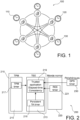
- a network of asynchronous nodes, 100 has been schematically represented in Fig. 1 .
- It comprises at least one transmitter node, 110, capable of generating and issuing a transaction, called a client transaction, providing proof of elapsed time, and at least one validator node, 120, intended to verify the accuracy of the proof thus provided, the validator node storing the transaction in the distributed ledger when the proof is considered correct.
- Each node in the network, 130 can then read the transaction from the ledger and verify that this proof is indeed correct.
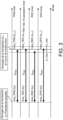
- the generation of proof of elapsed time in the transmitter node uses an embedded system comprising a trusted zone, the architecture of which is schematically represented in Fig. 2 .
- the embedded system or SOM ( System On Module ), 200 can be produced in the form of a daughter card intended to be plugged into the motherboard of the node in question.
- the embedded system comprises a trusted zone 210, itself comprising a secure execution environment, 213, also called TEE ( Trusted Execution Environment ) and a trusted hardware component, 215, also called TPM ( Trusted Platform Module ) .
- the trusted zone, 210 is isolated from the non-secure environment zone, called “normal”, 220.
- the execution code and data residing in the TEE environment are protected against software attacks. More specifically, the confidentiality and integrity of the execution code and data are guaranteed.
- the TEE has a processor and a memory area allowing applications residing there to be executed without risk of corruption.
- An example of a TEE is SGX TM ( Software Guard extensions ) from Intel.
- the TPM module, 215, is a passive device without an operating system but which may contain secure hardware elements such as a safe for storing cryptographic keys, a random number generator, or, as in the present case, a counter acting as a secure timer .
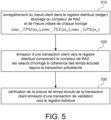
- a trusted application intended to be executed within the TEE environment aims to verify the consistency of the different clocks and to reconcile the measurements of time elapsed between two events, from these same clocks. More precisely, as illustrated in Fig. 3 , the trusted application, 219, hereinafter referred to as ETC_app, ensures that the time intervals respectively measured by the reference clock, the second and, where applicable, the third clock are indeed consistent with the time interval measured by the control clock, in other words that: [Math. 1] ⁇ GPS ⁇ ⁇ TPM ⁇ ⁇ max [Math. 2] ⁇ TEE ⁇ ⁇ TPM ⁇ ⁇ max [Math. 3] ⁇ REE ⁇ ⁇ TPM ⁇ ⁇ max with : [Math.
- the ETC_app application concludes that the measurements of elapsed time between successive events are consistent and transmits a proof of elapsed time message over the network.
- the drifts are estimated here with respect to the control clock, which is the most reliable, and not with respect to the reference clock which is the most precise and the most stable.
- the clocks of the TPM module, of the TEE environment and of the REE environment are corrected for their drift with respect to the reference clock.
- the message can also advantageously include an additional field containing a hashed value of the application code.
- trust, ETC_app by means of a hash function.
- the code in question is the one stored in the TEE environment at the time the ETC_app application performs the consistency check.
- a third-party node receiving a proof of elapsed time message can first verify, using the node's public key, that the elapsed time has been measured by the transmitting node. It can then ensure the consistency of the transmitting node's clocks during the measurement. To do this, it first ensures that the value of the CTRAZ counter has not changed since the previous event, verifies that conditions (1-1), (1-2) and, where applicable, (1-3) are respected by comparing the absolute values
- the embedded system of the node has at least a first clock, called control clock, within a TPM module, a second clock provided by the system operating system of the TEE environment, called the system clock, and a third clock, external and unprotected, of significantly higher precision than the first and second clocks and, for this reason, called the precision clock.
- the embedded system of the node measures the time, or more precisely, the successive instants, at which successive events occurring in the node, or observed events, occur. This time is measured with the first, second and third clocks.
- a trusted application in the TEE zone verifies the consistency of the clocks from the measurements obtained for the later event, time_TPM ( tx i +1 ), time_TEE ( tx i +1 ), and time_GPS ( tx i +1 ). To this end, the application measures the time interval elapsed between the later event and the earlier event, by difference with the measurements made for the earlier event, time_TPM ( tx i ), time_TEE ( tx i ), and time_GPS ( tx i ), also stored in the TEE zone, i.e. ⁇ TPM , ⁇ TEE , ⁇ GPS .
- the trusted application verifies that the elapsed time interval measurements do not differ by more than a predetermined tolerance margin, in other words that the drifts of the second and third clocks relative to the first over the interval separating two successive events are less than a tolerance margin.
- step 440 If so, it is concluded that the clocks are consistent and the method continues to step 440.
- the embedded system declares itself to be faulty.
- step 440 if the accumulation of drifts over time exceeds a predetermined maximum value, the drifts are corrected at 445 based on the precision clock.
- the embedded system forms a proof of elapsed time message as described above.
- the message comprises an event counter, the permanent reset counter, the time at which said event occurred, as measured by means of the different clocks, namely time_TPM ( tx i +1 ), time _ TPM ( tx i +1 ), time_TEE ( tx i +1 ), and time _ GPS ( tx i +1 ) and the drifts of the second and third clocks relative to the control clock, ⁇ TEE , ⁇ GPS .
- the message may further contain the hash of the trusted application code, ETC_app and/or the hash of the time at which the previous event occurred.
- the embedded system signs the message using the node's secret key and transmits the signed message over the network.
- This proof generation method allows a third-party node in the network to verify that the time elapsed between two successive events of the sending node is correct. It can be applied for example to prove the times at which a sensor takes measurements in an IoT network or, as described below, in a consensus mechanism to validate one or more transactions to be added to the distributed ledger .
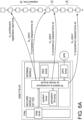
- Fig. 5 represents a method of verifying the time elapsed between successive transactions sent by a node to a distributed ledger.
- a smart contract is a program that is deployed (i.e. stored) in a distributed ledger and can be executed by any node in the network.
- the verification method described below allows a verifier node to verify the time elapsed between two successive transactions issued by a transmitter node, also called a client, to a distributed ledger.
- the transmitter node comprises an embedded system (SOM) as described above in relation to the Fig. 2 .
- SOM embedded system
- a preliminary enrolment phase, 510 during which the sending node transmits a transaction to a first smart contract, SC_REC.
- This registration phase allows the node to authenticate itself to the peers of the network and to store in the chain the initial time of each of the first, second and third clocks, time_TPM ( tx 0 ), time_TEE ( tx 0 ), time_GPS ( tx 0 ) read in the TEE environment of its embedded system.
- the transmitter node can issue, at 520, transactions, called “client” transactions, comprising, on the one hand, a payload to be recorded in the distributed ledger and, on the other hand, proof of time elapsed since the issue of the last transaction.
- client transactions comprising, on the one hand, a payload to be recorded in the distributed ledger and, on the other hand, proof of time elapsed since the issue of the last transaction.
- This transaction can be considered as a special case of message generated according to the proof generation method previously described in relation to the Fig. 5 .
- This client transaction therefore includes the permanent reset counter, the times provided by the various internal clocks, Clk_TPM, Clk_TEE, Clk_GPS, where applicable, Clk_REE, as well as their respective drifts compared to the control clock.
- the client transaction may additionally contain the hashed value of the trusted application code, _app , and/or the time, time_TPM ( tx i ), at which the client node issued the previous transaction.
- Any third-party node in the network can then verify that the time elapsed between two successive transactions of the client node is correct. To do this, it first checks that the permanent reset counter has not varied, then checks that the measurements of time elapsed between the current transaction and the previous transaction, using the different internal clocks, i.e. ⁇ TPM , ⁇ TEE , ⁇ GPS do not differ more than a tolerance margin ⁇ max .
- it can extract the times time_TPM ( tx i +1 ), time_TEE ( tx i +1 ), time_GPS ( tx i +1 ), (if applicable time_REE ( tx i +1 ) ) of the current transaction, and read from the distributed ledger the times time_TPM ( tx i ), time_TEE ( tx i ), time_GPS ( tx i ), ( time_REE ( tx i ), of the previous transaction and deduce the time measurements elapsed between transactions, by the different clocks, namely ⁇ TEE , ⁇ GPS , (and, if applicable, ⁇ REE ).
- the differences between the time measurements must not be greater than the tolerance margin ⁇ max .
- validator nodes playing the role of miners
- a validator node Before issuing such a transaction in 520, a validator node must have previously registered according to the registration procedure described above and have a sufficient reputation rating, as detailed below.
- the validation transaction attests that the validator node has performed a verification of the proof of time elapsed between two successive transactions of a client node. Before proceeding to verify the consistency of the measurements of time elapsed between successive client transactions, the validator node itself ensures the consistency of its own clocks.
- the validation transaction is specific in that it includes in its payload the hashed value of the client transaction that was verified using a hash function as well as the reference time at which that client transaction was verified.
- It also includes, in the same format as the client transaction: a counter incremented for each new transaction issued by the validator node, giving here the index ( j + 1) of the validation transaction; a first time field, giving the time at which the validation occurred, measured by the control clock of the validator node as well as the content of the permanent reset counter of this node, i.e.
- the validation transaction may additionally contain the hashed value of the trusted application code, ETC val _ app and/or the time, time _ TPM val ( tx j +1 ), at which the previous transaction was issued.
- the validator node Before validating a client transaction, the validator node can ensure that the reference time at which it performs the validation is greater than the reference time contained in the client transaction but does not exceed the latter by a maximum propagation time in the network, in other words that: [Math. 8] 0 ⁇ time _ GPS valley tx I + 1 ⁇ time _ GPS tx i + 1 ⁇ ⁇ where ⁇ is a maximum propagation time in the network.
- a node in the network can be assigned a trust/reputation rating based on the number N of validated transactions it has issued and the time elapsed ⁇ since it was registered in the chain. The larger the number N and the longer the time ⁇ , the more trustworthy the node will be. When a node's trust/reputation rating is high enough, it can be allowed to become a validator node.
- the rating threshold required to be a validator node can increase over time, in order to control the total number of verifier nodes in the chain.
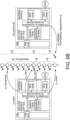
- FIG. 6A illustrates the step of registering a client node, 510, in the method of verifying the time elapsed between successive transactions of the Fig. 5 .
- the registration transaction (denoted by x_enrolment in the figure) of the node is issued at a time noted " registration start time " and recorded in the distributed register (ledger) after being validated. It includes the initial values of the first, second and third clocks, time _ TPM ( tx 0 ), time _ TEE ( tx 0 ), time _ GPS ( tx 0 ), the value of the reset counter (this counter may not have a zero value during recording). It may also include the hash of the trusted application, ETC_app, as well as the time (measured by the TPM clock) at which the previous transaction was issued by the client node.
- the registration transaction is signed using the private key of the node in question.
- This transaction is passed to the recording smart contract, SC_REC. It can then be validated by a validator node, thus simplifying validation because the consistency check of the time elapsed measurements since the previous transaction is omitted here.
- the node can issue client transactions (denoted tx_client ) to the SC_REC smart contract, as soon as it has verified the consistency of its clocks as described above.
- client transactions denoted tx_client
- Each transaction includes a proof of time elapsed between the issued transaction and the previous transaction.
- FIG. 6B schematically represents a step of validation of time elapsed between two successive transactions issued by a client node. Successive transactions of the same node are authenticated by means of their signature.
- a validator node can check the consistency of the elapsed time measurements between successive transactions.
- the validator node first ensures that the value of the reset counter has not varied between the two transactions (no reset of the control clock), reads in the transaction the values of the different internal clocks present in the current transaction, reads in the distributed register (ledger) the values of the internal clocks present in the previous transaction recorded in the distributed register (ledger), and deduces the elapsed time measurements between these two transactions by means of the different clocks, namely ⁇ TPM , ⁇ GPS , ⁇ TEE , and optionally ⁇ REE , and ensures their consistency with each other to within a tolerance margin.
- the validator node transmits a validation transaction to the smart contract, after ensuring the consistency of its own clocks.
- the client transaction is recorded in the distributed register ( ledger ) when it is validated by a predetermined number of validator nodes. Recording can be done in blocks, after a predetermined number of customer transactions have been validated.
Landscapes
- Engineering & Computer Science (AREA)
- Computer Security & Cryptography (AREA)
- Signal Processing (AREA)
- Computer Networks & Wireless Communication (AREA)
- Theoretical Computer Science (AREA)
- General Engineering & Computer Science (AREA)
- General Physics & Mathematics (AREA)
- Physics & Mathematics (AREA)
- Computer Hardware Design (AREA)
- Computing Systems (AREA)
- Health & Medical Sciences (AREA)
- Bioethics (AREA)
- General Health & Medical Sciences (AREA)
- Software Systems (AREA)
- Computer And Data Communications (AREA)
- Electric Clocks (AREA)
- Multi Processors (AREA)
- Synchronisation In Digital Transmission Systems (AREA)
Claims (15)
- Verfahren zum Nachweis der Zeit, die zwischen aufeinanderfolgenden Ereignissen verstrichen ist, die in einem Knoten eines asynchronen Netzwerks auftreten, wobei der Knoten ein eingebettetes System (200) umfasst, das in einen vertrauenswürdigen Bereich (210) und einen unsicheren Bereich (220) aufgeteilt ist, wobei der vertrauenswürdige Bereich eine sichere Ausführungsumgebung oder TEE (213), in der die Integrität und die Vertraulichkeit des Codes und der Daten gewährleistet sind, und eine vertrauenswürdige Hardwarekomponente oder TPM (215) umfasst, die einen ersten Zeitgeber, den sogenannten Steuerzeitgeber, der die seit seiner letzten Initialisierung verstrichene Zeit angibt, und einen monotonen Zähler enthält, der die Anzahl der Initialisierungen des Steuerzeitgebers angibt, wobei die TEE-Umgebung über einen zweiten Zeitgeber, den sogenannten Systemzeitgeber, versehen ist und einerseits den Steuerzeitgeber der TPM und andererseits einen dritten Zeitgeber, den sogenannten Präzisionszeitgeber, eines Peripheriegeräts außerhalb des eingebetteten Systems empfängt, wobei der Steuerzeitgeber einen höheren Sicherheitsgrad aufweist als der Systemzeitgeber und der Präzisionszeitgeber, wobei der Präzisionszeitgeber eine höhere Präzision und Stabilität aufweist als die des Steuerzeitgebers und des Systemzeitgebers, wobei die aufeinanderfolgenden Ereignisse mindestens zwei nacheinander in dem Knoten auftretende Ereignisse, als vorheriges Ereignis und späteres Ereignis bezeichnet, beinhaltet, wobei:eine Anwendung in der TEE-Umgebung misst (410) die Zeit, zu der das vorherige Ereignis auftritt, wobei das Messen unter Verwendung des ersten, des zweiten und des dritten Zeitgebers durchgeführt wird, um eine erste, eine zweite und eine dritte Zeitmessung in Bezug auf das vorherige Ereignis bereitzustellen;die Anwendung misst (410) die Zeit, zu der das spätere Ereignis eintritt, wobei das Messen unter Verwendung des ersten, des zweiten und des dritten Zeitgebers durchgeführt wird, um eine erste, eine zweite und eine dritte Zeitmessung in Bezug auf das spätere Ereignis bereitzustellen;die Anwendung bestimmt (420) anhand der so erhaltenen Messungen jeweils für das vorherige Ereignis und für das spätere Ereignis eine erste, eine zweite und eine dritte Messung der zwischen dem vorherigen Ereignis und dem späteren Ereignis verstrichenen Zeit;die Anwendung verifiziert die Kohärenz (430) des ersten, des zweiten und des dritten Zeitgebers, indem sie die so erhaltenen Messungen der verstrichenen Zeit vergleicht, und, wenn sie sich nicht um mehr als eine vorbestimmte Toleranzspanne unterscheiden, eine Nachweisbenachrichtigung (440) über die zwischen dem vorherigen Ereignis und dem späteren Ereignis verstrichene Zeit bildet, wobei die Benachrichtigung über die verstrichene Zeit den Wert des monotonen Zählers, die Zeitmessungen in Bezug auf das spätere Ereignis und die Verschiebungen des zweiten (ε TEE ) und des dritten Zeitgebers (ε GPS ) in Bezug auf den ersten Zeitgeber über das verstrichene Zeitintervall umfasst;die Anwendung signiert (460) die Benachrichtigung mit einem privaten Schlüssel des Knotens, bevor sie sie über das asynchrone Netzwerk überträgt.
- Verfahren zum Nachweis der zwischen aufeinanderfolgenden Ereignissen verstrichenen Zeit nach Anspruch 1, dadurch gekennzeichnet, dass die Verschiebungen des Steuerzeitgebers und des Systemzeitgebers in Bezug auf den Präzisionszeitgeber durch die Anwendung in die Zeit integriert werden, und dass, wenn einer von diesen einen vorbestimmten Maximalwert überschreitet, dieser korrigiert wird.
- Verfahren zum Nachweis der zwischen aufeinanderfolgenden Transaktionen verstrichenen Zeit, die von einem Knoten, den sogenannten Client-Knoten, der für ein verteiltes Register bestimmt ist, gesendet werden, dadurch gekennzeichnet, dass es ein Verfahren zum Nachweis der zwischen aufeinanderfolgenden Ereignissen verstrichenen Zeit nach Anspruch 1 oder 2 implementiert, wobei jedes der aufeinanderfolgenden Ereignisse das Bilden einer Transaktion durch den Client-Knoten ist.
- Verfahren zum Nachweis der zwischen aufeinanderfolgenden Transaktionen verstrichenen Zeit nach Anspruch 3, dadurch gekennzeichnet, dass die von dem Client-Knoten gesendete Transaktion ferner einen Hash des Codes der Anwendung zum Zeitpunkt des Bildens der Transaktion umfasst.
- Verfahren zum Nachweis der zwischen aufeinanderfolgenden Transaktionen verstrichenen Zeit nach Anspruch 3 oder 4, dadurch gekennzeichnet, dass die von dem Client-Knoten gesendete Transaktion ferner den Wert eines Transaktionenzählers umfasst, wobei der Zähler bei jeder gesendeten Transaktion inkrementiert wird.
- Verfahren zum Nachweis der zwischen aufeinanderfolgenden Transaktionen verstrichenen Zeit nach einem der Ansprüche 3 bis 5, dadurch gekennzeichnet, dass die von dem Client-Knoten gesendete Transaktion ferner eine Messung der Zeit umfasst, zu der die vorherige Transaktion gesendet wurde, wobei die Messung mittels des Steuerzeitgebers durchgeführt wurde und mit einem privaten Schlüssel des TPM-Moduls signiert ist.
- Verfahren zum Nachweis der zwischen aufeinanderfolgenden Transaktionen verstrichenen Zeit nach einem der Ansprüche 3 bis 6, dadurch gekennzeichnet, dass der Client-Knoten vor dem Senden der aufeinanderfolgenden Transaktionen eine Aufzeichnungstransaktion (510) sendet, die für das verteilte Register bestimmt ist, wobei die Aufzeichnungstransaktion einen Anfangswert des monotonen Zählers umfasst und die Anfangswerte des Steuerzeitgebers, des Systemzeitgebers und des Präzisionszeitgebers angibt.
- Verfahren zum Verifizieren der zwischen aufeinanderfolgenden, von einem Client-Knoten gesendeten Transaktionen verstrichenen Zeit, das das Verfahren zum Nachweis der verstrichenen Zeit nach einem der Ansprüche 3 bis 7 implementiert, wobei das Verifizieren von einem Drittknoten des asynchronen Netzwerks, dem sogenannten Validierungsknoten, für eine neue Transaktion durchgeführt wird, die von dem Client-Knoten gesendet wird, wobei das Verfahren dadurch gekennzeichnet ist, dass der Validierungsknoten aus der aktuellen Transaktion den Wert der monotonen Zählung extrahiert und im verteilten Register verifiziert, dass er mit dem der vorherigen Transaktion identisch ist, und dann die Verschiebungen des zweiten und des dritten Zeitgebers extrahiert und sie mit einer vorbestimmten Toleranzspanne vergleicht, um die Kohärenz der Zeitgeber des Client-Knotens zu verifizieren.
- Verfahren zum Verifizieren der zwischen aufeinanderfolgenden, von einem Client-Knoten gesendeten Transaktionen verstrichenen Zeit nach Anspruch 8, dadurch gekennzeichnet, dass der Verifizierungsknoten vor dem Verifizieren der Kohärenz der Zeitgeber des Client-Knotens mithilfe der Signatur der Transaktion sicherstellt, dass letztere tatsächlich vom Client-Knoten gesendet wurde.
- Verfahren zum Verifizieren der zwischen aufeinanderfolgenden, von einem Client-Knoten gesendeten Transaktionen verstrichenen Zeit nach Anspruch 8 oder 9, wobei der Verifizierungsknoten aus der Transaktion des Client-Knotens den Wert des Präzisionszeitgebers extrahiert und ihn beim Empfangen dieser Transaktion mit dem Wert seines Präzisionszeitgebers vergleicht und verifiziert, dass die Differenz des zweiten mit dem ersten größer als Null und kürzer als eine vorbestimmte maximale Laufzeit ist.
- Verfahren zum Verifizieren der zwischen aufeinanderfolgenden, von einem Client-Knoten gesendeten Transaktionen verstrichenen Zeit nach einem der Ansprüche 8 bis 10, dadurch gekennzeichnet, dass der Verifizierungsknoten ein Knoten mit einem Zuverlässigkeitsgrad ist, der höher als ein vorbestimmter Wert ist, wobei der Zuverlässigkeitsgrad eines Knotens mit der Anzahl erfolgreich validierter Transaktionen und mit der seit deren Aufzeichnung in dem verteilten Register verstrichenen Zeit zunimmt.
- Verfahren zum Verifizieren der zwischen aufeinanderfolgenden, von einem Client-Knoten gesendeten Transaktionen verstrichenen Zeit nach einem der Ansprüche 8 bis 11, dadurch gekennzeichnet, dass der Validierungsknoten, wenn die Verifizierung erfolgreich durchgeführt wurde, eine Transaktion, die sogenannte Validierungstransaktion, sendet, die einen Hash der validierten Transaktion und die Zeit, zu der sie empfangen wurde, gemessen durch den Präzisionszeitgeber des Validierungsknotens, umfasst.
- Verfahren zum Verifizieren der zwischen aufeinanderfolgenden, von einem Client-Knoten gesendeten Transaktionen verstrichenen Zeit nach Anspruch 12, dadurch gekennzeichnet, dass der Validierungsknoten zuvor die Kohärenz seines ersten, zweiten und dritten Zeitgebers verifiziert, bevor er die Validierungstransaktion an das verteilte Register sendet.
- Verfahren zum Verifizieren der zwischen aufeinanderfolgenden, von einem Client-Knoten gesendeten Transaktionen verstrichenen Zeit nach Anspruch 13, dadurch gekennzeichnet, dass die Validierungstransaktion die Messungen der Zeit, zu der die Validierung mittels des ersten, des zweiten und des dritten Zeitgebers durchgeführt wird, den Wert des monotonen Zählers des Validierungsknotens sowie die Verschiebungen des zweiten (


- Verfahren zum Verifizieren der zwischen aufeinanderfolgenden, von einem Client-Knoten gesendeten Transaktionen verstrichenen Zeit nach Anspruch 14, dadurch gekennzeichnet, dass die Validierungstransaktion ferner einen Hash des Codes umfasst, der das Verifizieren in der TEE-Umgebung des Validierungsknotens zu dem Zeitpunkt ausführt, zu dem die Transaktion des Client-Knotens validiert wird.
Applications Claiming Priority (1)
| Application Number | Priority Date | Filing Date | Title |
|---|---|---|---|
| FR2208140A FR3138714B1 (fr) | 2022-08-05 | 2022-08-05 | Méthode de génération de preuve de temps écoulé entre évènements dans un réseau de nœuds asynchrones |
Publications (2)
| Publication Number | Publication Date |
|---|---|
| EP4318293A1 EP4318293A1 (de) | 2024-02-07 |
| EP4318293B1 true EP4318293B1 (de) | 2024-10-16 |
Family
ID=84370653
Family Applications (1)
| Application Number | Title | Priority Date | Filing Date |
|---|---|---|---|
| EP23189573.1A Active EP4318293B1 (de) | 2022-08-05 | 2023-08-03 | Verfahren zur erzeugung von einem nachweis der verstrichenen zeit zwischen ereignissen in einem asynchronen knotennetzwerk |
Country Status (3)
| Country | Link |
|---|---|
| US (1) | US12339697B2 (de) |
| EP (1) | EP4318293B1 (de) |
| FR (1) | FR3138714B1 (de) |
Family Cites Families (9)
| Publication number | Priority date | Publication date | Assignee | Title |
|---|---|---|---|---|
| US7411868B2 (en) * | 2004-11-14 | 2008-08-12 | International Business Machines Corporation | Estimation of time within untrusted time device disconnected from trusted time device |
| US10592662B1 (en) * | 2017-09-13 | 2020-03-17 | Ca, Inc. | Systems and methods for altering time data |
| WO2019204213A1 (en) * | 2018-04-15 | 2019-10-24 | Cooner Jason | Encryption for blockchain cryptocurrency transactions and uses in conjunction with carbon credits |
| CN110705973B (zh) * | 2018-07-10 | 2023-05-16 | 深圳市红砖坊技术有限公司 | 应用于区块链系统中矿工节点的共识方法和区块链系统 |
| US20220158855A1 (en) * | 2018-11-09 | 2022-05-19 | Ares Technologies, Inc. | Methods and systems for a distributed certificate authority |
| US10936723B2 (en) * | 2019-03-27 | 2021-03-02 | Intel Corporation | Fast and secure protocol to bootstrap a blockchain by restoring the blockchain state using trusted execution environment |
| US11245484B2 (en) * | 2019-04-04 | 2022-02-08 | Cisco Technology, Inc. | Authenticating time sources using attestation-based methods |
| US11507687B2 (en) * | 2020-05-13 | 2022-11-22 | Microsoft Technology Licensing, Llc | Using a secure enclave to satisfy retention and expungement requirements with respect to private data |
| US11645385B2 (en) * | 2021-06-28 | 2023-05-09 | R3 Ltd. | Counteracting fraudulent clock readings and side-channel attacks |
-
2022
- 2022-08-05 FR FR2208140A patent/FR3138714B1/fr active Active
-
2023
- 2023-08-01 US US18/363,422 patent/US12339697B2/en active Active
- 2023-08-03 EP EP23189573.1A patent/EP4318293B1/de active Active
Also Published As
| Publication number | Publication date |
|---|---|
| FR3138714B1 (fr) | 2024-10-04 |
| EP4318293A1 (de) | 2024-02-07 |
| US20240045466A1 (en) | 2024-02-08 |
| FR3138714A1 (fr) | 2024-02-09 |
| US12339697B2 (en) | 2025-06-24 |
Similar Documents
| Publication | Publication Date | Title |
|---|---|---|
| EP2347541B1 (de) | Authentifikationssystem | |
| EP2614458B1 (de) | Authentifizierungsverfahren zum zugang auf eine webseite | |
| EP3468096B1 (de) | Überprüfungsverfahren einer biometrischen authentifizierung | |
| FR3054905A1 (fr) | Procede de generation de cle et procede de controle d'acces | |
| FR3098947A1 (fr) | Procédé de traitement d’une transaction émise depuis une entité de preuve | |
| EP3767876A1 (de) | Verfahren zur überprüfung einer transaktion in einer datenbank vom typ blockchain | |
| FR3066666A1 (fr) | Procede de securisation d'une communication sans gestion d'etats | |
| EP3686788B1 (de) | Überprüfungsverfahren einer biometrischen authentifizierung | |
| CA2888103C (fr) | Procede de signature electronique a signature ephemere | |
| EP2742645B1 (de) | Verfahren zur verwaltung und prüfung von in einem strukturierten satz organisierten daten aus unterschiedlichen identitätsdomänen | |
| EP1266364B1 (de) | Kryptografisches verfahren zum schutz gegen betrug | |
| EP2772869B1 (de) | Verfahren und System zur kryptografischen Datenverarbeitung unter Verwendung von sensiblen Daten | |
| FR3035248A1 (fr) | Systeme-sur-puce a fonctionnement securise et ses utilisations | |
| EP4318293A1 (de) | Verfahren zur erzeugung von beschreiten zeitbeschrieben zwischen ereignissen in einem asynchronen knotennetzwerk | |
| EP3899765B1 (de) | Neuinitialisierung eines anwendungsgeheimnisses über das endgerät | |
| EP2807793B1 (de) | Verfahren zur authentifizierung einer vorrichtung mit einem prozessor und einer chipkarte durch mustererzeugung | |
| EP2836952A1 (de) | Verfahren zur identitätserzeugung und -überprüfung zur anzeige der eindeutigkeit eines trägerobjektpaars | |
| EP3270315B1 (de) | Verfahren zur sicheren verbindung eines ersten gerätes zu einem zweiten gerät | |
| WO2025083096A1 (fr) | Protocole niable a apport de connaissance nulle | |
| EP1868316A1 (de) | Verfahren und Vorrichtung zur Authentifizierung eines Benutzers | |
| FR3154209A1 (fr) | Procédé de mise en œuvre d’une transaction entre un premier équipement de preuve et un deuxième équipement de vérification. | |
| FR3138553A1 (fr) | Procédé, dispositif et programme d’ordinateur de tirage électronique | |
| WO2025125562A1 (fr) | Procédé d'authentification d'un individu pour la mise en œuvre d'une transaction sur un terminal marchand | |
| CH716300A2 (fr) | Procédé de signature d'une transaction destinée à une blockchain, au moyen d'une clé cryptographique distribuée parmi les noeuds d'un réseau pair-à-pair sur lequel est déployée cette blockchain. | |
| CH716301A2 (fr) | Procédé de signature d'une transaction destinée à une blockchain déployée sur un réseau pair-à-pair, au moyen d'une clé cryptographique distribuée parmi les noeuds d'un autre réseau pair-à-pair. |
Legal Events
| Date | Code | Title | Description |
|---|---|---|---|
| PUAI | Public reference made under article 153(3) epc to a published international application that has entered the european phase |
Free format text: ORIGINAL CODE: 0009012 |
|
| STAA | Information on the status of an ep patent application or granted ep patent |
Free format text: STATUS: REQUEST FOR EXAMINATION WAS MADE |
|
| 17P | Request for examination filed |
Effective date: 20230803 |
|
| AK | Designated contracting states |
Kind code of ref document: A1 Designated state(s): AL AT BE BG CH CY CZ DE DK EE ES FI FR GB GR HR HU IE IS IT LI LT LU LV MC ME MK MT NL NO PL PT RO RS SE SI SK SM TR |
|
| GRAP | Despatch of communication of intention to grant a patent |
Free format text: ORIGINAL CODE: EPIDOSNIGR1 |
|
| STAA | Information on the status of an ep patent application or granted ep patent |
Free format text: STATUS: GRANT OF PATENT IS INTENDED |
|
| INTG | Intention to grant announced |
Effective date: 20240506 |
|
| GRAS | Grant fee paid |
Free format text: ORIGINAL CODE: EPIDOSNIGR3 |
|
| GRAA | (expected) grant |
Free format text: ORIGINAL CODE: 0009210 |
|
| STAA | Information on the status of an ep patent application or granted ep patent |
Free format text: STATUS: THE PATENT HAS BEEN GRANTED |
|
| AK | Designated contracting states |
Kind code of ref document: B1 Designated state(s): AL AT BE BG CH CY CZ DE DK EE ES FI FR GB GR HR HU IE IS IT LI LT LU LV MC ME MK MT NL NO PL PT RO RS SE SI SK SM TR |
|
| REG | Reference to a national code |
Ref country code: GB Ref legal event code: FG4D Free format text: NOT ENGLISH |
|
| RAP4 | Party data changed (patent owner data changed or rights of a patent transferred) |
Owner name: COMMISSARIAT A L'ENERGIE ATOMIQUE ET AUX ENERGIESALTERNATIVES |
|
| REG | Reference to a national code |
Ref country code: CH Ref legal event code: EP |
|
| REG | Reference to a national code |
Ref country code: IE Ref legal event code: FG4D Free format text: LANGUAGE OF EP DOCUMENT: FRENCH |
|
| REG | Reference to a national code |
Ref country code: DE Ref legal event code: R096 Ref document number: 602023000759 Country of ref document: DE |
|
| REG | Reference to a national code |
Ref country code: LT Ref legal event code: MG9D |
|
| REG | Reference to a national code |
Ref country code: NL Ref legal event code: MP Effective date: 20241016 |
|
| REG | Reference to a national code |
Ref country code: AT Ref legal event code: MK05 Ref document number: 1733504 Country of ref document: AT Kind code of ref document: T Effective date: 20241016 |
|
| PG25 | Lapsed in a contracting state [announced via postgrant information from national office to epo] |
Ref country code: NL Free format text: LAPSE BECAUSE OF FAILURE TO SUBMIT A TRANSLATION OF THE DESCRIPTION OR TO PAY THE FEE WITHIN THE PRESCRIBED TIME-LIMIT Effective date: 20241016 |
|
| PG25 | Lapsed in a contracting state [announced via postgrant information from national office to epo] |
Ref country code: NL Free format text: LAPSE BECAUSE OF FAILURE TO SUBMIT A TRANSLATION OF THE DESCRIPTION OR TO PAY THE FEE WITHIN THE PRESCRIBED TIME-LIMIT Effective date: 20241016 |
|
| PG25 | Lapsed in a contracting state [announced via postgrant information from national office to epo] |
Ref country code: HR Free format text: LAPSE BECAUSE OF FAILURE TO SUBMIT A TRANSLATION OF THE DESCRIPTION OR TO PAY THE FEE WITHIN THE PRESCRIBED TIME-LIMIT Effective date: 20241016 Ref country code: IS Free format text: LAPSE BECAUSE OF FAILURE TO SUBMIT A TRANSLATION OF THE DESCRIPTION OR TO PAY THE FEE WITHIN THE PRESCRIBED TIME-LIMIT Effective date: 20250216 Ref country code: PT Free format text: LAPSE BECAUSE OF FAILURE TO SUBMIT A TRANSLATION OF THE DESCRIPTION OR TO PAY THE FEE WITHIN THE PRESCRIBED TIME-LIMIT Effective date: 20250217 |
|
| PG25 | Lapsed in a contracting state [announced via postgrant information from national office to epo] |
Ref country code: FI Free format text: LAPSE BECAUSE OF FAILURE TO SUBMIT A TRANSLATION OF THE DESCRIPTION OR TO PAY THE FEE WITHIN THE PRESCRIBED TIME-LIMIT Effective date: 20241016 |
|
| PG25 | Lapsed in a contracting state [announced via postgrant information from national office to epo] |
Ref country code: BG Free format text: LAPSE BECAUSE OF FAILURE TO SUBMIT A TRANSLATION OF THE DESCRIPTION OR TO PAY THE FEE WITHIN THE PRESCRIBED TIME-LIMIT Effective date: 20241016 |
|
| PG25 | Lapsed in a contracting state [announced via postgrant information from national office to epo] |
Ref country code: ES Free format text: LAPSE BECAUSE OF FAILURE TO SUBMIT A TRANSLATION OF THE DESCRIPTION OR TO PAY THE FEE WITHIN THE PRESCRIBED TIME-LIMIT Effective date: 20241016 |
|
| PG25 | Lapsed in a contracting state [announced via postgrant information from national office to epo] |
Ref country code: NO Free format text: LAPSE BECAUSE OF FAILURE TO SUBMIT A TRANSLATION OF THE DESCRIPTION OR TO PAY THE FEE WITHIN THE PRESCRIBED TIME-LIMIT Effective date: 20250116 |
|
| PG25 | Lapsed in a contracting state [announced via postgrant information from national office to epo] |
Ref country code: LV Free format text: LAPSE BECAUSE OF FAILURE TO SUBMIT A TRANSLATION OF THE DESCRIPTION OR TO PAY THE FEE WITHIN THE PRESCRIBED TIME-LIMIT Effective date: 20241016 Ref country code: AT Free format text: LAPSE BECAUSE OF FAILURE TO SUBMIT A TRANSLATION OF THE DESCRIPTION OR TO PAY THE FEE WITHIN THE PRESCRIBED TIME-LIMIT Effective date: 20241016 Ref country code: GR Free format text: LAPSE BECAUSE OF FAILURE TO SUBMIT A TRANSLATION OF THE DESCRIPTION OR TO PAY THE FEE WITHIN THE PRESCRIBED TIME-LIMIT Effective date: 20250117 |
|
| PG25 | Lapsed in a contracting state [announced via postgrant information from national office to epo] |
Ref country code: PL Free format text: LAPSE BECAUSE OF FAILURE TO SUBMIT A TRANSLATION OF THE DESCRIPTION OR TO PAY THE FEE WITHIN THE PRESCRIBED TIME-LIMIT Effective date: 20241016 |
|
| PG25 | Lapsed in a contracting state [announced via postgrant information from national office to epo] |
Ref country code: RS Free format text: LAPSE BECAUSE OF FAILURE TO SUBMIT A TRANSLATION OF THE DESCRIPTION OR TO PAY THE FEE WITHIN THE PRESCRIBED TIME-LIMIT Effective date: 20250116 |
|
| PG25 | Lapsed in a contracting state [announced via postgrant information from national office to epo] |
Ref country code: SM Free format text: LAPSE BECAUSE OF FAILURE TO SUBMIT A TRANSLATION OF THE DESCRIPTION OR TO PAY THE FEE WITHIN THE PRESCRIBED TIME-LIMIT Effective date: 20241016 |
|
| PG25 | Lapsed in a contracting state [announced via postgrant information from national office to epo] |
Ref country code: DK Free format text: LAPSE BECAUSE OF FAILURE TO SUBMIT A TRANSLATION OF THE DESCRIPTION OR TO PAY THE FEE WITHIN THE PRESCRIBED TIME-LIMIT Effective date: 20241016 |
|
| REG | Reference to a national code |
Ref country code: DE Ref legal event code: R097 Ref document number: 602023000759 Country of ref document: DE |
|
| PG25 | Lapsed in a contracting state [announced via postgrant information from national office to epo] |
Ref country code: EE Free format text: LAPSE BECAUSE OF FAILURE TO SUBMIT A TRANSLATION OF THE DESCRIPTION OR TO PAY THE FEE WITHIN THE PRESCRIBED TIME-LIMIT Effective date: 20241016 |
|
| PG25 | Lapsed in a contracting state [announced via postgrant information from national office to epo] |
Ref country code: RO Free format text: LAPSE BECAUSE OF FAILURE TO SUBMIT A TRANSLATION OF THE DESCRIPTION OR TO PAY THE FEE WITHIN THE PRESCRIBED TIME-LIMIT Effective date: 20241016 |
|
| PG25 | Lapsed in a contracting state [announced via postgrant information from national office to epo] |
Ref country code: SK Free format text: LAPSE BECAUSE OF FAILURE TO SUBMIT A TRANSLATION OF THE DESCRIPTION OR TO PAY THE FEE WITHIN THE PRESCRIBED TIME-LIMIT Effective date: 20241016 |
|
| PG25 | Lapsed in a contracting state [announced via postgrant information from national office to epo] |
Ref country code: CZ Free format text: LAPSE BECAUSE OF FAILURE TO SUBMIT A TRANSLATION OF THE DESCRIPTION OR TO PAY THE FEE WITHIN THE PRESCRIBED TIME-LIMIT Effective date: 20241016 |
|
| PG25 | Lapsed in a contracting state [announced via postgrant information from national office to epo] |
Ref country code: IT Free format text: LAPSE BECAUSE OF FAILURE TO SUBMIT A TRANSLATION OF THE DESCRIPTION OR TO PAY THE FEE WITHIN THE PRESCRIBED TIME-LIMIT Effective date: 20241016 |
|
| PLBE | No opposition filed within time limit |
Free format text: ORIGINAL CODE: 0009261 |
|
| STAA | Information on the status of an ep patent application or granted ep patent |
Free format text: STATUS: NO OPPOSITION FILED WITHIN TIME LIMIT |
|
| PG25 | Lapsed in a contracting state [announced via postgrant information from national office to epo] |
Ref country code: SE Free format text: LAPSE BECAUSE OF FAILURE TO SUBMIT A TRANSLATION OF THE DESCRIPTION OR TO PAY THE FEE WITHIN THE PRESCRIBED TIME-LIMIT Effective date: 20241016 |
|
| 26N | No opposition filed |
Effective date: 20250717 |
|
| PGFP | Annual fee paid to national office [announced via postgrant information from national office to epo] |
Ref country code: DE Payment date: 20250819 Year of fee payment: 3 |
|
| PGFP | Annual fee paid to national office [announced via postgrant information from national office to epo] |
Ref country code: FR Payment date: 20250821 Year of fee payment: 3 |
|
| PG25 | Lapsed in a contracting state [announced via postgrant information from national office to epo] |
Ref country code: MC Free format text: LAPSE BECAUSE OF FAILURE TO SUBMIT A TRANSLATION OF THE DESCRIPTION OR TO PAY THE FEE WITHIN THE PRESCRIBED TIME-LIMIT Effective date: 20241016 |
|
| PG25 | Lapsed in a contracting state [announced via postgrant information from national office to epo] |
Ref country code: LU Free format text: LAPSE BECAUSE OF NON-PAYMENT OF DUE FEES Effective date: 20250803 |
|
| REG | Reference to a national code |
Ref country code: BE Ref legal event code: MM Effective date: 20250831 |
|
| PG25 | Lapsed in a contracting state [announced via postgrant information from national office to epo] |
Ref country code: LT Free format text: LAPSE BECAUSE OF FAILURE TO SUBMIT A TRANSLATION OF THE DESCRIPTION OR TO PAY THE FEE WITHIN THE PRESCRIBED TIME-LIMIT Effective date: 20241016 |
|
| PG25 | Lapsed in a contracting state [announced via postgrant information from national office to epo] |
Ref country code: BE Free format text: LAPSE BECAUSE OF NON-PAYMENT OF DUE FEES Effective date: 20250831 Ref country code: IE Free format text: LAPSE BECAUSE OF NON-PAYMENT OF DUE FEES Effective date: 20250803 |