EP4316829A1 - Adhesive composition and multilayer body - Google Patents
Adhesive composition and multilayer body Download PDFInfo
- Publication number
- EP4316829A1 EP4316829A1 EP22775605.3A EP22775605A EP4316829A1 EP 4316829 A1 EP4316829 A1 EP 4316829A1 EP 22775605 A EP22775605 A EP 22775605A EP 4316829 A1 EP4316829 A1 EP 4316829A1
- Authority
- EP
- European Patent Office
- Prior art keywords
- polyolefin resin
- mass
- modified
- less
- adhesive composition
- Prior art date
- Legal status (The legal status is an assumption and is not a legal conclusion. Google has not performed a legal analysis and makes no representation as to the accuracy of the status listed.)
- Pending
Links
Images
Classifications
-
- C—CHEMISTRY; METALLURGY
- C09—DYES; PAINTS; POLISHES; NATURAL RESINS; ADHESIVES; COMPOSITIONS NOT OTHERWISE PROVIDED FOR; APPLICATIONS OF MATERIALS NOT OTHERWISE PROVIDED FOR
- C09J—ADHESIVES; NON-MECHANICAL ASPECTS OF ADHESIVE PROCESSES IN GENERAL; ADHESIVE PROCESSES NOT PROVIDED FOR ELSEWHERE; USE OF MATERIALS AS ADHESIVES
- C09J123/00—Adhesives based on homopolymers or copolymers of unsaturated aliphatic hydrocarbons having only one carbon-to-carbon double bond; Adhesives based on derivatives of such polymers
- C09J123/26—Adhesives based on homopolymers or copolymers of unsaturated aliphatic hydrocarbons having only one carbon-to-carbon double bond; Adhesives based on derivatives of such polymers modified by chemical after-treatment
-
- B—PERFORMING OPERATIONS; TRANSPORTING
- B32—LAYERED PRODUCTS
- B32B—LAYERED PRODUCTS, i.e. PRODUCTS BUILT-UP OF STRATA OF FLAT OR NON-FLAT, e.g. CELLULAR OR HONEYCOMB, FORM
- B32B27/00—Layered products comprising a layer of synthetic resin
- B32B27/32—Layered products comprising a layer of synthetic resin comprising polyolefins
-
- B—PERFORMING OPERATIONS; TRANSPORTING
- B32—LAYERED PRODUCTS
- B32B—LAYERED PRODUCTS, i.e. PRODUCTS BUILT-UP OF STRATA OF FLAT OR NON-FLAT, e.g. CELLULAR OR HONEYCOMB, FORM
- B32B27/00—Layered products comprising a layer of synthetic resin
- B32B27/06—Layered products comprising a layer of synthetic resin as the main or only constituent of a layer, which is next to another layer of the same or of a different material
- B32B27/08—Layered products comprising a layer of synthetic resin as the main or only constituent of a layer, which is next to another layer of the same or of a different material of synthetic resin
-
- B—PERFORMING OPERATIONS; TRANSPORTING
- B32—LAYERED PRODUCTS
- B32B—LAYERED PRODUCTS, i.e. PRODUCTS BUILT-UP OF STRATA OF FLAT OR NON-FLAT, e.g. CELLULAR OR HONEYCOMB, FORM
- B32B27/00—Layered products comprising a layer of synthetic resin
- B32B27/30—Layered products comprising a layer of synthetic resin comprising vinyl (co)polymers; comprising acrylic (co)polymers
-
- B—PERFORMING OPERATIONS; TRANSPORTING
- B32—LAYERED PRODUCTS
- B32B—LAYERED PRODUCTS, i.e. PRODUCTS BUILT-UP OF STRATA OF FLAT OR NON-FLAT, e.g. CELLULAR OR HONEYCOMB, FORM
- B32B7/00—Layered products characterised by the relation between layers; Layered products characterised by the relative orientation of features between layers, or by the relative values of a measurable parameter between layers, i.e. products comprising layers having different physical, chemical or physicochemical properties; Layered products characterised by the interconnection of layers
- B32B7/04—Interconnection of layers
- B32B7/12—Interconnection of layers using interposed adhesives or interposed materials with bonding properties
-
- C—CHEMISTRY; METALLURGY
- C08—ORGANIC MACROMOLECULAR COMPOUNDS; THEIR PREPARATION OR CHEMICAL WORKING-UP; COMPOSITIONS BASED THEREON
- C08F—MACROMOLECULAR COMPOUNDS OBTAINED BY REACTIONS ONLY INVOLVING CARBON-TO-CARBON UNSATURATED BONDS
- C08F255/00—Macromolecular compounds obtained by polymerising monomers on to polymers of hydrocarbons as defined in group C08F10/00
- C08F255/02—Macromolecular compounds obtained by polymerising monomers on to polymers of hydrocarbons as defined in group C08F10/00 on to polymers of olefins having two or three carbon atoms
- C08F255/04—Macromolecular compounds obtained by polymerising monomers on to polymers of hydrocarbons as defined in group C08F10/00 on to polymers of olefins having two or three carbon atoms on to ethylene-propylene copolymers
-
- C—CHEMISTRY; METALLURGY
- C09—DYES; PAINTS; POLISHES; NATURAL RESINS; ADHESIVES; COMPOSITIONS NOT OTHERWISE PROVIDED FOR; APPLICATIONS OF MATERIALS NOT OTHERWISE PROVIDED FOR
- C09J—ADHESIVES; NON-MECHANICAL ASPECTS OF ADHESIVE PROCESSES IN GENERAL; ADHESIVE PROCESSES NOT PROVIDED FOR ELSEWHERE; USE OF MATERIALS AS ADHESIVES
- C09J151/00—Adhesives based on graft polymers in which the grafted component is obtained by reactions only involving carbon-to-carbon unsaturated bonds; Adhesives based on derivatives of such polymers
- C09J151/06—Adhesives based on graft polymers in which the grafted component is obtained by reactions only involving carbon-to-carbon unsaturated bonds; Adhesives based on derivatives of such polymers grafted on to homopolymers or copolymers of aliphatic hydrocarbons containing only one carbon-to-carbon double bond
-
- B—PERFORMING OPERATIONS; TRANSPORTING
- B32—LAYERED PRODUCTS
- B32B—LAYERED PRODUCTS, i.e. PRODUCTS BUILT-UP OF STRATA OF FLAT OR NON-FLAT, e.g. CELLULAR OR HONEYCOMB, FORM
- B32B2250/00—Layers arrangement
- B32B2250/24—All layers being polymeric
-
- B—PERFORMING OPERATIONS; TRANSPORTING
- B32—LAYERED PRODUCTS
- B32B—LAYERED PRODUCTS, i.e. PRODUCTS BUILT-UP OF STRATA OF FLAT OR NON-FLAT, e.g. CELLULAR OR HONEYCOMB, FORM
- B32B2255/00—Coating on the layer surface
- B32B2255/10—Coating on the layer surface on synthetic resin layer or on natural or synthetic rubber layer
-
- B—PERFORMING OPERATIONS; TRANSPORTING
- B32—LAYERED PRODUCTS
- B32B—LAYERED PRODUCTS, i.e. PRODUCTS BUILT-UP OF STRATA OF FLAT OR NON-FLAT, e.g. CELLULAR OR HONEYCOMB, FORM
- B32B2255/00—Coating on the layer surface
- B32B2255/26—Polymeric coating
Definitions
- the present invention relates to an adhesive composition and a laminate.
- polyolefin resin has been used in various industrial fields, for example, the field of packaging materials.
- polyolefin resin has low polarity and thus has low adhesiveness to a material (highly polar material) having a higher polarity than the polyolefin resin.
- a modified polyolefin resin obtained by modifying a polyolefin resin with an acid anhydride of ⁇ , ⁇ -carboxylic acid and a compound having a benzene ring has been proposed (for example, see Patent Document 1).
- Patent Document 1 PCT International Publication No. WO2018/037849
- the present invention provides an adhesive composition and a laminate, where the adhesive composition has excellent adhesion with a substrate consisting of a polyolefin resin and with a surface layer consisting of a material having a higher polarity than the polyolefin resin and has excellent coating properties.
- the present invention [1] includes an adhesive composition including a modified polyolefin resin, wherein the modified polyolefin resin is obtained by modifying a polyolefin resin with an unsaturated carboxylic acid and a radically reactive aromatic compound, wherein the polyolefin resin has a heat of fusion of 10 J/g or less that is measured in conformity with JIS K7122, wherein a modified content of the unsaturated carboxylic acid with respect to the modified polyolefin resin is more than 0.5% by mass and less than 5% by mass, and wherein a modified content of the radically reactive aromatic compound with respect to the modified polyolefin resin is 0.1% by mass or more and less than 3% by mass.
- the present invention [2] includes the adhesive composition described in the above-described [1], wherein the modified content of the radically reactive aromatic compound with respect to the modified polyolefin resin is 0.5% by mass or more.
- the present invention [3] includes the adhesive composition described in the above-described [1] or [2], wherein the modified content of the unsaturated carboxylic acid with respect to the modified polyolefin resin is 1.1% by mass or more.
- the present invention [4] includes a laminate comprising: a substrate consisting of a polyolefin resin; a primer layer consisting of the adhesive composition described in any one of the above-described [1] to [3]; and a surface layer consisting of a material having a higher polarity than a polarity of the polyolefin resin in sequence toward one side in a thickness direction.
- the modified polyolefin resin in the adhesive composition of the present invention is obtained by modifying a polyolefin resin with an unsaturated carboxylic acid and a radically reactive aromatic compound so that the modified polyolefin resin has a predetermined modified content.
- This enables the primer layer obtained by using the adhesive composition to have excellent adhesion with the substrate consisting of a polyolefin resin and with the surface layer consisting of a material having a higher polarity than that of the polyolefin resin.
- the polyolefin resin has a heat of fusion in a predetermined range. This enables the primer layer producing by using the adhesive composition to have excellent adhesion to the substrate consisting of a polyolefin resin.
- the laminate of the present invention includes a primer layer consisting of the adhesive composition of the present invention.
- the laminate has excellent adhesion between the substrate consisting of the polyolefin resin and the surface layer consisting of a material having a higher polarity than the polyolefin resin.
- An adhesive composition contains a modified polyolefin resin.
- the modified polyolefin resin is obtained by modifying a polyolefin resin with an unsaturated carboxylic acid and a radically reactive aromatic compound.
- the polyolefin resin is an olefin polymer including a structural unit derived from olefin.
- Examples of the olefin include ⁇ -olefin.
- Examples of the ⁇ -olefin include ethylene, propylene, 1-butene, 1-pentene, 1-hexene, 4-methyl-1-pentene, 1-octene, 1-decene, 1-dodecene, 1-tetradecene, 1-hexadecene, 1-octadecene, and 1-eicosene.
- an ⁇ -olefin having 2 or more and 6 or less carbon atoms is preferable, and ethylene, propylene, and 1-butene are more preferable.
- olefins can be used alone or in combination of two or more.
- the use of ethylene and propylene in combination and the use of ethylene, propylene, and 1-butene in combination are preferable.
- the polyolefin resin is preferably a propylene/ethylene copolymer or a propylene/1-butene/ethylene copolymer.
- the content ratio of the structural unit derived from propylene is, for example, 60 mol% or more, preferably 70 mol% or more, and, for example, 90 mol% or less, preferably 80 mol% or less with respect to 100 mol% of the total amount of the structural unit derived from propylene and the structural unit derived from ethylene. Further, the content ratio of the structural unit derived from ethylene is, for example, 10 mol% or more, preferably 20 mol% or more, and, for example, 40 mol% or less, preferably 30 mol% or less.
- the content ratio of the structural unit derived from propylene is, for example, 50 mol% or more, preferably 60 mol% or more, and, for example, 80 mol% or less, preferably 70 mol% or less with respect to 100 mol% of the total amount of the structural unit derived from propylene, the structural unit derived from 1-butene, and the structural unit derived from ethylene.
- the content ratio of the structural unit derived from 1-butene is, for example, 5 mol% or more, preferably 10 mol% or more, and, for example, 30 mol% or less, preferably 20 mol% or less.
- the content ratio of the structural unit derived from ethylene is, for example, 10 mol% or more, preferably 20 mol% or more, and, for example, 40 mol% or less, preferably 30 mol% or less.
- the heat of fusion of the polyolefin resin that is measured in conformity with JIS K7122 is 10 J/g or less, preferably 5 J/g or less, more preferably 3 J/g or less, and normally 0 J/g or more.
- a primer layer 3 obtained by using the adhesive composition has excellent adhesion to a polyolefin substrate 2 (described below).
- the polyolefin resin has a melting point of, for example, 50°C or more, preferably 60°C or more, more preferably 70°C or more, and, for example, 115°C or less, preferably 1 13°C or less, more preferably 110°C or less.
- it may be amorphous without having the polyolefin resin.
- the weight average molecular weight of the polyolefin resin that is calculated in terms of polystyrene measured by gel permeation chromatography is, for example, 40000 or more, preferably 50000 or more, more preferably 55000 or more, and, for example, 500000 or less, preferably 400000 or less, more preferably 380000 or less.
- the polyolefin resin may be obtained by polymerizing olefin by a known method. Further, as necessary, a metallocene catalyst may be blended in the polymerization.
- Examples of the unsaturated carboxylic acid include an unsaturated carboxylic acid having 3 to 8 carbon atoms.
- Examples of the unsaturated carboxylic acid having 3 to 8 carbon atoms include a monobasic acid and a dibasic acid.
- Examples of the monobasic acid include (meth)acrylic acid (acrylic acid and/or methacrylic acid), crotonic acid, and isocrotonic acid.
- Examples of the dibasic acid include maleic acid, fumaric acid, itaconic acid, citraconic acid, mesaconic acid, glutaconic acid, allylsuccinic acid, nadic acid, methylnadic acid, tetrahydrofumaric acid, and methylhexahydrophthalic acid.
- examples of the unsaturated carboxylic acid include acid anhydrides of the above-described unsaturated carboxylic acids.
- an acid anhydride of an unsaturated carboxylic acid is preferable, an acid anhydride of a dibasic acid is more preferable, and a maleic anhydride is even more preferable.
- These unsaturated carboxylic acids can be used alone or in combination of two or more.
- a modified content of the unsaturated carboxylic acid with respect to the modified polyolefin resin is more than 0.5% by mass, preferably 1.1% by mass or more, and, less than 5% by mass, preferably 3% by mass or less, more preferably 2% by mass or less.
- the primer layer 3 obtained by using the adhesive composition has excellent adhesion to a surface layer 4 (described below), and excellent adhesion to the polyolefin substrate 2 (described below).
- the adhesion to the surface layer 4 is particularly excellent.
- the primer layer 3 has even more excellent adhesion.
- the primer layer 3 (described below) obtained by using the adhesive composition has excellent adhesion to the surface layer 4 (described below) and excellent adhesion to the polyolefin substrate 2 (described below).
- the adhesion to the polyolefin substrate 2 (described below) is particularly excellent.
- modified content can be obtained, for example, from the blending ratios of the components for preparing the modified polyolefin resin, or can be confirmed by a known method such as 1 H-NMR measurement of the modified polyolefin resin.
- a radically reactive aromatic compound is a compound having a portion that can be radically added and an aromatic ring in combination.
- radically reactive aromatic compound examples include a radically polymerizable double bond-containing aromatic compound and a radically reactive aromatic hydrocarbon.
- the radically polymerizable double bond-containing aromatic compound is a compound having a radically polymerizable double bond and an aromatic ring in combination.
- Examples of the radically polymerizable double bond-containing aromatic compound include an aromatic vinyl compound and an aromatic ring-containing (meth)acrylate.
- Examples of the aromatic vinyl compound include styrene, ⁇ -methylstyrene (2-phenylpropylene), 2-phenylbutene, 3-phenylpropylene, divinylbenzene, 1-vinylnaphthalene, p-methylstyrene, m-methylstyrene, o-methylstyrene, p-ethylstyrene, m-ethylstyrene, o-ethylstyrene, 2,4-dimethylstyrene, 2,5-dimethylstyrene, 3,4-dimethylstyrene, 3,5-dimethylstyrene, 3-methyl-5-ethylstyrene, p-tert-butylstyrene, p-sec-butyl
- aromatic ring-containing (meth)acrylate examples include phenyl (meth)acrylate, benzyl (meth)acrylate, phenoxyethyl (meth)acrylate, and trityl (meth)acrylate.
- radically reactive aromatic hydrocarbon examples include toluene, xylene, and ethylbenzene.
- a radically polymerizable double bond-containing aromatic compound is preferable, an aromatic vinyl compound is more preferable, and styrene is even more preferable.
- a modified content of the radically reactive aromatic compound with respect to the modified polyolefin resin is 0.1% by mass or more, preferably 0.5% by mass or more, more preferably 1.0% by mass or more, and, for example, less than 3% by mass, preferably 2% by mass or less, more preferably 1.5% by mass or less, even more preferably 1.1% by mass or less.
- the primer layer 3 obtained by using the adhesive composition has excellent adhesion to the polyolefin substrate 2 (described below). Further, in particular, when the above-described modified content is 0.5% by mass or more, the primer layer 3 has even more excellent adhesion.
- the adhesive composition has excellent coating properties (specifically, spray coating properties).
- modified content can be obtained, for example, from the blending ratios of the components for preparing the modified polyolefin resin, or can be confirmed by a known method such as 1 H-NMR measurement of the modified polyolefin resin.
- the modified polyolefin resin is obtained by modifying a polyolefin resin with an unsaturated carboxylic acid and a radically reactive aromatic compound.
- an unsaturated carboxylic acid and a radically reactive aromatic compound are subjected to a polymerization reaction under the presence of a polyolefin resin.
- the polyolefin resin is graft modified with the unsaturated carboxylic acid and the radically reactive aromatic compound.
- the reaction is carried out at a reaction temperature of, for example, 50°C or more, preferably 80°C or more, and, for example, 250°C or less.
- the reaction is carried out for a reaction time of, for example, 1 minute or more and 10 hours or less.
- a radical polymerization initiator is blended in an appropriate ratio.
- radical polymerization initiator examples include organic peroxides such as benzoyl peroxide, dichlorobenzoyl peroxide, dicumyl peroxide, di-tert-butyl peroxide, 2,5-dimethyl-2,5-di(peroxybenzoate)hexine-3, 1,4-bis(tert-butylperoxy isopropyl)benzene, lauroyl peroxide, tert-butyl peracetate, 2,5-dimethyl-2,5-di(tert-butylperoxy)hexine-3, 2,5-dimethyl-2,5-di(tert-butylperoxy)hexane, tert-butyl benzoate, tert-butyl perphenyl acetate, tert-butyl perisobutyrate, tert-butyl per-sec-octoate, tert-butyl perpivalate, cumyl perpivalate, and ter
- dialkyl peroxides such as dicumyl peroxide, di-tert-butyl peroxide, 2,5-dimethyl-2,5-di(tert-butylperoxy)hexine-3, 2,5-dimethyl-2,5-di(tert-butylperoxy)hexane, and 1,4-bis(tert-butylperoxy isopropyl)benzene, are preferable.
- reaction is carried out under the presence of a solvent or without a solvent.
- a known solvent may be selected as the solvent.
- a modified polyolefin resin is obtained. Further, when the above-described reaction is carried out under the presence of a solvent, the obtained modified polyolefin resin is prepared as a varnish.
- the modified polyolefin resin has a melting point of, for example, 50°C or more, preferably 60°C or more, more preferably 70°C or more, and, for example, 115°C or less, preferably 113°C or less, more preferably 110°C or less.
- it may be amorphous without having a modified polyolefin resin.
- the weight average molecular weight of the modified polyolefin resin that is calculated in terms of polystyrene measured by gel permeation chromatography (GPC) is, for example, 40000 or more, preferably 50000 or more, more preferably 55000 or more, and, for example, 500000 or less, preferably 400000 or less, more preferably 380000 or less.
- the adhesive composition contains the above-described modified polyolefin resin and a solvent that is blended as necessary.
- the concentration of the solid content of the modified polyolefin resin is, for example, 1.0% by mass or more, preferably 3.0% by mass or more, and, for example, 30% by mass or less, preferably 20% by mass or less.
- the primer layer 3 (described below) obtained by using the adhesive composition has both of excellent adhesion to the polyolefin substrate 2 (described below) and excellent adhesion to the surface layer 4 (described below).
- the adhesive composition is suitably used for forming the primer layer disposed between the polyolefin substrate 2 (described below) and the surface layer 4 (described below).
- a laminate 1 including the primer layer 3 (described below) obtained by using the adhesive composition is described in detail below.
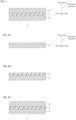
- FIG. 1 With reference to FIG. 1 , an embodiment of the laminate of the present invention is described.
- the up-and-down direction (thickness direction) of the drawing sheet of FIG. 1 is the up-and-down direction.
- the upper side of the drawing sheet is the upper side (one side in the thickness direction), and the lower side of the drawing sheet is the low side (the other side in the thickness direction).
- the right-and-left direction and depth direction of the drawing sheet are a surface direction orthogonal to the up-and-down direction. Specifically, the directions are in accordance with the arrow in each drawing.
- the laminate 1 has a film shape (including a sheet shape) having a predetermined thickness as illustrated in FIG. 1 .
- the laminate 1 extends in the surface direction orthogonal to the thickness direction.
- the laminate 1 has a flat upper surface and a flat lower surface.
- the laminate 1 includes the polyolefin substrate 2, the primer layer 3, and the surface layer 4 in sequence toward the one side in the thickness direction. Specifically, the laminate 1 includes the polyolefin substrate 2, the primer layer 3 disposed directly on an upper surface (one-side surface in the thickness direction) of the polyolefin substrate 2, and the surface layer 4 disposed directly on an upper surface (one-side surface in the thickness direction) of the primer layer 3.
- the polyolefin substrate 2 has a film shape.
- the polyolefin substrate 2 is disposed on the whole of a lower surface of the primer layer 3 to be in contact with the lower surface of the primer layer 3.
- the polyolefin substrate 2 consists of a polyolefin resin.
- polyolefin resin examples include the examples of the polyolefin resin cited in the above description of the adhesive composition.
- the primer layer 3 has a film shape.
- the primer layer 3 is disposed on the whole of a lower surface of the surface layer 4 to be in contact with the lower surface of the surface layer 4.
- the primer layer 3 is formed of the adhesive composition.
- the primer layer 3 is obtained by applying the adhesive composition to the one-side surface in the thickness direction of the polyolefin substrate 2.
- the primer layer 3 has a thickness of, for example, 1 ⁇ m or more, and, for example, 5 ⁇ m or less.
- the surface layer 4 has a film shape.
- the surface layer 4 is disposed on the whole of the upper surface of the primer layer 3 to be in contact with the upper surface of the primer layer 3.
- the surface layer 4 is the uppermost layer of the laminate 1.
- the surface layer 4 consists of a material (highly polar material) having a higher polarity than that of the polyolefin resin.
- Examples of the highly polar material described above include a resin with an ether bond, a resin with an ester bond, a resin with an amide bond, a resin with an imide bond, and a resin with a urethane bond.
- examples of the resin include acrylic resin, polyamide resin, polyimide resin, polyurethane resin, and vinyl chloride vinyl acetate-based copolymer resin, and acrylic resin and vinyl chloride ⁇ vinyl acetate-based copolymer resin are preferable.
- the surface layer 4 has a thickness of, for example, 6 ⁇ m or more, and, for example, 20 ⁇ m or less.
- a method of producing the laminate 1 include a first step of preparing the polyolefin substrate 2, a second step of disposing the primer layer 3 on the one-side surface in the thickness direction of the polyolefin substrate 2, and a third step of disposing the surface layer 4 on the one-side surface in the thickness direction of the primer layer 3.
- the polyolefin substrate 2 is prepared.
- the primer layer 3 is disposed on the one-side surface in the thickness direction of the polyolefin substrate 2.
- the above-described adhesive composition (a varnish of the modified polyolefin resin) is applied to the one-side surface in the thickness direction of the polyolefin substrate 2 and, as necessary, dried. In this manner, the primer layer 3 is disposed (formed) on the one-side surface in the thickness direction of the polyolefin substrate 2.
- the method of applying the adhesive composition is not especially limited. However, in view of productivity, spray coating is preferable.
- the conditions for drying the applied adhesive composition are not especially limited as long as the components to be volatilized, such as an organic solvent, in the adhesive composition are volatilized.
- the drying temperature is, for example, 200°C or less, preferably 150°C or less, and, for example, 10°C or more.
- the drying time is, for example, 3 seconds or more, preferably 1 minute or more, and, for example, 1 hour or less.
- the surface layer 4 is disposed on the one-side surface in the thickness direction of the primer layer 3.
- the material of the surface layer 4 is applied to the one-side surface in the thickness direction of the primer layer 3 and, as necessary, dried. In this manner, the surface layer 4 is disposed (formed) on the one-side surface in the thickness direction of the primer layer 3.
- the conditions for drying the material of the surface layer 4 are not especially limited as long as the components to be volatilized, such as an organic solvent, in the material are volatilized.
- the drying temperature is, for example, 200°C or less, preferably 150°C or less, and, for example, 10°C or more.
- the drying time is, for example, 3 seconds or more, preferably 1 minute or more, and, for example, 1 hour or less.
- the modified polyolefin resin in the adhesive composition is a polyolefin resin modified with an unsaturated carboxylic acid and a radically reactive aromatic compound so that the modified polyolefin resin has a predetermined modified content.
- the primer layer 3 obtained by using the adhesive composition has excellent adhesion to the polyolefin substrate 2 and excellent adhesion to the surface layer 4.
- the polarity of the primer layer 3 increases. Whereas the adhesion to the surface layer 4 having a relatively high polarity increases, the adhesion to the polyolefin substrate 2 having a relatively low polarity is prone to decrease.
- the coating properties are prone to decrease whereas the adhesion to the polyolefin substrate 2 increases.
- both of the modified content of an unsaturated carboxylic acid and the modified content of a radically reactive aromatic compound are adjusted to predetermined ranges.
- the coating properties of the adhesive composition increase while the primer layer 3 obtained by using the adhesive composition has excellent adhesion to the polyolefin substrate 2 and excellent adhesion to the surface layer 4.
- the primer layer 3 the polyolefin substrate 2 having a relatively low polarity and the surface layer 4 having a relatively high polarity can be adhered to each other.
- the polyolefin resin has a heat of fusion in a predetermined range. In this manner, the primer layer 3 obtained by using the adhesive composition has excellent adhesion to the polyolefin substrate 2.
- the modified polyolefin resin of Patent Document 1 is obtained by modifying a polyolefin resin with an acid anhydride of ⁇ , ⁇ -carboxylic acid (specifically, maleic anhydride) and a compound having a benzene ring (specifically, benzylamine).
- the polyolefin resin is graft modified with a maleic anhydride.
- the carboxyl group of the maleic anhydride of which ring is opened by the modification is reacted with the amino group of the benzylamine. This causes the benzylamine to inhibit the adhesion to the polyolefin substrate 2.
- both of the unsaturated carboxylic acid and the radically reactive aromatic compound are graft modified with the polyolefin resin by the radical reaction.
- both of the unsaturated carboxylic acid and the radically reactive aromatic compound are graft modified with respect to one molecule of the polyolefin resin.
- This is distinguished from a mixture in which the unsaturated carboxylic acid is graft modified with respect to one molecule of the polyolefin resin and the radically reactive aromatic compound is graft modified with respect to one molecule of polyolefin resin.
- the radically reactive aromatic compound is efficiently introduced to the polyolefin resin, and thus the adhesion to the polyolefin substrate 2 improves.
- the laminate 1 includes the primer layer 3 consisting of the above-described adhesive composition.
- the adhesion between the polyolefin substrate 2 and the surface layer 4 is excellent.
- the laminate 1 is suitably used in various fields such as the field of packaging materials.
- the surface layer 4 is a single layer.
- the surface layer 4 may be multi-layered (for example, two or more-layered, preferably, two-layered or three-layered).
- the polyolefin substrate 2 is in the shape of a film.
- the shape of the polyolefin substrate 2 is not limited to the above and may be board-shaped.
- the present invention is described next with reference to Examples and Comparative Examples.
- the present invention is, however, not limited to Examples in any way.
- the “parts” and “%” are based on mass unless otherwise specified.
- the specific numeral values used in the description below, such as mixing ratios (content ratios), physical property values, and parameters, can be replaced with the corresponding mixing ratios (content ratios), physical property values, and parameters in the above-described “DESCRIPTION OF THE EMBODIMENTS", including the upper limit values (numeral values defined with “or less”, and “less than") or the lower limit values (numeral values defined with "or more", and “more than”).
- a stirrer-equipped autoclave with an internal volume of 1.0 L, 100 parts by mass of a propylene ⁇ ethylene copolymer (PER) having a propylene unit content of 79 mol% and an ethylene unit content of 21 mol% and 516 parts by mass of butyl acetate were inserted.
- the temperature of the solution in the autoclave was raised to 145°C while the solution was being stirred, and the propylene/ethylene copolymer was completely dissolved.
- PER propylene ⁇ ethylene copolymer
- Example 4 a propylene ⁇ butene ⁇ ethylene copolymer (PBER) having a propylene unit content of 66 mol%, a butene unit content of 13 mol%, and an ethylene unit content of 21 mol% was used.
- PBER propylene ⁇ butene ⁇ ethylene copolymer
- the solution X and the solution Y were mixed at room temperature, and thereafter diluted with 1308 parts by mass of toluene so that the solid content of the mixture became 4%, thereby producing an adhesive composition.
- the heat of fusion of the polyolefin resin used in each of Examples and Comparative Examples was obtained using a differential scanning calorimeter (manufactured by TA Instruments; DSC-Q1000).
- the chemical shift standard was that the hydrogen of the tetramethylsilane was set to 0 ppm (when the peak derived from the remaining hydrogen of the deuterated orthodichlorobenzene is set to 7.10 ppm as the standard value of the chemical shift, the same results are obtained).
- the peak for example, in 1H derived from a functional group-containing compound was assigned by a general method.
- the melting point of the polyolefin resin used in each Example and the melting point of the modified polyolefin resin used in each Example were measured. Specifically, in the process of increasing the temperature of the polyolefin resin or the modified polyolefin resin from 25°C to 200°C at 10°C/min, then keeping at 200°C for 3 minutes, decreasing to 0°C at 10°C/min, and increasing again to 200°C at 10°C/min, the melting point was obtained from the thermogram at the second temperature increase with a differential scanning calorimeter (manufactured by TA Instruments; DSC-Q1000) in conformity with JIS K 7122. The results are shown in Table 1.
- the weight average molecular weight of the polyolefin resin used in each Example and the weight average molecular weight of the modified polyolefin resin used in each Example were measured. Specifically, the weight average molecular weights were measured by a GPC method under the following measurement conditions. The results are shown in Table 1.
- a polypropylene plate was prepared.
- the adhesive composition of each of Examples and Comparative Examples was spray applied onto a one-side surface in the thickness direction of a polypropylene plate and dried at 60°C for 2 minutes. In this manner, a primer layer with a thickness of 2 ⁇ m to 3 ⁇ m was formed.
- a laminate B was produced through the same steps as the production of the laminate A.
- a paint consisting of vinyl chloride vinyl acetate-based copolymer resin was spray applied onto the one-side surface in the thickness direction of the primer layer and dried at 60°C for 3 minutes. In this manner, a first surface layer with a thickness of 5 ⁇ m to 6 ⁇ m was formed.
- an acrylic paint was spray applied onto the one-side surface in the thickness direction of the surface layer and dried at 60°C for 3 minutes.
- the acrylic paint was cured by UV irradiation. In this manner, a second surface layer with a thickness of 10 ⁇ m to 15 ⁇ m was formed. As described above, a laminate B was produced.
- a lattice pattern (at 2-mm intervals, 100 squares) was cut into the surface layer of the laminate A and the surface layer of the laminate B in each of Examples and Comparative Examples, and a peeling test was carried out by removing the polypropylene plate or the surface layer with a cellulose pressure-sensitive tape.
- the adhesion rate (the number of the squares remaining on the substrate) was used to evaluate the adhesion.
- the adhesion (PP adhesion) between the polypropylene adhesion layer and the primer layer, the adhesion (acryl adhesion) between the surface layer consisting of acrylic paint and the primer layer, and the adhesion (vinyl chloride vinyl acetate-based copolymer resin adhesion) between the surface layer consisting of a vinyl chloride vinyl acetate-based copolymer resin and the primer layer were evaluated by the following criteria.
- the adhesive composition was not able to be spray applied, and thus the adhesion thereof was not evaluated.
- the B-type viscosity was measured, and the suitability for spray coating was determined by the following criteria.
- the adhesive composition and laminate of the present invention are suitably used, for example, as a packaging material.
Landscapes
- Chemical & Material Sciences (AREA)
- Chemical Kinetics & Catalysis (AREA)
- Organic Chemistry (AREA)
- General Chemical & Material Sciences (AREA)
- Health & Medical Sciences (AREA)
- Medicinal Chemistry (AREA)
- Polymers & Plastics (AREA)
- Laminated Bodies (AREA)
- Addition Polymer Or Copolymer, Post-Treatments, Or Chemical Modifications (AREA)
Abstract
Description
- The present invention relates to an adhesive composition and a laminate.
- Conventionally, polyolefin resin has been used in various industrial fields, for example, the field of packaging materials.
- Meanwhile, polyolefin resin has low polarity and thus has low adhesiveness to a material (highly polar material) having a higher polarity than the polyolefin resin.
- Thus, in view of improving the adhesiveness of the polyolefin resin, providing a primer layer between the polyolefin resin and the highly polar material has been known.
- As the material for forming the primer layer described above, for example, a modified polyolefin resin obtained by modifying a polyolefin resin with an acid anhydride of α,β-carboxylic acid and a compound having a benzene ring has been proposed (for example, see Patent Document 1).
- Patent Document 1:
PCT International Publication No. WO2018/037849 - Meanwhile, such a primer layer is required to have higher adhesiveness.
- The present invention provides an adhesive composition and a laminate, where the adhesive composition has excellent adhesion with a substrate consisting of a polyolefin resin and with a surface layer consisting of a material having a higher polarity than the polyolefin resin and has excellent coating properties.
- The present invention [1] includes an adhesive composition including a modified polyolefin resin, wherein the modified polyolefin resin is obtained by modifying a polyolefin resin with an unsaturated carboxylic acid and a radically reactive aromatic compound, wherein the polyolefin resin has a heat of fusion of 10 J/g or less that is measured in conformity with JIS K7122, wherein a modified content of the unsaturated carboxylic acid with respect to the modified polyolefin resin is more than 0.5% by mass and less than 5% by mass, and wherein a modified content of the radically reactive aromatic compound with respect to the modified polyolefin resin is 0.1% by mass or more and less than 3% by mass.
- The present invention [2] includes the adhesive composition described in the above-described [1], wherein the modified content of the radically reactive aromatic compound with respect to the modified polyolefin resin is 0.5% by mass or more.
- The present invention [3] includes the adhesive composition described in the above-described [1] or [2], wherein the modified content of the unsaturated carboxylic acid with respect to the modified polyolefin resin is 1.1% by mass or more.
- The present invention [4] includes a laminate comprising: a substrate consisting of a polyolefin resin; a primer layer consisting of the adhesive composition described in any one of the above-described [1] to [3]; and a surface layer consisting of a material having a higher polarity than a polarity of the polyolefin resin in sequence toward one side in a thickness direction.
- The modified polyolefin resin in the adhesive composition of the present invention is obtained by modifying a polyolefin resin with an unsaturated carboxylic acid and a radically reactive aromatic compound so that the modified polyolefin resin has a predetermined modified content. This enables the primer layer obtained by using the adhesive composition to have excellent adhesion with the substrate consisting of a polyolefin resin and with the surface layer consisting of a material having a higher polarity than that of the polyolefin resin.
- Further, the polyolefin resin has a heat of fusion in a predetermined range. This enables the primer layer producing by using the adhesive composition to have excellent adhesion to the substrate consisting of a polyolefin resin.
- The laminate of the present invention includes a primer layer consisting of the adhesive composition of the present invention. Thus, the laminate has excellent adhesion between the substrate consisting of the polyolefin resin and the surface layer consisting of a material having a higher polarity than the polyolefin resin.
-
-
FIG. 1 is a schematic view illustrating one embodiment of the laminate of the present invention. -
FIG. 2A to 2C are schematic views illustrating a method of producing the laminate of the present invention.FIG. 2A illustrates a first step of preparing a polyolefin substrate.FIG. 2B illustrates a second step of disposing a primer layer on a one-side surface in the thickness direction of the polyolefin substrate.FIG. 2C illustrates a third step of disposing a surface layer on a one-side surface in the thickness direction of the primer layer. - An adhesive composition contains a modified polyolefin resin.
- The modified polyolefin resin is obtained by modifying a polyolefin resin with an unsaturated carboxylic acid and a radically reactive aromatic compound.
- The polyolefin resin is an olefin polymer including a structural unit derived from olefin.
- Examples of the olefin include α-olefin. Examples of the α-olefin include ethylene, propylene, 1-butene, 1-pentene, 1-hexene, 4-methyl-1-pentene, 1-octene, 1-decene, 1-dodecene, 1-tetradecene, 1-hexadecene, 1-octadecene, and 1-eicosene.
- As the olefin, an α-olefin having 2 or more and 6 or less carbon atoms is preferable, and ethylene, propylene, and 1-butene are more preferable.
- These olefins can be used alone or in combination of two or more. The use of ethylene and propylene in combination and the use of ethylene, propylene, and 1-butene in combination are preferable. In other words, the polyolefin resin is preferably a propylene/ethylene copolymer or a propylene/1-butene/ethylene copolymer.
- When the polyolefin resin is a propylene/ethylene copolymer, the content ratio of the structural unit derived from propylene is, for example, 60 mol% or more, preferably 70 mol% or more, and, for example, 90 mol% or less, preferably 80 mol% or less with respect to 100 mol% of the total amount of the structural unit derived from propylene and the structural unit derived from ethylene. Further, the content ratio of the structural unit derived from ethylene is, for example, 10 mol% or more, preferably 20 mol% or more, and, for example, 40 mol% or less, preferably 30 mol% or less.
- When the polyolefin resin is a propylene/1-butene/ethylene copolymer, the content ratio of the structural unit derived from propylene is, for example, 50 mol% or more, preferably 60 mol% or more, and, for example, 80 mol% or less, preferably 70 mol% or less with respect to 100 mol% of the total amount of the structural unit derived from propylene, the structural unit derived from 1-butene, and the structural unit derived from ethylene. Further, the content ratio of the structural unit derived from 1-butene is, for example, 5 mol% or more, preferably 10 mol% or more, and, for example, 30 mol% or less, preferably 20 mol% or less. Furthermore, the content ratio of the structural unit derived from ethylene is, for example, 10 mol% or more, preferably 20 mol% or more, and, for example, 40 mol% or less, preferably 30 mol% or less.
- The heat of fusion of the polyolefin resin that is measured in conformity with JIS K7122 is 10 J/g or less, preferably 5 J/g or less, more preferably 3 J/g or less, and normally 0 J/g or more.
- Further, when the heat of fusion is the above-described upper limit or less, a primer layer 3 (described below) obtained by using the adhesive composition has excellent adhesion to a polyolefin substrate 2 (described below).
- The method of measuring the heat of fusion is described in detail in Examples below.
- Further, the polyolefin resin has a melting point of, for example, 50°C or more, preferably 60°C or more, more preferably 70°C or more, and, for example, 115°C or less, preferably 1 13°C or less, more preferably 110°C or less.
- Furthermore, it may be amorphous without having the polyolefin resin.
- The method for measuring the melting point is described in detail in Examples described below.
- Further, the weight average molecular weight of the polyolefin resin that is calculated in terms of polystyrene measured by gel permeation chromatography (GPC) is, for example, 40000 or more, preferably 50000 or more, more preferably 55000 or more, and, for example, 500000 or less, preferably 400000 or less, more preferably 380000 or less.
- The method for measuring the weight average molecular weight is described in detail in Examples described below.
- The polyolefin resin may be obtained by polymerizing olefin by a known method. Further, as necessary, a metallocene catalyst may be blended in the polymerization.
- Examples of the unsaturated carboxylic acid include an unsaturated carboxylic acid having 3 to 8 carbon atoms. Examples of the unsaturated carboxylic acid having 3 to 8 carbon atoms include a monobasic acid and a dibasic acid. Examples of the monobasic acid include (meth)acrylic acid (acrylic acid and/or methacrylic acid), crotonic acid, and isocrotonic acid. Examples of the dibasic acid include maleic acid, fumaric acid, itaconic acid, citraconic acid, mesaconic acid, glutaconic acid, allylsuccinic acid, nadic acid, methylnadic acid, tetrahydrofumaric acid, and methylhexahydrophthalic acid.
- Further, examples of the unsaturated carboxylic acid include acid anhydrides of the above-described unsaturated carboxylic acids.
- As the unsaturated carboxylic acid, an acid anhydride of an unsaturated carboxylic acid is preferable, an acid anhydride of a dibasic acid is more preferable, and a maleic anhydride is even more preferable.
- These unsaturated carboxylic acids can be used alone or in combination of two or more.
- Further, a modified content of the unsaturated carboxylic acid with respect to the modified polyolefin resin is more than 0.5% by mass, preferably 1.1% by mass or more, and, less than 5% by mass, preferably 3% by mass or less, more preferably 2% by mass or less.
- When the above-described modified content is the above-described lower limit or more, the primer layer 3 (described below) obtained by using the adhesive composition has excellent adhesion to a surface layer 4 (described below), and excellent adhesion to the polyolefin substrate 2 (described below). The adhesion to the surface layer 4 (described below) is particularly excellent. Further, in particular, when the above-described modified content is 1.1% by mass or more, the
primer layer 3 has even more excellent adhesion. - Further, when the above-described modified content is the above-described upper limit or less, the primer layer 3 (described below) obtained by using the adhesive composition has excellent adhesion to the surface layer 4 (described below) and excellent adhesion to the polyolefin substrate 2 (described below). The adhesion to the polyolefin substrate 2 (described below) is particularly excellent.
- The above-described modified content can be obtained, for example, from the blending ratios of the components for preparing the modified polyolefin resin, or can be confirmed by a known method such as 1H-NMR measurement of the modified polyolefin resin.
- A radically reactive aromatic compound is a compound having a portion that can be radically added and an aromatic ring in combination.
- Examples of the radically reactive aromatic compound include a radically polymerizable double bond-containing aromatic compound and a radically reactive aromatic hydrocarbon.
- The radically polymerizable double bond-containing aromatic compound is a compound having a radically polymerizable double bond and an aromatic ring in combination.
- Examples of the radically polymerizable double bond-containing aromatic compound include an aromatic vinyl compound and an aromatic ring-containing (meth)acrylate. Examples of the aromatic vinyl compound include styrene, α-methylstyrene (2-phenylpropylene), 2-phenylbutene, 3-phenylpropylene, divinylbenzene, 1-vinylnaphthalene, p-methylstyrene, m-methylstyrene, o-methylstyrene, p-ethylstyrene, m-ethylstyrene, o-ethylstyrene, 2,4-dimethylstyrene, 2,5-dimethylstyrene, 3,4-dimethylstyrene, 3,5-dimethylstyrene, 3-methyl-5-ethylstyrene, p-tert-butylstyrene, p-sec-butylstyrene, p-chlorostyrene, p-vinylbenzoic acid, p-vinylbenzoate, and vinylbenzoic acid. Examples of the aromatic ring-containing (meth)acrylate include phenyl (meth)acrylate, benzyl (meth)acrylate, phenoxyethyl (meth)acrylate, and trityl (meth)acrylate.
- Examples of the radically reactive aromatic hydrocarbon include toluene, xylene, and ethylbenzene.
- As the radically reactive aromatic compound, a radically polymerizable double bond-containing aromatic compound is preferable, an aromatic vinyl compound is more preferable, and styrene is even more preferable.
- A modified content of the radically reactive aromatic compound with respect to the modified polyolefin resin is 0.1% by mass or more, preferably 0.5% by mass or more, more preferably 1.0% by mass or more, and, for example, less than 3% by mass, preferably 2% by mass or less, more preferably 1.5% by mass or less, even more preferably 1.1% by mass or less.
- When the above-described modified content is the above-described lower limit or more, the primer layer 3 (described below) obtained by using the adhesive composition has excellent adhesion to the polyolefin substrate 2 (described below). Further, in particular, when the above-described modified content is 0.5% by mass or more, the
primer layer 3 has even more excellent adhesion. - Further, when the above-described modified content is the above-described upper limit or less, the increase in the viscosity of the adhesive composition can be suppressed. And thus, the adhesive composition has excellent coating properties (specifically, spray coating properties).
- The above-described modified content can be obtained, for example, from the blending ratios of the components for preparing the modified polyolefin resin, or can be confirmed by a known method such as 1H-NMR measurement of the modified polyolefin resin.
- The modified polyolefin resin is obtained by modifying a polyolefin resin with an unsaturated carboxylic acid and a radically reactive aromatic compound.
- Specifically, an unsaturated carboxylic acid and a radically reactive aromatic compound are subjected to a polymerization reaction under the presence of a polyolefin resin. In this manner, the polyolefin resin is graft modified with the unsaturated carboxylic acid and the radically reactive aromatic compound.
- The reaction is carried out at a reaction temperature of, for example, 50°C or more, preferably 80°C or more, and, for example, 250°C or less. The reaction is carried out for a reaction time of, for example, 1 minute or more and 10 hours or less.
- Further, in the above-described reaction, as necessary, a radical polymerization initiator is blended in an appropriate ratio.
- Examples of the radical polymerization initiator include organic peroxides such as benzoyl peroxide, dichlorobenzoyl peroxide, dicumyl peroxide, di-tert-butyl peroxide, 2,5-dimethyl-2,5-di(peroxybenzoate)hexine-3, 1,4-bis(tert-butylperoxy isopropyl)benzene, lauroyl peroxide, tert-butyl peracetate, 2,5-dimethyl-2,5-di(tert-butylperoxy)hexine-3, 2,5-dimethyl-2,5-di(tert-butylperoxy)hexane, tert-butyl benzoate, tert-butyl perphenyl acetate, tert-butyl perisobutyrate, tert-butyl per-sec-octoate, tert-butyl perpivalate, cumyl perpivalate, and tert-butyl perdiethyl acetate, and azo compounds such as azo bis-isobutyl nitrile and dimethyl azo isobutyl nitrile.
- As the radical polymerization initiator, dialkyl peroxides, such as dicumyl peroxide, di-tert-butyl peroxide, 2,5-dimethyl-2,5-di(tert-butylperoxy)hexine-3, 2,5-dimethyl-2,5-di(tert-butylperoxy)hexane, and 1,4-bis(tert-butylperoxy isopropyl)benzene, are preferable.
- Further, the above-described reaction is carried out under the presence of a solvent or without a solvent.
- A known solvent may be selected as the solvent.
- In this manner, a modified polyolefin resin is obtained. Further, when the above-described reaction is carried out under the presence of a solvent, the obtained modified polyolefin resin is prepared as a varnish.
- The modified polyolefin resin has a melting point of, for example, 50°C or more, preferably 60°C or more, more preferably 70°C or more, and, for example, 115°C or less, preferably 113°C or less, more preferably 110°C or less.
- Alternatively, it may be amorphous without having a modified polyolefin resin.
- The method for measuring the melting point is described in detail in Examples described below.
- The weight average molecular weight of the modified polyolefin resin that is calculated in terms of polystyrene measured by gel permeation chromatography (GPC) is, for example, 40000 or more, preferably 50000 or more, more preferably 55000 or more, and, for example, 500000 or less, preferably 400000 or less, more preferably 380000 or less.
- The method for measuring the weight average molecular weight is described in detail in Examples below.
- Then, the adhesive composition contains the above-described modified polyolefin resin and a solvent that is blended as necessary.
- When the adhesive composition contains a solvent, the concentration of the solid content of the modified polyolefin resin is, for example, 1.0% by mass or more, preferably 3.0% by mass or more, and, for example, 30% by mass or less, preferably 20% by mass or less.
- Although described in detail below, the primer layer 3 (described below) obtained by using the adhesive composition has both of excellent adhesion to the polyolefin substrate 2 (described below) and excellent adhesion to the surface layer 4 (described below). Thus, the adhesive composition is suitably used for forming the primer layer disposed between the polyolefin substrate 2 (described below) and the surface layer 4 (described below).
- A
laminate 1 including the primer layer 3 (described below) obtained by using the adhesive composition is described in detail below. - With reference to
FIG. 1 , an embodiment of the laminate of the present invention is described. - The up-and-down direction (thickness direction) of the drawing sheet of
FIG. 1 is the up-and-down direction. The upper side of the drawing sheet is the upper side (one side in the thickness direction), and the lower side of the drawing sheet is the low side (the other side in the thickness direction). Further, the right-and-left direction and depth direction of the drawing sheet are a surface direction orthogonal to the up-and-down direction. Specifically, the directions are in accordance with the arrow in each drawing. - The
laminate 1 has a film shape (including a sheet shape) having a predetermined thickness as illustrated inFIG. 1 . Thelaminate 1 extends in the surface direction orthogonal to the thickness direction. Thelaminate 1 has a flat upper surface and a flat lower surface. - The
laminate 1 includes thepolyolefin substrate 2, theprimer layer 3, and thesurface layer 4 in sequence toward the one side in the thickness direction. Specifically, thelaminate 1 includes thepolyolefin substrate 2, theprimer layer 3 disposed directly on an upper surface (one-side surface in the thickness direction) of thepolyolefin substrate 2, and thesurface layer 4 disposed directly on an upper surface (one-side surface in the thickness direction) of theprimer layer 3. - The
polyolefin substrate 2 has a film shape. Thepolyolefin substrate 2 is disposed on the whole of a lower surface of theprimer layer 3 to be in contact with the lower surface of theprimer layer 3. - The
polyolefin substrate 2 consists of a polyolefin resin. - Examples of the polyolefin resin include the examples of the polyolefin resin cited in the above description of the adhesive composition.
- The
primer layer 3 has a film shape. Theprimer layer 3 is disposed on the whole of a lower surface of thesurface layer 4 to be in contact with the lower surface of thesurface layer 4. - The
primer layer 3 is formed of the adhesive composition. - Although described in detail below, the
primer layer 3 is obtained by applying the adhesive composition to the one-side surface in the thickness direction of thepolyolefin substrate 2. - The
primer layer 3 has a thickness of, for example, 1 µm or more, and, for example, 5 µm or less. - The
surface layer 4 has a film shape. Thesurface layer 4 is disposed on the whole of the upper surface of theprimer layer 3 to be in contact with the upper surface of theprimer layer 3. Thesurface layer 4 is the uppermost layer of thelaminate 1. - The
surface layer 4 consists of a material (highly polar material) having a higher polarity than that of the polyolefin resin. - Examples of the highly polar material described above include a resin with an ether bond, a resin with an ester bond, a resin with an amide bond, a resin with an imide bond, and a resin with a urethane bond. Specifically, examples of the resin include acrylic resin, polyamide resin, polyimide resin, polyurethane resin, and vinyl chloride vinyl acetate-based copolymer resin, and acrylic resin and vinyl chloride·vinyl acetate-based copolymer resin are preferable.
- The
surface layer 4 has a thickness of, for example, 6 µm or more, and, for example, 20 µm or less. - A method of producing the
laminate 1 include a first step of preparing thepolyolefin substrate 2, a second step of disposing theprimer layer 3 on the one-side surface in the thickness direction of thepolyolefin substrate 2, and a third step of disposing thesurface layer 4 on the one-side surface in the thickness direction of theprimer layer 3. - In the first step, as illustrated in
FIG. 2A , thepolyolefin substrate 2 is prepared. - In the second step, as illustrated in
FIG. 2B , theprimer layer 3 is disposed on the one-side surface in the thickness direction of thepolyolefin substrate 2. - To dispose the
primer layer 3 on the one-side surface in the thickness direction of thepolyolefin substrate 2, the above-described adhesive composition (a varnish of the modified polyolefin resin) is applied to the one-side surface in the thickness direction of thepolyolefin substrate 2 and, as necessary, dried. In this manner, theprimer layer 3 is disposed (formed) on the one-side surface in the thickness direction of thepolyolefin substrate 2. - The method of applying the adhesive composition is not especially limited. However, in view of productivity, spray coating is preferable.
- The conditions for drying the applied adhesive composition are not especially limited as long as the components to be volatilized, such as an organic solvent, in the adhesive composition are volatilized. However, the drying temperature is, for example, 200°C or less, preferably 150°C or less, and, for example, 10°C or more. Further, the drying time is, for example, 3 seconds or more, preferably 1 minute or more, and, for example, 1 hour or less.
- In the third step, as illustrated in
FIG. 2C , thesurface layer 4 is disposed on the one-side surface in the thickness direction of theprimer layer 3. - The material of the
surface layer 4 is applied to the one-side surface in the thickness direction of theprimer layer 3 and, as necessary, dried. In this manner, thesurface layer 4 is disposed (formed) on the one-side surface in the thickness direction of theprimer layer 3. - The conditions for drying the material of the
surface layer 4 are not especially limited as long as the components to be volatilized, such as an organic solvent, in the material are volatilized. However, the drying temperature is, for example, 200°C or less, preferably 150°C or less, and, for example, 10°C or more. Further, the drying time is, for example, 3 seconds or more, preferably 1 minute or more, and, for example, 1 hour or less. - In this manner, the
laminate 1 is produced. - The modified polyolefin resin in the adhesive composition is a polyolefin resin modified with an unsaturated carboxylic acid and a radically reactive aromatic compound so that the modified polyolefin resin has a predetermined modified content. In this manner, the
primer layer 3 obtained by using the adhesive composition has excellent adhesion to thepolyolefin substrate 2 and excellent adhesion to thesurface layer 4. - In detail, when the modified content of an unsaturated carboxylic acid increases, the polarity of the
primer layer 3 increases. Whereas the adhesion to thesurface layer 4 having a relatively high polarity increases, the adhesion to thepolyolefin substrate 2 having a relatively low polarity is prone to decrease. - Where the modified content of a radically reactive aromatic compound increases, the coating properties are prone to decrease whereas the adhesion to the
polyolefin substrate 2 increases. - In the adhesive composition, both of the modified content of an unsaturated carboxylic acid and the modified content of a radically reactive aromatic compound are adjusted to predetermined ranges. In this manner, the coating properties of the adhesive composition increase while the
primer layer 3 obtained by using the adhesive composition has excellent adhesion to thepolyolefin substrate 2 and excellent adhesion to thesurface layer 4. As a result, through theprimer layer 3, thepolyolefin substrate 2 having a relatively low polarity and thesurface layer 4 having a relatively high polarity can be adhered to each other. - The polyolefin resin has a heat of fusion in a predetermined range. In this manner, the
primer layer 3 obtained by using the adhesive composition has excellent adhesion to thepolyolefin substrate 2. - On the other hand, the modified polyolefin resin of
Patent Document 1 is obtained by modifying a polyolefin resin with an acid anhydride of α,β-carboxylic acid (specifically, maleic anhydride) and a compound having a benzene ring (specifically, benzylamine). In detail, first, the polyolefin resin is graft modified with a maleic anhydride. Thereafter, the carboxyl group of the maleic anhydride of which ring is opened by the modification is reacted with the amino group of the benzylamine. This causes the benzylamine to inhibit the adhesion to thepolyolefin substrate 2. - On the other hand, in the modified polyolefin resin of the present invention, both of the unsaturated carboxylic acid and the radically reactive aromatic compound are graft modified with the polyolefin resin by the radical reaction.
- In other words, in the modified polyolefin resin of the present invention, both of the unsaturated carboxylic acid and the radically reactive aromatic compound are graft modified with respect to one molecule of the polyolefin resin. This is distinguished from a mixture in which the unsaturated carboxylic acid is graft modified with respect to one molecule of the polyolefin resin and the radically reactive aromatic compound is graft modified with respect to one molecule of polyolefin resin. In this manner, the radically reactive aromatic compound is efficiently introduced to the polyolefin resin, and thus the adhesion to the
polyolefin substrate 2 improves. - Further, the
laminate 1 includes theprimer layer 3 consisting of the above-described adhesive composition. Thus, the adhesion between thepolyolefin substrate 2 and thesurface layer 4 is excellent. - The
laminate 1 is suitably used in various fields such as the field of packaging materials. - In the above description, the
surface layer 4 is a single layer. Alternatively, thesurface layer 4 may be multi-layered (for example, two or more-layered, preferably, two-layered or three-layered). - In the above description, the
polyolefin substrate 2 is in the shape of a film. However, the shape of thepolyolefin substrate 2 is not limited to the above and may be board-shaped. Example - The present invention is described next with reference to Examples and Comparative Examples. The present invention is, however, not limited to Examples in any way. The "parts" and "%" are based on mass unless otherwise specified. The specific numeral values used in the description below, such as mixing ratios (content ratios), physical property values, and parameters, can be replaced with the corresponding mixing ratios (content ratios), physical property values, and parameters in the above-described "DESCRIPTION OF THE EMBODIMENTS", including the upper limit values (numeral values defined with "or less", and "less than") or the lower limit values (numeral values defined with "or more", and "more than").
- Into a stirrer-equipped autoclave with an internal volume of 1.0 L, 100 parts by mass of a propylene· ethylene copolymer (PER) having a propylene unit content of 79 mol% and an ethylene unit content of 21 mol% and 516 parts by mass of butyl acetate were inserted. The temperature of the solution in the autoclave was raised to 145°C while the solution was being stirred, and the propylene/ethylene copolymer was completely dissolved.
- Thereafter, while the temperature of the solution was kept at 145°C and the solution was being stirred, 6 parts by mass of a maleic anhydride, 1.5 parts by mass of styrene, and 3.6 parts by mass of a di-tert-butyl peroxide were added dropwise thereto for 6 hours. After the completion of the dropwise addition, the solution was further stirred at 145°C for 3 hours to carry out the reaction. Next, the obtained solution was cooled to 80°C and thereafter diluted with 774 parts by mass of methyl cyclohexane. Next, the solution was cooled to room temperature and diluted with 1290 parts by mass of toluene so that the solid content of the solution became 4%. In this manner, an adhesive composition containing a modified polyolefin resin was produced.
- In the same manner as Example 1, adhesive compositions containing a modified polyolefin resin were produced.
- However, the formulations were changed in accordance with Table 1.
- Further, in Example 4, a propylene· butene· ethylene copolymer (PBER) having a propylene unit content of 66 mol%, a butene unit content of 13 mol%, and an ethylene unit content of 21 mol% was used.
- Furthermore, in Comparative Example 5, a propylene· butene· ethylene copolymer (PBER) having a propylene unit content of 63 mol%, a butene unit content of 23 mol%, and an ethylene unit content of 14 mol% was used.
- Furthermore, in Comparative Example 6, a propylene· ethylene copolymer (PER) having a propylene unit content of 85 mol% and an ethylene unit content of 15 mol% was used.
- Into a stirrer-equipped autoclave with an internal volume of 1.0 L, 50 parts by mass of a propylene· ethylene copolymer having a propylene unit content of 79 mol% and an ethylene unit content of 21 mol% and 261.6 parts by mass of butyl acetate were inserted. The temperature of the solution in the autoclave was raised to 145°C while the solution was being stirred, and the propylene· ethylene copolymer was completely dissolved.
- Thereafter, while the temperature of the solution was kept at 145°C and the solution was being stirred, 6 parts by mass of a maleic anhydride and 3.6 parts by mass of a di-tert-butyl peroxide were added dropwise thereto for 6 hours. After the completion of the dropwise addition, the solution was further stirred at 145°C for 3 hours to carry out the reaction. Next, the obtained solution was cooled to 80°C and thereafter diluted with 392.4 parts by mass of methyl cyclohexane. Next, the solution was cooled to room temperature, thereby producing a solution X. Next, except that 6 parts by mass of the maleic anhydride was changed to 3 parts by mass of styrene, the same operation to produce the solution X was carried out, thereby producing a solution Y.
- The solution X and the solution Y were mixed at room temperature, and thereafter diluted with 1308 parts by mass of toluene so that the solid content of the mixture became 4%, thereby producing an adhesive composition.
- Into a stirrer-equipped autoclave with an internal volume of 1.0 L, 100 parts by mass of a propylene· ethylene copolymer having a propylene unit content of 79 mol% and an ethylene unit content of 21 mol% and 537.6 parts by mass of butyl acetate were inserted. The temperature of the solution in the autoclave of the autoclave was raised to 145°C while the solution was being stirred, and the propylene/ethylene copolymer was completely dissolved.
- Next, while the temperature of the solution was kept at 145°C and the solution was being stirred, 6 parts by mass of a maleic anhydride and 3.6 parts by mass of a di-tert-butyl peroxide were added dropwise thereto for 6 hours. After the completion of the dropwise addition, the solution was further stirred at 145°C for 3 hours to carry out the reaction. The obtained solution was cooled to 135°C, and thereafter 6 parts by mass of benzylamine was added to the solution, and the solution was further stirred for 2 hours. The solution was cooled to 80°C and thereafter diluted with 806.4 parts by mass of methylcyclohexane. Next, the solution was cooled to room temperature and diluted with 1344 parts by mass of toluene so that the solid content of the solution became 4%, thereby producing an adhesive composition.
- The heat of fusion of the polyolefin resin used in each of Examples and Comparative Examples was obtained using a differential scanning calorimeter (manufactured by TA Instruments; DSC-Q1000).
- In the process of increasing the temperature of the polyolefin resin from 30°C to 180°C at 10°C/min, then decreasing to 0°C at 10°C/min, and increasing again to 150°C at 10°C/min, the melting point and the heat of fusion of the polyolefin resin were obtained from the thermogram at the second temperature increase in conformity with JIS K 7122. The results are shown in Table 1.
- The modified content of an unsaturated carboxylic acid with respect to the polyolefin resin and the modified content of a radically reactive aromatic compound with respect to the polyolefin resin were measured with 1H-NMR measurement under the following conditions. The results are shown in Table 1.
-
- Device: manufactured by JEOL Ltd. ECX400 Nuclear Magnetic Resonance Spectrometer
- Solvent: Deuterated Ortho Dichlorobenzene
- Sample Concentration: 20 mg/0.6mL
- Measurement temperature: 120°C
- Observation Nuclear: 1H (400 MHz)
- Sequence: Single Pulse
- Pulse width: 5.12 µseconds (45° pulse)
- Repetition time: 7.0 seconds
- Total times: 500 times or more
- The chemical shift standard was that the hydrogen of the tetramethylsilane was set to 0 ppm (when the peak derived from the remaining hydrogen of the deuterated orthodichlorobenzene is set to 7.10 ppm as the standard value of the chemical shift, the same results are obtained). The peak, for example, in 1H derived from a functional group-containing compound was assigned by a general method.
- The melting point of the polyolefin resin used in each Example and the melting point of the modified polyolefin resin used in each Example were measured. Specifically, in the process of increasing the temperature of the polyolefin resin or the modified polyolefin resin from 25°C to 200°C at 10°C/min, then keeping at 200°C for 3 minutes, decreasing to 0°C at 10°C/min, and increasing again to 200°C at 10°C/min, the melting point was obtained from the thermogram at the second temperature increase with a differential scanning calorimeter (manufactured by TA Instruments; DSC-Q1000) in conformity with JIS K 7122. The results are shown in Table 1.
- The weight average molecular weight of the polyolefin resin used in each Example and the weight average molecular weight of the modified polyolefin resin used in each Example were measured. Specifically, the weight average molecular weights were measured by a GPC method under the following measurement conditions. The results are shown in Table 1.
- Detector: manufactured by SHIMADZU CORPORATION; C-R4A
- Column: TSKG 6000H-TSKG 4000H-TSKG 3000H-TSKG 2000H (manufactured by Tosoh Corporation)
- Mobile Phase: Tetrahydrofuran
- Column Temperature: 40°C
- Flow Rate: 0.8 ml/min
- Mw was calculated using a calibration curve generated from monodisperse polystyrene standards.
- A polypropylene plate was prepared.
- The adhesive composition of each of Examples and Comparative Examples was spray applied onto a one-side surface in the thickness direction of a polypropylene plate and dried at 60°C for 2 minutes. In this manner, a primer layer with a thickness of 2 µm to 3 µm was formed.
- An acrylic paint was spray applied onto a one-side surface in the thickness direction of the primer layer and dried at 60°C for 3 minutes. Next, the acrylic paint was cured by UV irradiation. In this manner, a surface layer with a thickness of 10 µm to 15 µm was formed. As described above, a laminate A was produced.
- A laminate B was produced through the same steps as the production of the laminate A.
- However, the third step was changed as follows.
- A paint consisting of vinyl chloride vinyl acetate-based copolymer resin was spray applied onto the one-side surface in the thickness direction of the primer layer and dried at 60°C for 3 minutes. In this manner, a first surface layer with a thickness of 5 µm to 6 µm was formed. Next, an acrylic paint was spray applied onto the one-side surface in the thickness direction of the surface layer and dried at 60°C for 3 minutes. Next, the acrylic paint was cured by UV irradiation. In this manner, a second surface layer with a thickness of 10 µm to 15 µm was formed. As described above, a laminate B was produced.
- A lattice pattern (at 2-mm intervals, 100 squares) was cut into the surface layer of the laminate A and the surface layer of the laminate B in each of Examples and Comparative Examples, and a peeling test was carried out by removing the polypropylene plate or the surface layer with a cellulose pressure-sensitive tape. The adhesion rate (the number of the squares remaining on the substrate) was used to evaluate the adhesion.
- In detail, the adhesion (PP adhesion) between the polypropylene adhesion layer and the primer layer, the adhesion (acryl adhesion) between the surface layer consisting of acrylic paint and the primer layer, and the adhesion (vinyl chloride vinyl acetate-based copolymer resin adhesion) between the surface layer consisting of a vinyl chloride vinyl acetate-based copolymer resin and the primer layer were evaluated by the following criteria. For Comparative Example 4, the adhesive composition was not able to be spray applied, and thus the adhesion thereof was not evaluated.
- For the laminate A and the laminate B of each of Examples and Comparative Examples, a cross-cut test was carried out to evaluate the adhesion rate between the propylene plate and the primer layer, and the PP adhesion was determined by the following criteria. The results are shown in Table 1.
- Good: The average of the adhesion rates was 100.
- Fair: The average of the adhesion rates was less than 100 and 90 or more.
- Bad: The average of the adhesion rates was less than 90.
- For the laminate A of each of Examples and Comparative Examples, a cross-cut test was carried out to evaluate the adhesion rate between the primer layer and the surface layer (acryl layer), and the acryl adhesion was determined by the following criteria. The results are shown in Table 1.
- Good: The adhesion rate was 100.
- Fair: The adhesion rate was less than 100 and 90 or more.
- Bad: The adhesion rate was less than 90.
- For the laminate B of each of Examples and Comparative Examples, a cross-cut test was carried out to evaluate the adhesion rate between the primer layer and the surface layer (vinyl chloride vinyl acetate-based copolymer resin layer), and the vinyl chloride vinyl acetate-based copolymer resin adhesion was determined by the following criteria. The results are shown in Table 1.
- Good: The adhesion rate was 100.
- Fair: The adhesion rate was less than 100 and 90 or more.
- Bad: The adhesion rate was less than 90.
- For the adhesive composition of each of Examples and Comparative Examples, the B-type viscosity was measured, and the suitability for spray coating was determined by the following criteria.
- Good: The viscosity was less than 40 mPa·s. It was determined that the adhesive composition was able to be spray applied.
- Bad: The viscosity was 40 mPa·s or more. It was determined that the adhesive composition was not able to be spray applied.
-
Table 1 Example- Comparative Example No. Ex. 1 Ex. 2 Ex. 3 Ex. 4 Comp, Ex. 1 Comp. Ex. 2 Comp. Ex. 3 Comp, Ex. 4 Comp. Ex. 5 Comp. Ex. 6 Comp. Ex. 7 Comp. Ex. 8 Polyolefin Resin PER PER PER PBER PER PER PER PER PBER PER PER PER PER Unsaturated Carboxylic Acid Maleic Anhydride 6.0 3.0 6.0 6.0 1.5 6.0 15.0 6.0 6.0 6.0 6.0 - 6.0 Radically Reactive Aromatic Compound Styrene 1.5 3.0 3.0 3.0 - - 3.0 10.0 3.0 3.0 - 3.0 - Benzylamine - - - - - - - - - - - - 6.0 Solvent Butyl Acetate 516 508.8 523.2 523.2 487.2 508.8 566.4 556.8 523.2 523.2 261.6 261.6 537.6 Methyl Cyclohexane 774 763.2 784.8 784.8 730.8 763.2 849.6 835.2 784.8 784.8 392.4 392.4 806.4 Toluene 1290 1272 1308 1308 1218 1272 1416 1392 1308 1308 1308 1344 Heat of Fusion (J/g) 2.0 2.0 2.0 0.0 2.0 2.0 2.0 2.0 10.2 18.0 2.0 2.0 2.0 Melting Point of Polyolefin Resin (°C) 107 107 107 Absence - - - - - - - - - Melting Point of Modified Polyolefin Resin (°C) 103 104 105 Absence - - - - - - - - - Weight Average Molecular Weight of Polyolefin Resin 320000 320000 320000 300000 - - - - - - - - - Weight Average Molecular Weight of Modified Polyolefin Resin 102000 102000 115000 77000 - - - - - - - - - Solid Content Concentration (% by mass) 4.0 4.0 4.0 4.0 4.0 4.0 4.0 4.0 4.0 4.0 4.0 4.0 Modified Content of Unsaturated Carboxylic Acid with Respect to Modified Polyolefin Resin (% by mass) 1.7 1.0 2.0 1.5 0.5 2.0 5.0 1.7 1.5 1.6 2.0 1.6 Modified Content of Radically Polymerizable Double Bond-containing Aromatic Compound with Respect to Modified Polyolefin Resin (% by mass) 0.4 0.8 1.0 0.7 - - 0.7 3.0 0.6 0.8 0.7 0.6 Evaluation PP Adhesion Fair Good Good Good Fair Bad Bad - Bad Bad Bad Bad Bad Acryl Adhesion Good Fair Good Good Bad Good Fair - Good Good Good Good Good Vinyl Chloride·Vinyl Acetate-based Copolymer Resin Adhesion Good Fair Good Good Bad Good Fair - Good Good Good Good Good Suitability for Spray Coating Good Good Good Good Good Good Good Bad Good Good Good Good Good "Content Modified with Benzylamine with Respect to Polyolefin Resin (% by mass) - While illustrative embodiments of the present invention are provided in the above description, such is for illustrative purpose only and it is not to be construed as limiting in any manner. Modification and variation of the present invention that will be obvious to those skilled in the art is to be covered by the following claims.
- The adhesive composition and laminate of the present invention are suitably used, for example, as a packaging material.
-
- 1
- laminate
- 2
- substrate
- 3
- primer layer
- 4
- surface layer
Claims (4)
- An adhesive composition comprising a modified polyolefin resin,wherein the modified polyolefin resin is obtained by modifying a polyolefin resin with an unsaturated carboxylic acid and a radically reactive aromatic compound,wherein the polyolefin resin has a heat of fusion of 10 J/g or less that is measured in conformity with JIS K7122,wherein a modified content of the unsaturated carboxylic acid with respect to the modified polyolefin resin is more than 0.5% by mass and less than 5% by mass, andwherein a modified content of the radically reactive aromatic compound with respect to the modified polyolefin resin is 0.1% by mass or more and less than 3% by mass.
- The adhesive composition according to claim 1, wherein the modified content of the radically reactive aromatic compound with respect to the modified polyolefin resin is 0.5% by mass or more.
- The adhesive composition according to claim 1, wherein the modified content of the unsaturated carboxylic acid with respect to the modified polyolefin resin is 1.1% by mass or more.
- A laminate comprising:a substrate consisting of a polyolefin resin;a primer layer consisting of the adhesive composition according to claim 1; anda surface layer consisting of a material having a higher polarity than a polarity of the polyolefin resinin sequence toward one side in a thickness direction.
Applications Claiming Priority (2)
| Application Number | Priority Date | Filing Date | Title |
|---|---|---|---|
| JP2021053716 | 2021-03-26 | ||
| PCT/JP2022/013216 WO2022202822A1 (en) | 2021-03-26 | 2022-03-22 | Adhesive composition and multilayer body |
Publications (2)
| Publication Number | Publication Date |
|---|---|
| EP4316829A1 true EP4316829A1 (en) | 2024-02-07 |
| EP4316829A4 EP4316829A4 (en) | 2025-03-19 |
Family
ID=83395611
Family Applications (1)
| Application Number | Title | Priority Date | Filing Date |
|---|---|---|---|
| EP22775605.3A Pending EP4316829A4 (en) | 2021-03-26 | 2022-03-22 | ADHESIVE COMPOSITION AND MULTILAYER BODY |
Country Status (6)
| Country | Link |
|---|---|
| US (1) | US20240174901A1 (en) |
| EP (1) | EP4316829A4 (en) |
| JP (1) | JP7636520B2 (en) |
| CN (1) | CN116867867A (en) |
| TW (1) | TW202307037A (en) |
| WO (1) | WO2022202822A1 (en) |
Family Cites Families (12)
| Publication number | Priority date | Publication date | Assignee | Title |
|---|---|---|---|---|
| JPS537793A (en) * | 1976-07-12 | 1978-01-24 | Nippon Petrochemicals Co Ltd | Prcess for producing adhesive having improved waterrresistance on adhesion surface* |
| IN171050B (en) * | 1987-04-11 | 1992-07-04 | Stamicarbon | |
| CA1318734C (en) * | 1987-11-20 | 1993-06-01 | Mitsuyuki Okada | Modified polyolefin resin |
| JP3615103B2 (en) * | 1999-11-18 | 2005-01-26 | 日本製紙株式会社 | Modified polyolefin composition and use thereof |
| JP2003002930A (en) * | 2000-05-08 | 2003-01-08 | Sumitomo Chem Co Ltd | Modified amorphous olefin polymer, and resin composition containing the modified product and thermoplastic resin |
| TW200306986A (en) * | 2002-04-12 | 2003-12-01 | Idemitsu Petrochemical Co | Process for production of modified propylene polymers and modified propylene polymers produced by the process |
| KR100869410B1 (en) * | 2003-05-13 | 2008-11-21 | 미쓰이 가가쿠 가부시키가이샤 | Solvent dispersion of composite resin and uses thereof |
| JP2010253769A (en) * | 2009-04-23 | 2010-11-11 | Kaneka Corp | Laminated body |
| CN104842502A (en) * | 2010-11-05 | 2015-08-19 | 株式会社钟化 | Laminated adhesive film for use in insert molding and insert molding method |
| JP2017110031A (en) * | 2014-04-30 | 2017-06-22 | 三井化学株式会社 | Acid-modified polyolefin, thermoplastic resin composition, adhesive and laminate |
| JP6970095B2 (en) | 2016-08-24 | 2021-11-24 | 日本製紙株式会社 | Modified polyolefin resin |
| JP6361798B2 (en) * | 2017-07-12 | 2018-07-25 | 東洋インキScホールディングス株式会社 | Adhesive composition, battery packaging material, and battery container |
-
2022
- 2022-03-22 JP JP2023509205A patent/JP7636520B2/en active Active
- 2022-03-22 WO PCT/JP2022/013216 patent/WO2022202822A1/en not_active Ceased
- 2022-03-22 EP EP22775605.3A patent/EP4316829A4/en active Pending
- 2022-03-22 CN CN202280016107.8A patent/CN116867867A/en active Pending
- 2022-03-22 US US18/283,494 patent/US20240174901A1/en active Pending
- 2022-03-25 TW TW111111250A patent/TW202307037A/en unknown
Also Published As
| Publication number | Publication date |
|---|---|
| EP4316829A4 (en) | 2025-03-19 |
| WO2022202822A1 (en) | 2022-09-29 |
| JP7636520B2 (en) | 2025-02-26 |
| CN116867867A (en) | 2023-10-10 |
| JPWO2022202822A1 (en) | 2022-09-29 |
| TW202307037A (en) | 2023-02-16 |
| US20240174901A1 (en) | 2024-05-30 |
Similar Documents
| Publication | Publication Date | Title |
|---|---|---|
| EP2627702B1 (en) | Polypropylene-based adhesive compositions | |
| KR101513733B1 (en) | Functionalized olefin interpolymers compositions and articles prepared therefrom and methods for making the same | |
| JP5148877B2 (en) | Hot melt adhesive with improved performance window | |
| JPS5950191B2 (en) | Hot melt adhesive composition | |
| US7737208B2 (en) | Water base resin composition, process for producing the same, paint, ink, adhesive, sealant and primer | |
| JP7274615B2 (en) | Functionalized Halogenated Olefin-Based Adhesives, Articles Containing The Same, And Methods For Using The Same | |
| JP5690140B2 (en) | Method for producing carboxylated ethylene polymer blend | |
| EP1964865A1 (en) | Olefin polymer, composition thereof, and adhesive resin composed of such composition | |
| TW201241011A (en) | Composition | |
| EP1551918B1 (en) | Heat sealable compositions and uses thereof | |
| JP7412112B2 (en) | Modified polyolefin resin and its uses | |
| JP7297736B2 (en) | Modified polyolefin resin and its use | |
| US20240174901A1 (en) | Adhesive composition and laminate | |
| JP2004292716A (en) | Hot melt adhesive composition | |
| JP7362028B2 (en) | Modified polyolefin resin | |
| JP7451118B2 (en) | Modified polyolefin resin | |
| EP4421098A1 (en) | Curable resin | |
| JP7258061B2 (en) | Modified polyolefin resin | |
| JP3292659B2 (en) | Resin composition and hot melt adhesive | |
| WO2024248150A1 (en) | Curable resin composition | |
| TW201041966A (en) | Water-based emulsion | |
| JP7175183B2 (en) | Modified polyolefin resin | |
| WO2023157978A1 (en) | Curable resin composition and hot-melt adhesive | |
| WO2025005157A1 (en) | Curable resin composition | |
| JPH0346514B2 (en) |
Legal Events
| Date | Code | Title | Description |
|---|---|---|---|
| STAA | Information on the status of an ep patent application or granted ep patent |
Free format text: STATUS: THE INTERNATIONAL PUBLICATION HAS BEEN MADE |
|
| PUAI | Public reference made under article 153(3) epc to a published international application that has entered the european phase |
Free format text: ORIGINAL CODE: 0009012 |
|
| STAA | Information on the status of an ep patent application or granted ep patent |
Free format text: STATUS: REQUEST FOR EXAMINATION WAS MADE |
|
| 17P | Request for examination filed |
Effective date: 20230914 |
|
| AK | Designated contracting states |
Kind code of ref document: A1 Designated state(s): AL AT BE BG CH CY CZ DE DK EE ES FI FR GB GR HR HU IE IS IT LI LT LU LV MC MK MT NL NO PL PT RO RS SE SI SK SM TR |
|
| DAV | Request for validation of the european patent (deleted) | ||
| DAX | Request for extension of the european patent (deleted) | ||
| A4 | Supplementary search report drawn up and despatched |
Effective date: 20250218 |
|
| RIC1 | Information provided on ipc code assigned before grant |
Ipc: C08F 255/04 20060101ALI20250212BHEP Ipc: B32B 27/08 20060101ALI20250212BHEP Ipc: B32B 27/30 20060101ALI20250212BHEP Ipc: B32B 7/12 20060101ALI20250212BHEP Ipc: C09J 151/06 20060101ALI20250212BHEP Ipc: C09J 123/26 20060101ALI20250212BHEP Ipc: C09J 5/00 20060101ALI20250212BHEP Ipc: C08F 255/02 20060101ALI20250212BHEP Ipc: C08F 8/46 20060101ALI20250212BHEP Ipc: B32B 27/32 20060101AFI20250212BHEP |