EP4316649A1 - Catalyst, and method for producing cyclopentene - Google Patents
Catalyst, and method for producing cyclopentene Download PDFInfo
- Publication number
- EP4316649A1 EP4316649A1 EP22780377.2A EP22780377A EP4316649A1 EP 4316649 A1 EP4316649 A1 EP 4316649A1 EP 22780377 A EP22780377 A EP 22780377A EP 4316649 A1 EP4316649 A1 EP 4316649A1
- Authority
- EP
- European Patent Office
- Prior art keywords
- catalyst
- titanium dioxide
- cpd
- weight
- disclosure
- Prior art date
- Legal status (The legal status is an assumption and is not a legal conclusion. Google has not performed a legal analysis and makes no representation as to the accuracy of the status listed.)
- Pending
Links
- LPIQUOYDBNQMRZ-UHFFFAOYSA-N cyclopentene Chemical compound C1CC=CC1 LPIQUOYDBNQMRZ-UHFFFAOYSA-N 0.000 title claims abstract description 189
- 239000003054 catalyst Substances 0.000 title claims abstract description 144
- RGSFGYAAUTVSQA-UHFFFAOYSA-N pentamethylene Natural products C1CCCC1 RGSFGYAAUTVSQA-UHFFFAOYSA-N 0.000 title claims abstract description 103
- 238000004519 manufacturing process Methods 0.000 title claims abstract description 15
- ZSWFCLXCOIISFI-UHFFFAOYSA-N cyclopentadiene Chemical compound C1C=CC=C1 ZSWFCLXCOIISFI-UHFFFAOYSA-N 0.000 claims abstract description 181
- KDLHZDBZIXYQEI-UHFFFAOYSA-N Palladium Chemical compound [Pd] KDLHZDBZIXYQEI-UHFFFAOYSA-N 0.000 claims abstract description 163
- GWEVSGVZZGPLCZ-UHFFFAOYSA-N Titan oxide Chemical compound O=[Ti]=O GWEVSGVZZGPLCZ-UHFFFAOYSA-N 0.000 claims abstract description 140
- 238000005984 hydrogenation reaction Methods 0.000 claims abstract description 104
- 229910052763 palladium Inorganic materials 0.000 claims abstract description 50
- 239000004408 titanium dioxide Substances 0.000 claims abstract description 46
- AKEJUJNQAAGONA-UHFFFAOYSA-N sulfur trioxide Chemical compound O=S(=O)=O AKEJUJNQAAGONA-UHFFFAOYSA-N 0.000 claims description 134
- 238000006243 chemical reaction Methods 0.000 abstract description 78
- OGIDPMRJRNCKJF-UHFFFAOYSA-N titanium oxide Inorganic materials [Ti]=O OGIDPMRJRNCKJF-UHFFFAOYSA-N 0.000 abstract description 8
- 238000000034 method Methods 0.000 description 44
- 239000007789 gas Substances 0.000 description 27
- 239000012071 phase Substances 0.000 description 24
- 239000000203 mixture Substances 0.000 description 18
- 239000002994 raw material Substances 0.000 description 18
- 229910052751 metal Inorganic materials 0.000 description 17
- 239000002184 metal Substances 0.000 description 17
- UFHFLCQGNIYNRP-UHFFFAOYSA-N Hydrogen Chemical compound [H][H] UFHFLCQGNIYNRP-UHFFFAOYSA-N 0.000 description 16
- 239000001257 hydrogen Substances 0.000 description 16
- 229910052739 hydrogen Inorganic materials 0.000 description 16
- 230000000052 comparative effect Effects 0.000 description 15
- 150000001875 compounds Chemical class 0.000 description 12
- 239000000243 solution Substances 0.000 description 12
- 239000002245 particle Substances 0.000 description 11
- 230000008016 vaporization Effects 0.000 description 11
- 238000001179 sorption measurement Methods 0.000 description 10
- 238000005979 thermal decomposition reaction Methods 0.000 description 10
- 238000001816 cooling Methods 0.000 description 9
- 238000010438 heat treatment Methods 0.000 description 9
- 238000009834 vaporization Methods 0.000 description 9
- 239000012535 impurity Substances 0.000 description 8
- 238000010586 diagram Methods 0.000 description 7
- 239000000758 substrate Substances 0.000 description 7
- OKTJSMMVPCPJKN-UHFFFAOYSA-N Carbon Chemical compound [C] OKTJSMMVPCPJKN-UHFFFAOYSA-N 0.000 description 6
- VYPSYNLAJGMNEJ-UHFFFAOYSA-N Silicium dioxide Chemical compound O=[Si]=O VYPSYNLAJGMNEJ-UHFFFAOYSA-N 0.000 description 6
- 230000003197 catalytic effect Effects 0.000 description 6
- 239000011148 porous material Substances 0.000 description 6
- 239000000047 product Substances 0.000 description 6
- 239000000126 substance Substances 0.000 description 6
- HECLRDQVFMWTQS-RGOKHQFPSA-N 1755-01-7 Chemical compound C1[C@H]2[C@@H]3CC=C[C@@H]3[C@@H]1C=C2 HECLRDQVFMWTQS-RGOKHQFPSA-N 0.000 description 5
- TWNQGVIAIRXVLR-UHFFFAOYSA-N oxo(oxoalumanyloxy)alumane Chemical compound O=[Al]O[Al]=O TWNQGVIAIRXVLR-UHFFFAOYSA-N 0.000 description 5
- 239000002904 solvent Substances 0.000 description 5
- XLOMVQKBTHCTTD-UHFFFAOYSA-N Zinc monoxide Chemical compound [Zn]=O XLOMVQKBTHCTTD-UHFFFAOYSA-N 0.000 description 4
- DMEGYFMYUHOHGS-UHFFFAOYSA-N heptamethylene Natural products C1CCCCCC1 DMEGYFMYUHOHGS-UHFFFAOYSA-N 0.000 description 4
- 239000007788 liquid Substances 0.000 description 4
- 239000008188 pellet Substances 0.000 description 4
- 230000000704 physical effect Effects 0.000 description 4
- NINIDFKCEFEMDL-UHFFFAOYSA-N Sulfur Chemical compound [S] NINIDFKCEFEMDL-UHFFFAOYSA-N 0.000 description 3
- YXFVVABEGXRONW-UHFFFAOYSA-N Toluene Chemical compound CC1=CC=CC=C1 YXFVVABEGXRONW-UHFFFAOYSA-N 0.000 description 3
- 239000006227 byproduct Substances 0.000 description 3
- 230000001965 increasing effect Effects 0.000 description 3
- 239000007791 liquid phase Substances 0.000 description 3
- VLKZOEOYAKHREP-UHFFFAOYSA-N n-Hexane Chemical compound CCCCCC VLKZOEOYAKHREP-UHFFFAOYSA-N 0.000 description 3
- PXHVJJICTQNCMI-UHFFFAOYSA-N nickel Substances [Ni] PXHVJJICTQNCMI-UHFFFAOYSA-N 0.000 description 3
- 239000003960 organic solvent Substances 0.000 description 3
- 239000003208 petroleum Substances 0.000 description 3
- 239000000377 silicon dioxide Substances 0.000 description 3
- 239000007787 solid Substances 0.000 description 3
- 229910052717 sulfur Inorganic materials 0.000 description 3
- 239000011593 sulfur Substances 0.000 description 3
- XLYOFNOQVPJJNP-UHFFFAOYSA-N water Chemical compound O XLYOFNOQVPJJNP-UHFFFAOYSA-N 0.000 description 3
- HZAXFHJVJLSVMW-UHFFFAOYSA-N 2-Aminoethan-1-ol Chemical compound NCCO HZAXFHJVJLSVMW-UHFFFAOYSA-N 0.000 description 2
- QGZKDVFQNNGYKY-UHFFFAOYSA-N Ammonia Chemical compound N QGZKDVFQNNGYKY-UHFFFAOYSA-N 0.000 description 2
- XKRFYHLGVUSROY-UHFFFAOYSA-N Argon Chemical compound [Ar] XKRFYHLGVUSROY-UHFFFAOYSA-N 0.000 description 2
- IJGRMHOSHXDMSA-UHFFFAOYSA-N Atomic nitrogen Chemical compound N#N IJGRMHOSHXDMSA-UHFFFAOYSA-N 0.000 description 2
- 102000002322 Egg Proteins Human genes 0.000 description 2
- 108010000912 Egg Proteins Proteins 0.000 description 2
- OAKJQQAXSVQMHS-UHFFFAOYSA-N Hydrazine Chemical compound NN OAKJQQAXSVQMHS-UHFFFAOYSA-N 0.000 description 2
- 239000007868 Raney catalyst Substances 0.000 description 2
- 229910000564 Raney nickel Inorganic materials 0.000 description 2
- 238000004458 analytical method Methods 0.000 description 2
- 239000008367 deionised water Substances 0.000 description 2
- 229910021641 deionized water Inorganic materials 0.000 description 2
- 230000006866 deterioration Effects 0.000 description 2
- 239000000539 dimer Substances 0.000 description 2
- 238000004821 distillation Methods 0.000 description 2
- 238000009826 distribution Methods 0.000 description 2
- 230000000694 effects Effects 0.000 description 2
- 210000003278 egg shell Anatomy 0.000 description 2
- 150000004678 hydrides Chemical class 0.000 description 2
- 150000002431 hydrogen Chemical class 0.000 description 2
- 238000009776 industrial production Methods 0.000 description 2
- 238000009434 installation Methods 0.000 description 2
- 239000000463 material Substances 0.000 description 2
- JKDRQYIYVJVOPF-FDGPNNRMSA-L palladium(ii) acetylacetonate Chemical compound [Pd+2].C\C([O-])=C\C(C)=O.C\C([O-])=C\C(C)=O JKDRQYIYVJVOPF-FDGPNNRMSA-L 0.000 description 2
- 238000002360 preparation method Methods 0.000 description 2
- 235000012239 silicon dioxide Nutrition 0.000 description 2
- 229910052814 silicon oxide Inorganic materials 0.000 description 2
- 238000004876 x-ray fluorescence Methods 0.000 description 2
- VHUUQVKOLVNVRT-UHFFFAOYSA-N Ammonium hydroxide Chemical compound [NH4+].[OH-] VHUUQVKOLVNVRT-UHFFFAOYSA-N 0.000 description 1
- VEXZGXHMUGYJMC-UHFFFAOYSA-M Chloride anion Chemical compound [Cl-] VEXZGXHMUGYJMC-UHFFFAOYSA-M 0.000 description 1
- 238000005698 Diels-Alder reaction Methods 0.000 description 1
- 230000002378 acidificating effect Effects 0.000 description 1
- 239000003513 alkali Substances 0.000 description 1
- 229910021529 ammonia Inorganic materials 0.000 description 1
- 239000011260 aqueous acid Substances 0.000 description 1
- 239000007864 aqueous solution Substances 0.000 description 1
- 229910052786 argon Inorganic materials 0.000 description 1
- 238000009835 boiling Methods 0.000 description 1
- 230000015556 catabolic process Effects 0.000 description 1
- 239000012295 chemical reaction liquid Substances 0.000 description 1
- 229910052681 coesite Inorganic materials 0.000 description 1
- 239000013065 commercial product Substances 0.000 description 1
- 239000002131 composite material Substances 0.000 description 1
- 229910052906 cristobalite Inorganic materials 0.000 description 1
- 239000013078 crystal Substances 0.000 description 1
- 150000001941 cyclopentenes Chemical class 0.000 description 1
- 238000000354 decomposition reaction Methods 0.000 description 1
- 238000006731 degradation reaction Methods 0.000 description 1
- 238000000151 deposition Methods 0.000 description 1
- 238000001035 drying Methods 0.000 description 1
- 238000011156 evaluation Methods 0.000 description 1
- 238000001704 evaporation Methods 0.000 description 1
- 238000004817 gas chromatography Methods 0.000 description 1
- 238000006703 hydration reaction Methods 0.000 description 1
- WSFSSNUMVMOOMR-NJFSPNSNSA-N methanone Chemical compound O=[14CH2] WSFSSNUMVMOOMR-NJFSPNSNSA-N 0.000 description 1
- 239000000178 monomer Substances 0.000 description 1
- 229910052759 nickel Inorganic materials 0.000 description 1
- 229910052757 nitrogen Inorganic materials 0.000 description 1
- 238000007254 oxidation reaction Methods 0.000 description 1
- 230000035515 penetration Effects 0.000 description 1
- 238000001556 precipitation Methods 0.000 description 1
- 238000011027 product recovery Methods 0.000 description 1
- 230000035484 reaction time Effects 0.000 description 1
- 238000000550 scanning electron microscopy energy dispersive X-ray spectroscopy Methods 0.000 description 1
- 238000000926 separation method Methods 0.000 description 1
- 238000004904 shortening Methods 0.000 description 1
- 238000007086 side reaction Methods 0.000 description 1
- 238000005507 spraying Methods 0.000 description 1
- 238000003756 stirring Methods 0.000 description 1
- 229910052682 stishovite Inorganic materials 0.000 description 1
- 238000010998 test method Methods 0.000 description 1
- 229910000349 titanium oxysulfate Inorganic materials 0.000 description 1
- 229910052905 tridymite Inorganic materials 0.000 description 1
- 239000006200 vaporizer Substances 0.000 description 1
- 239000011787 zinc oxide Substances 0.000 description 1
Images



Classifications
-
- B—PERFORMING OPERATIONS; TRANSPORTING
- B01—PHYSICAL OR CHEMICAL PROCESSES OR APPARATUS IN GENERAL
- B01J—CHEMICAL OR PHYSICAL PROCESSES, e.g. CATALYSIS OR COLLOID CHEMISTRY; THEIR RELEVANT APPARATUS
- B01J21/00—Catalysts comprising the elements, oxides, or hydroxides of magnesium, boron, aluminium, carbon, silicon, titanium, zirconium, or hafnium
- B01J21/06—Silicon, titanium, zirconium or hafnium; Oxides or hydroxides thereof
- B01J21/063—Titanium; Oxides or hydroxides thereof
-
- B—PERFORMING OPERATIONS; TRANSPORTING
- B01—PHYSICAL OR CHEMICAL PROCESSES OR APPARATUS IN GENERAL
- B01J—CHEMICAL OR PHYSICAL PROCESSES, e.g. CATALYSIS OR COLLOID CHEMISTRY; THEIR RELEVANT APPARATUS
- B01J23/00—Catalysts comprising metals or metal oxides or hydroxides, not provided for in group B01J21/00
- B01J23/38—Catalysts comprising metals or metal oxides or hydroxides, not provided for in group B01J21/00 of noble metals
- B01J23/40—Catalysts comprising metals or metal oxides or hydroxides, not provided for in group B01J21/00 of noble metals of the platinum group metals
- B01J23/44—Palladium
-
- B—PERFORMING OPERATIONS; TRANSPORTING
- B01—PHYSICAL OR CHEMICAL PROCESSES OR APPARATUS IN GENERAL
- B01J—CHEMICAL OR PHYSICAL PROCESSES, e.g. CATALYSIS OR COLLOID CHEMISTRY; THEIR RELEVANT APPARATUS
- B01J27/00—Catalysts comprising the elements or compounds of halogens, sulfur, selenium, tellurium, phosphorus or nitrogen; Catalysts comprising carbon compounds
- B01J27/02—Sulfur, selenium or tellurium; Compounds thereof
- B01J27/053—Sulfates
-
- B—PERFORMING OPERATIONS; TRANSPORTING
- B01—PHYSICAL OR CHEMICAL PROCESSES OR APPARATUS IN GENERAL
- B01J—CHEMICAL OR PHYSICAL PROCESSES, e.g. CATALYSIS OR COLLOID CHEMISTRY; THEIR RELEVANT APPARATUS
- B01J35/00—Catalysts, in general, characterised by their form or physical properties
-
- B—PERFORMING OPERATIONS; TRANSPORTING
- B01—PHYSICAL OR CHEMICAL PROCESSES OR APPARATUS IN GENERAL
- B01J—CHEMICAL OR PHYSICAL PROCESSES, e.g. CATALYSIS OR COLLOID CHEMISTRY; THEIR RELEVANT APPARATUS
- B01J35/00—Catalysts, in general, characterised by their form or physical properties
- B01J35/30—Catalysts, in general, characterised by their form or physical properties characterised by their physical properties
-
- B—PERFORMING OPERATIONS; TRANSPORTING
- B01—PHYSICAL OR CHEMICAL PROCESSES OR APPARATUS IN GENERAL
- B01J—CHEMICAL OR PHYSICAL PROCESSES, e.g. CATALYSIS OR COLLOID CHEMISTRY; THEIR RELEVANT APPARATUS
- B01J35/00—Catalysts, in general, characterised by their form or physical properties
- B01J35/30—Catalysts, in general, characterised by their form or physical properties characterised by their physical properties
- B01J35/391—Physical properties of the active metal ingredient
- B01J35/392—Metal surface area
-
- B—PERFORMING OPERATIONS; TRANSPORTING
- B01—PHYSICAL OR CHEMICAL PROCESSES OR APPARATUS IN GENERAL
- B01J—CHEMICAL OR PHYSICAL PROCESSES, e.g. CATALYSIS OR COLLOID CHEMISTRY; THEIR RELEVANT APPARATUS
- B01J35/00—Catalysts, in general, characterised by their form or physical properties
- B01J35/40—Catalysts, in general, characterised by their form or physical properties characterised by dimensions, e.g. grain size
-
- B—PERFORMING OPERATIONS; TRANSPORTING
- B01—PHYSICAL OR CHEMICAL PROCESSES OR APPARATUS IN GENERAL
- B01J—CHEMICAL OR PHYSICAL PROCESSES, e.g. CATALYSIS OR COLLOID CHEMISTRY; THEIR RELEVANT APPARATUS
- B01J35/00—Catalysts, in general, characterised by their form or physical properties
- B01J35/60—Catalysts, in general, characterised by their form or physical properties characterised by their surface properties or porosity
-
- B—PERFORMING OPERATIONS; TRANSPORTING
- B01—PHYSICAL OR CHEMICAL PROCESSES OR APPARATUS IN GENERAL
- B01J—CHEMICAL OR PHYSICAL PROCESSES, e.g. CATALYSIS OR COLLOID CHEMISTRY; THEIR RELEVANT APPARATUS
- B01J35/00—Catalysts, in general, characterised by their form or physical properties
- B01J35/60—Catalysts, in general, characterised by their form or physical properties characterised by their surface properties or porosity
- B01J35/61—Surface area
- B01J35/613—10-100 m2/g
-
- B—PERFORMING OPERATIONS; TRANSPORTING
- B01—PHYSICAL OR CHEMICAL PROCESSES OR APPARATUS IN GENERAL
- B01J—CHEMICAL OR PHYSICAL PROCESSES, e.g. CATALYSIS OR COLLOID CHEMISTRY; THEIR RELEVANT APPARATUS
- B01J35/00—Catalysts, in general, characterised by their form or physical properties
- B01J35/60—Catalysts, in general, characterised by their form or physical properties characterised by their surface properties or porosity
- B01J35/63—Pore volume
- B01J35/633—Pore volume less than 0.5 ml/g
-
- B—PERFORMING OPERATIONS; TRANSPORTING
- B01—PHYSICAL OR CHEMICAL PROCESSES OR APPARATUS IN GENERAL
- B01J—CHEMICAL OR PHYSICAL PROCESSES, e.g. CATALYSIS OR COLLOID CHEMISTRY; THEIR RELEVANT APPARATUS
- B01J35/00—Catalysts, in general, characterised by their form or physical properties
- B01J35/60—Catalysts, in general, characterised by their form or physical properties characterised by their surface properties or porosity
- B01J35/64—Pore diameter
- B01J35/647—2-50 nm
-
- B—PERFORMING OPERATIONS; TRANSPORTING
- B01—PHYSICAL OR CHEMICAL PROCESSES OR APPARATUS IN GENERAL
- B01J—CHEMICAL OR PHYSICAL PROCESSES, e.g. CATALYSIS OR COLLOID CHEMISTRY; THEIR RELEVANT APPARATUS
- B01J37/00—Processes, in general, for preparing catalysts; Processes, in general, for activation of catalysts
- B01J37/02—Impregnation, coating or precipitation
- B01J37/0201—Impregnation
- B01J37/0203—Impregnation the impregnation liquid containing organic compounds
-
- B—PERFORMING OPERATIONS; TRANSPORTING
- B01—PHYSICAL OR CHEMICAL PROCESSES OR APPARATUS IN GENERAL
- B01J—CHEMICAL OR PHYSICAL PROCESSES, e.g. CATALYSIS OR COLLOID CHEMISTRY; THEIR RELEVANT APPARATUS
- B01J37/00—Processes, in general, for preparing catalysts; Processes, in general, for activation of catalysts
- B01J37/16—Reducing
- B01J37/18—Reducing with gases containing free hydrogen
-
- C—CHEMISTRY; METALLURGY
- C07—ORGANIC CHEMISTRY
- C07C—ACYCLIC OR CARBOCYCLIC COMPOUNDS
- C07C13/00—Cyclic hydrocarbons containing rings other than, or in addition to, six-membered aromatic rings
- C07C13/02—Monocyclic hydrocarbons or acyclic hydrocarbon derivatives thereof
- C07C13/08—Monocyclic hydrocarbons or acyclic hydrocarbon derivatives thereof with a five-membered ring
- C07C13/12—Monocyclic hydrocarbons or acyclic hydrocarbon derivatives thereof with a five-membered ring with a cyclopentene ring
-
- C—CHEMISTRY; METALLURGY
- C07—ORGANIC CHEMISTRY
- C07C—ACYCLIC OR CARBOCYCLIC COMPOUNDS
- C07C5/00—Preparation of hydrocarbons from hydrocarbons containing the same number of carbon atoms
- C07C5/02—Preparation of hydrocarbons from hydrocarbons containing the same number of carbon atoms by hydrogenation
- C07C5/03—Preparation of hydrocarbons from hydrocarbons containing the same number of carbon atoms by hydrogenation of non-aromatic carbon-to-carbon double bonds
- C07C5/05—Partial hydrogenation
-
- C—CHEMISTRY; METALLURGY
- C07—ORGANIC CHEMISTRY
- C07C—ACYCLIC OR CARBOCYCLIC COMPOUNDS
- C07C2521/00—Catalysts comprising the elements, oxides or hydroxides of magnesium, boron, aluminium, carbon, silicon, titanium, zirconium or hafnium
- C07C2521/06—Silicon, titanium, zirconium or hafnium; Oxides or hydroxides thereof
-
- C—CHEMISTRY; METALLURGY
- C07—ORGANIC CHEMISTRY
- C07C—ACYCLIC OR CARBOCYCLIC COMPOUNDS
- C07C2523/00—Catalysts comprising metals or metal oxides or hydroxides, not provided for in group C07C2521/00
- C07C2523/38—Catalysts comprising metals or metal oxides or hydroxides, not provided for in group C07C2521/00 of noble metals
- C07C2523/40—Catalysts comprising metals or metal oxides or hydroxides, not provided for in group C07C2521/00 of noble metals of the platinum group metals
- C07C2523/44—Palladium
-
- C—CHEMISTRY; METALLURGY
- C07—ORGANIC CHEMISTRY
- C07C—ACYCLIC OR CARBOCYCLIC COMPOUNDS
- C07C2601/00—Systems containing only non-condensed rings
- C07C2601/06—Systems containing only non-condensed rings with a five-membered ring
- C07C2601/10—Systems containing only non-condensed rings with a five-membered ring the ring being unsaturated
Definitions
- This disclosure relates to a catalyst, and a method for producing cyclopentene.
- Cyclopentene (hereinafter abbreviated as "CPE") is a useful compound in the chemical industry, and is used as a raw material compound for conversion into value-added compounds through various reactions such as oxidation reactions, hydration reactions, and Diels-Alder reactions, for example.
- the CPE can be produced by separation and generation of a petroleum fraction, and at the same time, cyclopentadiene (hereinafter abbreviated as “CPD”) can also be obtained as a fractional mixture.
- CPD cyclopentadiene
- the CPD can degrade a catalyst, or the like, and thereby reduce the efficiency of the various reactions using the CPE as the raw material compound. Therefore, in order to improve the efficiency of the various reactions using the CPE as the raw material compound, the CPD is reduced (hydrogenated) and converted into the CPE.
- the method (a) above has the disadvantage of using ammonia to obtain the cyclopentene in a high yield rate, which causes operational difficulties or complicates facilities.
- increasing the amount of the catalyst to shorten reaction time results in a lower yield rate.
- the CPE can be obtained in a high yield rate and high selectivity, but a reaction rate is not fast enough and productivity is somewhat low.
- the cyclopentane and the CPE have close boiling points and are extremely difficult to separate, so it is necessary to increase selectivity in the industrial production. Therefore, it is not possible to realize both a high conversion rate from the CPD to the CPE and high selectivity to selectively produce the CPE while suppressing the byproduction of the perhydrogenated product (cyclopentane), resulting in poor productivity.
- the inventors have made a diligent study with the aim of solving the above problem.
- the inventors have found that by using a supported composite in which palladium (Pd) is supported on an anatase-containing titanium dioxide (TiOz) support as a catalyst for a hydrogenation reaction of CPD to CPE in a gas phase, the CPE is produced with both a high conversion rate and high selectivity, and have completed the disclosure.
- a catalyst according to the disclosure is a catalyst used in a hydrogenation reaction of cyclopentadiene in a gas phase to form cyclopentene, the catalyst including palladium (Pd) and a titanium dioxide (TiOz) support, wherein the titanium dioxide (TiOz) support contains anatase-type titanium dioxide (TiOz).
- This catalyst enables both a high conversion rate and high selectivity in the hydrogenation reaction of the CPD to the CPE in the gas phase.
- the titanium dioxide (TiO 2 ) has an anatase ratio of 80% or more. In addition, in the catalyst according to the disclosure, it is more preferable that the titanium dioxide (TiO 2 ) has an anatase ratio of 95% or more. The higher the anatase ratio of the titanium dioxide (TiO 2 ), the higher the conversion rate and the higher the selectivity in the hydrogenation reaction.
- the catalyst according to the disclosure further contains sulfur trioxide (SO 3 ).
- SO 3 sulfur trioxide
- the content of the sulfur trioxide (SO 3 ) relative to the total weight of the titanium dioxide (TiO 2 ) and the sulfur trioxide (SO 3 ) in the catalyst is 0.1 weight% or more and 5.0 weight% or less. Since the catalyst according to the disclosure contains the sulfur trioxide (SO 3 ), higher selectivity can be obtained in the hydrogenation reaction.
- a method for producing cyclopentene according to the disclosure includes a step of conducting a hydrogenation reaction of cyclopentadiene in a gas phase to form the cyclopentene in the presence of the catalyst according to the disclosure.
- the use of the catalyst according to the disclosure enables both a high conversion rate and high selectivity in the hydrogenation reaction, and improves the production efficiency of the CPE.
- the present disclosure enables a hydrogenation reaction of CPD to CPE in a gas phase that exhibits both a high conversion rate and high selectivity.
- a catalyst of the disclosure is a catalyst used in a hydrogenation reaction of cyclopentadiene in a gas phase to produce cyclopentene.
- the catalyst contains palladium (Pd) and a titanium dioxide (TiO 2 ) support, and the titanium dioxide (TiOz) support contains anatase-type titanium dioxide (TiOz).
- the catalyst of the disclosure may optionally further contain other components. Such components include, for example, sulfur trioxide (SO 3 ).
- the catalyst of the disclosure is usually a catalyst (supported catalyst) having a structure in which palladium (Pd) is supported on a support containing titanium dioxide (TiO 2 ) as a main component.
- the titanium dioxide (TiOz) is the main component of the support.
- the titanium dioxide (TiOz) contains an anatase type, as a crystal type.
- the anatase ratio of the titanium dioxide (TiO 2 ) is not particularly limited as long as the purpose of the disclosure is achieved, but may be normally 50% or more, preferably 80% or more, and more preferably 95% or more from the viewpoint of achieving both an excellent conversion rate and selectivity of the CPD hydrogenation reaction in the gas phase.
- the anatase ratio of the titanium dioxide (TiO 2 ) can be measured using XRD.
- the basicity of the titanium dioxide (TiOz) is not particularly limited as long as the purpose of the disclosure is achieved, but may be, for example, 0.01 ⁇ mol/g or more, preferably 0.04 ⁇ mol/g or more, more preferably 0.1 ⁇ mol/g or more at 100 to 450°C.
- the basicity of the titanium dioxide (TiOz) can be measured using CO 2 -TPD.
- the acidity of the titanium dioxide (TiOz) is not particularly limited as long as purpose of the disclosure is achieved, but may be, for example, 1 ⁇ mol/g or less, preferably 0.5 ⁇ mol/g or less, more preferably 0.2 ⁇ mol/g or less at 100 to 450°C.
- the acidity of the titanium dioxide (TiOz) can be measured using NH 3 -TPD.
- the content of the titanium dioxide (TiOz) in the total weight of the catalyst is not particularly limited as long as the purpose of the disclosure is achieved, but may be preferably 85 weight% or more, more preferably 95 weight% or more, preferably 99.9 weight% or less, and more preferably 99.5 weight% or less.
- the palladium (Pd) is metal palladium (Pd) supported on a support.
- the metal palladium (Pd) supported on the support is preferably in the form of particles, and more preferably has an average particle diameter of 5 nm or more and 20 nm or less. The average particle diameter can be measured using the CO pulse adsorption method.
- the metal specific surface area of the palladium (Pd) in the catalyst of the disclosure is not particularly limited as long as the purpose of the disclosure is achieved, but may be, for example, 0.05 m 2 /g or more, preferably 0.5 m 2 /g or more, and more preferably 0.1 m 2 /g or more. When the metal specific surface area of the palladium (Pd) is equal to or above these lower limits, sufficient catalytic activity can be obtained.
- the "metal specific surface area" of the palladium (Pd) can be expressed as the surface area of palladium (Pd) metal in a state supported by a support (m 2 (palladium (Pd) metal)/g (palladium (Pd) metal)), and can be measured using the CO pulse adsorption method.
- the metal specific surface area of the palladium (Pd) can also be expressed as the ratio of the surface area of the palladium (Pd) metal relative to the weight of the titanium dioxide (TiOz), which serves as the support (the surface area (m 2 ) of the palladium (Pd) metal/the weight (g) of the titanium dioxide (TiOz)).
- the content of the palladium (Pd) relative to the weight of the titanium dioxide (TiOz) support is not particularly limited as long as the purpose of the disclosure is achieved, but from the viewpoint of increasing activity and obtaining a sufficient hydrogenation rate, for example, 0.1 weight% or more, preferably 0.25 weight% or more, more preferably 0.45 weight% or more, and even more preferably, 0.5 weight% or more.
- the content of the palladium (Pd) relative to the total weight of the catalyst may be, for example, 2 weight weight% or less, preferably 1 weight weight% or less, more preferably 0.75 weight% or less, and even more preferably 0.55 weight% or less from the viewpoint of catalytic efficiency of Pd.
- the weight of the titanium dioxide (TiO 2 ) support refers to the total weight of the titanium dioxide (TiO 2 ) and any trace components, impurities, or the like optionally contained in the titanium dioxide (TiOz) support.
- the catalyst of the disclosure may optionally further contain other components.
- the catalyst of the disclosure further contains the sulfur trioxide (SO 3 ) as the other component.
- the sulfur trioxide (SO 3 ) may be mixed into the catalyst of the disclosure as, for example, a trace component, an impurity, or the like contained in the titanium dioxide (TiOz) support.
- the sulfur trioxide (SO 3 ) may be present in the form of, for example, a compound (e.g., titanyl sulfate) with the titanium dioxide (TiOz).
- the catalyst of the disclosure can obtain high selectivity by containing the sulfur trioxide (SO 3 ).
- the content ratio of the sulfur trioxide (SO 3 ) relative to the total weight of the titanium dioxide (TiO 2 ) and the sulfur trioxide (SO 3 ) in the catalyst is preferably 0.1 weight% or more, more preferably 0.5 weight% or more, even more preferably 1.0 weight% or more, preferably 5.0 weight% or less, more preferably 4.0 weight% or less, and even more preferably 3.0 weight% or less.
- the sulfur trioxide (SO 3 ) when the content ratio of the sulfur trioxide (SO 3 ) is too high, the function of the titanium dioxide (TiOz) support can be reduced, so the sulfur trioxide (SO 3 ) should be contained as a trace component equal to or below the above limits.
- the content of the sulfur trioxide (SO 3 ) can be measured, for example, by X-ray fluorescence analysis (XRF).
- the catalyst of the disclosure usually has a structure in which the palladium (Pd) is supported on the support containing the titanium dioxide (TiOz) as the main component.
- a support structure includes, for example, the Eggshell type and the like.
- the form of the catalyst of the disclosure is not particularly limited as long as the purpose of the disclosure is achieved, but may be a pellet form, a sphere form, a cylinder form, a ring form, or the like.
- the pellet-form catalyst can be used as a fixed bed catalyst in a reaction vessel.
- the size (e.g., particle size) of the catalyst is not particularly limited, as an optimum value can be selected depending on an inner diameter or the like of a reaction tube.
- the pellet size may be, for example, 2 mm or more and 4 mm or less.
- the palladium (Pd) in the catalyst is in the form of particles, and it is more preferable that the particle size is 5 nm or more and 20 nm or less.
- the length of a palladium (Pd) present outer shell in the catalyst is preferably 10 ⁇ m or more and 150 ⁇ m or less.
- the "size (e.g., average particle diameter)" of the hydrogenation catalyst can be measured using the sieve test method according to JIS K0069 and represents a weight-average particle diameter.
- the particle diameter of the palladium (Pd) in the catalyst can be measured using the CO-pulse adsorption method and represents a weight-average particle diameter.
- the length of the palladium (Pd) present outer shell in the catalyst can be measured using SEM-EDX.
- the specific surface area of the catalyst of the disclosure is not particularly limited as long as the purpose of the disclosure is achieved, but may be, for example, 20 m 2 /g or more, preferably 40 m 2 /g or more, more preferably 50 m 2 /g or more.
- the "specific surface area" of the hydrogenation catalyst means a specific surface area measured using the BET adsorption method, and can be measured, for example, using a BET specific surface area meter.
- the total pore volume of the catalyst of the disclosure is not particularly limited as long as the purpose of the disclosure is achieved, but may be, for example, 0.5 cm 3 /g or less, preferably 0.3 cm 3 /g or less, more preferably 0.25 cm 3 /g or less from the viewpoint of suppressing side reactions.
- the "total pore volume" of the hydrogenation catalyst can be measured, for example, using the BET adsorption method.
- the average pore diameter of the catalyst of the disclosure is not particularly limited as long as the purpose of the disclosure is achieved, but may be, for example, 100 nm or less, preferably 50 nm or less, more preferably 30 nm or less.
- the "average pore diameter" of the hydrogenation catalyst can be measured, for example, using the BET adsorption method.
- the palladium (Pd) metal dispersibility in the catalyst of the disclosure is not particularly limited as long as the purpose of the disclosure is achieved, but may be, for example, 0.1% or more, preferably 1% or more, and more preferably 10% or more.
- the "metal dispersibility" of the hydrogenation catalyst can be measured, for example, using the CO-pulse adsorption method.
- the content of the titanium dioxide (TiO 2 ) relative to the total weight of the catalyst is 85 weight% or more and 99.9 weight% or less, and (ii) the content of the palladium (Pd) relative to the total weight of the catalyst is 0.1 weight% or more and 2 weight% or less.
- the component compositions of the catalyst of the disclosure it is more preferable that (i') the content of the titanium dioxide (TiOz) relative to the total weight of the catalyst is 95 weight% or more and 99.9 weight% or less, and (ii') the content of the palladium (Pd) relative to the total weight of the catalyst is 0.5 weight% or more and 1 weight% or less.
- the catalyst of the disclosure can be prepared by general support methods.
- the catalyst of the disclosure can be prepared by: (1) the step of dissolving a palladium (Pd) compound (such as palladium (Pd) oxide or chloride) in an appropriate solvent (water, an aqueous acid solution, an aqueous alkali solution, an organic solvent, or the like) to obtain a palladium (Pd) compound solution; (2) the step of depositing the palladium (Pd) compound derived from the solution prepared in (1) above on a surface of a titanium oxide (TiO 2 ) support; and (3) the step of reducing the palladium (Pd) compound deposited on the surface of the titanium dioxide (TiO 2 ) support to metal palladium (Pd) with hydrogen, hydrazine, formaldehyde, and/or the like to obtain a catalyst in which the palladium (Pd) is supported on the titanium dioxide (TiO 2 ) support.
- a palladium (Pd) compound such as palla
- the step (2) above can be performed, for example, by a method of spraying the solution prepared in (1) above onto the titanium dioxide (TiO 2 ) support and then drying the solution; a method of immersing the titanium dioxide (TiOz) support in the solution prepared in (1) above and allowing the palladium (Pd) compound to be adsorbed onto the titanium dioxide (TiOz) support, and then heating and evaporating the solvent; or the like.
- An example of the palladium (Pd) compound is palladium (II) acetylacetonate (Pd(acac) 2 ).
- the sulfur trioxide (SO 3 ) may be mixed in the catalyst of the disclosure as a trace component, an impurity, or the like contained in the titanium dioxide (TiO 2 ) support during the preparation of the titanium dioxide (TiOz) support.
- the sulfur trioxide (SO 3 ) may be treated to be contained in the titanium dioxide (TiOz) support.
- titanium dioxide (TiOz) support that contains the sulfur trioxide (SO 3 ) as a trace component, an impurity, or the like
- SO 3 sulfur trioxide
- the catalyst of the disclosure is preferably reduced (e.g., hydrogenation reduction) prior to use in a reaction.
- a reaction to be promoted by the catalyst of the disclosure is a hydrogenation reaction (CPD hydrogenation reaction) of CPD to produce CPE, which takes place in a gas phase.
- CPD hydrogenation reaction a hydrogenation reaction (CPD hydrogenation reaction) of CPD to produce CPE, which takes place in a gas phase.
- Preferred conditions for the CPD hydrogenation reaction will be described in the "Method for Producing CPE" section below.
- a method for producing CPE according to the disclosure includes the step (hydrogenation step) of conducting a hydrogenation reaction of CPD in a gas phase to form the CPE in the presence of the above-described catalyst.
- the method of the disclosure may further include the following steps, as optional steps to be performed before the hydrogenation step:
- the method of the disclosure may also further include the following step, as an optional step to be performed after the hydrogenation step: ⁇ the step of cooling objective CPE to liquefy or solidify the objective CPE (cooling step).
- the hydrogenation step is the step of conducting the hydrogenation reaction of the CPD in the gas phase to form the CPE in the presence of the above-described catalyst.
- the CPD which is a substrate for the hydrogenation reaction, may be used in the hydrogenation step as a simple substance, or may be used in the hydrogenation step in the form of a mixture.
- the mixture there are mixtures with the CPE and mixtures with common organic solvents (e.g., toluene or hexane).
- the CPD may be a commercial product or a fraction (e.g., naphtha cracker Cs fraction) of a petroleum material.
- a fraction of a petroleum material may be used as a CPD-CPE mixture.
- the molar ratio (CPE/CPD) of CPE relative to CPD in the mixture is not particularly limited, but is preferably 0.0485 or more, more preferably 0.0970 or more, and even more preferably 0.194 or more, preferably 29.1 or less, more preferably 19.4 or less, and even more preferably 9.70 or less.
- the molar ratio (CPE/CPD) of the amount of the CPE added to the CPD in the hydrogenation step is equal to or above these lower limits, multimerization of the CPD can be suppressed and the purity and yield rate of the obtained CPE can be further increased.
- the productivity of the CPE can be sufficiently ensured.
- the molar ratio (hydrogen/CPD) of the amount of hydrogen added to the CPD in the hydrogenation step is not particularly limited, but is preferably 1 or more, preferably 20 or less, and more preferably 10 or less.
- a mixture of multimerized CPD and the CPE may also be used as a reaction raw material for the method of the disclosure.
- the multimerized CPD in such a reaction raw material is decomposed to monomerized CPD by a thermal decomposition step described below and become a substrate for the hydrogenation reaction.
- a reaction raw material for example, a solution of the multimerized CPD (e.g., dicyclopentadiene) diluted with the CPE to 70 weight% to 25 weight% can be used.
- the content of a sulfur component is preferably 5 ppm or less, more preferably 0.1 ppm or less, and no sulfur component is most preferable.
- the presence of the sulfur component in the reaction raw material is disadvantageous in terms of shortening the life of the catalyst.
- the hydrogenation step is performed in the gas phase.
- the hydrogenation step is performed "in the gas phase" means that the hydrogenation step is performed while substances in a hydrogenation reaction system other than the catalyst are in a gaseous state.
- the substances in the hydrogenation reaction system other than the catalyst include substances before the hydrogenation reaction such as hydrogenation substrate (CPD), coexisting components (when the hydrogenation substrate is in the form of a mixture), and hydrogen, and substances after the hydrogenation reaction such as hydrides (CPE), coexisting components (when the hydrides are in the form of a mixture), and excess hydrogen.
- CPD hydrogenation substrate
- CPE hydrides
- the temperature in the hydrogenation step is not limited as long as the purpose of the disclosure is achieved. However, from the viewpoint that a low reaction temperature leads to the precipitation of partially liquefied polymerized CPD and clogging in the reaction tube, the temperature in the hydrogenation step is preferably 130°C or more, and more preferably 150°C or more. The temperature in the hydrogenation step is also preferably 350°C or less, and more preferably 250°C or less from the viewpoint of suppressing degradation in the catalyst and a reaction device and suppressing a hydrogenation overreaction (decrease in selectivity).
- a reactor to be used in the hydrogenation step can be either a continuous type or a batch type, but the continuous type is preferable from the viewpoint of improving productivity.
- the reactor to be used in the hydrogenation step is not limited by its shape, but is preferably a multi-tube fixed bed distribution reactor.
- the inner diameter of reaction tubes is not particularly limited, but is preferably 6 mm or more, more preferably 10 mm or more, preferably 100 mm or less, and more preferably 70 mm or less.
- the length of the reaction tubes is not particularly limited, but is preferably 0.1 m or more, more preferably 0.3 m or more, preferably 10 m or less, and more preferably 7 m or less.
- the reactor used in the hydrogenation step is preferably a reaction tube of 1 inch or more for 2 to 4 mm of the catalyst.
- the pressure (total pressure) during the reaction is usually 0 MPa to 0.1 MPa, preferably 0 MPa to 0.05 MPa. High reaction pressure may cause selectivity loss due to gas penetration into the catalyst.
- the introduction of a hydrogen gas into the reaction tubes is preferably down flow.
- the amount of the hydrogen gas fed into the reaction tubes is usually preferably 1 equivalent to 2.0 equivalents of the source CPD, and more preferably 1 equivalent to 1.2 equivalents. It is preferable that the amount of hydrogen is not too much, since a large amount of hydrogen causes entrainment and a large cooler for product recovery.
- components (other components) other than the catalyst, the CPD, and components mixed with the CPD can be present.
- the other components include, for example, inactive gases such as nitrogen and argon.
- One type of the other component may be used alone, or two or more types may be used in combination in any ratio.
- the catalyst is usually installed in a reaction vessel.
- An installation style of the catalyst is not particularly limited as long as the purpose of the disclosure is achieved, but for example, may be installed as a fixed bed catalyst in the reaction vessel.
- the amount of the catalyst installed in the reactor vessel per volume of the reaction vessel is not particularly limited as long as the purpose of the disclosure is achieved, but may be, for example, 500 g/L or more, preferably 750 g/L or more, and may be, for example, 150 g/L or less, and preferably 125 g/L or less.
- the method of the disclosure preferably further includes the step (catalyst reduction step) of reducing the catalyst before the hydrogenation reaction step.
- the catalyst reduction step can be performed, for example, by heating the catalyst in a hydrogen atmosphere.
- the heating temperature may be, for example, 150°C or more, preferably 300°C or more, and may be, for example, 450°C or less, and preferably 400°C or less.
- the method of the disclosure preferably further includes the step (vaporization step) of vaporizing the reaction raw material before the hydrogenation reaction step, in order to conduct the hydrogenation step in a gas phase.
- the vaporization step may be performed, for example, by heating or depressurizing the reaction raw material, but is usually performed by heating the reaction raw material.
- the heating temperature may be any temperature as long as the reaction raw material vaporizes and the deterioration of the reaction device is suppressed, and may be, for example, 150°C or more, preferably 190°C or more, and may be, for example, 250°C or less, and preferably 210°C or less.
- the substrate (CPD) for the hydrogenation reaction may form multimers (e.g., dimers) in the reaction raw material.
- the CPD tend to exist in the form of dicyclopentadiene (DCPD), which is dimerized to dimers, at room temperature. Therefore, it is preferable that the method of the disclosure further includes, prior to the hydrogenation reaction step, the step (thermal decomposition step) of heating the multimerized CPD to obtain the CPD as monomers through thermal decomposition.
- the thermal decomposition step may be performed after the vaporization step, before the vaporization step, or integrally with the vaporization step.
- the heating temperature may be any temperature as long as the multimerized CPD is monomerized and the deterioration of the reaction device is suppressed, and may be, for example, 340°C or more, preferably 350°C or more, and may be, for example, 250°C or less, and preferably 360°C or less.
- the method of the disclosure preferably further includes the step (cooling step) of cooling the CPE to liquefy or solidify the CPE, after the hydrogenation reaction step, in order to recover the CPE obtained in the hydrogenation step as liquid or solid.
- the cooling temperature may be any temperature as long as the CPE is liquefied or solidified, and may be, for example, 0°C or less, and preferably - 20°C or less.
- the cooling step may be performed by a method known in the art, for example, using a condenser.
- the method of the disclosure may further include the following step, as another optional step to be performed before the hydrogenation step: ⁇ the step of removing an impurity (for example, multimerized CPD that has not been monomerized, or a byproduct of the thermal decomposition step) from the CPD by distillation or the like (reaction raw material impurity removal step).
- ⁇ the step of removing an impurity (for example, multimerized CPD that has not been monomerized, or a byproduct of the thermal decomposition step) from the CPD by distillation or the like (reaction raw material impurity removal step).
- the method of the disclosure may further include the following step, as another optional process to be performed after the hydrogenation step: • the step of removing an impurity (for example, CPD that has not been hydrogenated, or a byproduct of the hydrogenation step, such as perhydroxides,) from the target CPE by distillation or the like (product impurity removal step).
- an impurity for example, CPD that has not been hydrogenated, or a byproduct of the hydrogenation step, such as perhydroxides,
- FIG. 1 illustrates an example of the reaction device used in the method of the disclosure when the method of the disclosure includes the vaporization step, the thermal decomposition step, the hydrogenation step, and cooling step.
- the conversion rate from the CPD to the CPE that can be achieved by the method of the disclosure is preferably 95% or more, more preferably 99% or more, and even more preferably 99.8% or more.
- the selectivity rate from the CPD to the CPE that can be achieved by the method of the disclosure is preferably 90% or more, more preferably 92% or more, and even more preferably 96% or more.
- a cyclopentadiene (CPD) conversion rate, a cyclopentene (CPE) selectivity rate, and a CPE yield rate were calculated by the following methods.
- the composition of a reaction solution was measured by gas chromatography.
- CPD conversion rate % 100 ⁇ F 1 / F 2 ⁇ 100
- F1 is the flow rate (g/hour) of CPD at an outlet of a reaction tube
- F2 is the flow rate (g/hour) of the CPD introduced into the reaction tube.
- CPE selectivity rate % F3 ⁇ F4 / F5 ⁇ 100
- F3 is the flow rate (g/hour) of CPE at the outlet of the reaction tube
- F5 is the flow rate (g/hour) of the converted CPD.
- CPE yield rate in the hydrogenation step in the Examples and Comparative Examples was calculated by the following equation (3) using the CPD conversion rate and the CPE selectivity rate described above:
- CPE yield rate % CPD convension rate % ⁇ CPE selectivity rate % / 100
- a TiOz support with an anatase ratio of 100% was impregnated in a Pd-containing organic solvent, and then the impregnated support was dried to evaporate the solvent and sintered, to obtain a Pd-bearing support for a hydrogenation catalyst.
- the used TiOz support contained sulfur trioxide (SO 3 ) as a trace component.
- the obtained Pd-bearing support for the hydrogenation catalyst contained SO 3 at a ratio of 1.2% relative to the total weight of TiOz and the SO 3 .
- Table 1 indicates the physical properties of the obtained Pd-bearing supports for the hydrogenation catalyst.
- the unit adsorption amount of the catalyst was measured using the CO-pulse adsorption method.
- the Pd-bearing support for the hydrogenation catalyst was packed in a 1-inch tube, and subjected to reduction treatment under an H 2 atmosphere at a high temperature of 150°C to 450°C to convert the Pd-bearing support into an active hydrogenation catalyst.
- Liquid DCPD as a raw material, diluted with CPE was gasified at 190°C.
- the gas was heated to 350°C to decompose the DCPD into CPD (a reaction substrate) to obtain a CPD/CPE mixed gas.
- the CPD/CPE mixed gas (a flow rate of 0.3 to 0.5 ml/min) was distributed together with hydrogen (a flow rate of 100 to 150 ml/min) in a 1-inch tube filled with the catalyst (10 g) at a hydrogen equivalent (1.0 to 2.0) and a reaction temperature (150 to 250°C).
- the distributed gas was cooled at - 10°C with a condenser to obtain a CPE solution.
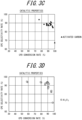
- FIGS. 2 and 3 indicate the results, and Table 2 indicates representative values of the results.
- Example 2 The test was conducted in the same manner as in Example 1, except that TiOz with an anatase ratio of 82.2% was used as a support, instead of the TiOz with an anatase ratio of 100% used in Example 1.
- the used TiOz support contained sulfur trioxide (SO 3 ) as a trace component.
- SO 3 sulfur trioxide
- the obtained Pd-bearing support for a hydrogenation catalyst contained SO 3 at a ratio of 0.9% relative to the total weight of the TiOz and the SO 3 .
- FIG. 2 and Table 2 indicate the results.
- Example 2 The test was conducted in the same manner as in Example 1, except that TiOz with an anatase ratio of 100% without containing SO 3 was used as a support, instead of the TiOz support used in Example 1.
- the obtained Pd-bearing support for a hydrogenation catalyst also did not contain SO 3 .
- Table 2 indicates the results.
- Example 4 The tests were conducted in the same manner as in Example 1, except that activated carbon (Comparative Example 1), aluminum oxide (Al 2 O 3 ) (Comparative Example 2), zinc oxide (ZnO) (Comparative Example 3), or silicon dioxide (SiOz) (Comparative Example 4) was used, instead of titanium dioxide (TiOz), as a support in the production of hydrogenation catalysts.
- activated carbon Comparative Example 1
- Al 2 O 3 Comparative Example 2
- ZnO zinc oxide
- SiOz silicon dioxide
- Example 1 Example 2 Example 3 Comparative Example 1 Comparative Example 2 Comparative Example 3 Comparative Example 4 Support TiO 2 (anatase ratio of 100%) TiO 2 (anatase ratio of 82.2%) TiO 2 (anatase ratio of 100%) Activated carbon Al 2 O 3 ZnO SiO 2 Content ratio of SO 3 1.20% 0.90% - - - - CPD conversion rate 99.50% 99.30% 99.70% 97.40% 98.20% 91.00% 90.00% CPE selectivity rate 98.20% 88.80% 87.60% 84.60% 70.20% 95.60% 86.20% CPE yield rate 97.70% 88.20% 87.40% 82.40% 69.00% 87.00% 77.60%
- the results in Table 2 indicate that the Pd-supported catalyst that uses the titanium dioxide (TiOz) as the support has superior catalytic properties such as the CPD conversion rate, the CPE selectivity rate, and the CPE yield rate. It is also indicated that the higher the anatase ratio of the titanium dioxide (TiO 2 ), the better the catalytic properties. It is also indicated that the presence of the SO 3 in the catalysts gives even better catalytic properties.
- the disclosure enables a hydrogenation reaction of CPD to CPE in a gas phase that exhibits both a high conversion rate and high selectivity.
Landscapes
- Chemical & Material Sciences (AREA)
- Organic Chemistry (AREA)
- Engineering & Computer Science (AREA)
- Materials Engineering (AREA)
- Chemical Kinetics & Catalysis (AREA)
- Organic Low-Molecular-Weight Compounds And Preparation Thereof (AREA)
- Catalysts (AREA)
Abstract
Description
- This disclosure relates to a catalyst, and a method for producing cyclopentene.
- Cyclopentene (hereinafter abbreviated as "CPE") is a useful compound in the chemical industry, and is used as a raw material compound for conversion into value-added compounds through various reactions such as oxidation reactions, hydration reactions, and Diels-Alder reactions, for example. The CPE can be produced by separation and generation of a petroleum fraction, and at the same time, cyclopentadiene (hereinafter abbreviated as "CPD") can also be obtained as a fractional mixture. The CPD can degrade a catalyst, or the like, and thereby reduce the efficiency of the various reactions using the CPE as the raw material compound. Therefore, in order to improve the efficiency of the various reactions using the CPE as the raw material compound, the CPD is reduced (hydrogenated) and converted into the CPE.
- As methods for reducing the CPD to obtain the CPE, (a) a batch hydrogenation method in which, after the CPD, an ammonia aqueous solution, and Rane-Nickel are fed into a reactor in advance, hydrogen is supplied while stirring (Patent Literature (PTL) 1), (b) a batch reaction method in which, after the CPD, deionized water, Raney nickel, and monoethanol amine are fed into a reactor in advance and heated, hydrogen is supplied (Patent Literature (PTL) 2), (c) a method in which, after deionized water, Raney nickel, and monoethanol amine are fed into a reactor, the CPD and hydrogen are fed while controlling the concentration of the CPD in reaction solution to be a predetermined level or less (Patent Literature (PTL) 3) are known.
- However, the method (a) above has the disadvantage of using ammonia to obtain the cyclopentene in a high yield rate, which causes operational difficulties or complicates facilities. In the method (b) above, increasing the amount of the catalyst to shorten reaction time results in a lower yield rate. In the method (c) above, the CPE can be obtained in a high yield rate and high selectivity, but a reaction rate is not fast enough and productivity is somewhat low.
- The above methods (a), (b), and (c) are performed in a liquid phase, but facilities are complicated in a liquid phase system. On the other hand, it is advantageous to conduct reactions in a gas phase because it is expected to reduce the number of devices and to enable gas-phase continuous hydrogenation reactions that can exhibit high productivity without complicating facilities. As a method in the gas phase, (d) a continuous hydrogenation method in which hydrogen and the CPD are circulated in a reaction tube with a palladium-containing catalyst therein, to perform a gas-phase hydrogenation reaction is known. However, in the method (d) above, there is a problem in controlling the activity of Pd, and cyclopentane, which is a perhydrogenated product of the CPD, is formed as a byproduct. In addition, the cyclopentane and the CPE have close boiling points and are extremely difficult to separate, so it is necessary to increase selectivity in the industrial production. Therefore, it is not possible to realize both a high conversion rate from the CPD to the CPE and high selectivity to selectively produce the CPE while suppressing the byproduction of the perhydrogenated product (cyclopentane), resulting in poor productivity.
-
- PTL 1:
JPS5476549U - PTL 2:
JP2001261592A - PTL 3:
JP2004175685A - As described above, performing a method of reducing CPD to obtain CPE in a gas phase, instead of in a liquid phase, is advantageous from the viewpoint of improving productivity with fewer number of devices. Therefore, there is a need for a method for conducting a hydrogenation reaction of the CPD in the gas phase that exhibits both a high conversion rate from the CPD to the CPE and high selectivity for selectively producing the CPE, while suppressing the byproduction of a perhydrogenated product (cyclopentane), which is suitable for the industrial production of the CPE, and a suitable catalyst for the method.
- It would be helpful to provide a catalyst that enables a hydrogenation reaction of CPD to CPE in a gas phase that exhibits both a high conversion rate and high selectivity, and a method for producing the CPE in a gas phase that exhibits both a high conversion rate and high selectivity.
- The inventors have made a diligent study with the aim of solving the above problem. The inventors have found that by using a supported composite in which palladium (Pd) is supported on an anatase-containing titanium dioxide (TiOz) support as a catalyst for a hydrogenation reaction of CPD to CPE in a gas phase, the CPE is produced with both a high conversion rate and high selectivity, and have completed the disclosure.
- In other words, this disclosure aims to advantageously solve the above problem. A catalyst according to the disclosure is a catalyst used in a hydrogenation reaction of cyclopentadiene in a gas phase to form cyclopentene, the catalyst including palladium (Pd) and a titanium dioxide (TiOz) support, wherein the titanium dioxide (TiOz) support contains anatase-type titanium dioxide (TiOz). This catalyst enables both a high conversion rate and high selectivity in the hydrogenation reaction of the CPD to the CPE in the gas phase.
- In the catalyst according to the disclosure, it is preferable that
- (i) the content of titanium dioxide (TiOz) relative to the total weight of the catalyst is 85 weight% or more and 99.9 weight% or less, and
- (ii) the content of the palladium (Pd) relative to the weight of the titanium dioxide (TiOz) support is 0.1 weight% or more and 2 weight% or less. In the catalyst according to the disclosure, it is more preferable that
- (i') the content of the titanium dioxide (TiOz) relative to the total weight of the catalyst is 95 weight% or more and 99.9 weight% or less, and
- (ii') the content of the palladium (Pd) relative to the weight of the titanium dioxide (TiOz) support is 0.5 weight% or more and 1 weight% or less. Higher conversion rates and higher selectivity in the hydrogenation reactions can be obtained when the contents of the titanium dioxide (TiOz) and the palladium (Pd) in the catalyst are in the above ranges.
- In the catalyst according to the disclosure, it is preferable that the titanium dioxide (TiO2) has an anatase ratio of 80% or more. In addition, in the catalyst according to the disclosure, it is more preferable that the titanium dioxide (TiO2) has an anatase ratio of 95% or more. The higher the anatase ratio of the titanium dioxide (TiO2), the higher the conversion rate and the higher the selectivity in the hydrogenation reaction.
- It is preferable that the catalyst according to the disclosure further contains sulfur trioxide (SO3). In this case, it is more preferable that the content of the sulfur trioxide (SO3) relative to the total weight of the titanium dioxide (TiO2) and the sulfur trioxide (SO3) in the catalyst is 0.1 weight% or more and 5.0 weight% or less. Since the catalyst according to the disclosure contains the sulfur trioxide (SO3), higher selectivity can be obtained in the hydrogenation reaction.
- A method for producing cyclopentene according to the disclosure includes a step of conducting a hydrogenation reaction of cyclopentadiene in a gas phase to form the cyclopentene in the presence of the catalyst according to the disclosure. The use of the catalyst according to the disclosure enables both a high conversion rate and high selectivity in the hydrogenation reaction, and improves the production efficiency of the CPE.
- The present disclosure enables a hydrogenation reaction of CPD to CPE in a gas phase that exhibits both a high conversion rate and high selectivity.
- In the accompanying drawings:
-
FIG. 1 illustrates an example of a reaction device for producing CPE based on a method according to the disclosure; -
FIG. 2 is a diagram illustrating the performance of hydrogenation catalysts with different anatase ratios; -
FIG. 3A is an (overlaid) diagram illustrating the performance of hydrogenation catalysts with palladium (Pd) on different supports; -
FIG. 3B is a diagram illustrating the performance of hydrogenation catalysts with palladium (Pd) on titanium dioxide (TiOz) supports; -
FIG. 3C is diagram illustrating the performance of hydrogenation catalysts with palladium (Pd) on activated carbon supports; -
FIG. 3D is diagram illustrating the performance of hydrogenation catalysts with palladium (Pd) on aluminum oxide (Al2O3) supports; -
FIG. 3E is diagram illustrating the performance of hydrogenation catalysts with palladium (Pd) on zinc oxide (ZnO) supports; and -
FIG. 3F is diagram illustrating the performance of hydrogenation catalysts with palladium (Pd) on silicon dioxide (SiOz) supports. - A catalyst of the disclosure is a catalyst used in a hydrogenation reaction of cyclopentadiene in a gas phase to produce cyclopentene. The catalyst contains palladium (Pd) and a titanium dioxide (TiO2) support, and the titanium dioxide (TiOz) support contains anatase-type titanium dioxide (TiOz). The catalyst of the disclosure may optionally further contain other components. Such components include, for example, sulfur trioxide (SO3). The catalyst of the disclosure is usually a catalyst (supported catalyst) having a structure in which palladium (Pd) is supported on a support containing titanium dioxide (TiO2) as a main component.
- The titanium dioxide (TiOz) is the main component of the support. The titanium dioxide (TiOz) contains an anatase type, as a crystal type. The anatase ratio of the titanium dioxide (TiO2) is not particularly limited as long as the purpose of the disclosure is achieved, but may be normally 50% or more, preferably 80% or more, and more preferably 95% or more from the viewpoint of achieving both an excellent conversion rate and selectivity of the CPD hydrogenation reaction in the gas phase. The anatase ratio of the titanium dioxide (TiO2) can be measured using XRD.
- The basicity of the titanium dioxide (TiOz) is not particularly limited as long as the purpose of the disclosure is achieved, but may be, for example, 0.01 µmol/g or more, preferably 0.04 µmol/g or more, more preferably 0.1 µmol/g or more at 100 to 450°C. The basicity of the titanium dioxide (TiOz) can be measured using CO2-TPD.
- The acidity of the titanium dioxide (TiOz) is not particularly limited as long as purpose of the disclosure is achieved, but may be, for example, 1 µmol/g or less, preferably 0.5 µmol/g or less, more preferably 0.2 µmol/g or less at 100 to 450°C. The acidity of the titanium dioxide (TiOz) can be measured using NH3-TPD.
- The content of the titanium dioxide (TiOz) in the total weight of the catalyst is not particularly limited as long as the purpose of the disclosure is achieved, but may be preferably 85 weight% or more, more preferably 95 weight% or more, preferably 99.9 weight% or less, and more preferably 99.5 weight% or less.
- When the catalyst of the disclosure is a supported catalyst, the palladium (Pd) is metal palladium (Pd) supported on a support. The metal palladium (Pd) supported on the support is preferably in the form of particles, and more preferably has an average particle diameter of 5 nm or more and 20 nm or less. The average particle diameter can be measured using the CO pulse adsorption method.
- The metal specific surface area of the palladium (Pd) in the catalyst of the disclosure is not particularly limited as long as the purpose of the disclosure is achieved, but may be, for example, 0.05 m2/g or more, preferably 0.5 m2/g or more, and more preferably 0.1 m2/g or more. When the metal specific surface area of the palladium (Pd) is equal to or above these lower limits, sufficient catalytic activity can be obtained.
- In the disclosure, the "metal specific surface area" of the palladium (Pd) can be expressed as the surface area of palladium (Pd) metal in a state supported by a support (m2 (palladium (Pd) metal)/g (palladium (Pd) metal)), and can be measured using the CO pulse adsorption method. The metal specific surface area of the palladium (Pd) can also be expressed as the ratio of the surface area of the palladium (Pd) metal relative to the weight of the titanium dioxide (TiOz), which serves as the support (the surface area (m2) of the palladium (Pd) metal/the weight (g) of the titanium dioxide (TiOz)).
- The content of the palladium (Pd) relative to the weight of the titanium dioxide (TiOz) support is not particularly limited as long as the purpose of the disclosure is achieved, but from the viewpoint of increasing activity and obtaining a sufficient hydrogenation rate, for example, 0.1 weight% or more, preferably 0.25 weight% or more, more preferably 0.45 weight% or more, and even more preferably, 0.5 weight% or more. The content of the palladium (Pd) relative to the total weight of the catalyst may be, for example, 2 weight weight% or less, preferably 1 weight weight% or less, more preferably 0.75 weight% or less, and even more preferably 0.55 weight% or less from the viewpoint of catalytic efficiency of Pd. The weight of the titanium dioxide (TiO2) support refers to the total weight of the titanium dioxide (TiO2) and any trace components, impurities, or the like optionally contained in the titanium dioxide (TiOz) support.
- The catalyst of the disclosure may optionally further contain other components. In particular, it is preferable that the catalyst of the disclosure further contains the sulfur trioxide (SO3) as the other component. When the catalyst of the disclosure contains the sulfur trioxide (SO3), the sulfur trioxide (SO3) may be mixed into the catalyst of the disclosure as, for example, a trace component, an impurity, or the like contained in the titanium dioxide (TiOz) support. In such cases, what state of the sulfur trioxide (SO3) is present in the catalyst is not known in detail, but it is assumed that the sulfur trioxide (SO3) may be present in the form of, for example, a compound (e.g., titanyl sulfate) with the titanium dioxide (TiOz). The catalyst of the disclosure can obtain high selectivity by containing the sulfur trioxide (SO3). The content ratio of the sulfur trioxide (SO3) relative to the total weight of the titanium dioxide (TiO2) and the sulfur trioxide (SO3) in the catalyst is preferably 0.1 weight% or more, more preferably 0.5 weight% or more, even more preferably 1.0 weight% or more, preferably 5.0 weight% or less, more preferably 4.0 weight% or less, and even more preferably 3.0 weight% or less. The higher the content ratio of the sulfur trioxide (SO3), the higher the selectivity. On the other hand, when the content ratio of the sulfur trioxide (SO3) is too high, the function of the titanium dioxide (TiOz) support can be reduced, so the sulfur trioxide (SO3) should be contained as a trace component equal to or below the above limits. The content of the sulfur trioxide (SO3) can be measured, for example, by X-ray fluorescence analysis (XRF).
- As described above, the catalyst of the disclosure usually has a structure in which the palladium (Pd) is supported on the support containing the titanium dioxide (TiOz) as the main component. Such a support structure includes, for example, the Eggshell type and the like. The form of the catalyst of the disclosure is not particularly limited as long as the purpose of the disclosure is achieved, but may be a pellet form, a sphere form, a cylinder form, a ring form, or the like. The pellet-form catalyst can be used as a fixed bed catalyst in a reaction vessel. The size (e.g., particle size) of the catalyst is not particularly limited, as an optimum value can be selected depending on an inner diameter or the like of a reaction tube. When the catalyst of the disclosure is in the pellet form, the pellet size may be, for example, 2 mm or more and 4 mm or less. When the catalyst of the disclosure is in the pellet form, it is preferable that the palladium (Pd) in the catalyst is in the form of particles, and it is more preferable that the particle size is 5 nm or more and 20 nm or less. When the catalyst of the disclosure is of the Eggshell type, the length of a palladium (Pd) present outer shell in the catalyst is preferably 10 µm or more and 150 µm or less.
- In the disclosure, the "size (e.g., average particle diameter)" of the hydrogenation catalyst can be measured using the sieve test method according to JIS K0069 and represents a weight-average particle diameter.
- The particle diameter of the palladium (Pd) in the catalyst can be measured using the CO-pulse adsorption method and represents a weight-average particle diameter.
- The length of the palladium (Pd) present outer shell in the catalyst can be measured using SEM-EDX.
- The specific surface area of the catalyst of the disclosure is not particularly limited as long as the purpose of the disclosure is achieved, but may be, for example, 20 m2/g or more, preferably 40 m2/g or more, more preferably 50 m2/g or more.
- In the disclosure, the "specific surface area" of the hydrogenation catalyst means a specific surface area measured using the BET adsorption method, and can be measured, for example, using a BET specific surface area meter.
- The total pore volume of the catalyst of the disclosure is not particularly limited as long as the purpose of the disclosure is achieved, but may be, for example, 0.5 cm3/g or less, preferably 0.3 cm3/g or less, more preferably 0.25 cm3/g or less from the viewpoint of suppressing side reactions.
- In the disclosure, the "total pore volume" of the hydrogenation catalyst can be measured, for example, using the BET adsorption method.
- The average pore diameter of the catalyst of the disclosure is not particularly limited as long as the purpose of the disclosure is achieved, but may be, for example, 100 nm or less, preferably 50 nm or less, more preferably 30 nm or less.
- In the disclosure, the "average pore diameter" of the hydrogenation catalyst can be measured, for example, using the BET adsorption method.
- The palladium (Pd) metal dispersibility in the catalyst of the disclosure is not particularly limited as long as the purpose of the disclosure is achieved, but may be, for example, 0.1% or more, preferably 1% or more, and more preferably 10% or more.
- In the disclosure, the "metal dispersibility" of the hydrogenation catalyst can be measured, for example, using the CO-pulse adsorption method.
- As component compositions in the catalyst of the disclosure, it is preferable that (i) the content of the titanium dioxide (TiO2) relative to the total weight of the catalyst is 85 weight% or more and 99.9 weight% or less, and (ii) the content of the palladium (Pd) relative to the total weight of the catalyst is 0.1 weight% or more and 2 weight% or less. As the component compositions of the catalyst of the disclosure, it is more preferable that (i') the content of the titanium dioxide (TiOz) relative to the total weight of the catalyst is 95 weight% or more and 99.9 weight% or less, and (ii') the content of the palladium (Pd) relative to the total weight of the catalyst is 0.5 weight% or more and 1 weight% or less.
- The catalyst of the disclosure can be prepared by general support methods. For example, the catalyst of the disclosure can be prepared by: (1) the step of dissolving a palladium (Pd) compound (such as palladium (Pd) oxide or chloride) in an appropriate solvent (water, an aqueous acid solution, an aqueous alkali solution, an organic solvent, or the like) to obtain a palladium (Pd) compound solution; (2) the step of depositing the palladium (Pd) compound derived from the solution prepared in (1) above on a surface of a titanium oxide (TiO2) support; and (3) the step of reducing the palladium (Pd) compound deposited on the surface of the titanium dioxide (TiO2) support to metal palladium (Pd) with hydrogen, hydrazine, formaldehyde, and/or the like to obtain a catalyst in which the palladium (Pd) is supported on the titanium dioxide (TiO2) support. The step (2) above can be performed, for example, by a method of spraying the solution prepared in (1) above onto the titanium dioxide (TiO2) support and then drying the solution; a method of immersing the titanium dioxide (TiOz) support in the solution prepared in (1) above and allowing the palladium (Pd) compound to be adsorbed onto the titanium dioxide (TiOz) support, and then heating and evaporating the solvent; or the like. An example of the palladium (Pd) compound is palladium (II) acetylacetonate (Pd(acac)2).
- When the catalyst of the disclosure contains the sulfur trioxide (SO3), for example, the sulfur trioxide (SO3) may be mixed in the catalyst of the disclosure as a trace component, an impurity, or the like contained in the titanium dioxide (TiO2) support during the preparation of the titanium dioxide (TiOz) support. Alternatively, after the preparation of the titanium dioxide (TiO2) support, the sulfur trioxide (SO3) may be treated to be contained in the titanium dioxide (TiOz) support. In a case in which there is a commercially available product of the titanium dioxide (TiOz) support that contains the sulfur trioxide (SO3) as a trace component, an impurity, or the like, such a commercially available product may be used as the titanium dioxide (TiOz) support.
- The catalyst of the disclosure is preferably reduced (e.g., hydrogenation reduction) prior to use in a reaction.
- A reaction to be promoted by the catalyst of the disclosure is a hydrogenation reaction (CPD hydrogenation reaction) of CPD to produce CPE, which takes place in a gas phase. Preferred conditions for the CPD hydrogenation reaction will be described in the "Method for Producing CPE" section below.
- A method for producing CPE according to the disclosure includes the step (hydrogenation step) of conducting a hydrogenation reaction of CPD in a gas phase to form the CPE in the presence of the above-described catalyst.
- The method of the disclosure may further include the following steps, as optional steps to be performed before the hydrogenation step:
- · the step of reducing the catalyst (catalyst reduction step);
- · the step of vaporizing a reaction raw material (CPD, multimerized CPD, or a mixture of CPD and coexisting components such as the solvent) (vaporization step); and/or
- · the step of heating multimerized CPD to obtain monomerized CPD by thermal decomposition (thermal decomposition step).
- The method of the disclosure may also further include the following step, as an optional step to be performed after the hydrogenation step:
· the step of cooling objective CPE to liquefy or solidify the objective CPE (cooling step). - The hydrogenation step is the step of conducting the hydrogenation reaction of the CPD in the gas phase to form the CPE in the presence of the above-described catalyst.
- The CPD, which is a substrate for the hydrogenation reaction, may be used in the hydrogenation step as a simple substance, or may be used in the hydrogenation step in the form of a mixture. As the mixture, there are mixtures with the CPE and mixtures with common organic solvents (e.g., toluene or hexane). The CPD may be a commercial product or a fraction (e.g., naphtha cracker Cs fraction) of a petroleum material. In particular, a fraction of a petroleum material may be used as a CPD-CPE mixture.
- When the CPD is in the form of the CPD-CPE mixture, the molar ratio (CPE/CPD) of CPE relative to CPD in the mixture is not particularly limited, but is preferably 0.0485 or more, more preferably 0.0970 or more, and even more preferably 0.194 or more, preferably 29.1 or less, more preferably 19.4 or less, and even more preferably 9.70 or less. When the molar ratio (CPE/CPD) of the amount of the CPE added to the CPD in the hydrogenation step is equal to or above these lower limits, multimerization of the CPD can be suppressed and the purity and yield rate of the obtained CPE can be further increased. On the other hand, when the molar ratio (CPE/CPD) of the amount of the CPE added to the CPD in the hydrogenation step is equal to or below these upper limits, the productivity of the CPE can be sufficiently ensured.
- The molar ratio (hydrogen/CPD) of the amount of hydrogen added to the CPD in the hydrogenation step is not particularly limited, but is preferably 1 or more, preferably 20 or less, and more preferably 10 or less.
- A mixture of multimerized CPD and the CPE may also be used as a reaction raw material for the method of the disclosure. The multimerized CPD in such a reaction raw material is decomposed to monomerized CPD by a thermal decomposition step described below and become a substrate for the hydrogenation reaction. As such a reaction raw material, for example, a solution of the multimerized CPD (e.g., dicyclopentadiene) diluted with the CPE to 70 weight% to 25 weight% can be used.
- In the reaction raw material for the method of the disclosure, the content of a sulfur component is preferably 5 ppm or less, more preferably 0.1 ppm or less, and no sulfur component is most preferable. The presence of the sulfur component in the reaction raw material is disadvantageous in terms of shortening the life of the catalyst.
- The hydrogenation step is performed in the gas phase. The hydrogenation step is performed "in the gas phase" means that the hydrogenation step is performed while substances in a hydrogenation reaction system other than the catalyst are in a gaseous state. The substances in the hydrogenation reaction system other than the catalyst include substances before the hydrogenation reaction such as hydrogenation substrate (CPD), coexisting components (when the hydrogenation substrate is in the form of a mixture), and hydrogen, and substances after the hydrogenation reaction such as hydrides (CPE), coexisting components (when the hydrides are in the form of a mixture), and excess hydrogen. By conducting the hydrogenation step in the gas phase, productivity can be improved with fewer number of devices.
- The temperature in the hydrogenation step is not limited as long as the purpose of the disclosure is achieved. However, from the viewpoint that a low reaction temperature leads to the precipitation of partially liquefied polymerized CPD and clogging in the reaction tube, the temperature in the hydrogenation step is preferably 130°C or more, and more preferably 150°C or more. The temperature in the hydrogenation step is also preferably 350°C or less, and more preferably 250°C or less from the viewpoint of suppressing degradation in the catalyst and a reaction device and suppressing a hydrogenation overreaction (decrease in selectivity).
- A reactor to be used in the hydrogenation step can be either a continuous type or a batch type, but the continuous type is preferable from the viewpoint of improving productivity. The reactor to be used in the hydrogenation step is not limited by its shape, but is preferably a multi-tube fixed bed distribution reactor. When the multi-tube fixed bed distribution reactor is used, the inner diameter of reaction tubes is not particularly limited, but is preferably 6 mm or more, more preferably 10 mm or more, preferably 100 mm or less, and more preferably 70 mm or less. The length of the reaction tubes is not particularly limited, but is preferably 0.1 m or more, more preferably 0.3 m or more, preferably 10 m or less, and more preferably 7 m or less. The reactor used in the hydrogenation step is preferably a reaction tube of 1 inch or more for 2 to 4 mm of the catalyst.
- The pressure (total pressure) during the reaction is usually 0 MPa to 0.1 MPa, preferably 0 MPa to 0.05 MPa. High reaction pressure may cause selectivity loss due to gas penetration into the catalyst.
- The introduction of a hydrogen gas into the reaction tubes is preferably down flow. The amount of the hydrogen gas fed into the reaction tubes is usually preferably 1 equivalent to 2.0 equivalents of the source CPD, and more preferably 1 equivalent to 1.2 equivalents. It is preferable that the amount of hydrogen is not too much, since a large amount of hydrogen causes entrainment and a large cooler for product recovery.
- In the hydrogenation step, components (other components) other than the catalyst, the CPD, and components mixed with the CPD can be present. Specifically, the other components include, for example, inactive gases such as nitrogen and argon.
- One type of the other component may be used alone, or two or more types may be used in combination in any ratio.
- In the hydrogenation step, the catalyst is usually installed in a reaction vessel. An installation style of the catalyst is not particularly limited as long as the purpose of the disclosure is achieved, but for example, may be installed as a fixed bed catalyst in the reaction vessel. The amount of the catalyst installed in the reactor vessel per volume of the reaction vessel is not particularly limited as long as the purpose of the disclosure is achieved, but may be, for example, 500 g/L or more, preferably 750 g/L or more, and may be, for example, 150 g/L or less, and preferably 125 g/L or less.
- In order to activate the catalyst in a hydrogenation reaction step, the method of the disclosure preferably further includes the step (catalyst reduction step) of reducing the catalyst before the hydrogenation reaction step. The catalyst reduction step can be performed, for example, by heating the catalyst in a hydrogen atmosphere. The heating temperature may be, for example, 150°C or more, preferably 300°C or more, and may be, for example, 450°C or less, and preferably 400°C or less.
- When the reaction raw material (CPD, multimerized CPD, or a mixture of CPD with coexisting components such as the solvent) is liquid or solid at room temperature, the method of the disclosure preferably further includes the step (vaporization step) of vaporizing the reaction raw material before the hydrogenation reaction step, in order to conduct the hydrogenation step in a gas phase. The vaporization step may be performed, for example, by heating or depressurizing the reaction raw material, but is usually performed by heating the reaction raw material. The heating temperature may be any temperature as long as the reaction raw material vaporizes and the deterioration of the reaction device is suppressed, and may be, for example, 150°C or more, preferably 190°C or more, and may be, for example, 250°C or less, and preferably 210°C or less.
- The substrate (CPD) for the hydrogenation reaction may form multimers (e.g., dimers) in the reaction raw material. For example, the CPD tend to exist in the form of dicyclopentadiene (DCPD), which is dimerized to dimers, at room temperature. Therefore, it is preferable that the method of the disclosure further includes, prior to the hydrogenation reaction step, the step (thermal decomposition step) of heating the multimerized CPD to obtain the CPD as monomers through thermal decomposition. The thermal decomposition step may be performed after the vaporization step, before the vaporization step, or integrally with the vaporization step. The heating temperature may be any temperature as long as the multimerized CPD is monomerized and the deterioration of the reaction device is suppressed, and may be, for example, 340°C or more, preferably 350°C or more, and may be, for example, 250°C or less, and preferably 360°C or less.
- When the target CPE is liquid or solid at room temperature, the method of the disclosure preferably further includes the step (cooling step) of cooling the CPE to liquefy or solidify the CPE, after the hydrogenation reaction step, in order to recover the CPE obtained in the hydrogenation step as liquid or solid. The cooling temperature may be any temperature as long as the CPE is liquefied or solidified, and may be, for example, 0°C or less, and preferably - 20°C or less. The cooling step may be performed by a method known in the art, for example, using a condenser.
- The method of the disclosure may further include the following step, as another optional step to be performed before the hydrogenation step:
· the step of removing an impurity (for example, multimerized CPD that has not been monomerized, or a byproduct of the thermal decomposition step) from the CPD by distillation or the like (reaction raw material impurity removal step). - The method of the disclosure may further include the following step, as another optional process to be performed after the hydrogenation step:
• the step of removing an impurity (for example, CPD that has not been hydrogenated, or a byproduct of the hydrogenation step, such as perhydroxides,) from the target CPE by distillation or the like (product impurity removal step). -
FIG. 1 illustrates an example of the reaction device used in the method of the disclosure when the method of the disclosure includes the vaporization step, the thermal decomposition step, the hydrogenation step, and cooling step. - The conversion rate from the CPD to the CPE that can be achieved by the method of the disclosure is preferably 95% or more, more preferably 99% or more, and even more preferably 99.8% or more. The selectivity rate from the CPD to the CPE that can be achieved by the method of the disclosure is preferably 90% or more, more preferably 92% or more, and even more preferably 96% or more.
- The disclosure will be specifically described below based on the examples, but the disclosure is not limited to these examples. In the following description, "%" and "part" representing amounts are on a mass basis, unless otherwise specified.
- In Examples and Comparative Examples, a cyclopentadiene (CPD) conversion rate, a cyclopentene (CPE) selectivity rate, and a CPE yield rate were calculated by the following methods. The composition of a reaction solution was measured by gas chromatography.
- In the Examples and Comparative Examples, the content of sulfur trioxide (SO3) was measured by X-ray fluorescence analysis (XRF).
- The CPD conversion rate in the hydrogenation step in the Examples and Comparative Examples was calculated by the following equation (1):

- In the equation (1), F1 is the flow rate (g/hour) of CPD at an outlet of a reaction tube, and F2 is the flow rate (g/hour) of the CPD introduced into the reaction tube.
- The CPE selectivity rate in the hydrogenation step in the Examples and Comparative Examples was calculated by the following equation (2):

- In the equation (2), F3 is the flow rate (g/hour) of CPE at the outlet of the reaction tube, F4 is the flow rate (g/hour) of the CPE introduced into the reaction tube (F4=0 when the gas-phase contact hydrogenation of the CPD is performed in the absence of the CPE), and F5 is the flow rate (g/hour) of the converted CPD. The higher the CPE selectivity rate, the higher the purity of the CPE obtained in the hydrogenation step.
- The CPE yield rate in the hydrogenation step in the Examples and Comparative Examples was calculated by the following equation (3) using the CPD conversion rate and the CPE selectivity rate described above:

- The higher this CPE yield rate, the higher the yield rate of the CPE obtained in the hydrogenation step.
- A TiOz support with an anatase ratio of 100% was impregnated in a Pd-containing organic solvent, and then the impregnated support was dried to evaporate the solvent and sintered, to obtain a Pd-bearing support for a hydrogenation catalyst. The used TiOz support contained sulfur trioxide (SO3) as a trace component. The obtained Pd-bearing support for the hydrogenation catalyst contained SO3 at a ratio of 1.2% relative to the total weight of TiOz and the SO3. Table 1 indicates the physical properties of the obtained Pd-bearing supports for the hydrogenation catalyst.
[Table 1] Composition TiO2 (Content ratio % relative to total catalyst) 98.4 Pd (Content ratio % relative to total catalyst) 0.5 SO3 (Content ratio % relative to total weight of TiO2 and SO3) 1.2 Physical properties of TiO2 Basic (µmol/g) @ 100 to 450°C 0.109 Acidic (µmol/g) @ 100 to 450°C 0.213 Physical properties of Pd Metal fineness of grind (%) 1.07 Metal specific surface area (m2/g·TiO2 support) 0.024 Metal specific surface area (m2/g·Pd metal) 4.77 Physical properties of catalyst (Pd-bearing support) Bet specific surface area (m2/g) 38.6 Total pore volume (cm3/g) 0.211 Average pore diameter (nm) 21.9 Unit adsorption amount (cm2/g) 0.011 Particle diameter (nm) 104.7 - In the table, the unit adsorption amount of the catalyst was measured using the CO-pulse adsorption method.
- The Pd-bearing support for the hydrogenation catalyst was packed in a 1-inch tube, and subjected to reduction treatment under an H2 atmosphere at a high temperature of 150°C to 450°C to convert the Pd-bearing support into an active hydrogenation catalyst.
- Liquid DCPD, as a raw material, diluted with CPE was gasified at 190°C. The gas was heated to 350°C to decompose the DCPD into CPD (a reaction substrate) to obtain a CPD/CPE mixed gas.
- The CPD/CPE mixed gas (a flow rate of 0.3 to 0.5 ml/min) was distributed together with hydrogen (a flow rate of 100 to 150 ml/min) in a 1-inch tube filled with the catalyst (10 g) at a hydrogen equivalent (1.0 to 2.0) and a reaction temperature (150 to 250°C). The distributed gas was cooled at - 10°C with a condenser to obtain a CPE solution.
- The CPD conversion rate, the CPE selectivity rate, and the CPE yield rate were evaluated.
FIGS. 2 and3 indicate the results, and Table 2 indicates representative values of the results. - The test was conducted in the same manner as in Example 1, except that TiOz with an anatase ratio of 82.2% was used as a support, instead of the TiOz with an anatase ratio of 100% used in Example 1. The used TiOz support contained sulfur trioxide (SO3) as a trace component. The obtained Pd-bearing support for a hydrogenation catalyst contained SO3 at a ratio of 0.9% relative to the total weight of the TiOz and the SO3.
FIG. 2 and Table 2 indicate the results. - The test was conducted in the same manner as in Example 1, except that TiOz with an anatase ratio of 100% without containing SO3 was used as a support, instead of the TiOz support used in Example 1. The obtained Pd-bearing support for a hydrogenation catalyst also did not contain SO3. Table 2 indicates the results.
- The tests were conducted in the same manner as in Example 1, except that activated carbon (Comparative Example 1), aluminum oxide (Al2O3) (Comparative Example 2), zinc oxide (ZnO) (Comparative Example 3), or silicon dioxide (SiOz) (Comparative Example 4) was used, instead of titanium dioxide (TiOz), as a support in the production of hydrogenation catalysts.
FIG. 3 and Table 2 indicate the results.[Table 2] Example/Comparative Example No. Example 1 Example 2 Example 3 Comparative Example 1 Comparative Example 2 Comparative Example 3 Comparative Example 4 Support TiO2 (anatase ratio of 100%) TiO2 (anatase ratio of 82.2%) TiO2 (anatase ratio of 100%) Activated carbon Al2O3 ZnO SiO2 Content ratio of SO3 1.20% 0.90% - - - - - CPD conversion rate 99.50% 99.30% 99.70% 97.40% 98.20% 91.00% 90.00% CPE selectivity rate 98.20% 88.80% 87.60% 84.60% 70.20% 95.60% 86.20% CPE yield rate 97.70% 88.20% 87.40% 82.40% 69.00% 87.00% 77.60% - The results in Table 2 indicate that the Pd-supported catalyst that uses the titanium dioxide (TiOz) as the support has superior catalytic properties such as the CPD conversion rate, the CPE selectivity rate, and the CPE yield rate. It is also indicated that the higher the anatase ratio of the titanium dioxide (TiO2), the better the catalytic properties. It is also indicated that the presence of the SO3 in the catalysts gives even better catalytic properties.
- The disclosure enables a hydrogenation reaction of CPD to CPE in a gas phase that exhibits both a high conversion rate and high selectivity.
-
- 1
- vaporizer
- 2
- decomposition reactor
- 3
- hydrogenation reactor
- 4
- cooler
- 5
- reaction liquid tank
- 11
- raw material inlet
- 12
- hydrogen inlet
- 13
- catalyst charging and reaction point
Claims (8)
- A catalyst used in a hydrogenation reaction of cyclopentadiene in a gas phase to form cyclopentene, the catalyst comprising:palladium (Pd); anda titanium dioxide (TiOz) support,wherein the titanium dioxide (TiOz) support contains anatase-type titanium dioxide (TiOz).
- The catalyst according to claim 1, wherein(i) a content of titanium dioxide (TiOz) relative to a total weight of the catalyst is 85 weight% or more and 99.9 weight% or less, and(ii) a content of the palladium (Pd) relative to a weight of the titanium dioxide (TiOz) support is 0.1 weight% or more and 2 weight% or less.
- The catalyst according to claim 1 or 2, wherein(i') a content of titanium dioxide (TiO2) relative to a total weight of the catalyst is 95 weight% or more and 99.9 weight% or less, and(ii') a content of the palladium (Pd) relative to a weight of the titanium dioxide (TiOz) support is 0.5 weight% or more and 1 weight% or less.
- The catalyst according to any one of claims 1 to 3, wherein titanium dioxide (TiO2) has an anatase ratio of 80% or more.
- The catalyst according to any one of claims 1 to 4, wherein titanium dioxide (TiO2) has an anatase ratio of 95% or more.
- The catalyst according to any one of claims 1 to 5, further comprising sulfur trioxide (SO3).
- The catalyst according to claim 6, wherein a content of the sulfur trioxide (SO3) relative to a total weight of titanium dioxide (TiOz) and the sulfur trioxide (SO3) in the catalyst is 0.1 weight% or more and 5.0 weight% or less.
- A method for producing cyclopentene comprising conducting a hydrogenation reaction of cyclopentadiene in a gas phase to form the cyclopentene in the presence of the catalyst according to any one of claims 1 to 7.
Applications Claiming Priority (2)
| Application Number | Priority Date | Filing Date | Title |
|---|---|---|---|
| JP2021062072 | 2021-03-31 | ||
| PCT/JP2022/013503 WO2022210162A1 (en) | 2021-03-31 | 2022-03-23 | Catalyst, and method for producing cyclopentene |
Publications (2)
| Publication Number | Publication Date |
|---|---|
| EP4316649A1 true EP4316649A1 (en) | 2024-02-07 |
| EP4316649A4 EP4316649A4 (en) | 2025-03-19 |
Family
ID=83456140
Family Applications (1)
| Application Number | Title | Priority Date | Filing Date |
|---|---|---|---|
| EP22780377.2A Pending EP4316649A4 (en) | 2021-03-31 | 2022-03-23 | Catalyst, and method for producing cyclopentene |
Country Status (7)
| Country | Link |
|---|---|
| US (1) | US20240158319A1 (en) |
| EP (1) | EP4316649A4 (en) |
| JP (1) | JPWO2022210162A1 (en) |
| KR (1) | KR20230163377A (en) |
| CN (1) | CN116940414A (en) |
| TW (1) | TW202247901A (en) |
| WO (1) | WO2022210162A1 (en) |
Family Cites Families (14)
| Publication number | Priority date | Publication date | Assignee | Title |
|---|---|---|---|---|
| DE2025411A1 (en) * | 1970-05-25 | 1971-12-09 | ||
| GB2007706B (en) | 1977-11-11 | 1982-03-17 | Goodyear Tire & Rubber | Cyclopentadiene hydrofenation |
| US5048042A (en) * | 1990-11-19 | 1991-09-10 | Hughes Aircraft Company | Catalytic method for inhibiting deposit formation in methane Raman cells |
| JP2000053597A (en) * | 1998-06-03 | 2000-02-22 | Nippon Zeon Co Ltd | Method for producing cyclopentene |
| AU4660100A (en) * | 1999-04-27 | 2000-11-10 | Phillips Petroleum Company | Hydrocarbon hydrogenation catalyst and process |
| JP2001010987A (en) * | 1999-06-30 | 2001-01-16 | Nippon Zeon Co Ltd | Method for producing cyclopentene |
| JP2001181217A (en) * | 1999-12-27 | 2001-07-03 | Nippon Zeon Co Ltd | Dicyclopentadiene and purification method thereof |
| JP2001261592A (en) | 2000-03-16 | 2001-09-26 | Nippon Zeon Co Ltd | High purity cyclopentene, method for producing the same, and method for producing cyclopentanol using the same |
| JP2003137821A (en) * | 2001-11-05 | 2003-05-14 | Maruzen Petrochem Co Ltd | Method for producing monoolefin by partial hydrogenation of diolefin |
| CN1417179A (en) * | 2001-11-08 | 2003-05-14 | 中国石化上海石油化工股份有限公司 | Cyclopentadiene hydrogenating precess of preparing cyclopentene |
| JP2004175685A (en) | 2002-11-25 | 2004-06-24 | Nippon Zeon Co Ltd | Method for producing cyclopentene |
| JP2004210900A (en) * | 2002-12-27 | 2004-07-29 | Nippon Zeon Co Ltd | Hydrogenation method of polymer having unsaturated bond |
| US8247343B2 (en) * | 2009-11-13 | 2012-08-21 | Chapman David M | Stable sub-micron titania sols |
| AU2017277063B2 (en) * | 2016-06-06 | 2021-12-02 | Venator Germany Gmbh | Process for reducing the sulphur content of anatase titania and the so-obtained product |
-
2022
- 2022-03-23 EP EP22780377.2A patent/EP4316649A4/en active Pending
- 2022-03-23 WO PCT/JP2022/013503 patent/WO2022210162A1/en not_active Ceased
- 2022-03-23 JP JP2023511056A patent/JPWO2022210162A1/ja active Pending
- 2022-03-23 US US18/549,350 patent/US20240158319A1/en not_active Abandoned
- 2022-03-23 KR KR1020237031125A patent/KR20230163377A/en active Pending
- 2022-03-23 CN CN202280017520.6A patent/CN116940414A/en active Pending
- 2022-03-24 TW TW111111106A patent/TW202247901A/en unknown
Also Published As
| Publication number | Publication date |
|---|---|
| TW202247901A (en) | 2022-12-16 |
| CN116940414A (en) | 2023-10-24 |
| US20240158319A1 (en) | 2024-05-16 |
| WO2022210162A1 (en) | 2022-10-06 |
| KR20230163377A (en) | 2023-11-30 |
| JPWO2022210162A1 (en) | 2022-10-06 |
| EP4316649A4 (en) | 2025-03-19 |
Similar Documents
| Publication | Publication Date | Title |
|---|---|---|
| JP6670754B2 (en) | Composite, method for producing composite, ammonia synthesis catalyst, and ammonia synthesis method | |
| EP2650047B1 (en) | Ammonia synthesis catalyst and ammonia synthesis method | |
| EP3689823A1 (en) | Composite oxide, metal-supporting material and ammonia synthesis catalyst | |
| EP4223412B1 (en) | Ammonia decomposition catalyst | |
| EP3517499A1 (en) | Porous carbon material, method for producing same, and synthesis reaction catalyst | |
| WO2007134722A1 (en) | Temperature-resistant catalyst for gas phase oxidation | |
| EP3805159A1 (en) | Composite oxide, metal-supported material, and ammonia synthesis catalyst | |
| US10029237B2 (en) | Catalyst comprising dispersed gold and palladium, and its use in selective hydrogenation | |
| JP7418849B2 (en) | Oxynitrogen hydride, metal support containing oxynitrogen hydride, and catalyst for ammonia synthesis | |
| Sun et al. | Preparation of Au/xCeO2-Al2O3 catalysts with enhanced catalytic properties for the selective acetylene hydrogenation | |
| JP7023457B2 (en) | Ammonia synthesis catalyst and ammonia synthesis method using the catalyst | |
| Liu et al. | Skeletal Ni catalyst prepared from a rapidly quenched Ni–Al alloy and its high selectivity in 2-ethylanthraquinone hydrogenation | |
| EP2368634B1 (en) | Process for preparing ruthenium catalyst for use in production of cycloolefin, and process and apparatus for producing cycloolefin | |
| EP4316649A1 (en) | Catalyst, and method for producing cyclopentene | |
| JP2009046398A (en) | Naphthalene hydrogenation catalyst | |
| JP6736073B2 (en) | Ammonia synthesis catalyst | |
| EP2894144A1 (en) | Method for producing 7-octenal | |
| CN113492012B (en) | A non-precious metal Ni-based catalyst and its preparation method and a method for preparing cyclopentane by hydrogenating cyclopentadiene | |
| WO2022210164A1 (en) | Method for producing cyclopentene | |
| KR102255171B1 (en) | Method of preparing Cs-Pd catalyst for synthesis of hydrogen peroxide, and Method of preaparing heydrogen oxide using the Cs-Pd catalyst | |
| JP6344052B2 (en) | Ammonia synthesis catalyst and ammonia synthesis method | |
| CN106341989B (en) | A kind of charcoal decomposing for hydrazine carries the preparation method of molybdenum carbide catalyst | |
| EP4552738A1 (en) | Solid material, use and preparation of said solid material | |
| US20030114723A1 (en) | Manufacture of cyclohexane from benzene and a hydrogen source containing impurities | |
| EP4353355A1 (en) | Catalyst, method for producing catalyst, and method for producing unsaturated carboxylic acid and/or unsaturated carboxylic acid ester |
Legal Events
| Date | Code | Title | Description |
|---|---|---|---|
| STAA | Information on the status of an ep patent application or granted ep patent |
Free format text: STATUS: THE INTERNATIONAL PUBLICATION HAS BEEN MADE |
|
| PUAI | Public reference made under article 153(3) epc to a published international application that has entered the european phase |
Free format text: ORIGINAL CODE: 0009012 |
|
| STAA | Information on the status of an ep patent application or granted ep patent |
Free format text: STATUS: REQUEST FOR EXAMINATION WAS MADE |
|
| 17P | Request for examination filed |
Effective date: 20230925 |
|
| AK | Designated contracting states |
Kind code of ref document: A1 Designated state(s): AL AT BE BG CH CY CZ DE DK EE ES FI FR GB GR HR HU IE IS IT LI LT LU LV MC MK MT NL NO PL PT RO RS SE SI SK SM TR |
|
| DAV | Request for validation of the european patent (deleted) | ||
| DAX | Request for extension of the european patent (deleted) | ||
| A4 | Supplementary search report drawn up and despatched |
Effective date: 20250219 |
|
| RIC1 | Information provided on ipc code assigned before grant |
Ipc: B01J 21/06 20060101ALI20250213BHEP Ipc: C07C 13/12 20060101ALI20250213BHEP Ipc: C07C 5/05 20060101ALI20250213BHEP Ipc: C07B 61/00 20060101ALI20250213BHEP Ipc: B01J 23/44 20060101AFI20250213BHEP |