EP4315747B1 - Tokenverwaltung für asynchrone anfrage-antwort - Google Patents
Tokenverwaltung für asynchrone anfrage-antwort Download PDFInfo
- Publication number
- EP4315747B1 EP4315747B1 EP22716295.5A EP22716295A EP4315747B1 EP 4315747 B1 EP4315747 B1 EP 4315747B1 EP 22716295 A EP22716295 A EP 22716295A EP 4315747 B1 EP4315747 B1 EP 4315747B1
- Authority
- EP
- European Patent Office
- Prior art keywords
- request
- token
- status
- api
- client
- Prior art date
- Legal status (The legal status is an assumption and is not a legal conclusion. Google has not performed a legal analysis and makes no representation as to the accuracy of the status listed.)
- Active
Links
Images



Classifications
-
- H—ELECTRICITY
- H04—ELECTRIC COMMUNICATION TECHNIQUE
- H04L—TRANSMISSION OF DIGITAL INFORMATION, e.g. TELEGRAPHIC COMMUNICATION
- H04L63/00—Network architectures or network communication protocols for network security
- H04L63/08—Network architectures or network communication protocols for network security for authentication of entities
- H04L63/0807—Network architectures or network communication protocols for network security for authentication of entities using tickets, e.g. Kerberos
-
- H—ELECTRICITY
- H04—ELECTRIC COMMUNICATION TECHNIQUE
- H04L—TRANSMISSION OF DIGITAL INFORMATION, e.g. TELEGRAPHIC COMMUNICATION
- H04L63/00—Network architectures or network communication protocols for network security
- H04L63/08—Network architectures or network communication protocols for network security for authentication of entities
- H04L63/0815—Network architectures or network communication protocols for network security for authentication of entities providing single-sign-on or federations
-
- H—ELECTRICITY
- H04—ELECTRIC COMMUNICATION TECHNIQUE
- H04L—TRANSMISSION OF DIGITAL INFORMATION, e.g. TELEGRAPHIC COMMUNICATION
- H04L63/00—Network architectures or network communication protocols for network security
- H04L63/10—Network architectures or network communication protocols for network security for controlling access to devices or network resources
- H04L63/101—Access control lists [ACL]
-
- H—ELECTRICITY
- H04—ELECTRIC COMMUNICATION TECHNIQUE
- H04L—TRANSMISSION OF DIGITAL INFORMATION, e.g. TELEGRAPHIC COMMUNICATION
- H04L63/00—Network architectures or network communication protocols for network security
- H04L63/10—Network architectures or network communication protocols for network security for controlling access to devices or network resources
- H04L63/102—Entity profiles
-
- H—ELECTRICITY
- H04—ELECTRIC COMMUNICATION TECHNIQUE
- H04L—TRANSMISSION OF DIGITAL INFORMATION, e.g. TELEGRAPHIC COMMUNICATION
- H04L63/00—Network architectures or network communication protocols for network security
- H04L63/20—Network architectures or network communication protocols for network security for managing network security; network security policies in general
-
- H—ELECTRICITY
- H04—ELECTRIC COMMUNICATION TECHNIQUE
- H04L—TRANSMISSION OF DIGITAL INFORMATION, e.g. TELEGRAPHIC COMMUNICATION
- H04L2463/00—Additional details relating to network architectures or network communication protocols for network security covered by H04L63/00
- H04L2463/121—Timestamp
Definitions
- IAM Identity and access management
- AuthN Authentication
- AuthZ authorization
- Tokens are often used for AuthN and AuthZ.
- a client application may depend on a remote application program interface (API) to execute a remote application which may be running in a multitenant environment. The user must present proper tokens for AuthN and AuthZ to the API to gain access to the remote application and to have the remote application perform desired operations.
- API remote application program interface
- HTTP Hypertext Transfer Protocol
- REST Representational State Transfer
- the API may respond to a request from a client application quickly, such as on the order of 100 milliseconds (ms) or less.
- execution of the request may exceed the token expiration, which may be due to a variety of factors, such as current load, time for backend processing of the request, size of the request payload, etc.
- the token becomes invalid. As a result, the request from the client application cannot be successfully performed.
- OAuth 2.0 isn't really designed for batch processing. OAuth is typically used more synchronously - as in, you send a request and you get an immediate response. Dealing with OAuth, you usually have the communication channel open. Batch processes, on the other hand, are often asynchronous, meaning that you may not have an open channel as operations occur over a longer time scale.
- Angelo Jo ⁇ o "How to handle user token expiration on long running asynchronous jobs?", 18 September 2016 (2016-09-18 ), relates to how to handle user token expiration on long running asynchronous jobs.
- the OAuth 2.0 client credentials grant can be used in the authorization server so that the back-end services can request tokens on their own behalf without involving the user.
- a token exchange mechanism can be supported that allows for a back-end service to exchange the received access token with another one that allows to call other services using either user impersonation or delegation. Since the tokens were being issued to trusted back-end services and would never leave the server-side boundary, the lifetime of the token obtained could be much larger than the one used in the access token available to the web application which would also solve the expiration issue.
- US 2019/102423 A1 relates to a system and method for providing an interface for a blockchain cloud service.
- a system and method implement a distributed ledger as a Blockchain Cloud Service (BCS).
- the BCS includes a complete set of infrastructure services and embedded resources: compute, containers, storage, identity management, and event streaming to enable the setup and execution of a production-ready blockchain.
- the BCS provisions an underlying infrastructure with the required blockchain network components, interface, a representational state transfer (REST) proxy service component, and a management console component, in response to an administrator specifying one or more parameters.
- REST representational state transfer
- token management is provided for an asynchronous request-reply pattern of communication that can be employed between a client application and a remote API to which the client application makes API calls.
- the asynchronous request-reply pattern allows the API to absolve itself from providing an immediate response to a request, and instead provides a way to provide a response later in time.
- some systems may create a certificate that gives blind trust to the user, such as authorizes rights for the user for an extended period of time that exceeds the expiration of the token.
- this creates a security risk, because the certificate holder is allowed to perform various operations for an extended period of time even if the token is invalid.
- token expiration is handled in a much more secure manner.
- the client is provided with a tracking key and a new location, such as a location of a status checker API, for checking the status of the request.
- the client after a stated period of time, can send a status request to the status checker API along with the tracking key.
- the client sends a request to a new location, such as the status request being sent to the status checker API instead of the initial request being sent to the remote API
- the client automatically includes a new token according to existing client procedure. This new token is then used to determine status and respond to the client status request and to process the request if the initial token is expired.
- the new token which is unexpired, is available for authorization to process the request, and this process may be repeated as needed until the processing of the requested operation is completed.
- token expiration is managed in a more secure manner than issuing a certificate that allows the request to be processed despite an expired token.
- the client is not required to re-submit the initial request, so the client 101 is not required to perform any additional operations.
- FIG. 1 shows an end-to-end asynchronous request-reply message flow according to an example of the present disclosure.
- Client 101 may include an application, also referred to as a client application, executed by a processor.
- the client 101 comprises code running in a web browser, or in another example the client 101 may include a standalone application that may not need a web browser to run.
- the client 101 communicates with remote APIs, e.g., API 102 and status checker API 103, such as to execute business logic or to perform other operations.
- the API 102 may also be referred to herein as a work process API.
- API 102 status checker API 103, storage 104, legacy API 106 and background request processor 105, which are described in detail below, are provided on a cloud of a cloud provider, and the client 101 accesses the cloud via the APIs to execute the request.
- the client 101 can access the APIs and the cloud via a network not shown.
- the client 101 makes API calls to API 102 which by way of example may take place over the HTTP(S) protocol and follow REST semantics.
- API 102 is for a tenant order service to order cloud resources from a cloud provider, such as orders for creating virtual machines (VMs), assigning database servers, performing billing tasks, etc.
- the client 101 makes an API call to the API 102, e.g., an HTTP post request.
- the API call includes a request to perform an operation, which may trigger a long-running operation on the backend.
- the request in the API call includes an order from a tenant for multiple VMs with particular images and database servers to be provided to the tenant by the cloud provider of the tenant.
- the request also includes a token, also referred to as an authorization token.
- the token may be one or more tokens used for AuthN and/or AuthZ.
- the request may include a tag that identifies itself as an asynchronous request as opposed to a synchronous request.
- the API 102 can check for other errors in the request.
- the API 102 can validate the client 101 and the request using the token, or the client 101 and the request may be subsequently validated using the token by the background request processor 105 before the requested operation in the request is executed by a request processing endpoint.
- the API 102 responds with an acknowledgement if the request is accepted, such as shown at 112, and the API 102 performs other operations, shown at 111, to have the request processed. If the request is not accepted, the API 102 responds with an indication that the request is not accepted as soon as possible, so the user can take corrective action as needed.
- the operations are performed at 111 to get the request processed.
- the API 102 creates a tracking key entry in storage 104 to track the progress of the order, which may include a requested operation, made in the request.
- the API 102 creates a tracking key for the request which is stored in storage 104.
- Storage 104 may include storage of the cloud provider that is accessible by the APIs and background request processor 105 shown in figure 1 .
- the storage 104 may include object storage (e.g., blob storage) in the cloud.
- the API 102 forwards the order to the background request processor 105 for execution, shown as forward post request.
- the acknowledgment includes (1) the status code, such as HTTP status code 202 indicating that the request has been accepted for processing but is not completed (in fact processing may not have been started), (2) the tracking key, (3) a location, such as a URL for status checker API 103, for checking the ongoing status of the order, and (4) a retry-after value indicating an amount of time to wait before checking the location for the status of the order.
- the client 101 can send a message, including the tracking key, to the location, such as the location of status checker API 103 instead of API 102, after waiting for the amount of time specified by the retry-after value to check on the progress of the execution of the order.
- operations are performed to check the status of the processing of the request that was initially made at 110, such as the status of the order for the VMs and database servers.
- the client 101 sends a status check (e.g., HTTP get message), including the tracking key, to the status checker API 103 after waiting for the amount of time specified by the retry-after value to check on the progress of the order. Because the client 101 is sending the status check to a new location, such as sending the status check to the status checker API 103 instead of the API 102, the client 101 includes a new token in the status check.
- a status check e.g., HTTP get message
- the client 101 includes a new token in the status check.
- the background request processor 105 may include a service bus to handle a high volume of incoming requests and to dispatch the requests to proper endpoints for servicing the requests.
- the service bus implements topics for message brokering and enables multiple receivers or request processing endpoints to process different messages based on topic at any given point of time. This helps with surges in requests and keeps total turnaround time for any operation at a minimum.
- the background request processor 105 includes a listener function, such as listener function 311 shown in figure 3 , that receives the request at 204 and checks whether the token is expired at 205. If the listener function determines the token is not expired, the request and the token are submitted to a request processing endpoint that can process the request.
- the proper endpoint may be a provisioning endpoint comprised of a server or VM of the cloud provider that is available and capable of executing the order.
- token expiration is managed without issuing a certificate that allows the request to be processed despite an expired token.
- the client 101 is not required to re-submit the request with the initial order, so the client 101 is not required to perform any additional operations.
- Figure 3 shows a system block diagram of the components described above with respect to figures 1-2 , according to an example of the present disclosure.
- Client 101 may communicate with APIs of API 300, such as API 102 and status checker API 103 to submit requests and status checks such as described above.
- the client 101 may communicate with the APIs over a network, not shown.
- the client 101 may include a web application or a standalone application executed by a processor of a computer.
- the storage 104 is used for request tracking and storing status. It follows the below-described schema.
- the storage 104 stores a tracking key used to identify the user when the client 101 sends a status check.
- the storage 104 also stores the state of a request, such as waiting, processing, finished, and error (e.g., when the listener function 311 can't process the request).
- the storage 104 also stores a status code, such as an HTTP status code that is returned to the client 101.
- the storage 104 also stores a number of status checks, which represent how many times the status check API 103 has checked for given request status.
- the storage 104 also stores a response (once available) for a current request. This can represent successful response provided by an underlying API or error message.
- the storage 104 also stores a number of requeuings, such as how many times the listener function 311 must requeue a request back to the service bus.
- the storage 104 also stores the encrypted token, and a timestamp for each update, such as for analytics purposes.
- the storage 104 is a cloud storage of the cloud provider that supports the order service for tenants to order cloud resources.
- the legacy API 106 may be called by the background request processor 105 to execute a request.
- the API 102 is for an order service that client 101 interacts with to order resources from the cloud provider.
- the order service may interact with customers and have dependencies 320 on other downstream services.
- the background request processor 105 may make API calls to the legacy API 106 when a downstream service is required to execute an order.
- the dependencies 320 have low reliability due to scaling constraints or other factors.
- the order service can be decoupled from less reliable dependencies. This way the order service can be shielded from reliability dips caused by the dependencies 320.
- a buffer is provided between the order service or another service provided by the background request processor 105 and dependency failures.
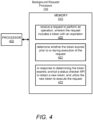
- FIG. 4 shows a block diagram for the background request processor 105, according to an example of the present disclosure.
- the processor 402 may include a single or multiple hardware processors or other hardware processing circuit, to execute the methods, functions, and other processes described herein. These methods, functions, and other processes may be embodied as machine-readable instructions stored on a computer-readable medium, which may be non-transitory, such as hardware storage devices (e.g., RAM (random access memory), ROM (read-only memory), EPROM (erasable, programmable ROM), EEPROM (electrically erasable, programmable ROM), hard drives, and flash memory).
- the memory 410 may include one or more storage devices, such as RAMs, where the machine-readable instructions and data for a processor may reside during runtime.
- APIs 300 and other processes described herein may comprise machine readable instructions stored on a non-transitory machine readable medium and executed by a hardware processor.
- the memory 410 may include machine readable instructions executable by the processor 402.
- the machine-readable instructions may include instructions 420 to receive a request to perform an operation, wherein the request includes a token with an expiration; instructions 421 to determine whether the token expired prior to or during execution of the request; and instructions 422 to in response to determining the token expired, prompt status checker API 103 to obtain a new token, and utilize the new token to execute the request.
- Figure 5 shows a block diagram for a computer-implemented method to manage execution of a request that outlasts token expiration in an asynchronous request-reply pattern, according to an example of the present disclosure.
- the computer-implemented method is described by way of example as being performed by one or more of the components shown in figures 1 and 3 .
- a request is received from client 101 at work process API 102 to perform an operation, wherein the request includes a token with an expiration.
- the request is posted for processing. For example, the request is posted to service bus 310 so it can be processed by a request processing endpoint.
- a response is transmitted to the client 101 indicating the response is accepted for processing, wherein the response includes a reply-after time period, and a location to poll for the status of the request after expiration of the reply-after time period, and wherein the location to poll is different from the work process API.
- a status check for the request is received from the client 101 at the location to poll, e.g., the status checker API 103, based on the reply-after time period.
- a new token is from the status check if the token is expired.
- a reply to the status check is transmitted to the client 101 with a current status of the request.
- the computer implemented method may be executed by processor 502 which may include a single or multiple hardware processors or other hardware processing circuit, to execute the methods, functions, and other processes described herein.
- the steps of the method may be embodied as machine-readable instructions stored on a computer-readable medium, which may be non-transitory, such as hardware storage devices (e.g., RAM (random access memory), ROM (read-only memory), EPROM (erasable, programmable ROM), EEPROM (electrically erasable, programmable ROM), hard drives, and flash memory).
- the memory 510 may include one or more storage devices, such as RAMs, where the machine-readable instructions and data for a processor may reside during runtime.
Landscapes
- Engineering & Computer Science (AREA)
- Computer Security & Cryptography (AREA)
- Computer Hardware Design (AREA)
- Computing Systems (AREA)
- General Engineering & Computer Science (AREA)
- Computer Networks & Wireless Communication (AREA)
- Signal Processing (AREA)
- Computer And Data Communications (AREA)
Claims (15)
- System, das die Ausführung einer über die Ablauffrist des Tokens hinaus andauernden Anfrage in einem asynchronen Anfrage-Antwort-Muster verwaltet, wobei das System Folgendes umfasst:mindestens einen Hardwareprozessor;eine Anwendungsprogramm-Schnittstelle, API, eines Arbeitsprozesses, ausgeführt von mindestens einem Hardwareprozessor, um Folgendes zu tun:Empfangen (520) einer Anfrage eines Clients zum Ausführen einer Operation, wobei die Anfrage ein Token mit einer Ablauffrist umfasst;Erstellen eines Tracking-Schlüssels für die Anfrage;Versenden (521) der Anfrage nach Verarbeitung undÜbermitteln (522) einer Antwort an den Client als Reaktion auf die Annahme der Anfrage, wobei die Antwort eine Antwort-Zeitverzögerung, den Tracking-Schlüssel und einen Ort zum Abfragen eines Anfrage-Status nach abgelaufener Antwort-Zeitverzögerung umfasst; undeine Statusprüfer-API, ausgeführt von mindestens einem Hardwareprozessor, um Folgendes zu tun:Empfangen (523) einer Statusprüfung für die Anfrage vom Client, basierend auf der Antwort-Zeitverzögerung und auf dem Ort zum Abfragen, wobei die Statusprüfung den Tracking-Schlüssel umfasst;Prüfen des Status der Anfrage mithilfe des Tracking-Schlüssels;Extrahieren (524) eines neuen Tokens aus der Statusprüfung, da das neue Token zum Ausführen der Anfrage notwendig ist, undSenden (525) einer Antwort auf die Statusprüfung mit einem aktuellen Status der Anfrage.
- System nach Anspruch 1, ferner umfassend:
einen Hintergrund-Anfrage-Prozessor, der von dem mindestens einen Hardwareprozessor ausgeführt wird, wobei der Hintergrund-Anfrage-Prozessor zu Folgendem dient:Bestimmen, ob das Token vor Ausführung der Anfrage abgelaufen ist; undals Reaktion auf die Bestimmung, dass das Token abgelaufen ist, Auffordern der Statusprüfer-API, das neue Token aus der empfangenen Statusprüfung zu erhalten und das neue Token zum Ausführen der Anfrage zu verwenden; undeine Speicherung zum Speichern des Tokens, des neuen Tokens, des Tracking-Schlüssels und des aktuellen Status der Anfrage. - System nach Anspruch 2, wobei die Statusprüfer-API den bei der Statusprüfung empfangenen Tracking-Schlüssel mit dem im Speicher gespeicherten Tracking-Schlüssel vergleicht, wobei der Tracking-Schlüssel zunächst als Reaktion auf die empfangene Anfrage im Speicher gespeichert wird, um den Status der Anfrage zu prüfen.
- System nach Anspruch 2, wobei der Hintergrund-Anfrage-Prozessor den aktuellen Status der Anfrage im Speicher aktualisiert.
- System nach Anspruch 2, wobei der Hintergrund-Anfrage-Prozessor zum Bestimmen, ob das Token vor der ausgeführten Anfrage abgelaufen ist, Folgendes tun muss:bestimmen, ob das Token abgelaufen ist; oderbestimmen, ob die Geltungsdauer des Tokens ausreicht, um die Anfrage abzuschließen.
- System nach Anspruch 1, wobei das Token und das neue Token vor der Verarbeitung der Anfrage und vor der Statusprüfung validiert werden.
- System nach Anspruch 6, wobei das Token in einem Prozess der Identitäts- und Zugriffsverwaltung für mindestens eines von Authentifizierung, AuthN, und Autorisierung, AuthZ, validiert wird.
- System nach Anspruch 1, wobei die Anfrage von einem Kunden eines Cloud-Anbieters stammt und eine Bestellung von Ressourcen beim Cloud-Anbieter umfasst.
- System nach Anspruch 1, wobei die Anfrage eine Anfrage nach Ausführung der Operation durch eine in einer Cloud gehostete Anwendung umfasst.
- System nach Anspruch 1, wobei zum Extrahieren eines neuen Tokens aus der Statusprüfung, da das neue Token zum Ausführen der Anfrage notwendig ist, die Statusprüfer-API das neue Token als Reaktion auf eine Aufforderung seitens eines Hintergrund-Anfrageprozessors aus der Statusprüfung extrahiert.
- Computerimplementiertes Verfahren zum Verwalten der Ausführung einer Anfrage, die über die Ablauffrist des Tokens hinaus andauert, in einem asynchronen Anfrage-Antwort-Muster, wobei das Verfahren Folgendes umfasst:Empfangen (520) einer Anfrage von einem Client zum Ausführen einer Operation an einer Anwendungsprogramm-Schnittstelle, API, eines Arbeitsprozesses, wobei die Anfrage ein Token mit Ablauffrist umfasst;Versenden (521) der Anfrage nach Verarbeitung;Übermitteln (522) einer Antwort an den Client, welche die Annahme der Antwort zur Verarbeitung angibt, wobei die Antwort eine Zeitverzögerung und einen Ort zum Abfragen eines Anfrage-Status nach abgelaufener Antwort-Zeitverzögerung umfasst,wobei der Abfrageort sich vom Ort der Arbeitsprozess-API unterscheidet;Empfangen (523) einer Statusprüfung für die Anfrage vom Client am Abfrageort, basierend auf der Antwort-Zeitverzögerung;Extrahieren (524) eines neuen Tokens aus der Statusprüfung, zumindest basierend auf dem abgelaufenen Token; undÜbermitteln (525) einer Antwort auf die Statusprüfung mit einem aktuellen Anfrage-Status an den Client.
- Computerimplementiertes Verfahren nach Anspruch 11, wobei der Abfrageort eine Statusprüfer-API umfasst und das Verfahren ferner Folgendes umfasst:Bestimmen, durch die Statusprüfer-API, ob das Token vor der ausgeführten Anfrage abgelaufen ist; undals Reaktion auf die Bestimmung, dass das Token abgelaufen ist, das Auffordern der Statusprüfer-API, das neue Token aus der empfangenen Statusprüfung zu erhalten, um die Anfrage auszuführen.
- Computerimplementiertes Verfahren nach Anspruch 12, das Folgendes umfasst:Speichern des neuen Tokens und des aktuellen Anfrage-Status in einem für die Statusprüfer-API zugänglichen Speicher undAbrufen des aktuellen Anfrage-Status durch die Statusprüfer-API zur Bereitstellung für den Client.
- Computerimplementiertes Verfahren nach Anspruch 13, das Folgendes umfasst:
Speichern eines Tracking-Schlüssels im Speicher als Reaktion auf die empfangene Anfrage vom Client an der Arbeitsprozess-API, wobei der gespeicherte Tracking-Schlüssel das anschließende Prüfen des Anfrage-Status ermöglicht. - Computerimplementiertes Verfahren nach Anspruch 11, wobei die Anfrage von einem Kunden eines Cloud-Anbieters stammt und eine Bestellung von Ressourcen beim Cloud-Anbieter umfasst.
Applications Claiming Priority (3)
| Application Number | Priority Date | Filing Date | Title |
|---|---|---|---|
| US202163168852P | 2021-03-31 | 2021-03-31 | |
| US17/496,627 US12225020B2 (en) | 2021-03-31 | 2021-10-07 | Token management for asynchronous request-reply |
| PCT/US2022/020279 WO2022212023A1 (en) | 2021-03-31 | 2022-03-15 | Token management for asynchronous request-reply |
Publications (2)
| Publication Number | Publication Date |
|---|---|
| EP4315747A1 EP4315747A1 (de) | 2024-02-07 |
| EP4315747B1 true EP4315747B1 (de) | 2024-12-11 |
Family
ID=81307293
Family Applications (1)
| Application Number | Title | Priority Date | Filing Date |
|---|---|---|---|
| EP22716295.5A Active EP4315747B1 (de) | 2021-03-31 | 2022-03-15 | Tokenverwaltung für asynchrone anfrage-antwort |
Country Status (2)
| Country | Link |
|---|---|
| EP (1) | EP4315747B1 (de) |
| WO (1) | WO2022212023A1 (de) |
Families Citing this family (1)
| Publication number | Priority date | Publication date | Assignee | Title |
|---|---|---|---|---|
| US20260067083A1 (en) * | 2024-08-30 | 2026-03-05 | International Business Machines Corporation | Secure token exchange for automated systems |
Family Cites Families (3)
| Publication number | Priority date | Publication date | Assignee | Title |
|---|---|---|---|---|
| WO2016061520A1 (en) * | 2014-10-16 | 2016-04-21 | Amazon Technologies, Inc. | On-demand delivery of applications to virtual desktops |
| US10762079B2 (en) * | 2017-09-29 | 2020-09-01 | Oracle International Corporation | System and method for managing a blockchain cloud service |
| US10616230B2 (en) * | 2018-01-23 | 2020-04-07 | Salesforce.Com, Inc. | Managing authorization tokens for calling third-party vendors |
-
2022
- 2022-03-15 WO PCT/US2022/020279 patent/WO2022212023A1/en not_active Ceased
- 2022-03-15 EP EP22716295.5A patent/EP4315747B1/de active Active
Also Published As
| Publication number | Publication date |
|---|---|
| WO2022212023A1 (en) | 2022-10-06 |
| EP4315747A1 (de) | 2024-02-07 |
Similar Documents
| Publication | Publication Date | Title |
|---|---|---|
| US10412091B2 (en) | Systems and methods for controlling sign-on to web applications | |
| CN113742676B (zh) | 一种登录管理方法、装置、服务器、系统及存储介质 | |
| EP3457627A1 (de) | Automatisches anmeldeverfahren und -vorrichtung zwischen mehreren websites | |
| US20140149280A1 (en) | Real-time multi master transaction | |
| WO2017067227A1 (zh) | 一种第三方账号授权方法、设备、服务器及其系统 | |
| JP2006502496A (ja) | クライエント−サーバネットワークで通信を行うための方法およびシステム | |
| CN111147453A (zh) | 系统登录方法以及集成登录系统 | |
| US20030126441A1 (en) | Method and system for single authentication for a plurality of services | |
| JP5723300B2 (ja) | サーバシステム、サービス提供サーバおよび制御方法 | |
| US20130269007A1 (en) | Authentication system, authentication server, service providing server, authentication method, and computer-readable recording medium | |
| US9300759B1 (en) | API calls with dependencies | |
| US20100077467A1 (en) | Authentication service for seamless application operation | |
| US20170187705A1 (en) | Method of controlling access to business cloud service | |
| US10721311B1 (en) | System and method for coupling two separate applications to an application session within a serverless infrastructure | |
| CN111538966A (zh) | 访问方法、访问装置、服务器及存储介质 | |
| US9985939B2 (en) | Server system, method of controlling server system, and storage medium, for providing a service based on authorization information | |
| US20170279706A1 (en) | Link processing method, apparatus, and system | |
| US9948648B1 (en) | System and method for enforcing access control to publicly-accessible web applications | |
| CN114389890B (zh) | 一种用户请求的代理方法、服务器及存储介质 | |
| US20130219297A1 (en) | Methods and apparatus for e-mail-based management of virtualized environments | |
| US12225020B2 (en) | Token management for asynchronous request-reply | |
| WO2022212023A1 (en) | Token management for asynchronous request-reply | |
| US11750684B2 (en) | Restore URL context for proxies | |
| JP4729365B2 (ja) | アクセス制御システム、認証サーバ、アクセス制御方法およびアクセス制御プログラム | |
| US8219609B1 (en) | Establishing a stateful environment for a stateless environment |
Legal Events
| Date | Code | Title | Description |
|---|---|---|---|
| STAA | Information on the status of an ep patent application or granted ep patent |
Free format text: STATUS: UNKNOWN |
|
| STAA | Information on the status of an ep patent application or granted ep patent |
Free format text: STATUS: THE INTERNATIONAL PUBLICATION HAS BEEN MADE |
|
| PUAI | Public reference made under article 153(3) epc to a published international application that has entered the european phase |
Free format text: ORIGINAL CODE: 0009012 |
|
| STAA | Information on the status of an ep patent application or granted ep patent |
Free format text: STATUS: REQUEST FOR EXAMINATION WAS MADE |
|
| 17P | Request for examination filed |
Effective date: 20230802 |
|
| AK | Designated contracting states |
Kind code of ref document: A1 Designated state(s): AL AT BE BG CH CY CZ DE DK EE ES FI FR GB GR HR HU IE IS IT LI LT LU LV MC MK MT NL NO PL PT RO RS SE SI SK SM TR |
|
| GRAP | Despatch of communication of intention to grant a patent |
Free format text: ORIGINAL CODE: EPIDOSNIGR1 |
|
| STAA | Information on the status of an ep patent application or granted ep patent |
Free format text: STATUS: GRANT OF PATENT IS INTENDED |
|
| DAV | Request for validation of the european patent (deleted) | ||
| DAX | Request for extension of the european patent (deleted) | ||
| INTG | Intention to grant announced |
Effective date: 20240710 |
|
| P01 | Opt-out of the competence of the unified patent court (upc) registered |
Free format text: CASE NUMBER: APP_44826/2024 Effective date: 20240801 |
|
| GRAS | Grant fee paid |
Free format text: ORIGINAL CODE: EPIDOSNIGR3 |
|
| GRAA | (expected) grant |
Free format text: ORIGINAL CODE: 0009210 |
|
| STAA | Information on the status of an ep patent application or granted ep patent |
Free format text: STATUS: THE PATENT HAS BEEN GRANTED |
|
| AK | Designated contracting states |
Kind code of ref document: B1 Designated state(s): AL AT BE BG CH CY CZ DE DK EE ES FI FR GB GR HR HU IE IS IT LI LT LU LV MC MK MT NL NO PL PT RO RS SE SI SK SM TR |
|
| REG | Reference to a national code |
Ref country code: GB Ref legal event code: FG4D |
|
| REG | Reference to a national code |
Ref country code: CH Ref legal event code: EP |
|
| REG | Reference to a national code |
Ref country code: IE Ref legal event code: FG4D |
|
| REG | Reference to a national code |
Ref country code: DE Ref legal event code: R096 Ref document number: 602022008643 Country of ref document: DE |
|
| REG | Reference to a national code |
Ref country code: LT Ref legal event code: MG9D |
|
| PG25 | Lapsed in a contracting state [announced via postgrant information from national office to epo] |
Ref country code: HR Free format text: LAPSE BECAUSE OF FAILURE TO SUBMIT A TRANSLATION OF THE DESCRIPTION OR TO PAY THE FEE WITHIN THE PRESCRIBED TIME-LIMIT Effective date: 20241211 |
|
| PGFP | Annual fee paid to national office [announced via postgrant information from national office to epo] |
Ref country code: DE Payment date: 20250218 Year of fee payment: 4 |
|
| PG25 | Lapsed in a contracting state [announced via postgrant information from national office to epo] |
Ref country code: FI Free format text: LAPSE BECAUSE OF FAILURE TO SUBMIT A TRANSLATION OF THE DESCRIPTION OR TO PAY THE FEE WITHIN THE PRESCRIBED TIME-LIMIT Effective date: 20241211 |
|
| PG25 | Lapsed in a contracting state [announced via postgrant information from national office to epo] |
Ref country code: BG Free format text: LAPSE BECAUSE OF FAILURE TO SUBMIT A TRANSLATION OF THE DESCRIPTION OR TO PAY THE FEE WITHIN THE PRESCRIBED TIME-LIMIT Effective date: 20241211 |
|
| REG | Reference to a national code |
Ref country code: NL Ref legal event code: MP Effective date: 20241211 |
|
| PG25 | Lapsed in a contracting state [announced via postgrant information from national office to epo] |
Ref country code: ES Free format text: LAPSE BECAUSE OF FAILURE TO SUBMIT A TRANSLATION OF THE DESCRIPTION OR TO PAY THE FEE WITHIN THE PRESCRIBED TIME-LIMIT Effective date: 20241211 |
|
| PG25 | Lapsed in a contracting state [announced via postgrant information from national office to epo] |
Ref country code: NO Free format text: LAPSE BECAUSE OF FAILURE TO SUBMIT A TRANSLATION OF THE DESCRIPTION OR TO PAY THE FEE WITHIN THE PRESCRIBED TIME-LIMIT Effective date: 20250311 |
|
| PG25 | Lapsed in a contracting state [announced via postgrant information from national office to epo] |
Ref country code: GR Free format text: LAPSE BECAUSE OF FAILURE TO SUBMIT A TRANSLATION OF THE DESCRIPTION OR TO PAY THE FEE WITHIN THE PRESCRIBED TIME-LIMIT Effective date: 20250312 Ref country code: LV Free format text: LAPSE BECAUSE OF FAILURE TO SUBMIT A TRANSLATION OF THE DESCRIPTION OR TO PAY THE FEE WITHIN THE PRESCRIBED TIME-LIMIT Effective date: 20241211 |
|
| PG25 | Lapsed in a contracting state [announced via postgrant information from national office to epo] |
Ref country code: RS Free format text: LAPSE BECAUSE OF FAILURE TO SUBMIT A TRANSLATION OF THE DESCRIPTION OR TO PAY THE FEE WITHIN THE PRESCRIBED TIME-LIMIT Effective date: 20250311 |
|
| PG25 | Lapsed in a contracting state [announced via postgrant information from national office to epo] |
Ref country code: NL Free format text: LAPSE BECAUSE OF FAILURE TO SUBMIT A TRANSLATION OF THE DESCRIPTION OR TO PAY THE FEE WITHIN THE PRESCRIBED TIME-LIMIT Effective date: 20241211 |
|
| REG | Reference to a national code |
Ref country code: AT Ref legal event code: MK05 Ref document number: 1751225 Country of ref document: AT Kind code of ref document: T Effective date: 20241211 |
|
| PG25 | Lapsed in a contracting state [announced via postgrant information from national office to epo] |
Ref country code: SM Free format text: LAPSE BECAUSE OF FAILURE TO SUBMIT A TRANSLATION OF THE DESCRIPTION OR TO PAY THE FEE WITHIN THE PRESCRIBED TIME-LIMIT Effective date: 20241211 |
|
| PG25 | Lapsed in a contracting state [announced via postgrant information from national office to epo] |
Ref country code: PL Free format text: LAPSE BECAUSE OF FAILURE TO SUBMIT A TRANSLATION OF THE DESCRIPTION OR TO PAY THE FEE WITHIN THE PRESCRIBED TIME-LIMIT Effective date: 20241211 |
|
| PG25 | Lapsed in a contracting state [announced via postgrant information from national office to epo] |
Ref country code: IS Free format text: LAPSE BECAUSE OF FAILURE TO SUBMIT A TRANSLATION OF THE DESCRIPTION OR TO PAY THE FEE WITHIN THE PRESCRIBED TIME-LIMIT Effective date: 20250411 |
|
| PG25 | Lapsed in a contracting state [announced via postgrant information from national office to epo] |
Ref country code: PT Free format text: LAPSE BECAUSE OF FAILURE TO SUBMIT A TRANSLATION OF THE DESCRIPTION OR TO PAY THE FEE WITHIN THE PRESCRIBED TIME-LIMIT Effective date: 20250411 |
|
| PG25 | Lapsed in a contracting state [announced via postgrant information from national office to epo] |
Ref country code: EE Free format text: LAPSE BECAUSE OF FAILURE TO SUBMIT A TRANSLATION OF THE DESCRIPTION OR TO PAY THE FEE WITHIN THE PRESCRIBED TIME-LIMIT Effective date: 20241211 |
|
| PG25 | Lapsed in a contracting state [announced via postgrant information from national office to epo] |
Ref country code: RO Free format text: LAPSE BECAUSE OF FAILURE TO SUBMIT A TRANSLATION OF THE DESCRIPTION OR TO PAY THE FEE WITHIN THE PRESCRIBED TIME-LIMIT Effective date: 20241211 Ref country code: AT Free format text: LAPSE BECAUSE OF FAILURE TO SUBMIT A TRANSLATION OF THE DESCRIPTION OR TO PAY THE FEE WITHIN THE PRESCRIBED TIME-LIMIT Effective date: 20241211 |
|
| PG25 | Lapsed in a contracting state [announced via postgrant information from national office to epo] |
Ref country code: SK Free format text: LAPSE BECAUSE OF FAILURE TO SUBMIT A TRANSLATION OF THE DESCRIPTION OR TO PAY THE FEE WITHIN THE PRESCRIBED TIME-LIMIT Effective date: 20241211 |
|
| PG25 | Lapsed in a contracting state [announced via postgrant information from national office to epo] |
Ref country code: CZ Free format text: LAPSE BECAUSE OF FAILURE TO SUBMIT A TRANSLATION OF THE DESCRIPTION OR TO PAY THE FEE WITHIN THE PRESCRIBED TIME-LIMIT Effective date: 20241211 |
|
| PG25 | Lapsed in a contracting state [announced via postgrant information from national office to epo] |
Ref country code: IT Free format text: LAPSE BECAUSE OF FAILURE TO SUBMIT A TRANSLATION OF THE DESCRIPTION OR TO PAY THE FEE WITHIN THE PRESCRIBED TIME-LIMIT Effective date: 20241211 |
|
| PG25 | Lapsed in a contracting state [announced via postgrant information from national office to epo] |
Ref country code: SE Free format text: LAPSE BECAUSE OF FAILURE TO SUBMIT A TRANSLATION OF THE DESCRIPTION OR TO PAY THE FEE WITHIN THE PRESCRIBED TIME-LIMIT Effective date: 20241211 |
|
| REG | Reference to a national code |
Ref country code: DE Ref legal event code: R097 Ref document number: 602022008643 Country of ref document: DE |
|
| PG25 | Lapsed in a contracting state [announced via postgrant information from national office to epo] |
Ref country code: DK Free format text: LAPSE BECAUSE OF FAILURE TO SUBMIT A TRANSLATION OF THE DESCRIPTION OR TO PAY THE FEE WITHIN THE PRESCRIBED TIME-LIMIT Effective date: 20241211 |
|
| PG25 | Lapsed in a contracting state [announced via postgrant information from national office to epo] |
Ref country code: MC Free format text: LAPSE BECAUSE OF FAILURE TO SUBMIT A TRANSLATION OF THE DESCRIPTION OR TO PAY THE FEE WITHIN THE PRESCRIBED TIME-LIMIT Effective date: 20241211 |
|
| PLBE | No opposition filed within time limit |
Free format text: ORIGINAL CODE: 0009261 |
|
| STAA | Information on the status of an ep patent application or granted ep patent |
Free format text: STATUS: NO OPPOSITION FILED WITHIN TIME LIMIT |
|
| REG | Reference to a national code |
Ref country code: CH Ref legal event code: L10 Free format text: ST27 STATUS EVENT CODE: U-0-0-L10-L00 (AS PROVIDED BY THE NATIONAL OFFICE) Effective date: 20251022 |
|
| REG | Reference to a national code |
Ref country code: CH Ref legal event code: H13 Free format text: ST27 STATUS EVENT CODE: U-0-0-H10-H13 (AS PROVIDED BY THE NATIONAL OFFICE) Effective date: 20251023 |
|
| PG25 | Lapsed in a contracting state [announced via postgrant information from national office to epo] |
Ref country code: LU Free format text: LAPSE BECAUSE OF NON-PAYMENT OF DUE FEES Effective date: 20250315 |
|
| 26N | No opposition filed |
Effective date: 20250912 |
|
| REG | Reference to a national code |
Ref country code: BE Ref legal event code: MM Effective date: 20250331 |
|
| PG25 | Lapsed in a contracting state [announced via postgrant information from national office to epo] |
Ref country code: FR Free format text: LAPSE BECAUSE OF NON-PAYMENT OF DUE FEES Effective date: 20250331 |
|
| PG25 | Lapsed in a contracting state [announced via postgrant information from national office to epo] |
Ref country code: BE Free format text: LAPSE BECAUSE OF NON-PAYMENT OF DUE FEES Effective date: 20250331 |
|
| PG25 | Lapsed in a contracting state [announced via postgrant information from national office to epo] |
Ref country code: CH Free format text: LAPSE BECAUSE OF NON-PAYMENT OF DUE FEES Effective date: 20250331 |
|
| PG25 | Lapsed in a contracting state [announced via postgrant information from national office to epo] |
Ref country code: IE Free format text: LAPSE BECAUSE OF NON-PAYMENT OF DUE FEES Effective date: 20250315 |