EP4315047B1 - Adaptive speicherkonsistenz in disaggregierten datenzentren - Google Patents
Adaptive speicherkonsistenz in disaggregierten datenzentren Download PDFInfo
- Publication number
- EP4315047B1 EP4315047B1 EP22781862.2A EP22781862A EP4315047B1 EP 4315047 B1 EP4315047 B1 EP 4315047B1 EP 22781862 A EP22781862 A EP 22781862A EP 4315047 B1 EP4315047 B1 EP 4315047B1
- Authority
- EP
- European Patent Office
- Prior art keywords
- fabric
- memory
- requestor
- access
- authorized
- Prior art date
- Legal status (The legal status is an assumption and is not a legal conclusion. Google has not performed a legal analysis and makes no representation as to the accuracy of the status listed.)
- Active
Links
Images


Classifications
-
- G—PHYSICS
- G06—COMPUTING OR CALCULATING; COUNTING
- G06F—ELECTRIC DIGITAL DATA PROCESSING
- G06F12/00—Accessing, addressing or allocating within memory systems or architectures
- G06F12/14—Protection against unauthorised use of memory or access to memory
- G06F12/1416—Protection against unauthorised use of memory or access to memory by checking the object accessibility, e.g. type of access defined by the memory independently of subject rights
-
- G—PHYSICS
- G06—COMPUTING OR CALCULATING; COUNTING
- G06F—ELECTRIC DIGITAL DATA PROCESSING
- G06F12/00—Accessing, addressing or allocating within memory systems or architectures
- G06F12/14—Protection against unauthorised use of memory or access to memory
- G06F12/1416—Protection against unauthorised use of memory or access to memory by checking the object accessibility, e.g. type of access defined by the memory independently of subject rights
- G06F12/1425—Protection against unauthorised use of memory or access to memory by checking the object accessibility, e.g. type of access defined by the memory independently of subject rights the protection being physical, e.g. cell, word, block
- G06F12/1441—Protection against unauthorised use of memory or access to memory by checking the object accessibility, e.g. type of access defined by the memory independently of subject rights the protection being physical, e.g. cell, word, block for a range
-
- G—PHYSICS
- G06—COMPUTING OR CALCULATING; COUNTING
- G06F—ELECTRIC DIGITAL DATA PROCESSING
- G06F3/00—Input arrangements for transferring data to be processed into a form capable of being handled by the computer; Output arrangements for transferring data from processing unit to output unit, e.g. interface arrangements
- G06F3/06—Digital input from, or digital output to, record carriers, e.g. RAID, emulated record carriers or networked record carriers
- G06F3/0601—Interfaces specially adapted for storage systems
- G06F3/0628—Interfaces specially adapted for storage systems making use of a particular technique
- G06F3/0655—Vertical data movement, i.e. input-output transfer; data movement between one or more hosts and one or more storage devices
- G06F3/0658—Controller construction arrangements
-
- G—PHYSICS
- G06—COMPUTING OR CALCULATING; COUNTING
- G06F—ELECTRIC DIGITAL DATA PROCESSING
- G06F3/00—Input arrangements for transferring data to be processed into a form capable of being handled by the computer; Output arrangements for transferring data from processing unit to output unit, e.g. interface arrangements
- G06F3/06—Digital input from, or digital output to, record carriers, e.g. RAID, emulated record carriers or networked record carriers
- G06F3/0601—Interfaces specially adapted for storage systems
- G06F3/0628—Interfaces specially adapted for storage systems making use of a particular technique
- G06F3/0655—Vertical data movement, i.e. input-output transfer; data movement between one or more hosts and one or more storage devices
- G06F3/0659—Command handling arrangements, e.g. command buffers, queues, command scheduling
-
- G—PHYSICS
- G06—COMPUTING OR CALCULATING; COUNTING
- G06F—ELECTRIC DIGITAL DATA PROCESSING
- G06F3/00—Input arrangements for transferring data to be processed into a form capable of being handled by the computer; Output arrangements for transferring data from processing unit to output unit, e.g. interface arrangements
- G06F3/06—Digital input from, or digital output to, record carriers, e.g. RAID, emulated record carriers or networked record carriers
- G06F3/0601—Interfaces specially adapted for storage systems
- G06F3/0668—Interfaces specially adapted for storage systems adopting a particular infrastructure
- G06F3/067—Distributed or networked storage systems, e.g. storage area networks [SAN], network attached storage [NAS]
-
- G—PHYSICS
- G06—COMPUTING OR CALCULATING; COUNTING
- G06F—ELECTRIC DIGITAL DATA PROCESSING
- G06F9/00—Arrangements for program control, e.g. control units
- G06F9/06—Arrangements for program control, e.g. control units using stored programs, i.e. using an internal store of processing equipment to receive or retain programs
- G06F9/30—Arrangements for executing machine instructions, e.g. instruction decode
- G06F9/30003—Arrangements for executing specific machine instructions
- G06F9/30076—Arrangements for executing specific machine instructions to perform miscellaneous control operations, e.g. NOP
- G06F9/30087—Synchronisation or serialisation instructions
-
- G—PHYSICS
- G06—COMPUTING OR CALCULATING; COUNTING
- G06F—ELECTRIC DIGITAL DATA PROCESSING
- G06F9/00—Arrangements for program control, e.g. control units
- G06F9/06—Arrangements for program control, e.g. control units using stored programs, i.e. using an internal store of processing equipment to receive or retain programs
- G06F9/30—Arrangements for executing machine instructions, e.g. instruction decode
- G06F9/38—Concurrent instruction execution, e.g. pipeline or look ahead
- G06F9/3836—Instruction issuing, e.g. dynamic instruction scheduling or out of order instruction execution
- G06F9/3838—Dependency mechanisms, e.g. register scoreboarding
-
- G—PHYSICS
- G06—COMPUTING OR CALCULATING; COUNTING
- G06F—ELECTRIC DIGITAL DATA PROCESSING
- G06F2212/00—Indexing scheme relating to accessing, addressing or allocation within memory systems or architectures
- G06F2212/10—Providing a specific technical effect
- G06F2212/1052—Security improvement
-
- G—PHYSICS
- G06—COMPUTING OR CALCULATING; COUNTING
- G06F—ELECTRIC DIGITAL DATA PROCESSING
- G06F3/00—Input arrangements for transferring data to be processed into a form capable of being handled by the computer; Output arrangements for transferring data from processing unit to output unit, e.g. interface arrangements
- G06F3/06—Digital input from, or digital output to, record carriers, e.g. RAID, emulated record carriers or networked record carriers
- G06F3/0601—Interfaces specially adapted for storage systems
- G06F3/0602—Interfaces specially adapted for storage systems specifically adapted to achieve a particular effect
- G06F3/0604—Improving or facilitating administration, e.g. storage management
Definitions
- the invention relates to adaptive memory consistency in disaggregated datacenters.
- Compute Express Link (CXL) 3.0, Gen-Z, or Slingshot exemplify an approach to datacenter disaggregation in which a central processing unit (CPU) host is able to access Fabric-Attached Memory (FAM) modules.
- FAM Fabric-Attached Memory
- Such modules contain memory attached to the datacenter fabric with no or few compute capabilities associated with it.
- hosts are not constrained with the memory capacity limitations of their local servers. Instead, hosts gain access to vast pools of memory which need not be attached to any particular host.
- the FAM is partitioned among the hosts, and partitions may be dedicated to a host or shared among multiple hosts.
- Consistency defines how the memory instructions (to different memory locations) in a multi-processor or multi-threaded system will be ordered, and is implemented by reordering independent memory operations according to a consistency model.
- TSO Total Store Order
- a store buffer holds store operations that need to be sent to memory until designated conditions are met and a group of operations can be sent to memory.
- Loads are allowed to pass stores, but the stores are sent to memory in program order. The address of a load operation is checked against addresses in the store buffer, and the store buffer is used to satisfy the load operation if there is an address match.
- Publication US 2010/257317 Al discloses a data processing system including an interconnect fabric, a system memory coupled to the interconnect fabric and including a virtual barrier synchronization region allocated to storage of virtual barrier synchronization registers (VBSRs), and a plurality of processing units coupled to the interconnect fabric and operable to access the virtual barrier synchronization region.
- VBSRs virtual barrier synchronization registers
- a method is for use with a fabric-attached memory system including a fabric-attached memory and a plurality of requestors coupled to the fabric-attached memory through a fabric. Notifications are requested from a fabric manager regarding changes in requestors authorized to access a fabric-attached memory region. In response to a notification from the fabric manager indicating that more than one requestor is authorized to access the fabric-attached memory region, for each requestor so authorized, fences are activated for selected memory access instructions in a local application concerning the fabric-attached memory region.
- a data processor includes a processing core, a fabric-attached memory interface, and a requestor-side adaptive consistency controller.
- the processing core executes an application.
- the fabric-attached memory interface is coupled to the processor core and adapted to connect to a data fabric and fulfill memory access instructions from the processing core to a fabric-attached memory.
- the requestor-side adaptive consistency controller is coupled to the processing core and the fabric-attached memory interface and requests notifications from a fabric manager for the fabric-attached memory regarding changes in requestors authorized to access a fabric-attached memory region which the data processor is authorized to access. Responsive to a notification from the fabric manager indicating that more than one requestor is authorized to access the fabric-attached memory region, the requestor-side adaptive consistency controller causes fences to be activated for selected memory access instructions in a local application.
- a fabric-attached memory system includes a fabric-attached memory, a data fabric, a fabric manager, and a plurality of data processors.
- the data fabric is connected to the fabric-attached memory.
- the fabric manager is connected to the data fabric and operable to authorize and de authorize requestors to access memory regions of the fabric-attached memory.
- the plurality of data processors are connected to the data fabric and each including a processing core executing an application, a fabric-attached memory interface, and a requestor-side adaptive consistency controller coupled to the processing core and the fabric-attached memory interface.
- the requestor-side adaptive consistency controller request notifications from the fabric manager regarding changes in requestors authorized to access a fabric-attached memory region which the data processor is authorized to access. Responsive to a notification from the fabric manager indicating that more than one requestor is authorized to access the fabric-attached memory region, the requestor-side adaptive consistency controller causes fences to be activated for selected memory access instructions in a local application.
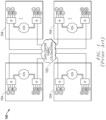
- FIG. 1 illustrates in block diagram form a fabric-attached memory (FAM) system 100 according to the prior art.
- the depicted FAM system 100 is merely one example of a data fabric topology among many topologies that are often employed for disaggregated data centers.
- FAM system 100 generally includes a data center fabric 102, and a number of device groups 104 referred to as pods.
- Each pod 104 contains multiple compute nodes "C”, multiple memory nodes “M”, and an interconnect network "ICN".
- Compute nodes C are connected to the ICN through routers "R".
- Compute nodes C contain multiple CPUs (multiple cores each) or multiple accelerated processing units (APUs) that are part of the same consistency domain.
- Each compute node C contains a fabric bridge such as a network interface card (NIC), CXL interface, or other suitable fabric interface that is a gateway into datacenter fabric 102 for the compute note C.
- Memory nodes M are connected to the ICN through routers R.
- Each memory node M includes a similar fabric interface and a media controller that satisfies the requests to FAM.
- the ICN includes switches for interconnecting the various compute nodes C with memory nodes M, and may include routers in some topologies.
- the depicted topology includes a local datacenter fabric formed by routers R and the ICN, and a global data center fabric labeled data center fabric 102.
- the local data center fabric is within a rack
- the global data center fabric includes multiple racks.
- various fabric topologies may be implemented within a rack or within a datacenter, and may include compute nodes accessing the datacenter remotely through a network. It is noted that many topologies have compute nodes C that also include memory which is part of the FAM pool. Such memory may be mapped as fabric-attached memory and made available for use by other compute nodes according to a resource allocation process referred to as "composability".
- Data center fabric 102 provides data interconnect between pods 104, including switches and routers coupling data traffic in a protocol such as CXL, Gen-Z, or other suitable memory fabric protocol. It is noted that multiple protocols may be employed together in a data center fabric. In this exemplary embodiment, CXL is employed to interconnect devices within a rack, while Gen-Z is employed to interconnect various racks within the data center.
- CXL is employed to interconnect devices within a rack
- Gen-Z is employed to interconnect various racks within the data center.
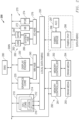
- FIG. 2 illustrates in block diagram form an APU 200 which is suitable for use as a compute unit C in a FAM system such as FAM system 100 of FIG. 1 .
- APU 200 is an integrated circuit suitable for use as a processor in a host data processing system, and includes generally a central processing unit (CPU) core complex 210, a graphics core 220, a set of display engines 222, a data fabric 225, a memory management hub 240, a set of peripheral controllers 260, a set of peripheral bus controllers 270, and a system management unit (SMU) 280, and a group of memory interfaces 290.
- CPU central processing unit
- CPU core complex 210 includes a CPU core 212 and a CPU core 214.
- CPU core complex 210 includes two CPU cores, but in other embodiments CPU core complex 210 can include an arbitrary number of CPU cores.
- Each of CPU cores 212 and 214 is bidirectionally connected to a system management network (SMN), which forms a control fabric, and to local data fabric 225, and is capable of providing memory access requests to data fabric 225.
- SSN system management network
- Each of CPU cores 212 and 214 may be unitary cores, or may further be a core complex with two or more unitary cores sharing certain resources such as caches.
- Each of CPU cores 212 and 214 includes ⁇ Code 216 which runs to execute certain instructions on the CPU, including performing certain functions for memory consistency on a data center fabric as further described below.
- Graphics core 220 is a high performance graphics processing unit (GPU) capable of performing graphics operations such as vertex processing, fragment processing, shading, texture blending, and the like in a highly integrated and parallel fashion. Graphics core 220 is bidirectionally connected to the SMN and to data fabric 225, and is capable of providing memory access requests to data fabric 225.
- APU 200 may either support a unified memory architecture in which CPU core complex 210 and graphics core 220 share the same memory space, or a memory architecture in which CPU core complex 210 and graphics core 220 share a portion of the memory space, while graphics core 220 also uses a private graphics memory not accessible by CPU core complex 210. Memory regions may be assigned from local memory or a data center fabric.
- Display engines 222 render and rasterize objects generated by graphics core 220 for display on a monitor. Graphics core 220 and display engines 222 are bidirectionally connected to common memory management hub 240 for uniform translation into appropriate addresses in system memory.
- Local data fabric 250 includes a crossbar switch for routing memory access requests and memory responses between any memory accessing agent and memory management hub 240. It also includes a system memory map, defined by basic input/output system (BIOS), for determining destinations of memory accesses based on the system configuration, as well as buffers for each virtual connection.
- BIOS basic input/output system
- Peripheral controllers 260 include a universal serial bus (USB) controller 262 and a Serial Advanced Technology Attachment (SATA) interface controller 264, each of which is bidirectionally connected to a system hub 266 and to the SMN bus. These two controllers are merely exemplary of peripheral controllers that may be used in APU 200.
- USB universal serial bus
- SATA Serial Advanced Technology Attachment
- Peripheral bus controllers 270 include a system controller or "Southbridge” (SB) 272 and a Peripheral Component Interconnect Express (PCIe) controller 274, each of which is bidirectionally connected to an input/output (I/O) hub 276 and to the SMN bus.
- I/O hub 276 is also bidirectionally connected to system hub 266 and to data fabric 225.
- a CPU core can program registers in USB controller 262, SATA interface controller 264, SB 272, or PCIe controller 274 through accesses that data fabric 225 routes through I/O hub 276.
- BIOS memory can be any of a variety of non-volatile memory types, such as read-only memory (ROM), flash electrically erasable programmable ROM (EEPROM), and the like.
- ROM read-only memory
- EEPROM electrically erasable programmable ROM
- BIOS memory is accessed through the PCIe bus, and the system data drive through the SATA interface.
- SMU 280 is a local controller that controls the operation of the resources on APU 200 and synchronizes communication among them. SMU 280 manages power-up sequencing of the various processors on APU 200 and controls multiple off-chip devices via reset, enable and other signals. SMU 280 includes one or more clock sources (not shown), such as a phase locked loop (PLL), to provide clock signals for each of the components of APU 200. SMU 280 also manages power for the various processors and other functional blocks, and may receive measured power consumption values from CPU cores 212 and 214 and graphics core 220 to determine appropriate power states.
- PLL phase locked loop
- Memory management hub 240 is connected to local data fabric 250, graphics core 220 and display engines 230 for providing direct memory access capability to graphics core 220 and display engines 230.
- Memory interfaces 290 include two memory controllers 291 and 292, DRAM media 293 and 294, and a FAM memory interface 295.
- Each of memory controllers 291 and 292 are connected to local data fabric 250 and connected to a respective one of DRAM media 293 and 294 through a physical layer (PHY) interface.
- DRAM media 293 and 294 include memory modules based on based on DDR memories such as DDR version five (DDR5).
- DDR5 DDR version five
- other types of DRAM memory are used, such as low power DDR4 (LPDDR4), graphics DDR version five (GDDR5), and high bandwidth memory (HBM).
- LPDDR4 low power DDR4
- GDDR5 graphics DDR version five
- HBM high bandwidth memory
- FAM memory interface 295 includes a fabric bridge 296, an adaptive consistency controller (ACC) 297, and a fabric PHY 298.
- Fabric bridge 296 is a fabric-attached memory interface connected to local data fabric 250 for receiving and fulfilling memory requests to a FAM system such as FAM system 100. Such memory requests may come from CPU core complex 210 or may be direct memory access (DMA) requests from other system components such as graphics core 220.
- Fabric bridge 296 is also bidirectionally connected to fabric PHY 298 to provide the connection of APU 200 to the data center fabric.
- An adaptive consistency controller (ACC) 297 is bidirectionally connected to fabric bridge 296 for providing memory consistency control inputs to fabric bridge 296 and CPU core complex 210, as further described below.
- ACC 297 communicates with CPU cores in CPU core complex 210 to receive notifications that designated memory access instructions have been recognized by ⁇ Code 216 running on CPU cores 212 and 214, as further described below. ACC 297 also provides configuration inputs to CPU core complex 210 for configuring memory consistency models.
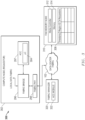
- FIG. 3 illustrates in block diagram form certain elements of a FAM system 300 according to some embodiments.
- FAM system 300 generally includes a compute node 302, data center fabric 102, FAM memory node 310, and fabric manager 320.
- Compute node 302 is one of many requestor compute nodes connected to data center fabric 102 and generally is implemented with an APU such as APU 200.
- Compute node 302 can implement an internet server, an application server, a supercomputing node, or another suitable computing node that benefits from accessing a FAM. Only the FAM interface components of compute node 302 are depicted in order to focus on the relevant portions of the system.
- Compute node 302 includes fabric bridge 296, fabric PHY 298, and ACC 297.
- Fabric bridge 296 is connected to the local data fabric as described above with respect to FIG. 2 , and to fabric PHY 298 and ACC 297.
- ACC 297 in this version includes a microcontroller ( ⁇ C) 304.
- the ⁇ C 304 performs memory consistency control functions as described below, and is typically also connected to a tangible non-transitory memory for holding firmware to initialize and configure ⁇ C 304 to perform its functionality.
- the ⁇ C 304 performs memory consistency control functions as described below, and is typically also connected to a tangible non-transitory memory for holding firmware to initialize and configure ⁇ C 304 to perform its functionality.
- Fabric manager 320 is a controller connected to data center fabric 102 for managing configuration and access to FAM system 300.
- Fabric manager 320 executes a data fabric management application for the particular standard employed on data center fabric 102, such as CXL or Gen-Z.
- the data fabric management application manages and configures data center fabric functions such as authorizing compute nodes, allocating memory regions, and managing composability by identifying and configuring memory resources among the various nodes in FAM system 300. It is noted that while one FAM memory node 310 and one compute node 302 are shown, the system includes multiple such nodes which can appear in many configurations such as the example configuration depicted in FIG. 1 .
- fabric manager 320 has an adaptive consistency controller (ACC) module 322 installed for accessing the data fabric management application and reporting data to each ACC 297 on respective compute nodes throughout FAM system 300.
- ACC adaptive consistency controller
- FAM memory node 310 includes a media controller 312 and a memory 314.
- Media controller 312 typically includes a memory controller suitable for whatever type of memory is selected for use in memory 314. For example, if memory 314 is a DRAM memory, a DRAM memory controller is used.
- Memory 314 may also include persistent memory modules and mixed.
- ACC 297 maintains data in requestor table 306 at FAM memory node 310 concerning other requestors authorized to access a FAM memory region allocated to compute node 302.
- Requestor table 306 tracks updates to the compute nodes authorized to access the same memory region, and includes fields for a "Timestamp” reflecting the time of the update, a "Region ID” reflecting an identifier for the FAM memory region allocated to compute node 302, and a "# Requestors” reflecting the number of requestors on FAM system 300 that were authorized to access the memory region as of each update.
- Requestor table 306 is updated based on reporting from fabric manager 320 as further described below.
- FAM memory node 310 includes a buffer accessable by media controller 312 holding requestor table 306.
- FIG. 4 shows a diagram 400 illustrating a process of operating an ACC 297 according to some embodiments.
- Diagram 400 depicts activity at a requestor compute node at the data fabric, and shows CPU core complex 210, an operating system 402, ACC 297, and fabric bridge 296 at the requestor compute node.
- Diagram 400 also shows fabric manager 320 and a media controller 312, which is one of many media controllers on the data fabric.
- ACC 297 makes a callback request to fabric manager 320 to request notifications when changes are made to the number of requestors which authorized to use the same memory region as the requestor compute node, as shown by the outgoing request labeled "CALLBACK".
- Fabric manager 320 provides a notification back to ACC 297 each time the number of requestors authorized to use the memory region changes, as indicated by the "# USERS" response on diagram 400.
- the requestor table 306 ( FIG. 3 ) at FAM memory node 310 is updated each time the number of users changes, as indicated on diagram 400 by the "# Users" arrow going to media controller 312.
- ACC 287 maintains a requestor table in a buffer local to ACC 297.
- ACC module 322 ( FIG. 3 ) running at fabric manager 320 manages the process of monitoring requestors authorized to access the memory region and sending notifications to ACC 297. Based on the # USERS update notifications, ACC 297 sets a consistency model for use with the assigned FAM memory region. Generally this process includes, when the current requestor is the only requestor authorized to access the memory region, setting a the consistency model to a first consistency model, and when more than one requestor is authorized to access the memory region, setting the consistency model to a second consistency model.
- the first consistency mode is characterized as being relaxed with respect to the second consistency model. An example of this process is further described below with respect to FIG. 5 .
- ⁇ Code 216 ( FIG. 2 ) running at CPU core complex 210 helps to implement the second consistency model when it is active. Specifically, ⁇ Code 216 recognizes designated memory access instructions in an application executing at CPU core complex 210 which indicate data fencing is needed for designated memory instructions concerning the fabric-attached memory region assigned to the requestor node. The ⁇ Code 216 has a variety of ways to recognize the designated instructions as further described below with respect to FIG. 6 and FIG. 7 . When such an instruction is recognized, ⁇ Code 216 communicates with ACC 297 to send notifications identifying the selected instructions which will be sent to the data fabric through fabric bridge 296.
- ACC 297 then adds fence commands to the command stream going to media controller 312 as indicated by the outgoing arrow labeled "FENCE".
- ⁇ Code 216 will not make such notifications and instead will allow the selected commands to execute normally with memory consistency handled by the first consistency model set with operating system 402. While in this embodiment ⁇ Code 216 recognizes the designated instructions, in other embodiments this function is performed by CPU firmware or a combination of CPU firmware and ⁇ Code.
- ACC 297 will causes fence commands to be sent to media controllers on both the local datacenter fabric and the global datacenter fabric in scenarios for which the memory region includes accessing both levels of the fabric topology.
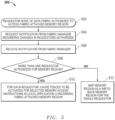
- FIG. 5 shows a flowchart 500 of a process for managing memory consistency models at an adaptive consistency controller according to an exemplary embodiment.
- the process begins at block 502 where a requestor node on a data fabric is authorized to access a designated FAM memory region. Such authorization is typically provided by the fabric manager but in some embodiments may be configured by other system components. Based on the authorization the memory region is established in the addressable system memory space of the requestor node. The memory region is typically used for an application running at the requestor node which may have dependencies with other requestor nodes.
- ACC 297 at the requestor node requests notifications from the fabric manager regarding any changes in the number of requestors authorized to access the particular memory region.
- this request has the form of a callback request to the fabric manager to track the number of compute requestors that are accessing the FAM region.
- ACC module 322 FIG. 3
- the fabric manager may have such capability as part of the fabric manager application and not require an additional module.
- ACC 297 at the requestor node receives a notification from the fabric manager in response to the request. Based on this notification, ACC 297 determines the number of requestors currently authorized to use the FAM region and updates requestor table 306 ( FIG. 3 ).
- the notification includes the data fields used in requestor table 306, including Timestamp, Region ID, and # Requestors.
- the fabric manager may not provide all the data instead only provide data indicating that a requestor authorization was added or removed for the FAM region. In such case, ACC 297 will update the data in requestor table 306 based on the current notification data and the previous update to requestor table 306.
- the process goes to block 510. If not, the process goes to block 512.
- the process causes fences to be activated for selected memory access instructions in the local application concerning the FAM region. If at block 508 a transition is made from having only one requestor authorized to more than one, the process includes deactivating the first memory consistency model and activating the second memory consistency model at the requestor node, as described above with respect to FIG. 4 . If more than one requestor was already authorized at block 508, then the second memory consistency model is already active and does not need to be changed.
- the update notification received at block 506 has resulted in a state in which only one requestor is authorized for the FAM region, and so the process activates the first memory consistency model.
- the first memory consistency model includes mapping the FAM region as write-back memory for the single requestor. Mapping the FAM region as write-back memory for the local compute node is preferably accomplished by ACC 297 sending appropriate messaging to the operating system running on CPU core complex 210, which then marks the memory page or pages that correspond to the FAM region as write-back in the requestor's page tables.
- mapping the FAM region as write-back memory ensures that the normal, local consistency scheme (such as an x86 total-store-order (TSO) consistent scheme) will be applied by the compute node for the FAM region.
- TSO total-store-order
- FIG. 6 shows a flowchart 600 of a process for implementing a memory consistency model according to some embodiments.
- applications which are not originally written for use with a FAM system, if they have any dependencies between compute nodes, require modifications in order for the FAM system to properly account for dependencies between compute nodes. Such modifications can be made when compiling the code, or can be applied after-the-fact by adding instructions to selected memory commands in the application.
- the process of FIG. 6 is performed for applications in which compile-time instructions have been added in order to adapt the application for use with a FAM system.
- Such applications include applications that are written and compiled with tools for handling consistency in a FAM system, and applications that have been modified with a suitable tool to be adapted for use with a FAM system.
- Block 602 the process begins activating fences for an application with compile-time instructions included in the application.
- Block 602 occurs when ACC 297 changes the consistency model for a compute node to activate the second, more relaxed, consistency model.
- data fabric protocols like CXL 3.0 and Gen-Z employ a relaxed-ordering consistency model implemented via fences.
- ACC 297 seeks to insert datacenter fabric fences such as CXL/Gen-Z fences in the critical locations transparently to the application code. This transparency means that activity performed by ACC 297 should not require any adjustments by the application concerned.
- the process recognizes compile-time fabric interface instructions for selected memory access instructions.
- the selected memory access instructions are parts of the code such as flags, locks, semaphores, control variables, etc. that perform parallel synchronization in between compute threads, so the memory accesses need to be ordered.
- the locations of the selected memory access instructions are identified with hints in the application that can be provided by the software developer to the adaptive controller via several mechanisms.
- Compiler hints like C++11 atomic_load/atomic_store consistency constructs or primitives or runtime hints like OpenMP's flush construct can be integrated with a development tool such as the "CodeAnalyst” tool (by Advanced Micro Devices of Santa Clara, California) to make the consistency hints easier to share for the developer.
- the compiler inserts requestor-side fabric interface markers such as a special "FABRIC_ACQUIRE_FENCE” instruction before the marked control variable and a special "FABRIC_RELEASE_FENCE” instruction after the control variable.
- NOP no-operation
- the CPU ⁇ Code 216 notifies ACC 297 that a fabric fence is needed for the instruction, as shown by the SELECTED INSTRUCTIONS arrow in FIG. 4 .
- such notification occurs with a message over the local data fabric from the CPU to ACC 297.
- the notification includes identifying information for ACC 297 to identify the instruction when it is received over the local data fabric, such as the memory address of the variable concerned.
- the notification may be implemented by adding a predetermined flag or marker to the memory access instruction to be modified when the instruction is sent by the CPU over the local data fabric to the fabric bridge 296.
- such a marker includes information necessary to determine whether an acquire fence instruction is needed, or a release fence instruction.
- ACC 297 will issue acquire/release datacenter fabric fences. These fences are commands inserted into the command stream that goes to the data fabric and on to the media controller for the relevant FAM region, as shown by the FENCE arrow in FIG. 4 . The media controller then implements the commands to provide fences for the variables concerned.
- the process also includes inserting such hints or markers into the application such that ⁇ Code 216 can recognize the selected memory instructions.
- FIG. 7 shows a flowchart 700 of another process for implementing a memory consistency model according to some additional embodiments.
- the depicted process is performed for applications that are not modified with compile-time instructions for implementing fabric fences.
- This process has the advantage that applications for which the developers have not provided a version configured for use with FAM system can still be used with a FAM system without causing consistency problems that would ordinarily occur with such use.
- Another advantage is for deployments in which a separate or more expensive software license is required to obtain an application version for use with a FAM system, the process can enable using the non-FAM version with a FAM system.
- the process begins activating FAM fences for such an application. Recognizing the selected memory access instructions that need a fence command is different in this process than the process of FIG. 6 because no specific instructions are included in the application for fabric fences.
- the CPU ⁇ Code 216 recognizes the memory access instructions in the application for which fences are needed based recognizing instructions in a predetermined list of instruction types and instruction prefixes associated with synchronization of data between threads.
- the predetermined list is provided for ⁇ Code 216 to cover all types of applications for which it is able to recognize the selected memory access instructions.
- the list includes instructions and instruction prefixes which are associated with dependencies between applications. For example, this list can include x86's LOCK instruction prefix, X86's xacquire/xrelease, and PowerPC's SYNC instruction.
- FAM memory interface 295 may be described or represented by a computer accessible data structure in the form of a database or other data structure which can be read by a program and used, directly or indirectly, to fabricate integrated circuits.
- this data structure may be a behavioral-level description or register-transfer level (RTL) description of the hardware functionality in a high level design language (HDL) such as Verilog or VHDL.
- HDL high level design language
- the description may be read by a synthesis tool which may synthesize the description to produce a netlist including a list of gates from a synthesis library.
- the netlist includes a set of gates that also represent the functionality of the hardware including integrated circuits.
- the netlist may then be placed and routed to produce a data set describing geometric shapes to be applied to masks.
- the masks may then be used in various semiconductor fabrication steps to produce the integrated circuits.
- the database on the computer accessible storage medium may be the netlist (with or without the synthesis library) or the data set, as desired, or Graphic Data System (GDS) II data.
- GDS Graphic Data System
- fabric bridge 296 and ACC 297 may vary in different embodiments.
- the type of FAM and the FAM protocol employed may also vary.
- the particular fabric architecture may vary from architectures that provide disaggregation within a data node or a rack of multiple data nodes using a fabric protocol and transport based on PCIe or CXL, to architectures that are able to employ fiber or copper networks connecting between devices and racks in a data center using protocols such Gen-Z. Accordingly, it is intended by the appended claims to cover all modifications of the disclosed embodiments that fall within the scope of the disclosed embodiments.
Landscapes
- Engineering & Computer Science (AREA)
- Theoretical Computer Science (AREA)
- Physics & Mathematics (AREA)
- General Engineering & Computer Science (AREA)
- General Physics & Mathematics (AREA)
- Software Systems (AREA)
- Human Computer Interaction (AREA)
- Computer Security & Cryptography (AREA)
- Storage Device Security (AREA)
- Information Retrieval, Db Structures And Fs Structures Therefor (AREA)
- Multi Processors (AREA)
- Memory System (AREA)
- Memory System Of A Hierarchy Structure (AREA)
Claims (15)
- Verfahren für die Verwendung eines an eine Struktur angeschlossenen Speichersystems (300), das einen an die Struktur angeschlossenen Speicher (310) und eine Vielzahl von Anforderern (302) umfasst, die mit dem an die Struktur angeschlossenen Speicher durch eine Struktur (102) gekoppelt sind, umfassend:Anfordern von Benachrichtigungen von einem Strukturverwalter (320) bezüglich Änderungen bei Anforderern, die autorisiert sind, um auf eine an die Struktur angeschlossene Speicherregion zuzugreifen; undals Reaktion auf eine Benachrichtigung von dem Strukturverwalter, die angibt, dass mehr als ein Anforderer autorisiert ist, um auf die an die Struktur angeschlossene Speicherregion zuzugreifen, Veranlassen, dass Abgrenzungen für ausgewählte Speicherzugriffsanweisungen aktiviert werden.
- Verfahren nach Anspruch 1, ferner umfassend, als Reaktion auf eine Benachrichtigung von dem Strukturverwalter, die angibt, dass ein einzelner Anforderer autorisiert ist, um auf die an die Struktur angeschlossene Speicherregion zuzugreifen, wobei die an die Struktur angeschlossene Speicherregion als eine Write-Back-Speicherregion für den einzelnen Anforderer zugeordnet wird.
- Verfahren nach Anspruch 2, ferner umfassend, als Reaktion auf die Benachrichtigung von dem Strukturverwalter, die angibt, dass mehr als ein Anforderer autorisiert ist, um auf die an die Struktur angeschlossene Speicherregion zuzugreifen, wobei für jeden derart autorisierten Anforderer gilt:falls der Anforderer konfiguriert ist, um lokale Abgrenzungsbefehle auszugeben, Veranlassen, dass lokale Abgrenzungsbefehle für die ausgewählten Speicherzugriffsanweisungen ausgegeben werden, und Zuordnen der an die Struktur angeschlossene Speicherregion als Write-Through-Speicher für den Anforderer; undfalls der Anforderer nicht konfiguriert ist, um lokale Abgrenzungsbefehle auszugeben, Zuordnen der an die Struktur angeschlossene Speicherregion als nicht zwischenspeicherbar.
- Verfahren nach Anspruch 1, wobei das Veranlassen, dass die Abgrenzungen aktiviert werden, als Reaktion auf das Erkennen der ausgewählten Speicherzugriffsanweisungen, die Abhängigkeiten zwischen Anforderern angeben, das Veranlassen einer anfordererseitigen adaptiven Konsistenzsteuerung, um einen Abgrenzungsbefehl für die ausgewählten Speicherzugriffsanweisungen einschließt.
- Verfahren nach Anspruch 4, wobei das Erkennen der ausgewählten Speicherzugriffsanweisungen durch Prozessoranweisungsmikrocode durchgeführt wird, der für jeden jeweiligen Anforderer, der autorisiert ist, um auf die an die Struktur angeschlossene Speicherregion zuzugreifen, läuft.
- Verfahren nach Anspruch 4, ferner umfassend ein Einfügen von Anforderer-Struktur-Schnittstellenmarkierungen in eine Anwendung während der Kompilierung als Reaktion auf das Erkennen von Konsistenzprimitiven und Konsistenzkonstrukten.
- Datenprozessor, umfassend:einen Verarbeitungskern (210), der eine Anwendung ausführt;eine an die Struktur angeschlossenen Speicherschnittstelle (295), die mit dem Verarbeitungskern gekoppelt ist und angepasst ist, um an eine Datenstruktur zu koppeln und Speicherzugriffsanweisungen von dem Verarbeitungskern an eine an die Struktur angeschlossenen Speicherschnittstelle zu erfüllen;eine anfordererseitige adaptive Konsistenzsteuerung (297), die mit dem Verarbeitungskern und der an die Struktur angeschlossenen Speicherschnittstelle gekoppelt ist und betriebsfähig ist zum:Anfordern von Benachrichtigungen von einem Strukturverwalter für den an die Struktur angeschlossenen Speicher bezüglich Änderungen bei Anforderern, die autorisiert sind, um auf die an die Struktur angeschlossene Speicherregion zuzugreifen, wobei der Datenprozessor für den Zugriff autorisiert ist; undals Reaktion auf eine Benachrichtigung von dem Strukturverwalter, die angibt, dass mehr als ein Anforderer autorisiert ist, um auf die an die Struktur angeschlossene Speicherregion zuzugreifen, Veranlassen, dass Abgrenzungen für ausgewählte Speicherzugriffsanweisungen in einer lokalen Anwendung aktiviert werden.
- Datenprozessor nach Anspruch 7, wobei die anfordererseitige adaptive Konsistenzsteuerung ferner arbeitet, um als Reaktion, reagierend auf eine Benachrichtigung von dem Strukturverwalter, die angibt, dass ein einzelner Anforderer autorisiert ist, um auf die an die Struktur angeschlossene Speicherregion zuzugreifen, zu veranlassen, dass die an die Struktur angeschlossene Speicherregion als eine Write-Back-Speicherregion zugeordnet wird.
- Datenprozessor nach Anspruch 8, wobei die anfordererseitige adaptive Konsistenzsteuerung ferner arbeitet, um als Reaktion auf die Benachrichtigung von dem Strukturverwalter, die angibt, dass mehr als ein Anforderer autorisiert ist, um auf die an die Struktur angeschlossene Speicherregion zuzugreifen:falls der Datenprozessor konfiguriert ist, um lokale Abgrenzungsbefehle auszugeben, Veranlassen, dass lokale Abgrenzungsbefehle für die ausgewählten Speicherzugriffsanweisungen ausgegeben werden, und Zuordnen der an die Struktur angeschlossene Speicherregion als Write-Through-Speicher; undfalls der Datenprozessor nicht konfiguriert ist, um lokale Abgrenzungsbefehle auszugeben, Veranlassen, das die an die Struktur angeschlossene Speicherregion als nicht zwischenspeicherbar zugeordnet wird.
- Datenprozessor nach Anspruch 7, ferner umfassend einen Prozessoranweisungsmikrocode, der in einem greifbaren, nicht flüchtigen Speicher gespeichert ist, auf den der Verarbeitungskern zugreifen kann, und der durch den Verarbeitungskern zum Erkennen der ausgewählten Speicherzugriffsanweisungen ausführbar ist.
- Datenprozessor nach Anspruch 10, wobei der Prozessoranweisungsmikrocode als Reaktion auf das Erkennen der ausgewählten Speicherzugriffsanweisungen als Angeben von Abhängigkeiten zwischen Anforderern ausgeführt wird, um die anfordererseitige adaptive Konsistenzsteuerung über die erkannten ausgewählten Speicherzugriffsanweisungen zu benachrichtigen, was sie veranlasst, anfordererseitige Abgrenzungsbefehle in Speicherbefehle an die an die Struktur angeschlossenen Speicherschnittstelle einzufügen.
- Datenprozessor nach Anspruch 10, wobei das Erkennen der ausgewählten Speicherzugriffsanweisungen eine Reaktion auf das Erkennen von Indikatoren in der lokalen Anwendung einschließt, umfassend eines von Konsistenzprimitiven und Konsistenzkonstrukten.
- Datenprozessor nach Anspruch 10, wobei das Erkennen der ausgewählten Speicherzugriffsanweisungen das Erkennen von Struktur-Schnittstellenmarkierungen einschließt, die während der Kompilierung in die Anwendung eingefügt werden.
- Datenprozessor nach Anspruch 7, wobei die anfordererseitige adaptive Konsistenzsteuerung eine Tabelle der Anforderer verwaltet, die autorisiert sind, um auf die an die Struktur angeschlossene Speicherregion zuzugreifen und die Tabelle als Reaktion auf die Benachrichtigung aktualisiert.
- Datenprozessor nach Anspruch 14, wobei die Tabelle mindestens eine Kennung für die an die Struktur angeschlossene Speicherregion und eine Anzahl von Rechenanforderern umfasst, die autorisiert sind, um auf die an die Struktur angeschlossene Speicherregion zuzugreifen.
Applications Claiming Priority (2)
| Application Number | Priority Date | Filing Date | Title |
|---|---|---|---|
| US17/219,505 US11656796B2 (en) | 2021-03-31 | 2021-03-31 | Adaptive memory consistency in disaggregated datacenters |
| PCT/US2022/020607 WO2022212061A1 (en) | 2021-03-31 | 2022-03-16 | Adaptive memory consistency in disaggregated datacenters |
Publications (3)
| Publication Number | Publication Date |
|---|---|
| EP4315047A1 EP4315047A1 (de) | 2024-02-07 |
| EP4315047A4 EP4315047A4 (de) | 2024-05-29 |
| EP4315047B1 true EP4315047B1 (de) | 2025-04-16 |
Family
ID=83449085
Family Applications (1)
| Application Number | Title | Priority Date | Filing Date |
|---|---|---|---|
| EP22781862.2A Active EP4315047B1 (de) | 2021-03-31 | 2022-03-16 | Adaptive speicherkonsistenz in disaggregierten datenzentren |
Country Status (6)
| Country | Link |
|---|---|
| US (1) | US11656796B2 (de) |
| EP (1) | EP4315047B1 (de) |
| JP (1) | JP7660704B2 (de) |
| KR (1) | KR102629550B1 (de) |
| CN (1) | CN117120976B (de) |
| WO (1) | WO2022212061A1 (de) |
Families Citing this family (3)
| Publication number | Priority date | Publication date | Assignee | Title |
|---|---|---|---|---|
| US12346602B2 (en) | 2023-07-03 | 2025-07-01 | Hewlett Packard Enterprise Development Lp | Operation execution on memory servers |
| KR20250116451A (ko) | 2024-01-25 | 2025-08-01 | 삼성전자주식회사 | 반도체 장치, 컴퓨팅 시스템, 및 데이터 연산 방법 |
| US20250307475A1 (en) * | 2024-03-29 | 2025-10-02 | Advanced Micro Devices, Inc. | Devices and systems for enforcing confidential computing |
Family Cites Families (17)
| Publication number | Priority date | Publication date | Assignee | Title |
|---|---|---|---|---|
| US5210832A (en) * | 1986-10-14 | 1993-05-11 | Amdahl Corporation | Multiple domain emulation system with separate domain facilities which tests for emulated instruction exceptions before completion of operand fetch cycle |
| US6889319B1 (en) * | 1999-12-09 | 2005-05-03 | Intel Corporation | Method and apparatus for entering and exiting multiple threads within a multithreaded processor |
| US7454580B2 (en) * | 2006-04-25 | 2008-11-18 | International Business Machines Corporation | Data processing system, processor and method of data processing that reduce store queue entry utilization for synchronizing operations |
| US7991981B2 (en) * | 2008-02-01 | 2011-08-02 | International Business Machines Corporation | Completion of asynchronous memory move in the presence of a barrier operation |
| US8612950B2 (en) * | 2008-06-19 | 2013-12-17 | Intel Corporation | Dynamic optimization for removal of strong atomicity barriers |
| US8131935B2 (en) * | 2009-04-07 | 2012-03-06 | International Business Machines Corporation | Virtual barrier synchronization cache |
| GB2469299B (en) * | 2009-04-07 | 2011-02-16 | Imagination Tech Ltd | Ensuring consistency between a data cache and a main memory |
| TWI602181B (zh) * | 2012-02-29 | 2017-10-11 | 三星電子股份有限公司 | 記憶體系統以及使用測試元件傳輸失效位址至記憶體元件的操作方法 |
| US9513975B2 (en) | 2012-05-02 | 2016-12-06 | Nvidia Corporation | Technique for computational nested parallelism |
| US20140281429A1 (en) * | 2013-03-14 | 2014-09-18 | Qualcomm Incorporated | Eliminating redundant synchronization barriers in instruction processing circuits, and related processor systems, methods, and computer-readable media |
| US9442755B2 (en) | 2013-03-15 | 2016-09-13 | Nvidia Corporation | System and method for hardware scheduling of indexed barriers |
| US10241945B2 (en) * | 2015-11-05 | 2019-03-26 | International Business Machines Corporation | Memory move supporting speculative acquisition of source and destination data granules including copy-type and paste-type instructions |
| US20180336034A1 (en) * | 2017-05-17 | 2018-11-22 | Hewlett Packard Enterprise Development Lp | Near memory computing architecture |
| US10761890B2 (en) * | 2018-01-23 | 2020-09-01 | International Business Machines Corporation | Optimizing memory fences based on workload |
| US10705951B2 (en) * | 2018-01-31 | 2020-07-07 | Hewlett Packard Enterprise Development Lp | Shared fabric attached memory allocator |
| US10620856B2 (en) | 2018-03-06 | 2020-04-14 | Vmware, Inc. | Input/output (I/O) fencing with persistent reservation information in shared virtual storage environments |
| US10942824B2 (en) * | 2018-10-08 | 2021-03-09 | Hewlett Packard Enterprise Development Lp | Programming model and framework for providing resilient parallel tasks |
-
2021
- 2021-03-31 US US17/219,505 patent/US11656796B2/en active Active
-
2022
- 2022-03-16 CN CN202280026190.7A patent/CN117120976B/zh active Active
- 2022-03-16 JP JP2023560434A patent/JP7660704B2/ja active Active
- 2022-03-16 KR KR1020237037631A patent/KR102629550B1/ko active Active
- 2022-03-16 WO PCT/US2022/020607 patent/WO2022212061A1/en not_active Ceased
- 2022-03-16 EP EP22781862.2A patent/EP4315047B1/de active Active
Also Published As
| Publication number | Publication date |
|---|---|
| JP2024514502A (ja) | 2024-04-02 |
| CN117120976A (zh) | 2023-11-24 |
| US20220317927A1 (en) | 2022-10-06 |
| WO2022212061A1 (en) | 2022-10-06 |
| CN117120976B (zh) | 2025-05-30 |
| EP4315047A1 (de) | 2024-02-07 |
| JP7660704B2 (ja) | 2025-04-11 |
| KR102629550B1 (ko) | 2024-01-25 |
| KR20230158127A (ko) | 2023-11-17 |
| US11656796B2 (en) | 2023-05-23 |
| EP4315047A4 (de) | 2024-05-29 |
Similar Documents
| Publication | Publication Date | Title |
|---|---|---|
| EP4315047B1 (de) | Adaptive speicherkonsistenz in disaggregierten datenzentren | |
| US5682512A (en) | Use of deferred bus access for address translation in a shared memory clustered computer system | |
| US8892805B2 (en) | High performance system that includes reconfigurable protocol tables within an ASIC wherein a first protocol block implements an inter-ASIC communications protocol and a second block implements an intra-ASIC function | |
| US11876732B2 (en) | Method for managing the configuration of access to peripherals and their associated resources of a system on chip, and corresponding system on chip | |
| KR20130063003A (ko) | 컨텍스트 스위칭 | |
| JP2007149116A (ja) | クラスタ化マルチプロセッサシステム内でアプリケーションプロセッサの実行を開始する方法および装置 | |
| CN101802798A (zh) | 在多核处理器中使用干预消息来避免活锁 | |
| US10628314B2 (en) | Dual clusters of fully connected integrated circuit multiprocessors with shared high-level cache | |
| CN104508645A (zh) | 用于使用多个子锁来控制对具有读取器-写入器锁的共享数据结构的访问的系统和方法 | |
| CN115686769A (zh) | 根据cxl协议处理一致存储器事务的系统、装置和方法 | |
| US10983833B2 (en) | Virtualized and synchronous access to hardware accelerators | |
| CN112835845B (zh) | 用于管理形成例如微控制器的片上系统的调试的方法和对应片上系统 | |
| JP6005392B2 (ja) | ルーティングのための方法及び装置 | |
| CN107077384A (zh) | 上下文敏感的屏障指令的执行 | |
| US7536694B2 (en) | Exception handling in a multiprocessor system | |
| US20130007768A1 (en) | Atomic operations on multi-socket platforms | |
| US20070050527A1 (en) | Synchronization method for a multi-processor system and the apparatus thereof | |
| CN119988302A (zh) | 多核系统的数据处理方法及集群、缓存、系统 | |
| US10936389B2 (en) | Dual physical-channel systems firmware initialization and recovery | |
| US11954359B2 (en) | Circular buffer architecture using local memories with limited resources | |
| US11880304B2 (en) | Cache management using cache scope designation | |
| US20260086719A1 (en) | Apparatus and method for improving compatibility of computer-memory link-based device | |
| US10891232B2 (en) | Page-based memory operation with hardware initiated secure storage key update | |
| CN121958188A (zh) | 基于单芯片的多业务需求适配方法、装置、设备及介质 | |
| WO2009113571A1 (ja) | 複数の基盤ソフトウェアを動作可能な情報処理装置および方法 |
Legal Events
| Date | Code | Title | Description |
|---|---|---|---|
| STAA | Information on the status of an ep patent application or granted ep patent |
Free format text: STATUS: THE INTERNATIONAL PUBLICATION HAS BEEN MADE |
|
| PUAI | Public reference made under article 153(3) epc to a published international application that has entered the european phase |
Free format text: ORIGINAL CODE: 0009012 |
|
| STAA | Information on the status of an ep patent application or granted ep patent |
Free format text: STATUS: REQUEST FOR EXAMINATION WAS MADE |
|
| 17P | Request for examination filed |
Effective date: 20231026 |
|
| AK | Designated contracting states |
Kind code of ref document: A1 Designated state(s): AL AT BE BG CH CY CZ DE DK EE ES FI FR GB GR HR HU IE IS IT LI LT LU LV MC MK MT NL NO PL PT RO RS SE SI SK SM TR |
|
| A4 | Supplementary search report drawn up and despatched |
Effective date: 20240429 |
|
| RIC1 | Information provided on ipc code assigned before grant |
Ipc: G06F 12/14 20060101ALI20240423BHEP Ipc: G06F 13/42 20060101ALI20240423BHEP Ipc: G06F 13/16 20060101ALI20240423BHEP Ipc: G06F 13/376 20060101ALI20240423BHEP Ipc: G06F 9/38 20180101AFI20240423BHEP |
|
| DAV | Request for validation of the european patent (deleted) | ||
| DAX | Request for extension of the european patent (deleted) | ||
| GRAP | Despatch of communication of intention to grant a patent |
Free format text: ORIGINAL CODE: EPIDOSNIGR1 |
|
| STAA | Information on the status of an ep patent application or granted ep patent |
Free format text: STATUS: GRANT OF PATENT IS INTENDED |
|
| INTG | Intention to grant announced |
Effective date: 20241112 |
|
| GRAS | Grant fee paid |
Free format text: ORIGINAL CODE: EPIDOSNIGR3 |
|
| GRAA | (expected) grant |
Free format text: ORIGINAL CODE: 0009210 |
|
| STAA | Information on the status of an ep patent application or granted ep patent |
Free format text: STATUS: THE PATENT HAS BEEN GRANTED |
|
| AK | Designated contracting states |
Kind code of ref document: B1 Designated state(s): AL AT BE BG CH CY CZ DE DK EE ES FI FR GB GR HR HU IE IS IT LI LT LU LV MC MK MT NL NO PL PT RO RS SE SI SK SM TR |
|
| P01 | Opt-out of the competence of the unified patent court (upc) registered |
Free format text: CASE NUMBER: APP_12088/2025 Effective date: 20250312 |
|
| REG | Reference to a national code |
Ref country code: GB Ref legal event code: FG4D |
|
| REG | Reference to a national code |
Ref country code: CH Ref legal event code: EP |
|
| REG | Reference to a national code |
Ref country code: IE Ref legal event code: FG4D |
|
| REG | Reference to a national code |
Ref country code: DE Ref legal event code: R096 Ref document number: 602022013324 Country of ref document: DE |
|
| REG | Reference to a national code |
Ref country code: NL Ref legal event code: MP Effective date: 20250416 |
|
| PG25 | Lapsed in a contracting state [announced via postgrant information from national office to epo] |
Ref country code: NL Free format text: LAPSE BECAUSE OF FAILURE TO SUBMIT A TRANSLATION OF THE DESCRIPTION OR TO PAY THE FEE WITHIN THE PRESCRIBED TIME-LIMIT Effective date: 20250416 |
|
| REG | Reference to a national code |
Ref country code: AT Ref legal event code: MK05 Ref document number: 1786207 Country of ref document: AT Kind code of ref document: T Effective date: 20250416 |
|
| PG25 | Lapsed in a contracting state [announced via postgrant information from national office to epo] |
Ref country code: PT Free format text: LAPSE BECAUSE OF FAILURE TO SUBMIT A TRANSLATION OF THE DESCRIPTION OR TO PAY THE FEE WITHIN THE PRESCRIBED TIME-LIMIT Effective date: 20250818 Ref country code: FI Free format text: LAPSE BECAUSE OF FAILURE TO SUBMIT A TRANSLATION OF THE DESCRIPTION OR TO PAY THE FEE WITHIN THE PRESCRIBED TIME-LIMIT Effective date: 20250416 Ref country code: ES Free format text: LAPSE BECAUSE OF FAILURE TO SUBMIT A TRANSLATION OF THE DESCRIPTION OR TO PAY THE FEE WITHIN THE PRESCRIBED TIME-LIMIT Effective date: 20250416 |
|
| REG | Reference to a national code |
Ref country code: LT Ref legal event code: MG9D |
|
| PG25 | Lapsed in a contracting state [announced via postgrant information from national office to epo] |
Ref country code: GR Free format text: LAPSE BECAUSE OF FAILURE TO SUBMIT A TRANSLATION OF THE DESCRIPTION OR TO PAY THE FEE WITHIN THE PRESCRIBED TIME-LIMIT Effective date: 20250717 Ref country code: NO Free format text: LAPSE BECAUSE OF FAILURE TO SUBMIT A TRANSLATION OF THE DESCRIPTION OR TO PAY THE FEE WITHIN THE PRESCRIBED TIME-LIMIT Effective date: 20250716 |
|
| PG25 | Lapsed in a contracting state [announced via postgrant information from national office to epo] |
Ref country code: PL Free format text: LAPSE BECAUSE OF FAILURE TO SUBMIT A TRANSLATION OF THE DESCRIPTION OR TO PAY THE FEE WITHIN THE PRESCRIBED TIME-LIMIT Effective date: 20250416 |
|
| PG25 | Lapsed in a contracting state [announced via postgrant information from national office to epo] |
Ref country code: BG Free format text: LAPSE BECAUSE OF FAILURE TO SUBMIT A TRANSLATION OF THE DESCRIPTION OR TO PAY THE FEE WITHIN THE PRESCRIBED TIME-LIMIT Effective date: 20250416 |
|
| PG25 | Lapsed in a contracting state [announced via postgrant information from national office to epo] |
Ref country code: HR Free format text: LAPSE BECAUSE OF FAILURE TO SUBMIT A TRANSLATION OF THE DESCRIPTION OR TO PAY THE FEE WITHIN THE PRESCRIBED TIME-LIMIT Effective date: 20250416 |
|
| PG25 | Lapsed in a contracting state [announced via postgrant information from national office to epo] |
Ref country code: AT Free format text: LAPSE BECAUSE OF FAILURE TO SUBMIT A TRANSLATION OF THE DESCRIPTION OR TO PAY THE FEE WITHIN THE PRESCRIBED TIME-LIMIT Effective date: 20250416 |
|
| PG25 | Lapsed in a contracting state [announced via postgrant information from national office to epo] |
Ref country code: RS Free format text: LAPSE BECAUSE OF FAILURE TO SUBMIT A TRANSLATION OF THE DESCRIPTION OR TO PAY THE FEE WITHIN THE PRESCRIBED TIME-LIMIT Effective date: 20250716 |
|
| PG25 | Lapsed in a contracting state [announced via postgrant information from national office to epo] |
Ref country code: IS Free format text: LAPSE BECAUSE OF FAILURE TO SUBMIT A TRANSLATION OF THE DESCRIPTION OR TO PAY THE FEE WITHIN THE PRESCRIBED TIME-LIMIT Effective date: 20250816 |
|
| PG25 | Lapsed in a contracting state [announced via postgrant information from national office to epo] |
Ref country code: LV Free format text: LAPSE BECAUSE OF FAILURE TO SUBMIT A TRANSLATION OF THE DESCRIPTION OR TO PAY THE FEE WITHIN THE PRESCRIBED TIME-LIMIT Effective date: 20250416 |
|
| PG25 | Lapsed in a contracting state [announced via postgrant information from national office to epo] |
Ref country code: DK Free format text: LAPSE BECAUSE OF FAILURE TO SUBMIT A TRANSLATION OF THE DESCRIPTION OR TO PAY THE FEE WITHIN THE PRESCRIBED TIME-LIMIT Effective date: 20250416 Ref country code: SM Free format text: LAPSE BECAUSE OF FAILURE TO SUBMIT A TRANSLATION OF THE DESCRIPTION OR TO PAY THE FEE WITHIN THE PRESCRIBED TIME-LIMIT Effective date: 20250416 |
|
| REG | Reference to a national code |
Ref country code: DE Ref legal event code: R097 Ref document number: 602022013324 Country of ref document: DE |
|
| PG25 | Lapsed in a contracting state [announced via postgrant information from national office to epo] |
Ref country code: CZ Free format text: LAPSE BECAUSE OF FAILURE TO SUBMIT A TRANSLATION OF THE DESCRIPTION OR TO PAY THE FEE WITHIN THE PRESCRIBED TIME-LIMIT Effective date: 20250416 |
|
| PG25 | Lapsed in a contracting state [announced via postgrant information from national office to epo] |
Ref country code: EE Free format text: LAPSE BECAUSE OF FAILURE TO SUBMIT A TRANSLATION OF THE DESCRIPTION OR TO PAY THE FEE WITHIN THE PRESCRIBED TIME-LIMIT Effective date: 20250416 |
|
| PG25 | Lapsed in a contracting state [announced via postgrant information from national office to epo] |
Ref country code: SK Free format text: LAPSE BECAUSE OF FAILURE TO SUBMIT A TRANSLATION OF THE DESCRIPTION OR TO PAY THE FEE WITHIN THE PRESCRIBED TIME-LIMIT Effective date: 20250416 |
|
| PG25 | Lapsed in a contracting state [announced via postgrant information from national office to epo] |
Ref country code: IT Free format text: LAPSE BECAUSE OF FAILURE TO SUBMIT A TRANSLATION OF THE DESCRIPTION OR TO PAY THE FEE WITHIN THE PRESCRIBED TIME-LIMIT Effective date: 20250416 |
|
| PLBE | No opposition filed within time limit |
Free format text: ORIGINAL CODE: 0009261 |
|
| STAA | Information on the status of an ep patent application or granted ep patent |
Free format text: STATUS: NO OPPOSITION FILED WITHIN TIME LIMIT |
|
| REG | Reference to a national code |
Ref country code: CH Ref legal event code: L10 Free format text: ST27 STATUS EVENT CODE: U-0-0-L10-L00 (AS PROVIDED BY THE NATIONAL OFFICE) Effective date: 20260225 |
|
| 26N | No opposition filed |
Effective date: 20260119 |