EP4313288B1 - Verfahren und vorrichtung zur erzeugung eines optimierten strahlungsbehandlungsplans mit direktaperturoptimierung mit fluenzbasierter suboptimierung - Google Patents
Verfahren und vorrichtung zur erzeugung eines optimierten strahlungsbehandlungsplans mit direktaperturoptimierung mit fluenzbasierter suboptimierung Download PDFInfo
- Publication number
- EP4313288B1 EP4313288B1 EP22717096.6A EP22717096A EP4313288B1 EP 4313288 B1 EP4313288 B1 EP 4313288B1 EP 22717096 A EP22717096 A EP 22717096A EP 4313288 B1 EP4313288 B1 EP 4313288B1
- Authority
- EP
- European Patent Office
- Prior art keywords
- optimization
- fluence
- radiation treatment
- aperture
- direct
- Prior art date
- Legal status (The legal status is an assumption and is not a legal conclusion. Google has not performed a legal analysis and makes no representation as to the accuracy of the status listed.)
- Active
Links
Images

Classifications
-
- A—HUMAN NECESSITIES
- A61—MEDICAL OR VETERINARY SCIENCE; HYGIENE
- A61N—ELECTROTHERAPY; MAGNETOTHERAPY; RADIATION THERAPY; ULTRASOUND THERAPY
- A61N5/00—Radiation therapy
- A61N5/10—X-ray therapy; Gamma-ray therapy; Particle-irradiation therapy
- A61N5/103—Treatment planning systems
-
- A—HUMAN NECESSITIES
- A61—MEDICAL OR VETERINARY SCIENCE; HYGIENE
- A61N—ELECTROTHERAPY; MAGNETOTHERAPY; RADIATION THERAPY; ULTRASOUND THERAPY
- A61N5/00—Radiation therapy
- A61N5/10—X-ray therapy; Gamma-ray therapy; Particle-irradiation therapy
- A61N5/103—Treatment planning systems
- A61N5/1031—Treatment planning systems using a specific method of dose optimization
-
- A—HUMAN NECESSITIES
- A61—MEDICAL OR VETERINARY SCIENCE; HYGIENE
- A61N—ELECTROTHERAPY; MAGNETOTHERAPY; RADIATION THERAPY; ULTRASOUND THERAPY
- A61N5/00—Radiation therapy
- A61N5/10—X-ray therapy; Gamma-ray therapy; Particle-irradiation therapy
- A61N5/1042—X-ray therapy; Gamma-ray therapy; Particle-irradiation therapy with spatial modulation of the radiation beam within the treatment head
- A61N5/1045—X-ray therapy; Gamma-ray therapy; Particle-irradiation therapy with spatial modulation of the radiation beam within the treatment head using a multi-leaf collimator, e.g. for intensity modulated radiation therapy or IMRT
-
- A—HUMAN NECESSITIES
- A61—MEDICAL OR VETERINARY SCIENCE; HYGIENE
- A61N—ELECTROTHERAPY; MAGNETOTHERAPY; RADIATION THERAPY; ULTRASOUND THERAPY
- A61N5/00—Radiation therapy
- A61N5/10—X-ray therapy; Gamma-ray therapy; Particle-irradiation therapy
- A61N5/1048—Monitoring, verifying, controlling systems and methods
Definitions
- These teachings relate generally to treating a patient's planning target volume with energy pursuant to an energy-based treatment plan and more particularly to optimizing an energy-based treatment plan.
- radiation therapy comprises an important component of many treatment plans for reducing or eliminating unwanted tumors.
- applied energy does not inherently discriminate between unwanted material and adjacent tissues, organs, or the like that are desired or even critical to continued survival of the patient.
- energy such as radiation is ordinarily applied in a carefully administered manner to at least attempt to restrict the energy to a given target volume.
- a so-called radiation treatment plan often serves in the foregoing regards.
- a radiation treatment plan typically comprises specified values for each of a variety of treatment-platform parameters during each of a plurality of sequential fields.
- Treatment plans for radiation treatment sessions are often generated through a so-called optimization process.
- optimization will be understood to refer to improving a candidate treatment plan without necessarily ensuring that the optimized result is, in fact, the singular best solution.
- optimization often includes automatically adjusting one or more treatment parameters (often while observing one or more corresponding limits in these regards) and mathematically calculating a likely corresponding treatment result to identify a given set of treatment parameters that represent a good compromise between the desired therapeutic result and avoidance of undesired collateral effects.
- DAO direct-aperture optimization
- DAO digital AO
- existing optimization techniques including DAO, do not necessarily address all potential needs for all potential patients in all potential application settings.
- DAO may be too slow in some real-time application settings and/or may effectively lock up prematurely and/or may be (too) slow to react to external configuration changes such as changes to an objective function or application-setting geometry.
- the present invention provides a method for optimizing a radiation treatment plan for a particular patient using a particular radiation treatment platform, as defined in claim 1.
- the present invention provides apparatus to facilitate treating a particular patient with therapeutic radiation using a particular radiation treatment platform per an optimized radiation treatment plan, as defined in claim 9.
- Optional features are specified in the dependent claims.
- the present invention provides a method to facilitate treating a particular patient with therapeutic radiation using a particular radiation treatment platform per an optimized radiation treatment plan, the method comprising: by a control circuit:
- these various embodiments serve to facilitate optimizing a patient treatment plan to administer therapeutic energy to a particular patient using a particular radiation treatment platform.
- these teachings provide for accessing optimization information for the particular patient and for the particular radiation treatment platform and then generating an optimized radiation treatment plan by, at least in part, optimizing a radiation treatment plan for the particular patient using the particular radiation treatment platform by, at least in part, processing the optimization information using direct-aperture-optimization that includes fluence-based sub-optimization.
- the radiation treatment plan can comprise a trajectory/arc plan.
- a control circuit carries out the foregoing optimization.
- This control circuit can be configured, if desired, to include the fluence-based sub-optimization in at least some, but not necessarily all, iterations of the direct-aperture-optimization.
- the control circuit is configured to include only a few iterations of the fluence-based sub-optimization when including the fluence-based sub-optimization in at least some, but not necessarily all, iterations of the direct-aperture-optimization.
- control circuit can be configured to include those few iterations of the fluence-based sub-optimization such that a target fluence (as described herein) is refined by using a previous iteration target fluence as an initial fluence in a cost-gradient calculation as versus of fluence that was calculated from a then current multi-leaf collimator configuration.
- control circuit can be further configured to detect a change to at least one of at least one objective function corresponding to the direct-aperture-optimization and control point positioning corresponding to the direct-aperture-optimization, and in response to detecting that change, automatically include the fluence-based sub-optimization in at least one iteration of the direct-aperture-optimization.
- the fluence-based sub-optimization comprises, at least in part and within a given iteration of the fluence-based sub-optimization, at least two of calculating an initial fluence from a given multi-leaf collimator configuration (i.e., a fluence that already exists when this sub-optimization begins as a loop within a direct-aperture-optimization iteration loop), then projecting a corresponding dose gradient onto a fluence plane to specify a gradient fluence, and then summing the initial fluence and the gradient fluence to thereby specify a target fluence.
- the control circuit can be configured to process the optimization information using the direct-aperture-optimization as a function of that specified target fluence.
- a radiation treatment plan can be optimized using direct-aperture-optimization while avoiding at least some problems typically associated with direct-aperture-optimization and without necessarily increasing processing time requirements.
- the foregoing is especially true in arc/trajectory types of treatment, where control points are typically spread around large angular space and direct-aperture-optimization is used for a small section (such as an arc sector) of those control points. Instead, and in many application settings, a better result may be achievable in a reduced amount of processing time.
- the resultant optimized radiation treatment plan can of course then be utilized to apply therapeutic radiation to that particular patient via that particular radiation treatment platform.
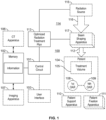
- FIG. 1 an illustrative apparatus 100 that is compatible with many of these teachings will first be presented.
- the enabling apparatus 100 includes a control circuit 101.
- the control circuit 101 therefore comprises structure that includes at least one (and typically many) electrically-conductive paths (such as paths comprised of a conductive metal such as copper or silver) that convey electricity in an ordered manner, which path(s) will also typically include corresponding electrical components (both passive (such as resistors and capacitors) and active (such as any of a variety of semiconductor-based devices) as appropriate) to permit the circuit to effect the control aspect of these teachings.
- Such a control circuit 101 can comprise a fixed-purpose hard-wired hardware platform (including but not limited to an application-specific integrated circuit (ASIC) (which is an integrated circuit that is customized by design for a particular use, rather than intended for general-purpose use), a field-programmable gate array (FPGA), and the like) or can comprise a partially or wholly-programmable hardware platform (including but not limited to microcontrollers, microprocessors, and the like).
- ASIC application-specific integrated circuit
- FPGA field-programmable gate array
- This control circuit 101 is configured (for example, by using corresponding programming as will be well understood by those skilled in the art) to carry out one or more of the steps, actions, and/or functions described herein.
- the control circuit 101 operably couples to a memory 102.
- This memory 102 may be integral to the control circuit 101 or can be physically discrete (in whole or in part) from the control circuit 101 as desired.
- This memory 102 can also be local with respect to the control circuit 101 (where, for example, both share a common circuit board, chassis, power supply, and/or housing) or can be partially or wholly remote with respect to the control circuit 101 (where, for example, the memory 102 is physically located in another facility, metropolitan area, or even country as compared to the control circuit 101).
- this memory 102 can serve, for example, to non-transitorily store the computer instructions that, when executed by the control circuit 101, cause the control circuit 101 to behave as described herein.
- this reference to "non-transitorily” will be understood to refer to a non-ephemeral state for the stored contents (and hence excludes when the stored contents merely constitute signals or waves) rather than volatility of the storage media itself and hence includes both non-volatile memory (such as read-only memory (ROM) as well as volatile memory (such as a dynamic random access memory (DRAM).)
- control circuit 101 also operably couples to a user interface 103.
- This user interface 103 can comprise any of a variety of user-input mechanisms (such as, but not limited to, keyboards and keypads, cursor-control devices, touch-sensitive displays, speech-recognition interfaces, gesture-recognition interfaces, and so forth) and/or user-output mechanisms (such as, but not limited to, visual displays, audio transducers, printers, and so forth) to facilitate receiving information and/or instructions from a user and/or providing information to a user.
- user-input mechanisms such as, but not limited to, keyboards and keypads, cursor-control devices, touch-sensitive displays, speech-recognition interfaces, gesture-recognition interfaces, and so forth
- user-output mechanisms such as, but not limited to, visual displays, audio transducers, printers, and so forth
- control circuit 101 can also operably couple to a network interface (not shown). So configured the control circuit 101 can communicate with other elements (both within the apparatus 100 and external thereto) via the network interface.
- Network interfaces including both wireless and non-wireless platforms, are well understood in the art and require no particular elaboration here.
- a computed tomography apparatus 106 and/or other imaging apparatus 107 can source some or all of any desired patient-related imaging information.
- control circuit 101 is configured to ultimately output an optimized energy-based treatment plan 113 (such as, for example, an optimized radiation treatment plan).
- This energy-based treatment plan 113 typically comprises specified values for each of a variety of treatment-platform parameters during each of a plurality of sequential exposure fields.
- the energy-based treatment plan 113 is generated through an optimization process, examples of which are provided further herein.
- control circuit 101 can operably couple to an energy-based treatment platform 114 that is configured to deliver therapeutic energy 112 to a corresponding patient 104 in accordance with the optimized energy-based treatment plan 113.
- energy-based treatment platform 114 will include an energy source 115 such as a source of ionizing radiation.
- this energy source 115 can be selectively moved via a gantry along an arcuate pathway (where the pathway encompasses, at least to some extent, the patient themselves during administration of the treatment).
- the arcuate pathway may comprise a complete or nearly complete circle as desired.
- the control circuit 101 controls the movement of the energy source 115 along that arcuate pathway, and may accordingly control when the energy source 115 starts moving, stops moving, accelerates, de-accelerates, and/or a velocity at which the energy source 115 travels along the arcuate pathway.
- the energy source 115 can comprise, for example, a radio-frequency (RF) linear particle accelerator-based (linac-based) x-ray source, such as the Varian TrueBeam or Halcyon linear accelerator.
- RF radio-frequency
- the linac is a type of particle accelerator that greatly increases the kinetic energy of charged subatomic particles or ions by subjecting the charged particles to a series of oscillating electric potentials along a linear beamline, which can be used to generate ionizing radiation (e.g., X-rays) 116 and high energy electrons.
- ionizing radiation e.g., X-rays
- a typical energy-based treatment platform 114 may also include one or more support apparatuses 110 (such as a couch) to support the patient 104 during the treatment session, one or more patient fixation apparatuses 111, a gantry or other movable mechanism to permit selective movement of the energy source 115, and one or more energy-shaping apparatuses 117 (for example, beam-shaping apparatuses such as jaws, multi-leaf collimators, and so forth) to provide selective energy shaping and/or energy modulation as desired.
- support apparatuses 110 such as a couch
- patient fixation apparatuses 111 to support the patient 104 during the treatment session
- a gantry or other movable mechanism to permit selective movement of the energy source 115
- energy-shaping apparatuses 117 for example, beam-shaping apparatuses such as jaws, multi-leaf collimators, and so forth
- the patient support apparatus 110 is selectively controllable to move in any direction (i.e., any X, Y, or Z direction) during an energy-based treatment session by the control circuit 101.
- any direction i.e., any X, Y, or Z direction
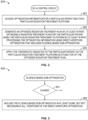
- this process 200 serves to facilitate generating an optimized radiation treatment plan 113 to thereby facilitate treating a particular patient with therapeutic radiation using a particular radiation treatment platform per that optimized radiation treatment plan.
- this process 200 can provide for the control circuit 101 accessing optimization information for the particular patient and for the particular radiation treatment platform.
- this comprises accessing the aforementioned memory 102.
- Optimization information comprises a relatively well understood area of prior art endeavor and accordingly further elaboration is not provided here in these regards for the sake of brevity.
- this process 200 then provides for generating an optimized radiation treatment plan by, at least in part, optimizing a radiation treatment plan for the particular patient using the particular radiation treatment platform by, at least in part, processing the optimization information using direct-aperture-optimization that includes fluence-based sub-optimization.
- Direct-aperture-optimization itself, of course, comprises a well understood area of prior art endeavor. Generally speaking, direct-aperture-optimization bypasses intensity optimization and instead directly optimizes the shapes and weights of the apertures of the beam shaping apparatus 117 (for example, the arrangement of the leaves of a multi-leaf collimator).
- this direct-aperture-optimization itself makes at least occasional use of fluence-based sub-optimization. More particularly, at least some, but not necessarily all, iterations of the direct-aperture-optimization process include, at least to a limited extent, fluence-based sub-optimization as well.
- these teachings provide for using only a few iterations of the fluence-based sub-optimization when so including fluence-based sub-optimization. Fully converging on the corresponding cost function would typically require at least hundreds of iterations. By only using a few iterations, the fluence-based sub-optimization will most likely therefore not fully converge. The applicant has determined, however, that full convergence is not necessary to achieving desired performance results.
- the number of iterations may be set to a specific predetermined number, such as a number within the range of 5 to 10.
- the number of iterations may be more dynamically determined. For example, the iterations may continue up to some maximum number (which maximum number may still represent only a "few" iterations, such as 25, 50, or 75) with earlier termination occurring when a current calculated result is less than (or equals) some predetermined threshold as compared to an initial value.
- Useful examples of a predetermined threshold are values ranging from 3% to 10%, with 5% likely being beneficial for many application settings.
- the control circuit 101 can serve to include and make use of the foregoing few iterations of the fluence-based sub-optimization such that a target fluence is refined by using a previous iteration target fluence as an initial fluence in a cost gradient calculation as versus a fluence that was calculated from a current multi-leaf collimator configuration.
- the fluence-based sub-optimization can comprise, at least in part and within a given iteration of the fluence-based sub-optimization, first calculating an initial fluence from a given multi-leaf collimator configuration, and then projecting a corresponding dose gradient onto a fluence plane to thereby specify a gradient fluence.
- This process 200 can then sum the initial fluence and the gradient fluence to specify a corresponding target fluence.
- the control circuit 101 can then process the aforementioned optimization information using the direct-aperture-optimization as a function of that target fluence.
- an exemplary process 300 in these regards optionally provides for detecting, at block 301, when a change to a predetermined function or parameter occurs. This can comprise, for example, detecting a change to at least one objective function that corresponds to the direct-aperture-optimization. As another example, in lieu of the foregoing or in combination there with, this can comprise detecting a change to control point positioning as corresponds to the direct-aperture-optimization.
- this process 300 can accommodate any of a variety of responses.
- responses can include temporal multitasking (pursuant to which the control circuit 101 conducts other tasks before returning to again monitor for a trigger event) as well as continually looping back to essentially continuously monitor for the trigger event(s).
- temporal multitasking pursuant to which the control circuit 101 conducts other tasks before returning to again monitor for a trigger event
- the foregoing optional approach can be particularly beneficial when there is a sudden large change in the cost function. Such may occur, for example, when optimization is running and there is already an existing leaf configuration, but there is a real-time need to presently alter the latter. This need can arise when a user changes the cost function, for example, or the geometry of the problem. This need can also present itself as input from another algorithm or some accessed database. As one salient example, a patient may already be lying on the treatment couch and their daily image may show that one or more relevant structures (such as a tumor or organ-at-risk) have changed somewhat such that the previous treatment plan needs to be adapted quickly before a scheduled treatment session can begin.
- relevant structures such as a tumor or organ-at-risk
- this process 300 can then provide, at block 302, for responding by then automatically including the fluence-based sub-optimization in at least one iteration of the direct-aperture-optimization as described herein.
- the circle 401 represents a 360° arc that corresponds to the gantry path and available positions for the aforementioned radiation source 115 during a radiation treatment session for a particular patient.
- this pathway is subdivided into sectors 402.
- Each sector 402 has one and typically many control points 403. For example, in a given application setting there may be 180 control points in a full 360° arc and each sector may have 16 such control points.
- the specifics of the foregoing are parameters that constitute at least a part of the optimization information for the particular radiation treatment platform 100. These are conventional aspects of a modern radiation treatment platform and accordingly further elaboration is not provided here for the sake of brevity.
- the control circuit 101 conducts fluence-based sub-optimization 300 for no more than a few iterations 404.
- the foregoing activity can include determining an initial fluence and a gradient fluence that leads to determining a resultant new fluence.
- direct-aperture-optimization is then utilized to find new leaf configurations for the corresponding control points 403 of the relevant sector 402 based upon that new fluence value.
- the direct-aperture-optimization accordingly finds a new, best total leaf configuration for all of the control points in this particular sector that will form the new fluence value. With a new iteration 406 this entire process can be repeated as appropriate.
- At least one additional optimization can be performed that finds a best combination of those configurations and which may alter the entire leaf-sequence and then proceed to a next iteration.
- the iterative change to the optimized dose provides for, at initialization, using the leaf sequence defined in the control points to produce a certain fluence and determining the dose produced by that fluence. Iterating the above-described outer loop then provides for using that dose to determine a gradient fluence and hence a new target fluence that direct-aperture-optimization utilizes to determine a new leaf sequence which serves to then determine a new fluence based upon that new leaf sequence. A new dose is then calculated based upon that new fluence.
- a first iteration N can proceed as described above.
- Iteration N +1 in this example then utilizes fluence-based sub-optimization to determine a gradient fluence from the available dose information and then a new target fluence from which a new dose is determined.
- the foregoing determination can be repeated for only a few times to yield a resultant new dose that serves as the input to the direct-aperture-optimization iteration N +2 (which can be similar or identical to iteration N described above).
- the forgoing cycles can be repeated in accordance with the iterative processing of the direct-aperture-optimization approach.
- these teachings provide for much faster assessment of new doses and can create fluence trade-offs all around the arc before searching for particular leaf configurations.
- these teachings can be particularly helpful in the presence of sudden large changes to cost functions. That said, these teachings can also be beneficial even in the absence of changes to the cost function because the search inherent to direct-aperture-optimization can, in practice, become stagnant and use of these teachings can effectively reinvigorate the direct-aperture-optimization search activity.
- these teachings will accommodate then applying therapeutic radiation to the particular patient 104 via the particular radiation treatment platform 114 as a function of the optimized radiation treatment plan 113 that results from the foregoing processes.
- the use of such an apparatus/platform in such a matter constitutes a well-understood area of prior art endeavor and therefore is not described here in more detail.
Landscapes
- Health & Medical Sciences (AREA)
- Engineering & Computer Science (AREA)
- Biomedical Technology (AREA)
- Pathology (AREA)
- Nuclear Medicine, Radiotherapy & Molecular Imaging (AREA)
- Radiology & Medical Imaging (AREA)
- Life Sciences & Earth Sciences (AREA)
- Animal Behavior & Ethology (AREA)
- General Health & Medical Sciences (AREA)
- Public Health (AREA)
- Veterinary Medicine (AREA)
- Radiation-Therapy Devices (AREA)
Claims (15)
- Verfahren zur Optimierung eines Strahlenbehandlungsplans für einen bestimmten Patienten unter Verwendung einer bestimmten Strahlenbehandlungsplattform, wobei das Verfahren umfasst:
durch eine Steuerschaltung:Zugreifen auf Optimierungsinformationen für den bestimmten Patienten und für die bestimmte Strahlenbehandlungsplattform;Erzeugen eines optimierten Strahlenbehandlungsplans durch, zumindest teilweise, Optimieren eines Strahlenbehandlungsplans für den bestimmten Patienten unter Verwendung der bestimmten Strahlenbehandlungsplattform durch, zumindest teilweise, Verarbeiten der Optimierungsinformation unter Verwendung einer direkten Aperturoptimierung, die fluenzbasierte Suboptimierung einschließt. - Verfahren nach Anspruch 1, wobei die Steuerschaltung konfiguriert ist, die fluenzbasierte Suboptimierung in zumindest einigen, aber nicht notwendigerweise allen Iterationen der direkten Aperturoptimierung einzuschließen.
- Verfahren nach Anspruch 2, wobei die Steuerschaltung ferner konfiguriert ist zum:Detektieren einer Änderung mindestens einer der direkten Aperturoptimierung entsprechenden Zielfunktion und/oder einer der direkten Aperturoptimierung entsprechenden Steuerpunktpositionierung;als Reaktion auf das Detektieren der Änderung, automatisches Einschließen der fluenzbasierten Suboptimierung in mindestens eine Iteration der direkten Aperturoptimierung.
- Verfahren nach Anspruch 2 oder 3, wobei die Steuerschaltung konfiguriert ist, nur einige wenige Iterationen der fluenzbasierten Suboptimierung einzuschließen, wenn die fluenzbasierte Suboptimierung in zumindest einige, aber nicht notwendigerweise alle Iterationen der direkten Aperturoptimierung eingeschlossen wird.
- Verfahren nach Anspruch 4, wobei die Steuerschaltung konfiguriert ist, die einigen wenigen Iterationen der fluenzbasierten Suboptimierung derart einzuschließen, dass eine Zielfluenz verfeinert wird, indem eine Zielfluenz einer vorherigen Iteration als anfängliche Fluenz in einer Kosten-Gradienten-Berechnung verwendet wird, gegenüber einer Fluenz, die aus einer aktuellen Mehrblatt-Kollimator-Konfiguration berechnet wurde.
- Verfahren nach einem der Ansprüche 1 bis 5, wobei die fluenzbasierte Suboptimierung zumindest teilweise und innerhalb einer gegebenen Iteration der fluenzbasierten Suboptimierung mindestens zwei von Folgendem umfasst:Berechnen einer anfänglichen Fluenz aus einer gegebenen Mehrblatt-Kollimator-Konfiguration;Projizieren eines entsprechenden Dosisgradienten auf eine Fluenzebene, um eine Gradientenfluenz zu definieren;Summieren der anfänglichen Fluenz und der Gradientenfluenz, um eine Zielfluenz zu definieren.
- Verfahren nach Anspruch 6, wobei die Steuerschaltung konfiguriert ist, die Optimierungsinformation unter Verwendung der direkten Aperturoptimierung als eine Funktion der Zielfluenz zu verarbeiten.
- Verfahren nach einem der Ansprüche 1 bis 7, ferner umfassend:
Anwenden der therapeutischen Strahlung auf den bestimmten Patienten über die bestimmte Strahlenbehandlungsplattform als eine Funktion des optimierten Strahlenbehandlungsplans. - Vorrichtung zum Ermöglichen der Behandlung eines bestimmten Patienten mit therapeutischer Strahlung unter Verwendung einer bestimmten Strahlenbehandlungsplattform gemäß einem optimierten Strahlenbehandlungsplan, wobei die Vorrichtung umfasst:einen Speicher mit darin gespeicherten Optimierungsinformationen für den bestimmten Patienten und für die bestimmte Strahlenbehandlungsplattform;eine Steuerschaltung, die funktionsfähig mit dem Speicher gekoppelt ist und konfiguriert ist zum:Zugreifen auf die Optimierungsinformationen für den bestimmten Patienten und für die bestimmte Strahlenbehandlungsplattform;Erzeugen des optimierten Strahlenbehandlungsplans durch, zumindest teilweise, Optimieren eines Strahlenbehandlungsplans für den bestimmten Patienten unter Verwendung der bestimmten Strahlenbehandlungsplattform durch, zumindest teilweise, Verarbeiten der Optimierungsinformation unter Verwendung einer direkten Aperturoptimierung, die fluenzbasierte Suboptimierung einschließt.
- Vorrichtung nach Anspruch 9, ferner umfassend die bestimmte Strahlenbehandlungsplattform.
- Vorrichtung nach Anspruch 9 oder 10, wobei die Steuerschaltung konfiguriert ist, die fluenzbasierte Suboptimierung in zumindest einigen, aber nicht notwendigerweise allen Iterationen der direkten Aperturoptimierung einzuschließen.
- Vorrichtung nach Anspruch 11, wobei die Steuerschaltung ferner konfiguriert ist zum:Detektieren einer Änderung mindestens einer der direkten Aperturoptimierung entsprechenden Zielfunktion und/oder einer der direkten Aperturoptimierung entsprechenden Steuerpunktpositionierung;als Reaktion auf das Detektieren der Änderung, automatisches Einschließen der fluenzbasierten Suboptimierung in mindestens eine Iteration der direkten Aperturoptimierung.
- Vorrichtung nach Anspruch 11 oder 12, wobei die Steuerschaltung konfiguriert ist, nur einige wenige Iterationen der fluenzbasierten Suboptimierung einzuschließen, wenn die fluenzbasierte Suboptimierung in zumindest einige, aber nicht notwendigerweise alle Iterationen der direkten Aperturoptimierung eingeschlossen wird.
- Vorrichtung nach einem der Ansprüche 9 bis 13, wobei die fluenzbasierte Suboptimierung zumindest teilweise und innerhalb einer gegebenen Iteration der fluenzbasierten Suboptimierung mindestens zwei von Folgendem umfasst:Berechnen einer anfänglichen Fluenz aus einer gegebenen Mehrblatt-Kollimator-Konfiguration;Projizieren eines entsprechenden Dosisgradienten auf eine Fluenzebene, um eine Gradientenfluenz zu definieren;Summieren der anfänglichen Fluenz und der Gradientenfluenz, um eine Zielfluenz zu definieren.
- Vorrichtung nach Anspruch 14, wobei die Steuerschaltung konfiguriert ist, die Optimierungsinformation unter Verwendung der direkten Aperturoptimierung als eine Funktion der Zielfluenz zu verarbeiten.
Applications Claiming Priority (2)
| Application Number | Priority Date | Filing Date | Title |
|---|---|---|---|
| US17/212,383 US11642550B2 (en) | 2021-03-25 | 2021-03-25 | Method and apparatus to facilitate generating an optimized radiation treatment plan using direct-aperture optimization that includes fluence-based sub-optimization |
| PCT/EP2022/057277 WO2022200243A1 (en) | 2021-03-25 | 2022-03-21 | Method and apparatus to facilitate generating an optimized radiation treatment plan using direct-aperture optimization that includes fluence-based sub-optimization |
Publications (2)
| Publication Number | Publication Date |
|---|---|
| EP4313288A1 EP4313288A1 (de) | 2024-02-07 |
| EP4313288B1 true EP4313288B1 (de) | 2025-03-19 |
Family
ID=81325370
Family Applications (1)
| Application Number | Title | Priority Date | Filing Date |
|---|---|---|---|
| EP22717096.6A Active EP4313288B1 (de) | 2021-03-25 | 2022-03-21 | Verfahren und vorrichtung zur erzeugung eines optimierten strahlungsbehandlungsplans mit direktaperturoptimierung mit fluenzbasierter suboptimierung |
Country Status (4)
| Country | Link |
|---|---|
| US (2) | US11642550B2 (de) |
| EP (1) | EP4313288B1 (de) |
| CN (1) | CN117042846A (de) |
| WO (1) | WO2022200243A1 (de) |
Families Citing this family (4)
| Publication number | Priority date | Publication date | Assignee | Title |
|---|---|---|---|---|
| US11642550B2 (en) * | 2021-03-25 | 2023-05-09 | Varian Medical Systems International Ag | Method and apparatus to facilitate generating an optimized radiation treatment plan using direct-aperture optimization that includes fluence-based sub-optimization |
| US12453866B2 (en) * | 2022-06-29 | 2025-10-28 | Siemens Healthineers International Ag | Detecting anomalous dose volume histogram information |
| US12383765B2 (en) * | 2023-06-08 | 2025-08-12 | Siemens Healthineers International Ag | Biological equivalent dose informed flash radiation therapy |
| US20250090862A1 (en) * | 2023-09-14 | 2025-03-20 | Siemens Healthineers International Ag | Radiation treatment plan optimization method and apparatus |
Family Cites Families (2)
| Publication number | Priority date | Publication date | Assignee | Title |
|---|---|---|---|---|
| US11992702B2 (en) * | 2020-09-21 | 2024-05-28 | Elekta, Inc. | Machine learning optimization of fluence maps for radiotherapy treatment |
| US11642550B2 (en) * | 2021-03-25 | 2023-05-09 | Varian Medical Systems International Ag | Method and apparatus to facilitate generating an optimized radiation treatment plan using direct-aperture optimization that includes fluence-based sub-optimization |
-
2021
- 2021-03-25 US US17/212,383 patent/US11642550B2/en active Active
-
2022
- 2022-03-21 CN CN202280023861.4A patent/CN117042846A/zh active Pending
- 2022-03-21 WO PCT/EP2022/057277 patent/WO2022200243A1/en not_active Ceased
- 2022-03-21 EP EP22717096.6A patent/EP4313288B1/de active Active
-
2023
- 2023-04-25 US US18/138,876 patent/US12090339B2/en active Active
Also Published As
| Publication number | Publication date |
|---|---|
| US20220305287A1 (en) | 2022-09-29 |
| US20230256264A1 (en) | 2023-08-17 |
| US11642550B2 (en) | 2023-05-09 |
| US12090339B2 (en) | 2024-09-17 |
| CN117042846A (zh) | 2023-11-10 |
| EP4313288A1 (de) | 2024-02-07 |
| WO2022200243A1 (en) | 2022-09-29 |
Similar Documents
| Publication | Publication Date | Title |
|---|---|---|
| EP4313288B1 (de) | Verfahren und vorrichtung zur erzeugung eines optimierten strahlungsbehandlungsplans mit direktaperturoptimierung mit fluenzbasierter suboptimierung | |
| US12138478B2 (en) | Method and apparatus to optimize a radiation treatment plan | |
| EP4217058B1 (de) | Verfahren und vorrichtung zum optimieren eines strahlentherapieplans | |
| US20220401756A1 (en) | Method and apparatus to facilitate administering therapeutic radiation to a heterogeneous body | |
| EP4717308A1 (de) | Strahlenbehandlungsplanvorrichtung und -verfahren | |
| WO2023186682A1 (en) | Method and apparatus for radiation treatment planning | |
| US12453866B2 (en) | Detecting anomalous dose volume histogram information | |
| WO2024120843A1 (en) | Radiation treatment plan optimization as a function of both dosimetric and non-dosimetric parameters | |
| US20240001144A1 (en) | Method and apparatus for stereotactic body radiation treatment planning and administration | |
| US20250161712A1 (en) | Radiation treatment plan optimization method and apparatus | |
| US20240325783A1 (en) | Radiation treatment plan optimization per a generalized metric type | |
| US20240100357A1 (en) | Method and apparatus to modify dose values during radiation treatment planning | |
| US20250161713A1 (en) | Multi-field radiation treatment plan method and apparatus | |
| US11395929B2 (en) | Method and apparatus to deliver therapeutic radiation to a patient | |
| EP4688134A1 (de) | Vorrichtung und verfahren zur strahlungsbehandlung |
Legal Events
| Date | Code | Title | Description |
|---|---|---|---|
| STAA | Information on the status of an ep patent application or granted ep patent |
Free format text: STATUS: UNKNOWN |
|
| STAA | Information on the status of an ep patent application or granted ep patent |
Free format text: STATUS: THE INTERNATIONAL PUBLICATION HAS BEEN MADE |
|
| PUAI | Public reference made under article 153(3) epc to a published international application that has entered the european phase |
Free format text: ORIGINAL CODE: 0009012 |
|
| STAA | Information on the status of an ep patent application or granted ep patent |
Free format text: STATUS: REQUEST FOR EXAMINATION WAS MADE |
|
| 17P | Request for examination filed |
Effective date: 20230831 |
|
| AK | Designated contracting states |
Kind code of ref document: A1 Designated state(s): AL AT BE BG CH CY CZ DE DK EE ES FI FR GB GR HR HU IE IS IT LI LT LU LV MC MK MT NL NO PL PT RO RS SE SI SK SM TR |
|
| DAV | Request for validation of the european patent (deleted) | ||
| DAX | Request for extension of the european patent (deleted) | ||
| GRAP | Despatch of communication of intention to grant a patent |
Free format text: ORIGINAL CODE: EPIDOSNIGR1 |
|
| STAA | Information on the status of an ep patent application or granted ep patent |
Free format text: STATUS: GRANT OF PATENT IS INTENDED |
|
| INTG | Intention to grant announced |
Effective date: 20241031 |
|
| GRAS | Grant fee paid |
Free format text: ORIGINAL CODE: EPIDOSNIGR3 |
|
| GRAA | (expected) grant |
Free format text: ORIGINAL CODE: 0009210 |
|
| STAA | Information on the status of an ep patent application or granted ep patent |
Free format text: STATUS: THE PATENT HAS BEEN GRANTED |
|
| AK | Designated contracting states |
Kind code of ref document: B1 Designated state(s): AL AT BE BG CH CY CZ DE DK EE ES FI FR GB GR HR HU IE IS IT LI LT LU LV MC MK MT NL NO PL PT RO RS SE SI SK SM TR |
|
| REG | Reference to a national code |
Ref country code: GB Ref legal event code: FG4D |
|
| REG | Reference to a national code |
Ref country code: CH Ref legal event code: EP |
|
| REG | Reference to a national code |
Ref country code: DE Ref legal event code: R096 Ref document number: 602022011996 Country of ref document: DE |
|
| REG | Reference to a national code |
Ref country code: IE Ref legal event code: FG4D |
|
| PGFP | Annual fee paid to national office [announced via postgrant information from national office to epo] |
Ref country code: AT Payment date: 20250417 Year of fee payment: 4 |
|
| PG25 | Lapsed in a contracting state [announced via postgrant information from national office to epo] |
Ref country code: RS Free format text: LAPSE BECAUSE OF FAILURE TO SUBMIT A TRANSLATION OF THE DESCRIPTION OR TO PAY THE FEE WITHIN THE PRESCRIBED TIME-LIMIT Effective date: 20250619 |
|
| PG25 | Lapsed in a contracting state [announced via postgrant information from national office to epo] |
Ref country code: FI Free format text: LAPSE BECAUSE OF FAILURE TO SUBMIT A TRANSLATION OF THE DESCRIPTION OR TO PAY THE FEE WITHIN THE PRESCRIBED TIME-LIMIT Effective date: 20250319 |
|
| PGFP | Annual fee paid to national office [announced via postgrant information from national office to epo] |
Ref country code: DE Payment date: 20250520 Year of fee payment: 4 |
|
| REG | Reference to a national code |
Ref country code: LT Ref legal event code: MG9D |
|
| PG25 | Lapsed in a contracting state [announced via postgrant information from national office to epo] |
Ref country code: NO Free format text: LAPSE BECAUSE OF FAILURE TO SUBMIT A TRANSLATION OF THE DESCRIPTION OR TO PAY THE FEE WITHIN THE PRESCRIBED TIME-LIMIT Effective date: 20250619 |
|
| PG25 | Lapsed in a contracting state [announced via postgrant information from national office to epo] |
Ref country code: HR Free format text: LAPSE BECAUSE OF FAILURE TO SUBMIT A TRANSLATION OF THE DESCRIPTION OR TO PAY THE FEE WITHIN THE PRESCRIBED TIME-LIMIT Effective date: 20250319 |
|
| PG25 | Lapsed in a contracting state [announced via postgrant information from national office to epo] |
Ref country code: LV Free format text: LAPSE BECAUSE OF FAILURE TO SUBMIT A TRANSLATION OF THE DESCRIPTION OR TO PAY THE FEE WITHIN THE PRESCRIBED TIME-LIMIT Effective date: 20250319 |
|
| PG25 | Lapsed in a contracting state [announced via postgrant information from national office to epo] |
Ref country code: BG Free format text: LAPSE BECAUSE OF FAILURE TO SUBMIT A TRANSLATION OF THE DESCRIPTION OR TO PAY THE FEE WITHIN THE PRESCRIBED TIME-LIMIT Effective date: 20250319 Ref country code: GR Free format text: LAPSE BECAUSE OF FAILURE TO SUBMIT A TRANSLATION OF THE DESCRIPTION OR TO PAY THE FEE WITHIN THE PRESCRIBED TIME-LIMIT Effective date: 20250620 |
|
| PG25 | Lapsed in a contracting state [announced via postgrant information from national office to epo] |
Ref country code: AT Free format text: LAPSE BECAUSE OF FAILURE TO SUBMIT A TRANSLATION OF THE DESCRIPTION OR TO PAY THE FEE WITHIN THE PRESCRIBED TIME-LIMIT Effective date: 20250319 |
|
| REG | Reference to a national code |
Ref country code: NL Ref legal event code: MP Effective date: 20250319 |
|
| REG | Reference to a national code |
Ref country code: DE Ref legal event code: R082 Ref document number: 602022011996 Country of ref document: DE |
|
| REG | Reference to a national code |
Ref country code: AT Ref legal event code: MK05 Ref document number: 1776478 Country of ref document: AT Kind code of ref document: T Effective date: 20250319 |
|
| PG25 | Lapsed in a contracting state [announced via postgrant information from national office to epo] |
Ref country code: NL Free format text: LAPSE BECAUSE OF FAILURE TO SUBMIT A TRANSLATION OF THE DESCRIPTION OR TO PAY THE FEE WITHIN THE PRESCRIBED TIME-LIMIT Effective date: 20250319 |
|
| PG25 | Lapsed in a contracting state [announced via postgrant information from national office to epo] |
Ref country code: SE Free format text: LAPSE BECAUSE OF FAILURE TO SUBMIT A TRANSLATION OF THE DESCRIPTION OR TO PAY THE FEE WITHIN THE PRESCRIBED TIME-LIMIT Effective date: 20250319 |
|
| PG25 | Lapsed in a contracting state [announced via postgrant information from national office to epo] |
Ref country code: SM Free format text: LAPSE BECAUSE OF FAILURE TO SUBMIT A TRANSLATION OF THE DESCRIPTION OR TO PAY THE FEE WITHIN THE PRESCRIBED TIME-LIMIT Effective date: 20250319 |
|
| PG25 | Lapsed in a contracting state [announced via postgrant information from national office to epo] |
Ref country code: ES Free format text: LAPSE BECAUSE OF FAILURE TO SUBMIT A TRANSLATION OF THE DESCRIPTION OR TO PAY THE FEE WITHIN THE PRESCRIBED TIME-LIMIT Effective date: 20250319 Ref country code: PT Free format text: LAPSE BECAUSE OF FAILURE TO SUBMIT A TRANSLATION OF THE DESCRIPTION OR TO PAY THE FEE WITHIN THE PRESCRIBED TIME-LIMIT Effective date: 20250721 |
|
| PG25 | Lapsed in a contracting state [announced via postgrant information from national office to epo] |
Ref country code: PL Free format text: LAPSE BECAUSE OF FAILURE TO SUBMIT A TRANSLATION OF THE DESCRIPTION OR TO PAY THE FEE WITHIN THE PRESCRIBED TIME-LIMIT Effective date: 20250319 Ref country code: IT Free format text: LAPSE BECAUSE OF FAILURE TO SUBMIT A TRANSLATION OF THE DESCRIPTION OR TO PAY THE FEE WITHIN THE PRESCRIBED TIME-LIMIT Effective date: 20250319 |
|
| PG25 | Lapsed in a contracting state [announced via postgrant information from national office to epo] |
Ref country code: CZ Free format text: LAPSE BECAUSE OF FAILURE TO SUBMIT A TRANSLATION OF THE DESCRIPTION OR TO PAY THE FEE WITHIN THE PRESCRIBED TIME-LIMIT Effective date: 20250319 Ref country code: EE Free format text: LAPSE BECAUSE OF FAILURE TO SUBMIT A TRANSLATION OF THE DESCRIPTION OR TO PAY THE FEE WITHIN THE PRESCRIBED TIME-LIMIT Effective date: 20250319 |
|
| PG25 | Lapsed in a contracting state [announced via postgrant information from national office to epo] |
Ref country code: RO Free format text: LAPSE BECAUSE OF FAILURE TO SUBMIT A TRANSLATION OF THE DESCRIPTION OR TO PAY THE FEE WITHIN THE PRESCRIBED TIME-LIMIT Effective date: 20250319 |
|
| REG | Reference to a national code |
Ref country code: CH Ref legal event code: H13 Free format text: ST27 STATUS EVENT CODE: U-0-0-H10-H13 (AS PROVIDED BY THE NATIONAL OFFICE) Effective date: 20251024 |
|
| PG25 | Lapsed in a contracting state [announced via postgrant information from national office to epo] |
Ref country code: SK Free format text: LAPSE BECAUSE OF FAILURE TO SUBMIT A TRANSLATION OF THE DESCRIPTION OR TO PAY THE FEE WITHIN THE PRESCRIBED TIME-LIMIT Effective date: 20250319 |
|
| PG25 | Lapsed in a contracting state [announced via postgrant information from national office to epo] |
Ref country code: IS Free format text: LAPSE BECAUSE OF FAILURE TO SUBMIT A TRANSLATION OF THE DESCRIPTION OR TO PAY THE FEE WITHIN THE PRESCRIBED TIME-LIMIT Effective date: 20250719 |
|
| PG25 | Lapsed in a contracting state [announced via postgrant information from national office to epo] |
Ref country code: LU Free format text: LAPSE BECAUSE OF NON-PAYMENT OF DUE FEES Effective date: 20250321 |
|
| REG | Reference to a national code |
Ref country code: BE Ref legal event code: MM Effective date: 20250331 |
|
| PG25 | Lapsed in a contracting state [announced via postgrant information from national office to epo] |
Ref country code: MC Free format text: LAPSE BECAUSE OF FAILURE TO SUBMIT A TRANSLATION OF THE DESCRIPTION OR TO PAY THE FEE WITHIN THE PRESCRIBED TIME-LIMIT Effective date: 20250319 |
|
| REG | Reference to a national code |
Ref country code: DE Ref legal event code: R097 Ref document number: 602022011996 Country of ref document: DE |
|
| PG25 | Lapsed in a contracting state [announced via postgrant information from national office to epo] |
Ref country code: DK Free format text: LAPSE BECAUSE OF FAILURE TO SUBMIT A TRANSLATION OF THE DESCRIPTION OR TO PAY THE FEE WITHIN THE PRESCRIBED TIME-LIMIT Effective date: 20250319 |
|
| PG25 | Lapsed in a contracting state [announced via postgrant information from national office to epo] |
Ref country code: BE Free format text: LAPSE BECAUSE OF NON-PAYMENT OF DUE FEES Effective date: 20250331 |
|
| PG25 | Lapsed in a contracting state [announced via postgrant information from national office to epo] |
Ref country code: CH Free format text: LAPSE BECAUSE OF NON-PAYMENT OF DUE FEES Effective date: 20250331 |
|
| PG25 | Lapsed in a contracting state [announced via postgrant information from national office to epo] |
Ref country code: IE Free format text: LAPSE BECAUSE OF NON-PAYMENT OF DUE FEES Effective date: 20250321 |
|
| PLBE | No opposition filed within time limit |
Free format text: ORIGINAL CODE: 0009261 |
|
| STAA | Information on the status of an ep patent application or granted ep patent |
Free format text: STATUS: NO OPPOSITION FILED WITHIN TIME LIMIT |
|
| REG | Reference to a national code |
Ref country code: CH Ref legal event code: L10 Free format text: ST27 STATUS EVENT CODE: U-0-0-L10-L00 (AS PROVIDED BY THE NATIONAL OFFICE) Effective date: 20260128 |
|
| 26N | No opposition filed |
Effective date: 20251222 |
|
| PG25 | Lapsed in a contracting state [announced via postgrant information from national office to epo] |
Ref country code: FR Free format text: LAPSE BECAUSE OF NON-PAYMENT OF DUE FEES Effective date: 20250519 |