EP4312447A1 - Blockchain for authentication of batteries, accessories, and power tools - Google Patents
Blockchain for authentication of batteries, accessories, and power tools Download PDFInfo
- Publication number
- EP4312447A1 EP4312447A1 EP23185618.8A EP23185618A EP4312447A1 EP 4312447 A1 EP4312447 A1 EP 4312447A1 EP 23185618 A EP23185618 A EP 23185618A EP 4312447 A1 EP4312447 A1 EP 4312447A1
- Authority
- EP
- European Patent Office
- Prior art keywords
- power tool
- battery pack
- information
- blockchain
- blockchain network
- Prior art date
- Legal status (The legal status is an assumption and is not a legal conclusion. Google has not performed a legal analysis and makes no representation as to the accuracy of the status listed.)
- Pending
Links
Images





Classifications
-
- H—ELECTRICITY
- H04—ELECTRIC COMMUNICATION TECHNIQUE
- H04L—TRANSMISSION OF DIGITAL INFORMATION, e.g. TELEGRAPHIC COMMUNICATION
- H04L63/00—Network architectures or network communication protocols for network security
- H04L63/08—Network architectures or network communication protocols for network security for authentication of entities
-
- H—ELECTRICITY
- H04—ELECTRIC COMMUNICATION TECHNIQUE
- H04W—WIRELESS COMMUNICATION NETWORKS
- H04W12/00—Security arrangements; Authentication; Protecting privacy or anonymity
- H04W12/06—Authentication
-
- G—PHYSICS
- G05—CONTROLLING; REGULATING
- G05B—CONTROL OR REGULATING SYSTEMS IN GENERAL; FUNCTIONAL ELEMENTS OF SUCH SYSTEMS; MONITORING OR TESTING ARRANGEMENTS FOR SUCH SYSTEMS OR ELEMENTS
- G05B19/00—Program-control systems
- G05B19/02—Program-control systems electric
- G05B19/04—Program control other than numerical control, i.e. in sequence controllers or logic controllers
- G05B19/0405—Program-control specially adapted for machine tool control and not otherwise provided for
-
- A—HUMAN NECESSITIES
- A01—AGRICULTURE; FORESTRY; ANIMAL HUSBANDRY; HUNTING; TRAPPING; FISHING
- A01D—HARVESTING; MOWING
- A01D34/00—Mowers; Mowing apparatus of harvesters
- A01D34/006—Control or measuring arrangements
- A01D34/008—Control or measuring arrangements for automated or remotely controlled operation
-
- B—PERFORMING OPERATIONS; TRANSPORTING
- B25—HAND TOOLS; PORTABLE POWER-DRIVEN TOOLS; MANIPULATORS
- B25F—COMBINATION OR MULTI-PURPOSE TOOLS NOT OTHERWISE PROVIDED FOR; DETAILS OR COMPONENTS OF PORTABLE POWER-DRIVEN TOOLS NOT PARTICULARLY RELATED TO THE OPERATIONS PERFORMED AND NOT OTHERWISE PROVIDED FOR
- B25F5/00—Details or components of portable power-driven tools not particularly related to the operations performed and not otherwise provided for
-
- G—PHYSICS
- G06—COMPUTING OR CALCULATING; COUNTING
- G06Q—INFORMATION AND COMMUNICATION TECHNOLOGY [ICT] SPECIALLY ADAPTED FOR ADMINISTRATIVE, COMMERCIAL, FINANCIAL, MANAGERIAL OR SUPERVISORY PURPOSES; SYSTEMS OR METHODS SPECIALLY ADAPTED FOR ADMINISTRATIVE, COMMERCIAL, FINANCIAL, MANAGERIAL OR SUPERVISORY PURPOSES, NOT OTHERWISE PROVIDED FOR
- G06Q30/00—Commerce
- G06Q30/018—Certifying business or products
-
- H—ELECTRICITY
- H02—GENERATION; CONVERSION OR DISTRIBUTION OF ELECTRIC POWER
- H02J—ELECTRIC POWER NETWORKS; CIRCUIT ARRANGEMENTS OR SYSTEMS FOR SUPPLYING OR DISTRIBUTING ELECTRIC POWER; SYSTEMS FOR STORING ELECTRIC ENERGY
- H02J13/00—Circuit arrangements for providing remote monitoring or remote control of equipment in a power distribution network
- H02J13/13—Circuit arrangements for providing remote monitoring or remote control of equipment in a power distribution network characterised by the transmission of data to equipment in the power network
- H02J13/1337—Circuit arrangements for providing remote monitoring or remote control of equipment in a power distribution network characterised by the transmission of data to equipment in the power network involving the use of Internet protocols
-
- H—ELECTRICITY
- H02—GENERATION; CONVERSION OR DISTRIBUTION OF ELECTRIC POWER
- H02J—ELECTRIC POWER NETWORKS; CIRCUIT ARRANGEMENTS OR SYSTEMS FOR SUPPLYING OR DISTRIBUTING ELECTRIC POWER; SYSTEMS FOR STORING ELECTRIC ENERGY
- H02J7/00—Circuit arrangements for charging or discharging batteries or for supplying loads from batteries
- H02J7/34—Parallel operation in networks using both storage and other DC sources, e.g. providing buffering
-
- H—ELECTRICITY
- H04—ELECTRIC COMMUNICATION TECHNIQUE
- H04L—TRANSMISSION OF DIGITAL INFORMATION, e.g. TELEGRAPHIC COMMUNICATION
- H04L63/00—Network architectures or network communication protocols for network security
- H04L63/08—Network architectures or network communication protocols for network security for authentication of entities
- H04L63/0876—Network architectures or network communication protocols for network security for authentication of entities based on the identity of the terminal or configuration, e.g. MAC address, hardware or software configuration or device fingerprint
-
- H—ELECTRICITY
- H04—ELECTRIC COMMUNICATION TECHNIQUE
- H04L—TRANSMISSION OF DIGITAL INFORMATION, e.g. TELEGRAPHIC COMMUNICATION
- H04L63/00—Network architectures or network communication protocols for network security
- H04L63/12—Applying verification of the received information
-
- H—ELECTRICITY
- H04—ELECTRIC COMMUNICATION TECHNIQUE
- H04L—TRANSMISSION OF DIGITAL INFORMATION, e.g. TELEGRAPHIC COMMUNICATION
- H04L9/00—Cryptographic mechanisms or cryptographic arrangements for secret or secure communications; Network security protocols
- H04L9/40—Network security protocols
-
- H—ELECTRICITY
- H04—ELECTRIC COMMUNICATION TECHNIQUE
- H04L—TRANSMISSION OF DIGITAL INFORMATION, e.g. TELEGRAPHIC COMMUNICATION
- H04L9/00—Cryptographic mechanisms or cryptographic arrangements for secret or secure communications; Network security protocols
- H04L9/50—Cryptographic mechanisms or cryptographic arrangements for secret or secure communications; Network security protocols using hash chains, e.g. blockchains or hash trees
-
- H—ELECTRICITY
- H04—ELECTRIC COMMUNICATION TECHNIQUE
- H04W—WIRELESS COMMUNICATION NETWORKS
- H04W12/00—Security arrangements; Authentication; Protecting privacy or anonymity
- H04W12/08—Access security
- H04W12/082—Access security using revocation of authorisation
-
- H—ELECTRICITY
- H04—ELECTRIC COMMUNICATION TECHNIQUE
- H04W—WIRELESS COMMUNICATION NETWORKS
- H04W12/00—Security arrangements; Authentication; Protecting privacy or anonymity
- H04W12/12—Detection or prevention of fraud
- H04W12/126—Anti-theft arrangements, e.g. protection against subscriber identity module [SIM] cloning
-
- G—PHYSICS
- G06—COMPUTING OR CALCULATING; COUNTING
- G06Q—INFORMATION AND COMMUNICATION TECHNOLOGY [ICT] SPECIALLY ADAPTED FOR ADMINISTRATIVE, COMMERCIAL, FINANCIAL, MANAGERIAL OR SUPERVISORY PURPOSES; SYSTEMS OR METHODS SPECIALLY ADAPTED FOR ADMINISTRATIVE, COMMERCIAL, FINANCIAL, MANAGERIAL OR SUPERVISORY PURPOSES, NOT OTHERWISE PROVIDED FOR
- G06Q2220/00—Business processing using cryptography
-
- H—ELECTRICITY
- H02—GENERATION; CONVERSION OR DISTRIBUTION OF ELECTRIC POWER
- H02J—ELECTRIC POWER NETWORKS; CIRCUIT ARRANGEMENTS OR SYSTEMS FOR SUPPLYING OR DISTRIBUTING ELECTRIC POWER; SYSTEMS FOR STORING ELECTRIC ENERGY
- H02J2105/00—Networks for supplying or distributing electric power characterised by their spatial reach or by the load
- H02J2105/40—Networks for supplying or distributing electric power characterised by their spatial reach or by the load characterised by the loads connecting to the networks or being supplied by the networks
-
- H—ELECTRICITY
- H02—GENERATION; CONVERSION OR DISTRIBUTION OF ELECTRIC POWER
- H02J—ELECTRIC POWER NETWORKS; CIRCUIT ARRANGEMENTS OR SYSTEMS FOR SUPPLYING OR DISTRIBUTING ELECTRIC POWER; SYSTEMS FOR STORING ELECTRIC ENERGY
- H02J50/00—Circuit arrangements or systems for wireless supply or distribution of electric power
- H02J50/10—Circuit arrangements or systems for wireless supply or distribution of electric power using inductive coupling
Definitions
- Embodiments described herein relate to blockchain for authentication of batteries, accessories, or power tools.
- One embodiment includes a communication system that may include a battery pack including a third memory configured to store battery pack information.
- the communication system may further include a power tool including a first electronic processor, a first memory, and a first network interface.
- the first memory may be configured to store power tool information.
- the first electronic processor may be configured to obtain the battery pack information from the battery pack, and transmit, via the first network interface, the battery pack information and the power tool information to an external device.
- the first electronic processor may be further configured to receive, via the first network interface, an authentication notification from the external device, and control an operation of the power tool based on the authentication notification.
- the communication system may further include the external device including a second electronic processor, a second memory, and a second network interface.
- the second electronic processor may be configured to receive, via the second network interface, the battery pack information and the power tool information from the power tool.
- the second electronic processor may be further configured to transmit, via the second network interface, a validation request to a node of a blockchain network.
- the validation request may include the battery pack information and the power tool information.
- the second electronic processor may be further configured to receive, via the second network interface, a blockchain authentication message from at least one node of the blockchain network.
- the blockchain authentication message may indicate whether the blockchain network validated the battery pack information and the power tool information.
- the second electronic processor may be further configured to transmit, via the second network interface, the authentication notification to the power tool.
- the authentication notification may be based on the blockchain authentication message.
- the blockchain authentication message may indicate that the blockchain network was unable to validate the battery pack information and the power tool information.
- the authentication notification may indicate that the battery pack information and the power tool information were not validated by the blockchain network.
- the first electronic processor of the power tool may be configured to control the operation of the power tool based on the authentication notification by at least one of allowing the power tool to operate in a restricted manner and preventing one or more components of the power tool from operating.
- the blockchain authentication message may indicate that the blockchain network was able to validate the battery pack information and the power tool information.
- the authentication notification may indicate that the battery pack information and the power tool information were validated by the blockchain network.
- the first electronic processor of the power tool may be configured to control the operation of the power tool based on the authentication notification by allowing the power tool to operate in an unrestricted manner.
- the battery pack information and the power tool information may be attempted to be validated by the blockchain network using a consensus mechanism of a plurality of nodes of the blockchain network.
- attempting to validate the battery pack information and the power tool information may includes (i) executing, by at least one node of the blockchain network, a smart contract to compare a digital identification of the battery pack stored on a blockchain of the blockchain network to a digital identification of the power tool stored on the blockchain, and/or (ii) preventing the at least one node of the blockchain network from validating the battery pack information and the power tool information in response to determining that the digital identification of the battery pack and the digital identification of the power tool were not previously paired with each other.
- the consensus mechanism may be at least one selected from a group consisting of Proof of Work, Proof of Stake, Proof of Capacity, Proof of Activity, Proof of Burn, or Proof of Time.
- the external device may be configured to act as a node of the blockchain network.
- the external device may be configured to act as a light node of the blockchain network with respect to the validation request that is transmitted by the external device. In addition to any combination of features described above, the external device may be configured to act as a full node of the blockchain network with respect to a second validation request transmitted by a different device than the external device.
- the first electronic processor may be configured to control the operation of the power tool by controlling a current that is supplied to a motor of the power tool.
- the power tool may include one of a robotic power tool and a hand-held power tool.
- the battery pack information may include at least one of battery pack usage information, a battery pack identifier, and battery pack ownership information.
- the power tool information may include at least one of power tool usage information, a power tool identifier, power tool ownership information, and combinations thereof.
- Another embodiment includes a method of controlling operation of a power tool.
- the method may include determining, by a first electronic processor of the power tool, that a battery pack has been coupled to the power tool.
- the method may include preventing, by the first electronic processor, one or more components of the power tool from operating.
- the method may include obtaining, by the first electronic processor, battery pack information stored in a memory of the battery pack from the battery pack.
- the method may include transmitting, via a first network interface of the power tool, the battery pack information and power tool information to an external device.
- the power tool information may be retrieved by the first electronic processor from a memory of the power tool.
- the method may include receiving, via a second network interface of the external device, the battery pack information and the power tool information from the power tool.
- the method may include transmitting, via the second network interface, a validation request to a node of a blockchain network.
- the validation request may include the battery pack information and the power tool information.
- the method may include receiving, via the second network interface, a blockchain authentication message from at least one node of the blockchain network.
- the blockchain authentication message may indicate whether the blockchain network validated the battery pack information and the power tool information.
- the method may include transmitting, via the second network interface, an authentication notification to the power tool based on the blockchain authentication message.
- the method may include receiving, via the first network interface, the authentication notification from the external device.
- the method may include controlling, with the first electronic processor, an operation of the power tool based on the authentication notification.
- the blockchain authentication message may indicate that the blockchain network was unable to validate the battery pack information and the power tool information.
- the authentication notification may indicate that the battery pack information and the power tool information were not validated by the blockchain network.
- controlling the operation of the power tool based on the authentication notification may include at least one of allowing the power tool to operate in a restricted manner and continuing to prevent the one or more components of the power tool from operating.
- the blockchain authentication message may indicate that the blockchain network was able to validate the battery pack information and the power tool information.
- the authentication notification may indicate that the battery pack information and the power tool information were validated by the blockchain network.
- controlling the operation of the power tool based on the authentication notification may include allowing the power tool to operate in an unrestricted manner by allowing the one or more components of the power tool to operate.
- the battery pack information and the power tool information may be attempted to be validated by the blockchain network using a consensus mechanism of a plurality of nodes of the blockchain network.
- controlling the operation of the power tool includes controlling a current that may be supplied to a motor of the power tool.
- a communication system may include a battery pack including a second electronic processor, a second memory configured to store battery pack information, and a second network interface.
- the communication system may also include a power tool including a first electronic processor, a first memory configured to store power tool information, and a first network interface.
- the first electronic processor may be configured to obtain the battery pack information from the battery pack, and transmit, via the first network interface, a validation request to a node of a blockchain network.
- the validation request may include the battery pack information and the power tool information.
- the first electronic processor may be configured to receive, via the first network interface, a blockchain authentication message from at least one node of the blockchain network.
- the blockchain authentication message may indicate whether the blockchain network validated the battery pack information and the power tool information.
- the first electronic processor may be configured to control an operation of the power tool based on the blockchain authentication message.
- the second electronic processor of the battery pack may be configured to obtain the power tool information from the power tool, and transmit, via the second network interface, a second validation request to the node of the blockchain network, wherein the second validation request includes the battery pack information and the power tool information.
- the second electronic processor of the battery pack may be configured to receive, via the second network interface, a second blockchain authentication message from at least one node of the blockchain network. The second blockchain authentication message may indicate whether the blockchain network validated the battery pack information and the power tool information.
- the second electronic processor of the battery pack may be configured to control whether the battery pack provides current to the power tool over at least some terminals of the battery pack based on the blockchain authentication message.
- the blockchain authentication message may indicate that the blockchain network was unable to validate the battery pack information and the power tool information.
- the first electronic processor of the power tool may be configured to control the operation of the power tool based on the blockchain authentication message by at least one of allowing the power tool to operate in a restricted manner and preventing one or more components of the power tool from operating.
- the blockchain authentication message may indicate that the blockchain network was able to validate the battery pack information and the power tool information.
- the first electronic processor of the power tool may be configured to control the operation of the power tool based on the blockchain authentication message by allowing the power tool to operate in an unrestricted manner.
- processors central processing unit
- CPU central processing unit
- the term “approximately” may be used to describe the dimensions of various components. In some situations, the term “approximately” means that the described dimension is within 1% of the stated value, within 5% of the stated value, within 10% of the stated value, or the like. When the term “and/or” is used in this application, it is intended to include any combination of the listed components. For example, if a component includes A and/or B, the component may include solely A, solely B, or A and B.
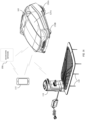
- FIG. 1A illustrates a communication system 100 that may include a robotic garden tool 105 (e.g., a robotic lawn mower 105 that may also be referred to as a robotic mower 105), a docking station 110 for the robotic mower 105, an external device 115, and a blockchain network 150 according to some example embodiments.
- the robotic garden tool 105 is primarily described as being a robotic lawn mower 105. However, in other embodiments, the robotic garden tool 105 may include a tool for sweeping debris, vacuuming debris, clearing debris, collecting debris, moving debris, etc.
- Debris may include plants (such as grass, leaves, flowers, stems, weeds, twigs, branches, etc., and clippings thereof), dust, dirt, jobsite debris, snow, and/or the like.
- plants such as grass, leaves, flowers, stems, weeds, twigs, branches, etc., and clippings thereof
- dust, dirt, jobsite debris, snow, and/or the like may be included in other implementations of the robotic garden tool 105 may include a vacuum cleaner, a trimmer, a string trimmer, a hedge trimmer, a sweeper, a cutter, a plow, a blower, a snow blower, etc.
- a lawn may include any type of property that includes grass, a crop, some other material to be trimmed, cleared, gathered, etc., and/or that includes some material to receive treatment from the robotic garden tool 105 (e.g., fertilizer to treat grass in the lawn).
- a lawn may include paved portions of a property (e.g., a driveway), for example, when the robotic garden tool 105 is used for snow plowing/removal.
- the docking station 110 may be installed in a worksite using stakes 120.
- the power tool 105 may be configured to mow a yard and dock at the docking station 110 in order to charge a battery pack 245 of the power tool 105 (see FIGS. 2A and 2B ).
- the docking station 110 is configured to make an electrical connection with a power supply (e.g., via a cord and plug connected to a wall outlet that is connected to a power grid) in order to provide charging current to the power tool 105 when the power tool 105 is electrically coupled with the docking station 110.
- the battery pack 245 is a removable, rechargeable battery pack configured to be charged at a charging device/charger while a second removable, rechargeable battery pack is used with the power tool 105.
- the power tool 105 is not a robotic tool and may be hand-held power tool 105 or other type of power tool 105.
- the power tool 105 may also be referred to as a power tool device 105.
- the power tool device 105 may be configured to perform one or more specific tasks (e.g., drilling, cutting, fastening, pressing, lubricant application, sanding, heating, grinding, bending, forming, impacting, polishing, lighting, etc.).
- an impact wrench is associated with the task of generating a rotational output (e.g., to drive a bit), while a reciprocating saw is associated with the task of generating a reciprocating output motion (e.g., for pushing and pulling a saw blade).
- the task(s) associated with a particular tool may also be referred to as the primary function(s) of the tool.
- the power tool device 105 illustrated in FIGS. 1A and 1B is robotic mower 105
- the power tool device 105 may be another power tool, test and measurement equipment, a vacuum cleaner, a worksite radio, outdoor power equipment, a vehicle, a power tool battery pack, a charger configured to charge a power tool battery pack, or another device.
- Power tools can include drills, circular saws, jig saws, band saws, reciprocating saws, screw drivers, angle grinders, straight grinders, hammers, multi-tools, impact wrenches, rotary hammers, impact drivers, angle drills, pipe cutters, grease guns, hydraulic cutters, hydraulic crimpers, magnetic drills, and the like.
- Test and measurement equipment can include digital multimeters, clamp meters, fork meters, wall scanners, infrared (IR) thermometers, laser distance meters, laser levels, remote displays, insulation testers, moisture meters, thermal imagers, inspection cameras, and the like.
- IR infrared
- Vacuum cleaners can include stick vacuums, hand vacuums, upright vacuums, carpet cleaners, hard surface cleaners, canister vacuums, broom vacuums, and the like.
- Outdoor power equipment can include blowers, chain saws, edgers, hedge trimmers, lawn mowers, trimmers, and the like.
- Other devices can include electronic key boxes, calculators, cellular phones, head phones, cameras, motion sensing alarms, flashlights, work lights (e.g., free-standing work lights), weather information display devices, a portable power source, a digital camera, a digital music player, a radio, and multi-purpose cutters.
- the power tool device 105 may be non-motorized as indicated by a number of the above examples.
- the power tool 105 is configured to bidirectionally wirelessly communicate with the external device 115, the docking station 110, and/or the blockchain network 150.
- the power tool 105 is configured to directly communicate with the external device 115 when the power tool 105 is within communication range of the external device 115 (e.g., via Bluetooth TM , WiFi TM , or the like).
- the power tool 105 is additionally or alternatively configured to communicate with the external device 115 via an intermediary device such as a cellular communication tower/base station, another device in a cellular network, or the like (e.g., when the power tool 105 is outside of direct communication range with the external device 115).
- the external device 115 may be, for example, a smart phone (as illustrated), a laptop computer, a tablet computer, a personal digital assistant (PDA), a wireless communication router that allows another external device 115 that is located remotely from the power tool 105 to communicate with the power tool 105, or another electronic device capable of communicating with the power tool 105. As described in greater detail below, in some embodiments, the external device 115 sends commands to the power tool 105 to enable or disable certain features/operations of the power tool 105 in accordance with instructions received from a blockchain network 150.
- the communication between the external device 115 and the power tool 105 may be wired (e.g., via a Universal Serial Bus (USB) cord configured to connect to respective USB ports of the external device 115 and the power tool 105).
- USB Universal Serial Bus
- the battery pack 245 (see FIGS. 2A and 2B ) of the power tool 105 may additionally or alternatively communicate with the external device 115, the blockchain network 150, and/or the docking station 110 using its own separate network interface 260 as explained in greater detail below with respect to FIG. 2B .
- the external device 115 is configured to bidirectionally communicate with the power tool 105, the docking station 110, and/or the blockchain network 150.
- the docking station 110 may also be configured to bidirectionally communicate with any one or a combination of the power tool 105, the external device 115, and the blockchain network 150.
- the blockchain network 150 includes a plurality of nodes 400 that are communicatively coupled to at least one other node 400.
- Nodes 400 and the blockchain network 150 are explained in further detail below with respect to FIGS. 4A-4D .
- any kind of electronic device configured to communicate over a network as part of the communication system 100 may act as a node 400 of the blockchain network 150.
- at least one of the external device 115, the docking station 110, the power tool 105, and the battery pack 245 acts as a node 400 of the blockchain network 150 (e.g., a full node or a light node as explained in greater detail below).
- the external device 115 is not a node 400 of the blockchain network 150, but connects the power tool 105 to a node of the blockchain network 150.
- the power tool 105 and the battery pack 245 are not nodes 400 of the blockchain network 150 but merely may communicate with one or more nodes 400 of the blockchain network 150.
- FIG. 1A illustrates one power tool 105, one charging station 110, and one external device 115
- the communication system 100 includes additional power tools 105, charging stations 110, and/or external devices 115.
- a single external device 115 may be configured to communicate with multiple power tools 105.
- the blockchain network 150 is shown as a separate entity in FIG. 1A
- one or more of the power tool 105, the charging station 110, the external device 115, and/or the battery pack 245 may act as a node 400 that forms part of the blockchain network 150.
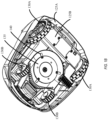
- FIG. 1B illustrates a bottom perspective view of the power tool 105 according to some example embodiments.
- the power tool 105 may include a housing 125 that includes an outer housing 125A (i.e., outer housing shell) and an inner housing 125B.
- the outer housing 125A may be coupled to the inner housing 125B.
- the power tool 105 also may include wheels 130 (i.e., a set of wheels 130) coupled to the inner housing 125B and configured to rotate with respect to the housing 125 to propel the power tool 105 on an operating surface (e.g., a yard to be mowed).
- the wheels 130 may include motor-driven wheels 130A and non-motor-driven wheels 130B. In the embodiment shown in FIG.
- two rear wheels 130A are motor-driven wheels 130A while two front wheels 130B are non-motor-driven wheels 130B.
- the power tool 105 may include a different wheel arrangement (e.g., a different number of total wheels, a different number of each type of wheel, different wheels being motor-driven or non-motor-driven, and/or the like).
- the housing 125 may not include the outer housing 125A and the inner housing 125B. Rather, the housing 125 may include a single integrated body/housing to which the wheels 130 are attached.
- the power tool 105 includes a wheel motor 235 (see FIG. 2A ) coupled to one or more wheels 130 and configured to drive rotation of the one or more wheels 130. In some embodiments, the power tool 105 includes multiple wheel motors 235 where each wheel motor 235 is configured to drive rotation of a respective motor-driven wheel 130A (see FIG. 2A ).
- the power tool 105 includes a cutting blade assembly 135 coupled to the inner housing 125B and configured to rotate with respect to the housing 125 to cut grass on the operating surface.
- the cutting blade assembly 135 may include a rotating disc to which a plurality of cutting blades 140 configured to cut the grass are attached.
- the power tool 105 includes a cutting blade assembly motor 240 (see FIG. 2A ) coupled to the inner housing 125B and to the cutting blade assembly 135.
- the cutting blade assembly motor 240 may be configured to drive rotation of the cutting blade assembly 135 to cut the grass on the operating surface.
- the power tool 105 and/or the docking station 110 include additional components and functionality than is shown and described herein.
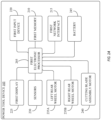
- FIG. 2A is a block diagram of the power tool 105 according to some example embodiments.
- the power tool 105 includes a first electronic processor 205 (for example, a microprocessor or other electronic device).
- the first electronic processor 205 includes input and output interfaces (not shown) and is electrically coupled to a first memory 210, a first network interface 215, an optional first input device 220, an optional display 225, one or more sensors 230, a left rear wheel motor 235A, a right rear wheel motor 23 5B, a cutting blade assembly motor 240, and a battery 245 (e.g., a battery pack 245).
- the power tool 105 includes fewer or additional components in configurations different from that illustrated in FIG. 2A .
- the power tool 105 may not include the first input device 220 and/or the first optional display 225.
- the power tool 105 may include a height adjustment motor configured to adjust a height of the cutting blade assembly 135.
- the power tool 105 may include additional sensors or fewer sensors than the sensors 230 described herein.
- the power tool 105 may not include the motors 235, 240 and may instead include a single motor configured to drive a tool bit, for example, when the power tool 105 is a hand-held power tool 105 such as a power drill rather than a robotic power tool 105.
- the power tool 105 may be a power tool device 105 that does not include any motors. In some embodiments, the power tool 105 performs functionality other than the functionality described below.
- the first memory 210 may include read only memory (ROM), random access memory (RAM), other non-transitory computer-readable media, or a combination thereof.
- the first electronic processor 205 is configured to receive instructions and data from the first memory 210 and execute, among other things, the instructions. In particular, the first electronic processor 205 executes instructions stored in the first memory 210 to perform the methods described herein.
- the first network interface 215 is configured to send data to and receive data from other devices in the communication system 100 (e.g., the docking station 110, the external device 115, one or more nodes 400 of the blockchain network 150, etc.).
- the first network interface 215 includes one or more transceivers for wirelessly communicating with the external device 115 and/or the docking station 110 (e.g., a first radio frequency (RF) transceiver configured to communicate via Bluetooth TM , WiFi TM , or the like).
- the first network interface 215 may include an additional transceiver for wirelessly communicating with the blockchain network 150 (and/or the external device 115 and/or the docking station 110) via, for example, cellular communication.
- the transceivers and/or receivers of the power tool 105 may be combined or share some elements (e.g., an antenna and/or other hardware).
- the first network interface 215 may include a connector or port for receiving a wired connection to the external device 115, such as USB cable.
- the power tool 105 may additionally or alternatively communicate with the docking station 110 when the power tool 105 is docked/coupled to the docking station 110 (e.g., via first terminals of the power tool 105 that are connected to second terminals of the docking station 110).
- the first input device 220 is configured to allow the first electronic processor 205 to receive a user input from a user to, for example, set/adjust an operational parameter of the power tool 105.
- the first display 225 is configured to display a user interface to the user. Similar to the user interface of the external device 115 described previously herein, the user interface displayed on the first display 225 may allow the user to access and interact with power tool information. In some embodiments, the first display 225 may also act as the first input device 220. For example, a touch sensitive input interface may be incorporated into the first display 225 to allow the user to interact with content provided on the first display 225.
- the first display 225 may be a liquid crystal display (LCD) screen, an organic light emitting display (OLED) display screen, or an E-ink display. In some embodiments, the first display 225 includes future-developed display technologies.
- the first electronic processor 205 is in communication with a plurality of sensors 230 that may include electromagnetic field sensors, radio frequency sensors (e.g., radio frequency identification (RFID) interrogators/sensors), Hall sensors, current sensors, other magnetic sensors, and/or the like.
- RFID radio frequency identification
- data from one or more Hall sensors may be used by the first electronic processor 205 to determine how fast the a motor of the power tool 105 is rotating.
- the battery pack 245 provides power to the first electronic processor 205 and to other components of the power tool 105 such as the motors 235A, 235B, 240 and the first display 225.
- power may be supplied to other components besides the first electronic processor 205 through the first electronic processor 205 or directly to the other components.
- the first electronic processor 205 may control whether power is provided to one or more of the other components using, for example, a respective switch (e.g., a field-effect transistor) or a respective switching network including multiple switches.
- the first electronic processor 205 may control whether current from the battery pack 245 is provided to a motor of the power tool 105.
- the power tool 105 includes active and/or passive conditioning circuitry (e.g., voltage step-down controllers, voltage converters, rectifiers, filters, etc.) to regulate or control the power received by the components of the power tool 105 (e.g., the first electronic processor 205, the motors, 235A, 235B, 240, etc.) from the battery pack 245.
- the battery pack 245 is a removable battery pack.
- the battery pack 245 is configured to receive charging current from the docking station 110 when the power tool 105 is docked at the docking station 110 and electrically connected thereto.
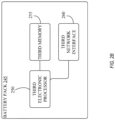
- FIG. 2B illustrates a block diagram of the battery pack 245 according to some example embodiments.
- the battery pack 245 includes a third electronic processor 250 electrically connected to a third memory 255 and a third network interface 260.
- the third electronic processor 250 may send data to and receive data from the external device 115 and/or the blockchain network 150 via the third network interface 260.
- the battery pack 245 may bidirectionally communicate with the power tool 105 to which the battery pack 245 is attached. For example, in response to the battery pack 245 being connected with the power tool 105, the battery pack 245 may transmit battery pack information to the power tool 105 (e.g., via third terminals of the power tool 105 that are connected to fourth terminals of the battery pack 245). The power tool 105 may then communicate at least a portion of the battery pack information to the external device 115 and/or the blockchain network 150.
- the battery pack information may include, among other things, battery pack usage information, a battery pack identifier, battery pack ownership information, and/or the like.
- the battery pack information may include any information that specifically or generally identifies the battery pack 245 (e.g., a location at which the battery pack 245 was sold or last used, etc.).
- the battery pack 245 may communicate with the external device 115, the blockchain network 150, and/or the docking station 110 using its own separate network interface 260 to, for example, transmit battery pack information and/or receive blockchain authentication information.
- the power tool 105 may transmit power tool information to the battery pack 245 (e.g., via third terminals of the power tool 105 that are connected to fourth terminals of the battery pack 245).
- the battery pack 245 may then communicate at least a portion of the power tool information to the external device 115 and/or the blockchain network 150.
- the power tool information may include, among other things, power tool usage information, a power tool identifier, power tool ownership information, and/or the like.
- the power tool information may include any information that specifically or generally identifies the power tool 105 (e.g., a location at which the power tool 105 was sold or last used, etc.).
- the battery pack 245 includes fewer or additional components in configurations different from that illustrated in FIG. 2B .
- the battery pack 245 may not include its own network interface 260 and may instead rely on the first network interface 215 of the power tool 105 to communicate with the external device 115 and/or the blockchain network 150.
- the first electronic processor 205 is configured to control one or more operations of the power tool 105.
- the first electronic processor 205 controls one or more switches (e.g., field-effect transistors (FETs)) to provide power to one of the motors 235, 240 based on signals received from one or more Hall sensors.
- the first electronic processor 205 controls whether one or more certain components of the power tool 105 (e.g., the motors 235, 240; the first network interface 215, etc.) are allowed to be operated in an unrestricted manner, are allowed to be operated in a restricted manner, or are prevented from operating at all.
- the power tool 105 may be configured to operate or may be prevented from operating in response to a user input that attempts to operate the power tool 105.
- Operating in an unrestricted manner may include allowing the power tool 105 to operate in accordance with a full range of operational limits.
- operating in a restricted manner may include only allowing a limited current to the power tool 105 (or to a specific component of the power tool 105 such as the motor 235, 240) from the battery pack 245, only allowing a limited torque output of the motor 235, 240 of the power tool 105, or the like.
- Preventing operation of one or more components of the power tool 105 may include preventing the motor 235, 240 from operating altogether.
- some features/components of the power tool 105 may be enabled/operational while other features/components of the power tool 105 are disabled/not operational.
- the third electronic processor 250 of the battery pack 245 may similarly control operations of the power tool 105 by allowing current to flow to the power tool 105 in an unrestricted manner, by allowing current to flow to the power tool 105 in a restricted manner, or by preventing current from flowing to certain terminals of the power tool 105 altogether.
- the third electronic processor 250 may limit the current drawn from the battery pack 245 to a particular current level or may limit the power output by the battery pack 245 to a particular power level.
- the third electronic processor 250 may limit current (or prevent current from flowing altogether) from certain terminals of the battery pack 245 that supply power to a motor 235, 240 of the power tool 105 but may not limit a current from other terminals of the battery pack 245 that supply power to the first electronic processor 205 and/or the first network interface 215. Accordingly, in some situations, the battery pack 245 may supply power to the power tool 105 to allow for limited functionality (e.g., functionality by the first electronic processor 205 to communicate with the battery pack 245 and/or the external device 115) while other functionality is disabled (e.g., motor operation).
- limited functionality e.g., functionality by the first electronic processor 205 to communicate with the battery pack 245 and/or the external device 115
- other functionality e.g., motor operation
- FIG. 3 is a block diagram of the external device 115 according to some example embodiments.
- the external device 115 includes a second electronic processor 305 electrically connected to a second memory 310, a second network interface 315, a second user input device 320, and a second display 325.
- These components are similar to the like-named components of the power tool 105 explained above with respect to FIG. 2A and function in a similar manner as described above.
- the second display 325 may also function as an input device (e.g., when the second display 325 is a touchscreen).
- the second electronic processor 305 sends data to and receives data from the power tool 105 and/or the battery pack 245 via the second network interface 315.
- the second network interface 315 includes one or more transceivers for wirelessly communicating with the power tool 105 (e.g., a second RF transceiver configured to communicate via Bluetooth TM , WiFi TM , or the like).
- the second network interface 315 may include an additional transceiver for wirelessly communicating with the blockchain network 150 via, for example, cellular communication.
- at least some of the transceivers and/or receivers of the external device 115 may be combined or share some elements (e.g., an antenna and/or other hardware).
- the external device 115 includes fewer or additional components in configurations different from that illustrated in FIG. 3 .
- the external device 115 may include a battery, a global positioning system (GPS) device, or the like.
- the external device 115 performs functionality other than the functionality described below.
- the blockchain network 150 includes a plurality of nodes 400.
- any kind of electronic device configured to communicate to other electronic devices may act as a node 400.
- FIG. 4A is an example embodiment of a node 400 of the blockchain network 150.
- the node 400 includes a fourth electronic processor 405 electrically connected to a fourth memory 410, and a fourth network interface 415. These components are similar to the like-named components of the power tool 105 explained above with respect to FIG. 2A and function in a similar manner as described above.
- the fourth electronic processor 405 sends data to and receives data from the power tool 105, the battery pack 245, the external device 115, the docking station 110, and/or other nodes 400 via the fourth network interface 415.
- the external device 115, the docking station 110, the power tool 105, and the battery pack 245 acts as a node 400 of the blockchain network 150 in some situations.
- Each node 400 in the blockchain network 150 may possess an address, such as an Internet Protocol (IP) address.
- IP Internet Protocol
- a node 400 is a communication endpoint and may possess different functionality on the blockchain 150 based upon an assigned role.
- a node 400 may be a light node or a full node.
- a light node sometimes referred to as a lite node, may be configured to store and provide data necessary to accommodate rapid transactions or frequently repeated activities on the blockchain 150.
- a node 400 configured as a light node may be configured to send or receive validation requests within the blockchain 150 but may not be configured to validate or authenticate the requests.
- a full node may be configured to maintain a full record (i.e., ledger) of the blockchain 150 and, unlike the light node, have full validation voting rights on the blockchain 150.
- Full nodes may be configured to have sub-types, such as authority nodes, mining/validation nodes, master nodes, or the like.
- a full node is an authority node.
- An authority node may be configured to a manage the access levels for other types of full nodes.
- an authority node may be configured to set the specific access levels for light nodes on the network.
- an authority node may permit one or more light nodes to send and receive validation requests, but only for specific power tools 105.
- a light node may be paired with a particular type of power tool 105, such as a robotic lawnmower, and will not function with power tools 105 of any other type.
- a light node may function with a family of power tools 105, such as robotic lawnmowers, robotic snowblowers, or the like.
- an authority node may configure access for a light node limited to a certain time of day, or a duration of time, or a preset number of requests/receipts for validation, or the like.
- an authority node is configured to allow or prevent new nodes 400 on the blockchain network 150.
- an authority node may be configured to allow a specific number of new nodes 400 on the network, or a particular ratio of node types to other node types, such as one full node to three light nodes, or the like.
- an authority node generates a block on the blockchain associated with the new node, and a consensus of other authority nodes, or all nodes, must be reached before the new node is functional.
- a block is a data structure within the blockchain network 150 that includes address information (e.g., an address of a transmitting device/node that generated the block, an address of one of more destination devices/nodes or an indication that the block is generally addressed to all nodes 400 within the blockchain network 150) and data chunks with a requested function to be performed by the nodes 400 using data included in the data chunks.
- the data chunks may include information to be validated by the blockchain network 150 such as the battery pack information and the power tool information described previously herein and described in further detail below.
- a mining node is responsible for executing/solving mathematical functions to validate transactions/information within the blockchain network 150.
- a light node may request validation of a new block on the blockchain 150, and a mining node is programmed to perform the calculations to solve the function, or problem, of the block.
- many mining nodes perform the calculation to solve the same problem and communicate their computed answer to other nodes 400 within the blockchain 150. In such examples, once the calculation is complete, the mining node submits a new block to the blockchain 150, such that other nodes 400 may verify the solved problem.
- a master node Similar to a mining node, a master node may be configured to perform validations on the blockchain 150. In some instances, a master node does not submit a new block for verification by other nodes 400, but rather only performs the validation of blocks submitted by other nodes 400. For example, a mining node may complete a problem (e.g., execute a pre-programmed function using data chunks included a block generated by another node 400) and submit a new block to the blockchain 150, where a master node validates the solution to the problem. In this instance, the master node would not add another block to the blockchain 150 but would instead only verify that the mining node completed the computation successfully.
- a problem e.g., execute a pre-programmed function using data chunks included a block generated by another node 400
- a block when a block is initially generated (e.g., by a full node or light node) but has not yet been solved (e.g., by a full node), the block may be referred to as an incomplete block.
- the block When a block has been solved or a new block is generated with a solution for incomplete block, the block may be referred to as a complete block.
- a complete block may be an unvalidated block (rather than a validated block) because it may be required that many complete blocks are accurately generated by many different nodes 400 in order to validate the data/information included in the complete blocks.
- the blockchain network 150 may use a consensus mechanism to form an agreement of the validity of the block from among a predetermined threshold of the nodes 400 of the blockchain network 150.
- the predetermined threshold may be a percentage (e.g., 51%, 60%, etc.) of the nodes of the blockchain network 150 that accurately solved the problem of the block by performing a pre-programmed function based on the data/information included in the block.
- the consensus mechanism may vary between blockchains, and may include proof of work (PoW), proof of stake (PoS), proof of capacity (PoC), proof of activity (PoA), proof of burn (PoB), proof of time (PoT), or the like.
- a blockchain utilizing a proof of work consensus mechanism may be Bitcoin TM , Litecoin TM , Ethereum TM , or the like.
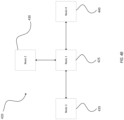
- FIG. 4B is a simplified illustration of a first architecture of multiple nodes 400 of the blockchain network 150 according to some examples.
- the blockchain network 150 may be set up as a centralized blockchain 420.
- one node e.g., Node 1 that is labeled as element 425 acts as a central hub and communicates with all other nodes 430, 435, 440 on the blockchain 150.
- these other nodes 430, 435, 440 on the blockchain 150 may not communicate with each other.
- node 425 may be configured as an authority node or a master node, and may be responsible for facilitating the functionality of other nodes on the blockchain 150 as described previously herein with respect to FIG. 4A .
- node 425 is connected to node 430, node 435, and node 440, with the node 425 located centrally, and acting as a superior node to the other nodes 430, 435, 440 on the blockchain 150.
- nodes 430, 435, 440 are mining nodes or light nodes, or other nodes as assigned by node 425.
- the nodes 425, 430, 435, 440 on the blockchain 150 follow a command structure or hierarchy.
- FIG. 4C is a simplified illustration of a second architecture of multiple nodes 400 of the blockchain network 150 according to some examples.
- the blockchain network 150 may be set up as a decentralized blockchain 445.
- all nodes 450, 455, 460, 465 communicate with all other nodes.
- No particular node is superior to any other node, and the functions of one node may vary depending upon the requirements of the blockchain 150.
- node 450 may be a mining node for a certain duration of time, then transition to an authority node for another duration of time, then transition to a light node for another duration of time.
- node 450 may be a mining node for only a particular number of blocks, then a master node for another number of blocks, or the like.
- the assigned node type varies and may be determined by a user who controls the node, or by a consensus mechanism of the blockchain 150 itself. All other nodes on the network, such as node 455, node 460, and node 465, may function similarly to node 450.
- FIG. 4D is a simplified illustration of a third architecture of multiple nodes 400 of the blockchain network 150 according to some examples.
- the blockchain 150 may be set up as a hybrid blockchain 470, containing aspects of both a centralized and a decentralized blockchain as explained previously herein with respect to FIGS. 4B and 4C , respectively.
- some nodes may act as subordinate to other nodes. However, there is no central single authority node, and many nodes may function as superior or subordinate nodes.
- Power tools and their attachments are often valuable and often portable. Accordingly, these items are often stolen. Many power tools and their attachments do not include any type of authentication or may include only local authentication (e.g., between the power tool and the attachment) in order to allow for their operation. Accordingly, a thief that steal both a power tool and its attachment from an owner may be able to successfully operate the power tool. Thus, there is a technological problem with current power tool/battery pack authentication methods because such methods may allow these products to operate at undesirable times, for example, after the products have been stolen.
- Blockchain authentication may be more secure than mere local authentication in many situations and is more difficult for a thief to hack to put the power tool in an operable state.
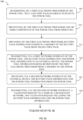
- FIGS. 5A-5B illustrate a flowchart of a method 500 that may be performed by the power tool 105, the battery pack 245, and/or the external device 115 to authenticate a power tool attachment (e.g., the battery 245) using blockchain technology. While a particular order of processing steps, signal receptions, and/or signal transmissions is indicated in FIGS. 5A-5B as an example, timing and ordering of such steps, receptions, and transmissions may vary where appropriate without negating the purpose and advantages of the examples set forth in detail throughout the remainder of this disclosure.
- the method 500 includes at least some actions that may be performed by each of the power tool 105, the battery pack 245, and the external device 115 depending on the implementation, it should be understood that separate methods may be performed by only one of these devices 105, 115, 245 where these separate methods include only the blocks executed by the respective device 105, 115, 245.
- the first electronic processor 205 of the power tool 105 may determine that a battery pack 245 has been coupled to the power tool 105.
- the first electronic processor 205 may include a sense terminal that connects an otherwise open circuit when the battery pack 245 is coupled to the power tool 105.
- the third electronic processor 250 of the battery pack 245 may determine that the battery pack 245 has been coupled to the power tool 105.
- the first electronic processor 205 may prevent one or more components of the power tool from operating (e.g., the motors 235, 240) as described previously herein.
- the third electronic processor 250 may prevent current from being provided to the power tool 105 over at least some terminals of the battery pack 245 (e.g., main power terminals that may provide power to the motors 235, 240).
- the first electronic processor 205 and/or the third electronic processor 250 may prevent the power tool 105 from being operated (or may only allow the power tool 105 to be operated in a restricted manner such as limited current supplied to a motor of the power tool 105, etc.) until a validation is received from a blockchain network 150.
- the devices 105, 115, and/or 245 may perform the blocks of method 500 explained below.
- the first electronic processor 205 obtains battery pack information stored in the third memory 255 of the battery pack 245 from the battery pack 245.
- the third electronic processor 250 obtains power tool information stored in the first memory 210 of the power tool 105 from the power tool 105.
- the first electronic processor 205 transmits, via the first network interface 215 of the power tool 105, the battery pack information and the power tool information (retrieved from its own first memory 210) to the external device 115.
- the third electronic processor 250 transmits, via the third network interface 260 of the battery pack 245, the battery pack information and the power tool information to the external device 115.
- the second electronic processor 305 of the external device 115 receives, via the second network interface 315 of the external device 115, the battery pack information and the power tool information from the power tool 105 or from the battery pack 245.
- the second electronic processor 305 of the external device 115 transmits, via the second network interface 315, a validation request to a node 400 of the blockchain network 150.
- the validation request includes the battery pack information and the power tool information.
- the external device 115 is not a node 400 of the blockchain network 150 and may simply provide a communication link to transfer information between (i) the power tool 105 and/or the battery 245 and (ii) one or more nodes 400 of the blockchain network 150.
- the external device 115 may be configured to act as a full node or a light node. In some instances, the external device 115 may be configured as a full node but not permitted to perform validation of blocks including information about power tools 105 or battery packs 245 paired with the external device 115. For example, an authority node may determine that external device 115 acts as a light node when requesting validation of battery pack information associated with a power tool 105 or a battery pack 245 in communication with external device 115. Continuing this example, the authority node may determine that the external device 115 acts as a full node when validating blocks associated with power tools or battery packs that are not paired with external device 115. In other words, in some instances, the external device 115 may not validate a block that was generated by the external device 115 itself, but may participate in validation of other blocks generated by other nodes 400 on the blockchain 150.
- the external device 115 is configured to act as a light node that makes an authentication request on the blockchain 150. For example, in response to the external device 115 receiving the battery pack information and the power tool information from the power tool 105 or the battery pack 245, the external device 115 creates a block on the blockchain 150 using the battery pack information and the power tool information as the data chunk included in the in the block. As mentioned previously herein and as described in greater detail below, the blockchain 150 (i.e., each node 400 of a subset or all of the nodes 400 included in the blockchain network 150) then attempts to complete validation of the battery pack information and the power tool information.
- the blockchain 150 uses a smart contract to validate the battery pack information and the power tool information.
- a smart contract may be a programmed computer code that includes instructions or predetermined steps for performing a function and is stored on the blockchain 150 (i.e., on each node of the subset or all of the nodes 400 included in the blockchain network 150).
- the smart contract includes a predetermined ownership pair between a power tool 105 and a battery pack 245.
- a smart contract may contain instructions limiting a particular power tool, such as power tool 105, to a particular battery, such as battery pack 245.
- the power tool 105 may be paired with multiple battery packs 245 according to the smart contract.
- a power tool 105 may be paired with a battery pack 245 through a digital identification (ID) recorded on the blockchain.
- ID is a unique cryptographic identity, or address, tied to only one thing, such as power tool 105.
- a particular power tool 105 may have a unique digital ID, and a battery pack 245 may have a different unique digital ID. In this instance, each of multiple battery packs 245 will have their own unique digital ID.
- a smart contract may be programmed with a record of unique digital IDs, such that a power tool digital ID and a battery pack digital ID are paired.
- multiple power tools 105 may be paired with one battery pack 245 and/or multiple battery packs 245 may be paired with one power tool 105.
- docking station 110 may be paired with multiple power tools 105.
- a single power tool 105 is paired with multiple docking stations 110.
- the digital ID takes the form of a non-fungible token (NFT).
- NFT is a type of unique digital asset, and may be associated with a particular physical asset.
- a NFT may represent a specific power tool 105, battery pack 245, docking station 110, or the like.
- a particular NFT tied to a particular battery pack 245 is unique to that battery pack 245. This uniqueness of the NFT is cryptographically locked upon creation of the NFT, and may not be modified after the NFT is generated. For instance, when a NFT is generated for a particular battery pack 245, the NFT may not represent any other battery pack 245.
- an individual user may own a NFT tied to a particular battery pack 245, and another NFT tied to a particular power tool 105.
- the two NFT's may be paired, such the particular battery pack 245 functions with the particular power tool 105, but not with any other power tool 105.
- NFT's may also be traded, bought, sold, or otherwise exchanged such that ownership of an NFT may change, but the association of the NFT to the physical asset does not.
- a smart contract may contain the information pairing a particular power tool 105 with a particular battery pack 245.
- the smart contract is performed by multiple nodes 400 on the blockchain 150. For instance, after a blockchain block corresponding with the battery pack information and the power tool information is generated (e.g., by the external device 115 acting as a node 400 or by a dedicated node 400 that received the validation request from the external device 115), multiple nodes 400 run the smart contract to attempt to validate the authenticity of the battery pack information and the power tool information. In some examples, this attempt to validate authenticity includes comparing the battery pack information and the power tool information to predetermined pairings, such as the pairing of a robotic mower 105 with a specific battery pack 245 or a specific docking station 110.
- the attempt to validate the authenticity of the battery pack information and the power tool information includes executing, by at least one node 400 of the blockchain network 150, a smart contract to compare a digital identification of the battery pack 245 stored on a blockchain of the blockchain network 150 to a digital identification of the power tool 105 stored on the blockchain.
- the fourth electronic processor 405 of at least one node 400 of the blockchain network 150 may prevent the at least one node 400 from validating the battery pack information and the power tool information in response to determining that the digital identification of the battery pack 245 and the digital identification of the power tool 105 were not previously paired with each other.
- a full node configured as a mining node may validate the new block, but a node 400 configured as a light node may not validate the new block.
- only particular nodes 400 are part of the validation process.
- a blockchain authentication message is transmitted to the external device 115 by at least one node 400 of the blockchain network 150.
- the blockchain authentication message may indicate that the blockchain network 150 was able to validate the battery pack information and the power tool information.
- a predetermined threshold e.g., threshold percentage
- the blockchain authentication message may indicate that the blockchain network 150 was unable to validate the battery pack information and the power tool information.
- the second electronic processor 305 of the external device 115 receives, via the second network interface 315, the blockchain authentication message from at least one node 400 of the blockchain network 150.
- the blockchain authentication message indicates whether the blockchain network 150 validated the battery pack information and the power tool information.
- the second electronic processor 305 transmits, via the second network interface 315, an authentication notification to the power tool 105 and/or the battery pack 245 based on the blockchain authentication message.
- the authentication notification may include the indication of whether the blockchain network 150 validated the battery pack information and the power tool information.
- the authentication notification may include such an indication by including a command to the power tool 105 and/or the battery pack 245 (i) to allow unrestricted operation (e.g., when the information was validated by the blockchain network 150) or (ii) to allow only restricted operation or not to allow operation at all (e.g., when the information was validated by the blockchain network 150).
- the first electronic processor 205 of the power tool 105 receives, via the first network interface 215, the authentication notification from the external device 115.
- the third electronic processor 250 of the battery pack 245 receives, via the third network interface 260, the authentication notification from the external device 115.
- the first electronic processor 205 controls an operation of the power tool 105 based on the authentication notification. For example, when the authentication notification indicates that the battery pack information and the power tool information were not validated by the blockchain network 150, the first electronic processor 205 may control the operation of the power tool 105 by at least one of allowing the power tool 105 to operate only in a restricted manner and continuing to prevent the one or more components of the power tool 105 (e.g., the motor 235, 240) from operating, for example, in response to user input requesting the power tool 105 operate. In some embodiments, the first electronic processor 205 may prevent operation of the power tool altogether.
- the authentication notification indicates that the battery pack information and the power tool information were not validated by the blockchain network 150
- the first electronic processor 205 may control the operation of the power tool 105 by at least one of allowing the power tool 105 to operate only in a restricted manner and continuing to prevent the one or more components of the power tool 105 (e.g., the motor 235, 240) from operating, for example, in
- the first electronic processor 205 may nevertheless prevent the motor from operating.
- the first electronic processor 205 controls the operation of the power tool 105 by allowing the power tool 105 to operate in an unrestricted manner by allowing the one or more components of the power tool 105 (e.g., a motor) to operate, for example, in response to user input requesting the power tool 105 operate (e.g. , in response to trigger actuation).
- the third electronic processor 250 of the battery pack 245 controls whether the battery pack 245 provides current to the power tool 105 over at least some terminals of the battery pack (e.g., main power terminals that may provide power to the motors 235, 240) based on the authentication notification. For example, when the authentication notification indicates that the battery pack information and the power tool information were not validated by the blockchain network 150, the third electronic processor 250 may prevent current from flowing to the main terminals of the battery pack 245 to the power tool 105 or may limit a current supplied over the main terminals. Accordingly, the power tool 105 may not be able to operate or may be able to operate only in a restricted manner.
- the authentication notification indicates that the battery pack information and the power tool information were not validated by the blockchain network 150
- the third electronic processor 250 may prevent current from flowing to the main terminals of the battery pack 245 to the power tool 105 or may limit a current supplied over the main terminals. Accordingly, the power tool 105 may not be able to operate or may be able to operate only
- the first electronic processor 205 controls current to flow in a normal manner over the main terminals of the battery pack 245 to allow the power tool 105 to operate in an unrestricted manner within its normal limits.
- the first electronic processor 205 and/or the third electronic processor 250 may prevent the power tool 105 from being operated (or may only allow the power tool 105 to be operated in a restricted manner such as limited current being supplied to a motor of the power tool 105, etc.) until a validation is received from the blockchain network 150.
- the power tool 105 and/or the battery pack 245 may be in a default state in which they are not configured to operate (e.g., at block 510), and the power tool 105 and/or the battery pack 245 may remain in this state until a message is received that indicates that a successful blockchain validation has occurred.
- a message may only be provided to the power tool 105 and/or the battery pack 245 when a block chain validation is successful.
- a message may be provided to the power tool 105 and/or the battery pack 245 when an attempted blockchain validation was not successful (and when the attempted blockchain validation was successful).
- a message indicating a lack of successful blockchain validation may cause the power tool 105 and/or the battery pack 245 to prevent operation of the power tool 105 and/or the battery pack 245 (e.g., enter block 510 of the method 500).
- the method 500 may return to block 505 to repeat as desired (e.g., periodically) to validate the power tool 105 and the battery pack 245 for use with each other.
- the method 500 may be executed each time a battery pack 245 is coupled to a power tool 105 and/or each time the power tool 105 is requested to operate via a user input.
- either the power tool 105, the battery pack 245, or both may communicate with the external device 115 and may prevent the power tool 105 from being operated (or may only allow the power tool 105 to be operated in a restricted manner such as limited current supplied to a motor of the power tool 105, etc.) until a validation is received from the blockchain network 150.
- the method 500 refers to the power tool 105 and the battery pack 245, the method 500 may be performed by any compatible power tool devices 105.
- the method 500 may be performed by a battery pack 245 and a charger configured to charge the battery pack 245, by a robotic power tool 105 and a docking station 110 configured to charge the robotic power tool 105, and/or the like.
- the method 500 may involve the external device 115 transmitting external device information (e.g., an external device identifier, external device ownership information, etc.) in addition to or as an alternative to one of the power tool information and the battery pack information to be validated by the blockchain network 150.
- external device information e.g., an external device identifier, external device ownership information, etc.
- operation of the power tool 105 may be conditioned on power tool information and external device information of the external device 115 communicatively coupled to the power tool 105 being validated by the blockchain network 150.
- the external device 115 may not be included during execution of the method 500.
- the power tool 105 and/or the battery pack 245 may be configured to perform the blocks of the method 500 explained above as well as the blocks of the method 500 executed by the external device 115.
- the power tool 105 and/or the battery pack 245 may be configured to bidirectionally communicate directly with the blockchain network 150 without having the external device 115 relay communications.
- the battery pack 245 and/or the power tool 105 may be configured as a node 400 of the blockchain network 150 in a similar manner as was described previously herein with respect to the external device 115.
- relational terms such as first and second, top and bottom, and the like may be used solely to distinguish one entity or action from another entity or action without necessarily requiring or implying any actual such relationship or order between such entities or actions.
- the terms “comprises,” “comprising,” “has,” “having,” “includes,” “including,” “contains,” “containing,” or any other variation thereof, are intended to cover a non-exclusive inclusion, such that a process, method, article, or apparatus that comprises, has, includes, contains a list of elements does not include only those elements but may include other elements not expressly listed or inherent to such process, method, article, or apparatus.
Landscapes
- Engineering & Computer Science (AREA)
- Computer Security & Cryptography (AREA)
- Computer Networks & Wireless Communication (AREA)
- Signal Processing (AREA)
- Business, Economics & Management (AREA)
- Power Engineering (AREA)
- General Engineering & Computer Science (AREA)
- Computing Systems (AREA)
- Computer Hardware Design (AREA)
- Physics & Mathematics (AREA)
- General Physics & Mathematics (AREA)
- Entrepreneurship & Innovation (AREA)
- Strategic Management (AREA)
- Accounting & Taxation (AREA)
- Development Economics (AREA)
- Economics (AREA)
- Finance (AREA)
- Marketing (AREA)
- Automation & Control Theory (AREA)
- General Business, Economics & Management (AREA)
- Theoretical Computer Science (AREA)
- Environmental Sciences (AREA)
- Life Sciences & Earth Sciences (AREA)
- Mechanical Engineering (AREA)
- Battery Mounting, Suspending (AREA)
- Charge And Discharge Circuits For Batteries Or The Like (AREA)
Abstract
Description
- This application claims priority to
U.S. Provisional Application No. 63/392,638, filed on July 27, 2022 - Embodiments described herein relate to blockchain for authentication of batteries, accessories, or power tools.
- One embodiment includes a communication system that may include a battery pack including a third memory configured to store battery pack information. The communication system may further include a power tool including a first electronic processor, a first memory, and a first network interface. The first memory may be configured to store power tool information. The first electronic processor may be configured to obtain the battery pack information from the battery pack, and transmit, via the first network interface, the battery pack information and the power tool information to an external device. The first electronic processor may be further configured to receive, via the first network interface, an authentication notification from the external device, and control an operation of the power tool based on the authentication notification. The communication system may further include the external device including a second electronic processor, a second memory, and a second network interface. The second electronic processor may be configured to receive, via the second network interface, the battery pack information and the power tool information from the power tool. The second electronic processor may be further configured to transmit, via the second network interface, a validation request to a node of a blockchain network. The validation request may include the battery pack information and the power tool information. The second electronic processor may be further configured to receive, via the second network interface, a blockchain authentication message from at least one node of the blockchain network. The blockchain authentication message may indicate whether the blockchain network validated the battery pack information and the power tool information. The second electronic processor may be further configured to transmit, via the second network interface, the authentication notification to the power tool. The authentication notification may be based on the blockchain authentication message.
- In addition to any combination of features described above, the blockchain authentication message may indicate that the blockchain network was unable to validate the battery pack information and the power tool information. In addition to any combination of features described above, the authentication notification may indicate that the battery pack information and the power tool information were not validated by the blockchain network. In addition to any combination of features described above, the first electronic processor of the power tool may be configured to control the operation of the power tool based on the authentication notification by at least one of allowing the power tool to operate in a restricted manner and preventing one or more components of the power tool from operating.
- In addition to any combination of features described above, the blockchain authentication message may indicate that the blockchain network was able to validate the battery pack information and the power tool information. In addition to any combination of features described above, the authentication notification may indicate that the battery pack information and the power tool information were validated by the blockchain network. In addition to any combination of features described above, the first electronic processor of the power tool may be configured to control the operation of the power tool based on the authentication notification by allowing the power tool to operate in an unrestricted manner.
- In addition to any combination of features described above, the battery pack information and the power tool information may be attempted to be validated by the blockchain network using a consensus mechanism of a plurality of nodes of the blockchain network.
- In addition to any combination of features described above, attempting to validate the battery pack information and the power tool information may includes (i) executing, by at least one node of the blockchain network, a smart contract to compare a digital identification of the battery pack stored on a blockchain of the blockchain network to a digital identification of the power tool stored on the blockchain, and/or (ii) preventing the at least one node of the blockchain network from validating the battery pack information and the power tool information in response to determining that the digital identification of the battery pack and the digital identification of the power tool were not previously paired with each other.
- In addition to any combination of features described above, the consensus mechanism may be at least one selected from a group consisting of Proof of Work, Proof of Stake, Proof of Capacity, Proof of Activity, Proof of Burn, or Proof of Time.
- In addition to any combination of features described above, the external device may be configured to act as a node of the blockchain network.
- In addition to any combination of features described above, the external device may be configured to act as a light node of the blockchain network with respect to the validation request that is transmitted by the external device. In addition to any combination of features described above, the external device may be configured to act as a full node of the blockchain network with respect to a second validation request transmitted by a different device than the external device.
- In addition to any combination of features described above, the first electronic processor may be configured to control the operation of the power tool by controlling a current that is supplied to a motor of the power tool.
- In addition to any combination of features described above, the power tool may include one of a robotic power tool and a hand-held power tool.
- In addition to any combination of features described above, the battery pack information may include at least one of battery pack usage information, a battery pack identifier, and battery pack ownership information. In addition to any combination of features described above, the power tool information may include at least one of power tool usage information, a power tool identifier, power tool ownership information, and combinations thereof.
- Another embodiment includes a method of controlling operation of a power tool. The method may include determining, by a first electronic processor of the power tool, that a battery pack has been coupled to the power tool. The method may include preventing, by the first electronic processor, one or more components of the power tool from operating. The method may include obtaining, by the first electronic processor, battery pack information stored in a memory of the battery pack from the battery pack. The method may include transmitting, via a first network interface of the power tool, the battery pack information and power tool information to an external device. The power tool information may be retrieved by the first electronic processor from a memory of the power tool. The method may include receiving, via a second network interface of the external device, the battery pack information and the power tool information from the power tool. The method may include transmitting, via the second network interface, a validation request to a node of a blockchain network. The validation request may include the battery pack information and the power tool information. The method may include receiving, via the second network interface, a blockchain authentication message from at least one node of the blockchain network. The blockchain authentication message may indicate whether the blockchain network validated the battery pack information and the power tool information. The method may include transmitting, via the second network interface, an authentication notification to the power tool based on the blockchain authentication message. The method may include receiving, via the first network interface, the authentication notification from the external device. The method may include controlling, with the first electronic processor, an operation of the power tool based on the authentication notification.
- In addition to any combination of features described above, the blockchain authentication message may indicate that the blockchain network was unable to validate the battery pack information and the power tool information. In addition to any combination of features described above, the authentication notification may indicate that the battery pack information and the power tool information were not validated by the blockchain network. In addition to any combination of features described above, controlling the operation of the power tool based on the authentication notification may include at least one of allowing the power tool to operate in a restricted manner and continuing to prevent the one or more components of the power tool from operating.
- In addition to any combination of features described above, the blockchain authentication message may indicate that the blockchain network was able to validate the battery pack information and the power tool information. In addition to any combination of features described above, the authentication notification may indicate that the battery pack information and the power tool information were validated by the blockchain network. In addition to any combination of features described above, controlling the operation of the power tool based on the authentication notification may include allowing the power tool to operate in an unrestricted manner by allowing the one or more components of the power tool to operate.
- In addition to any combination of features described above, the battery pack information and the power tool information may be attempted to be validated by the blockchain network using a consensus mechanism of a plurality of nodes of the blockchain network.
- In addition to any combination of features described above, controlling the operation of the power tool includes controlling a current that may be supplied to a motor of the power tool.
- Another embodiment includes a communication system that may include a battery pack including a second electronic processor, a second memory configured to store battery pack information, and a second network interface. The communication system may also include a power tool including a first electronic processor, a first memory configured to store power tool information, and a first network interface. The first electronic processor may be configured to obtain the battery pack information from the battery pack, and transmit, via the first network interface, a validation request to a node of a blockchain network. The validation request may include the battery pack information and the power tool information. The first electronic processor may be configured to receive, via the first network interface, a blockchain authentication message from at least one node of the blockchain network. The blockchain authentication message may indicate whether the blockchain network validated the battery pack information and the power tool information. The first electronic processor may be configured to control an operation of the power tool based on the blockchain authentication message.
- In addition to any combination of features described above, the second electronic processor of the battery pack may be configured to obtain the power tool information from the power tool, and transmit, via the second network interface, a second validation request to the node of the blockchain network, wherein the second validation request includes the battery pack information and the power tool information. In addition to any combination of features described above, the second electronic processor of the battery pack may be configured to receive, via the second network interface, a second blockchain authentication message from at least one node of the blockchain network. The second blockchain authentication message may indicate whether the blockchain network validated the battery pack information and the power tool information. In addition to any combination of features described above, the second electronic processor of the battery pack may be configured to control whether the battery pack provides current to the power tool over at least some terminals of the battery pack based on the blockchain authentication message.
- In addition to any combination of features described above, the blockchain authentication message may indicate that the blockchain network was unable to validate the battery pack information and the power tool information. In addition to any combination of features described above, the first electronic processor of the power tool may be configured to control the operation of the power tool based on the blockchain authentication message by at least one of allowing the power tool to operate in a restricted manner and preventing one or more components of the power tool from operating.
- In addition to any combination of features described above, the blockchain authentication message may indicate that the blockchain network was able to validate the battery pack information and the power tool information. In addition to any combination of features described above, the first electronic processor of the power tool may be configured to control the operation of the power tool based on the blockchain authentication message by allowing the power tool to operate in an unrestricted manner.
- Other aspects, features, and embodiments will become apparent by consideration of the detailed description and accompanying drawings.
-
-
FIG. 1A illustrates a communication system including a power tool, such as a robotic garden tool, according to some example embodiments. -
FIG. 1B illustrates a bottom perspective view of the power tool ofFIG. 1A according to some example embodiments. -
FIG. 2A is a block diagram of the power tool ofFIGS. 1A and1B according to some example embodiments. -
FIG. 2B is a block diagram of a battery pack that may be removably attachable to the power tool ofFIG. 2A according to some example embodiments. -
FIG. 3 is a block diagram of the external device ofFIG. 1A according to some example embodiments. -
FIG. 4A is a block diagram of a node included in a blockchain network included in the communication system ofFIG. 1 , according to some example embodiments. -
FIG. 4B illustrates a plurality of nodes that may be included in the blockchain network ofFIG. 1 and their interconnections, according to some example embodiments. -
FIG. 4C illustrates another plurality of nodes that may be included in the blockchain network ofFIG. 1 and their interconnections, according to some example embodiments. -
FIG. 4D illustrates yet another plurality of nodes that may be included in the blockchain network ofFIG. 1 and their interconnections, according to some example embodiments. -
FIGS. 5A-5B illustrates a flowchart of a method of authenticating a power tool attachment using blockchain technology, according to some example embodiments. - Before any embodiments of the invention are explained in detail, it is to be understood that the invention is not limited in its application to the details of construction and the arrangement of components set forth in the following description or illustrated in the following drawings. The invention is capable of other embodiments and of being practiced or of being carried out in various ways. Also, it is to be understood that the phraseology and terminology used herein is for the purpose of description and should not be regarded as limiting. The use of "including," "comprising" or "having" and variations thereof herein is meant to encompass the items listed thereafter and equivalents thereof as well as additional items. The terms "mounted," "connected" and "coupled" are used broadly and encompass both direct and indirect mounting, connecting, and coupling. Further, "connected" and "coupled" are not restricted to physical or mechanical connections or couplings, and can include electrical connections or couplings, whether direct or indirect.
- It should be noted that a plurality of hardware and software based devices, as well as a plurality of different structural components may be utilized to implement the invention. Furthermore, and as described in subsequent paragraphs, the specific configurations illustrated in the drawings are intended to exemplify embodiments of the invention and that other alternative configurations are possible. The terms "processor," "central processing unit," and "CPU" are interchangeable unless otherwise stated. Where the terms "processor" or "central processing unit" or "CPU" are used as identifying a unit performing specific functions, it should be understood that, unless otherwise stated, those functions can be carried out by a single processor, or multiple processors arranged in any form, including parallel processors, serial processors, tandem processors or cloud processing/cloud computing configurations.
- Throughout this application, the term "approximately" may be used to describe the dimensions of various components. In some situations, the term "approximately" means that the described dimension is within 1% of the stated value, within 5% of the stated value, within 10% of the stated value, or the like. When the term "and/or" is used in this application, it is intended to include any combination of the listed components. For example, if a component includes A and/or B, the component may include solely A, solely B, or A and B.
-
FIG. 1A illustrates a communication system 100 that may include a robotic garden tool 105 (e.g., arobotic lawn mower 105 that may also be referred to as a robotic mower 105), adocking station 110 for therobotic mower 105, anexternal device 115, and ablockchain network 150 according to some example embodiments. Therobotic garden tool 105 is primarily described as being arobotic lawn mower 105. However, in other embodiments, therobotic garden tool 105 may include a tool for sweeping debris, vacuuming debris, clearing debris, collecting debris, moving debris, etc. Debris may include plants (such as grass, leaves, flowers, stems, weeds, twigs, branches, etc., and clippings thereof), dust, dirt, jobsite debris, snow, and/or the like. For example, other implementations of therobotic garden tool 105 may include a vacuum cleaner, a trimmer, a string trimmer, a hedge trimmer, a sweeper, a cutter, a plow, a blower, a snow blower, etc. - In some embodiments, a lawn may include any type of property that includes grass, a crop, some other material to be trimmed, cleared, gathered, etc., and/or that includes some material to receive treatment from the robotic garden tool 105 (e.g., fertilizer to treat grass in the lawn). In some embodiments, a lawn may include paved portions of a property (e.g., a driveway), for example, when the
robotic garden tool 105 is used for snow plowing/removal. - In some embodiments, the
docking station 110 may be installed in aworksite using stakes 120. Thepower tool 105 may be configured to mow a yard and dock at thedocking station 110 in order to charge abattery pack 245 of the power tool 105 (seeFIGS. 2A and2B ). In some embodiments, thedocking station 110 is configured to make an electrical connection with a power supply (e.g., via a cord and plug connected to a wall outlet that is connected to a power grid) in order to provide charging current to thepower tool 105 when thepower tool 105 is electrically coupled with thedocking station 110. In some embodiments, thebattery pack 245 is a removable, rechargeable battery pack configured to be charged at a charging device/charger while a second removable, rechargeable battery pack is used with thepower tool 105. - In some embodiments, the
power tool 105 is not a robotic tool and may be hand-heldpower tool 105 or other type ofpower tool 105. Thepower tool 105 may also be referred to as apower tool device 105. Thepower tool device 105 may be configured to perform one or more specific tasks (e.g., drilling, cutting, fastening, pressing, lubricant application, sanding, heating, grinding, bending, forming, impacting, polishing, lighting, etc.). For example, an impact wrench is associated with the task of generating a rotational output (e.g., to drive a bit), while a reciprocating saw is associated with the task of generating a reciprocating output motion (e.g., for pushing and pulling a saw blade). The task(s) associated with a particular tool may also be referred to as the primary function(s) of the tool. - Although the
power tool device 105 illustrated inFIGS. 1A and1B isrobotic mower 105, embodiments explained herein similarly apply to and can be used in conjunction with a variety ofpower tool devices 105 including power tools and/or accessories. For instance, thepower tool device 105 may be another power tool, test and measurement equipment, a vacuum cleaner, a worksite radio, outdoor power equipment, a vehicle, a power tool battery pack, a charger configured to charge a power tool battery pack, or another device. Power tools can include drills, circular saws, jig saws, band saws, reciprocating saws, screw drivers, angle grinders, straight grinders, hammers, multi-tools, impact wrenches, rotary hammers, impact drivers, angle drills, pipe cutters, grease guns, hydraulic cutters, hydraulic crimpers, magnetic drills, and the like. Test and measurement equipment can include digital multimeters, clamp meters, fork meters, wall scanners, infrared (IR) thermometers, laser distance meters, laser levels, remote displays, insulation testers, moisture meters, thermal imagers, inspection cameras, and the like. Vacuum cleaners can include stick vacuums, hand vacuums, upright vacuums, carpet cleaners, hard surface cleaners, canister vacuums, broom vacuums, and the like. Outdoor power equipment can include blowers, chain saws, edgers, hedge trimmers, lawn mowers, trimmers, and the like. Other devices can include electronic key boxes, calculators, cellular phones, head phones, cameras, motion sensing alarms, flashlights, work lights (e.g., free-standing work lights), weather information display devices, a portable power source, a digital camera, a digital music player, a radio, and multi-purpose cutters. In some embodiments, thepower tool device 105 may be non-motorized as indicated by a number of the above examples. - As indicated in
FIG. 1A , in some embodiments, thepower tool 105 is configured to bidirectionally wirelessly communicate with theexternal device 115, thedocking station 110, and/or theblockchain network 150. In some embodiments, thepower tool 105 is configured to directly communicate with theexternal device 115 when thepower tool 105 is within communication range of the external device 115 (e.g., via Bluetooth™, WiFi™, or the like). In some embodiments, thepower tool 105 is additionally or alternatively configured to communicate with theexternal device 115 via an intermediary device such as a cellular communication tower/base station, another device in a cellular network, or the like (e.g., when thepower tool 105 is outside of direct communication range with the external device 115). Theexternal device 115 may be, for example, a smart phone (as illustrated), a laptop computer, a tablet computer, a personal digital assistant (PDA), a wireless communication router that allows anotherexternal device 115 that is located remotely from thepower tool 105 to communicate with thepower tool 105, or another electronic device capable of communicating with thepower tool 105. As described in greater detail below, in some embodiments, theexternal device 115 sends commands to thepower tool 105 to enable or disable certain features/operations of thepower tool 105 in accordance with instructions received from ablockchain network 150. In some embodiments, the communication between theexternal device 115 and thepower tool 105 may be wired (e.g., via a Universal Serial Bus (USB) cord configured to connect to respective USB ports of theexternal device 115 and the power tool 105). In some embodiments, the battery pack 245 (seeFIGS. 2A and2B ) of thepower tool 105 may additionally or alternatively communicate with theexternal device 115, theblockchain network 150, and/or thedocking station 110 using its ownseparate network interface 260 as explained in greater detail below with respect toFIG. 2B . - Also as indicated in
FIG. 1A , in some embodiments, theexternal device 115 is configured to bidirectionally communicate with thepower tool 105, thedocking station 110, and/or theblockchain network 150. In some embodiments, thedocking station 110 may also be configured to bidirectionally communicate with any one or a combination of thepower tool 105, theexternal device 115, and theblockchain network 150. - In some embodiments, the
blockchain network 150 includes a plurality ofnodes 400 that are communicatively coupled to at least oneother node 400.Nodes 400 and the blockchain network 150 (e.g., potential architectures of the blockchain network 150) are explained in further detail below with respect toFIGS. 4A-4D . In some embodiments, any kind of electronic device configured to communicate over a network as part of the communication system 100 may act as anode 400 of theblockchain network 150. In some embodiments, at least one of theexternal device 115, thedocking station 110, thepower tool 105, and thebattery pack 245 acts as anode 400 of the blockchain network 150 (e.g., a full node or a light node as explained in greater detail below). In other embodiments, theexternal device 115 is not anode 400 of theblockchain network 150, but connects thepower tool 105 to a node of theblockchain network 150. In some embodiments, thepower tool 105 and thebattery pack 245 are notnodes 400 of theblockchain network 150 but merely may communicate with one ormore nodes 400 of theblockchain network 150. - While
FIG. 1A illustrates onepower tool 105, one chargingstation 110, and oneexternal device 115, in some embodiments, the communication system 100 includesadditional power tools 105, chargingstations 110, and/orexternal devices 115. In some embodiments, a singleexternal device 115 may be configured to communicate withmultiple power tools 105. As described throughout this application, while theblockchain network 150 is shown as a separate entity inFIG. 1A , in some embodiments, one or more of thepower tool 105, the chargingstation 110, theexternal device 115, and/or the battery pack 245 (seeFIG. 2B ) may act as anode 400 that forms part of theblockchain network 150. -
FIG. 1B illustrates a bottom perspective view of thepower tool 105 according to some example embodiments. Thepower tool 105 may include a housing 125 that includes anouter housing 125A (i.e., outer housing shell) and aninner housing 125B. Theouter housing 125A may be coupled to theinner housing 125B. Thepower tool 105 also may include wheels 130 (i.e., a set of wheels 130) coupled to theinner housing 125B and configured to rotate with respect to the housing 125 to propel thepower tool 105 on an operating surface (e.g., a yard to be mowed). The wheels 130 may include motor-drivenwheels 130A and non-motor-drivenwheels 130B. In the embodiment shown inFIG. 1B , tworear wheels 130A are motor-drivenwheels 130A while twofront wheels 130B are non-motor-drivenwheels 130B. In other embodiments, thepower tool 105 may include a different wheel arrangement (e.g., a different number of total wheels, a different number of each type of wheel, different wheels being motor-driven or non-motor-driven, and/or the like). In some embodiments, the housing 125 may not include theouter housing 125A and theinner housing 125B. Rather, the housing 125 may include a single integrated body/housing to which the wheels 130 are attached. - In some embodiments, the
power tool 105 includes a wheel motor 235 (seeFIG. 2A ) coupled to one or more wheels 130 and configured to drive rotation of the one or more wheels 130. In some embodiments, thepower tool 105 includes multiple wheel motors 235 where each wheel motor 235 is configured to drive rotation of a respective motor-drivenwheel 130A (seeFIG. 2A ). - In some embodiments, the
power tool 105 includes acutting blade assembly 135 coupled to theinner housing 125B and configured to rotate with respect to the housing 125 to cut grass on the operating surface. Thecutting blade assembly 135 may include a rotating disc to which a plurality of cuttingblades 140 configured to cut the grass are attached. In some embodiments, thepower tool 105 includes a cutting blade assembly motor 240 (seeFIG. 2A ) coupled to theinner housing 125B and to thecutting blade assembly 135. The cuttingblade assembly motor 240 may be configured to drive rotation of thecutting blade assembly 135 to cut the grass on the operating surface. - In some embodiments, the
power tool 105 and/or thedocking station 110 include additional components and functionality than is shown and described herein. -
FIG. 2A is a block diagram of thepower tool 105 according to some example embodiments. In the embodiment illustrated, thepower tool 105 includes a first electronic processor 205 (for example, a microprocessor or other electronic device). The firstelectronic processor 205 includes input and output interfaces (not shown) and is electrically coupled to afirst memory 210, afirst network interface 215, an optionalfirst input device 220, anoptional display 225, one ormore sensors 230, a leftrear wheel motor 235A, a right rear wheel motor 23 5B, a cuttingblade assembly motor 240, and a battery 245 (e.g., a battery pack 245). In some embodiments, thepower tool 105 includes fewer or additional components in configurations different from that illustrated inFIG. 2A . For example, thepower tool 105 may not include thefirst input device 220 and/or the firstoptional display 225. As another example, thepower tool 105 may include a height adjustment motor configured to adjust a height of thecutting blade assembly 135. As yet another example, thepower tool 105 may include additional sensors or fewer sensors than thesensors 230 described herein. As yet another example, thepower tool 105 may not include themotors 235, 240 and may instead include a single motor configured to drive a tool bit, for example, when thepower tool 105 is a hand-heldpower tool 105 such as a power drill rather than arobotic power tool 105. As another example, thepower tool 105 may be apower tool device 105 that does not include any motors. In some embodiments, thepower tool 105 performs functionality other than the functionality described below. - The
first memory 210 may include read only memory (ROM), random access memory (RAM), other non-transitory computer-readable media, or a combination thereof. The firstelectronic processor 205 is configured to receive instructions and data from thefirst memory 210 and execute, among other things, the instructions. In particular, the firstelectronic processor 205 executes instructions stored in thefirst memory 210 to perform the methods described herein. - The
first network interface 215 is configured to send data to and receive data from other devices in the communication system 100 (e.g., thedocking station 110, theexternal device 115, one ormore nodes 400 of theblockchain network 150, etc.). In some embodiments, thefirst network interface 215 includes one or more transceivers for wirelessly communicating with theexternal device 115 and/or the docking station 110 (e.g., a first radio frequency (RF) transceiver configured to communicate via Bluetooth™, WiFi™, or the like). Thefirst network interface 215 may include an additional transceiver for wirelessly communicating with the blockchain network 150 (and/or theexternal device 115 and/or the docking station 110) via, for example, cellular communication. In some embodiments, at least some of the transceivers and/or receivers of thepower tool 105 may be combined or share some elements (e.g., an antenna and/or other hardware). Alternatively or additionally, thefirst network interface 215 may include a connector or port for receiving a wired connection to theexternal device 115, such as USB cable. In some embodiments, thepower tool 105 may additionally or alternatively communicate with thedocking station 110 when thepower tool 105 is docked/coupled to the docking station 110 (e.g., via first terminals of thepower tool 105 that are connected to second terminals of the docking station 110). - The
first input device 220 is configured to allow the firstelectronic processor 205 to receive a user input from a user to, for example, set/adjust an operational parameter of thepower tool 105. Thefirst display 225 is configured to display a user interface to the user. Similar to the user interface of theexternal device 115 described previously herein, the user interface displayed on thefirst display 225 may allow the user to access and interact with power tool information. In some embodiments, thefirst display 225 may also act as thefirst input device 220. For example, a touch sensitive input interface may be incorporated into thefirst display 225 to allow the user to interact with content provided on thefirst display 225. Thefirst display 225 may be a liquid crystal display (LCD) screen, an organic light emitting display (OLED) display screen, or an E-ink display. In some embodiments, thefirst display 225 includes future-developed display technologies. - In some embodiments, the first
electronic processor 205 is in communication with a plurality ofsensors 230 that may include electromagnetic field sensors, radio frequency sensors (e.g., radio frequency identification (RFID) interrogators/sensors), Hall sensors, current sensors, other magnetic sensors, and/or the like. In some embodiments, data from one or more Hall sensors may be used by the firstelectronic processor 205 to determine how fast the a motor of thepower tool 105 is rotating. - In some embodiments, the
battery pack 245 provides power to the firstelectronic processor 205 and to other components of thepower tool 105 such as themotors first display 225. In some embodiments, power may be supplied to other components besides the firstelectronic processor 205 through the firstelectronic processor 205 or directly to the other components. In some embodiments, when power is provided directly from thebattery pack 245 to the other components, the firstelectronic processor 205 may control whether power is provided to one or more of the other components using, for example, a respective switch (e.g., a field-effect transistor) or a respective switching network including multiple switches. For example, the firstelectronic processor 205 may control whether current from thebattery pack 245 is provided to a motor of thepower tool 105. In some embodiments, thepower tool 105 includes active and/or passive conditioning circuitry (e.g., voltage step-down controllers, voltage converters, rectifiers, filters, etc.) to regulate or control the power received by the components of the power tool 105 (e.g., the firstelectronic processor 205, the motors, 235A, 235B, 240, etc.) from thebattery pack 245. In some embodiments, thebattery pack 245 is a removable battery pack. In some embodiments, thebattery pack 245 is configured to receive charging current from thedocking station 110 when thepower tool 105 is docked at thedocking station 110 and electrically connected thereto. -
FIG. 2B illustrates a block diagram of thebattery pack 245 according to some example embodiments. In the example shown, thebattery pack 245 includes a thirdelectronic processor 250 electrically connected to athird memory 255 and athird network interface 260. These components are similar to the like-named components of thepower tool 105 explained above with respect toFIG. 2A and function in a similar manner as described above. For example, the thirdelectronic processor 250 may send data to and receive data from theexternal device 115 and/or theblockchain network 150 via thethird network interface 260. - In some embodiments, the
battery pack 245 may bidirectionally communicate with thepower tool 105 to which thebattery pack 245 is attached. For example, in response to thebattery pack 245 being connected with thepower tool 105, thebattery pack 245 may transmit battery pack information to the power tool 105 (e.g., via third terminals of thepower tool 105 that are connected to fourth terminals of the battery pack 245). Thepower tool 105 may then communicate at least a portion of the battery pack information to theexternal device 115 and/or theblockchain network 150. The battery pack information may include, among other things, battery pack usage information, a battery pack identifier, battery pack ownership information, and/or the like. The battery pack information may include any information that specifically or generally identifies the battery pack 245 (e.g., a location at which thebattery pack 245 was sold or last used, etc.). - In some embodiments, the
battery pack 245 may communicate with theexternal device 115, theblockchain network 150, and/or thedocking station 110 using its ownseparate network interface 260 to, for example, transmit battery pack information and/or receive blockchain authentication information. In some embodiments, in response to thebattery pack 245 being connected with thepower tool 105, thepower tool 105 may transmit power tool information to the battery pack 245 (e.g., via third terminals of thepower tool 105 that are connected to fourth terminals of the battery pack 245). Thebattery pack 245 may then communicate at least a portion of the power tool information to theexternal device 115 and/or theblockchain network 150. The power tool information may include, among other things, power tool usage information, a power tool identifier, power tool ownership information, and/or the like. The power tool information may include any information that specifically or generally identifies the power tool 105 (e.g., a location at which thepower tool 105 was sold or last used, etc.). - In some embodiments, the
battery pack 245 includes fewer or additional components in configurations different from that illustrated inFIG. 2B . For example, thebattery pack 245 may not include itsown network interface 260 and may instead rely on thefirst network interface 215 of thepower tool 105 to communicate with theexternal device 115 and/or theblockchain network 150. - In some embodiments, the first
electronic processor 205 is configured to control one or more operations of thepower tool 105. For example, the firstelectronic processor 205 controls one or more switches (e.g., field-effect transistors (FETs)) to provide power to one of themotors 235, 240 based on signals received from one or more Hall sensors. In some embodiments, the firstelectronic processor 205 controls whether one or more certain components of the power tool 105 (e.g., themotors 235, 240; thefirst network interface 215, etc.) are allowed to be operated in an unrestricted manner, are allowed to be operated in a restricted manner, or are prevented from operating at all. For example, thepower tool 105 may be configured to operate or may be prevented from operating in response to a user input that attempts to operate thepower tool 105. Operating in an unrestricted manner may include allowing thepower tool 105 to operate in accordance with a full range of operational limits. Comparatively, operating in a restricted manner may include only allowing a limited current to the power tool 105 (or to a specific component of thepower tool 105 such as the motor 235, 240) from thebattery pack 245, only allowing a limited torque output of themotor 235, 240 of thepower tool 105, or the like. Preventing operation of one or more components of thepower tool 105 may include preventing themotor 235, 240 from operating altogether. In some embodiments, some features/components of thepower tool 105 may be enabled/operational while other features/components of thepower tool 105 are disabled/not operational. - In some embodiments, the third
electronic processor 250 of thebattery pack 245 may similarly control operations of thepower tool 105 by allowing current to flow to thepower tool 105 in an unrestricted manner, by allowing current to flow to thepower tool 105 in a restricted manner, or by preventing current from flowing to certain terminals of thepower tool 105 altogether. For example, the thirdelectronic processor 250 may limit the current drawn from thebattery pack 245 to a particular current level or may limit the power output by thebattery pack 245 to a particular power level. For instance, the thirdelectronic processor 250 may limit current (or prevent current from flowing altogether) from certain terminals of thebattery pack 245 that supply power to amotor 235, 240 of thepower tool 105 but may not limit a current from other terminals of thebattery pack 245 that supply power to the firstelectronic processor 205 and/or thefirst network interface 215. Accordingly, in some situations, thebattery pack 245 may supply power to thepower tool 105 to allow for limited functionality (e.g., functionality by the firstelectronic processor 205 to communicate with thebattery pack 245 and/or the external device 115) while other functionality is disabled (e.g., motor operation). -
FIG. 3 is a block diagram of theexternal device 115 according to some example embodiments. In the example shown, theexternal device 115 includes a secondelectronic processor 305 electrically connected to asecond memory 310, asecond network interface 315, a seconduser input device 320, and asecond display 325. These components are similar to the like-named components of thepower tool 105 explained above with respect toFIG. 2A and function in a similar manner as described above. For example, thesecond display 325 may also function as an input device (e.g., when thesecond display 325 is a touchscreen). In some embodiments, the secondelectronic processor 305 sends data to and receives data from thepower tool 105 and/or thebattery pack 245 via thesecond network interface 315. In some embodiments, thesecond network interface 315 includes one or more transceivers for wirelessly communicating with the power tool 105 (e.g., a second RF transceiver configured to communicate via Bluetooth™, WiFi™, or the like). Thesecond network interface 315 may include an additional transceiver for wirelessly communicating with theblockchain network 150 via, for example, cellular communication. In some embodiments, at least some of the transceivers and/or receivers of theexternal device 115 may be combined or share some elements (e.g., an antenna and/or other hardware). In some embodiments, theexternal device 115 includes fewer or additional components in configurations different from that illustrated inFIG. 3 . For example, theexternal device 115 may include a battery, a global positioning system (GPS) device, or the like. In some embodiments, theexternal device 115 performs functionality other than the functionality described below. - As indicated previously herein, in some embodiments, the
blockchain network 150 includes a plurality ofnodes 400. In some embodiments, any kind of electronic device configured to communicate to other electronic devices may act as anode 400.FIG. 4A is an example embodiment of anode 400 of theblockchain network 150. In the example shown, thenode 400 includes a fourthelectronic processor 405 electrically connected to afourth memory 410, and afourth network interface 415. These components are similar to the like-named components of thepower tool 105 explained above with respect toFIG. 2A and function in a similar manner as described above. For example, the fourthelectronic processor 405 sends data to and receives data from thepower tool 105, thebattery pack 245, theexternal device 115, thedocking station 110, and/orother nodes 400 via thefourth network interface 415. As indicated previously herein, in some embodiments, at least one of theexternal device 115, thedocking station 110, thepower tool 105, and thebattery pack 245 acts as anode 400 of theblockchain network 150 in some situations. Eachnode 400 in theblockchain network 150 may possess an address, such as an Internet Protocol (IP) address. - As described below, the
node 400 is a communication endpoint and may possess different functionality on theblockchain 150 based upon an assigned role. For instance, anode 400 may be a light node or a full node. A light node, sometimes referred to as a lite node, may be configured to store and provide data necessary to accommodate rapid transactions or frequently repeated activities on theblockchain 150. For example, anode 400 configured as a light node may be configured to send or receive validation requests within theblockchain 150 but may not be configured to validate or authenticate the requests. In contrast, a full node may be configured to maintain a full record (i.e., ledger) of theblockchain 150 and, unlike the light node, have full validation voting rights on theblockchain 150. Full nodes may be configured to have sub-types, such as authority nodes, mining/validation nodes, master nodes, or the like. - One example embodiment of a full node is an authority node. An authority node may be configured to a manage the access levels for other types of full nodes. For instance, an authority node may be configured to set the specific access levels for light nodes on the network. For example, an authority node may permit one or more light nodes to send and receive validation requests, but only for
specific power tools 105. For instance, a light node may be paired with a particular type ofpower tool 105, such as a robotic lawnmower, and will not function withpower tools 105 of any other type. In other instances, a light node may function with a family ofpower tools 105, such as robotic lawnmowers, robotic snowblowers, or the like. In other embodiments, an authority node may configure access for a light node limited to a certain time of day, or a duration of time, or a preset number of requests/receipts for validation, or the like. In another instance, an authority node is configured to allow or preventnew nodes 400 on theblockchain network 150. For instance, an authority node may be configured to allow a specific number ofnew nodes 400 on the network, or a particular ratio of node types to other node types, such as one full node to three light nodes, or the like. In some examples, an authority node generates a block on the blockchain associated with the new node, and a consensus of other authority nodes, or all nodes, must be reached before the new node is functional. - In some embodiments, a block is a data structure within the
blockchain network 150 that includes address information (e.g., an address of a transmitting device/node that generated the block, an address of one of more destination devices/nodes or an indication that the block is generally addressed to allnodes 400 within the blockchain network 150) and data chunks with a requested function to be performed by thenodes 400 using data included in the data chunks. For example, the data chunks may include information to be validated by theblockchain network 150 such as the battery pack information and the power tool information described previously herein and described in further detail below. - Another example embodiment of a full node is a mining node, also referred to as a validation node. In some instances, a mining node is responsible for executing/solving mathematical functions to validate transactions/information within the
blockchain network 150. For instance, a light node may request validation of a new block on theblockchain 150, and a mining node is programmed to perform the calculations to solve the function, or problem, of the block. In some examples, many mining nodes perform the calculation to solve the same problem and communicate their computed answer toother nodes 400 within theblockchain 150. In such examples, once the calculation is complete, the mining node submits a new block to theblockchain 150, such thatother nodes 400 may verify the solved problem. - Another example embodiment of a full node is a master node. Similar to a mining node, a master node may be configured to perform validations on the
blockchain 150. In some instances, a master node does not submit a new block for verification byother nodes 400, but rather only performs the validation of blocks submitted byother nodes 400. For example, a mining node may complete a problem (e.g., execute a pre-programmed function using data chunks included a block generated by another node 400) and submit a new block to theblockchain 150, where a master node validates the solution to the problem. In this instance, the master node would not add another block to theblockchain 150 but would instead only verify that the mining node completed the computation successfully. - In some embodiments, when a block is initially generated (e.g., by a full node or light node) but has not yet been solved (e.g., by a full node), the block may be referred to as an incomplete block. When a block has been solved or a new block is generated with a solution for incomplete block, the block may be referred to as a complete block. However, a complete block may be an unvalidated block (rather than a validated block) because it may be required that many complete blocks are accurately generated by many
different nodes 400 in order to validate the data/information included in the complete blocks. For example, theblockchain network 150 may use a consensus mechanism to form an agreement of the validity of the block from among a predetermined threshold of thenodes 400 of theblockchain network 150. For example, the predetermined threshold may be a percentage (e.g., 51%, 60%, etc.) of the nodes of theblockchain network 150 that accurately solved the problem of the block by performing a pre-programmed function based on the data/information included in the block. - Once
enough nodes 400 have validated a block on the blockchain 150 (e.g., a number ofnodes 400 greater than or equal to the predetermined threshold), thenodes 400 form a consensus in agreement of the validity of the block. The consensus mechanism may vary between blockchains, and may include proof of work (PoW), proof of stake (PoS), proof of capacity (PoC), proof of activity (PoA), proof of burn (PoB), proof of time (PoT), or the like. A blockchain utilizing a proof of work consensus mechanism may be Bitcoin ™, Litecoin ™, Ethereum ™, or the like. When the block is validated, the block may be referred to as a validated block. The validated block may be permanently added to a ledger of theblockchain network 150. -
FIG. 4B is a simplified illustration of a first architecture ofmultiple nodes 400 of theblockchain network 150 according to some examples. In the example shown, theblockchain network 150 may be set up as acentralized blockchain 420. In this instance, one node (e.g.,Node 1 that is labeled as element 425) acts as a central hub and communicates with allother nodes blockchain 150. However, theseother nodes blockchain 150 may not communicate with each other. For example,node 425 may be configured as an authority node or a master node, and may be responsible for facilitating the functionality of other nodes on theblockchain 150 as described previously herein with respect toFIG. 4A . In this example,node 425 is connected tonode 430,node 435, andnode 440, with thenode 425 located centrally, and acting as a superior node to theother nodes blockchain 150. In some examples,nodes node 425. In this centralized blockchain example, thenodes blockchain 150 follow a command structure or hierarchy. -
FIG. 4C is a simplified illustration of a second architecture ofmultiple nodes 400 of theblockchain network 150 according to some examples. In the example shown, theblockchain network 150 may be set up as adecentralized blockchain 445. In this instance, allnodes blockchain 150. For example,node 450 may be a mining node for a certain duration of time, then transition to an authority node for another duration of time, then transition to a light node for another duration of time. In another example,node 450 may be a mining node for only a particular number of blocks, then a master node for another number of blocks, or the like. In such examples, the assigned node type varies and may be determined by a user who controls the node, or by a consensus mechanism of theblockchain 150 itself. All other nodes on the network, such asnode 455,node 460, andnode 465, may function similarly tonode 450. -
FIG. 4D is a simplified illustration of a third architecture ofmultiple nodes 400 of theblockchain network 150 according to some examples. In the example shown, theblockchain 150 may be set up as ahybrid blockchain 470, containing aspects of both a centralized and a decentralized blockchain as explained previously herein with respect toFIGS. 4B and4C , respectively. In this example, some nodes may act as subordinate to other nodes. However, there is no central single authority node, and many nodes may function as superior or subordinate nodes. - Power tools and their attachments (e.g., battery packs, docking stations, etc.) are often valuable and often portable. Accordingly, these items are often stolen. Many power tools and their attachments do not include any type of authentication or may include only local authentication (e.g., between the power tool and the attachment) in order to allow for their operation. Accordingly, a thief that steal both a power tool and its attachment from an owner may be able to successfully operate the power tool. Thus, there is a technological problem with current power tool/battery pack authentication methods because such methods may allow these products to operate at undesirable times, for example, after the products have been stolen.
- The systems, methods, and devices described herein address the above-noted technological problem by using blockchain technology to authenticate power tools and/or their attachments before the power tool is able to operate. Blockchain authentication may be more secure than mere local authentication in many situations and is more difficult for a thief to hack to put the power tool in an operable state.
-
FIGS. 5A-5B illustrate a flowchart of amethod 500 that may be performed by thepower tool 105, thebattery pack 245, and/or theexternal device 115 to authenticate a power tool attachment (e.g., the battery 245) using blockchain technology. While a particular order of processing steps, signal receptions, and/or signal transmissions is indicated inFIGS. 5A-5B as an example, timing and ordering of such steps, receptions, and transmissions may vary where appropriate without negating the purpose and advantages of the examples set forth in detail throughout the remainder of this disclosure. While themethod 500 includes at least some actions that may be performed by each of thepower tool 105, thebattery pack 245, and theexternal device 115 depending on the implementation, it should be understood that separate methods may be performed by only one of thesedevices respective device - At
block 505, the firstelectronic processor 205 of thepower tool 105 may determine that abattery pack 245 has been coupled to thepower tool 105. For example, the firstelectronic processor 205 may include a sense terminal that connects an otherwise open circuit when thebattery pack 245 is coupled to thepower tool 105. In alternate embodiments, the thirdelectronic processor 250 of thebattery pack 245 may determine that thebattery pack 245 has been coupled to thepower tool 105. - At
block 510, the firstelectronic processor 205 may prevent one or more components of the power tool from operating (e.g., the motors 235, 240) as described previously herein. In alternate embodiments, the thirdelectronic processor 250 may prevent current from being provided to thepower tool 105 over at least some terminals of the battery pack 245 (e.g., main power terminals that may provide power to the motors 235, 240). In some embodiments, atblock 510, the firstelectronic processor 205 and/or the thirdelectronic processor 250 may prevent thepower tool 105 from being operated (or may only allow thepower tool 105 to be operated in a restricted manner such as limited current supplied to a motor of thepower tool 105, etc.) until a validation is received from ablockchain network 150. To attempt to obtain blockchain validation to allow thepower tool 105 to operate in an unrestricted manner, thedevices method 500 explained below. - At
block 515, the firstelectronic processor 205 obtains battery pack information stored in thethird memory 255 of thebattery pack 245 from thebattery pack 245. Alternatively, the thirdelectronic processor 250 obtains power tool information stored in thefirst memory 210 of thepower tool 105 from thepower tool 105. - At
block 520, the firstelectronic processor 205 transmits, via thefirst network interface 215 of thepower tool 105, the battery pack information and the power tool information (retrieved from its own first memory 210) to theexternal device 115. Alternatively, the thirdelectronic processor 250 transmits, via thethird network interface 260 of thebattery pack 245, the battery pack information and the power tool information to theexternal device 115. - At
block 525, the secondelectronic processor 305 of theexternal device 115 receives, via thesecond network interface 315 of theexternal device 115, the battery pack information and the power tool information from thepower tool 105 or from thebattery pack 245. - At
block 530, the secondelectronic processor 305 of theexternal device 115 transmits, via thesecond network interface 315, a validation request to anode 400 of theblockchain network 150. In some embodiments, the validation request includes the battery pack information and the power tool information. - As mentioned previously herein, in some instances, the
external device 115 is not anode 400 of theblockchain network 150 and may simply provide a communication link to transfer information between (i) thepower tool 105 and/or thebattery 245 and (ii) one ormore nodes 400 of theblockchain network 150. - In some instances, the
external device 115 may be configured to act as a full node or a light node. In some instances, theexternal device 115 may be configured as a full node but not permitted to perform validation of blocks including information aboutpower tools 105 or battery packs 245 paired with theexternal device 115. For example, an authority node may determine thatexternal device 115 acts as a light node when requesting validation of battery pack information associated with apower tool 105 or abattery pack 245 in communication withexternal device 115. Continuing this example, the authority node may determine that theexternal device 115 acts as a full node when validating blocks associated with power tools or battery packs that are not paired withexternal device 115. In other words, in some instances, theexternal device 115 may not validate a block that was generated by theexternal device 115 itself, but may participate in validation of other blocks generated byother nodes 400 on theblockchain 150. - In some embodiments, the
external device 115 is configured to act as a light node that makes an authentication request on theblockchain 150. For example, in response to theexternal device 115 receiving the battery pack information and the power tool information from thepower tool 105 or thebattery pack 245, theexternal device 115 creates a block on theblockchain 150 using the battery pack information and the power tool information as the data chunk included in the in the block. As mentioned previously herein and as described in greater detail below, the blockchain 150 (i.e., eachnode 400 of a subset or all of thenodes 400 included in the blockchain network 150) then attempts to complete validation of the battery pack information and the power tool information. - In some embodiments, the blockchain 150 (i.e., each
node 400 of a subset or all of thenodes 400 included in the blockchain network 150) uses a smart contract to validate the battery pack information and the power tool information. A smart contract may be a programmed computer code that includes instructions or predetermined steps for performing a function and is stored on the blockchain 150 (i.e., on each node of the subset or all of thenodes 400 included in the blockchain network 150). In some examples, the smart contract includes a predetermined ownership pair between apower tool 105 and abattery pack 245. For example, a smart contract may contain instructions limiting a particular power tool, such aspower tool 105, to a particular battery, such asbattery pack 245. In some embodiments, thepower tool 105 may be paired with multiple battery packs 245 according to the smart contract. For example, apower tool 105 may be paired with abattery pack 245 through a digital identification (ID) recorded on the blockchain. This digital ID is a unique cryptographic identity, or address, tied to only one thing, such aspower tool 105. Aparticular power tool 105 may have a unique digital ID, and abattery pack 245 may have a different unique digital ID. In this instance, each of multiple battery packs 245 will have their own unique digital ID. A smart contract may be programmed with a record of unique digital IDs, such that a power tool digital ID and a battery pack digital ID are paired. In other embodiments,multiple power tools 105 may be paired with onebattery pack 245 and/or multiple battery packs 245 may be paired with onepower tool 105. In some embodiments,docking station 110 may be paired withmultiple power tools 105. In some instances, asingle power tool 105 is paired withmultiple docking stations 110. - In some examples, the digital ID takes the form of a non-fungible token (NFT). A NFT is a type of unique digital asset, and may be associated with a particular physical asset. For instance, a NFT may represent a
specific power tool 105,battery pack 245,docking station 110, or the like. A particular NFT tied to aparticular battery pack 245 is unique to thatbattery pack 245. This uniqueness of the NFT is cryptographically locked upon creation of the NFT, and may not be modified after the NFT is generated. For instance, when a NFT is generated for aparticular battery pack 245, the NFT may not represent anyother battery pack 245. In some instances, an individual user may own a NFT tied to aparticular battery pack 245, and another NFT tied to aparticular power tool 105. In this instance, the two NFT's may be paired, such theparticular battery pack 245 functions with theparticular power tool 105, but not with anyother power tool 105. NFT's may also be traded, bought, sold, or otherwise exchanged such that ownership of an NFT may change, but the association of the NFT to the physical asset does not. - In some examples, a smart contract may contain the information pairing a
particular power tool 105 with aparticular battery pack 245. In some instances, the smart contract is performed bymultiple nodes 400 on theblockchain 150. For instance, after a blockchain block corresponding with the battery pack information and the power tool information is generated (e.g., by theexternal device 115 acting as anode 400 or by adedicated node 400 that received the validation request from the external device 115),multiple nodes 400 run the smart contract to attempt to validate the authenticity of the battery pack information and the power tool information. In some examples, this attempt to validate authenticity includes comparing the battery pack information and the power tool information to predetermined pairings, such as the pairing of arobotic mower 105 with aspecific battery pack 245 or aspecific docking station 110. - In some instances, the attempt to validate the authenticity of the battery pack information and the power tool information includes executing, by at least one
node 400 of theblockchain network 150, a smart contract to compare a digital identification of thebattery pack 245 stored on a blockchain of theblockchain network 150 to a digital identification of thepower tool 105 stored on the blockchain. In this instance, the fourthelectronic processor 405 of at least onenode 400 of theblockchain network 150 may prevent the at least onenode 400 from validating the battery pack information and the power tool information in response to determining that the digital identification of thebattery pack 245 and the digital identification of thepower tool 105 were not previously paired with each other. - Only blocks configured to perform blockchain validations may participate in the validation process. For example, a full node configured as a mining node may validate the new block, but a
node 400 configured as a light node may not validate the new block. In some instances, onlyparticular nodes 400 are part of the validation process. - Once the
nodes 400 of theblockchain 150 have completed an attempt to validate the battery pack information and the power tool information and formed a consensus (e.g., using a consensus mechanism as explained previously herein), a blockchain authentication message is transmitted to theexternal device 115 by at least onenode 400 of theblockchain network 150. - In instances where the blockchain consensus concluded that greater than or equal to a predetermined threshold (e.g., threshold percentage) of
nodes 400 in theblockchain 150 were able to validate the battery pack information and the power tool information, the blockchain authentication message may indicate that theblockchain network 150 was able to validate the battery pack information and the power tool information. On the other hand, in instances where the blockchain consensus concluded that less than the predetermined threshold ofnodes 400 in theblockchain 150 were able to validate the battery pack information and the power tool information or that the a predetermined time period has elapsed without theenough nodes 400 validating the information to meet the predetermined threshold, the blockchain authentication message may indicate that theblockchain network 150 was unable to validate the battery pack information and the power tool information. - At
block 535, the secondelectronic processor 305 of theexternal device 115 receives, via thesecond network interface 315, the blockchain authentication message from at least onenode 400 of theblockchain network 150. As explained above, the blockchain authentication message indicates whether theblockchain network 150 validated the battery pack information and the power tool information. - At
block 540, the secondelectronic processor 305 transmits, via thesecond network interface 315, an authentication notification to thepower tool 105 and/or thebattery pack 245 based on the blockchain authentication message. For example, the authentication notification may include the indication of whether theblockchain network 150 validated the battery pack information and the power tool information. For example, the authentication notification may include such an indication by including a command to thepower tool 105 and/or the battery pack 245 (i) to allow unrestricted operation (e.g., when the information was validated by the blockchain network 150) or (ii) to allow only restricted operation or not to allow operation at all (e.g., when the information was validated by the blockchain network 150). - At
block 545, the firstelectronic processor 205 of thepower tool 105 receives, via thefirst network interface 215, the authentication notification from theexternal device 115. Alternatively, the thirdelectronic processor 250 of thebattery pack 245 receives, via thethird network interface 260, the authentication notification from theexternal device 115. - At
block 550, the firstelectronic processor 205 controls an operation of thepower tool 105 based on the authentication notification. For example, when the authentication notification indicates that the battery pack information and the power tool information were not validated by theblockchain network 150, the firstelectronic processor 205 may control the operation of thepower tool 105 by at least one of allowing thepower tool 105 to operate only in a restricted manner and continuing to prevent the one or more components of the power tool 105 (e.g., the motor 235, 240) from operating, for example, in response to user input requesting thepower tool 105 operate. In some embodiments, the firstelectronic processor 205 may prevent operation of the power tool altogether. For example, when a user actuates a trigger of apower tool 105 to start a motor, the firstelectronic processor 205 may nevertheless prevent the motor from operating. On the other hand, when the authentication notification indicates that the battery pack information and the power tool information were validated by theblockchain network 150, the firstelectronic processor 205 controls the operation of thepower tool 105 by allowing thepower tool 105 to operate in an unrestricted manner by allowing the one or more components of the power tool 105 (e.g., a motor) to operate, for example, in response to user input requesting thepower tool 105 operate (e.g. , in response to trigger actuation). - In some embodiments, at
block 550, the thirdelectronic processor 250 of thebattery pack 245 controls whether thebattery pack 245 provides current to thepower tool 105 over at least some terminals of the battery pack (e.g., main power terminals that may provide power to the motors 235, 240) based on the authentication notification. For example, when the authentication notification indicates that the battery pack information and the power tool information were not validated by theblockchain network 150, the thirdelectronic processor 250 may prevent current from flowing to the main terminals of thebattery pack 245 to thepower tool 105 or may limit a current supplied over the main terminals. Accordingly, thepower tool 105 may not be able to operate or may be able to operate only in a restricted manner. On the other hand, when the authentication notification indicates that the battery pack information and the power tool information were validated by theblockchain network 150, the firstelectronic processor 205 controls current to flow in a normal manner over the main terminals of thebattery pack 245 to allow thepower tool 105 to operate in an unrestricted manner within its normal limits. - Accordingly, as noted above with respect to block 510, through execution of the
method 500, in some embodiments, the firstelectronic processor 205 and/or the thirdelectronic processor 250 may prevent thepower tool 105 from being operated (or may only allow thepower tool 105 to be operated in a restricted manner such as limited current being supplied to a motor of thepower tool 105, etc.) until a validation is received from theblockchain network 150. In some embodiments, thepower tool 105 and/or thebattery pack 245 may be in a default state in which they are not configured to operate (e.g., at block 510), and thepower tool 105 and/or thebattery pack 245 may remain in this state until a message is received that indicates that a successful blockchain validation has occurred. Accordingly, in some embodiments, a message may only be provided to thepower tool 105 and/or thebattery pack 245 when a block chain validation is successful. In other embodiments, a message may be provided to thepower tool 105 and/or thebattery pack 245 when an attempted blockchain validation was not successful (and when the attempted blockchain validation was successful). A message indicating a lack of successful blockchain validation may cause thepower tool 105 and/or thebattery pack 245 to prevent operation of thepower tool 105 and/or the battery pack 245 (e.g., enterblock 510 of the method 500). - As indicated in
FIG. 5B , upon completion ofblock 550, themethod 500 may return to block 505 to repeat as desired (e.g., periodically) to validate thepower tool 105 and thebattery pack 245 for use with each other. In some embodiments, themethod 500 may be executed each time abattery pack 245 is coupled to apower tool 105 and/or each time thepower tool 105 is requested to operate via a user input. - As indicated in the above explanations of some blocks of the
method 500, either thepower tool 105, thebattery pack 245, or both may communicate with theexternal device 115 and may prevent thepower tool 105 from being operated (or may only allow thepower tool 105 to be operated in a restricted manner such as limited current supplied to a motor of thepower tool 105, etc.) until a validation is received from theblockchain network 150. Additionally, while the above example of themethod 500 refers to thepower tool 105 and thebattery pack 245, themethod 500 may be performed by any compatiblepower tool devices 105. For example, themethod 500 may be performed by abattery pack 245 and a charger configured to charge thebattery pack 245, by arobotic power tool 105 and adocking station 110 configured to charge therobotic power tool 105, and/or the like. In some embodiments, themethod 500 may involve theexternal device 115 transmitting external device information (e.g., an external device identifier, external device ownership information, etc.) in addition to or as an alternative to one of the power tool information and the battery pack information to be validated by theblockchain network 150. For example, operation of thepower tool 105 may be conditioned on power tool information and external device information of theexternal device 115 communicatively coupled to thepower tool 105 being validated by theblockchain network 150. - In some embodiments, the
external device 115 may not be included during execution of themethod 500. For example, thepower tool 105 and/or thebattery pack 245 may be configured to perform the blocks of themethod 500 explained above as well as the blocks of themethod 500 executed by theexternal device 115. For example, thepower tool 105 and/or thebattery pack 245 may be configured to bidirectionally communicate directly with theblockchain network 150 without having theexternal device 115 relay communications. In some instances, thebattery pack 245 and/or thepower tool 105 may be configured as anode 400 of theblockchain network 150 in a similar manner as was described previously herein with respect to theexternal device 115. - Accordingly, various implementations of the systems and methods described herein provide, among other things, techniques for the use of blockchain for authentication of battery packs, accessories, and power tools. Other features and advantages of the invention are set forth in the following claims.
- In the foregoing specification, specific examples have been described. However, one of ordinary skill in the art appreciates that various modifications and changes may be made without departing from the scope of the invention as set forth in the claims below. Accordingly, the specification and figures are to be regarded in an illustrative rather than a restrictive sense, and all such modifications are intended to be included within the scope of present teachings.
- The benefits, advantages, solutions to problems, and any element(s) that may cause any benefit, advantage, or solution to occur or become more pronounced are not to be construed as a critical, required, or essential features or elements of any or all the claims. The invention is defined solely by the appended claims including any amendments made during the pendency of this application and all equivalents of those claims as issued.
- Moreover, in this document relational terms such as first and second, top and bottom, and the like may be used solely to distinguish one entity or action from another entity or action without necessarily requiring or implying any actual such relationship or order between such entities or actions. The terms "comprises," "comprising," "has," "having," "includes," "including," "contains," "containing," or any other variation thereof, are intended to cover a non-exclusive inclusion, such that a process, method, article, or apparatus that comprises, has, includes, contains a list of elements does not include only those elements but may include other elements not expressly listed or inherent to such process, method, article, or apparatus.
- An element proceeded by "comprises ... a," "has ... a," "includes ... a," or "contains ... a" does not, without more constraints, preclude the existence of additional identical elements in the process, method, article, or apparatus that comprises, has, includes, contains the element. The terms "a" and "an" are defined as one or more unless explicitly stated otherwise herein. The terms "substantially," "essentially," "approximately," "about," or any other version thereof, are defined as being close to as understood by one of ordinary skill in the art, and in one non-limiting example the term is defined to be within 10%, in another example within 5%, in another example within 1% and in another example within 0.5%. The term "coupled" as used herein is defined as connected, although not necessarily directly and not necessarily mechanically. A device or structure that is "configured" in a certain way is configured in at least that way but may also be configured in ways that are not listed.
Claims (15)
- A communication system comprising:a battery pack including a third memory configured to store battery pack information;a power tool including a first electronic processor, a first memory, and a first network interface, wherein the first memory is configured to store power tool information, the first electronic processor configured toobtain the battery pack information from the battery pack, transmit, via the first network interface, the battery pack information and the power tool information to an external device,receive, via the first network interface, an authentication notification from the external device, andcontrol an operation of the power tool based on the authentication notification;the external device including a second electronic processor, a second memory, and a second network interface, the second electronic processor configured toreceive, via the second network interface, the battery pack information and the power tool information from the power tool,transmit, via the second network interface, a validation request to a node of a blockchain network, wherein the validation request includes the battery pack information and the power tool information,receive, via the second network interface, a blockchain authentication message from at least one node of the blockchain network, wherein the blockchain authentication message indicates whether the blockchain network validated the battery pack information and the power tool information, andtransmit, via the second network interface, the authentication notification to the power tool, wherein the authentication notification is based on the blockchain authentication message.
- The communication system of claim 1, wherein the blockchain authentication message indicates that the blockchain network was unable to validate the battery pack information and the power tool information;wherein the authentication notification indicates that the battery pack information and the power tool information were not validated by the blockchain network; andwherein the first electronic processor of the power tool is configured to control the operation of the power tool based on the authentication notification by at least one of allowing the power tool to operate in a restricted manner and preventing one or more components of the power tool from operating.
- The communication system of claim 1, wherein the blockchain authentication message indicates that the blockchain network was able to validate the battery pack information and the power tool information;wherein the authentication notification indicates that the battery pack information and the power tool information were validated by the blockchain network; andwherein the first electronic processor of the power tool is configured to control the operation of the power tool based on the authentication notification by allowing the power tool to operate in an unrestricted manner.
- The communication system of claim 1, wherein the battery pack information and the power tool information are attempted to be validated by the blockchain network using a consensus mechanism of a plurality of nodes of the blockchain network.
- The communication system of claim 4, wherein attempting to validate the battery pack information and the power tool information includes:executing, by at least one node of the blockchain network, a smart contract to compare a digital identification of the battery pack stored on a blockchain of the blockchain network to a digital identification of the power tool stored on the blockchain; andprevent the at least one node of the blockchain network from validating the battery pack information and the power tool information in response to determining that the digital identification of the battery pack and the digital identification of the power tool were not previously paired with each other.
- The communication system of claim 4, wherein the consensus mechanism is at least one selected from a group consisting of Proof of Work, Proof of Stake, Proof of Capacity, Proof of Activity, Proof of Burn, or Proof of Time.
- The communication system of claim 1, wherein the external device is configured to act as a node of the blockchain network;
and optionallywherein the external device is configured to act as a light node of the blockchain network with respect to the validation request that is transmitted by the external device; andwherein the external device is configured to act as a full node of the blockchain network with respect to a second validation request transmitted by a different device than the external device. - The communication system of claim 1, wherein the first electronic processor is configured to control the operation of the power tool by controlling a current that is supplied to a motor of the power tool.
- The communication system of claim 1, wherein the power tool includes one of a robotic power tool and a hand-held power tool.
- The communication system of claim 1, wherein the battery pack information includes at least one of battery pack usage information, a battery pack identifier, and battery pack ownership information; and
wherein the power tool information includes at least one of power tool usage information, a power tool identifier, and power tool ownership information. - A method of controlling operation of a power tool, the method comprising:determining, by a first electronic processor of the power tool, that a battery pack has been coupled to the power tool;preventing, by the first electronic processor, one or more components of the power tool from operating;obtaining, by the first electronic processor, battery pack information stored in a memory of the battery pack from the battery pack;transmitting, via a first network interface of the power tool, the battery pack information and power tool information to an external device, the power tool information being retrieved by the first electronic processor from a memory of the power tool;receiving, via a second network interface of the external device, the battery pack information and the power tool information from the power tool;transmitting, via the second network interface, a validation request to a node of a blockchain network, the validation request including the battery pack information and the power tool information;receiving, via the second network interface, a blockchain authentication message from at least one node of the blockchain network, the blockchain authentication message indicating whether the blockchain network validated the battery pack information and the power tool information;transmitting, via the second network interface, an authentication notification to the power tool based on the blockchain authentication message;receiving, via the first network interface, the authentication notification from the external device; andcontrolling, with the first electronic processor, an operation of the power tool based on the authentication notification.
- The method of claim 11, wherein the blockchain authentication message indicates that the blockchain network was unable to validate the battery pack information and the power tool information;wherein the authentication notification indicates that the battery pack information and the power tool information were not validated by the blockchain network; andwherein controlling the operation of the power tool based on the authentication notification includes at least one of allowing the power tool to operate in a restricted manner and continuing to prevent the one or more components of the power tool from operating.
- The method of claim 11, wherein the blockchain authentication message indicates that the blockchain network was able to validate the battery pack information and the power tool information;wherein the authentication notification indicates that the battery pack information and the power tool information were validated by the blockchain network; andwherein controlling the operation of the power tool based on the authentication notification includes allowing the power tool to operate in an unrestricted manner by allowing the one or more components of the power tool to operate.
- The method of claim 11, wherein the battery pack information and the power tool information are attempted to be validated by the blockchain network using a consensus mechanism of a plurality of nodes of the blockchain network;
and optionally
wherein controlling the operation of the power tool includes controlling a current that is supplied to a motor of the power tool. - A communication system comprising:a battery pack including a second electronic processor, a second memory configured to store battery pack information, and a second network interface;a power tool including a first electronic processor, a first memory configured to store power tool information, and a first network interface, wherein the first electronic processor is configured toobtain the battery pack information from the battery pack,transmit, via the first network interface, a validation request to a node of a blockchain network, wherein the validation request includes the battery pack information and the power tool information,receive, via the first network interface, a blockchain authentication message from at least one node of the blockchain network, wherein the blockchain authentication message indicates whether the blockchain network validated the battery pack information and the power tool information, andcontrol an operation of the power tool based on the blockchain authentication message;and optionally
wherein the second electronic processor of the battery pack is configured to:obtain the power tool information from the power tool,transmit, via the second network interface, a second validation request to the node of the blockchain network, wherein the second validation request includes the battery pack information and the power tool information,receive, via the second network interface, a second blockchain authentication message from at least one node of the blockchain network, wherein the second blockchain authentication message indicates whether the blockchain network validated the battery pack information and the power tool information, andcontrol whether the battery pack provides current to the power tool over at least some terminals of the battery pack based on the blockchain authentication message;and optionallywherein the blockchain authentication message indicates that the blockchain network was unable to validate the battery pack information and the power tool information; andwherein the first electronic processor of the power tool is configured to control the operation of the power tool based on the blockchain authentication message by at least one of allowing the power tool to operate in a restricted manner and preventing one or more components of the power tool from operating;and optionallywherein the blockchain authentication message indicates that the blockchain network was able to validate the battery pack information and the power tool information; andwherein the first electronic processor of the power tool is configured to control the operation of the power tool based on the blockchain authentication message by allowing the power tool to operate in an unrestricted manner.
Applications Claiming Priority (1)
| Application Number | Priority Date | Filing Date | Title |
|---|---|---|---|
| US202263392638P | 2022-07-27 | 2022-07-27 |
Publications (1)
| Publication Number | Publication Date |
|---|---|
| EP4312447A1 true EP4312447A1 (en) | 2024-01-31 |
Family
ID=87340691
Family Applications (1)
| Application Number | Title | Priority Date | Filing Date |
|---|---|---|---|
| EP23185618.8A Pending EP4312447A1 (en) | 2022-07-27 | 2023-07-14 | Blockchain for authentication of batteries, accessories, and power tools |
Country Status (4)
| Country | Link |
|---|---|
| US (1) | US20240036538A1 (en) |
| EP (1) | EP4312447A1 (en) |
| CN (1) | CN117478352A (en) |
| AU (1) | AU2023204697A1 (en) |
Citations (5)
| Publication number | Priority date | Publication date | Assignee | Title |
|---|---|---|---|---|
| WO2013187340A1 (en) * | 2012-06-13 | 2013-12-19 | Ricoh Company, Ltd. | Apparatus, apparatus authentication management system and apparatus authentication method |
| EP2777890A1 (en) * | 2013-03-12 | 2014-09-17 | Panasonic Corporation | Electric power tool |
| EP3533310A1 (en) * | 2018-02-28 | 2019-09-04 | Honda Motor Co., Ltd. | Lawn ground management system |
| WO2020126923A1 (en) * | 2018-12-20 | 2020-06-25 | Robert Bosch Gmbh | Method for communication between machine tools in a network |
| WO2021035298A1 (en) * | 2019-08-27 | 2021-03-04 | Janus Electric Pty Ltd | Electric vehicle battery network management system, method and vehicle |
Family Cites Families (4)
| Publication number | Priority date | Publication date | Assignee | Title |
|---|---|---|---|---|
| US10716192B1 (en) * | 2017-08-30 | 2020-07-14 | Roman Tsibulevskiy | Charging technologies |
| US11310052B1 (en) * | 2018-07-31 | 2022-04-19 | Block, Inc. | Identity authentication blockchain |
| EP4011684A3 (en) * | 2020-08-27 | 2022-07-06 | Hyundai Motor Company | Method and apparatus for automaticlly authenticating electric vehicle charging user based on blockchain |
| US20230334470A1 (en) * | 2022-04-13 | 2023-10-19 | Spanning Labs Inc. | Blockchain interoperability system for native asset creation |
-
2023
- 2023-07-14 EP EP23185618.8A patent/EP4312447A1/en active Pending
- 2023-07-14 AU AU2023204697A patent/AU2023204697A1/en active Pending
- 2023-07-24 US US18/357,739 patent/US20240036538A1/en active Pending
- 2023-07-27 CN CN202310931130.6A patent/CN117478352A/en active Pending
Patent Citations (5)
| Publication number | Priority date | Publication date | Assignee | Title |
|---|---|---|---|---|
| WO2013187340A1 (en) * | 2012-06-13 | 2013-12-19 | Ricoh Company, Ltd. | Apparatus, apparatus authentication management system and apparatus authentication method |
| EP2777890A1 (en) * | 2013-03-12 | 2014-09-17 | Panasonic Corporation | Electric power tool |
| EP3533310A1 (en) * | 2018-02-28 | 2019-09-04 | Honda Motor Co., Ltd. | Lawn ground management system |
| WO2020126923A1 (en) * | 2018-12-20 | 2020-06-25 | Robert Bosch Gmbh | Method for communication between machine tools in a network |
| WO2021035298A1 (en) * | 2019-08-27 | 2021-03-04 | Janus Electric Pty Ltd | Electric vehicle battery network management system, method and vehicle |
Also Published As
| Publication number | Publication date |
|---|---|
| CN117478352A (en) | 2024-01-30 |
| AU2023204697A1 (en) | 2024-02-15 |
| US20240036538A1 (en) | 2024-02-01 |
Similar Documents
| Publication | Publication Date | Title |
|---|---|---|
| US12145674B2 (en) | Electric outdoor ride-on power equipment | |
| EP3547817B1 (en) | Robotic lawn mower including removable rechargeable battery module | |
| US12232441B2 (en) | Maintenance for a robotic working tool | |
| US20140006295A1 (en) | Digital chain-of-custody | |
| EP4292419A1 (en) | Display for controlling and monitoring a robotic garden tool | |
| CN104411465A (en) | Detachable user interface for a robotic vehicle | |
| EP4270137A1 (en) | Creation of a virtual boundary for a robotic garden tool | |
| EP4310621B1 (en) | Display for controlling robotic tool | |
| SE2051440A1 (en) | Improved operation for a robotic work tool | |
| WO2020081351A1 (en) | System for optimized use of device with tool driven by a prime mover | |
| US20240168488A1 (en) | Determining a location to place a base station device used by a robotic garden tool | |
| EP4312447A1 (en) | Blockchain for authentication of batteries, accessories, and power tools | |
| EP4340296B1 (en) | Generation of a cryptography key for a robotic garden tool | |
| CN116508478A (en) | Robot gardening tool | |
| US20240065144A1 (en) | Creation of a virtual boundary for a robotic garden tool | |
| EP4295660A1 (en) | Controlling movement of a robotic garden tool for docking purposes | |
| WO2024199130A1 (en) | Garden equipment management system and management method | |
| CN115843528B (en) | Gardening tool system and working method thereof | |
| US20230292654A1 (en) | Smart scheduling of operation of a robotic garden tool | |
| AU2023206165A1 (en) | Interconnecting a virtual reality environment with a robotic garden tool | |
| CN119172773A (en) | Power tool system and firmware upgrade method thereof | |
| CN114683874A (en) | Automatic working system, charging station and charging control method |
Legal Events
| Date | Code | Title | Description |
|---|---|---|---|
| PUAI | Public reference made under article 153(3) epc to a published international application that has entered the european phase |
Free format text: ORIGINAL CODE: 0009012 |
|
| STAA | Information on the status of an ep patent application or granted ep patent |
Free format text: STATUS: THE APPLICATION HAS BEEN PUBLISHED |
|
| AK | Designated contracting states |
Kind code of ref document: A1 Designated state(s): AL AT BE BG CH CY CZ DE DK EE ES FI FR GB GR HR HU IE IS IT LI LT LU LV MC ME MK MT NL NO PL PT RO RS SE SI SK SM TR |
|
| STAA | Information on the status of an ep patent application or granted ep patent |
Free format text: STATUS: REQUEST FOR EXAMINATION WAS MADE |
|
| 17P | Request for examination filed |
Effective date: 20240729 |
|
| RBV | Designated contracting states (corrected) |
Designated state(s): AL AT BE BG CH CY CZ DE DK EE ES FI FR GB GR HR HU IE IS IT LI LT LU LV MC ME MK MT NL NO PL PT RO RS SE SI SK SM TR |