EP4312149A1 - Card reader skimmer disrupter - Google Patents
Card reader skimmer disrupter Download PDFInfo
- Publication number
- EP4312149A1 EP4312149A1 EP22216203.4A EP22216203A EP4312149A1 EP 4312149 A1 EP4312149 A1 EP 4312149A1 EP 22216203 A EP22216203 A EP 22216203A EP 4312149 A1 EP4312149 A1 EP 4312149A1
- Authority
- EP
- European Patent Office
- Prior art keywords
- read
- head
- card reader
- card
- read head
- Prior art date
- Legal status (The legal status is an assumption and is not a legal conclusion. Google has not performed a legal analysis and makes no representation as to the accuracy of the status listed.)
- Pending
Links
Images


Classifications
-
- G—PHYSICS
- G06—COMPUTING OR CALCULATING; COUNTING
- G06K—GRAPHICAL DATA READING; PRESENTATION OF DATA; RECORD CARRIERS; HANDLING RECORD CARRIERS
- G06K7/00—Methods or arrangements for sensing record carriers, e.g. for reading patterns
- G06K7/08—Methods or arrangements for sensing record carriers, e.g. for reading patterns by means detecting the change of an electrostatic or magnetic field, e.g. by detecting change of capacitance between electrodes
- G06K7/082—Methods or arrangements for sensing record carriers, e.g. for reading patterns by means detecting the change of an electrostatic or magnetic field, e.g. by detecting change of capacitance between electrodes using inductive or magnetic sensors
- G06K7/087—Methods or arrangements for sensing record carriers, e.g. for reading patterns by means detecting the change of an electrostatic or magnetic field, e.g. by detecting change of capacitance between electrodes using inductive or magnetic sensors flux-sensitive, e.g. magnetic, detectors
-
- H—ELECTRICITY
- H04—ELECTRIC COMMUNICATION TECHNIQUE
- H04K—SECRET COMMUNICATION; JAMMING OF COMMUNICATION
- H04K3/00—Jamming of communication; Counter-measures
- H04K3/80—Jamming or countermeasure characterized by its function
- H04K3/86—Jamming or countermeasure characterized by its function related to preventing deceptive jamming or unauthorized interrogation or access, e.g. WLAN access or RFID reading
-
- G—PHYSICS
- G06—COMPUTING OR CALCULATING; COUNTING
- G06K—GRAPHICAL DATA READING; PRESENTATION OF DATA; RECORD CARRIERS; HANDLING RECORD CARRIERS
- G06K7/00—Methods or arrangements for sensing record carriers, e.g. for reading patterns
- G06K7/0013—Methods or arrangements for sensing record carriers, e.g. for reading patterns by galvanic contacts, e.g. card connectors for ISO-7816 compliant smart cards or memory cards, e.g. SD card readers
- G06K7/0086—Methods or arrangements for sensing record carriers, e.g. for reading patterns by galvanic contacts, e.g. card connectors for ISO-7816 compliant smart cards or memory cards, e.g. SD card readers the connector comprising a circuit for steering the operations of the card connector
- G06K7/0091—Methods or arrangements for sensing record carriers, e.g. for reading patterns by galvanic contacts, e.g. card connectors for ISO-7816 compliant smart cards or memory cards, e.g. SD card readers the connector comprising a circuit for steering the operations of the card connector the circuit comprising an arrangement for avoiding intrusions and unwanted access to data inside of the connector
-
- G—PHYSICS
- G06—COMPUTING OR CALCULATING; COUNTING
- G06K—GRAPHICAL DATA READING; PRESENTATION OF DATA; RECORD CARRIERS; HANDLING RECORD CARRIERS
- G06K7/00—Methods or arrangements for sensing record carriers, e.g. for reading patterns
- G06K7/0013—Methods or arrangements for sensing record carriers, e.g. for reading patterns by galvanic contacts, e.g. card connectors for ISO-7816 compliant smart cards or memory cards, e.g. SD card readers
- G06K7/0056—Methods or arrangements for sensing record carriers, e.g. for reading patterns by galvanic contacts, e.g. card connectors for ISO-7816 compliant smart cards or memory cards, e.g. SD card readers housing of the card connector
- G06K7/0069—Methods or arrangements for sensing record carriers, e.g. for reading patterns by galvanic contacts, e.g. card connectors for ISO-7816 compliant smart cards or memory cards, e.g. SD card readers housing of the card connector including means for detecting correct insertion of the card, e.g. end detection switches notifying that the card has been inserted completely and correctly
-
- G—PHYSICS
- G06—COMPUTING OR CALCULATING; COUNTING
- G06K—GRAPHICAL DATA READING; PRESENTATION OF DATA; RECORD CARRIERS; HANDLING RECORD CARRIERS
- G06K7/00—Methods or arrangements for sensing record carriers, e.g. for reading patterns
- G06K7/01—Details
-
- G—PHYSICS
- G06—COMPUTING OR CALCULATING; COUNTING
- G06K—GRAPHICAL DATA READING; PRESENTATION OF DATA; RECORD CARRIERS; HANDLING RECORD CARRIERS
- G06K7/00—Methods or arrangements for sensing record carriers, e.g. for reading patterns
- G06K7/08—Methods or arrangements for sensing record carriers, e.g. for reading patterns by means detecting the change of an electrostatic or magnetic field, e.g. by detecting change of capacitance between electrodes
- G06K7/082—Methods or arrangements for sensing record carriers, e.g. for reading patterns by means detecting the change of an electrostatic or magnetic field, e.g. by detecting change of capacitance between electrodes using inductive or magnetic sensors
- G06K7/083—Methods or arrangements for sensing record carriers, e.g. for reading patterns by means detecting the change of an electrostatic or magnetic field, e.g. by detecting change of capacitance between electrodes using inductive or magnetic sensors inductive
- G06K7/084—Methods or arrangements for sensing record carriers, e.g. for reading patterns by means detecting the change of an electrostatic or magnetic field, e.g. by detecting change of capacitance between electrodes using inductive or magnetic sensors inductive sensing magnetic material by relative movement detecting flux changes without altering its magnetised state
-
- G—PHYSICS
- G06—COMPUTING OR CALCULATING; COUNTING
- G06Q—INFORMATION AND COMMUNICATION TECHNOLOGY [ICT] SPECIALLY ADAPTED FOR ADMINISTRATIVE, COMMERCIAL, FINANCIAL, MANAGERIAL OR SUPERVISORY PURPOSES; SYSTEMS OR METHODS SPECIALLY ADAPTED FOR ADMINISTRATIVE, COMMERCIAL, FINANCIAL, MANAGERIAL OR SUPERVISORY PURPOSES, NOT OTHERWISE PROVIDED FOR
- G06Q20/00—Payment architectures, schemes or protocols
- G06Q20/08—Payment architectures
- G06Q20/18—Payment architectures involving self-service terminals [SST], vending machines, kiosks or multimedia terminals
-
- G—PHYSICS
- G06—COMPUTING OR CALCULATING; COUNTING
- G06Q—INFORMATION AND COMMUNICATION TECHNOLOGY [ICT] SPECIALLY ADAPTED FOR ADMINISTRATIVE, COMMERCIAL, FINANCIAL, MANAGERIAL OR SUPERVISORY PURPOSES; SYSTEMS OR METHODS SPECIALLY ADAPTED FOR ADMINISTRATIVE, COMMERCIAL, FINANCIAL, MANAGERIAL OR SUPERVISORY PURPOSES, NOT OTHERWISE PROVIDED FOR
- G06Q20/00—Payment architectures, schemes or protocols
- G06Q20/08—Payment architectures
- G06Q20/20—Point-of-sale [POS] network systems
- G06Q20/204—Point-of-sale [POS] network systems comprising interface for record bearing medium or carrier for electronic funds transfer or payment credit
-
- G—PHYSICS
- G07—CHECKING-DEVICES
- G07F—COIN-FREED OR LIKE APPARATUS
- G07F19/00—Complete banking systems; Coded card-freed arrangements adapted for dispensing or receiving monies or the like and posting such transactions to existing accounts, e.g. automatic teller machines
- G07F19/20—Automatic teller machines [ATMs]
- G07F19/205—Housing aspects of ATMs
- G07F19/2055—Anti-skimming aspects at ATMs
-
- G—PHYSICS
- G07—CHECKING-DEVICES
- G07F—COIN-FREED OR LIKE APPARATUS
- G07F7/00—Mechanisms actuated by objects other than coins to free or to actuate vending, hiring, coin or paper currency dispensing or refunding apparatus
- G07F7/08—Mechanisms actuated by objects other than coins to free or to actuate vending, hiring, coin or paper currency dispensing or refunding apparatus by coded identity card or credit card or other personal identification means
- G07F7/0873—Details of the card reader
-
- H—ELECTRICITY
- H04—ELECTRIC COMMUNICATION TECHNIQUE
- H04K—SECRET COMMUNICATION; JAMMING OF COMMUNICATION
- H04K3/00—Jamming of communication; Counter-measures
- H04K3/40—Jamming having variable characteristics
- H04K3/45—Jamming having variable characteristics characterized by including monitoring of the target or target signal, e.g. in reactive jammers or follower jammers for example by means of an alternation of jamming phases and monitoring phases, called "look-through mode"
-
- H—ELECTRICITY
- H04—ELECTRIC COMMUNICATION TECHNIQUE
- H04K—SECRET COMMUNICATION; JAMMING OF COMMUNICATION
- H04K3/00—Jamming of communication; Counter-measures
- H04K3/80—Jamming or countermeasure characterized by its function
- H04K3/82—Jamming or countermeasure characterized by its function related to preventing surveillance, interception or detection
- H04K3/825—Jamming or countermeasure characterized by its function related to preventing surveillance, interception or detection by jamming
Definitions
- Skimmers are small devices inserted into a card reader slot that is close to the card reader's read head allowing a customer's magnetic encoded account information to be stolen during a transaction from a low profile magnetic read head mounted under a track 2 path of the magnetic card strip and on top of the skimmer head. Skimmers are so small and unobtrusive it is difficult to visually detect the skimmer assembly from the card reader's slot. In fact, skimmers are only 1 to 2 mm thick which limits the skimmer's magnetic read performance.
- electromagnetic disrupters electromagnetically induce noise on the card reader's read head when no card is present, or no transaction is detected at a terminal.
- the disrupters also prevent the card reader's read head from reading the magnetically encoded card information.
- the disrupters are turned off when a transaction is detected at a terminal and a card is detected in the motorized card reader's slot. This means that skimmers can still capture the track 2 encoded card information during a transaction.
- the motorized card read is also a chip reader
- some customers may not have chip-based cards or the chips embedded in their card may be damaged, such that there are still situations in which the magnetic strip needs to be read for a transaction. Therefore, it is generally not practical to keep the disrupter active at all times.
- a card reader that includes an internal disrupter mechanism that does not prevent the card reader's track 2 read head from reading the magnetically encoded card information. At the same time the disruptive magnetic signals should be maintained within the card reader such that any skimmer placed in the card slot is unable to read the track 2 information from the card.
- a card reader for preventing skimmers from reading magnetically encoded information on magnetic strips of cards.
- a dual antiphase read-head motorized card reader is provided. Electromagnetic noise is applied on both a first read head and a second read head. An antiphase connection between the second read head and the first read head transforms the electromagnetic waves associated with the electromagnetic noise on the second read head 180 degrees and the transformed waves are applied to the first read head. This cancels the electromagnetic noise signals on the first read head and permits the first read head to read magnetic encoded information on a magnetic strip of a card inserted into a card slot of the card reader. At the same time, the electromagnetic noise signal is still present to any skimmer read head that was inserted into the card slot preventing the skimmer read head from reading the magnetic encoded information off the magnetic strip of the card.
- a card reader comprising:
- the second read-head arrangement is connected to the first read-head arrangement in antiphase.
- the card reader further comprises: a disruptive circuit that generates the electromagnetic noise on the first read head and the second read head.
- the first read-head arrangement is situated adjacent to and offset from the second read-head arrangement within the card reader.
- the offset provides the first read-head arrangement elevated at a height above a top of the second read-head arrangement.
- the height is approximately 1 to 2 millimeters (mm).
- the first read-head arrangement comprises a first terminal and a second terminal connected together through the first read head, and wherein the second read-head arrangement comprises a third terminal and a fourth terminal connected together through the second read head.
- the third terminal is further connected to the first terminal and the fourth terminal is further connected to the second terminal.
- the electromagnetic is received on the first read head and the second read head from an electromagnetic source generator that is external to the card reader.
- the first reader is aligned within the card slot of the card reader to be situated under track 2 of the magnetic strip of the card.
- the electromagnetic noise is received on the first read head and the second read head from an electromagnetic source generator that is external to the card reader.
- the first read head is aligned within the card slot of the card reader to be situated under track 2 of the magnetic strip of the card.
- the card reader is a motorized card reader.
- the read-head portion is aligned within the card slot with the read head substantially centered and under a track 2 of a magnetic strip of the card to read the magnetic encoded information.
- the read-head portion is adjacent to the disruptive read-head portion with a top of the read-head portion elevated above a top of the disruptive read-head portion.
- the electromagnetic noise signal is generated by one of: a disruptive electromagnetic circuit of the card reader or a disruptive electromagnetic source generator of the terminal.
- the terminal is an automated teller machine (ATM), a self-service terminal (SST), a point-of-sale (POS) terminal, a fuel kiosk, an entertainment kiosk, a travel kiosk, or an informational kiosk.
- ATM automated teller machine
- SST self-service terminal
- POS point-of-sale
- the card reader is a motorized card reader.
- the method further comprises implementing the method through an antiphase connection between the second read head and the first read head.
- the method further comprises providing the second read head adjacent to and below a top of the first read head within the card reader.
- a card reader that prevents a skimmer from reading a card's magnetic strip.
- the card reader includes a first read-head arrangement and a second read-head arrangement.
- electromagnetic noise is applied on a first read head of the first read-head arrangement and a second read head of the second read-head arrangement, the noise is canceled out on the first read head permitting the first read head to read a magnetic strip of a card while the electromagnetic noise remains and interferes with any skimmer inserted into a card slot of the card reader.
- skimmers are a big problem in the industry.
- Thieves are continuously modifying these devices to adapt to solutions provided in the industry.
- Current approaches rely an electromagnetic disruptive signals placed on a card reader's read head, which is intentionally turned off when a card is present in the card slot and a transaction is detected at the corresponding terminal so that the card reader's read head is capable of reading the magnetic encoded information off the card. Yet, this provides an opportunity to enable a skimmer to also read the magnetically encoded information off the card.
- a typical magnetic strip on a card includes three tracks, a card reader's read head is designed to align with track 2 as close to the center of track 2 as is feasible. Generally, track 1 and track 3 are not read.
- a motorized card reader is one in which the customer is not asked to quickly swipe the card in and out of the slot but one in which when the customer places the card in the slot, the card is grabbed and moved into proper position for reading within the slot. Motorized card readers are typically used for chip-enabled card readers where pins in the chip are aligned to pins within the reader. However, motorized card readers are also able to read the magnetic strip of the card via a magnetic-enabled read head.
- the teachings that follow provide a novel motorized card reader that includes an internal disrupter, which does not disrupt the read head of the card reader, but which does disrupt any read head of any skimmer placed within the slot of the card reader.
- the card reader and its internal disrupter is now discussed within initial reference to FIG. 1A .
- FIG. 1A is a diagram of a card reader 100 along with other details illustrated to facilitate comprehension of an internal disrupter 100-1, according to an example embodiment. It is to be noted that the components are shown schematically in greatly simplified form, with only those components relevant to understanding of the embodiments being illustrated.
- Card reader 100 includes a read-head portion 100-1 and an internal skimmer disrupter portion 100-2.
- the read-head portion 100-1 includes a first terminal 101A, a second terminal 102A, and a read head 103A (also labeled read head 1 (RH1) in FIG. 1A ).
- the internal skimmer disrupter portion 100-2 includes a first terminal 101B, a second terminal 102B, a dummy or inoperable read head 103B (also labeled RH2 in FIG.
- the read-head portion 100-1 is affixed inside the card reader 100 at 140 and the disrupter portion 100-2 is affixed inside the card reader at 150.
- the read-head portion 100-1 and the disrupter portion 100-2 are internal components of the card reader 100.
- Magnetically induced noise 120 is injected onto read head 103A and the same noise 130 is injected onto dummy or inoperable read head 103B.
- the connections 104 and 105 between the read-head portion 100-1 and the disrupter portion 100-2 create an antiphase. That is the electromagnetic wave amplitude of noise 130 has a phase difference of 180 degrees through the connections 104 and 105 onto the read head 103A. This essentially cancels the noise out on read head 103A and ensures that read head 103A can read track 2 111 of any card inserted into a card slot of the card reader 100. where the magnetic waves associated with the noise 120 on read head 103A are inverted or have a phase difference of 180 degrees.
- the magnetically induced noise 120 and 130 is provided by a disruptive circuit of the card reader 100.
- the disruptive circuit that provides the noise 120 and 130 are pre-existing within the card reader 100 with the added disrupter portion 100-2.
- the disruptive circuit is added to the card reader 100 with the disrupter portion 100-2.
- track 1 110 and track 3 112 may not be read by card reader 103A, since some card readers no not read these tracks.
- Second or dummy read head 103B is placed close to or aligned with track 3.
- Card reader 103A only needs to read a cards magnetically encoded information from track 2 111.
- the card slot and reader 103A are arranged such that when the card is drawn into the card reader 103A, track 2 of the magnetic strip sits over reader 103A.
- FIG. 1B is another perspective of the card reader 100, according to an embodiment.
- the read-head portion 100-1 and the disrupter portion 100-2 are offset by a distance (D) such that vertically the read-head portion 100-1 sits above and adjacent to the disrupter portion 100-2. It is noted that other arrangements are also possible.
- the offset distance D is approximately 1 to 2 mm. This distance and arrangement ensures that any skimmer placed in the card slot of the card reader is unable to read track 1 110 and track 3 112 should the skimmer's design try to avoid reading track 2 because of the electromagnet noise 120 and 130.
- Motorized card reader 100 includes a dual anti-phase read head arrangement and internal read-head portion 100-1 and disrupter portion 100-2, which allows an electromagnetic disrupter (disruptive circuit) to remain active at all times that the card reader 100 is powered on.
- the read-head 103A is able to read track 2 111 of the card because of the noise cancelation created on read-head 103A by connections 104 and 105 of the disrupter portion 100-2.
- the offset distance between the read-head portion 100-1 and the disrupter portion 100-2 ensures that any thief cannot attempt a costly redesign of a skimmer in an attempt to read track 1 110 or track 3 112.
- the offset distance is a factor in making it more difficult for a thief to redesign a skimmer and any such skimmer would need to accommodate two read heads in close physical proximity to one another to get good noise cancelation.
- a thief attempt a differential read-head arrangement for a skimmer redesign, the size, the cost, and the complexity of such a skimmer would make the skimmer more detectable by other techniques.
- the implementation of such a redesigned skimmer would be larger and more detectable.
- Card reader 100 efficiently and effectively prevents skimmers from reading magnetic card information from cards inserted into the card slot of the reader 100.
- FIG. 2 is a diagram of a system 200 for preventing skimmers from reading magnetic information off of a magnetically encoded strip of a card, according to an embodiment.
- the system 200 includes a terminal 210 and a card reader 220.
- the terminal 210 includes peripherals 211 some of which are internal to the terminal and some of which are externally interfaced to the terminal 210.
- Example peripheral 211 may include a media depository, a scanner, a scale, a combined scanner and scale, a touch display, a media dispenser, a receipt printer, a Personal Identification Number (PIN) pad, an encrypted PIN pad, a bag scale, a keypad, etc.
- the terminal 210 includes a disruptive electromagnetic source generator 212.
- Card reader 220 is one of the peripherals 211 provided as an internally integrated peripheral.
- Card reader 220 includes a card slot 221 and a dual antiphase read head 222.
- the card reader 220 includes a disruptive electromagnetic circuit 223 that generates the electromagnetic noise signals on the dual antiphase read head 222.
- the dual antiphase read head 222 includes a first read head and a dummy read head connected in antiphase to the first read head. Both read heads receive electromagnetic noise signals from either the disruptive electromagnetic source generator 212 of the terminal 210 or from the disruptive electromagnetic circuit 223 of the card reader 220. The electromagnetic waves associated with the electromagnetic noise signals are inverted or flipped 180 degrees by an antiphase connection between the dummy read head and the first read head. This causes the noise on the first read head to be canceled out and allows the first read head to read track 2 of a magnetic strip on a card inserted into the slot 221.
- the first read head of the dual antiphase read head 222 is adjacent to and elevated above the dummy read head. This arrangements presents any skimmer redesign from reading track 1 or track 3 of a magnetic strip on a card inserted into the slot 221. Any skimmer inserted into the slot 221 will experience the electromagnetic noise and will not be able to read track 2 of the magnetic strip.
- the card reader 220 is the card reader 100 of FIGS. 1A and 1B .
- the dual antiphase read head 222 is the read-head portion 100-1 and the disrupter portion 100-2.
- the terminal is an automated teller machine (ATM), a self-service terminal (SST), a point-of-sale (POS) terminal, a fuel pump kiosk, a travel kiosk, an entertainment kiosk, or an informational kiosk.
- ATM automated teller machine
- SST self-service terminal
- POS point-of-sale
- the card is a credit card, a debit card, a bank card, or a loyalty card.
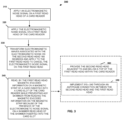
- FIG. 3 is a diagram 300 of a method for reading a card's magnetic strip while disrupting any skimmer from reading the card's magnetic strip, according to an example embodiment.
- an electromagnetic noise signal is applied on a first read head 103A of a card reader 100 or 220. Simultaneously, at 311, the electromagnetic noise signal is applied on a second read head 103B of the card reader 100.
- the electromagnetic noise signal may be generated from an external source 212 or an internal source 223 of the card reader 100 or 220.
- electromagnetic waves associated with the electromagnetic noise on the second read head 103B is transformed 180 degrees and applied to the first read head 103A. This cancels the electromagnetic noise on the first read head 103A.
- the first read head 103A reads magnetic encoded information on a magnetic strip of a card inserted into a card slot 221 of the card reader 100 or 220 while any skimmer is prevented from reading the magnetic encoded information on the magnetic strip because of the presence of the electromagnetic noise signal on a skimmer read head of the skimmer inserted into the card slot 221. That is, the noise is canceled for the first read head 103A of the card reader 100 or 220 but is still present on the skimmer read head which prevents the skimmer from reading the magnetic encoded information from the magnetic strip.
- the method 310-340 is implemented and provided through an antiphase connection between the second read head 103B and the first read head 103A.
- no software or even firmware is necessary to perform the method on the card reader 100 or 220 as the connections and arrangements of the read heads 103A and 103B and their terminals 101A, 102A, 101B, and 102B automatically transform the waves of the electromagnetic noise signal on the second read head 103B and applies the transformed waves on the first read head 103A using connections 104 and 105 to cancel out the electromagnetic noise signal experienced on the first read head 103A.
- the second read head 103B is provided adjacent to and below the top of the first read head 103A within the card reader 100 or 220. This is illustrated in FIG. 1B by the offset D. This also ensures that any skimmer designer is unable to redesign the skimmer's read head in such a way that track 1 or track 3 is readable by the redesigned skimmer.
Landscapes
- Engineering & Computer Science (AREA)
- Physics & Mathematics (AREA)
- General Physics & Mathematics (AREA)
- Business, Economics & Management (AREA)
- Theoretical Computer Science (AREA)
- Accounting & Taxation (AREA)
- Computer Vision & Pattern Recognition (AREA)
- Artificial Intelligence (AREA)
- Signal Processing (AREA)
- Computer Networks & Wireless Communication (AREA)
- Finance (AREA)
- Strategic Management (AREA)
- General Business, Economics & Management (AREA)
- Microelectronics & Electronic Packaging (AREA)
- Electromagnetism (AREA)
- Computer Security & Cryptography (AREA)
- Development Economics (AREA)
- Economics (AREA)
- Recording Or Reproducing By Magnetic Means (AREA)
Abstract
Description
- Motorized card readers are being subjected to skimmers. Skimmers are small devices inserted into a card reader slot that is close to the card reader's read head allowing a customer's magnetic encoded account information to be stolen during a transaction from a low profile magnetic read head mounted under a track 2 path of the magnetic card strip and on top of the skimmer head. Skimmers are so small and unobtrusive it is difficult to visually detect the skimmer assembly from the card reader's slot. In fact, skimmers are only 1 to 2 mm thick which limits the skimmer's magnetic read performance.
- A variety of techniques have been tried to thwart this type of theft. For instance, electromagnetic disrupters electromagnetically induce noise on the card reader's read head when no card is present, or no transaction is detected at a terminal. However, the disrupters also prevent the card reader's read head from reading the magnetically encoded card information. As a result, the disrupters are turned off when a transaction is detected at a terminal and a card is detected in the motorized card reader's slot. This means that skimmers can still capture the track 2 encoded card information during a transaction.
- Moreover, even if the motorized card read is also a chip reader, some customers may not have chip-based cards or the chips embedded in their card may be damaged, such that there are still situations in which the magnetic strip needs to be read for a transaction. Therefore, it is generally not practical to keep the disrupter active at all times.
- What is needed is a card reader that includes an internal disrupter mechanism that does not prevent the card reader's track 2 read head from reading the magnetically encoded card information. At the same time the disruptive magnetic signals should be maintained within the card reader such that any skimmer placed in the card slot is unable to read the track 2 information from the card.
- In various embodiments, a card reader, a method of operating a card reader, and a system for a card reader are presented for preventing skimmers from reading magnetically encoded information on magnetic strips of cards. A dual antiphase read-head motorized card reader is provided. Electromagnetic noise is applied on both a first read head and a second read head. An antiphase connection between the second read head and the first read head transforms the electromagnetic waves associated with the electromagnetic noise on the
second read head 180 degrees and the transformed waves are applied to the first read head. This cancels the electromagnetic noise signals on the first read head and permits the first read head to read magnetic encoded information on a magnetic strip of a card inserted into a card slot of the card reader. At the same time, the electromagnetic noise signal is still present to any skimmer read head that was inserted into the card slot preventing the skimmer read head from reading the magnetic encoded information off the magnetic strip of the card. - In a first aspect of the present invention, there is provided a card reader comprising:
- a first read-head arrangement; and
- a second read-head arrangement;
- In certain embodiments, the second read-head arrangement is connected to the first read-head arrangement in antiphase.
- In certain embodiments, the card reader further comprises: a disruptive circuit that generates the electromagnetic noise on the first read head and the second read head.
- In certain embodiments, the first read-head arrangement is situated adjacent to and offset from the second read-head arrangement within the card reader.
- In certain embodiments, the offset provides the first read-head arrangement elevated at a height above a top of the second read-head arrangement.
- In certain embodiments, the height is approximately 1 to 2 millimeters (mm).
- In certain embodiments, the first read-head arrangement comprises a first terminal and a second terminal connected together through the first read head, and wherein the second read-head arrangement comprises a third terminal and a fourth terminal connected together through the second read head.
- In certain embodiments, the third terminal is further connected to the first terminal and the fourth terminal is further connected to the second terminal.
- In certain embodiments, the electromagnetic is received on the first read head and the second read head from an electromagnetic source generator that is external to the card reader.
- In certain embodiments, the first reader is aligned within the card slot of the card reader to be situated under track 2 of the magnetic strip of the card.
- In certain embodiments, the electromagnetic noise is received on the first read head and the second read head from an electromagnetic source generator that is external to the card reader.
- In certain embodiments, the first read head is aligned within the card slot of the card reader to be situated under track 2 of the magnetic strip of the card.
- In certain embodiments, the card reader is a motorized card reader.
- In a further aspect of the present invention, there is provided a system comprising:
- a terminal; and
- an integrated peripheral card reader comprising a card slot adapted to receive a card, a read-head portion, and a disruptive read-head portion;
- wherein when an electromagnetic noise signal is applied to a read head of the read-head portion and a dummy read head of the disruptive read-head portion, connections between the disruptive read-head portion and the read-head portion cancel the electromagnetic noise signal on the read head to permit the read head to read magnetic encoded information on a card inserted into the card slot while preventing any skimmer from reading the magnetic encoded information because of the electromagnetic noise signal.
- In certain embodiments, the read-head portion is aligned within the card slot with the read head substantially centered and under a track 2 of a magnetic strip of the card to read the magnetic encoded information.
- In certain embodiments, the read-head portion is adjacent to the disruptive read-head portion with a top of the read-head portion elevated above a top of the disruptive read-head portion.
- In certain embodiments, the electromagnetic noise signal is generated by one of: a disruptive electromagnetic circuit of the card reader or a disruptive electromagnetic source generator of the terminal.
- In certain embodiments, the terminal is an automated teller machine (ATM), a self-service terminal (SST), a point-of-sale (POS) terminal, a fuel kiosk, an entertainment kiosk, a travel kiosk, or an informational kiosk.
- In certain embodiments, the card reader is a motorized card reader.
- In a further aspect of the present invention, there is provided a method comprising:
- applying an electromagnetic noise signal on a first read head of a card reader;
- applying the electromagnetic noise signal on a second read head of the card reader;
- transforming electromagnetic waves associated with the electromagnetic noise signal on the second read
head 180 degrees and applying to the first read head to cancel the electromagnetic noise signal on the first read head; and - reading, by the first read head, magnetic encoded information on a magnetic strip of a card inserted into a card slot of the card reader while preventing any skimmer from reading the magnetic encoded information on the magnetic strip because of the presence of the electromagnetic noise signal on a skimmer read head of the skimmer inserted into the card slot.
- In certain embodiments, the method further comprises implementing the method through an antiphase connection between the second read head and the first read head.
- In certain embodiments, the method further comprises providing the second read head adjacent to and below a top of the first read head within the card reader.
- According to an aspect, a card reader that prevents a skimmer from reading a card's magnetic strip is presented. The card reader includes a first read-head arrangement and a second read-head arrangement. When electromagnetic noise is applied on a first read head of the first read-head arrangement and a second read head of the second read-head arrangement, the noise is canceled out on the first read head permitting the first read head to read a magnetic strip of a card while the electromagnetic noise remains and interferes with any skimmer inserted into a card slot of the card reader.
-
-
FIG. 1A is a diagram of card reader that includes an internal disrupter mechanism to prevent skimmers from reading a card's magnetic strip, according to an example embodiment. -
FIG. 1B is another diagram of the card reader ofFIG. 1A , according to an example embodiment. -
FIG. 2 is a diagram of a system for a card reader that includes an internal disrupter mechanism to prevent skimmers from reading a card's magnetic strip, according to an example embodiment. -
FIG. 3 is a diagram of a method for reading a card's magnetic strip while disrupting any skimmer from reading the card's magnetic strip, according to an example embodiment. - As stated above, skimmers are a big problem in the industry. Thieves are continuously modifying these devices to adapt to solutions provided in the industry. Current approaches rely an electromagnetic disruptive signals placed on a card reader's read head, which is intentionally turned off when a card is present in the card slot and a transaction is detected at the corresponding terminal so that the card reader's read head is capable of reading the magnetic encoded information off the card. Yet, this provides an opportunity to enable a skimmer to also read the magnetically encoded information off the card.
- A typical magnetic strip on a card includes three tracks, a card reader's read head is designed to align with track 2 as close to the center of track 2 as is feasible. Generally,
track 1 and track 3 are not read. A motorized card reader is one in which the customer is not asked to quickly swipe the card in and out of the slot but one in which when the customer places the card in the slot, the card is grabbed and moved into proper position for reading within the slot. Motorized card readers are typically used for chip-enabled card readers where pins in the chip are aligned to pins within the reader. However, motorized card readers are also able to read the magnetic strip of the card via a magnetic-enabled read head. - The teachings that follow provide a novel motorized card reader that includes an internal disrupter, which does not disrupt the read head of the card reader, but which does disrupt any read head of any skimmer placed within the slot of the card reader. The card reader and its internal disrupter is now discussed within initial reference to
FIG. 1A . -
FIG. 1A is a diagram of acard reader 100 along with other details illustrated to facilitate comprehension of an internal disrupter 100-1, according to an example embodiment. It is to be noted that the components are shown schematically in greatly simplified form, with only those components relevant to understanding of the embodiments being illustrated. - Furthermore, the various components (that are identified in the
FIG. 1A ) are illustrated and the arrangement of the components is presented for purposes of illustration only. It is to be noted that other arrangements with more or fewer components are possible without departing from the teachings of a card reader's internal skimmer disruption mechanisms, presented herein and below. -
Card reader 100 includes a read-head portion 100-1 and an internal skimmer disrupter portion 100-2. The read-head portion 100-1 includes afirst terminal 101A, asecond terminal 102A, and aread head 103A (also labeled read head 1 (RH1) inFIG. 1A ). The internal skimmer disrupter portion 100-2 includes a first terminal 101B, asecond terminal 102B, a dummy orinoperable read head 103B (also labeled RH2 inFIG. 1A ), a firstwired connection 104 between the second terminal 102B of the disrupter portion 100-2 and thefirst terminal 101A of the read-head portion 100-1, and a secondwired connection 105 between the first terminal 101B of the disrupter portion 100-2 and thesecond terminal 102A of the read-head portion 100-1. The read-head portion 100-1 is affixed inside thecard reader 100 at 140 and the disrupter portion 100-2 is affixed inside the card reader at 150. The read-head portion 100-1 and the disrupter portion 100-2 are internal components of thecard reader 100. - Magnetically induced
noise 120 is injected onto readhead 103A and thesame noise 130 is injected onto dummy orinoperable read head 103B. Theconnections noise 130 has a phase difference of 180 degrees through theconnections head 103A. This essentially cancels the noise out on readhead 103A and ensures that readhead 103A can read track 2 111 of any card inserted into a card slot of thecard reader 100. where the magnetic waves associated with thenoise 120 on readhead 103A are inverted or have a phase difference of 180 degrees. The magnetically inducednoise card reader 100. In an embodiment, the disruptive circuit that provides thenoise card reader 100 with the added disrupter portion 100-2. In an embodiment, the disruptive circuit is added to thecard reader 100 with the disrupter portion 100-2. - Notice that
track 1 110 and track 3 112 may not be read bycard reader 103A, since some card readers no not read these tracks. Second or dummy readhead 103B is placed close to or aligned with track 3.Card reader 103A only needs to read a cards magnetically encoded information from track 2 111. The card slot andreader 103A are arranged such that when the card is drawn into thecard reader 103A, track 2 of the magnetic strip sits overreader 103A. -
FIG. 1B is another perspective of thecard reader 100, according to an embodiment. The read-head portion 100-1 and the disrupter portion 100-2 are offset by a distance (D) such that vertically the read-head portion 100-1 sits above and adjacent to the disrupter portion 100-2. It is noted that other arrangements are also possible. In an embodiment, the offset distance D is approximately 1 to 2 mm. This distance and arrangement ensures that any skimmer placed in the card slot of the card reader is unable to readtrack 1 110 and track 3 112 should the skimmer's design try to avoid reading track 2 because of theelectromagnet noise -
Motorized card reader 100 includes a dual anti-phase read head arrangement and internal read-head portion 100-1 and disrupter portion 100-2, which allows an electromagnetic disrupter (disruptive circuit) to remain active at all times that thecard reader 100 is powered on. The read-head 103A is able to read track 2 111 of the card because of the noise cancelation created on read-head 103A byconnections track 1 110 or track 3 112. Thus, the offset distance is a factor in making it more difficult for a thief to redesign a skimmer and any such skimmer would need to accommodate two read heads in close physical proximity to one another to get good noise cancelation. Should a thief attempt a differential read-head arrangement for a skimmer redesign, the size, the cost, and the complexity of such a skimmer would make the skimmer more detectable by other techniques. The implementation of such a redesigned skimmer would be larger and more detectable.Card reader 100 efficiently and effectively prevents skimmers from reading magnetic card information from cards inserted into the card slot of thereader 100. -
FIG. 2 is a diagram of asystem 200 for preventing skimmers from reading magnetic information off of a magnetically encoded strip of a card, according to an embodiment. Thesystem 200 includes a terminal 210 and acard reader 220. - The terminal 210 includes
peripherals 211 some of which are internal to the terminal and some of which are externally interfaced to the terminal 210. Example peripheral 211 may include a media depository, a scanner, a scale, a combined scanner and scale, a touch display, a media dispenser, a receipt printer, a Personal Identification Number (PIN) pad, an encrypted PIN pad, a bag scale, a keypad, etc. Optionally, the terminal 210 includes a disruptiveelectromagnetic source generator 212. -
Card reader 220 is one of theperipherals 211 provided as an internally integrated peripheral.Card reader 220 includes acard slot 221 and a dual antiphase read head 222. Optionally, thecard reader 220 includes a disruptiveelectromagnetic circuit 223 that generates the electromagnetic noise signals on the dual antiphase read head 222. - The dual antiphase read head 222 includes a first read head and a dummy read head connected in antiphase to the first read head. Both read heads receive electromagnetic noise signals from either the disruptive
electromagnetic source generator 212 of the terminal 210 or from the disruptiveelectromagnetic circuit 223 of thecard reader 220. The electromagnetic waves associated with the electromagnetic noise signals are inverted or flipped 180 degrees by an antiphase connection between the dummy read head and the first read head. This causes the noise on the first read head to be canceled out and allows the first read head to read track 2 of a magnetic strip on a card inserted into theslot 221. - In an embodiment, the first read head of the dual antiphase read head 222 is adjacent to and elevated above the dummy read head. This arrangements presents any skimmer redesign from reading
track 1 or track 3 of a magnetic strip on a card inserted into theslot 221. Any skimmer inserted into theslot 221 will experience the electromagnetic noise and will not be able to read track 2 of the magnetic strip. - In an embodiment, the
card reader 220 is thecard reader 100 ofFIGS. 1A and1B . In an embodiment, the dual antiphase read head 222 is the read-head portion 100-1 and the disrupter portion 100-2. - In an embodiment, the terminal is an automated teller machine (ATM), a self-service terminal (SST), a point-of-sale (POS) terminal, a fuel pump kiosk, a travel kiosk, an entertainment kiosk, or an informational kiosk. In an embodiment, the card is a credit card, a debit card, a bank card, or a loyalty card.
-
FIG. 3 is a diagram 300 of a method for reading a card's magnetic strip while disrupting any skimmer from reading the card's magnetic strip, according to an example embodiment. - At 310, an electromagnetic noise signal is applied on a
first read head 103A of acard reader second read head 103B of thecard reader 100. The electromagnetic noise signal may be generated from anexternal source 212 or aninternal source 223 of thecard reader - At 330, electromagnetic waves associated with the electromagnetic noise on the
second read head 103B is transformed 180 degrees and applied to thefirst read head 103A. This cancels the electromagnetic noise on thefirst read head 103A. - At 340, the
first read head 103A reads magnetic encoded information on a magnetic strip of a card inserted into acard slot 221 of thecard reader card slot 221. That is, the noise is canceled for thefirst read head 103A of thecard reader - In an embodiment, at 350, the method 310-340 is implemented and provided through an antiphase connection between the
second read head 103B and thefirst read head 103A. Thus, no software or even firmware is necessary to perform the method on thecard reader terminals second read head 103B and applies the transformed waves on thefirst read head 103A using connections first read head 103A. - In an embodiment, at 360, the
second read head 103B is provided adjacent to and below the top of thefirst read head 103A within thecard reader FIG. 1B by the offset D. This also ensures that any skimmer designer is unable to redesign the skimmer's read head in such a way that track 1 or track 3 is readable by the redesigned skimmer. - Many other embodiments will be apparent to those of skill in the art upon reviewing the above description. The scope of embodiments should therefore be determined with reference to the appended claims, along with the full scope of equivalents to which such claims are entitled.
- Throughout the description and claims of this specification, the words "comprise" and "contain" and variations of them mean "including but not limited to" and they are not intended to (and do not) exclude other moieties, additives, components, integers or steps. Throughout the description and claims of this specification, the singular encompasses the plural unless the context otherwise requires. In particular, where the indefinite article is used, the specification is to be understood as contemplating plurality as well as singularity, unless the context requires otherwise.
- Features, integers, characteristics or groups described in conjunction with a particular aspect, embodiment or example of the invention are to be understood to be applicable to any other aspect, embodiment or example described herein unless incompatible therewith. All of the features disclosed in this specification (including any accompanying claims, abstract and drawings), and/or all of the steps of any method or process so disclosed, may be combined in any combination, except combinations where at least some of the features and/or steps are mutually exclusive. The invention is not restricted to any details of any foregoing embodiments. The invention extends to any novel one, or novel combination, of the features disclosed in this specification (including any accompanying claims, abstract and drawings), or to any novel one, or any novel combination, of the steps of any method or process so disclosed.
- The reader's attention is directed to all papers and documents which are filed concurrently with or previous to this specification in connection with this application and which are open to public inspection with this specification, and the contents of all such papers and documents are incorporated herein by reference.
- In the foregoing description of the embodiments, various features are grouped together in a single embodiment for the purpose of streamlining the disclosure. This method of disclosure is not to be interpreted as reflecting that the claimed embodiments have more features than are expressly recited in each claim. Rather, as the following claims reflect, inventive subject matter lies in less than all features of a single disclosed embodiment. Thus, the following claims are hereby incorporated into the Description of the Embodiments, with each claim standing on its own as a separate exemplary embodiment.
Claims (15)
- A card reader, comprising:a first read-head arrangement; anda second read-head arrangement;wherein when electromagnetic noise is applied on a first read head of the first read-head arrangement and a second read head of the second read-head arrangement, the noise is canceled out on the first read head permitting the first read head to read a magnetic strip of a card while the electromagnetic noise remains and interferes with any skimmer inserted into a card slot of the card reader.
- The card reader of claim 1, wherein the second read-head arrangement is connected to the first read-head arrangement in antiphase.
- The card reader of claim 1 further comprising: a disruptive circuit that generates the electromagnetic noise on the first read head and the second read head.
- The card reader of claim 1, wherein the first read-head arrangement is situated adjacent to and offset from the second read-head arrangement within the card reader.
- The card reader of claim 4, wherein the offset provides the first read-head arrangement elevated at a height above a top of the second read-head arrangement.
- The card reader of claim 1, wherein the first read-head arrangement comprises a first terminal and a second terminal connected together through the first read head, and wherein the second read-head arrangement comprises a third terminal and a fourth terminal connected together through the second read head.
- The card reader of claim 1, wherein the electromagnetic is received on the first read head and the second read head from an electromagnetic source generator that is external to the card reader.
- The card reader of claim 1, wherein the first reader is aligned within the card slot of the card reader to be situated under track 2 of the magnetic strip of the card.
- A system, comprising:a terminal; andan integrated peripheral card reader comprises a card slot adapted to receive a card, a read-head portion, and a disruptive read-head portion;wherein when an electromagnetic noise signal is applied to a read head of the read-head portion and a dummy read head of the disruptive read-head portion, connections between the disruptive read-head portion and the read-head portion cancel the electromagnetic noise signal on the read head to permit the read head to read magnetic encoded information on a card inserted into the card slot while preventing any skimmer from reading the magnetic encoded information because of the electromagnetic noise signal.
- The system of claim 9, wherein the read-head portion is aligned within the card slot with the read head substantially centered and under a track 2 of a magnetic strip of the card to read the magnetic encoded information.
- The system of claim 9, wherein the read-head portion is adjacent to the disruptive read-head portion with a top of the read-head portion elevated above a top of the disruptive read-head portion.
- The system of claim 9, wherein the electromagnetic noise signal is generated by one of: a disruptive electromagnetic circuit of the card reader or a disruptive electromagnetic source generator of the terminal.
- The card reader of claim 1 or system of claim 9, wherein the card reader is a motorized card reader.
- A method, comprising:applying an electromagnetic noise signal on a first read head of a card reader;applying the electromagnetic noise signal on a second read head of the card reader;transforming electromagnetic waves associated with the electromagnetic noise signal on the second read head 180 degrees and applying to the first read head to cancel the electromagnetic noise signal on the first read head; andreading, by the first read head, magnetic encoded information on a magnetic strip of a card inserted into a card slot of the card reader while preventing any skimmer from reading the magnetic encoded information on the magnetic strip because of the presence of the electromagnetic noise signal on a skimmer read head of the skimmer inserted into the card slot.
- The method of claim 14 further comprising, implementing the method through an antiphase connection between the second read head and the first read head.
Applications Claiming Priority (1)
| Application Number | Priority Date | Filing Date | Title |
|---|---|---|---|
| US17/876,841 US12206491B2 (en) | 2022-07-29 | 2022-07-29 | Internal card reader skimmer disrupter |
Publications (1)
| Publication Number | Publication Date |
|---|---|
| EP4312149A1 true EP4312149A1 (en) | 2024-01-31 |
Family
ID=84569715
Family Applications (1)
| Application Number | Title | Priority Date | Filing Date |
|---|---|---|---|
| EP22216203.4A Pending EP4312149A1 (en) | 2022-07-29 | 2022-12-22 | Card reader skimmer disrupter |
Country Status (3)
| Country | Link |
|---|---|
| US (2) | US12206491B2 (en) |
| EP (1) | EP4312149A1 (en) |
| CN (1) | CN117474023A (en) |
Families Citing this family (3)
| Publication number | Priority date | Publication date | Assignee | Title |
|---|---|---|---|---|
| US12206491B2 (en) * | 2022-07-29 | 2025-01-21 | Ncr Atleos Corporation | Internal card reader skimmer disrupter |
| US11977945B2 (en) * | 2022-08-31 | 2024-05-07 | Ncr Corporation | Skimming and magnetic read prevention |
| US12254466B1 (en) * | 2024-06-06 | 2025-03-18 | Bank Of America Corporation | Skimmer and shimmer identification and prevention system |
Citations (7)
| Publication number | Priority date | Publication date | Assignee | Title |
|---|---|---|---|---|
| DE102008012231A1 (en) * | 2008-03-03 | 2009-09-10 | Wincor Nixdorf International Gmbh | Protective device, self-service terminal and method for preventing skimming on a card reader |
| DE102010000102A1 (en) * | 2010-01-18 | 2011-07-21 | WINCOR NIXDORF International GmbH, 33106 | Self-service machine i.e. automatic teller machine, has interference signal separating device provided such that total signal is processed to determine desired signal, which supports reading of desired data from magnetic stripe card |
| US20120280041A1 (en) * | 2011-05-03 | 2012-11-08 | Ncr Corporation | Fraud prevention |
| US20130299586A1 (en) * | 2010-10-01 | 2013-11-14 | Kronik Elektrik Ve Bilgisayar Sistemleri Sanayi Ticaret Limited Sirketi | Self Service Terminal, An Anti-Skimming Unit, A Card Reader Device, A Bezel, A Method of Jamming and Use of an Anti-Skimming Unit |
| EP2916323A1 (en) * | 2012-10-30 | 2015-09-09 | Hitachi-Omron Terminal Solutions, Corporation | Magnetic card reader and magnetic card reading method |
| JP2017220014A (en) * | 2016-06-07 | 2017-12-14 | 日立オムロンターミナルソリューションズ株式会社 | Card processing device and automated teller machine |
| US20200226329A1 (en) * | 2019-01-16 | 2020-07-16 | Capital One Services, Llc | Obfuscation of information obtained by a card reader |
Family Cites Families (8)
| Publication number | Priority date | Publication date | Assignee | Title |
|---|---|---|---|---|
| DE102005043317B3 (en) * | 2005-09-12 | 2007-04-12 | Wincor Nixdorf International Gmbh | Method and device for generating an electromagnetic protective field for a card reader |
| US8584947B2 (en) * | 2011-09-13 | 2013-11-19 | Ncr Corporation | Fraud prevention |
| US8695879B1 (en) * | 2012-10-30 | 2014-04-15 | Ncr Corporation | Fraud prevention |
| US9203548B2 (en) * | 2012-11-27 | 2015-12-01 | Diebold Self-Service Systems Division Of Diebold, Incorporated | Automated banking machine that outputs interference signals to jam reading ability of unauthorized card reader devices |
| JP6216680B2 (en) * | 2014-04-18 | 2017-10-18 | 日本電産サンキョー株式会社 | Card reader and card reader control method |
| US10262326B1 (en) * | 2017-07-31 | 2019-04-16 | Wells Fargo Bank, N.A. | Anti-skimming card reader computing device |
| US10755533B2 (en) * | 2018-05-02 | 2020-08-25 | International Business Machines Corporation | Secure anti-skimmer technology for use with magnetic cards |
| US12206491B2 (en) * | 2022-07-29 | 2025-01-21 | Ncr Atleos Corporation | Internal card reader skimmer disrupter |
-
2022
- 2022-07-29 US US17/876,841 patent/US12206491B2/en active Active
- 2022-12-22 EP EP22216203.4A patent/EP4312149A1/en active Pending
-
2023
- 2023-03-15 CN CN202310245775.4A patent/CN117474023A/en active Pending
-
2024
- 2024-10-14 US US18/914,682 patent/US20250038880A1/en active Pending
Patent Citations (7)
| Publication number | Priority date | Publication date | Assignee | Title |
|---|---|---|---|---|
| DE102008012231A1 (en) * | 2008-03-03 | 2009-09-10 | Wincor Nixdorf International Gmbh | Protective device, self-service terminal and method for preventing skimming on a card reader |
| DE102010000102A1 (en) * | 2010-01-18 | 2011-07-21 | WINCOR NIXDORF International GmbH, 33106 | Self-service machine i.e. automatic teller machine, has interference signal separating device provided such that total signal is processed to determine desired signal, which supports reading of desired data from magnetic stripe card |
| US20130299586A1 (en) * | 2010-10-01 | 2013-11-14 | Kronik Elektrik Ve Bilgisayar Sistemleri Sanayi Ticaret Limited Sirketi | Self Service Terminal, An Anti-Skimming Unit, A Card Reader Device, A Bezel, A Method of Jamming and Use of an Anti-Skimming Unit |
| US20120280041A1 (en) * | 2011-05-03 | 2012-11-08 | Ncr Corporation | Fraud prevention |
| EP2916323A1 (en) * | 2012-10-30 | 2015-09-09 | Hitachi-Omron Terminal Solutions, Corporation | Magnetic card reader and magnetic card reading method |
| JP2017220014A (en) * | 2016-06-07 | 2017-12-14 | 日立オムロンターミナルソリューションズ株式会社 | Card processing device and automated teller machine |
| US20200226329A1 (en) * | 2019-01-16 | 2020-07-16 | Capital One Services, Llc | Obfuscation of information obtained by a card reader |
Also Published As
| Publication number | Publication date |
|---|---|
| US20250038880A1 (en) | 2025-01-30 |
| CN117474023A (en) | 2024-01-30 |
| US20240039654A1 (en) | 2024-02-01 |
| US12206491B2 (en) | 2025-01-21 |
Similar Documents
| Publication | Publication Date | Title |
|---|---|---|
| US20250038880A1 (en) | Internal card reader skimmer disrupter | |
| US6003763A (en) | Method and apparatus for recording magnetic information on traveler's checks | |
| US7377425B1 (en) | Method and system of evaluating checks deposited into a cash dispensing automated banking machine | |
| US7494052B1 (en) | Method of evaluating checks deposited into a cash dispensing automated banking machine | |
| US7735721B1 (en) | Method of evaluating checks deposited into a cash dispensing automated banking machine | |
| US6474548B1 (en) | Deposit accepting and storage apparatus and method for automated banking machine | |
| US7314163B1 (en) | Check accepting and cash dispensing automated banking machine system and method | |
| US6554185B1 (en) | Deposit accepting apparatus and system for automated banking machine | |
| US5893667A (en) | Point of sale printer with magnetic reader | |
| US6243504B1 (en) | Integrated magnetic ink character recognition system and method therefor | |
| US7577614B1 (en) | Cash dispensing and check accepting ATM and method | |
| US8157163B1 (en) | Check accepting and cash dispensing automated banking machine system and method | |
| US7137551B1 (en) | Check accepting and cash dispensing automated banking machine system and method | |
| US20140353375A1 (en) | Banking apparatus controlled responsive to data bearing records | |
| EP1917622A1 (en) | Presentation instrument display and activation systems and methods | |
| US7428984B1 (en) | Method and system of evaluating checks deposited into a cash dispensing automated banking machine | |
| US20220036016A1 (en) | Systems and Methods of Card Reader Protection | |
| US8905299B1 (en) | Automated banking machine that operates responsive to data bearing records | |
| EP4411591A1 (en) | Motionless card magnetic strip reader | |
| US8622296B2 (en) | Magnetic stripe card reader assembly and method | |
| US12020107B2 (en) | Device, system, and method for card skimming protection | |
| US7216801B1 (en) | Check accepting and cash dispensing automated banking machine system and method | |
| EP4332828A1 (en) | Skimming and magnetic read prevention | |
| US8370499B2 (en) | Self-service terminal | |
| US12254373B2 (en) | Card reader foreign object detection |
Legal Events
| Date | Code | Title | Description |
|---|---|---|---|
| PUAI | Public reference made under article 153(3) epc to a published international application that has entered the european phase |
Free format text: ORIGINAL CODE: 0009012 |
|
| STAA | Information on the status of an ep patent application or granted ep patent |
Free format text: STATUS: THE APPLICATION HAS BEEN PUBLISHED |
|
| AK | Designated contracting states |
Kind code of ref document: A1 Designated state(s): AL AT BE BG CH CY CZ DE DK EE ES FI FR GB GR HR HU IE IS IT LI LT LU LV MC ME MK MT NL NO PL PT RO RS SE SI SK SM TR |
|
| STAA | Information on the status of an ep patent application or granted ep patent |
Free format text: STATUS: REQUEST FOR EXAMINATION WAS MADE |
|
| STAA | Information on the status of an ep patent application or granted ep patent |
Free format text: STATUS: EXAMINATION IS IN PROGRESS |
|
| 17P | Request for examination filed |
Effective date: 20240731 |
|
| RBV | Designated contracting states (corrected) |
Designated state(s): AL AT BE BG CH CY CZ DE DK EE ES FI FR GB GR HR HU IE IS IT LI LT LU LV MC ME MK MT NL NO PL PT RO RS SE SI SK SM TR |
|
| 17Q | First examination report despatched |
Effective date: 20240821 |
|
| RAP1 | Party data changed (applicant data changed or rights of an application transferred) |
Owner name: CARDTRONICS USA, INC. |
|
| P01 | Opt-out of the competence of the unified patent court (upc) registered |
Free format text: CASE NUMBER: APP_59789/2024 Effective date: 20241105 |