EP4310679A1 - Accelerator control system, accelerator control method, and accelerator control program - Google Patents
Accelerator control system, accelerator control method, and accelerator control program Download PDFInfo
- Publication number
- EP4310679A1 EP4310679A1 EP21937903.9A EP21937903A EP4310679A1 EP 4310679 A1 EP4310679 A1 EP 4310679A1 EP 21937903 A EP21937903 A EP 21937903A EP 4310679 A1 EP4310679 A1 EP 4310679A1
- Authority
- EP
- European Patent Office
- Prior art keywords
- accelerator
- data
- arithmetic processing
- metadata
- function
- Prior art date
- Legal status (The legal status is an assumption and is not a legal conclusion. Google has not performed a legal analysis and makes no representation as to the accuracy of the status listed.)
- Pending
Links
Images


Classifications
-
- G—PHYSICS
- G06—COMPUTING OR CALCULATING; COUNTING
- G06F—ELECTRIC DIGITAL DATA PROCESSING
- G06F9/00—Arrangements for program control, e.g. control units
- G06F9/06—Arrangements for program control, e.g. control units using stored programs, i.e. using an internal store of processing equipment to receive or retain programs
- G06F9/46—Multiprogramming arrangements
- G06F9/50—Allocation of resources, e.g. of the central processing unit [CPU]
- G06F9/5005—Allocation of resources, e.g. of the central processing unit [CPU] to service a request
- G06F9/5027—Allocation of resources, e.g. of the central processing unit [CPU] to service a request the resource being a machine, e.g. CPUs, Servers, Terminals
-
- G—PHYSICS
- G06—COMPUTING OR CALCULATING; COUNTING
- G06F—ELECTRIC DIGITAL DATA PROCESSING
- G06F9/00—Arrangements for program control, e.g. control units
- G06F9/06—Arrangements for program control, e.g. control units using stored programs, i.e. using an internal store of processing equipment to receive or retain programs
- G06F9/22—Microcontrol or microprogram arrangements
- G06F9/28—Enhancement of operational speed, e.g. by using several microcontrol devices operating in parallel
-
- G—PHYSICS
- G06—COMPUTING OR CALCULATING; COUNTING
- G06F—ELECTRIC DIGITAL DATA PROCESSING
- G06F9/00—Arrangements for program control, e.g. control units
- G06F9/06—Arrangements for program control, e.g. control units using stored programs, i.e. using an internal store of processing equipment to receive or retain programs
- G06F9/30—Arrangements for executing machine instructions, e.g. instruction decode
- G06F9/30003—Arrangements for executing specific machine instructions
- G06F9/30007—Arrangements for executing specific machine instructions to perform operations on data operands
- G06F9/3001—Arithmetic instructions
-
- G—PHYSICS
- G06—COMPUTING OR CALCULATING; COUNTING
- G06F—ELECTRIC DIGITAL DATA PROCESSING
- G06F9/00—Arrangements for program control, e.g. control units
- G06F9/06—Arrangements for program control, e.g. control units using stored programs, i.e. using an internal store of processing equipment to receive or retain programs
- G06F9/30—Arrangements for executing machine instructions, e.g. instruction decode
- G06F9/30003—Arrangements for executing specific machine instructions
- G06F9/3004—Arrangements for executing specific machine instructions to perform operations on memory
- G06F9/30043—LOAD or STORE instructions; Clear instruction
-
- G—PHYSICS
- G06—COMPUTING OR CALCULATING; COUNTING
- G06F—ELECTRIC DIGITAL DATA PROCESSING
- G06F2209/00—Indexing scheme relating to G06F9/00
- G06F2209/50—Indexing scheme relating to G06F9/50
- G06F2209/509—Offload
Definitions
- the present invention relates to an accelerator control system, an accelerator control method and an accelerator control program.
- a CPU performs control for driving an accelerator via an API for the accelerator and a device driver, and the accelerator reads processing data copied to a kernel memory space, and performs arithmetic processing which takes time to be executed by the CPU. Further, the accelerator notifies the CPU of completion of processing by hardware interruption after execution of the arithmetic processing.
- accelerators are controlled by the CPU, each time processing such as writing of data to an accelerator, execution of arithmetic operation, or reading of data is performed, interrupt notification of exclusive control and processing completion is generated.
- a memory copy occurs in a user space and a kernel space for reading and writing data.
- Such processing becomes an overhead and increases a delay time.
- an overhead occurs in the same manner, and scalability is reduced. Therefore, it is difficult to use accelerators in the area of real-time processing.
- the present invention has been made in view of the foregoing and an object thereof is to increase the speed of real-time processing using accelerators.
- an accelerator control system includes an accelerator control device and an accelerator, wherein the accelerator control device includes: a storage unit configured to store control data including a location of data which is an arithmetic processing target and information specifying content of arithmetic processing of the accelerator; and a determination unit configured to determine completion of the arithmetic processing by the accelerator when the control data which has been subjected to the arithmetic processing by the accelerator is stored in the storage unit, and the accelerator includes: an acquisition unit configured to acquire the control data from the storage unit; an arithmetic unit configured to perform arithmetic processing on the data which is an arithmetic processing target according to the location of the data which is an arithmetic processing target and information specifying content of arithmetic processing of the accelerator included in the acquired control data; and a storage unit configured to store the control data in the storage unit when the arithmetic processing is completed.
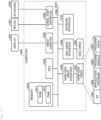
- Fig. 1 is a schematic diagram illustrating an overall configuration of an accelerator control system of the present embodiment.
- the accelerator control system 1 includes an accelerator control device 10 and an accelerator 20.
- the accelerator control device 10 and the accelerator 20 can communicate data with each other via a communication line such as bus wiring, for example.
- the accelerator control device 10 is an information processing device realized using a general-purpose processor such as a central processing unit (CPU).
- a general-purpose processor such as a central processing unit (CPU).
- an application which is processing defined by a user is executed in a user space.
- operation and management of a physical device such as the accelerator 20 and abstraction processing of the physical device in user space processing are performed in a kernel space.
- a user memory space and a kernel memory space are realized by a semiconductor memory element such as a random access memory (RAM) or a flash memory, or a storage device such as a hard disk or an optical disc and serve as a storage unit.
- a processing program for operating the accelerator control device 10, data used during execution of the processing program, and the like are stored in advance or stored temporarily each time processing is performed in the storage unit.
- a control unit realized using a general-purpose processor serves as each functional unit such as a memory management function 12 and a metadata control function 13 of a device driver, or an API 14 which will be described later by executing the processing program stored in the memory, as illustrated in Fig. 1 .
- the control unit may include another functional unit that is not shown.
- data that is an arithmetic processing target (hereinafter also referred to as processing data) is disposed in a data buffer 11a of the user memory space on the user space.
- control data (hereinafter also referred to as metadata) including the location of data that is an arithmetic processing target and information specifying the content of arithmetic processing of an accelerator is disposed in a metadata buffer 11b of the kernel memory space in the kernel space.
- the accelerator 20 is an arithmetic accelerator realized by a graphics processing unit (GPU), a field programmable gate array (FPGA), a data processing unit (DPU) or the like, and as illustrated in Fig. 1 , serves as functional units such as a metadata access mechanism 21, a function control block 22, a data transfer function 23, and an arithmetic function 24.
- GPU graphics processing unit
- FPGA field programmable gate array
- DPU data processing unit
- Fig. 1 serves as functional units such as a metadata access mechanism 21, a function control block 22, a data transfer function 23, and an arithmetic function 24.
- the accelerator 20 reads processing data and metadata to realize offload of arithmetic processing. Specifically, the accelerator 20 monitors whether or not metadata is disposed in the metadata buffer 11b according to autonomous polling. When the metadata is disposed therein, the accelerator 20 reads the disposed metadata, analyzes it, and drives the accelerator 20. In addition, the accelerator 20 stores the result of arithmetic processing performed on the processing data in the data buffer 11a.
- the accelerator control device 10 can proceed to the next processing asynchronously with the accelerator 20.
- the accelerator 20 disposes the metadata in the metadata buffer 11b when the arithmetic processing is completed. Accordingly, the accelerator control device 10 considers that the arithmetic processing has been completed. Further, the accelerator control device 10 acquires the result of arithmetic processing performed on the processing data from the data buffer 11a and proceeds to the next processing.
- the accelerator control device 10 determines the operation of the accelerator 20 by arranging metadata including the location of processing data and the content of arithmetic processing in the metadata buffer 11b in the kernel memory space through the metadata control function 13 mounted in the device driver.
- the accelerator control device 10 creates a data buffer 11a which can be referred to by the accelerator control device 10 and the accelerator 20 in the user memory space via the memory management function 12, and disposes the processing data.
- the accelerator 20 has a metadata access mechanism 21.
- the metadata access mechanism 21 has a function of polling the metadata buffer 11b in the kernel memory space, a function of reading metadata, and a function of writing metadata into the metadata buffer, and can autonomously read metadata without depending on an explicit control signal from the accelerator control device 10.
- the accelerator 20 is notified of information such as an address of the metadata buffer 11b by an accelerator initialization function at the time of loading the device driver.
- the accelerator 20 reads metadata from a metadata buffer 11b, and a metadata analysis function 22a analyzes the data and operates according to the description.
- the accelerator 20 drives a data reading function 23a in the data transfer function 23 on the basis of information on the address and length of the processing data included in the metadata, reads the processing data from the data buffer 11a, and uses it for an arithmetic operation in the arithmetic function 24.
- arithmetic processing is executed on the basis of arithmetic information written in the metadata.
- the metadata analysis function 22a transfers the analysis result to the arithmetic function 24, and sets the content of arithmetic processing by the arithmetic function 24.
- the result of arithmetic processing is transferred from the arithmetic function 24 to a data writing function 23b and written in a data buffer designated by a data transfer control function 22b. Thereafter, a notification indicating that data transfer is completed is transmitted from the data transfer function 23 to a completion notification function 22c, the metadata is written in the metadata buffer 11b by a writing function of the metadata access mechanism 21, and the operation of the accelerator 20 is completed.
- the accelerator control system 1 metadata for controlling data transfer and arithmetic processing is disposed in a main memory, and the accelerator 20 autonomously performs polling and reading. Accordingly, an overhead of accelerator control such as interruption is reduced, and real-time processing can be performed.
- the accelerator 20 can directly transfer processing data to the user space of the accelerator control device 10 and the accelerator control device 10 and the accelerator 20 can be driven asynchronously, delay and CPU use rate are reduced.
- the accelerator 20 can operate by accessing the main memory of the accelerator control device 10, extension to a plurality of accelerators 20 can be achieved and thus scalability is greatly improved.
- Fig. 2 is a diagram for describing the accelerator control system of the present embodiment.
- the API 14 is a group of functions that can be called through an application and provides functions necessary for the operation of the accelerator 20.
- the API serves as a data buffer securing function, a data buffer releasing function, a metadata creation function, a metadata transmission function, and an arithmetic operation completion sensing function.
- the data buffer securing function generates the data buffer 11a which is a storage area for transmitting/receiving data to/from the accelerator 20.
- the data buffer securing function calls the memory management function 12 and acquires area information of the data buffer 11a from the memory management function 12.
- the data buffer release function deletes the data buffer 11a.
- the data buffer release function calls the memory management function 12, notifies of the area information of the data buffer 11a to be released, and releases the area.
- the metadata creation function creates metadata that is control data to which control information of the accelerator 20 has been added.
- the metadata transmission function transmits the metadata created by the metadata creation function to the metadata control function 13.
- the arithmetic operation completion sensing function calls the metadata control function 13 and checks whether or not processing of an arbitrary accelerator 20 is completed according to a return value of the metadata control function 13.
- the device driver is present in the kernel space and provides a function group such as the memory management function 12 and the metadata control function 13 for handling a specific device.
- the memory management function 12 is called from the API 14 in the user space, and secures, releases and manages the area of the data buffer 11a.
- the metadata buffer 11b is a storage area for transmitting/receiving metadata to/from the accelerator 20 and is generated depending on the number of accelerators 20 by an accelerator initialization function.
- the metadata buffer 11b stores metadata including the location of data that is an arithmetic processing target and information specifying the content of arithmetic processing of the accelerator. Further, the metadata buffer 11b stores different metadata for each of the plurality of accelerators 20.
- the metadata buffer 11b is composed of a request queue (RQ) buffer for transmitting metadata to the accelerator 20 and a completion queue (CQ) buffer for receiving metadata from the accelerator 20.
- RQ request queue
- CQ completion queue
- the metadata control function 13 is called from the API 14 in the user space and performs reading, writing and management with respect to the RQ buffer/CQ buffer of the metadata buffer 11b.
- the metadata control function 13 has a polling function 13a and a writing function 13b.
- the polling function 13a polls the CQ buffer and checks completion of an arithmetic operation. That is, the polling function 13a serves as a determination unit to monitor whether or not metadata that has been subjected to arithmetic processing by the accelerator 20 is stored in the metadata buffer 11b. Then, the polling function 13a determines completion of the arithmetic processing by the accelerator 20 when the metadata that has been subjected to the arithmetic processing by the accelerator 20 has been stored in the metadata buffer 11b. Further, the writing function 13b writes data into the RQ buffer.
- the metadata access mechanism 21 includes, as functions for accessing the metadata buffer 11b in the kernel space, a polling function 21a, a reading function 21b, and a writing function 21c.
- the polling function 21a polls the RQ buffer of the metadata buffer 11b to check whether or not metadata is present in the RQ buffer. That is, the polling function 21a serves as a monitoring unit to monitor whether or not metadata is present in the metadata buffer 11b.
- the reading function 21b serves as an acquisition unit to acquire metadata from the metadata buffer 11b. That is, the reading function 21b reads metadata and transfers it to the function control block 22 when the polling function 21a confirms that the metadata is present in the RQ buffer.
- the writing function 21c writes metadata in the CQ buffer of the metadata buffer 11b. That is, the writing function 21c serves as a storage unit, and when arithmetic processing is completed, stores metadata in the metadata buffer 11b.
- the function control block 22 controls sharing, driving and pause timing of necessary data for each functional unit of the accelerator 20.
- the function control block 22 includes the metadata analysis function 22a, the data transfer control function 22b, and the completion notification function 22c.
- the metadata analysis function 22a extracts information on an operation, and the address and length of the data buffer 11a from metadata transmitted from the metadata access mechanism 21.
- the data transfer control function 22b provides a function for controlling reading and writing of data in the data transfer function 23.
- the completion notification function 22c transfers metadata to be written in the CQ buffer to the metadata access mechanism 21.
- the arithmetic function 24 serves as an arithmetic unit to perform arithmetic processing on processing data according to information specifying the location of the processing data and the operation of the accelerator 20 included in the acquired metadata.
- the arithmetic function 24 includes an input control function, an arithmetic circuit, and an output control function.
- the arithmetic circuit has a plurality of independent arithmetic circuits and can define an arithmetic operation for each thereof.
- the input control function inputs data transmitted from the data reading function 23a of the data transfer function 23 to an appropriate arithmetic circuit on the basis of information on metadata transmitted from the function control block 22.
- the output control function transfers the result of arithmetic processing performed on the processing data output from the arithmetic circuit to the data writing function 23b of the data transfer function 23 at appropriate timing.
- the data writing function 23b of the data transfer function 23 serves as a storage unit to store the result of arithmetic processing performed on the processing data in the data buffer 11a.
- Fig. 3 is a diagram illustrating a data configuration of metadata.
- the metadata is composed of a total of 256-bit data including a 32-bit task ID, a 32-bit operation, a 32-bit read data length, a 64-bit read data address, a 32-bit write data length, and a 64-bit write data address.
- Fig. 4 is a diagram illustrating the structure of the metadata buffer.
- the metadata shown in Fig. 3 is stored in the RQ buffer/CQ buffer.
- Head information of the RQ buffer shown in Fig. 4 is controlled by the metadata control function 13.
- the metadata control function 13 forms the metadata transmitted from the metadata transmission function of the API 14 into the configuration shown in Fig. 3 , stores the metadata in the RQ buffer, and then shifts the head information to the next position.
- the metadata control function 13 also reads metadata from the CQ buffer using the head information and shifts the head to the next position when called by the arithmetic operation completion sensing function of the API 14.
- Fig. 5 is a diagram for describing the data buffer.
- the memory management function 12 manages the address and status of the data buffer 11a through a table illustrated in Fig. 5 .
- the physical address of the data buffer 11a and the status of the address are managed through the table.
- a physical address of a desired data buffer 11a is acquired and a read data address and a write data address are set by referring to a key. Accordingly, differences between virtual addresses in the kernel space and the user space can be absorbed and managed.
- Fig. 6 is a flowchart showing an accelerator control processing procedure in the accelerator control device 10. The flowchart of Fig. 6 is started at a timing at which, for example, an application instructs starting.
- the accelerator control device 10 secures the data buffer 11a (step S1).
- the accelerator control device 10 stores (disposes) processing data to be transferred to the accelerator 20 in the data buffer 11a (step S2).
- the accelerator control device 10 sets information on metadata (step S3) and submit the information to an RQ buffer of the metadata buffer 11b (step S4). Then, the accelerator control device 10 executes processing independent of the arithmetic result of the accelerator 20 (step S5).
- the accelerator control device 10 uses the arithmetic result of the accelerator 20, the accelerator control device 10 accesses a CQ buffer of the metadata buffer 11b and checks whether or not the accelerator 20 transmits metadata (step S6). If there is no metadata in the CQ buffer (No in step S6), the accelerator control device 10 returns processing to step S5. On the other hand, if metadata is present in the CQ buffer (Yes in step S6), the accelerator control device 10 determines notification of completion of the arithmetic processing, acquires the arithmetic result of the processing data from the data buffer 11a, and continues processing (step S7).
- step S8 If the accelerator 20 is reused (No in step S8), the accelerator control device 10 returns processing to step S2. In this case, the data buffer 11a can be reused. On the other hand, if it is not necessary to reuse the accelerator 20 (Yes in step S8), the accelerator control device 10 releases the area of the data buffer 11a when the application ends (step S9). Accordingly, a series of processing ends.
- Fig. 7 is a flowchart showing an accelerator control processing procedure in the accelerator 20.
- the flowchart of Fig. 7 is started at predetermined intervals, for example.
- the accelerator 20 monitors the RQ buffer of the metadata buffer 11b by polling (step S11).
- step S12 If metadata is not set in the RQ buffer (No in step S12), the accelerator 20 returns processing to step S11. On the other hand, if metadata is set in the RQ buffer (Yes in step S12), the accelerator 20 reads the metadata and analyzes it (step S13).
- the accelerator 20 acquires processing data of the data buffer 11a on the basis of the analysis result (step S14), and performs arithmetic processing (step S15). Next, the accelerator 20 writes the processing data that has been subjected to arithmetic processing in the data buffer 11a (step S16), transmits the metadata to the CQ buffer (step S17), and ends processing. Thereafter, the accelerator 20 returns processing to step S11.
- Fig. 8 is a sequence diagram showing an accelerator control processing procedure.
- the accelerator 20 is implemented by an FPGA.
- the accelerator control device 10 disposes processing data for arithmetic processing in a shared memory space (data buffer 11a) (step S21).
- the accelerator control device 10 disposes metadata for the accelerator 20 in an RQ buffer of the metadata buffer 11b in the kernel memory space via the device driver (step S22) .
- the accelerator 20 monitors whether or not metadata is disposed by polling the RQ buffer (step S23).
- the accelerator 20 reads the metadata when the metadata is disposed, analyzes processing content written in the metadata and the position of processing data, and reads the processing data (step S24).
- the accelerator 20 writes the processing data that has been subjected to arithmetic processing in the data buffer 11a (step S25), and writes the metadata in a CQ buffer of the metadata buffer 11b (step S26).
- the accelerator control device 10 accesses the CQ buffer to check whether or not metadata is disposed, and senses completion of arithmetic processing of the accelerator 20 when the metadata is disposed (step S27). In this case, the accelerator control device 10 acquires data of the arithmetic processing result from the data buffer 11a (step S28).
- the metadata buffer 11b stores metadata including the location of processing data which is an arithmetic processing target and information specifying the content of arithmetic processing of the accelerator 20 in the accelerator control device 10.
- the polling function 13a determines completion of the arithmetic processing performed by the accelerator 20 when metadata that has been subjected to the arithmetic processing performed by the accelerator 20 is stored in the metadata buffer 11b.
- the reading function 21b acquires the metadata from the metadata buffer 11b.
- the arithmetic function 24 performs arithmetic processing on processing data that is an arithmetic processing target according to the location of the processing data that is an arithmetic processing target and information specifying the operation of the accelerator 20 included in the acquired metadata.
- the writing function 21c stores the metadata in the metadata buffer 11b.
- the accelerator control system 1 can perform real-time processing at a high speed by reducing an overhead such as exclusive control, interrupt notification of completion of processing, and memory copy in processing using the accelerator 20.
- the polling function 21a monitors whether or not metadata is present in the metadata buffer 11b. Accordingly, the accelerator 20 can autonomously perform processing.
- the polling function 13a monitors whether or not metadata that has been subjected to arithmetic processing is present in the metadata buffer 11b. Accordingly, the accelerator control device 10 can perform processing asynchronously with the accelerator 20.
- the data writing function 23b stores the result of arithmetic processing performed on processing data that is an arithmetic processing target in the data buffer 11a. Accordingly, the accelerator control device 10 can perform processing asynchronously with the accelerator 20 except cases where the arithmetic processing result of the accelerator 20 is used, and thus the speed of processing using the accelerator 20 can be increased.
- the metadata buffer 11b stores metadata different for each of the plurality of accelerators 20. Accordingly, scalability according to the plurality of accelerators 20 is improved.
- Fig. 9 is a diagram for describing an example.
- Fig. 9 illustrates measured values of time until processing data returns through loopback from the accelerator control device 10 via the accelerator 20 in processing (proposed method) by the accelerator control system 1 of the above-described embodiment and processing (conventional method) by the conventional technology.
- bus technology PCIe Gen 3x8 is used in the conventional method
- PCIe Gen 3x16 is used in the proposed method.
- Fig. 9 shows that, for example, latency is 20 ⁇ sec in the proposed method whereas latency is 160 ⁇ sec or more in the conventional method with respect to 128 Kbyte data. In this manner, it has been confirmed that the proposed method can more increase a processing speed than the conventional method.
- the accelerator control device 10 can be implemented by installing an accelerator control program for executing the aforementioned accelerator control processing as package software or online software in a desired computer.
- the information processing device can be caused to serve as the accelerator control device 10.
- the information processing device mentioned here includes a desktop type or laptop type personal computer.
- the information processing device includes a mobile communication terminal such as a smartphone, a mobile phone or a personal handyphone system (PHS), a slate terminal such as a personal digital assistant (PDA), or the like.
- the functions of the accelerator control device 10 may be implemented in a cloud server.
- FIG. 10 is a diagram showing an example of a computer that executes the accelerator control program.
- a computer 1000 has a memory 1010, a CPU 1020, a hard disk drive interface 1030, a disc drive interface 1040, a serial port interface 1050, a video adapter 1060, and a network interface 1070, for example. These units are connected through a bus 1080.
- the memory 1010 includes a read only memory (ROM) 1011, and a RAM 1012.
- the ROM 1011 stores, for example, a boot program such as a basic input output system (BIOS).
- BIOS basic input output system
- the hard disk drive interface 1030 is connected to a hard disk drive 1031.
- the disc drive interface 1040 is connected to the disc drive 1041.
- a removable storage medium such as a magnetic disk or an optical disc is inserted into the disc drive 1041.
- a mouse 1051 and a keyboard 1052 are connected to the serial port interface 1050.
- a display 1061 is connected to the video adapter 1060.
- the hard disk drive 1031 stores, for example, an OS 1091, an application program 1092, a program module 1093, and program data 1094.
- Each of the pieces of information described in the above embodiment is stored in, for example, the hard disk drive 1031 or the memory 1010.
- the accelerator control program is stored in the hard disk drive 1031 as the program module 1093 in which commands executed by the computer 1000 are written, for example.
- the program module 1093 in which each processing executed by the accelerator control device 10 described in the foregoing embodiment is written is stored in the hard disk drive 1031.
- the data used for information processing by the accelerator control program is stored in, for example, the hard disk drive 1031 as the program data 1094. Thereafter, the CPU 1020 reads the program module 1093 and the program data 1094 stored in the hard disk drive 1031 into the RAM 1012 when necessary, and executes each of the procedures described above.
- program module 1093 and program data 1094 related to the accelerator control program are not limited to being stored in the hard disk drive 1031, and may also be stored in, for example, a removable storage medium and read out by the CPU 1020 via the disc drive 1041, etc.
- the program module 1093 and the program data 1094 related to the accelerator control program may be stored in another computer connected via a network such as a LAN or a wide area network (WAN), and may be read by the CPU 1020 via the network interface 1070.
- a network such as a LAN or a wide area network (WAN)
Landscapes
- Engineering & Computer Science (AREA)
- Software Systems (AREA)
- Theoretical Computer Science (AREA)
- Physics & Mathematics (AREA)
- General Physics & Mathematics (AREA)
- General Engineering & Computer Science (AREA)
- Computational Mathematics (AREA)
- Mathematical Analysis (AREA)
- Mathematical Optimization (AREA)
- Pure & Applied Mathematics (AREA)
- Advance Control (AREA)
Abstract
Description
- The present invention relates to an accelerator control system, an accelerator control method and an accelerator control program.
- Conventionally, technology for increasing a processing speed by incorporating arithmetic accelerators into an arithmetic processing system is known. Since it is difficult to improve the operating frequency of a processor and to highly integrate arithmetic units due to the limitation of semiconductor microfabrication technology, processing is offloaded to an accelerator in a specialized manner for specific processing by this technology, and high-performance calculation is realized (refer to
NPL 1 to 3). - Specifically, a CPU performs control for driving an accelerator via an API for the accelerator and a device driver, and the accelerator reads processing data copied to a kernel memory space, and performs arithmetic processing which takes time to be executed by the CPU. Further, the accelerator notifies the CPU of completion of processing by hardware interruption after execution of the arithmetic processing.
-
- [NPL 1] J. Yang, D. B. Minturn, F. Hady, "When Poll is Better than Interrupt," FAST, vol. 12, pp. 3-3, [online], 2012, [Retrieved on March 29, 2021], Internet <URL: https:// www.usenix.org/system/files/conference/fast12/yang.pdf>
- [NPL 2] "CUDA Toolkit Documentation v11.2.2, [online], NVIDIA, [Retrieved on March 29, 2021], Internet <URL: https://ocs.nvidia.com/cuda/>
- [NPL 3] K. Gulati, S. P. Khatri, "GPU Architecture and the CUDA Programming Model," Hardware acceleration of EDA algorithms, pp. 23-30, [online], Springer, [Retrieved on March 29, 2021], Internet <URL: https://ink.springer.com/content/pdf/10.1007o2F978-1-4419-0944-2_3.pdf>
- However, in the conventional technology, it is sometimes difficult to increase the speed of real-time processing using accelerators. For example, since accelerators are controlled by the CPU, each time processing such as writing of data to an accelerator, execution of arithmetic operation, or reading of data is performed, interrupt notification of exclusive control and processing completion is generated. In addition, a memory copy occurs in a user space and a kernel space for reading and writing data. Such processing becomes an overhead and increases a delay time. When there are a plurality of accelerators, an overhead occurs in the same manner, and scalability is reduced. Therefore, it is difficult to use accelerators in the area of real-time processing.
- The present invention has been made in view of the foregoing and an object thereof is to increase the speed of real-time processing using accelerators.
- In order to solve the aforementioned problems and achieve the object, an accelerator control system according to the present invention includes an accelerator control device and an accelerator, wherein the accelerator control device includes: a storage unit configured to store control data including a location of data which is an arithmetic processing target and information specifying content of arithmetic processing of the accelerator; and a determination unit configured to determine completion of the arithmetic processing by the accelerator when the control data which has been subjected to the arithmetic processing by the accelerator is stored in the storage unit, and the accelerator includes: an acquisition unit configured to acquire the control data from the storage unit; an arithmetic unit configured to perform arithmetic processing on the data which is an arithmetic processing target according to the location of the data which is an arithmetic processing target and information specifying content of arithmetic processing of the accelerator included in the acquired control data; and a storage unit configured to store the control data in the storage unit when the arithmetic processing is completed.
- According to the present invention, it is possible to increase the speed of real-time processing using accelerators.
-
- [
Fig. 1] Fig. 1 is a schematic diagram illustrating an overall configuration of an accelerator control system of the present embodiment. - [
Fig. 2] Fig. 2 is a diagram for describing the accelerator control system of the present embodiment. - [
Fig. 3] Fig. 3 is a diagram illustrating a data configuration of metadata. - [
Fig. 4] Fig. 4 is a diagram illustrating a structure of a metadata buffer. - [
Fig. 5] Fig. 5 is a diagram for describing a data buffer. - [
Fig. 6] Fig. 6 is a flowchart showing an accelerator control processing procedure in an accelerator control device. - [
Fig. 7] Fig. 7 is a flowchart showing an accelerator control processing procedure in an accelerator. - [
Fig. 8] Fig. 8 is a sequence diagram showing an accelerator control processing procedure. - [
Fig. 9] Fig. 9 is a diagram for describing an example. - [
Fig. 10] Fig. 10 is a diagram showing an example of a computer that executes an accelerator control program. - An embodiment of the present invention will be described in detail below with reference to the drawings. Note that the present invention is not limited to the embodiment. Furthermore, the same constituent elements are denoted by the same reference numerals in the description of the drawings.
-
Fig. 1 is a schematic diagram illustrating an overall configuration of an accelerator control system of the present embodiment. As shown inFig. 1 , theaccelerator control system 1 includes anaccelerator control device 10 and anaccelerator 20. Theaccelerator control device 10 and theaccelerator 20 can communicate data with each other via a communication line such as bus wiring, for example. - The
accelerator control device 10 is an information processing device realized using a general-purpose processor such as a central processing unit (CPU). In theaccelerator control device 10, an application which is processing defined by a user is executed in a user space. In addition, operation and management of a physical device such as theaccelerator 20 and abstraction processing of the physical device in user space processing are performed in a kernel space. - A user memory space and a kernel memory space are realized by a semiconductor memory element such as a random access memory (RAM) or a flash memory, or a storage device such as a hard disk or an optical disc and serve as a storage unit. A processing program for operating the
accelerator control device 10, data used during execution of the processing program, and the like are stored in advance or stored temporarily each time processing is performed in the storage unit. - A control unit realized using a general-purpose processor serves as each functional unit such as a
memory management function 12 and ametadata control function 13 of a device driver, or an API 14 which will be described later by executing the processing program stored in the memory, as illustrated inFig. 1 . Note that the control unit may include another functional unit that is not shown. - In the
accelerator control device 10, data that is an arithmetic processing target (hereinafter also referred to as processing data) is disposed in adata buffer 11a of the user memory space on the user space. Further, control data (hereinafter also referred to as metadata) including the location of data that is an arithmetic processing target and information specifying the content of arithmetic processing of an accelerator is disposed in ametadata buffer 11b of the kernel memory space in the kernel space. - The
accelerator 20 is an arithmetic accelerator realized by a graphics processing unit (GPU), a field programmable gate array (FPGA), a data processing unit (DPU) or the like, and as illustrated inFig. 1 , serves as functional units such as ametadata access mechanism 21, afunction control block 22, adata transfer function 23, and anarithmetic function 24. - The
accelerator 20 reads processing data and metadata to realize offload of arithmetic processing. Specifically, theaccelerator 20 monitors whether or not metadata is disposed in themetadata buffer 11b according to autonomous polling. When the metadata is disposed therein, theaccelerator 20 reads the disposed metadata, analyzes it, and drives theaccelerator 20. In addition, theaccelerator 20 stores the result of arithmetic processing performed on the processing data in thedata buffer 11a. - The
accelerator control device 10 can proceed to the next processing asynchronously with theaccelerator 20. Theaccelerator 20 disposes the metadata in themetadata buffer 11b when the arithmetic processing is completed. Accordingly, theaccelerator control device 10 considers that the arithmetic processing has been completed. Further, theaccelerator control device 10 acquires the result of arithmetic processing performed on the processing data from thedata buffer 11a and proceeds to the next processing. - Specifically, the
accelerator control device 10 determines the operation of theaccelerator 20 by arranging metadata including the location of processing data and the content of arithmetic processing in themetadata buffer 11b in the kernel memory space through themetadata control function 13 mounted in the device driver. - The
accelerator control device 10 creates adata buffer 11a which can be referred to by theaccelerator control device 10 and theaccelerator 20 in the user memory space via thememory management function 12, and disposes the processing data. - The
accelerator 20 has ametadata access mechanism 21. Themetadata access mechanism 21 has a function of polling themetadata buffer 11b in the kernel memory space, a function of reading metadata, and a function of writing metadata into the metadata buffer, and can autonomously read metadata without depending on an explicit control signal from theaccelerator control device 10. - The
accelerator 20 is notified of information such as an address of themetadata buffer 11b by an accelerator initialization function at the time of loading the device driver. - The
accelerator 20 reads metadata from ametadata buffer 11b, and ametadata analysis function 22a analyzes the data and operates according to the description. Theaccelerator 20 drives adata reading function 23a in thedata transfer function 23 on the basis of information on the address and length of the processing data included in the metadata, reads the processing data from thedata buffer 11a, and uses it for an arithmetic operation in thearithmetic function 24. In thearithmetic function 24, arithmetic processing is executed on the basis of arithmetic information written in the metadata. Themetadata analysis function 22a transfers the analysis result to thearithmetic function 24, and sets the content of arithmetic processing by thearithmetic function 24. - After arithmetic processing is completed, the result of arithmetic processing is transferred from the
arithmetic function 24 to adata writing function 23b and written in a data buffer designated by a datatransfer control function 22b. Thereafter, a notification indicating that data transfer is completed is transmitted from thedata transfer function 23 to acompletion notification function 22c, the metadata is written in themetadata buffer 11b by a writing function of themetadata access mechanism 21, and the operation of theaccelerator 20 is completed. - In this manner, in the
accelerator control system 1, metadata for controlling data transfer and arithmetic processing is disposed in a main memory, and theaccelerator 20 autonomously performs polling and reading. Accordingly, an overhead of accelerator control such as interruption is reduced, and real-time processing can be performed. - In addition, since the
accelerator 20 can directly transfer processing data to the user space of theaccelerator control device 10 and theaccelerator control device 10 and theaccelerator 20 can be driven asynchronously, delay and CPU use rate are reduced. - Further, since the
accelerator 20 can operate by accessing the main memory of theaccelerator control device 10, extension to a plurality ofaccelerators 20 can be achieved and thus scalability is greatly improved. - [Accelerator Control Device]
Fig. 2 is a diagram for describing the accelerator control system of the present embodiment. As illustrated inFig. 2 , in theaccelerator control device 10, the API 14 is a group of functions that can be called through an application and provides functions necessary for the operation of theaccelerator 20. For example, the API serves as a data buffer securing function, a data buffer releasing function, a metadata creation function, a metadata transmission function, and an arithmetic operation completion sensing function. - The data buffer securing function generates the
data buffer 11a which is a storage area for transmitting/receiving data to/from theaccelerator 20. The data buffer securing function calls thememory management function 12 and acquires area information of thedata buffer 11a from thememory management function 12. - The data buffer release function deletes the
data buffer 11a. The data buffer release function calls thememory management function 12, notifies of the area information of thedata buffer 11a to be released, and releases the area. - The metadata creation function creates metadata that is control data to which control information of the
accelerator 20 has been added. The metadata transmission function transmits the metadata created by the metadata creation function to themetadata control function 13. The arithmetic operation completion sensing function calls themetadata control function 13 and checks whether or not processing of anarbitrary accelerator 20 is completed according to a return value of themetadata control function 13. - The device driver is present in the kernel space and provides a function group such as the
memory management function 12 and themetadata control function 13 for handling a specific device. - The
memory management function 12 is called from the API 14 in the user space, and secures, releases and manages the area of thedata buffer 11a. - The
metadata buffer 11b is a storage area for transmitting/receiving metadata to/from theaccelerator 20 and is generated depending on the number ofaccelerators 20 by an accelerator initialization function. For example, themetadata buffer 11b stores metadata including the location of data that is an arithmetic processing target and information specifying the content of arithmetic processing of the accelerator. Further, themetadata buffer 11b stores different metadata for each of the plurality ofaccelerators 20. - The
metadata buffer 11b is composed of a request queue (RQ) buffer for transmitting metadata to theaccelerator 20 and a completion queue (CQ) buffer for receiving metadata from theaccelerator 20. - The
metadata control function 13 is called from the API 14 in the user space and performs reading, writing and management with respect to the RQ buffer/CQ buffer of themetadata buffer 11b. Themetadata control function 13 has apolling function 13a and awriting function 13b. - The
polling function 13a polls the CQ buffer and checks completion of an arithmetic operation. That is, thepolling function 13a serves as a determination unit to monitor whether or not metadata that has been subjected to arithmetic processing by theaccelerator 20 is stored in themetadata buffer 11b. Then, thepolling function 13a determines completion of the arithmetic processing by theaccelerator 20 when the metadata that has been subjected to the arithmetic processing by theaccelerator 20 has been stored in themetadata buffer 11b. Further, thewriting function 13b writes data into the RQ buffer. - [Accelerator] In the
accelerator 20, themetadata access mechanism 21 includes, as functions for accessing themetadata buffer 11b in the kernel space, a polling function 21a, areading function 21b, and awriting function 21c. - The polling function 21a polls the RQ buffer of the
metadata buffer 11b to check whether or not metadata is present in the RQ buffer. That is, the polling function 21a serves as a monitoring unit to monitor whether or not metadata is present in themetadata buffer 11b. - The
reading function 21b serves as an acquisition unit to acquire metadata from themetadata buffer 11b. That is, thereading function 21b reads metadata and transfers it to thefunction control block 22 when the polling function 21a confirms that the metadata is present in the RQ buffer. - The
writing function 21c writes metadata in the CQ buffer of themetadata buffer 11b. That is, thewriting function 21c serves as a storage unit, and when arithmetic processing is completed, stores metadata in themetadata buffer 11b. - The
function control block 22 controls sharing, driving and pause timing of necessary data for each functional unit of theaccelerator 20. Thefunction control block 22 includes themetadata analysis function 22a, the datatransfer control function 22b, and thecompletion notification function 22c. - The
metadata analysis function 22a extracts information on an operation, and the address and length of thedata buffer 11a from metadata transmitted from themetadata access mechanism 21. The datatransfer control function 22b provides a function for controlling reading and writing of data in thedata transfer function 23. Thecompletion notification function 22c transfers metadata to be written in the CQ buffer to themetadata access mechanism 21. - The
arithmetic function 24 serves as an arithmetic unit to perform arithmetic processing on processing data according to information specifying the location of the processing data and the operation of theaccelerator 20 included in the acquired metadata. - Specifically, the
arithmetic function 24 includes an input control function, an arithmetic circuit, and an output control function. The arithmetic circuit has a plurality of independent arithmetic circuits and can define an arithmetic operation for each thereof. The input control function inputs data transmitted from thedata reading function 23a of thedata transfer function 23 to an appropriate arithmetic circuit on the basis of information on metadata transmitted from thefunction control block 22. - The output control function transfers the result of arithmetic processing performed on the processing data output from the arithmetic circuit to the
data writing function 23b of thedata transfer function 23 at appropriate timing. - The
data writing function 23b of thedata transfer function 23 serves as a storage unit to store the result of arithmetic processing performed on the processing data in thedata buffer 11a. - Next,
Fig. 3 is a diagram illustrating a data configuration of metadata. As shown inFig. 3 , the metadata is composed of a total of 256-bit data including a 32-bit task ID, a 32-bit operation, a 32-bit read data length, a 64-bit read data address, a 32-bit write data length, and a 64-bit write data address. -
Fig. 4 is a diagram illustrating the structure of the metadata buffer. As shown inFig. 4 , the metadata shown inFig. 3 is stored in the RQ buffer/CQ buffer. Head information of the RQ buffer shown inFig. 4 is controlled by themetadata control function 13. Themetadata control function 13 forms the metadata transmitted from the metadata transmission function of the API 14 into the configuration shown inFig. 3 , stores the metadata in the RQ buffer, and then shifts the head information to the next position. - Similarly, with respect to the CQ buffer, the
metadata control function 13 also reads metadata from the CQ buffer using the head information and shifts the head to the next position when called by the arithmetic operation completion sensing function of the API 14. -
Fig. 5 is a diagram for describing the data buffer. Thememory management function 12 manages the address and status of thedata buffer 11a through a table illustrated inFig. 5 . As shown inFig. 5 , the physical address of thedata buffer 11a and the status of the address are managed through the table. At the time of setting metadata for theaccelerator 20, a physical address of a desireddata buffer 11a is acquired and a read data address and a write data address are set by referring to a key. Accordingly, differences between virtual addresses in the kernel space and the user space can be absorbed and managed. - [Accelerator Control Processing] Next, accelerator control processing performed by the
accelerator control system 1 according to the present embodiment will be described with reference toFig. 6 to Fig. 8 .Fig. 6 is a flowchart showing an accelerator control processing procedure in theaccelerator control device 10. The flowchart ofFig. 6 is started at a timing at which, for example, an application instructs starting. - First, the
accelerator control device 10 secures thedata buffer 11a (step S1). Theaccelerator control device 10 stores (disposes) processing data to be transferred to theaccelerator 20 in thedata buffer 11a (step S2). - The
accelerator control device 10 sets information on metadata (step S3) and submit the information to an RQ buffer of themetadata buffer 11b (step S4). Then, theaccelerator control device 10 executes processing independent of the arithmetic result of the accelerator 20 (step S5). - When the
accelerator control device 10 uses the arithmetic result of theaccelerator 20, theaccelerator control device 10 accesses a CQ buffer of themetadata buffer 11b and checks whether or not theaccelerator 20 transmits metadata (step S6). If there is no metadata in the CQ buffer (No in step S6), theaccelerator control device 10 returns processing to step S5. On the other hand, if metadata is present in the CQ buffer (Yes in step S6), theaccelerator control device 10 determines notification of completion of the arithmetic processing, acquires the arithmetic result of the processing data from thedata buffer 11a, and continues processing (step S7). - If the
accelerator 20 is reused (No in step S8), theaccelerator control device 10 returns processing to step S2. In this case, thedata buffer 11a can be reused. On the other hand, if it is not necessary to reuse the accelerator 20 (Yes in step S8), theaccelerator control device 10 releases the area of thedata buffer 11a when the application ends (step S9). Accordingly, a series of processing ends. -
Fig. 7 is a flowchart showing an accelerator control processing procedure in theaccelerator 20. The flowchart ofFig. 7 is started at predetermined intervals, for example. Theaccelerator 20 monitors the RQ buffer of themetadata buffer 11b by polling (step S11). - If metadata is not set in the RQ buffer (No in step S12), the
accelerator 20 returns processing to step S11. On the other hand, if metadata is set in the RQ buffer (Yes in step S12), theaccelerator 20 reads the metadata and analyzes it (step S13). - The
accelerator 20 acquires processing data of thedata buffer 11a on the basis of the analysis result (step S14), and performs arithmetic processing (step S15). Next, theaccelerator 20 writes the processing data that has been subjected to arithmetic processing in thedata buffer 11a (step S16), transmits the metadata to the CQ buffer (step S17), and ends processing. Thereafter, theaccelerator 20 returns processing to step S11. - Next,
Fig. 8 is a sequence diagram showing an accelerator control processing procedure. In the example shown inFig. 8 , theaccelerator 20 is implemented by an FPGA. As shown inFig. 8 , first, theaccelerator control device 10 disposes processing data for arithmetic processing in a shared memory space (data buffer 11a) (step S21). In addition, theaccelerator control device 10 disposes metadata for theaccelerator 20 in an RQ buffer of themetadata buffer 11b in the kernel memory space via the device driver (step S22) . - The
accelerator 20 monitors whether or not metadata is disposed by polling the RQ buffer (step S23). Theaccelerator 20 reads the metadata when the metadata is disposed, analyzes processing content written in the metadata and the position of processing data, and reads the processing data (step S24). - The
accelerator 20 writes the processing data that has been subjected to arithmetic processing in thedata buffer 11a (step S25), and writes the metadata in a CQ buffer of themetadata buffer 11b (step S26). - The
accelerator control device 10 accesses the CQ buffer to check whether or not metadata is disposed, and senses completion of arithmetic processing of theaccelerator 20 when the metadata is disposed (step S27). In this case, theaccelerator control device 10 acquires data of the arithmetic processing result from thedata buffer 11a (step S28). - [Effects] As described above, in the
accelerator control system 1 of the present embodiment, themetadata buffer 11b stores metadata including the location of processing data which is an arithmetic processing target and information specifying the content of arithmetic processing of theaccelerator 20 in theaccelerator control device 10. Thepolling function 13a determines completion of the arithmetic processing performed by theaccelerator 20 when metadata that has been subjected to the arithmetic processing performed by theaccelerator 20 is stored in themetadata buffer 11b. In theaccelerator 20, thereading function 21b acquires the metadata from themetadata buffer 11b. Thearithmetic function 24 performs arithmetic processing on processing data that is an arithmetic processing target according to the location of the processing data that is an arithmetic processing target and information specifying the operation of theaccelerator 20 included in the acquired metadata. When the arithmetic processing is completed, thewriting function 21c stores the metadata in themetadata buffer 11b. - Accordingly, the
accelerator control system 1 can perform real-time processing at a high speed by reducing an overhead such as exclusive control, interrupt notification of completion of processing, and memory copy in processing using theaccelerator 20. - Further, the polling function 21a monitors whether or not metadata is present in the
metadata buffer 11b. Accordingly, theaccelerator 20 can autonomously perform processing. - Further, the
polling function 13a monitors whether or not metadata that has been subjected to arithmetic processing is present in themetadata buffer 11b. Accordingly, theaccelerator control device 10 can perform processing asynchronously with theaccelerator 20. - The
data writing function 23b stores the result of arithmetic processing performed on processing data that is an arithmetic processing target in thedata buffer 11a. Accordingly, theaccelerator control device 10 can perform processing asynchronously with theaccelerator 20 except cases where the arithmetic processing result of theaccelerator 20 is used, and thus the speed of processing using theaccelerator 20 can be increased. - Further, the
metadata buffer 11b stores metadata different for each of the plurality ofaccelerators 20. Accordingly, scalability according to the plurality ofaccelerators 20 is improved. - [Examples]
Fig. 9 is a diagram for describing an example.Fig. 9 illustrates measured values of time until processing data returns through loopback from theaccelerator control device 10 via theaccelerator 20 in processing (proposed method) by theaccelerator control system 1 of the above-described embodiment and processing (conventional method) by the conventional technology. In this case, as bus technology, PCIe Gen 3x8 is used in the conventional method, and PCIe Gen 3x16 is used in the proposed method. -
Fig. 9 shows that, for example, latency is 20 µsec in the proposed method whereas latency is 160 µsec or more in the conventional method with respect to 128 Kbyte data. In this manner, it has been confirmed that the proposed method can more increase a processing speed than the conventional method. - [Program] It is also possible to create a program in which processing executed by the
accelerator control device 10 according to the above-described embodiment is written in a language executable by a computer. As one embodiment, theaccelerator control device 10 can be implemented by installing an accelerator control program for executing the aforementioned accelerator control processing as package software or online software in a desired computer. For example, by causing an information processing device to execute the accelerator control program, the information processing device can be caused to serve as theaccelerator control device 10. The information processing device mentioned here includes a desktop type or laptop type personal computer. In addition, the information processing device includes a mobile communication terminal such as a smartphone, a mobile phone or a personal handyphone system (PHS), a slate terminal such as a personal digital assistant (PDA), or the like. Furthermore, the functions of theaccelerator control device 10 may be implemented in a cloud server. -
Fig. 10 is a diagram showing an example of a computer that executes the accelerator control program. Acomputer 1000 has amemory 1010, aCPU 1020, a harddisk drive interface 1030, adisc drive interface 1040, aserial port interface 1050, avideo adapter 1060, and anetwork interface 1070, for example. These units are connected through a bus 1080. - The
memory 1010 includes a read only memory (ROM) 1011, and aRAM 1012. TheROM 1011 stores, for example, a boot program such as a basic input output system (BIOS). The harddisk drive interface 1030 is connected to ahard disk drive 1031. Thedisc drive interface 1040 is connected to thedisc drive 1041. A removable storage medium such as a magnetic disk or an optical disc is inserted into thedisc drive 1041. For example, amouse 1051 and akeyboard 1052 are connected to theserial port interface 1050. For example, adisplay 1061 is connected to thevideo adapter 1060. - Here, the
hard disk drive 1031 stores, for example, anOS 1091, anapplication program 1092, aprogram module 1093, andprogram data 1094. Each of the pieces of information described in the above embodiment is stored in, for example, thehard disk drive 1031 or thememory 1010. - Further, the accelerator control program is stored in the
hard disk drive 1031 as theprogram module 1093 in which commands executed by thecomputer 1000 are written, for example. Specifically, theprogram module 1093 in which each processing executed by theaccelerator control device 10 described in the foregoing embodiment is written is stored in thehard disk drive 1031. - The data used for information processing by the accelerator control program is stored in, for example, the
hard disk drive 1031 as theprogram data 1094. Thereafter, theCPU 1020 reads theprogram module 1093 and theprogram data 1094 stored in thehard disk drive 1031 into theRAM 1012 when necessary, and executes each of the procedures described above. - Note that the
program module 1093 andprogram data 1094 related to the accelerator control program are not limited to being stored in thehard disk drive 1031, and may also be stored in, for example, a removable storage medium and read out by theCPU 1020 via thedisc drive 1041, etc. Alternatively, theprogram module 1093 and theprogram data 1094 related to the accelerator control program may be stored in another computer connected via a network such as a LAN or a wide area network (WAN), and may be read by theCPU 1020 via thenetwork interface 1070. - Although the embodiments to which the invention made by the present inventor is applied have been described above, the present invention is not limited by the descriptions and drawings forming a part of the disclosure of the present invention according to the embodiments. That is to say, other embodiments, examples, operation techniques, and the like made by those skilled in the art on the basis of the embodiment are all included in the scope of the present invention.
-
- 10
- Accelerator control device
- 11a
- Data Buffer (storage unit)
- 11b
- Metadata buffer (storage unit)
- 12
- Memory management function
- 13
- Metadata control function
- 13a
- Polling function (determination unit)
- 13b
- Writing function
- 14
- API
- 20
- Accelerator
- 21
- Metadata access mechanism
- 21a
- Polling function (acquisition unit)
- 21b
- Reading function
- 21c
- Writing function (storage unit)
- 22
- Function control block
- 22a
- Metadata analysis function
- 22b
- Data transfer control function
- 22c
- Completion notification function
- 23
- Data transfer function
- 23a
- Data reading function
- 23b
- Data writing function (storage unit)
- 24
- Arithmetic function (arithmetic unit)
Claims (7)
- An accelerator control system comprising an accelerator control device and an accelerator,
wherein the accelerator control device includes:a storage unit configured to store control data including a location of data which is an arithmetic processing target and information specifying content of arithmetic processing of the accelerator; anda determination unit configured to determine completion of the arithmetic processing by the accelerator when the control data which has been subjected to the arithmetic processing by the accelerator is stored in the storage unit, andthe accelerator includes:an acquisition unit configured to acquire the control data from the storage unit;an arithmetic unit configured to perform arithmetic processing on the data which is an arithmetic processing target according to the location of the data which is an arithmetic processing target and information specifying an operation of the accelerator included in the acquired control data; anda storage unit configured to store the control data in the storage unit when the arithmetic processing is completed. - The accelerator control system according to claim 1, further including a monitoring unit configured to monitor whether or not the control data is present in the storage unit.
- The accelerator control system according to claim 1, wherein the determination unit monitors whether or not the control data which has been subjected to the arithmetic processing is present in the storage unit.
- The accelerator control system according to claim 1, wherein the storage unit further stores, in the storage unit, a result of the arithmetic processing performed on the data which is an arithmetic processing target.
- The accelerator control system according to claim 1, wherein the storage unit stores control data different for each of a plurality of accelerators.
- An accelerator control method executed by an accelerator control system including an accelerator control device and an accelerator,wherein the accelerator control system includes a storage unit configured to store control data including a location of data which is an arithmetic processing target and information specifying content of arithmetic processing of the accelerator,the accelerator control method comprising:an acquisition process of acquiring the control data from the storage unit;an arithmetic process of performing arithmetic processing on the data which is an arithmetic processing target according to the location of the data which is an arithmetic processing target and information specifying an operation of the accelerator included in the acquired control data;a storage process of storing the control data in the storage unit when the arithmetic processing is completed; anda determination process of determining completion of the arithmetic processing when the control data which has been subjected to the arithmetic processing is stored in the storage unit.
- An accelerator control program that causes a computer to serve as the accelerator control system according to any one of claims 1 to 5.
Applications Claiming Priority (1)
| Application Number | Priority Date | Filing Date | Title |
|---|---|---|---|
| PCT/JP2021/016314 WO2022224410A1 (en) | 2021-04-22 | 2021-04-22 | Accelerator control system, accelerator control method, and accelerator control program |
Publications (2)
| Publication Number | Publication Date |
|---|---|
| EP4310679A1 true EP4310679A1 (en) | 2024-01-24 |
| EP4310679A4 EP4310679A4 (en) | 2024-09-25 |
Family
ID=83722218
Family Applications (1)
| Application Number | Title | Priority Date | Filing Date |
|---|---|---|---|
| EP21937903.9A Pending EP4310679A4 (en) | 2021-04-22 | 2021-04-22 | ACCELERATOR CONTROL SYSTEM, ACCELERATOR CONTROL METHOD AND ACCELERATOR CONTROL PROGRAM |
Country Status (5)
| Country | Link |
|---|---|
| US (1) | US12417097B2 (en) |
| EP (1) | EP4310679A4 (en) |
| JP (1) | JP7635831B2 (en) |
| CN (1) | CN117222982A (en) |
| WO (1) | WO2022224410A1 (en) |
Family Cites Families (6)
| Publication number | Priority date | Publication date | Assignee | Title |
|---|---|---|---|---|
| US20190044809A1 (en) * | 2017-08-30 | 2019-02-07 | Intel Corporation | Technologies for managing a flexible host interface of a network interface controller |
| GB2567465B (en) | 2017-10-12 | 2020-09-02 | Advanced Risc Mach Ltd | Message passing in a data processing system |
| JP6913312B2 (en) * | 2018-02-28 | 2021-08-04 | 日本電信電話株式会社 | Data processing device and data transfer method |
| US11281609B2 (en) * | 2019-03-12 | 2022-03-22 | Preferred Networks, Inc. | Arithmetic processor and control method for arithmetic processor |
| US11221848B2 (en) * | 2019-09-25 | 2022-01-11 | Intel Corporation | Sharing register file usage between fused processing resources |
| EP4310678A4 (en) * | 2021-04-22 | 2025-02-26 | Nippon Telegraph And Telephone Corporation | Accelerator control system, accelerator control method, and accelerator control program |
-
2021
- 2021-04-22 US US18/287,193 patent/US12417097B2/en active Active
- 2021-04-22 CN CN202180097178.0A patent/CN117222982A/en active Pending
- 2021-04-22 WO PCT/JP2021/016314 patent/WO2022224410A1/en not_active Ceased
- 2021-04-22 EP EP21937903.9A patent/EP4310679A4/en active Pending
- 2021-04-22 JP JP2023515979A patent/JP7635831B2/en active Active
Also Published As
| Publication number | Publication date |
|---|---|
| US20240201986A1 (en) | 2024-06-20 |
| EP4310679A4 (en) | 2024-09-25 |
| US12417097B2 (en) | 2025-09-16 |
| CN117222982A (en) | 2023-12-12 |
| WO2022224410A1 (en) | 2022-10-27 |
| JP7635831B2 (en) | 2025-02-26 |
| JPWO2022224410A1 (en) | 2022-10-27 |
Similar Documents
| Publication | Publication Date | Title |
|---|---|---|
| US12524244B2 (en) | Accelerator control system using control data to perform arithmetic processing on a plurality of accelerators | |
| EP2908246B1 (en) | Method, device and system for inter-process communication of many-core processor | |
| US10831684B1 (en) | Kernal driver extension system and method | |
| KR20110130435A (en) | Operating system loading using memory segmentation and ACPI based context switching | |
| US8886845B1 (en) | I/O scheduling system and method | |
| US11262945B2 (en) | Quality of service (QOS) system and method for non-volatile memory express devices | |
| US11841808B2 (en) | System and method for processing requests in a multithreaded system | |
| WO2023201987A1 (en) | Request processing method and apparatus, and device and medium | |
| US20210109759A1 (en) | Pipelined method to improve backup and restore performance | |
| CN114625480A (en) | Data processing method, device, readable medium and computing equipment | |
| CN119690683B (en) | Online management method, device, product and medium for virtual input/output equipment queue | |
| JP6050528B2 (en) | Security coprocessor boot performance | |
| US12417097B2 (en) | Accelerator control system, accelerator control method and accelerator control program | |
| US11221875B2 (en) | Cooperative scheduling of virtual machines | |
| US12093528B2 (en) | System and method for managing data access in distributed systems | |
| CN118796738A (en) | Data migration method, device, electronic device and storage medium based on DPU | |
| CN112506676A (en) | Inter-process data transmission method, computer device and storage medium | |
| WO2025030825A1 (en) | Information synchronization method and apparatus | |
| US11861166B2 (en) | System and method for network interface controller based data deduplication | |
| US20110191638A1 (en) | Parallel computer system and method for controlling parallel computer system | |
| US11288096B2 (en) | System and method of balancing mixed workload performance | |
| CN114968535A (en) | A data transmission method, device, electronic device and medium | |
| US10430291B1 (en) | Effective method to backup VMs in larger VM infrastructure | |
| US12561178B2 (en) | System and method for managing data retention in distributed systems | |
| US12596589B2 (en) | System and method for workload management between hardware components |
Legal Events
| Date | Code | Title | Description |
|---|---|---|---|
| STAA | Information on the status of an ep patent application or granted ep patent |
Free format text: STATUS: THE INTERNATIONAL PUBLICATION HAS BEEN MADE |
|
| PUAI | Public reference made under article 153(3) epc to a published international application that has entered the european phase |
Free format text: ORIGINAL CODE: 0009012 |
|
| STAA | Information on the status of an ep patent application or granted ep patent |
Free format text: STATUS: REQUEST FOR EXAMINATION WAS MADE |
|
| 17P | Request for examination filed |
Effective date: 20231017 |
|
| AK | Designated contracting states |
Kind code of ref document: A1 Designated state(s): AL AT BE BG CH CY CZ DE DK EE ES FI FR GB GR HR HU IE IS IT LI LT LU LV MC MK MT NL NO PL PT RO RS SE SI SK SM TR |
|
| DAV | Request for validation of the european patent (deleted) | ||
| DAX | Request for extension of the european patent (deleted) | ||
| A4 | Supplementary search report drawn up and despatched |
Effective date: 20240822 |
|
| RIC1 | Information provided on ipc code assigned before grant |
Ipc: G06F 9/50 20060101AFI20240817BHEP |
|
| STAA | Information on the status of an ep patent application or granted ep patent |
Free format text: STATUS: EXAMINATION IS IN PROGRESS |
|
| 17Q | First examination report despatched |
Effective date: 20250606 |
|
| RAP3 | Party data changed (applicant data changed or rights of an application transferred) |
Owner name: NTT, INC. |