EP4309423B1 - User equipment power saving for v2x communications - Google Patents
User equipment power saving for v2x communications Download PDFInfo
- Publication number
- EP4309423B1 EP4309423B1 EP22711658.9A EP22711658A EP4309423B1 EP 4309423 B1 EP4309423 B1 EP 4309423B1 EP 22711658 A EP22711658 A EP 22711658A EP 4309423 B1 EP4309423 B1 EP 4309423B1
- Authority
- EP
- European Patent Office
- Prior art keywords
- ids
- layer
- reception
- qos
- destination layer
- Prior art date
- Legal status (The legal status is an assumption and is not a legal conclusion. Google has not performed a legal analysis and makes no representation as to the accuracy of the status listed.)
- Active
Links
Images



Classifications
-
- H—ELECTRICITY
- H04—ELECTRIC COMMUNICATION TECHNIQUE
- H04W—WIRELESS COMMUNICATION NETWORKS
- H04W52/00—Power management, e.g. Transmission Power Control [TPC] or power classes
- H04W52/02—Power saving arrangements
- H04W52/0209—Power saving arrangements in terminal devices
- H04W52/0225—Power saving arrangements in terminal devices using monitoring of external events, e.g. the presence of a signal
- H04W52/0229—Power saving arrangements in terminal devices using monitoring of external events, e.g. the presence of a signal where the received signal is a wanted signal
- H04W52/0232—Power saving arrangements in terminal devices using monitoring of external events, e.g. the presence of a signal where the received signal is a wanted signal according to average transmission signal activity
-
- H—ELECTRICITY
- H04—ELECTRIC COMMUNICATION TECHNIQUE
- H04W—WIRELESS COMMUNICATION NETWORKS
- H04W28/00—Network traffic management; Network resource management
- H04W28/02—Traffic management, e.g. flow control or congestion control
- H04W28/0215—Traffic management, e.g. flow control or congestion control based on user or device properties, e.g. MTC-capable devices
- H04W28/0221—Traffic management, e.g. flow control or congestion control based on user or device properties, e.g. MTC-capable devices power availability or consumption
-
- H—ELECTRICITY
- H04—ELECTRIC COMMUNICATION TECHNIQUE
- H04W—WIRELESS COMMUNICATION NETWORKS
- H04W28/00—Network traffic management; Network resource management
- H04W28/02—Traffic management, e.g. flow control or congestion control
- H04W28/0268—Traffic management, e.g. flow control or congestion control using specific QoS parameters for wireless networks, e.g. QoS class identifier [QCI] or guaranteed bit rate [GBR]
-
- H—ELECTRICITY
- H04—ELECTRIC COMMUNICATION TECHNIQUE
- H04W—WIRELESS COMMUNICATION NETWORKS
- H04W4/00—Services specially adapted for wireless communication networks; Facilities therefor
- H04W4/06—Selective distribution of broadcast services, e.g. multimedia broadcast multicast service [MBMS]; Services to user groups; One-way selective calling services
-
- H—ELECTRICITY
- H04—ELECTRIC COMMUNICATION TECHNIQUE
- H04W—WIRELESS COMMUNICATION NETWORKS
- H04W4/00—Services specially adapted for wireless communication networks; Facilities therefor
- H04W4/30—Services specially adapted for particular environments, situations or purposes
- H04W4/40—Services specially adapted for particular environments, situations or purposes for vehicles, e.g. vehicle-to-pedestrians [V2P]
-
- H—ELECTRICITY
- H04—ELECTRIC COMMUNICATION TECHNIQUE
- H04W—WIRELESS COMMUNICATION NETWORKS
- H04W52/00—Power management, e.g. Transmission Power Control [TPC] or power classes
- H04W52/02—Power saving arrangements
- H04W52/0209—Power saving arrangements in terminal devices
-
- H—ELECTRICITY
- H04—ELECTRIC COMMUNICATION TECHNIQUE
- H04W—WIRELESS COMMUNICATION NETWORKS
- H04W76/00—Connection management
- H04W76/10—Connection setup
- H04W76/14—Direct-mode setup
-
- H—ELECTRICITY
- H04—ELECTRIC COMMUNICATION TECHNIQUE
- H04W—WIRELESS COMMUNICATION NETWORKS
- H04W76/00—Connection management
- H04W76/20—Manipulation of established connections
- H04W76/28—Discontinuous transmission [DTX]; Discontinuous reception [DRX]
-
- H—ELECTRICITY
- H04—ELECTRIC COMMUNICATION TECHNIQUE
- H04W—WIRELESS COMMUNICATION NETWORKS
- H04W92/00—Interfaces specially adapted for wireless communication networks
- H04W92/16—Interfaces between hierarchically similar devices
- H04W92/18—Interfaces between hierarchically similar devices between terminal devices
-
- H—ELECTRICITY
- H04—ELECTRIC COMMUNICATION TECHNIQUE
- H04W—WIRELESS COMMUNICATION NETWORKS
- H04W52/00—Power management, e.g. Transmission Power Control [TPC] or power classes
- H04W52/02—Power saving arrangements
- H04W52/0209—Power saving arrangements in terminal devices
- H04W52/0251—Power saving arrangements in terminal devices using monitoring of local events, e.g. events related to user activity
- H04W52/0254—Power saving arrangements in terminal devices using monitoring of local events, e.g. events related to user activity detecting a user operation or a tactile contact or a motion of the device
-
- Y—GENERAL TAGGING OF NEW TECHNOLOGICAL DEVELOPMENTS; GENERAL TAGGING OF CROSS-SECTIONAL TECHNOLOGIES SPANNING OVER SEVERAL SECTIONS OF THE IPC; TECHNICAL SUBJECTS COVERED BY FORMER USPC CROSS-REFERENCE ART COLLECTIONS [XRACs] AND DIGESTS
- Y02—TECHNOLOGIES OR APPLICATIONS FOR MITIGATION OR ADAPTATION AGAINST CLIMATE CHANGE
- Y02D—CLIMATE CHANGE MITIGATION TECHNOLOGIES IN INFORMATION AND COMMUNICATION TECHNOLOGIES [ICT], I.E. INFORMATION AND COMMUNICATION TECHNOLOGIES AIMING AT THE REDUCTION OF THEIR OWN ENERGY USE
- Y02D30/00—Reducing energy consumption in communication networks
- Y02D30/70—Reducing energy consumption in communication networks in wireless communication networks
Definitions
- the subject matter disclosed herein relates generally to wireless communications and more particularly relates to user equipment power saving for V2X communications.
- a receiving user equipment may not know the PC5 quality of service (“QoS”) parameters for reception and therefore may not be able to determine which PC5 discontinuous reception (“DRX”) to apply for reception.
- QoS quality of service
- 5G Architecture enhancements for 5G System (5GS) to support Vehicle-to-Everything (V2X) services (3GPP TS 23.287 version 16.5.0 Release 16) discloses architecture enhancements to the 5G System to facilitate vehicular communications for Vehicle-to-Everything (V2X) services, over PC5 reference points NR PC5 RAT and LTE PC5 RAT and Uu reference points NR and E-UTRA, based on service requirements defined in TS 22.185 and TS 22.186.
- 5GS 5G
- V2X Vehicle-to-Everything
- 3GPP TS 23.287 version 16.5.0 Release 16 discloses architecture enhancements to the 5G System to facilitate vehicular communications for Vehicle-to-Everything (V2X) services, over PC5 reference points NR PC5 RAT and LTE PC5 RAT and Uu reference points NR and E-UTRA, based on service requirements defined in TS 22.185 and TS 22.186.
- a user equipment according to claim 1 a method according to claim 8, and a user equipment according to claim 14.
- a first apparatus includes a processor that determines one or more destination layer-2 IDs for reception within vehicle-to-everything (“V2X”) configuration information received from the network, determines one or more quality of service (“QoS”) requirements for reception for each determined one or more destination layer-2 IDs, and provides the determined one or more QoS requirements for each determined one or more destination layer-2 IDs for reception to the application service (“AS”) layer.
- V2X vehicle-to-everything
- QoS quality of service
- a first method determines one or more destination layer-2 IDs for reception within vehicle-to-everything (“V2X”) configuration information received from the network, determines one or more quality of service (“QoS”) requirements for reception for each determined one or more destination layer-2 IDs, and provides the determined one or more QoS requirements for each determined one or more destination layer-2 IDs for reception to the application service (“AS”) layer.
- V2X vehicle-to-everything
- QoS quality of service
- a second apparatus includes a processor that receives, from a vehicle-to-everything (“V2X”) layer, one or more quality of service (“QoS”) requirements for one or more destination layer-2 IDs for reception of one of groupcast and broadcast transmissions and determines information for an applied PC5 discontinuous reception (“DRX”) based on the QoS requirements.
- V2X vehicle-to-everything
- QoS quality of service
- a second method receives, from a vehicle-to-everything (“V2X”) layer, one or more quality of service (“QoS”) requirements for one or more destination layer-2 IDs for reception of one of groupcast and broadcast transmissions and determines information for an applied PC5 discontinuous reception (“DRX”) based on the QoS requirements.
- V2X vehicle-to-everything
- QoS quality of service
- embodiments may be embodied as a system, apparatus, method, or program product. Accordingly, embodiments may take the form of an entirely hardware embodiment, an entirely software embodiment (including firmware, resident software, micro-code, etc.) or an embodiment combining software and hardware aspects.
- the disclosed embodiments may be implemented as a hardware circuit comprising custom very-large-scale integration ("VLSI") circuits or gate arrays, off-the-shelf semiconductors such as logic chips, transistors, or other discrete components.
- VLSI very-large-scale integration
- the disclosed embodiments may also be implemented in programmable hardware devices such as field programmable gate arrays, programmable array logic, programmable logic devices, or the like.
- the disclosed embodiments may include one or more physical or logical blocks of executable code which may, for instance, be organized as an object, procedure, or function.
- embodiments may take the form of a program product embodied in one or more computer readable storage devices storing machine readable code, computer readable code, and/or program code, referred hereafter as code.
- the storage devices may be tangible, non-transitory, and/or non-transmission.
- the storage devices may not embody signals. In a certain embodiment, the storage devices only employ signals for accessing code.
- the computer readable medium may be a computer readable storage medium.
- the computer readable storage medium may be a storage device storing the code.
- the storage device may be, for example, but not limited to, an electronic, magnetic, optical, electromagnetic, infrared, holographic, micromechanical, or semiconductor system, apparatus, or device, or any suitable combination of the foregoing.
- a storage device More specific examples (a non-exhaustive list) of the storage device would include the following: an electrical connection having one or more wires, a portable computer diskette, a hard disk, a random-access memory (“RAM”), a read-only memory (“ROM”), an erasable programmable read-only memory (“EPROM” or Flash memory), a portable compact disc read-only memory (“CD-ROM”), an optical storage device, a magnetic storage device, or any suitable combination of the foregoing.
- a computer readable storage medium may be any tangible medium that can contain or store a program for use by or in connection with an instruction execution system, apparatus, or device.
- Code for carrying out operations for embodiments may be any number of lines and may be written in any combination of one or more programming languages including an object-oriented programming language such as Python, Ruby, Java, Smalltalk, C++, or the like, and conventional procedural programming languages, such as the "C" programming language, or the like, and/or machine languages such as assembly languages.
- the code may execute entirely on the user's computer, partly on the user's computer, as a stand-alone software package, partly on the user's computer and partly on a remote computer or entirely on the remote computer or server.
- the remote computer may be connected to the user's computer through any type of network, including a local area network (“LAN”), wireless LAN (“WLAN”), or a wide area network (“WAN”), or the connection may be made to an external computer (for example, through the Internet using an Internet Service Provider (“ISP”)).
- LAN local area network
- WLAN wireless LAN
- WAN wide area network
- ISP Internet Service Provider
- a list with a conjunction of "and/or” includes any single item in the list or a combination of items in the list.
- a list of A, B and/or C includes only A, only B, only C, a combination of A and B, a combination of B and C, a combination of A and C or a combination of A, B and C.
- a list using the terminology "one or more of” includes any single item in the list or a combination of items in the list.
- one or more of A, B and C includes only A, only B, only C, a combination of A and B, a combination of B and C, a combination of A and C or a combination of A, B and C.
- a list using the terminology “one of” includes one and only one of any single item in the list.
- “one of A, B and C” includes only A, only B or only C and excludes combinations of A, B and C.
- a member selected from the group consisting of A, B, and C includes one and only one of A, B, or C, and excludes combinations of A, B, and C.”
- "a member selected from the group consisting of A, B, and C and combinations thereof” includes only A, only B, only C, a combination of A and B, a combination of B and C, a combination of A and C or a combination of A, B and C.
- the code may also be stored in a storage device that can direct a computer, other programmable data processing apparatus, or other devices to function in a particular manner, such that the instructions stored in the storage device produce an article of manufacture including instructions which implement the function/act specified in the flowchart diagrams and/or block diagrams.
- the code may also be loaded onto a computer, other programmable data processing apparatus, or other devices to cause a series of operational steps to be performed on the computer, other programmable apparatus or other devices to produce a computer implemented process such that the code which execute on the computer or other programmable apparatus provide processes for implementing the functions/acts specified in the flowchart diagrams and/or block diagrams.
- each block in the flowchart diagrams and/or block diagrams may represent a module, segment, or portion of code, which includes one or more executable instructions of the code for implementing the specified logical function(s).
- the present disclosure describes systems, methods, and apparatuses for supporting power saving for vehicle-to-everything ("V2X") communications over groupcast and/or broadcast for receiving UEs.
- the methods may be performed using computer code embedded on a computer-readable medium.
- an apparatus or system may include a computer-readable medium containing computer-readable code which, when executed by a processor, causes the apparatus or system to perform at least a portion of the below described solutions.
- the 3 rd generation partnership project (“3GPP") is studying, in Release 17, enhancements to support sidelink communication over PC5 (e.g., a reference point where the UE directly communicates with another UE over the direct channel) for pedestrians supporting sidelink communication with power efficiency, e.g., according to vehicular services requirements defined in TS 22.185 and TS 22.186.
- a V2X UE transmits a message for sidelink communication over PC5 at a constant rate. For example, a Cooperative Awareness Message (“CAM”) is sent over PC5 every 100ms. Such constant operation reduces the power efficiency of the UE.
- V2X UEs e.g., cars or road side units (“RSUs")
- RSUs road side units
- pedestrian UEs e.g., smartphones, smart watches
- PC5 e.g., smartphones, smart watches
- One of the key issues agreed to in Release 17 V2X TR 23.776 is to study how to support the DRX mechanism defined over Uu to communication over PC5.
- AS application service
- One problem is that, for broadcast and groupcast communications, a receiving UE does not know the PC5 QoS parameters for reception and therefore is not able to determine which PC5 DRX to apply for reception.
- this disclosure solves the problem of how a V2X Pedestrian UE determines what DRX over PC5 to apply for reception of broadcast and/or groupcast V2X messages.
- the V2X layer in the UE determines the V2X service type for reception by checking the V2X configuration information. What is additionally proposed is that the V2X layer in the UE determines the QoS requirements for each determined V2X service type by checking the V2X configuration information. The UE then provides this information to the AS layer in the UE. The AS layer determines the PC5 DRX for reception for each V2X service type based on the QoS requirements.
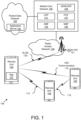
- Figure 1 depicts a wireless communication system 100 supporting user equipment power saving for V2X communications, according to embodiments of the disclosure.
- the wireless communication system 100 includes at least one remote unit 105, a radio access network ("RAN") 120, and a mobile core network 130.
- the RAN 120 and the mobile core network 130 form a mobile communication network.
- the RAN 120 may be composed of a base unit 121 with which the remote unit 105 communicates using wireless communication links 115.
- remote units 105 Even though a specific number of remote units 105, base units 121, wireless communication links 115, RANs 120, and mobile core networks 130 are depicted in Figure 1 , one of skill in the art will recognize that any number of remote units 105, base units 121, wireless communication links 115, RANs 120, and mobile core networks 130 may be included in the wireless communication system 100.
- the RAN 120 is compliant with the 5G system specified in the Third Generation Partnership Project ("3GPP") specifications.
- the RAN 120 may be a New Generation Radio Access Network ("NG-RAN"), implementing NR RAT and/or 3GPP Long-Term Evolution (“LTE”) RAT.
- the RAN 120 may include non-3GPP RAT (e.g., Wi-Fi ® or Institute of Electrical and Electronics Engineers (“IEEE”) 802.11-family compliant WLAN).
- the RAN 120 is compliant with the LTE system specified in the 3GPP specifications.
- the wireless communication system 100 may implement some other open or proprietary communication network, for example Worldwide Interoperability for Microwave Access (“WiMAX”) or IEEE 802.16-family standards, among other networks.
- WiMAX Worldwide Interoperability for Microwave Access
- IEEE 802.16-family standards among other networks.
- the present disclosure is not intended to be limited to the implementation of any particular wireless communication system architecture or protocol.
- the remote units 105 may include computing devices, such as desktop computers, laptop computers, personal digital assistants ("PDAs"), tablet computers, smart phones, smart televisions (e.g., televisions connected to the Internet), smart appliances (e.g., appliances connected to the Internet), set-top boxes, game consoles, security systems (including security cameras), vehicle on-board computers, network devices (e.g., routers, switches, modems), or the like.
- the remote units 105 include wearable devices, such as smart watches, fitness bands, optical head-mounted displays, or the like.
- the remote units 105 may be referred to as the UEs, subscriber units, mobiles, mobile stations, users, terminals, mobile terminals, fixed terminals, subscriber stations, user terminals, wireless transmit/receive unit (“WTRU”), a device, or by other terminology used in the art.
- the remote unit 105 includes a subscriber identity and/or identification module (“SIM”) and the mobile equipment (“ME”) providing mobile termination functions (e.g., radio transmission, handover, speech encoding and decoding, error detection and correction, signaling and access to the SIM).
- SIM subscriber identity and/or identification module
- ME mobile equipment
- the remote unit 105 may include a terminal equipment ("TE") and/or be embedded in an appliance or device (e.g., a computing device, as described above).
- the remote units 105 may communicate directly with one or more of the base units 121 in the RAN 120 via uplink (“UL”) and downlink (“DL”) communication signals. Furthermore, the UL and DL communication signals may be carried over the wireless communication links 123.
- the RAN 120 is an intermediate network that provides the remote units 105 with access to the mobile core network 130.
- the remote units 105 may communicate directly with each other (e.g., device-to-device communication) using V2X communication signals 115.
- V2X transmissions may occur on V2X resources.
- a remote unit 105 may be provided with different V2X communication resources for different V2X modes.
- Mode-1 corresponds to a NR-based network-scheduled V2X communication mode.
- Mode-2 corresponds to an NR-based UE-scheduled V2X communication mode.
- the remote units 105 communicate with an application server via a network connection with the mobile core network 130.
- an application 107 e.g., web browser, media client, telephone and/or Voice-over-Internet-Protocol ("VoIP") application
- VoIP Voice-over-Internet-Protocol
- a remote unit 105 may trigger the remote unit 105 to establish a protocol data unit (“PDU") session (or other data connection) with the mobile core network 130 via the RAN 120.
- the mobile core network 130 then relays traffic between the remote unit 105 and the application server (e.g., the content server 151 in the packet data network 150) using the PDU session.
- the PDU session represents a logical connection between the remote unit 105 and the User Plane Function ("UPF") 131.
- UPF User Plane Function
- the remote unit 105 In order to establish the PDU session (or PDN connection), the remote unit 105 must be registered with the mobile core network 130 (also referred to as '"attached to the mobile core network" in the context of a Fourth Generation ("4G") system). Note that the remote unit 105 may establish one or more PDU sessions (or other data connections) with the mobile core network 130. As such, the remote unit 105 may have at least one PDU session for communicating with the packet data network 150, e.g., representative of the Internet. The remote unit 105 may establish additional PDU sessions for communicating with other data networks and/or other communication peers.
- the mobile core network 130 also referred to as '"attached to the mobile core network” in the context of a Fourth Generation (“4G") system.
- the remote unit 105 may establish one or more PDU sessions (or other data connections) with the mobile core network 130.
- the remote unit 105 may have at least one PDU session for communicating with the packet data network 150, e.g., representative of the Internet.
- PDU Session a data connection that provides end-to-end (“E2E”) user plane (“UP") connectivity between the remote unit 105 and a specific Data Network (“DN”) through the UPF 131.
- a PDU Session supports one or more Quality of Service (“QoS”) Flows.
- QoS Quality of Service
- EPS Evolved Packet System
- PDN Packet Data Network
- the PDN connectivity procedure establishes an EPS Bearer, i.e., a tunnel between the remote unit 105 and a Packet Gateway ("PGW", not shown) in the mobile core network 130.
- PGW Packet Gateway
- QCI QoS Class Identifier
- the base units 121 may be distributed over a geographic region.
- a base unit 121 may also be referred to as an access terminal, an access point, a base, a base station, a Node-B ("NB"), an Evolved Node B (abbreviated as eNodeB or "eNB,” also known as Evolved Universal Terrestrial Radio Access Network (“E-UTRAN”) Node B), a 5G/NR Node B (“gNB”), a Home Node-B, a relay node, a RAN node, or by any other terminology used in the art.
- NB Node-B
- eNB Evolved Node B
- gNB 5G/NR Node B
- the base units 121 are generally part of a RAN, such as the RAN 120, that may include one or more controllers communicably coupled to one or more corresponding base units 121. These and other elements of radio access network are not illustrated but are well known generally by those having ordinary skill in the art.
- the base units 121 connect to the mobile core network 130 via the RAN 120.
- the base units 121 may serve a number of remote units 105 within a serving area, for example, a cell or a cell sector, via a wireless communication link 123.
- the base units 121 may communicate directly with one or more of the remote units 105 via communication signals.
- the base units 121 transmit DL communication signals to serve the remote units 105 in the time, frequency, and/or spatial domain.
- the DL communication signals may be carried over the wireless communication links 123.
- the wireless communication links 123 may be any suitable carrier in licensed or unlicensed radio spectrum.
- the wireless communication links 123 facilitate communication between one or more of the remote units 105 and/or one or more of the base units 121. Note that during NR-U operation, the base unit 121 and the remote unit 105 communicate over unlicensed radio spectrum.
- the mobile core network 130 is a 5GC or an Evolved Packet Core ("EPC"), which may be coupled to a packet data network 150, like the Internet and private data networks, among other data networks.
- a remote unit 105 may have a subscription or other account with the mobile core network 130.
- Each mobile core network 130 belongs to a single public land mobile network (“PLMN").
- PLMN public land mobile network
- the mobile core network 130 includes several network functions (“NFs”). As depicted, the mobile core network 130 includes at least one UPF 131.
- the mobile core network 130 also includes multiple control plane (“CP”) functions including, but not limited to, an Access and Mobility Management Function (“AMF”) 133 that serves the RAN 120, a Session Management Function (“SMF”) 135, a Network Exposure Function (“NEF”) 136, a Policy Control Function (“PCF”) 137, a Unified Data Management function (“UDM”) and a User Data Repository (“UDR”).
- AMF Access and Mobility Management Function
- NEF Network Exposure Function
- PCF Policy Control Function
- UDM Unified Data Management function
- UDR User Data Repository
- the UPF(s) 131 is responsible for packet routing and forwarding, packet inspection, QoS handling, and external PDU session for interconnecting Data Network (DN), in the 5G architecture.
- the AMF 133 is responsible for termination of NAS signaling, NAS ciphering & integrity protection, registration management, connection management, mobility management, access authentication and authorization, security context management.
- the SMF 135 is responsible for session management (i.e., session establishment, modification, release), remote unit (i.e., UE) IP address allocation & management, DL data notification, and traffic steering configuration for UPF for proper traffic routing.
- the NEF 136 is responsible for making network data and resources easily accessible to customers and network partners. Service providers may activate new capabilities and expose them through APIs. These APIs allow third-party authorized applications to monitor and configure the network's behavior for a number of different subscribers (i.e., connected devices with different applications).
- the PCF 137 is responsible for unified policy framework, providing policy rules to CP functions, access subscription information for policy decisions in UDR.
- the UDM is responsible for generation of Authentication and Key Agreement ("AKA") credentials, user identification handling, access authorization, subscription management.
- AKA Authentication and Key Agreement
- the UDR is a repository of subscriber information and can be used to service a number of network functions. For example, the UDR may store subscription data, policy-related data, subscriber-related data that is permitted to be exposed to third party applications, and the like.
- the UDM is co-located with the UDR, depicted as combined entity "UDM/UDR" 139.
- the mobile core network 130 may also include an Authentication Server Function (“AUSF”) (which acts as an authentication server), a Network Repository Function (“NRF”) (which provides NF service registration and discovery, enabling NFs to identify appropriate services in one another and communicate with each other over Application Programming Interfaces (“APIs”)), or other NFs defined for the 5GC.
- AUSF Authentication Server Function
- NRF Network Repository Function
- the mobile core network 130 may include an authentication, authorization, and accounting (“AAA”) server.
- AAA authentication, authorization, and accounting
- the mobile core network 130 supports different types of mobile data connections and different types of network slices, wherein each mobile data connection utilizes a specific network slice.
- a "network slice” refers to a portion of the mobile core network 130 optimized for a certain traffic type or communication service.
- a network instance may be identified by a single-network slice selection assistance information ("S-NSSAI,") while a set of network slices for which the remote unit 105 is authorized to use is identified by network slice selection assistance information (“NSSAI").
- S-NSSAI single-network slice selection assistance information
- NSSAI network slice selection assistance information
- NSSAI refers to a vector value including one or more S-NSSAI values.
- the various network slices may include separate instances of network functions, such as the SMF 135 and UPF 131.
- the different network slices may share some common network functions, such as the AMF 133.
- the different network slices are not shown in Figure 1 for ease of illustration, but their support is assumed.
- the mobile core network 130 may include a Network Slice Selection Function ("NSSF") which is responsible for selecting of the Network Slice instances to serve the remote unit 105, determining the allowed NSSAI, determining the AMF set to be used to serve the remote unit 105.
- NSSF Network Slice Selection Function
- the depicted network functions may be replaced with appropriate EPC entities, such as a Mobility Management Entity ("MME”), a Serving Gateway (“SGW”), a PGW, a Home Subscriber Server (“HSS”), and the like.
- MME Mobility Management Entity
- SGW Serving Gateway
- PGW Packet Data Network Gateway
- HSS Home Subscriber Server
- the AMF 133 may be mapped to an MME
- the SMF 135 may be mapped to a control plane portion of a PGW and/or to an MME
- the UPF 131 may be mapped to an SGW and a user plane portion of the PGW
- the UDM/UDR 139 may be mapped to an HSS, etc.
- Figure 1 depicts components of a 5G RAN and a 5G core network
- the described embodiments apply to other types of communication networks and RATs, including IEEE 802.11 variants, Global System for Mobile Communications ("GSM", i.e., a 2G digital cellular network), General Packet Radio Service (“GPRS”), UMTS, LTE variants, CDMA 2000, Bluetooth, ZigBee, Sigfox, and the like.
- GSM Global System for Mobile Communications
- GPRS General Packet Radio Service
- UMTS Universal Mobile communications
- LTE variants Long Term Evolution
- CDMA 2000 Code Division Multiple Access 2000
- Bluetooth ZigBee
- ZigBee ZigBee
- Sigfox and the like.
- gNB is used for the base station but it is replaceable by any other radio access node, e.g., RAN node, eNB, Base Station ("BS”), Access Point ("AP”), NR, etc. Further the operations are described mainly in the context of 5G NR. However, the proposed solutions/methods are also equally applicable to other mobile communication systems supporting CSI enhancements for higher frequencies.
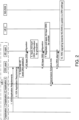
- a method has been disclosed in S2-2004714 for a QoS aware power efficient PC5 communication for pedestrian UEs.
- the method proposes that the UEs derive the DRX based on the active applications running in the UE and negotiate the DRX with other UEs running the same application, as shown in Figure 2 .
- a disadvantage with the procedure shown in Figure 2 is that DRX can only be synchronized for unicast V2X operations and is not supported for groupcast or broadcast communications.
- certain methods involve an AMF that provides the default PC5 DRX configuration to the UE. If the UE determines that the default PC5 DRX configuration cannot be supported based on the QoS requirements of an application, the UE determines an offset extending the active time of the DRX to support such QoS requirements.
- an application function (“AF")/policy control function (“PCF”) provides a PC5 DRX configuration on per V2X service.
- the V2X layer in the UE provides the PC5 DRX configuration to the AS layer that the AS layer uses to determine the PC5 DRX to apply.
- the receiving UE either applies the default PC5 DRX provided by the AMF (if provided), or determines the PC5 DRX from V2X configuration information as follows:
- the V2X layer determines the PC5 QoS parameters based on the mapping of V2X service types to PC5 QoS parameters e.g., as specified in clause 5.1.2.1 of TS 23.287 or based on QoS requirements provided by the application.
- the V2X layer then passes the QoS parameters per V2X service type to the AS layer for reception.
- the AS layer determines the PC5 DRX to apply for reception according to the QoS requirements e.g., using a (pre)configuration, for example, RRC signaling.
- the V2X layer determines the PC5 DRX configuration of each V2X service type based on V2X configuration information provided by the AF or the PCF.
- the V2X configuration information includes default PQI per V2X service type and PC5 DRX per PQI.
- the V2X layer determines the default PQI (if no QoS requirement has been provided by the application) and determines the PC5 DRX based on the PQI.
- the V2X layer determines the PC5 DRX for reception based on PC5 DRX configuration per V2X service type included within the V2X configuration information.
- the V2X layer then provides the PC5 DRX configuration for each determined V2X service type for reception to the AS layer.
- the AS layer then applies the PC5 DRX configuration.
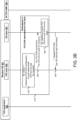
- the UE 301 receives a PC5 DRX configuration from the AF/PCF and/or AMF 309.
- the V2X application 303 requests to transmit a message via V2X and provides its application requirements, which may include QoS requirements.
- the V2X layer 305 determines the V2X service type for reception for broadcast and groupcast based on the V2X configuration information, e.g., as described in 3GPP TS 23.287.
- a PC5 DRX per V2X service type is determined at the AS layer 307.
- the receiving UE 301 determines the PC5 QoS parameters based on the mapping of V2X service types to PC5 QoS parameters, e.g., as specified in clause 5.1.2.1 of TS 23.287 or based on QoS requirements provided by the application.
- the V2X layer 305 provides the QoS requirements for each determined V2X service type to the AS layer 307.
- the AS layer 307 determines the PC5 DRX based on the QoS requirements of each V2X service type.
- a PC5 DRX per V2X service type is determined at the V2X layer 305.
- the V2X layer 305 determines the PC5 DRX configuration of each V2X service type from the V2X configuration information, e.g., as described in the first embodiment (see block 308) above.
- the V2X layer 305 provides a PC5 DRX configuration for each V2X service type to the AS layer 307.
- the AS layer 307 in the UE 301 applies the PC5 DRX configuration.
- the AS layer 307 may provide information on the applied PC5 DRX per V2X service type to the V2X layer 305.
- FIG. 4 depicts a user equipment apparatus 400 that may be used for user equipment power saving for V2X communications, according to embodiments of the disclosure.
- the user equipment apparatus 400 is used to implement one or more of the solutions described above.
- the user equipment apparatus 400 may be one embodiment of a UE, such as the remote unit 105 and/or the UE 205, as described above.
- the user equipment apparatus 400 may include a processor 405, a memory 410, an input device 415, an output device 420, and a transceiver 425.
- the input device 415 and the output device 420 are combined into a single device, such as a touchscreen.
- the user equipment apparatus 400 may not include any input device 415 and/or output device 420.
- the user equipment apparatus 400 may include one or more of: the processor 405, the memory 410, and the transceiver 425, and may not include the input device 415 and/or the output device 420.
- the transceiver 425 includes at least one transmitter 430 and at least one receiver 435.
- the transceiver 425 communicates with one or more base units 121.
- the transceiver 425 may support at least one network interface 440 and/or application interface 745.
- the application interface(s) 745 may support one or more APIs.
- the network interface(s) 440 may support 3GPP reference points, such as Uu and PC5. Other network interfaces 440 may be supported, as understood by one of ordinary skill in the art.
- the processor 405, in one embodiment, may include any known controller capable of executing computer-readable instructions and/or capable of performing logical operations.
- the processor 405 may be a microcontroller, a microprocessor, a central processing unit (“CPU"), a graphics processing unit (“GPU”), an auxiliary processing unit, a field programmable gate array (“FPGA”), a digital signal processor (“DSP”), a co-processor, an application-specific processor, or similar programmable controller.
- the processor 405 executes instructions stored in the memory 410 to perform the methods and routines described herein.
- the processor 405 is communicatively coupled to the memory 410, the input device 415, the output device 420, and the transceiver 425.
- the processor 405 may include an application processor (also known as "main processor") which manages application-domain and operating system (“OS”) functions and a baseband processor (also known as "baseband radio processor”) which manages radio functions.
- an application processor also known as "main processor” which manages
- the memory 410 in one embodiment, is a computer readable storage medium.
- the memory 410 includes volatile computer storage media.
- the memory 410 may include a RAM, including dynamic RAM (“DRAM”), synchronous dynamic RAM (“SDRAM”), and/or static RAM (“SRAM”).
- the memory 410 includes non-volatile computer storage media.
- the memory 410 may include a hard disk drive, a flash memory, or any other suitable non-volatile computer storage device.
- the memory 410 includes both volatile and non-volatile computer storage media.
- the memory 410 stores data related to CSI enhancements for higher frequencies.
- the memory 410 may store parameters, configurations, resource assignments, policies, and the like as described above.
- the memory 410 also stores program code and related data, such as an operating system or other controller algorithms operating on the user equipment apparatus 400, and one or more software applications.
- the input device 415 may include any known computer input device including a touch panel, a button, a keyboard, a stylus, a microphone, or the like.
- the input device 415 may be integrated with the output device 420, for example, as a touchscreen or similar touch-sensitive display.
- the input device 415 includes a touchscreen such that text may be input using a virtual keyboard displayed on the touchscreen and/or by handwriting on the touchscreen.
- the input device 415 includes two or more different devices, such as a keyboard and a touch panel.
- the output device 420 in one embodiment, is designed to output visual, audible, and/or haptic signals.
- the output device 420 includes an electronically controllable display or display device capable of outputting visual data to a user.
- the output device 420 may include, but is not limited to, an LCD display, an LED display, an OLED display, a projector, or similar display device capable of outputting images, text, or the like to a user.
- the output device 420 may include a wearable display separate from, but communicatively coupled to, the rest of the user equipment apparatus 400, such as a smart watch, smart glasses, a heads-up display, or the like.
- the output device 420 may be a component of a smart phone, a personal digital assistant, a television, a table computer, a notebook (laptop) computer, a personal computer, a vehicle dashboard, or the like.
- the output device 420 includes one or more speakers for producing sound.
- the output device 420 may produce an audible alert or notification (e.g., a beep or chime).
- the output device 420 includes one or more haptic devices for producing vibrations, motion, or other haptic feedback.
- all or portions of the output device 420 may be integrated with the input device 415.
- the input device 415 and output device 420 may form a touchscreen or similar touch-sensitive display.
- the output device 420 may be located near the input device 415.
- the transceiver 425 includes at least transmitter 430 and at least one receiver 435.
- the transceiver 425 may be used to provide UL communication signals to a base unit 121 and to receive DL communication signals from the base unit 121, as described herein.
- the transceiver 425 may be used to transmit and receive SL signals (e.g., V2X communication), as described herein.
- SL signals e.g., V2X communication
- the transceiver 425 includes a first transmitter/receiver pair used to communicate with a mobile communication network over licensed radio spectrum and a second transmitter/receiver pair used to communicate with a mobile communication network over unlicensed radio spectrum.
- the first transmitter/receiver pair used to communicate with a mobile communication network over licensed radio spectrum and the second transmitter/receiver pair used to communicate with a mobile communication network over unlicensed radio spectrum may be combined into a single transceiver unit, for example a single chip performing functions for use with both licensed and unlicensed radio spectrum.
- the first transmitter/receiver pair and the second transmitter/receiver pair may share one or more hardware components.
- certain transceivers 425, transmitters 430, and receivers 435 may be implemented as physically separate components that access a shared hardware resource and/or software resource, such as for example, the network interface 440.
- one or more transmitters 430 and/or one or more receivers 435 may be implemented and/or integrated into a single hardware component, such as a multi-transceiver chip, a system-on-a-chip, an ASIC, or other type of hardware component.
- one or more transmitters 430 and/or one or more receivers 435 may be implemented and/or integrated into a multi-chip module.
- other components such as the network interface 440 or other hardware components/circuits may be integrated with any number of transmitters 430 and/or receivers 435 into a single chip.
- the transmitters 430 and receivers 435 may be logically configured as a transceiver 425 that uses one more common control signals or as modular transmitters 430 and receivers 435 implemented in the same hardware chip or in a multi-chip module.
- the processor 405 determines one or more destination layer-2 IDs for reception within vehicle-to-everything (“V2X”) configuration information received from the network, determines one or more quality of service (“QoS”) requirements for reception for each determined one or more destination layer-2 IDs, and provides the determined one or more QoS requirements for each determined one or more destination layer-2 IDs for reception to the application service (“AS”) layer.
- V2X vehicle-to-everything
- QoS quality of service
- the processor 405 determines the one or more QoS requirements for reception for each determined one or more destination layer-2 IDs by determining associated V2X service types for each of the one or more destination layer-2 IDs and the associated PC5 QoS parameters for each V2X service type.
- the transceiver 425 receives, over a first radio interface, the V2X configuration, the V2X configuration comprising one or more destination layer-2 IDs for each V2X service type and one or more QoS requirements for each determined V2X service type for communication over a second radio interface.
- the transceiver 425 receives, from an application, a request to receive data over the second radio interface, the request comprising the one or more QoS requirements.
- the processor 405 determines the one or more QoS requirements based on at least one of the V2X configuration and the request from the application.
- the V2X configuration is received from a policy control function (“PCF”) or an application function.
- PCF policy control function
- the processor 405 receives information for an applied PC5 discontinuous reception ("DRX") for each determined V2X service type from the AS layer.
- DRX PC5 discontinuous reception
- the processor 405 receives, from a vehicle-to-everything (“V2X”) layer, one or more quality of service (“QoS”) requirements for one or more destination layer-2 IDs for reception of one of groupcast and broadcast transmissions and determines information for an applied PC5 discontinuous reception (“DRX”) based on the QoS requirements.
- V2X vehicle-to-everything
- QoS quality of service
- the processor 405 determines the information for the applied PC5 DRX based on V2X configuration information.
- Figure 5 depicts one embodiment of a network apparatus 500 that may be used for user equipment power saving for V2X communications, according to embodiments of the disclosure.
- the network apparatus 500 may be one embodiment of a RAN node and its supporting hardware, such as the base unit 121 and/or gNB, described above.
- network apparatus 500 may include a processor 505, a memory 510, an input device 515, an output device 520, and a transceiver 525.
- the network apparatus 500 does not include any input device 515 and/or output device 520.
- the transceiver 525 includes at least one transmitter 530 and at least one receiver 535.
- the transceiver 525 communicates with one or more remote units 105.
- the transceiver 525 may support at least one network interface 540 and/or application interface 545.
- the application interface(s) 545 may support one or more APIs.
- the network interface(s) 540 may support 3GPP reference points, such as Uu, N1, N2, N3, N5, N6 and/or N7 interfaces. Other network interfaces 540 may be supported, as understood by one of ordinary skill in the art.
- the processor 505 may include any known controller capable of executing computer-readable instructions and/or capable of performing logical operations.
- the processor 505 may be a microcontroller, a microprocessor, a central processing unit (“CPU”), a graphics processing unit (“GPU”), an auxiliary processing unit, a field programmable gate array (“FPGA”), a digital signal processor (“DSP”), a co-processor, an application-specific processor, or similar programmable controller.
- the processor 505 executes instructions stored in the memory 510 to perform the methods and routines described herein.
- the processor 505 is communicatively coupled to the memory 510, the input device 515, the output device 520, and the transceiver 525.
- the processor 505 may include an application processor (also known as “main processor”) which manages application-domain and operating system (“OS”) functions and a baseband processor (also known as “baseband radio processor”) which manages radio function.
- the processor 505 controls the network apparatus 500 to implement the above-described network entity behaviors (e.g., of the gNB) for user equipment power saving for V2X communications.
- the memory 510 in one embodiment, is a computer readable storage medium.
- the memory 510 includes volatile computer storage media.
- the memory 510 may include a RAM, including dynamic RAM (“DRAM”), synchronous dynamic RAM (“SDRAM”), and/or static RAM (“SRAM”).
- the memory 510 includes non-volatile computer storage media.
- the memory 510 may include a hard disk drive, a flash memory, or any other suitable non-volatile computer storage device.
- the memory 510 includes both volatile and non-volatile computer storage media.
- the memory 510 stores data relating to CSI enhancements for higher frequencies.
- the memory 510 may store parameters, configurations, resource assignments, policies, and the like as described above.
- the memory 510 also stores program code and related data, such as an operating system ("OS”) or other controller algorithms operating on the network apparatus 500, and one or more software applications.
- OS operating system
- the input device 515 may include any known computer input device including a touch panel, a button, a keyboard, a stylus, a microphone, or the like.
- the input device 515 may be integrated with the output device 520, for example, as a touchscreen or similar touch-sensitive display.
- the input device 515 includes a touchscreen such that text may be input using a virtual keyboard displayed on the touchscreen and/or by handwriting on the touchscreen.
- the input device 515 includes two or more different devices, such as a keyboard and a touch panel.
- the output device 520 may include any known electronically controllable display or display device.
- the output device 520 may be designed to output visual, audible, and/or haptic signals.
- the output device 520 includes an electronic display capable of outputting visual data to a user.
- the output device 520 may be a component of a smart phone, a personal digital assistant, a television, a table computer, a notebook (laptop) computer, a personal computer, a vehicle dashboard, or the like.
- the output device 520 includes one or more speakers for producing sound.
- the output device 520 may produce an audible alert or notification (e.g., a beep or chime).
- the output device 520 includes one or more haptic devices for producing vibrations, motion, or other haptic feedback.
- all or portions of the output device 520 may be integrated with the input device 515.
- the input device 515 and output device 520 may form a touchscreen or similar touch-sensitive display. In other embodiments, all or portions of the output device 520 may be located near the input device 515.
- the transceiver 525 may communicate with one or more remote units and/or with one or more interworking functions that provide access to one or more PLMNs.
- the transceiver 525 may also communicate with one or more network functions (e.g., in the mobile core network 80).
- the transceiver 525 operates under the control of the processor 505 to transmit messages, data, and other signals and also to receive messages, data, and other signals.
- the processor 505 may selectively activate the transceiver (or portions thereof) at particular times in order to send and receive messages.
- the transceiver 525 may include one or more transmitters 530 and one or more receivers 535.
- the one or more transmitters 530 and/or the one or more receivers 535 may share transceiver hardware and/or circuitry.
- the one or more transmitters 530 and/or the one or more receivers 535 may share antenna(s), antenna tuner(s), amplifier(s), filter(s), oscillator(s), mixer(s), modulator/demodulator(s), power supply, and the like.
- the transceiver 525 implements multiple logical transceivers using different communication protocols or protocol stacks, while using common physical hardware.
- Figure 6 is a flowchart diagram of a method 600 for user equipment power saving for V2X communications.
- the method 600 may be performed by a UE as described herein, for example, the remote unit 105 and/or the user equipment apparatus 400.
- the method 600 may be performed by a processor executing program code, for example, a microcontroller, a microprocessor, a CPU, a GPU, an auxiliary processing unit, a FPGA, or the like.
- the method 600 begins and determines 605 one or more destination layer-2 IDs for reception within vehicle-to-everything ("V2X") configuration information received from the network. In one embodiment, the method 600 determines 610 one or more V2X service types for reception of one of groupcast and broadcast transmissions based on the one or more destination layer 2 IDs. In one embodiment, the method 600 determines 615 one or more quality of service (“QoS") requirements for reception for each determined one or more destination layer-2 IDs. In one embodiment, the method 600 provides 620 the determined one or more QoS requirements for each determined one or more destination layer-2 IDs for reception to the application service (“AS”) layer, and the method 600 ends.
- V2X vehicle-to-everything
- a first apparatus for user equipment power saving for V2X communications.
- the first apparatus may be performed by a UE as described herein, for example, the remote unit 105 and/or the user equipment apparatus 400.
- the first apparatus may be performed by a processor executing program code, for example, a microcontroller, a microprocessor, a CPU, a GPU, an auxiliary processing unit, a FPGA, or the like.
- the first apparatus includes a processor that determines one or more destination layer-2 IDs for reception within vehicle-to-everything (“V2X”) configuration information received from the network, determines one or more quality of service (“QoS”) requirements for reception for each determined one or more destination layer-2 IDs, and provides the determined one or more QoS requirements for each determined one or more destination layer-2 IDs for reception to the application service (“AS”) layer.
- V2X vehicle-to-everything
- QoS quality of service
- the processor determines the one or more QoS requirements for reception for each determined one or more destination layer-2 IDs by determining associated V2X service types for each of the one or more destination layer-2 IDs and the associated PC5 QoS parameters for each V2X service type.
- the first apparatus includes a transceiver that receives, over a first radio interface, the V2X configuration, the V2X configuration comprising one or more destination layer-2 IDs for each V2X service type and one or more QoS requirements for each determined V2X service type for communication over a second radio interface.
- the transceiver receives, from an application, a request to receive data over the second radio interface, the request comprising the one or more QoS requirements.
- the processor determines the one or more QoS requirements based on at least one of the V2X configuration and the request from the application.
- the V2X configuration is received from a policy control function (“PCF”) or an application function.
- PCF policy control function
- the processor receives information for an applied PC5 discontinuous reception ("DRX") for each determined V2X service type from the AS layer.
- DRX PC5 discontinuous reception
- a first method is disclosed for user equipment power saving for V2X communications.
- the first method may be performed by a UE as described herein, for example, the remote unit 105 and/or the user equipment apparatus 400.
- the first method may be performed by a processor executing program code, for example, a microcontroller, a microprocessor, a CPU, a GPU, an auxiliary processing unit, a FPGA, or the like.
- the first method determines one or more destination layer-2 IDs for reception within vehicle-to-everything (“V2X”) configuration information received from the network, determines one or more quality of service (“QoS”) requirements for reception for each determined one or more destination layer-2 IDs, and provides the determined one or more QoS requirements for each determined one or more destination layer-2 IDs for reception to the application service (“AS”) layer.
- V2X vehicle-to-everything
- QoS quality of service
- the first method determines the one or more QoS requirements for reception for each determined one or more destination layer-2 IDs by determining associated V2X service types for each of the one or more destination layer-2 IDs and the associated PC5 QoS parameters for each V2X service type
- the first method receives, over a first radio interface, the V2X configuration, the V2X configuration comprising one or more destination layer-2 IDs for each V2X service type and one or more QoS requirements for each determined V2X service type for communication over a second radio interface.
- the first method receives, from an application, a request to receive data over the second radio interface, the request comprising the one or more QoS requirements.
- the first method determines the one or more QoS requirements based on at least one of the V2X configuration and the request from the application.
- the V2X configuration is received from a policy control function (“PCF”) or an application function.
- PCF policy control function
- a second apparatus is disclosed for user equipment power saving for V2X communications.
- the second apparatus may be performed by a UE as described herein, for example, the remote unit 105 and/or the user equipment apparatus 400.
- the second apparatus may be performed by a processor executing program code, for example, a microcontroller, a microprocessor, a CPU, a GPU, an auxiliary processing unit, a FPGA, or the like.
- the second apparatus includes a processor that receives, from a vehicle-to-everything (“V2X”) layer, one or more quality of service (“QoS”) requirements for one or more destination layer-2 IDs for reception of one of groupcast and broadcast transmissions and determines information for an applied PC5 discontinuous reception (“DRX”) based on the QoS requirements.
- V2X vehicle-to-everything
- QoS quality of service
- the processor determines the information for the applied PC5 DRX based on V2X configuration information.
- a second method is disclosed for user equipment power saving for V2X communications.
- the second method may be performed by a UE as described herein, for example, the remote unit 105 and/or the user equipment apparatus 400.
- the second method may be performed by a processor executing program code, for example, a microcontroller, a microprocessor, a CPU, a GPU, an auxiliary processing unit, a FPGA, or the like.
- the second method receives, from a vehicle-to-everything (“V2X”) layer, one or more quality of service (“QoS”) requirements for one or more destination layer-2 IDs for reception of one of groupcast and broadcast transmissions and determines information for an applied PC5 discontinuous reception (“DRX”) based on the QoS requirements.
- V2X vehicle-to-everything
- QoS quality of service
- the second method determines the information for the applied PC5 DRX based on V2X configuration information.
Landscapes
- Engineering & Computer Science (AREA)
- Computer Networks & Wireless Communication (AREA)
- Signal Processing (AREA)
- Multimedia (AREA)
- Mobile Radio Communication Systems (AREA)
- Telephone Function (AREA)
- Telephonic Communication Services (AREA)
Applications Claiming Priority (2)
| Application Number | Priority Date | Filing Date | Title |
|---|---|---|---|
| US202163161300P | 2021-03-15 | 2021-03-15 | |
| PCT/IB2022/052336 WO2022195482A1 (en) | 2021-03-15 | 2022-03-15 | User equipment power saving for v2x communications |
Publications (3)
| Publication Number | Publication Date |
|---|---|
| EP4309423A1 EP4309423A1 (en) | 2024-01-24 |
| EP4309423B1 true EP4309423B1 (en) | 2025-04-30 |
| EP4309423C0 EP4309423C0 (en) | 2025-04-30 |
Family
ID=80820047
Family Applications (1)
| Application Number | Title | Priority Date | Filing Date |
|---|---|---|---|
| EP22711658.9A Active EP4309423B1 (en) | 2021-03-15 | 2022-03-15 | User equipment power saving for v2x communications |
Country Status (9)
| Country | Link |
|---|---|
| US (1) | US20240147574A1 (https=) |
| EP (1) | EP4309423B1 (https=) |
| JP (1) | JP2024510240A (https=) |
| KR (1) | KR20230156353A (https=) |
| CN (1) | CN117063533A (https=) |
| BR (1) | BR112023018683A2 (https=) |
| CA (1) | CA3208384A1 (https=) |
| ES (1) | ES3023955T3 (https=) |
| WO (1) | WO2022195482A1 (https=) |
Families Citing this family (1)
| Publication number | Priority date | Publication date | Assignee | Title |
|---|---|---|---|---|
| US20240306245A1 (en) * | 2023-03-10 | 2024-09-12 | Qualcomm Incorporated | Retransmission monitoring adaptation under discontinuous configurations |
Family Cites Families (2)
| Publication number | Priority date | Publication date | Assignee | Title |
|---|---|---|---|---|
| EP3942896B1 (en) * | 2019-04-23 | 2023-01-25 | Samsung Electronics Co., Ltd. | Apparatus and method for providing direct communication services in wireless communication system |
| US12342247B2 (en) * | 2019-08-16 | 2025-06-24 | Nec Corporation | Method and device for reducing security risk in communication |
-
2022
- 2022-03-15 EP EP22711658.9A patent/EP4309423B1/en active Active
- 2022-03-15 CN CN202280021408.XA patent/CN117063533A/zh active Pending
- 2022-03-15 WO PCT/IB2022/052336 patent/WO2022195482A1/en not_active Ceased
- 2022-03-15 KR KR1020237031492A patent/KR20230156353A/ko active Pending
- 2022-03-15 JP JP2023556824A patent/JP2024510240A/ja active Pending
- 2022-03-15 BR BR112023018683A patent/BR112023018683A2/pt unknown
- 2022-03-15 US US18/550,918 patent/US20240147574A1/en active Pending
- 2022-03-15 ES ES22711658T patent/ES3023955T3/es active Active
- 2022-03-15 CA CA3208384A patent/CA3208384A1/en active Pending
Also Published As
| Publication number | Publication date |
|---|---|
| EP4309423A1 (en) | 2024-01-24 |
| WO2022195482A1 (en) | 2022-09-22 |
| CN117063533A (zh) | 2023-11-14 |
| JP2024510240A (ja) | 2024-03-06 |
| ES3023955T3 (en) | 2025-06-03 |
| KR20230156353A (ko) | 2023-11-14 |
| US20240147574A1 (en) | 2024-05-02 |
| CA3208384A1 (en) | 2022-09-22 |
| EP4309423C0 (en) | 2025-04-30 |
| BR112023018683A2 (pt) | 2023-10-24 |
Similar Documents
| Publication | Publication Date | Title |
|---|---|---|
| EP4298775B1 (en) | Configuration for qoe measurement collection | |
| US11743934B2 (en) | Establishing QoS flows over non-3GPP access | |
| US11943135B2 (en) | Establishing a new QOS flow for a data connection | |
| US20230136693A1 (en) | Enabling roaming with authentication and key management for applications | |
| EP4315957B1 (en) | Modifying a first data connection to support data traffic of a second data connection | |
| US12610308B2 (en) | Acquiring on-demand system information | |
| US20240349244A1 (en) | Downlink transmission/reception procedure for small data transmissions | |
| US20240032147A1 (en) | Configuration for logging mbs measurements | |
| US20240397322A1 (en) | Provisioning a secured packet | |
| US20240196468A1 (en) | Keeping a terminal in a connected state while the terminal is away from a communication network | |
| US20250056270A1 (en) | Measuring a qos parameter for a multiaccess connection using a qos monitoring procedure | |
| EP4309423B1 (en) | User equipment power saving for v2x communications | |
| EP4515988A1 (en) | Path switching between n0n-3gpp access paths | |
| US12432812B2 (en) | Configuring discontinuous reception for PC5 interface | |
| US20250007588A1 (en) | Reporting sensing beams and association with transmission beams for lbt | |
| US20240414808A1 (en) | Resource selection considering sidelink drx | |
| WO2023053091A1 (en) | Timing alignment in rrc_inactive | |
| US12028287B2 (en) | Parallel transmission of segmented RRC messages |
Legal Events
| Date | Code | Title | Description |
|---|---|---|---|
| STAA | Information on the status of an ep patent application or granted ep patent |
Free format text: STATUS: UNKNOWN |
|
| STAA | Information on the status of an ep patent application or granted ep patent |
Free format text: STATUS: THE INTERNATIONAL PUBLICATION HAS BEEN MADE |
|
| PUAI | Public reference made under article 153(3) epc to a published international application that has entered the european phase |
Free format text: ORIGINAL CODE: 0009012 |
|
| STAA | Information on the status of an ep patent application or granted ep patent |
Free format text: STATUS: REQUEST FOR EXAMINATION WAS MADE |
|
| 17P | Request for examination filed |
Effective date: 20230908 |
|
| AK | Designated contracting states |
Kind code of ref document: A1 Designated state(s): AL AT BE BG CH CY CZ DE DK EE ES FI FR GB GR HR HU IE IS IT LI LT LU LV MC MK MT NL NO PL PT RO RS SE SI SK SM TR |
|
| DAV | Request for validation of the european patent (deleted) | ||
| DAX | Request for extension of the european patent (deleted) | ||
| RIC1 | Information provided on ipc code assigned before grant |
Ipc: H04W 52/02 20090101ALI20240918BHEP Ipc: H04W 4/06 20090101ALI20240918BHEP Ipc: H04W 4/40 20180101ALI20240918BHEP Ipc: H04W 52/00 20090101AFI20240918BHEP |
|
| GRAP | Despatch of communication of intention to grant a patent |
Free format text: ORIGINAL CODE: EPIDOSNIGR1 |
|
| STAA | Information on the status of an ep patent application or granted ep patent |
Free format text: STATUS: GRANT OF PATENT IS INTENDED |
|
| INTG | Intention to grant announced |
Effective date: 20241028 |
|
| GRAS | Grant fee paid |
Free format text: ORIGINAL CODE: EPIDOSNIGR3 |
|
| GRAA | (expected) grant |
Free format text: ORIGINAL CODE: 0009210 |
|
| STAA | Information on the status of an ep patent application or granted ep patent |
Free format text: STATUS: THE PATENT HAS BEEN GRANTED |
|
| AK | Designated contracting states |
Kind code of ref document: B1 Designated state(s): AL AT BE BG CH CY CZ DE DK EE ES FI FR GB GR HR HU IE IS IT LI LT LU LV MC MK MT NL NO PL PT RO RS SE SI SK SM TR |
|
| REG | Reference to a national code |
Ref country code: CH Ref legal event code: EP Ref country code: GB Ref legal event code: FG4D |
|
| REG | Reference to a national code |
Ref country code: DE Ref legal event code: R096 Ref document number: 602022013893 Country of ref document: DE |
|
| REG | Reference to a national code |
Ref country code: IE Ref legal event code: FG4D |
|
| REG | Reference to a national code |
Ref country code: ES Ref legal event code: FG2A Ref document number: 3023955 Country of ref document: ES Kind code of ref document: T3 Effective date: 20250603 |
|
| U01 | Request for unitary effect filed |
Effective date: 20250519 |
|
| U07 | Unitary effect registered |
Designated state(s): AT BE BG DE DK EE FI FR IT LT LU LV MT NL PT RO SE SI Effective date: 20250523 |
|
| PG25 | Lapsed in a contracting state [announced via postgrant information from national office to epo] |
Ref country code: NO Free format text: LAPSE BECAUSE OF FAILURE TO SUBMIT A TRANSLATION OF THE DESCRIPTION OR TO PAY THE FEE WITHIN THE PRESCRIBED TIME-LIMIT Effective date: 20250730 Ref country code: GR Free format text: LAPSE BECAUSE OF FAILURE TO SUBMIT A TRANSLATION OF THE DESCRIPTION OR TO PAY THE FEE WITHIN THE PRESCRIBED TIME-LIMIT Effective date: 20250731 |
|
| PG25 | Lapsed in a contracting state [announced via postgrant information from national office to epo] |
Ref country code: PL Free format text: LAPSE BECAUSE OF FAILURE TO SUBMIT A TRANSLATION OF THE DESCRIPTION OR TO PAY THE FEE WITHIN THE PRESCRIBED TIME-LIMIT Effective date: 20250430 |
|
| PG25 | Lapsed in a contracting state [announced via postgrant information from national office to epo] |
Ref country code: HR Free format text: LAPSE BECAUSE OF FAILURE TO SUBMIT A TRANSLATION OF THE DESCRIPTION OR TO PAY THE FEE WITHIN THE PRESCRIBED TIME-LIMIT Effective date: 20250430 |
|
| PG25 | Lapsed in a contracting state [announced via postgrant information from national office to epo] |
Ref country code: RS Free format text: LAPSE BECAUSE OF FAILURE TO SUBMIT A TRANSLATION OF THE DESCRIPTION OR TO PAY THE FEE WITHIN THE PRESCRIBED TIME-LIMIT Effective date: 20250731 |
|
| PG25 | Lapsed in a contracting state [announced via postgrant information from national office to epo] |
Ref country code: IS Free format text: LAPSE BECAUSE OF FAILURE TO SUBMIT A TRANSLATION OF THE DESCRIPTION OR TO PAY THE FEE WITHIN THE PRESCRIBED TIME-LIMIT Effective date: 20250830 |
|
| PG25 | Lapsed in a contracting state [announced via postgrant information from national office to epo] |
Ref country code: SM Free format text: LAPSE BECAUSE OF FAILURE TO SUBMIT A TRANSLATION OF THE DESCRIPTION OR TO PAY THE FEE WITHIN THE PRESCRIBED TIME-LIMIT Effective date: 20250430 |
|
| PG25 | Lapsed in a contracting state [announced via postgrant information from national office to epo] |
Ref country code: CZ Free format text: LAPSE BECAUSE OF FAILURE TO SUBMIT A TRANSLATION OF THE DESCRIPTION OR TO PAY THE FEE WITHIN THE PRESCRIBED TIME-LIMIT Effective date: 20250430 |
|
| PG25 | Lapsed in a contracting state [announced via postgrant information from national office to epo] |
Ref country code: SK Free format text: LAPSE BECAUSE OF FAILURE TO SUBMIT A TRANSLATION OF THE DESCRIPTION OR TO PAY THE FEE WITHIN THE PRESCRIBED TIME-LIMIT Effective date: 20250430 |
|
| PLBE | No opposition filed within time limit |
Free format text: ORIGINAL CODE: 0009261 |
|
| STAA | Information on the status of an ep patent application or granted ep patent |
Free format text: STATUS: NO OPPOSITION FILED WITHIN TIME LIMIT |
|
| REG | Reference to a national code |
Ref country code: CH Ref legal event code: L10 Free format text: ST27 STATUS EVENT CODE: U-0-0-L10-L00 (AS PROVIDED BY THE NATIONAL OFFICE) Effective date: 20260311 |
|
| 26N | No opposition filed |
Effective date: 20260202 |
|
| PGFP | Annual fee paid to national office [announced via postgrant information from national office to epo] |
Ref country code: GB Payment date: 20260319 Year of fee payment: 5 |
|
| U20 | Renewal fee for the european patent with unitary effect paid |
Year of fee payment: 5 Effective date: 20260323 |